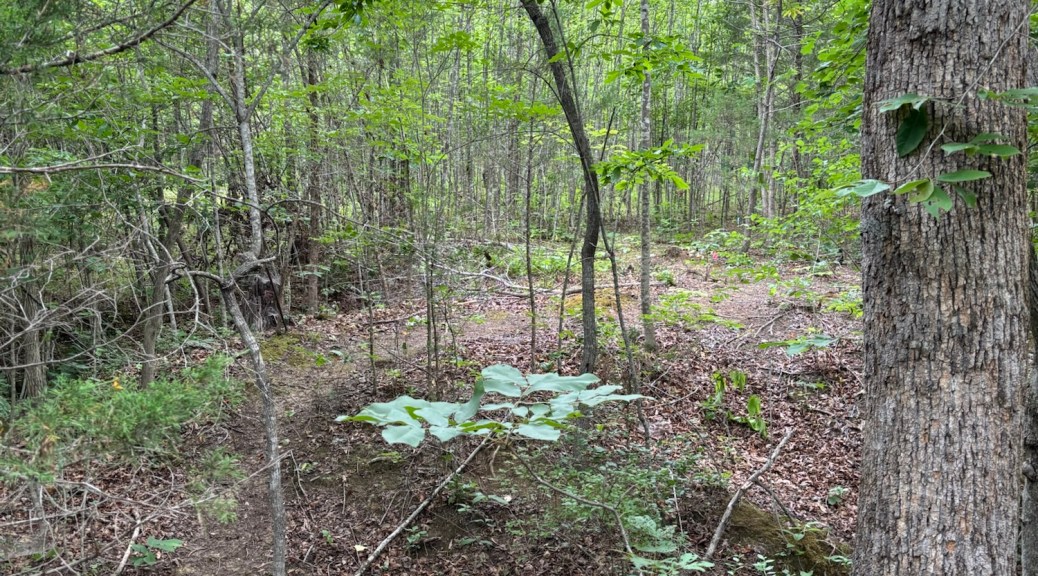
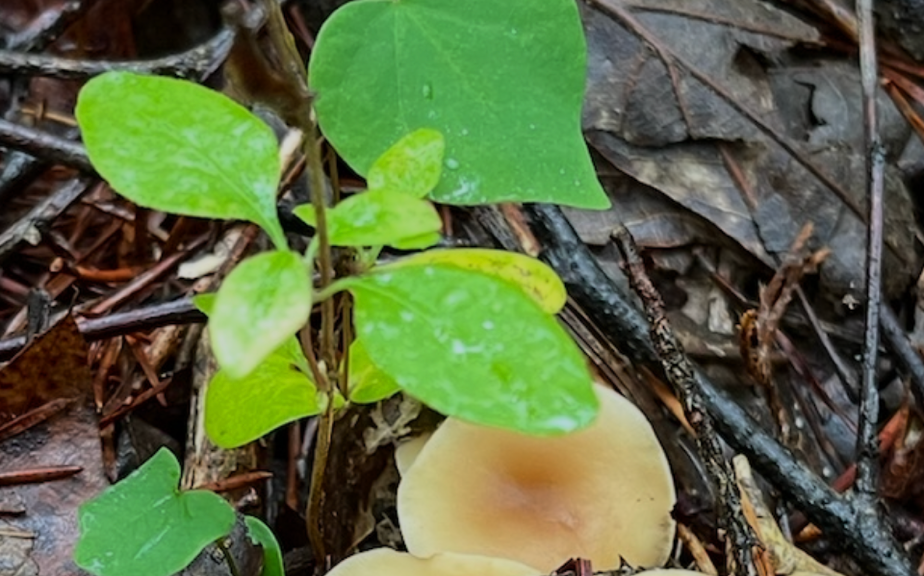
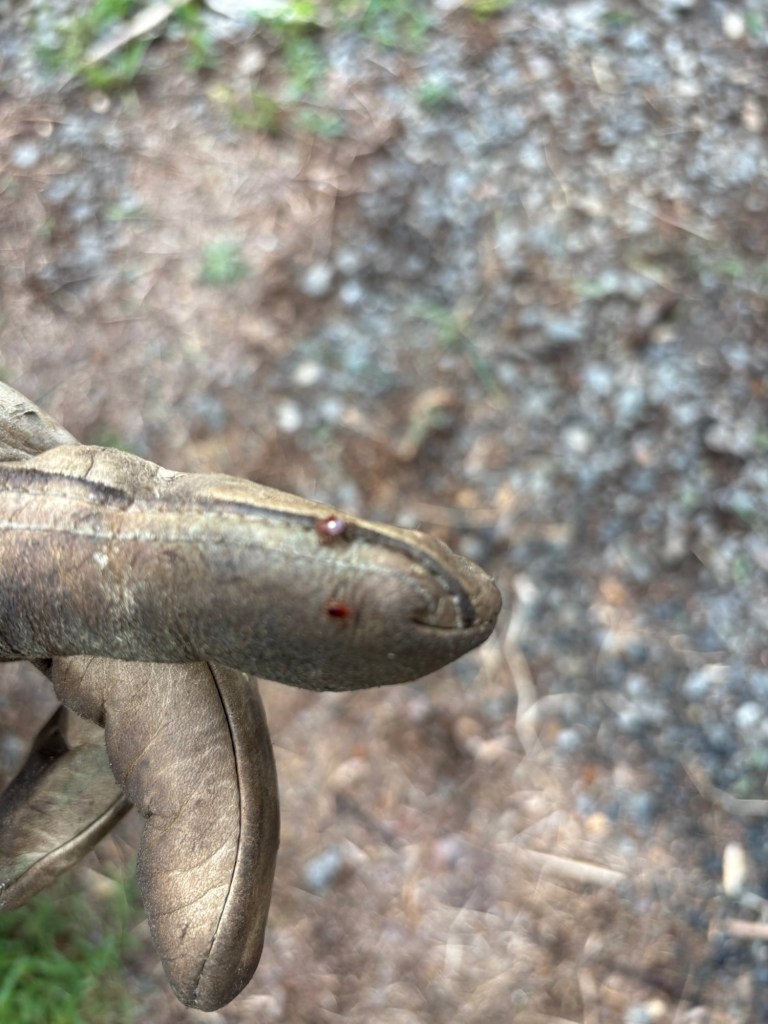
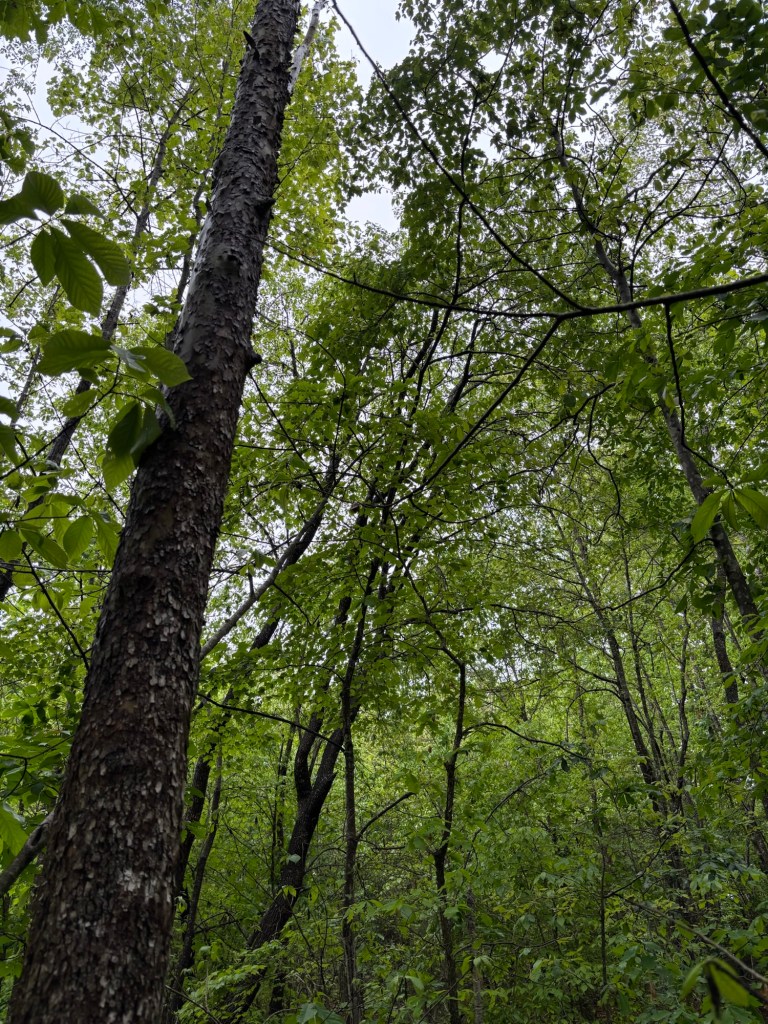
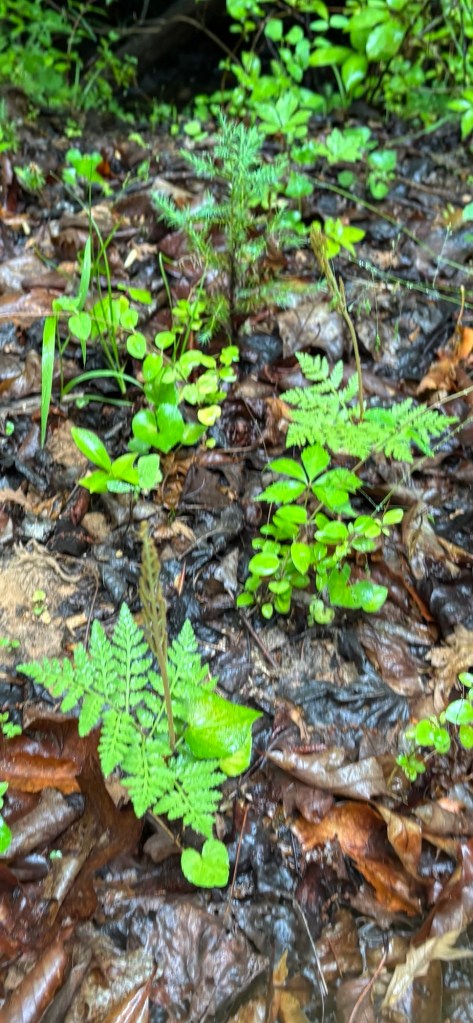
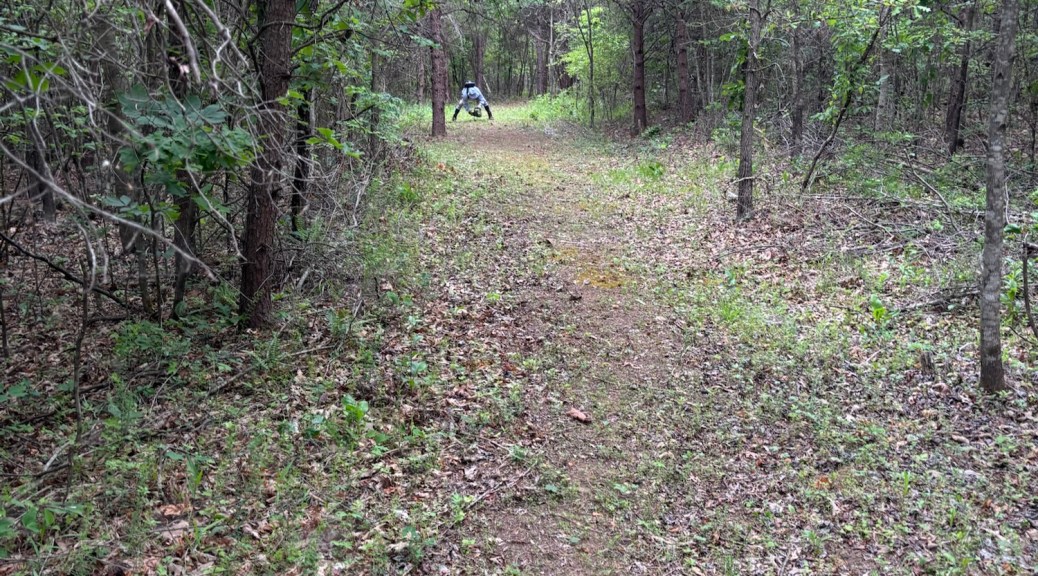
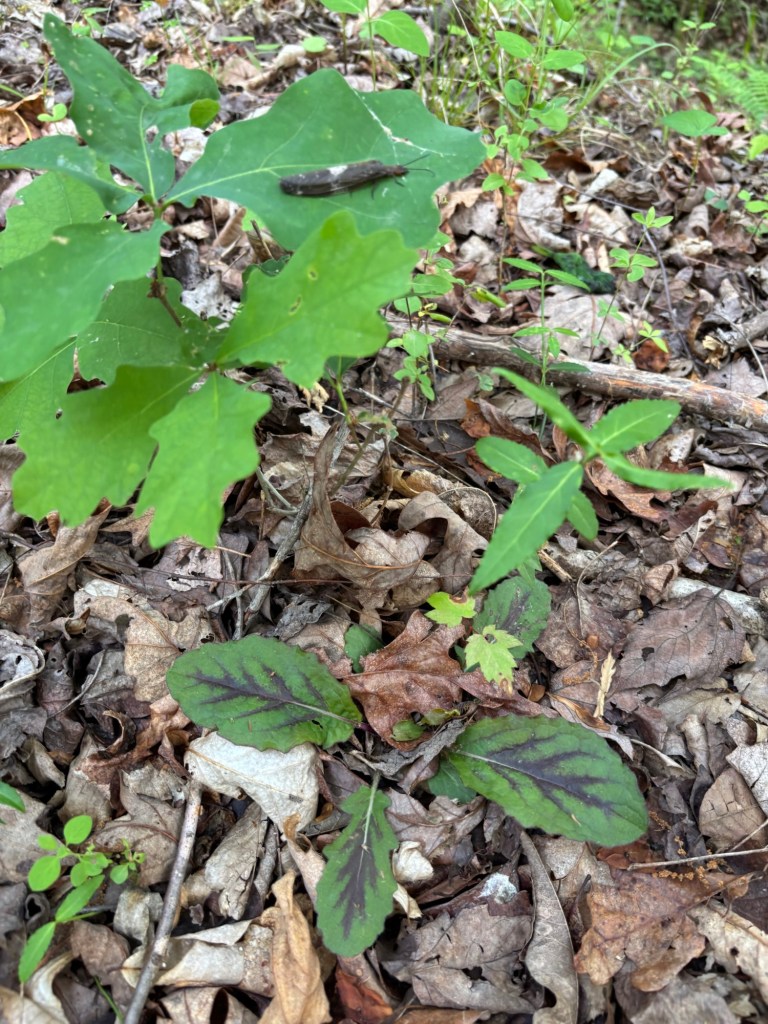
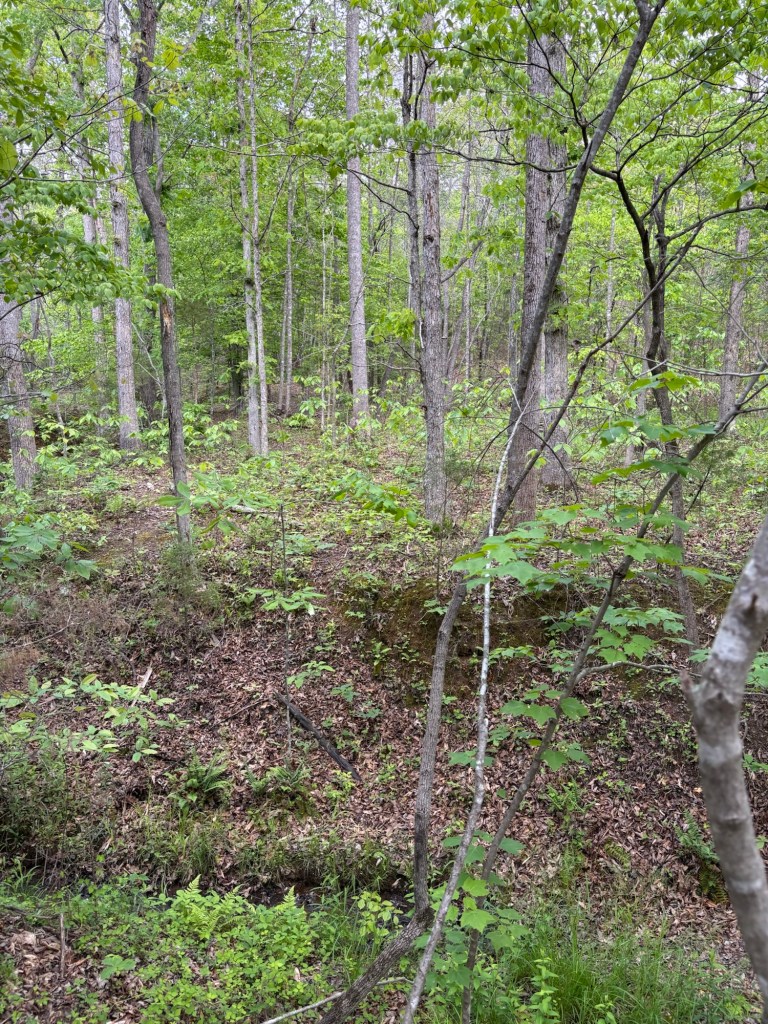
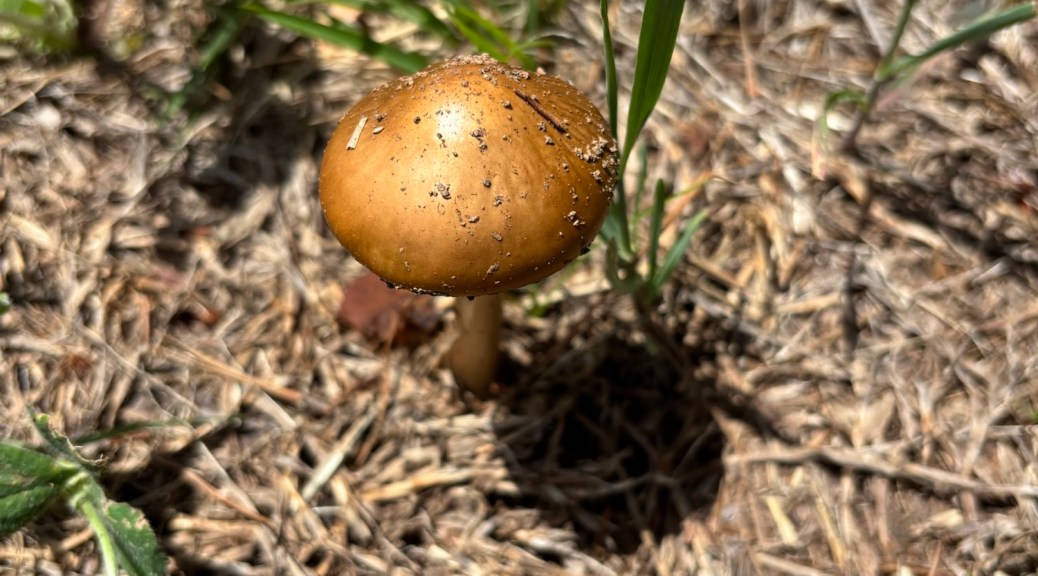
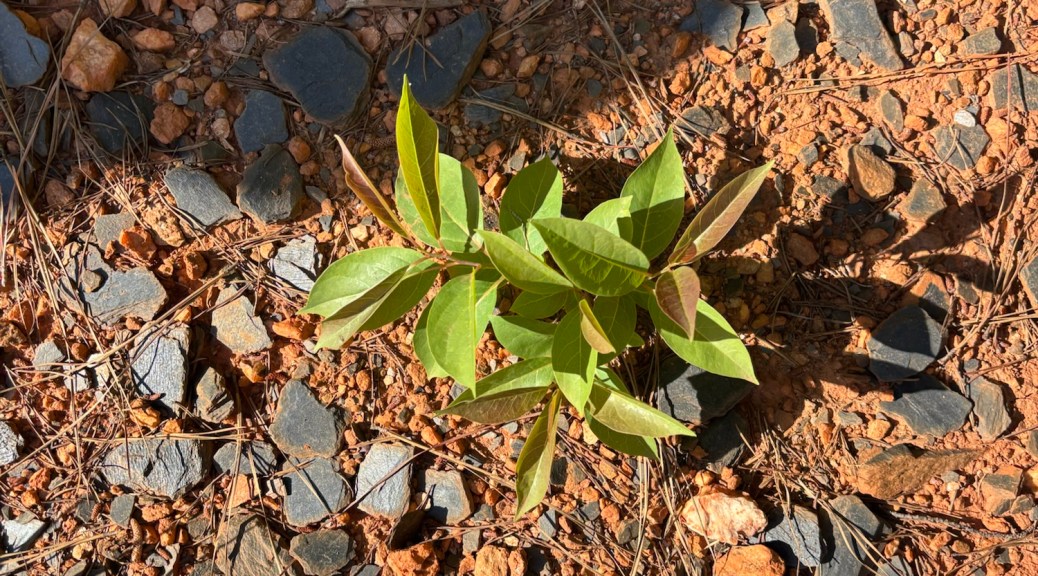
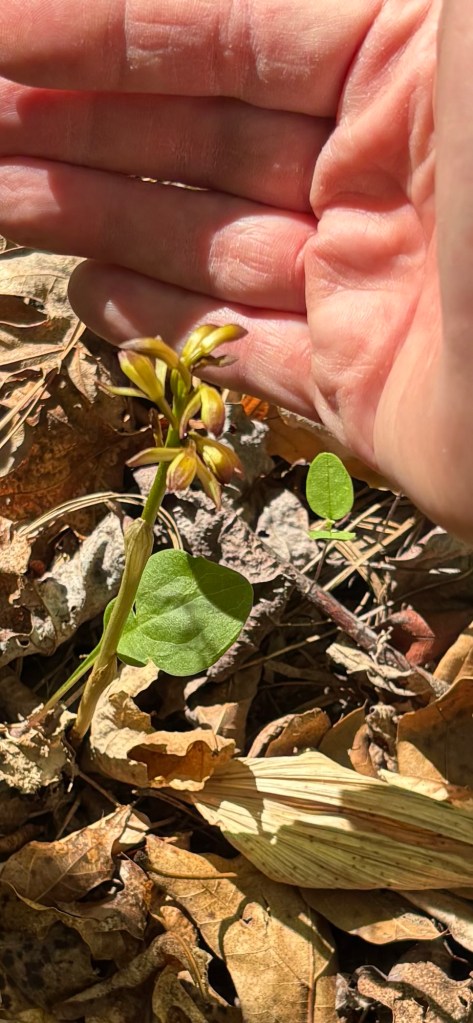
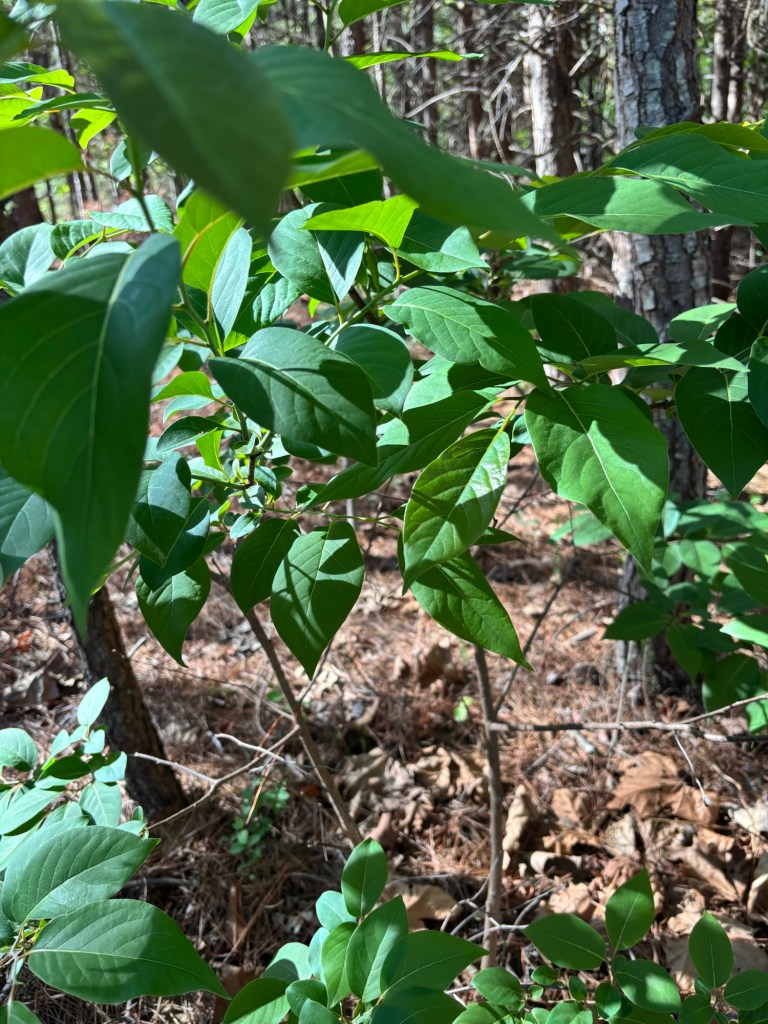
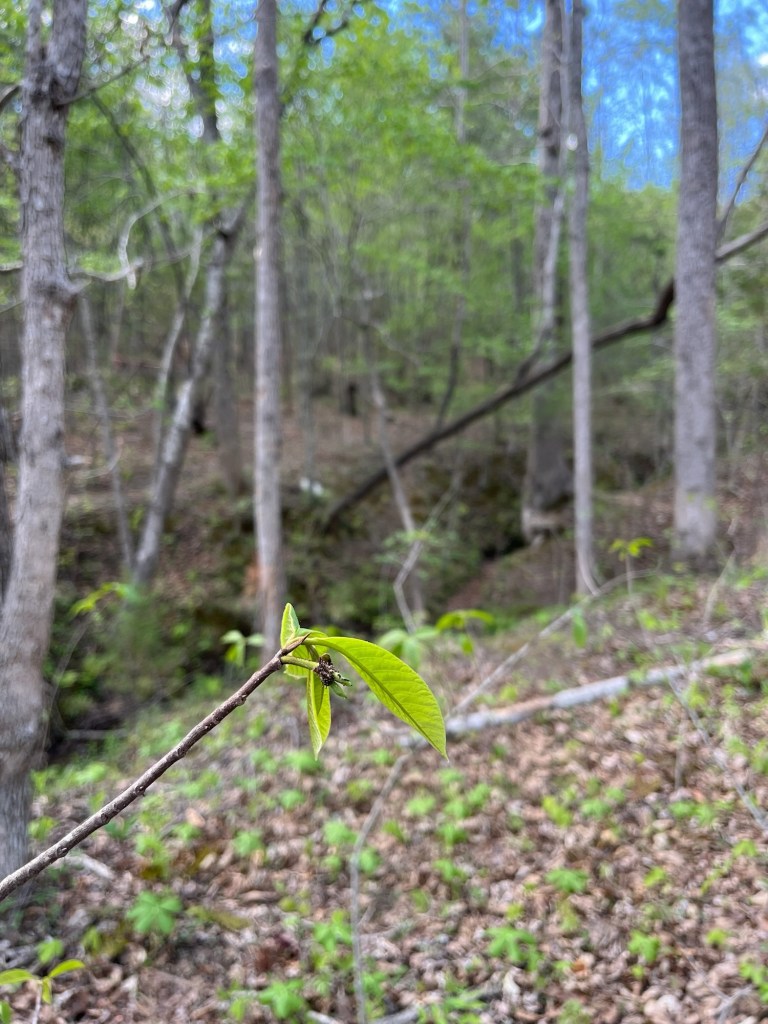
Wolfina aurantiopsis, a rare cup fungus found in oak and pine forests on decaying hardwood sticks. It was found on Dan’s Folly along the south set back line in dark woods.
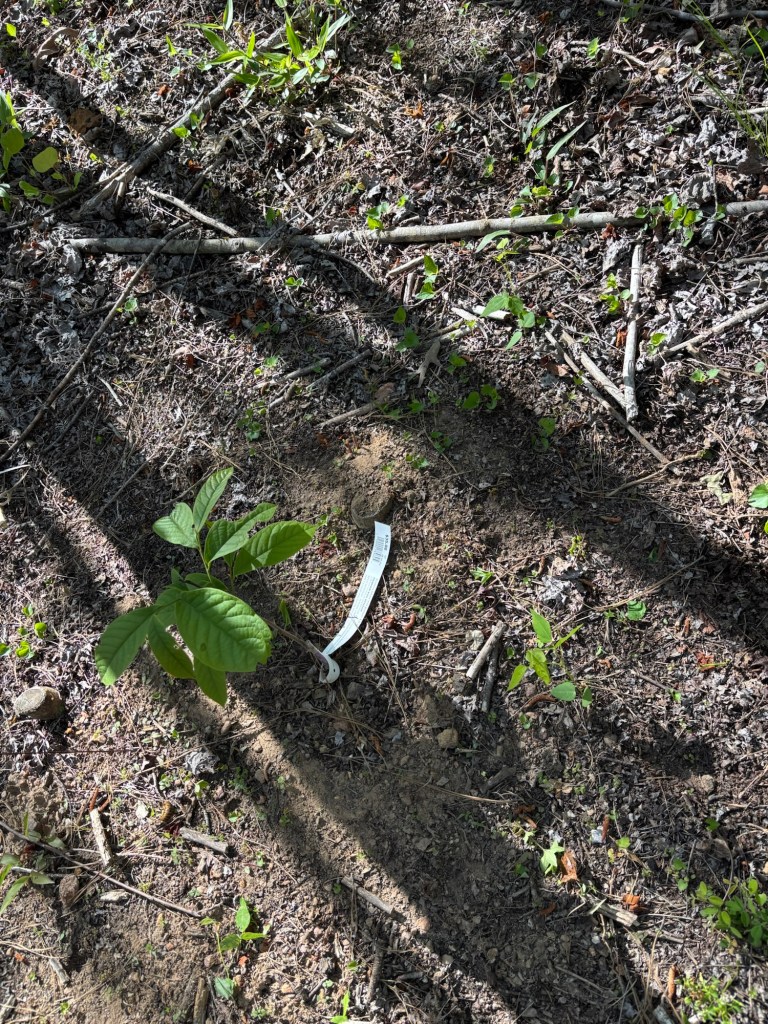
It’s been extra busy lately and we are feeling lucky to get a chance to run over to SAFF and take a walk around. We have gotten near daily rain for which we are grateful. Each time we’ve gone we’ve seen the pawpaws are doing well. Almost all of the grafts are producing leaves. We’ve also seen a few interesting mushrooms which is thrilling.
Amanita rhopalopus, American Club-Footed Lepidella. Mycorrhizal with oak and pine. It’s very large with warts and a strong chlorine smell. Cladonia furcata, many forked Cladonia, along Ridge Trail. A species of lichen with intermediate sensitivity to air pollution. Extracts of this species kill leukemia cells and have potential value in the treatment of cancer. Leucobryum glaucum, Pincushion Moss, bright green from the recent rain, is a common moss of eastern North America and Europe that we find all over SAFF.
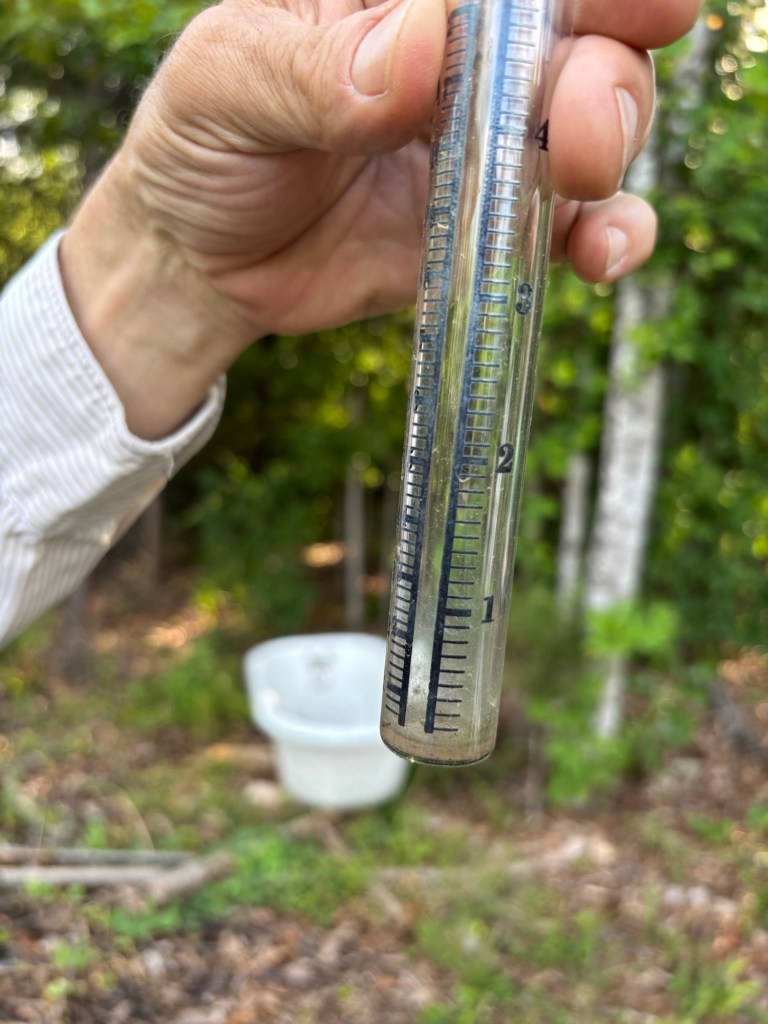
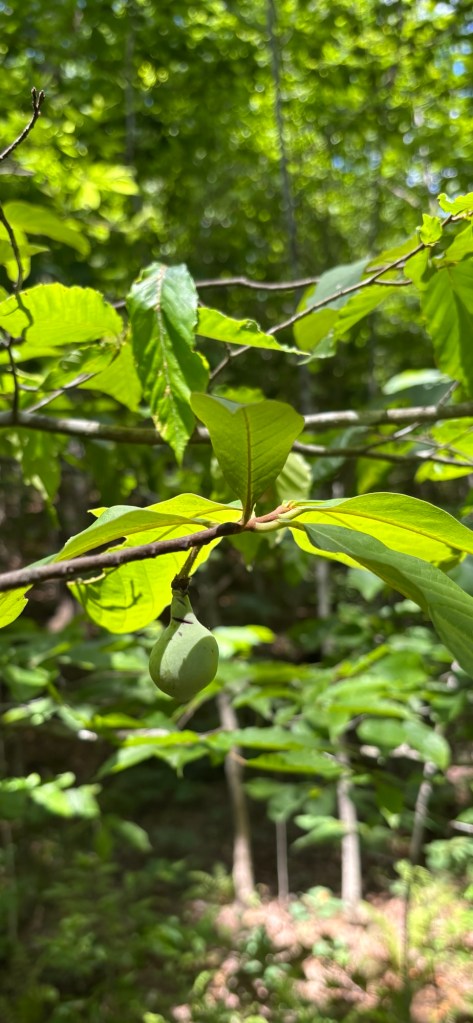
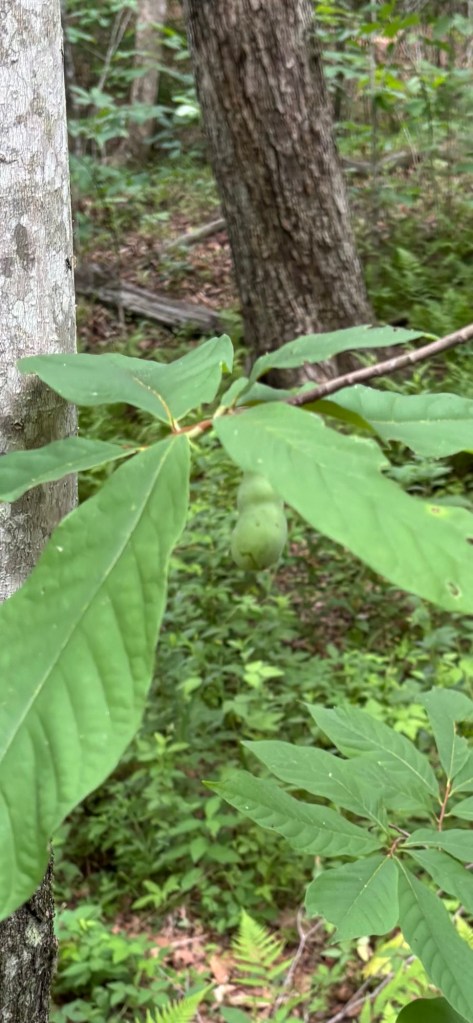
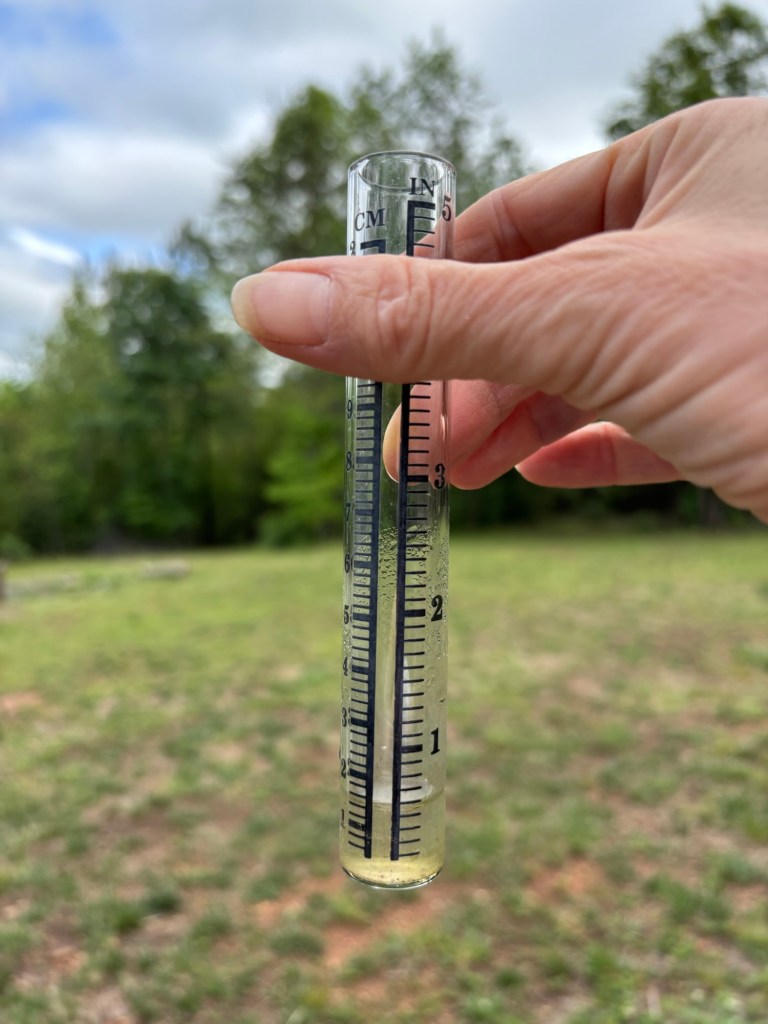
Just a smidgen of rain here at SAFF. Lots of rain in the forecast for the next week. We are really hoping for some of it to fall 🙏🏼SAFF Pawpaw fruit developing in the old clonal colony after multiple years of efforts. Fruit development in the old clonal colony. We are overjoyed and hopeful.
It took us eight days to complete our SAFF 2026 grafting project. We added many heirloom and named Asimina triloba cultivars to contribute to the development of the orchards. We added 20 to the Southside Sally Clonal Colony in the gully, 17 to the Pawpaw Peninsula and about 40 in the largest clonal colony across the creek. We now pray for rain to encourage the roots to grow up through the new cultivar and push through the Buddy Tape at the leaf buds. We will be watching closely for growth if we get some rain.
We also worked on trails. We mowed, weeded and boxed a few areas that were a bit overgrown and ticky. On the last day of working at the Southside Gully with Sally and her clonal clan, we didn’t even see any ticks. 😅 Through all of it, neither of us were bitten and we attribute it to our use of Sawyer’s Permethrin on our clothes (which is poisonous to cats when wet so take care), tucking our socks into our pants well enough, lint rollers to fend off the tiniest attackers and vigilance. Keeping the trails trimmed back and low enough so the ticks can’t get on us from the edges is important as well. We have only seen the Lone Star ticks this year yet they have been in abundance everywhere but especially in wilder spots where grasses are long. Being at the farm most of last week helped us abate the ticks some since we had the time to walk the trails and cut back overhanging trees in readiness for riding our bikes —and tractor – trailer through the widest trails. We also trimmed the grasses back with the string trimmer. Otherwise ticks would easily prevail with their constant hunting of warm blooded mammals.
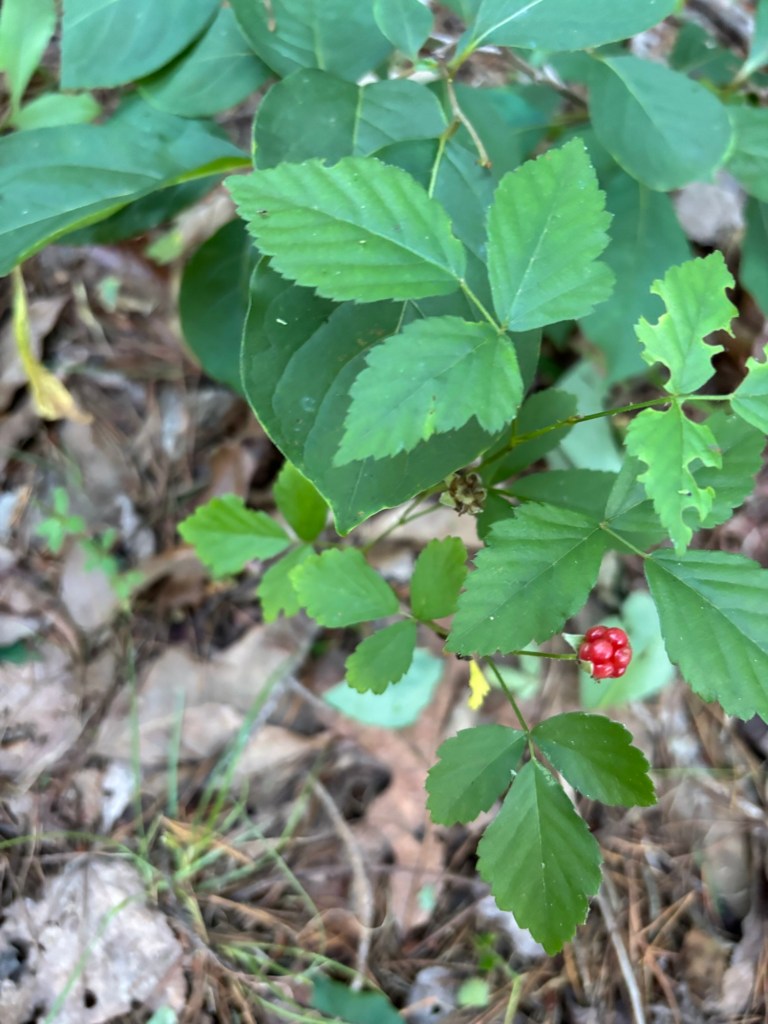
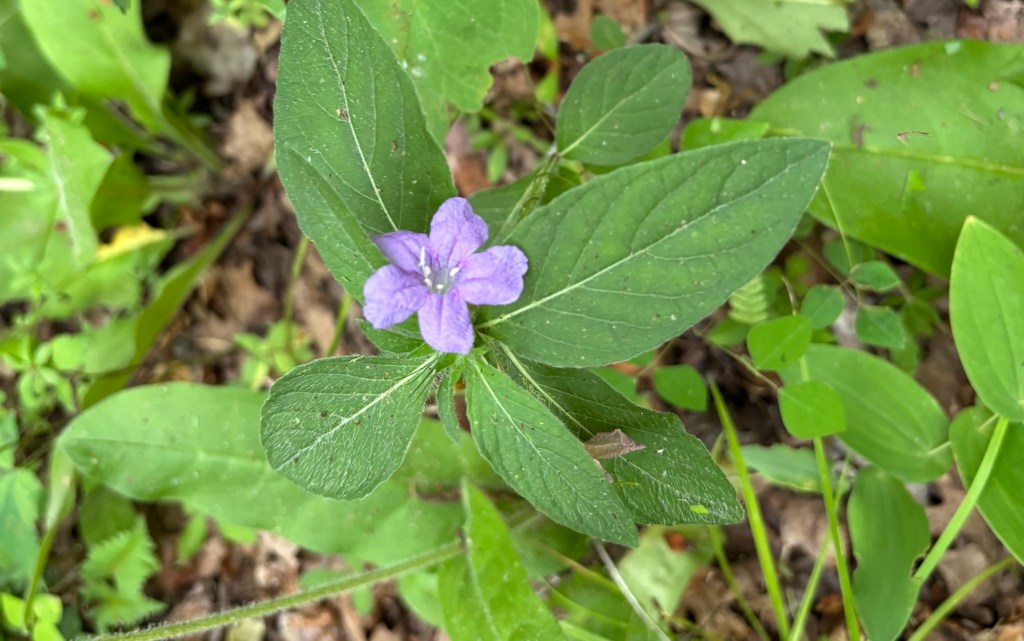
Rubus flagellaris, Common Dewberry, found on Orchard Hill Road near the Seedling Pawpaw Orchard. It supports native ecosystems as a valuable food source for birds, small mammals, insects and people. It’s a source of nectar for pollinators like bees and butterflies. Fruit turns black when ripe. Ruellia caroliniensis, Carolina ruellia, or Carolina wild petunia, is an excellent pollinator attractant found in the old clonal colony pawpaw patch.
We are also in the middle of the 2026 pawpaw seeds opening and being transplanted into deep tree trainer pots to keep under our deck in the shade for the summer until we plant them at SAFF in the fall. We’ve potted up about 45 so far and have three big pots to go. It feels like new babies are being born and it’s a festive time with a lot of gratitude in abundance. The miracle of life is a beautiful thing to witness in any context. A new flower is as beautiful and miraculous and a tree is something you can watch grow for a lifetime. There’s a sweetness in watching each of them grow, that’s for sure.
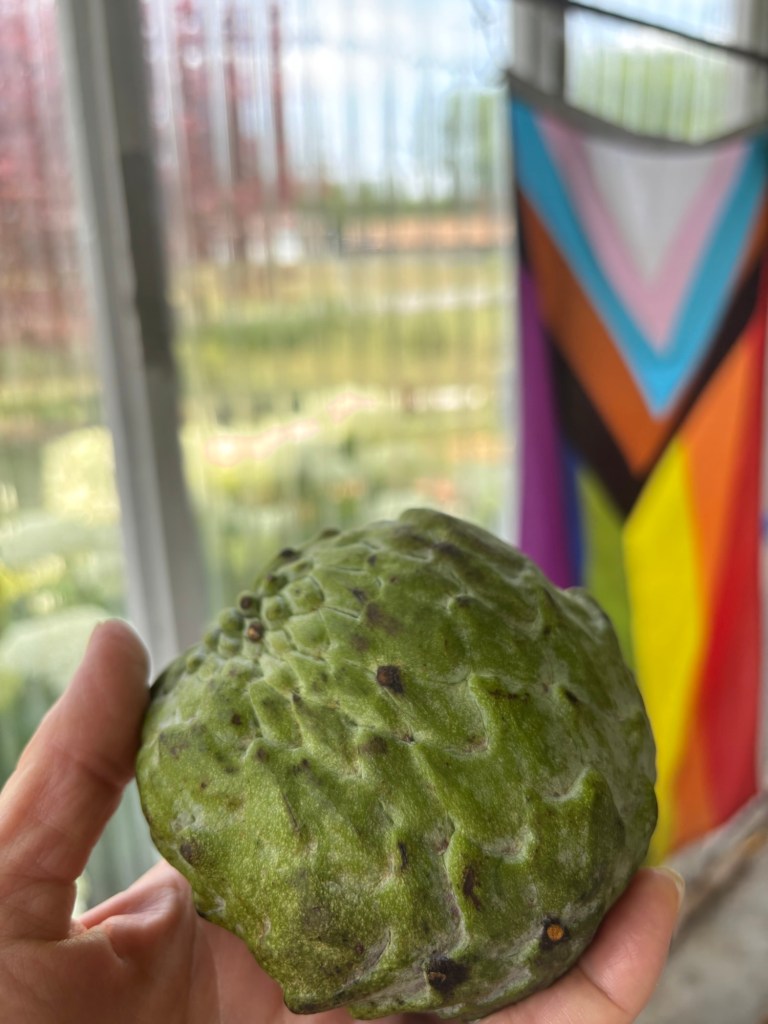
Another pawpaw related project is the Annona cherimola. We’d heard of cherimoya as it’s related closely to the American pawpaw. We couldn’t resist the description of a custardy blend of banana pineapple papaya and strawberry. It is truly delicious and like pawpaws a tropical creamy textured treat. We are saving the seeds of our heart shaped dragon scaled fruit and have one sprouting and potted up already. These won’t be cold hardy trees so they will be kept indoors or in a greenhouse in the winter in order to survive the freezing temperatures in Virginia. We have lemons and avocados already so these cherimoyas will join them in our annual migration indoors.
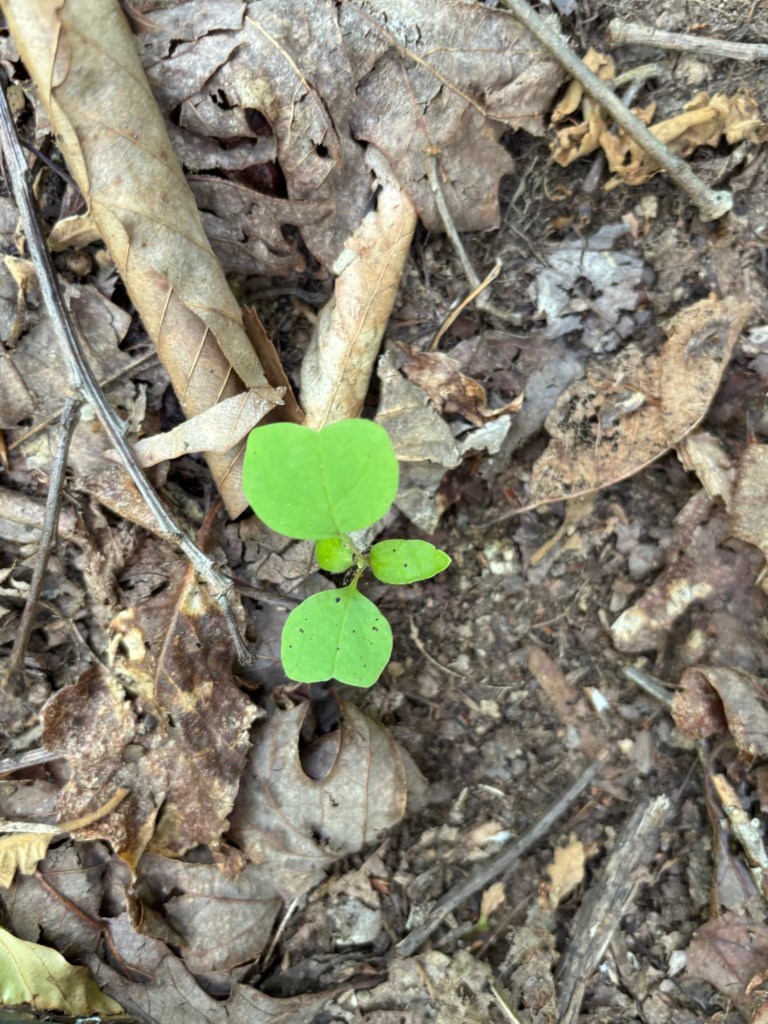
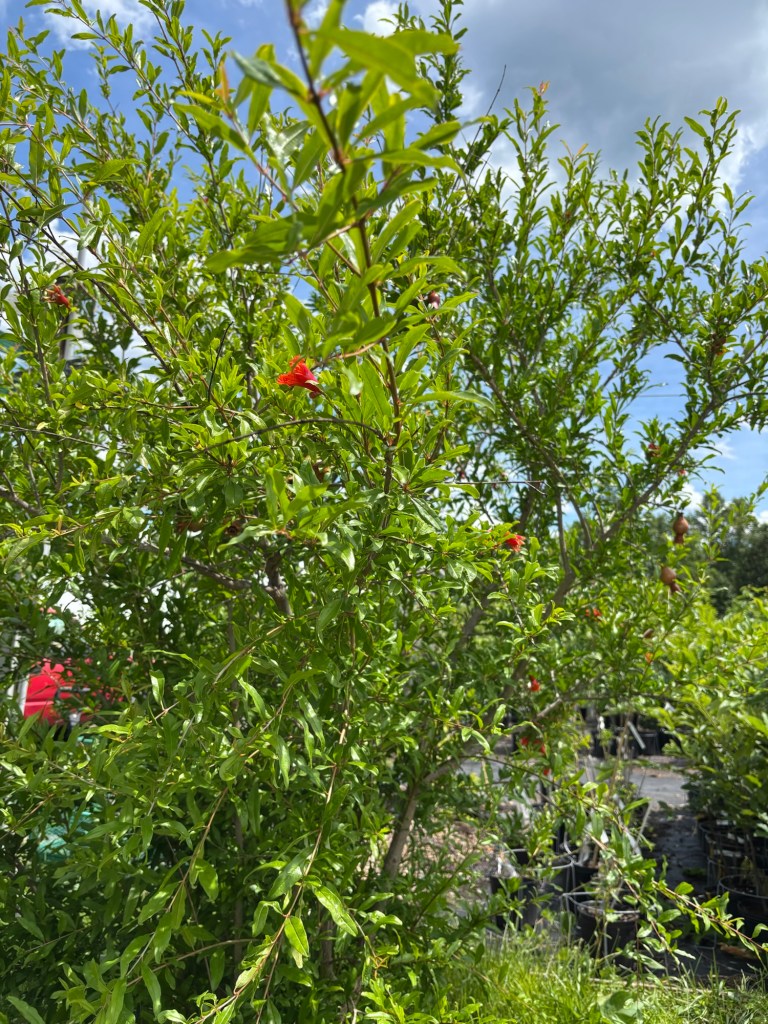
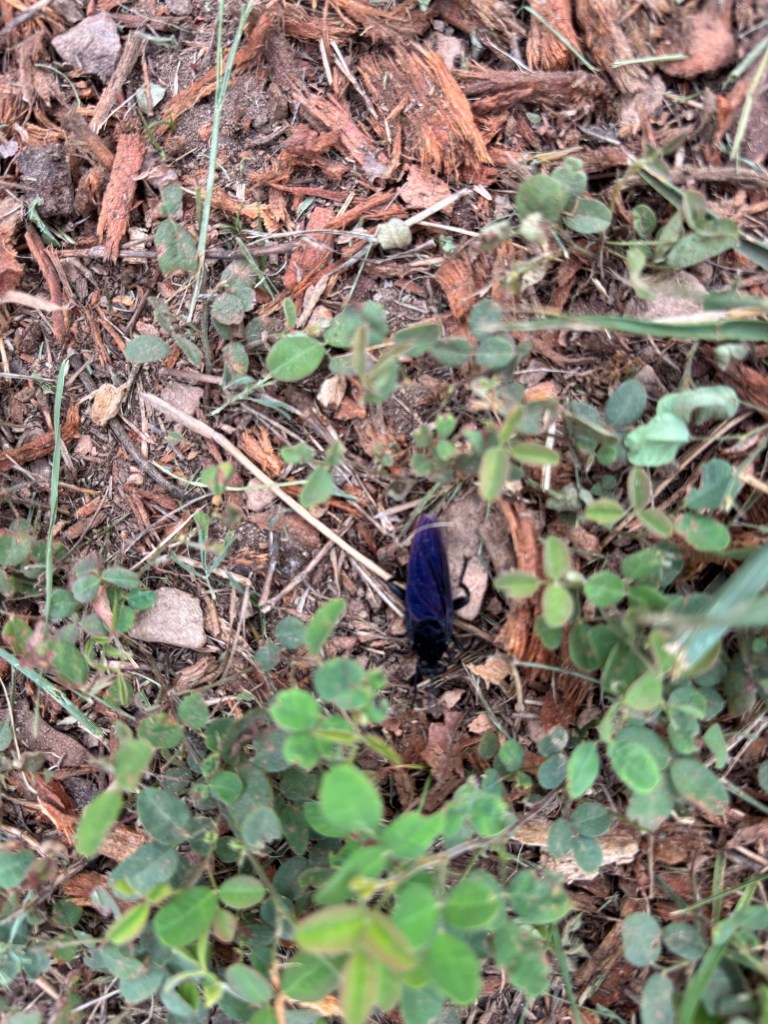
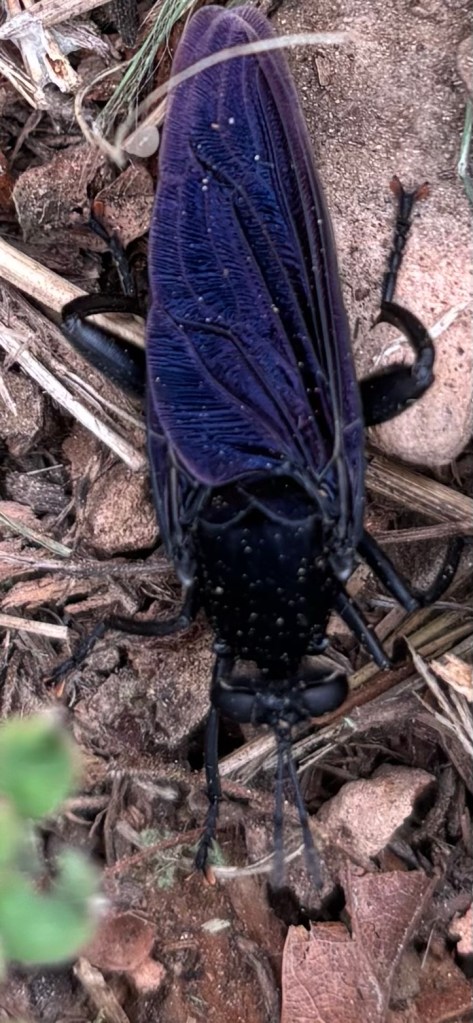
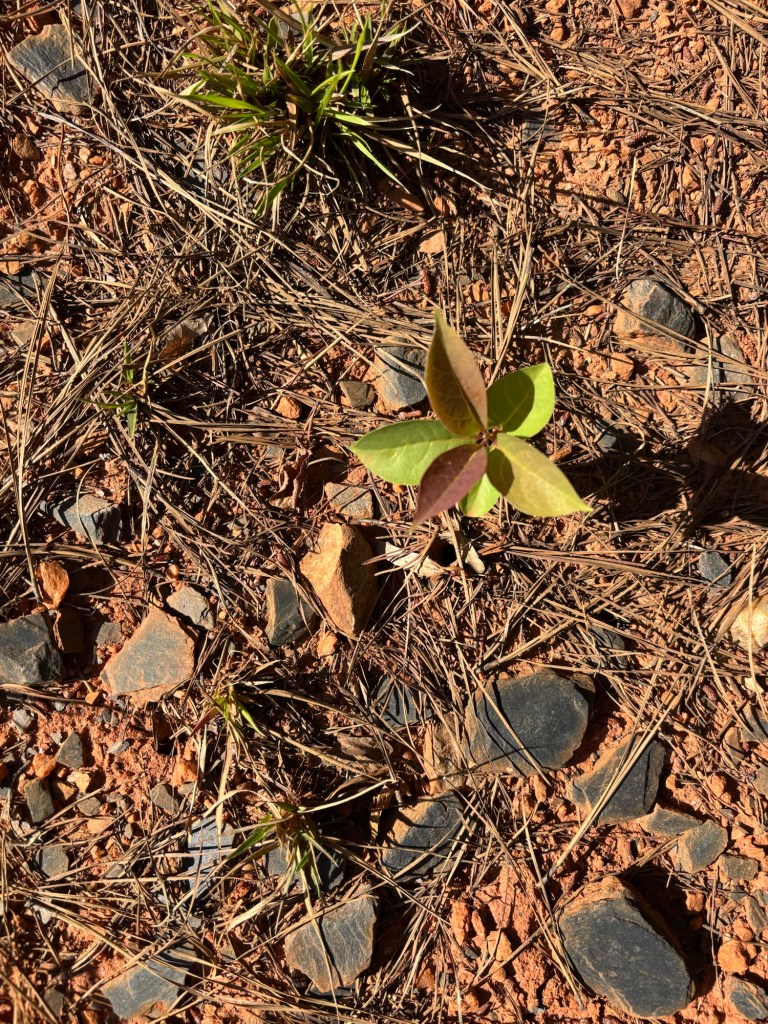
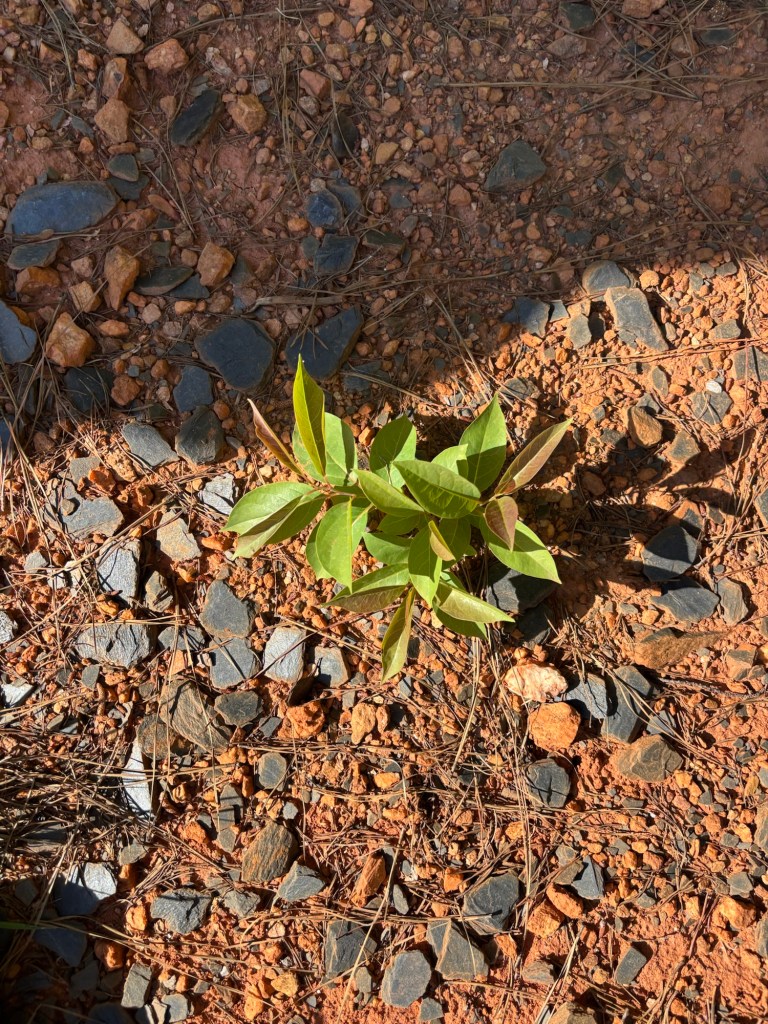
Cherimoya fruit we will grow trees with and overwinter inside.A baby Liriodendron tulipifera, American tuliptree, found at SAFF literally everywhere. This one was in the south end near Three Sister’s Overlook.Pomegranates at Edible Landscaping yesterday afternoon on our way back from the farm. They are beautiful shrub like trees with bright flowers. Mydas clavatus, Clubbed Mydas Fly, a mimic of spider wasps was striking in its beauty. The Mydas clavatus is beneficial feeding on nectar and larvae preying on other insect grubs in soil and decaying wood making them pollinators and natural pest controllers. And beautiful!
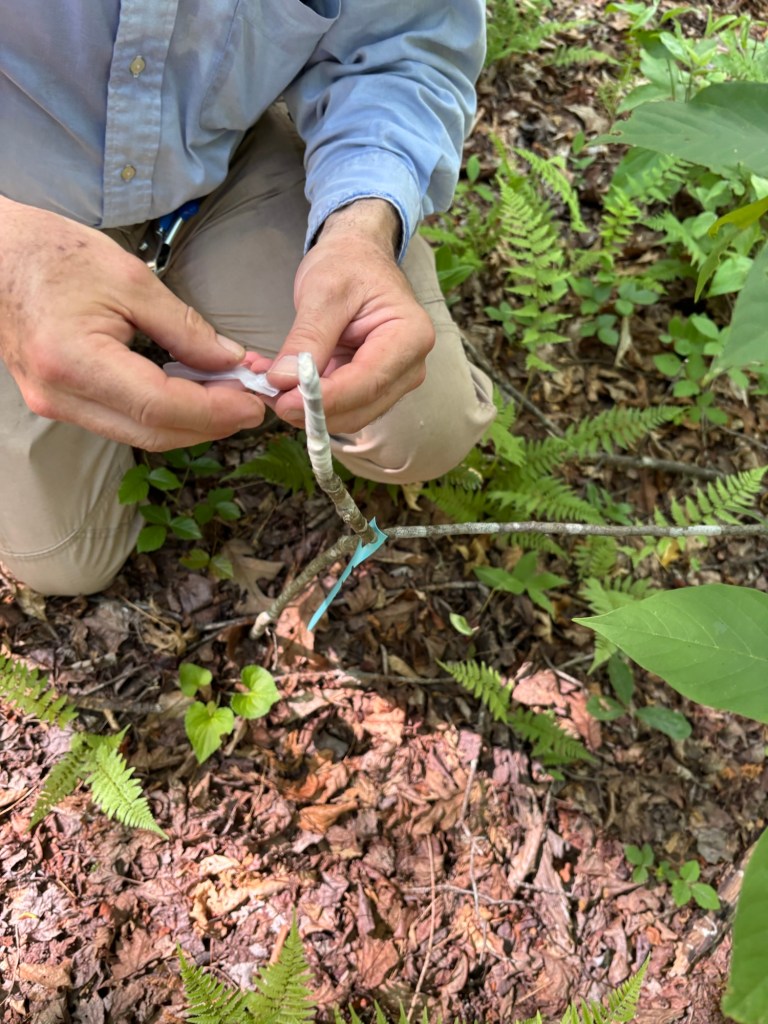
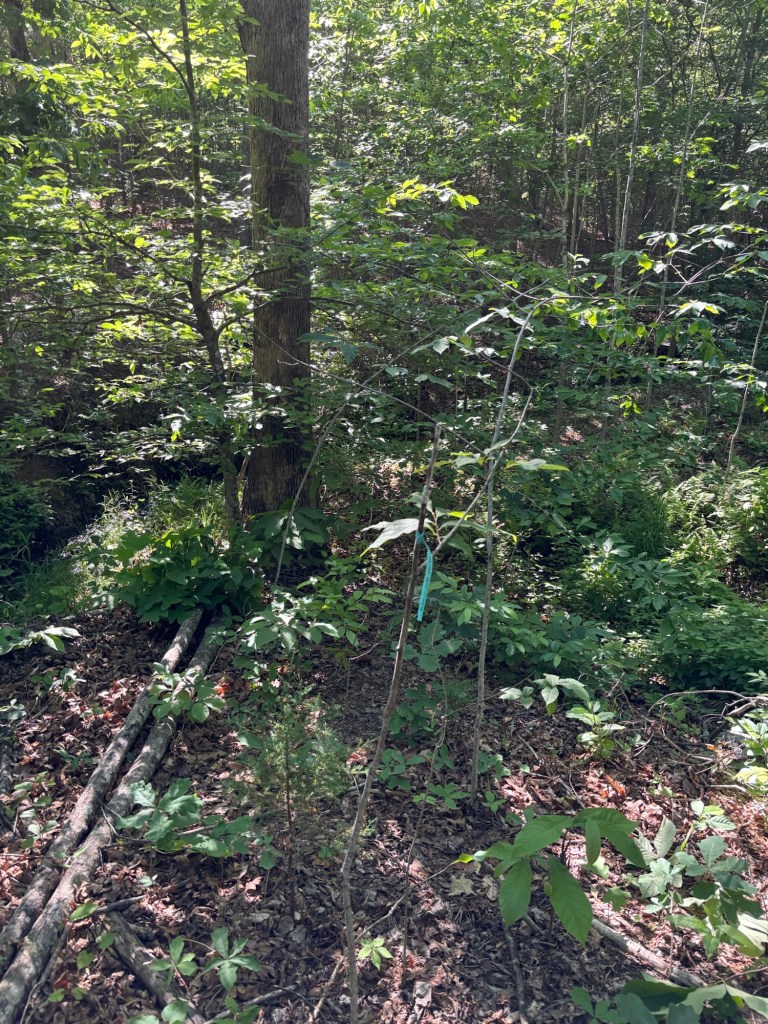
Chris taping the Kentucky Champion Scion wood to the old clonal colony Asimina triloba with cambium matched up for best results. Old clonal colony graft of Rebecca’s Gold cultivar in order to help with fruiting and production by adding novel dna.
On the trip over, we saw a baby black bear looking adorable bobbling and running after its mother into the woods. It was a special moment to lock eyes with this young beautiful creature.
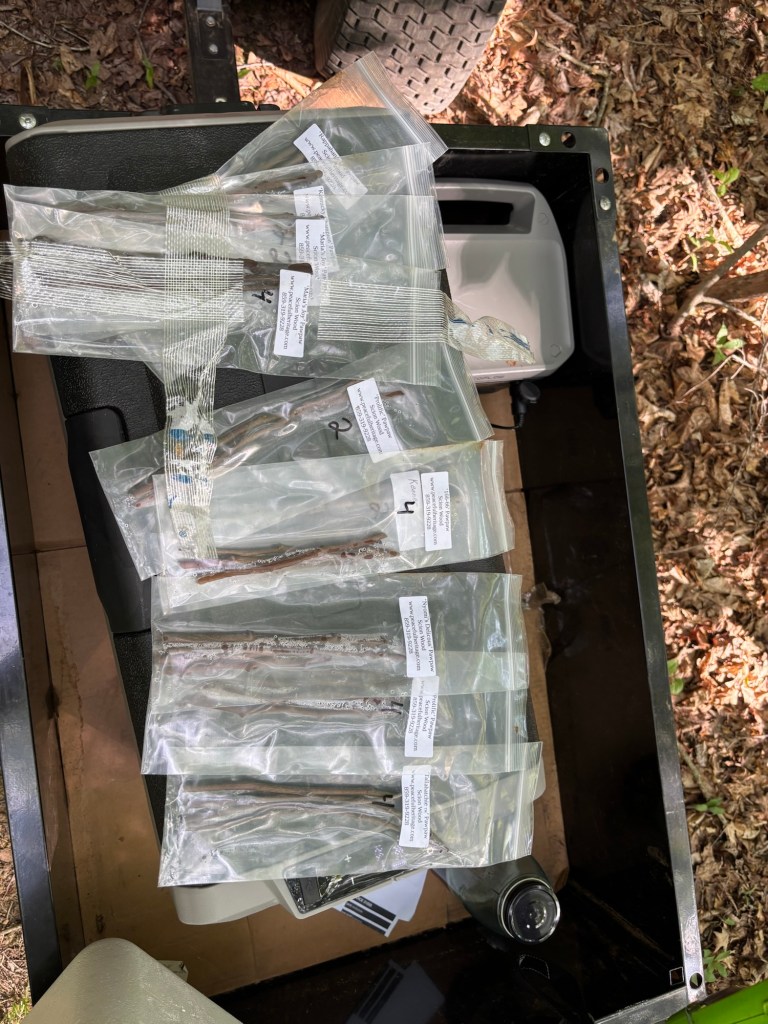
Once at SAFF, we loaded up the trailer with some supplies and the cooler to keep the Scion wood cold while we worked. We were able to get about 13 done yesterday with 30 left to do. We added 4 Tallahatchie, 2 Rappahanock, 1 Nyomis Delicious, 4 Rebecca’s Gold and 2 Kentucky Champions. Amazingly, we didn’t see any ticks. They’ve been pretty active this year. We felt lucky to avoid them yesterday. Especially being down in the waterway and the clonal colony where it is most humid.
On the way back home, we saw an even smaller baby bear toddling after its mother into the woods. 😀
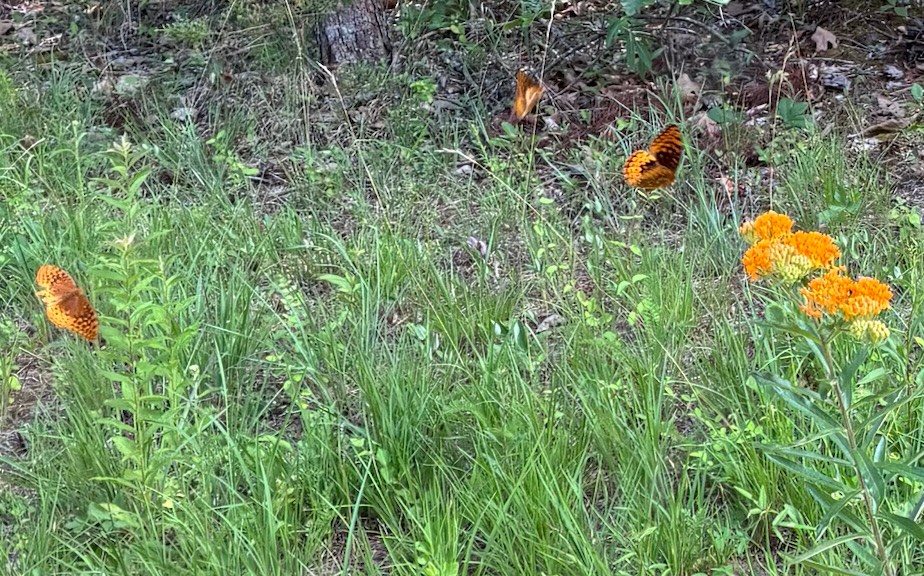
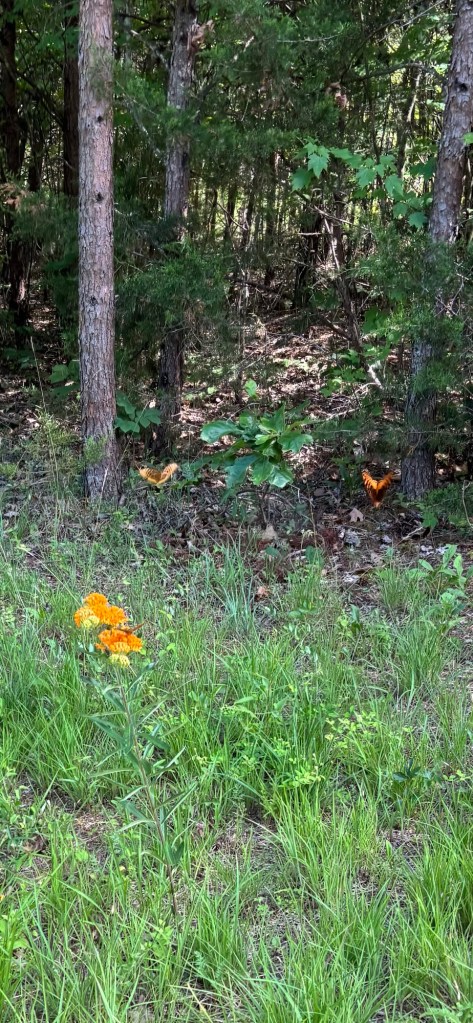
Some of our Scion wood we will use to increase fruit production in the clonal colony, pawpaw peninsula and the south gully at SAFF. Driving the tractor down the southern edge we saw these fritillaries flitting about excitedly pollinating the Milkweed.
SAFF got about half and inch more. So far it’s rained about 2.3 inches from this weather system that has stalled over Virginia.
When the rain comes, it’s hard not to want to be out there in the woods looking for mushrooms. They are coming. The saprophytic fungi begin fruiting right away so as not to miss their opportunity to break down and absorb decaying matter. No matter the season, when it rains, they appear. Although it can take chanterelles anywhere from one to two weeks to produce fruiting bodies ready for harvest, three to five days after rains begin is a great time to check mushroom spots.
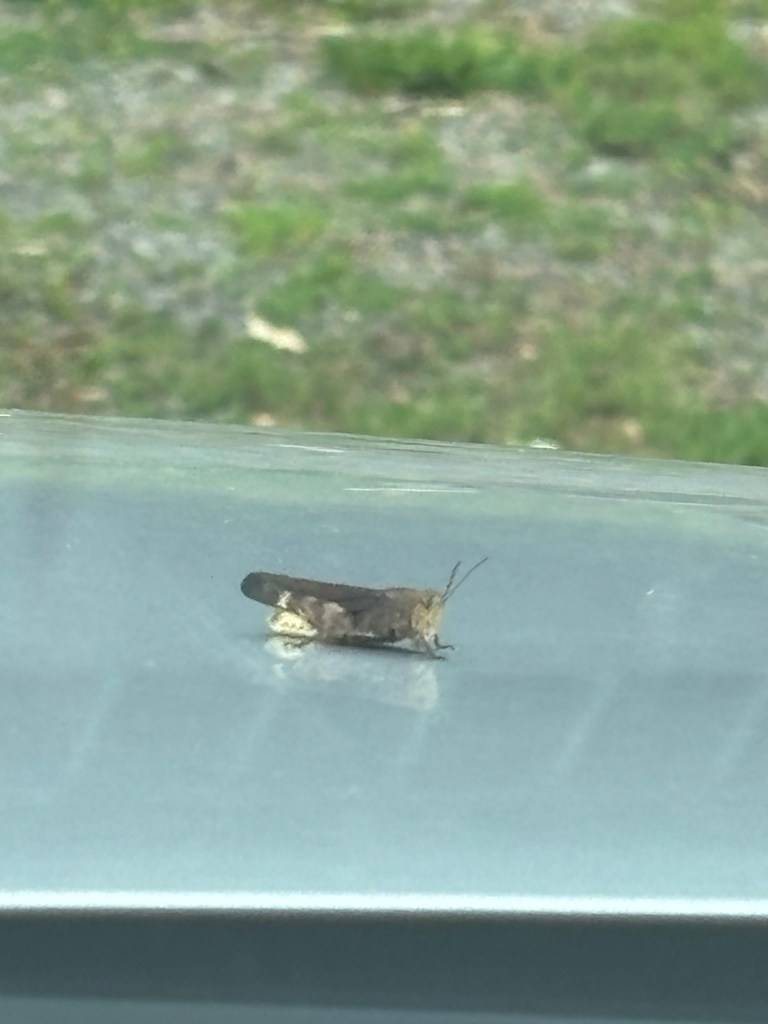
Arphia sulphurea, Sulphur winged Grasshopper, jumped on the truck right when we pulled into SAFF. When it flew off, we saw his bright yellow hind wings. With the rain and moisture, Amblyomma americanum, lone star ticks were out again in abundance.Ticks are worse in spring. We watch for them and stay vigilant. We coat our clothes in permethrin. Canopy over the old clonal colony pawpaw patch. Botrypus virginianus, rattlesnake fern, found by the main waterway at bottom of Ridge Trail. A perennial fern in the Adder’s tongue family. They grow in rich moist woods in dense shade.
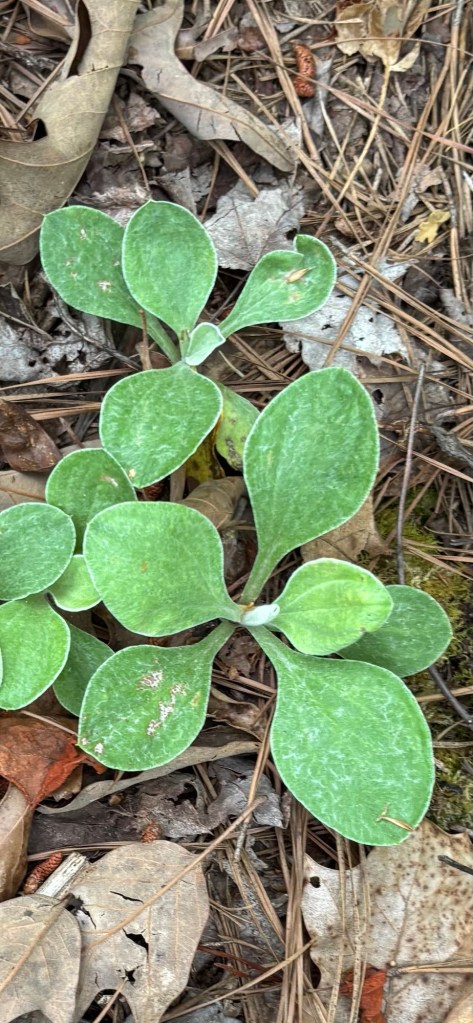
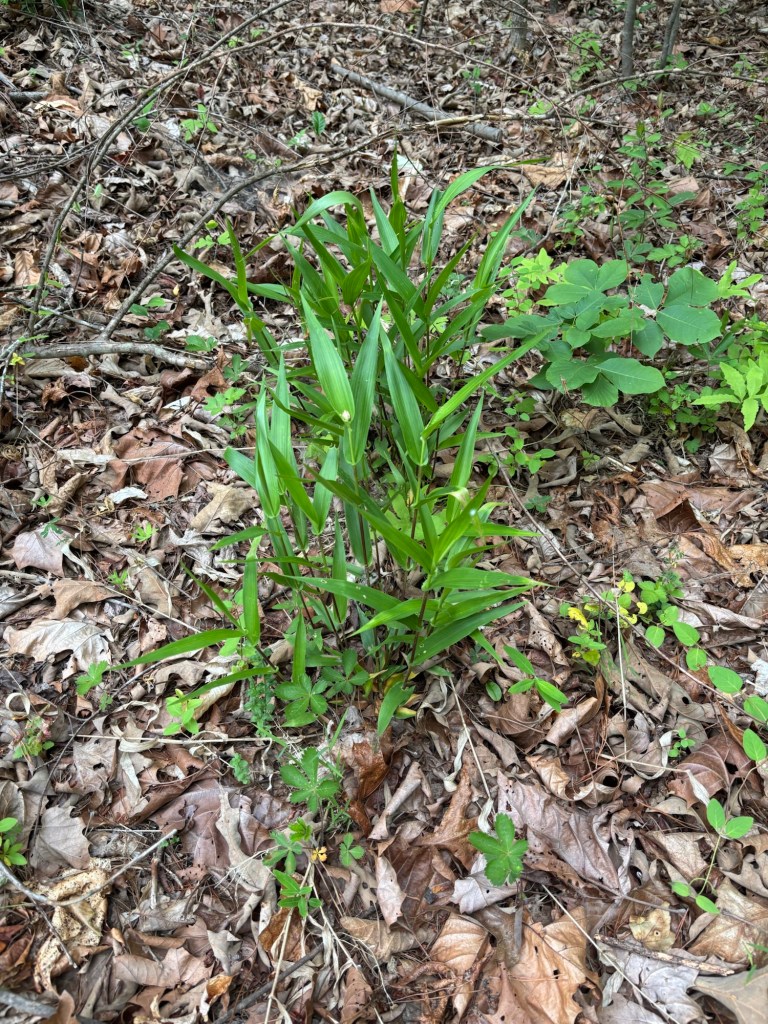
Antennaria parlinii, Parlin’s Pussytoes, found along the old farm road near the culvert. It’s a native, mat forming perennial ground cover. Along with Antennaria plantaginifolia, plaintain-leaved pussytoes, which we found earlier this spring throughout SAFF, they are drought tolerant, deer resistant and low maintenance. They are also larval hosts for the American lady butterfly. The spreading root system stabilizes soil and controls erosion.Dichanthelium clandestinum, deertongue, a native perennial grass good for erosion control and a food source for birds like turkeys and sparrows.
Yesterday afternoon at SAFF it was cooler and windy before the storms hit. 72 was the high with thick cloud cover. The rain gauge was empty. Not even a drop. We took the chainsaw with us as we walked our new access road to the old farm road and cleared stumps and smoothed out any pits. We’ve named it Persimmon Road in honor of all the Diospyros virginiana trees we’ve found in the area. We continued all the way down the old farm road past the culvert and opened up the back half to the tractor. Then we came back down and turned Orchard Hill Trail into a road for the tractor and trailer to access as well. We are officially all the way in the new pawpaw patch of seedlings planted last year! We are very pleased to be able to get to them with supplies and mow paths and keep the area free from overcrowding the Asimina triloba. We are also now very well poised to continue planting this year’s seedlings right along up the hill with much less effort than last year.
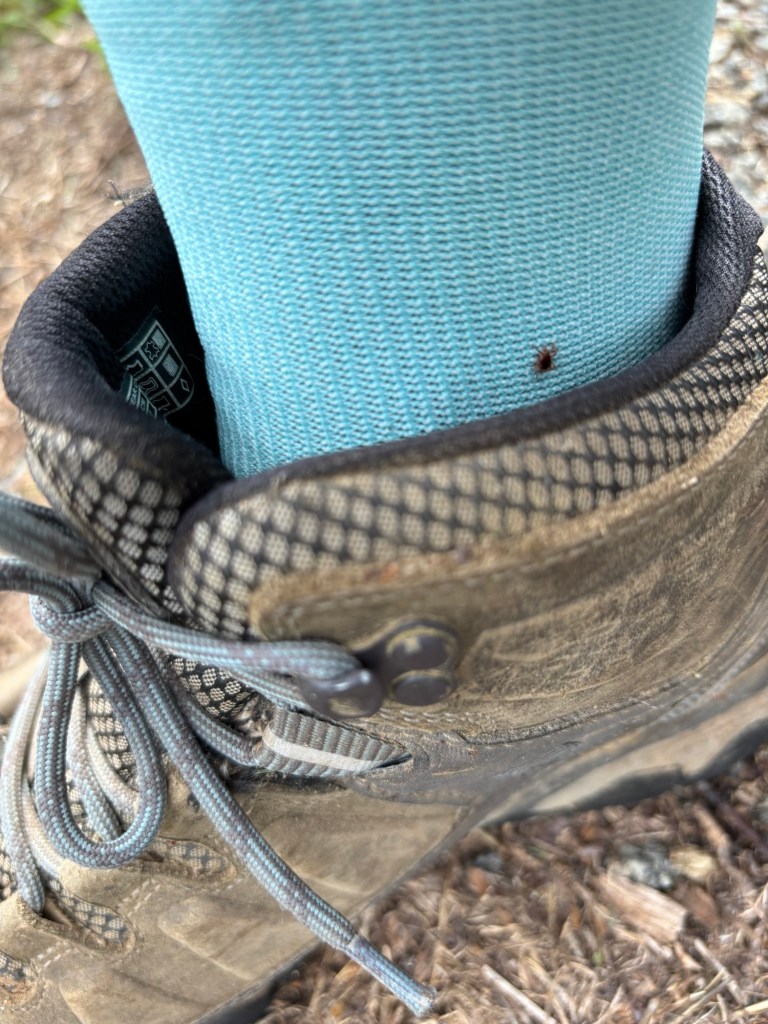
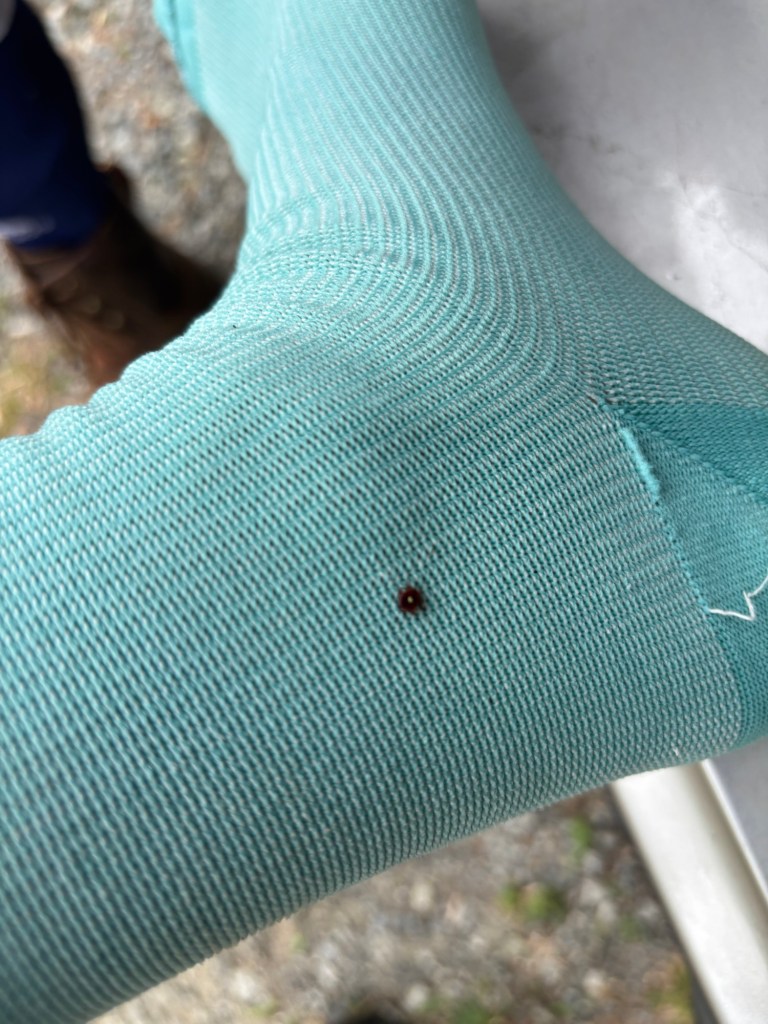
Everything was very dry and crunchy and yet we still had multiple lone star, Amblyomma americanum, tick encounters. Two nymphs and an adult female found on our socks not looking well after being exposed to the Sawyer’s permethrin we soaked them in. We got more blurry pictures of the lone star ticks. Most other types of ticks will stay burrowed into moist underground areas while it’s this dry. The lone star ticks are aggressively seeking hosts all over the east coast and midwestern United States.
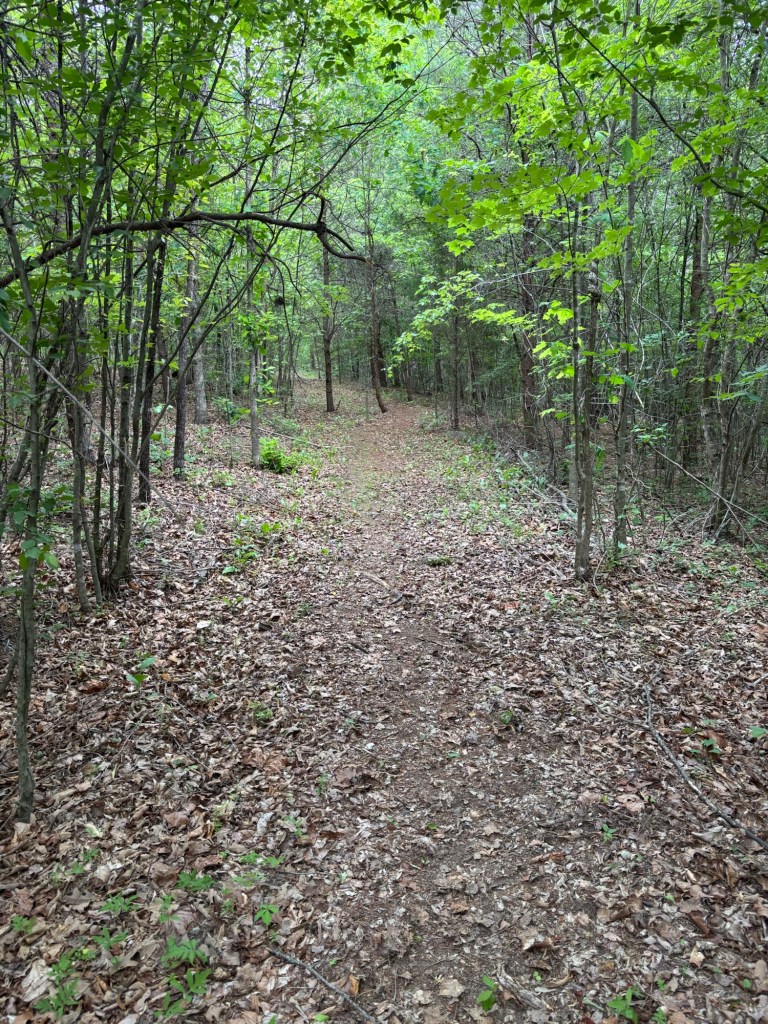
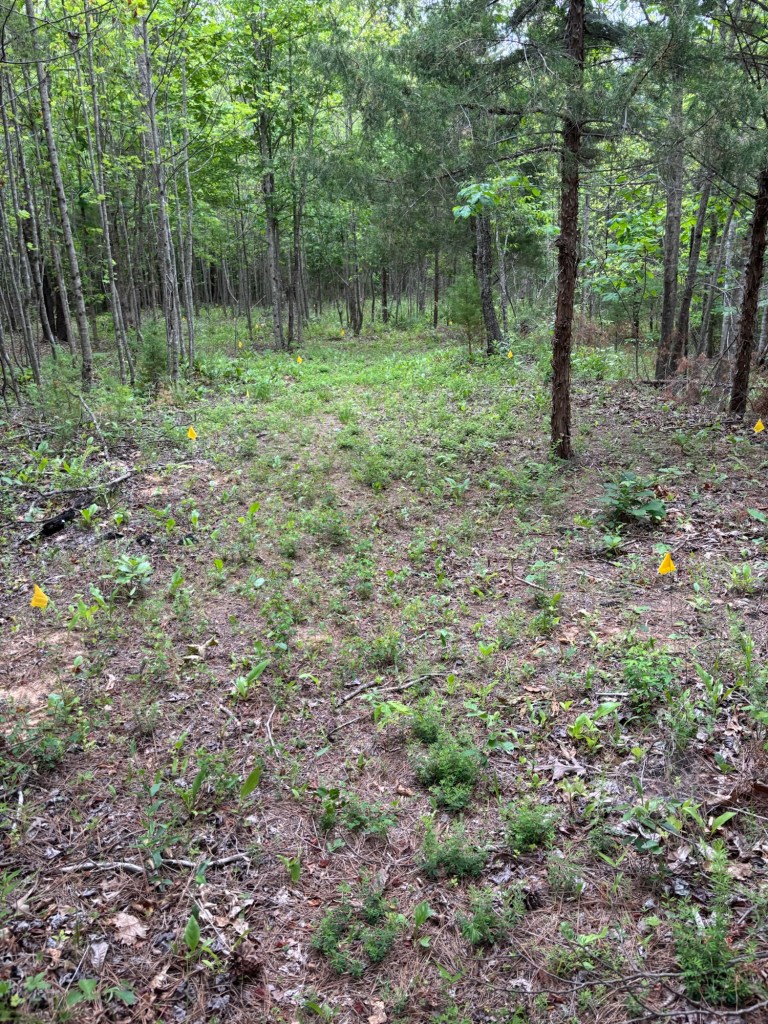
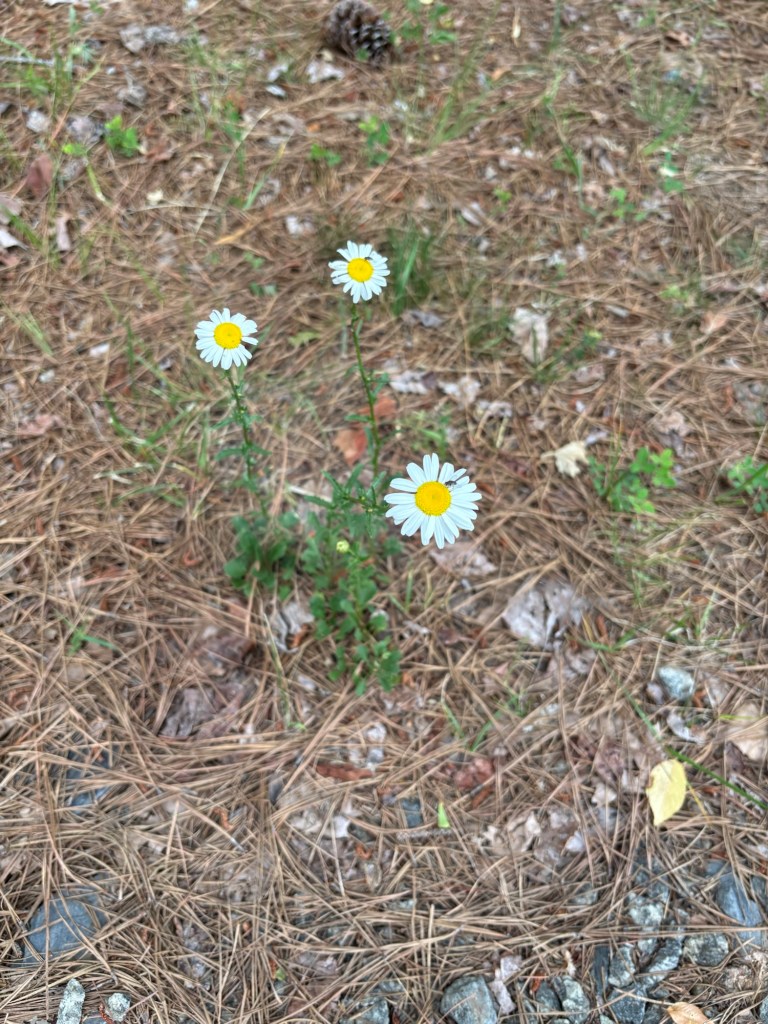
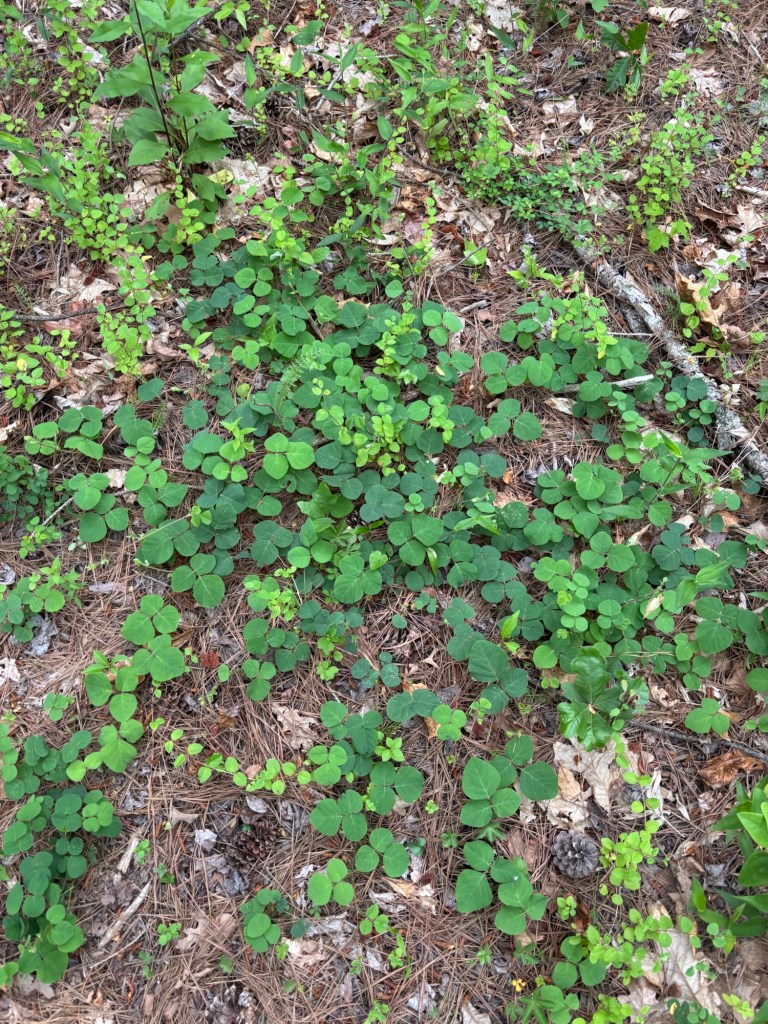
Old farm road looking northeast.Yellow flags show where the Rockfish River native Asimina triloba seedlings are planted. Most of the plants growing in the middle are nitrogen fixers and will be chopped and dropped by the tractor to feed the trees and keep our paths clear. Besides pulling it out, we have plans to use cardboard and heavy mulch to help abate any invasive privet, Japanese stilt grass or honeysuckle.Orchard Hill Road just off the new Pawpaw patch of seedlings and cultivars planted the last two years.Leucanthemum vulgare, oxeye daisy. An invasive from Europe that outcompetes in Virginia. It is classified as an aggressive weed. Desmodium rotundifolium, Round leaved trailing Tick trefoil, found below the loblolly pine at the Asimina triloba seedling orchard and all over SAFF. A trailing, mat forming native perennial legume valued as a nitrogen fixer and a food source for deer wild turkey and quail. It also serves as a larval host plant for butterflies such as Variegated Fritillary and the Southern Cloudywing. It is pleasing to look at with the light and dark shades of green and round leaves.Andersonglossum virginianum, wild comfrey, or blue hounds tongue, is a native perennial wildflower in the borage family. It’s a tough deer resistant woodland ground cover that stabilizes soil as well as prevents erosion. This is different than the European medicinal comfrey though it shares certain properties and also some toxic alkaloids.
We watched the FarmCam last night and today. It’s been raining and storming and drizzling since about 5:30pm last night. Weather says .7” of rainfall in last 24 hours and .45” expected in next 24 hours. 🎉🙌🙏🏼
An adult female lone star tick dying of permethrin poisoning.
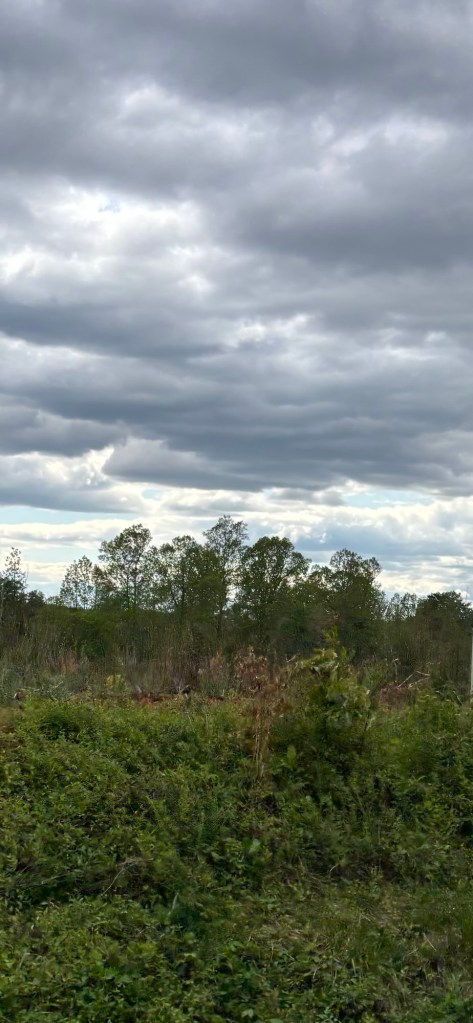
Broody Thursday skies in Buckingham, Virginia as we drove to the county offices.
We drove over to meet the delivery driver for our roof insulation yesterday. After we got that stored, we ran to the county offices to drop off paperwork for permits. We came back and decided to go for a walk. We were glad to see all of the Asimina triloba that had been damaged in the freeze have begun to leaf back out, even the Tallahatchie. Although it had sprouted some below the graft leaf shoots that we plucked off. The late cold really stressed it. We were glad to see it made it. We are still waiting to begin grafting the pawpaws and persimmon trees when it’s up into to the 50s at night and there’s no rain for 3 days before or after. It’s been chilly here in Virginia this week overnight into the low 40s still. It’s been lovely.
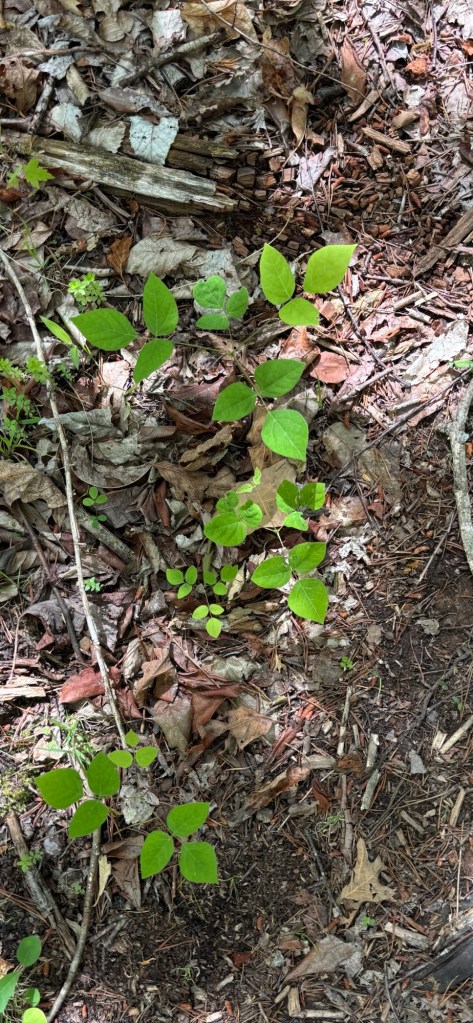
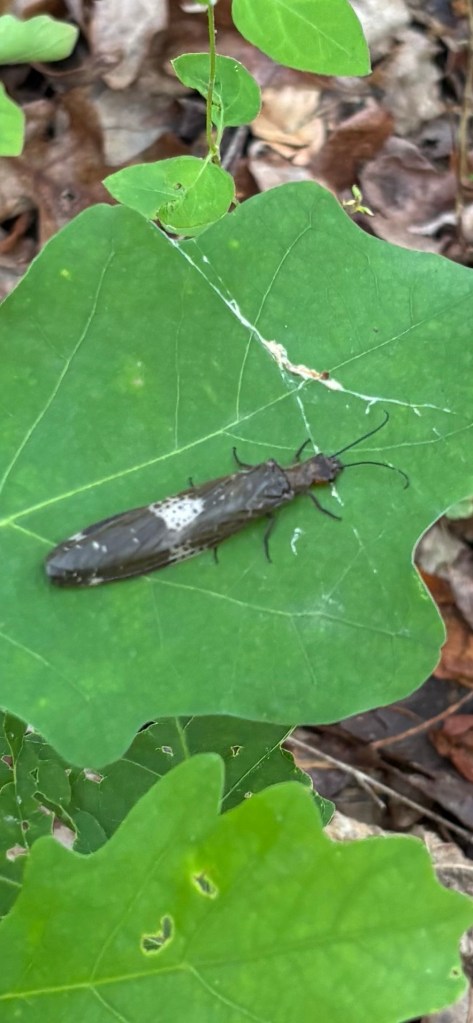
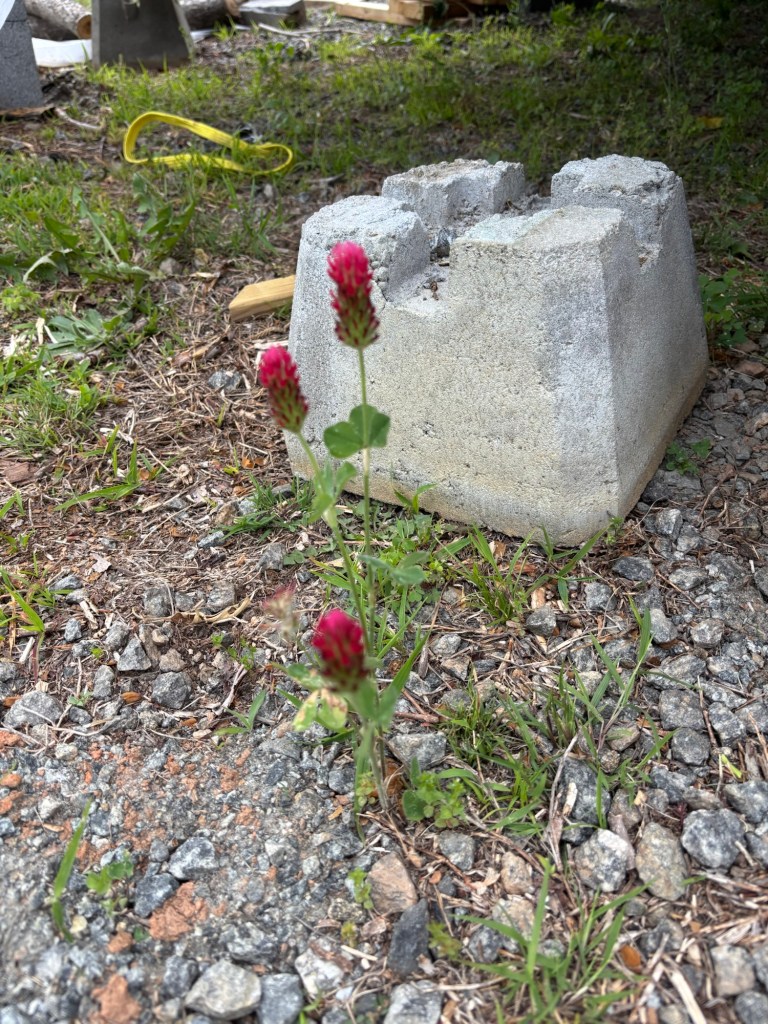
We are seeing a lot of Amphicarpaea bracteata, American hog peanut, all over SAFF. It feeds many creatures, including people, as well as fixes nitrogen in the soil. We feel lucky to have it growing to feed our plants and trees. The leaf with the purple center and green edges is Salvia lyrata, lyreleaf sage. It is edible and in the mint family. Native Americans made tea with the leaves. It is an adaptable native herbaceous perennial. It withstands foot traffic well. The flowers support multiple bees, butterflies and hummingbirds. We will try to get a photo of it flowering. Nigronia fasciata, Banded dark fish fly, found along the main waterway at the bottom. This is an interesting find as an adult since it has a brief lifespan of only one or two weeks. They mate and lay eggs at the edge of the water right where we found it. They don’t even have a mouth in this part of their lifecycle since they don’t live long enough to eat. The larval stage can last three years. Their presence at the waterway is a sign of very clean water and a balanced, healthy aquatic ecosystem. They are predators in the larval stage and more intimidating. The best of five blurry pics of this lone star tick, Amblyomma americanum, on Fern Trail hanging off the edge of the plant on the trail waiting to grab on to the next creature that comes along. These ticks are aggressive and out looking for food when other types of ticks are hiding under leaf litter. We recently realized they can cause Alpha gal syndrome from a brief exposure whereas most ticks need hours attached to their hosts to transmit diseases. Be careful out there! Yuck! The three sisters on Ridge Trail overlooking the old colony Pawpaw Patch.Across the main waterway to the old colony pawpaw patch. All of the understory trees are Asimina triloba.Asimina triloba sprouting from the roots of elder trees even. Crimson clover, Trifolium incarnatum, a cool season fast growing annual legume we planted as a cover crop in the clearing to suppress weeds and fix nitrogen in the soil.The new access road connecting our driveway to the Old Farm Road.
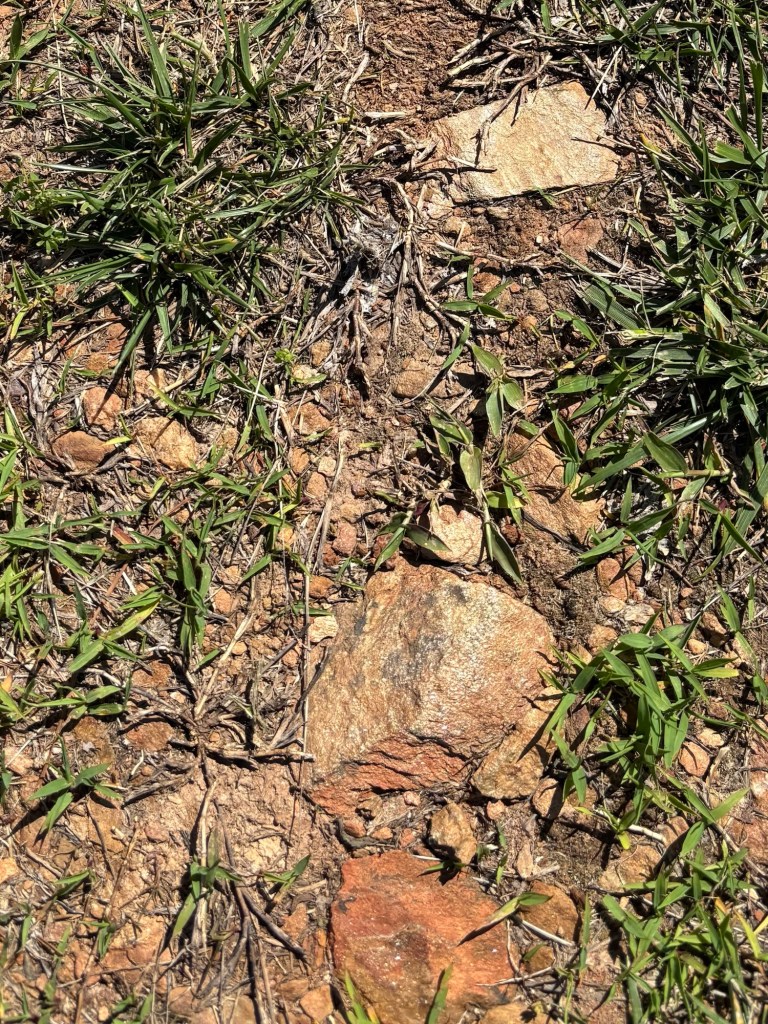
Rocky clearing up top near the shed. Cladrastis kentukea, Kentucky yellow wood, growing near the access road to the old farm road which as of yesterday is now open for use.
Yesterday was 74 degrees and sunny out at SAFF. We finally finished our road connecting the driveway to the old farm road. This gives us tractor and trailer access to the new pawpaw seedling orchard and the cultivars. We are very relieved. The trees we planted are all looking great—except our Tallahatchie Asimina triloba Peterson cultivar that got zapped by the cold. It hasn’t leafed back out but it still has time to recover. More water will be the best way for it to heal and leaf back out. Now we can get water, compost and mulch down the hill with ease. This will be beyond great to have when we begin planting this year.
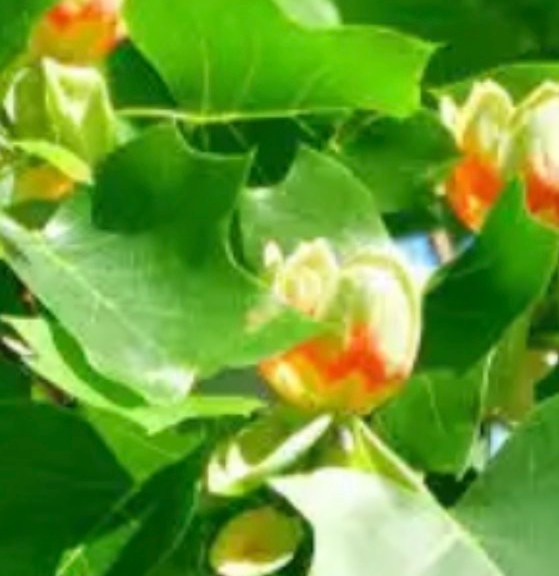
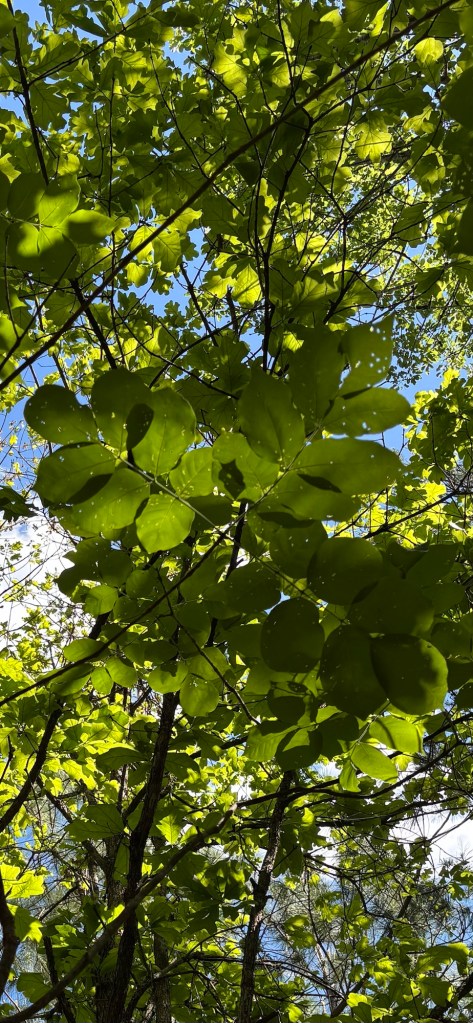
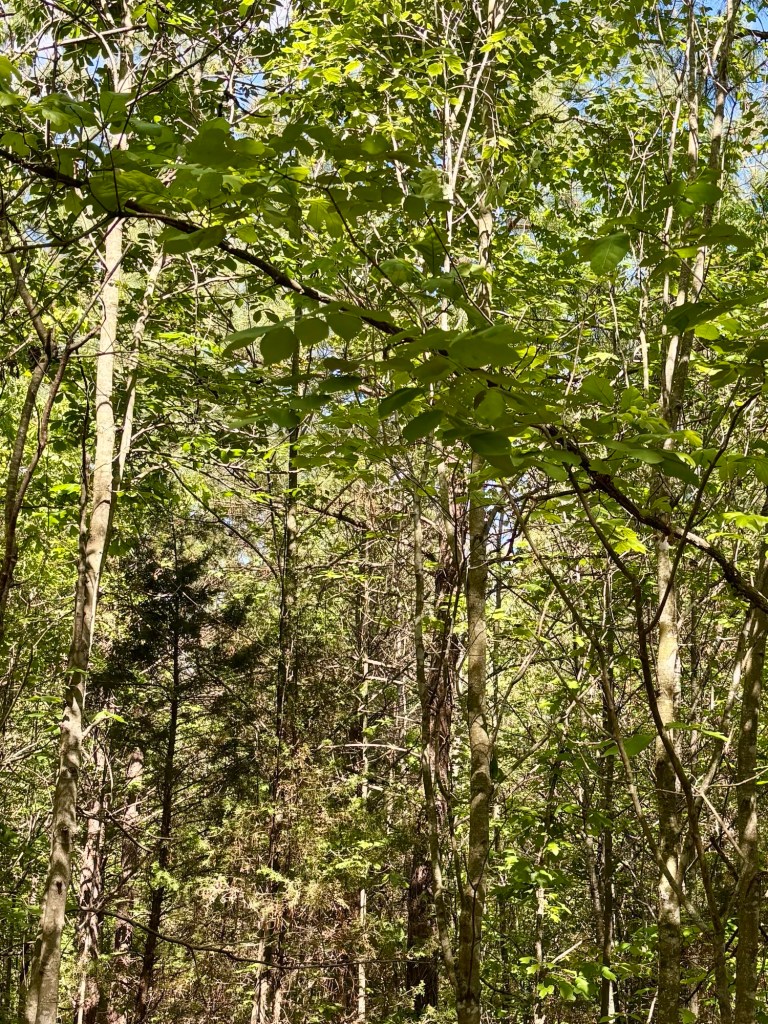
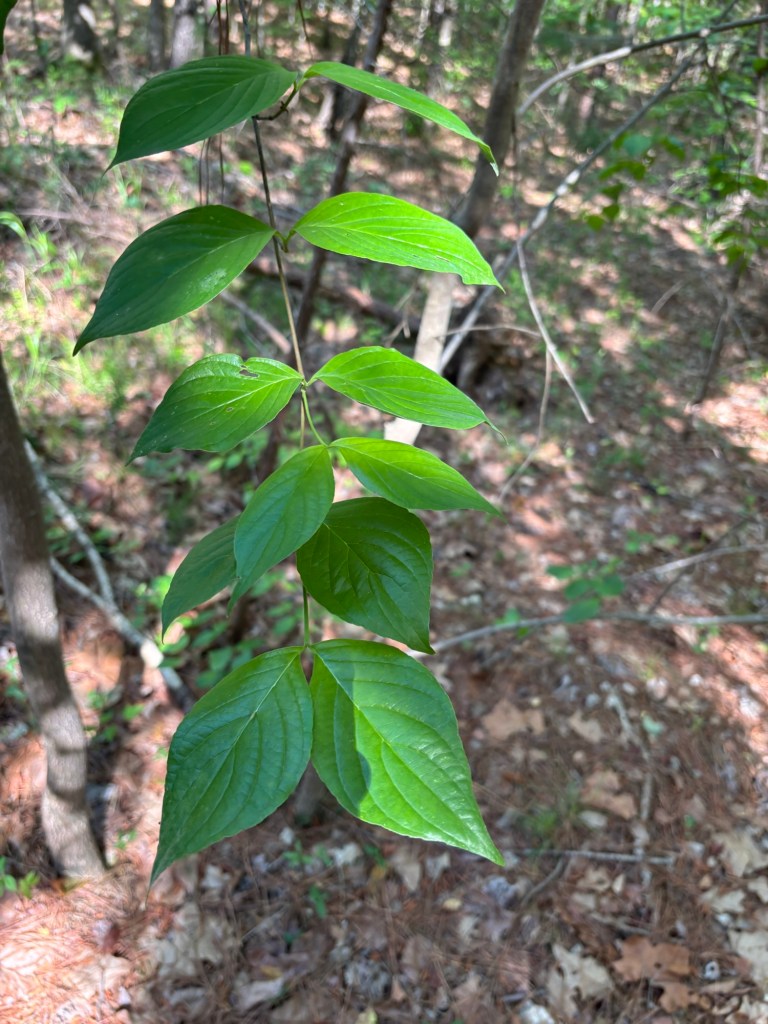
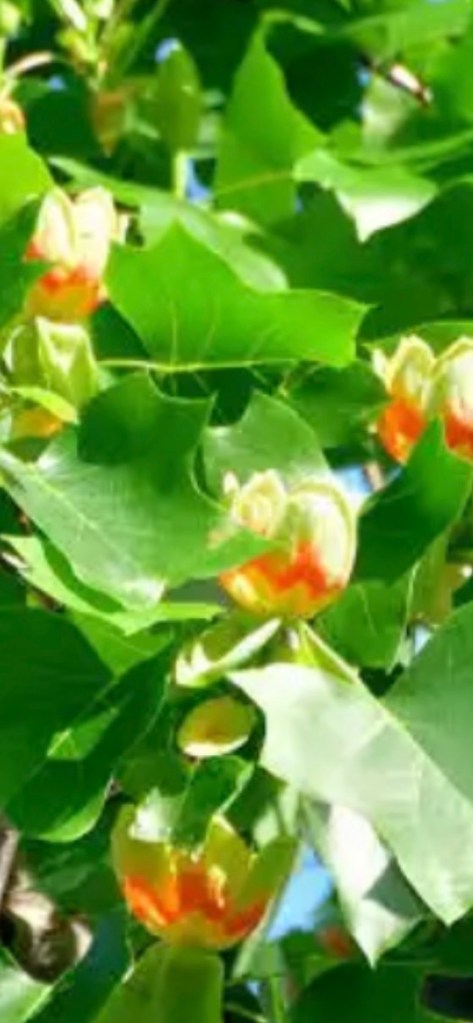
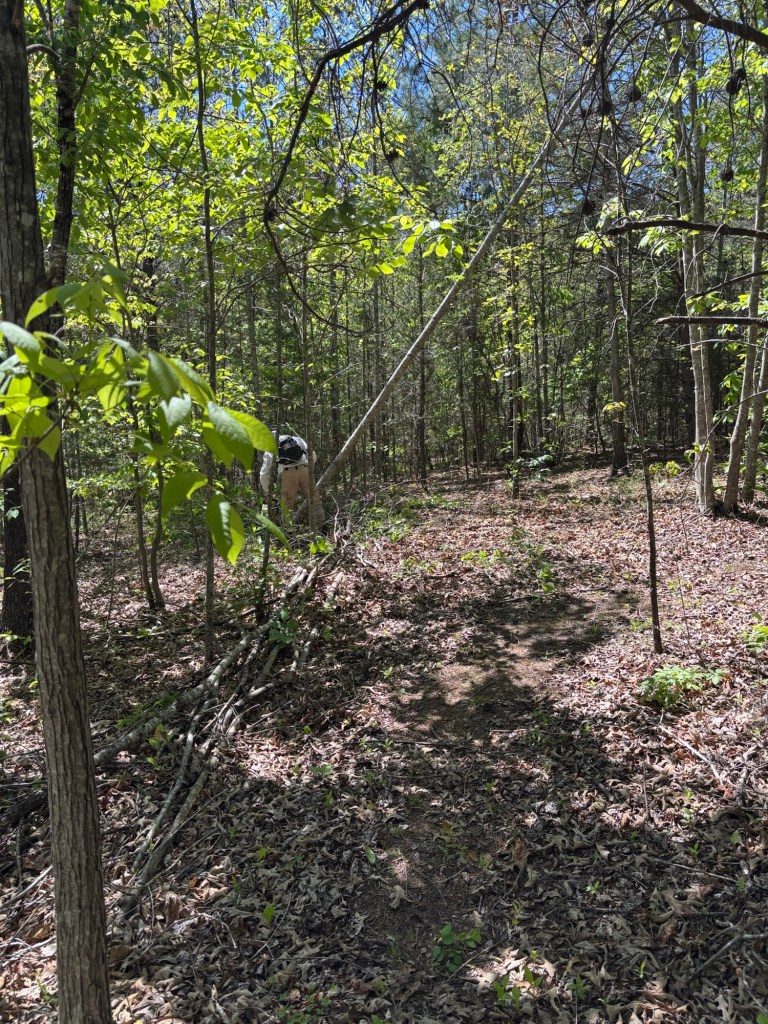
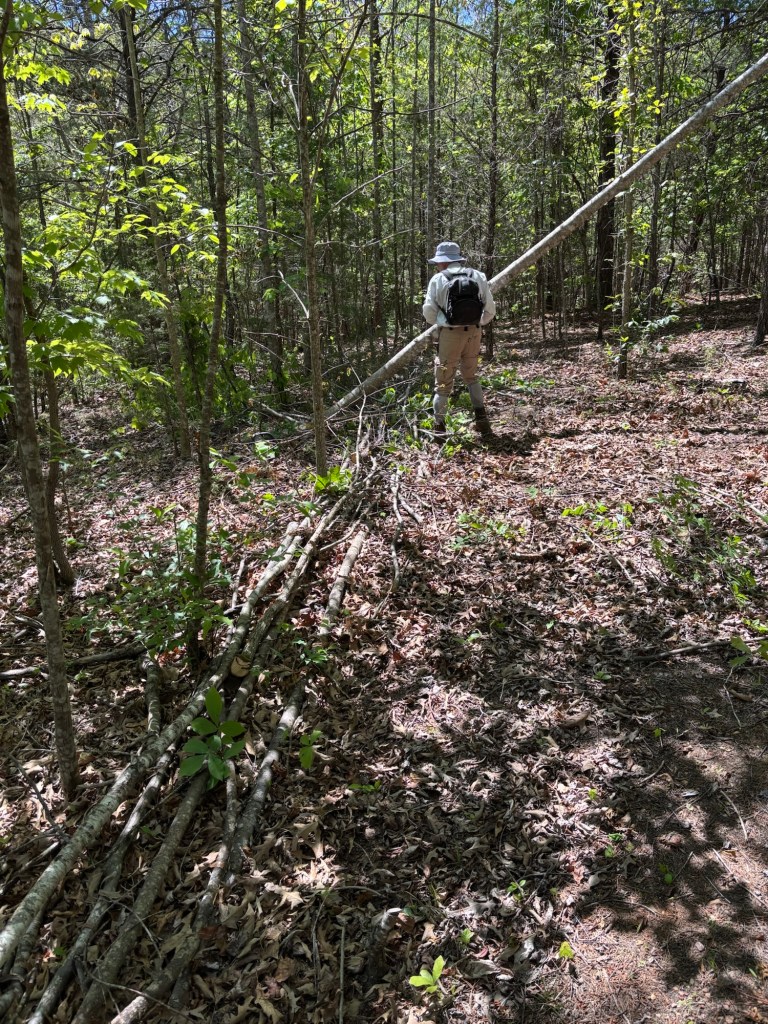
North of the driveway. Trees are too close together. We work on thinning them out by choosing the healthiest and rarest trees. We’re taking down dead and diseased trees and laying them down across the sides of the roadway. Cornus florida, flowering dogwood, grows in the understory all over SAFF. The flowers provide nectar for pollinators and the leaves and wood support biodiversity by hosting moth and butterfly larvae. The fruit (drupes) are eaten by 93 species of birds (such as robins, cardinals and cedar waxwings) and more than 16 species of mammals (including black bears, squirrels and foxes). Tulip tree, Liriodendron tulipifera, a fast growing, tall tree that can live between 200-400 years. It attracts bees and hummingbirds and seeds are eaten by birds and small mammals. It is the primary host plant for the Eastern Tiger Swallowtail caterpillar (Papilio glaucus) and the Tulip tree silk moth (Callosamia anguilifera). Squirrels, cardinals and finches eat the samaras seeds during fall and winter.
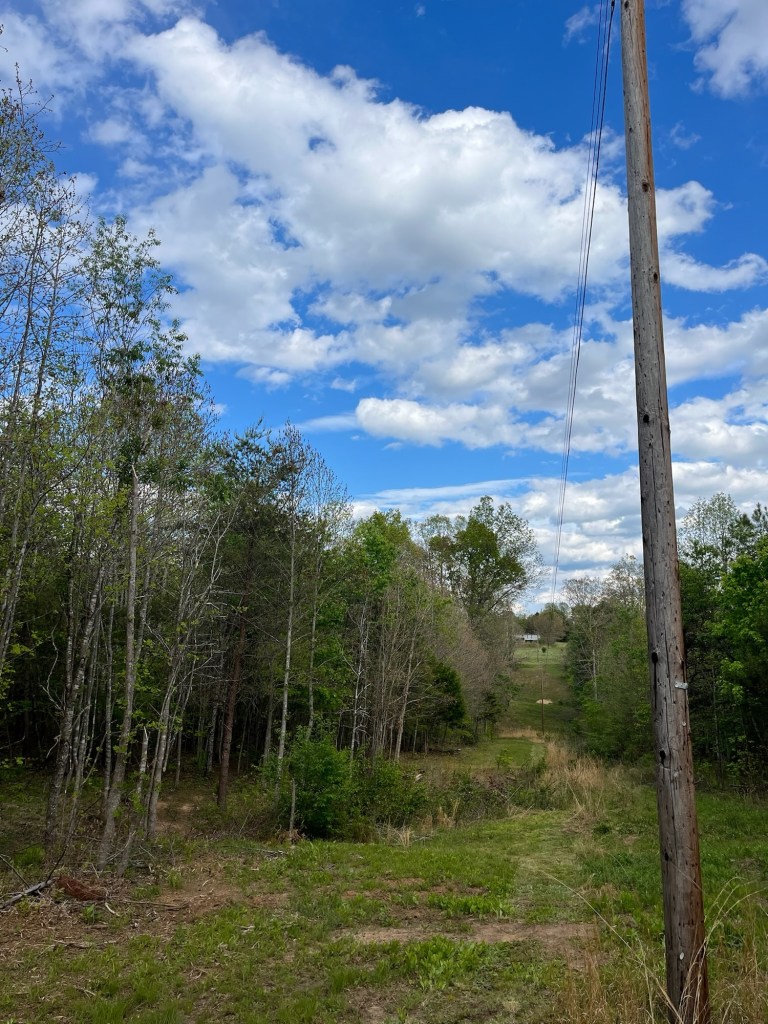
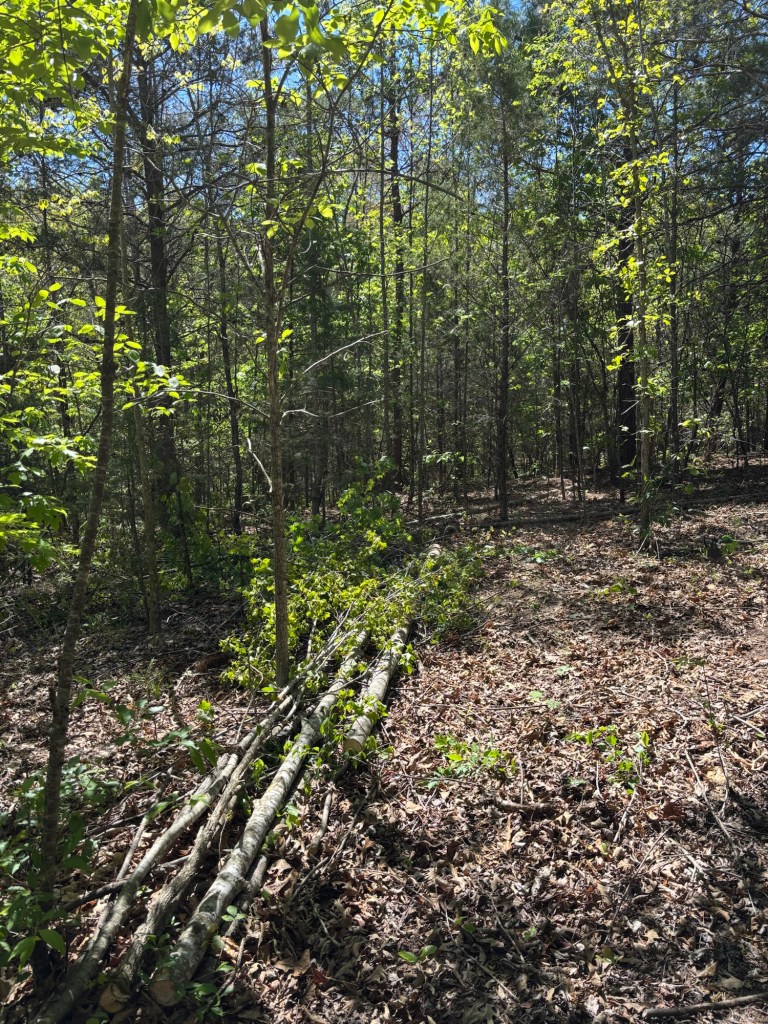
The new view down SAFF’s lower south set back line without the bridge. This is most pleasing.Yesterday during our work at SAFF we began building a new Hugelkultur terrace along the southern slope. We took down 3 tulip poplars which were overcrowded, unhealthy and lanky scrunched in between the pines and oaks. The tulip tree Liriodendron tulipifera is a fast growing tall hardwood tree native to eastern North America. The flowers attract hummingbirds and butterflies while the seeds feed birds and squirrels. It is likely our most common tree in the disturbed areas of SAFF. When a forest is clear cut, these trees move in fast and establish their canopy. They are valuable to our forest ecosystem but not as tightly populated as they are currently. They are great for establishing the Hugelkultur terrace here along the southern slope. All of them will be useful for the development of terracing and the base structures at SAFF.
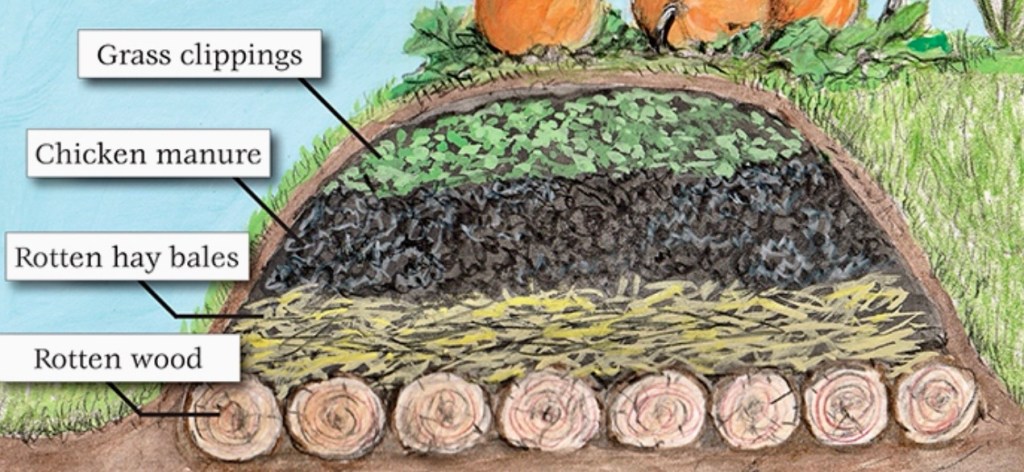
When building Hugelkultur terraces, tulip poplar is considered one of the best woods for the structural base for the terrace because it is soft and decomposes quickly which creates the nutrient rich water retaining base. We built the terraces we planted the Asimina triloba into out of tulip trees in the new seedling orchard at the bottom of North Trail for the past few years.
We will cover these branches and logs pictured above with soil, our homemade compost and other organic material such as mulch, pine needles and forest floor leaves. We will plant into these beds. The plants and trees in this bed will benefit from the gradual nutrient release of decaying material and increase in water retention. SAFF will benefit from reduced soil erosion.
Image depiction Hugelkultur principles in design by Rose Shelton.
We’re excited to begin planting on SAFF’s south slope as soon as we finish the terrace project and create a fence to protect our plants from becoming wildlife buffets.
Also to share with you our joyful news. We got engaged and have been making exciting plans for our future and celebrations with friends and family.
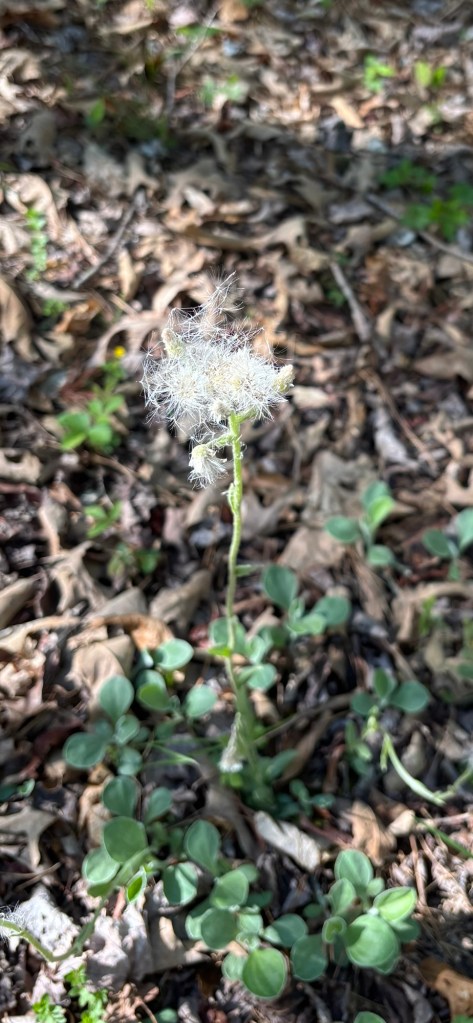
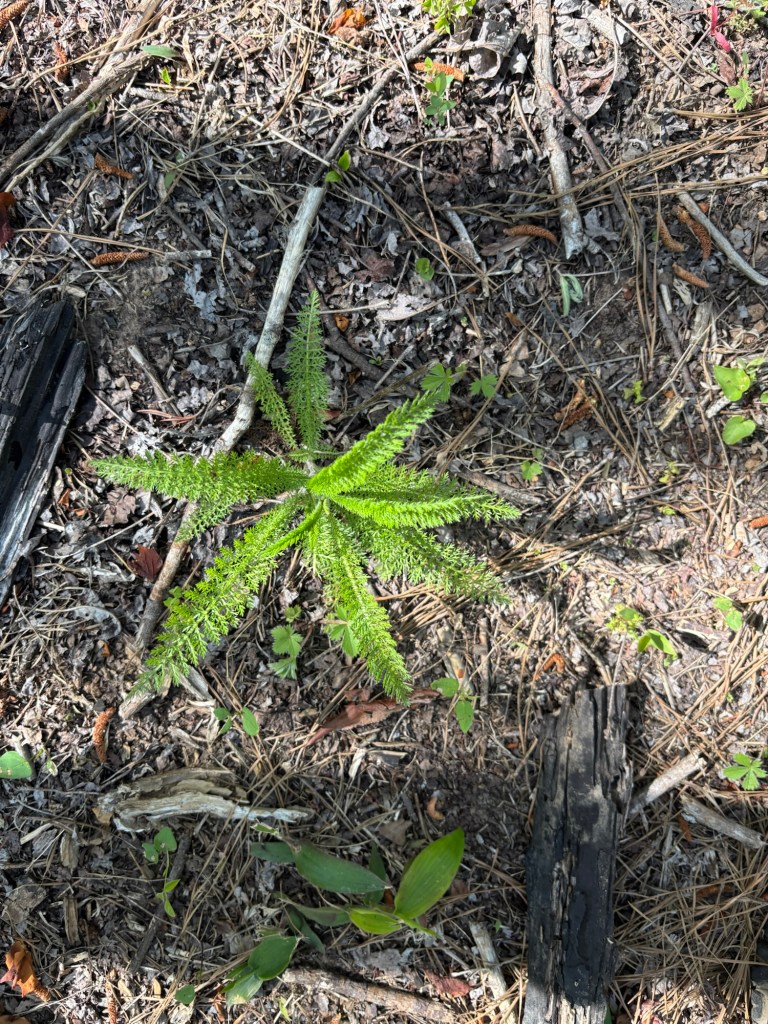
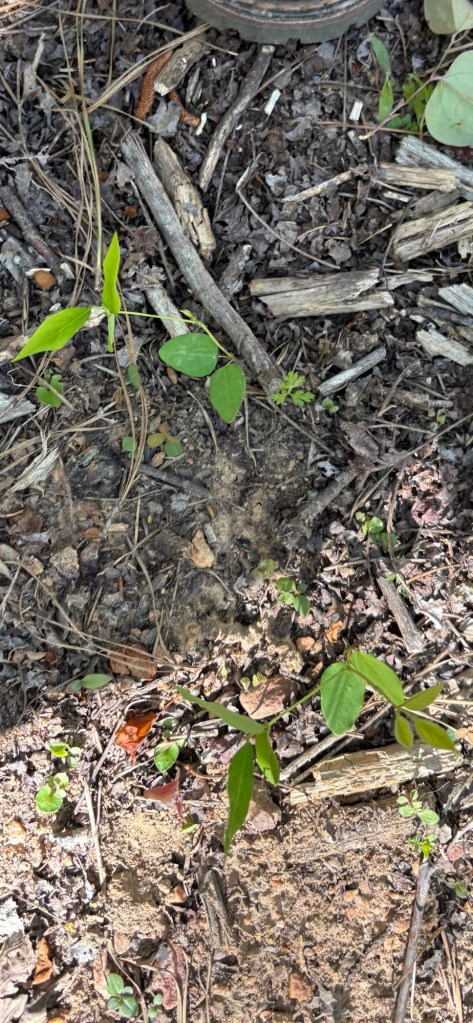
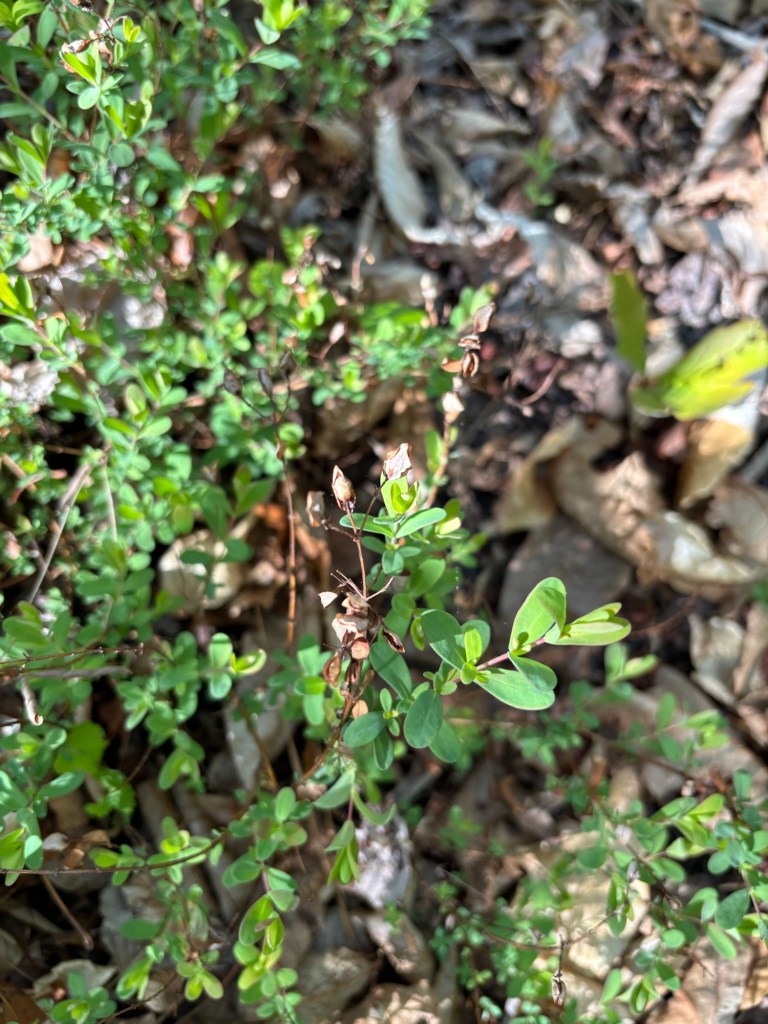
The stalk arising from the dead striped leaf continues to open up the flower buds. We are surprised by how yellow the flower is after looking deep purple for some time. This is it! The flower unfurled finally. The final flowering stage of Antennaria plantaginifolia, plantain leaved pussytoes. The flower heads have transformed into fluffy seed heads that can take flight in the wind. Diospyros virginiana, American persimmon, up top near the road. We found another group of 10 or more trees. These are young and healthy. They are a major source of food for birds, raccoons and the possum. The American persimmon also serves as host for multiple moth larvae and pollinators. They are low maintenance, drought tolerant and pest resistant. We are delighted to find them. Diospyros virginiana sprout coming up near the other cluster. Another American persimmon seedling coming up in the front. Achillea millefolium, common yarrow, is highly regarded in wound healing as a styptic with antiseptic properties. Teas from yarrow are made to induce sweating, reduce bloating and reduce inflammation. It offers cold and fever relief. It attracts a wide variety of beneficial insects and over 20 species of native bees. It is lovely, drought tolerant and thrives in poor soil conditions. Amphicarpaea bracteata, American hog peanut, is an annual to perennial vine in the legume family native to moist slopes in the eastern US. They produce above ground and underground pods. It fixes nitrogen and grows in the old clonal colony pawpaw patch. We found it today coming up around our Asimina triloba cultivar seedlings which is where we planned to move them. Yay! 😀 It feeds birds, deer and mice. Native Americans ate the pods and underground peanut tubers which are nutritious. A good source of protein, fiber and carbs.Asimina triloba KSU Benson cultivar seedling with American hog peanut spontaneously growing around it offering a low maintenance partnership with the hog peanut feeding the pawpaw tree. Fern trail near the Rappahanock cultivar which is recovering nicely from the frost that bit it. Hypericum stragulum, low St John’s wort, which is toxic to grazing animals. Native Americans used the plant for the treatment of sores, fever, gastrointestinal issues, nosebleeds and snakebites.
We had a nice Sunday with lovely weather in the 60s as we got chores done and took a stroll around the trails.
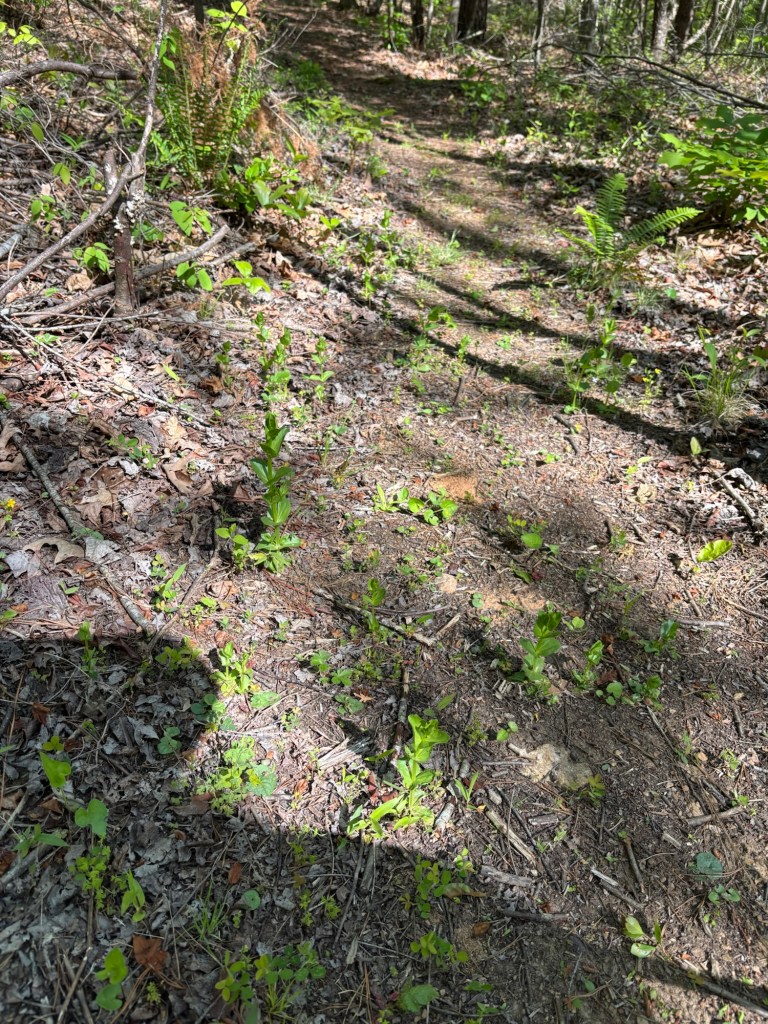
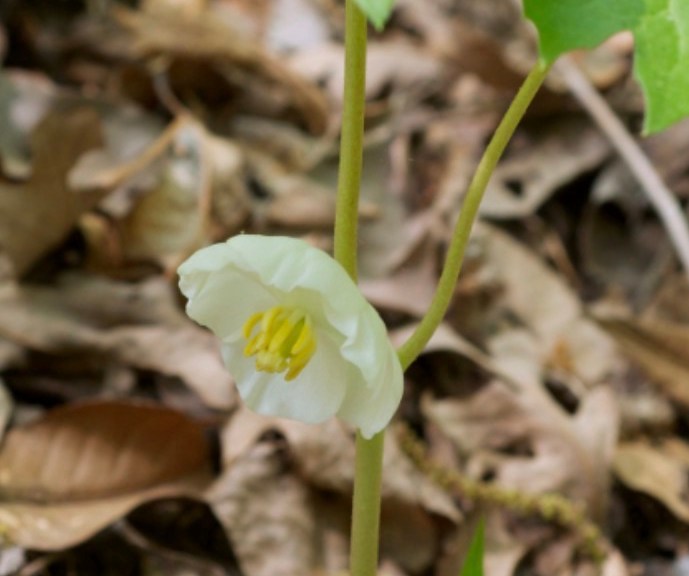
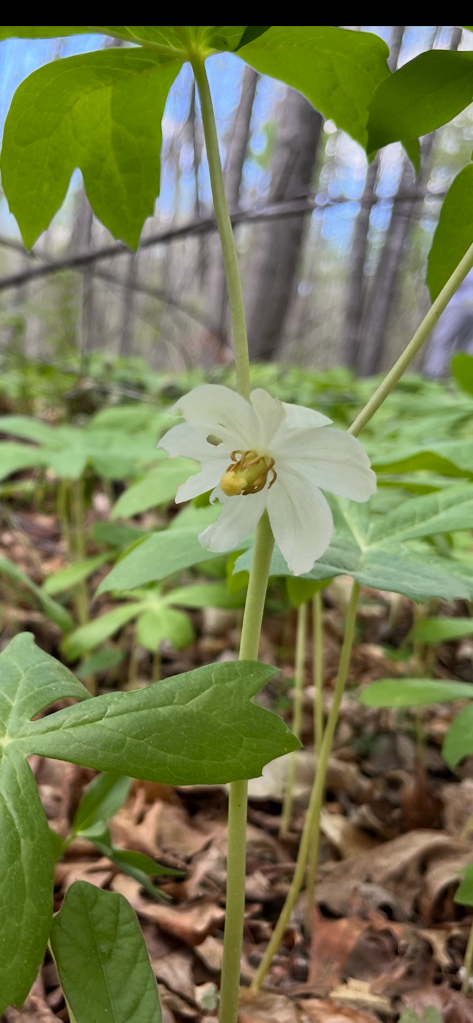
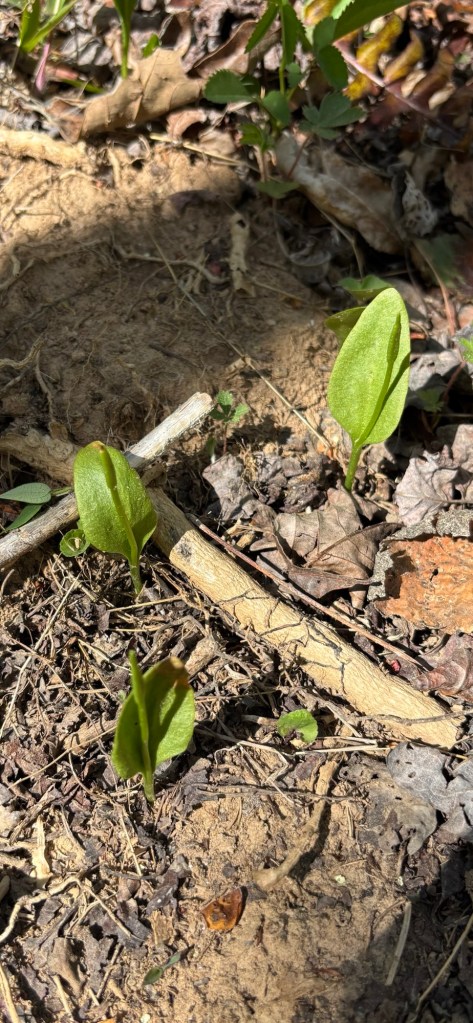
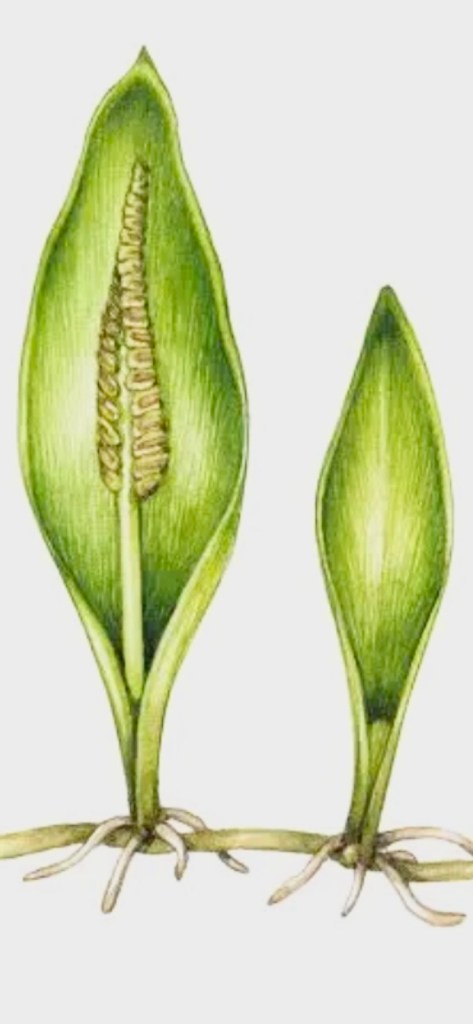
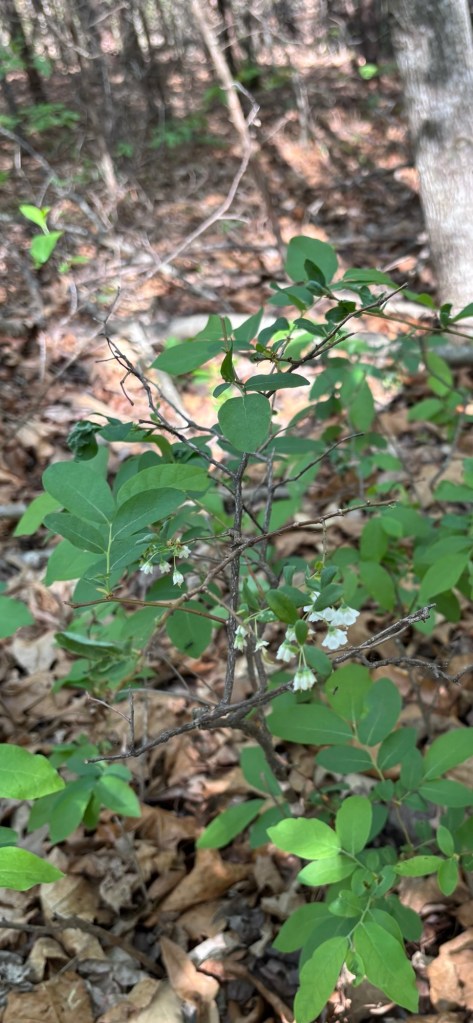
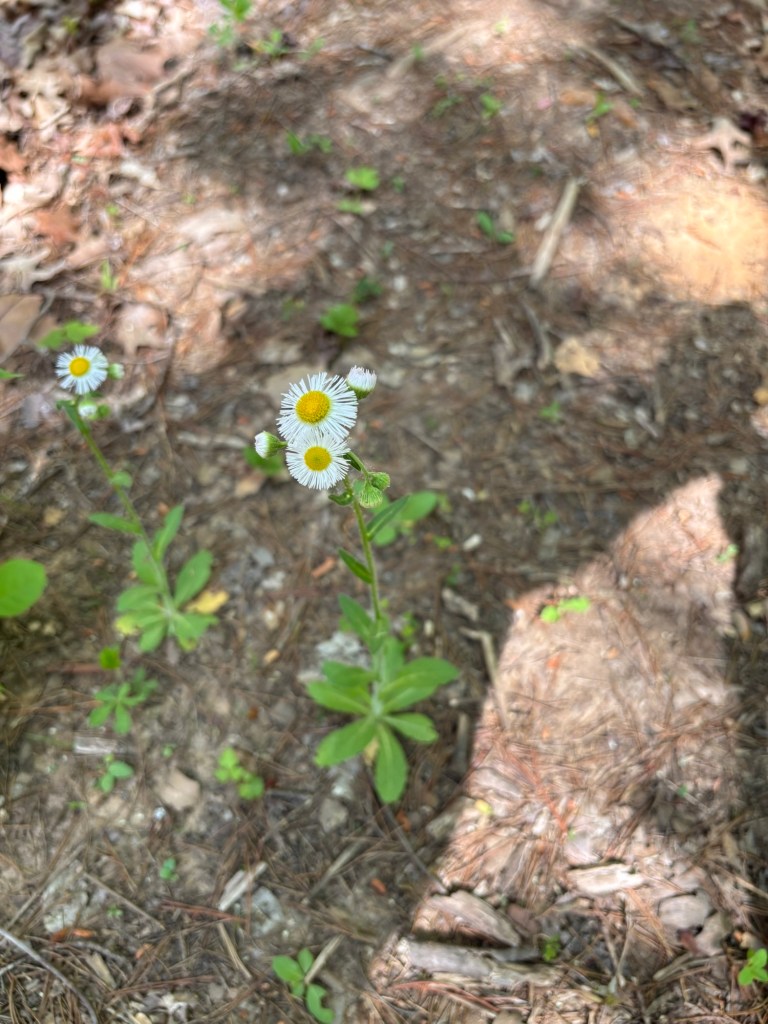
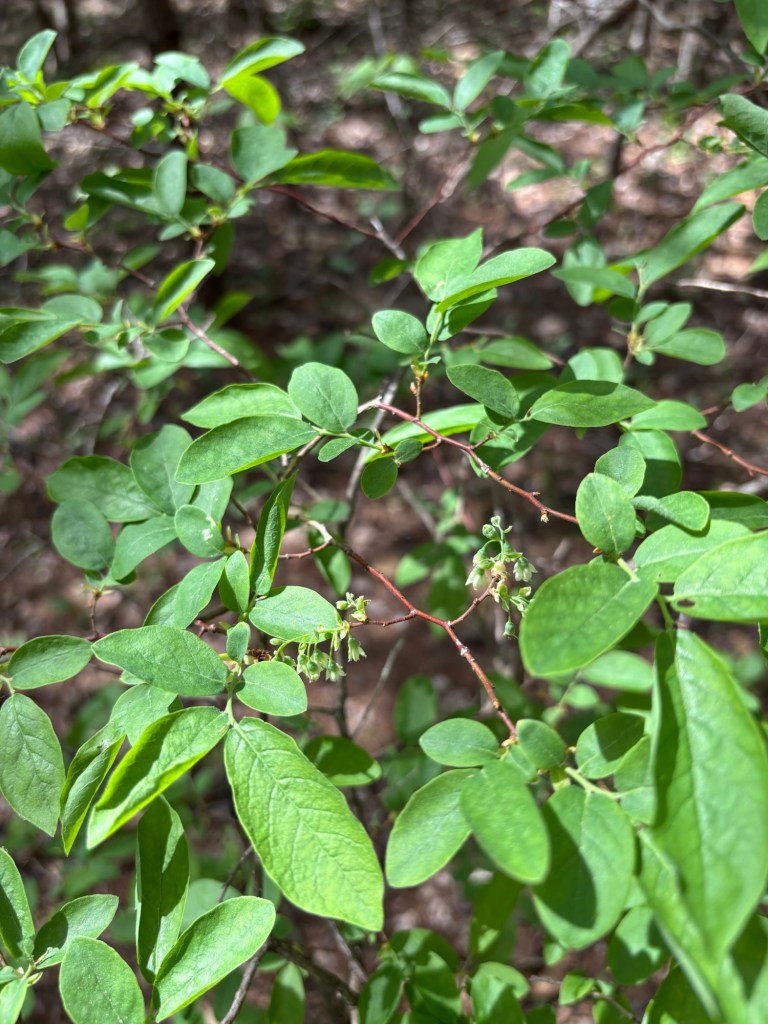
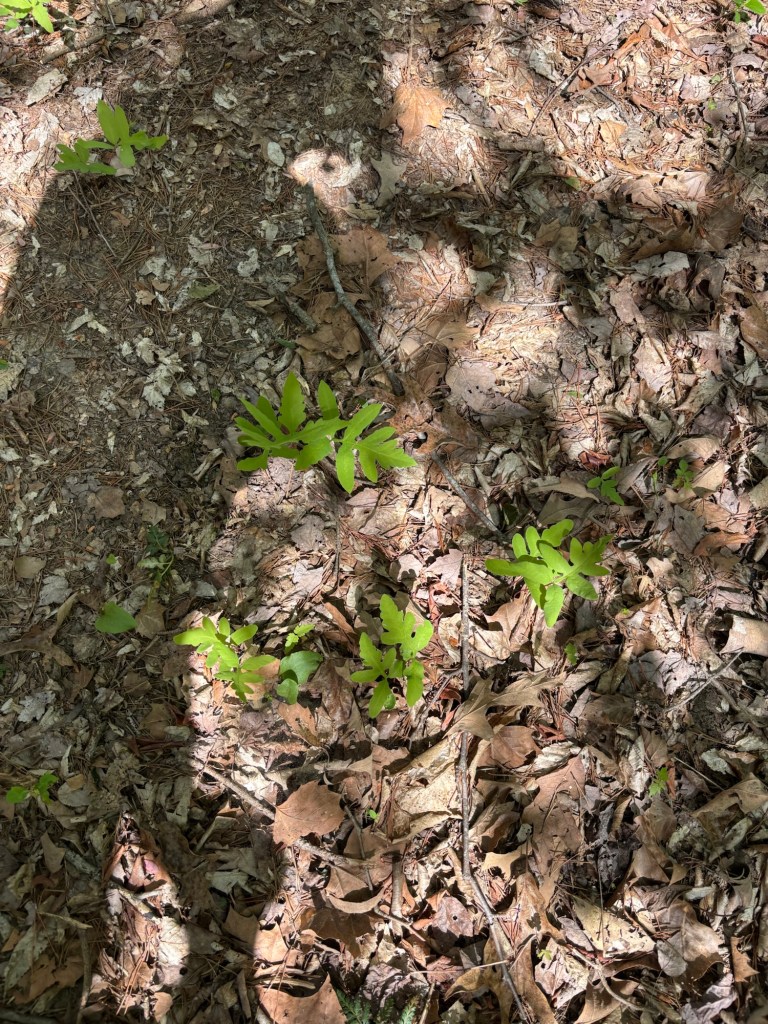
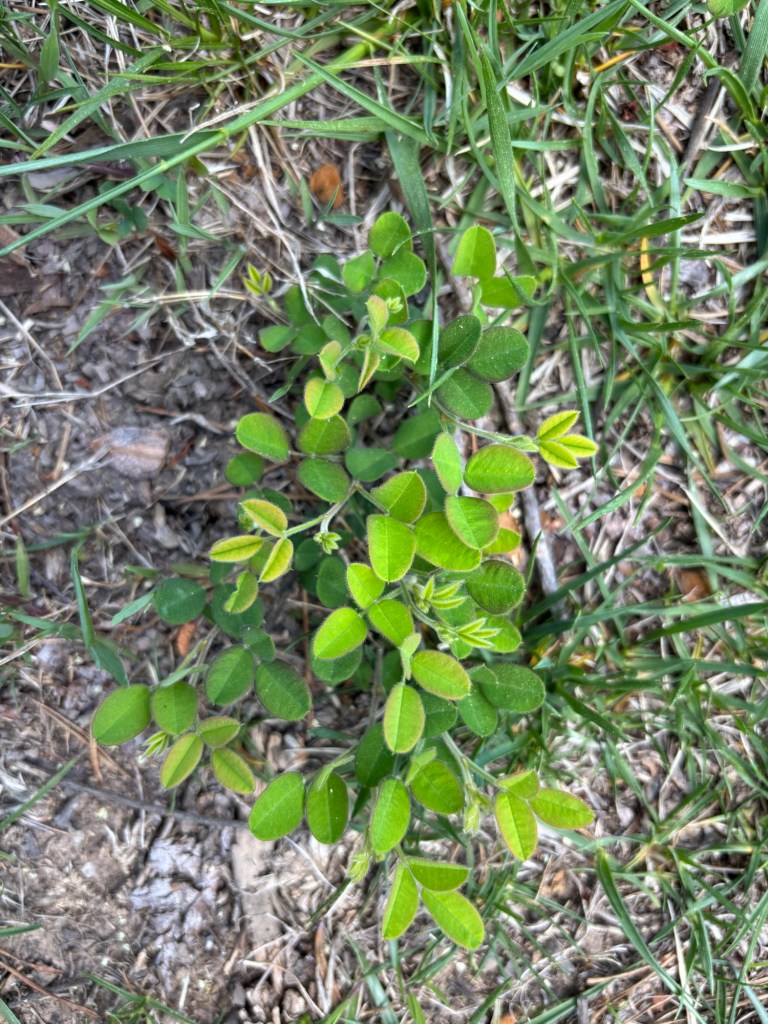
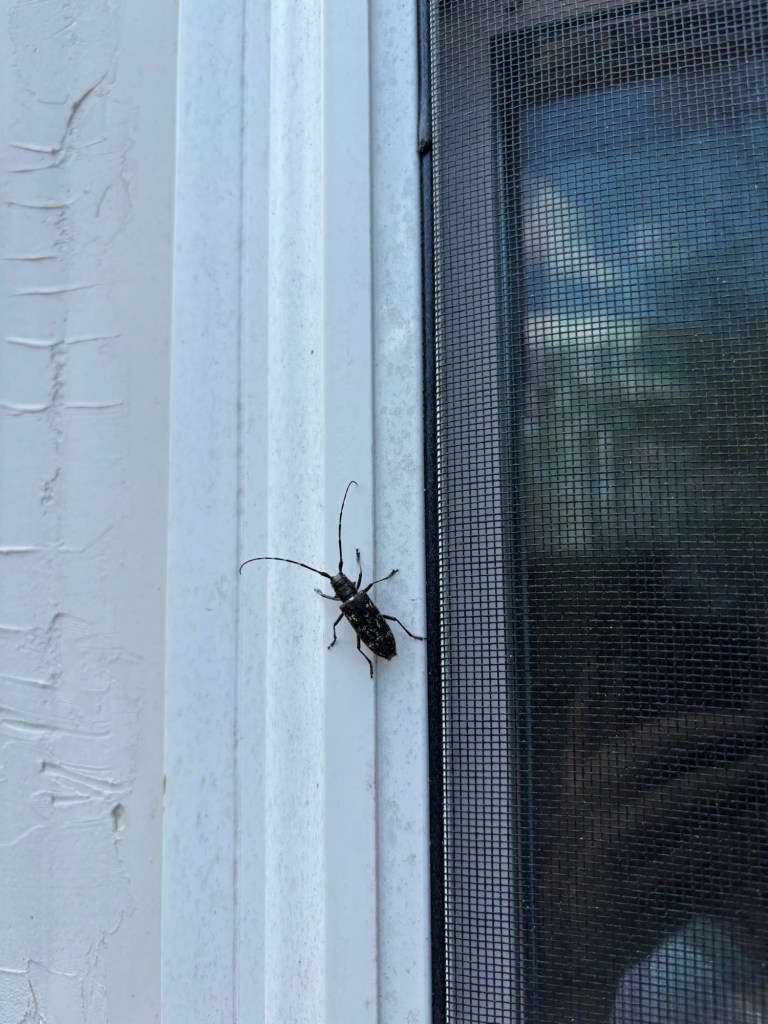
Pollinated mayapple, Podophyllum peltatum, with initial fruit set in the SAFF old colony pawpaw patch. We are noticing more flowers this year on the Mayapples. Southern adder’s -tongue, Ophioglossum pycnostichum, was found in the newly planted Pawpaw Orchard very near our Mango cultivar and a select seedling we planted last year. Found in moist shaded bottomland forests during late spring, Southern adder’s-tongue is considered rare in many regions but common here in Virginia. It is a fern that spends most of its time underground. Although edible and medicinal, it’s a plant that stores energy for years to send up a single leaf. Members of this family of plants have extraordinary high numbers of chromosomes. Over 1200. This occurs because of extreme polyploidy. It has astringent and anti inflammatory properties.Vaccinium stamineum, deerberry, a native deciduous shrub in the blueberry family found on Blackrock Trail near the wet weather gully at SAFF. These are eaten by birds and mammals.Erigeron philadelphicus, Philadelphia fleabane, is a widespread native wildflower in the daisy family. It is a valuable food source for bees, butterflies and moths. Found on our Northmost Trail at SAFF these Vaccinum stamineum, Deerberry, sit atop a hill near many pines.Sensitive fern, Onoclea sensiblis, known for being sensitive to frost and dying back if touched by it. Thrives in moist shady areas. Historically used by Iroquois for medicinal purposes and food. A native bush clover, Genus Lespedeza, found throughout SAFF. Today we noticed it near the Asimina triloba seedlings we planted last Fall. It is a nitrogen fixer and is valued for soil improvement and provides food for quail and other wildlife. Monochamus scutellatus, White spotted sawyer, a native wood-boring beetle that eats dead pines mainly. This appears to be female by the shorter antennae. Asimina triloba in old colony pawpaw patch with initial fruit set. Mayapples in the background.
It was dry at Saint Andrews Forest Farm on Friday afternoon. The ground crunched as we walked around the trails. There’s a chance of storms and cooler weather expected Sunday. If no rain by then, we will need to water the newly planted Asimina triloba seedlings at the bottom of North Trail. All of them look great with leaves filling out. We weeded and worked on clearing spaces around each of them. Even the ones that had tops chewed off by a passing deer or rabbit have new growth sprouting.
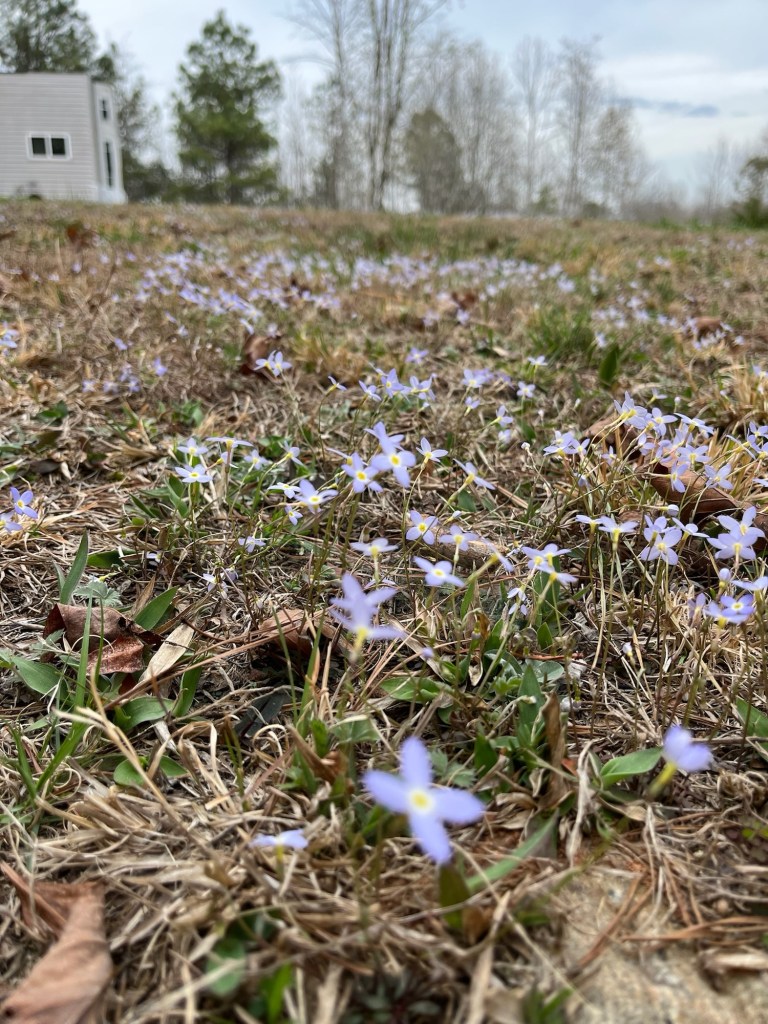
Houstonia caerulea, azure bluet, found all over SAFF has now passed its peak blooming and is beginning to to die back.