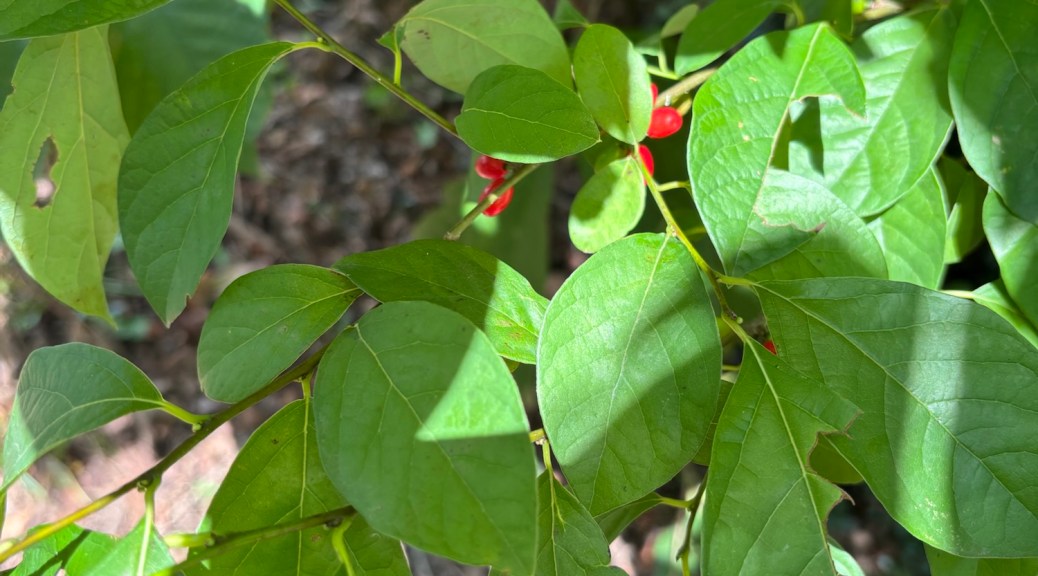
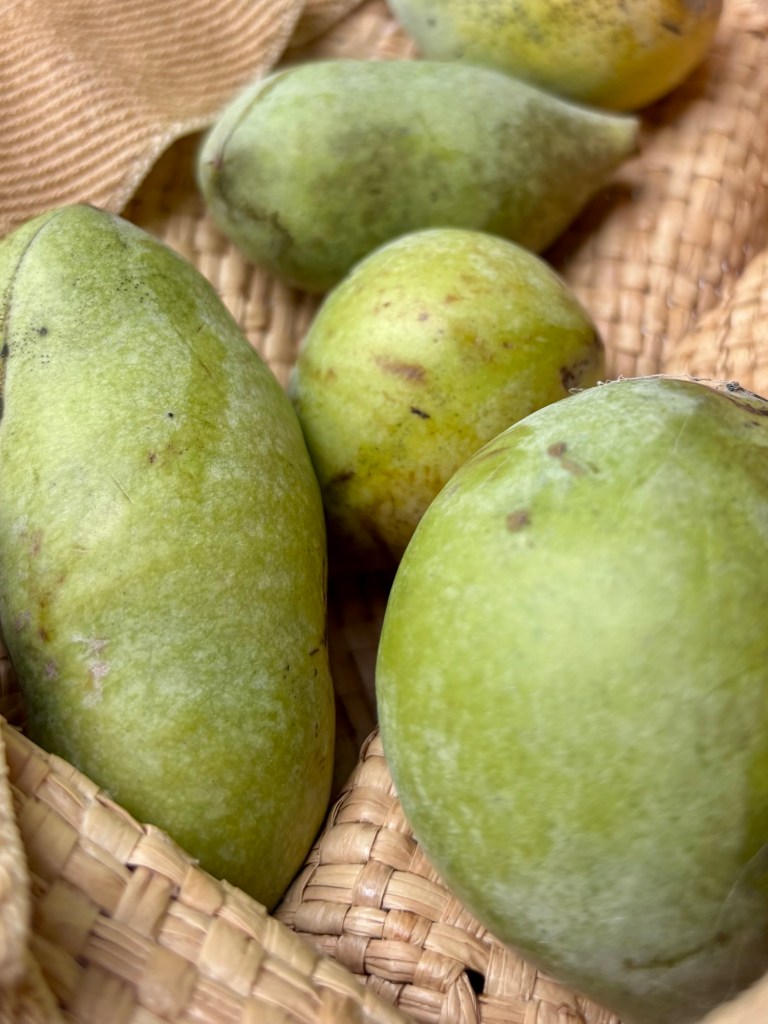
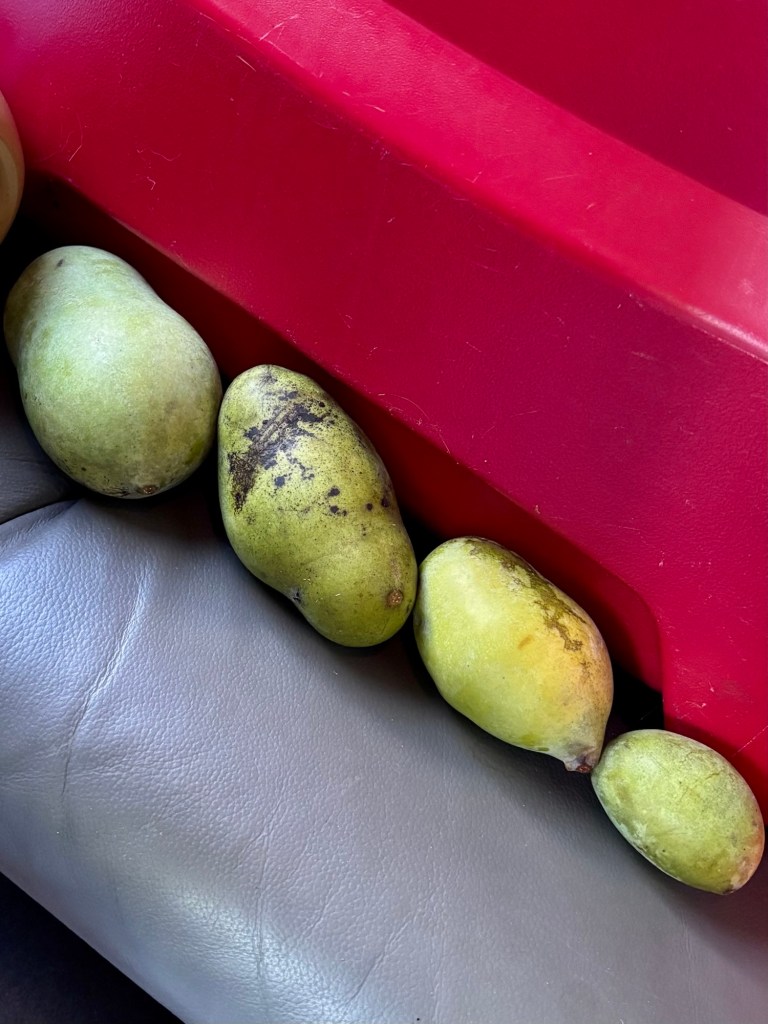
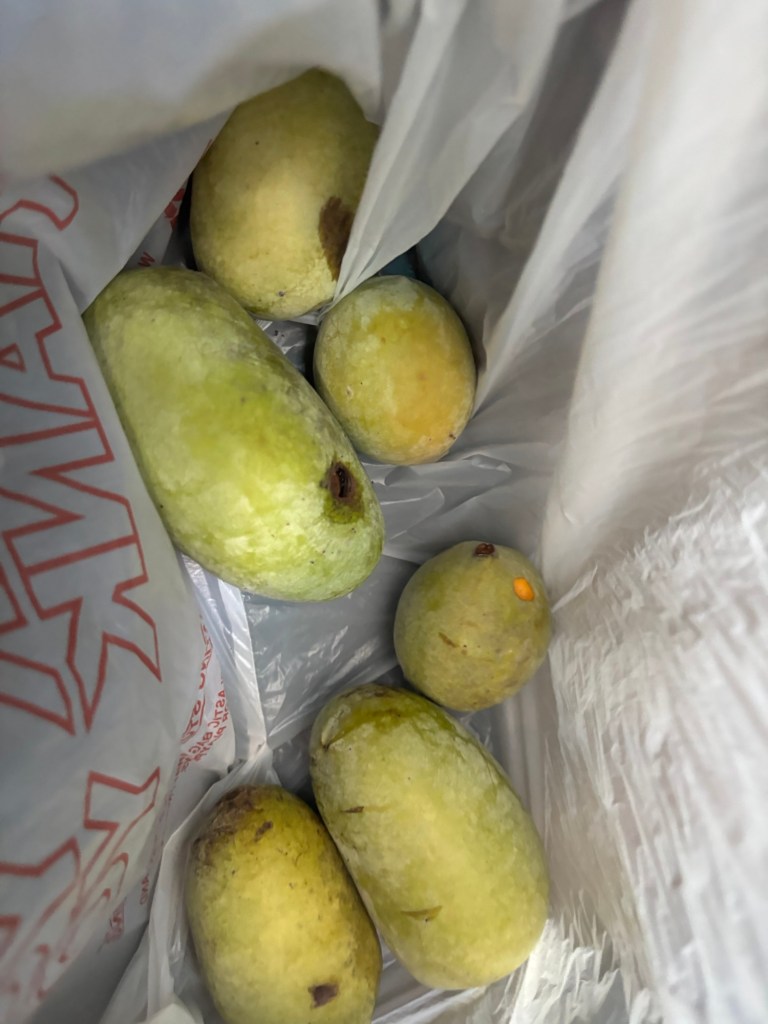
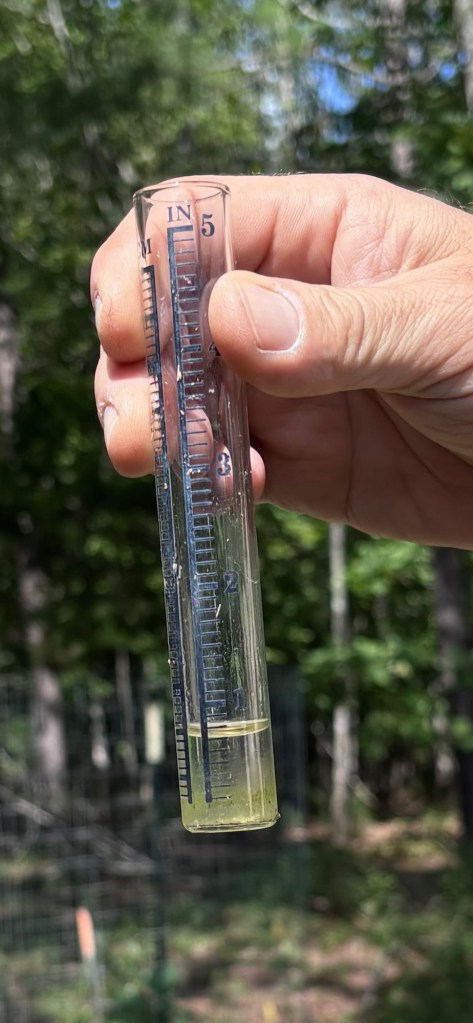
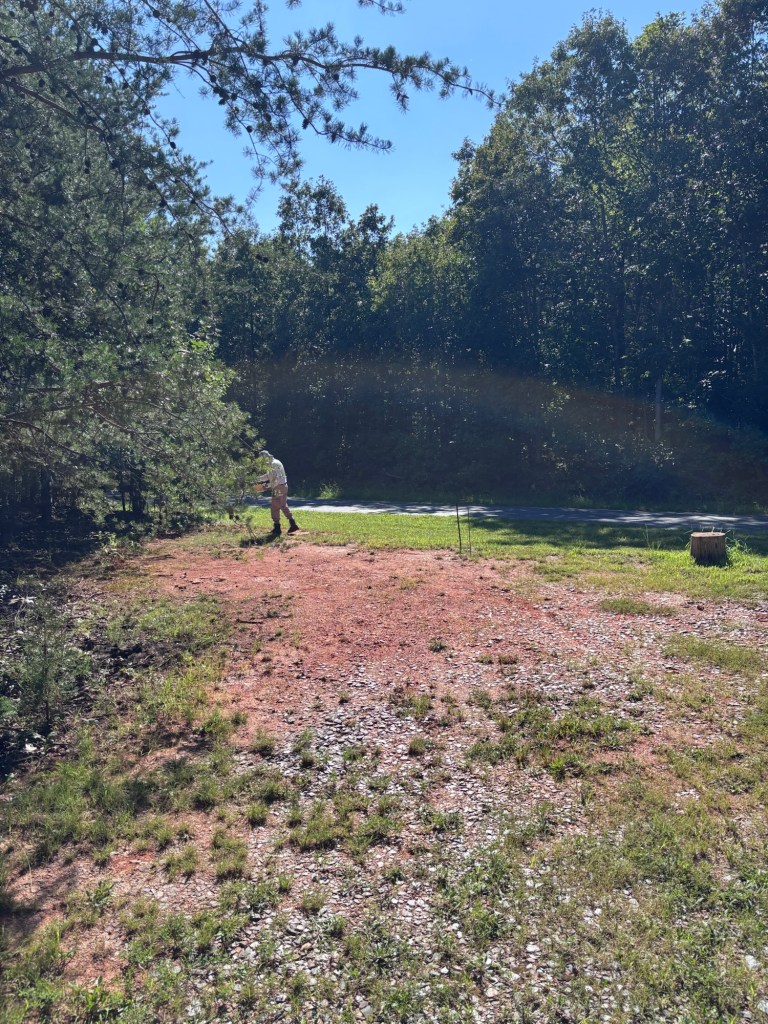
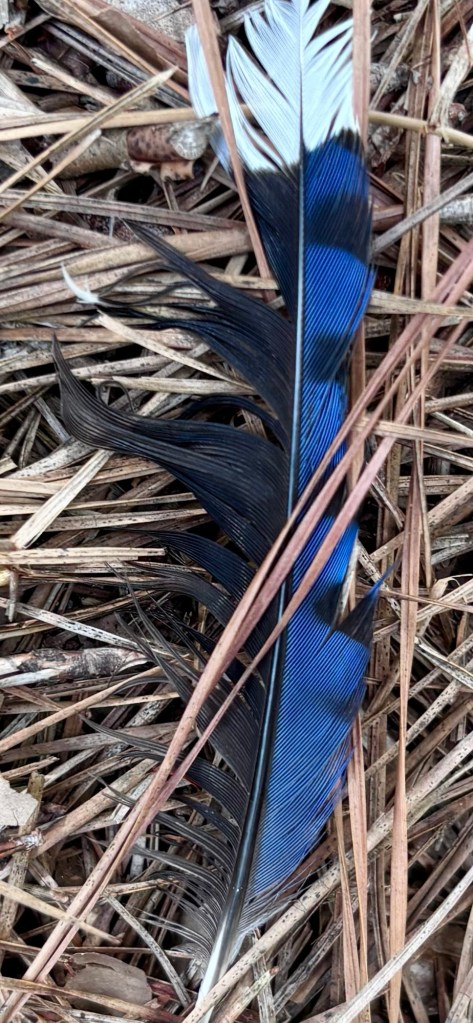
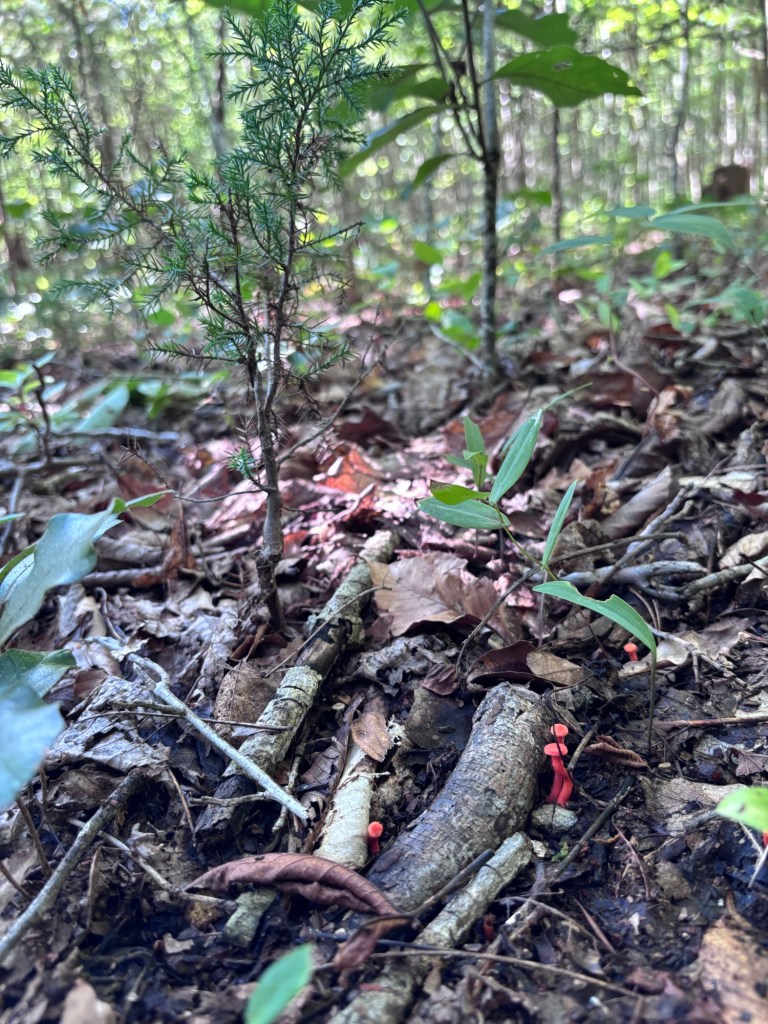
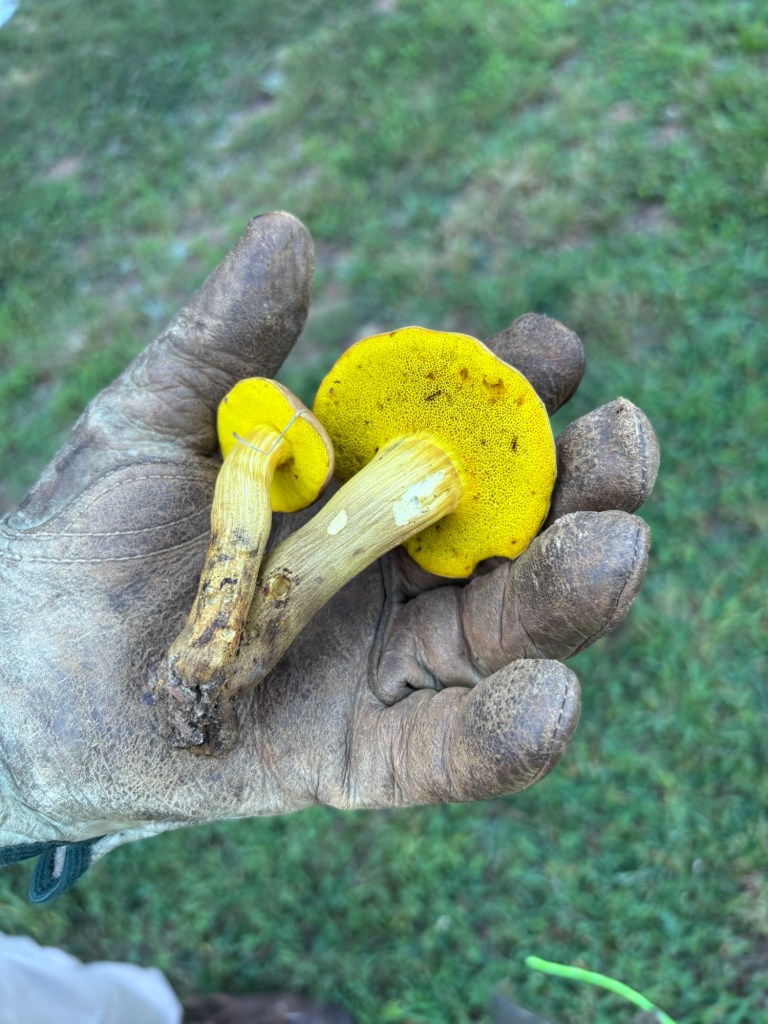
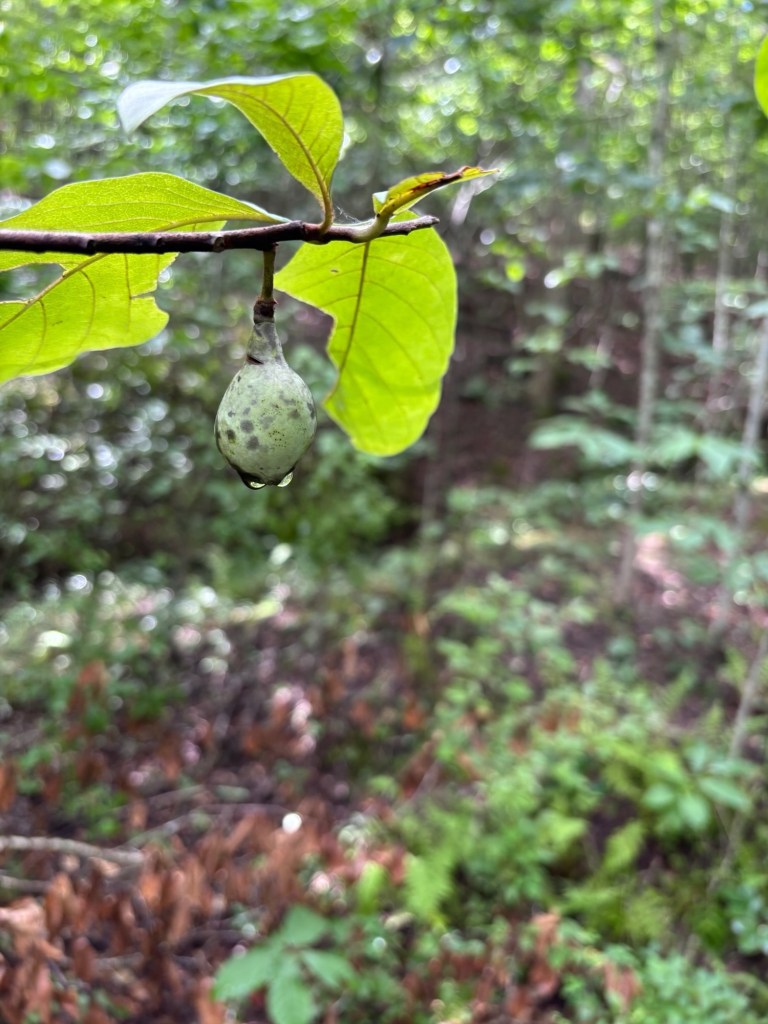
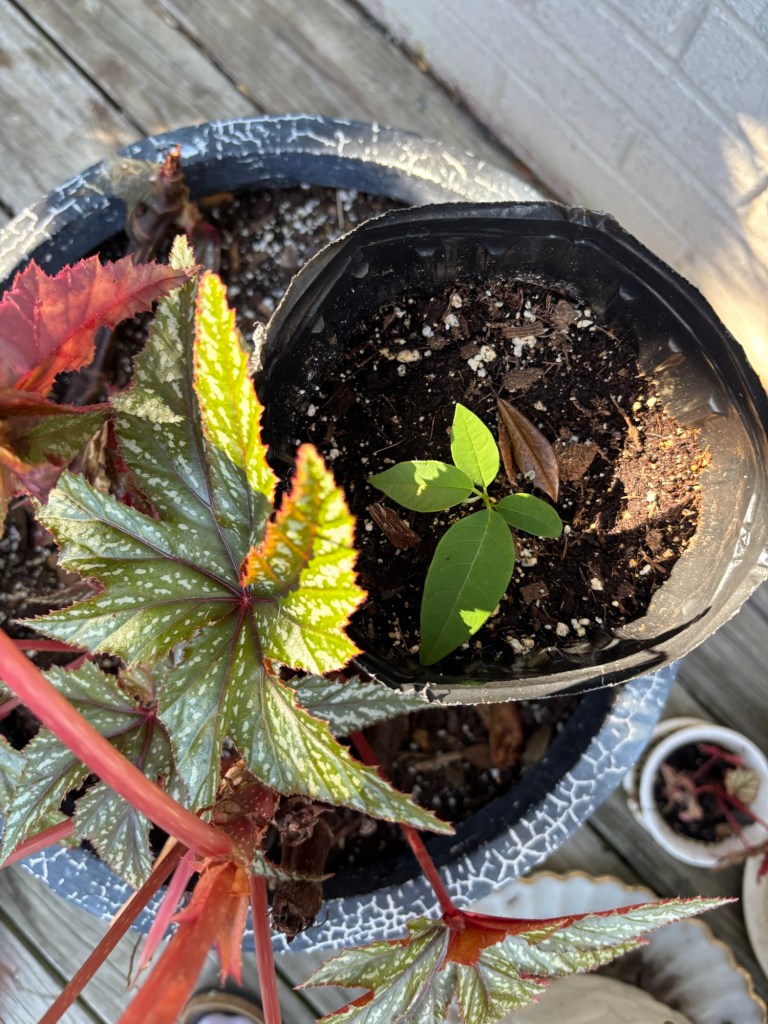
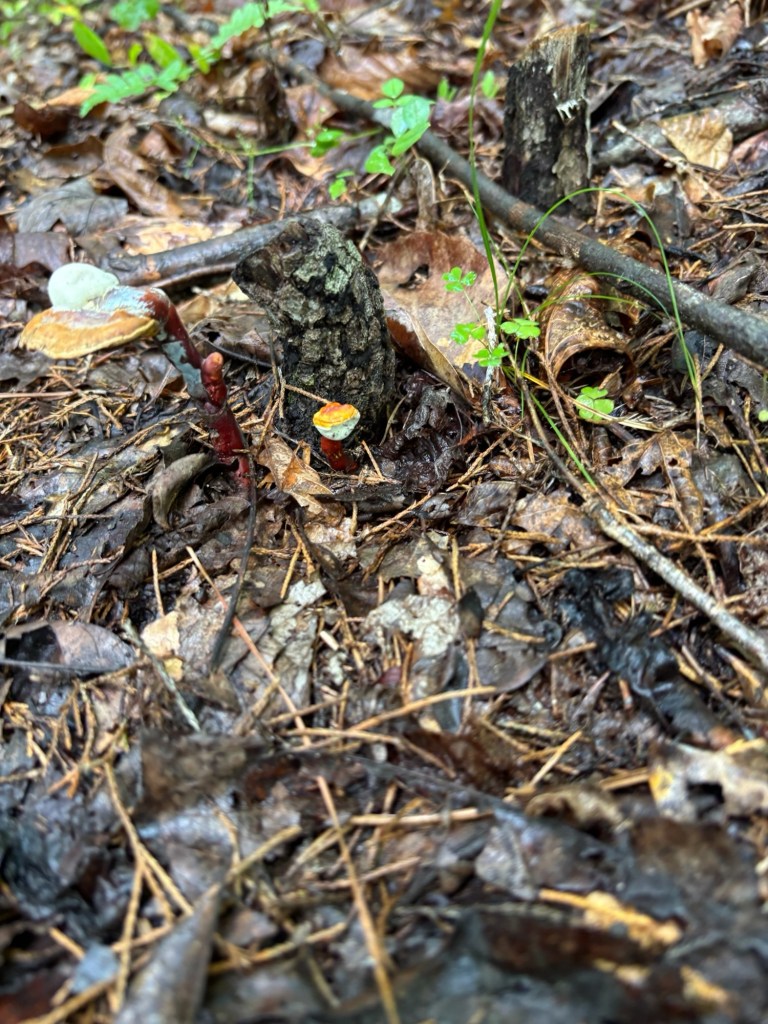
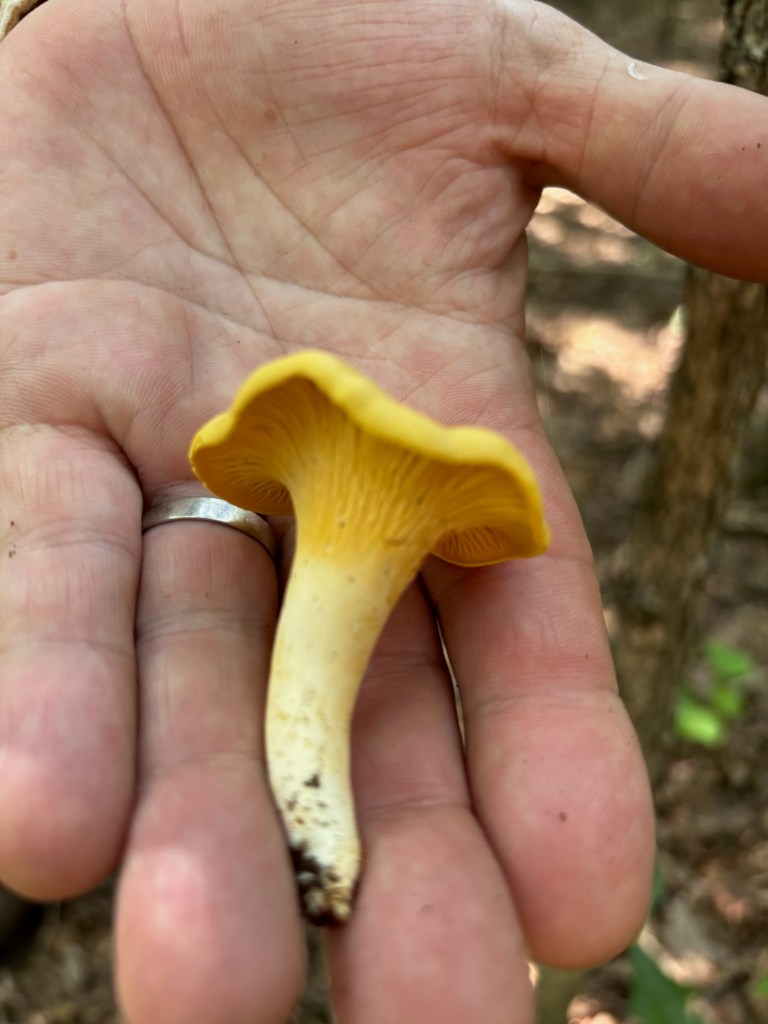
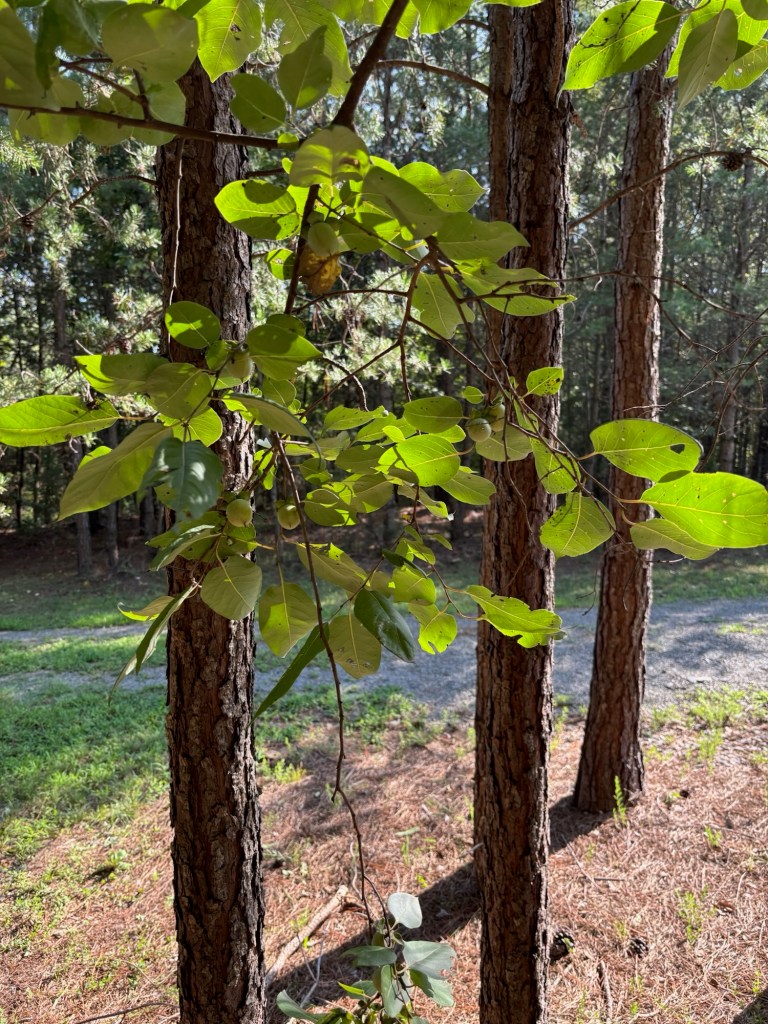
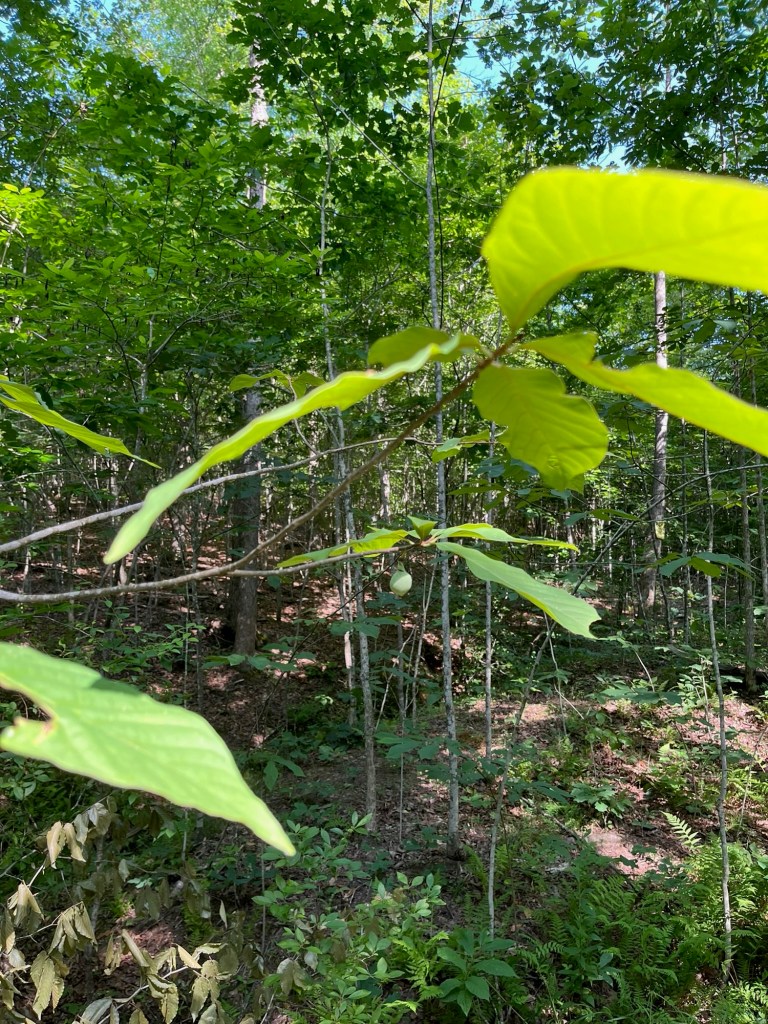
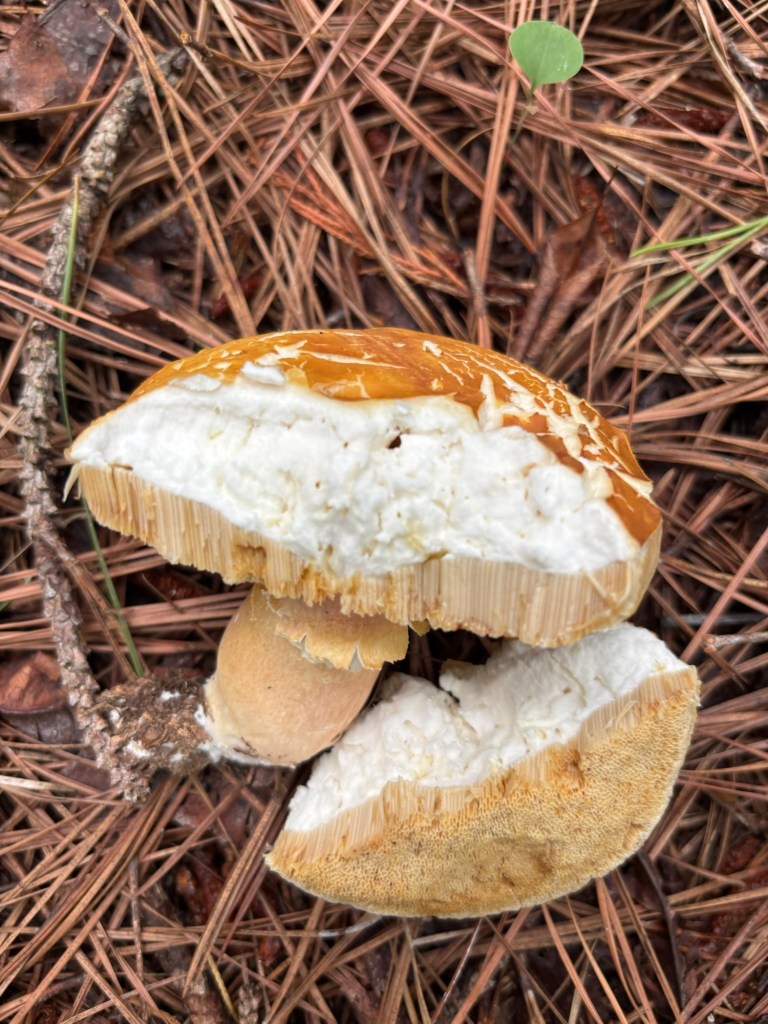
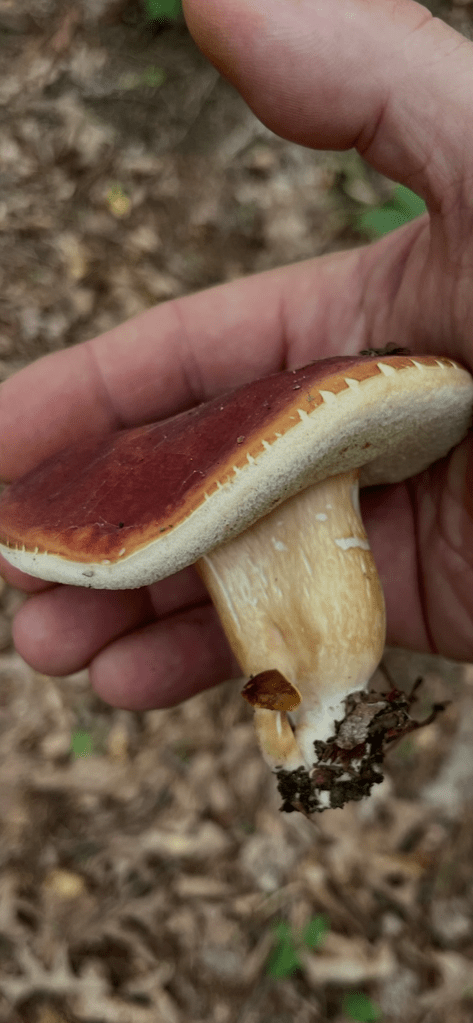
Asimina triloba dropping from trees in Central Virginia. Foraged on the way to the farm. Our first finds of the year in Afton Virginia. We collected 50 seeds from these pawpaws and have them stored to cold stratify over the winter. Almost another inch last week in Buckingham Virginia and more opportunities for storms in the next few days. We spread little bluestem (Schizachyrium scoparium) seeds around the exposed areas at risk of runoff in storms yesterday. Another blue jay feather found up top near the driveway.Chantharellus cinnabarinus, red chanterelle, found throughout SAFF. A choice edible with false gills and bright red color found along wet weather lines. They are smaller than other chanterelles and hold up well in the pan. Aureoboletus innixus, clustered brown bolete, found near an oak. These are edible but we haven’t tried them. Pawpaws still hanging on in the clonal colony. We’ve been checking on them every time we’ve been out to SAFF.Annona cherimola, cherimoya, tree sprouting on the deck. This is a tropical tree which will need to be protected from our cold Virginia winters. Ganoderma growing along the main waterway at SAFF. Persimmon ripening on the trees up top.
We’ve been busy clearing paths for the tractor through the pawpaw seedling orchard, planting little bluestem on exposed ground and preparing to plant this year’s Asimina triloba seedlings. We have also cleared out some pines and hardwood trees crowded in around our American Persimmon trees and created an orchard up top near the road for them. Also, we planted several Juglans Regis, Persian walnut trees in the main clearing at SAFF. We have also been researching solar kits for home and SAFF and can’t wait to get what we need ordered and installed.
The past weekend has been a nice taste of cooler, fall weather on the way. The highs have been in the 80s yet there has been a nice breeze and crispness in the morning. We’ve been feeling so grateful for everything and especially the rain and the cooler temperatures.
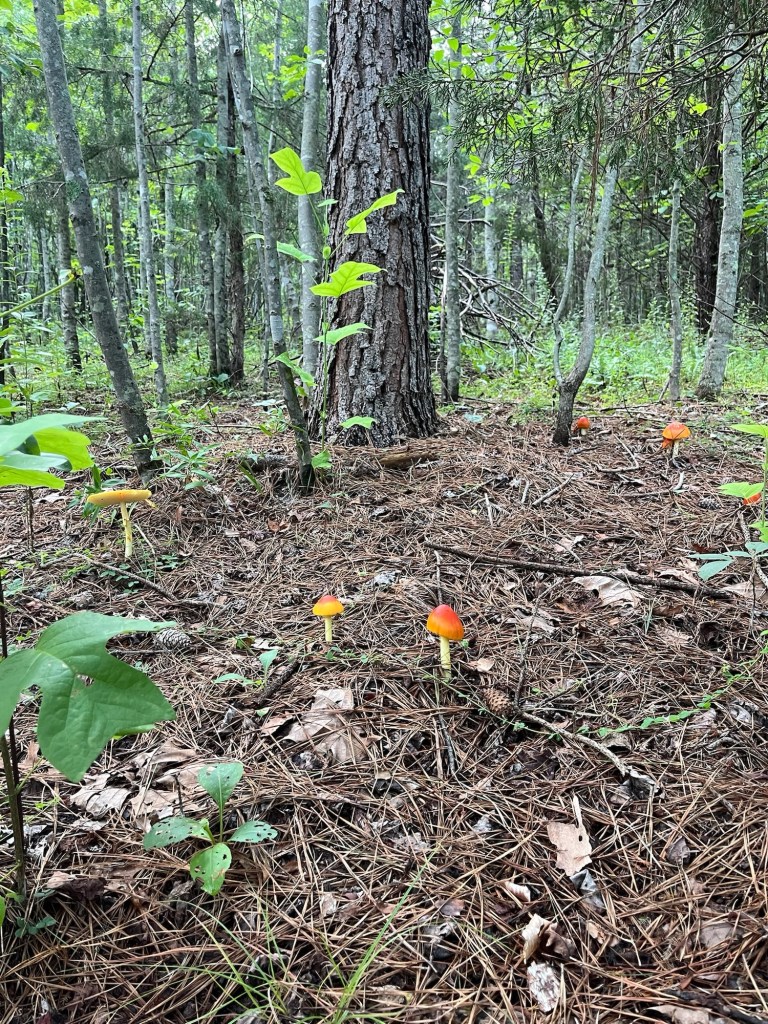
Loblolly pine surrounded by Amanita jacksonii overlooking the cultivar seedlings planted last Fall at the bottom of North Trail.Asimina triloba fruit hanging from the pawpaw tree at the bottom of the hill and across the waterway on the old clonal colony.
It sure has been hot and humid in Virginia these past weeks with near daily opportunities for thunderstorms. The heat index has been in the low 100s on most days. Saint Andrews Forest Farm has had a few good soaking rains. It’s not enough to offset the severe multi-month rainfall deficit and drought conditions. Nevertheless, we are beyond grateful. Until the onset of El Niño, we weren’t getting much rainfall. Since El Niño patterns began shifting the jet stream, we have had consistent moisture and opportunities for storms. Virginia feels more and more like a tropical rainforest. With the temporary seasonal increase in rainfall, our forest grows, mushrooms we haven’t seen for two years (since the last El Niño!) are fruiting, the creek burbles and flows.
We feel encouraged to begin building a water collection system for the farm as soon as possible. Although this short term impact of El Niño’s increased rainfall feels positive, the long term picture is really unknown. Better to be prepared for a future that includes alternating wet and dry years, and best to incorporate the presumption of drought into our planning.
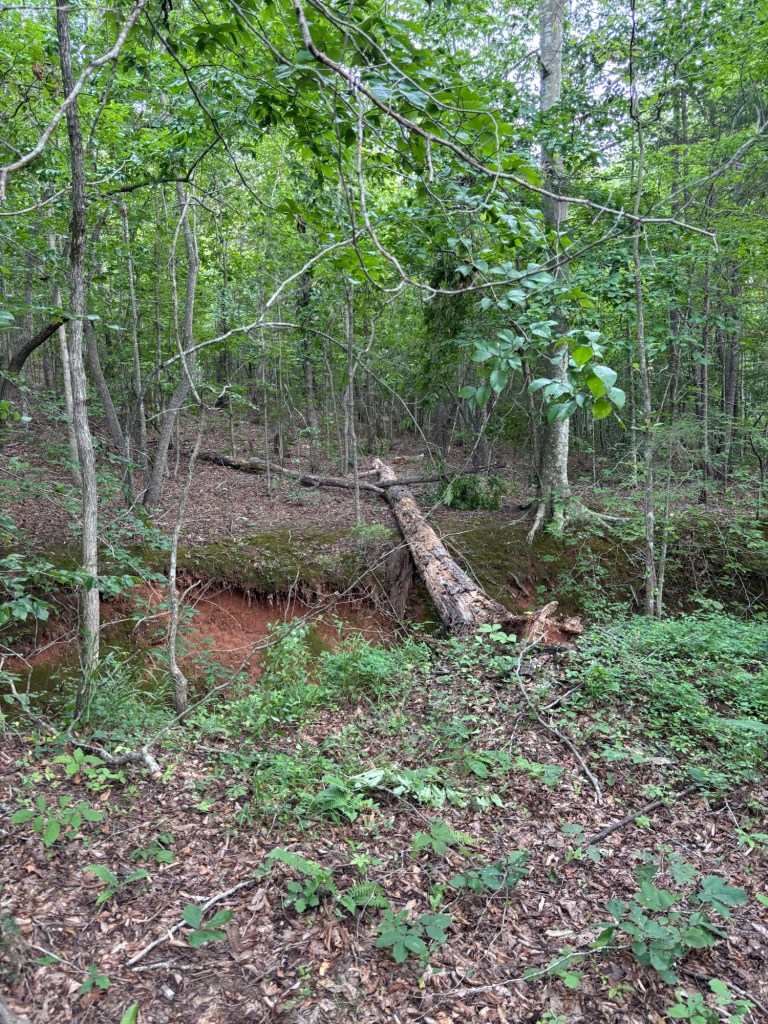
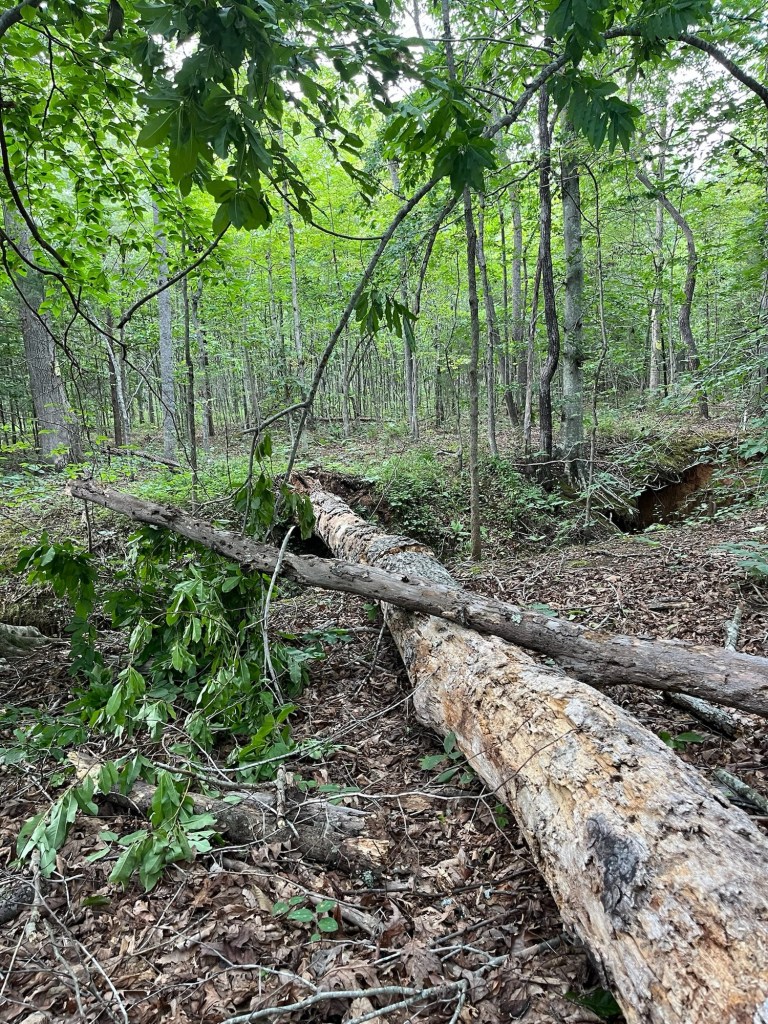
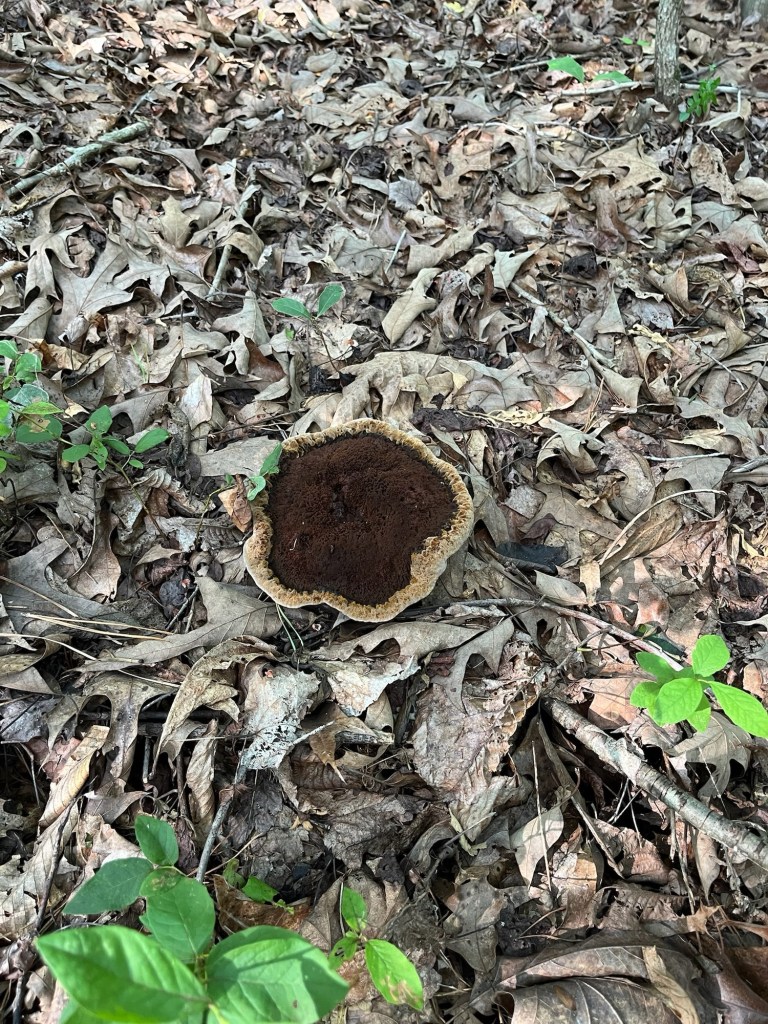
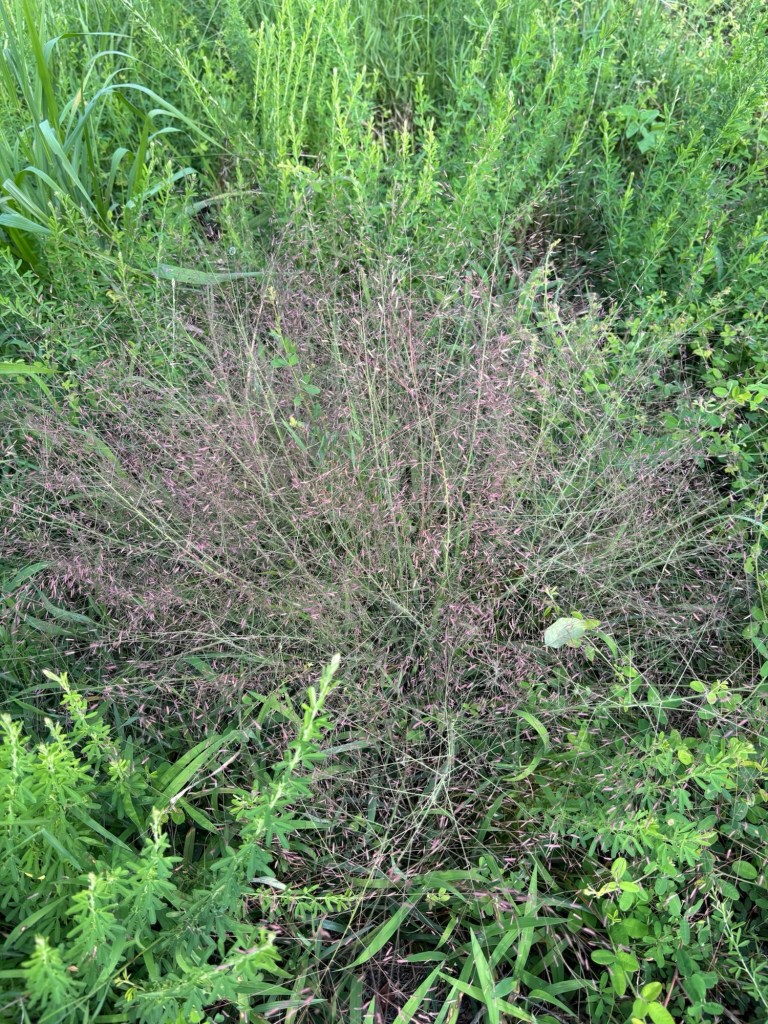
The old snag finally fell in a storm last week.From across the waterway, the snag laid down pretty gently. Phaeolus schweinitzii, Dyer’s Polypore, found along Midhill Trail. Eragrostis spectabilis, Purple Lovegrass, found on the hillside in the clearing up top.
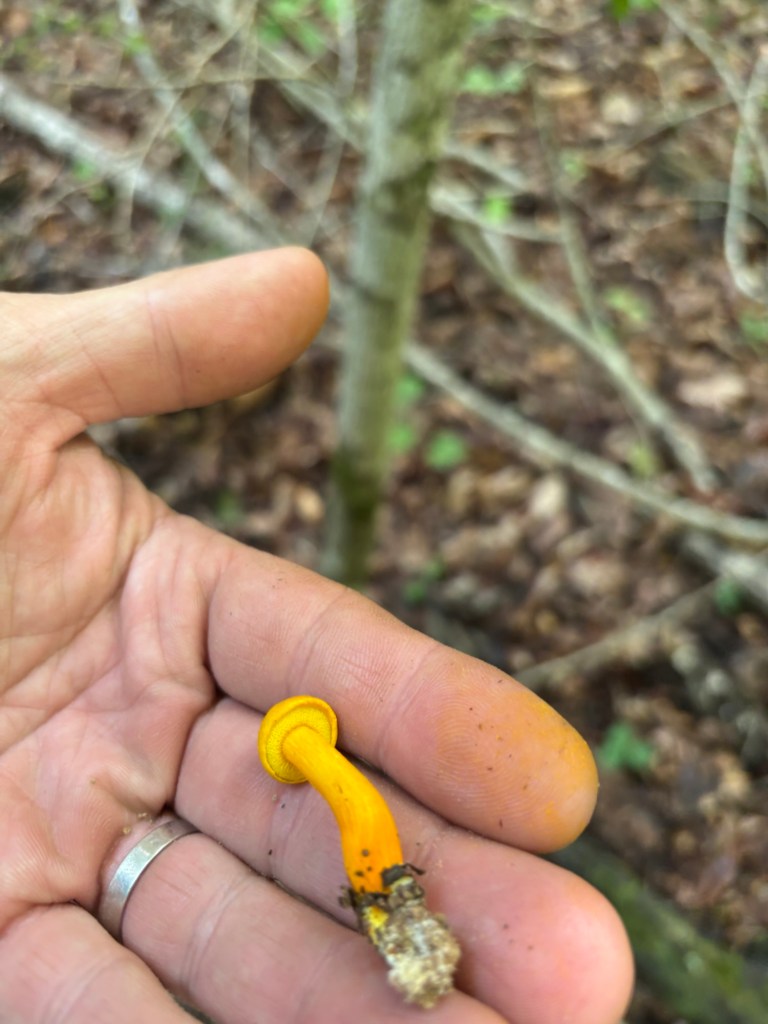
Suillus americanus, chicken fat mushroom or American slippery Jack, an edible found in multiple spots. We’ve not tried it. Aureoboletus auriflammeus, flaming gold bolete, staining fingers orange. This is a young fruiting body.
We camped over the weekend at SAFF and not only did we see some cute critters but it was also a mushroom wonderland.
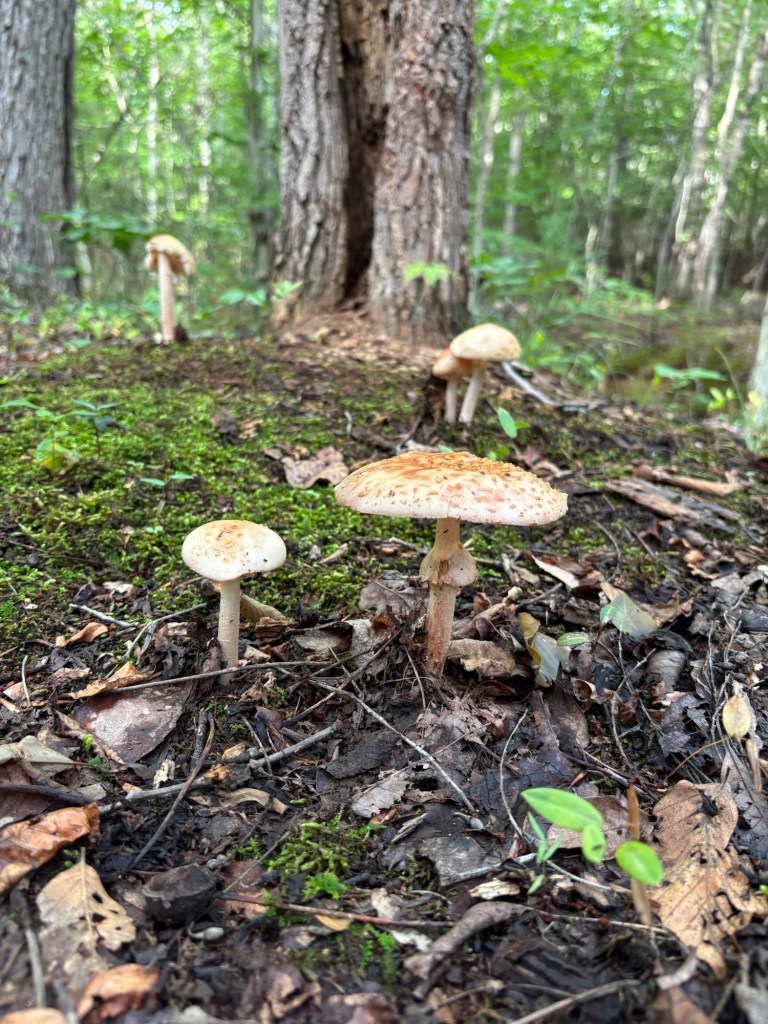
Amanita rubescens, blusher, with deadly lookalikes it’s not a beginner’s mushroom. They are abundant throughout the farm and are always eaten by bugs or animals. Need to be thoroughly cooked for 15-20 minutes to break down a dangerous hemolytic protein toxin. Foragers say it has a mild, nutty pleasant flavor. Some compare it to a mild meat or beef like richness. So far, we can only hope to find a good looking blusher to bring home and cook. Xanthoconium seperans, lilac bolete, a prized choice edible in the porcini family. Leccinum aurantiacum, red capped scaber stalk, found all over but heavily in the north pine and oak forest. Saturday foray from SAFF includes Frost’s boletes, Amanita banningiana and jacksonii. Chanterelles and lilac boletes. We also found one Lactarius indigo.



 Saint Andrews Forest Farm