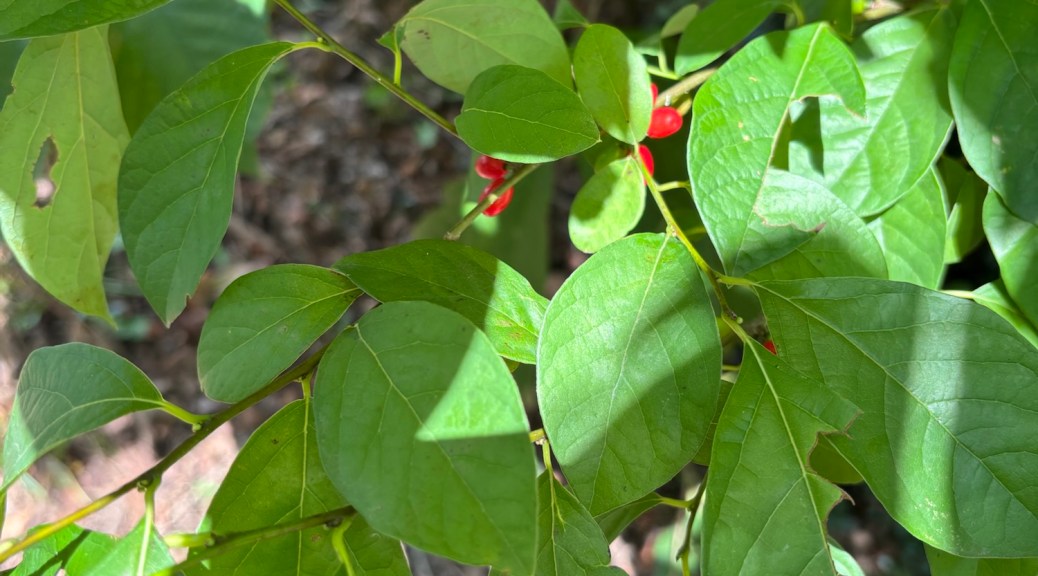
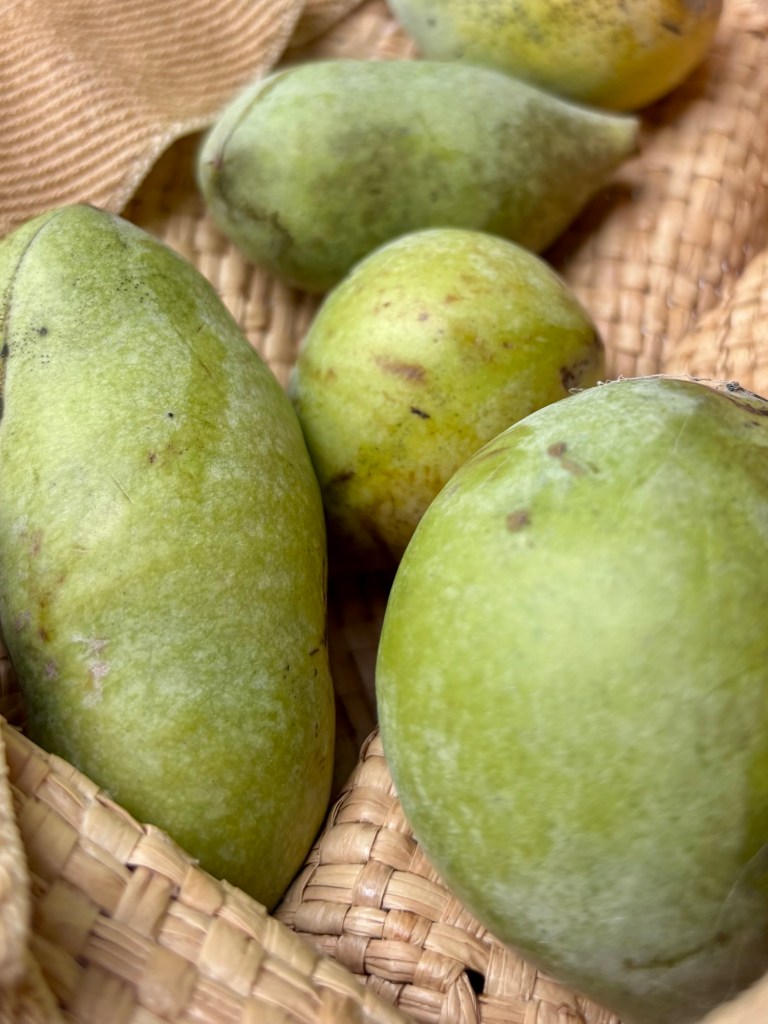
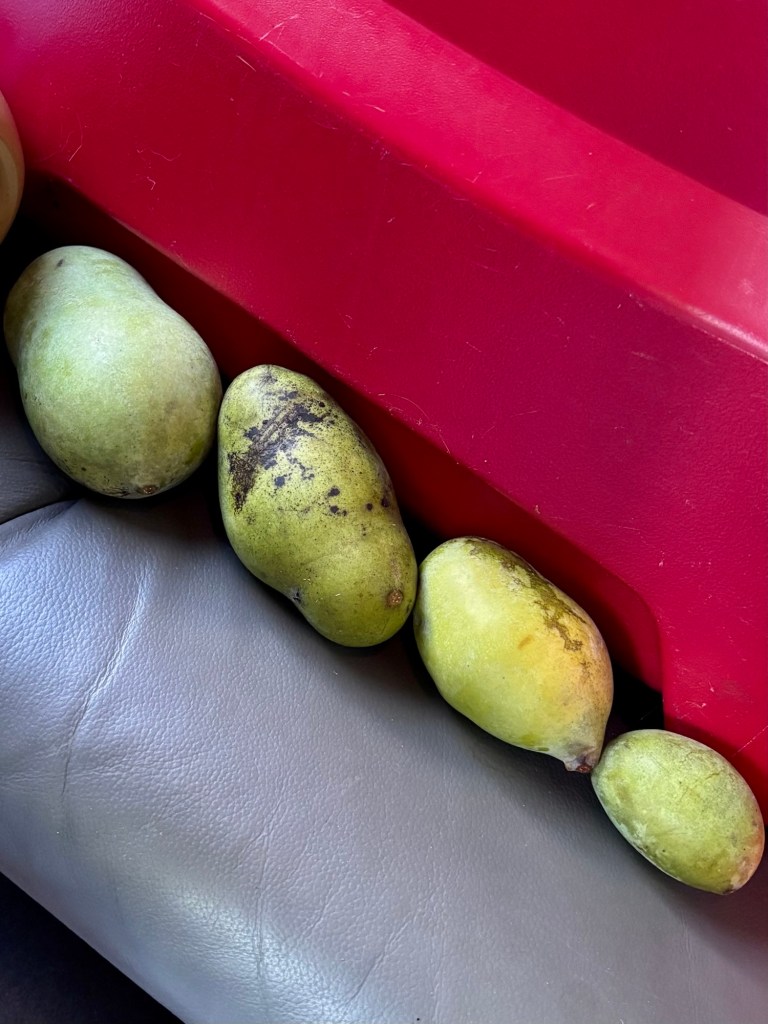
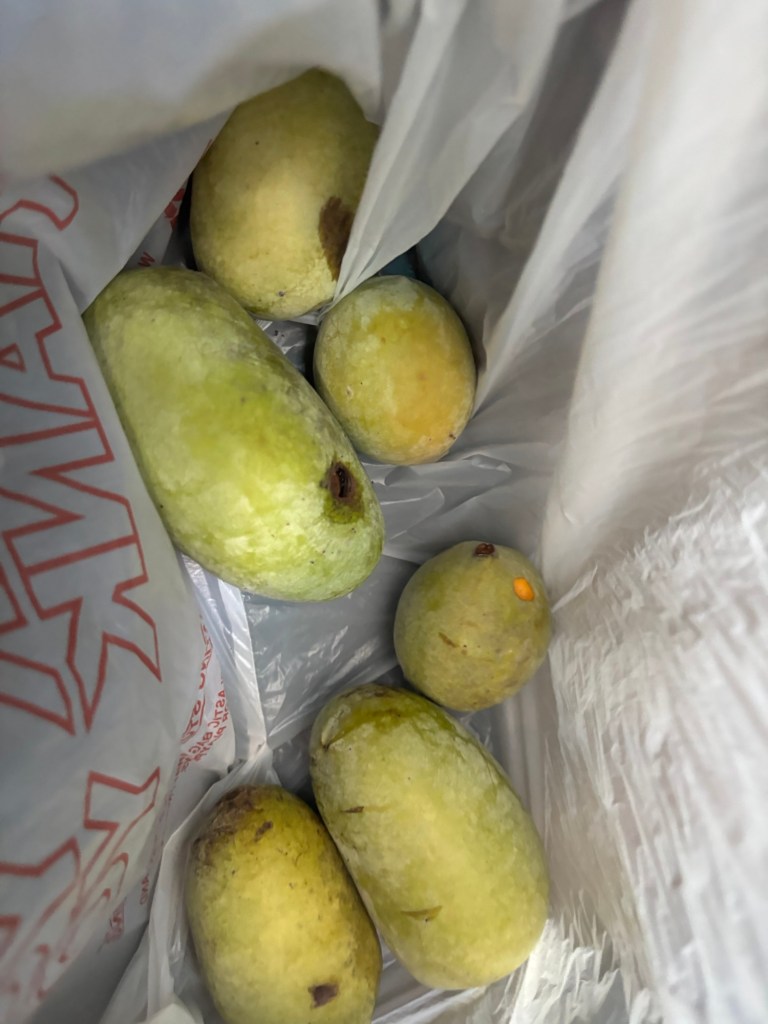
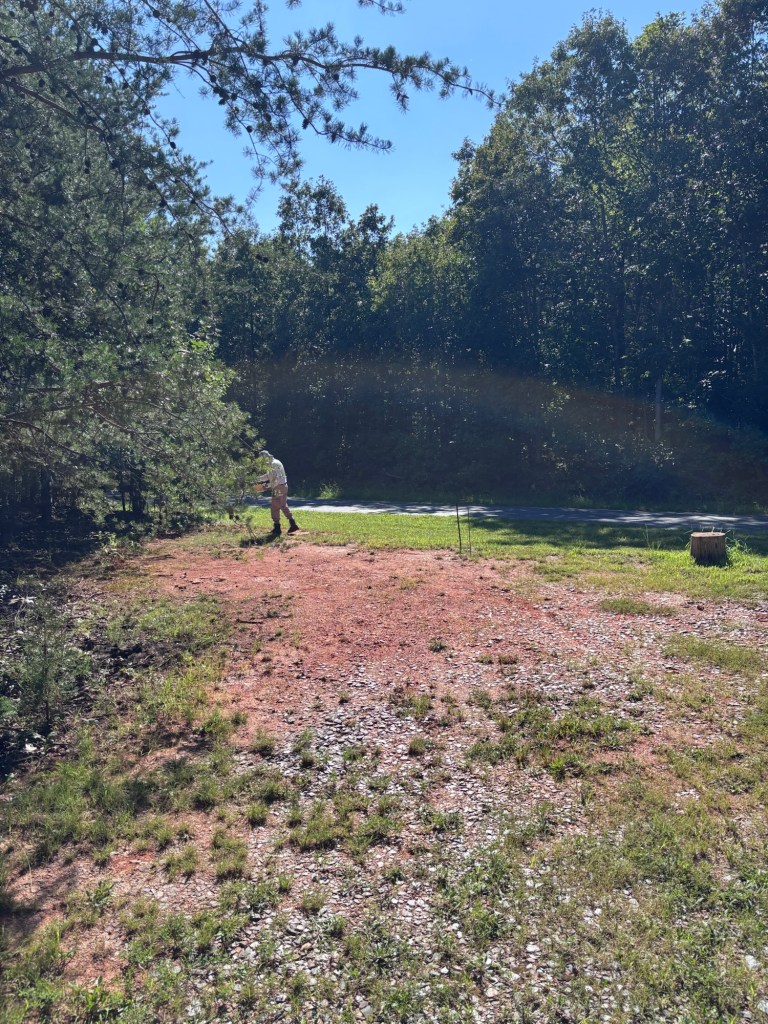
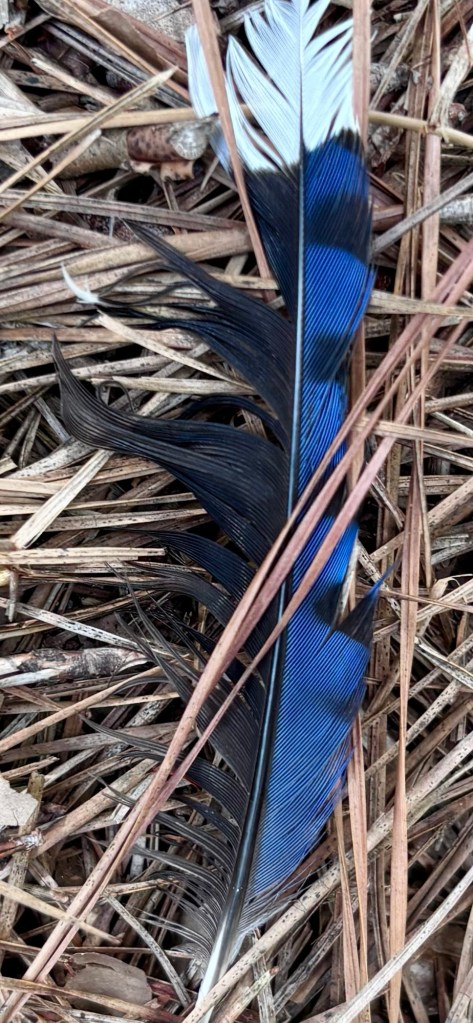
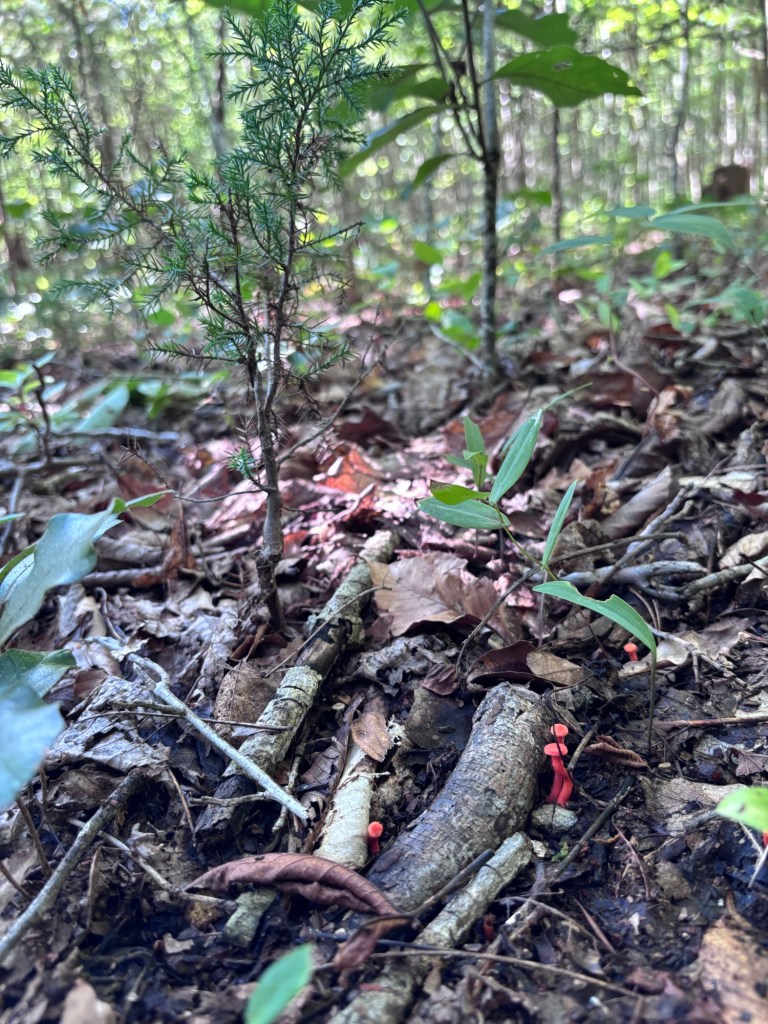
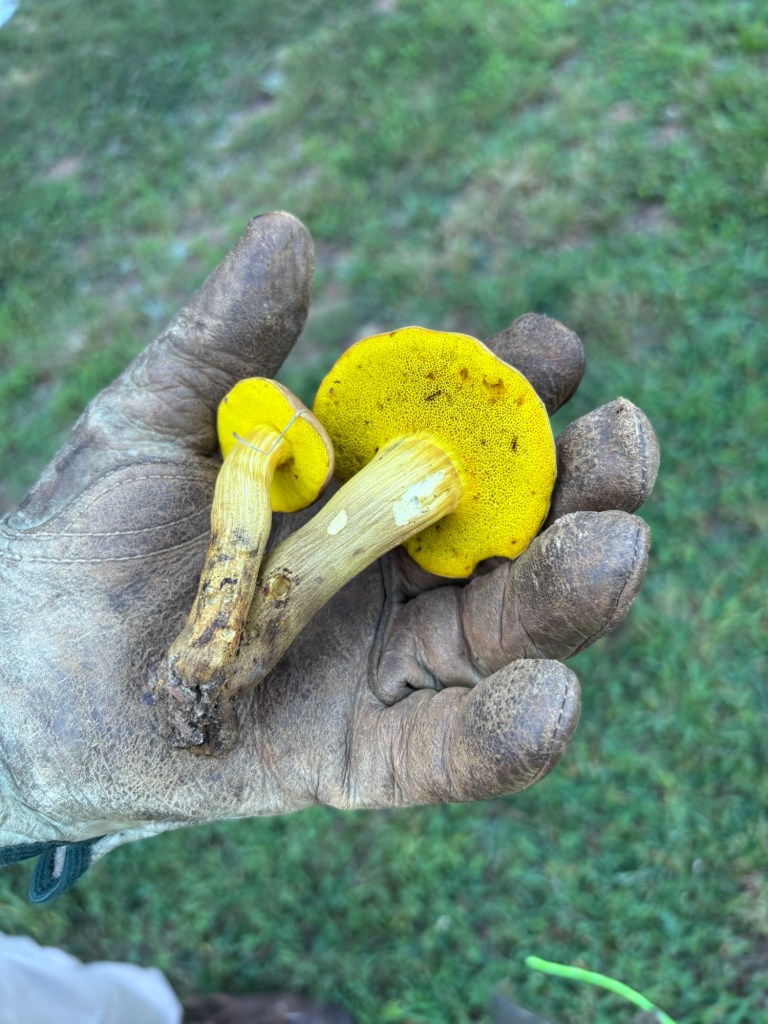
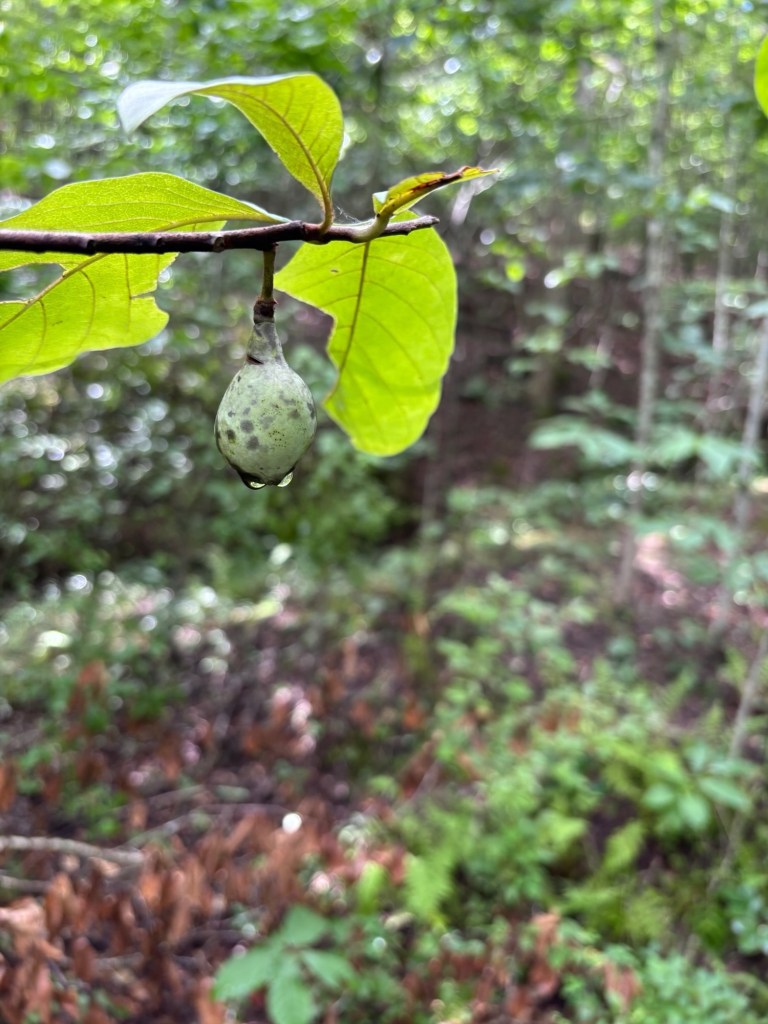
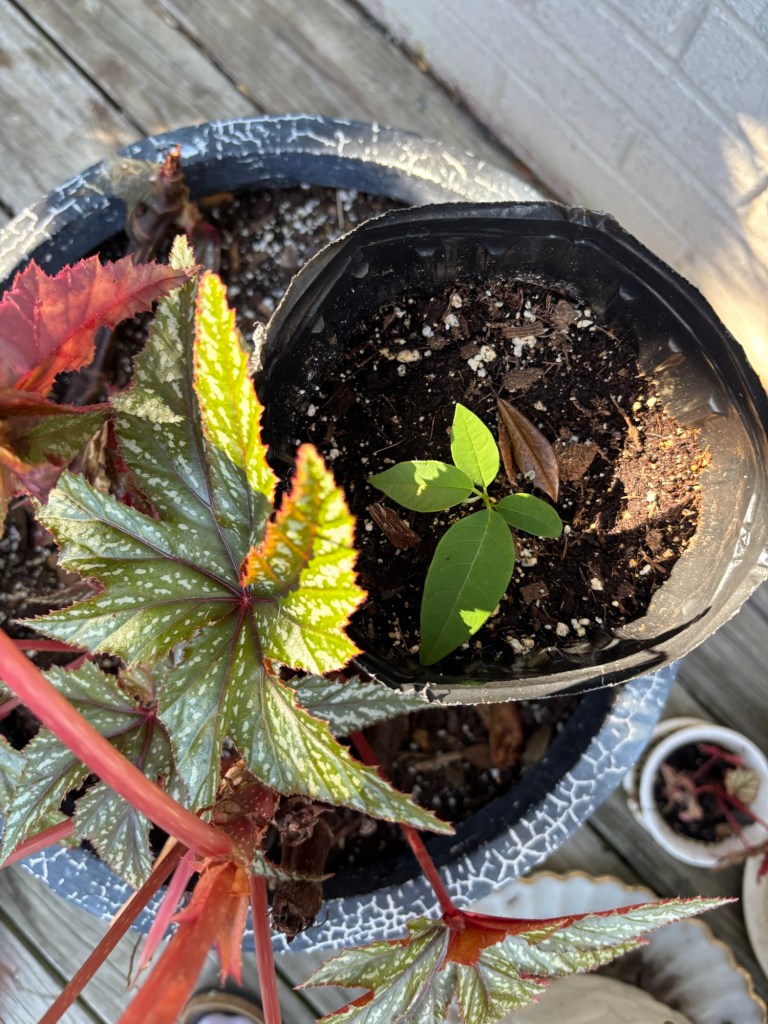
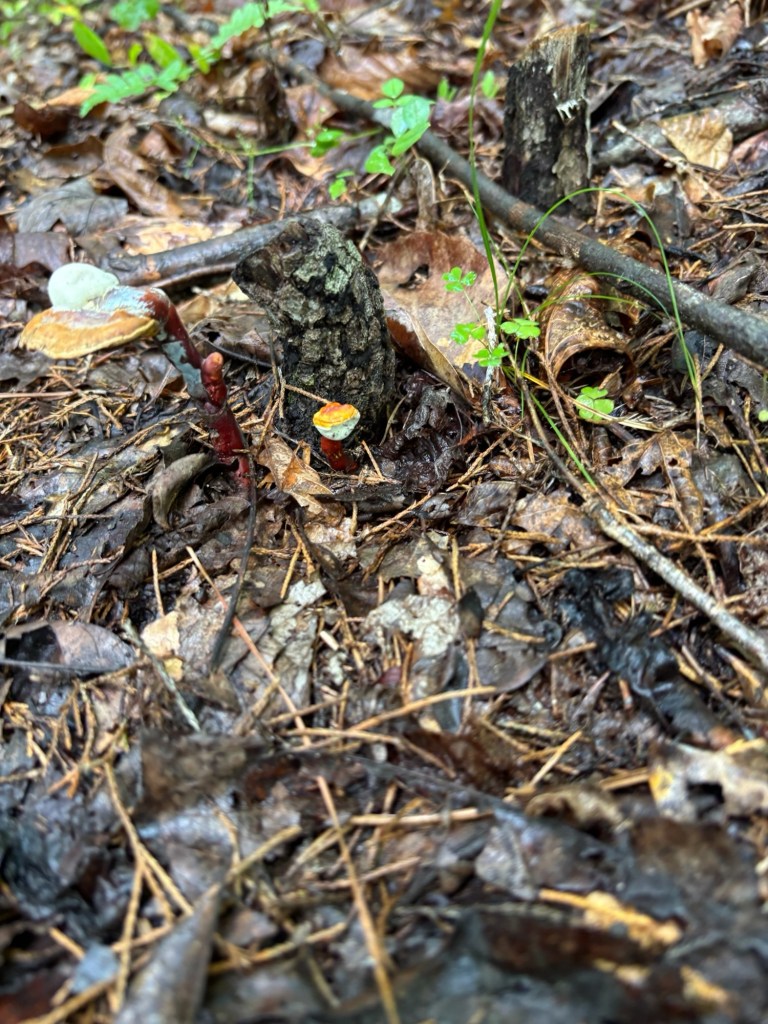
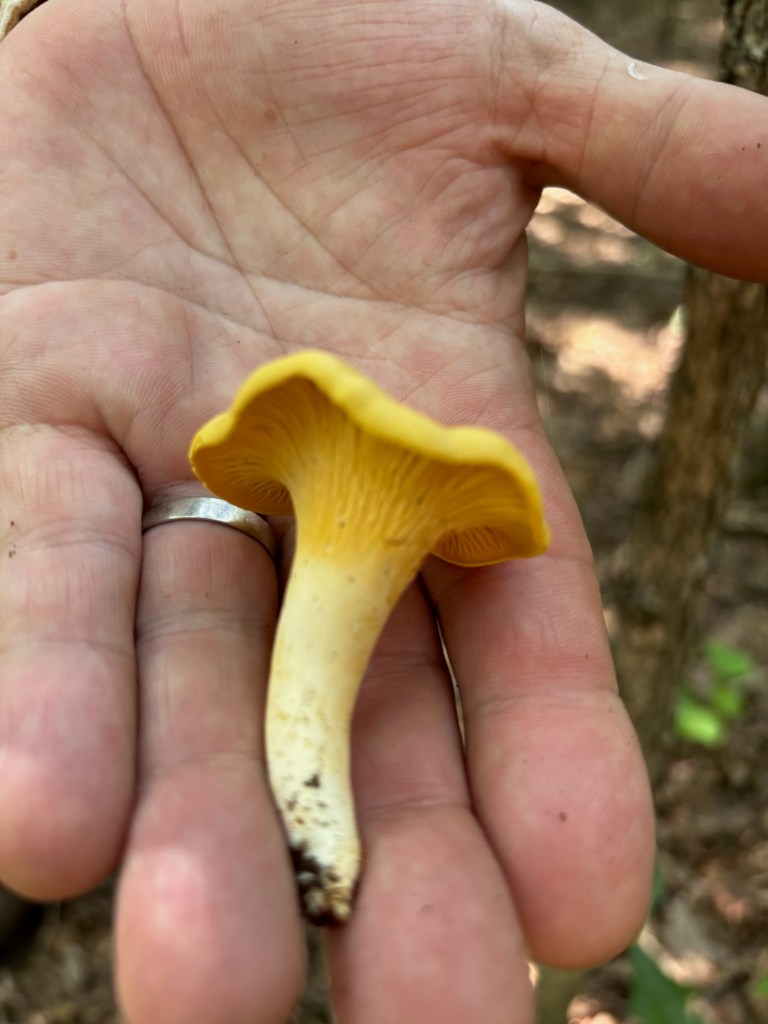
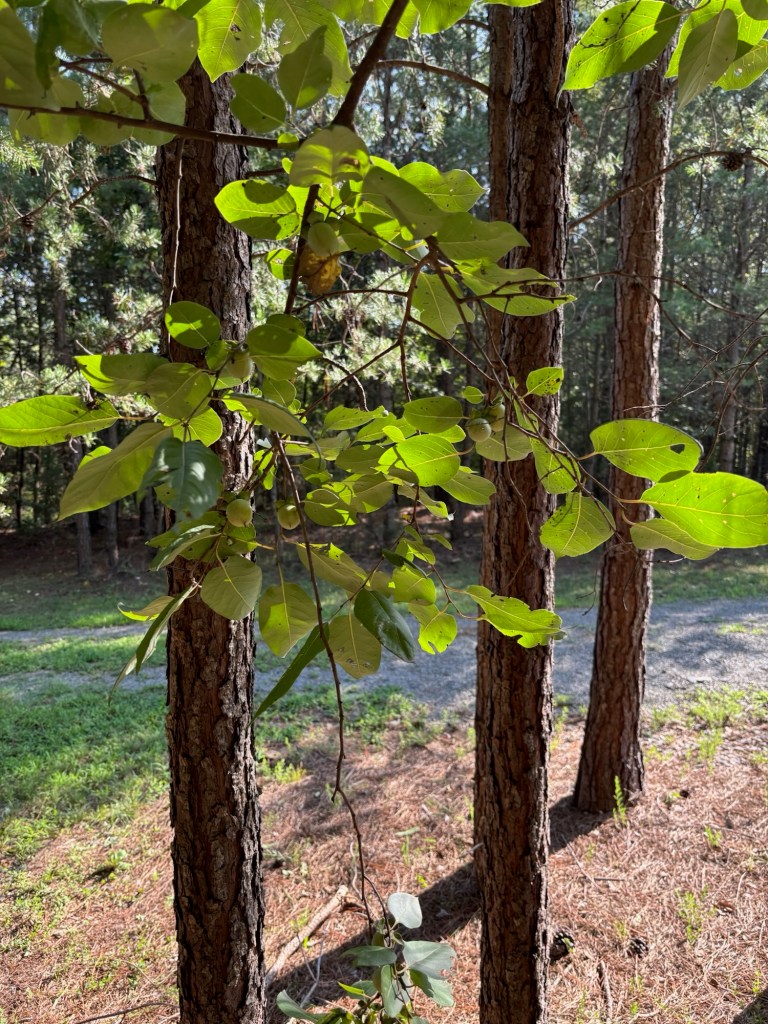
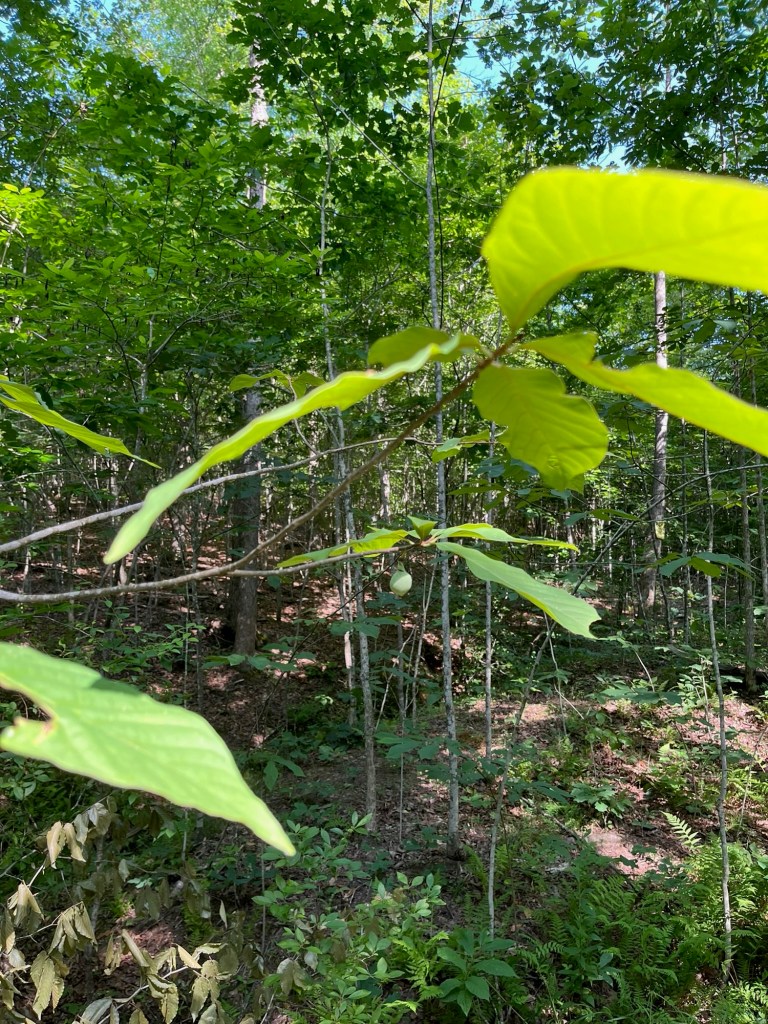
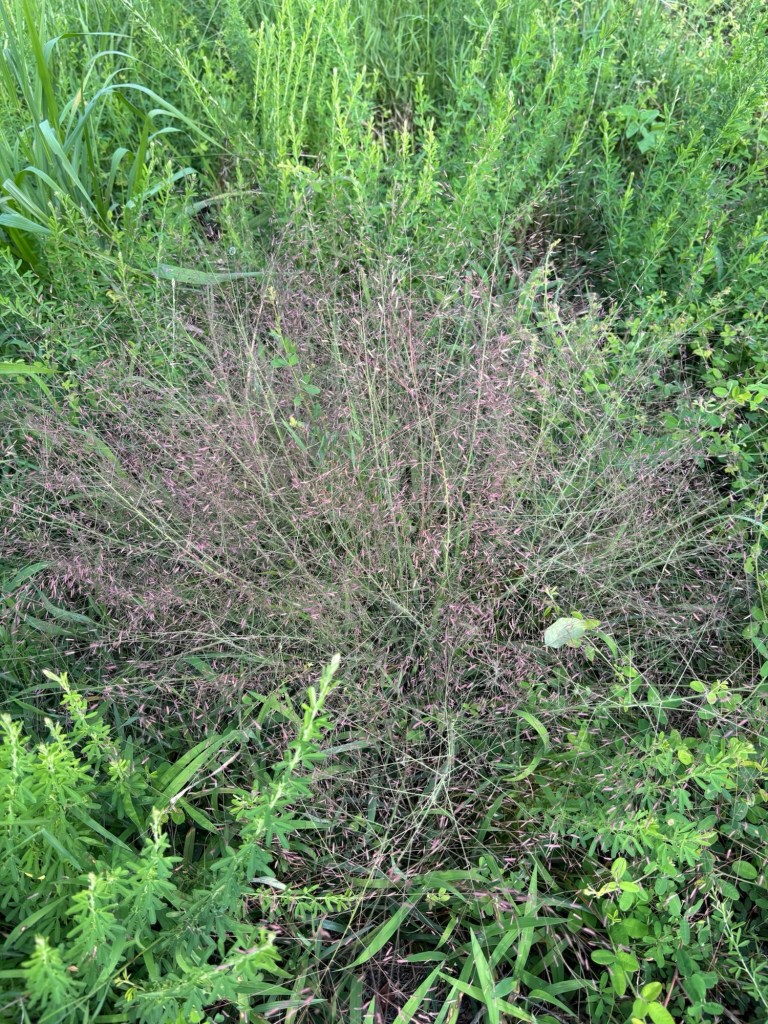
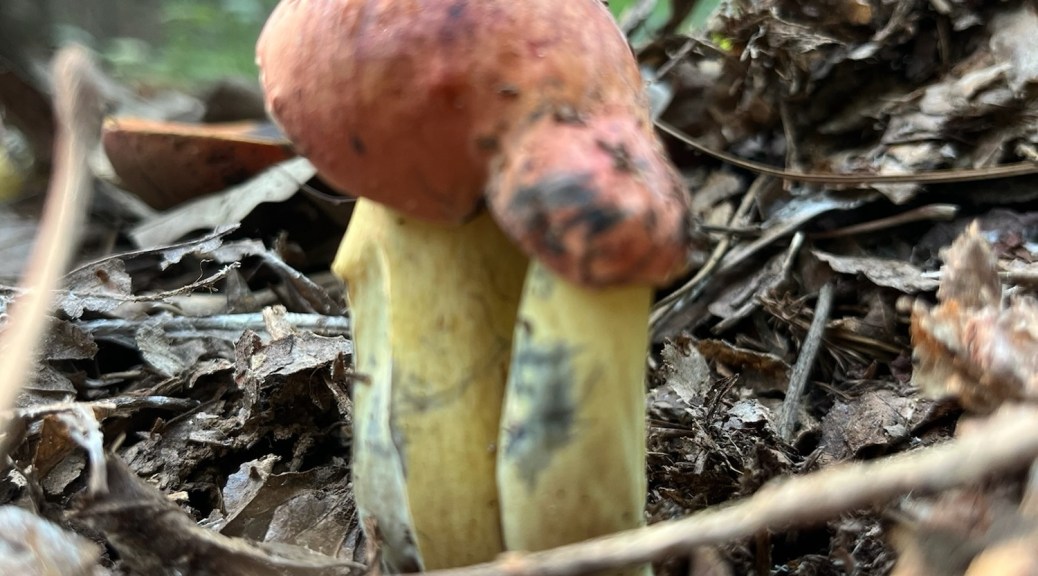
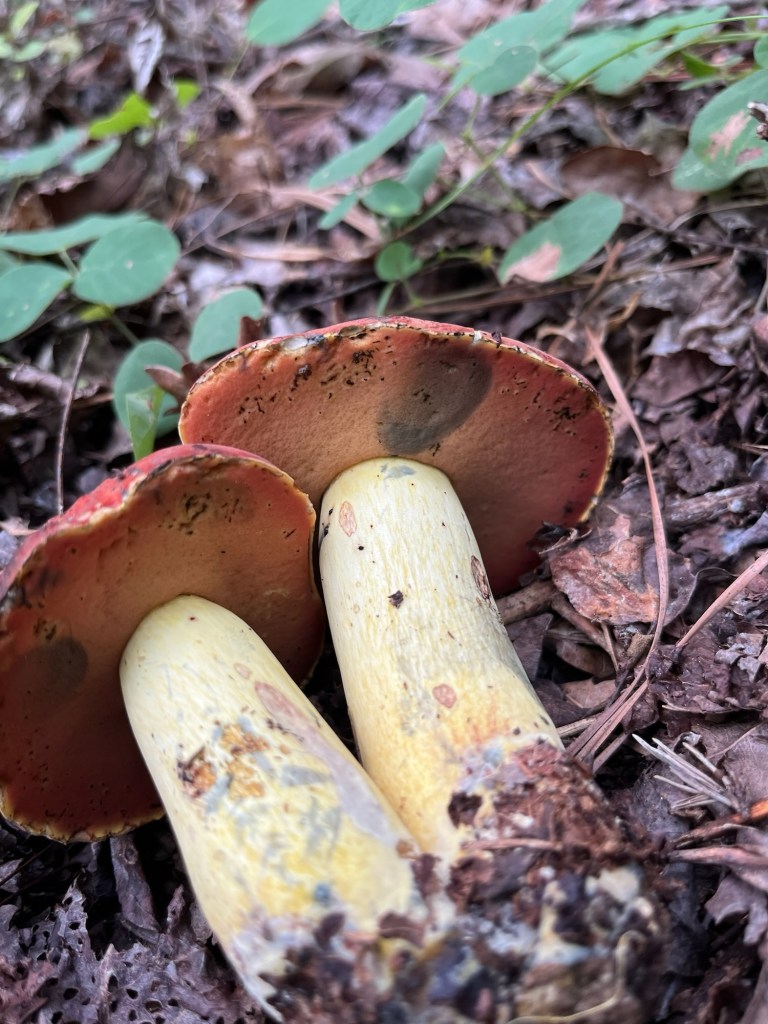
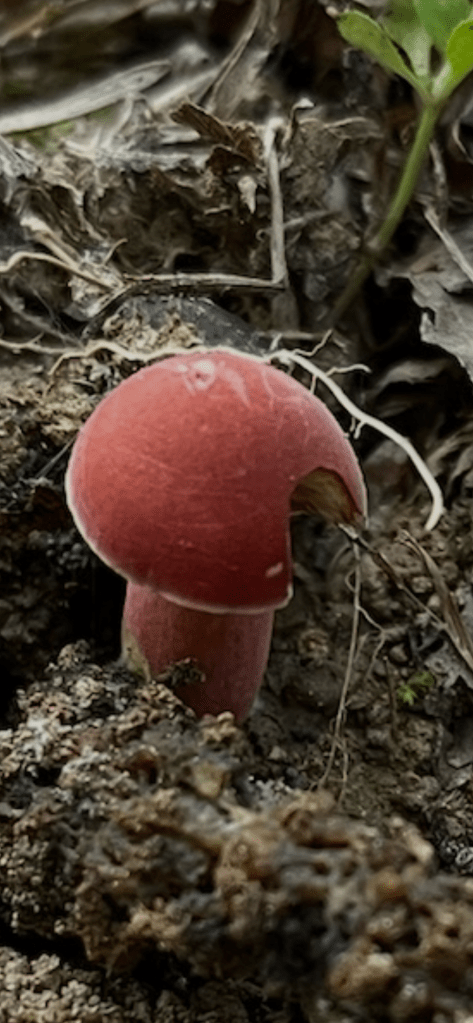
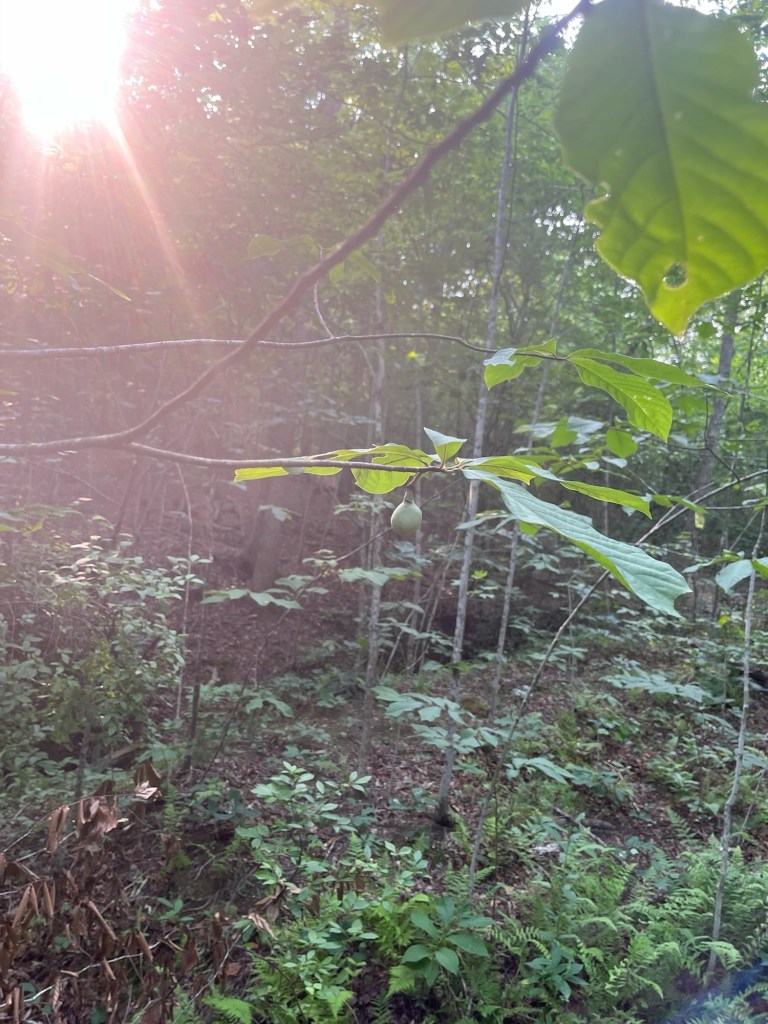
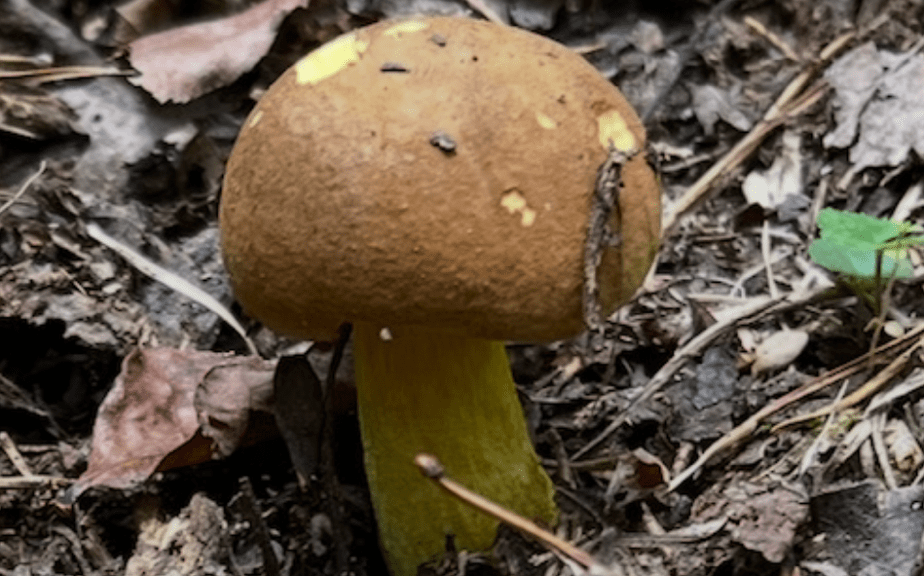
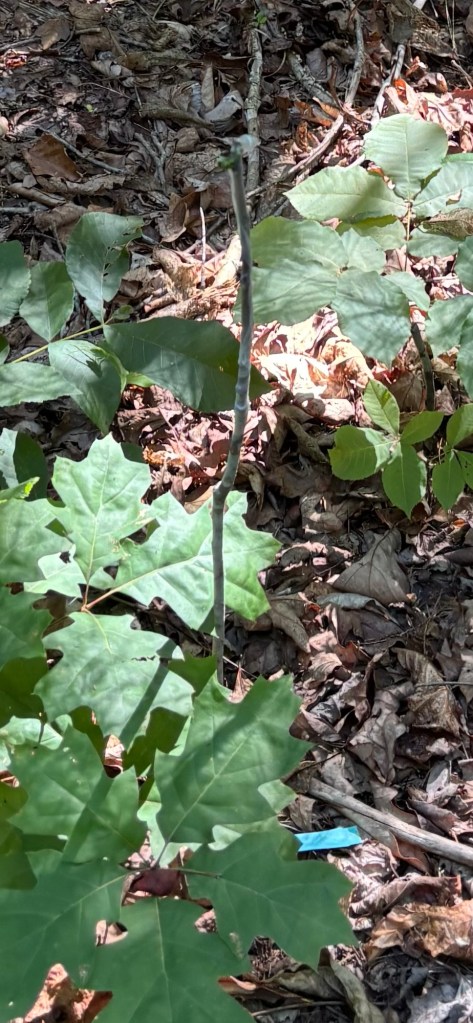
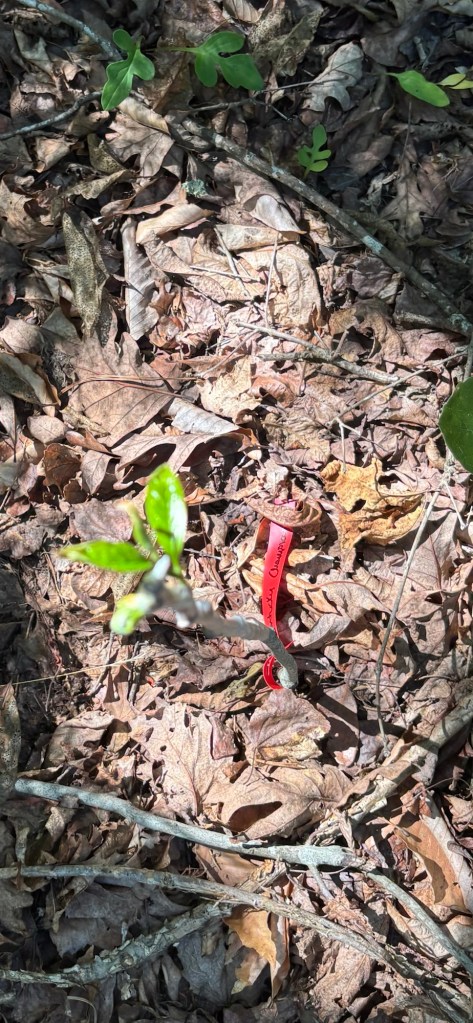
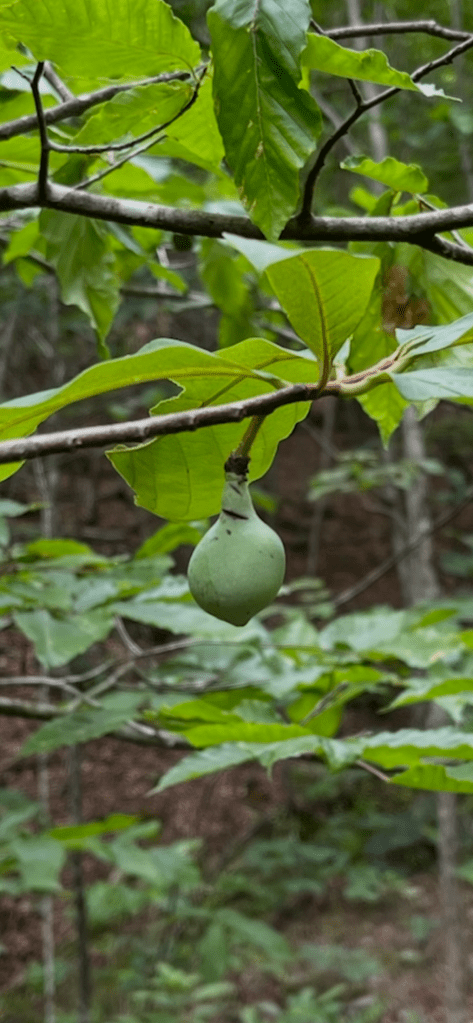
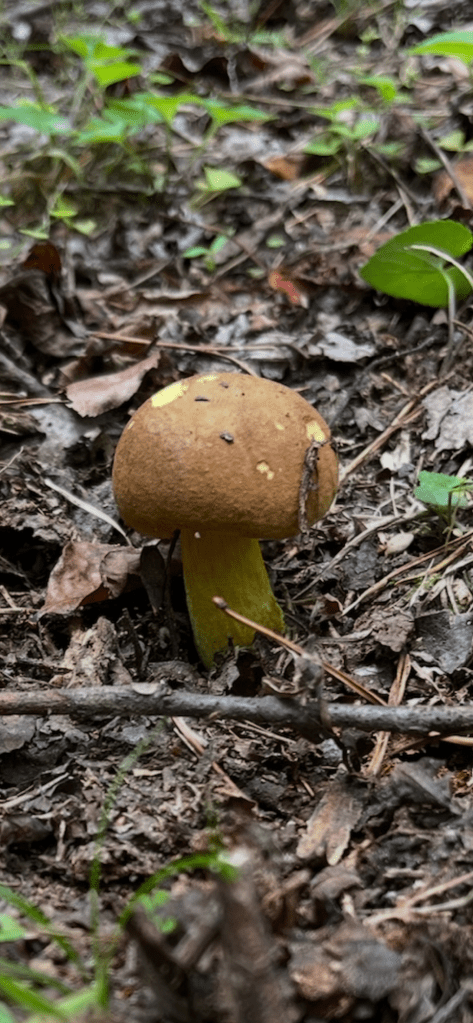
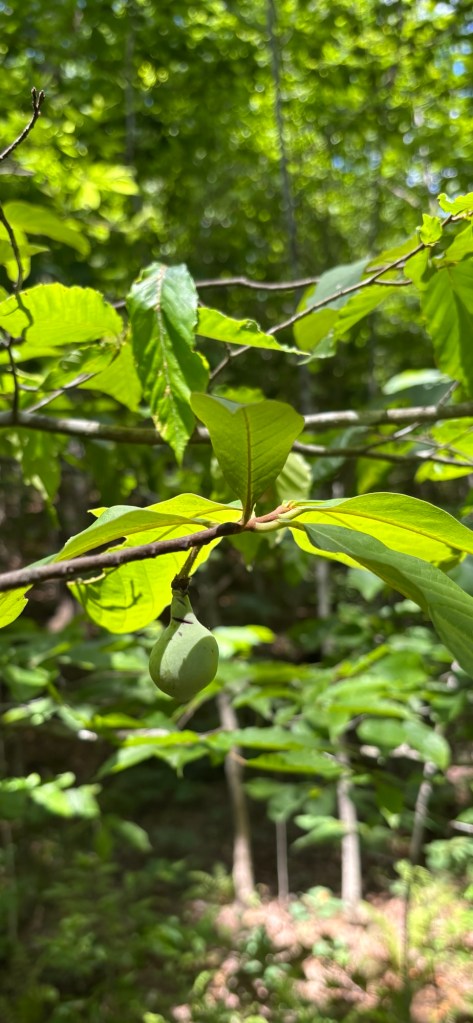
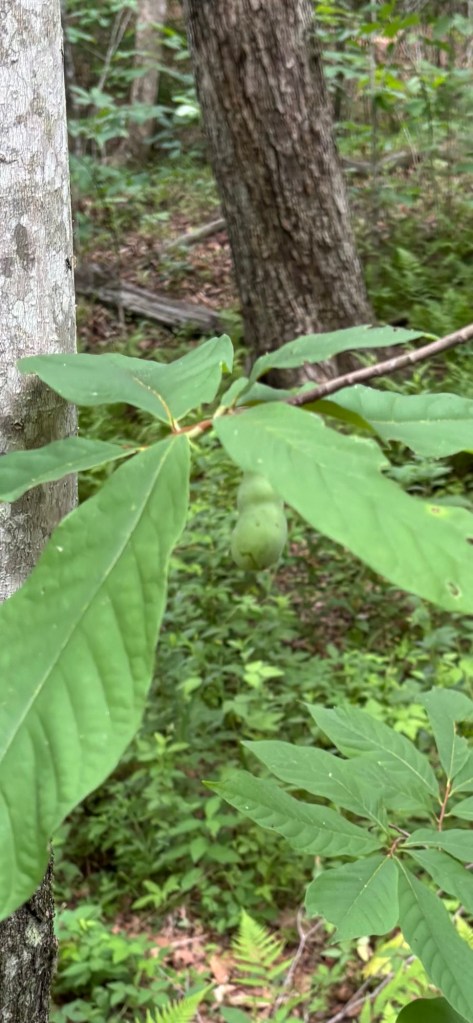
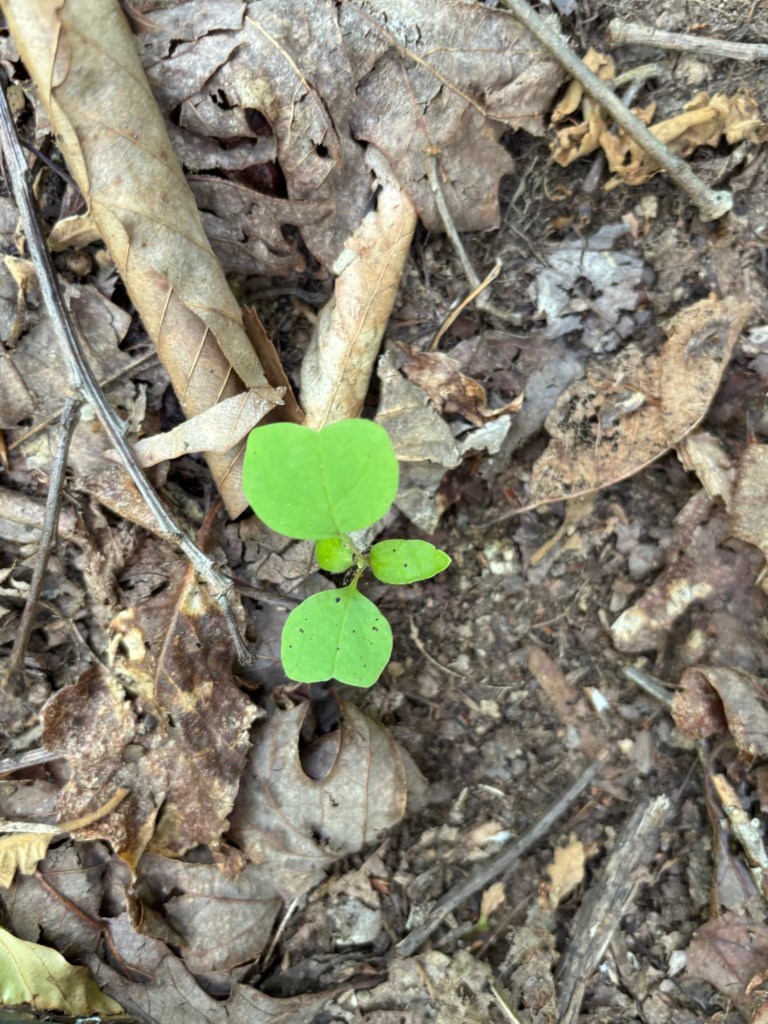
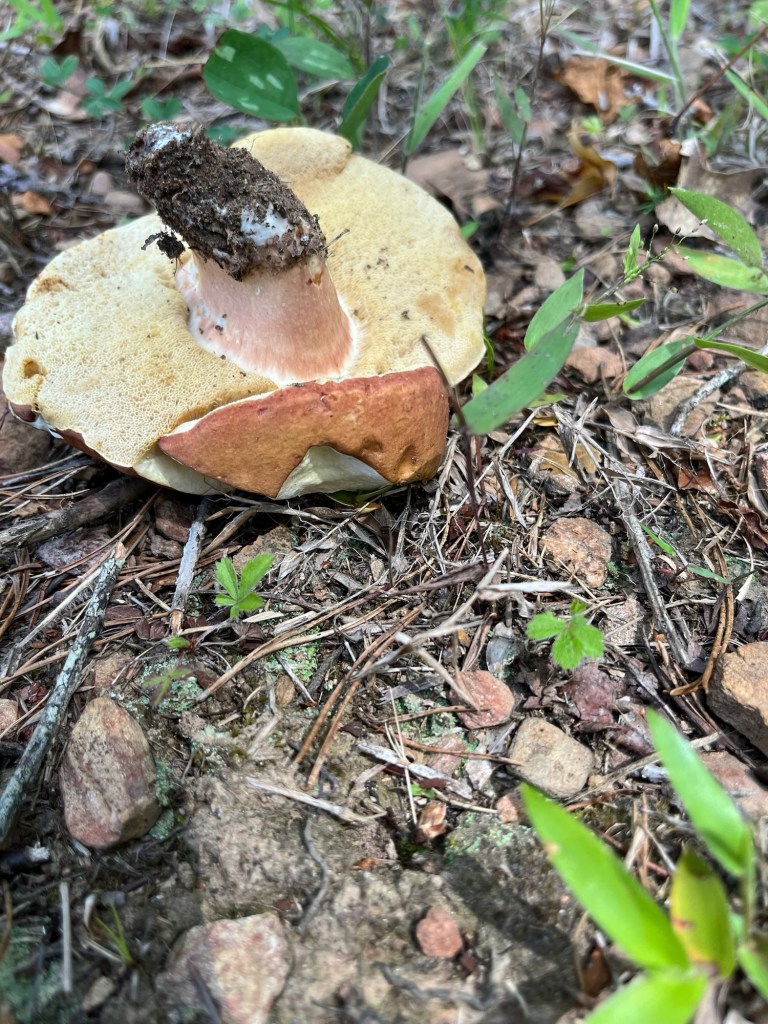
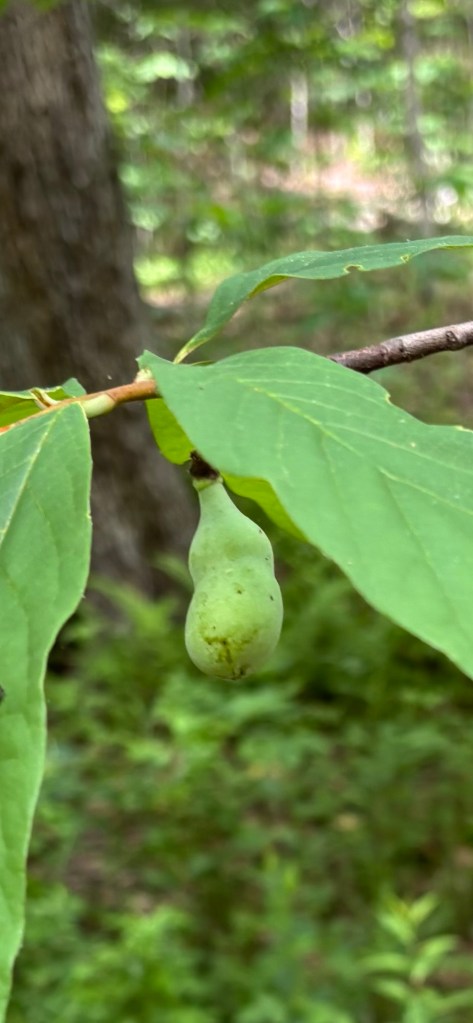
Asimina triloba dropping from trees in Central Virginia. Foraged on the way to the farm. Our first finds of the year in Afton Virginia. We collected 50 seeds from these pawpaws and have them stored to cold stratify over the winter. Almost another inch last week in Buckingham Virginia and more opportunities for storms in the next few days. We spread little bluestem (Schizachyrium scoparium) seeds around the exposed areas at risk of runoff in storms yesterday. Another blue jay feather found up top near the driveway.Chantharellus cinnabarinus, red chanterelle, found throughout SAFF. A choice edible with false gills and bright red color found along wet weather lines. They are smaller than other chanterelles and hold up well in the pan. Aureoboletus innixus, clustered brown bolete, found near an oak. These are edible but we haven’t tried them. Pawpaws still hanging on in the clonal colony. We’ve been checking on them every time we’ve been out to SAFF.Annona cherimola, cherimoya, tree sprouting on the deck. This is a tropical tree which will need to be protected from our cold Virginia winters. Ganoderma growing along the main waterway at SAFF. Persimmon ripening on the trees up top.
We’ve been busy clearing paths for the tractor through the pawpaw seedling orchard, planting little bluestem on exposed ground and preparing to plant this year’s Asimina triloba seedlings. We have also cleared out some pines and hardwood trees crowded in around our American Persimmon trees and created an orchard up top near the road for them. Also, we planted several Juglans Regis, Persian walnut trees in the main clearing at SAFF. We have also been researching solar kits for home and SAFF and can’t wait to get what we need ordered and installed.
The past weekend has been a nice taste of cooler, fall weather on the way. The highs have been in the 80s yet there has been a nice breeze and crispness in the morning. We’ve been feeling so grateful for everything and especially the rain and the cooler temperatures.
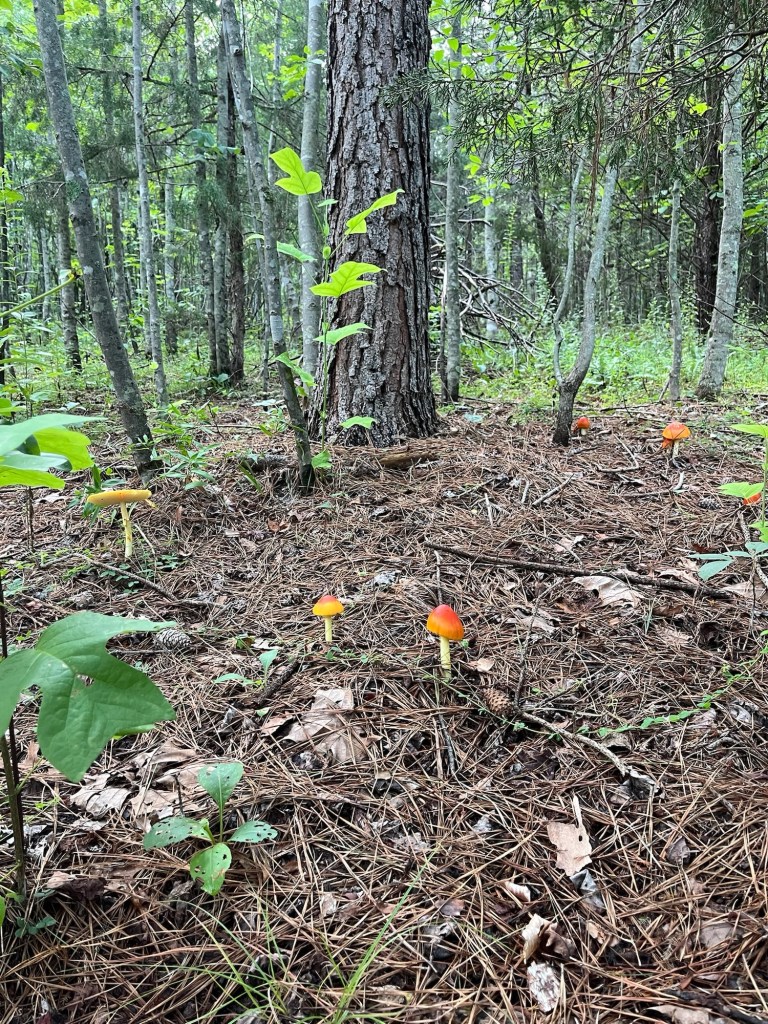
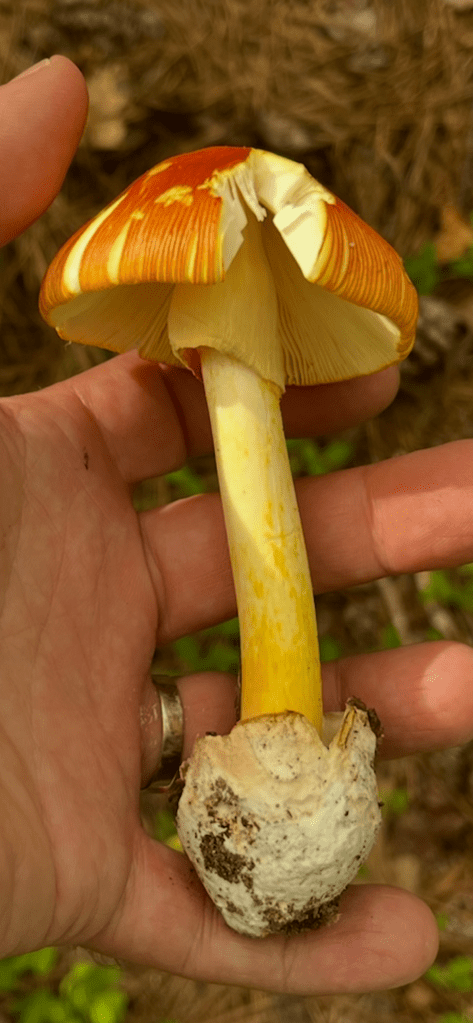
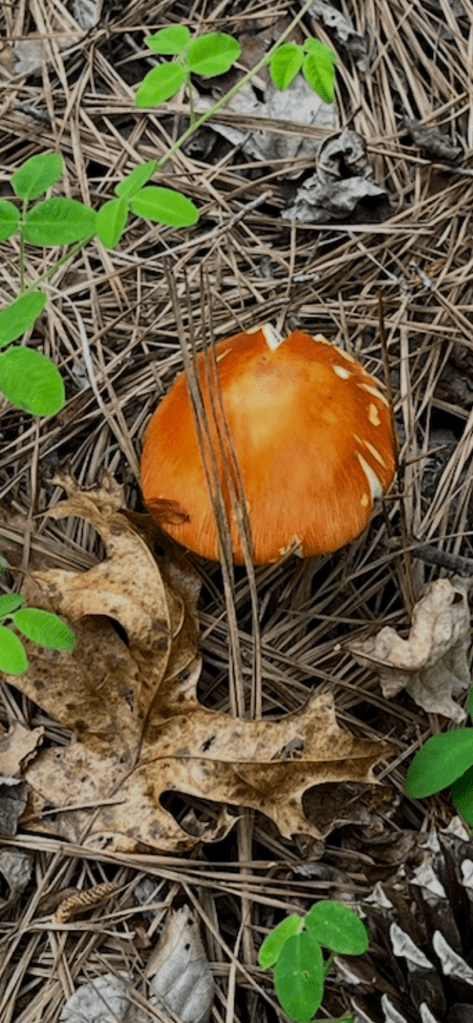
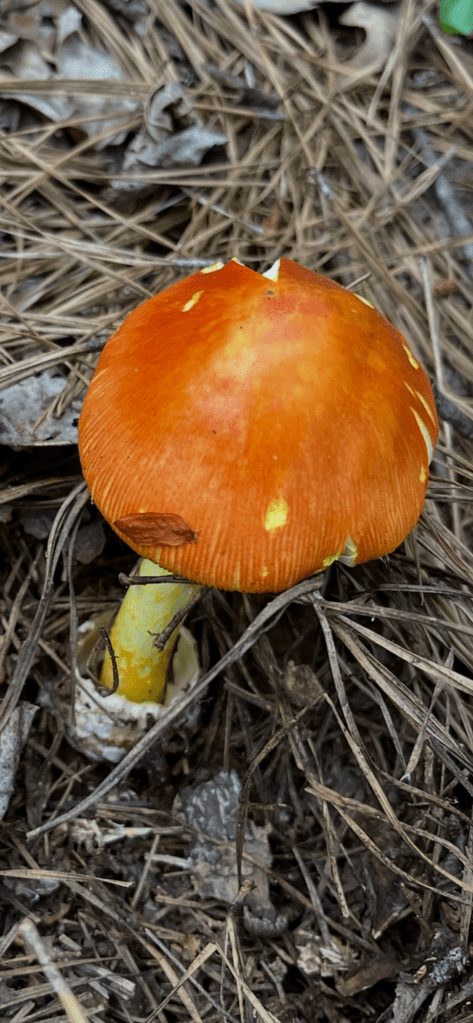
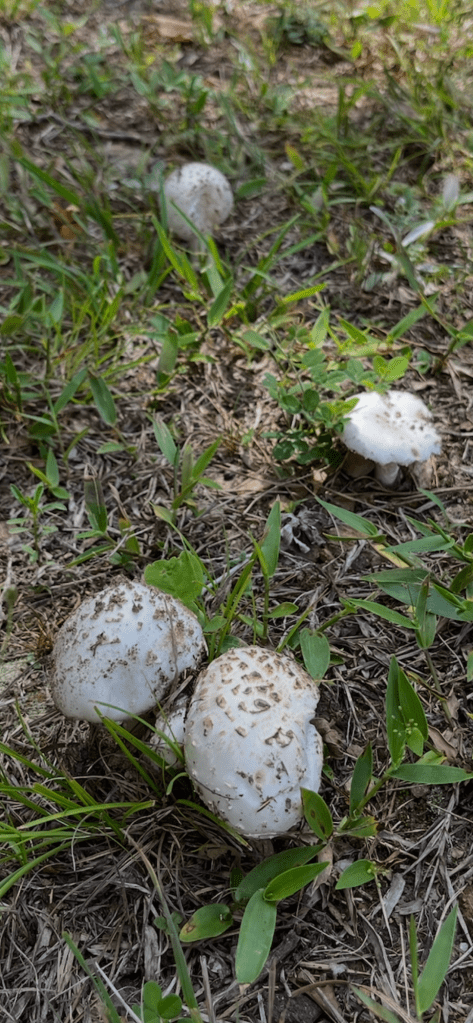
Loblolly pine surrounded by Amanita jacksonii overlooking the cultivar seedlings planted last Fall at the bottom of North Trail.Asimina triloba fruit hanging from the pawpaw tree at the bottom of the hill and across the waterway on the old clonal colony.
It sure has been hot and humid in Virginia these past weeks with near daily opportunities for thunderstorms. The heat index has been in the low 100s on most days. Saint Andrews Forest Farm has had a few good soaking rains. It’s not enough to offset the severe multi-month rainfall deficit and drought conditions. Nevertheless, we are beyond grateful. Until the onset of El Niño, we weren’t getting much rainfall. Since El Niño patterns began shifting the jet stream, we have had consistent moisture and opportunities for storms. Virginia feels more and more like a tropical rainforest. With the temporary seasonal increase in rainfall, our forest grows, mushrooms we haven’t seen for two years (since the last El Niño!) are fruiting, the creek burbles and flows.
We feel encouraged to begin building a water collection system for the farm as soon as possible. Although this short term impact of El Niño’s increased rainfall feels positive, the long term picture is really unknown. Better to be prepared for a future that includes alternating wet and dry years, and best to incorporate the presumption of drought into our planning.
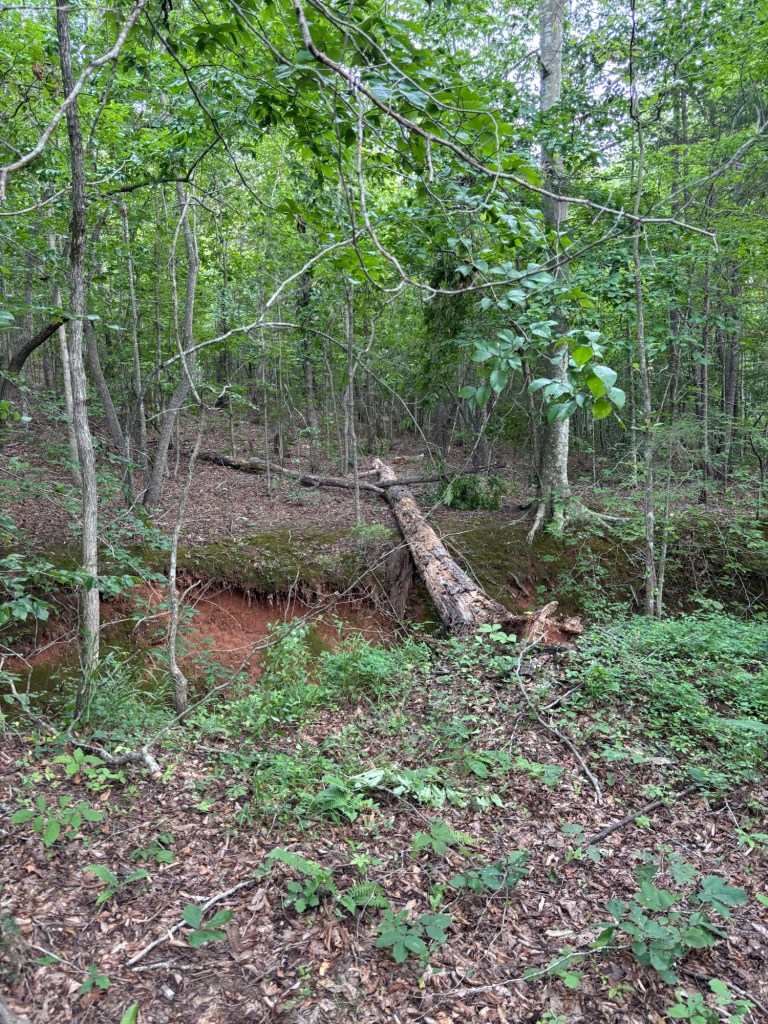
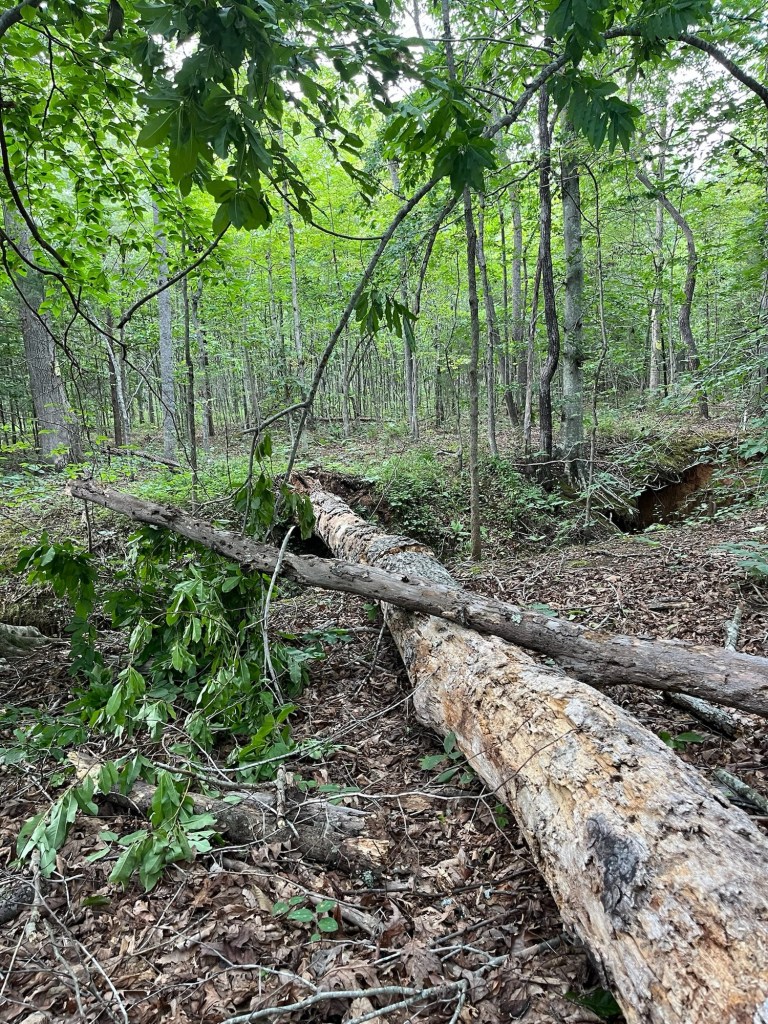
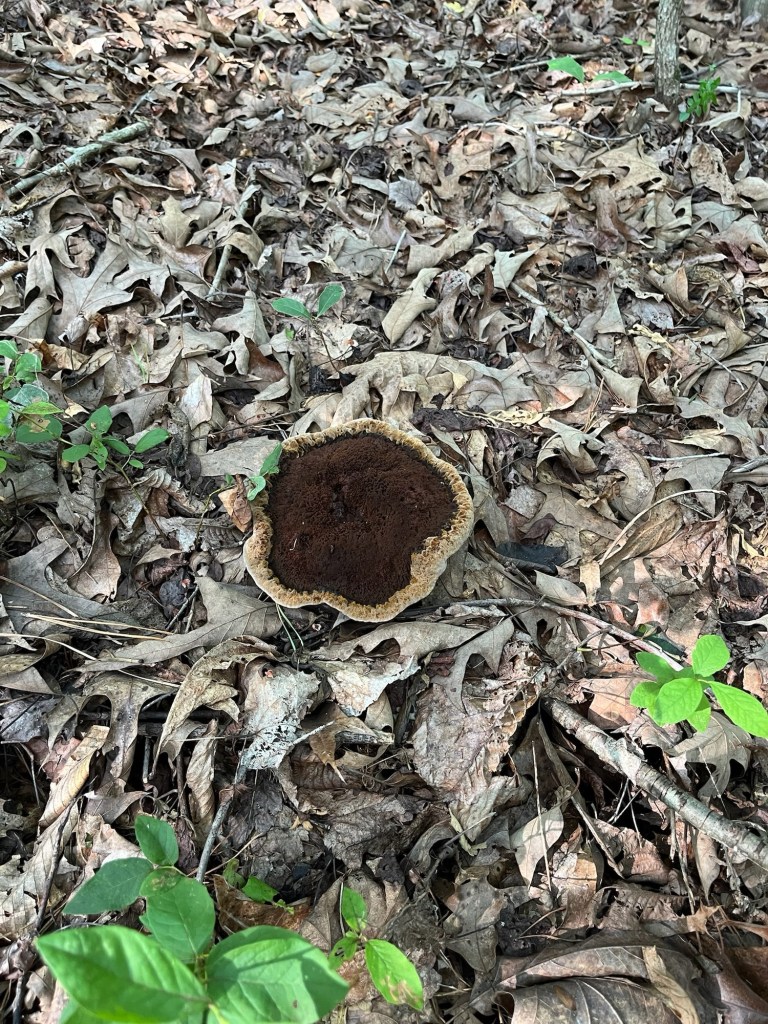
The old snag finally fell in a storm last week.From across the waterway, the snag laid down pretty gently. Phaeolus schweinitzii, Dyer’s Polypore, found along Midhill Trail. Eragrostis spectabilis, Purple Lovegrass, found on the hillside in the clearing up top.
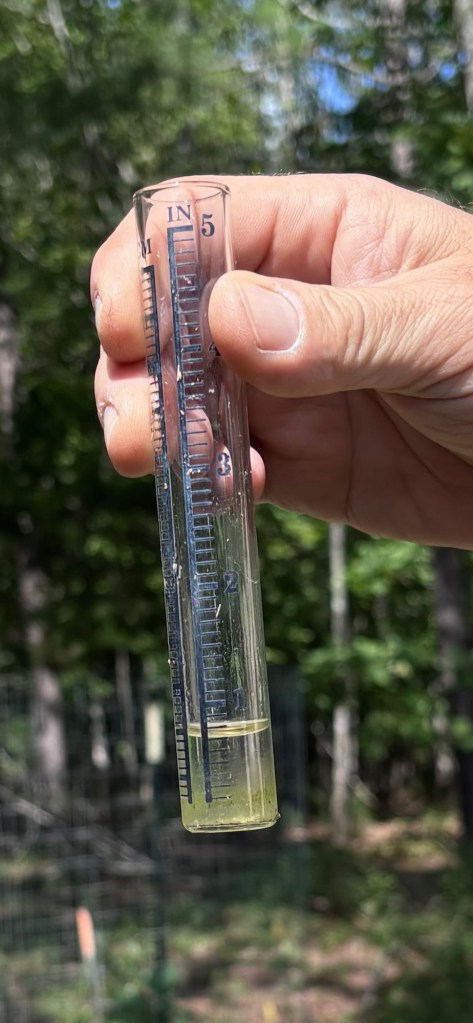
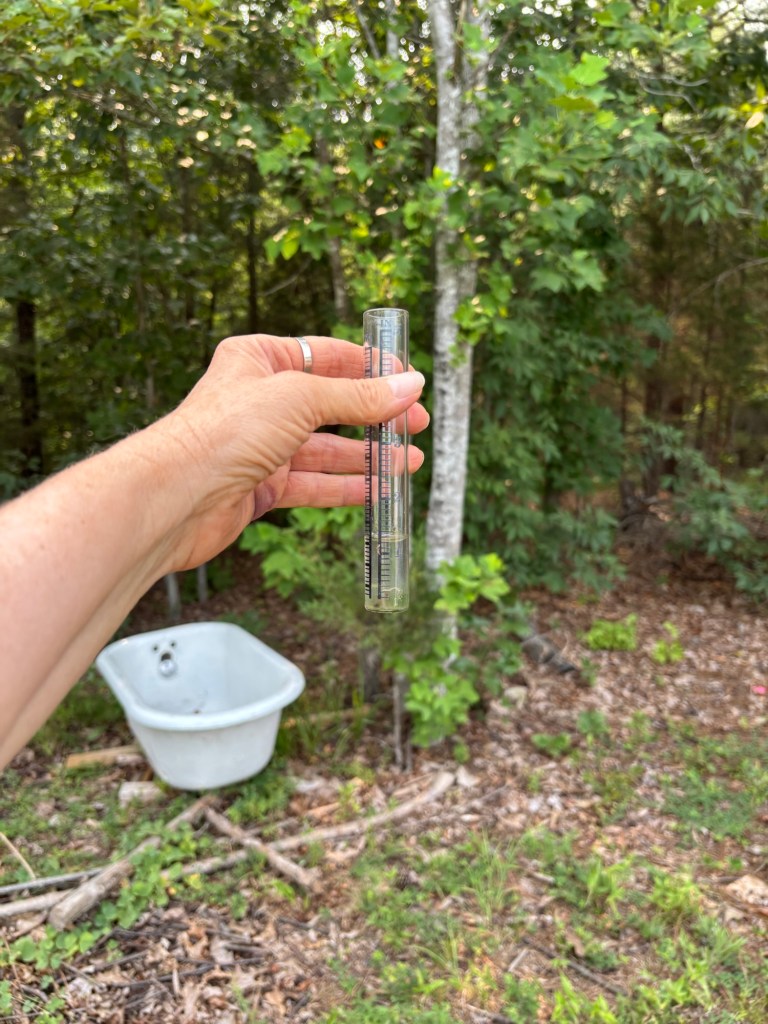
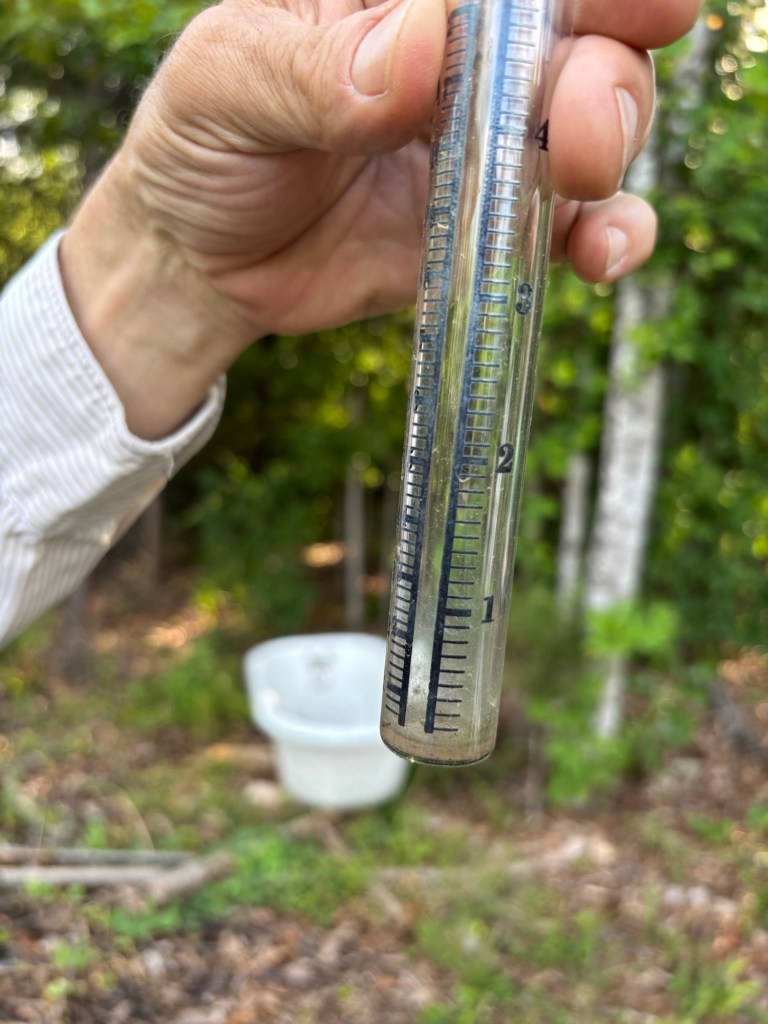
Wildfire smoke and haze obstructing the view of Afton Mountain on the drive home last night. Over an inch of rain in the gauge. We hadn’t checked it when there on Tuesday. The rain was from last weekend. We were happy to see it.
When driving over to the farm we saw smoke from the wildfires up north settling in around the mountains and hills. We wore our masks while outside to protect our lungs from any fine particulate. We had farm chores aplenty yesterday afternoon and also took time to have a mushroom walk.
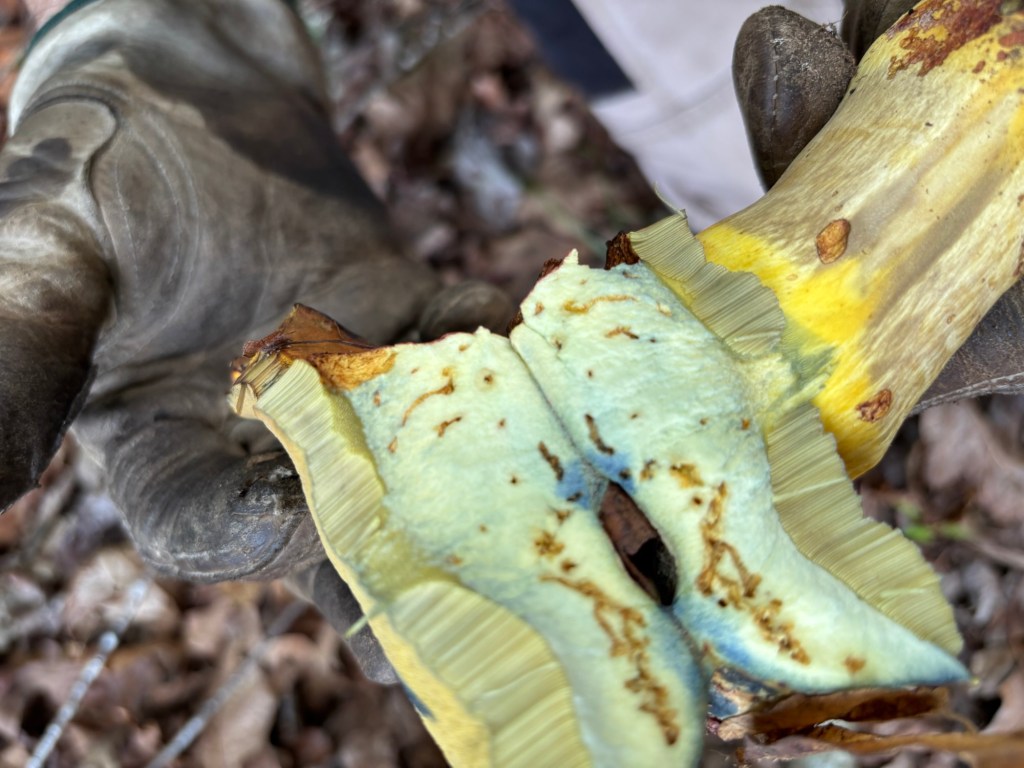
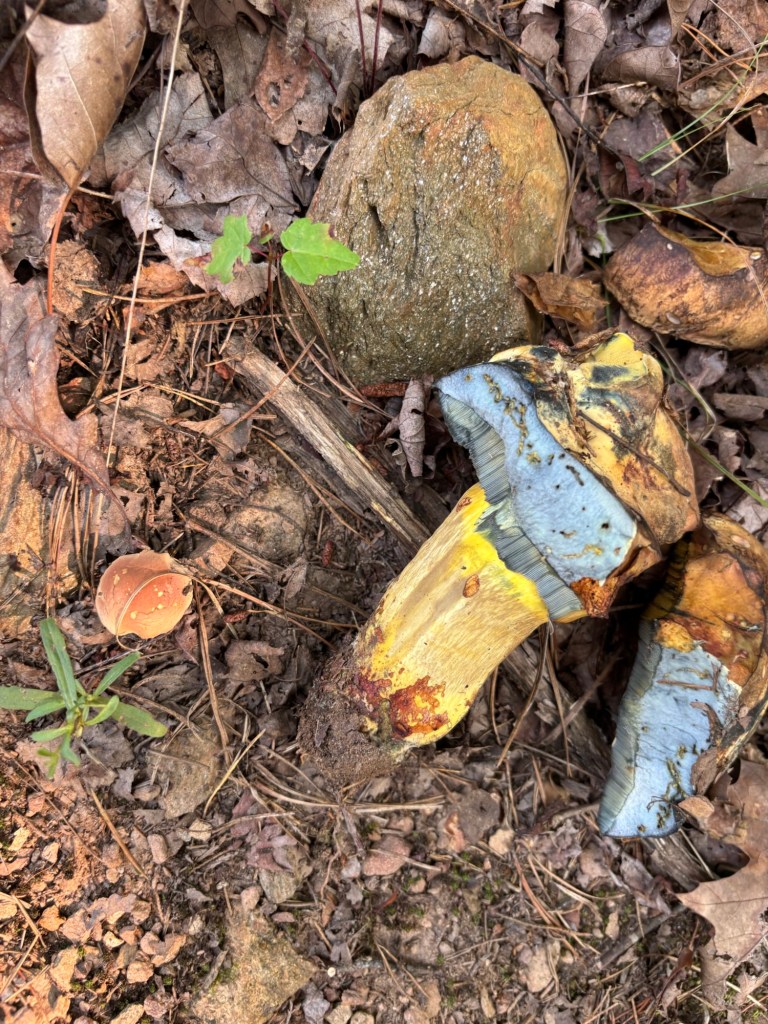
Found on Amanita Way right off of the main clearing. They turned a lovely blue quite quickly.Because of the way it turned blue, it could be Ink Stain Bolete, Cyanoboletus pulverulentis, Sensible bolete or Lanmaoa/Baorangia.
As we drove up to SAFF, we saw mushrooms right away on both sides of the driveway so we knew we’d have to walk through the woods.
Amanita flavorubens, Yellow American Blusher, is edible after being thoroughly cooked. Foragers note it tastes similar to lobster or prawns after cooking. We haven’t tried these yet. We usually find them already nibbled on and bug infested which probably means they’re delicious. Insects and animals know which ones are safe and tasty.Unidentified bolete with a small bite gone. Hazy, smoky sunlight filtering through ripening the pawpaw fruit in the old clonal colony.
Wolfina aurantiopsis, a rare cup fungus found in oak and pine forests on decaying hardwood sticks. It was found on Dan’s Folly along the south set back line in dark woods.
It’s been extra busy lately and we are feeling lucky to get a chance to run over to SAFF and take a walk around. We have gotten near daily rain for which we are grateful. Each time we’ve gone we’ve seen the pawpaws are doing well. Almost all of the grafts are producing leaves. We’ve also seen a few interesting mushrooms which is thrilling.
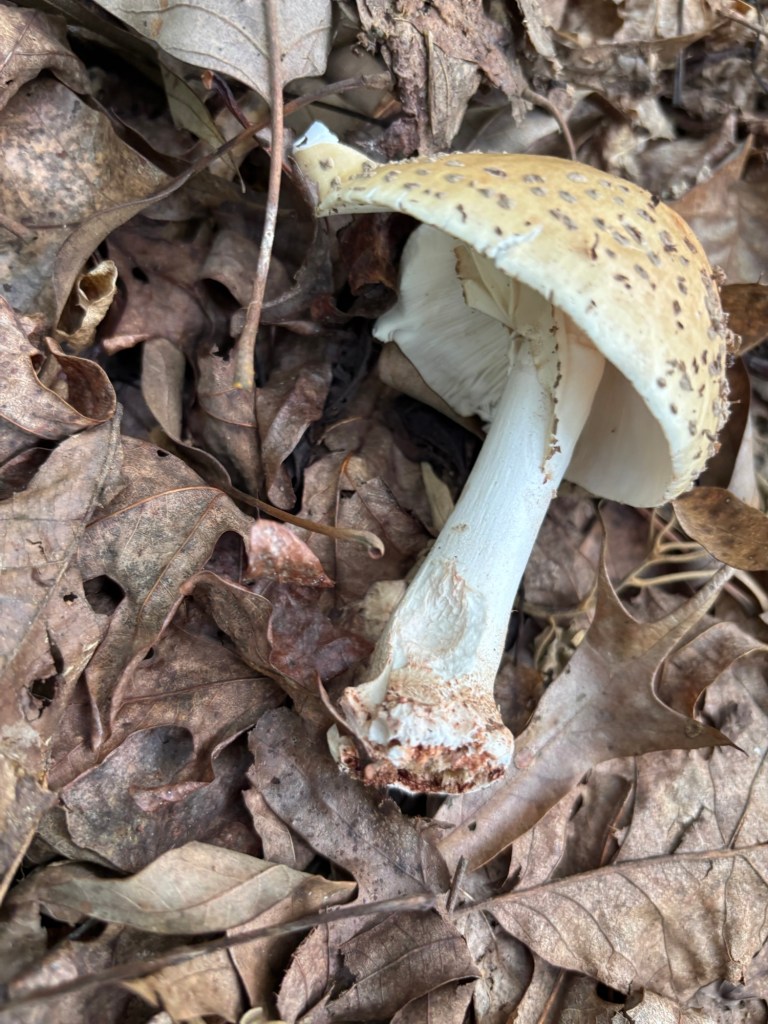
Amanita rhopalopus, American Club-Footed Lepidella. Mycorrhizal with oak and pine. It’s very large with warts and a strong chlorine smell. Cladonia furcata, many forked Cladonia, along Ridge Trail. A species of lichen with intermediate sensitivity to air pollution. Extracts of this species kill leukemia cells and have potential value in the treatment of cancer. Leucobryum glaucum, Pincushion Moss, bright green from the recent rain, is a common moss of eastern North America and Europe that we find all over SAFF.
We hope everyone is staying cool and safe on this holiday weekend. This heat and humidity has kept us focused on indoor projects and activities for a week now. 102 degrees Fahrenheit today at the farm. We went over early to check on the grafted pawpaws and give them some water since it hasn’t rained. It was extremely hot and humid down there in the clonal colony. The fruits are holding on despite the drought and heat. The grafting project appears to be a success with 80% growing new leaves through the Scion wood.
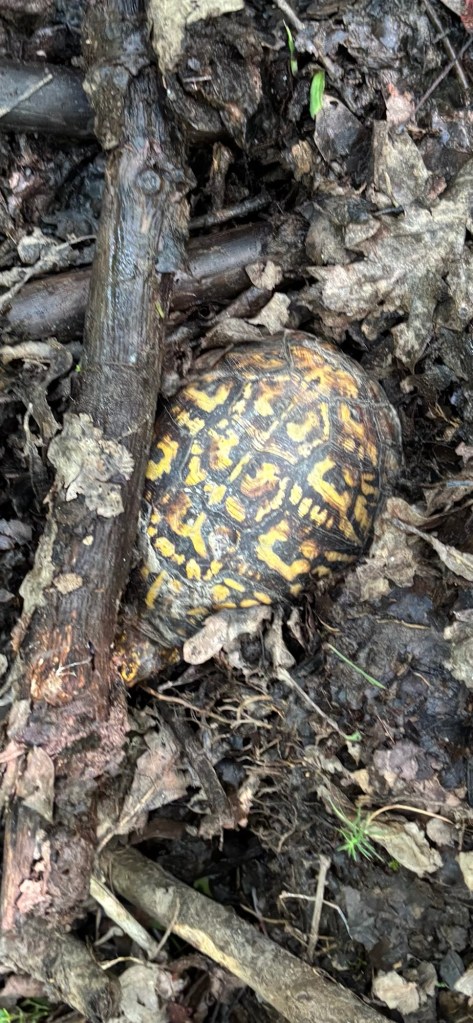
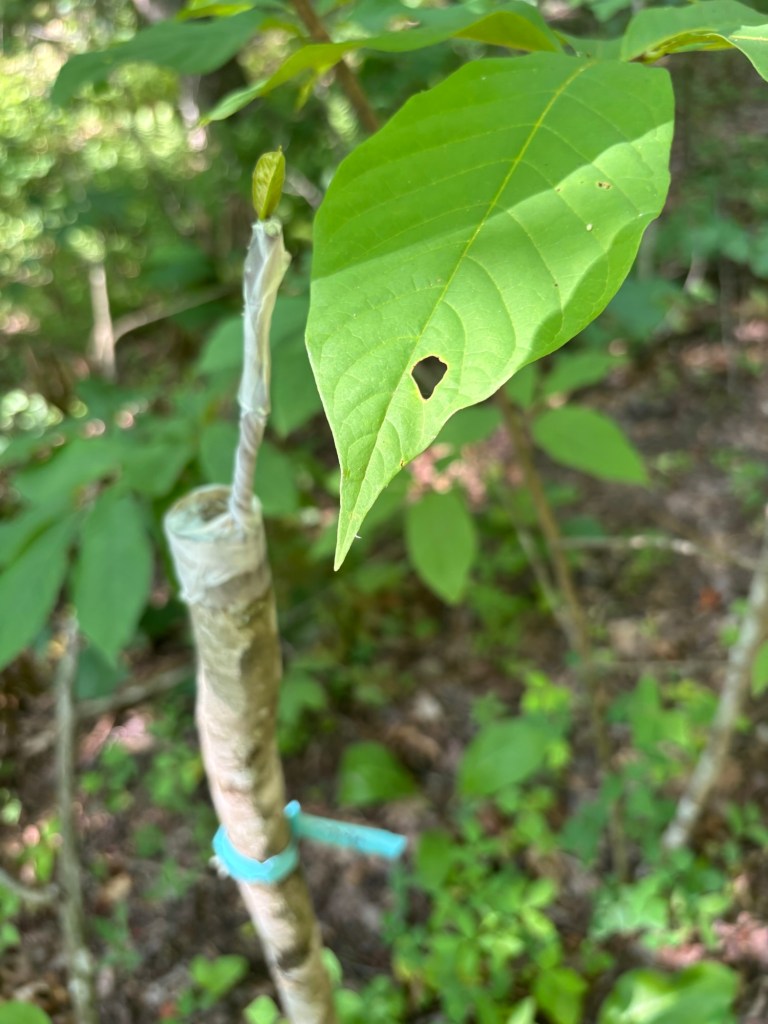
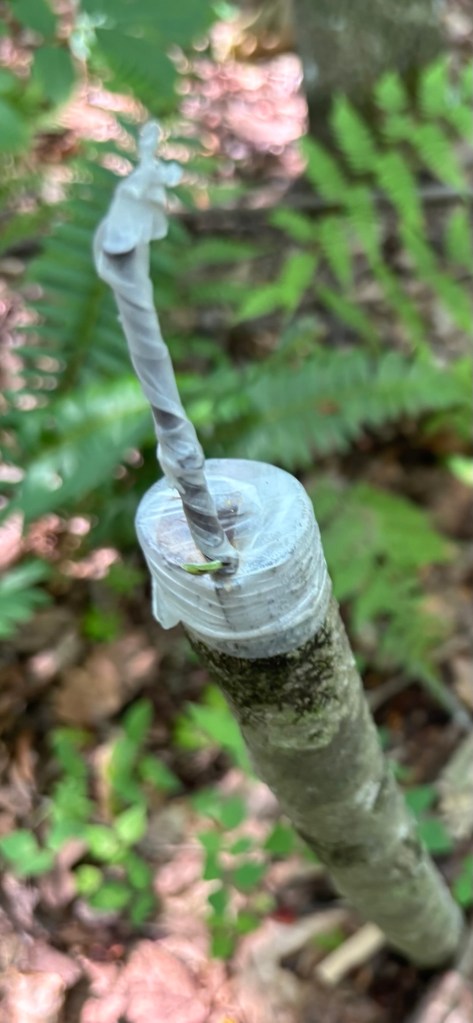
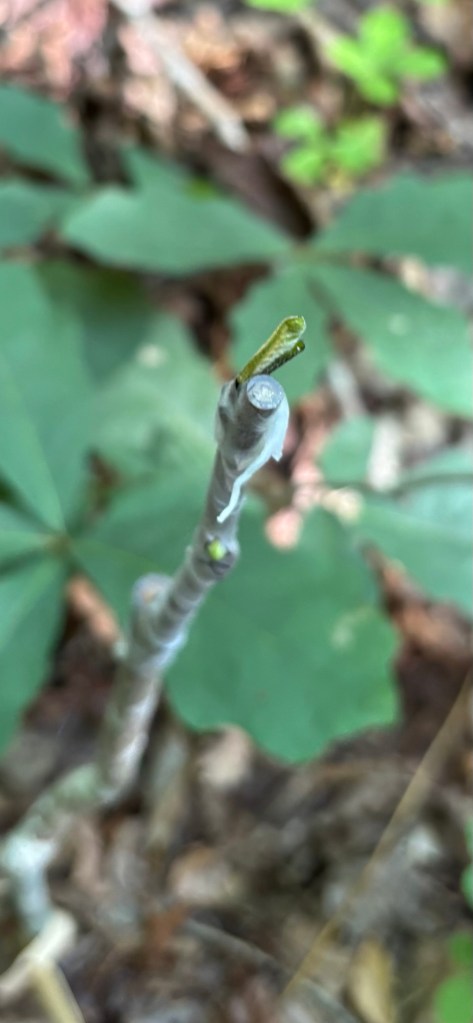
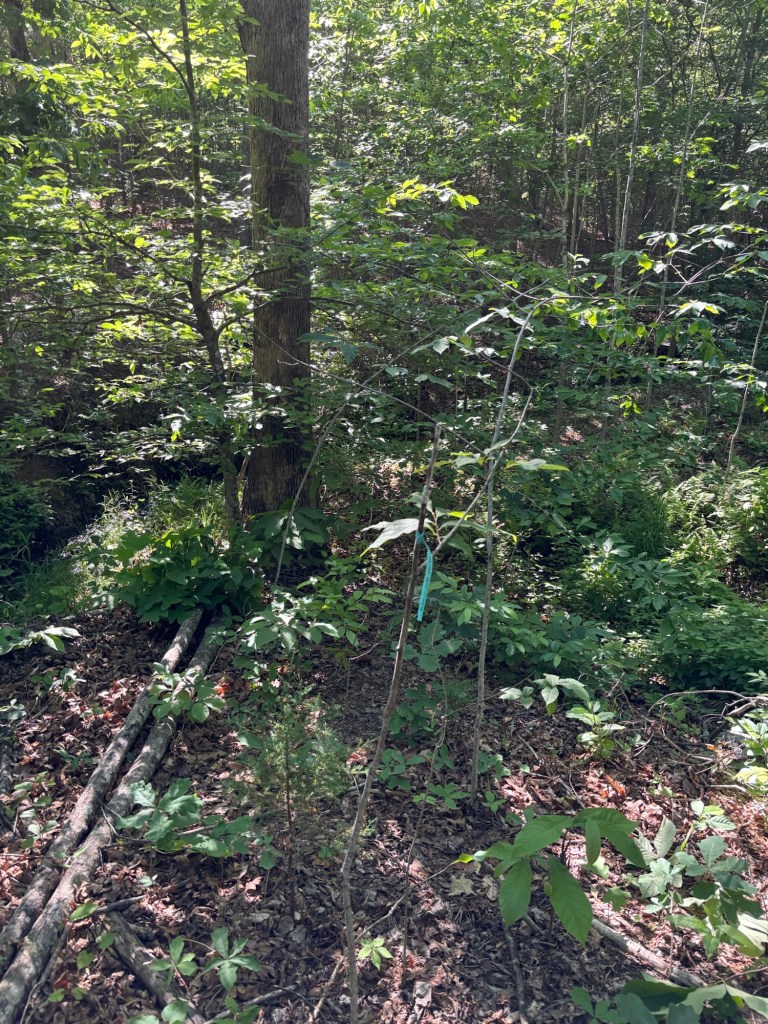
Wilson cultivar in the old clonal colony across from the Pawpaw Peninsula. Kentucky Champion cultivar on the Southside Gully near Fern Trail sprouting up through the top. Terrapene carolina, Common box turtle, down in the main waterway trying to stay cool. Prolific cultivar in old clonal colony shooting out through the top of Buddy Tape. A bark inlay graft with leaves pushing out from the Scion. Rebecca’s Gold cultivar in the clonal colony. Asimina triloba fruit developing at SAFF. An unidentified bolete found along Ridge Trail.
Just a smidgen of rain here at SAFF. Lots of rain in the forecast for the next week. We are really hoping for some of it to fall 🙏🏼SAFF Pawpaw fruit developing in the old clonal colony after multiple years of efforts. Fruit development in the old clonal colony. We are overjoyed and hopeful.
It took us eight days to complete our SAFF 2026 grafting project. We added many heirloom and named Asimina triloba cultivars to contribute to the development of the orchards. We added 20 to the Southside Sally Clonal Colony in the gully, 17 to the Pawpaw Peninsula and about 40 in the largest clonal colony across the creek. We now pray for rain to encourage the roots to grow up through the new cultivar and push through the Buddy Tape at the leaf buds. We will be watching closely for growth if we get some rain.
We also worked on trails. We mowed, weeded and boxed a few areas that were a bit overgrown and ticky. On the last day of working at the Southside Gully with Sally and her clonal clan, we didn’t even see any ticks. 😅 Through all of it, neither of us were bitten and we attribute it to our use of Sawyer’s Permethrin on our clothes (which is poisonous to cats when wet so take care), tucking our socks into our pants well enough, lint rollers to fend off the tiniest attackers and vigilance. Keeping the trails trimmed back and low enough so the ticks can’t get on us from the edges is important as well. We have only seen the Lone Star ticks this year yet they have been in abundance everywhere but especially in wilder spots where grasses are long. Being at the farm most of last week helped us abate the ticks some since we had the time to walk the trails and cut back overhanging trees in readiness for riding our bikes —and tractor – trailer through the widest trails. We also trimmed the grasses back with the string trimmer. Otherwise ticks would easily prevail with their constant hunting of warm blooded mammals.
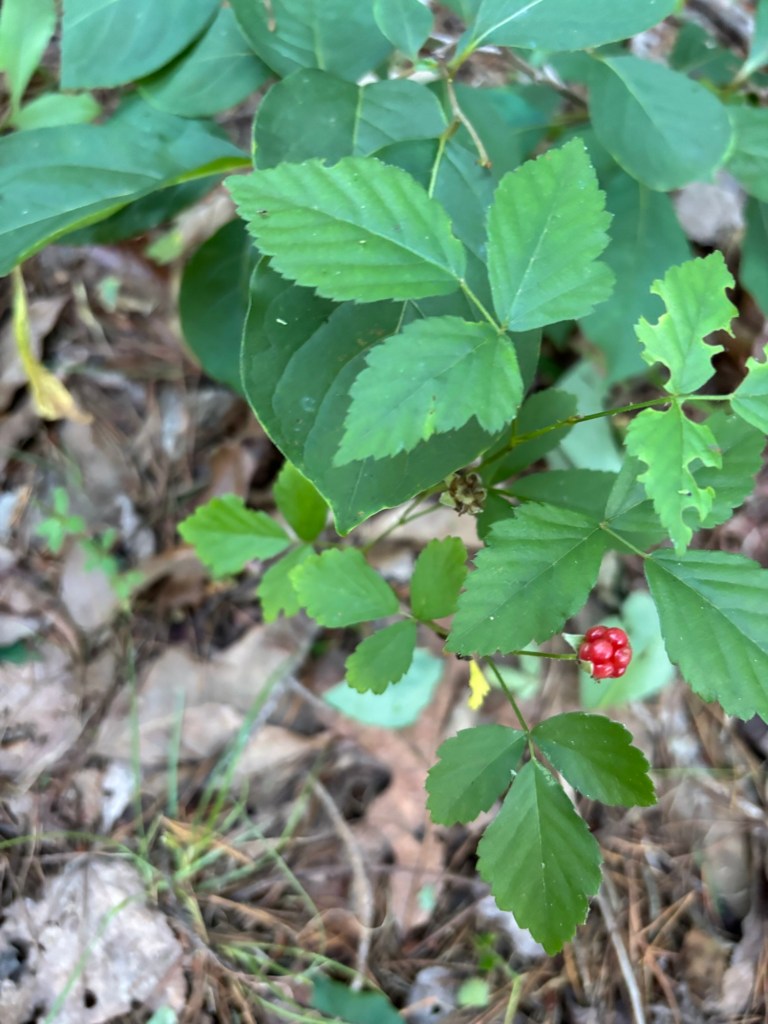
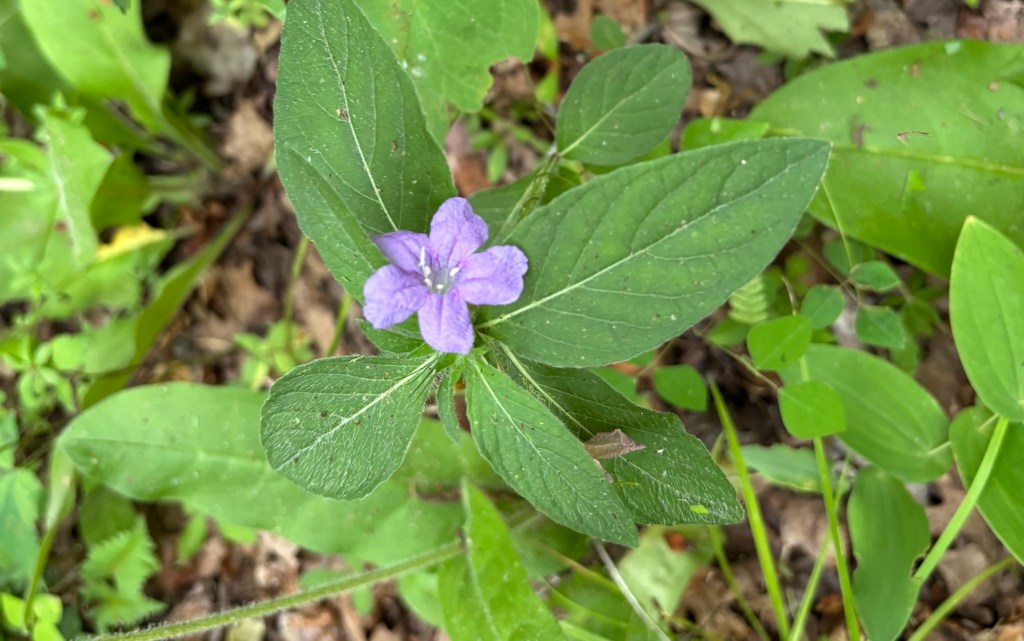
Rubus flagellaris, Common Dewberry, found on Orchard Hill Road near the Seedling Pawpaw Orchard. It supports native ecosystems as a valuable food source for birds, small mammals, insects and people. It’s a source of nectar for pollinators like bees and butterflies. Fruit turns black when ripe. Ruellia caroliniensis, Carolina ruellia, or Carolina wild petunia, is an excellent pollinator attractant found in the old clonal colony pawpaw patch.
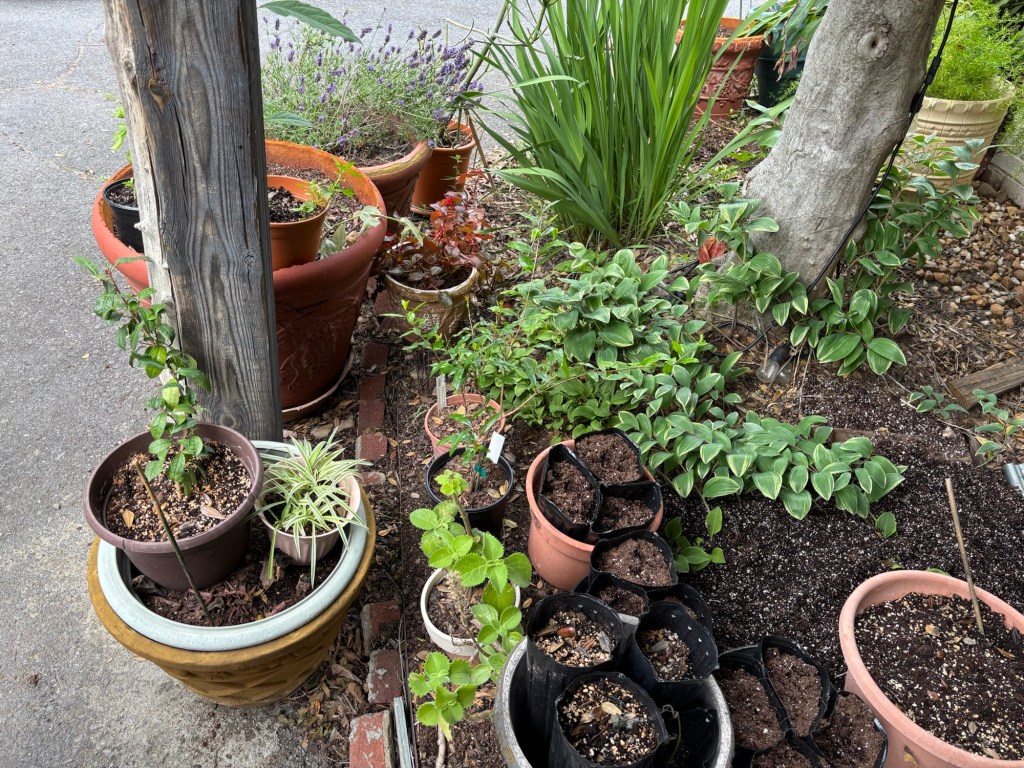
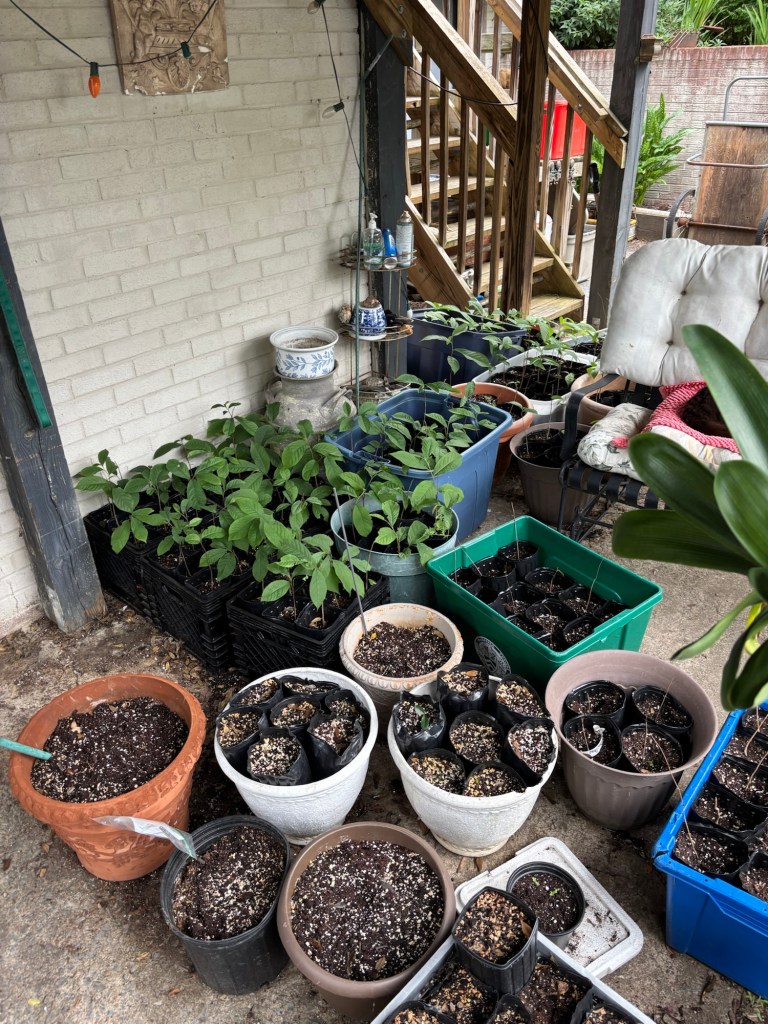
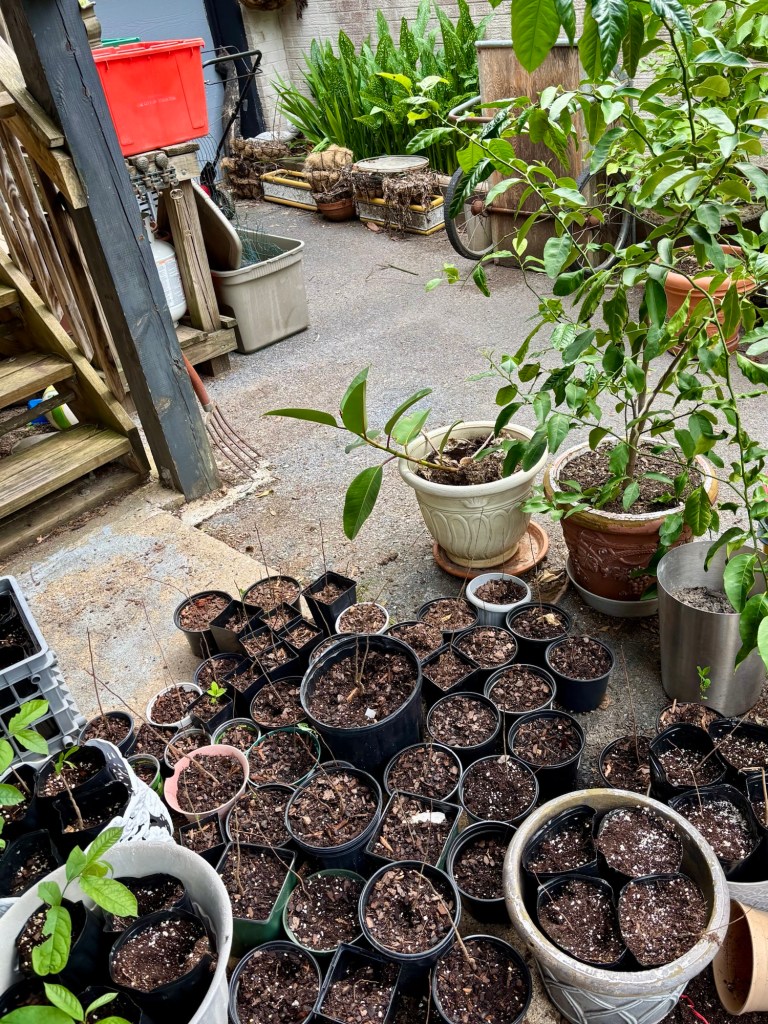
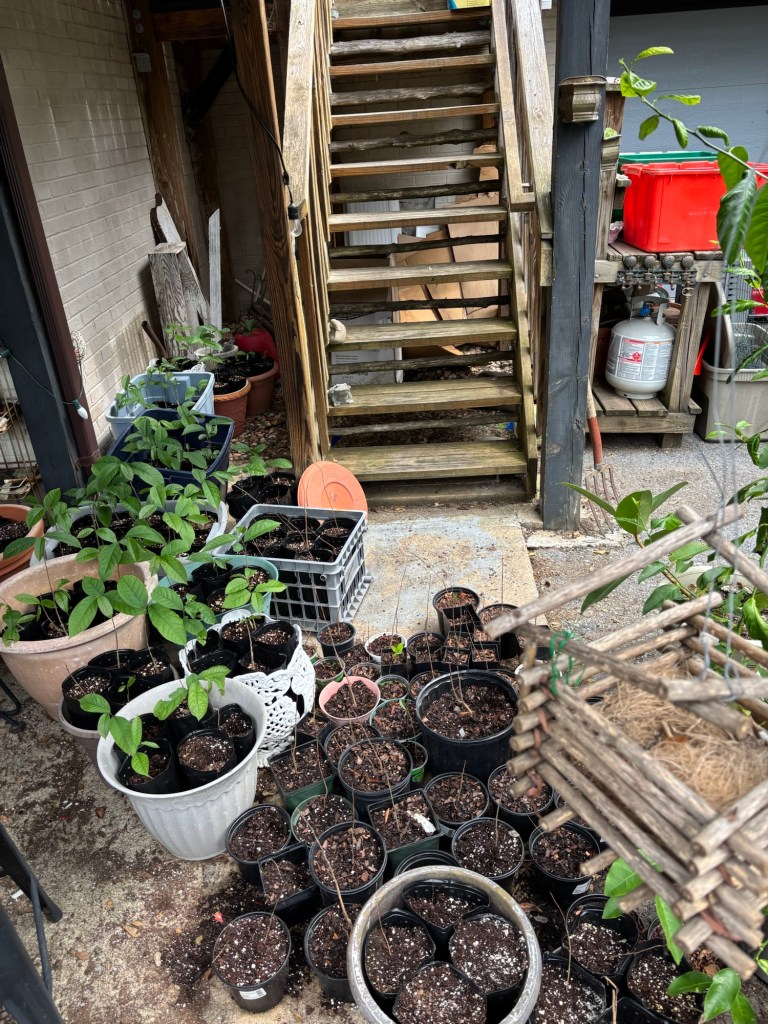
We are also in the middle of the 2026 pawpaw seeds opening and being transplanted into deep tree trainer pots to keep under our deck in the shade for the summer until we plant them at SAFF in the fall. We’ve potted up about 45 so far and have three big pots to go. It feels like new babies are being born and it’s a festive time with a lot of gratitude in abundance. The miracle of life is a beautiful thing to witness in any context. A new flower is as beautiful and miraculous and a tree is something you can watch grow for a lifetime. There’s a sweetness in watching each of them grow, that’s for sure.
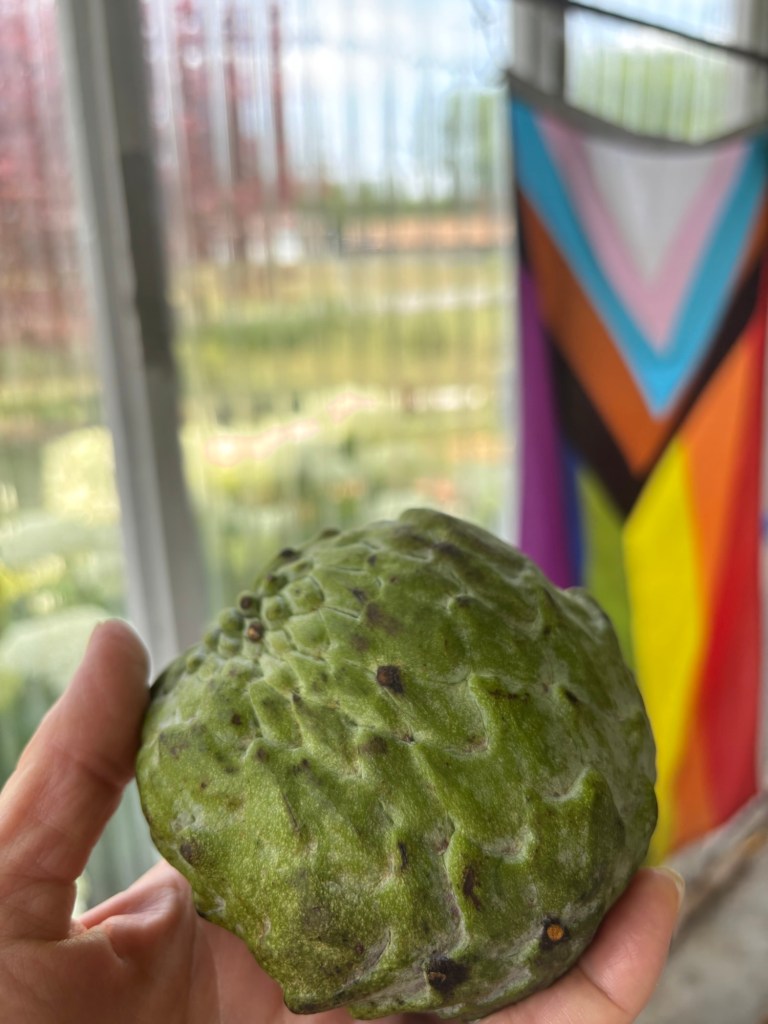
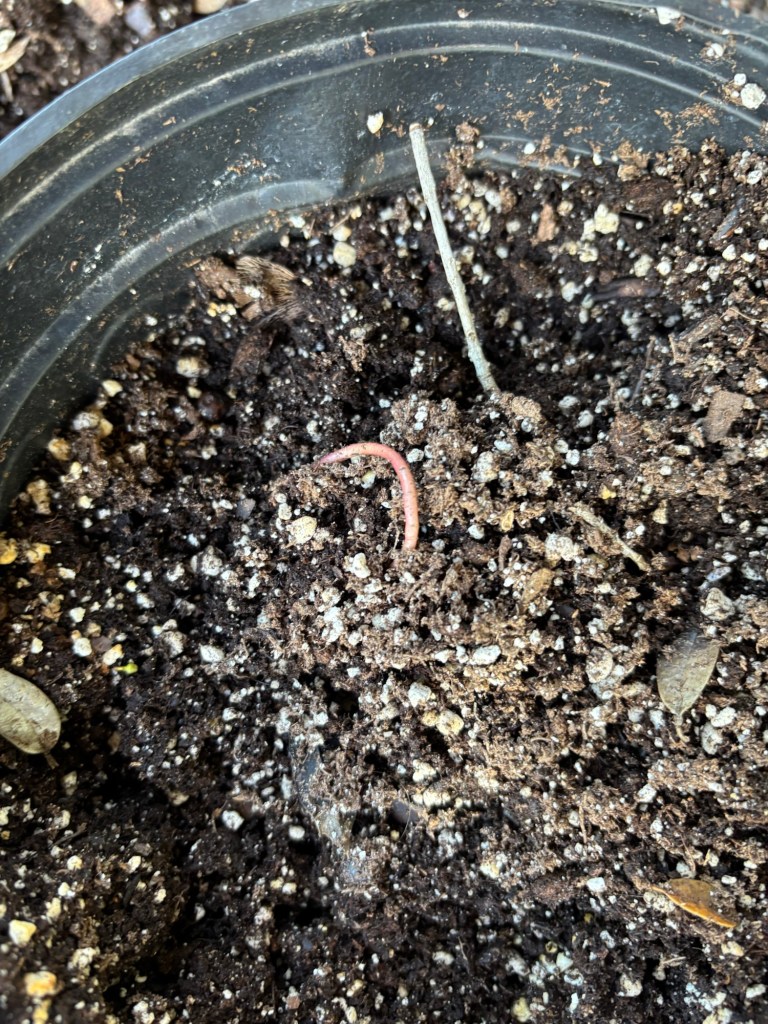
Another pawpaw related project is the Annona cherimola. We’d heard of cherimoya as it’s related closely to the American pawpaw. We couldn’t resist the description of a custardy blend of banana pineapple papaya and strawberry. It is truly delicious and like pawpaws a tropical creamy textured treat. We are saving the seeds of our heart shaped dragon scaled fruit and have one sprouting and potted up already. These won’t be cold hardy trees so they will be kept indoors or in a greenhouse in the winter in order to survive the freezing temperatures in Virginia. We have lemons and avocados already so these cherimoyas will join them in our annual migration indoors.
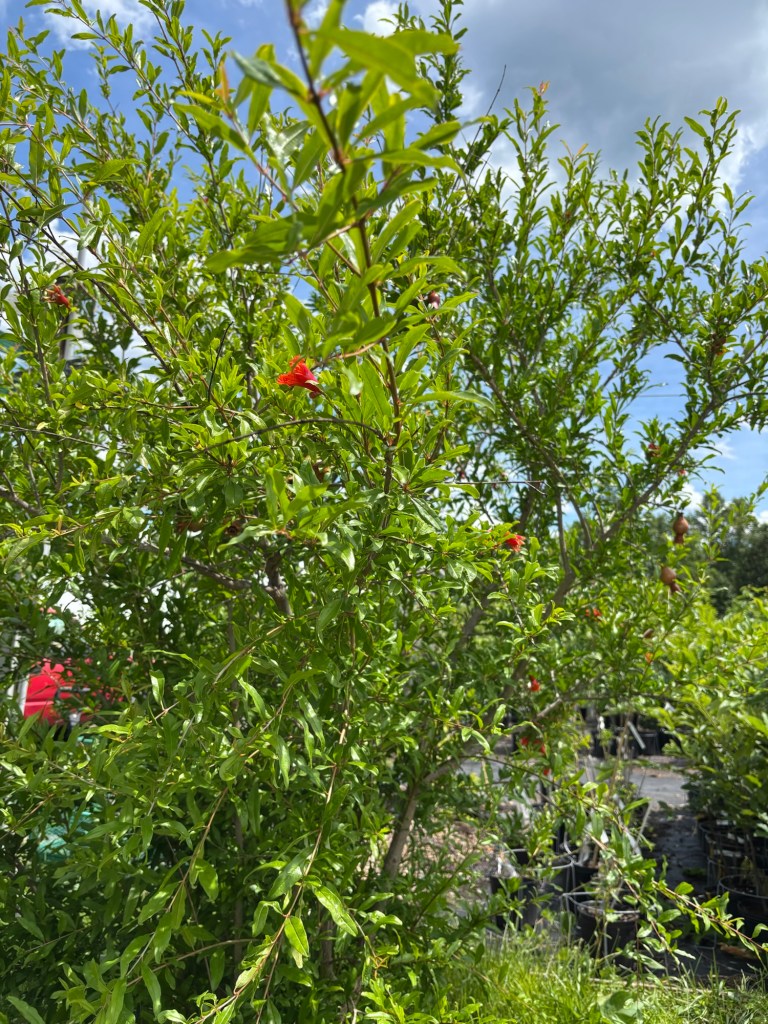
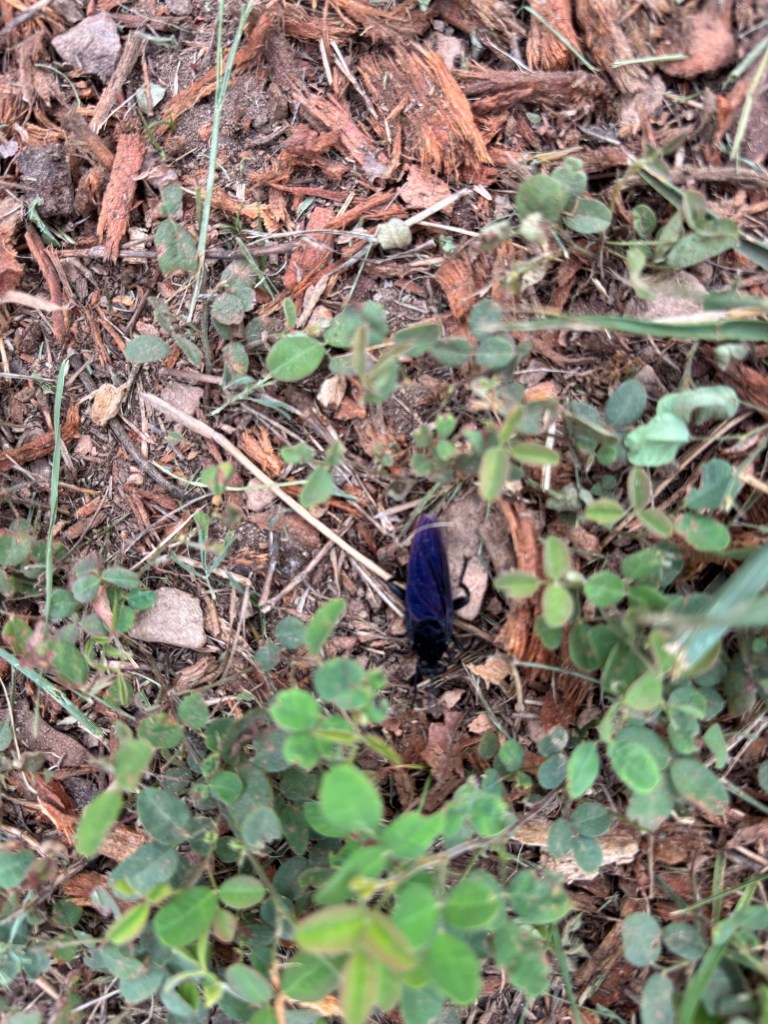
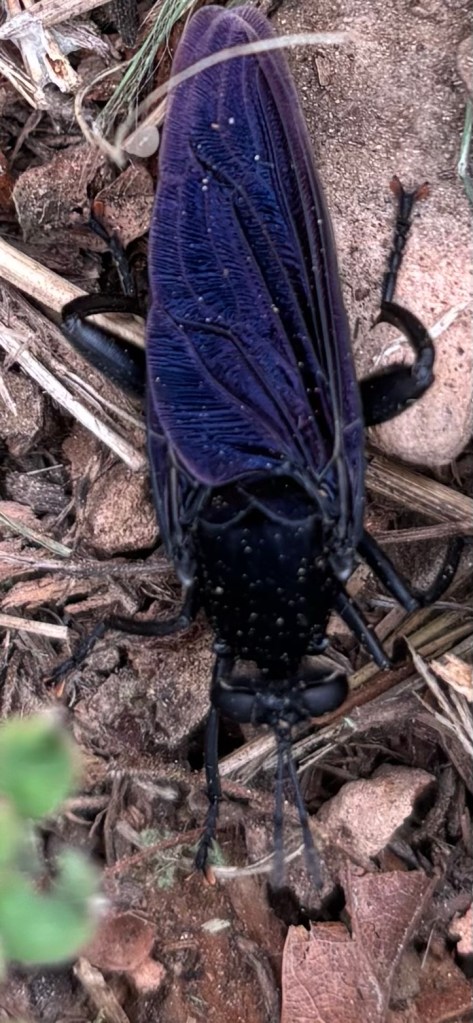
Cherimoya fruit we will grow trees with and overwinter inside.A baby Liriodendron tulipifera, American tuliptree, found at SAFF literally everywhere. This one was in the south end near Three Sister’s Overlook.Pomegranates at Edible Landscaping yesterday afternoon on our way back from the farm. They are beautiful shrub like trees with bright flowers. Mydas clavatus, Clubbed Mydas Fly, a mimic of spider wasps was striking in its beauty. The Mydas clavatus is beneficial feeding on nectar and larvae preying on other insect grubs in soil and decaying wood making them pollinators and natural pest controllers. And beautiful!
Chris grafting a Cawood cultivar onto the native SAFF Pawpaw Peninsula Asimina triloba. Maria’s Joy at the tip of the Pawpaw Peninsula.
On Sunday we went straight over to the Southside Gully to begin grafts on the native patch. We got 7 done before a downpour stopped us. We grafted Nyomi’s Delicious, Maria’s Joy, Rebecca’s Gold, Cawood, Tallahatchie, sunflower and Pa Golden #4. We were glad to get out of there as we lost count of all the ticks we caught crawling up our pant legs. All were Lonestar Ticks, Amblyomma americanum. Personally, the experience may help me be less preoccupied with my anxiety since I saw them and got them off without freaking out. We had no bites. They hadn’t dropped from anywhere. They were just crawling on our shoes and pantlegs. Anyway, we waited the rain out in the car while we had a snack.
A bit of our walk through the Southside at SAFF in the rain yesterday.
After the rain stopped, we headed down Central Trail through the cultivar and seedling orchard. They looked good we were pleased to see. We made our way to the Pawpaw Peninsula across from the Old Clonal Colony. We grafted 10 more onto the native wild SAFF pawpaws. We grafted Rappahanock, Tallahatchie, Marias Joy, Nyomis Delicious, Prolific, Rebecca’s Gold, Cawood, 166-66 Canary and PA Golden #4. It drizzled some while we worked.
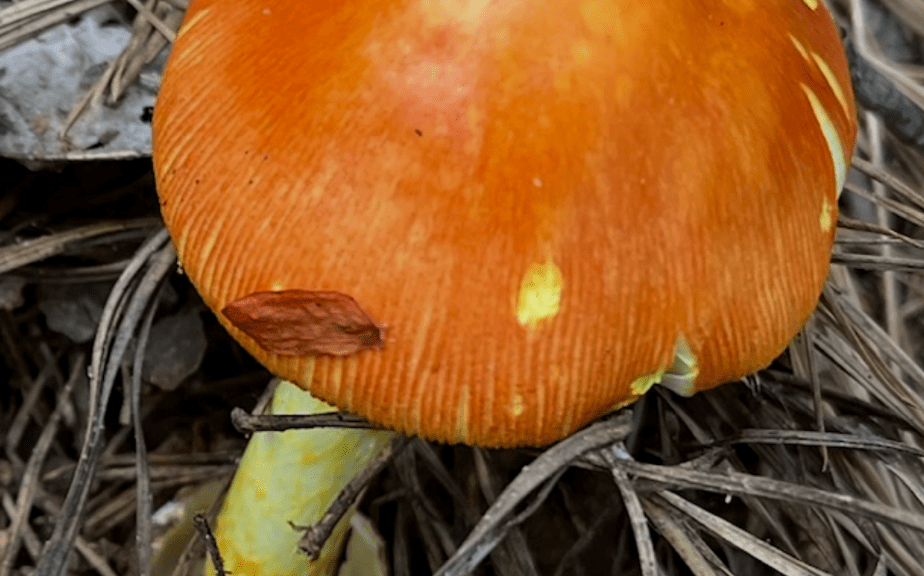
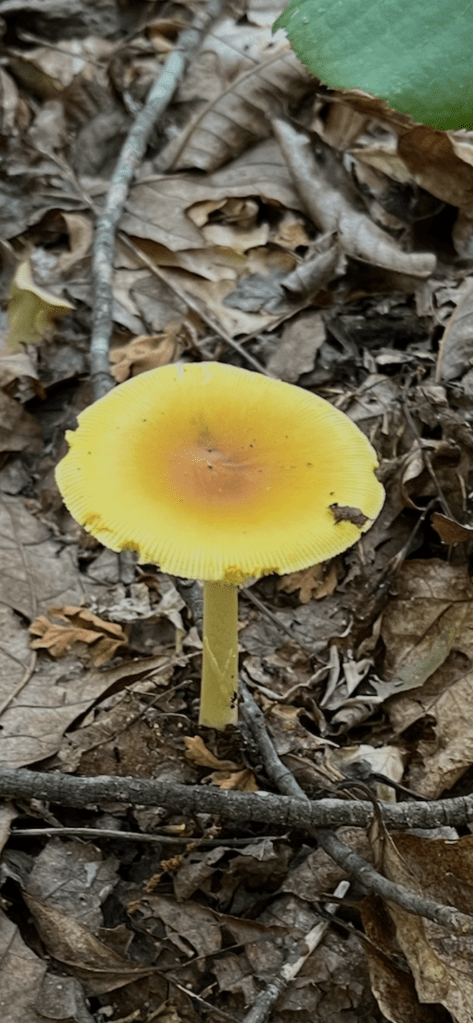
No baby bear sightings yesterday but we looked for them everywhere. We did find this Amanita jacksonii, Jackson’s slender Caesar, a choice edible and all around beautiful fruiting body. It was growing underneath a big loblolly pine on a small bluff overlooking the cultivar seedlings on Poplar Hill Trail.
Chris doing a cleft graft with Rebecca’s Gold on Pawpaw Peninsula wild native SAFF. Grafting Southside Sally and her gang in the gully with 7 different cultivars.
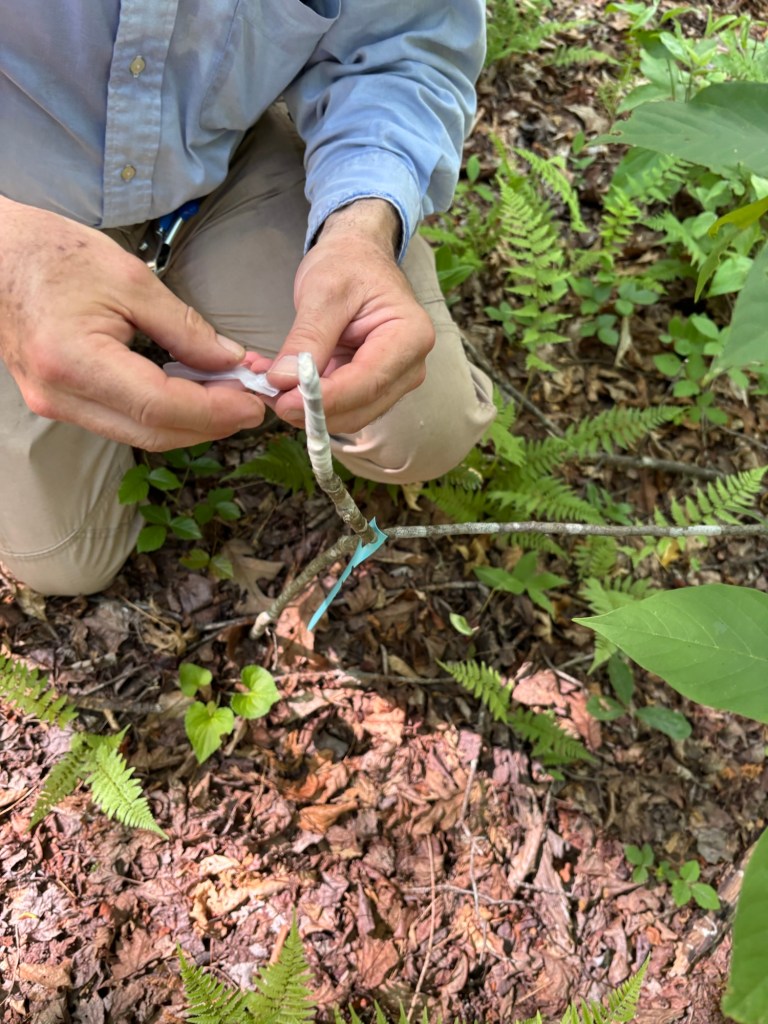
Chris taping the Kentucky Champion Scion wood to the old clonal colony Asimina triloba with cambium matched up for best results. Old clonal colony graft of Rebecca’s Gold cultivar in order to help with fruiting and production by adding novel dna.
On the trip over, we saw a baby black bear looking adorable bobbling and running after its mother into the woods. It was a special moment to lock eyes with this young beautiful creature.
Once at SAFF, we loaded up the trailer with some supplies and the cooler to keep the Scion wood cold while we worked. We were able to get about 13 done yesterday with 30 left to do. We added 4 Tallahatchie, 2 Rappahanock, 1 Nyomis Delicious, 4 Rebecca’s Gold and 2 Kentucky Champions. Amazingly, we didn’t see any ticks. They’ve been pretty active this year. We felt lucky to avoid them yesterday. Especially being down in the waterway and the clonal colony where it is most humid.
On the way back home, we saw an even smaller baby bear toddling after its mother into the woods. 😀
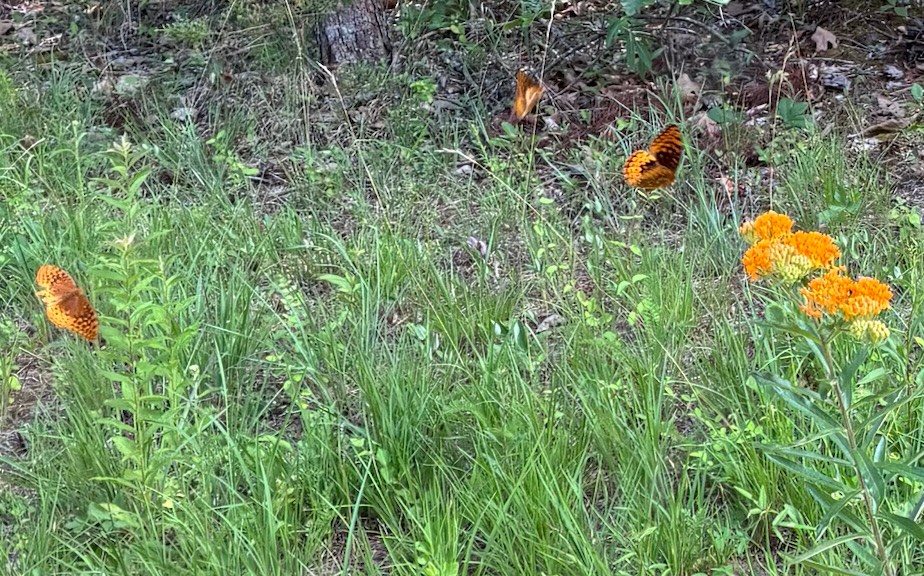
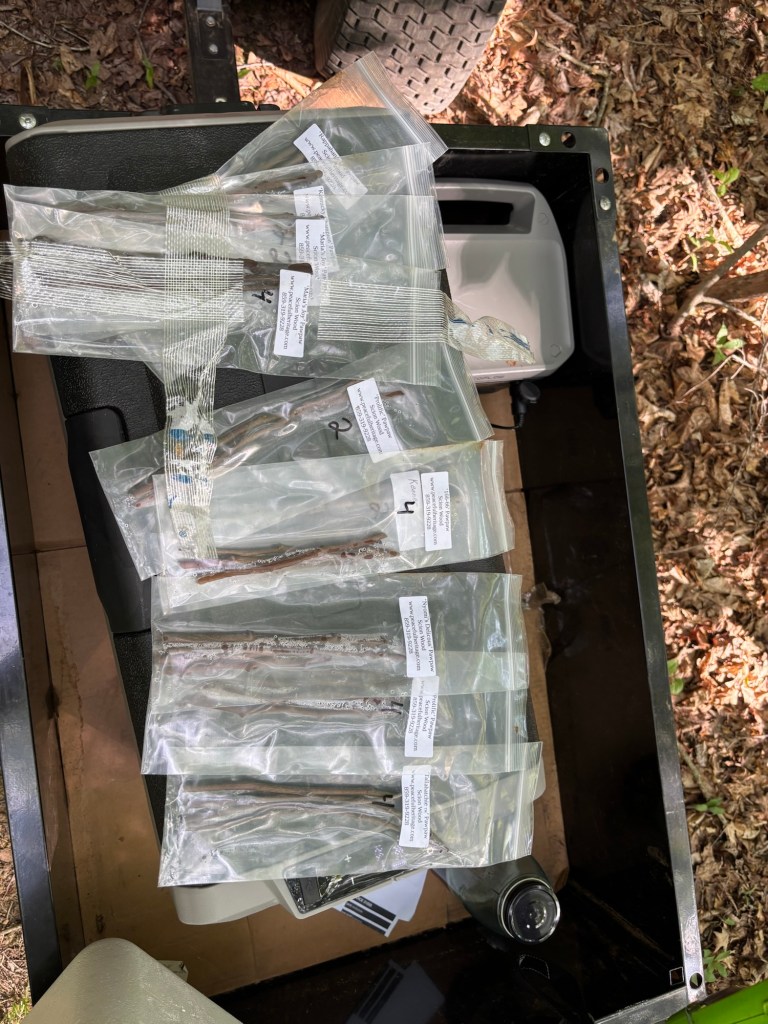
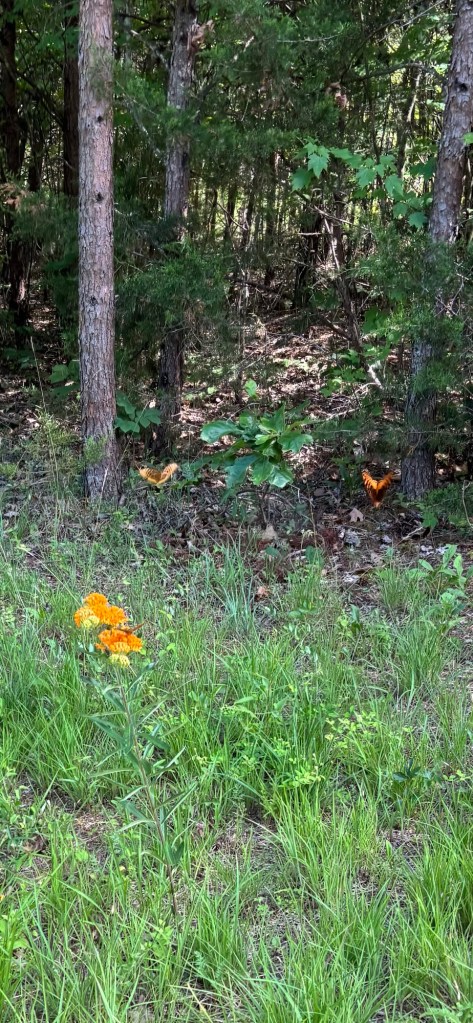
Some of our Scion wood we will use to increase fruit production in the clonal colony, pawpaw peninsula and the south gully at SAFF. Driving the tractor down the southern edge we saw these fritillaries flitting about excitedly pollinating the Milkweed.
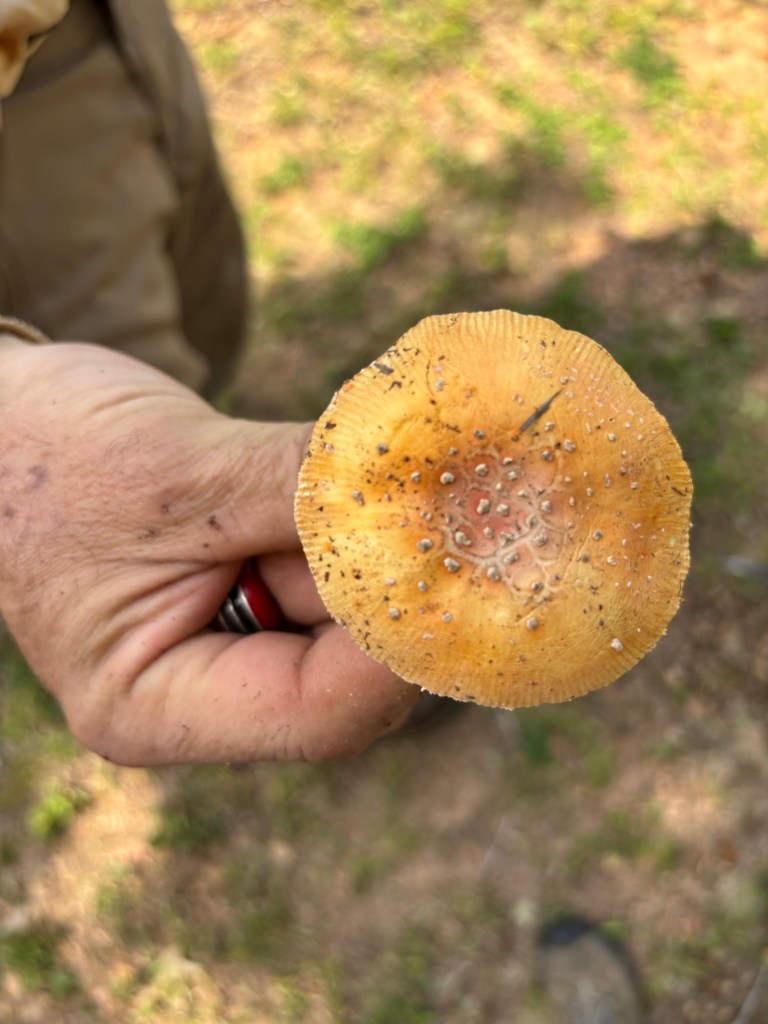
Amanita parcivolvata, the ringless false fly Amanita or False Caesar’s mushroom. This is edible but avoided by many because of its poisonous lookalikes. Amanita banningiana, known as the yellow Caesar or Mary Banning’s slender Caesar. It is prized for its taste but caution is advised due to deadly lookalikes.Amanita canescens, Golden threads Lepidella, grows near oaks. Found up top in the main clearing. Inedible.
What a great day we had yesterday at SAFF. We went over to check out how much rain the farm had gotten. The gauge was at .2 which is better than none. But much less than the 1.9 inches our weather app reported. Nevertheless, we still had mushrooms growing. Even some we hadn’t seen before. It was like a dream come true.
The pawpaw fruit in the old clonal colony is getting bigger. We are planning a trip to see what pawpaws are doing in our foraging spots along the Rockfish River soon.
Xanthoconium purpureum, found growing under an oak up top in the main clearing. It’s edible although this one has been claimed by bugs. Small bolete popping up on Chanterelle Trail we hope to see mature.
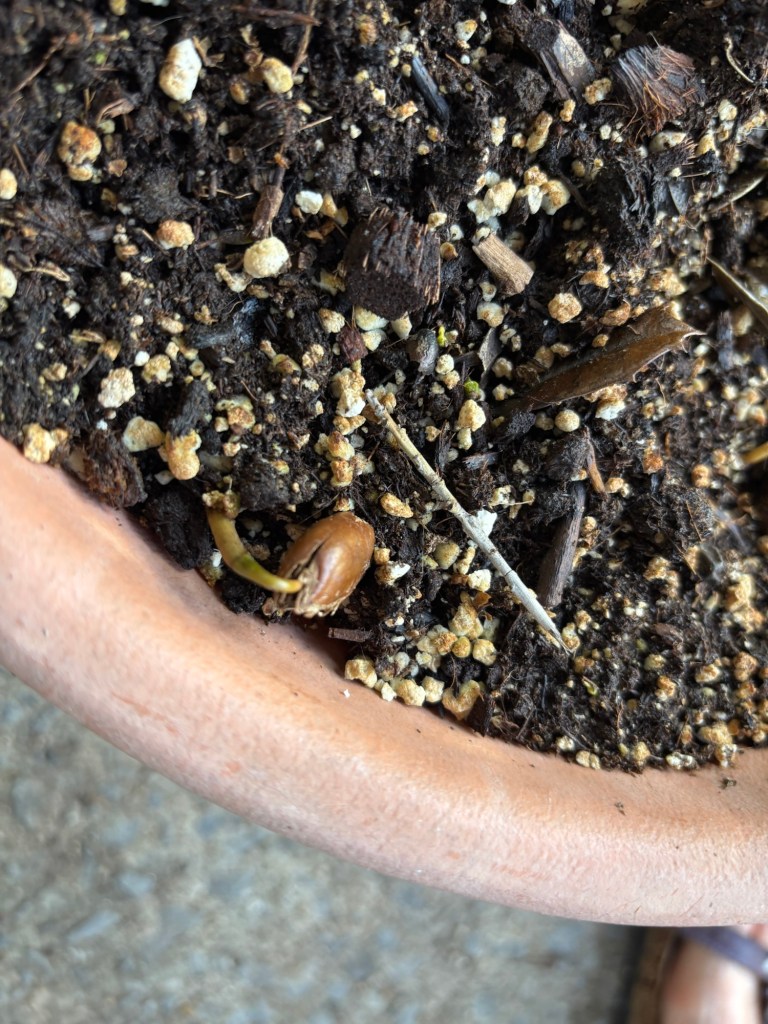
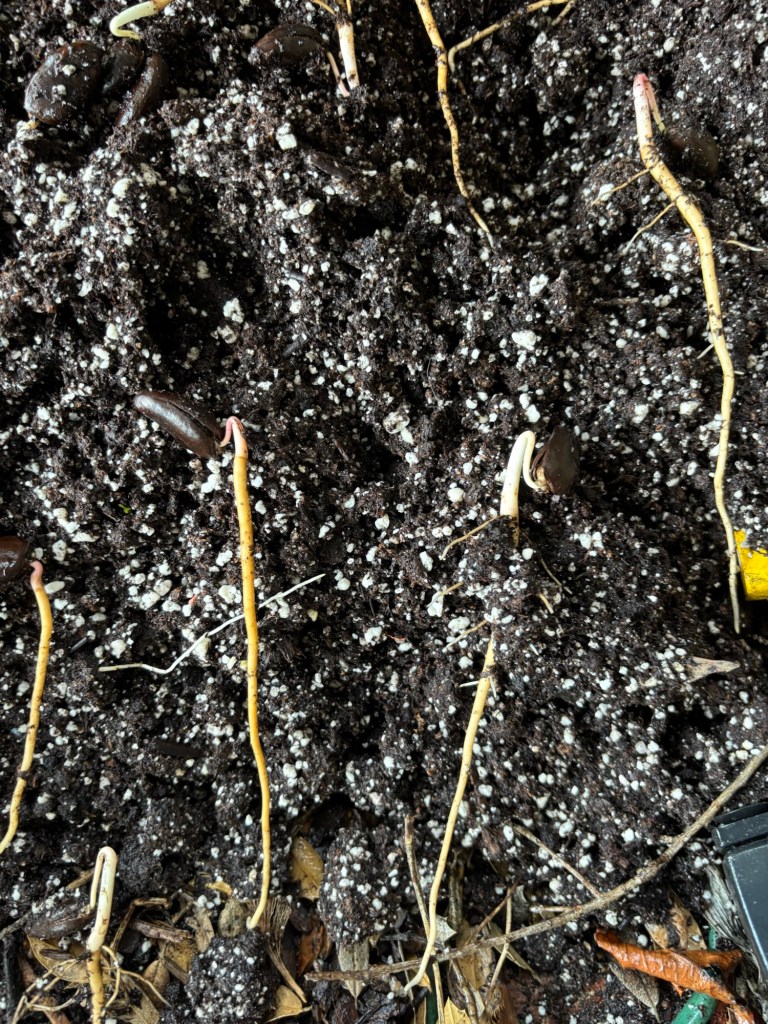
Asimina triloba seedlings sprouting means it’s time to get them moved into 12 inch deep tree pots where they will grow in the shade for the summer to be planted later this fall at SAFF.Yesterday we started potting up our 2026 Asimina triloba seedlings to join the rest of the nursery with our second year seedlings from the forestry department and Arbor Day. We got the first 10 potted up and hope to have hundreds more to pot up in the next few weeks. It’s going to be crowded under the deck.This sprouting from the seed with so much vigor is delightful and joyous. Seeds are full of life. There is a kind of magic in it. The first ten of 2026 in their deep tree pots. We will plant them in the fall when conditions appear favorable. We are keeping them in the shade of our deck so they stay well watered and watched over for through summer. Asimina triloba and Northern Spicebush Lindera benzoin to be planted this fall at SAFF.
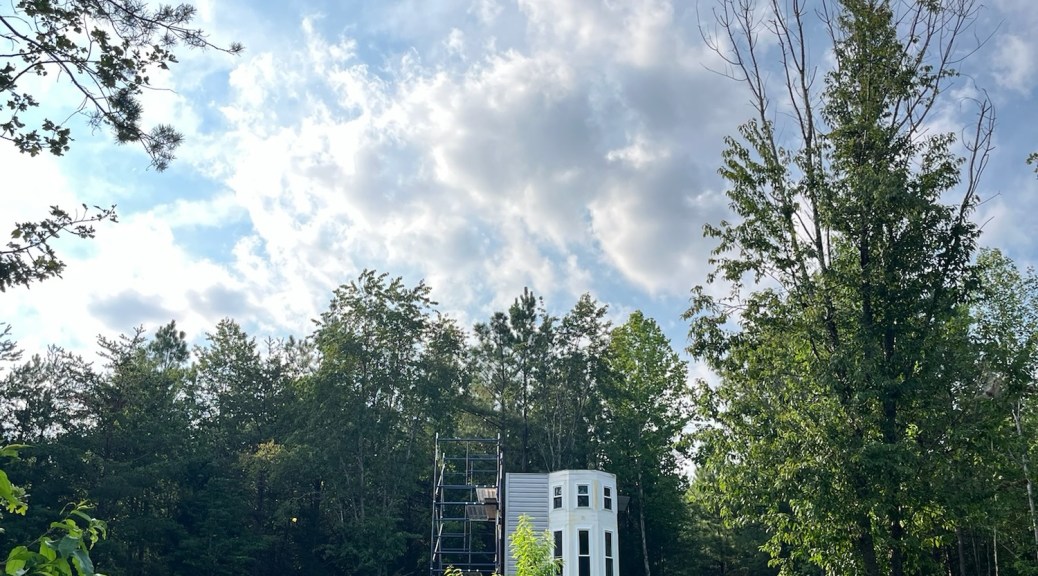
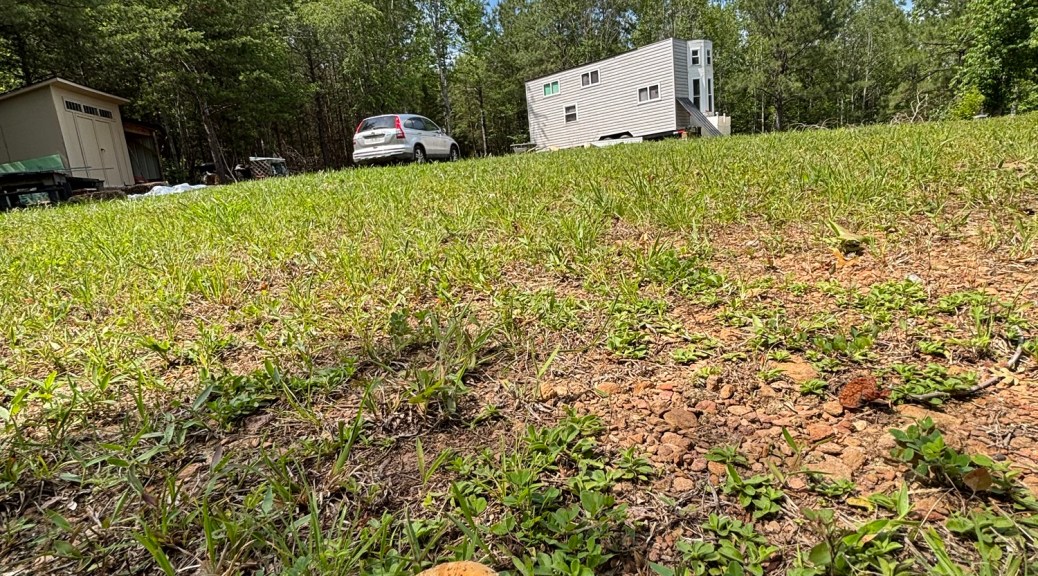
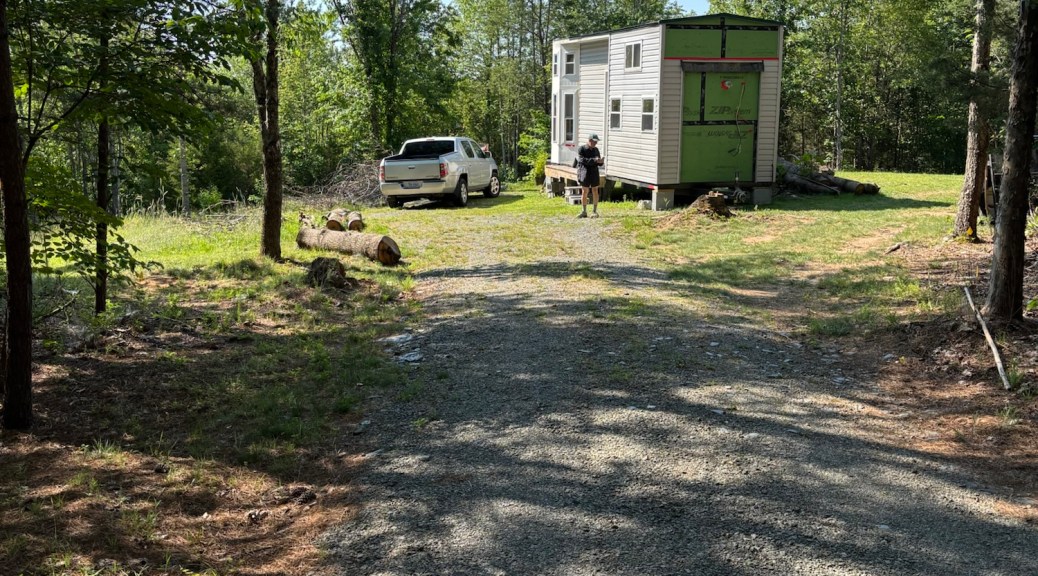
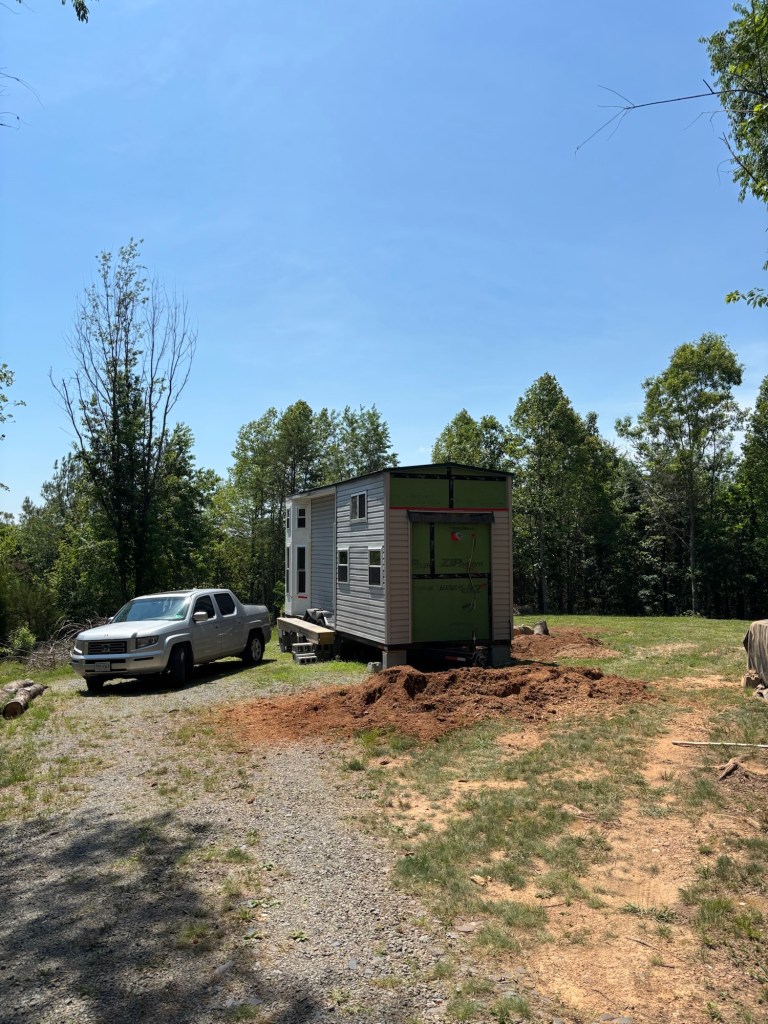
We camped in the tiny house over the weekend for the first time and we got a lot done out there! We set up our first solar panel and used it to help power our refrigerator and cooling. We picked the hottest days of course. (It was the only time we could get a cat sitter for our furry babies back home. ) The temperatures were in the high nineties with heat index into the 100s. We still had a great time. The fireflies at nighttime were the best. We figured out ways to keep it cooler in the tiny house. We stayed until Monday morning since we had scheduled a friend to help grind those Pawlonia trees we took down a few months ago.
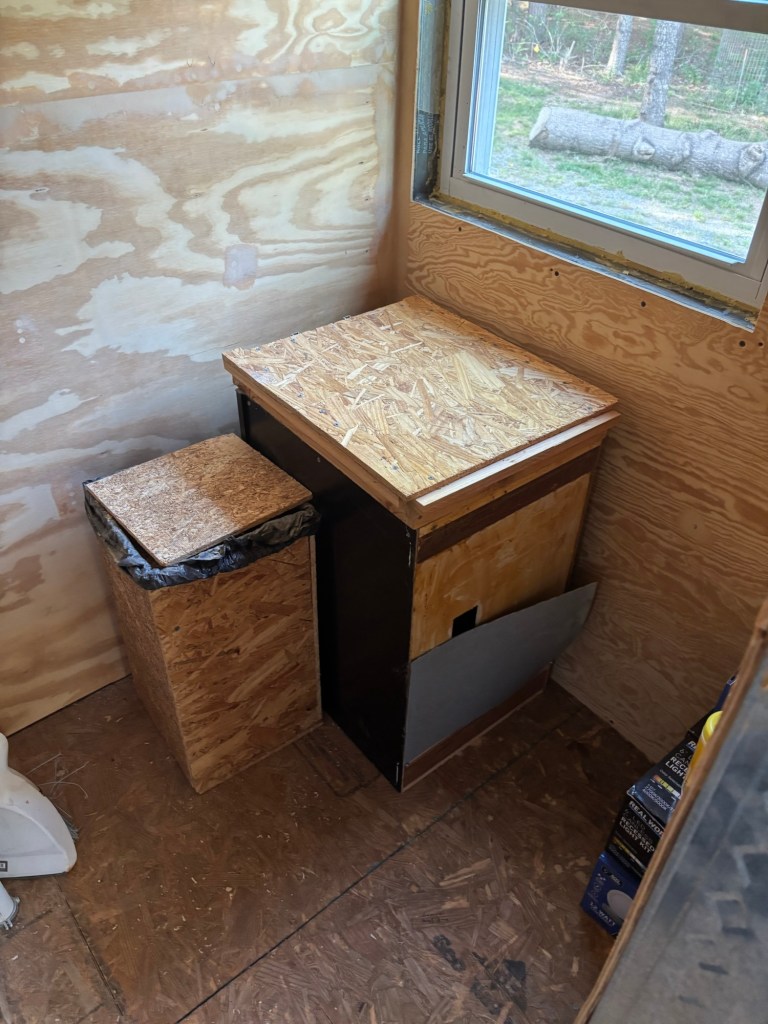
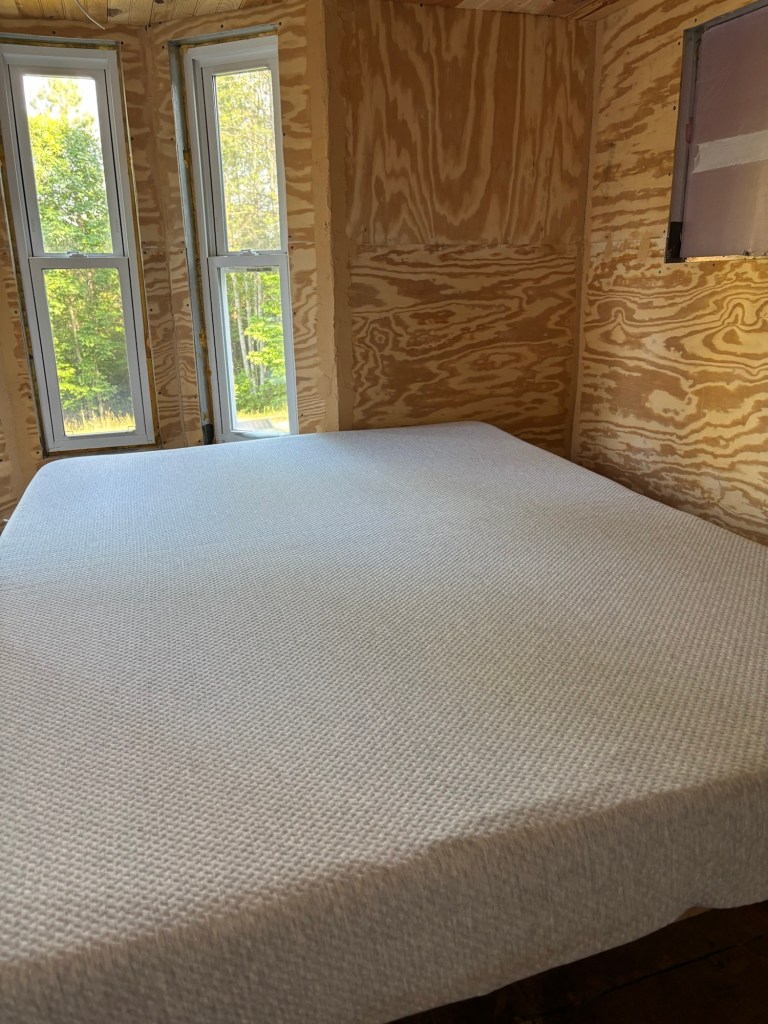
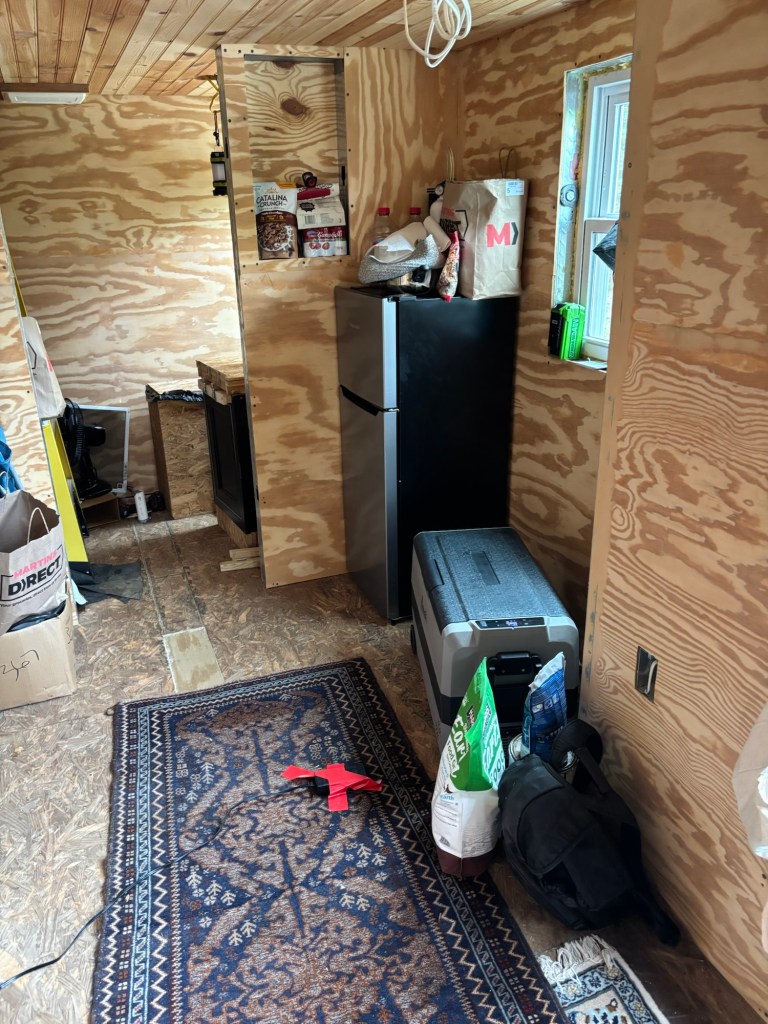
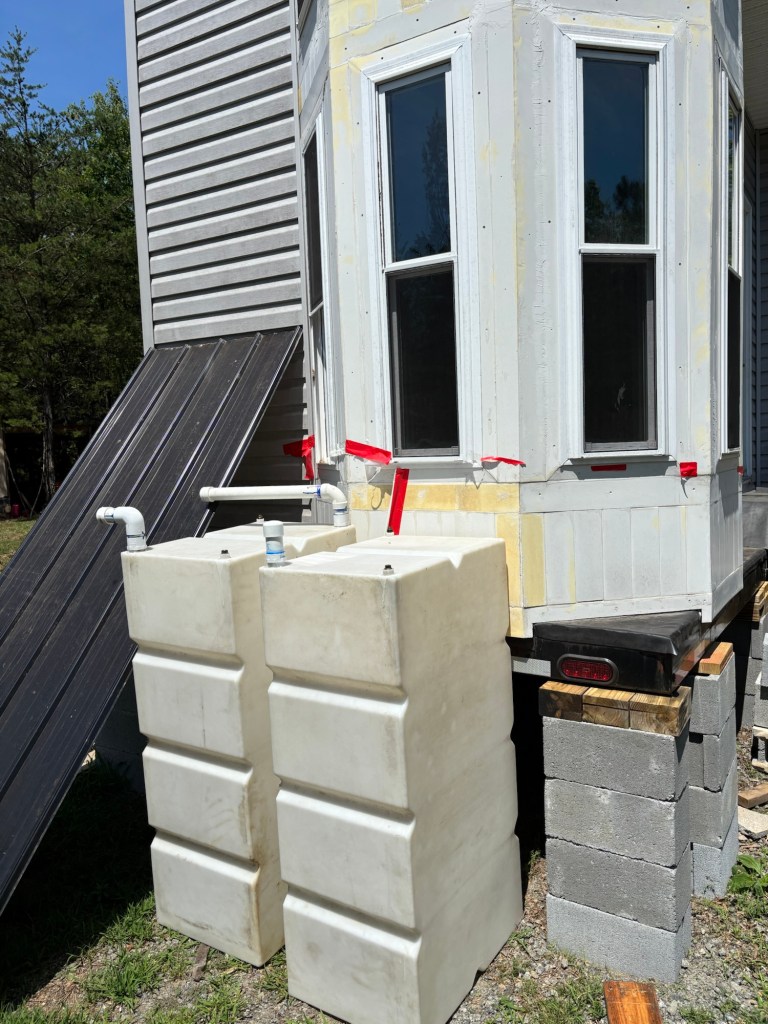
Our compost toilet which works just fine.We covered the windows directly facing the sun in the afternoon since a lot of heat was coming through. We made the bed (literally out of pieces of wood) downstairs for now. It was comfortable and felt enough like camping. Our kitchen for the weekend. Our water tanks for the tiny we will use once we begin our water capture and purification process. We walked down to the old clonal colony pawpaw patch and saw the fruit still there. We had lots of tiny seed ticks all over our socks and shoes after that trip. Luckily, no bites. The Sawyer’s permethrin we coated our socks, shoes and pant legs with stopped them. We saw them as well and began getting them off. We try to wear light colors to help see them more easily.The stumps are gone.
The stump grinder and his son back there hiding while trying not to get hit by flying quartz.