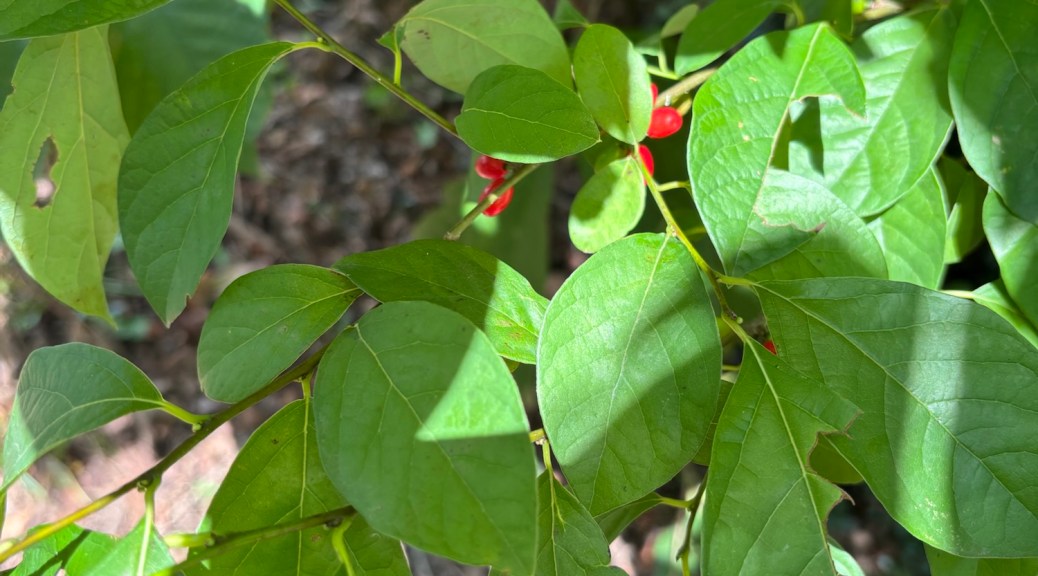
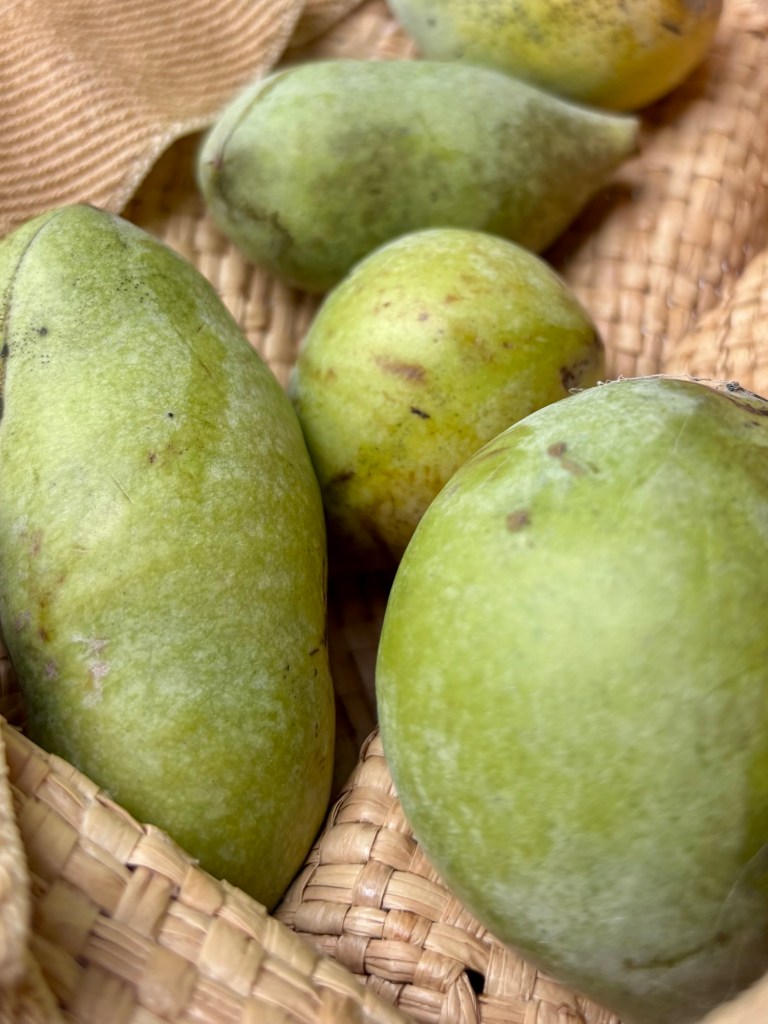
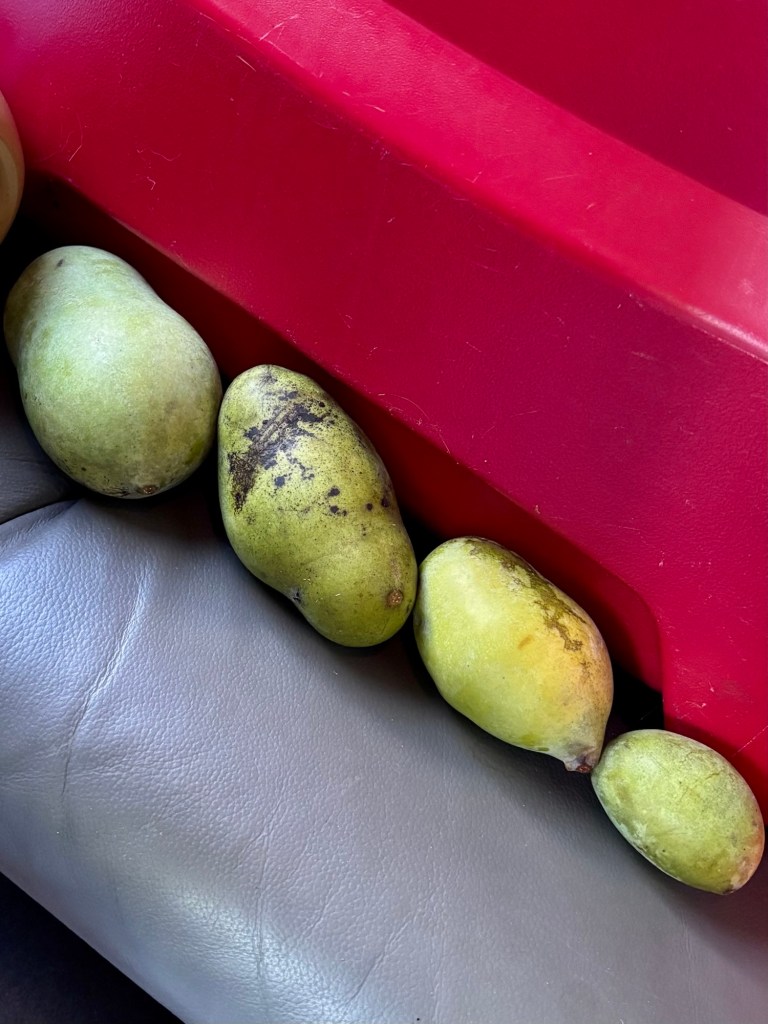
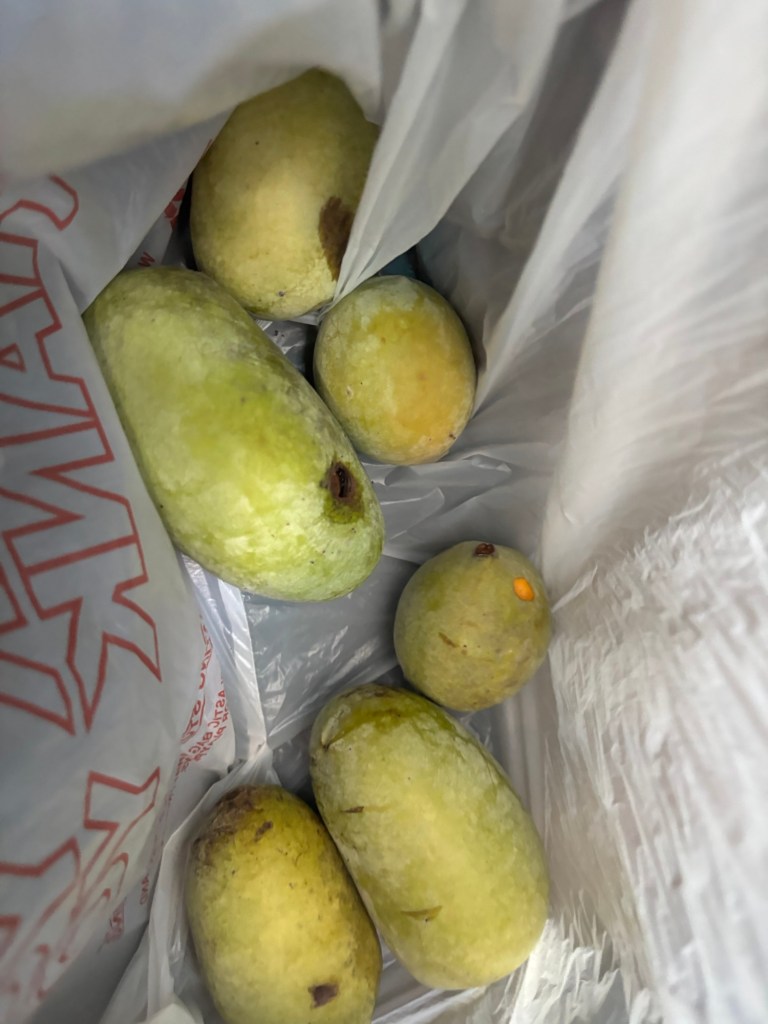
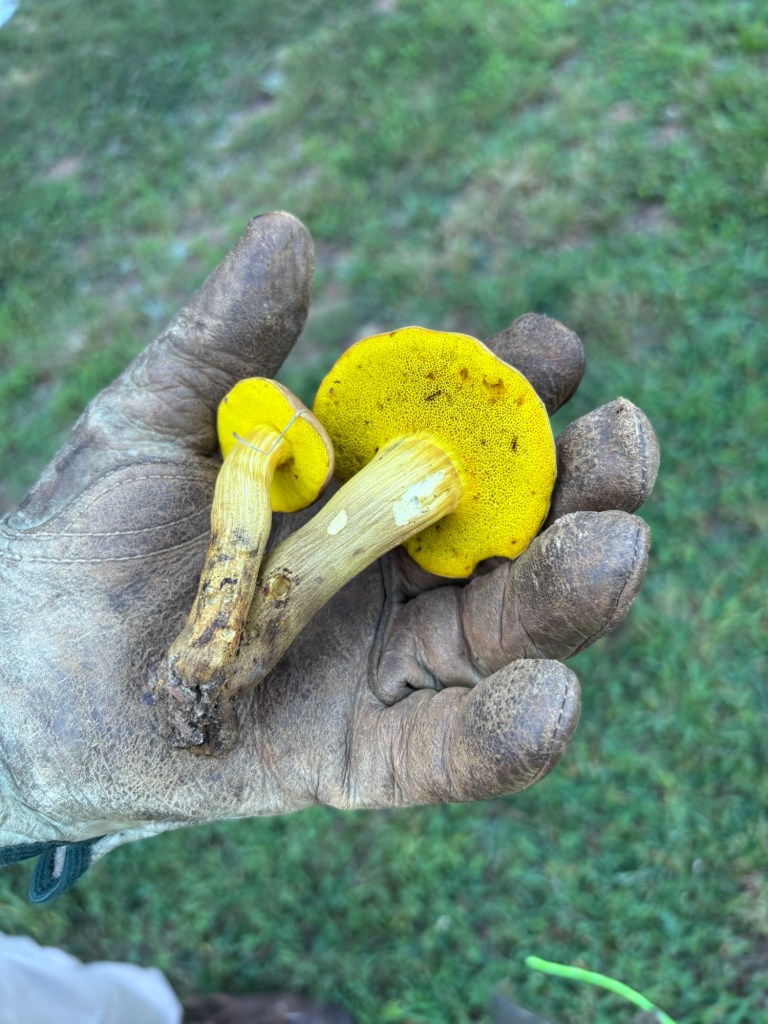
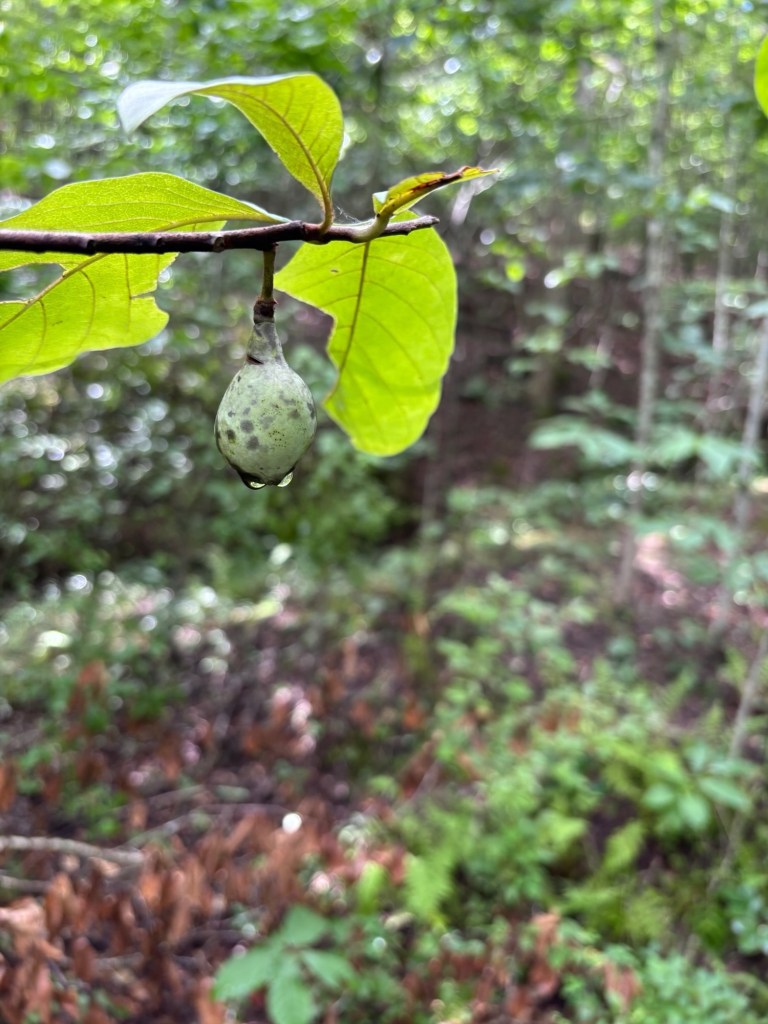
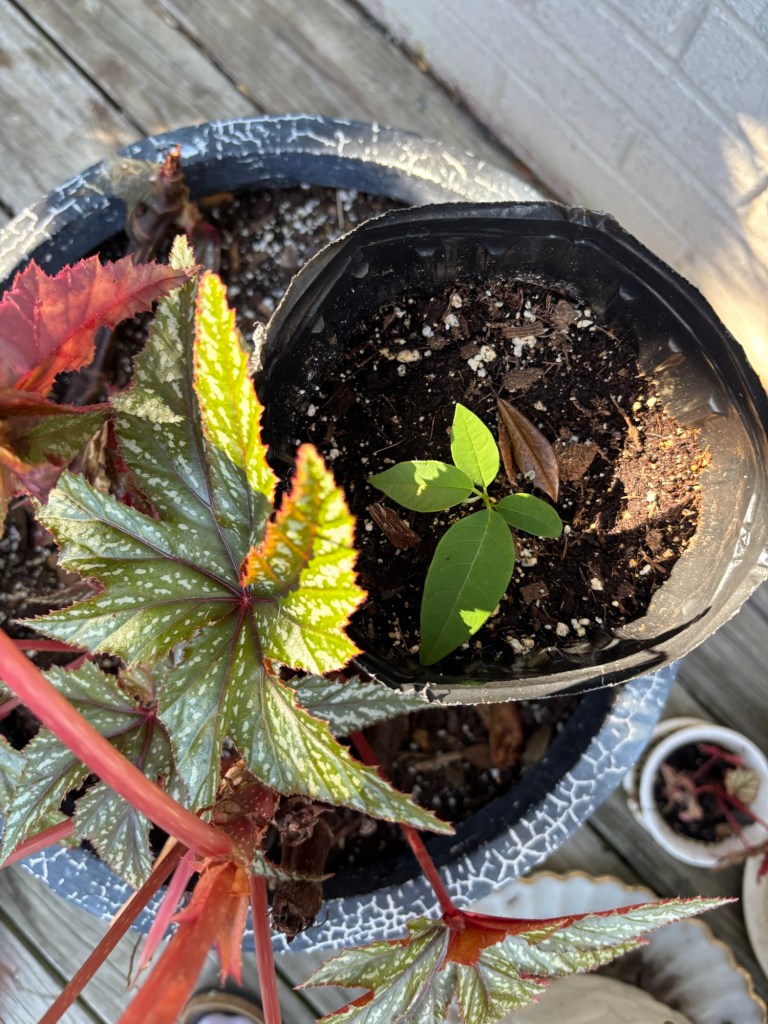
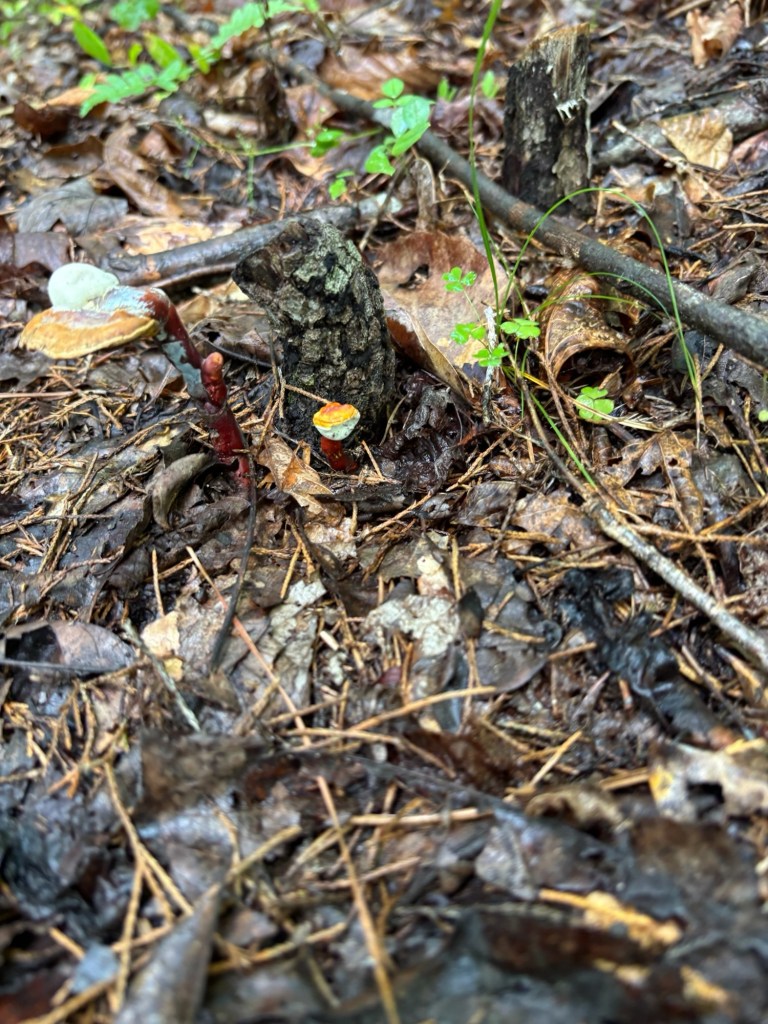
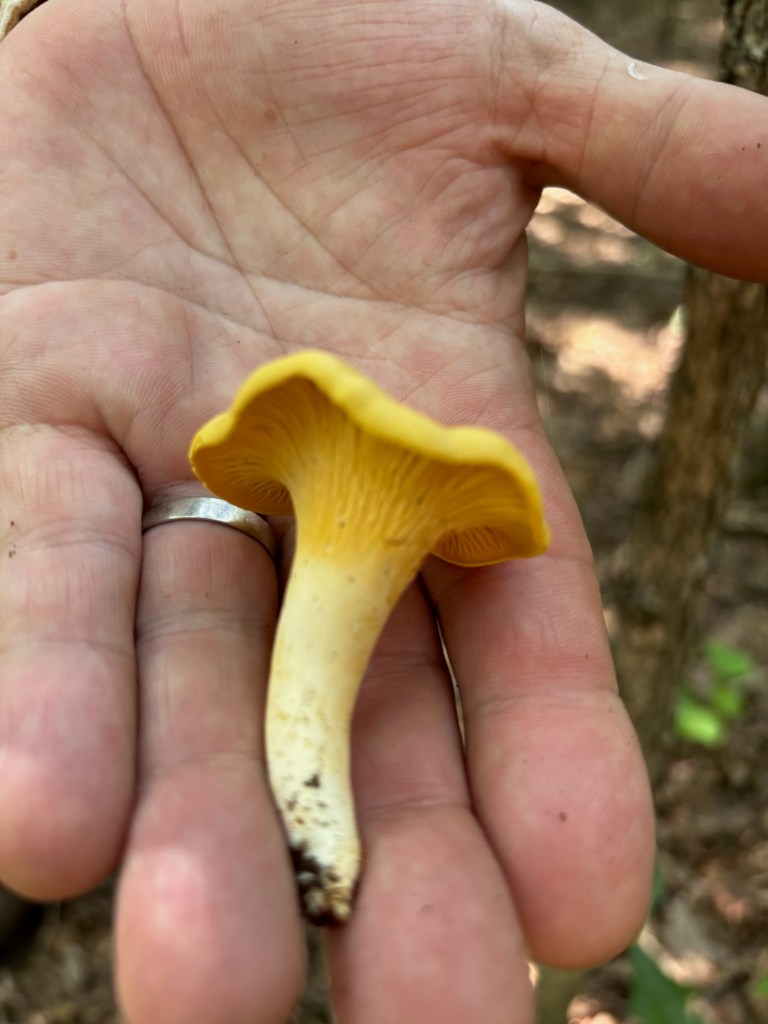
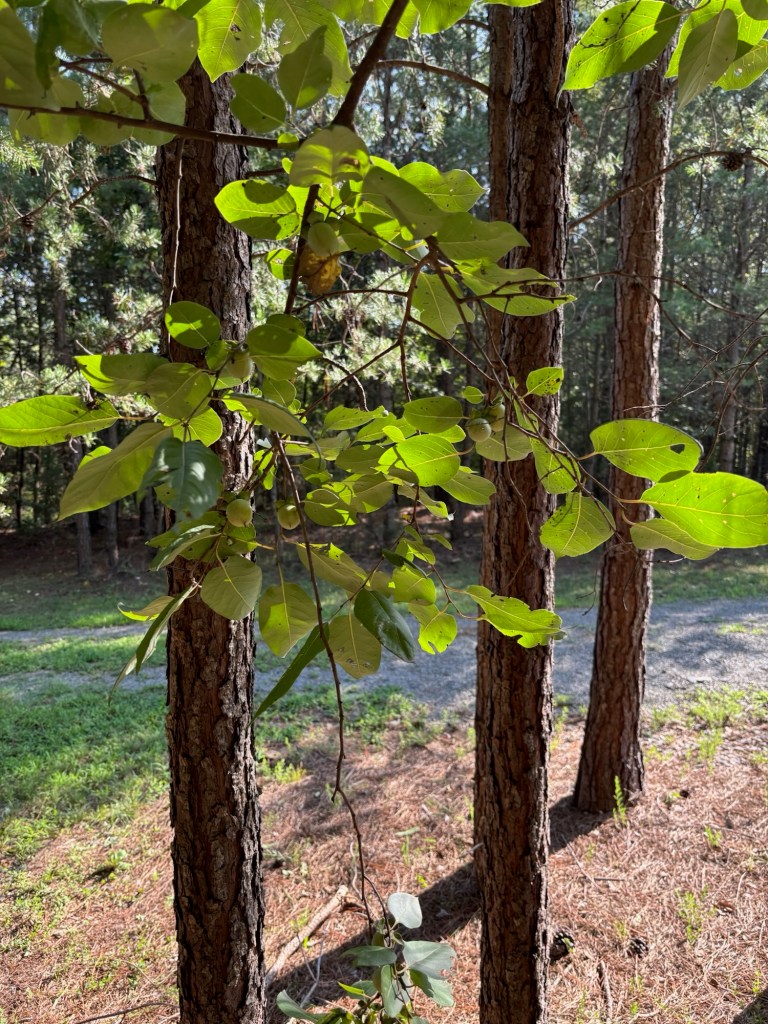
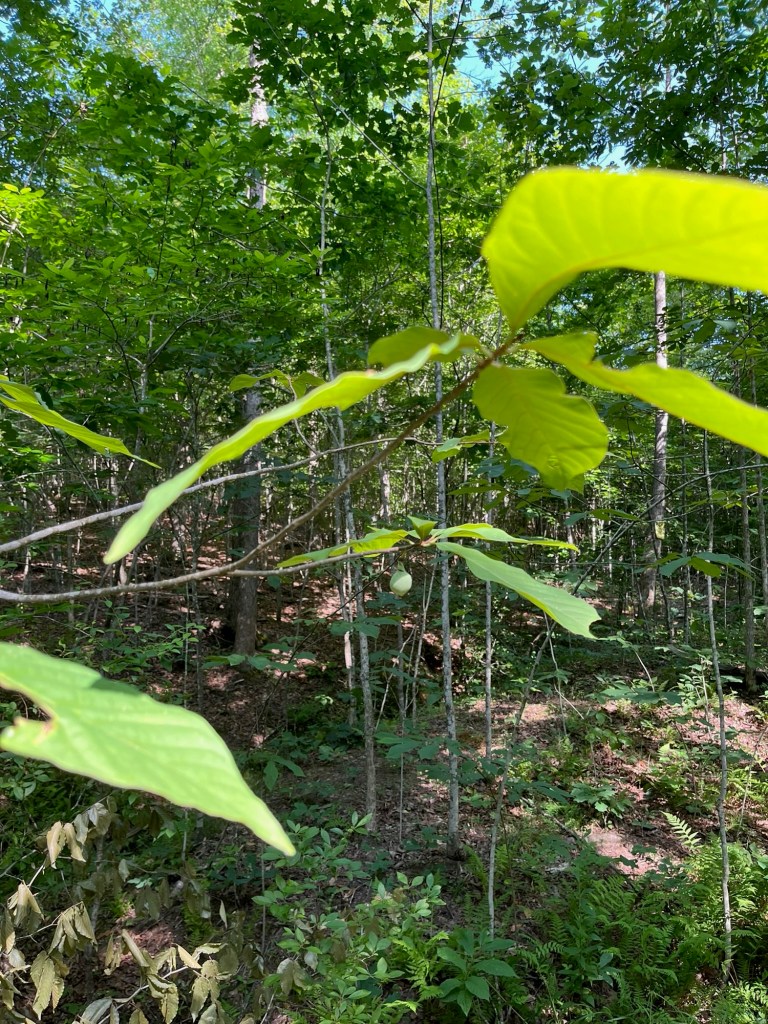
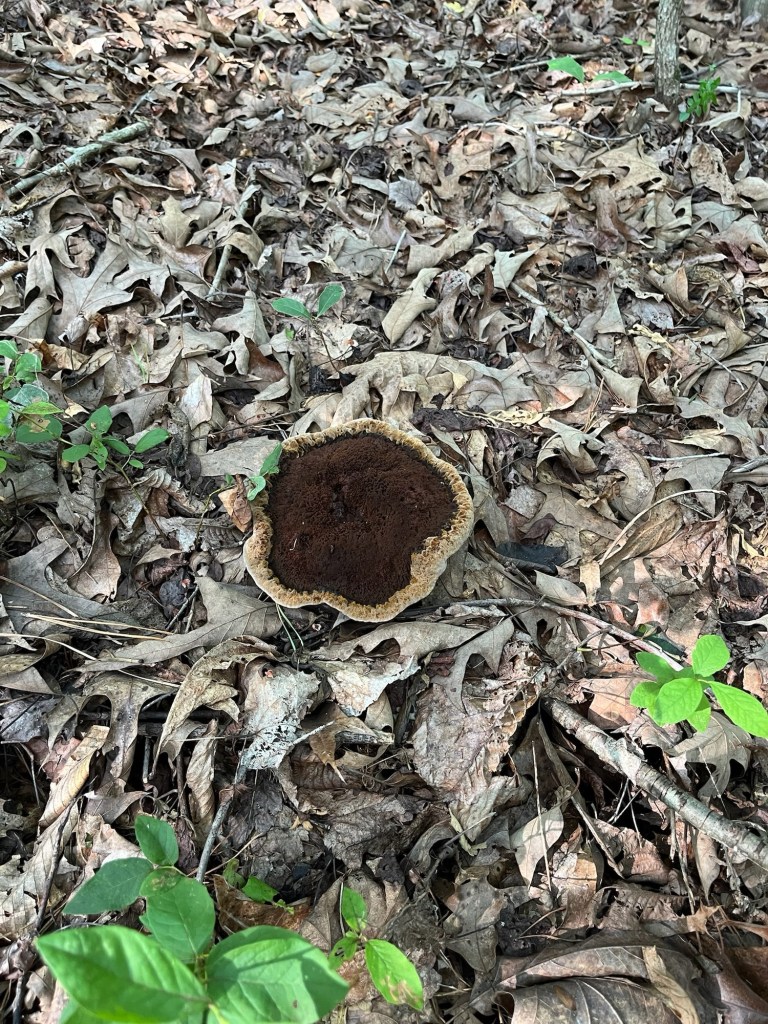
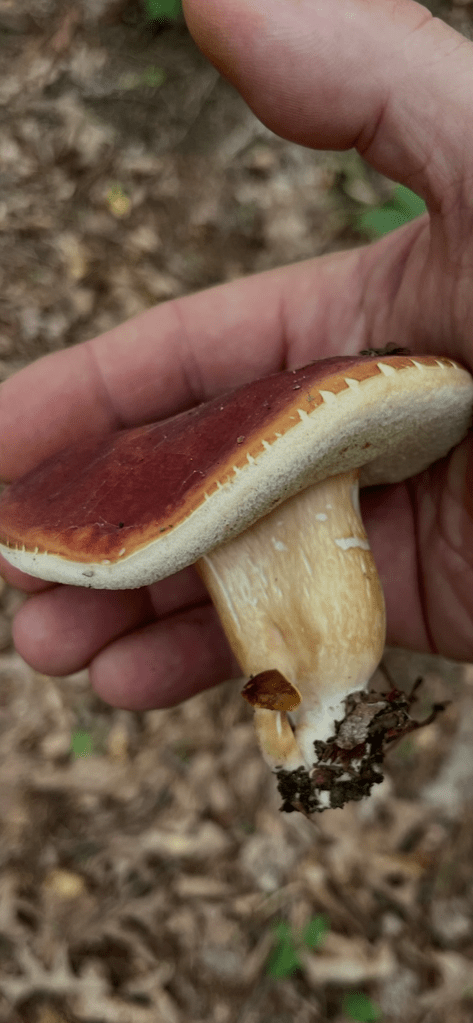
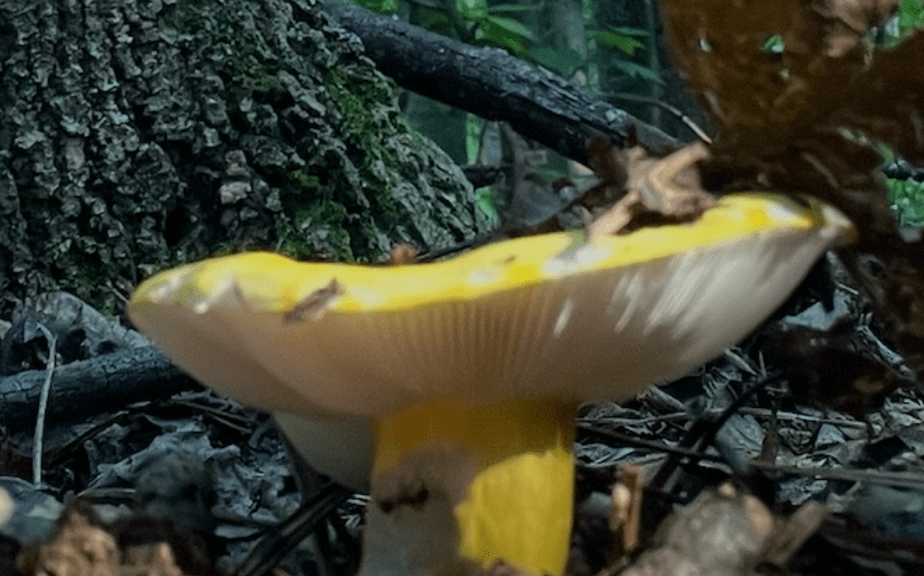
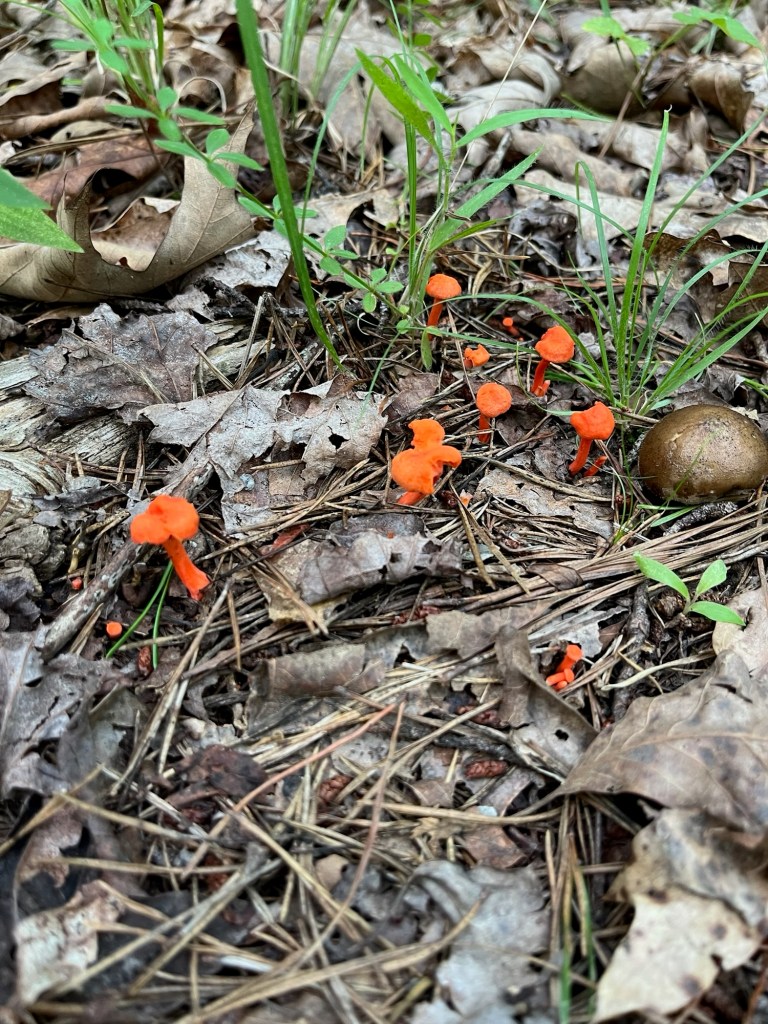
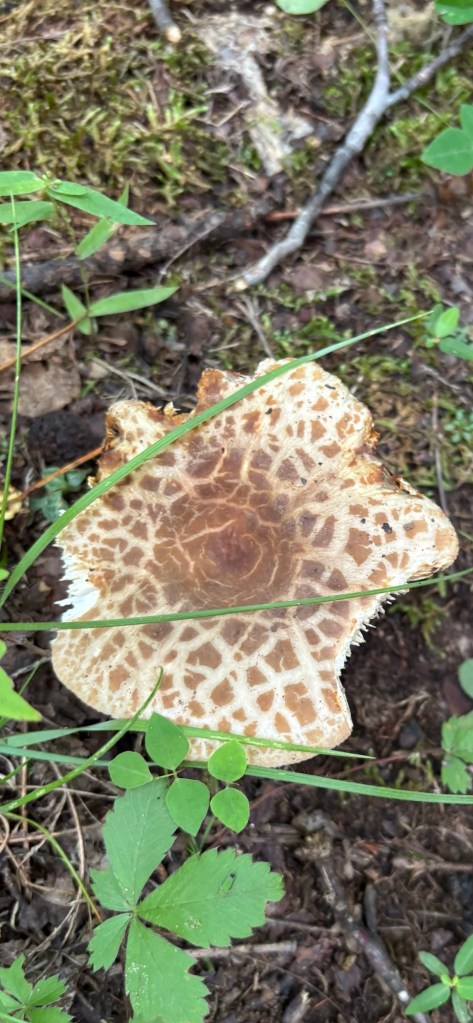
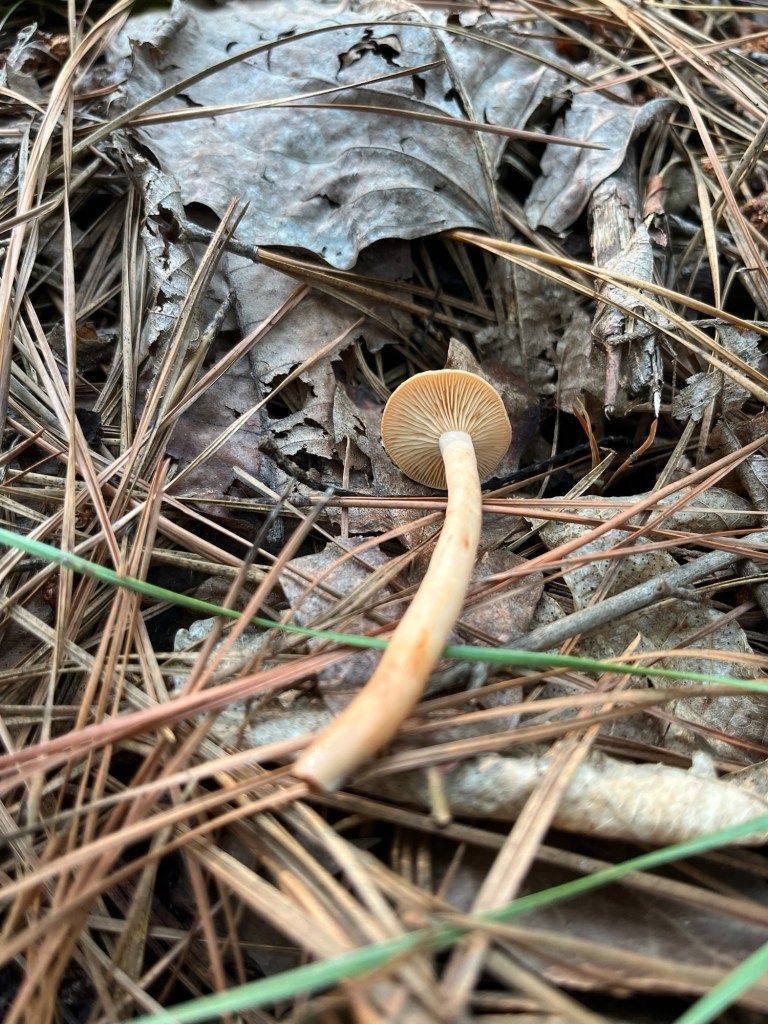
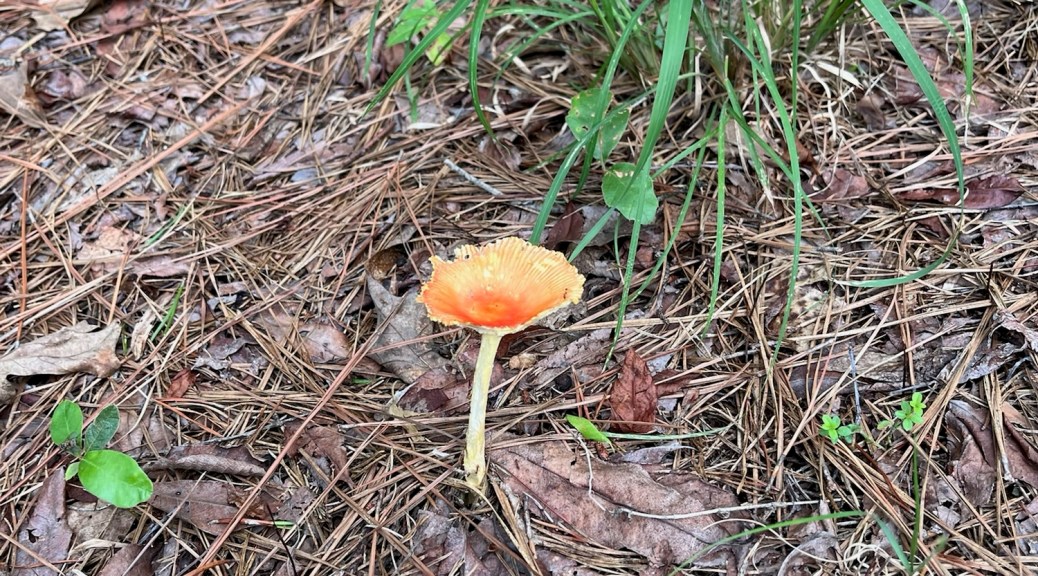
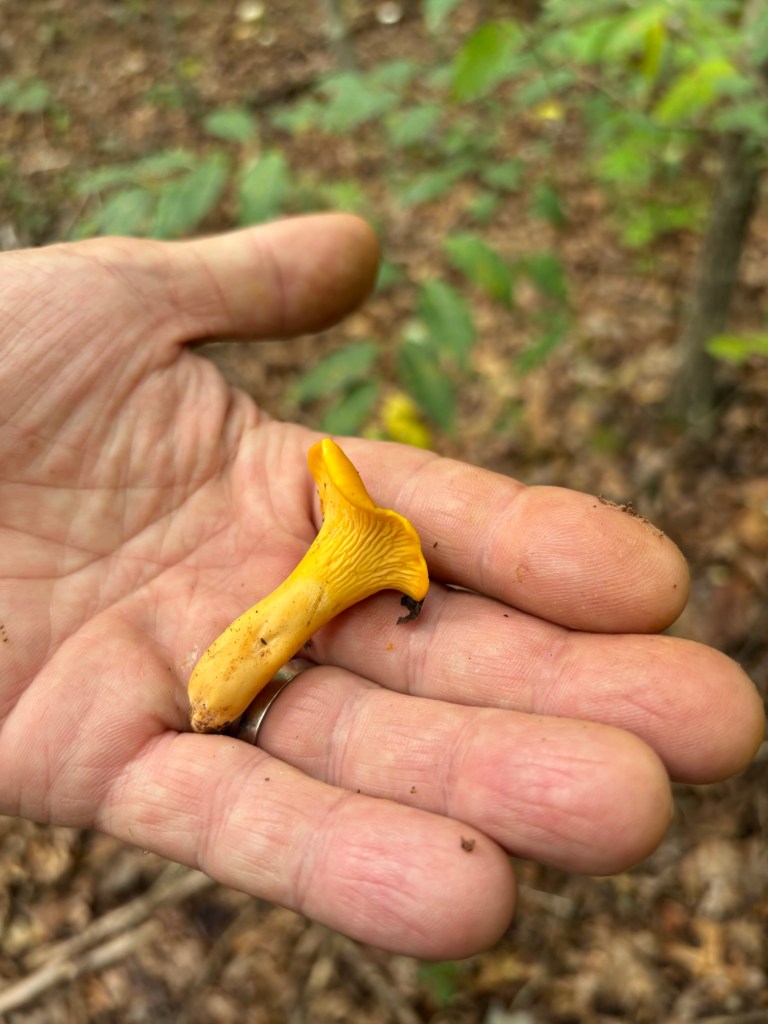
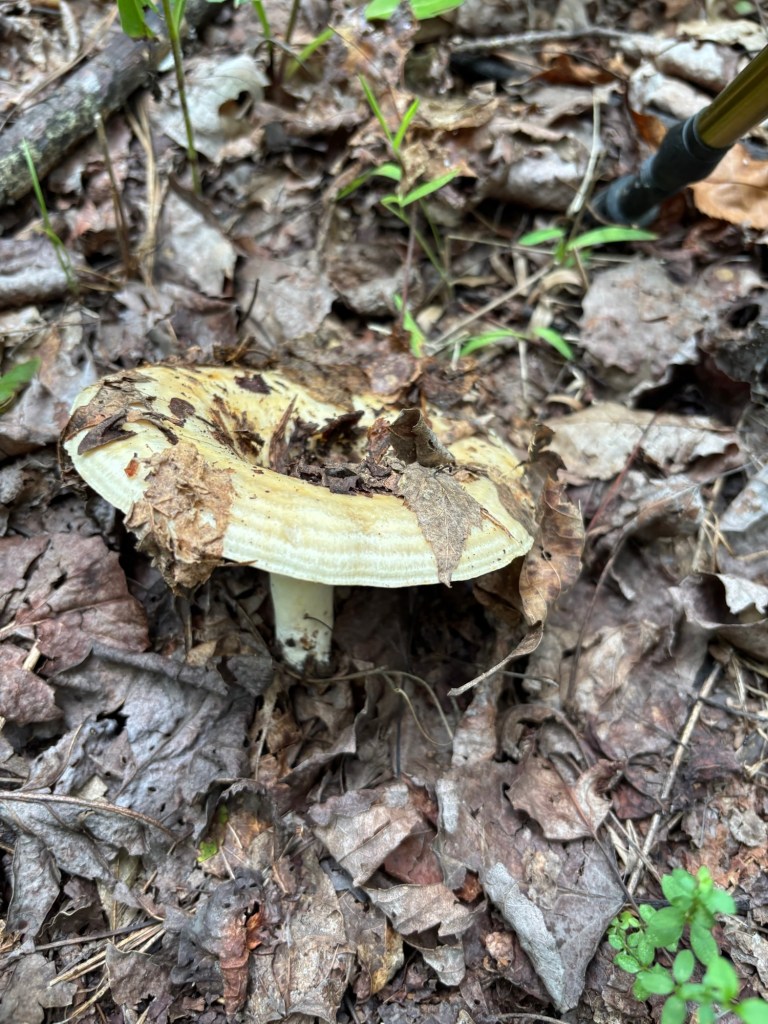
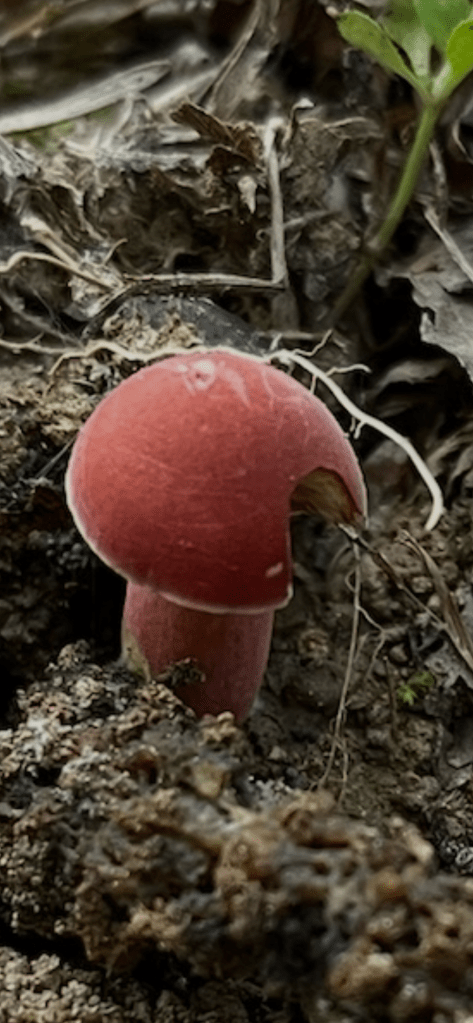
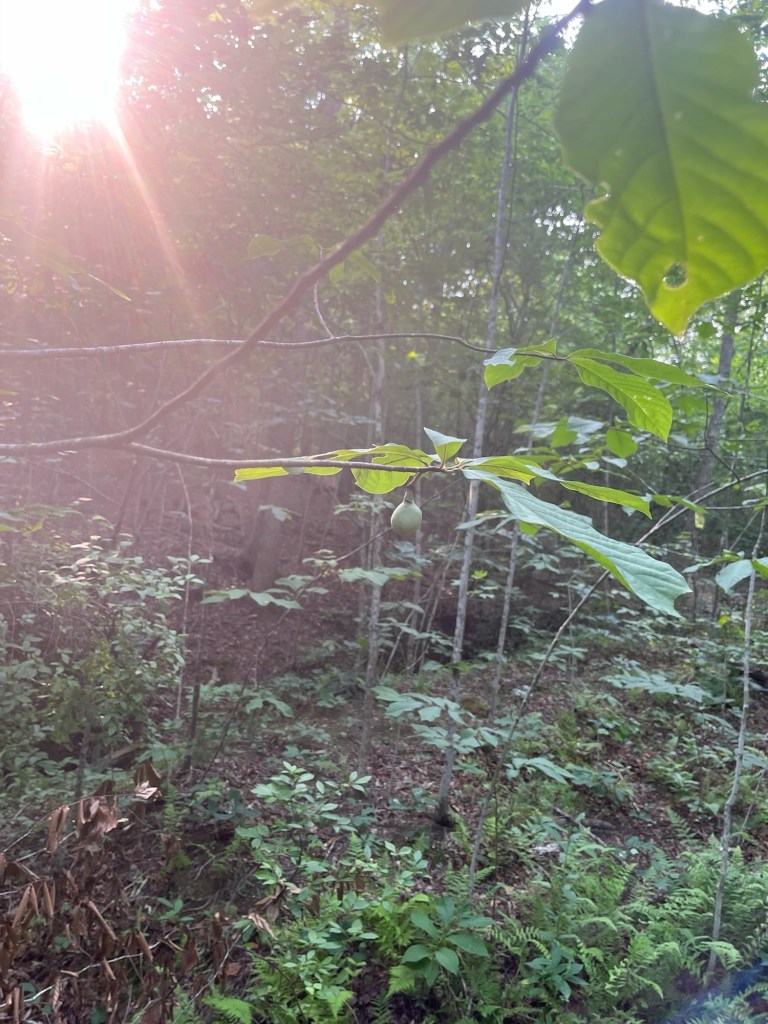
Asimina triloba dropping from trees in Central Virginia. Foraged on the way to the farm. Our first finds of the year in Afton Virginia. We collected 50 seeds from these pawpaws and have them stored to cold stratify over the winter. Almost another inch last week in Buckingham Virginia and more opportunities for storms in the next few days. We spread little bluestem (Schizachyrium scoparium) seeds around the exposed areas at risk of runoff in storms yesterday. Another blue jay feather found up top near the driveway.Chantharellus cinnabarinus, red chanterelle, found throughout SAFF. A choice edible with false gills and bright red color found along wet weather lines. They are smaller than other chanterelles and hold up well in the pan. Aureoboletus innixus, clustered brown bolete, found near an oak. These are edible but we haven’t tried them. Pawpaws still hanging on in the clonal colony. We’ve been checking on them every time we’ve been out to SAFF.Annona cherimola, cherimoya, tree sprouting on the deck. This is a tropical tree which will need to be protected from our cold Virginia winters. Ganoderma growing along the main waterway at SAFF. Persimmon ripening on the trees up top.
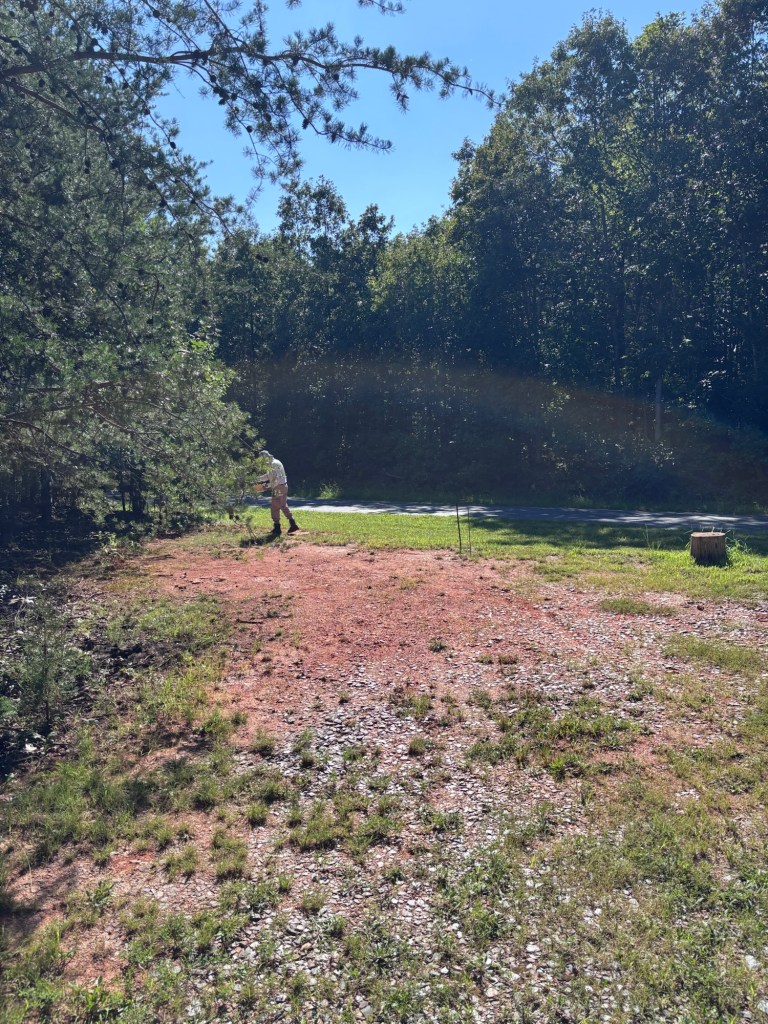
We’ve been busy clearing paths for the tractor through the pawpaw seedling orchard, planting little bluestem on exposed ground and preparing to plant this year’s Asimina triloba seedlings. We have also cleared out some pines and hardwood trees crowded in around our American Persimmon trees and created an orchard up top near the road for them. Also, we planted several Juglans Regis, Persian walnut trees in the main clearing at SAFF. We have also been researching solar kits for home and SAFF and can’t wait to get what we need ordered and installed.
The past weekend has been a nice taste of cooler, fall weather on the way. The highs have been in the 80s yet there has been a nice breeze and crispness in the morning. We’ve been feeling so grateful for everything and especially the rain and the cooler temperatures.
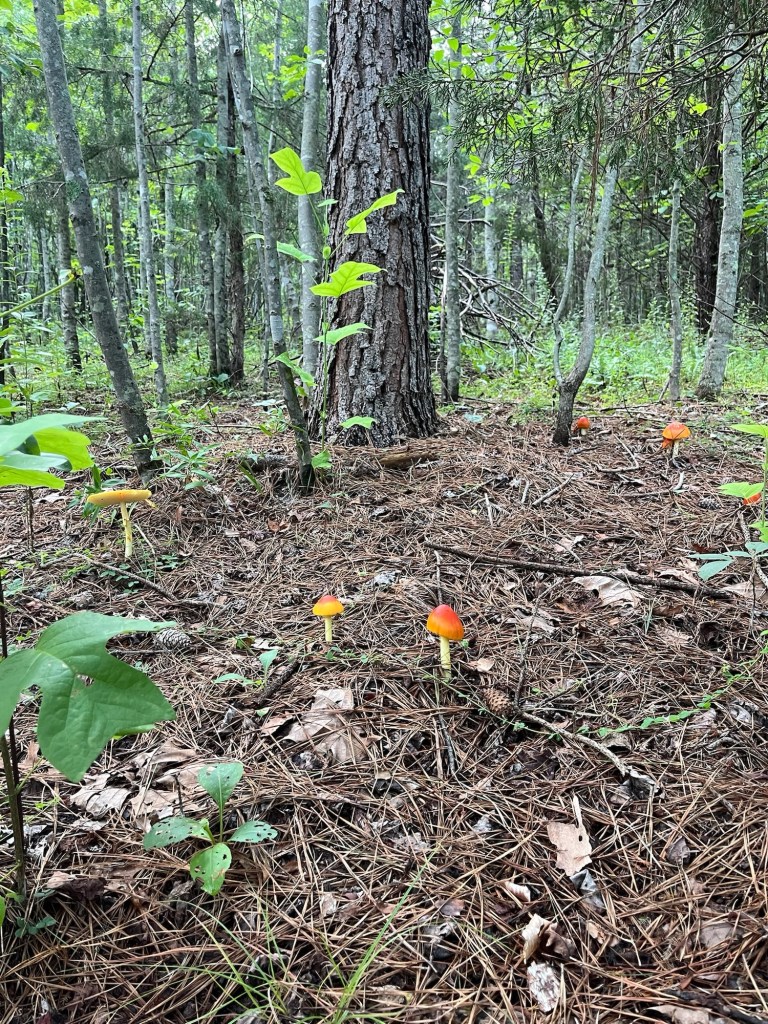
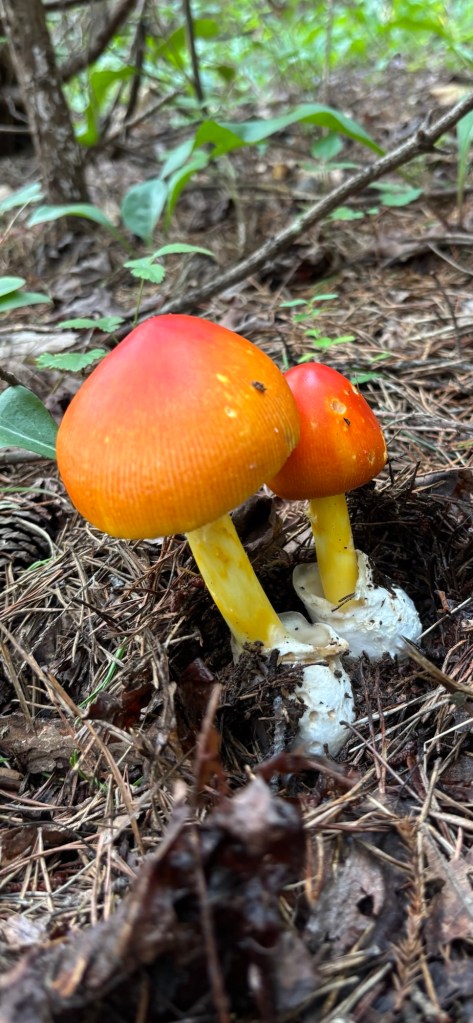
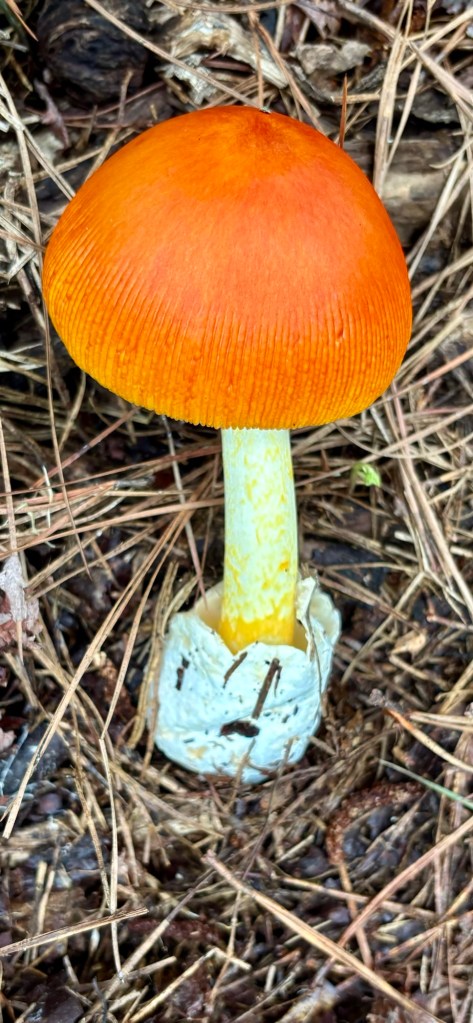
Loblolly pine surrounded by Amanita jacksonii overlooking the cultivar seedlings planted last Fall at the bottom of North Trail.Asimina triloba fruit hanging from the pawpaw tree at the bottom of the hill and across the waterway on the old clonal colony.
It sure has been hot and humid in Virginia these past weeks with near daily opportunities for thunderstorms. The heat index has been in the low 100s on most days. Saint Andrews Forest Farm has had a few good soaking rains. It’s not enough to offset the severe multi-month rainfall deficit and drought conditions. Nevertheless, we are beyond grateful. Until the onset of El Niño, we weren’t getting much rainfall. Since El Niño patterns began shifting the jet stream, we have had consistent moisture and opportunities for storms. Virginia feels more and more like a tropical rainforest. With the temporary seasonal increase in rainfall, our forest grows, mushrooms we haven’t seen for two years (since the last El Niño!) are fruiting, the creek burbles and flows.
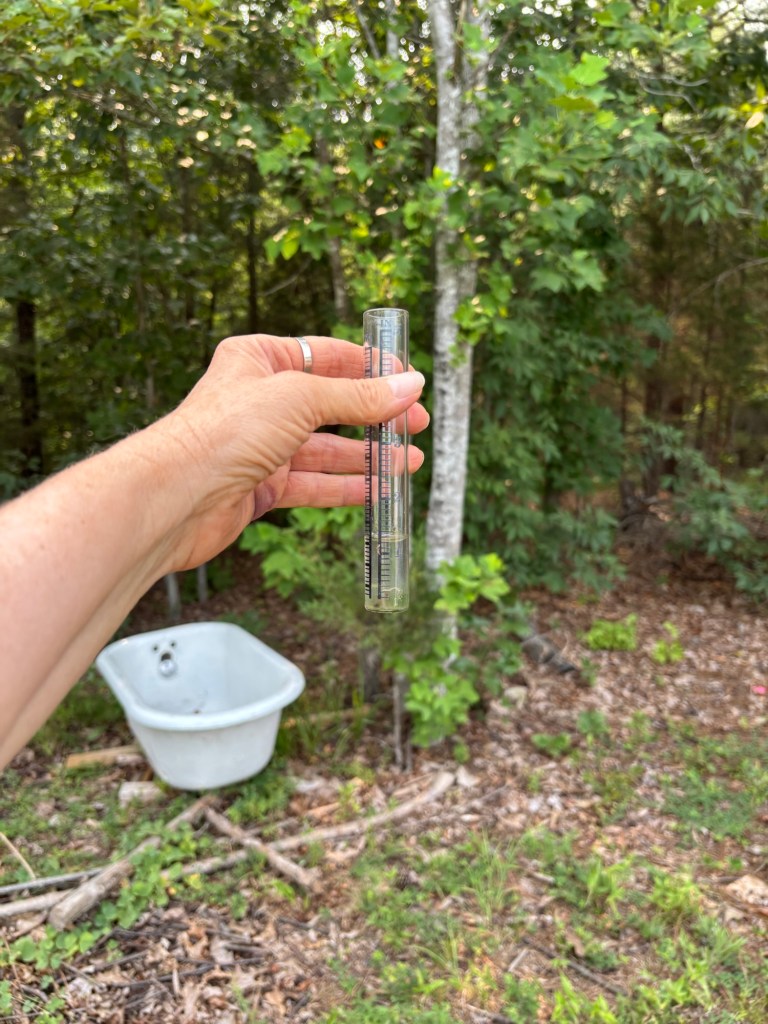
We feel encouraged to begin building a water collection system for the farm as soon as possible. Although this short term impact of El Niño’s increased rainfall feels positive, the long term picture is really unknown. Better to be prepared for a future that includes alternating wet and dry years, and best to incorporate the presumption of drought into our planning.
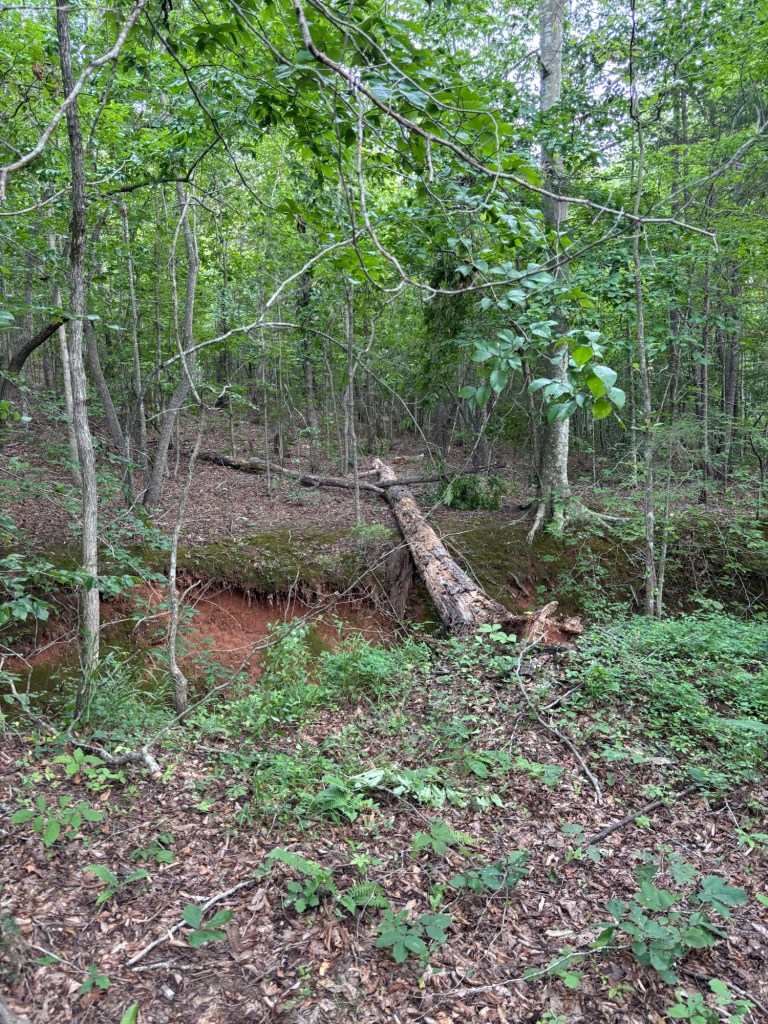
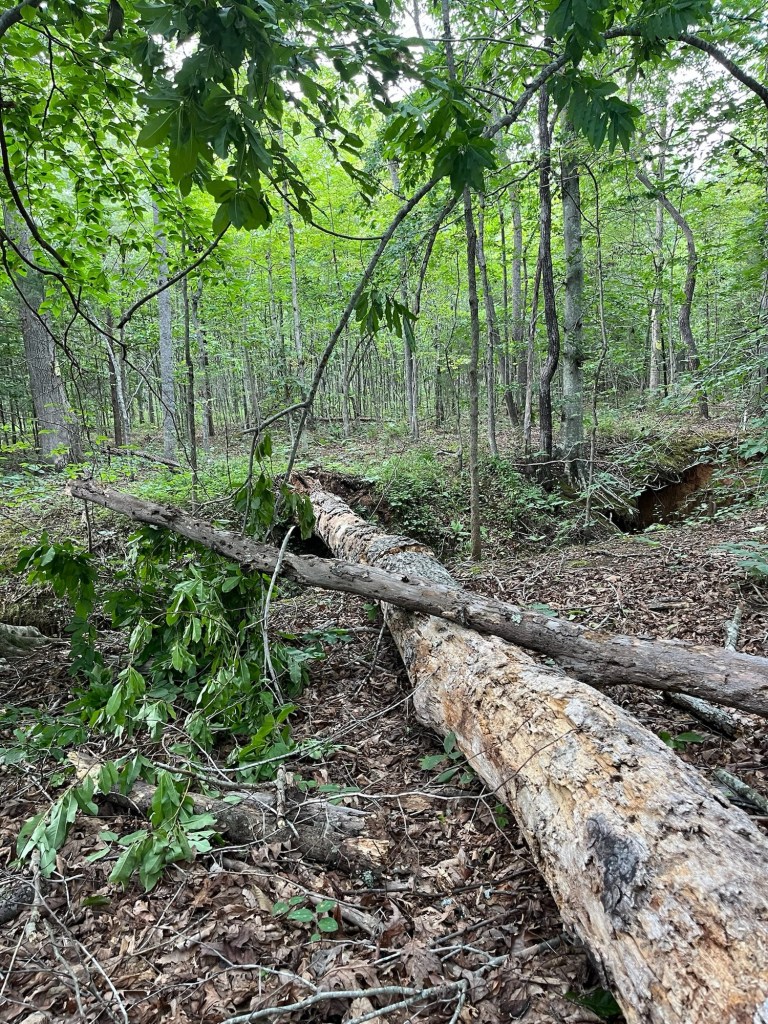
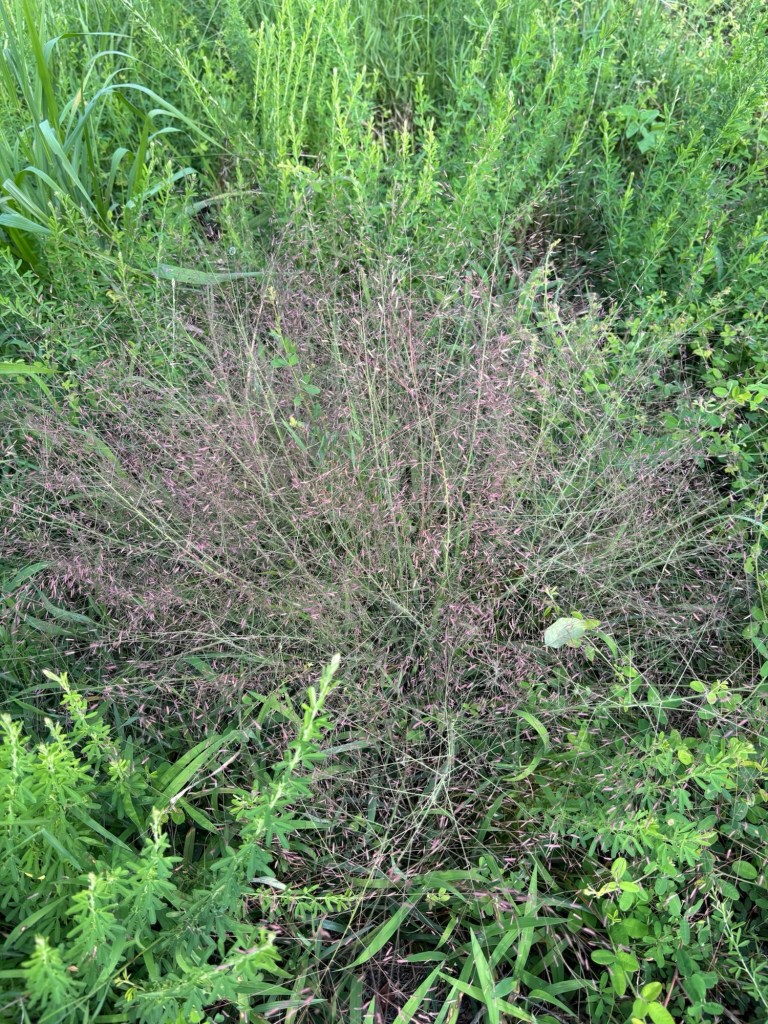
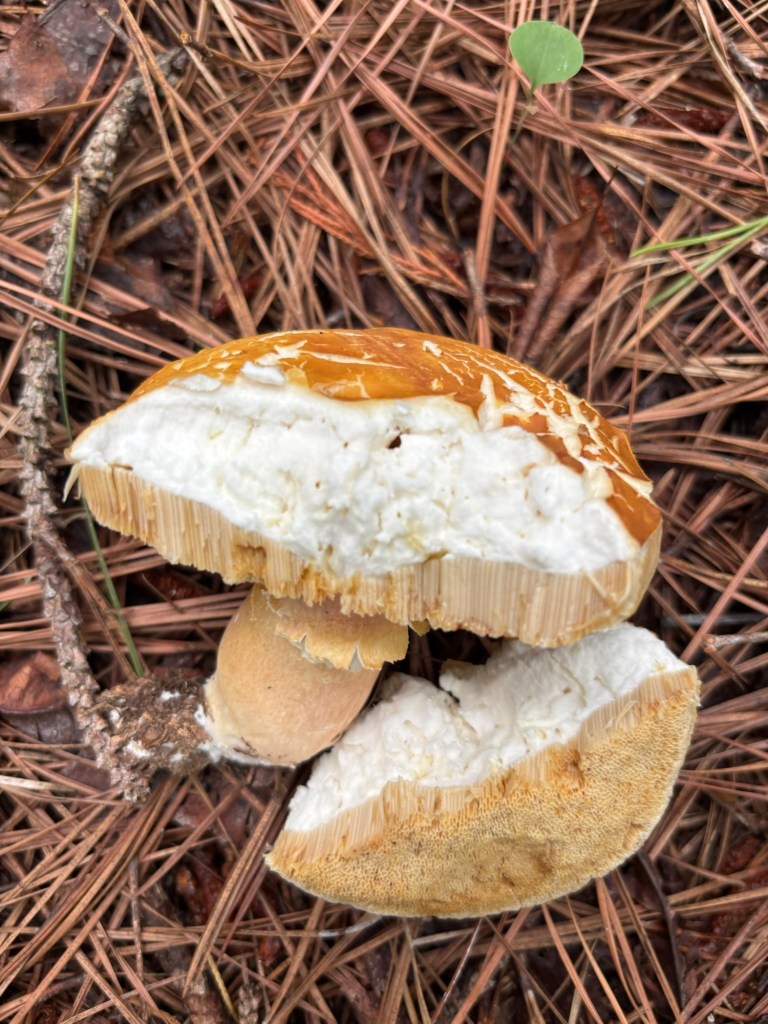
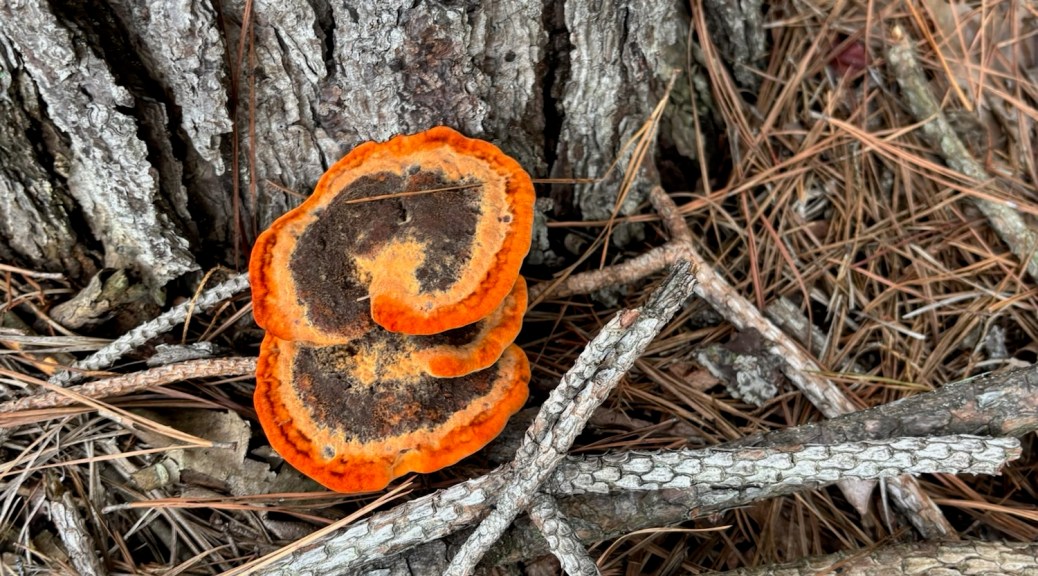
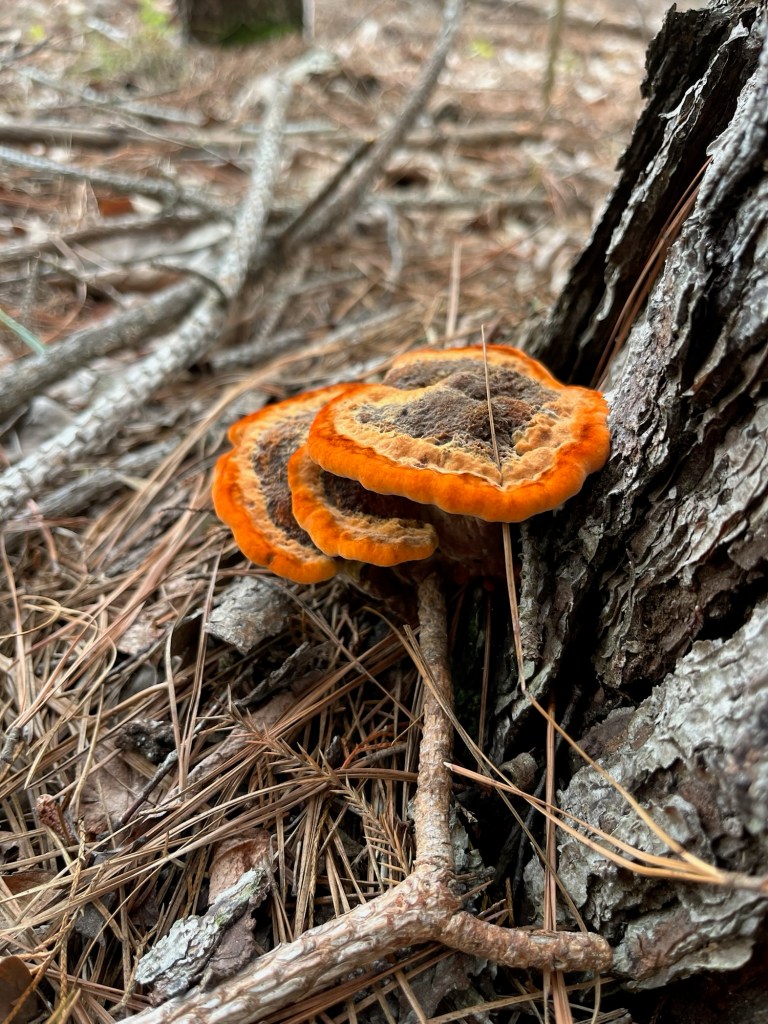
The old snag finally fell in a storm last week.From across the waterway, the snag laid down pretty gently. Phaeolus schweinitzii, Dyer’s Polypore, found along Midhill Trail. Eragrostis spectabilis, Purple Lovegrass, found on the hillside in the clearing up top.
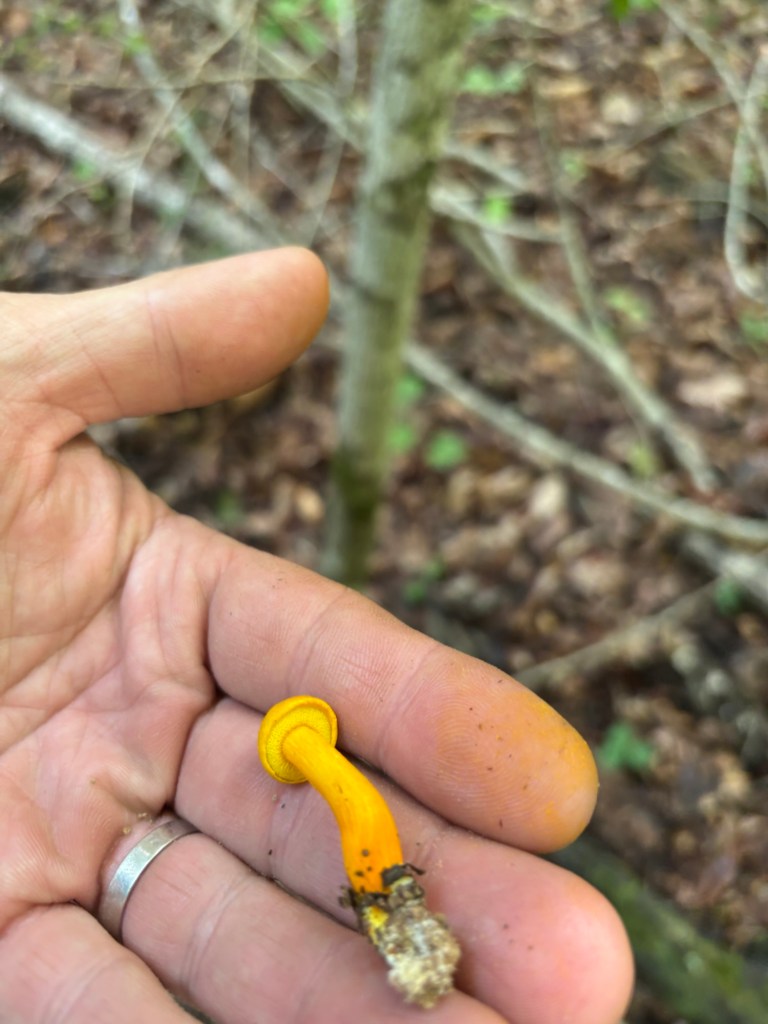
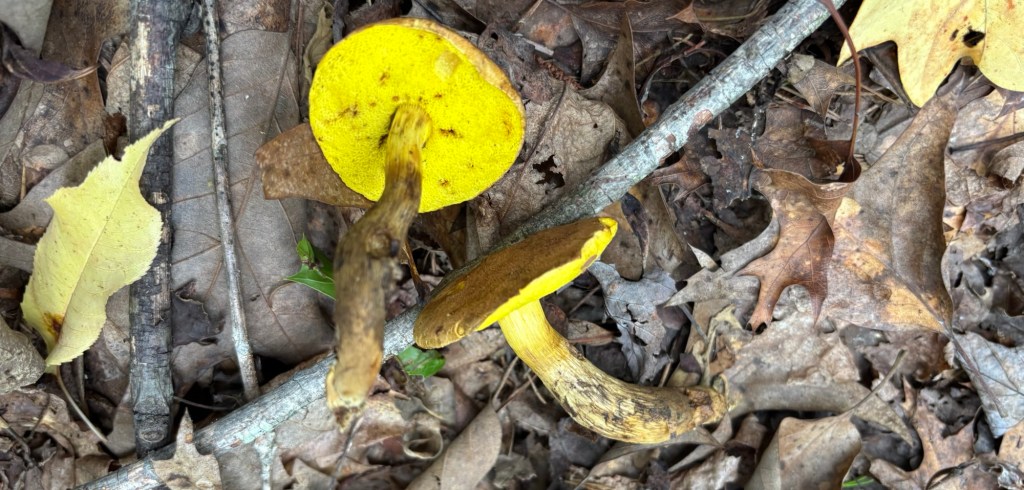
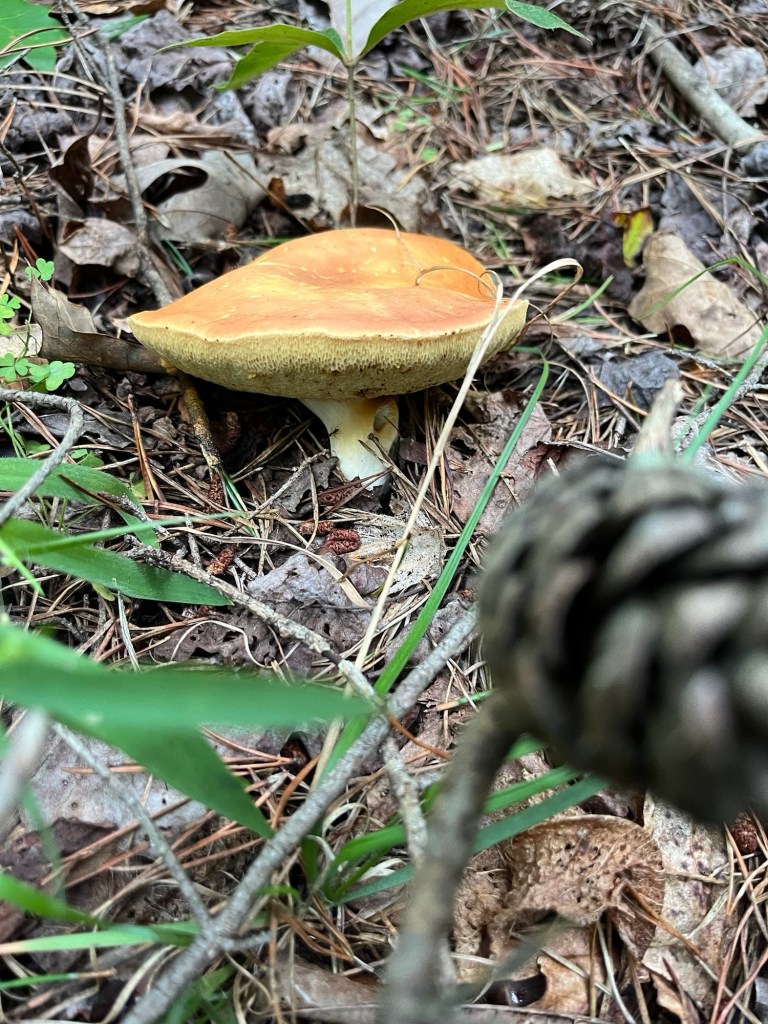
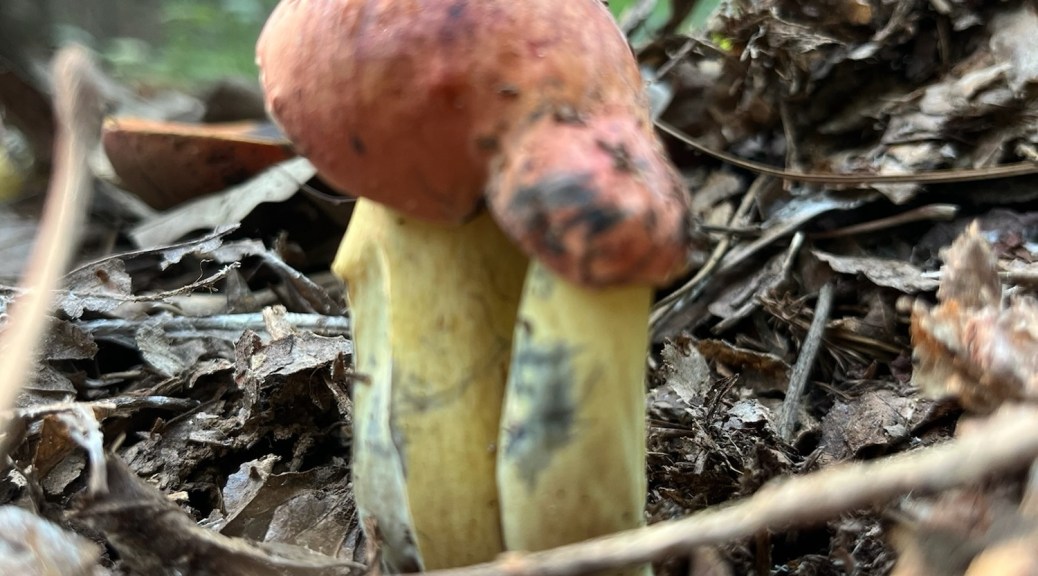
Suillus americanus, chicken fat mushroom or American slippery Jack, an edible found in multiple spots. We’ve not tried it. Aureoboletus auriflammeus, flaming gold bolete, staining fingers orange. This is a young fruiting body.
We camped over the weekend at SAFF and not only did we see some cute critters but it was also a mushroom wonderland.
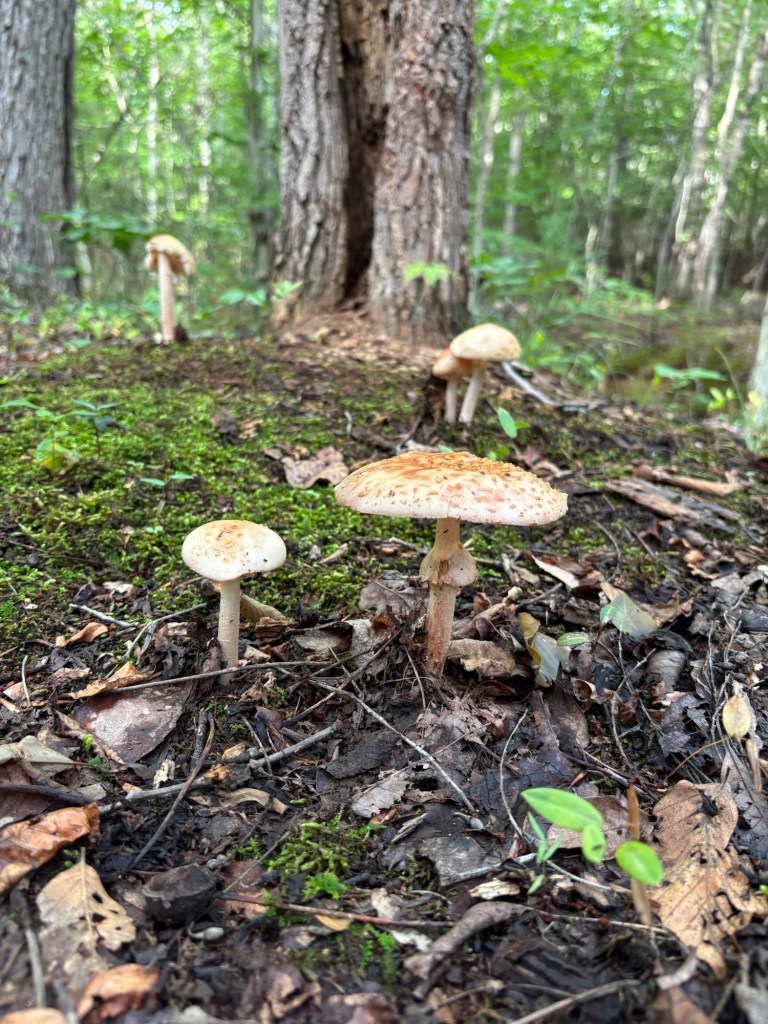
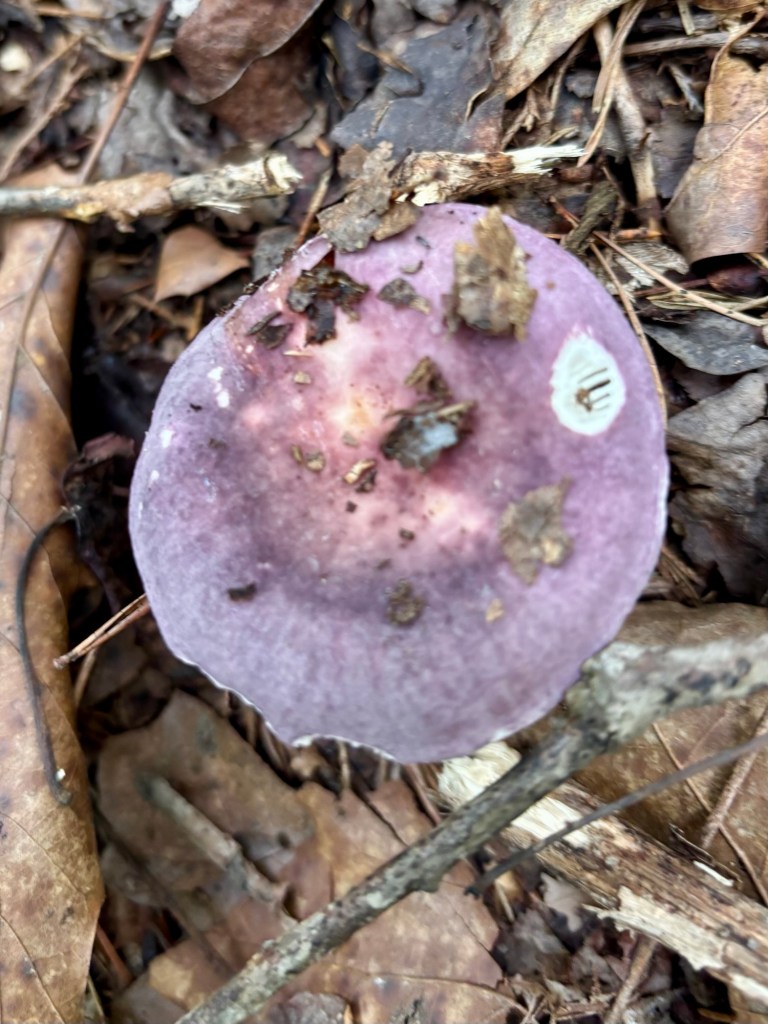
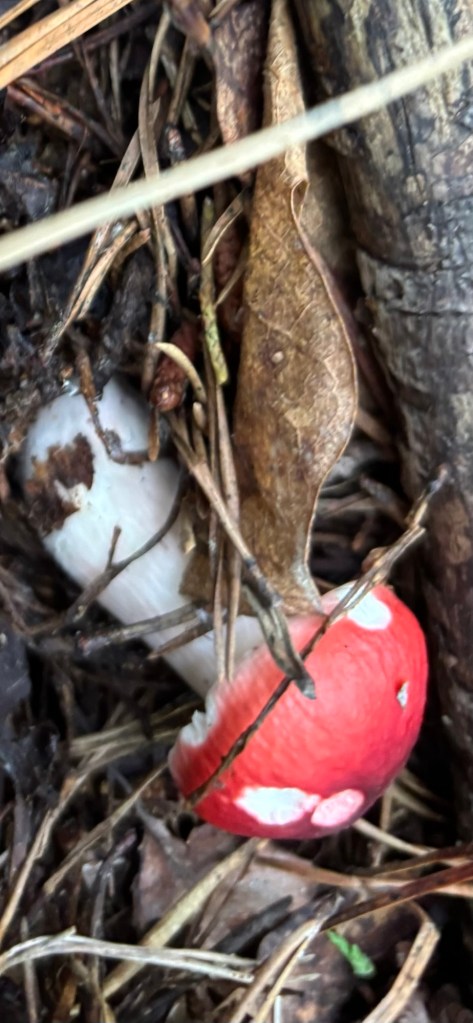
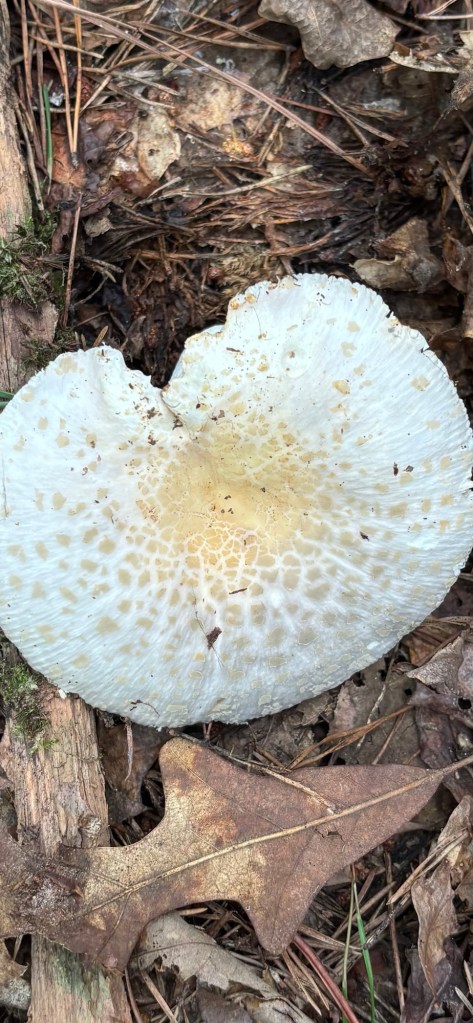
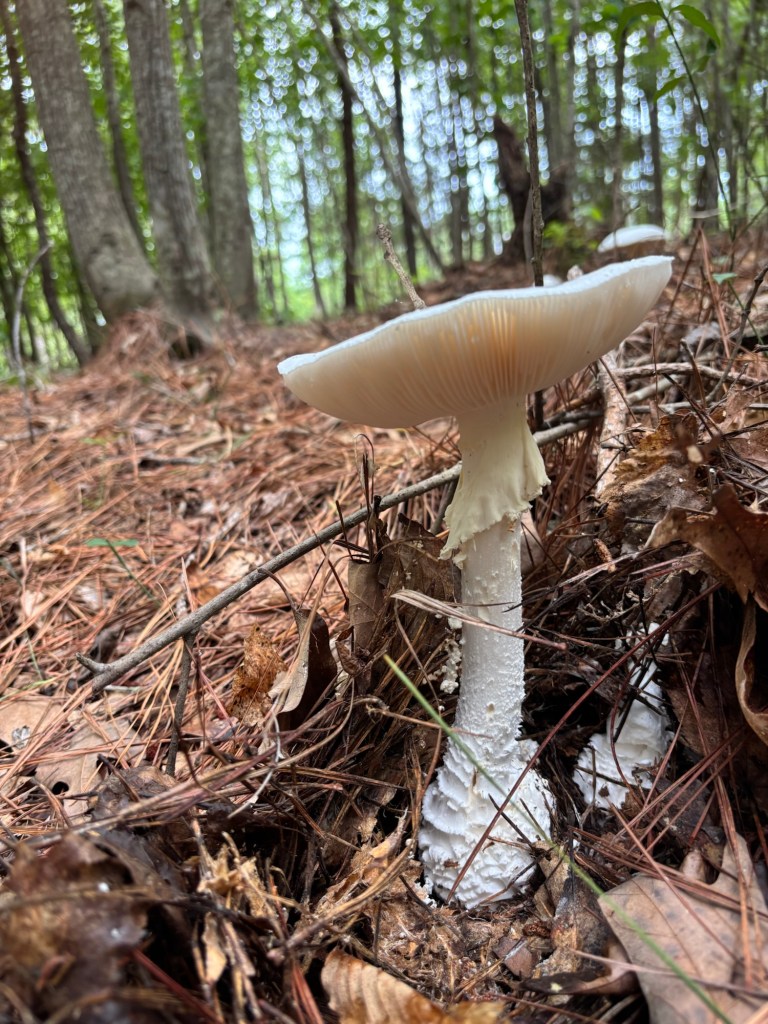
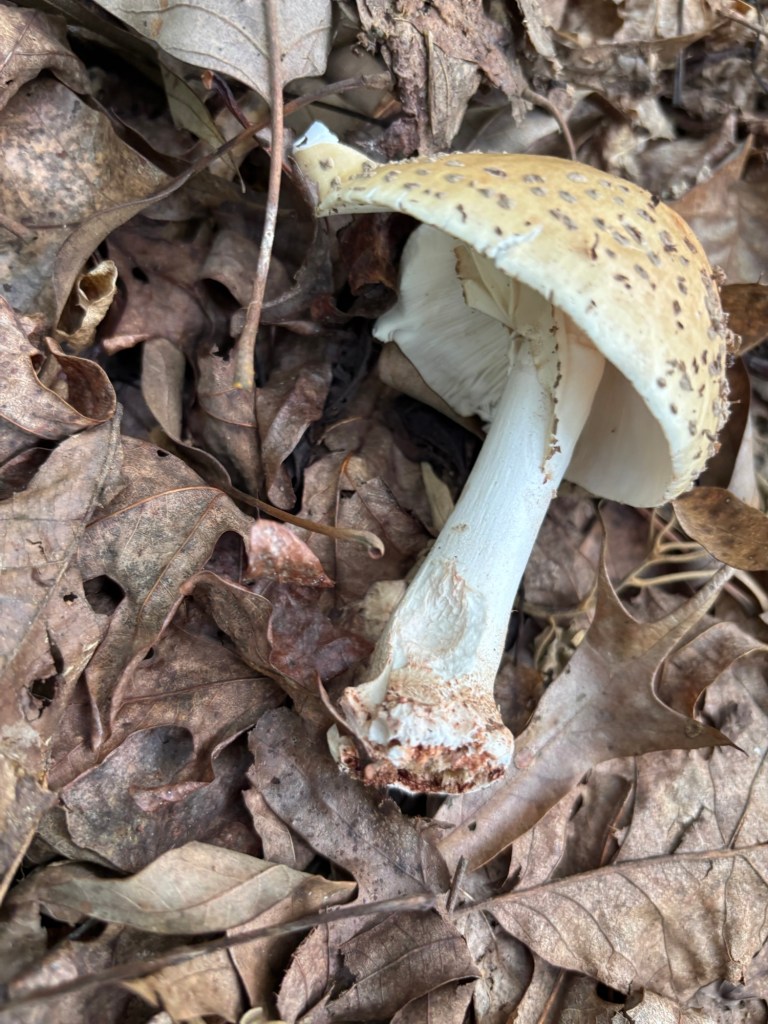
Amanita rubescens, blusher, with deadly lookalikes it’s not a beginner’s mushroom. They are abundant throughout the farm and are always eaten by bugs or animals. Need to be thoroughly cooked for 15-20 minutes to break down a dangerous hemolytic protein toxin. Foragers say it has a mild, nutty pleasant flavor. Some compare it to a mild meat or beef like richness. So far, we can only hope to find a good looking blusher to bring home and cook. Xanthoconium seperans, lilac bolete, a prized choice edible in the porcini family. Leccinum aurantiacum, red capped scaber stalk, found all over but heavily in the north pine and oak forest. Saturday foray from SAFF includes Frost’s boletes, Amanita banningiana and jacksonii. Chanterelles and lilac boletes. We also found one Lactarius indigo.
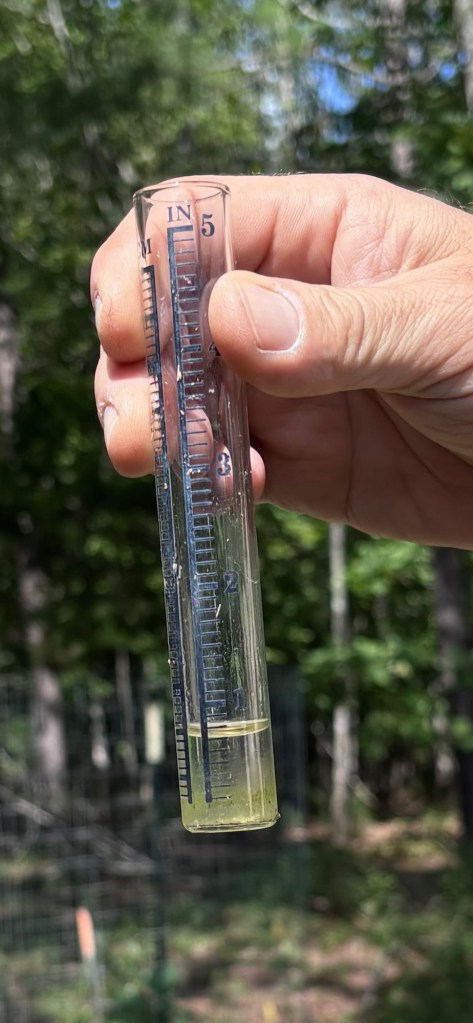
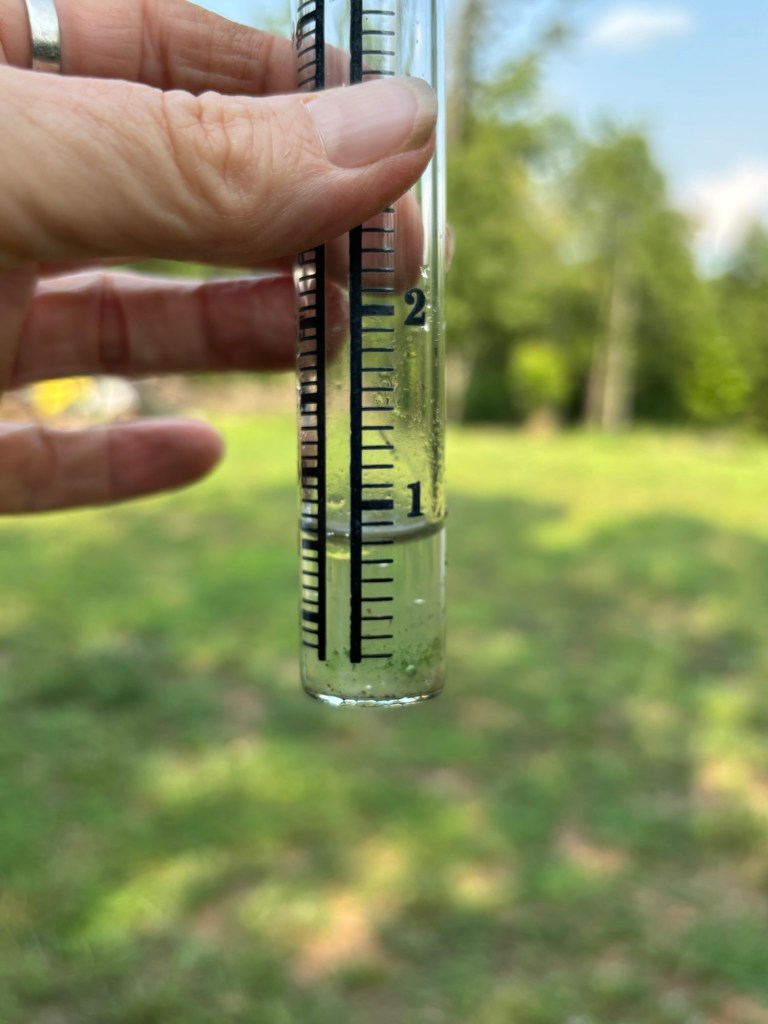
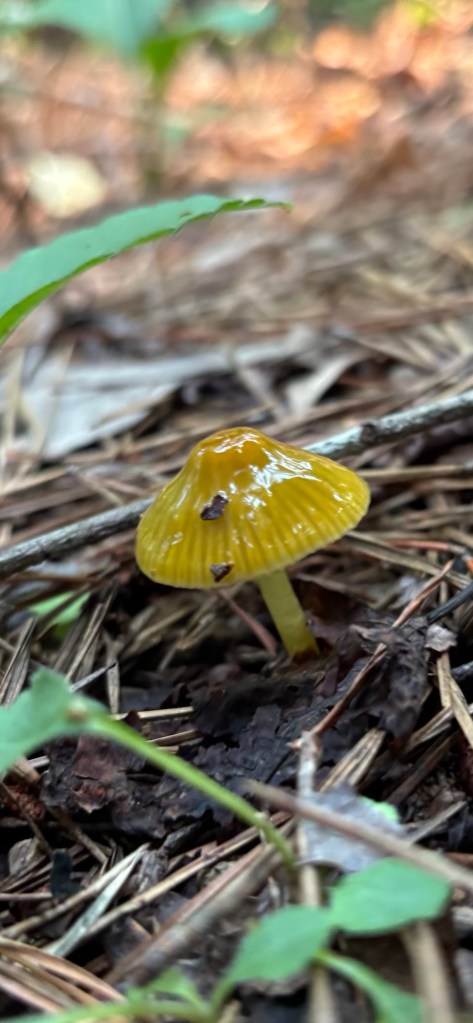
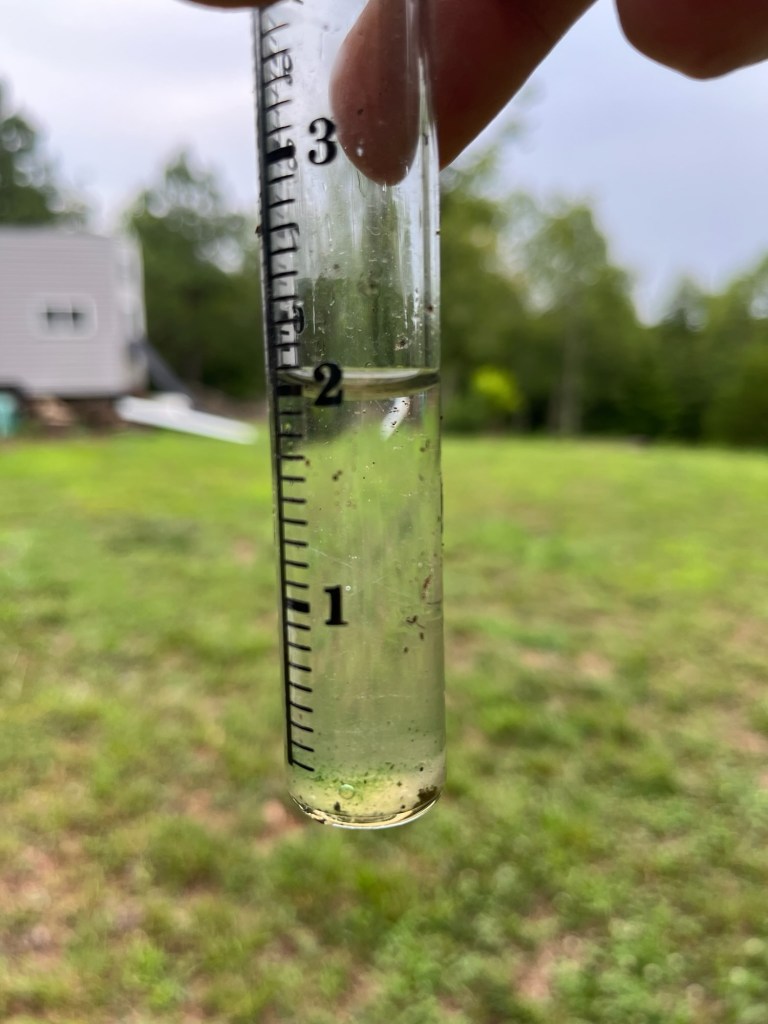
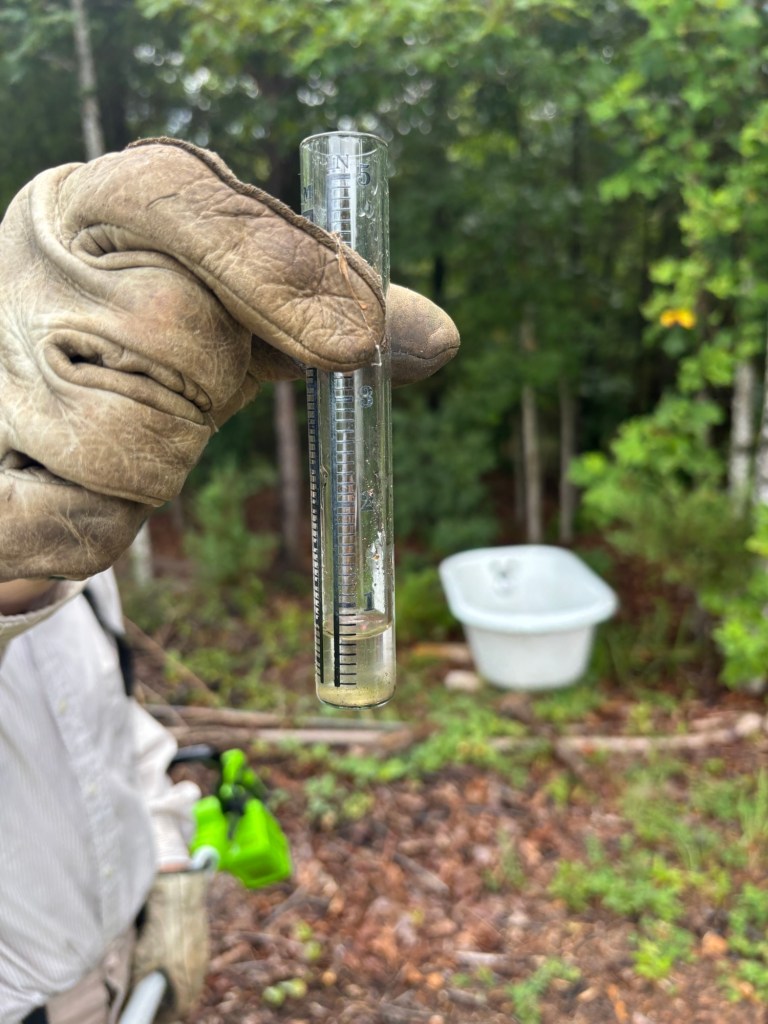
Almost another inch in the rain gauge. We feel so grateful. Gliophorus psittacinus, Parrot mushroom or Parrot waxcap, is gelatinous with a radially grooved convex cap. We hadn’t seen these before. Beautiful!Russula vinacea is another we hadn’t observed before.
Since Sunday turned into a full work day with no energy left for a walk through the woods, we decided to go back over last night for a walk. We are glad we did! We saw some mushrooms we’d never seen before. We were astonished by how many types were fruiting. Russulas are especially having their time with all of the rain.
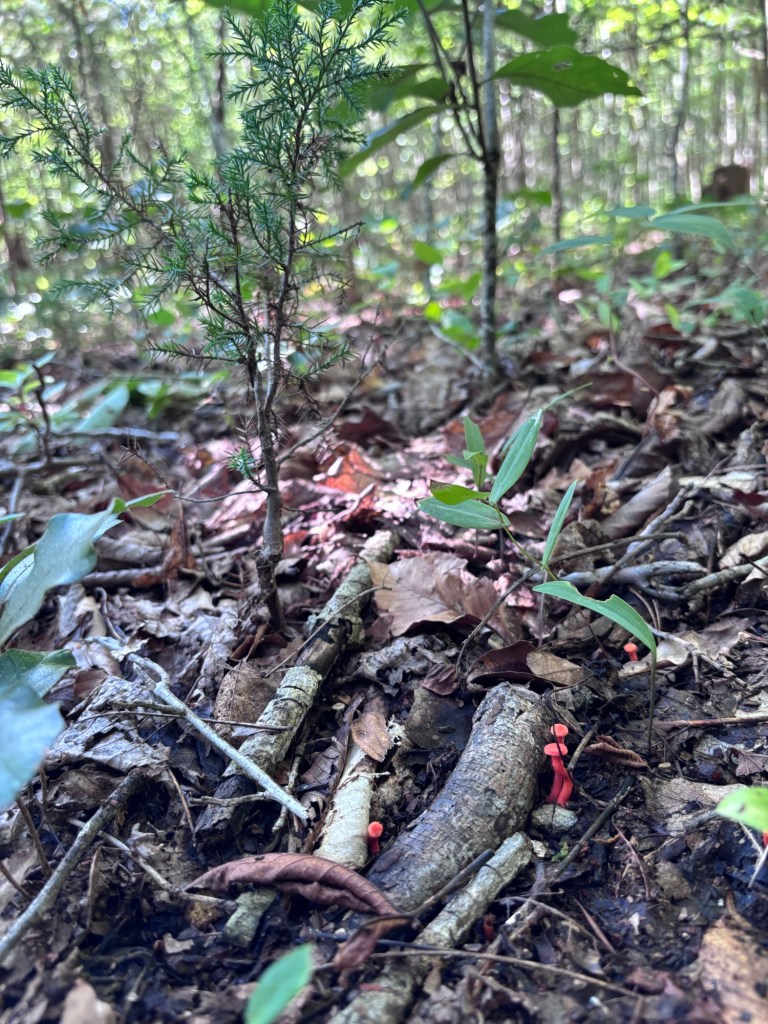
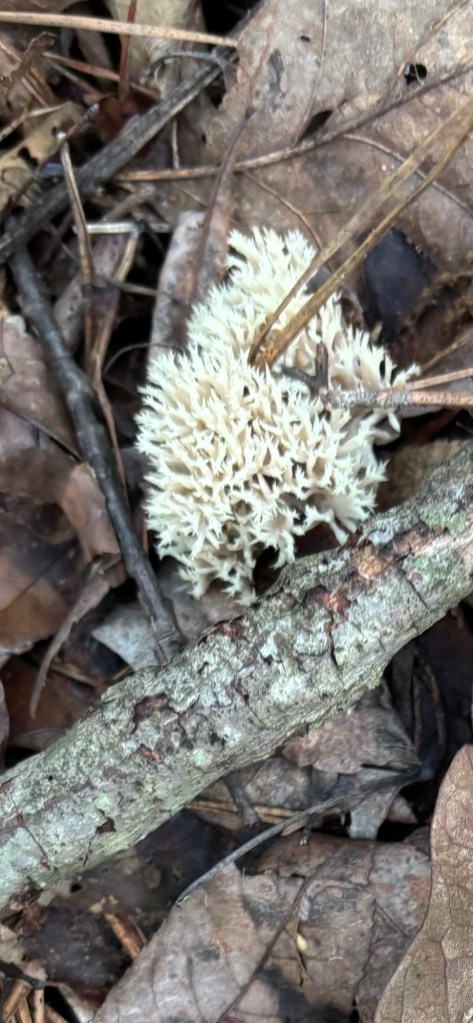
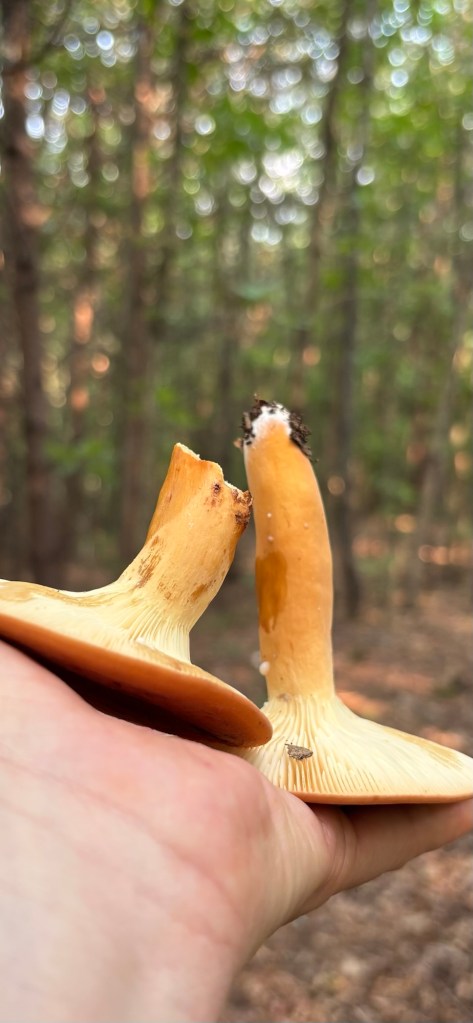
Clavulina coralloides, white coral fungus, found along Deerberry Trail.Amanita jacksonii also on Deerberry Trail. Lactifluus volemus, weeping milk cap, a choice edible we brought home. And finally, we saw plenty of these Cantharellus cinnabarinus all over. These vibrant red edible mushrooms cover hillsides at the farm.
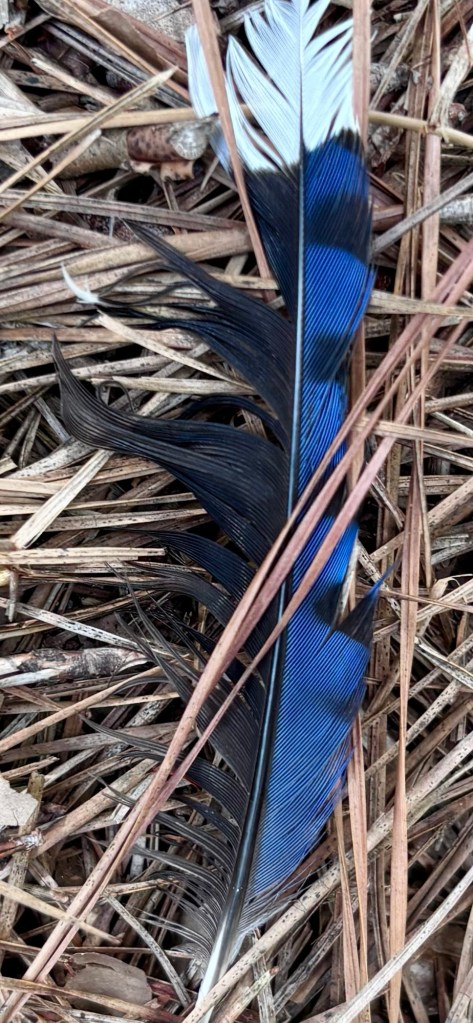
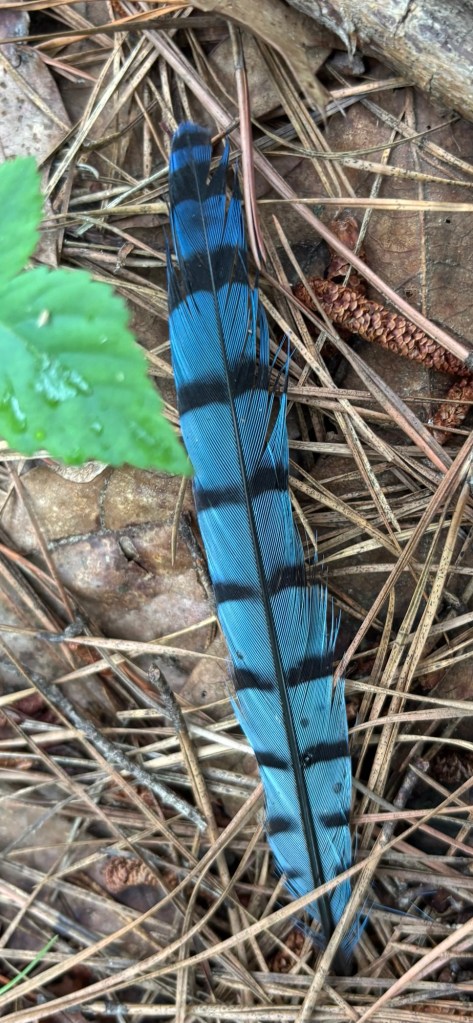
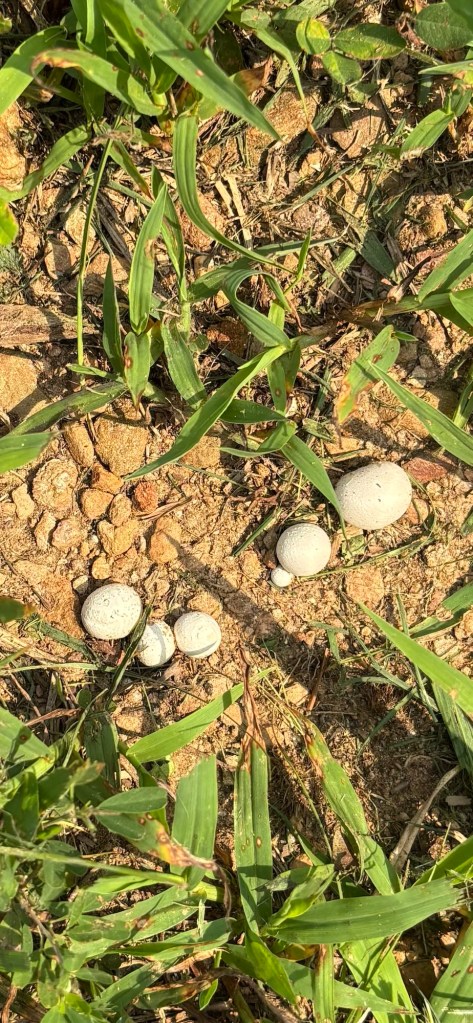
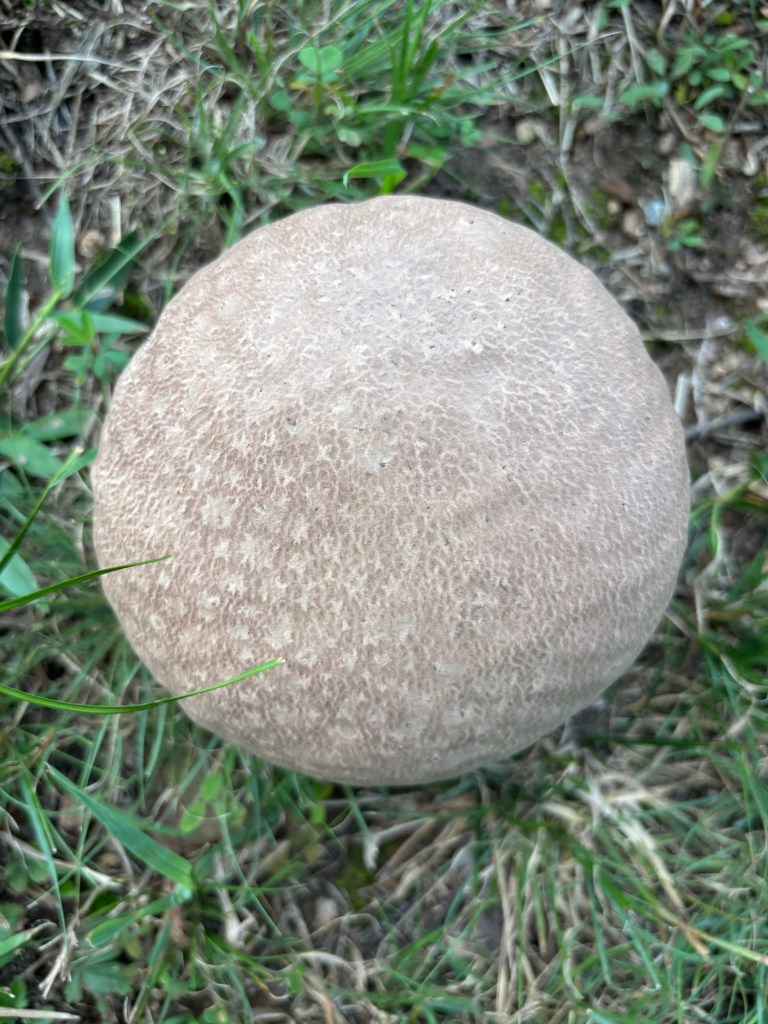
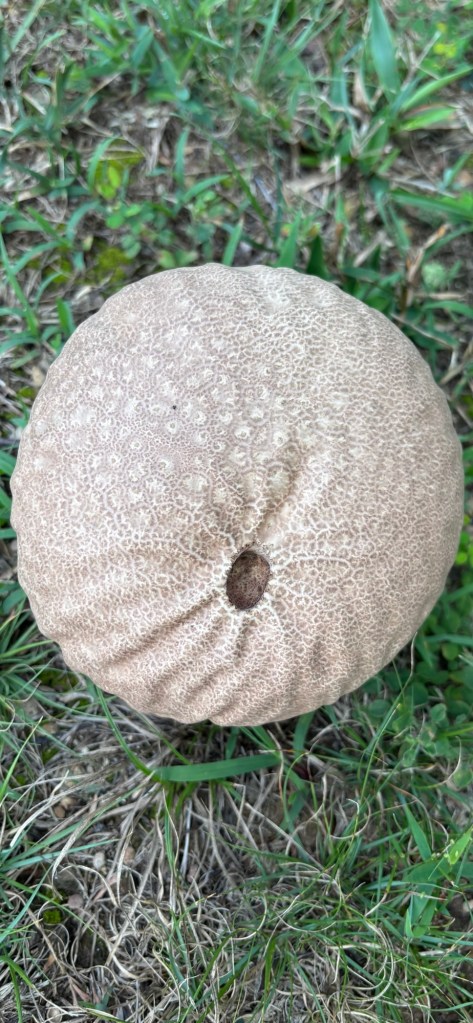
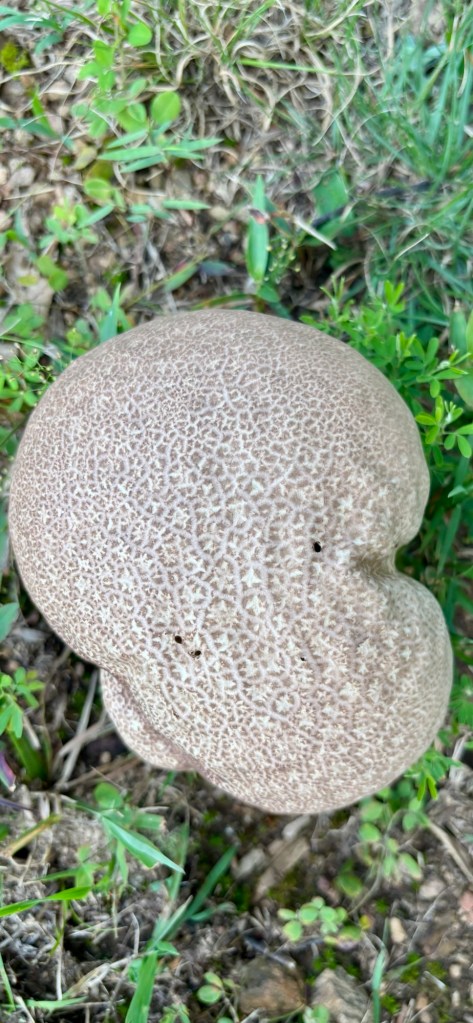
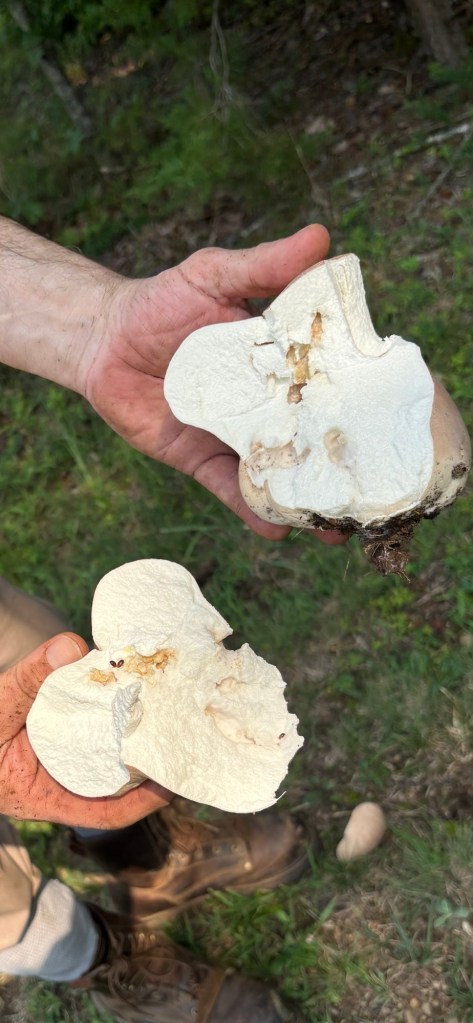
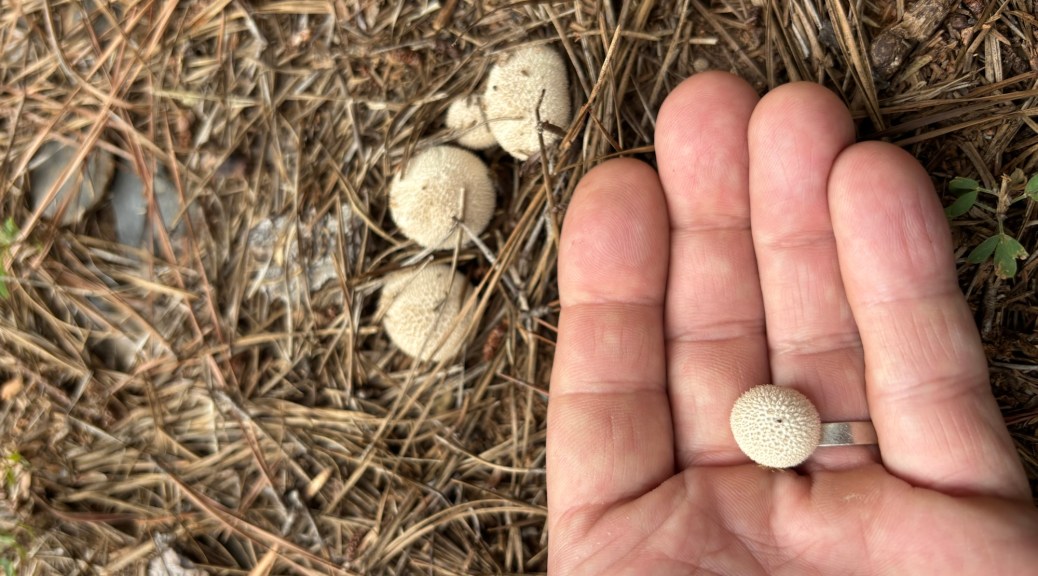
Cyanocitta cristata, Blue Jay feather, found along Red Hawk Road. Lycoperdon marginatum, Peeling Puffball, found up top in the main clearing. They were small and cute. We left them for a woodland creature to snack on later. Calvatia cyathiformis, Purple-spored Puffball, is a large edible purple spored mushroom that comes up in groups at the top of Red Hawk Trail when the temperature and rainfall and just the right environmental conditions occur. Primarily seen late summer into fall after soaking rains or wet periods. They are edible when young and completely white inside. After they change color internally, they are sporing and inedible. We were stunned by the mosaic scales they each have.A mature Calvatia cyathiformis with an opening used to release spores. As it matures, the solid white interior breaks down into a dark purple powdery spore mass. We thought it looked like a giant sea urchin. Multiple holes formed on surface will emit spores when wind, rain or passing animals compress the mushroom. We thought this looked like a brain.
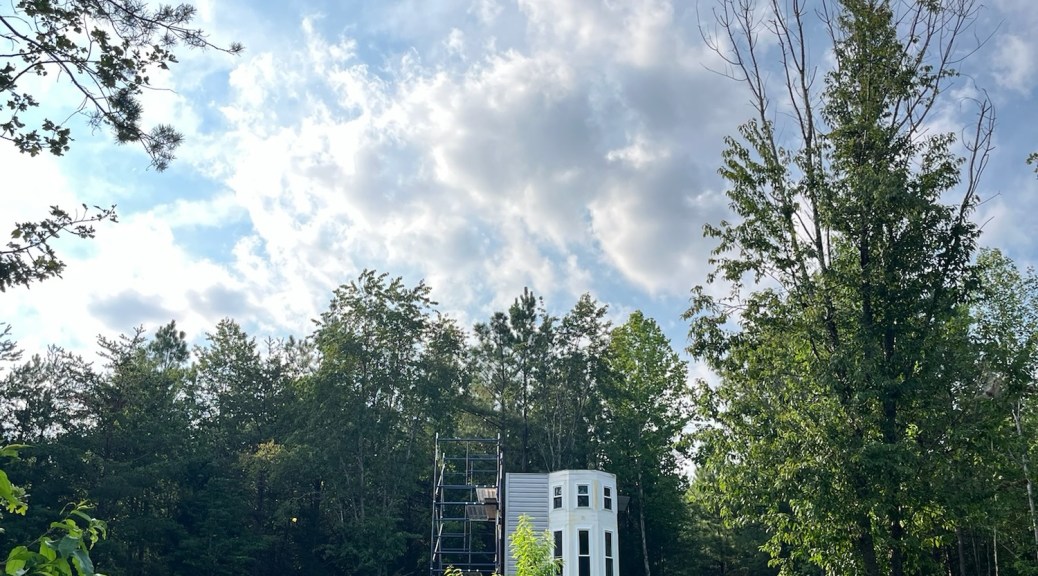
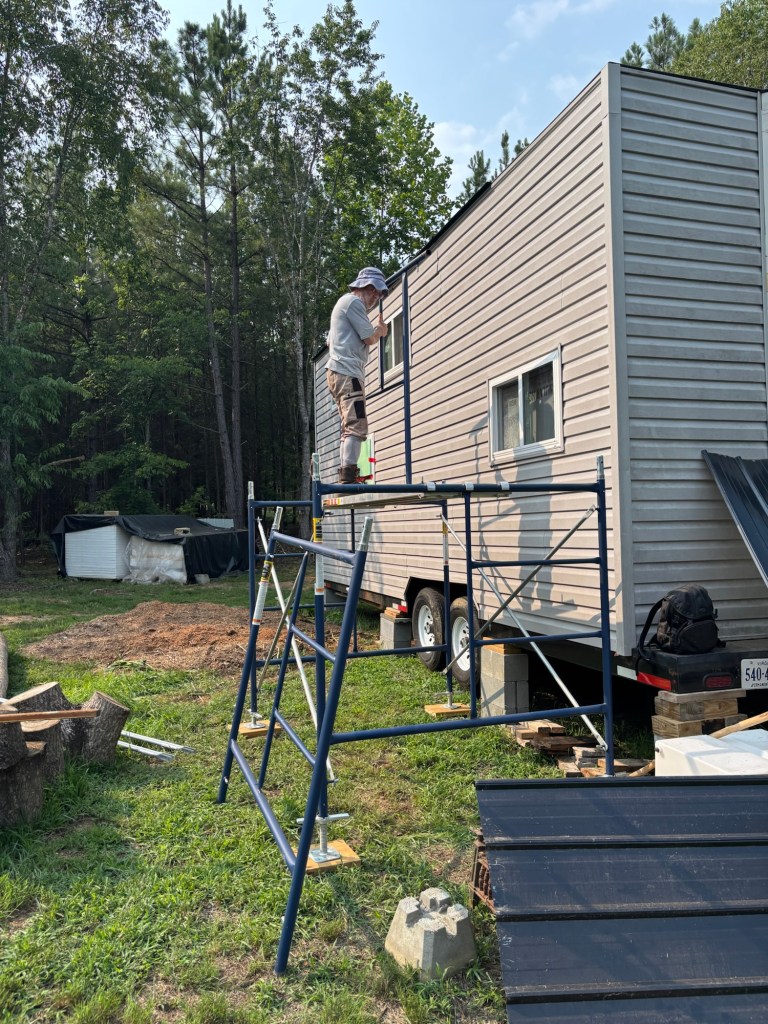
We went over and got a few chores done. The temperature was a cool-feeling 84 Degrees Fahrenheit. We got the scaffolding up on the tiny house. We’re excited to have our plans coming together.
Calvatia cyathiformis broken open to see bugs have been eating it and the white solid inside becoming darker powdery spores. We got 2 levels of scaffolding up and it went up quickly.
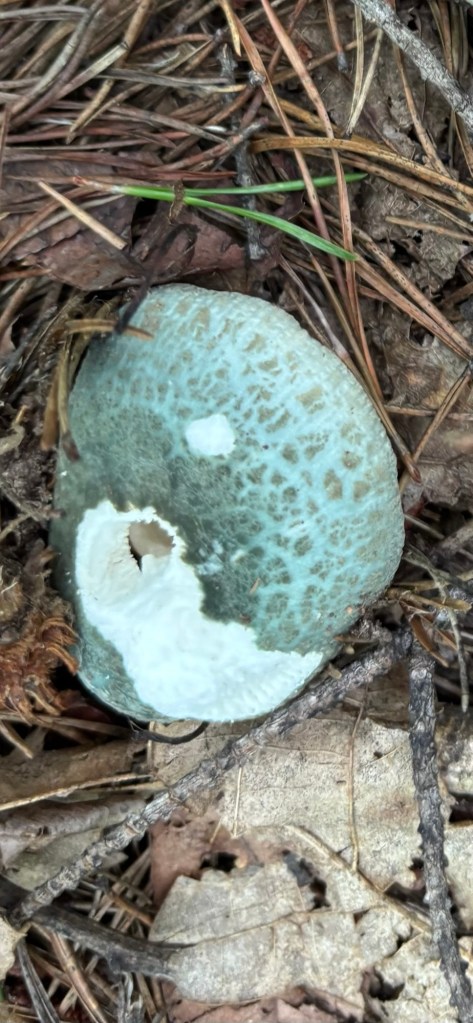
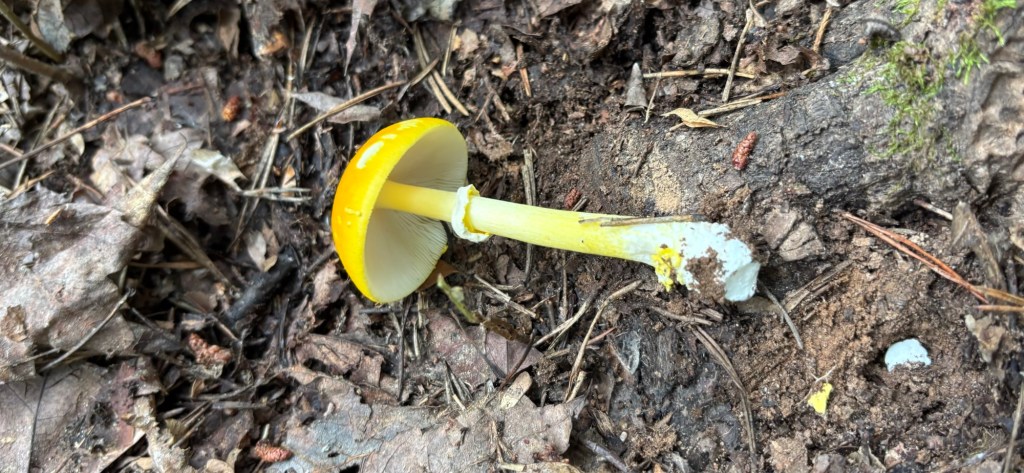
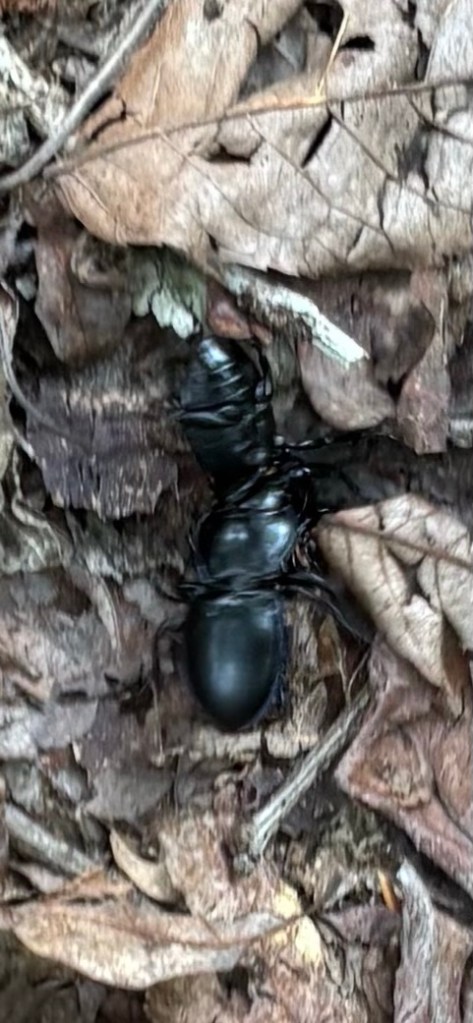
A young red Russula. These are nearly impossible to identify as there are hundreds of Russula species featuring red, pink or crimson caps. Colors change under certain weather conditions. With this one species, if you do a spit test and it’s spicy, it needs to be cooked thoroughly before eaten. If not, it can be eaten raw, although you really want to cook everything you’ve gotten from the forest floor, in my humble opinion. Russula crustosa, Green Quilt Russula, or the crusty Russula, is an edible mushroom known for its dry cracked mosaic-like cap in shades of yellow, tan or grayish green with white gills and stem. We found it up top on Dan’s Folly. It’s mycorrhizal with oaks and hardwoods. Russula parvovirescens, Blue Green Cracking Russula is considered a choice edible for its nutty taste. The cap looks like a quilt or stained glass and is particularly striking to find lying on the forest floor. Amanita flavoconia, Yellow patches, found near the top of A. Jacksonii Gully. Inedible as far as we know. Lovely to see. Retiboletus ornatipes, Ornate-stalked Bolete or gold stalk, is technically edible but usually bug infested. Boletus separans, lilac bolete, we wish we’d found a few days earlier. These are scrumptious.Pasimachus, warrior beetles, on the south side near Black Trumpet Way. They were fighting.
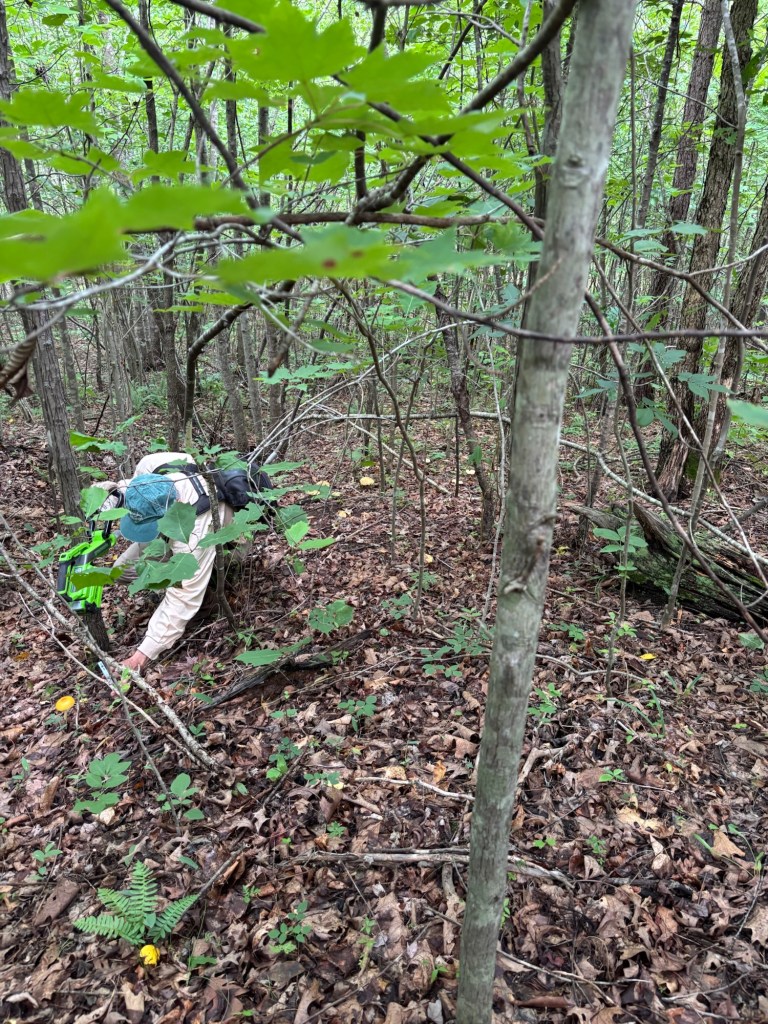
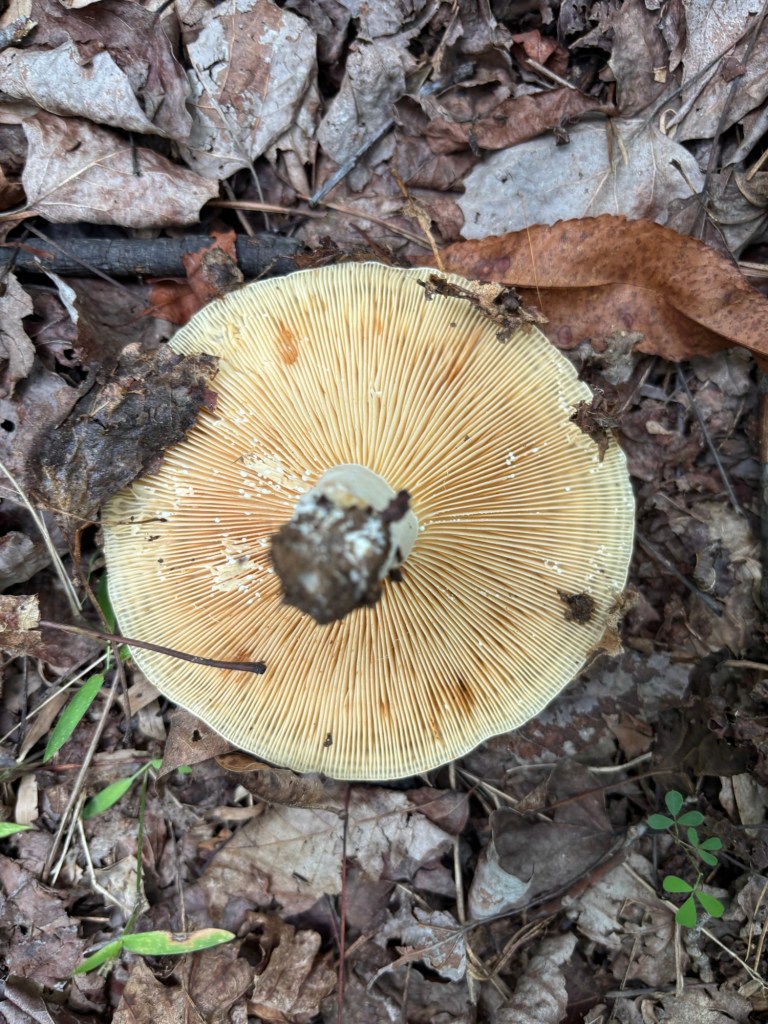
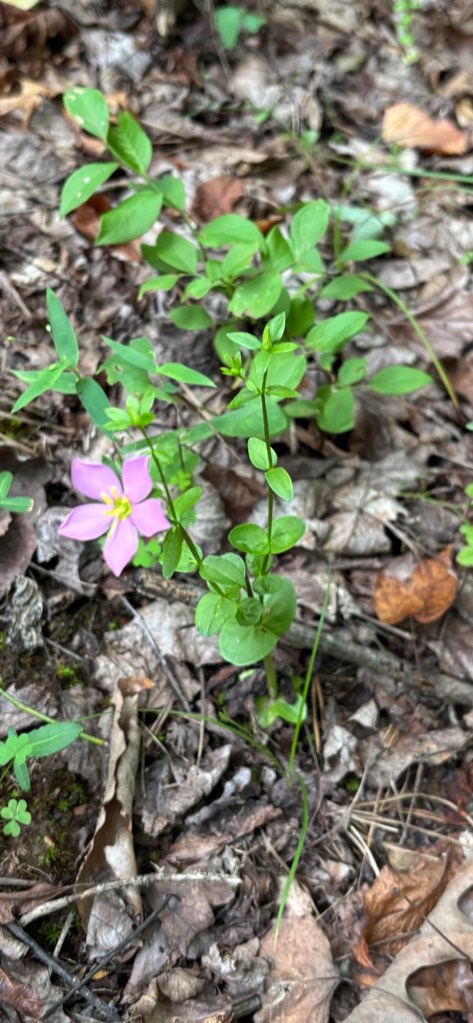
2 inches of rain this week! What a dream come true. Amanita polypyramis, Plateful of Pyramids Lepidella, named after the pyramid like warts on the cap. We found these on Mary Banning Way up top near the driveway. It’s poisonous and smells like chlorine. Chris surrounded by multiple types of mushrooms on Chanterelle Trail.We found our first chanterelle in two years just a few feet away.We found multiple Lactarius species including this Lactarius psammicola. Lactarius psammicola, underside view with lactation from the gills.Trametes cinnabarina, Northern Cinnabar Polypore, found up top on a conifer. Sabatia angularis, Rosepink, flowering in the woods, clearings and on trails.Amanita jacksonii, an edible found near Three Pine Trail.
Wildfire smoke and haze obstructing the view of Afton Mountain on the drive home last night. Over an inch of rain in the gauge. We hadn’t checked it when there on Tuesday. The rain was from last weekend. We were happy to see it.
When driving over to the farm we saw smoke from the wildfires up north settling in around the mountains and hills. We wore our masks while outside to protect our lungs from any fine particulate. We had farm chores aplenty yesterday afternoon and also took time to have a mushroom walk.
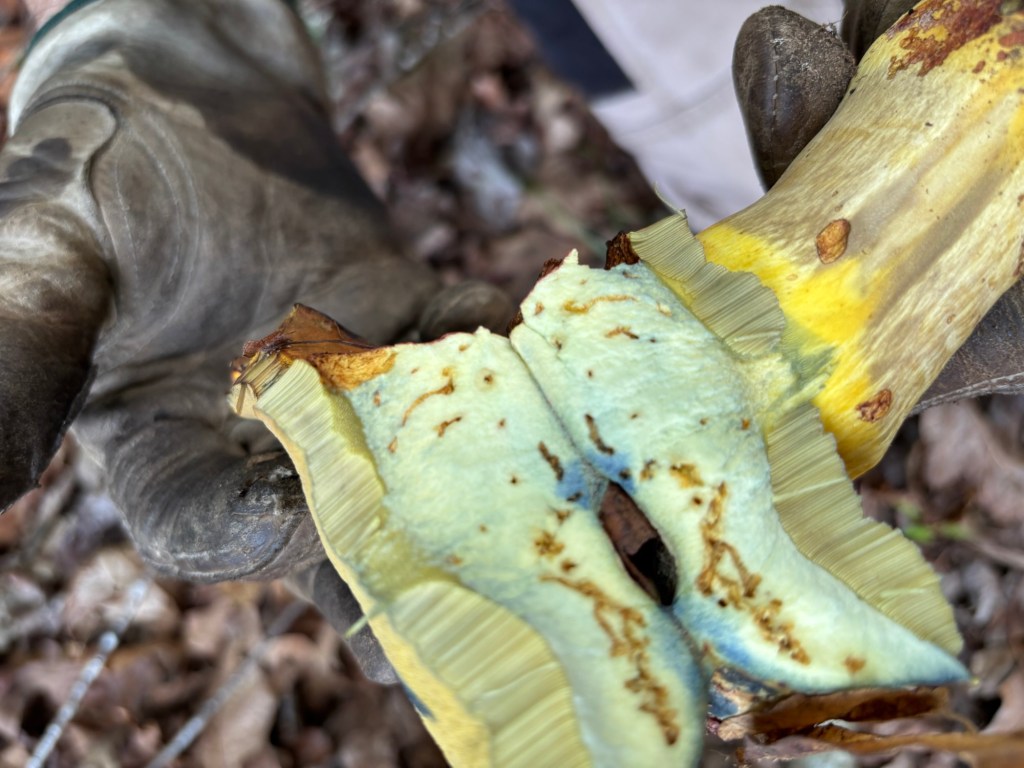
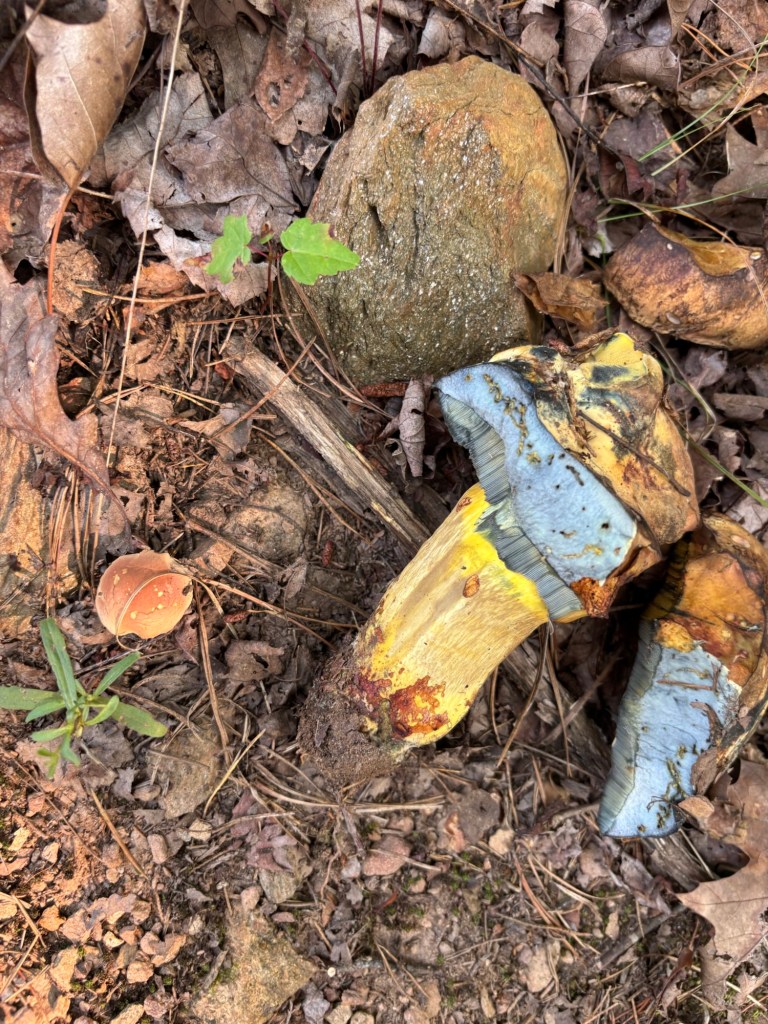
Found on Amanita Way right off of the main clearing. They turned a lovely blue quite quickly.Because of the way it turned blue, it could be Ink Stain Bolete, Cyanoboletus pulverulentis, Sensible bolete or Lanmaoa/Baorangia.
As we drove up to SAFF, we saw mushrooms right away on both sides of the driveway so we knew we’d have to walk through the woods.
Amanita flavorubens, Yellow American Blusher, is edible after being thoroughly cooked. Foragers note it tastes similar to lobster or prawns after cooking. We haven’t tried these yet. We usually find them already nibbled on and bug infested which probably means they’re delicious. Insects and animals know which ones are safe and tasty.Unidentified bolete with a small bite gone. Hazy, smoky sunlight filtering through ripening the pawpaw fruit in the old clonal colony.
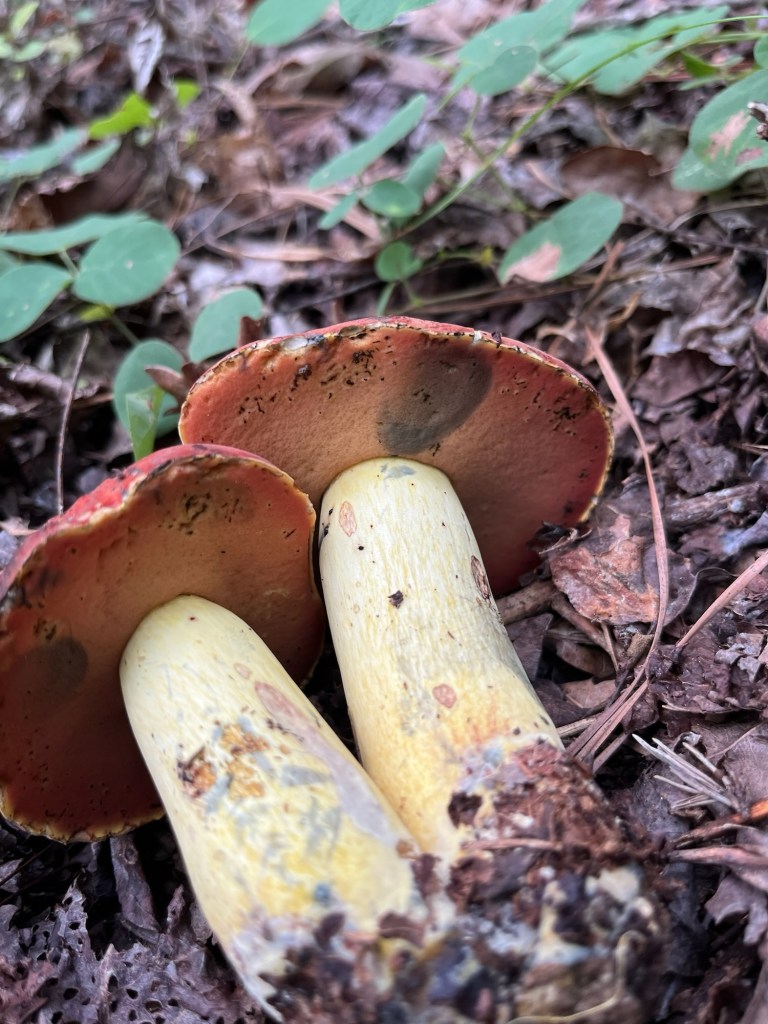
These red and yellow boletes are what began our mushroom obsession. They come up and some turn blue very slowly when touched or sliced while some turn blue as quick as oxygen hits and it’s a blue so deep it appears black. They appear to bleed. This Chrome-footed bolete does not stain blue at all which is what helped us come to an identification. Even so, we are “pretty confident” but not 100% so they didn’t come home with us.
Harrya chromipes, Chrome-footed bolete found right up top at SAFF before passing through the gate. We found a group of these infected with Hypomyces.
It’s so fun to witness the emergence of boletes again after the long drought. It’s been in the high 90’s here with chances for rain this weekend. We hope to get out to SAFF to look for more mushrooms.
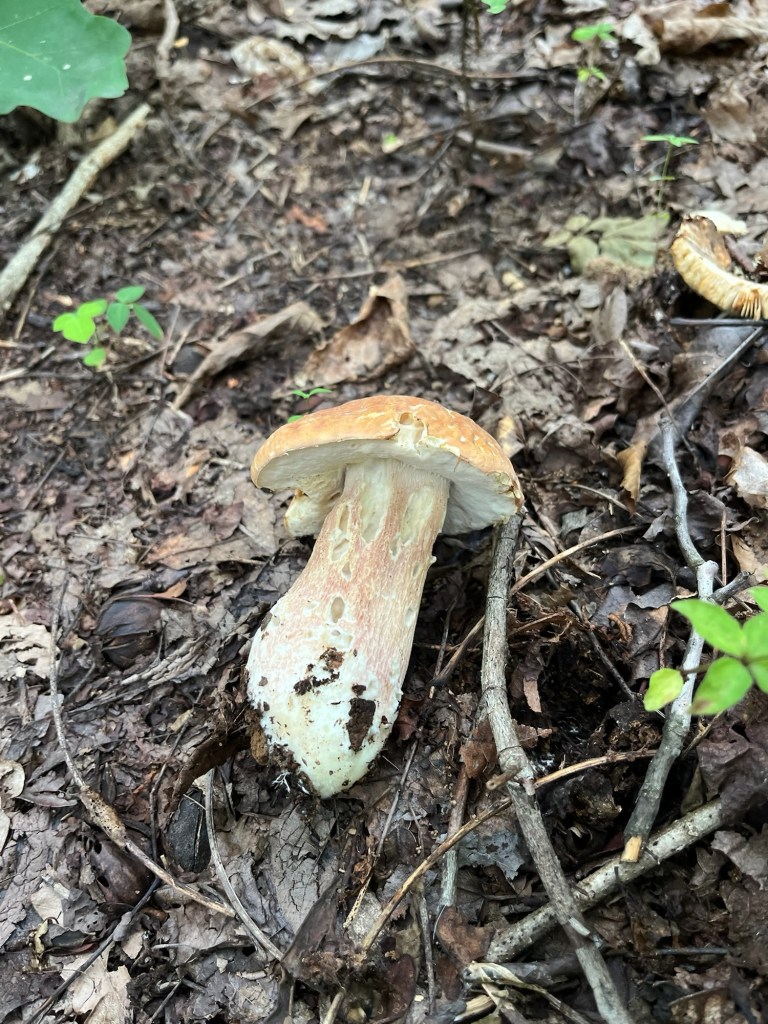
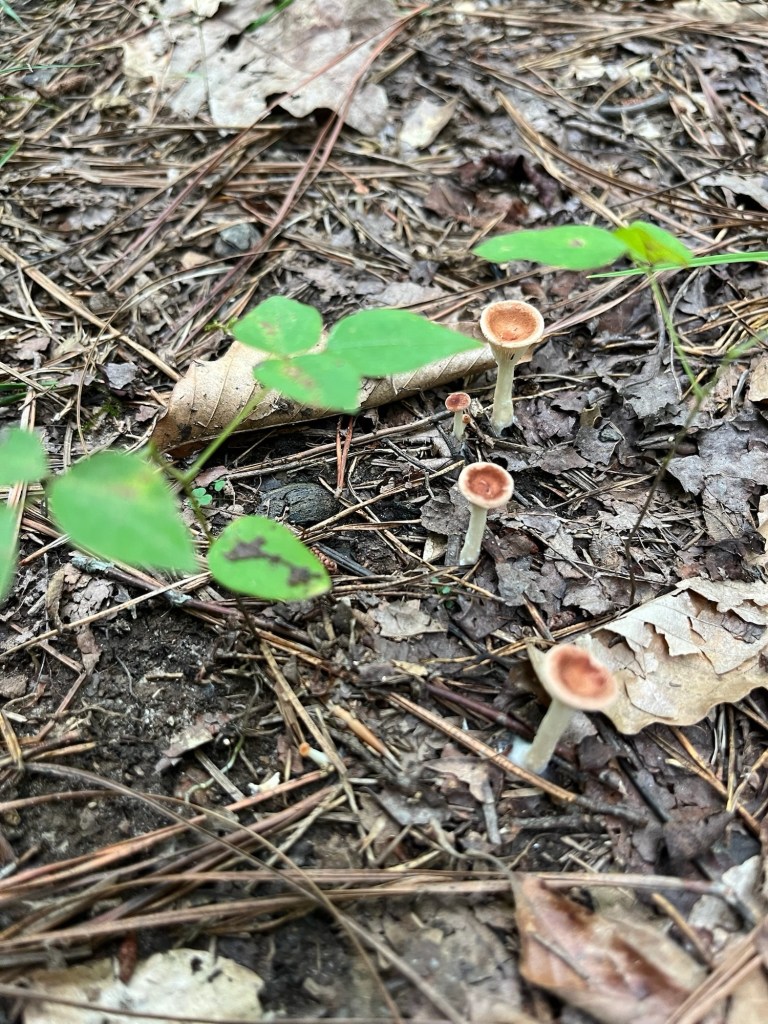
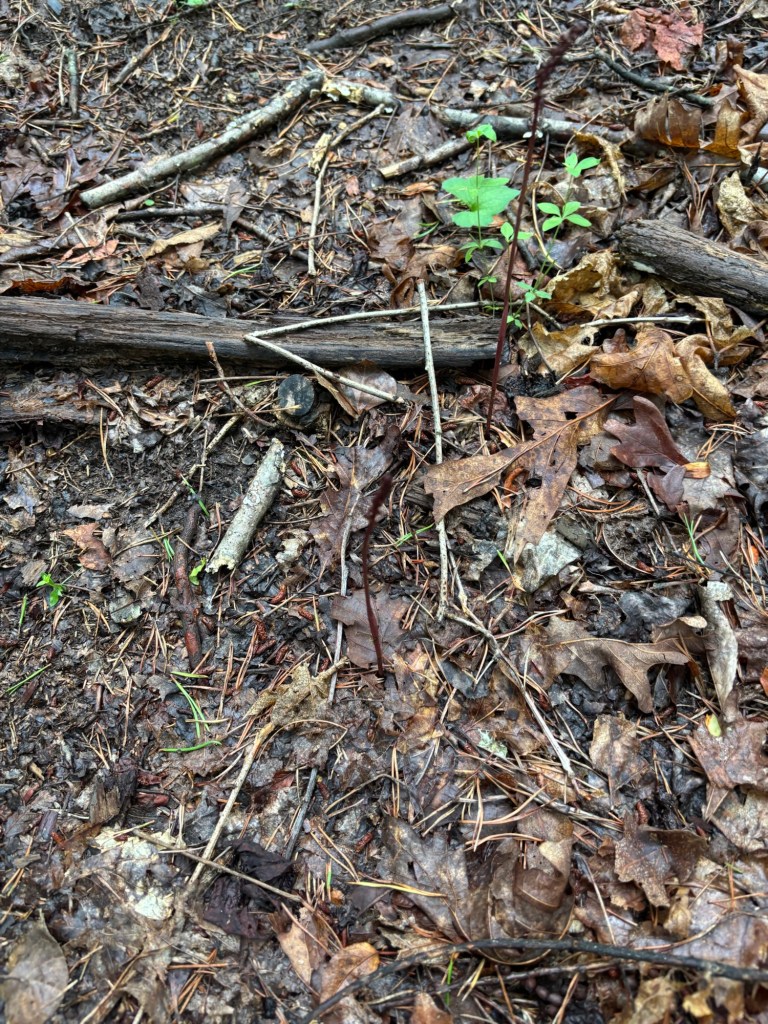
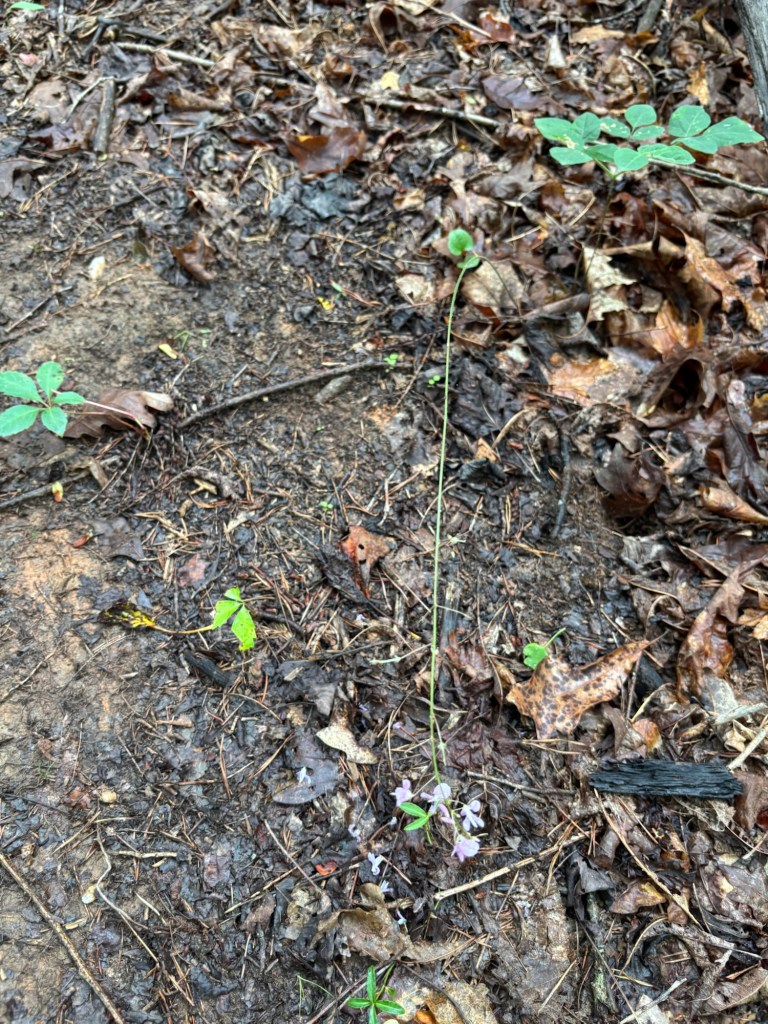
Boletus separans, lilac bolete, is a choice edible that we did take home and eat. We’ve foraged it before so we recognized them right away. It’s associated with oak trees and sometimes pine. The taste is prized for its nutty flavor and pleasant odor and texture. They are delicious and we’ve found them all over SAFF. Agaricus sylvaticus, Blushing wood mushroom, is a common edible mushroom found in groups in coniferous forests. We found it on the north side just near Three Pine Gulch Trail. Another red and yellow bolete. This one stains quite easily, as you can see from the thumbprint. There’s red droplets on the base of the stem which looks like guttation which is an indicator of Neoboletus sp. Either Red-mouth bolete or very close lookalike the Scarletina bolete. These are both edible with precautions. It will be a while before we confidently eat these. But it’s fun to puzzle out their names and identities. Tipularia discolor, crane-fly orchid, opening flowers now at SAFF. Goodyera pubescens, downy rattlesnake plantain, is one of the most common orchids native to eastern North America. It is exciting to catch it flowering. Unidentified red and yellow bolete found along Jacksonii Trail about halfway down. Several lush mosses and a fungi fruiting directly from them. These little brown mushrooms haven’t been identified.
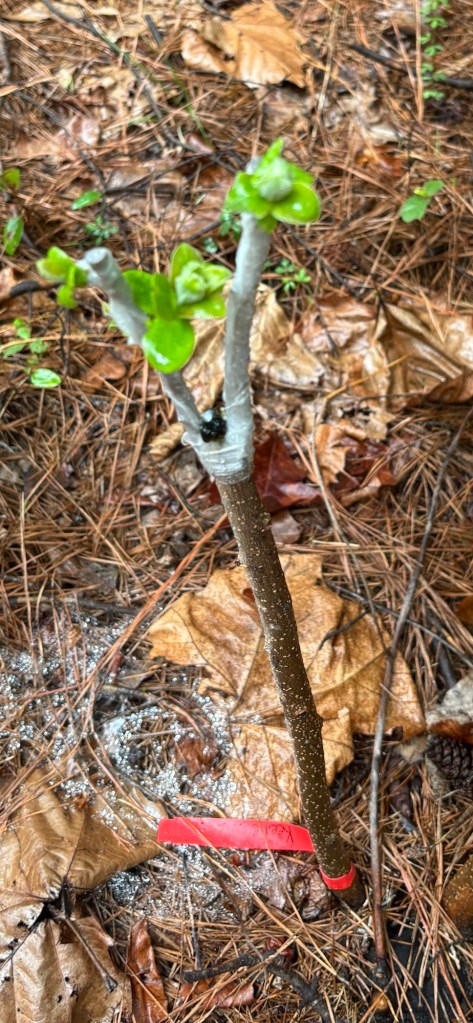
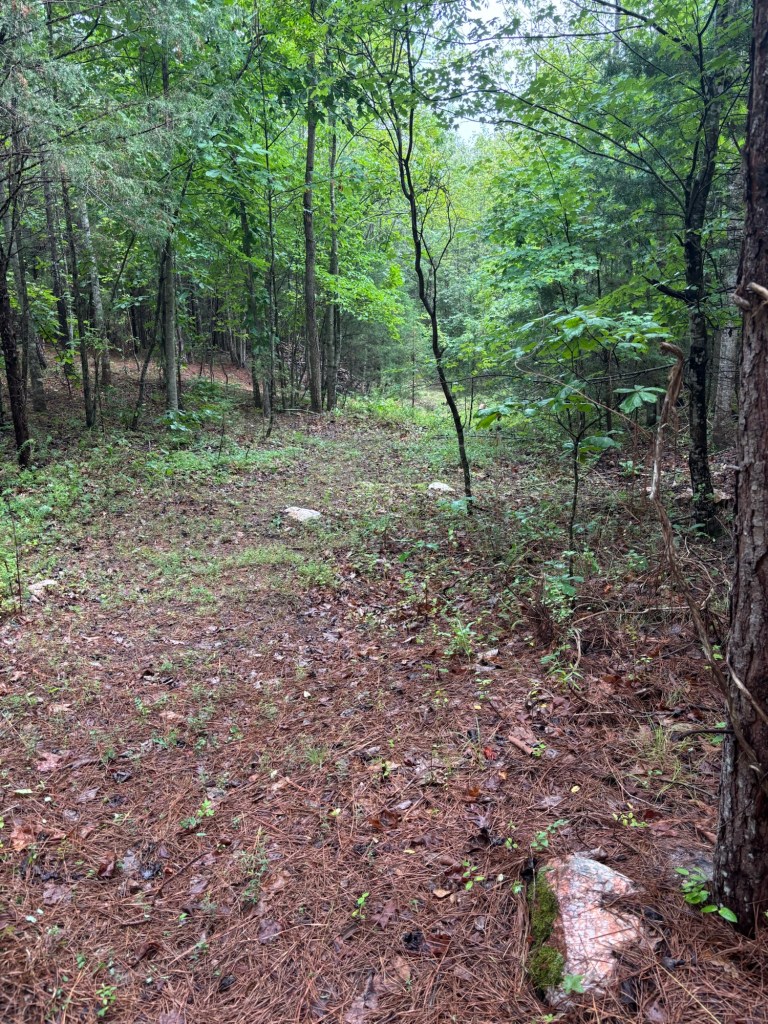
About .6 inches of rainfall since last Tuesday at SAFF. Diospyros virginiana, American persimmon, Keener cultivar pushing through the graft successfully along the main driveway up top.Looking towards Fern Trail with some quartz the bear moved last year looking for a meal. The connecting road we just built to the old farm road.
We were happy to see everything really good and soaked yesterday. Even up top, enough rain was falling that the ground wasn’t just absorbing it all right away.
We are seeing evidence that we have a bear around the farm again this year as old tree stumps are being dug up all over.
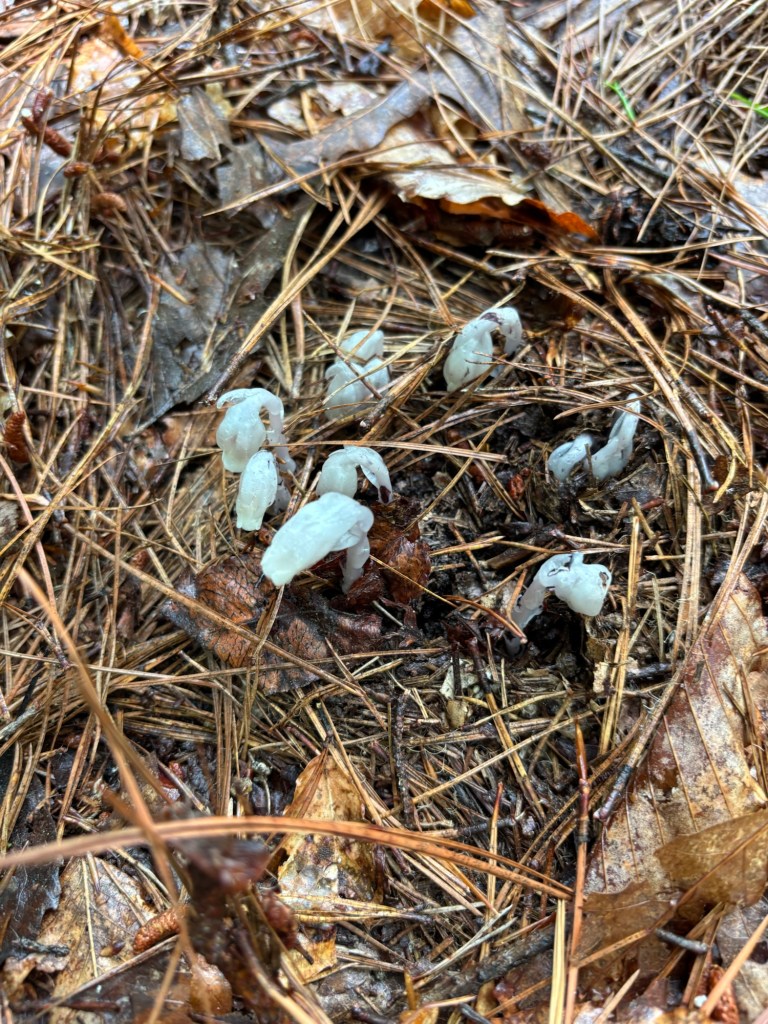
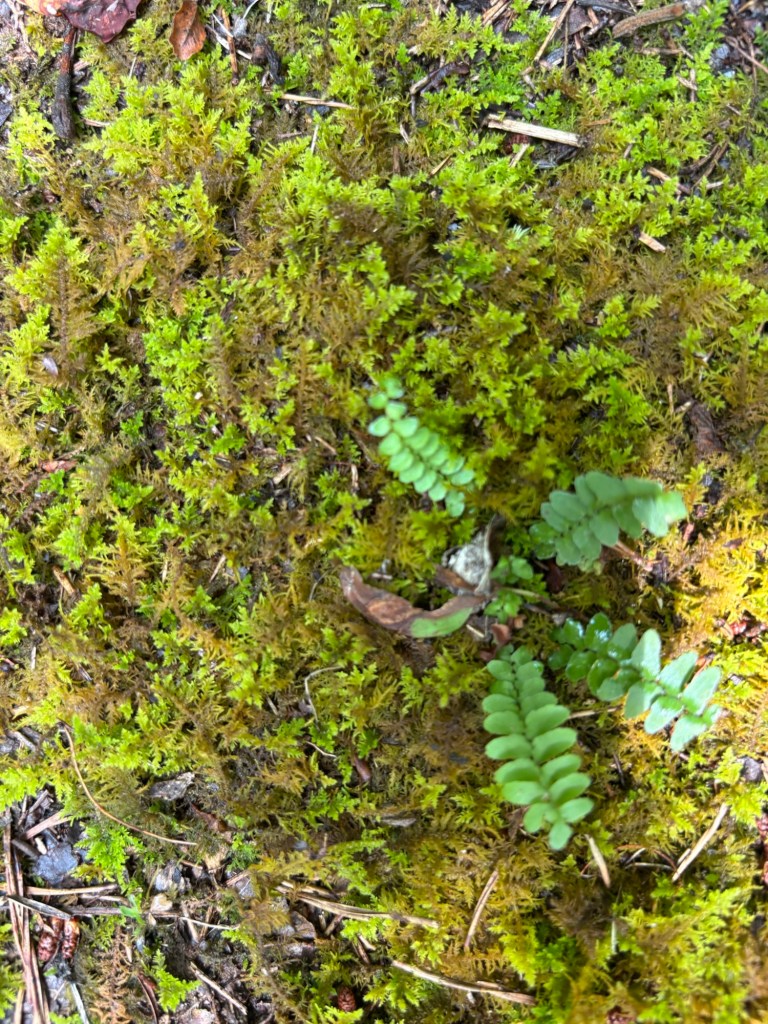
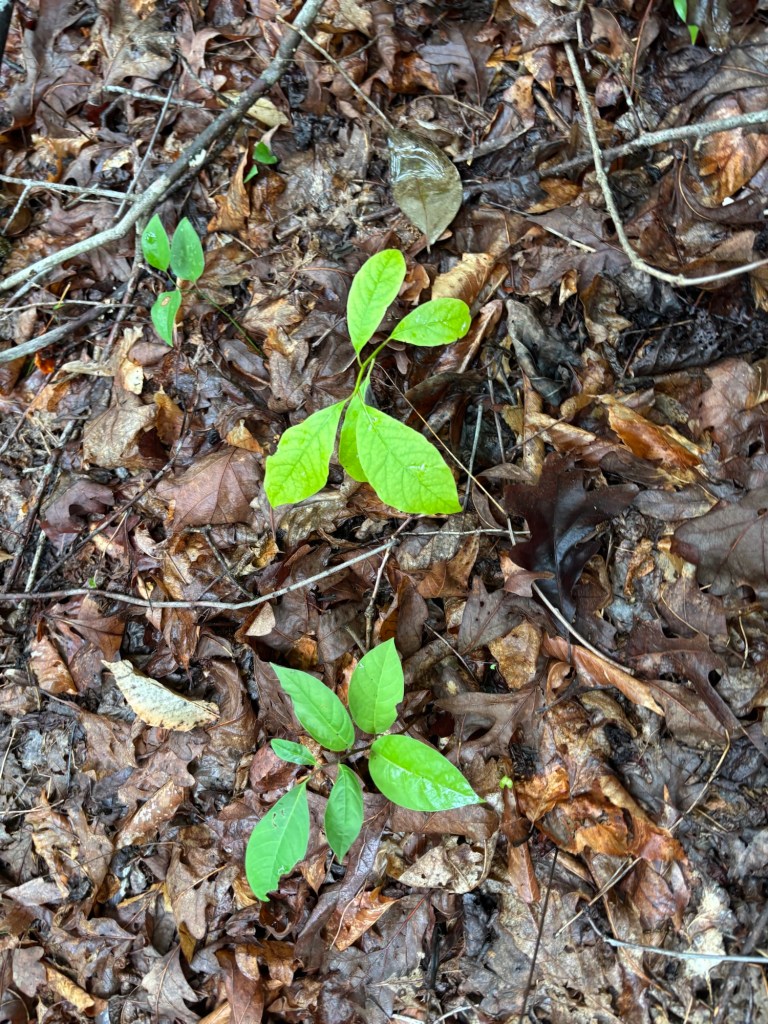
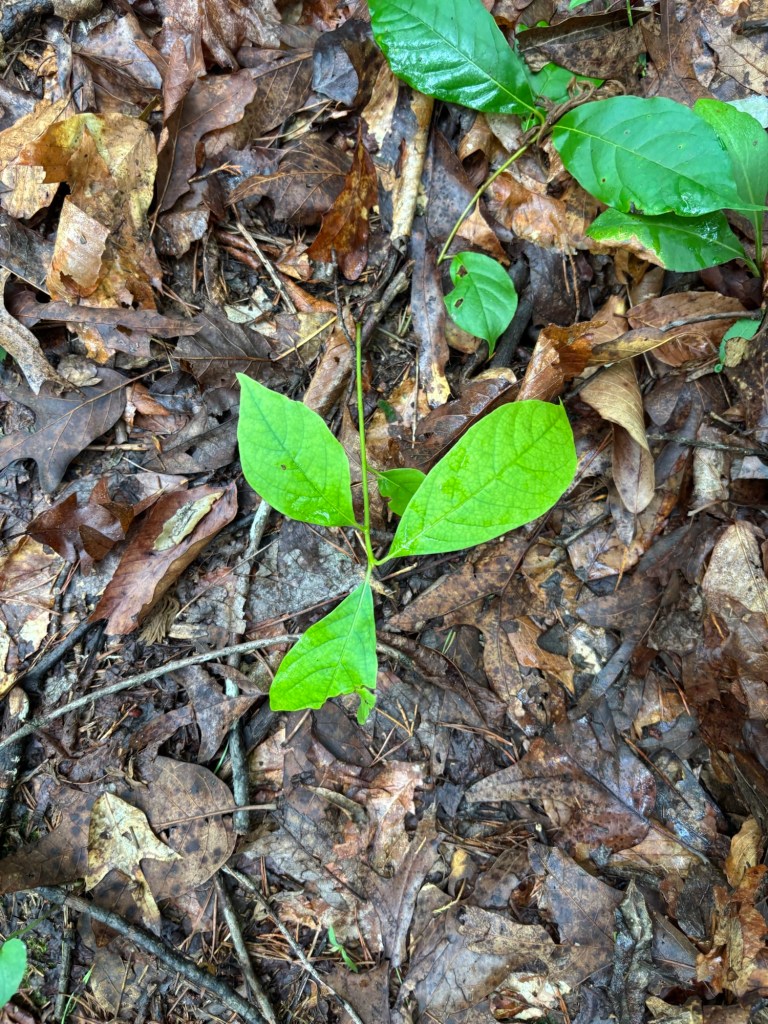
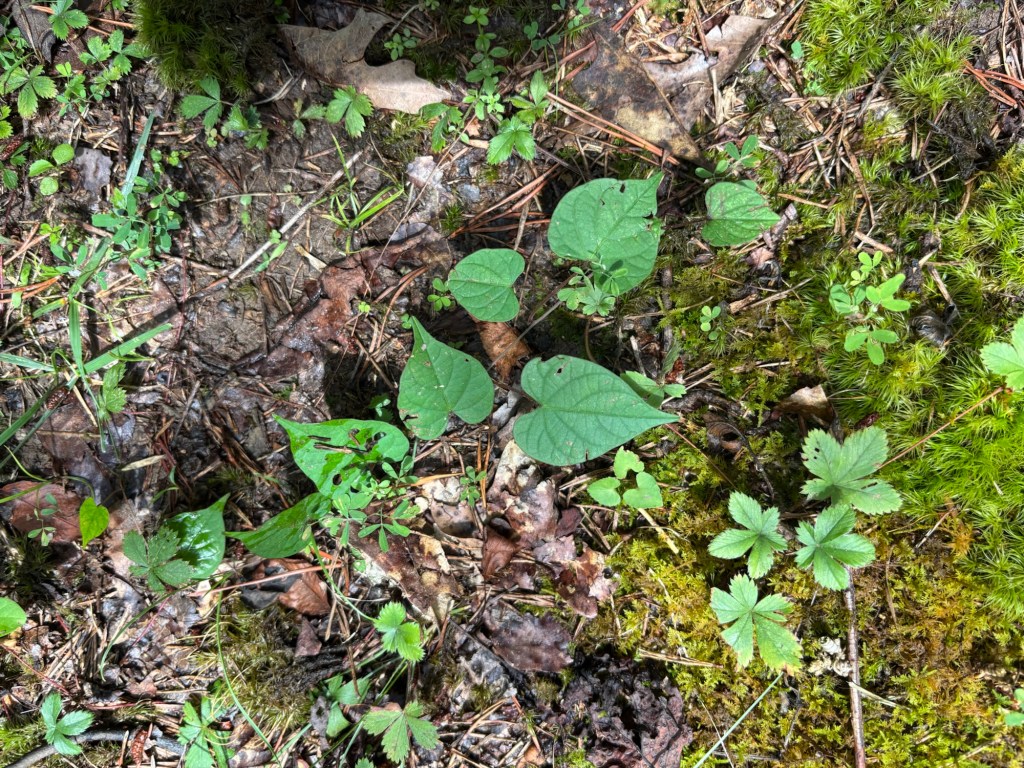
Monotropa uniflora, ghost pipes, emerging on the north side of SAFF. We’ve named the old farm road Neal Peterson Parkway in honor of Mahatma Pawpaw who inspires us with his dedication to Asimina triloba. The larger fern is Ebony spleenwort which is nice but it’s the bright green fern like moss that is so stunning. Thuidium delicatulum, delicate fern moss.The pawpaw seedling on the left is one we planted last year and this year it has another pawpaw seedling coming up next to it. We think it’s a rootsucker from the clonal colony across the waterway. We will care for this new one like the other. Two pawpaw seedlings coming up on our trail through the Seedling Orchard. We think some seeds we spread two years ago must have washed down near the waterway. Wild potato vine, Ipomoea pandurata, along Neal Peterson Parkway near the culvert. The reddish maroon flower stalks of the Cranefly orchid are emerging. Hard to see.The American hog peanuts all over are flowering and you can see how they spread out with their long stalk sending seeds a foot away. It’s a legume with the sweet pink flower.