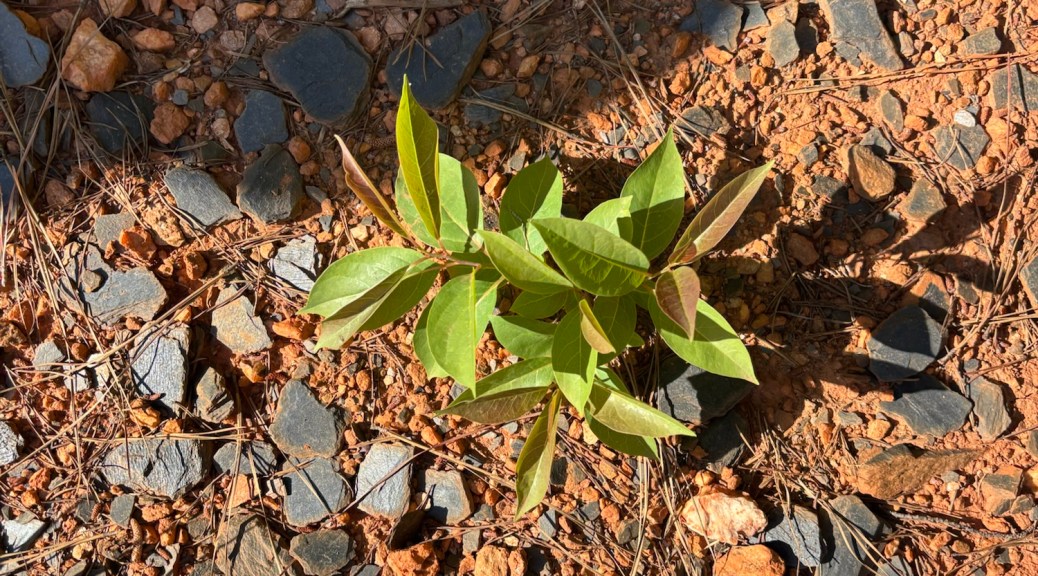
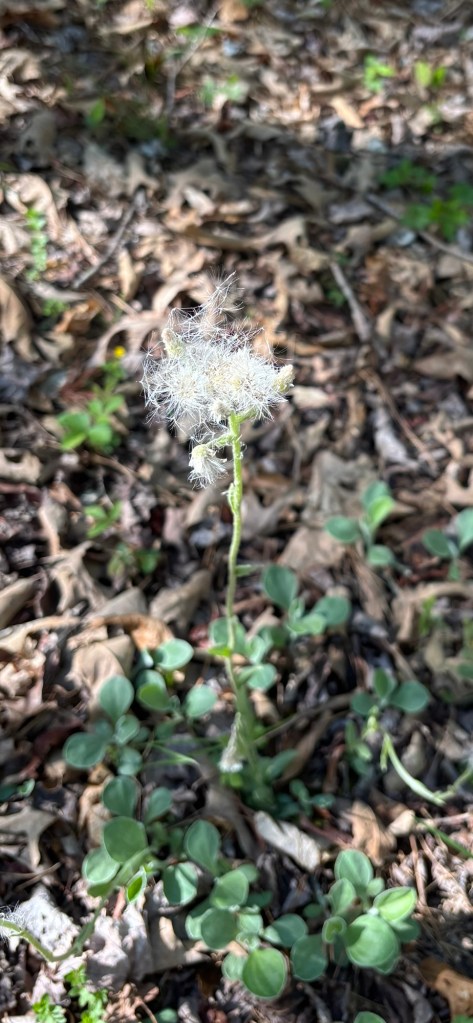
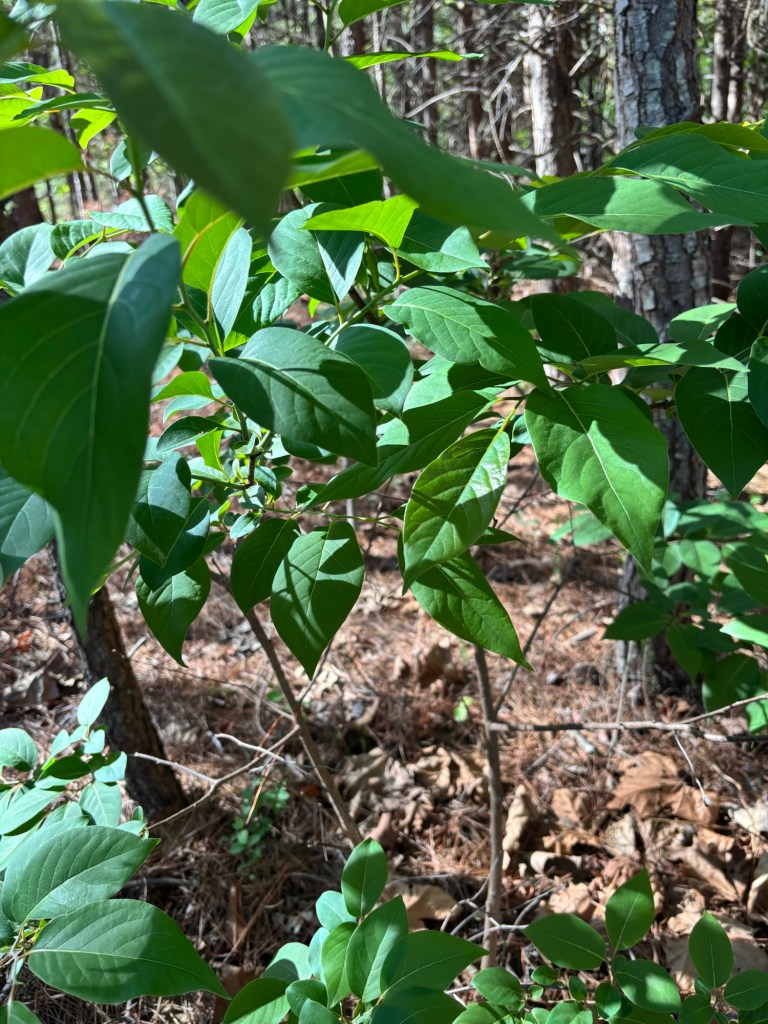
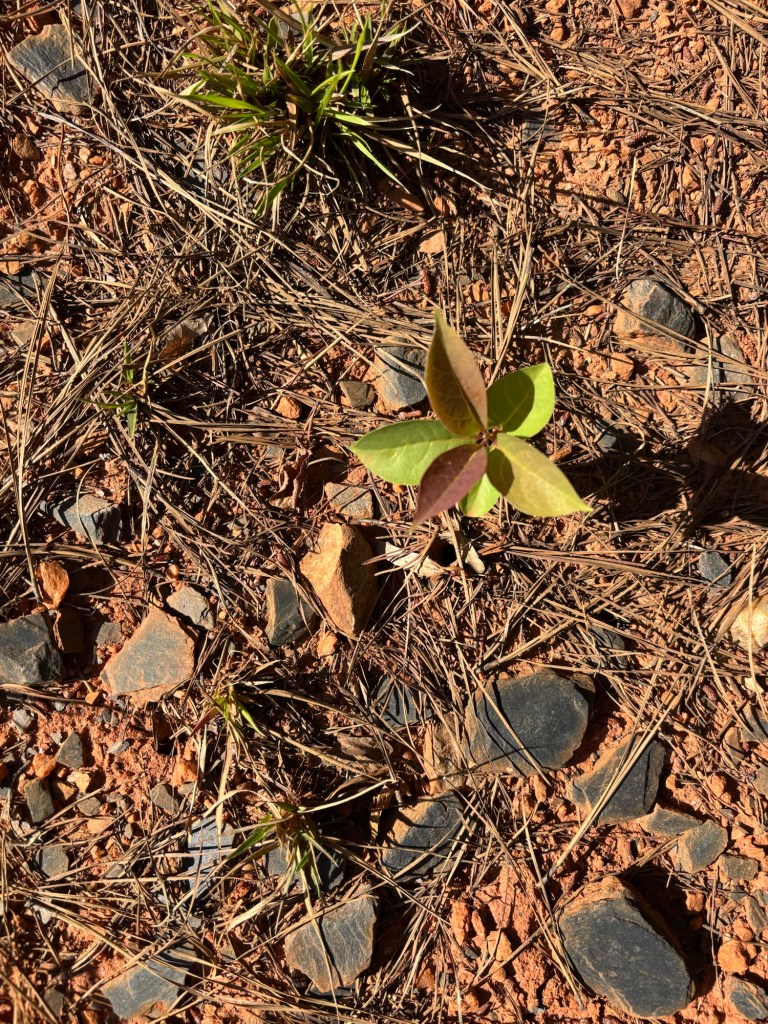
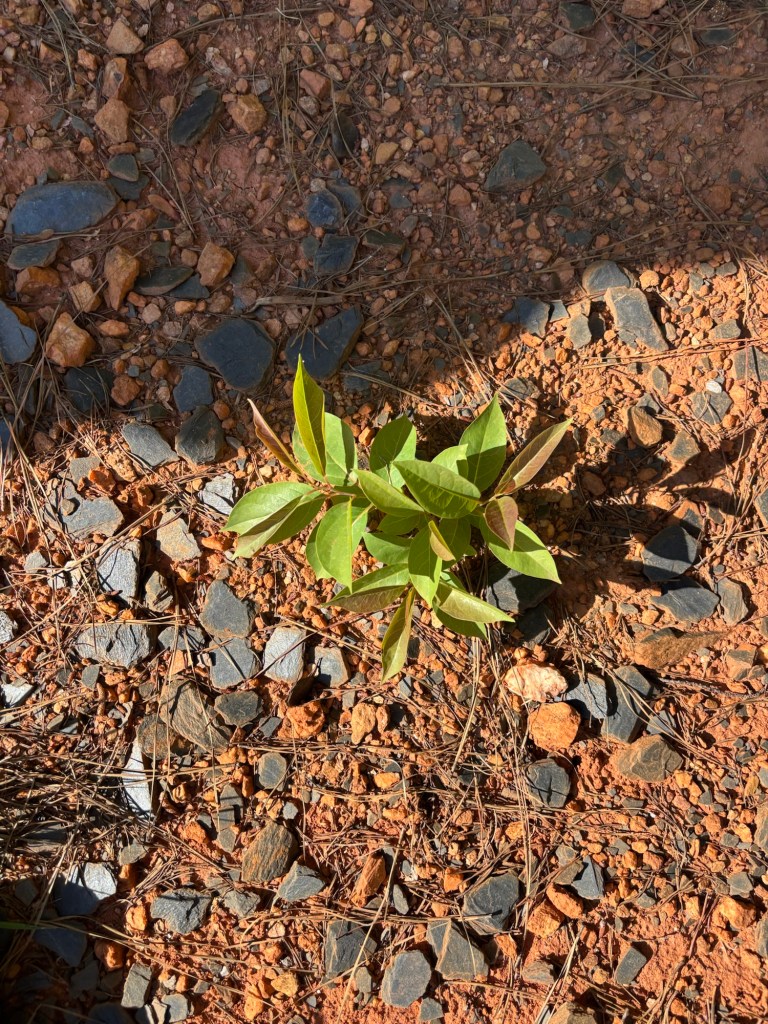
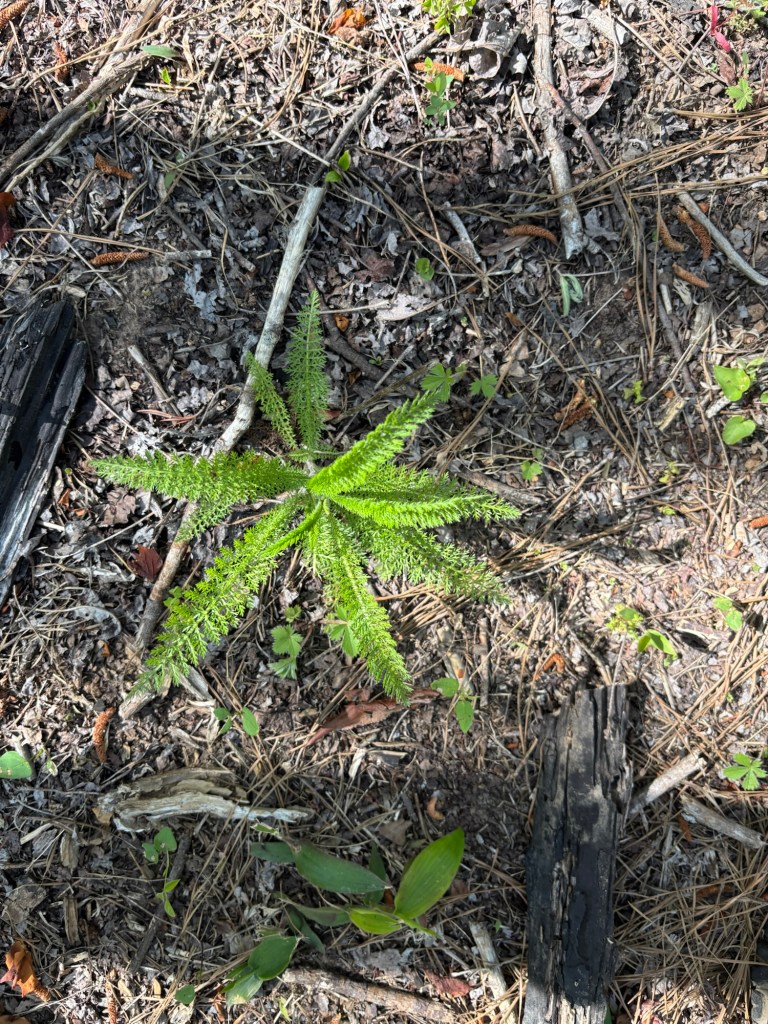
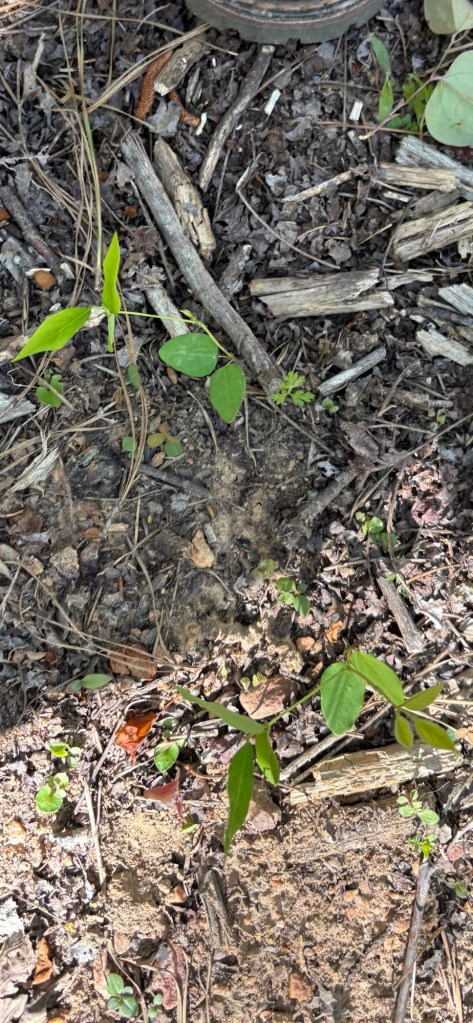
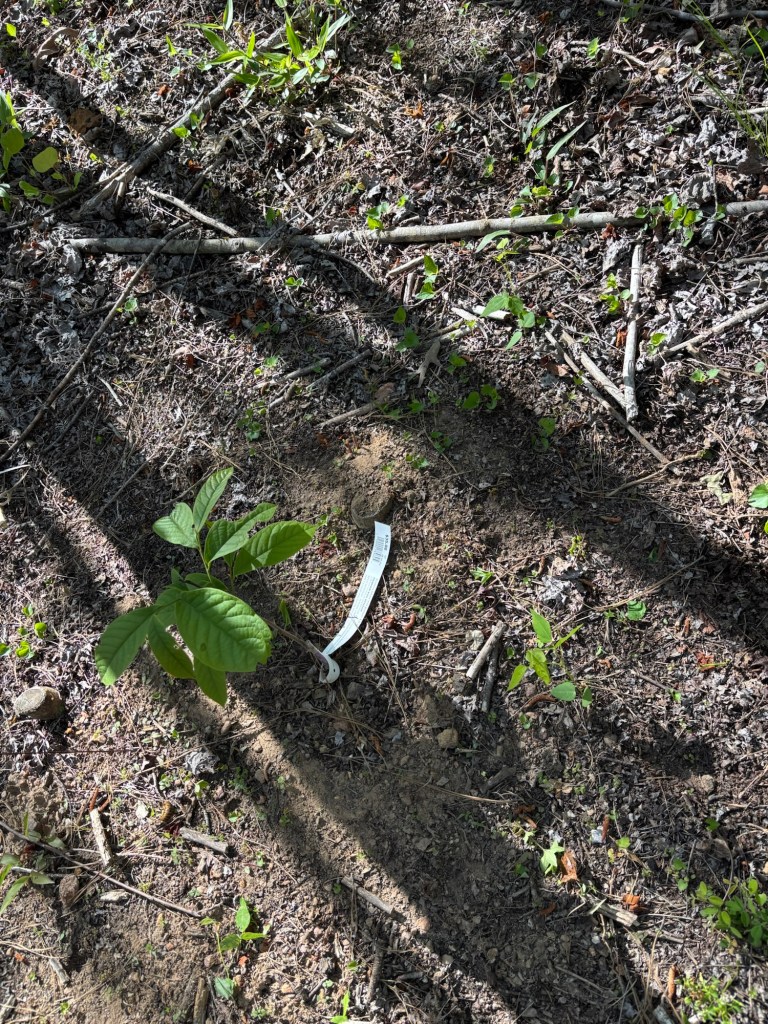
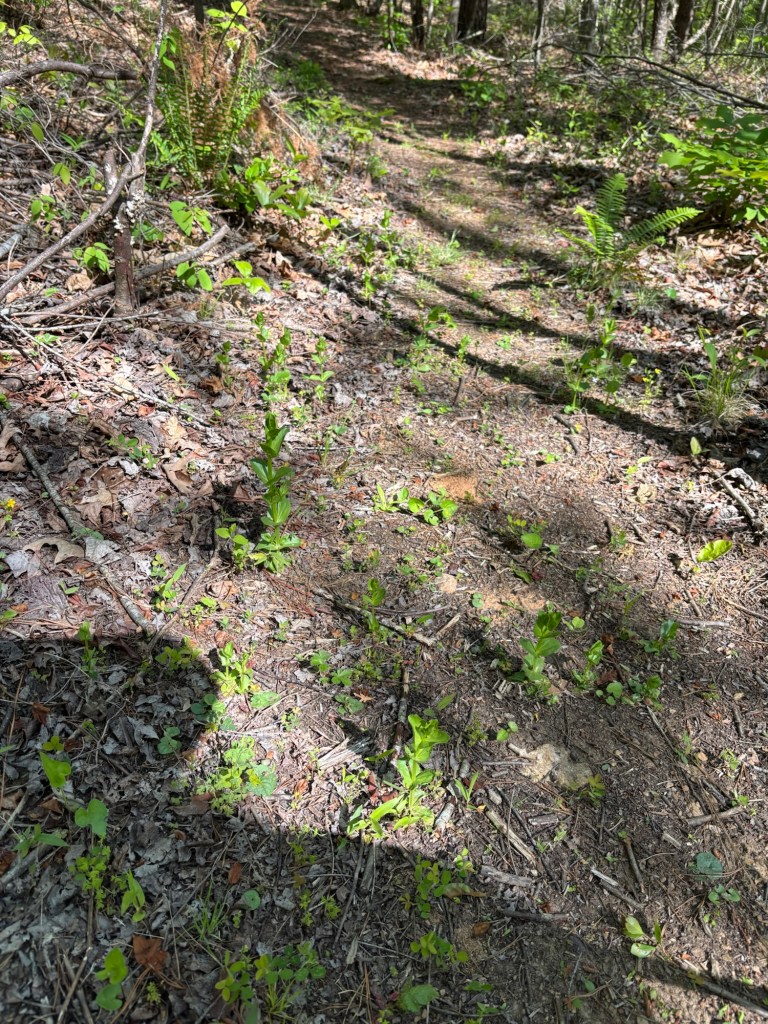
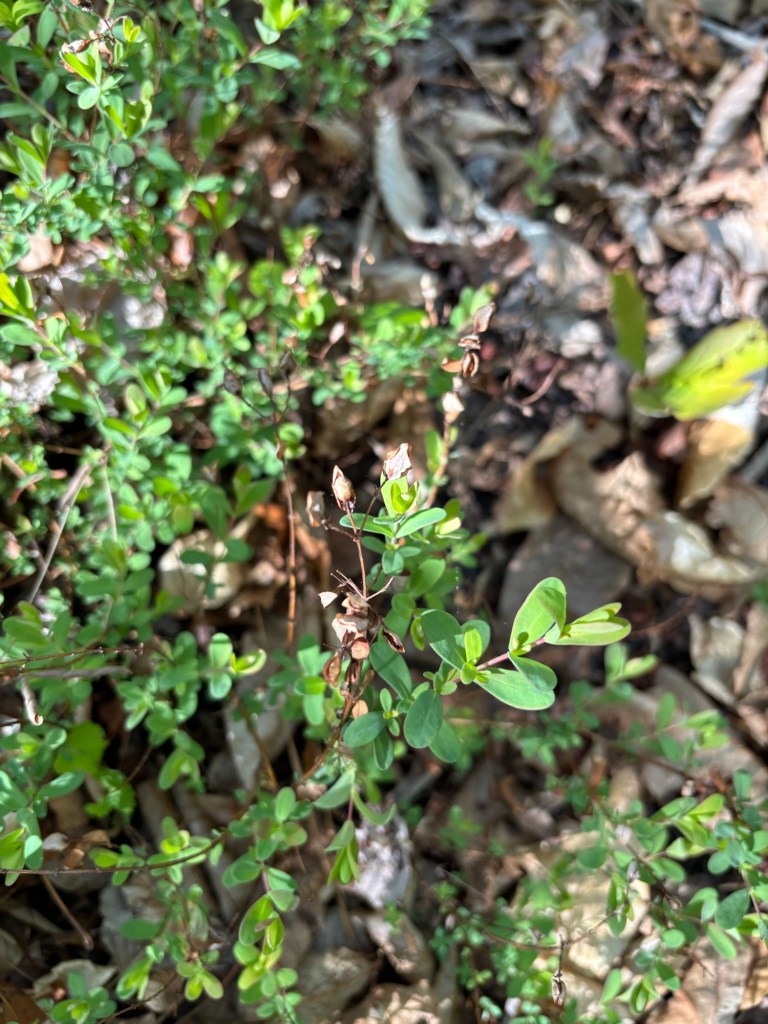
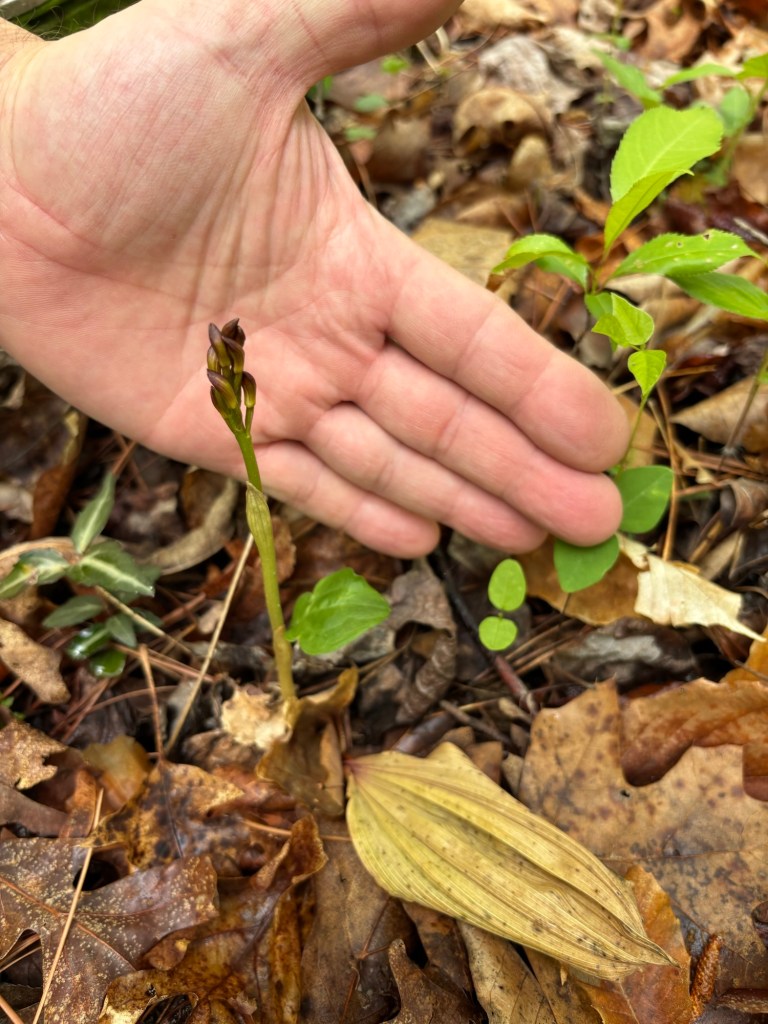
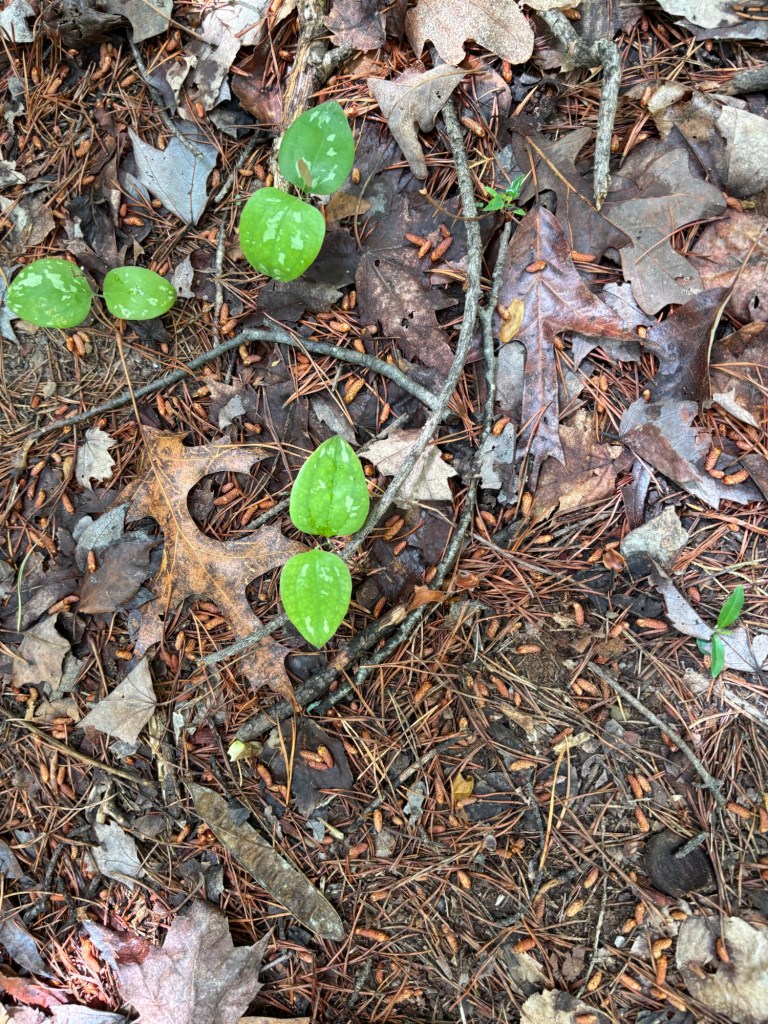
The stalk arising from the dead striped leaf continues to open up the flower buds. We are surprised by how yellow the flower is after looking deep purple for some time. This is it! The flower unfurled finally. The final flowering stage of Antennaria plantaginifolia, plantain leaved pussytoes. The flower heads have transformed into fluffy seed heads that can take flight in the wind. Diospyros virginiana, American persimmon, up top near the road. We found another group of 10 or more trees. These are young and healthy. They are a major source of food for birds, raccoons and the possum. The American persimmon also serves as host for multiple moth larvae and pollinators. They are low maintenance, drought tolerant and pest resistant. We are delighted to find them. Diospyros virginiana sprout coming up near the other cluster. Another American persimmon seedling coming up in the front. Achillea millefolium, common yarrow, is highly regarded in wound healing as a styptic with antiseptic properties. Teas from yarrow are made to induce sweating, reduce bloating and reduce inflammation. It offers cold and fever relief. It attracts a wide variety of beneficial insects and over 20 species of native bees. It is lovely, drought tolerant and thrives in poor soil conditions. Amphicarpaea bracteata, American hog peanut, is an annual to perennial vine in the legume family native to moist slopes in the eastern US. They produce above ground and underground pods. It fixes nitrogen and grows in the old clonal colony pawpaw patch. We found it today coming up around our Asimina triloba cultivar seedlings which is where we planned to move them. Yay! 😀 It feeds birds, deer and mice. Native Americans ate the pods and underground peanut tubers which are nutritious. A good source of protein, fiber and carbs.Asimina triloba KSU Benson cultivar seedling with American hog peanut spontaneously growing around it offering a low maintenance partnership with the hog peanut feeding the pawpaw tree. Fern trail near the Rappahanock cultivar which is recovering nicely from the frost that bit it. Hypericum stragulum, low St John’s wort, which is toxic to grazing animals. Native Americans used the plant for the treatment of sores, fever, gastrointestinal issues, nosebleeds and snakebites.
We had a nice Sunday with lovely weather in the 60s as we got chores done and took a stroll around the trails.
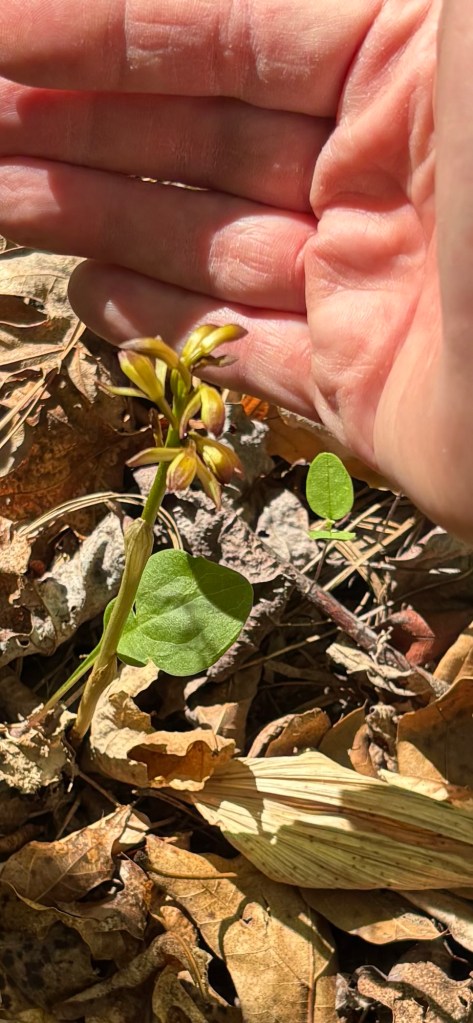
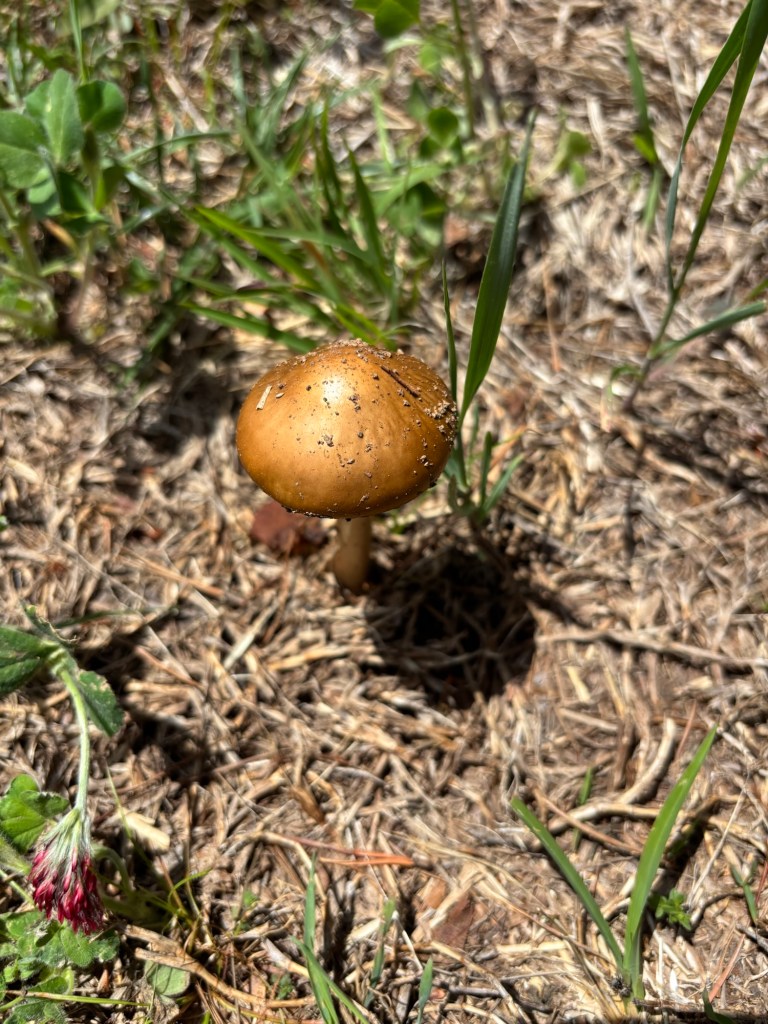
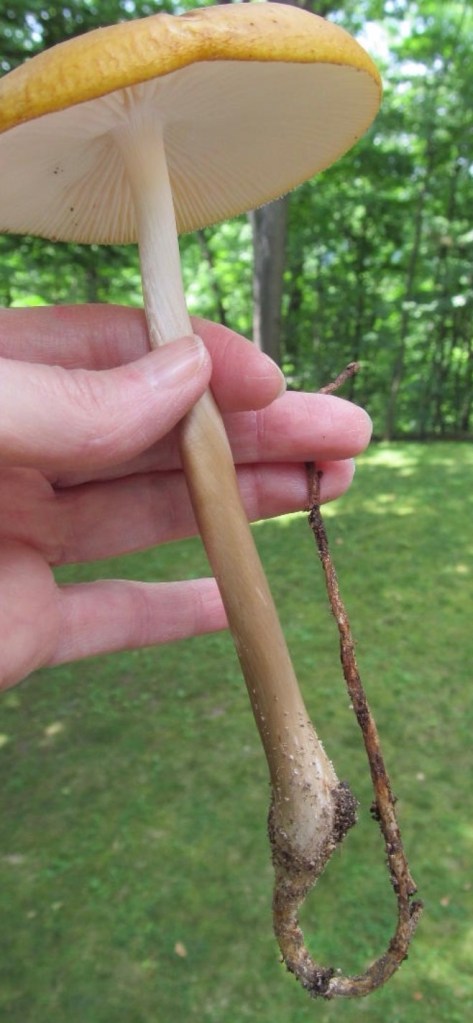
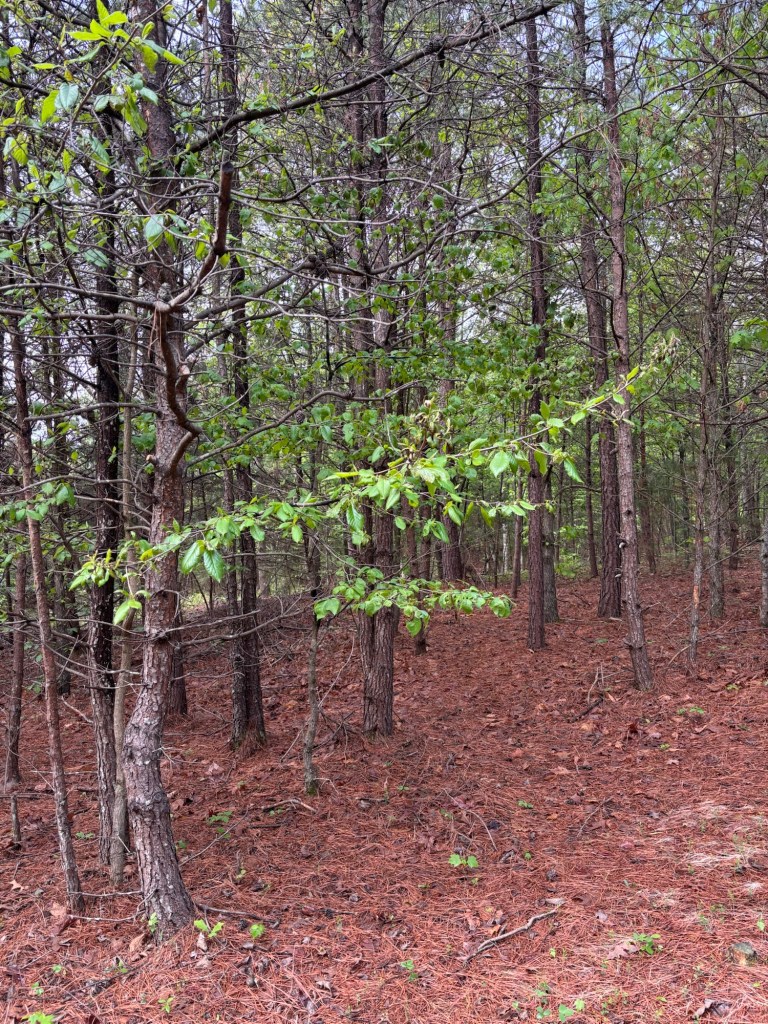
Aplectrum hyemale, Putty root orchid, budding up at the bottom of North Trail at the waterway. The corm produces a single green and white striped leaf in the Fall that we watched all winter until it sent up the flower stalk. Native Americans used the sticky substance from the corms to mend pottery. This morning at SAFF we counted about 10 fruits set on various trees down in the old clonal colony pawpaw patch. We are delighted and grateful they’ve stayed on this long and continue to hope for the best. We were pleased to find a rooted agaric mushroom, Hymenopellis incognito, in the main clearing up top near the shed. It was in the sun on the grass yet growing from an underground stump or root. It has a long tapering taproot that extends into the ground to eat dead wood. Photo by Cecily Franklin showing the long taproot of the Hymenopellis incognita. Diospyros virginiana, American persimmon, up top near the female tree. They’re crowded by pines and we’d like to give them more room.
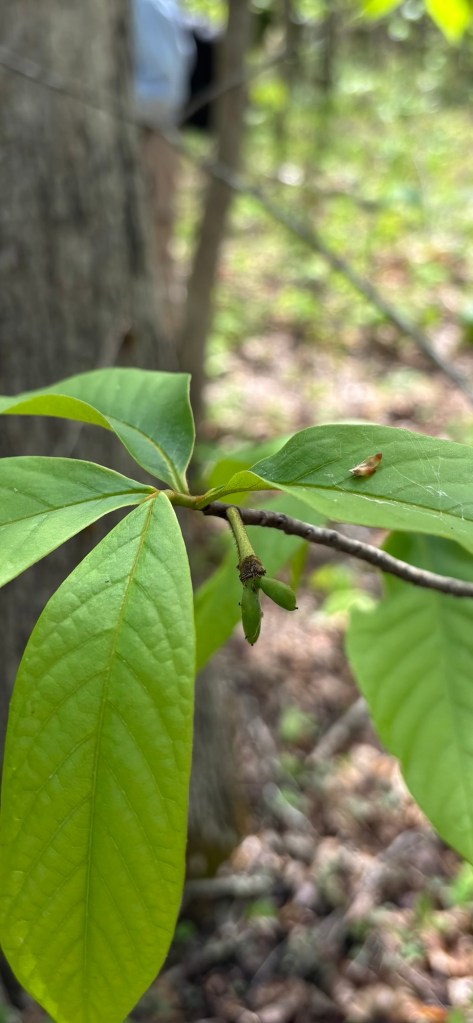
We met the electrical cooperative representative at Saint Andrews Forest Farm to talk about the logistics of hooking up to the local grid. We are undecided still. We went on a walk and saw our Tallahatchie Asimina triloba cultivar rebounding from the freeze with a new leaf on the top which was happifying. It was a cool morning and warmed up throughout the day. SAFF got about .1 of an inch of rain. We are forecast to get more on Saturday.
Smilax glauca, sawbrier or the cat greenbriar found up top near the driveway. A thorny woody vine native to North America. Young shoots are edible with an asparagus-like flavor. It produces dark berries in winter providing food for birds. Its extensive root structure helps it to regrow quickly after a disturbance. Can be a nuisance.
 Saint Andrews Forest Farm