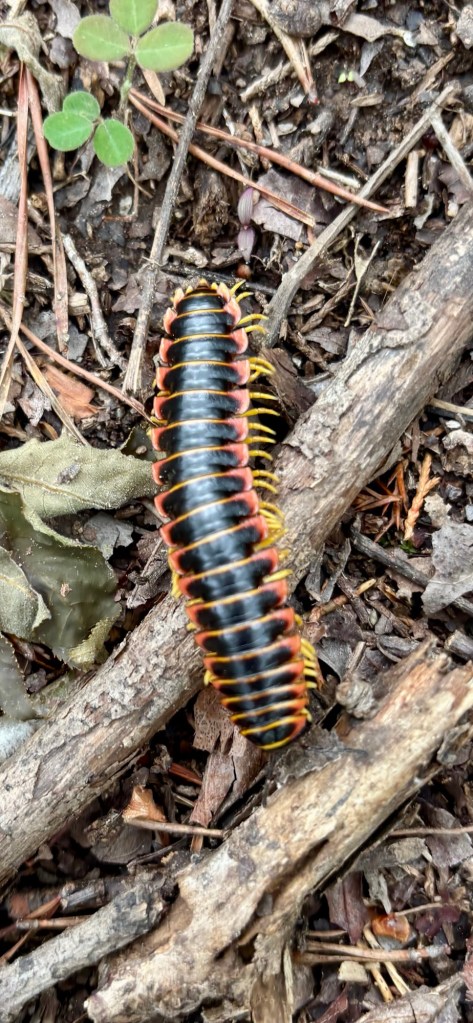
Apheloria virginiensis, Black and gold flat millipede, found on the road to the bottom south set back line. It’s reported to secrete cyanide so if you touch them, wash your hands or it can irritate your eyes or skin.
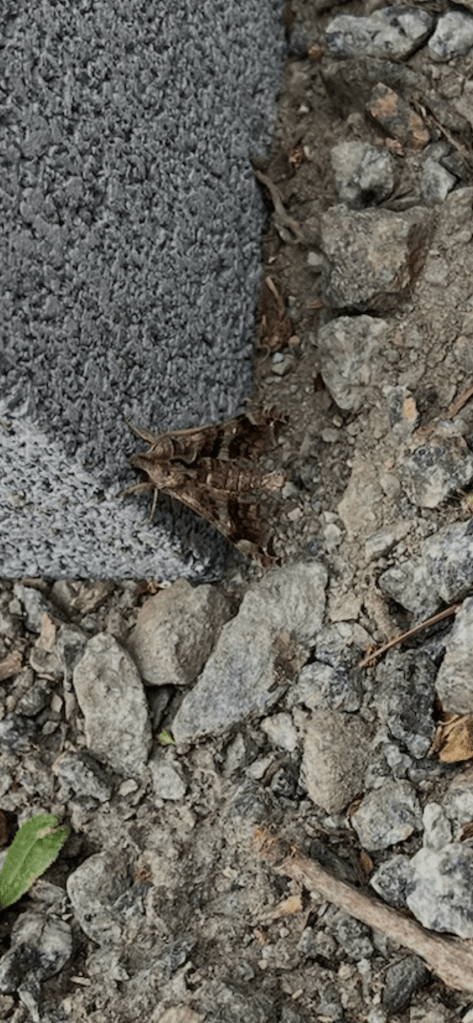
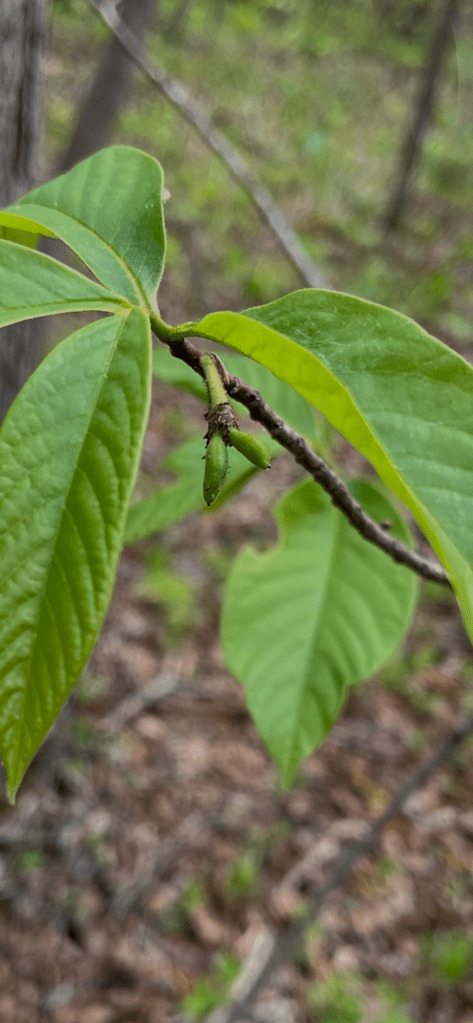
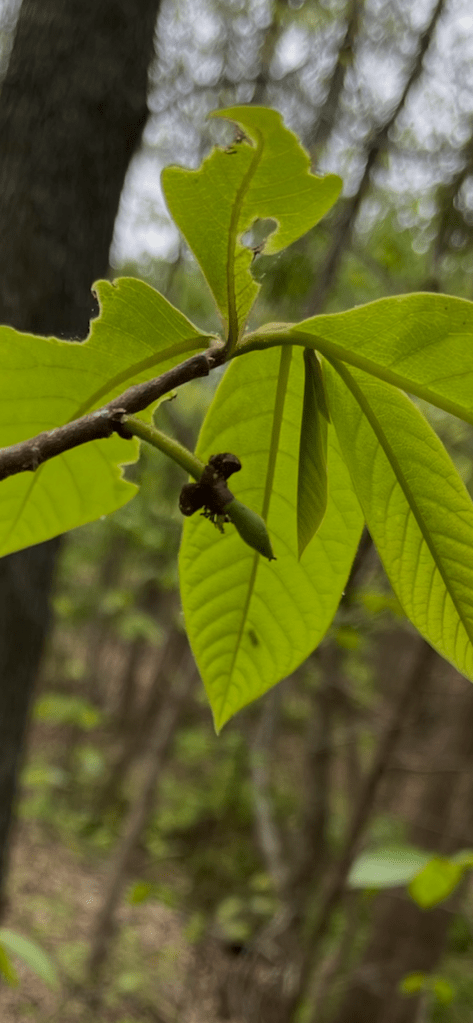
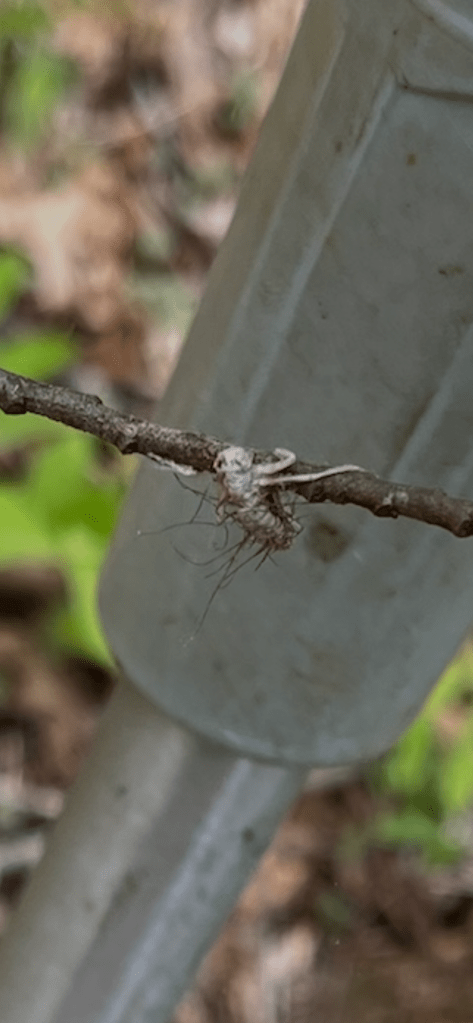
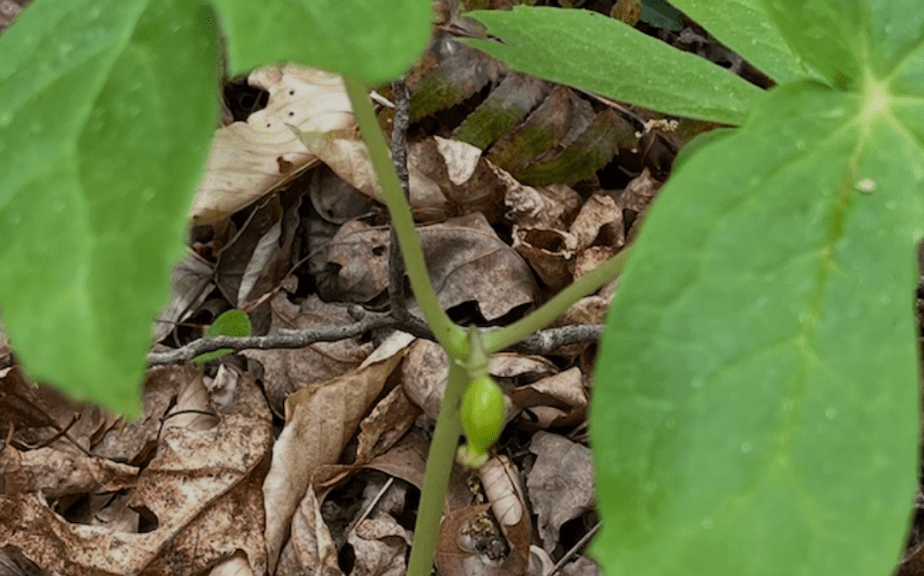
A grass spider, Genus Agelenopsis, amidst a sea of Neivamyrmex nigrescens, Black legionary ants, a common species of army ant in the US. The ants are nocturnal, predatory nomads that hunt other ants and insects.Deidamia inscriptum, Lettered Sphinx moth, feeds on Virginia creeper, grapevines and woody vines. Only one brood occurs per year. Active at night and attracted to light and nectar from lilacs. Asimina triloba fruit developing at SAFF. This is the longest they’ve stayed on for us and the biggest we’ve ever seen them get. Fingers crossed! Another fruitlet. Chris found what may be a Carolina leaf roller insect infected with something similar to what Ophiocordyceps kimflemingiae does to carpenter ants. It forces infected ants to leave their nests, climb plants and bite into leaves (or branches) with a death grip. Then, the fungus grows and releases spores from the ants head. We will update you with any information about the identification of this insect and fungus.