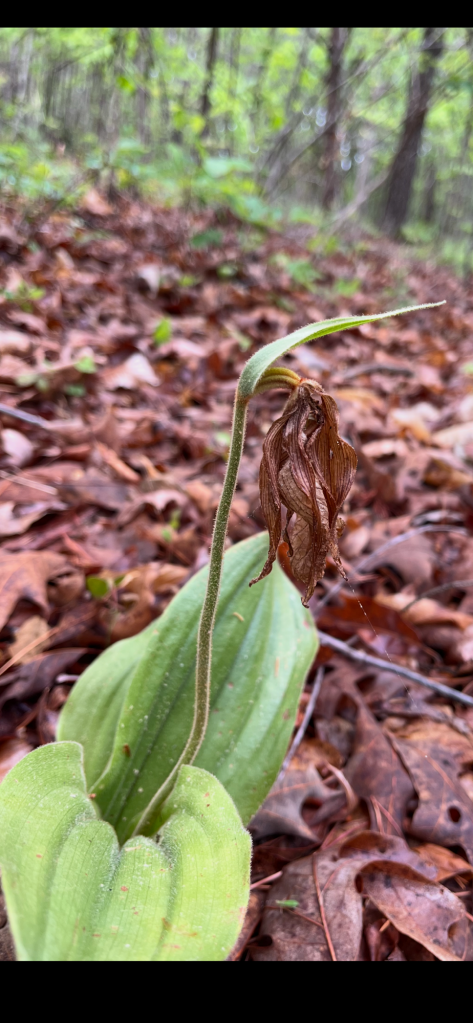
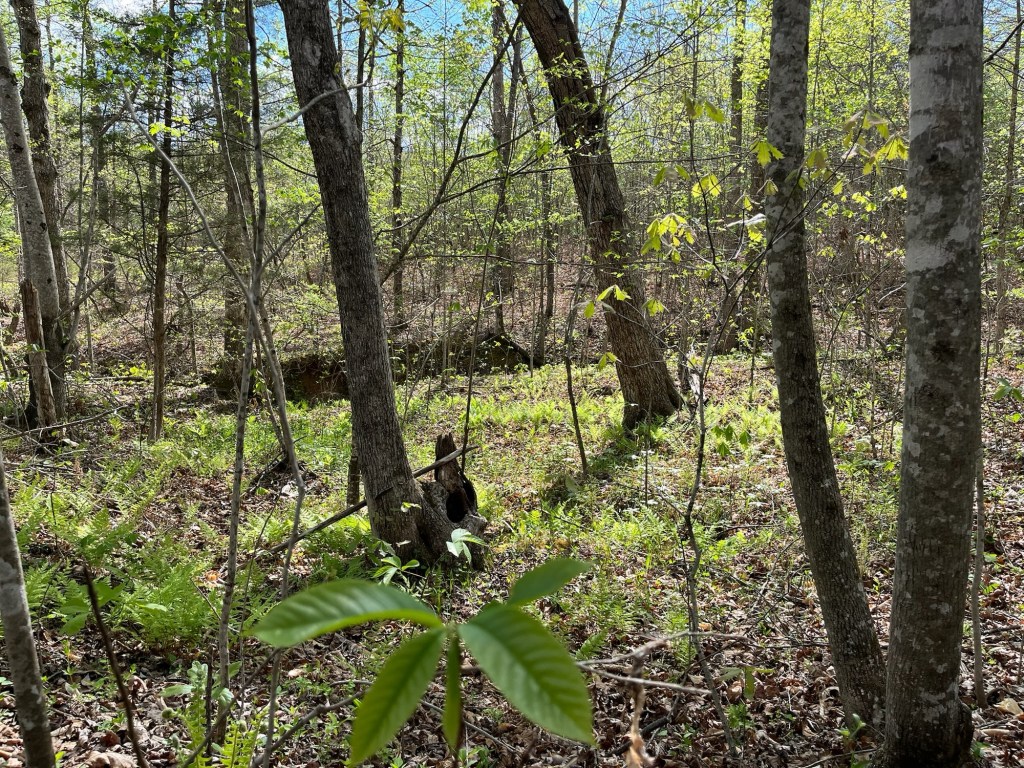
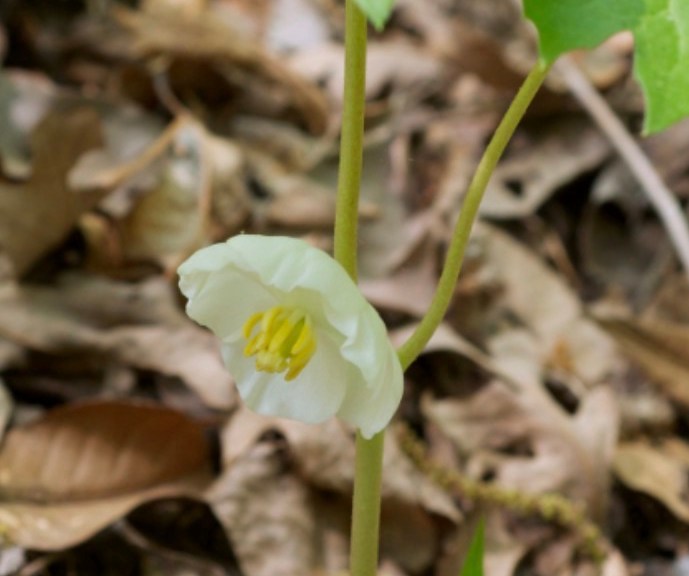
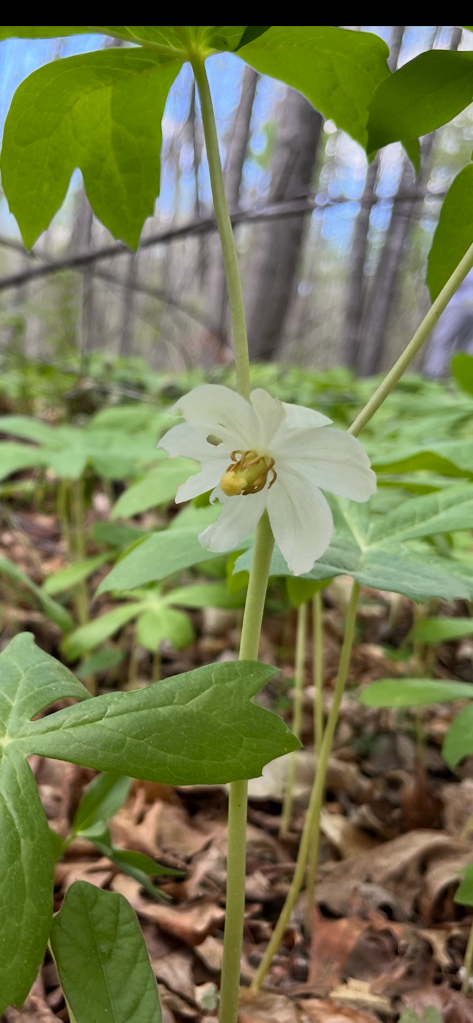
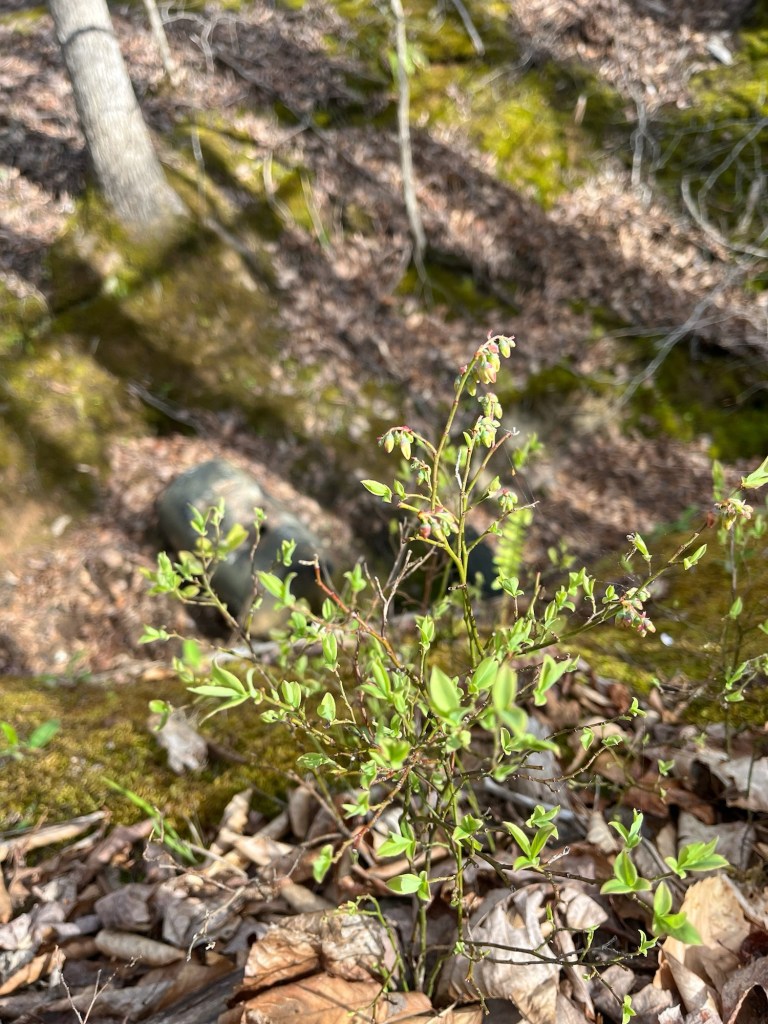
We just missed the flower by the look of it. We hope to catch it next year.
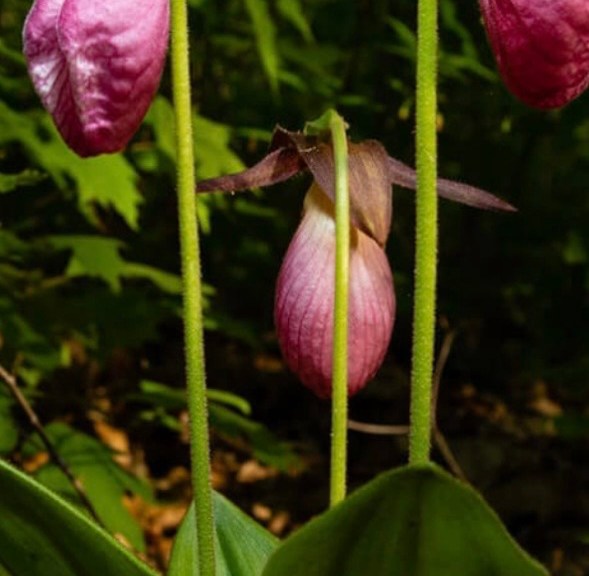
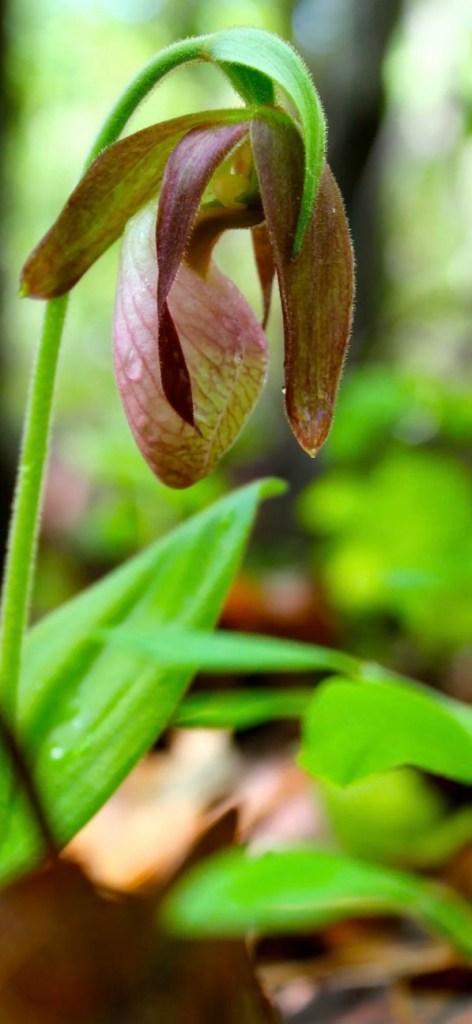
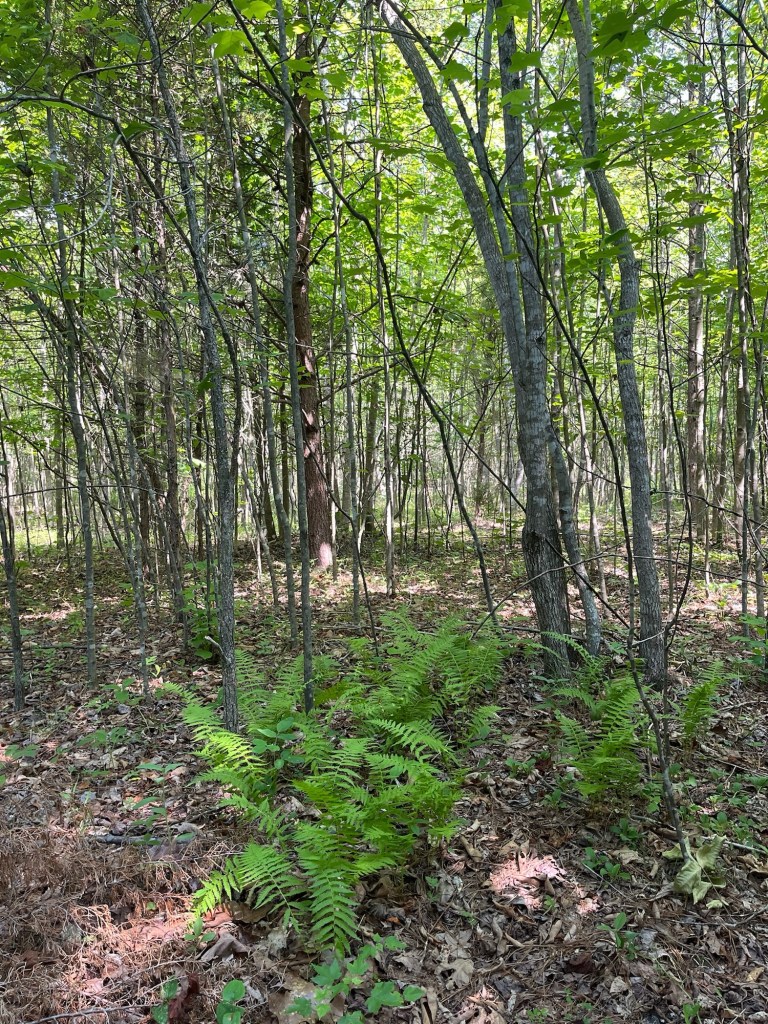
Yesterday we had a walk in the drizzly rain at Saint Andrews Forest Farm. We got to the north side and found our fourth native wild orchid. Cypripedium acaule, pink lady’s slipper or moccasin flower. It’s sparse in our area and considered a special find since it relies on symbiotic soil fungi to survive. Each plant can live 20 years or more. It is pollinated by bees who are tricked into entering the pink sweet smelling flower yet there’s no nectar so no reward. The bees then ignore it.
Pink lady’s slipper Picture by Will Parson from the Chesapeake Bay Foundation. American persimmon
We had .125 inches of rainfall when we checked the rain gauge. Anything at all is appreciated. We looked for mushrooms but none were found yet.
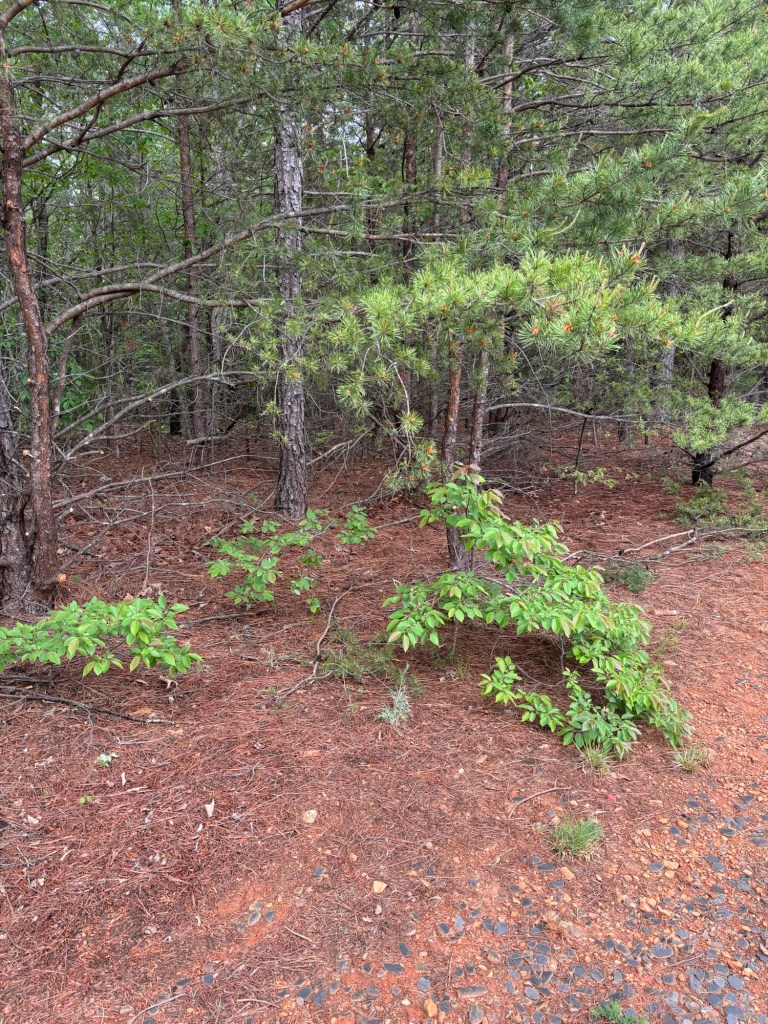
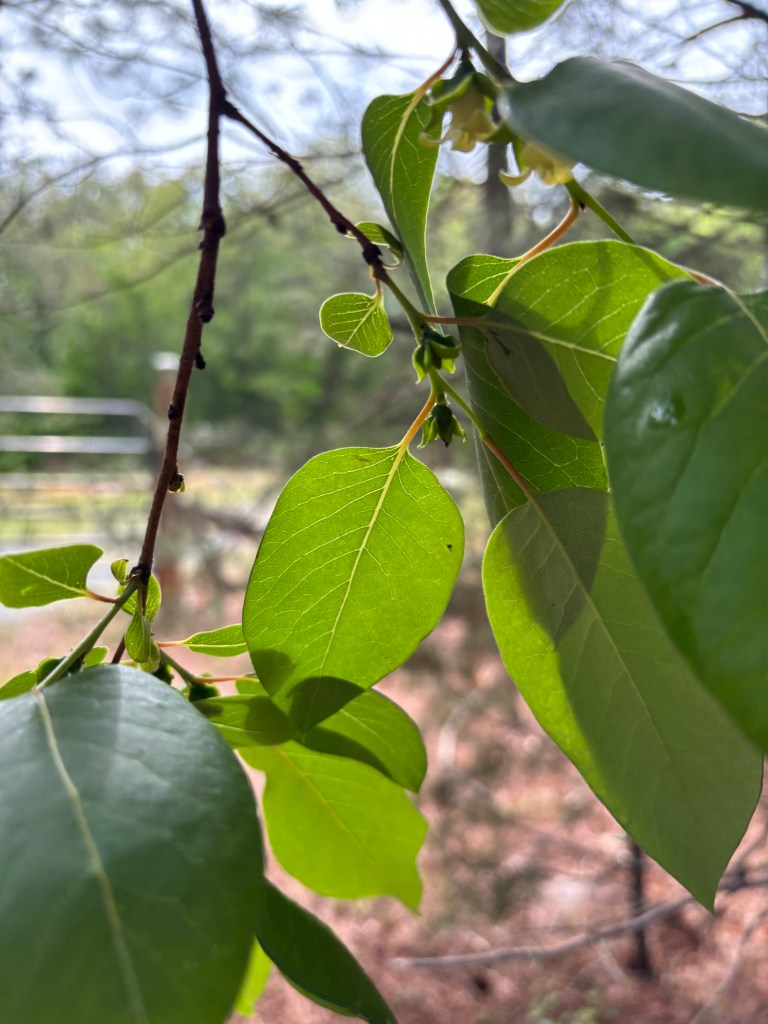
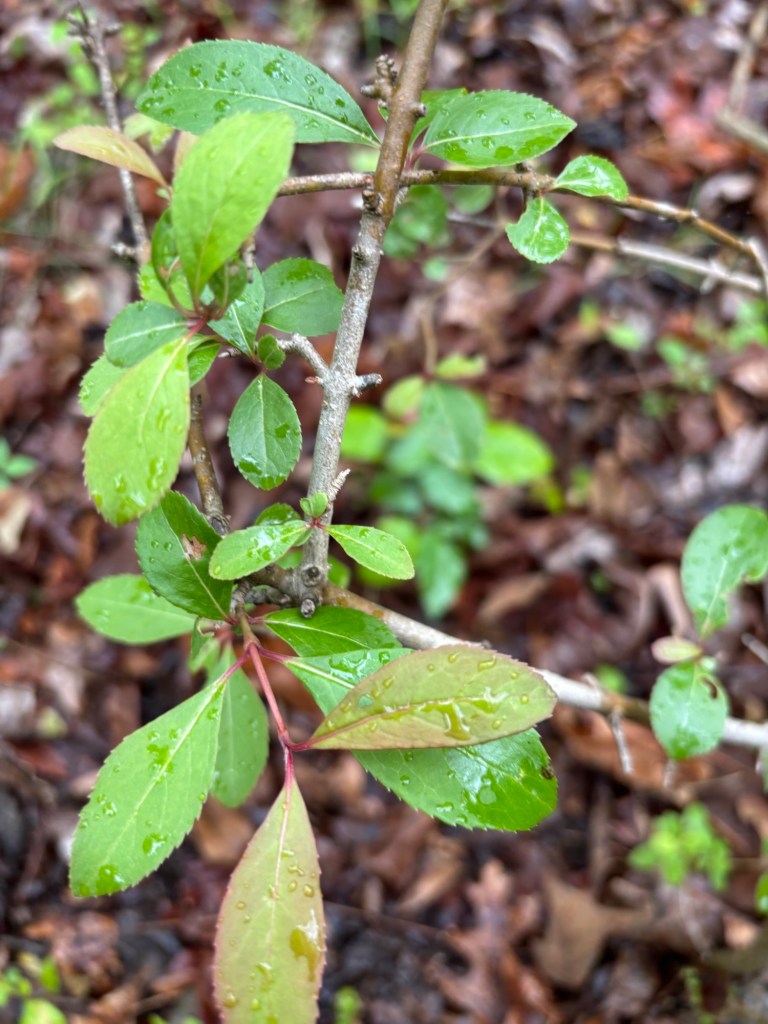
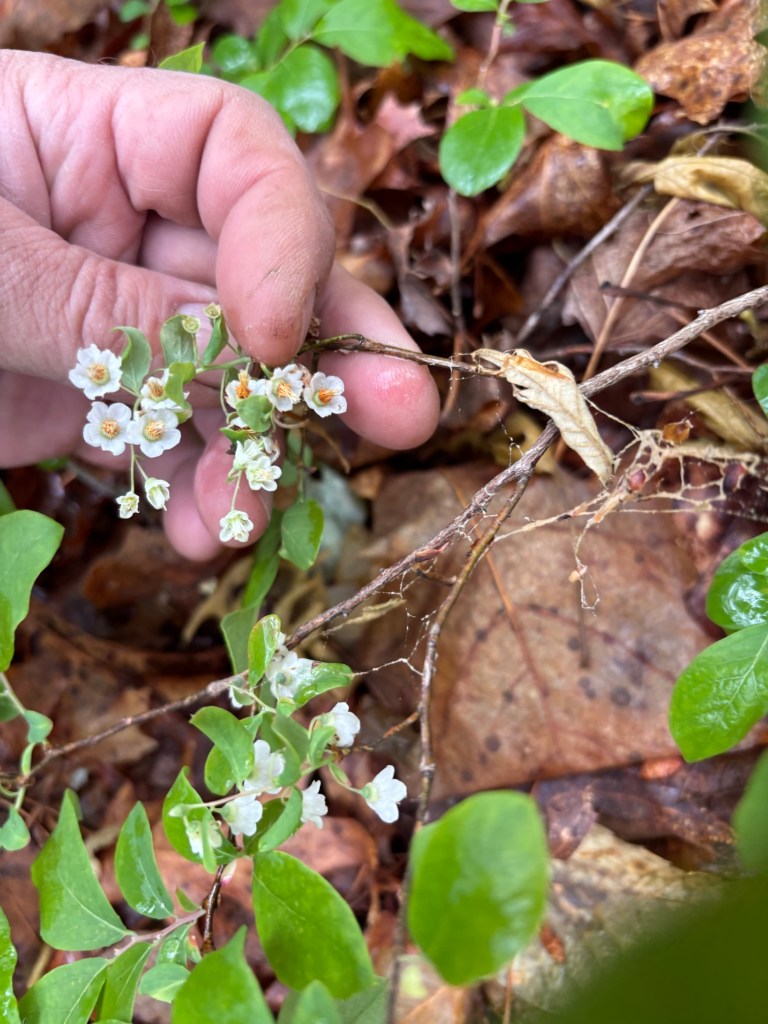
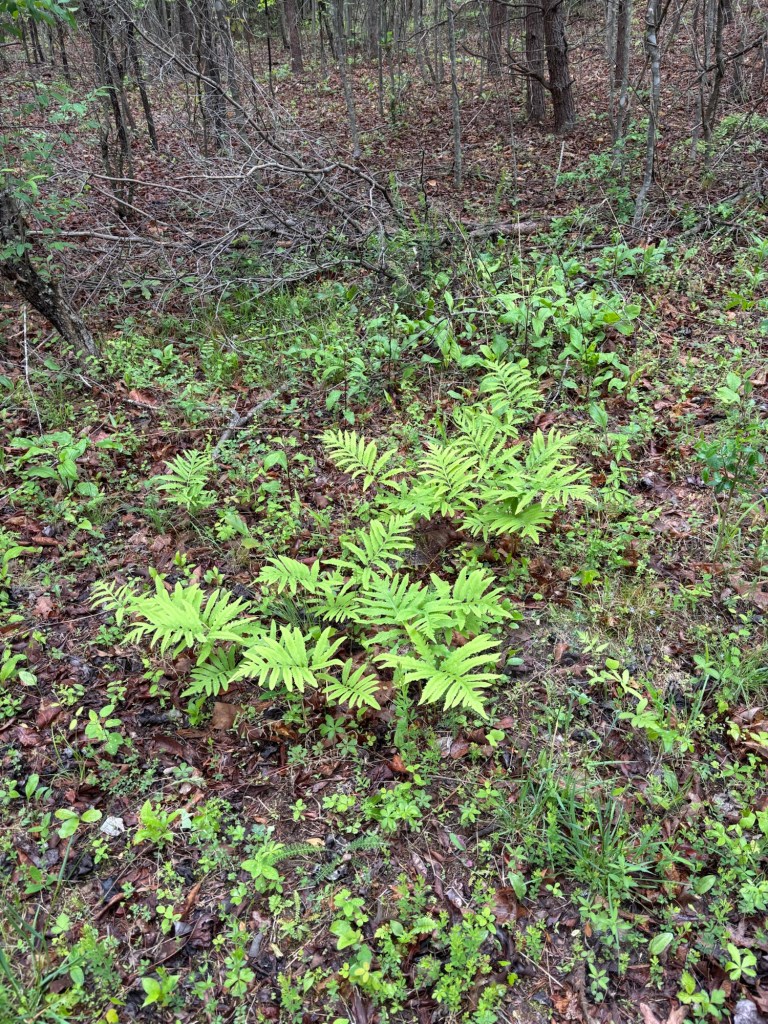
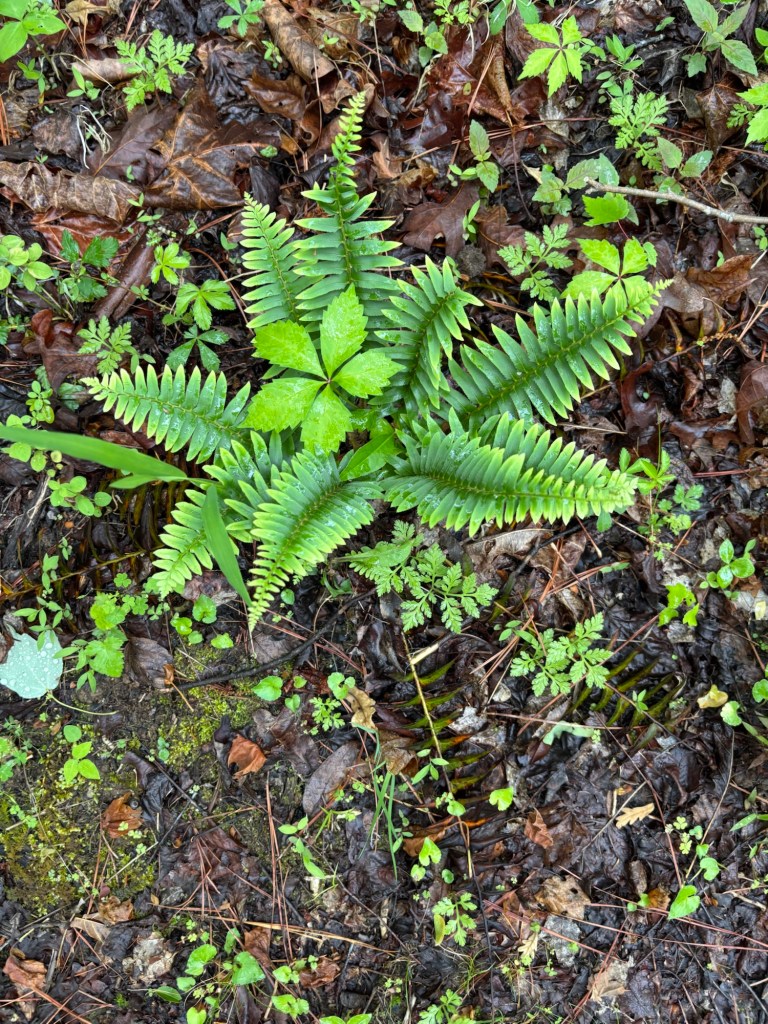
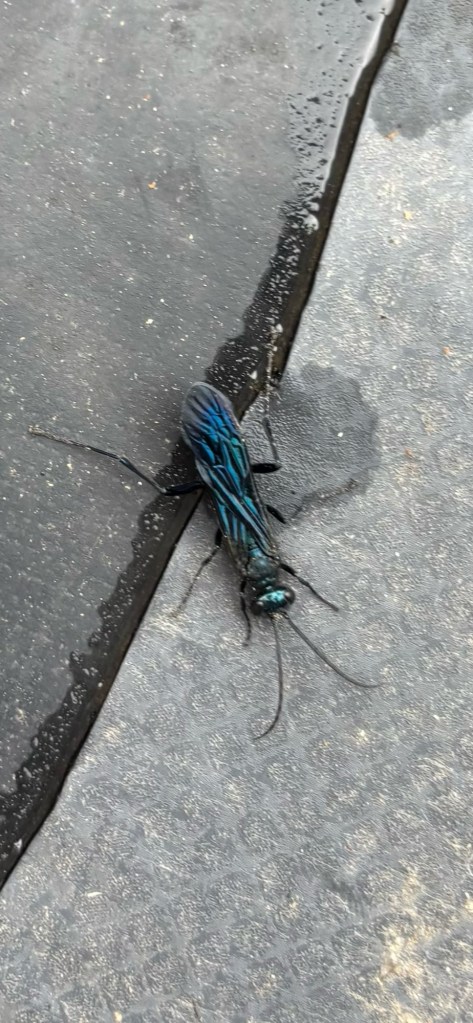
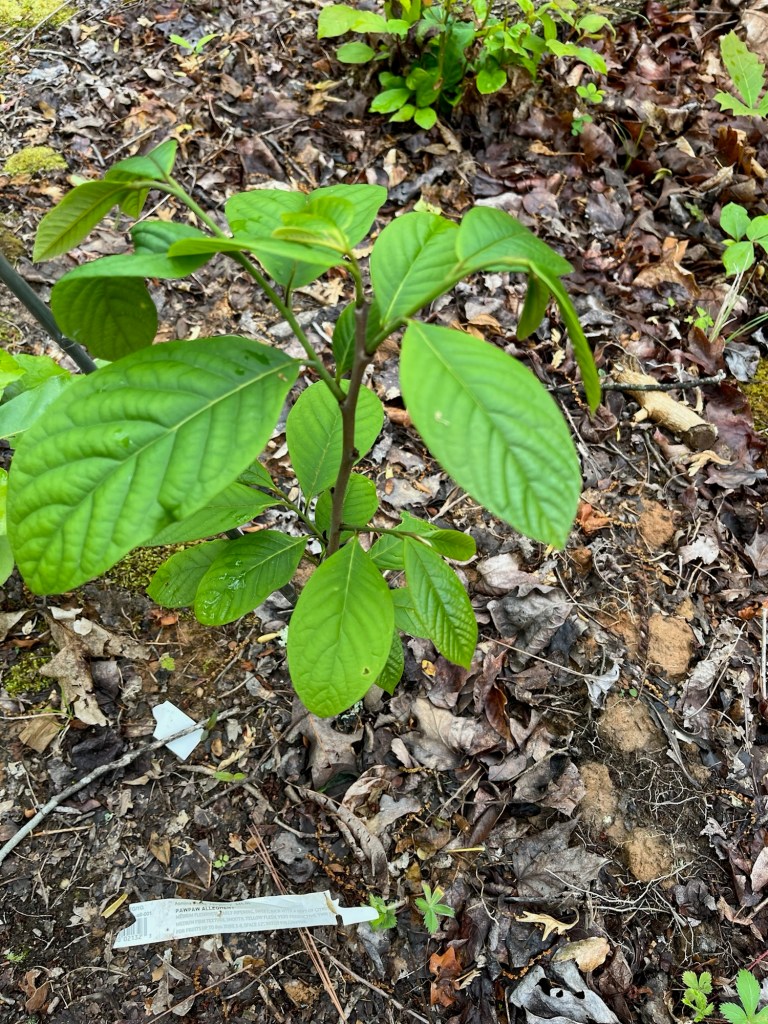
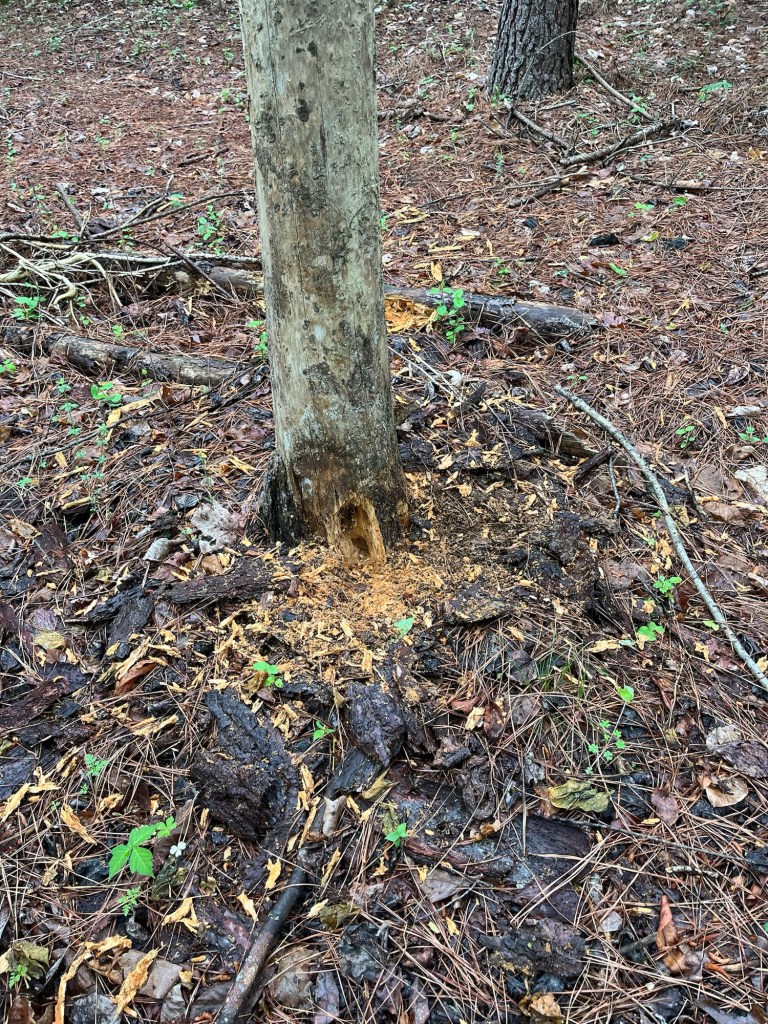
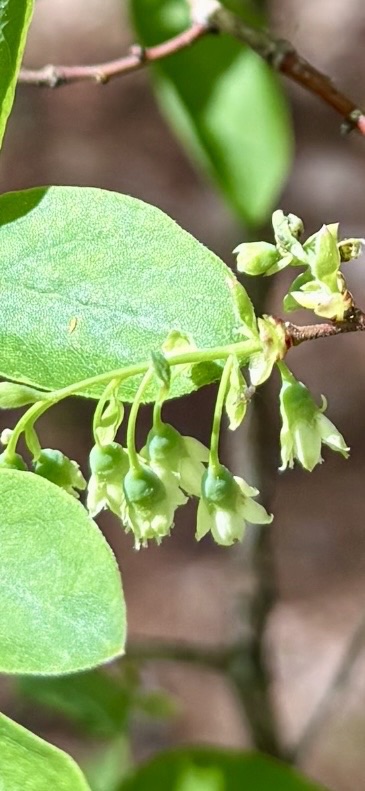
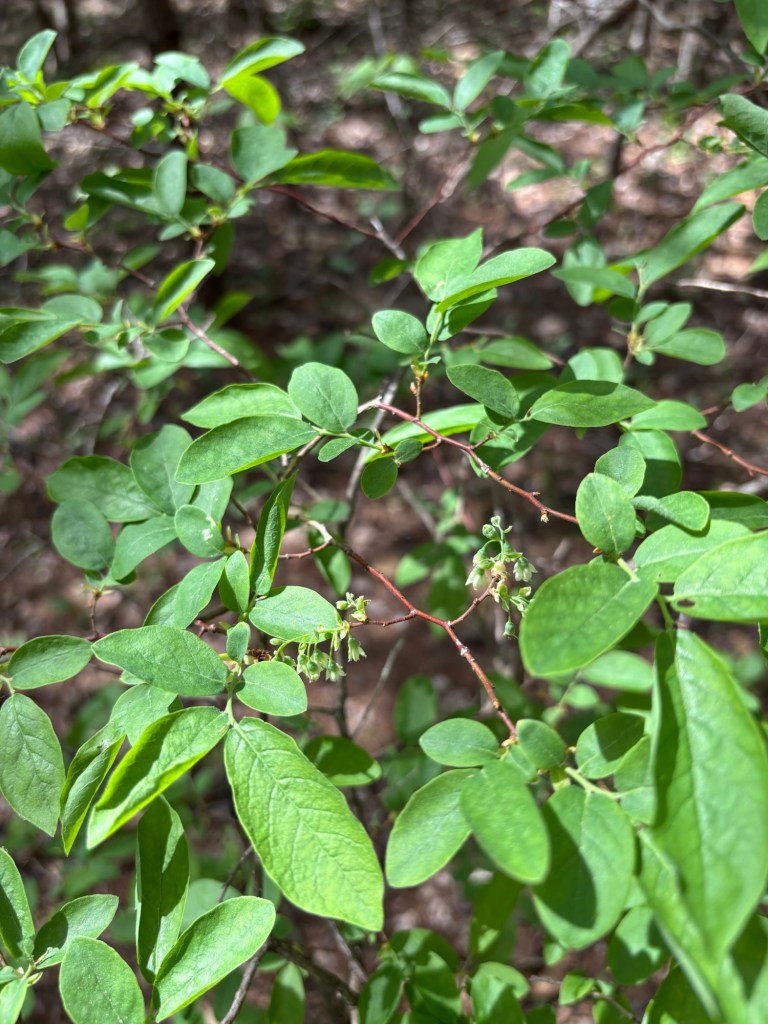
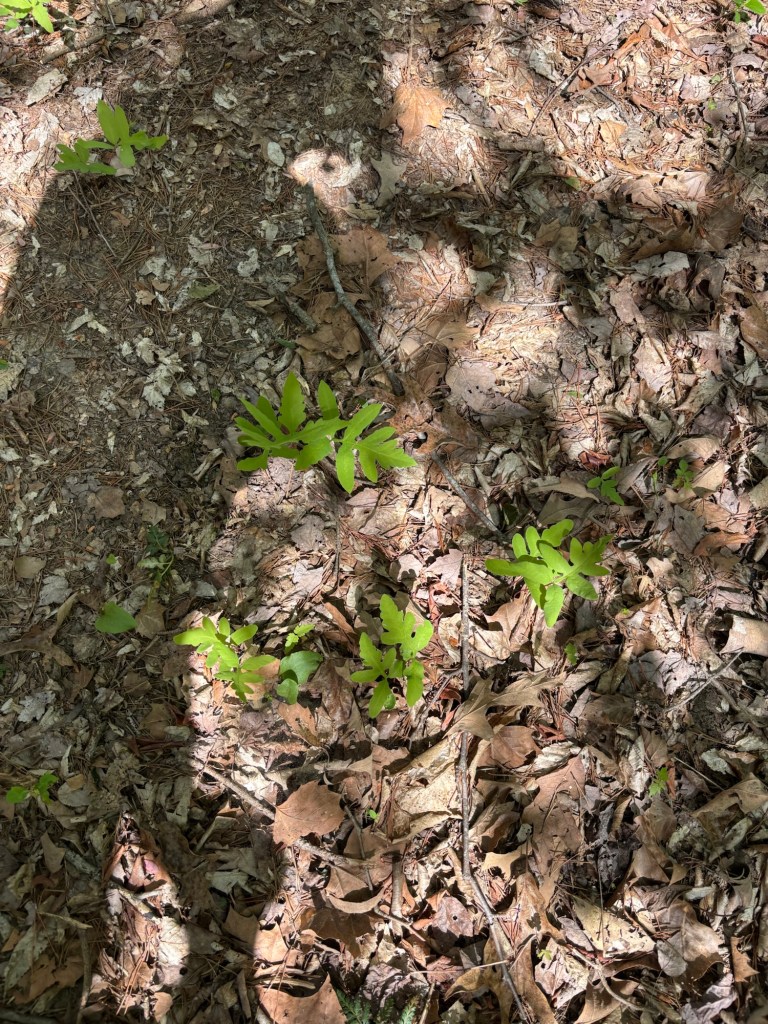
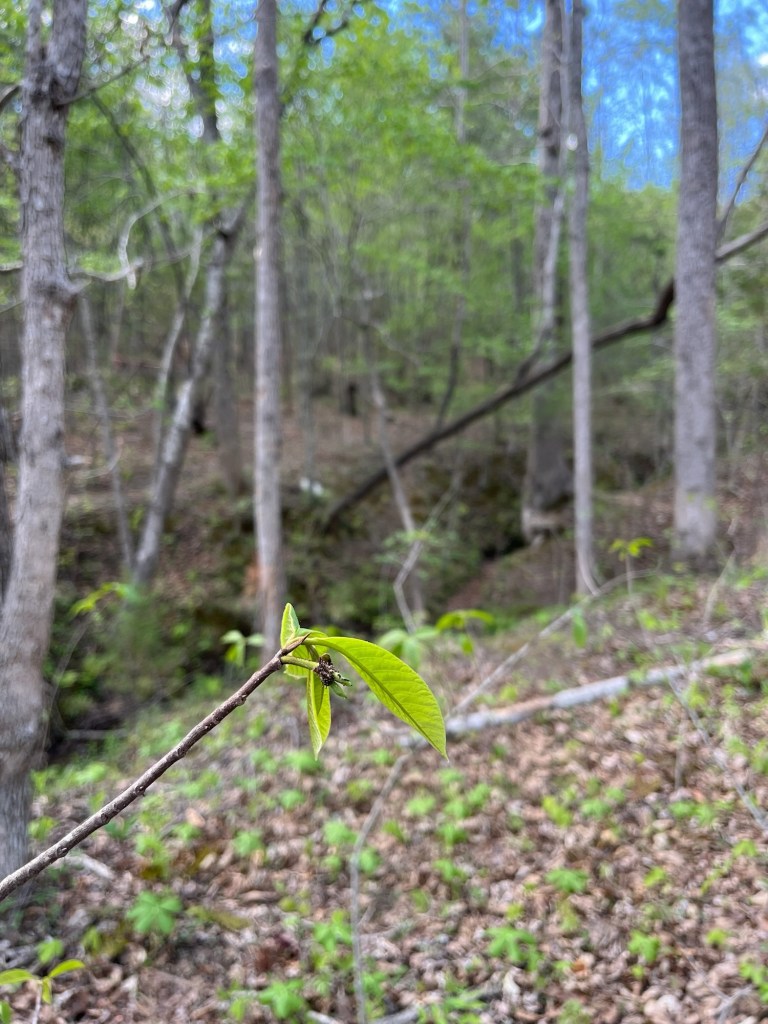
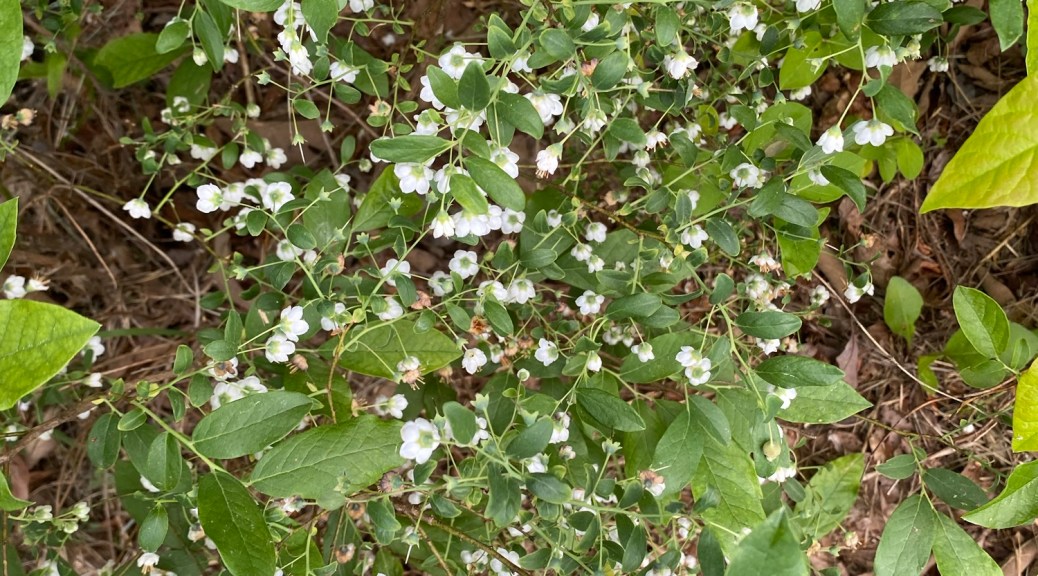
American persimmon, Diospyros virginiana, up top along the driveway we counted 35 altogether just near the road. Viburnum prunifolium, Blackhaw, a hardy native deciduous small tree producing edible fruit found along SAFF’s northmost trail. Vaccinium stamineum, Deerberry or Highbush huckleberry, found on the North side just off the old farm road. These are attractive to songbirds, deer and pollinators and it forms colonies making it useful for stabilizing banks and creating thickets. Sensitive fern, Onoclea sensibilis, found on the old farm road in a particularly boggy, wet spot. It provides cover for frogs and lizards and is the host plant for the sensitive fern borer moth. Polystichum acrostichoides, Christmas fern, looking especially beautiful in the rain. Nabalus serpentaria, lion’s foot rattlesnake root, a perennial wildflower native to Eastern North America. It grows to 20-79 inches with stems that vary from green, red and purple. Blooms are white to yellow. We will keep an eye on it and try to capture it in a photo. Chalybion californicum, Common blue mud dauber wasp, found in the tiny house. It was very docile as we helped it find its way back outside. It is a primary predator of the black widow spider. Allegheny cultivar Asimina triloba looking vibrant on the Pawpaw Peninsula. We counted 34 other pawpaws right there next to it. They are directly across the waterway from the largest colony of hundreds of pawpaws. Interesting something digging into tree trunk down low. Chris thinks it’s a woodpecker. It does look like the holes they usually make higher up. Google says there are beavers in Central Virginia. They are common throughout the area it says. A beaver would be wonderful to help build check dams and raise the water table.
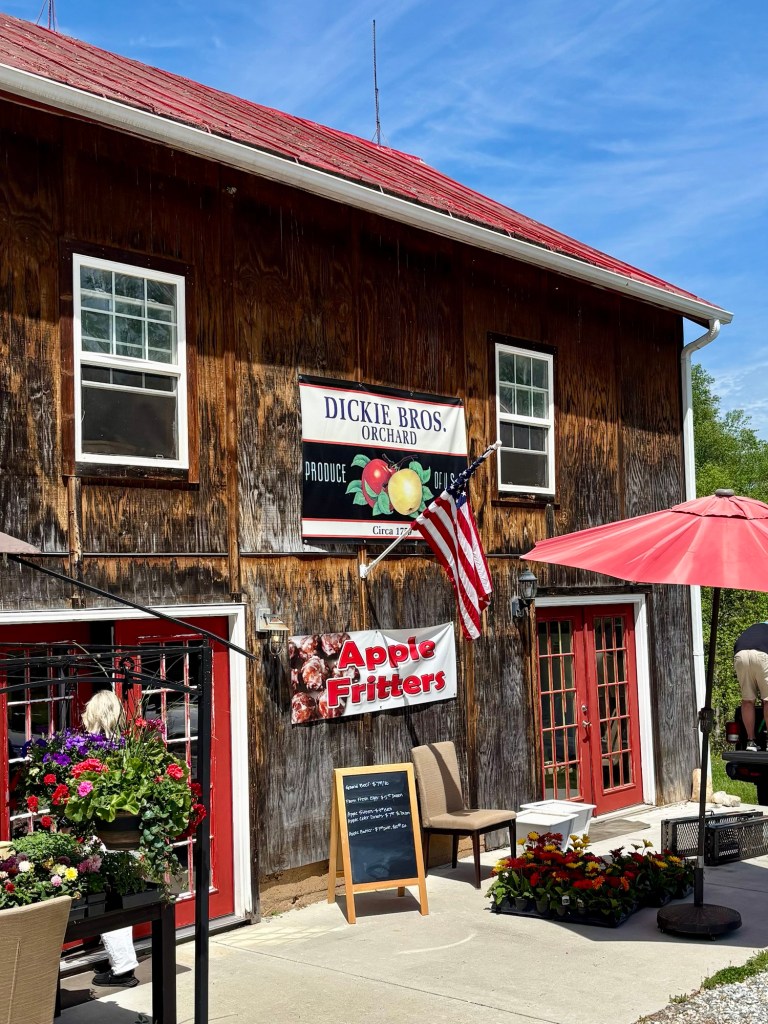
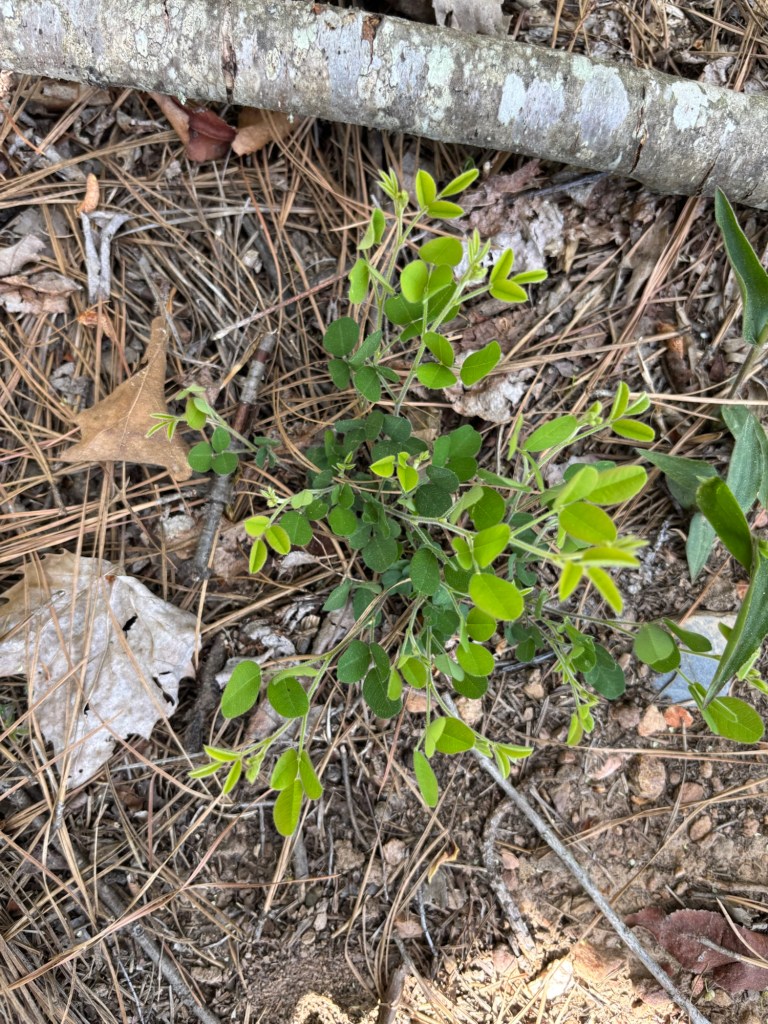
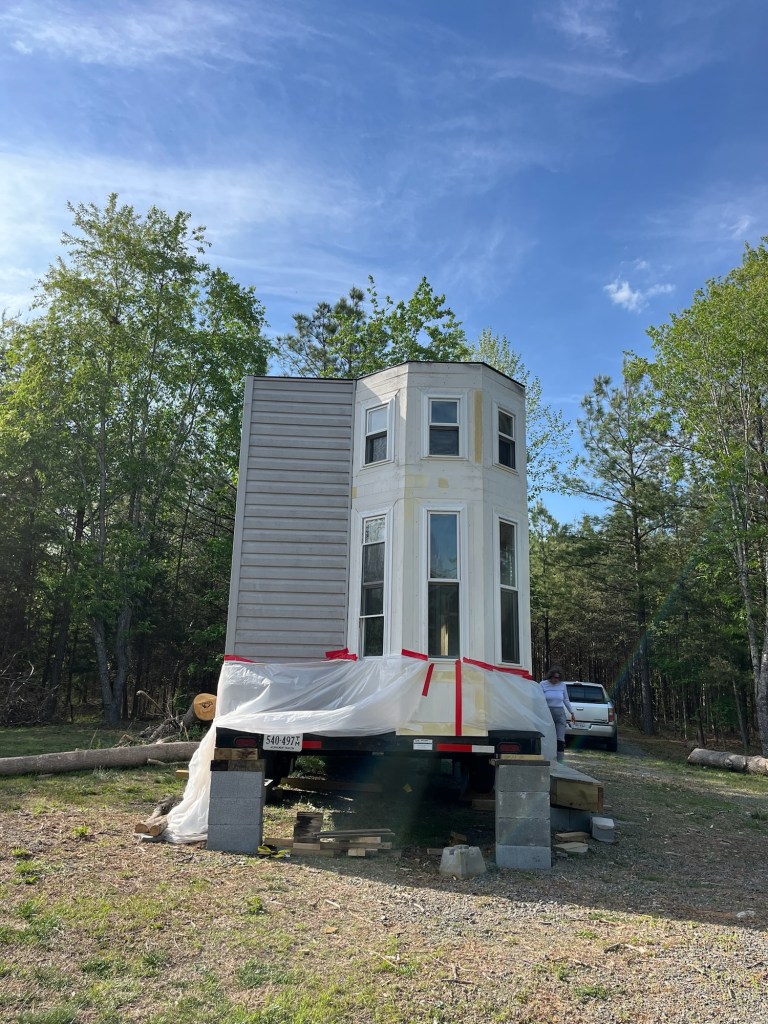
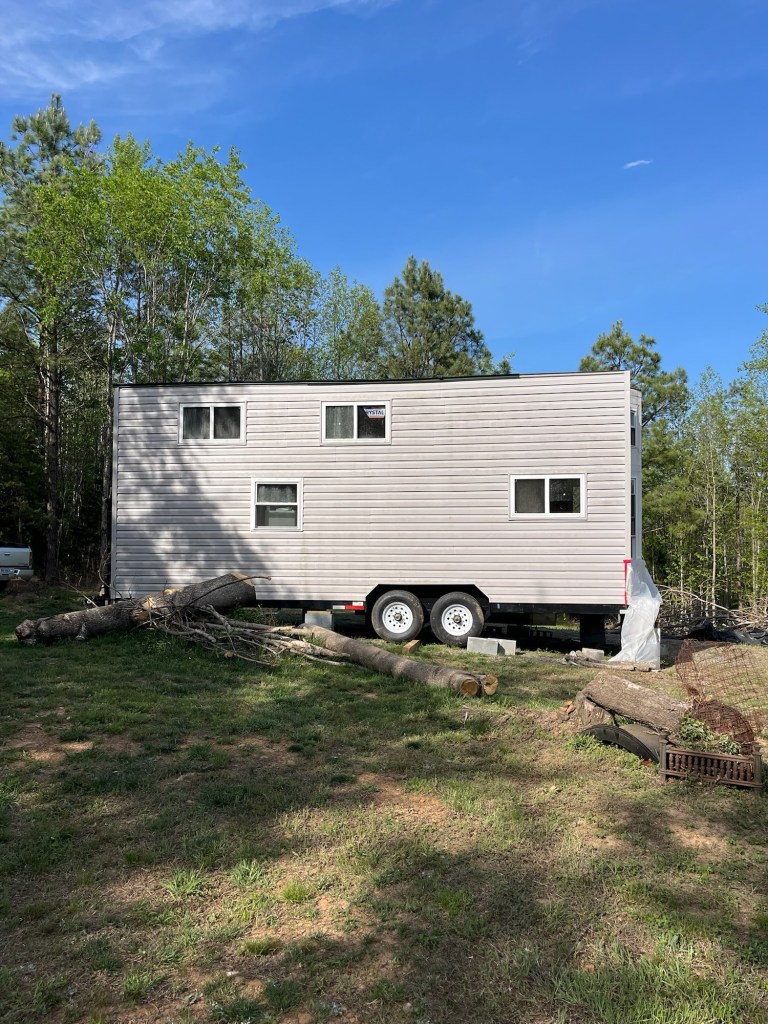
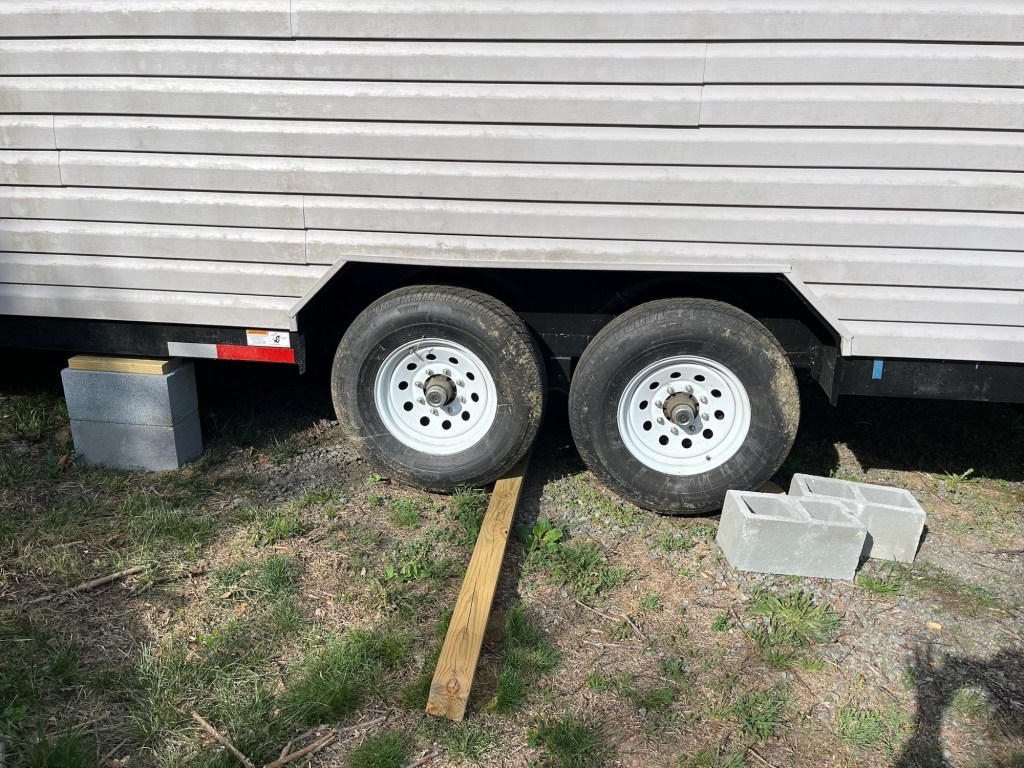
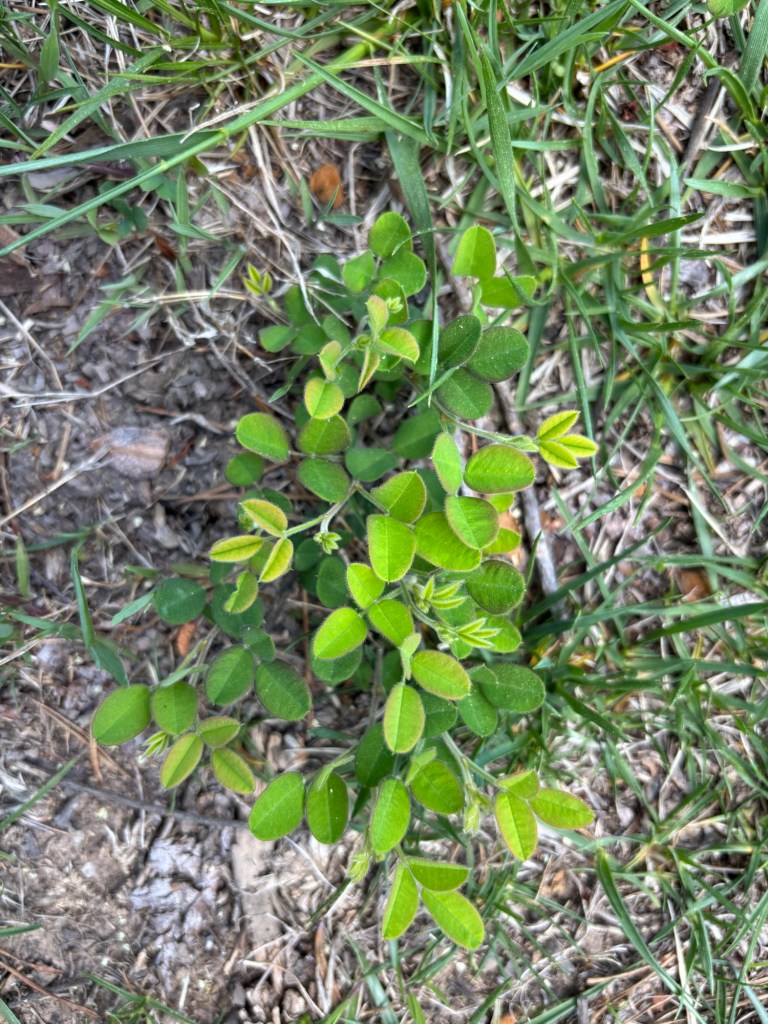
Deerberry, Vaccinium stamineum, about 7 feet tall along SAFF Northern Trail overlooking Blueberry Hill Trail. We stopped on our way to the farm and got strawberries and farm fresh eggs at Dickie Bros. Orchard in Afton, Virginia. We are still enjoying the fruit, and the eggs were not only way more delicious, they were less expensive than the grocery store. Just saying. $5Lespedeza repens, creeping Lespedeza or creeping bush clover, is a native low growing perennial. The small pea like pink and purple flowers attract pollinators from late spring through early fall. It also thrives in dry sunny conditions making it a good ground cover. We will interplant this for erosion control and nitrogen fixing near our Asimina triloba and other fruit & nut trees and other plants. It is similar in appearance to invasive and more aggressive plants so we are happy to finally identify it as beneficial since it’s everywhere at SAFF. We also do have the invasive and aggressive Chinese bush clover (yet, since it’s a nitrogen fixer, we’re less bothered by it than the Japanese stiltgrass and Japanese honeysuckle. We’ve got plenty of those especially along our fertile bottoms that get sun. The stiltgrass is erosion control right now and will need to be replaced with non aggressive natives like this creeping bush clover when we get to it.) We pull out the Japanese honeysuckle wherever we see it. It’s in the forest and on the trails. We rip it out of the ground with its root system and hang it from the tree it was strangling to dry and die. It feels like good therapy to save trees from noxious vines.Tiny house leveled up nicely. Chris has been working hard on these hot days using jacks and cinder blocks and wood.The back of the tiny house on wheels with the paulownia logs and sticks on the ground. We decided to use the logs from taking down the paulownias last month to make terraces along the slopes for our planting. Wheels off the ground!A nice pic Chris took of the old clonal colony pawpaw patch with lots of new leaves coming out. The ground is covered with ferns over a vernal pool that is almost always squishy and wet. The old colony has grown around this wet area with roots going five feet deep for what could be centuries —if as we suspect all of these hundreds of trees are from one individual. It’s anchored itself firmly to where it can access moisture and grown a thicket of itself. We can see the oldest and tallest of the trees are 20 to 25feet tall and the youngest just year old sprouts. This colony is full of rootsuckers. This is how the colony can live on and on when the typical life of an Asimina triloba seedling not allowed to root sucker is 45-50 years.
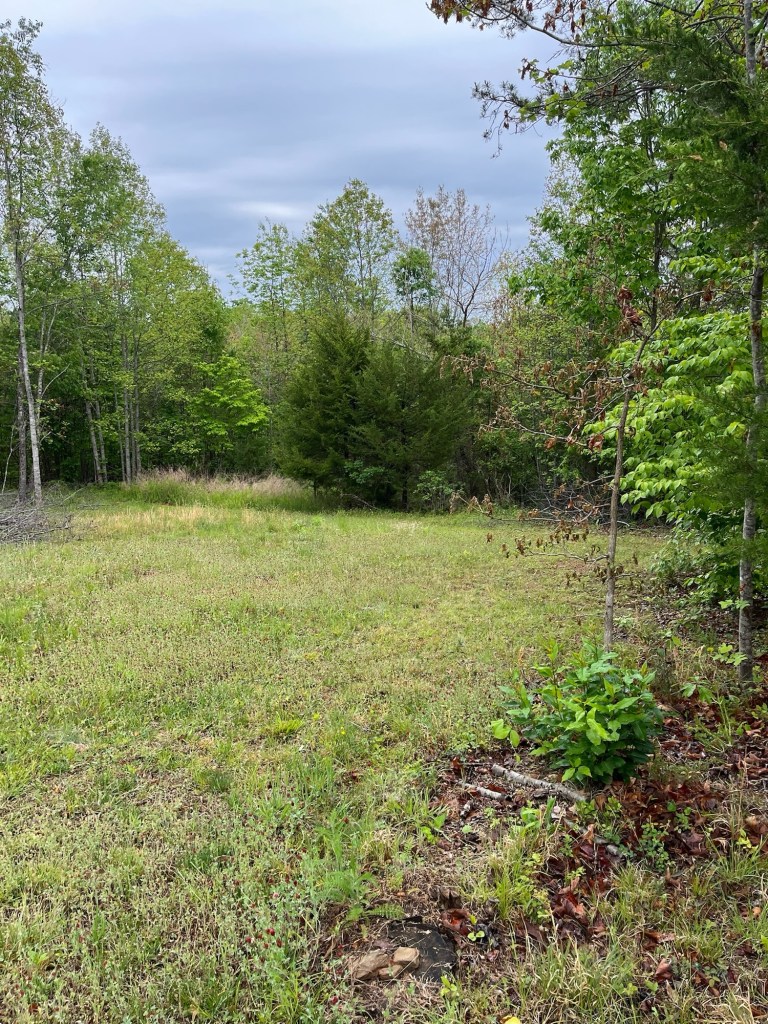
We mowed the main clearing for the first time this season. Spring is always a ticky time at SAFF. We have especially been seeing the lone star ticks. Mowing helps. It’s been very dry this season yet the lone stars are looking for a meal so be careful out there on the trails. We decided not to mow the slopes in the clearing and will leave it to the butterflies and critters. Leaving it long will help with erosion control. We mowed wide paths to our trails and around the slope to keep our tick experience walking around low on the paths. We also spray permethrin on our shoes and legs this time of year and tuck our socks into our pants. Any other tips, please feel free to comment below.
Last night, we ordered 41 Scion wood cuttings from various Peterson and other Asimina triloba cultivars and also including 2 American persimmon Keener cultivars, Diospyros virginiana. We plan to graft about half of the pawpaw Scion onto the old colony pawpaw patch, Asimina triloba. This will be a more permanent solution to getting novel dna into the colony much faster and more easily than anything else. We can make branches or trees with the Scion wood depending on the size of the root sucker we transplant the Scion wood onto in our clonal colony. Grafting produces fruit quicker , usually in 4 years. We have begun studying grafting techniques by watching plenty of YouTube videos from trusted advisors and are collecting the supplies for our continued Pawpaw Project at SAFF. We will keep you updated.
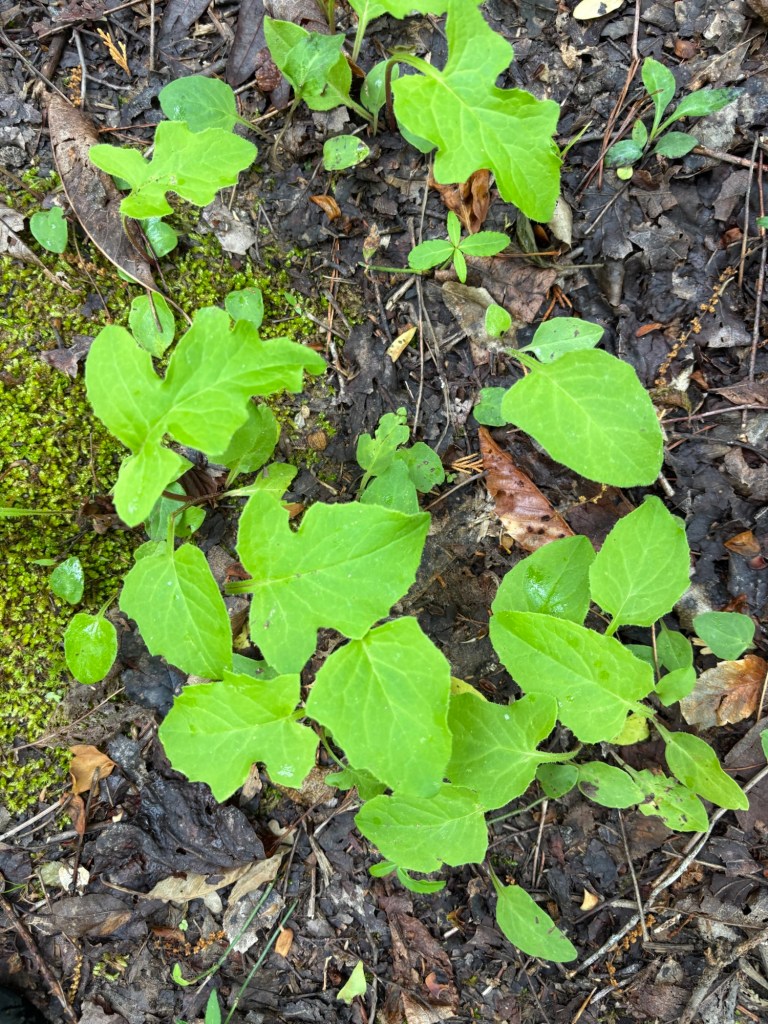
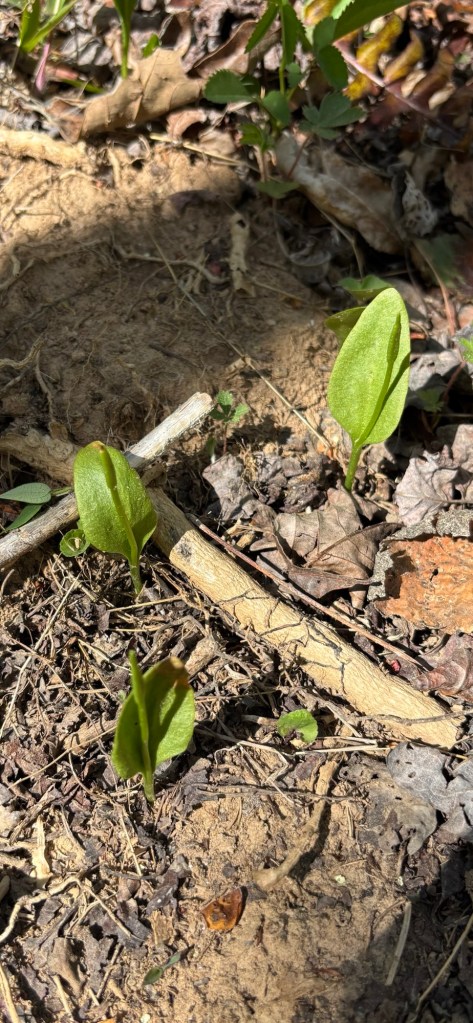
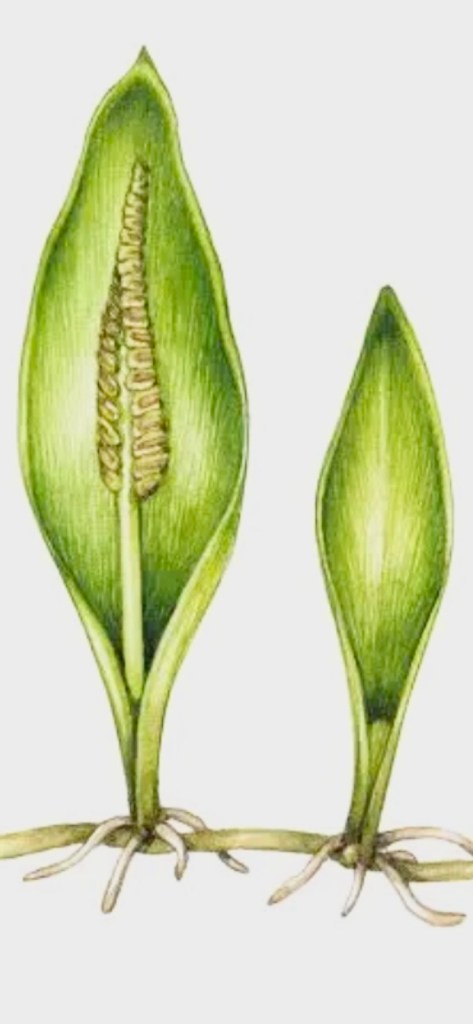
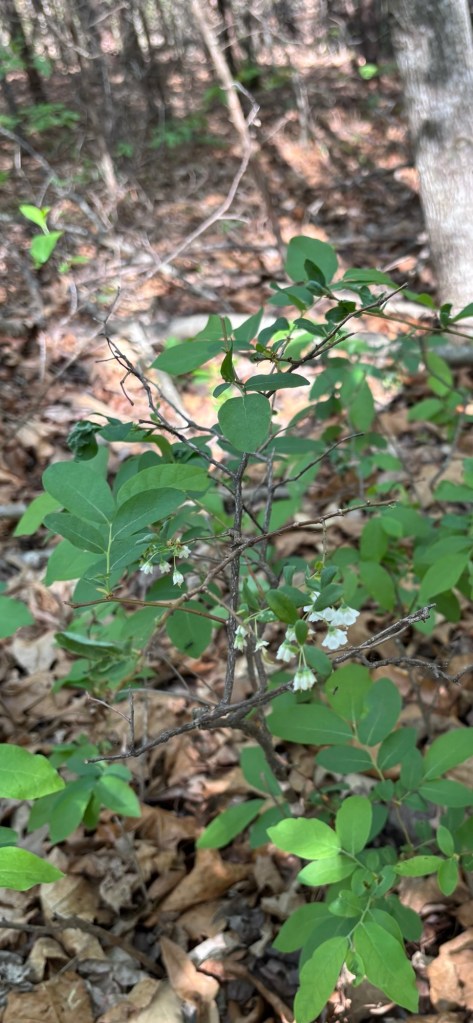
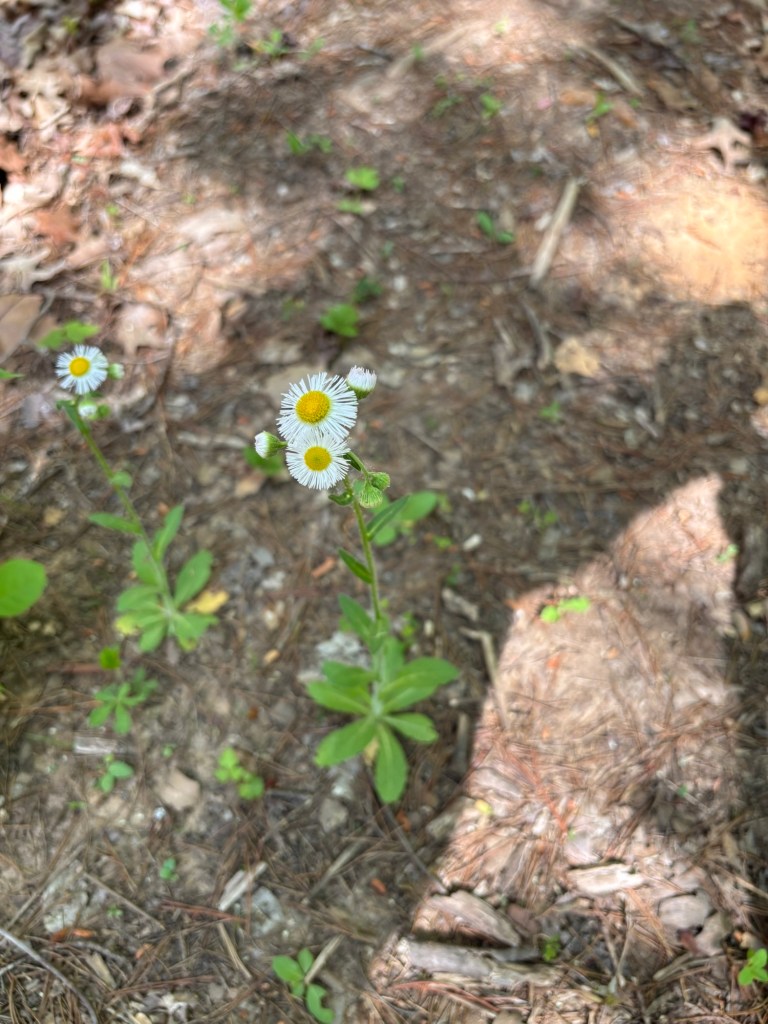
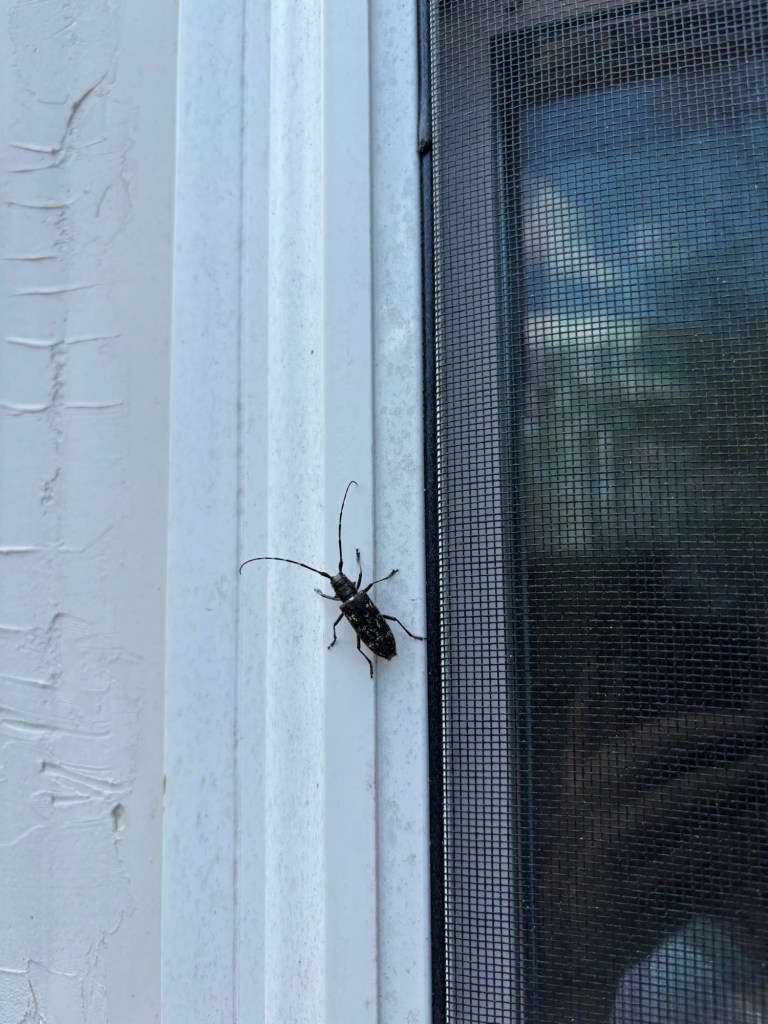
Pollinated mayapple, Podophyllum peltatum, with initial fruit set in the SAFF old colony pawpaw patch. We are noticing more flowers this year on the Mayapples. Southern adder’s -tongue, Ophioglossum pycnostichum, was found in the newly planted Pawpaw Orchard very near our Mango cultivar and a select seedling we planted last year. Found in moist shaded bottomland forests during late spring, Southern adder’s-tongue is considered rare in many regions but common here in Virginia. It is a fern that spends most of its time underground. Although edible and medicinal, it’s a plant that stores energy for years to send up a single leaf. Members of this family of plants have extraordinary high numbers of chromosomes. Over 1200. This occurs because of extreme polyploidy. It has astringent and anti inflammatory properties.Vaccinium stamineum, deerberry, a native deciduous shrub in the blueberry family found on Blackrock Trail near the wet weather gully at SAFF. These are eaten by birds and mammals.Erigeron philadelphicus, Philadelphia fleabane, is a widespread native wildflower in the daisy family. It is a valuable food source for bees, butterflies and moths. Found on our Northmost Trail at SAFF these Vaccinum stamineum, Deerberry, sit atop a hill near many pines.Sensitive fern, Onoclea sensiblis, known for being sensitive to frost and dying back if touched by it. Thrives in moist shady areas. Historically used by Iroquois for medicinal purposes and food. A native bush clover, Genus Lespedeza, found throughout SAFF. Today we noticed it near the Asimina triloba seedlings we planted last Fall. It is a nitrogen fixer and is valued for soil improvement and provides food for quail and other wildlife. Monochamus scutellatus, White spotted sawyer, a native wood-boring beetle that eats dead pines mainly. This appears to be female by the shorter antennae. Asimina triloba in old colony pawpaw patch with initial fruit set. Mayapples in the background.
It was dry at Saint Andrews Forest Farm on Friday afternoon. The ground crunched as we walked around the trails. There’s a chance of storms and cooler weather expected Sunday. If no rain by then, we will need to water the newly planted Asimina triloba seedlings at the bottom of North Trail. All of them look great with leaves filling out. We weeded and worked on clearing spaces around each of them. Even the ones that had tops chewed off by a passing deer or rabbit have new growth sprouting.
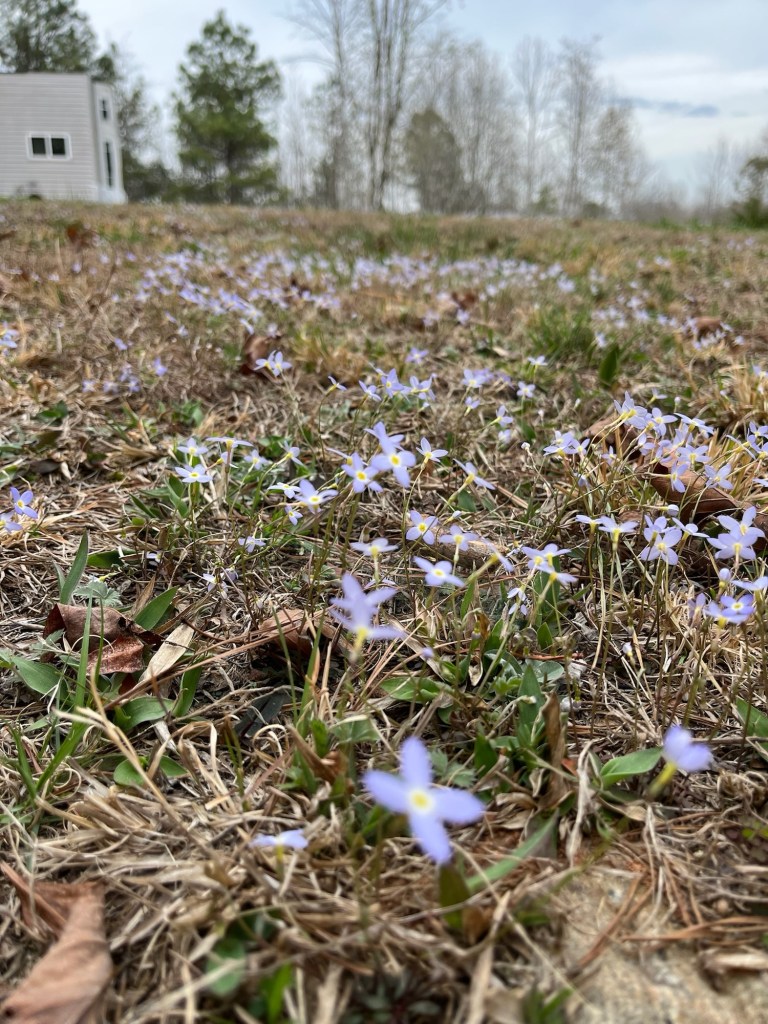
Houstonia caerulea, azure bluet, found all over SAFF has now passed its peak blooming and is beginning to to die back.
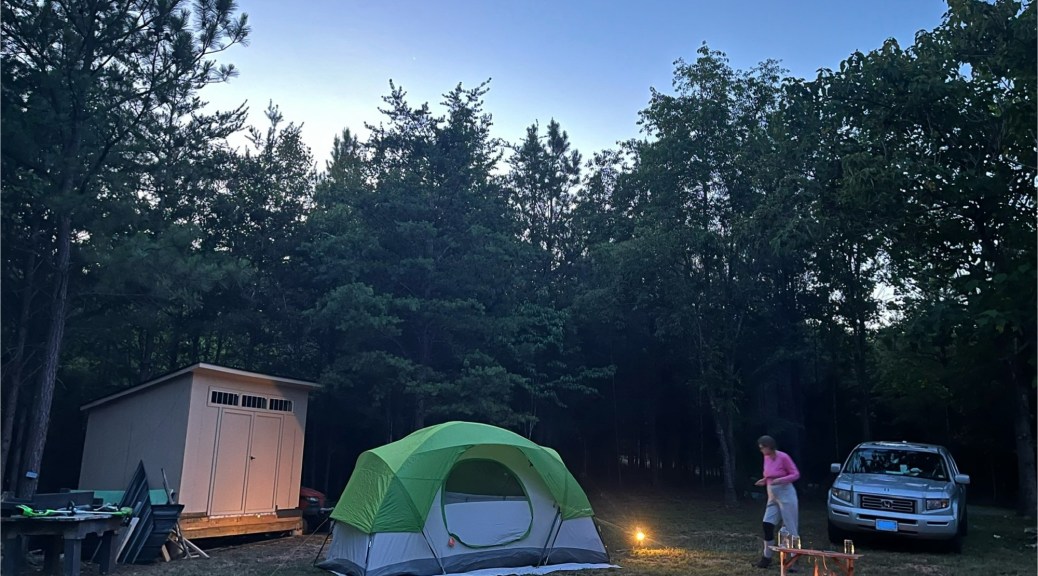
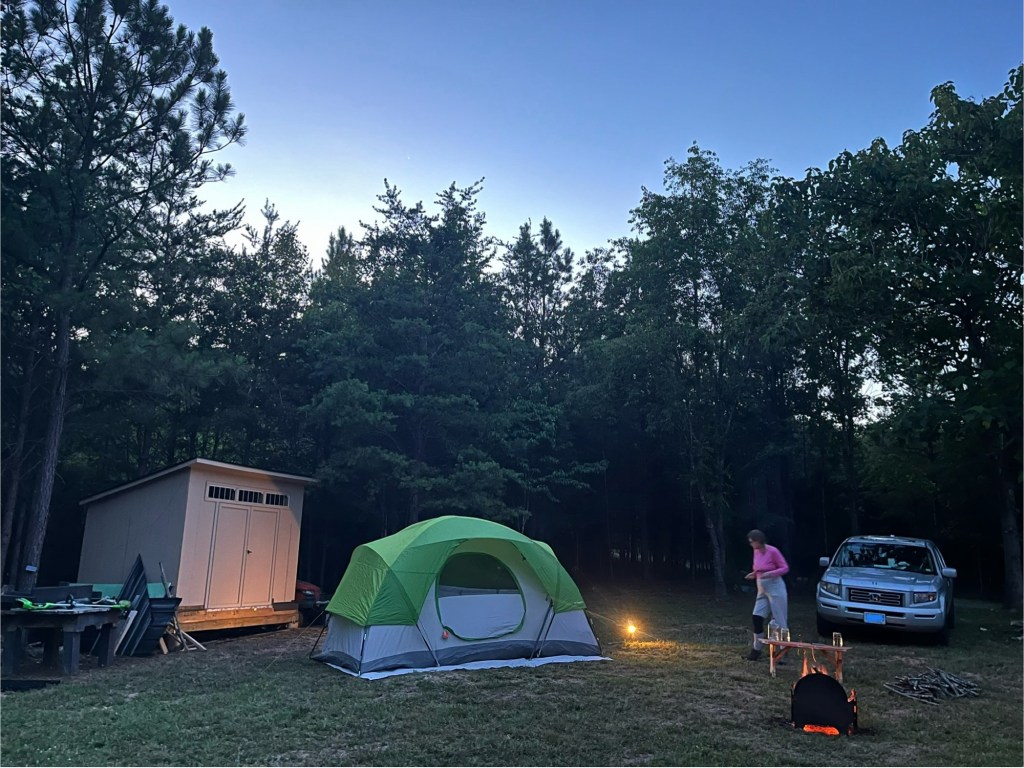
We had our first camping experience at SAFF on Saturday night. It was the coolest overnight weather forecast for weeks so we thought we would take advantage of that. We’d been preparing for months with the compost toilet in the shed, keeping the clearings cut back neatly for tick mitigation and collecting the gear we’d need. We still had a good bit of gear to haul out even though we’d been taking loads over for weeks. All in all, the compost toilet combined with the sawdust was the heaviest load. We’ve been able to snack on our tart wild blueberries every time we’ve been out.
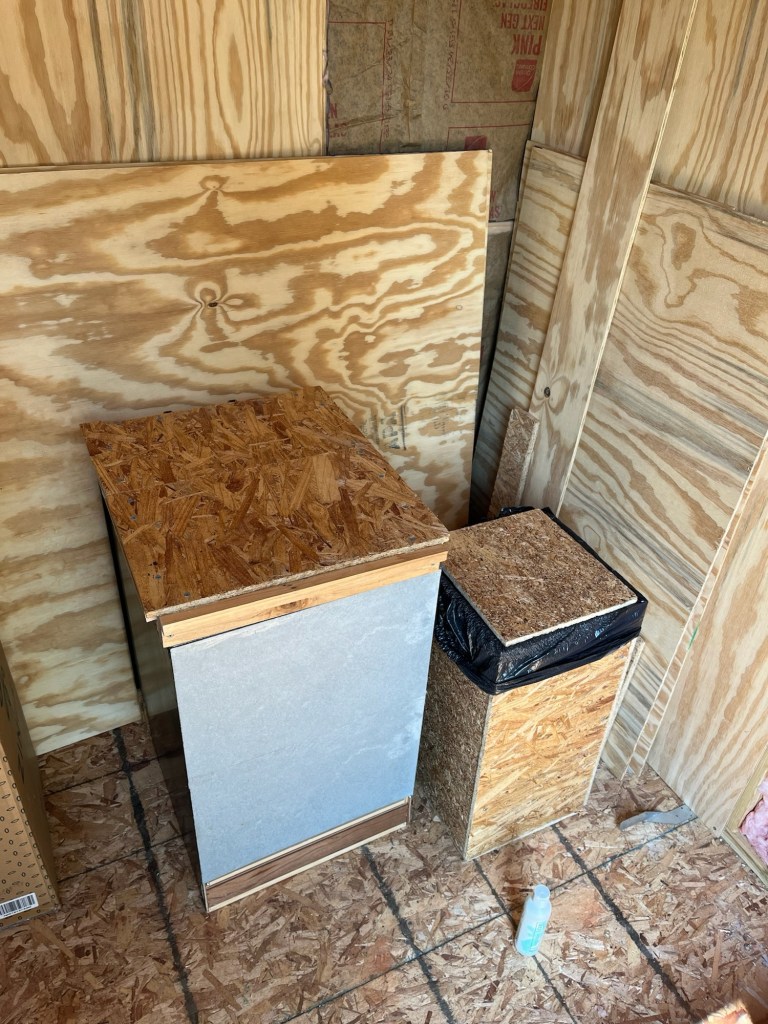
Our compost toilet. We use sawdust which we got from a local lumber yard. They dropped the largest load possible in our Honda Ridgeline. We wish we took a pic. It was a mountain of sawdust.
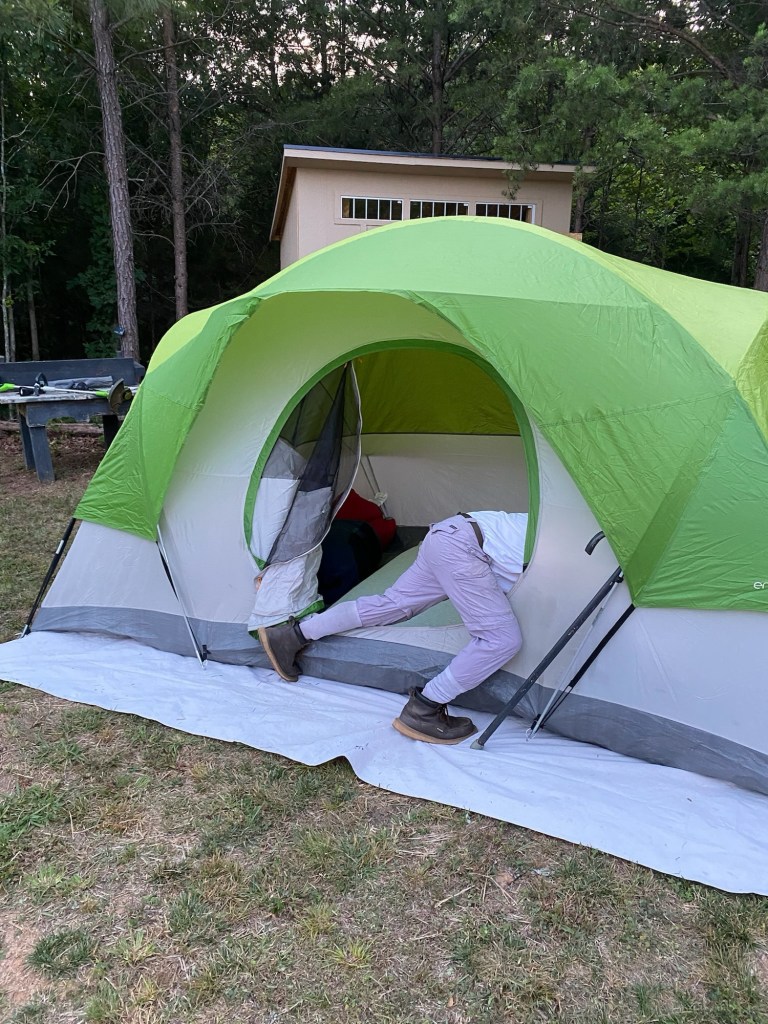
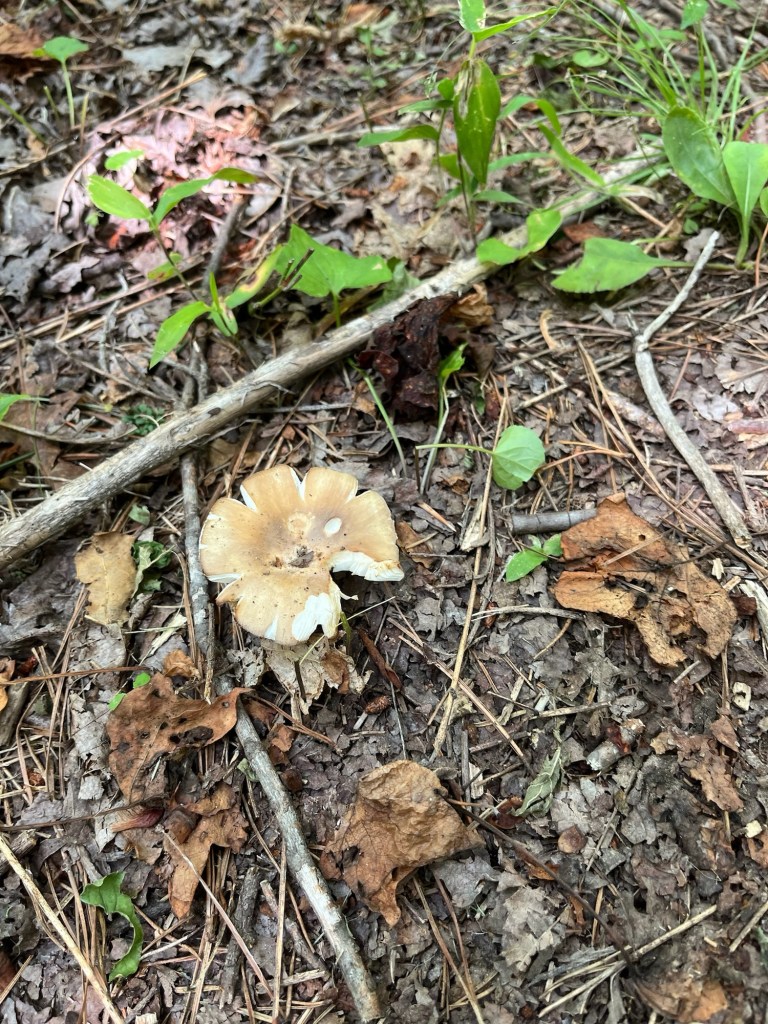
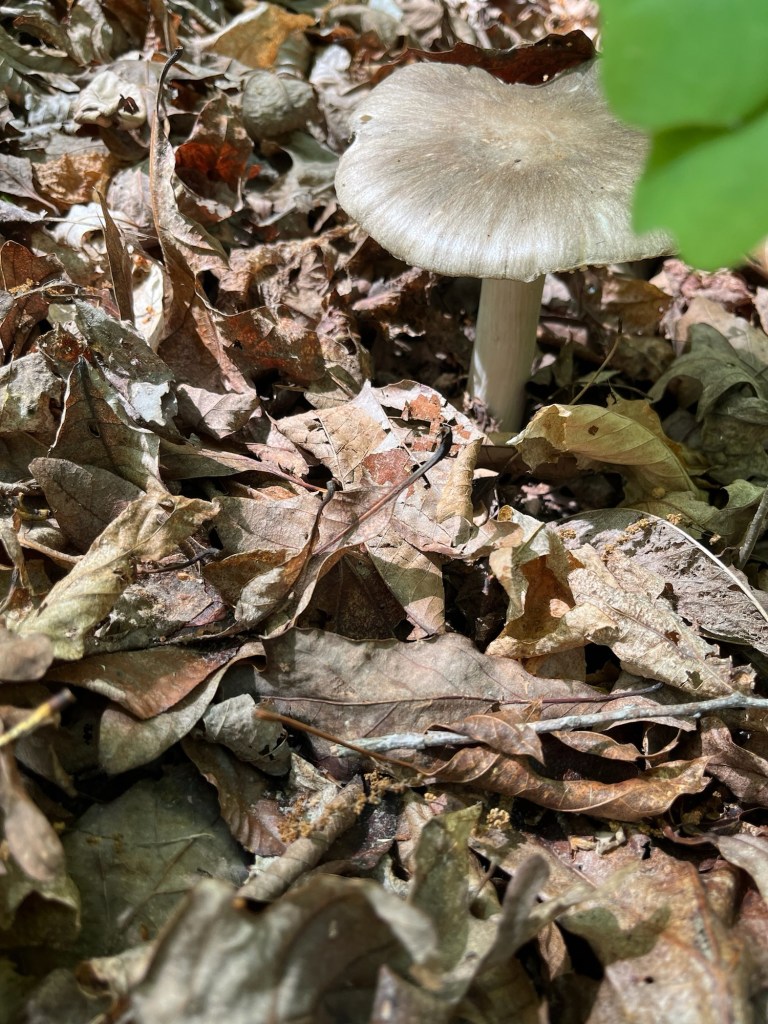
At dusk, we were pleasantly surprised by fireflies dancing about the clearing up top. Chris getting our foam mattress situated in the tent.An old mushroom we found on our early morning hike. A Russula near the North Trsil by the waterway. Ferns on the southeast side.
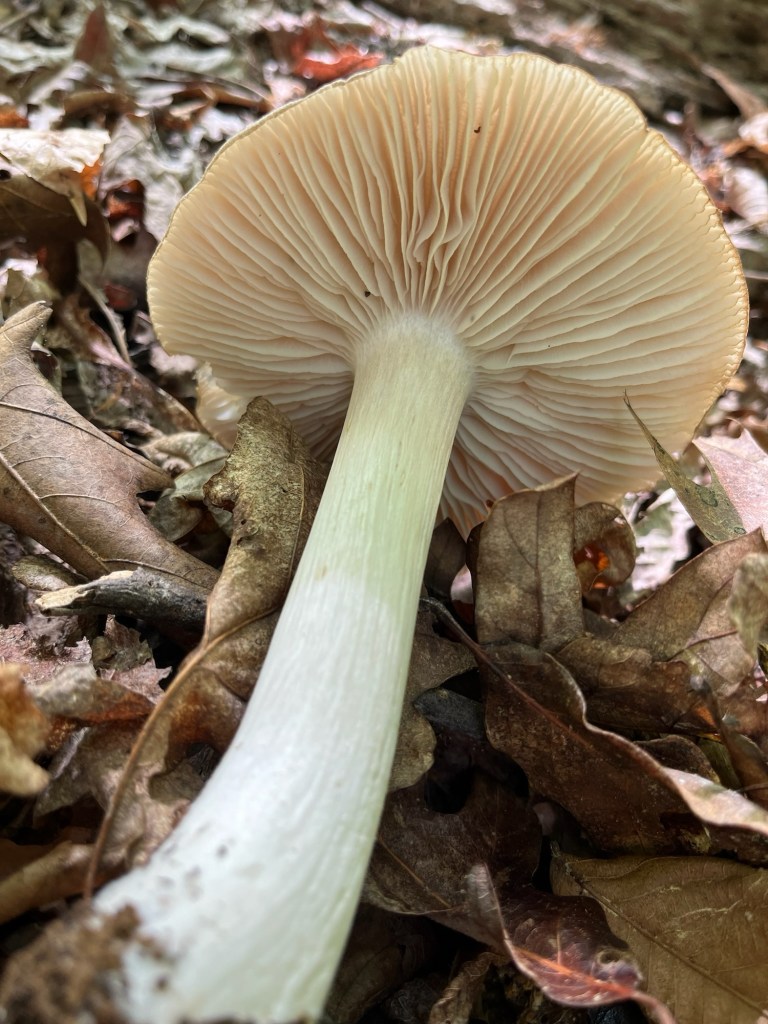
Eastern American Platterful Mushroom, Megacollybia rodmanii. One of the first mushrooms to appear after morel season. They pop up in May and June. They are decomposers of dead hardwood.
We found 9 or 10 of these Eastern American Platterful Mushrooms on the south side on the slope just above the waterway. They were big and impressive emerging from the forest litter. We’ve been searching for morels for months and hadn’t seen much of any fungi. They were a delightful sight for sore eyes. They are not delicious and some have been sickened by them despite the name “Platterful” so we left them there.
Top of the Megacollybia rodmanii.
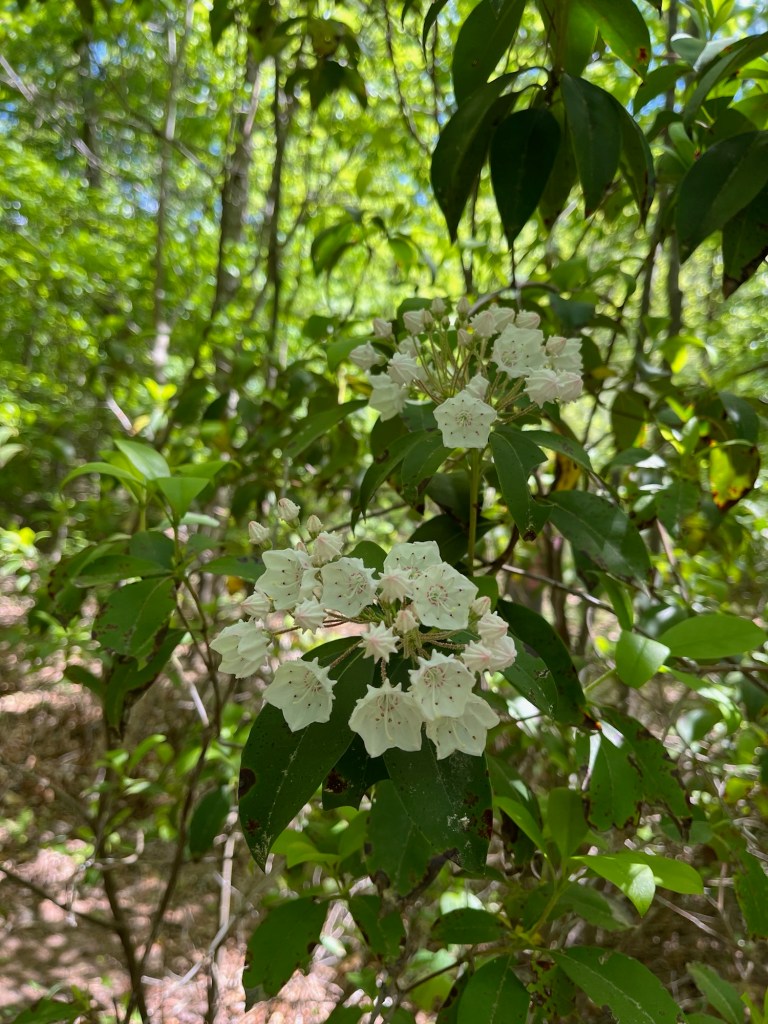
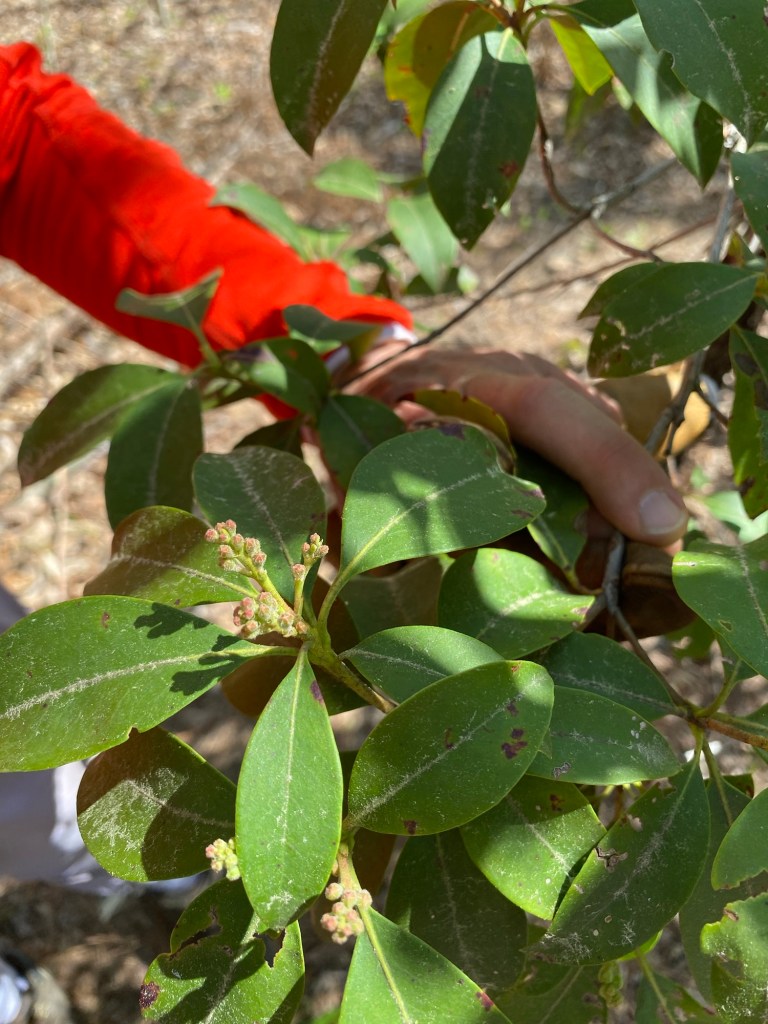
Mountain laurel blooming. A nitrogen fixer found throughout the farm. Early Lowbush blueberry flowering along the southern set back line.
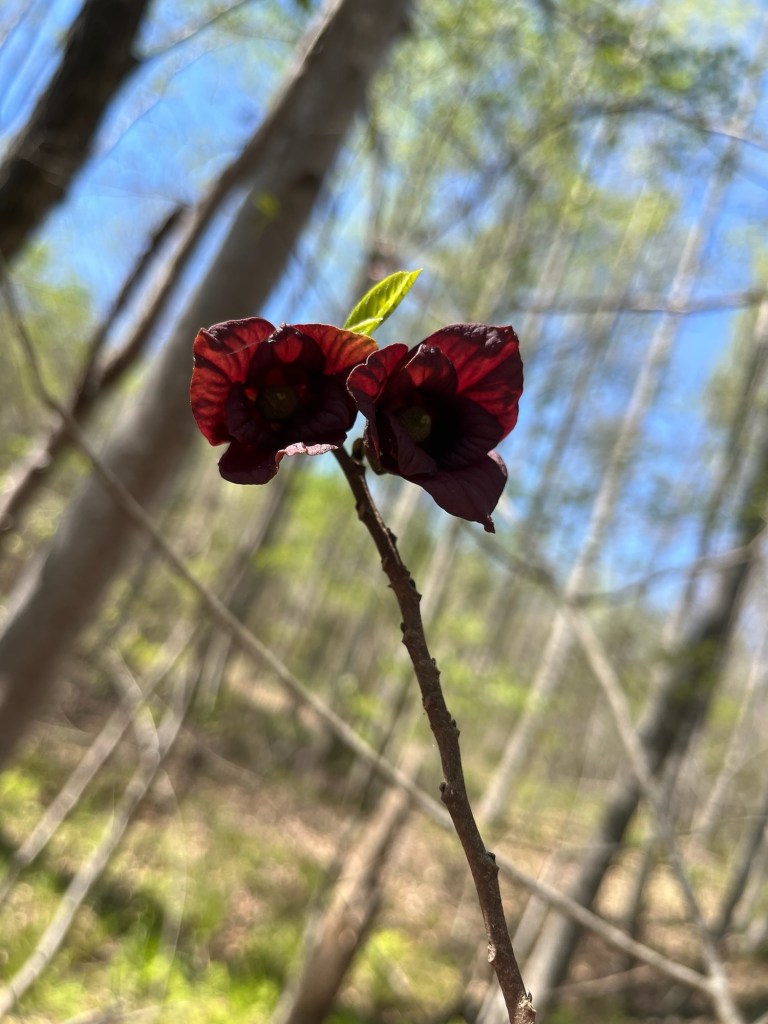
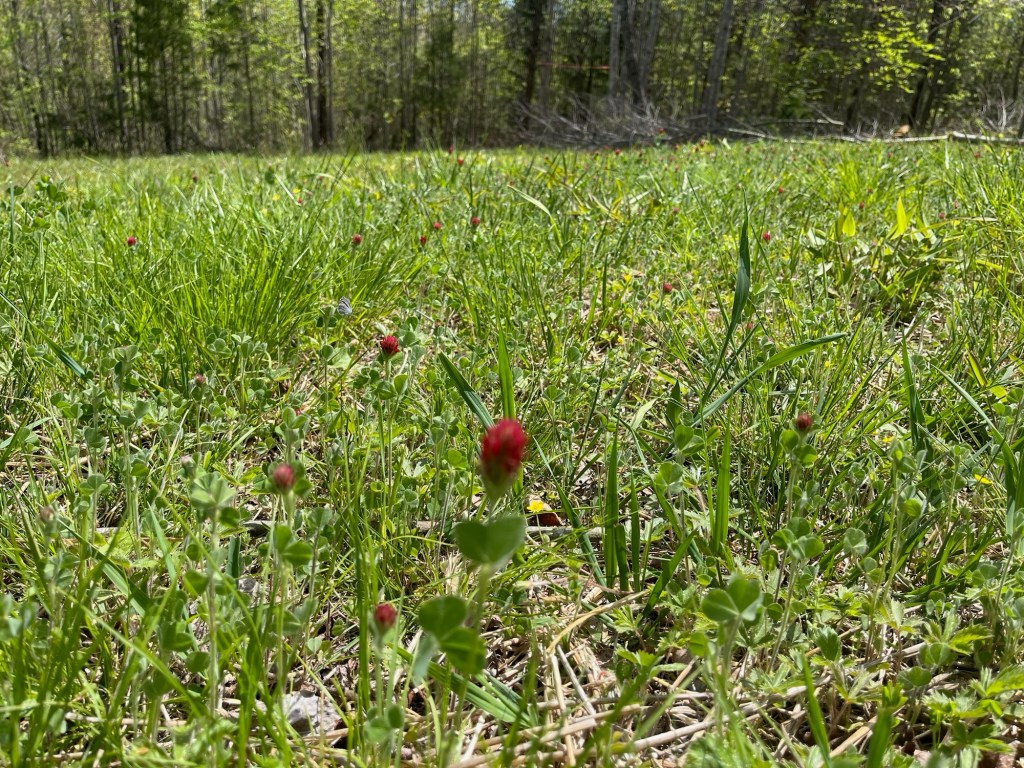
Yesterday in the forest,we found pawpaws blooming and blueberries flowering and fruiting, and in the clearing we found our first cover crop of crimson clover flowering. Butterflies and other insects were enjoying the flowers.
We found about 20 pawpaw trees with flowers and plan to get back out there to pollinate them by hand within the next few days. We saw hundreds of blueberry bushes flowering with some fruit beginning to form. Mountain laurel budding up. Crimson clover flowering. The butterflies were all over them. South property line with mayapples in the wet weather gully.
We are constantly amazed by the abundance of food growing naturally in the forest. We look for ways to encourage and support the continued growth and development of a healthy and sustainable ecosystem.
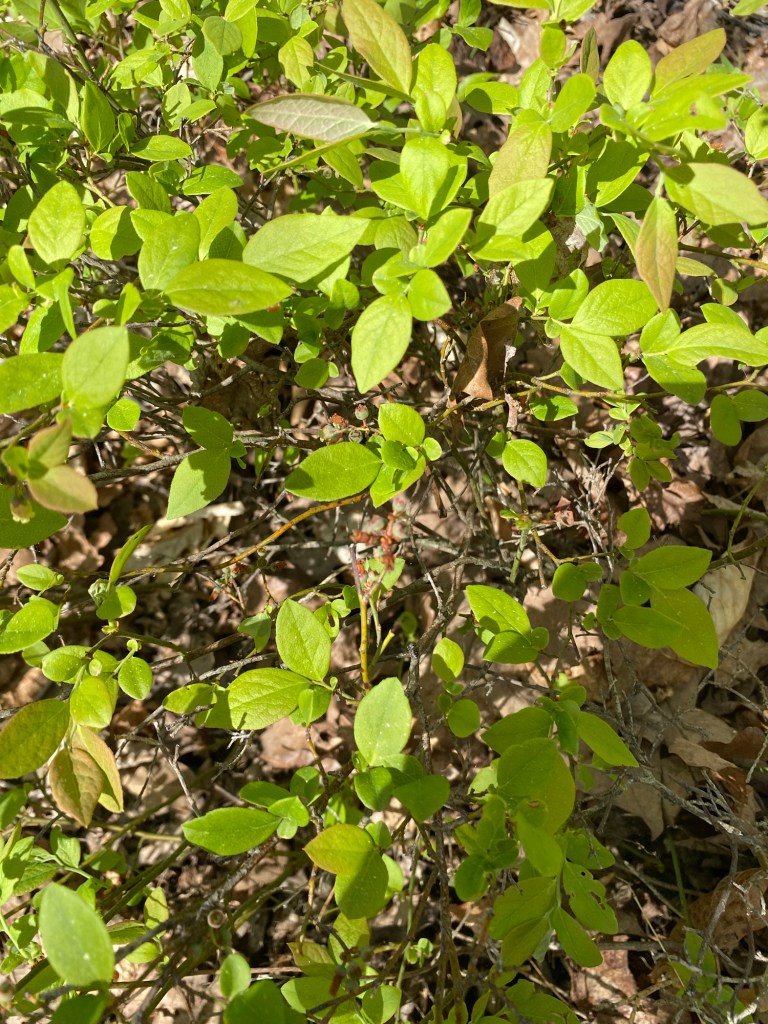
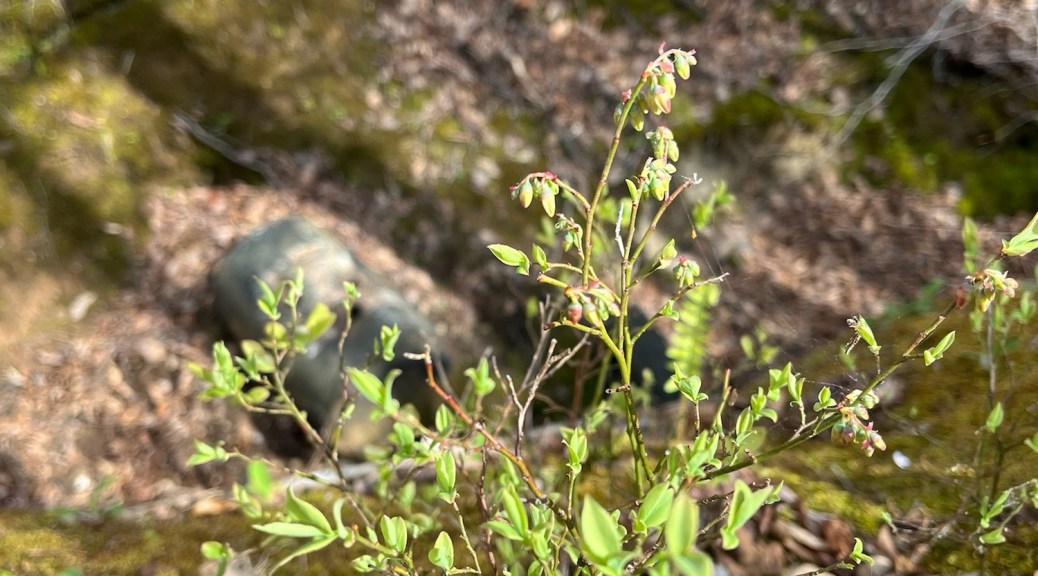
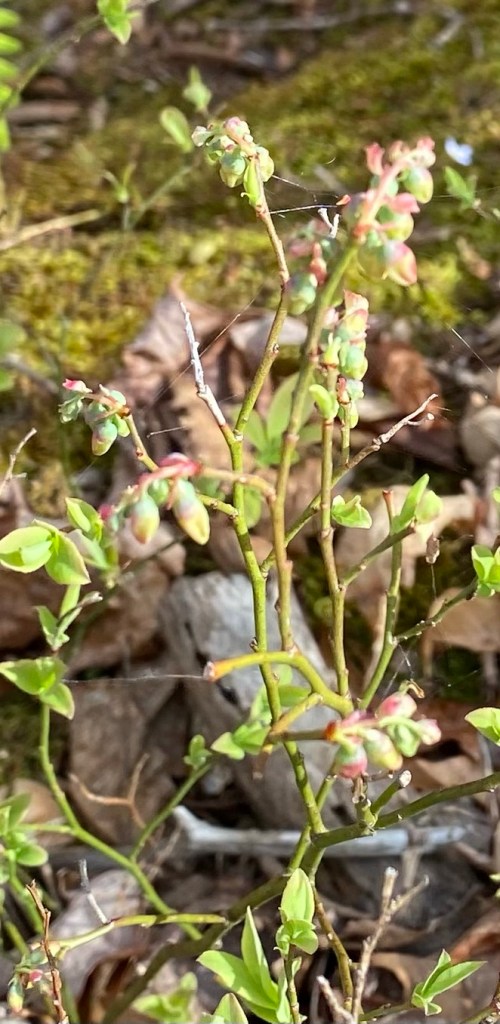
Yesterday we went over for a quick visit, and to our delight, we saw the blueberry bushes were flowering and getting berries.
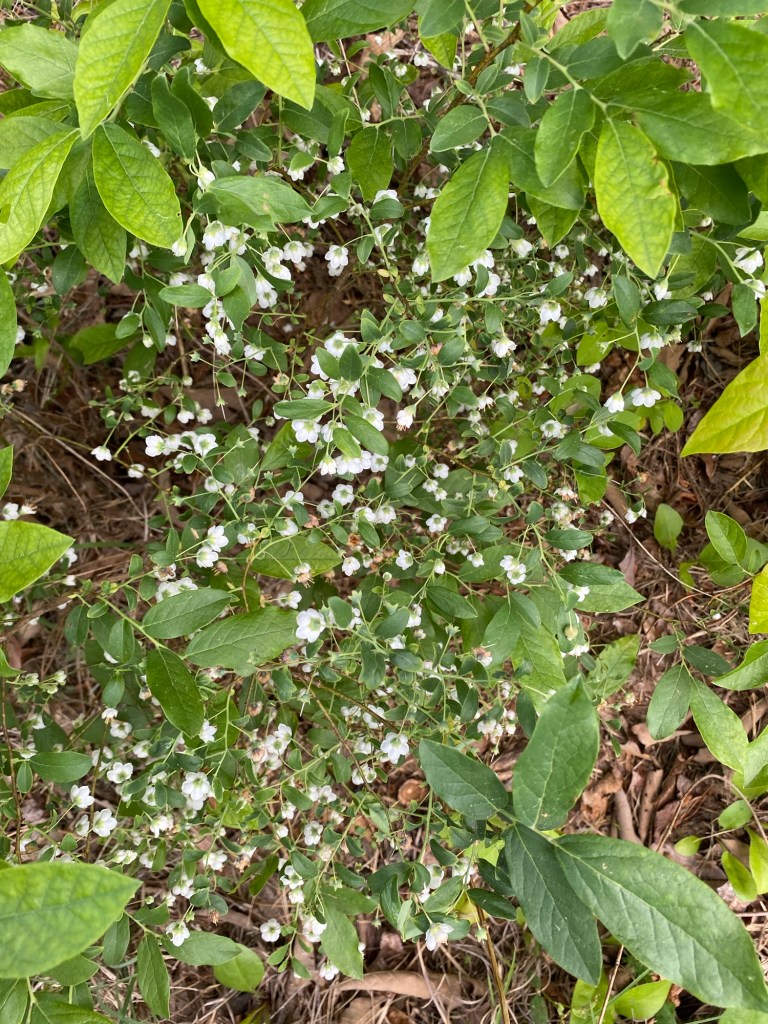
Vaccinium pallidum, early lowbush blueberries found in a patch at the bottom of slope near the waterway.
We’d been watching them and noted a few weeks ago they were leafing out. We have observed hundreds of them all throughout the forest. We’ve read that they are more productive when they have plenty of sun.
These fruits are eaten by terrestrial turtles, black bears, coyotes, foxes, raccoons, deer and many bird species including wild turkeys, grouse, blue jays, robins, wood thrush and eastern bluebirds. These wild blueberries are smaller and sweeter and grow in acidic soils that are moist and well draining.
We continue to marvel at the abundance of food growing wild in the forest and feel lucky to be able to caretake this incredible environment.
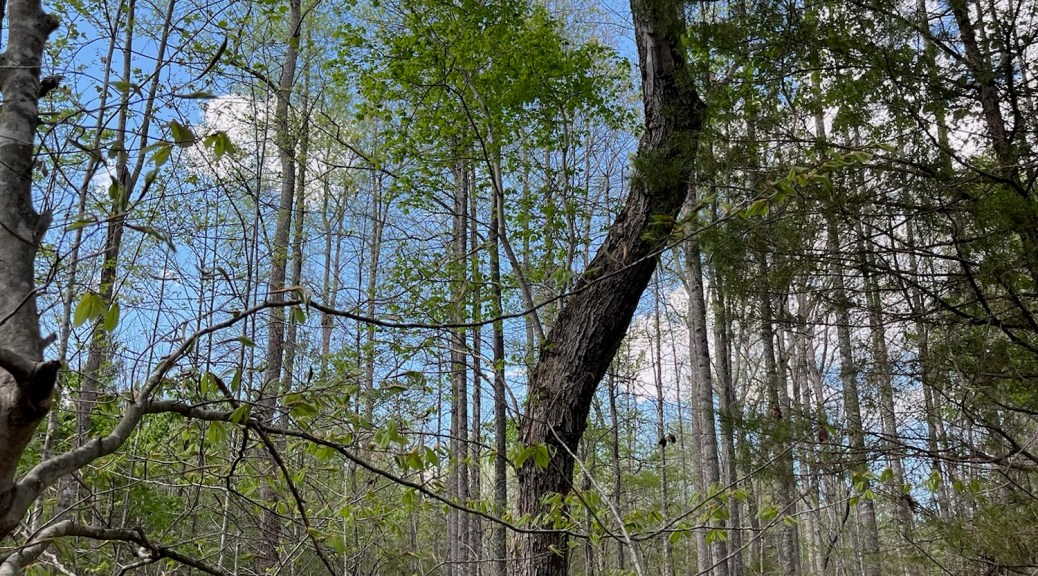
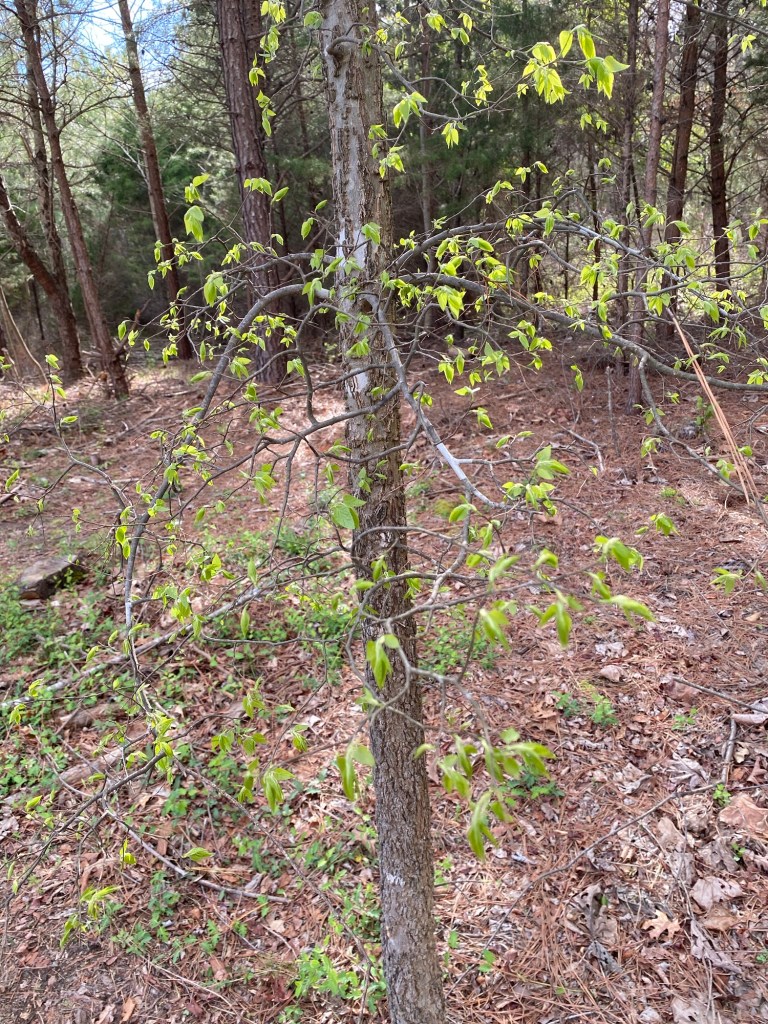
We also noted the tulip poplars, dogwood and sugar hackberry trees are all beginning to leaf out. The transformation of the forest to green for summer has already started.
Sugar hackberry leafing out up top near the clearing. Late last summer, we saw leaf cutter bees all over this tree and oval holes appear on the leaves of this tree. We were excited to learn that these solitary bees harvest the leaf circles to line their nests. 🐝