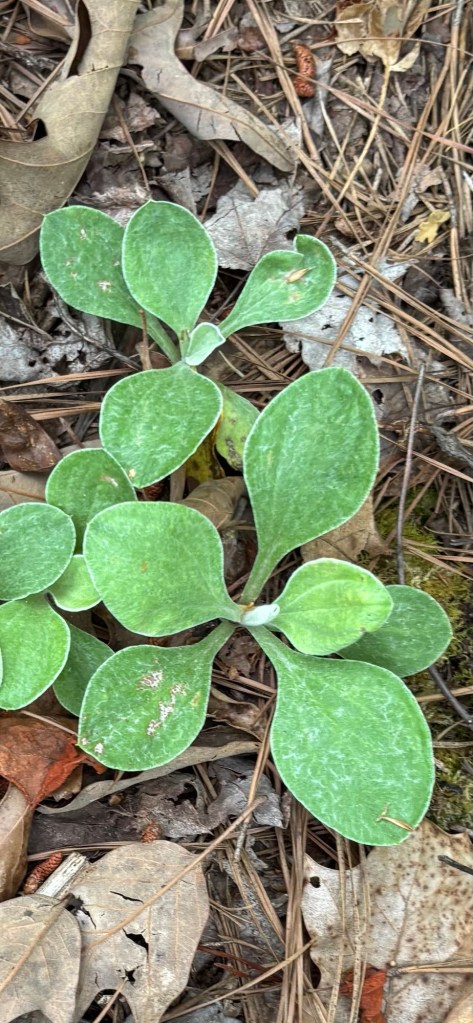
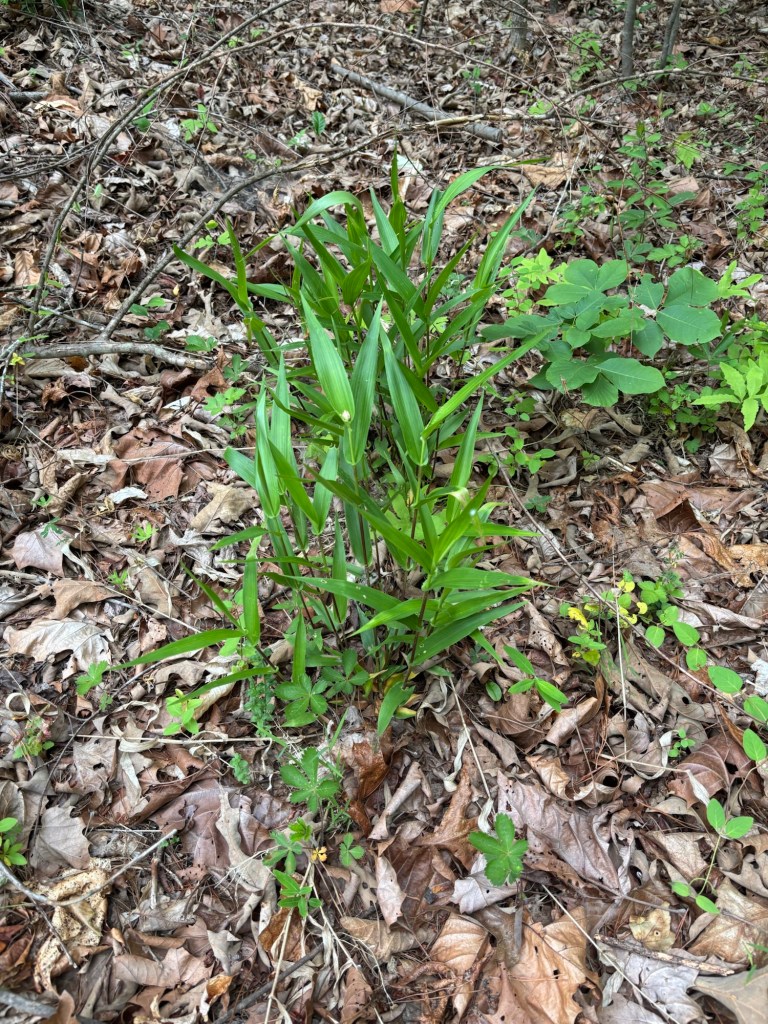
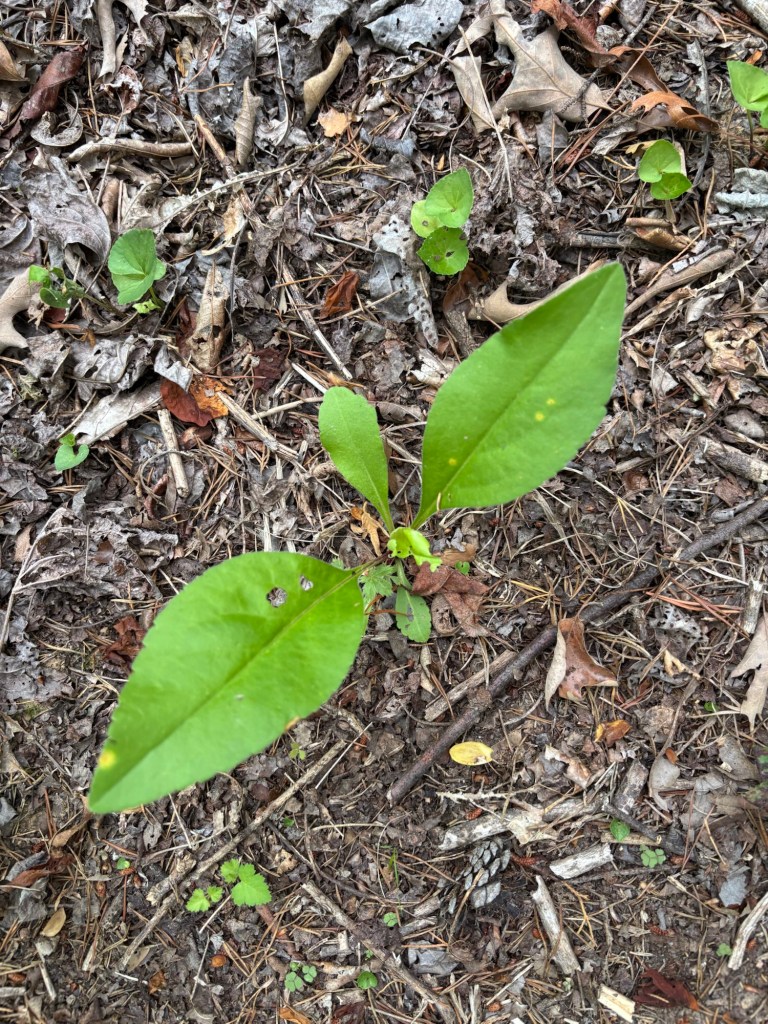
Antennaria parlinii, Parlin’s Pussytoes, found along the old farm road near the culvert. It’s a native, mat forming perennial ground cover. Along with Antennaria plantaginifolia, plaintain-leaved pussytoes, which we found earlier this spring throughout SAFF, they are drought tolerant, deer resistant and low maintenance. They are also larval hosts for the American lady butterfly. The spreading root system stabilizes soil and controls erosion.Dichanthelium clandestinum, deertongue, a native perennial grass good for erosion control and a food source for birds like turkeys and sparrows.
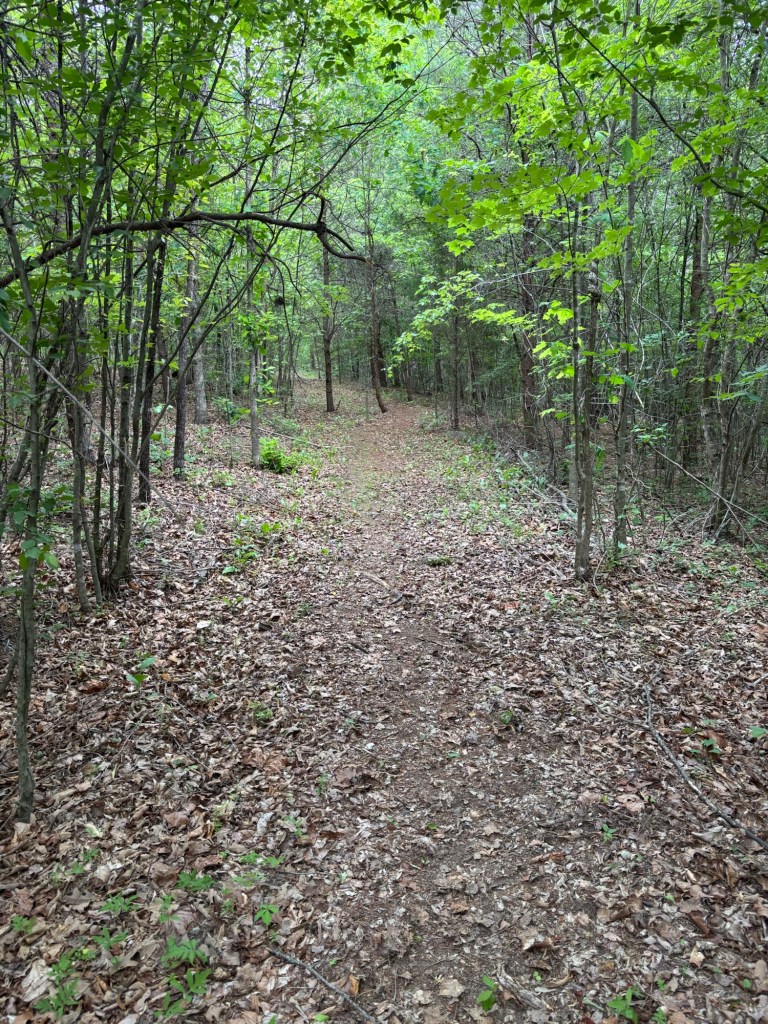
Yesterday afternoon at SAFF it was cooler and windy before the storms hit. 72 was the high with thick cloud cover. The rain gauge was empty. Not even a drop. We took the chainsaw with us as we walked our new access road to the old farm road and cleared stumps and smoothed out any pits. We’ve named it Persimmon Road in honor of all the Diospyros virginiana trees we’ve found in the area. We continued all the way down the old farm road past the culvert and opened up the back half to the tractor. Then we came back down and turned Orchard Hill Trail into a road for the tractor and trailer to access as well. We are officially all the way in the new pawpaw patch of seedlings planted last year! We are very pleased to be able to get to them with supplies and mow paths and keep the area free from overcrowding the Asimina triloba. We are also now very well poised to continue planting this year’s seedlings right along up the hill with much less effort than last year.
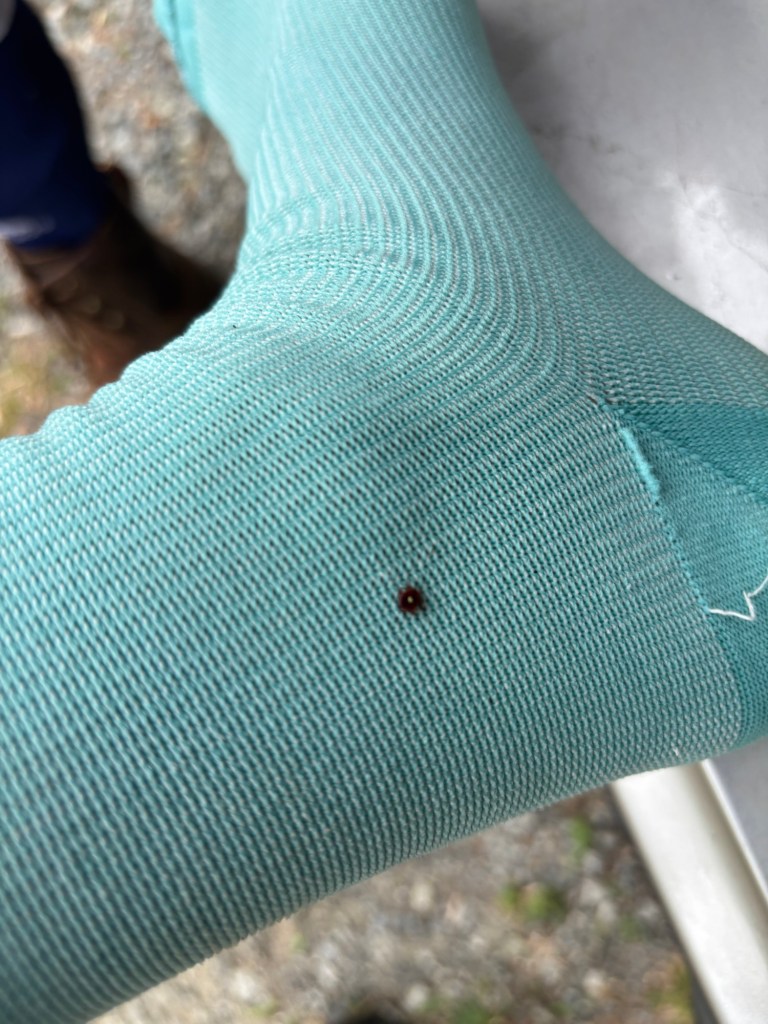
Everything was very dry and crunchy and yet we still had multiple lone star, Amblyomma americanum, tick encounters. Two nymphs and an adult female found on our socks not looking well after being exposed to the Sawyer’s permethrin we soaked them in. We got more blurry pictures of the lone star ticks. Most other types of ticks will stay burrowed into moist underground areas while it’s this dry. The lone star ticks are aggressively seeking hosts all over the east coast and midwestern United States.
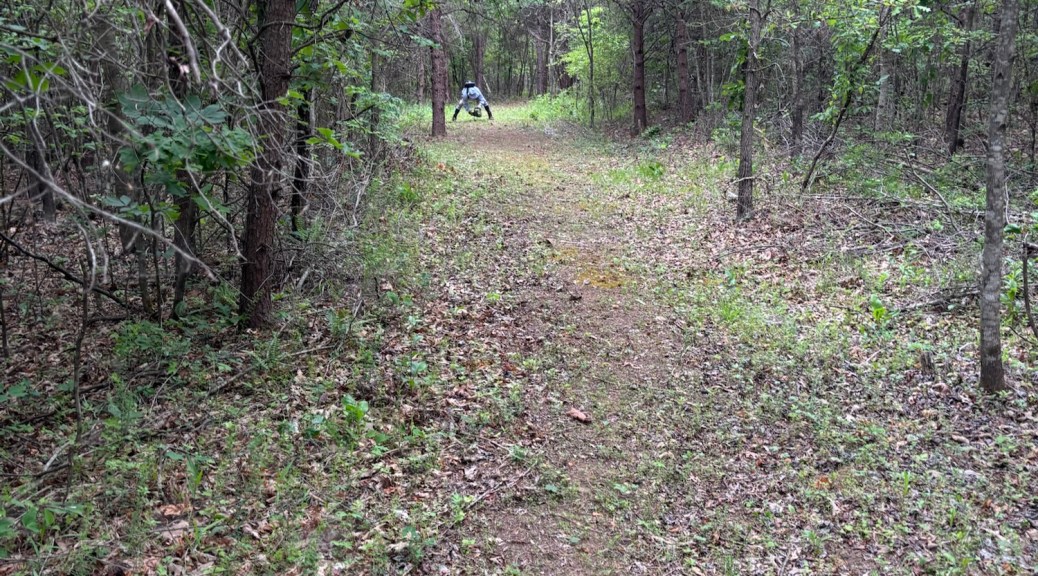
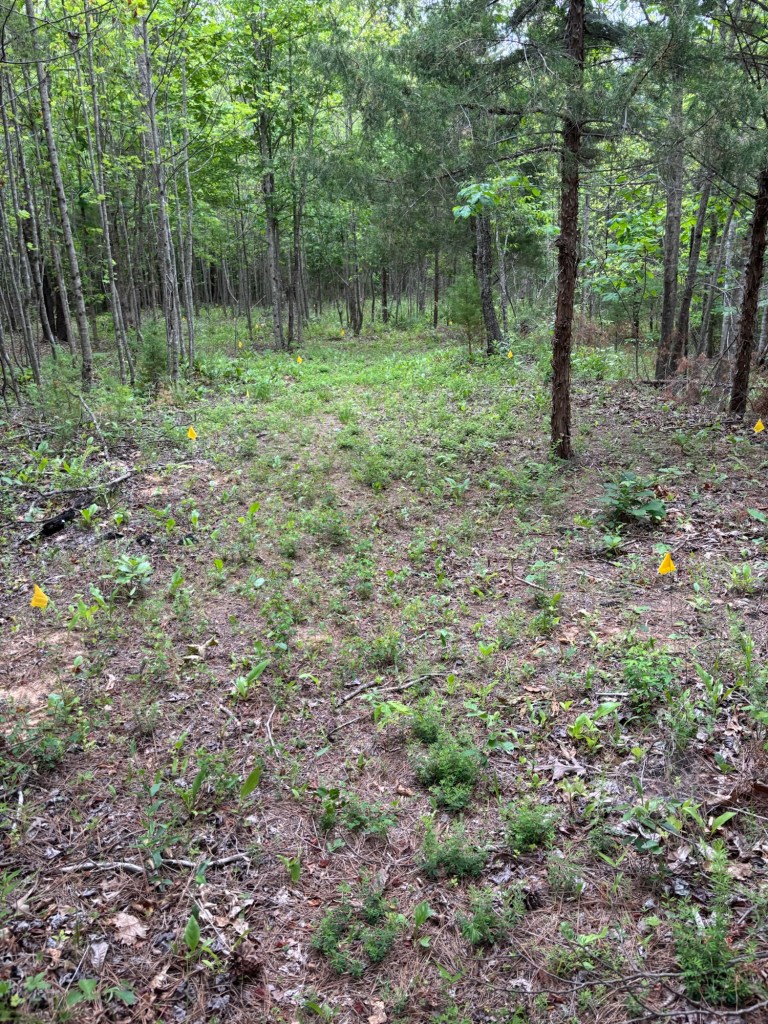
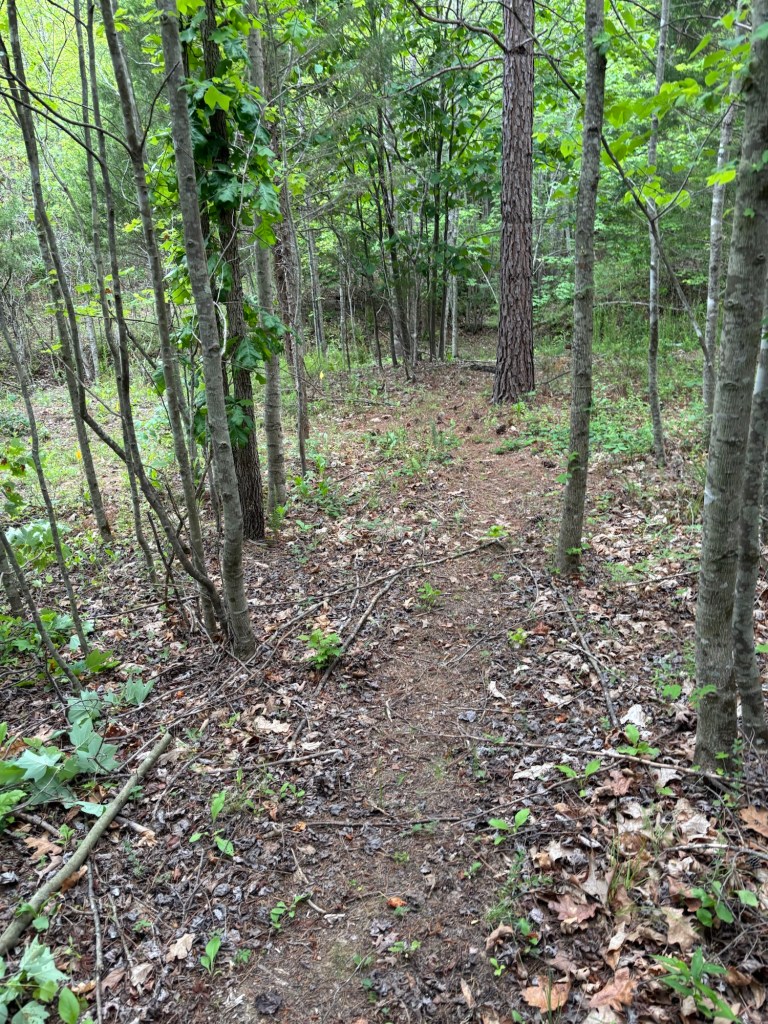
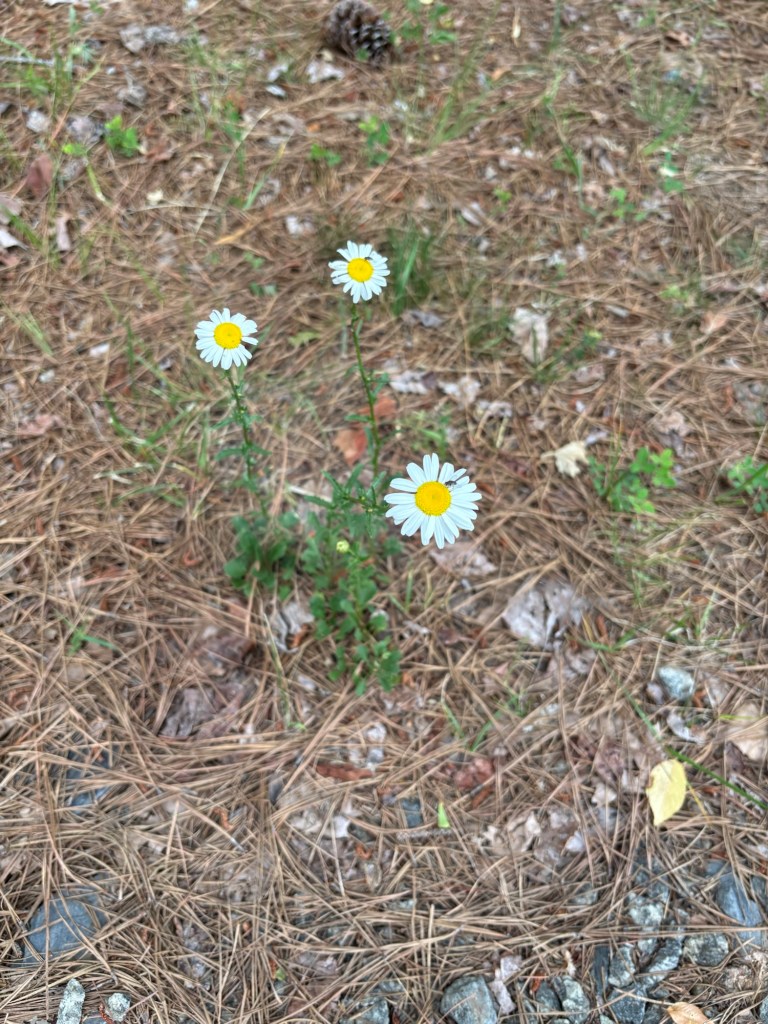
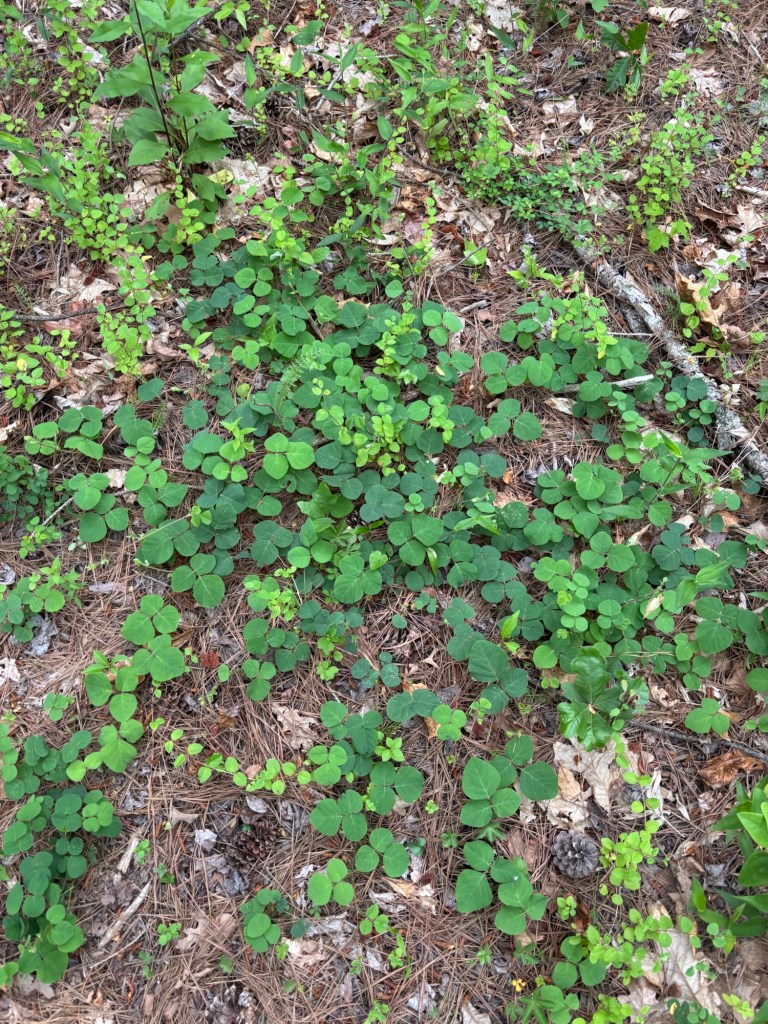
Old farm road looking northeast.Yellow flags show where the Rockfish River native Asimina triloba seedlings are planted. Most of the plants growing in the middle are nitrogen fixers and will be chopped and dropped by the tractor to feed the trees and keep our paths clear. Besides pulling it out, we have plans to use cardboard and heavy mulch to help abate any invasive privet, Japanese stilt grass or honeysuckle.Orchard Hill Road just off the new Pawpaw patch of seedlings and cultivars planted the last two years.Leucanthemum vulgare, oxeye daisy. An invasive from Europe that outcompetes in Virginia. It is classified as an aggressive weed. Desmodium rotundifolium, Round leaved trailing Tick trefoil, found below the loblolly pine at the Asimina triloba seedling orchard and all over SAFF. A trailing, mat forming native perennial legume valued as a nitrogen fixer and a food source for deer wild turkey and quail. It also serves as a larval host plant for butterflies such as Variegated Fritillary and the Southern Cloudywing. It is pleasing to look at with the light and dark shades of green and round leaves.Andersonglossum virginianum, wild comfrey, or blue hounds tongue, is a native perennial wildflower in the borage family. It’s a tough deer resistant woodland ground cover that stabilizes soil as well as prevents erosion. This is different than the European medicinal comfrey though it shares certain properties and also some toxic alkaloids.
We watched the FarmCam last night and today. It’s been raining and storming and drizzling since about 5:30pm last night. Weather says .7” of rainfall in last 24 hours and .45” expected in next 24 hours. 🎉🙌🙏🏼
An adult female lone star tick dying of permethrin poisoning.