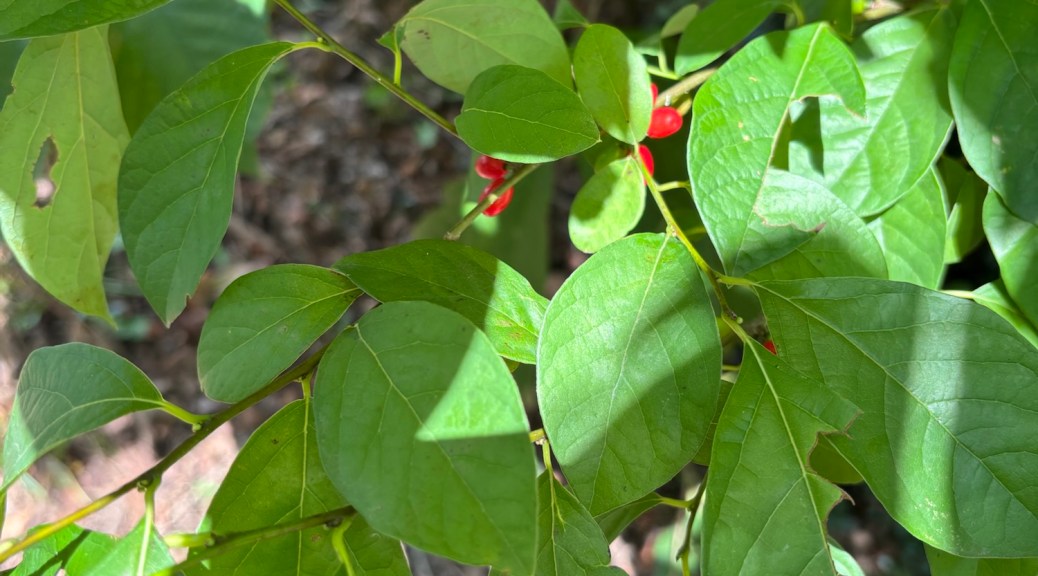
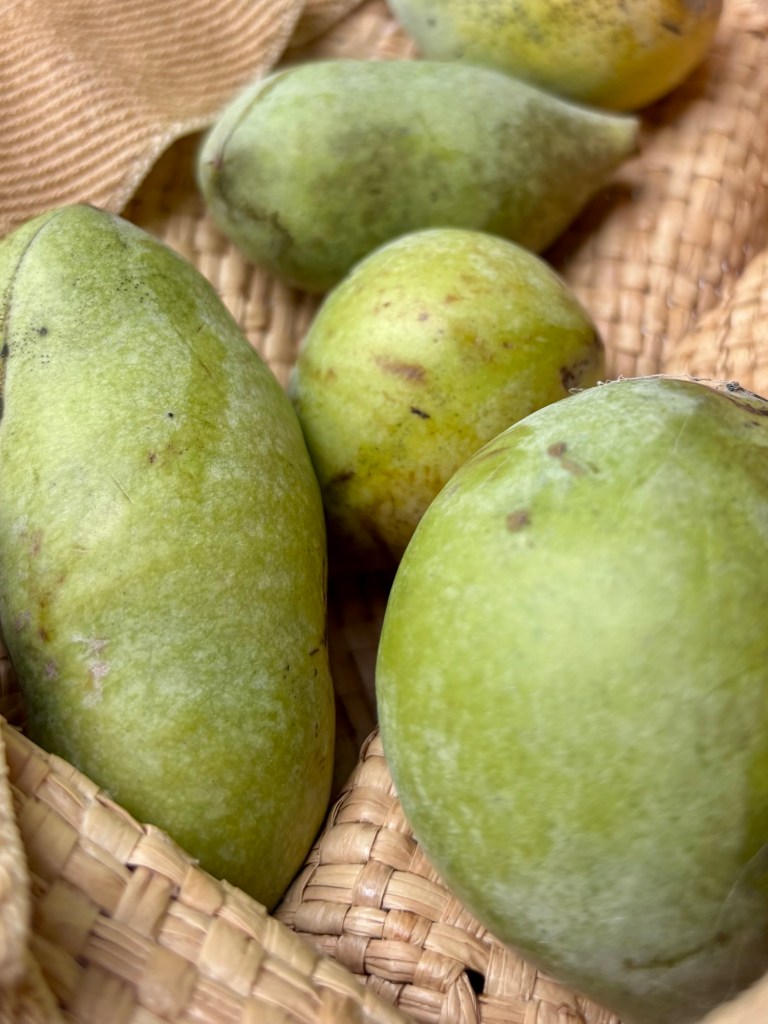
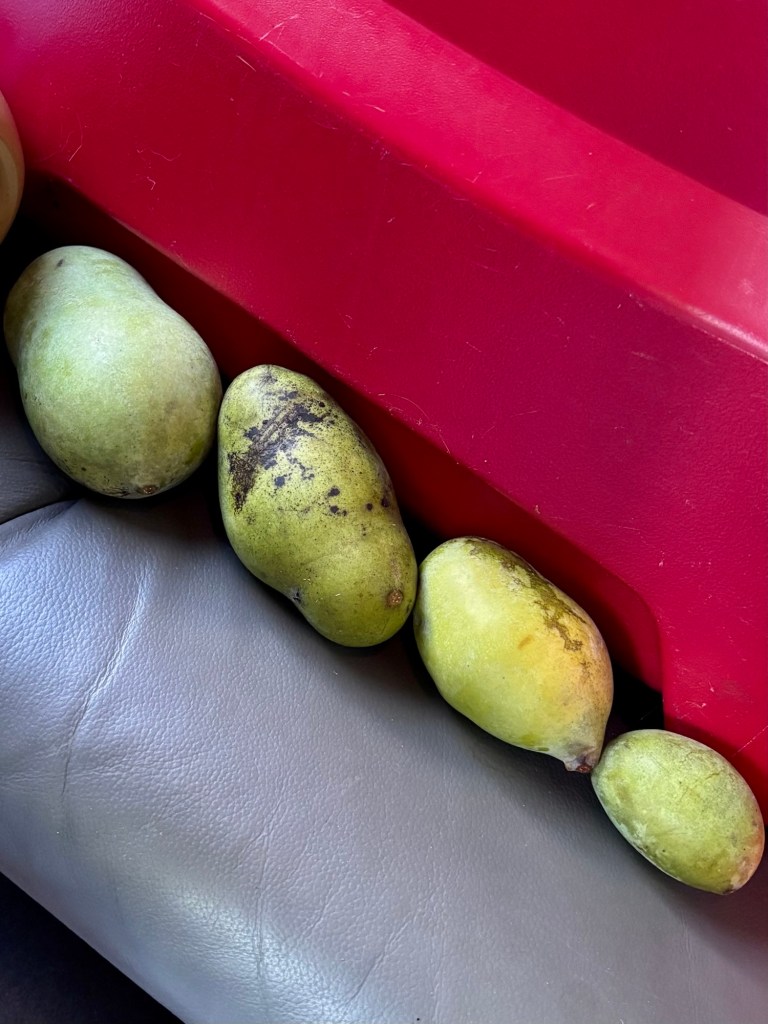
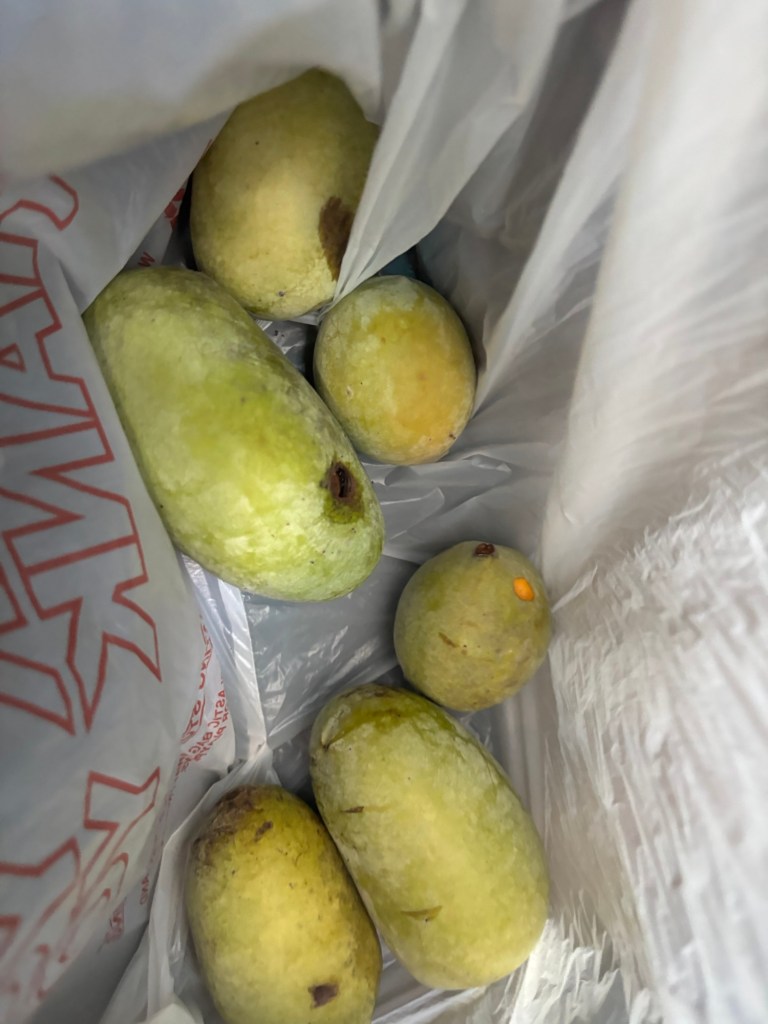
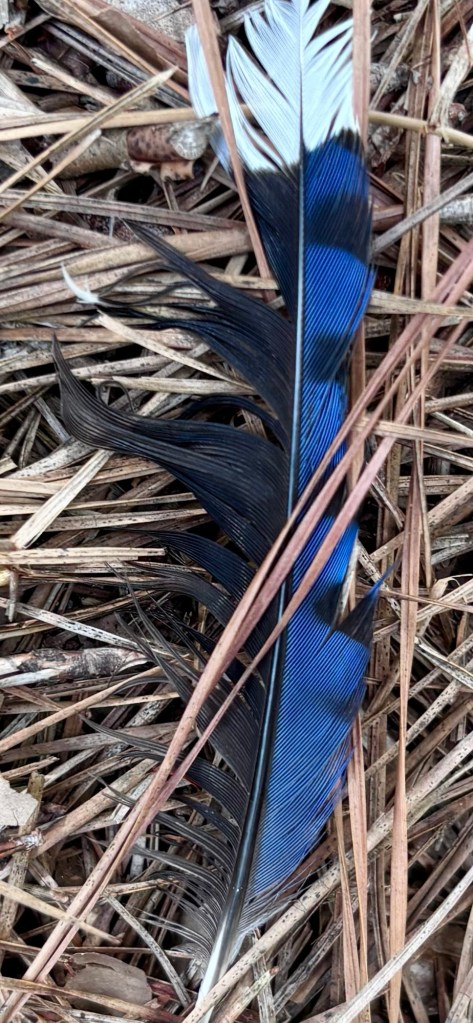
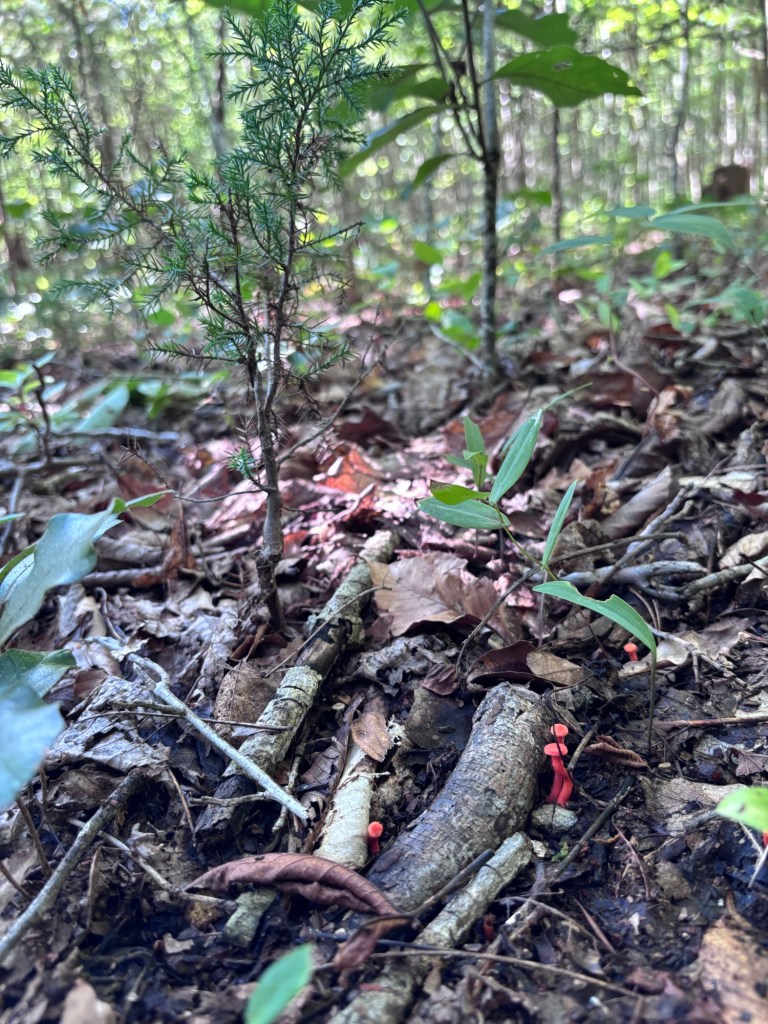
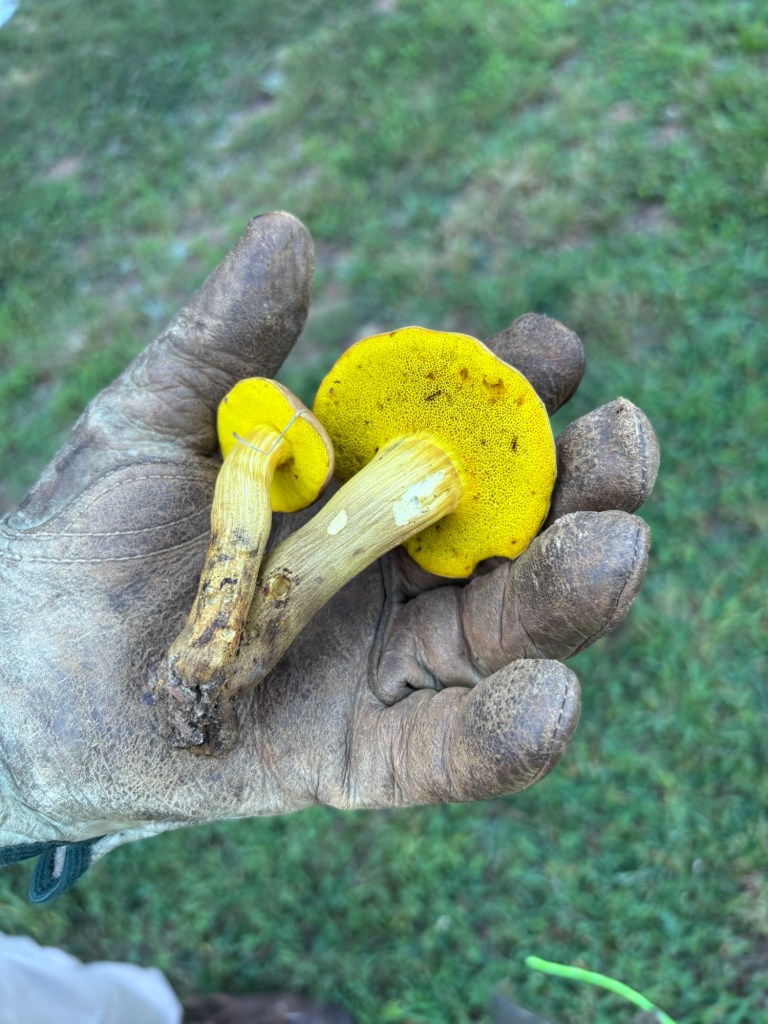
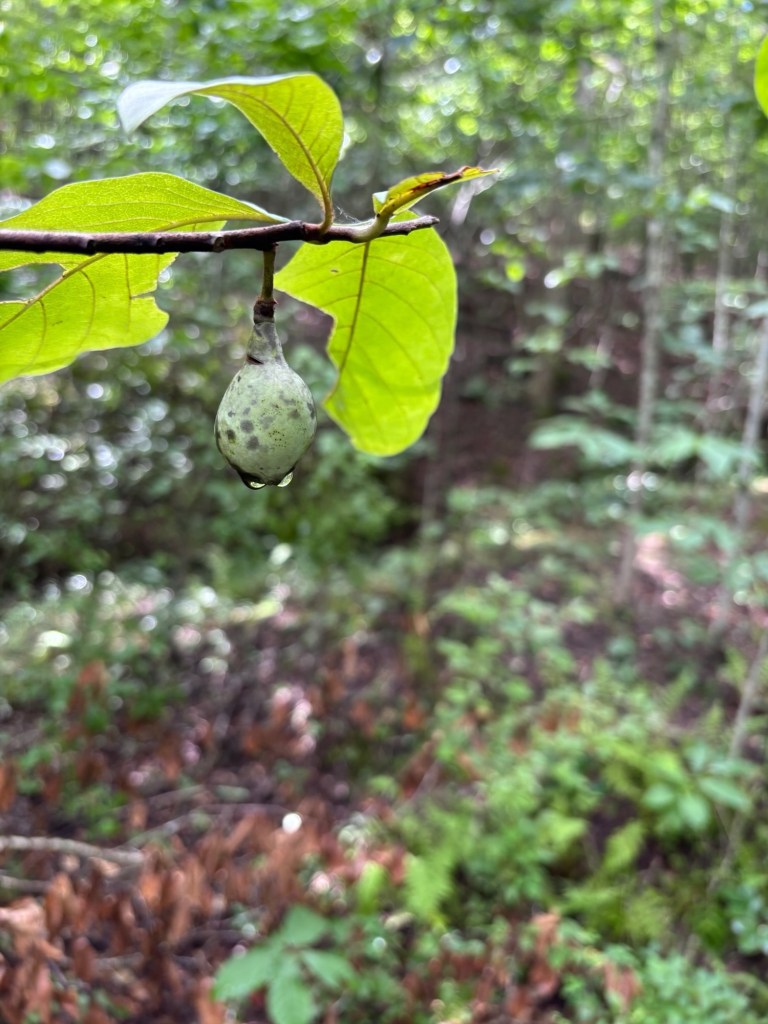
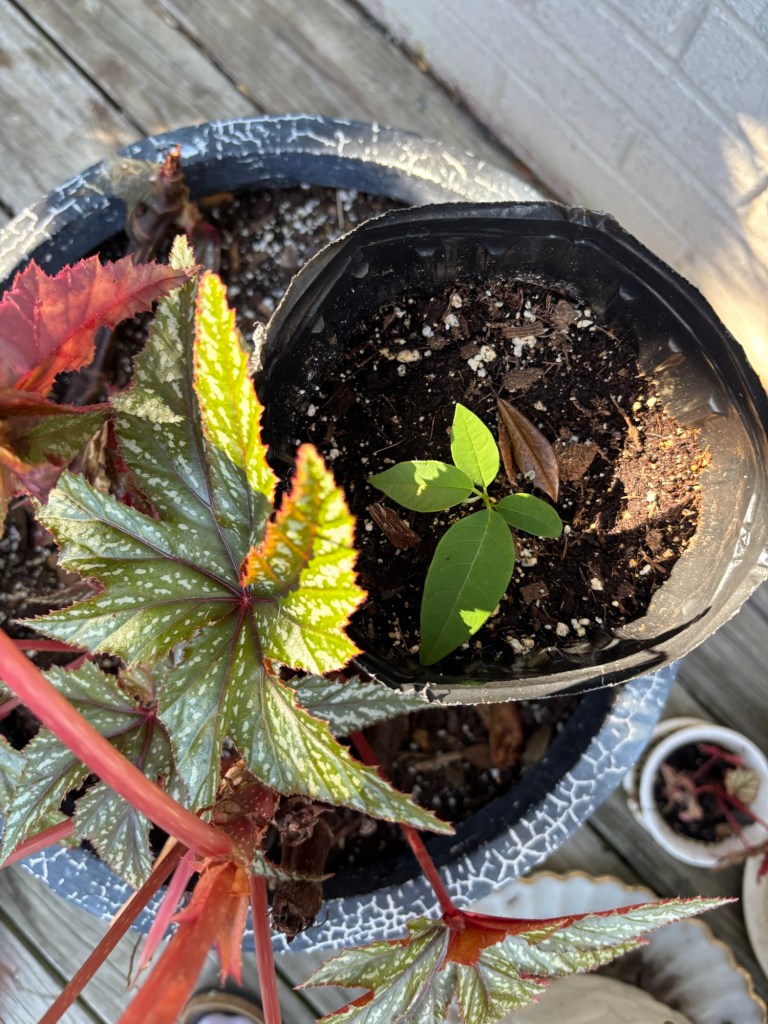
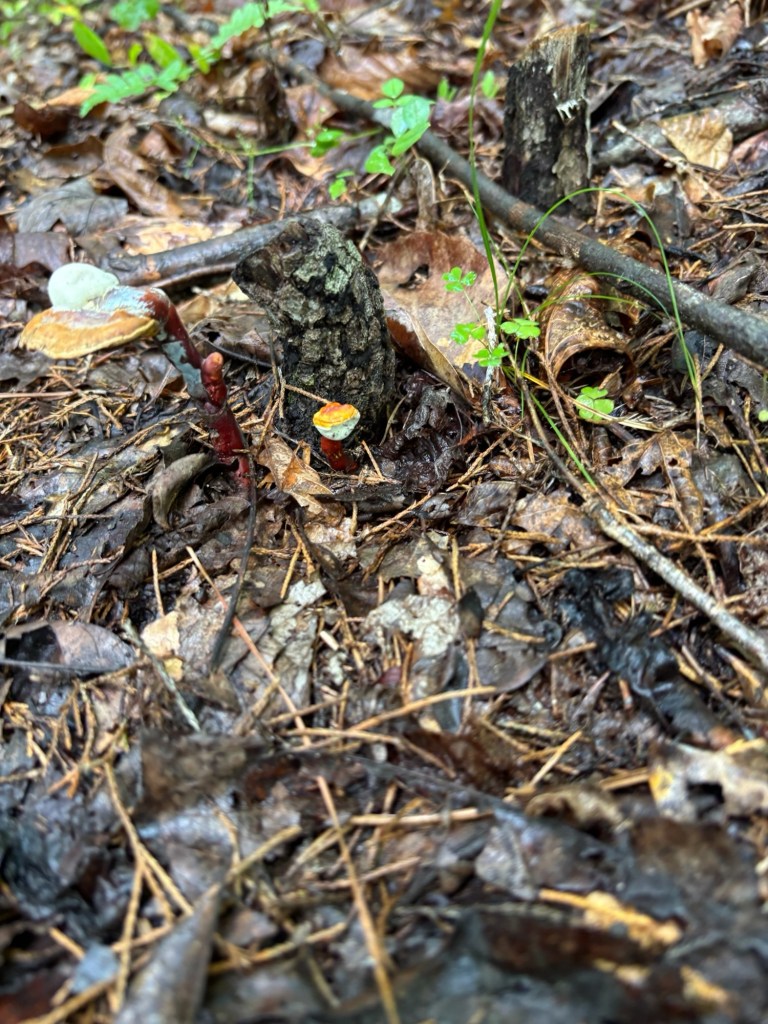
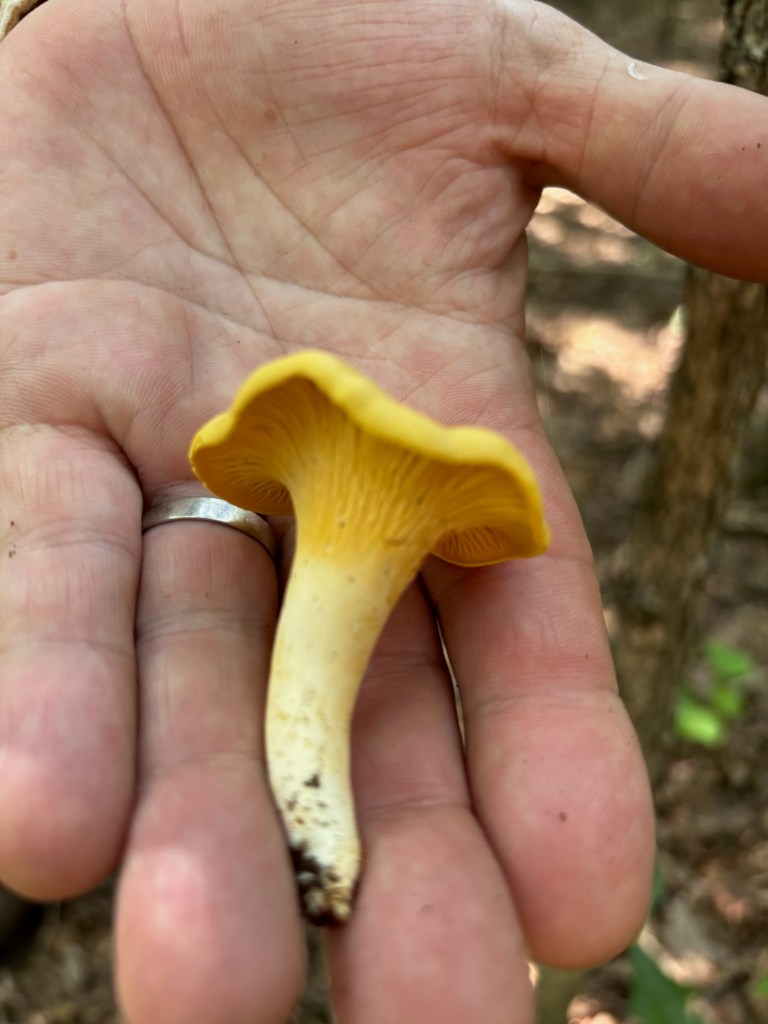
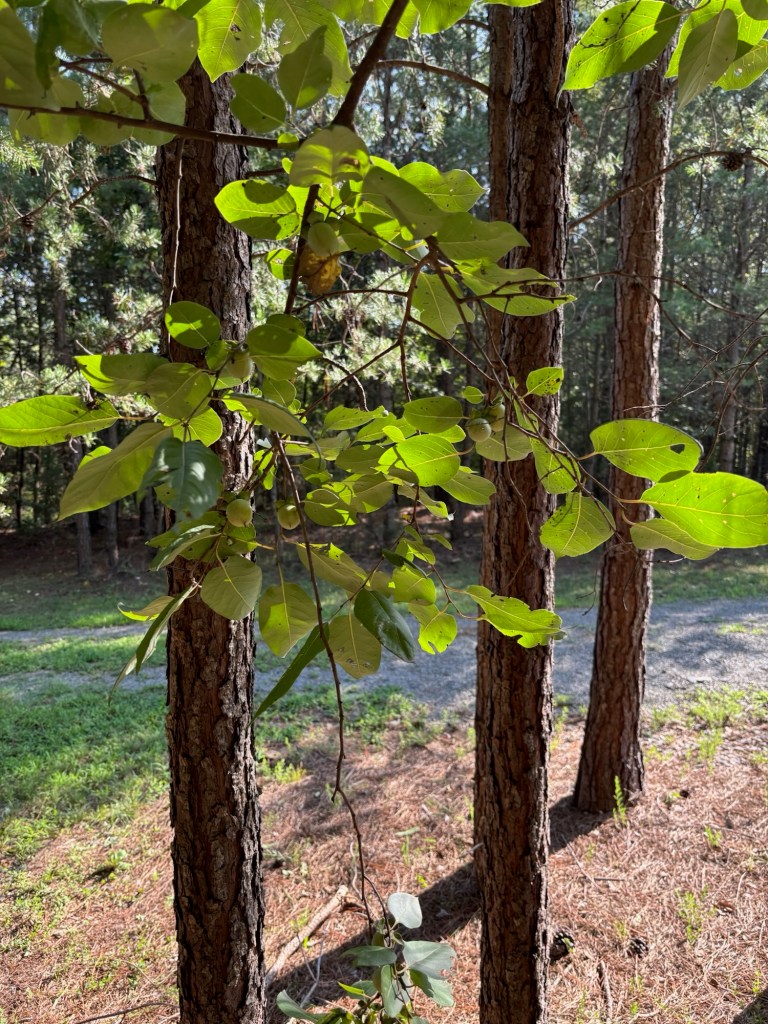
Asimina triloba dropping from trees in Central Virginia. Foraged on the way to the farm. Our first finds of the year in Afton Virginia. We collected 50 seeds from these pawpaws and have them stored to cold stratify over the winter. Almost another inch last week in Buckingham Virginia and more opportunities for storms in the next few days. We spread little bluestem (Schizachyrium scoparium) seeds around the exposed areas at risk of runoff in storms yesterday. Another blue jay feather found up top near the driveway.Chantharellus cinnabarinus, red chanterelle, found throughout SAFF. A choice edible with false gills and bright red color found along wet weather lines. They are smaller than other chanterelles and hold up well in the pan. Aureoboletus innixus, clustered brown bolete, found near an oak. These are edible but we haven’t tried them. Pawpaws still hanging on in the clonal colony. We’ve been checking on them every time we’ve been out to SAFF.Annona cherimola, cherimoya, tree sprouting on the deck. This is a tropical tree which will need to be protected from our cold Virginia winters. Ganoderma growing along the main waterway at SAFF. Persimmon ripening on the trees up top.
We’ve been busy clearing paths for the tractor through the pawpaw seedling orchard, planting little bluestem on exposed ground and preparing to plant this year’s Asimina triloba seedlings. We have also cleared out some pines and hardwood trees crowded in around our American Persimmon trees and created an orchard up top near the road for them. Also, we planted several Juglans Regis, Persian walnut trees in the main clearing at SAFF. We have also been researching solar kits for home and SAFF and can’t wait to get what we need ordered and installed.
The past weekend has been a nice taste of cooler, fall weather on the way. The highs have been in the 80s yet there has been a nice breeze and crispness in the morning. We’ve been feeling so grateful for everything and especially the rain and the cooler temperatures.
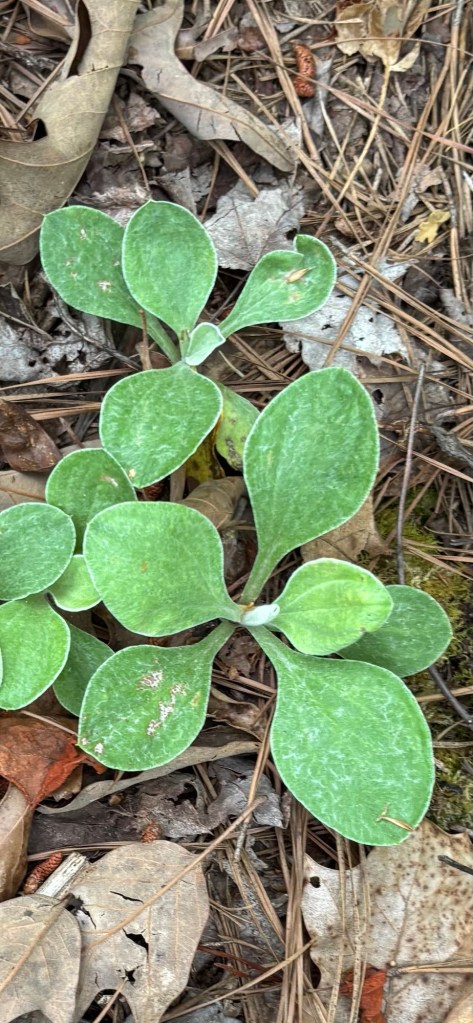
Antennaria parlinii, Parlin’s Pussytoes, found along the old farm road near the culvert. It’s a native, mat forming perennial ground cover. Along with Antennaria plantaginifolia, plaintain-leaved pussytoes, which we found earlier this spring throughout SAFF, they are drought tolerant, deer resistant and low maintenance. They are also larval hosts for the American lady butterfly. The spreading root system stabilizes soil and controls erosion.Dichanthelium clandestinum, deertongue, a native perennial grass good for erosion control and a food source for birds like turkeys and sparrows.
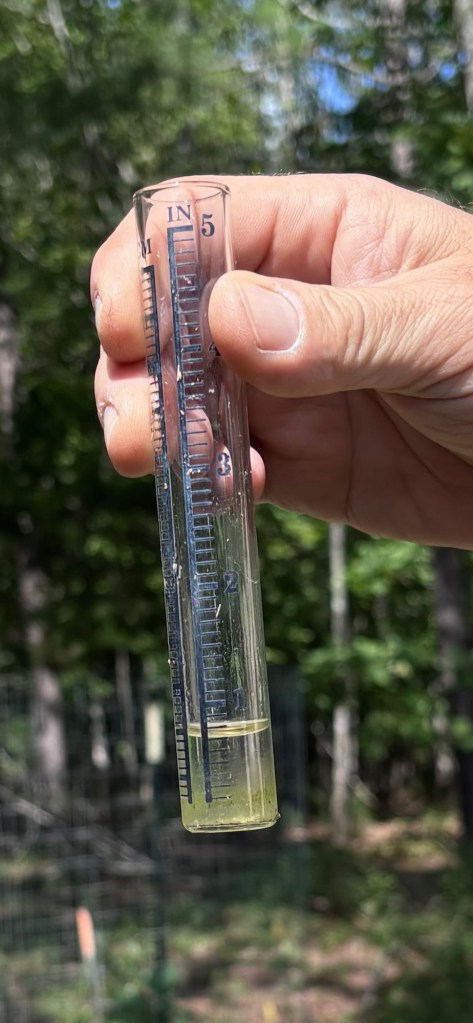
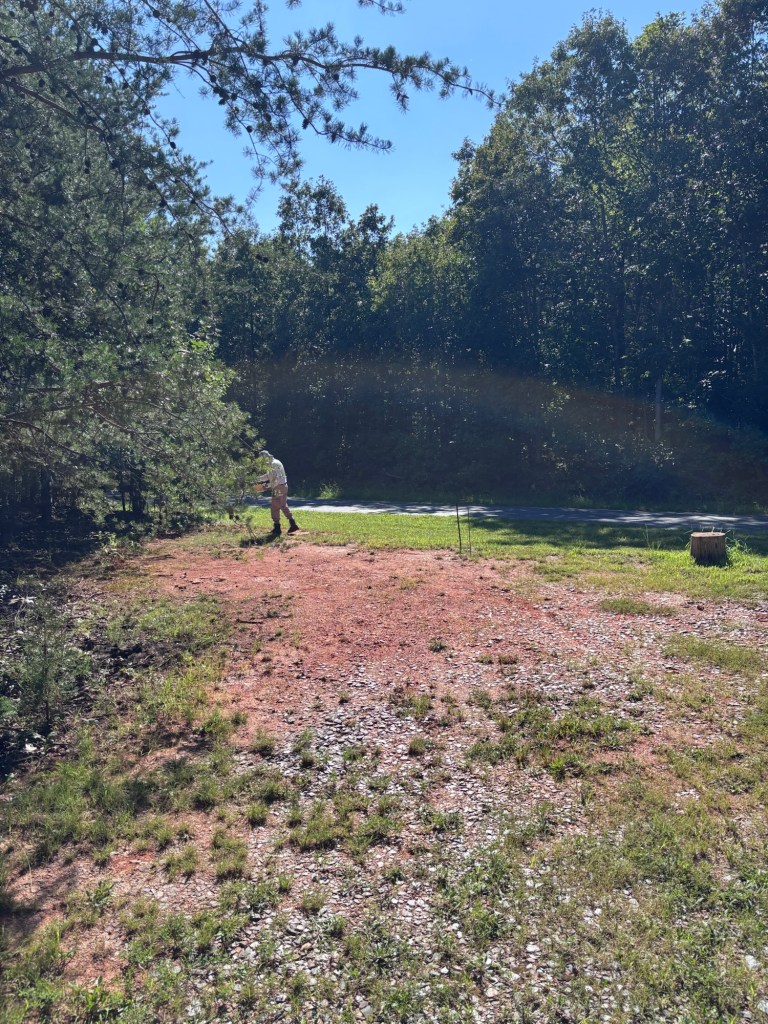
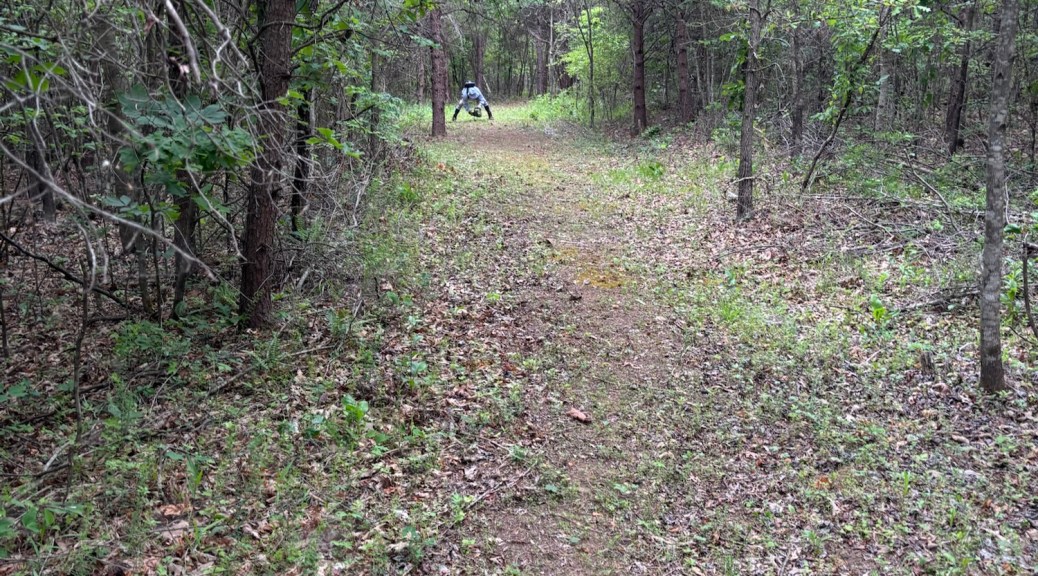
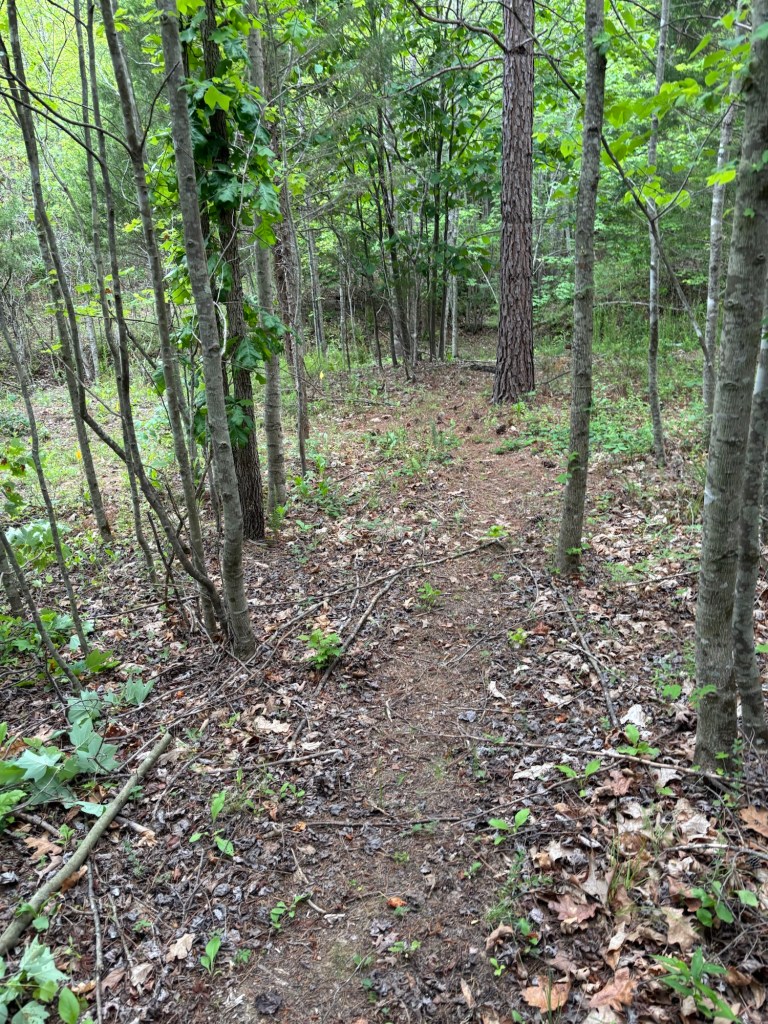
Yesterday afternoon at SAFF it was cooler and windy before the storms hit. 72 was the high with thick cloud cover. The rain gauge was empty. Not even a drop. We took the chainsaw with us as we walked our new access road to the old farm road and cleared stumps and smoothed out any pits. We’ve named it Persimmon Road in honor of all the Diospyros virginiana trees we’ve found in the area. We continued all the way down the old farm road past the culvert and opened up the back half to the tractor. Then we came back down and turned Orchard Hill Trail into a road for the tractor and trailer to access as well. We are officially all the way in the new pawpaw patch of seedlings planted last year! We are very pleased to be able to get to them with supplies and mow paths and keep the area free from overcrowding the Asimina triloba. We are also now very well poised to continue planting this year’s seedlings right along up the hill with much less effort than last year.
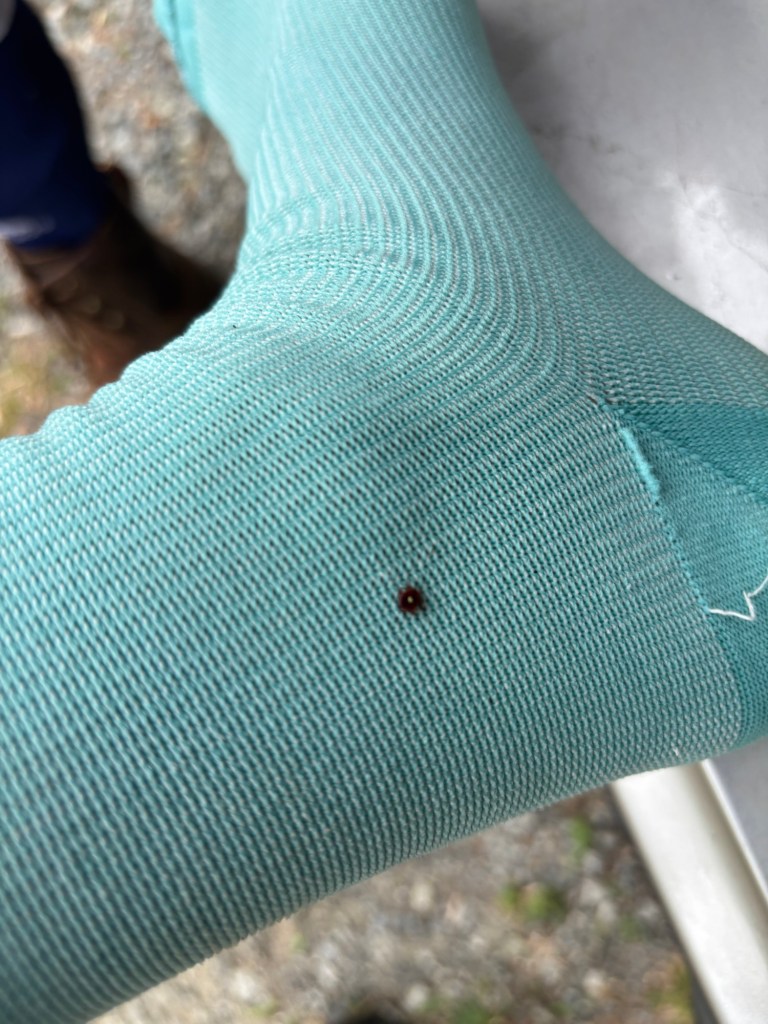
Everything was very dry and crunchy and yet we still had multiple lone star, Amblyomma americanum, tick encounters. Two nymphs and an adult female found on our socks not looking well after being exposed to the Sawyer’s permethrin we soaked them in. We got more blurry pictures of the lone star ticks. Most other types of ticks will stay burrowed into moist underground areas while it’s this dry. The lone star ticks are aggressively seeking hosts all over the east coast and midwestern United States.
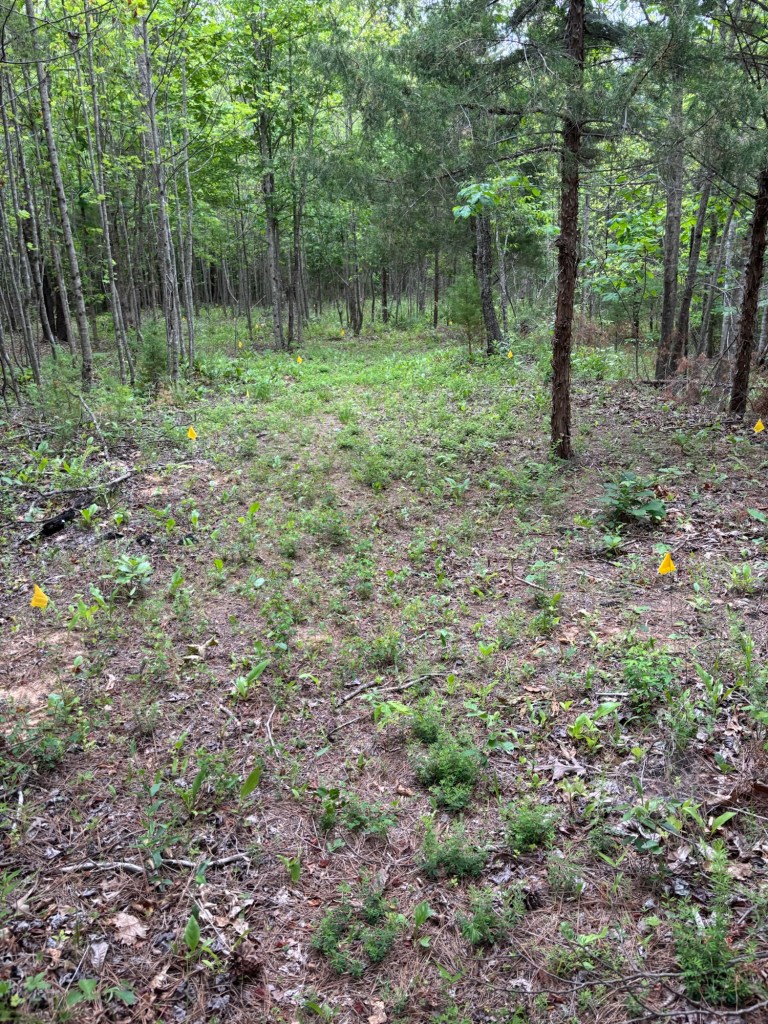
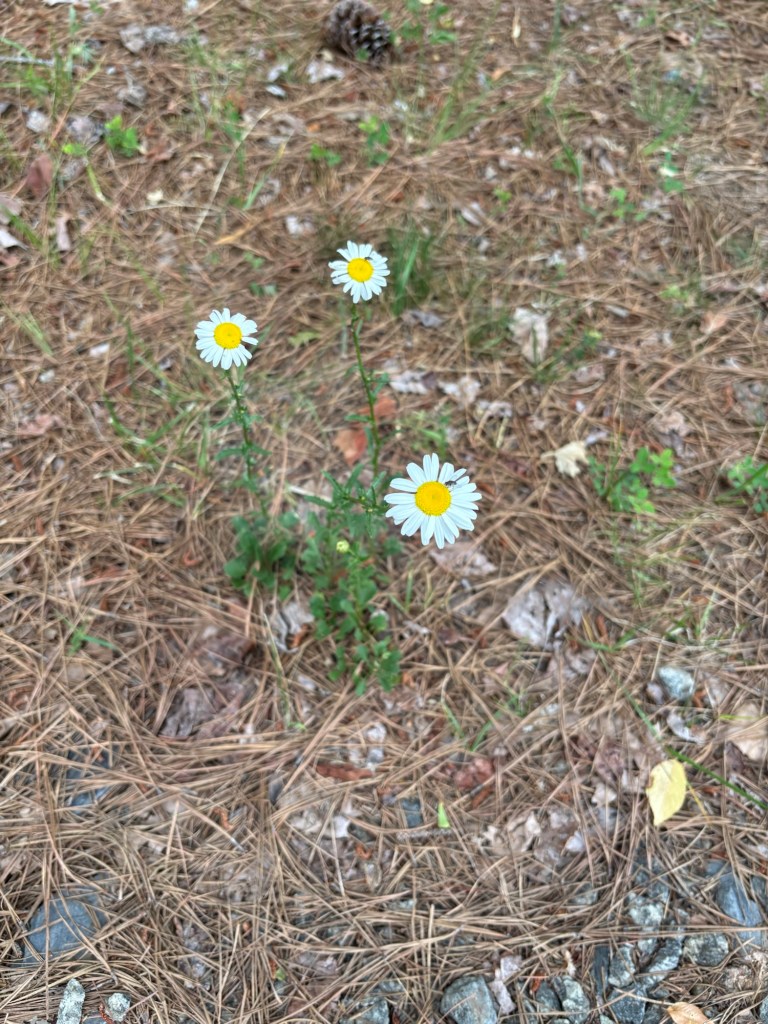
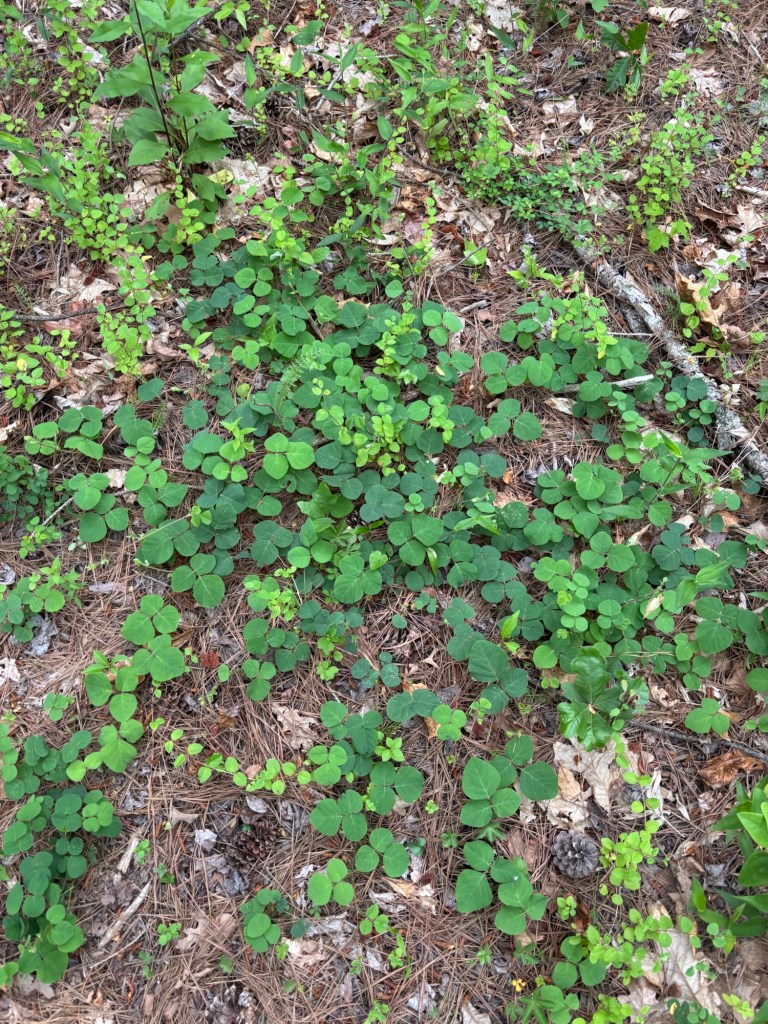
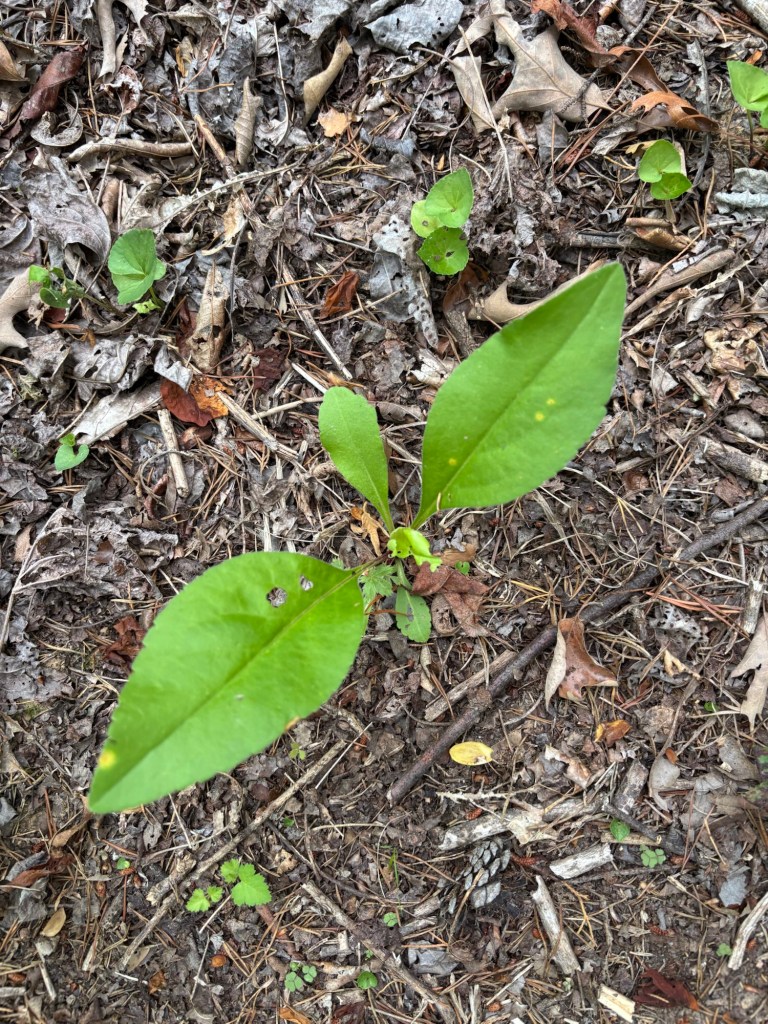
Old farm road looking northeast.Yellow flags show where the Rockfish River native Asimina triloba seedlings are planted. Most of the plants growing in the middle are nitrogen fixers and will be chopped and dropped by the tractor to feed the trees and keep our paths clear. Besides pulling it out, we have plans to use cardboard and heavy mulch to help abate any invasive privet, Japanese stilt grass or honeysuckle.Orchard Hill Road just off the new Pawpaw patch of seedlings and cultivars planted the last two years.Leucanthemum vulgare, oxeye daisy. An invasive from Europe that outcompetes in Virginia. It is classified as an aggressive weed. Desmodium rotundifolium, Round leaved trailing Tick trefoil, found below the loblolly pine at the Asimina triloba seedling orchard and all over SAFF. A trailing, mat forming native perennial legume valued as a nitrogen fixer and a food source for deer wild turkey and quail. It also serves as a larval host plant for butterflies such as Variegated Fritillary and the Southern Cloudywing. It is pleasing to look at with the light and dark shades of green and round leaves.Andersonglossum virginianum, wild comfrey, or blue hounds tongue, is a native perennial wildflower in the borage family. It’s a tough deer resistant woodland ground cover that stabilizes soil as well as prevents erosion. This is different than the European medicinal comfrey though it shares certain properties and also some toxic alkaloids.
We watched the FarmCam last night and today. It’s been raining and storming and drizzling since about 5:30pm last night. Weather says .7” of rainfall in last 24 hours and .45” expected in next 24 hours. 🎉🙌🙏🏼
An adult female lone star tick dying of permethrin poisoning.
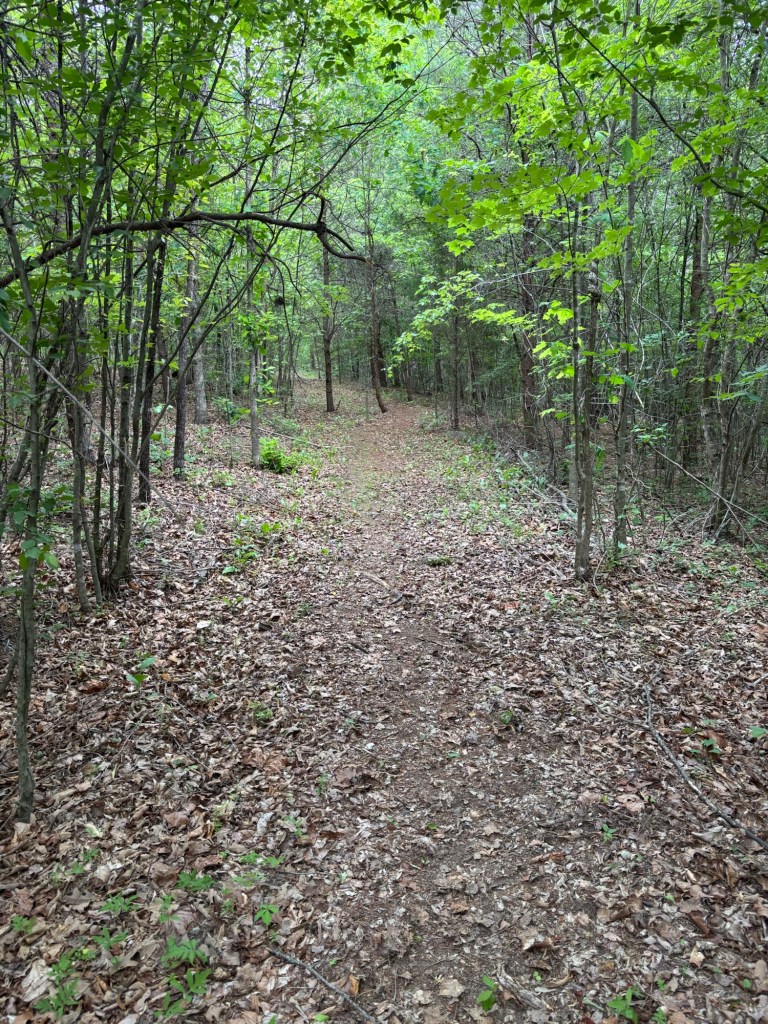
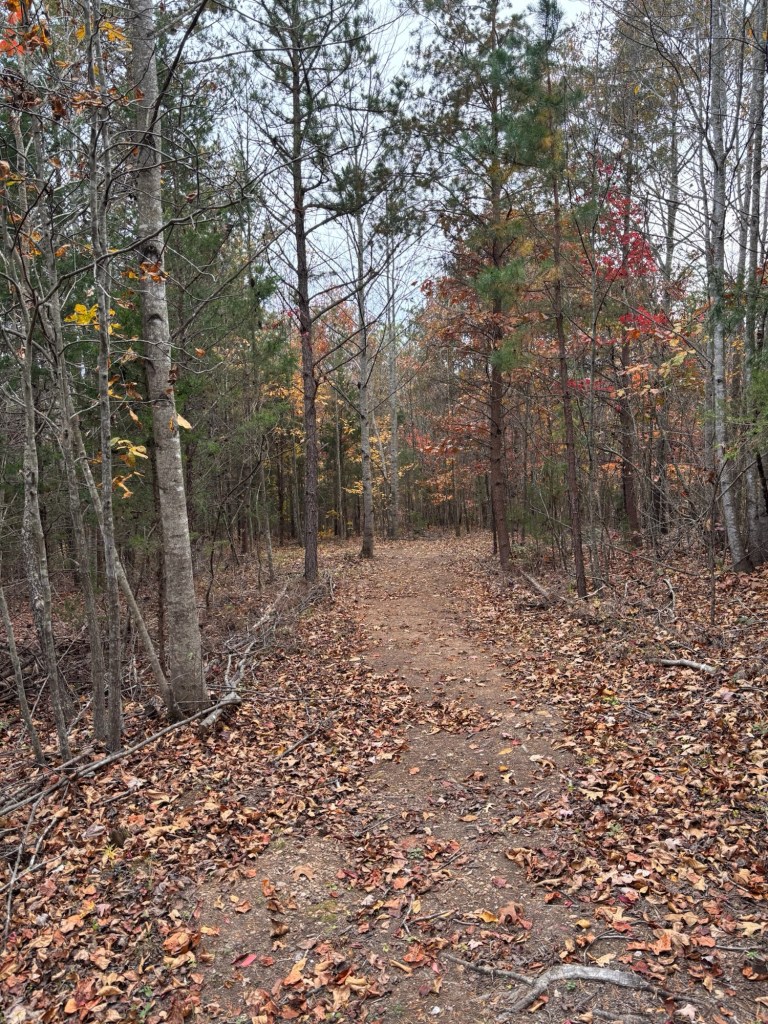
We started our walk down Red Hawk Rd and made a new trail from the bottom at the roundabout to down to Fern Trail.
The drive over to SAFF was beautiful with fall color. We travel from the Shenandoah Valley over Afton Mountain through Rockfish Gap and Howardsville to Buckingham. We oohed and ahhhed the whole way. Here’s a quick video of Howardsville Rd.
31 seconds of trees putting on a colorful show. Sound on for beautiful jazz as well.
We unloaded the lumber we found at the Restore and checked out the pawpaw and fig trees planted up top. They have yellow leaves and are losing most of them. Then we headed down Red Hawk Road to get down to Fern Trail. We checked out the Rappahanock cultivar and the seedlings planted as well as the cluster of natives. Most have gone fully dormant for the winter, especially the native SAFF trees. A few of the cultivars and seedlings look great; fully leafed and deep green still. Gleaming. It’s more typical for them with the temperature and season to be dormant. We have not yet had a hard freeze in Buckingham, or in Staunton in the Valley—which usually frosts first. Once dormant, their watering needs will drop. Phew! 😅
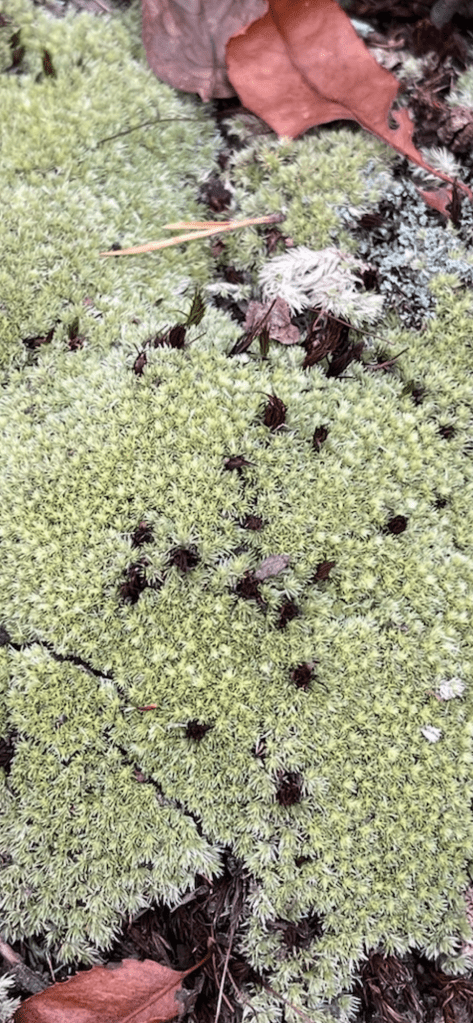
Leucobryum albidum, white moss or white pincushion moss, is common here in the eastern US. It creates a habitat for amphibians, reptiles and insects, stabilizes the soil, retains water, cycles nutrients and contributes to carbon sequestration.
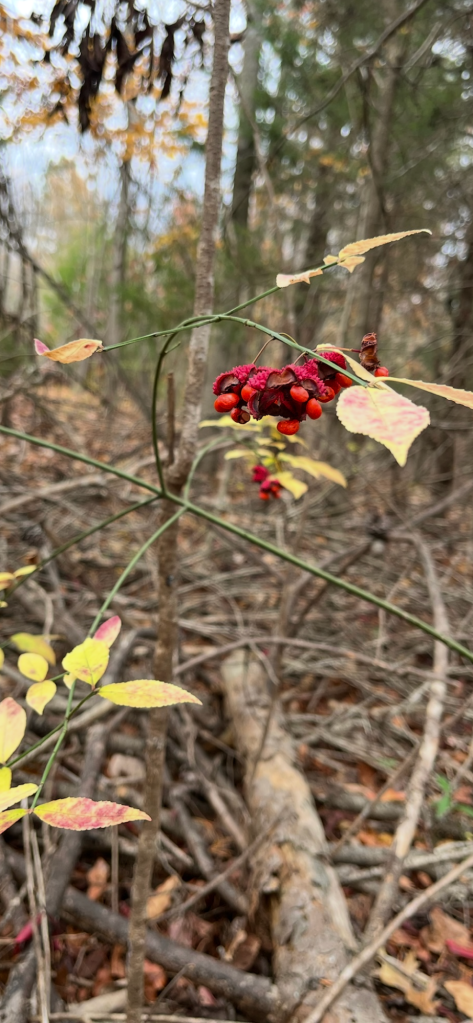
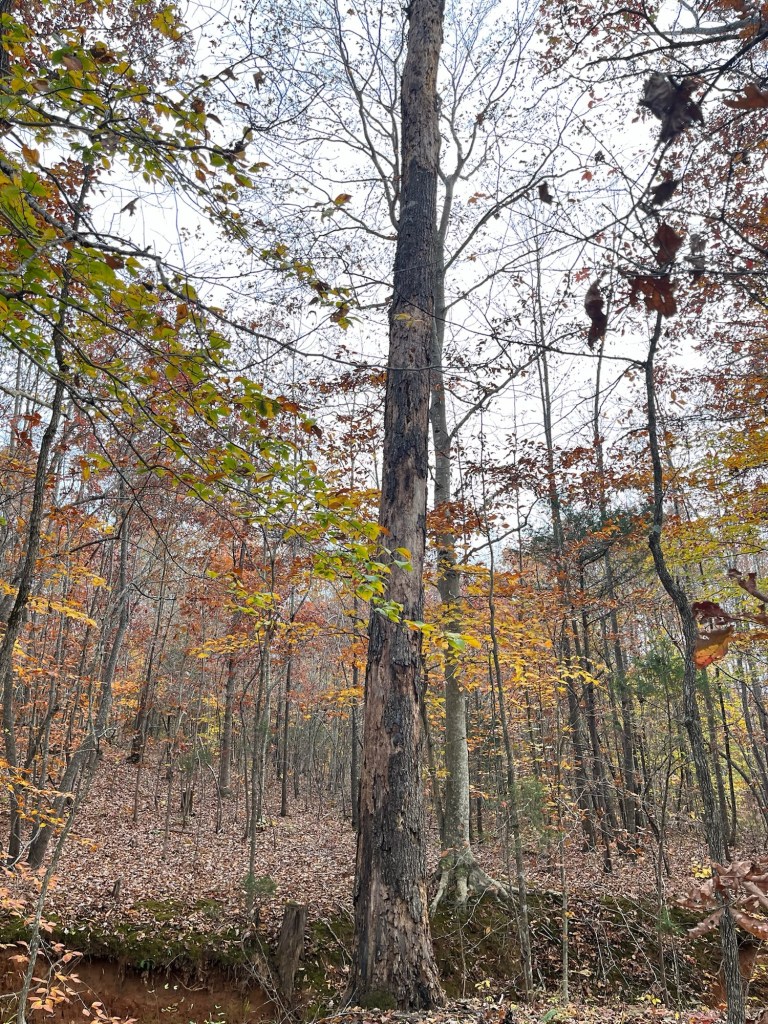
Along our walk we found white moss and strawberry euonymus (Euonymus americanus). We also went down to the waterway to check on this oak snag in the picture below. SAFF had high winds for several days and the last time we saw it, there was a bend and crack starting.
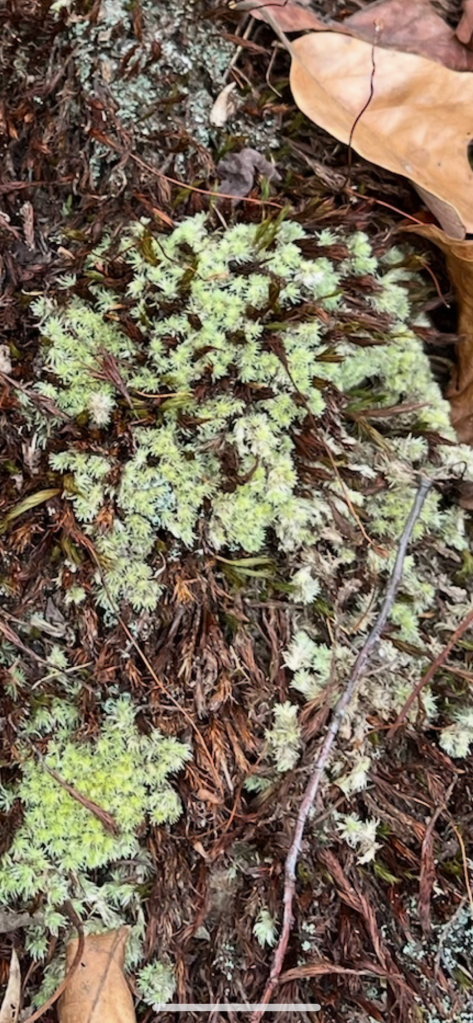
White moss beginning to grow.
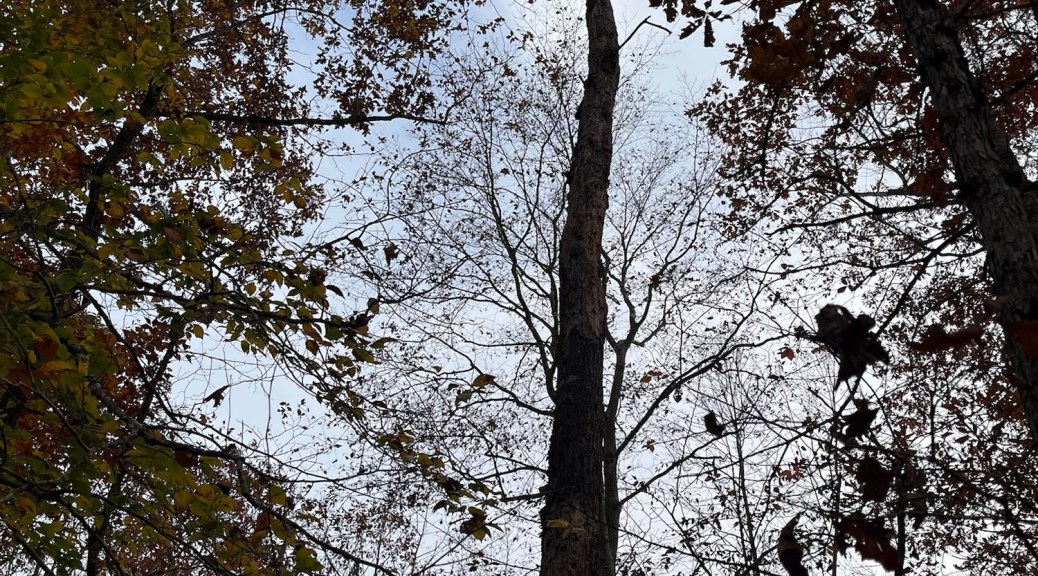
SAFF old oak snag we check on regularly. It looks as though it will fall to the west towards the Pawpaw Peninsula.
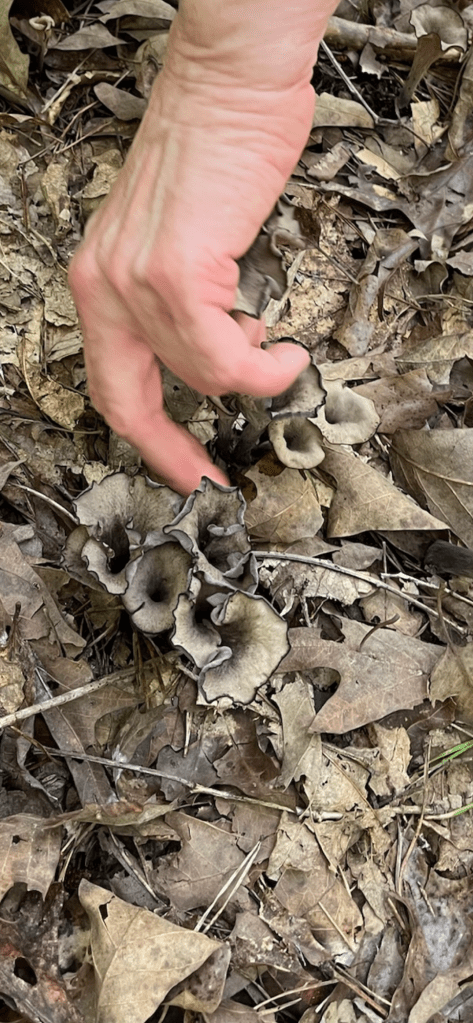
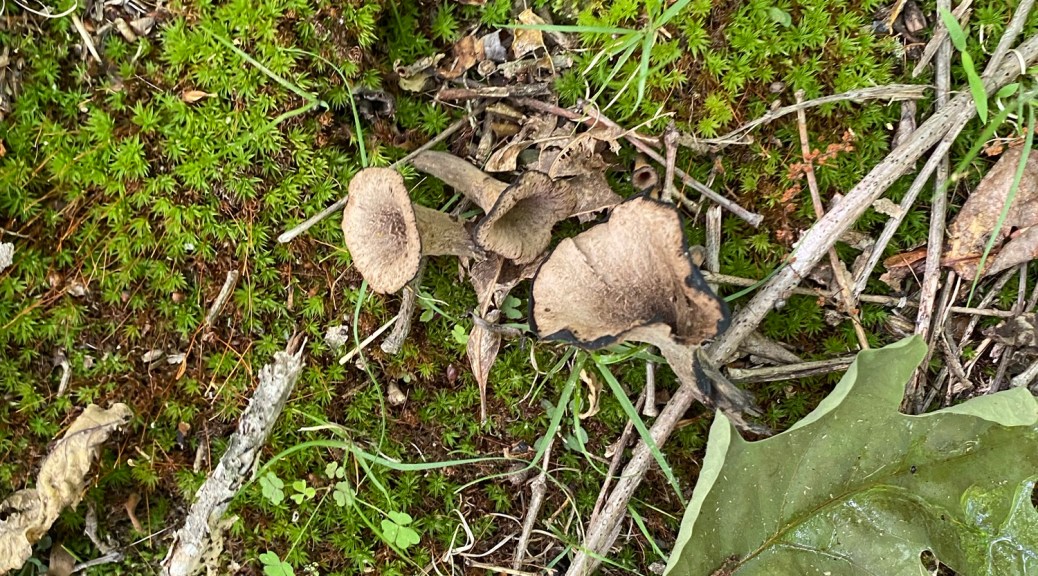
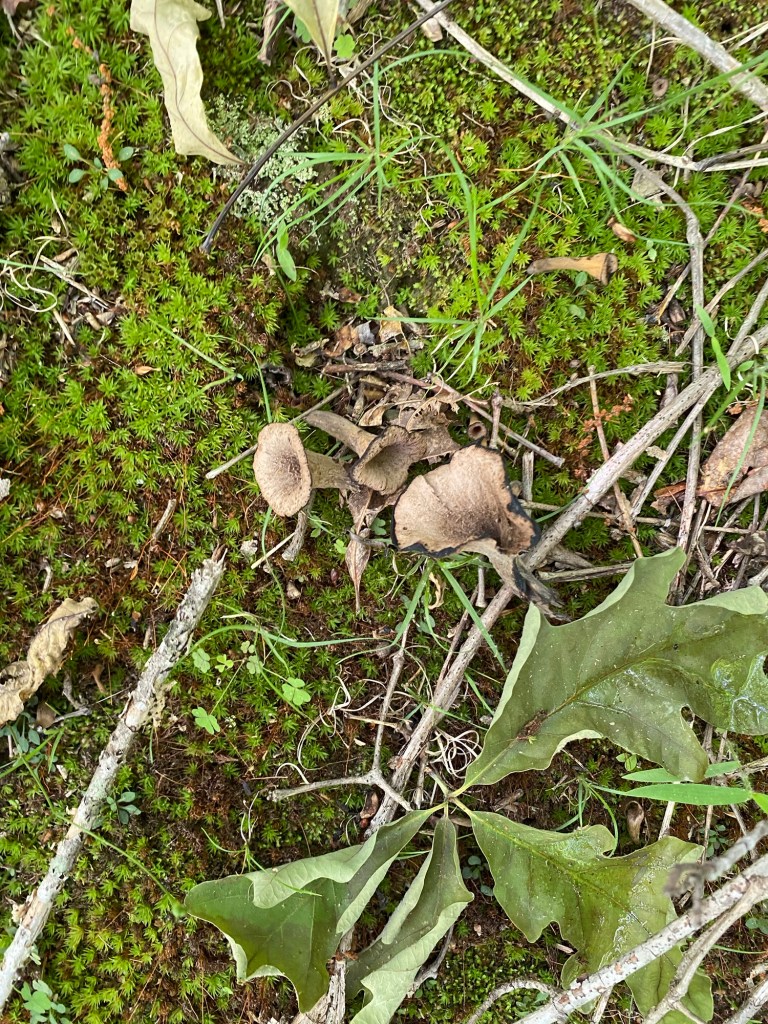
Hard to see black trumpet mushrooms growing near oaks and pines.
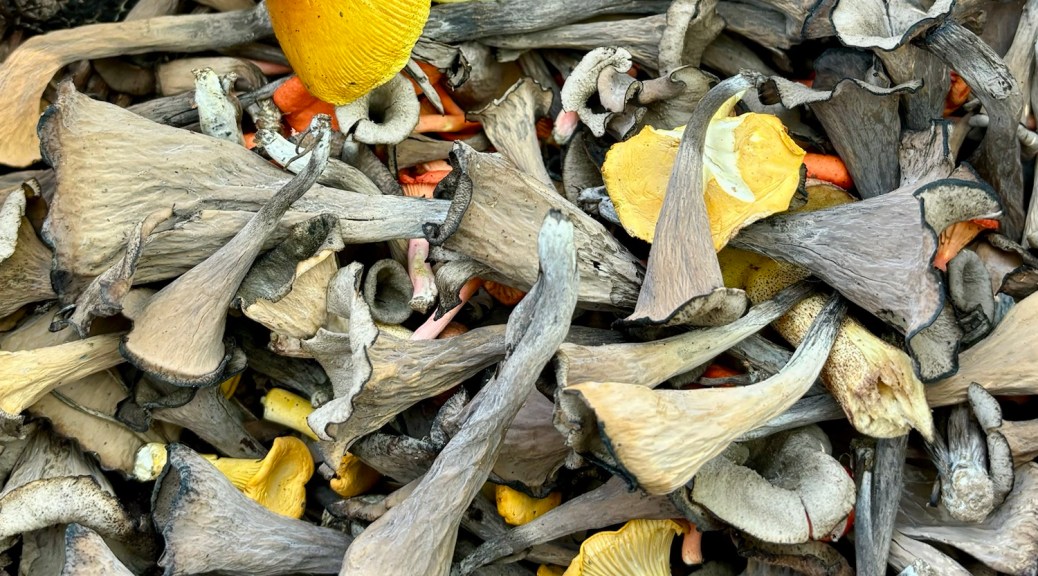
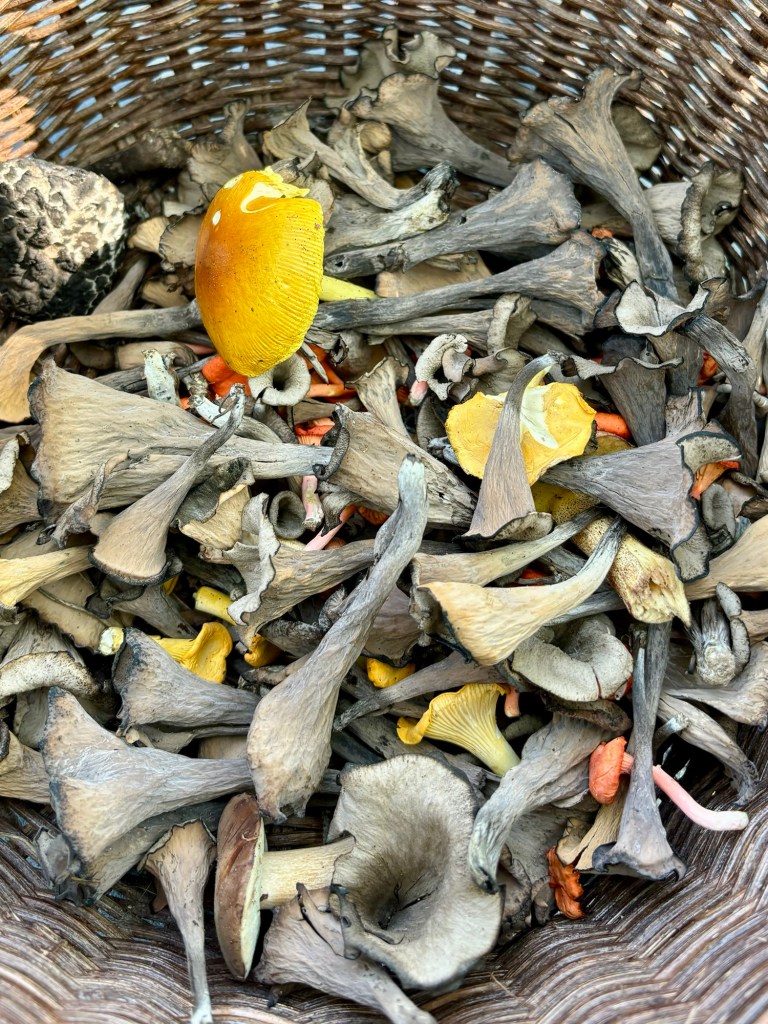
We went over and created more trails on the north side yesterday. We were rewarded for our work with wonderful weather and about two pounds of wild mushrooms. The temperatures in the 70’s made for a wonderful day to be outside. We found several new large Black trumpet patches as well as Cinnabar chanterelles and Ghost chanterelles. We also found a Lilac bolete, Amanita banningiana and an Old Man of the Woods. We joked our basket was full of Halloween colors.
Our basket from yesterday with lots of black and orange mushrooms.
We brightened up the paint on our boundary markers and widened our trails. We cleared a bit more from the road. We stood in awe of the beauty of the forest, the quiet peace to be found there with the trees and the network of mycelium that supports it all and sends up these colorful and wonderful fruiting bodies. We feel grateful and blessed by our surroundings.
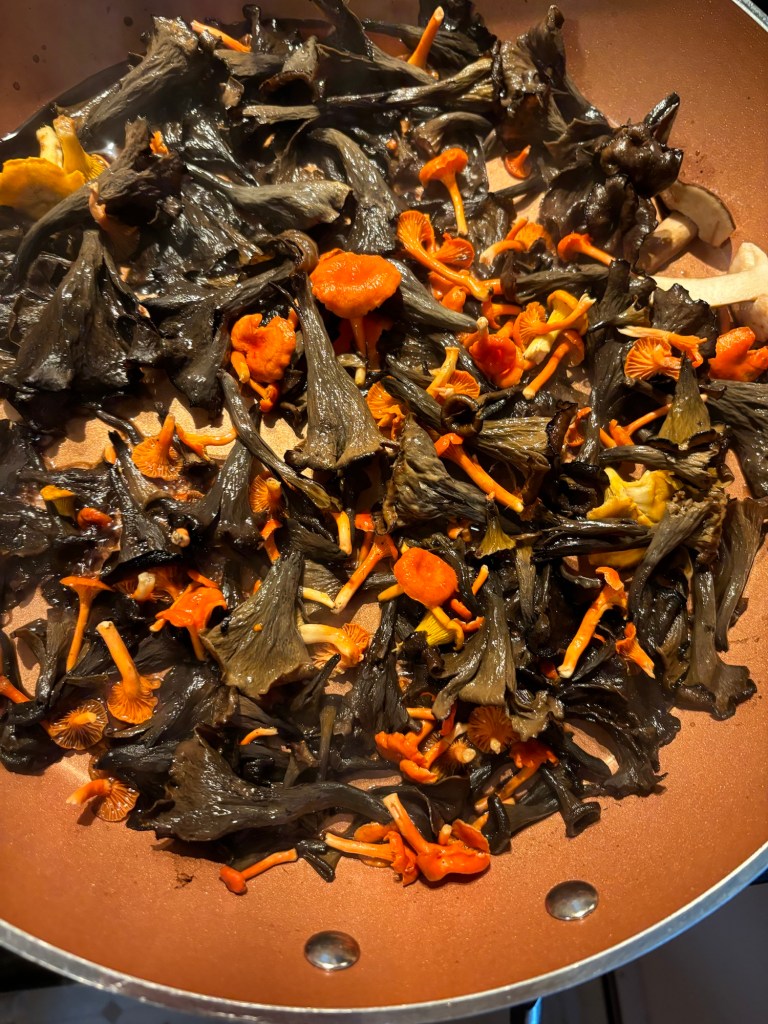
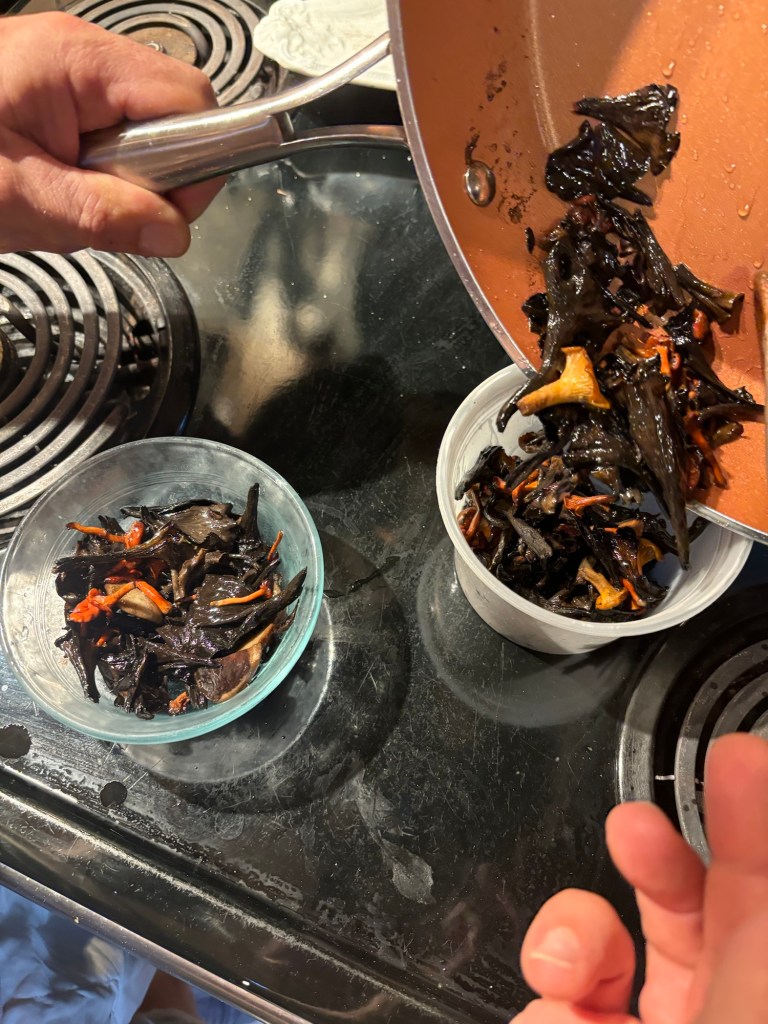
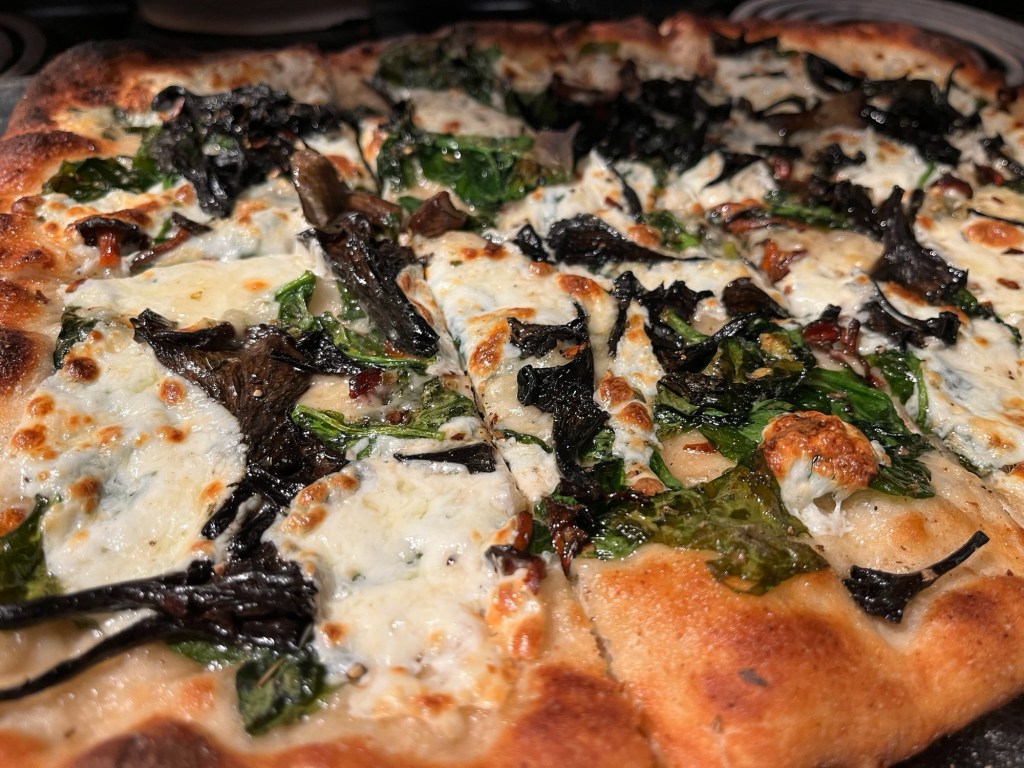
We got home and cleaned up our mushroom bounty and dry cooked them for some minutes to cook off the water we used to clean them. Once dry, we added butter and olive oil and salt pepper and garlic. We saved most of these mushrooms but used a small amount for our white pizza for dinner. It was scrumptious!
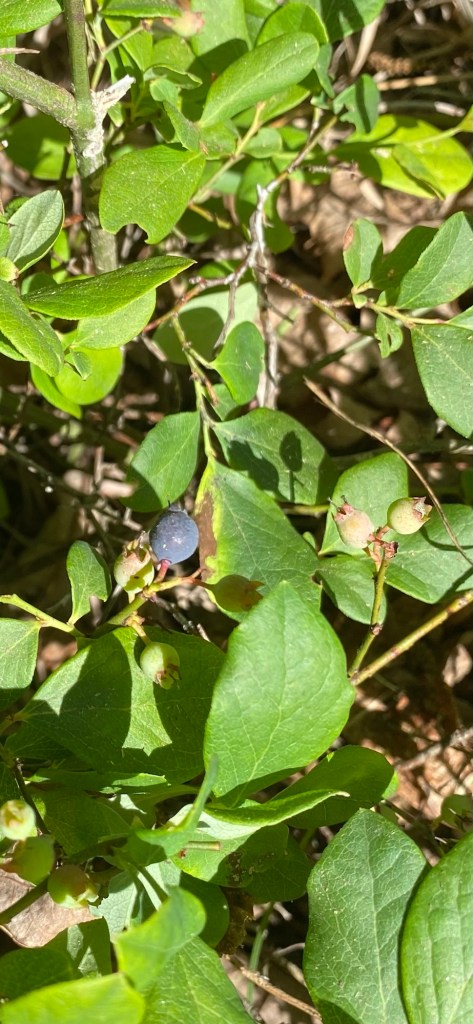
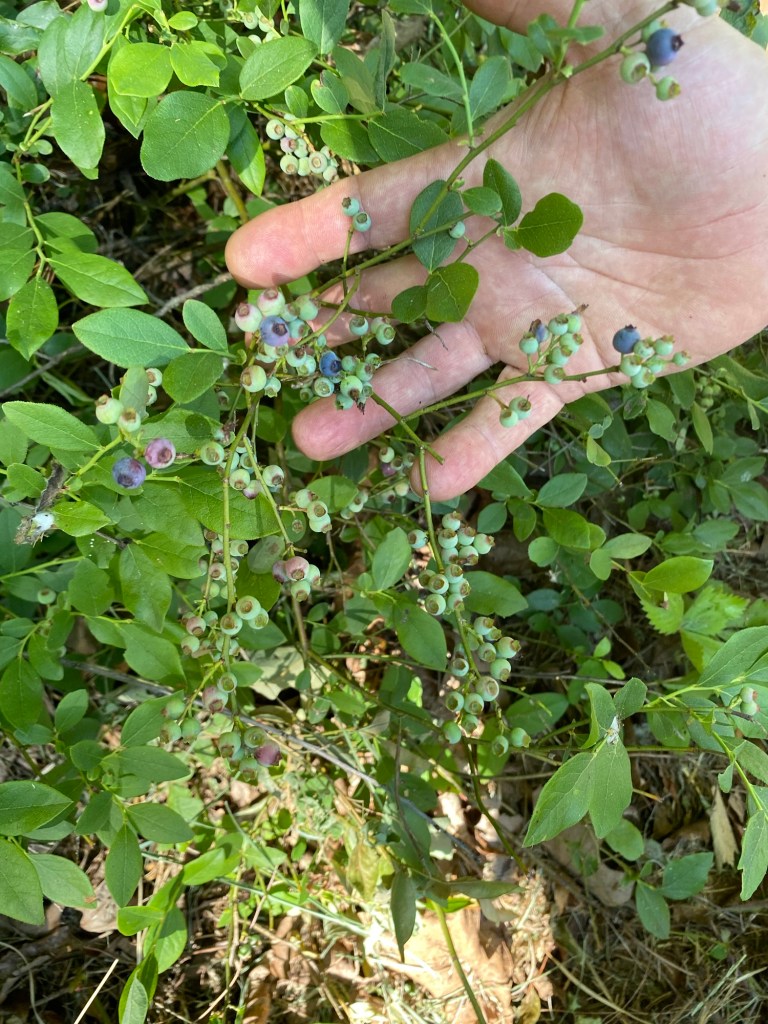
Finally we have a few ripe blueberries. They were a tasty snack after we got some work done.
We went out to the farm to clean up a few spaces, look for more black trumpets and cut a trail through the south side. We were able to clear out some tiny tulip poplars and maples, paying close attention to keep any understory oaks as we learned the old oak forests throughout the world have a problem with understory oaks regenerating the forests. We decided we would only thin out diseased or failing oaks. https://youtu.be/NRWHHOAf39U?si=akypzxLUNo_7tOfn
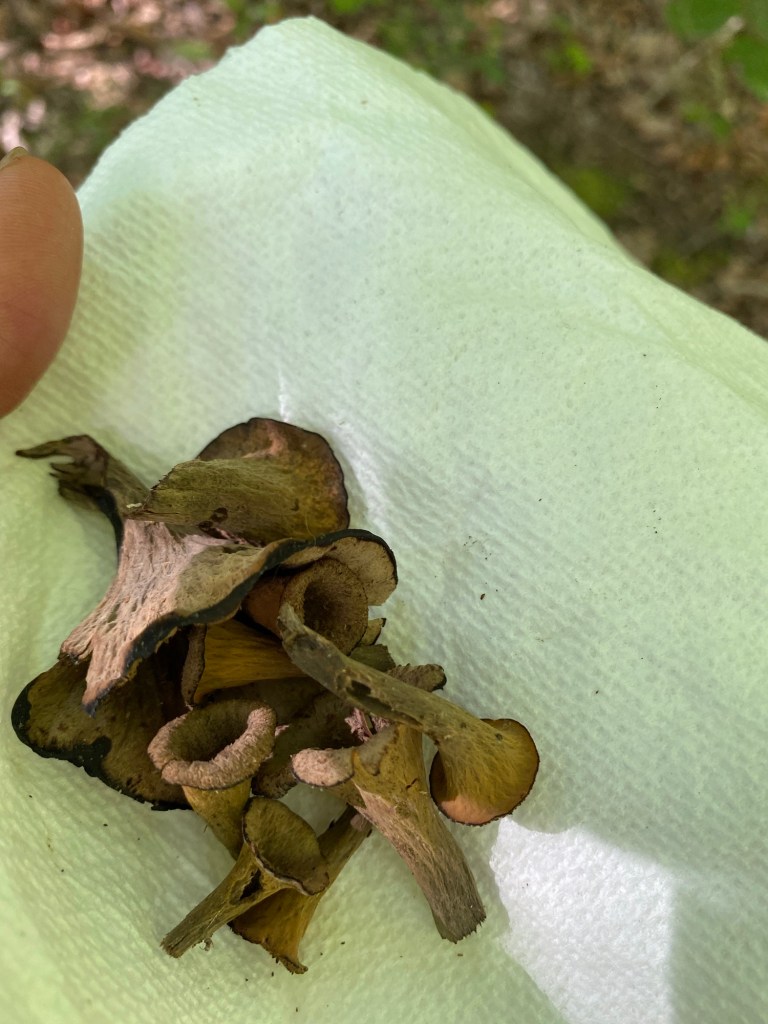
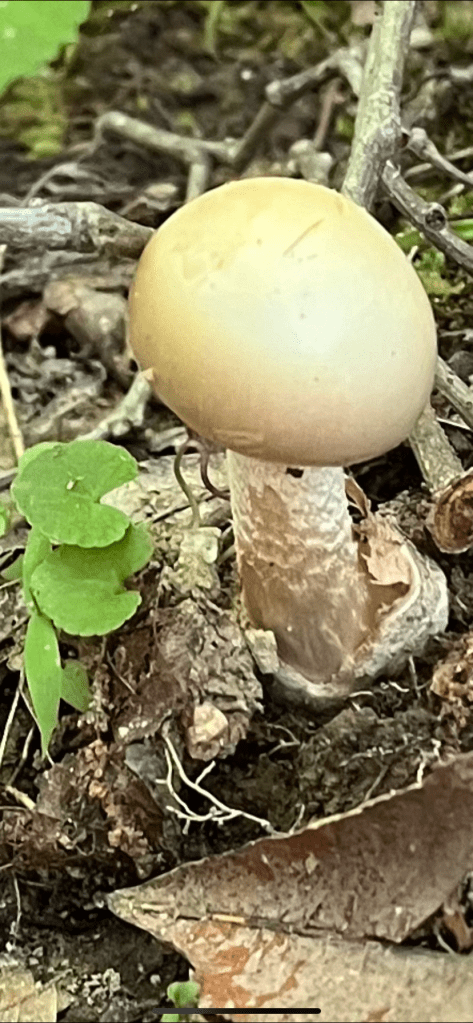
We were pleased to eat a few blueberries. We found them abundant and ripening first along the southern set back line, where they get plenty of sun.Eastern Black trumpets We ate yesterday’s black trumpets for breakfast this morning. We cooked them for 10 minutes on medium high heat in a dry pan, then lowered heat and added olive oil and garlic with a bit of salt and pepper. They were nutty, fruity and smoky. We enjoyed them as much as the golden chanterelles we found last summer. There are no known toxic lookalikes, so these are a great mushroom to forage . Some of our favorite mushrooms we have tasted. We performed some trail maintenance on ridge trail, made our way along the waterway, back over to the set back line and found more today. We harvested the largest and we can’t wait to eat these too. We made a trail up from the waterway to the Black Trumpet patches and beyond until we exhausted ourselves. We will call this Black Trumpet Way, it leads to the set back line.For now, this is unknown Amanita that we will watch this weekend. Notice the volva underneath the mushroom that it emerged from.