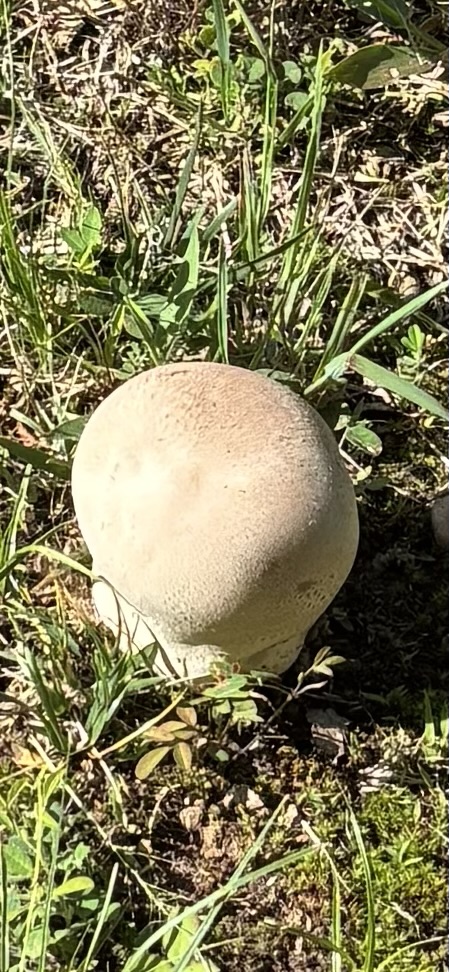
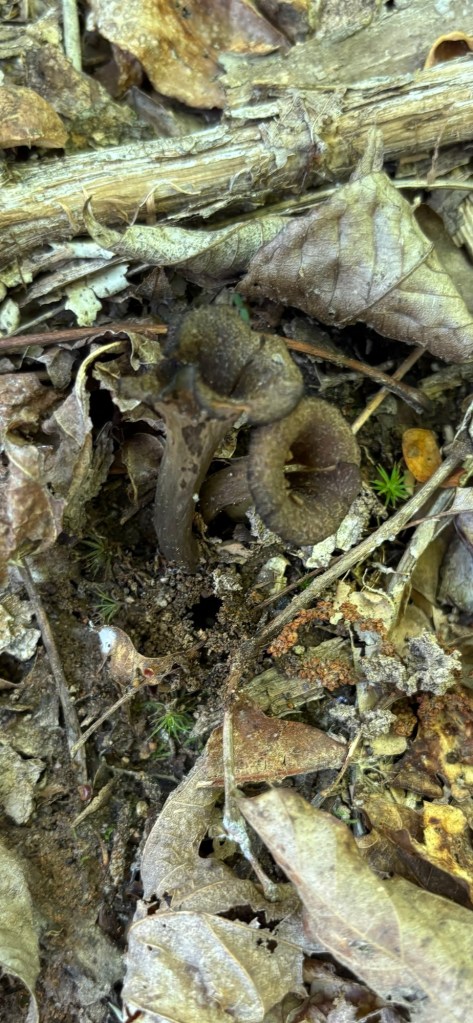
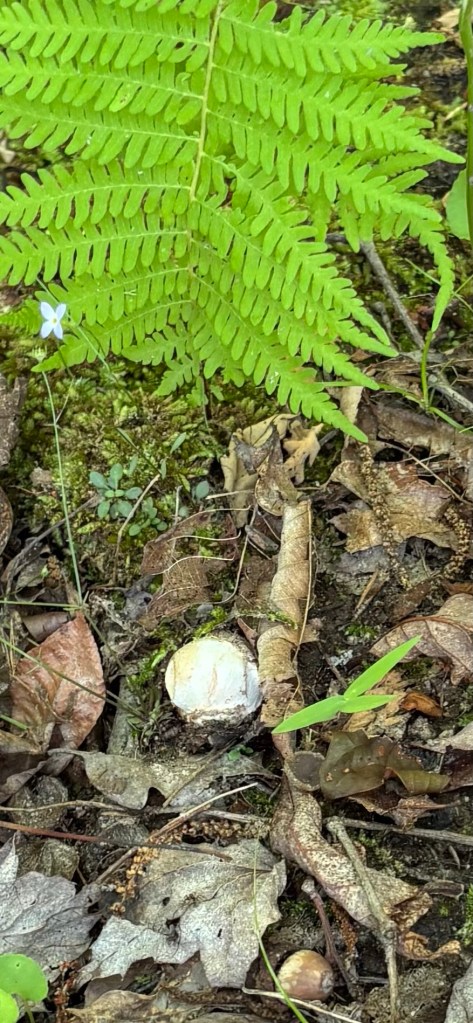
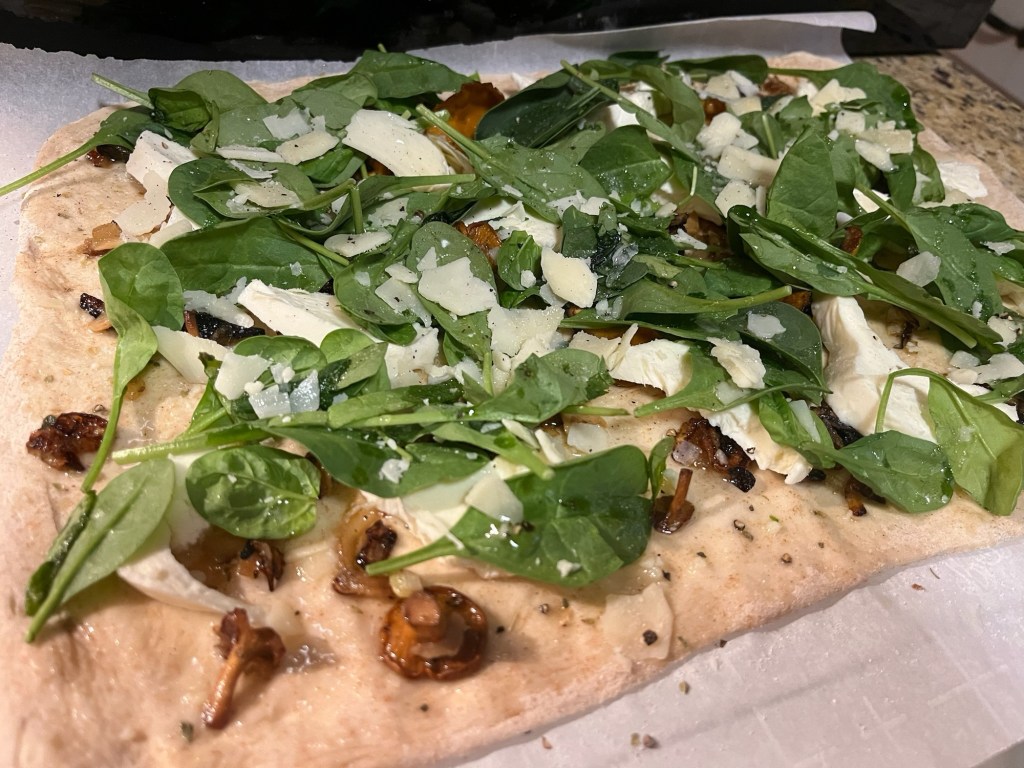
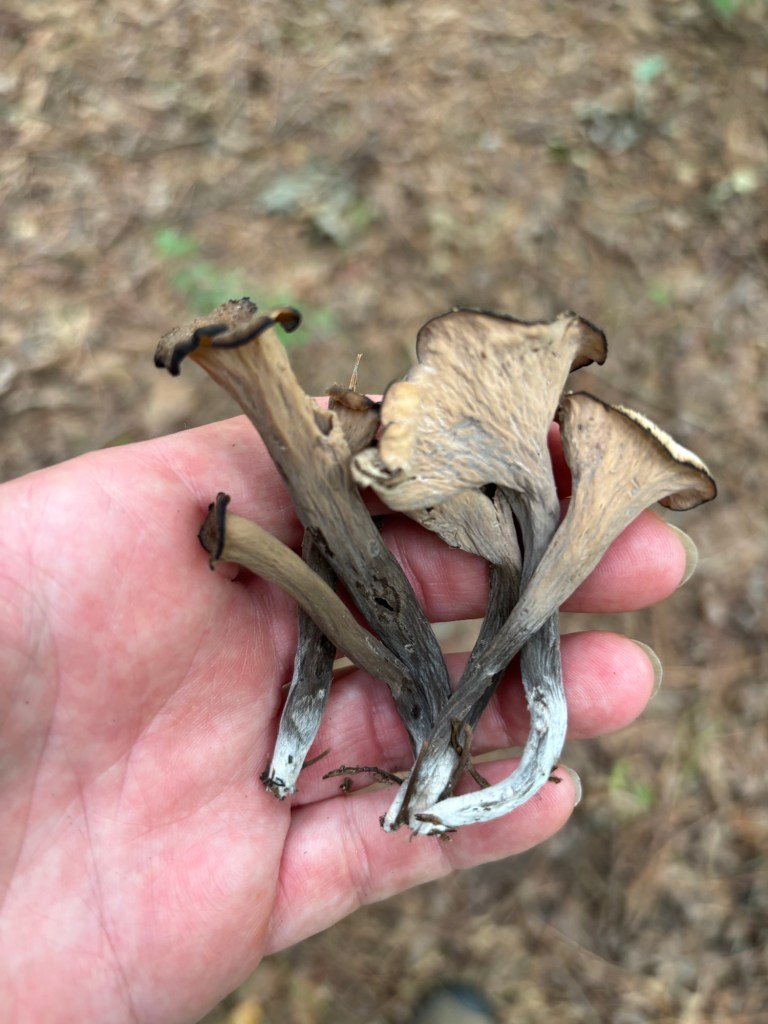
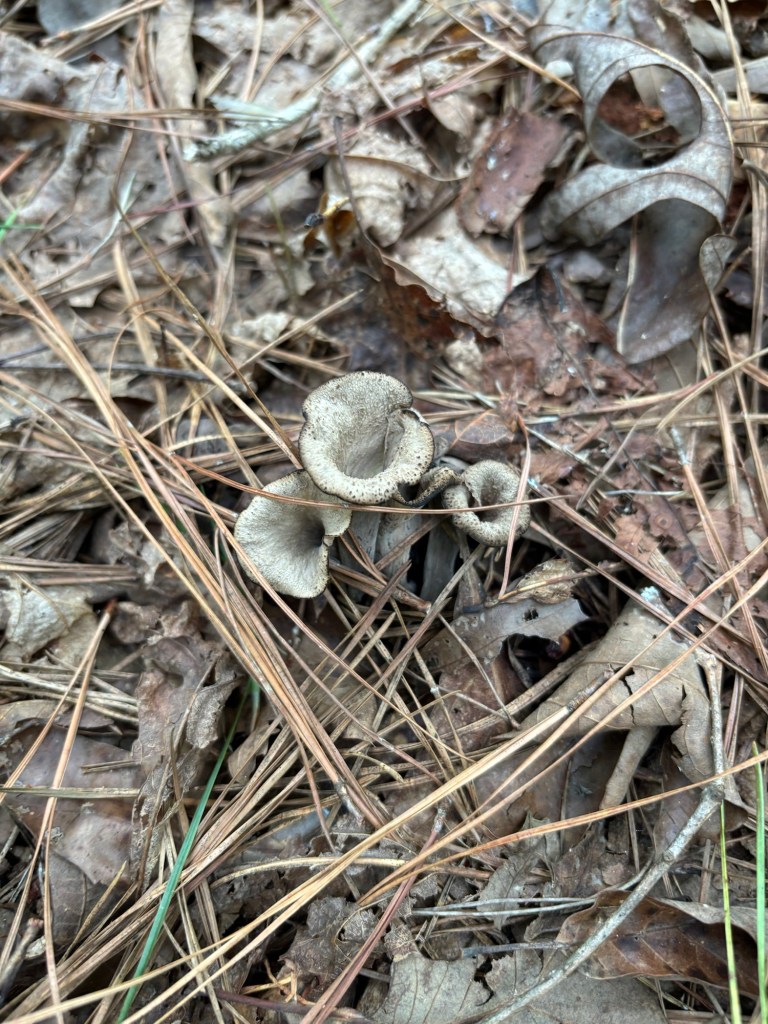
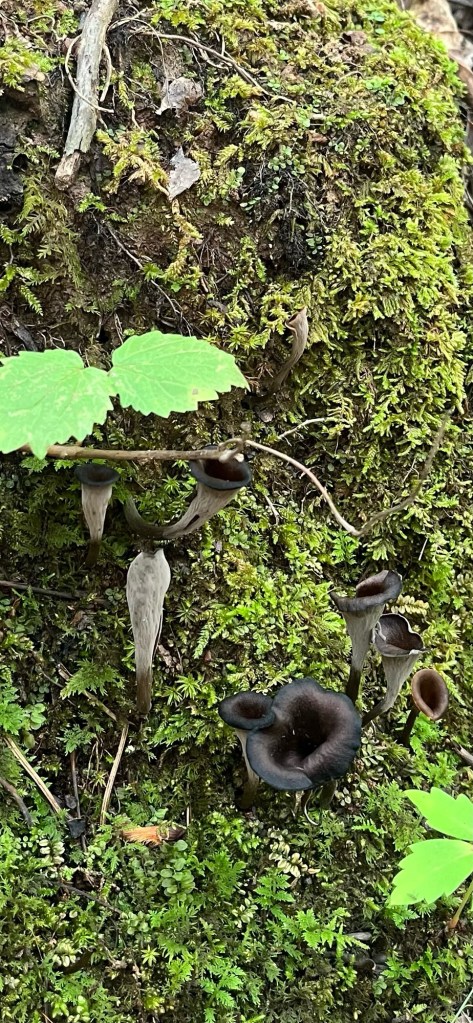
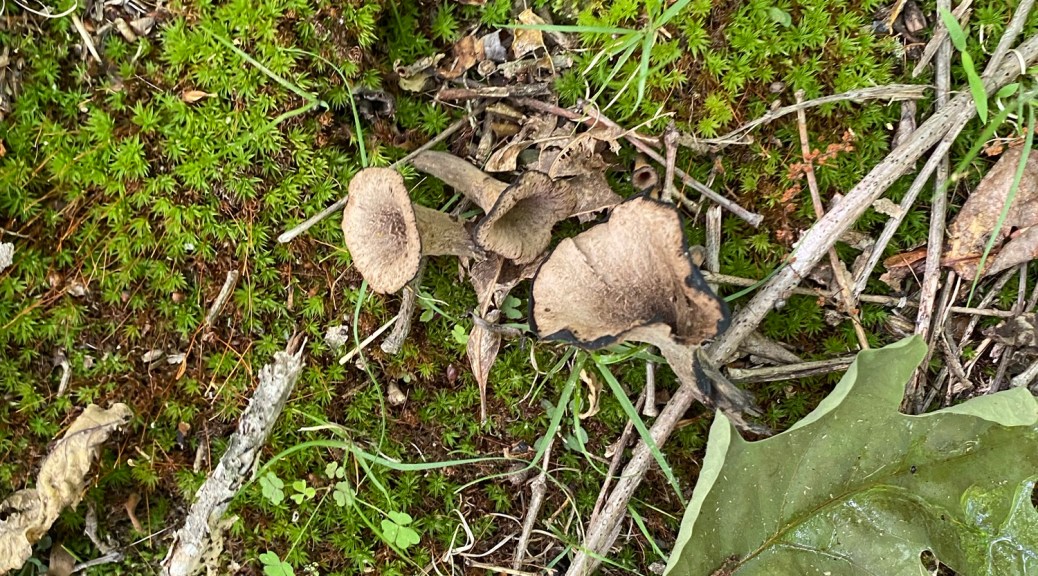
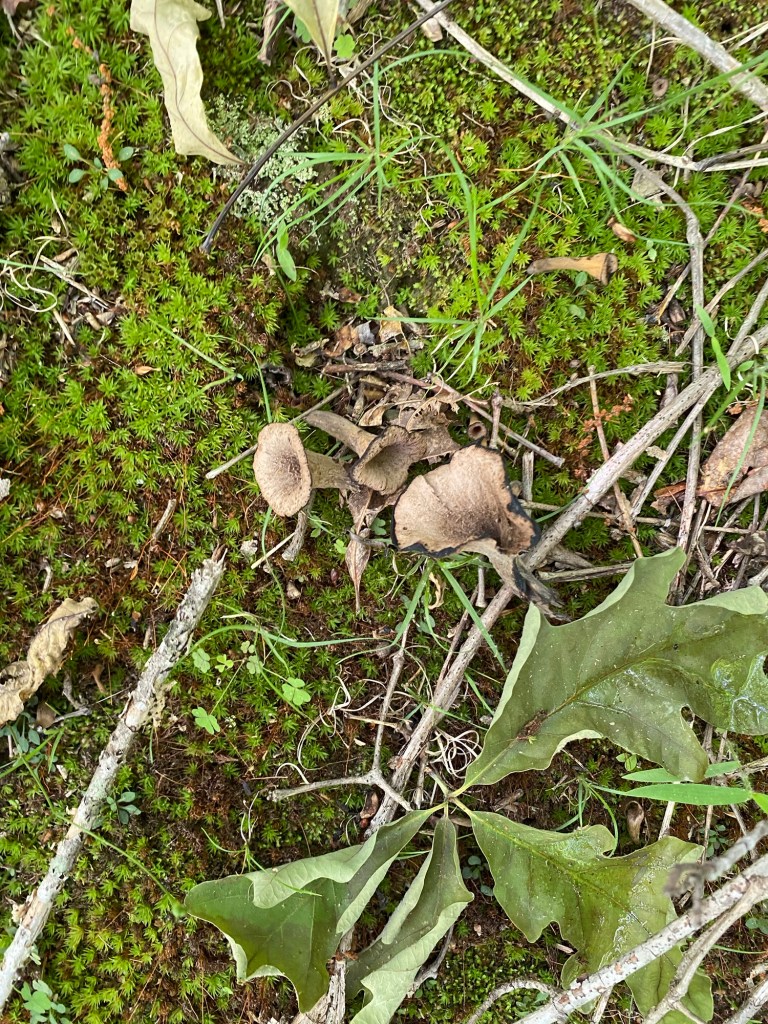
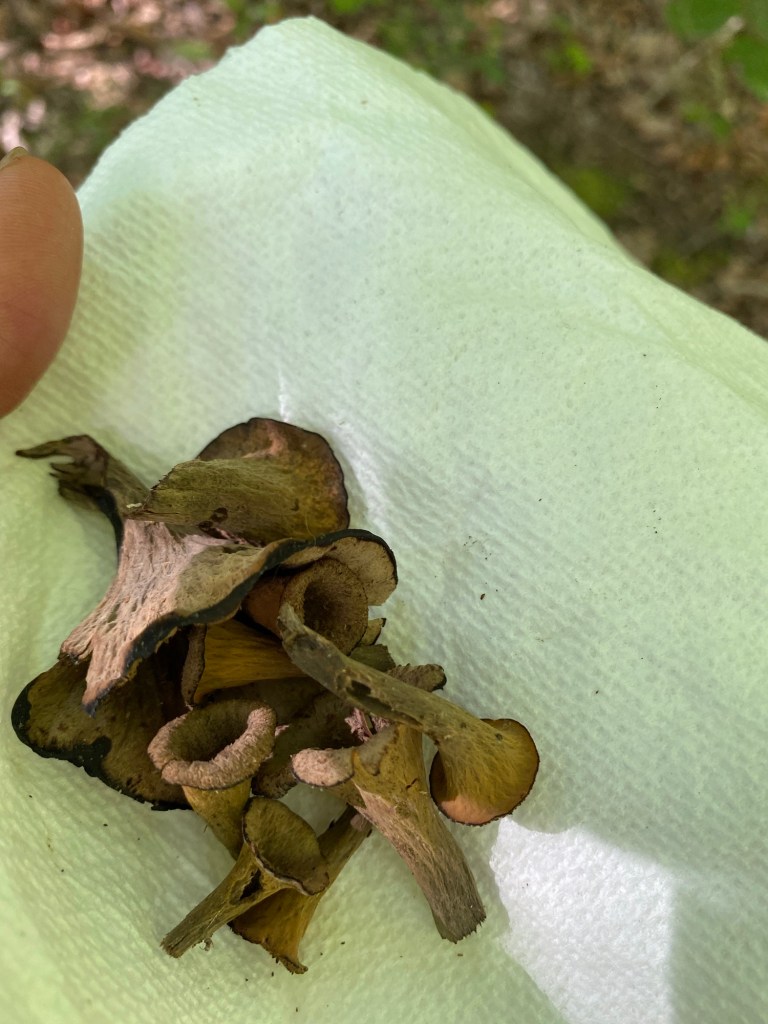
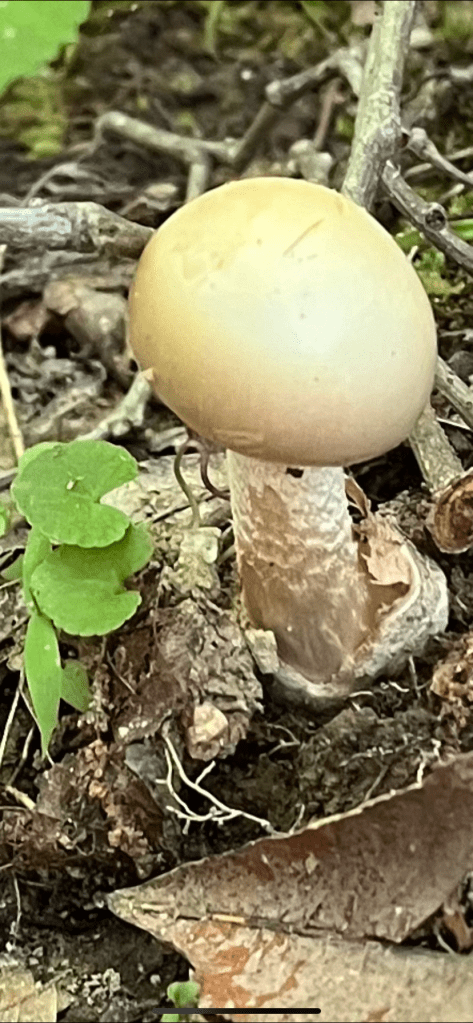
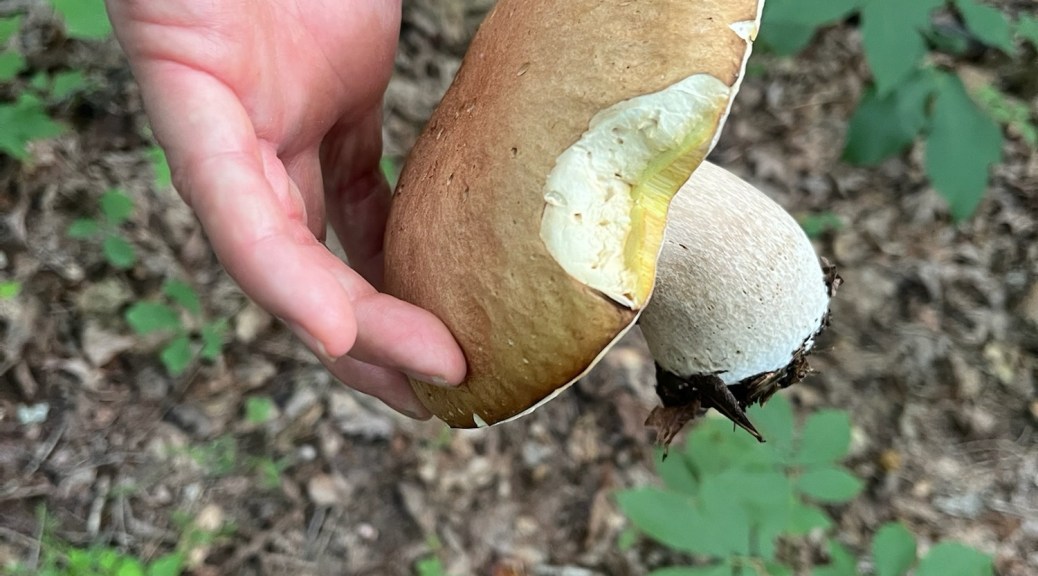
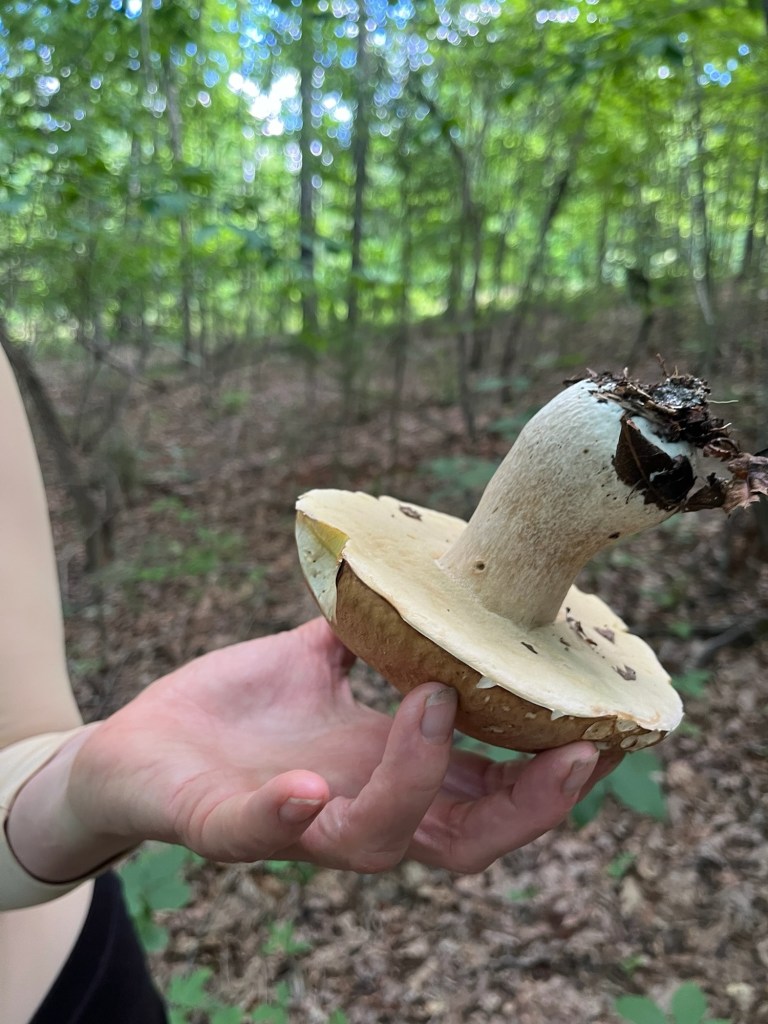
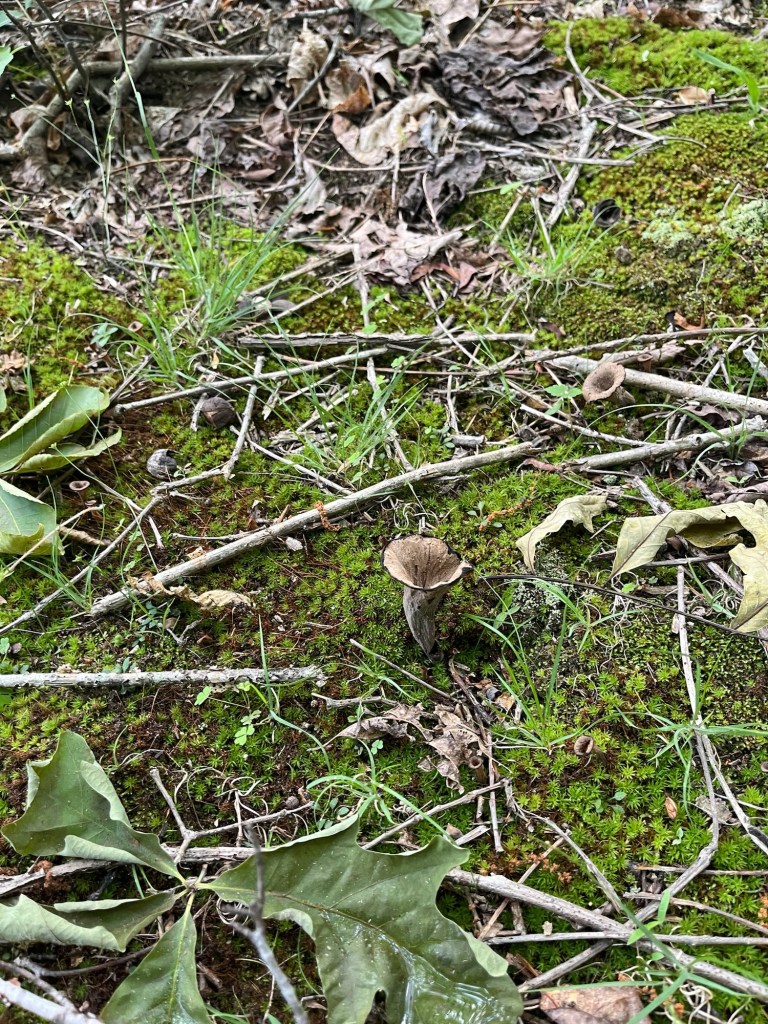
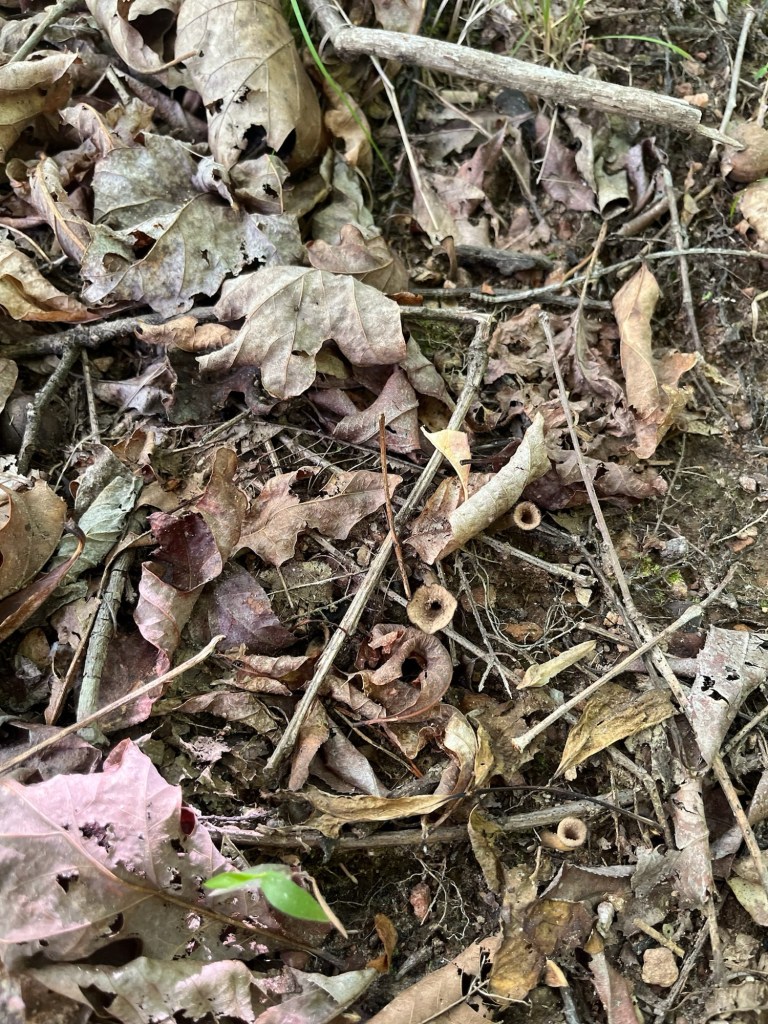
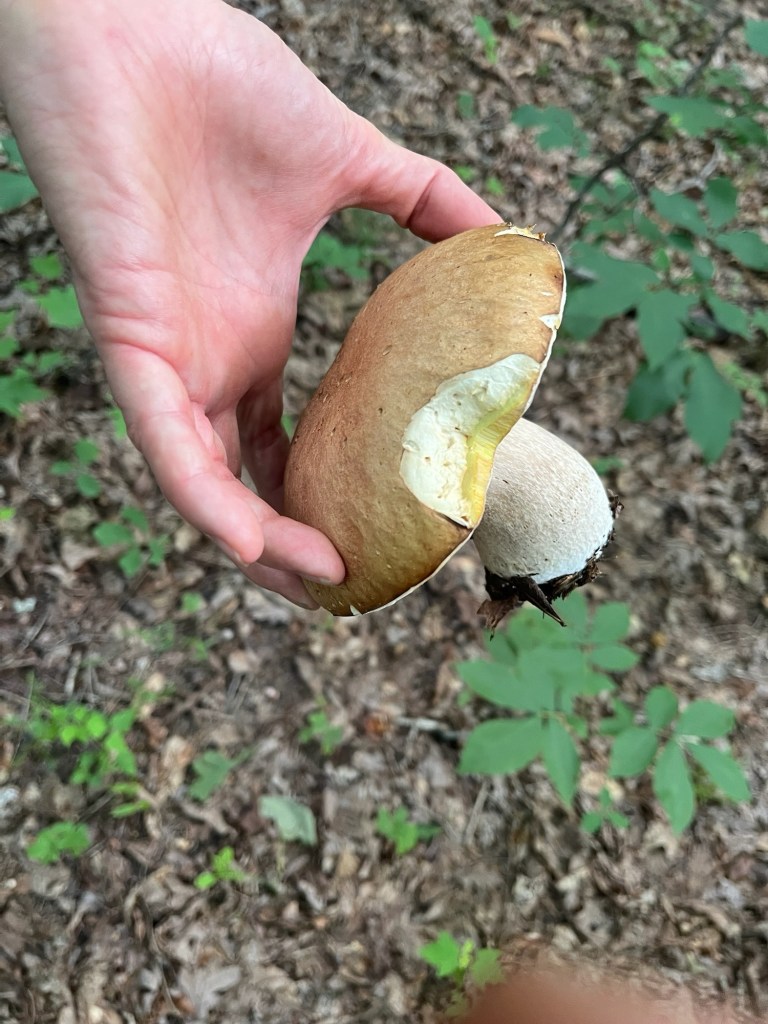
An edible Calvatia cyathiformis, Purple spored puffball, found at the top of Red Hawk Road on Saturday. We brought this home to slice and make mushroom pizzas by adding tomato, cheese and toppings.Craterellus fallax, Eastern black trumpet, found on the south set back line. Right on Black Trumpet Way near the base of an oak on Sunday. We left them to spore and hope to catch others in better shape to eat next time. We found another patch along the waterway and also left them to spore. They are excellent-tasting with eggs as well as highly nutritious.Right along the main waterway, it appears to be an Amanita completely enclosed in a sac-like membrane called the universal veil. The identity will be revealed as it opens. We hope to catch it as it develops. We are careful with Amanitas because of the dangers of eating any mushroom without identifying it. This truly is a class of fungus to know how to identify as it includes the several of the most toxic. However, it is only dangerous to ingest which we will not be doing. ☺️
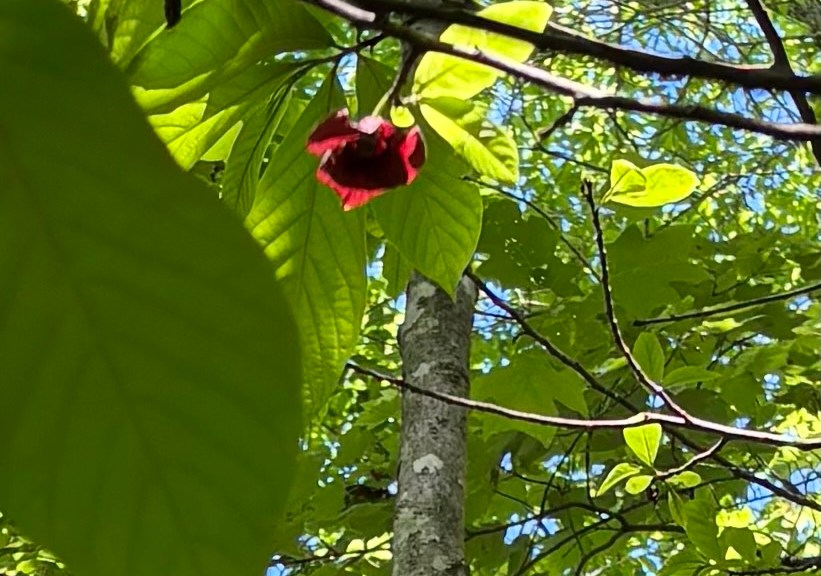
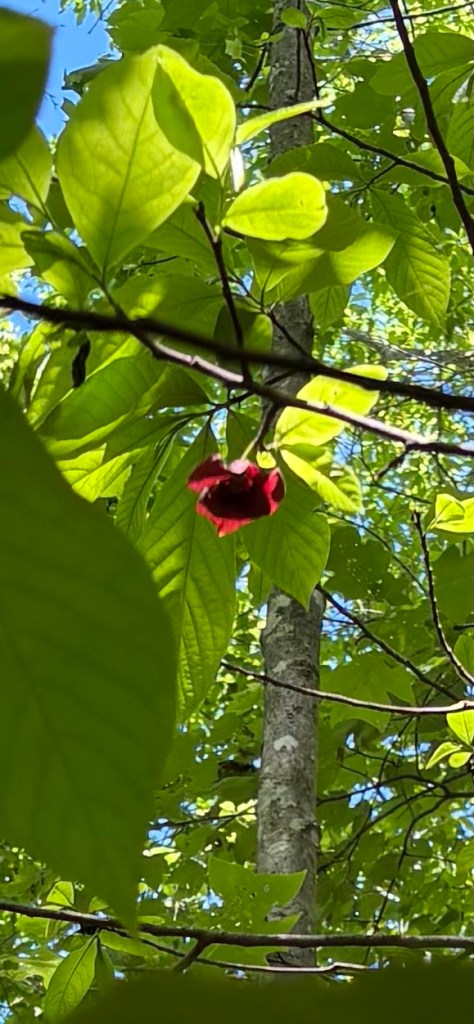
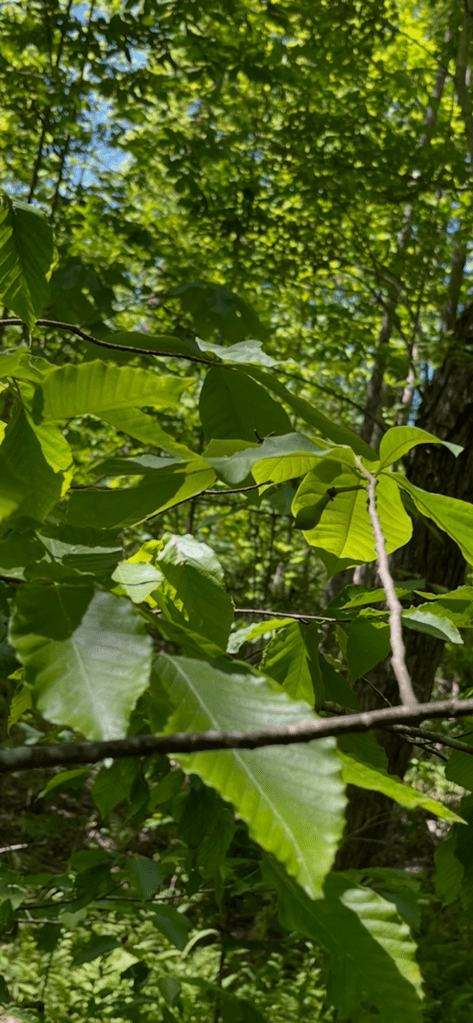
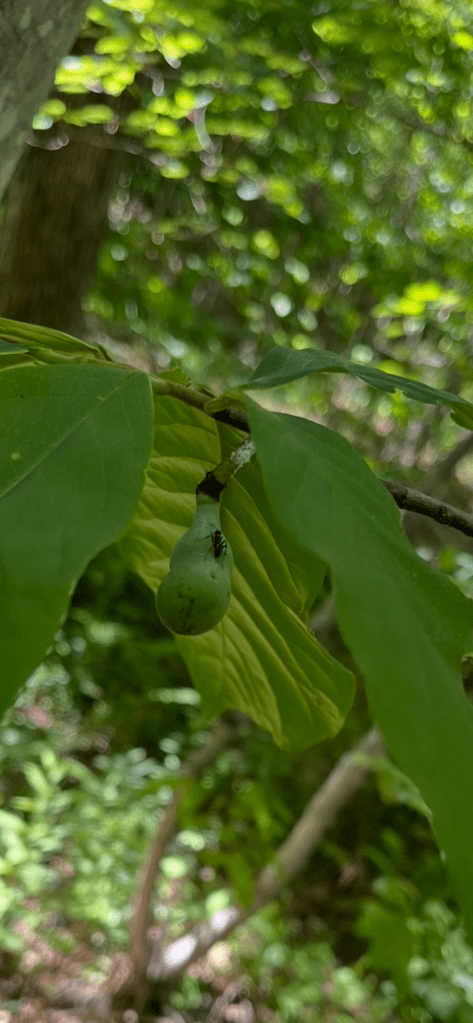
The weather has been wonderful. Mid-seventies and sunny the whole weekend. We spent afternoons at the farm Saturday and Sunday. We got plenty of chores done and enjoyed our walks around the forest. The rain gauge showed another inch and a third on Saturday—so with the last storm in May we got 4.35 inches! What a relief and gift. The mushrooms are showing up all over to our delight. It’s been such a long time! Seeing the puffballs, chanterelles and black trumpets this weekend was truly joyful. The vibrant colors and familiar shapes were a sight for sore eyes. The lushness and green of the forest has settled in after the rains as well making everything pop with lime, chartreuse, Kelly and neon greens. The old clonal colony pawpaw patch is all leafed out with the big drooping leaves and the two fruit continue to develop. 🤞
We leaned some of our metal roofing sideways against the tiny house for now which has stopped the water from getting in around the door and the back side. We are grateful for this temporary fix, as we continue to collect supplies and plan our front porch and covered back deck builds which will be a part of our permanent solution to the water problem.
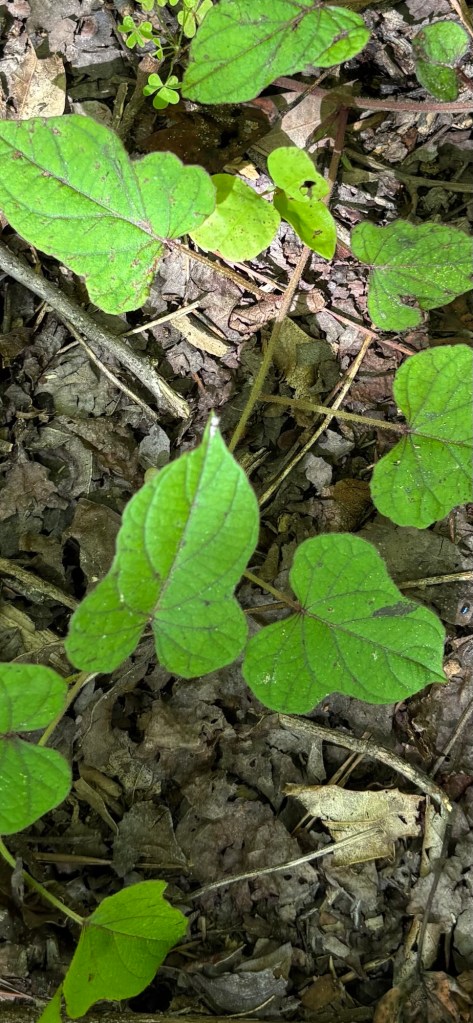
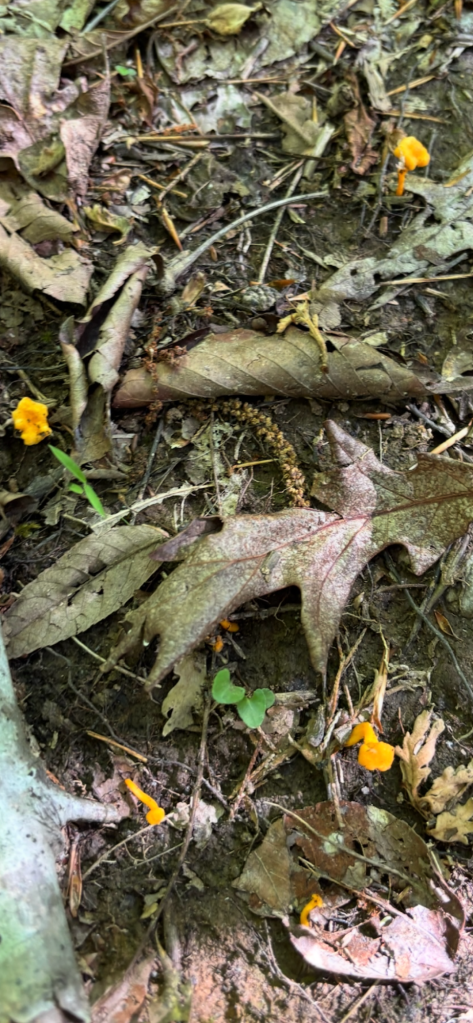
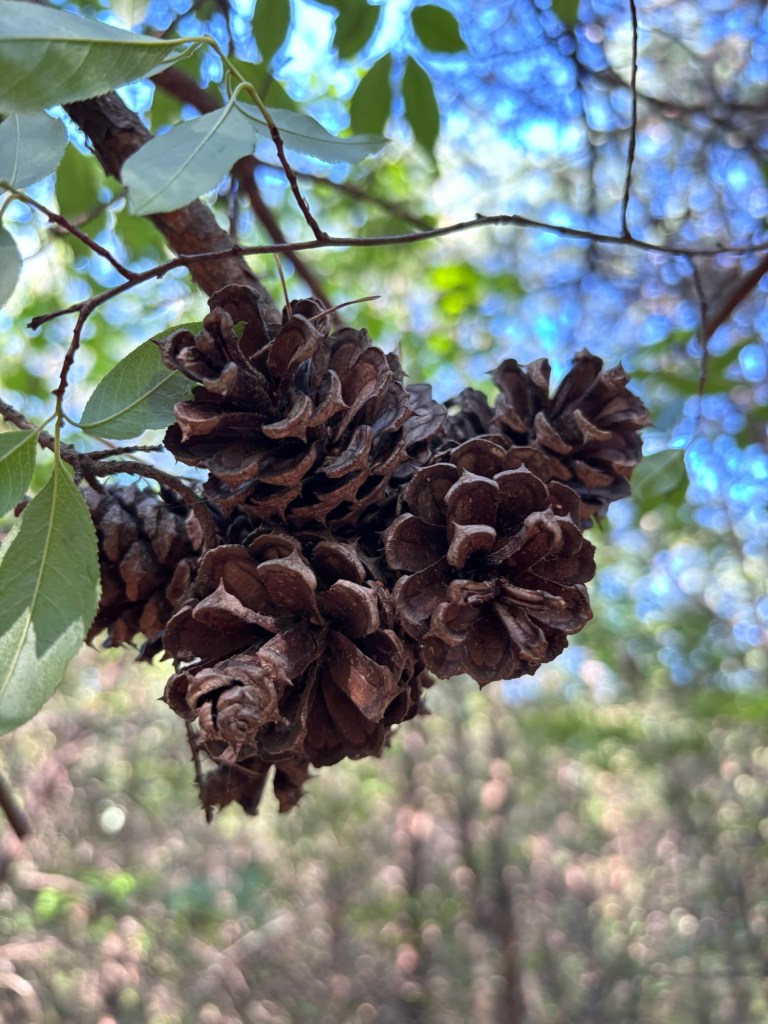
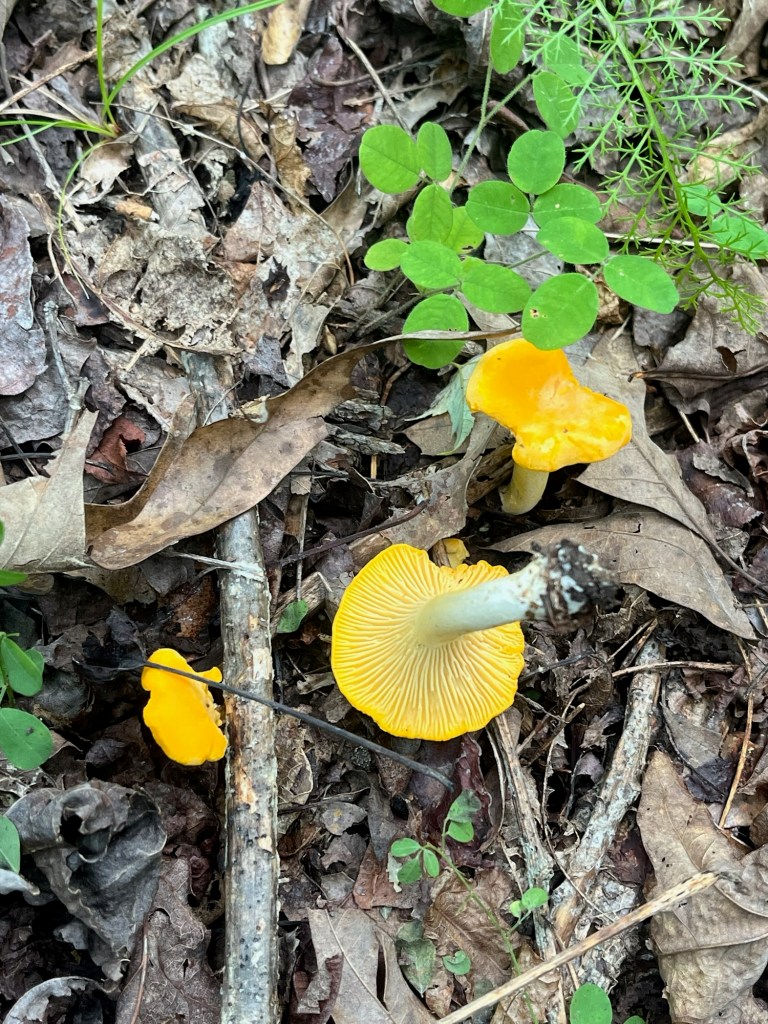
Asimina triloba flowering still at SAFF old clonal colony patch. Ipomoea pandurata, wild potato vine, a vigorous native perennial vine with large white funnel shaped flowers and a massive starchy tuber that can weigh over 20 pounds. We found it along Orchard Hill Road near the new Pawpaw patch with the seedlings and cultivars we grew and planted last fall. Tiny developing small chanterelles, Cantharellus minor, along the bottom waterway trail. Pinus virginiana, Virginia pine cones protecting the seeds. They will open to release them in warm dry weather and close when exposed to moisture. Asimina triloba leaves and developing fruit. The other pawpaw fruit with an ant and a white waxy substance on the peduncle. This is mealy bugs, Flatid plant hoppers or Woolly aphids, or their egg sac. They will cause premature dropping of the fruit or other damage. We will get this off tomorrow when we are out next.
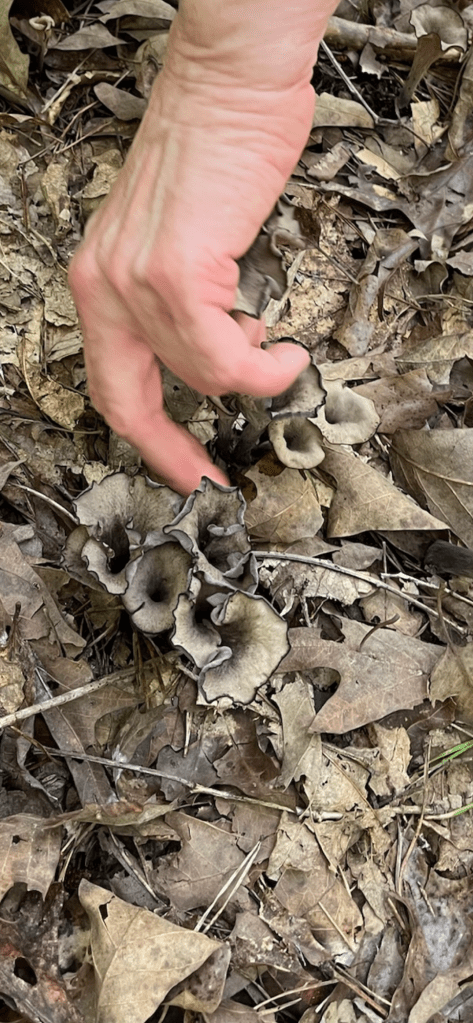
Hard to see black trumpet mushrooms growing near oaks and pines.
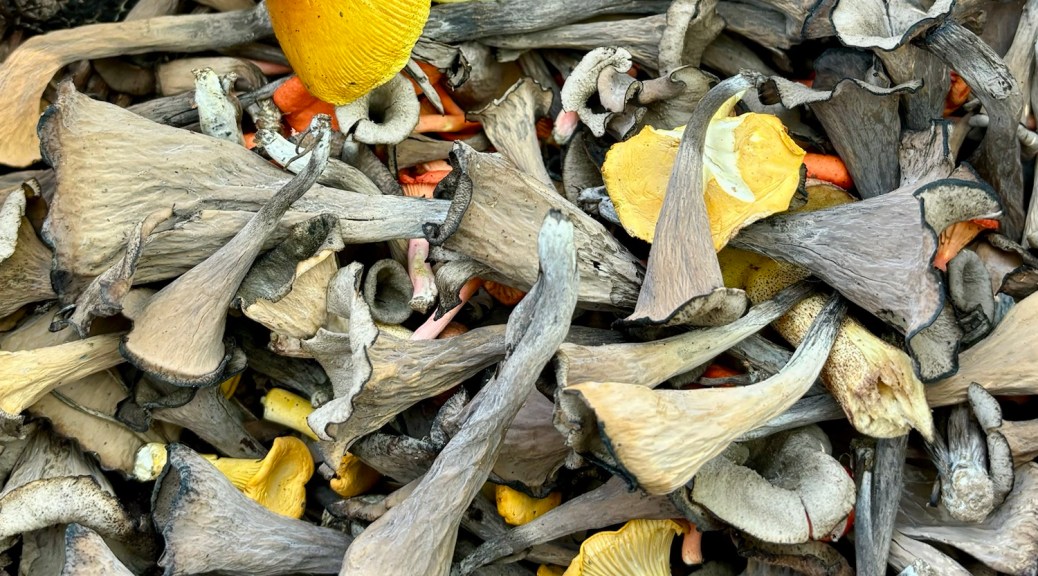
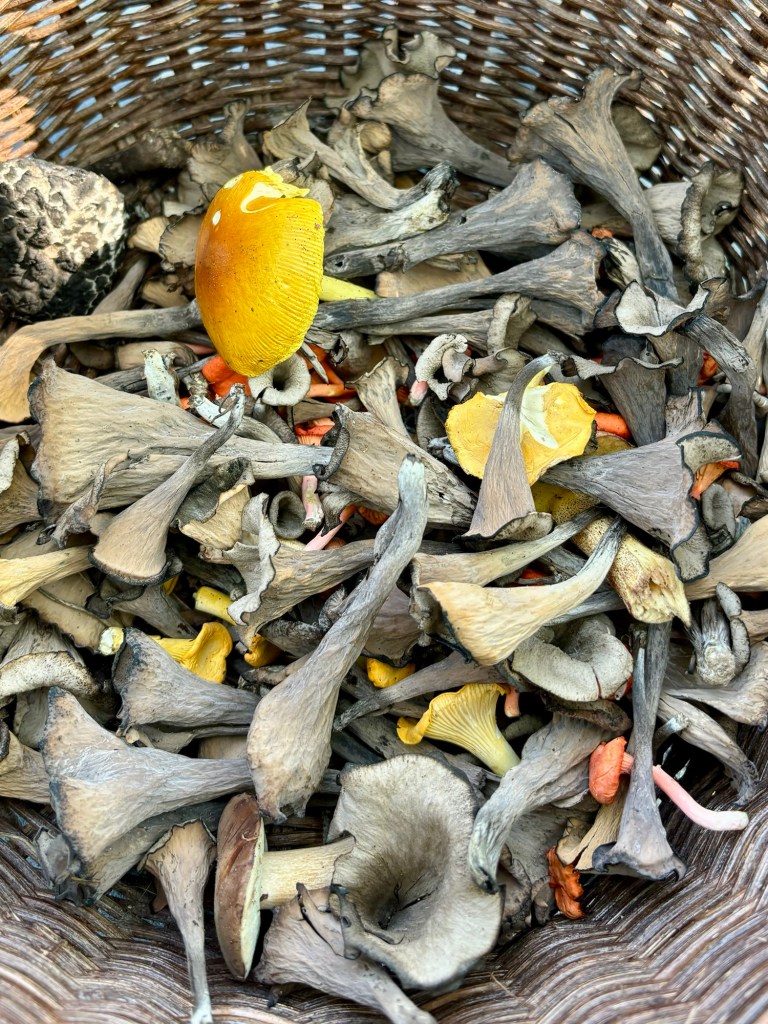
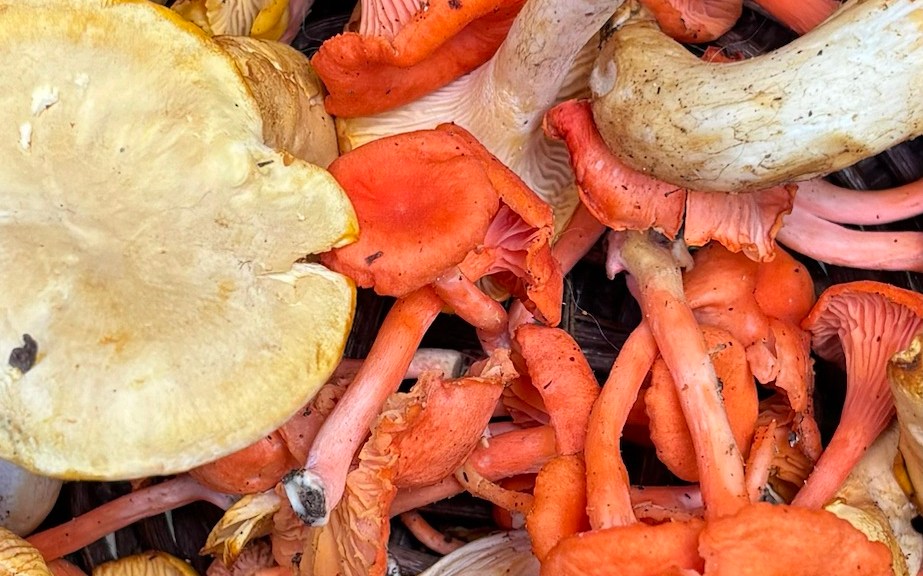
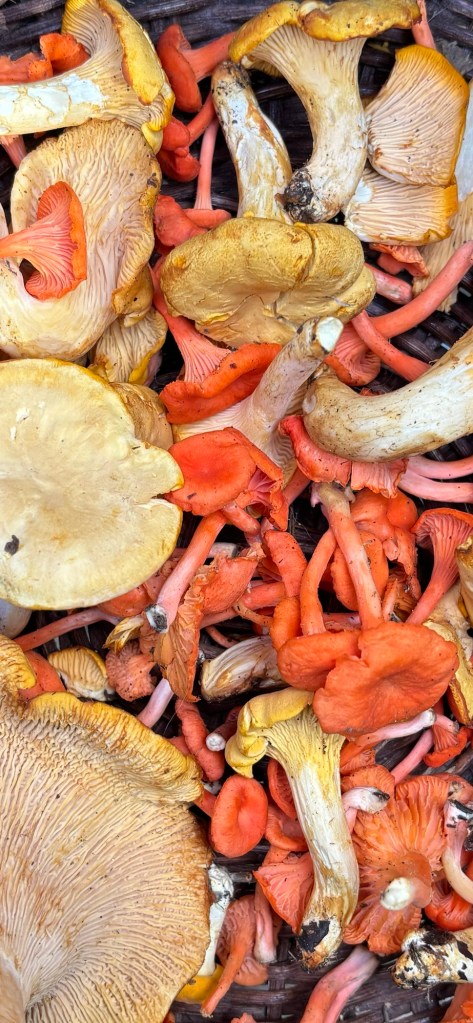
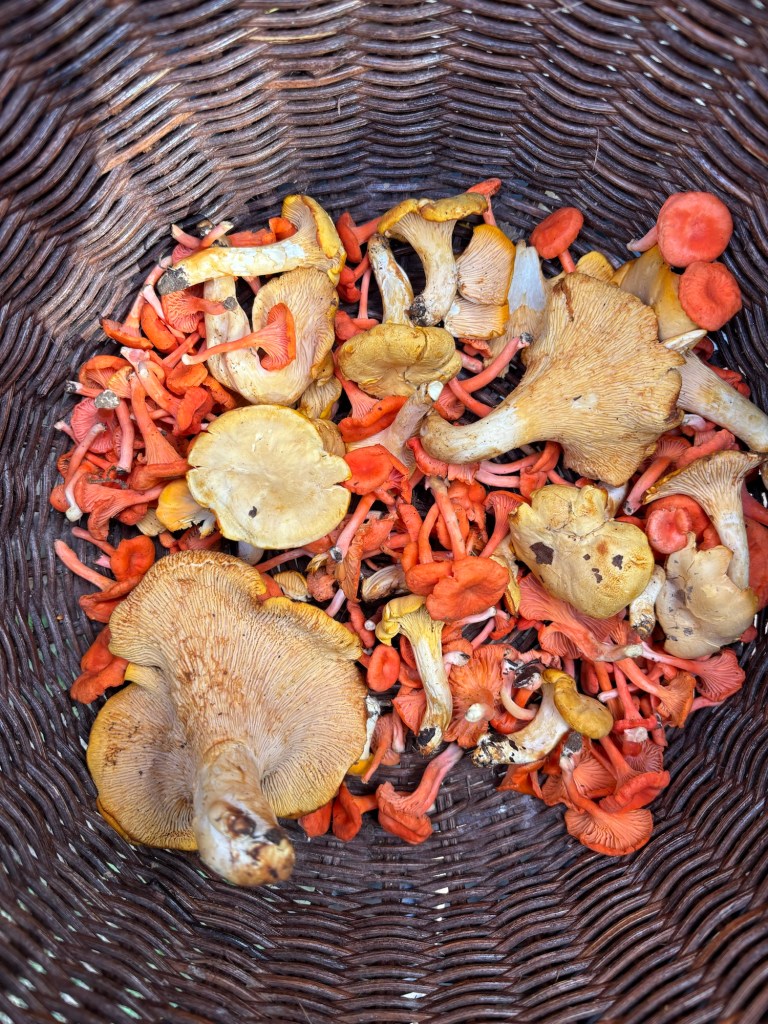
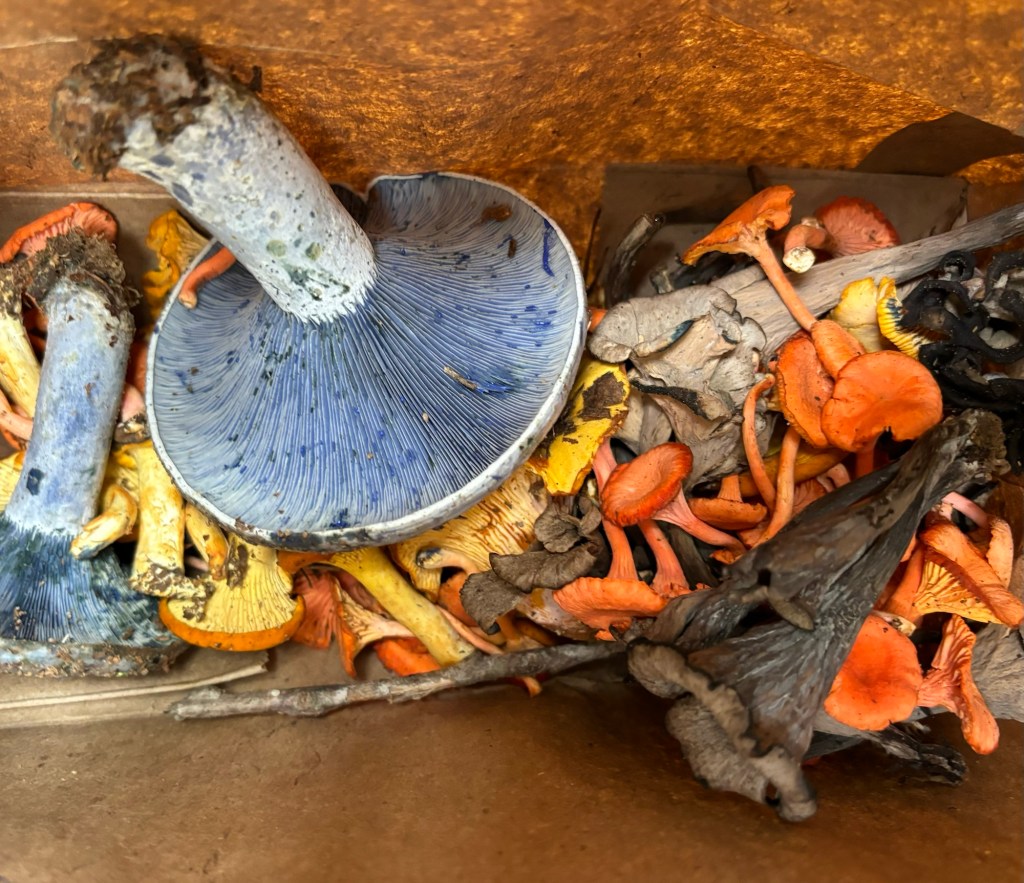
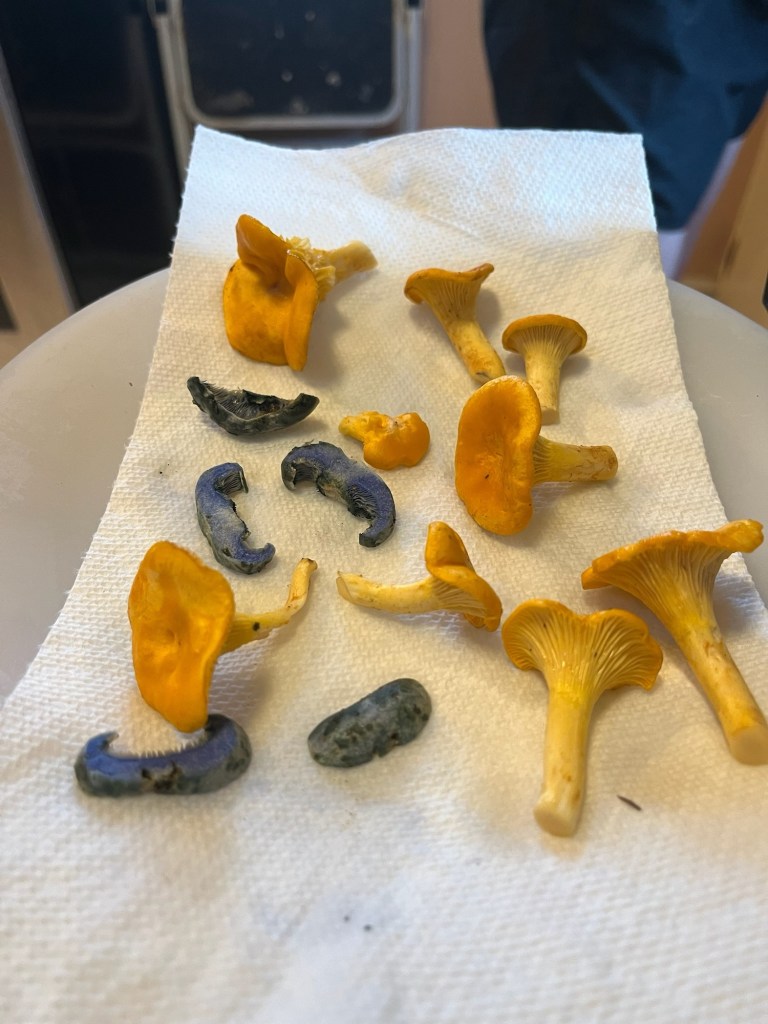
We went over and created more trails on the north side yesterday. We were rewarded for our work with wonderful weather and about two pounds of wild mushrooms. The temperatures in the 70’s made for a wonderful day to be outside. We found several new large Black trumpet patches as well as Cinnabar chanterelles and Ghost chanterelles. We also found a Lilac bolete, Amanita banningiana and an Old Man of the Woods. We joked our basket was full of Halloween colors.
Our basket from yesterday with lots of black and orange mushrooms.
We brightened up the paint on our boundary markers and widened our trails. We cleared a bit more from the road. We stood in awe of the beauty of the forest, the quiet peace to be found there with the trees and the network of mycelium that supports it all and sends up these colorful and wonderful fruiting bodies. We feel grateful and blessed by our surroundings.
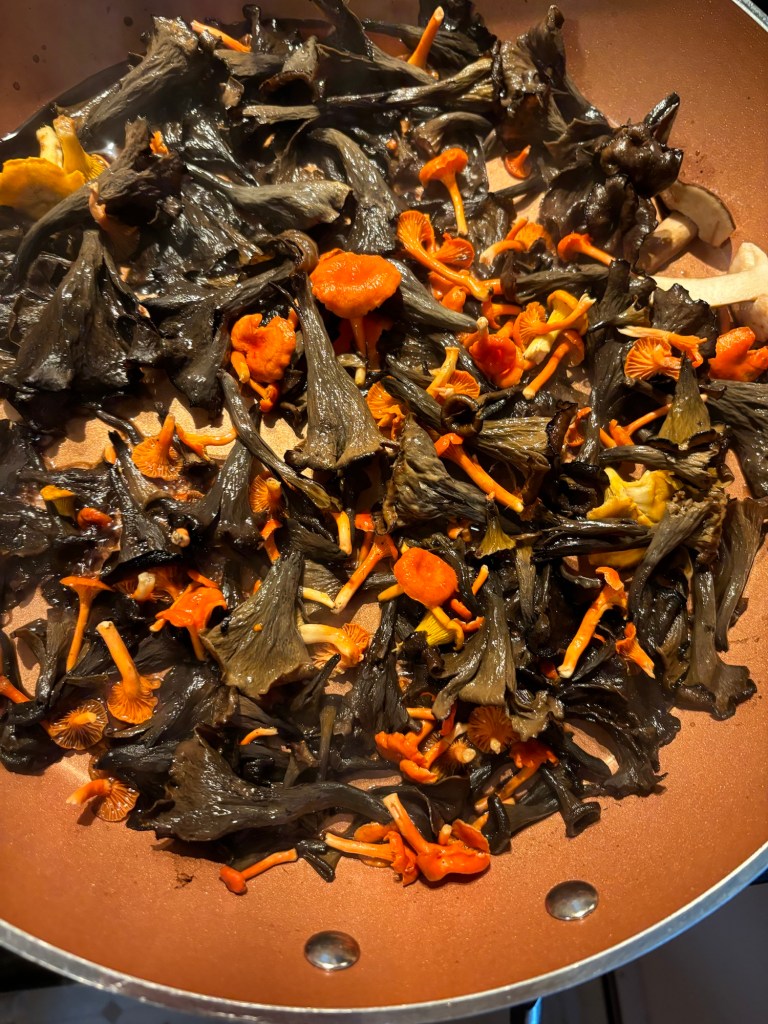
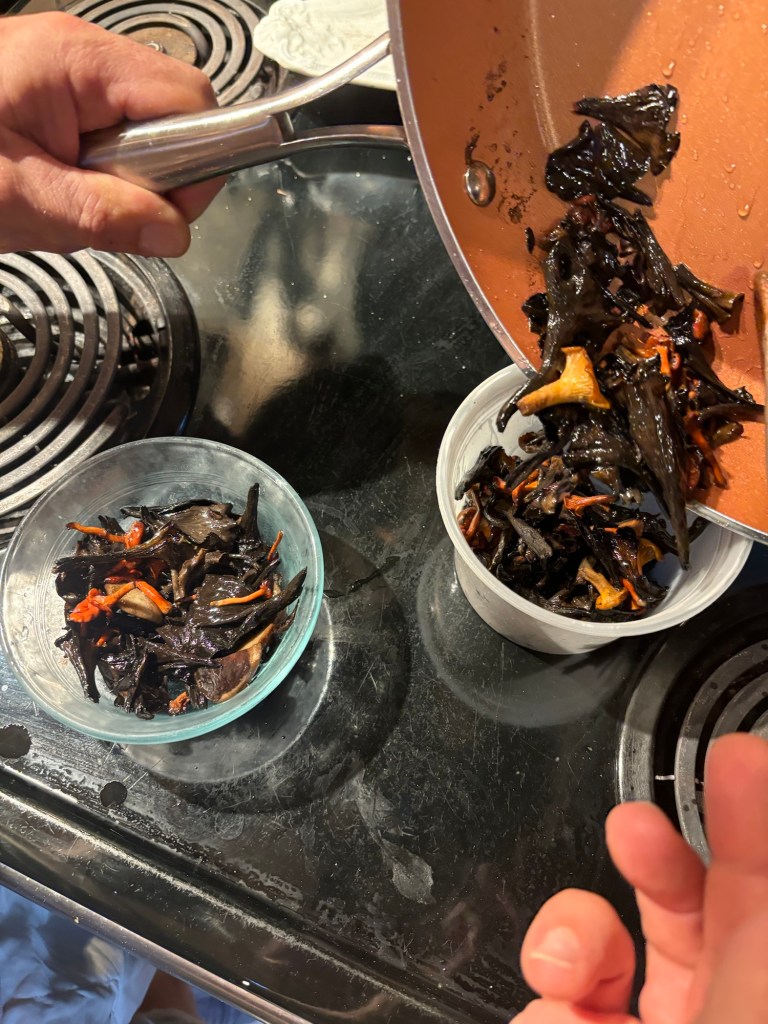
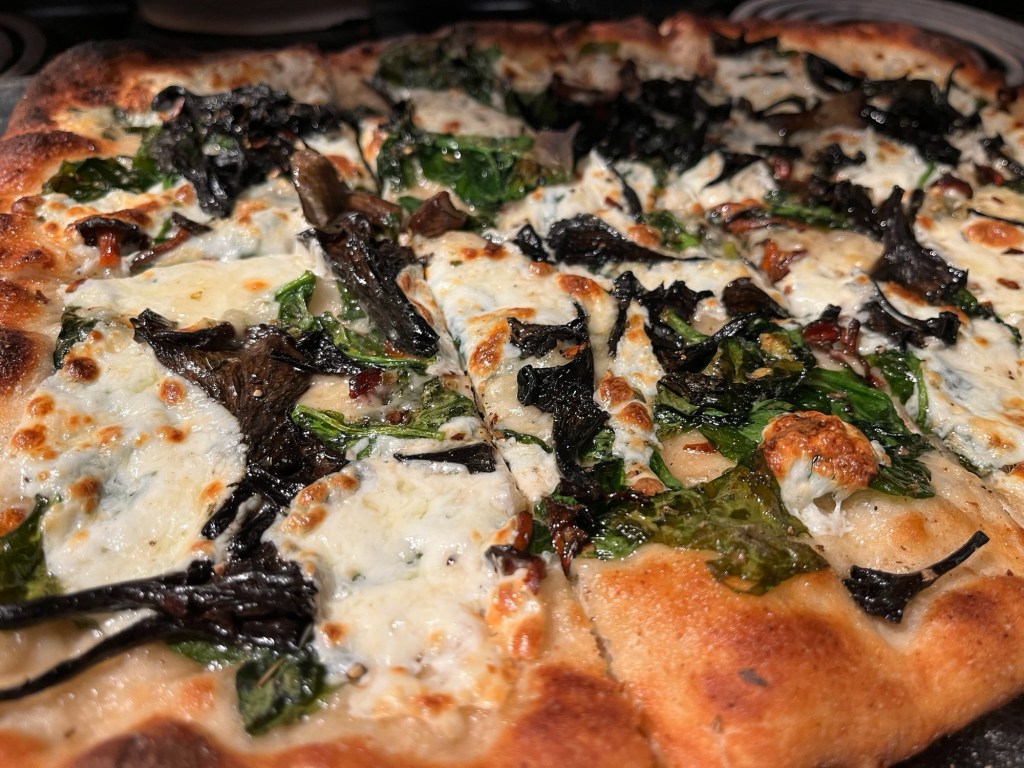
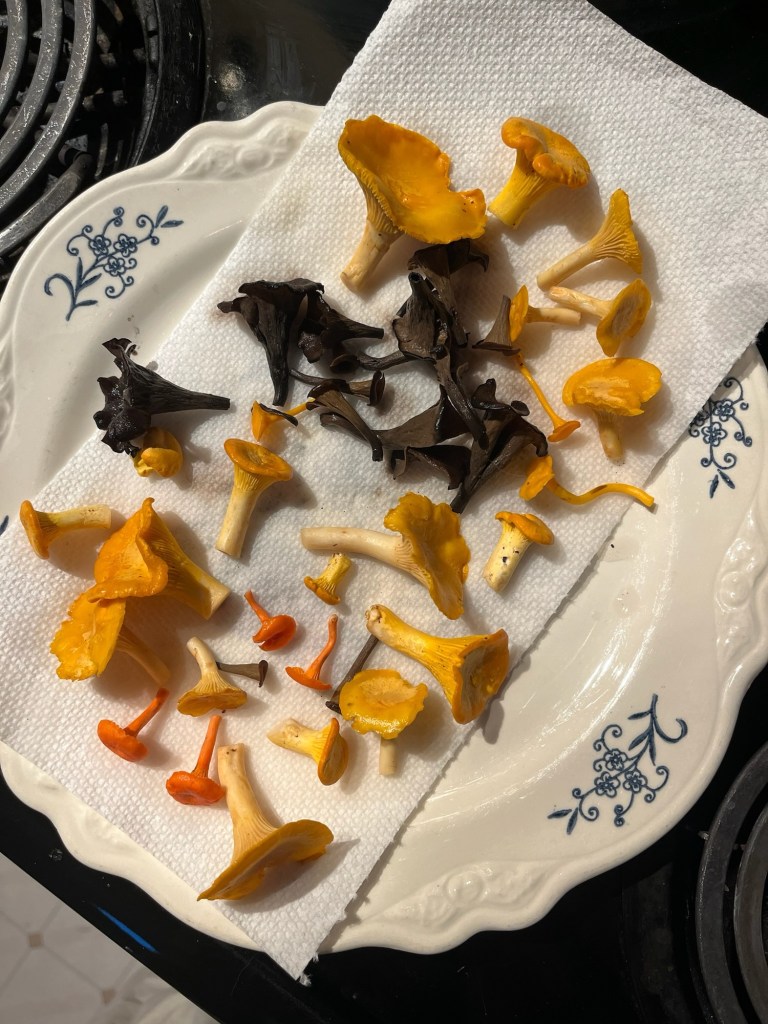
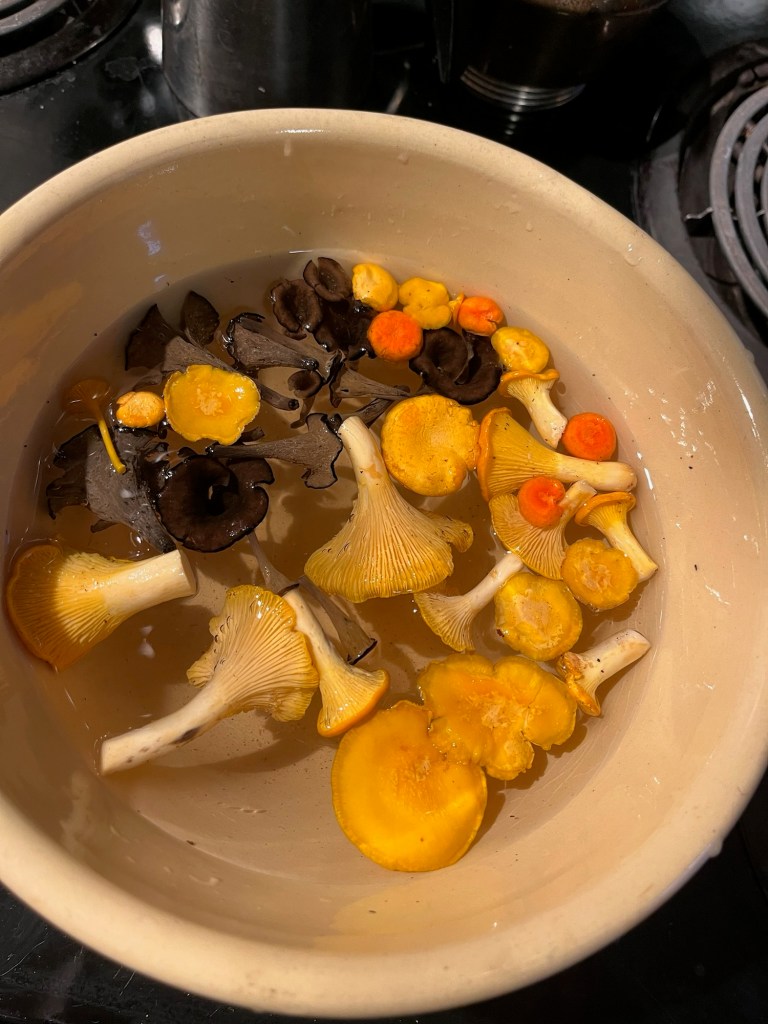
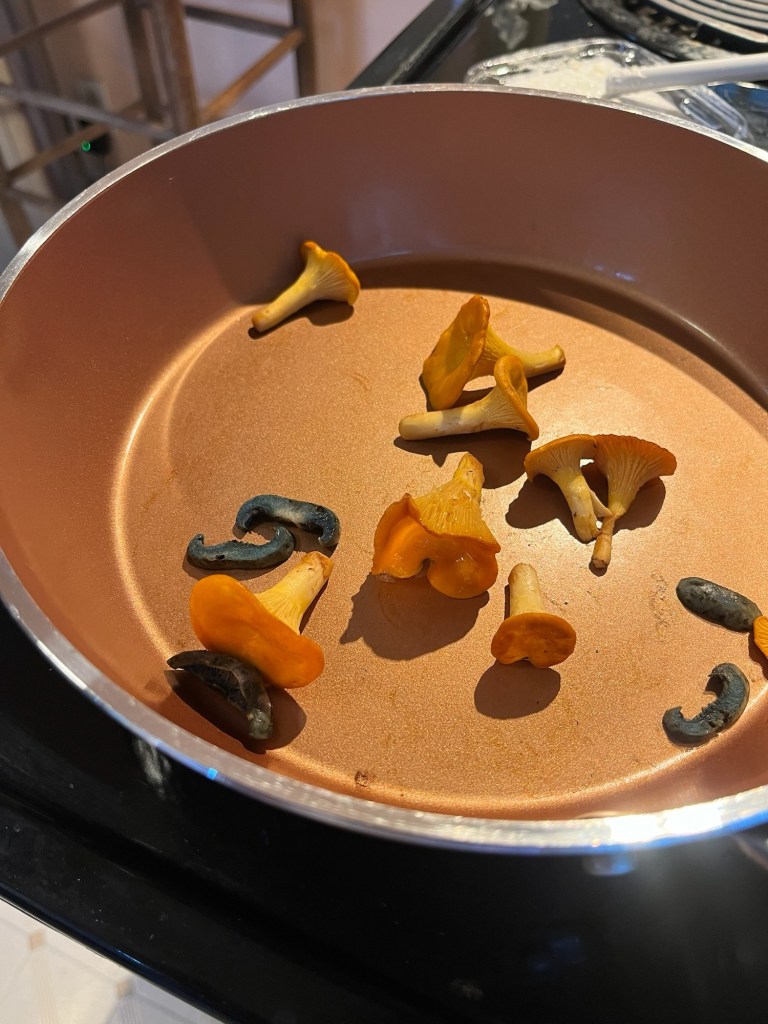
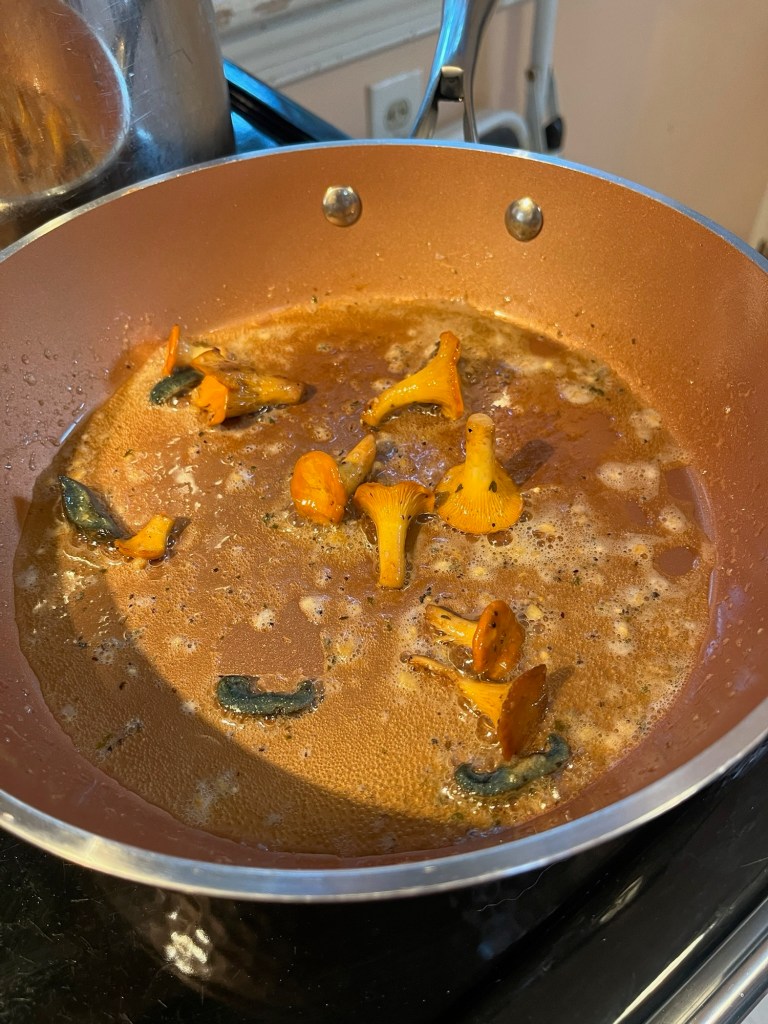
We got home and cleaned up our mushroom bounty and dry cooked them for some minutes to cook off the water we used to clean them. Once dry, we added butter and olive oil and salt pepper and garlic. We saved most of these mushrooms but used a small amount for our white pizza for dinner. It was scrumptious!
We’ve learned to thoroughly wash our mushrooms from the farm and to bring home as little dirt as possible to begin with. Trim and brush them with a mushroom knife if possible before putting in our basket. Once home, we soak them in water and also run under water and then use a towel to wipe them. (If from the grocery store or market, the mushrooms will not need cleaning usually. )
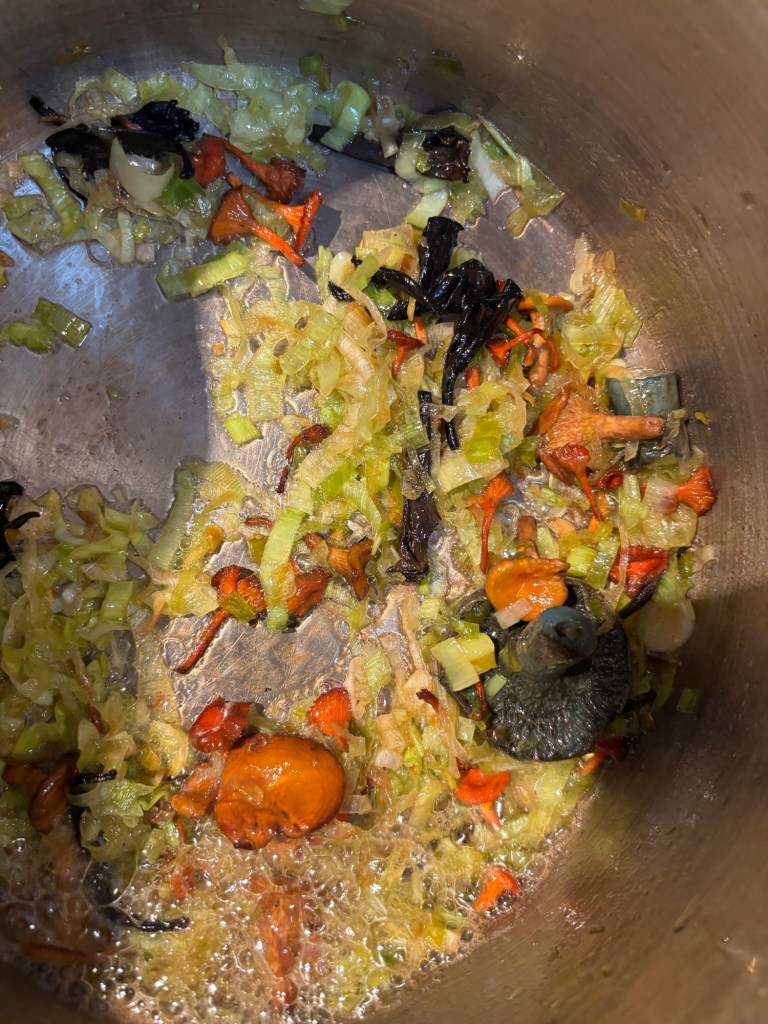
Heat a skillet to 7 and put the mushrooms in, letting them dry out somewhat by cooking gently for a moment or so. Don’t let them stick. Add olive oil or butter when needed to prevent the sticking and add white wine to deglaze if necessary. Try to be gentle and keep them intact. Make sure to cook them at least 10 minutes but we go 15 or so. You can’t really overcook them. Then, either save your mushrooms in the refrigerator to use within a few days. Or, freeze them like this until you are ready to use, for up to a year. Thaw them in the refrigerator.
Chanterelles harvested from northwest corner of SAFF on Saturday.
We had not explored the north side in months and decided to spend this weekend making trails and looking for mushrooms over there. We are sure glad we did. With both days added together, we had about three pounds of mushrooms.
Friday’s wild mushroom harvest from the north side of SAFF includes three different varieties of chanterelles and indigo milk caps.
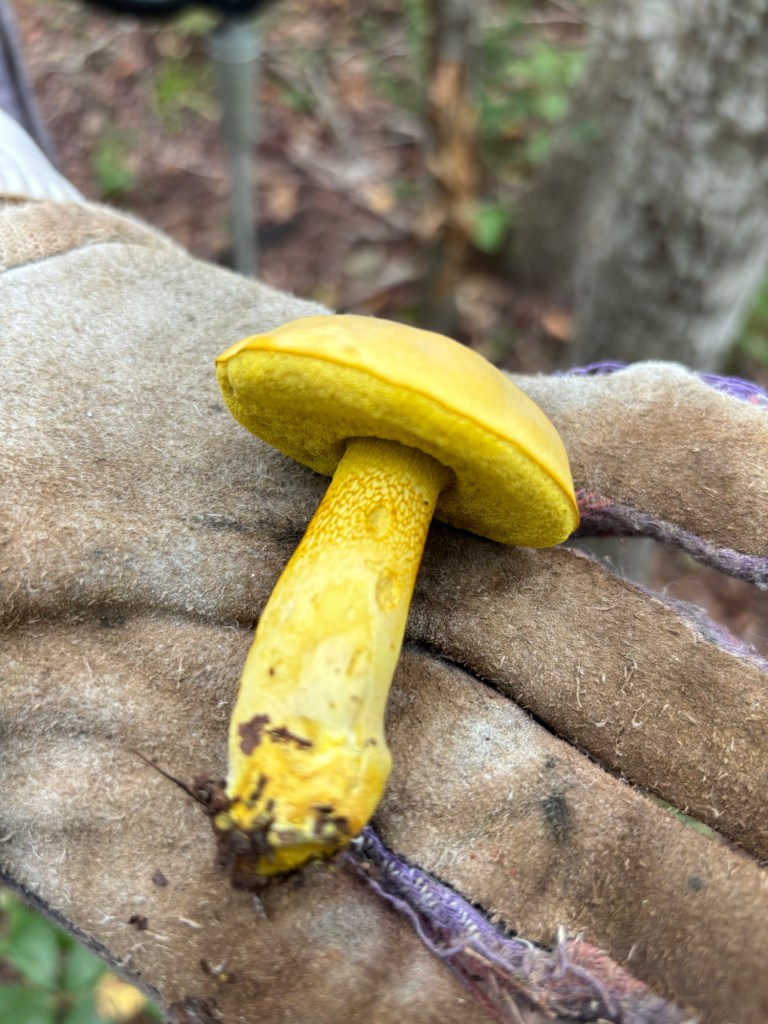
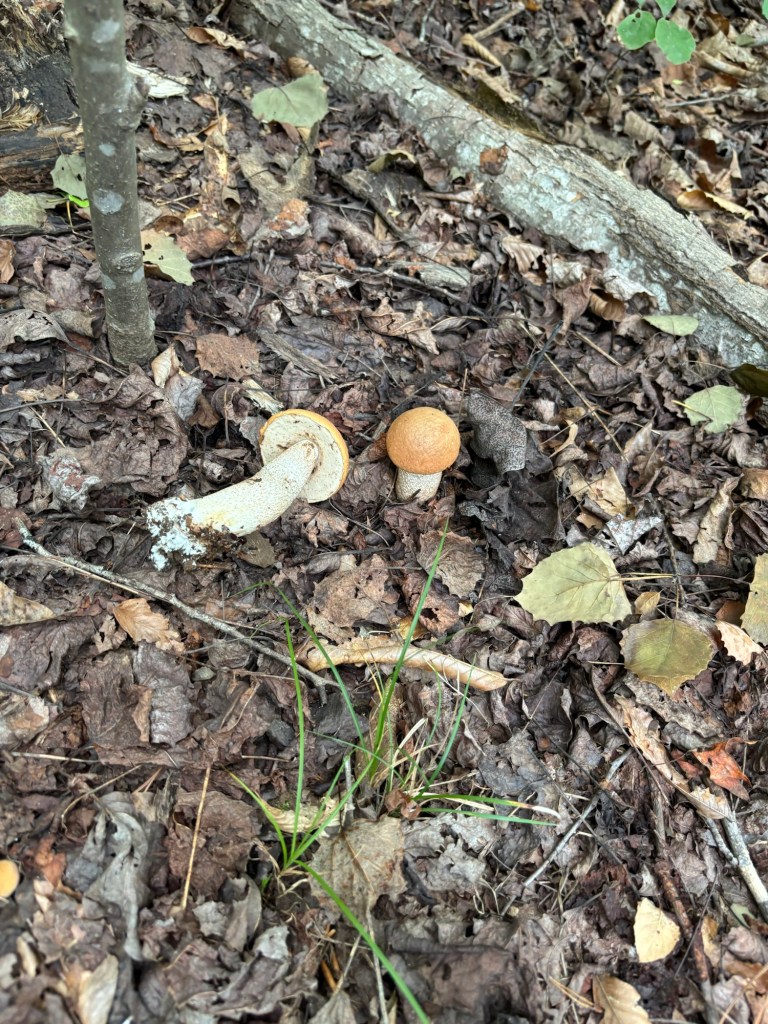
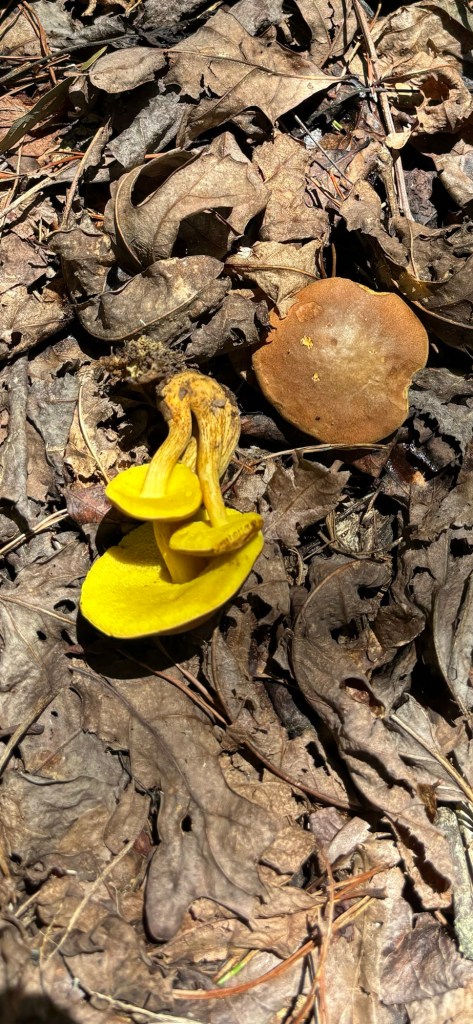
We started off down Mary Banning Way and found multiple types of boletes right along the path.
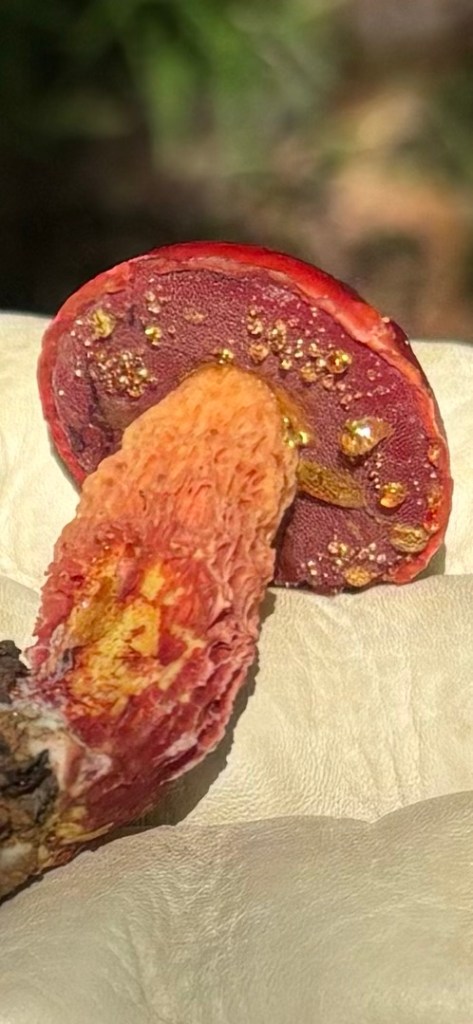
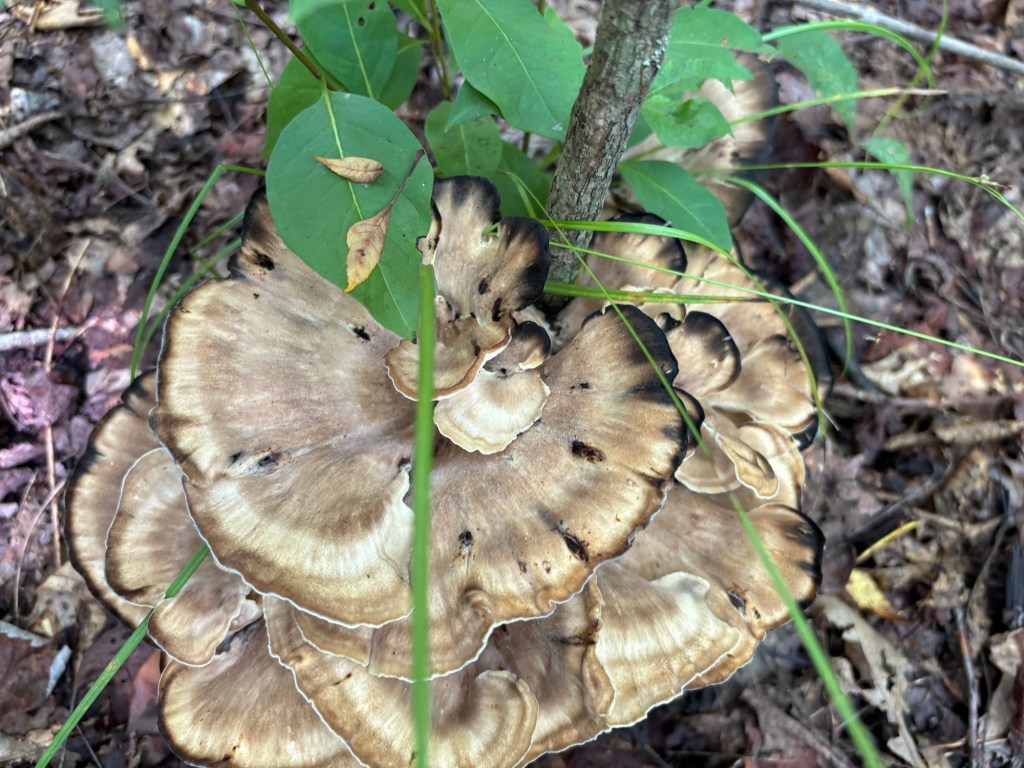
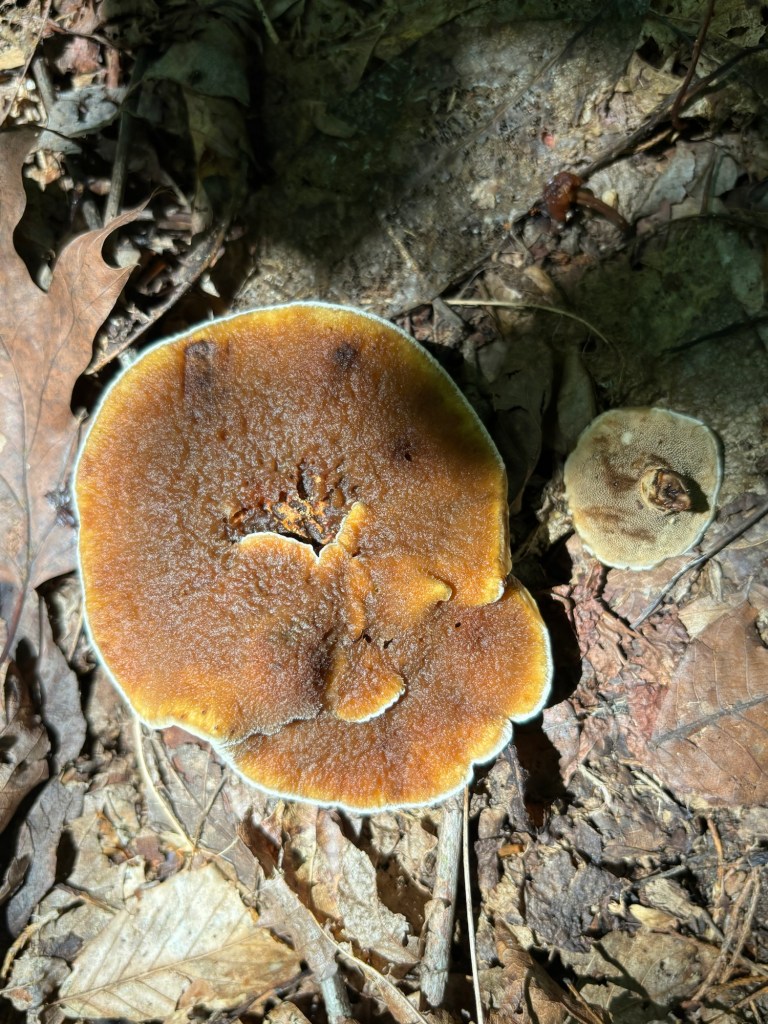
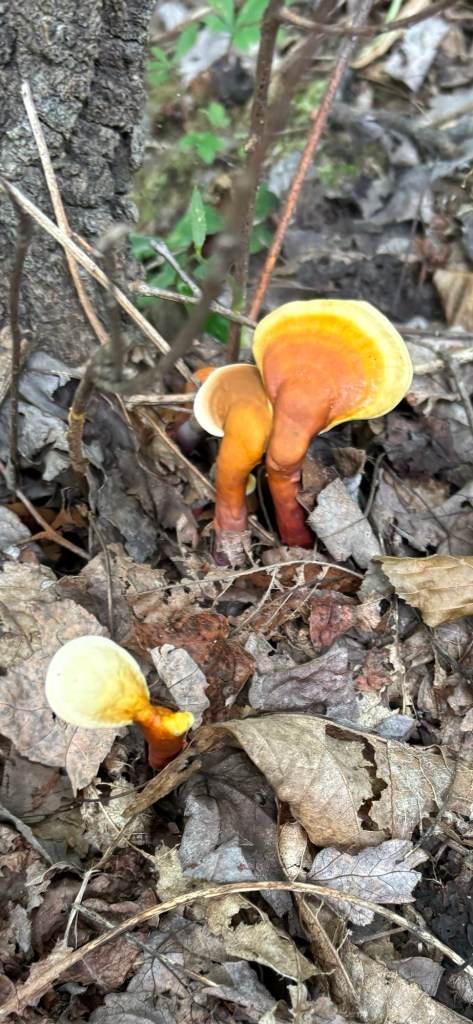
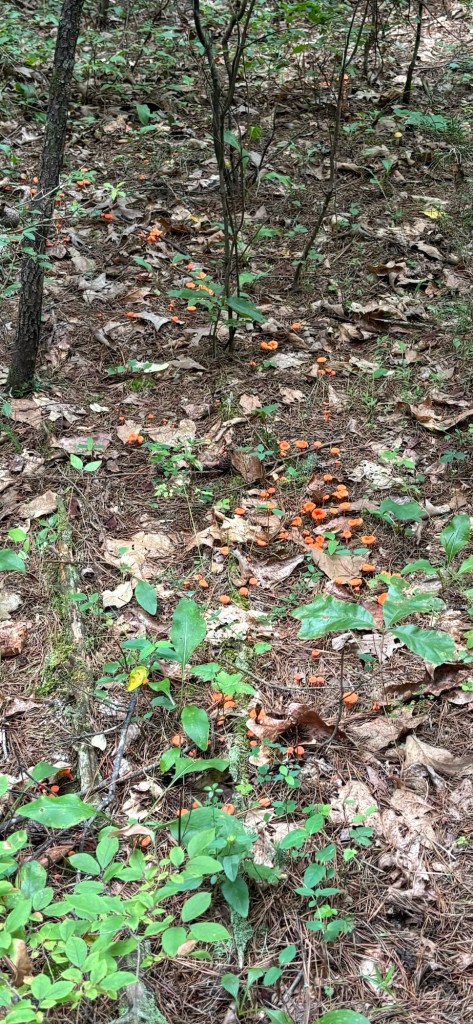
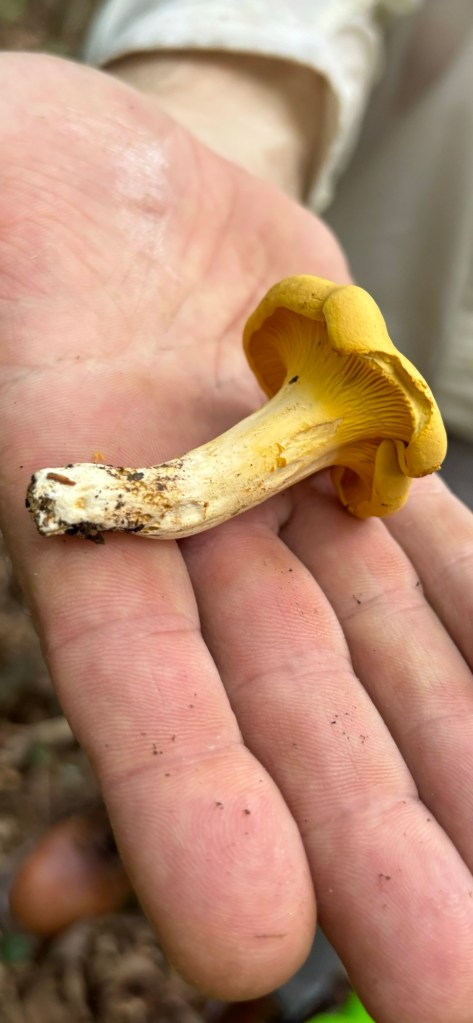
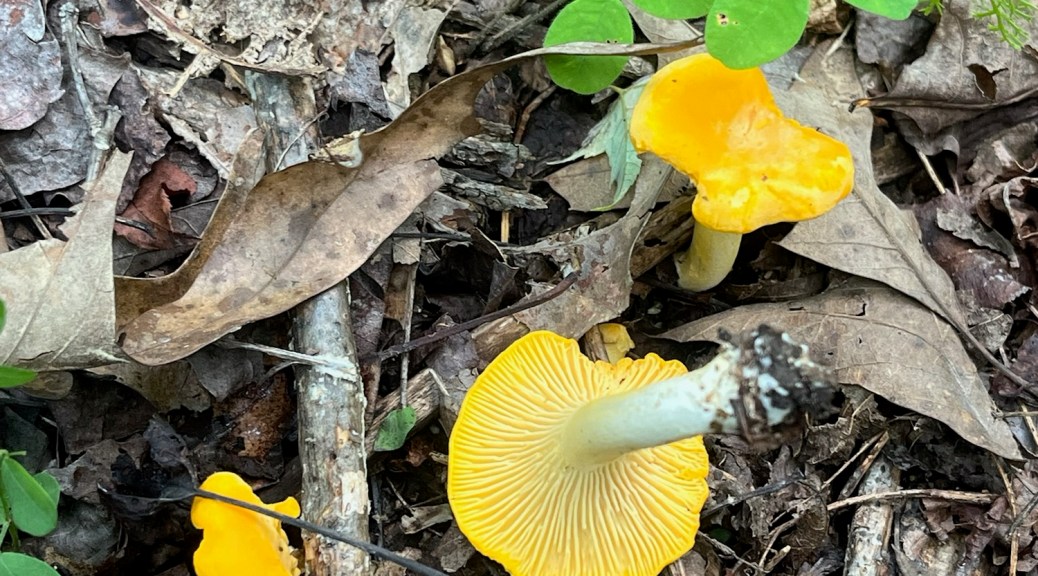
Retiboletus ornatipes, Ornate-stalked bolete, an edible mushroom found in multiple spots on SAFF.Leccinum testaceoscrabrum or Leccinum versipelle was found along a hillside. There were hundreds. Edibility is suspect.Boletus auripes, Butter-foot boleteA young moist bolete frostii found along Fern Trail with amber colored drops sweating from the pore surface. This is a process called guttation.We also found this interesting black staining polypore on the north side. Hydnellum spongiosipes, Velvet tooth, found in multiple locations around SAFF. We found this roadway along the northeast corner of SAFF. It was graveled. We began to clear small trees and vegetation from the roadway. Golden Reishi, Ganoderma curtisii, a wood decaying polypore found along a wet weather gully on the northern side of SAFF. But we mainly found chanterelles. These Black trumpets were surrounded by pines. These Cinnabar chanterelles were everywhere along the southeastern facing slope in the northeast side of SAFF.
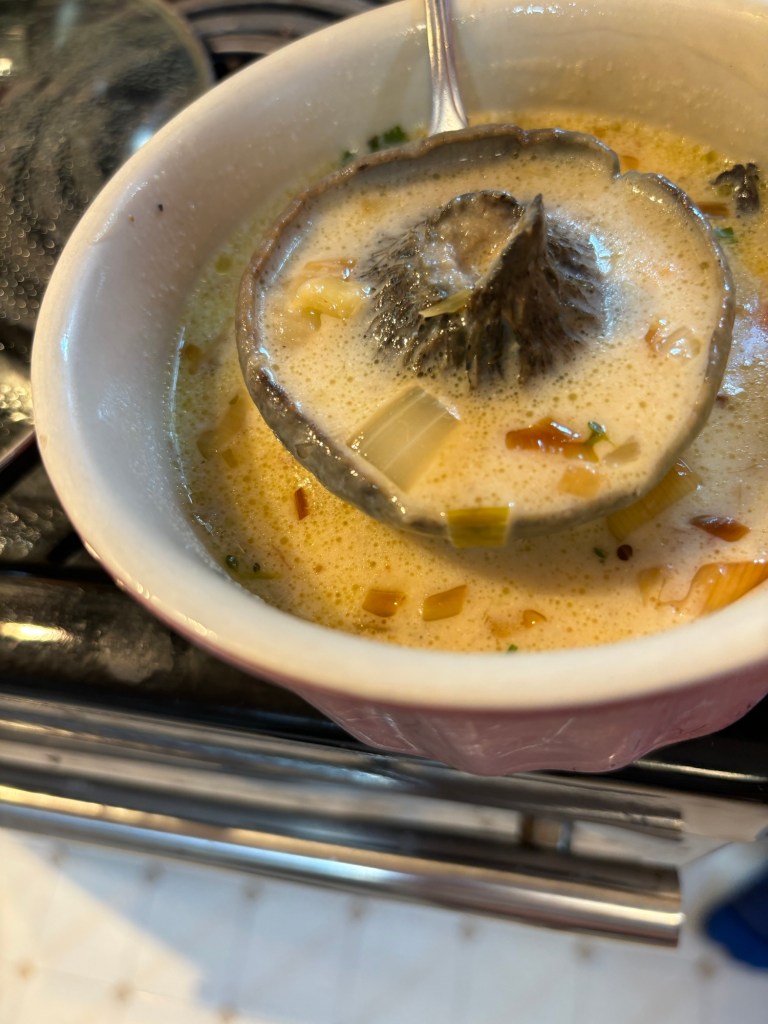
We have a lot of cooking to do with these choice edibles.
Eastern Black Trumpets, Craterellus fallax, found at the bottom of slope at the waterway in between two hickory trees.
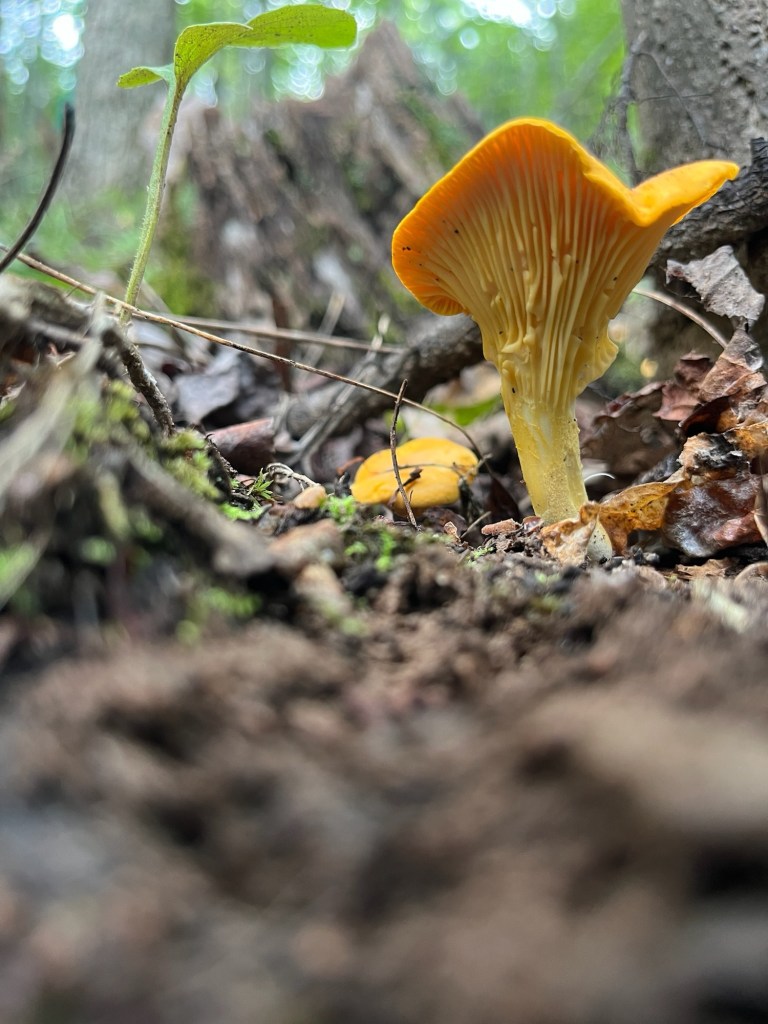
There are so many mushrooms right now after the heavy rain and cooler temperatures. We have Russulas and lactarius mushrooms to identify all over. Hundreds of red Russulas. Not as many boletes or Amanita right now. We found another patch of Eastern Black Trumpets to our delight and surprise as well as these beautiful and delicious ghost chanterelles.
Ghost chanterelle, Cantharellus phasmatis, found along Chanterelle Trail. Underside of the Ghost chanterelle showing the false gills.
We brought them home and cooked them up and everyone was pleased.
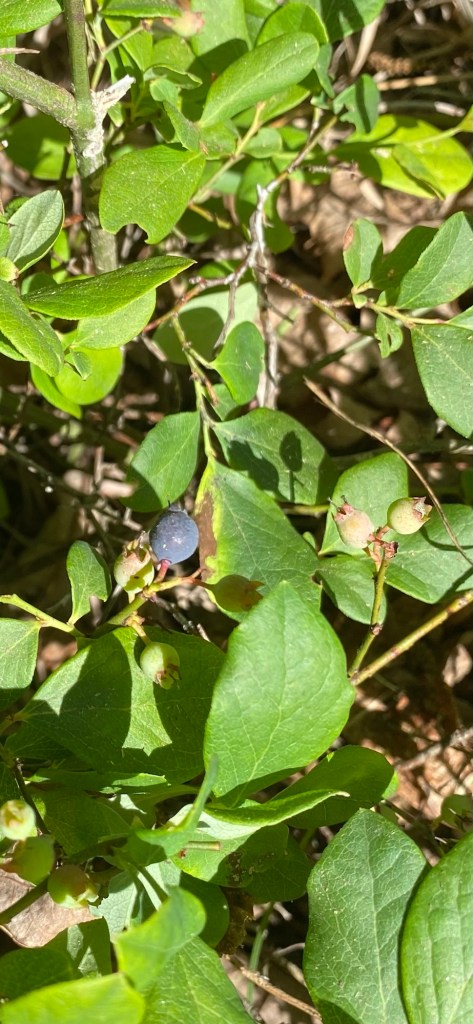
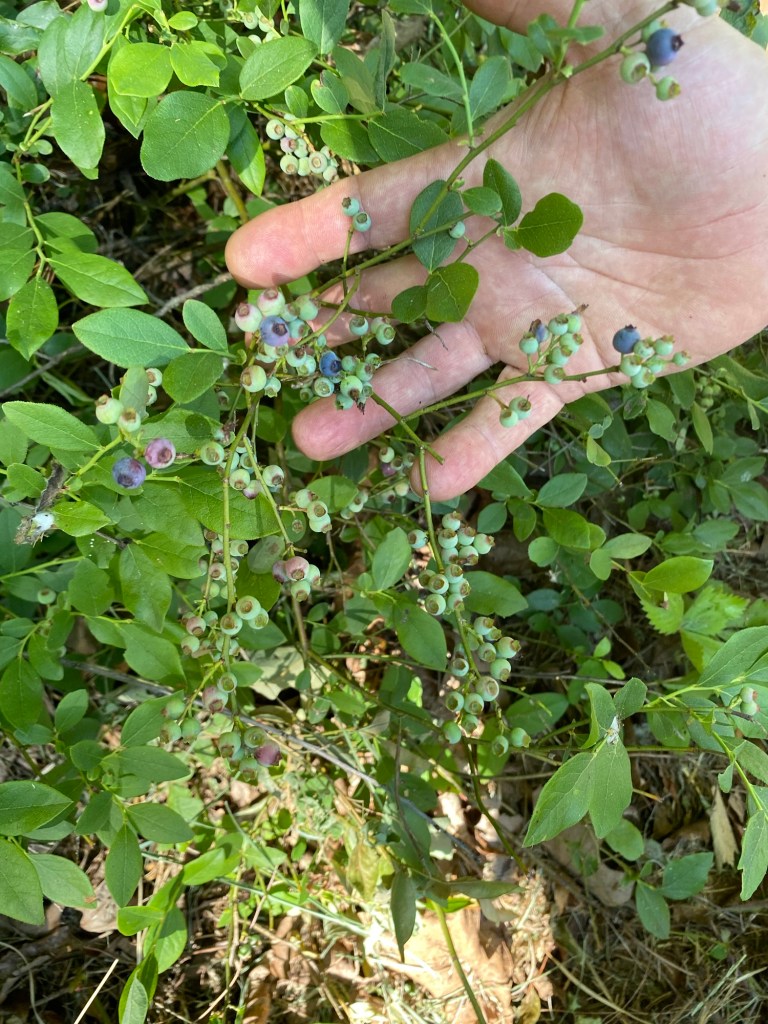
Finally we have a few ripe blueberries. They were a tasty snack after we got some work done.
We went out to the farm to clean up a few spaces, look for more black trumpets and cut a trail through the south side. We were able to clear out some tiny tulip poplars and maples, paying close attention to keep any understory oaks as we learned the old oak forests throughout the world have a problem with understory oaks regenerating the forests. We decided we would only thin out diseased or failing oaks. https://youtu.be/NRWHHOAf39U?si=akypzxLUNo_7tOfn
We were pleased to eat a few blueberries. We found them abundant and ripening first along the southern set back line, where they get plenty of sun.Eastern Black trumpets We ate yesterday’s black trumpets for breakfast this morning. We cooked them for 10 minutes on medium high heat in a dry pan, then lowered heat and added olive oil and garlic with a bit of salt and pepper. They were nutty, fruity and smoky. We enjoyed them as much as the golden chanterelles we found last summer. There are no known toxic lookalikes, so these are a great mushroom to forage . Some of our favorite mushrooms we have tasted. We performed some trail maintenance on ridge trail, made our way along the waterway, back over to the set back line and found more today. We harvested the largest and we can’t wait to eat these too. We made a trail up from the waterway to the Black Trumpet patches and beyond until we exhausted ourselves. We will call this Black Trumpet Way, it leads to the set back line.For now, this is unknown Amanita that we will watch this weekend. Notice the volva underneath the mushroom that it emerged from.
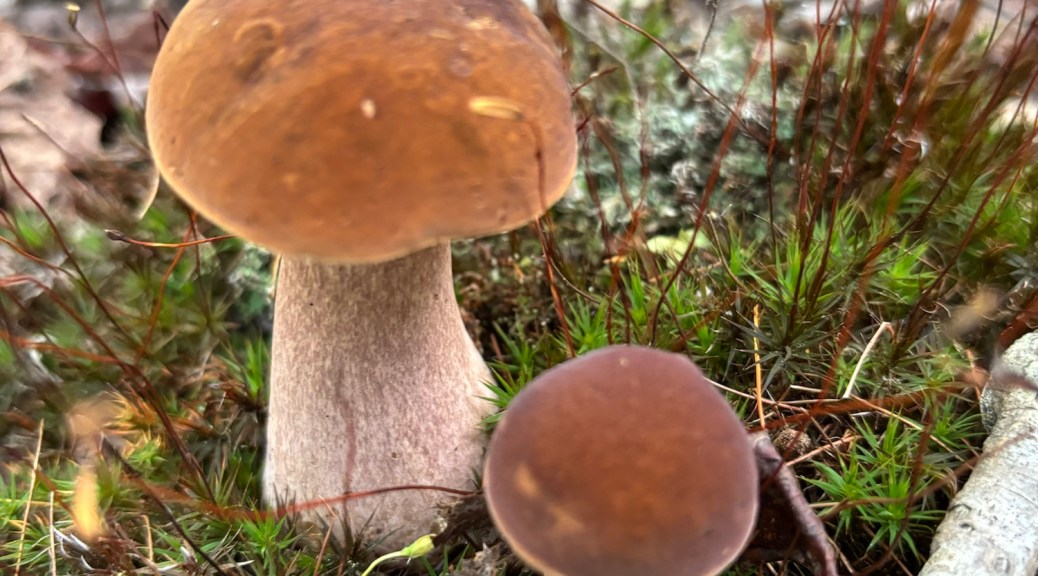
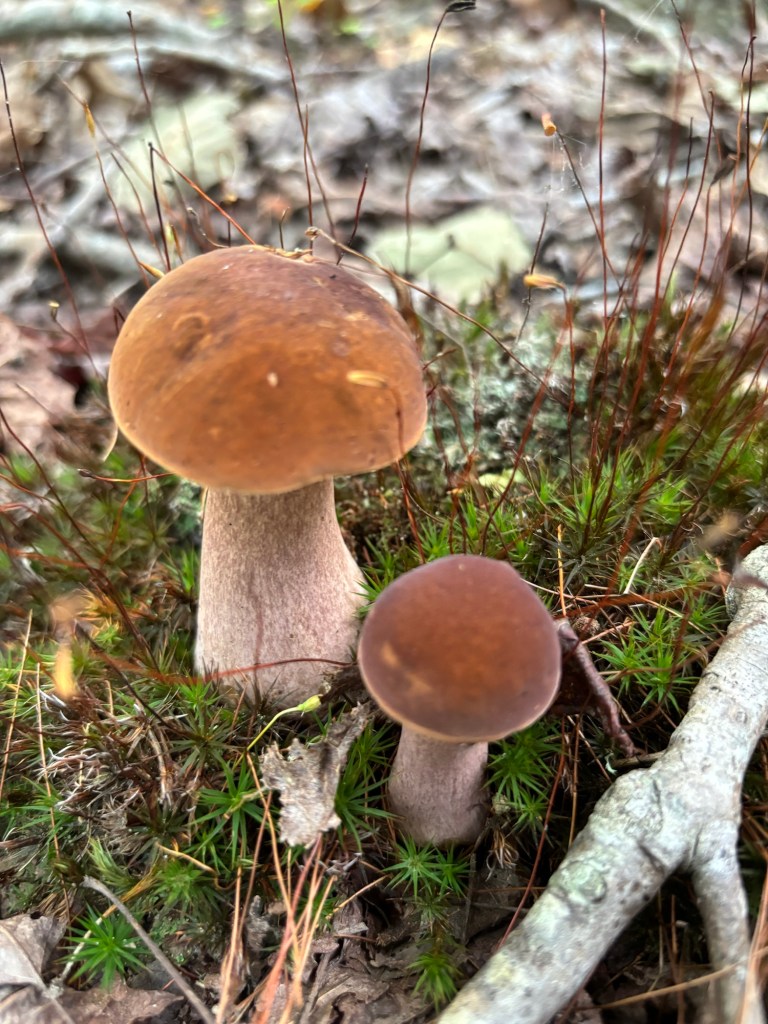
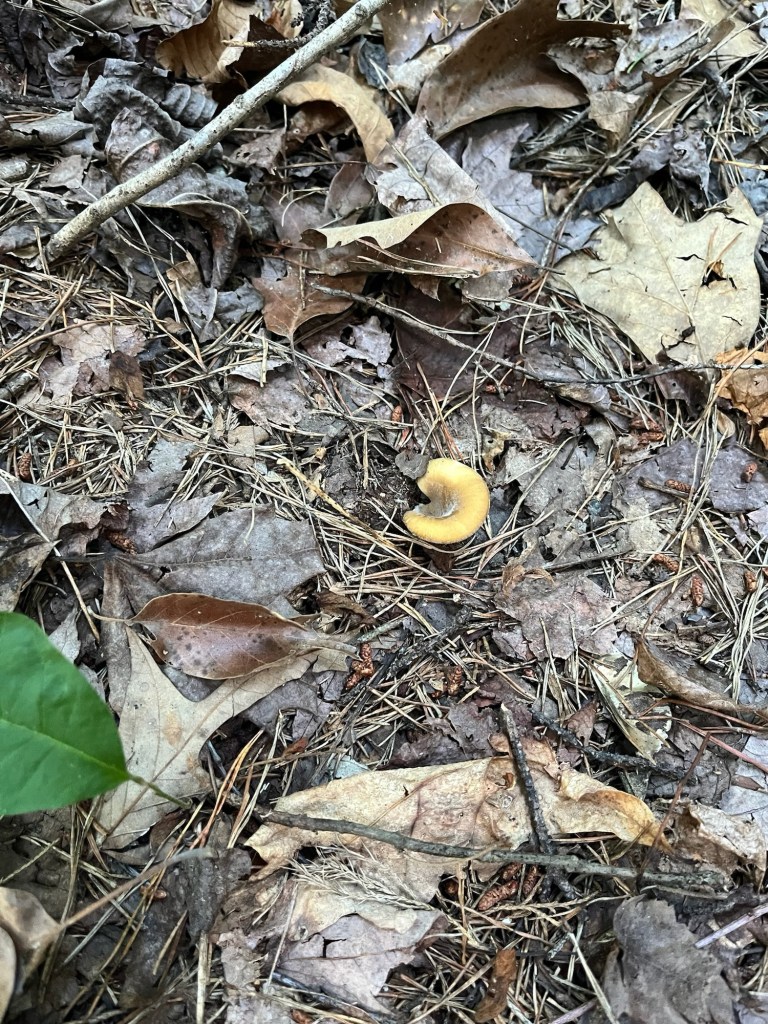
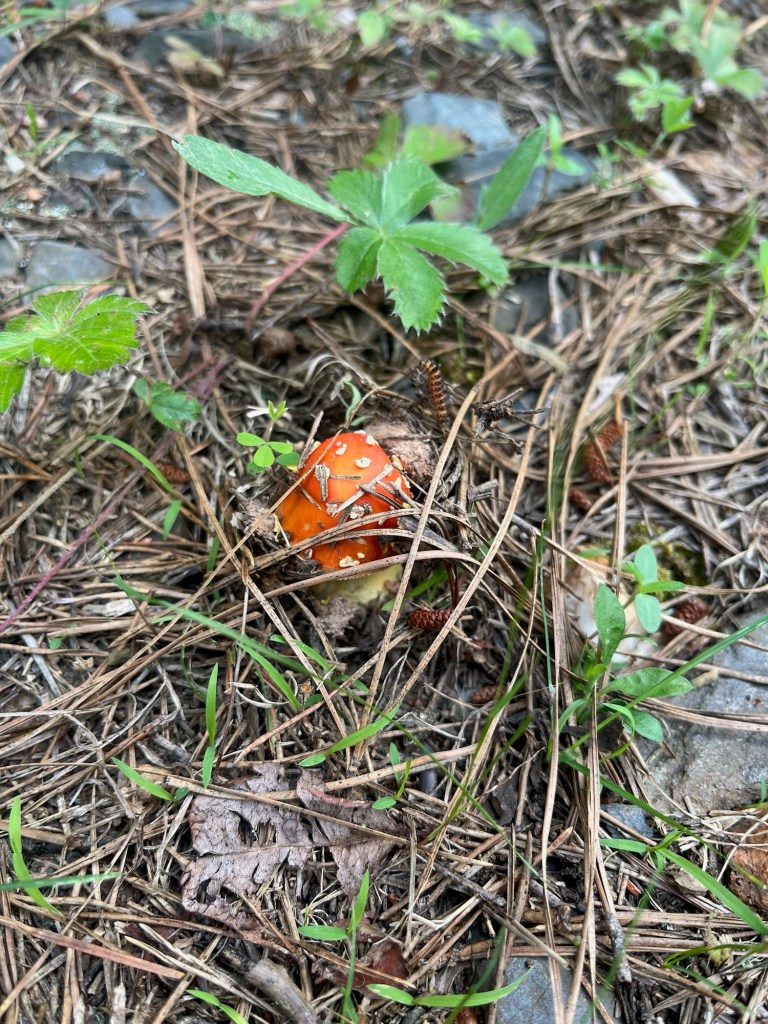
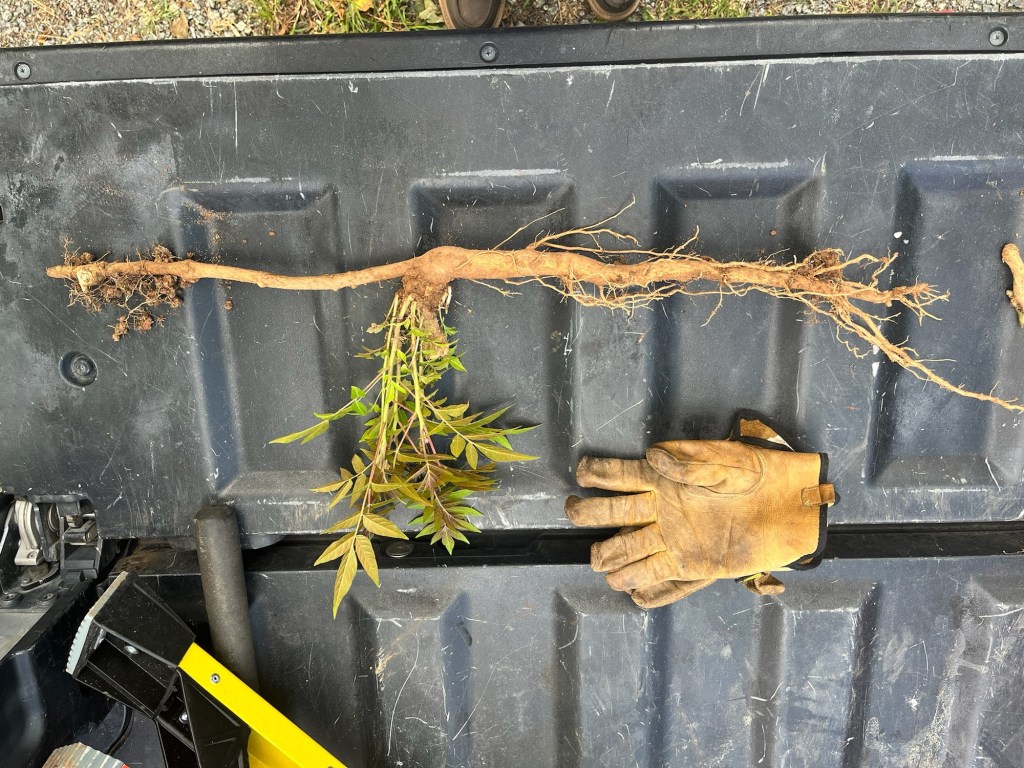
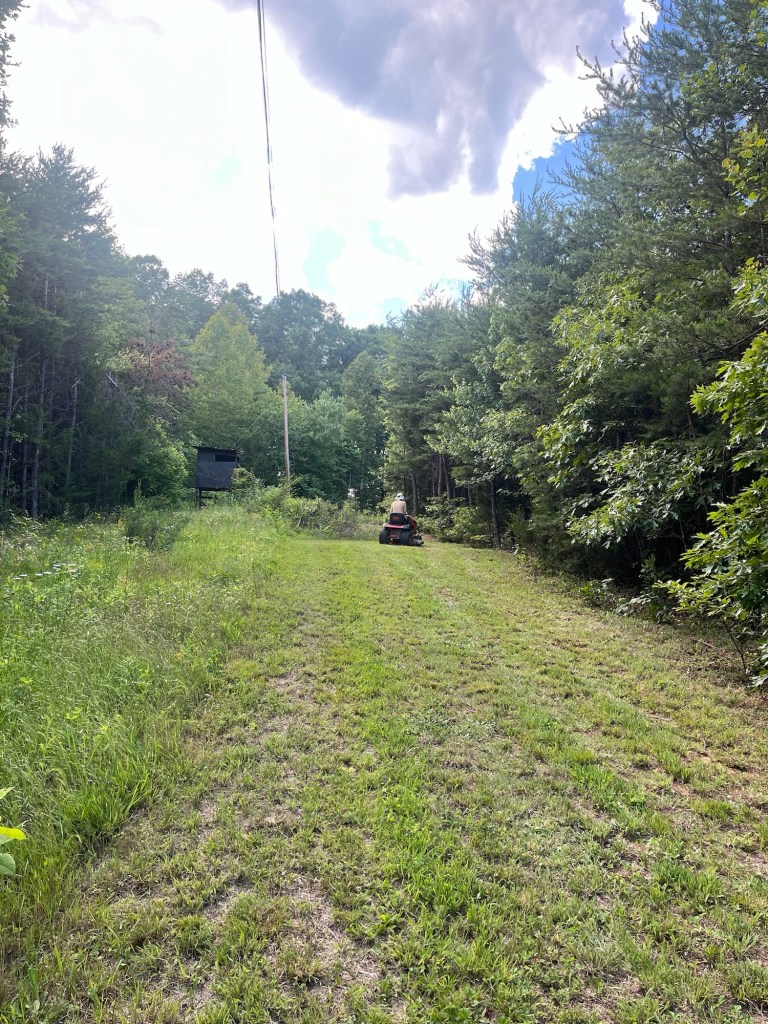
One of our first Bolete edulis mushrooms, common names the Cep, porcini, king bolete or penny bun, a most sought after edible. We’d been searching for a year and finally found it yesterday as well as black trumpets. Craterellus fallax, Eastern black trumpet, found along the southern set back line along the forest edge. Near oaks and nestled into moss growing directly from the forest litter. These are particularly difficult to spot as they look like leaf litter. We are so lucky. They looked like round tubes. These are a choice edible and are highly valued. Shoehorn oyster found along Blackrock trail growing on a stick. Amanita parcivolvata, False Caesar’s Mushroom, we are seeing these all over up top right now. The cutest mushrooms to spot pushing up through the leaves or pine needles with the bright red to orange cap dotted with white. Ailanthus, tree of Heaven, root suckers we’ve been pulling out from wherever we find it on the farm. This is a wonderful example of why to pull out the roots underneath and not mow or cut them since the root will keep growing and sending up more of this invasive tree that chokes out native species. Mowing the south end where we found the first of 5 porcini mushrooms yesterday. 👏🏽
We were out to mow and have a work day. It was lovely cooler weather so we got lucky in multiple ways. We mowed the clearing up top, the front along the road and the southern border. Then we went for a little walk and found the mushrooms we’d almost given up hope finding at SAFF. What a wonderful day. We feel like anything is possible if you stay focused and keep going. 😀
We saw plenty of lone star ticks as well. Since we’ve been mowing regularly we don’t see them in the clearings but along our trails we find them on the tippy top of Galium, bedstraw. They hang out with their legs open waiting for an animal to walk by to attach to. We saw plenty of them yesterday. It’s a bad year for ticks here in Virginia. The mild winter weather didn’t kill them off so they are even more abundant than usual. We are staying mindful.