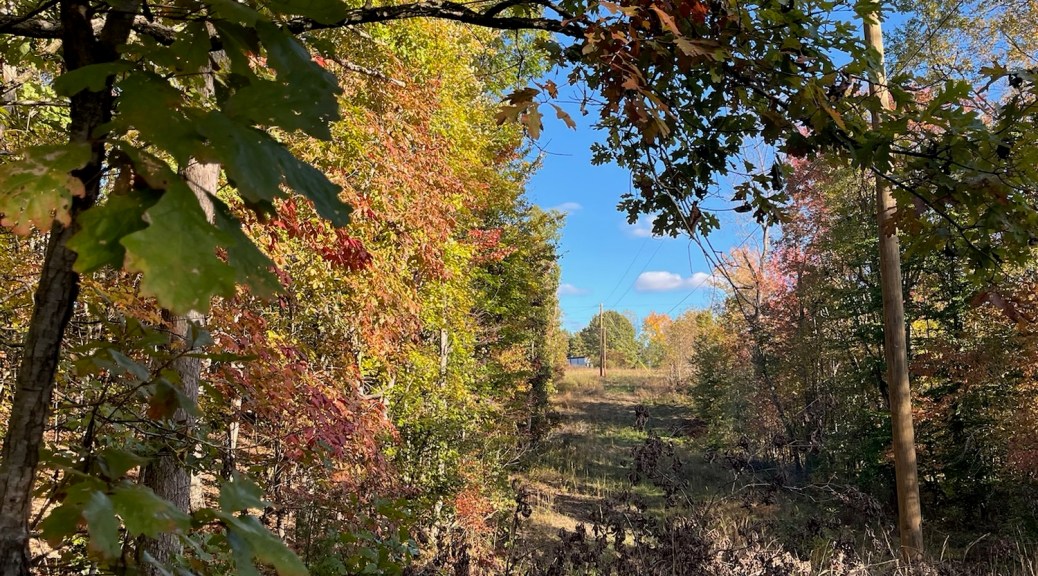
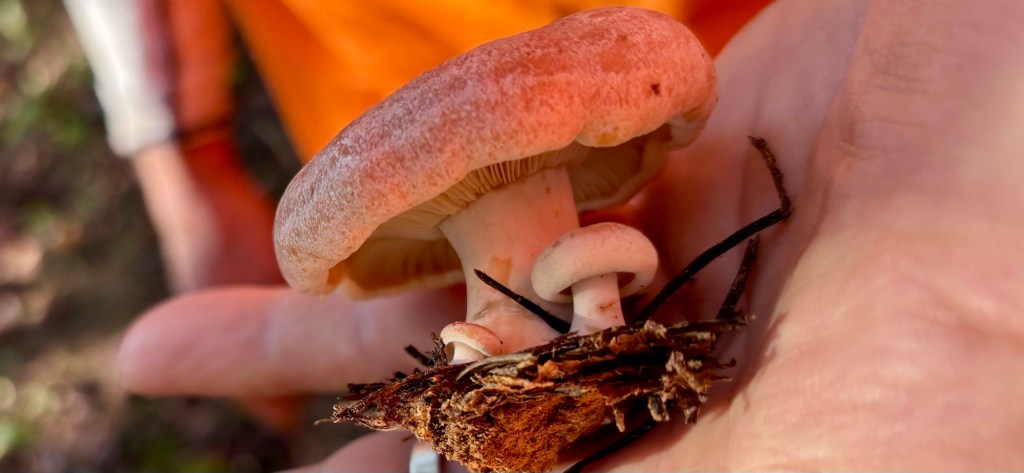
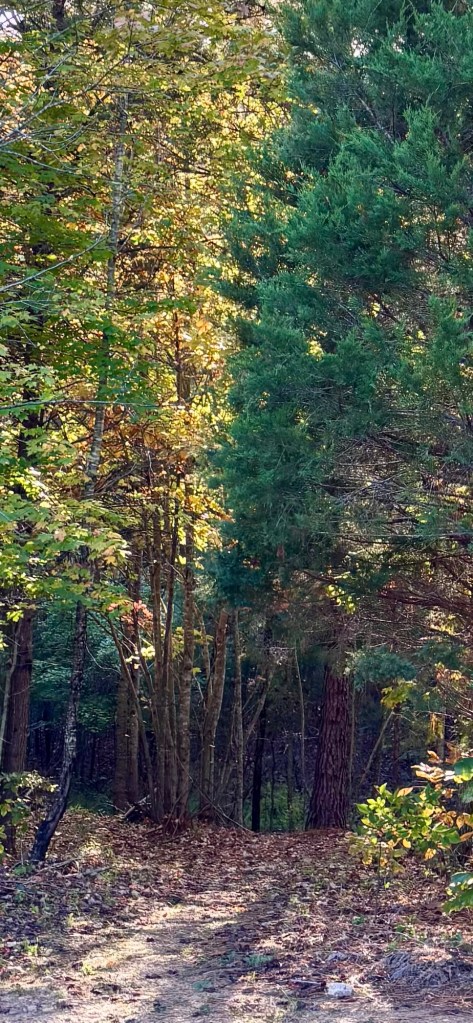
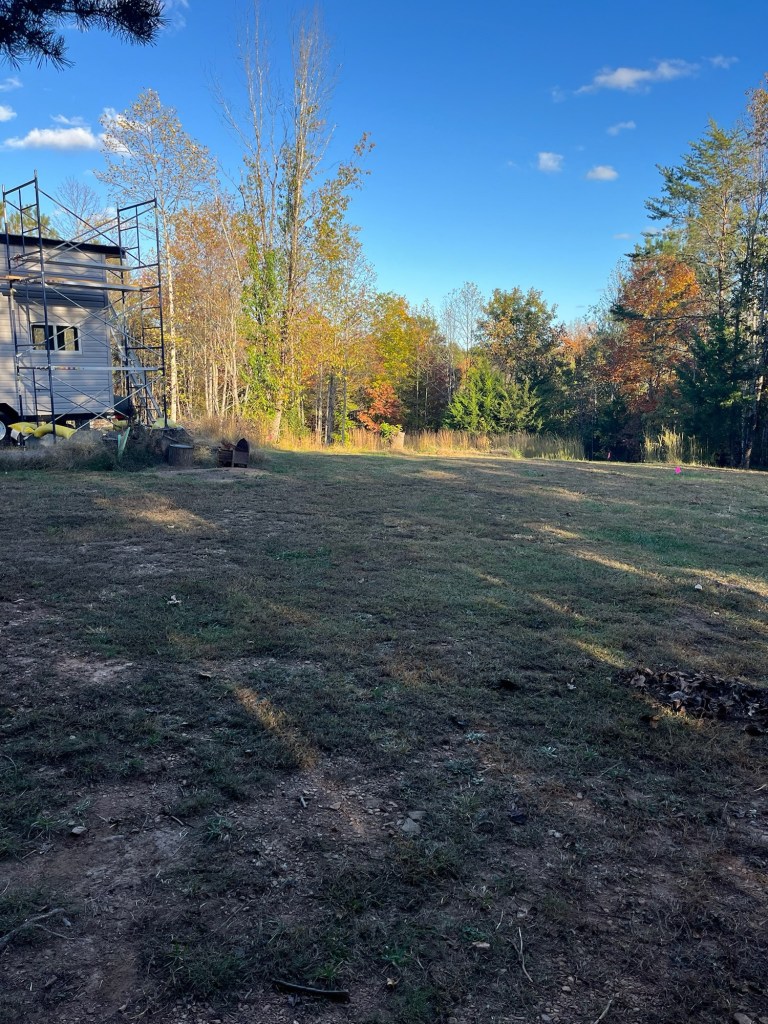
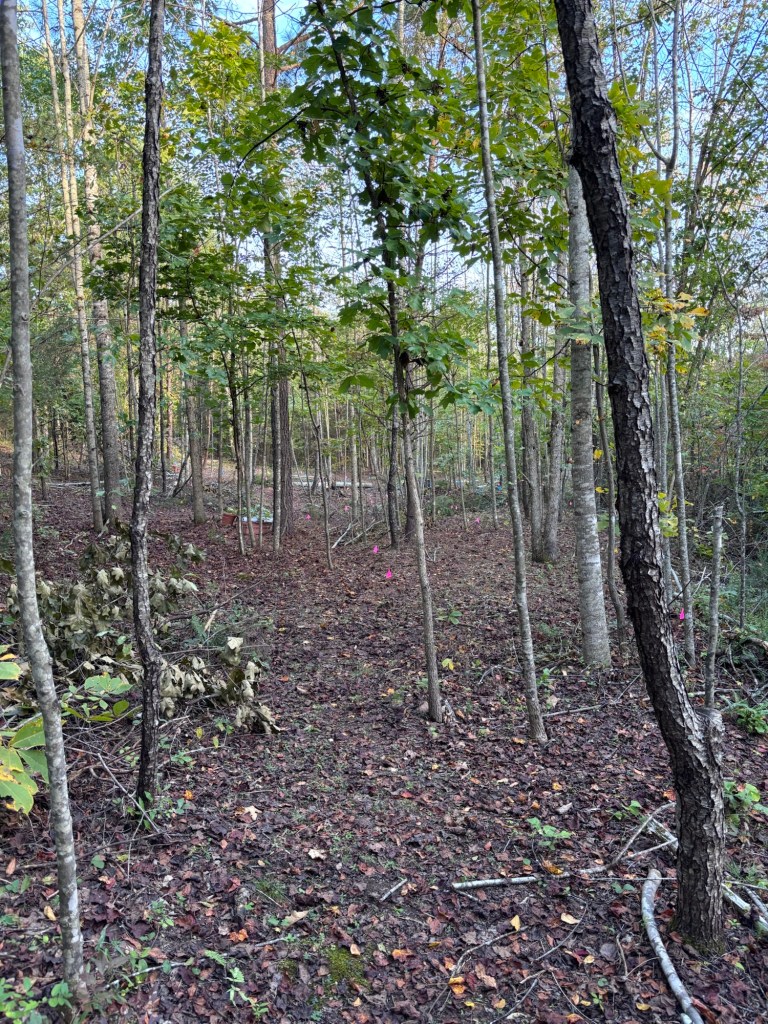
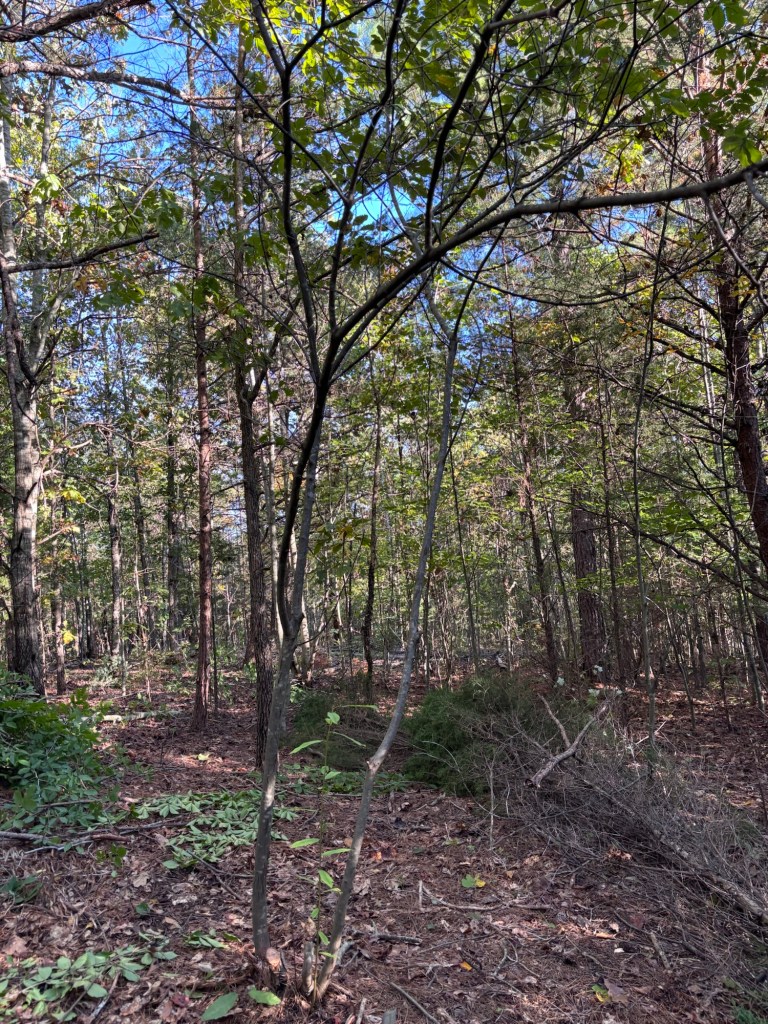
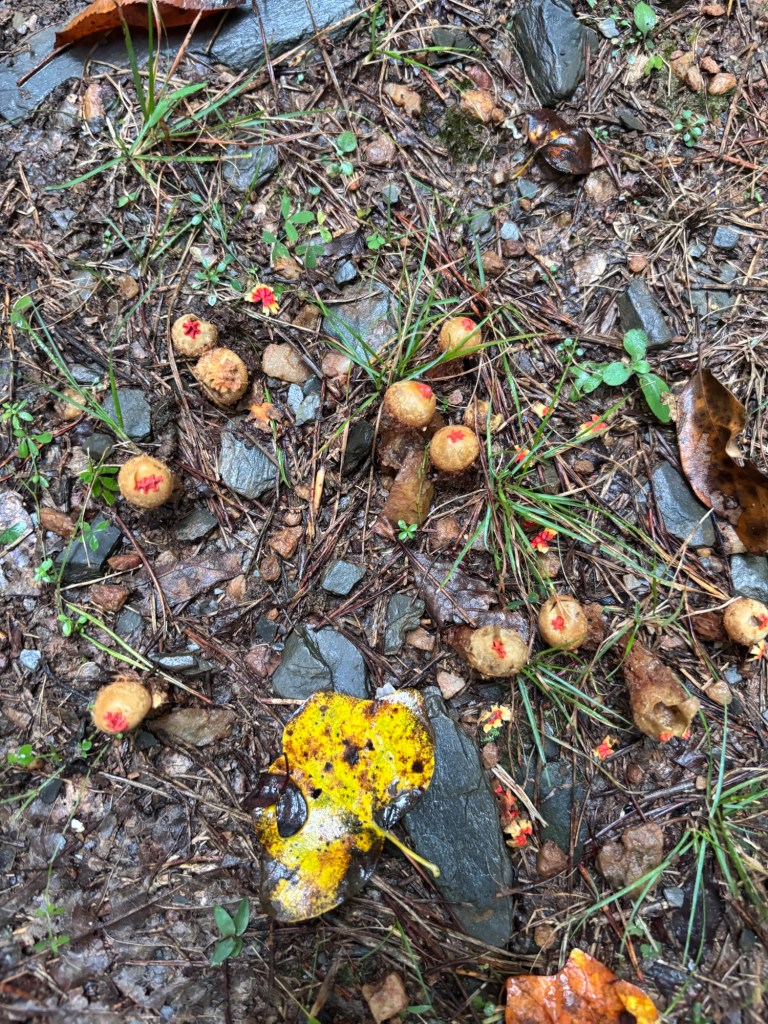
Fall colors starting to pop a bit down in the North Orchard Friday late afternoon. This year the maples have been vibrant with reds. Shenandoah Valley Virginia hasn’t yet peaked with color, but from what we’re seeing it looks like maybe the trees will reach full color this weekend.Lactarius milk cap found yesterday on Deerberry Trail near pines. Rufous Milkcap (Lactarius rufus). When we broke it, it had a milky white latex ooze from the cap. We’re searching for saffron milk caps which will ooze orange latex. They are called Lactarius deliciouso. We can’t wait to taste them. They are described as having a nutty, earthy and woodsy flavor and a firm, dense and crunchy texture.
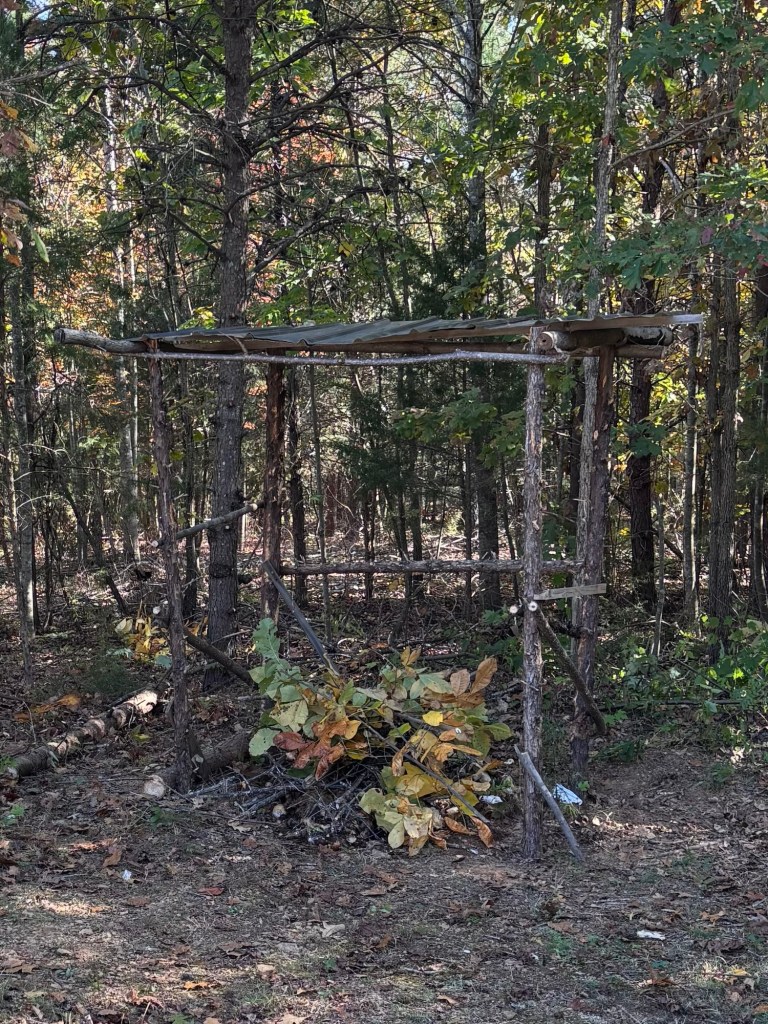
We have been working hard finishing our fall planting project. Friday we took a break from planting to work on our compost bin at the farm. We have had a few piles we have worked with but we were eager to get a proper compost area started up top in the south side of the clearing. We had more than 20 bins of kitchen compost and we layered this in with leaves and sticks, straw and other compostables from the farm. We covered it all up and built a frame for it with a roof to keep it dry.
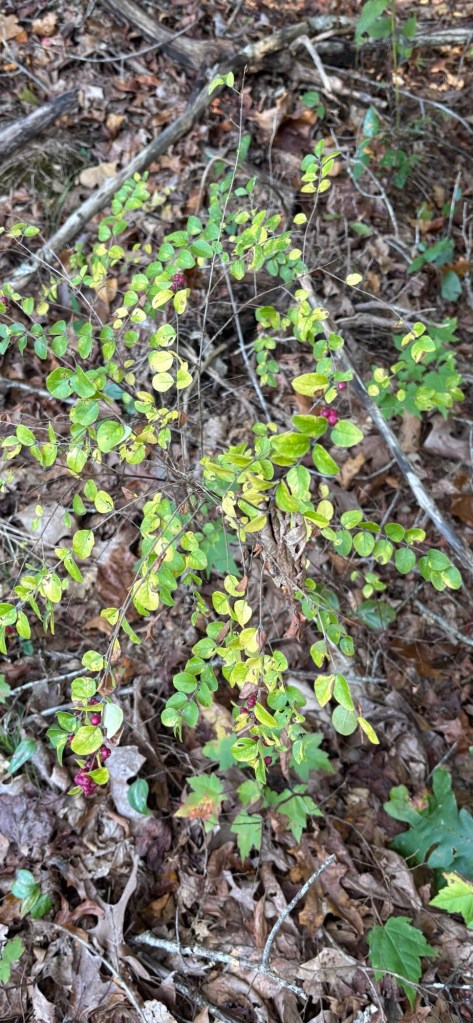
Our first stage of SAFF South compost collection area. It may not look like much but we are excited about it and the beautiful black compost we will have in our future. Symphoricarpos orbiculatus, coralberry, an important native food source for songbirds and small mammals and host plant for clearwing moth caterpillars. While we find them all over the Farm, this one is growing next to our new compost bin
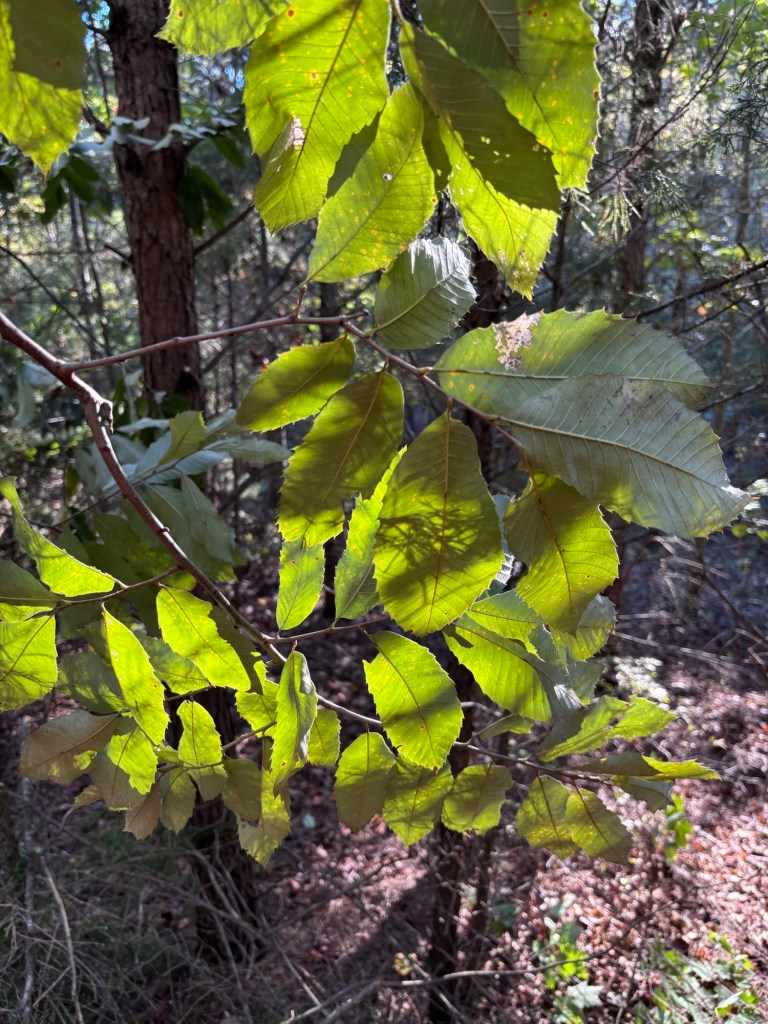
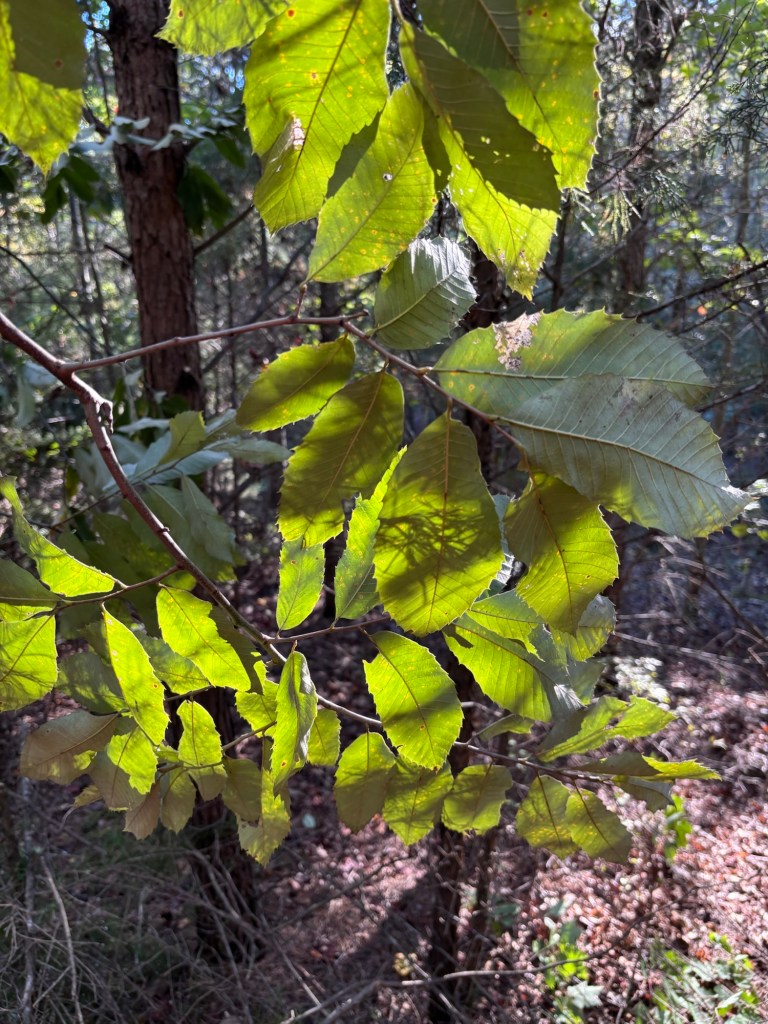
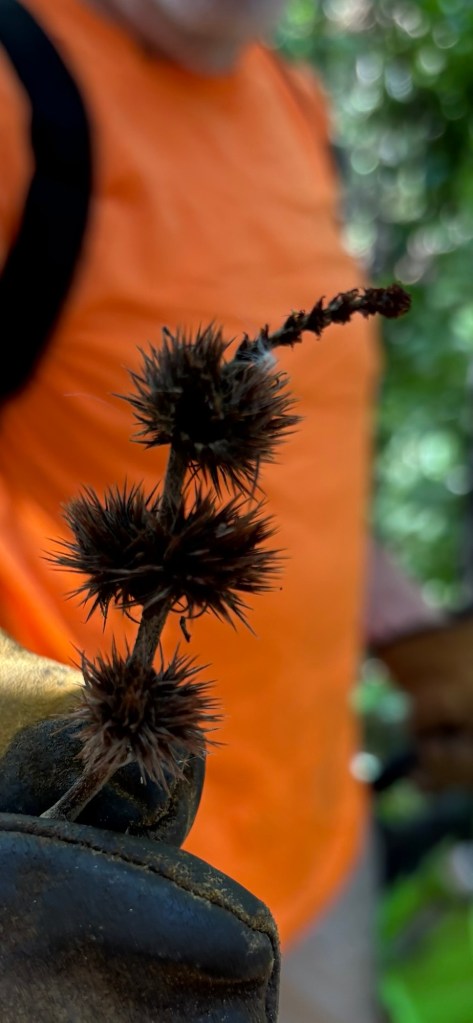
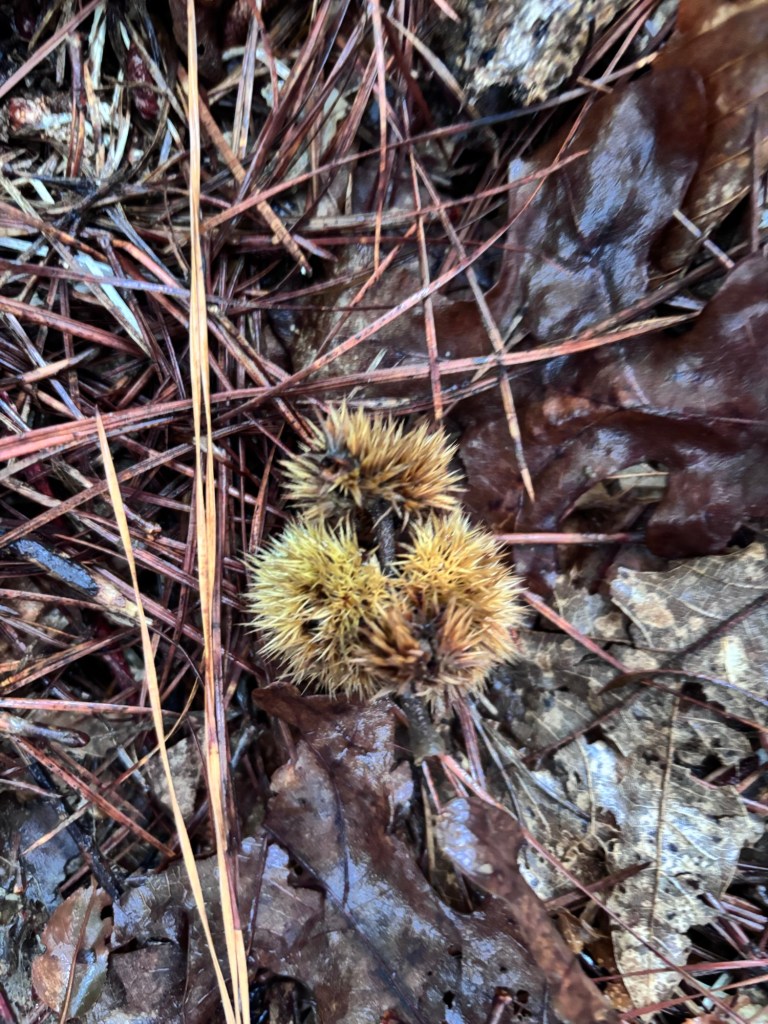
The tree we thought was an American chestnut has been revealed to be an Allegheny chinquapin (Castanea pumila). We are delighted to have found it and will find more to plant nearby for pollination.
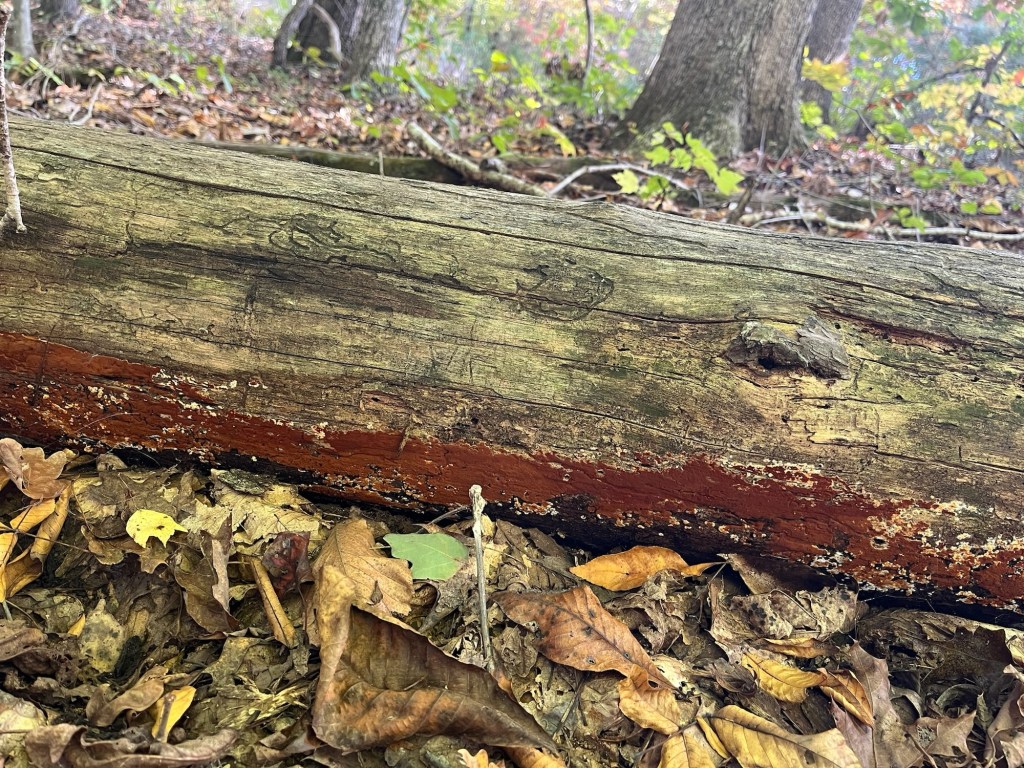
We are delighted to try the sweet nuts if we can get any since they are highly sought after by deer, squirrels, turkeys and songbirds. Amanita Way on Sunday afternoon. An interesting slime mold. A little more fall color from SAFF.
Two apparently well-fed house cats last night running around the farm. 🐈⬛
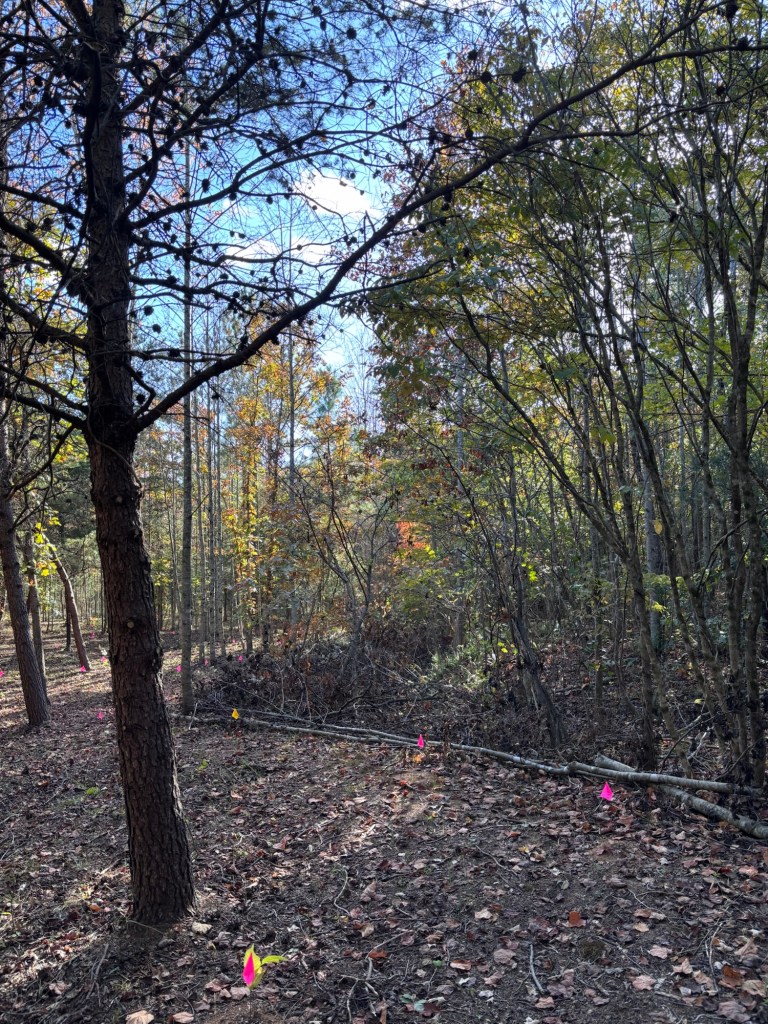
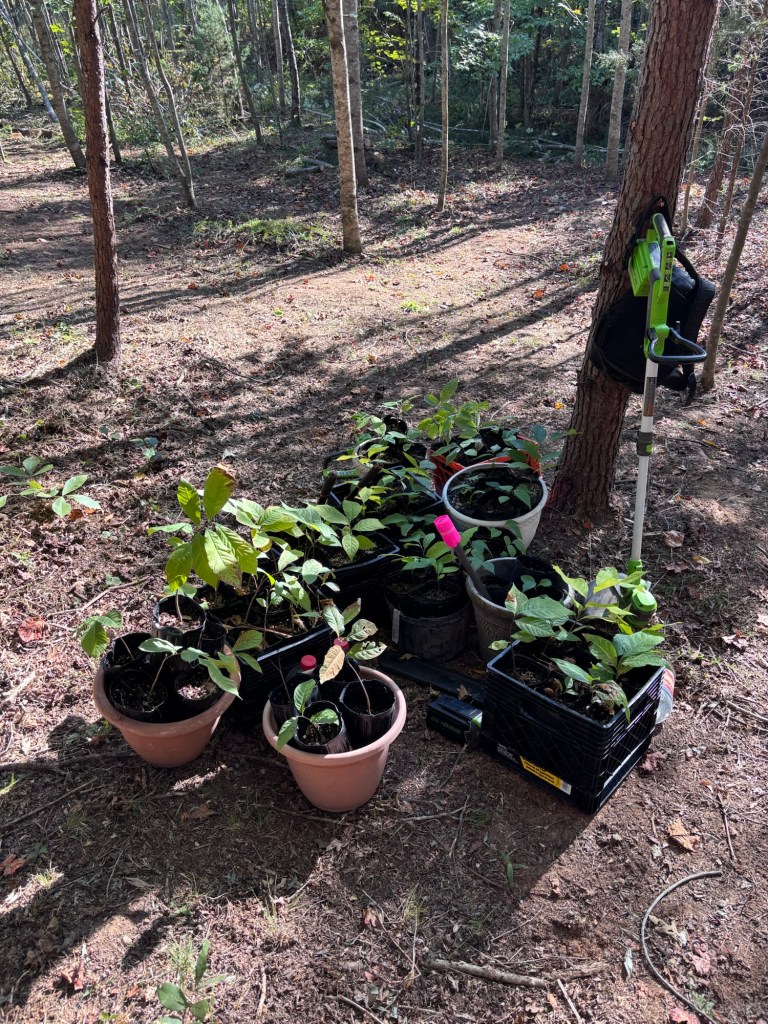
We have been pretty busy at Saint Andrews Forest Farm. We’ve made several new Asimina triloba seedling orchards: one on the north side adjacent to last year’s seedling orchard, and another on the south side gully near the Rappahanock cultivar and SAFF native wild pawpaws.
North Orchard expanded with 50+ more new pawpaws sprouted from the Sunflower cultivar with strong genetic material that is more likely to be self fertile among other desirable traits.
We were able to extend our roads so the tractor has access to both sides now. What a blessing this is for us this year. We also have been able to use an auger to dig our holes. These tools —along with our trailer —are making short work of planting a little more than 320 pawpaw trees this year. Last year, we were able to get about 10 at a time planted doing everything without equipment, just using our hands and hard work. This year we’ve been able to get 50 trees planted at a time. We still have Spicebush (Lindera benzoin) left to interplant with the pawpaws, but are feeling pretty confident we can get it all in the ground before frost.
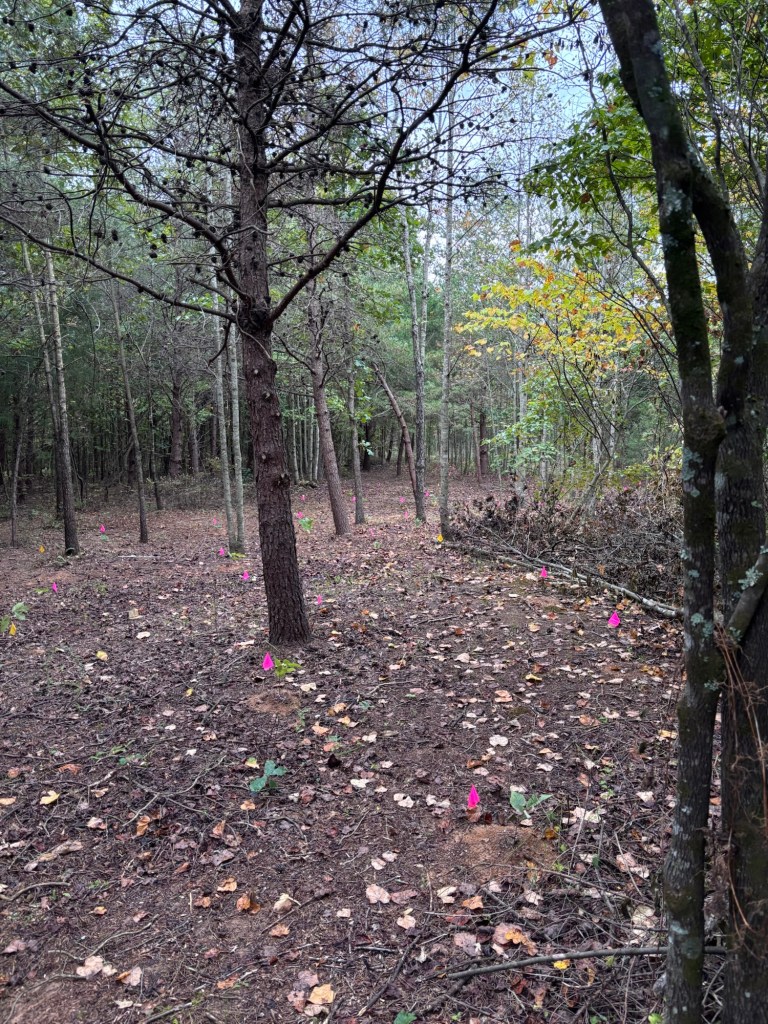
New South Orchard pawpaw seedlings planted along the south wet weather gully out to the set back line.
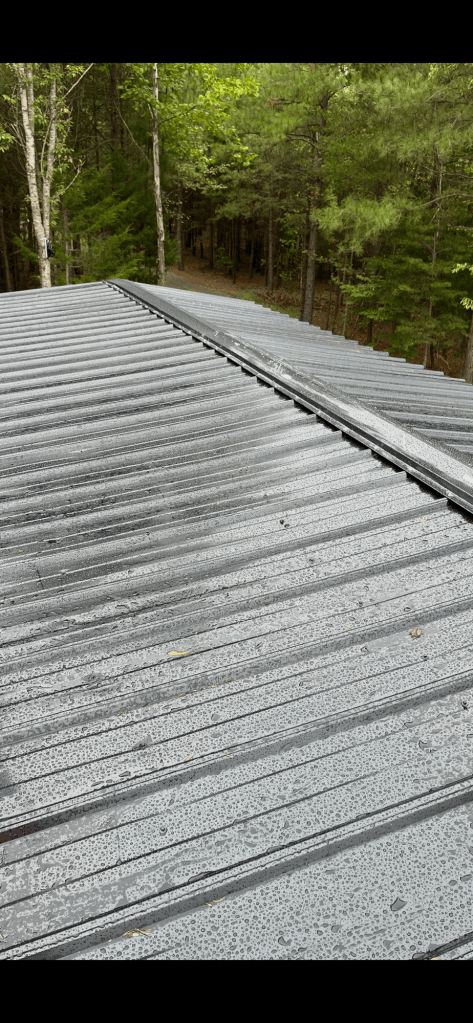
We also put the new roof on the tiny house. This was a major undertaking, project managed by Chris with assistance from Tony. It took about five full days of labor—lots of blood sweat and tears.
The new warm roof has double insulation and layers to help keep it cool in summer and warm in winter. It also hangs over the edges enough to prevent moisture in the tiny house.
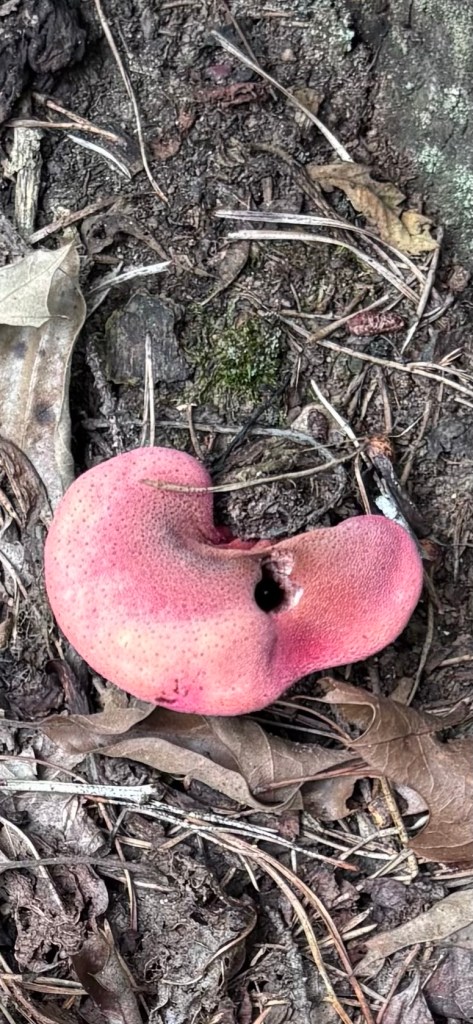
With all of the rain, we have had a nice mushroom season. We found and ate Fistulina americana, commonly called the beefsteak mushroom. It was scrumptious.
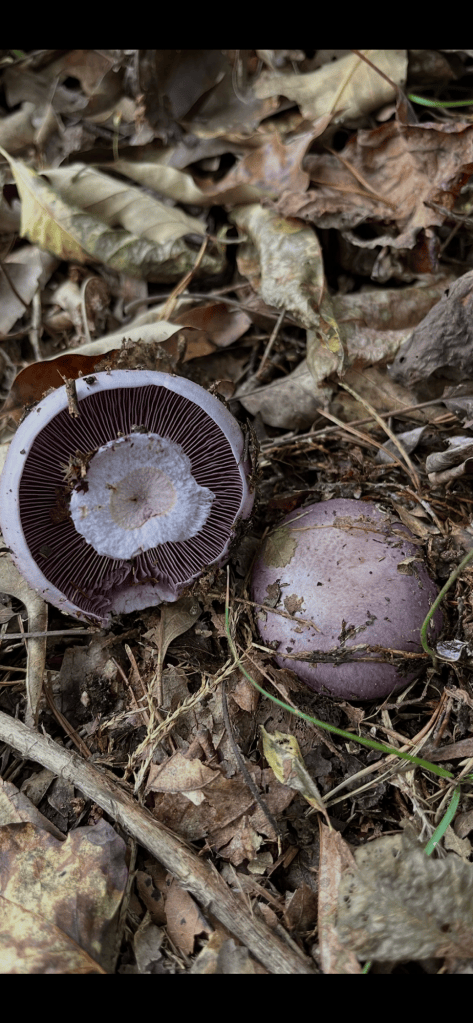
Fistulina americana, beefsteak mushroom, found off Fern Trail along the southern gully. Collybia nuda, blewit, found along Orchard Hill Trail on north end. A choice edible mushroom we have not yet eaten. We are still becoming comfortable identifying it and knowing the difference between the poisonous lookalikes. We only eat what we can confidently name.
Just yesterday, a most exciting development, we were able to identify an American chestnut tree that is about 25 feet tall with no discernible orange fungal activity. The bark is split which indicates the blight in the two leaders while a small rootsucker grows from the middle. The size of it indicates blight resistance as most regenerating chestnuts die at 15 feet or less. The roots stay alive to continue trying to produce a mature tree. We noted evidence of this by the main waterway. A sprout that grows and dies before it can reach maturity.
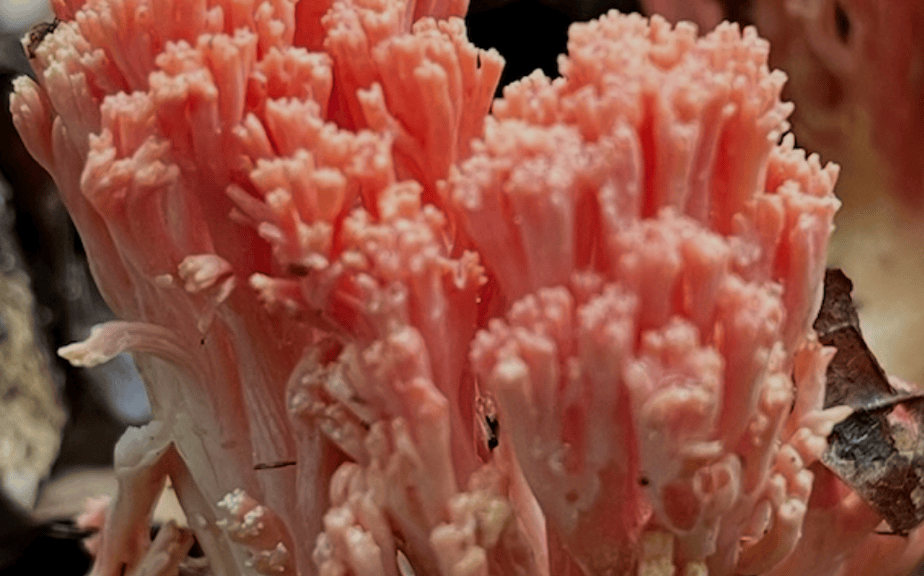
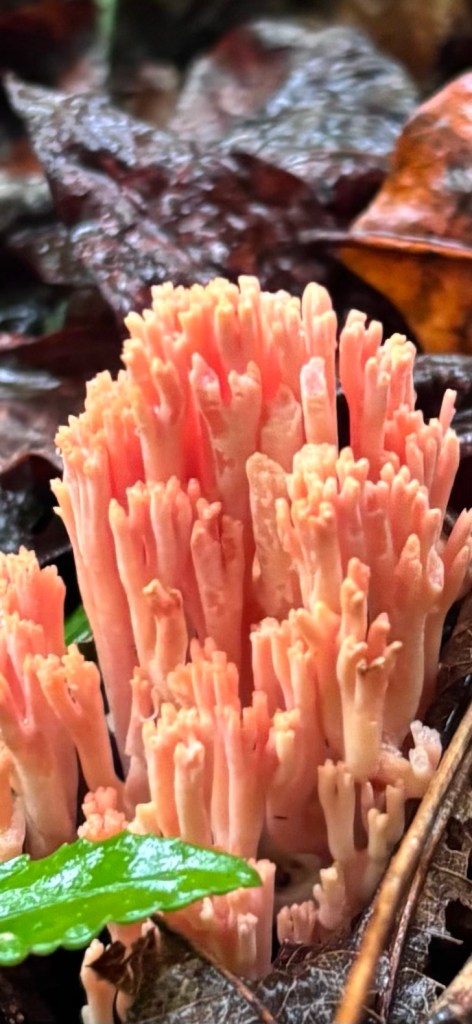
Native SAFF 25-foot American chestnut tree along the mushroom trails on the southern hillside. We cleared out some juniper and beech trees around it that were compromising its sunlight and space. We found chestnut burrs so it is trying to reproduce and survive! Laeticolora, coral fungus, all along the bottoms. Lovely.