Tag Archives: Amanita

Rainy Sunday Grafting Pawpaws

Chris grafting a Cawood cultivar onto the native SAFF Pawpaw Peninsula Asimina triloba.
Maria’s Joy at the tip of the Pawpaw Peninsula.

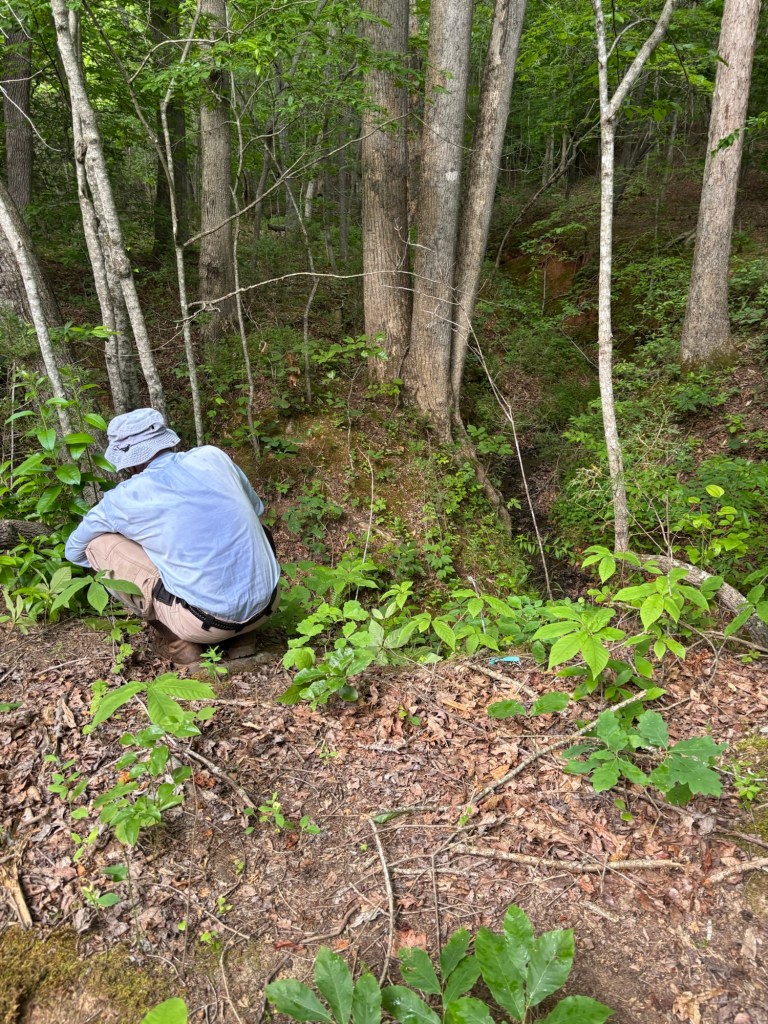
On Sunday we went straight over to the Southside Gully to begin grafts on the native patch. We got 7 done before a downpour stopped us. We grafted Nyomi’s Delicious, Maria’s Joy, Rebecca’s Gold, Cawood, Tallahatchie, sunflower and Pa Golden #4. We were glad to get out of there as we lost count of all the ticks we caught crawling up our pant legs. All were Lonestar Ticks, Amblyomma americanum. Personally, the experience may help me be less preoccupied with my anxiety since I saw them and got them off without freaking out. We had no bites. They hadn’t dropped from anywhere. They were just crawling on our shoes and pantlegs. Anyway, we waited the rain out in the car while we had a snack.

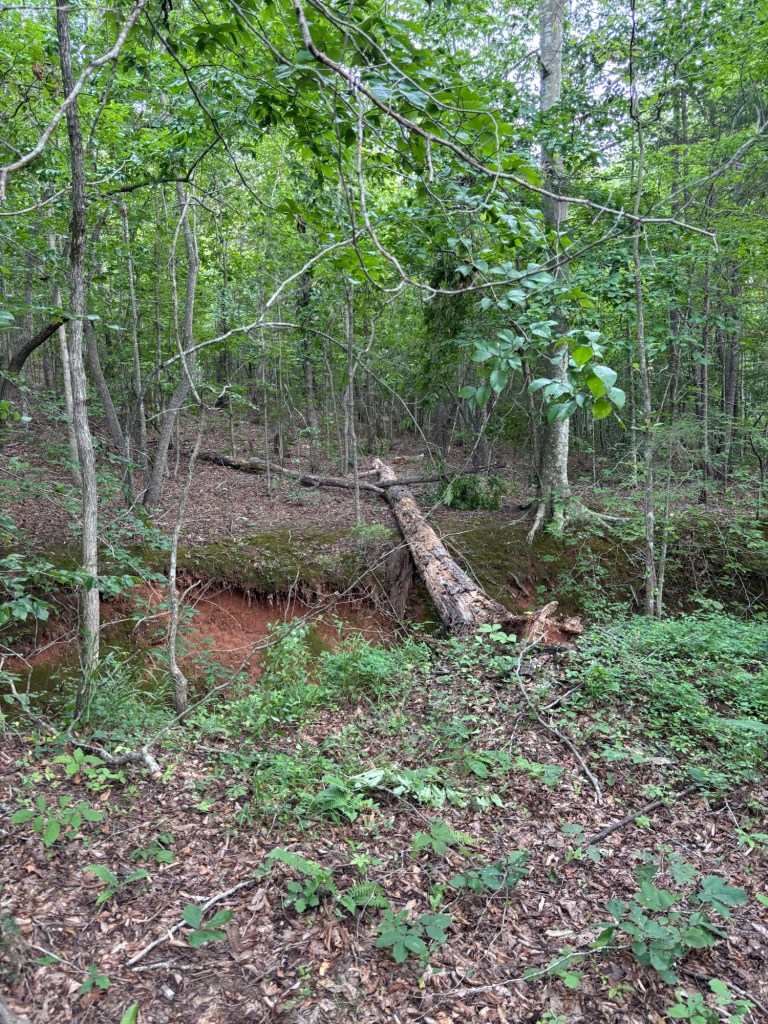
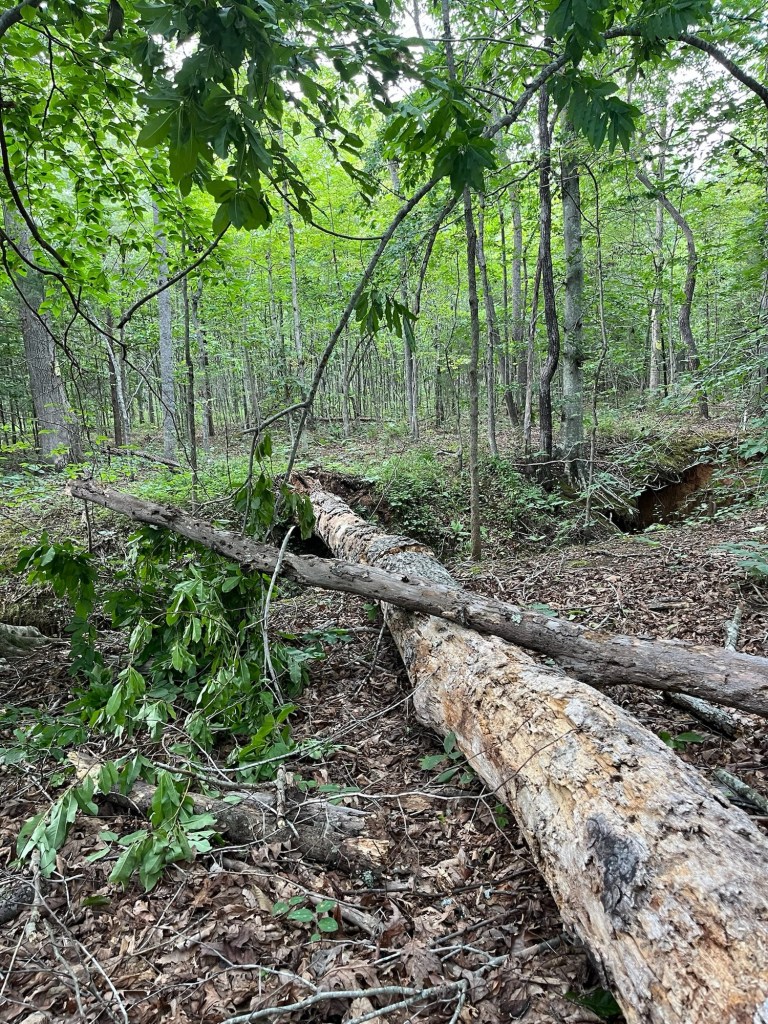
A bit of our walk through the Southside at SAFF in the rain yesterday.

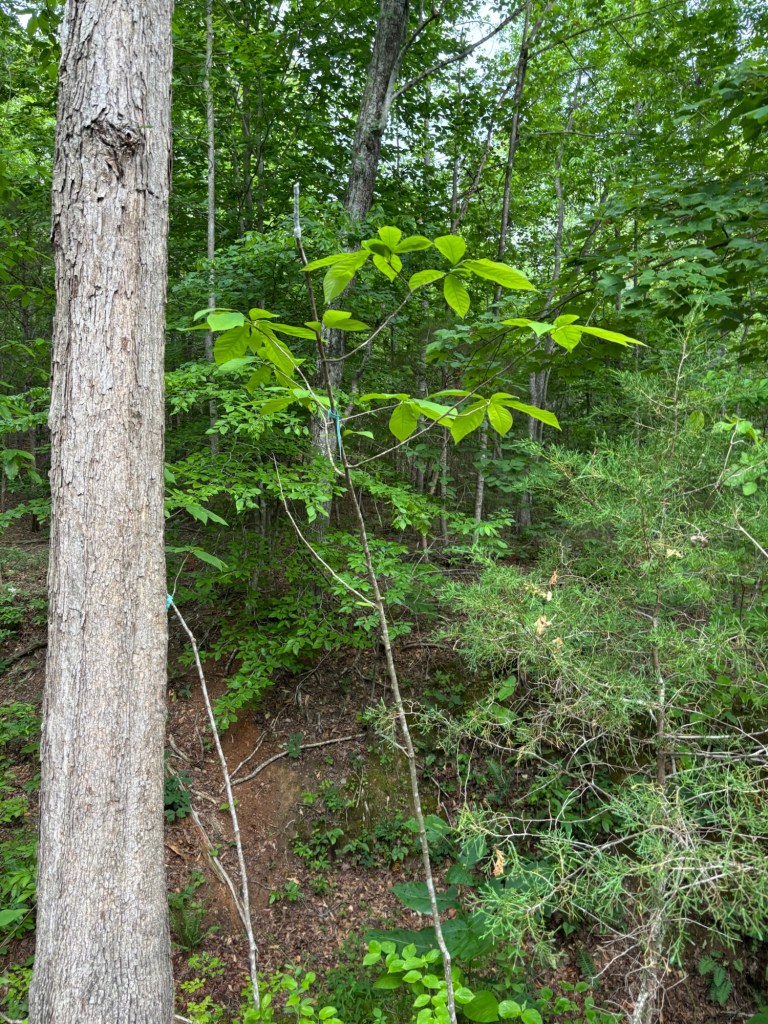
After the rain stopped, we headed down Central Trail through the cultivar and seedling orchard. They looked good we were pleased to see. We made our way to the Pawpaw Peninsula across from the Old Clonal Colony. We grafted 10 more onto the native wild SAFF pawpaws. We grafted Rappahanock, Tallahatchie, Marias Joy, Nyomis Delicious, Prolific, Rebecca’s Gold, Cawood, 166-66 Canary and PA Golden #4. It drizzled some while we worked.

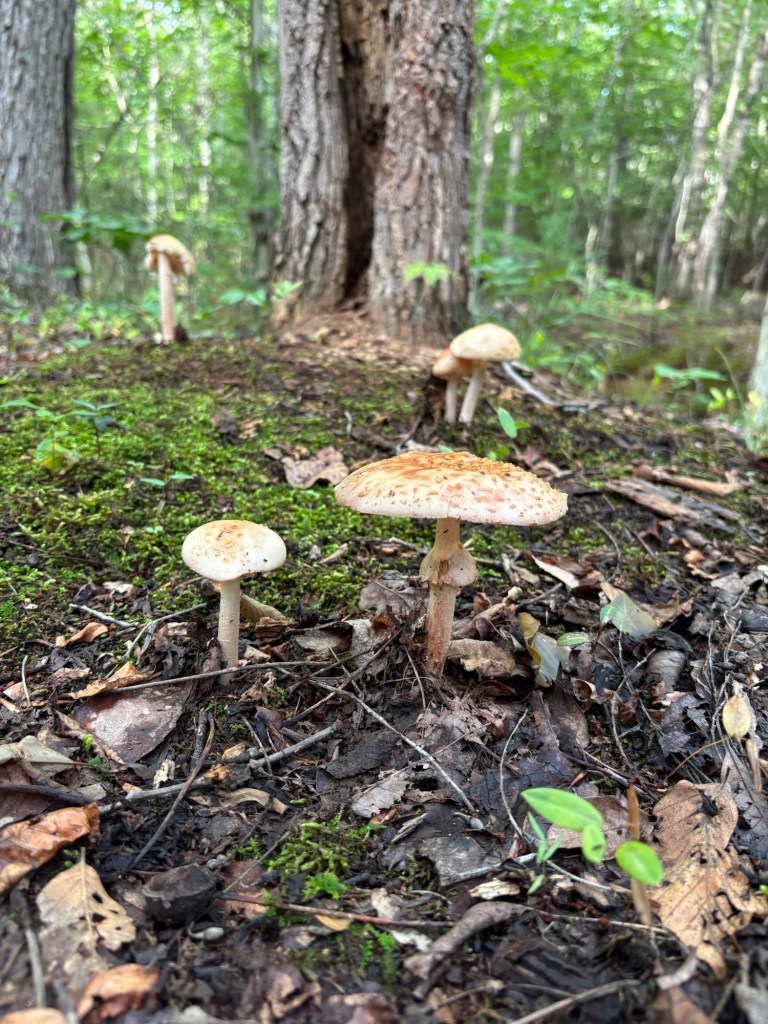
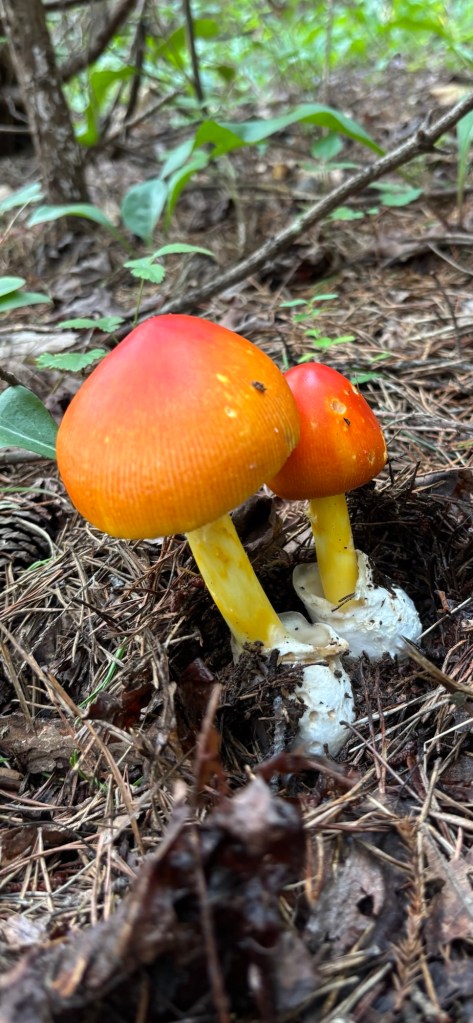
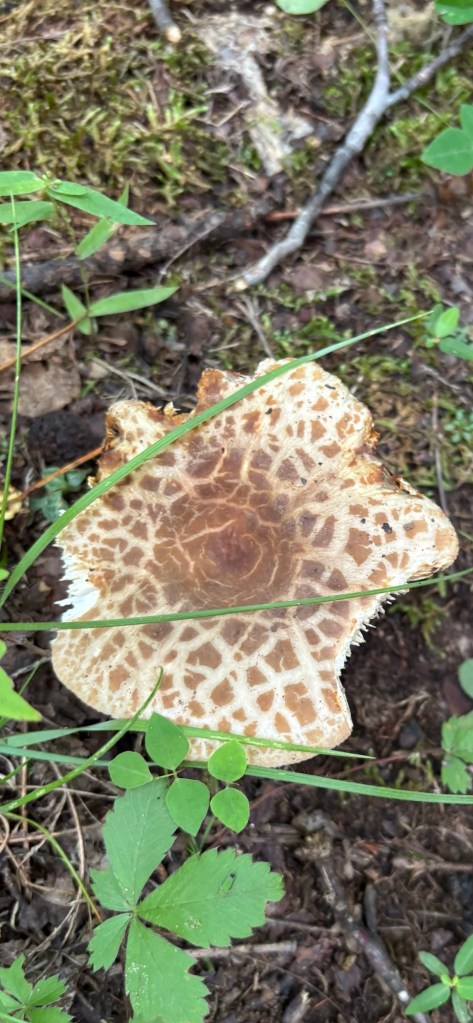
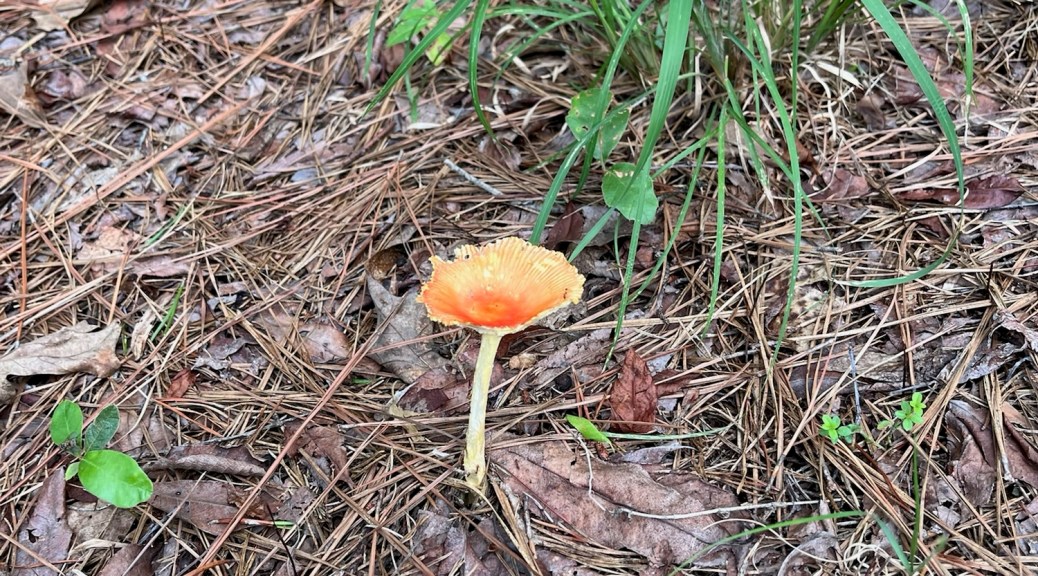
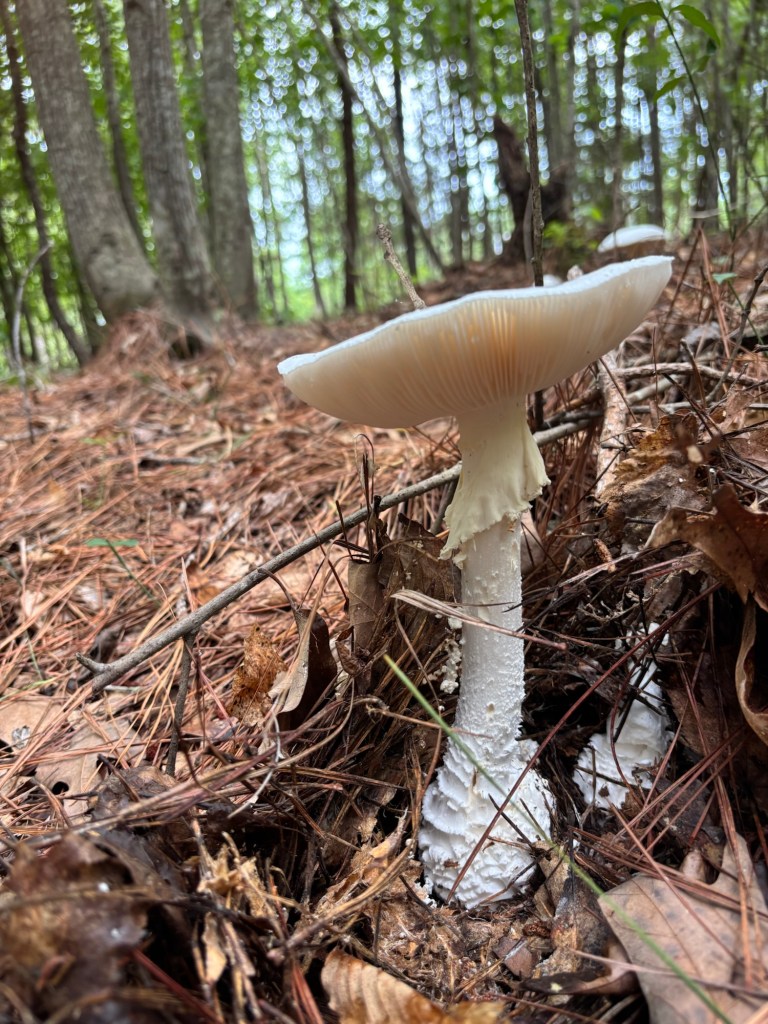
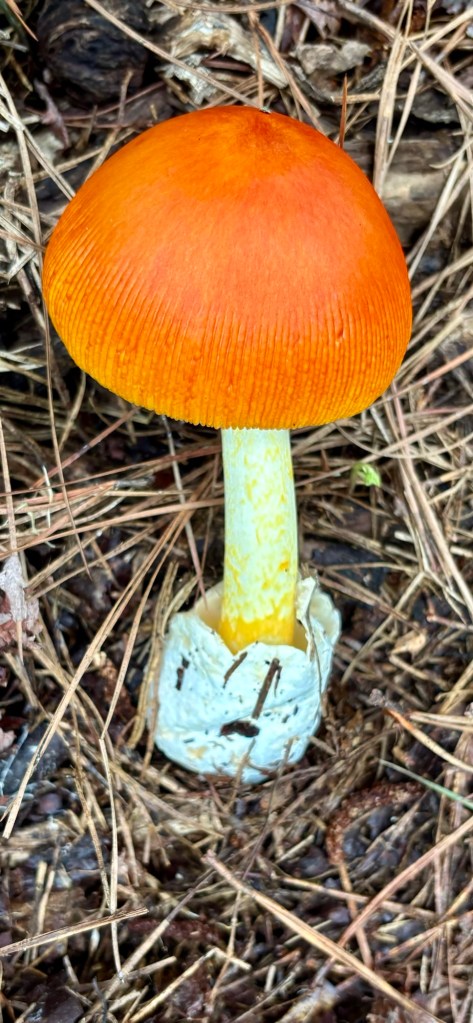
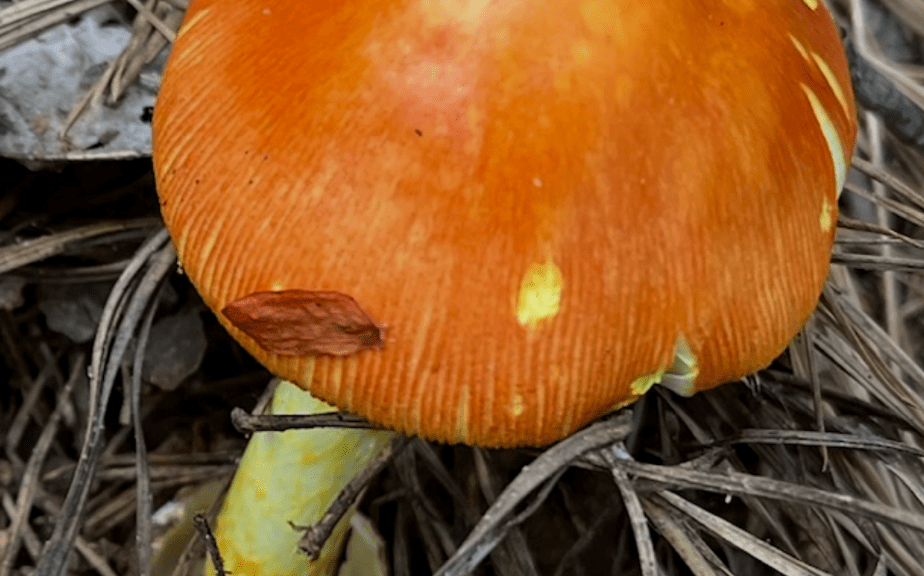
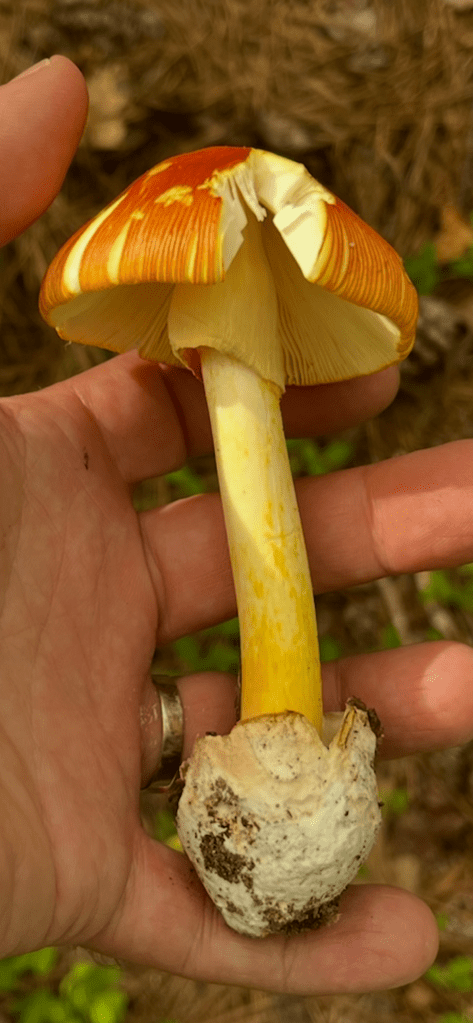
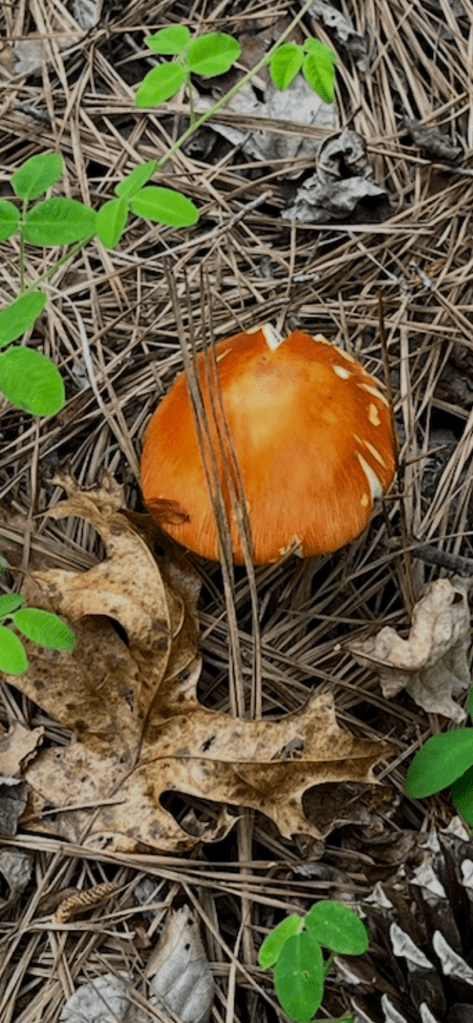
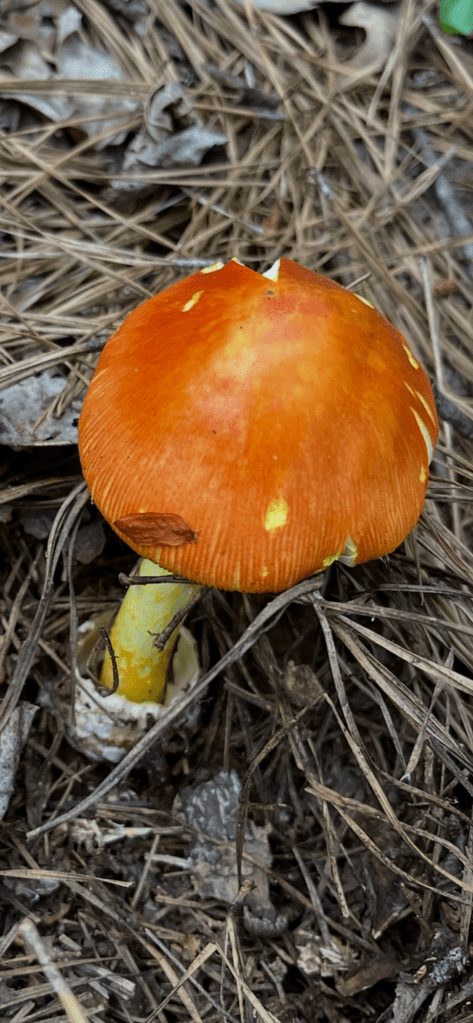
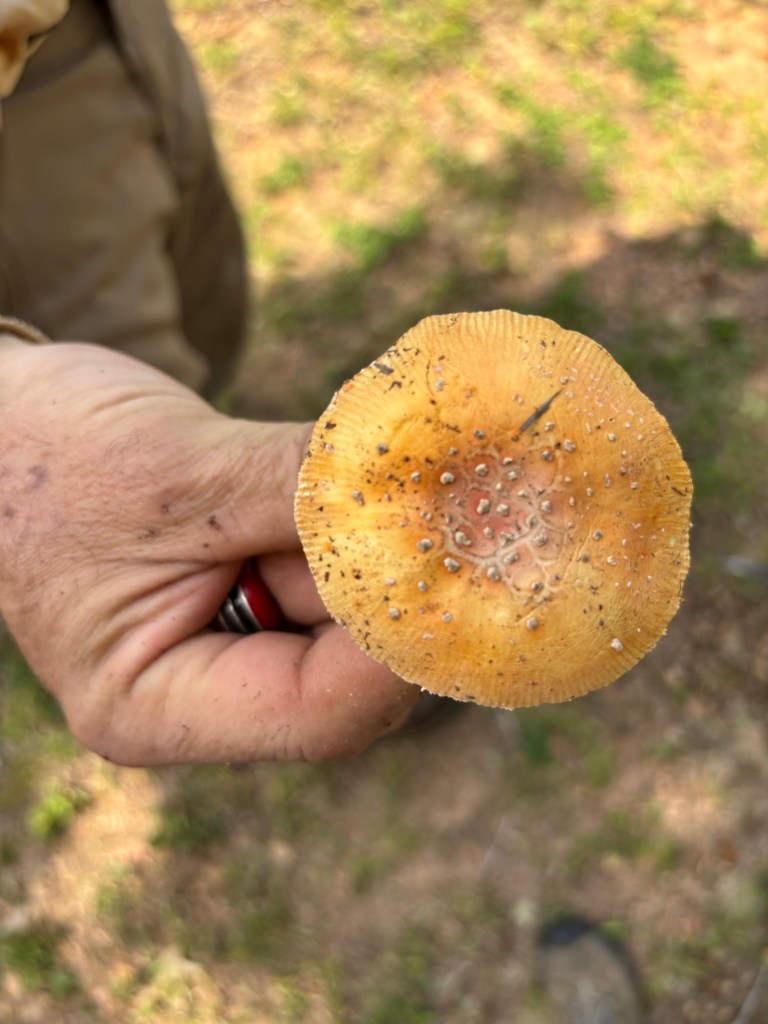
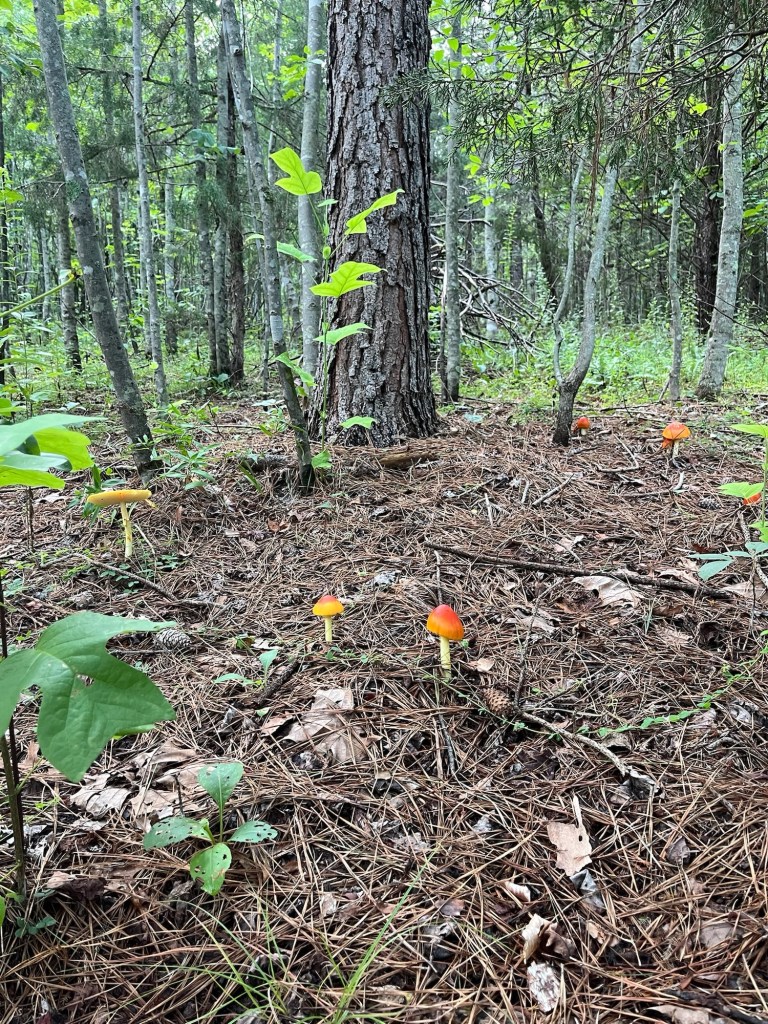
No baby bear sightings yesterday but we looked for them everywhere. We did find this Amanita jacksonii, Jackson’s slender Caesar, a choice edible and all around beautiful fruiting body. It was growing underneath a big loblolly pine on a small bluff overlooking the cultivar seedlings on Poplar Hill Trail.

Chris doing a cleft graft with Rebecca’s Gold on Pawpaw Peninsula wild native SAFF.
Grafting Southside Sally and her gang in the gully with 7 different cultivars.

Amanitas at SAFF on Thursday afternoon

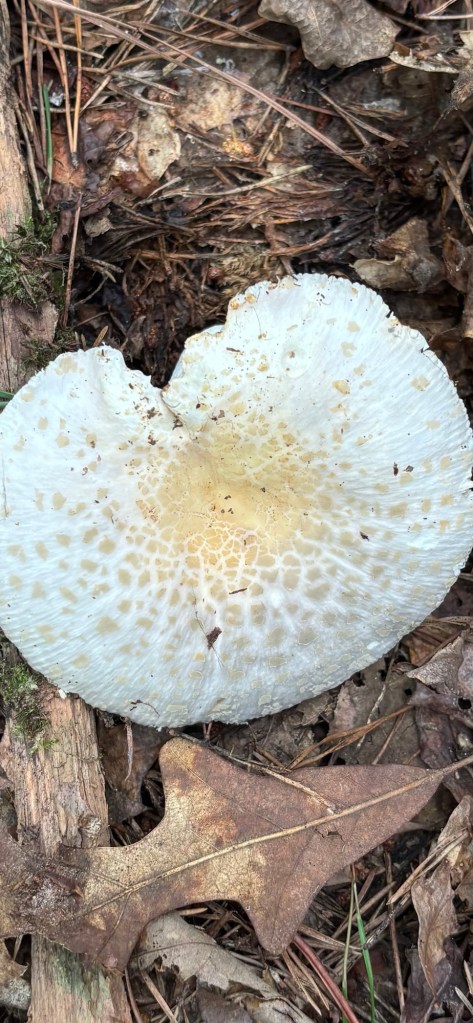
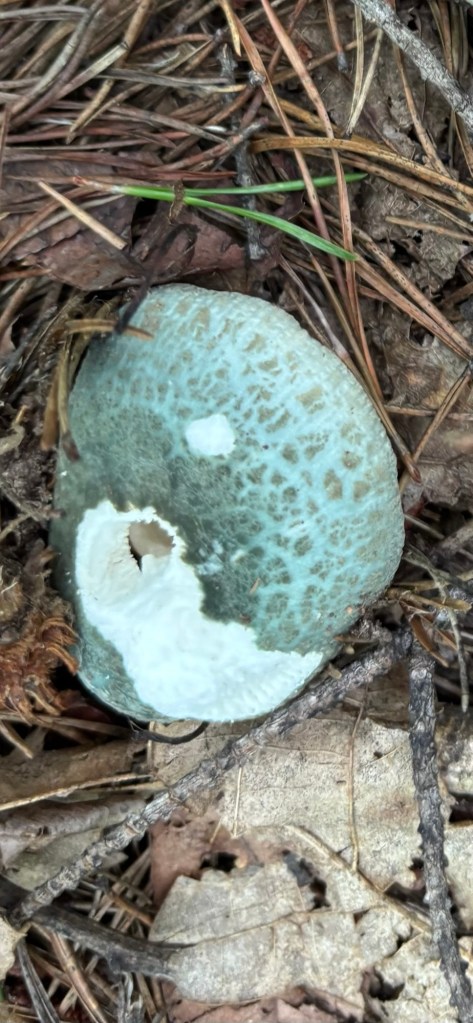
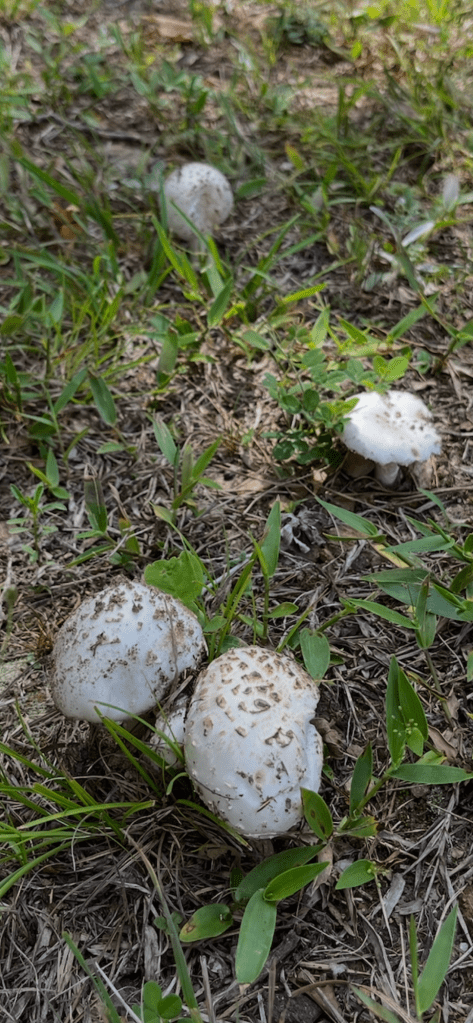
Amanita parcivolvata, the ringless false fly Amanita or False Caesar’s mushroom. This is edible but avoided by many because of its poisonous lookalikes.
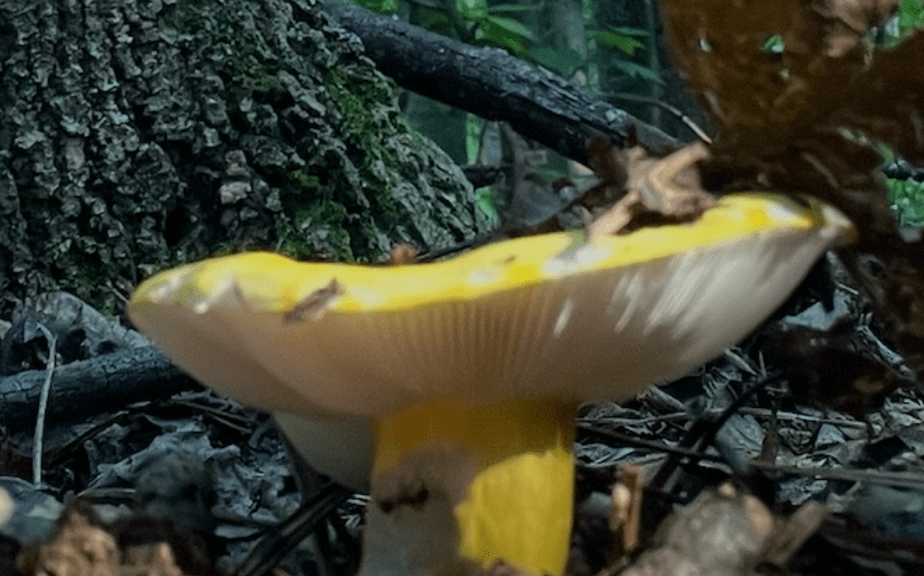
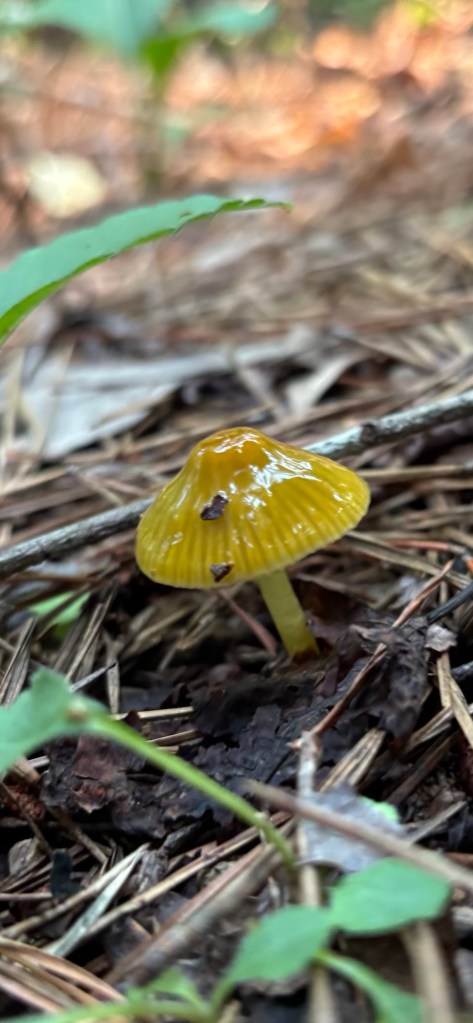
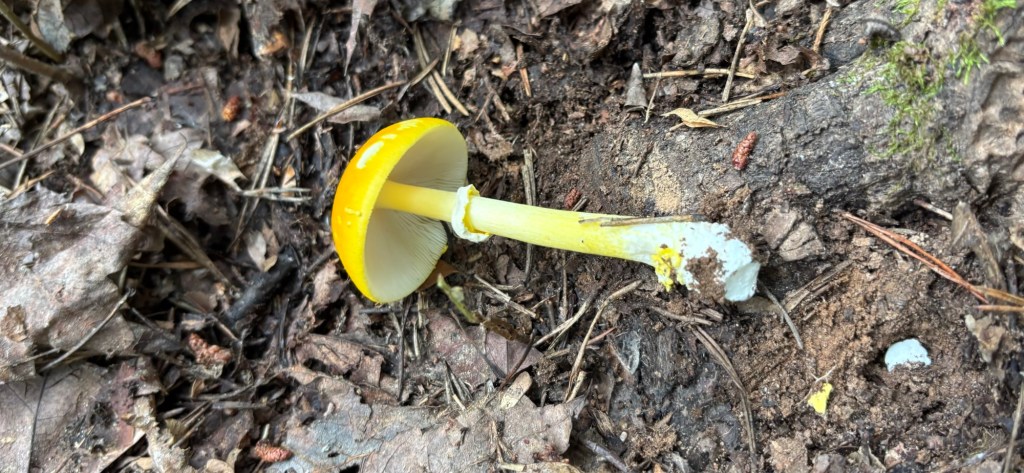
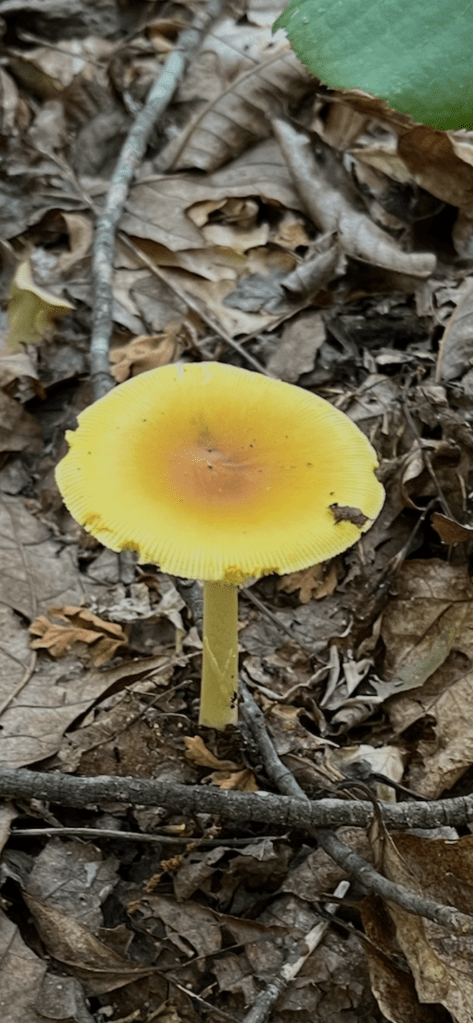
Amanita banningiana, known as the yellow Caesar or Mary Banning’s slender Caesar. It is prized for its taste but caution is advised due to deadly lookalikes.
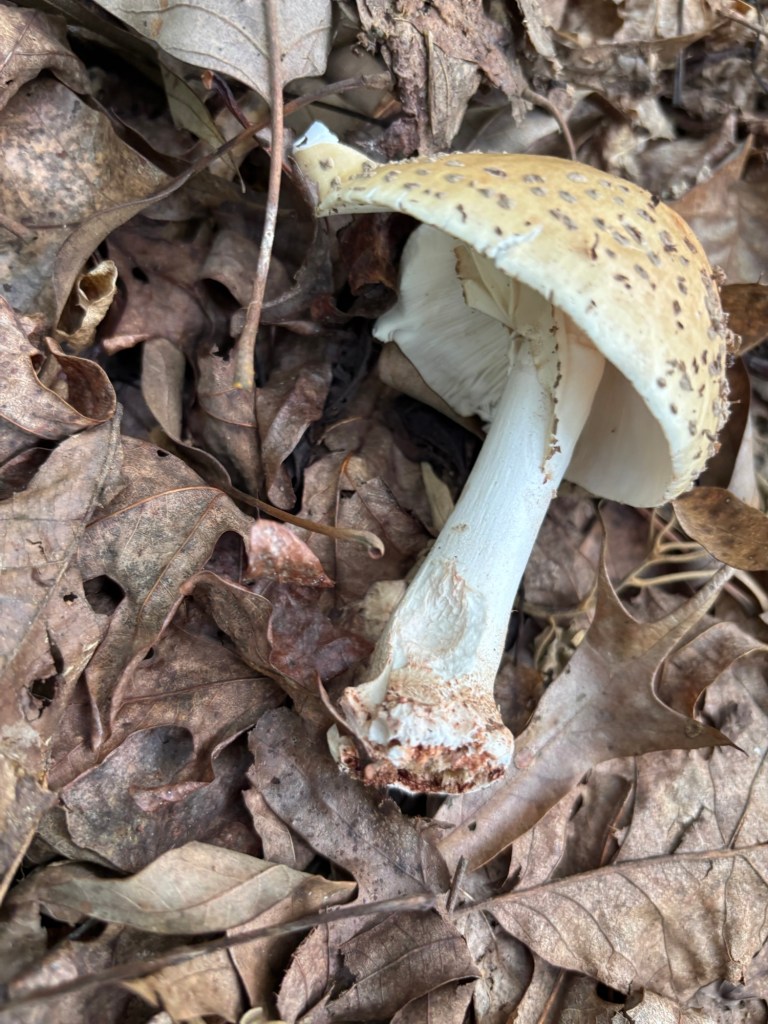
Amanita canescens, Golden threads Lepidella, grows near oaks. Found up top in the main clearing. Inedible.

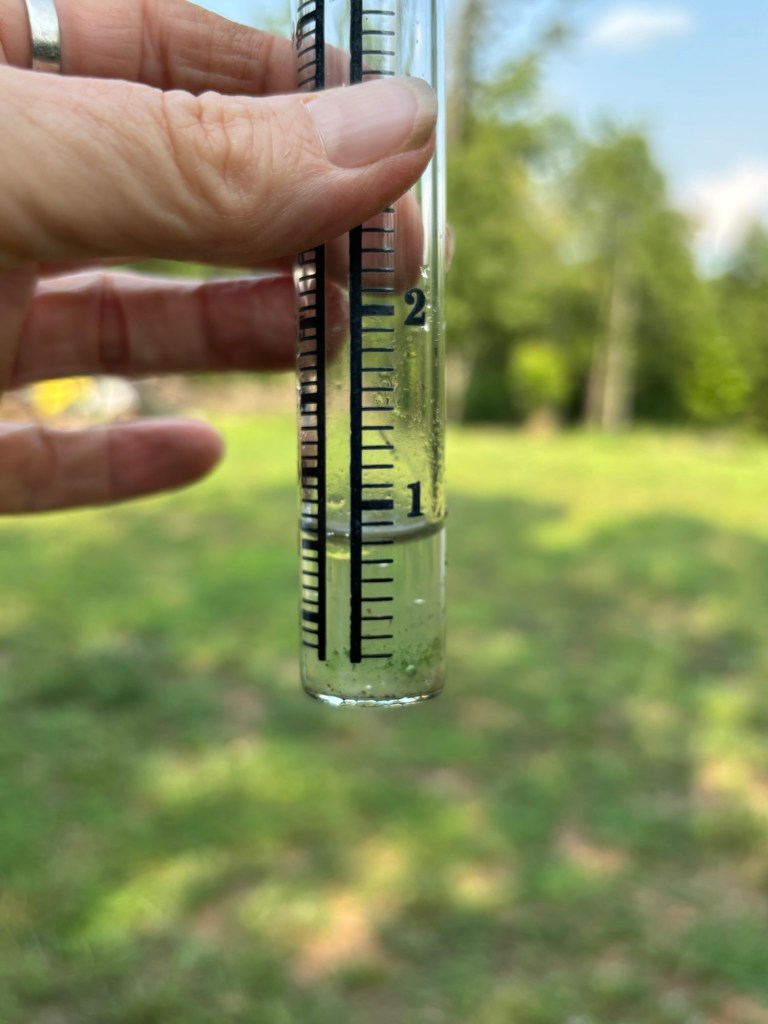
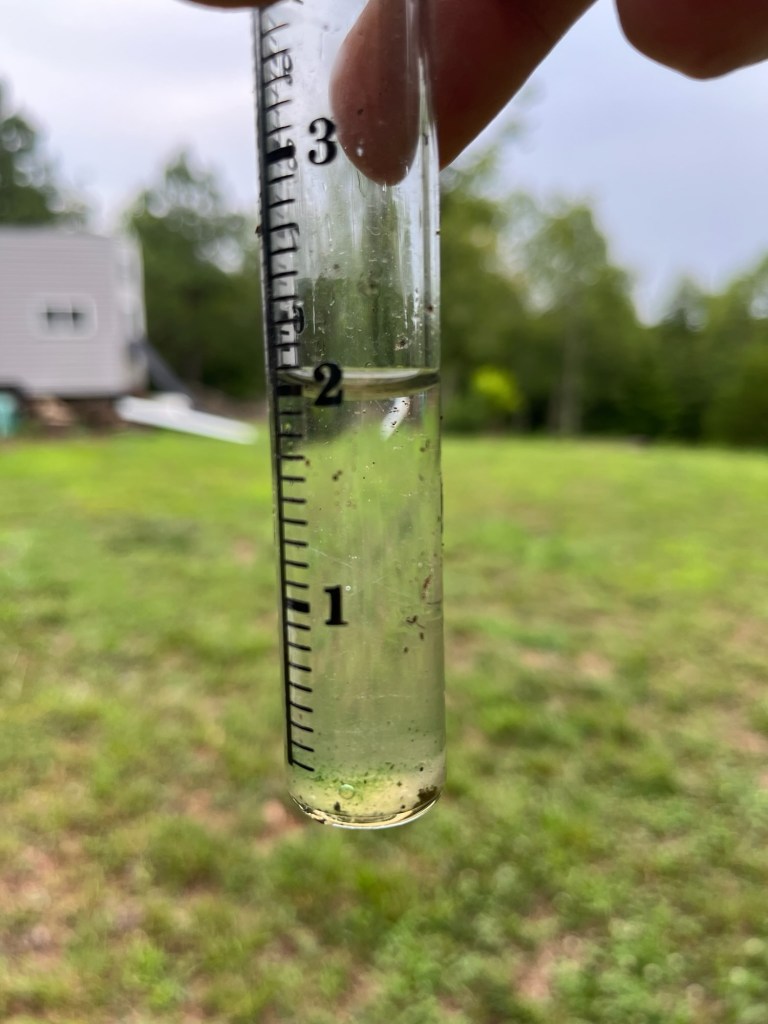
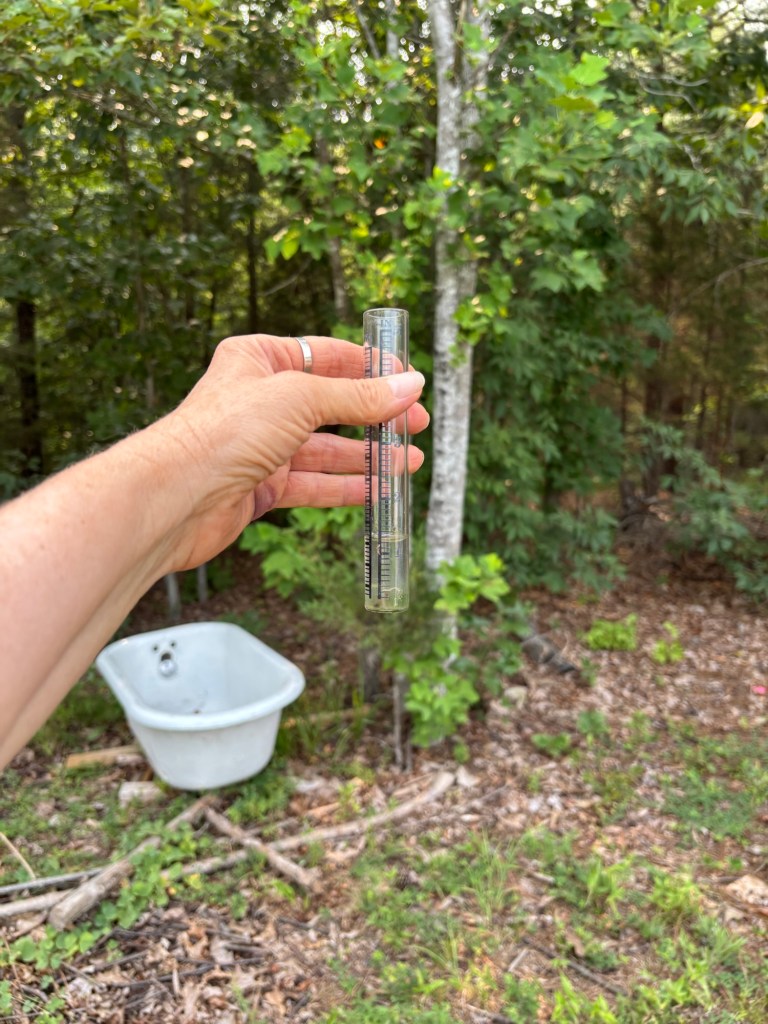
What a great day we had yesterday at SAFF. We went over to check out how much rain the farm had gotten. The gauge was at .2 which is better than none. But much less than the 1.9 inches our weather app reported. Nevertheless, we still had mushrooms growing. Even some we hadn’t seen before. It was like a dream come true.

The pawpaw fruit in the old clonal colony is getting bigger. We are planning a trip to see what pawpaws are doing in our foraging spots along the Rockfish River soon.

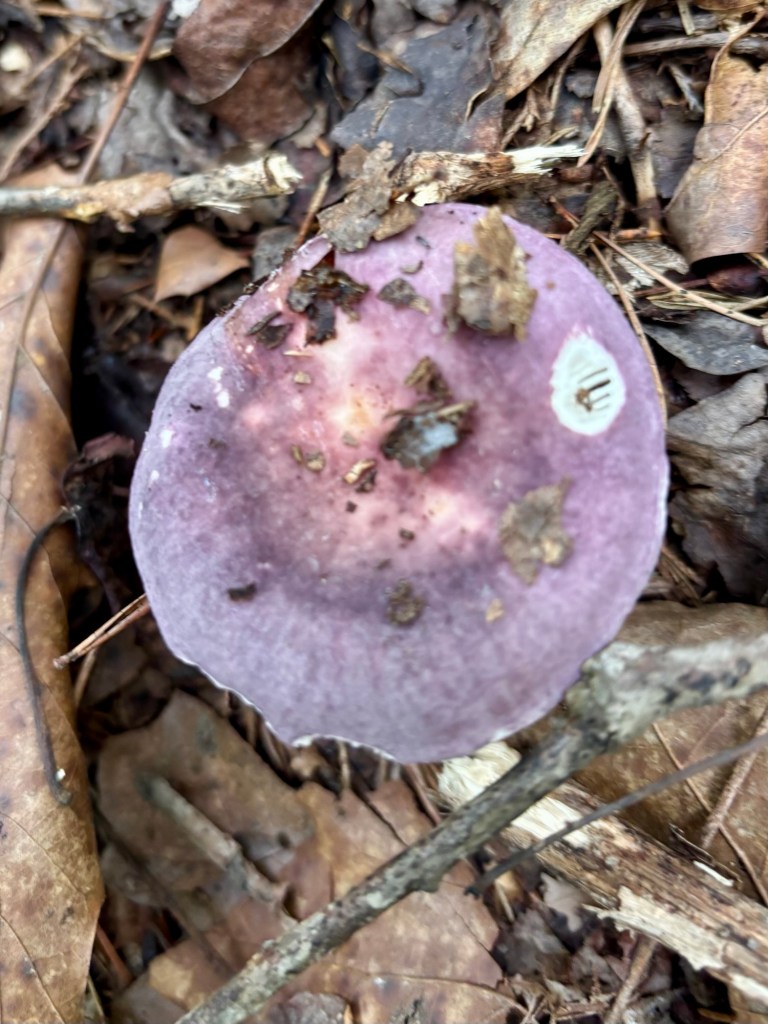
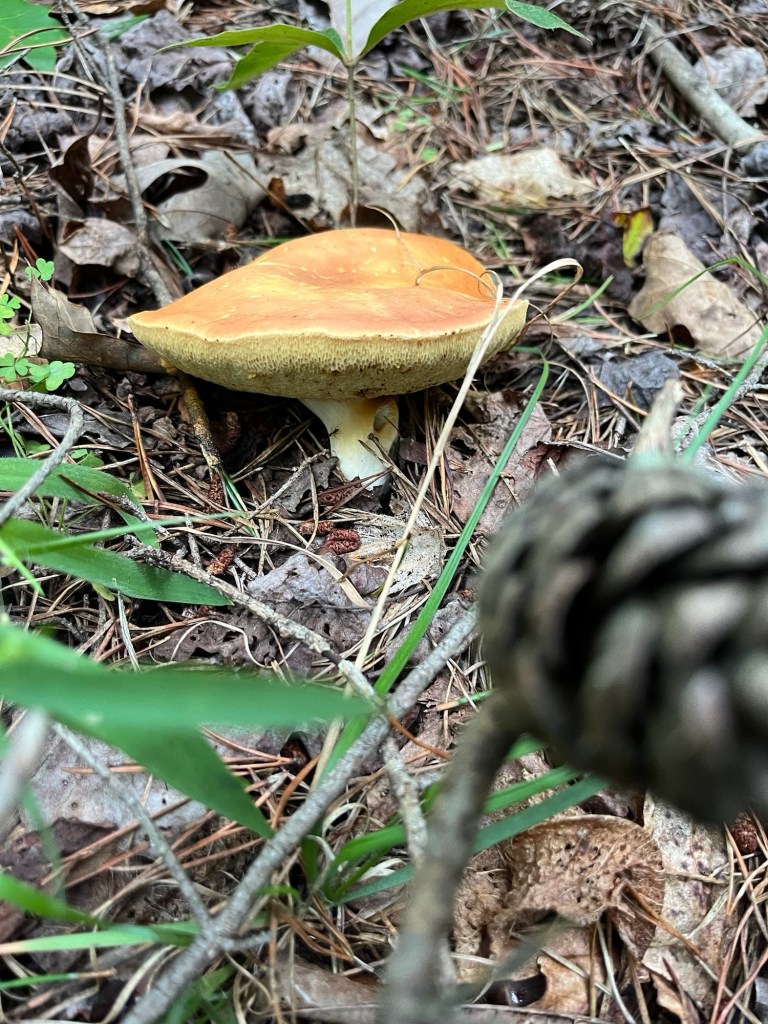
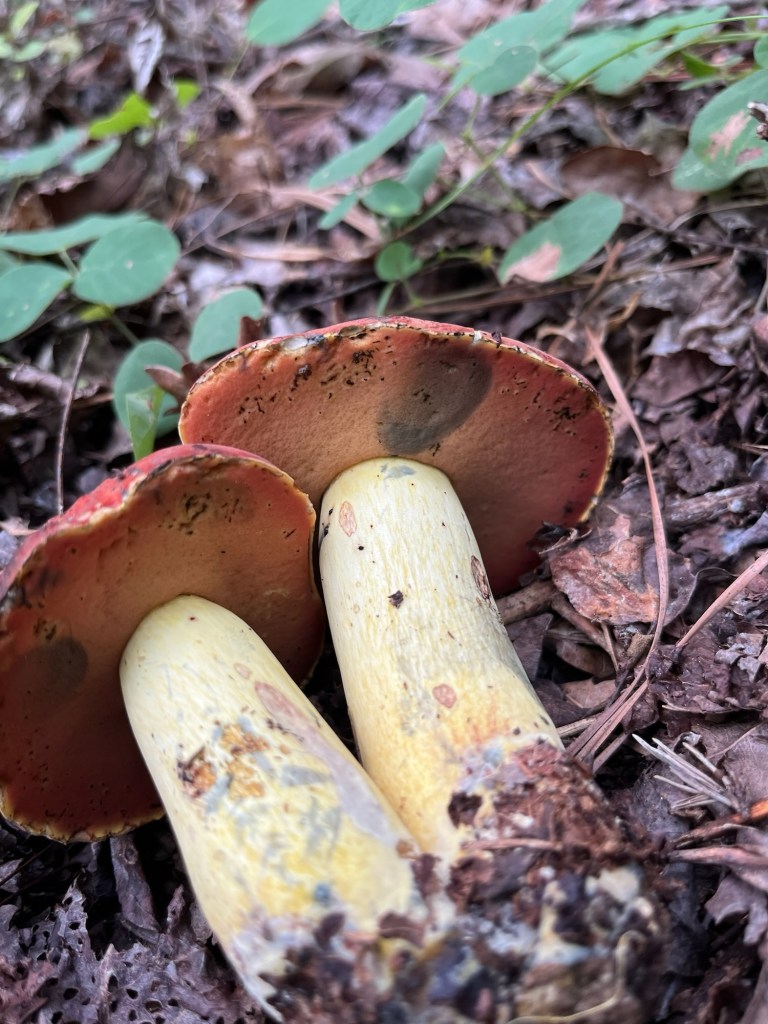
Xanthoconium purpureum, found growing under an oak up top in the main clearing. It’s edible although this one has been claimed by bugs.
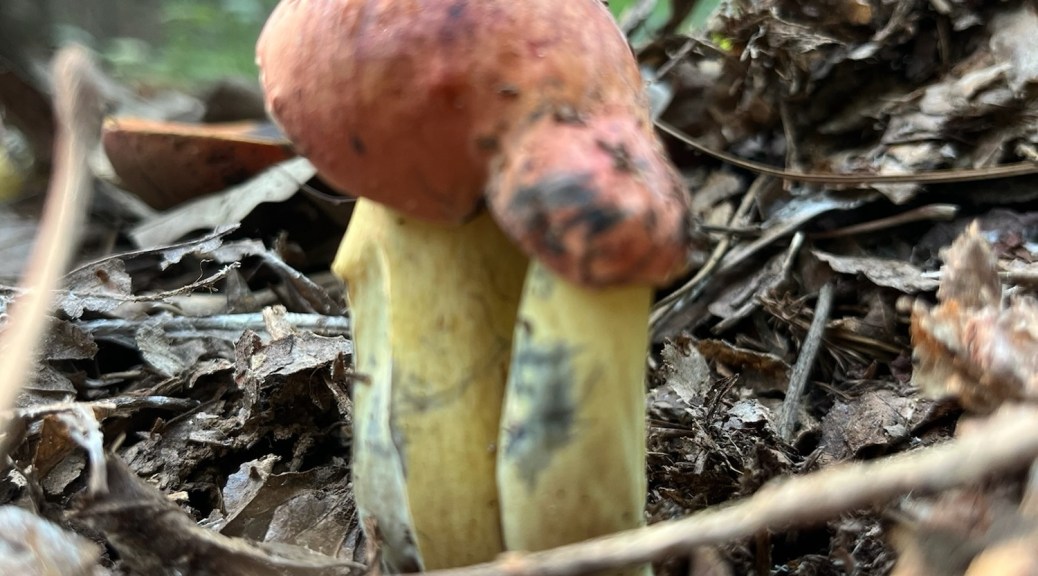
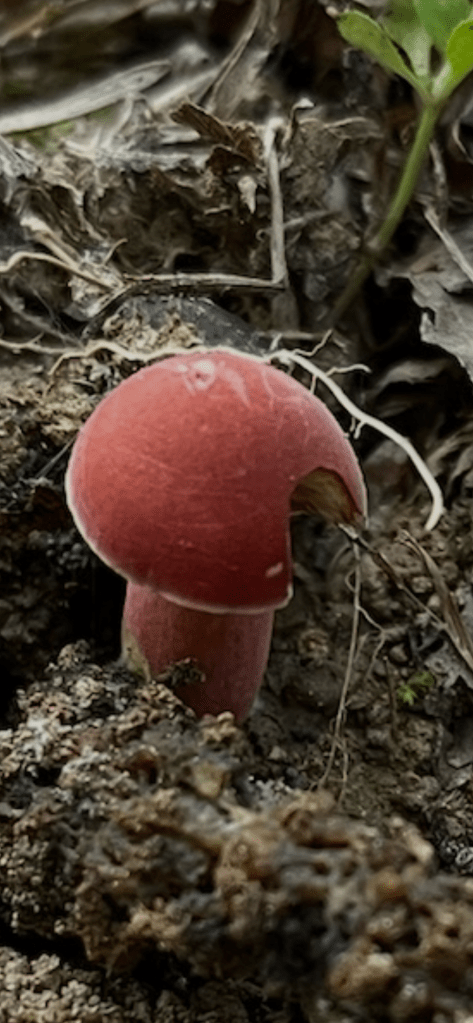
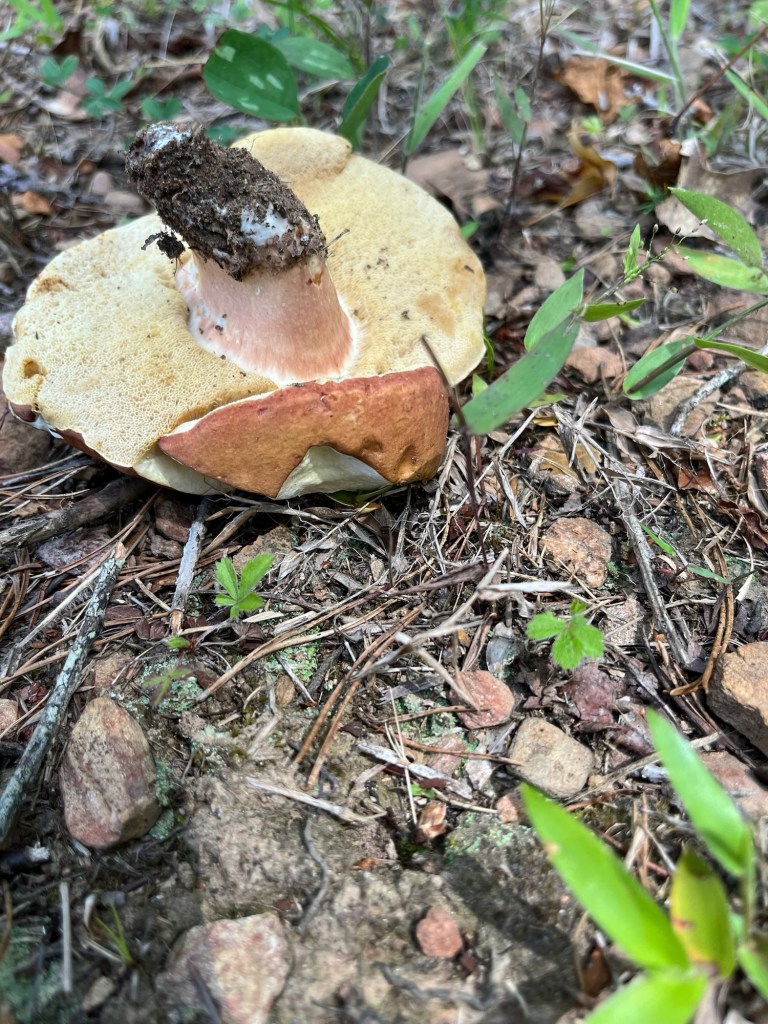
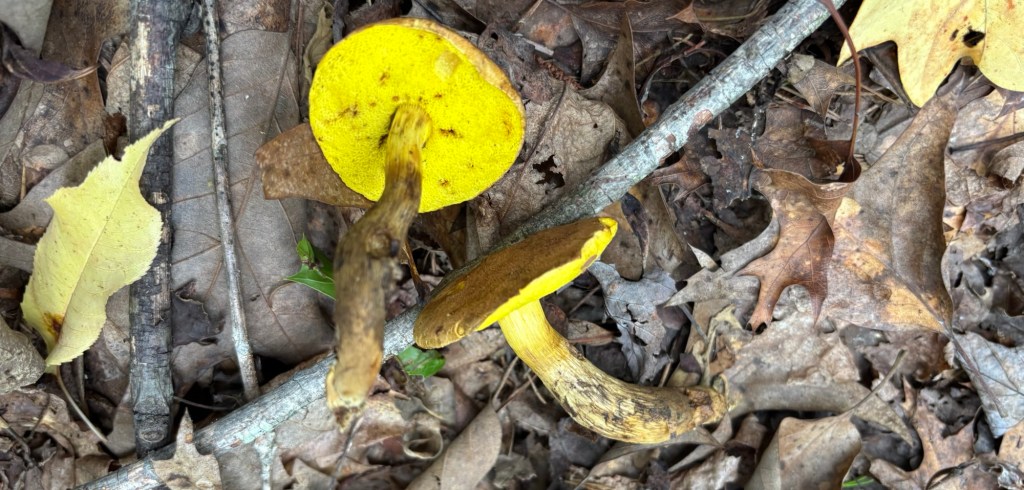
Small bolete popping up on Chanterelle Trail we hope to see mature.

A Couple of Weekend Walks at SAFF

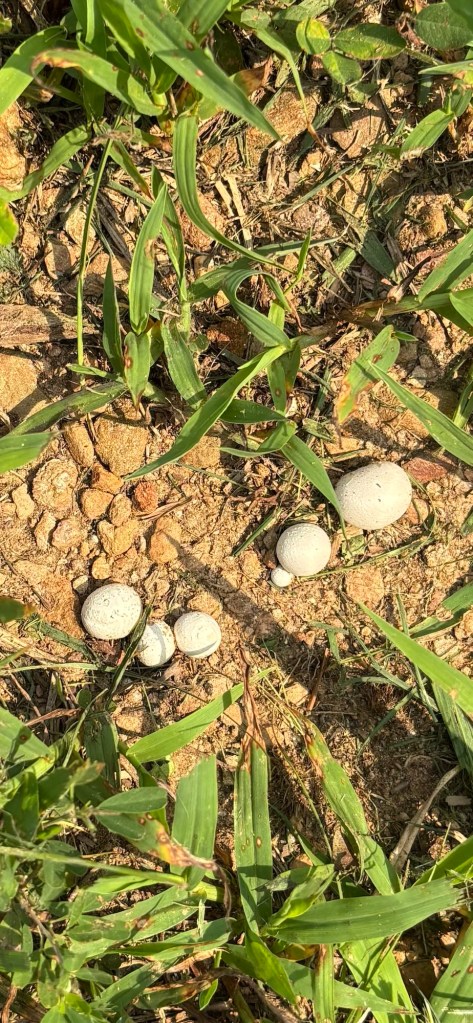
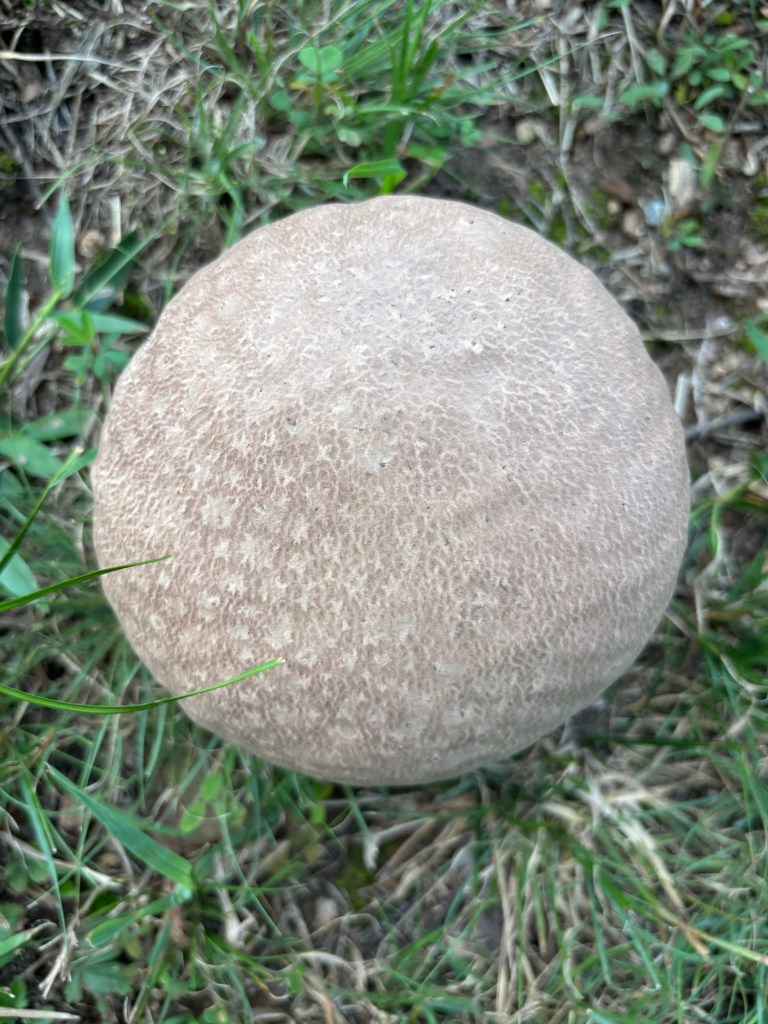
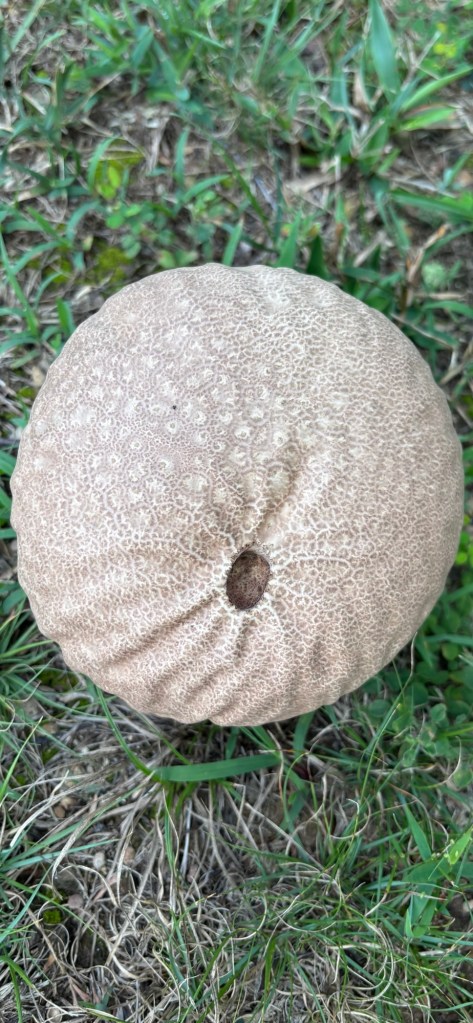
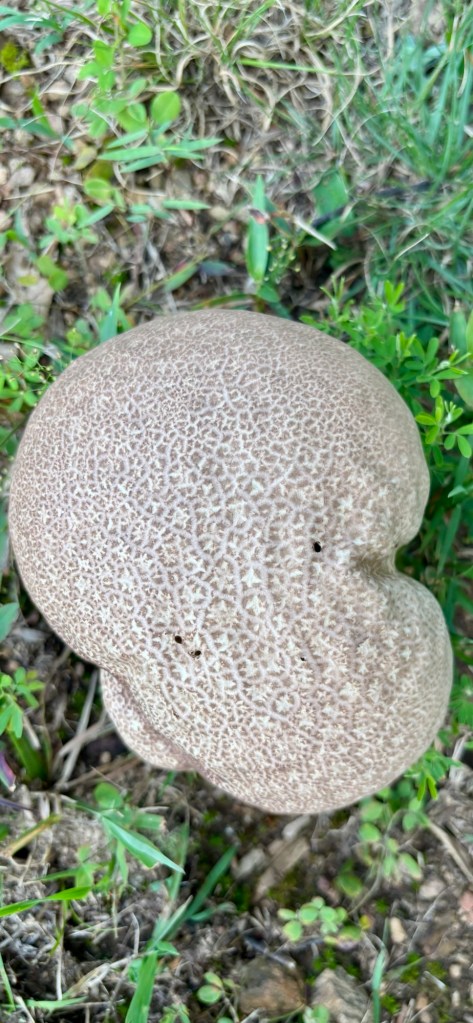
An edible Calvatia cyathiformis, Purple spored puffball, found at the top of Red Hawk Road on Saturday. We brought this home to slice and make mushroom pizzas by adding tomato, cheese and toppings.
Craterellus fallax, Eastern black trumpet, found on the south set back line. Right on Black Trumpet Way near the base of an oak on Sunday. We left them to spore and hope to catch others in better shape to eat next time. We found another patch along the waterway and also left them to spore. They are excellent-tasting with eggs as well as highly nutritious.
Right along the main waterway, it appears to be an Amanita completely enclosed in a sac-like membrane called the universal veil. The identity will be revealed as it opens. We hope to catch it as it develops. We are careful with Amanitas because of the dangers of eating any mushroom without identifying it. This truly is a class of fungus to know how to identify as it includes the several of the most toxic. However, it is only dangerous to ingest which we will not be doing. ☺️

The weather has been wonderful. Mid-seventies and sunny the whole weekend. We spent afternoons at the farm Saturday and Sunday. We got plenty of chores done and enjoyed our walks around the forest. The rain gauge showed another inch and a third on Saturday—so with the last storm in May we got 4.35 inches! What a relief and gift. The mushrooms are showing up all over to our delight. It’s been such a long time! Seeing the puffballs, chanterelles and black trumpets this weekend was truly joyful. The vibrant colors and familiar shapes were a sight for sore eyes. The lushness and green of the forest has settled in after the rains as well making everything pop with lime, chartreuse, Kelly and neon greens. The old clonal colony pawpaw patch is all leafed out with the big drooping leaves and the two fruit continue to develop. 🤞

We leaned some of our metal roofing sideways against the tiny house for now which has stopped the water from getting in around the door and the back side. We are grateful for this temporary fix, as we continue to collect supplies and plan our front porch and covered back deck builds which will be a part of our permanent solution to the water problem.

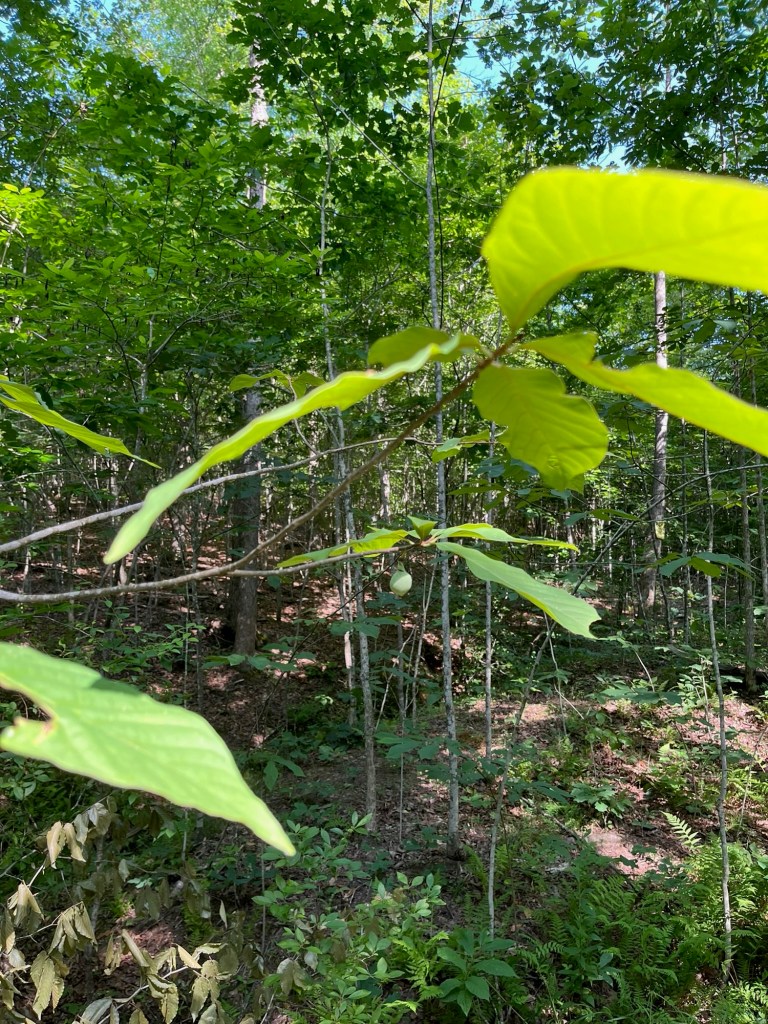
Asimina triloba flowering still at SAFF old clonal colony patch.
Ipomoea pandurata, wild potato vine, a vigorous native perennial vine with large white funnel shaped flowers and a massive starchy tuber that can weigh over 20 pounds. We found it along Orchard Hill Road near the new Pawpaw patch with the seedlings and cultivars we grew and planted last fall.
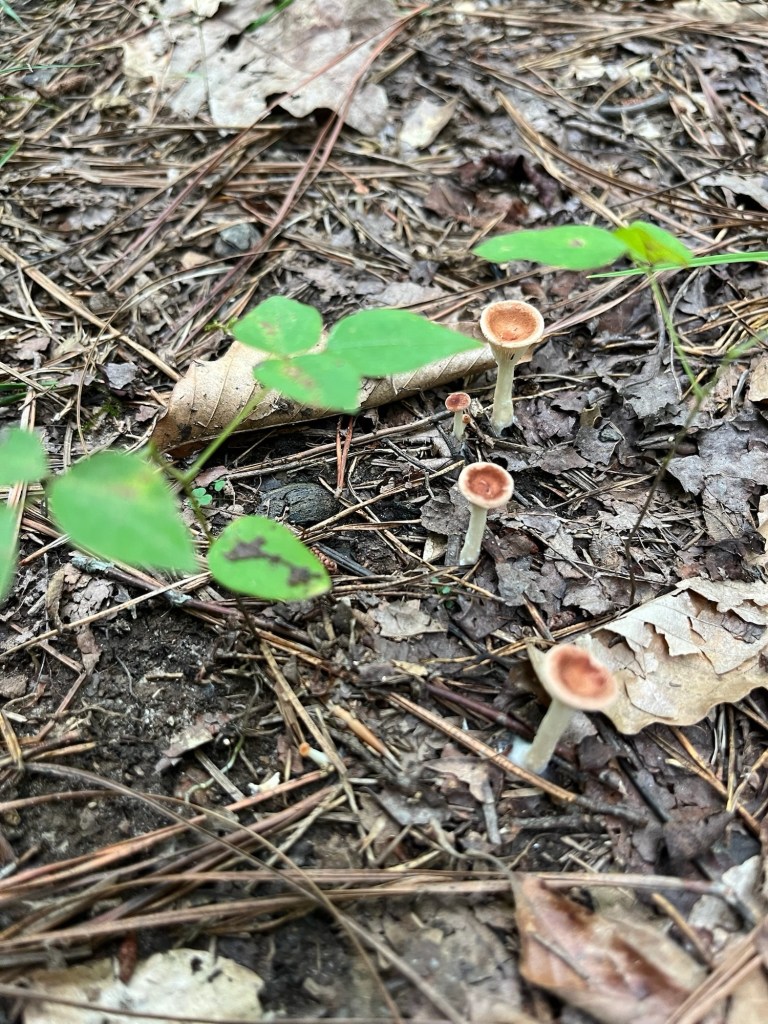
Tiny developing small chanterelles, Cantharellus minor, along the bottom waterway trail.
Pinus virginiana, Virginia pine cones protecting the seeds. They will open to release them in warm dry weather and close when exposed to moisture.
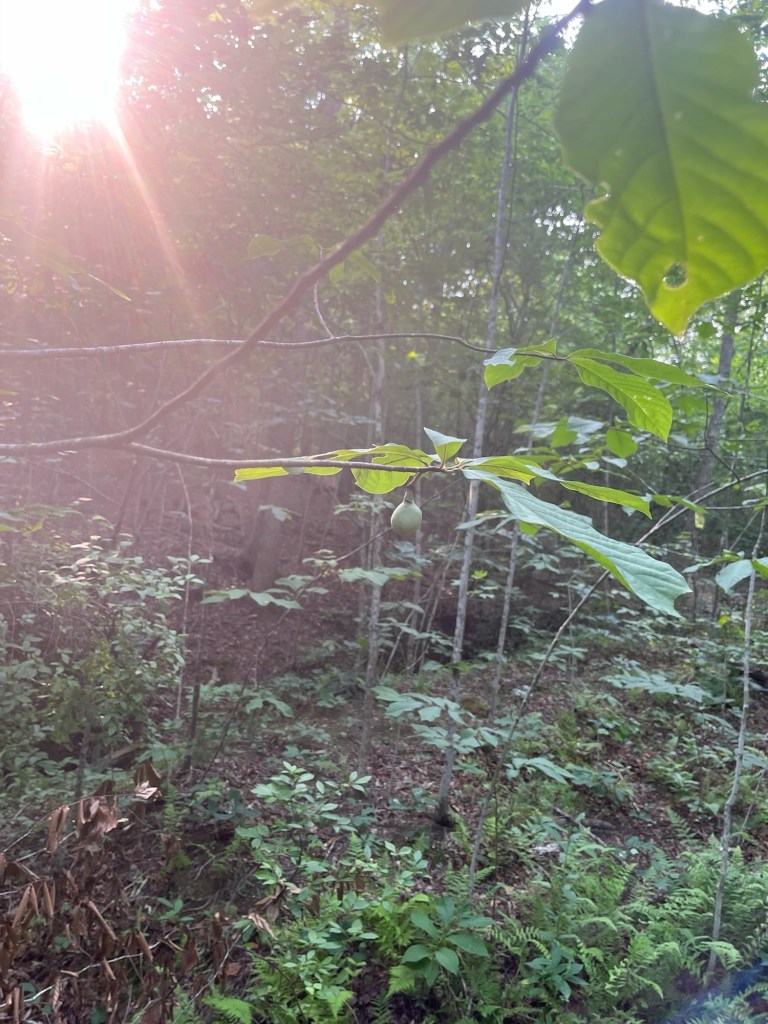
Asimina triloba leaves and developing fruit.
The other pawpaw fruit with an ant and a white waxy substance on the peduncle. This is mealy bugs, Flatid plant hoppers or Woolly aphids, or their egg sac. They will cause premature dropping of the fruit or other damage. We will get this off tomorrow when we are out next.

October 4, 2024 – Preparing the Boundaries for Hunting Season

Amanita persicina found in groups throughout the farm near pines and oaks.

We went over to put up boundary markers and no hunting or trespassing signs as well as forage for mushrooms. Hunting season begins Saturday October 5th (early archery season starts). We took down trees growing too closely together and used the trunks as a natural fencing inside the tree line along the road frontage to discourage hunters from chasing deer onto our property. We’ve also been told hunters run dogs through properties to scare up deer. We are trying to create a hunt free zone, except for mushrooms, and to keep anyone chasing animals off our land. We also will put up several more cameras later this weekend. We had technical issues yesterday but worked it out this morning.
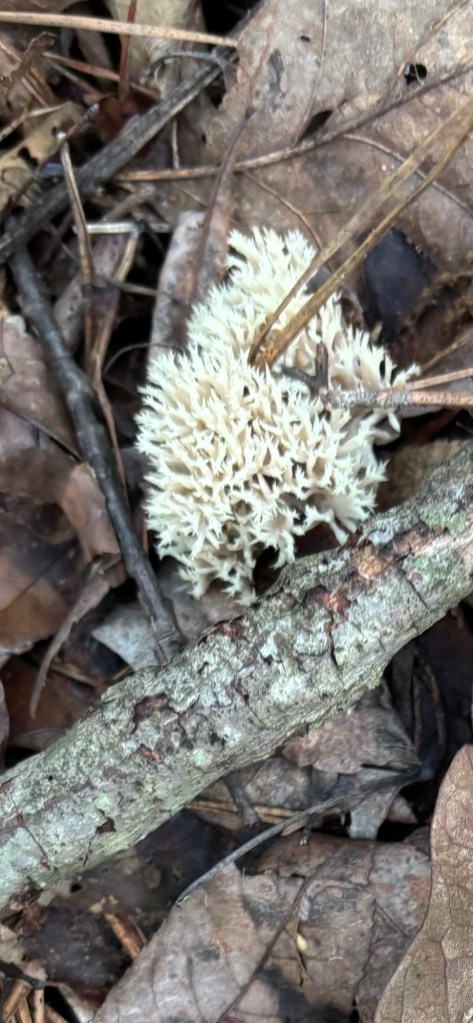
Coral fungus
A family of Amanita jacksonii, American slender Caesar, we brought home and processed for eating.
Top of A jacksonii
Younger A jacksonii
An A. jacksonii just emerging from its volva. These are the most delicious.
Eastern fence lizard, Sceloporous undulatus, we found hanging out on a black cherry stump up top in the clearing.
Amanita spreta, commonly called the Hated Caesar, is an inedible variety. They were large and showy found in the north side near pines.
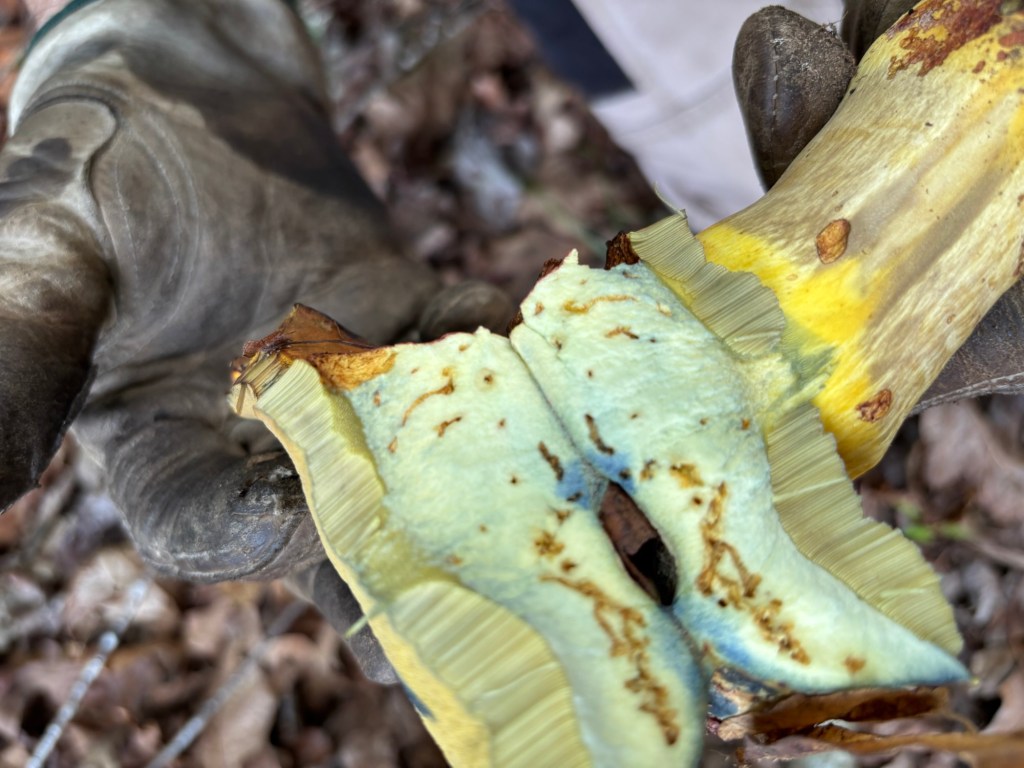
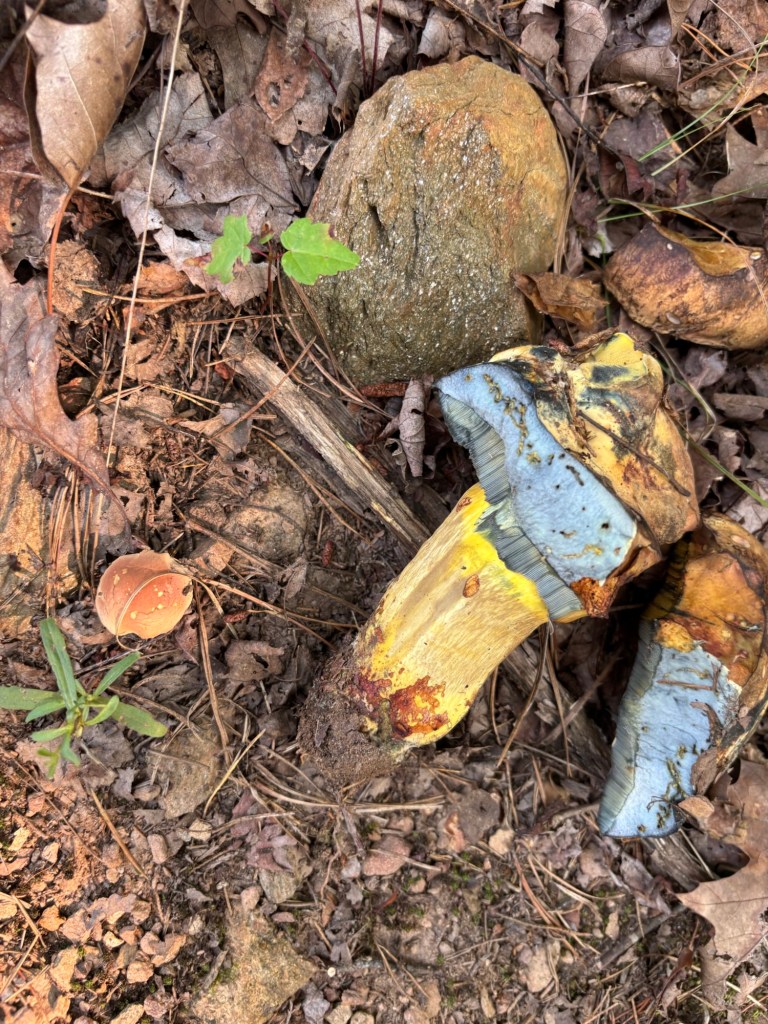
We continue to find these blue staining boletes and have narrowed down their identification to four different species. For now, they remain unknown.
Unknown blue staining bolete.
Inocybe lilacina, Lilac fibercap, is a poisonous mushroom found on the north side of SAFF.
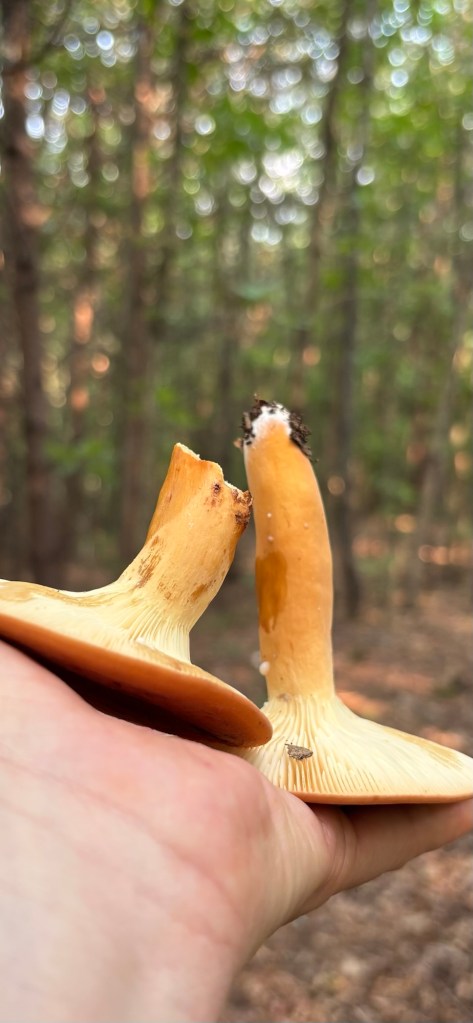
Suillus salmonicolor, Slippery Jill, found everywhere on SAFF near pine.
Suillus, slippery jacks, associated with pines.

October 1, 2024 – After hurricane Helene at SAFF.

Chicken of the woods, Laetiporus sulphuric, found on the way to the farm. We took this older specimen over and left it to spore on some of our dead and dying hardwoods: Mostly black cherry trees and tulip poplar.

Today was a mushroom hunter’s dream. It’s an understatement to say they were everywhere. We’ve had an enormous amount of rain in Central Virginia and the Shenandoah Valley. We’ve had flooding at the house but finally, after all of this rain, the water table is restored at SAFF from our prolonged summer drought. All of the springs are flowing and the waterways are moving. We saw water flowing in the wet weather gullies in the north and south. It’s a beautiful sight.
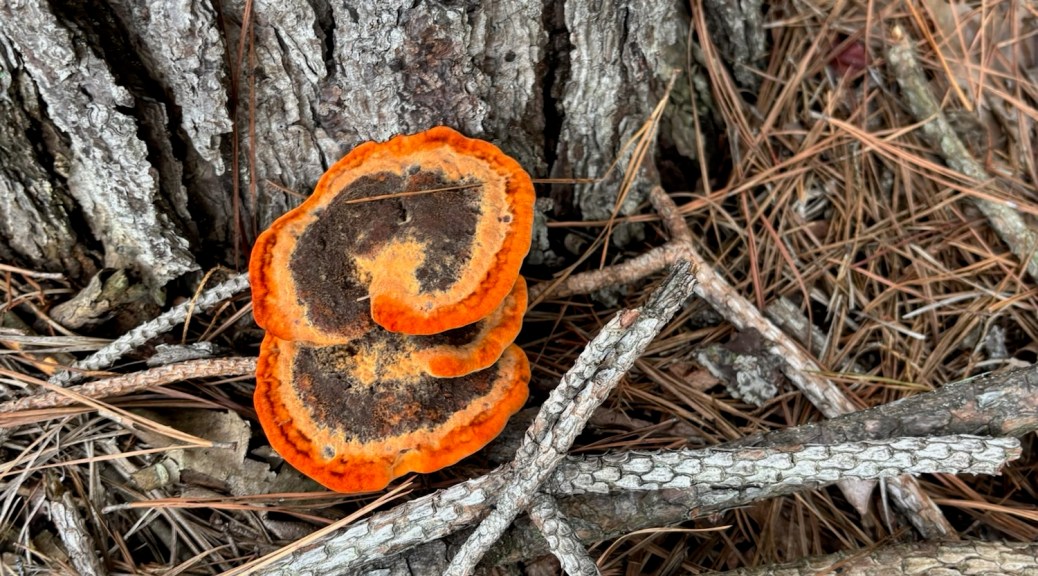
Amanita persicina, Peach colored fly agaric, were found all around the farm where pines are growing. These were large and brilliantly decorated with vibrant orange. The larger of the specimen were 8 inches in height and 4 inches across. They are showstoppers.
More A. persicina along south trail. We found them mostly in big groupings up top and along the trails. These are my new favorites.
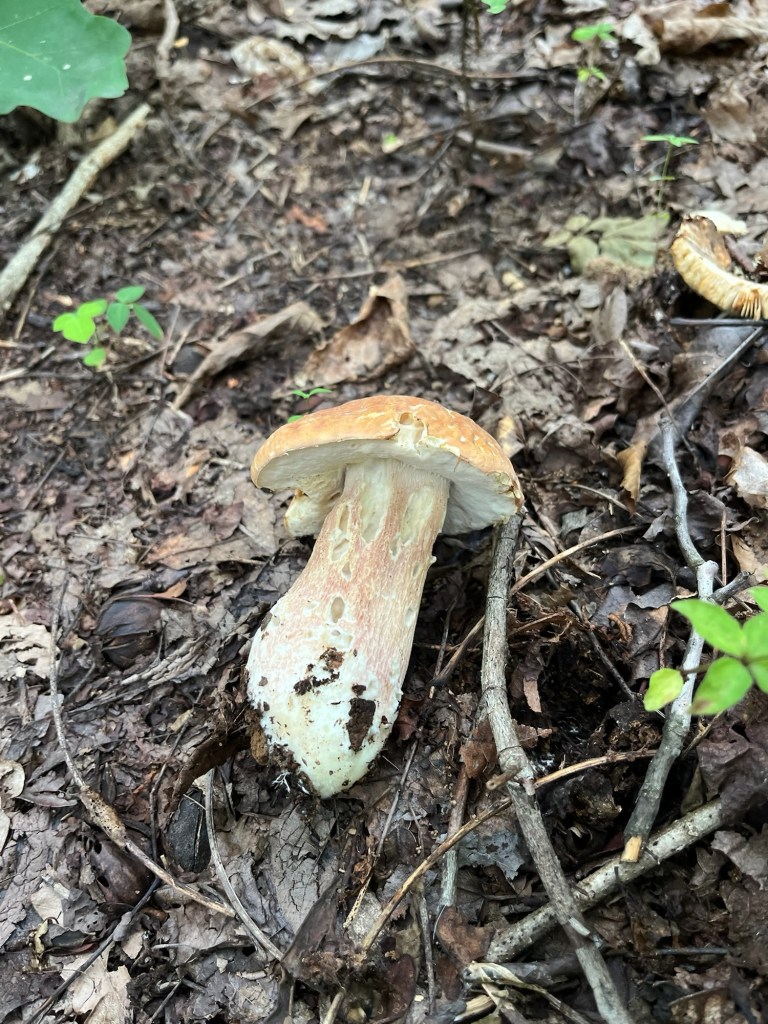
Leccinum longicurvipes found on the north side in the pine forest. The scabers (rigid projections) along the stalk identify them as Leccinum within the genus Boletus.
Genus suillus, slippery jacks or sticky bun, found anywhere we saw pines. They were all over the farm today. We hadn’t seen them before so it’s a wonderful surprise. It forms symbiotic ectomycorrhizal associations with pine trees by enveloping the underground roots of the tree with sheaths of fungal tissue. Rather than gills, it has tubes extending downward from the underside of the cap.
Ramaria stricta, Upright Coral fungus, found near southern waterway along Ridge Trail.

September 24, 2024 – A Rainy Fall Day at SAFF

Mushrooms were everywhere at Saint Andrews Forest Farm since it has been raining for days and the temperatures are in the 60s at night and 70s during the day. The rain is wonderful and much appreciated as the water table is still very low.

We saw these tiny Mycenae and Coprinellus growing together.

Saprobic fungus thriving with the moisture and temperatures in the perfect range for them to break down forest litter.
Stereum complicatum, crowded parchment, growing on multiple stumps and dead hardwood throughout the farm.
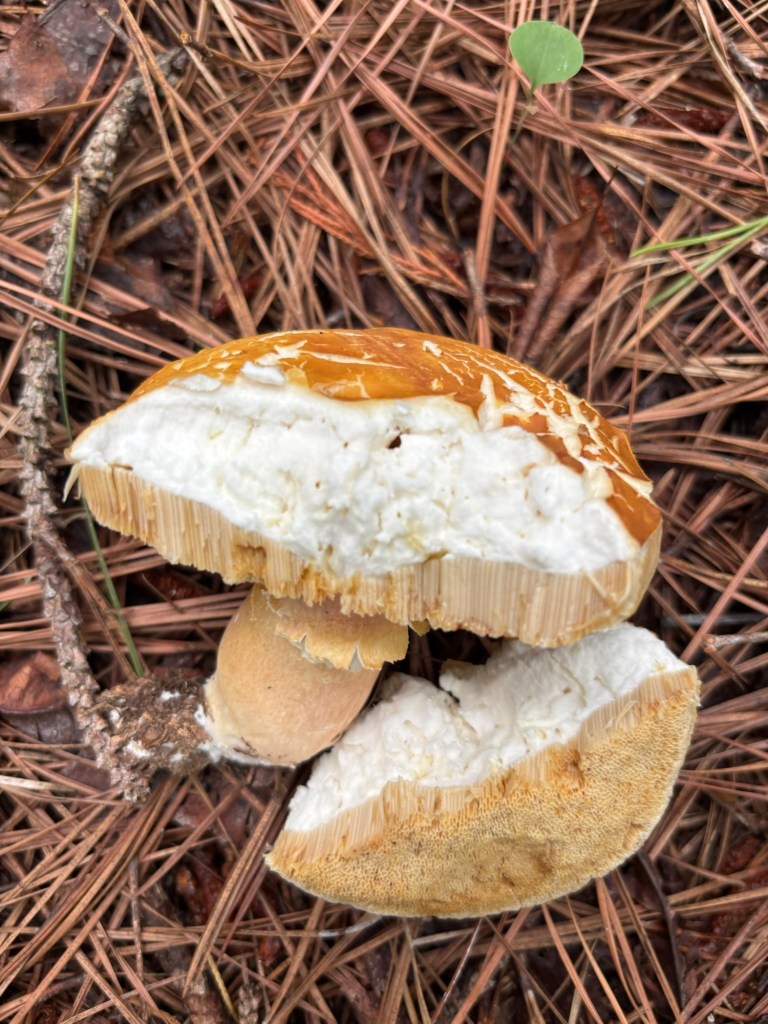
Chalciporus piperatus, Peppery Bolete, is reported to be edible when thoroughly cooked. It is very peppery so it will spice up a dish. It was a surprise to find a bolete with the weather being cooler.
Pawpaws leaves yellowing as part of the trees natural process of going dormant for winter. It makes them very easy to locate right now. We found a few more clusters of pawpaws near the wet weather gully on the south side.
More pawpaws going dormant for the winter across the waterway.
Amanita bisporigera, Eastern North American Destroying Angel, are found in multiple areas of SAFF this fall. These are deadly.
Terrapene carolina carolina, Eastern box turtle, on the north side looking for food.
Calvatia craniiformis, Brain puffball, found just off the top clearing in a group of seven.
Lycogala epidendrum, Wolf’s milk, found at the gate to SAFF. This is a slime mold instead of a fungus.

August 22, 2024 – Trail blazing and Mushroom foraging on the North side

Hard to see black trumpet mushrooms growing near oaks and pines.

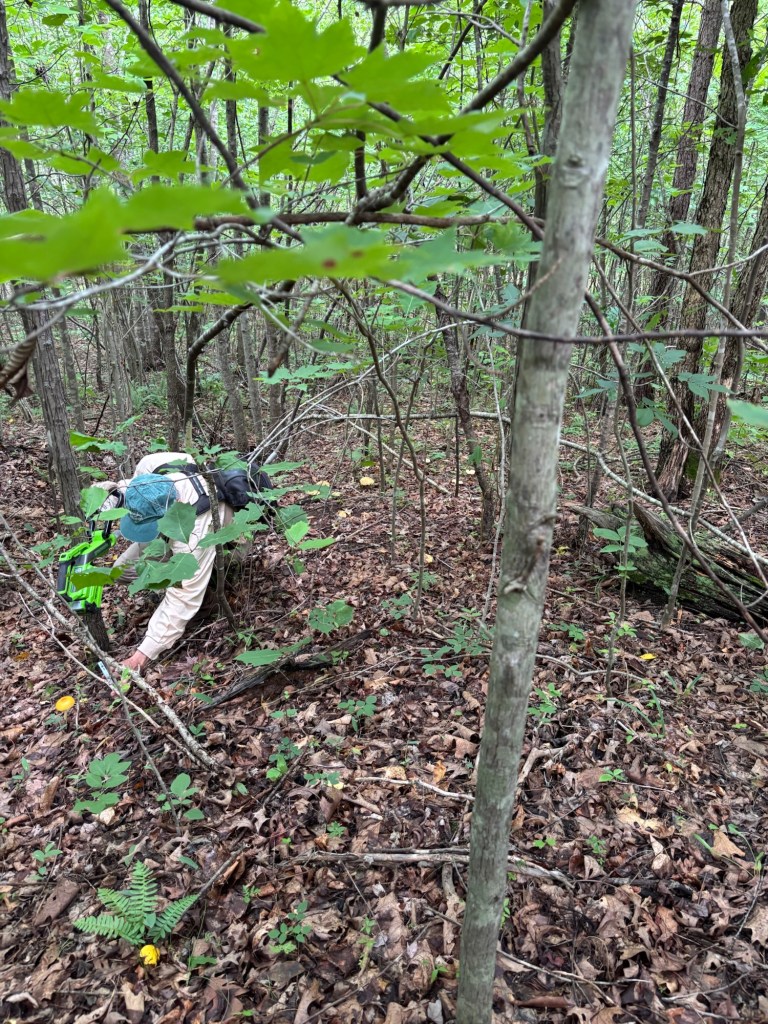
We went over and created more trails on the north side yesterday. We were rewarded for our work with wonderful weather and about two pounds of wild mushrooms. The temperatures in the 70’s made for a wonderful day to be outside. We found several new large Black trumpet patches as well as Cinnabar chanterelles and Ghost chanterelles. We also found a Lilac bolete, Amanita banningiana and an Old Man of the Woods. We joked our basket was full of Halloween colors.

Our basket from yesterday with lots of black and orange mushrooms.

We brightened up the paint on our boundary markers and widened our trails. We cleared a bit more from the road. We stood in awe of the beauty of the forest, the quiet peace to be found there with the trees and the network of mycelium that supports it all and sends up these colorful and wonderful fruiting bodies. We feel grateful and blessed by our surroundings.

We got home and cleaned up our mushroom bounty and dry cooked them for some minutes to cook off the water we used to clean them. Once dry, we added butter and olive oil and salt pepper and garlic. We saved most of these mushrooms but used a small amount for our white pizza for dinner. It was scrumptious!

August 19, 2024 – A Mushroom Wonderland

Amanita jacksonii found on the north side of SAFF. The choice edibles are found in pine and oak forests from Canada, through the eastern US and into Mexico.

The past three times we’ve pulled into the clearing with the truck, we’ve seen a young deer. It’s usually sleeping in the forest and it hears us and takes off. We don’t think it’s too afraid because it doesn’t run far though. We come upon it multiple times like it has become a game for the adorable creature. It’s always alone. We hope it stays safe and we understand it’s safest for it to not be comfortable with humans. We’re also seeing a lot of bear poop on the north side of the farm. No sign of our 4 or 5 year old male bear this year but we think it’s him. It’s nice to know animals are taking advantage of the nuts, berries, mushrooms and shelter the trees provide.

We walked all around the trails that were damp from an afternoon thunderstorm that hit just before our arrival. Right away, we saw new mushrooms emerging from the ground that hadn’t been there the day before. Sometimes it takes a few days for the mycelium to send up the fruiting body after a rainstorm —and sometimes it’s quick.

We basketed up our bounty and left the farm as the sun was setting. We were too tired to cook the mushrooms last night so we stored them in a paper bag in the refrigerator and hoped they’d stay in nice shape. It’s best to cook them right away and save them cooked either in the refrigerator or the freezer depending on how quickly they will get eaten. But these wild mushrooms, especially the chanterelles, need to be used quickly.

They were in nice shape this morning so we dry cooked them for a few minutes in a skillet on 7. Added olive oil and butter and cooked about 15 minutes. We let them cool and have them stored in the refrigerator. We are thinking of making a wild mushroom quiche.

Amanita jacksonii have a bright red cap that can grow up to four inches A beautiful mushroom to find that looks very similar to deadly poisonous mushrooms. Care should be taken to identify and be confident before you plan to eat them.
Our mushroom harvest yesterday included ghost chanterelles, Cinnabar chanterelles, Indigo milk cap, Frost’s bolete and American slender Caesar.

August 7, 2024 – Before tropical storm Debby at SAFF

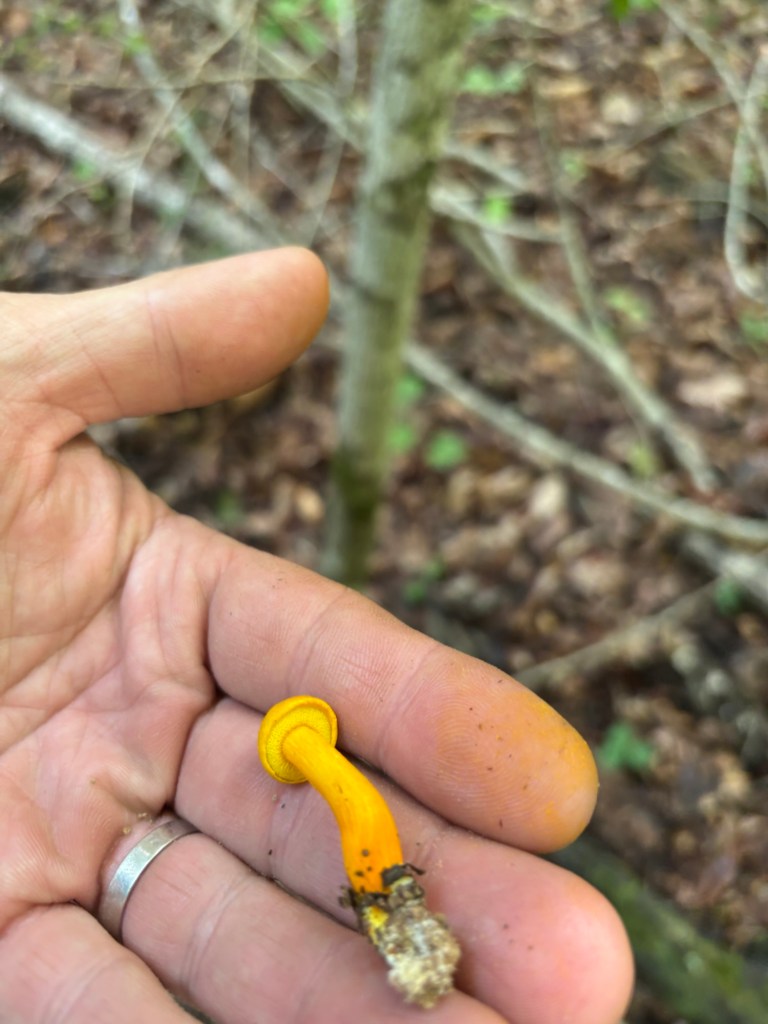
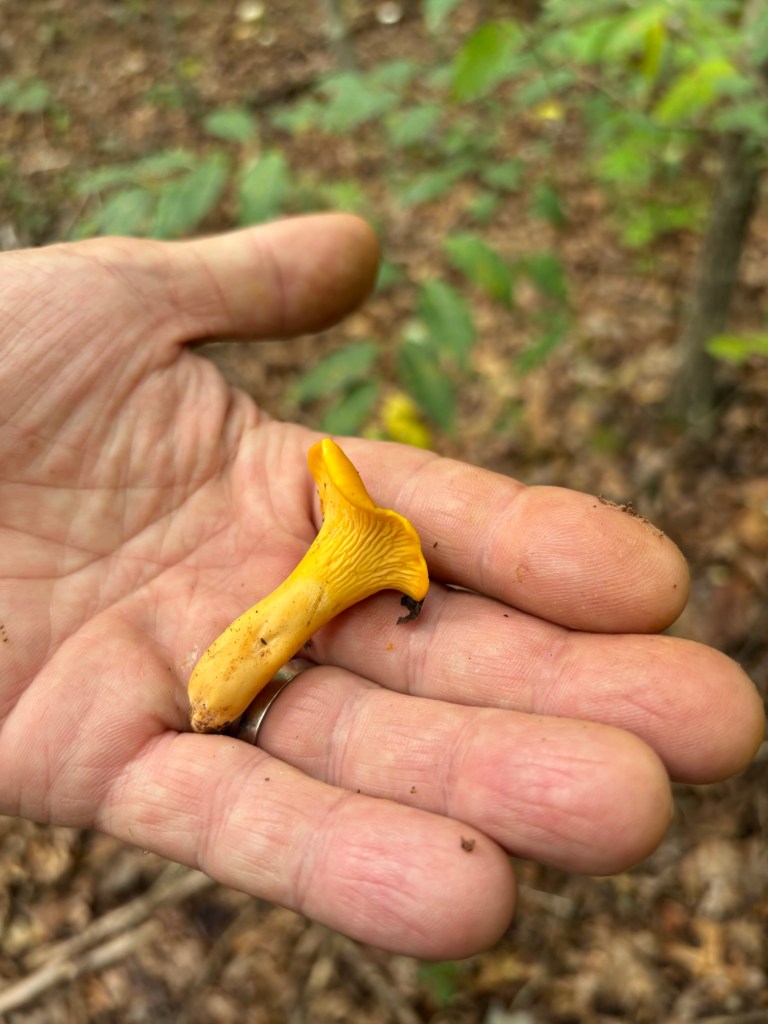
Cinnabar chanterelles found near the waterway right on the trail. These are choice edibles.

Tropical storm Debby is set to hit the farm tomorrow evening with rains expected to be 4-8 inches and peak wind gusts Friday morning at 34 mph. We can’t wait to see what this rain will bring since there’s been so many mushrooms already.

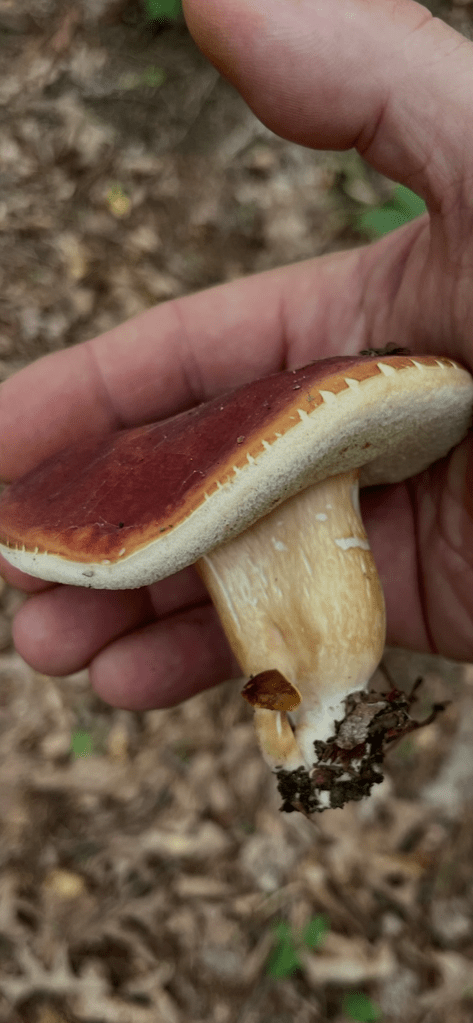
Retiboletus ornatipes, Ornate stalked bolete, is edible but not considered choice. We found them along South Trail.
Lactarius indigo, indigo milk cap, is a choice edible found off Chanterelle Trail. We brought these beautiful blue mushrooms home to eat.
Eastern North American Destroying Angel, Amanita bisporigera, a deadly poisonous mushroom found near North Trail.
Clitoria mariana, pigeonwings, found up top in clearing near twin oaks

August 4, 2024 A New Trail —Mary Banning Way

Amanita banningiana, Mary Banning Slender Caesar, has been found in every corner of Saint Andrews Forest Farm.

Mary Elizabeth Banning (1832-1903) was an American mycologist and botanical illustrator from Maryland. She described 23 previously unknown species of fungi. Her scientific achievements remained unrecognized during her lifetime. With no formal schooling or training, and during her free time, as she taught children and took care of her sick mother and older sister, she created the first mycological study of fungi in America with “The Fungi of Maryland.” This manuscript includes 174 13” by 15” watercolor paintings of various fungal species. She self funded her own study and lived in ever increasing poverty.

https://www.atlasobscura.com/articles/the-lost-mushroom-masterpiece-unearthed-in-a-dusty-drawer

Banning dedicated her life to mycology and lived in a world where women could not be scientists. She has inspired many people with her love for fungi and who knows how many she has inspired with her accomplishments while facing tremendous hurdles and difficulties.

We blazed a new trail from SAFF’s north side to North Trail, and we have named it Mary Banning Way to always remember and honor this powerful, intelligent and creative woman.

https://www.google.com/search?client=safari&sca_esv=e328c47da5cf79ba&hl=en-us&sxsrf=ADLYWIIwmcwpkr0oTLUTOUnkz28–u7l5w:1722959078107&q=mary+Elizabeth+banning&source=lnms&fbs=AEQNm0CgxwOFjiKYHNCRHSK3fdWj5Bfhn0qfSojWNk3sUgIBYunTvGd-atQ5vuydI-jpHqlf2bG9PoOqCjjAck2_Nh0_PQsVULTK7SAiDVgQtYGa-T2VhecsAjmd7f48Tpj2Wc96XEURaS756ngHPNnSgh-deW9qthss0LDkmdW0YgoRvNuTSFBvRX-HHAaboi-icdChhwk0PwgER4wyaU5GMZH4gvCdIw&sa=X&ved=2ahUKEwiijMDe2uCHAxW2F1kFHU83Am8Q0pQJegQIGBAB&biw=320&bih=497&dpr=3#fpstate=ive&ip=1&vld=cid:70a48c23,vid:NlGam0jSZ04,st:0

We hope you look up her works.