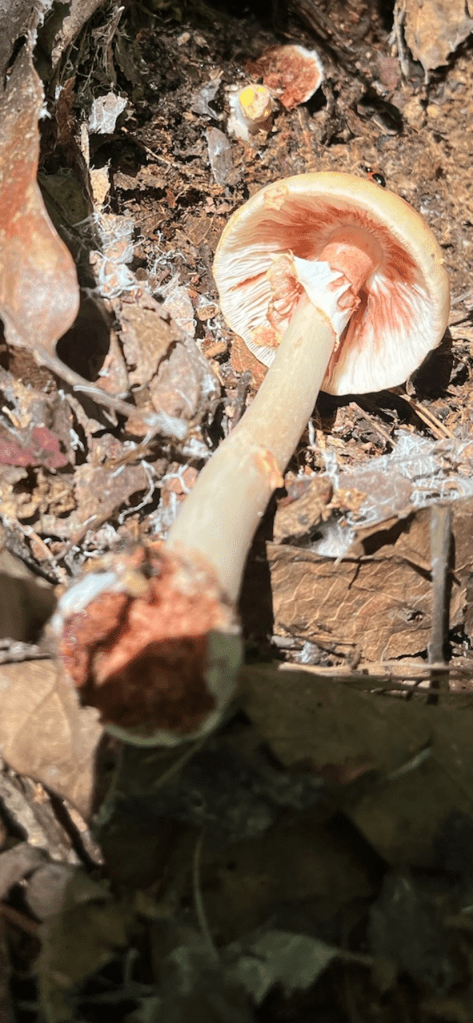
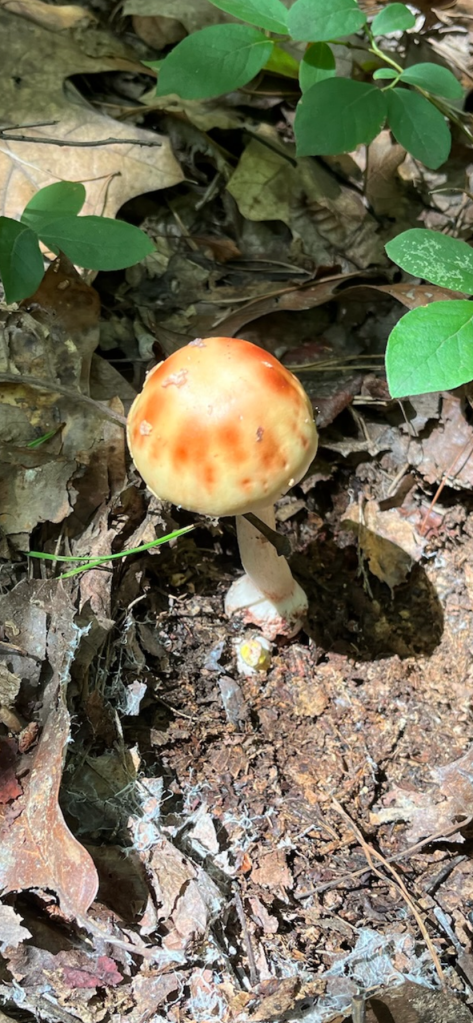
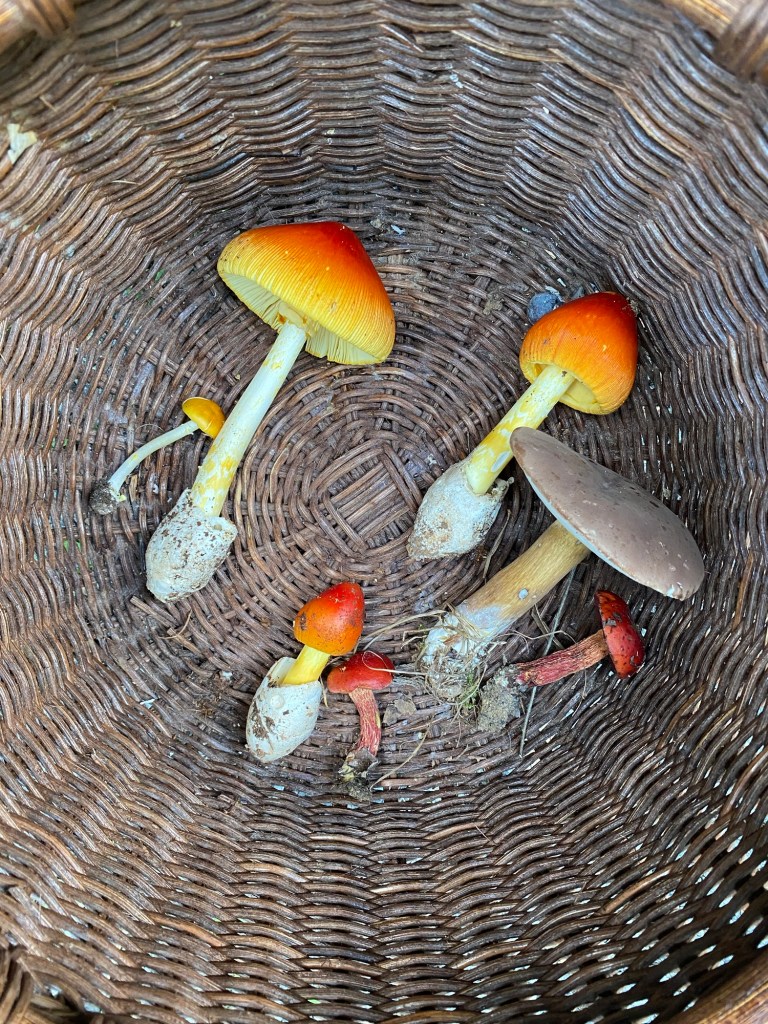
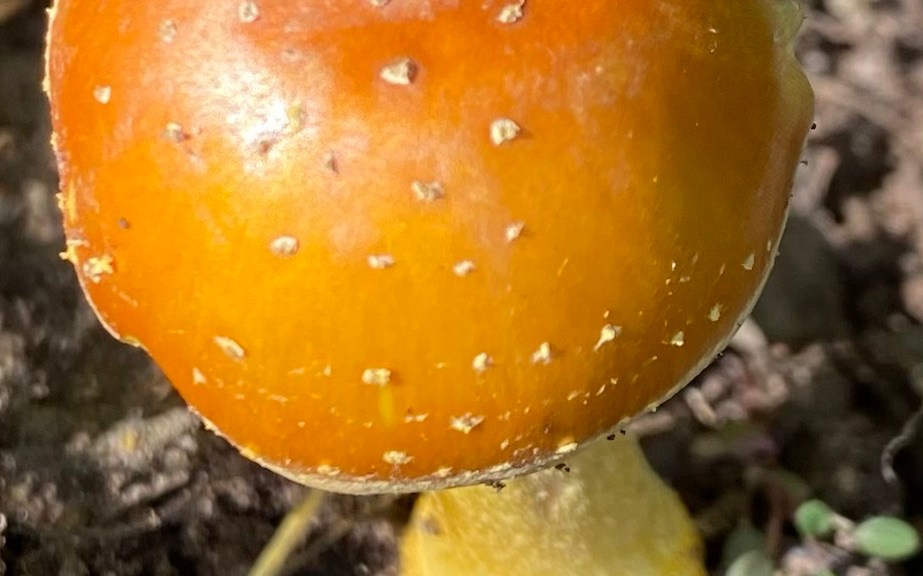
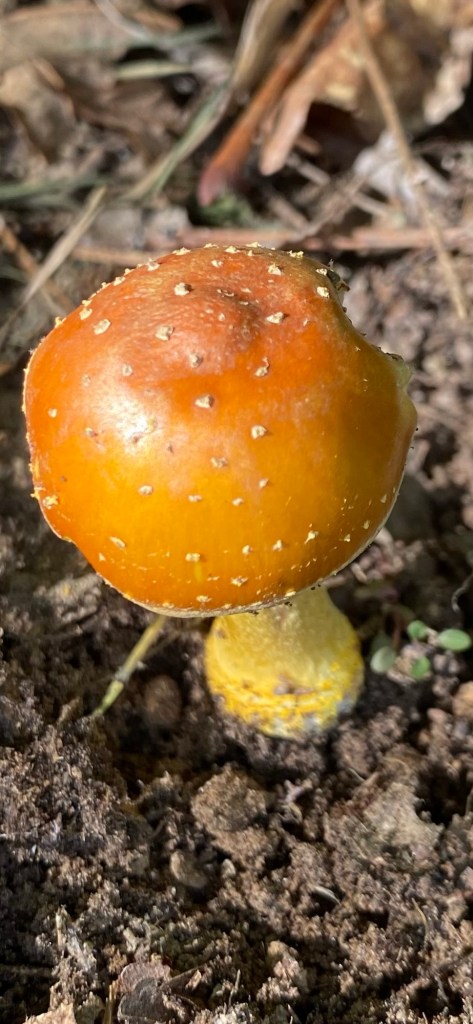
Amanita amerirubescens complex from below A. amerirubescens from above. Note the red blushing. These are edible when thoroughly cooked. We haven’t tried them. Amanita jacksonii, a delicious Caesar mushroom that can even be eaten raw. We cooked them and they maintained a wonderful texture. These were some of the tastiest mushrooms we’ve had. A. jacksonii, A. banningiana, Bolete edulis and Exsudoporous frostii in our basket. All were delicious. 😋
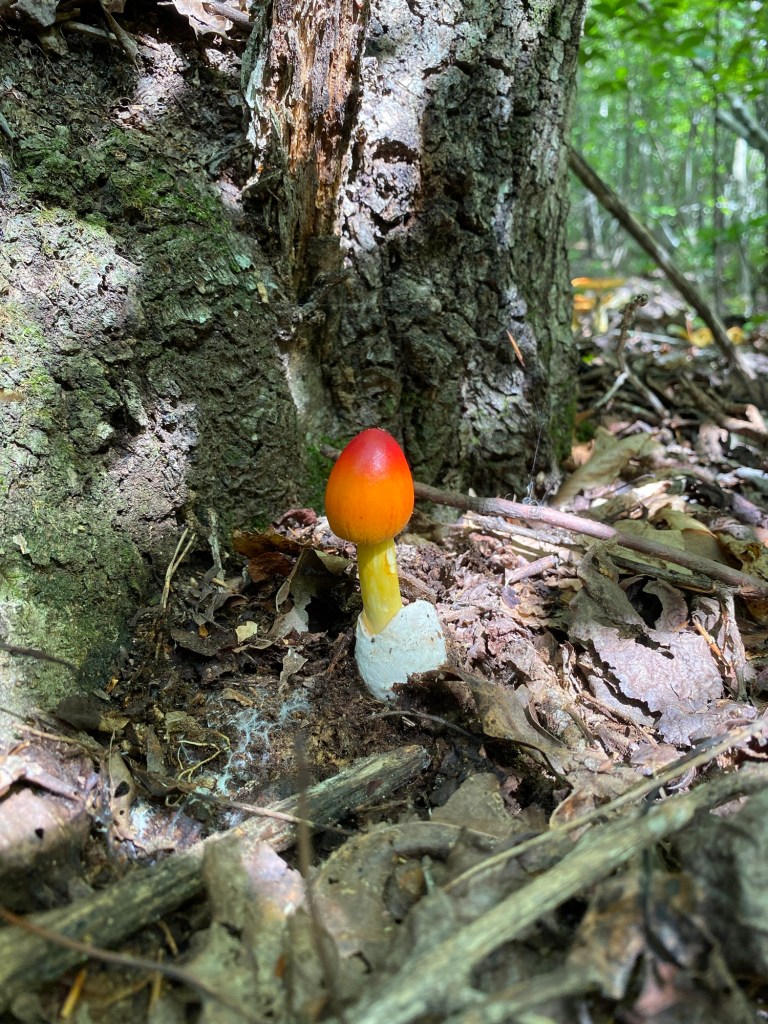
The forest is full of mushrooms with the rain we’re getting. Every day we go out and find something completely new. Since we bought the farm last year, we’ve searched for Amanita jacksonii. Saturday we walked down Amanita Way towards the wet weather gully and there they were. They were very large and strikingly red with orange caps and yellow stems. We have seen hundreds of Amanita parcivolvata, commonly called False Caesar, and these were instantly recognizable as the true sought after delicacy. The small one to the left in the basket is the first American caesar we found last week, Amanita banningiana or Mary Banning Slender yellow caesar. This is also tasty and special. They are much smaller and found in the northeastern and southern regions of the US.
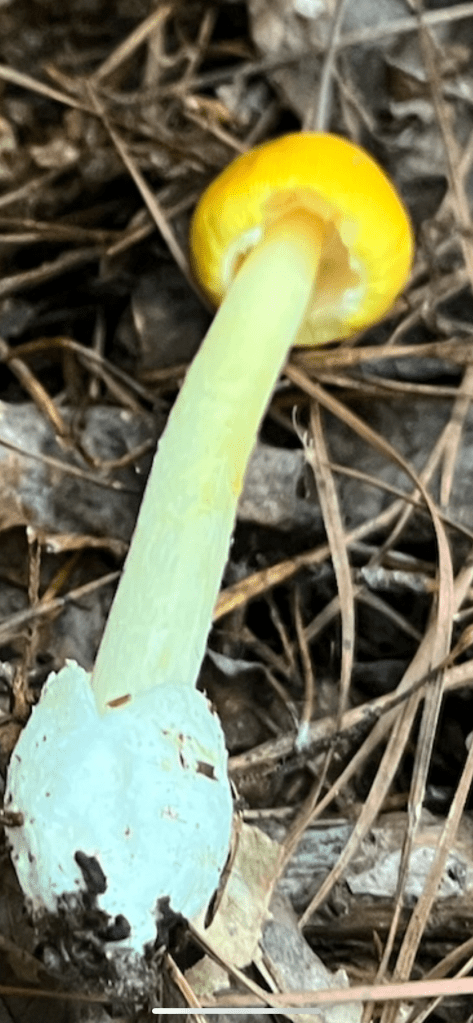
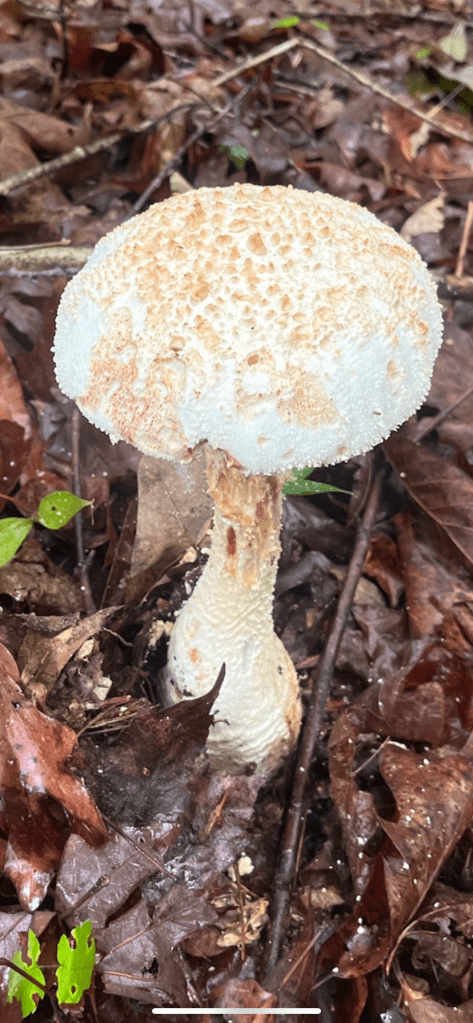
A. banningiana has striations along the edge of the cap. It is found in oak-beech-hickory forests from Maine to Alabama.A. parcivolvata, or false caesar. Found all over SAFF. Amanita rhopalopus, American club footed Lepidella.
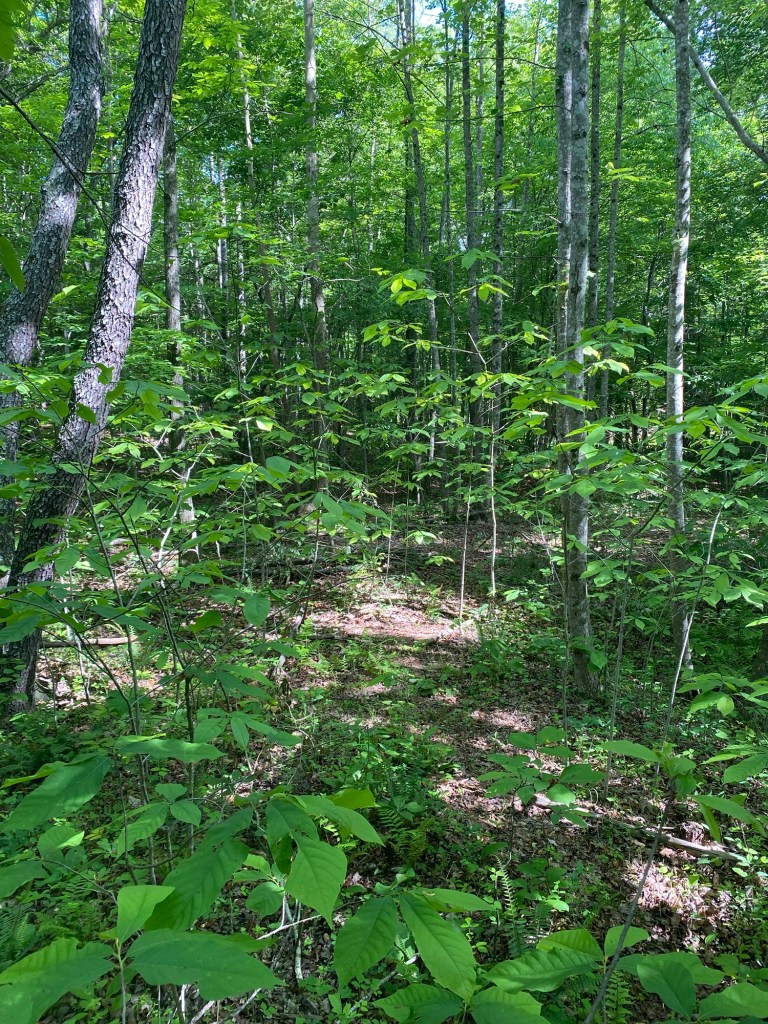
After steady rain, thunderstorms and cloudy skies in Buckingham for 12 of the last 15 days, we went out with high hopes of finally finding mushrooms. When we pulled into the clearing up top at SAFF, we saw hundreds of small puffballs. We found four other species before we made it from the clearing into the forest. Inside the woods, it seemed mycelium was everywhere we looked. SAFF has become a mushroom wonderland after the months of drought and heat, the rain and lower temperatures really brought the mushrooms.
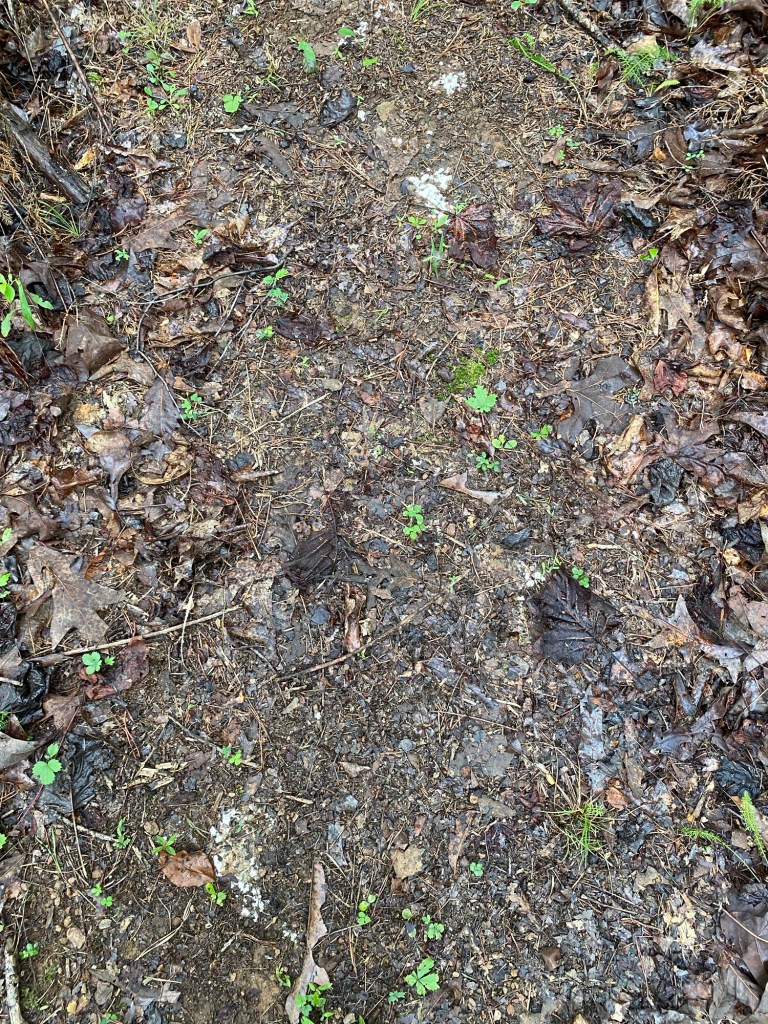
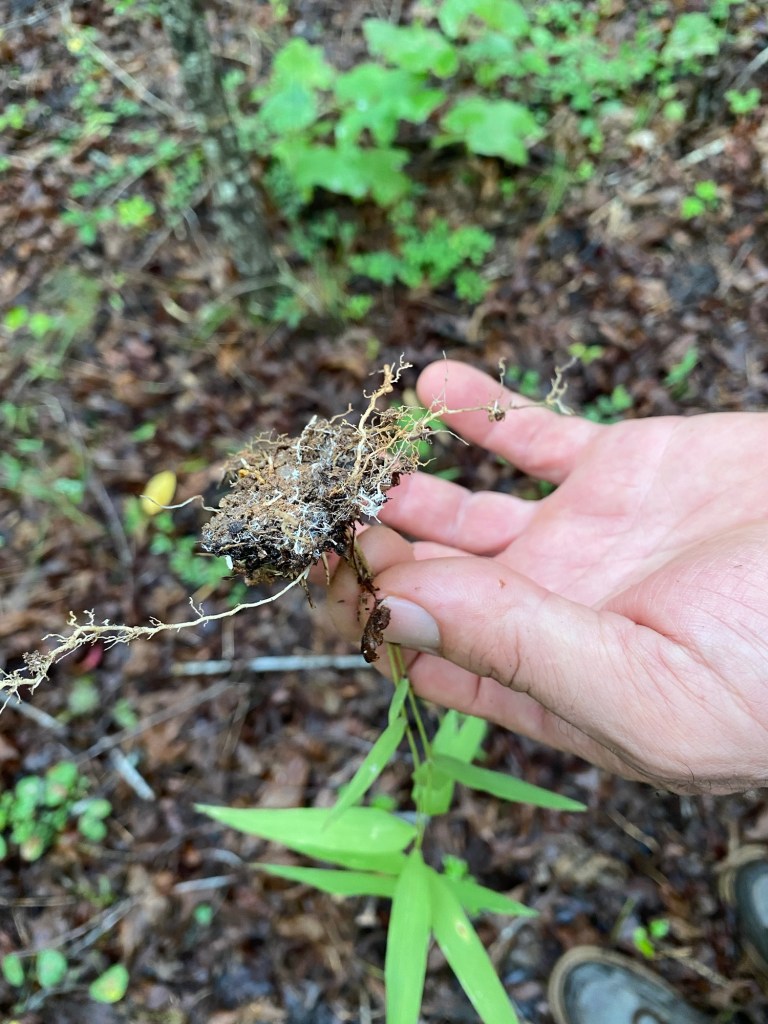
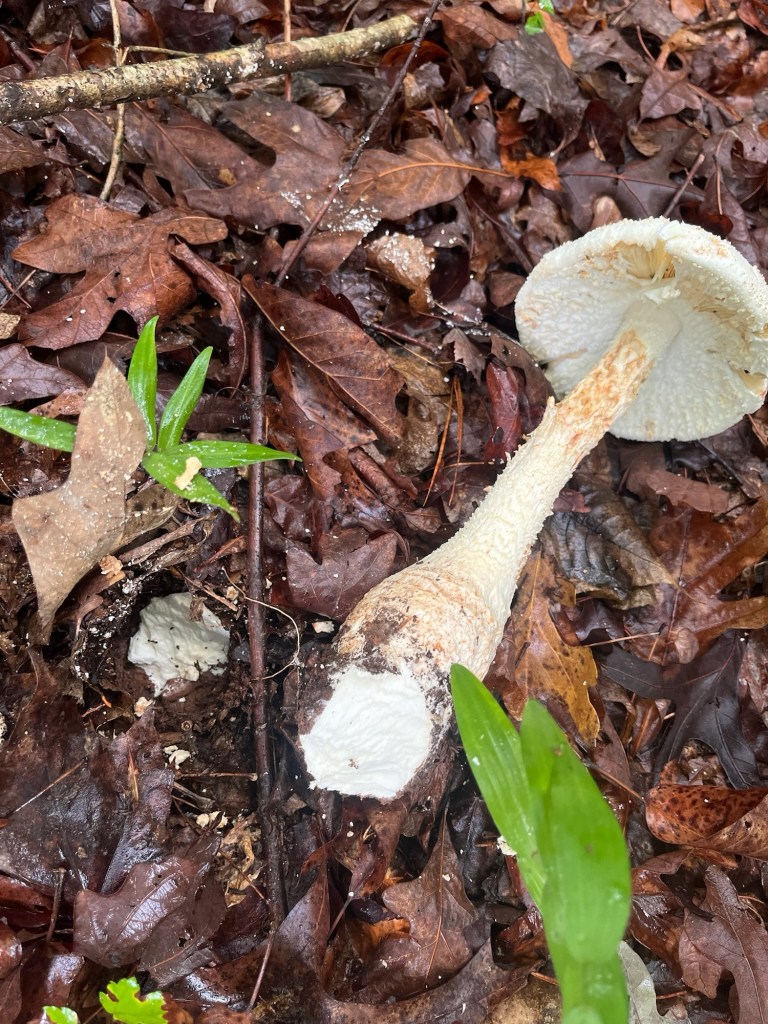
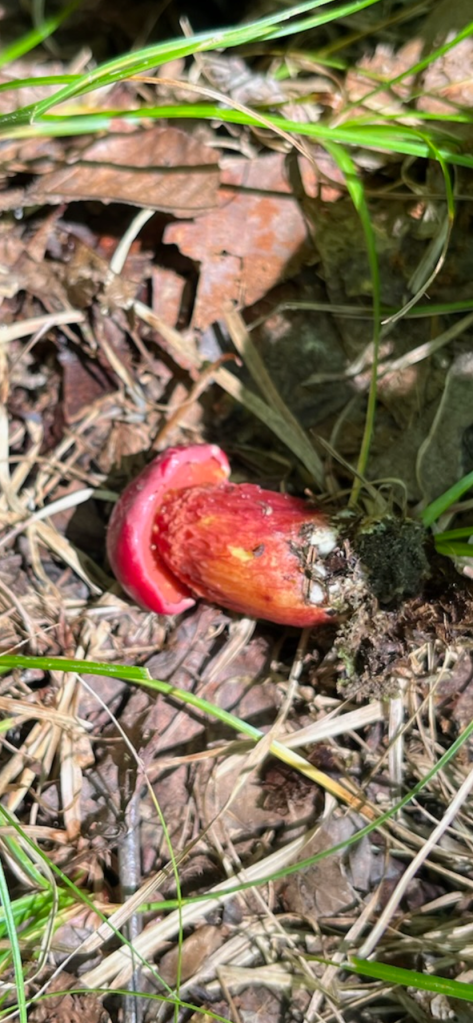
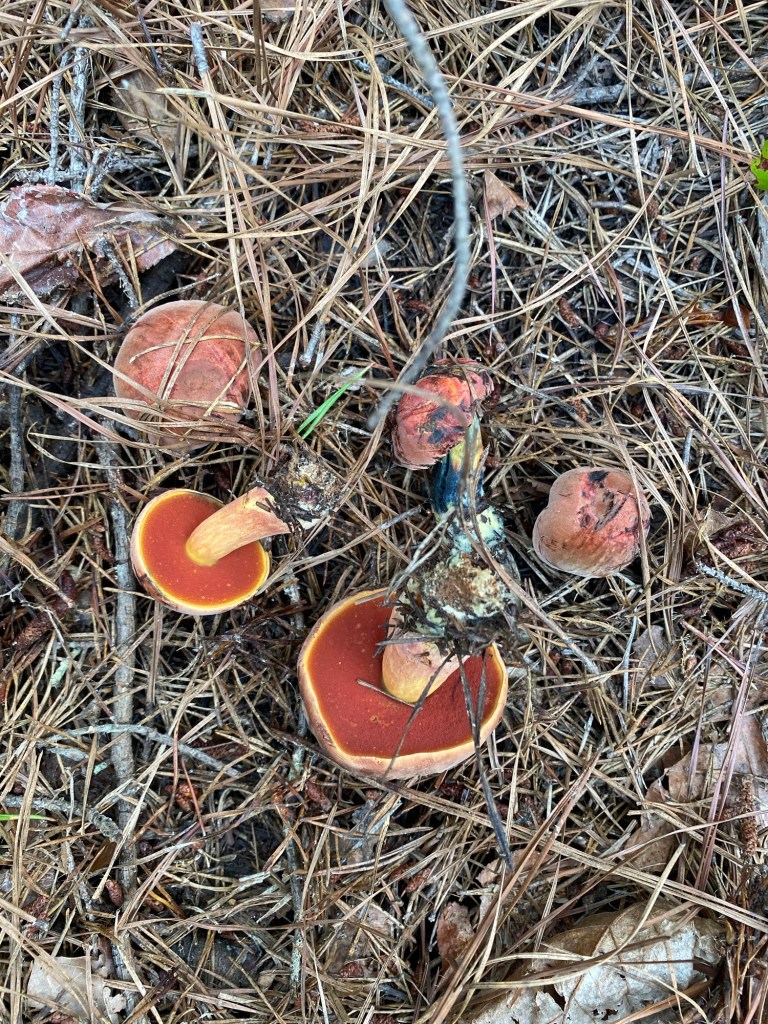
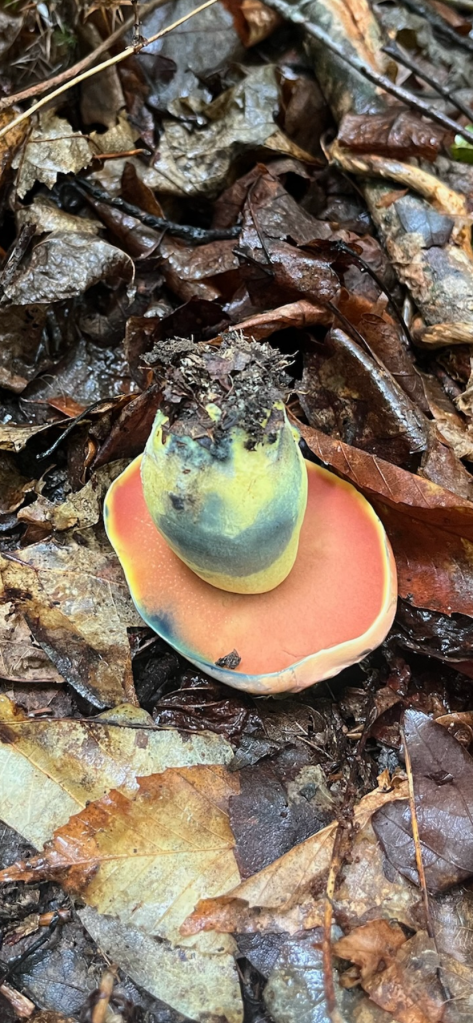
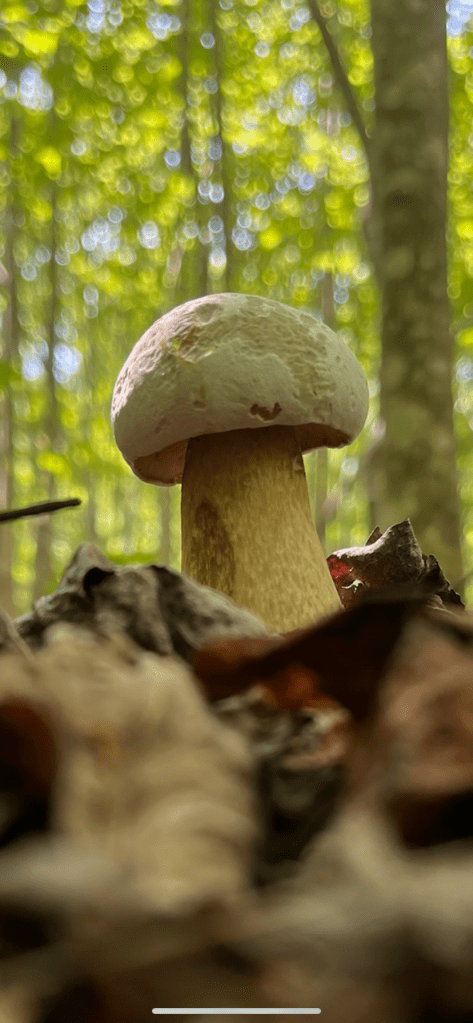
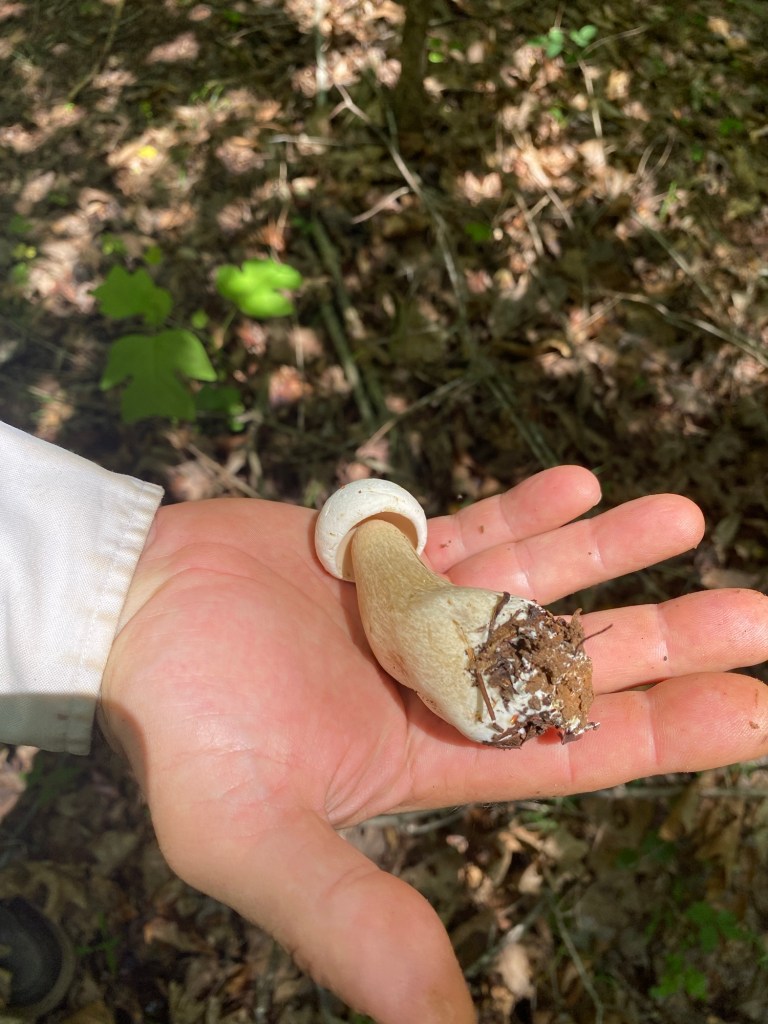
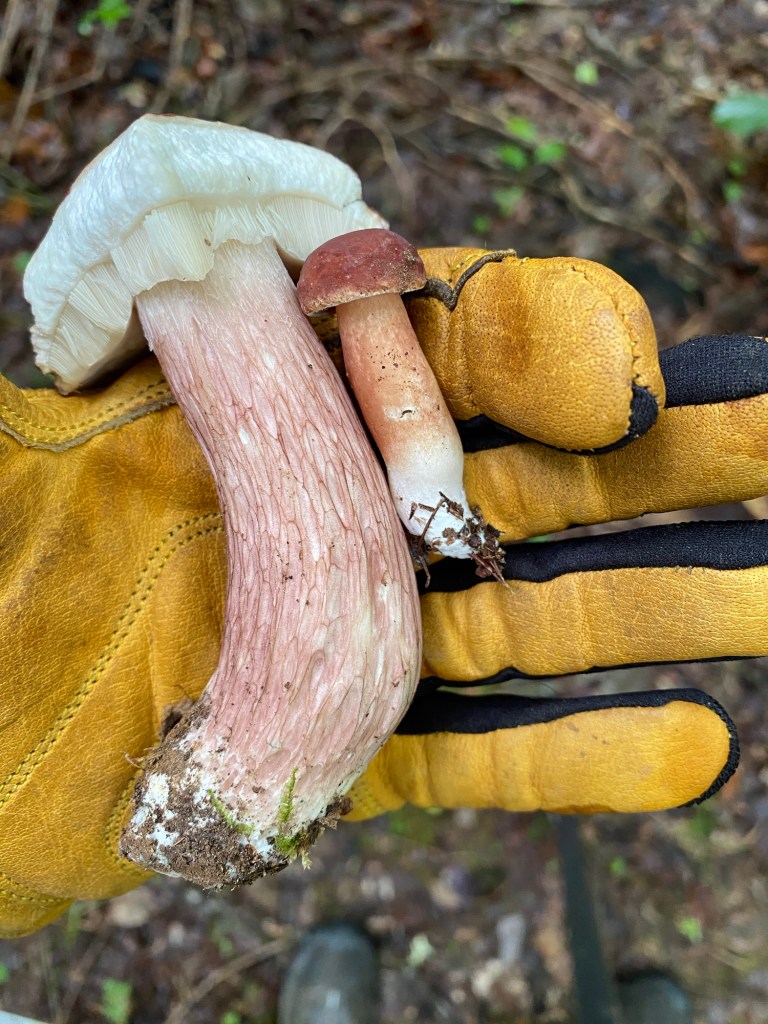
Mycelium appearing in white spots on the forest floor along Fern Way. Mycelium attached to Japanese stiltgrass roots an invasive we are pulling up where we see it in small numbers and plan to cardboard and mulch over it where it has a stronger foothold.Amanita rhopalopus, American Club-footed lepidella found near our road up top just before the south set back line. They had bugs all over them.Unknown Agaricus found in multiple spots along the south side.Frost’s bolete, Exsudoporous frostii, at bottom of slope near our crossing of waterway into the pawpaw grove. This was a spectacular sight. It’s edible and tastes acidic like lemon. Mycorrhizal with oaks.Top of the Frost’s bolete.Red mouth bolete, Neoboletus subvelutipes, is inedible and cause gastrointestinal distress. Red pores or spores are typically a warning sign with boletes. Boletus subluridellus a red pored bolete that is supposed to be edible. We have not tried it but reports are to boil first then it’s okay and delicious. Mycorrhizal with pine and oak.White boletes found in the flood plain below the slope at SAFF. These are edible. Leccinum holopus, white birch bolete or ghost bolete. White birch bolete were all over the bottom near the waterway. Lilac bolete, boletus separans, found with oaks and conifers and all over the forest floor at SAFF. These are delicious and beautiful mushrooms, a choice edible. We have found pounds of these.
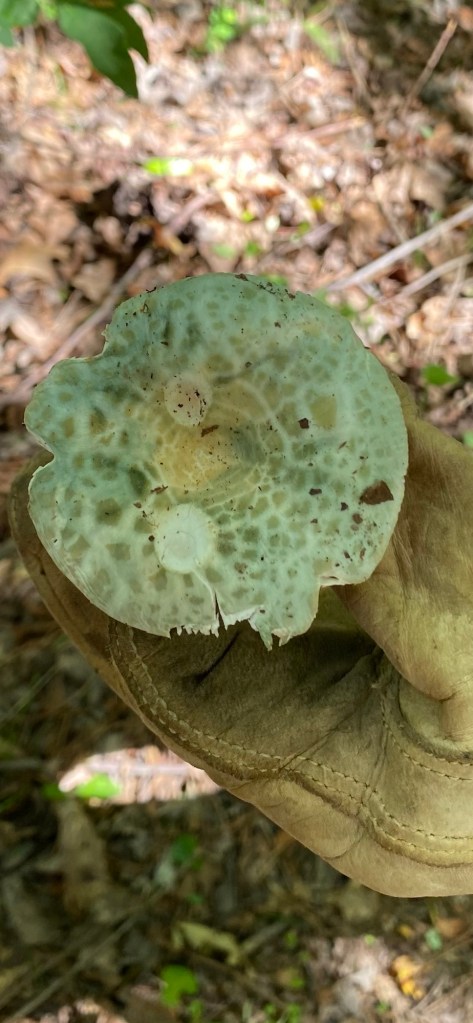
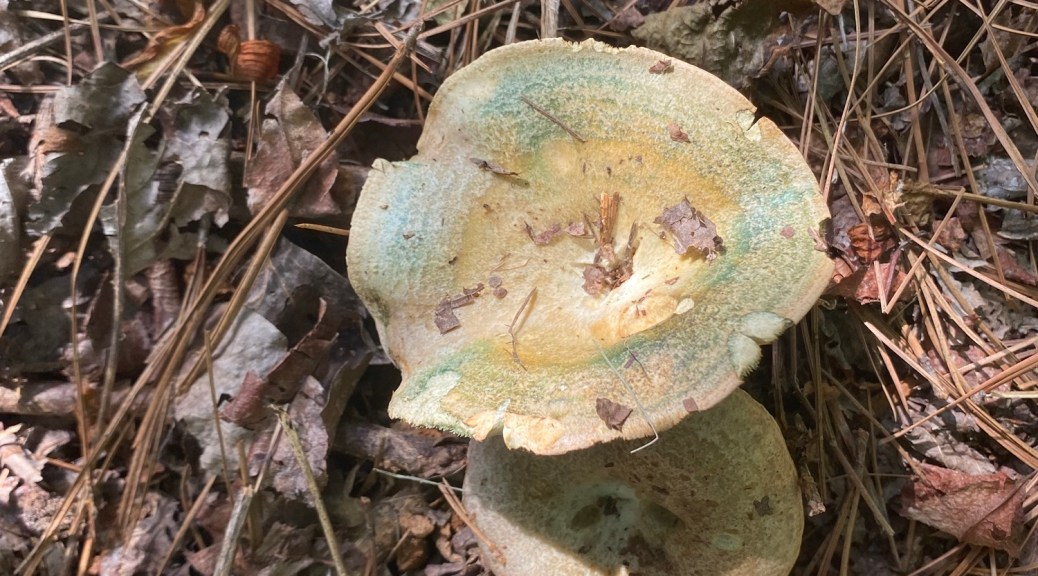
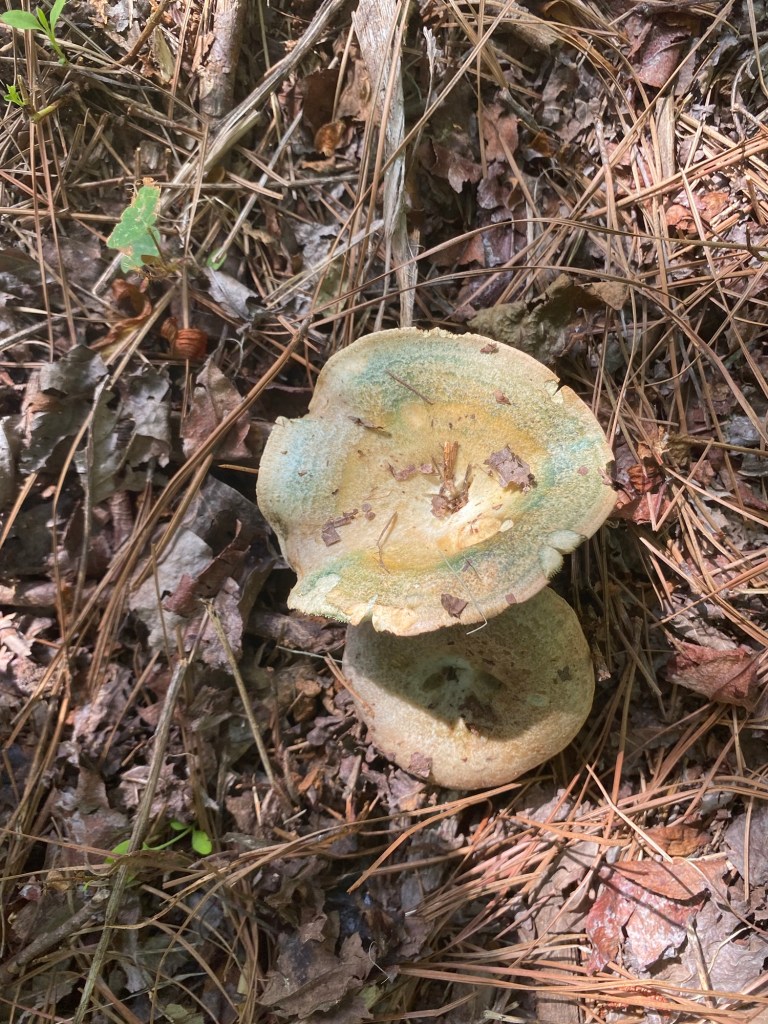
Russula parvovirescens, Blue-green cracking Russula, found along Fern Trail. This is a very good edible mushroom.
We took the afternoon at the farm and we found it drier than we expected. Blueberries are ripening. We found new mushrooms we hadn’t seen before. We are planning to camp next weekend and looked for a fire pit location and tent spots. The weather was beautiful with a cool breeze in the shade and the sun shining.
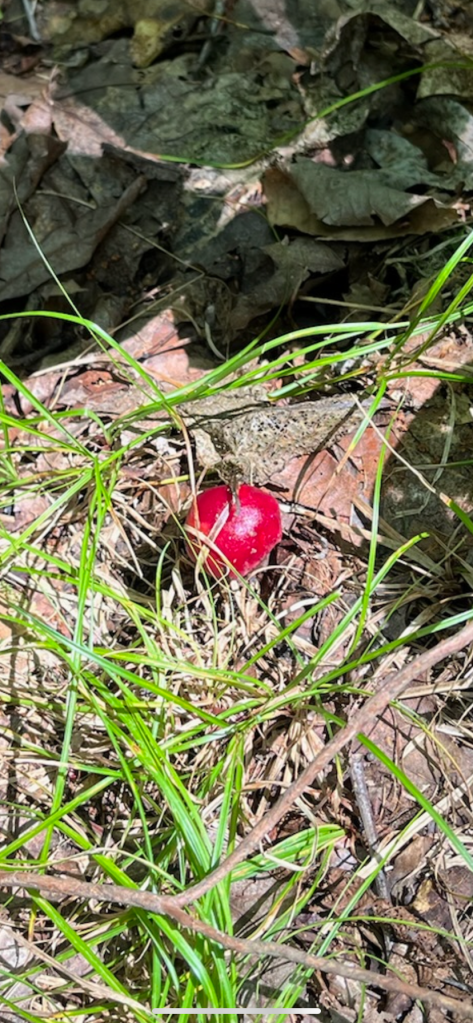
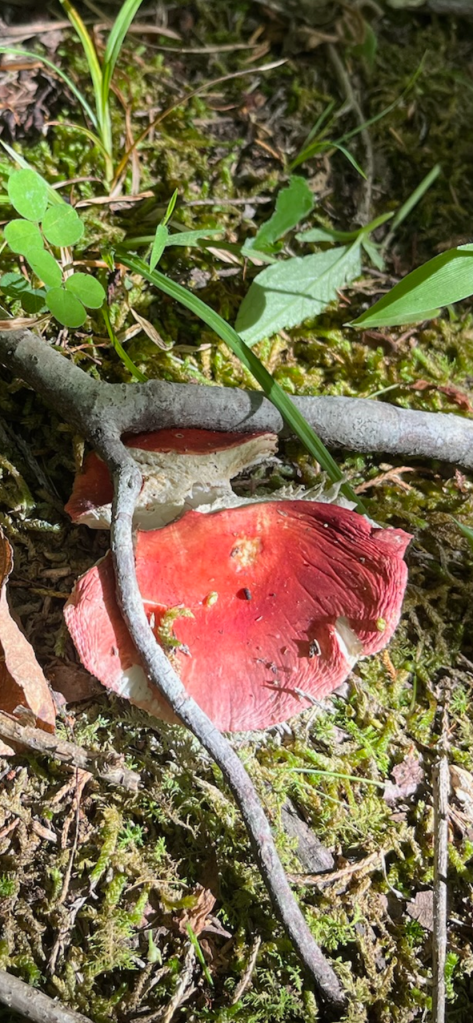
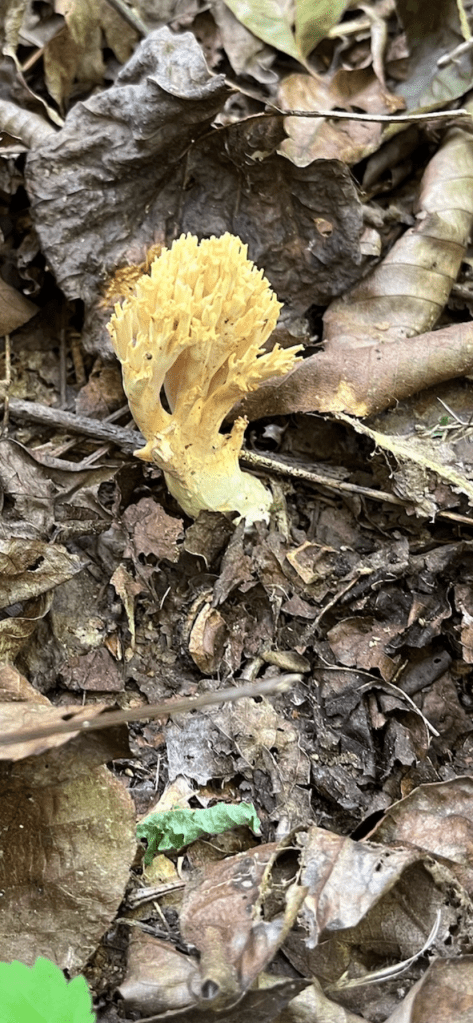
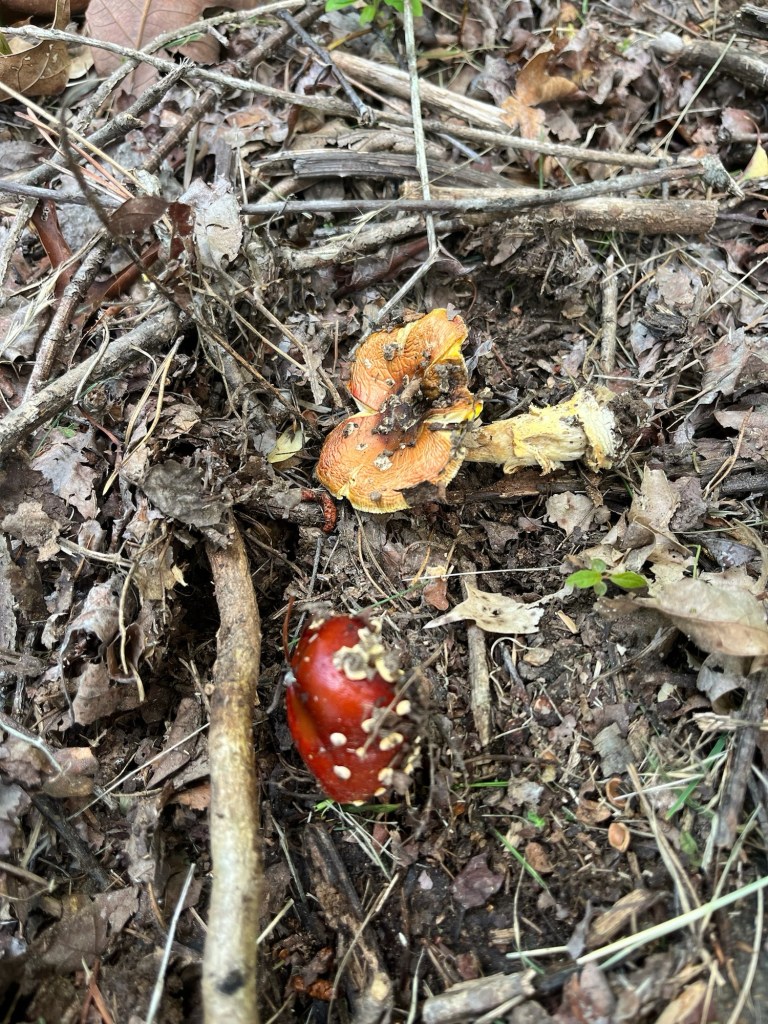
Amanita flavoconia, Yellow patches, found on the south end near Black Trumpet Way. This stick on top of the Russula is actually a root! There are 80 species of red Russula in North America and can only be identified to species level with ITS sequence. It’s recommended to do a spit test to see if it tastes spicy. If so, they need a very thorough cooking to be rendered edible. (But may still be too spicy for most.) Fermentation can eliminate spiciness. However, if not spicy, they can be eaten raw even.Coral fungus found up top.
We culled more black cherry trees from the clearing and broke them down into burnable chunks. These were infected with black knot fungus and burning them is the only way to get rid of them.
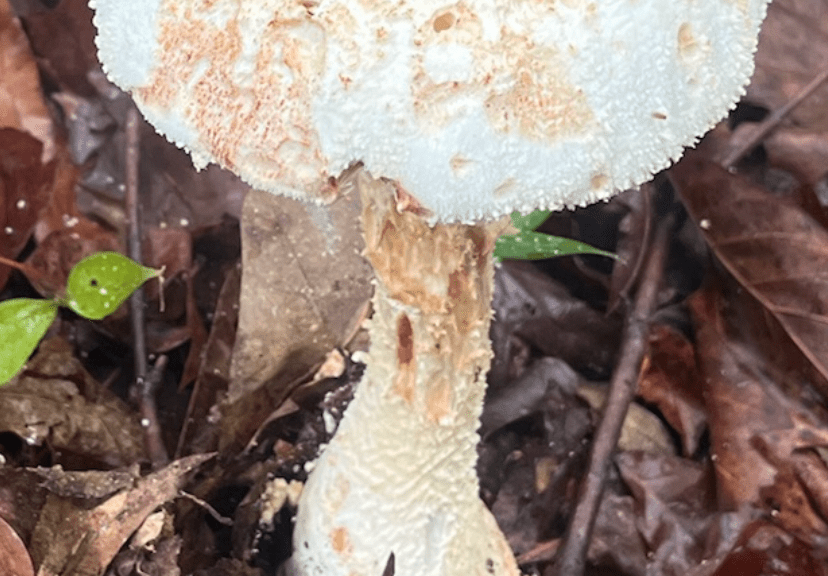
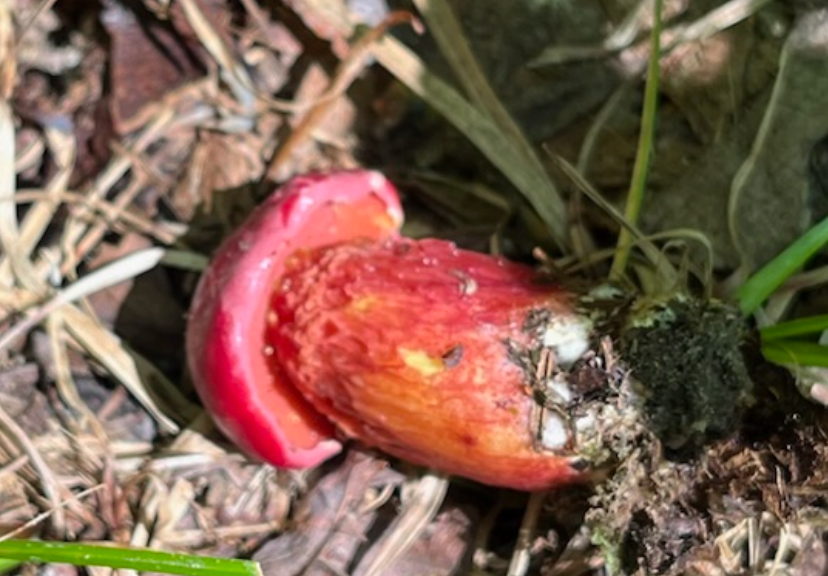
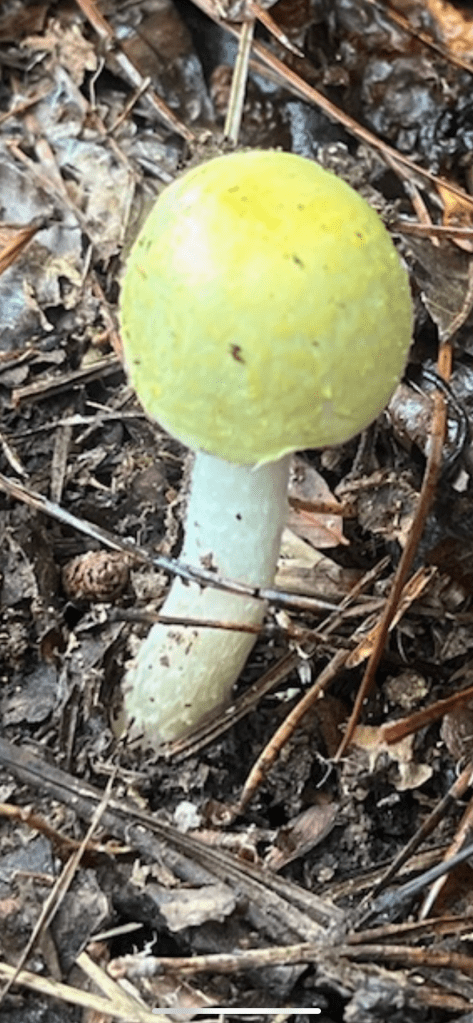
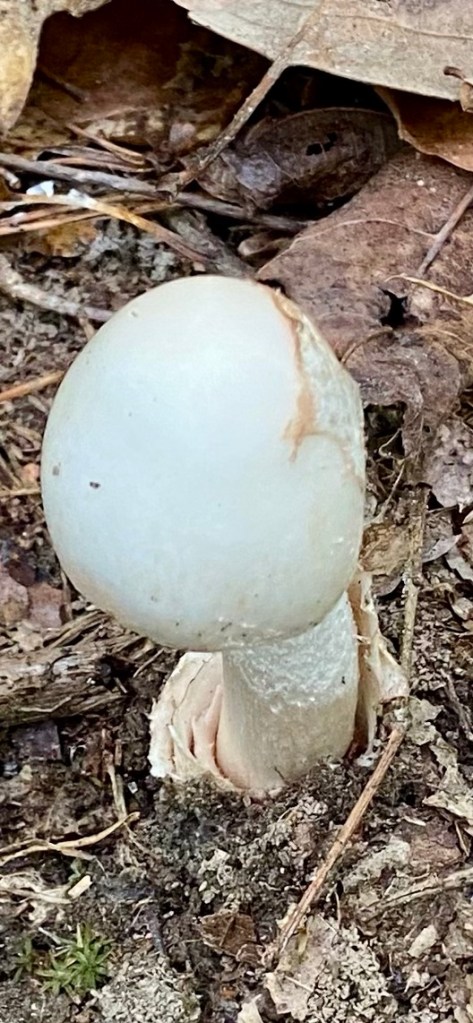
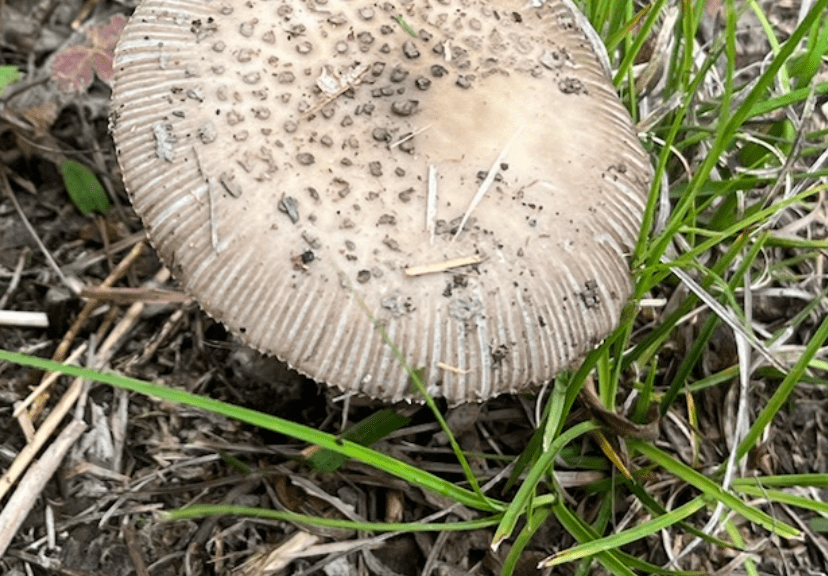
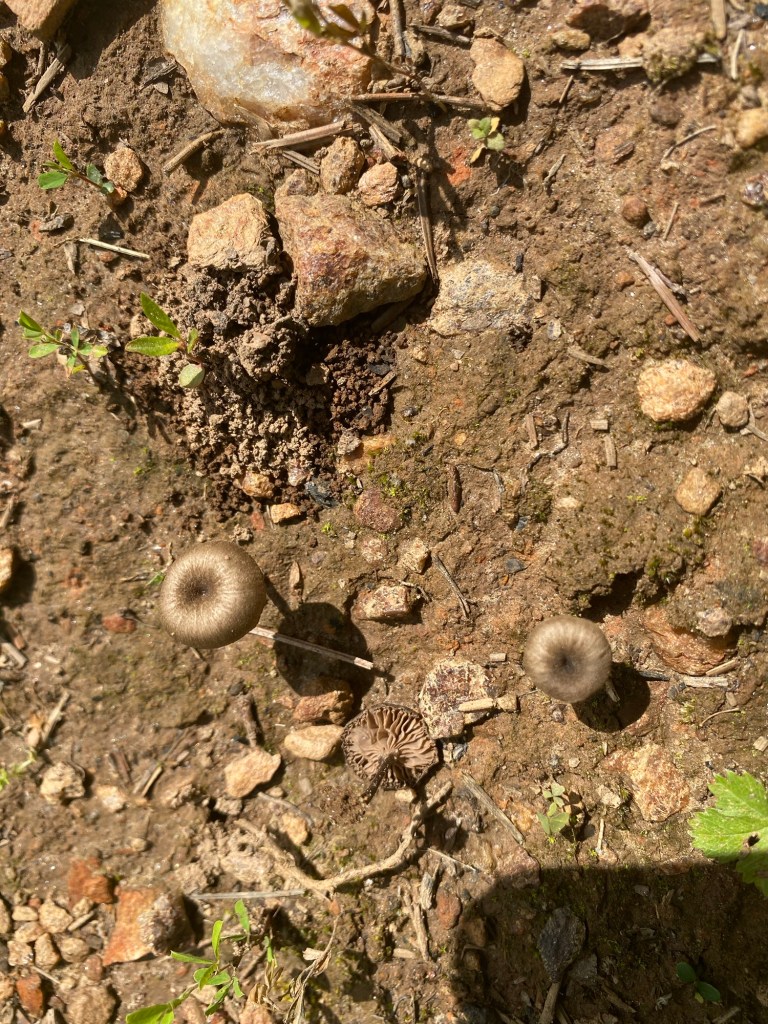
Amanita found at Northern side of the waterway. Because this has a cup shaped volva during this stage, it points to section Caesaraea, Vaginatae or Phalloideae.
After finishing our job, we walked down Fern to Ridge Trail and looked for more Black trumpets along the southern set back line. We found a few but left them hoping for rain tonight so they can grow.
We walked through the Pawpaw orchard and were satisfied with how it looked. We are making plans to get more light to these trees. There are hundreds of them as they make root suckers that are clones of the original tree.
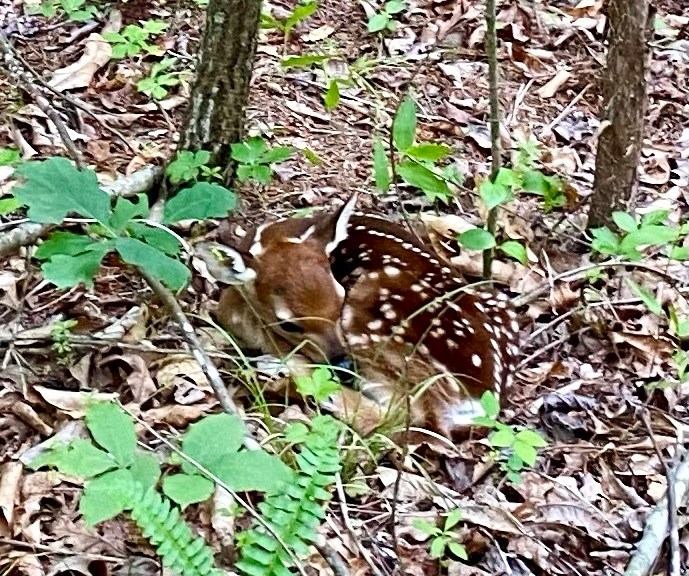
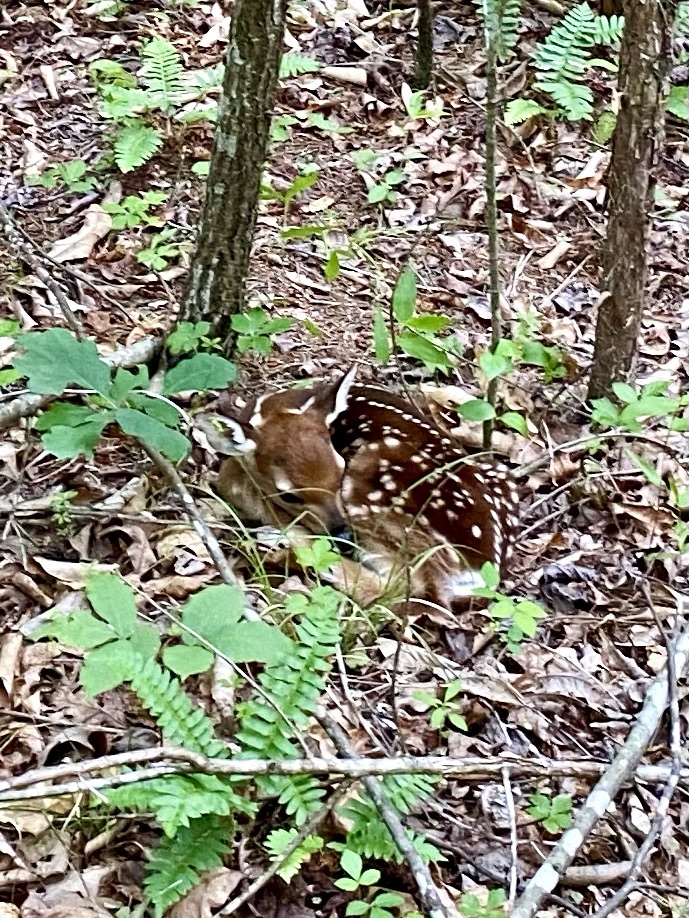
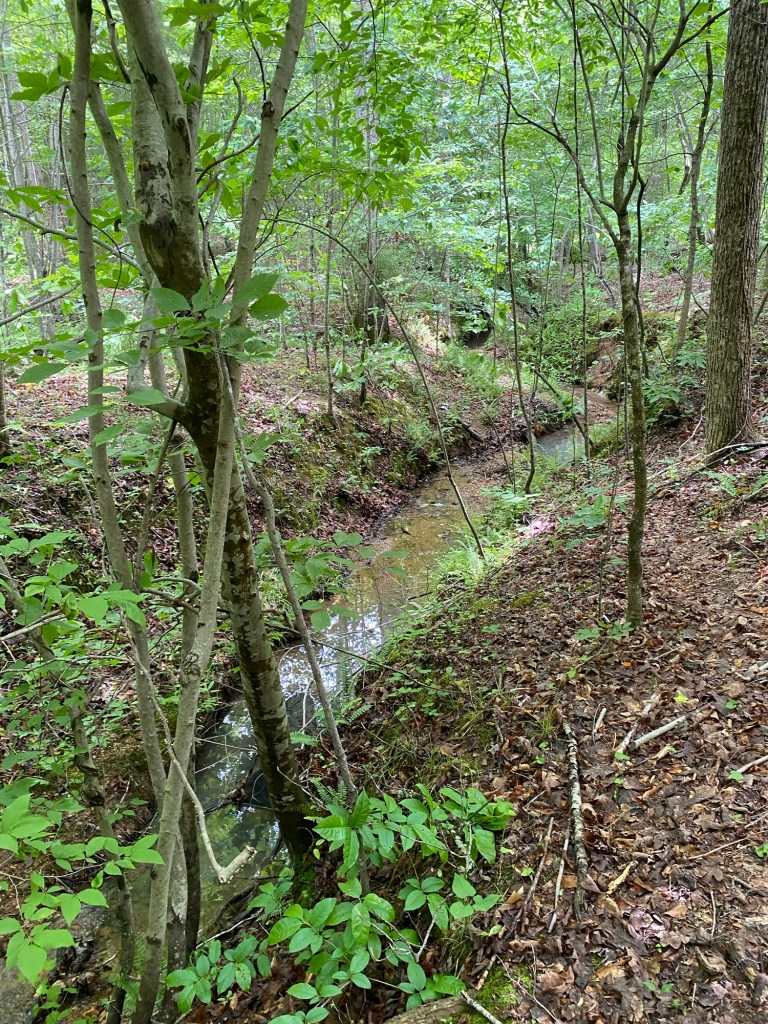
We found a baby deer laying by the waterway at the base of a tree waiting for its mother. It was so sweet. Didn’t even lift its head as we walked by. Following directions well and staying safe. We hope mom comes back soon.
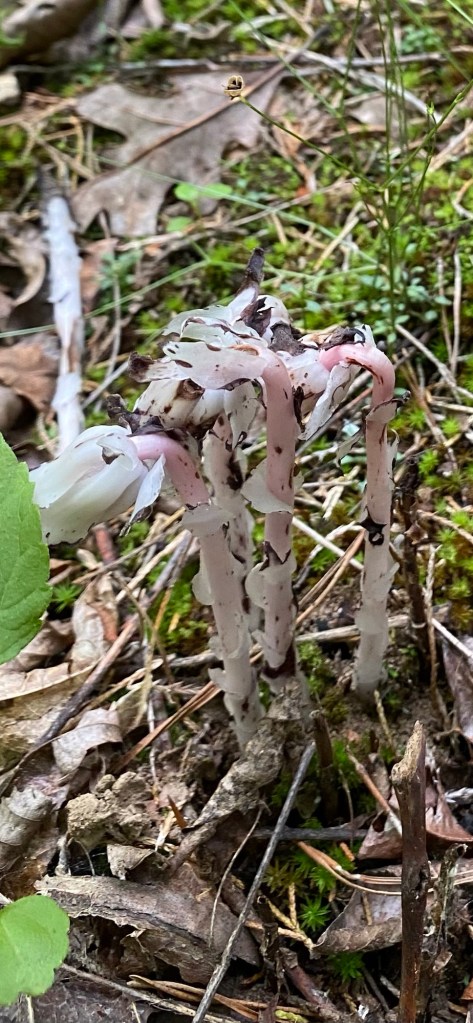
A baby deer sleeping in the forest near the waterway and pawpaw grove.We found these ghost pipes on the northern side of the waterway at the bottom of North Trail. They are pink instead of white and have black flecks. Monotropa uniflora does not contain chlorophyll. It is parasitic to its host fungus, Russulaceae, and it saps food through the web of mycorrhizae.
We are hoping for more rain tonight so the mushrooms will grow.
So far we have seen plenty of deer ticks, dog ticks and lone star ticks at the farm this year. The clearing seems free of them right now since we keep it mowed down well. In the forest, the wetter and greener areas where deer and dogs are known to move through have been hotspots. Our tick mitigation measures have kept us from getting any bites but we have found them crawling on our socks, shoes and clothes. It’s definitely tick season unfortunately.
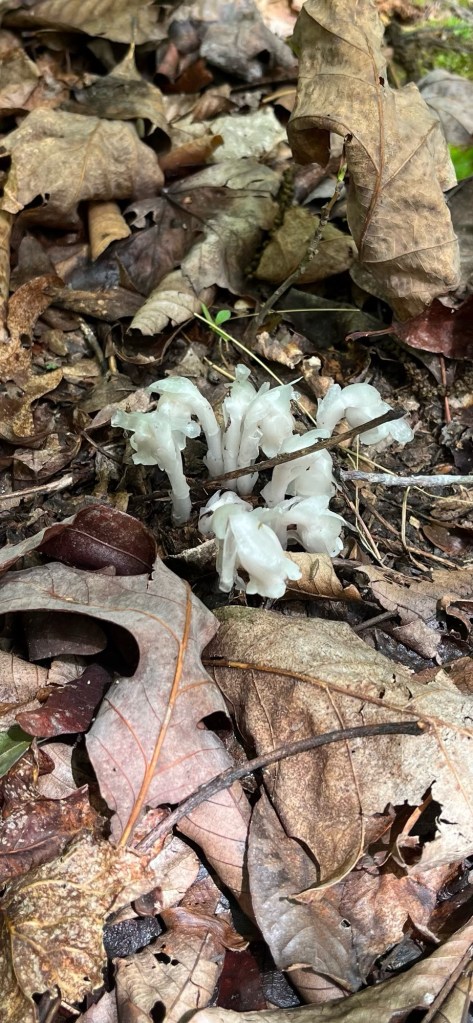
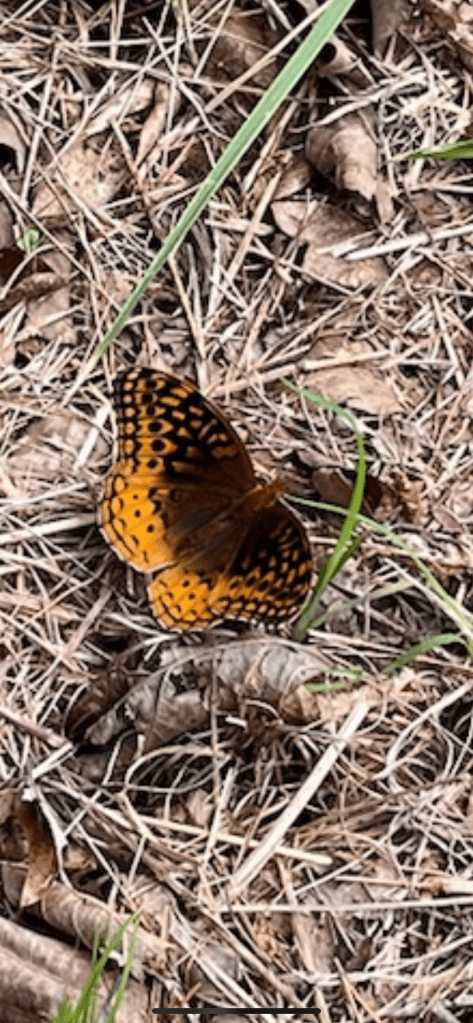
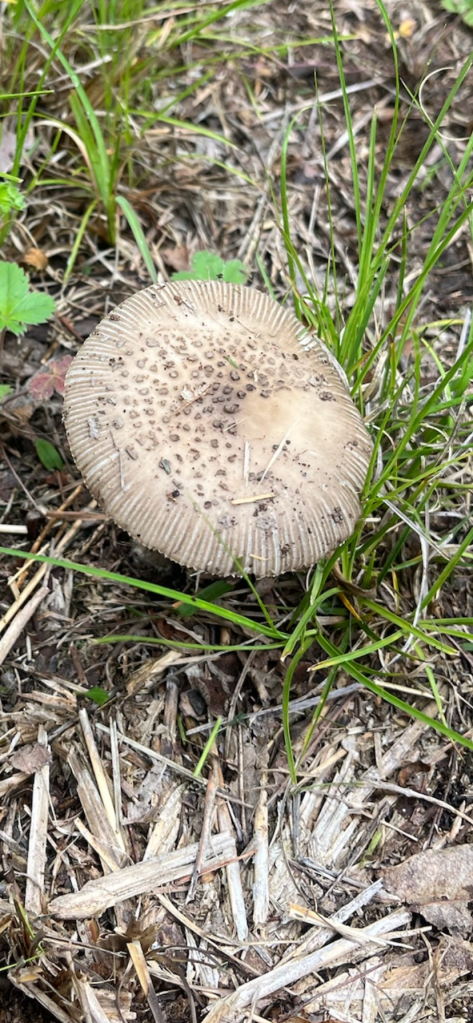
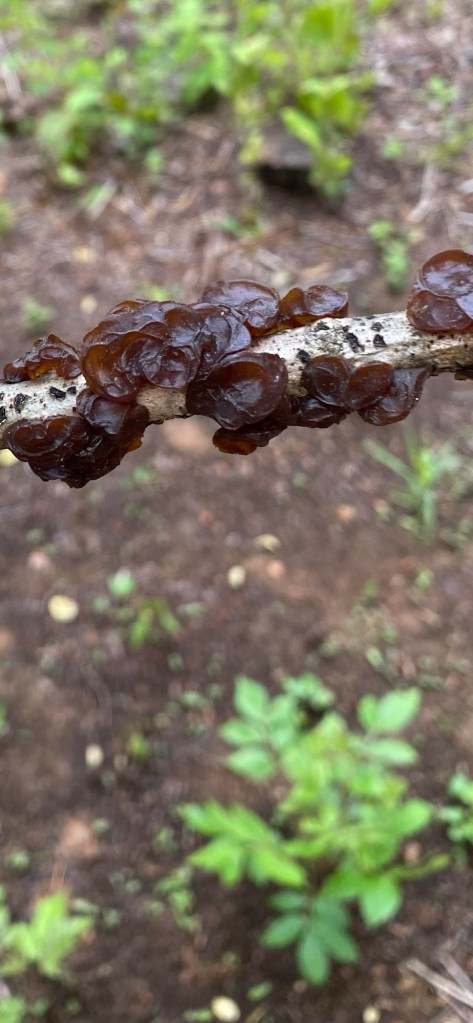
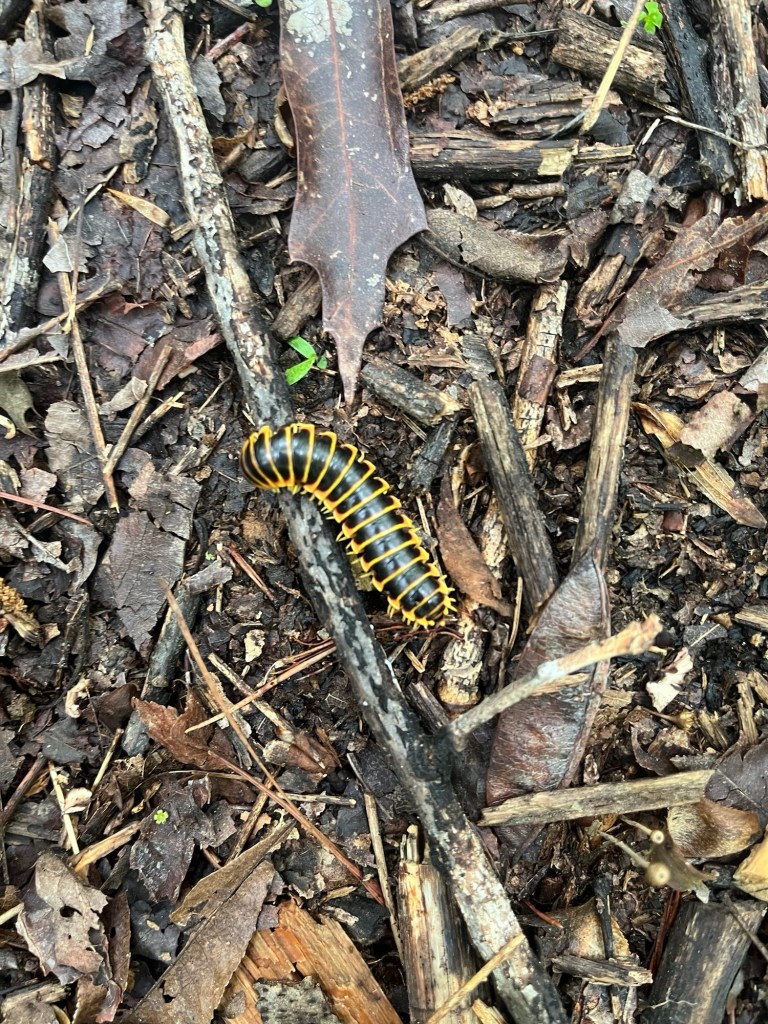
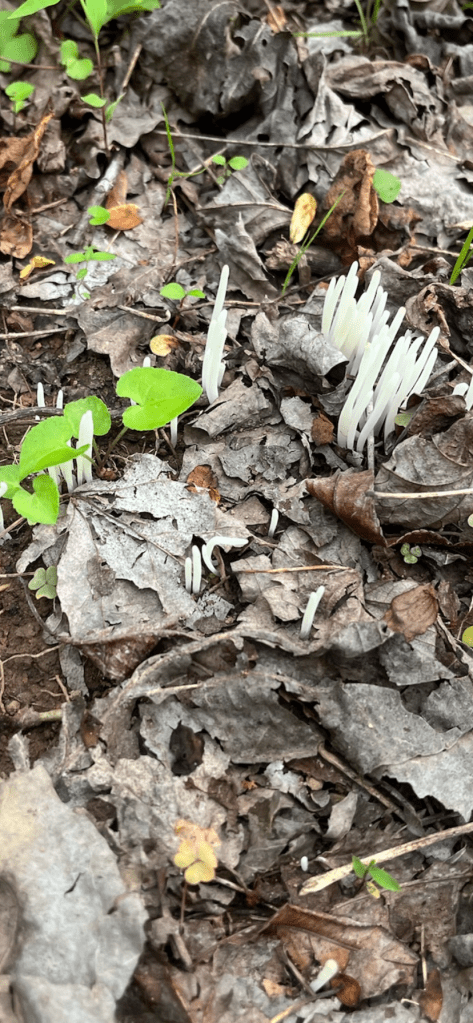
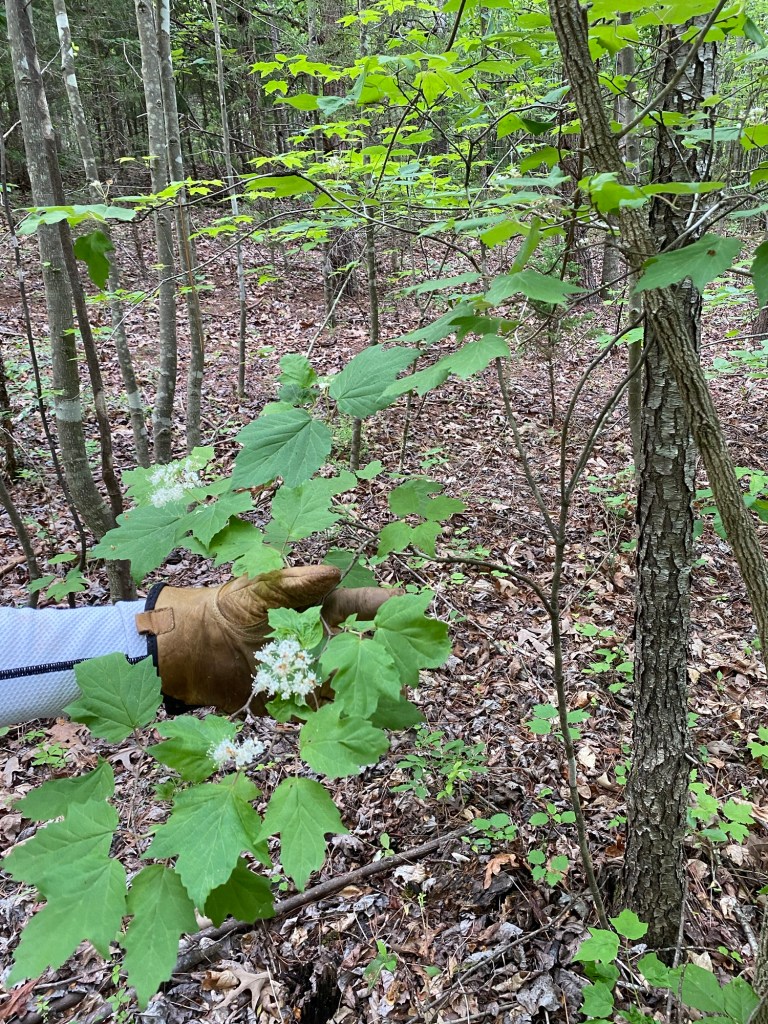
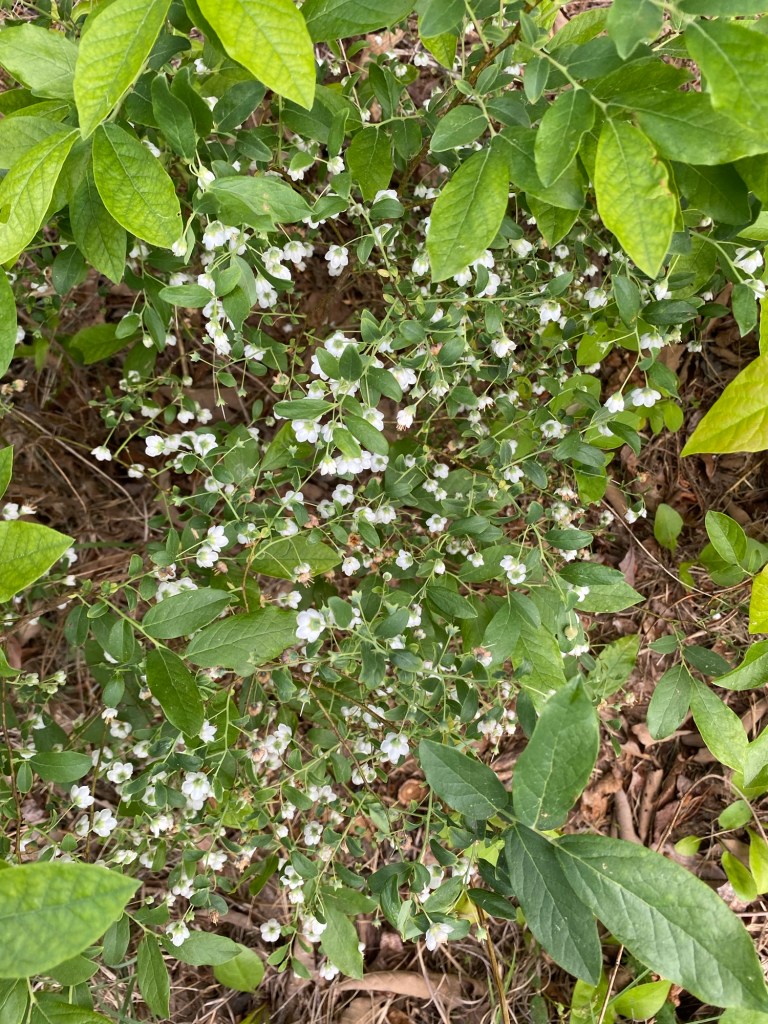
Monotropa uniflora, Indian pipe or ghost pipe, found along southern set back line in the forest. These plants get their energy from their host fungus, Russula or Lactarius, so they can exist in darkest parts of the woods. We were delighted to find it at SAFF.The water was moving gently in the waterway at the bottom. Great spangled fritillary, Argynnis cybele, were fluttering all around the Southern set back line. Fritillaries are a smaller group within the butterfly family Nymphalidae. All butterflies in this family have tiny front legs that lack claws (in most other butterfly families, the front legs have claws). My daughter laughs at the Seussian names (fritillary, pawpaw, peduncle) of plants and insects from the farm.Amanita vaginata, grissette, an edible Amanita that lacks a ring in the stem. A large mushroom with furrows around the edge duplicating the gills underneath.American Amber jelly fungus, Exidia crenata, is edible but we’ve not tasted it yet. Used in pho or noodle dishes. Black and gold flat millipede, Apheloria virginiensis, found all along the south side. It is reported to secrete cyanide compounds as a defense. It is recommended that one wash hands after handling this organism as the toxic compounds it secretes are poisonous and can cause extreme irritation if rubbed in the eyes. (Source: Wikipedia)Chris looking for our boundary marker in pawpaw orchard. Fairy fingers, Clavaria fragilis, It produces tubular, unbranched, white basidiocarps (fruit bodies) that typically grow in clusters. Maple leaf viburnum Pawpaws Flowering lowbush blueberry
We were going to mow but left our keys to the tractor at the house in Staunton so instead we had a lovely walk around. The ground and forest litter was wet from the storms that have passed through. With the heat, it felt very muggy.
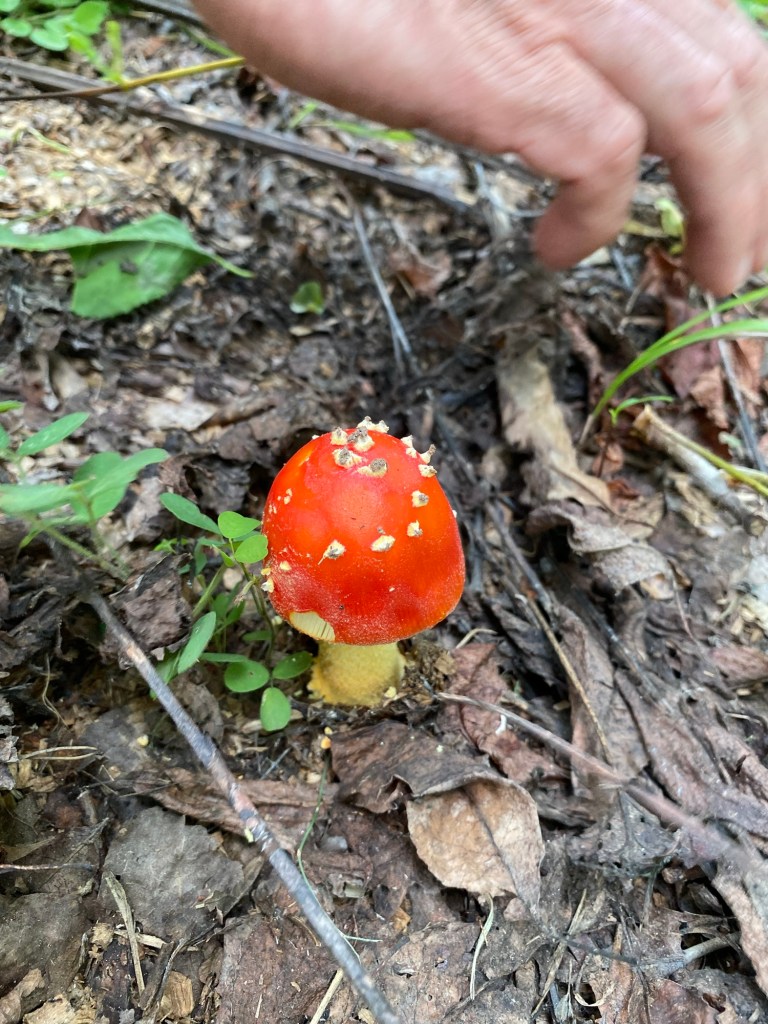
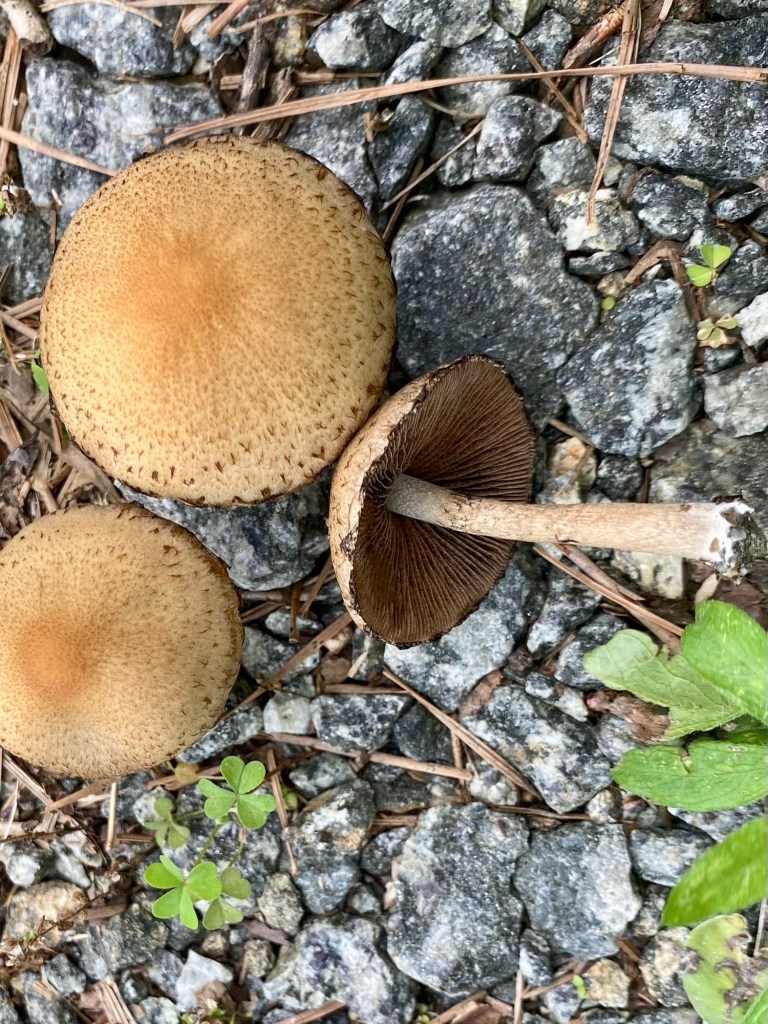
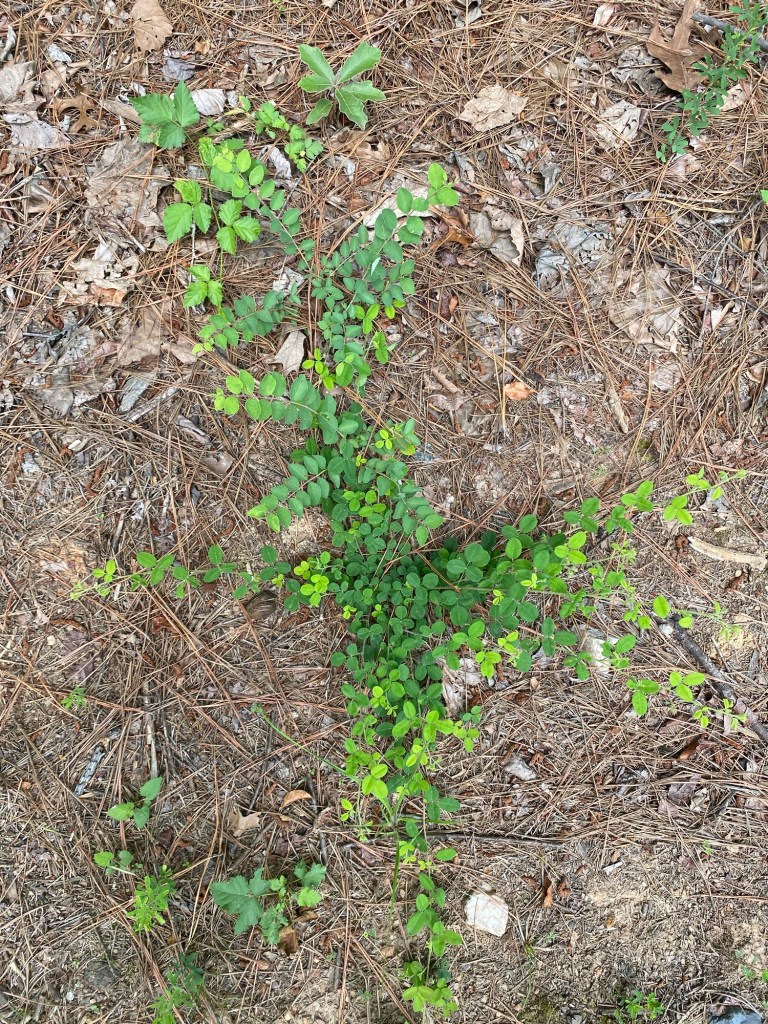
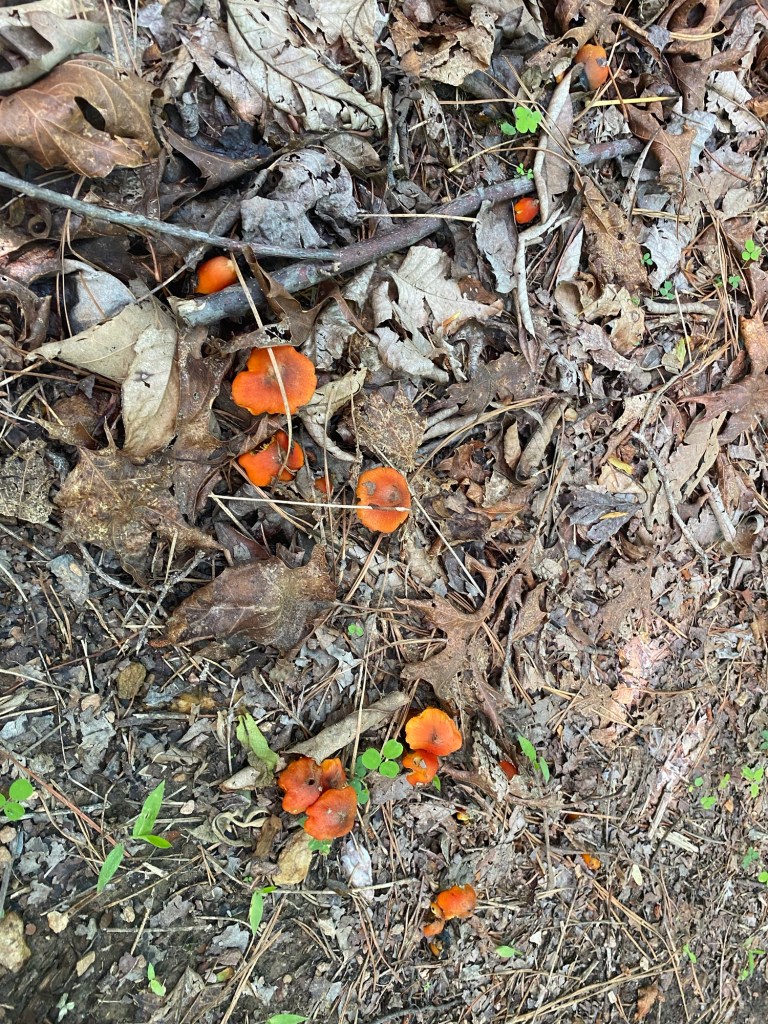
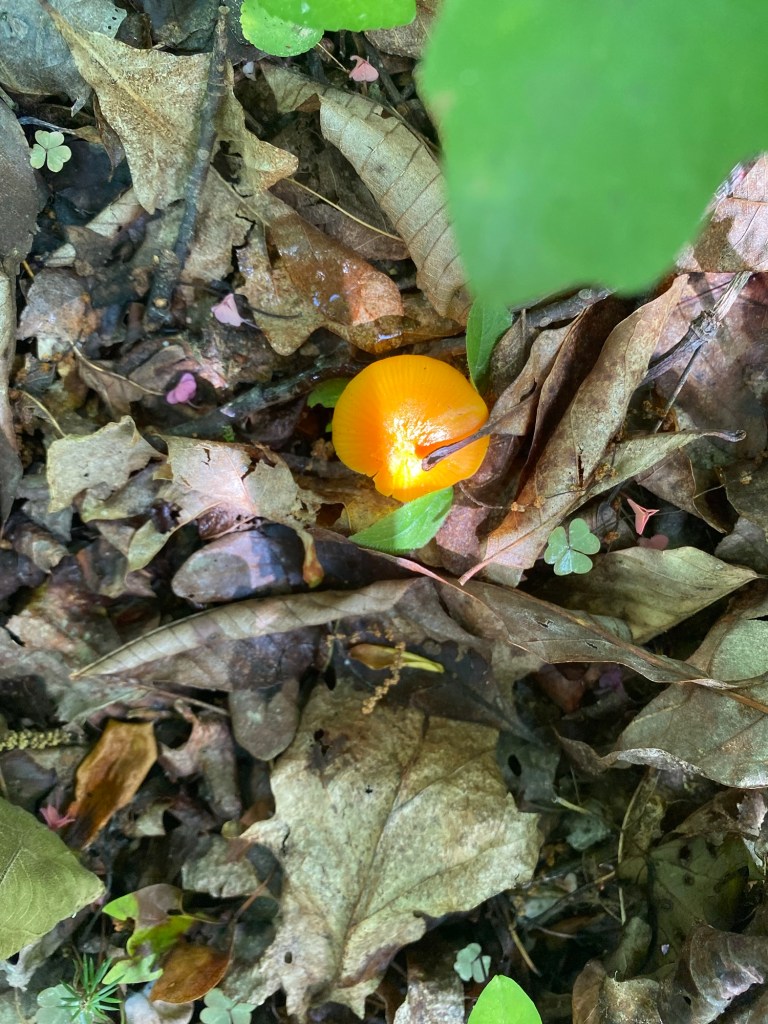
Weeping widow, Lacrymaria lacrymabunda, they are not poisonous but they are bitter. They were a lovely find on the driveway up top. Fly agaric, Amanita muscaria, found along the edges of the clearing up top. They arose from a volva, an egg at the base of the stem. We saw them last year and were waiting for them to come back. Similar to the Lactarius indigo, this is Calendine milk cap. Found at the top of North trail. It had a blue yellow sheen on the cap with yellow gills. The gills did not lactate when cut. We have so many Russulas. It’s delightful.Lespedeza procumbens, trailing lespedeza, a native perennial which is a legume, so nitrogen fixing. Found throughout the farm. Hygrocybe conica along North Trail. These were brilliantly colored on the forest floor. Hygrocybe flavescens, Golden waxy cap, at the bottom of North Trail as it reaches the waterway, we found this beauty. Entoloma strictius, were tall, straight and golden, arising directly out of the forest litter along North trail. They appear to have a pink spore print, and the ridge-like gills turn pink as they age. The Pawpaw Orchard has become a favorite location for us as we clear out small competitors and limb up larger trees. We’ve been learning about how to successfully transplant papaws and we’re working on a long term strategy to produce fruit and trees in abundance.
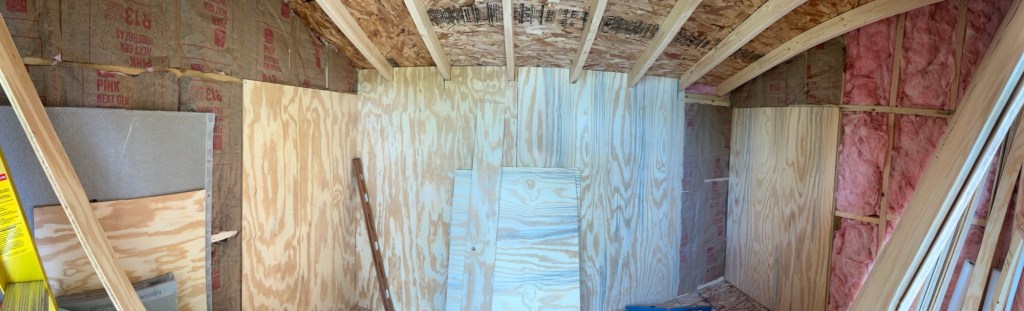
We have been working on the shed which will house a compost toilet and shower for us to camp luxuriously. We plan to camp in the next month and hope to report back about the wonderful night time adventures at Saint Andrews Forest Farm.
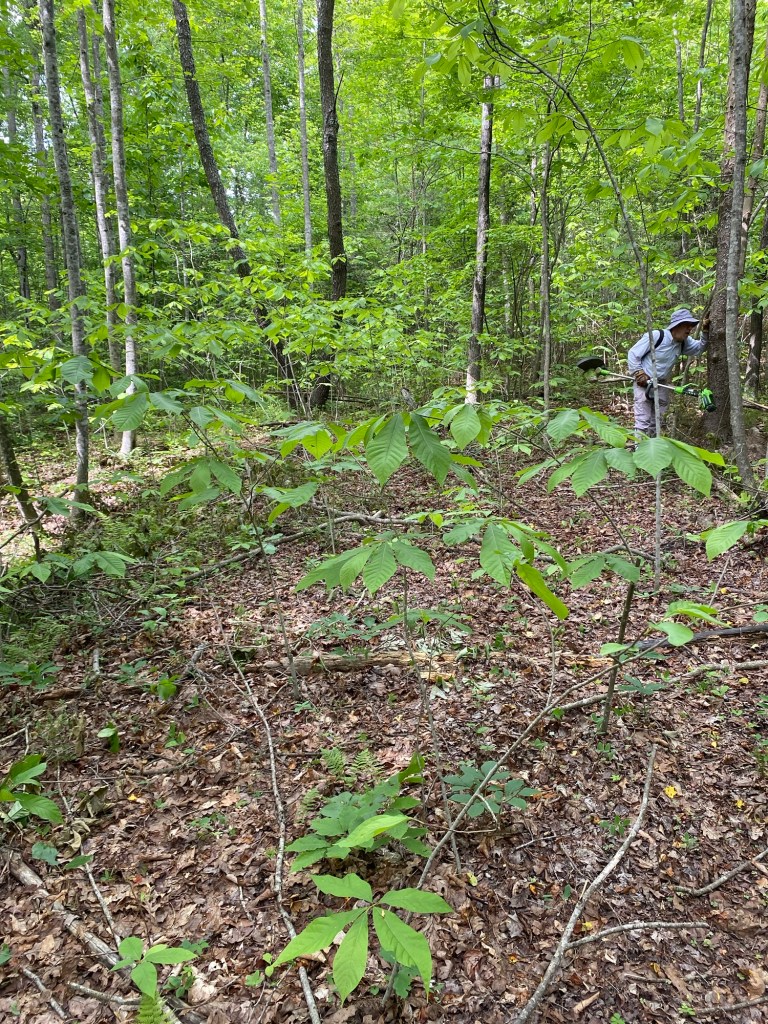
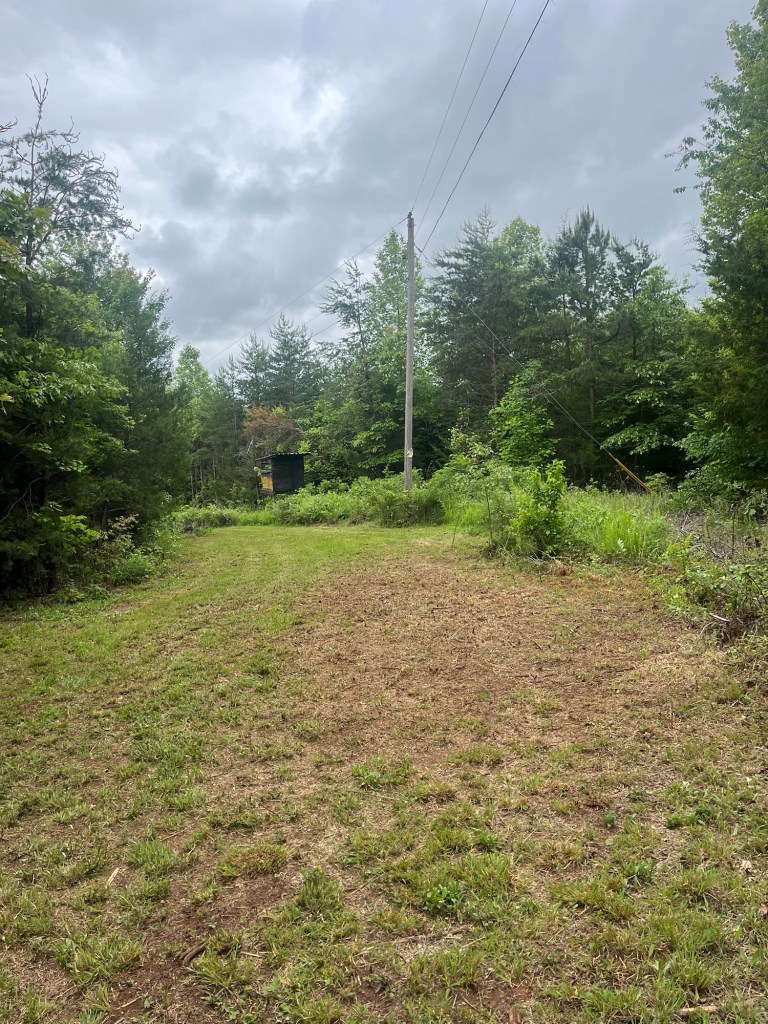
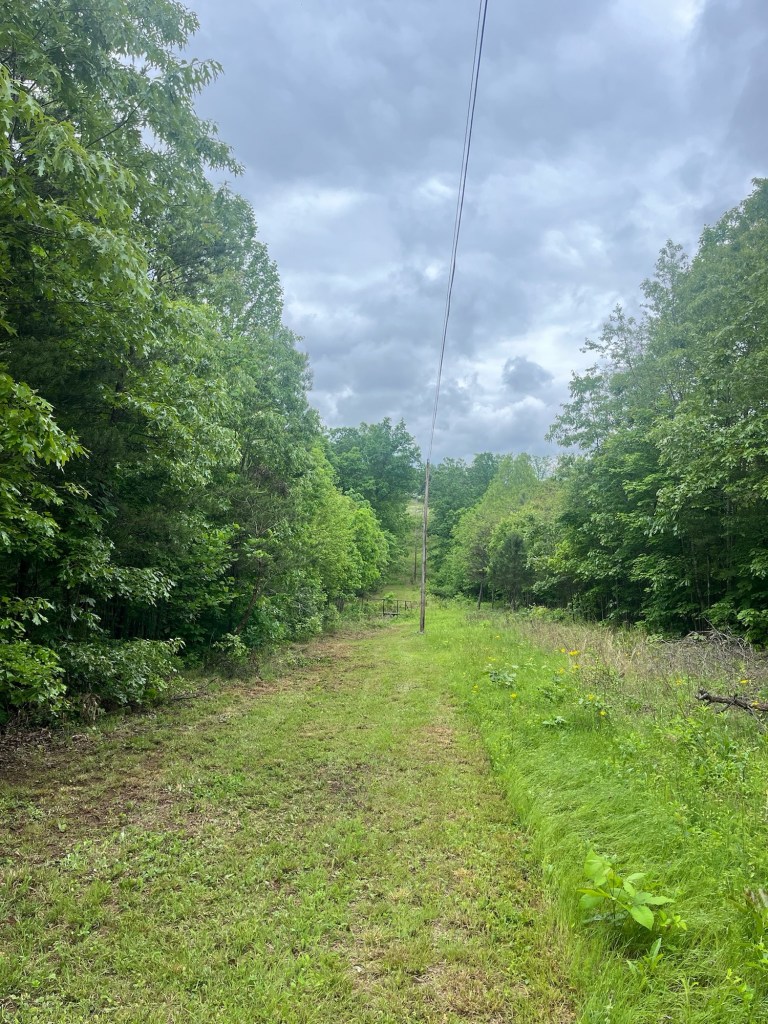
The compost toilet has indoor cladding now. Freshly cut! We’ve been diligently maintaining our setback line along the Southern boundary of SAFF, grateful for the power of the Husqvarna.Straight down our south property line. (The electric wire.)
 Saint Andrews Forest Farm