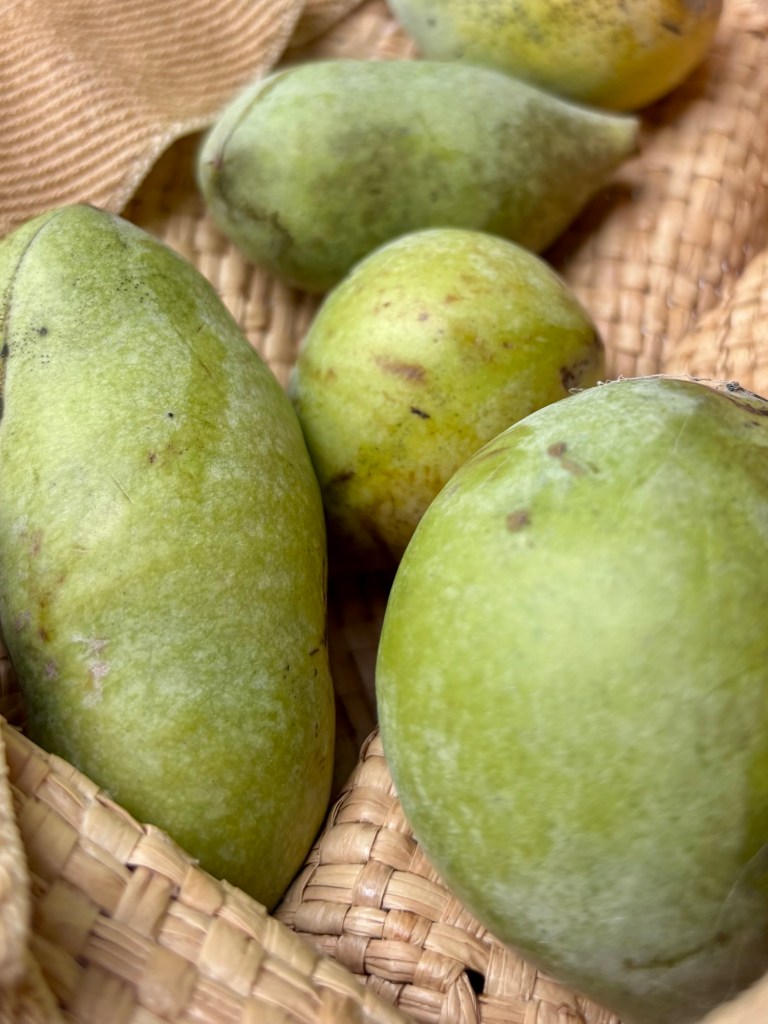
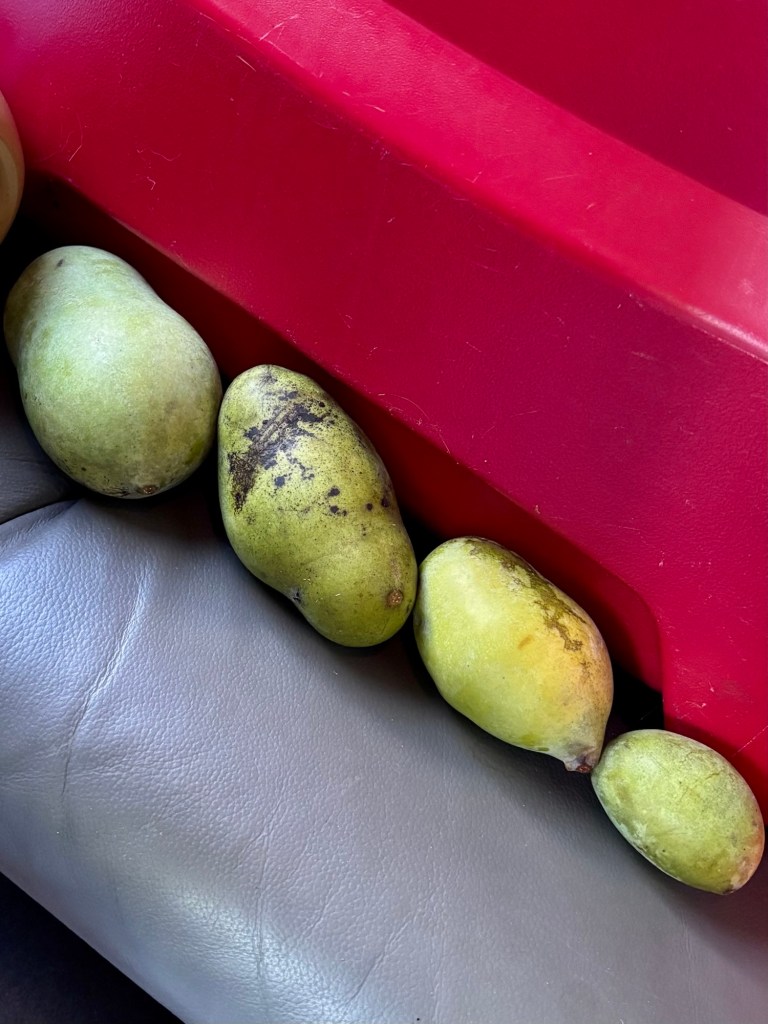
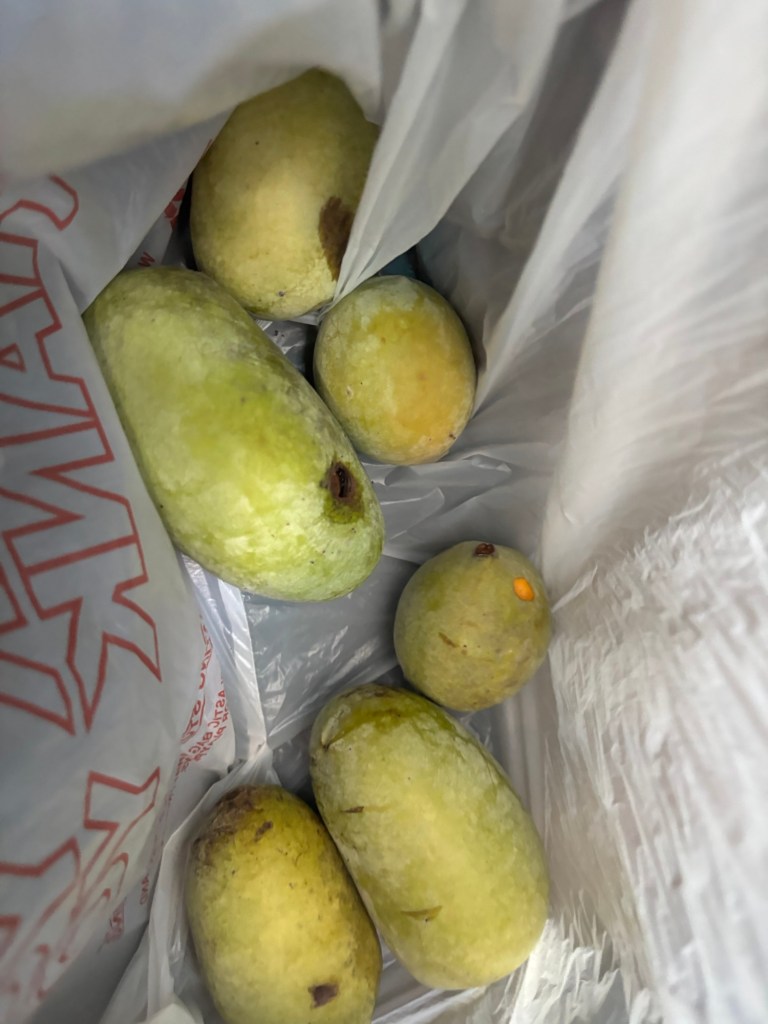
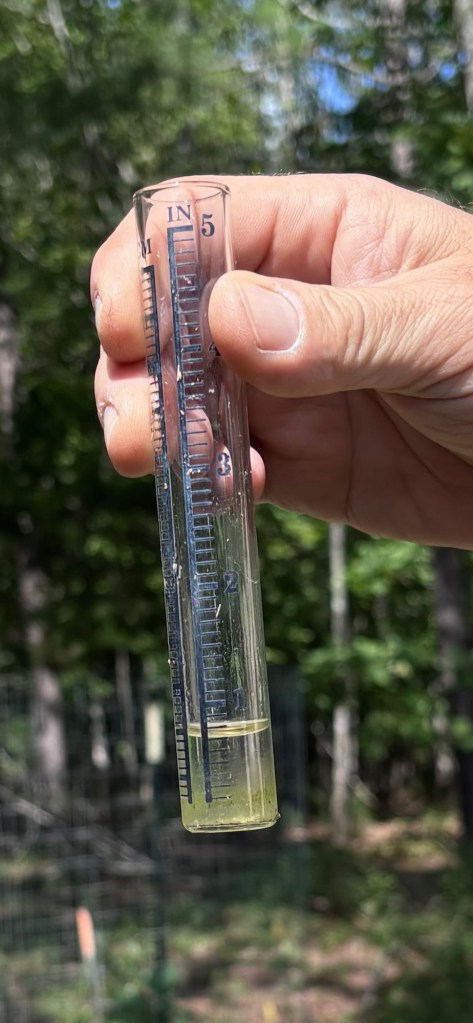
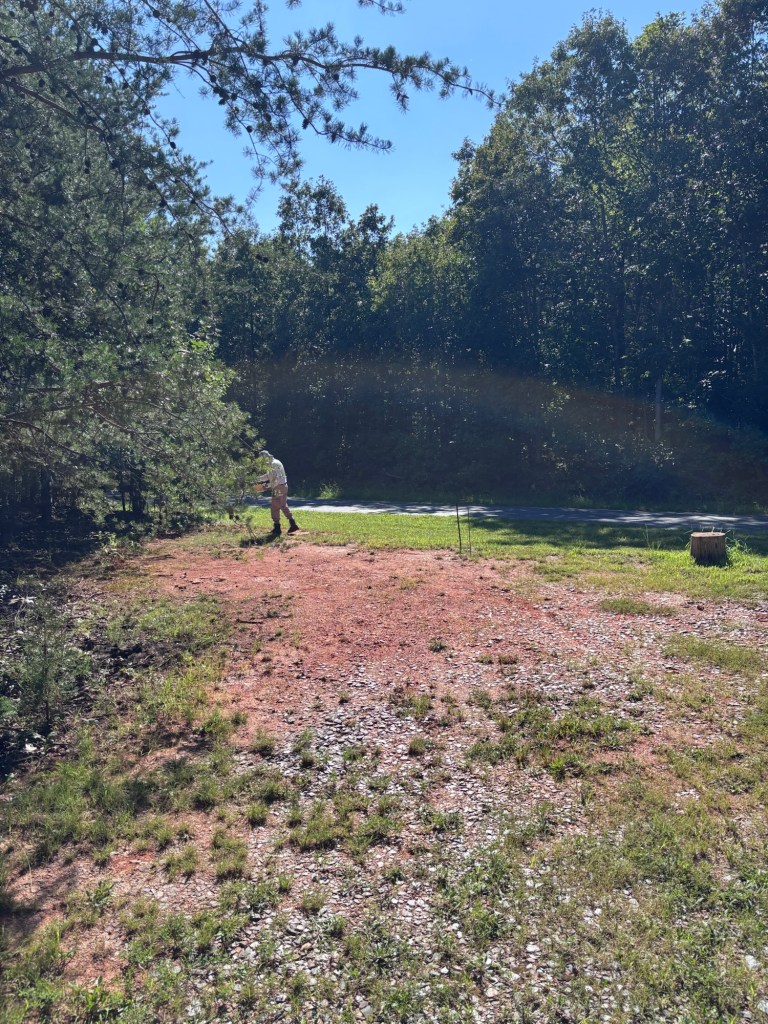
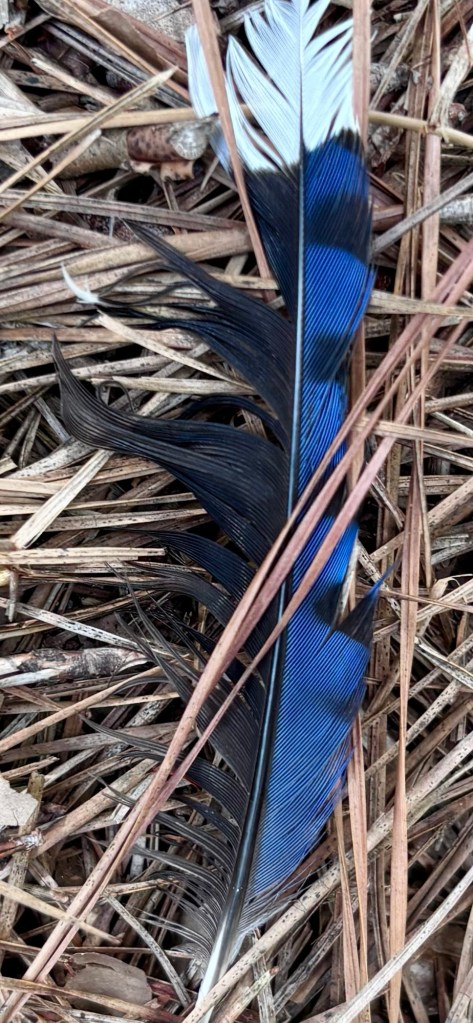
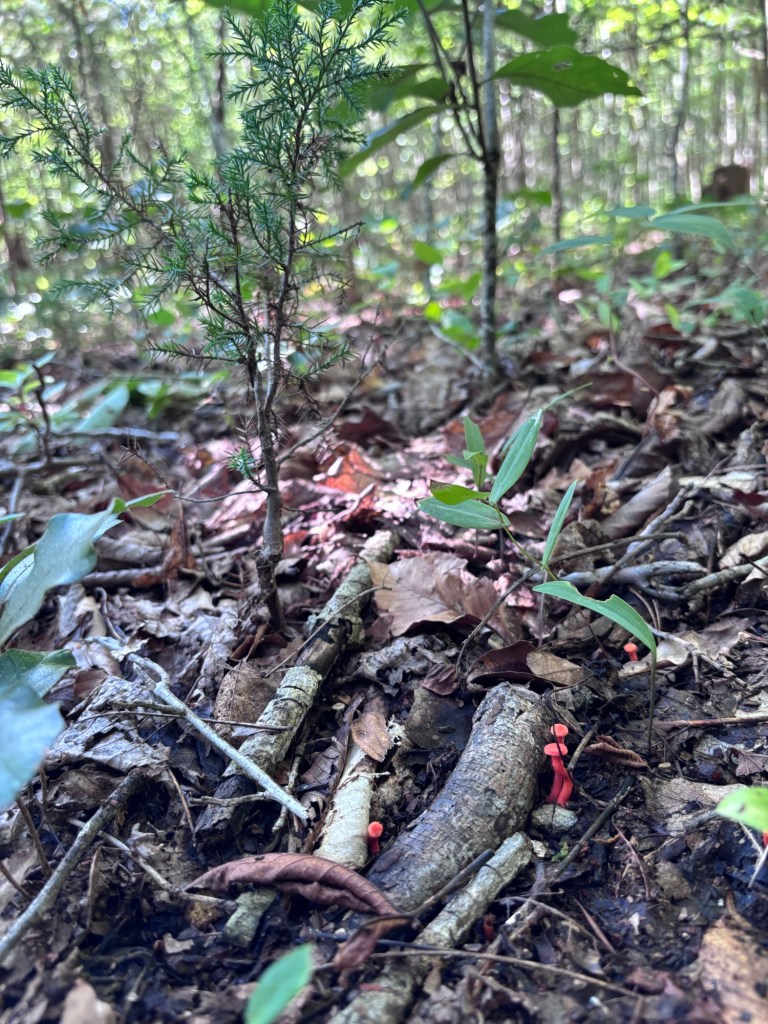
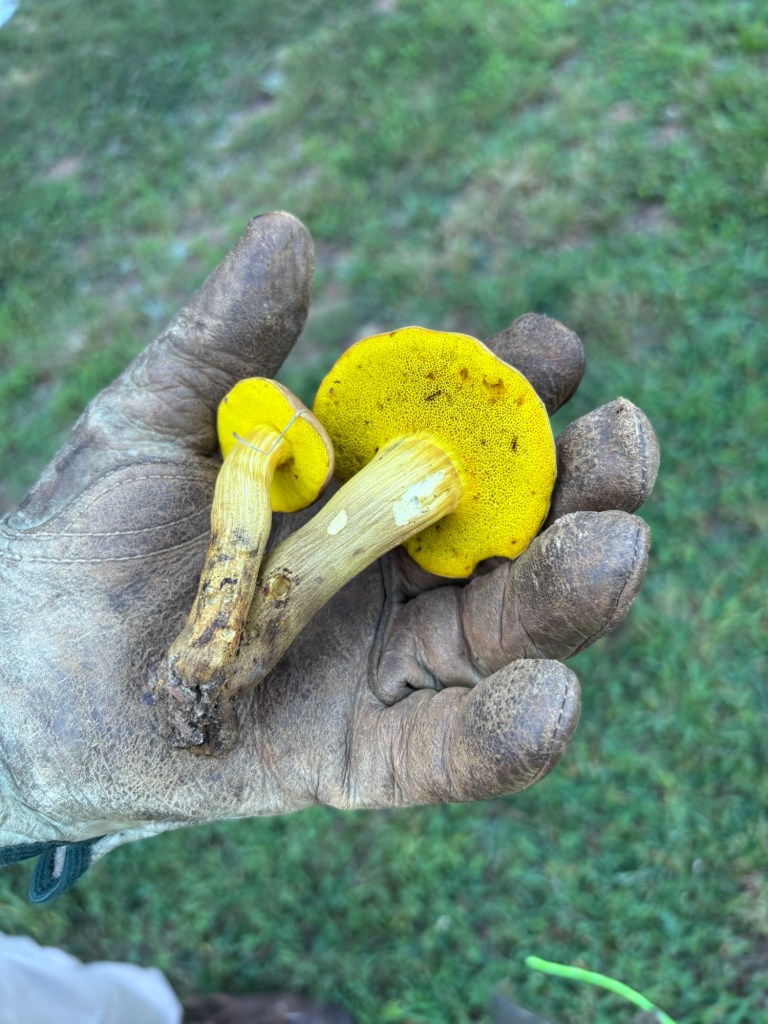
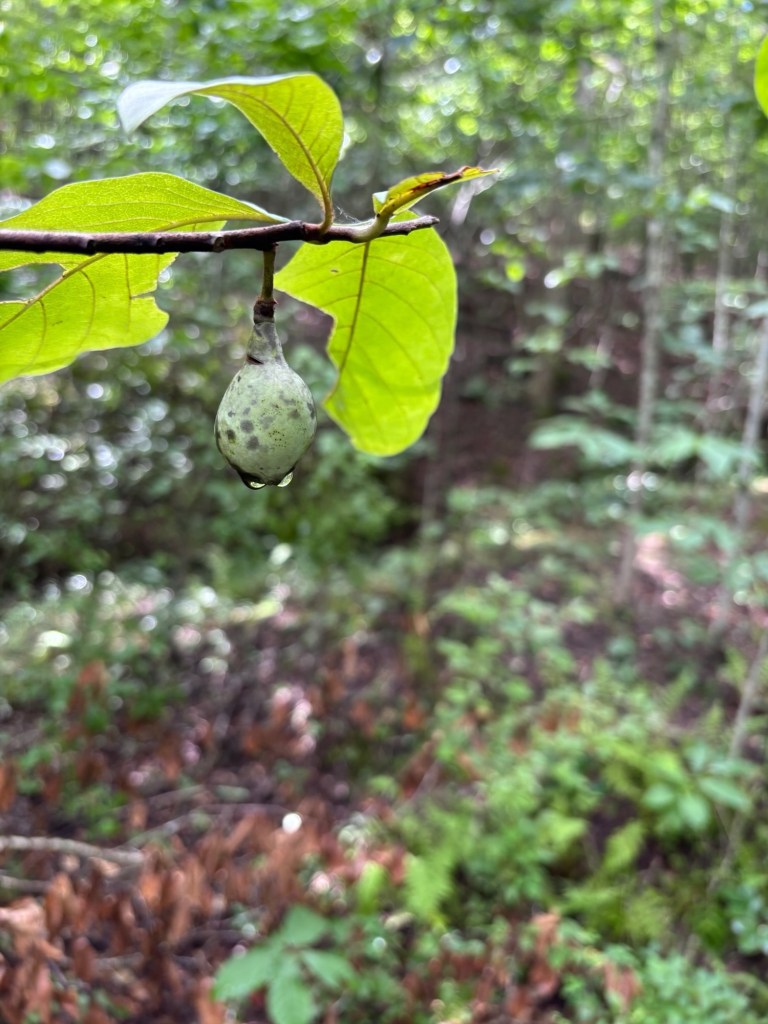
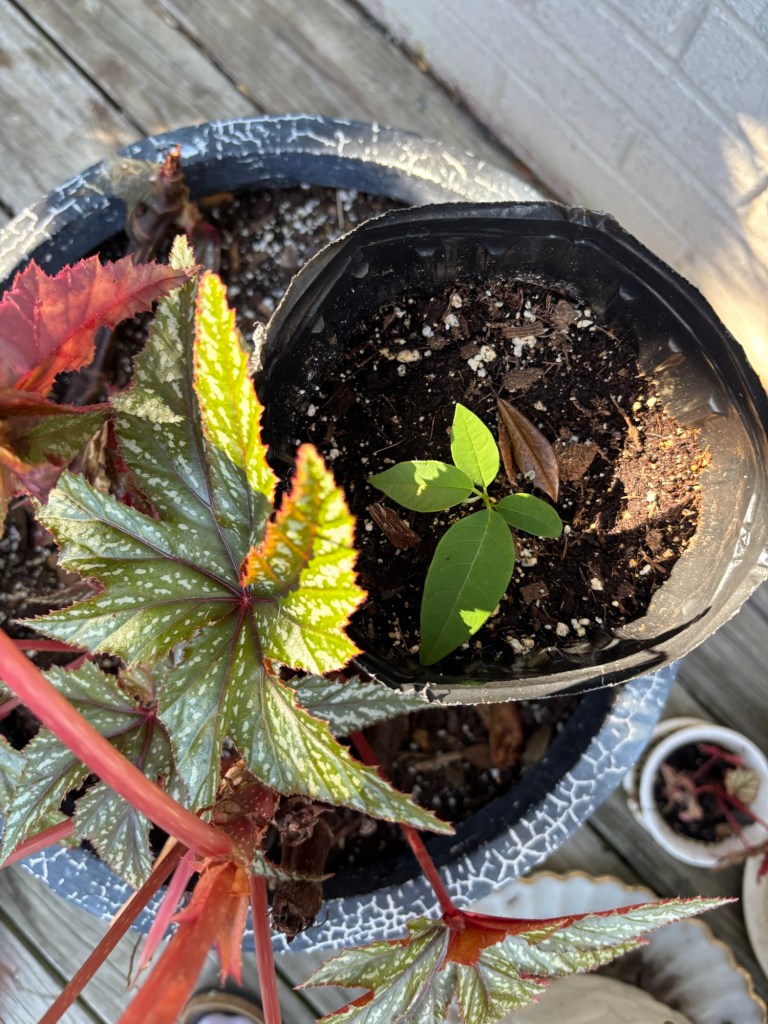
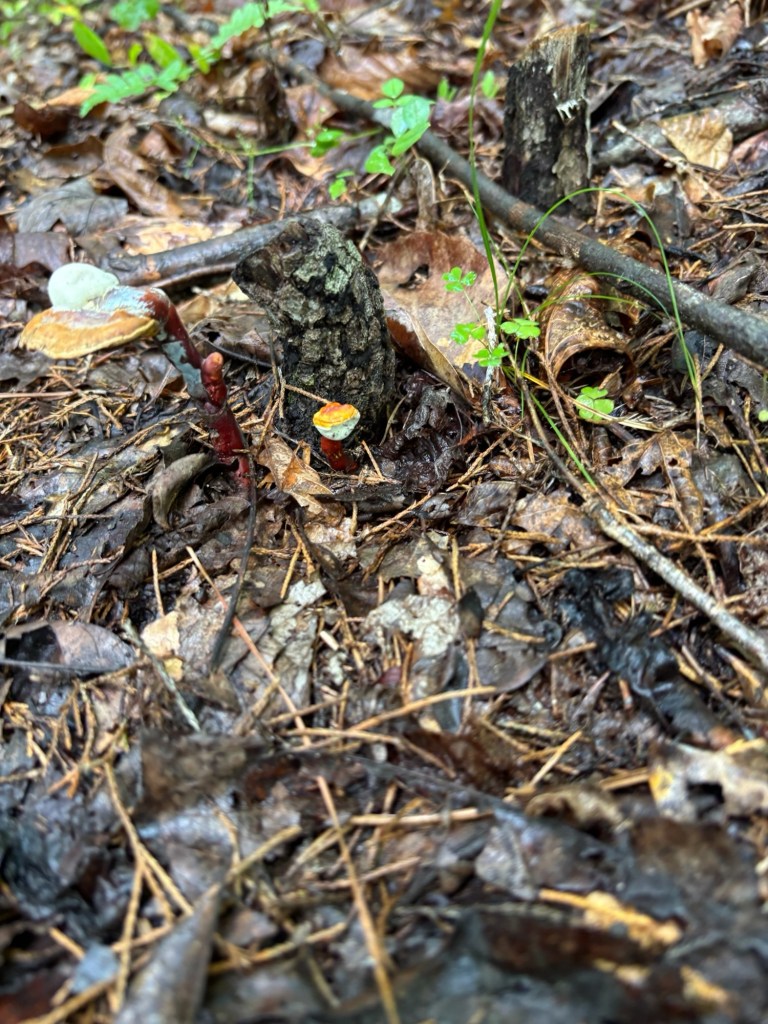
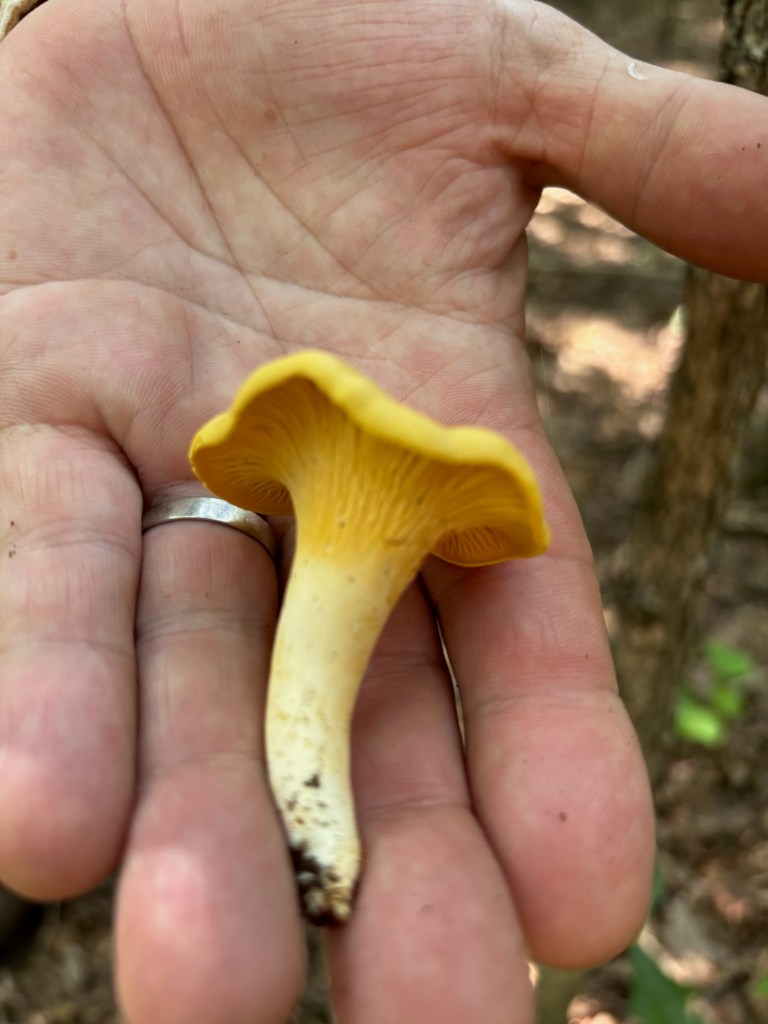
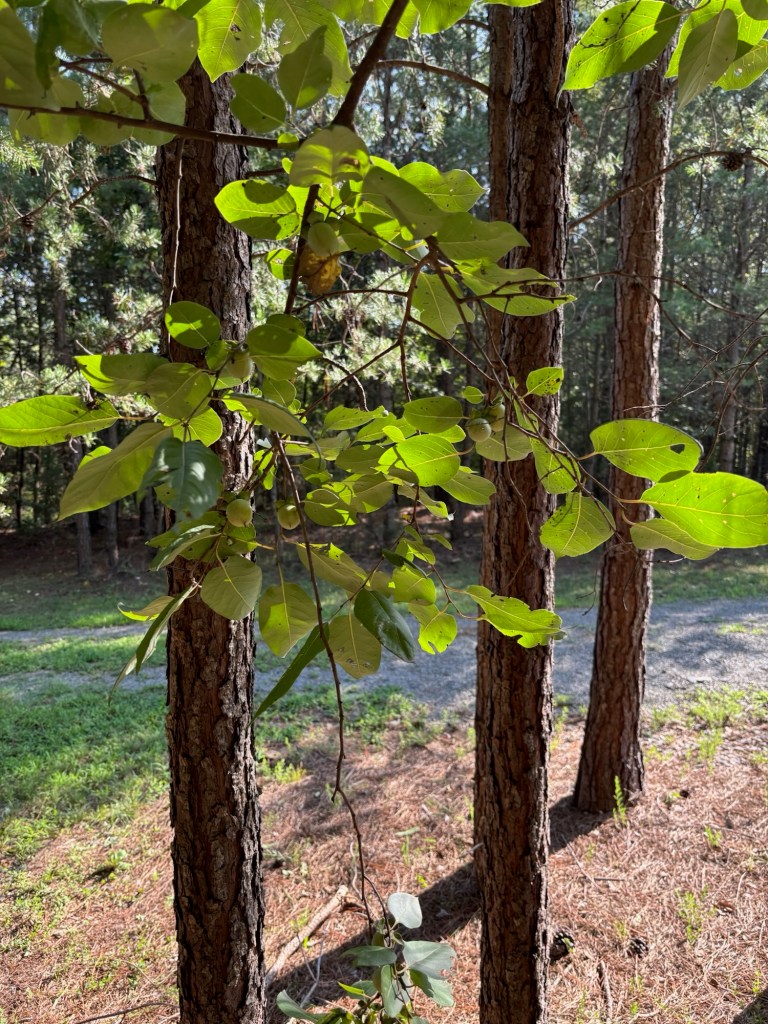
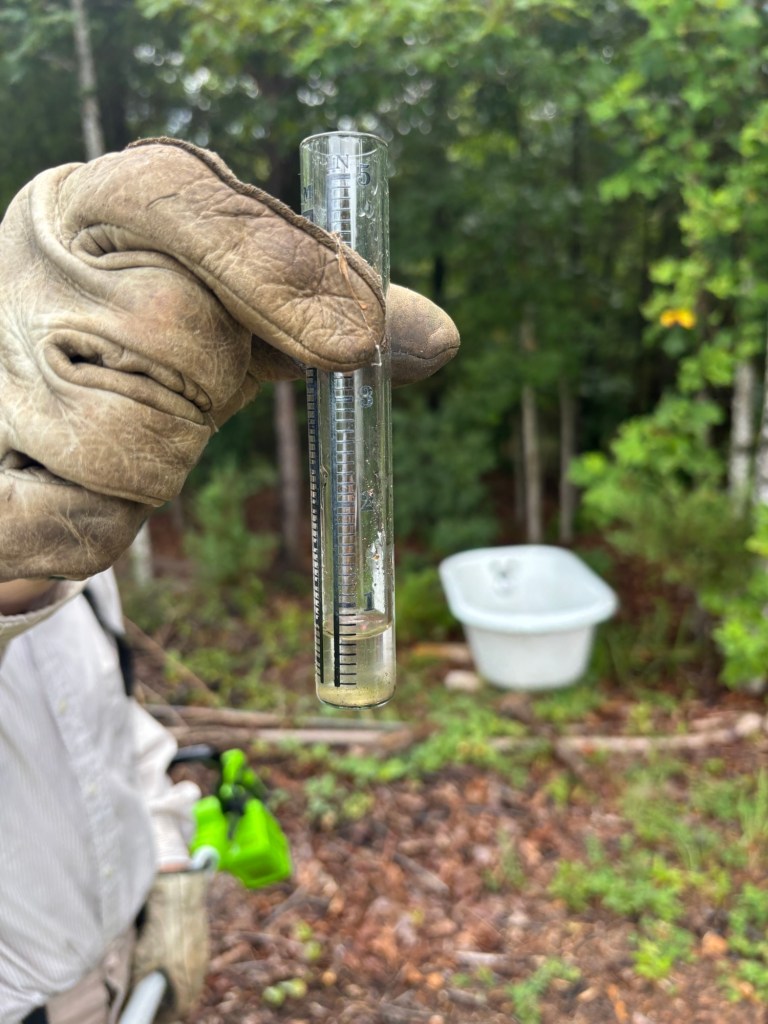
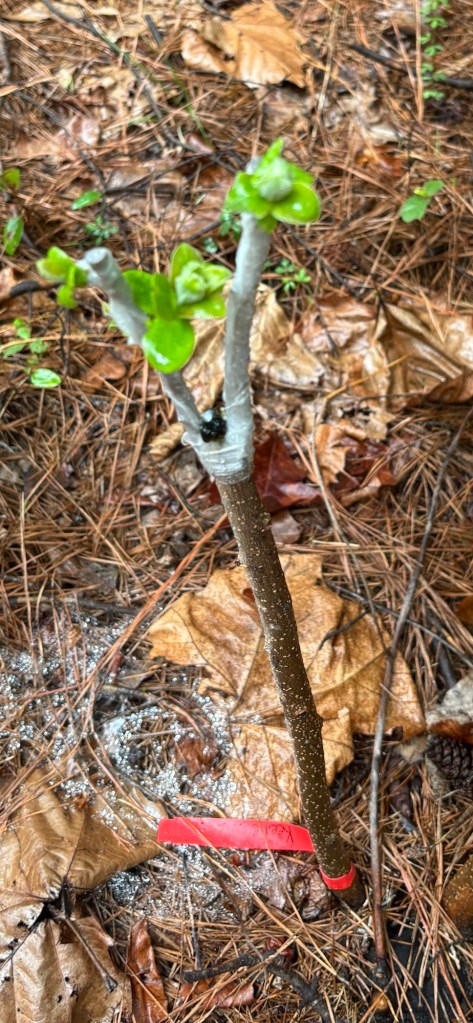
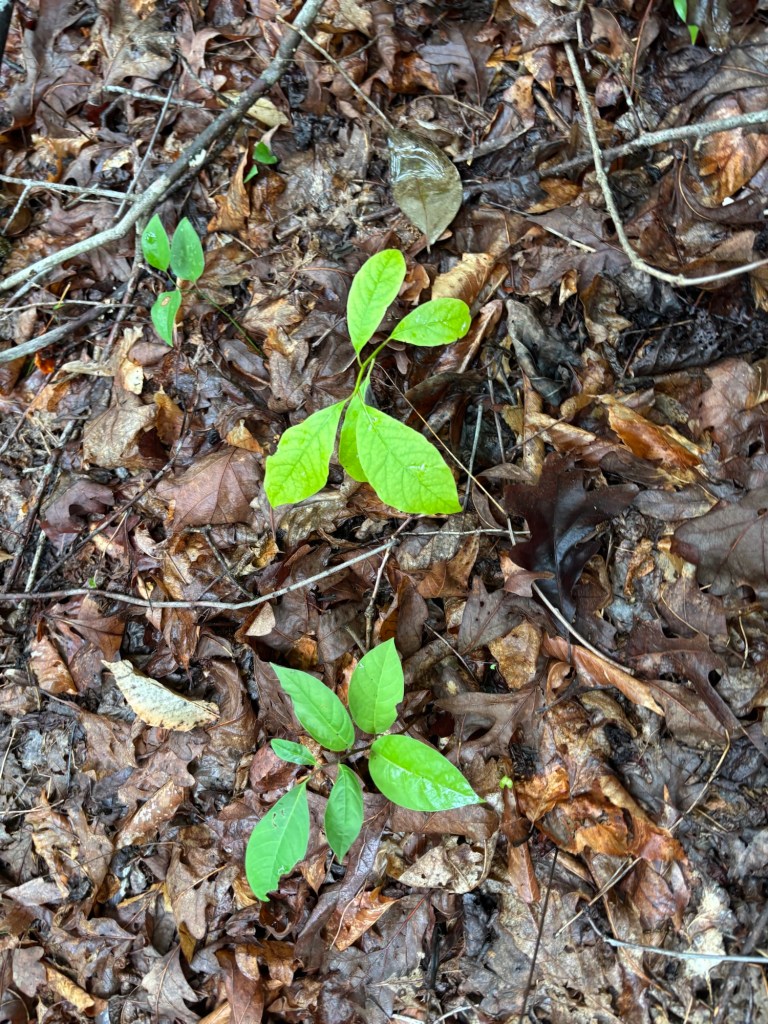
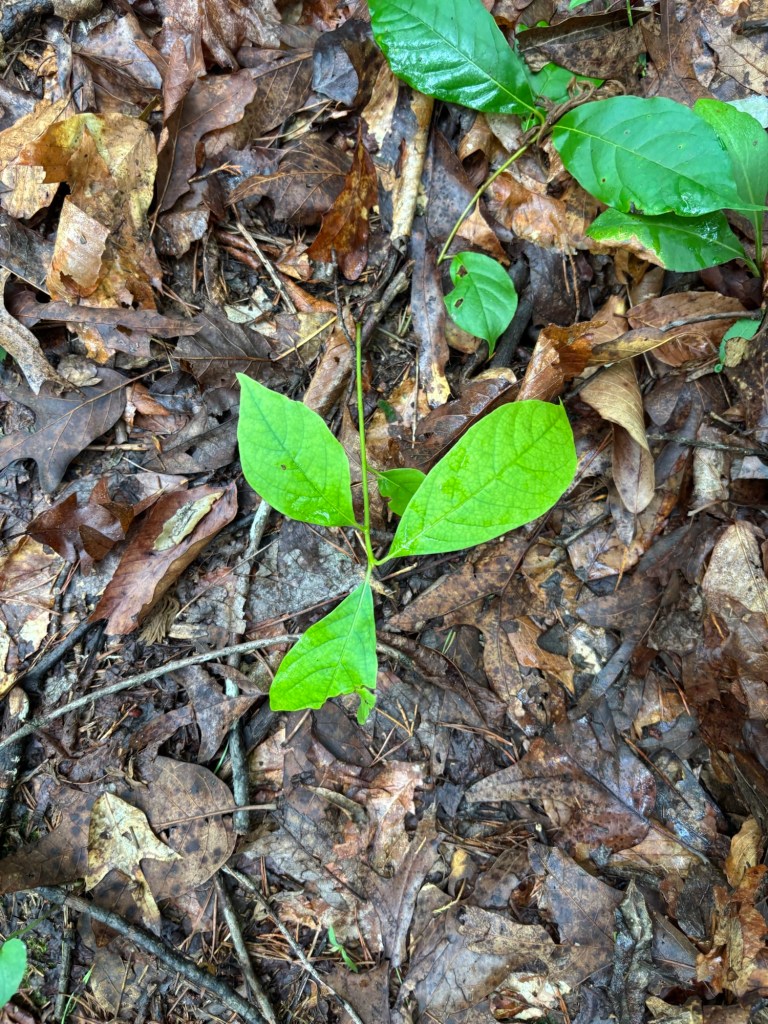
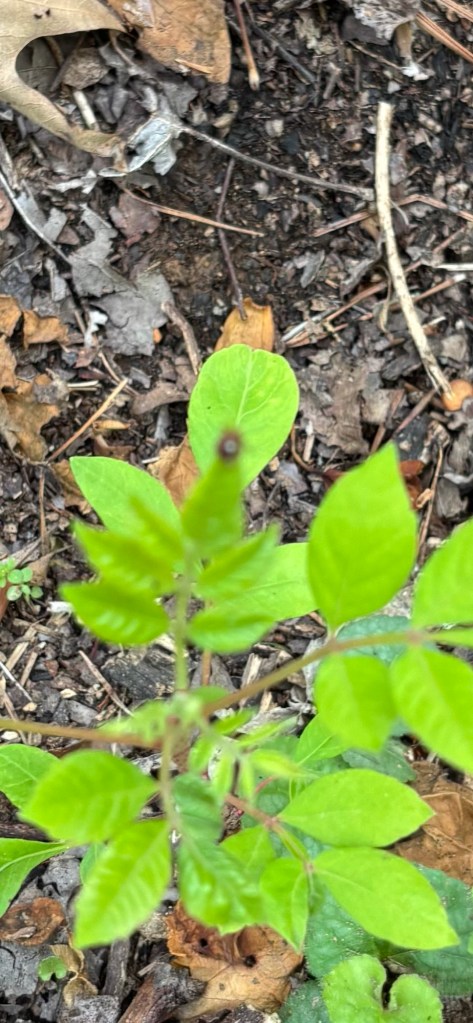
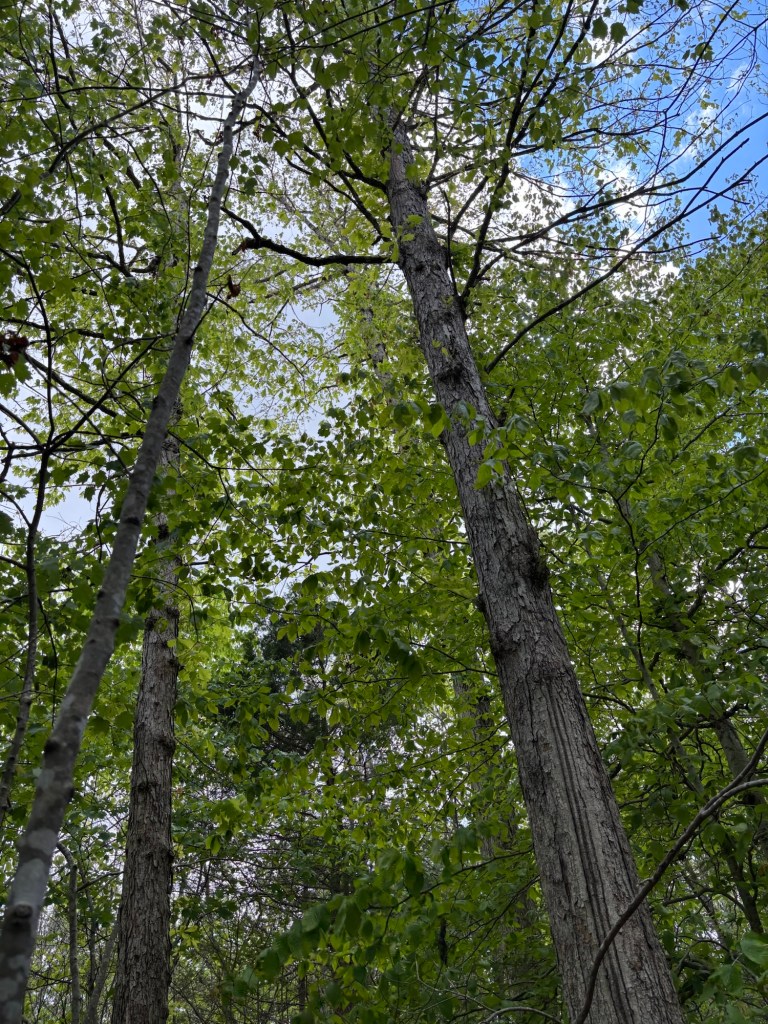
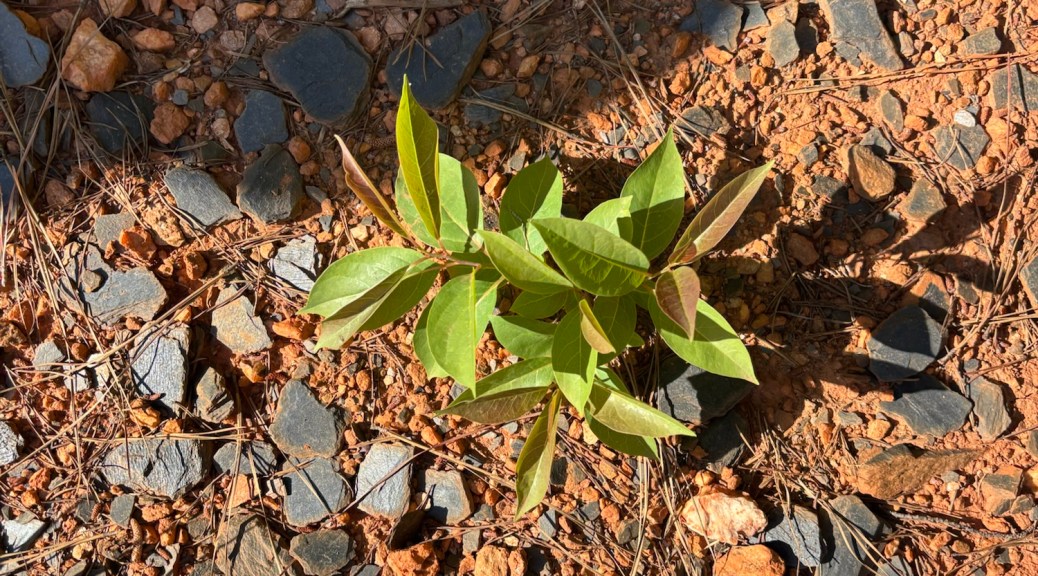
Asimina triloba dropping from trees in Central Virginia. Foraged on the way to the farm. Our first finds of the year in Afton Virginia. We collected 50 seeds from these pawpaws and have them stored to cold stratify over the winter. Almost another inch last week in Buckingham Virginia and more opportunities for storms in the next few days. We spread little bluestem (Schizachyrium scoparium) seeds around the exposed areas at risk of runoff in storms yesterday. Another blue jay feather found up top near the driveway.Chantharellus cinnabarinus, red chanterelle, found throughout SAFF. A choice edible with false gills and bright red color found along wet weather lines. They are smaller than other chanterelles and hold up well in the pan. Aureoboletus innixus, clustered brown bolete, found near an oak. These are edible but we haven’t tried them. Pawpaws still hanging on in the clonal colony. We’ve been checking on them every time we’ve been out to SAFF.Annona cherimola, cherimoya, tree sprouting on the deck. This is a tropical tree which will need to be protected from our cold Virginia winters. Ganoderma growing along the main waterway at SAFF. Persimmon ripening on the trees up top.
We’ve been busy clearing paths for the tractor through the pawpaw seedling orchard, planting little bluestem on exposed ground and preparing to plant this year’s Asimina triloba seedlings. We have also cleared out some pines and hardwood trees crowded in around our American Persimmon trees and created an orchard up top near the road for them. Also, we planted several Juglans Regis, Persian walnut trees in the main clearing at SAFF. We have also been researching solar kits for home and SAFF and can’t wait to get what we need ordered and installed.
The past weekend has been a nice taste of cooler, fall weather on the way. The highs have been in the 80s yet there has been a nice breeze and crispness in the morning. We’ve been feeling so grateful for everything and especially the rain and the cooler temperatures.
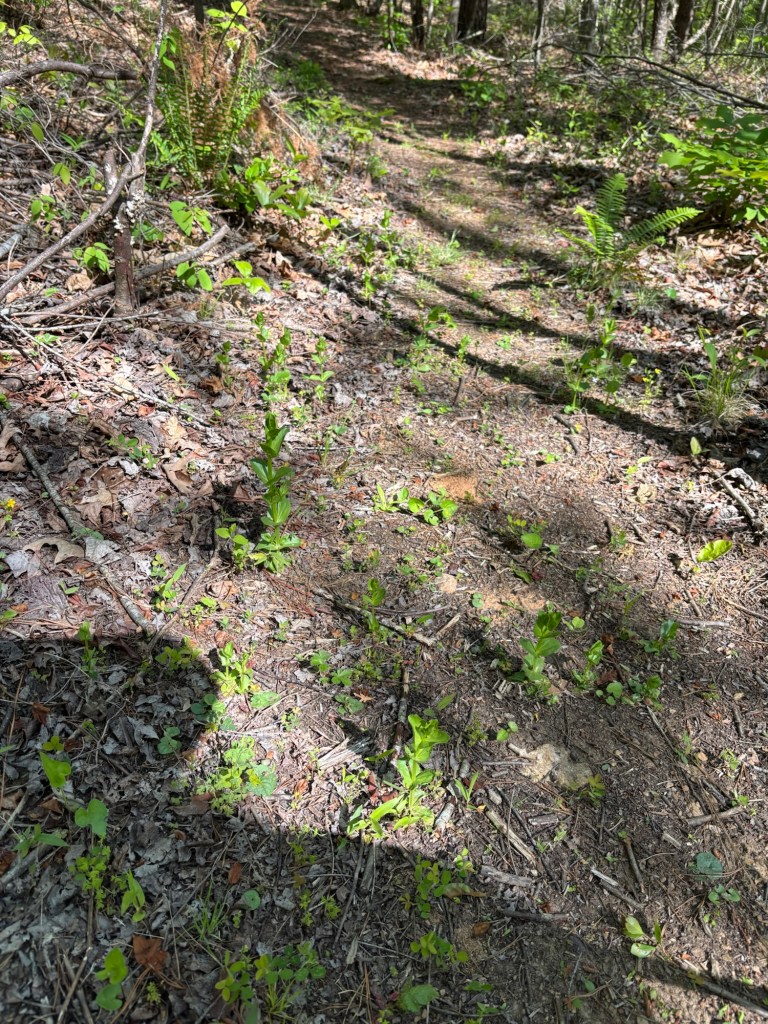
About .6 inches of rainfall since last Tuesday at SAFF. Diospyros virginiana, American persimmon, Keener cultivar pushing through the graft successfully along the main driveway up top.Looking towards Fern Trail with some quartz the bear moved last year looking for a meal. The connecting road we just built to the old farm road.
We were happy to see everything really good and soaked yesterday. Even up top, enough rain was falling that the ground wasn’t just absorbing it all right away.
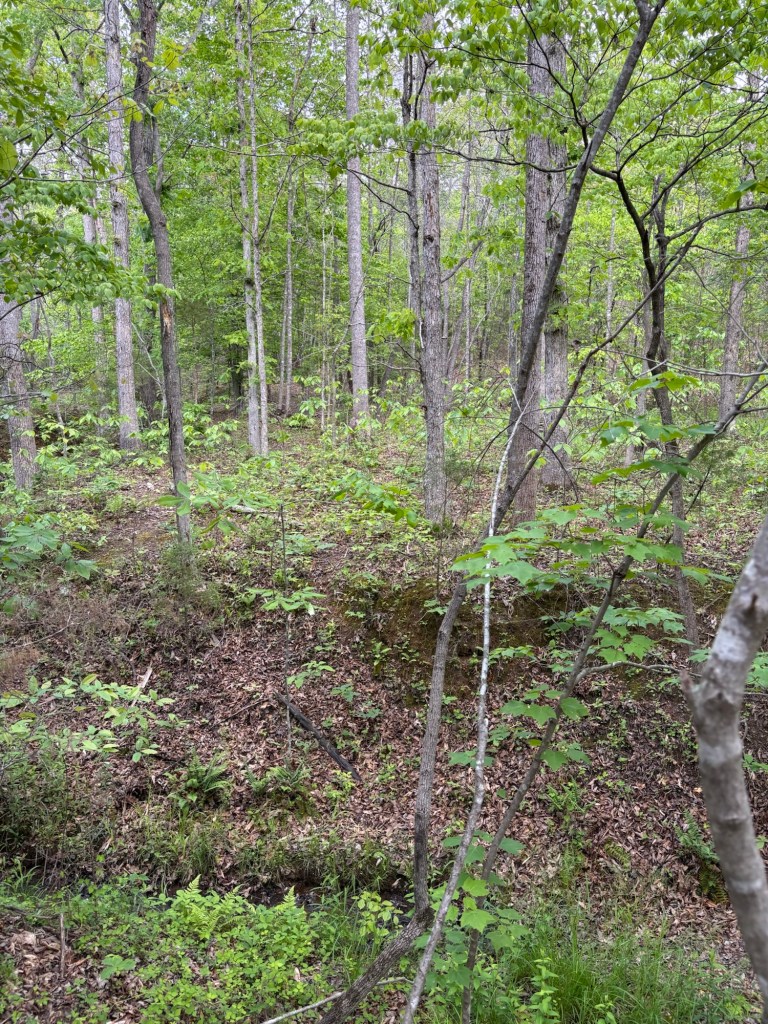
We are seeing evidence that we have a bear around the farm again this year as old tree stumps are being dug up all over.
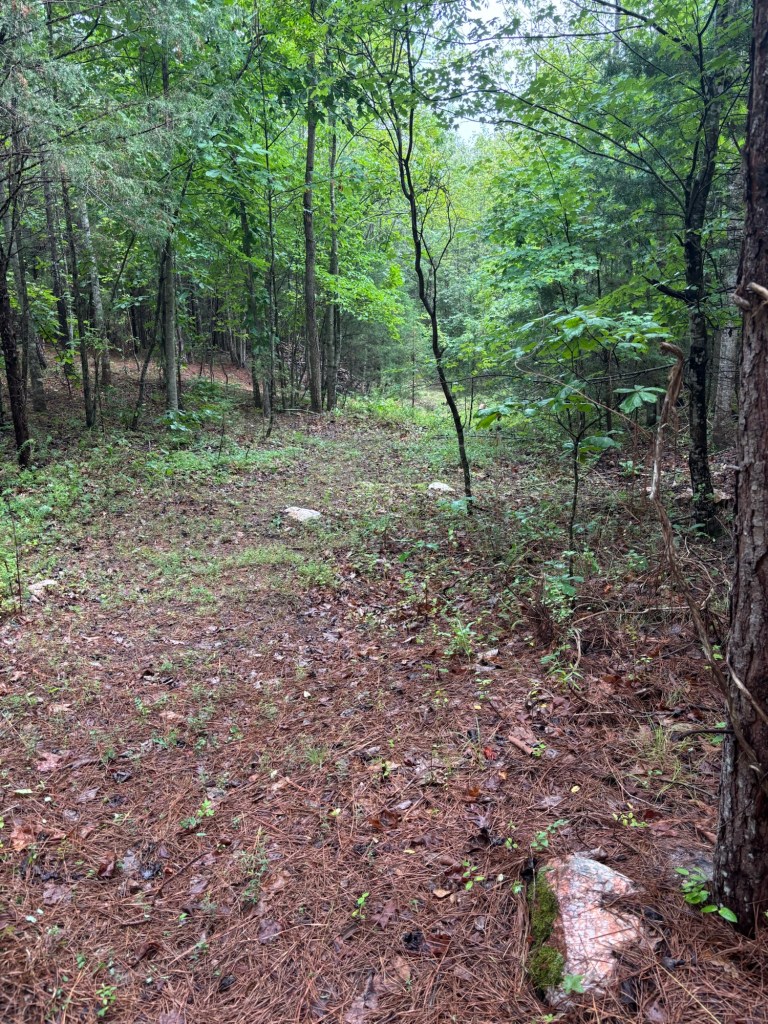
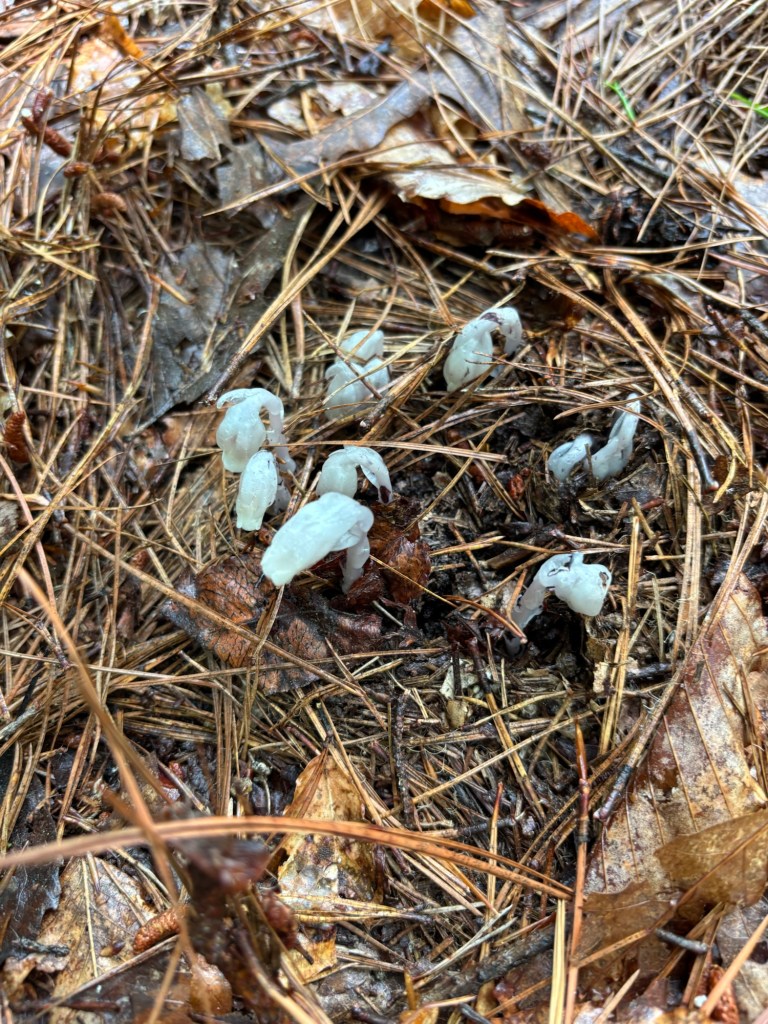
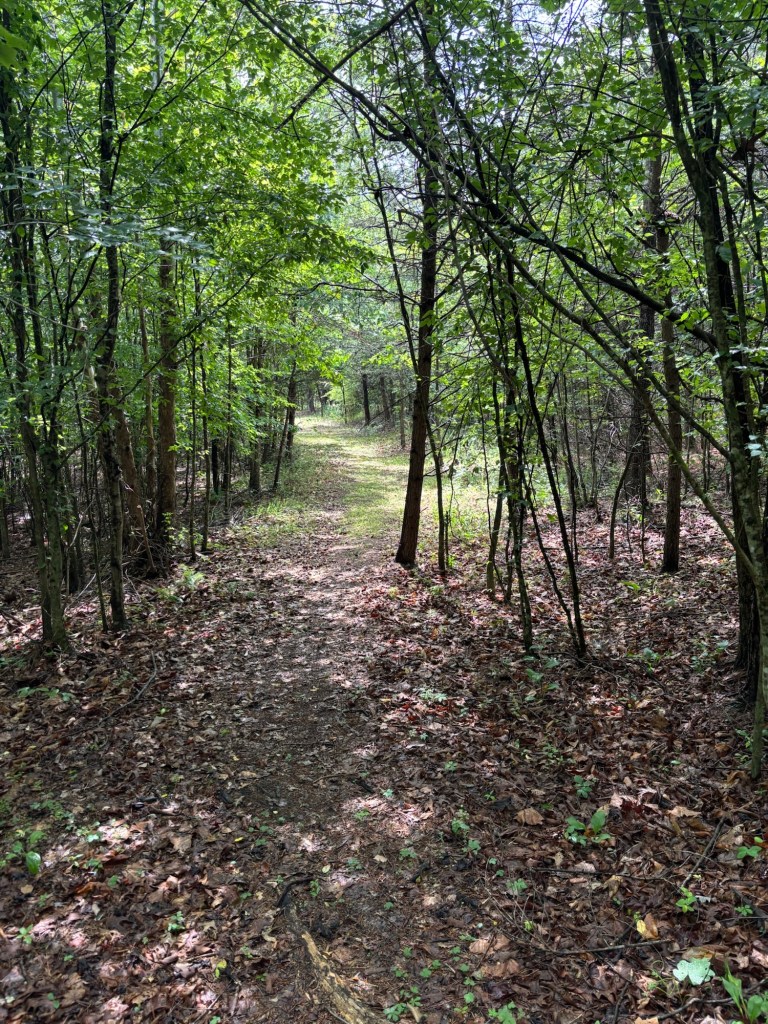
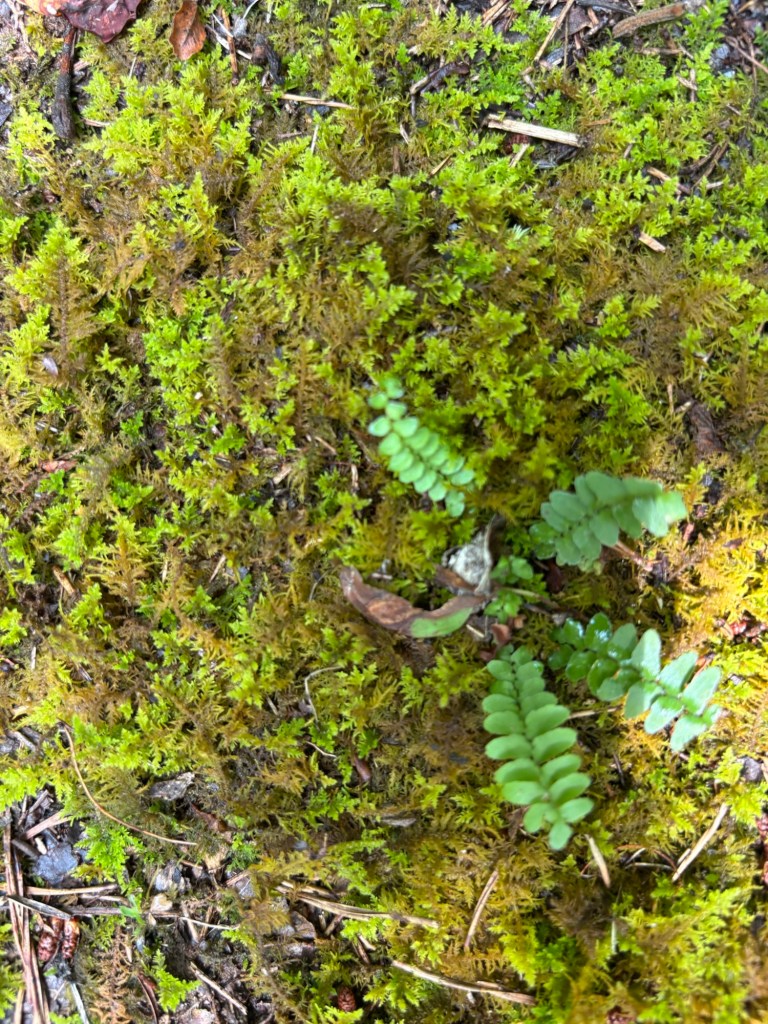
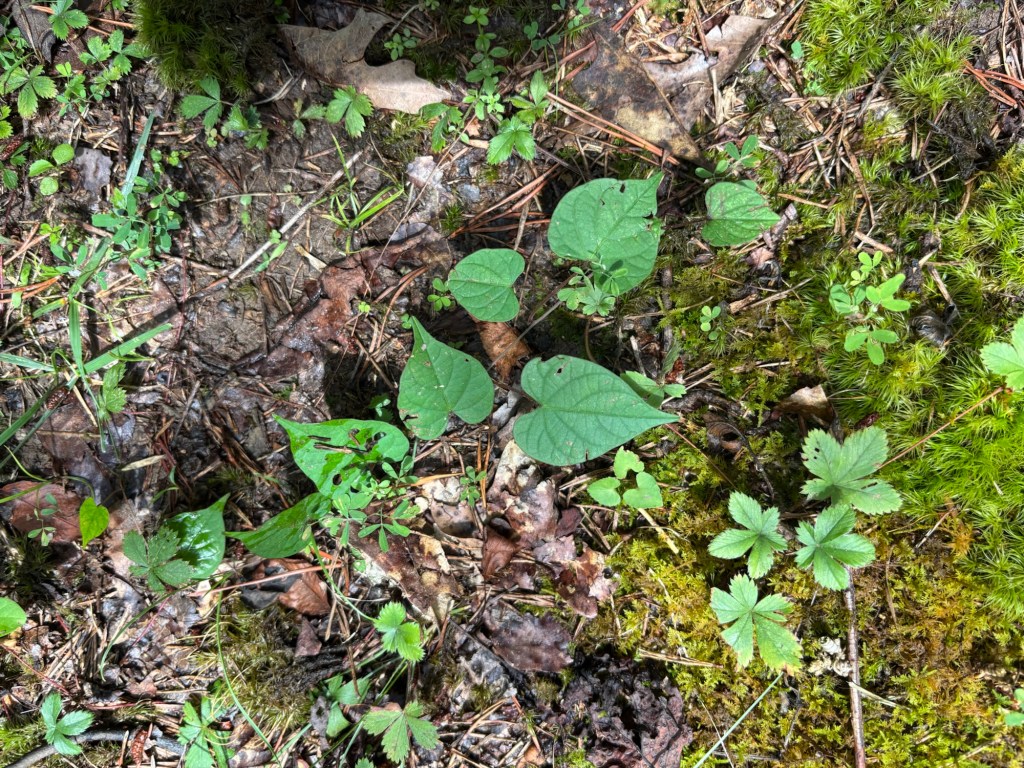
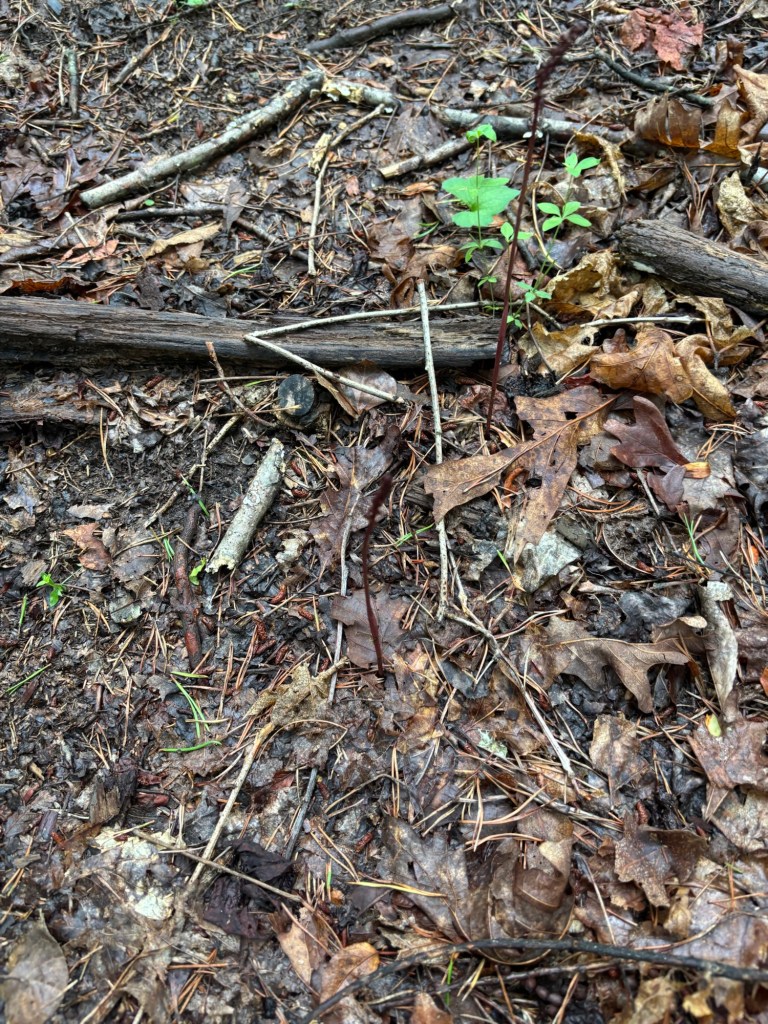
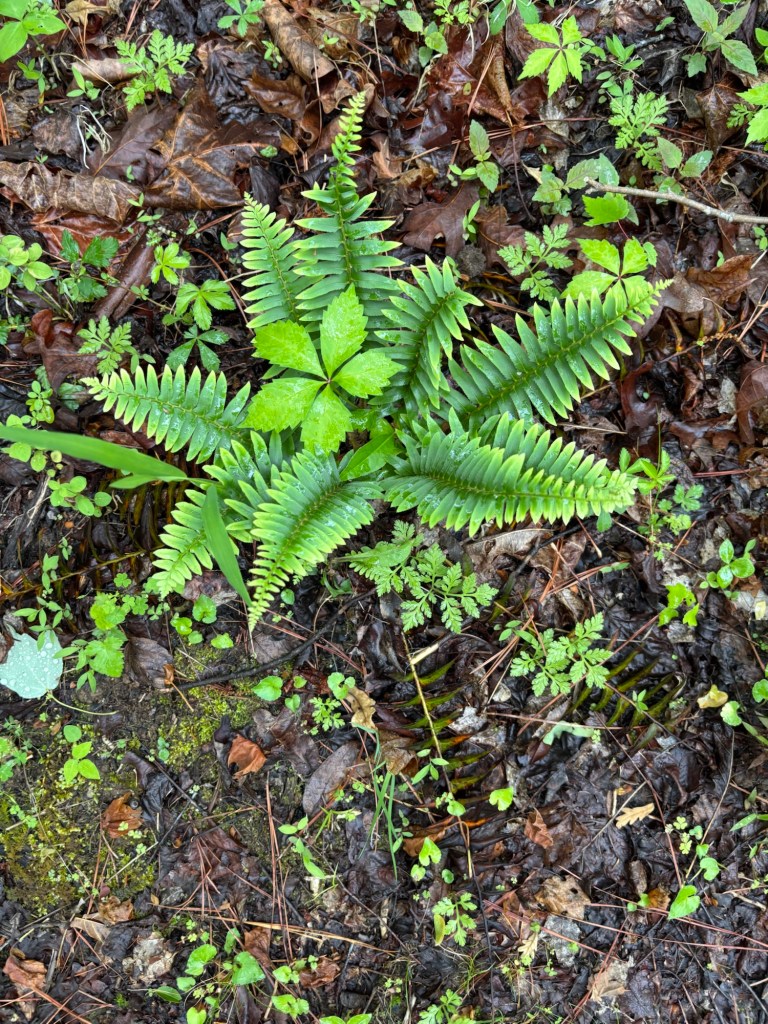
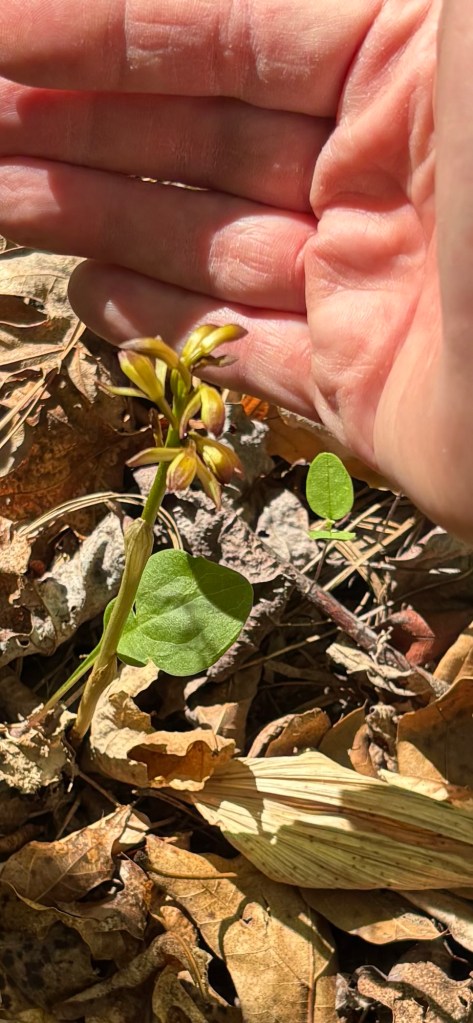
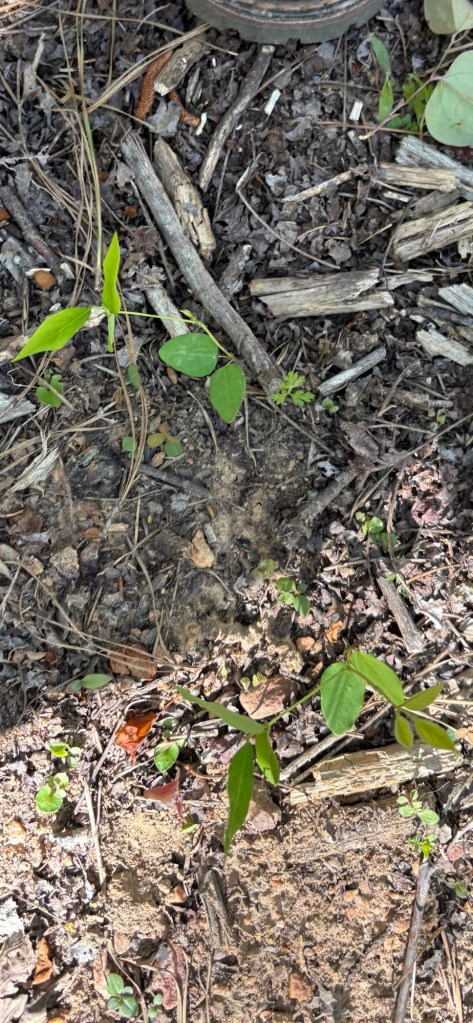
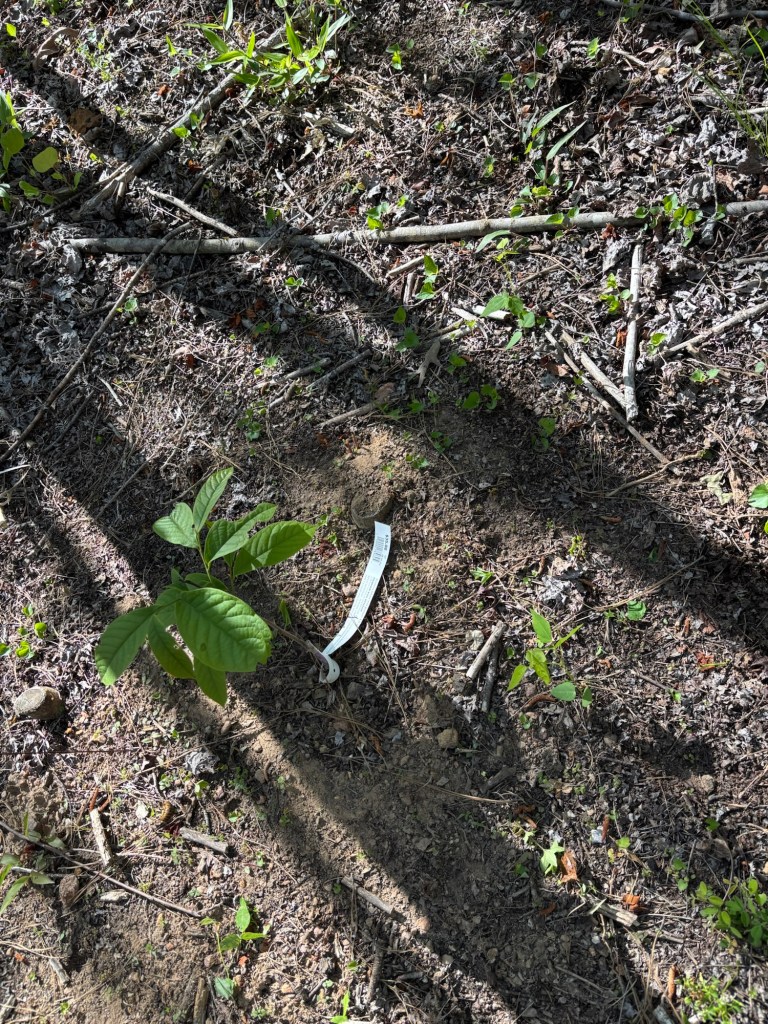
Monotropa uniflora, ghost pipes, emerging on the north side of SAFF. We’ve named the old farm road Neal Peterson Parkway in honor of Mahatma Pawpaw who inspires us with his dedication to Asimina triloba. The larger fern is Ebony spleenwort which is nice but it’s the bright green fern like moss that is so stunning. Thuidium delicatulum, delicate fern moss.The pawpaw seedling on the left is one we planted last year and this year it has another pawpaw seedling coming up next to it. We think it’s a rootsucker from the clonal colony across the waterway. We will care for this new one like the other. Two pawpaw seedlings coming up on our trail through the Seedling Orchard. We think some seeds we spread two years ago must have washed down near the waterway. Wild potato vine, Ipomoea pandurata, along Neal Peterson Parkway near the culvert. The reddish maroon flower stalks of the Cranefly orchid are emerging. Hard to see.The American hog peanuts all over are flowering and you can see how they spread out with their long stalk sending seeds a foot away. It’s a legume with the sweet pink flower.
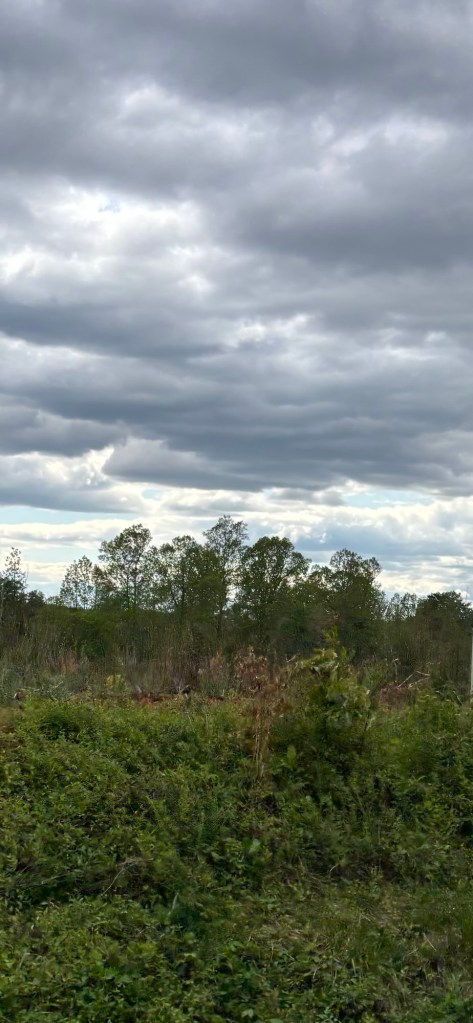
Broody Thursday skies in Buckingham, Virginia as we drove to the county offices.
We drove over to meet the delivery driver for our roof insulation yesterday. After we got that stored, we ran to the county offices to drop off paperwork for permits. We came back and decided to go for a walk. We were glad to see all of the Asimina triloba that had been damaged in the freeze have begun to leaf back out, even the Tallahatchie. Although it had sprouted some below the graft leaf shoots that we plucked off. The late cold really stressed it. We were glad to see it made it. We are still waiting to begin grafting the pawpaws and persimmon trees when it’s up into to the 50s at night and there’s no rain for 3 days before or after. It’s been chilly here in Virginia this week overnight into the low 40s still. It’s been lovely.
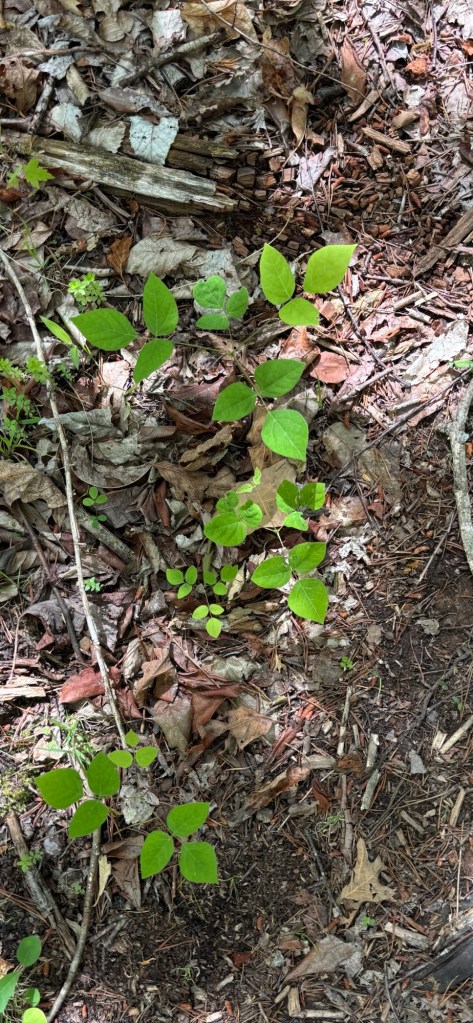
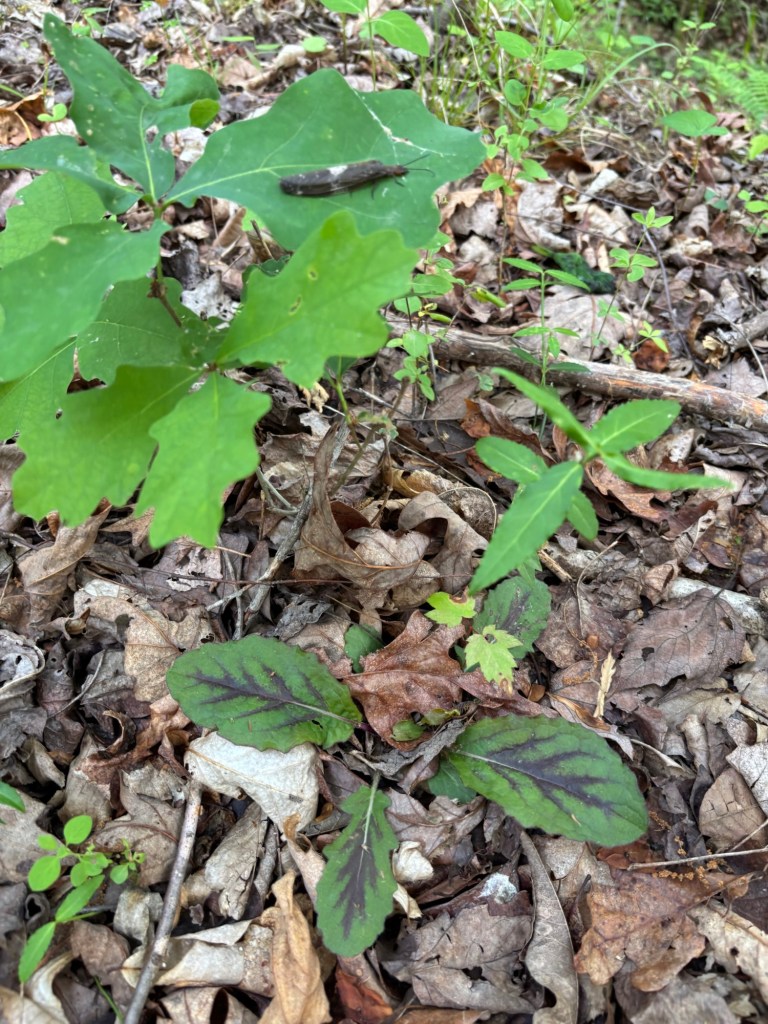
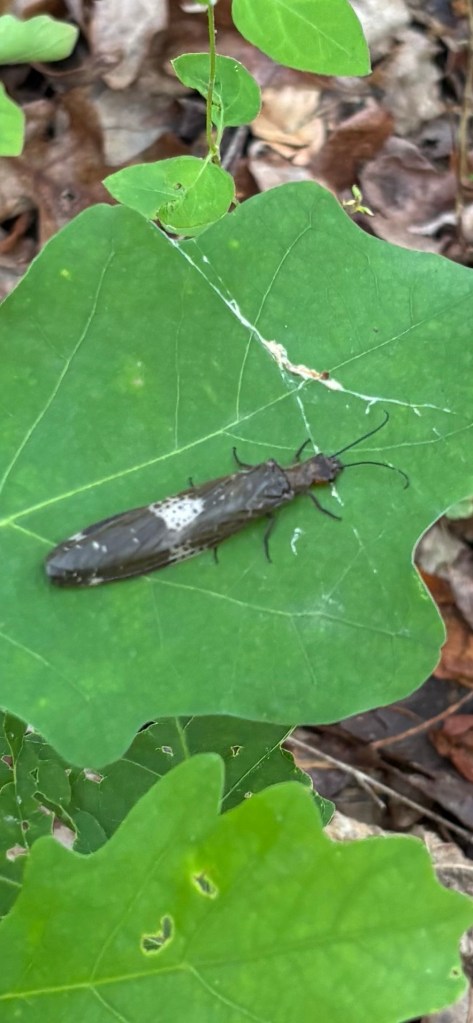
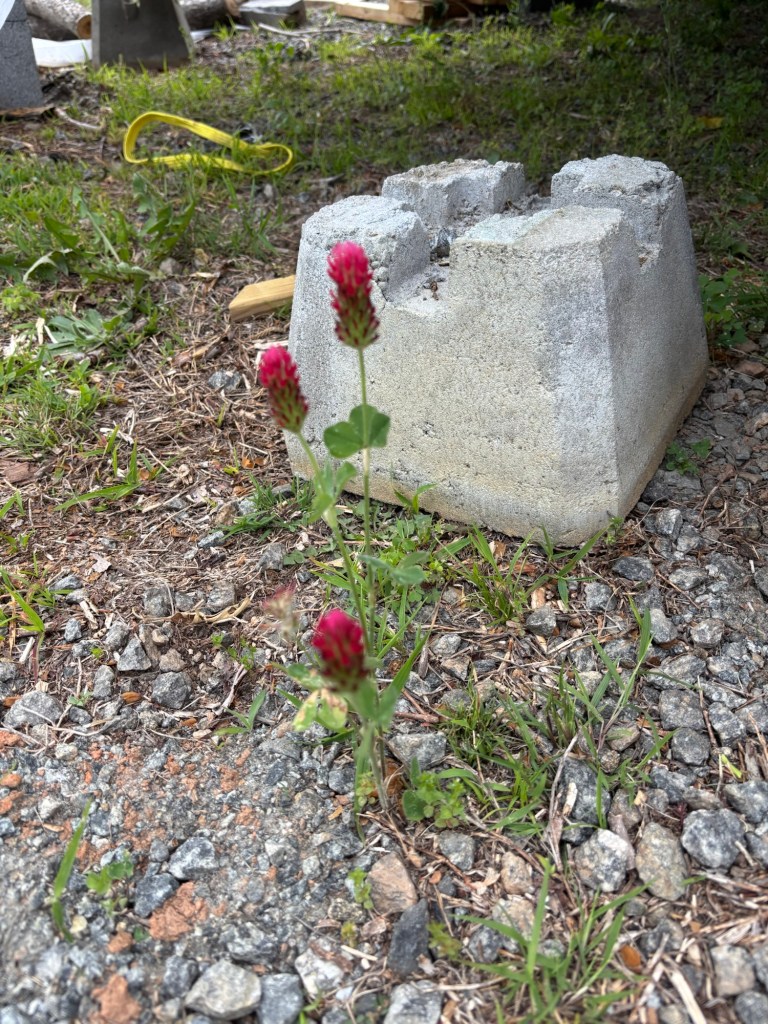
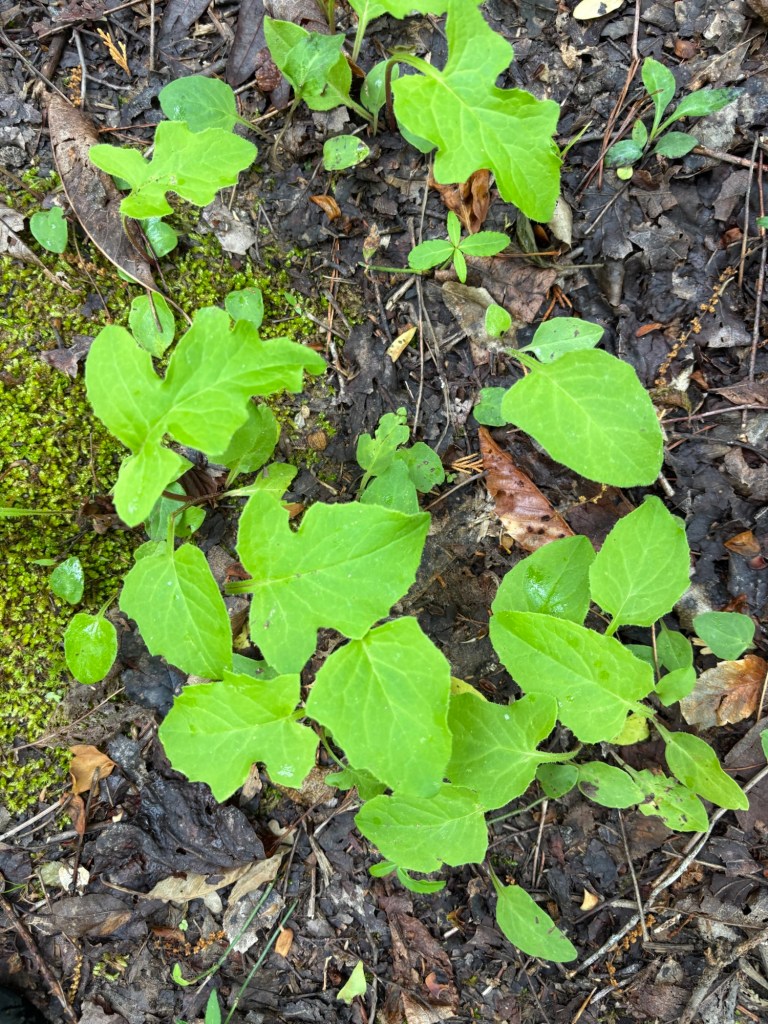
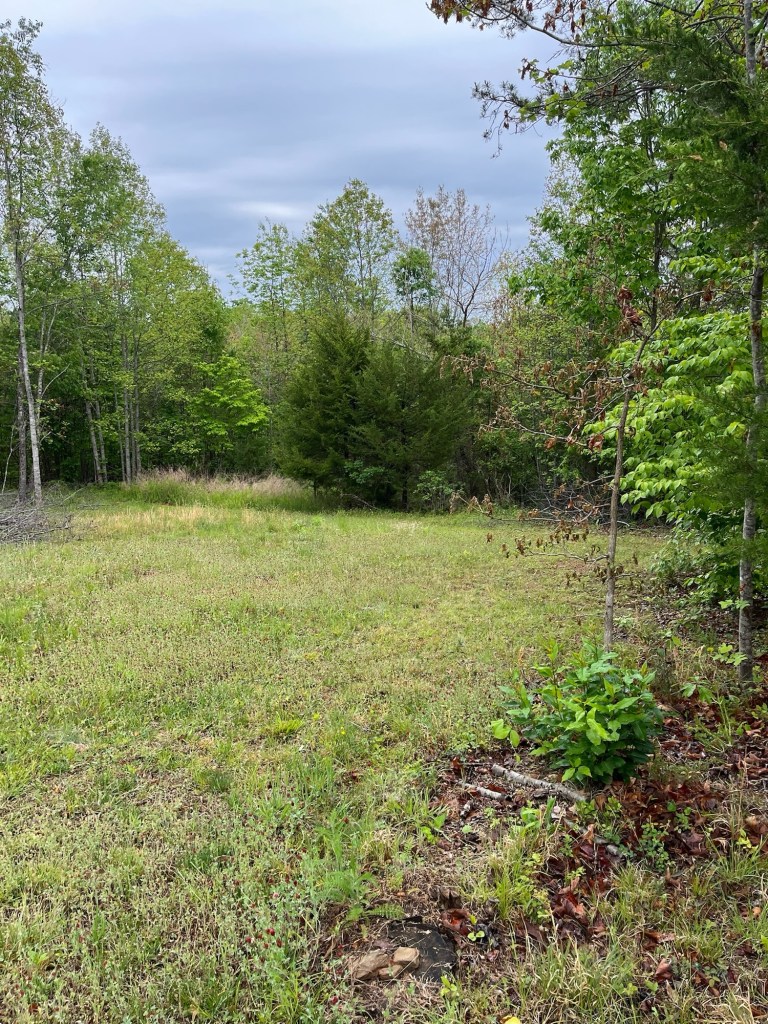
We are seeing a lot of Amphicarpaea bracteata, American hog peanut, all over SAFF. It feeds many creatures, including people, as well as fixes nitrogen in the soil. We feel lucky to have it growing to feed our plants and trees. The leaf with the purple center and green edges is Salvia lyrata, lyreleaf sage. It is edible and in the mint family. Native Americans made tea with the leaves. It is an adaptable native herbaceous perennial. It withstands foot traffic well. The flowers support multiple bees, butterflies and hummingbirds. We will try to get a photo of it flowering. Nigronia fasciata, Banded dark fish fly, found along the main waterway at the bottom. This is an interesting find as an adult since it has a brief lifespan of only one or two weeks. They mate and lay eggs at the edge of the water right where we found it. They don’t even have a mouth in this part of their lifecycle since they don’t live long enough to eat. The larval stage can last three years. Their presence at the waterway is a sign of very clean water and a balanced, healthy aquatic ecosystem. They are predators in the larval stage and more intimidating. The best of five blurry pics of this lone star tick, Amblyomma americanum, on Fern Trail hanging off the edge of the plant on the trail waiting to grab on to the next creature that comes along. These ticks are aggressive and out looking for food when other types of ticks are hiding under leaf litter. We recently realized they can cause Alpha gal syndrome from a brief exposure whereas most ticks need hours attached to their hosts to transmit diseases. Be careful out there! Yuck! The three sisters on Ridge Trail overlooking the old colony Pawpaw Patch.Across the main waterway to the old colony pawpaw patch. All of the understory trees are Asimina triloba.Asimina triloba sprouting from the roots of elder trees even. Crimson clover, Trifolium incarnatum, a cool season fast growing annual legume we planted as a cover crop in the clearing to suppress weeds and fix nitrogen in the soil.The new access road connecting our driveway to the Old Farm Road.
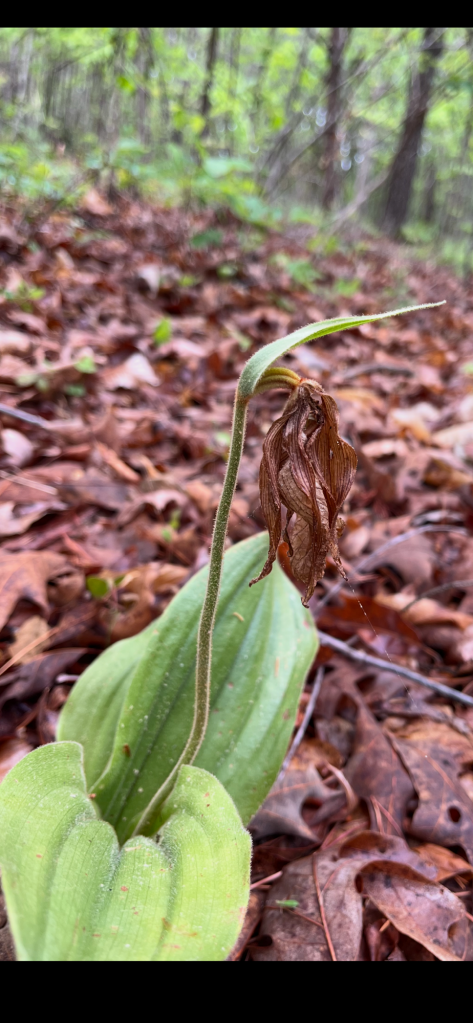
We just missed the flower by the look of it. We hope to catch it next year.
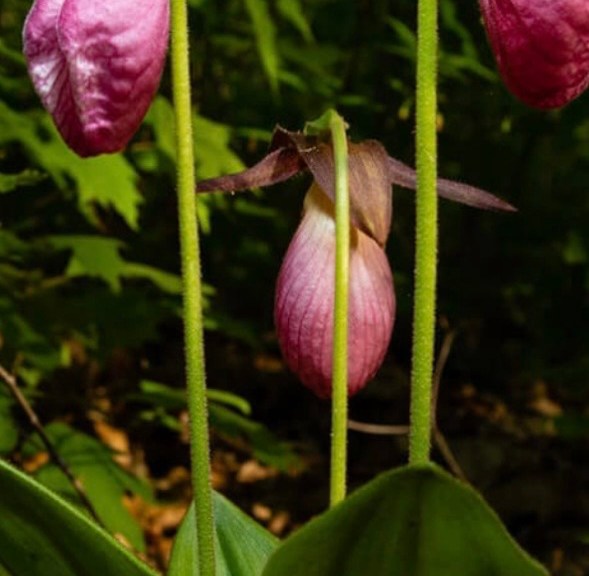
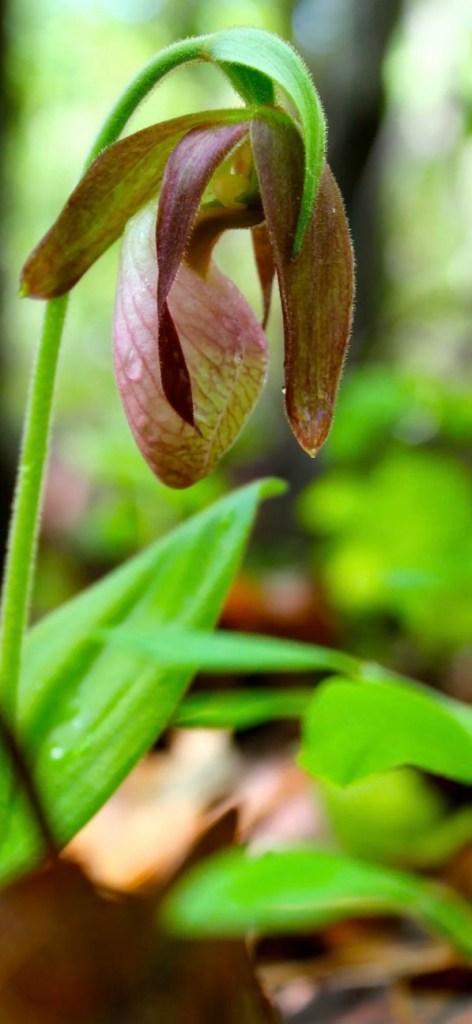
Yesterday we had a walk in the drizzly rain at Saint Andrews Forest Farm. We got to the north side and found our fourth native wild orchid. Cypripedium acaule, pink lady’s slipper or moccasin flower. It’s sparse in our area and considered a special find since it relies on symbiotic soil fungi to survive. Each plant can live 20 years or more. It is pollinated by bees who are tricked into entering the pink sweet smelling flower yet there’s no nectar so no reward. The bees then ignore it.
Pink lady’s slipper Picture by Will Parson from the Chesapeake Bay Foundation. American persimmon
We had .125 inches of rainfall when we checked the rain gauge. Anything at all is appreciated. We looked for mushrooms but none were found yet.
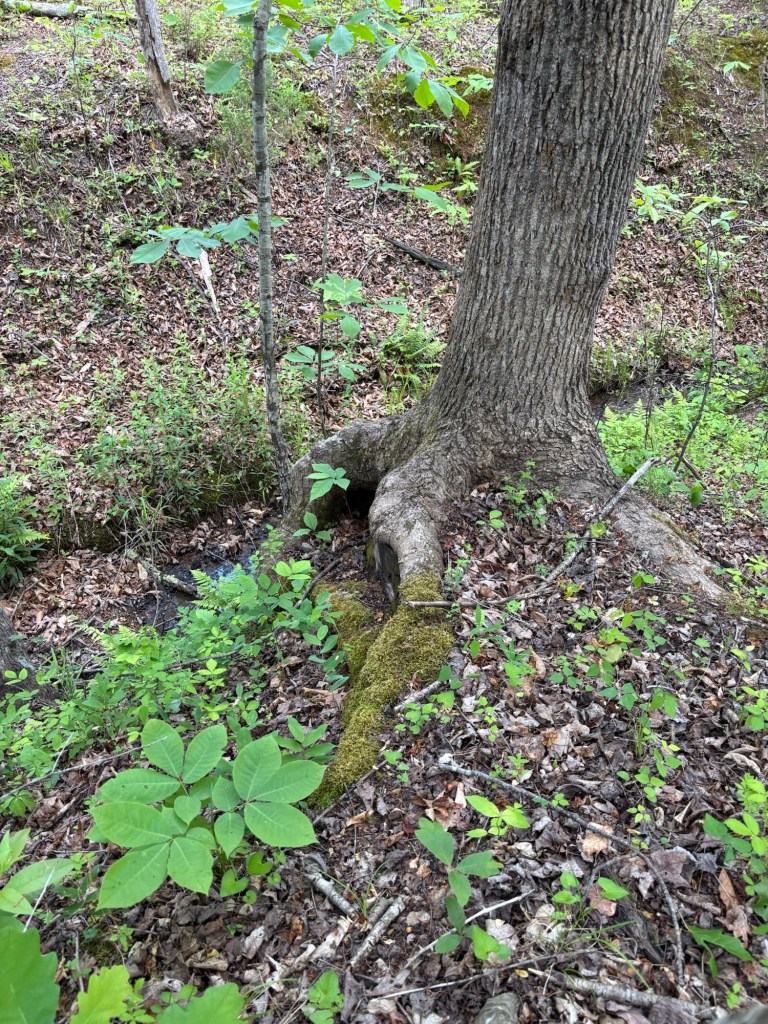
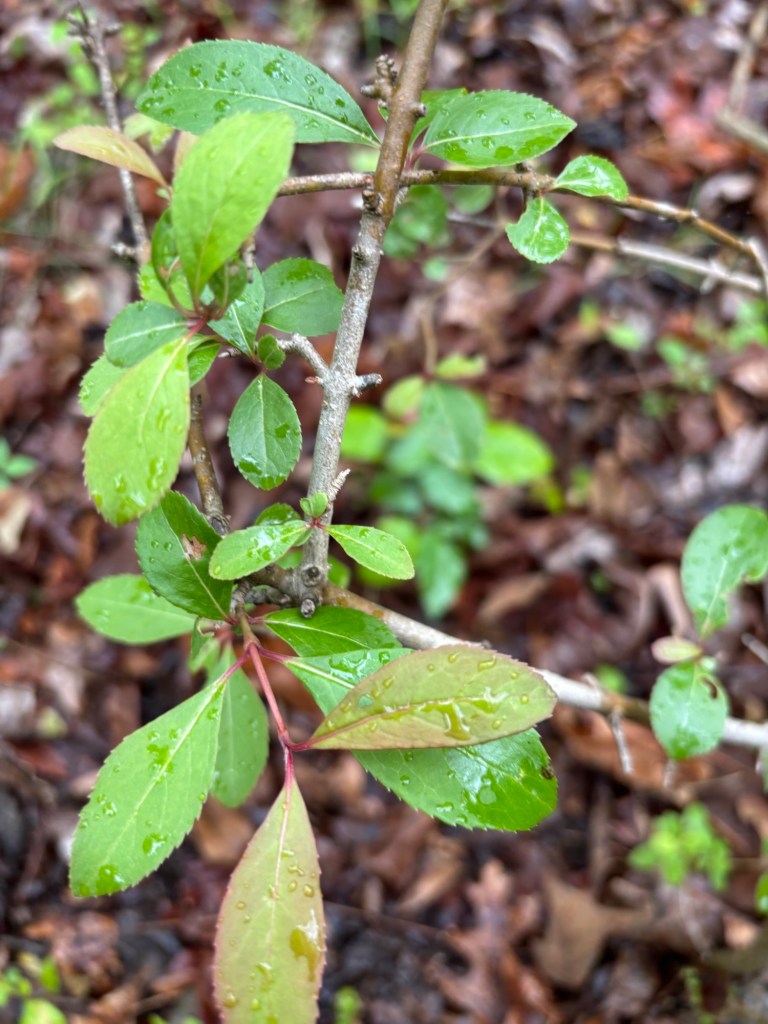
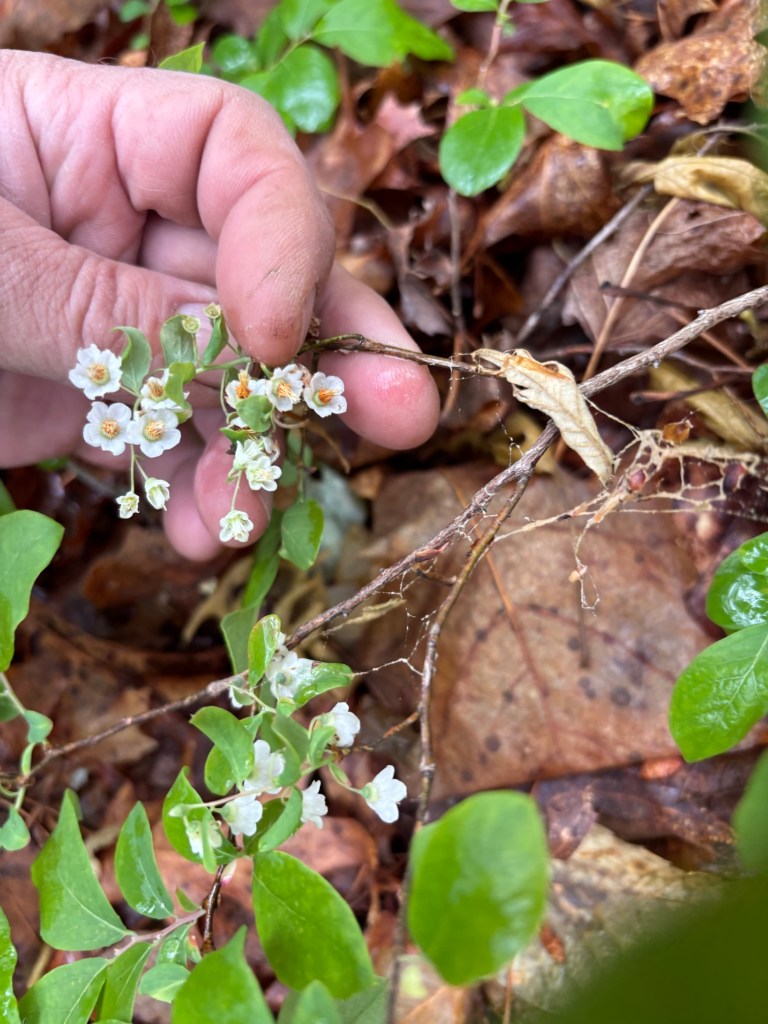
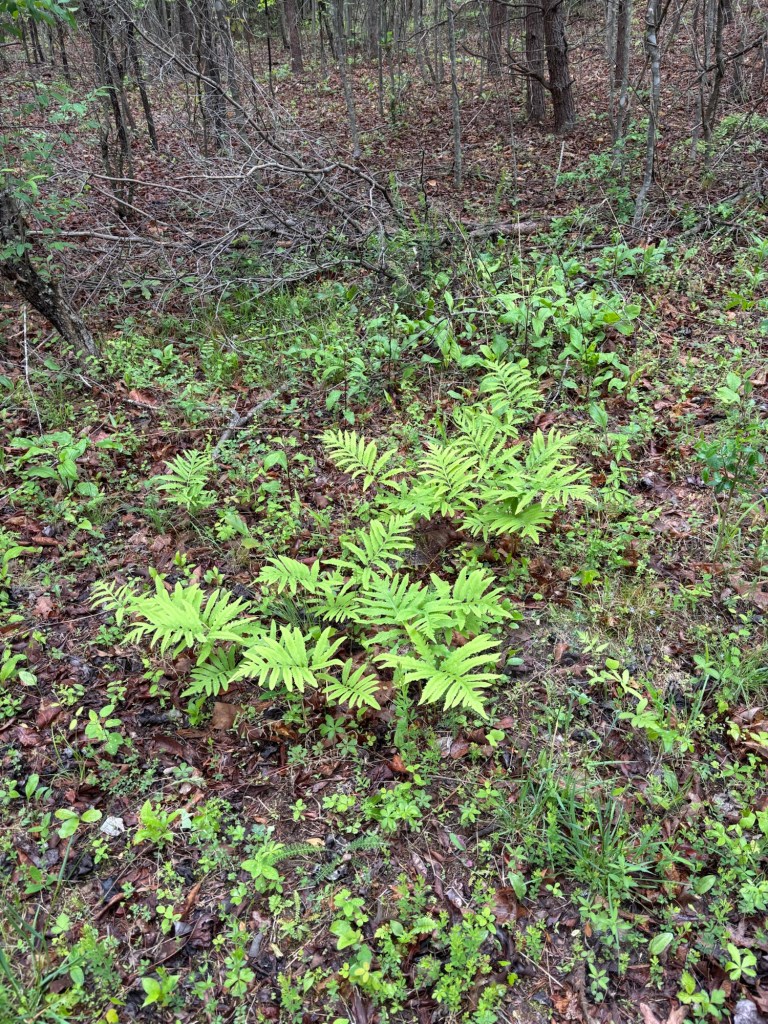
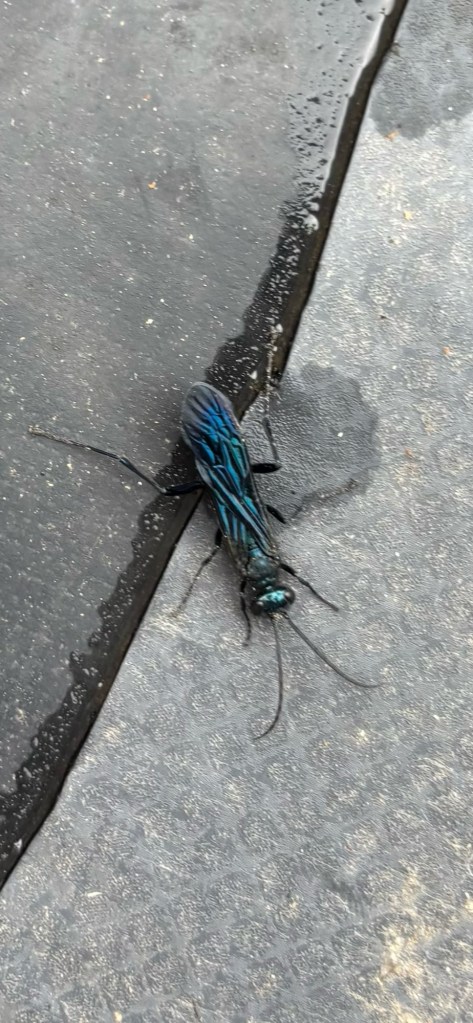
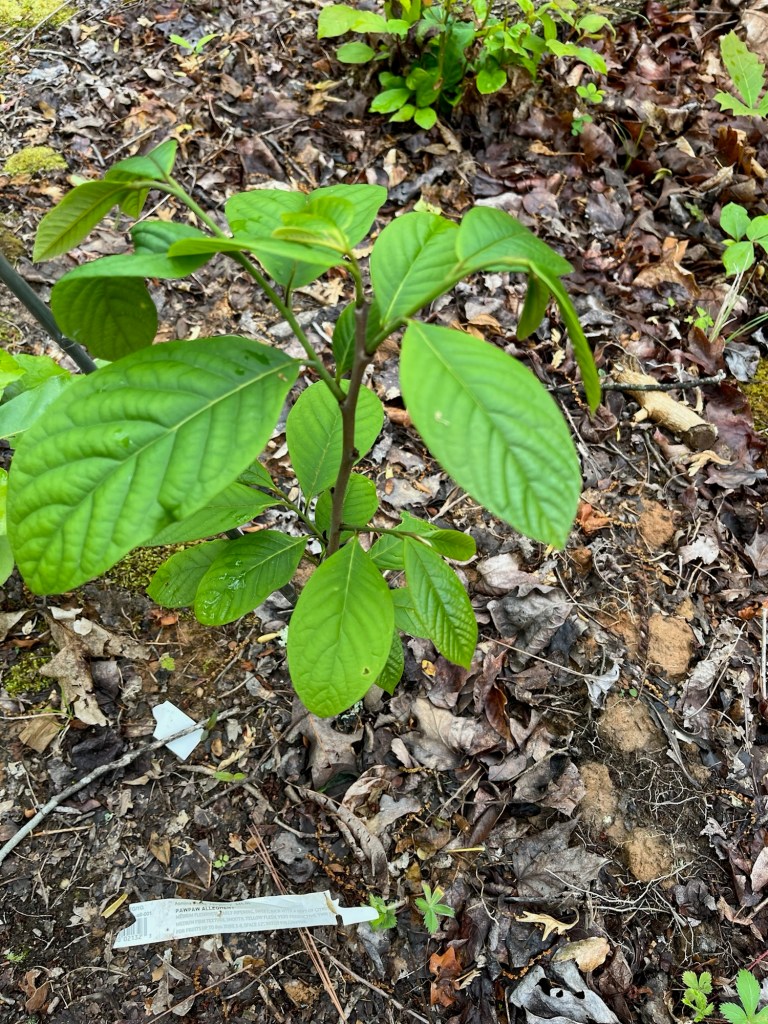
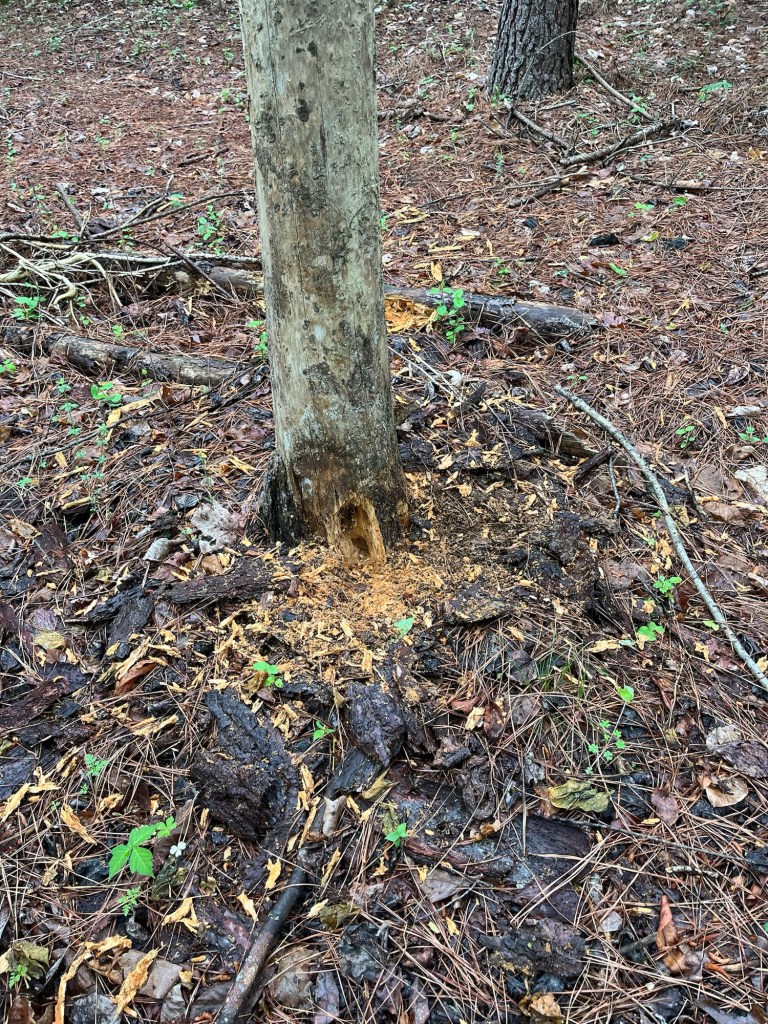
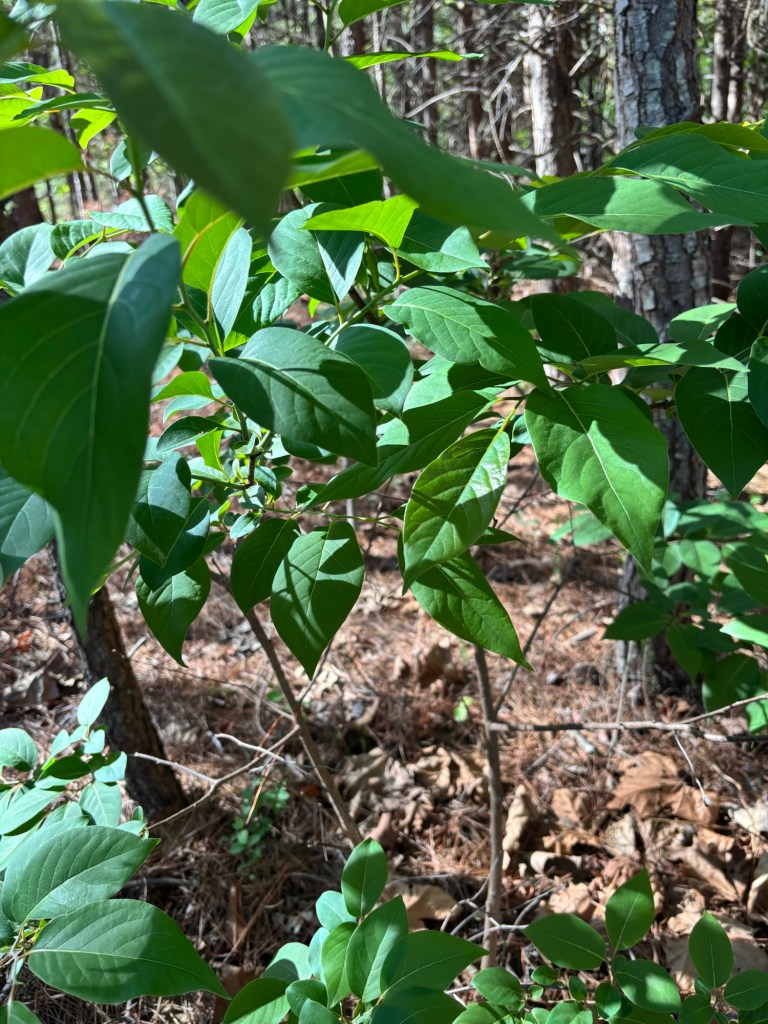
American persimmon, Diospyros virginiana, up top along the driveway we counted 35 altogether just near the road. Viburnum prunifolium, Blackhaw, a hardy native deciduous small tree producing edible fruit found along SAFF’s northmost trail. Vaccinium stamineum, Deerberry or Highbush huckleberry, found on the North side just off the old farm road. These are attractive to songbirds, deer and pollinators and it forms colonies making it useful for stabilizing banks and creating thickets. Sensitive fern, Onoclea sensibilis, found on the old farm road in a particularly boggy, wet spot. It provides cover for frogs and lizards and is the host plant for the sensitive fern borer moth. Polystichum acrostichoides, Christmas fern, looking especially beautiful in the rain. Nabalus serpentaria, lion’s foot rattlesnake root, a perennial wildflower native to Eastern North America. It grows to 20-79 inches with stems that vary from green, red and purple. Blooms are white to yellow. We will keep an eye on it and try to capture it in a photo. Chalybion californicum, Common blue mud dauber wasp, found in the tiny house. It was very docile as we helped it find its way back outside. It is a primary predator of the black widow spider. Allegheny cultivar Asimina triloba looking vibrant on the Pawpaw Peninsula. We counted 34 other pawpaws right there next to it. They are directly across the waterway from the largest colony of hundreds of pawpaws. Interesting something digging into tree trunk down low. Chris thinks it’s a woodpecker. It does look like the holes they usually make higher up. Google says there are beavers in Central Virginia. They are common throughout the area it says. A beaver would be wonderful to help build check dams and raise the water table.
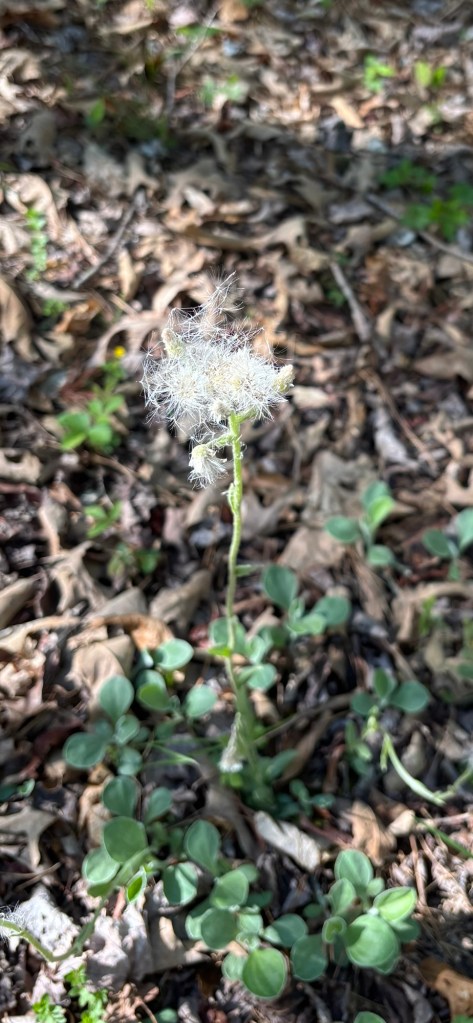
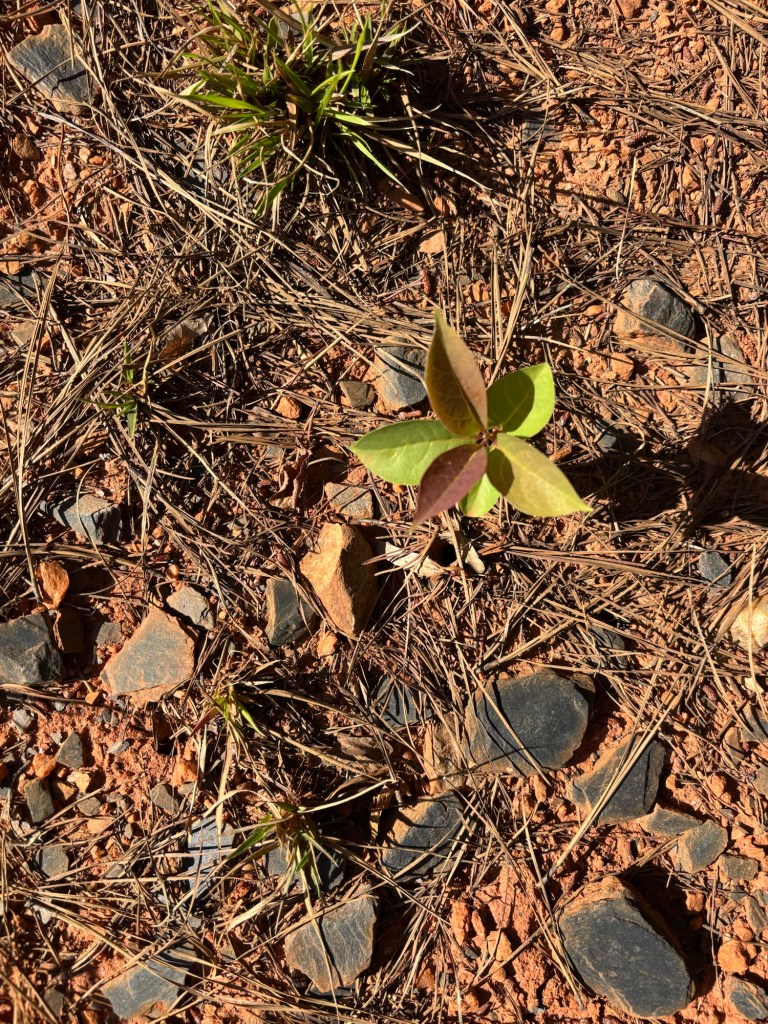
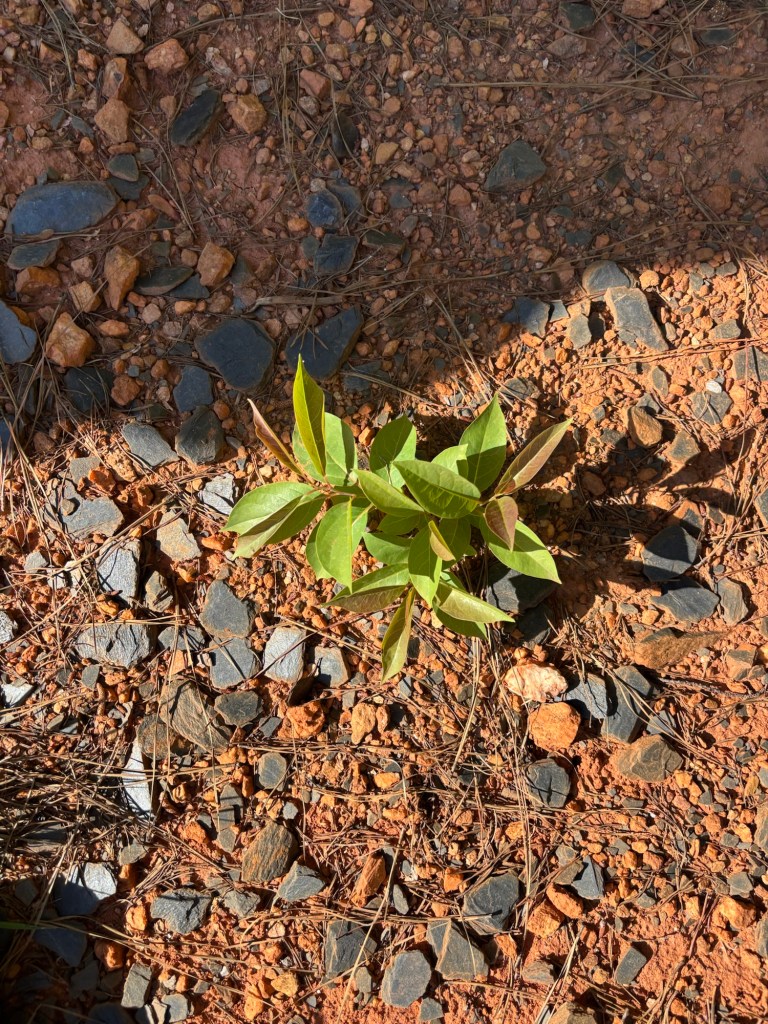
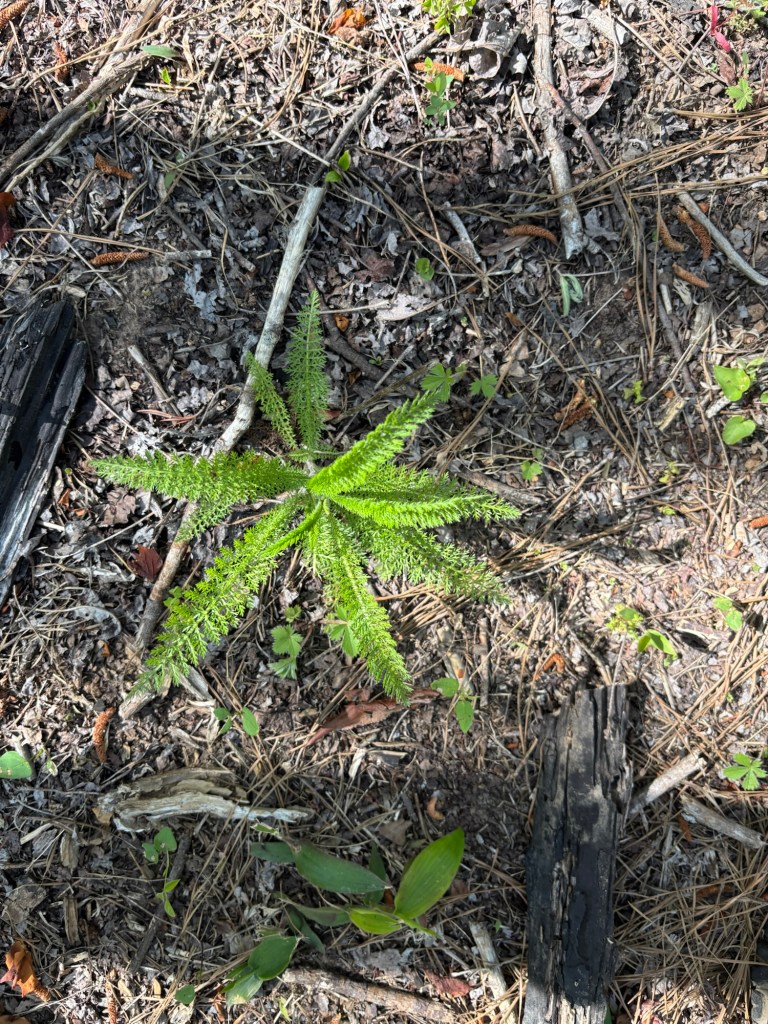
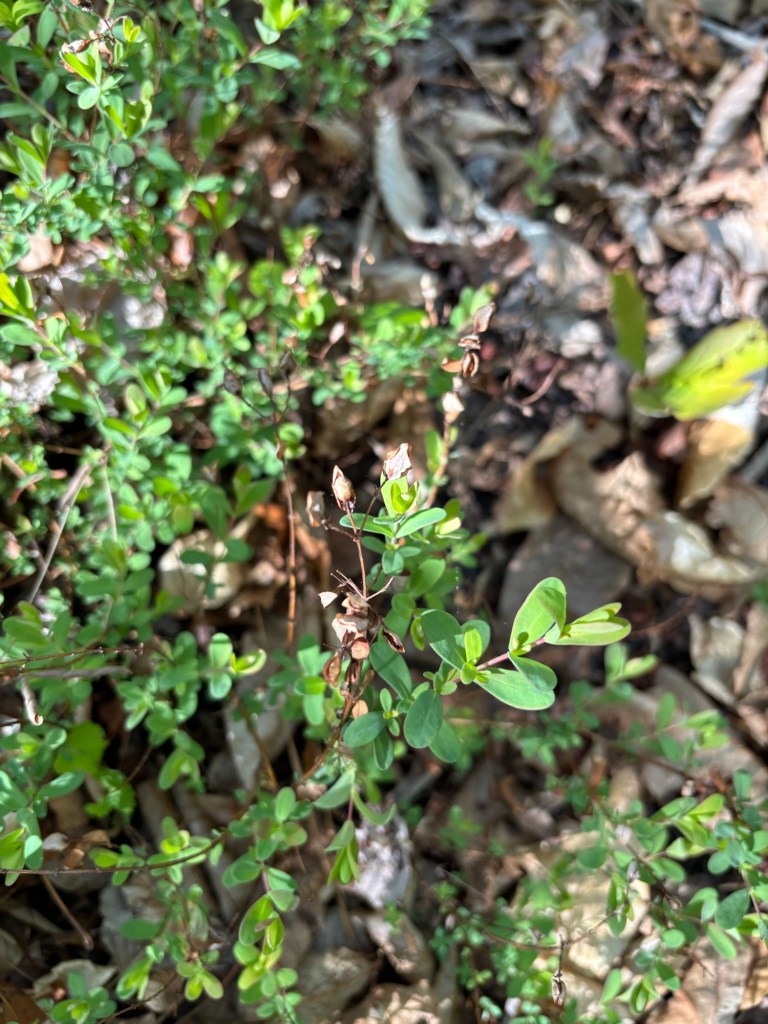
The stalk arising from the dead striped leaf continues to open up the flower buds. We are surprised by how yellow the flower is after looking deep purple for some time. This is it! The flower unfurled finally. The final flowering stage of Antennaria plantaginifolia, plantain leaved pussytoes. The flower heads have transformed into fluffy seed heads that can take flight in the wind. Diospyros virginiana, American persimmon, up top near the road. We found another group of 10 or more trees. These are young and healthy. They are a major source of food for birds, raccoons and the possum. The American persimmon also serves as host for multiple moth larvae and pollinators. They are low maintenance, drought tolerant and pest resistant. We are delighted to find them. Diospyros virginiana sprout coming up near the other cluster. Another American persimmon seedling coming up in the front. Achillea millefolium, common yarrow, is highly regarded in wound healing as a styptic with antiseptic properties. Teas from yarrow are made to induce sweating, reduce bloating and reduce inflammation. It offers cold and fever relief. It attracts a wide variety of beneficial insects and over 20 species of native bees. It is lovely, drought tolerant and thrives in poor soil conditions. Amphicarpaea bracteata, American hog peanut, is an annual to perennial vine in the legume family native to moist slopes in the eastern US. They produce above ground and underground pods. It fixes nitrogen and grows in the old clonal colony pawpaw patch. We found it today coming up around our Asimina triloba cultivar seedlings which is where we planned to move them. Yay! 😀 It feeds birds, deer and mice. Native Americans ate the pods and underground peanut tubers which are nutritious. A good source of protein, fiber and carbs.Asimina triloba KSU Benson cultivar seedling with American hog peanut spontaneously growing around it offering a low maintenance partnership with the hog peanut feeding the pawpaw tree. Fern trail near the Rappahanock cultivar which is recovering nicely from the frost that bit it. Hypericum stragulum, low St John’s wort, which is toxic to grazing animals. Native Americans used the plant for the treatment of sores, fever, gastrointestinal issues, nosebleeds and snakebites.
We had a nice Sunday with lovely weather in the 60s as we got chores done and took a stroll around the trails.
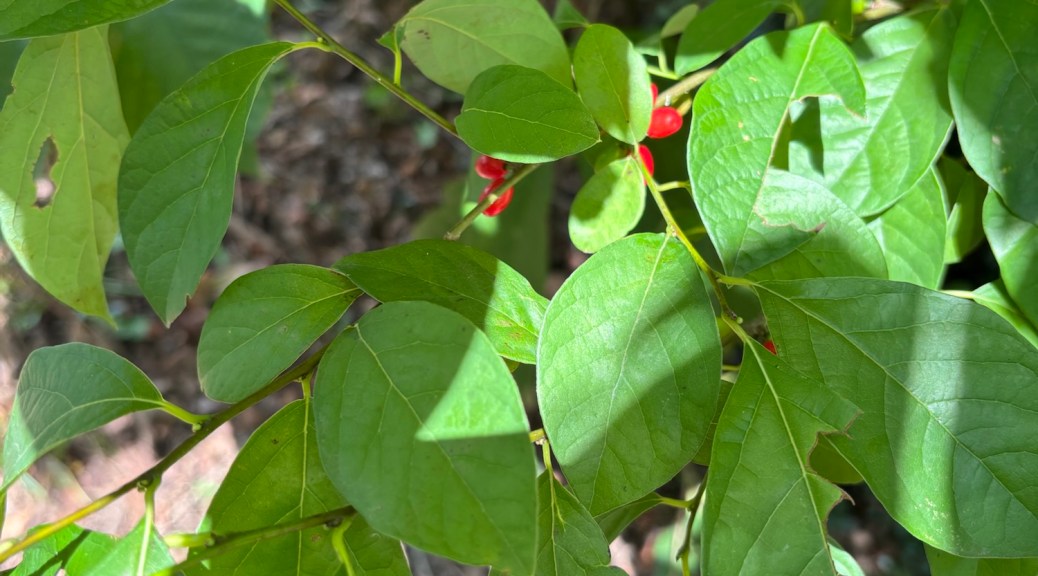
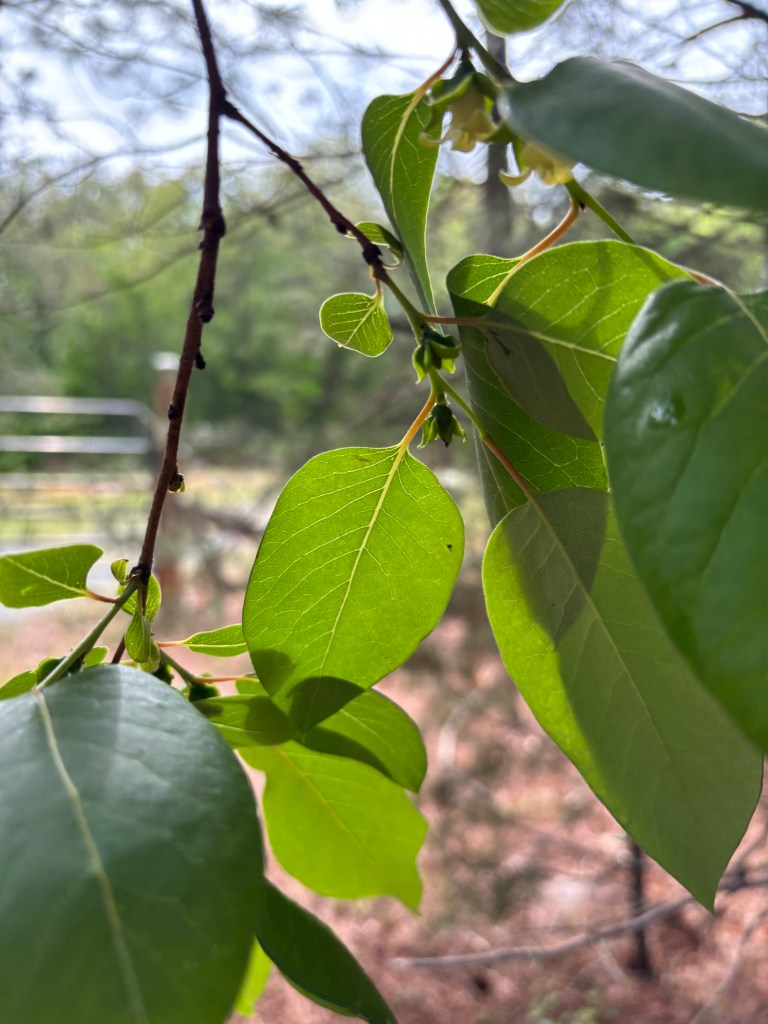
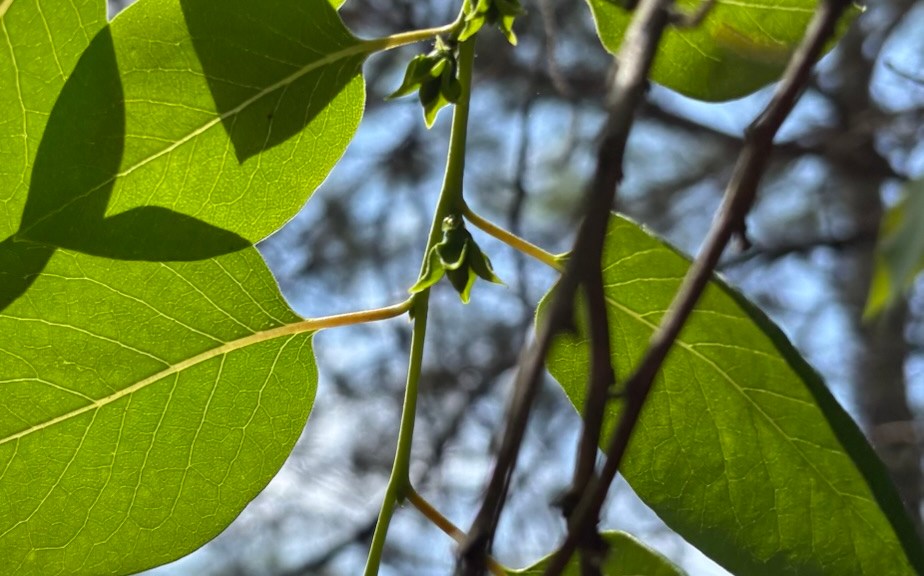
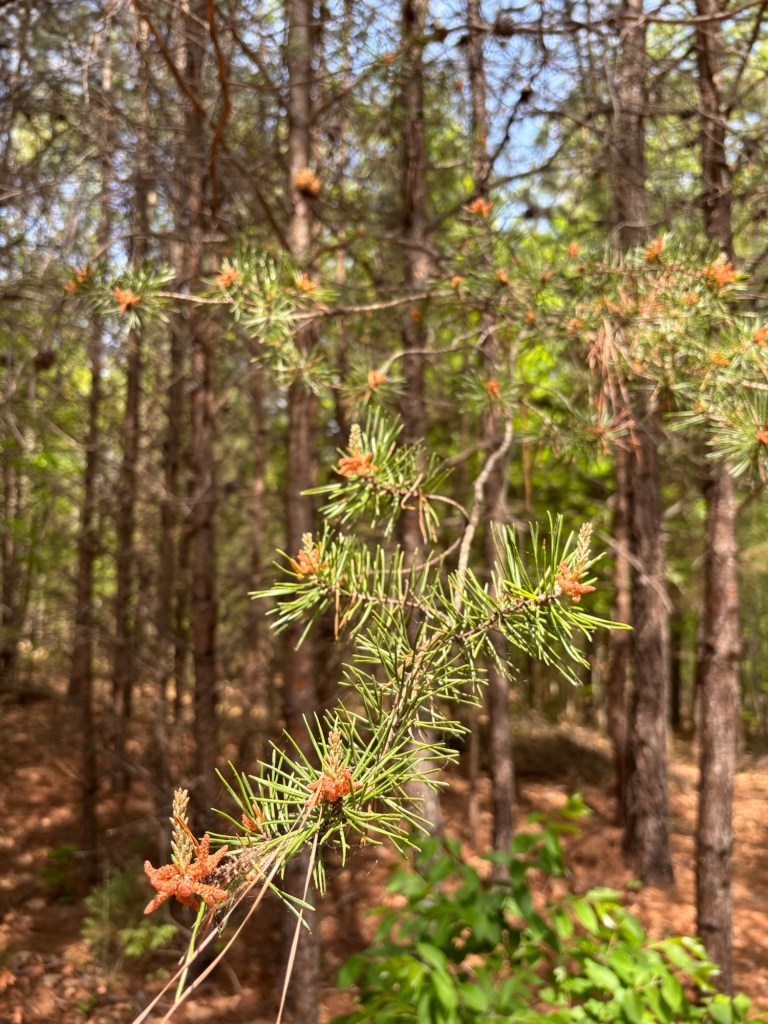
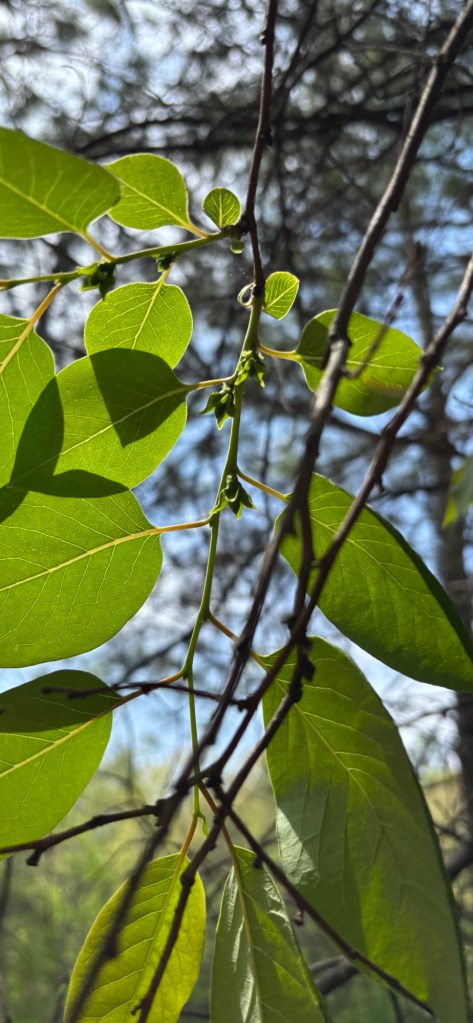
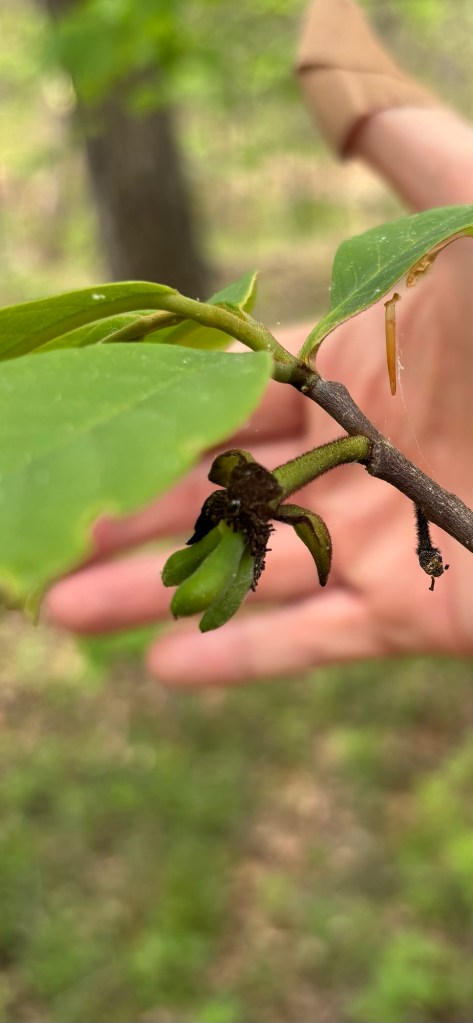
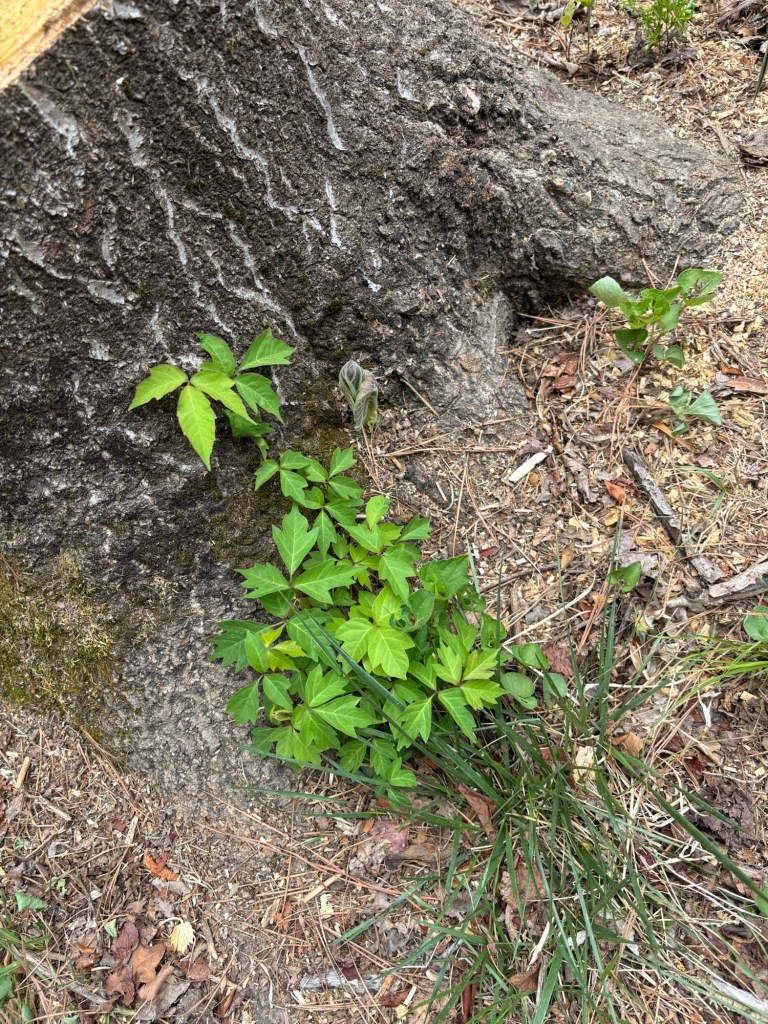
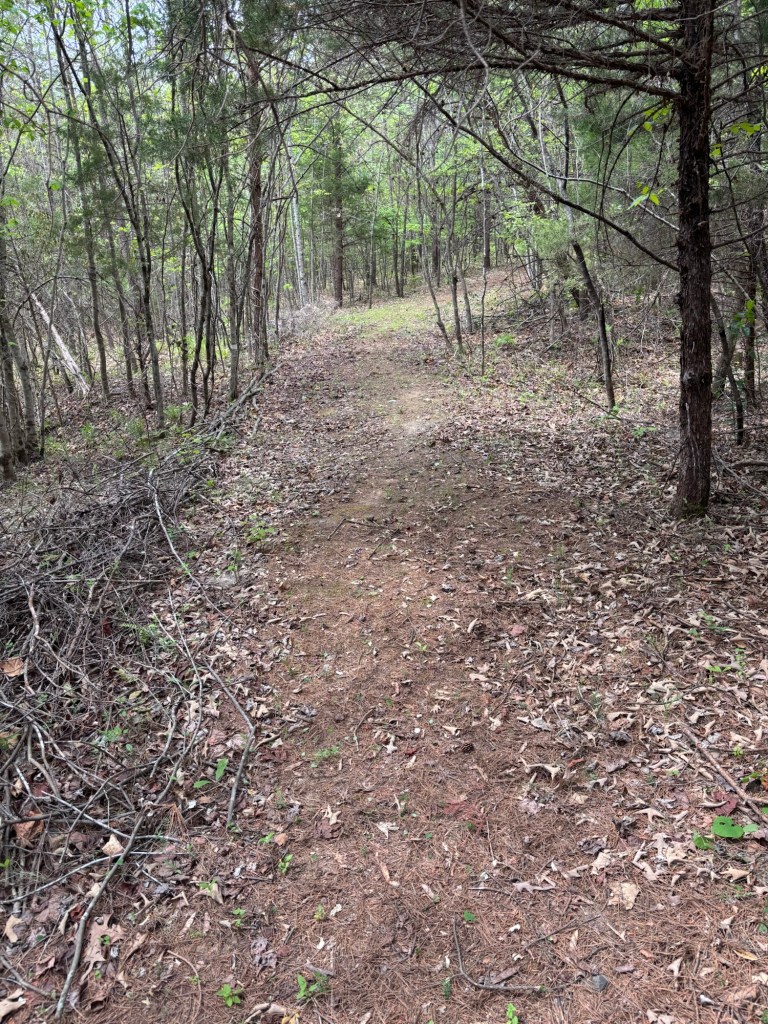
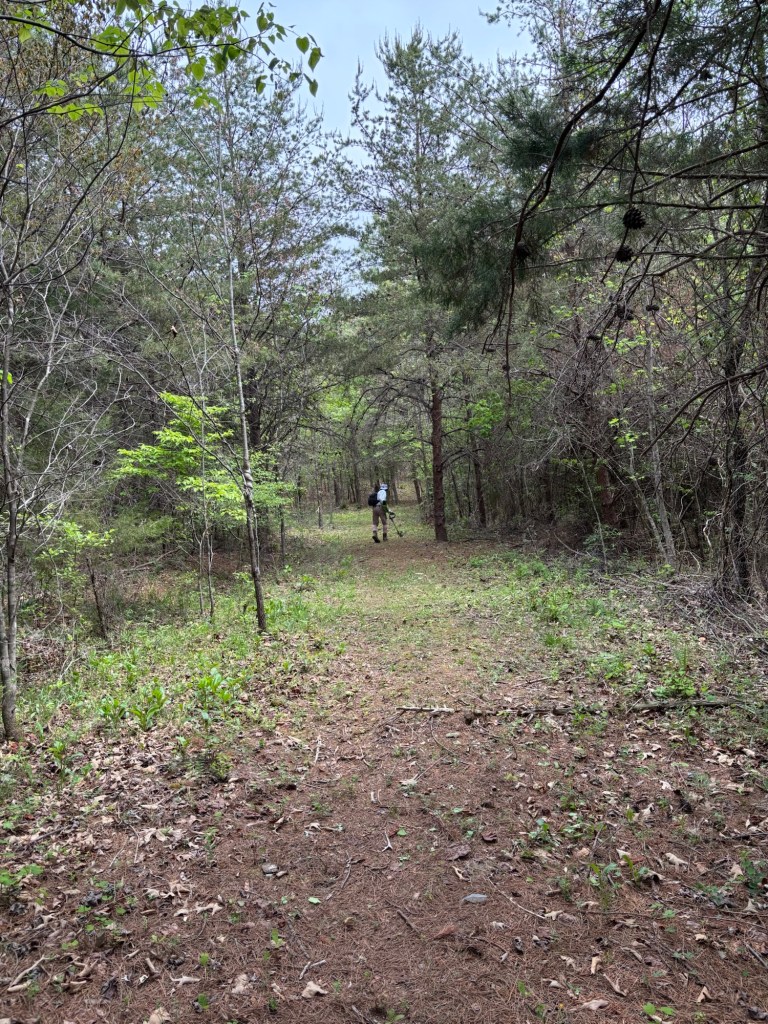
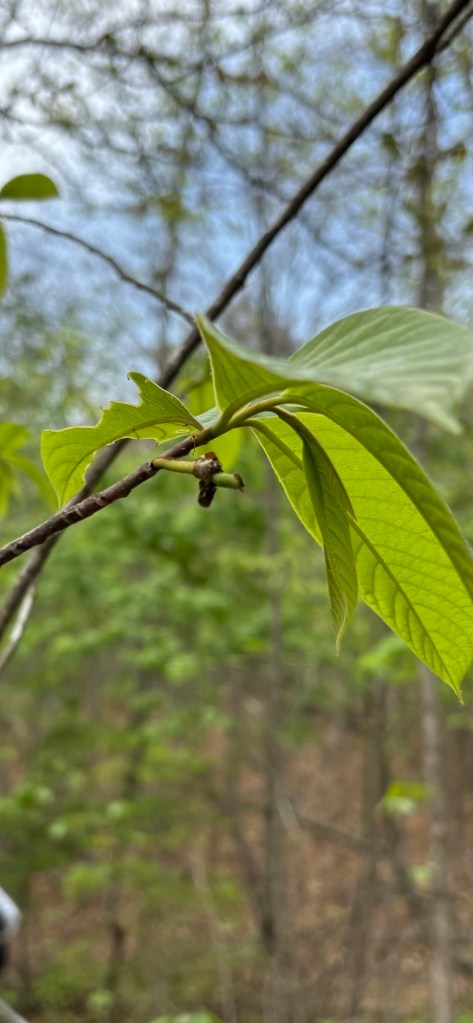
Catkins on a Virginia pine, Pinus virginiana.Developing leaves and flowers of a female American persimmon, Diospyros virginiana. Early fruit on a pawpaw, Asimina triloba. Eastern poison ivy, Toxicodendron radicans, found on the Pawlonia stump. Taken from Orchard hill trail at the bottom of SAFF. Chris string trimming on the old farm road. Another pawpaw fruit set down in the old clonal colony.
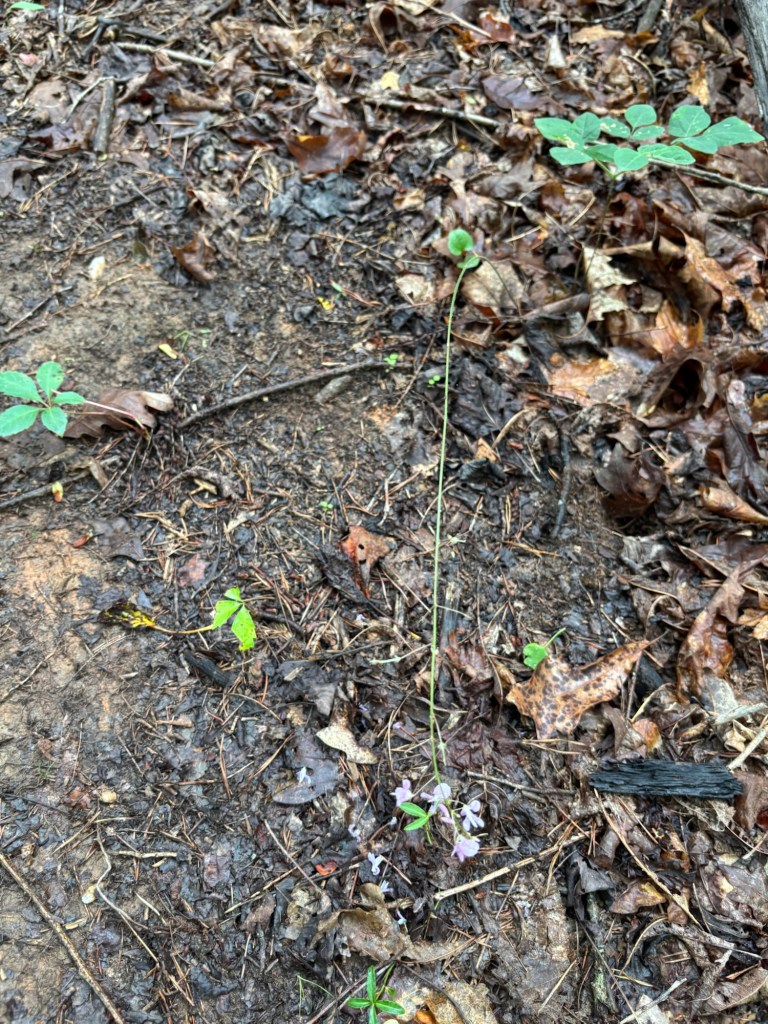
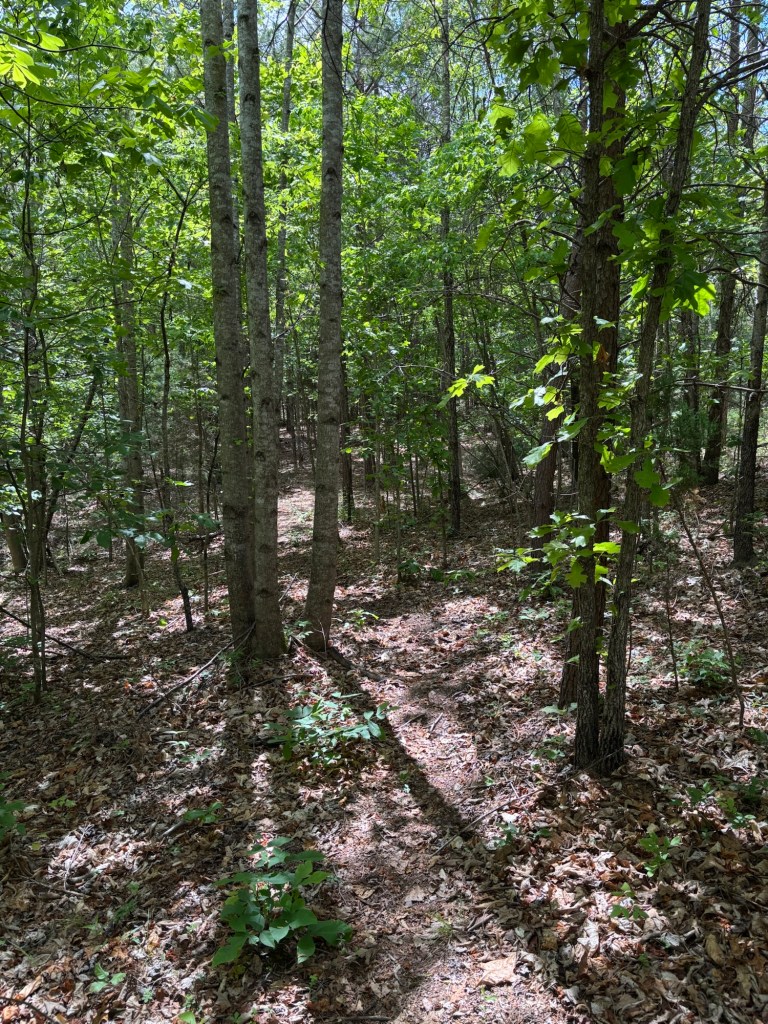
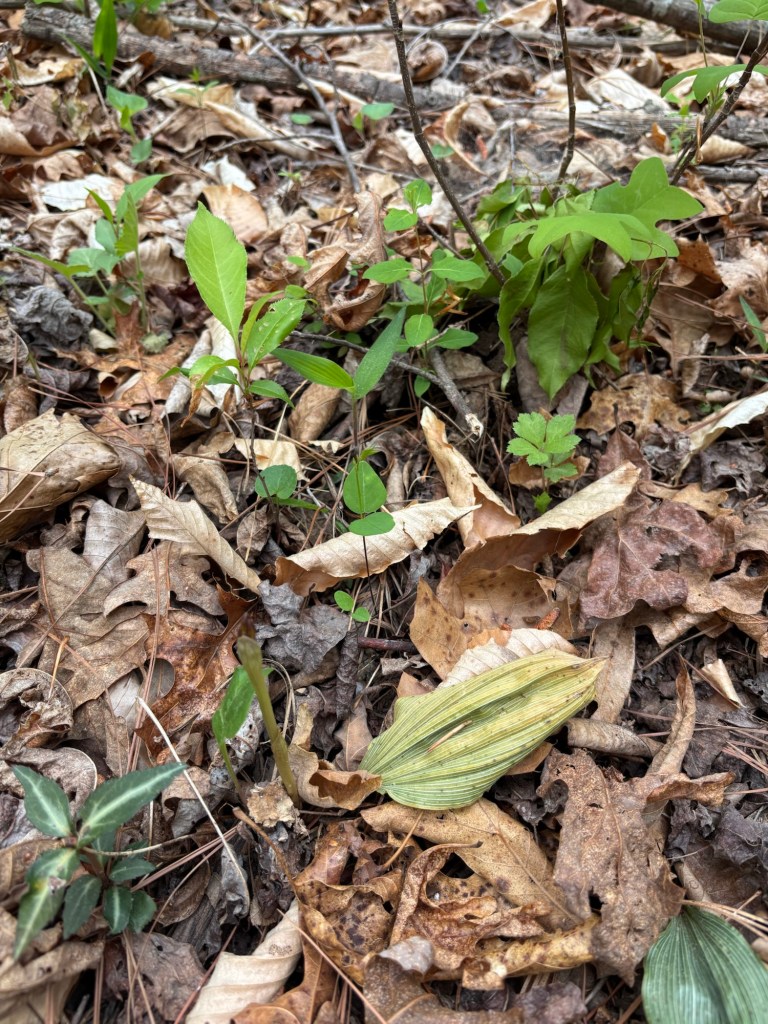
We got out to the farm this morning to get a few things done and take a walk. The forest is getting fully leafed out and it looks like summertime in Virginia all of the sudden. We were happy to see a few surviving pawpaw fruitlets still there after the wide spread but scattered frost damage in all three pawpaw patches. The persimmon trees are starting to get flower buds. We saw American hog peanut and creeping bush clover growing near our trees and feeding them nitrogen underground. Mountain laurel is budding up in the woods. We saw Aplectrum hyemale, putty root orchid, sending a flower stalk up with a leaf wilting. This flowering and dying back usually occurs in late spring/early summer (May or June here).
Putty root orchid with striped leaf and stalk arising from it.