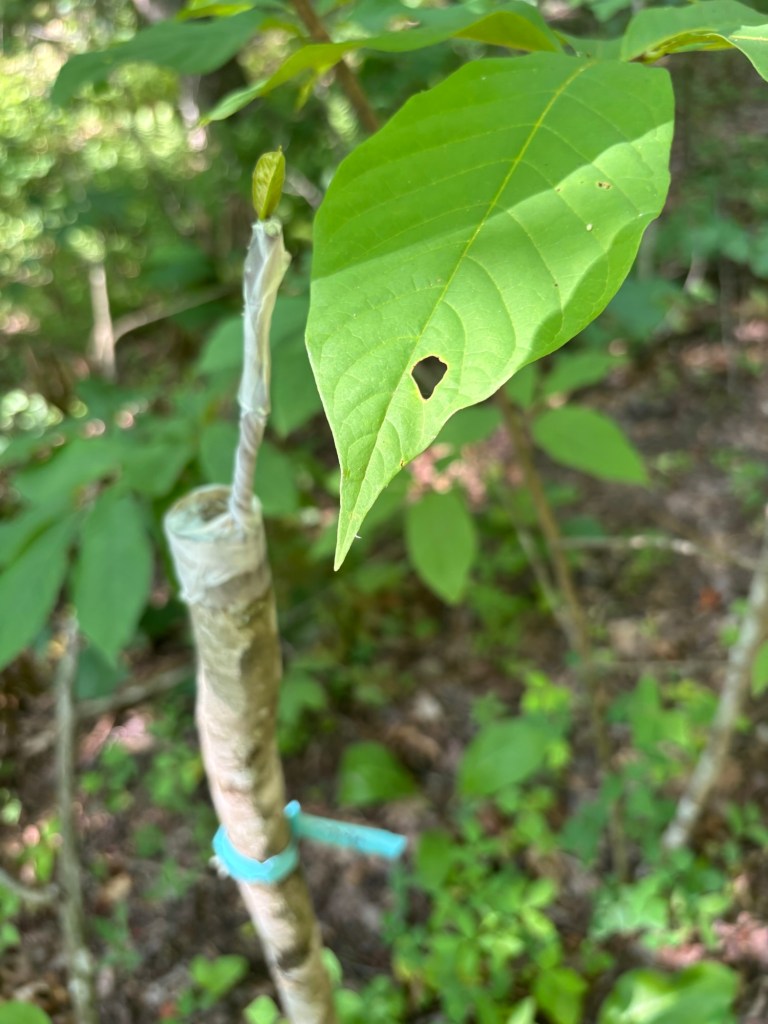
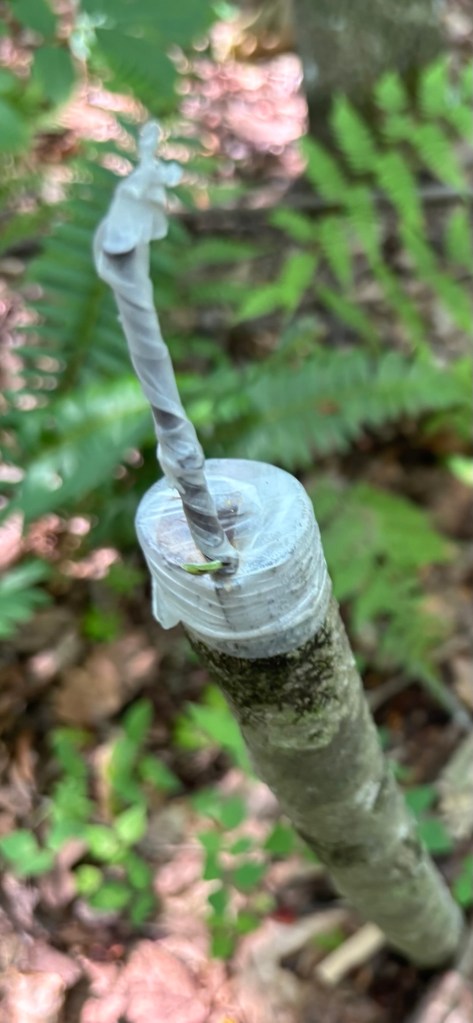
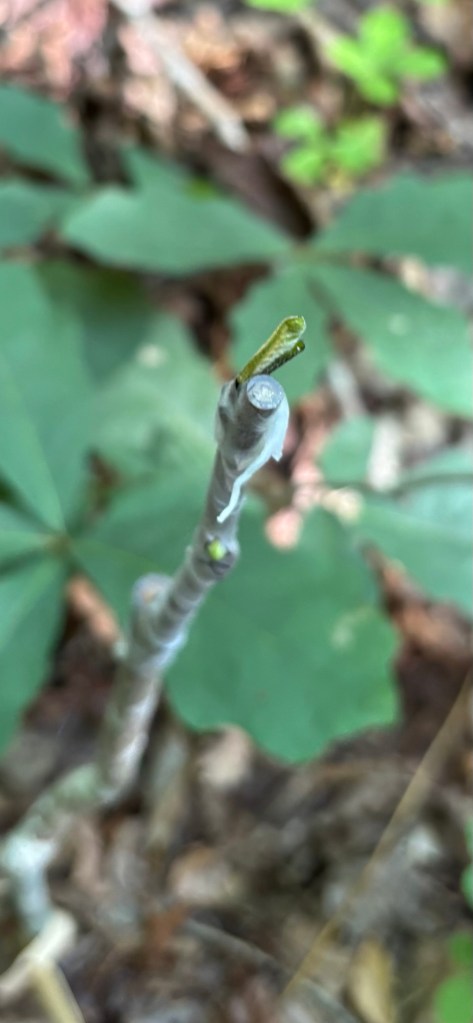
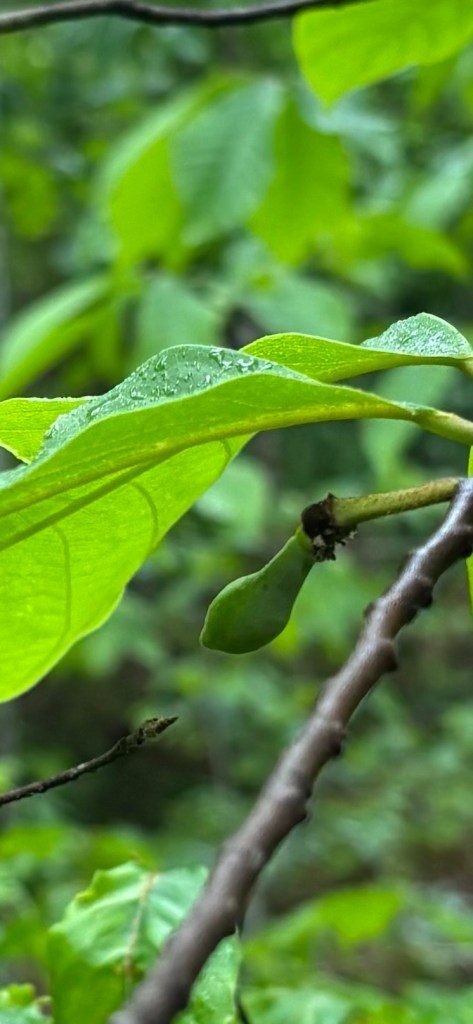
We hope everyone is staying cool and safe on this holiday weekend. This heat and humidity has kept us focused on indoor projects and activities for a week now. 102 degrees Fahrenheit today at the farm. We went over early to check on the grafted pawpaws and give them some water since it hasn’t rained. It was extremely hot and humid down there in the clonal colony. The fruits are holding on despite the drought and heat. The grafting project appears to be a success with 80% growing new leaves through the Scion wood.
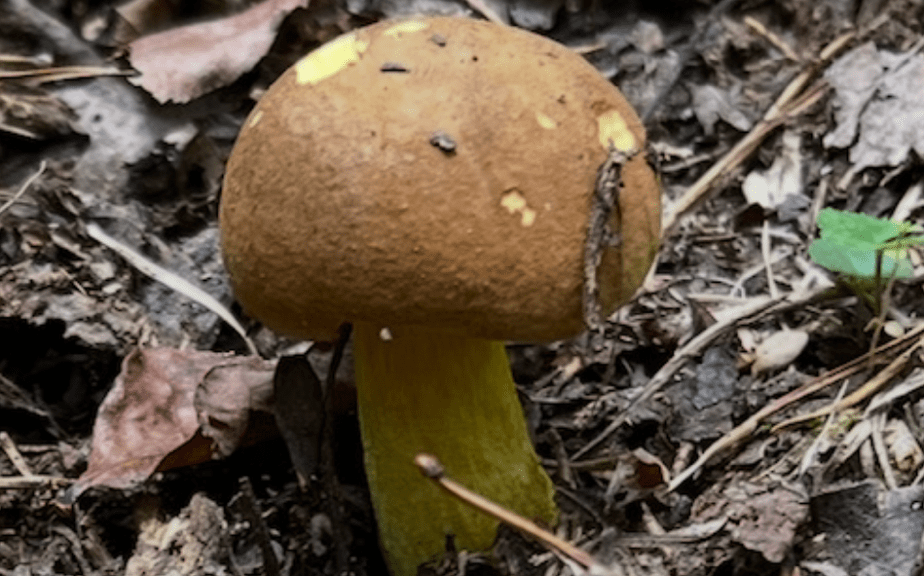
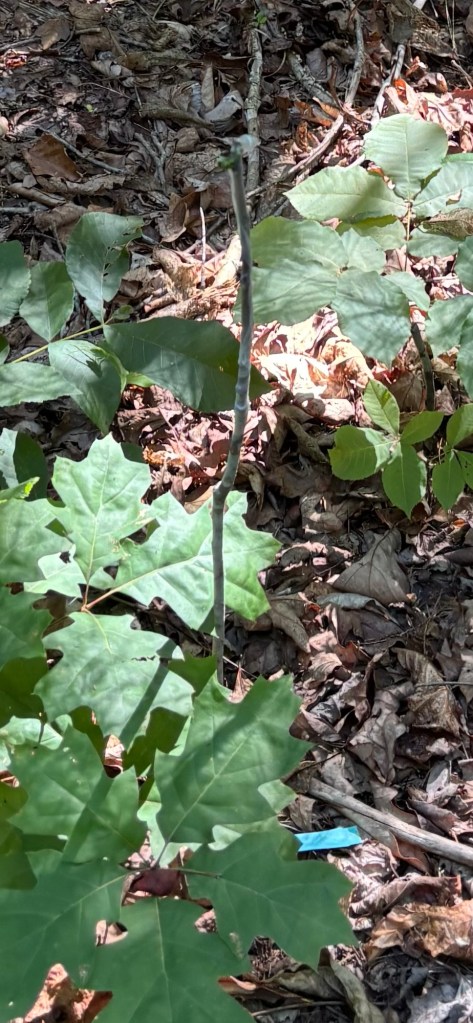
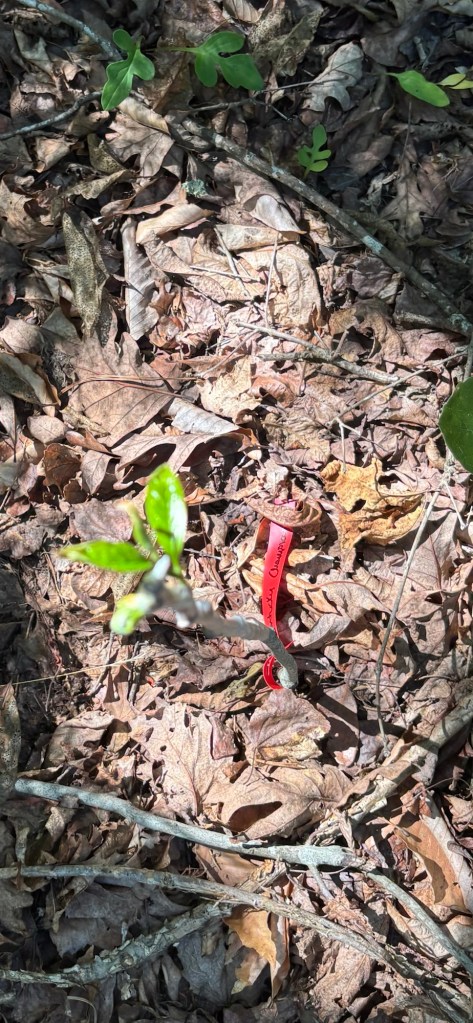
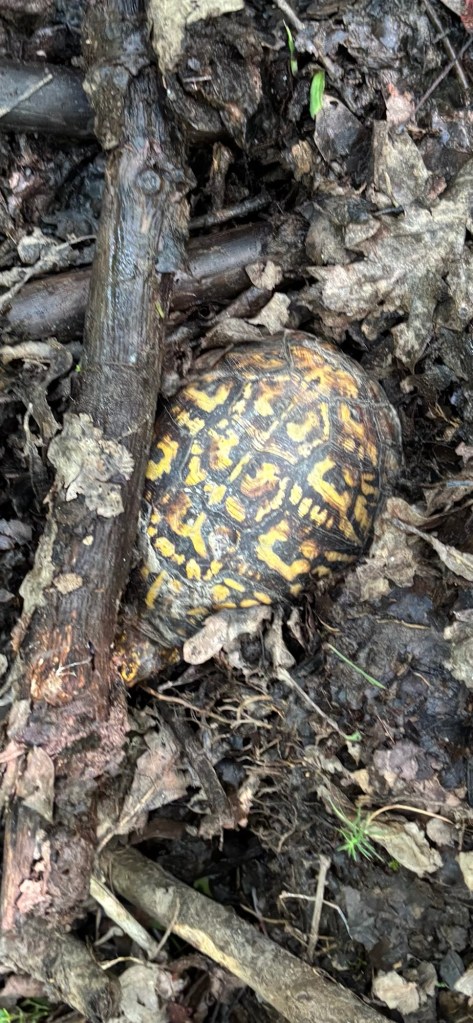
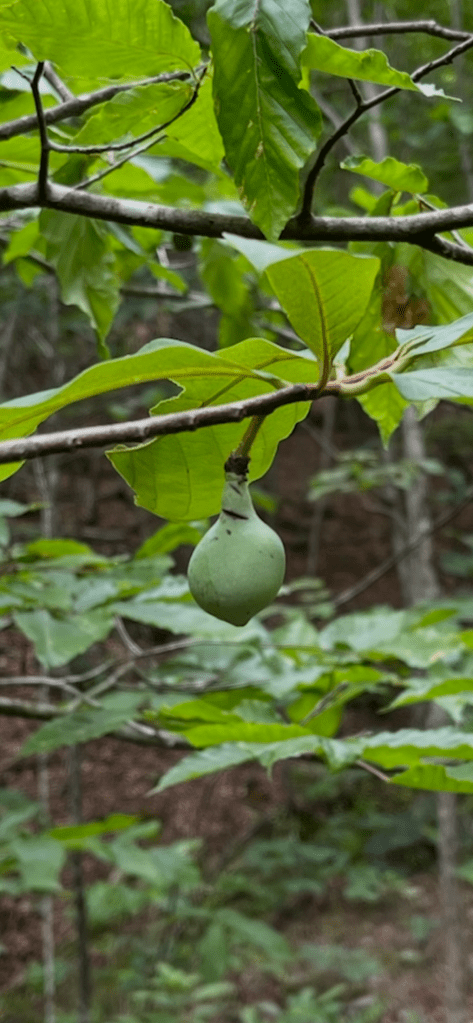
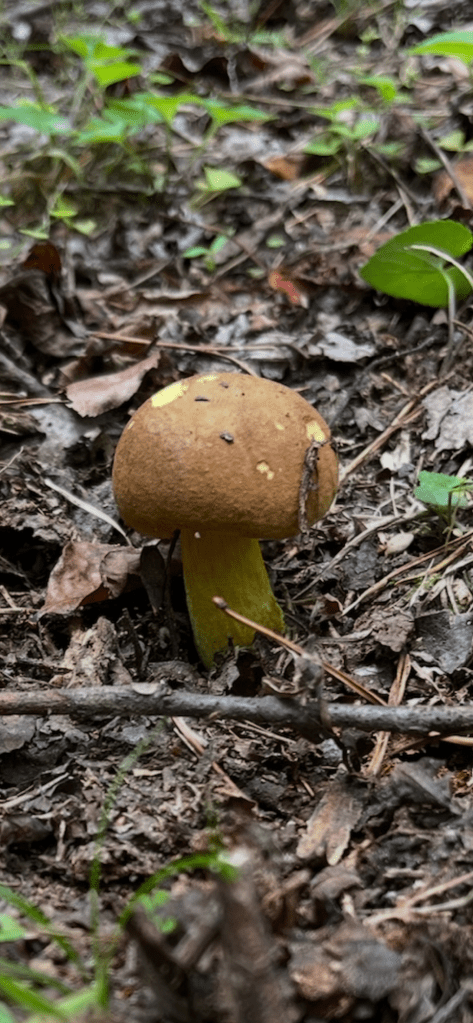
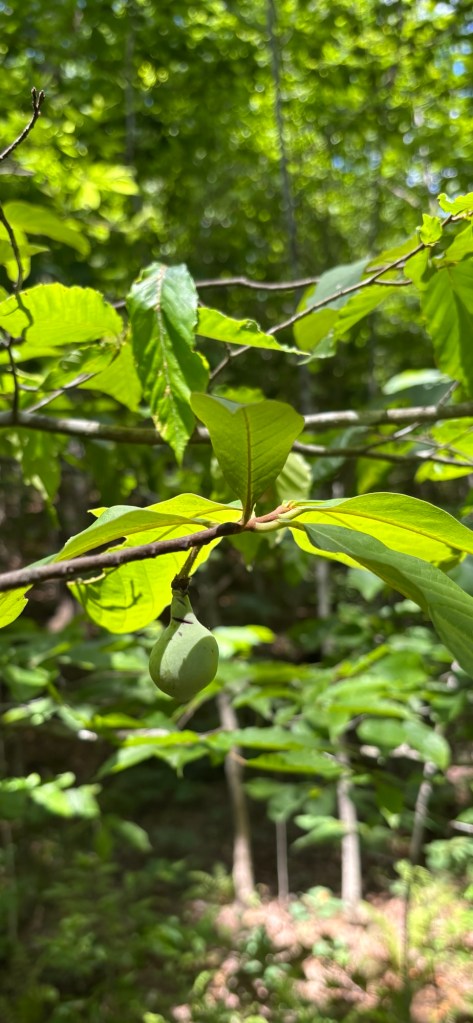
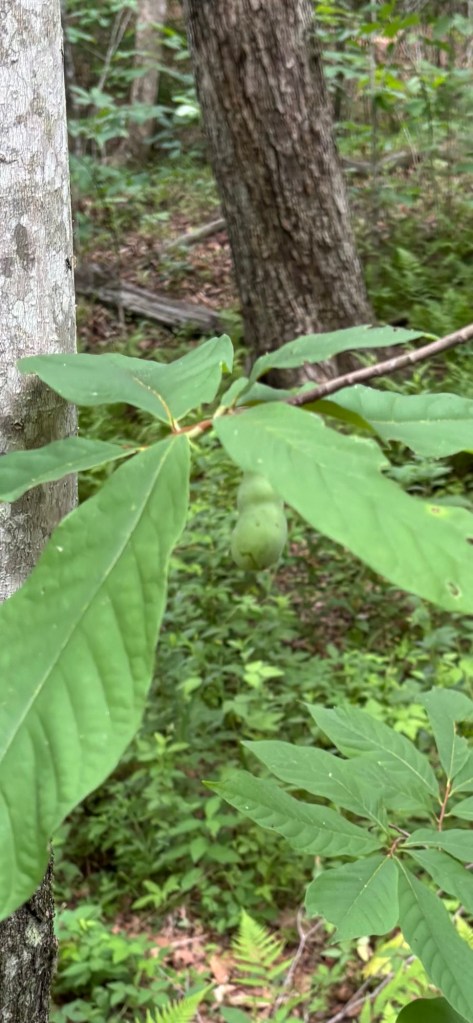
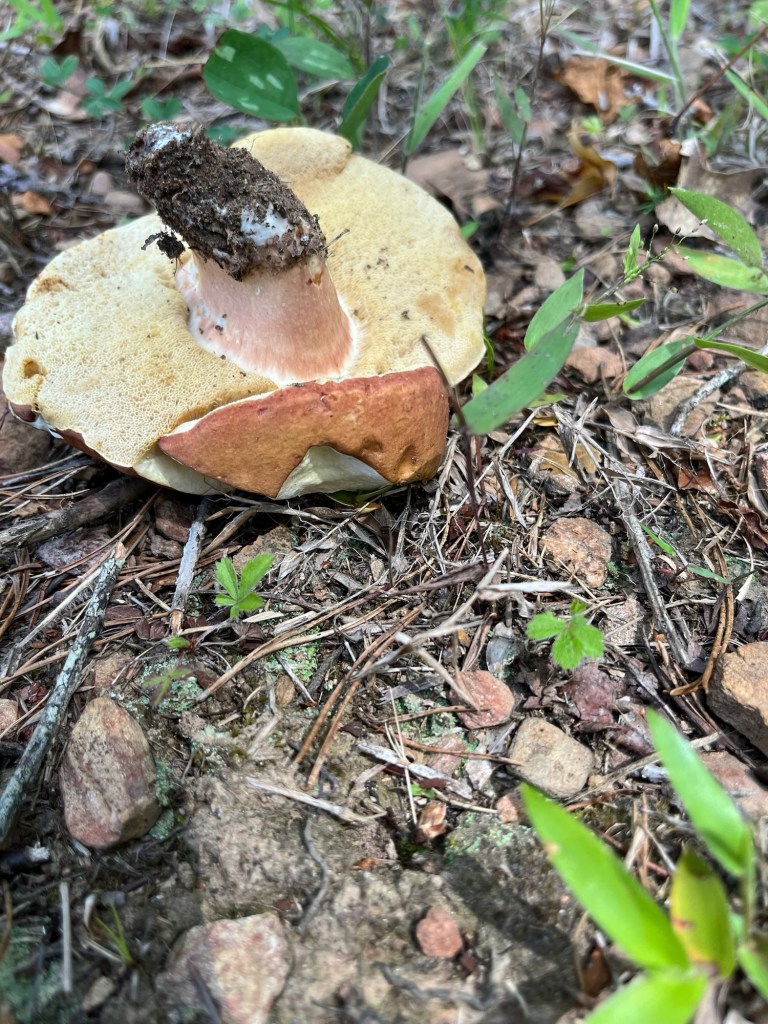
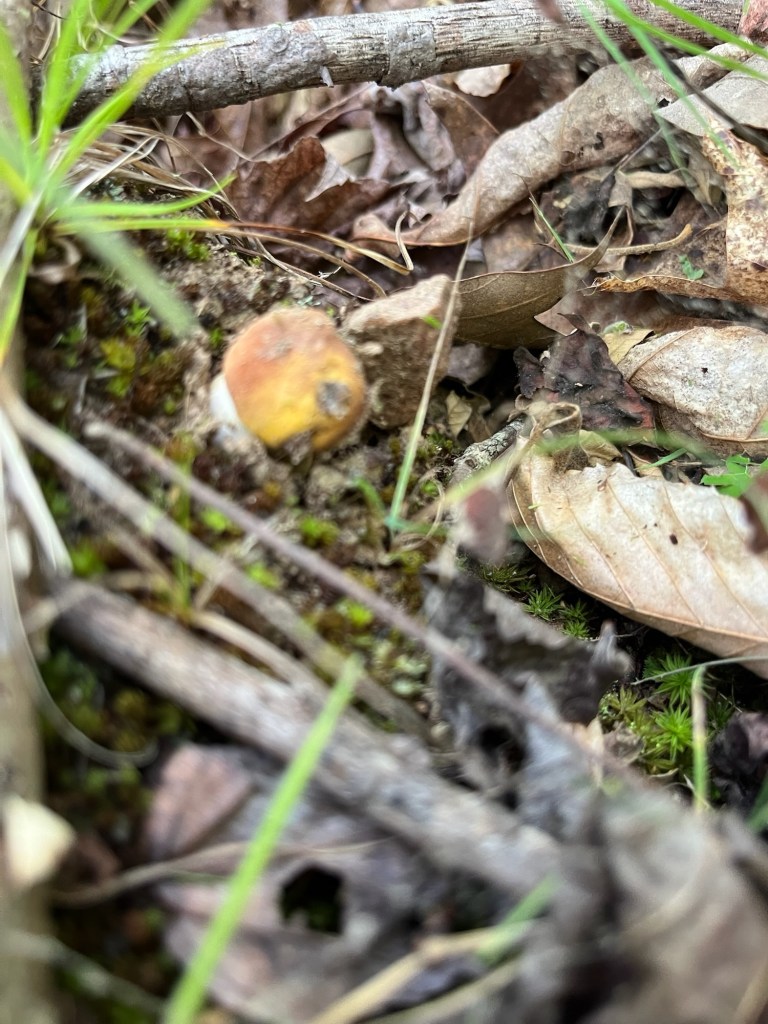
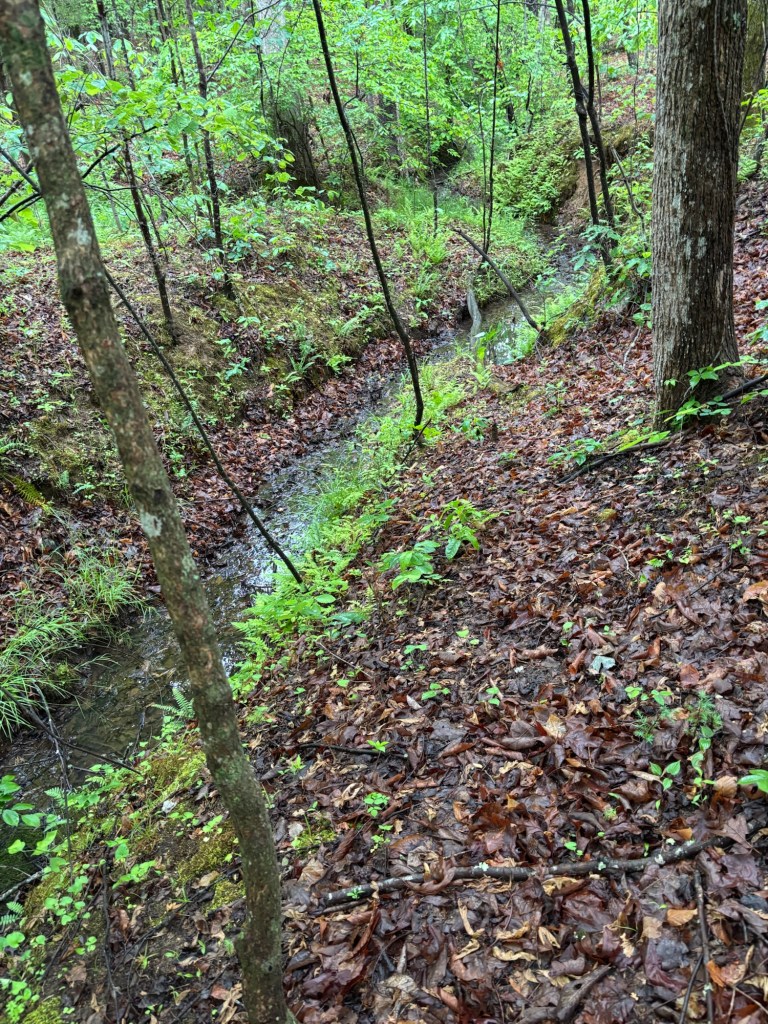
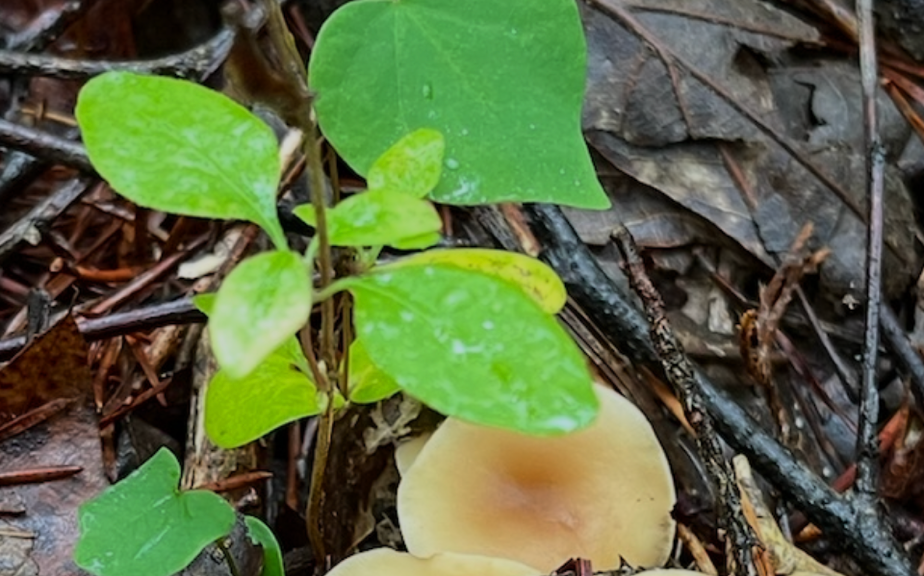
Wilson cultivar in the old clonal colony across from the Pawpaw Peninsula. Kentucky Champion cultivar on the Southside Gully near Fern Trail sprouting up through the top. Terrapene carolina, Common box turtle, down in the main waterway trying to stay cool. Prolific cultivar in old clonal colony shooting out through the top of Buddy Tape. A bark inlay graft with leaves pushing out from the Scion. Rebecca’s Gold cultivar in the clonal colony. Asimina triloba fruit developing at SAFF. An unidentified bolete found along Ridge Trail.
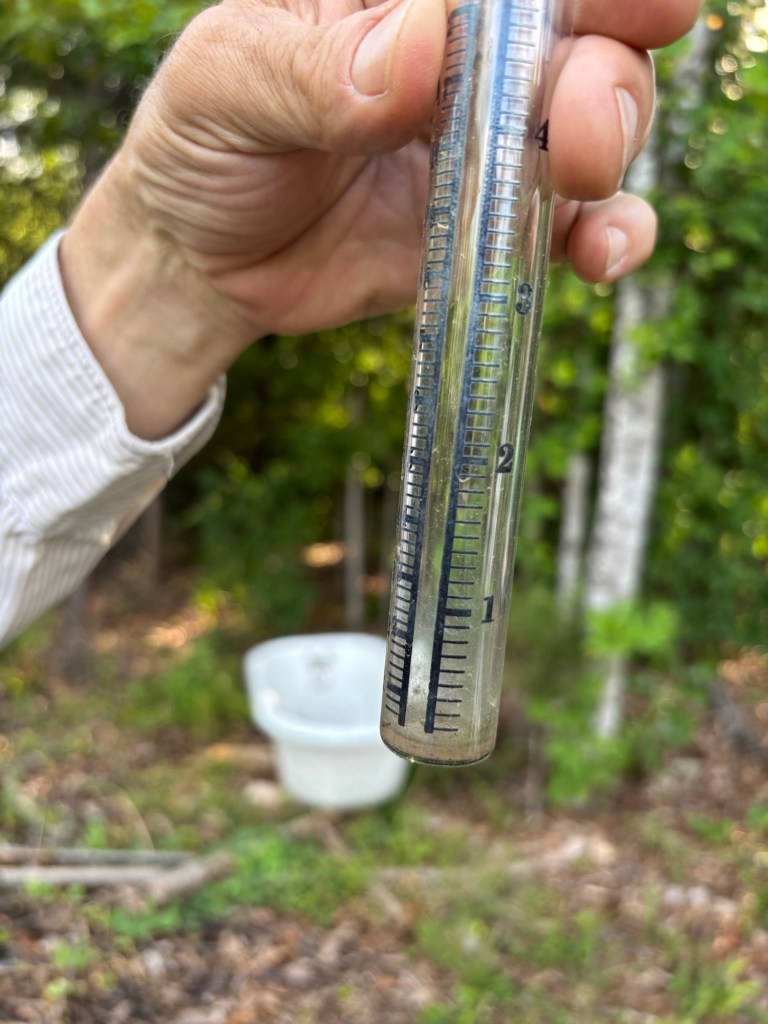
Just a smidgen of rain here at SAFF. Lots of rain in the forecast for the next week. We are really hoping for some of it to fall 🙏🏼SAFF Pawpaw fruit developing in the old clonal colony after multiple years of efforts. Fruit development in the old clonal colony. We are overjoyed and hopeful.
It took us eight days to complete our SAFF 2026 grafting project. We added many heirloom and named Asimina triloba cultivars to contribute to the development of the orchards. We added 20 to the Southside Sally Clonal Colony in the gully, 17 to the Pawpaw Peninsula and about 40 in the largest clonal colony across the creek. We now pray for rain to encourage the roots to grow up through the new cultivar and push through the Buddy Tape at the leaf buds. We will be watching closely for growth if we get some rain.
We also worked on trails. We mowed, weeded and boxed a few areas that were a bit overgrown and ticky. On the last day of working at the Southside Gully with Sally and her clonal clan, we didn’t even see any ticks. 😅 Through all of it, neither of us were bitten and we attribute it to our use of Sawyer’s Permethrin on our clothes (which is poisonous to cats when wet so take care), tucking our socks into our pants well enough, lint rollers to fend off the tiniest attackers and vigilance. Keeping the trails trimmed back and low enough so the ticks can’t get on us from the edges is important as well. We have only seen the Lone Star ticks this year yet they have been in abundance everywhere but especially in wilder spots where grasses are long. Being at the farm most of last week helped us abate the ticks some since we had the time to walk the trails and cut back overhanging trees in readiness for riding our bikes —and tractor – trailer through the widest trails. We also trimmed the grasses back with the string trimmer. Otherwise ticks would easily prevail with their constant hunting of warm blooded mammals.
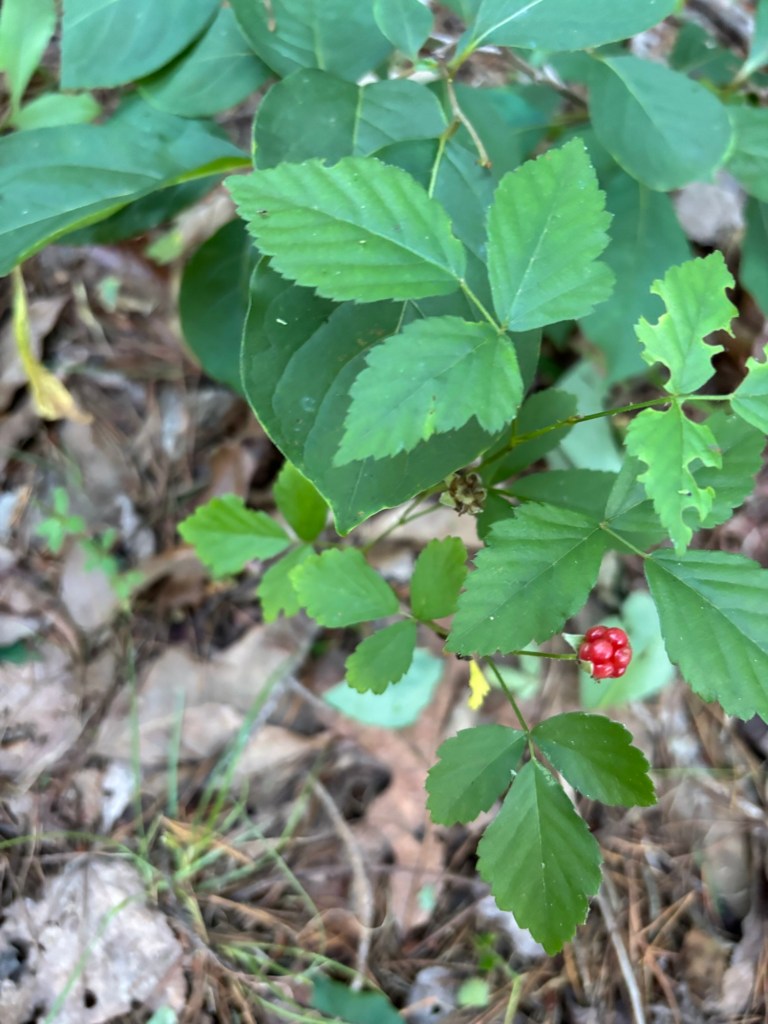
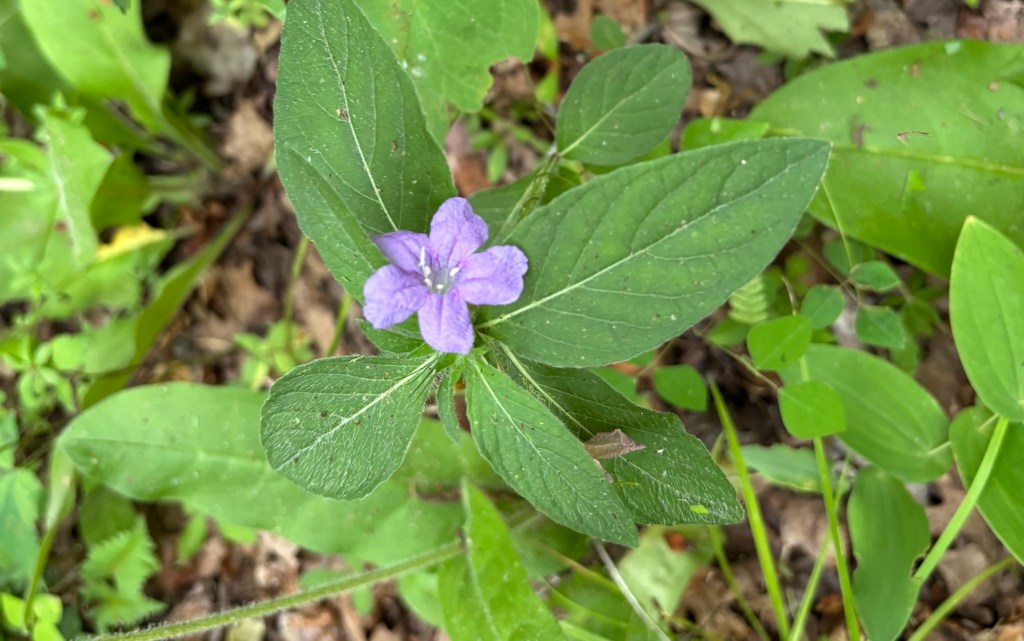
Rubus flagellaris, Common Dewberry, found on Orchard Hill Road near the Seedling Pawpaw Orchard. It supports native ecosystems as a valuable food source for birds, small mammals, insects and people. It’s a source of nectar for pollinators like bees and butterflies. Fruit turns black when ripe. Ruellia caroliniensis, Carolina ruellia, or Carolina wild petunia, is an excellent pollinator attractant found in the old clonal colony pawpaw patch.
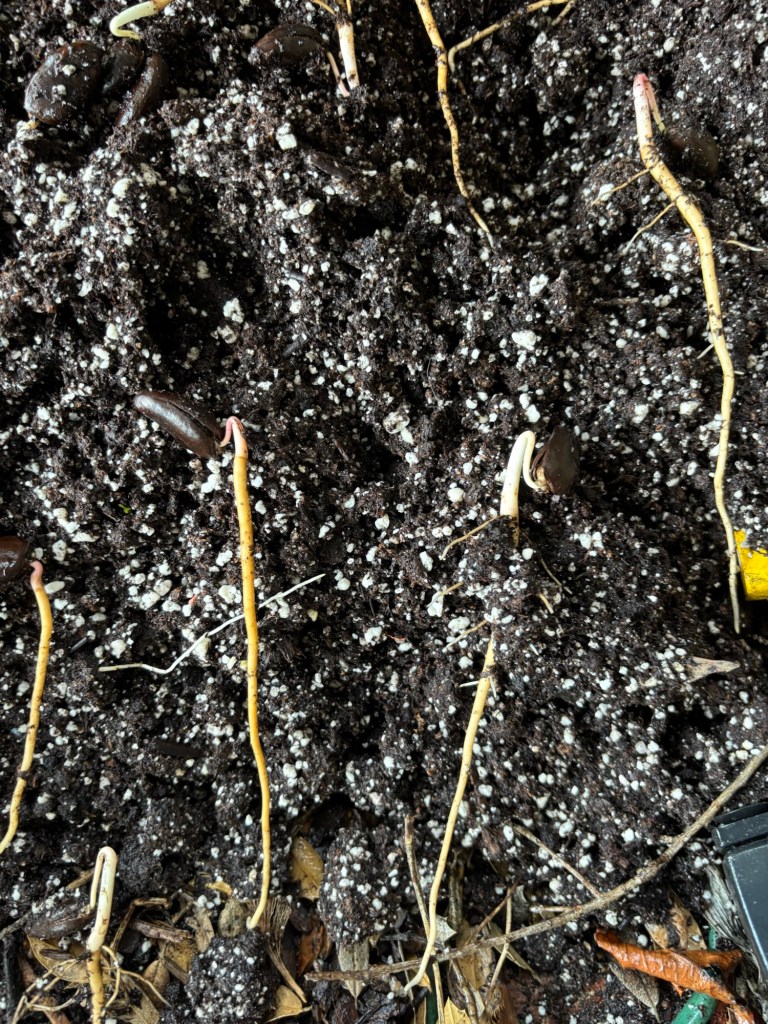
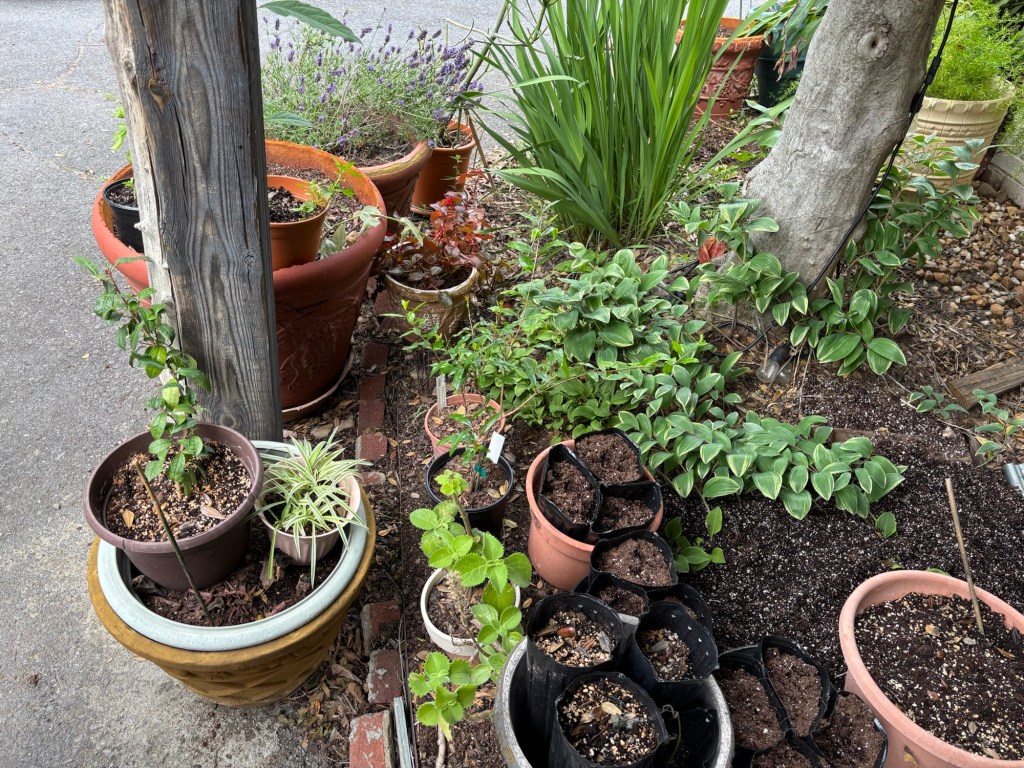
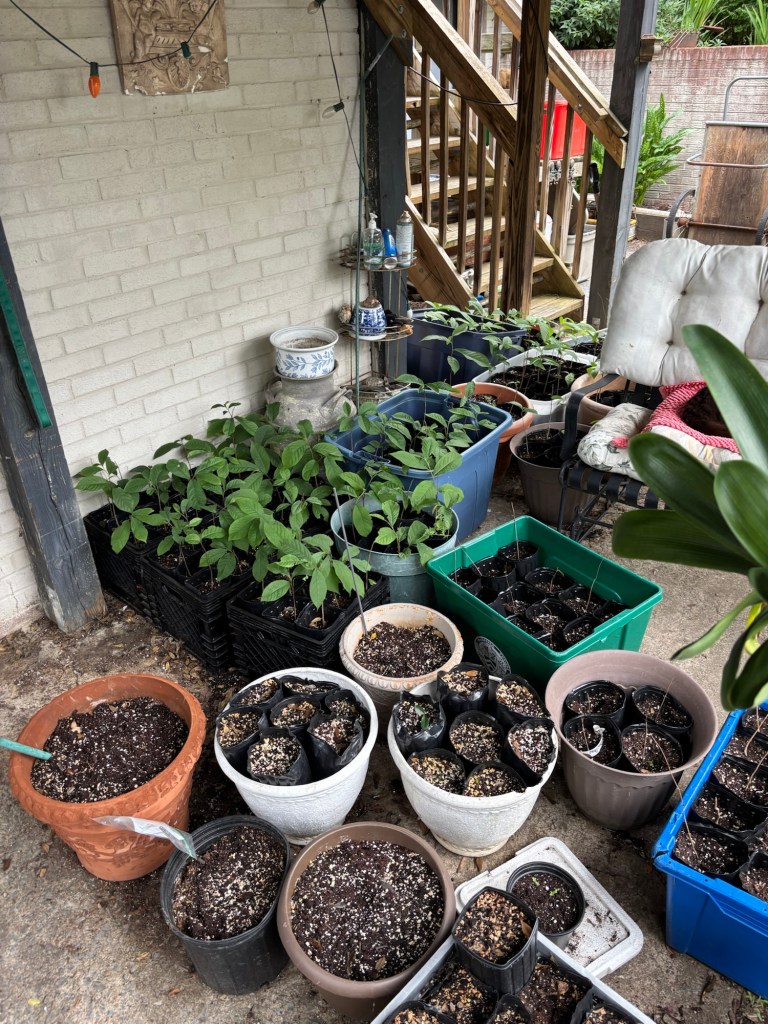
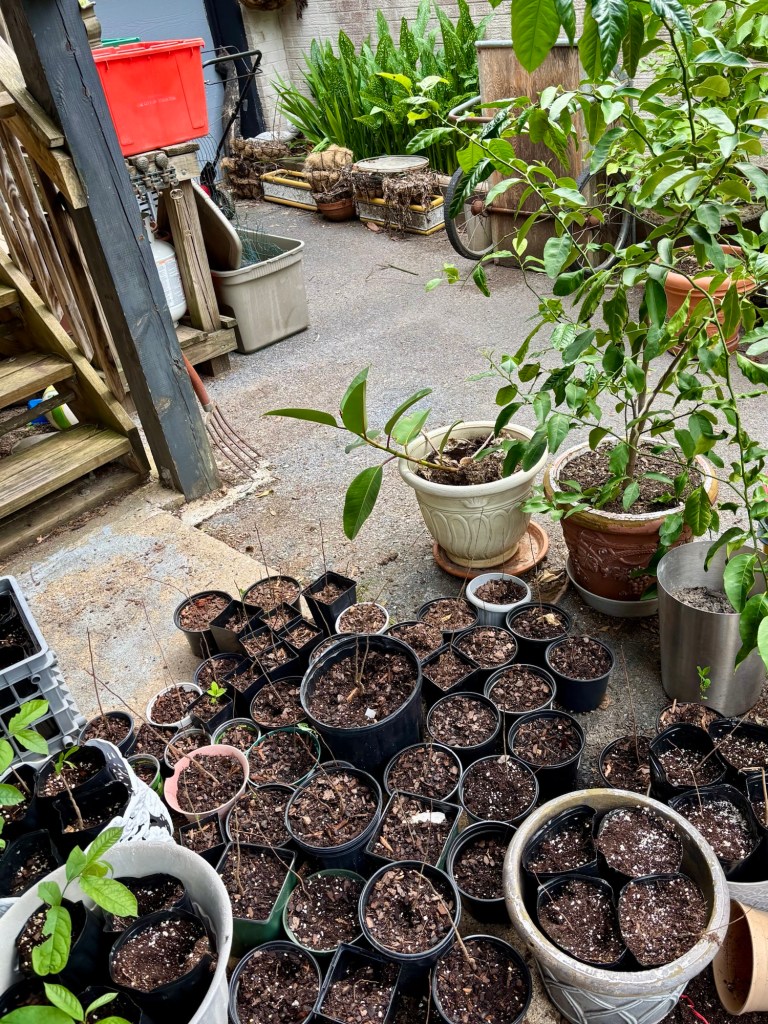
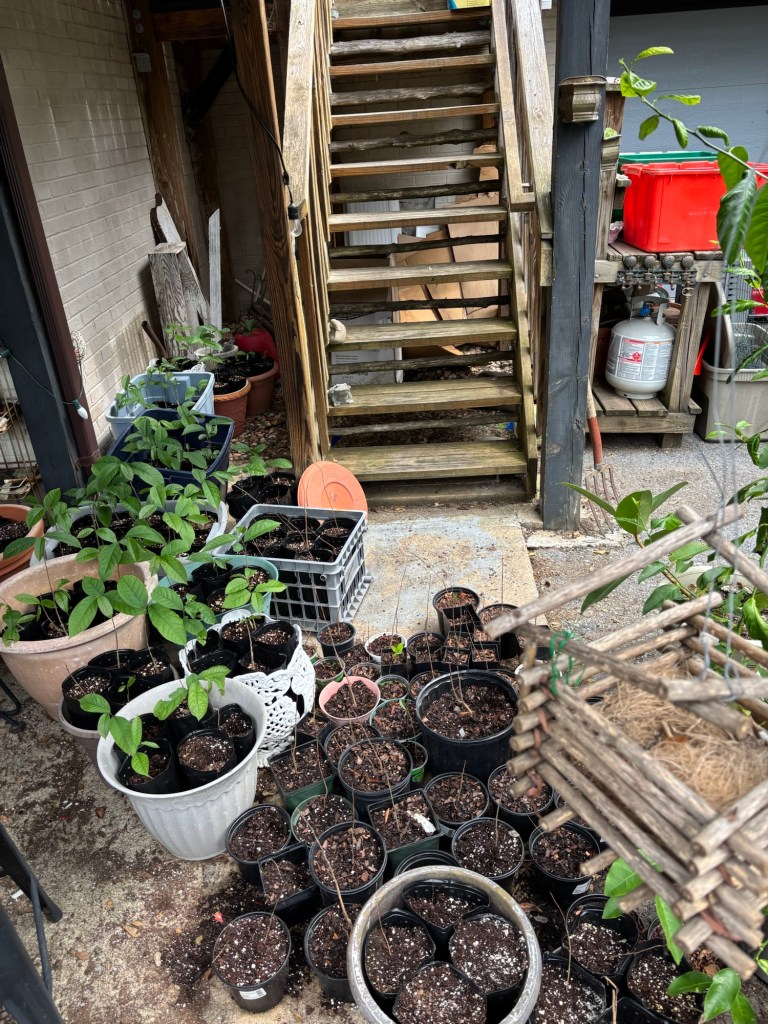
We are also in the middle of the 2026 pawpaw seeds opening and being transplanted into deep tree trainer pots to keep under our deck in the shade for the summer until we plant them at SAFF in the fall. We’ve potted up about 45 so far and have three big pots to go. It feels like new babies are being born and it’s a festive time with a lot of gratitude in abundance. The miracle of life is a beautiful thing to witness in any context. A new flower is as beautiful and miraculous and a tree is something you can watch grow for a lifetime. There’s a sweetness in watching each of them grow, that’s for sure.
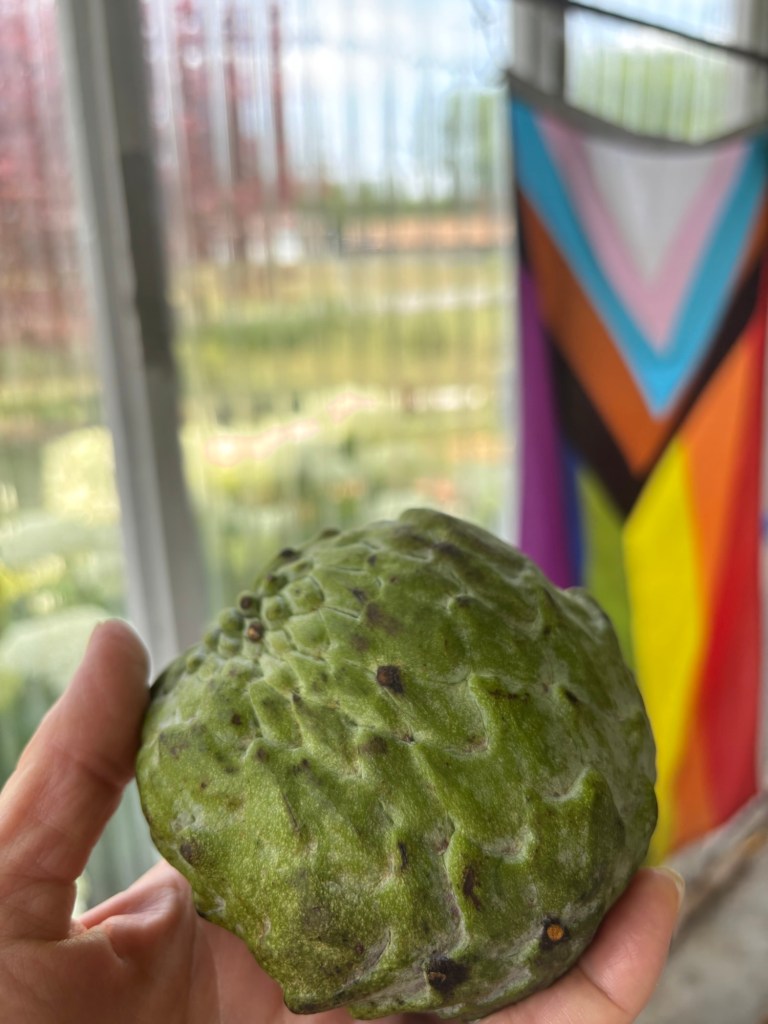
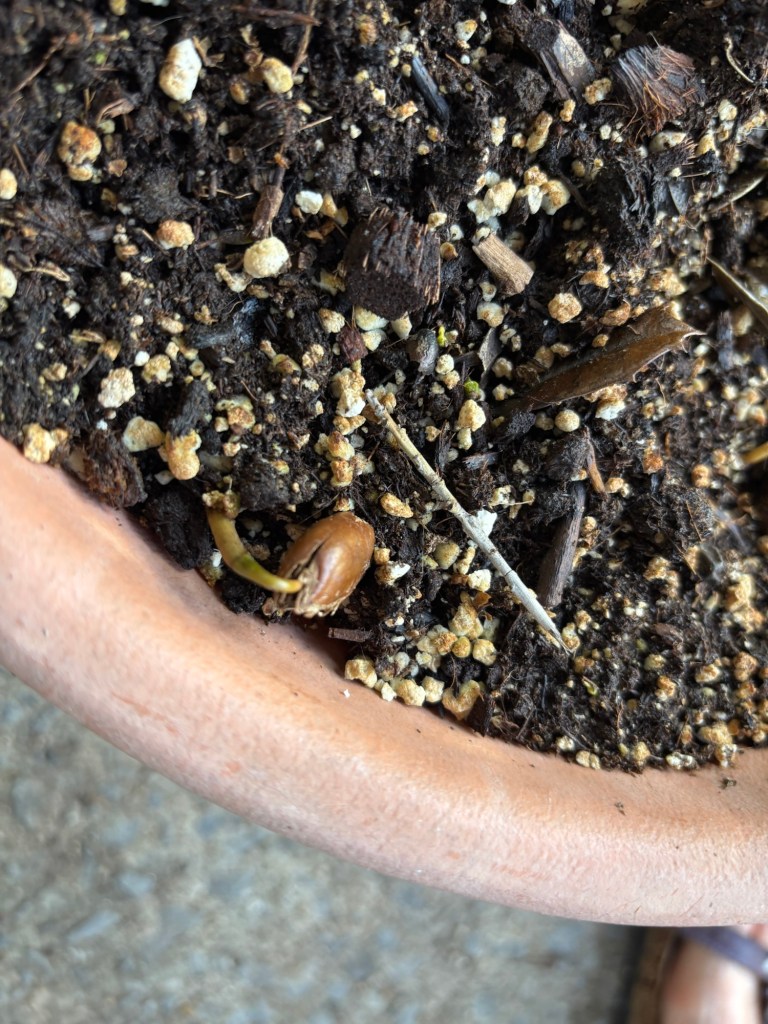
Another pawpaw related project is the Annona cherimola. We’d heard of cherimoya as it’s related closely to the American pawpaw. We couldn’t resist the description of a custardy blend of banana pineapple papaya and strawberry. It is truly delicious and like pawpaws a tropical creamy textured treat. We are saving the seeds of our heart shaped dragon scaled fruit and have one sprouting and potted up already. These won’t be cold hardy trees so they will be kept indoors or in a greenhouse in the winter in order to survive the freezing temperatures in Virginia. We have lemons and avocados already so these cherimoyas will join them in our annual migration indoors.
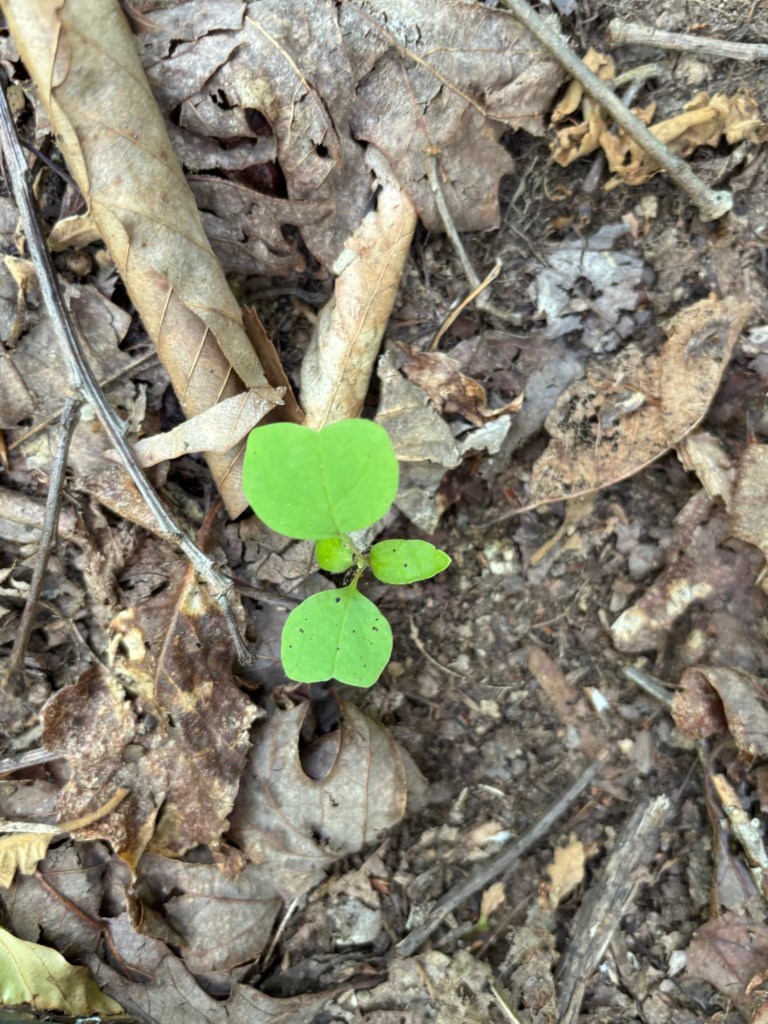
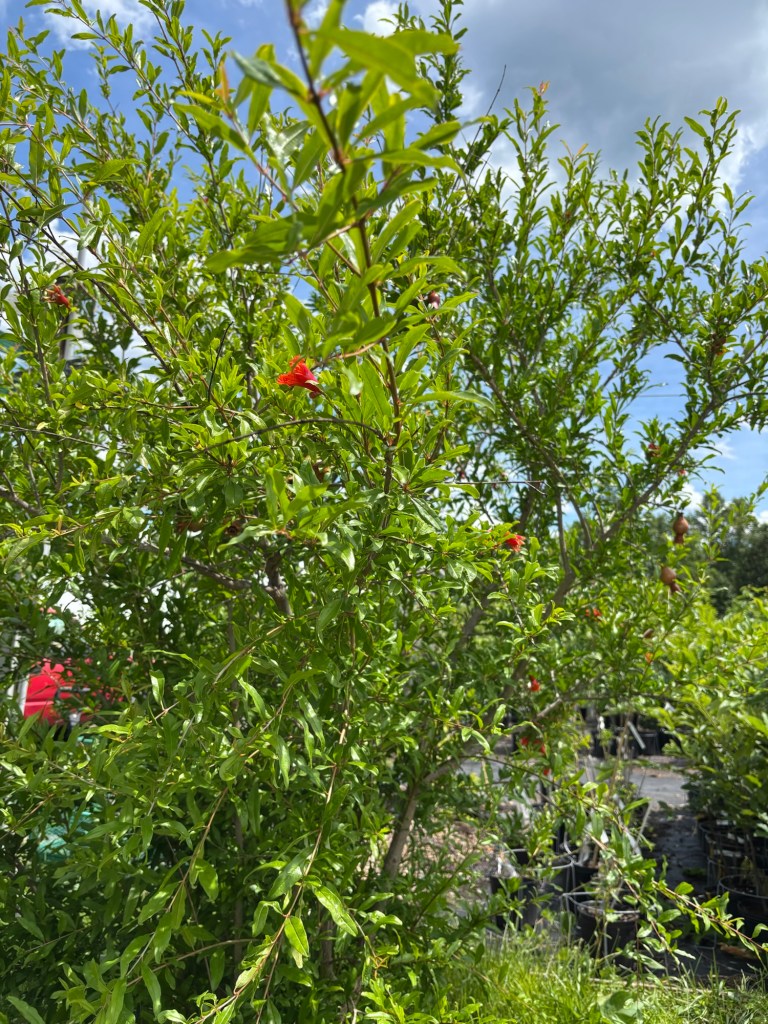
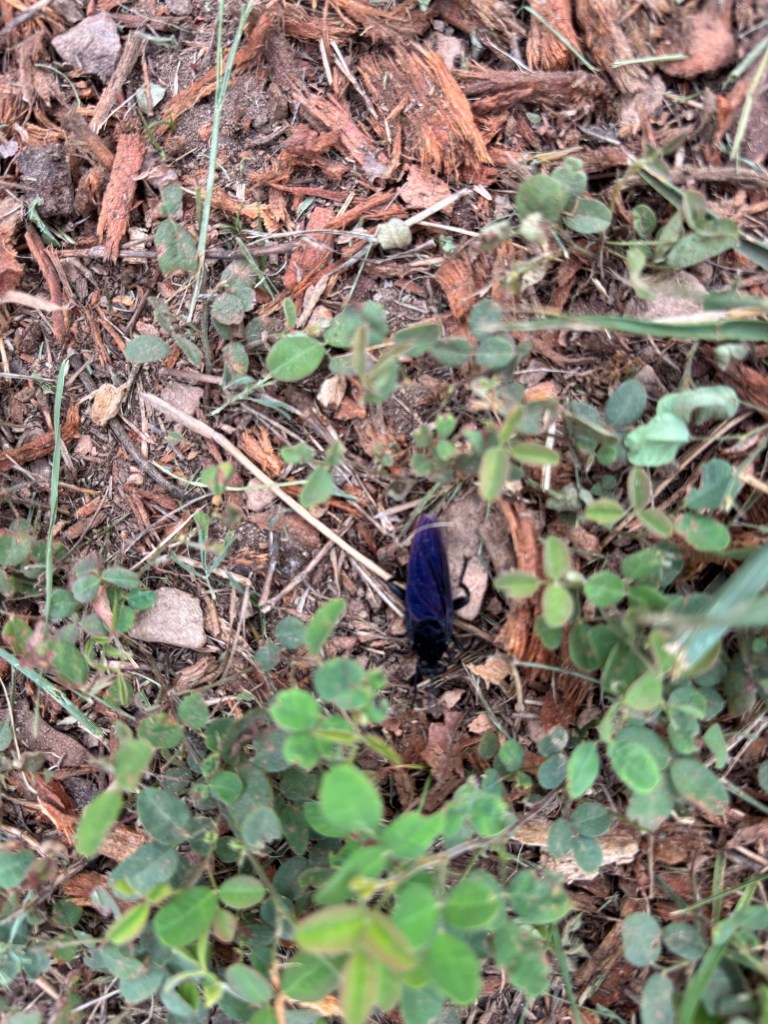
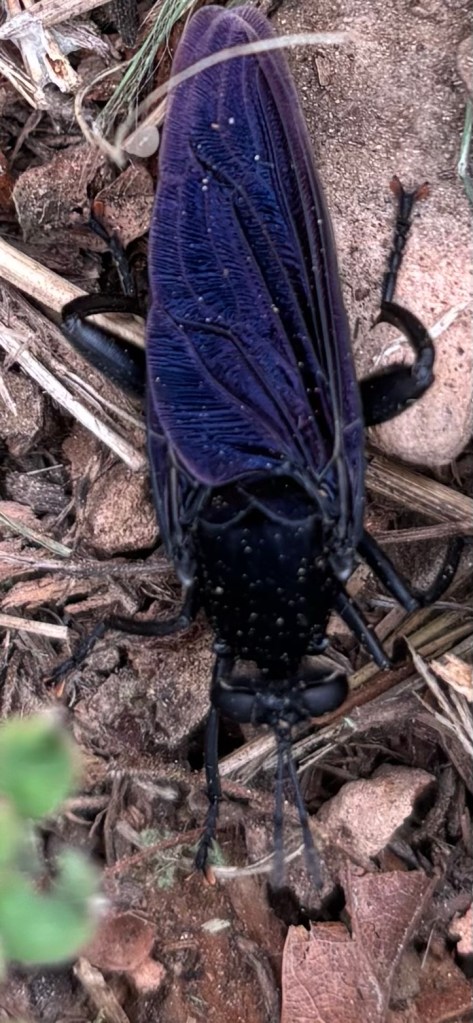
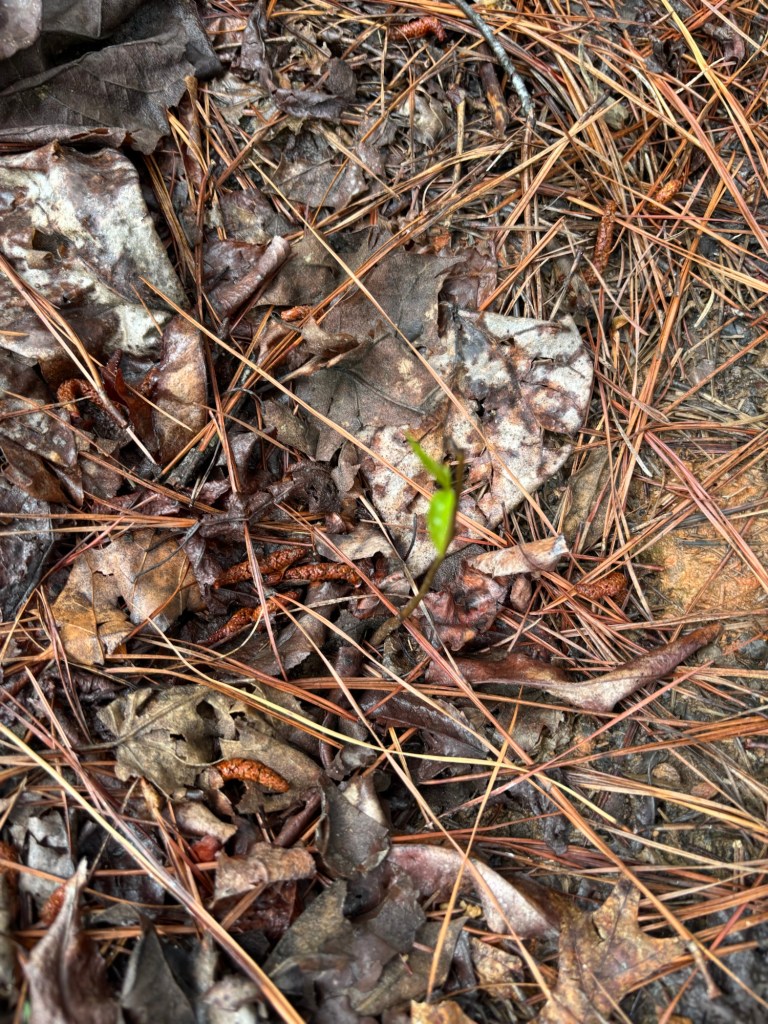
Cherimoya fruit we will grow trees with and overwinter inside.A baby Liriodendron tulipifera, American tuliptree, found at SAFF literally everywhere. This one was in the south end near Three Sister’s Overlook.Pomegranates at Edible Landscaping yesterday afternoon on our way back from the farm. They are beautiful shrub like trees with bright flowers. Mydas clavatus, Clubbed Mydas Fly, a mimic of spider wasps was striking in its beauty. The Mydas clavatus is beneficial feeding on nectar and larvae preying on other insect grubs in soil and decaying wood making them pollinators and natural pest controllers. And beautiful!
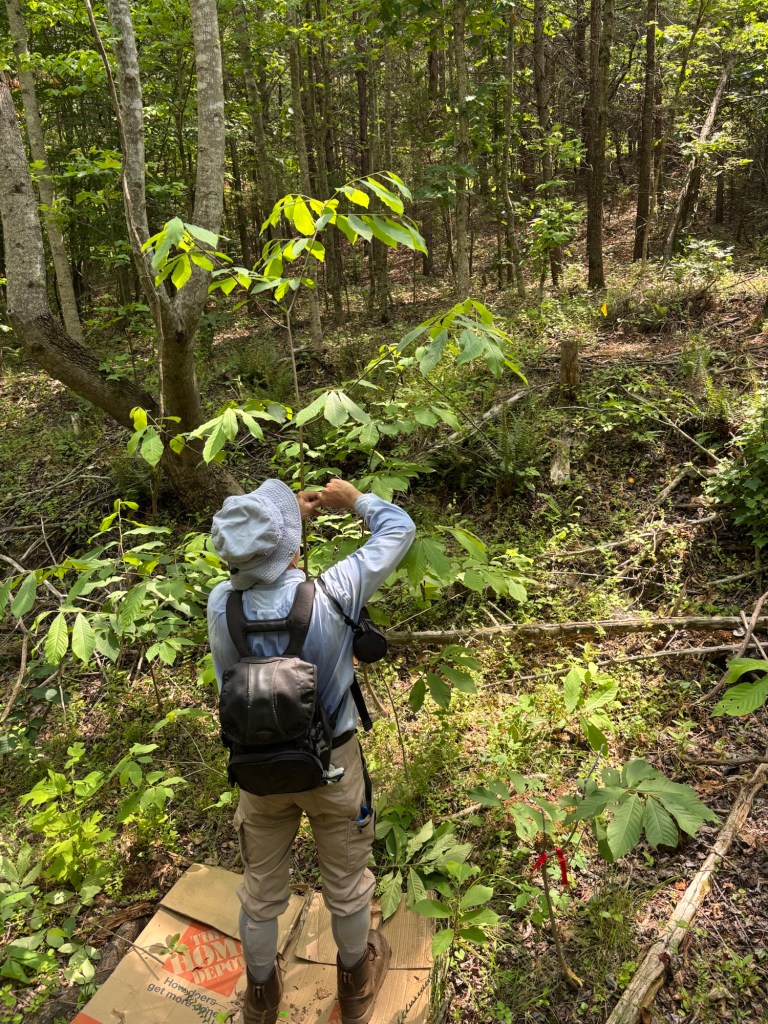
Chris grafting a Cawood cultivar onto the native SAFF Pawpaw Peninsula Asimina triloba. Maria’s Joy at the tip of the Pawpaw Peninsula.
On Sunday we went straight over to the Southside Gully to begin grafts on the native patch. We got 7 done before a downpour stopped us. We grafted Nyomi’s Delicious, Maria’s Joy, Rebecca’s Gold, Cawood, Tallahatchie, sunflower and Pa Golden #4. We were glad to get out of there as we lost count of all the ticks we caught crawling up our pant legs. All were Lonestar Ticks, Amblyomma americanum. Personally, the experience may help me be less preoccupied with my anxiety since I saw them and got them off without freaking out. We had no bites. They hadn’t dropped from anywhere. They were just crawling on our shoes and pantlegs. Anyway, we waited the rain out in the car while we had a snack.
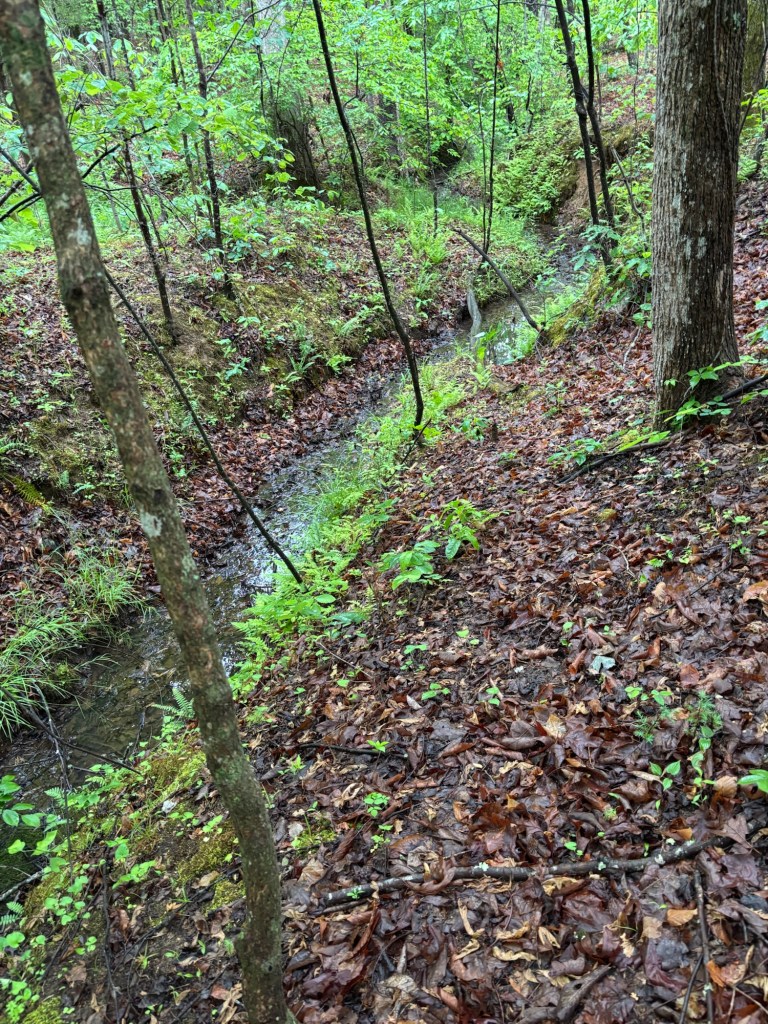
A bit of our walk through the Southside at SAFF in the rain yesterday.
After the rain stopped, we headed down Central Trail through the cultivar and seedling orchard. They looked good we were pleased to see. We made our way to the Pawpaw Peninsula across from the Old Clonal Colony. We grafted 10 more onto the native wild SAFF pawpaws. We grafted Rappahanock, Tallahatchie, Marias Joy, Nyomis Delicious, Prolific, Rebecca’s Gold, Cawood, 166-66 Canary and PA Golden #4. It drizzled some while we worked.
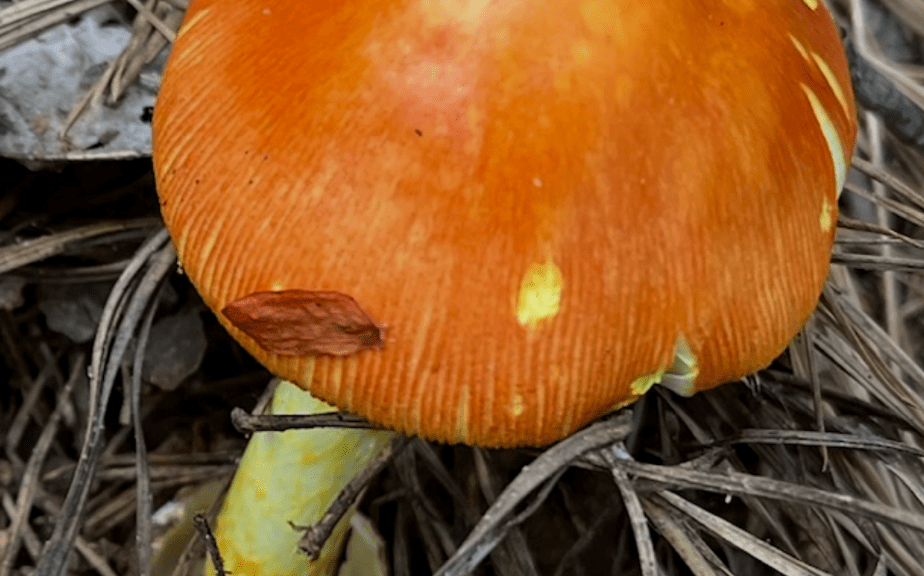
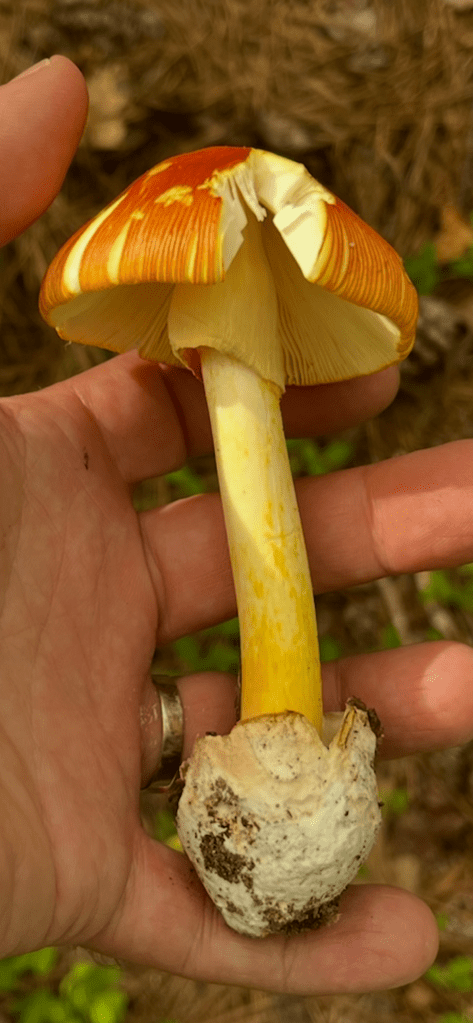
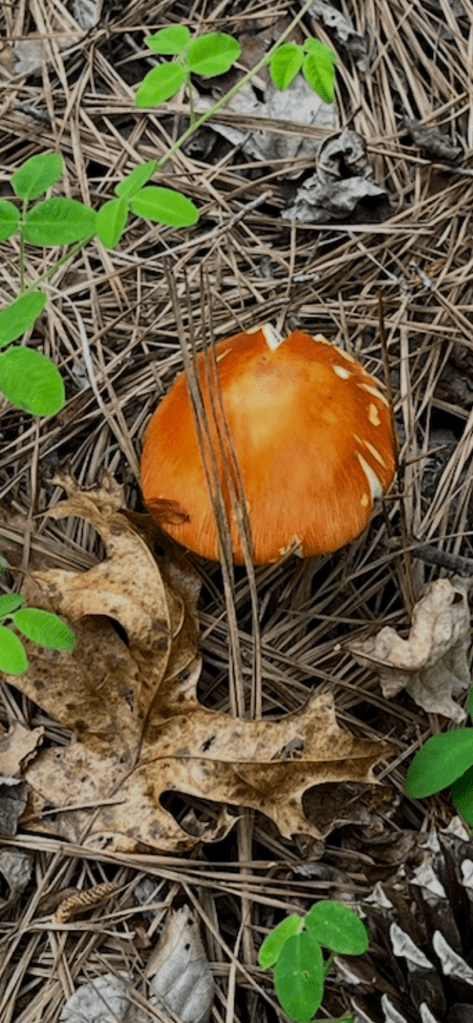
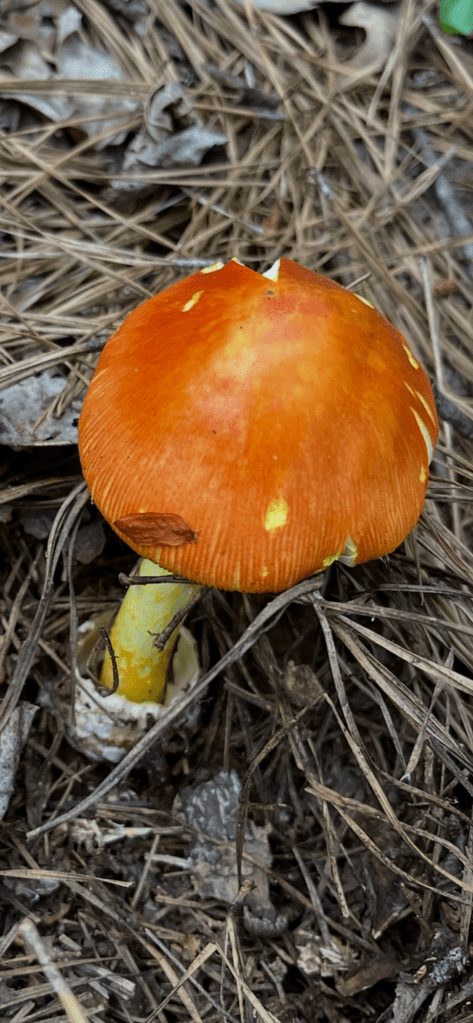
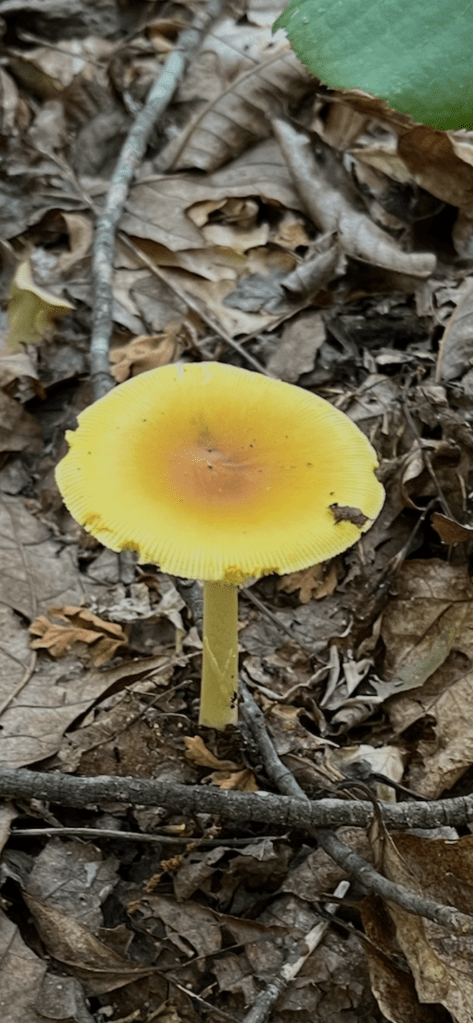
No baby bear sightings yesterday but we looked for them everywhere. We did find this Amanita jacksonii, Jackson’s slender Caesar, a choice edible and all around beautiful fruiting body. It was growing underneath a big loblolly pine on a small bluff overlooking the cultivar seedlings on Poplar Hill Trail.
Chris doing a cleft graft with Rebecca’s Gold on Pawpaw Peninsula wild native SAFF. Grafting Southside Sally and her gang in the gully with 7 different cultivars.
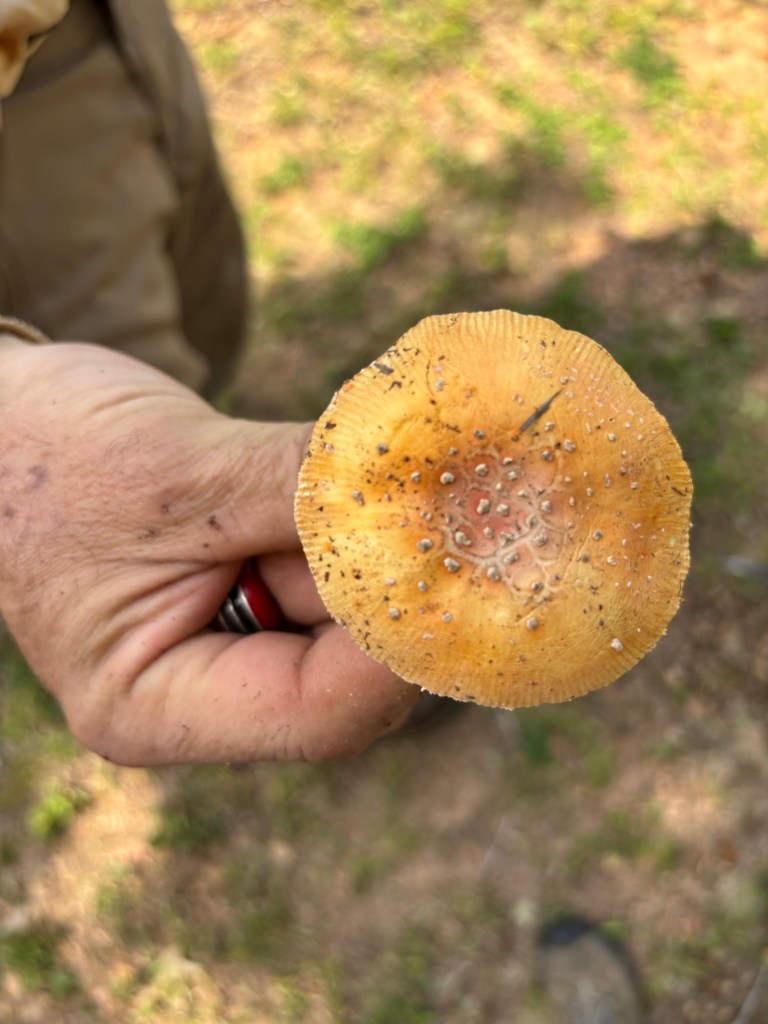
Amanita parcivolvata, the ringless false fly Amanita or False Caesar’s mushroom. This is edible but avoided by many because of its poisonous lookalikes. Amanita banningiana, known as the yellow Caesar or Mary Banning’s slender Caesar. It is prized for its taste but caution is advised due to deadly lookalikes.Amanita canescens, Golden threads Lepidella, grows near oaks. Found up top in the main clearing. Inedible.
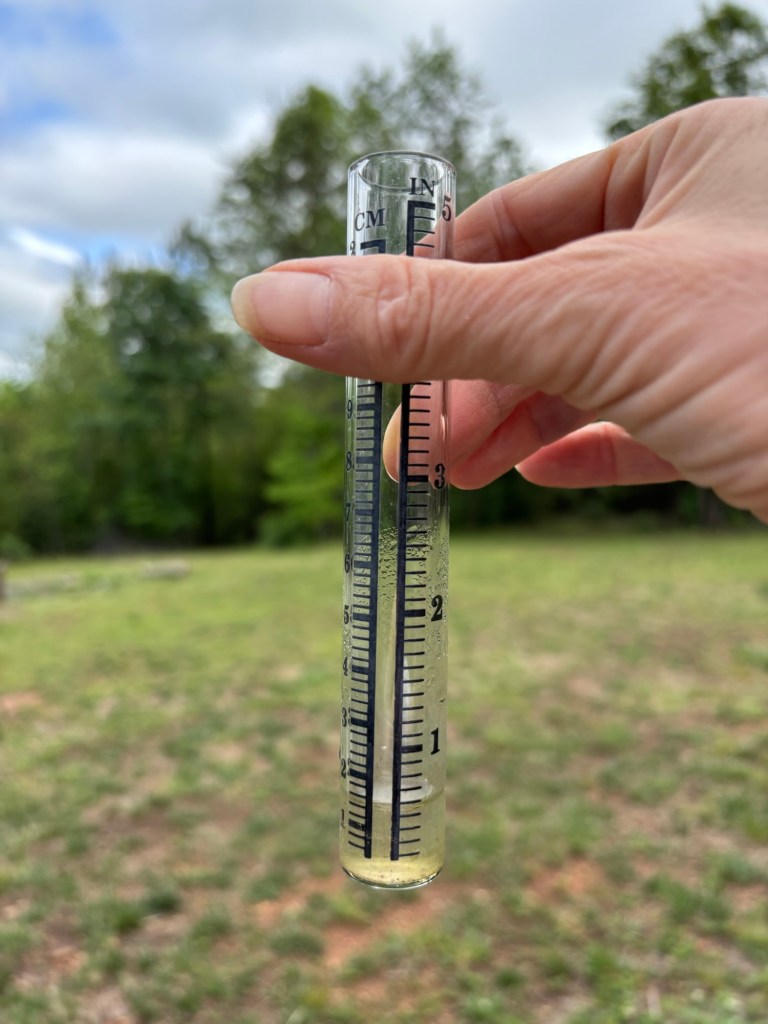
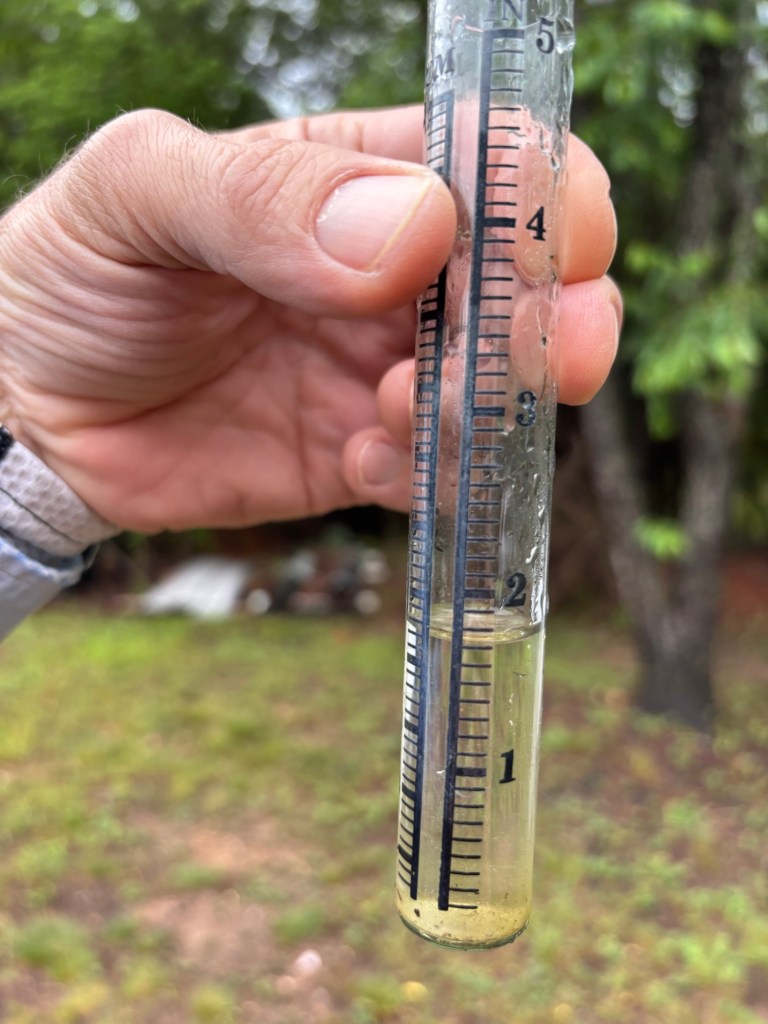
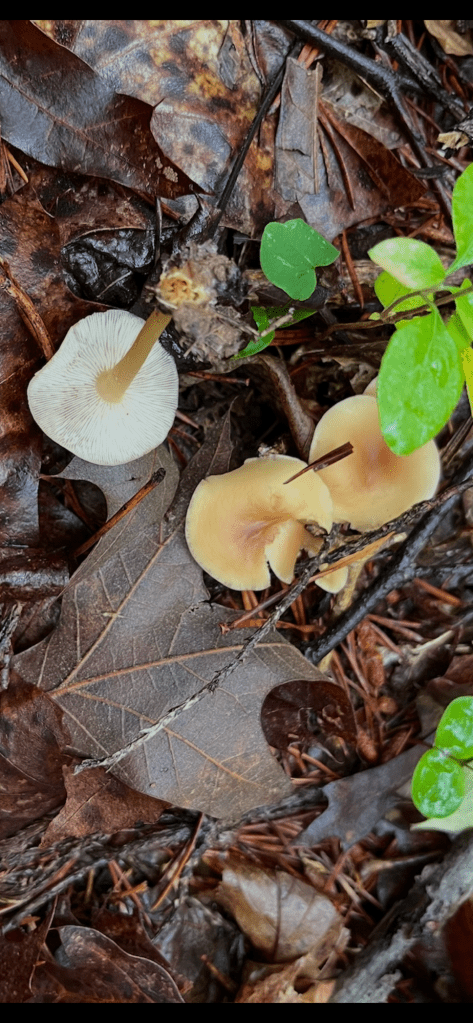
What a great day we had yesterday at SAFF. We went over to check out how much rain the farm had gotten. The gauge was at .2 which is better than none. But much less than the 1.9 inches our weather app reported. Nevertheless, we still had mushrooms growing. Even some we hadn’t seen before. It was like a dream come true.
The pawpaw fruit in the old clonal colony is getting bigger. We are planning a trip to see what pawpaws are doing in our foraging spots along the Rockfish River soon.
Xanthoconium purpureum, found growing under an oak up top in the main clearing. It’s edible although this one has been claimed by bugs. Small bolete popping up on Chanterelle Trail we hope to see mature.
Asimina triloba seedlings sprouting means it’s time to get them moved into 12 inch deep tree pots where they will grow in the shade for the summer to be planted later this fall at SAFF.Yesterday we started potting up our 2026 Asimina triloba seedlings to join the rest of the nursery with our second year seedlings from the forestry department and Arbor Day. We got the first 10 potted up and hope to have hundreds more to pot up in the next few weeks. It’s going to be crowded under the deck.This sprouting from the seed with so much vigor is delightful and joyous. Seeds are full of life. There is a kind of magic in it. The first ten of 2026 in their deep tree pots. We will plant them in the fall when conditions appear favorable. We are keeping them in the shade of our deck so they stay well watered and watched over for through summer. Asimina triloba and Northern Spicebush Lindera benzoin to be planted this fall at SAFF.
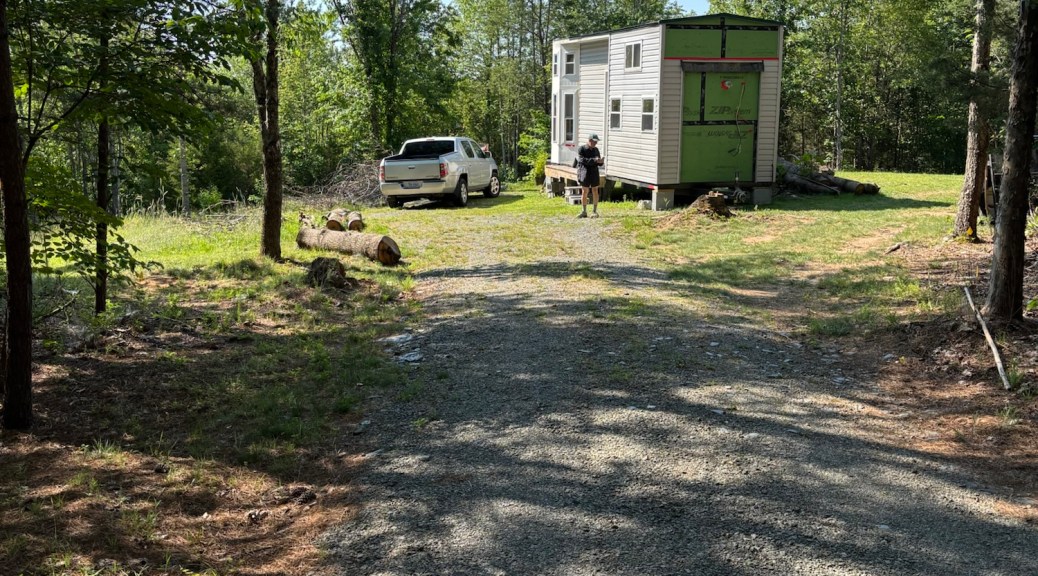
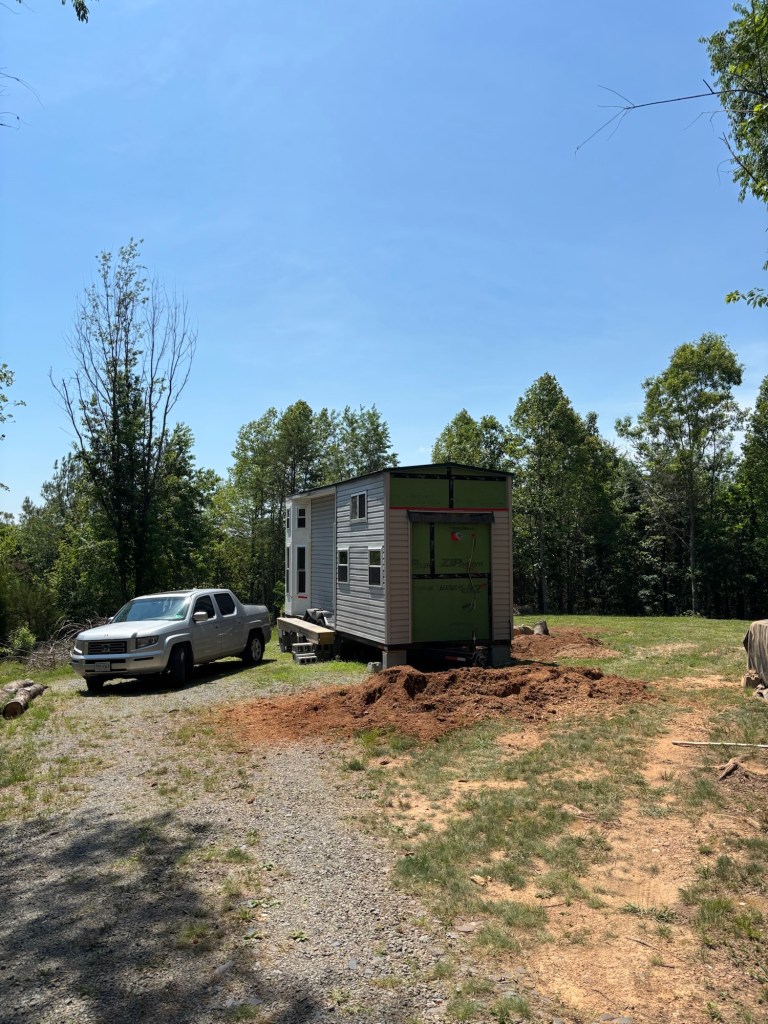
We camped in the tiny house over the weekend for the first time and we got a lot done out there! We set up our first solar panel and used it to help power our refrigerator and cooling. We picked the hottest days of course. (It was the only time we could get a cat sitter for our furry babies back home. ) The temperatures were in the high nineties with heat index into the 100s. We still had a great time. The fireflies at nighttime were the best. We figured out ways to keep it cooler in the tiny house. We stayed until Monday morning since we had scheduled a friend to help grind those Pawlonia trees we took down a few months ago.
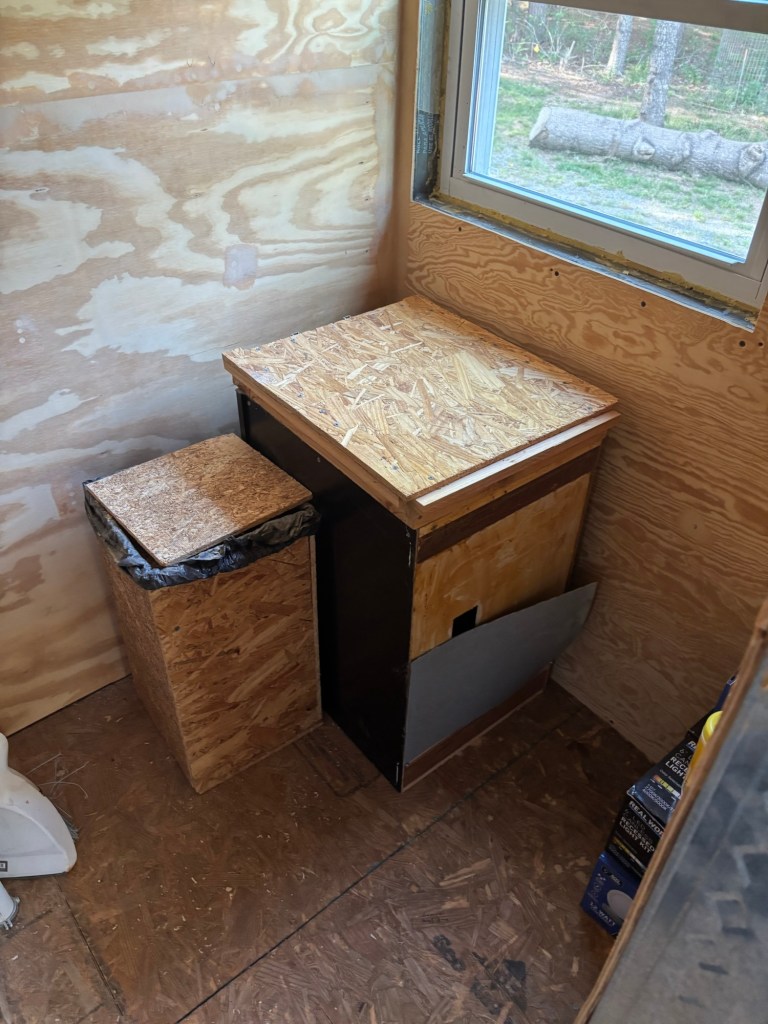
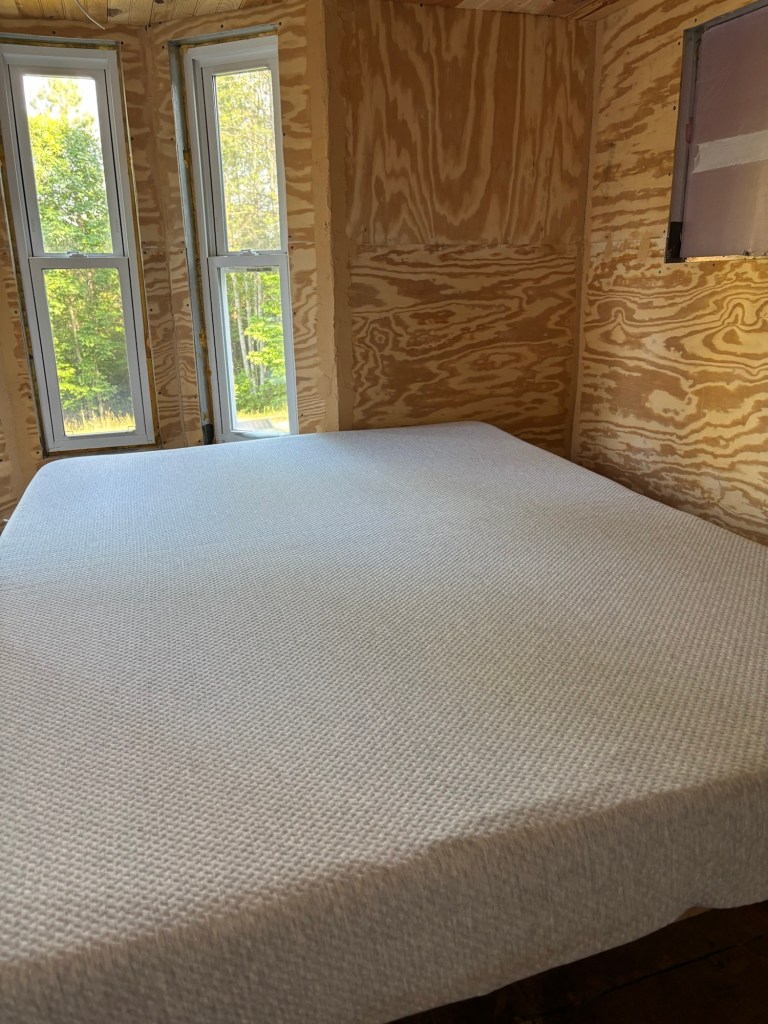
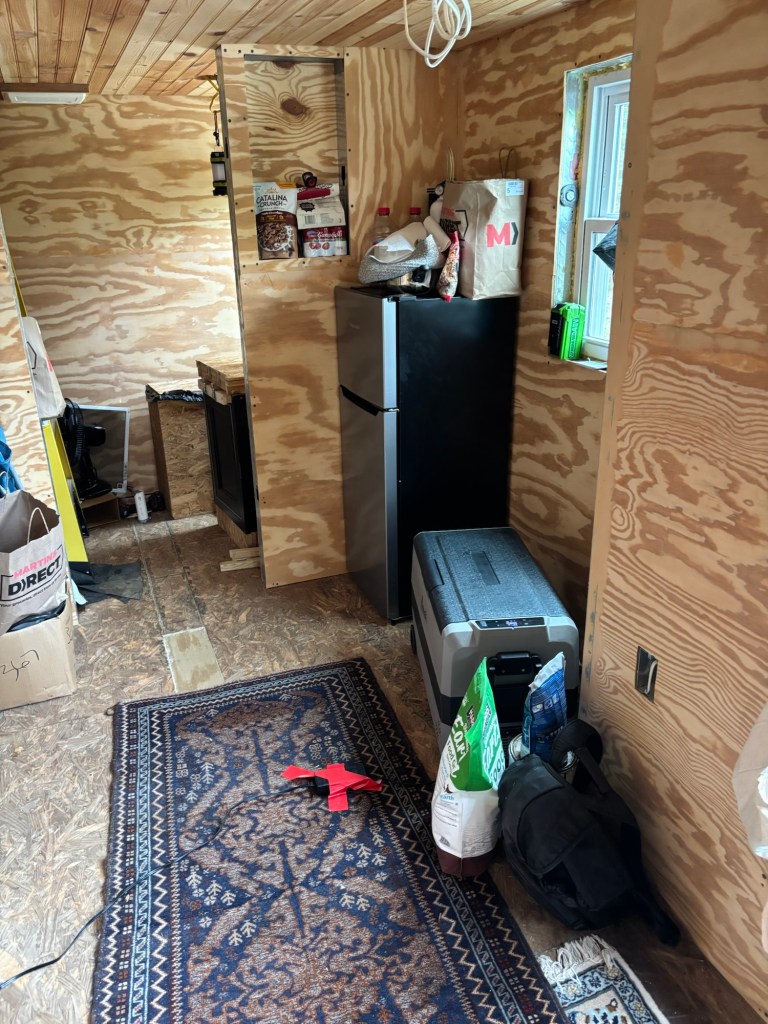
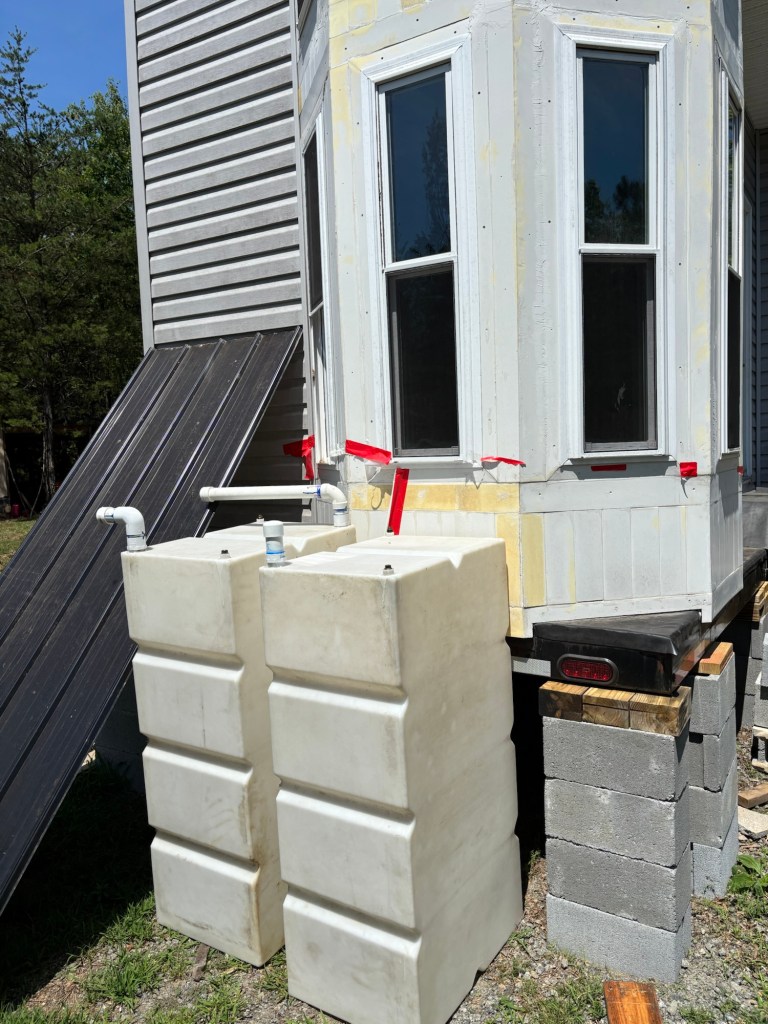
Our compost toilet which works just fine.We covered the windows directly facing the sun in the afternoon since a lot of heat was coming through. We made the bed (literally out of pieces of wood) downstairs for now. It was comfortable and felt enough like camping. Our kitchen for the weekend. Our water tanks for the tiny we will use once we begin our water capture and purification process. We walked down to the old clonal colony pawpaw patch and saw the fruit still there. We had lots of tiny seed ticks all over our socks and shoes after that trip. Luckily, no bites. The Sawyer’s permethrin we coated our socks, shoes and pant legs with stopped them. We saw them as well and began getting them off. We try to wear light colors to help see them more easily.The stumps are gone.
The stump grinder and his son back there hiding while trying not to get hit by flying quartz.
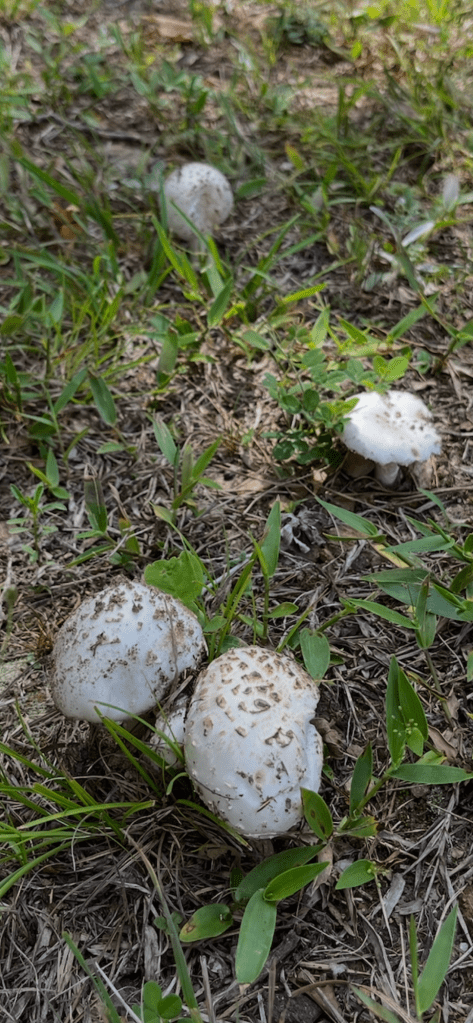
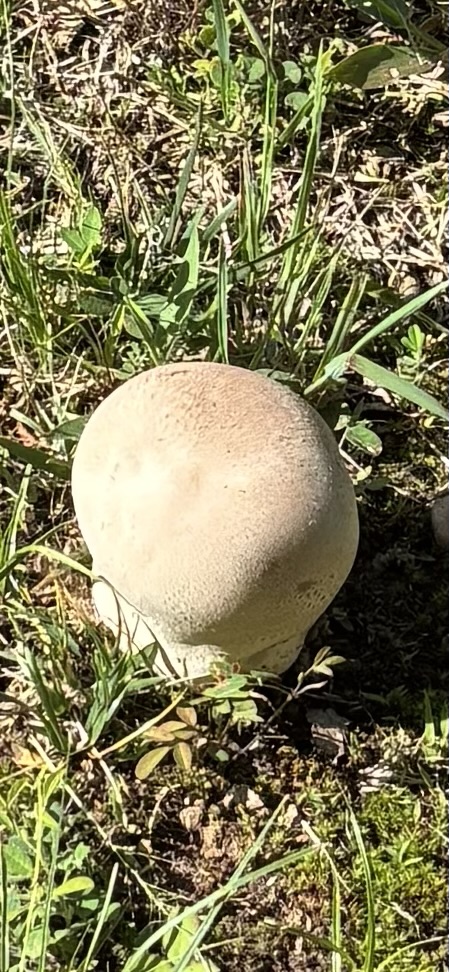
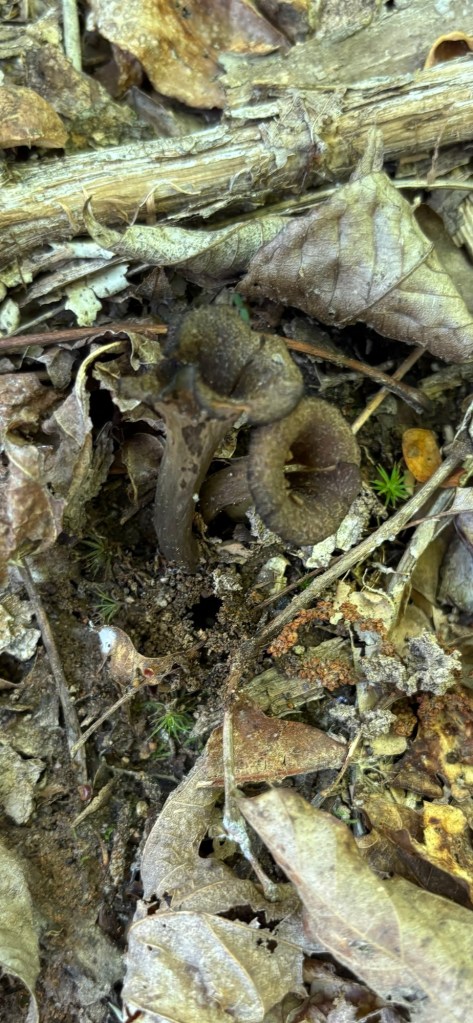
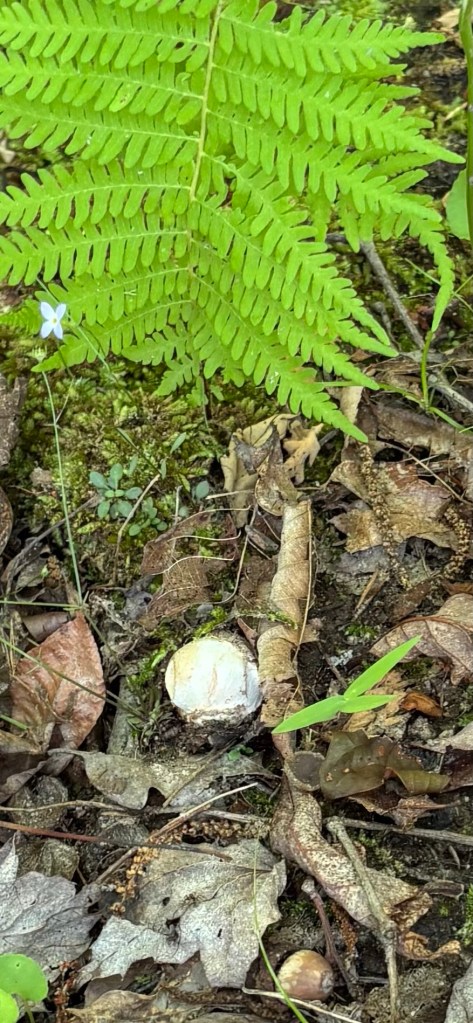
An edible Calvatia cyathiformis, Purple spored puffball, found at the top of Red Hawk Road on Saturday. We brought this home to slice and make mushroom pizzas by adding tomato, cheese and toppings.Craterellus fallax, Eastern black trumpet, found on the south set back line. Right on Black Trumpet Way near the base of an oak on Sunday. We left them to spore and hope to catch others in better shape to eat next time. We found another patch along the waterway and also left them to spore. They are excellent-tasting with eggs as well as highly nutritious.Right along the main waterway, it appears to be an Amanita completely enclosed in a sac-like membrane called the universal veil. The identity will be revealed as it opens. We hope to catch it as it develops. We are careful with Amanitas because of the dangers of eating any mushroom without identifying it. This truly is a class of fungus to know how to identify as it includes the several of the most toxic. However, it is only dangerous to ingest which we will not be doing. ☺️
The weather has been wonderful. Mid-seventies and sunny the whole weekend. We spent afternoons at the farm Saturday and Sunday. We got plenty of chores done and enjoyed our walks around the forest. The rain gauge showed another inch and a third on Saturday—so with the last storm in May we got 4.35 inches! What a relief and gift. The mushrooms are showing up all over to our delight. It’s been such a long time! Seeing the puffballs, chanterelles and black trumpets this weekend was truly joyful. The vibrant colors and familiar shapes were a sight for sore eyes. The lushness and green of the forest has settled in after the rains as well making everything pop with lime, chartreuse, Kelly and neon greens. The old clonal colony pawpaw patch is all leafed out with the big drooping leaves and the two fruit continue to develop. 🤞
We leaned some of our metal roofing sideways against the tiny house for now which has stopped the water from getting in around the door and the back side. We are grateful for this temporary fix, as we continue to collect supplies and plan our front porch and covered back deck builds which will be a part of our permanent solution to the water problem.
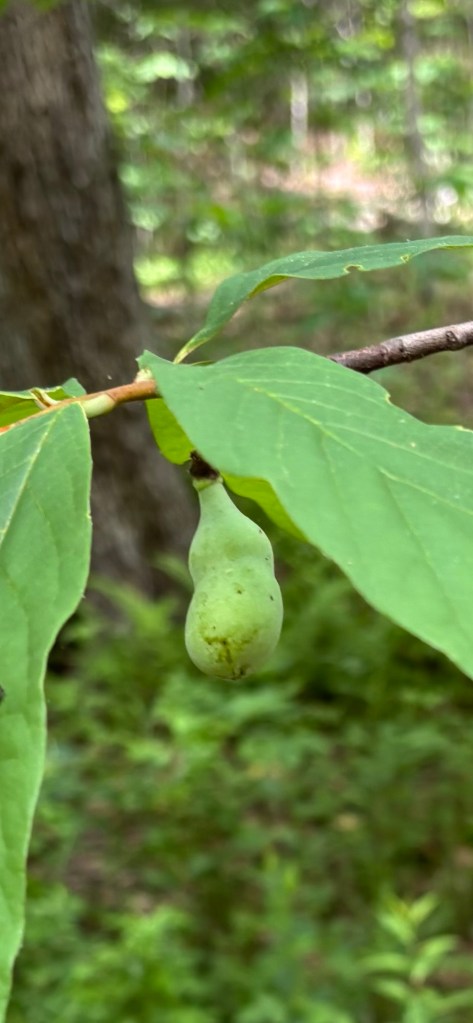
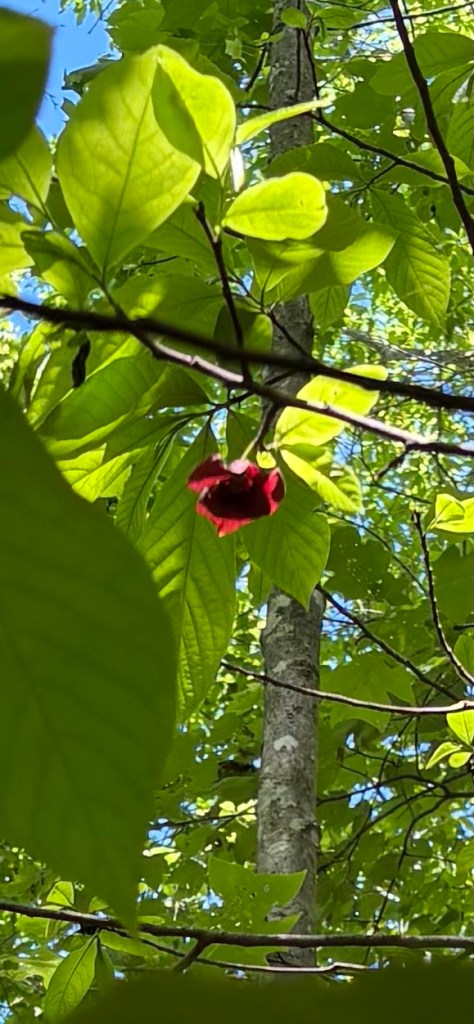
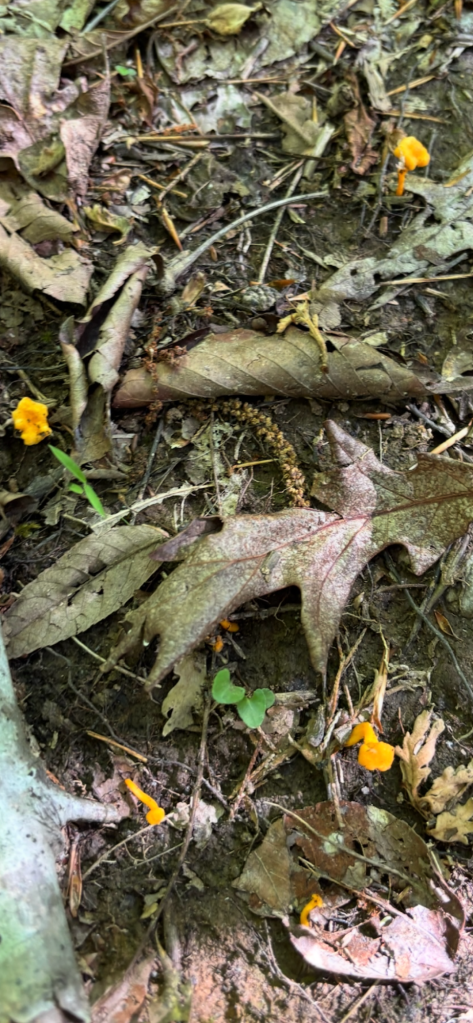
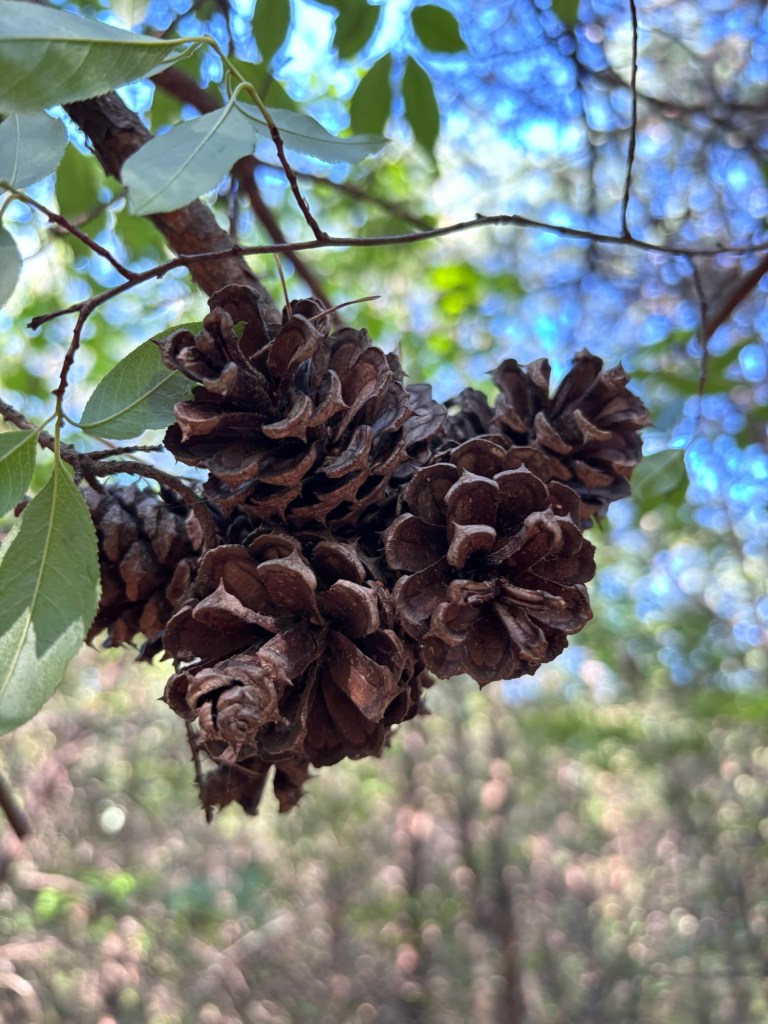
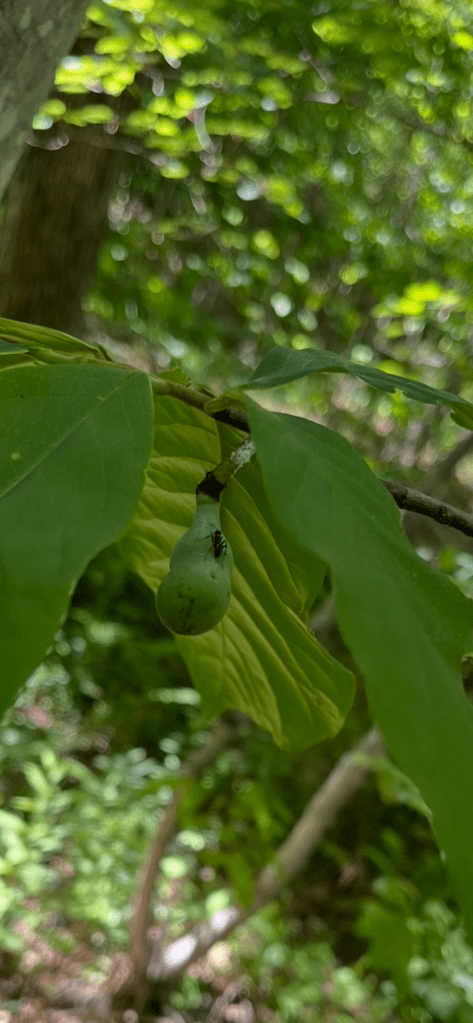
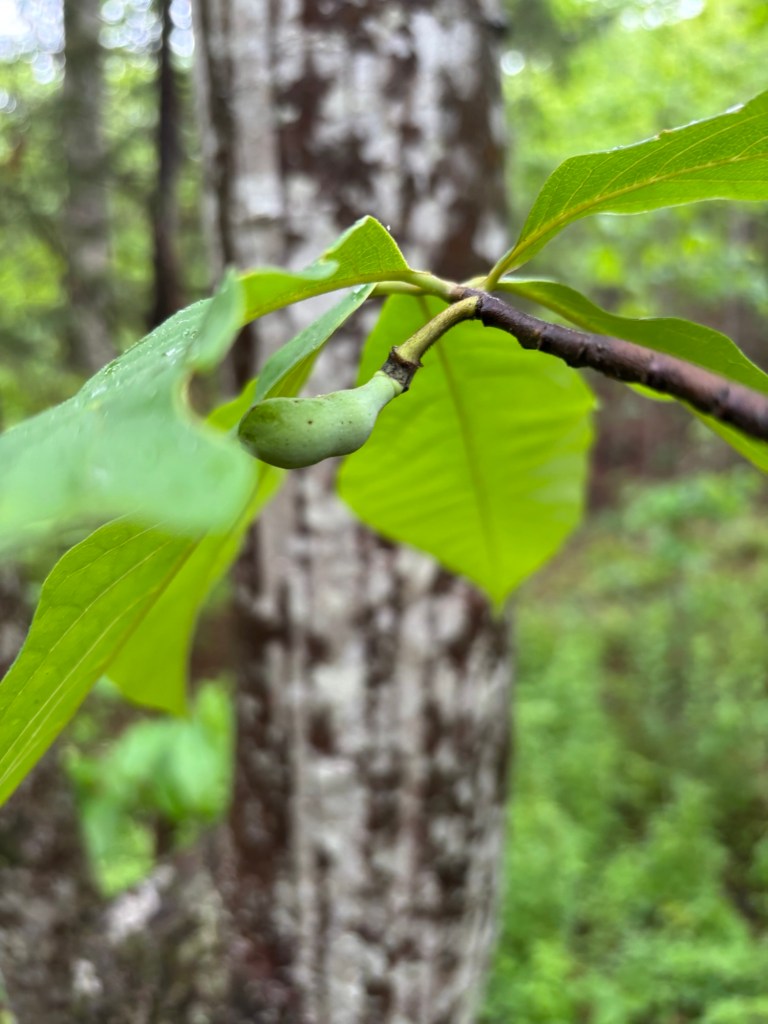
Asimina triloba flowering still at SAFF old clonal colony patch. Ipomoea pandurata, wild potato vine, a vigorous native perennial vine with large white funnel shaped flowers and a massive starchy tuber that can weigh over 20 pounds. We found it along Orchard Hill Road near the new Pawpaw patch with the seedlings and cultivars we grew and planted last fall. Tiny developing small chanterelles, Cantharellus minor, along the bottom waterway trail. Pinus virginiana, Virginia pine cones protecting the seeds. They will open to release them in warm dry weather and close when exposed to moisture. Asimina triloba leaves and developing fruit. The other pawpaw fruit with an ant and a white waxy substance on the peduncle. This is mealy bugs, Flatid plant hoppers or Woolly aphids, or their egg sac. They will cause premature dropping of the fruit or other damage. We will get this off tomorrow when we are out next.
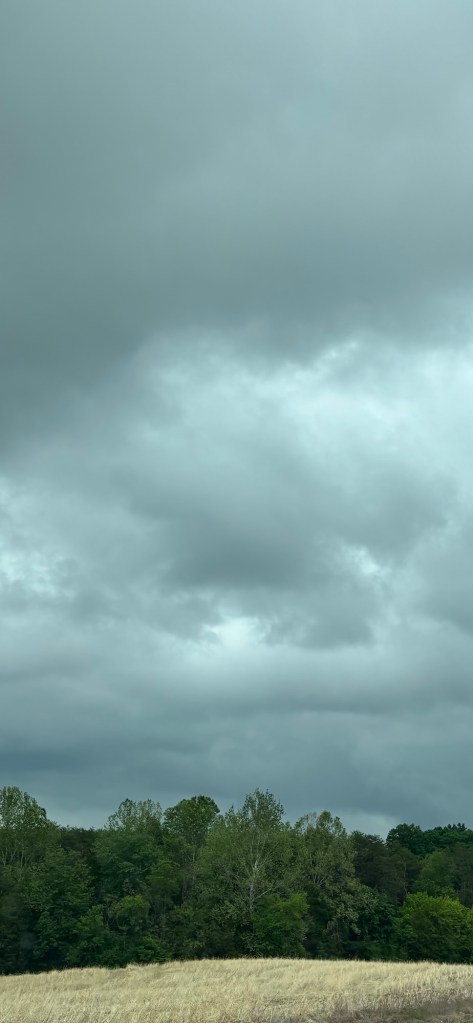
As we drove up to SAFF yesterday, we saw that it was raining from a distance.
SAFF had another tenth of an inch of rain when we arrived and .25 fell while we were there. So altogether now SAFF has had a little over 3 inches since last week. The rain was heavy at times. The plants were glowing.
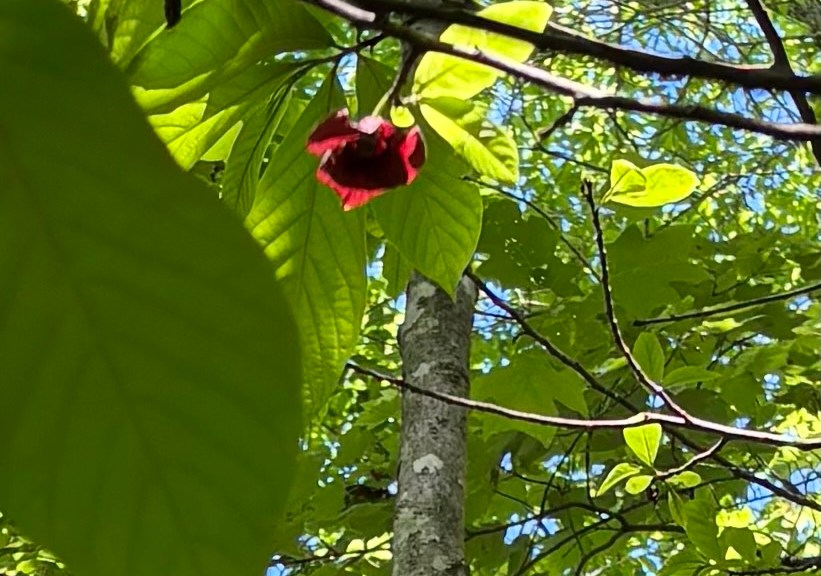
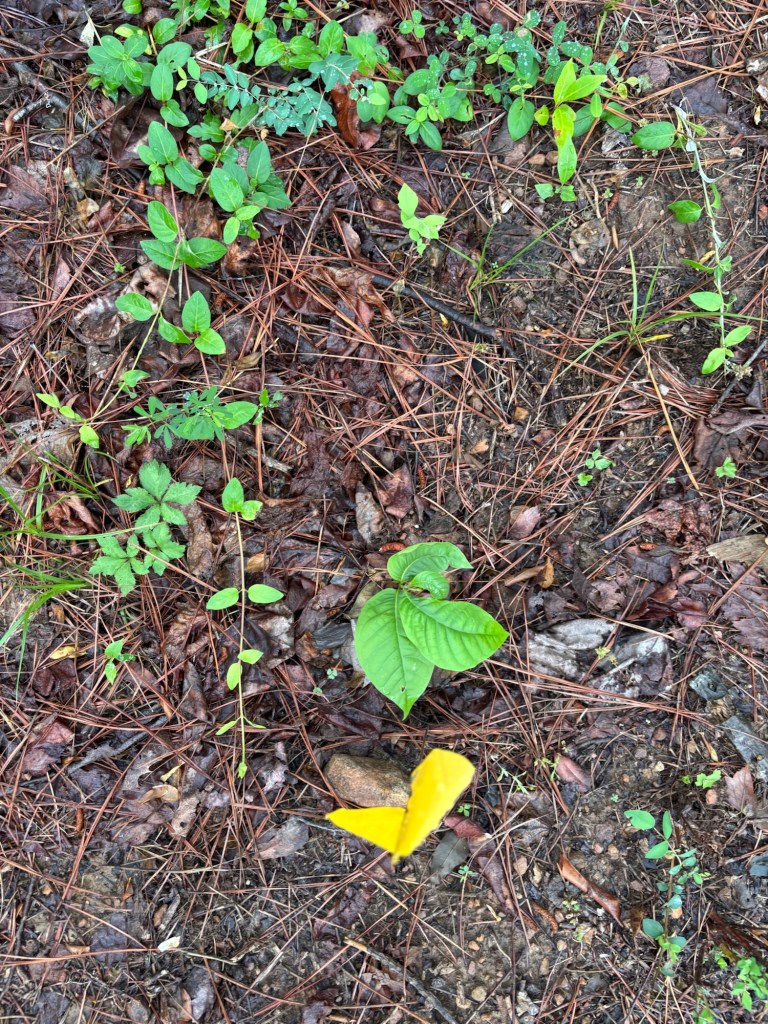
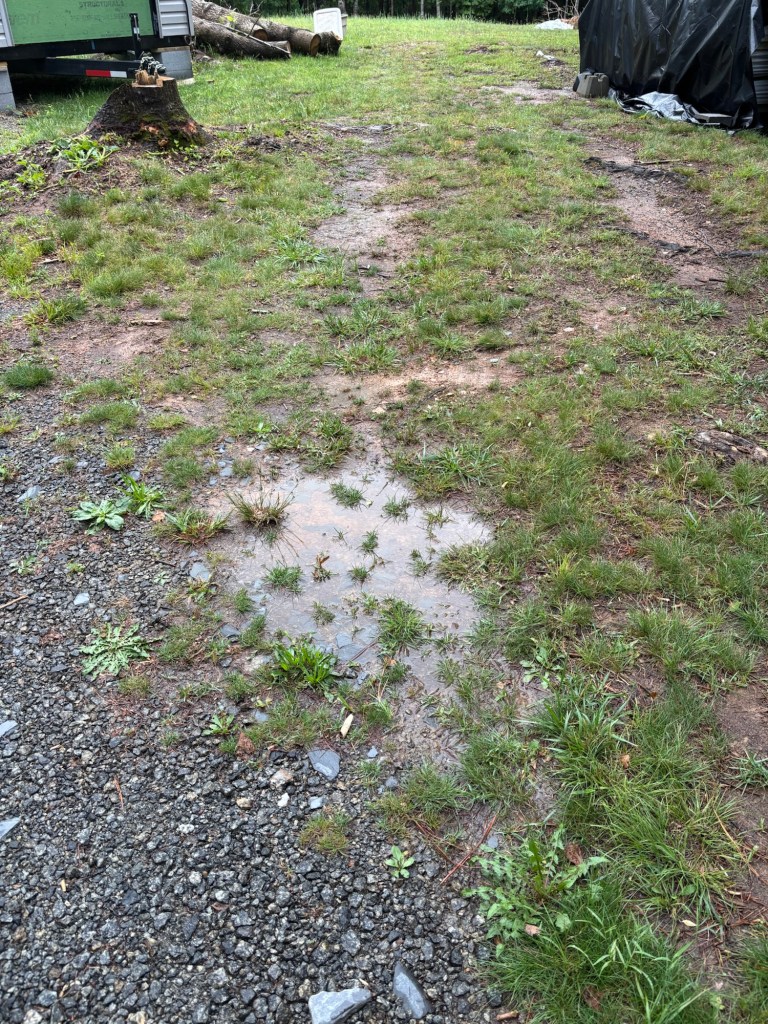
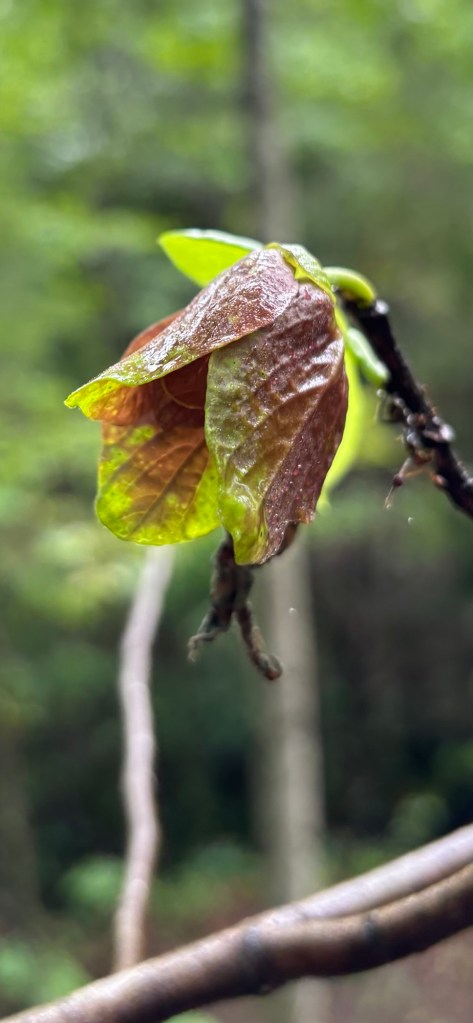
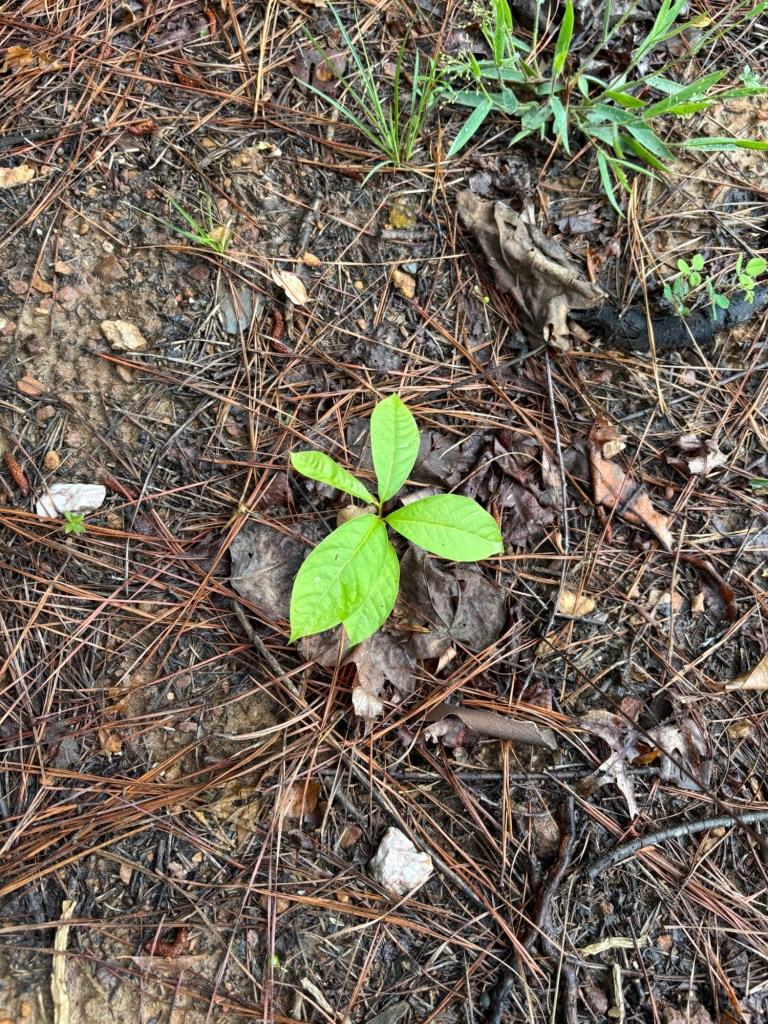
The native seedlings we planted last year are doing well surrounded by their nursemaids/nitrogen fixers. They will stay in the shade until they reach 2 1/2 feet tall. At that point, full sun will be most valuable for them in order to thrive and produce fruit. A native seedling we planted up top near the driveway and main clearing. Water puddle collecting in multiple spots up top even.This Asimina triloba is a SAFF native growing at the tip of the Pawpaw Peninsula. Along with a few others in the main colony, we have observed a secondary bloom. This occurs when the first bloom is damaged by frost. This picture shows the frost damage still apparent next to the bloom. Another native Asimina triloba seedling we planted up top near the driveway last fall.This tiny native seedling was damaged in the frost as well and is just resprouting leaves. The rain is the best thing for healing!
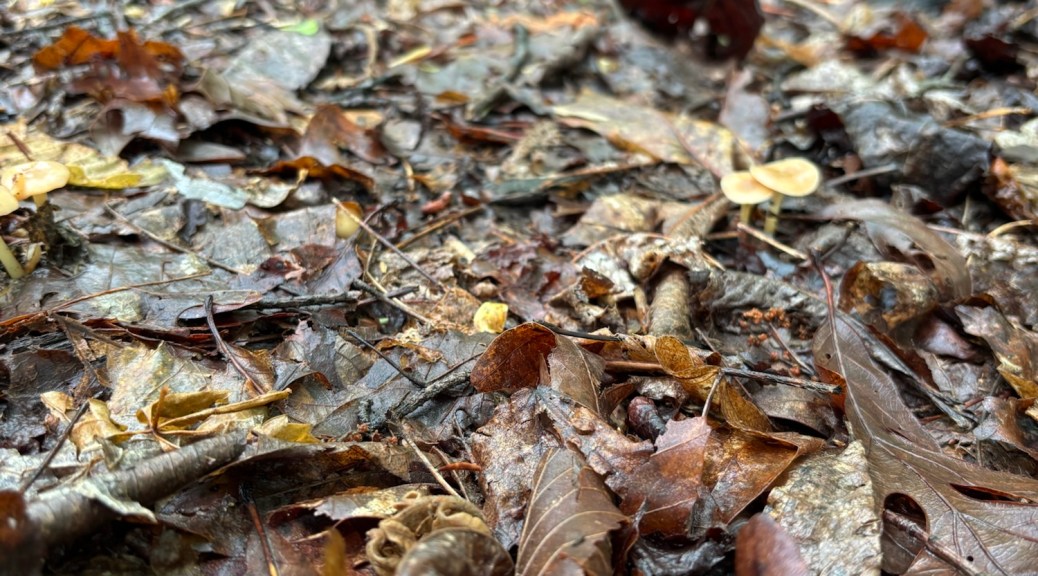
More rain is expected this week and temperatures will be in the 80’s. We can’t wait to get back out there and look for mushrooms. So far, we’ve seen a lot of the Gymnopus. Little brown mushrooms are dangerous unless you’re really knowledgeable. We are looking for boletes, chanterelles, black trumpets and milk cap mushrooms that are easily identifiable and have no poisonous lookalikes.
SAFF got about half and inch more. So far it’s rained about 2.3 inches from this weather system that has stalled over Virginia.
When the rain comes, it’s hard not to want to be out there in the woods looking for mushrooms. They are coming. The saprophytic fungi begin fruiting right away so as not to miss their opportunity to break down and absorb decaying matter. No matter the season, when it rains, they appear. Although it can take chanterelles anywhere from one to two weeks to produce fruiting bodies ready for harvest, three to five days after rains begin is a great time to check mushroom spots.
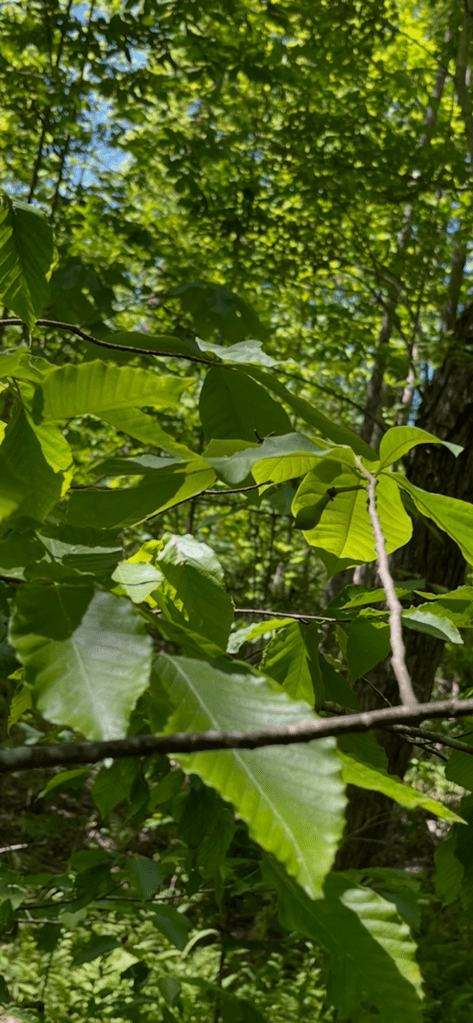
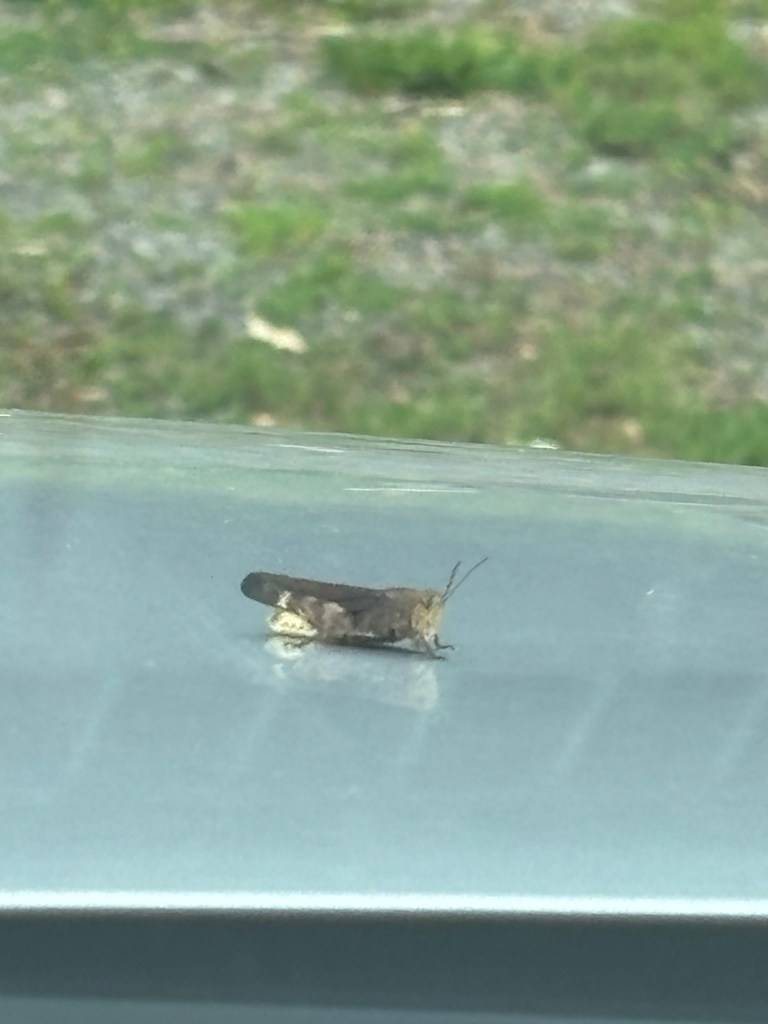
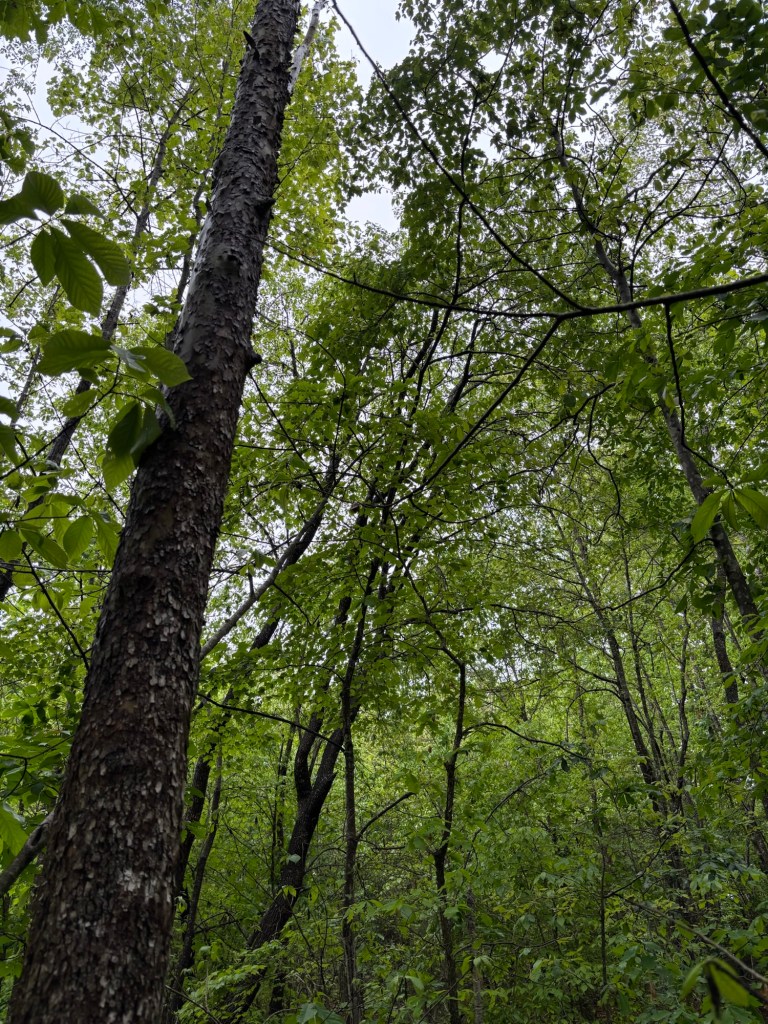
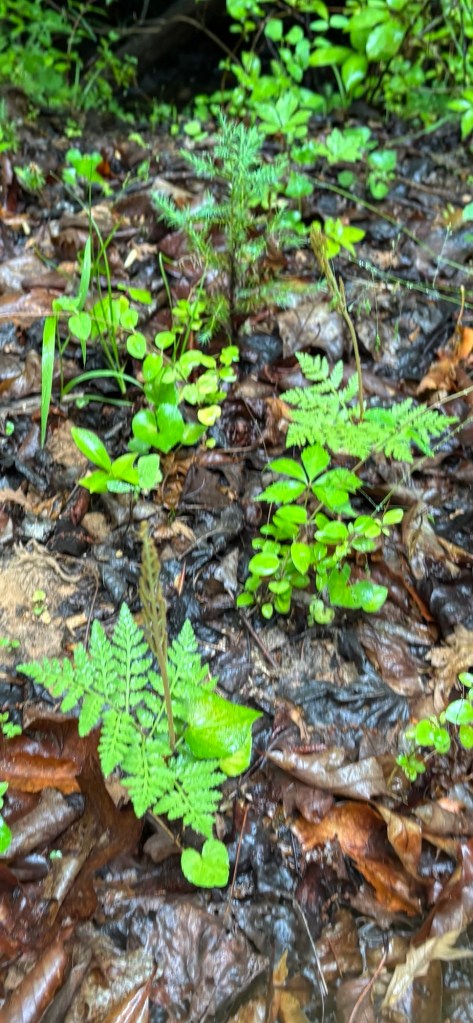
Arphia sulphurea, Sulphur winged Grasshopper, jumped on the truck right when we pulled into SAFF. When it flew off, we saw his bright yellow hind wings. With the rain and moisture, Amblyomma americanum, lone star ticks were out again in abundance.Ticks are worse in spring. We watch for them and stay vigilant. We coat our clothes in permethrin. Canopy over the old clonal colony pawpaw patch. Botrypus virginianus, rattlesnake fern, found by the main waterway at bottom of Ridge Trail. A perennial fern in the Adder’s tongue family. They grow in rich moist woods in dense shade.
Thursday evening through this afternoon we got about 1.7 inches!
We are having a cool, wet weekend with rain that started Thursday evening and is expected to continue until next week. We couldn’t wait to get into the forest to look for mushrooms and we weren’t disappointed.
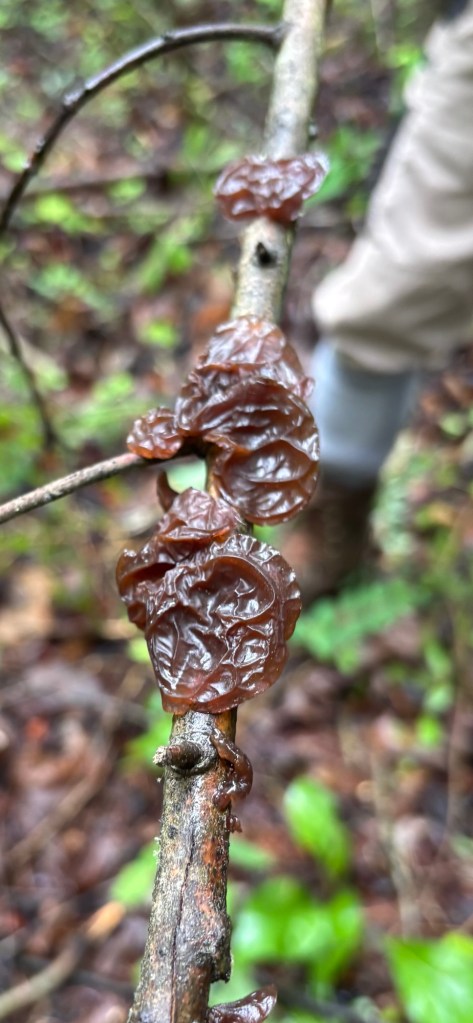
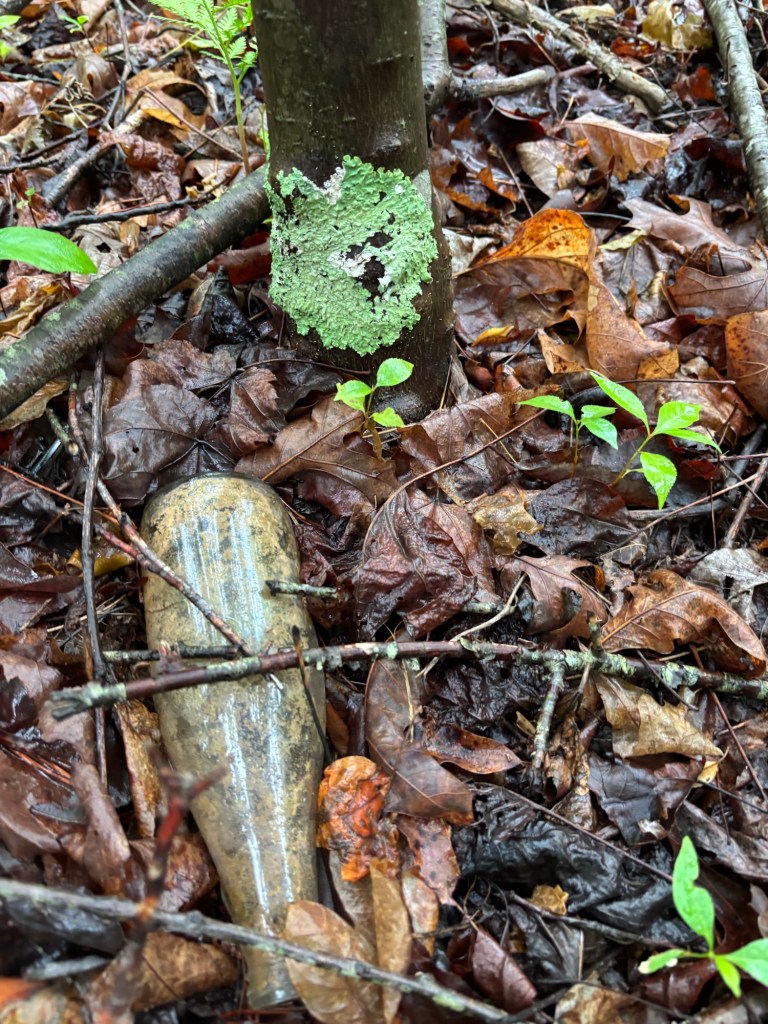
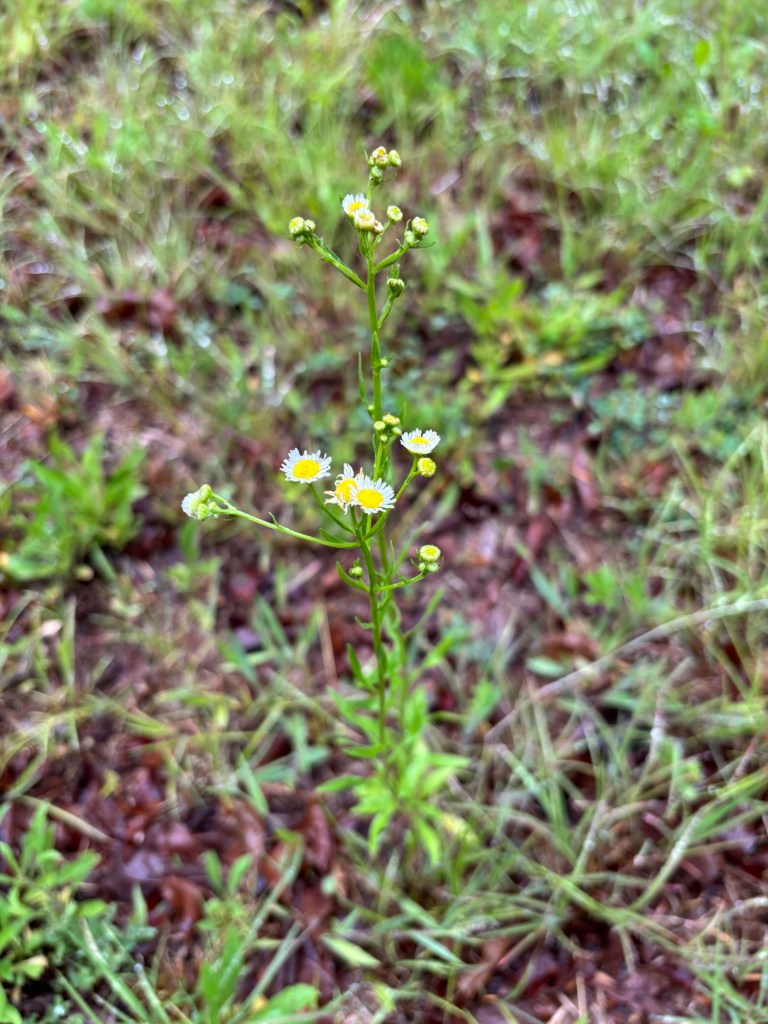
Genus Gymnopus, likely Gymnopus dryophilus (oak loving Gymnopus) found in the north side of SAFF. Exidia, a species of jelly fungi known for its brain or ear lobe shaped fruiting body. They grow on dead and decaying wood during cooler damp months. Flavoparmelia caperata, common green shield lichen, a symbiotic partnership between a fungus and algae or Cyanobacteria. Its presence on the tree trunk is widely considered beneficial to the surrounding ecosystem and is a sign of environmental health. Erigeron philadelphicus, Philadelphia fleabane, found on the south set back line.
We are so grateful for this rain and can’t remember getting so much at one time. The forest was lush and filled with layers of greens. We stopped in the old colony pawpaw patch and found two fruit continuing to grow.
ASMR rainy walk through the Asimina triloba old colony of clones. Asimina triloba fruit developing at SAFF old clonal colony. We are thrilled. Pawpaw fruit hiding behind leaves.Angelica venenosa, hairy angelica, native perennial herb in the parsley family. It’s a host plant for the black swallowtail butterfly. It has toxic roots.The top of old farm road on a rainy Saturday. Young pawpaw trees by the main waterway.
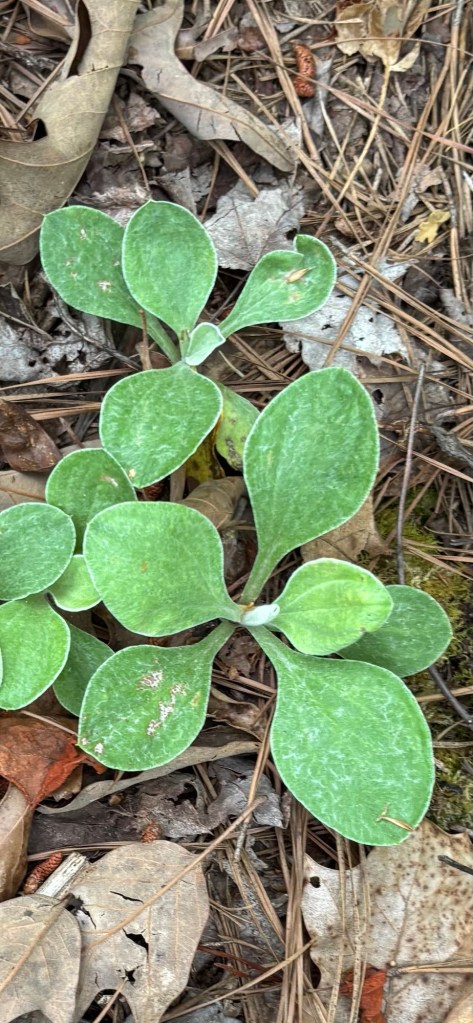
Antennaria parlinii, Parlin’s Pussytoes, found along the old farm road near the culvert. It’s a native, mat forming perennial ground cover. Along with Antennaria plantaginifolia, plaintain-leaved pussytoes, which we found earlier this spring throughout SAFF, they are drought tolerant, deer resistant and low maintenance. They are also larval hosts for the American lady butterfly. The spreading root system stabilizes soil and controls erosion.Dichanthelium clandestinum, deertongue, a native perennial grass good for erosion control and a food source for birds like turkeys and sparrows.
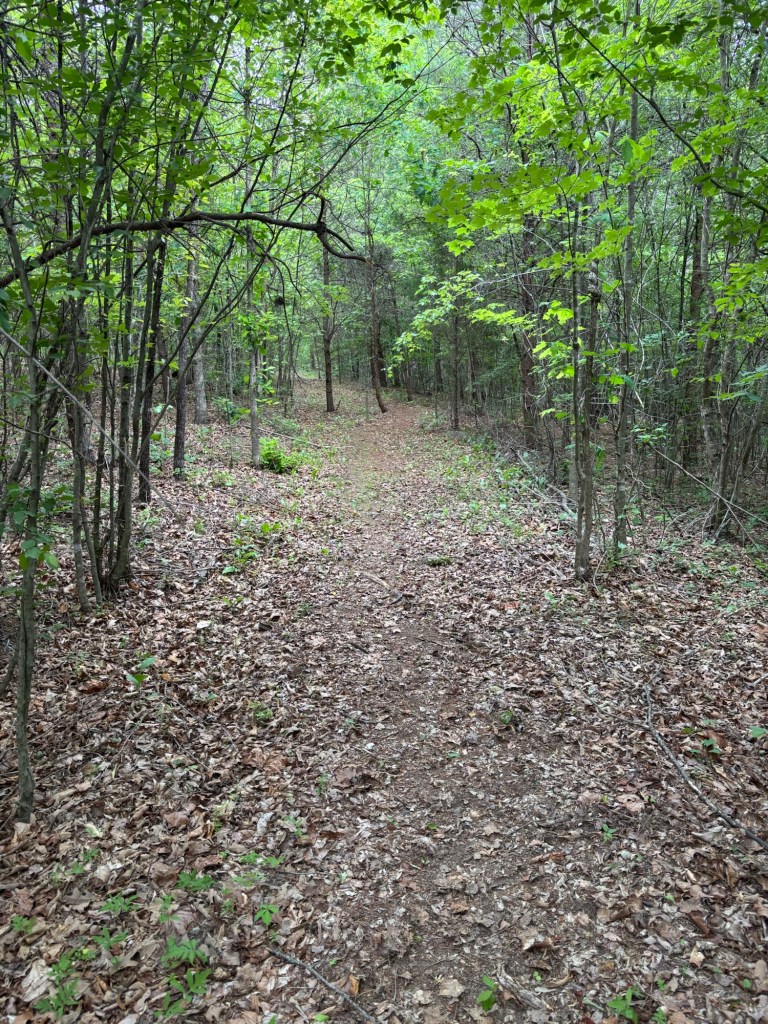
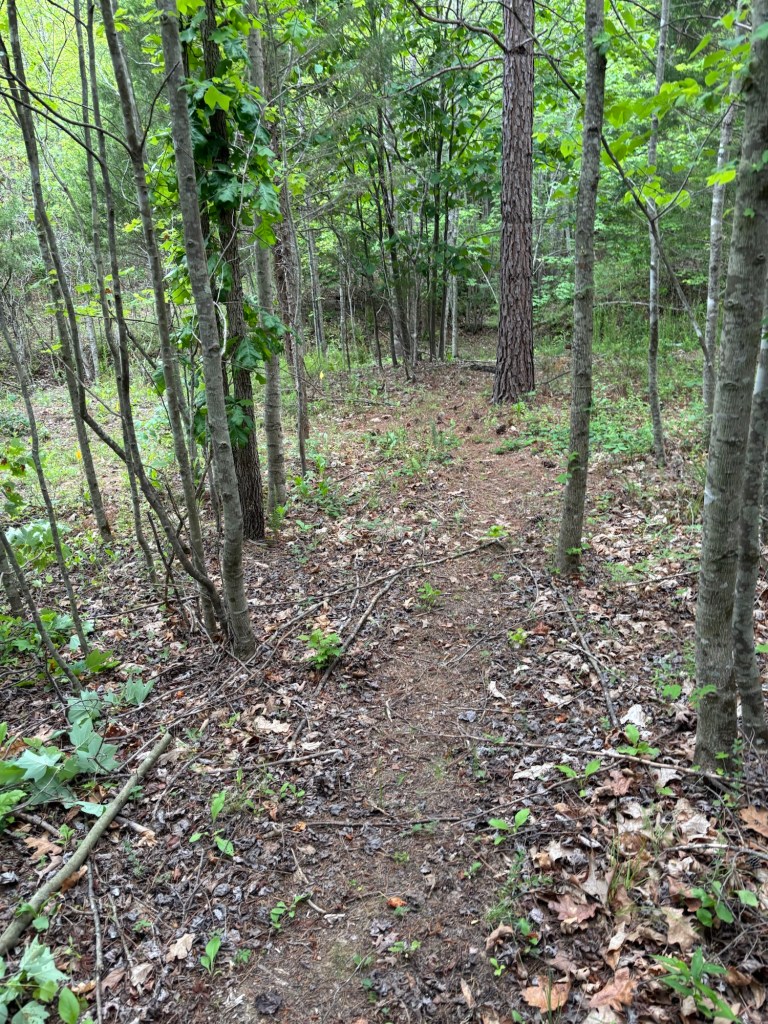
Yesterday afternoon at SAFF it was cooler and windy before the storms hit. 72 was the high with thick cloud cover. The rain gauge was empty. Not even a drop. We took the chainsaw with us as we walked our new access road to the old farm road and cleared stumps and smoothed out any pits. We’ve named it Persimmon Road in honor of all the Diospyros virginiana trees we’ve found in the area. We continued all the way down the old farm road past the culvert and opened up the back half to the tractor. Then we came back down and turned Orchard Hill Trail into a road for the tractor and trailer to access as well. We are officially all the way in the new pawpaw patch of seedlings planted last year! We are very pleased to be able to get to them with supplies and mow paths and keep the area free from overcrowding the Asimina triloba. We are also now very well poised to continue planting this year’s seedlings right along up the hill with much less effort than last year.
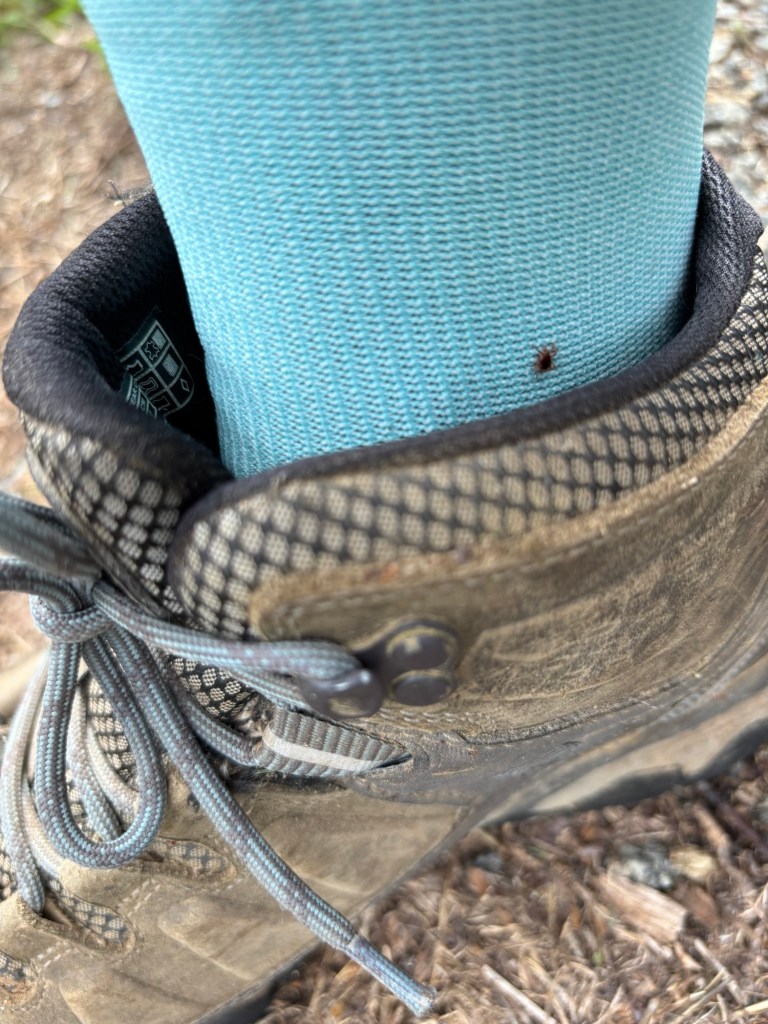
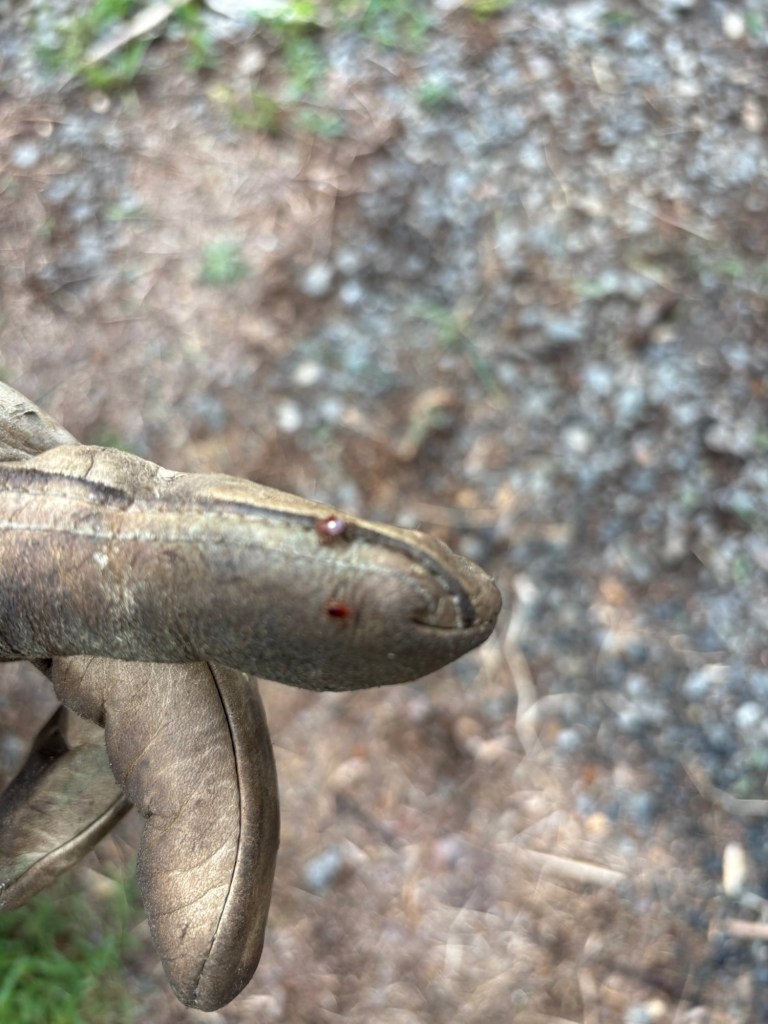
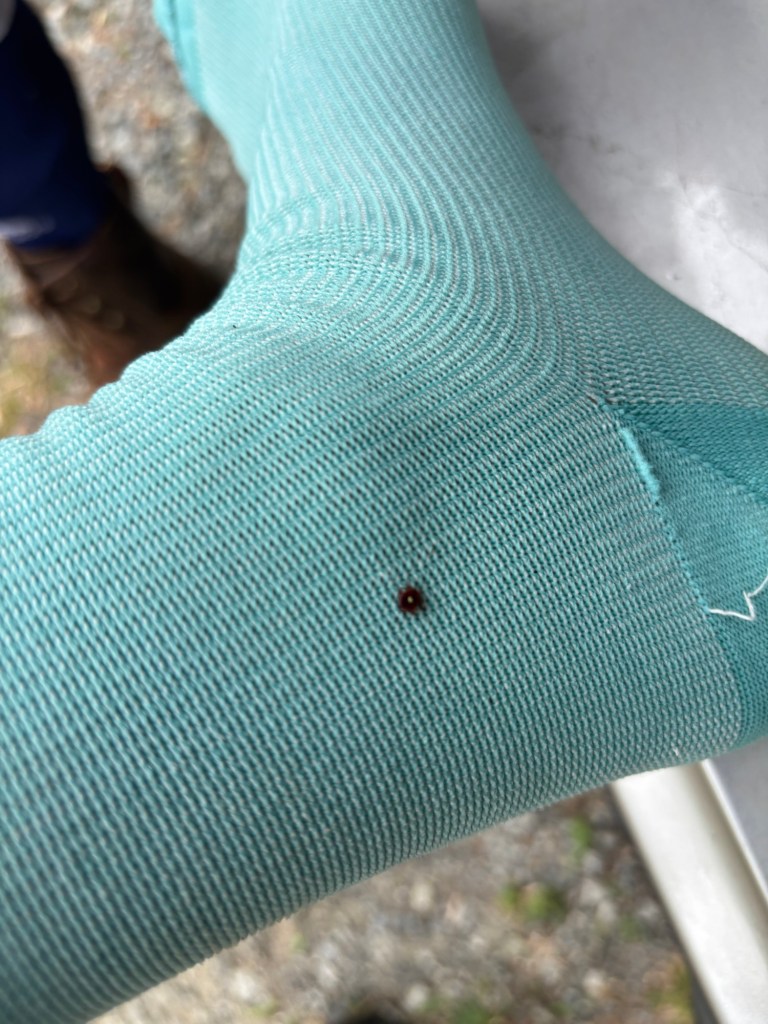
Everything was very dry and crunchy and yet we still had multiple lone star, Amblyomma americanum, tick encounters. Two nymphs and an adult female found on our socks not looking well after being exposed to the Sawyer’s permethrin we soaked them in. We got more blurry pictures of the lone star ticks. Most other types of ticks will stay burrowed into moist underground areas while it’s this dry. The lone star ticks are aggressively seeking hosts all over the east coast and midwestern United States.
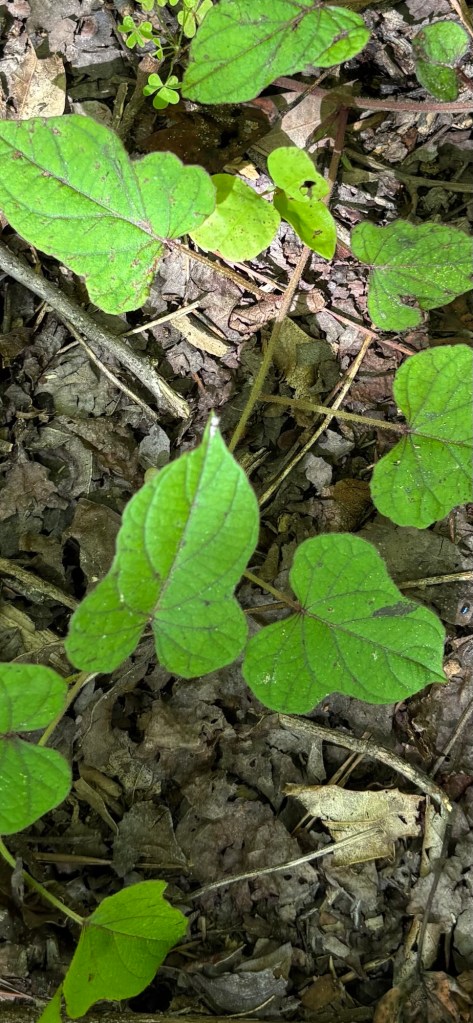
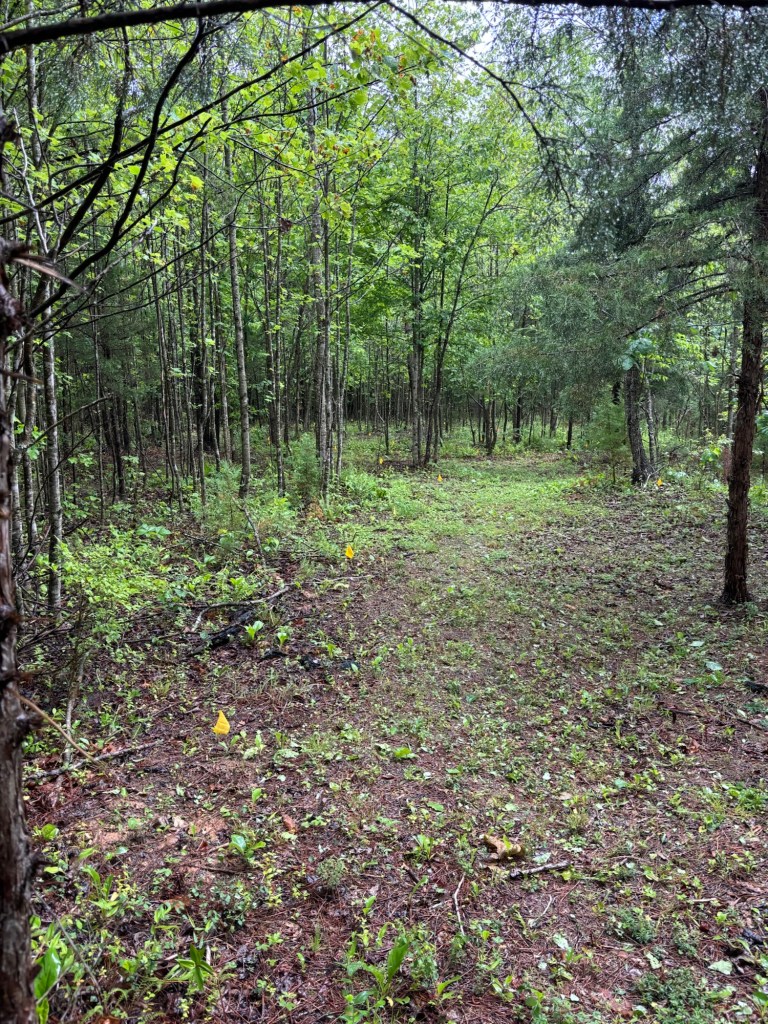
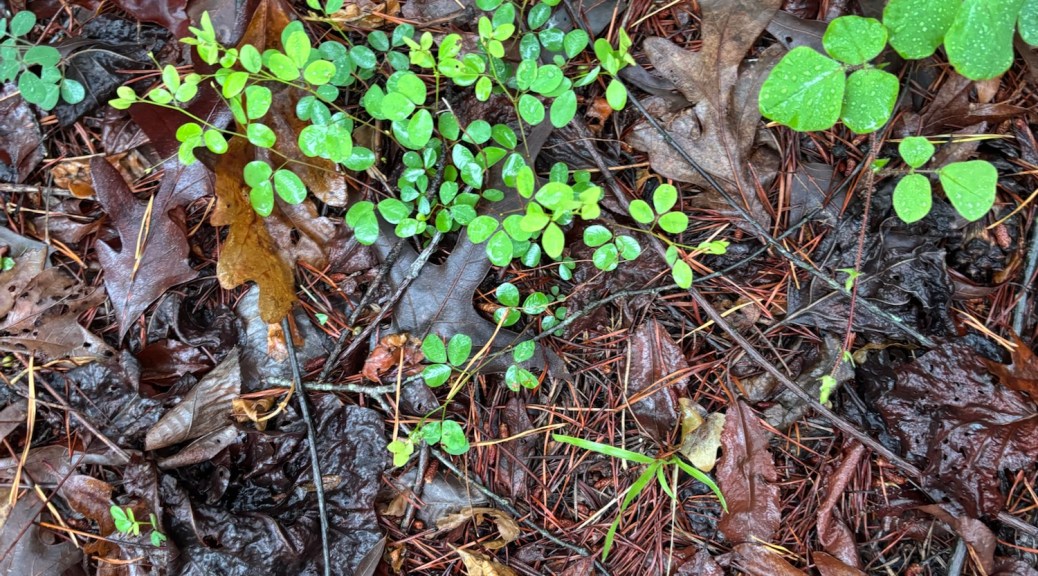
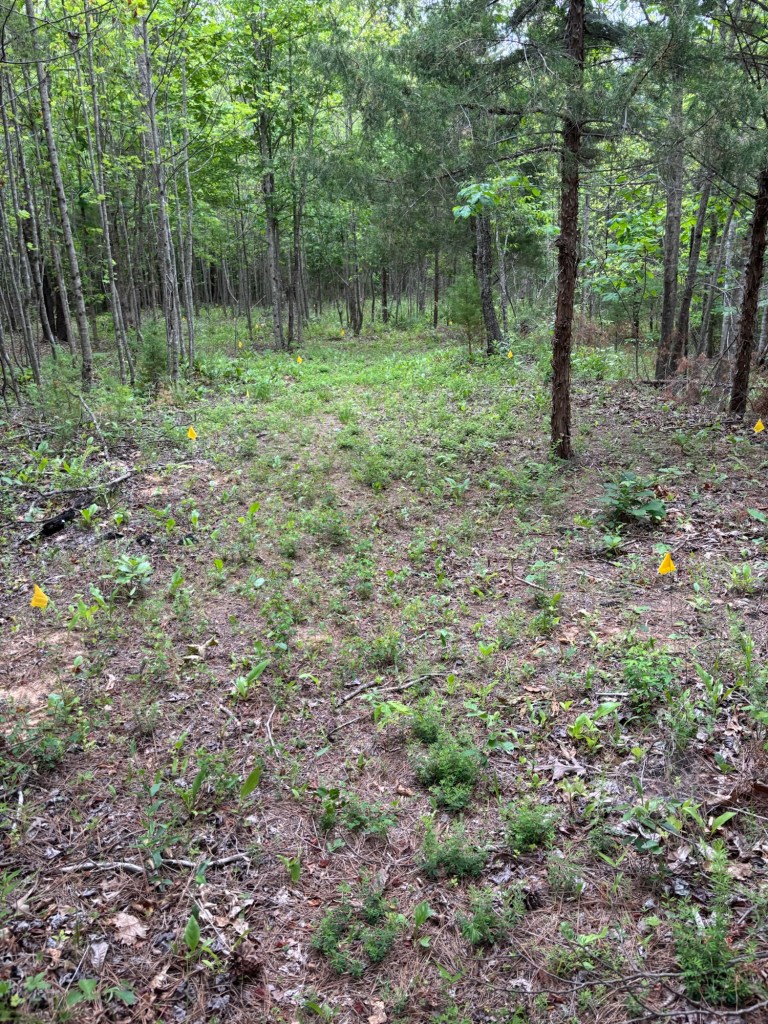
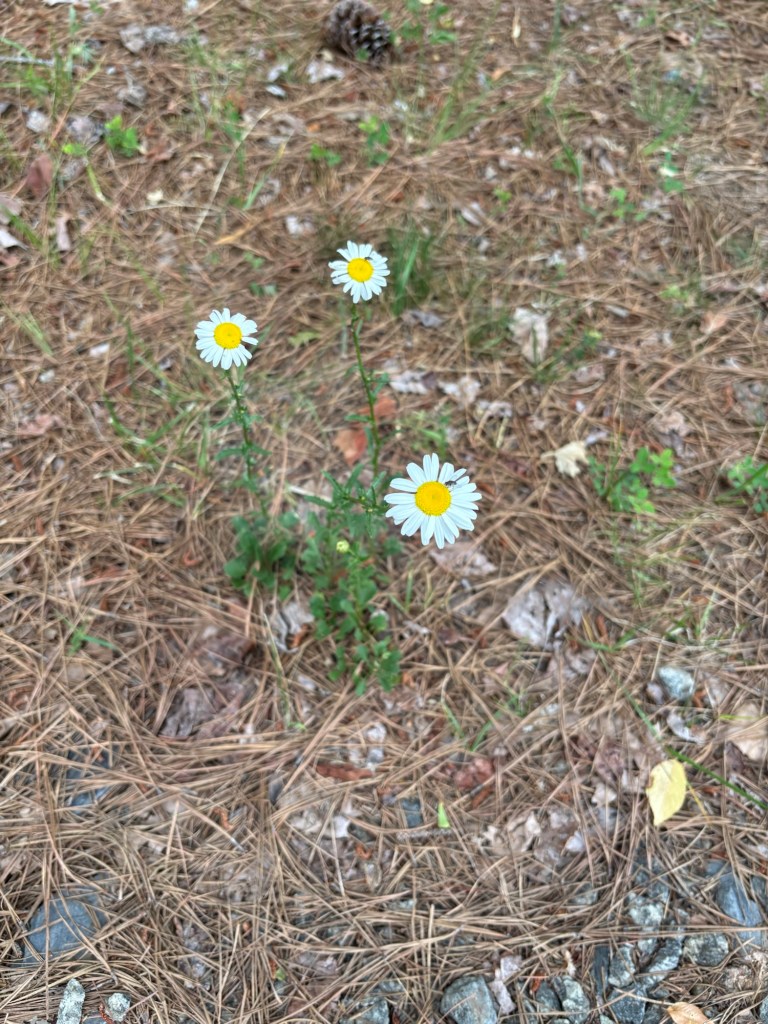
Old farm road looking northeast.Yellow flags show where the Rockfish River native Asimina triloba seedlings are planted. Most of the plants growing in the middle are nitrogen fixers and will be chopped and dropped by the tractor to feed the trees and keep our paths clear. Besides pulling it out, we have plans to use cardboard and heavy mulch to help abate any invasive privet, Japanese stilt grass or honeysuckle.Orchard Hill Road just off the new Pawpaw patch of seedlings and cultivars planted the last two years.Leucanthemum vulgare, oxeye daisy. An invasive from Europe that outcompetes in Virginia. It is classified as an aggressive weed. Desmodium rotundifolium, Round leaved trailing Tick trefoil, found below the loblolly pine at the Asimina triloba seedling orchard and all over SAFF. A trailing, mat forming native perennial legume valued as a nitrogen fixer and a food source for deer wild turkey and quail. It also serves as a larval host plant for butterflies such as Variegated Fritillary and the Southern Cloudywing. It is pleasing to look at with the light and dark shades of green and round leaves.Andersonglossum virginianum, wild comfrey, or blue hounds tongue, is a native perennial wildflower in the borage family. It’s a tough deer resistant woodland ground cover that stabilizes soil as well as prevents erosion. This is different than the European medicinal comfrey though it shares certain properties and also some toxic alkaloids.
We watched the FarmCam last night and today. It’s been raining and storming and drizzling since about 5:30pm last night. Weather says .7” of rainfall in last 24 hours and .45” expected in next 24 hours. 🎉🙌🙏🏼
An adult female lone star tick dying of permethrin poisoning.
 Saint Andrews Forest Farm