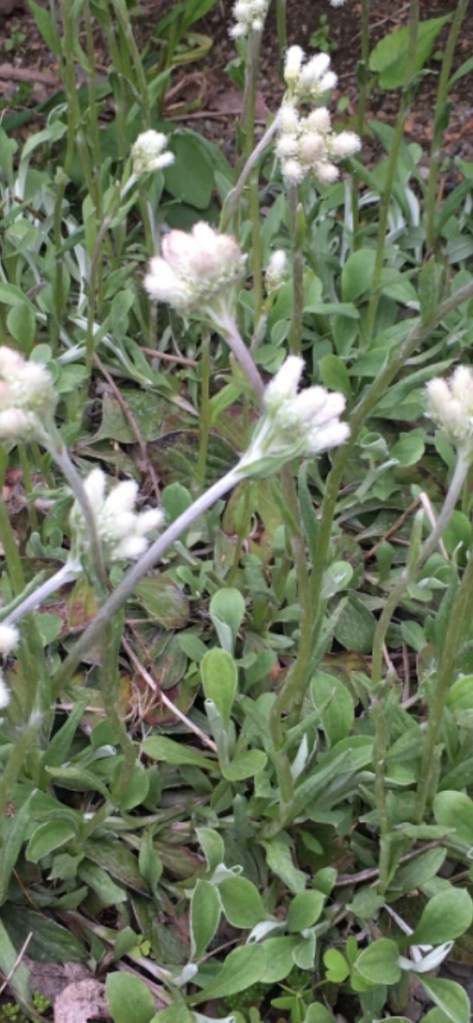
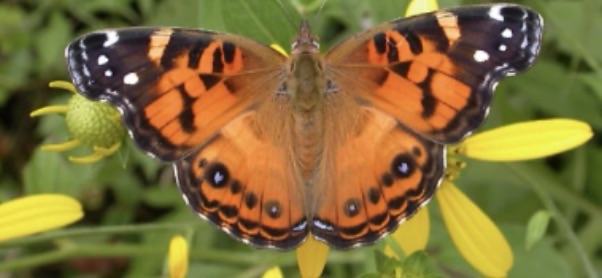
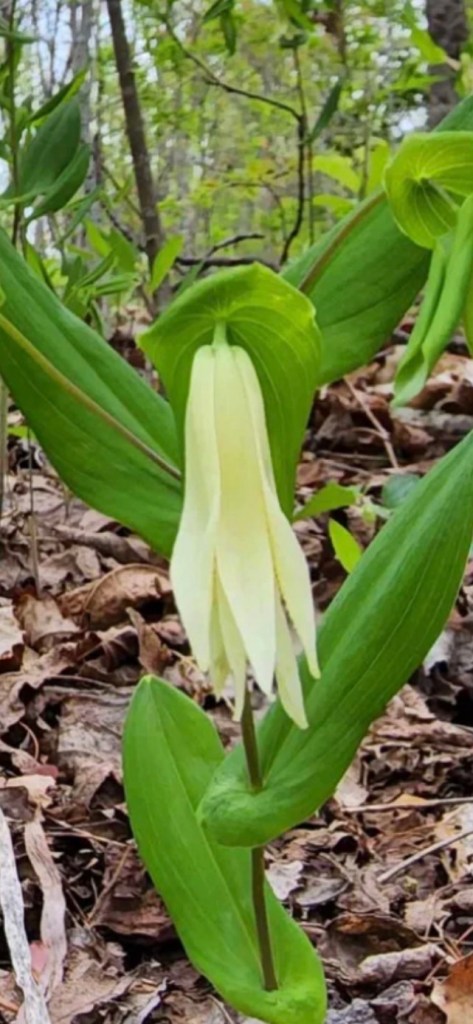
Antennaria plantaginifolia, plantain-leaved pussytoes, was found budding in multiple locations on the trails Monday afternoon. The buds resemble cat paws. This native groundcover supports Virginia pollinators and is a host plant for the American Lady butterfly, Vanessa virginiensis.American lady butterflyUvularia perfoliata, perfoliate bellwort, a north American woodland perennial known for its distinctive leaves that appear to pierce the stem and drooping yellow bell shaped flowers. Attracts pollinators. Young shoots can be cooked like asparagus and eaten. Roots are also edible after cooking. Found along the trails at SAFF.
We got out to the farm yesterday to check on the tiny house and continue to level it up. We’re placing cinder blocks around the trailer to support it. We also continued to pollinate the newly opened small, green pawpaw flowers. We see tiny initial fruit set has occurred as well as new buds opening.
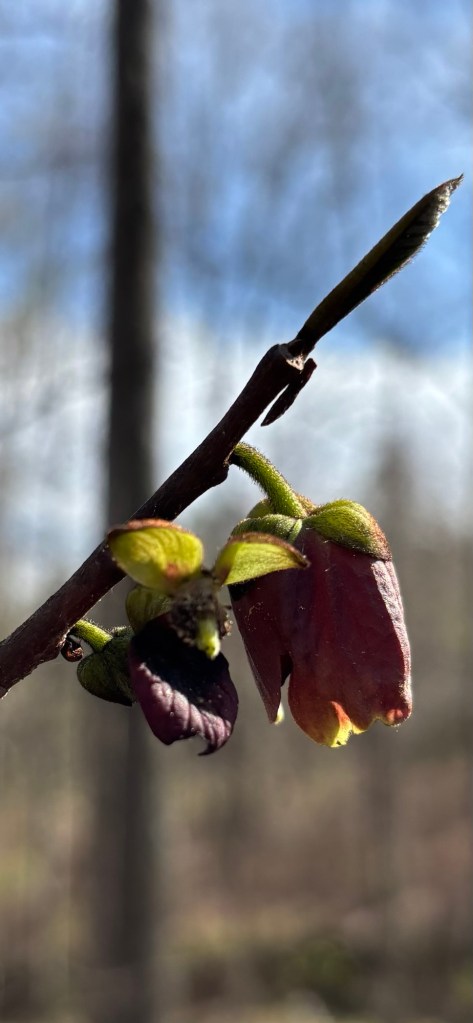
Asimina triloba buds showing an older female flower to the right with green color at bottom and the pollinated one facing us with the green banana surrounded by pollen. There’s another smaller and younger bud not yet open behind the middle bud which has dropped most of its petals.
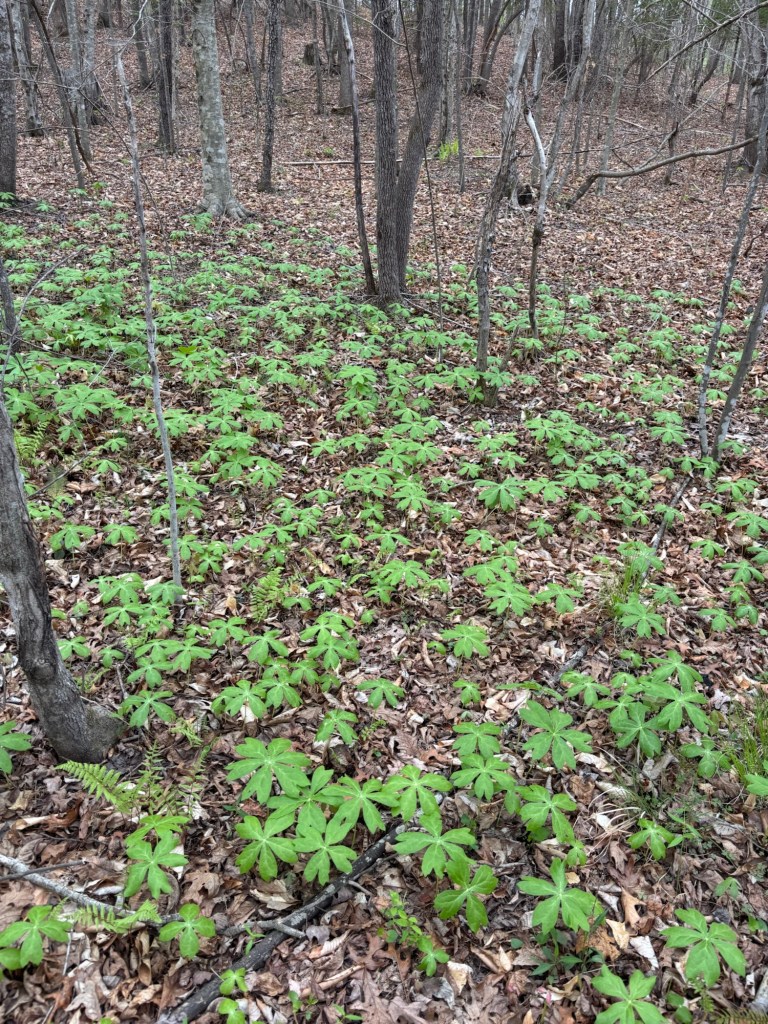
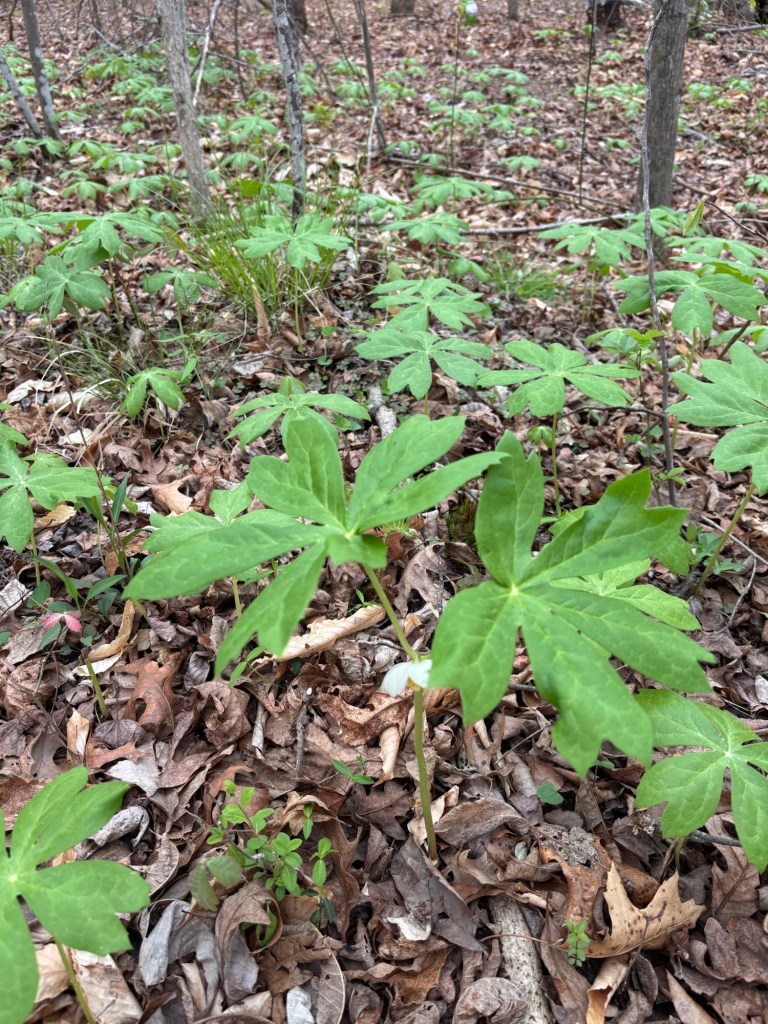
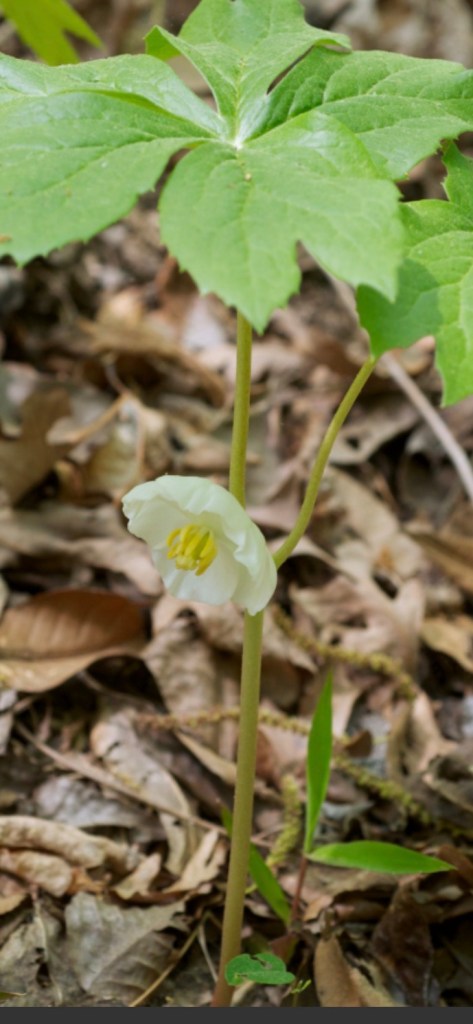
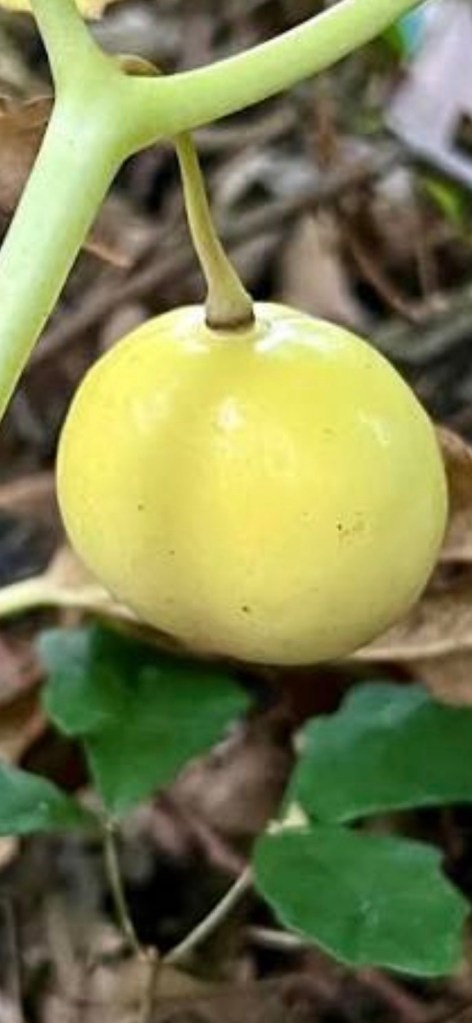
Early fruit set on just one small 6 foot Asimina triloba in the old clonal colony pawpaw patch. There’s multiple large colonies of Mayapples and Virginia bluebells coming up. Mayapples by the main waterway down in the old clonal colony pawpaw patch. A Mayapple, Podophyllum peltatum, with a white bloom in center. We will watch this one for a fruit. All parts of this plant are poisonous except for the ripe yellow edible fruit. Extracts of this plant are used for treating cancers. It spreads through rhizomes to form thick ground cover colonies and goes dormant mid summer. Wear gloves when handling as it can cause irritation. Mayapple flower. This is the Mayapple fruit which ripens through the summer. We begin to look for it in August in spots where we’ve seen flowers. It’s the 2 leaved Mayapple that flower and fruit. The fruit is described as a fleshy lemon shaped berry native to eastern North America that has a unique tart flavor compared to pineapple, passion fruit or starburst candy. I found this description from one of my favorite teachers. “My first encounter with a ripe mayapple fruit was unforgettable. I actually smelled the fruit before I saw it. Within seconds of harvesting, I indulged in what little edible material was available. The taste was ambrosial — almost too good to be true — and from that day forward I became a devout seeker of ripe mayapple fruits. “ Adam Haritan from Learn Your Land.
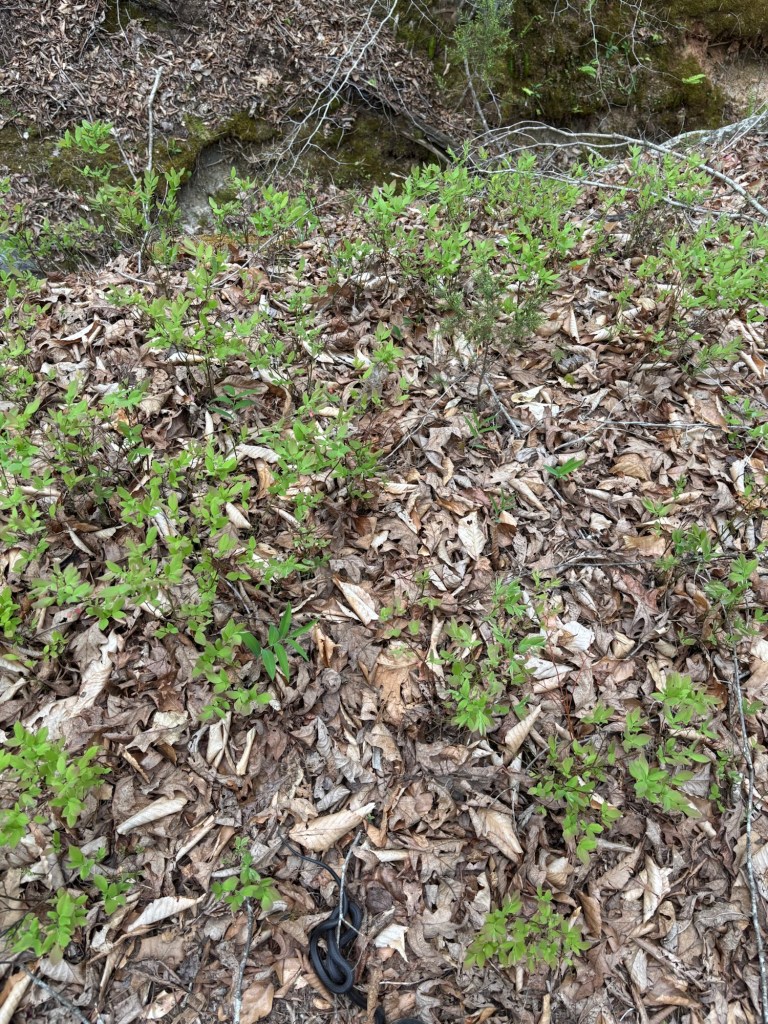
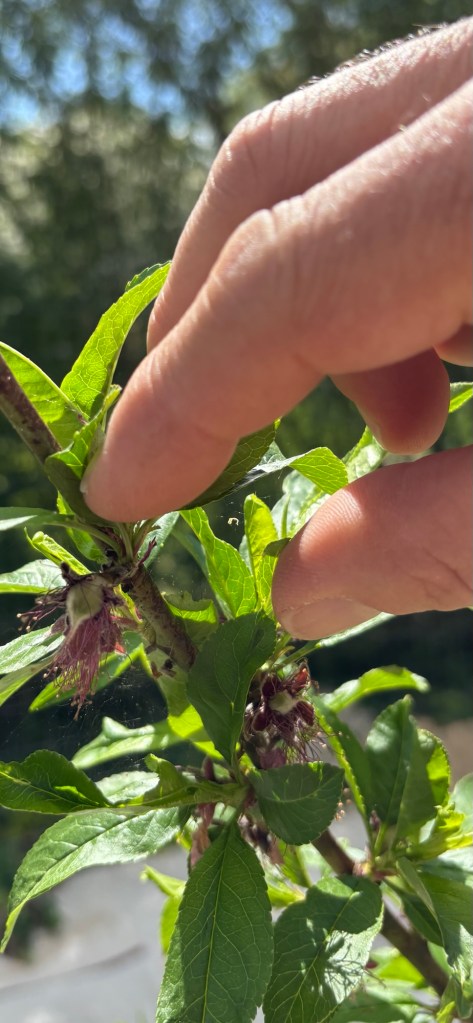
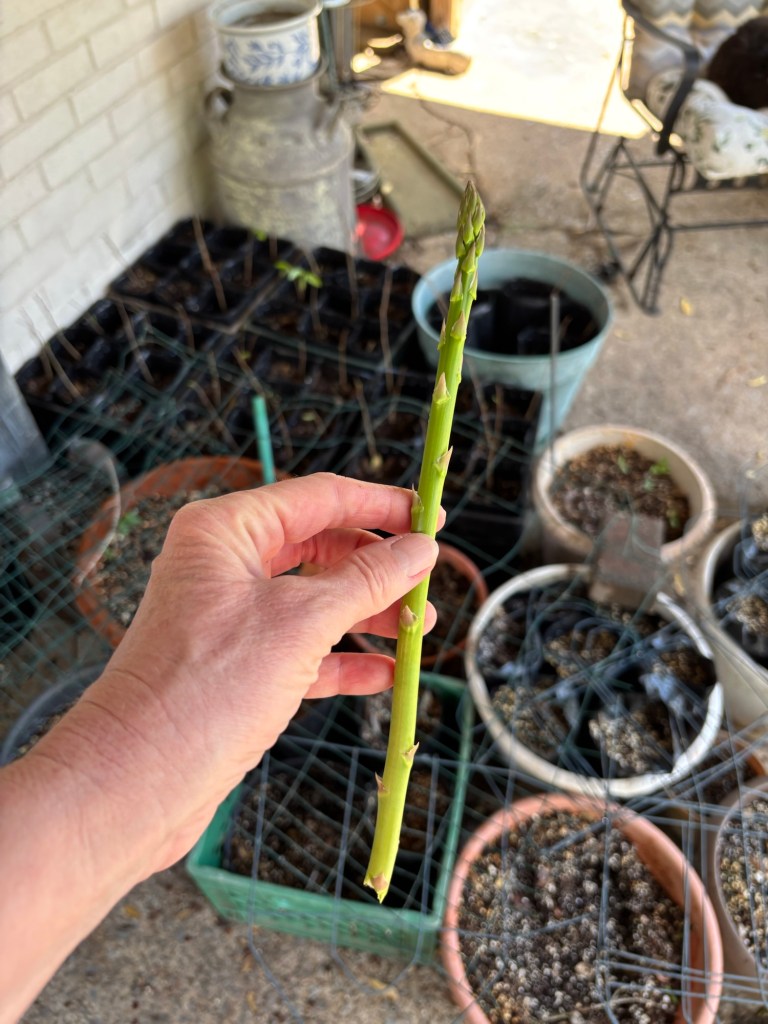
I was literally standing on a young rat snake as I took this photo of the blueberries here by the waterway! I bet I scared him as much as he did me. First peaches are forming on the heritage Indian Blood cling peach.Our first asparagus spear this season.
We’re picking up 100 bare root Asimina triloba seedlings from the Virginia Department of Forestry Thursday and we have 50 Spicebush seedlings and another 50 Asimina triloba seedlings coming from the Arbor Day Foundation this week. We will be busy this weekend potting up the new trees in deep tree pots to accommodate their long tap roots. Last year we planted 108 and this year it looks as though it will be 300-400. We can’t wait to see how many seeds sprout that we cold stratified over winter. Last year they began growing in June. It may be early this year since it’s been so warm. We will get photos of it all this year. Last year we were too amazed by how much grows from the seed so quickly. The taproot goes 10 inches before there’s anything to be seen up top. It’s a wondrous thing growing Asimina triloba —and the seeds sprouting is just the start but we were too overwhelmed last year to document it. We will do so this year. 👍🏼