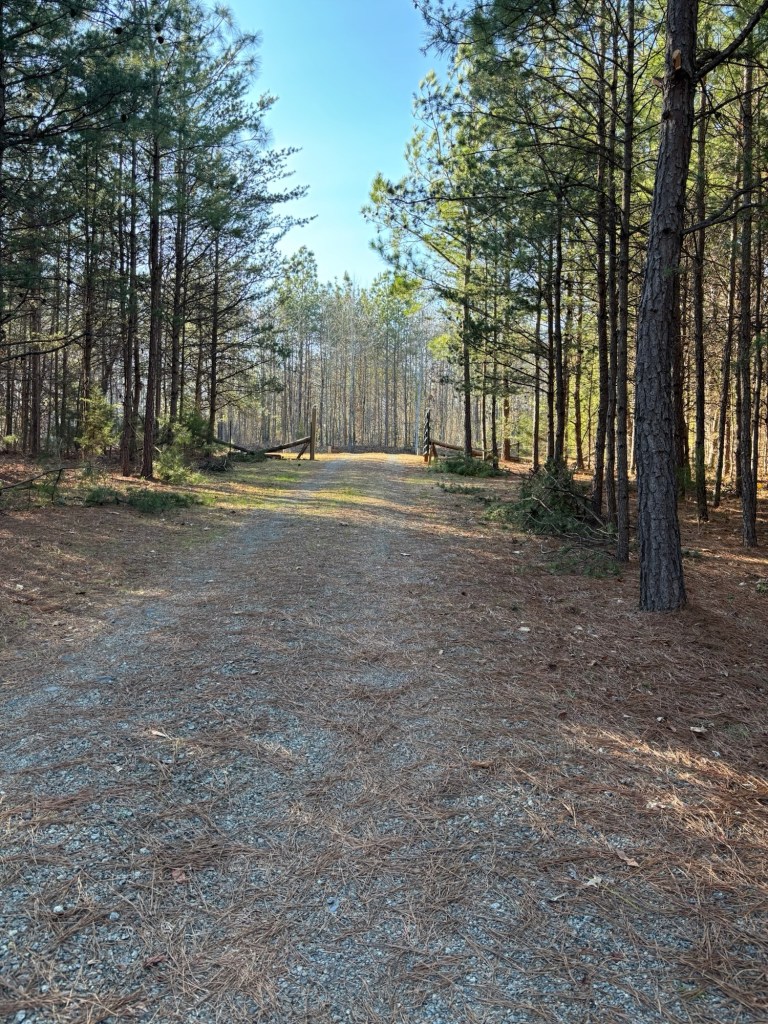
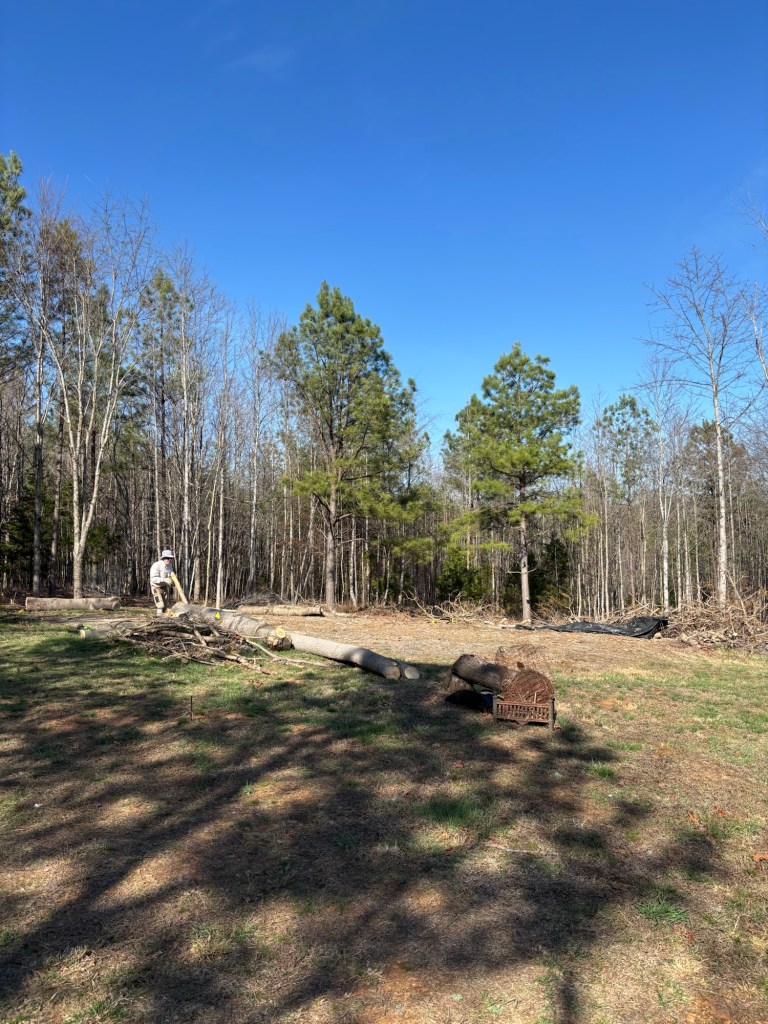
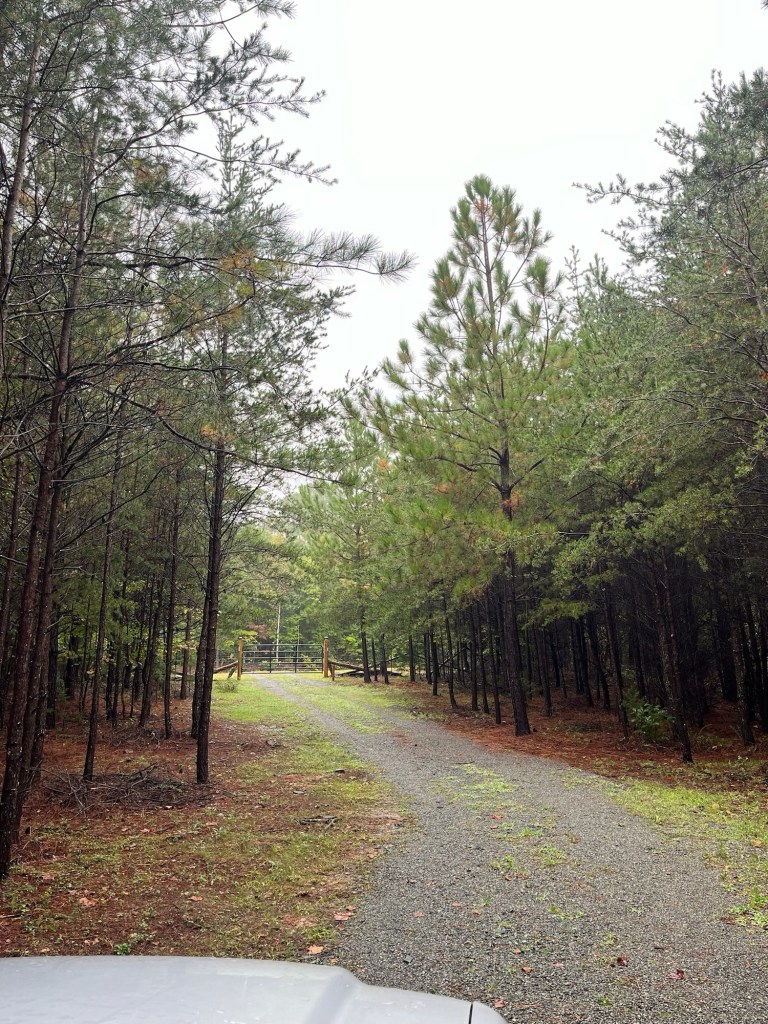
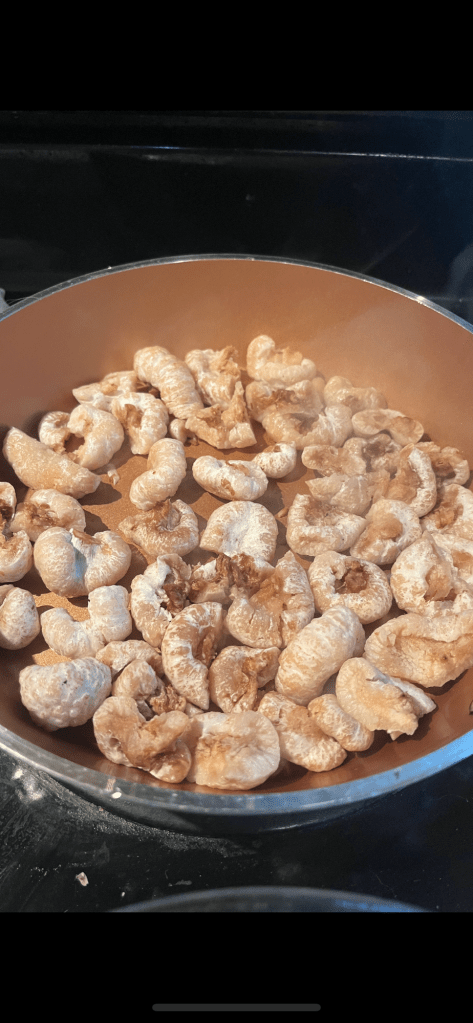
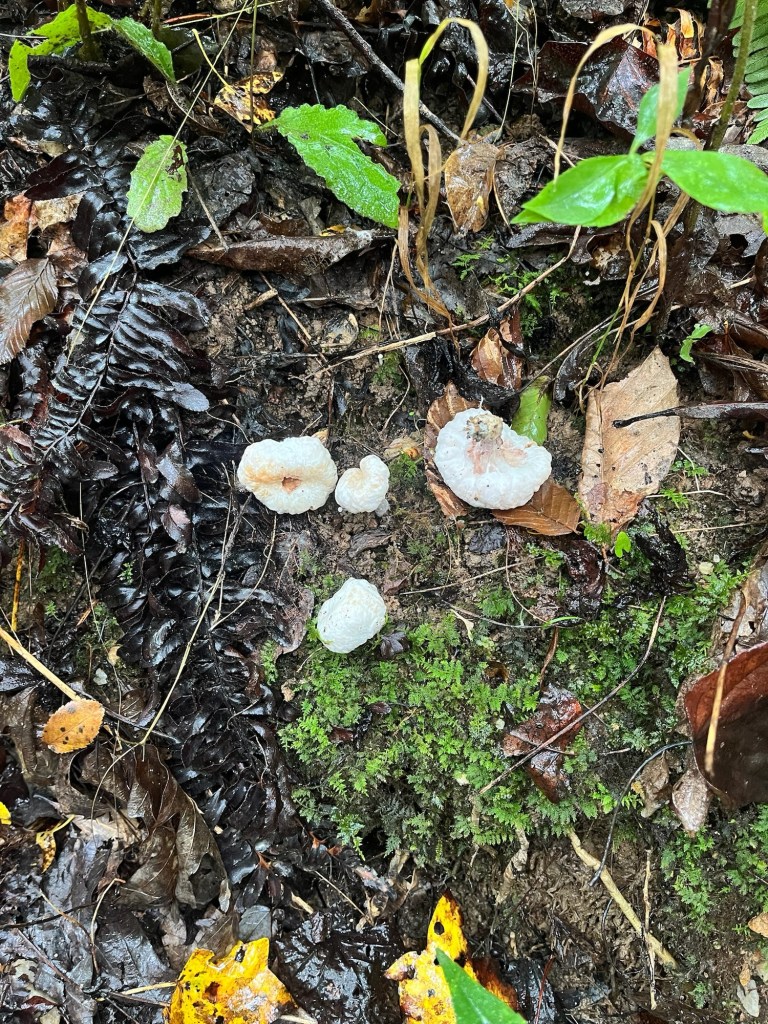
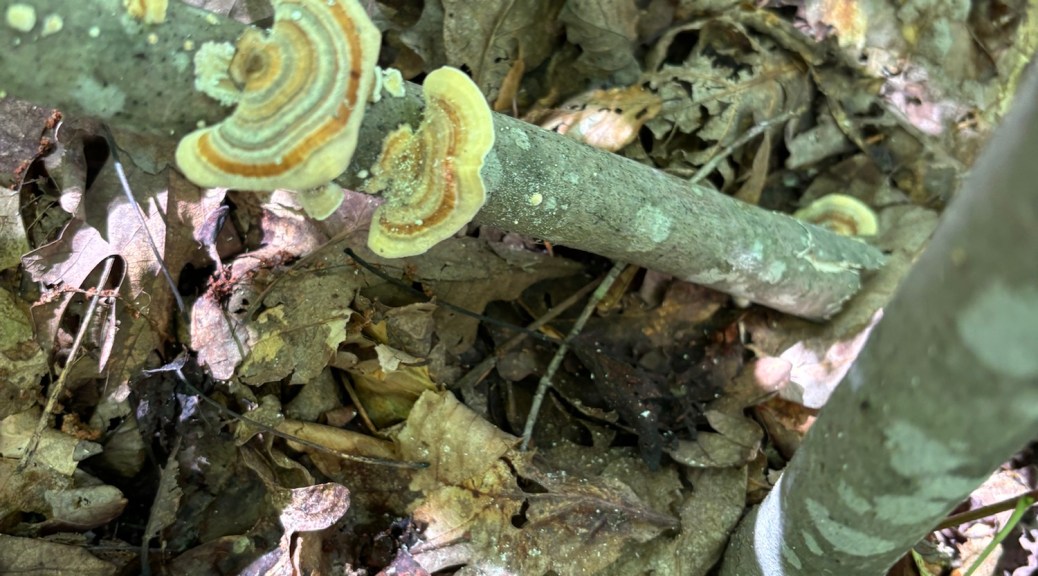
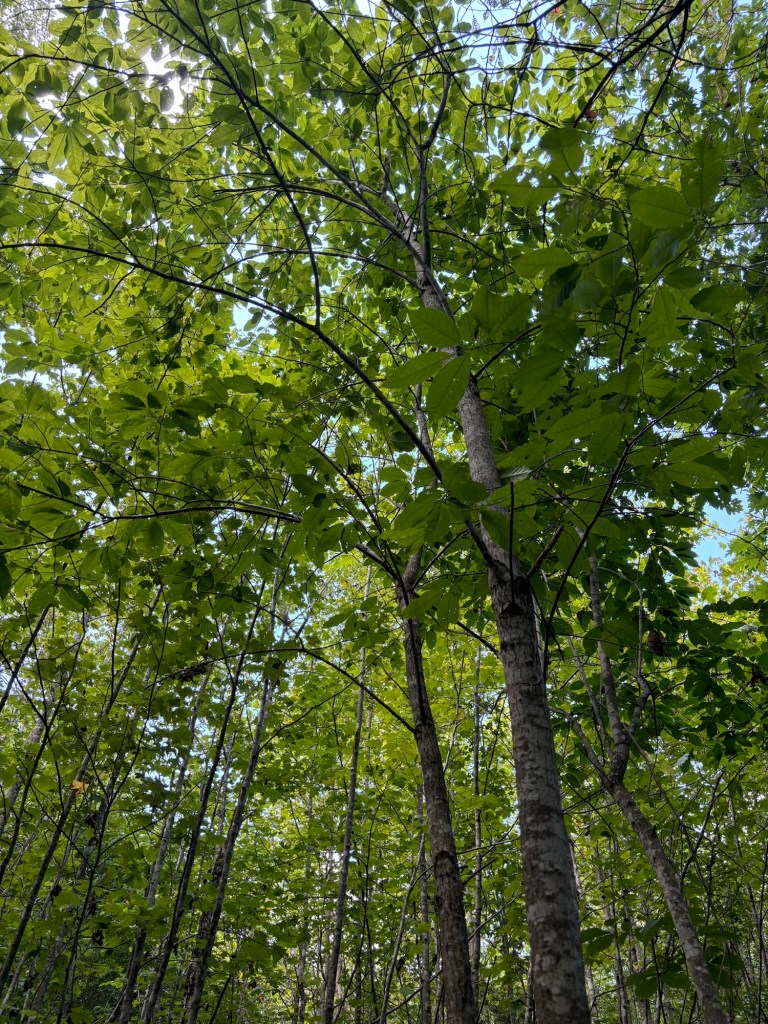
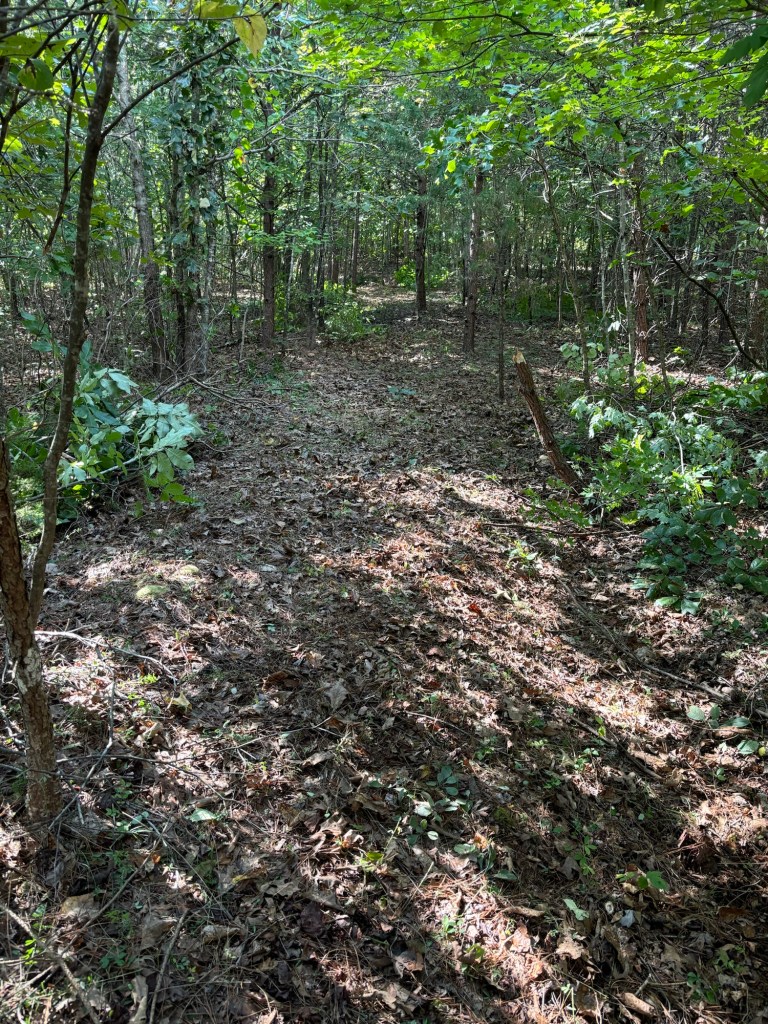
We trimmed the driveway up to 13.5 feet to accommodate the new tiny house being delivered.
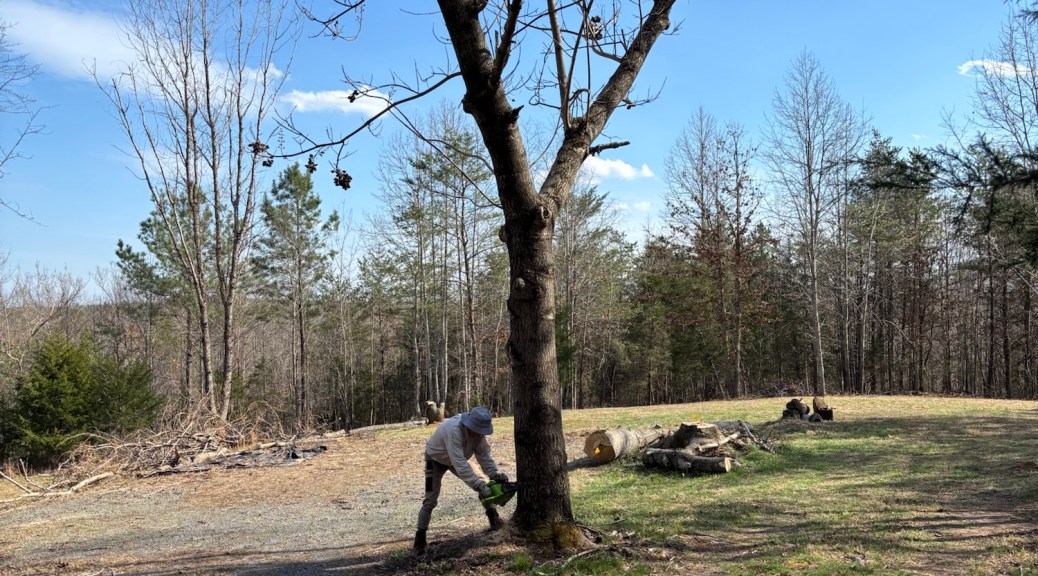
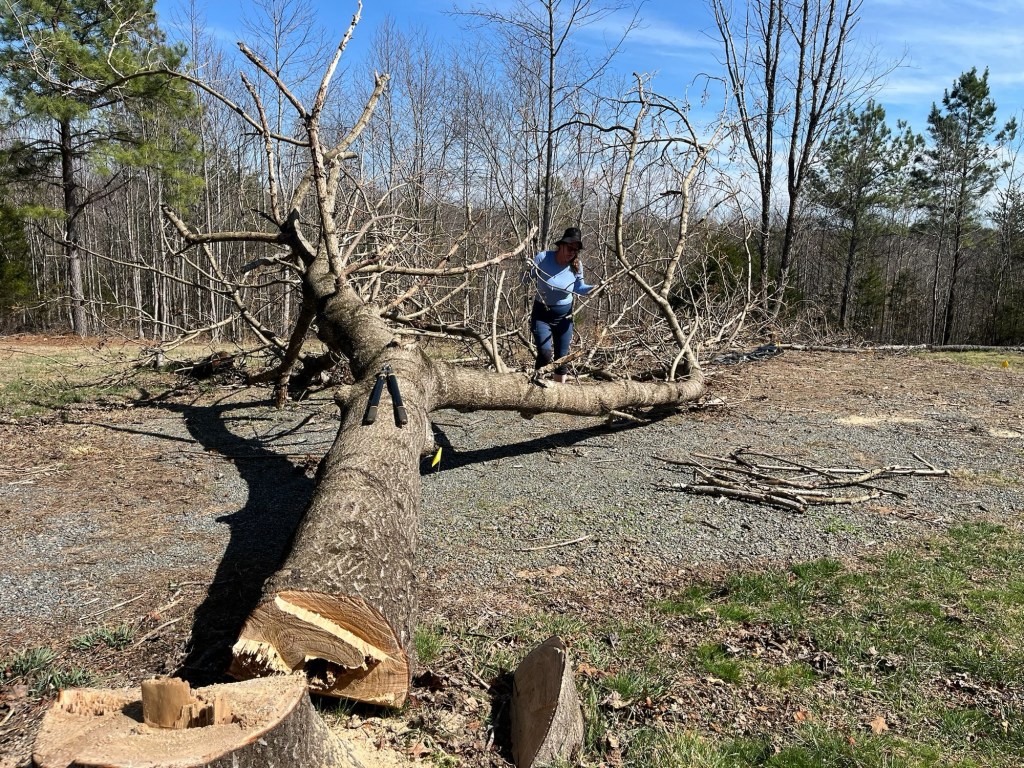
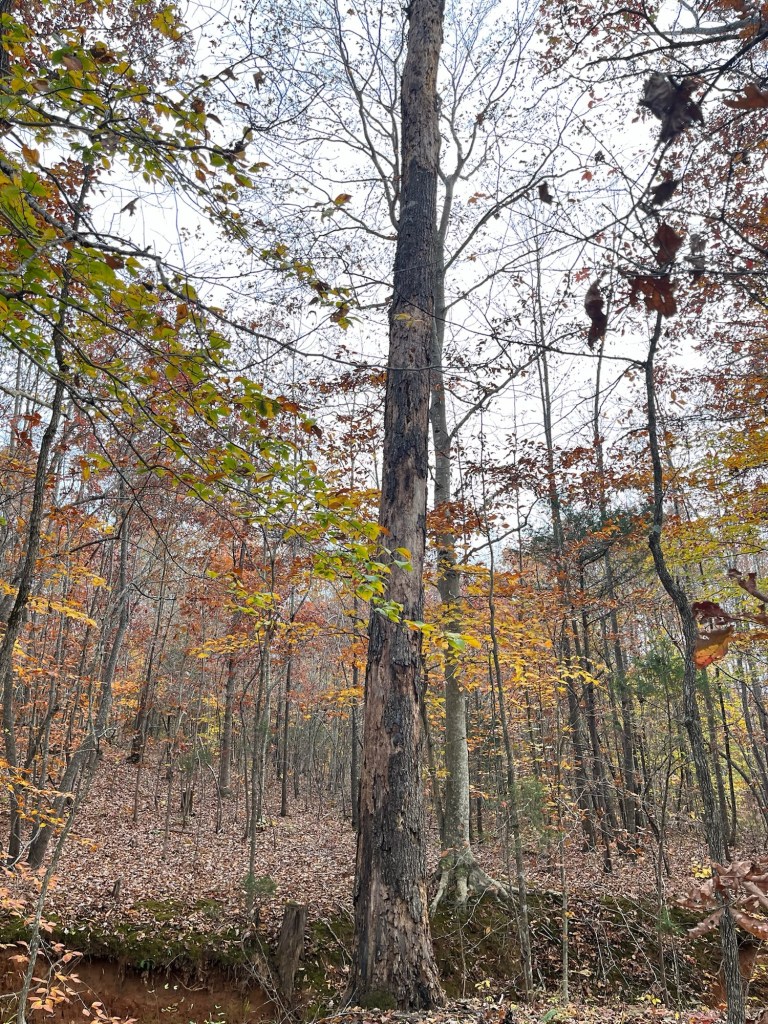
We spent the weekend taking down and processing the large paulownia trees up top in the main clearing. They loomed over the driveway and pad where we decided we’d place the tiny house. It felt like we were dismantling a giant whale carcass. These trees were messy, seedy and dropped limbs off during any storm. They take over native forests and choke out beneficial plants and trees for our Virginia wildlife. They were very fast growing as well which is why we put off cutting them down. They were a big bunch of hard work!
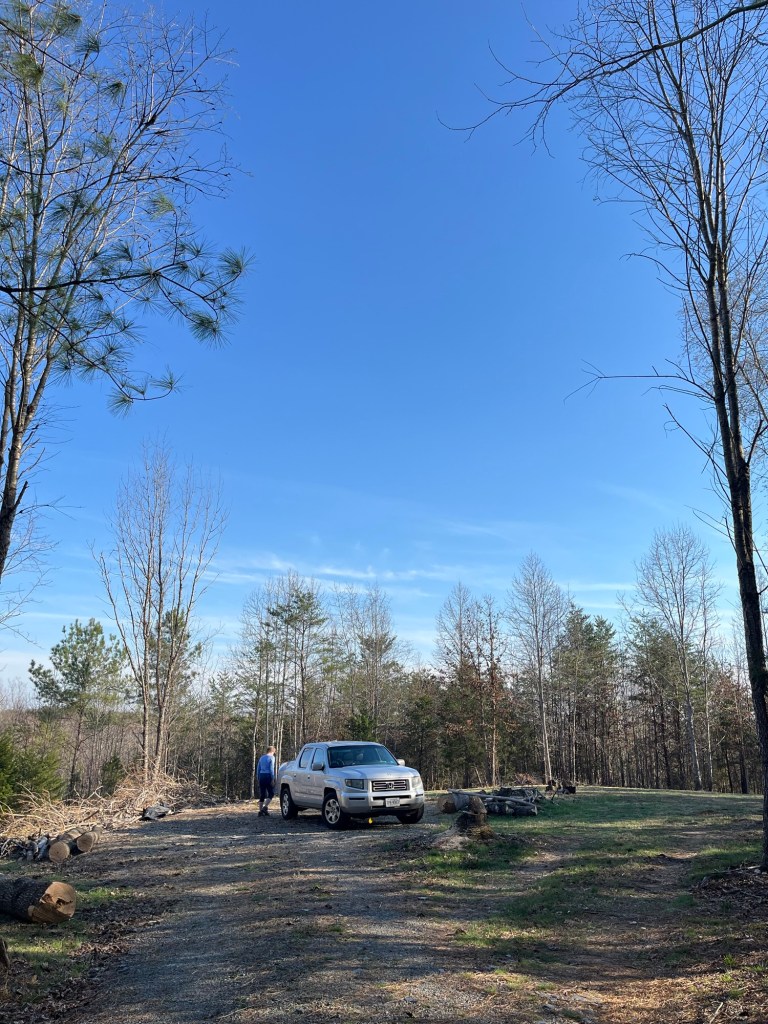
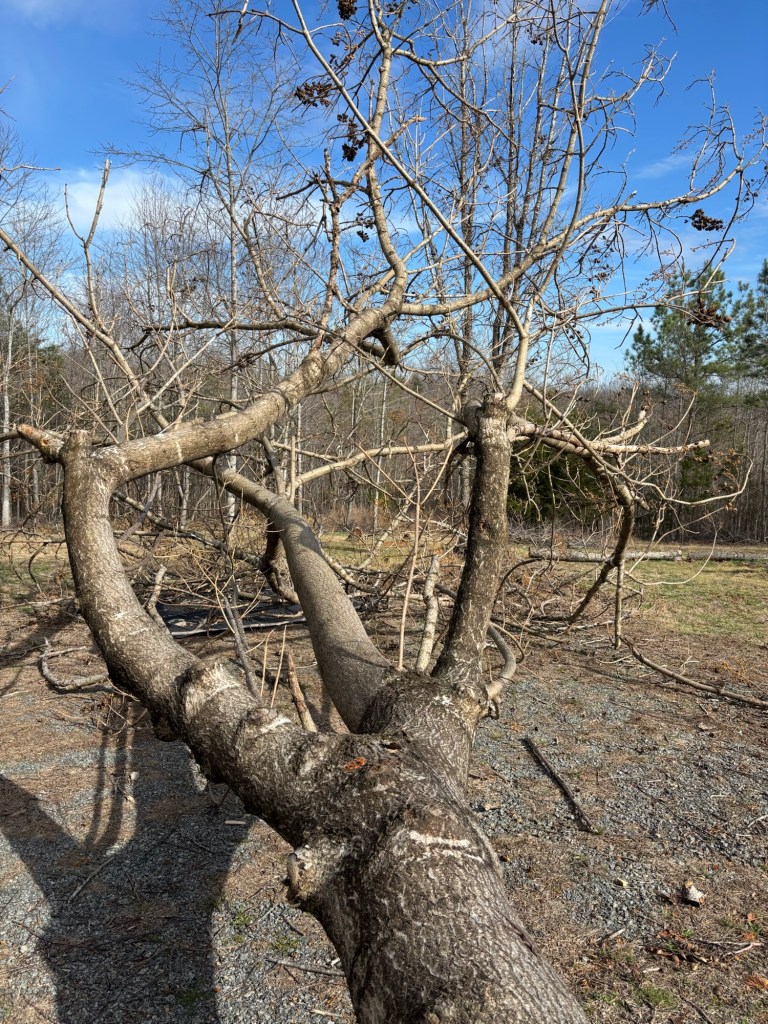
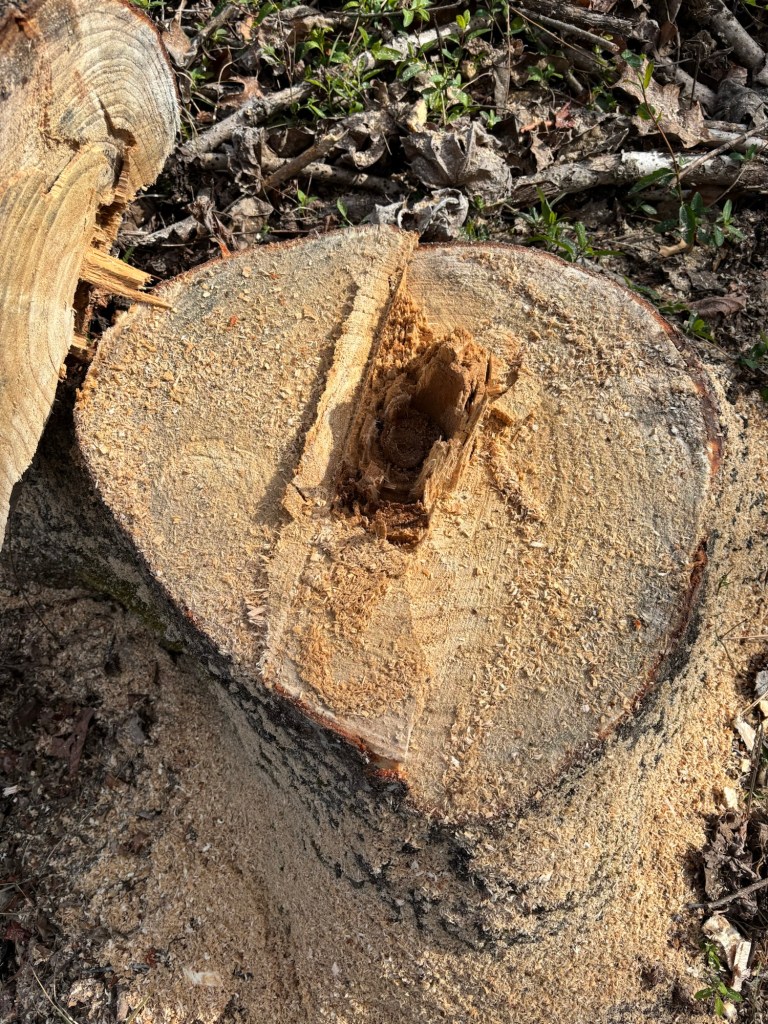
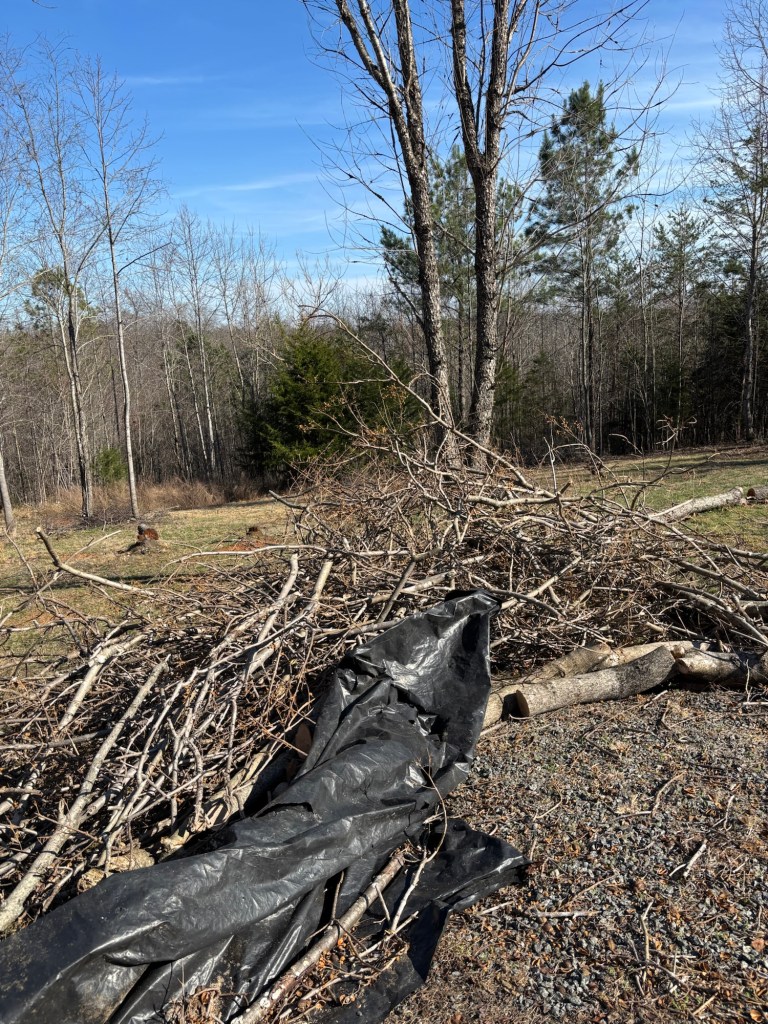
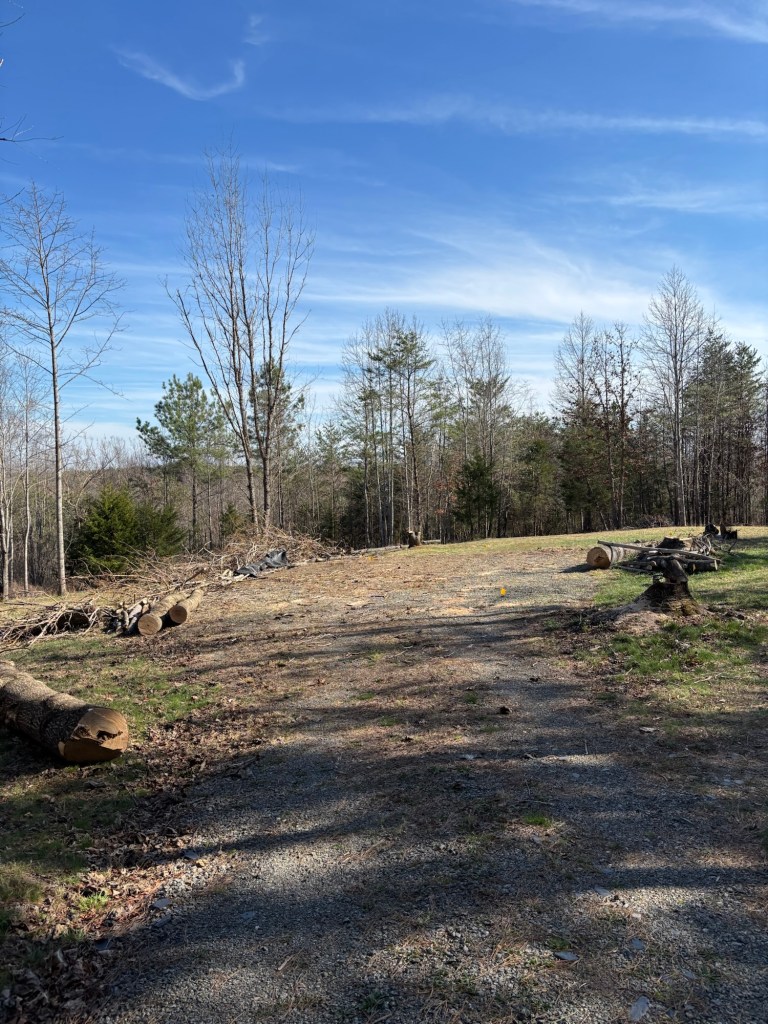
The truck parked in the spot we cleared for the tiny house this Wednesday. It looks so much better without the paulownias. We are pleased with our decision.The first paulownia tree we cut down earlier in the week and then came over Saturday to cut it into smaller pieces. This was the largest. It took all of our Saturday farm day. Hole in the middle of the paulownia is not a sign of disease but an inherent characteristic of the Paulowniacea family of trees. It is called pith and creates a water highway for the tree to support its rapid growth. This hollow bamboo structure runs the length of the trunk. This is one way this tree can take over quickly. Similar to ailanthus, Callery Pear, Mimosa and White Mulberry in its destruction of forests in the eastern US. Kudzu in tree form. The second and smaller of the two paulownia trees we took down and cleared it yesterday (Sunday). We are going to need a wood chipper! Paulownia tree debris around the pad. We will find a use for these logs. It is lightweight and fire and rot resistant. We picked a lot of great walking sticks and fishing poles out of the rubble and sorted into useful and non useful piles. We brought the long dead pieces home to use as fire starter. They burn for a long time and are as light as paper. It’s really very interesting wood. Too bad the tree isn’t adapted to playing nice in our environment with its native cohorts.
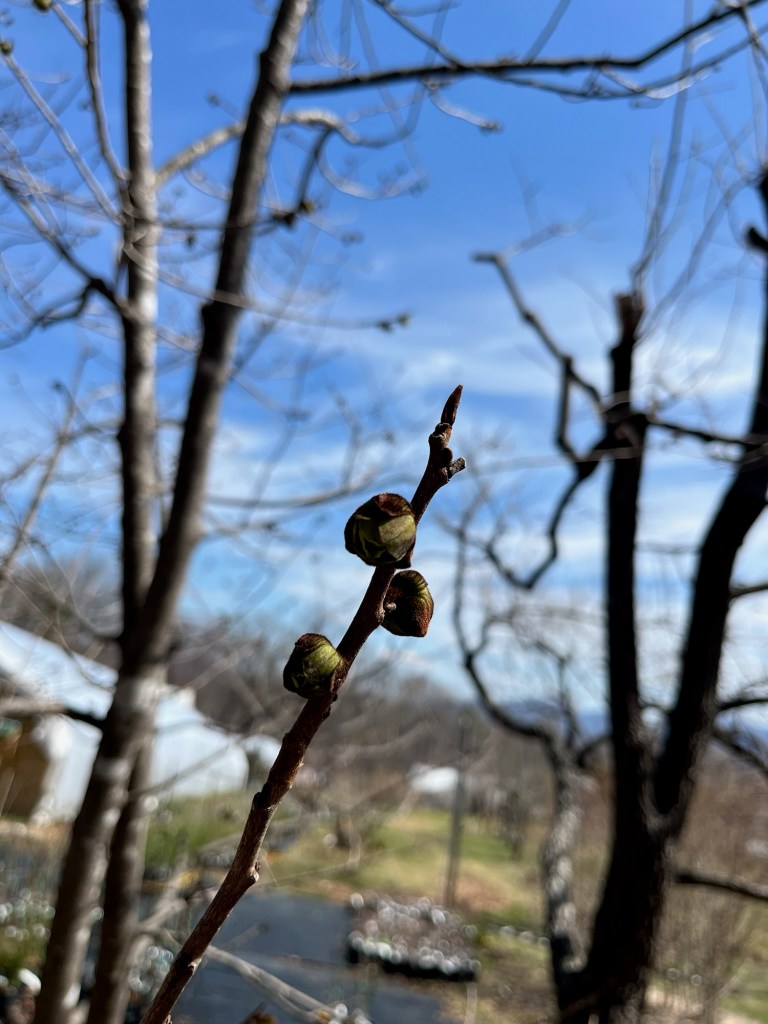
We stayed focused on creating our space for the tiny house for the most part, but ran down to the old colony pawpaw patch last night just before leaving SAFF for the weekend. The buds are still tightly closed. We are happy with the slow moving progress of the buds as we have only found female flowers out in the wild so far. We continue to look for the older male flowers with pollen. We will use this to pollinate our female flowers when they open. We are watching the pawpaws develop along the Rockfish River on our drive to the farm and we see them covered in buds. They are all still female with green flowers instead of more purple male flowers that face downward.
Female flowers at Edible Landscaping on Saturday in Afton Virginia.
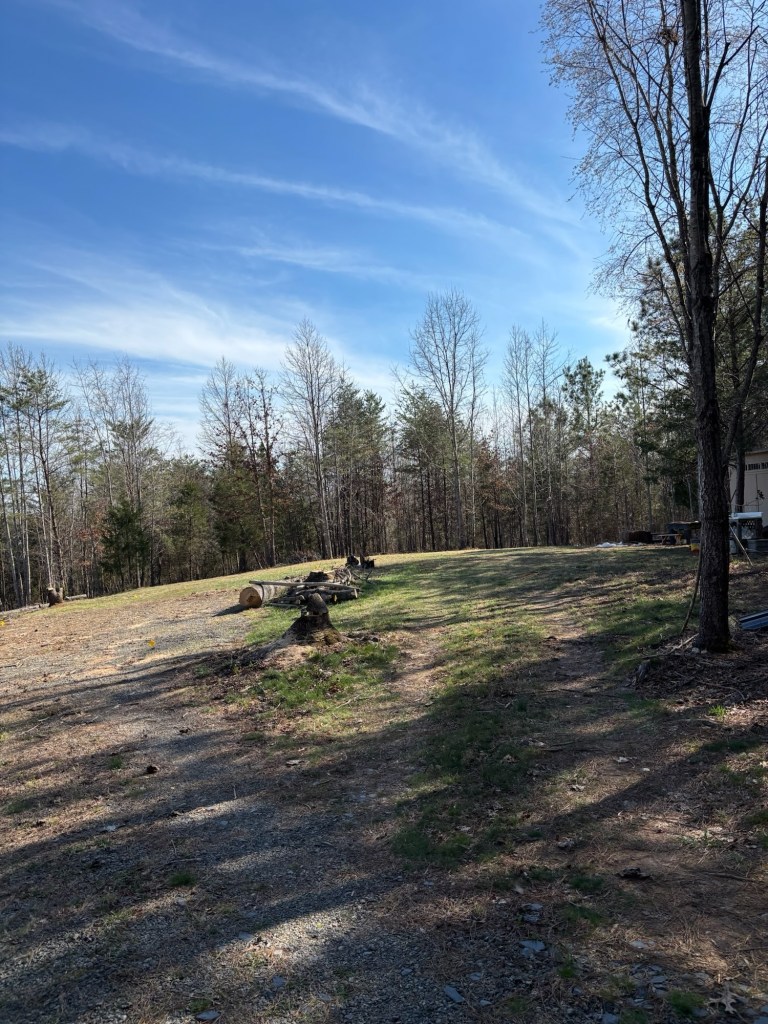
View of the clearing and pad without the paulownias.
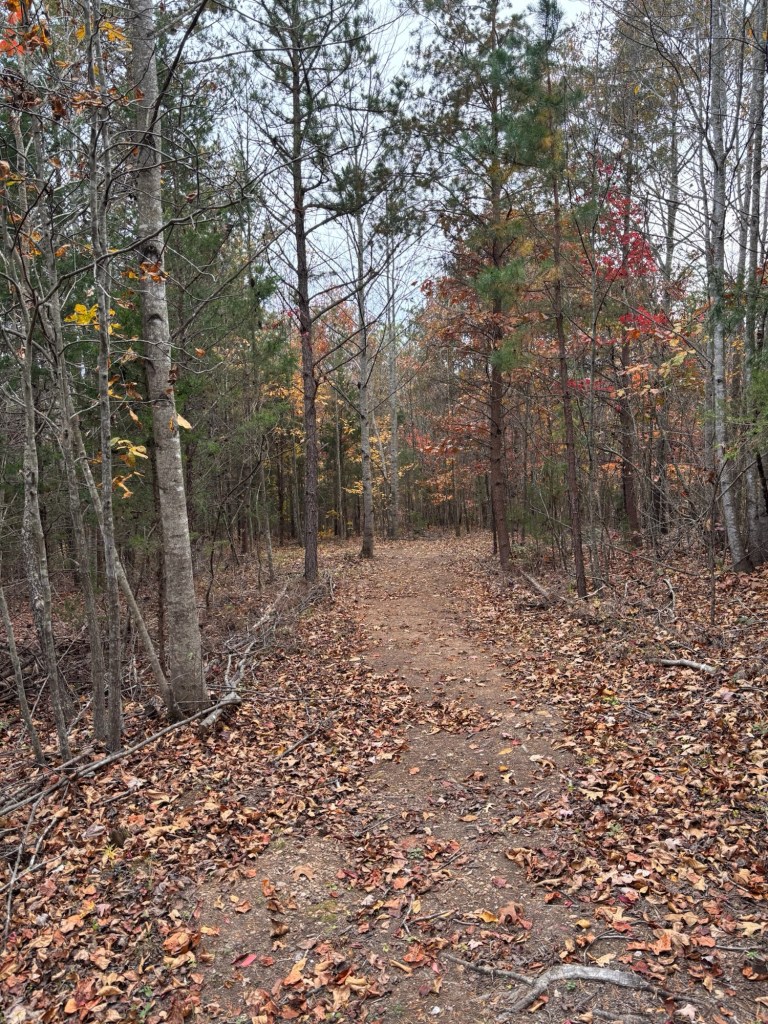
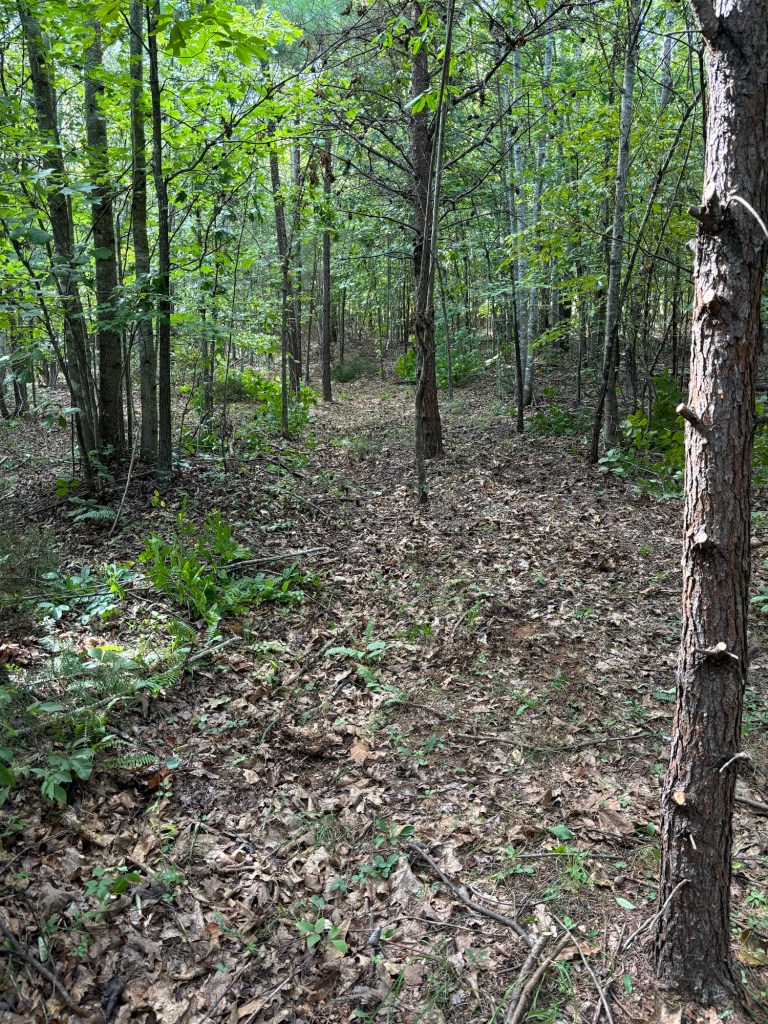
We started our walk down Red Hawk Rd and made a new trail from the bottom at the roundabout to down to Fern Trail.
The drive over to SAFF was beautiful with fall color. We travel from the Shenandoah Valley over Afton Mountain through Rockfish Gap and Howardsville to Buckingham. We oohed and ahhhed the whole way. Here’s a quick video of Howardsville Rd.
31 seconds of trees putting on a colorful show. Sound on for beautiful jazz as well.
We unloaded the lumber we found at the Restore and checked out the pawpaw and fig trees planted up top. They have yellow leaves and are losing most of them. Then we headed down Red Hawk Road to get down to Fern Trail. We checked out the Rappahanock cultivar and the seedlings planted as well as the cluster of natives. Most have gone fully dormant for the winter, especially the native SAFF trees. A few of the cultivars and seedlings look great; fully leafed and deep green still. Gleaming. It’s more typical for them with the temperature and season to be dormant. We have not yet had a hard freeze in Buckingham, or in Staunton in the Valley—which usually frosts first. Once dormant, their watering needs will drop. Phew! 😅
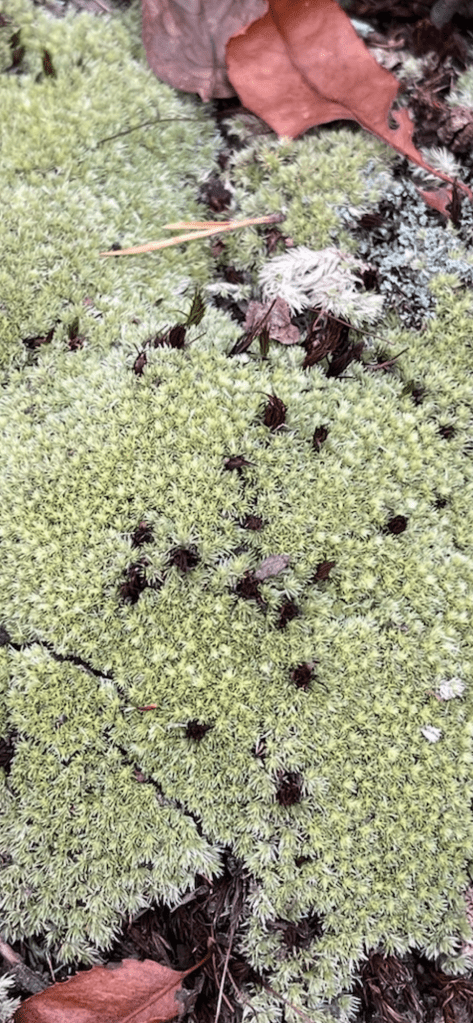
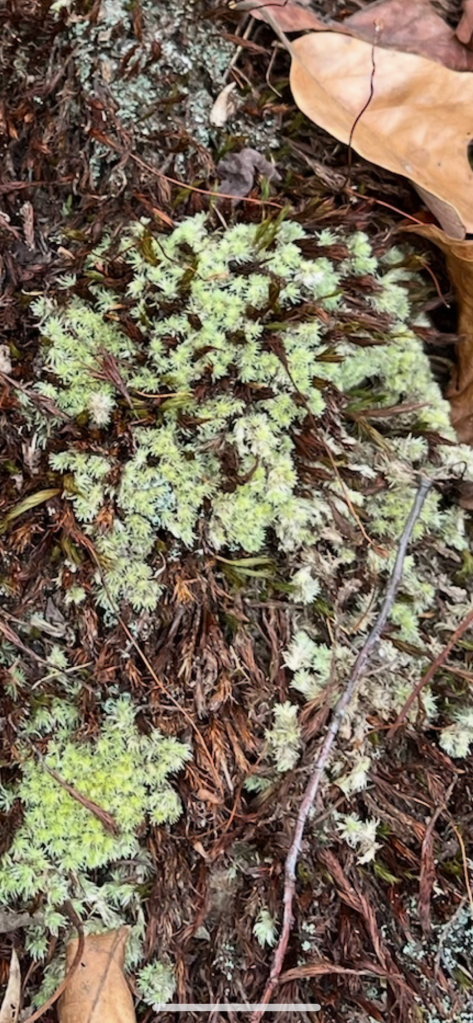
Leucobryum albidum, white moss or white pincushion moss, is common here in the eastern US. It creates a habitat for amphibians, reptiles and insects, stabilizes the soil, retains water, cycles nutrients and contributes to carbon sequestration.
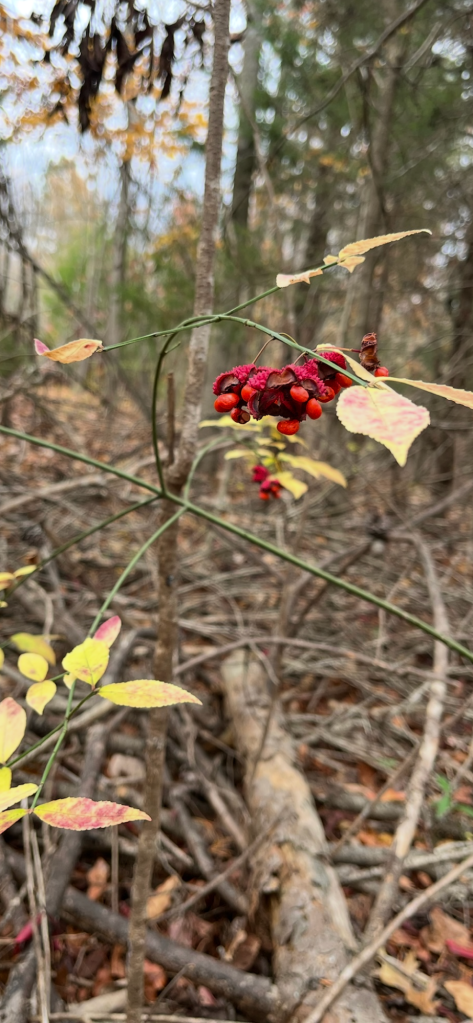
Along our walk we found white moss and strawberry euonymus (Euonymus americanus). We also went down to the waterway to check on this oak snag in the picture below. SAFF had high winds for several days and the last time we saw it, there was a bend and crack starting.
White moss beginning to grow.
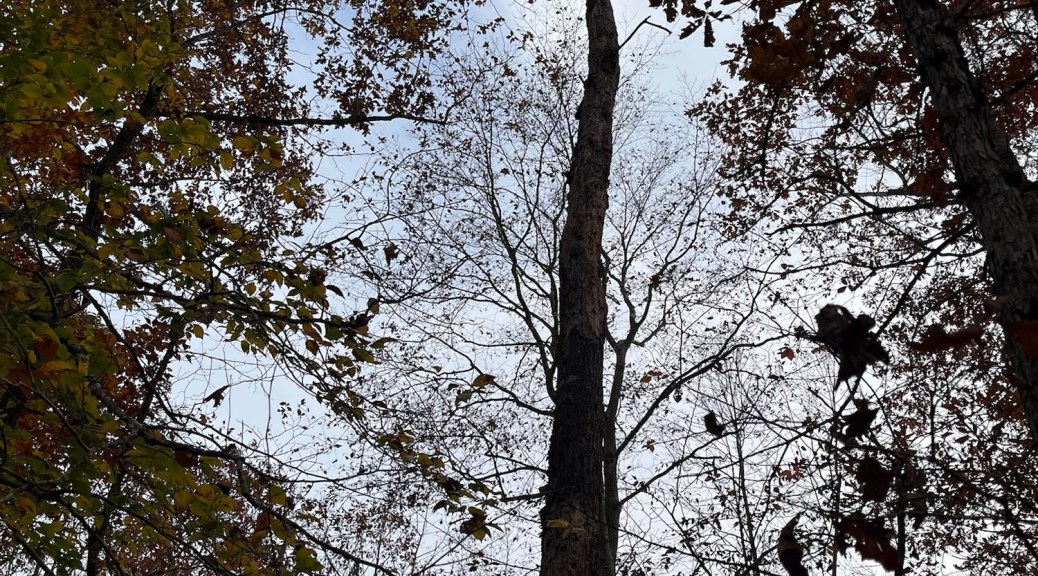
SAFF old oak snag we check on regularly. It looks as though it will fall to the west towards the Pawpaw Peninsula.
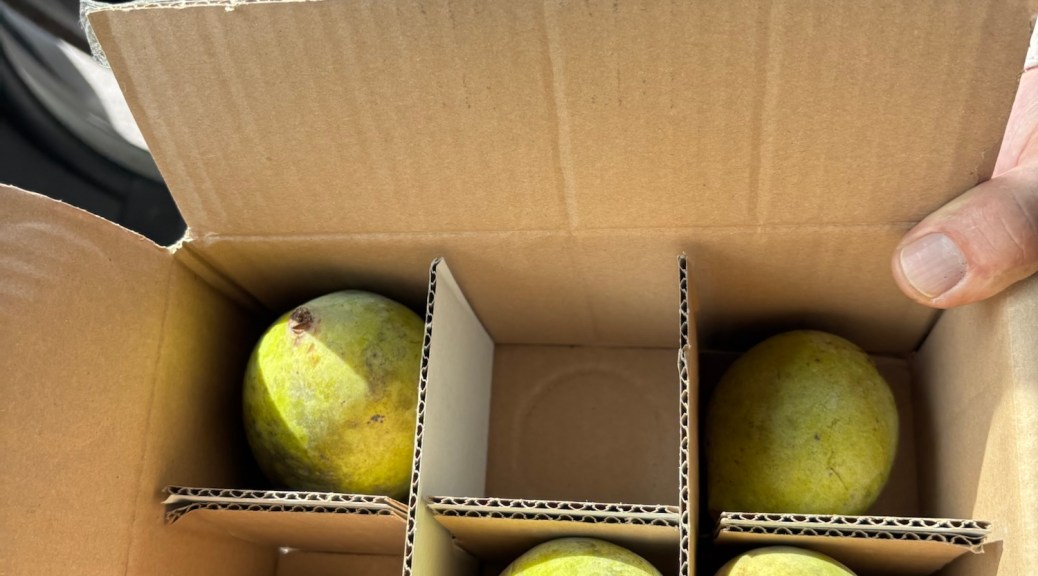
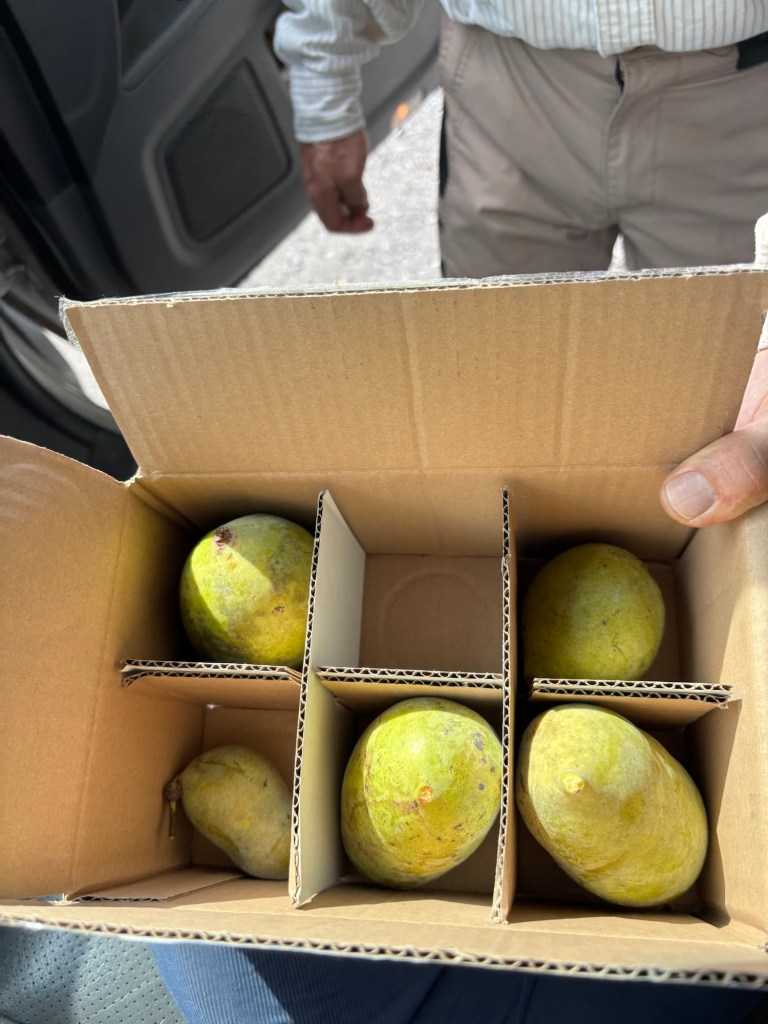
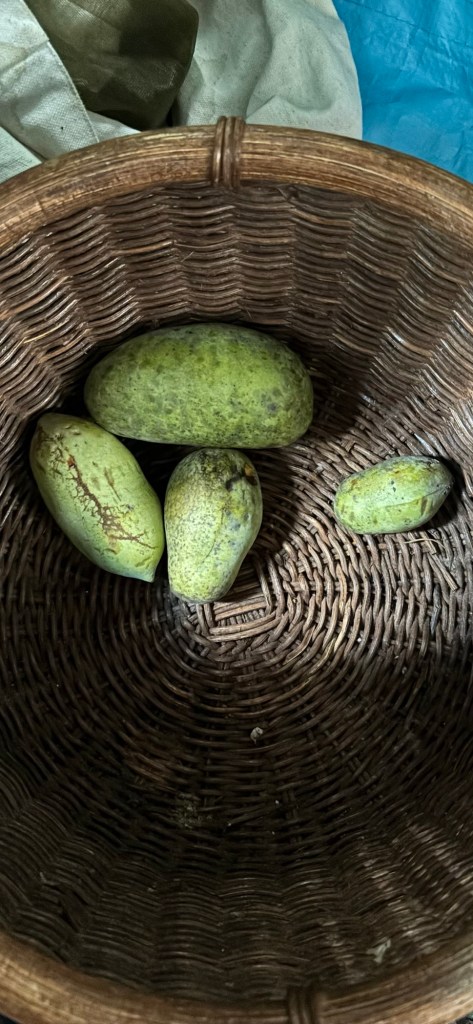
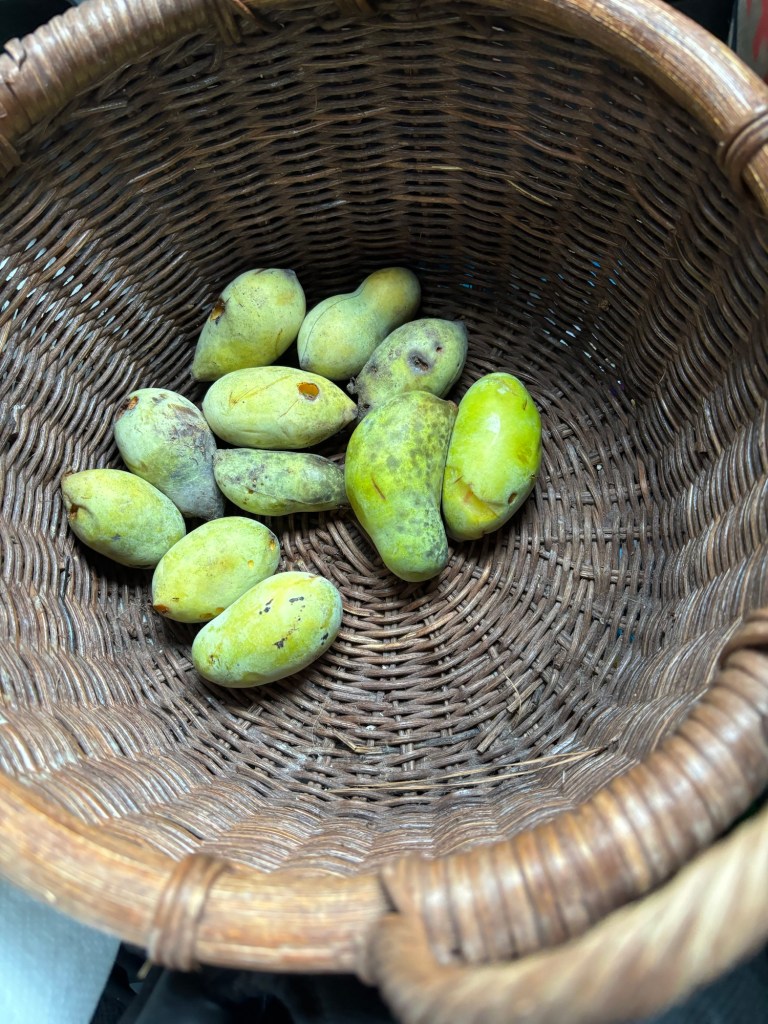
Pawpaws we foraged under Edible Landscaping’s Sunflower and Mango cultivars in Nelson County Virginia on Sunday.
We went out to the farm on Friday and Sunday to get as many pawpaws planted before the rain comes. Thunderstorms and rain are forecasted to get started late tonight and continue until Wednesday afternoon. We planted 17 on Friday: Five in the orchard (a Kentucky State University Chappell and 4 seedlings) and another five alongside the Shenandoah and select seedlings that we planted last year. We put a Mango cultivar and four seedlings we started from foraging. Then we planted 2 on the Pawpaw Peninsula (an Allegheny cultivar and Wild native seedling from a Rockfish River foraged pawpaw). After that we put two by the pawpaw patch at the bottom of Ridge Trail and another two on the left side of the large pawpaw grove. We walked up Ridge Trail and put another wild pawpaw seedling from Rockfish River foraging near the small colony of native pawpaws growing along the south wet weather gully.
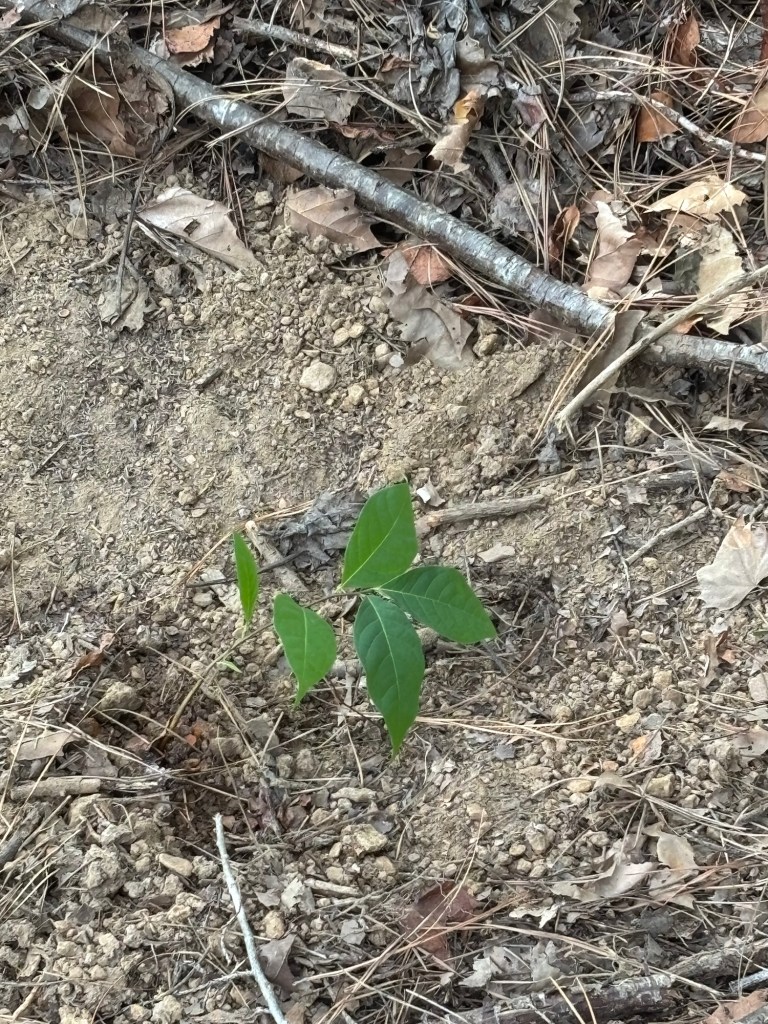
Wild native seedling planted up top.
We were exhausted after this. We had to carry water for the trees after planting in our packs, carry our equipment and the trees themselves all around the farm. It was hot and the ground was hard and dry for digging. Chris was battling each hole. (We are looking into finding a lightweight device to dig our holes, as in an auger.)
Allegheny pawpaw cultivar on the Pawpaw Peninsula with our SAFF native wild pawpaws. The wild ones are yellowing leaves and going dormant for winter since it has been so dry.
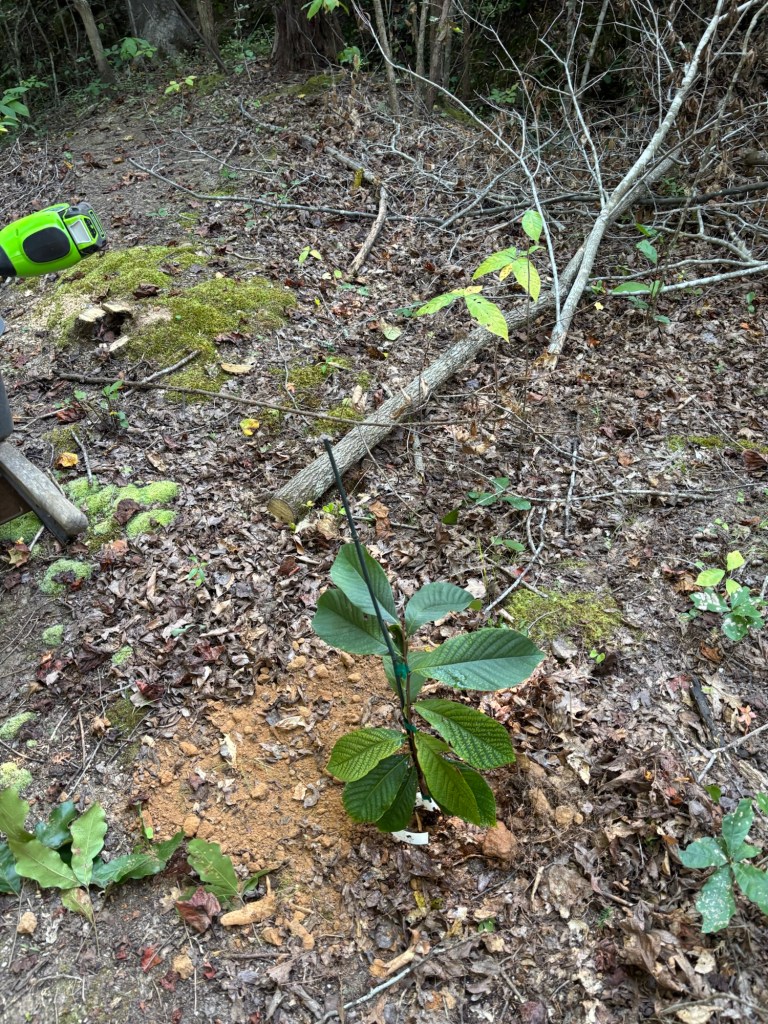
Then we went back out on Sunday to water what we’d planted Friday and put a few more in the ground. We planted 5 up top in the main clearing along the driveway and put two along the South Gully on Dan’s Folly. We put one more across next to a lone wild SAFF native pawpaw on Fern Trail. From there, we walked down the Gully and watered our select seedling planted a few days before. We were happy to see they all were still in the ground (last year, the deer ate them and pulled them out of the ground a day after we planted so we almost expected the same.) They were glowing in fact. They all appeared to be very happy in their new locations. We watered them some more.
We have another 80 or so to plant and hope to get out to the farm again soon to get a few more in the ground.
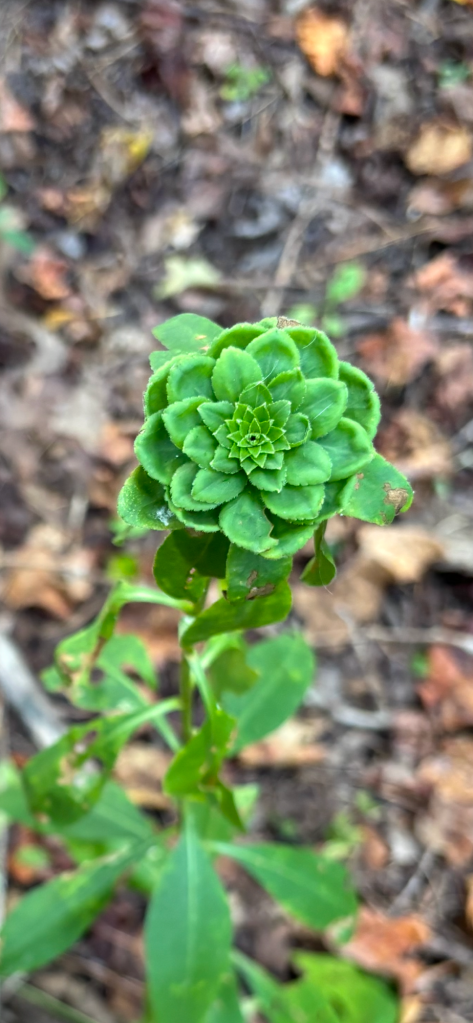
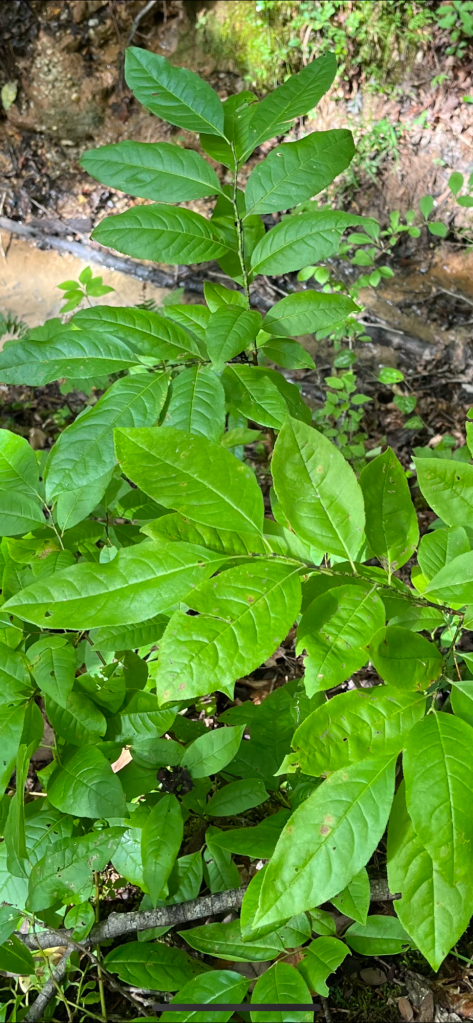
We found this lone flower along Mary Banning Trail. We aren’t certain but are leaning towards a type of Spurge. We will continue to observe it in order to further identify.
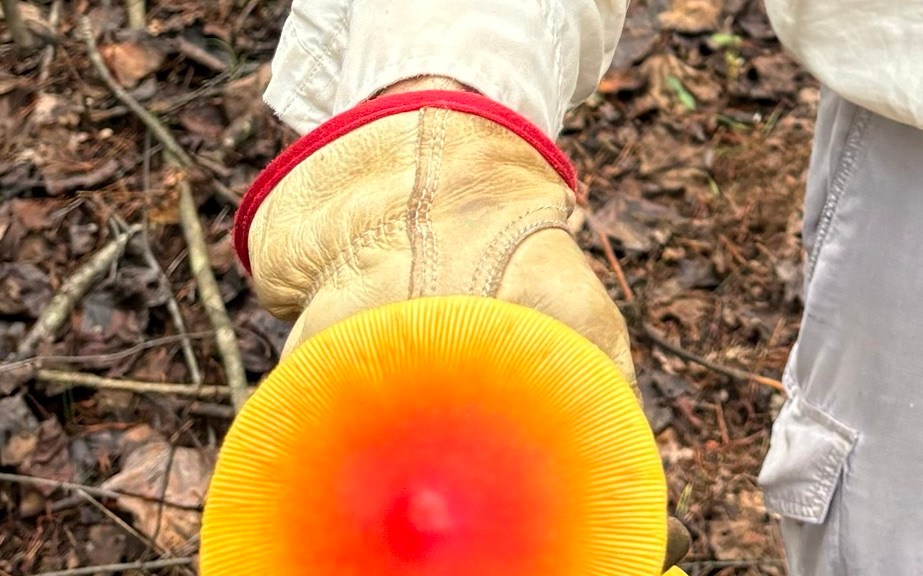
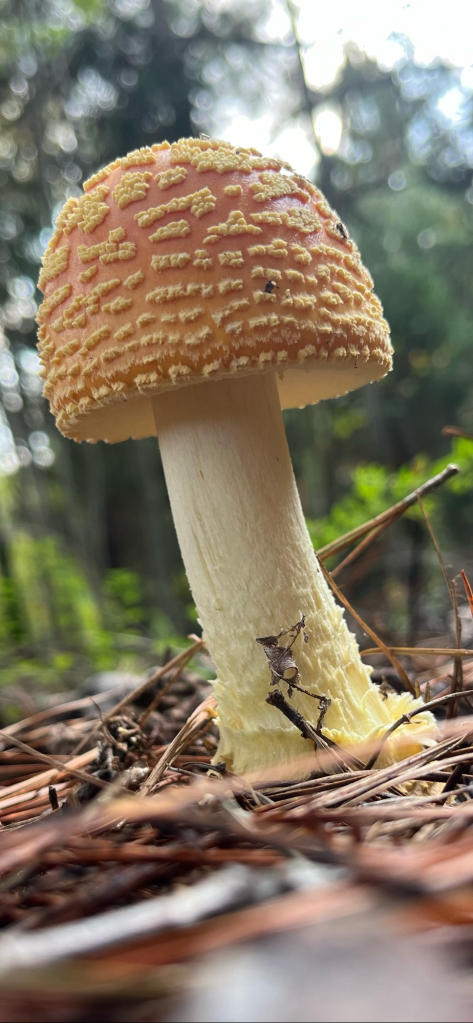
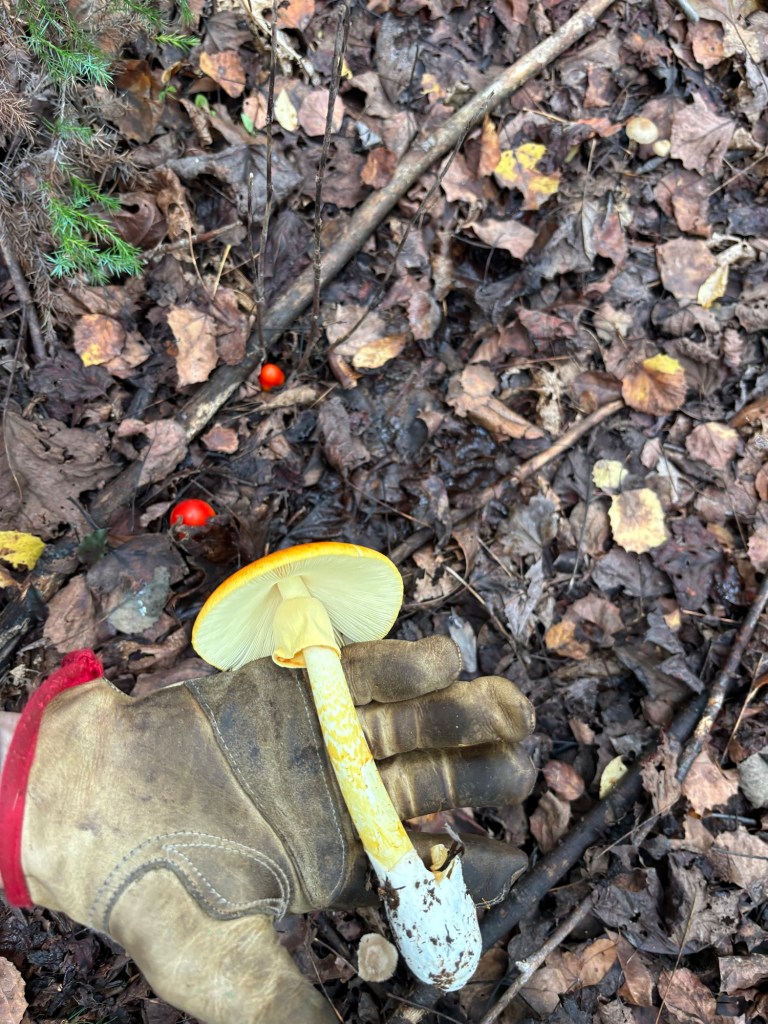
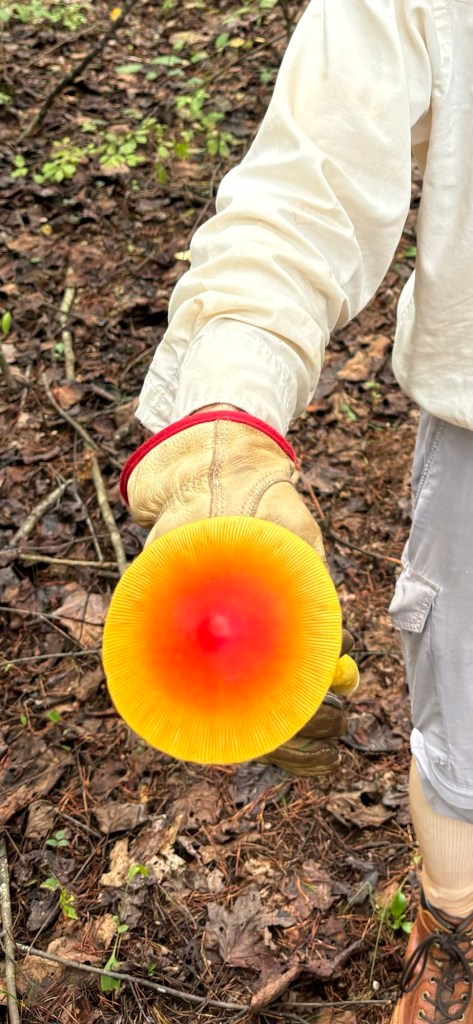
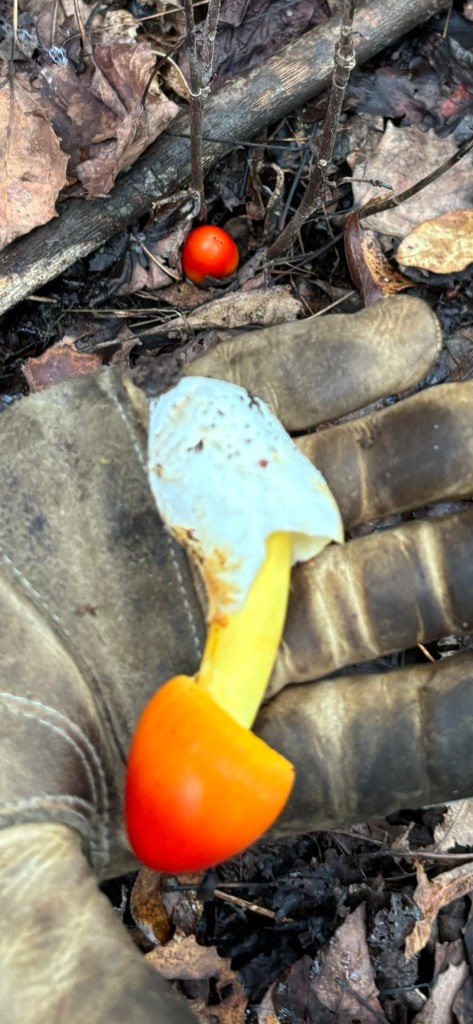
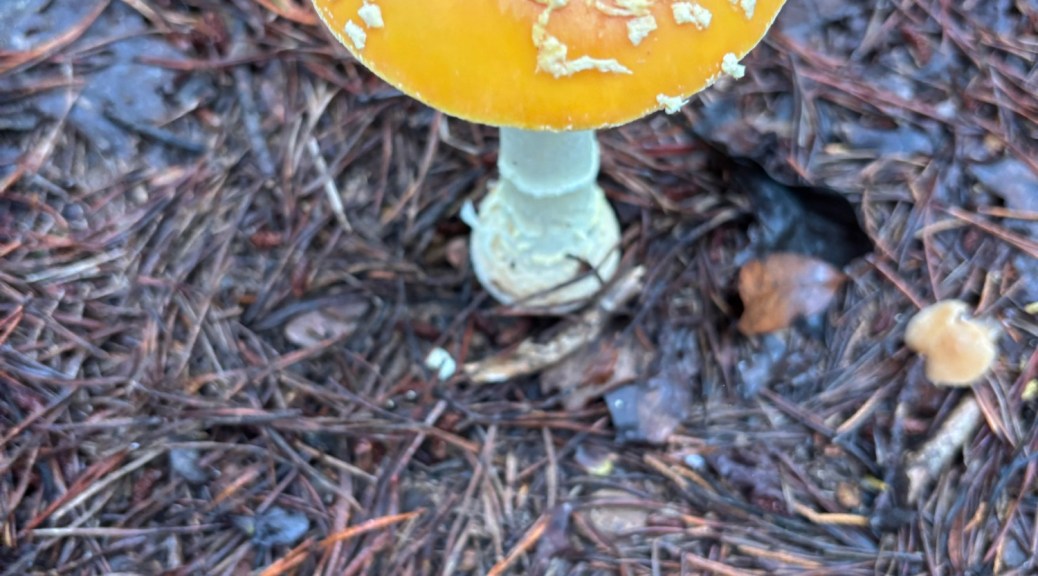
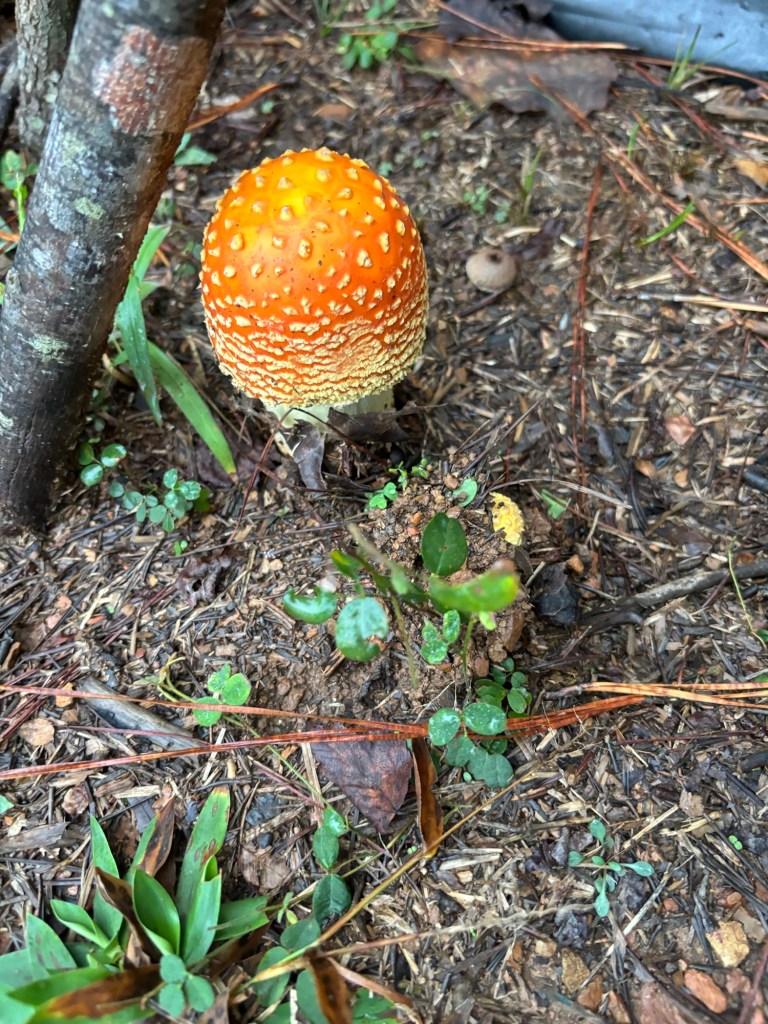
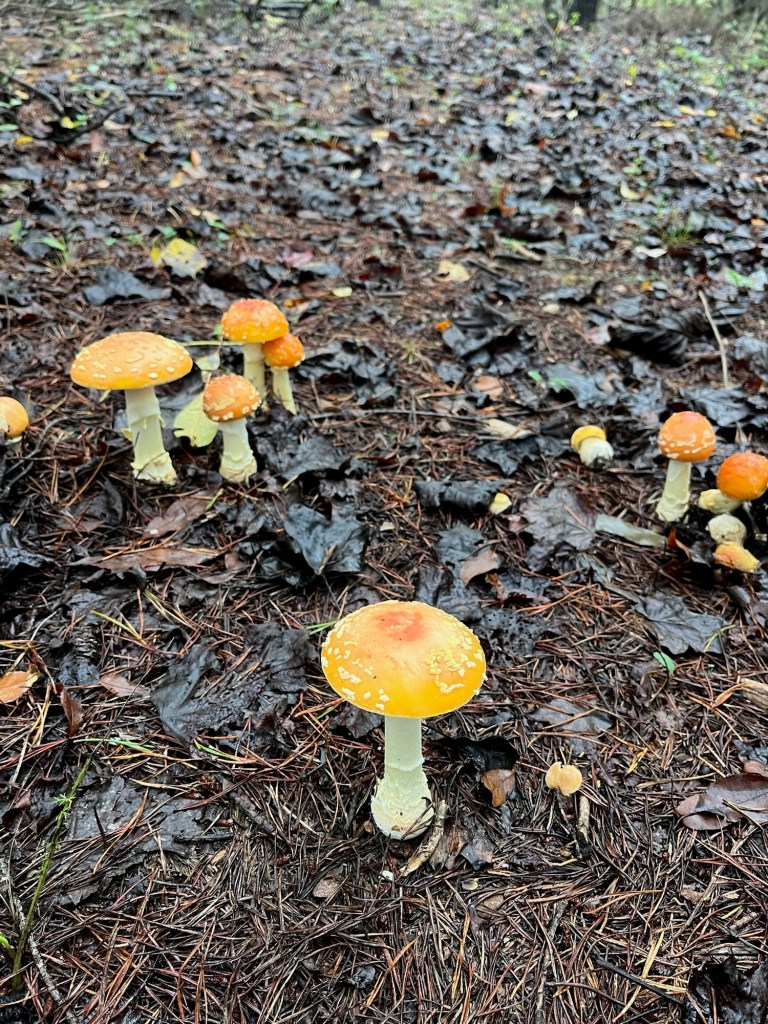
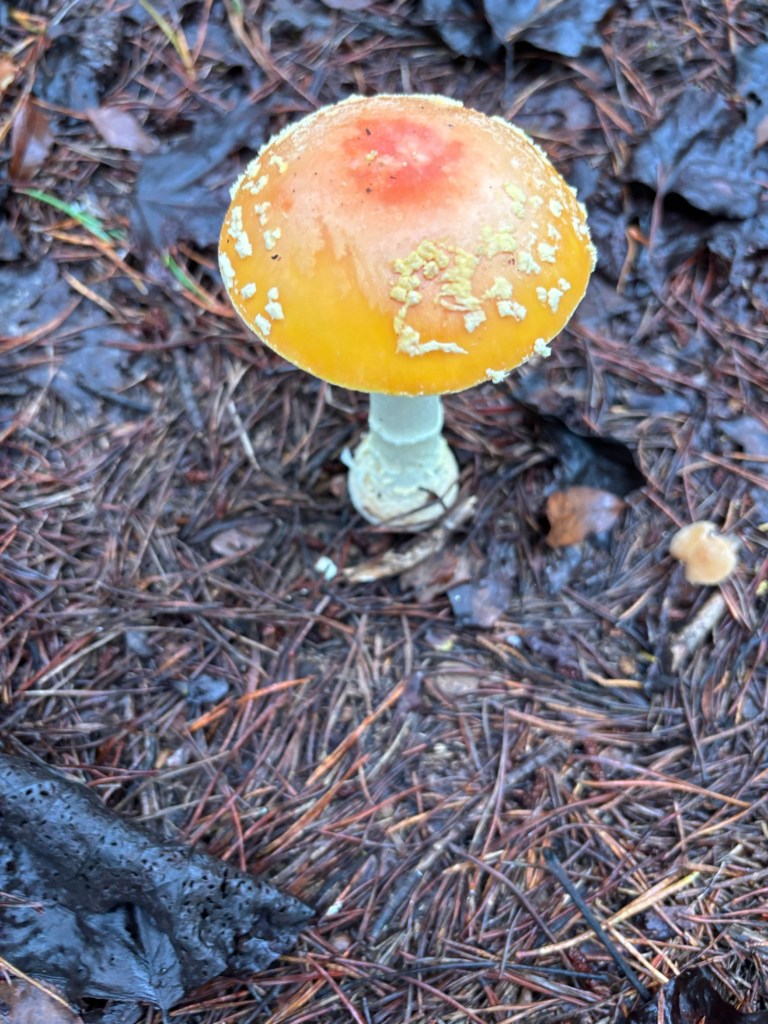
Amanita persicina found in groups throughout the farm near pines and oaks.
We went over to put up boundary markers and no hunting or trespassing signs as well as forage for mushrooms. Hunting season begins Saturday October 5th (early archery season starts). We took down trees growing too closely together and used the trunks as a natural fencing inside the tree line along the road frontage to discourage hunters from chasing deer onto our property. We’ve also been told hunters run dogs through properties to scare up deer. We are trying to create a hunt free zone, except for mushrooms, and to keep anyone chasing animals off our land. We also will put up several more cameras later this weekend. We had technical issues yesterday but worked it out this morning.
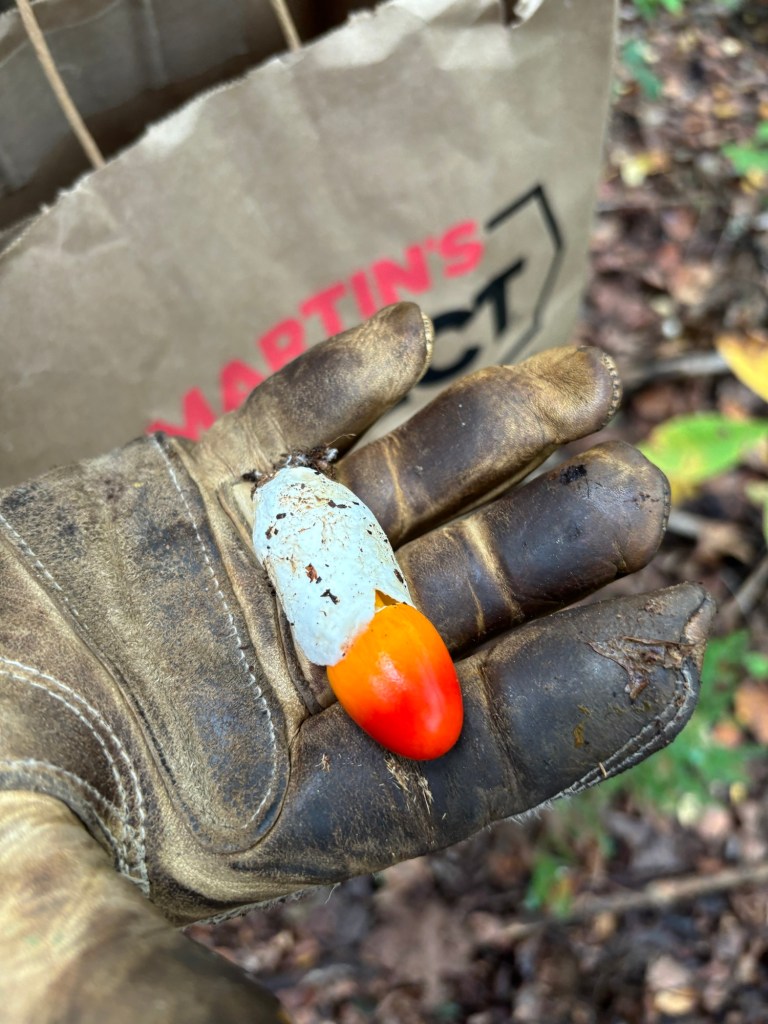
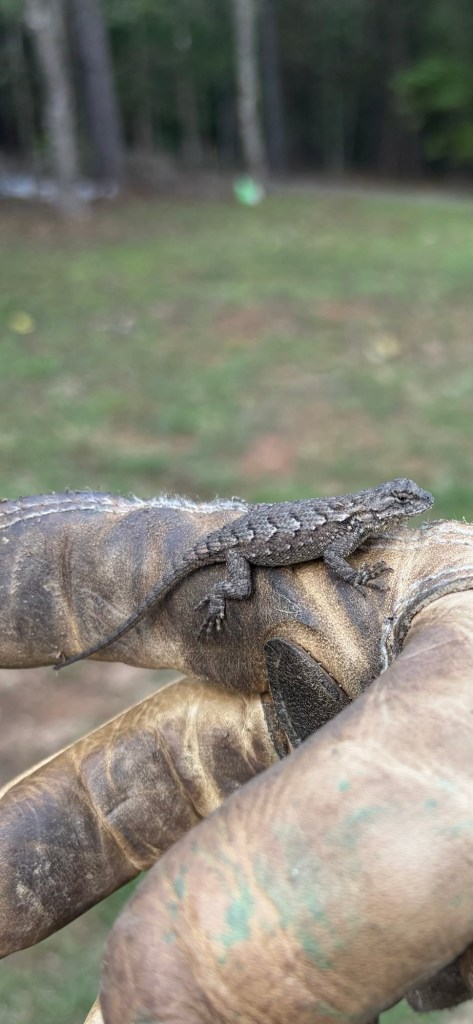
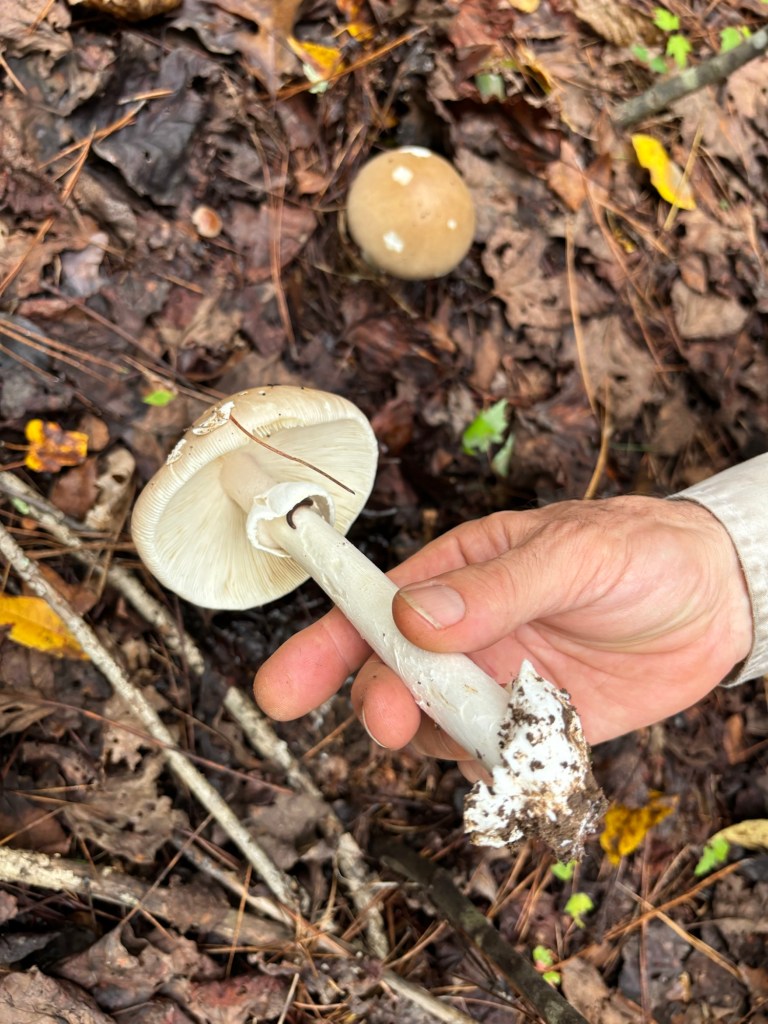
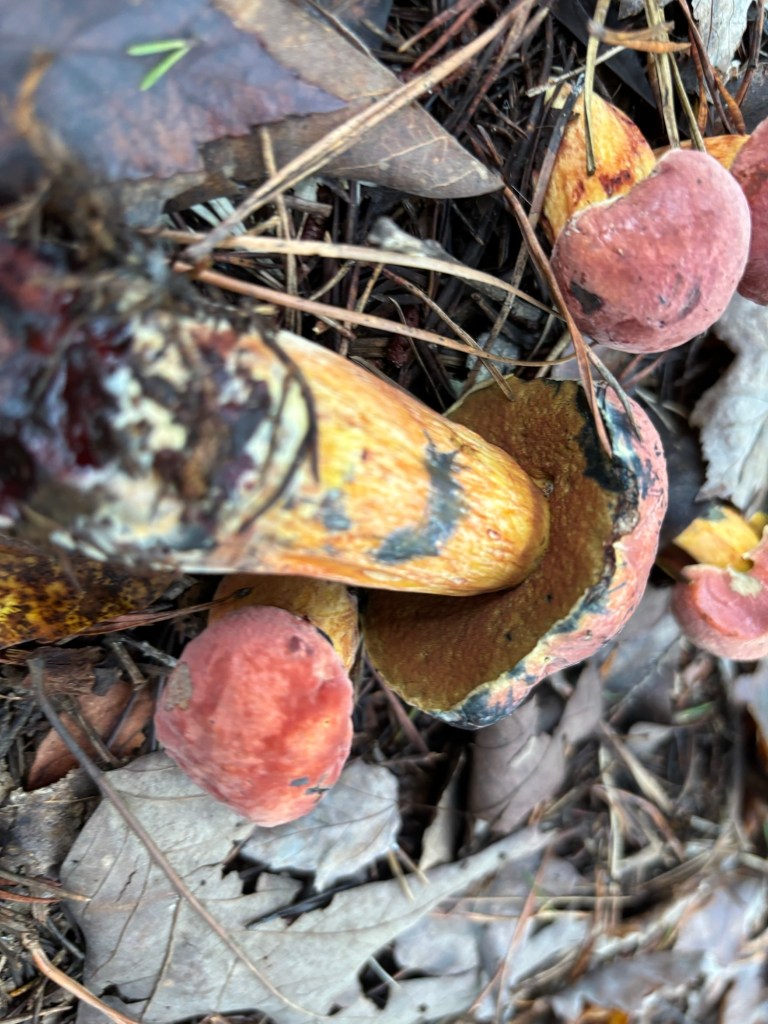
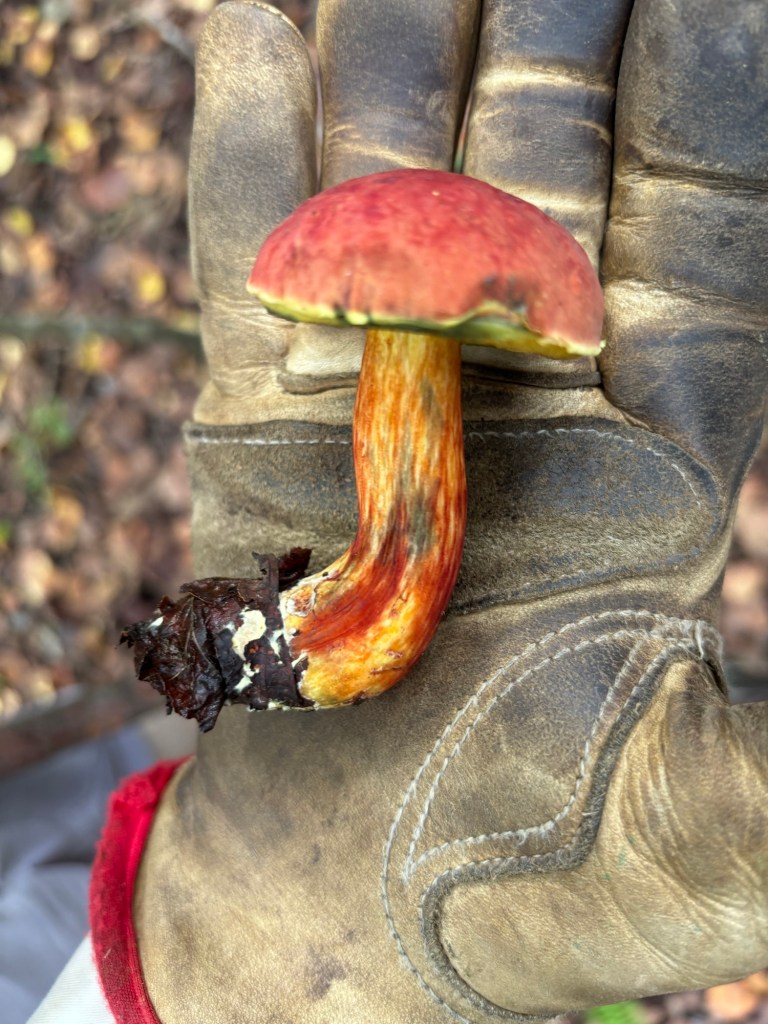
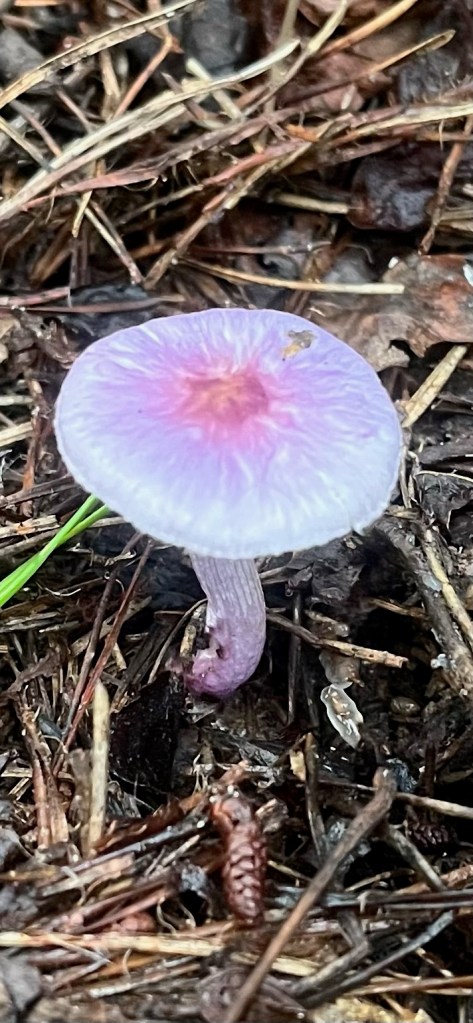
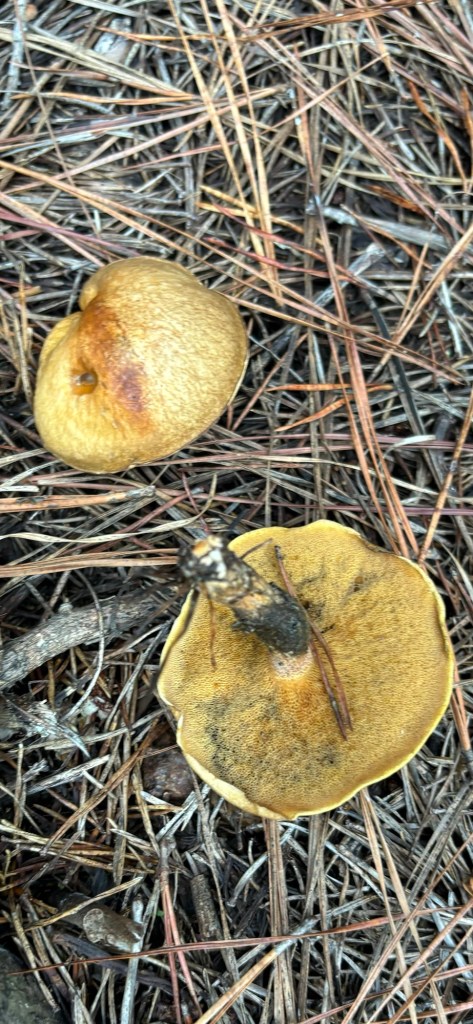
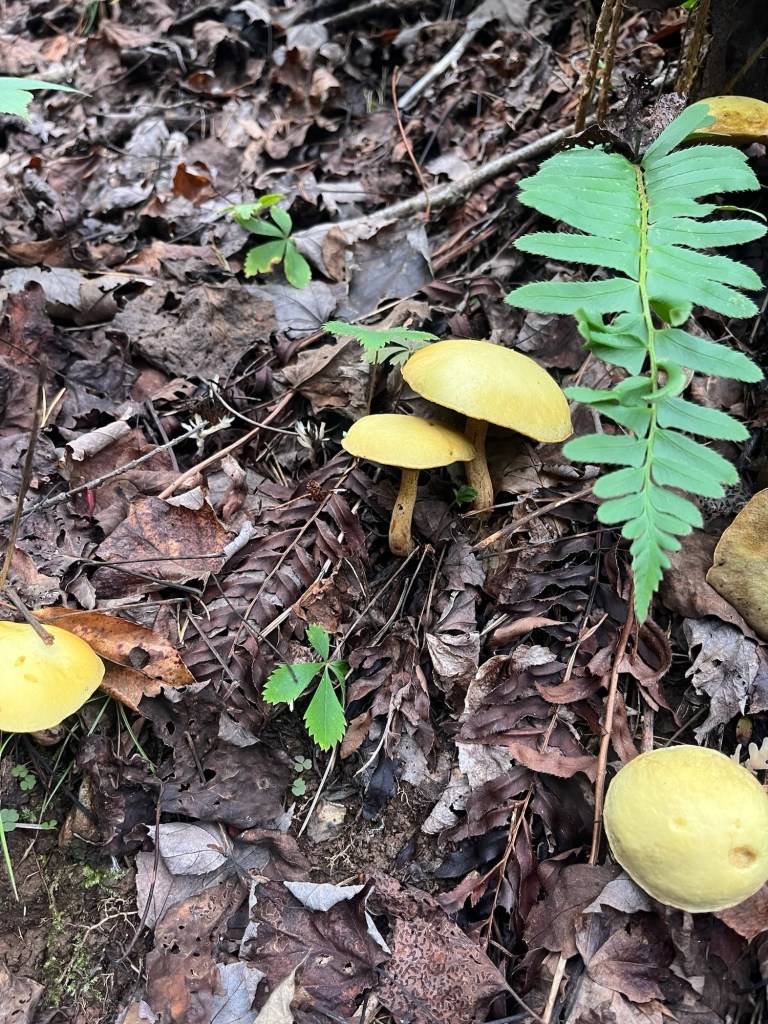
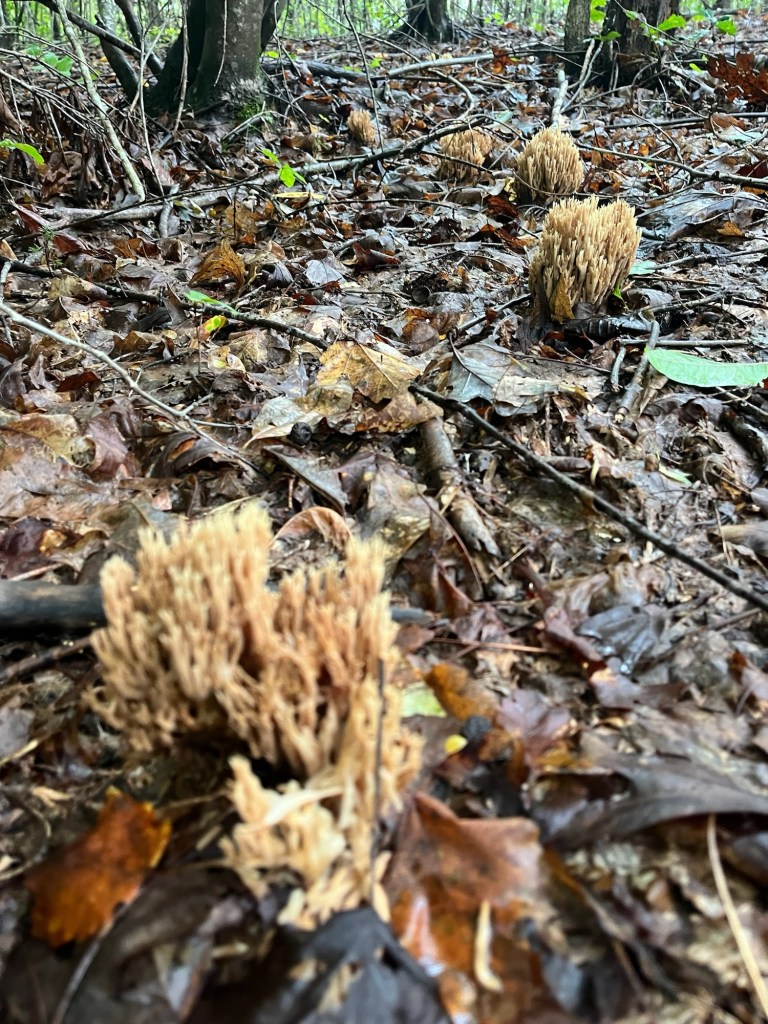
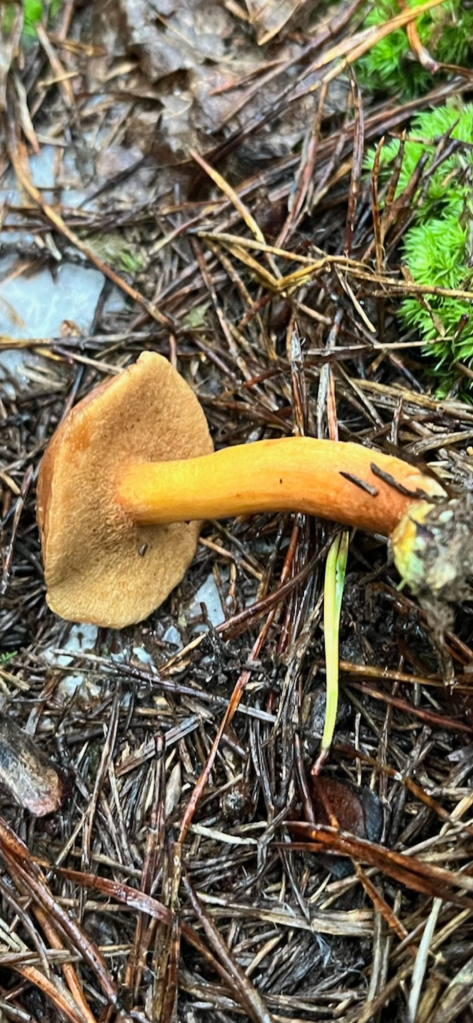
Coral fungusA family of Amanita jacksonii, American slender Caesar, we brought home and processed for eating. Top of A jacksonii Younger A jacksonii An A. jacksonii just emerging from its volva. These are the most delicious. Eastern fence lizard, Sceloporous undulatus, we found hanging out on a black cherry stump up top in the clearing. Amanita spreta, commonly called the Hated Caesar, is an inedible variety. They were large and showy found in the north side near pines. We continue to find these blue staining boletes and have narrowed down their identification to four different species. For now, they remain unknown. Unknown blue staining bolete. Inocybe lilacina, Lilac fibercap, is a poisonous mushroom found on the north side of SAFF. Suillus salmonicolor, Slippery Jill, found everywhere on SAFF near pine.Suillus, slippery jacks, associated with pines.
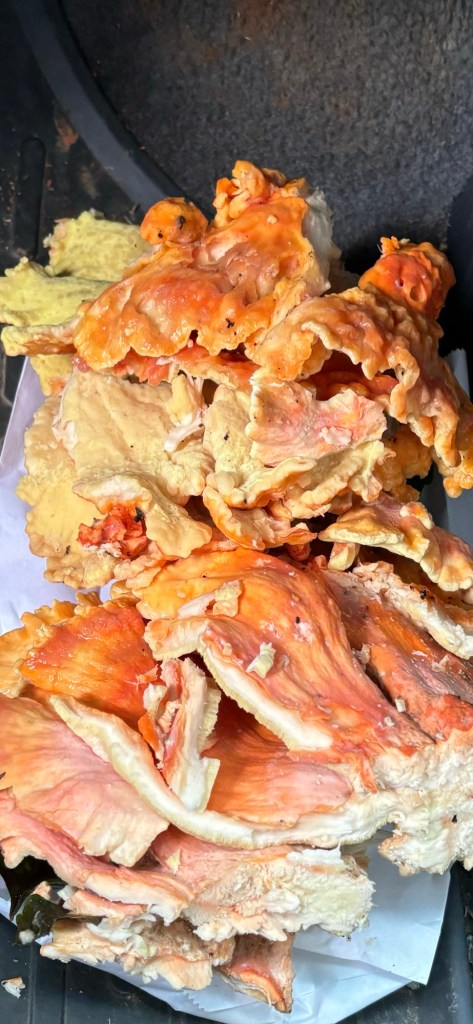
Chicken of the woods, Laetiporus sulphuric, found on the way to the farm. We took this older specimen over and left it to spore on some of our dead and dying hardwoods: Mostly black cherry trees and tulip poplar.
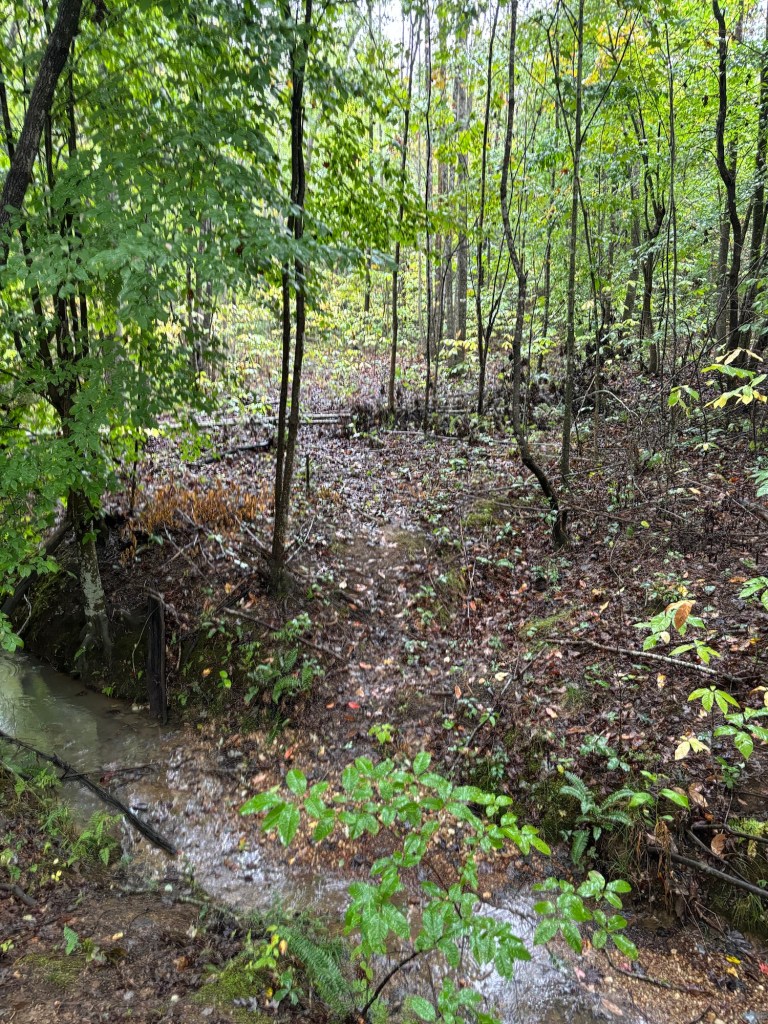
Today was a mushroom hunter’s dream. It’s an understatement to say they were everywhere. We’ve had an enormous amount of rain in Central Virginia and the Shenandoah Valley. We’ve had flooding at the house but finally, after all of this rain, the water table is restored at SAFF from our prolonged summer drought. All of the springs are flowing and the waterways are moving. We saw water flowing in the wet weather gullies in the north and south. It’s a beautiful sight.
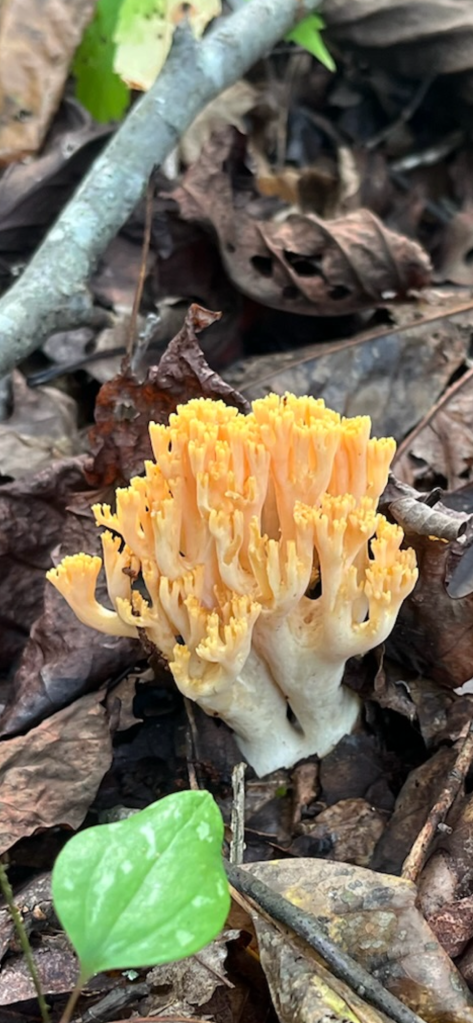
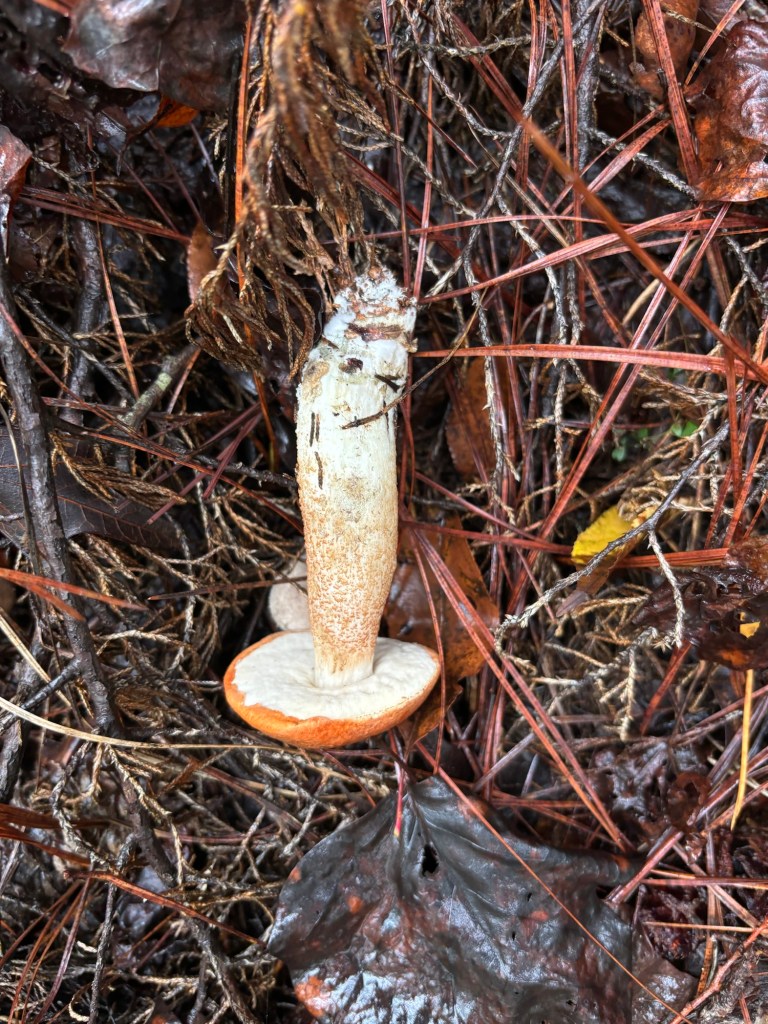
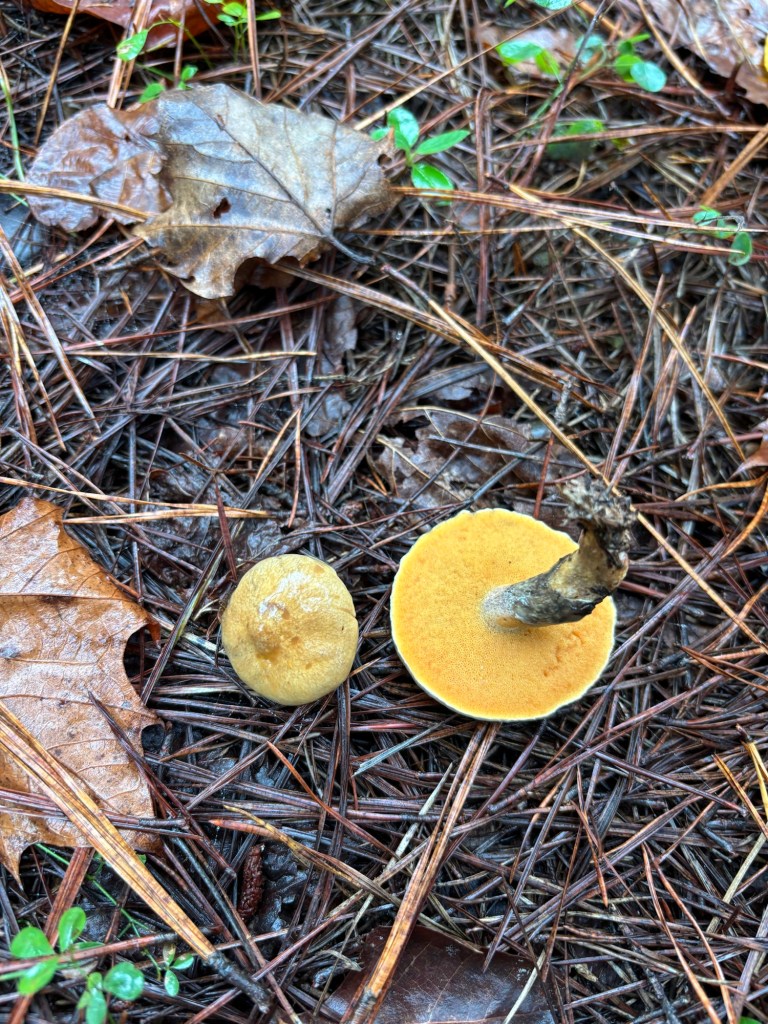
Amanita persicina, Peach colored fly agaric, were found all around the farm where pines are growing. These were large and brilliantly decorated with vibrant orange. The larger of the specimen were 8 inches in height and 4 inches across. They are showstoppers. More A. persicina along south trail. We found them mostly in big groupings up top and along the trails. These are my new favorites. Leccinum longicurvipes found on the north side in the pine forest. The scabers (rigid projections) along the stalk identify them as Leccinum within the genus Boletus. Genus suillus, slippery jacks or sticky bun, found anywhere we saw pines. They were all over the farm today. We hadn’t seen them before so it’s a wonderful surprise. It forms symbiotic ectomycorrhizal associations with pine trees by enveloping the underground roots of the tree with sheaths of fungal tissue. Rather than gills, it has tubes extending downward from the underside of the cap. Ramaria stricta, Upright Coral fungus, found near southern waterway along Ridge Trail.
Mushrooms were everywhere at Saint Andrews Forest Farm since it has been raining for days and the temperatures are in the 60s at night and 70s during the day. The rain is wonderful and much appreciated as the water table is still very low.
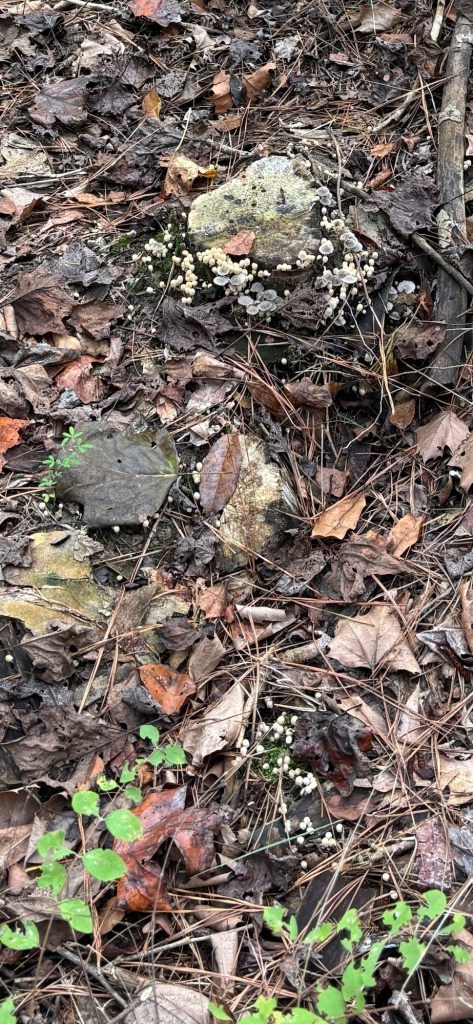
We saw these tiny Mycenae and Coprinellus growing together.
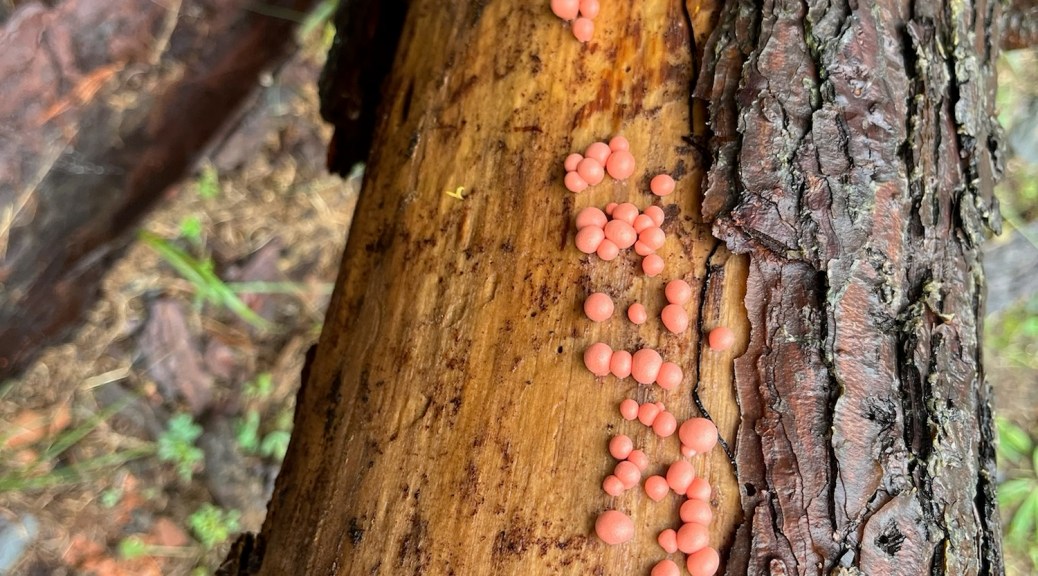
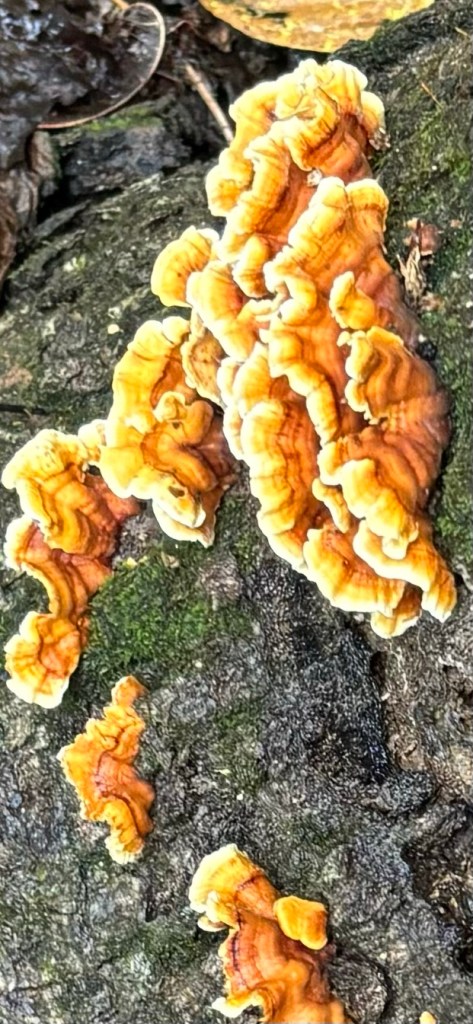
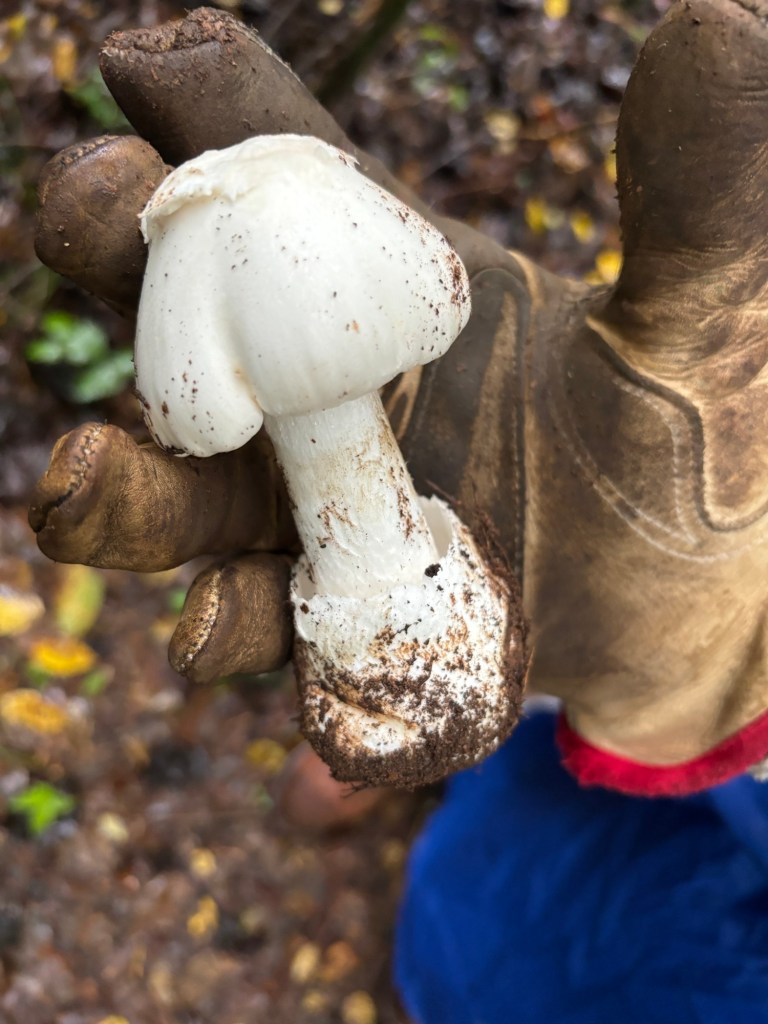
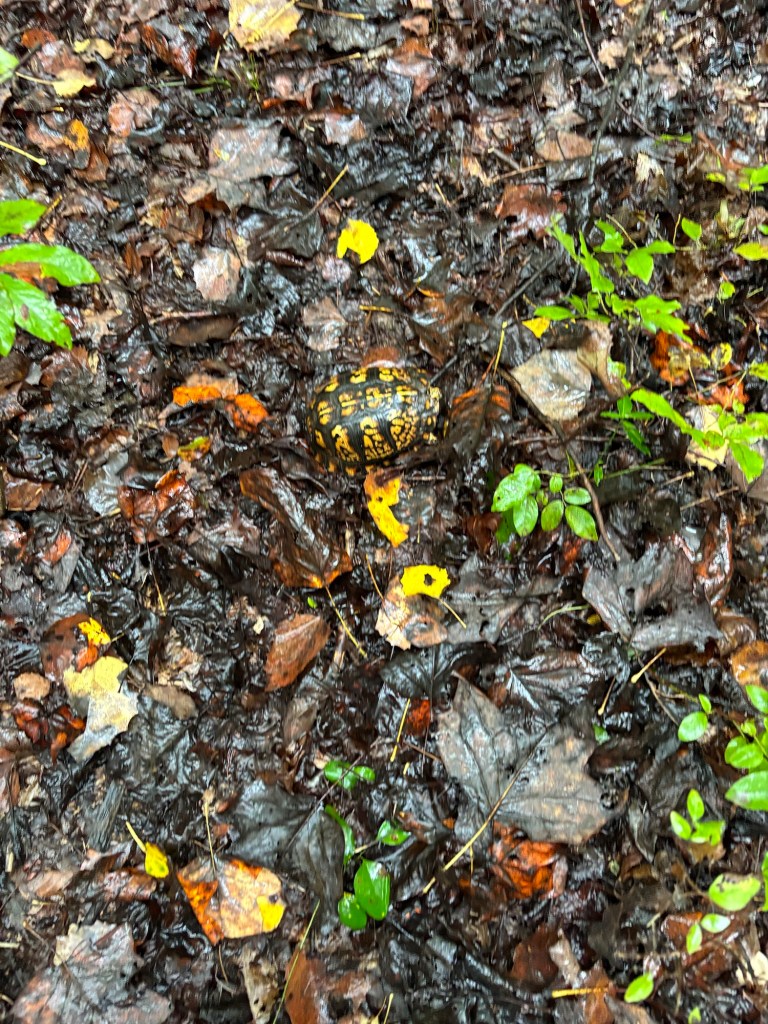
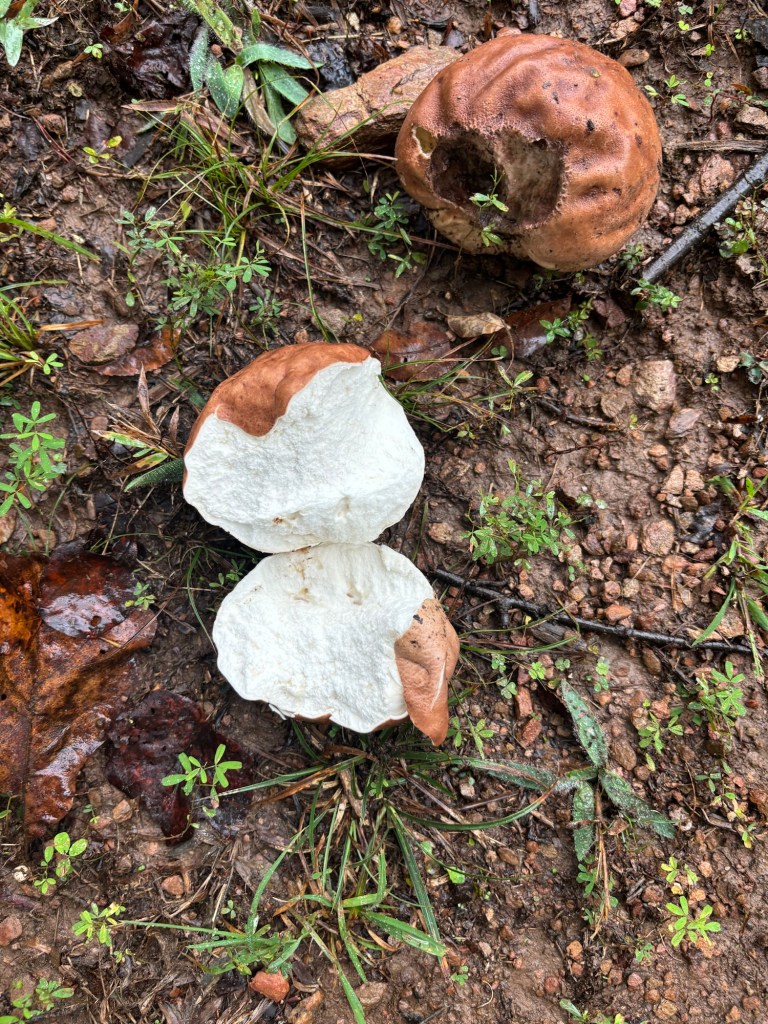
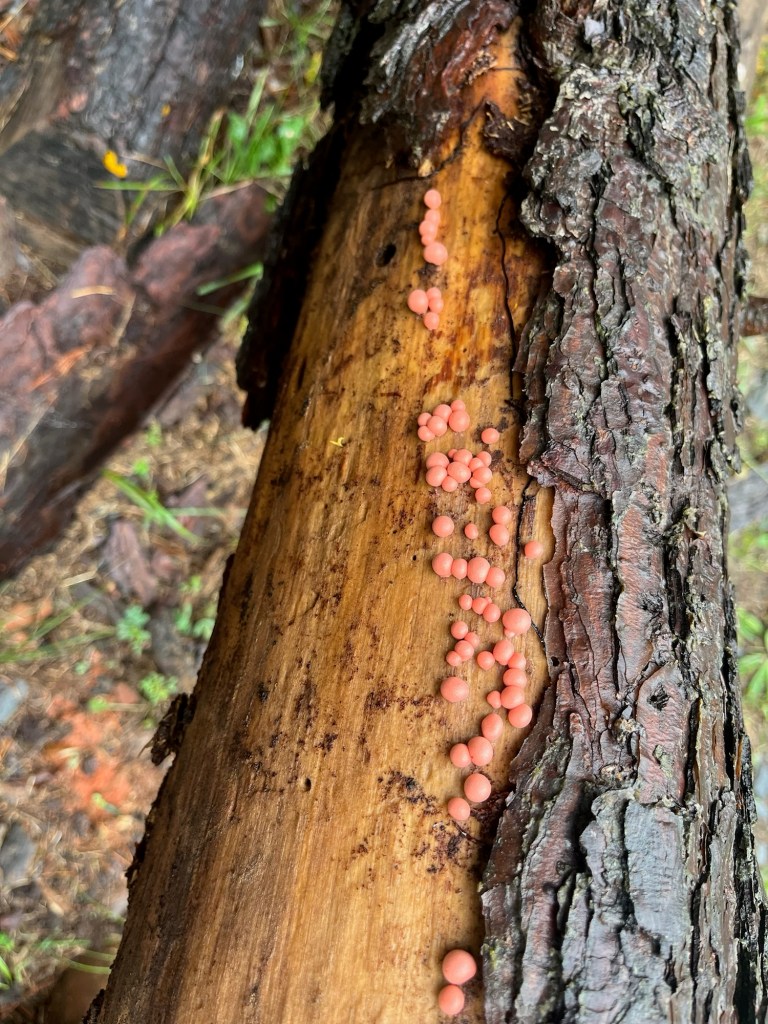
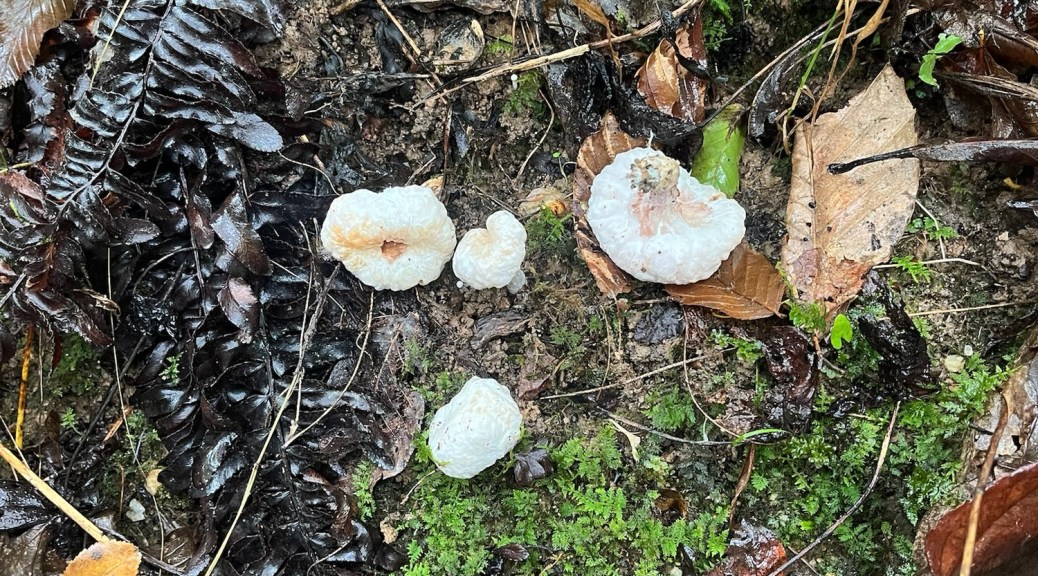
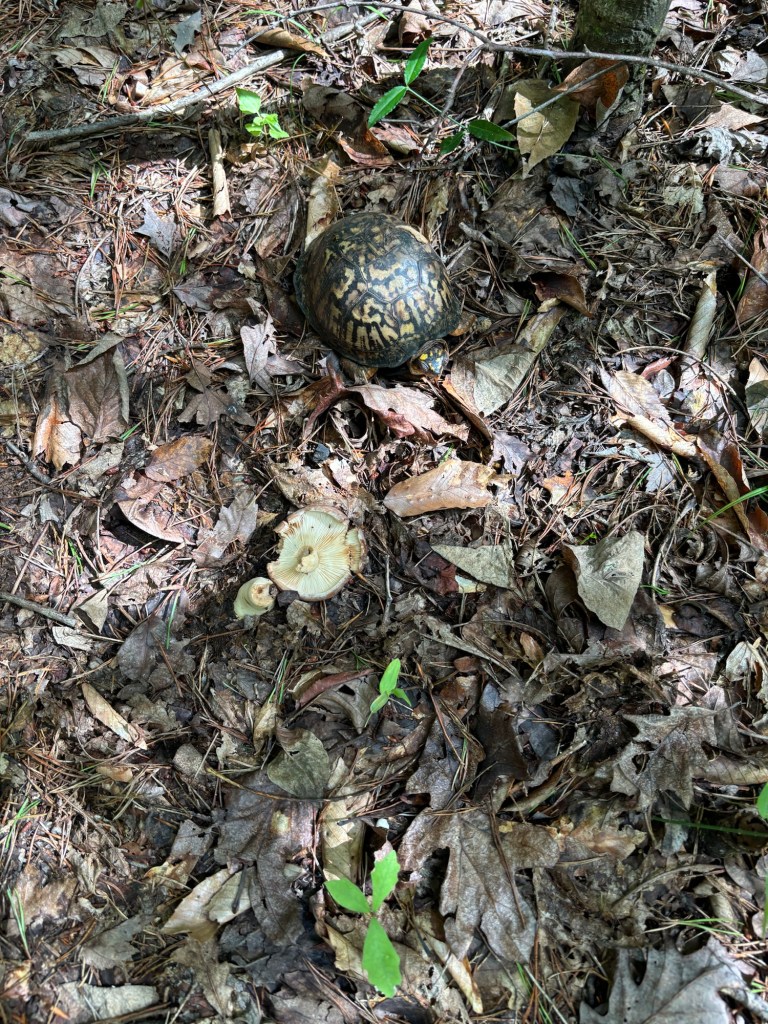
Saprobic fungus thriving with the moisture and temperatures in the perfect range for them to break down forest litter. Stereum complicatum, crowded parchment, growing on multiple stumps and dead hardwood throughout the farm. Chalciporus piperatus, Peppery Bolete, is reported to be edible when thoroughly cooked. It is very peppery so it will spice up a dish. It was a surprise to find a bolete with the weather being cooler. Pawpaws leaves yellowing as part of the trees natural process of going dormant for winter. It makes them very easy to locate right now. We found a few more clusters of pawpaws near the wet weather gully on the south side. More pawpaws going dormant for the winter across the waterway. Amanita bisporigera, Eastern North American Destroying Angel, are found in multiple areas of SAFF this fall. These are deadly. Terrapene carolina carolina, Eastern box turtle, on the north side looking for food.Calvatia craniiformis, Brain puffball, found just off the top clearing in a group of seven. Lycogala epidendrum, Wolf’s milk, found at the gate to SAFF. This is a slime mold instead of a fungus.
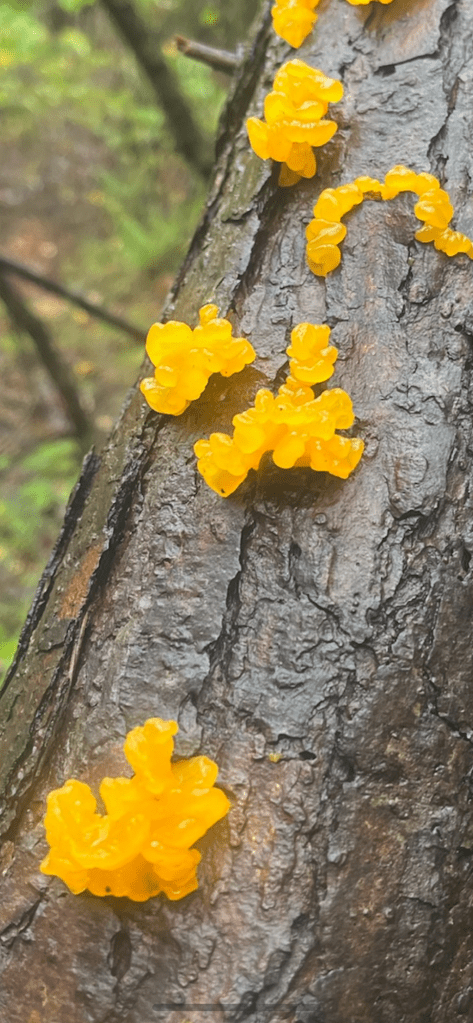
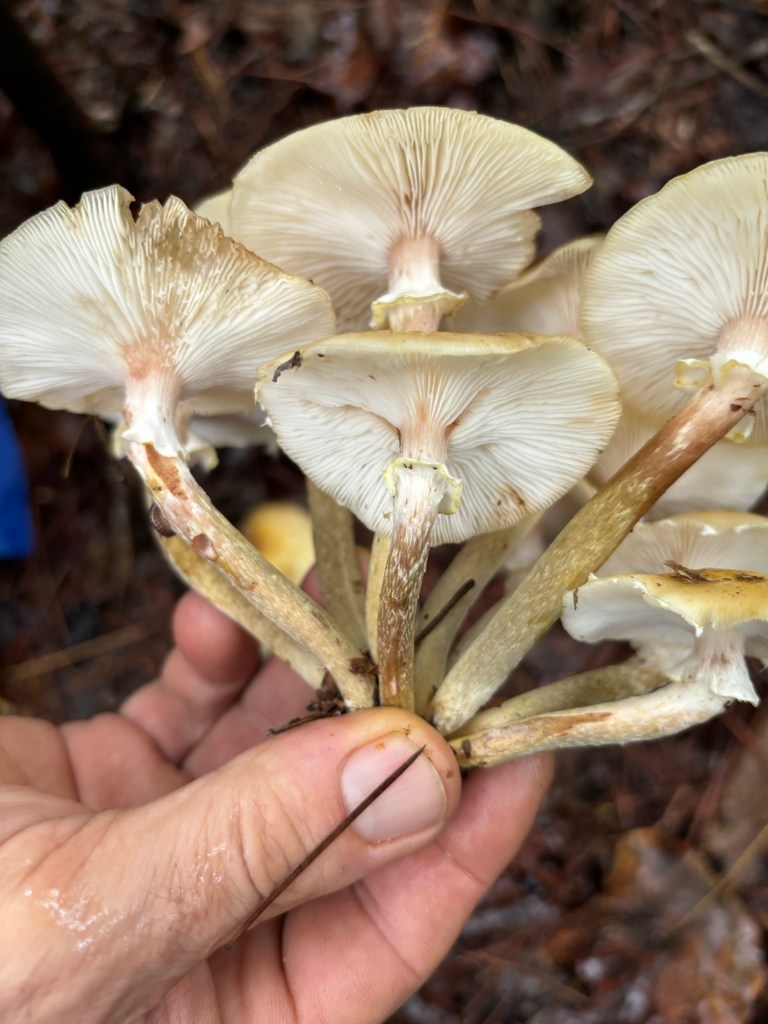
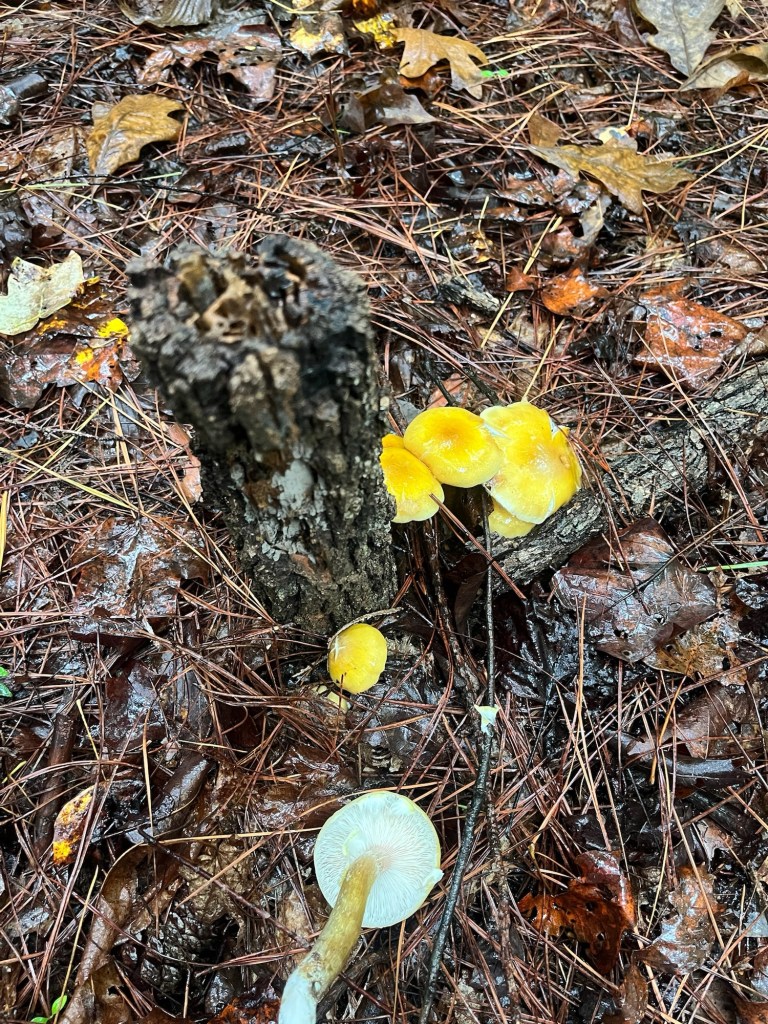
Entoloma abortivum, shrimp of the woods, found along the stream at the bottom of the slope. A choice edible for us. Dacrymyces chrysospermus, orange jelly spot, grows on dead conifers. It is edible but flavorless.Armillaria mellea, Honey mushroom, an edible mushroom found growing in groups up top in the pines.More Honey mushrooms
We took a walk in the rain around Saint Andrews Forest Farm yesterday and saw plenty of fungi to our delight. The animals had eaten some of the Honey mushrooms. These are highly nutritious. We were fascinated by the fairy ring of Honey mushrooms up top which showed this Armillaria to be maybe 15 or 20 feet in diameter. Most of it is underground mycelium.
We’d been waiting for these to emerge along with the Entoloma abortivum which are actually honey mushrooms parasitized by Entoloma. Each year they show up together and it is a helpful identification factor. They are delicious and we are having them for breakfast this morning with our eggs.
They are best when browned well. 😋
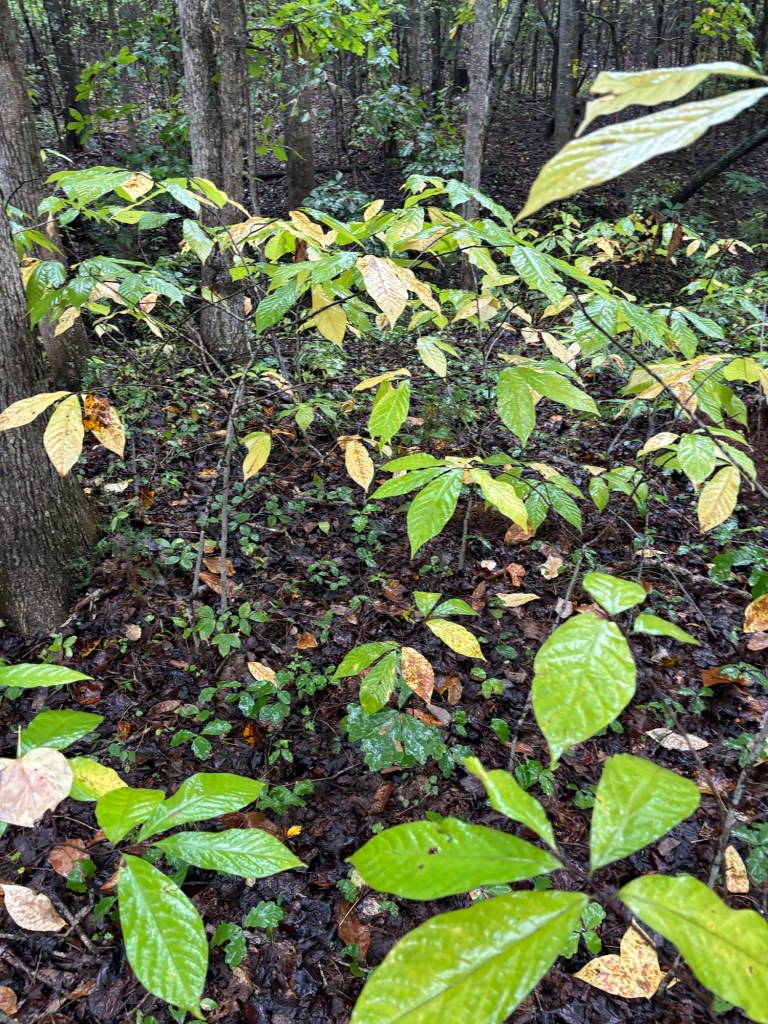
We also found a few more patches of pawpaws growing along the southern wet weather gully! They are easily spotted right now as they are beginning to go dormant for winter as evidenced by their yellowing leaves.
These shrimp of the woods are growing on roots and dead wood along the sides of the waterway. They are decomposers.
Sourwood, Genus Oxydendrum, sometimes called sorrel tree is native to Eastern North America. The honey that bees produce from its nectar is sought after for its health benefits and taste. The leaves are edible and have a laxative effect. The Cherokee people used it for seasoning soup and meat, as well as a medicinal tea from its leaves. They also used the shoots to make arrowshafts.Sourwood leaves
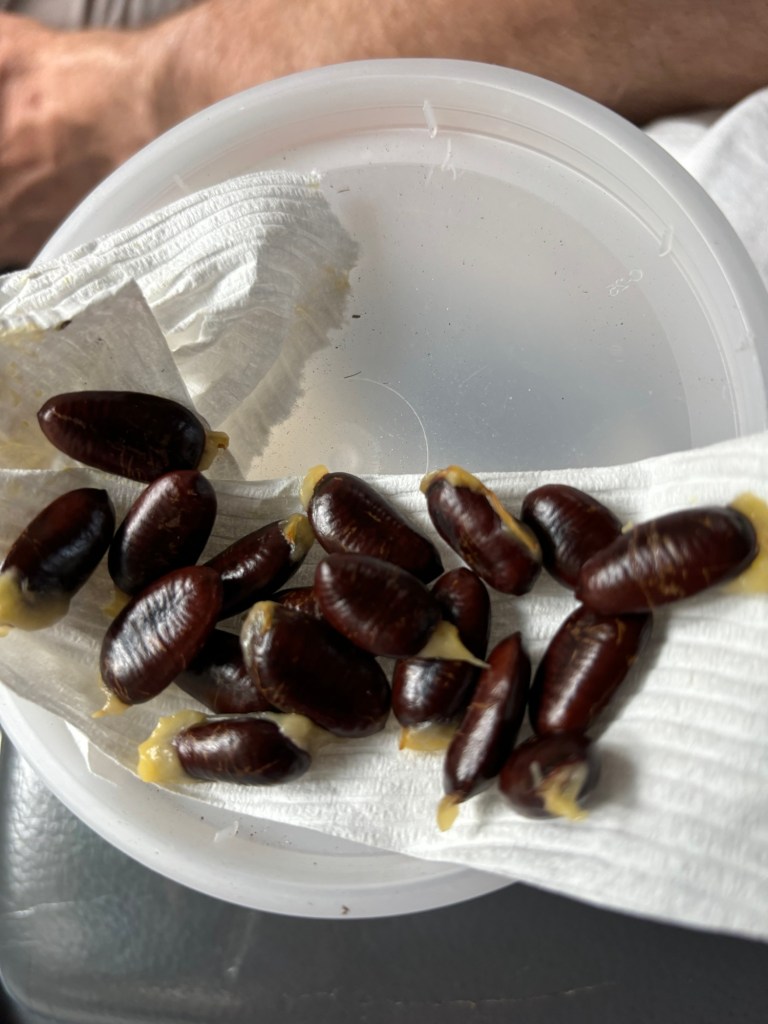
Yesterday was a lovely day at SAFF. It’s gotten cooler and feels much like fall all of the sudden. On the way over, we stopped at the pawpaw patches and found about eight more ripe fruit. Each one has 10 to 14 seeds inside in two rows. We probably have several hundred seeds. Some we have already planted in pots to overwinter outside and cold stratify in nature. Others we have cleaned and placed in a container in the refrigerator to cold stratify for 70-100 days and then we will plant. We will determine best practices from our experience but we hope to add many more trees next year. We are excited to use these to sprout new trees for our pawpaw grove that hasn’t been productive for us yet. While down in the pawpaw patch, we noticed the Sourwood tree. We have quite a few of these down by the main waterway at the bottom of the slope growing, in some cases, right next to the pawpaws. We are still thinning out the forest in every location to allow more light in and room for our trees. We are especially doing this around our older pawpaw trees to encourage production of fruit.
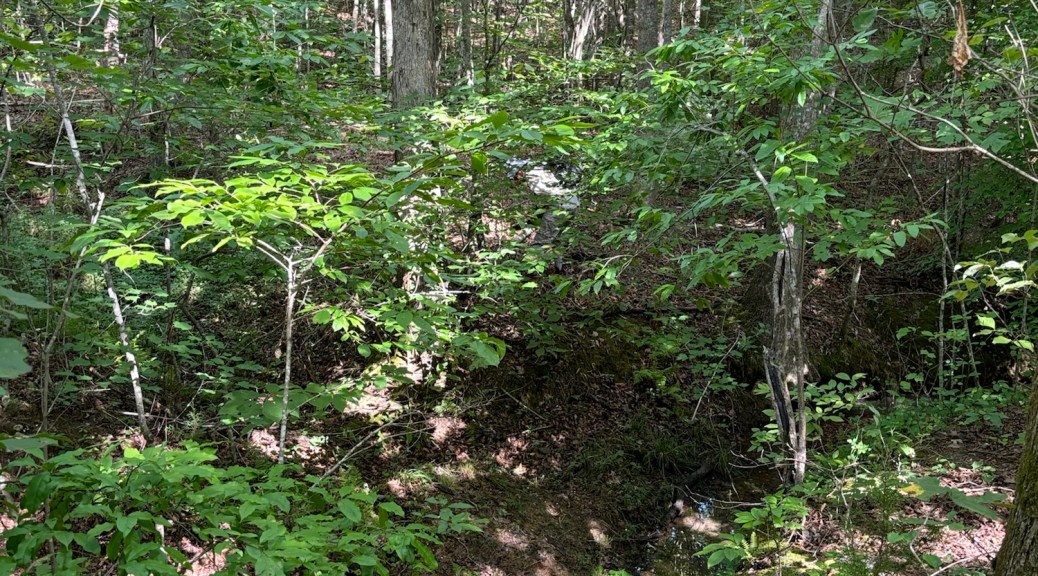
The roadway we found on the north side of SAFF.
We went out to the northern edge and found where the road began and we cut back small trees growing up through the rocks of the road. We cut back grassy areas. We cleared everything we could easily. We got a third of it cleaned up except for the largest pines we will have to use the chainsaw to remove. We imagined this would take us much longer to clear. We were beyond thrilled to get that much accomplished in one swoop.
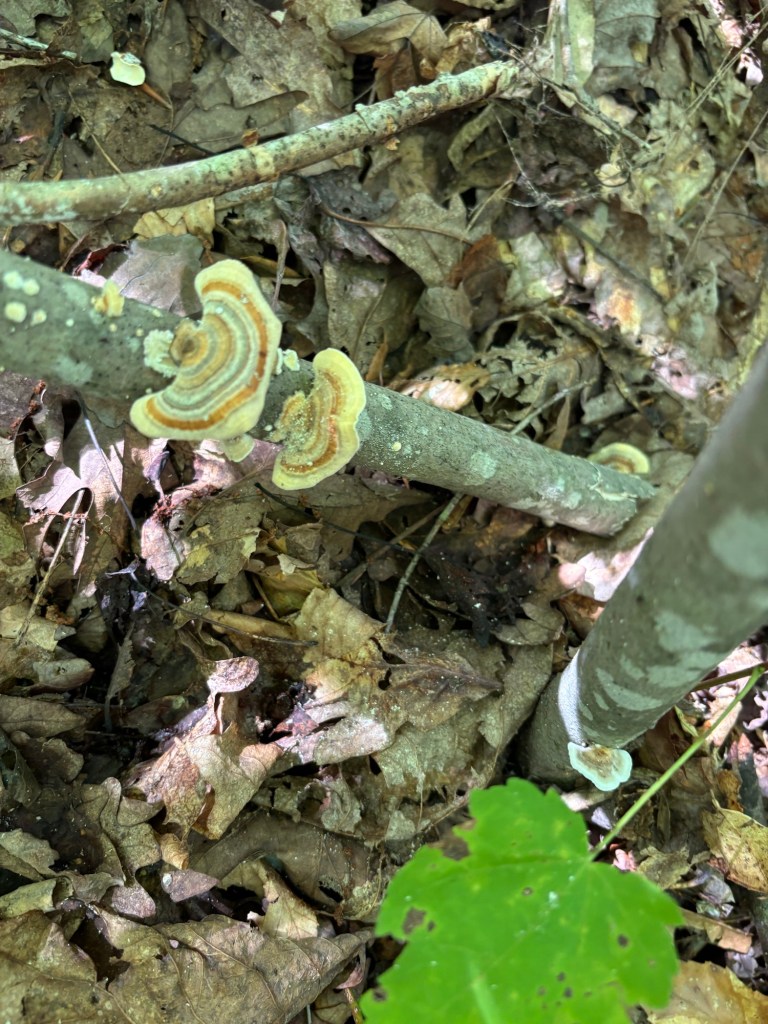
The roadway will make it a whole lot easier to farm on the north side.Turkey tail, Trametes versicolor, on the north side. A common polypore found throughout the world. It’s a medicinal mushroom that’s full of antioxidants and other compounds which fortify our immune system, maintain healthy gut bacteria and support the treatment of certain cancers.
After a busy week, we wrapped up a few local chores and errands at home in Staunton, and started the holiday weekend Friday morning with a specific mission. Inspired by our visit to a local nursery last weekend, we hoped to find ripe pawpaw fruit in the wild. In particular, we wanted to collect some wild fruit to eat, and also collect the seeds to grow new trees with and bring novel dna to our pawpaw patch. We are saving all of the seeds from our fruit and we are going to plant them at the farm. A dedicated search on the iNaturalist app showed us locations along our route from home to the farm in Buckingham County where pawpaw trees, flowers and fruit were observed and identified. Some of the observation sites along or near our route were private land, so we ruled them out. But we began to notice the pawpaw trees by the side of the road as we drove to and from the Farm. Especially where rivers, creeks and streams crossed the road. We saw Black walnut trees and many pawpaw trees. Having tried a couple ripe pawpaws last weekend, we figured it would be worth stopping to take a look if we saw accessible, fruiting pawpaw trees. They fall off the tree when ripe. So far, we have found about 20 in various stages of ripeness. A few were so far gone, we had to just plant them in a pot. We have at least a hundred seeds now and we have them stored in the refrigerator. We’ve also gotten to eat a few of these creamy, tropical-tasting native fruit.
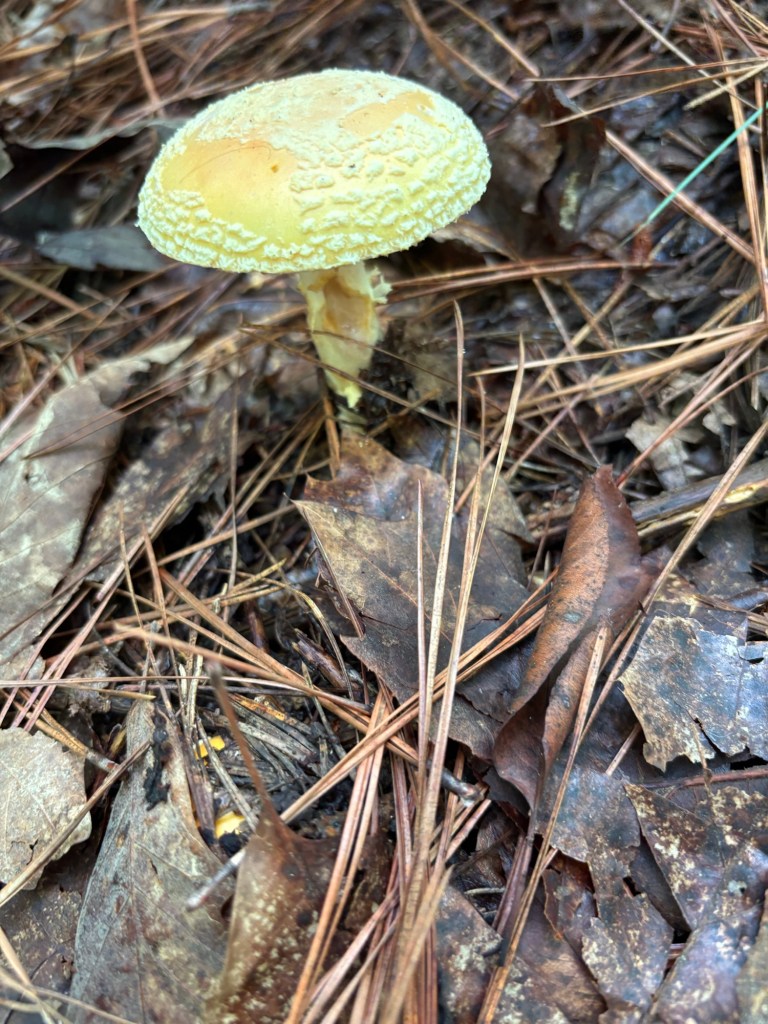
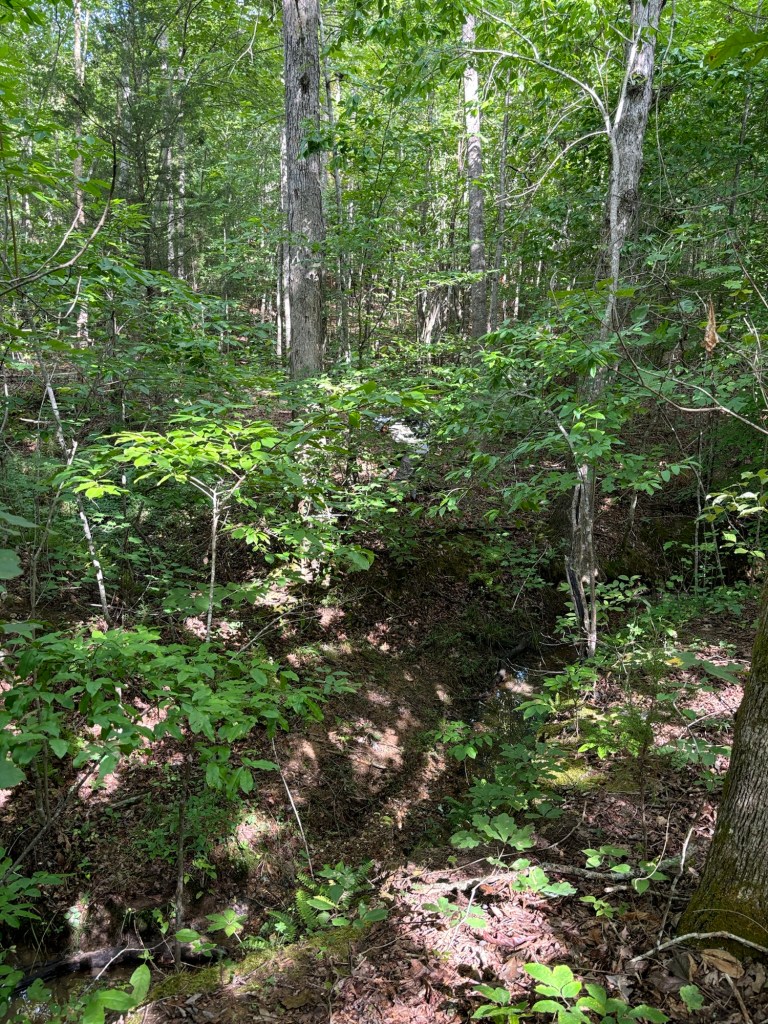
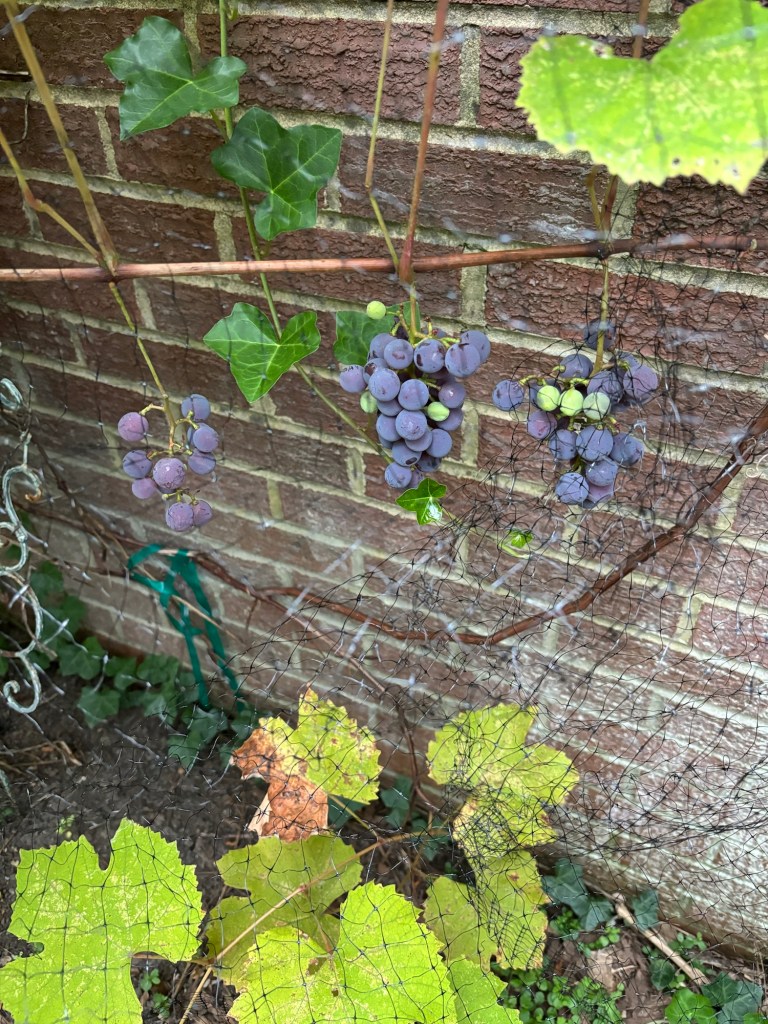
Pawpaws we found yesterday. The seeds we are saving. We will cold stratify these in the refrigerator for 70 to 100 days and then plant these in deep pots to accommodate their need for a long tap root. A turtle we saw working on his mushroom dinner. Amanita flavoconia, Yellow patches. Found along Mary Banning Way. The pawpaw patch. Our Concord grapes we just harvested.
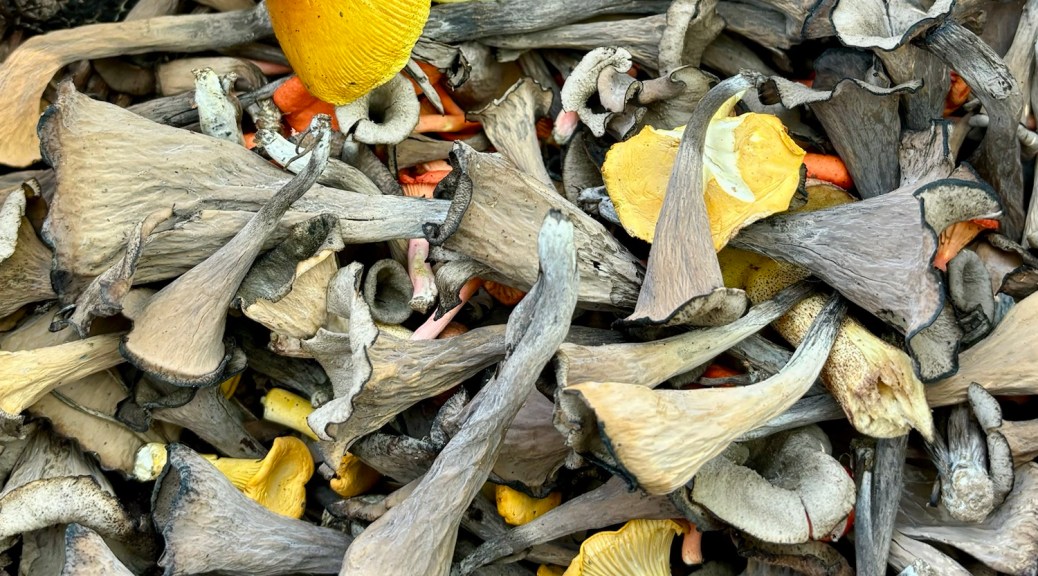
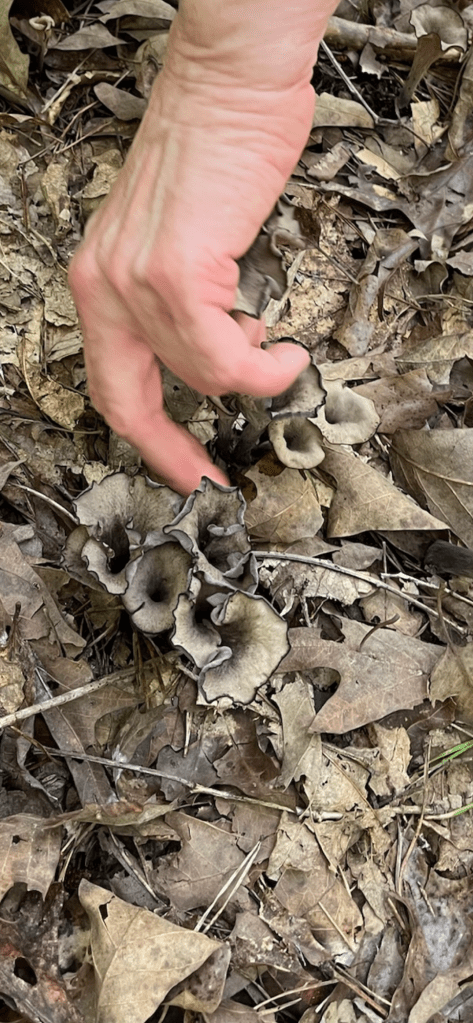
Hard to see black trumpet mushrooms growing near oaks and pines.
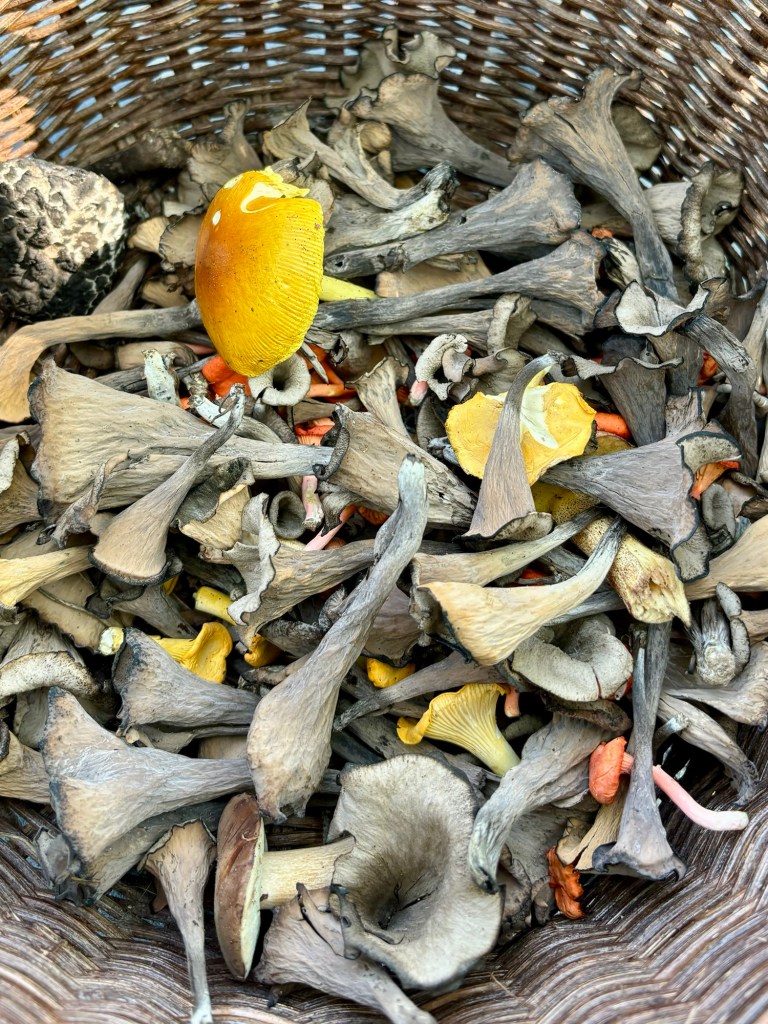
We went over and created more trails on the north side yesterday. We were rewarded for our work with wonderful weather and about two pounds of wild mushrooms. The temperatures in the 70’s made for a wonderful day to be outside. We found several new large Black trumpet patches as well as Cinnabar chanterelles and Ghost chanterelles. We also found a Lilac bolete, Amanita banningiana and an Old Man of the Woods. We joked our basket was full of Halloween colors.
Our basket from yesterday with lots of black and orange mushrooms.
We brightened up the paint on our boundary markers and widened our trails. We cleared a bit more from the road. We stood in awe of the beauty of the forest, the quiet peace to be found there with the trees and the network of mycelium that supports it all and sends up these colorful and wonderful fruiting bodies. We feel grateful and blessed by our surroundings.
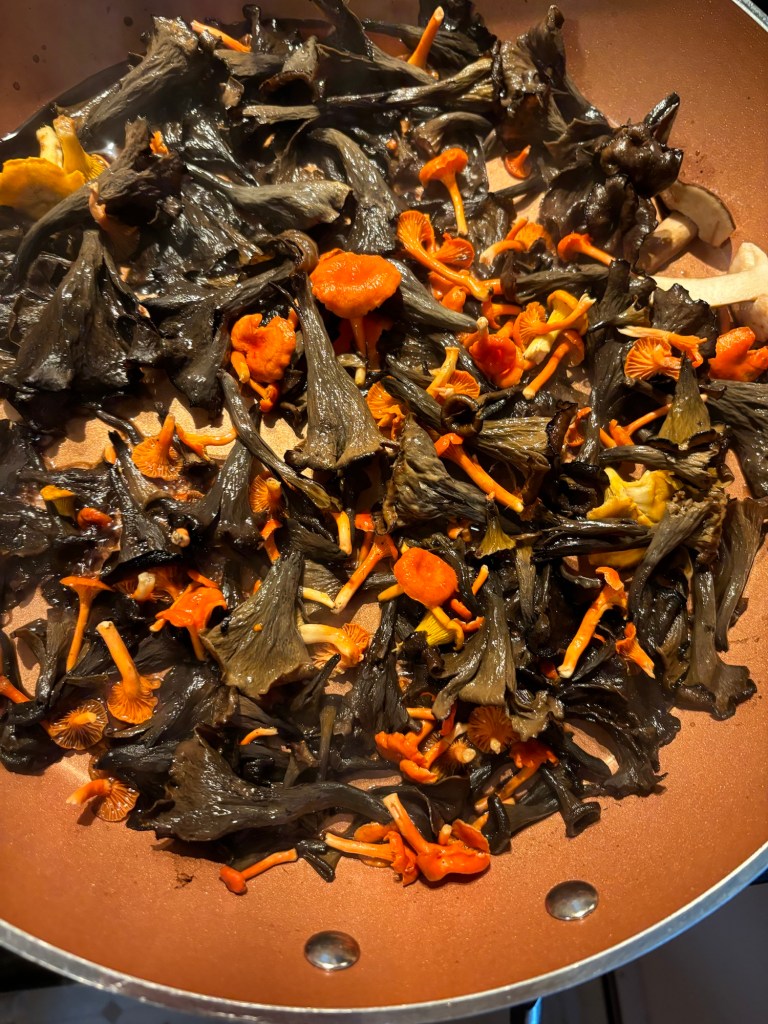
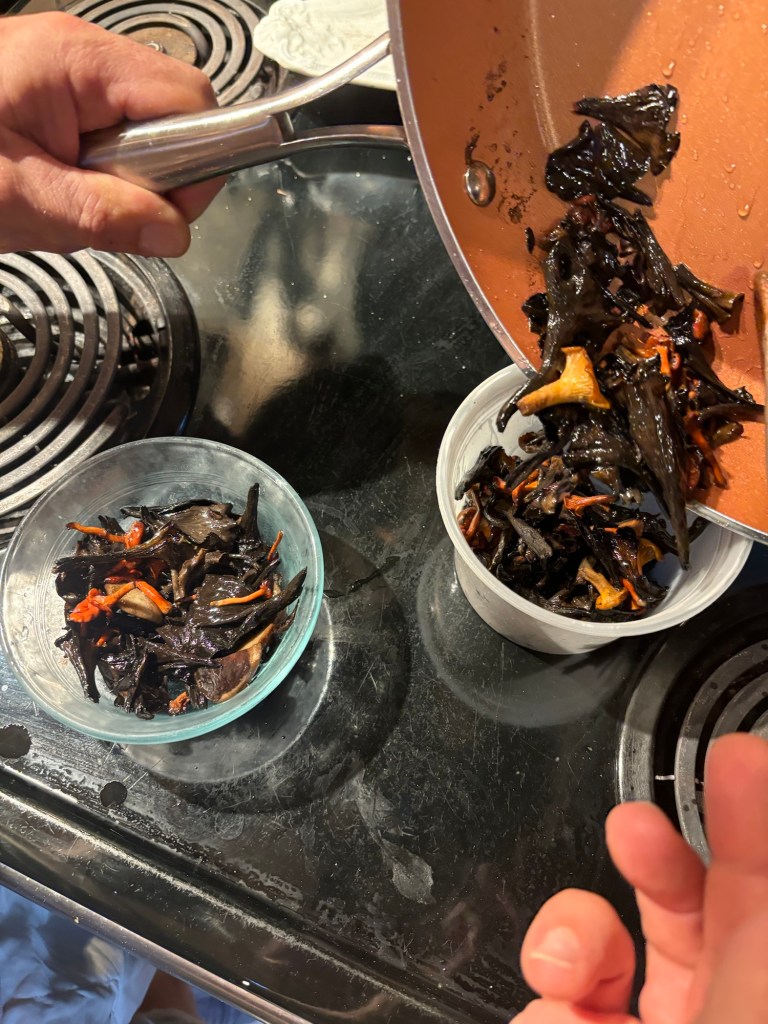
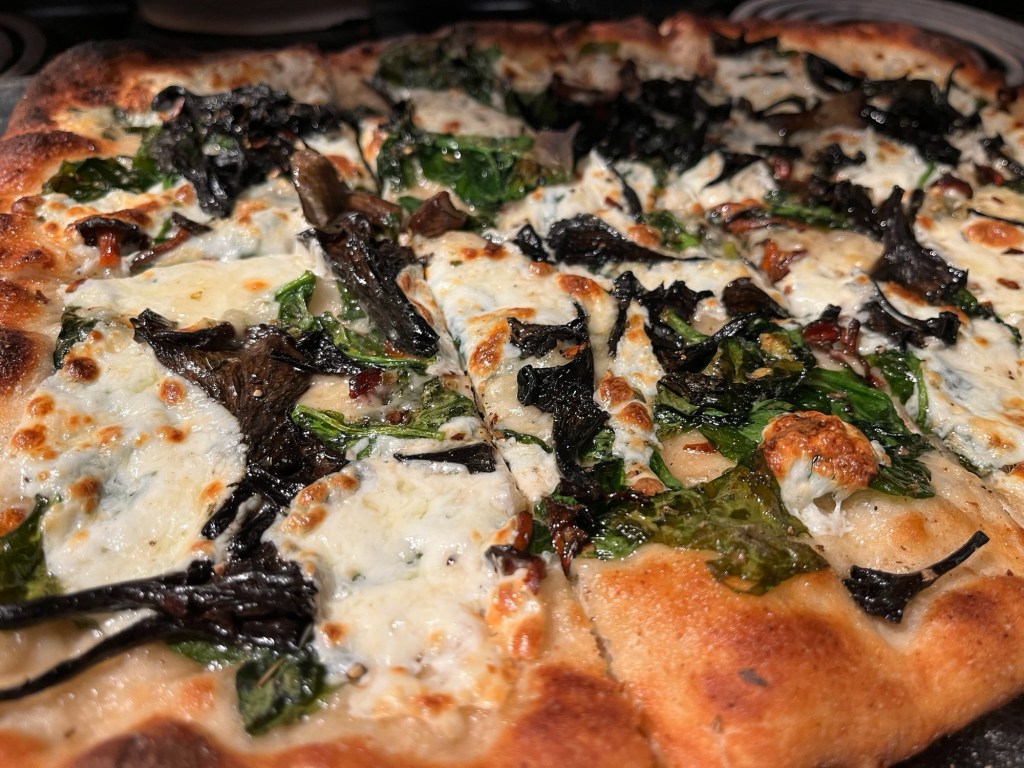
We got home and cleaned up our mushroom bounty and dry cooked them for some minutes to cook off the water we used to clean them. Once dry, we added butter and olive oil and salt pepper and garlic. We saved most of these mushrooms but used a small amount for our white pizza for dinner. It was scrumptious!