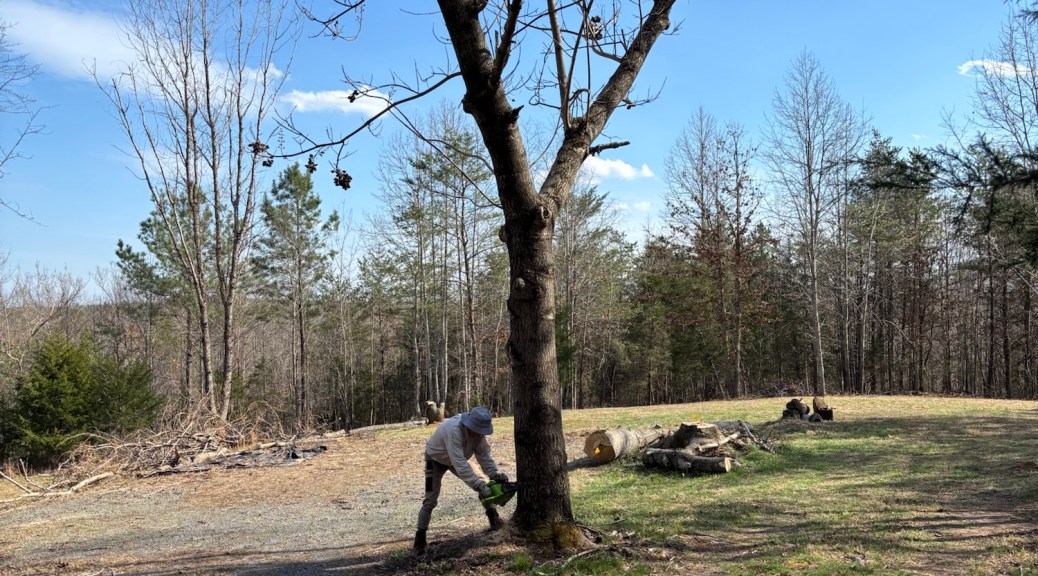
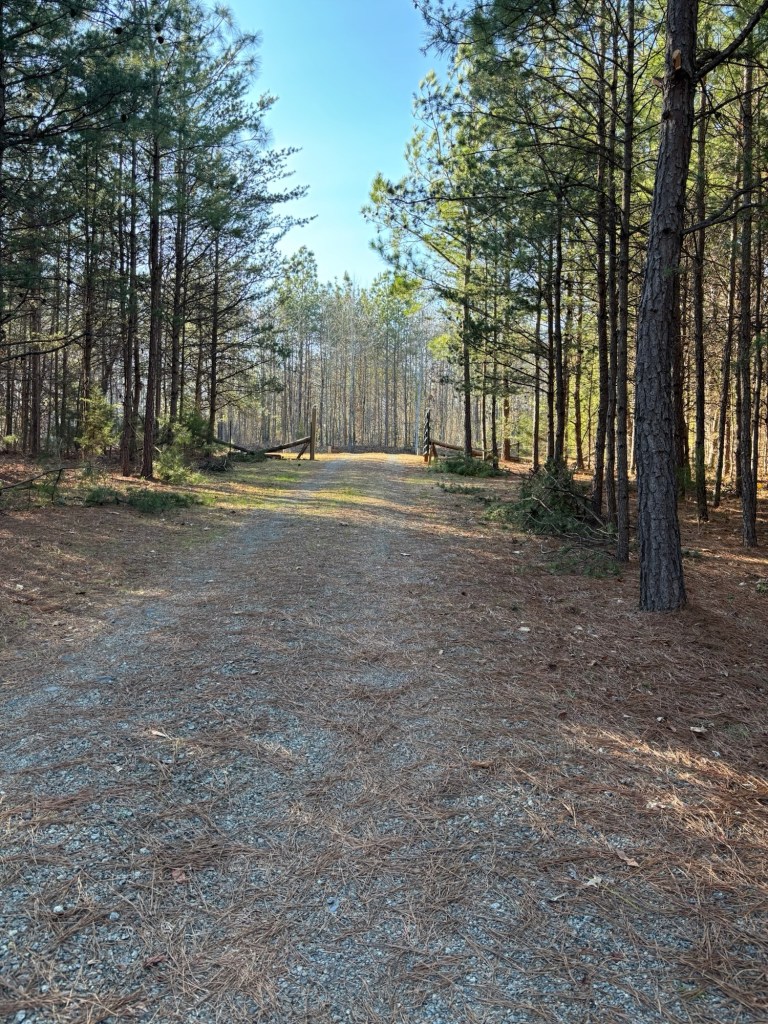
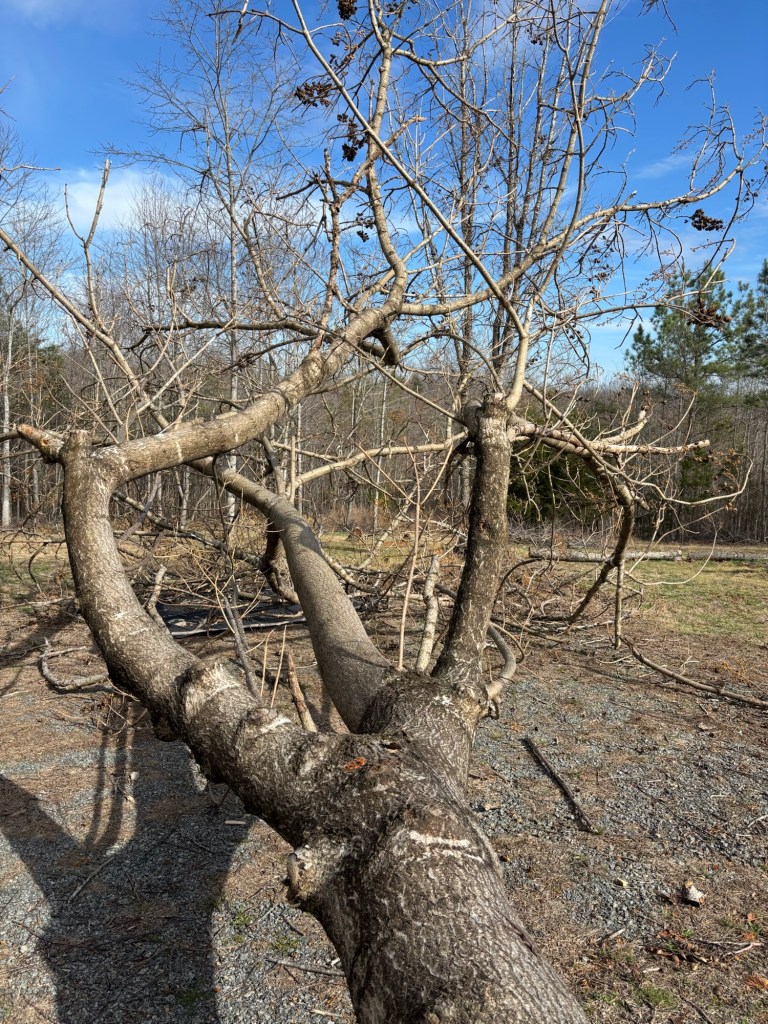
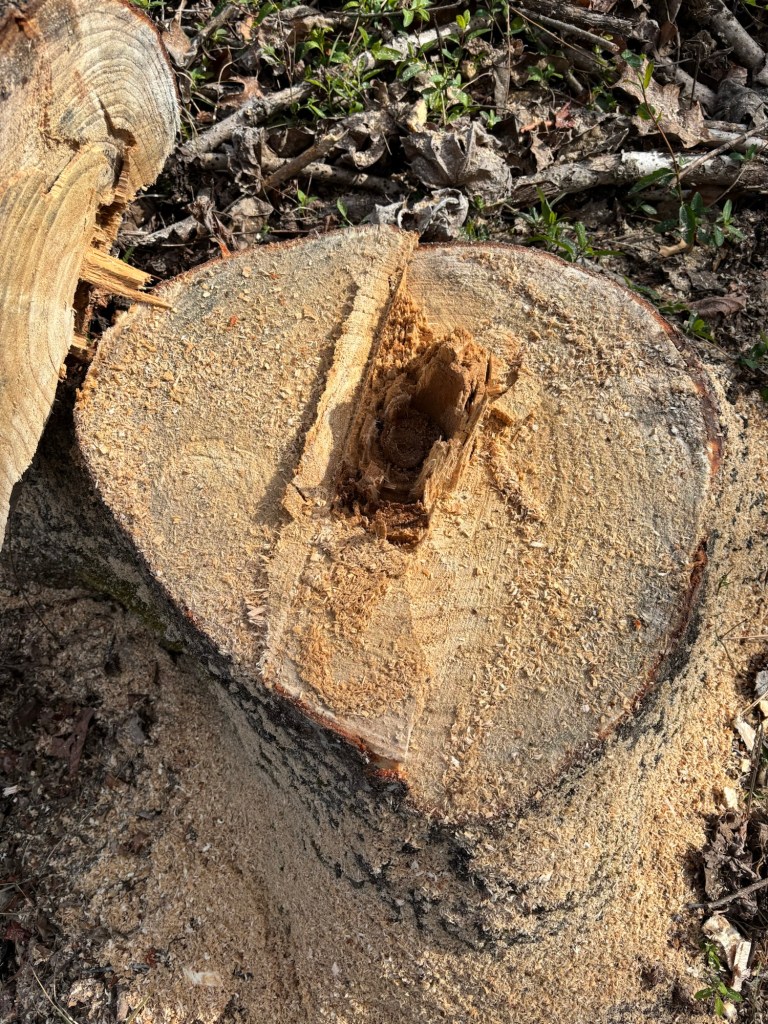
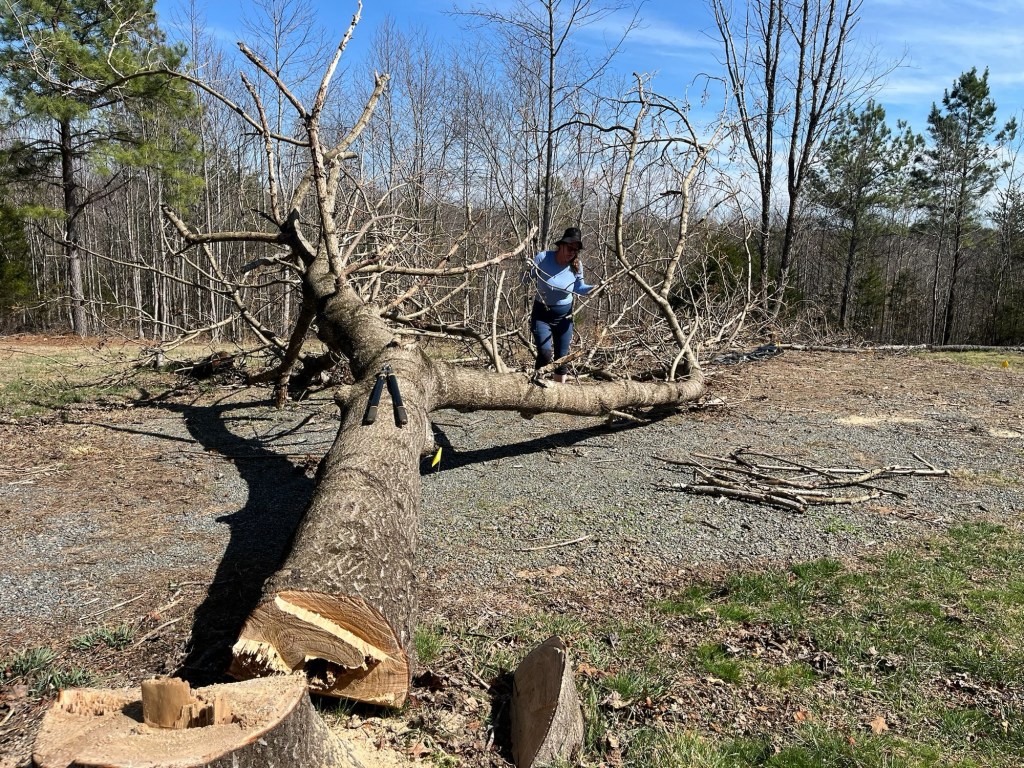
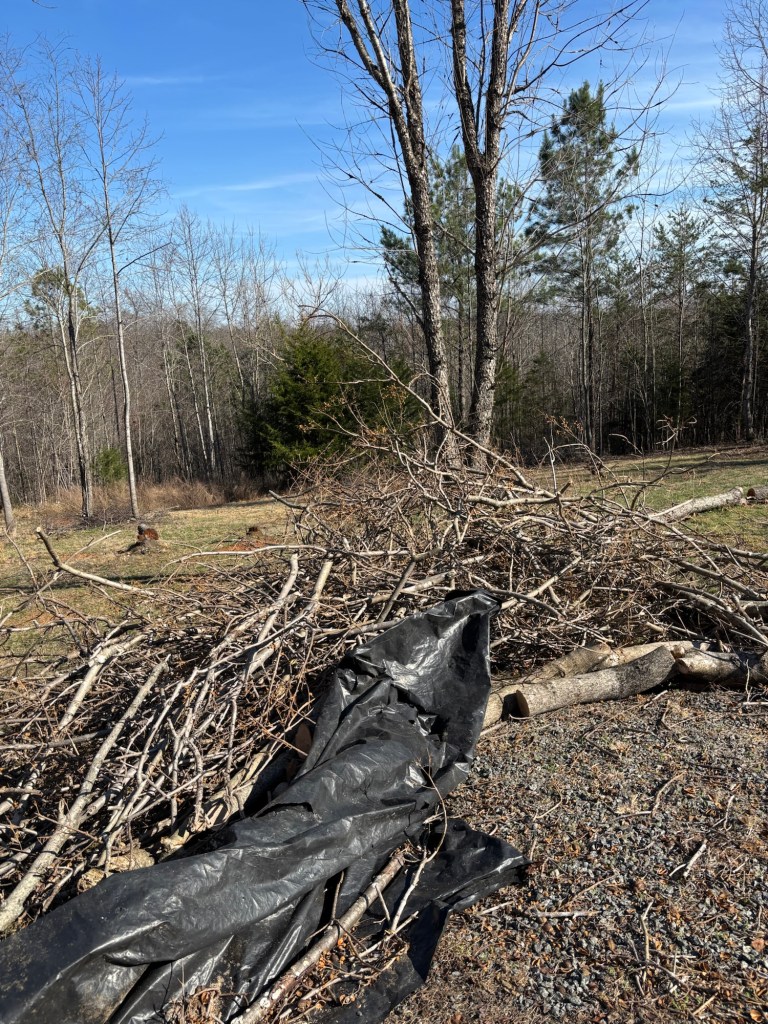
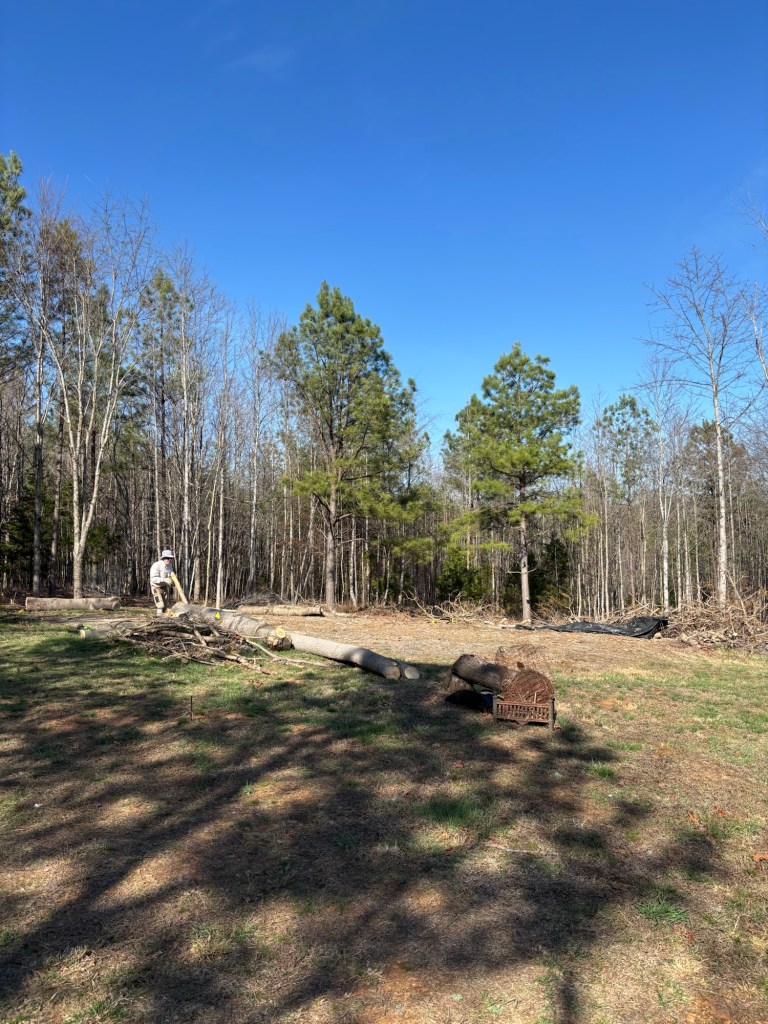
We spent the weekend taking down and processing the large paulownia trees up top in the main clearing. They loomed over the driveway and pad where we decided we’d place the tiny house. It felt like we were dismantling a giant whale carcass. These trees were messy, seedy and dropped limbs off during any storm. They take over native forests and choke out beneficial plants and trees for our Virginia wildlife. They were very fast growing as well which is why we put off cutting them down. They were a big bunch of hard work!
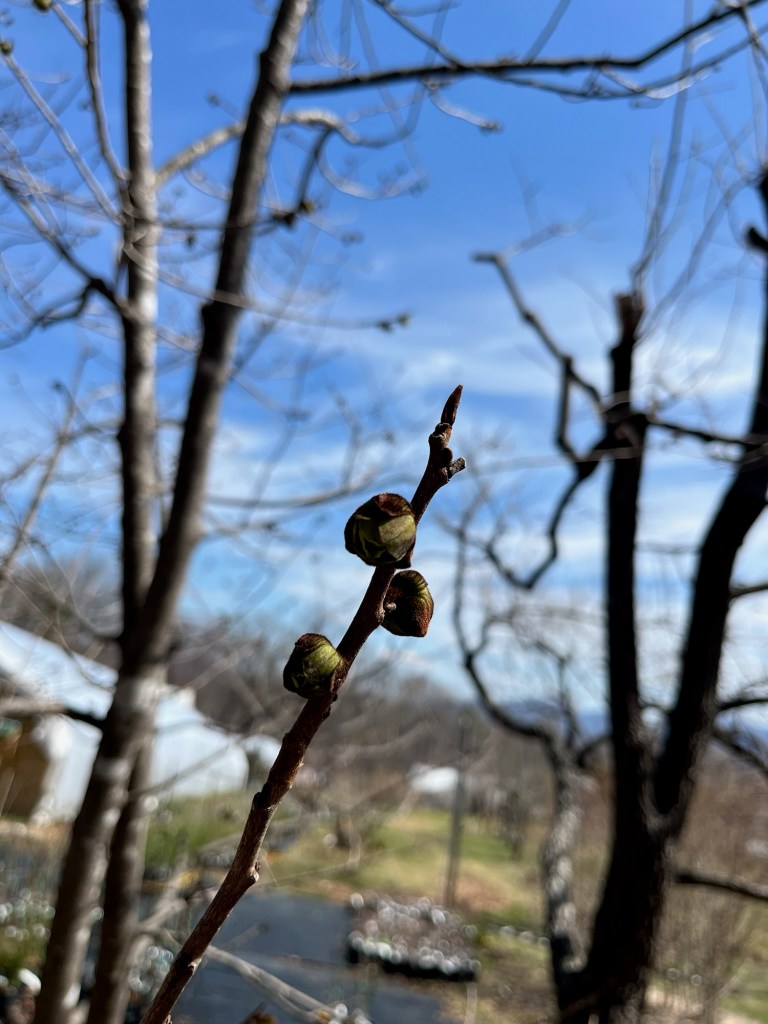
We stayed focused on creating our space for the tiny house for the most part, but ran down to the old colony pawpaw patch last night just before leaving SAFF for the weekend. The buds are still tightly closed. We are happy with the slow moving progress of the buds as we have only found female flowers out in the wild so far. We continue to look for the older male flowers with pollen. We will use this to pollinate our female flowers when they open. We are watching the pawpaws develop along the Rockfish River on our drive to the farm and we see them covered in buds. They are all still female with green flowers instead of more purple male flowers that face downward.
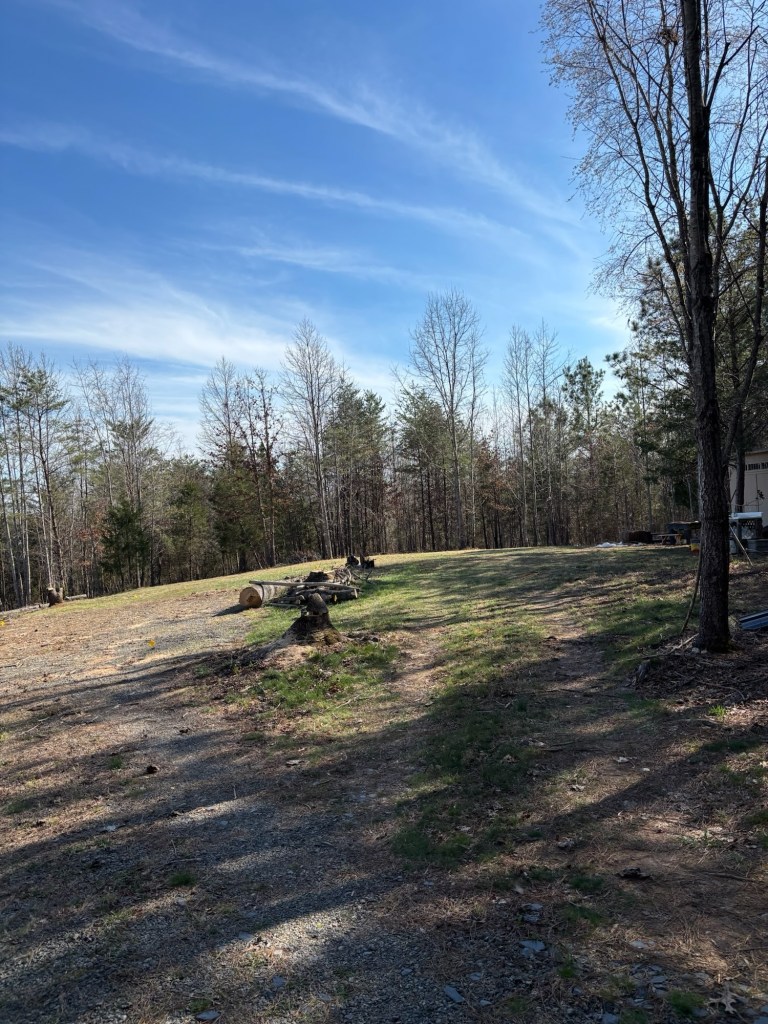
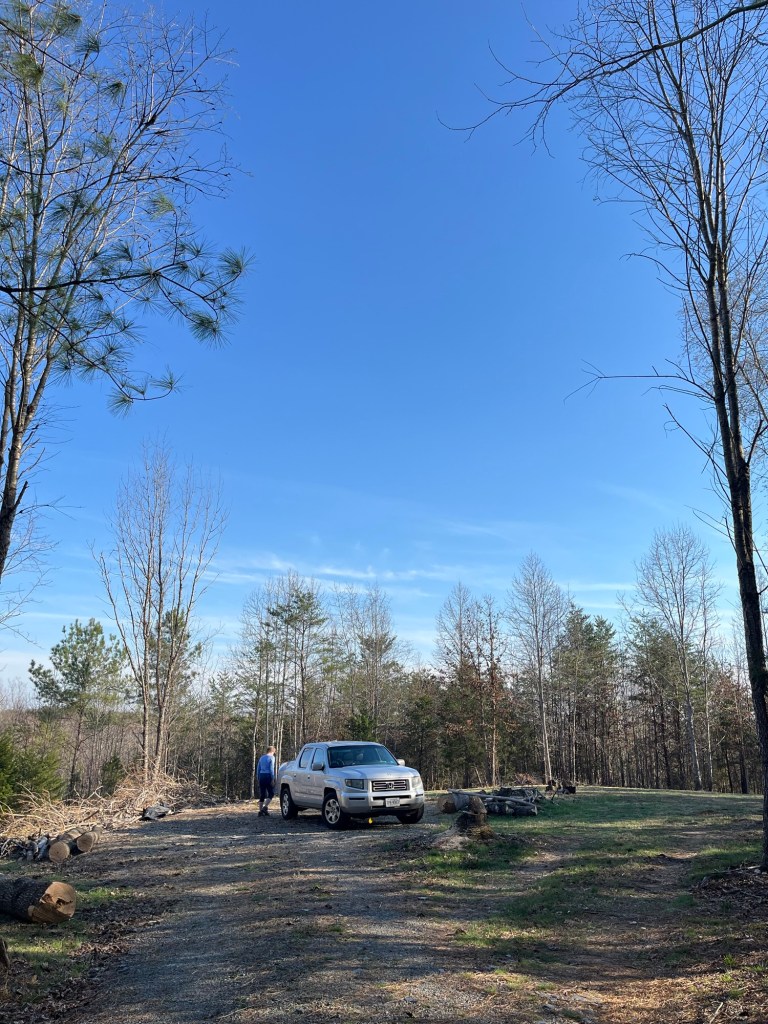
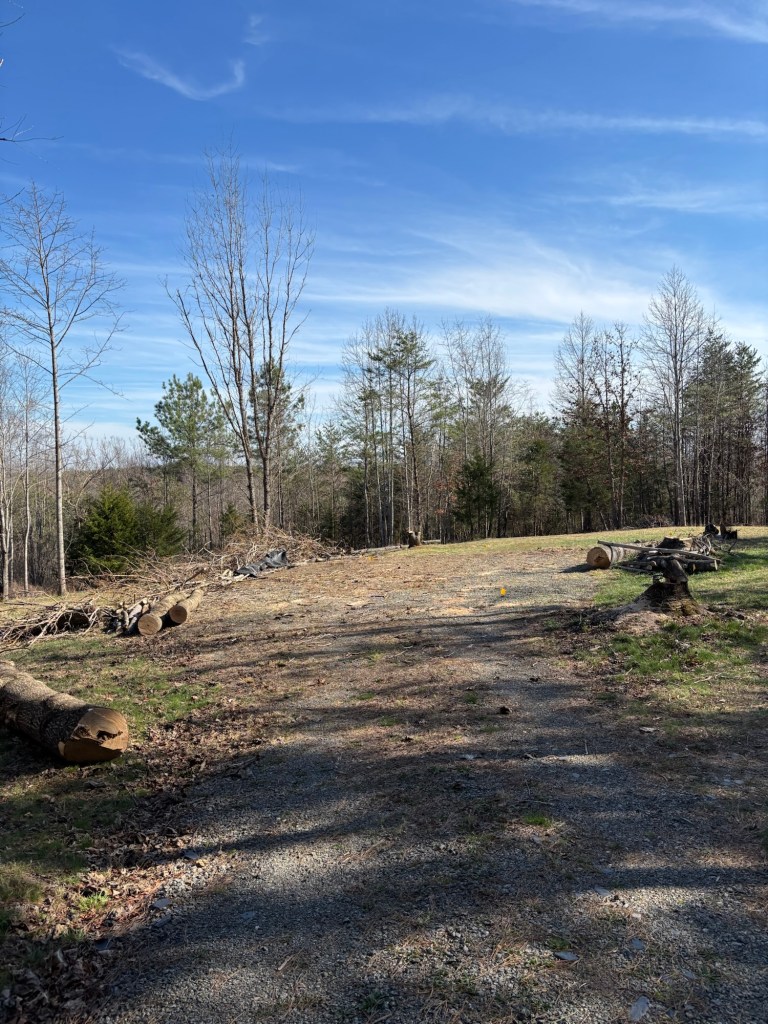
View of the clearing and pad without the paulownias.
 St Andrews Forest Farm