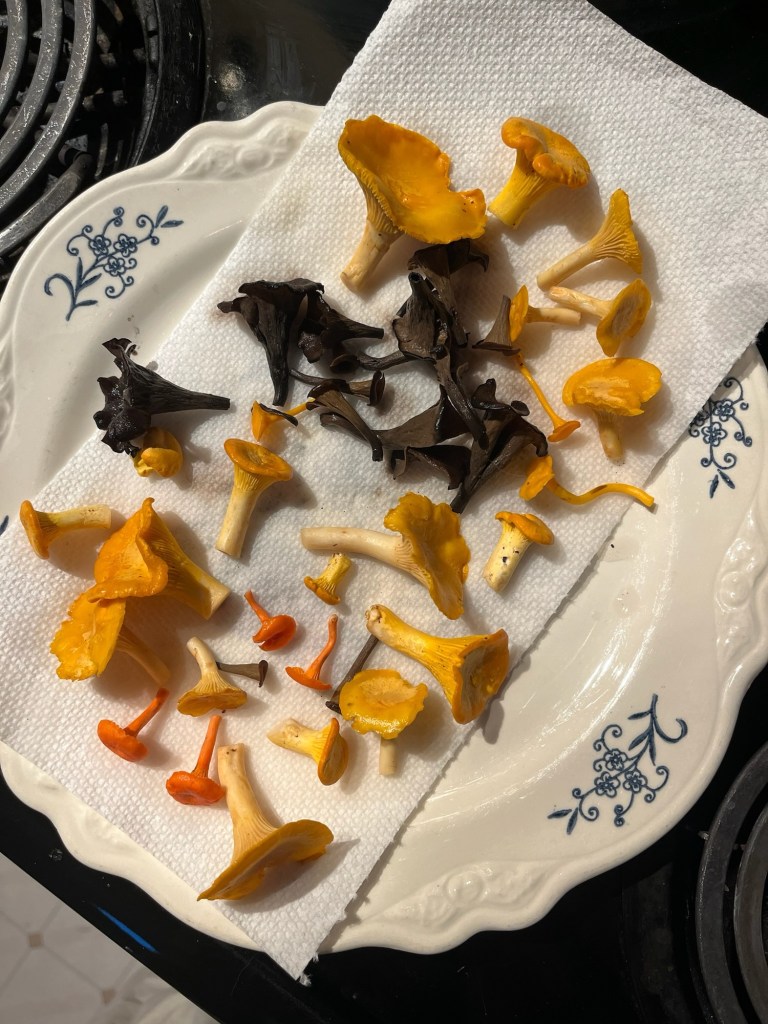
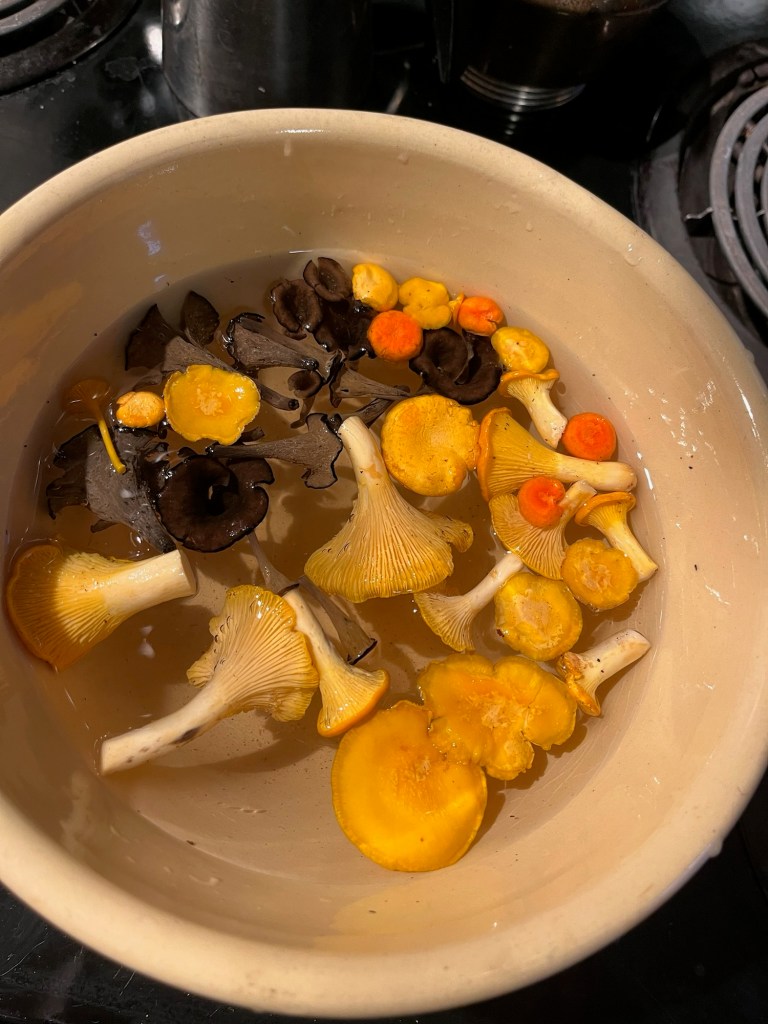
We’ve learned to thoroughly wash our mushrooms from the farm and to bring home as little dirt as possible to begin with. Trim and brush them with a mushroom knife if possible before putting in our basket. Once home, we soak them in water and also run under water and then use a towel to wipe them. (If from the grocery store or market, the mushrooms will not need cleaning usually. )
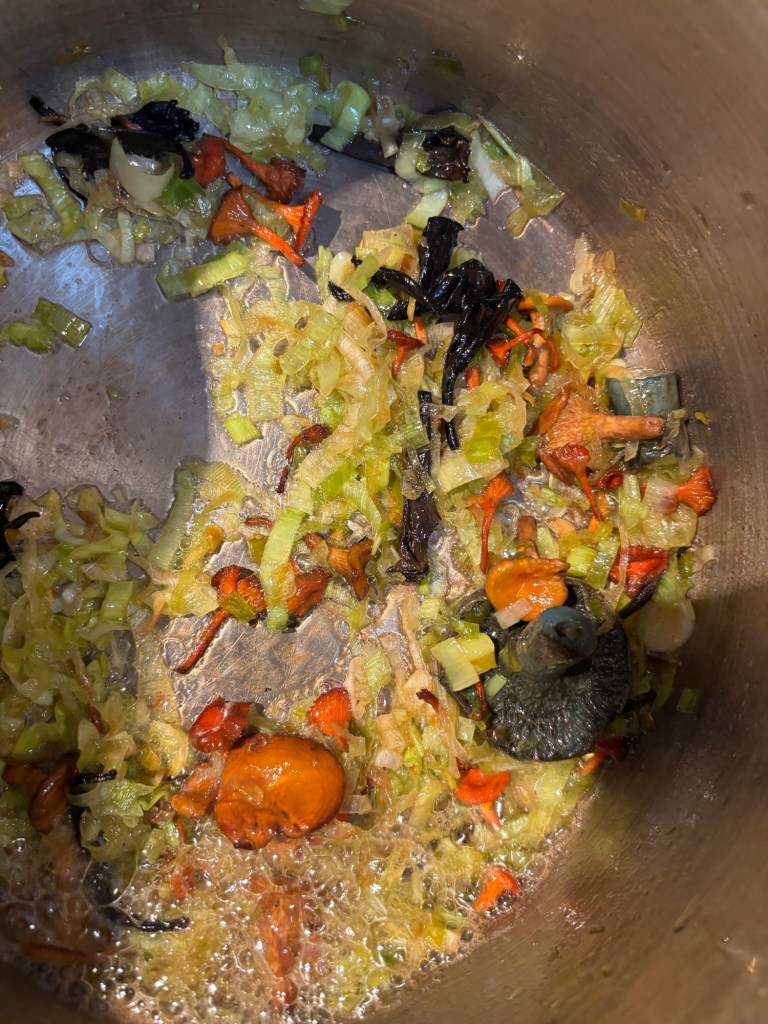
Heat a skillet to 7 and put the mushrooms in, letting them dry out somewhat by cooking gently for a moment or so. Don’t let them stick. Add olive oil or butter when needed to prevent the sticking and add white wine to deglaze if necessary. Try to be gentle and keep them intact. Make sure to cook them at least 10 minutes but we go 15 or so. You can’t really overcook them. Then, either save your mushrooms in the refrigerator to use within a few days. Or, freeze them like this until you are ready to use, for up to a year. Thaw them in the refrigerator.
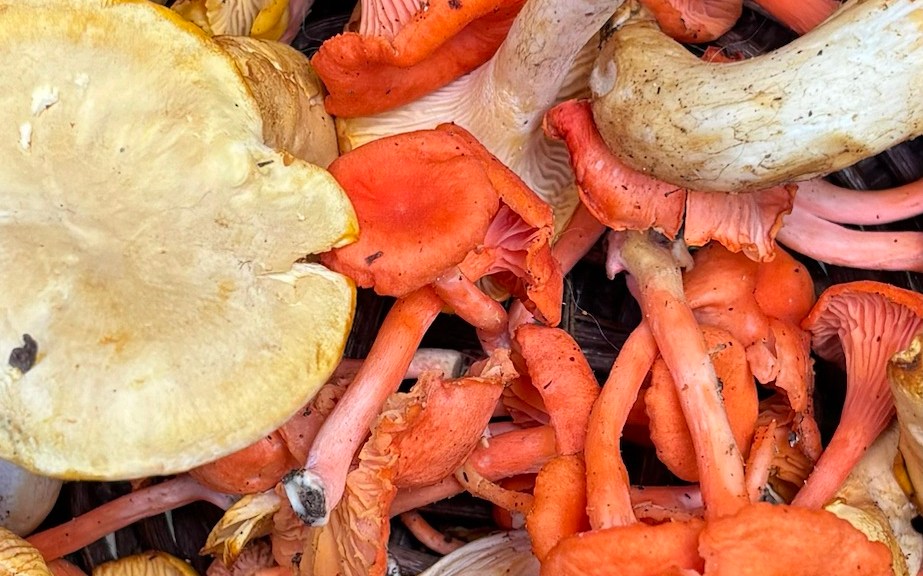
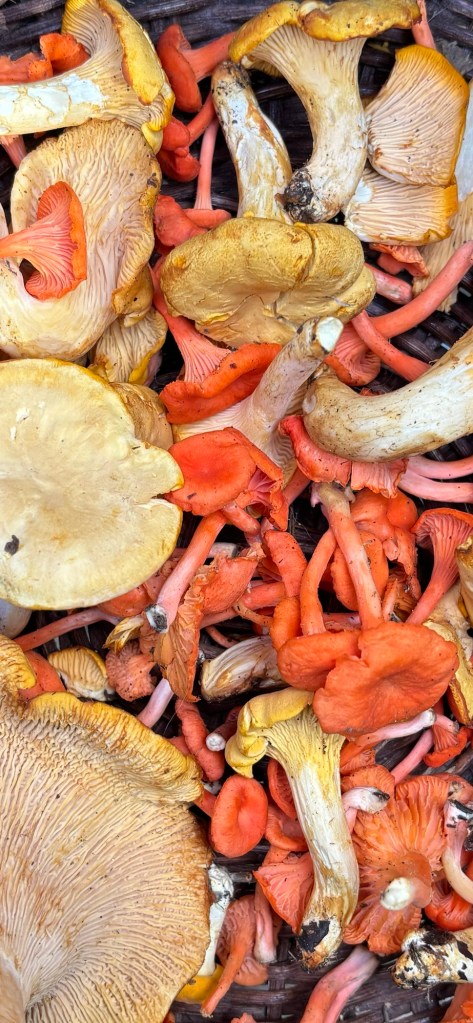
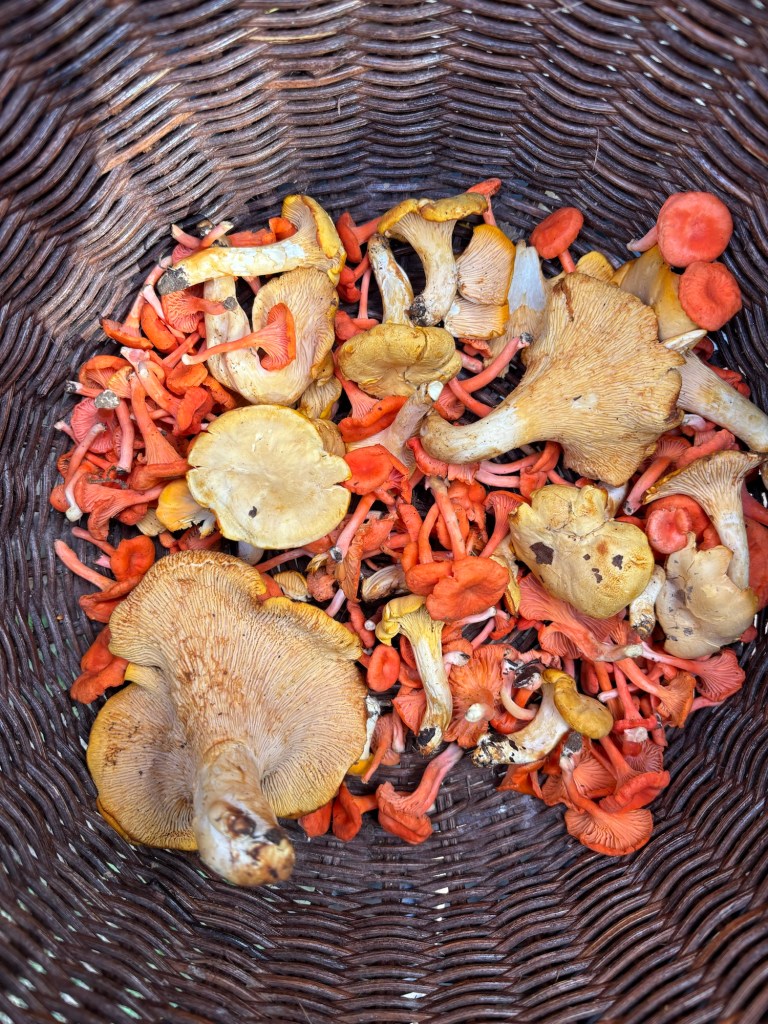
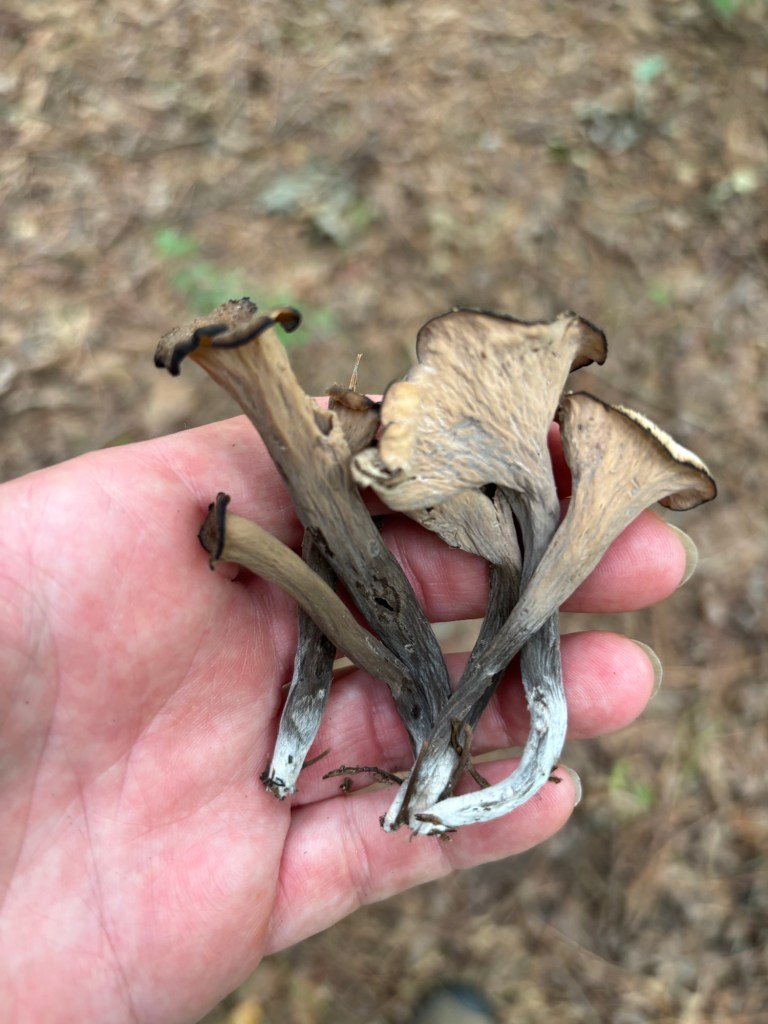
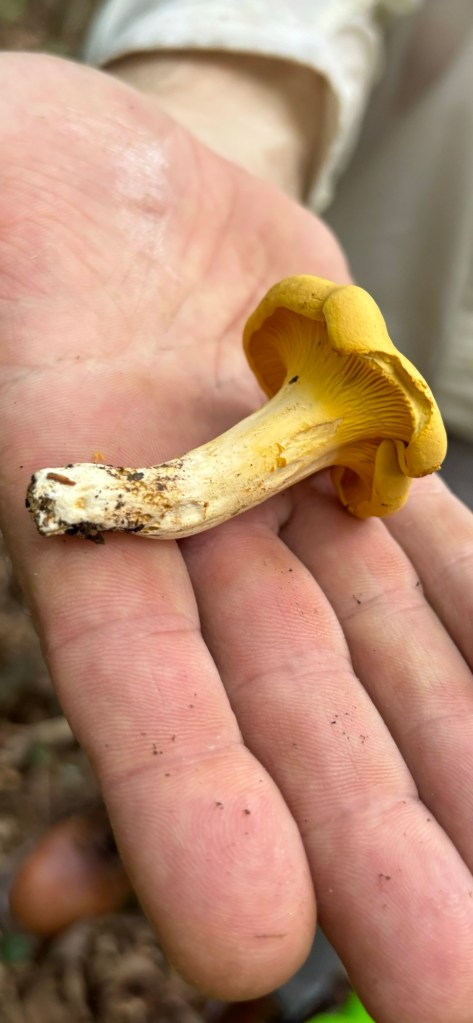
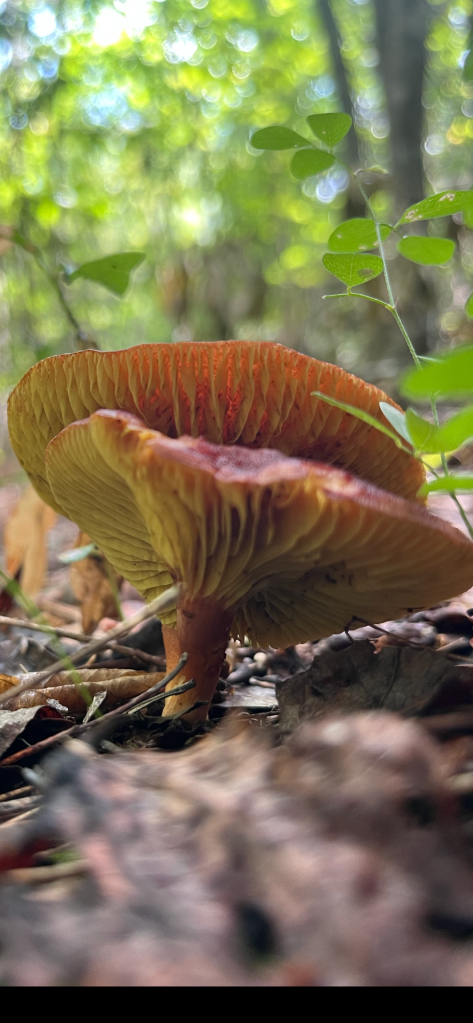
Chanterelles harvested from northwest corner of SAFF on Saturday.
We had not explored the north side in months and decided to spend this weekend making trails and looking for mushrooms over there. We are sure glad we did. With both days added together, we had about three pounds of mushrooms.
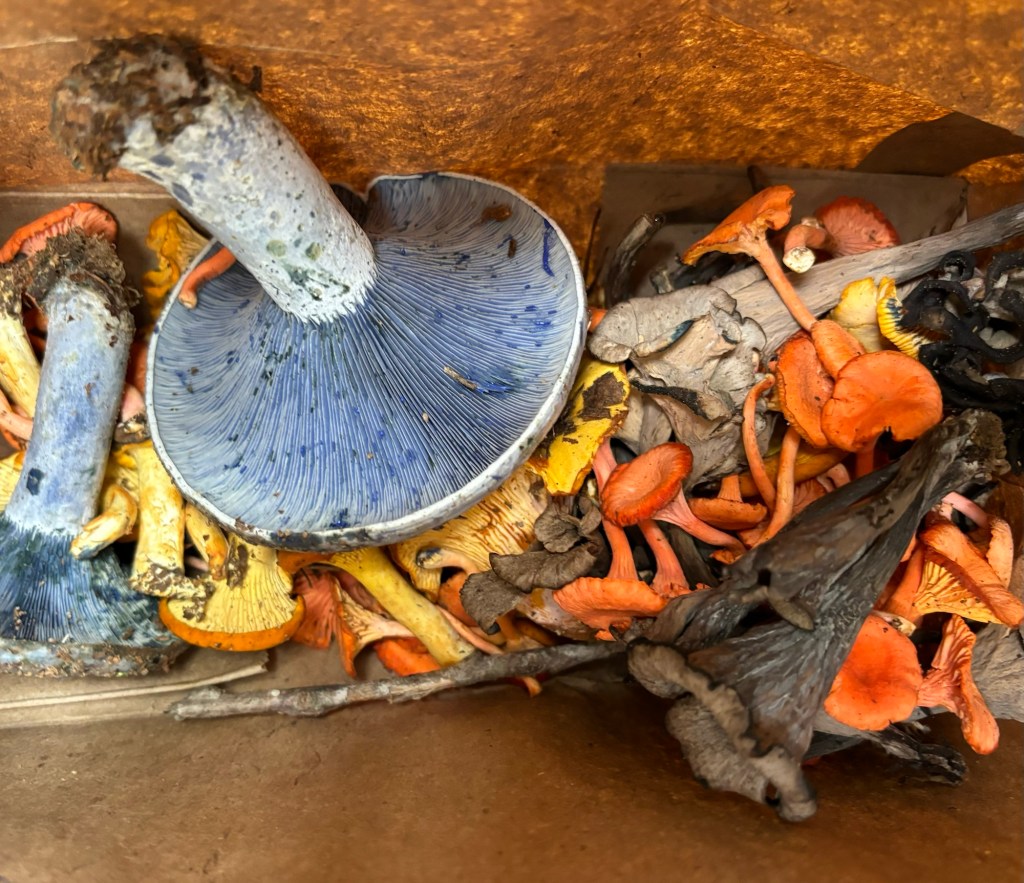
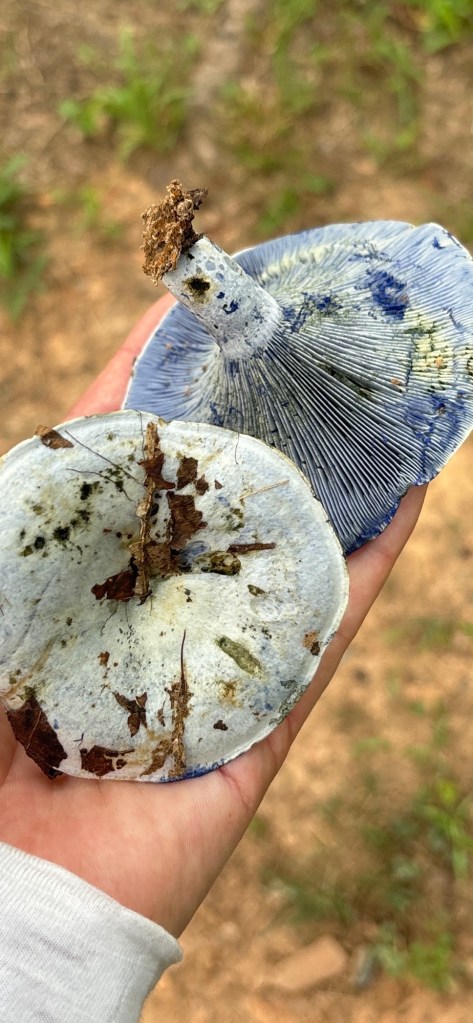
Friday’s wild mushroom harvest from the north side of SAFF includes three different varieties of chanterelles and indigo milk caps.
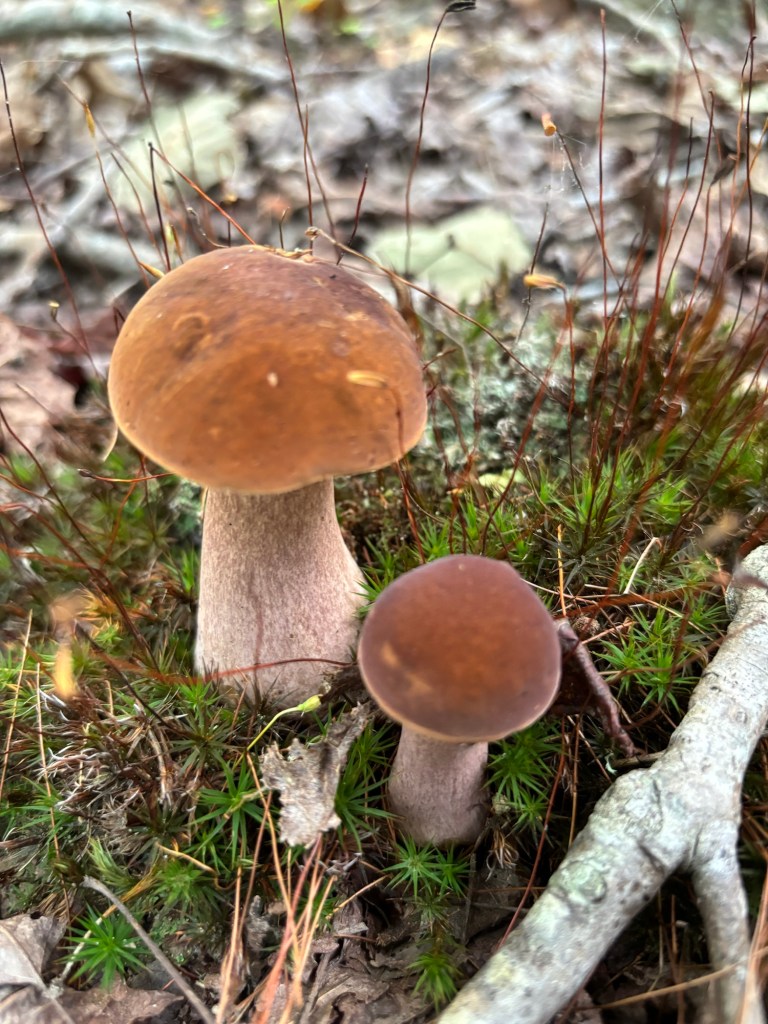
We started off down Mary Banning Way and found multiple types of boletes right along the path.
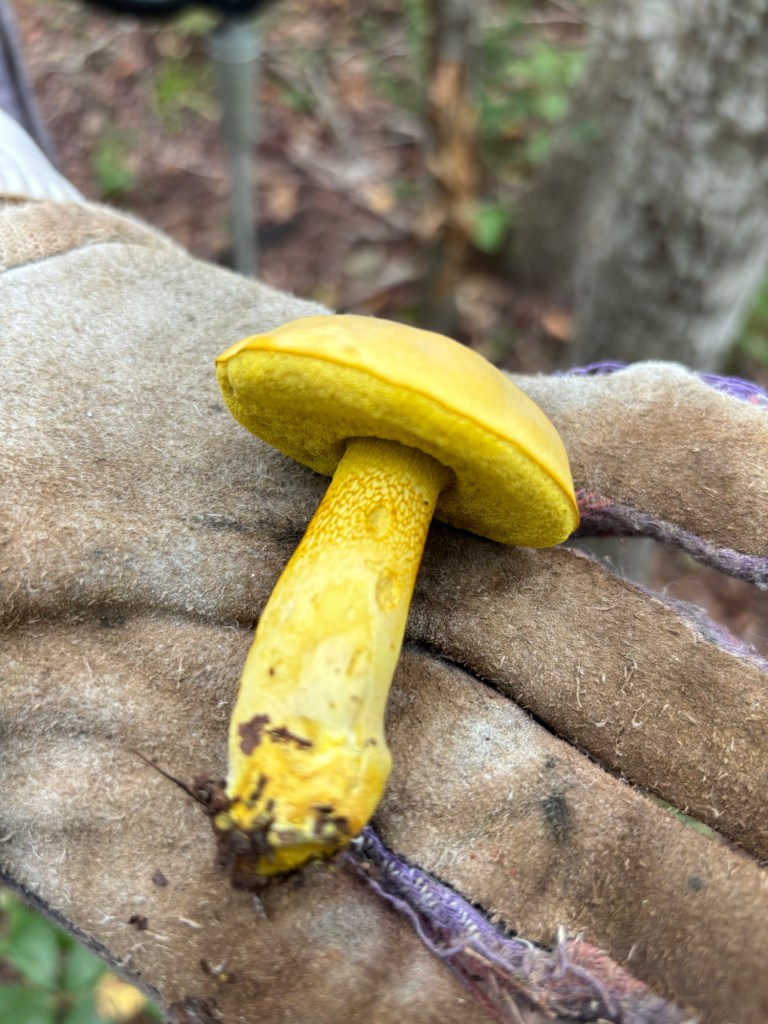
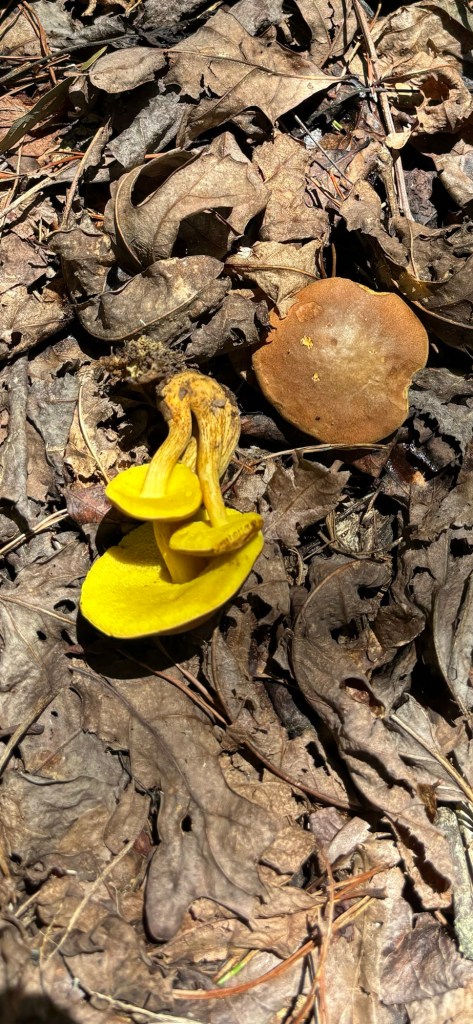
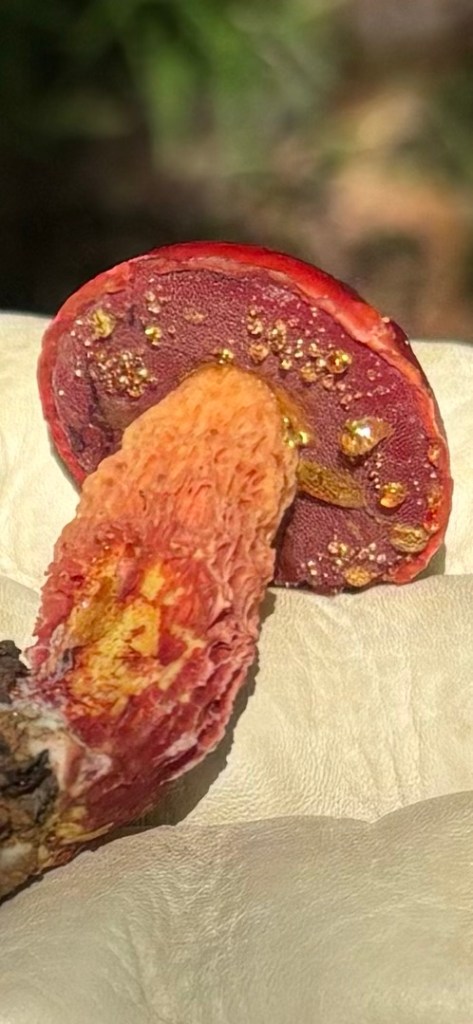
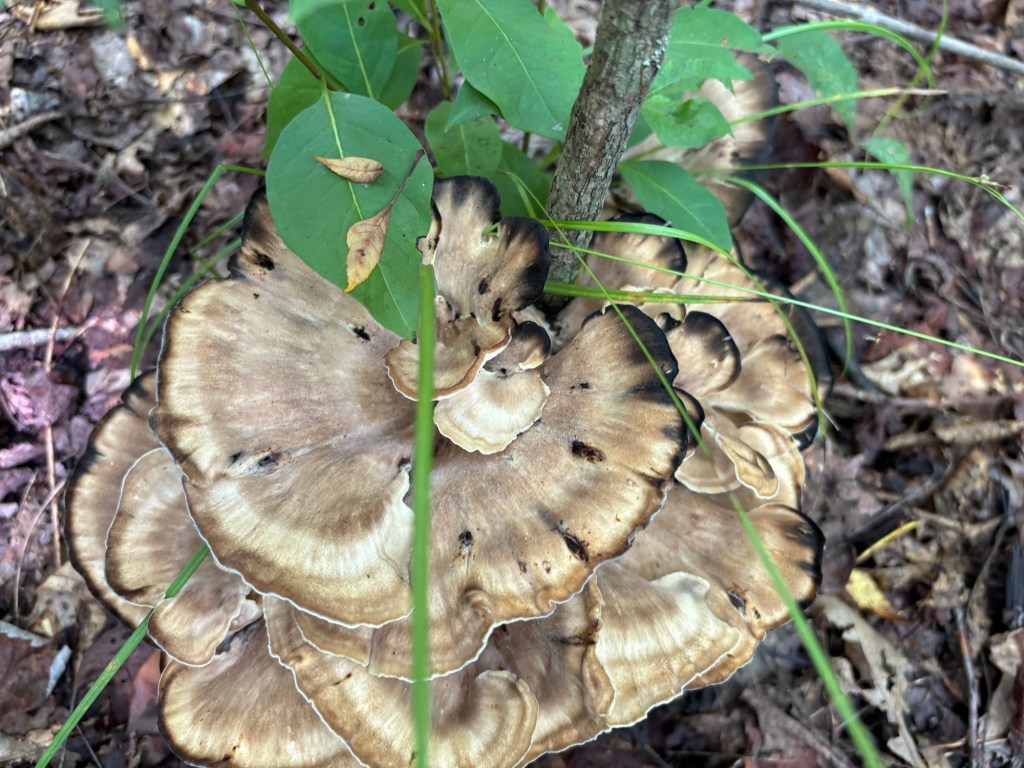
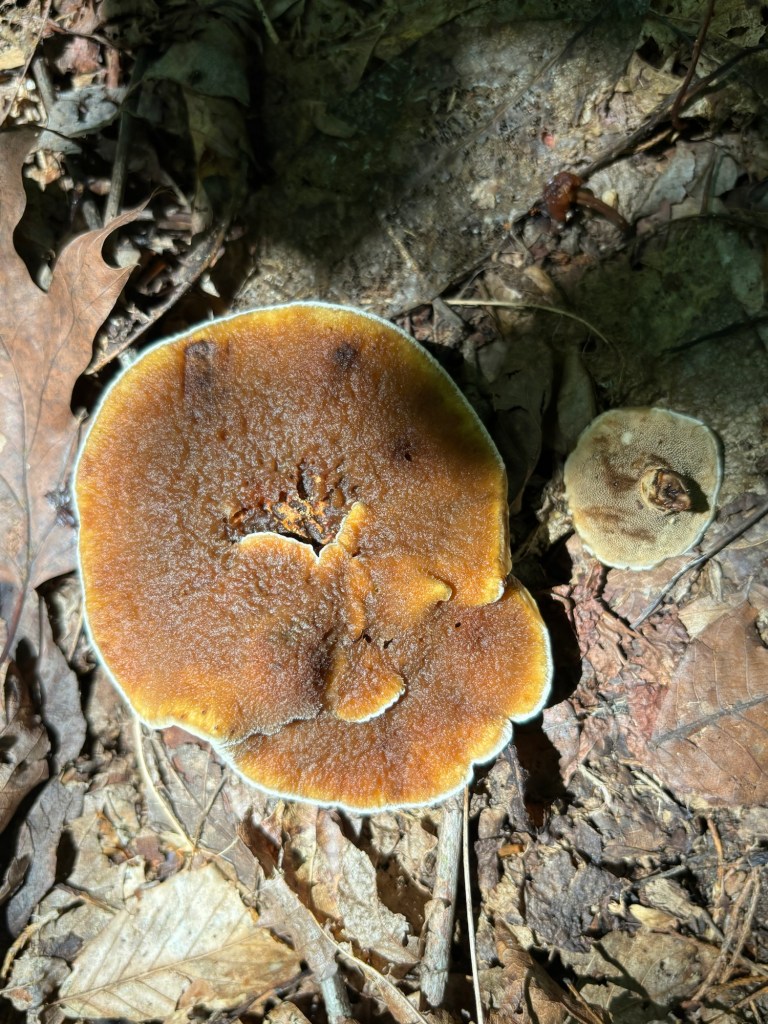
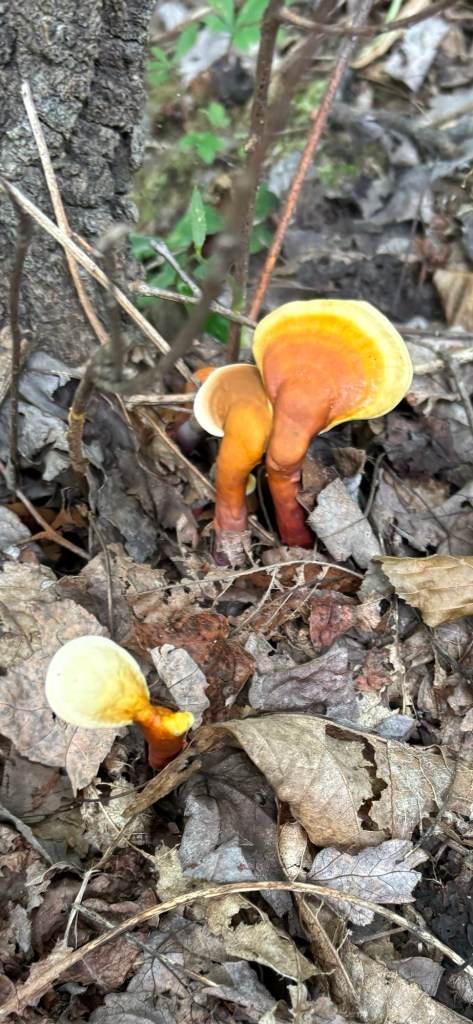
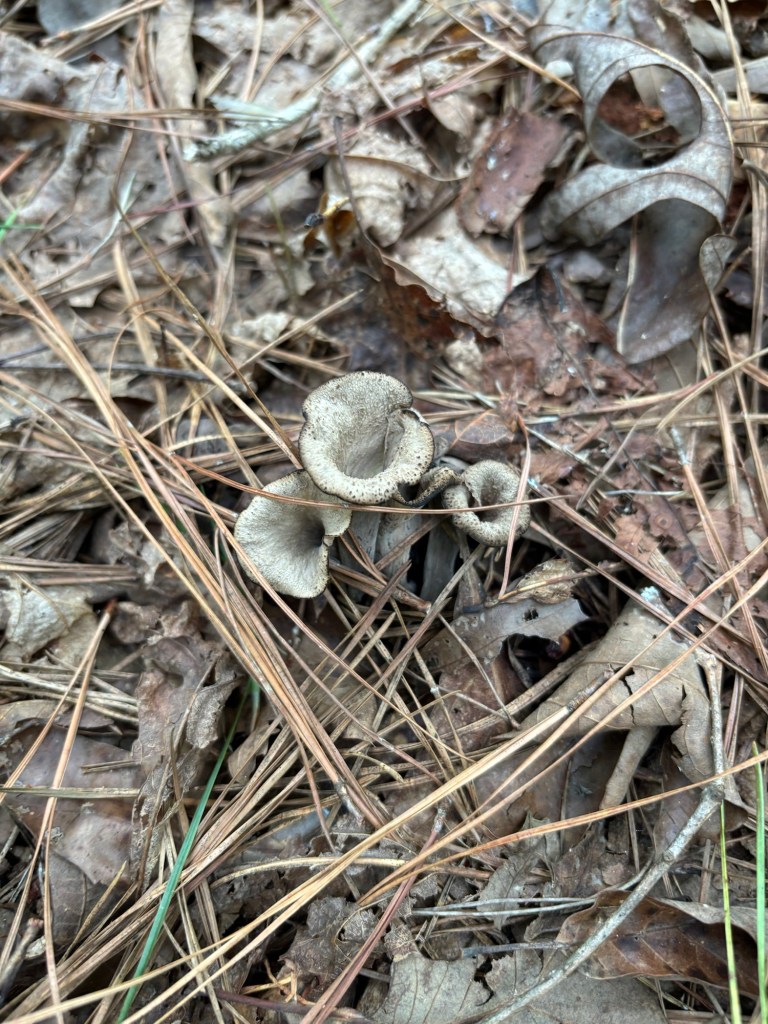
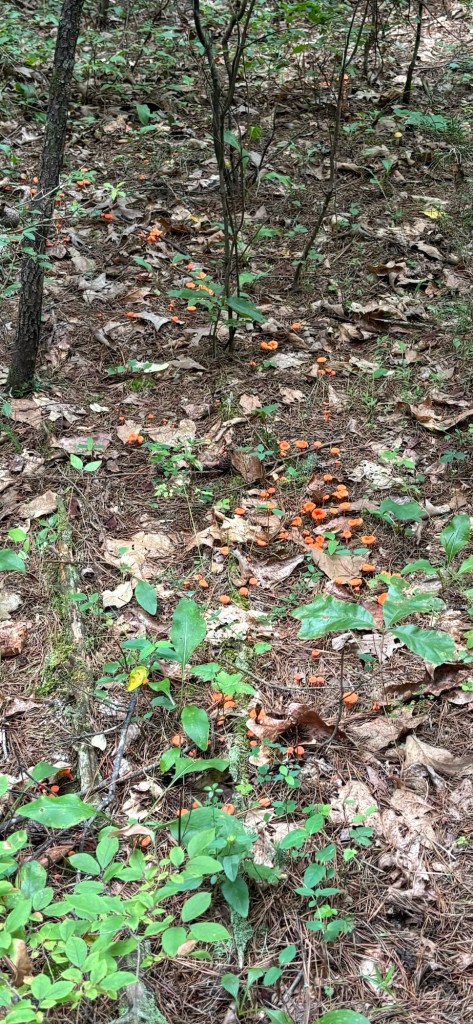
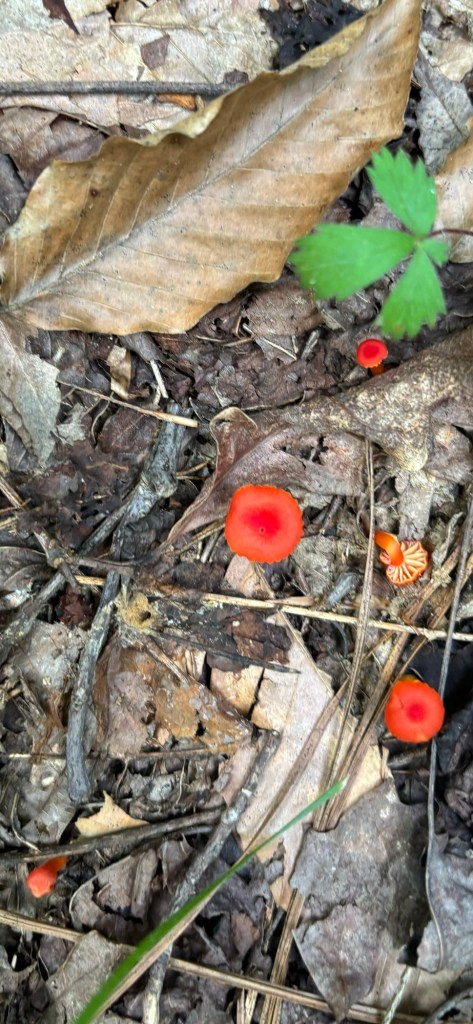
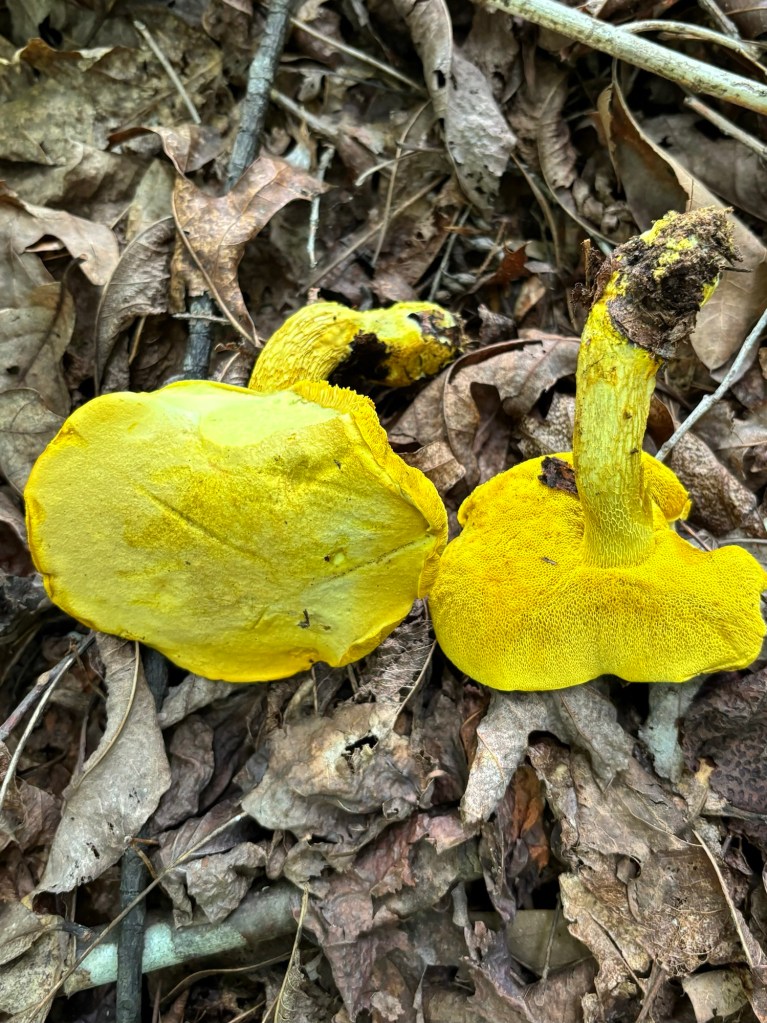
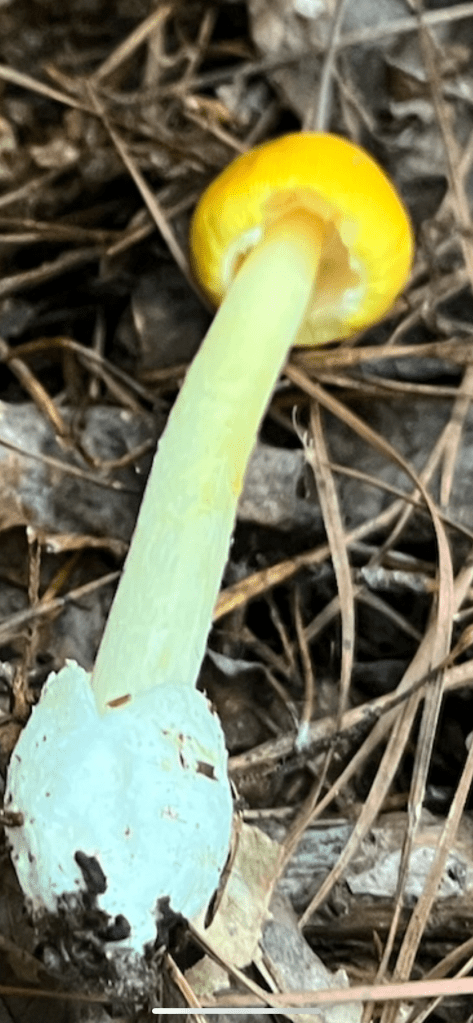
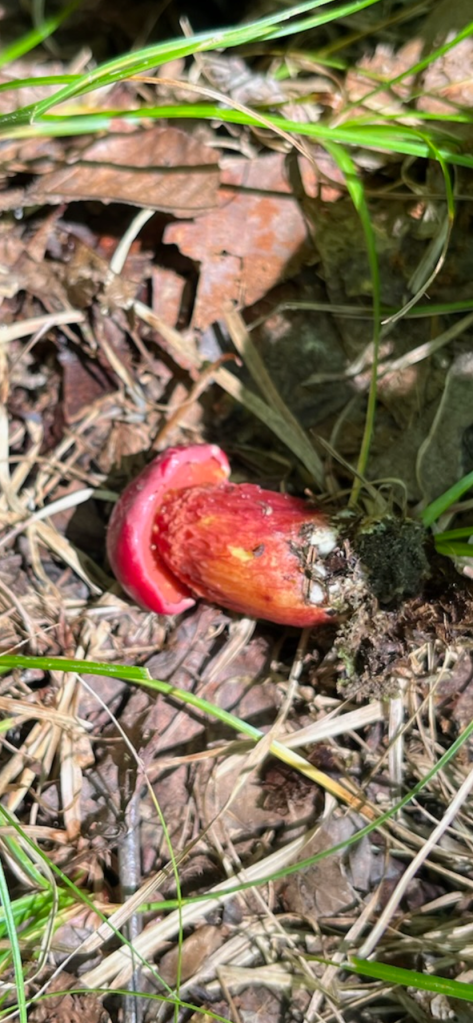
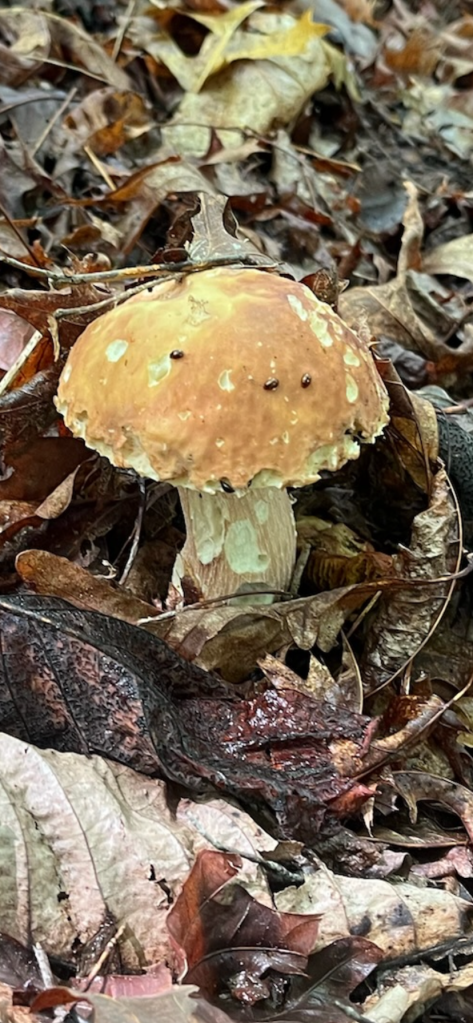
Retiboletus ornatipes, Ornate-stalked bolete, an edible mushroom found in multiple spots on SAFF.Leccinum testaceoscrabrum or Leccinum versipelle was found along a hillside. There were hundreds. Edibility is suspect.Boletus auripes, Butter-foot boleteA young moist bolete frostii found along Fern Trail with amber colored drops sweating from the pore surface. This is a process called guttation.We also found this interesting black staining polypore on the north side. Hydnellum spongiosipes, Velvet tooth, found in multiple locations around SAFF. We found this roadway along the northeast corner of SAFF. It was graveled. We began to clear small trees and vegetation from the roadway. Golden Reishi, Ganoderma curtisii, a wood decaying polypore found along a wet weather gully on the northern side of SAFF. But we mainly found chanterelles. These Black trumpets were surrounded by pines. These Cinnabar chanterelles were everywhere along the southeastern facing slope in the northeast side of SAFF.
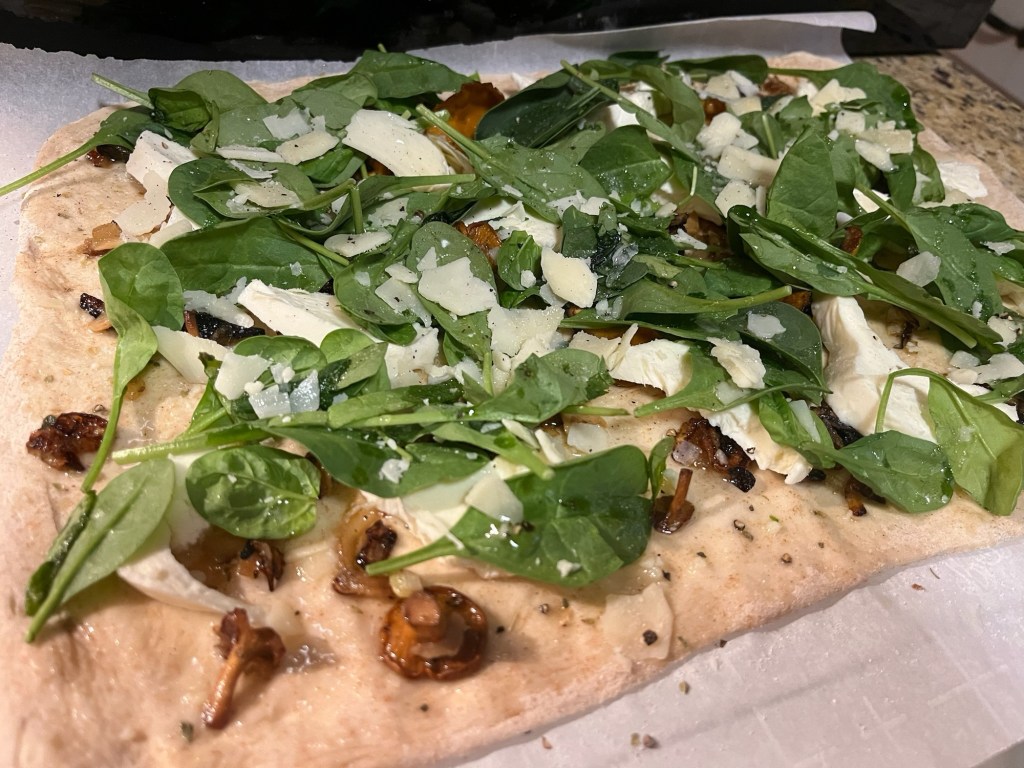
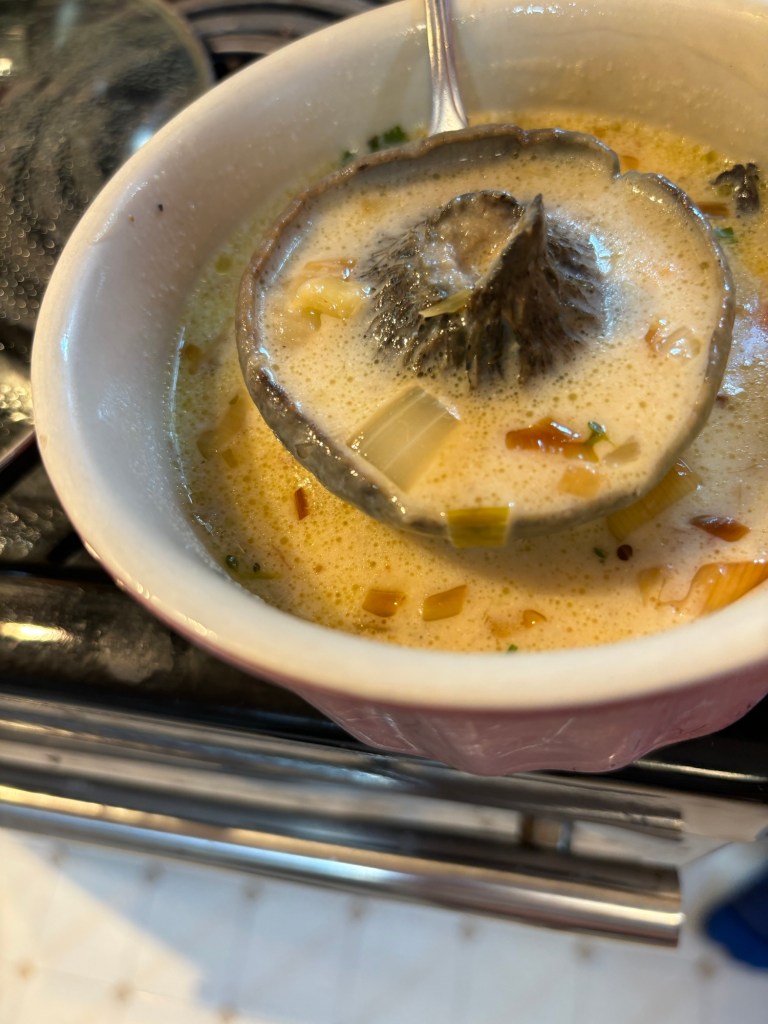
We have a lot of cooking to do with these choice edibles.
Cinnabar chanterelles found near the waterway right on the trail. These are choice edibles.
Tropical storm Debby is set to hit the farm tomorrow evening with rains expected to be 4-8 inches and peak wind gusts Friday morning at 34 mph. We can’t wait to see what this rain will bring since there’s been so many mushrooms already.
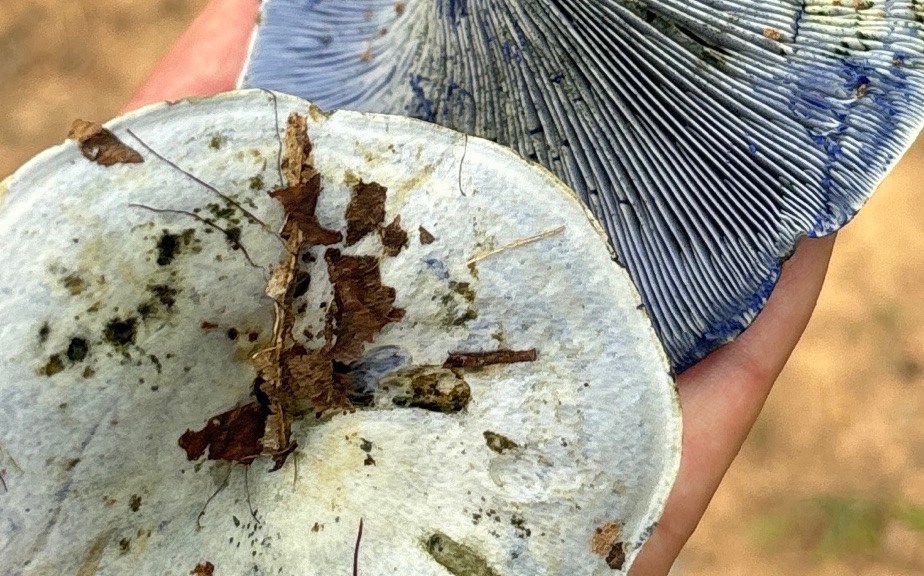
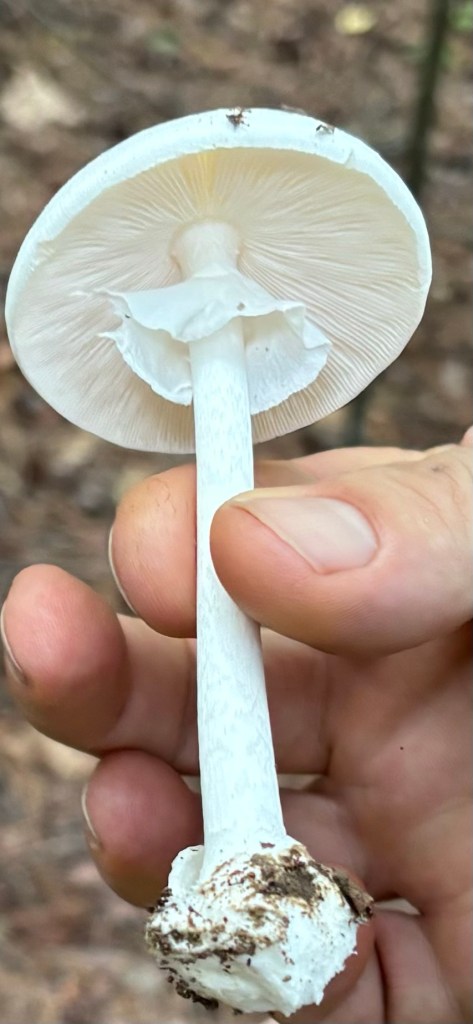
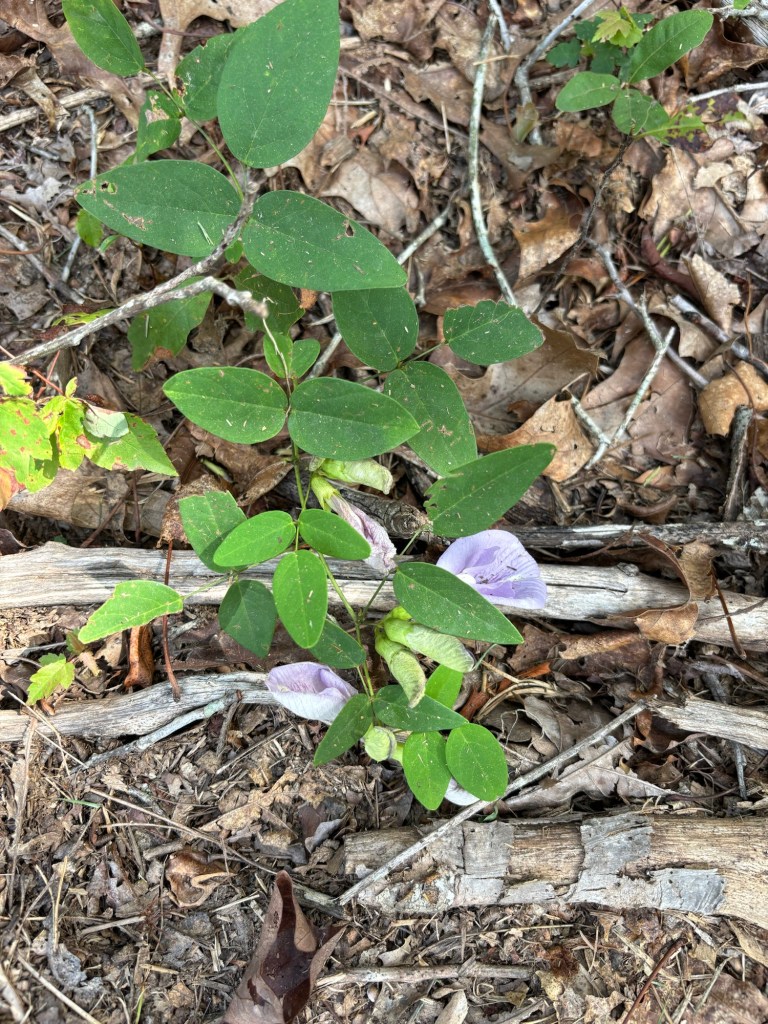
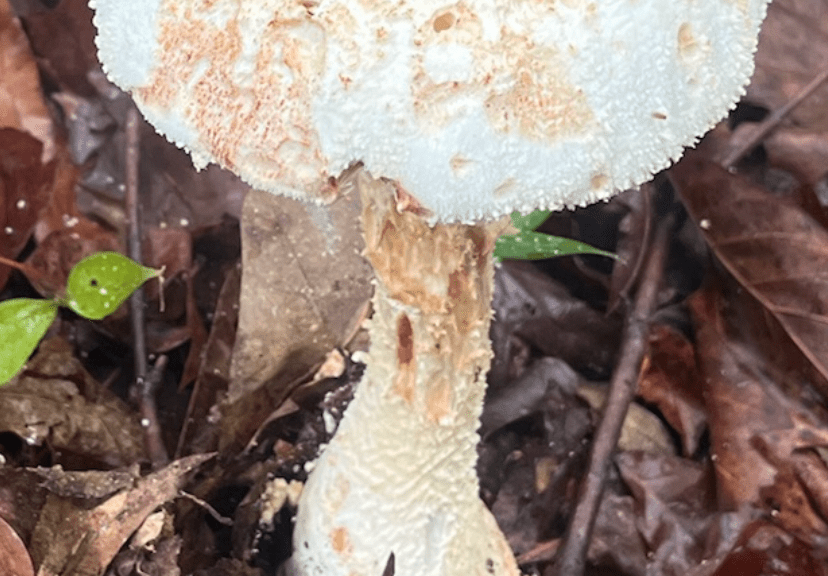
Retiboletus ornatipes, Ornate stalked bolete, is edible but not considered choice. We found them along South Trail. Lactarius indigo, indigo milk cap, is a choice edible found off Chanterelle Trail. We brought these beautiful blue mushrooms home to eat. Eastern North American Destroying Angel, Amanita bisporigera, a deadly poisonous mushroom found near North Trail.Clitoria mariana, pigeonwings, found up top in clearing near twin oaks
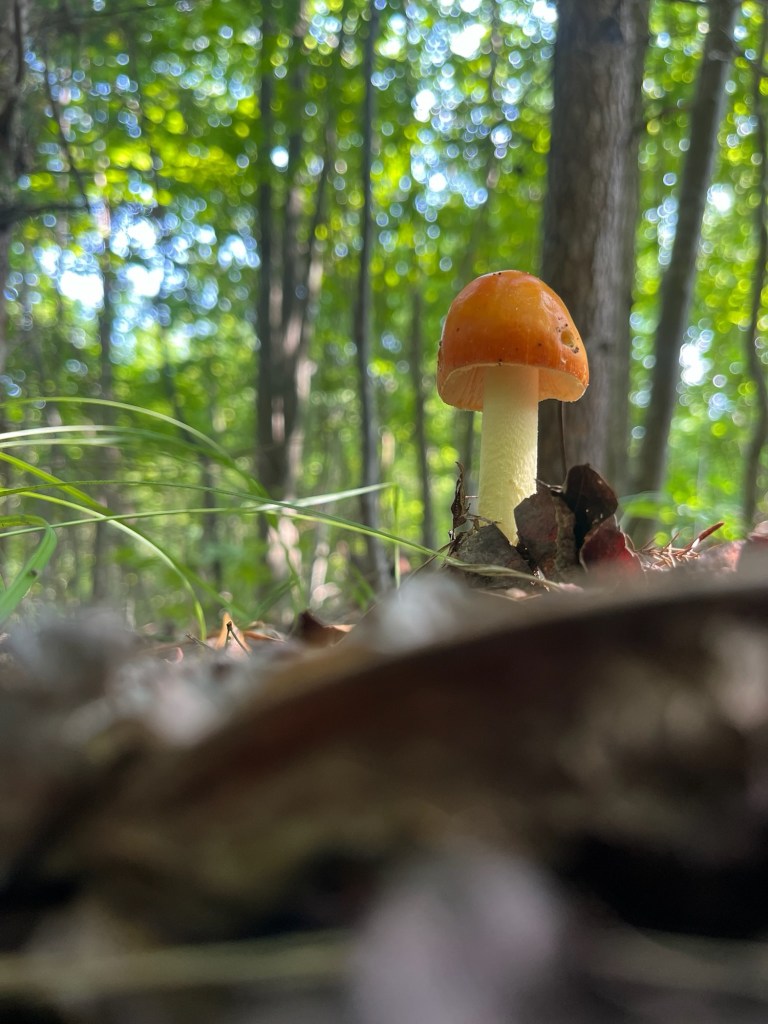
Amanita banningiana, Mary Banning Slender Caesar, has been found in every corner of Saint Andrews Forest Farm.
Mary Elizabeth Banning (1832-1903) was an American mycologist and botanical illustrator from Maryland. She described 23 previously unknown species of fungi. Her scientific achievements remained unrecognized during her lifetime. With no formal schooling or training, and during her free time, as she taught children and took care of her sick mother and older sister, she created the first mycological study of fungi in America with “The Fungi of Maryland.” This manuscript includes 174 13” by 15” watercolor paintings of various fungal species. She self funded her own study and lived in ever increasing poverty.
Banning dedicated her life to mycology and lived in a world where women could not be scientists. She has inspired many people with her love for fungi and who knows how many she has inspired with her accomplishments while facing tremendous hurdles and difficulties.
We blazed a new trail from SAFF’s north side to North Trail, and we have named it Mary Banning Way to always remember and honor this powerful, intelligent and creative woman.
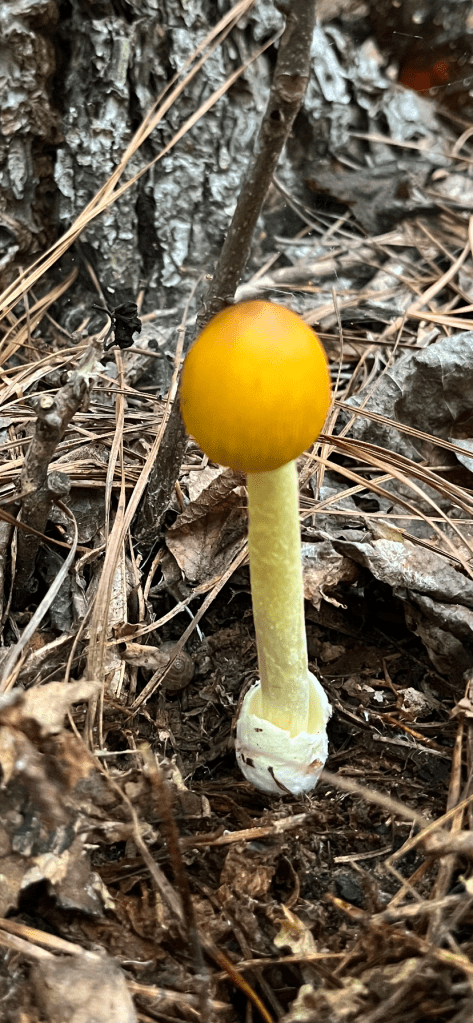
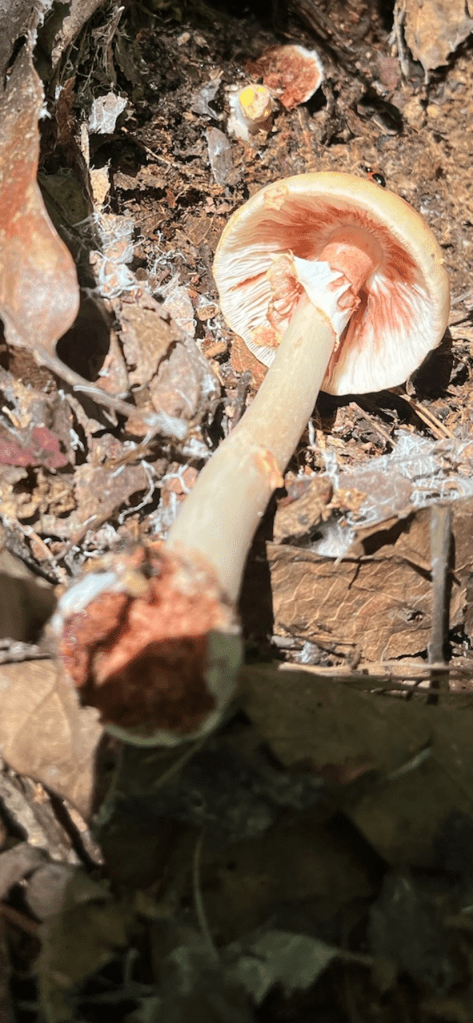
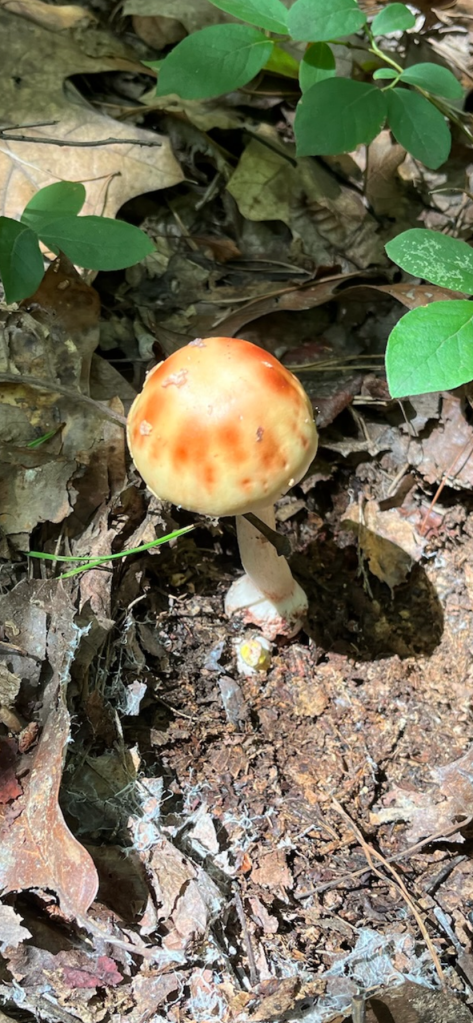
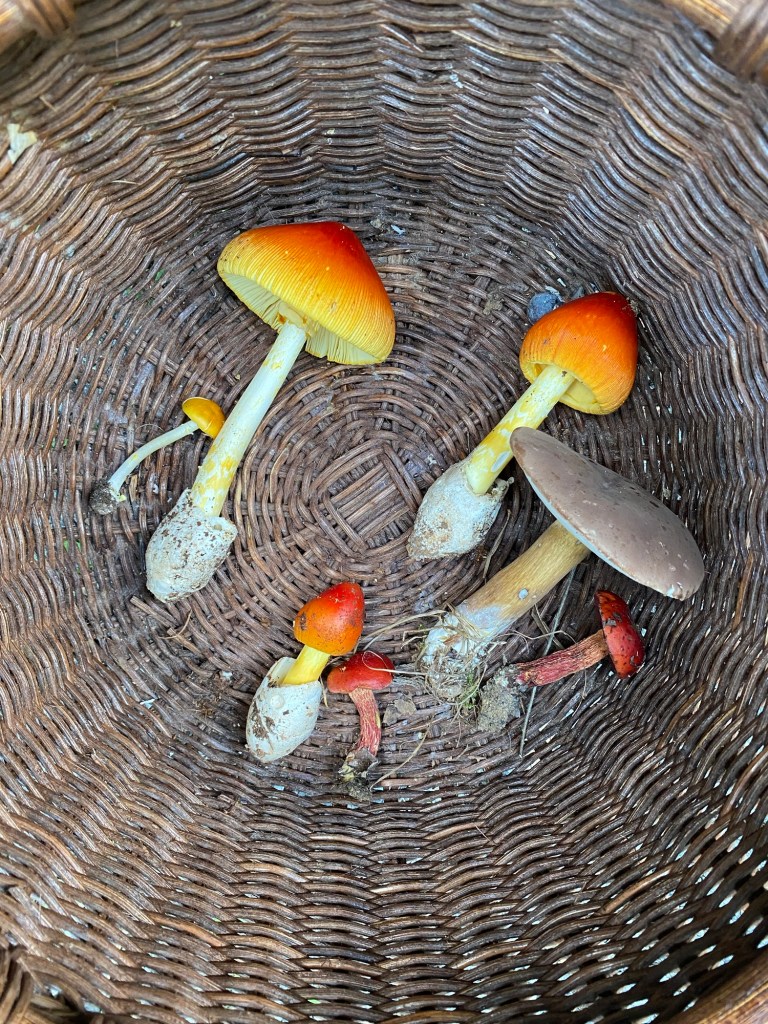
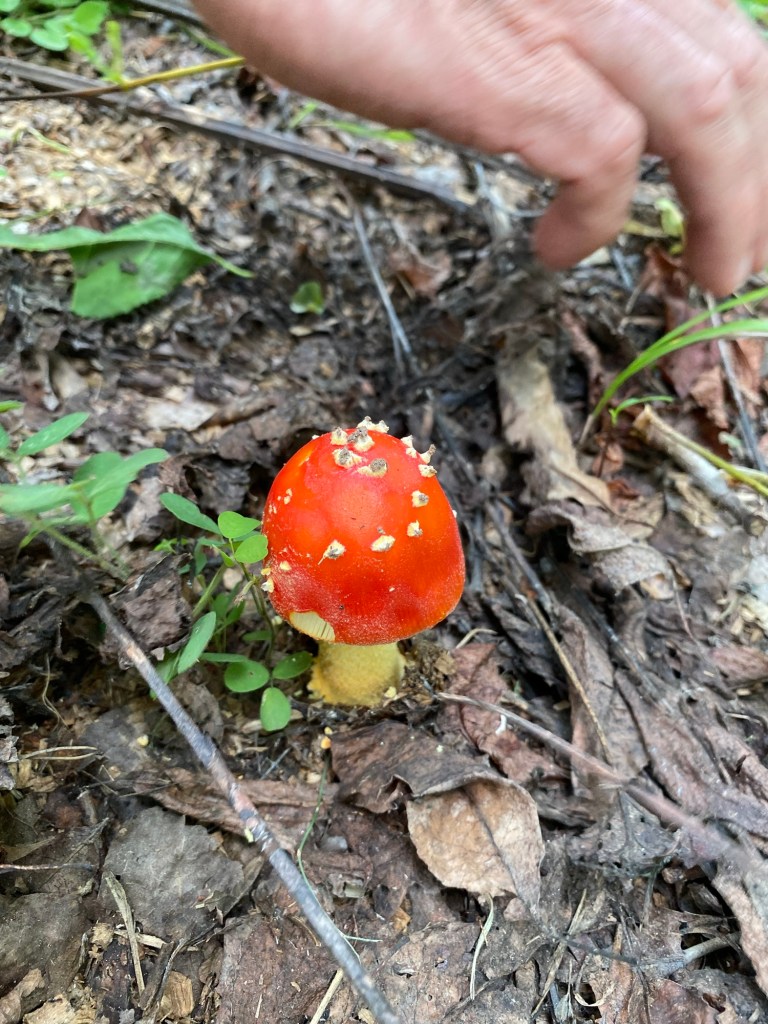
Amanita amerirubescens complex from below A. amerirubescens from above. Note the red blushing. These are edible when thoroughly cooked. We haven’t tried them. Amanita jacksonii, a delicious Caesar mushroom that can even be eaten raw. We cooked them and they maintained a wonderful texture. These were some of the tastiest mushrooms we’ve had. A. jacksonii, A. banningiana, Bolete edulis and Exsudoporous frostii in our basket. All were delicious. 😋
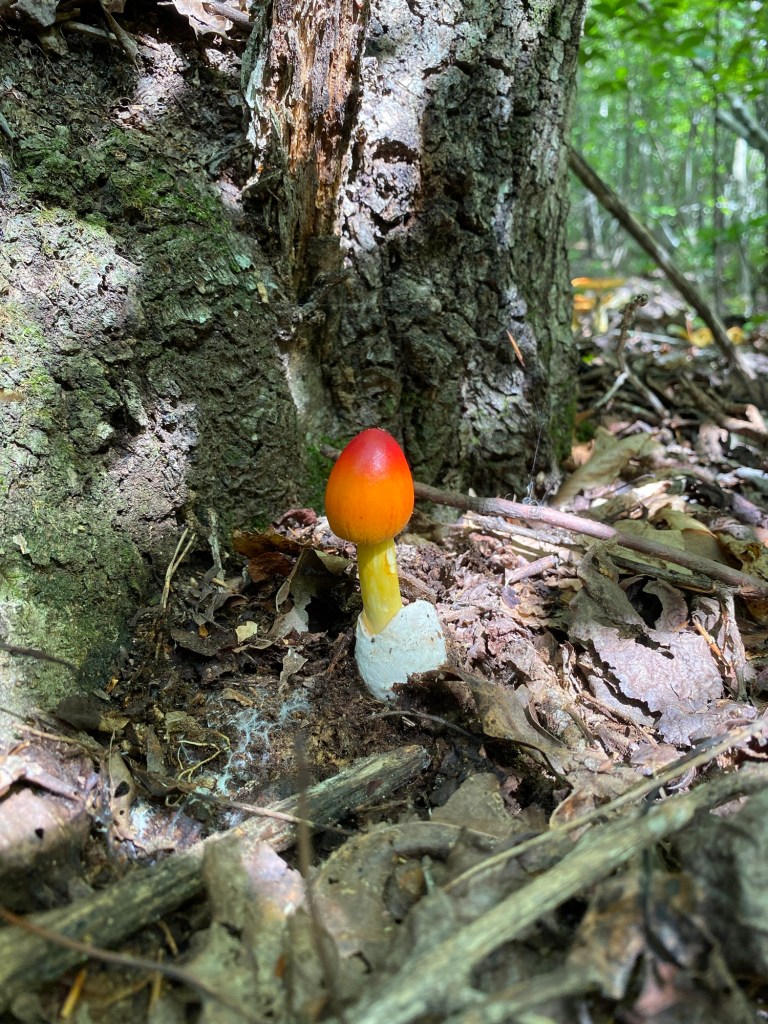
The forest is full of mushrooms with the rain we’re getting. Every day we go out and find something completely new. Since we bought the farm last year, we’ve searched for Amanita jacksonii. Saturday we walked down Amanita Way towards the wet weather gully and there they were. They were very large and strikingly red with orange caps and yellow stems. We have seen hundreds of Amanita parcivolvata, commonly called False Caesar, and these were instantly recognizable as the true sought after delicacy. The small one to the left in the basket is the first American caesar we found last week, Amanita banningiana or Mary Banning Slender yellow caesar. This is also tasty and special. They are much smaller and found in the northeastern and southern regions of the US.
A. banningiana has striations along the edge of the cap. It is found in oak-beech-hickory forests from Maine to Alabama.A. parcivolvata, or false caesar. Found all over SAFF. Amanita rhopalopus, American club footed Lepidella.
After steady rain, thunderstorms and cloudy skies in Buckingham for 12 of the last 15 days, we went out with high hopes of finally finding mushrooms. When we pulled into the clearing up top at SAFF, we saw hundreds of small puffballs. We found four other species before we made it from the clearing into the forest. Inside the woods, it seemed mycelium was everywhere we looked. SAFF has become a mushroom wonderland after the months of drought and heat, the rain and lower temperatures really brought the mushrooms.
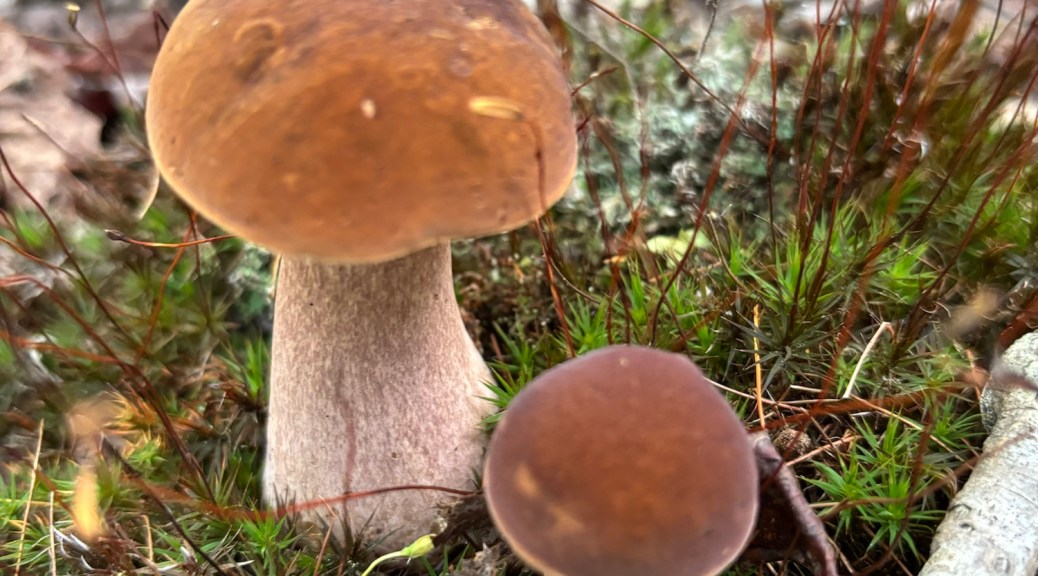
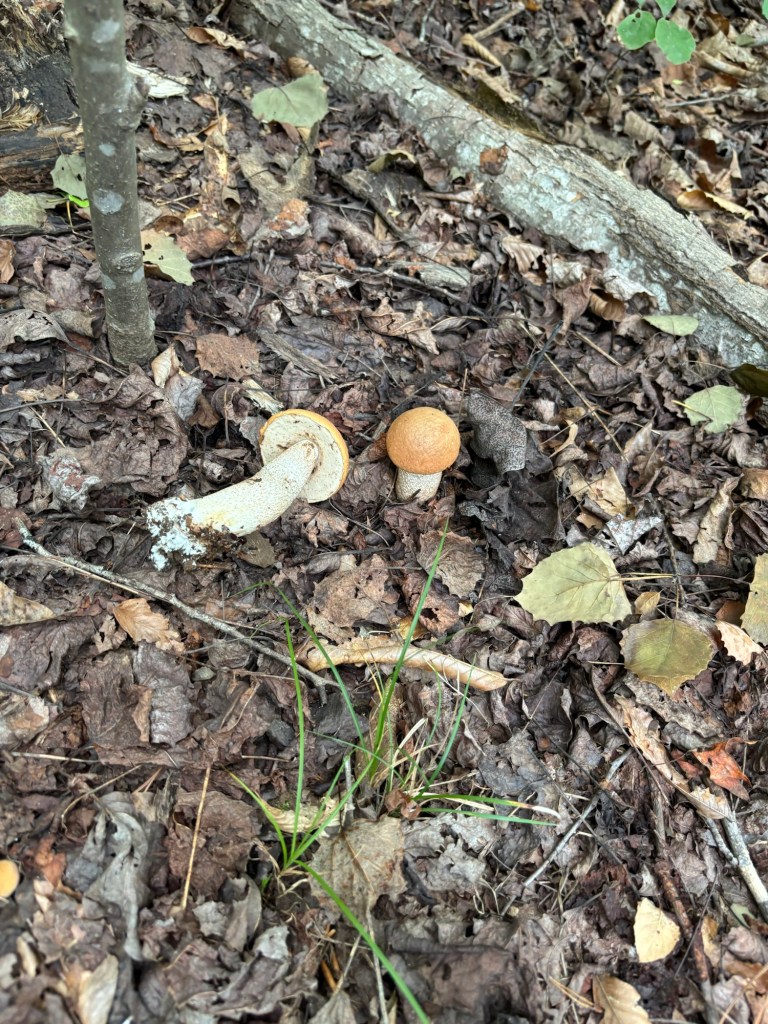
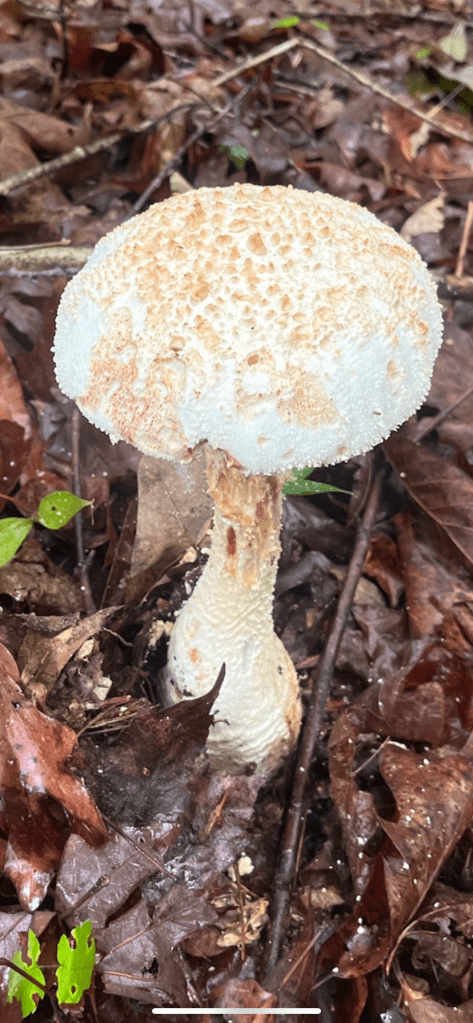
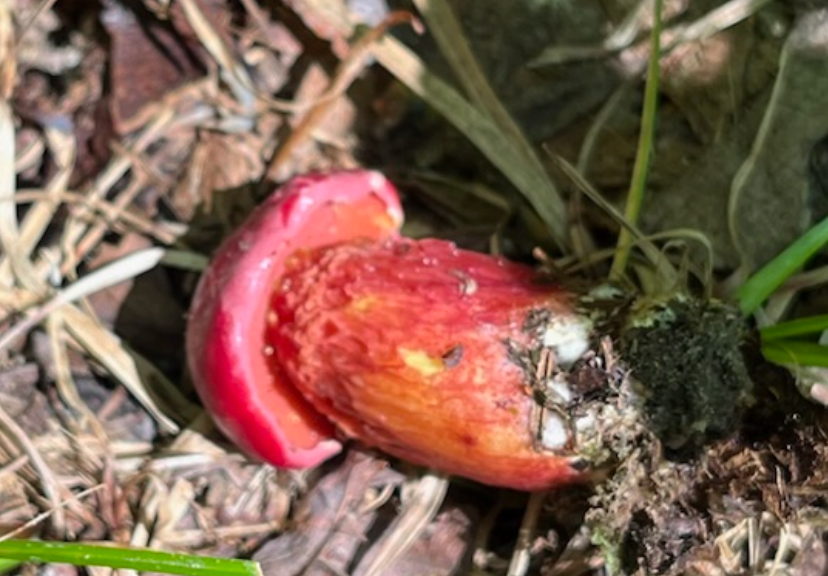
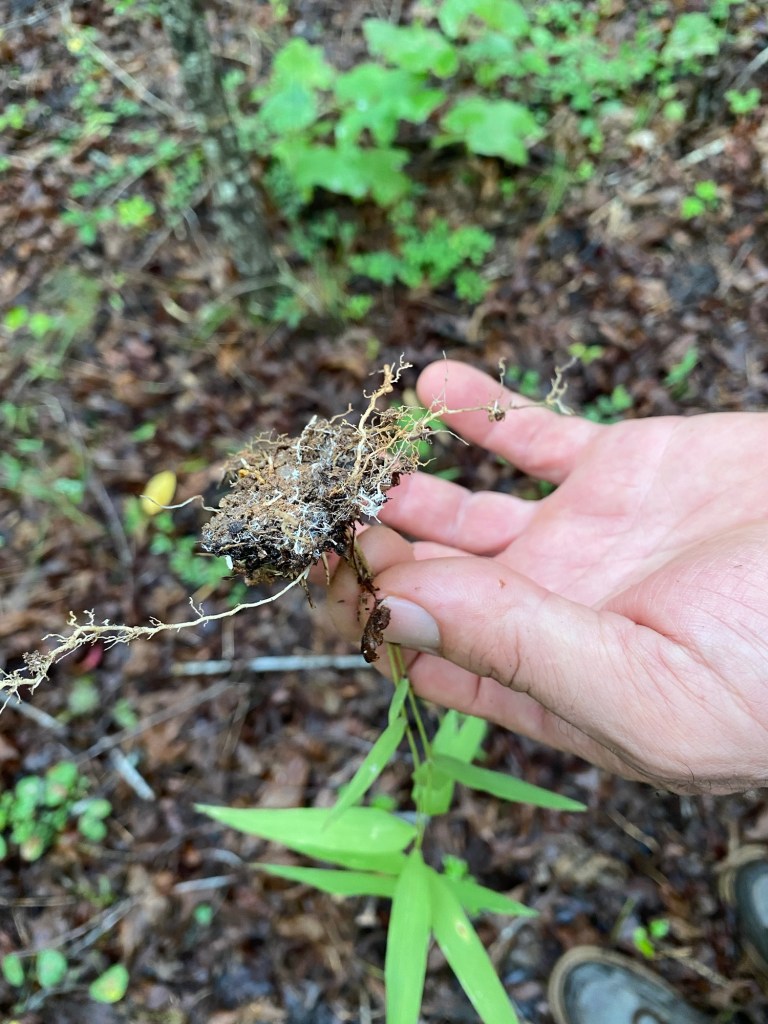
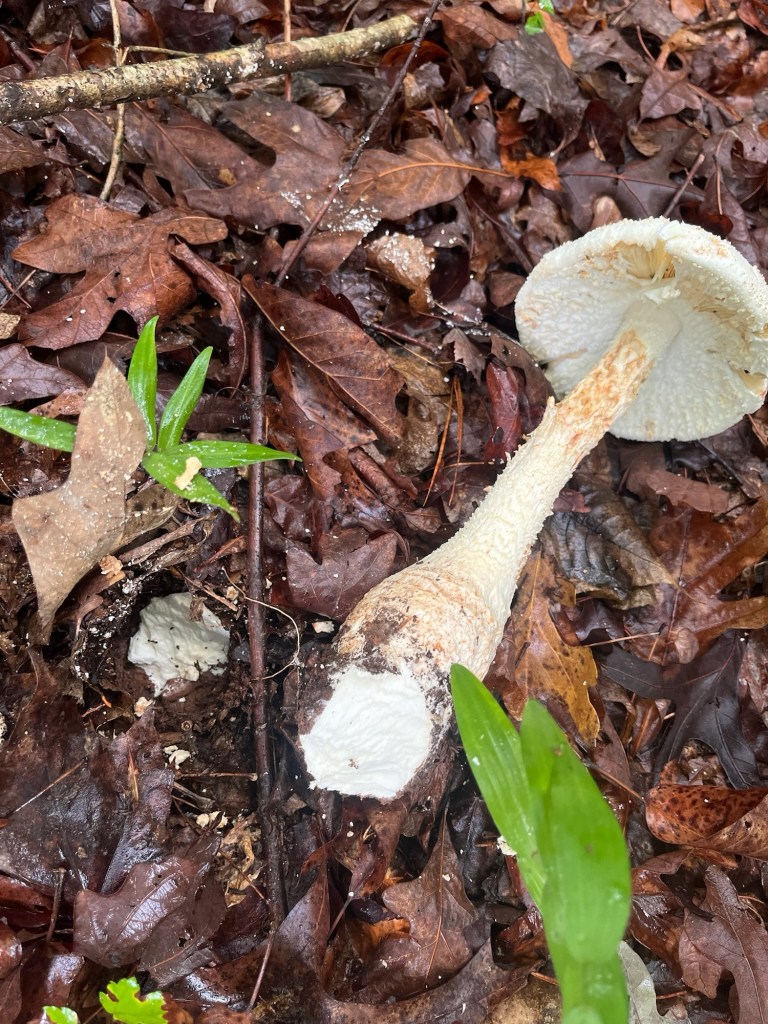
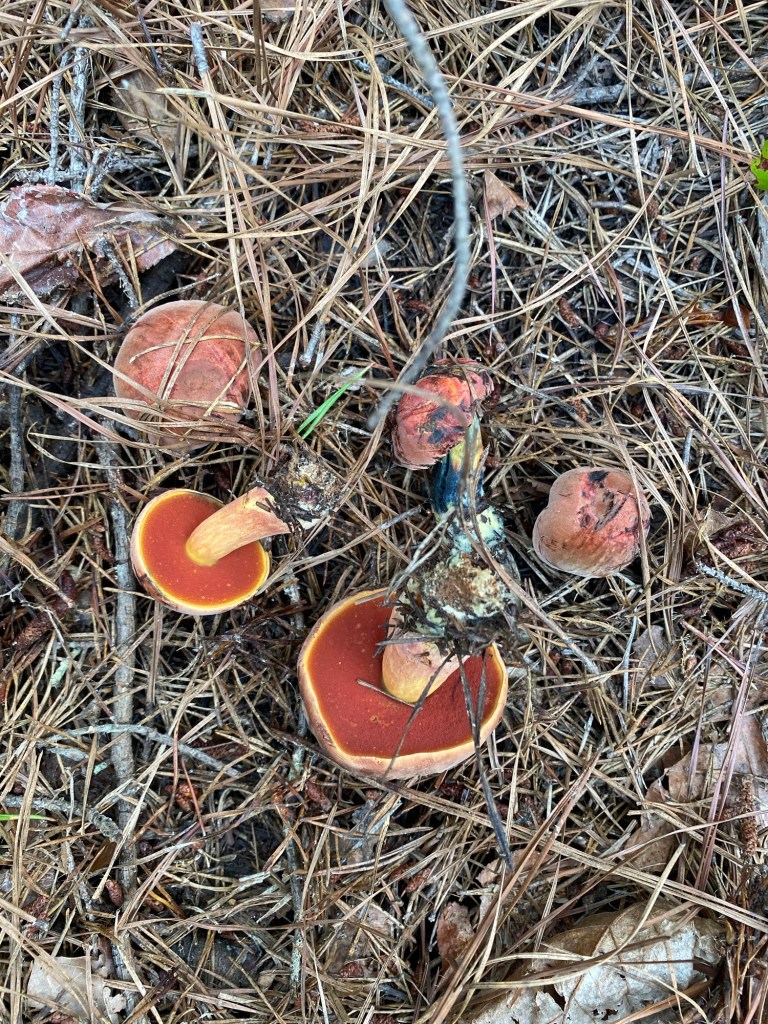
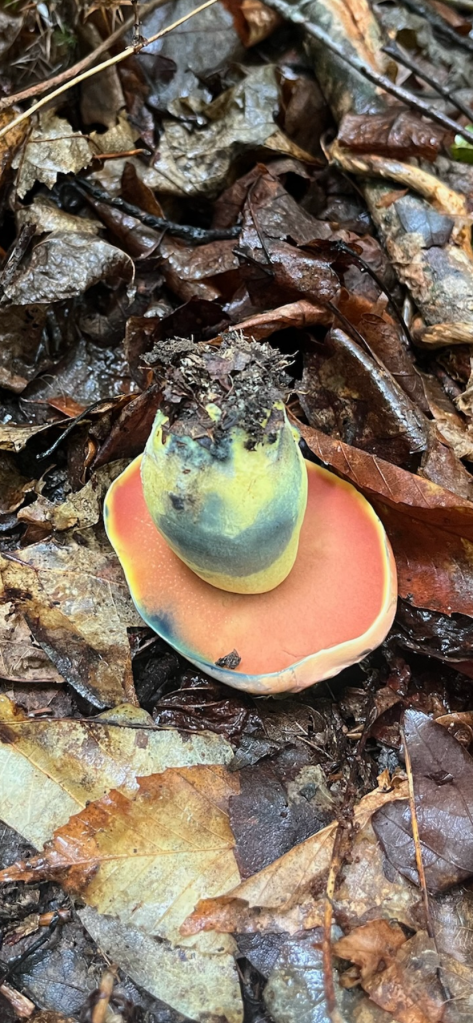
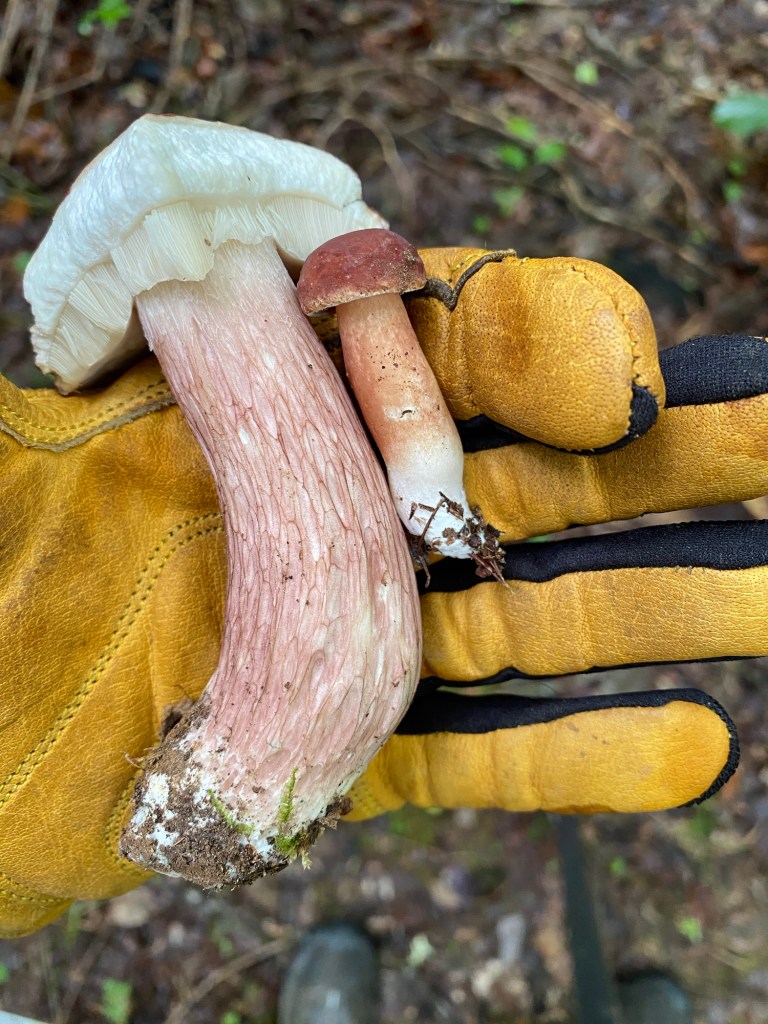
Mycelium appearing in white spots on the forest floor along Fern Way. Mycelium attached to Japanese stiltgrass roots an invasive we are pulling up where we see it in small numbers and plan to cardboard and mulch over it where it has a stronger foothold.Amanita rhopalopus, American Club-footed lepidella found near our road up top just before the south set back line. They had bugs all over them.Unknown Agaricus found in multiple spots along the south side.Frost’s bolete, Exsudoporous frostii, at bottom of slope near our crossing of waterway into the pawpaw grove. This was a spectacular sight. It’s edible and tastes acidic like lemon. Mycorrhizal with oaks.Top of the Frost’s bolete.Red mouth bolete, Neoboletus subvelutipes, is inedible and cause gastrointestinal distress. Red pores or spores are typically a warning sign with boletes. Boletus subluridellus a red pored bolete that is supposed to be edible. We have not tried it but reports are to boil first then it’s okay and delicious. Mycorrhizal with pine and oak.White boletes found in the flood plain below the slope at SAFF. These are edible. Leccinum holopus, white birch bolete or ghost bolete. White birch bolete were all over the bottom near the waterway. Lilac bolete, boletus separans, found with oaks and conifers and all over the forest floor at SAFF. These are delicious and beautiful mushrooms, a choice edible. We have found pounds of these.
Golden gilled bolete, Phylloporus rhodoxanthus, found along Hawk Trail. Mycorrhizal with hardwoods usually oaks or Beech (both are near where we found these beauties).
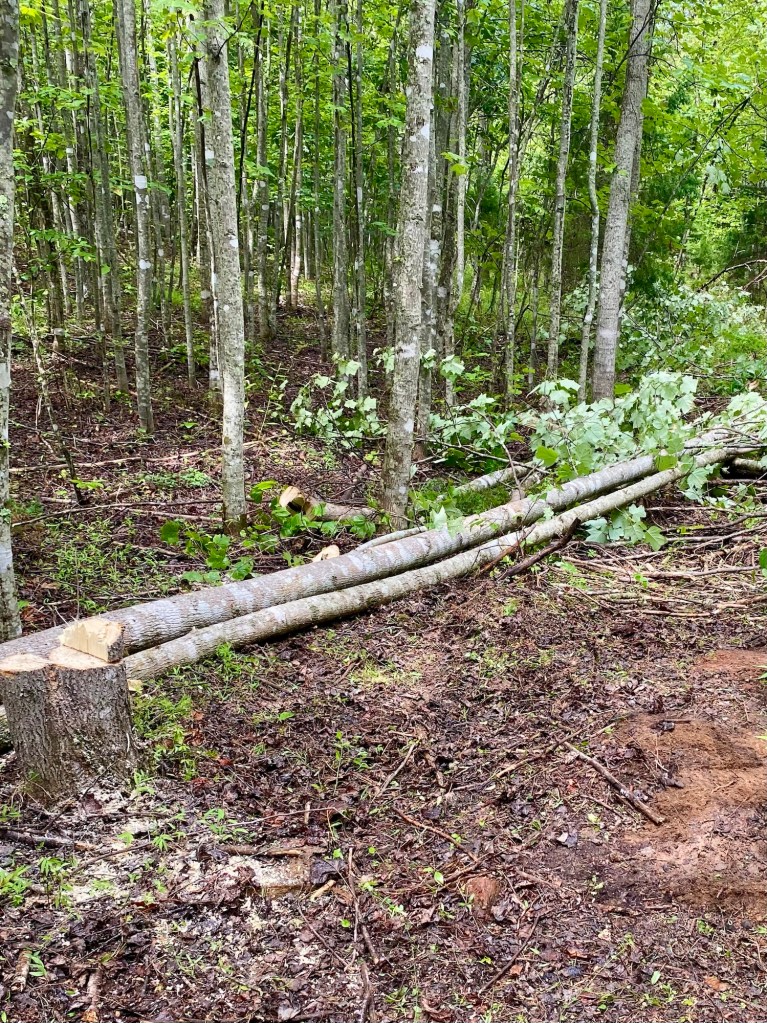
Yesterday we went over to do some planting in the rain. It has been raining every day or so for the past week and the ground is wonderfully moist and much greener. All along the trails, we could see white mycelium spider webbing on the forest floor. We created a new garden bed at the bottom of North Trail by laying our tree trunks perpendicular to the slope.
Tulip Poplar trees we took down and placed to help slow water run off and build our first fish scale terrace for planting and water and soil conservation.
It may not seem like much but this is a huge paradigm shift for us as we have imagined fish scale terracing our slopes for the past year and it came together just as we’d hoped. We are eventually making a space for pawpaws. For now, we will have smaller plants. The ground was soft and pliable in the rain. We practice minimal disturbance gardening to improve our soil quality, increase yields and drought resilience as well as increase fertility. So this means we dig as little as possible to keep our soil and mycelium undisturbed.
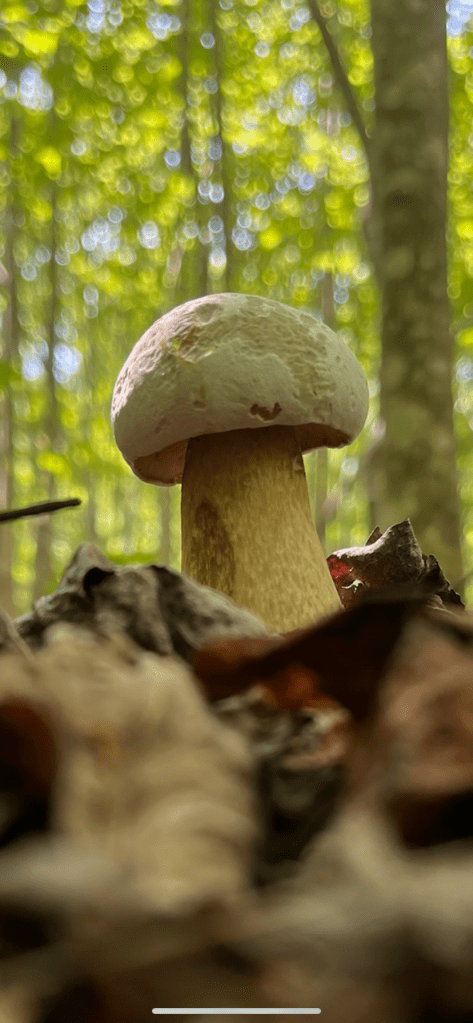
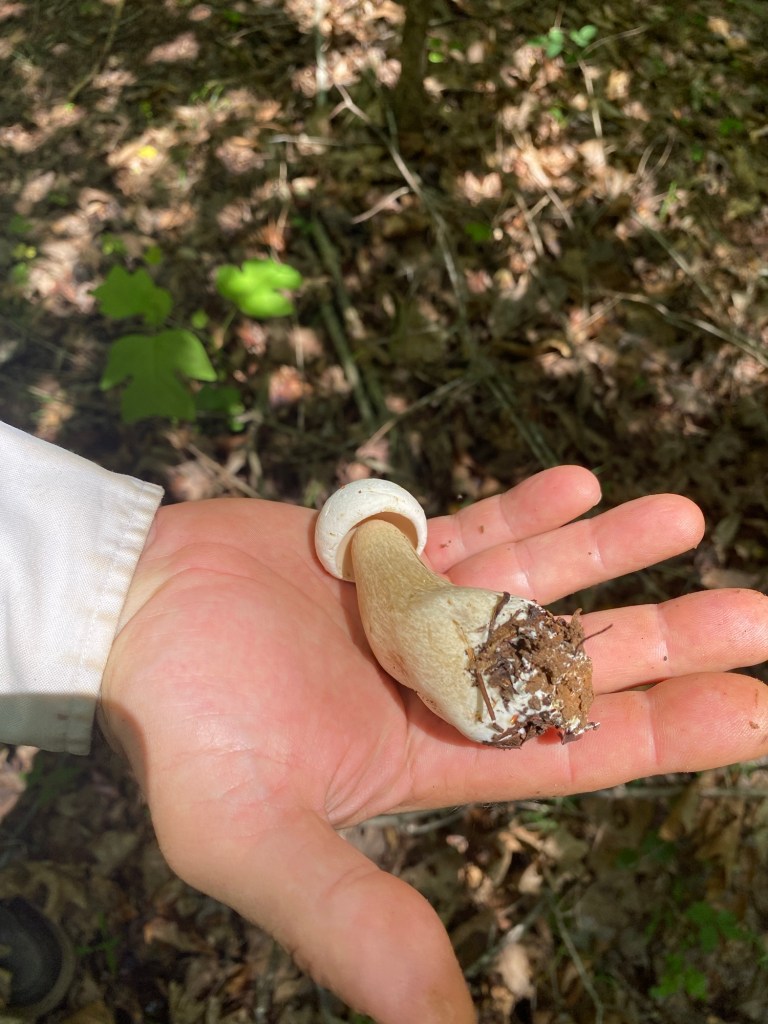
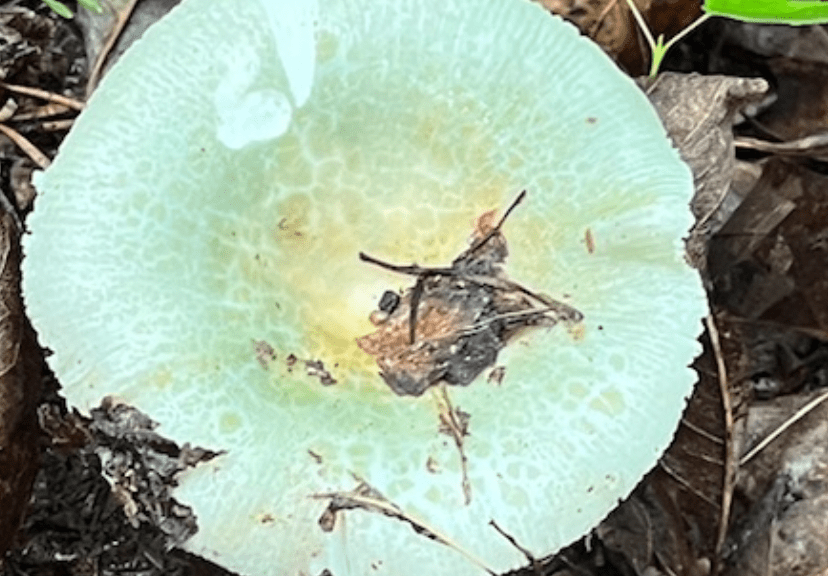
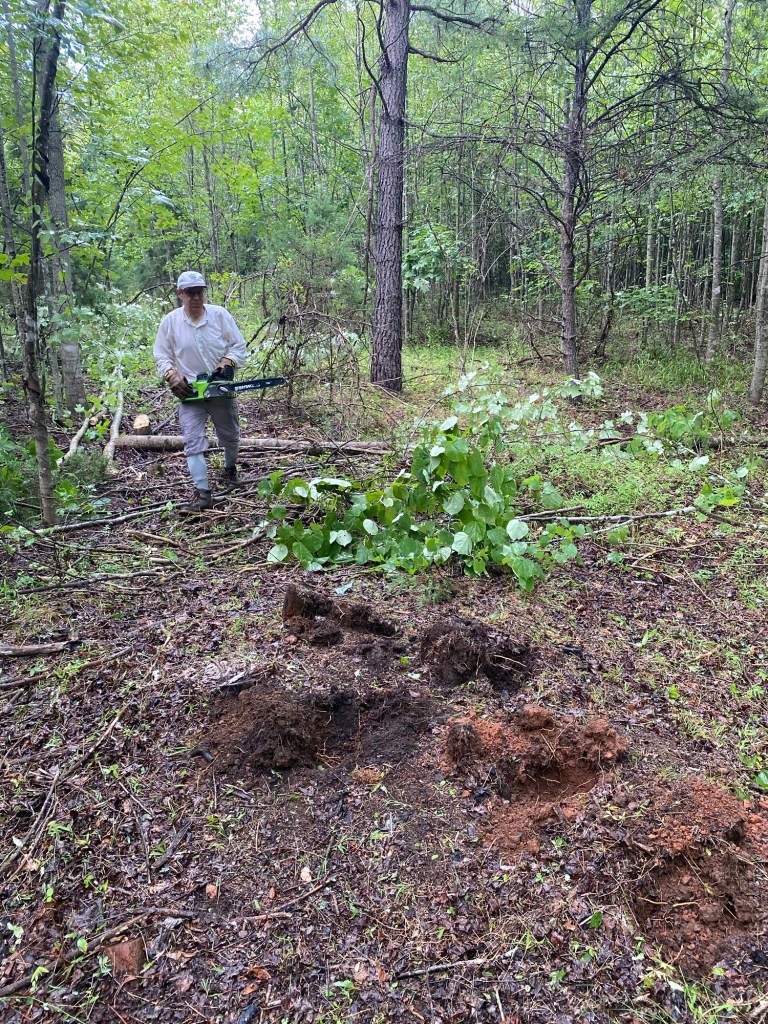
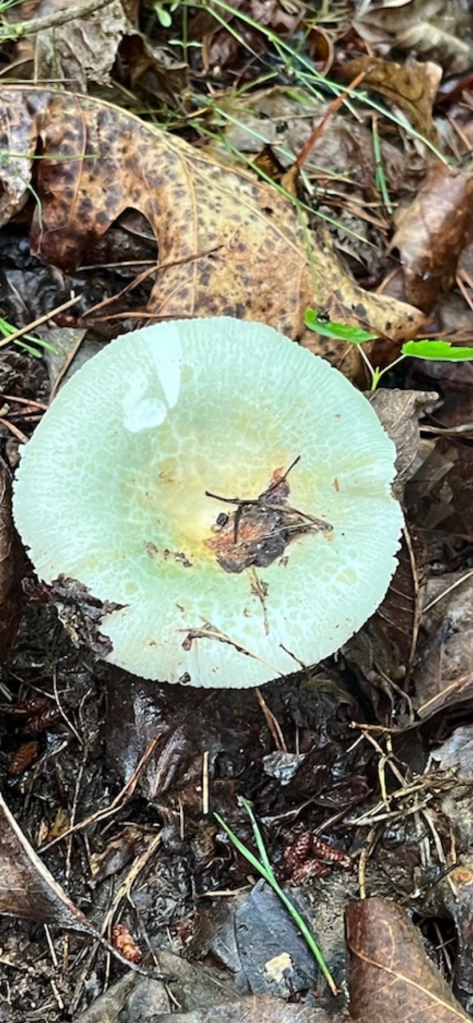
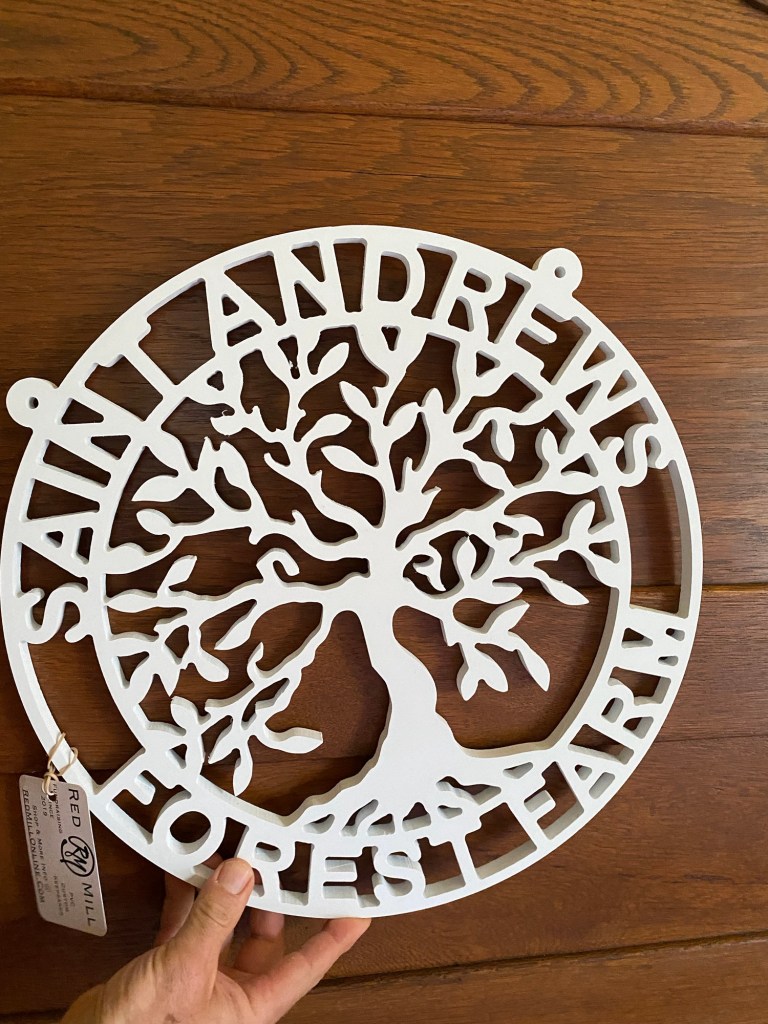
Chris busy felling tulip poplar trees which have grown up too close and tall in the forest that was disturbed 20 years ago. Many are diseased from not having enough space and light. We plan to use their trunks to construct our fish scale terraces.King bolete found on South Trail about 2/3 of the way down. The bugs love it! Blue-Green cracking Brittlegill, Russula parvovirescens, found along South Trail. Mycorrhizal with oak, hardwoods and conifers. Over the past year, we’ve observed these when the weather is rainy and the temperature is in the 80s.Our new sign gifted to us from Chris’ parents who visited the farm last weekend. We love it!
It felt like we had a hundred chores and errands to do on this July Friday afternoon before we could escape to the Farm. It’s been a heavy week in some ways. Getting out of town was like running a maze, the truck was down a quart of oil, we needed to drop some papers off in Charlottesville, and we wanted tacos from our favorite place. We finally arrived at the Farm a little after 3, after setting out around noon. The ground was still dry, but the air was cooler, around 80 degrees and the breeze was refreshing. The last three weeks the hot wind has hit us like a blast furnace. We started our walk up near the entrance and walked through the forest to the South end to check on our blueberries. There hasn’t been enough rain for them to ripen, so they continue to hang in unripe blue-green stasis. The grass hasn’t grown much with the persistent drought, and we didn’t even see a tick. Ticks thrive in damp conditions, and there hasn’t been any precipitation. We came across a big dung beetle not having much luck trying to get home.
Dung beetle
Throughout our visit the clouds were gathering, we could see them moving towards and over us from the South. After our walk and a snack, we prepared to head home, when the skies finally opened up with blessed rain. It started as a sprinkle, then drizzle, and then a steady shower.
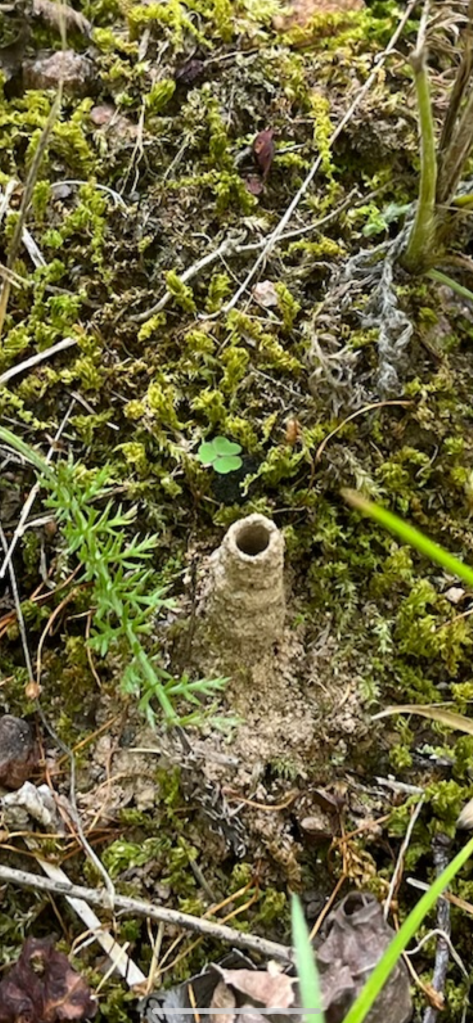
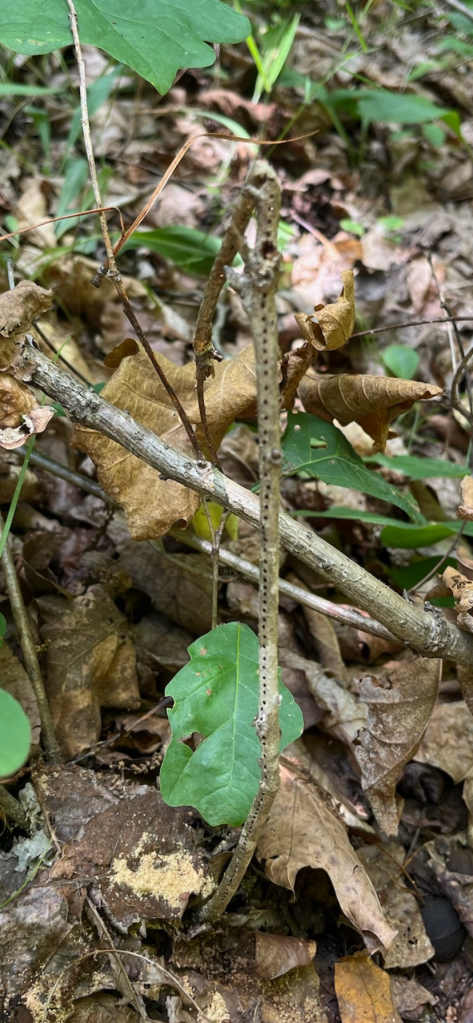
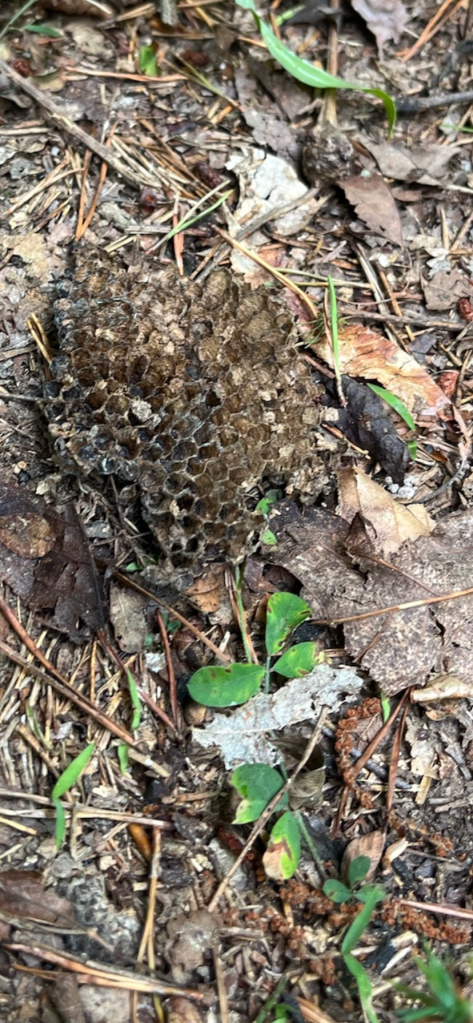
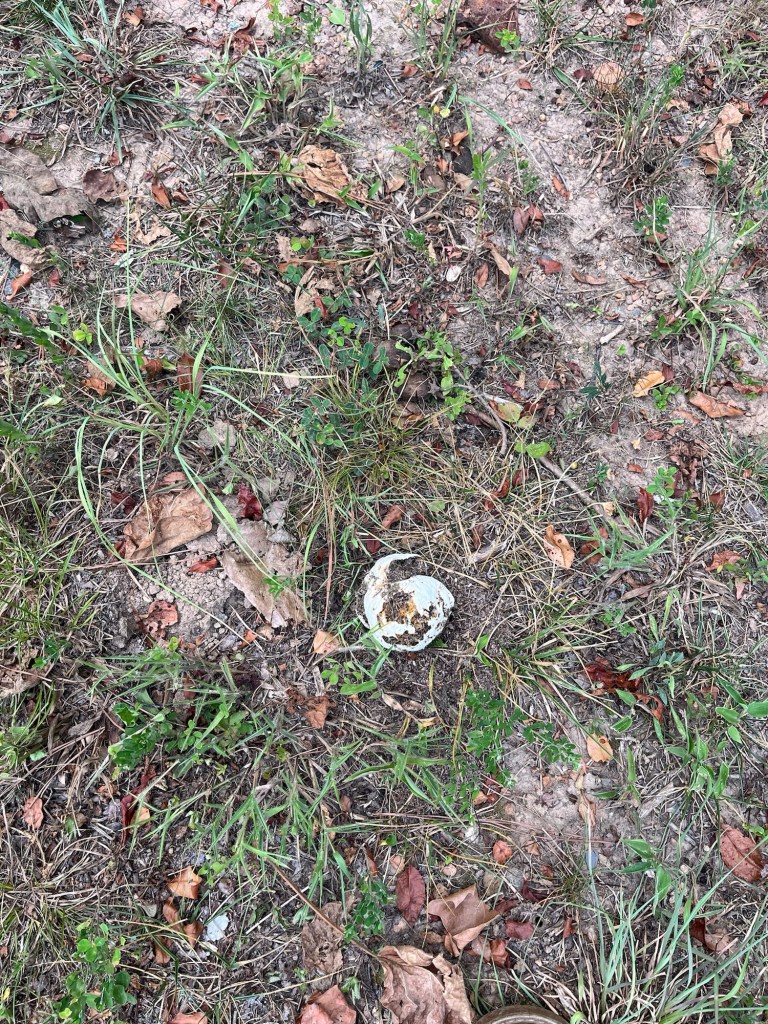
Is it really raining? We sat there in the truck and talked for a little while with the windows open, just letting the rain come in. Our spirits are lighter, with the return of rain to the Farm. We will be back in a day or two to forage with better prospects than we’ve had in weeks.Cicada chimney spotted near the waterway at the bottom of the slope. These chimneys are seen several weeks before cicadas nymphs emerge in wetlands. In dry areas they are usually seen as a hole in the ground. Evidence of an oak stem borer, Anaflomorpha sunpubescens. Natural enemies take care of these so no control is usually necessary.Unidentified honeycomb found at the bottom of North Trail. Unknown mushroom appears to be covered in Hypomyces.
It’s been in the nineties, and even though the air feels plenty humid, the ground is baked, cracked and dry. It hasn’t rained enough in far too long with these high temperatures. There have been heat advisories every day this week. It’s crunchy walking underfoot everywhere but the bottom by the waterway. The clearings are mostly brown. The bottom of the slope has a slight bit of water trickling through the stream. We were glad to see that.
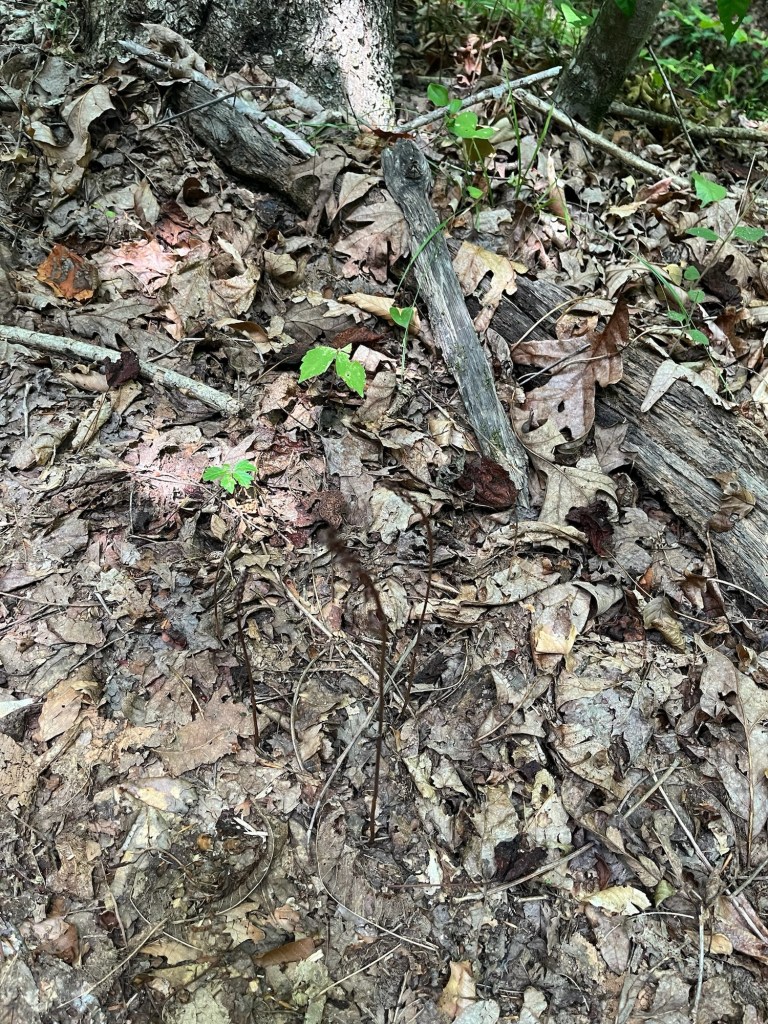
Cranefly orchid emerges with reddish brown stems just springing up from the ground. A flower will appear next.
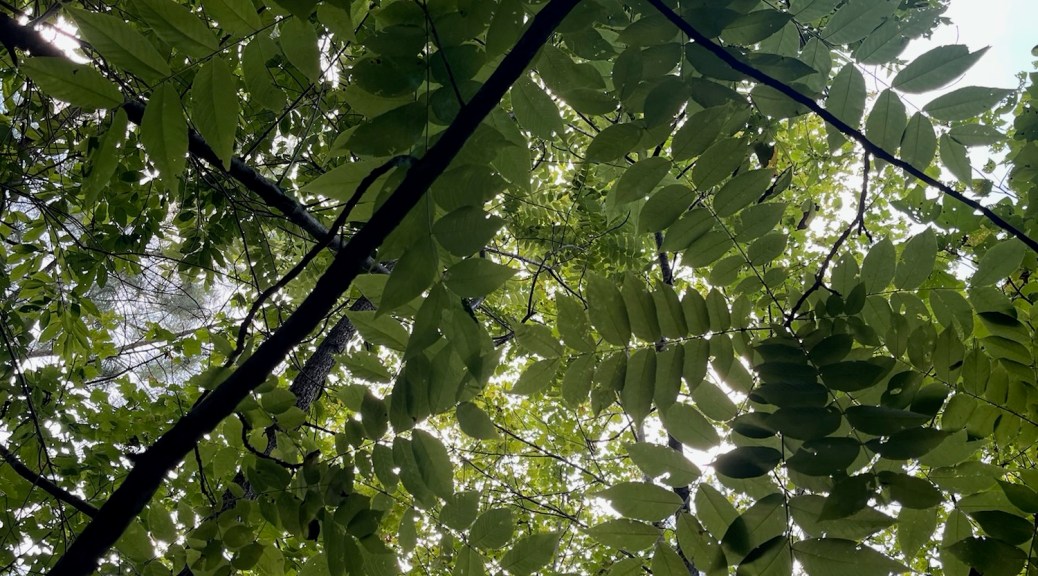
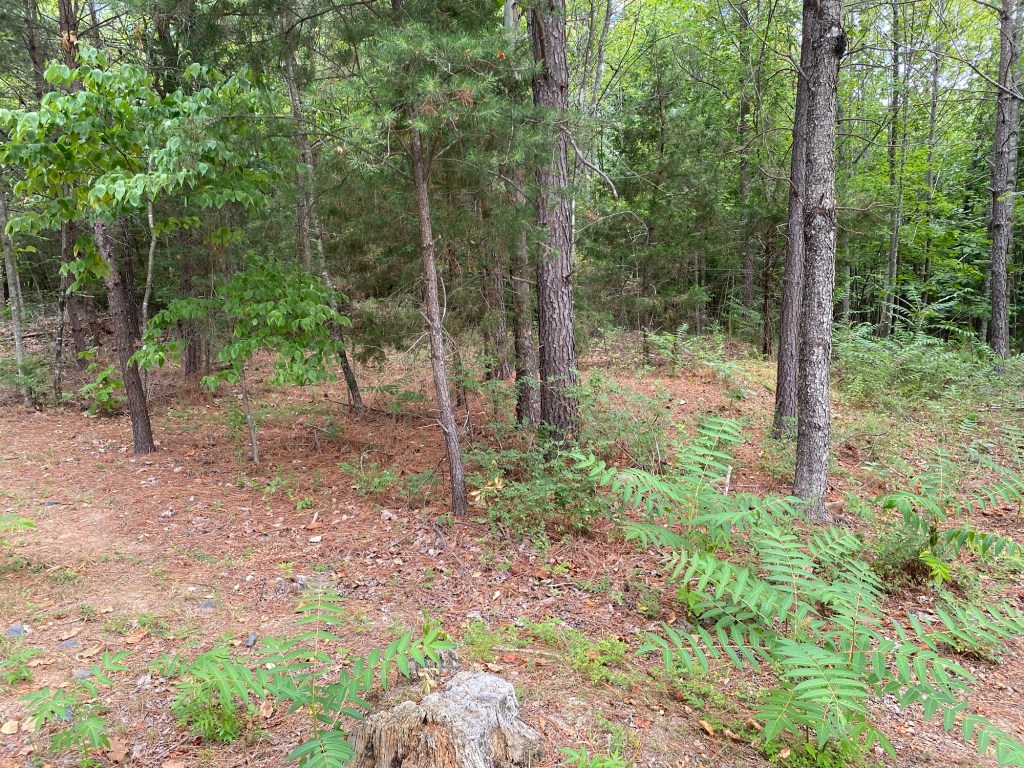
We’ve been battling an invasive tree called Ailanthus or tree of Heaven. We found them last summer in three different spots all up top near the main clearing and by our neighbors to the north. Another name for Ailanthus is Chinese sumac. Differentiation between Ailanthus and our native shining sumac, Rhus copallinum, was a challenge initially with the smaller specimen. However, now we can see the difference between them easily with our practice watching over our forest floor.
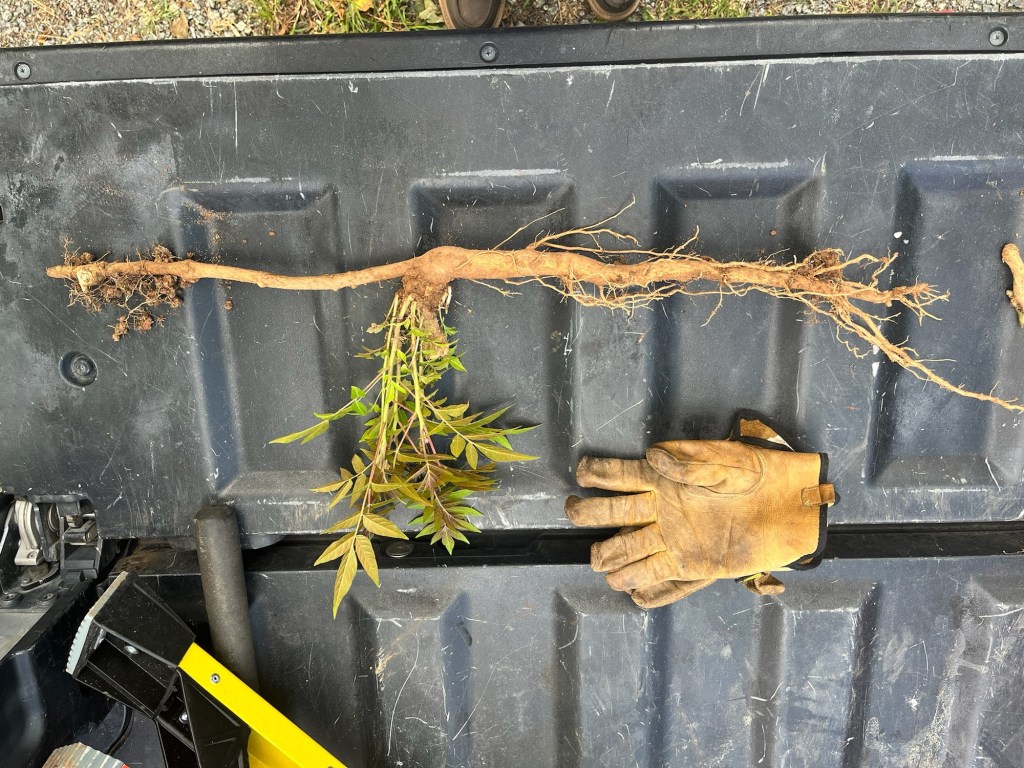
Because it is so tenacious by producing an overly abundant amount of seeds, crowding out native species with dense thickets and secreting a chemical into the soil that is toxic to other plants, there are best practices to ridding these trees from your land. It involves a hack and squirt method in the fall when the tree is sending the most nutrients to the root. We did this to all 4 of the larger trees we couldn’t pull out by hand. This year the trees sent up hundreds of root suckers so we are waiting for a good soaking rain to soften the ground and then we can pull them out. We will continue to do this as they grow. Whatever is still alive in the fall, we will hack and squirt again.
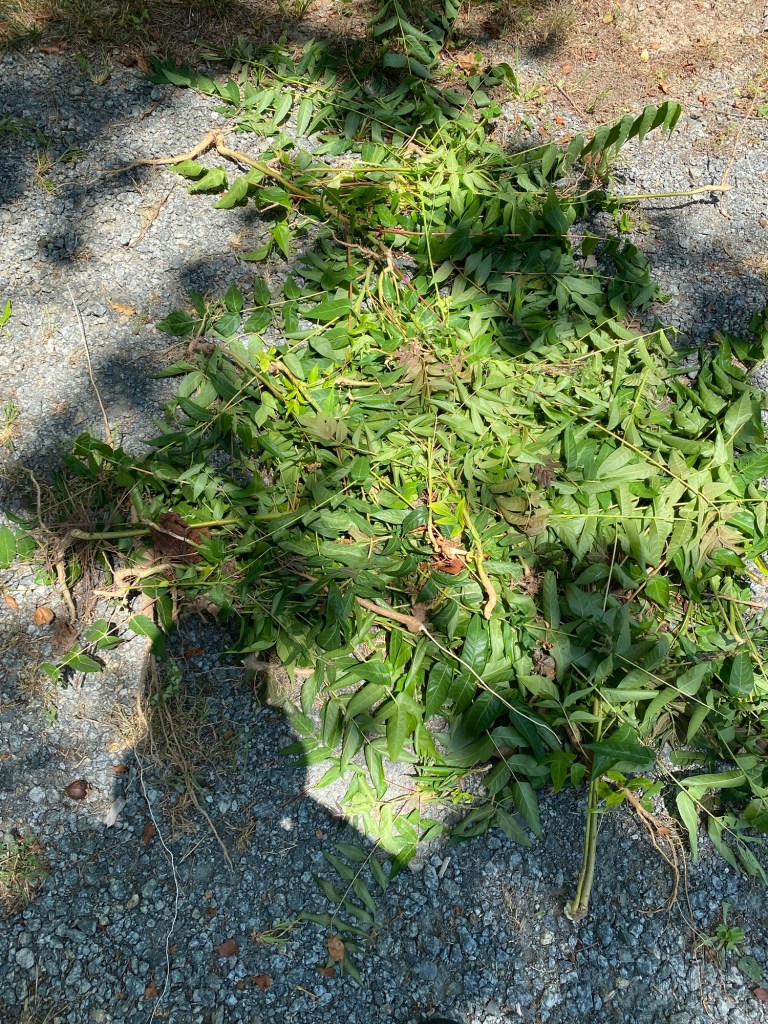
Smaller Ailanthus trees root suckering in a circle from the larger tree. These in particular would easily overtake the native trees and blueberries while creating a dense thicket if we don’t stop them. We pulled these out after a brief rain last week. The roots are shallow spreading and aggressive.
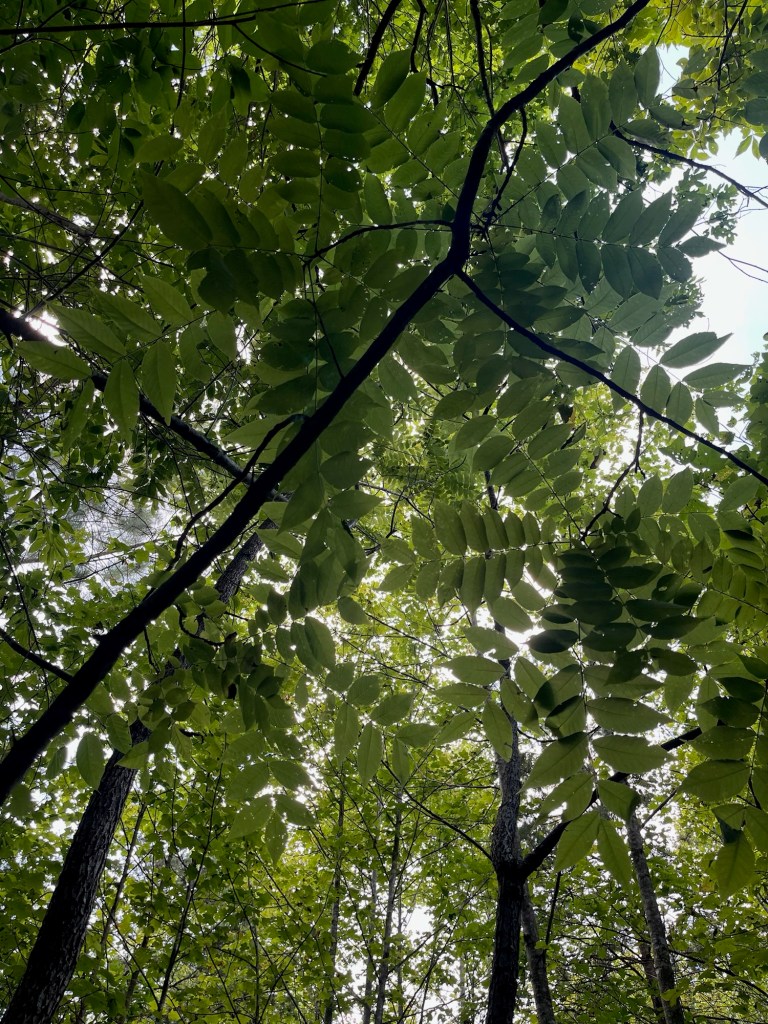
Eastern black walnut trees, Juglans nigra, found by the waterway at the bottom of North Trail. We always get excited when we find a new native species.
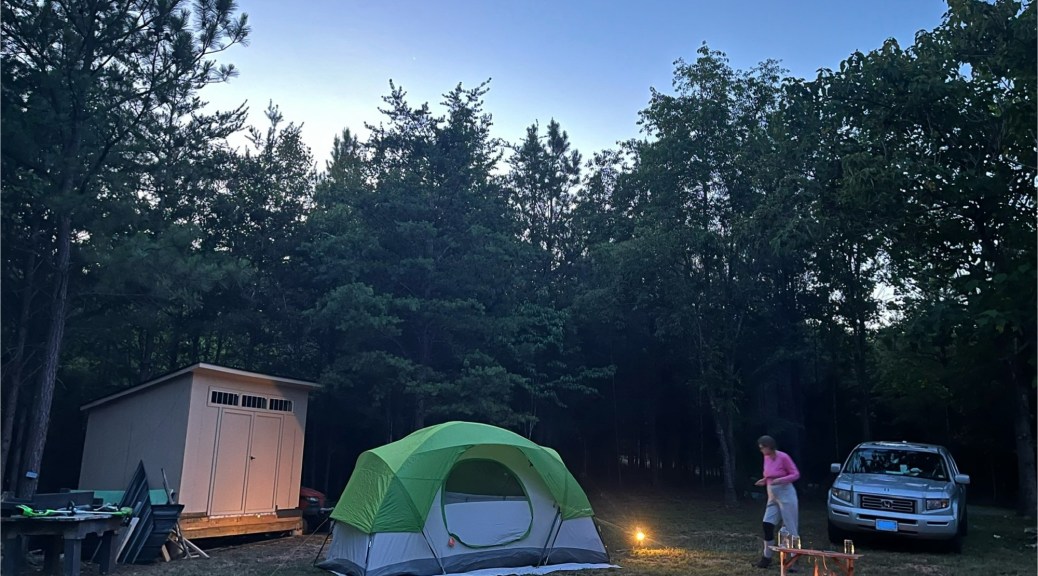
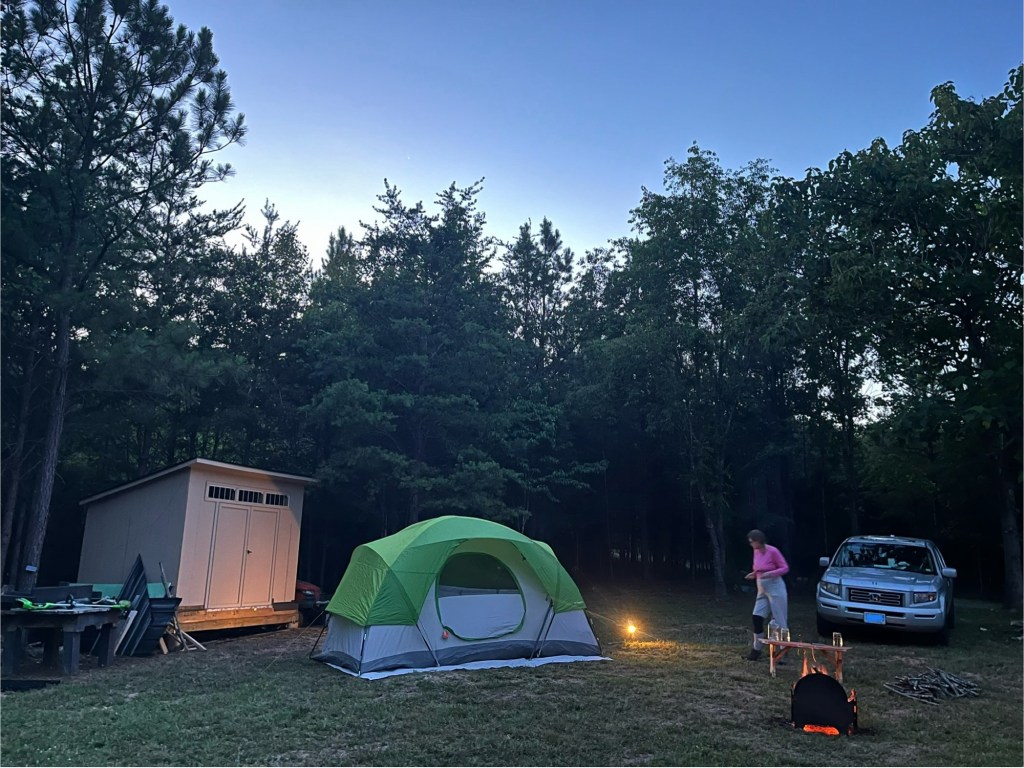
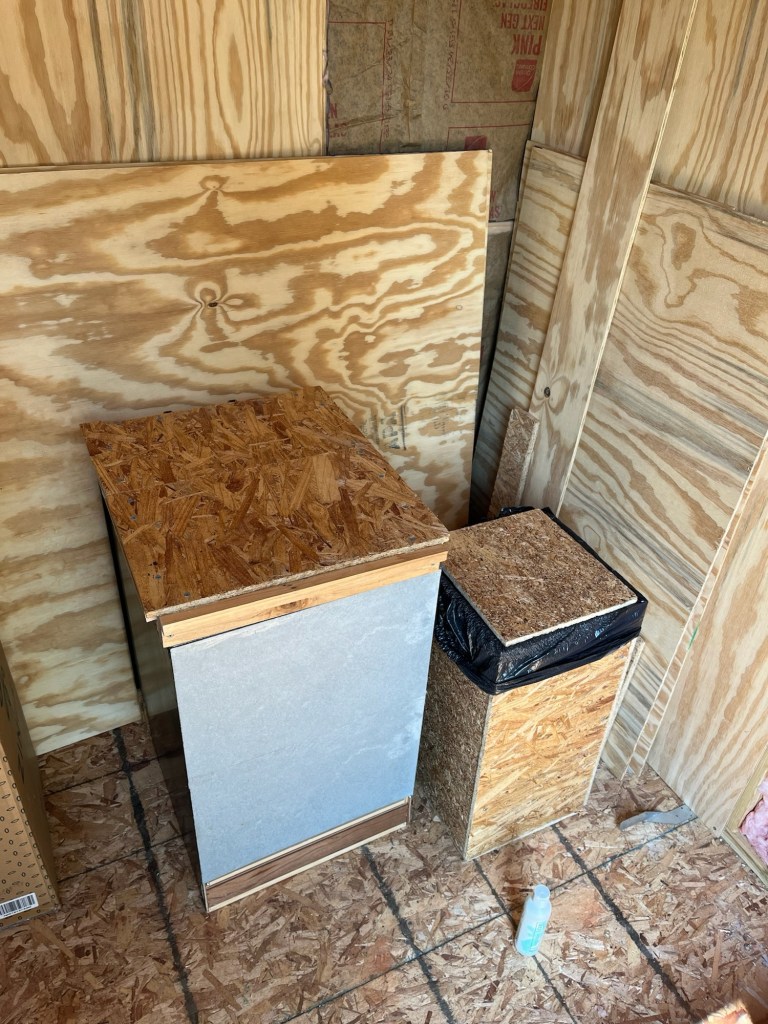
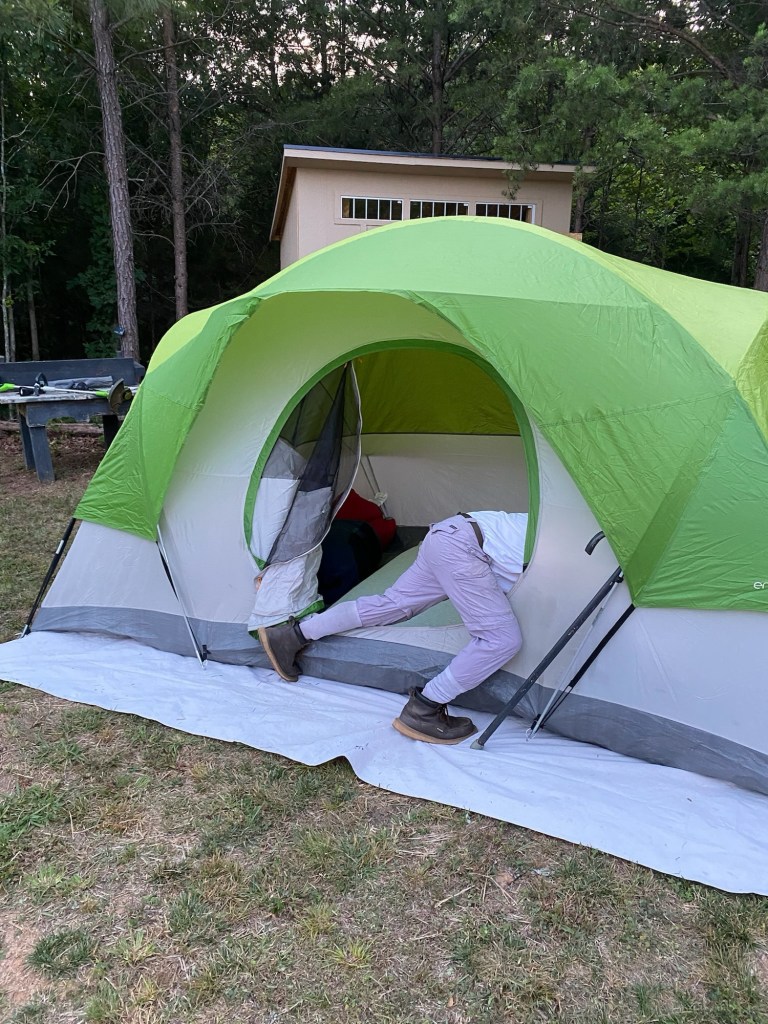
We had our first camping experience at SAFF on Saturday night. It was the coolest overnight weather forecast for weeks so we thought we would take advantage of that. We’d been preparing for months with the compost toilet in the shed, keeping the clearings cut back neatly for tick mitigation and collecting the gear we’d need. We still had a good bit of gear to haul out even though we’d been taking loads over for weeks. All in all, the compost toilet combined with the sawdust was the heaviest load. We’ve been able to snack on our tart wild blueberries every time we’ve been out.
Our compost toilet. We use sawdust which we got from a local lumber yard. They dropped the largest load possible in our Honda Ridgeline. We wish we took a pic. It was a mountain of sawdust.
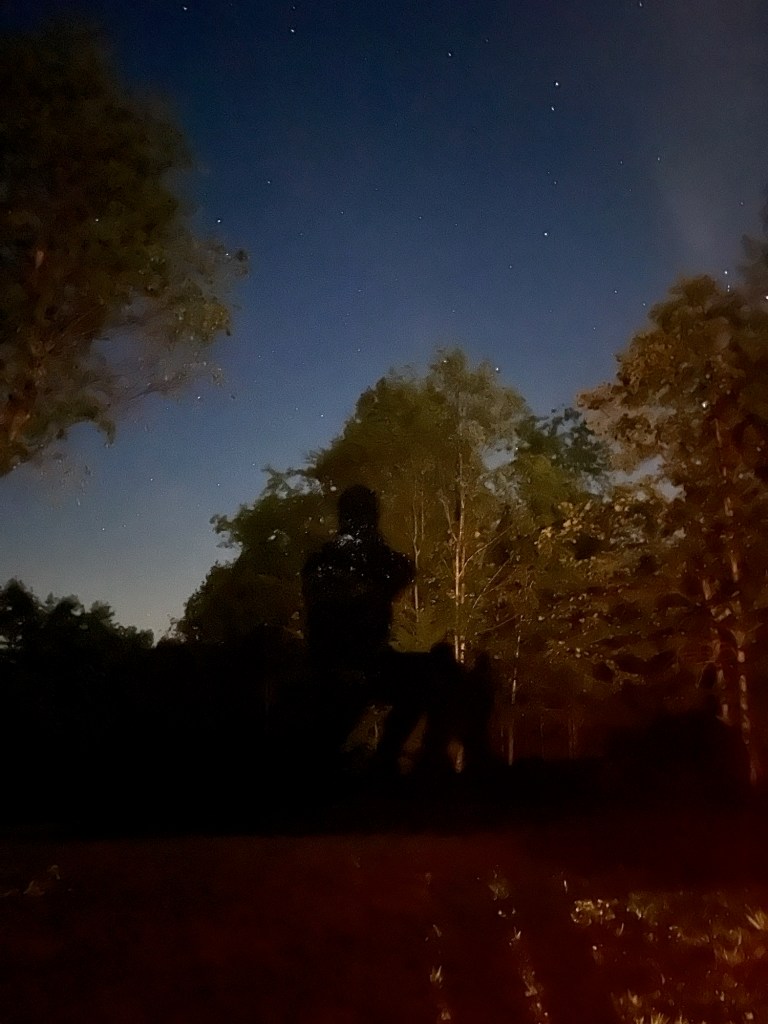
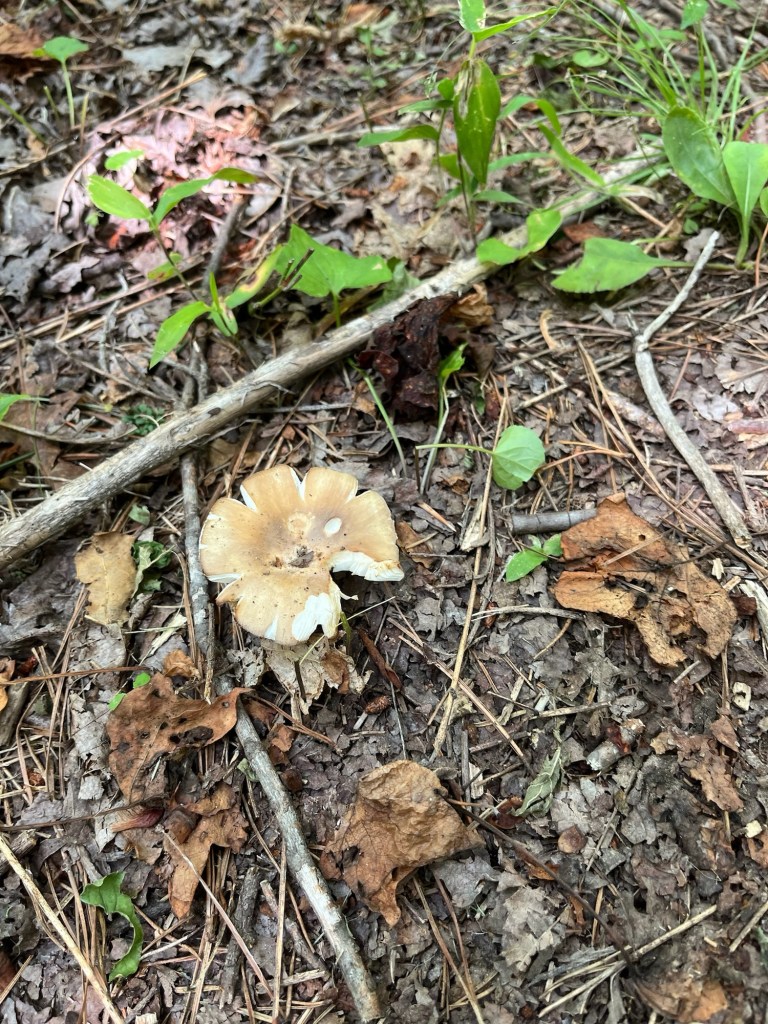
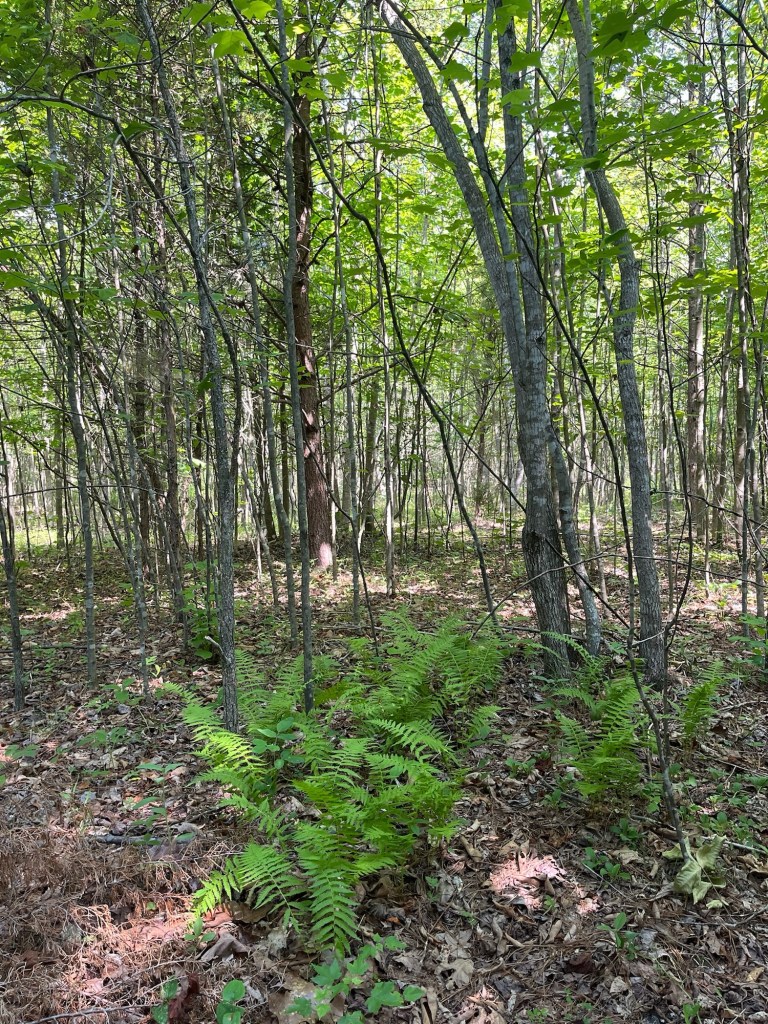
At dusk, we were pleasantly surprised by fireflies dancing about the clearing up top. Chris getting our foam mattress situated in the tent.An old mushroom we found on our early morning hike. A Russula near the North Trsil by the waterway. Ferns on the southeast side.
Saint Andrews Forest Farm Blog
Is this your new site? Log in to activate admin features and dismiss this message



 St Andrews Forest Farm