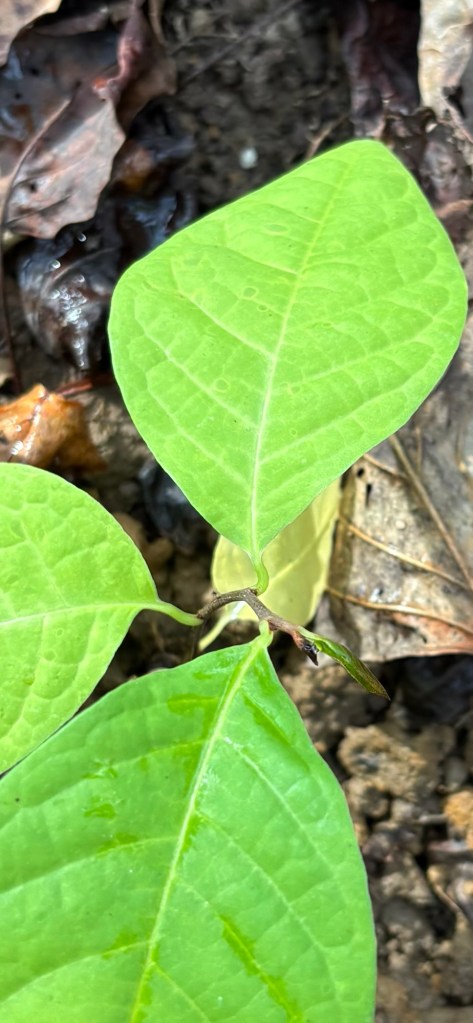
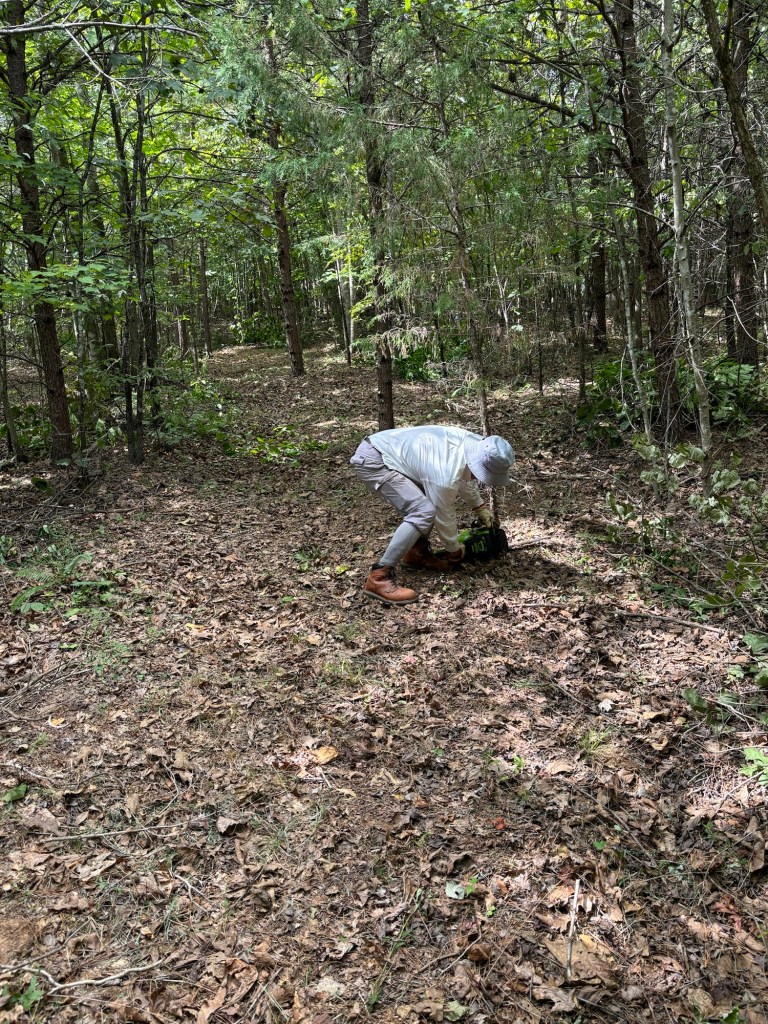
We went over to St Andrews Forest Farm to water the pawpaws and take a walk.
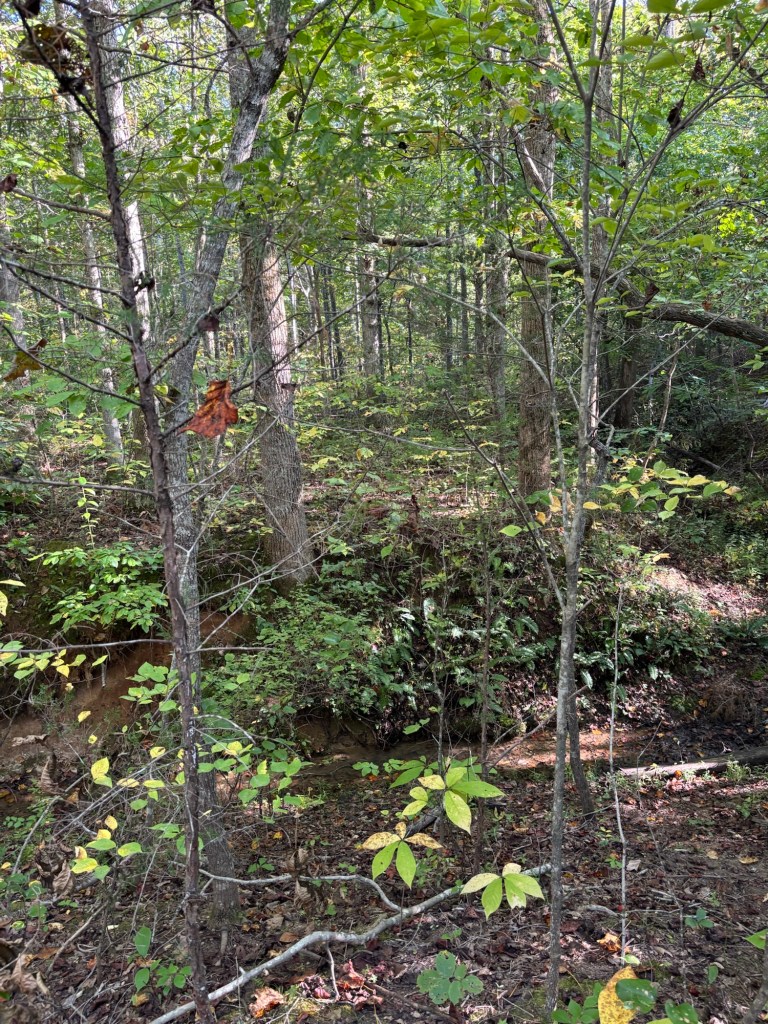
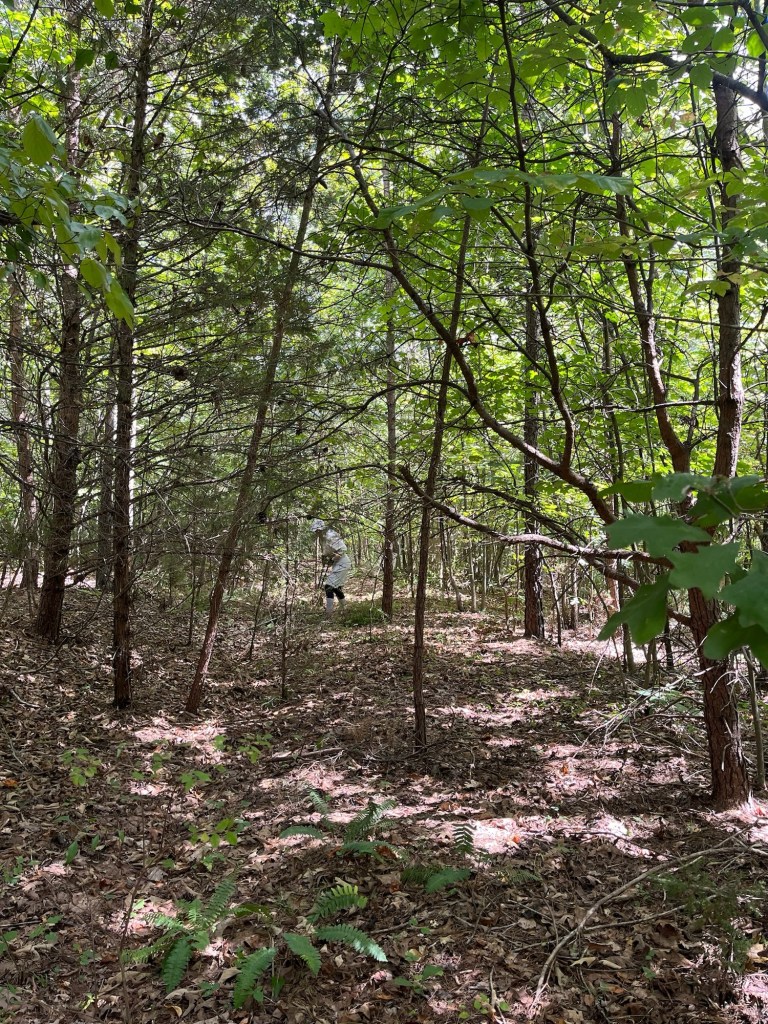
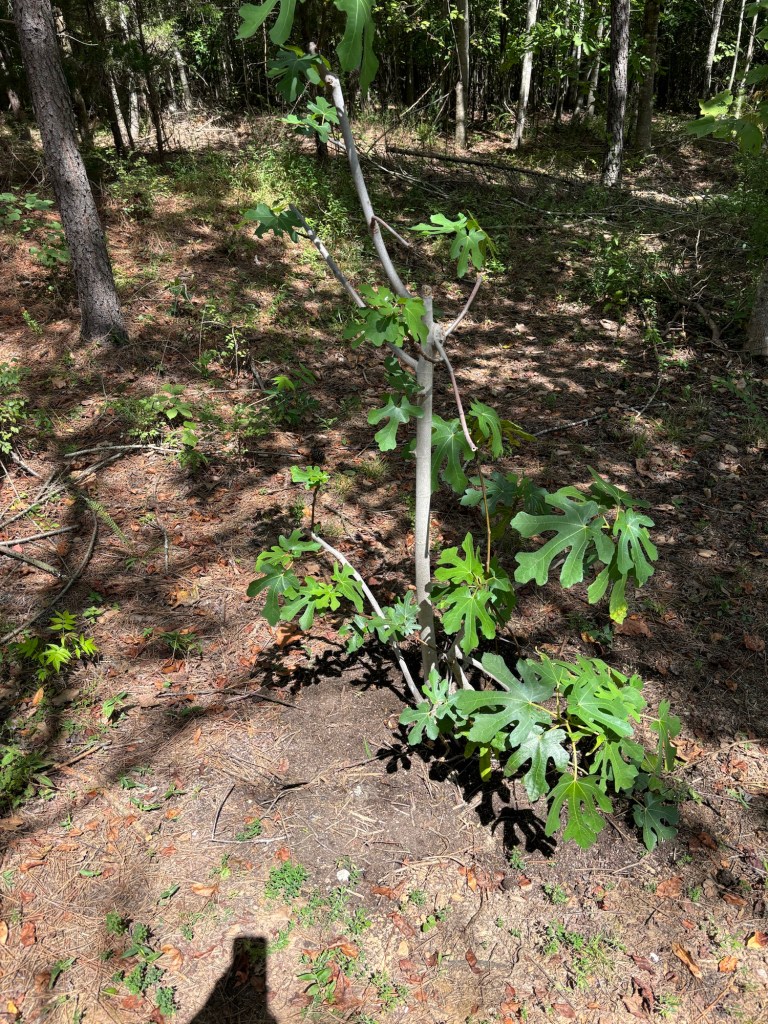
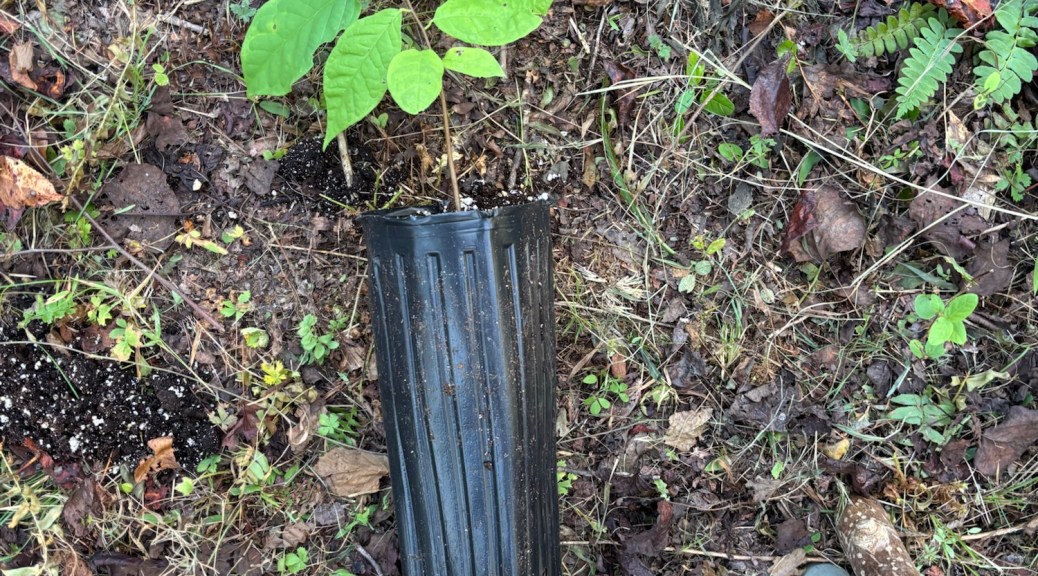
We watered each recently planted pawpaw and made sure they were looking good. We came around the waterway and approached the orchard from south.
We went over to St Andrews Forest Farm to water the pawpaws and take a walk.
We watered each recently planted pawpaw and made sure they were looking good. We came around the waterway and approached the orchard from south.
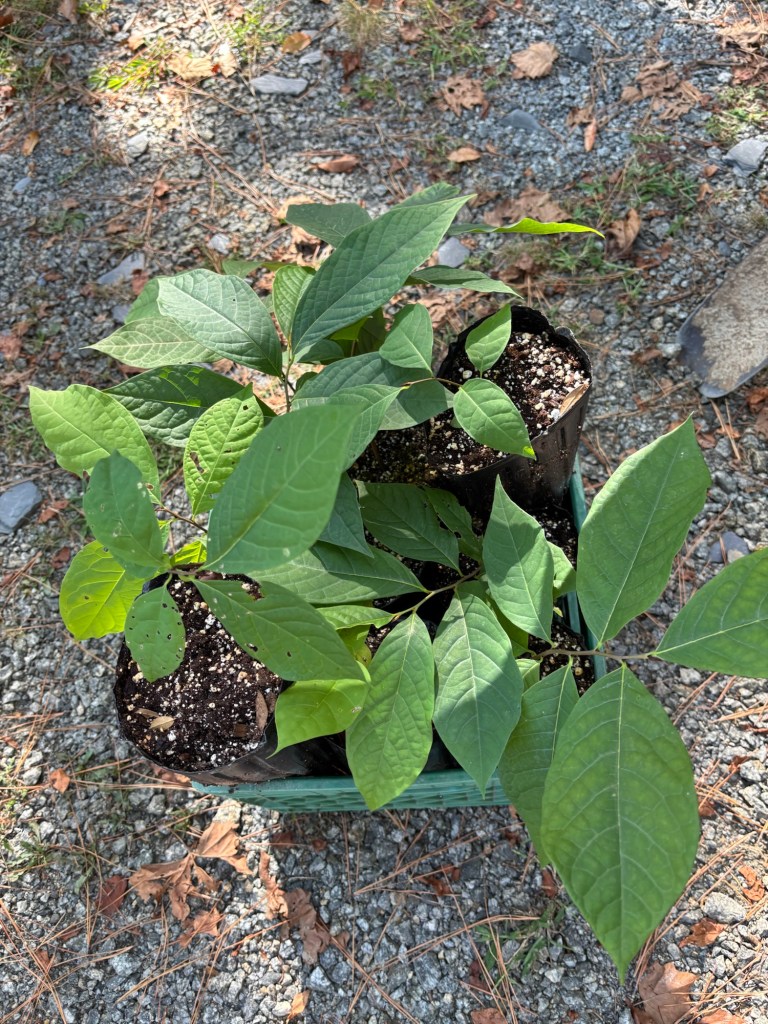
Just 21 more to plant after going out every day and planting 9 or so at a time. The orchard has really turned out nicely at the bottom of North Trail. The earth is red silty loam which is pawpaws (Asimina triloba) preferred soil.
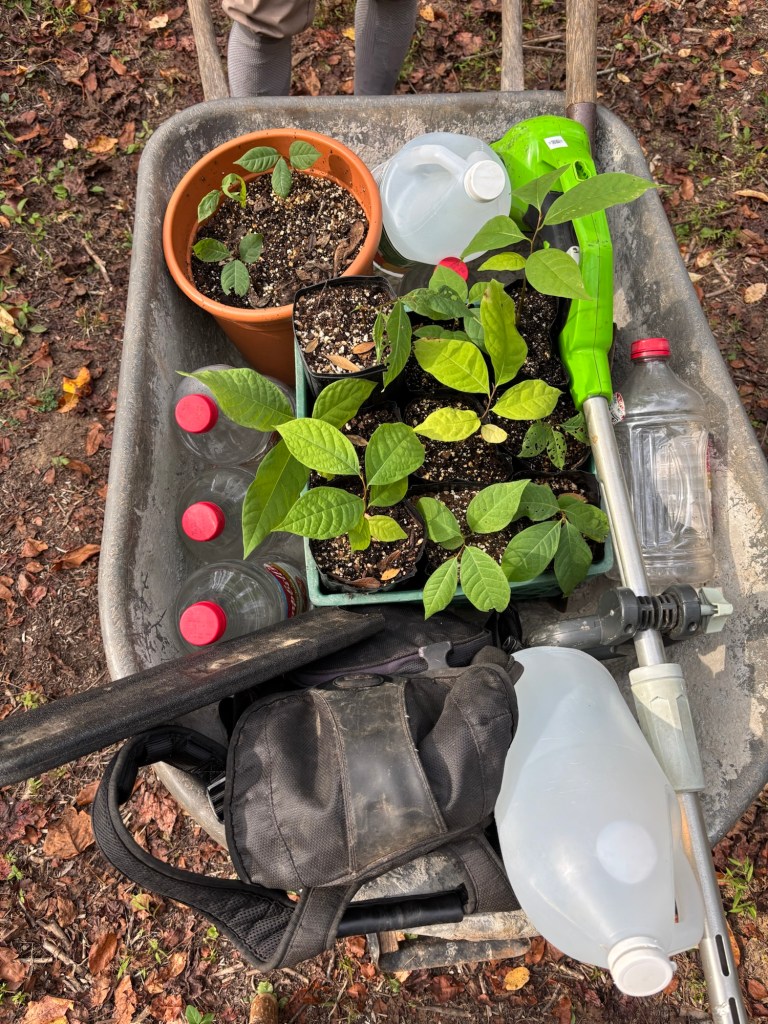
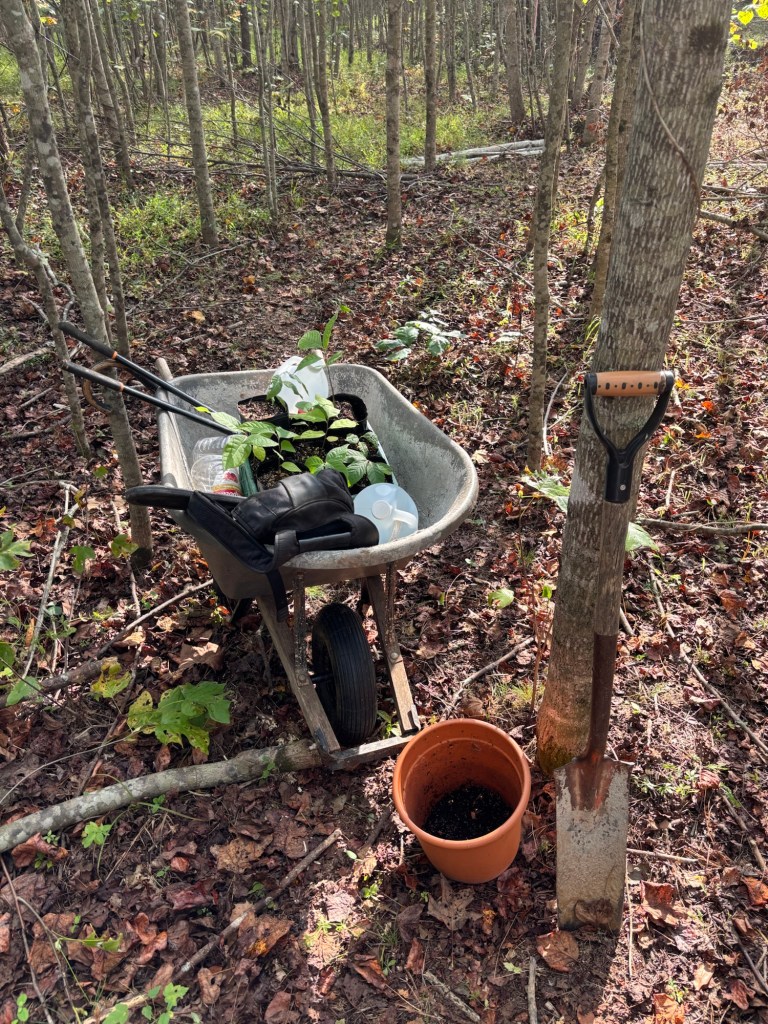
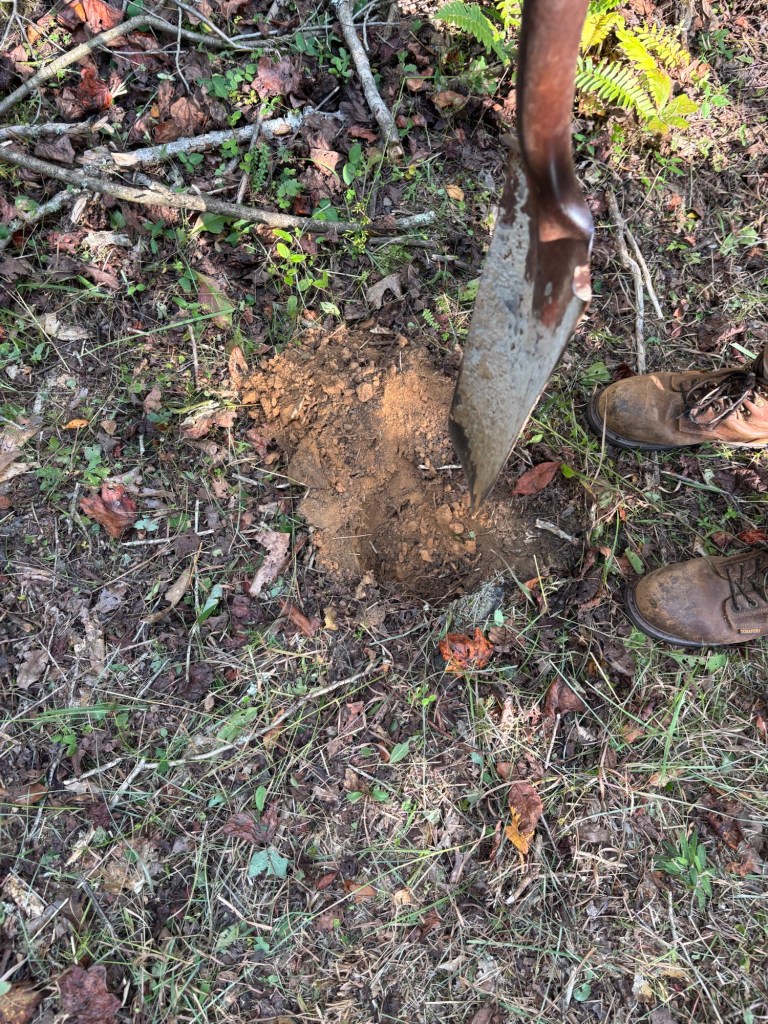
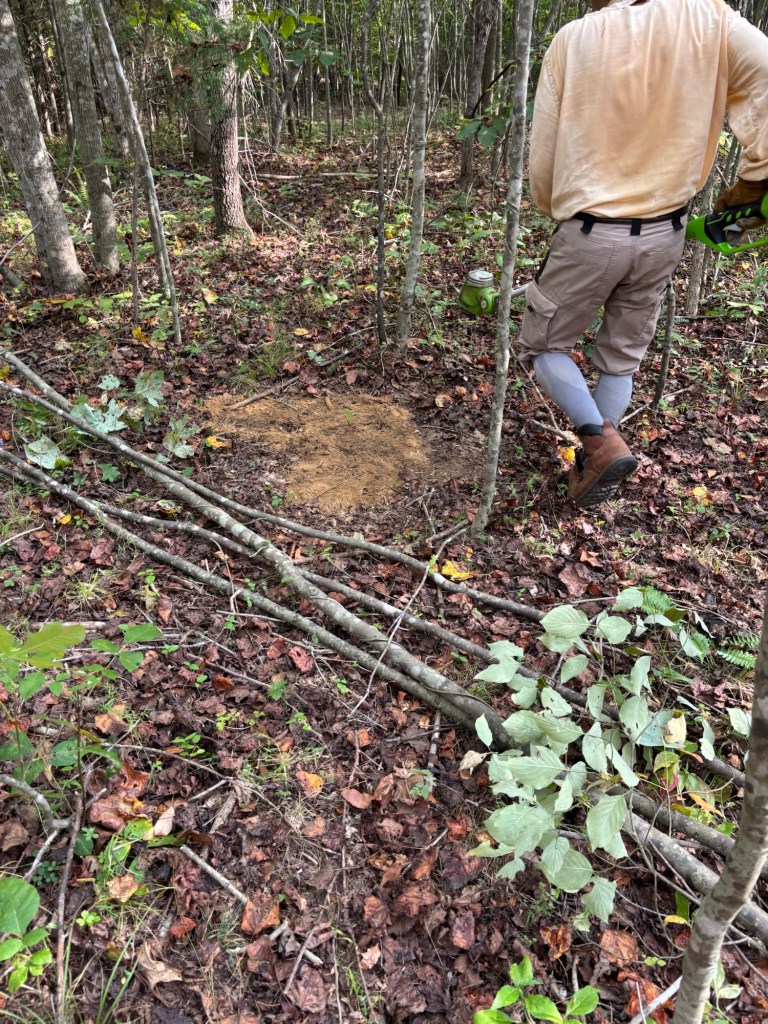
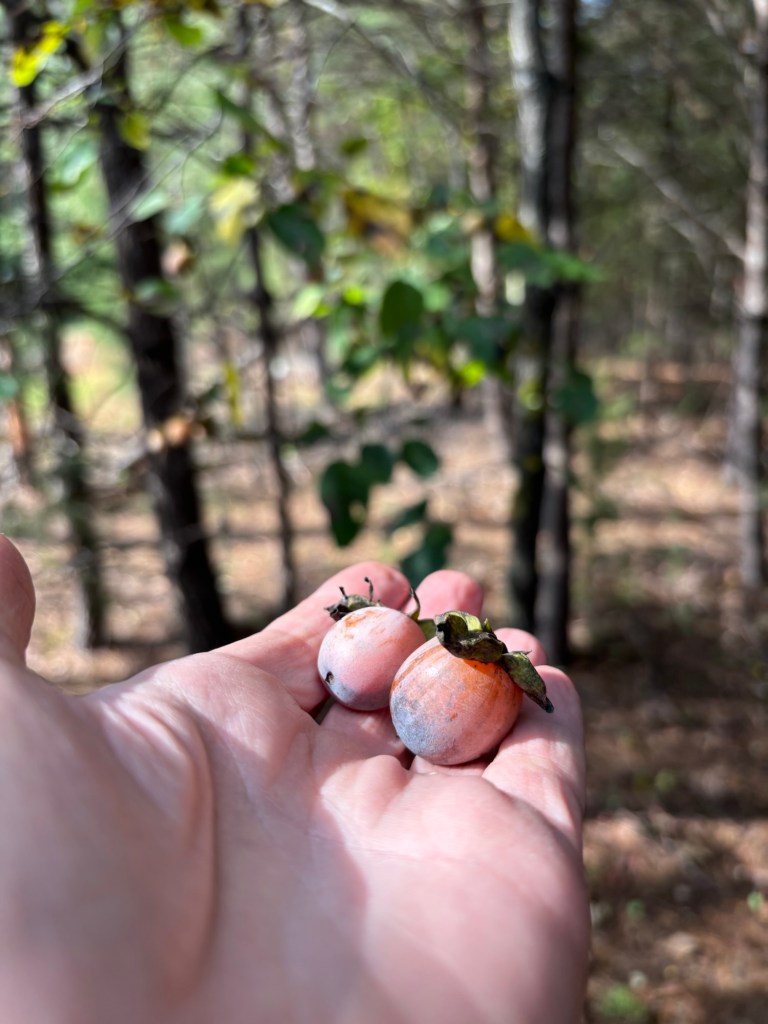
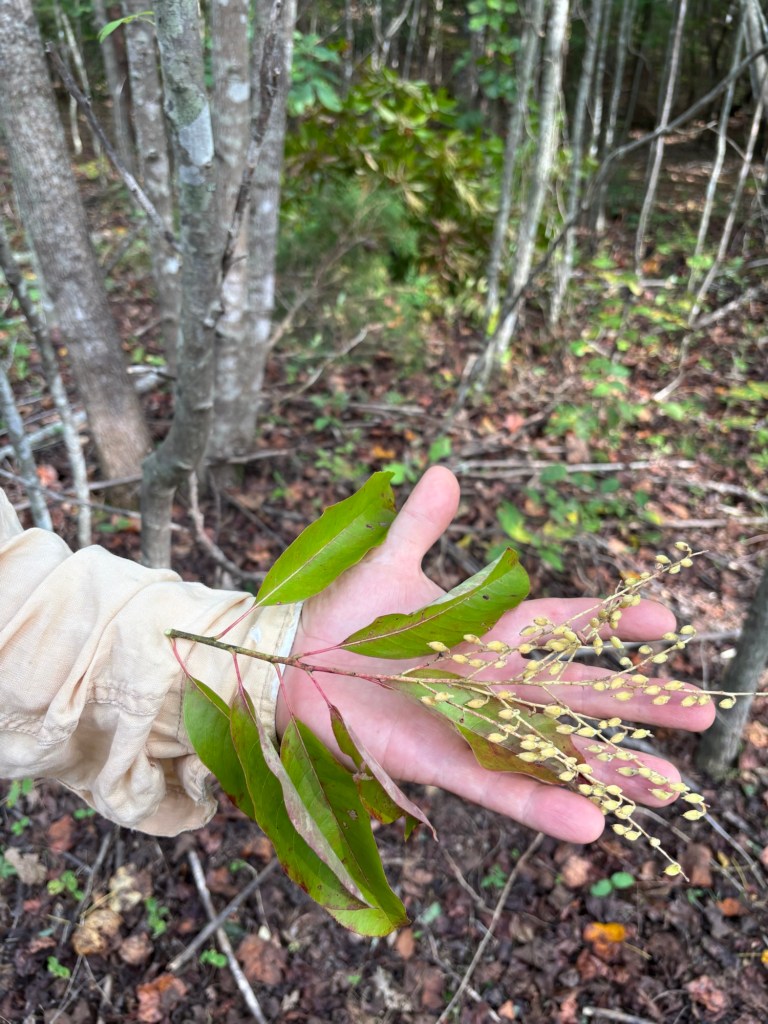
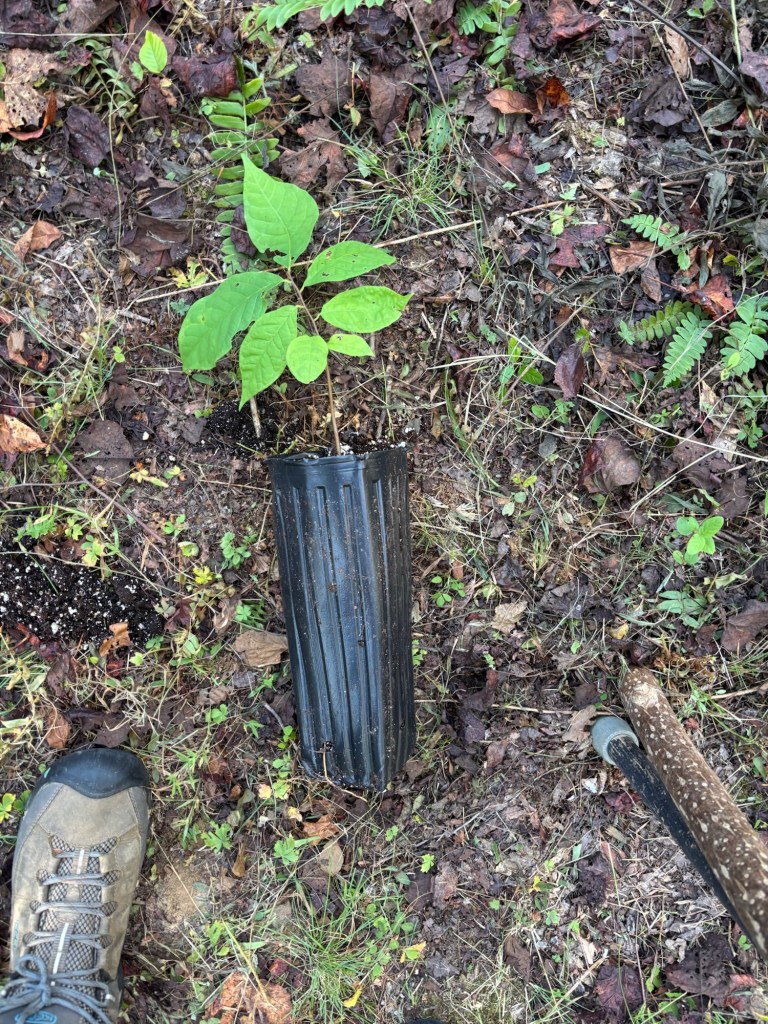
So far, we have planted 42 pawpaw trees. Yesterday we planted two more seedlings from Rockfish River natives in the main orchard and seven from select Edible Landscaping fruit. We are a bit less than halfway done but we are happy to get more in the ground later today while the earth is still soft from the recent rain. We checked on all of the previously planted seedlings —and a couple had been dug up a bit but the roots appeared intact so we replaced the dirt and watered them back in and hope for the best.
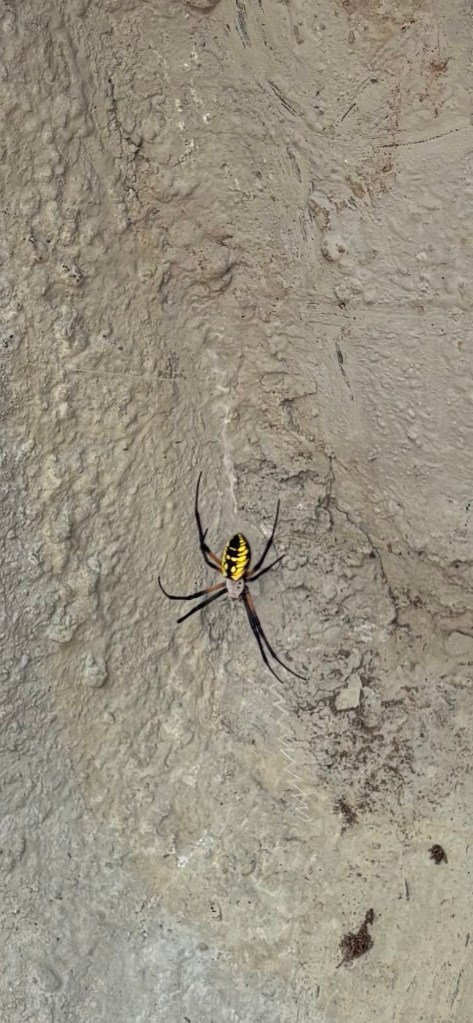
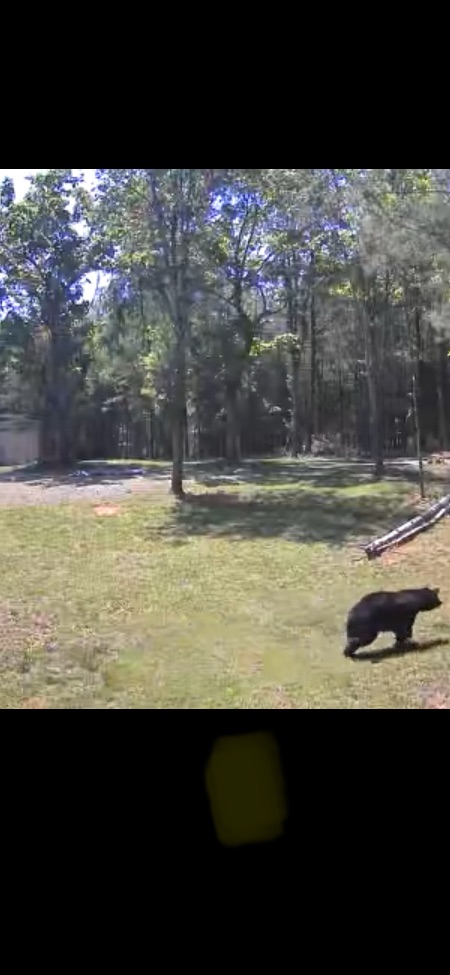
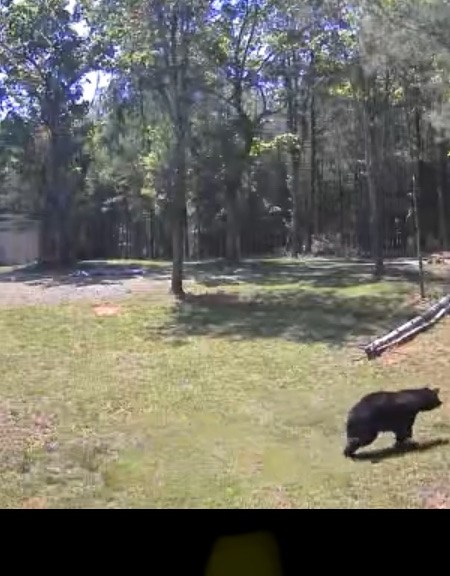
We had seen bear scat multiple times all around the farm and last May it was confirmed when she ran in front of our farm cam.
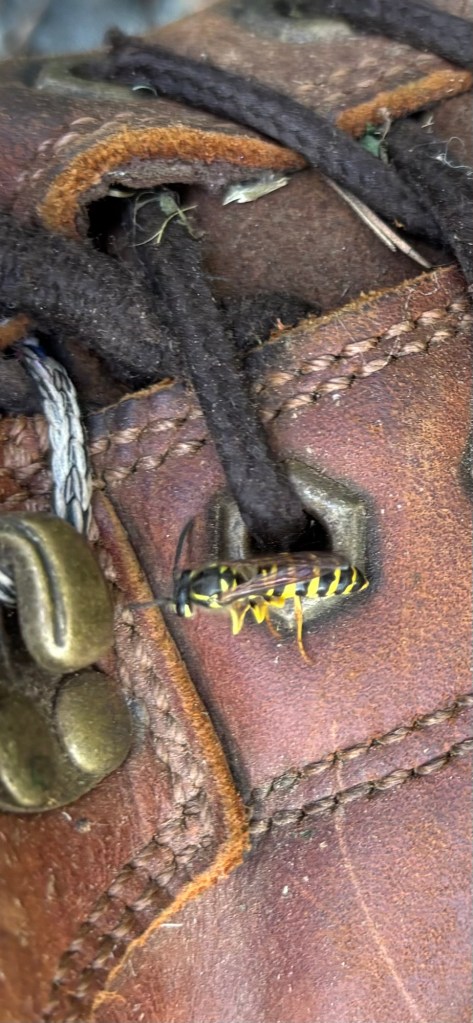
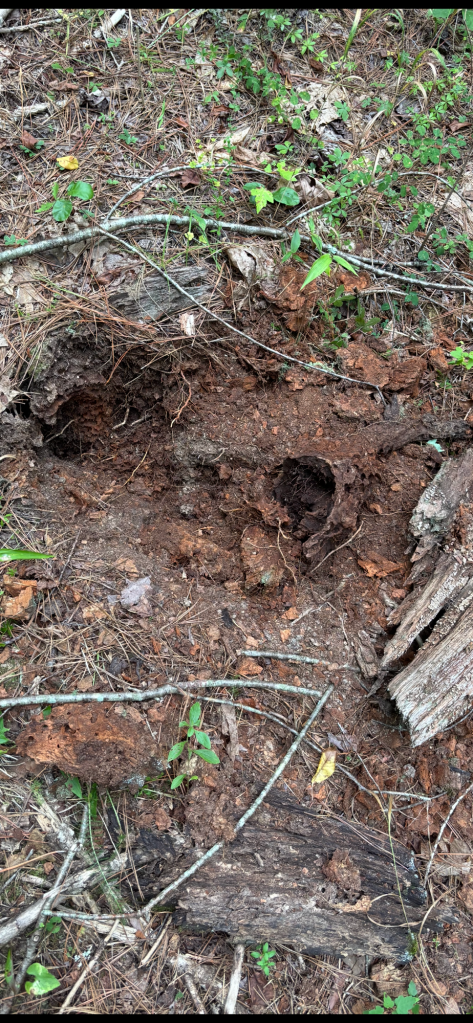
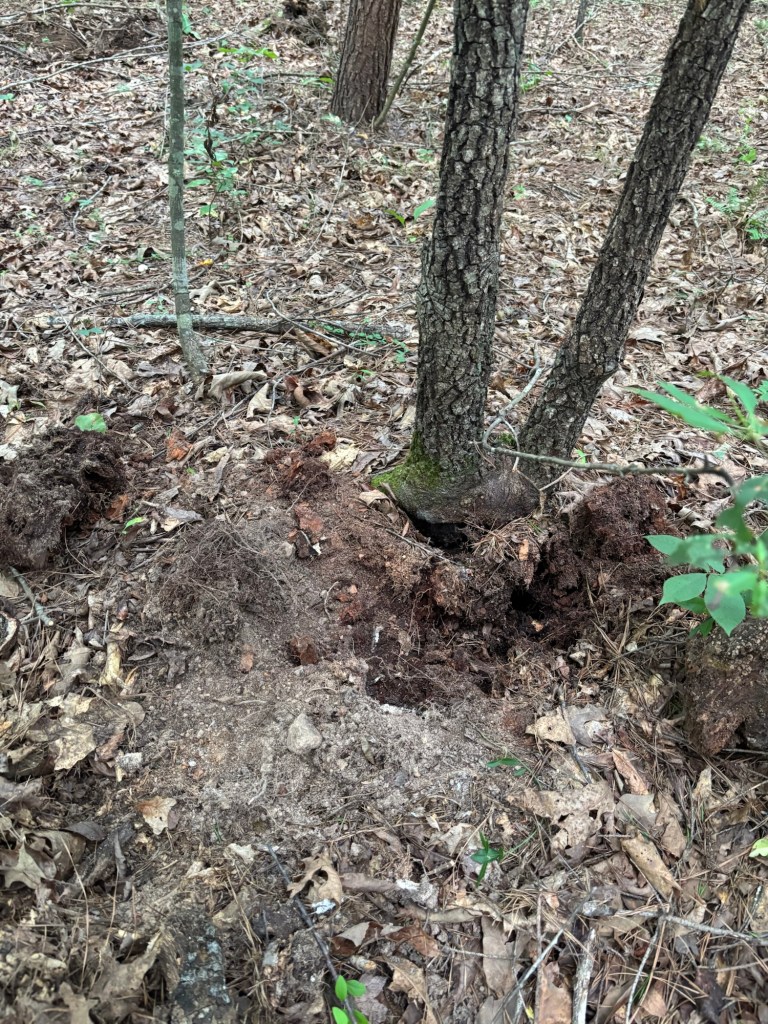
We continue to see evidence of bear activity and we imagine it is she. This past month we began noticing old tree stumps destroyed and large pieces of quartz turned over. We immediately suspected our bear was looking for insects to eat. The first we noted was in the spring along the back line on Chanterelle Hill Trail. A huge ant hill was dug up and excavated. Then about a month and a half ago, we saw all along the north property line she had dug up old stumps. At one we saw yellow jackets looking disturbed.
We went out to the farm on Friday and Sunday to get as many pawpaws planted before the rain comes. Thunderstorms and rain are forecasted to get started late tonight and continue until Wednesday afternoon. We planted 17 on Friday: Five in the orchard (a Kentucky State University Chappell and 4 seedlings) and another five alongside the Shenandoah and select seedlings that we planted last year. We put a Mango cultivar and four seedlings we started from foraging. Then we planted 2 on the Pawpaw Peninsula (an Allegheny cultivar and Wild native seedling from a Rockfish River foraged pawpaw). After that we put two by the pawpaw patch at the bottom of Ridge Trail and another two on the left side of the large pawpaw grove. We walked up Ridge Trail and put another wild pawpaw seedling from Rockfish River foraging near the small colony of native pawpaws growing along the south wet weather gully.
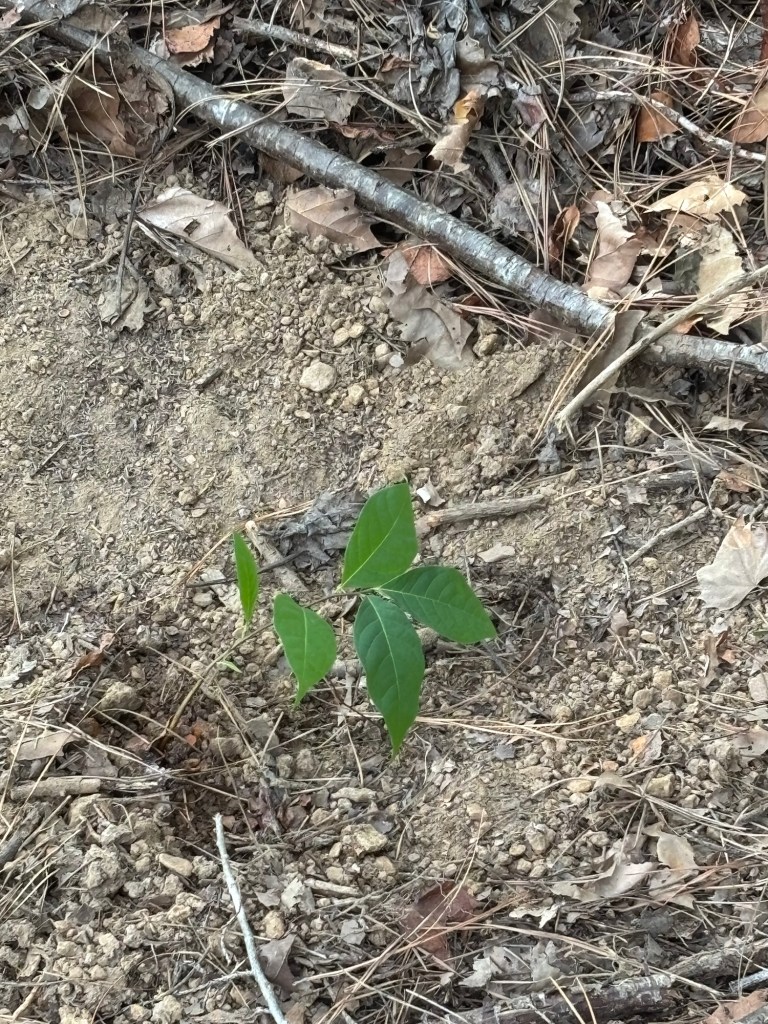
We were exhausted after this. We had to carry water for the trees after planting in our packs, carry our equipment and the trees themselves all around the farm. It was hot and the ground was hard and dry for digging. Chris was battling each hole. (We are looking into finding a lightweight device to dig our holes, as in an auger.)
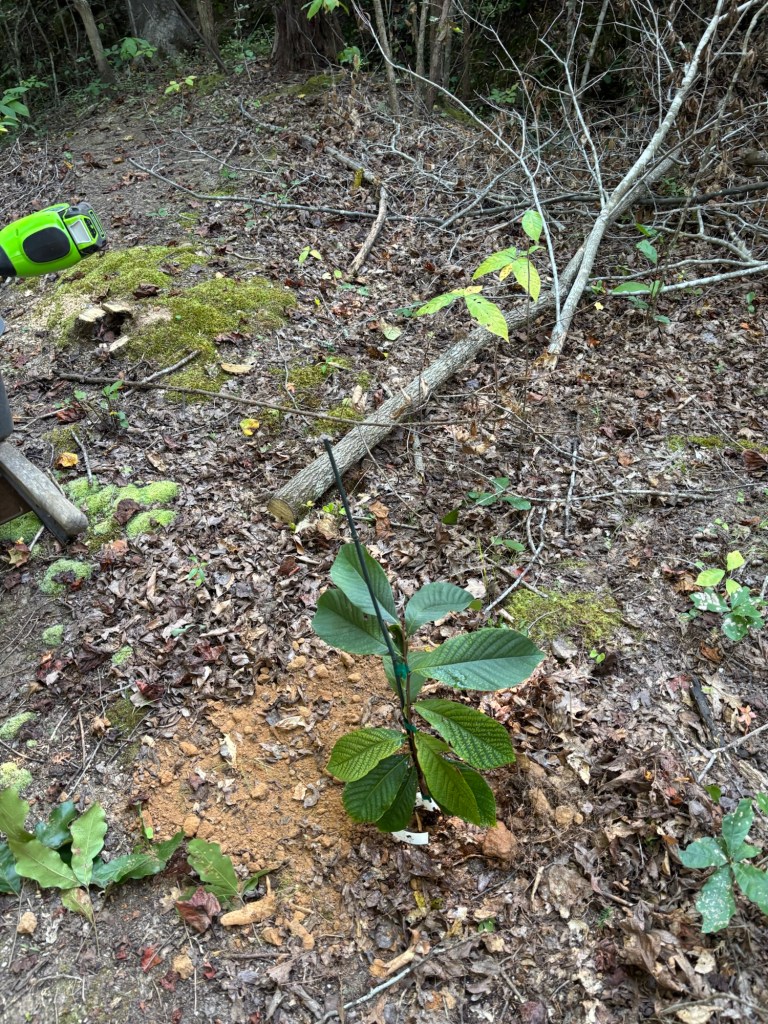
Then we went back out on Sunday to water what we’d planted Friday and put a few more in the ground. We planted 5 up top in the main clearing along the driveway and put two along the South Gully on Dan’s Folly. We put one more across next to a lone wild SAFF native pawpaw on Fern Trail. From there, we walked down the Gully and watered our select seedling planted a few days before. We were happy to see they all were still in the ground (last year, the deer ate them and pulled them out of the ground a day after we planted so we almost expected the same.) They were glowing in fact. They all appeared to be very happy in their new locations. We watered them some more.
We have another 80 or so to plant and hope to get out to the farm again soon to get a few more in the ground.
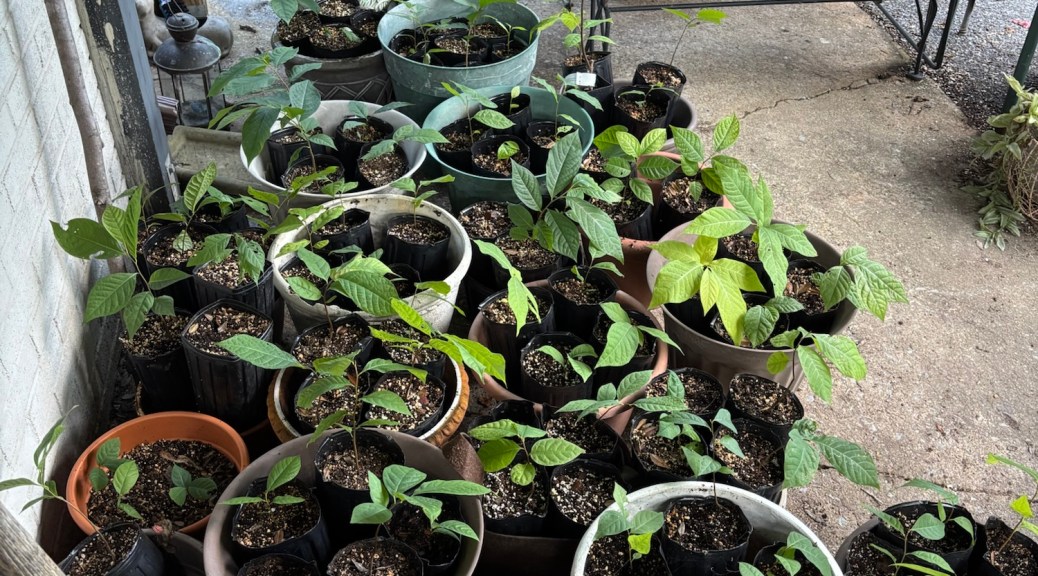
It’s been far too long since we have reported on events at the farm. Cooler temperatures and a few trees with bright yellow and red leaves remind us fall is here and also that we could use a good soaking rain to soften the crisp dryness of the ground and plants. Our pawpaw seedlings are waiting, with a few cultivars we collected from Edible Landscaping in Nelson County Virginia, to be planted out at the farm when a rain is expected next, we will plant them just before.
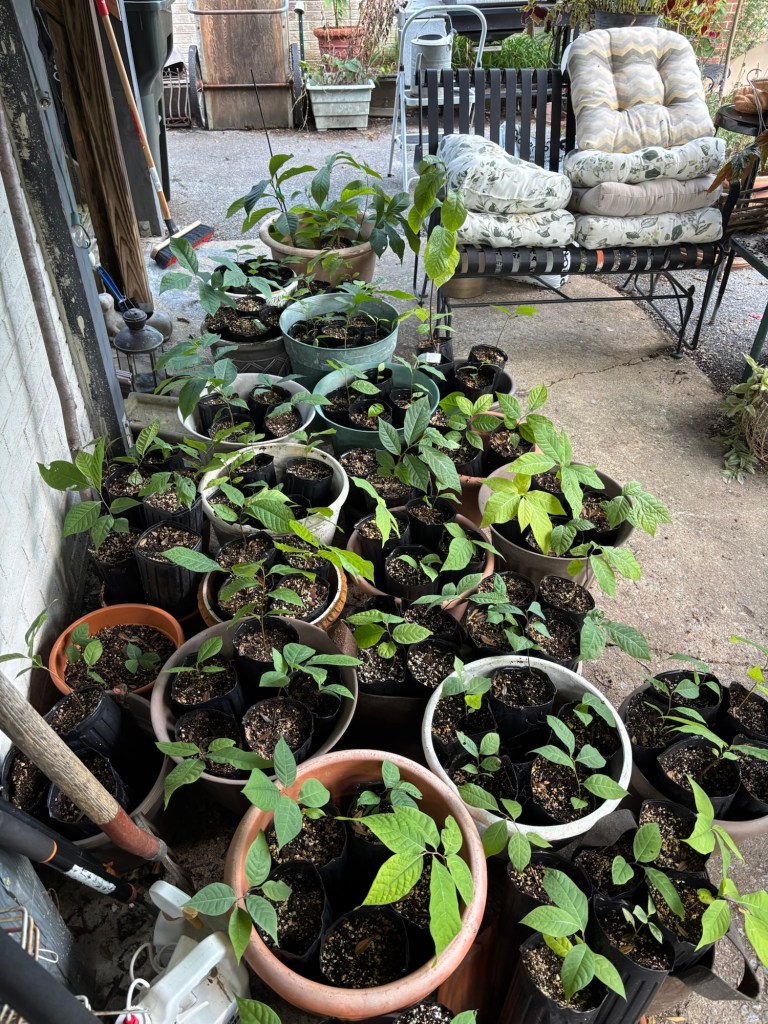
We hope to plant some around the existent wild native pawpaw patches that we have. These trees are responding well to increased light as we cut back understory trees competing for sunlight under the giant oaks maples and beech. They have greened this year and produced more branches and leaves. We only had a few flowers and one tree that set fruit. This dropped after the second week even though we had good rains in the spring. We are feeding the native trees compost from our home bin. With the addition of the new dna from the seedlings and grafted cultivars we hope to plant within the next few weeks, we hope to see increased growth and fruiting.
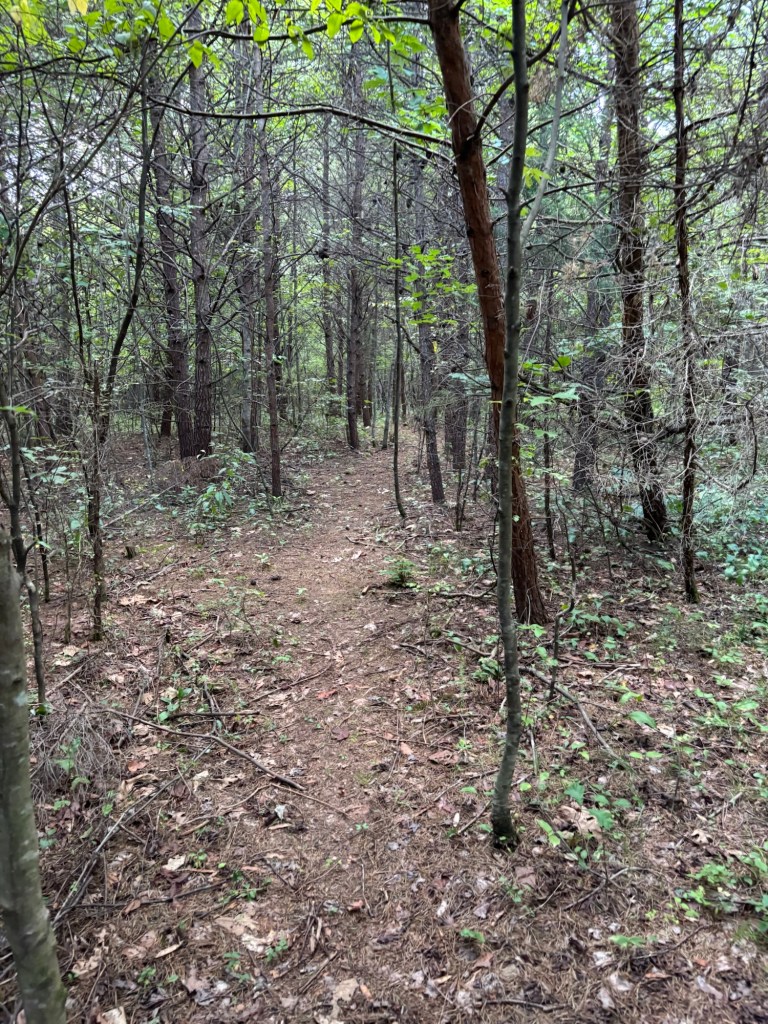
We have been busy planning our orchard and structures, collecting seeds from native and select varieties, trailblazing to give us more access to SAFF. And we have also been mushroom hunting of course! We have added a lean-to on to our shed for the tractor.
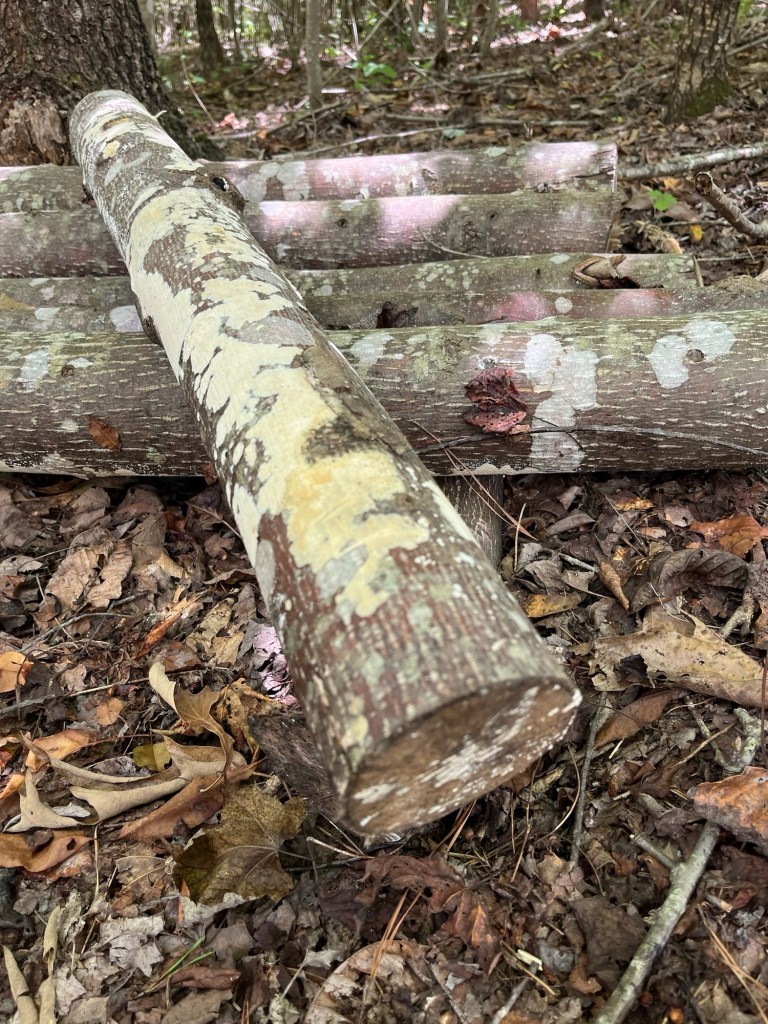
We went over to put up boundary markers and no hunting or trespassing signs as well as forage for mushrooms. Hunting season begins Saturday October 5th (early archery season starts). We took down trees growing too closely together and used the trunks as a natural fencing inside the tree line along the road frontage to discourage hunters from chasing deer onto our property. We’ve also been told hunters run dogs through properties to scare up deer. We are trying to create a hunt free zone, except for mushrooms, and to keep anyone chasing animals off our land. We also will put up several more cameras later this weekend. We had technical issues yesterday but worked it out this morning.
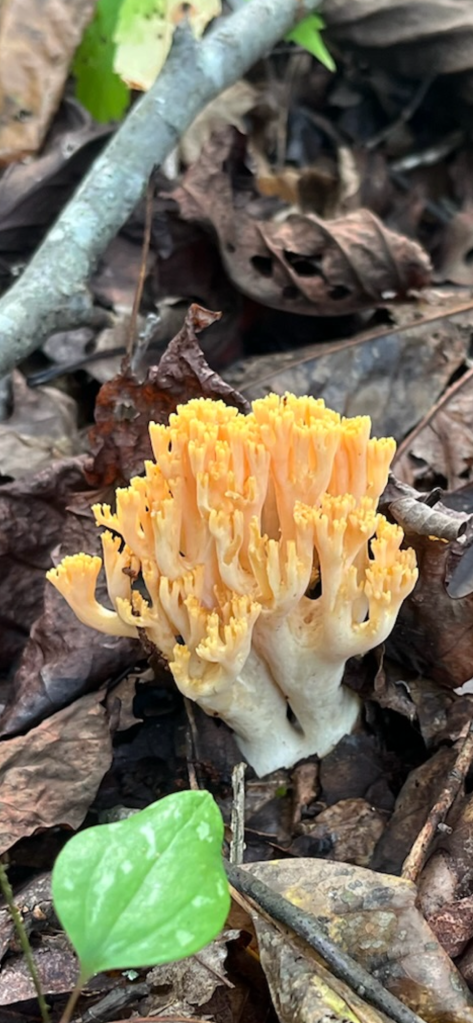
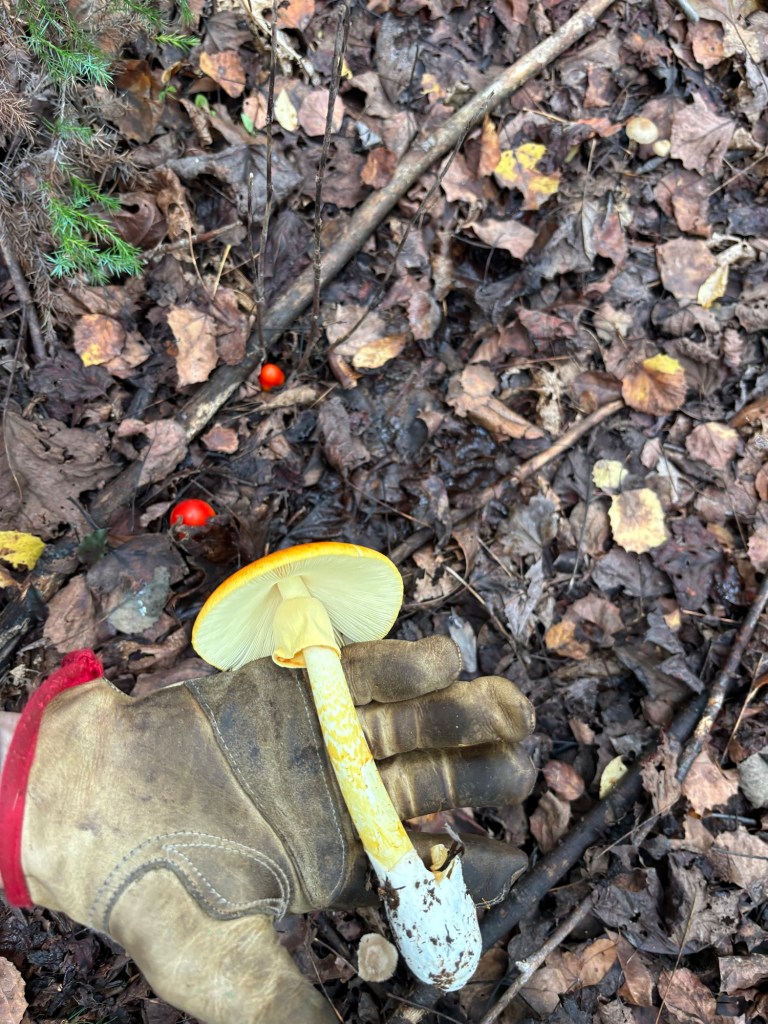
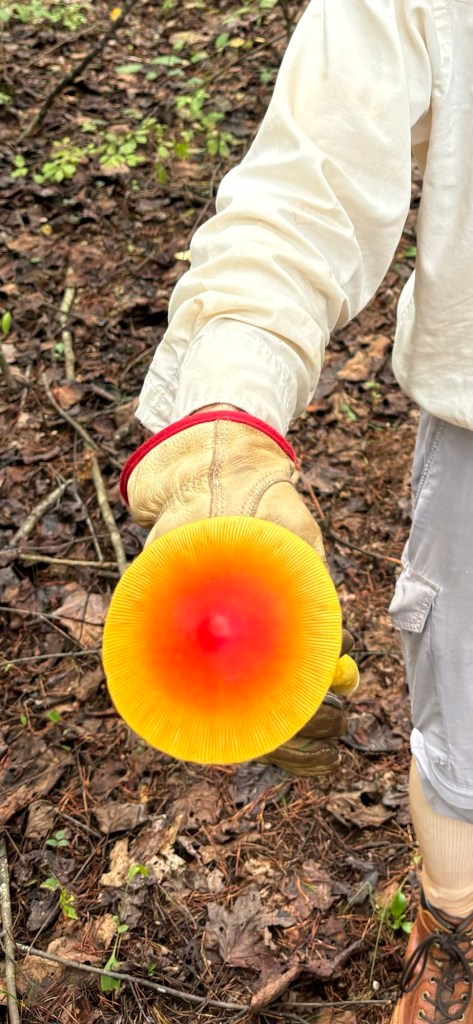
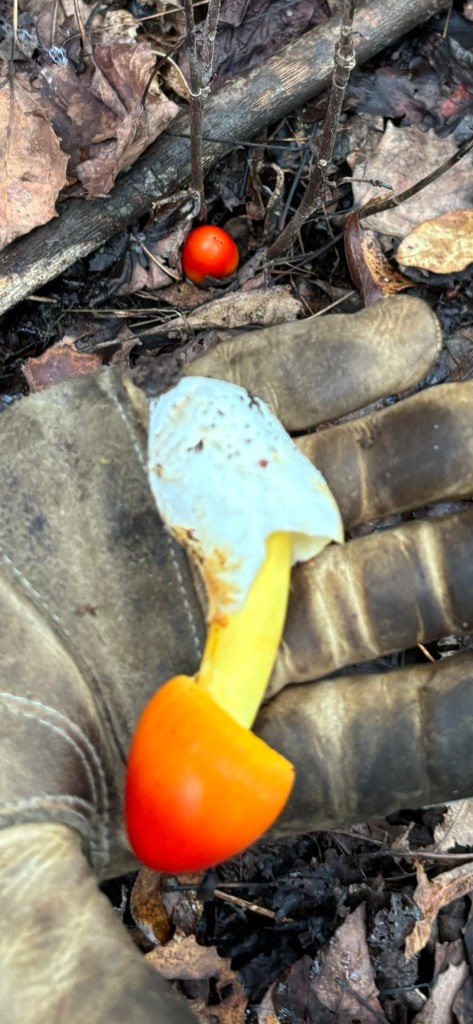
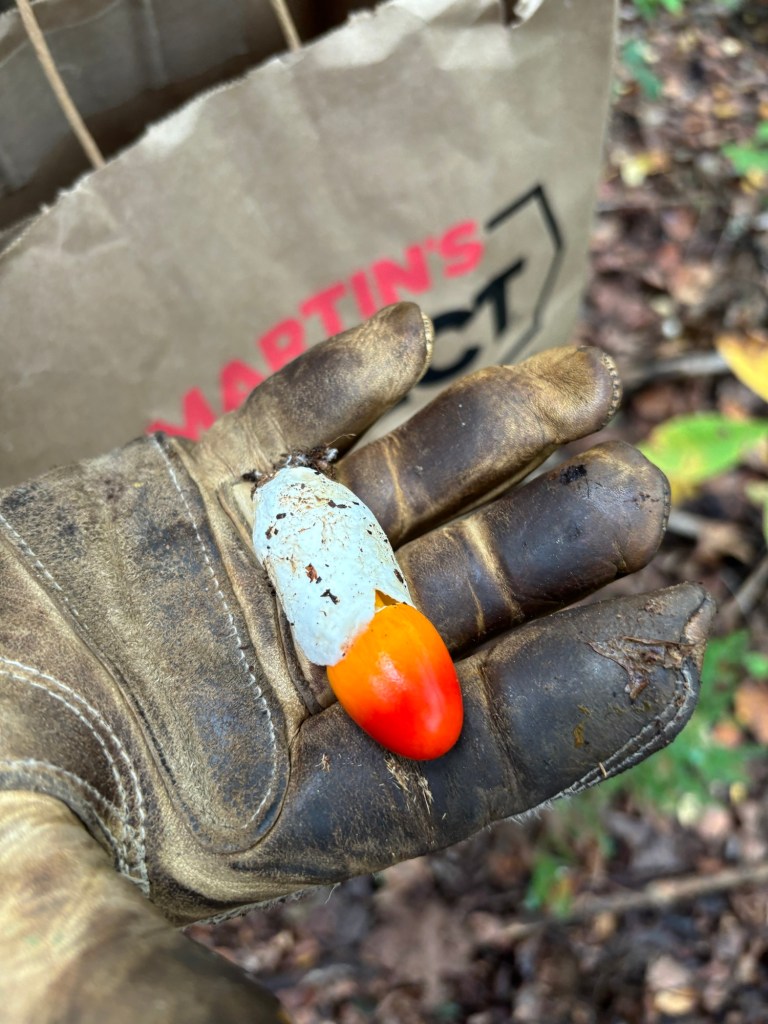
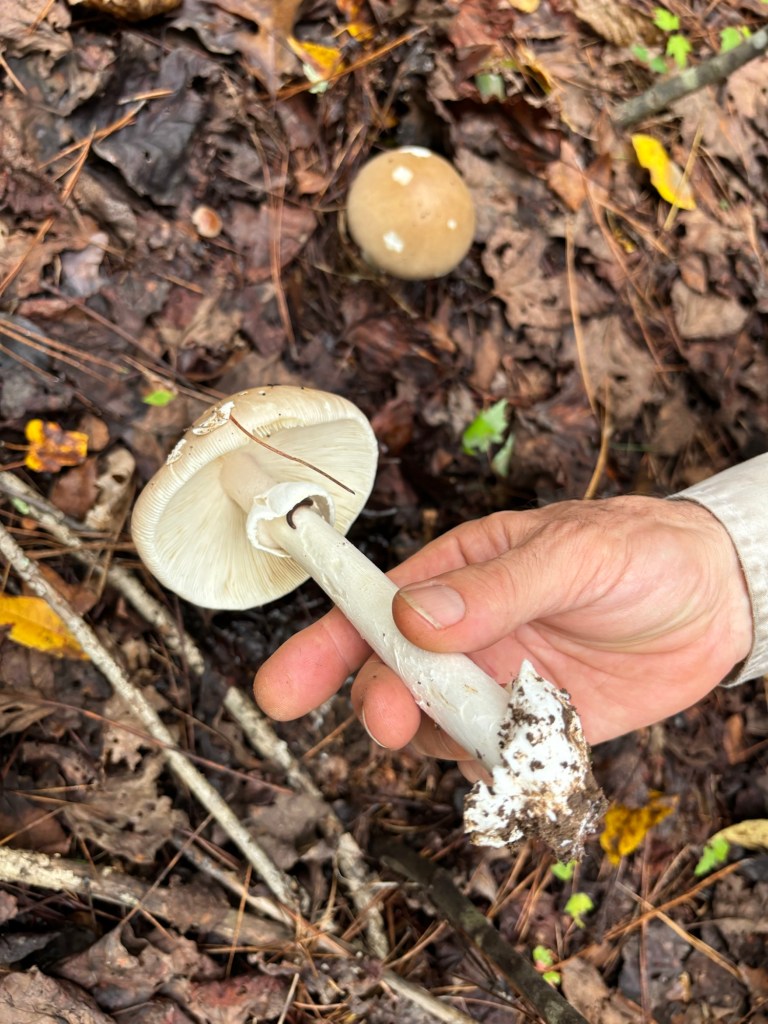
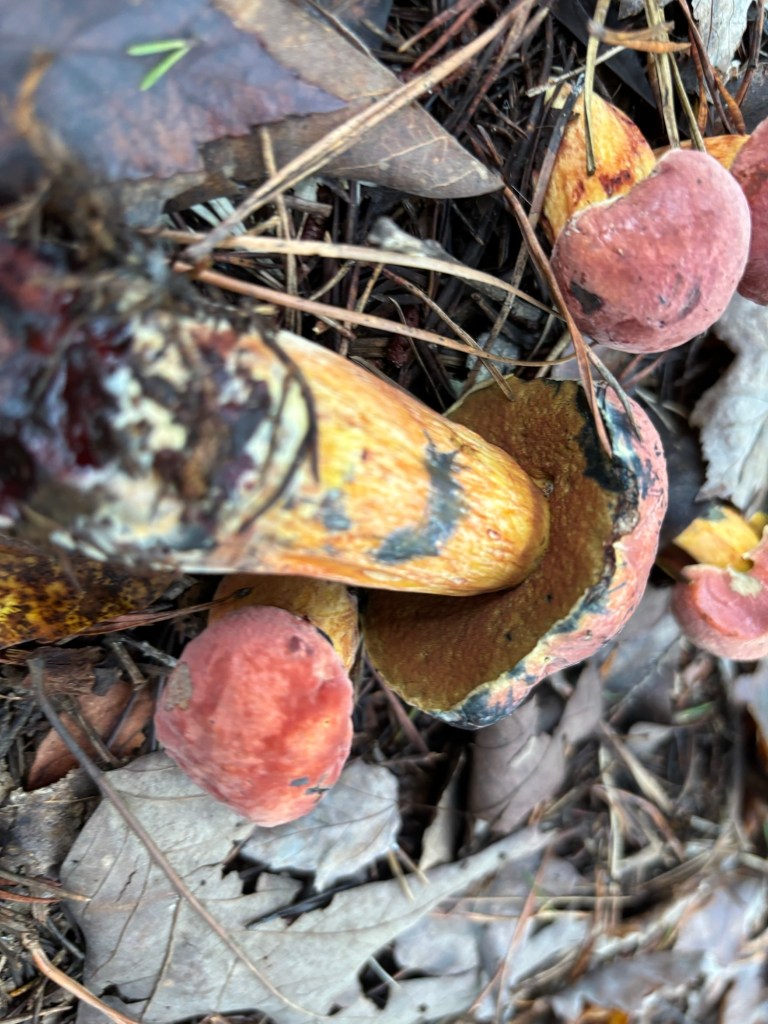
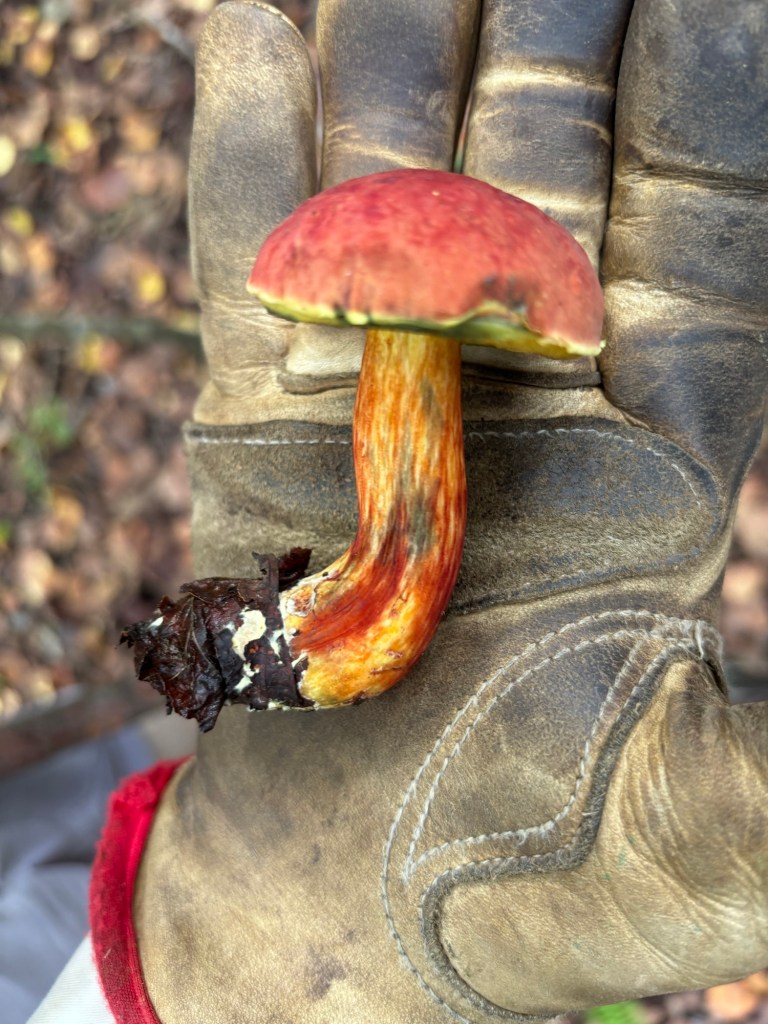
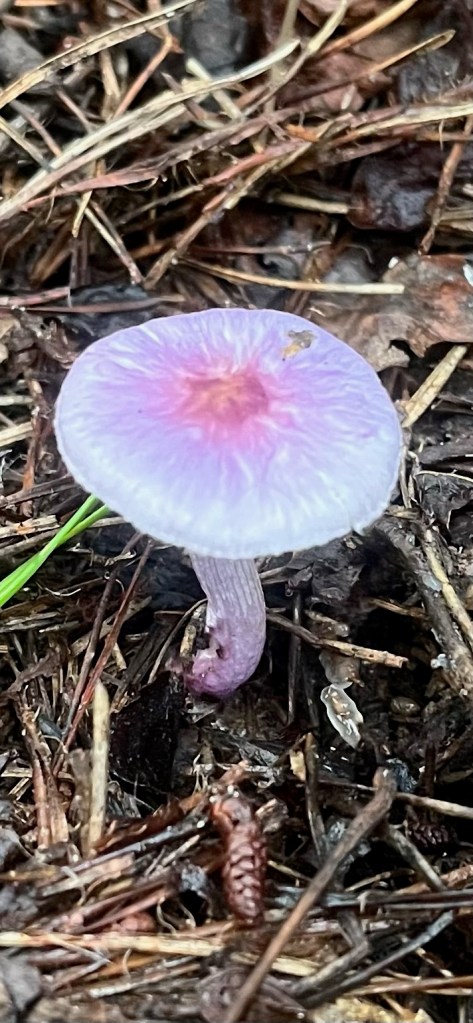
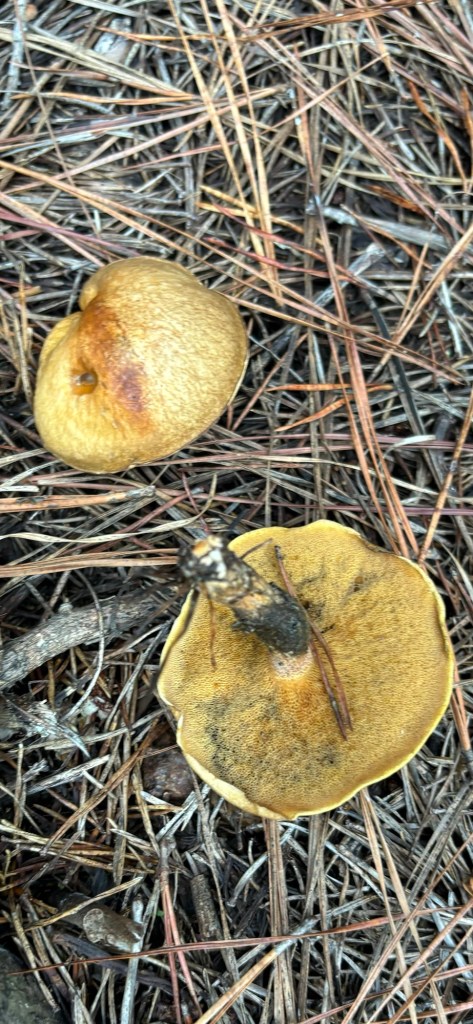
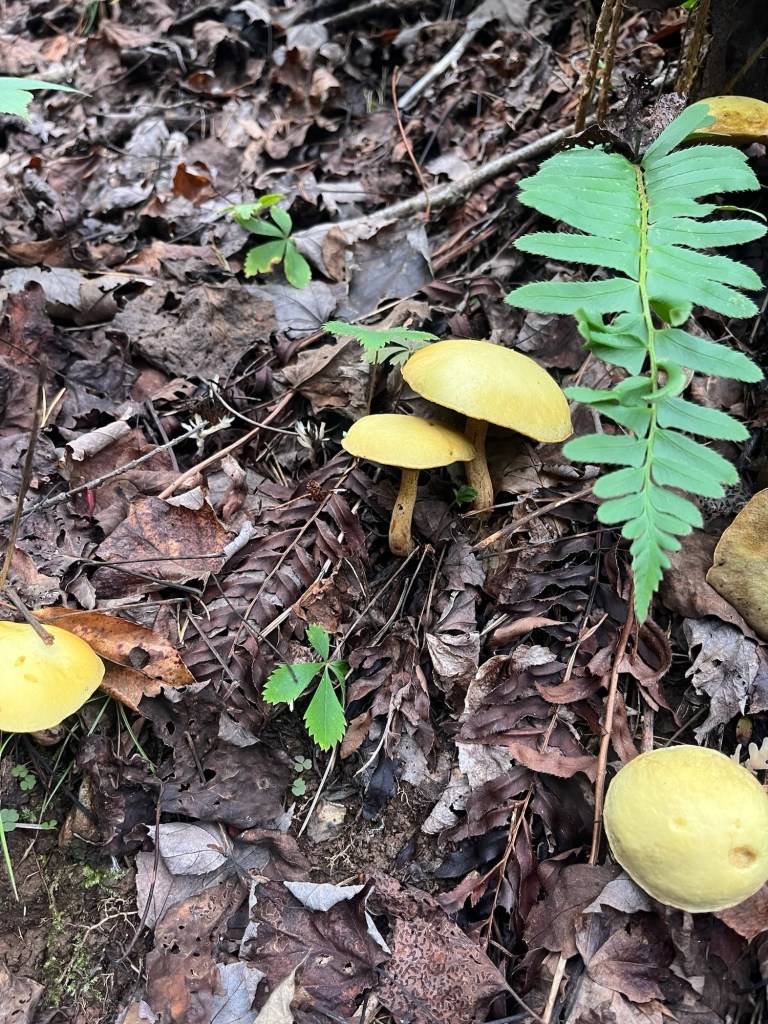
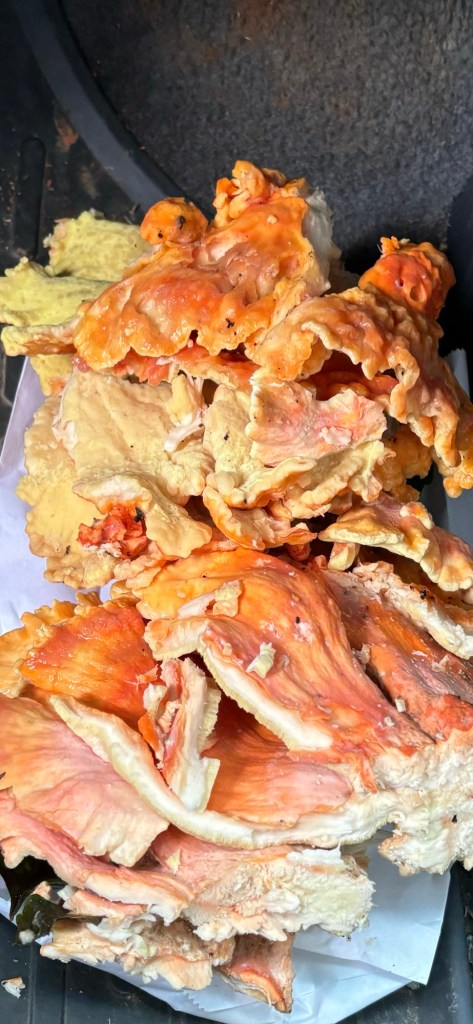
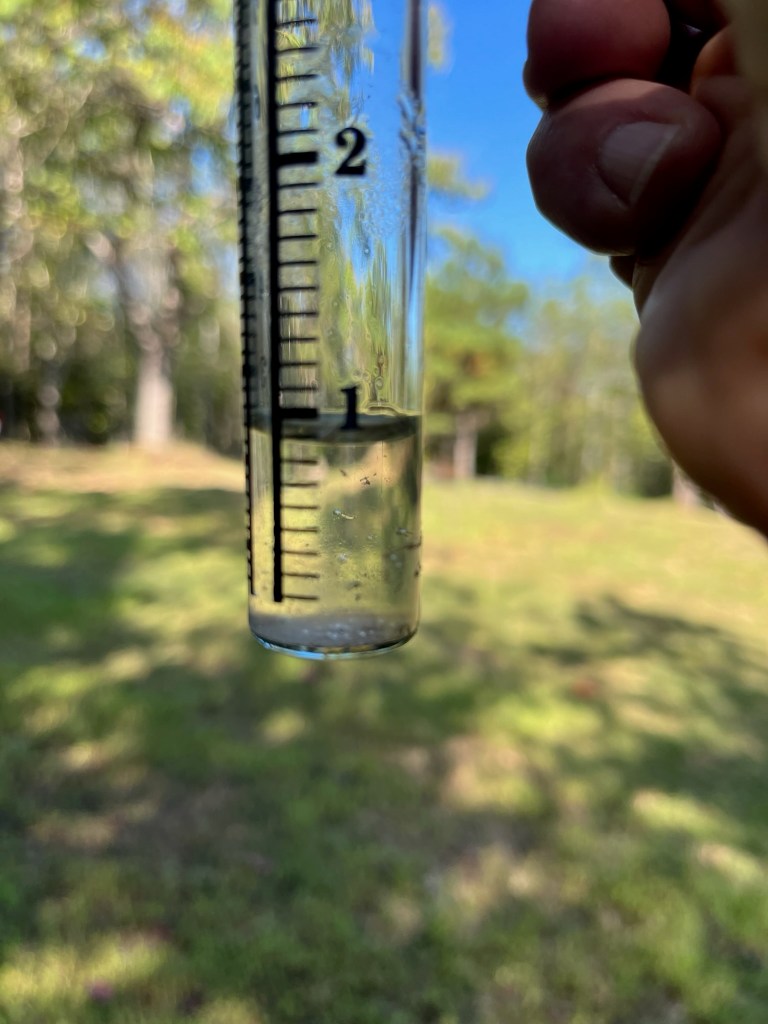
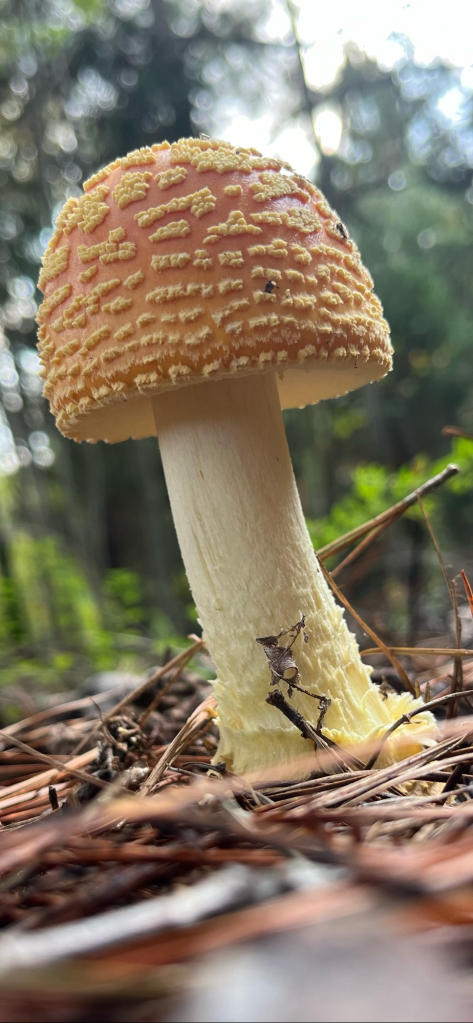
Today was a mushroom hunter’s dream. It’s an understatement to say they were everywhere. We’ve had an enormous amount of rain in Central Virginia and the Shenandoah Valley. We’ve had flooding at the house but finally, after all of this rain, the water table is restored at SAFF from our prolonged summer drought. All of the springs are flowing and the waterways are moving. We saw water flowing in the wet weather gullies in the north and south. It’s a beautiful sight.
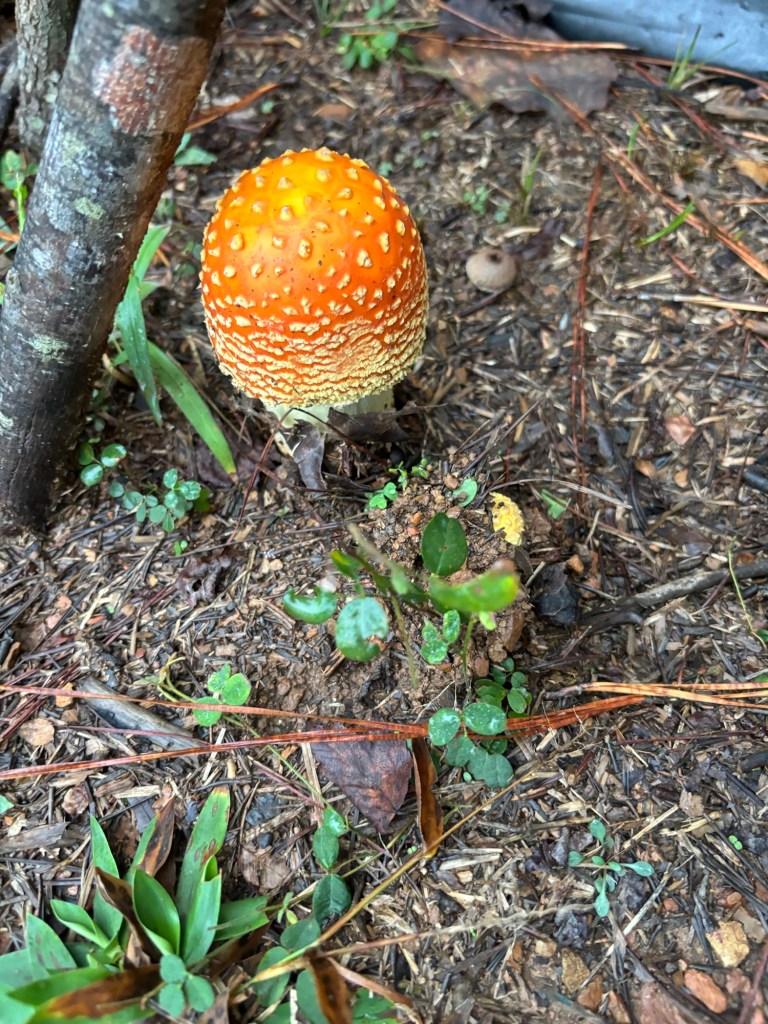
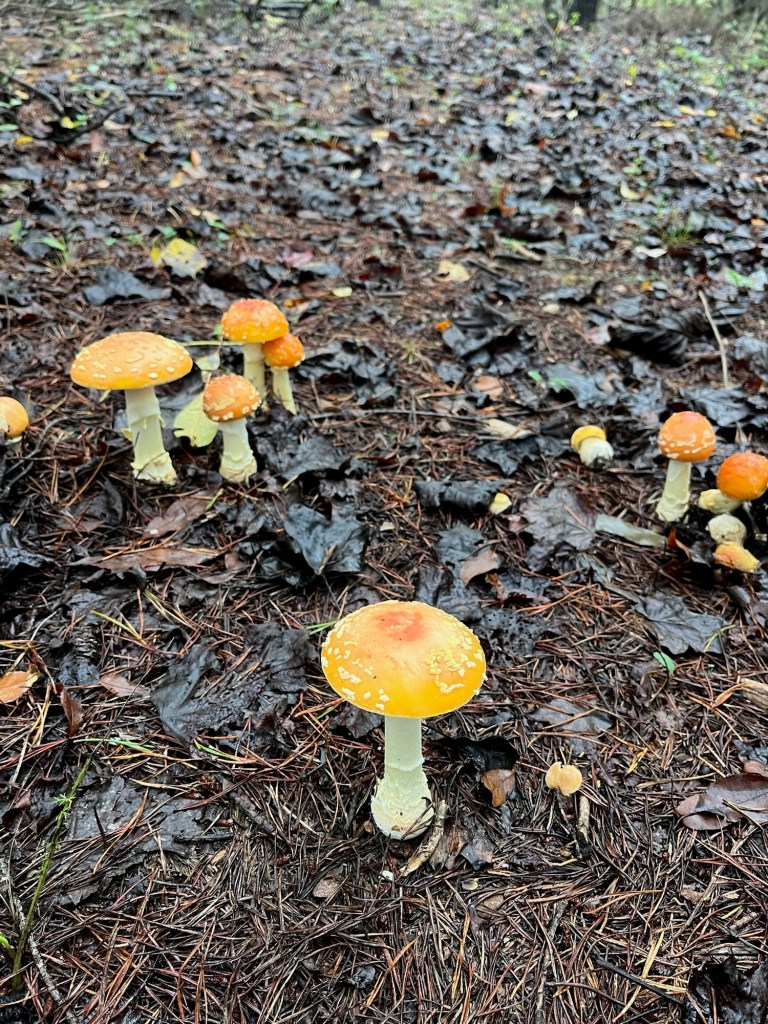
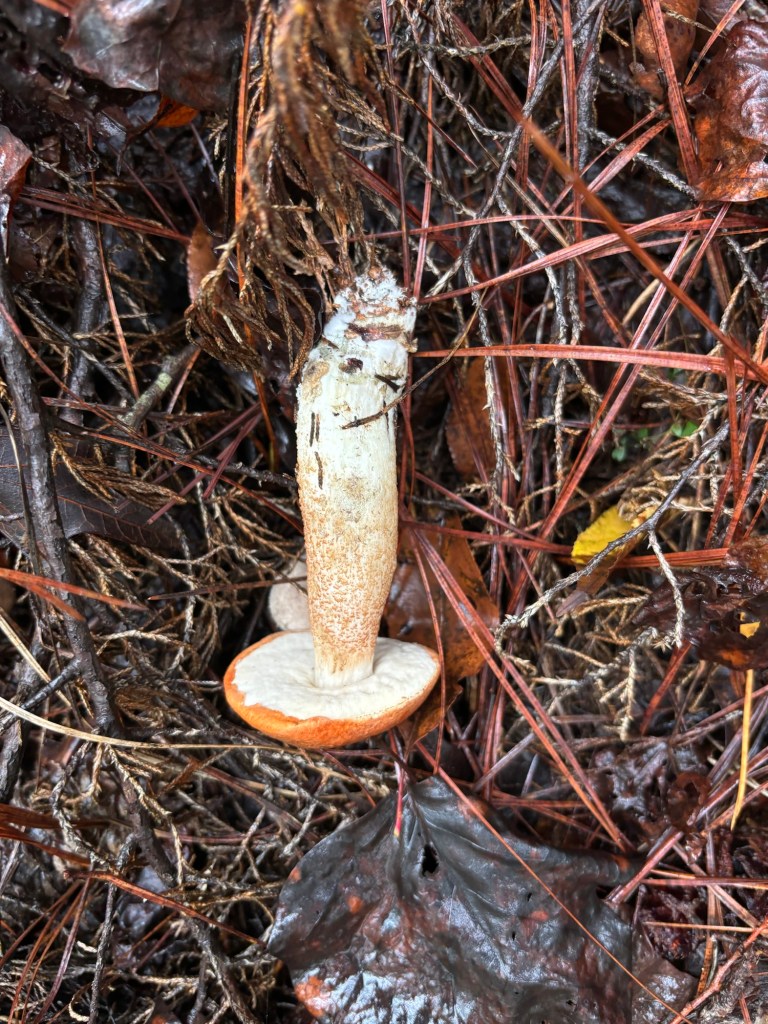
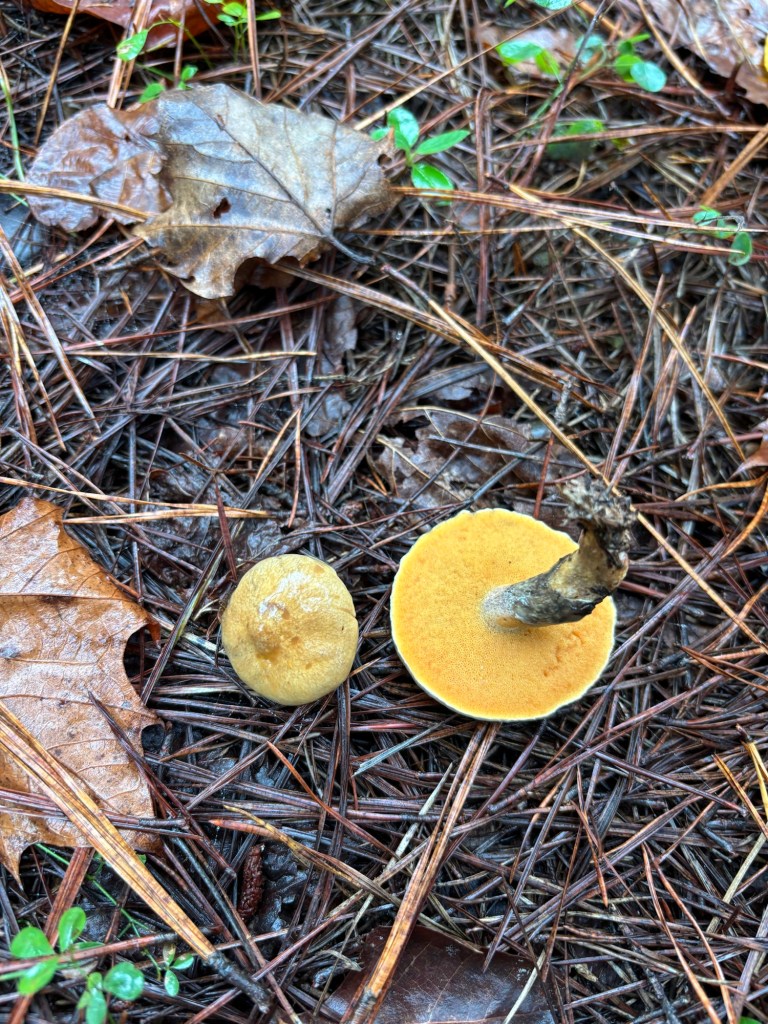
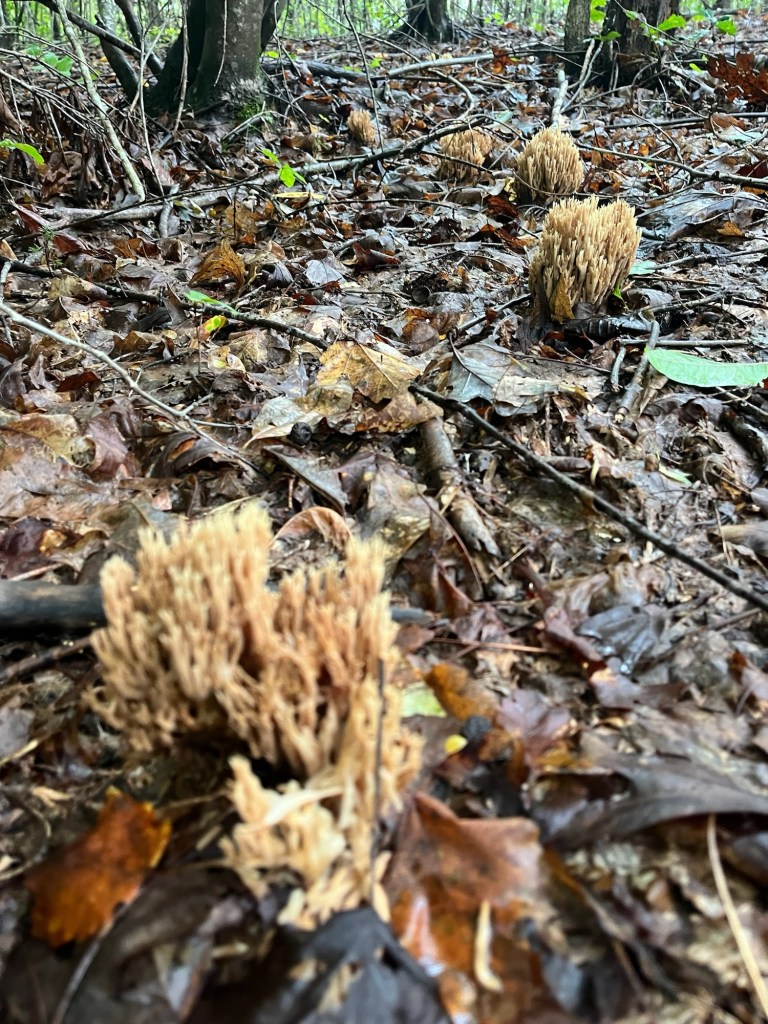
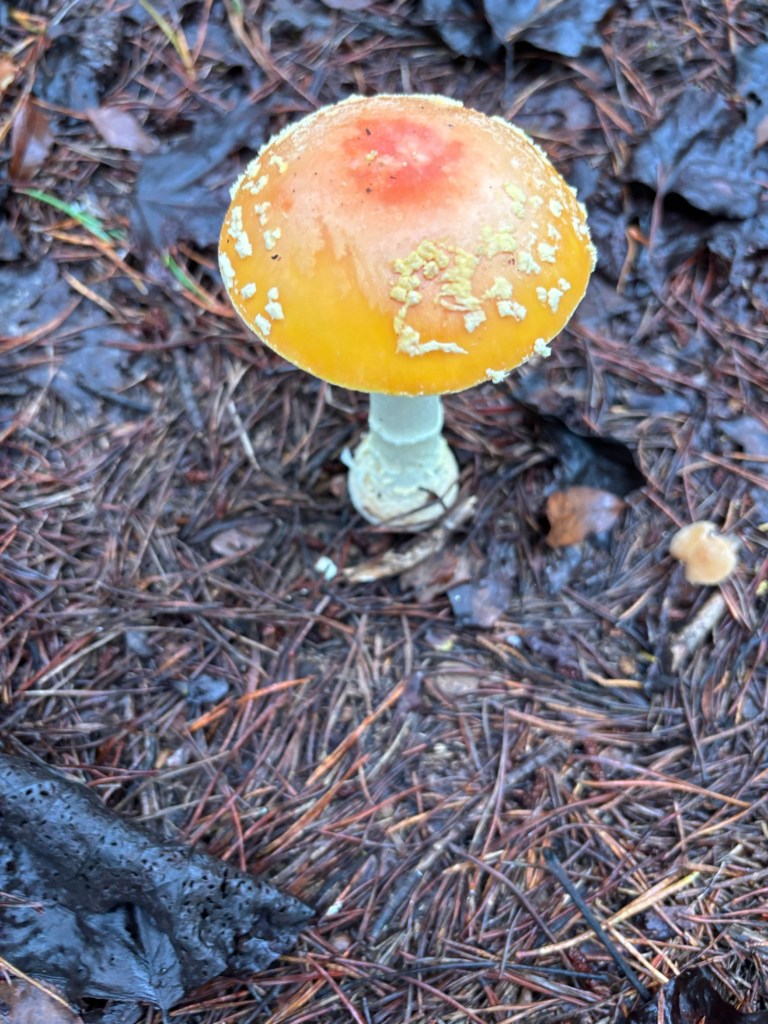
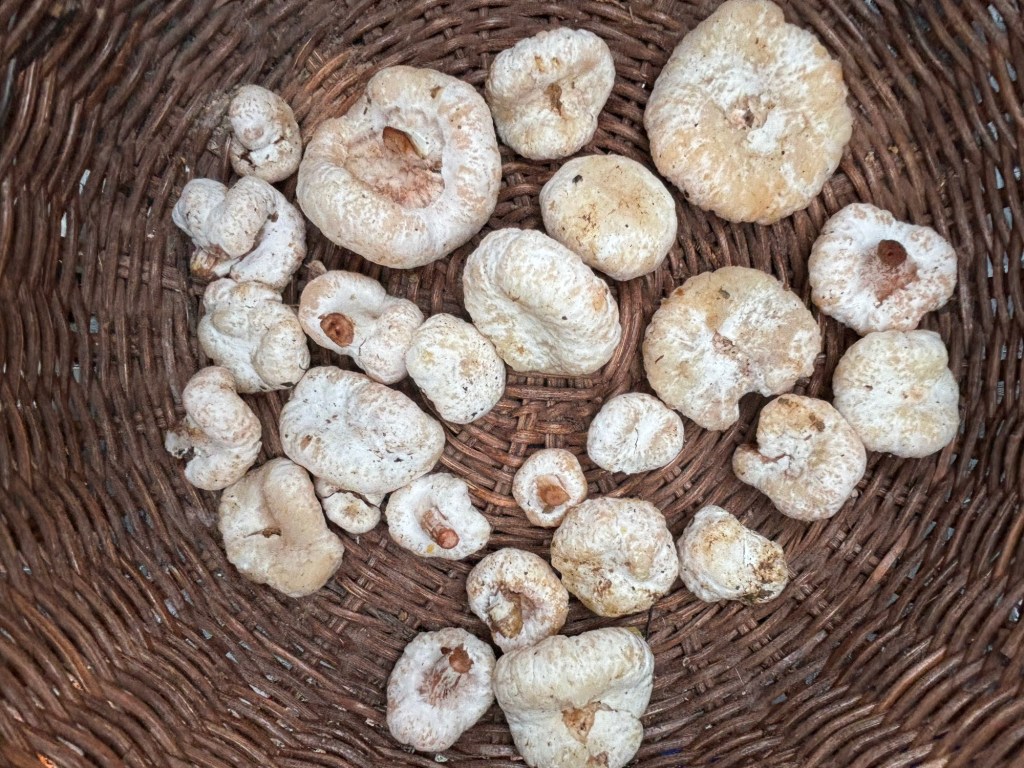
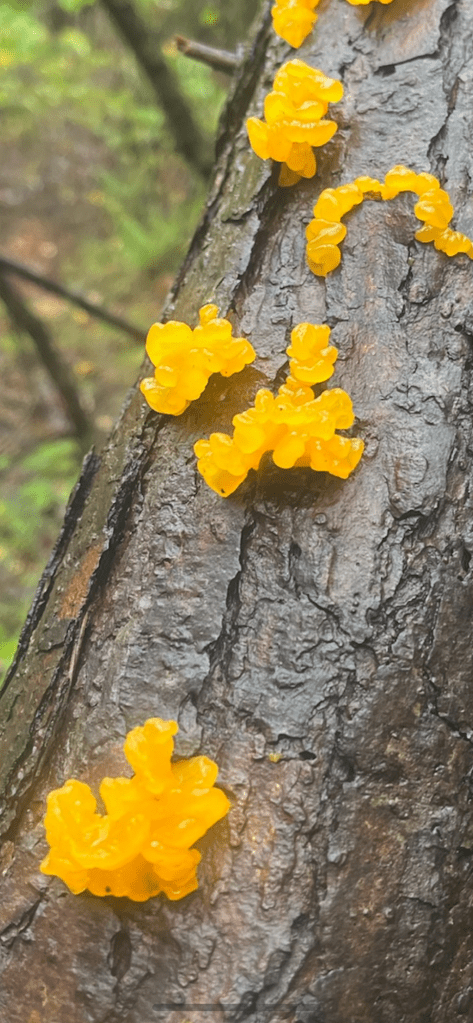
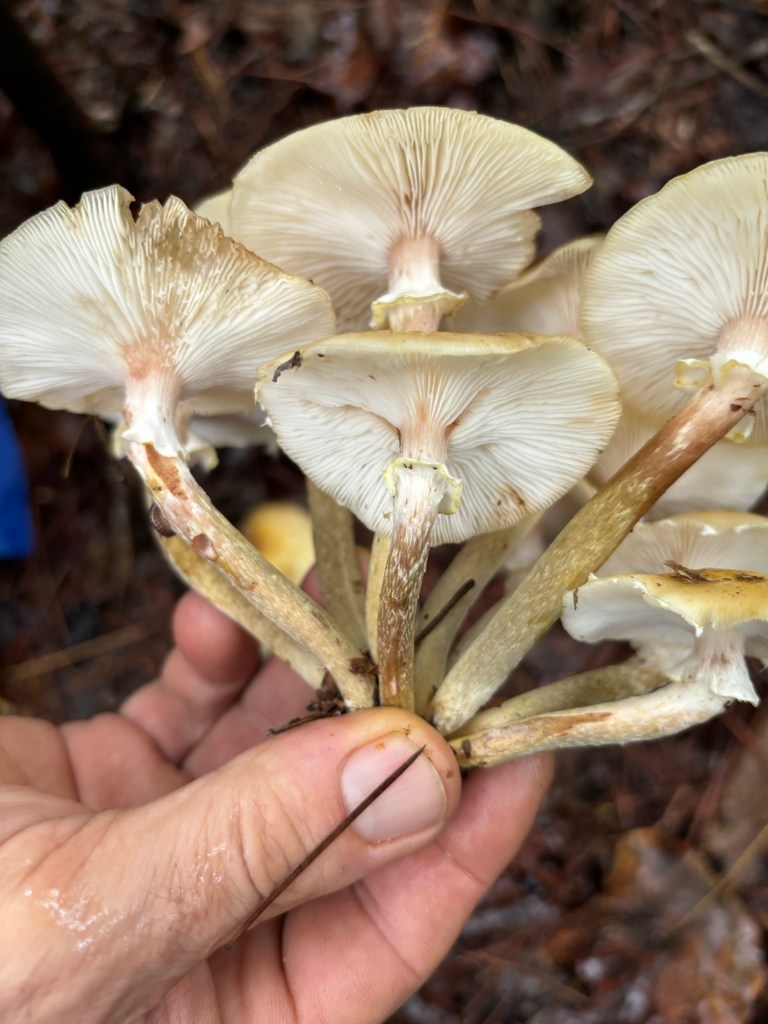
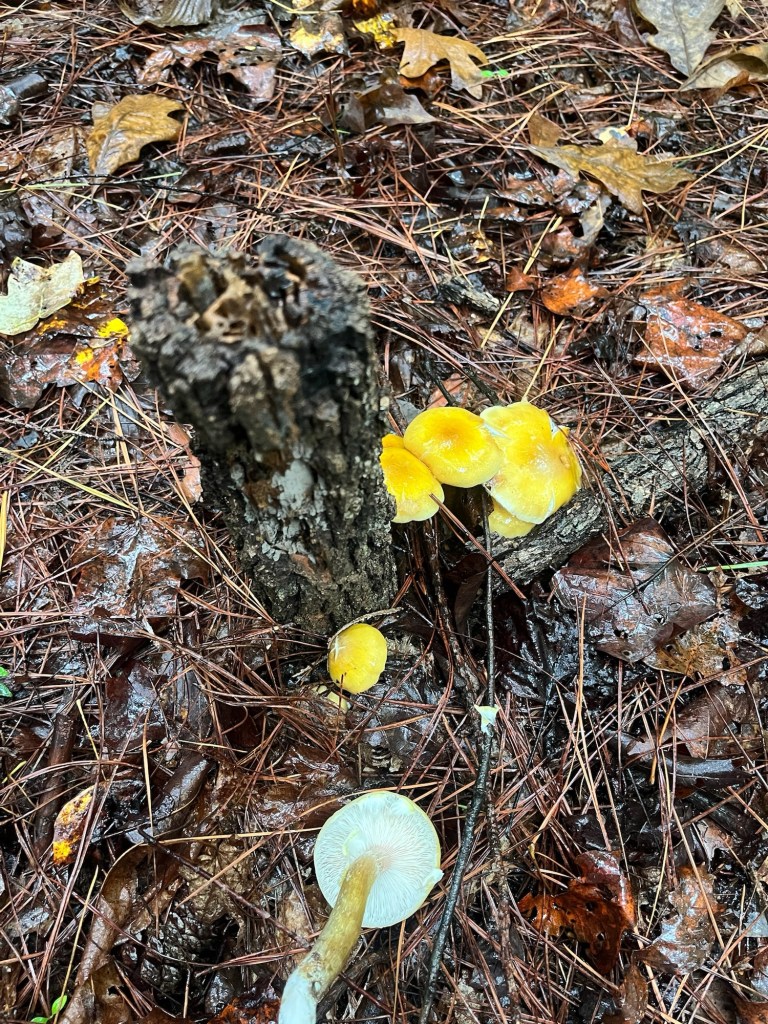
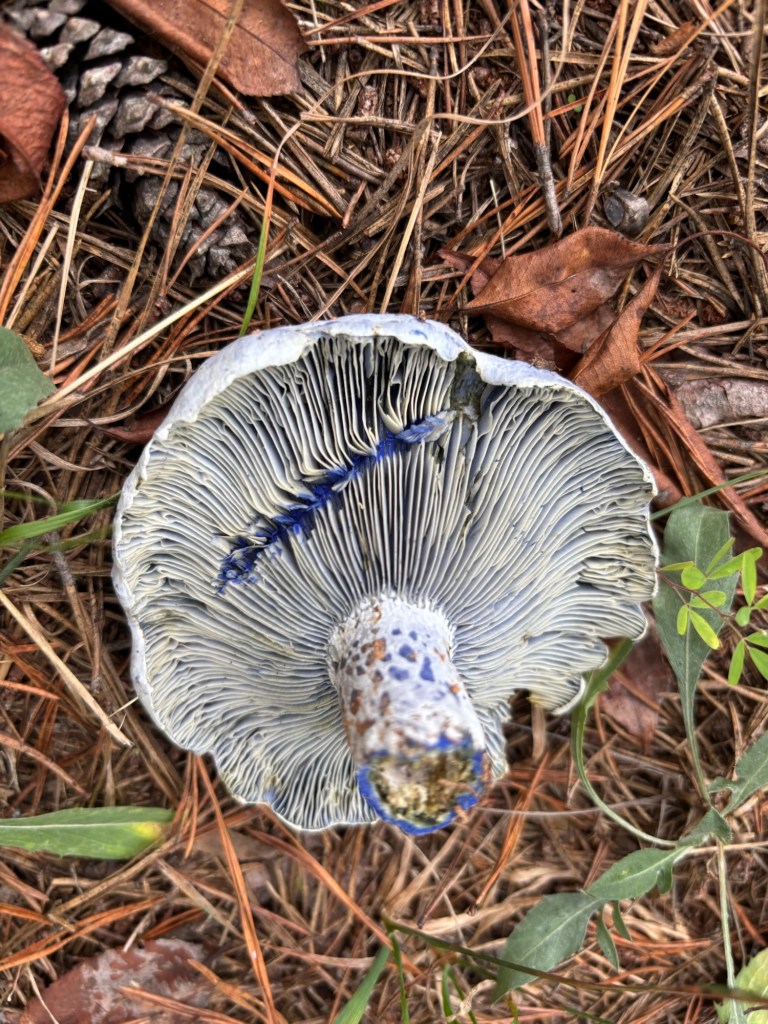
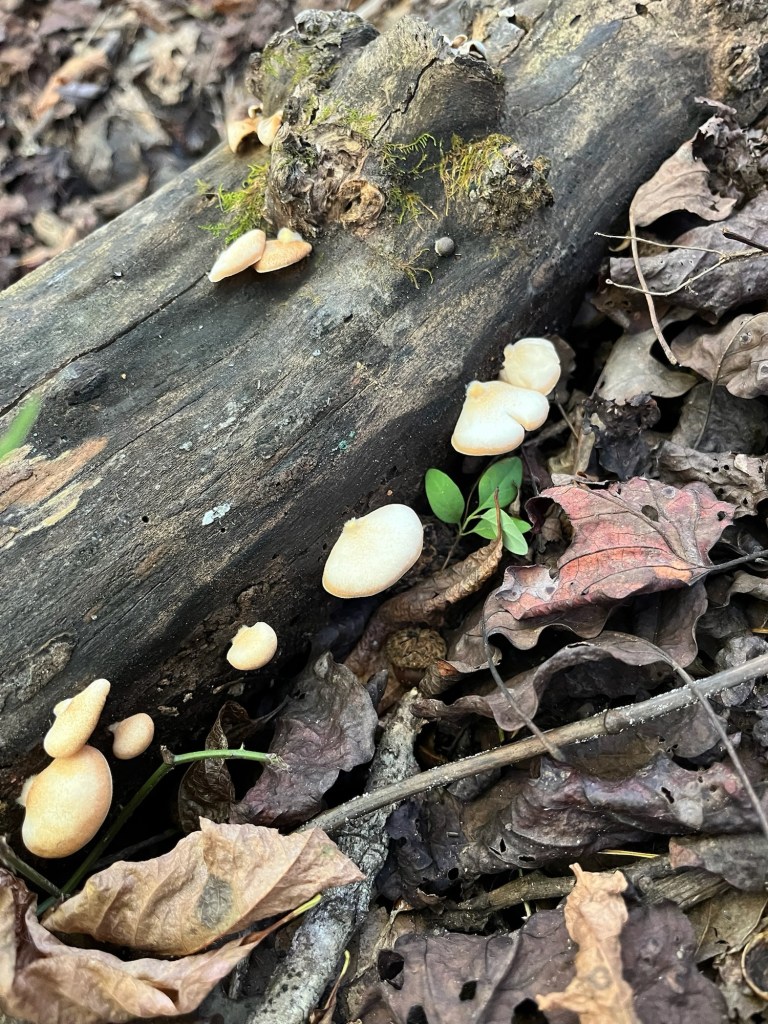
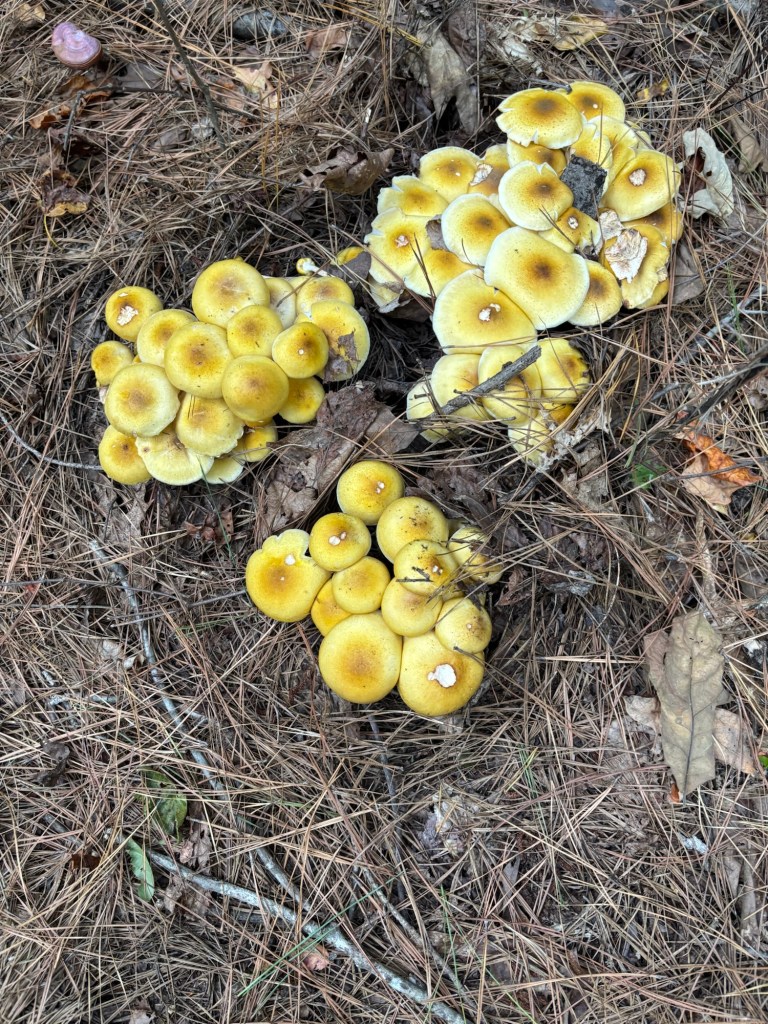
We took a walk in the rain around Saint Andrews Forest Farm yesterday and saw plenty of fungi to our delight. The animals had eaten some of the Honey mushrooms. These are highly nutritious. We were fascinated by the fairy ring of Honey mushrooms up top which showed this Armillaria to be maybe 15 or 20 feet in diameter. Most of it is underground mycelium.
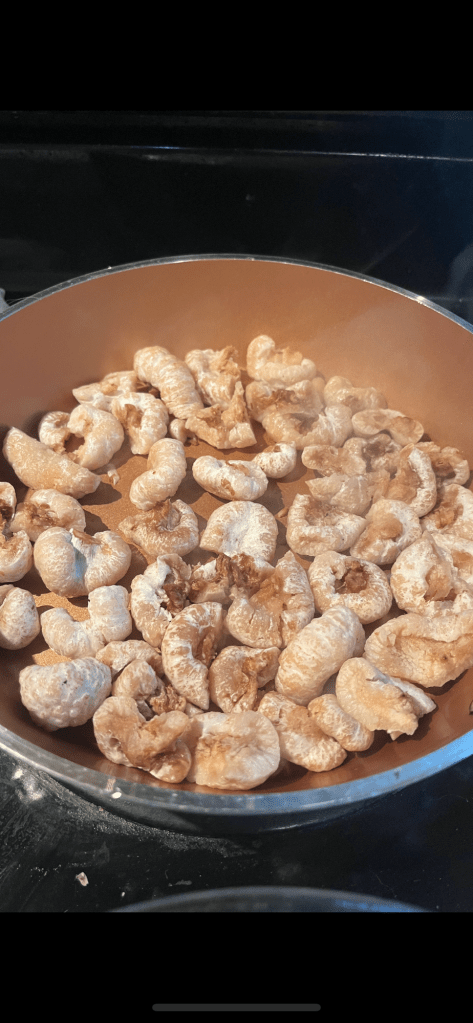
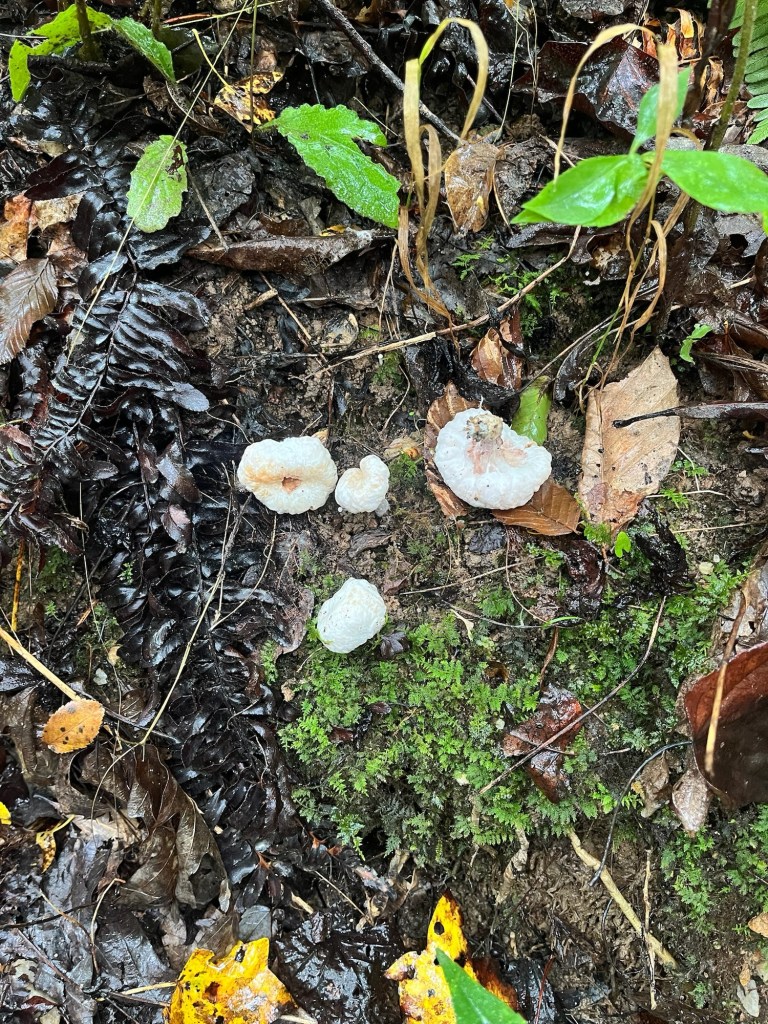
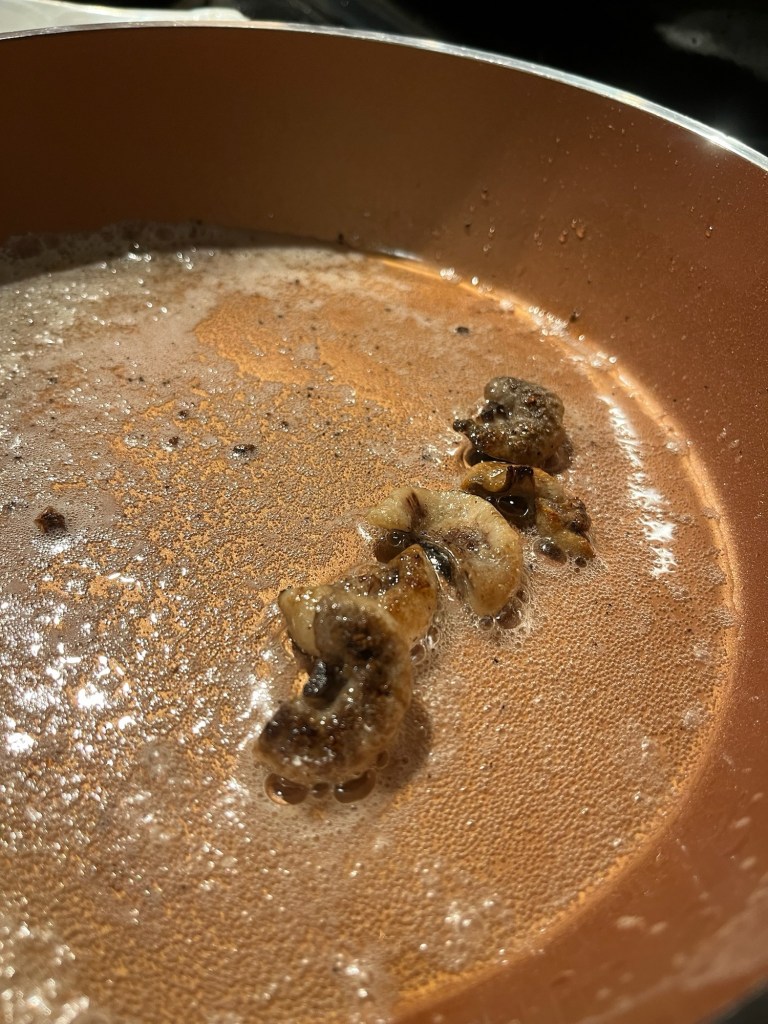
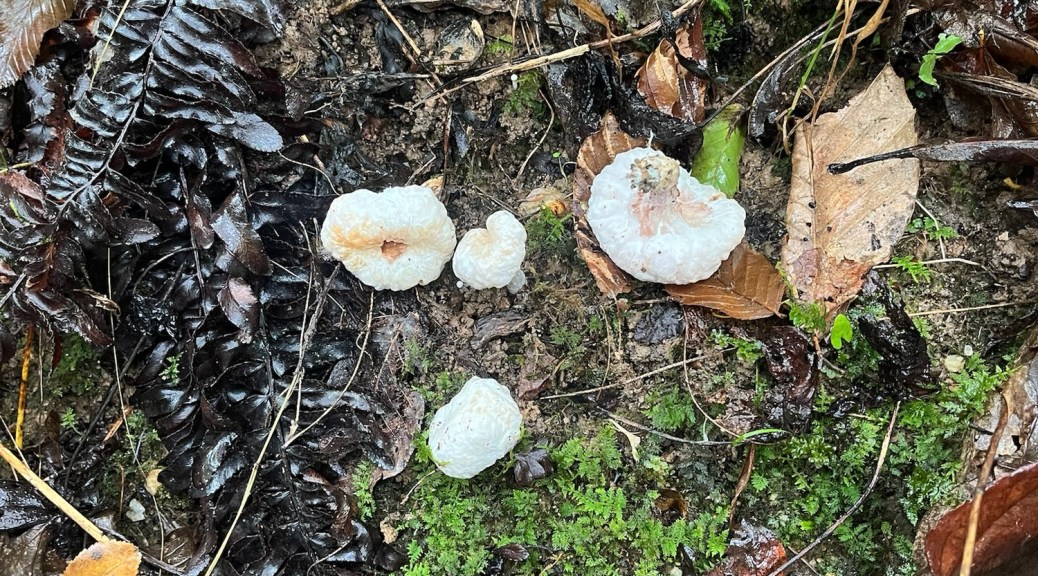
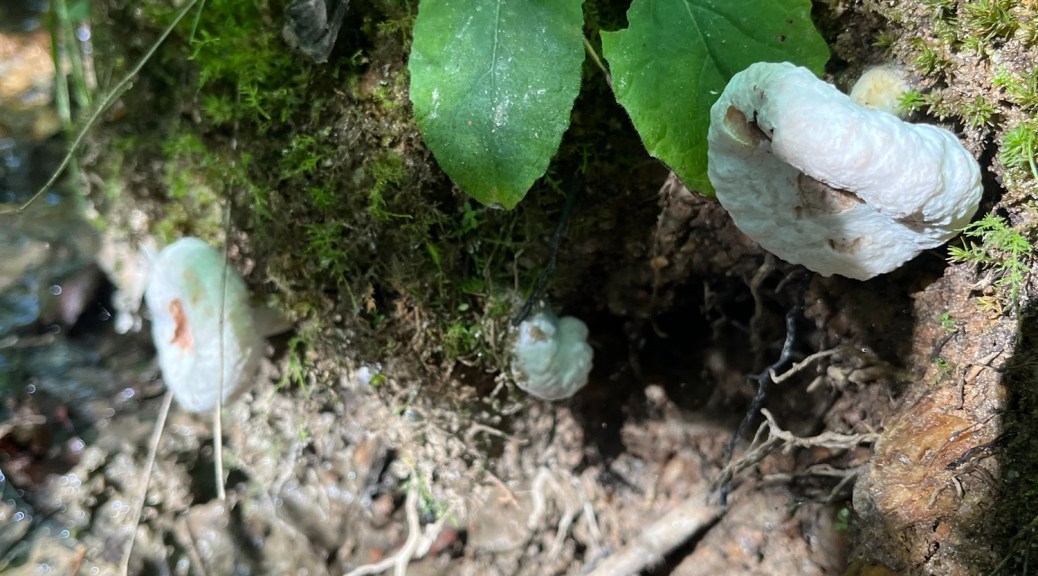
We’d been waiting for these to emerge along with the Entoloma abortivum which are actually honey mushrooms parasitized by Entoloma. Each year they show up together and it is a helpful identification factor. They are delicious and we are having them for breakfast this morning with our eggs.
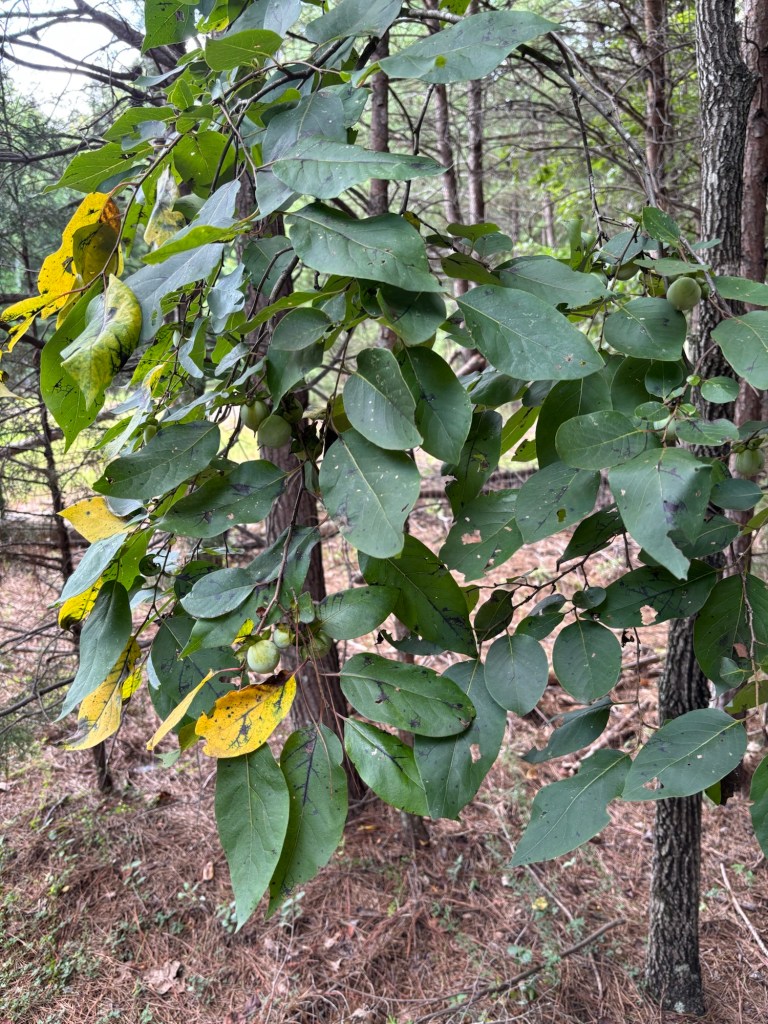
We also found a few more patches of pawpaws growing along the southern wet weather gully! They are easily spotted right now as they are beginning to go dormant for winter as evidenced by their yellowing leaves.
We couldn’t wait to get back out to clear some more trees from the roadway. We used the chainsaw, loppers and the string trimmer to clear out another chunk of the road. This time we made it just past the culvert with the shoe lasts. We were pleased and exhausted. The road is covered with leaves, pine needles and other forest debris so we keep pushing the debris aside with our foot to find stones underneath. It’s a compacted dark gray stone just like our driveway up top. The roadway goes along the northern boundary from the top clearing to the back line near another road. It stretches for acres and gives us truck access to the whole farm. A man stopped by a few weeks ago and said he was a member of the family that owned the property. He said the road ran all around the farm and also mentioned tobacco was grown on SAFF. It’s almost all forest now. We hope to figure out where the tobacco was grown. We’ve been bringing our homemade compost out to the farm to nestle in our new plantings and nourish the soil.
We also checked our lion’s mane experiment right off the clearing. Last fall we inoculated beech logs with lion’s mane mushrooms and yesterday we saw the mycelium creating something that looks like it may be what we hoped for.
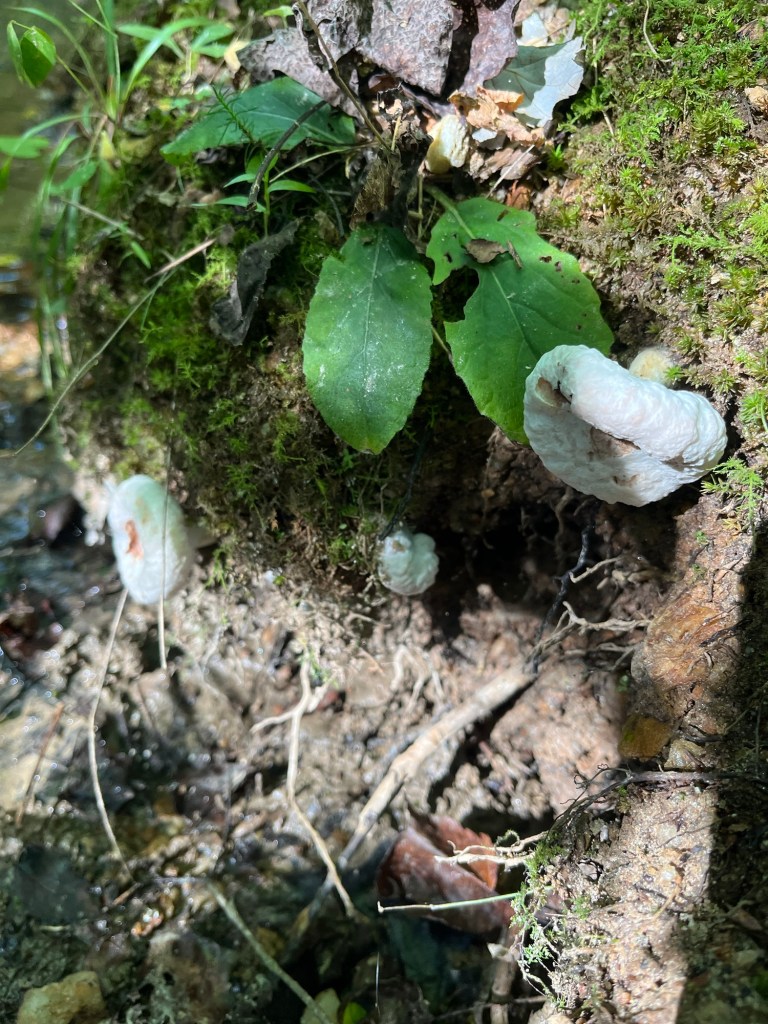
Then we took a walk around and found Shrimp of the woods, Entoloma abortivum, a choice edible mushroom down by the waterway at the bottom in the pawpaw patch. We found it last year in the same spot. These are early and we expect much more with the next rains. The temperature is perfect for mushrooms. We are waiting on rain.
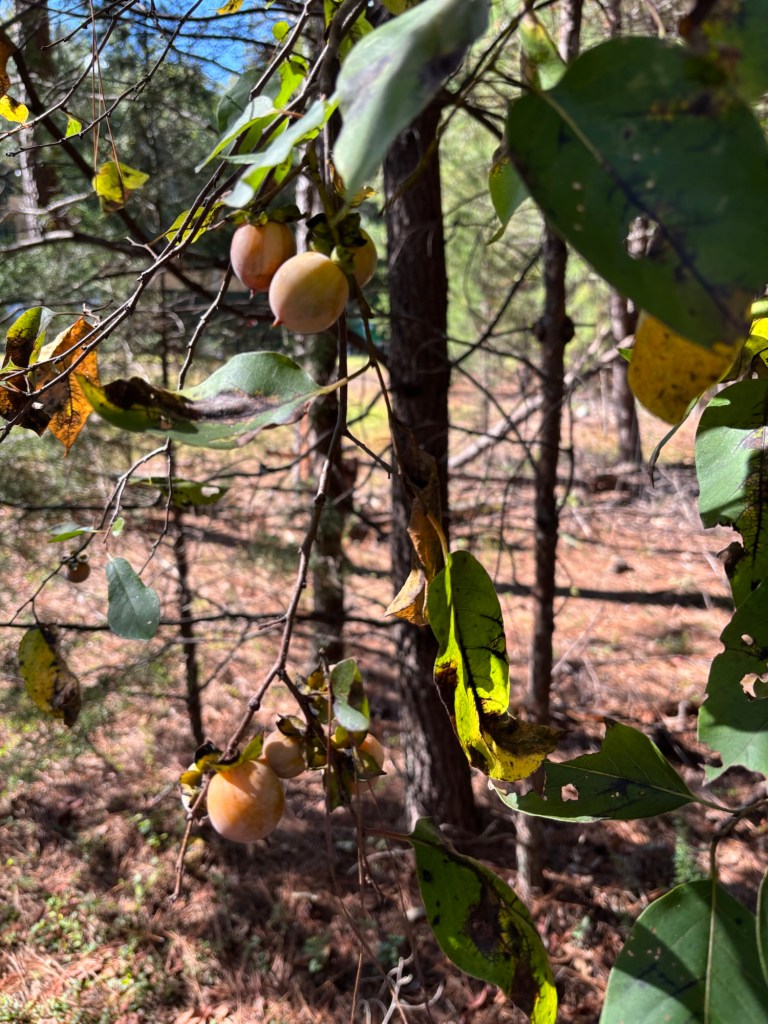
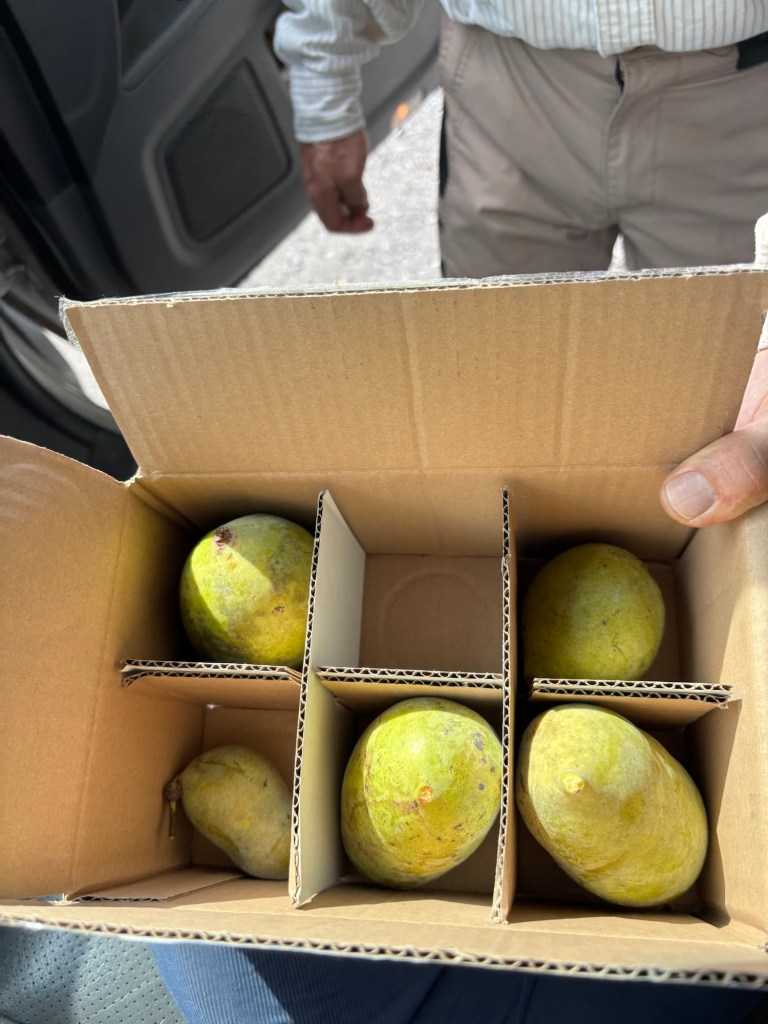
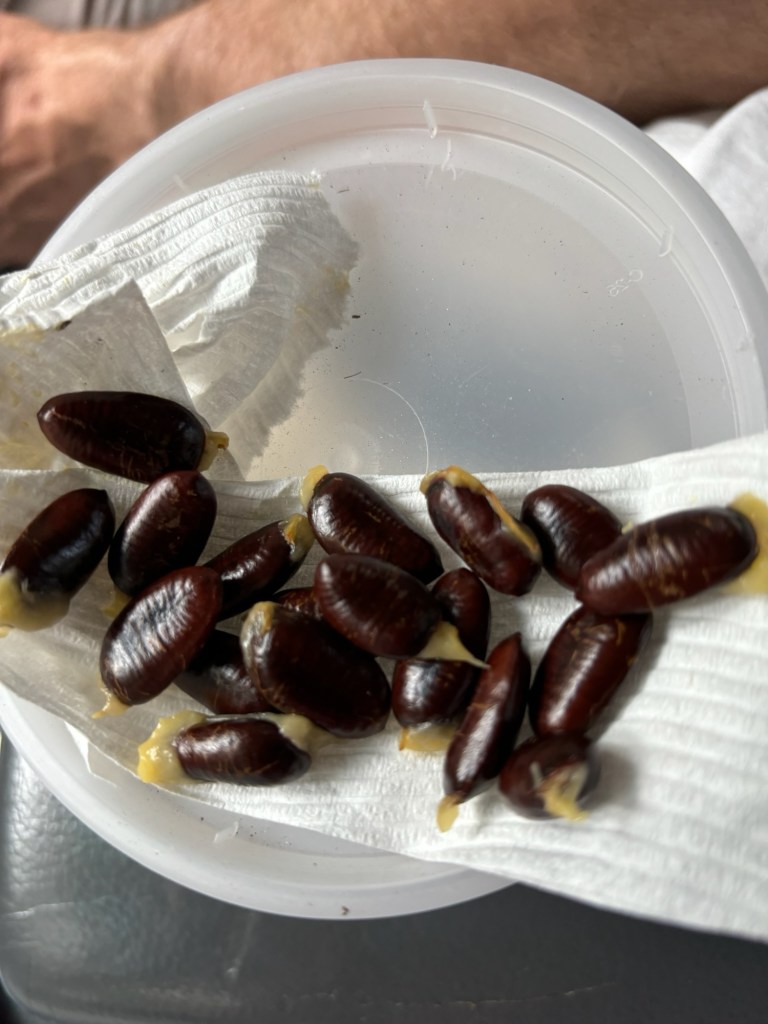
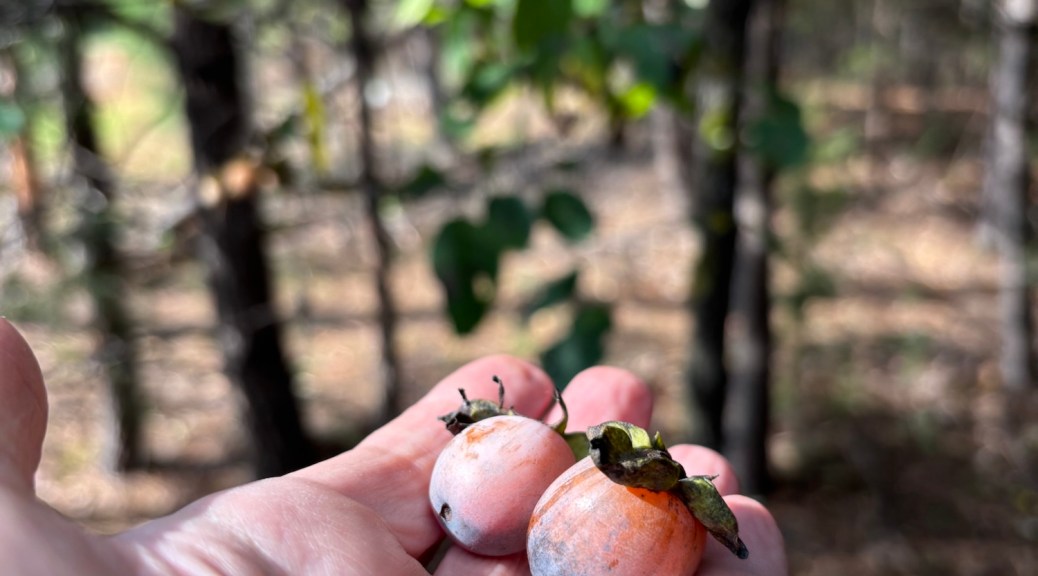
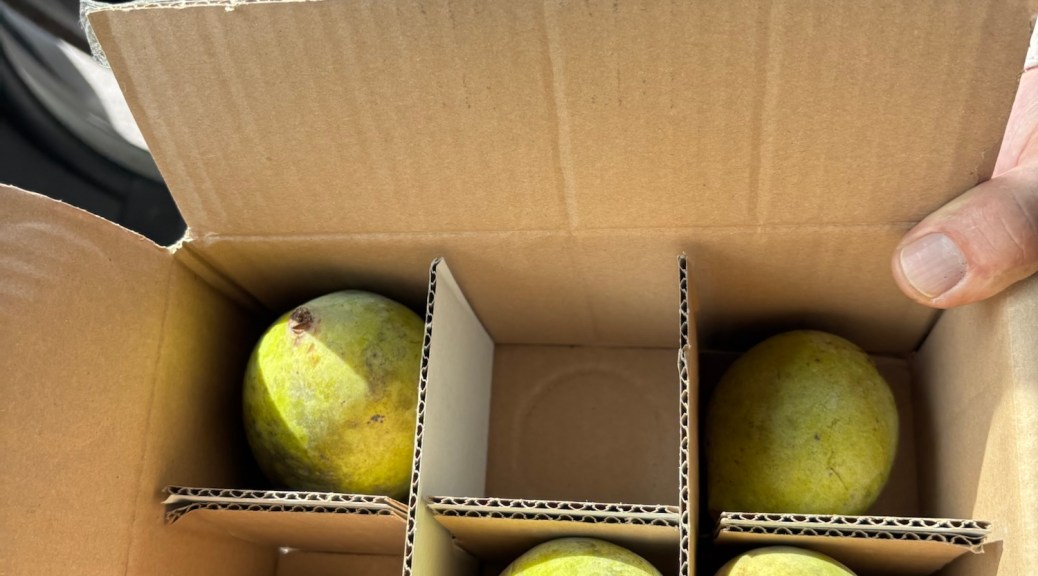
We also continue to forage for pawpaws on public land to and from the farm. We found three more fruits yesterday. Each one has been a tropical delight tasting of mango, banana with hints of caramel and vanilla. Even better, they are full of seeds we are going to plant to further our pawpaw grove and increase production by adding more dna and, in the long run light, to the area.
 Saint Andrews Forest Farm