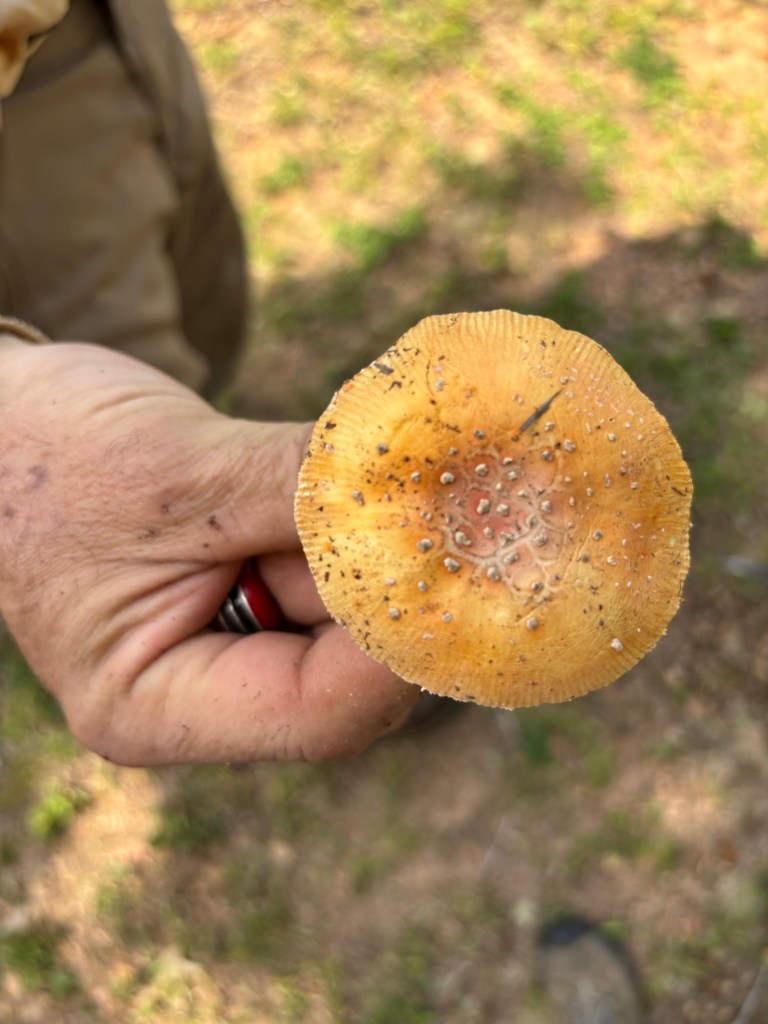
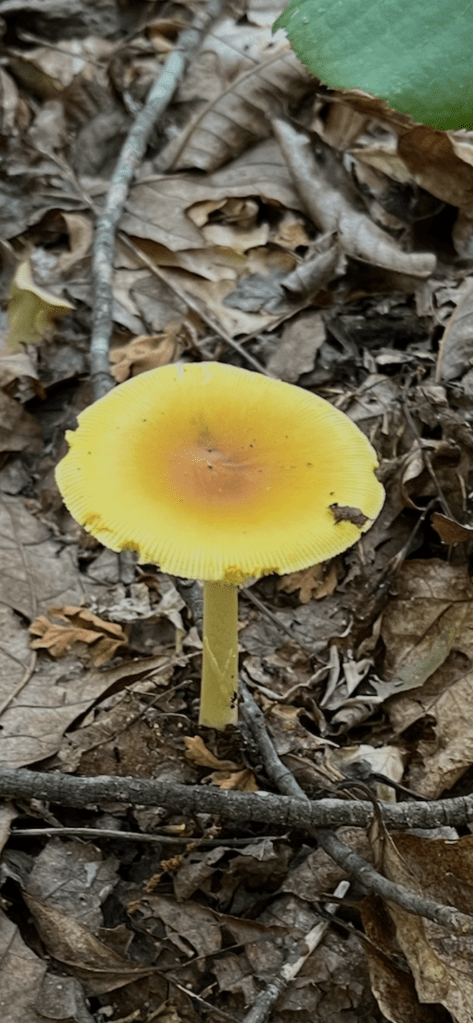
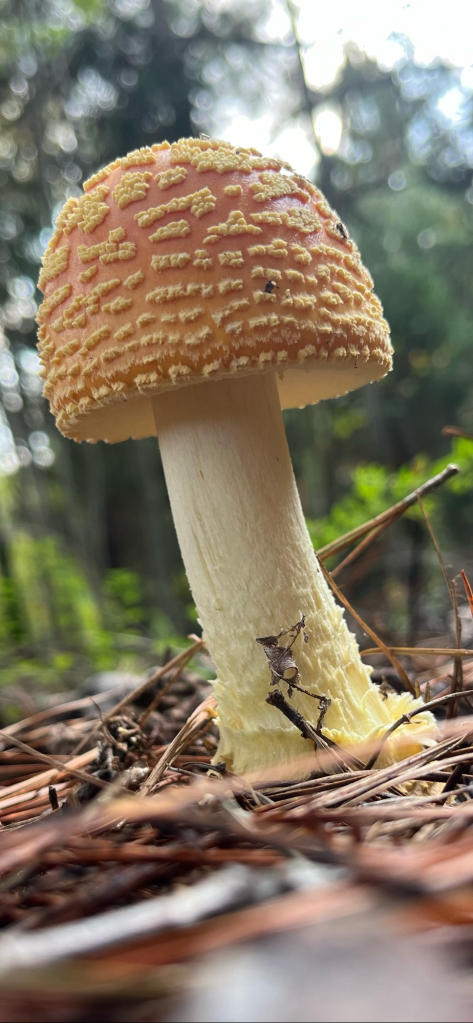
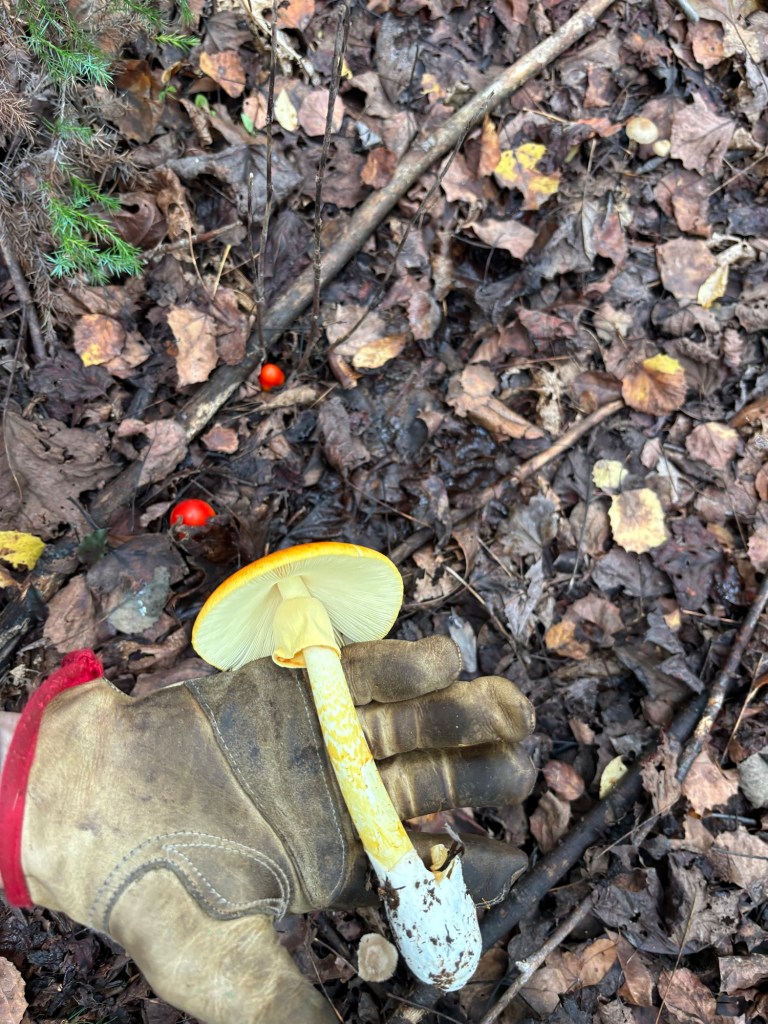
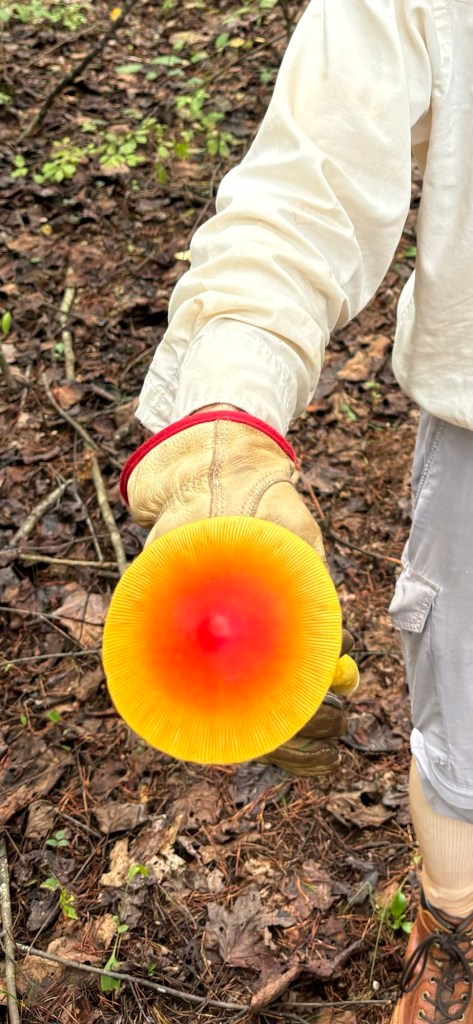
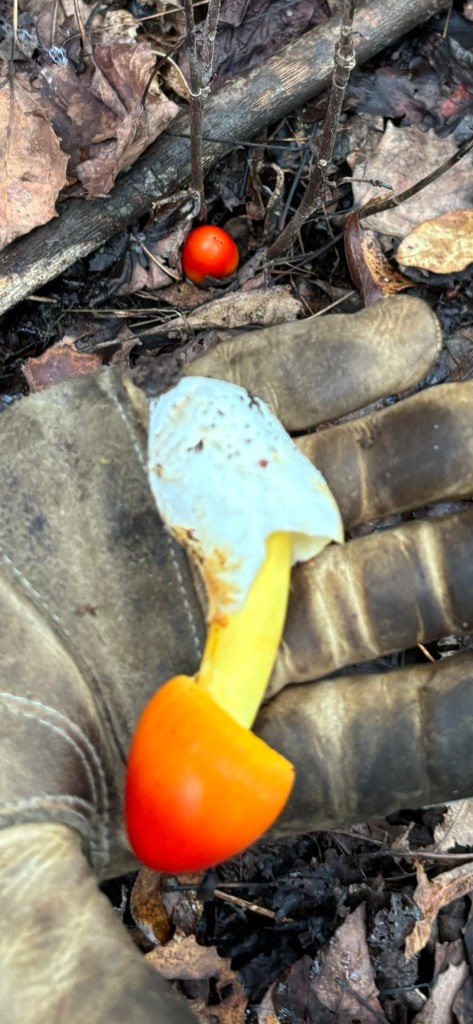
Amanita parcivolvata, the ringless false fly Amanita or False Caesar’s mushroom. This is edible but avoided by many because of its poisonous lookalikes. Amanita banningiana, known as the yellow Caesar or Mary Banning’s slender Caesar. It is prized for its taste but caution is advised due to deadly lookalikes.Amanita canescens, Golden threads Lepidella, grows near oaks. Found up top in the main clearing. Inedible.
What a great day we had yesterday at SAFF. We went over to check out how much rain the farm had gotten. The gauge was at .2 which is better than none. But much less than the 1.9 inches our weather app reported. Nevertheless, we still had mushrooms growing. Even some we hadn’t seen before. It was like a dream come true.
The pawpaw fruit in the old clonal colony is getting bigger. We are planning a trip to see what pawpaws are doing in our foraging spots along the Rockfish River soon.
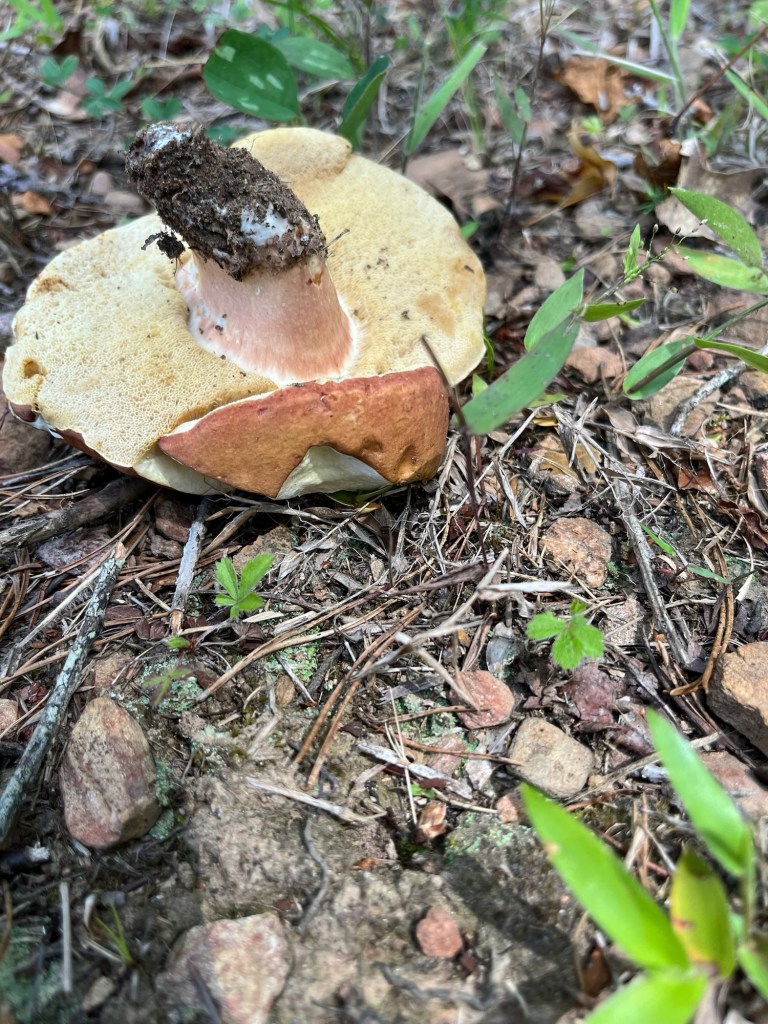
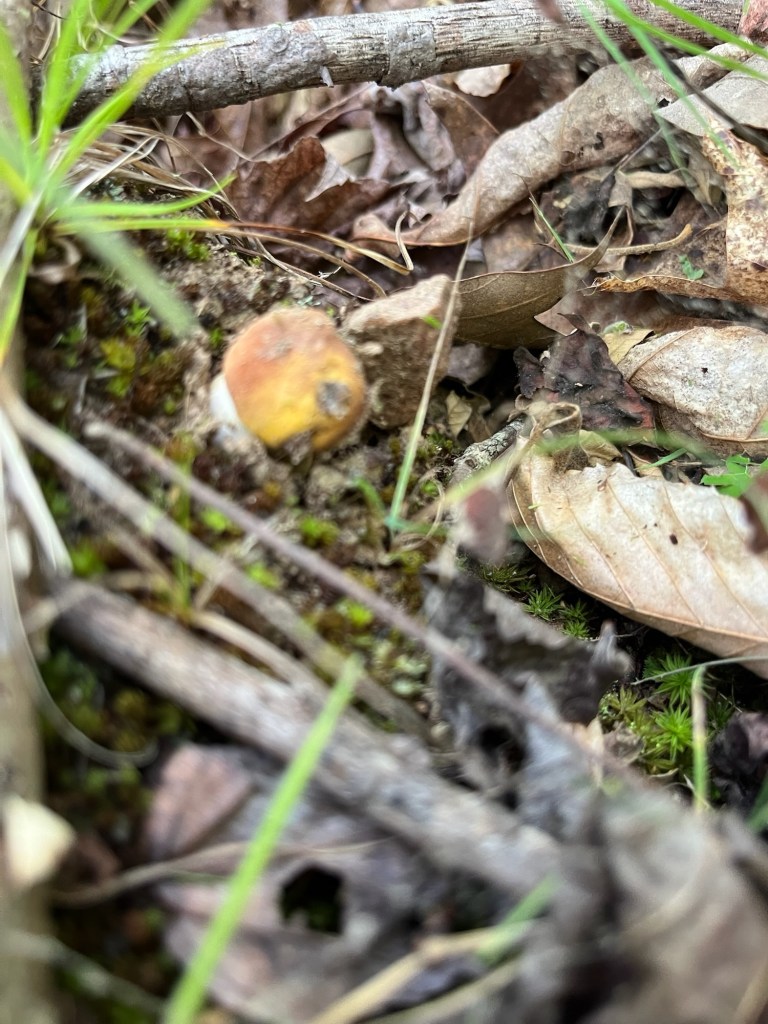
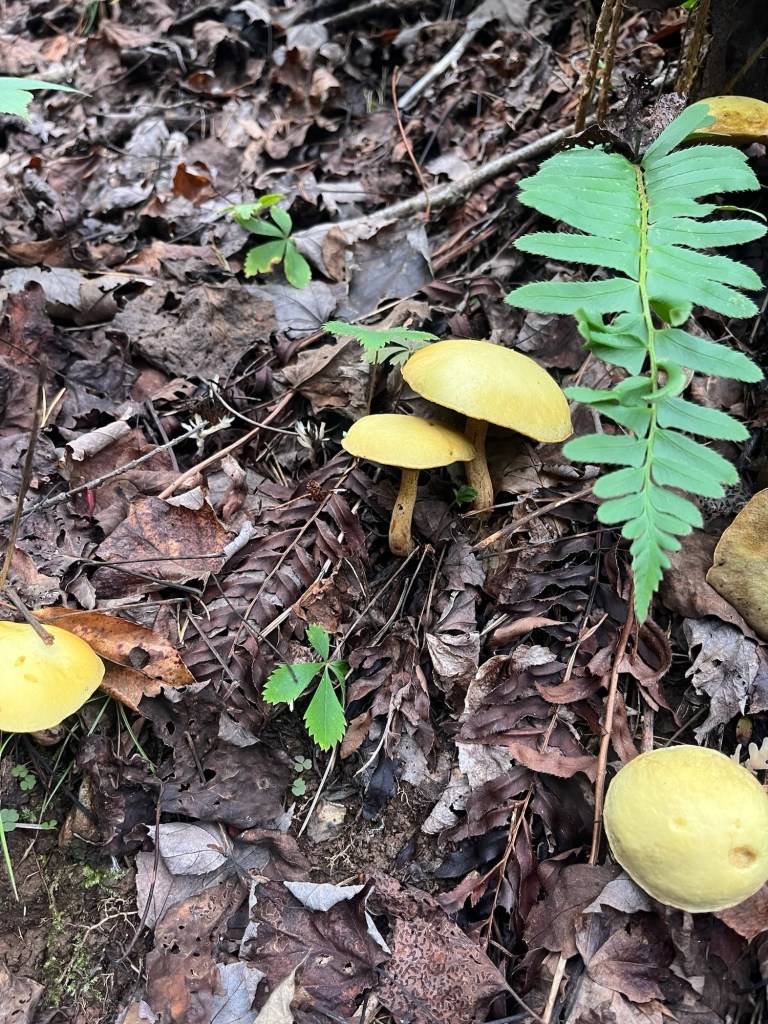
Xanthoconium purpureum, found growing under an oak up top in the main clearing. It’s edible although this one has been claimed by bugs. Small bolete popping up on Chanterelle Trail we hope to see mature.
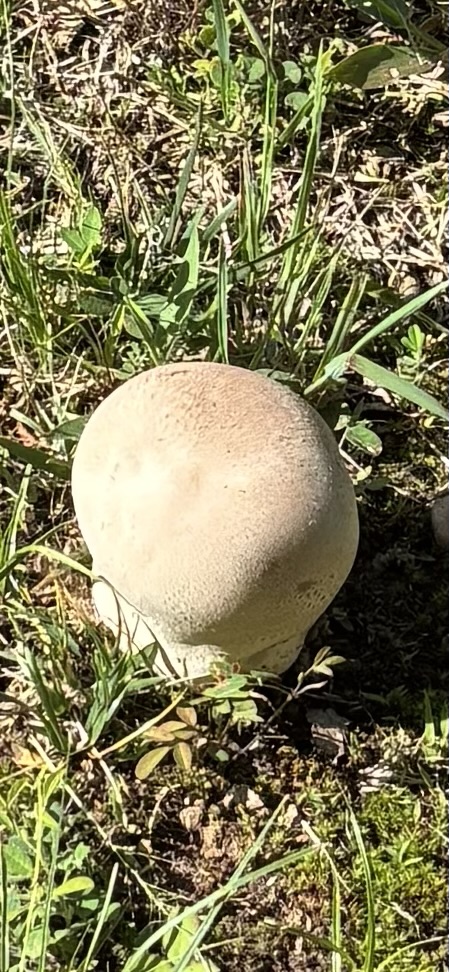
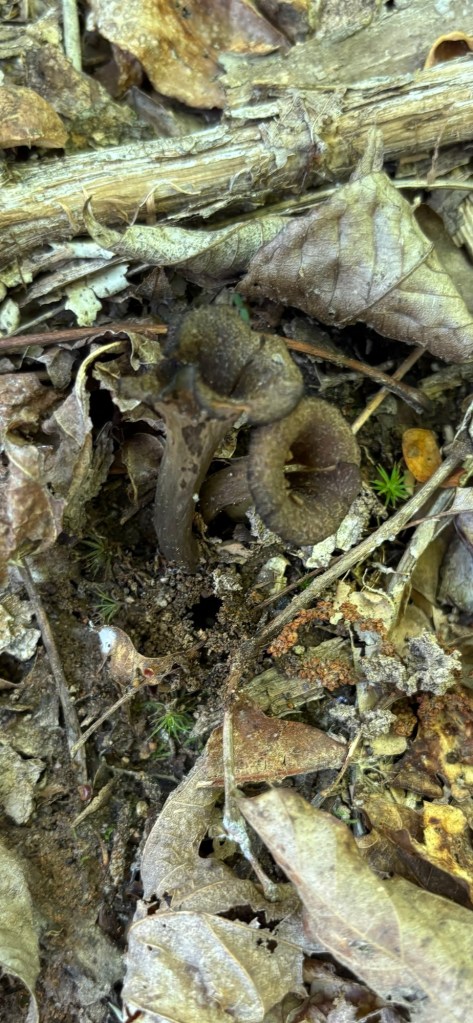
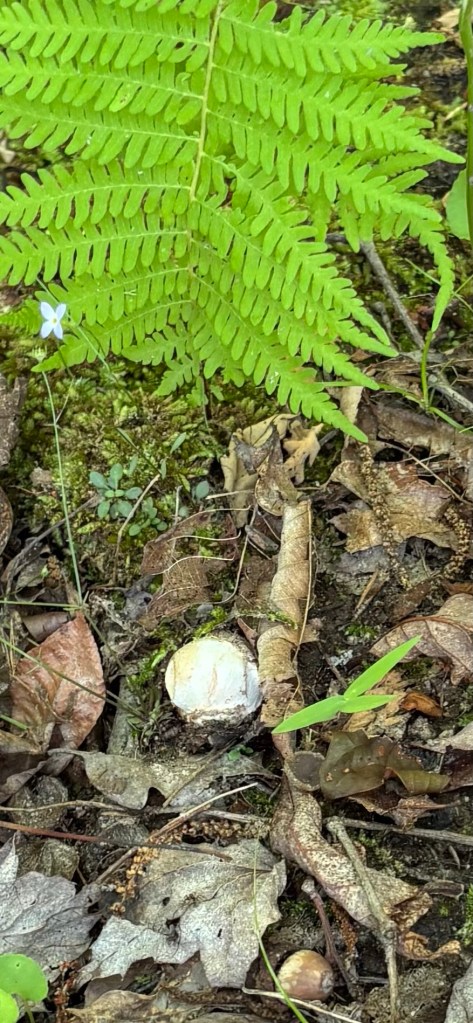
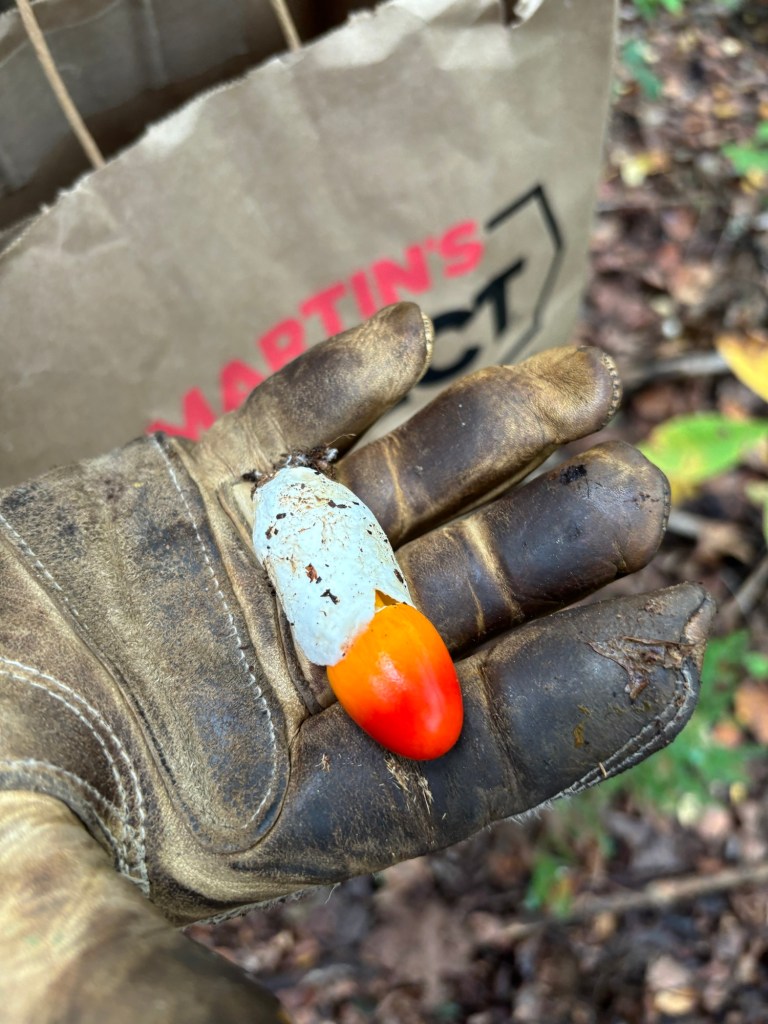
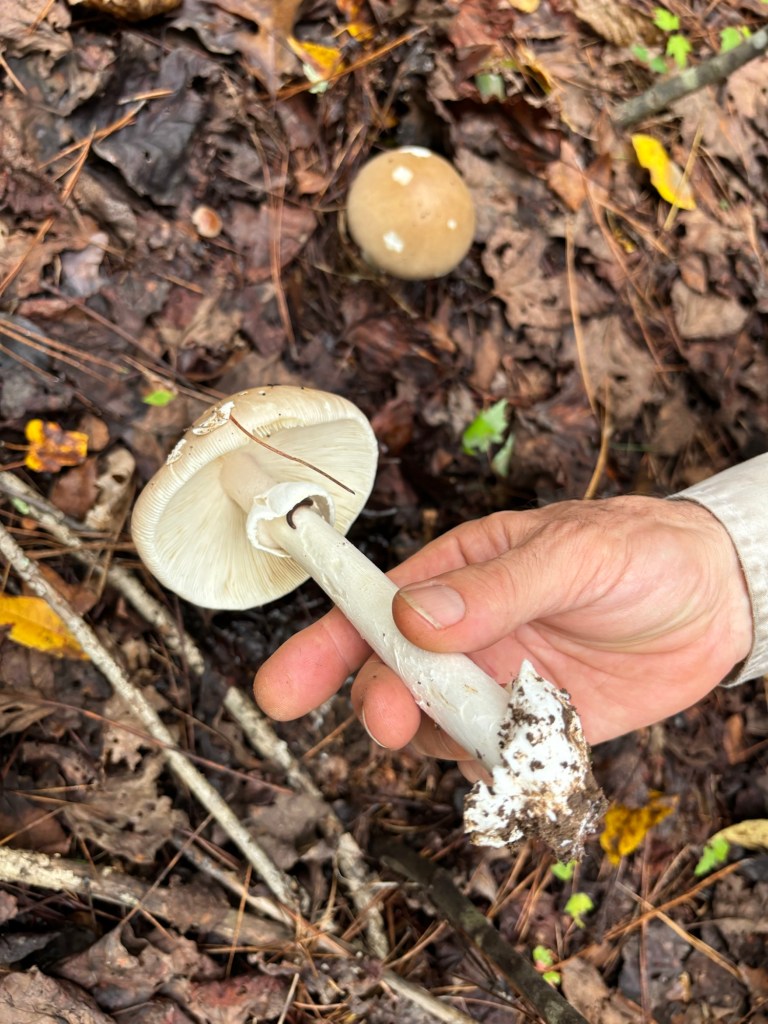
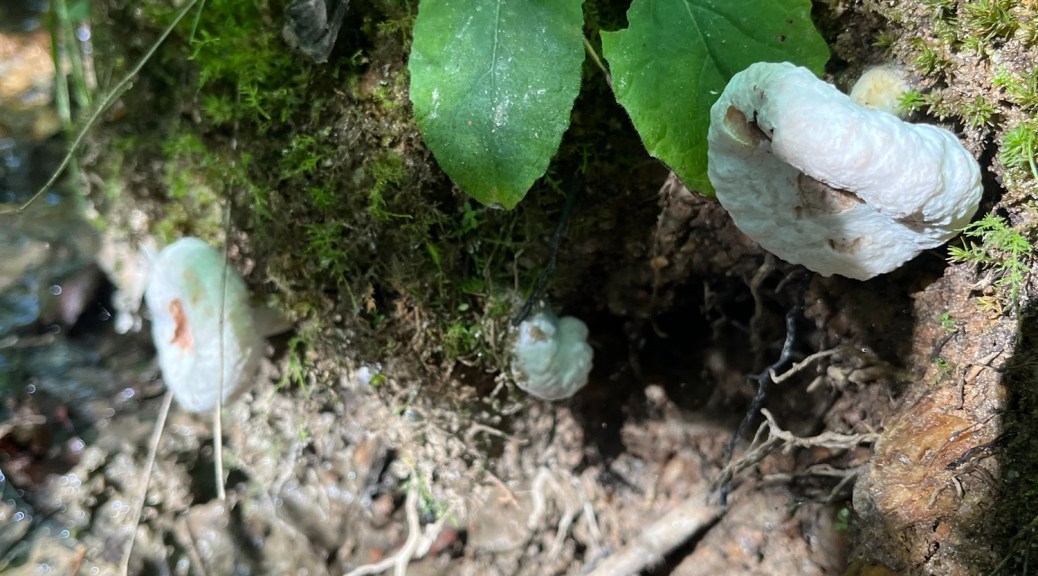
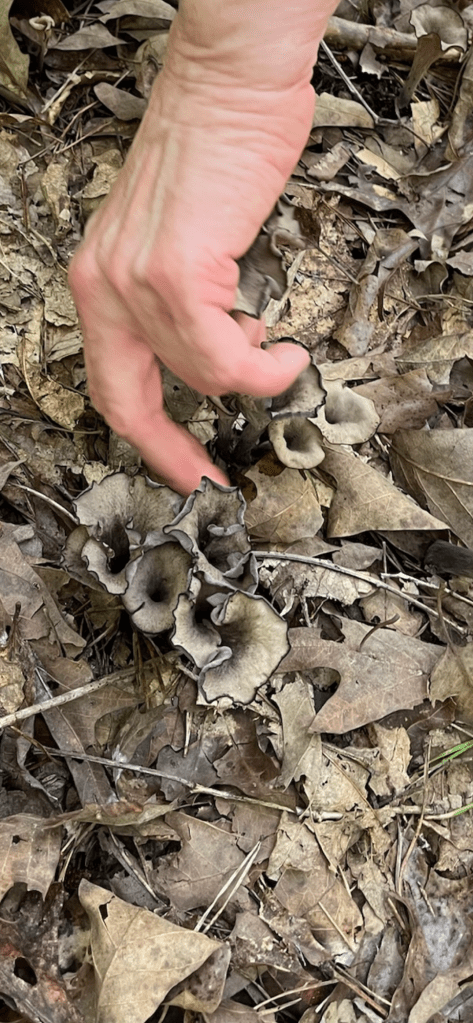
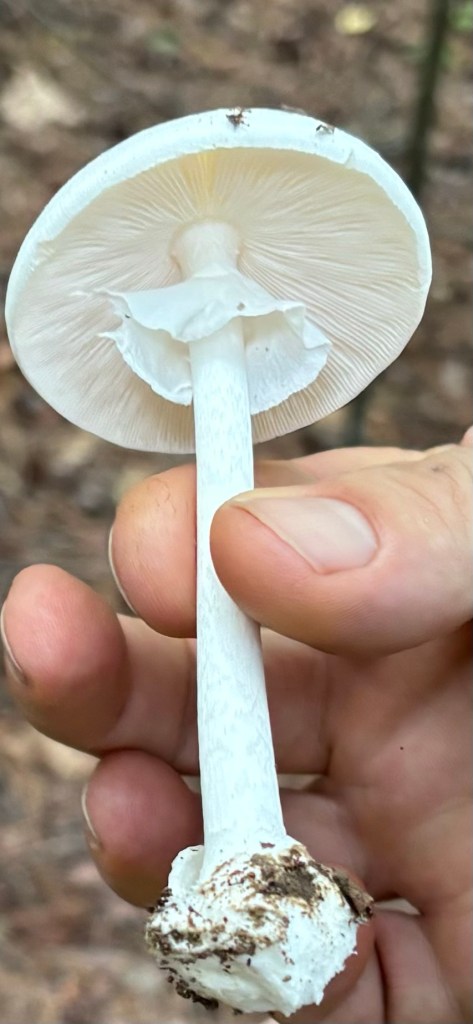
An edible Calvatia cyathiformis, Purple spored puffball, found at the top of Red Hawk Road on Saturday. We brought this home to slice and make mushroom pizzas by adding tomato, cheese and toppings.Craterellus fallax, Eastern black trumpet, found on the south set back line. Right on Black Trumpet Way near the base of an oak on Sunday. We left them to spore and hope to catch others in better shape to eat next time. We found another patch along the waterway and also left them to spore. They are excellent-tasting with eggs as well as highly nutritious.Right along the main waterway, it appears to be an Amanita completely enclosed in a sac-like membrane called the universal veil. The identity will be revealed as it opens. We hope to catch it as it develops. We are careful with Amanitas because of the dangers of eating any mushroom without identifying it. This truly is a class of fungus to know how to identify as it includes the several of the most toxic. However, it is only dangerous to ingest which we will not be doing. ☺️
The weather has been wonderful. Mid-seventies and sunny the whole weekend. We spent afternoons at the farm Saturday and Sunday. We got plenty of chores done and enjoyed our walks around the forest. The rain gauge showed another inch and a third on Saturday—so with the last storm in May we got 4.35 inches! What a relief and gift. The mushrooms are showing up all over to our delight. It’s been such a long time! Seeing the puffballs, chanterelles and black trumpets this weekend was truly joyful. The vibrant colors and familiar shapes were a sight for sore eyes. The lushness and green of the forest has settled in after the rains as well making everything pop with lime, chartreuse, Kelly and neon greens. The old clonal colony pawpaw patch is all leafed out with the big drooping leaves and the two fruit continue to develop. 🤞
We leaned some of our metal roofing sideways against the tiny house for now which has stopped the water from getting in around the door and the back side. We are grateful for this temporary fix, as we continue to collect supplies and plan our front porch and covered back deck builds which will be a part of our permanent solution to the water problem.
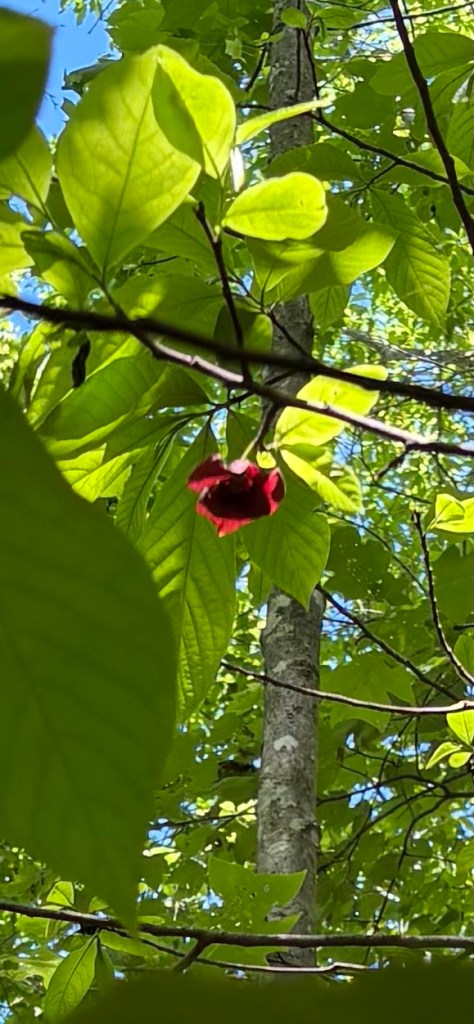
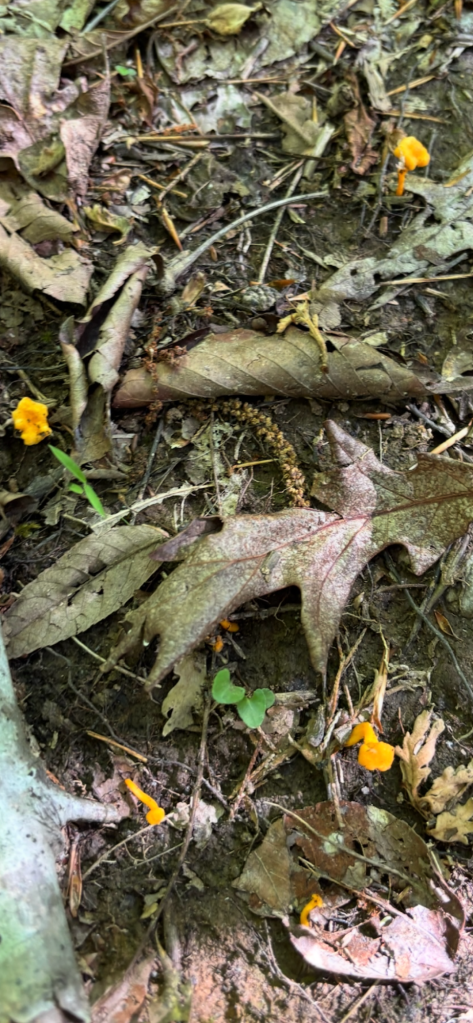
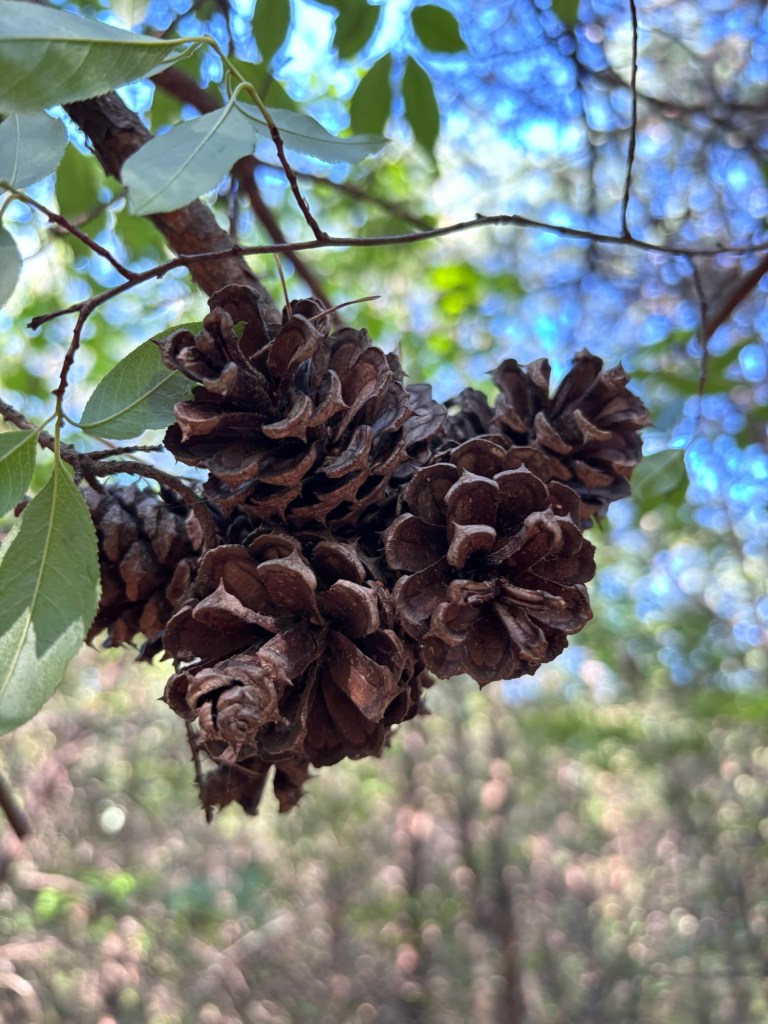
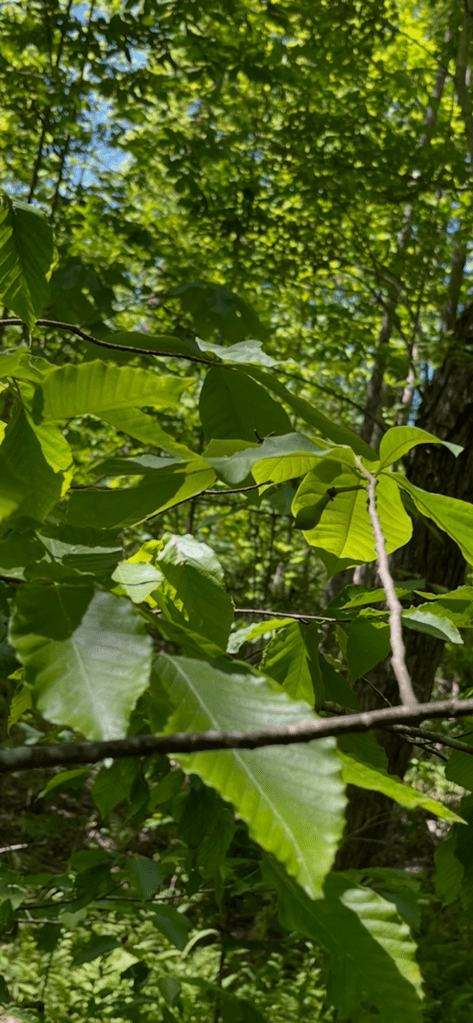
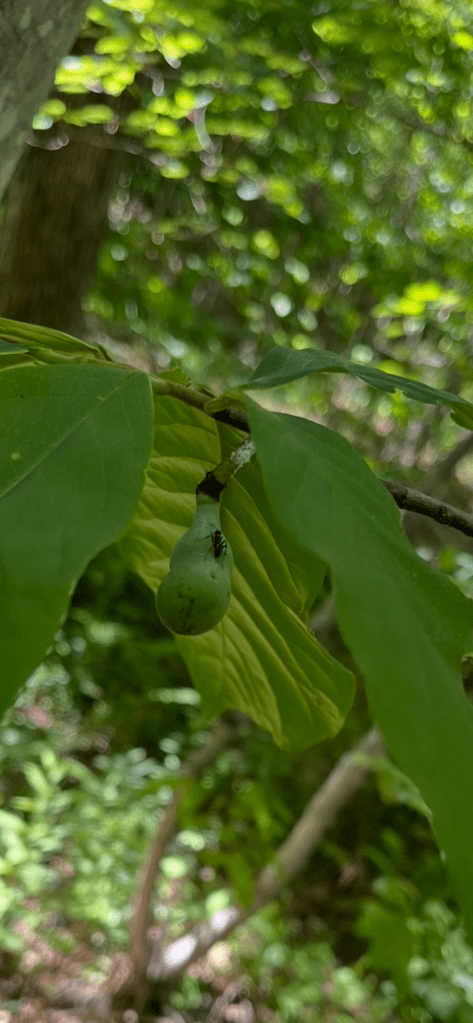
Asimina triloba flowering still at SAFF old clonal colony patch. Ipomoea pandurata, wild potato vine, a vigorous native perennial vine with large white funnel shaped flowers and a massive starchy tuber that can weigh over 20 pounds. We found it along Orchard Hill Road near the new Pawpaw patch with the seedlings and cultivars we grew and planted last fall. Tiny developing small chanterelles, Cantharellus minor, along the bottom waterway trail. Pinus virginiana, Virginia pine cones protecting the seeds. They will open to release them in warm dry weather and close when exposed to moisture. Asimina triloba leaves and developing fruit. The other pawpaw fruit with an ant and a white waxy substance on the peduncle. This is mealy bugs, Flatid plant hoppers or Woolly aphids, or their egg sac. They will cause premature dropping of the fruit or other damage. We will get this off tomorrow when we are out next.
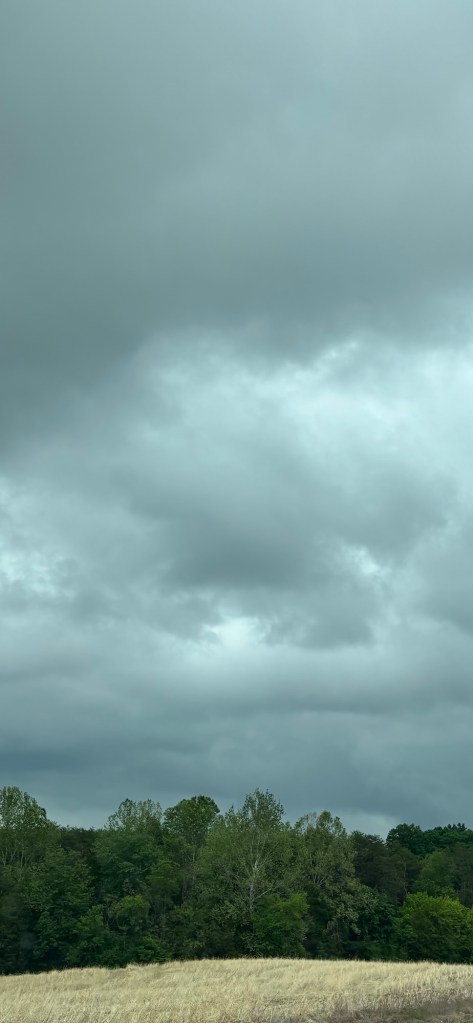
As we drove up to SAFF yesterday, we saw that it was raining from a distance.
SAFF had another tenth of an inch of rain when we arrived and .25 fell while we were there. So altogether now SAFF has had a little over 3 inches since last week. The rain was heavy at times. The plants were glowing.
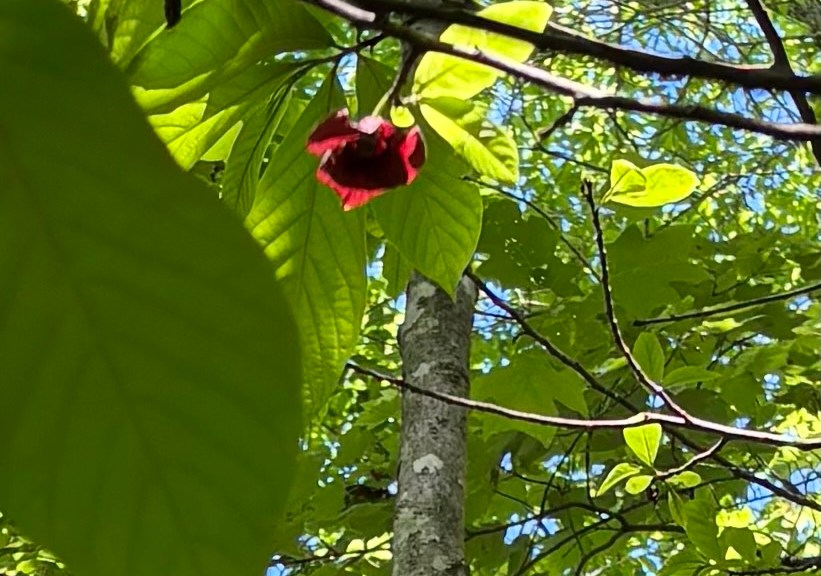
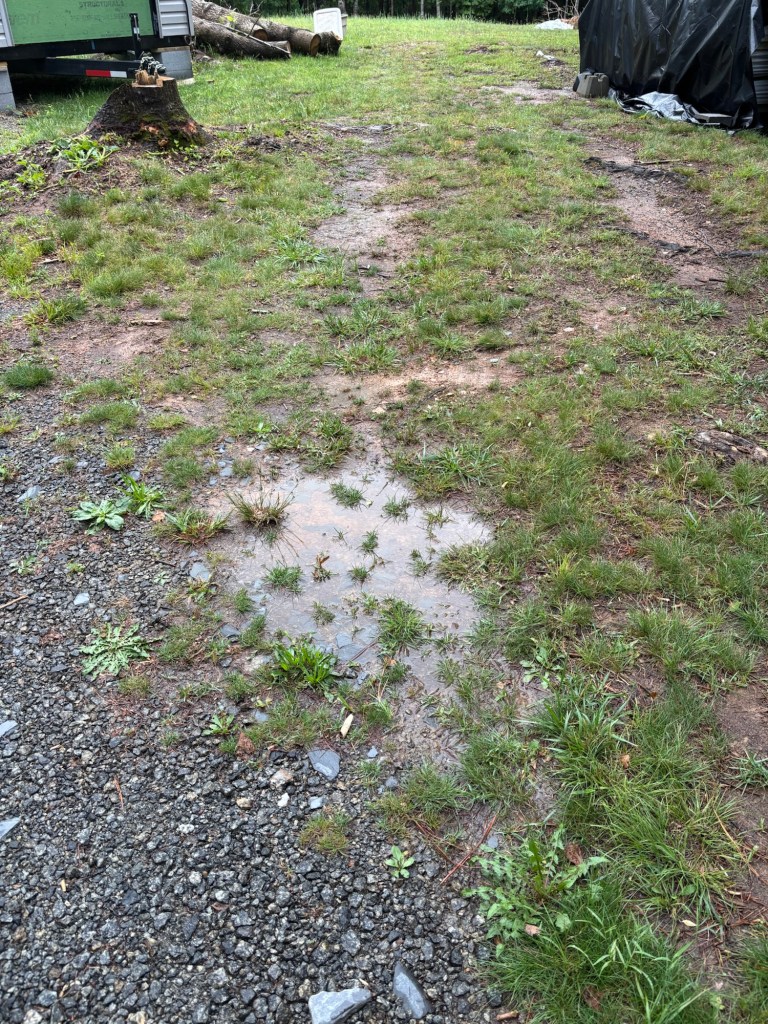
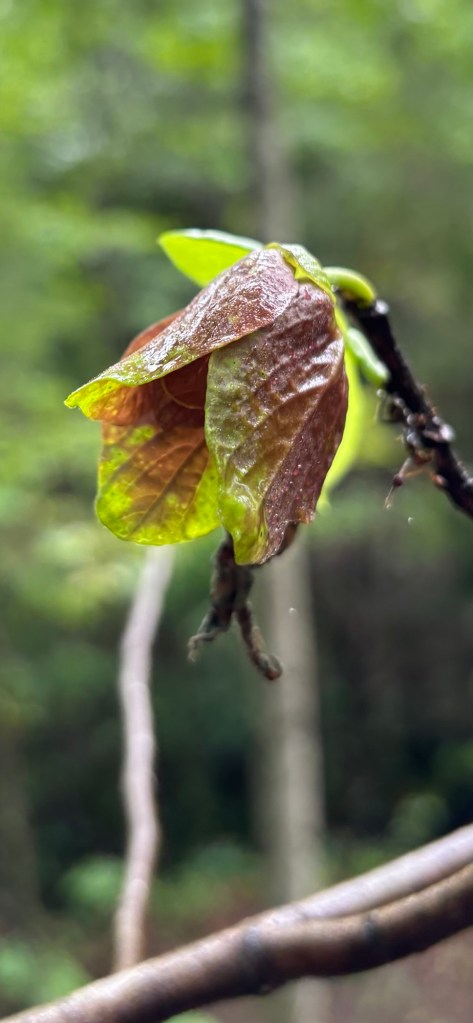
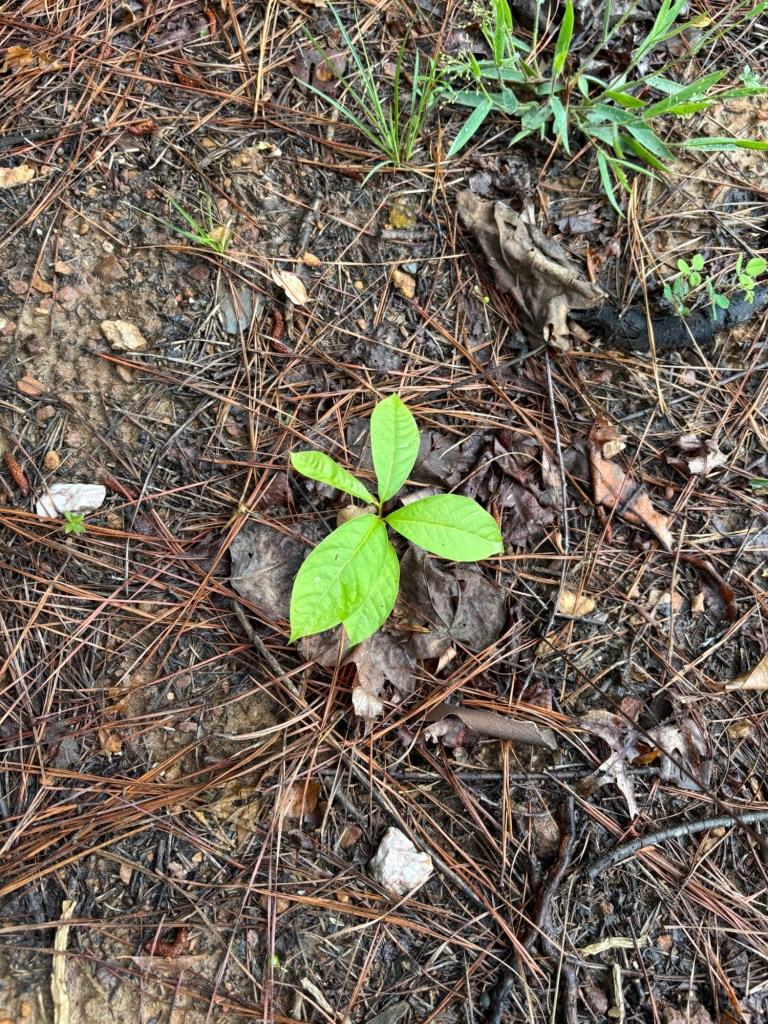
The native seedlings we planted last year are doing well surrounded by their nursemaids/nitrogen fixers. They will stay in the shade until they reach 2 1/2 feet tall. At that point, full sun will be most valuable for them in order to thrive and produce fruit. A native seedling we planted up top near the driveway and main clearing. Water puddle collecting in multiple spots up top even.This Asimina triloba is a SAFF native growing at the tip of the Pawpaw Peninsula. Along with a few others in the main colony, we have observed a secondary bloom. This occurs when the first bloom is damaged by frost. This picture shows the frost damage still apparent next to the bloom. Another native Asimina triloba seedling we planted up top near the driveway last fall.This tiny native seedling was damaged in the frost as well and is just resprouting leaves. The rain is the best thing for healing!
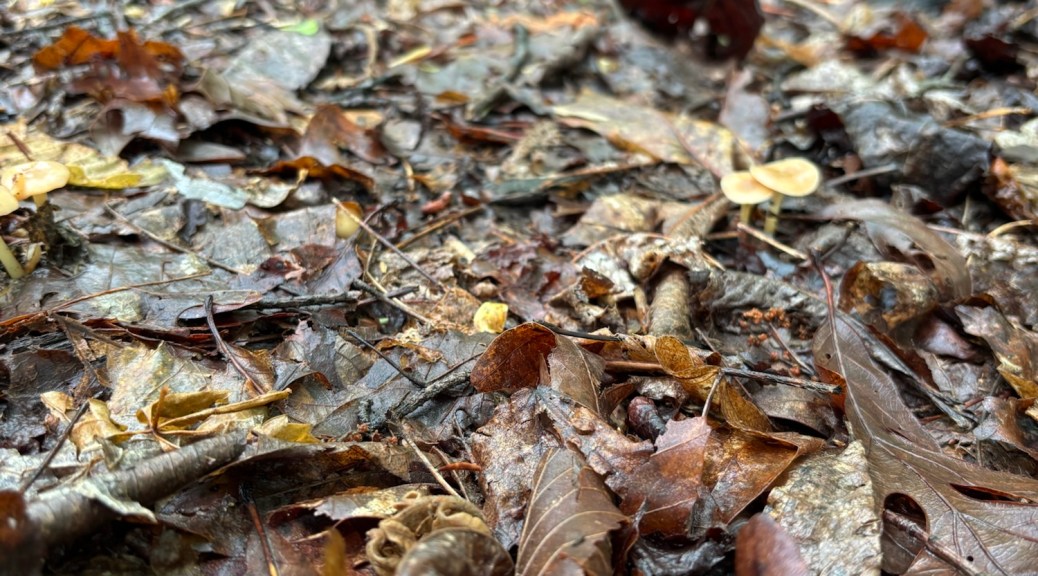
More rain is expected this week and temperatures will be in the 80’s. We can’t wait to get back out there and look for mushrooms. So far, we’ve seen a lot of the Gymnopus. Little brown mushrooms are dangerous unless you’re really knowledgeable. We are looking for boletes, chanterelles, black trumpets and milk cap mushrooms that are easily identifiable and have no poisonous lookalikes.
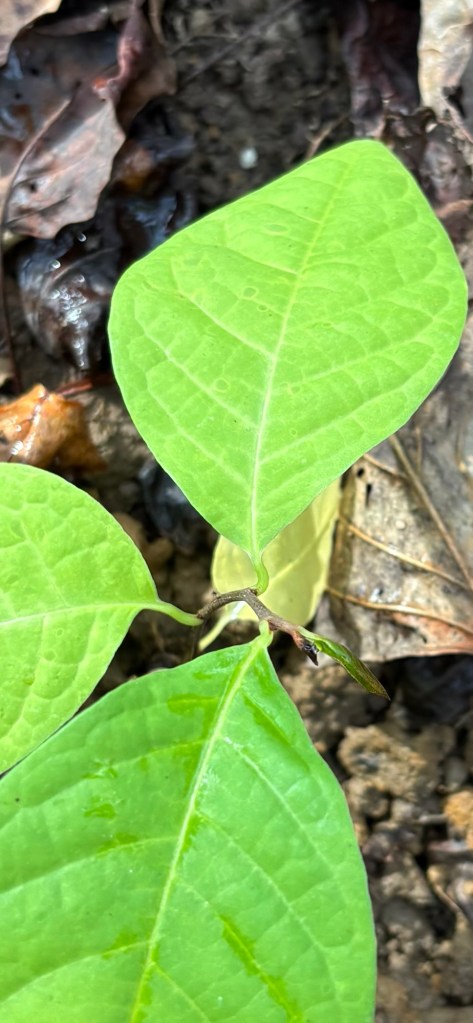
Asimina triloba: New leaf growth observed on a recently planted Rockfish River native pawpaw in the orchard at bottom of North Trail. This was beautiful to see. Hopefully it will be able to harden off before the first frost which typically occurs between October 21st to 31st in Buckingham.
We went over to St Andrews Forest Farm to water the pawpaws and take a walk.
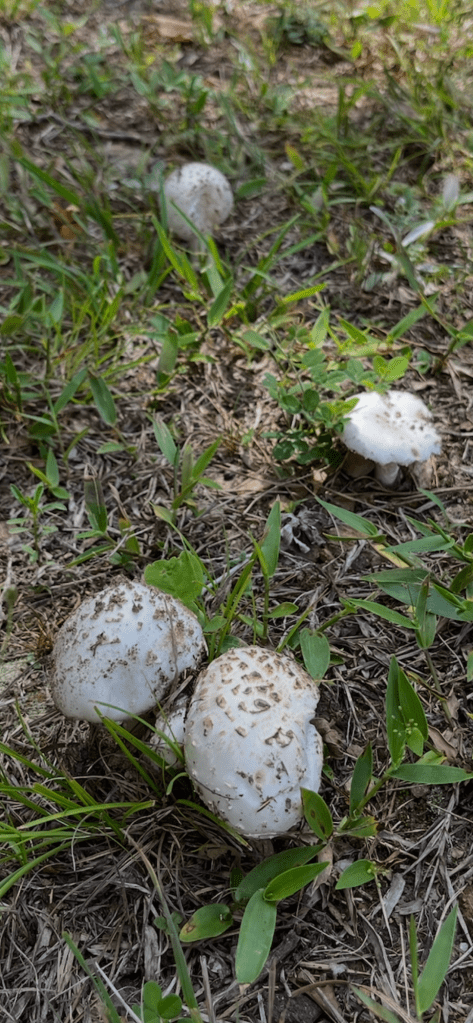
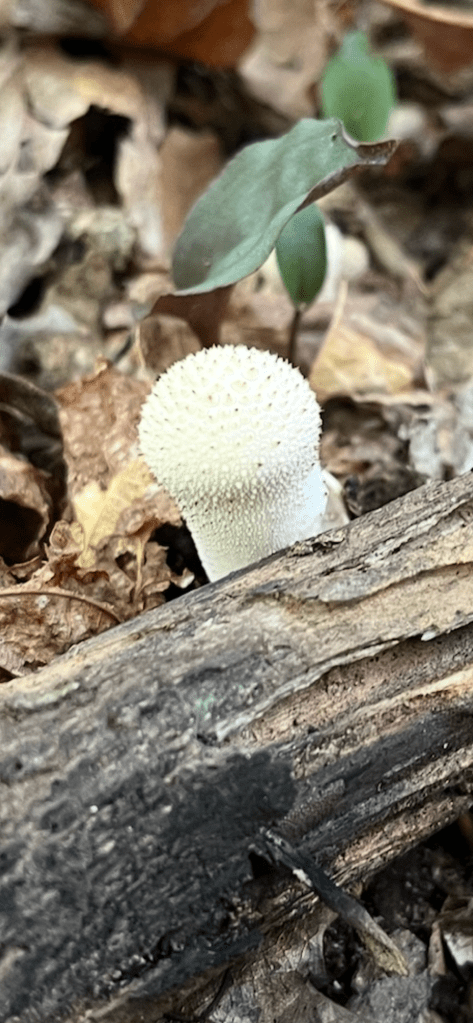
Common puffball. Lycoperdon perlatum.
We watered each recently planted pawpaw and made sure they were looking good. We came around the waterway and approached the orchard from south.
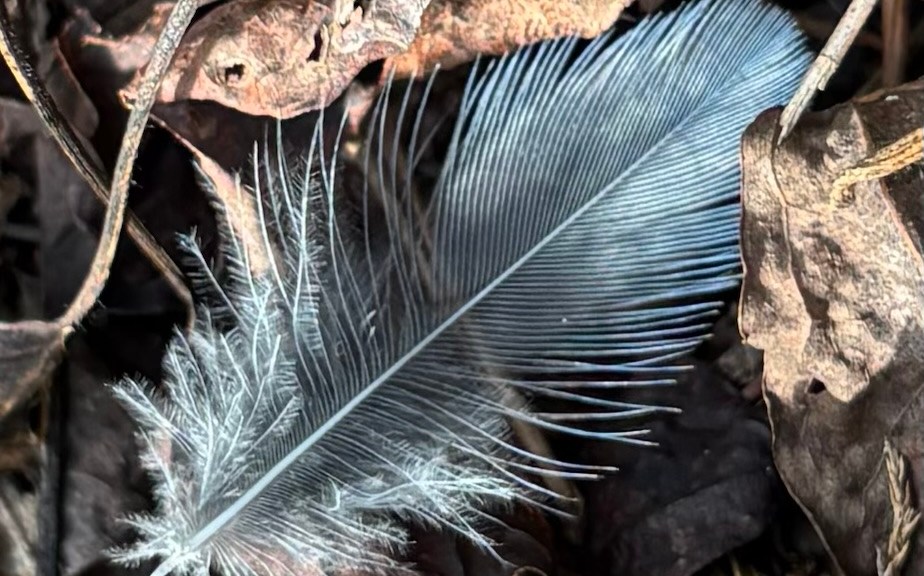
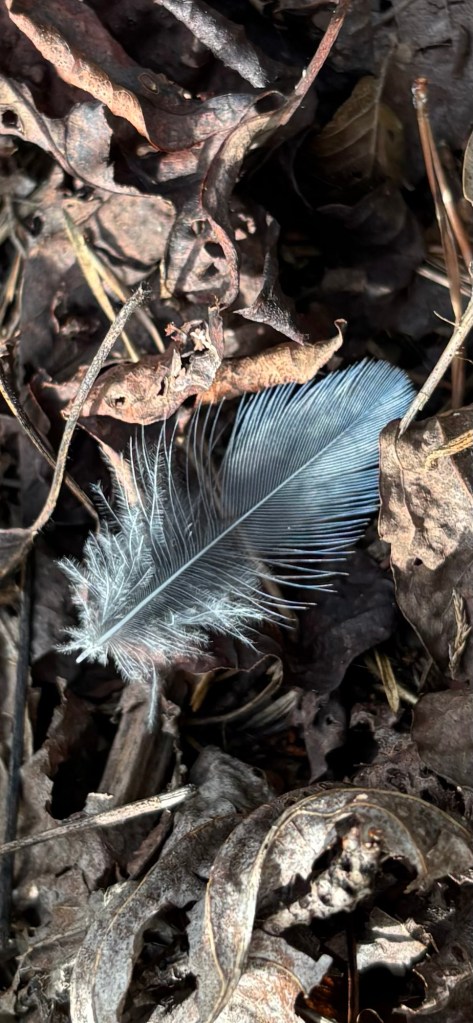
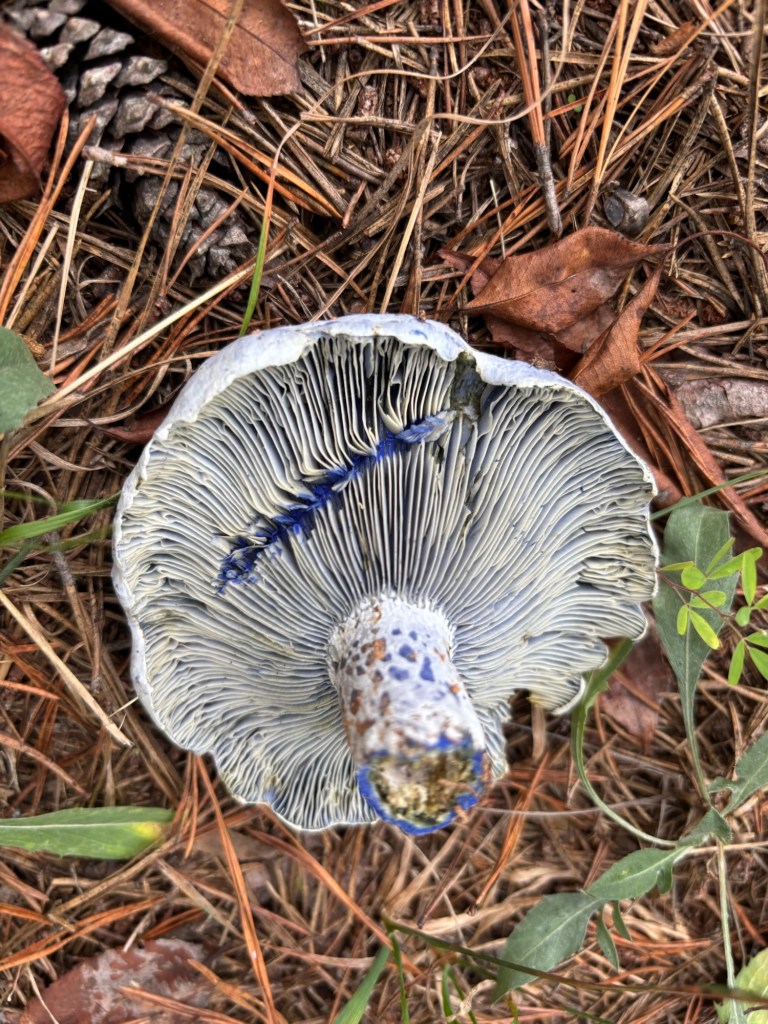
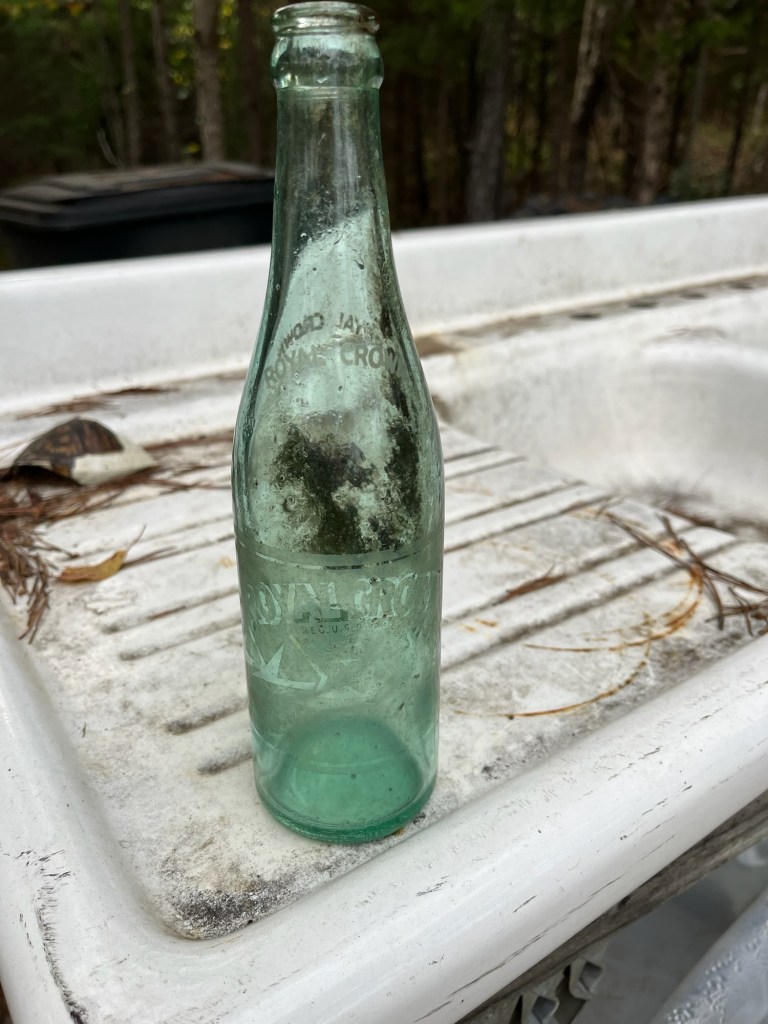
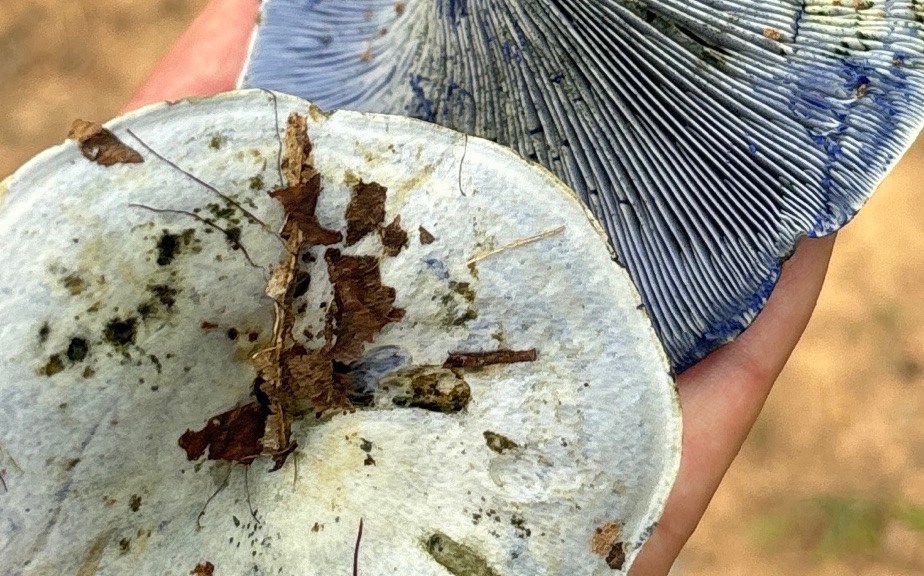
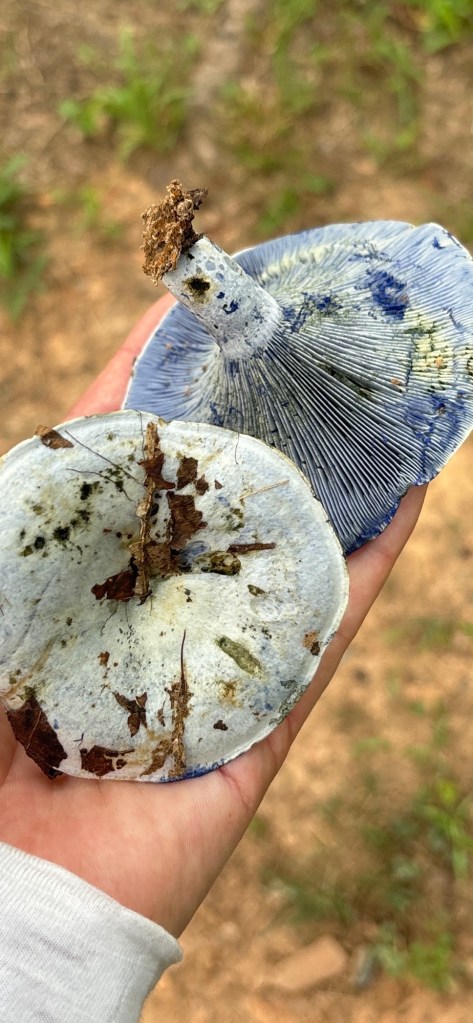
We heard a blue jay calling and following us around the forest. We found this feather. We thought it looked more like an Eastern Blue bird feather than a Blue Jay. Lactarius indigo is a milk cap with blue milky latex that oozes from the tissue when it is cut or broken. It’s edible and tasty. We find it near pines usually. This one is old and bug eaten. Royal Crown bottle found along Three Pine Gully on the north side. Looks to be from the 1930s.
Amanita persicina found in groups throughout the farm near pines and oaks.
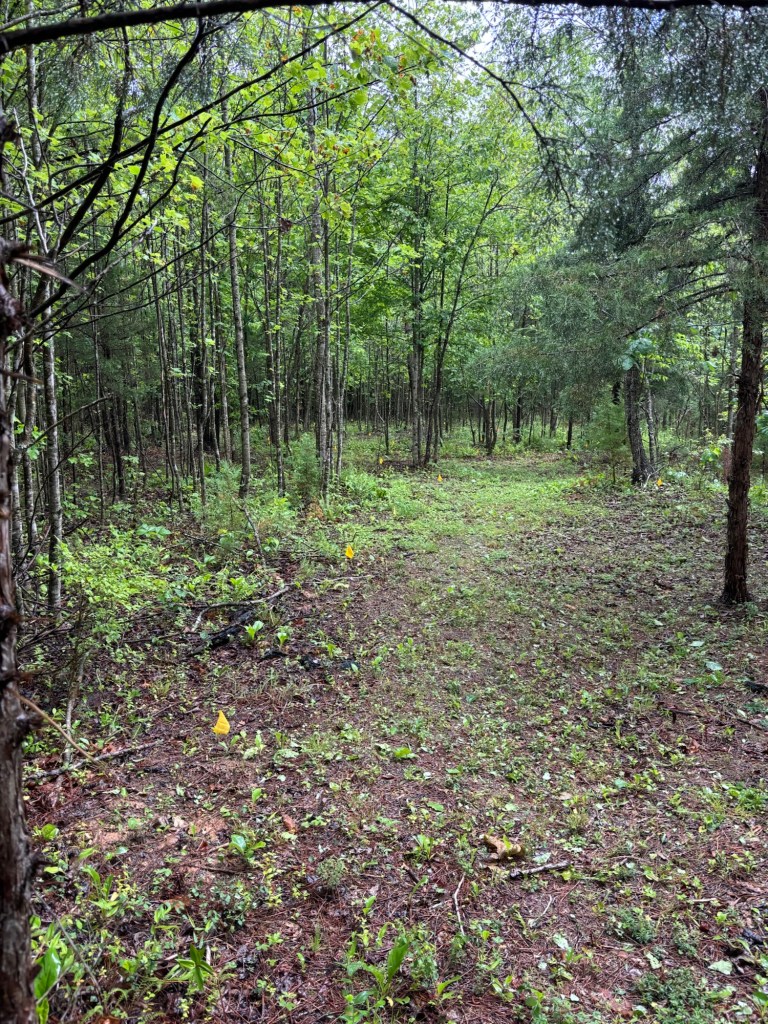
We went over to put up boundary markers and no hunting or trespassing signs as well as forage for mushrooms. Hunting season begins Saturday October 5th (early archery season starts). We took down trees growing too closely together and used the trunks as a natural fencing inside the tree line along the road frontage to discourage hunters from chasing deer onto our property. We’ve also been told hunters run dogs through properties to scare up deer. We are trying to create a hunt free zone, except for mushrooms, and to keep anyone chasing animals off our land. We also will put up several more cameras later this weekend. We had technical issues yesterday but worked it out this morning.
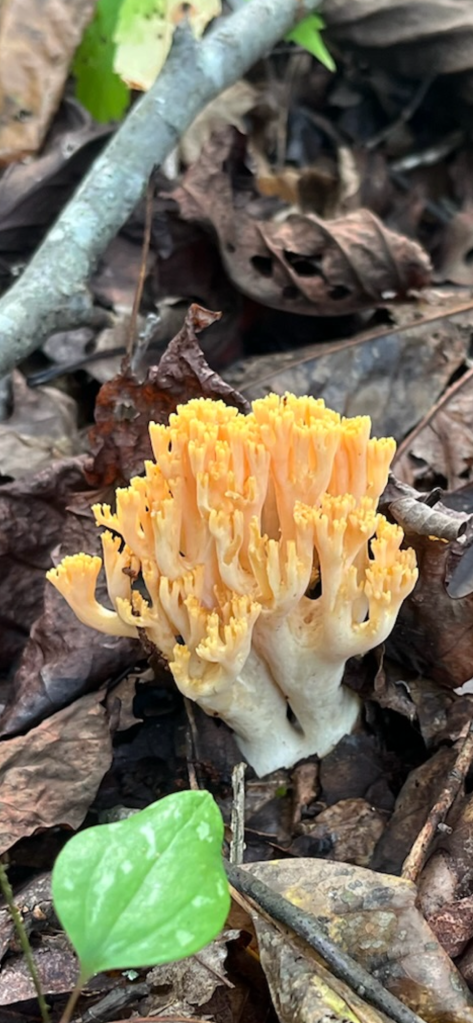
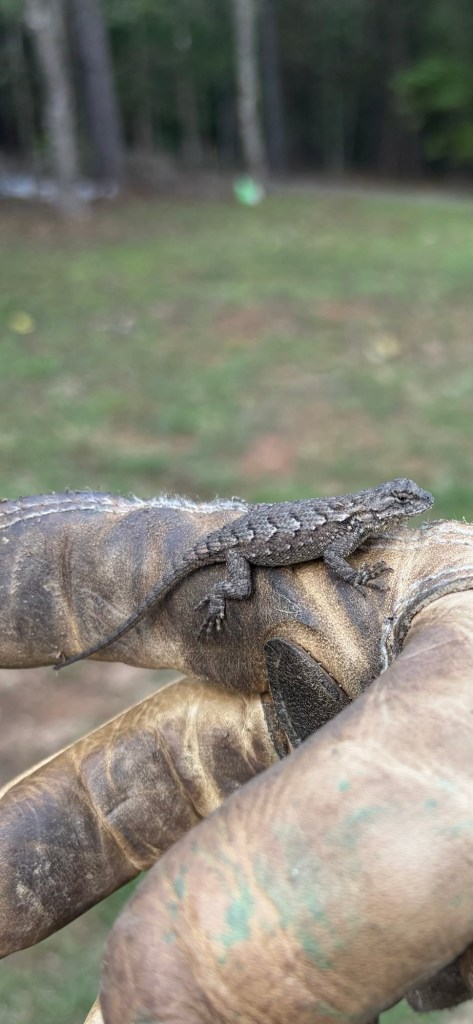
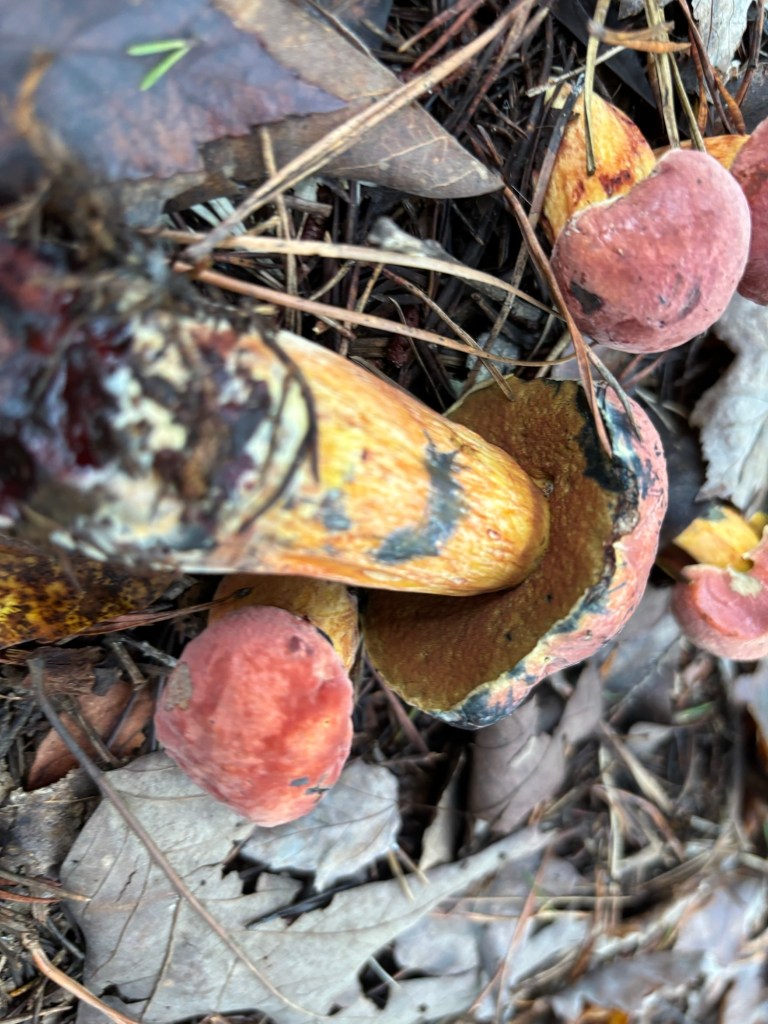
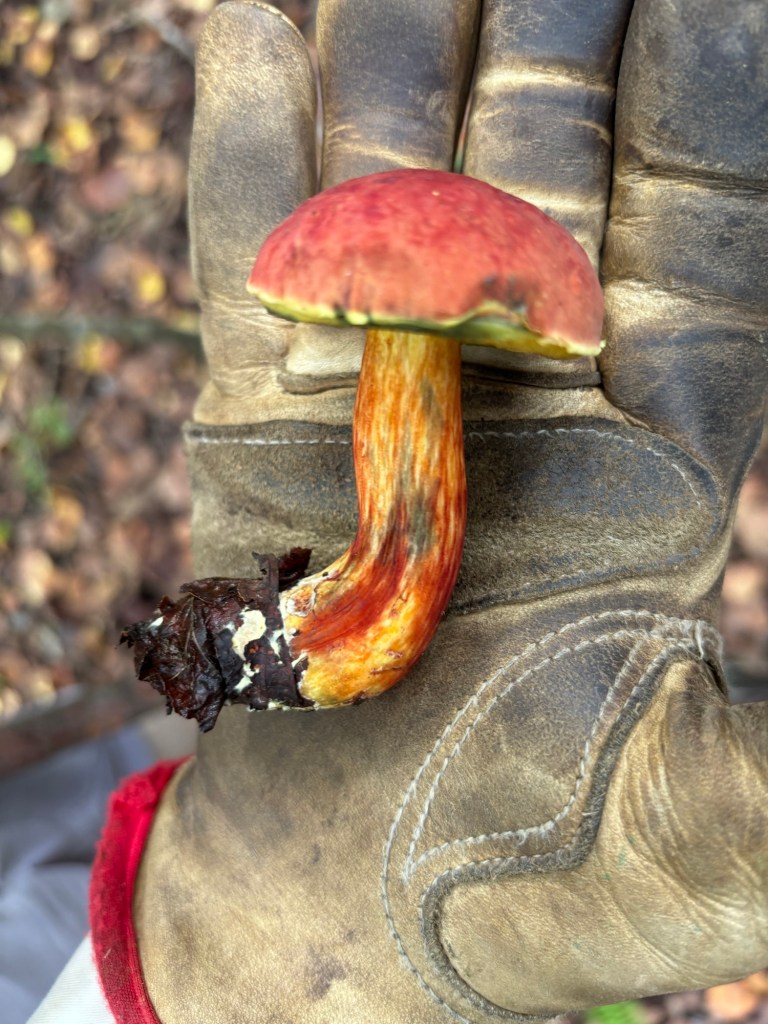
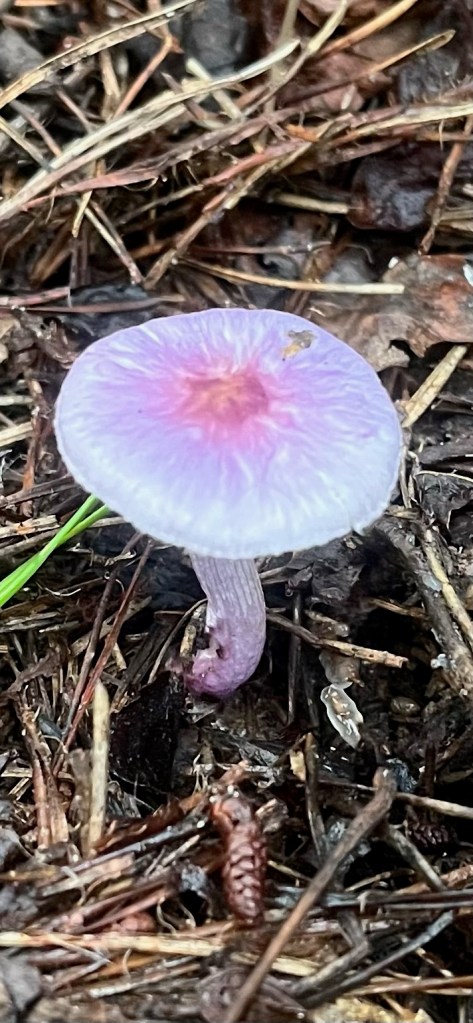
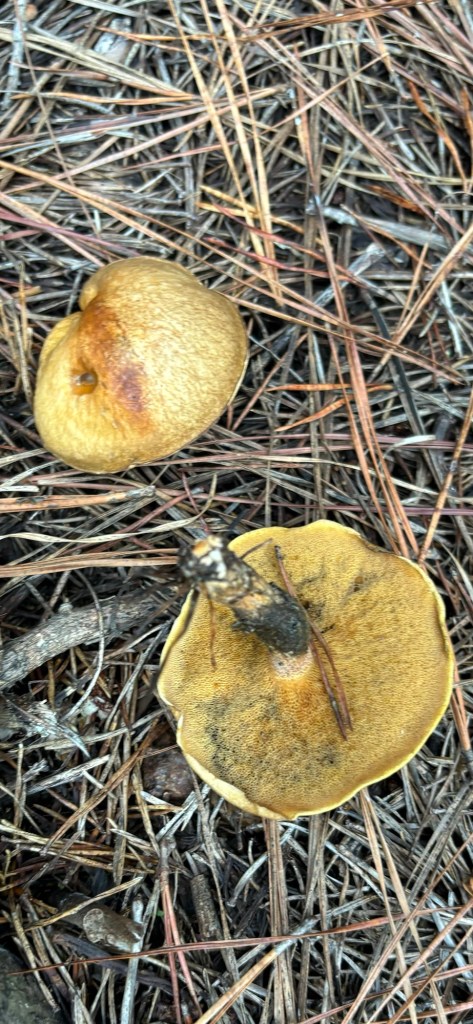
Coral fungusA family of Amanita jacksonii, American slender Caesar, we brought home and processed for eating. Top of A jacksonii Younger A jacksonii An A. jacksonii just emerging from its volva. These are the most delicious. Eastern fence lizard, Sceloporous undulatus, we found hanging out on a black cherry stump up top in the clearing. Amanita spreta, commonly called the Hated Caesar, is an inedible variety. They were large and showy found in the north side near pines. We continue to find these blue staining boletes and have narrowed down their identification to four different species. For now, they remain unknown. Unknown blue staining bolete. Inocybe lilacina, Lilac fibercap, is a poisonous mushroom found on the north side of SAFF. Suillus salmonicolor, Slippery Jill, found everywhere on SAFF near pine.Suillus, slippery jacks, associated with pines.
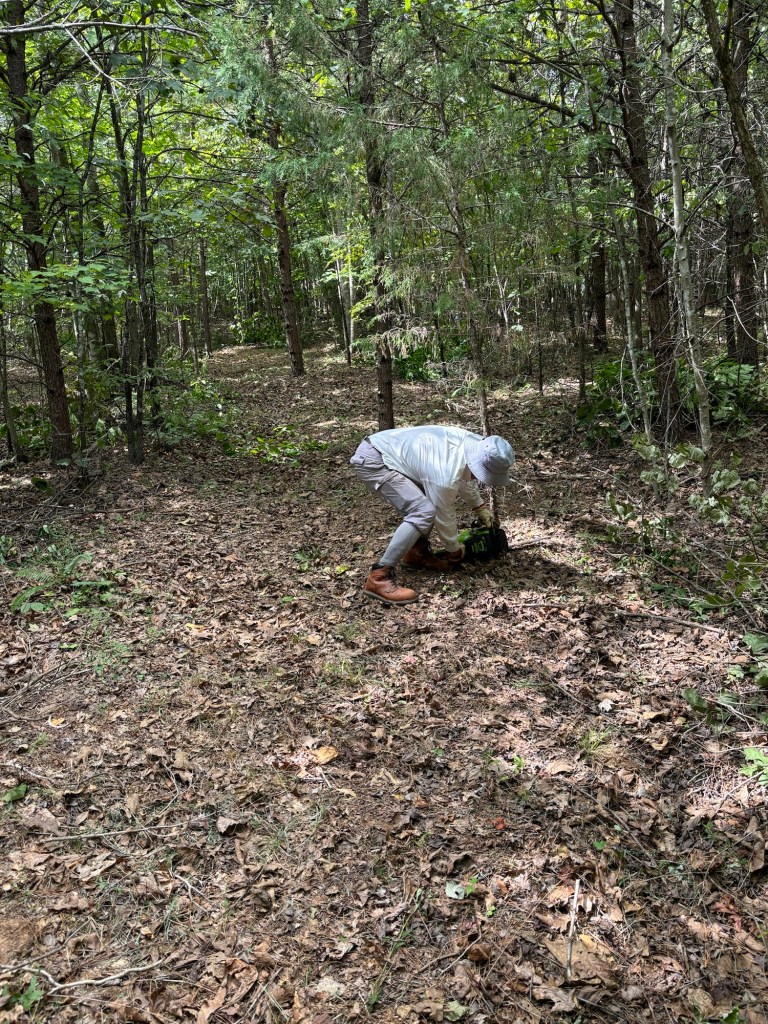
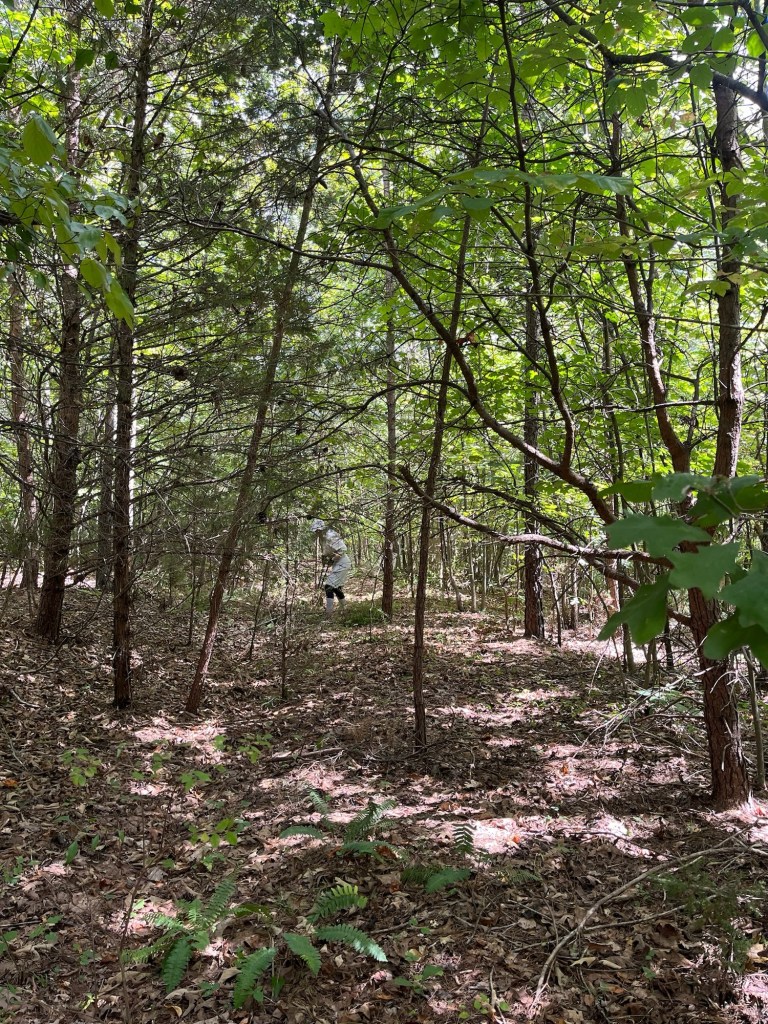
Cutting back trees that have grown up through the roadway on the north side of SAFF.
We couldn’t wait to get back out to clear some more trees from the roadway. We used the chainsaw, loppers and the string trimmer to clear out another chunk of the road. This time we made it just past the culvert with the shoe lasts. We were pleased and exhausted. The road is covered with leaves, pine needles and other forest debris so we keep pushing the debris aside with our foot to find stones underneath. It’s a compacted dark gray stone just like our driveway up top. The roadway goes along the northern boundary from the top clearing to the back line near another road. It stretches for acres and gives us truck access to the whole farm. A man stopped by a few weeks ago and said he was a member of the family that owned the property. He said the road ran all around the farm and also mentioned tobacco was grown on SAFF. It’s almost all forest now. We hope to figure out where the tobacco was grown. We’ve been bringing our homemade compost out to the farm to nestle in our new plantings and nourish the soil.
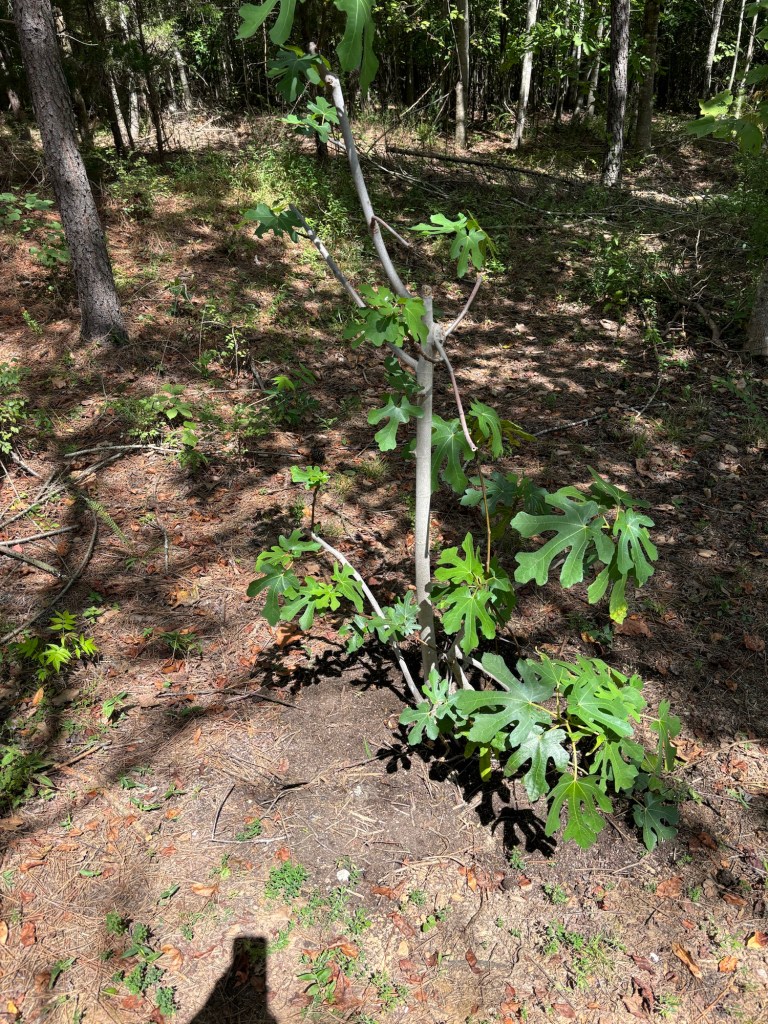
Ferns and trees have grown up through the roadway for more than a decade or two.Our newly planted fig snuggled in with our fresh compost from our wormery at the house garden.
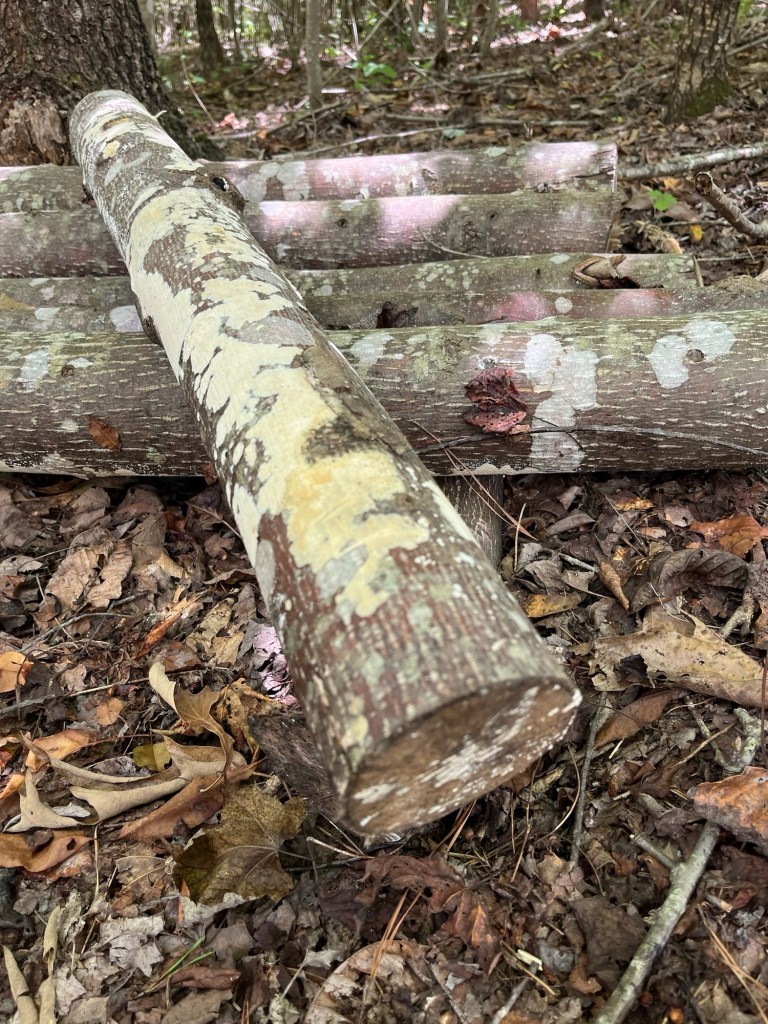
We also checked our lion’s mane experiment right off the clearing. Last fall we inoculated beech logs with lion’s mane mushrooms and yesterday we saw the mycelium creating something that looks like it may be what we hoped for.
Inoculated logs with lions mane spawn. We will keep a close eye on these logs after every rain.
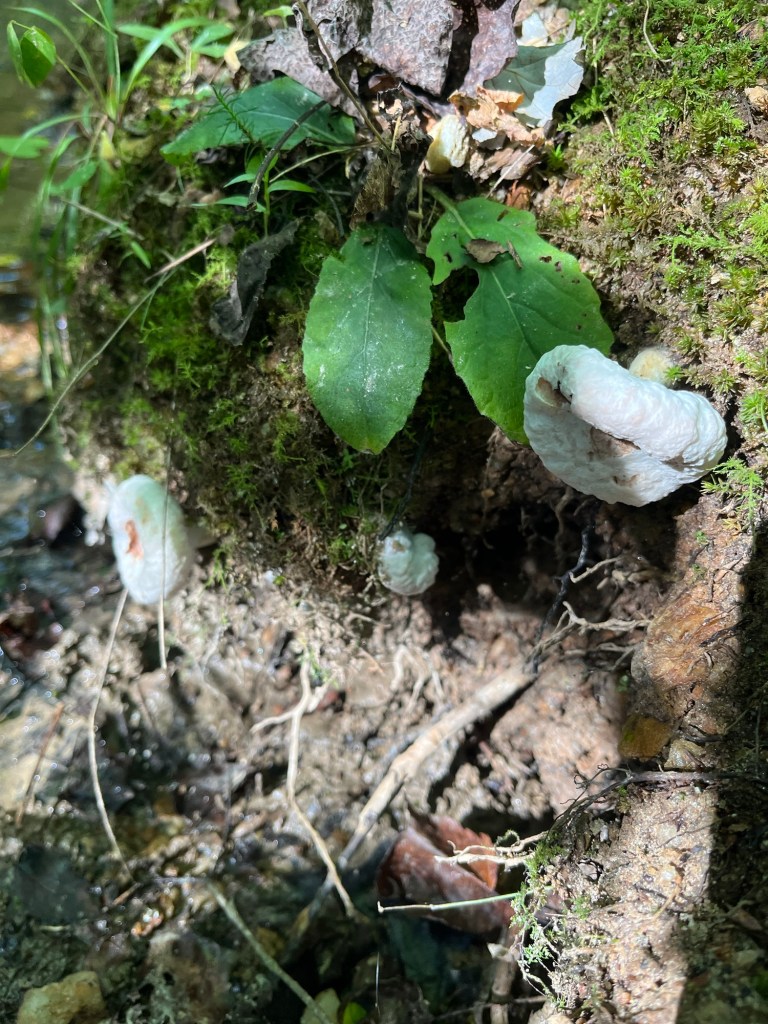
Then we took a walk around and found Shrimp of the woods, Entoloma abortivum, a choice edible mushroom down by the waterway at the bottom in the pawpaw patch. We found it last year in the same spot. These are early and we expect much more with the next rains. The temperature is perfect for mushrooms. We are waiting on rain.
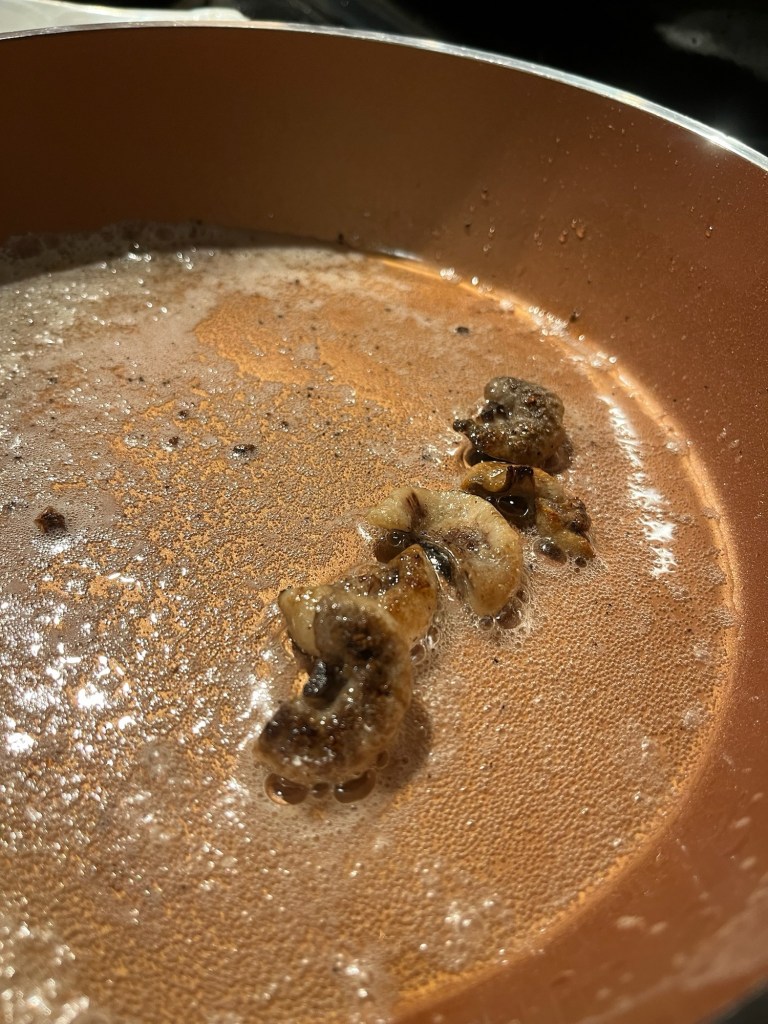
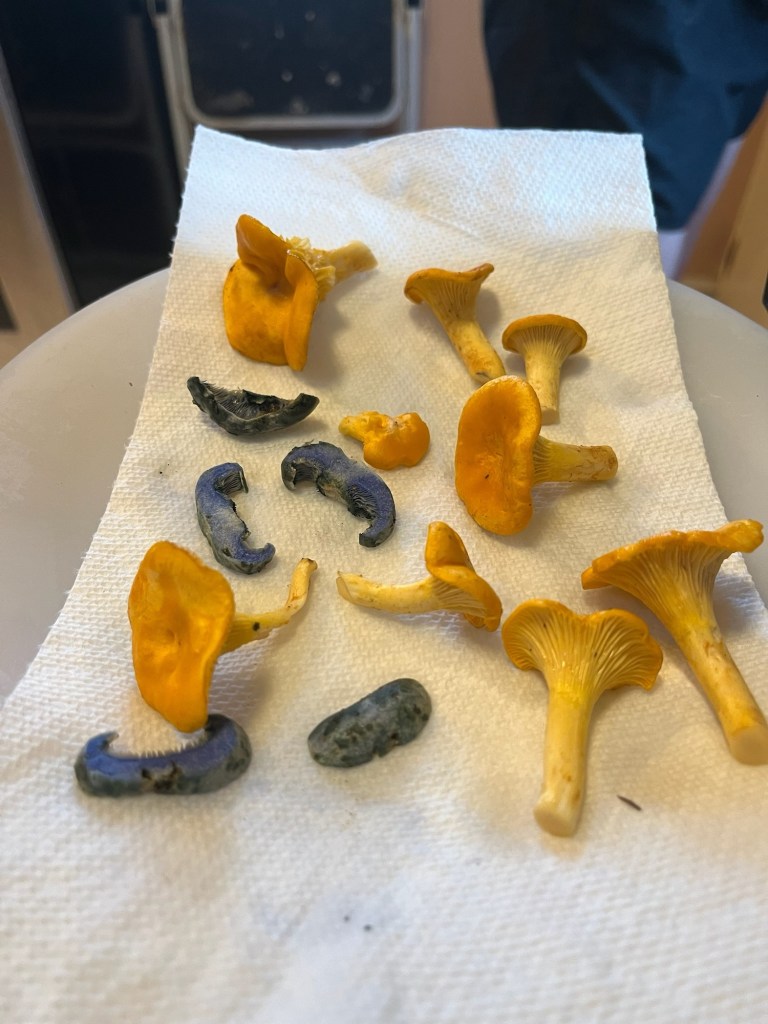
These are delicious treats we sautéed for 25 minutes in a pan with olive oil, garlic, salt and pepper and we had them on our salad for dinner. The texture and appearance is like shrimp and the taste was scrumptious.
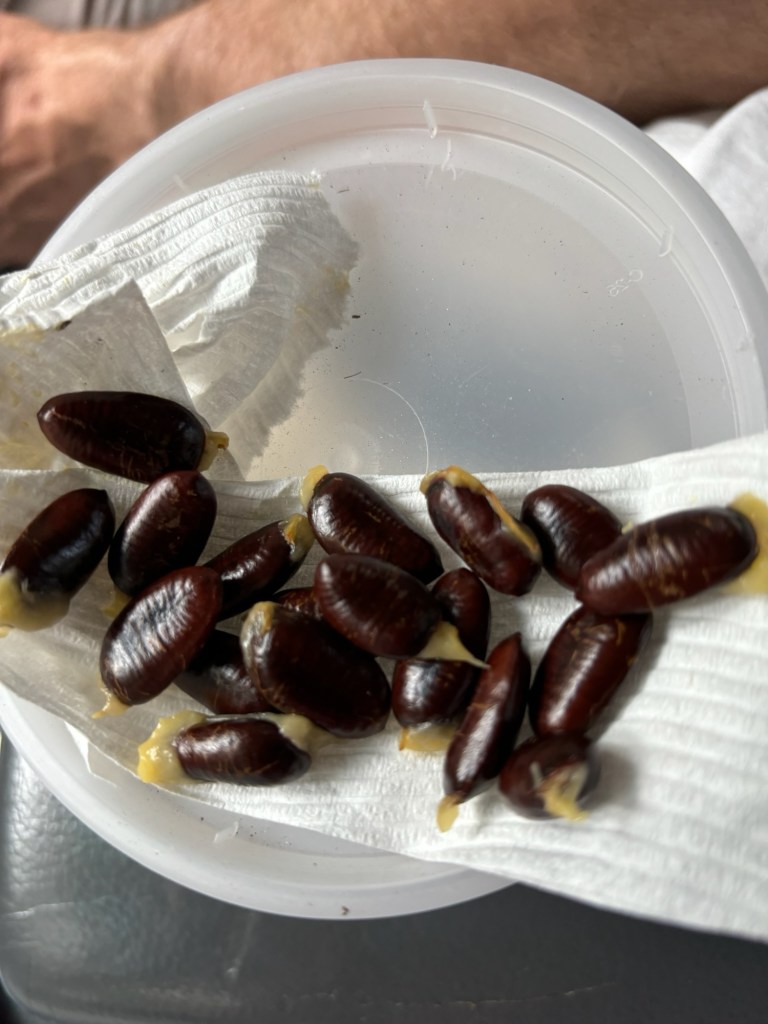
We also continue to forage for pawpaws on public land to and from the farm. We found three more fruits yesterday. Each one has been a tropical delight tasting of mango, banana with hints of caramel and vanilla. Even better, they are full of seeds we are going to plant to further our pawpaw grove and increase production by adding more dna and, in the long run light, to the area.
Hard to see black trumpet mushrooms growing near oaks and pines.
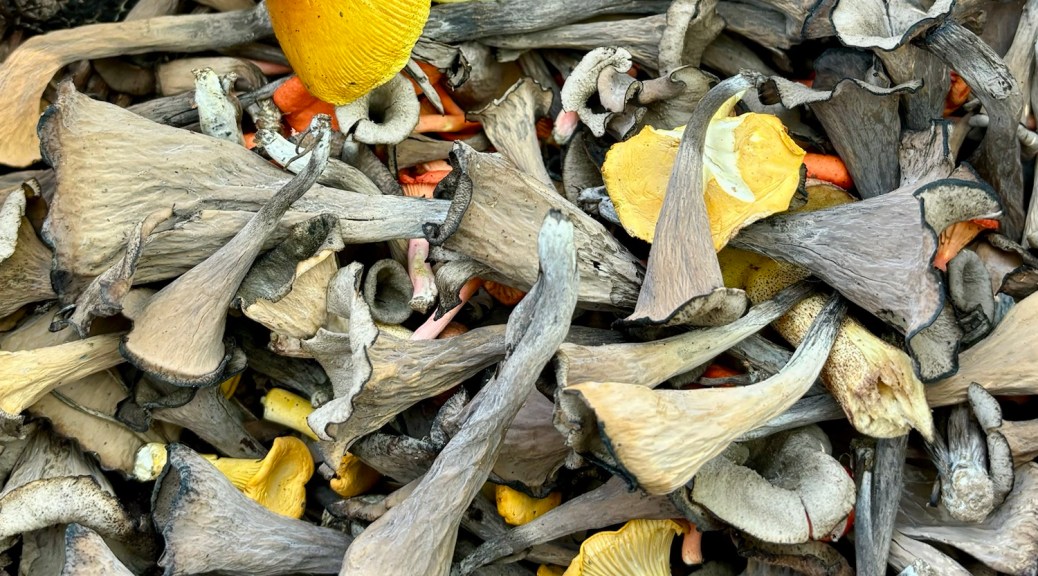
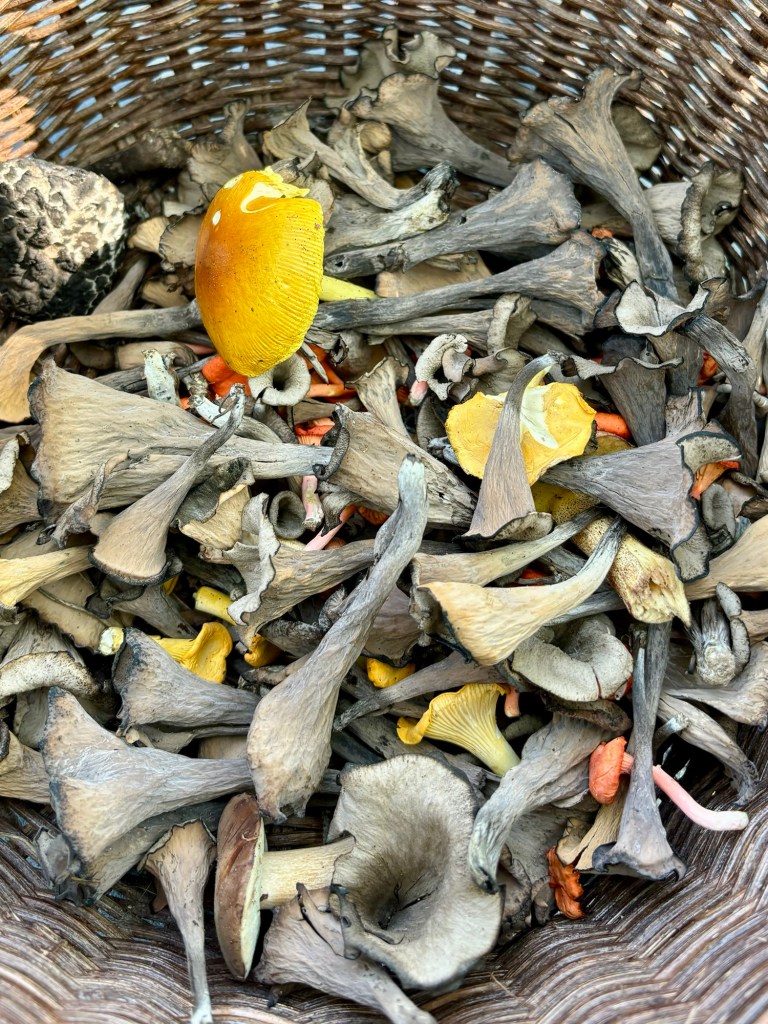
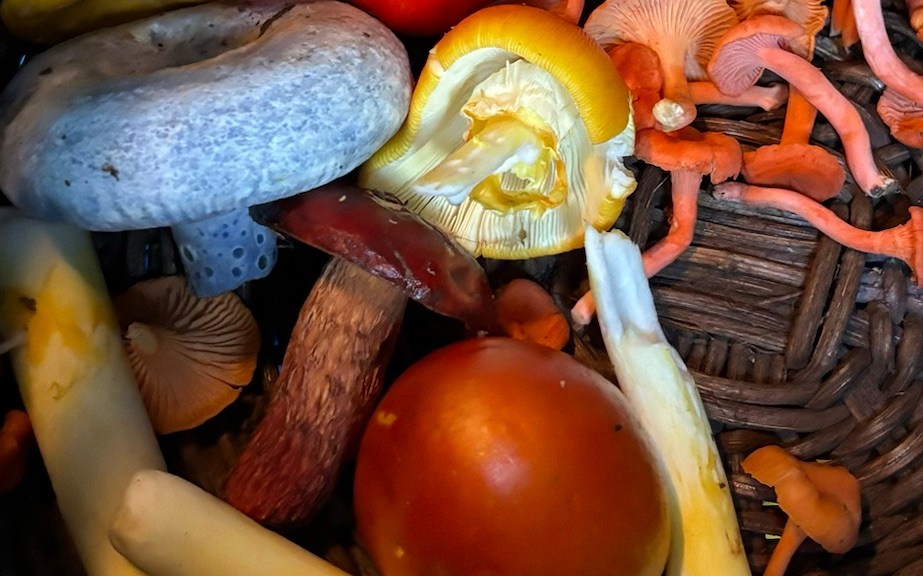
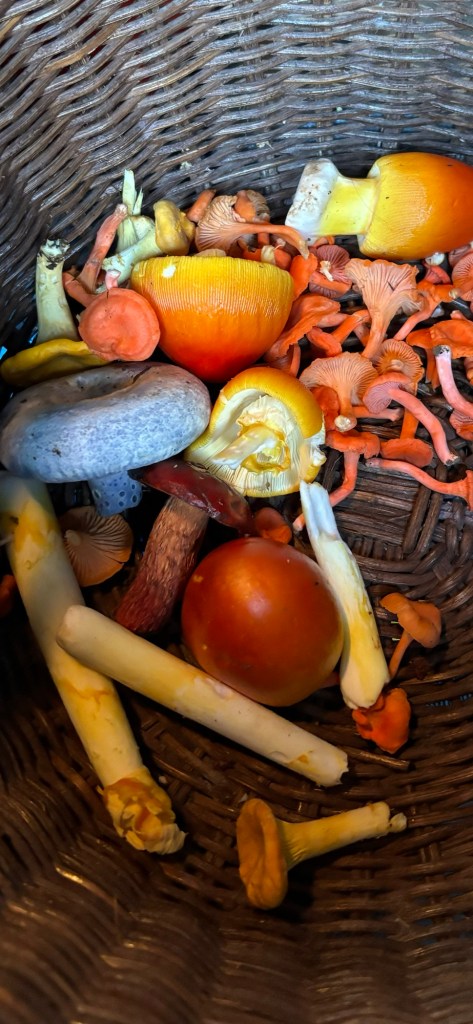
We went over and created more trails on the north side yesterday. We were rewarded for our work with wonderful weather and about two pounds of wild mushrooms. The temperatures in the 70’s made for a wonderful day to be outside. We found several new large Black trumpet patches as well as Cinnabar chanterelles and Ghost chanterelles. We also found a Lilac bolete, Amanita banningiana and an Old Man of the Woods. We joked our basket was full of Halloween colors.
Our basket from yesterday with lots of black and orange mushrooms.
We brightened up the paint on our boundary markers and widened our trails. We cleared a bit more from the road. We stood in awe of the beauty of the forest, the quiet peace to be found there with the trees and the network of mycelium that supports it all and sends up these colorful and wonderful fruiting bodies. We feel grateful and blessed by our surroundings.
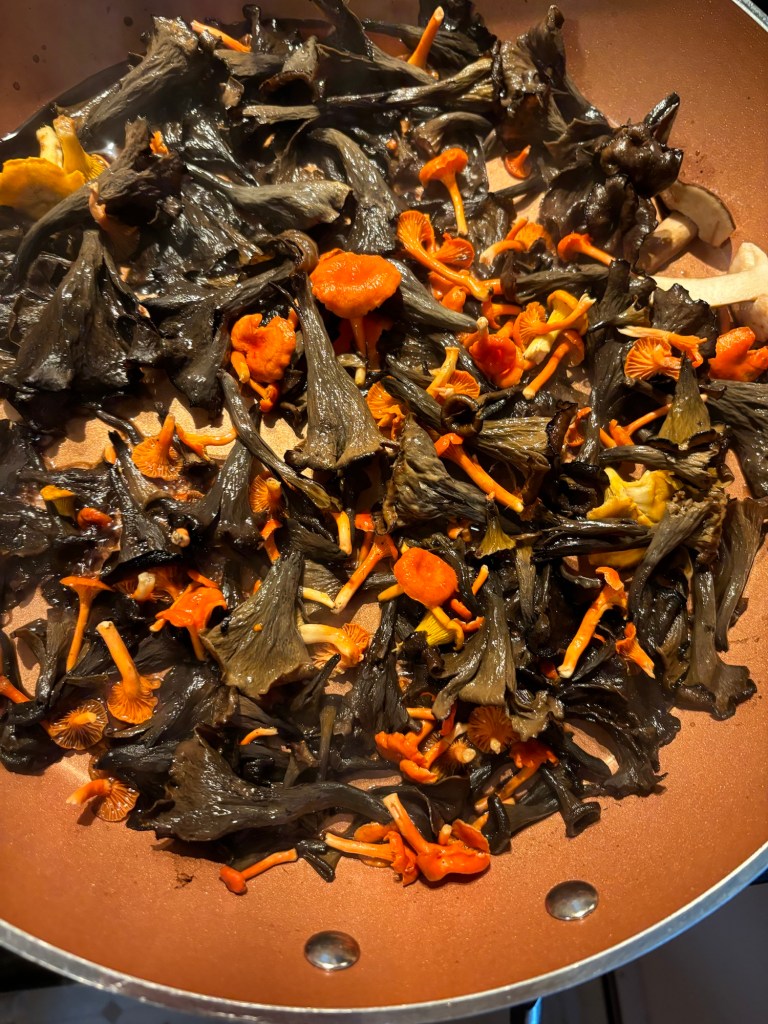
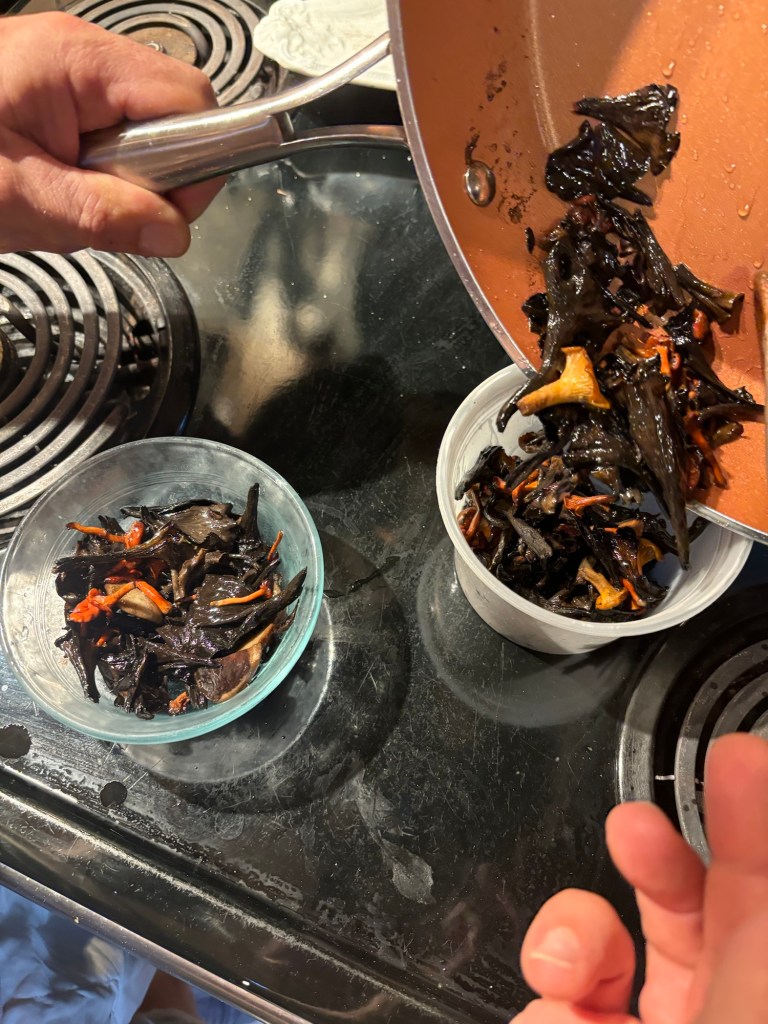
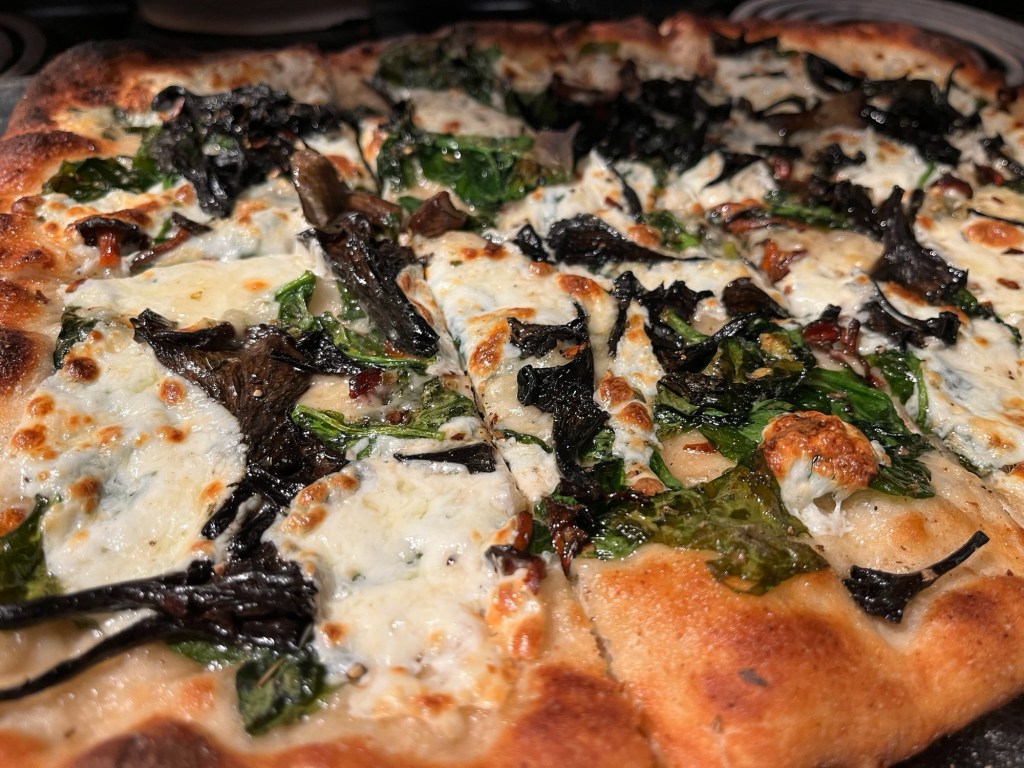
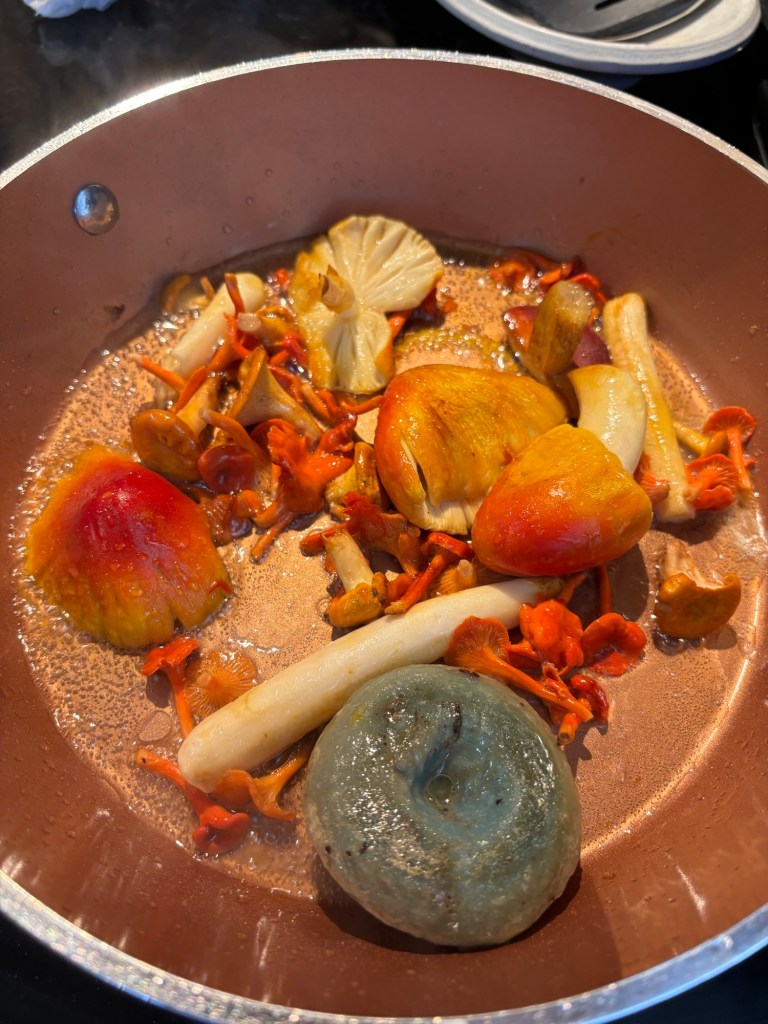
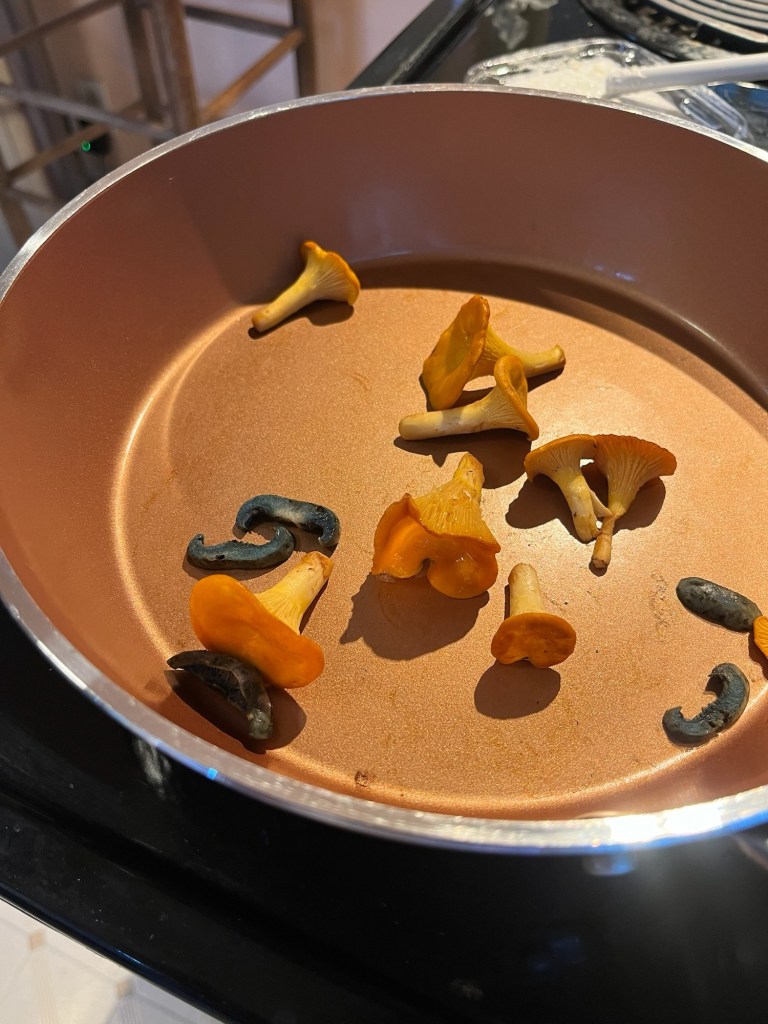
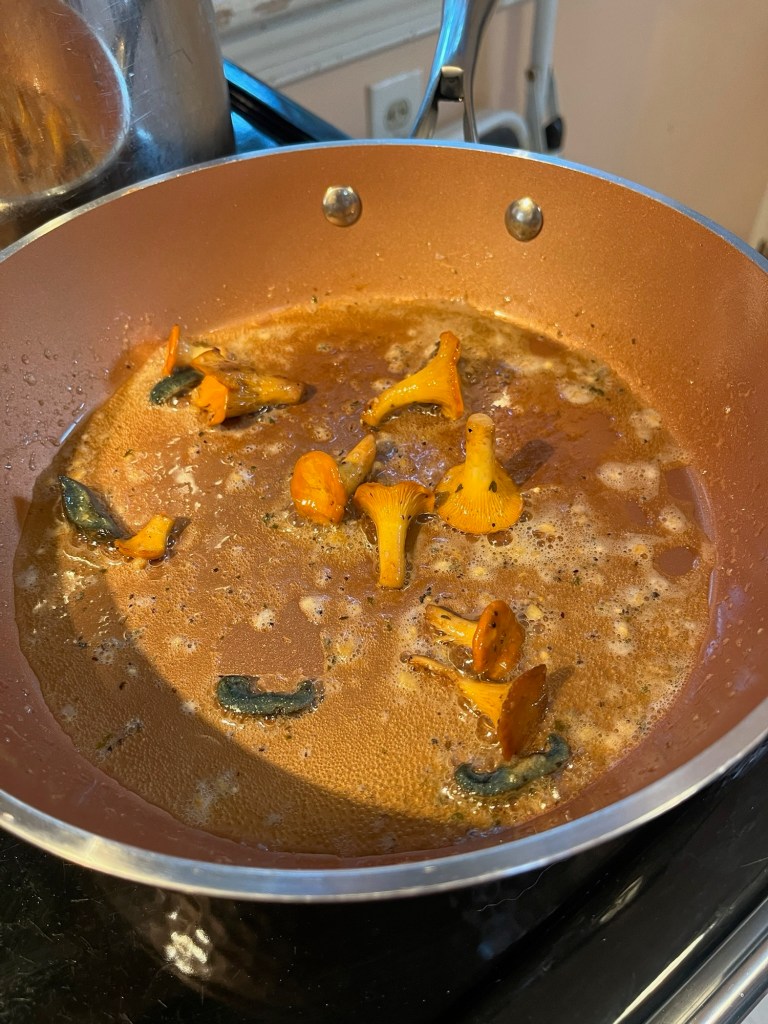
We got home and cleaned up our mushroom bounty and dry cooked them for some minutes to cook off the water we used to clean them. Once dry, we added butter and olive oil and salt pepper and garlic. We saved most of these mushrooms but used a small amount for our white pizza for dinner. It was scrumptious!
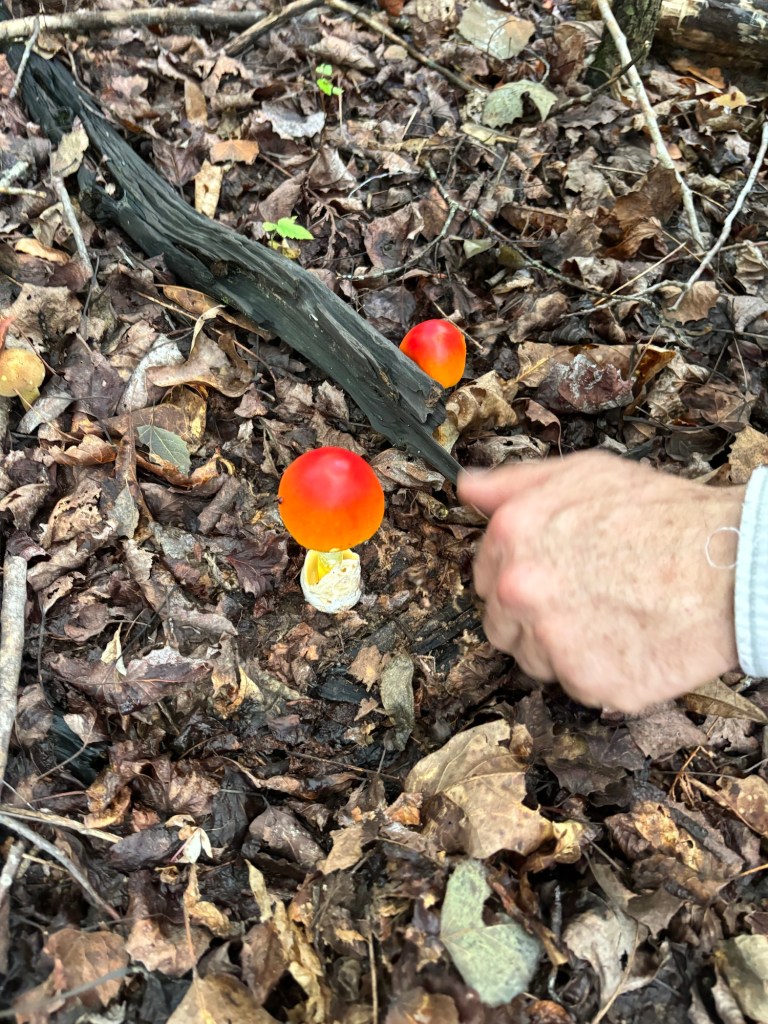
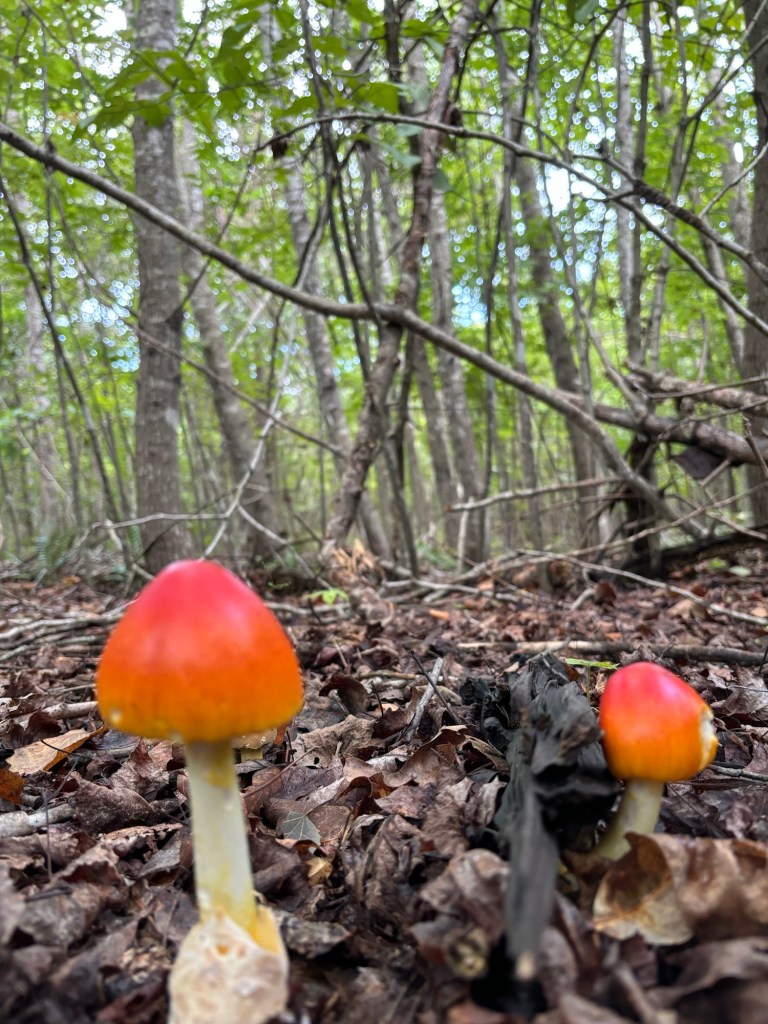
Amanita jacksonii found on the north side of SAFF. The choice edibles are found in pine and oak forests from Canada, through the eastern US and into Mexico.
The past three times we’ve pulled into the clearing with the truck, we’ve seen a young deer. It’s usually sleeping in the forest and it hears us and takes off. We don’t think it’s too afraid because it doesn’t run far though. We come upon it multiple times like it has become a game for the adorable creature. It’s always alone. We hope it stays safe and we understand it’s safest for it to not be comfortable with humans. We’re also seeing a lot of bear poop on the north side of the farm. No sign of our 4 or 5 year old male bear this year but we think it’s him. It’s nice to know animals are taking advantage of the nuts, berries, mushrooms and shelter the trees provide.
We walked all around the trails that were damp from an afternoon thunderstorm that hit just before our arrival. Right away, we saw new mushrooms emerging from the ground that hadn’t been there the day before. Sometimes it takes a few days for the mycelium to send up the fruiting body after a rainstorm —and sometimes it’s quick.
We basketed up our bounty and left the farm as the sun was setting. We were too tired to cook the mushrooms last night so we stored them in a paper bag in the refrigerator and hoped they’d stay in nice shape. It’s best to cook them right away and save them cooked either in the refrigerator or the freezer depending on how quickly they will get eaten. But these wild mushrooms, especially the chanterelles, need to be used quickly.
They were in nice shape this morning so we dry cooked them for a few minutes in a skillet on 7. Added olive oil and butter and cooked about 15 minutes. We let them cool and have them stored in the refrigerator. We are thinking of making a wild mushroom quiche.
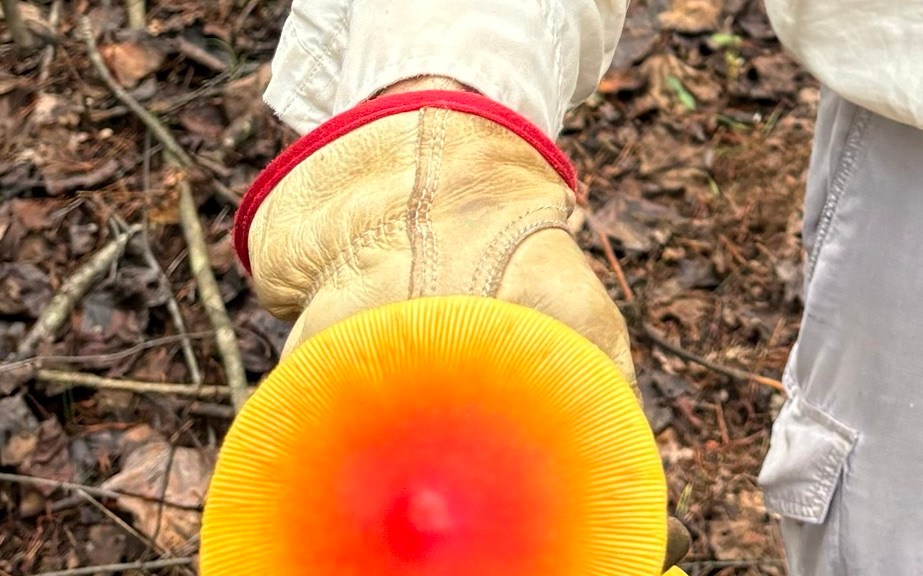
Amanita jacksonii have a bright red cap that can grow up to four inches A beautiful mushroom to find that looks very similar to deadly poisonous mushrooms. Care should be taken to identify and be confident before you plan to eat them. Our mushroom harvest yesterday included ghost chanterelles, Cinnabar chanterelles, Indigo milk cap, Frost’s bolete and American slender Caesar.
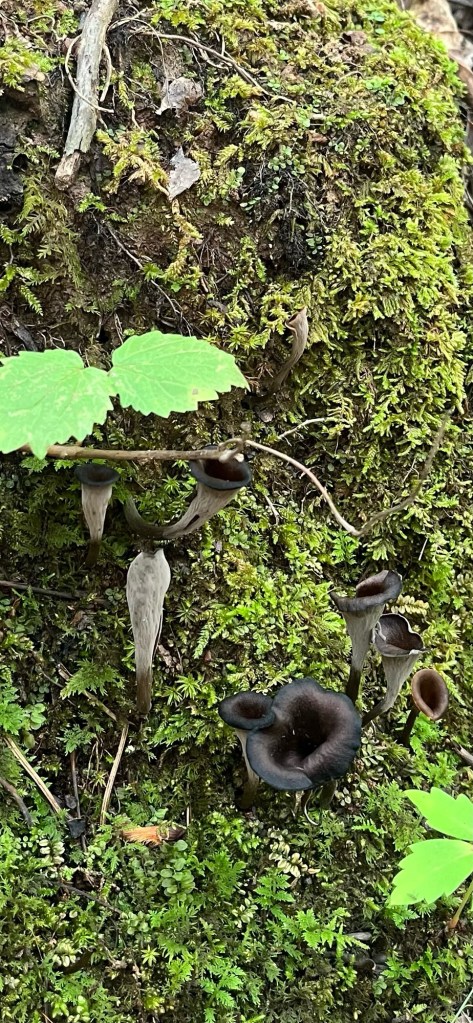
Eastern Black Trumpets, Craterellus fallax, found at the bottom of slope at the waterway in between two hickory trees.
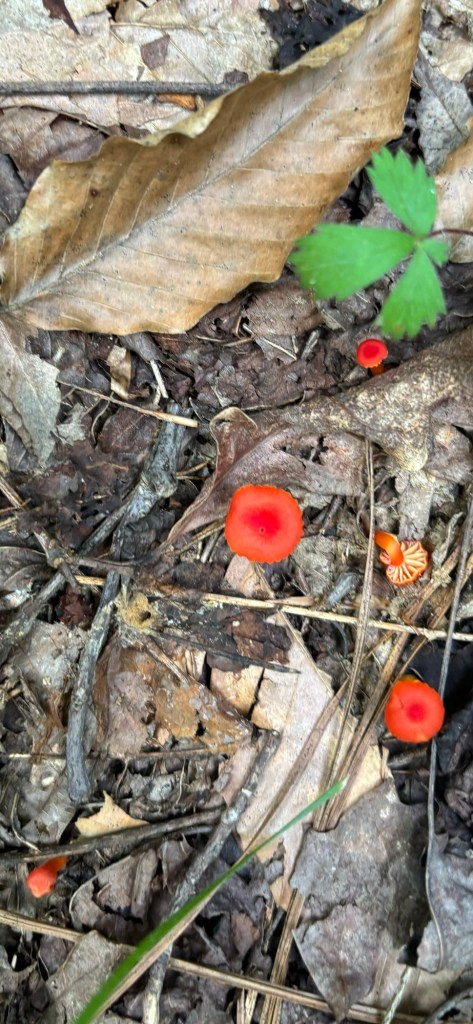
There are so many mushrooms right now after the heavy rain and cooler temperatures. We have Russulas and lactarius mushrooms to identify all over. Hundreds of red Russulas. Not as many boletes or Amanita right now. We found another patch of Eastern Black Trumpets to our delight and surprise as well as these beautiful and delicious ghost chanterelles.
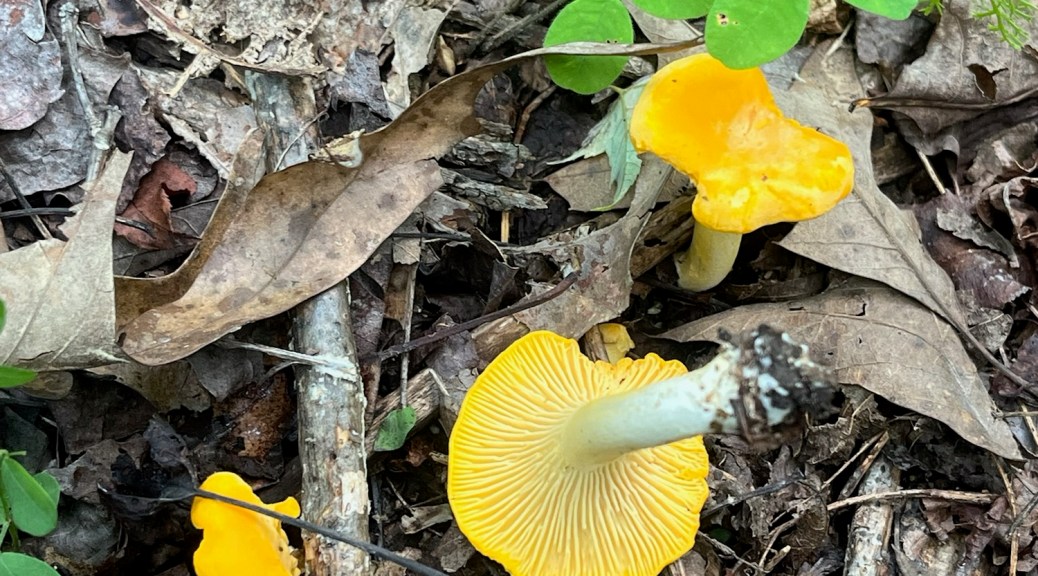
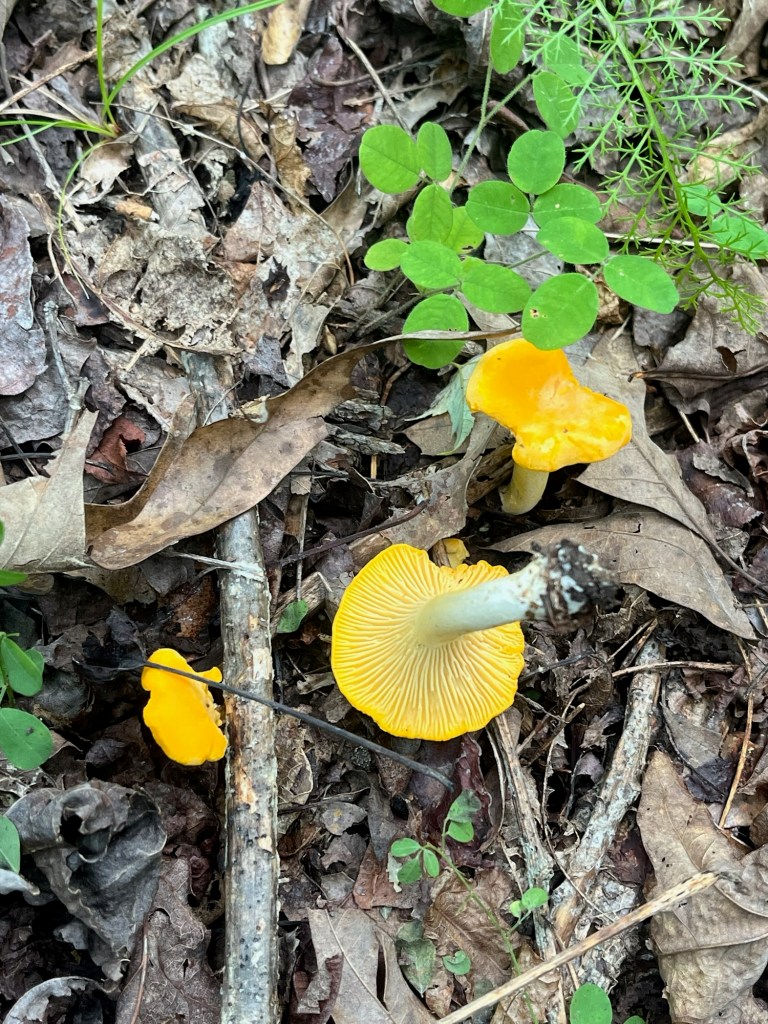
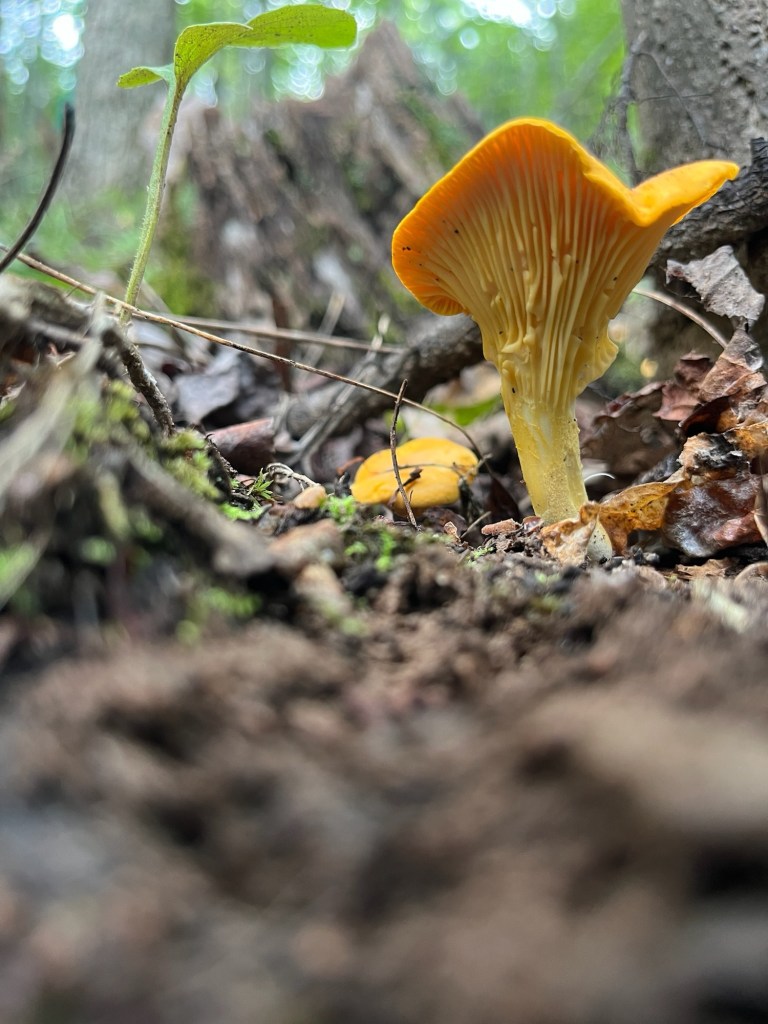
Ghost chanterelle, Cantharellus phasmatis, found along Chanterelle Trail. Underside of the Ghost chanterelle showing the false gills.
We brought them home and cooked them up and everyone was pleased.
Cinnabar chanterelles found near the waterway right on the trail. These are choice edibles.
Tropical storm Debby is set to hit the farm tomorrow evening with rains expected to be 4-8 inches and peak wind gusts Friday morning at 34 mph. We can’t wait to see what this rain will bring since there’s been so many mushrooms already.
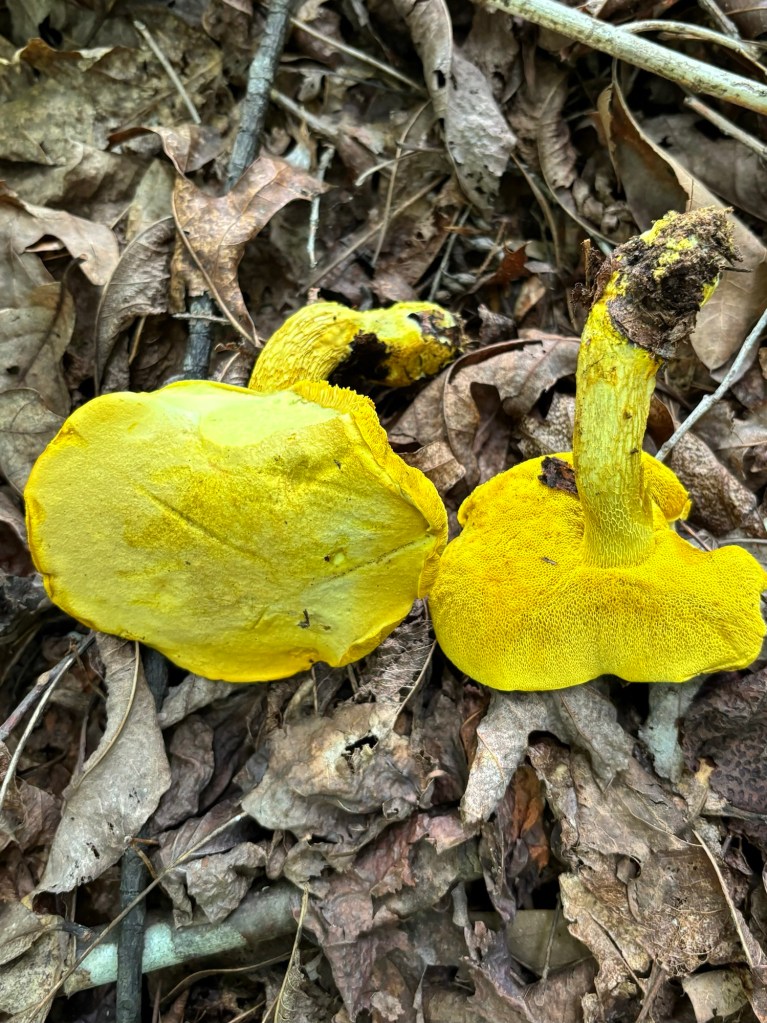
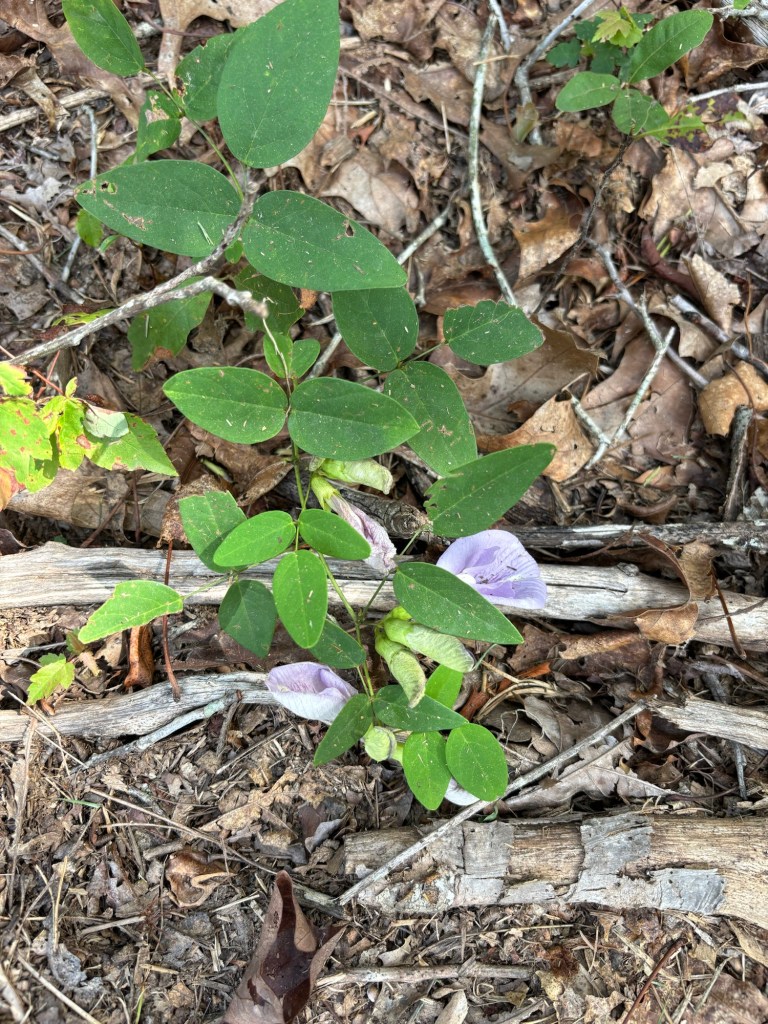
Retiboletus ornatipes, Ornate stalked bolete, is edible but not considered choice. We found them along South Trail. Lactarius indigo, indigo milk cap, is a choice edible found off Chanterelle Trail. We brought these beautiful blue mushrooms home to eat. Eastern North American Destroying Angel, Amanita bisporigera, a deadly poisonous mushroom found near North Trail.Clitoria mariana, pigeonwings, found up top in clearing near twin oaks
 Saint Andrews Forest Farm