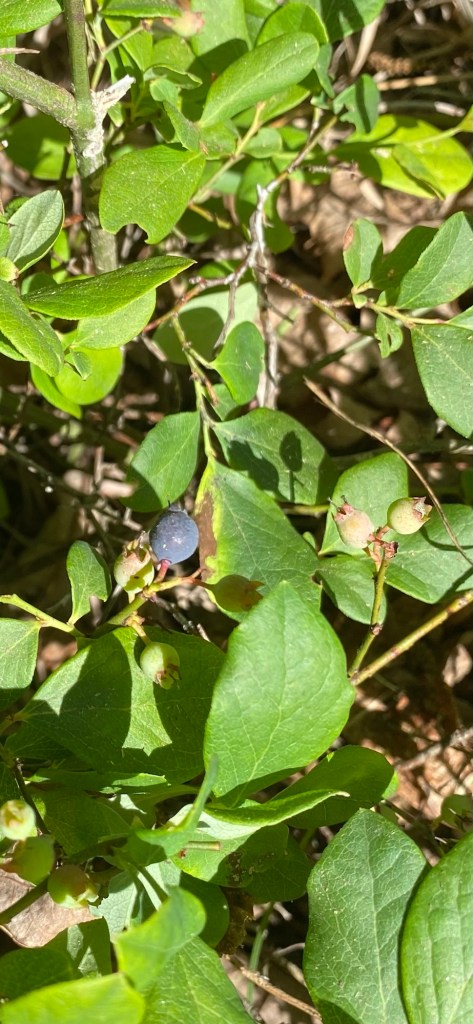
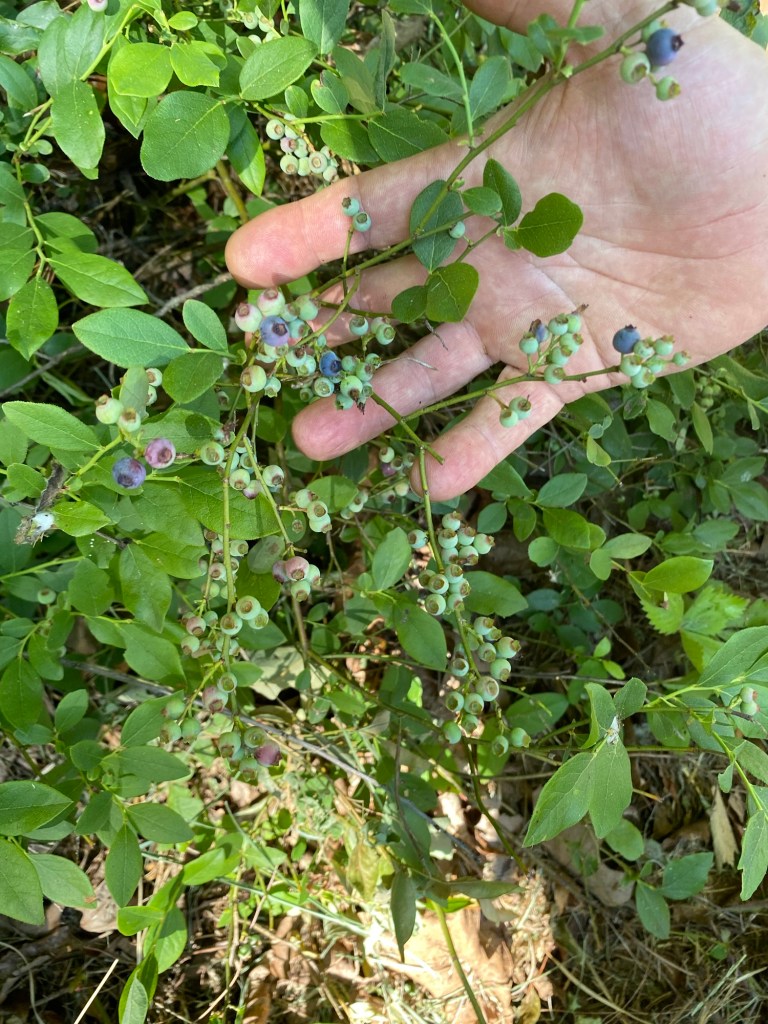
Finally we have a few ripe blueberries. They were a tasty snack after we got some work done.
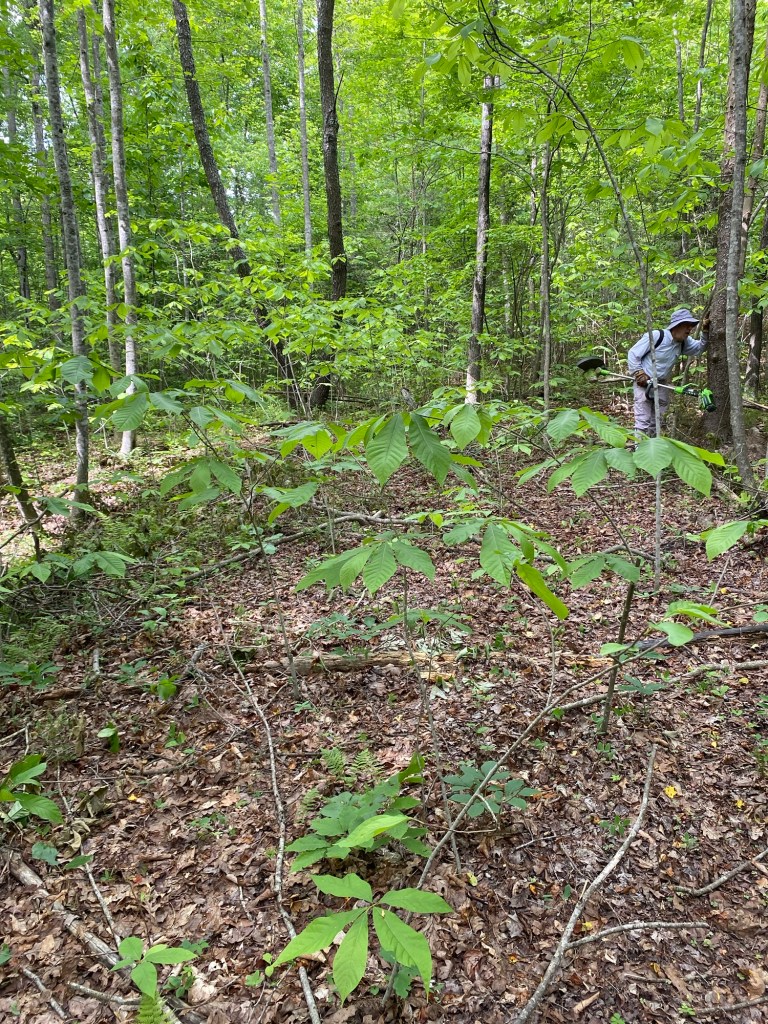
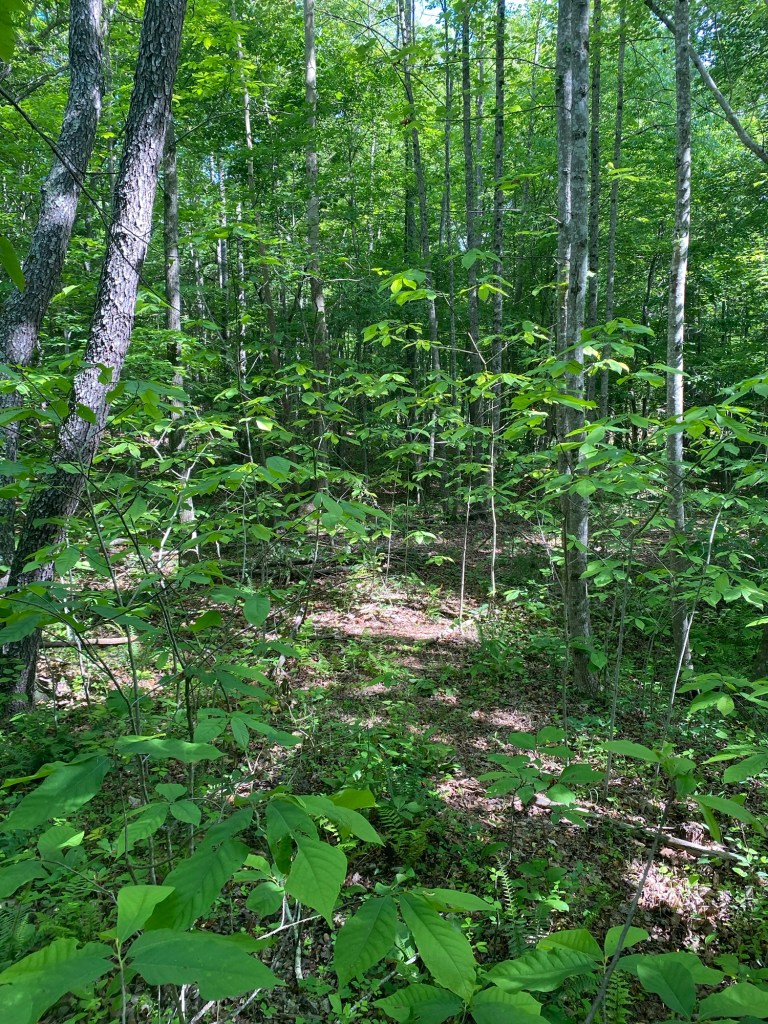
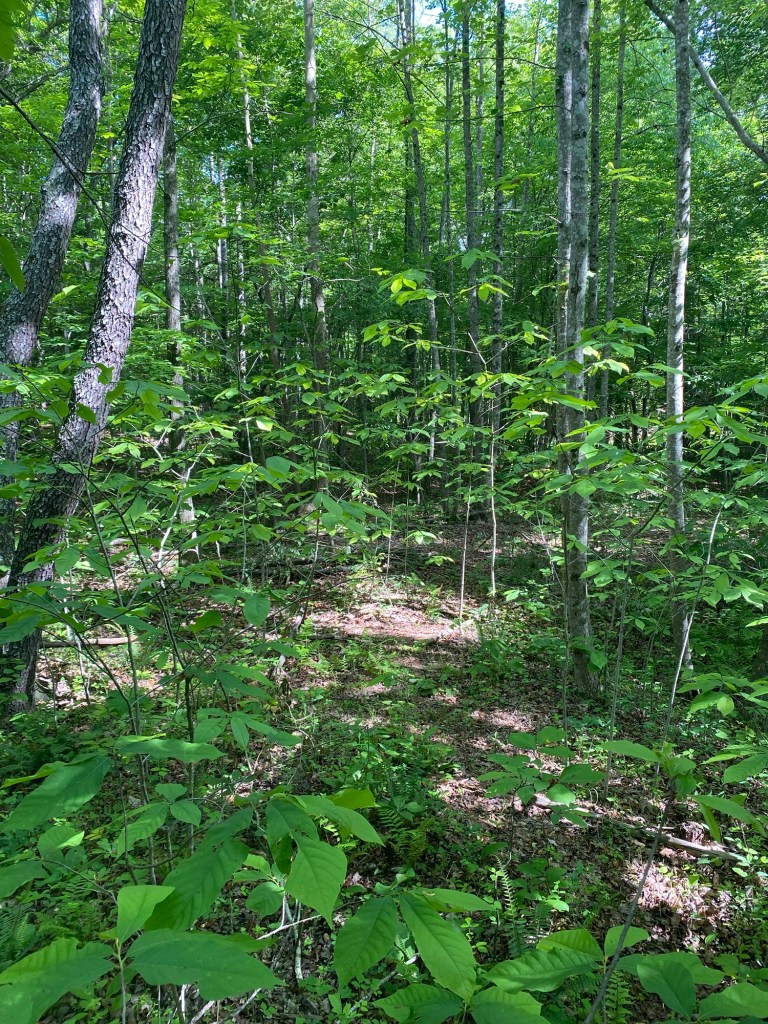
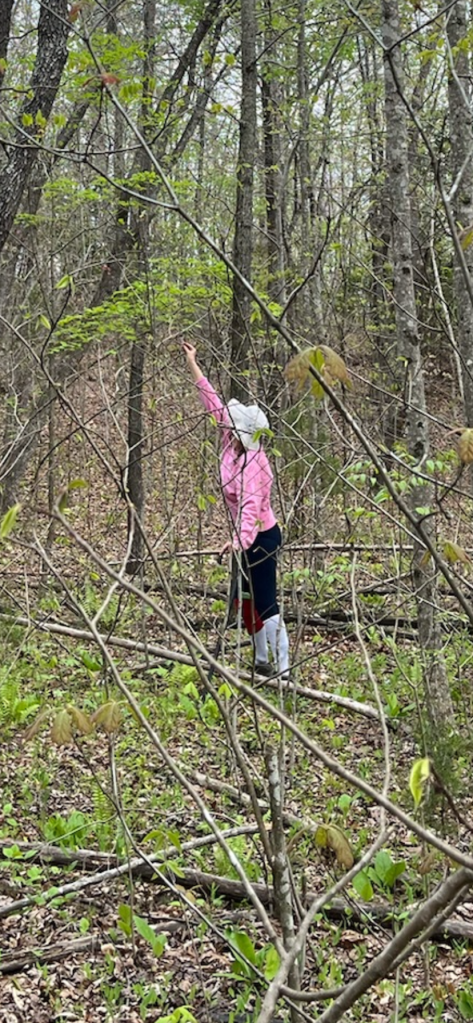
We went out to the farm to clean up a few spaces, look for more black trumpets and cut a trail through the south side. We were able to clear out some tiny tulip poplars and maples, paying close attention to keep any understory oaks as we learned the old oak forests throughout the world have a problem with understory oaks regenerating the forests. We decided we would only thin out diseased or failing oaks. https://youtu.be/NRWHHOAf39U?si=akypzxLUNo_7tOfn
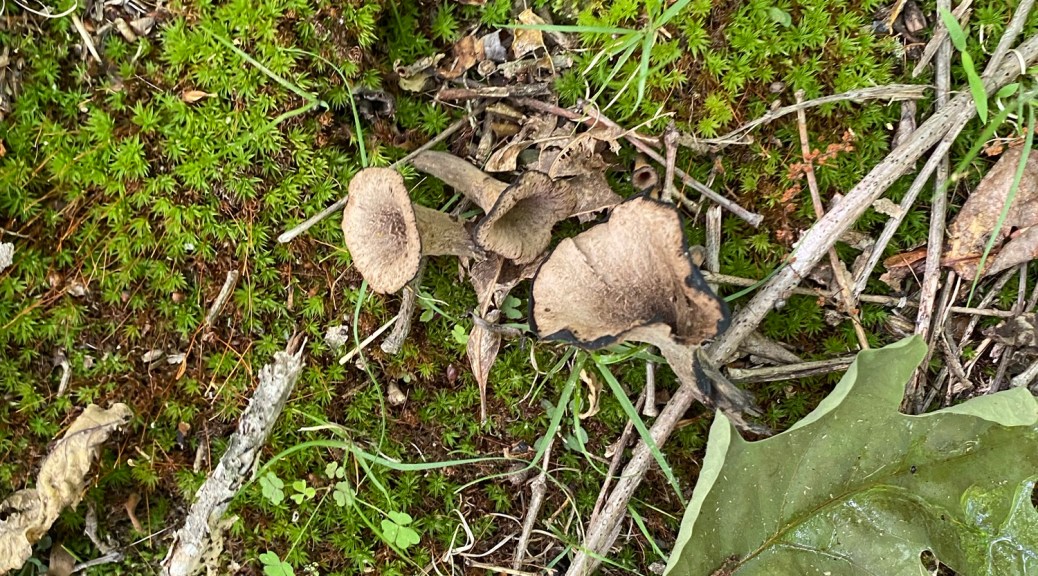
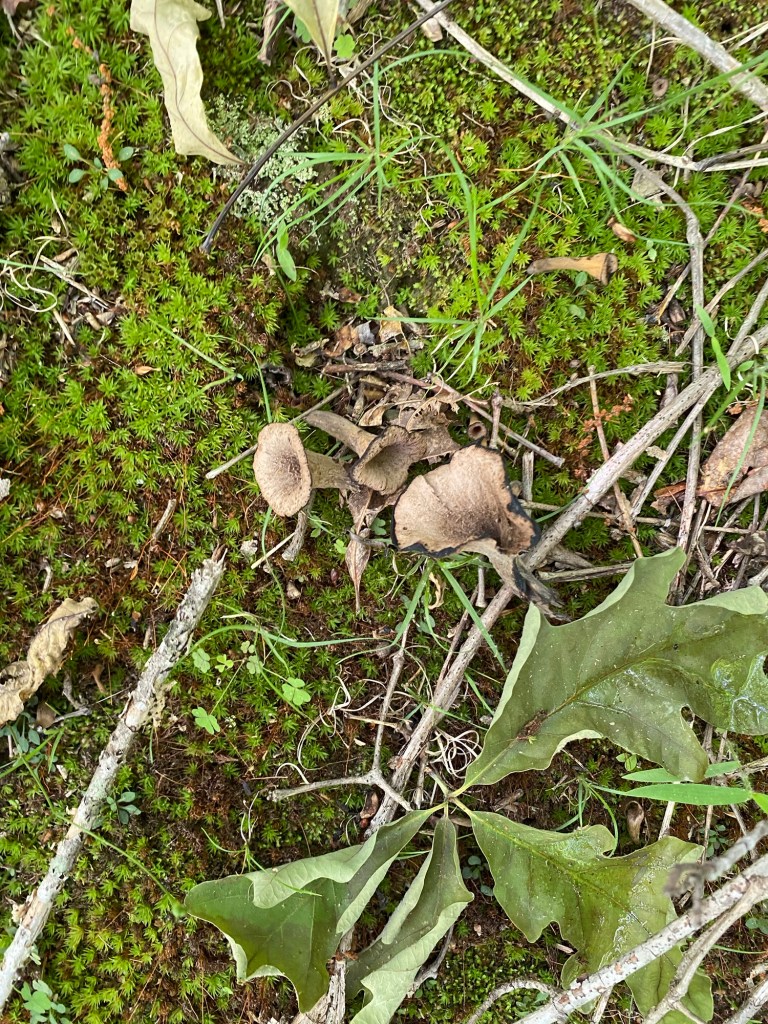
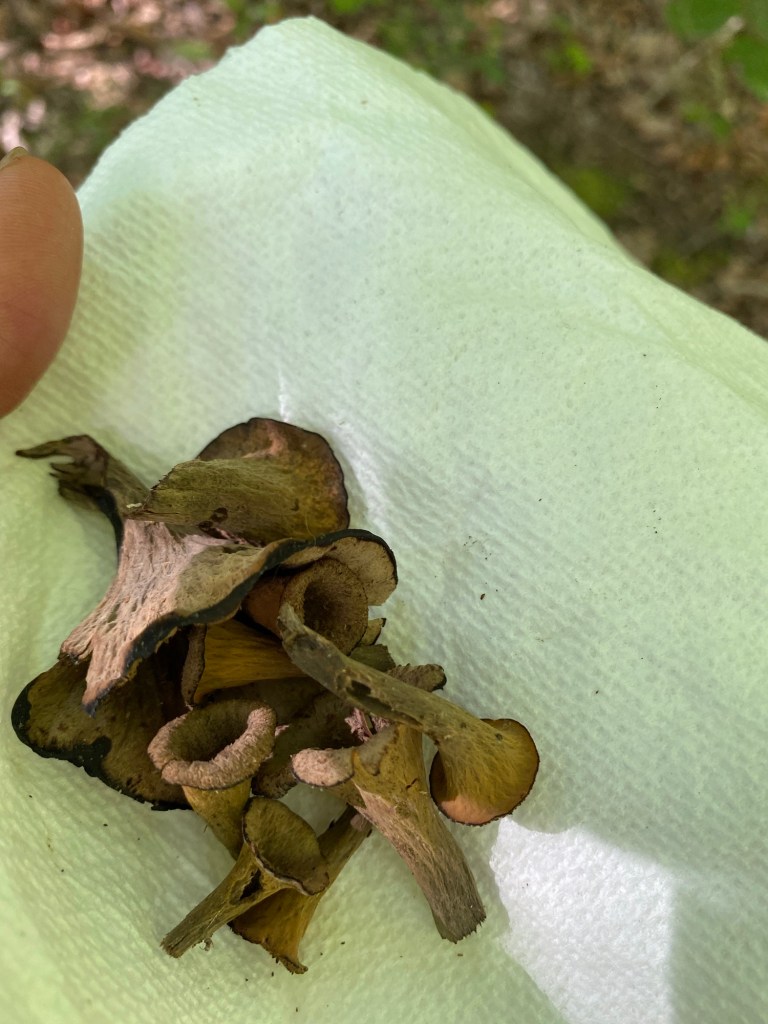
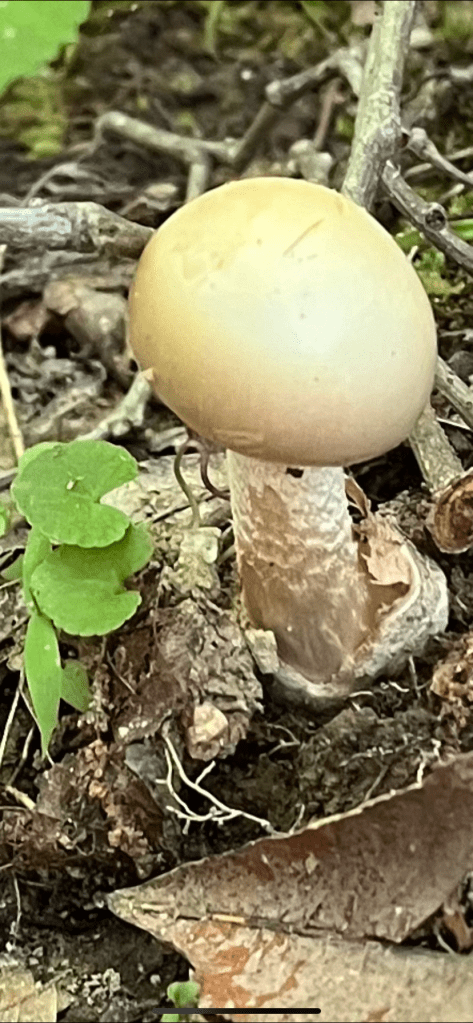
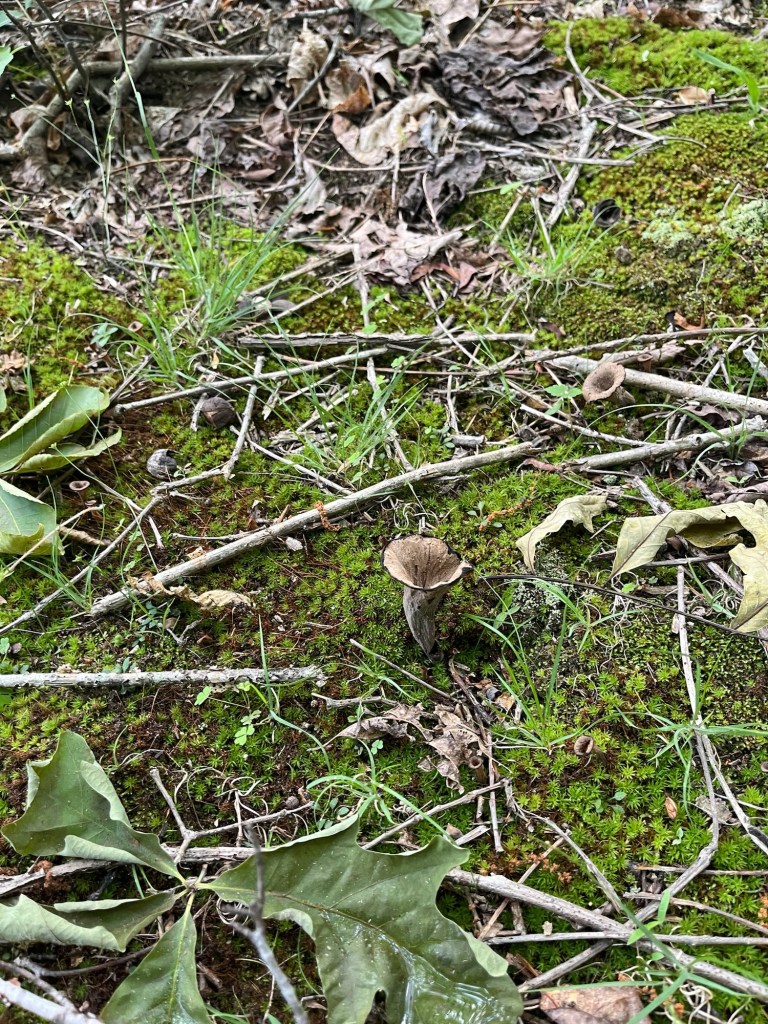
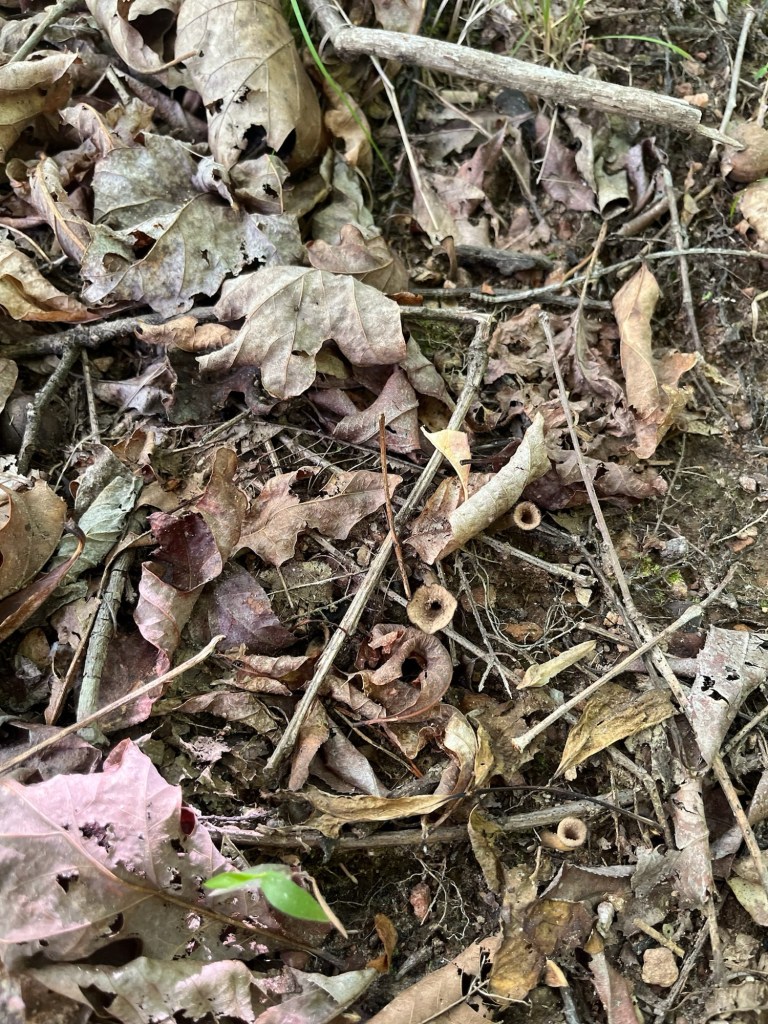
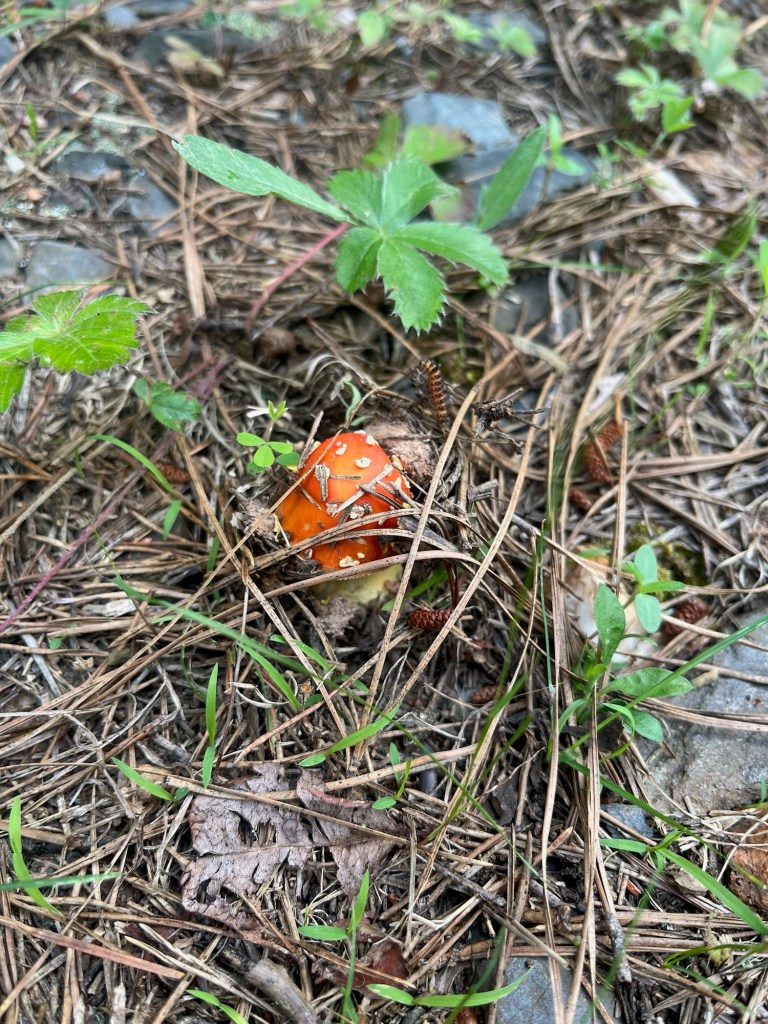
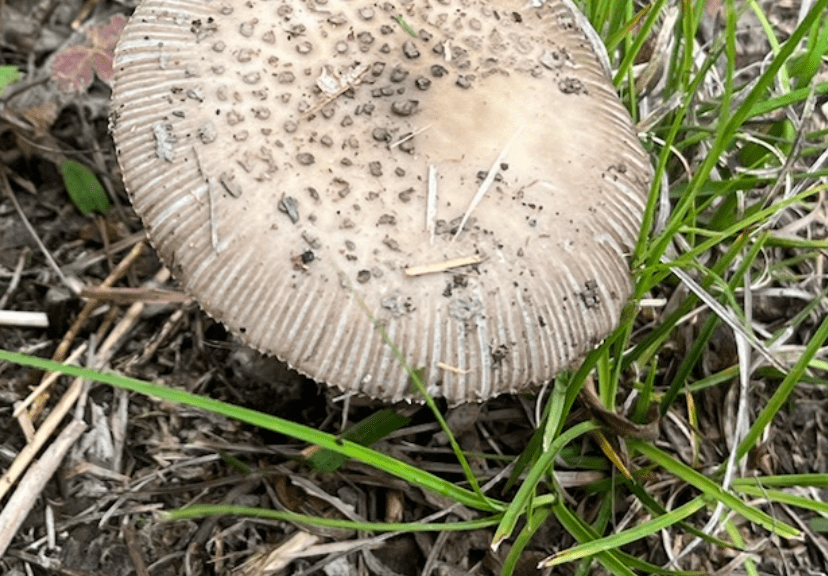
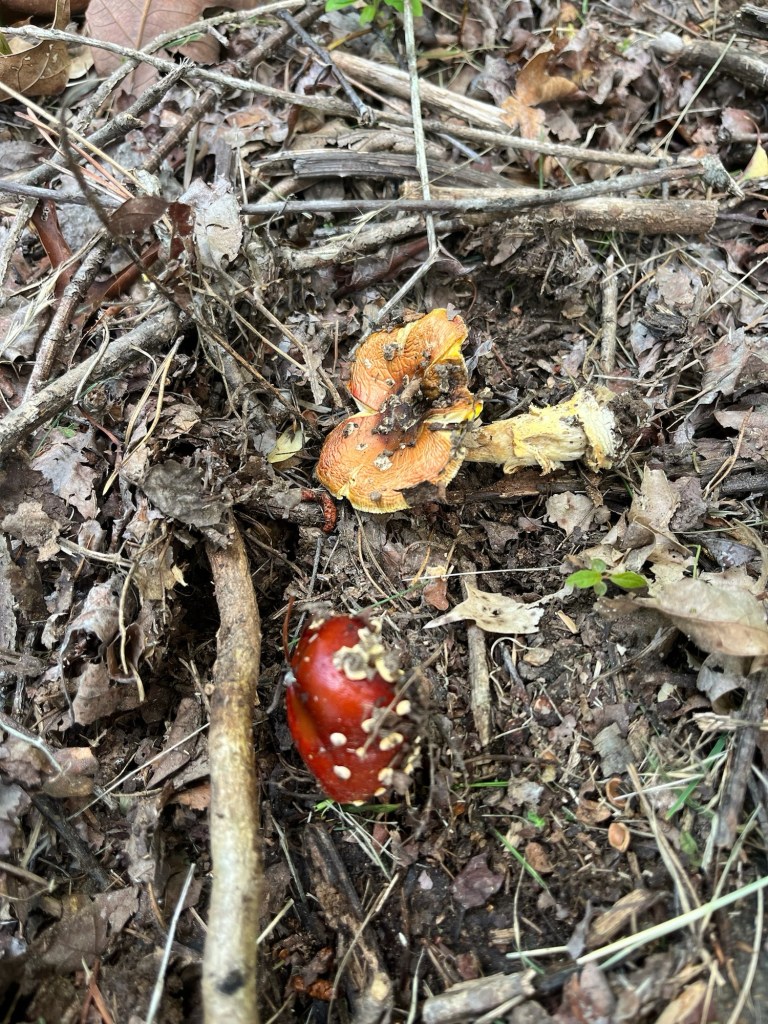
We were pleased to eat a few blueberries. We found them abundant and ripening first along the southern set back line, where they get plenty of sun.Eastern Black trumpets We ate yesterday’s black trumpets for breakfast this morning. We cooked them for 10 minutes on medium high heat in a dry pan, then lowered heat and added olive oil and garlic with a bit of salt and pepper. They were nutty, fruity and smoky. We enjoyed them as much as the golden chanterelles we found last summer. There are no known toxic lookalikes, so these are a great mushroom to forage . Some of our favorite mushrooms we have tasted. We performed some trail maintenance on ridge trail, made our way along the waterway, back over to the set back line and found more today. We harvested the largest and we can’t wait to eat these too. We made a trail up from the waterway to the Black Trumpet patches and beyond until we exhausted ourselves. We will call this Black Trumpet Way, it leads to the set back line.For now, this is unknown Amanita that we will watch this weekend. Notice the volva underneath the mushroom that it emerged from.
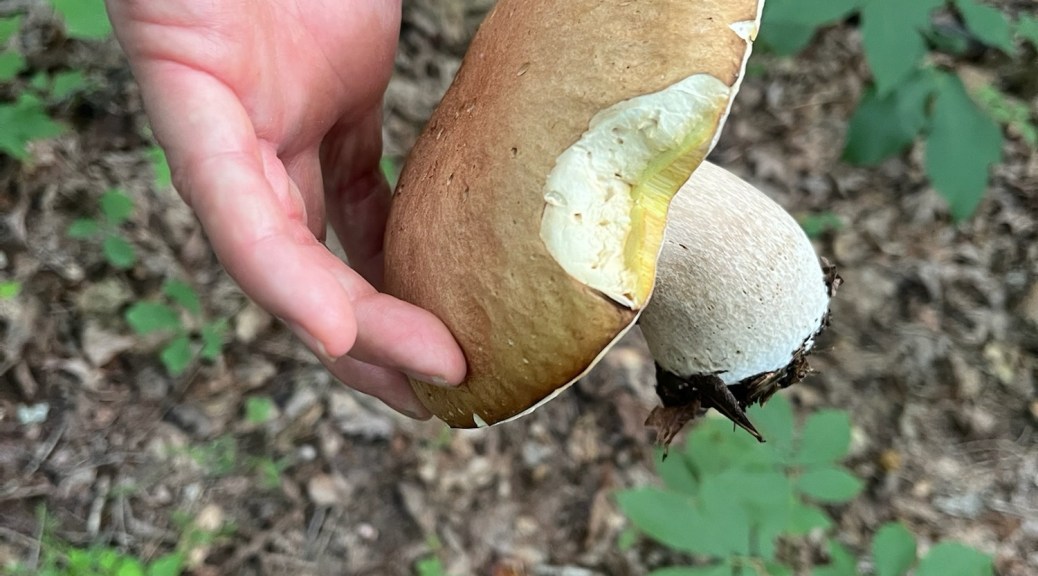
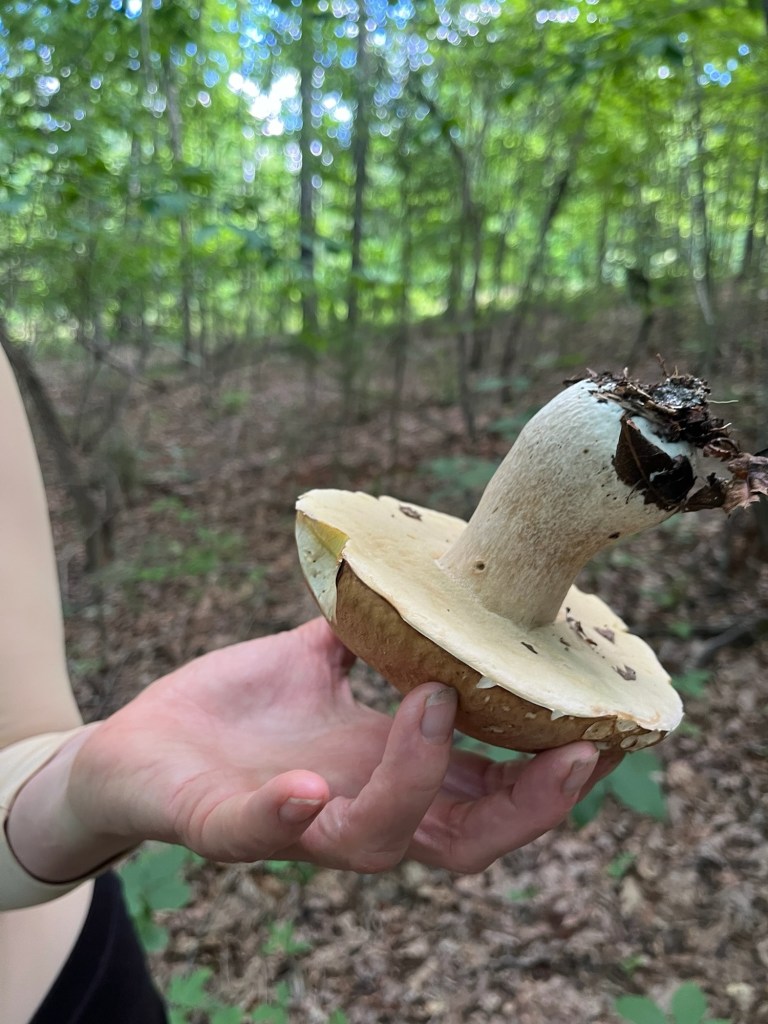
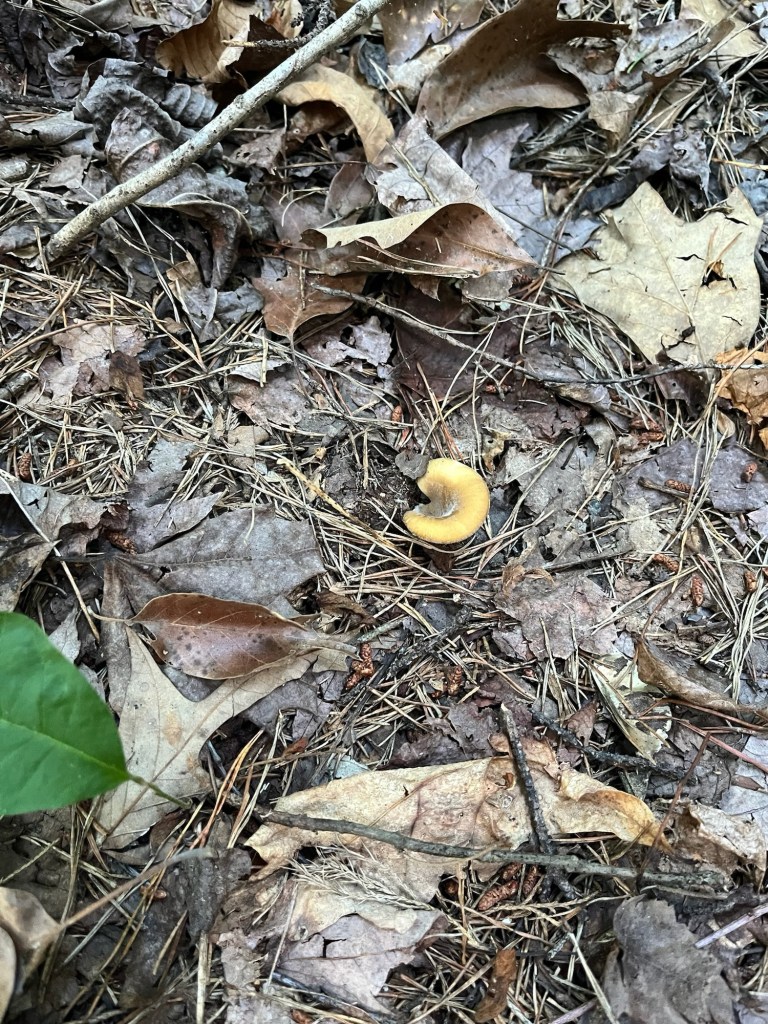
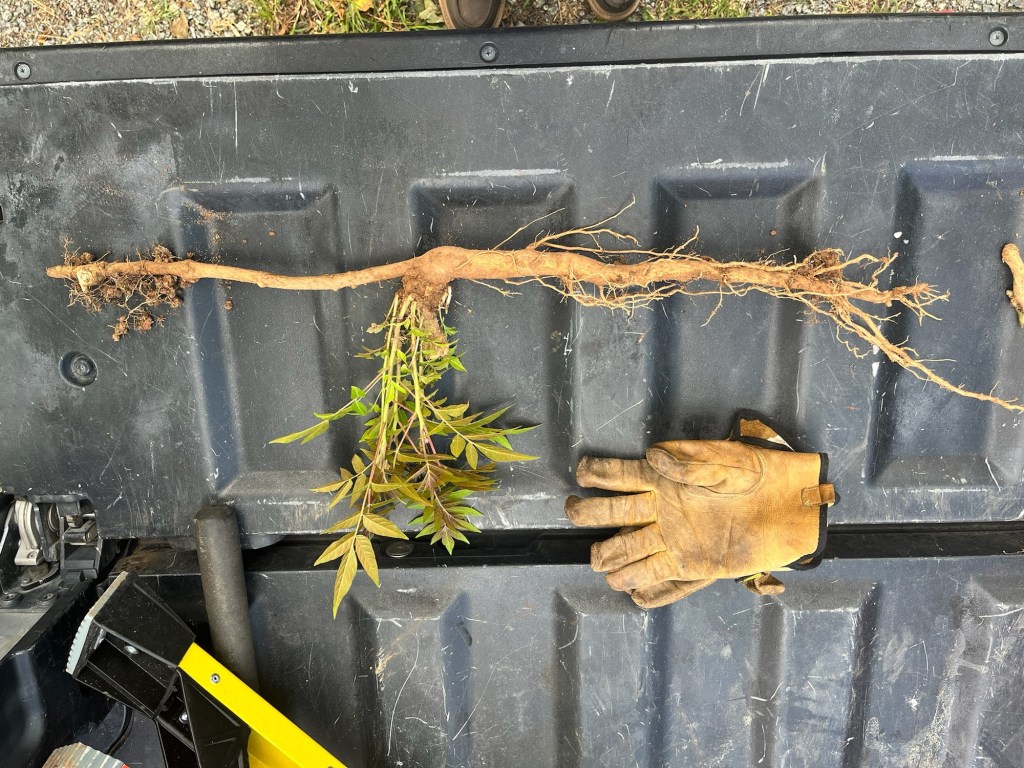
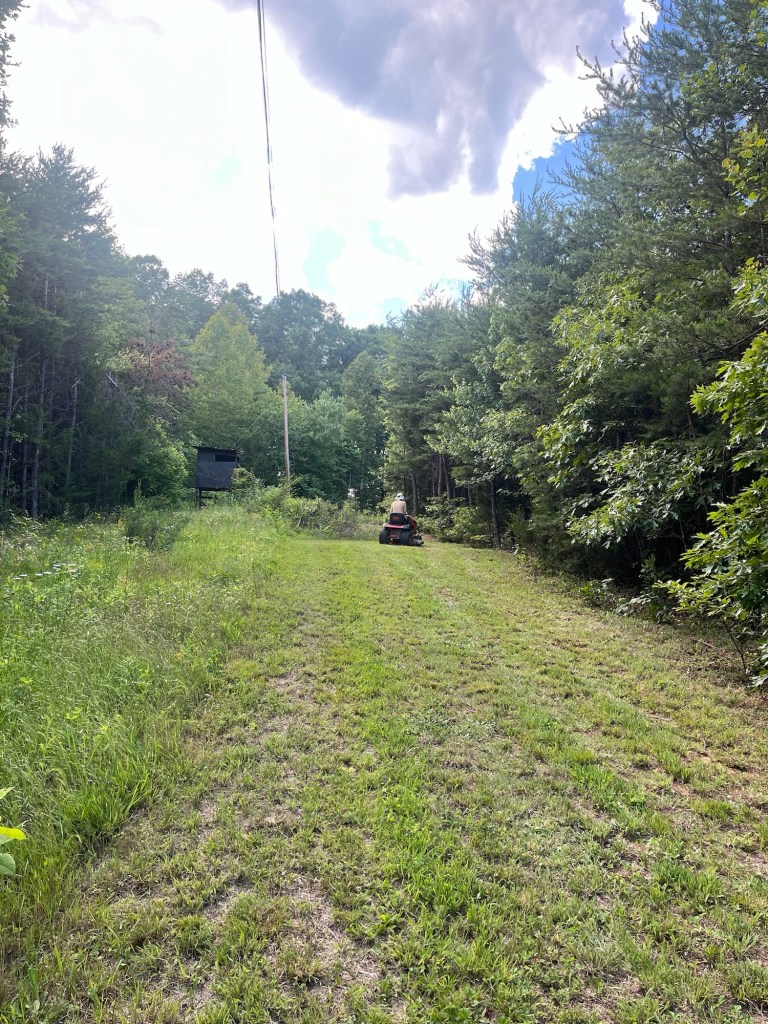
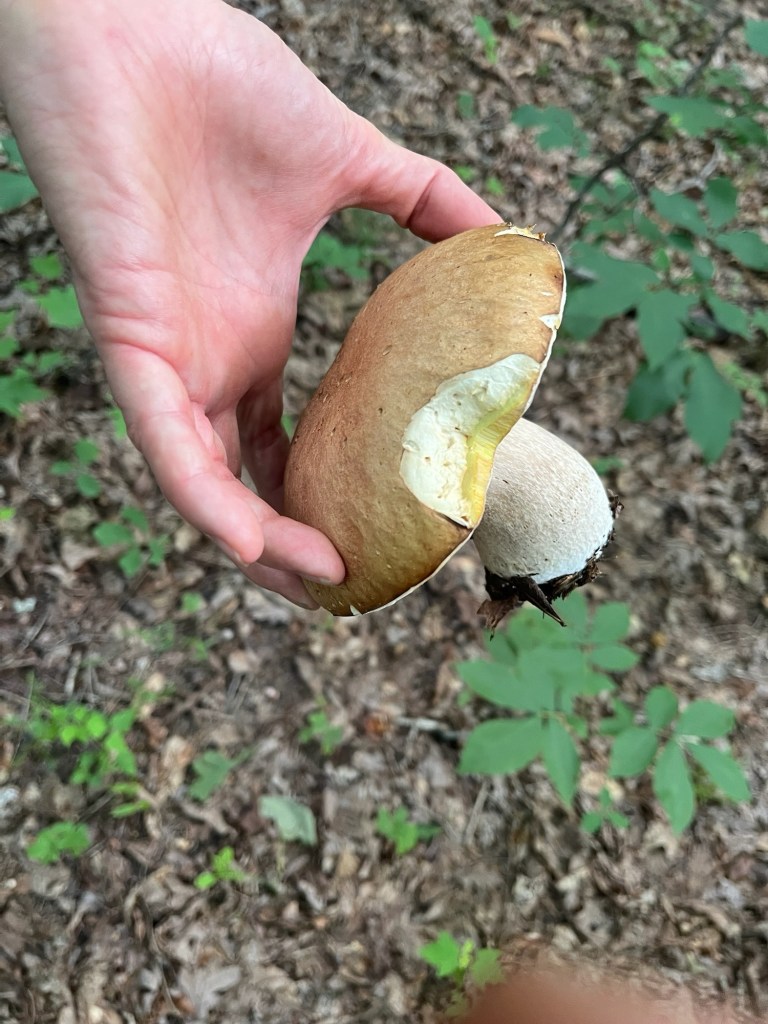
One of our first Bolete edulis mushrooms, common names the Cep, porcini, king bolete or penny bun, a most sought after edible. We’d been searching for a year and finally found it yesterday as well as black trumpets. Craterellus fallax, Eastern black trumpet, found along the southern set back line along the forest edge. Near oaks and nestled into moss growing directly from the forest litter. These are particularly difficult to spot as they look like leaf litter. We are so lucky. They looked like round tubes. These are a choice edible and are highly valued. Shoehorn oyster found along Blackrock trail growing on a stick. Amanita parcivolvata, False Caesar’s Mushroom, we are seeing these all over up top right now. The cutest mushrooms to spot pushing up through the leaves or pine needles with the bright red to orange cap dotted with white. Ailanthus, tree of Heaven, root suckers we’ve been pulling out from wherever we find it on the farm. This is a wonderful example of why to pull out the roots underneath and not mow or cut them since the root will keep growing and sending up more of this invasive tree that chokes out native species. Mowing the south end where we found the first of 5 porcini mushrooms yesterday. 👏🏽
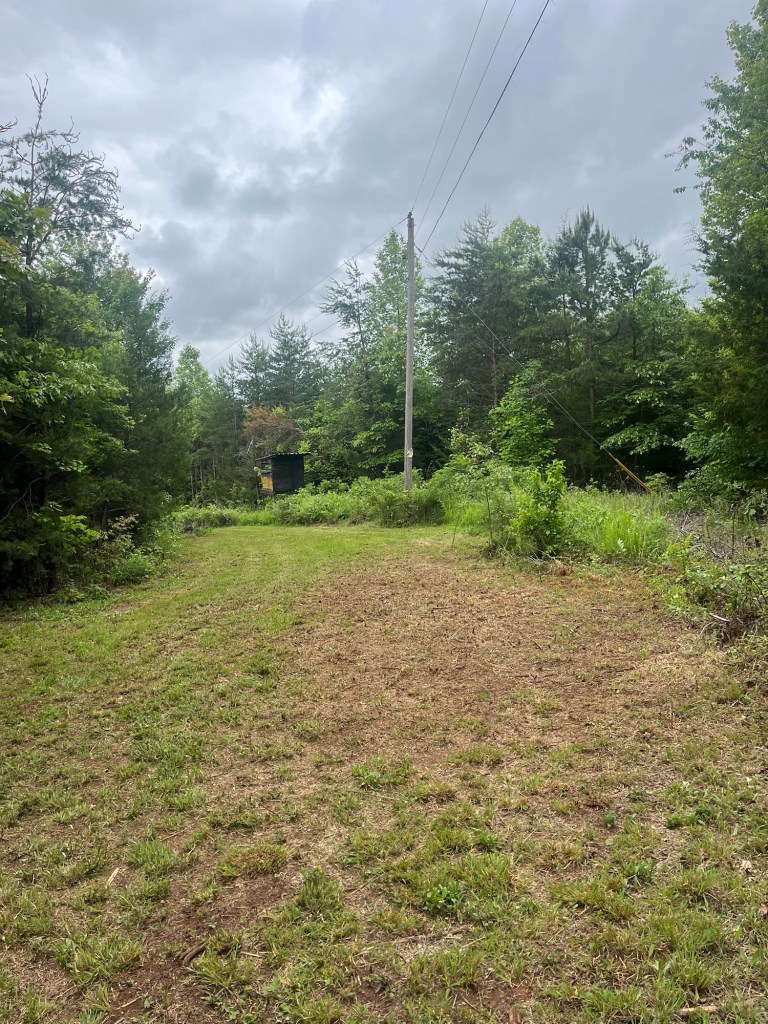
We were out to mow and have a work day. It was lovely cooler weather so we got lucky in multiple ways. We mowed the clearing up top, the front along the road and the southern border. Then we went for a little walk and found the mushrooms we’d almost given up hope finding at SAFF. What a wonderful day. We feel like anything is possible if you stay focused and keep going. 😀
We saw plenty of lone star ticks as well. Since we’ve been mowing regularly we don’t see them in the clearings but along our trails we find them on the tippy top of Galium, bedstraw. They hang out with their legs open waiting for an animal to walk by to attach to. We saw plenty of them yesterday. It’s a bad year for ticks here in Virginia. The mild winter weather didn’t kill them off so they are even more abundant than usual. We are staying mindful.
So far we have seen plenty of deer ticks, dog ticks and lone star ticks at the farm this year. The clearing seems free of them right now since we keep it mowed down well. In the forest, the wetter and greener areas where deer and dogs are known to move through have been hotspots. Our tick mitigation measures have kept us from getting any bites but we have found them crawling on our socks, shoes and clothes. It’s definitely tick season unfortunately.
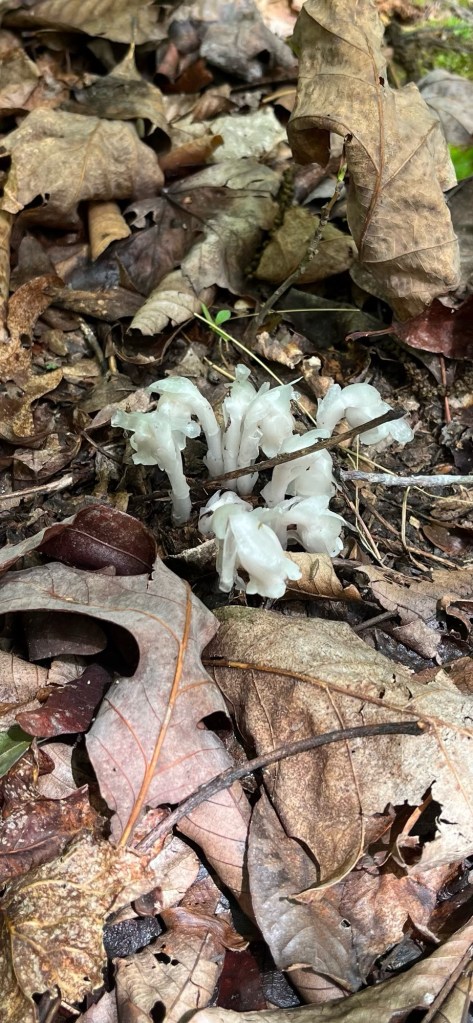
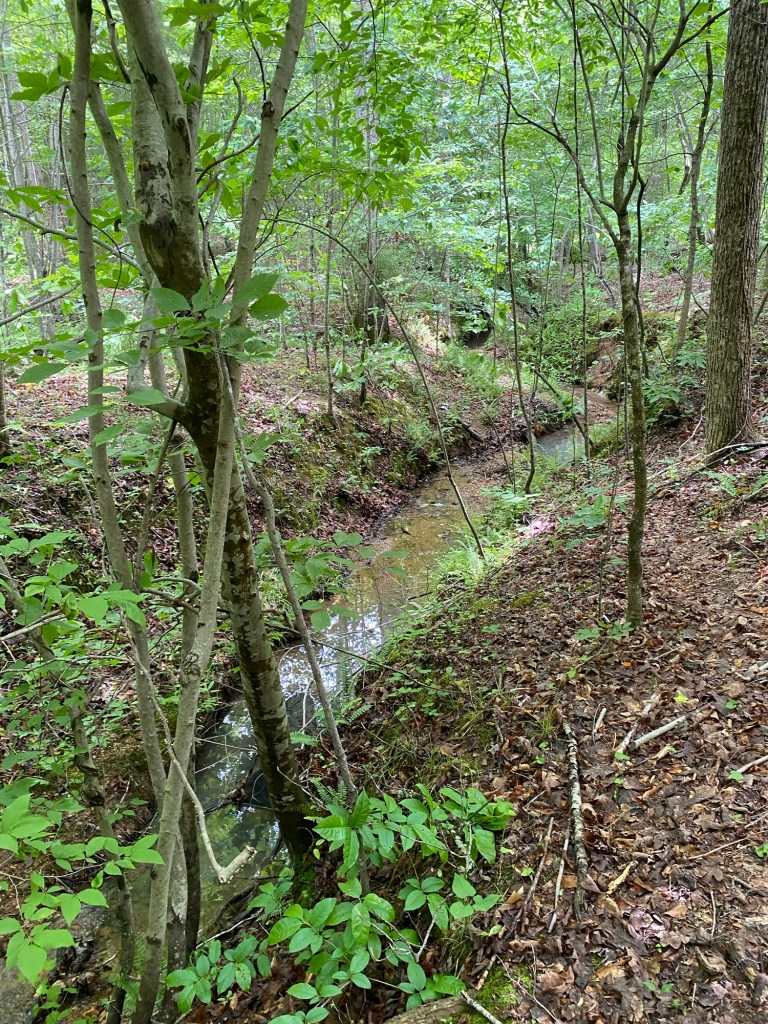
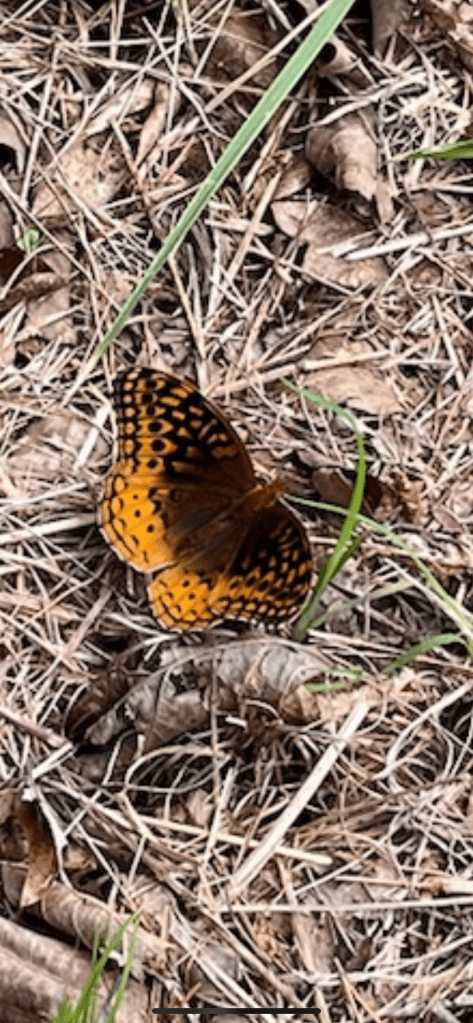
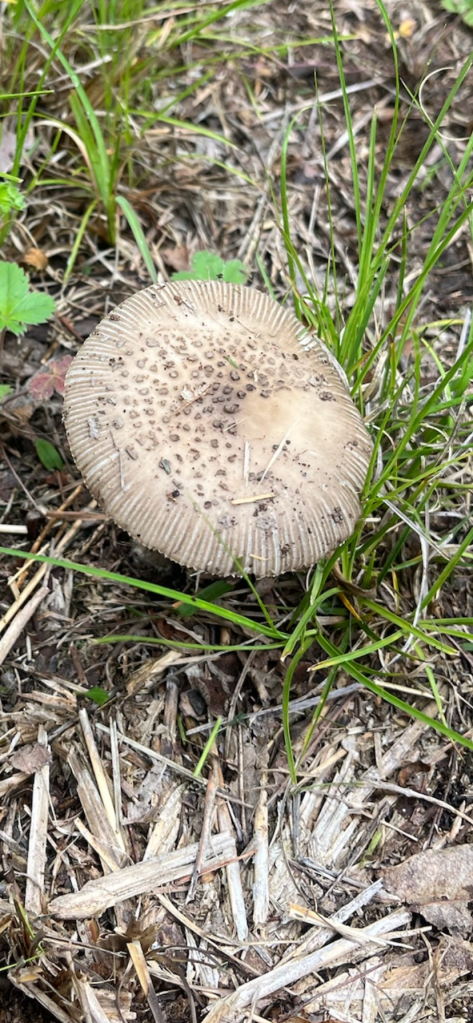
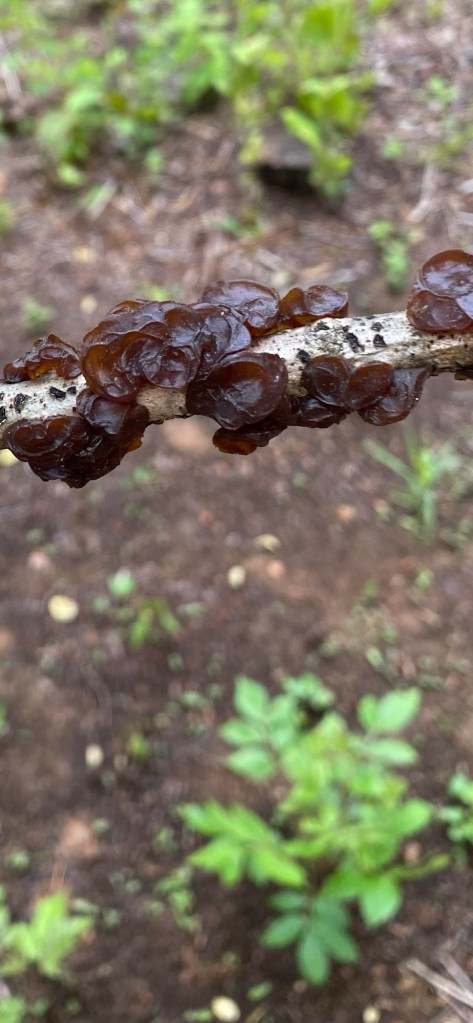
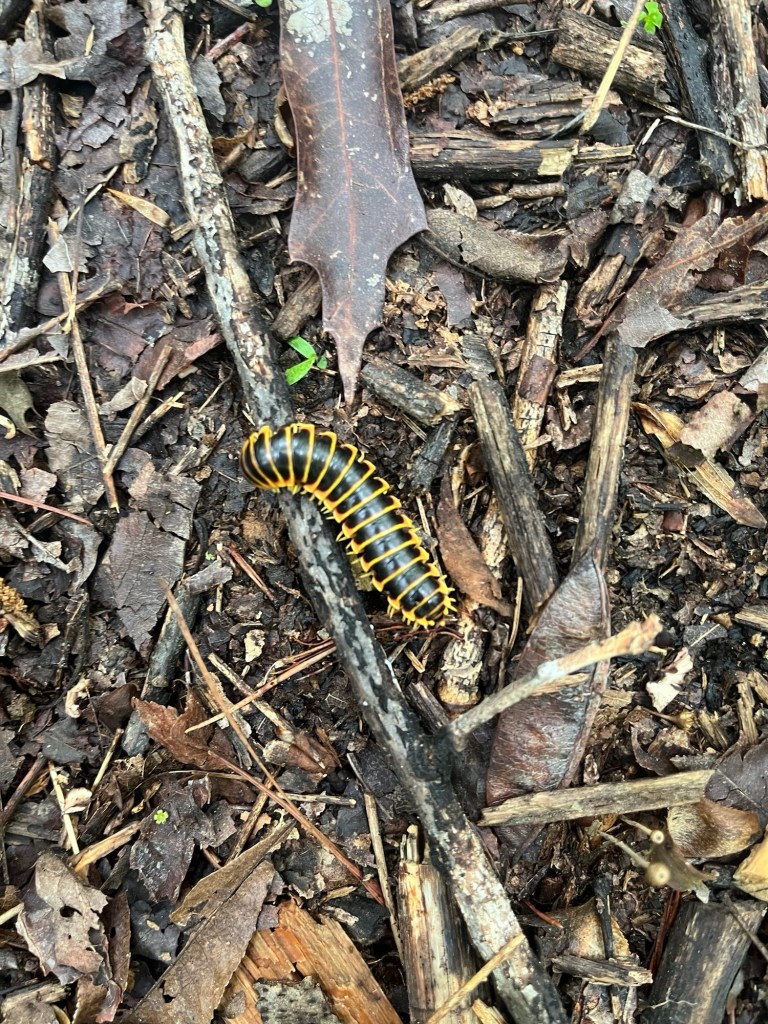
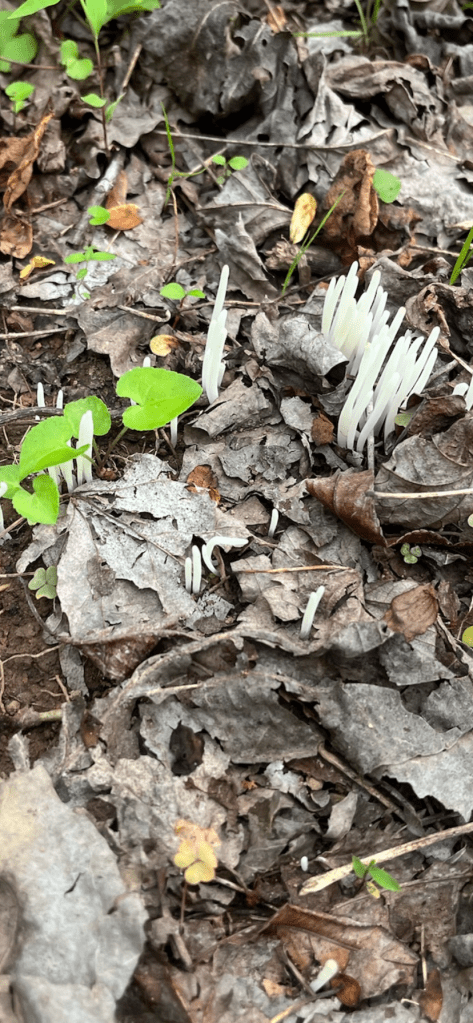
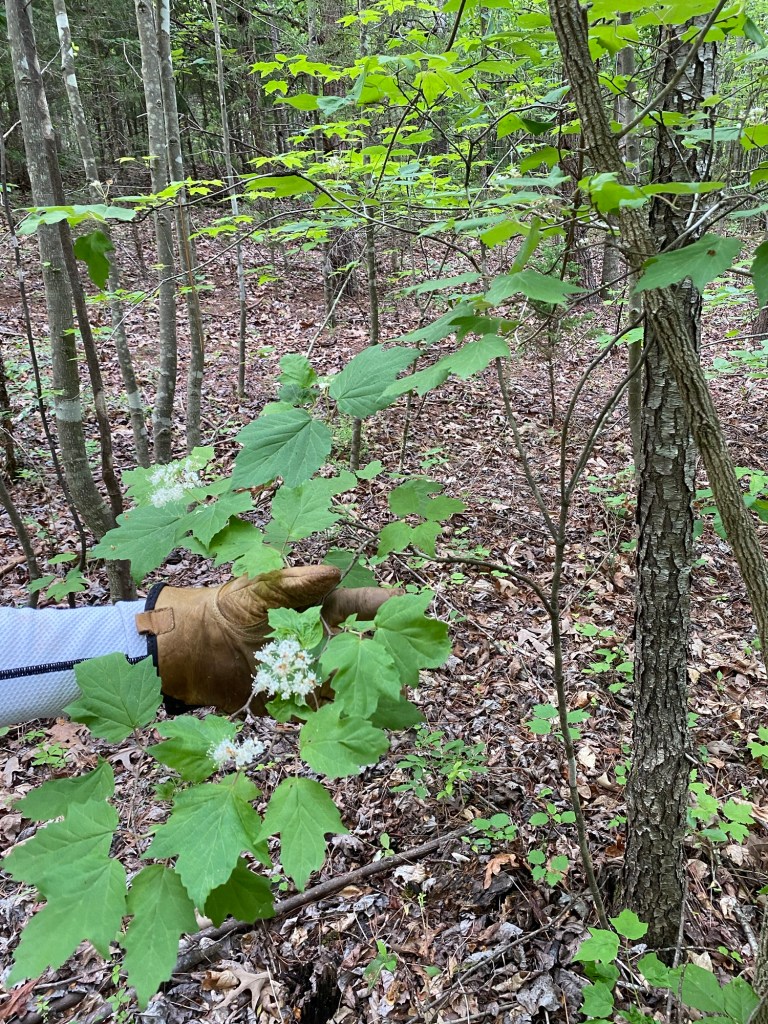
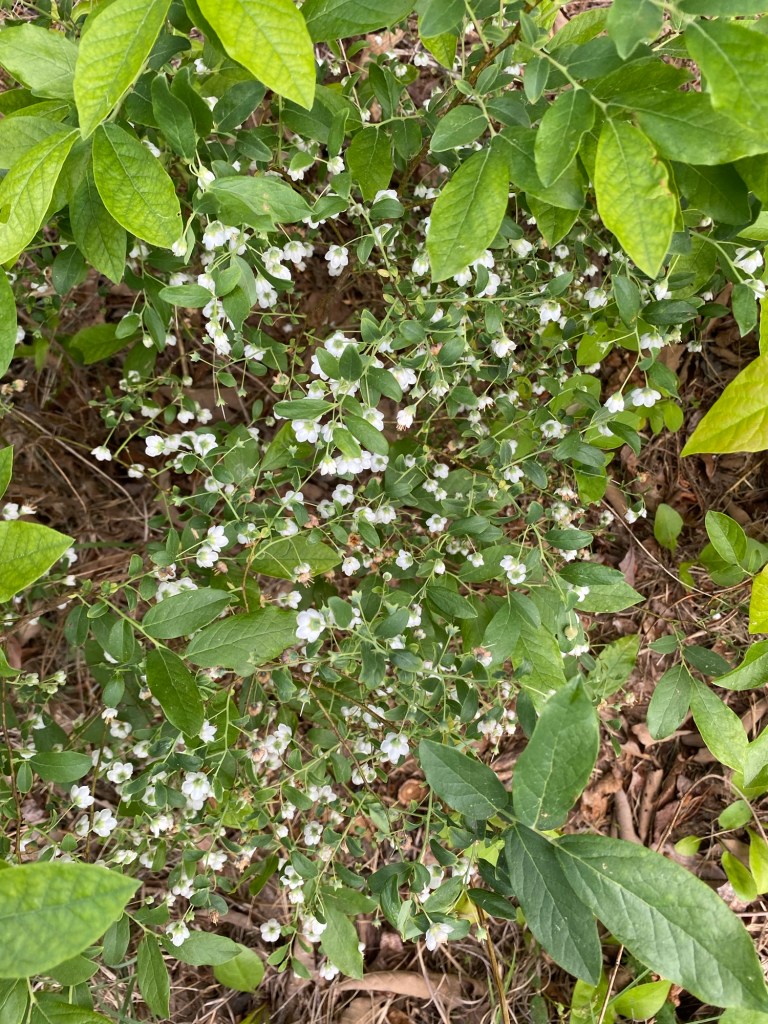
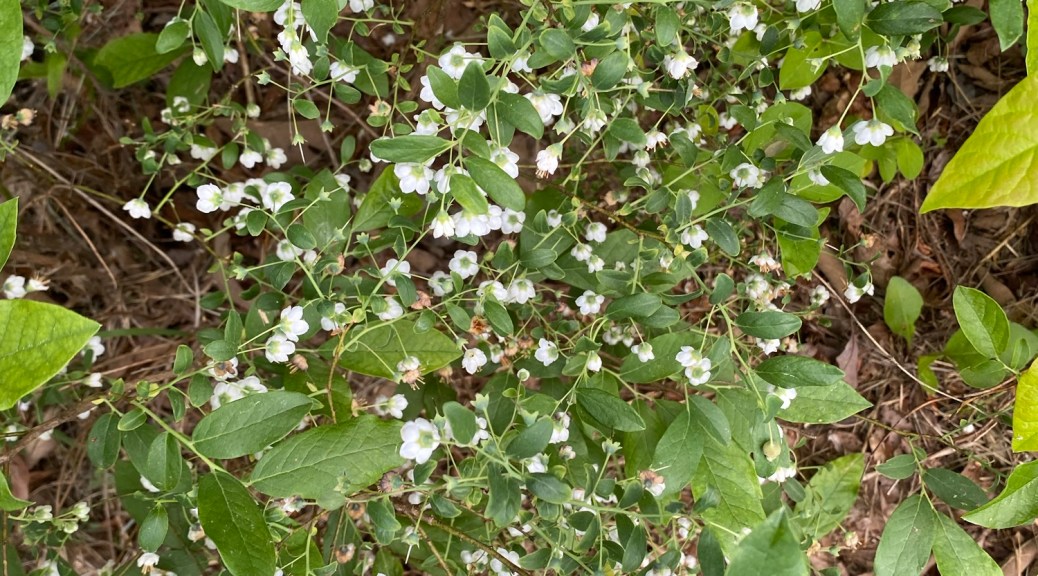
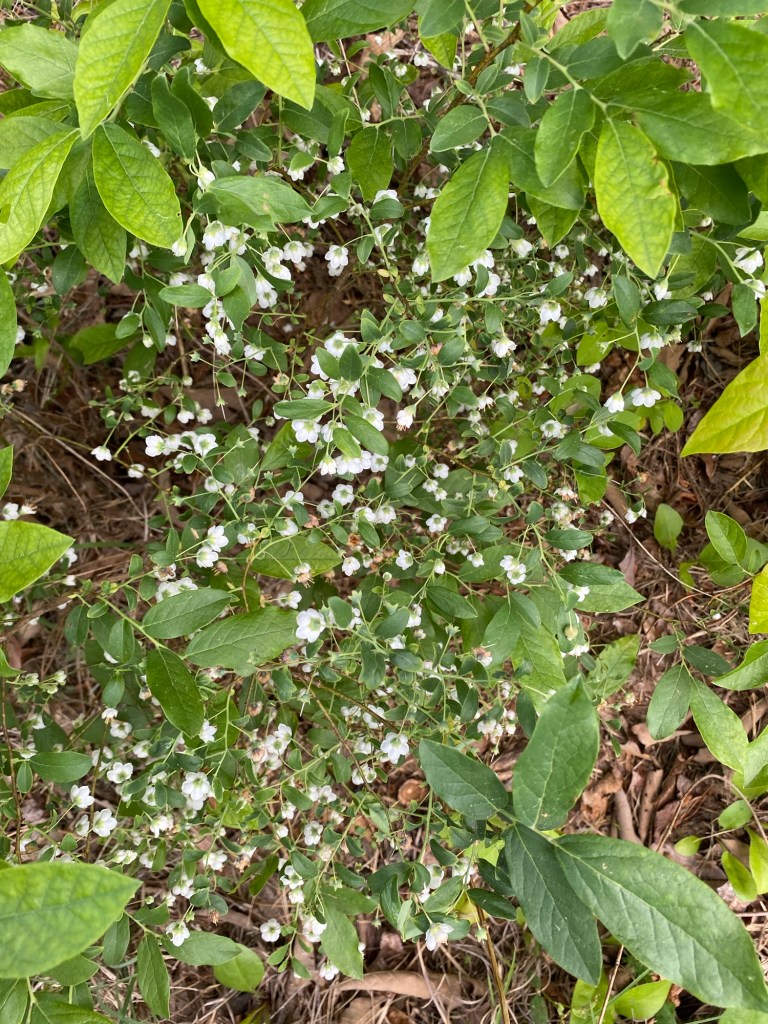
Monotropa uniflora, Indian pipe or ghost pipe, found along southern set back line in the forest. These plants get their energy from their host fungus, Russula or Lactarius, so they can exist in darkest parts of the woods. We were delighted to find it at SAFF.The water was moving gently in the waterway at the bottom. Great spangled fritillary, Argynnis cybele, were fluttering all around the Southern set back line. Fritillaries are a smaller group within the butterfly family Nymphalidae. All butterflies in this family have tiny front legs that lack claws (in most other butterfly families, the front legs have claws). My daughter laughs at the Seussian names (fritillary, pawpaw, peduncle) of plants and insects from the farm.Amanita vaginata, grissette, an edible Amanita that lacks a ring in the stem. A large mushroom with furrows around the edge duplicating the gills underneath.American Amber jelly fungus, Exidia crenata, is edible but we’ve not tasted it yet. Used in pho or noodle dishes. Black and gold flat millipede, Apheloria virginiensis, found all along the south side. It is reported to secrete cyanide compounds as a defense. It is recommended that one wash hands after handling this organism as the toxic compounds it secretes are poisonous and can cause extreme irritation if rubbed in the eyes. (Source: Wikipedia)Chris looking for our boundary marker in pawpaw orchard. Fairy fingers, Clavaria fragilis, It produces tubular, unbranched, white basidiocarps (fruit bodies) that typically grow in clusters. Maple leaf viburnum Pawpaws Flowering lowbush blueberry
We were going to mow but left our keys to the tractor at the house in Staunton so instead we had a lovely walk around. The ground and forest litter was wet from the storms that have passed through. With the heat, it felt very muggy.
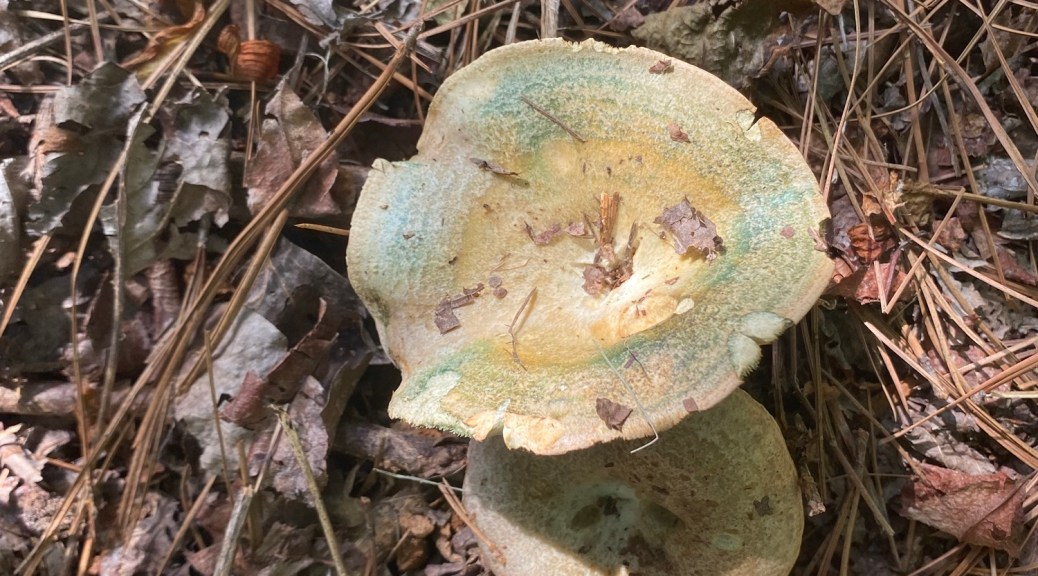
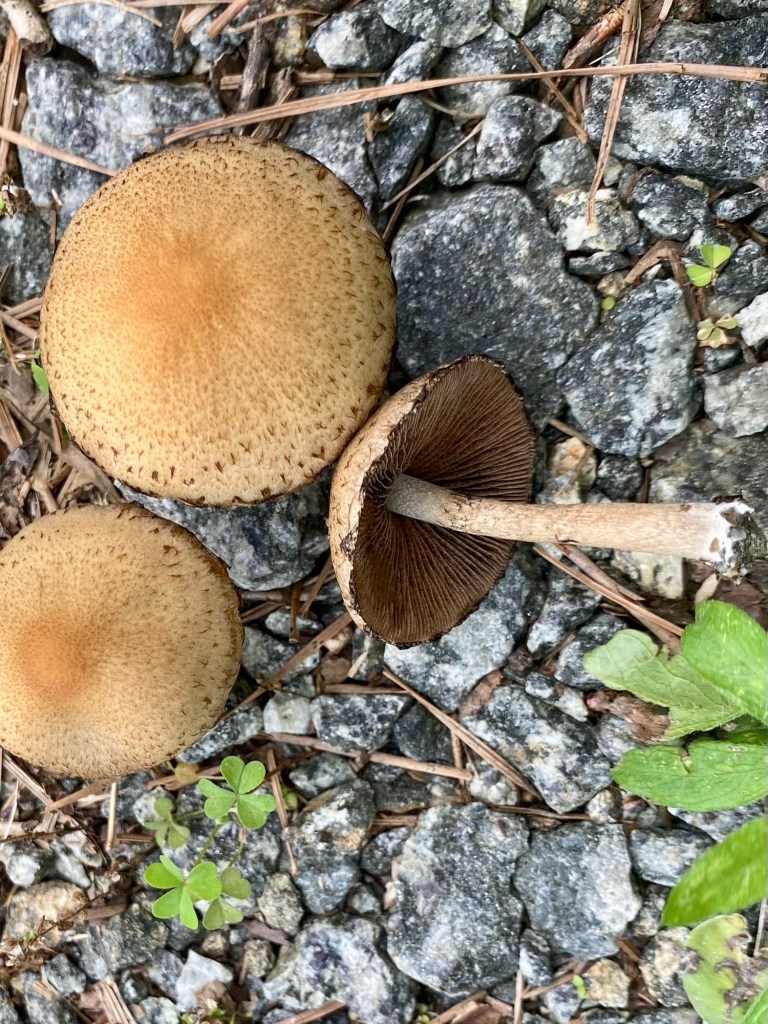
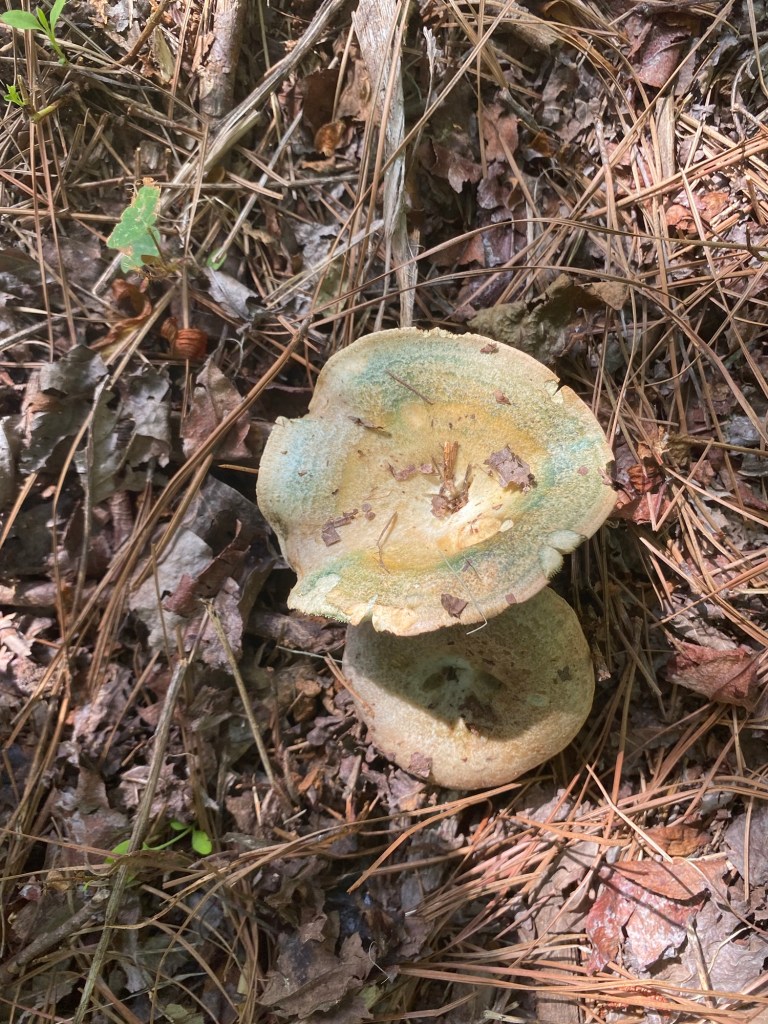
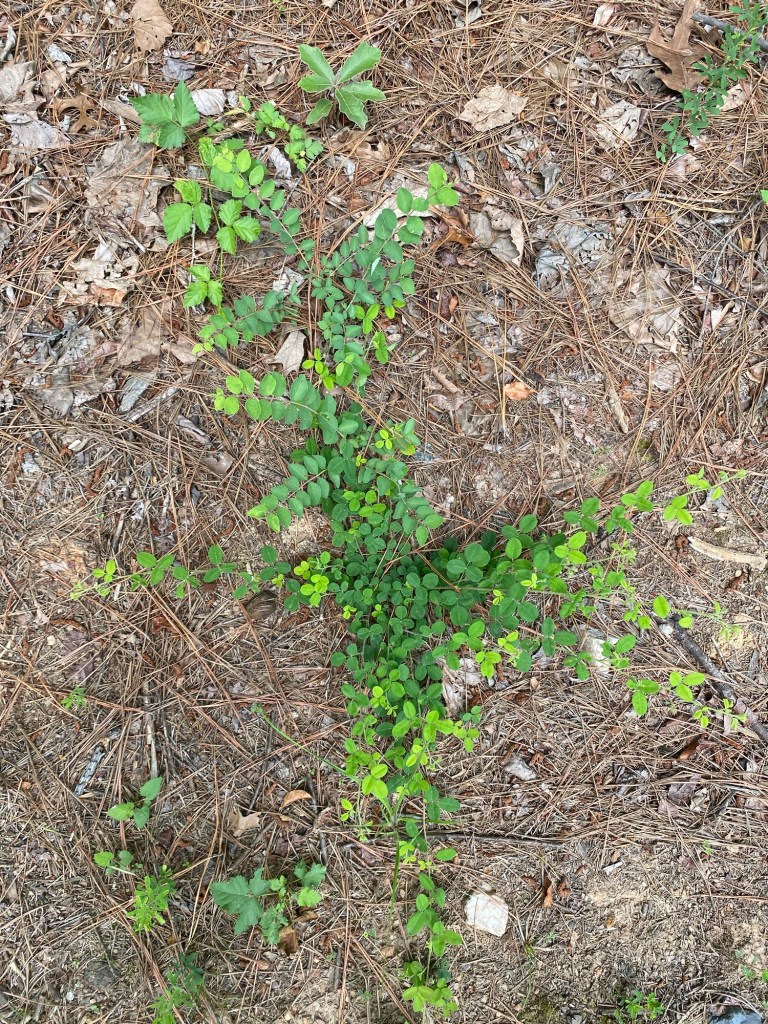
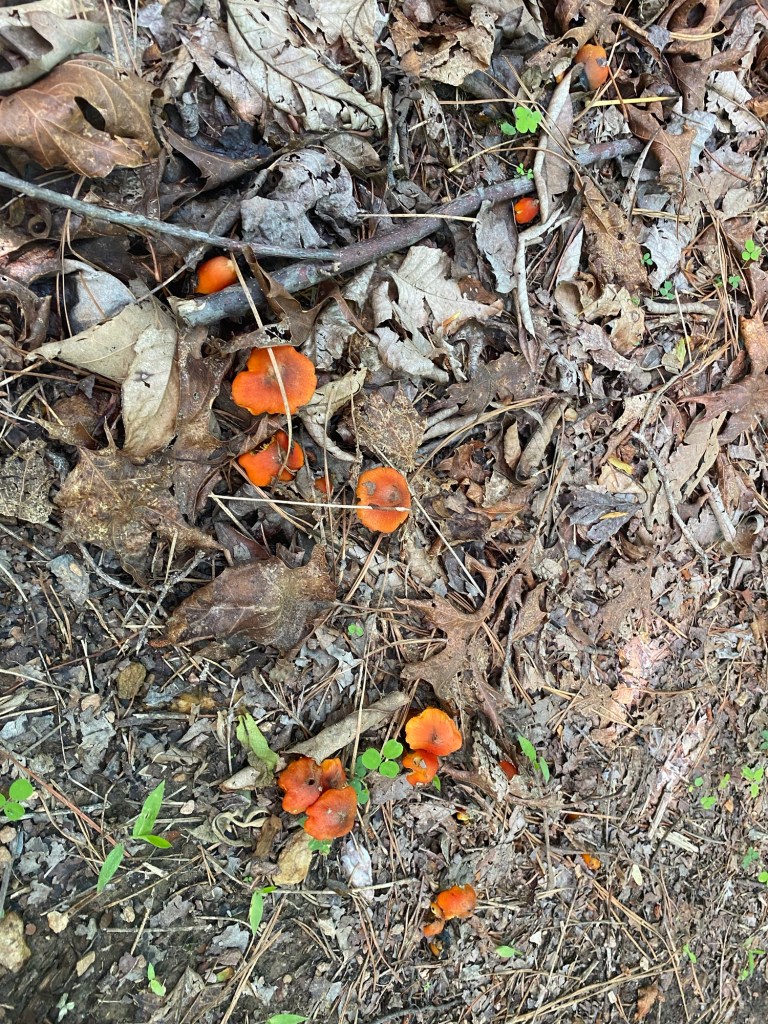
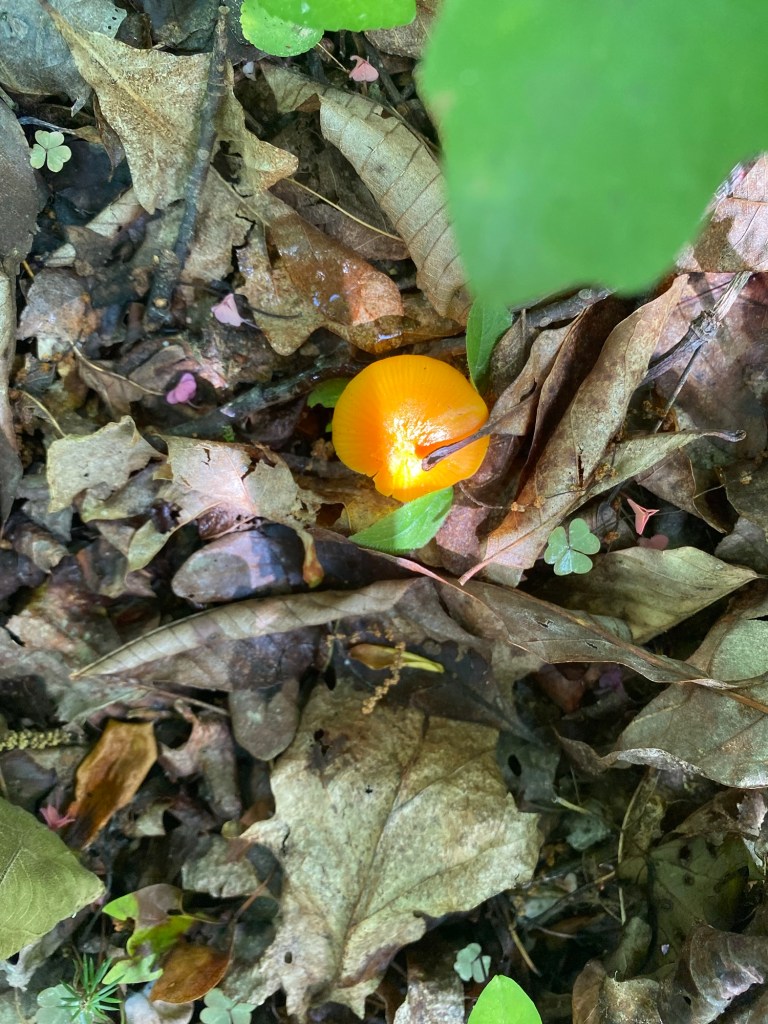
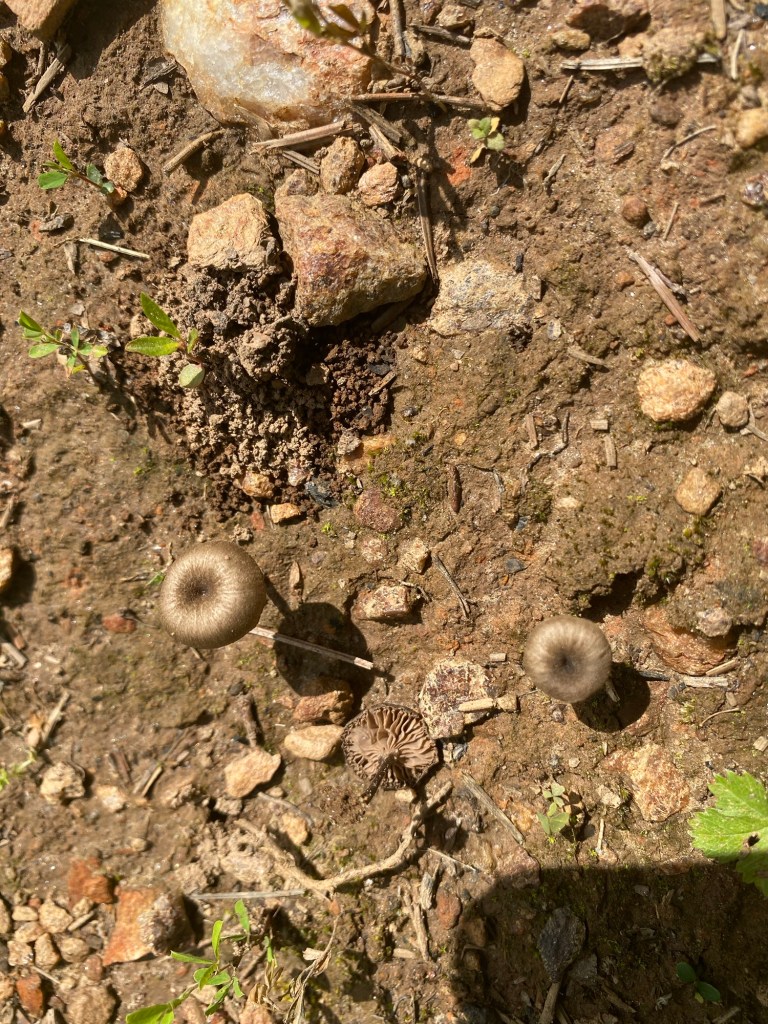
Weeping widow, Lacrymaria lacrymabunda, they are not poisonous but they are bitter. They were a lovely find on the driveway up top. Fly agaric, Amanita muscaria, found along the edges of the clearing up top. They arose from a volva, an egg at the base of the stem. We saw them last year and were waiting for them to come back. Similar to the Lactarius indigo, this is Calendine milk cap. Found at the top of North trail. It had a blue yellow sheen on the cap with yellow gills. The gills did not lactate when cut. We have so many Russulas. It’s delightful.Lespedeza procumbens, trailing lespedeza, a native perennial which is a legume, so nitrogen fixing. Found throughout the farm. Hygrocybe conica along North Trail. These were brilliantly colored on the forest floor. Hygrocybe flavescens, Golden waxy cap, at the bottom of North Trail as it reaches the waterway, we found this beauty. Entoloma strictius, were tall, straight and golden, arising directly out of the forest litter along North trail. They appear to have a pink spore print, and the ridge-like gills turn pink as they age. The Pawpaw Orchard has become a favorite location for us as we clear out small competitors and limb up larger trees. We’ve been learning about how to successfully transplant papaws and we’re working on a long term strategy to produce fruit and trees in abundance.
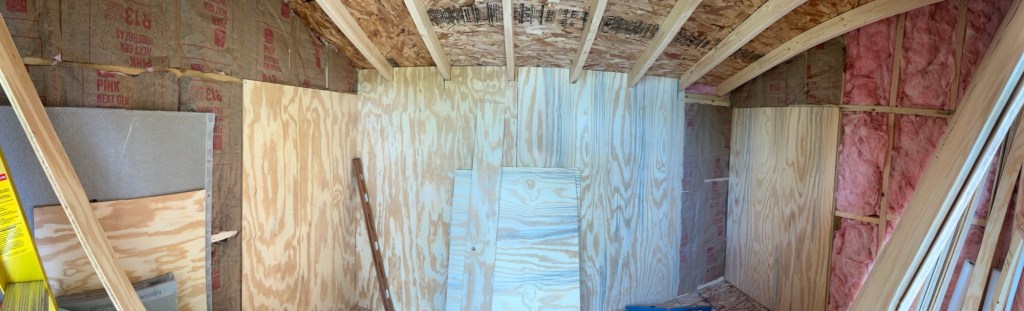
We have been working on the shed which will house a compost toilet and shower for us to camp luxuriously. We plan to camp in the next month and hope to report back about the wonderful night time adventures at Saint Andrews Forest Farm.
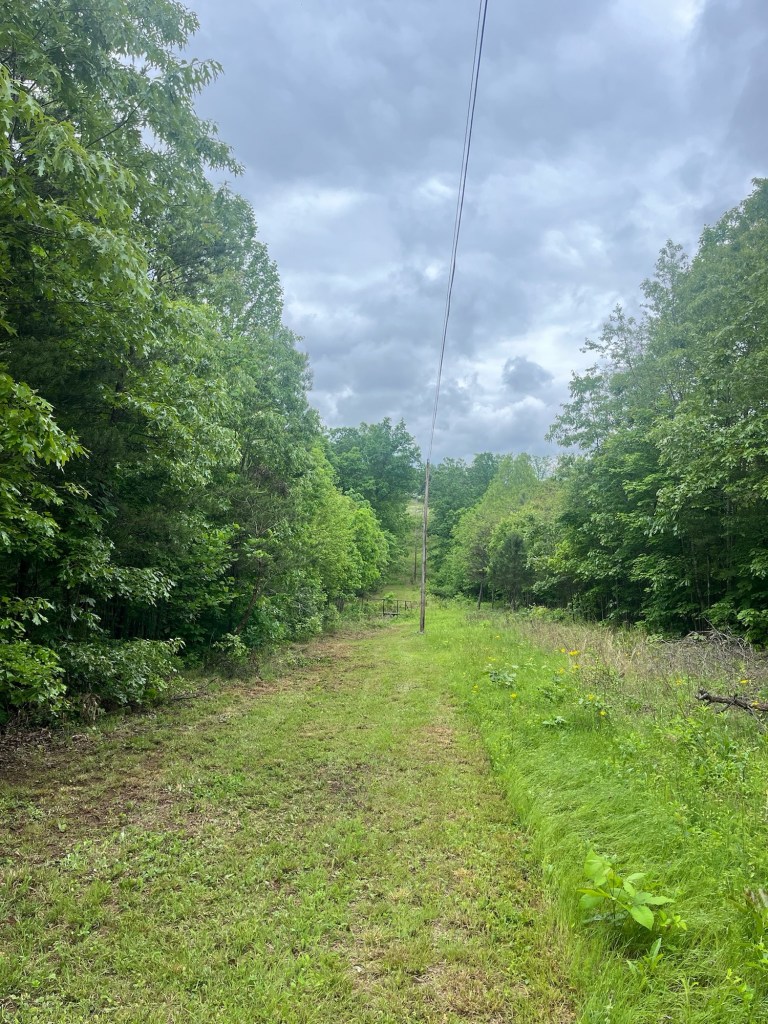
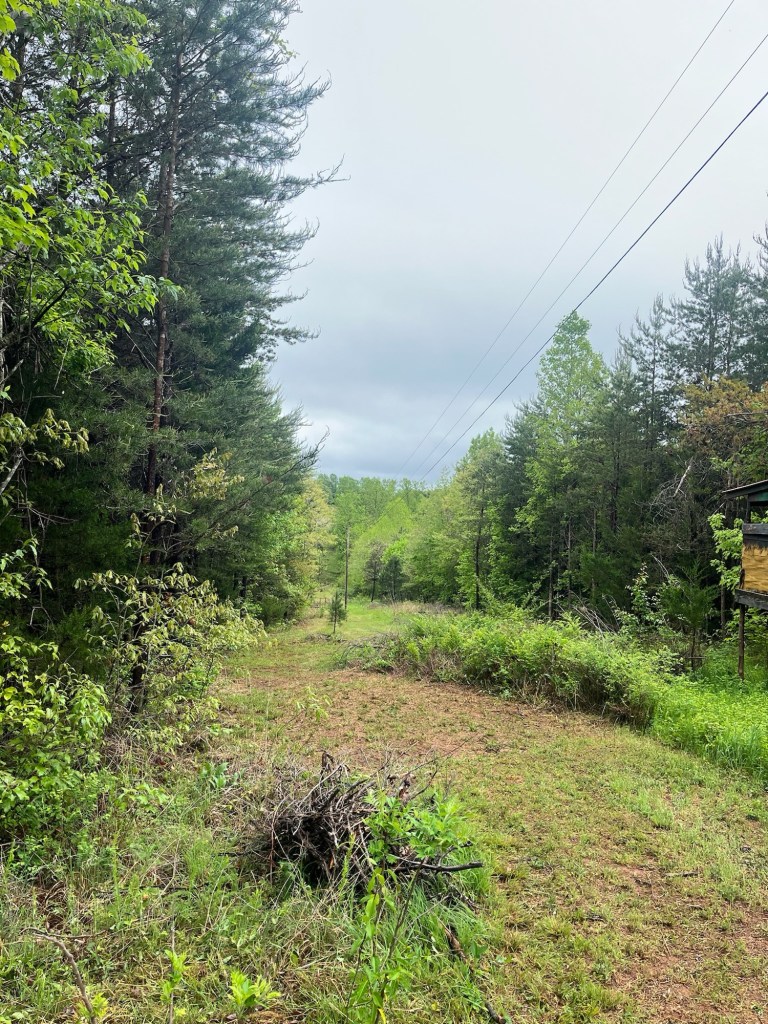
The compost toilet has indoor cladding now. Freshly cut! We’ve been diligently maintaining our setback line along the Southern boundary of SAFF, grateful for the power of the Husqvarna.Straight down our south property line. (The electric wire.)
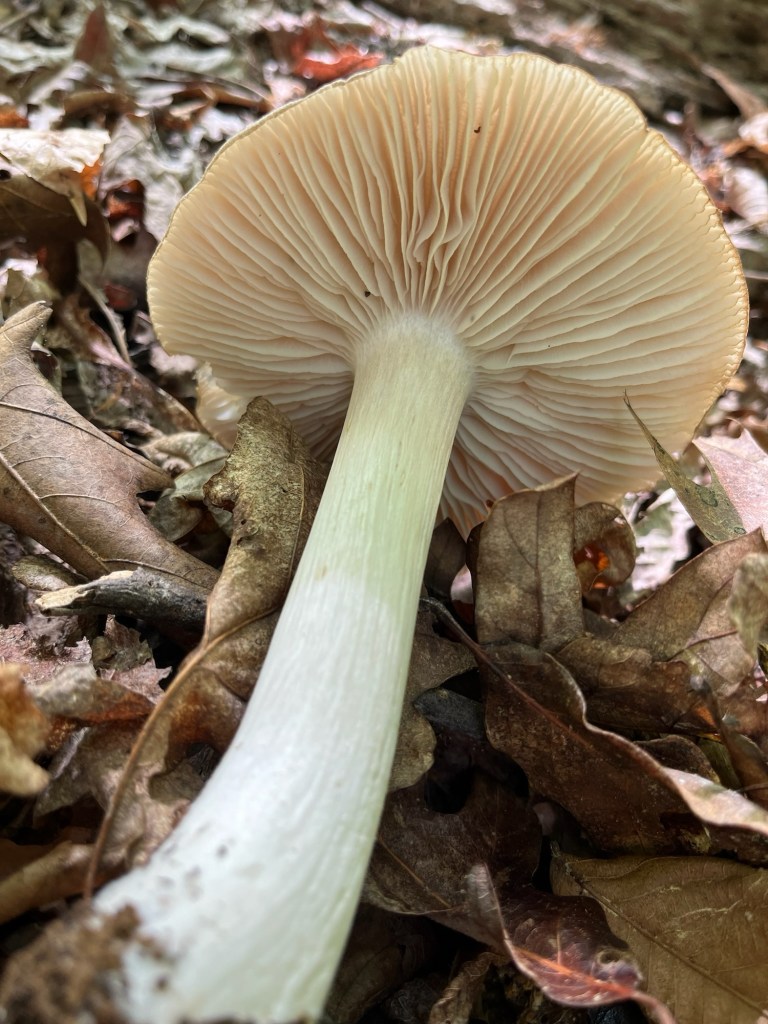
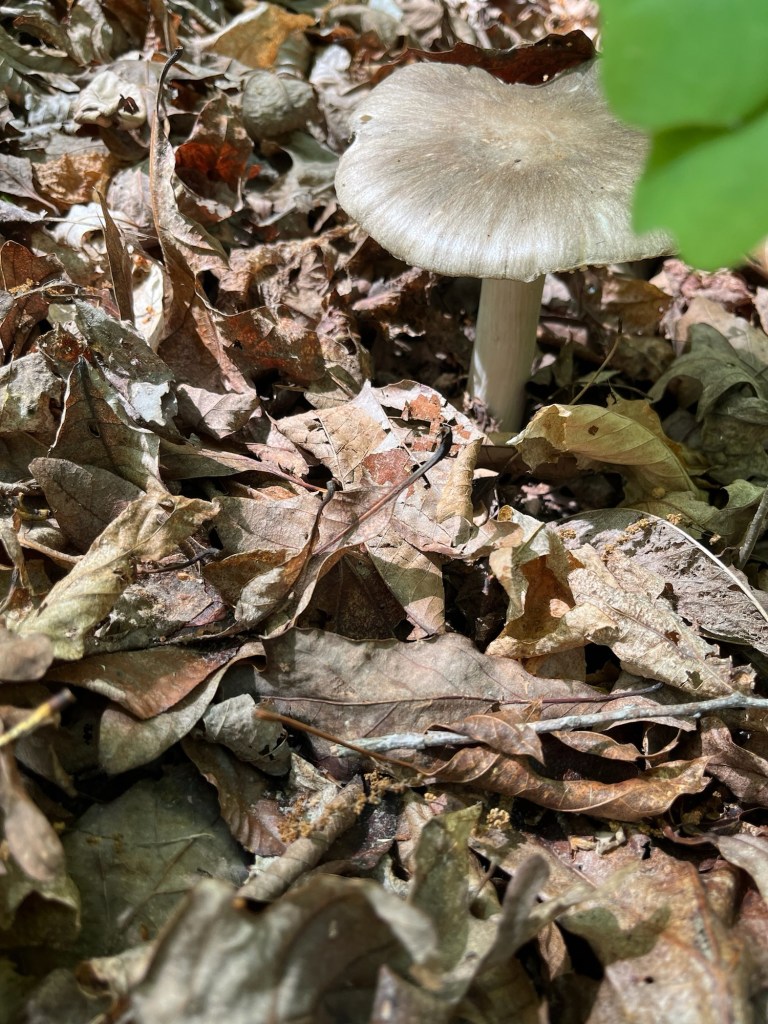
Eastern American Platterful Mushroom, Megacollybia rodmanii. One of the first mushrooms to appear after morel season. They pop up in May and June. They are decomposers of dead hardwood.
We found 9 or 10 of these Eastern American Platterful Mushrooms on the south side on the slope just above the waterway. They were big and impressive emerging from the forest litter. We’ve been searching for morels for months and hadn’t seen much of any fungi. They were a delightful sight for sore eyes. They are not delicious and some have been sickened by them despite the name “Platterful” so we left them there.
Top of the Megacollybia rodmanii.
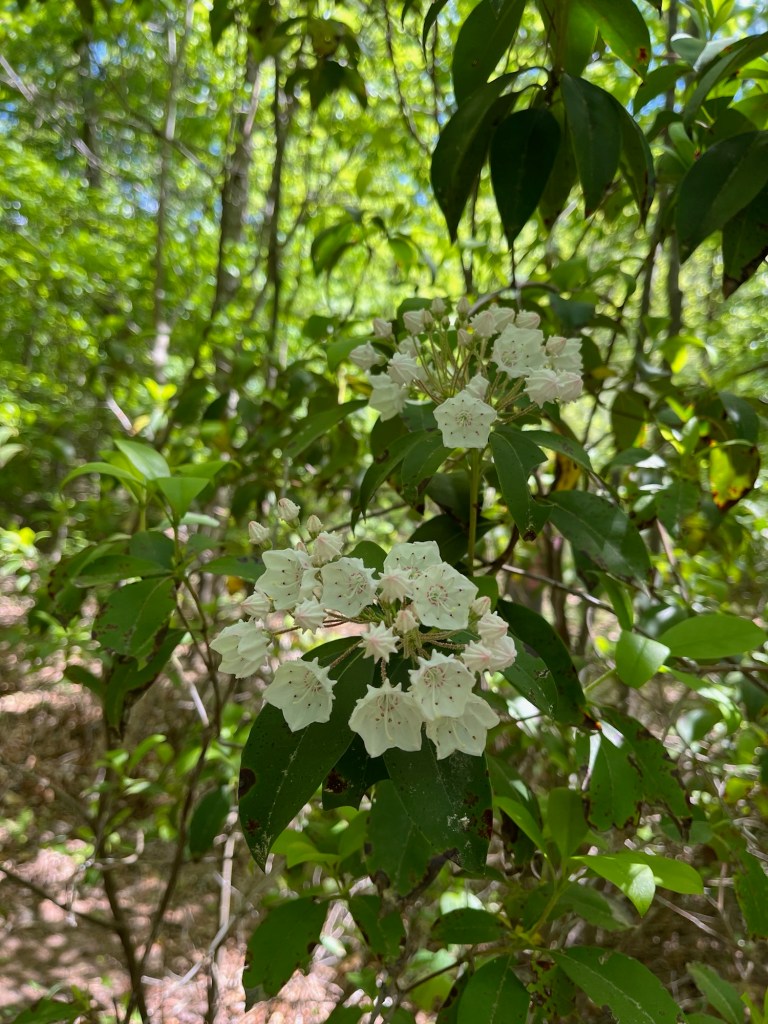
Mountain laurel blooming. A nitrogen fixer found throughout the farm. Early Lowbush blueberry flowering along the southern set back line.
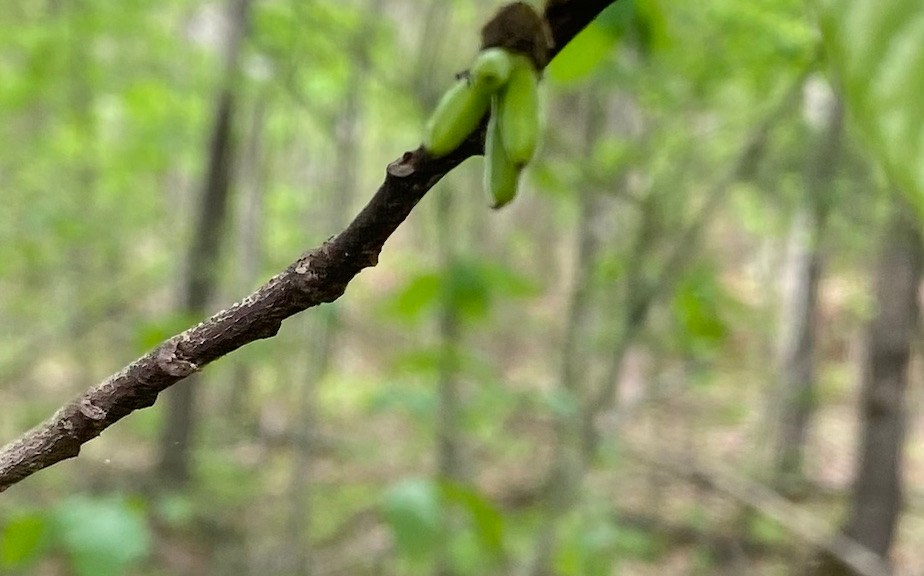
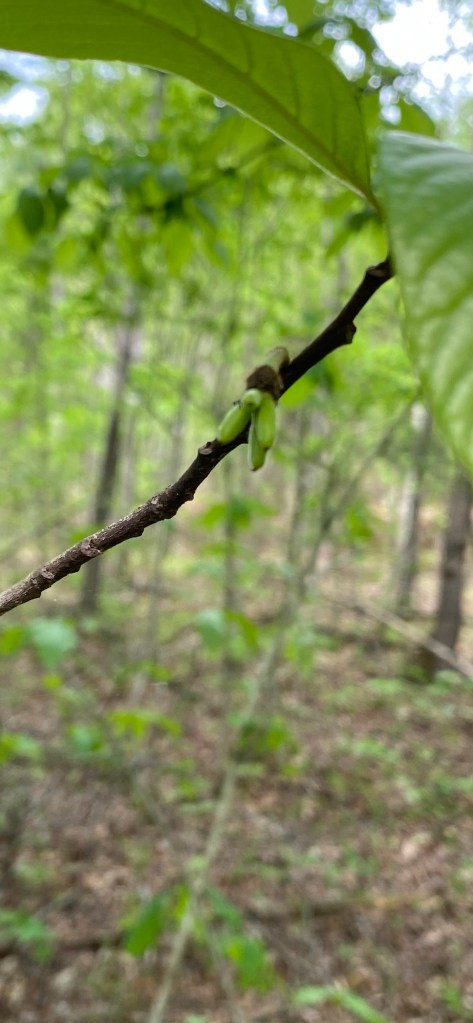
After going out on April 27 (a little over 2 weeks ago) and hand pollinating the pawpaws, we were delighted yesterday to see them beginning to grow the tiniest fruit. About 10 trees have fruit forming so far. These were the trees we found flowering and used Q-tips to pollinate. There are at least 100 pawpaw trees down there. We have plans to bring more sunlight into the pawpaw patch and move some of the pawpaws to spread them out. We are beyond excited for these fruits and can’t wait until fall to harvest them. We hope to grow our population of pawpaws and increase their productivity.
Young pawpaw fruit.
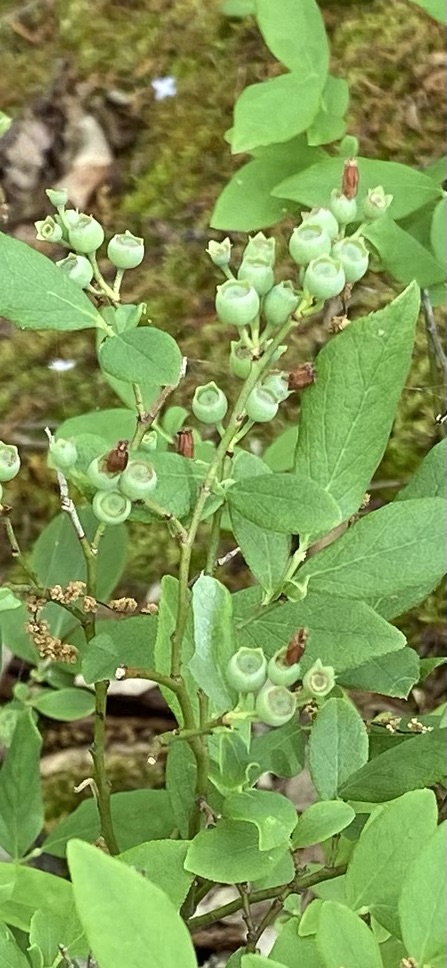
The blueberries continue to develop and we find more and more plants flowering and growing small green blueberries. We hope to taste a few before the animals get to them.
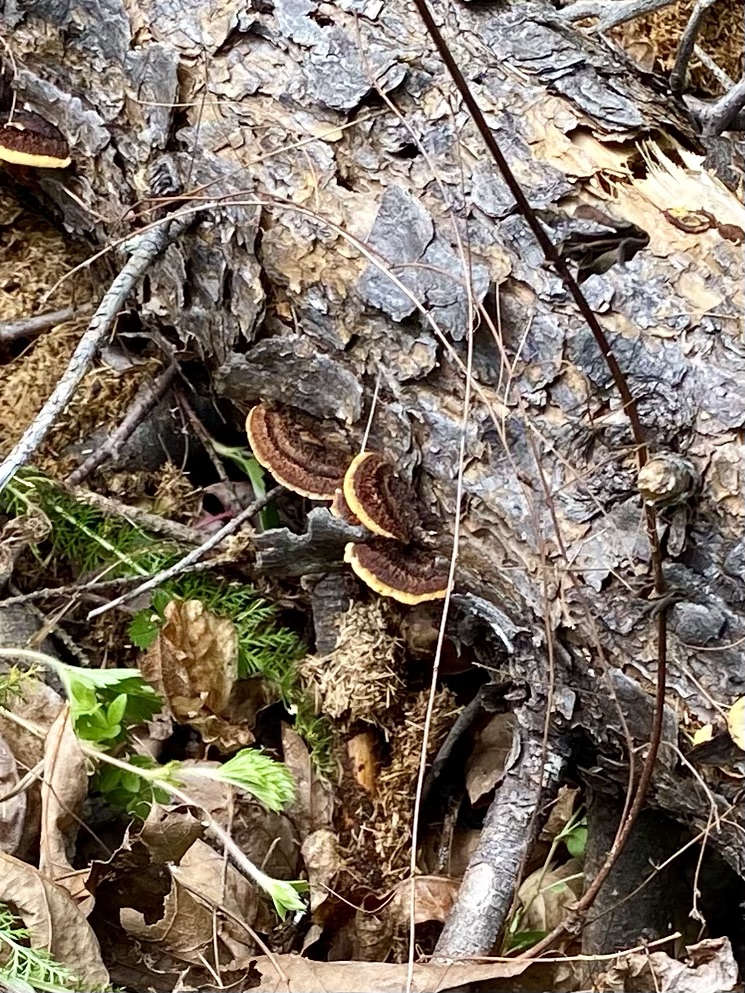
We expected to find many mushrooms at the farm since it’s been raining a lot this past week, but we only found these Gloeophyllum along the sunny southern border.
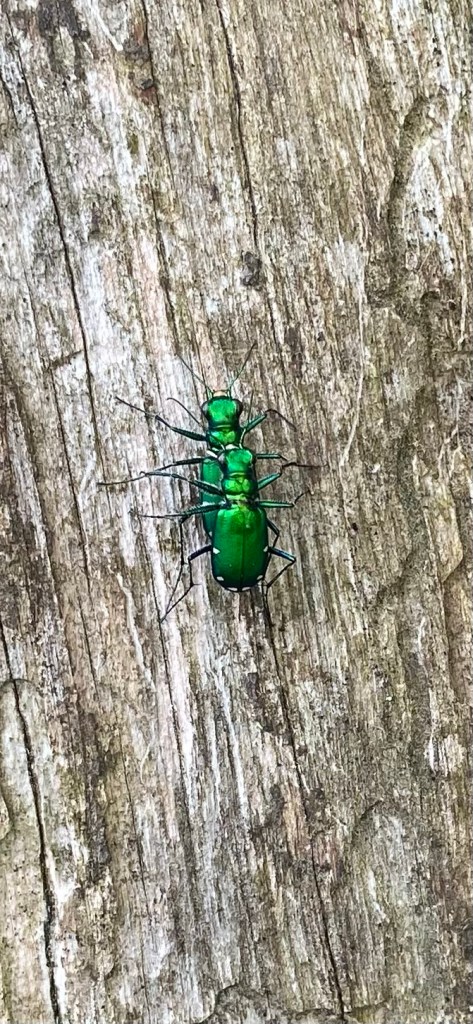
We found this colorful pair of six spotted tiger beetles down by the waterway at the south side. They feed on a wide variety of arthropods and over winter in larval burrows.
Cicindela sexguttata, a common North American beetle.
We continue to pull up and clear out invasive trees as we find them. So far, tree of Heaven, mimosa and paulownia are the invasive species and we find them mainly along the road. We also continue to take down black Cherry trees that are diseased and dying.
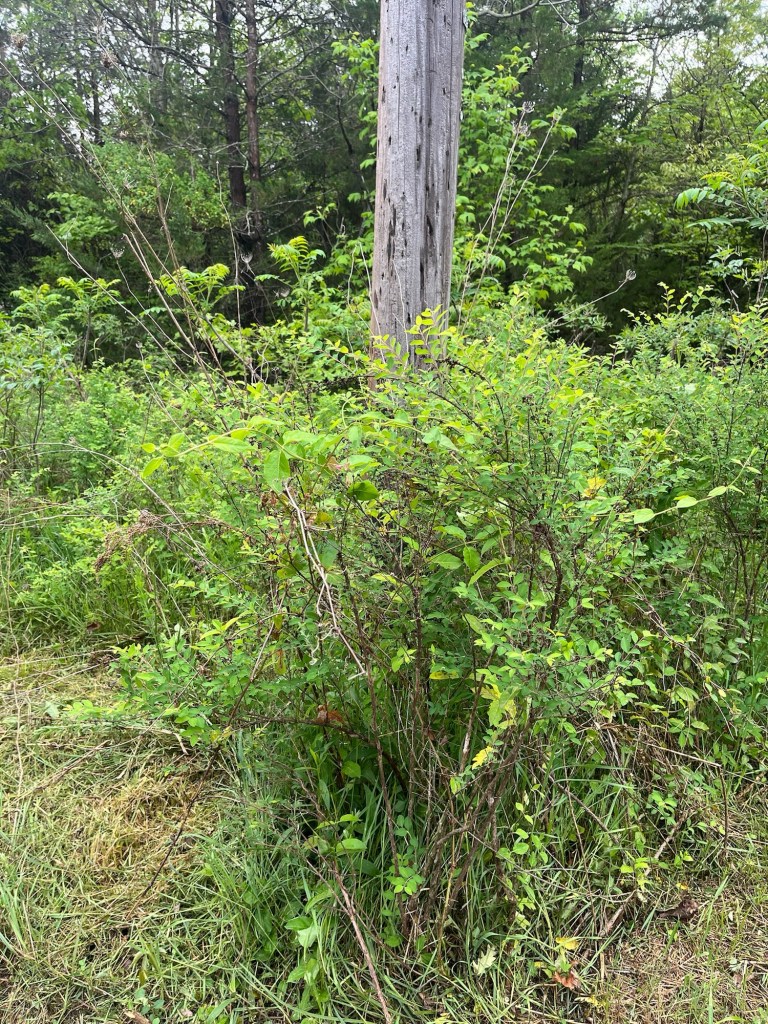
We’re taking back our southern border and clearing out overgrown brush. It is so satisfying to cut the tangled overgrown weeds back. We are thrilled with our old Husqvarna.
Brush we are cutting back along southern border.Pollinating the pawpaws.
Saint Andrews Forest Farm Blog
Is this your new site? Log in to activate admin features and dismiss this message
 St Andrews Forest Farm