Tag Archives: wildlife
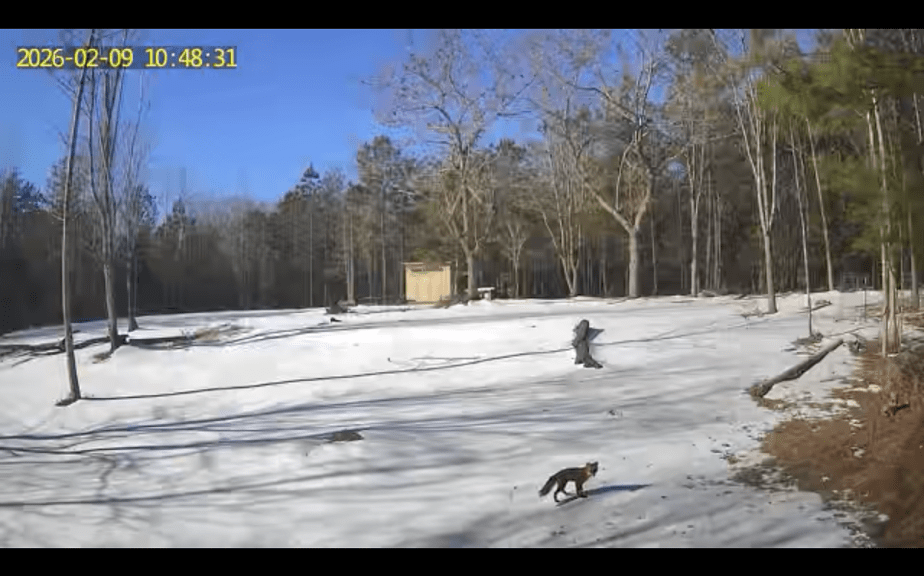
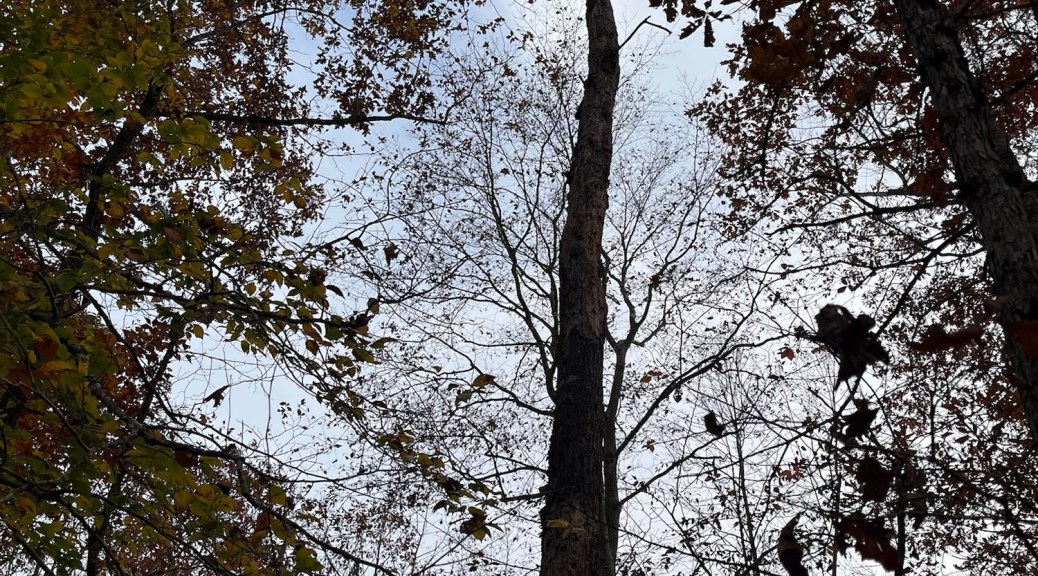
Afternoon walk around SAFF on Sunday
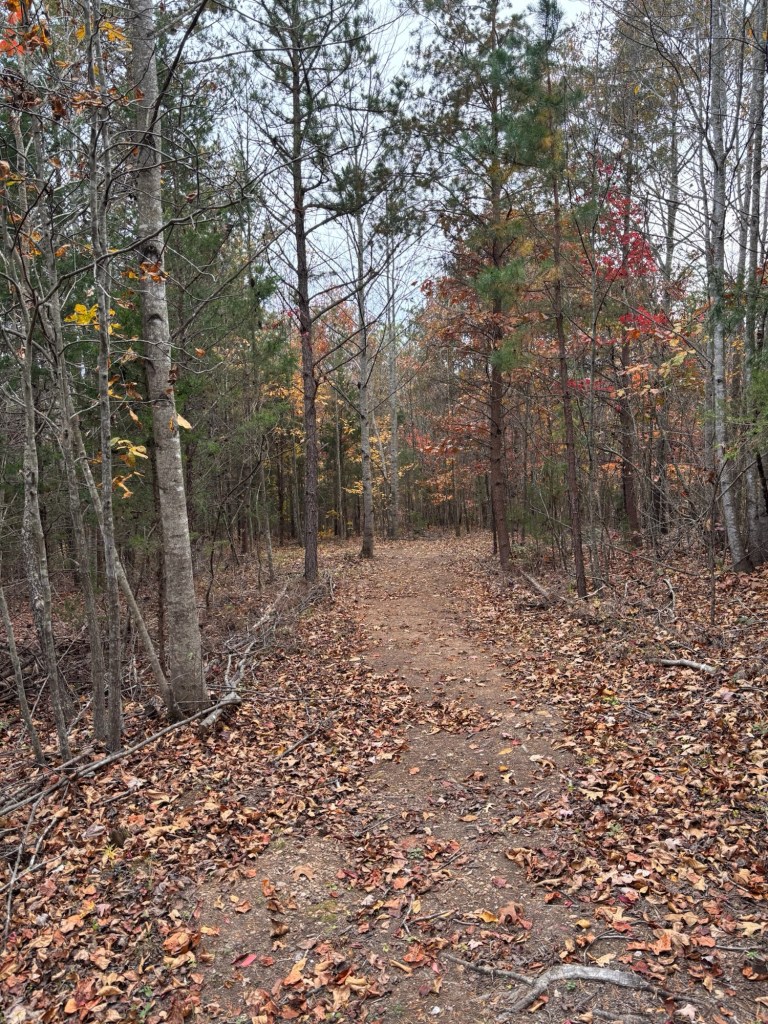
The drive over to SAFF was beautiful with fall color. We travel from the Shenandoah Valley over Afton Mountain through Rockfish Gap and Howardsville to Buckingham. We oohed and ahhhed the whole way. Here’s a quick video of Howardsville Rd.
We unloaded the lumber we found at the Restore and checked out the pawpaw and fig trees planted up top. They have yellow leaves and are losing most of them. Then we headed down Red Hawk Road to get down to Fern Trail. We checked out the Rappahanock cultivar and the seedlings planted as well as the cluster of natives. Most have gone fully dormant for the winter, especially the native SAFF trees. A few of the cultivars and seedlings look great; fully leafed and deep green still. Gleaming. It’s more typical for them with the temperature and season to be dormant. We have not yet had a hard freeze in Buckingham, or in Staunton in the Valley—which usually frosts first. Once dormant, their watering needs will drop. Phew! 😅
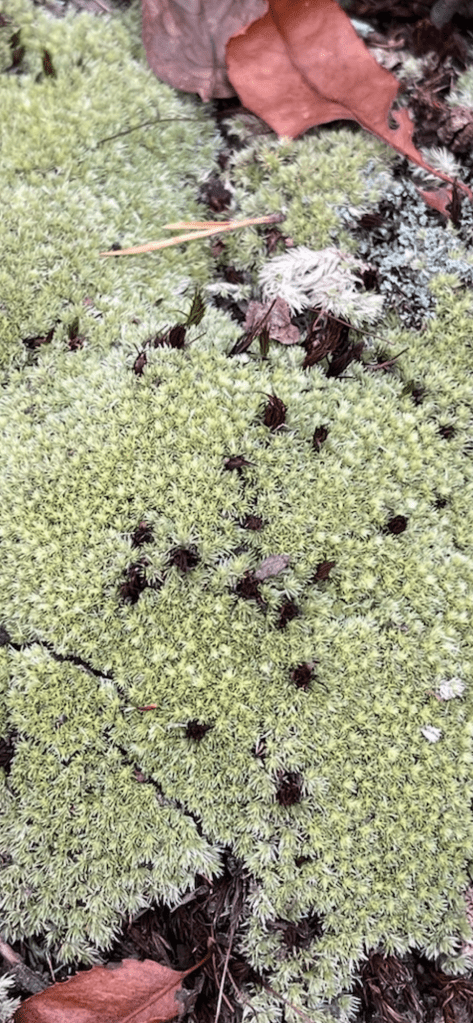
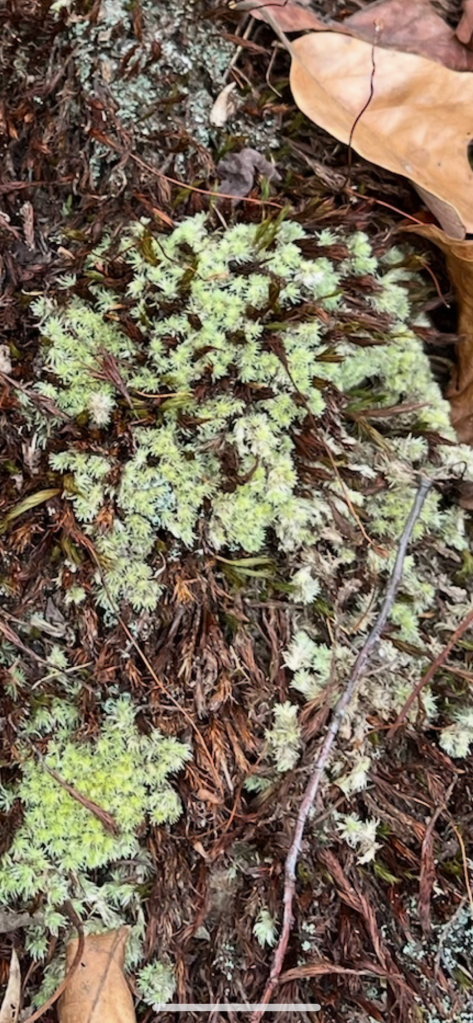
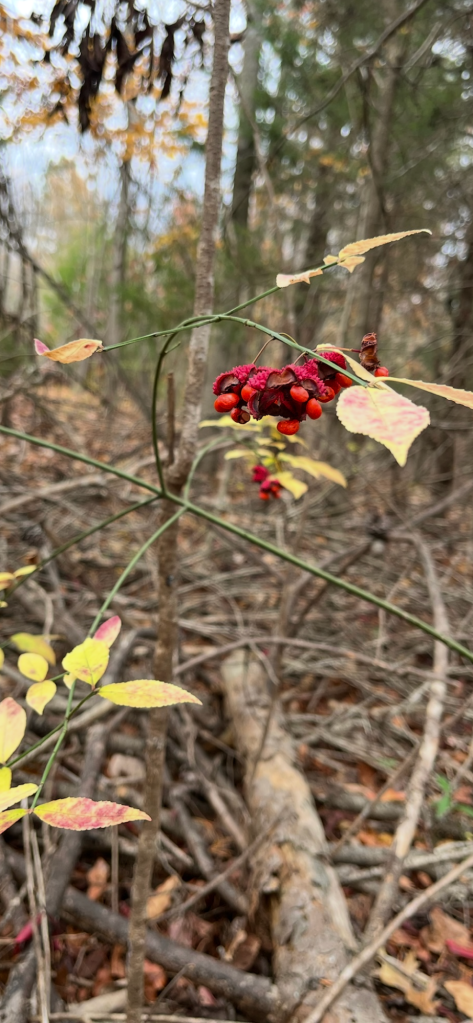
Along our walk we found white moss and strawberry euonymus (Euonymus americanus). We also went down to the waterway to check on this oak snag in the picture below. SAFF had high winds for several days and the last time we saw it, there was a bend and crack starting.
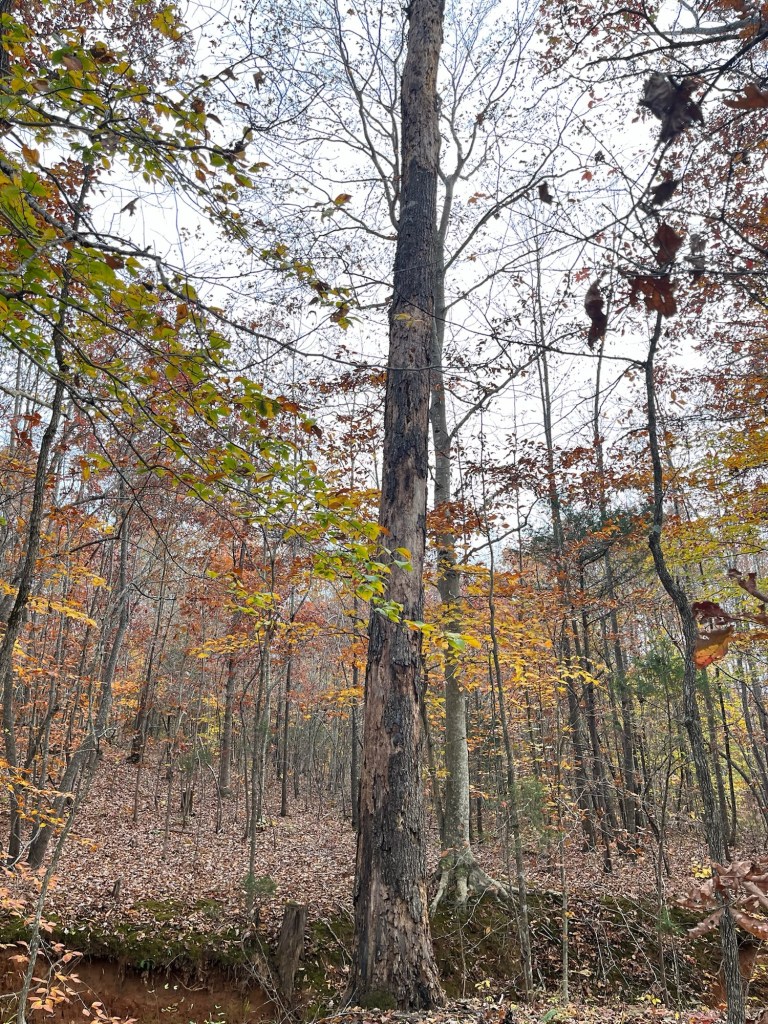
SAFF old oak snag we check on regularly. It looks as though it will fall to the west towards the Pawpaw Peninsula.
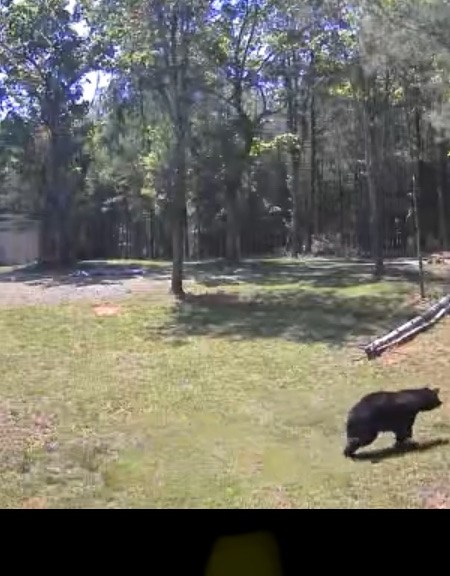
St Andrews Forest Farm A Bear Runs Through It
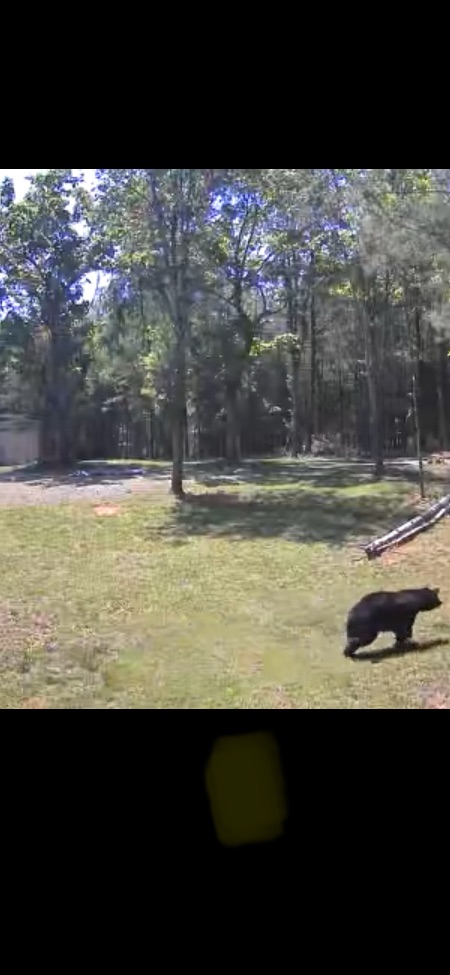
We had seen bear scat multiple times all around the farm and last May it was confirmed when she ran in front of our farm cam.
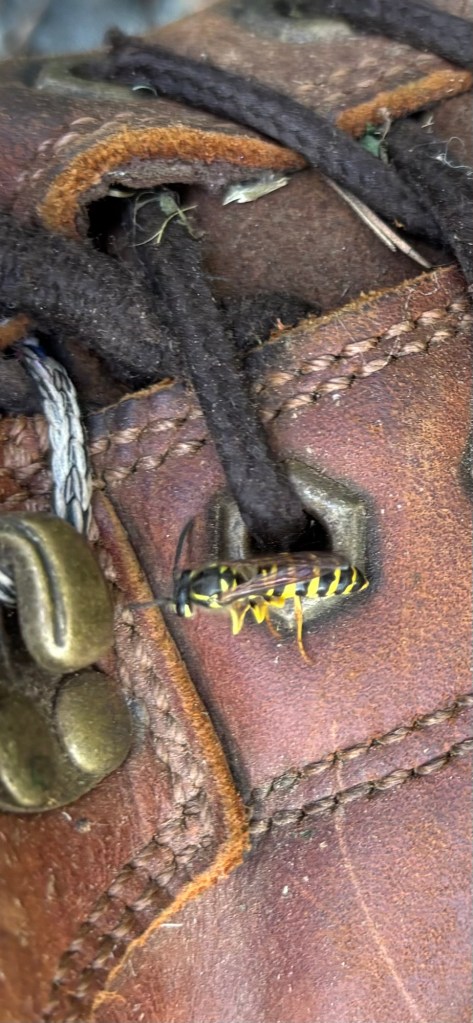
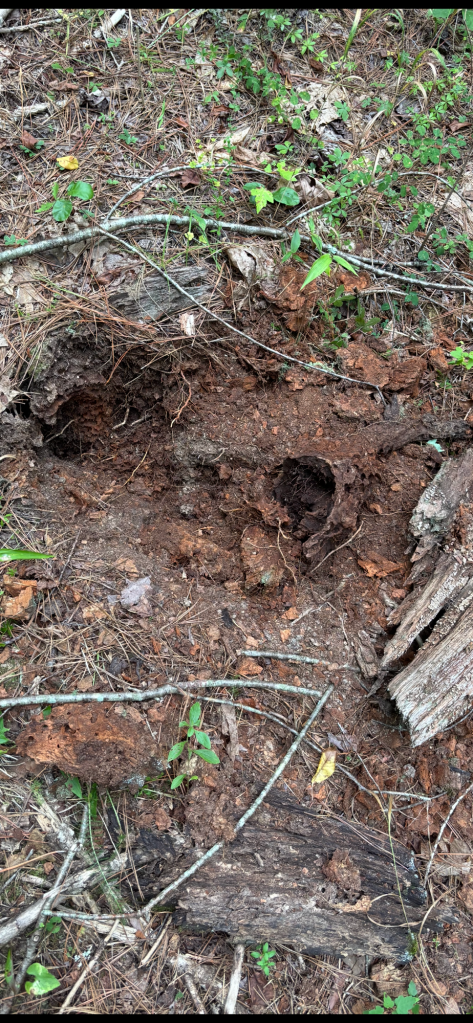
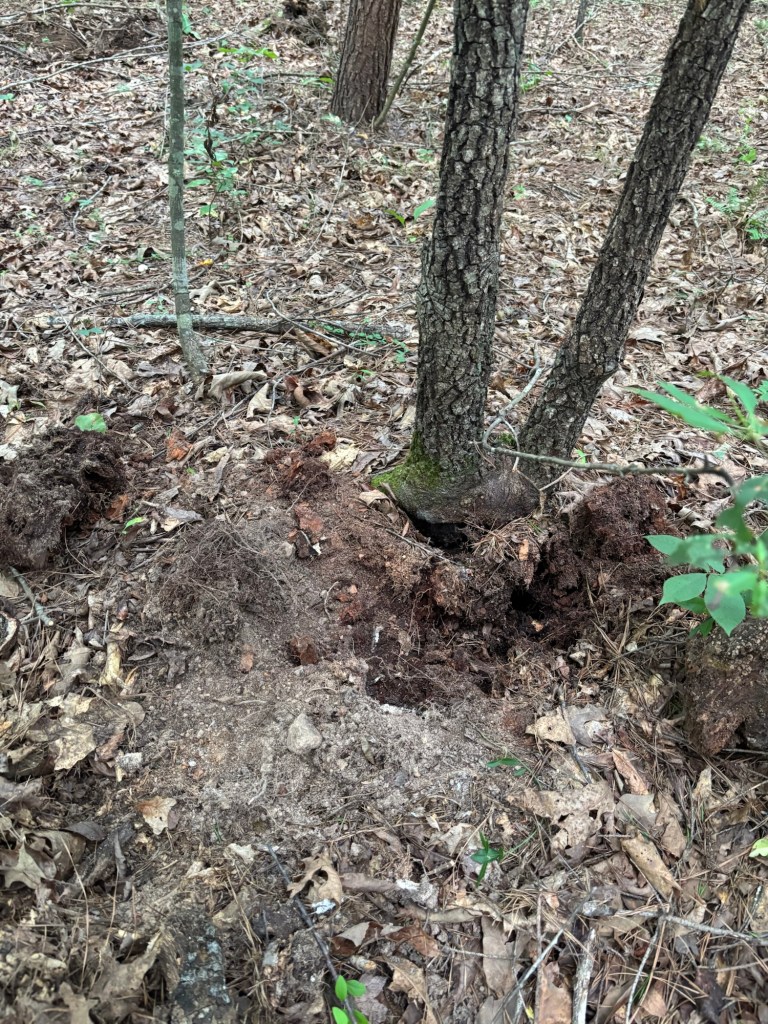
We continue to see evidence of bear activity and we imagine it is she. This past month we began noticing old tree stumps destroyed and large pieces of quartz turned over. We immediately suspected our bear was looking for insects to eat. The first we noted was in the spring along the back line on Chanterelle Hill Trail. A huge ant hill was dug up and excavated. Then about a month and a half ago, we saw all along the north property line she had dug up old stumps. At one we saw yellow jackets looking disturbed.
September 2, 2024 – Labor Day at SAFF
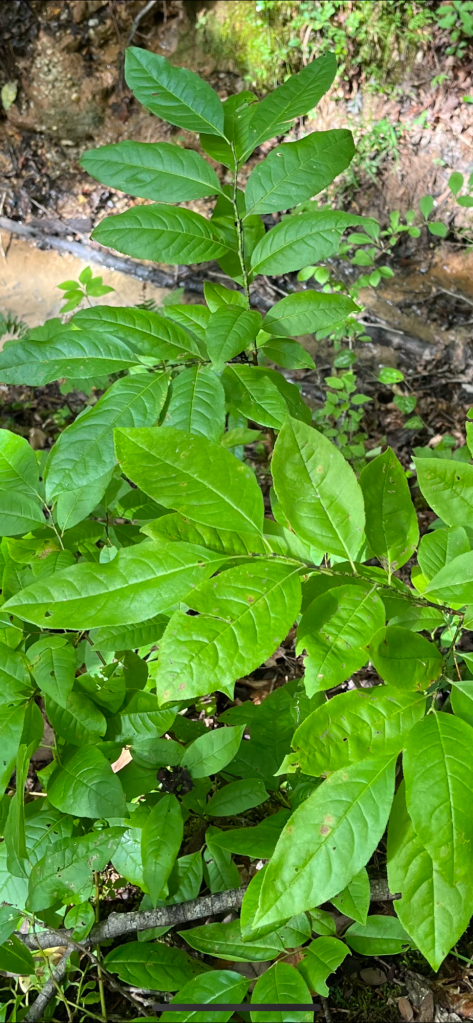
Yesterday was a lovely day at SAFF. It’s gotten cooler and feels much like fall all of the sudden. On the way over, we stopped at the pawpaw patches and found about eight more ripe fruit. Each one has 10 to 14 seeds inside in two rows. We probably have several hundred seeds. Some we have already planted in pots to overwinter outside and cold stratify in nature. Others we have cleaned and placed in a container in the refrigerator to cold stratify for 70-100 days and then we will plant. We will determine best practices from our experience but we hope to add many more trees next year. We are excited to use these to sprout new trees for our pawpaw grove that hasn’t been productive for us yet. While down in the pawpaw patch, we noticed the Sourwood tree. We have quite a few of these down by the main waterway at the bottom of the slope growing, in some cases, right next to the pawpaws. We are still thinning out the forest in every location to allow more light in and room for our trees. We are especially doing this around our older pawpaw trees to encourage production of fruit.
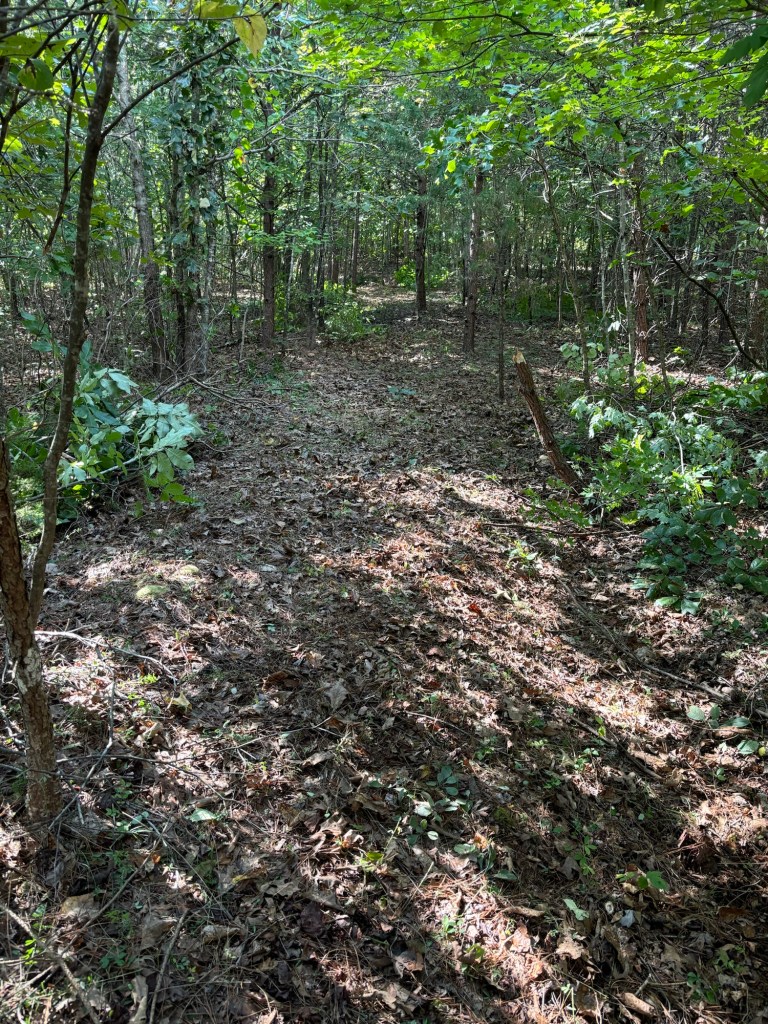
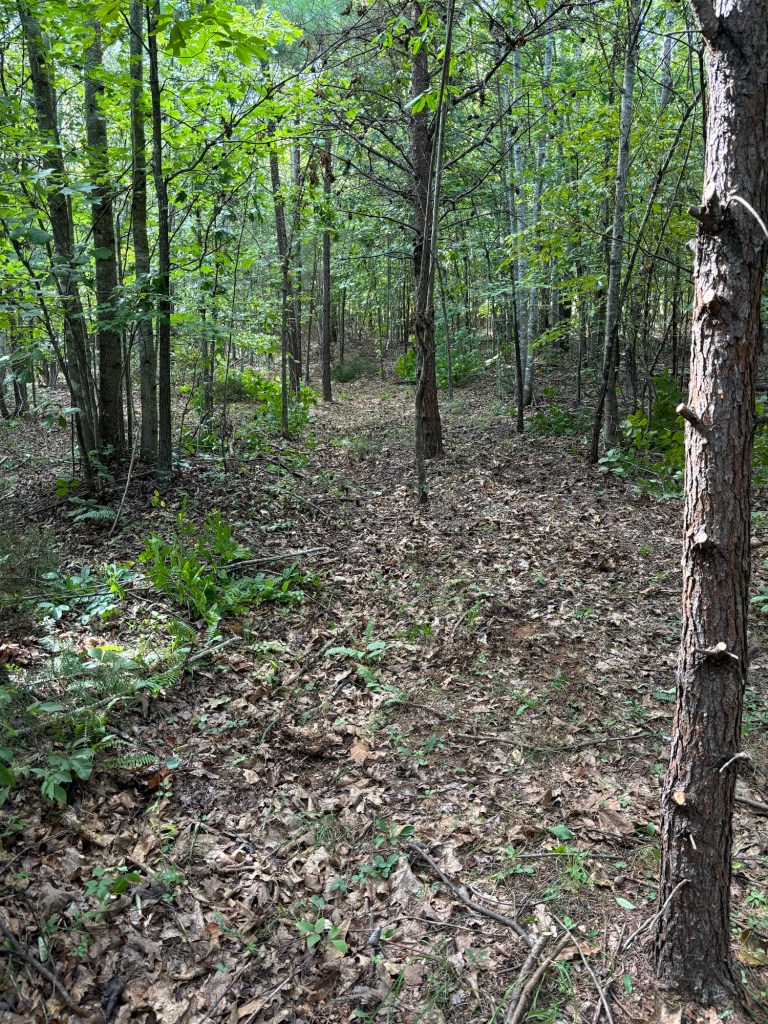
We went out to the northern edge and found where the road began and we cut back small trees growing up through the rocks of the road. We cut back grassy areas. We cleared everything we could easily. We got a third of it cleaned up except for the largest pines we will have to use the chainsaw to remove. We imagined this would take us much longer to clear. We were beyond thrilled to get that much accomplished in one swoop.
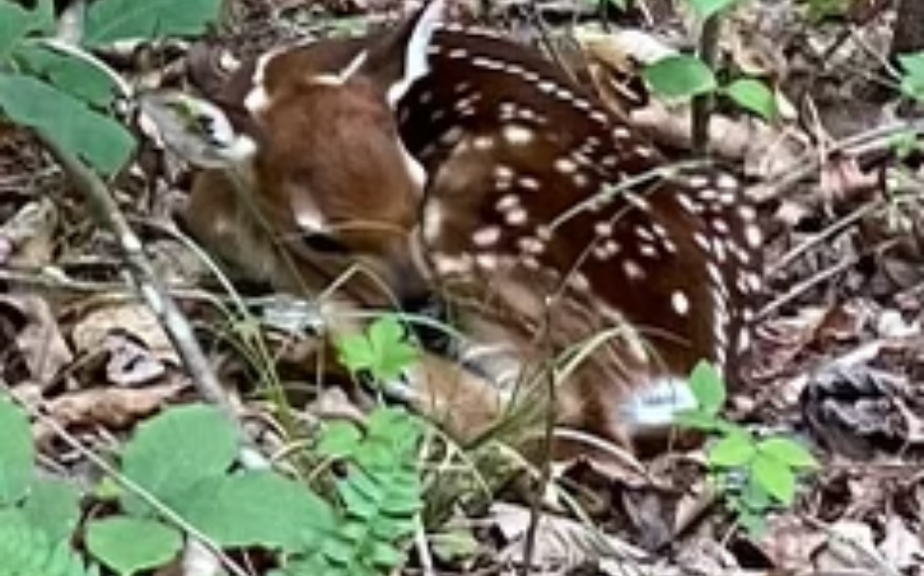
August 22, 2024 – The Young Deer
We caught the deer we’ve been seeing up top on the FarmCam last Thursday. We think it’s eating the black cherries falling to the ground right now.
July 10, 2024 Heat Wave while battling an invasive at SAFF
It’s been in the nineties, and even though the air feels plenty humid, the ground is baked, cracked and dry. It hasn’t rained enough in far too long with these high temperatures. There have been heat advisories every day this week. It’s crunchy walking underfoot everywhere but the bottom by the waterway. The clearings are mostly brown. The bottom of the slope has a slight bit of water trickling through the stream. We were glad to see that.
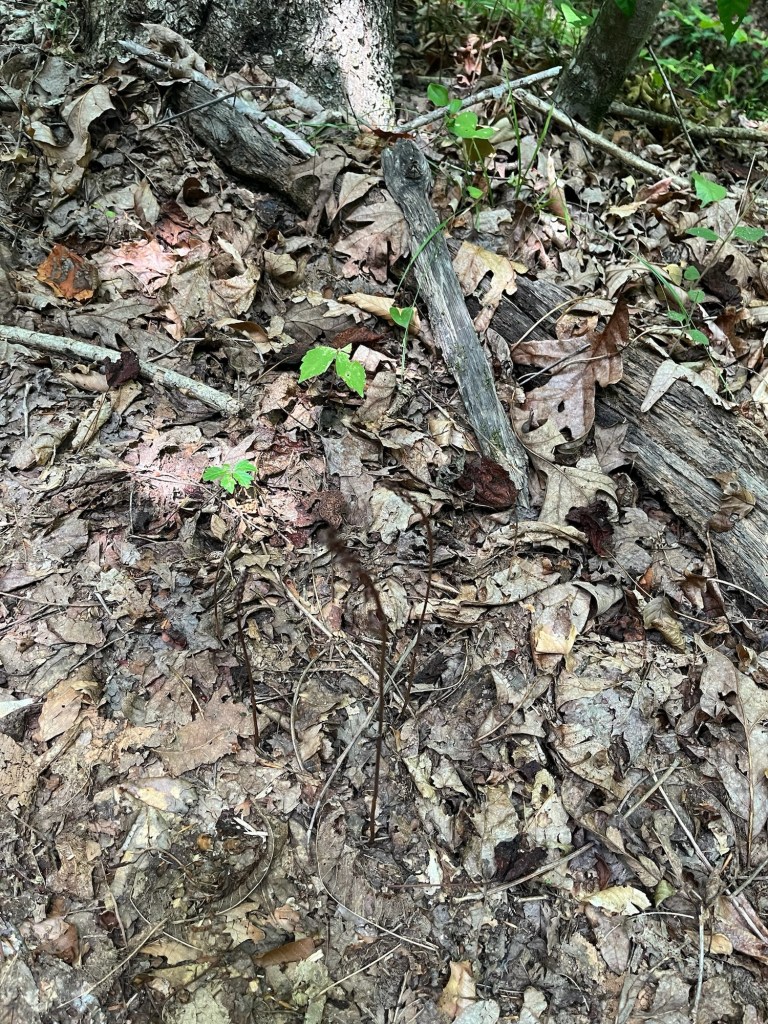
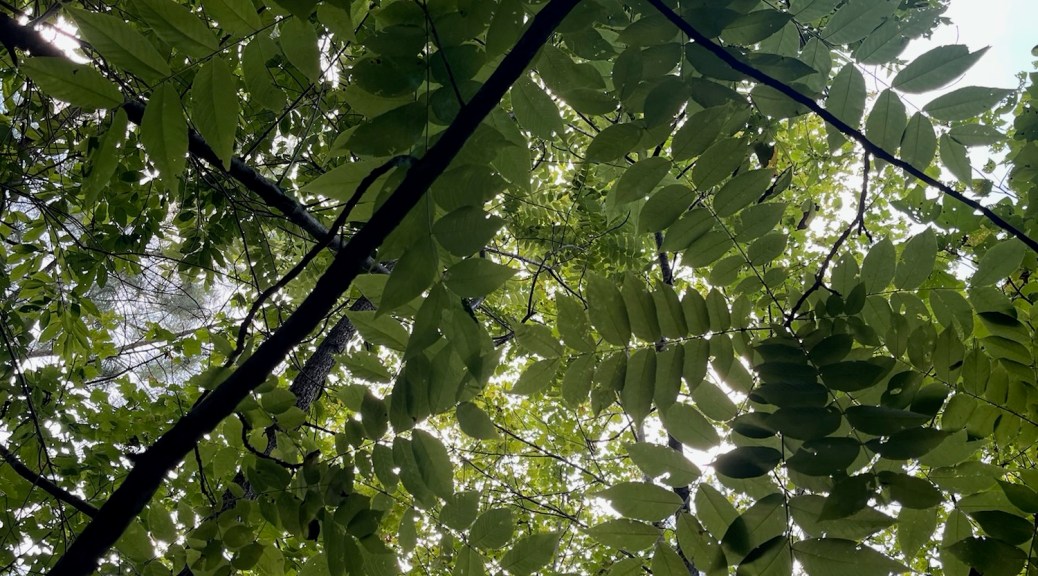
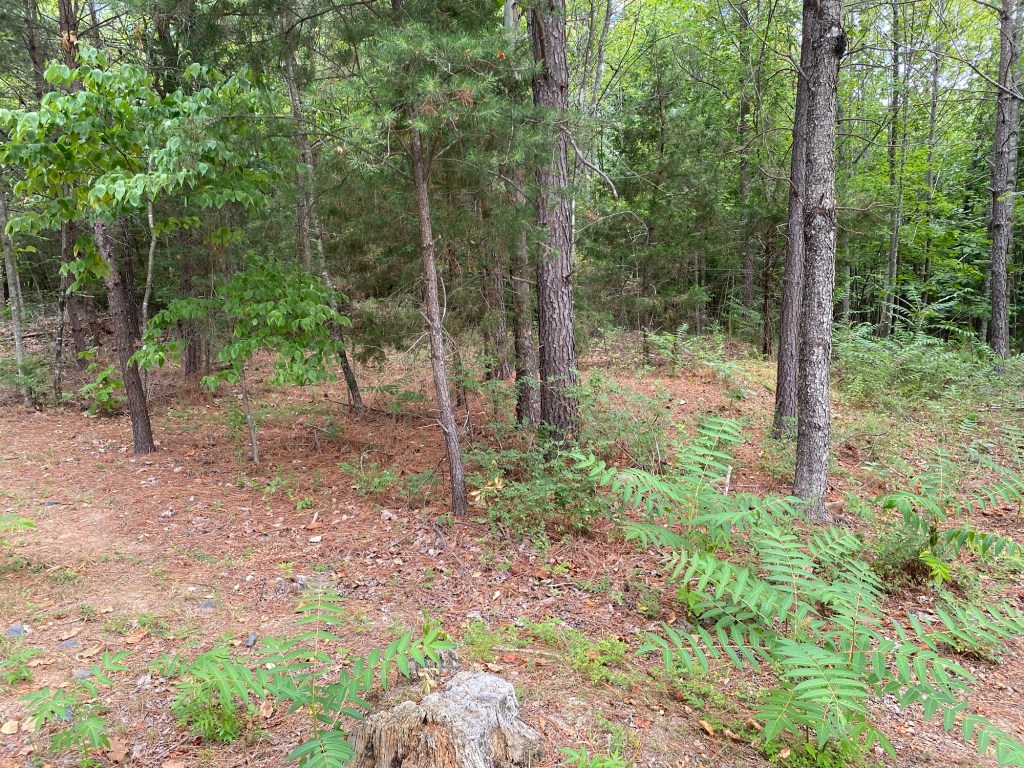
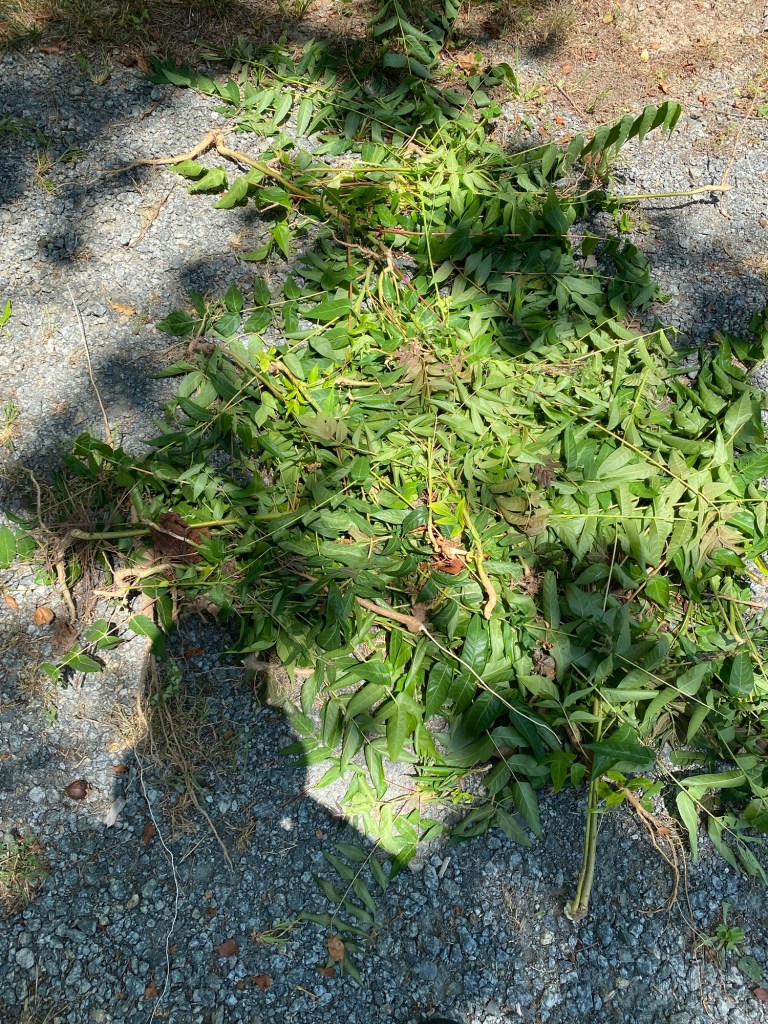
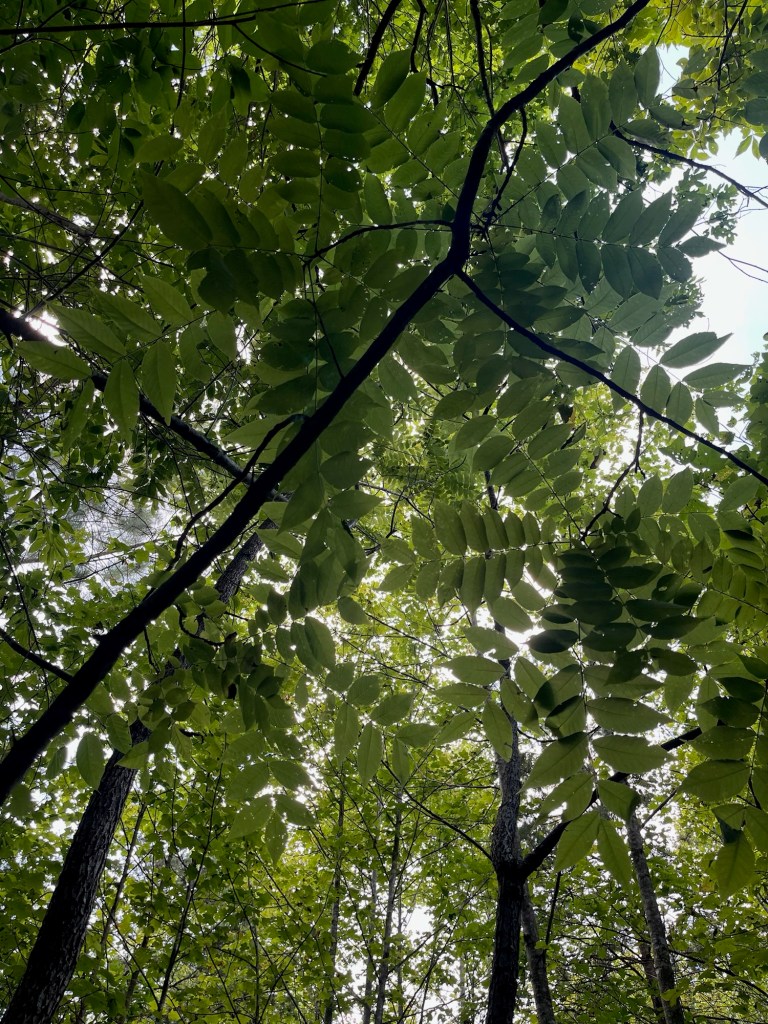
We’ve been battling an invasive tree called Ailanthus or tree of Heaven. We found them last summer in three different spots all up top near the main clearing and by our neighbors to the north. Another name for Ailanthus is Chinese sumac. Differentiation between Ailanthus and our native shining sumac, Rhus copallinum, was a challenge initially with the smaller specimen. However, now we can see the difference between them easily with our practice watching over our forest floor.
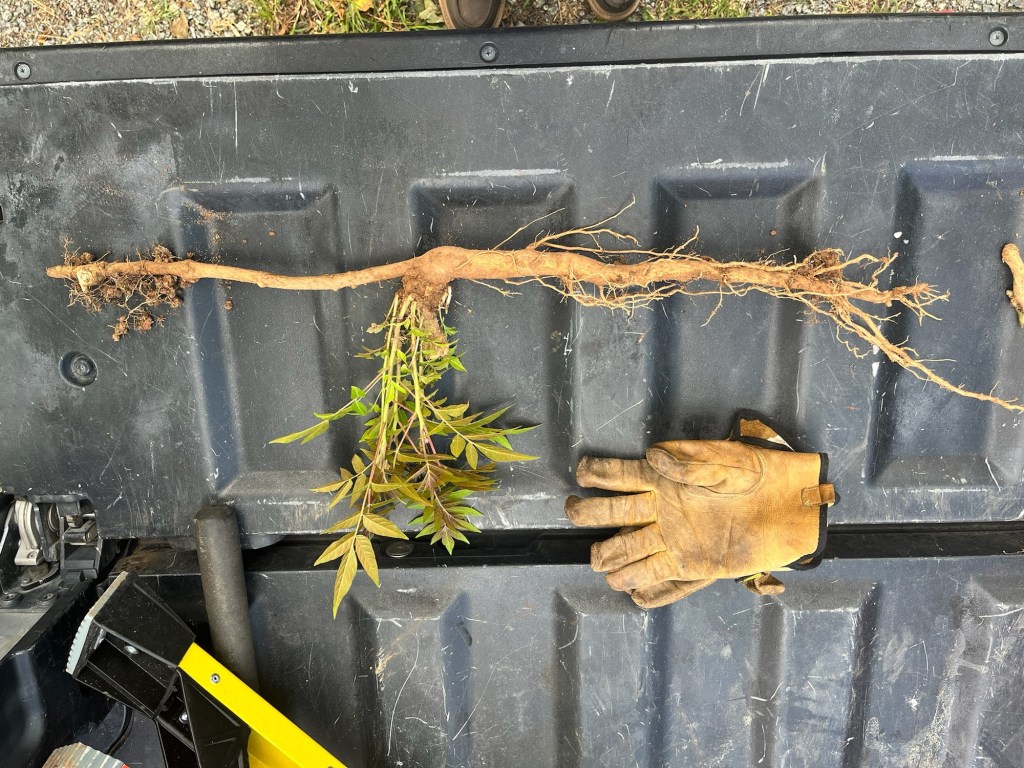
Because it is so tenacious by producing an overly abundant amount of seeds, crowding out native species with dense thickets and secreting a chemical into the soil that is toxic to other plants, there are best practices to ridding these trees from your land. It involves a hack and squirt method in the fall when the tree is sending the most nutrients to the root. We did this to all 4 of the larger trees we couldn’t pull out by hand. This year the trees sent up hundreds of root suckers so we are waiting for a good soaking rain to soften the ground and then we can pull them out. We will continue to do this as they grow. Whatever is still alive in the fall, we will hack and squirt again.
https://extension.umd.edu/resource/invasives-your-woodland-tree-heaven-ailanthus/
June 2,2024 Another Work Day at SAFF
We culled more black cherry trees from the clearing and broke them down into burnable chunks. These were infected with black knot fungus and burning them is the only way to get rid of them.
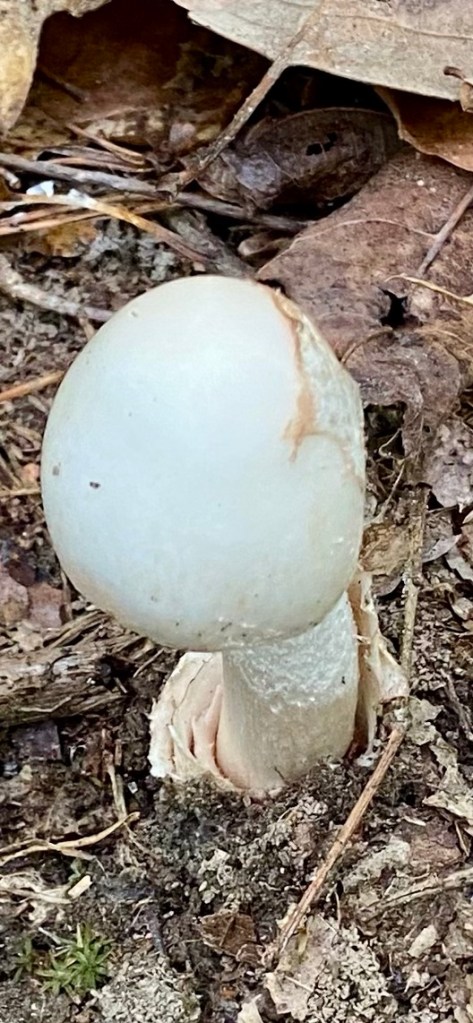
After finishing our job, we walked down Fern to Ridge Trail and looked for more Black trumpets along the southern set back line. We found a few but left them hoping for rain tonight so they can grow.
We walked through the Pawpaw orchard and were satisfied with how it looked. We are making plans to get more light to these trees. There are hundreds of them as they make root suckers that are clones of the original tree.
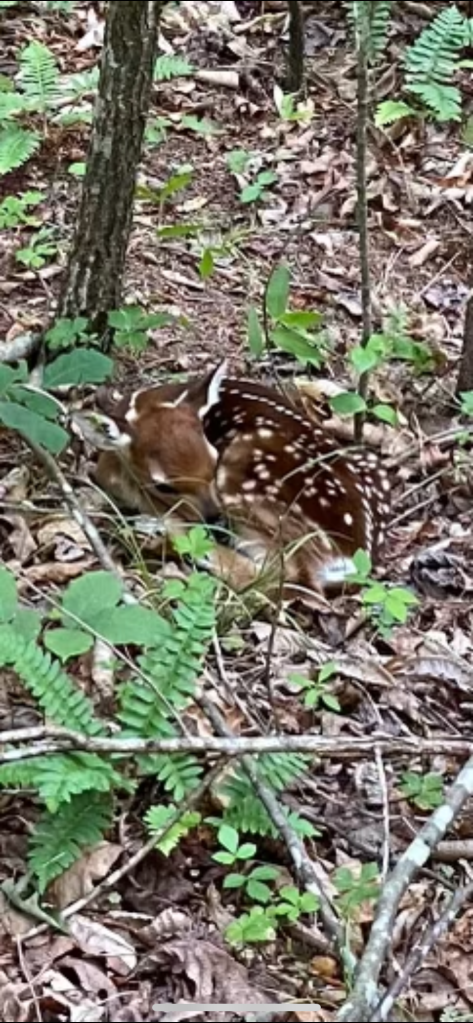
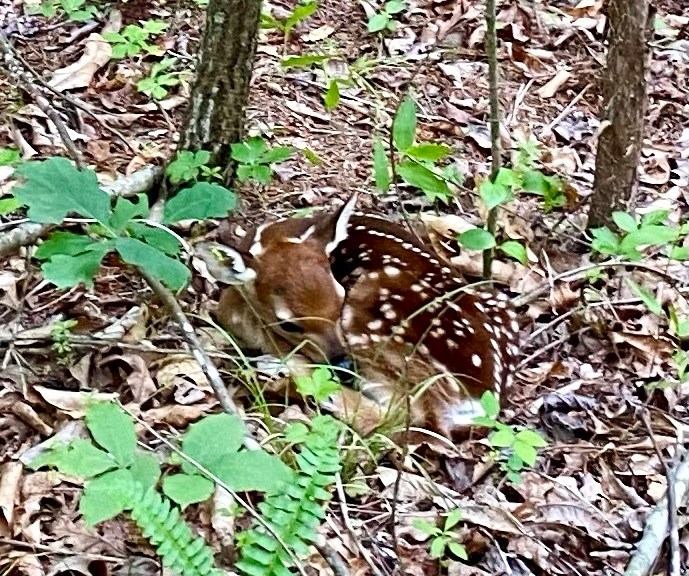
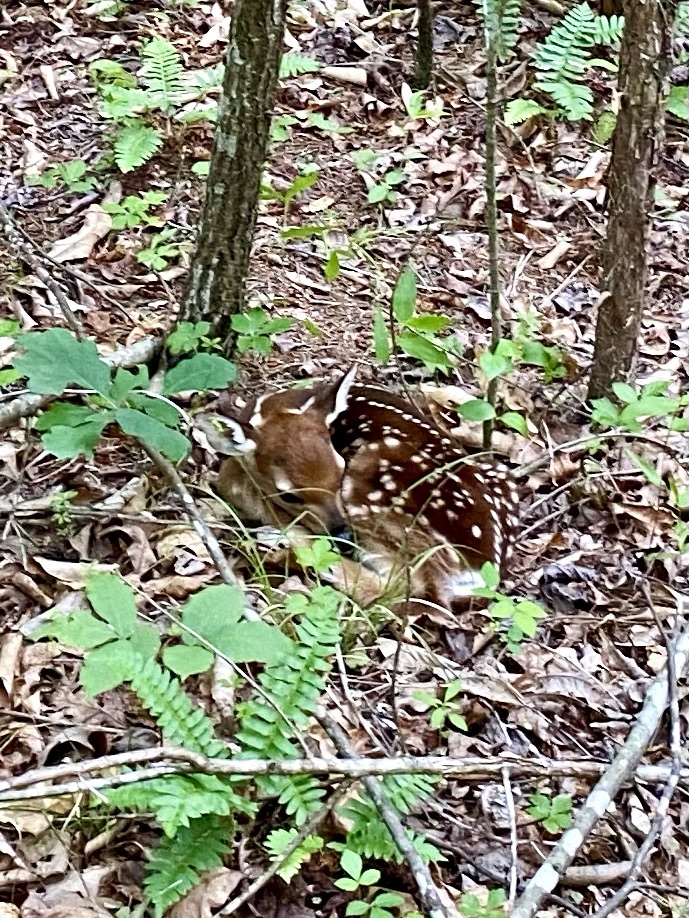
We found a baby deer laying by the waterway at the base of a tree waiting for its mother. It was so sweet. Didn’t even lift its head as we walked by. Following directions well and staying safe. We hope mom comes back soon.
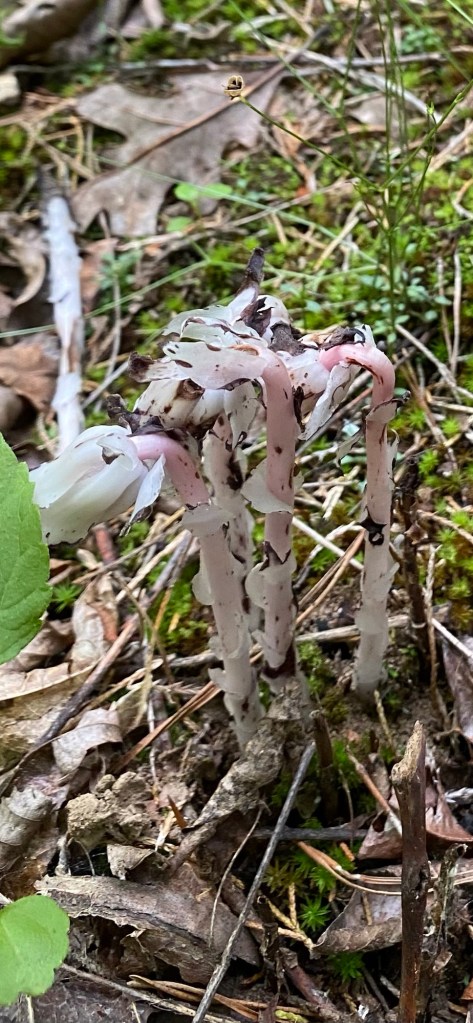
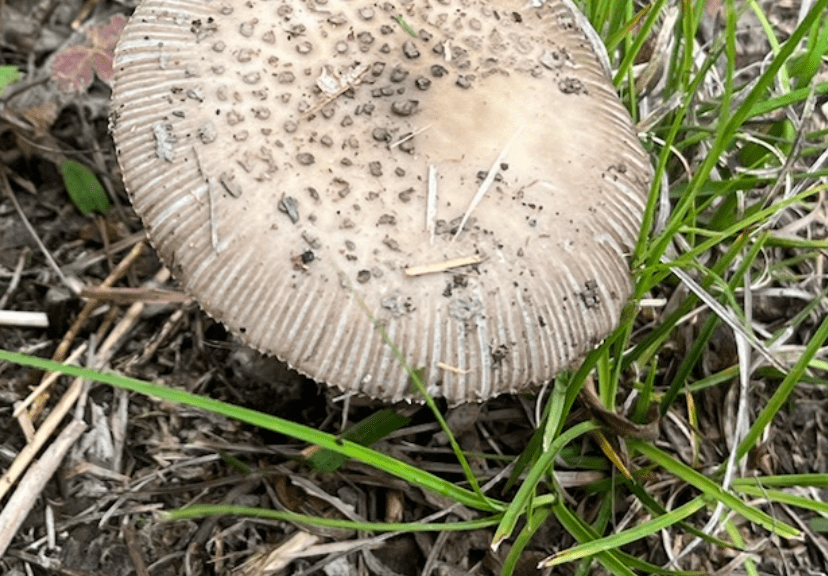
We are hoping for more rain tonight so the mushrooms will grow.
May 27, 2024 Memorial Day at St Andrew’s Forest Farm
So far we have seen plenty of deer ticks, dog ticks and lone star ticks at the farm this year. The clearing seems free of them right now since we keep it mowed down well. In the forest, the wetter and greener areas where deer and dogs are known to move through have been hotspots. Our tick mitigation measures have kept us from getting any bites but we have found them crawling on our socks, shoes and clothes. It’s definitely tick season unfortunately.
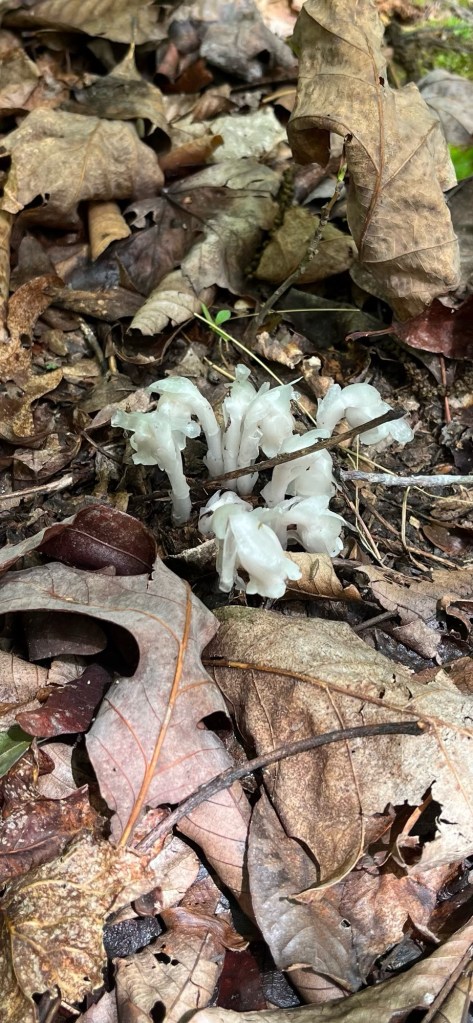
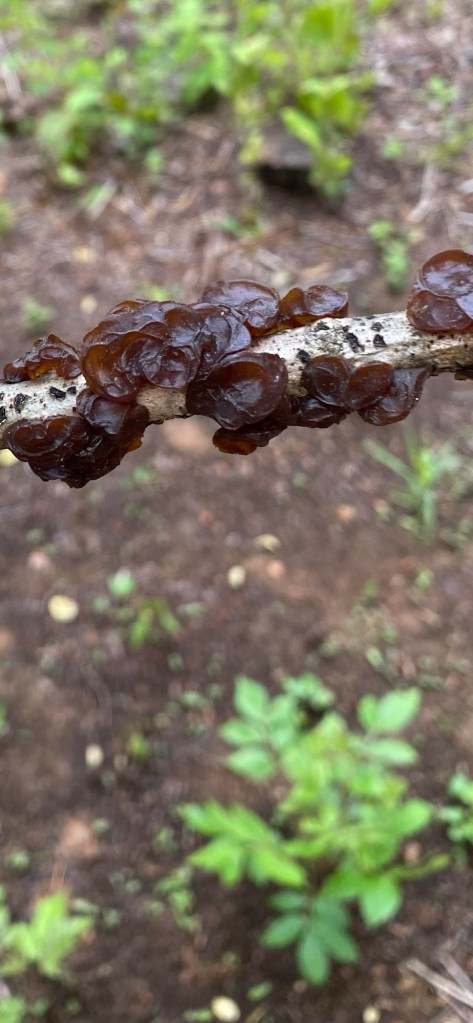
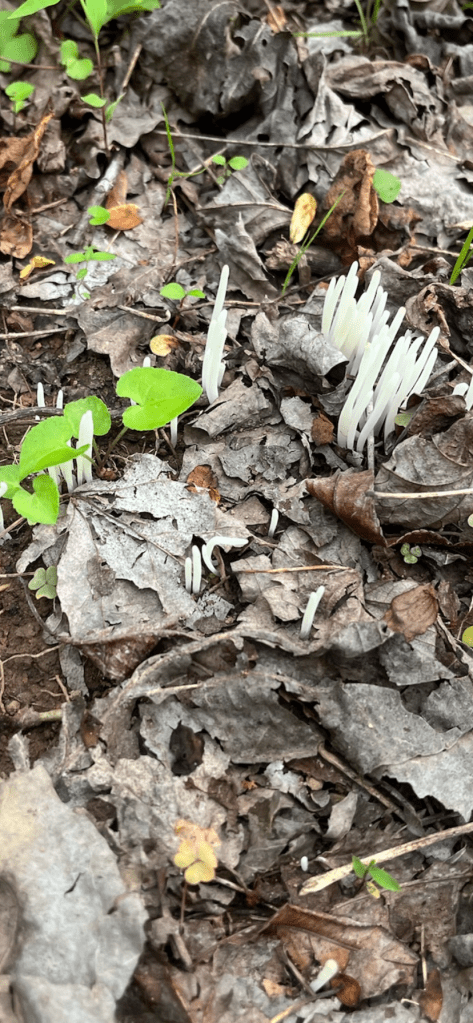
It produces tubular, unbranched, white basidiocarps (fruit bodies) that typically grow in clusters.
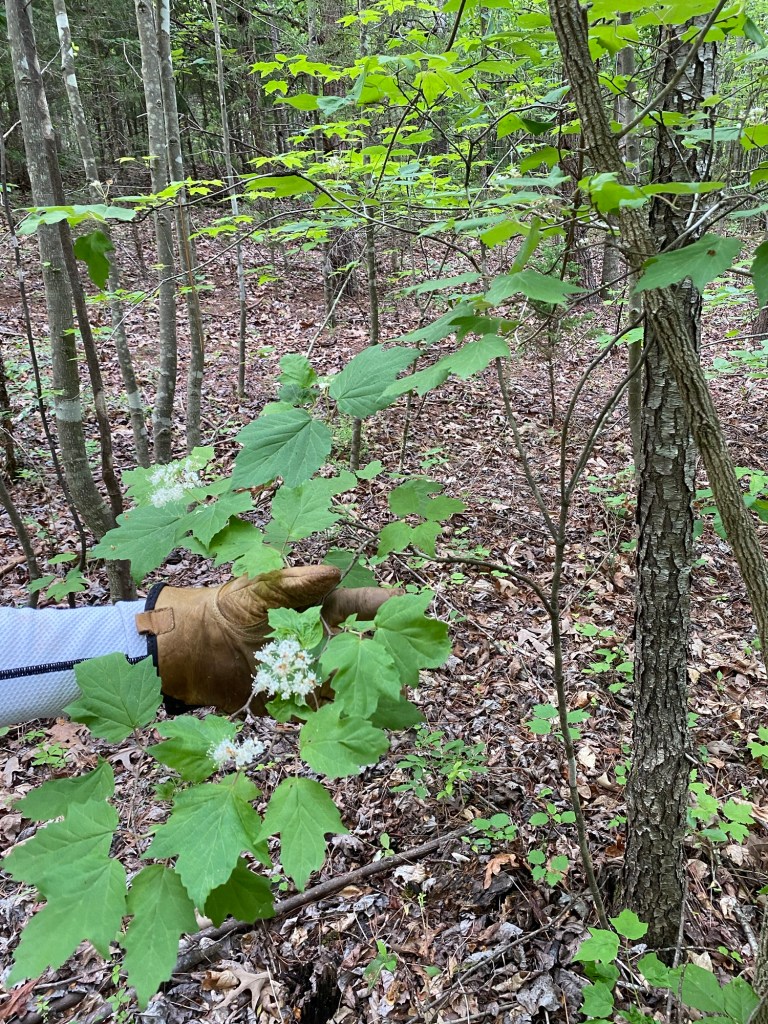
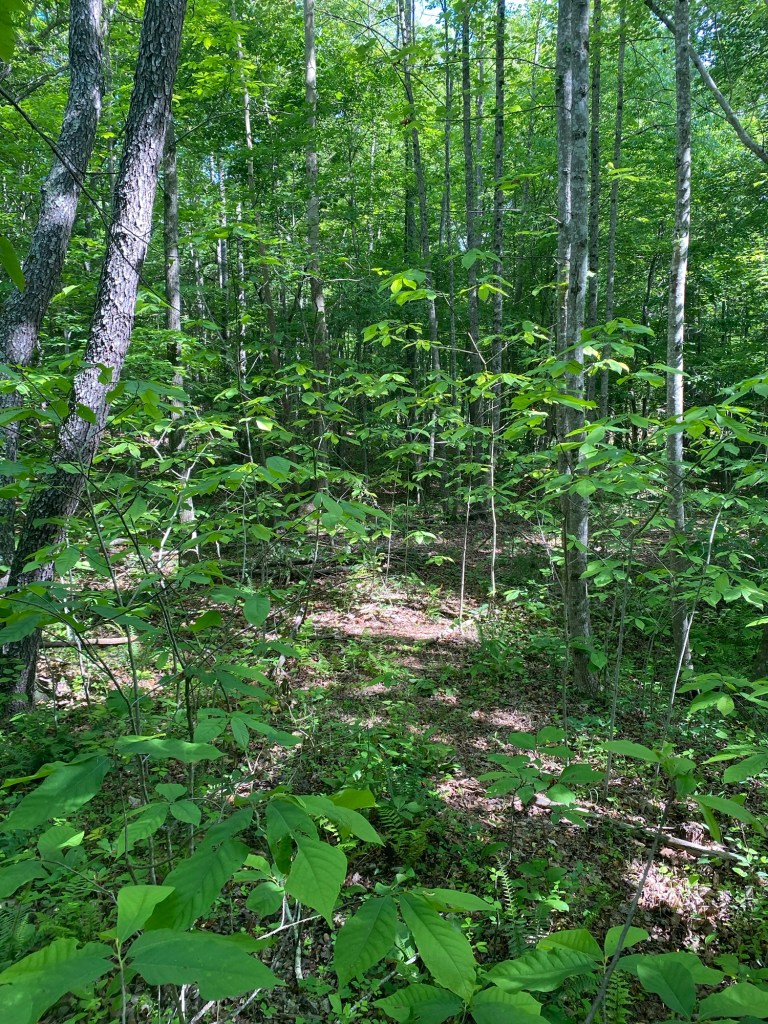
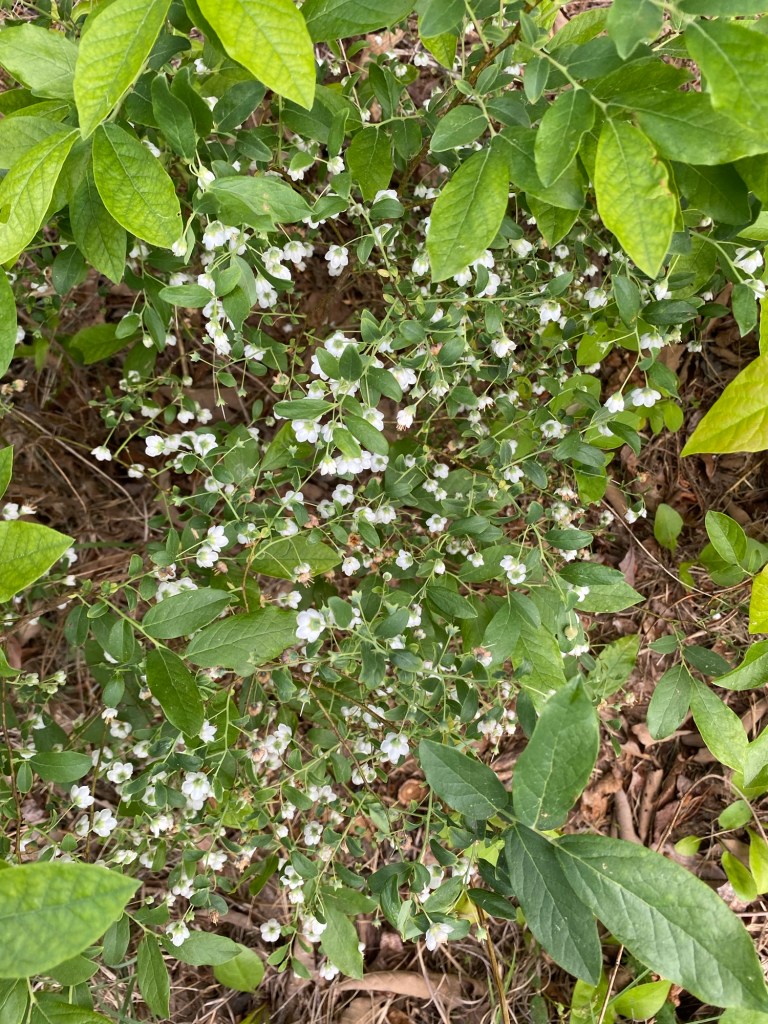
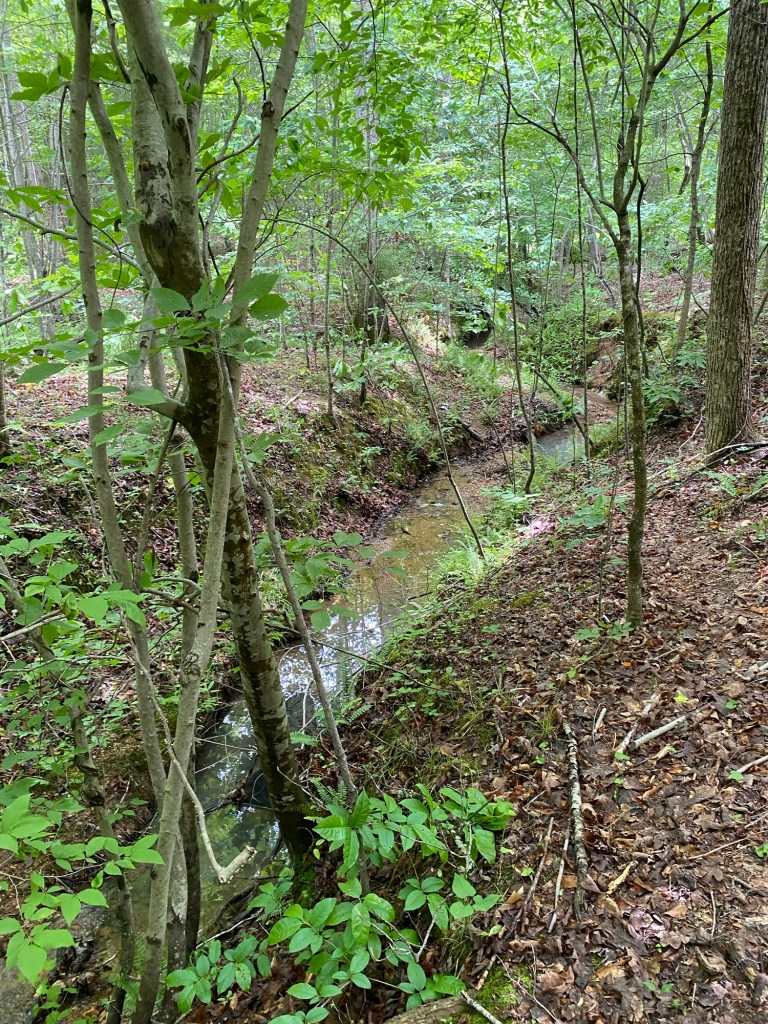
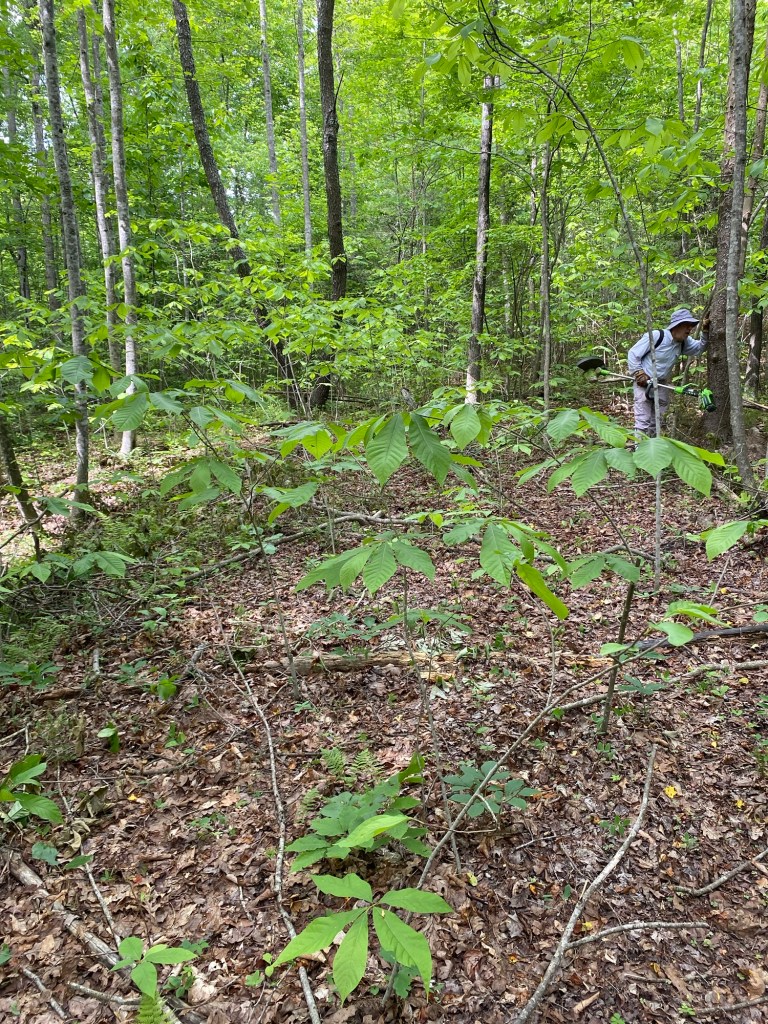
We were going to mow but left our keys to the tractor at the house in Staunton so instead we had a lovely walk around. The ground and forest litter was wet from the storms that have passed through. With the heat, it felt very muggy.
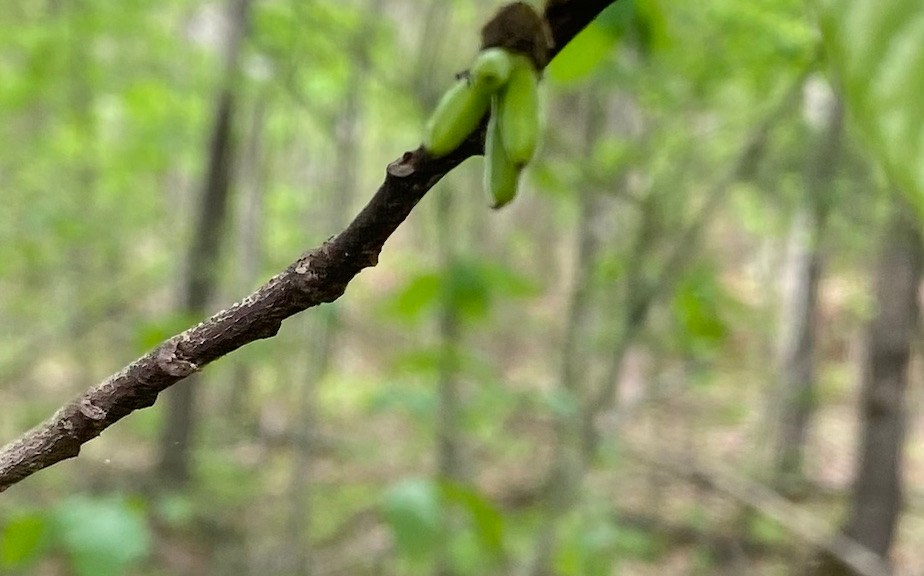
May 7, 2024 Pawpaws are fruiting at Saint Andrew’s Forest Farm
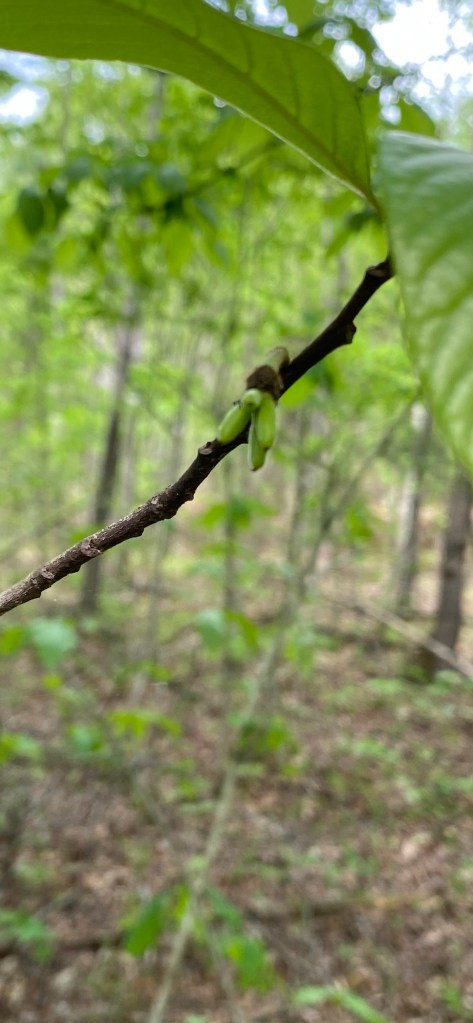
After going out on April 27 (a little over 2 weeks ago) and hand pollinating the pawpaws, we were delighted yesterday to see them beginning to grow the tiniest fruit. About 10 trees have fruit forming so far. These were the trees we found flowering and used Q-tips to pollinate. There are at least 100 pawpaw trees down there. We have plans to bring more sunlight into the pawpaw patch and move some of the pawpaws to spread them out. We are beyond excited for these fruits and can’t wait until fall to harvest them. We hope to grow our population of pawpaws and increase their productivity.
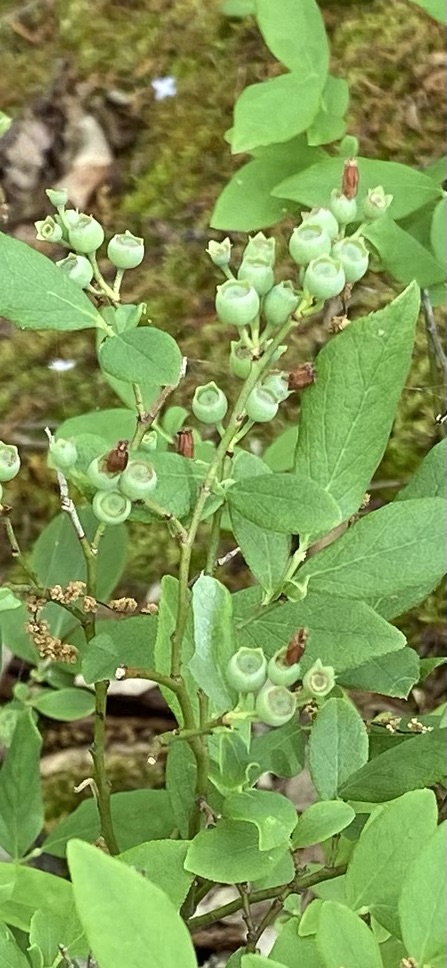
The blueberries continue to develop and we find more and more plants flowering and growing small green blueberries. We hope to taste a few before the animals get to them.
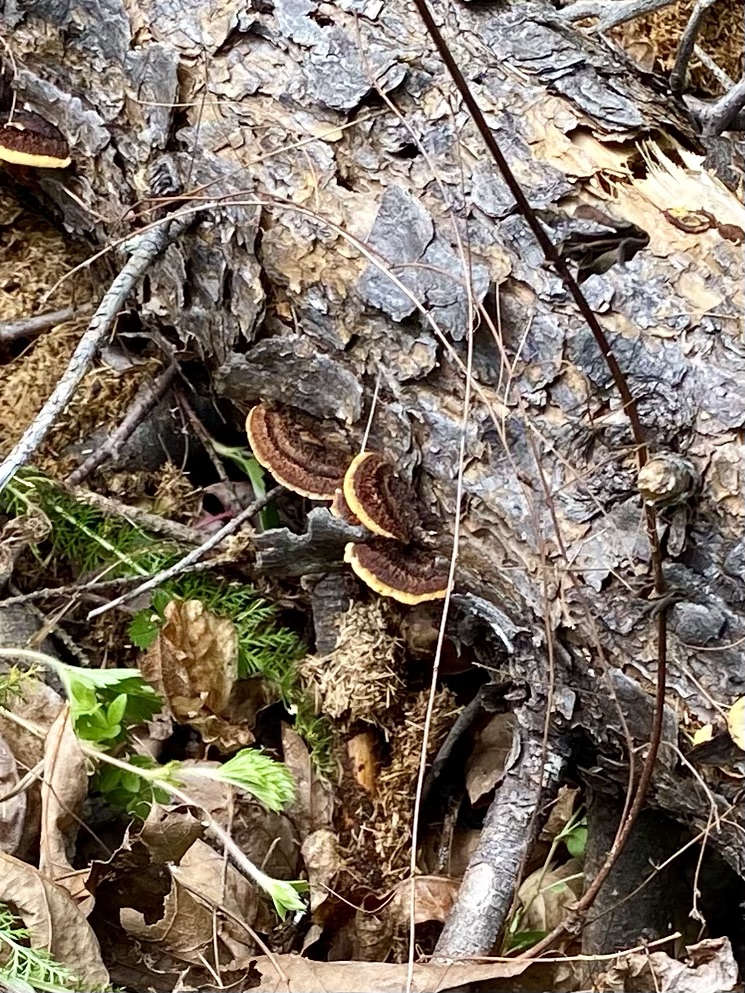
We expected to find many mushrooms at the farm since it’s been raining a lot this past week, but we only found these Gloeophyllum along the sunny southern border.
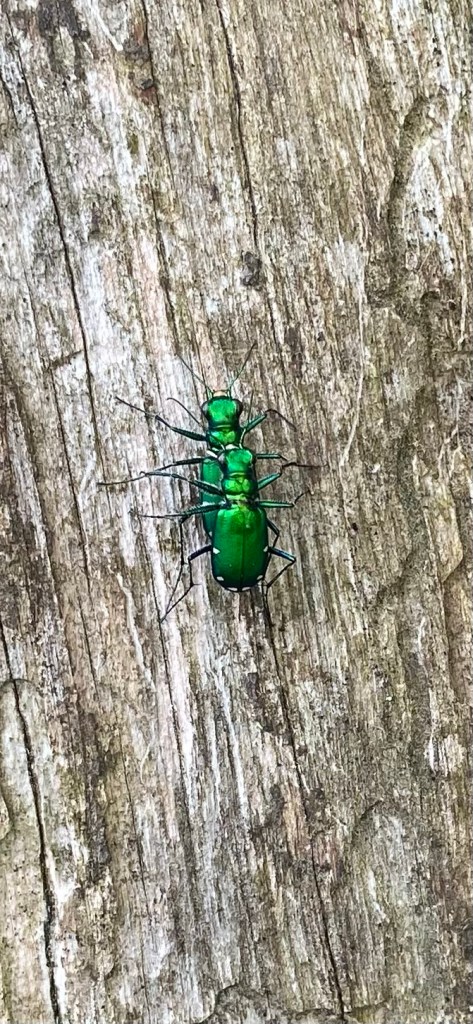
We found this colorful pair of six spotted tiger beetles down by the waterway at the south side. They feed on a wide variety of arthropods and over winter in larval burrows.
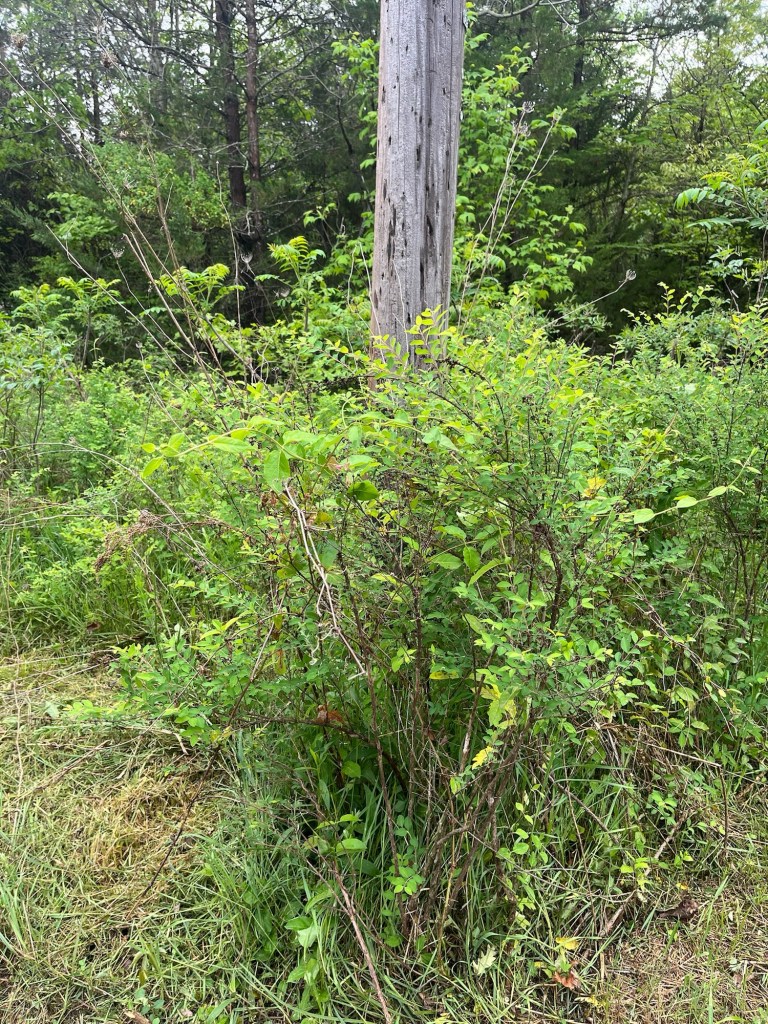
We continue to pull up and clear out invasive trees as we find them. So far, tree of Heaven, mimosa and paulownia are the invasive species and we find them mainly along the road. We also continue to take down black Cherry trees that are diseased and dying.
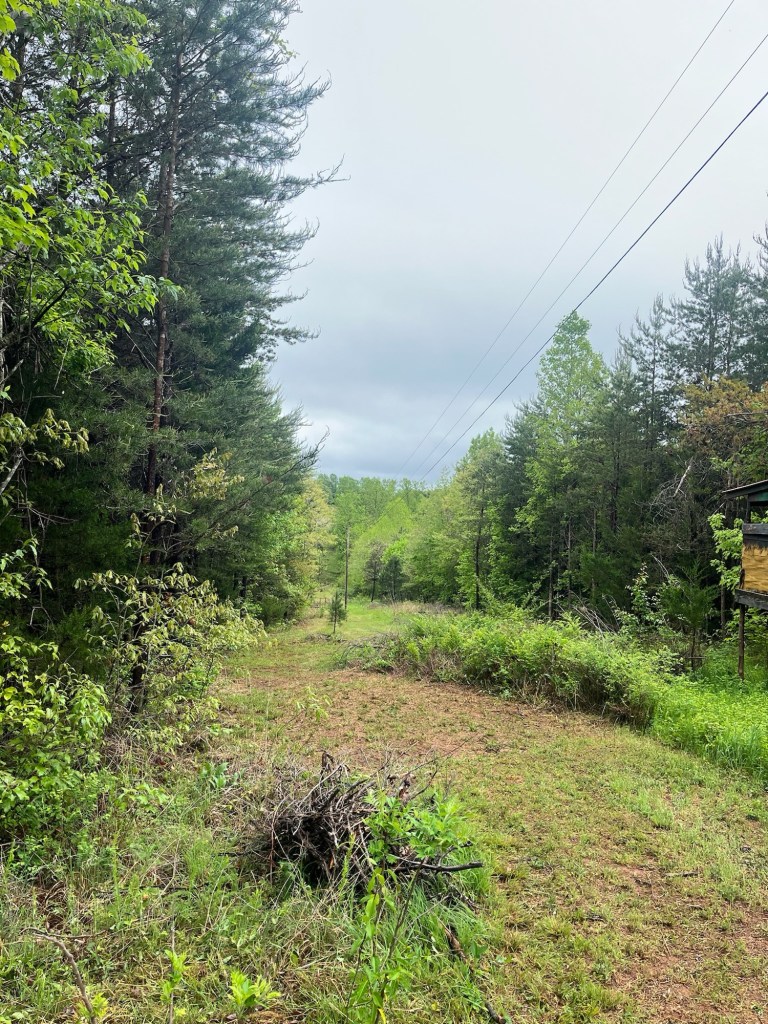
We’re taking back our southern border and clearing out overgrown brush. It is so satisfying to cut the tangled overgrown weeds back. We are thrilled with our old Husqvarna.
April 23, 2024 Pawpaws and blueberries flowering at St Andrew’s Forest Farm
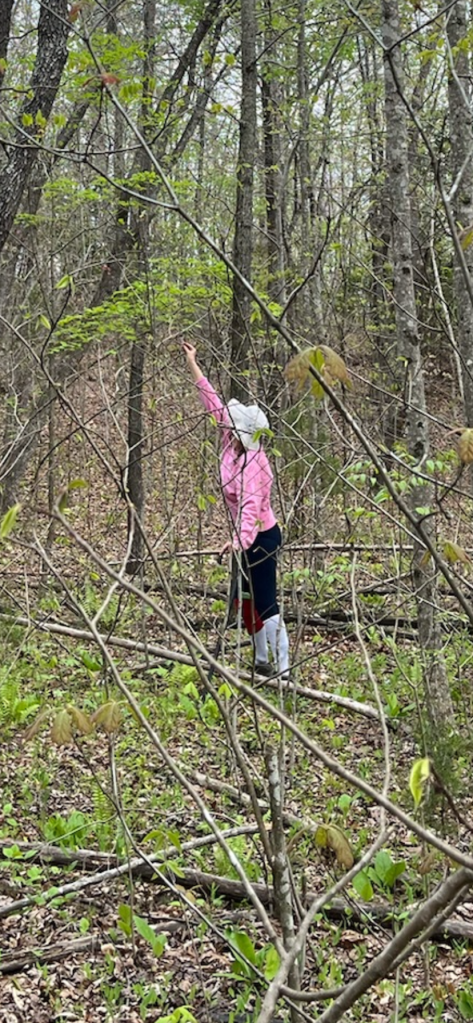
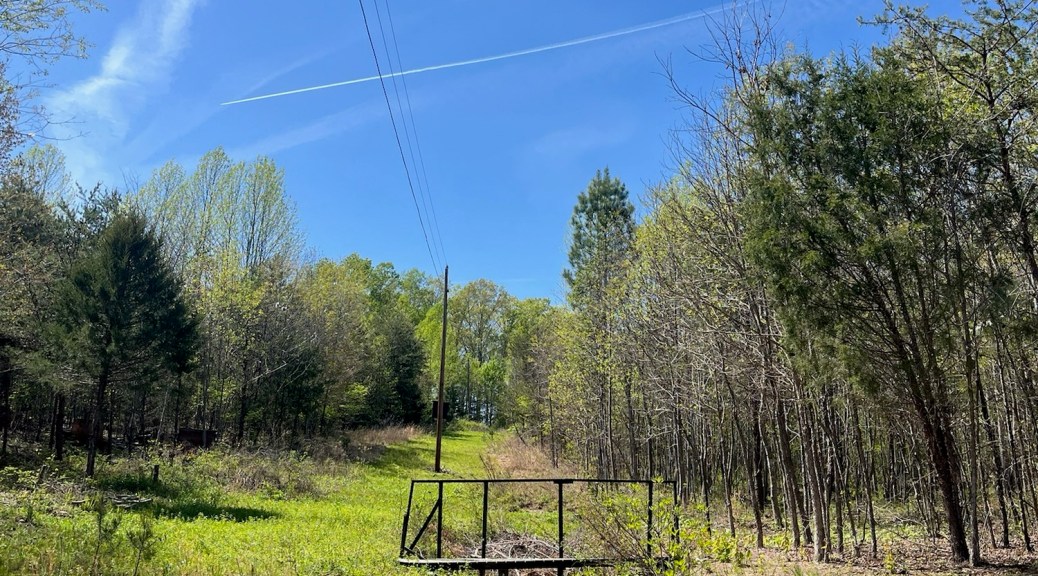
Yesterday in the forest,we found pawpaws blooming and blueberries flowering and fruiting, and in the clearing we found our first cover crop of crimson clover flowering. Butterflies and other insects were enjoying the flowers.
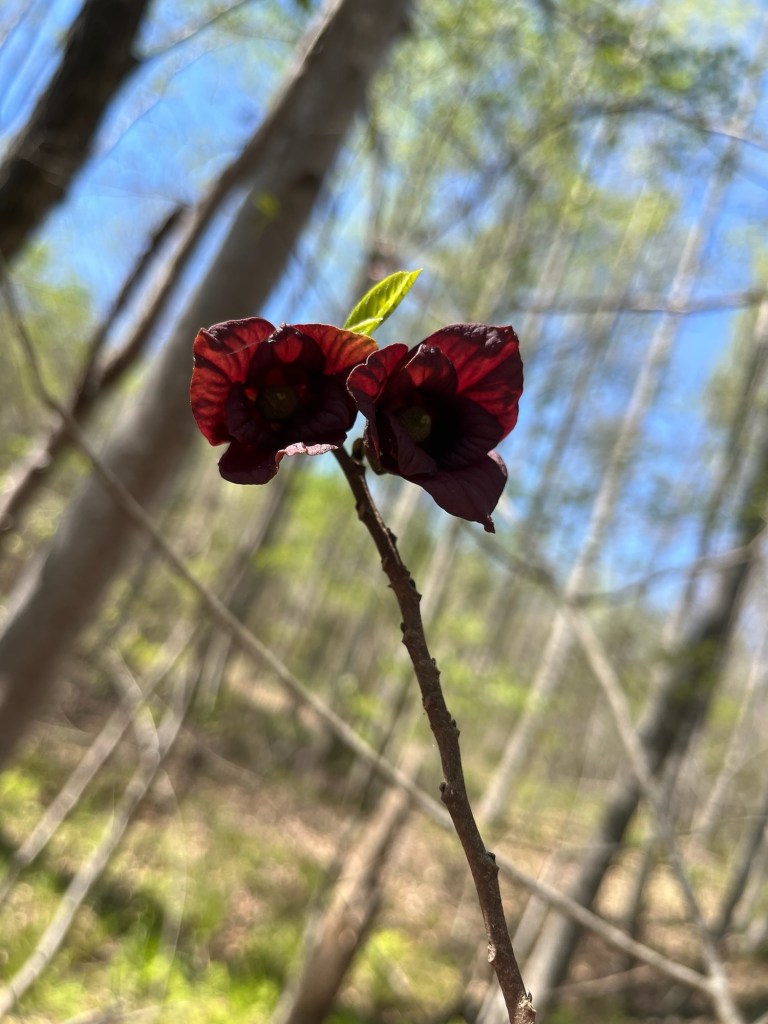
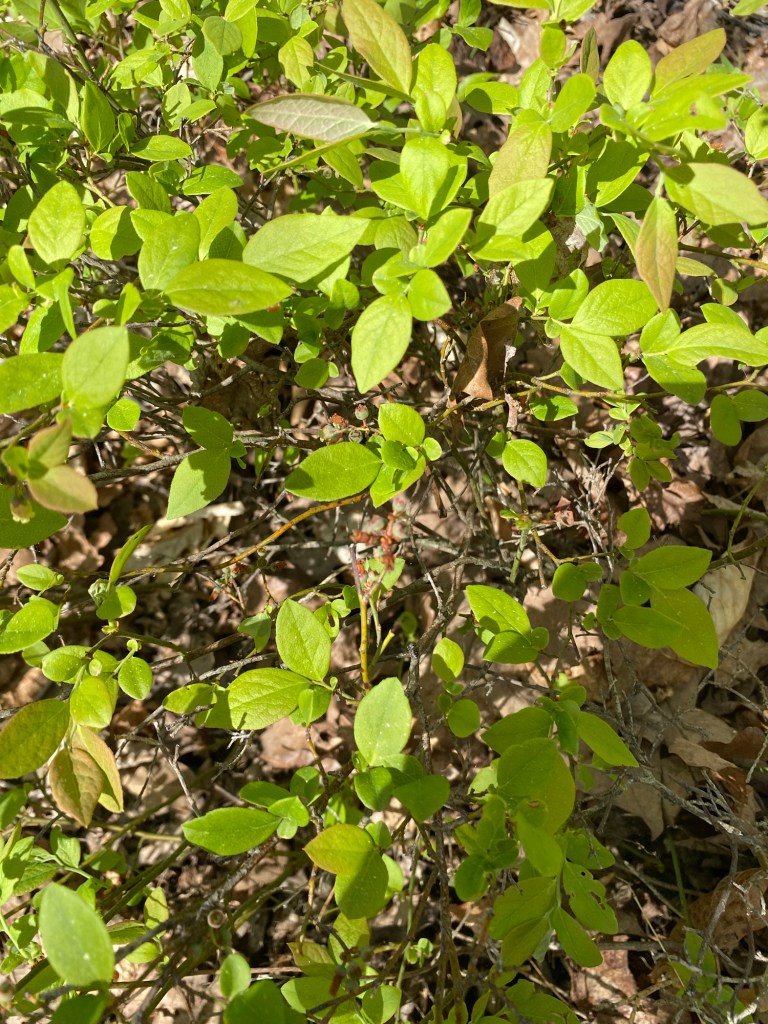
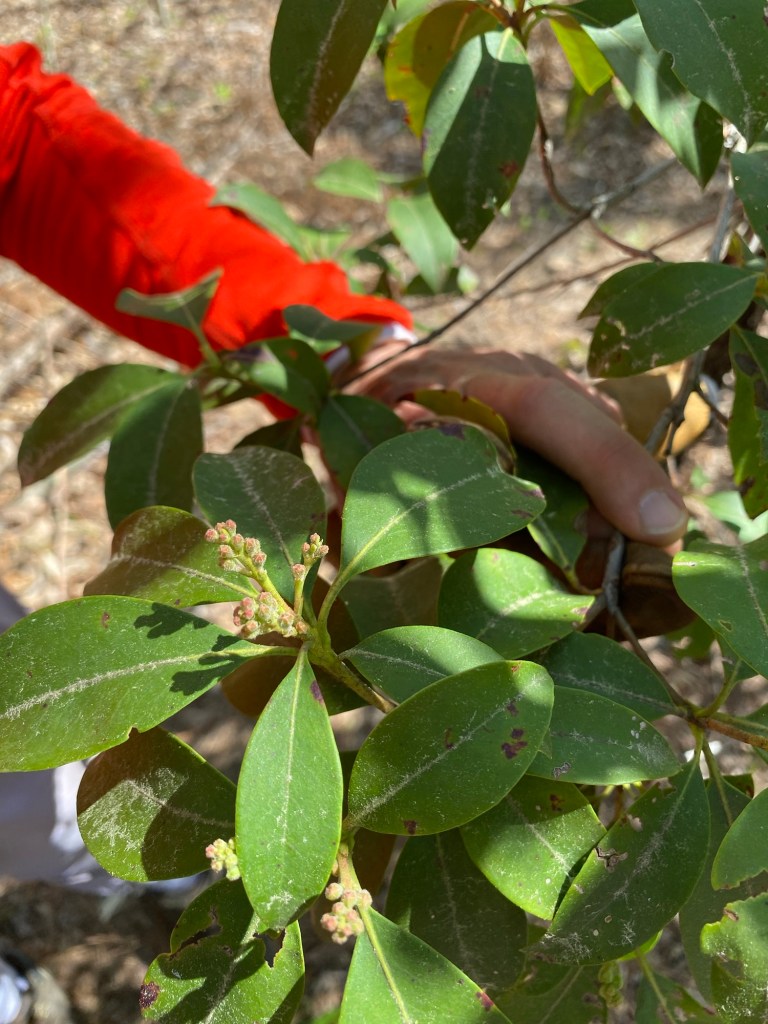
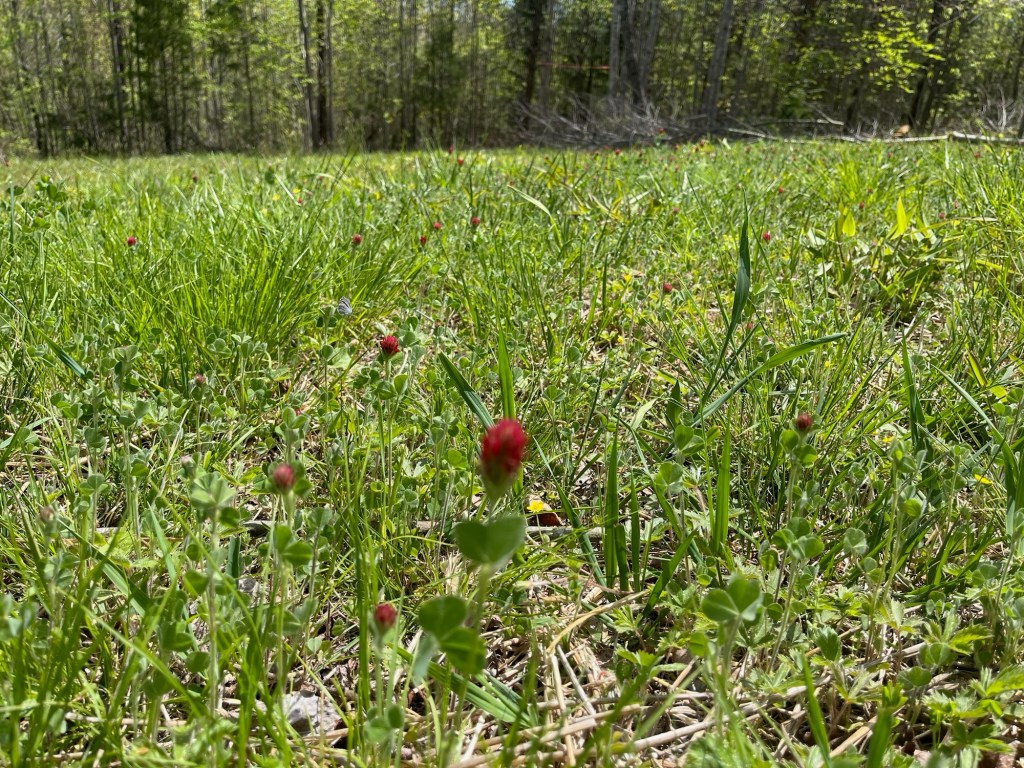
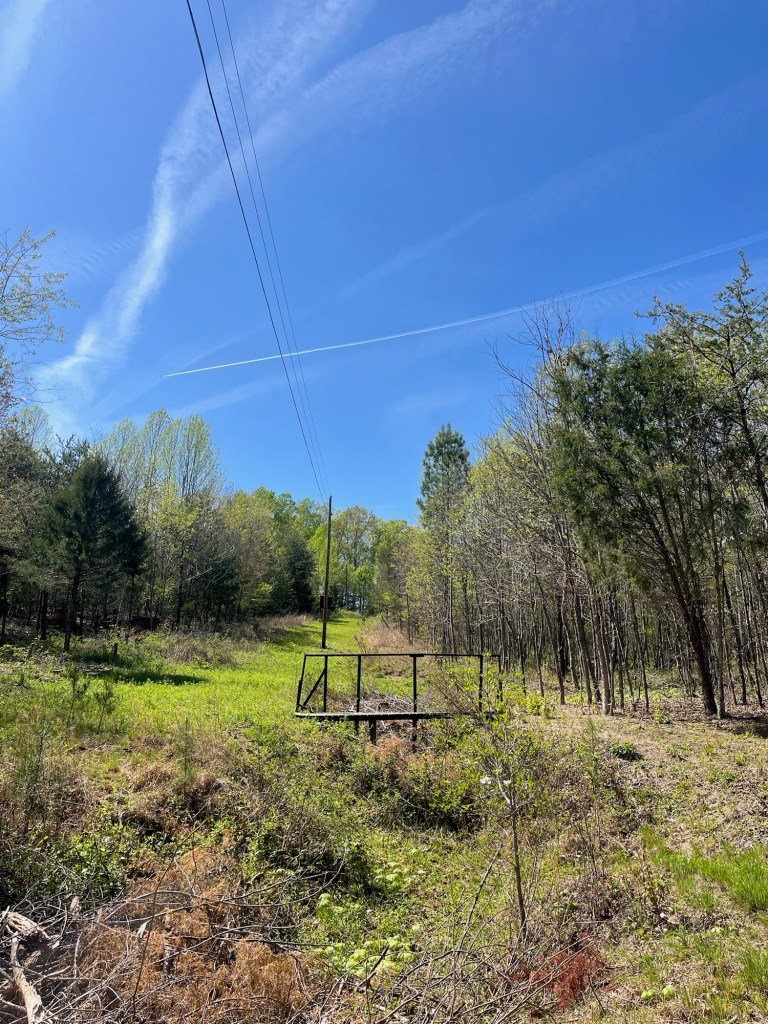
We are constantly amazed by the abundance of food growing naturally in the forest. We look for ways to encourage and support the continued growth and development of a healthy and sustainable ecosystem.
 St Andrews Forest Farm