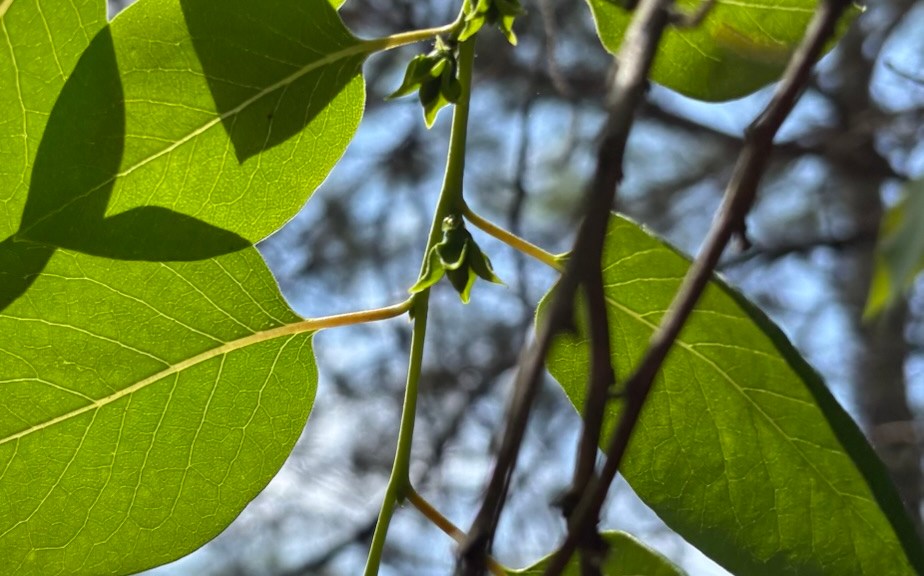
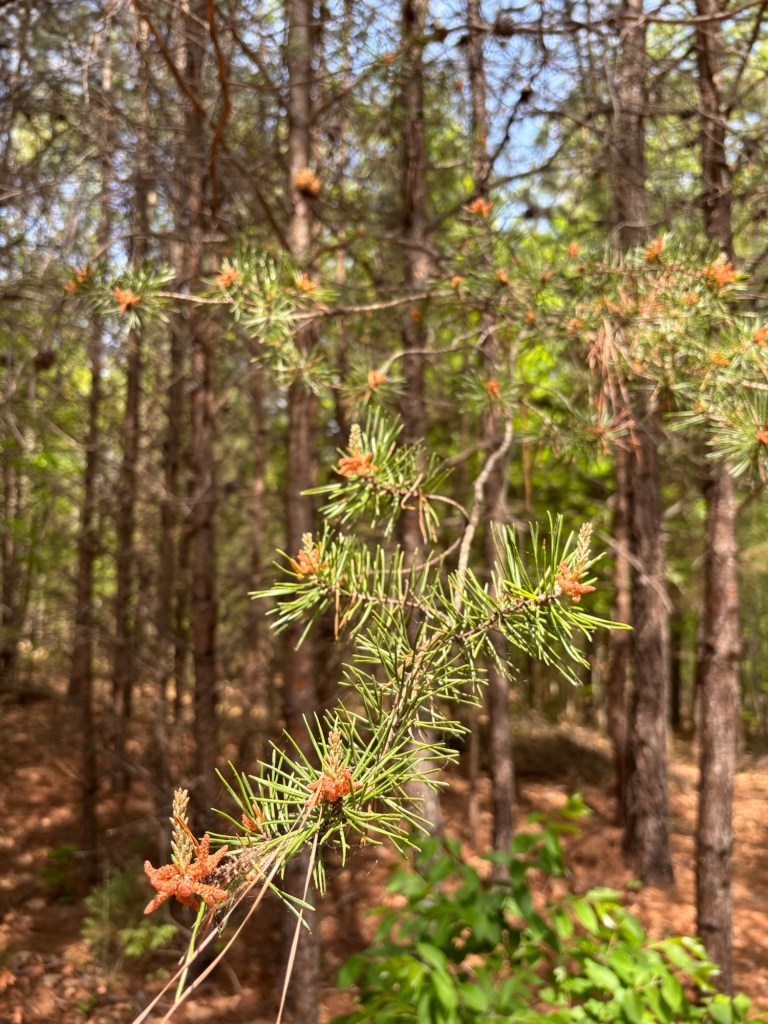
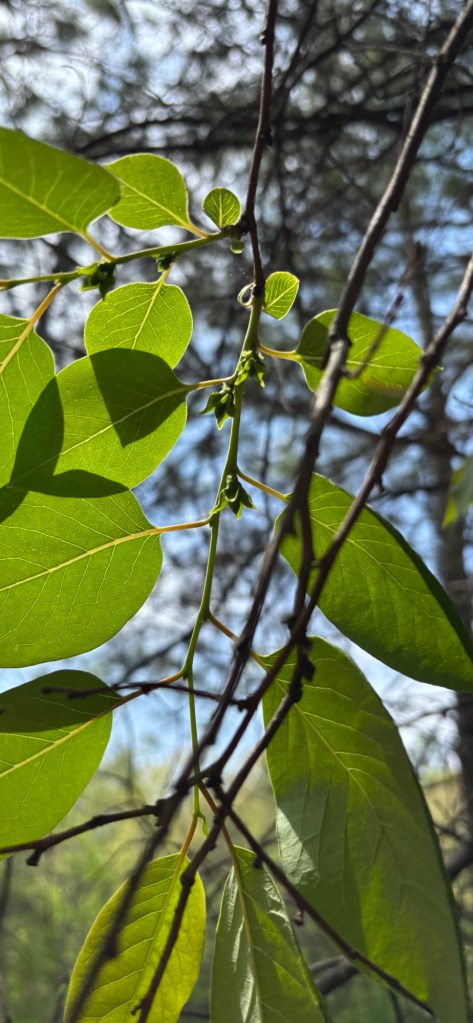
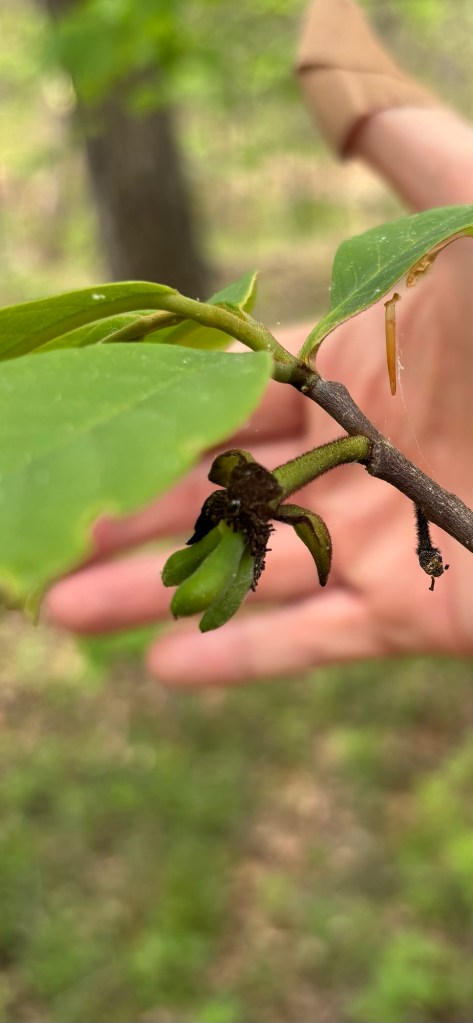
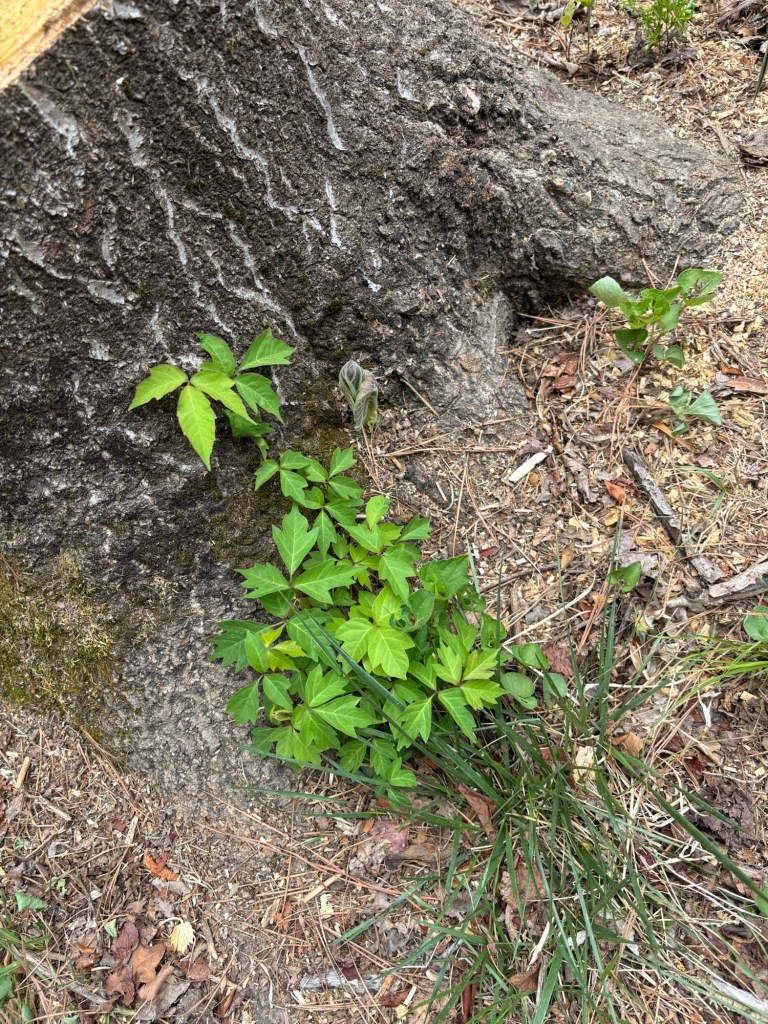
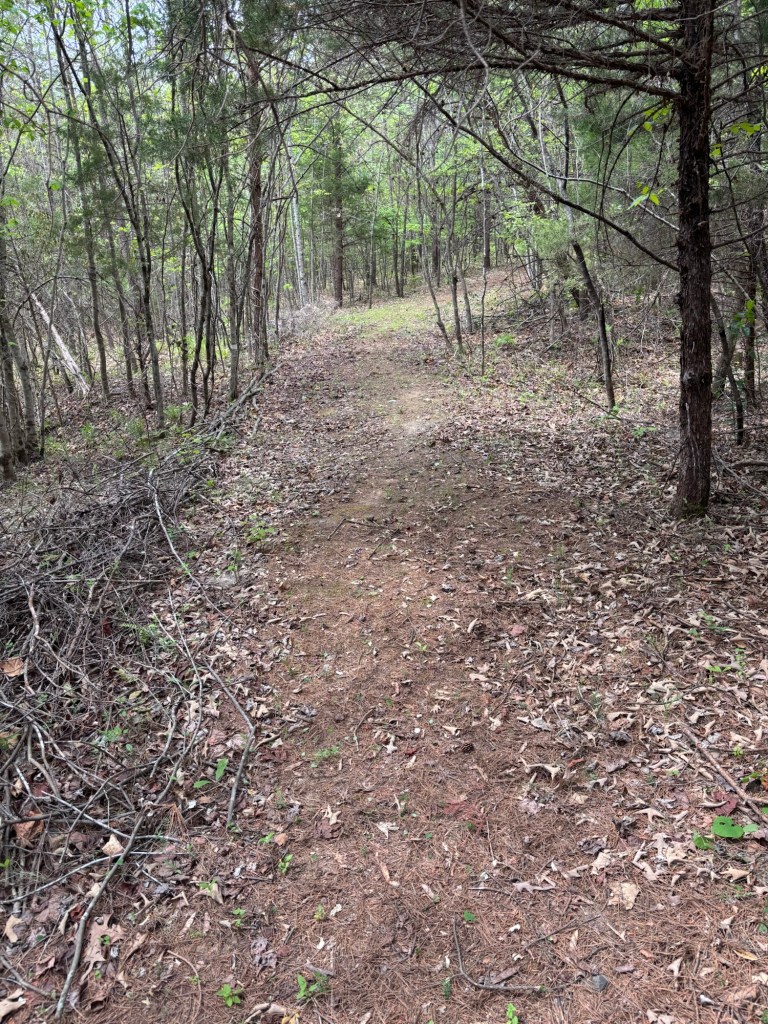
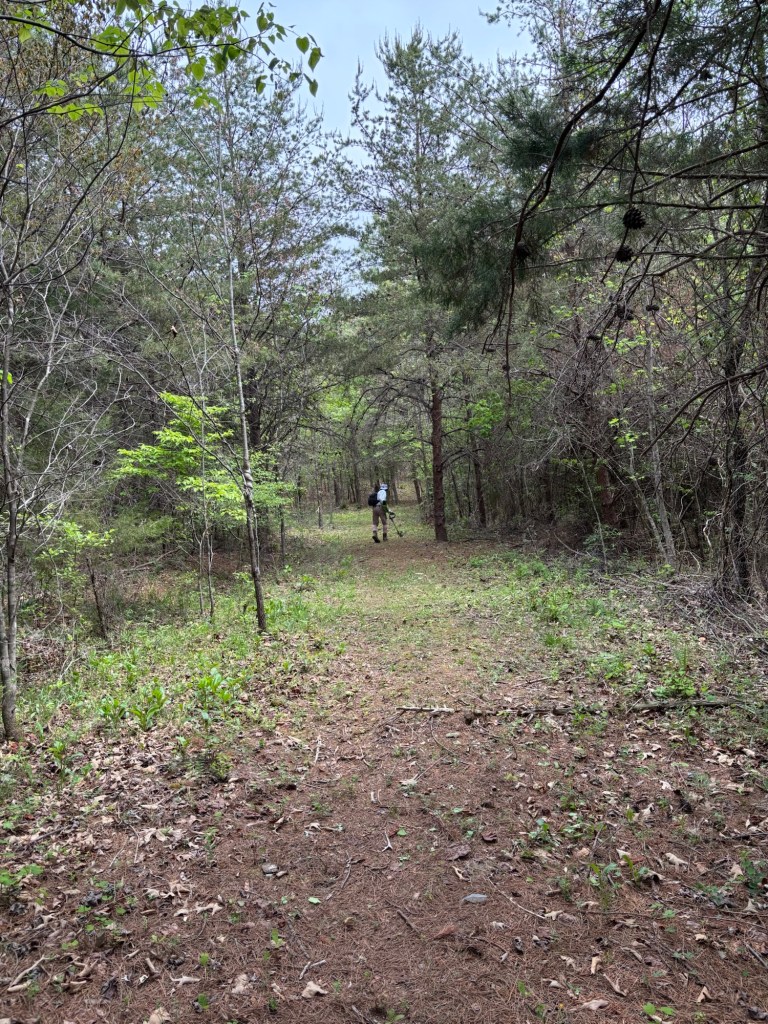
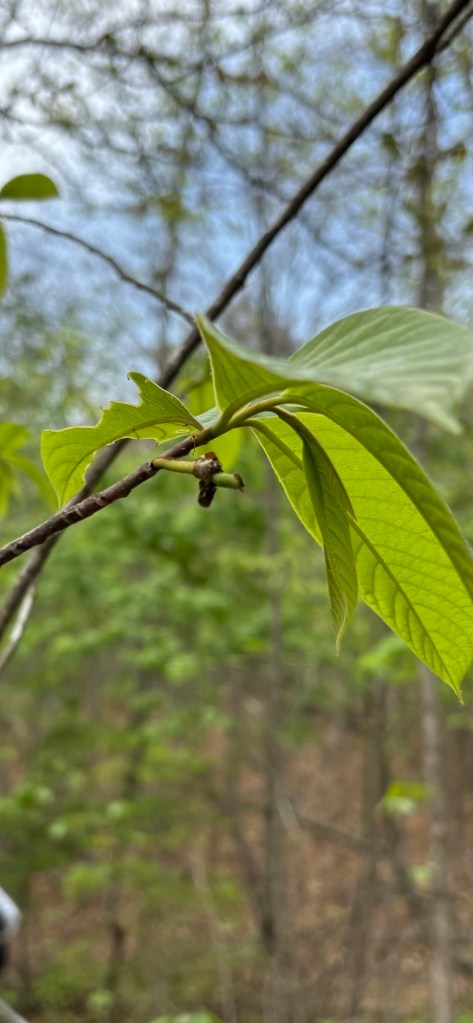
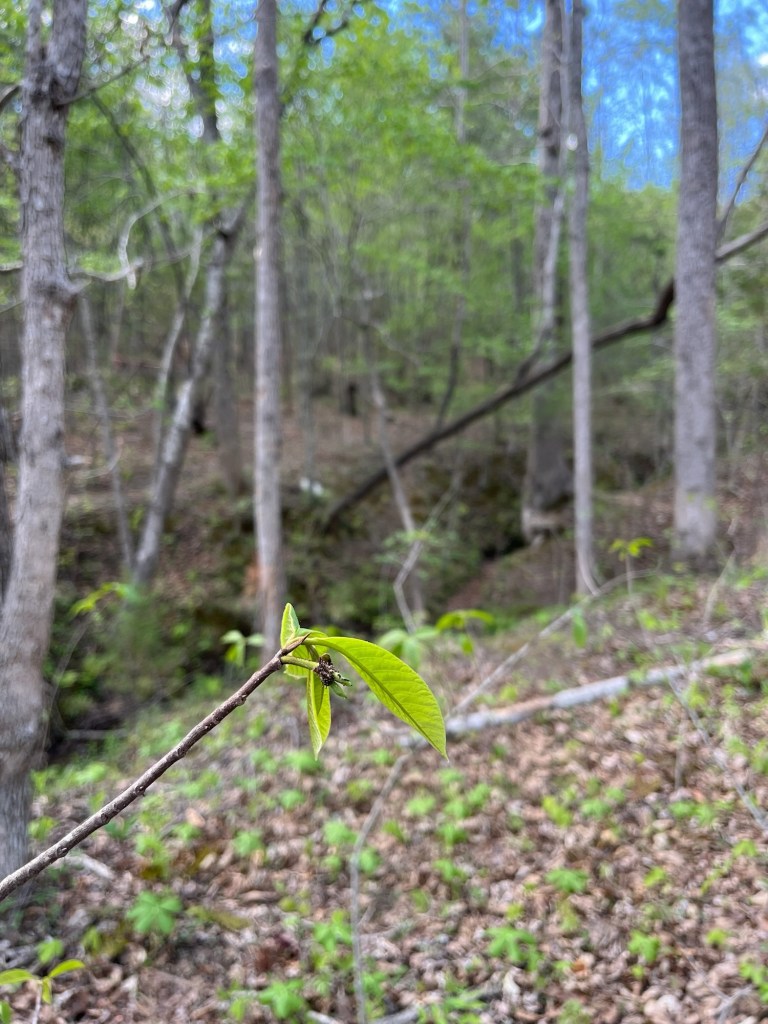
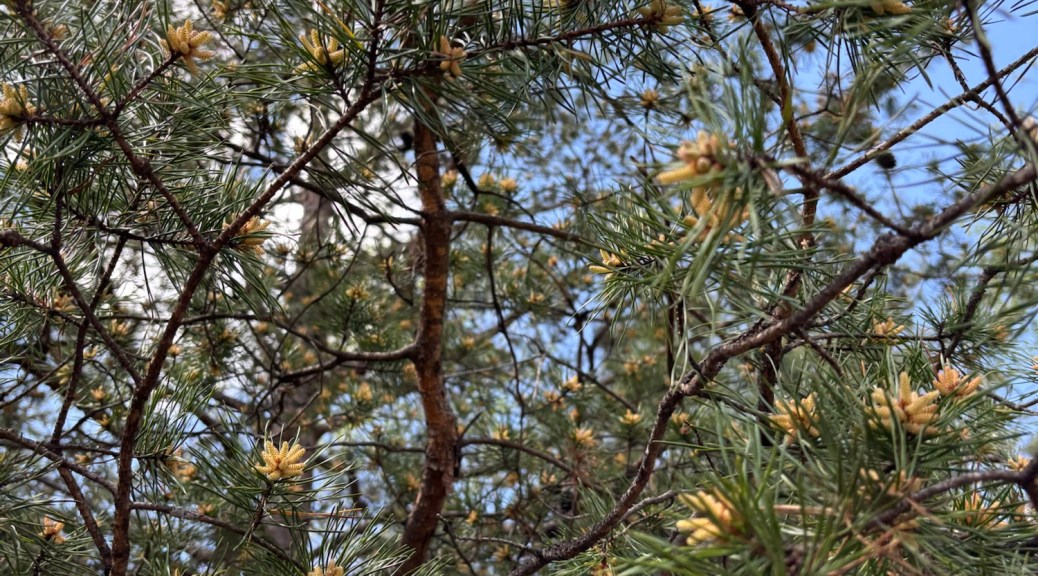
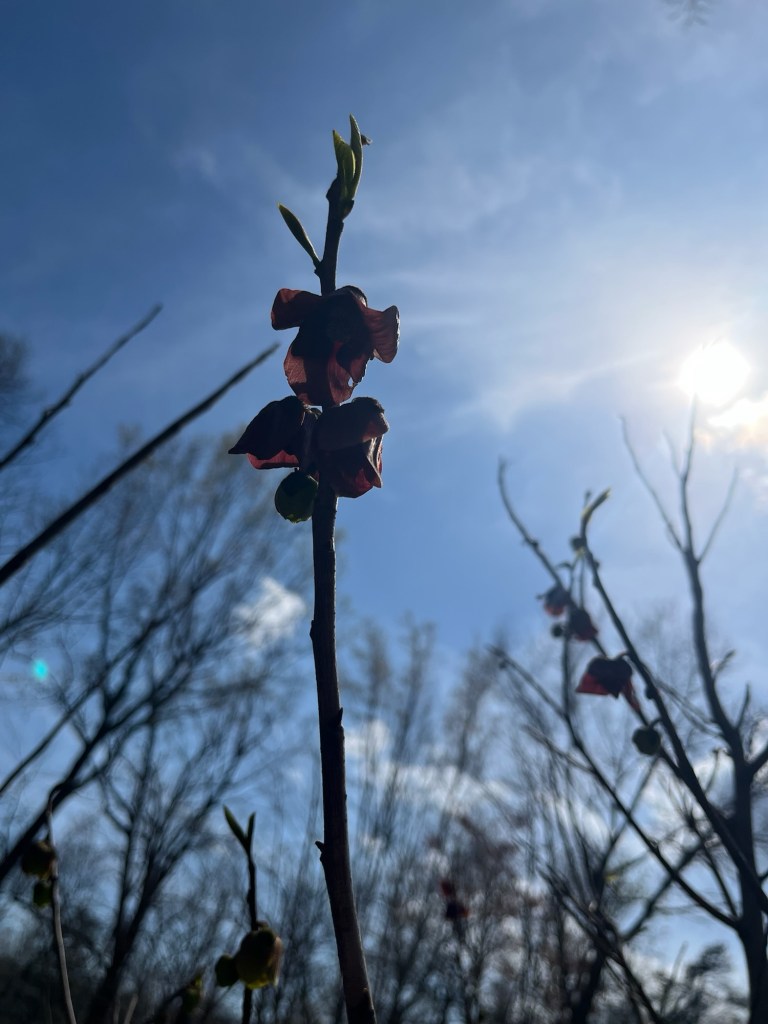
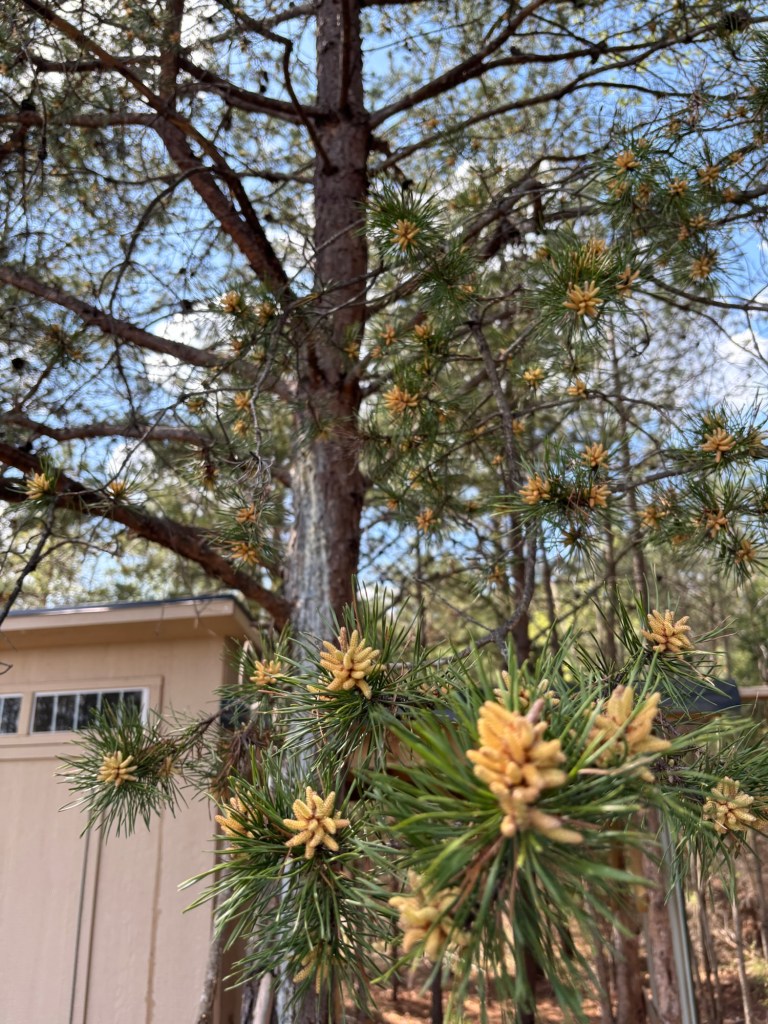
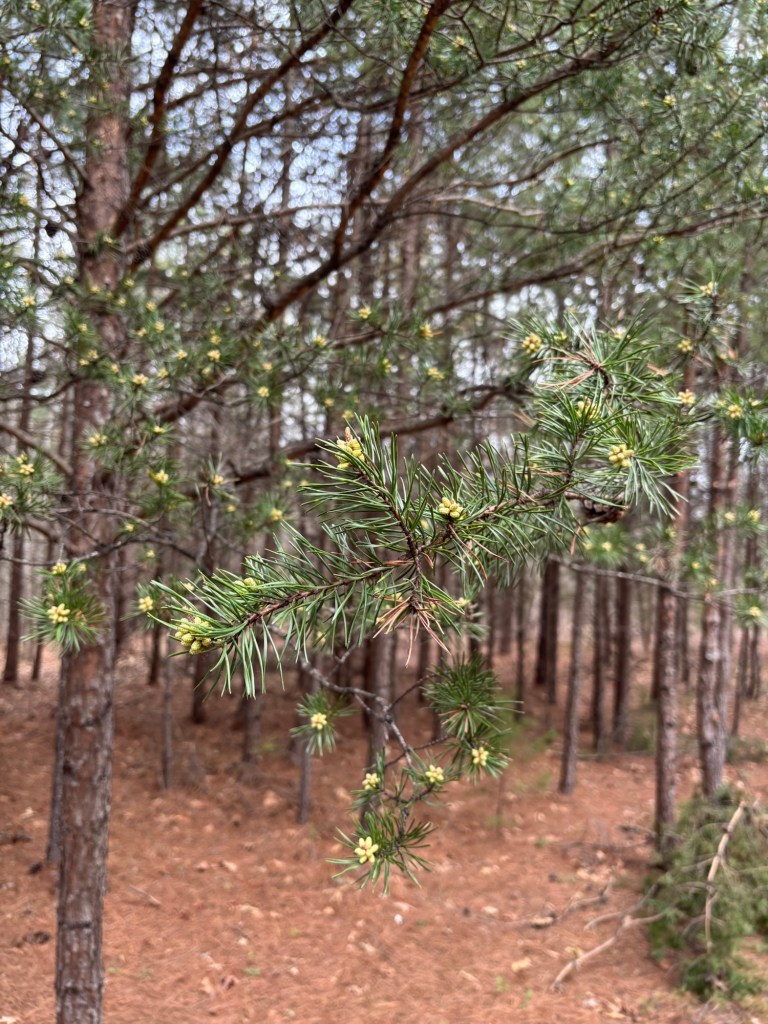
Catkins on a Virginia pine, Pinus virginiana.Developing leaves and flowers of a female American persimmon, Diospyros virginiana. Early fruit on a pawpaw, Asimina triloba. Eastern poison ivy, Toxicodendron radicans, found on the Pawlonia stump. Taken from Orchard hill trail at the bottom of SAFF. Chris string trimming on the old farm road. Another pawpaw fruit set down in the old clonal colony.
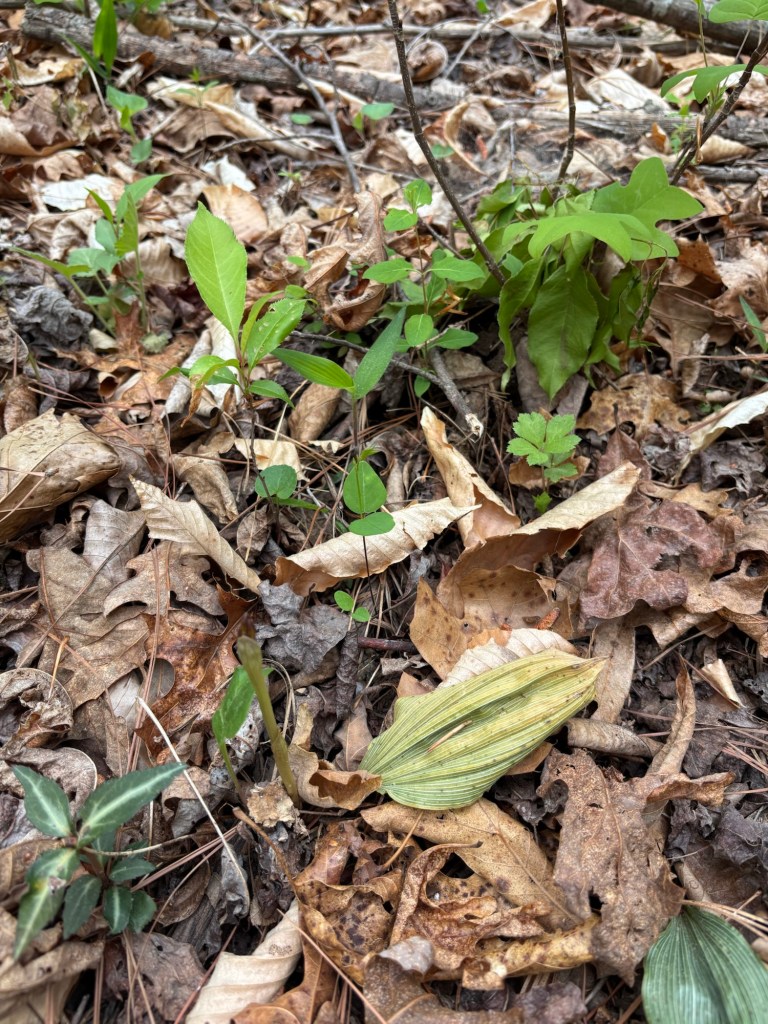
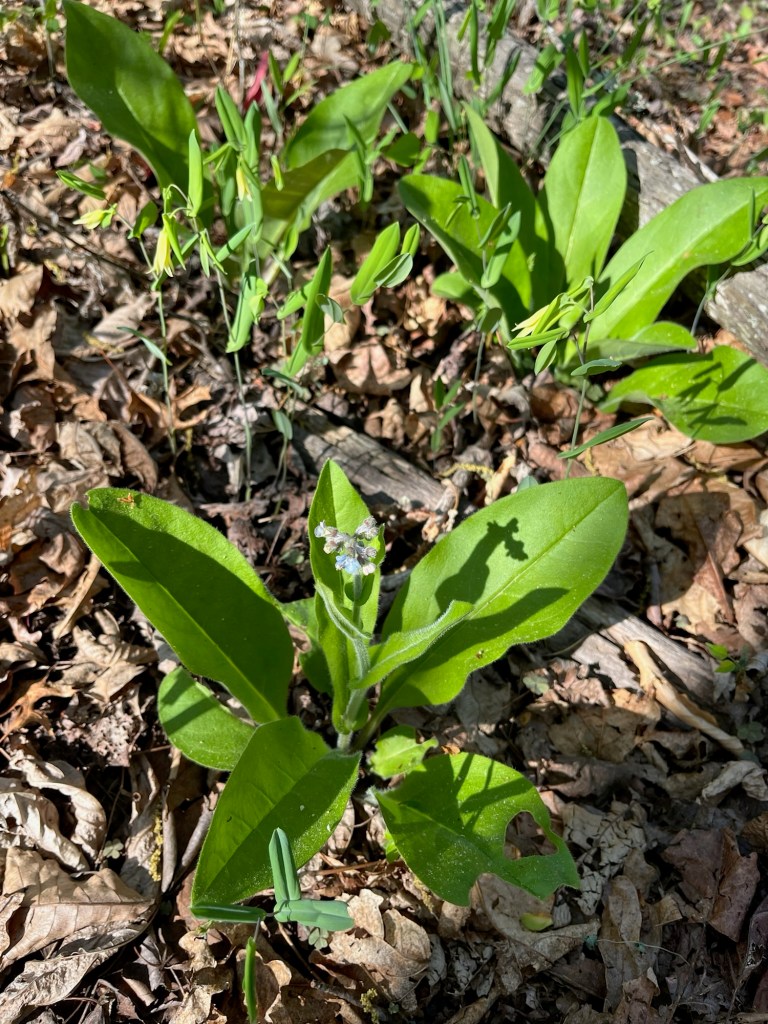
We got out to the farm this morning to get a few things done and take a walk. The forest is getting fully leafed out and it looks like summertime in Virginia all of the sudden. We were happy to see a few surviving pawpaw fruitlets still there after the wide spread but scattered frost damage in all three pawpaw patches. The persimmon trees are starting to get flower buds. We saw American hog peanut and creeping bush clover growing near our trees and feeding them nitrogen underground. Mountain laurel is budding up in the woods. We saw Aplectrum hyemale, putty root orchid, sending a flower stalk up with a leaf wilting. This flowering and dying back usually occurs in late spring/early summer (May or June here).
Putty root orchid with striped leaf and stalk arising from it.
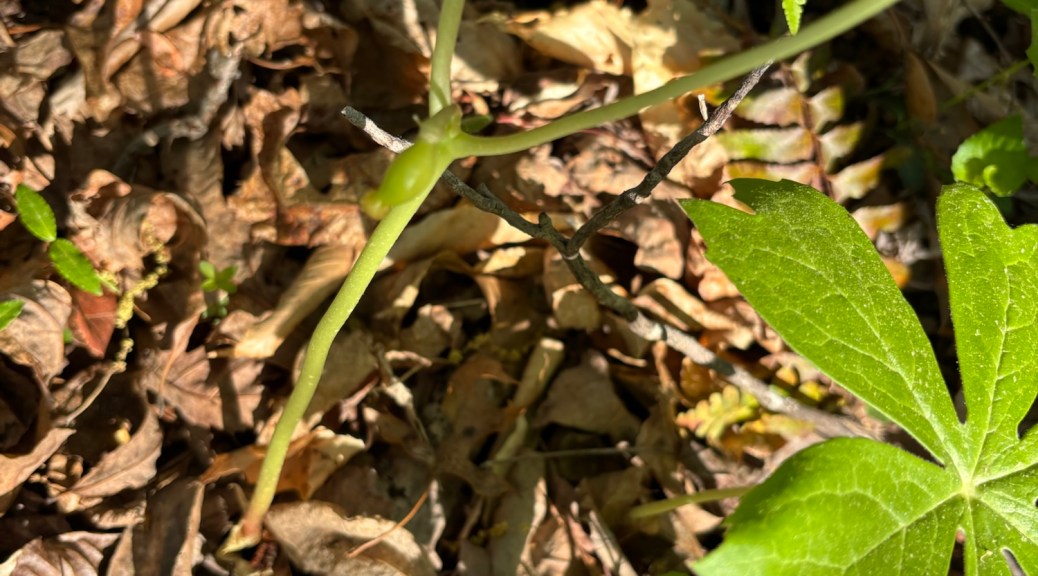
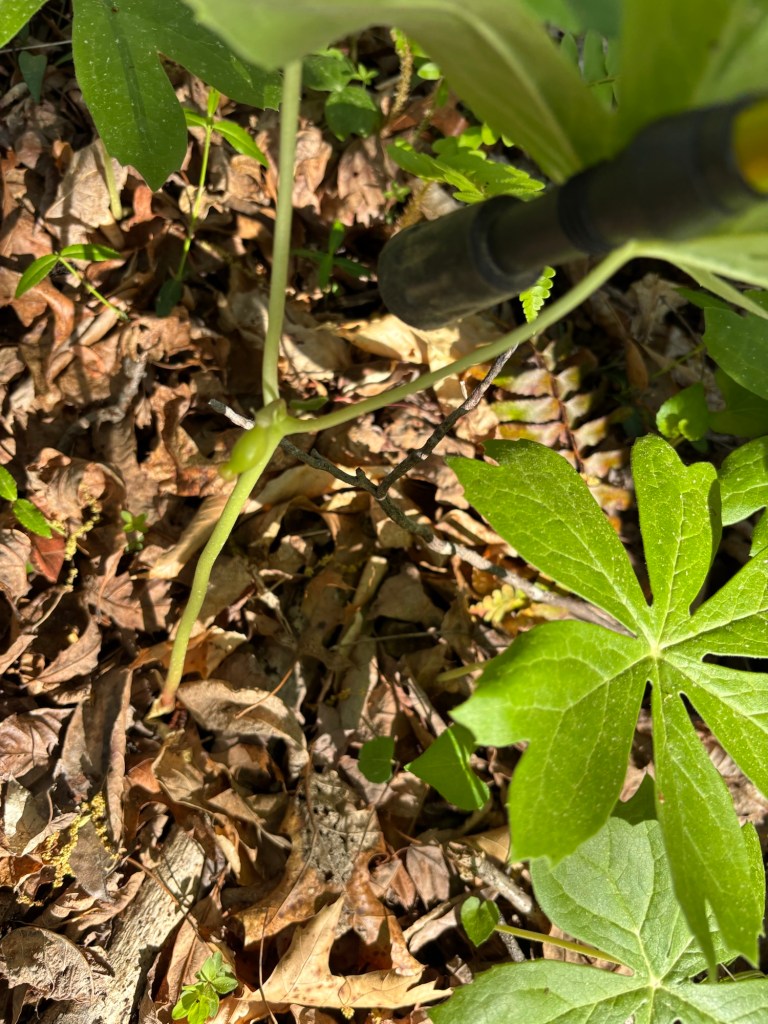
Wee tiny mayapple initial fruit set. They grow to the size of a plum. 1.5 to 2 inchesVirginia bluebells, Mertensia virginica, blooming in the old colony pawpaw patch. Beautiful and attractive to pollinators in the foreground. Perfoliate bellwort, Uvularia perfoliata, in the background.
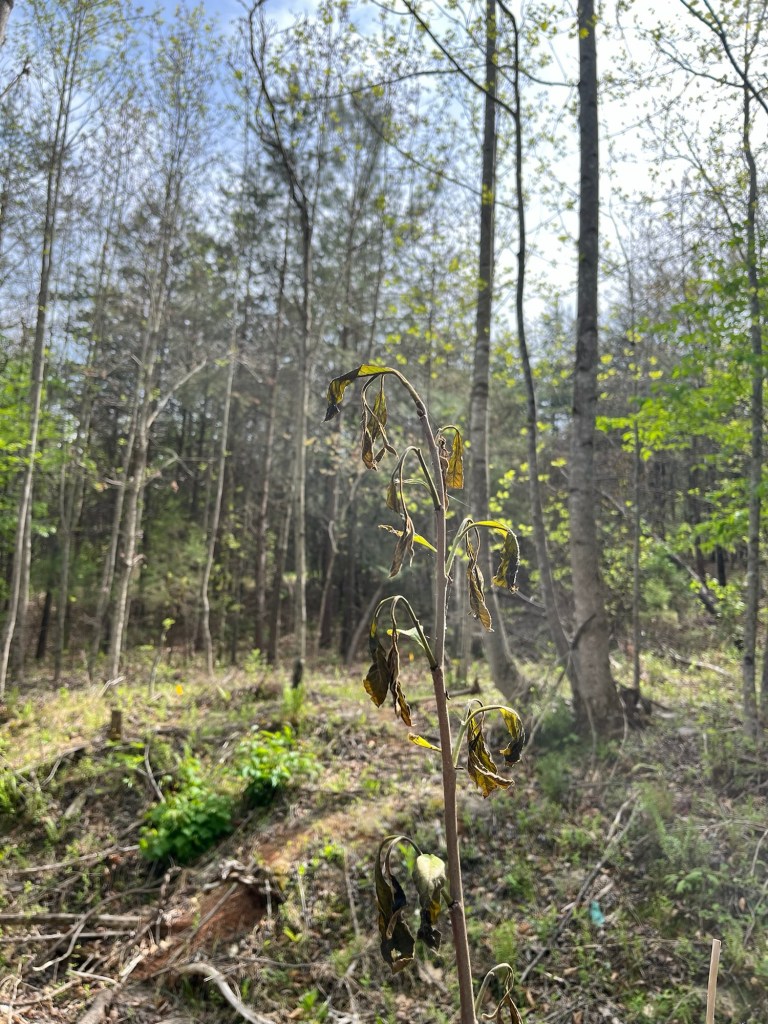
We visited Saint Andrews Forest Farm yesterday afternoon and went to check on the Asimina triloba as we walked around the woods. In every patch (Southside gully natives and Rappahanock, old clonal colony and newly planted cultivars and seedlings in the new orchard at the bottom of North Trail), we had frost damage. The new seedlings and cultivars and the Southside gully gang will rebound albeit wounded for the season. Our sad loss was down in the clonal colony where we spent hours pollinating from the wild. We had a lot of frost damage. We’ll see. We saw tiny green bananas still hanging untouched by the cold. It definitely will impact our fruit this year. We did not expect it since temperatures were reported as 33 degrees. We think they may have been especially sensitive since it was also very dry here. The drought is ongoing. We had sprinkles yesterday while we walked around but still no significant rain.
Tallahatchie cultivar Asimina triloba hit by frost and will hopefully rebound.Southside Sally and her gang, a native SAFF group, got hit by the frost we were sad to see.Rappahanock cultivar was filling out and getting fluffy before the frost.
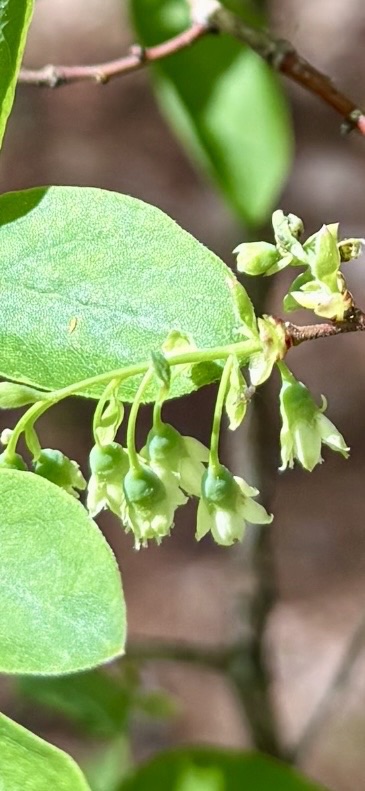
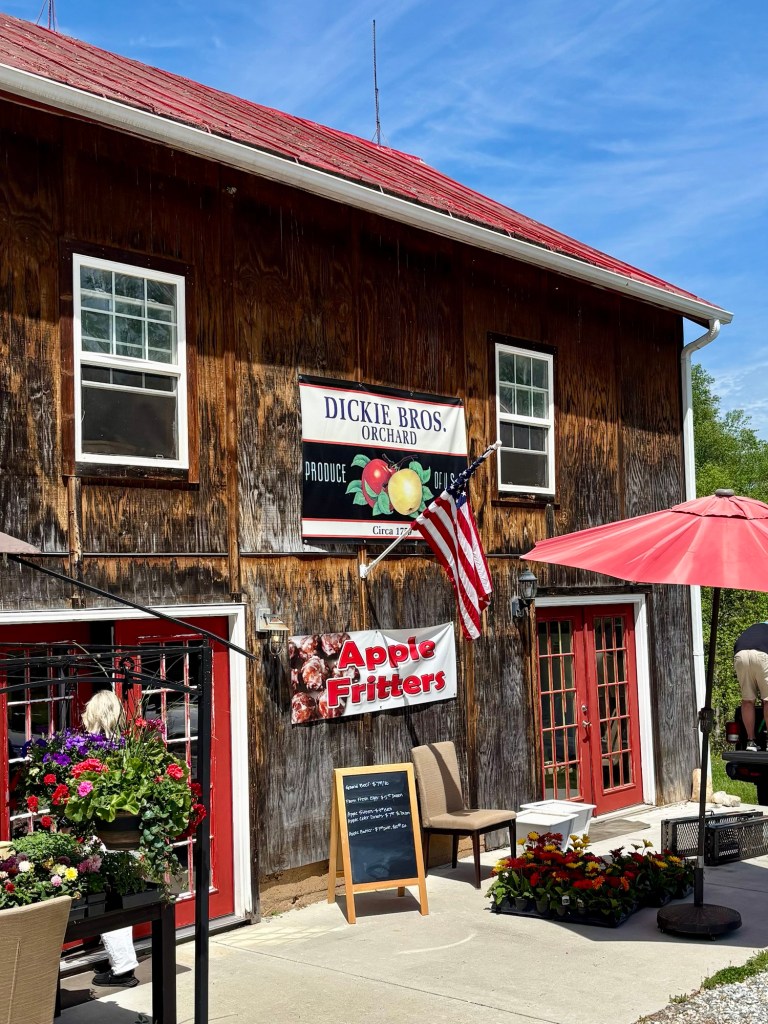
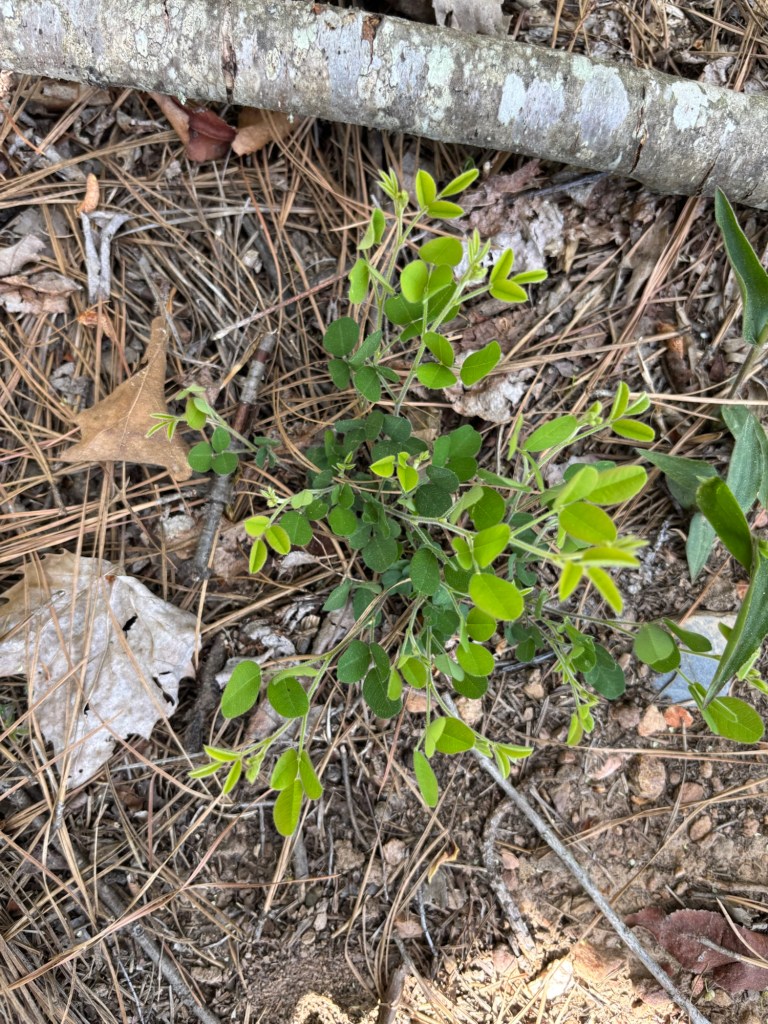
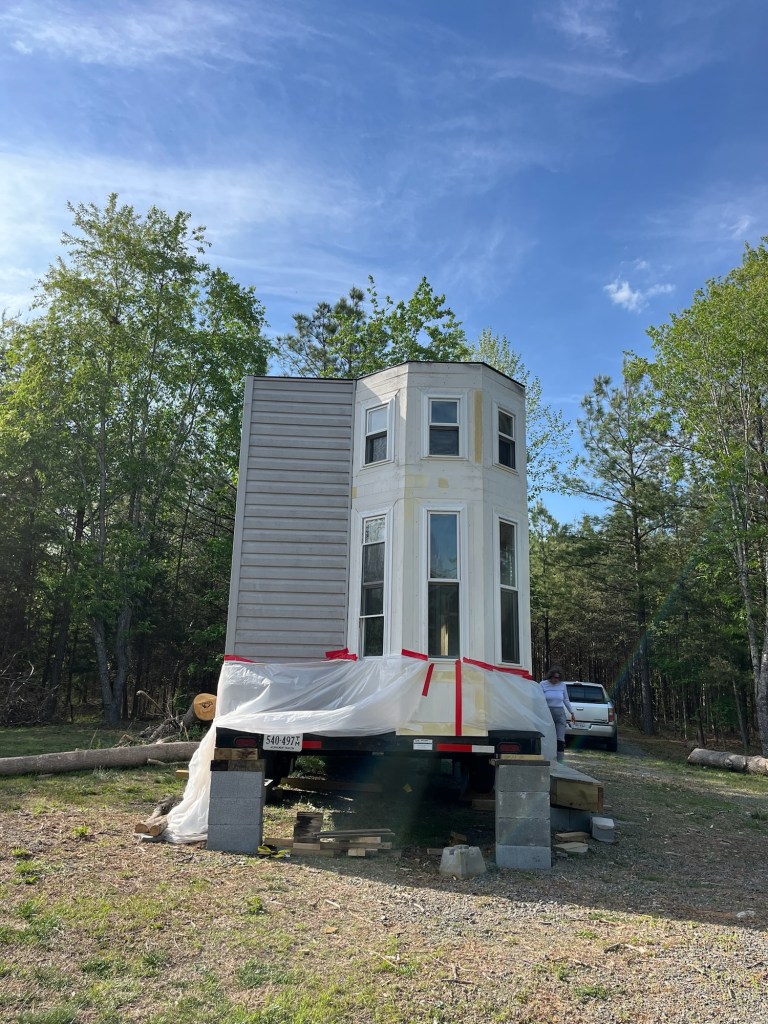
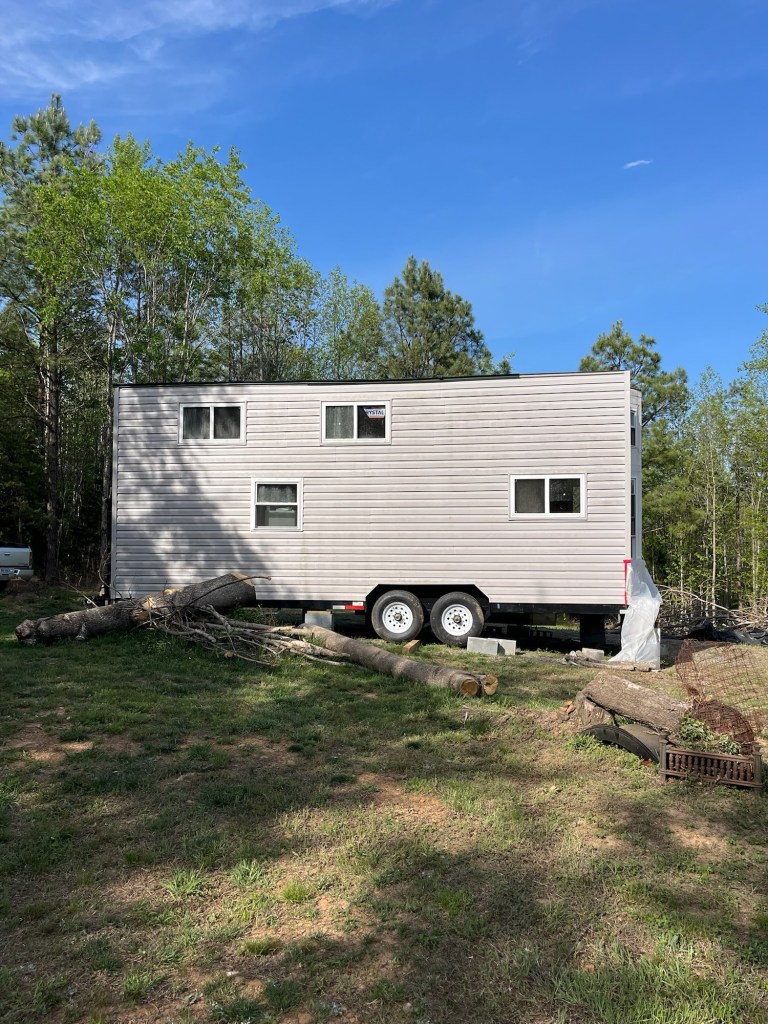
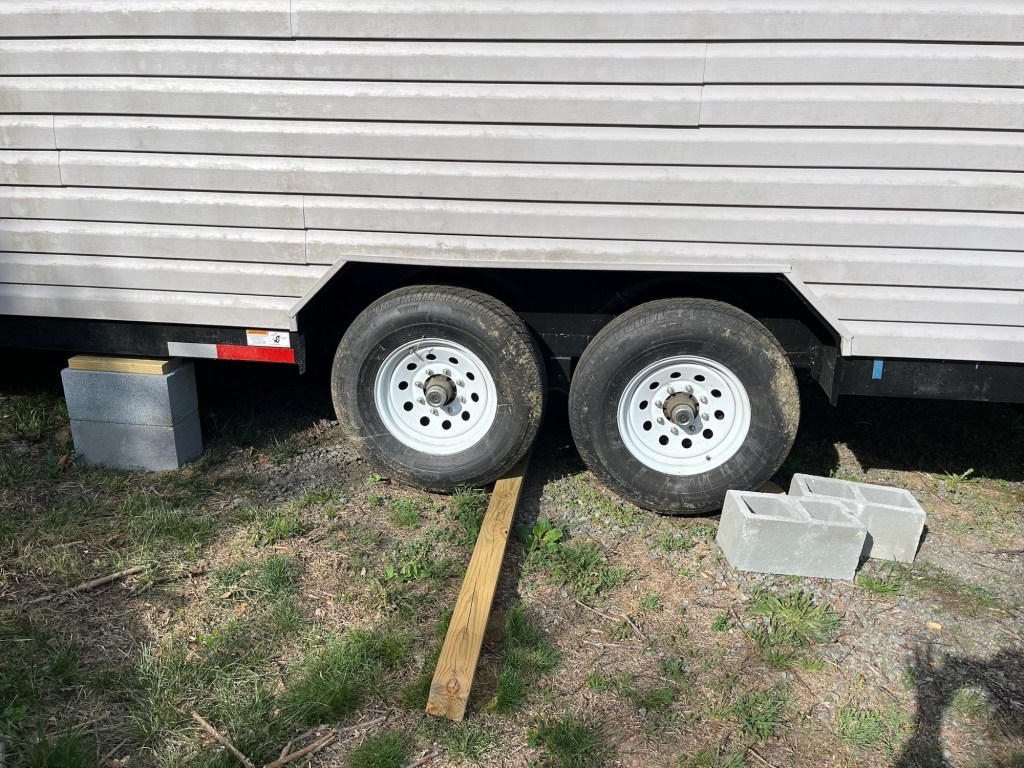
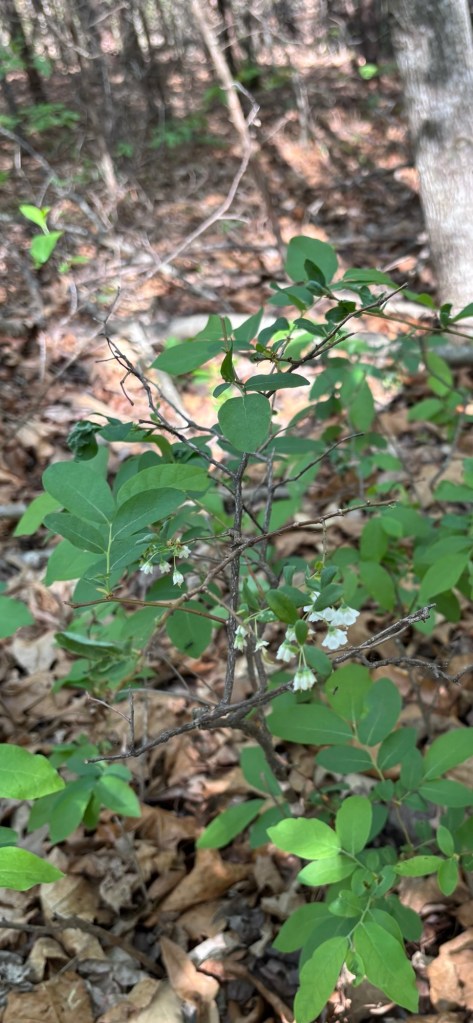
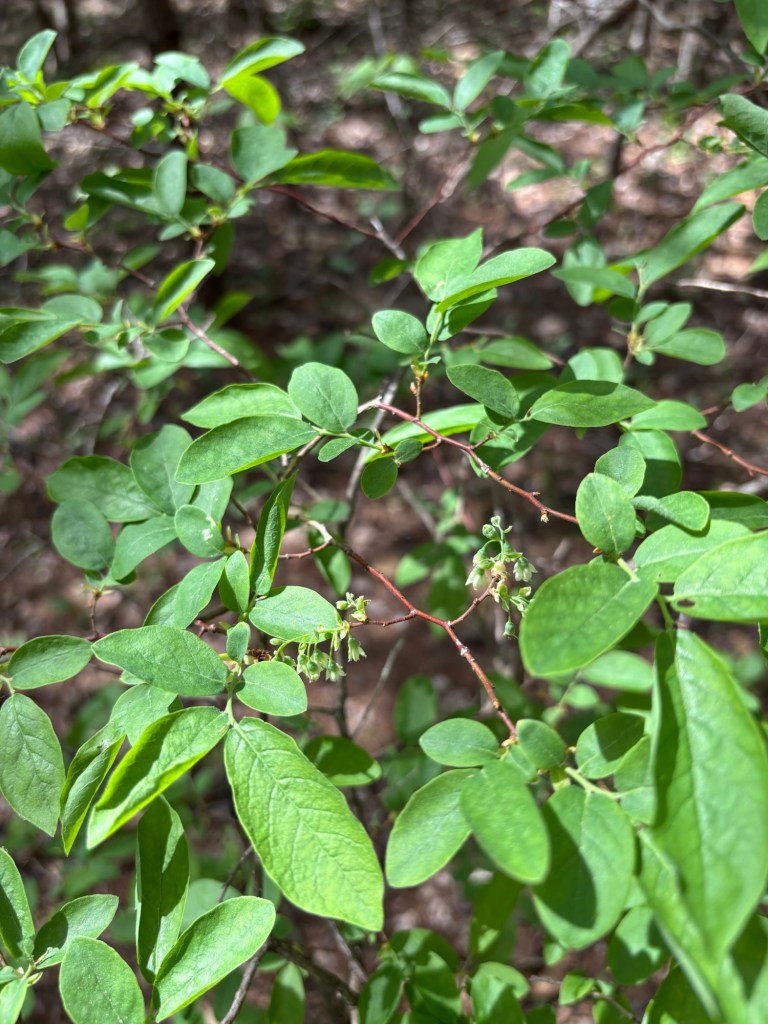
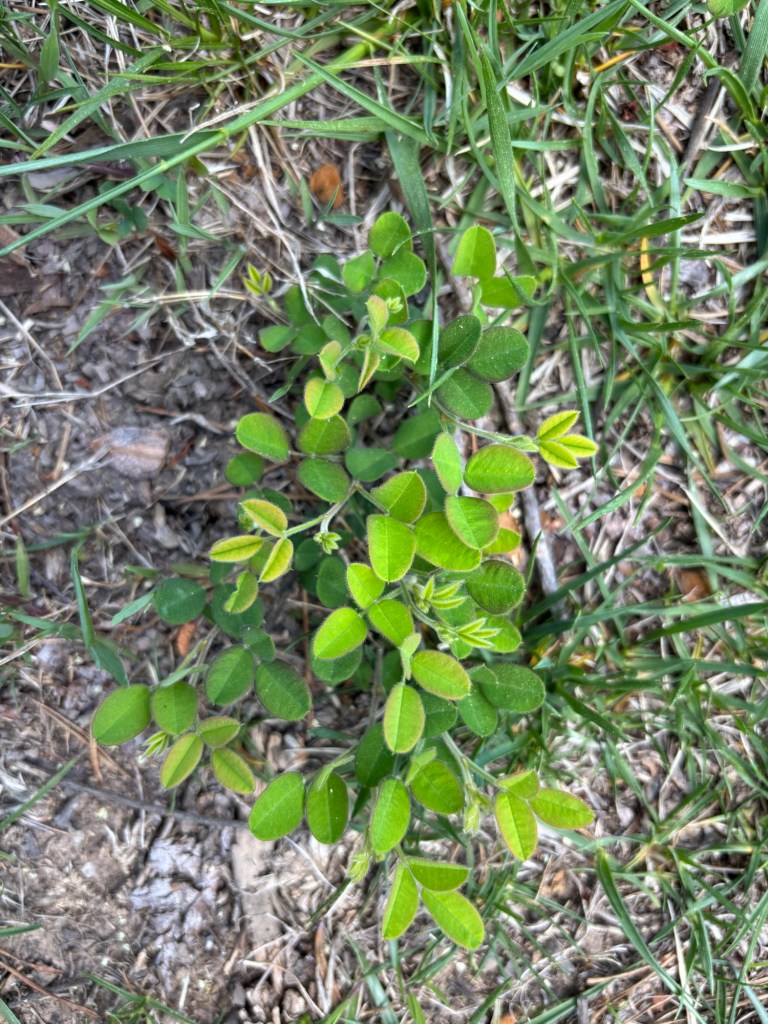
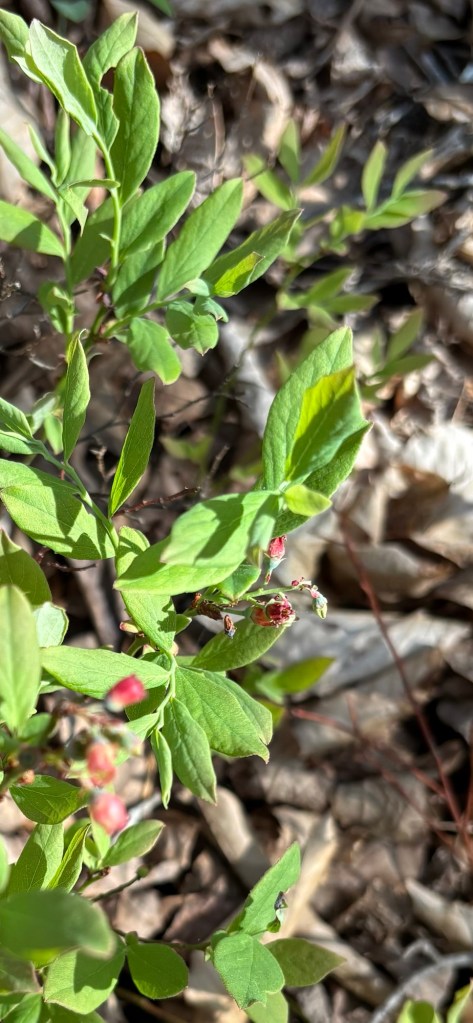
Deerberry, Vaccinium stamineum, about 7 feet tall along SAFF Northern Trail overlooking Blueberry Hill Trail. We stopped on our way to the farm and got strawberries and farm fresh eggs at Dickie Bros. Orchard in Afton, Virginia. We are still enjoying the fruit, and the eggs were not only way more delicious, they were less expensive than the grocery store. Just saying. $5Lespedeza repens, creeping Lespedeza or creeping bush clover, is a native low growing perennial. The small pea like pink and purple flowers attract pollinators from late spring through early fall. It also thrives in dry sunny conditions making it a good ground cover. We will interplant this for erosion control and nitrogen fixing near our Asimina triloba and other fruit & nut trees and other plants. It is similar in appearance to invasive and more aggressive plants so we are happy to finally identify it as beneficial since it’s everywhere at SAFF. We also do have the invasive and aggressive Chinese bush clover (yet, since it’s a nitrogen fixer, we’re less bothered by it than the Japanese stiltgrass and Japanese honeysuckle. We’ve got plenty of those especially along our fertile bottoms that get sun. The stiltgrass is erosion control right now and will need to be replaced with non aggressive natives like this creeping bush clover when we get to it.) We pull out the Japanese honeysuckle wherever we see it. It’s in the forest and on the trails. We rip it out of the ground with its root system and hang it from the tree it was strangling to dry and die. It feels like good therapy to save trees from noxious vines.Tiny house leveled up nicely. Chris has been working hard on these hot days using jacks and cinder blocks and wood.The back of the tiny house on wheels with the paulownia logs and sticks on the ground. We decided to use the logs from taking down the paulownias last month to make terraces along the slopes for our planting. Wheels off the ground!A nice pic Chris took of the old clonal colony pawpaw patch with lots of new leaves coming out. The ground is covered with ferns over a vernal pool that is almost always squishy and wet. The old colony has grown around this wet area with roots going five feet deep for what could be centuries —if as we suspect all of these hundreds of trees are from one individual. It’s anchored itself firmly to where it can access moisture and grown a thicket of itself. We can see the oldest and tallest of the trees are 20 to 25feet tall and the youngest just year old sprouts. This colony is full of rootsuckers. This is how the colony can live on and on when the typical life of an Asimina triloba seedling not allowed to root sucker is 45-50 years.
We mowed the main clearing for the first time this season. Spring is always a ticky time at SAFF. We have especially been seeing the lone star ticks. Mowing helps. It’s been very dry this season yet the lone stars are looking for a meal so be careful out there on the trails. We decided not to mow the slopes in the clearing and will leave it to the butterflies and critters. Leaving it long will help with erosion control. We mowed wide paths to our trails and around the slope to keep our tick experience walking around low on the paths. We also spray permethrin on our shoes and legs this time of year and tuck our socks into our pants. Any other tips, please feel free to comment below.
Last night, we ordered 41 Scion wood cuttings from various Peterson and other Asimina triloba cultivars and also including 2 American persimmon Keener cultivars, Diospyros virginiana. We plan to graft about half of the pawpaw Scion onto the old colony pawpaw patch, Asimina triloba. This will be a more permanent solution to getting novel dna into the colony much faster and more easily than anything else. We can make branches or trees with the Scion wood depending on the size of the root sucker we transplant the Scion wood onto in our clonal colony. Grafting produces fruit quicker , usually in 4 years. We have begun studying grafting techniques by watching plenty of YouTube videos from trusted advisors and are collecting the supplies for our continued Pawpaw Project at SAFF. We will keep you updated.
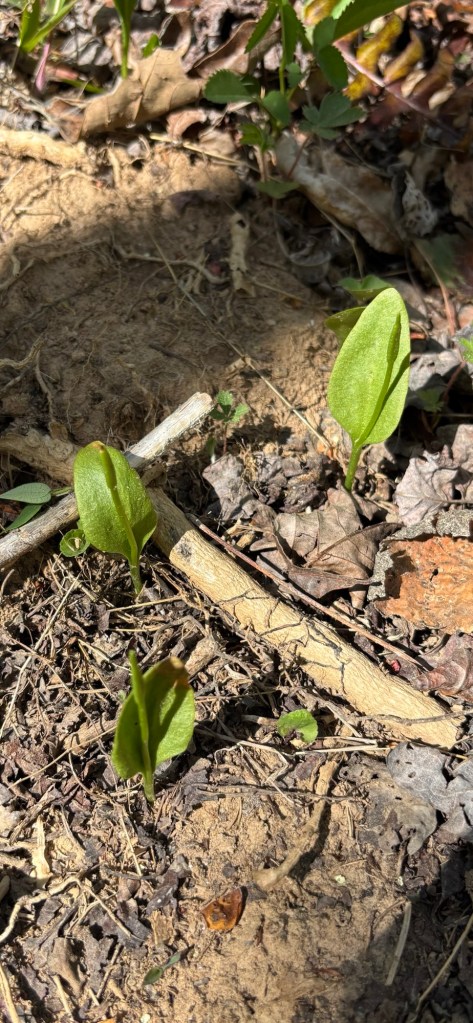
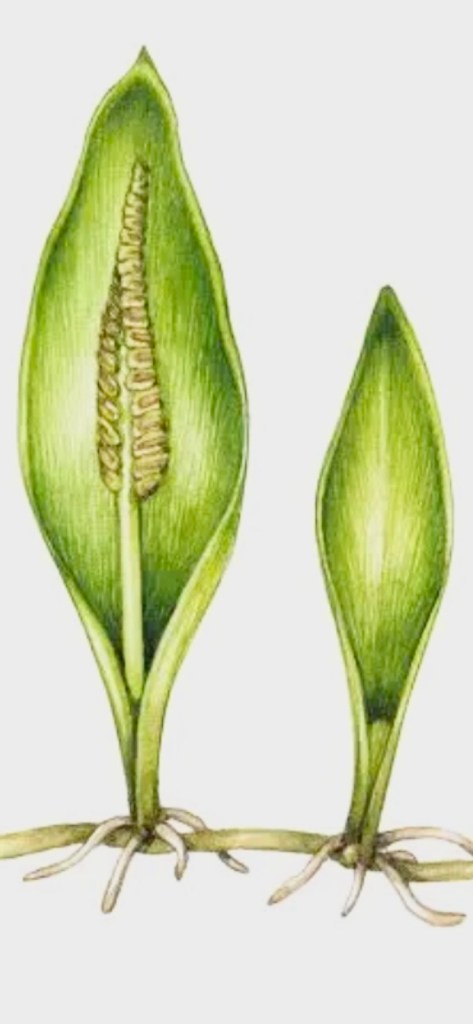
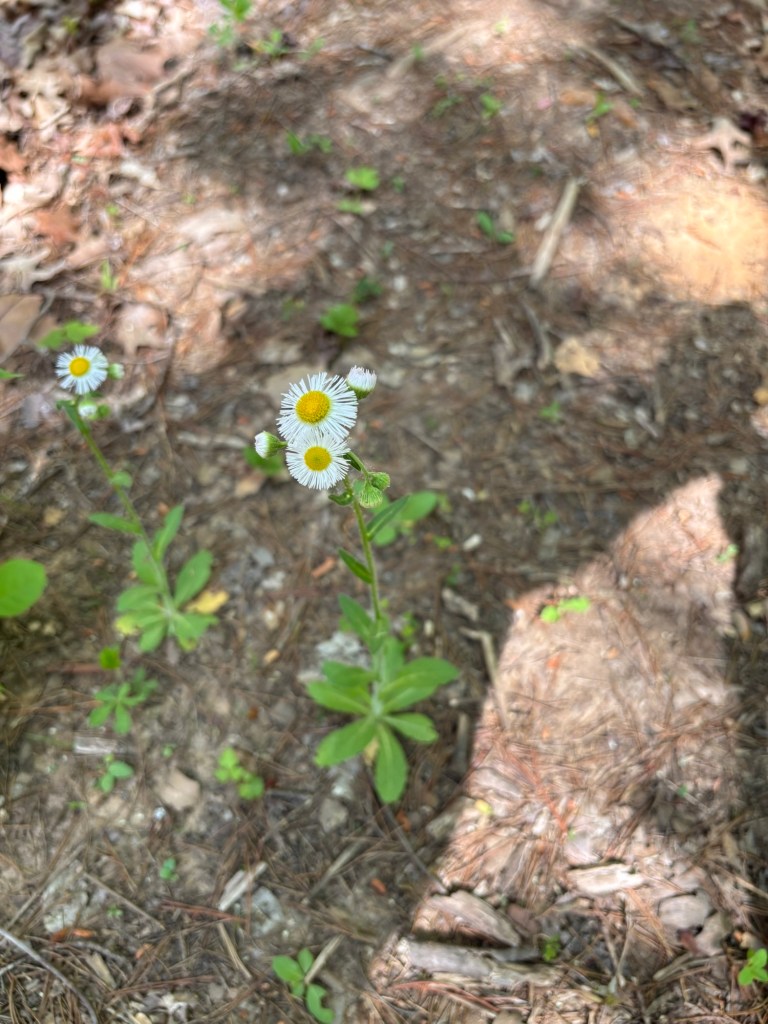
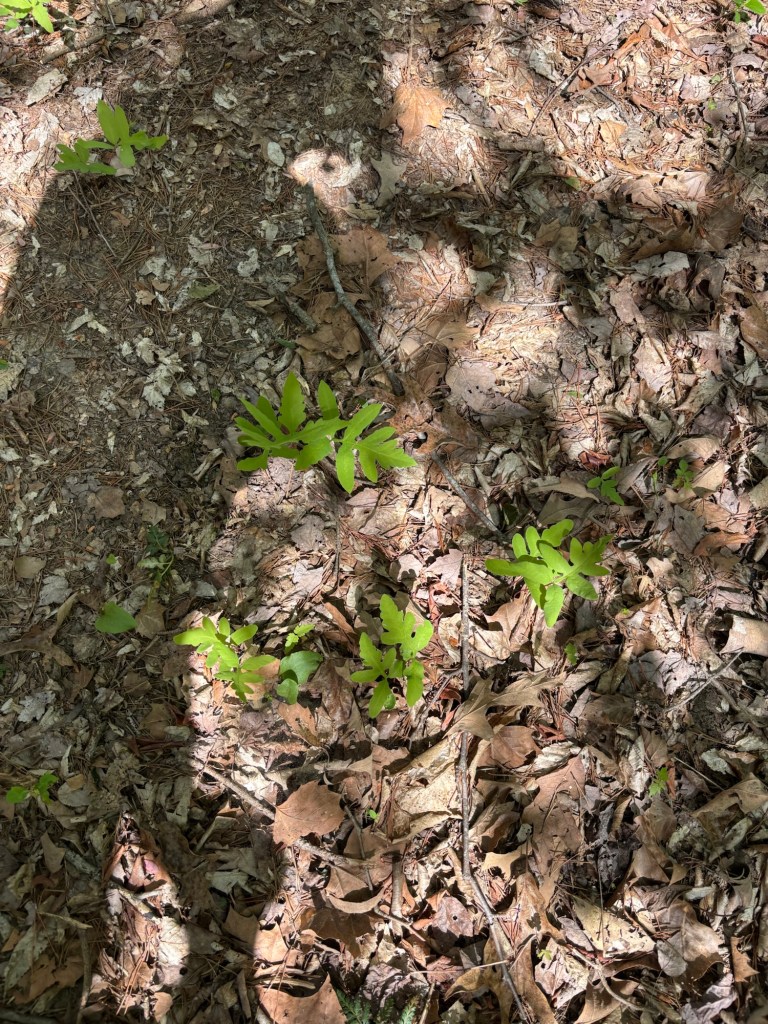
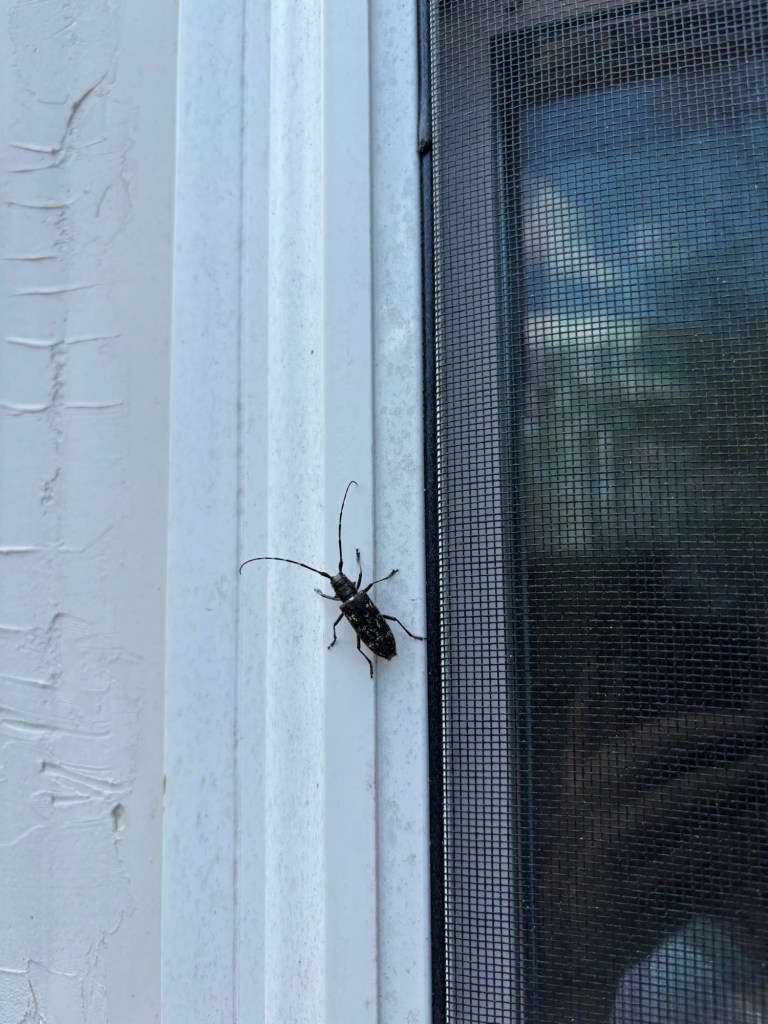
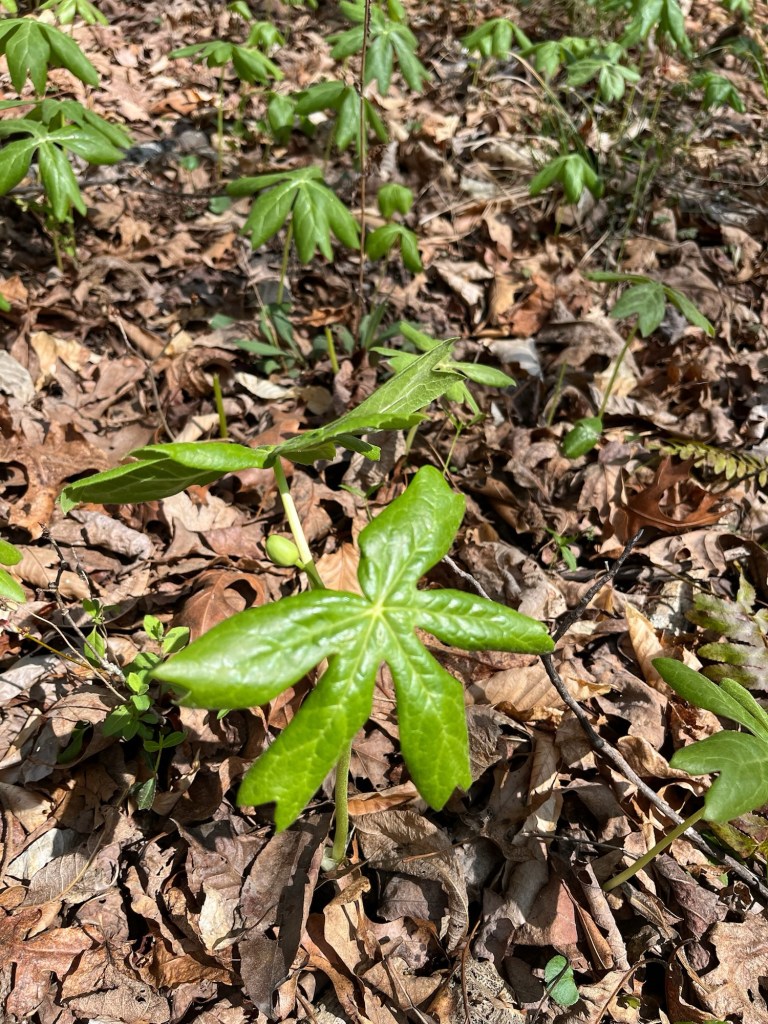
Pollinated mayapple, Podophyllum peltatum, with initial fruit set in the SAFF old colony pawpaw patch. We are noticing more flowers this year on the Mayapples. Southern adder’s -tongue, Ophioglossum pycnostichum, was found in the newly planted Pawpaw Orchard very near our Mango cultivar and a select seedling we planted last year. Found in moist shaded bottomland forests during late spring, Southern adder’s-tongue is considered rare in many regions but common here in Virginia. It is a fern that spends most of its time underground. Although edible and medicinal, it’s a plant that stores energy for years to send up a single leaf. Members of this family of plants have extraordinary high numbers of chromosomes. Over 1200. This occurs because of extreme polyploidy. It has astringent and anti inflammatory properties.Vaccinium stamineum, deerberry, a native deciduous shrub in the blueberry family found on Blackrock Trail near the wet weather gully at SAFF. These are eaten by birds and mammals.Erigeron philadelphicus, Philadelphia fleabane, is a widespread native wildflower in the daisy family. It is a valuable food source for bees, butterflies and moths. Found on our Northmost Trail at SAFF these Vaccinum stamineum, Deerberry, sit atop a hill near many pines.Sensitive fern, Onoclea sensiblis, known for being sensitive to frost and dying back if touched by it. Thrives in moist shady areas. Historically used by Iroquois for medicinal purposes and food. A native bush clover, Genus Lespedeza, found throughout SAFF. Today we noticed it near the Asimina triloba seedlings we planted last Fall. It is a nitrogen fixer and is valued for soil improvement and provides food for quail and other wildlife. Monochamus scutellatus, White spotted sawyer, a native wood-boring beetle that eats dead pines mainly. This appears to be female by the shorter antennae. Asimina triloba in old colony pawpaw patch with initial fruit set. Mayapples in the background.
It was dry at Saint Andrews Forest Farm on Friday afternoon. The ground crunched as we walked around the trails. There’s a chance of storms and cooler weather expected Sunday. If no rain by then, we will need to water the newly planted Asimina triloba seedlings at the bottom of North Trail. All of them look great with leaves filling out. We weeded and worked on clearing spaces around each of them. Even the ones that had tops chewed off by a passing deer or rabbit have new growth sprouting.
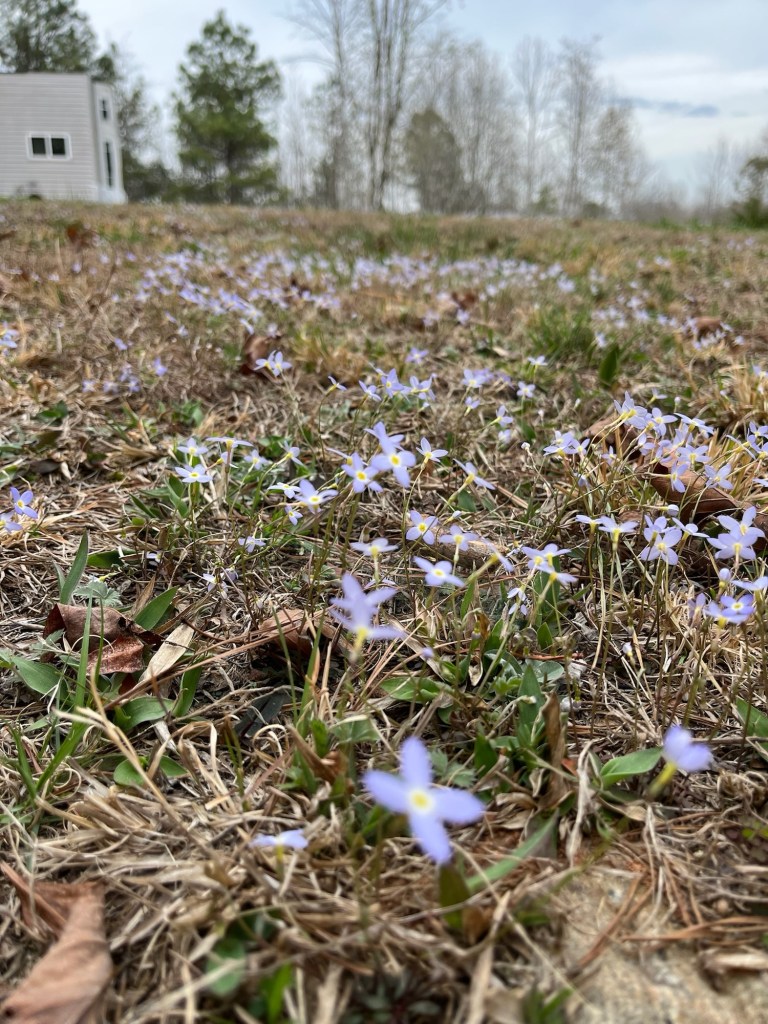
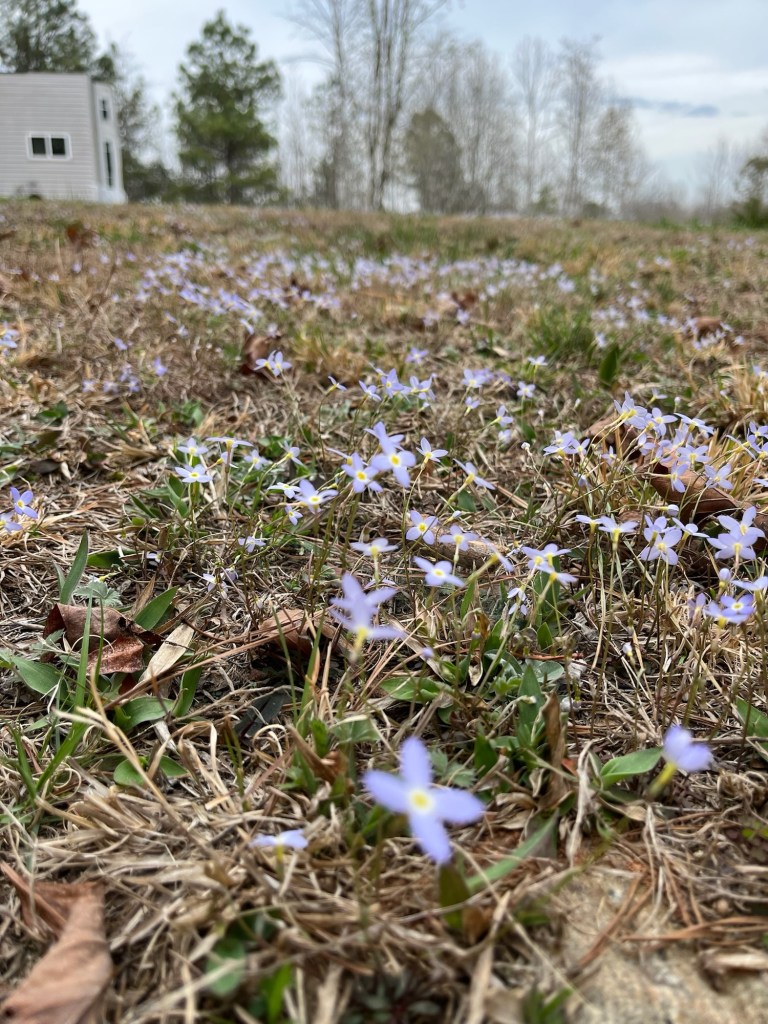
Houstonia caerulea, azure bluet, found all over SAFF has now passed its peak blooming and is beginning to to die back.
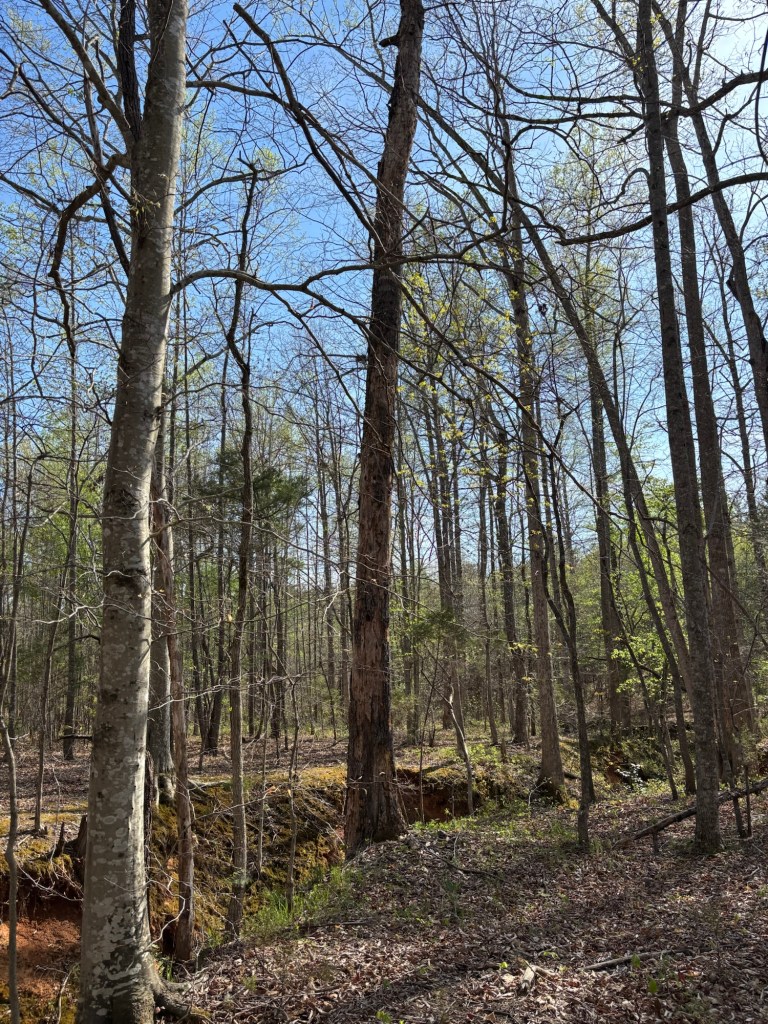
Old snag we check every time we go to Saint Andrews Forest Farm to see if it has fallen. It has holes all the way up from woodpeckers.
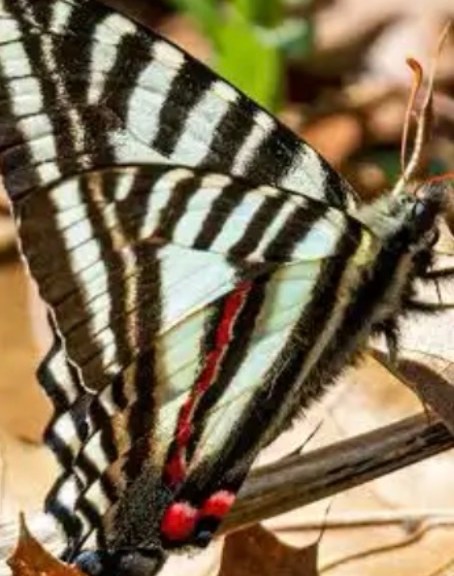
We’ve seen many pollinators this year. One of our favorite is the zebra swallowtail butterfly. Asimina triloba is the sole host plant for the zebra swallowtail butterfly, Eurytides marcellus. The zebra swallowtail caterpillars feed exclusively on pawpaw leaves. Toxins in the leaves make the caterpillars and butterflies distasteful to their predators. The butterfly lays a single pale green egg on the underside of the leaves. It is a mandatory host relationship and planting pawpaws are essential to supporting zebra swallowtail butterflies.
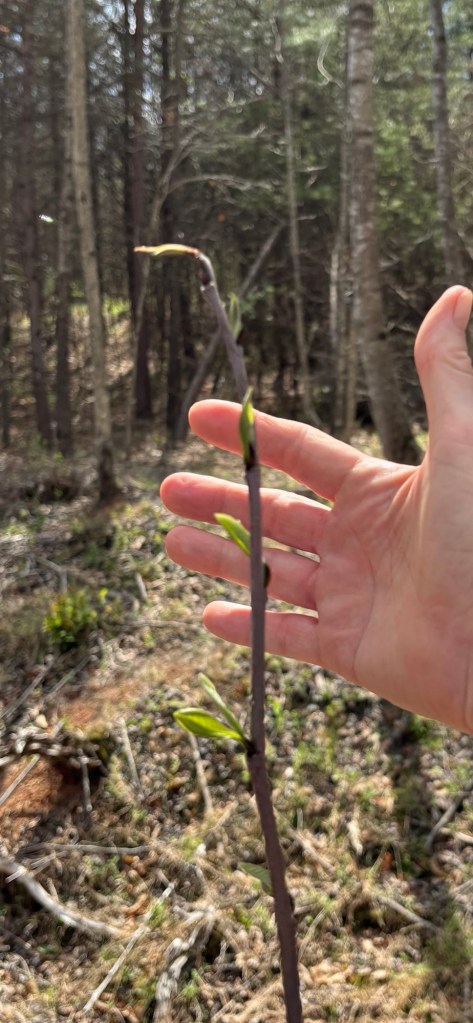
An energetic zebra swallowtail butterfly flitting about the old clonal colony pawpaw patch and landing on young Asimina triloba leaves. We will check them for an egg later.Lowbush blueberry by the main waterway.Initial fruit set on Asimina triloba.
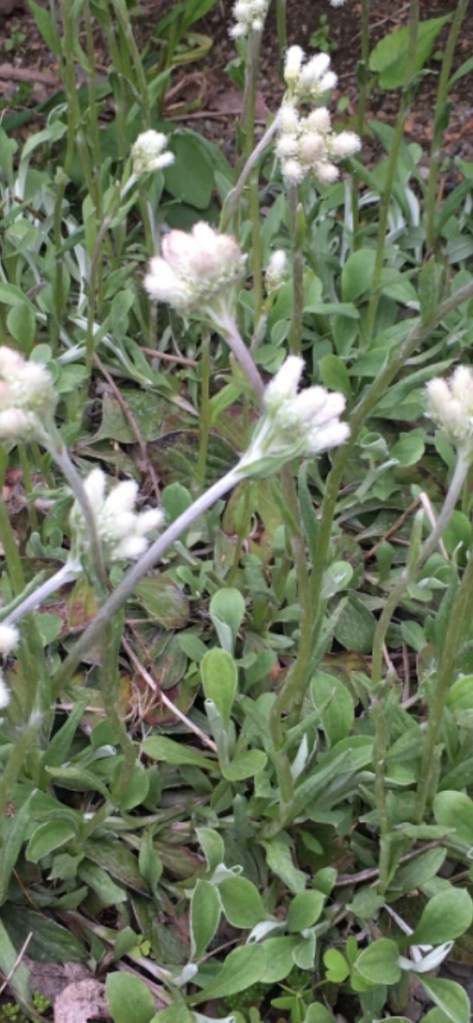
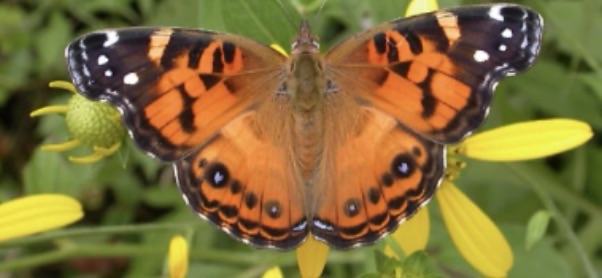
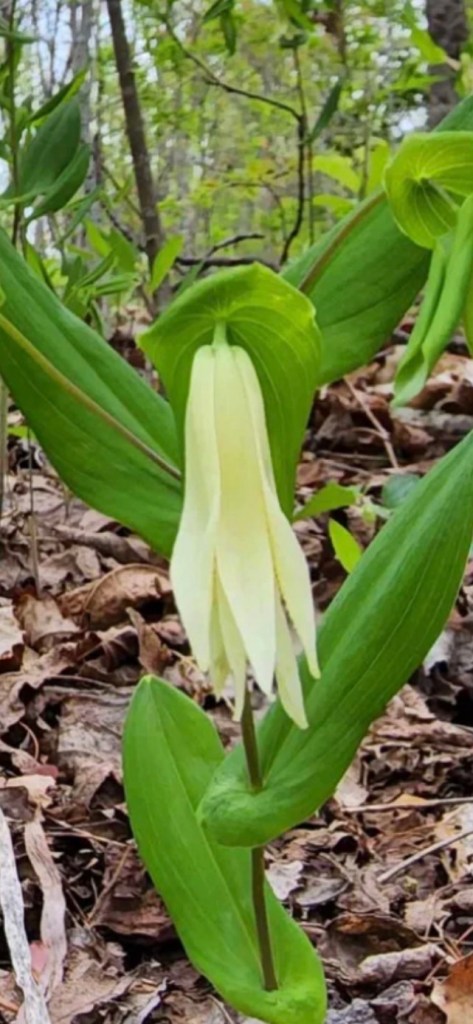
Antennaria plantaginifolia, plantain-leaved pussytoes, was found budding in multiple locations on the trails Monday afternoon. The buds resemble cat paws. This native groundcover supports Virginia pollinators and is a host plant for the American Lady butterfly, Vanessa virginiensis.American lady butterflyUvularia perfoliata, perfoliate bellwort, a north American woodland perennial known for its distinctive leaves that appear to pierce the stem and drooping yellow bell shaped flowers. Attracts pollinators. Young shoots can be cooked like asparagus and eaten. Roots are also edible after cooking. Found along the trails at SAFF.
We got out to the farm yesterday to check on the tiny house and continue to level it up. We’re placing cinder blocks around the trailer to support it. We also continued to pollinate the newly opened small, green pawpaw flowers. We see tiny initial fruit set has occurred as well as new buds opening.
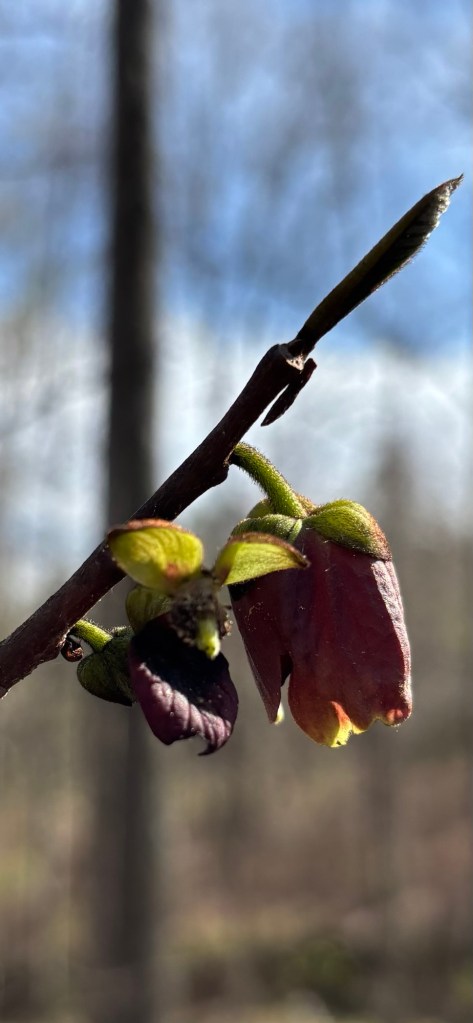
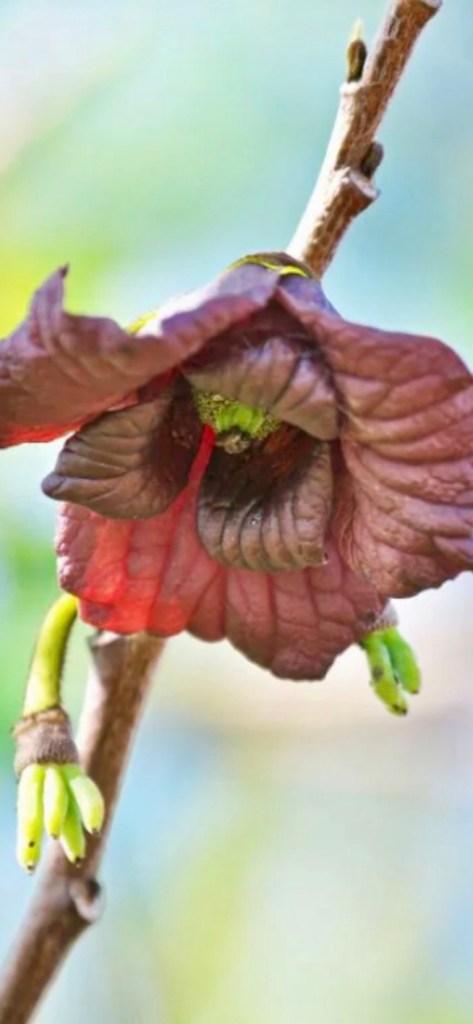
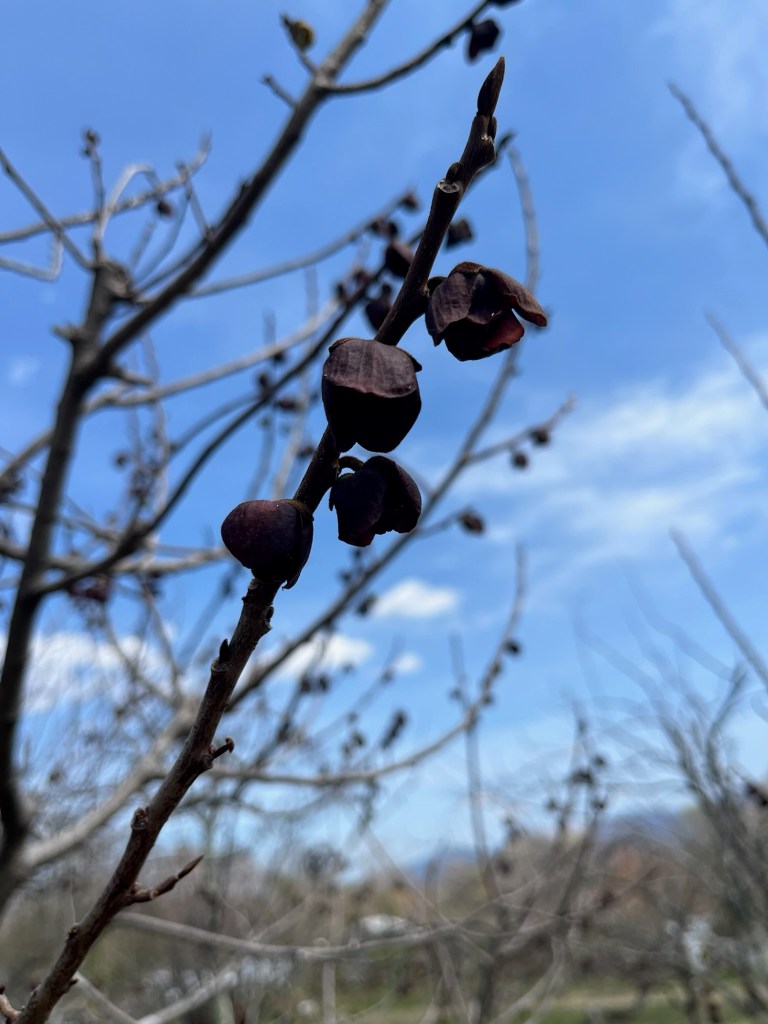
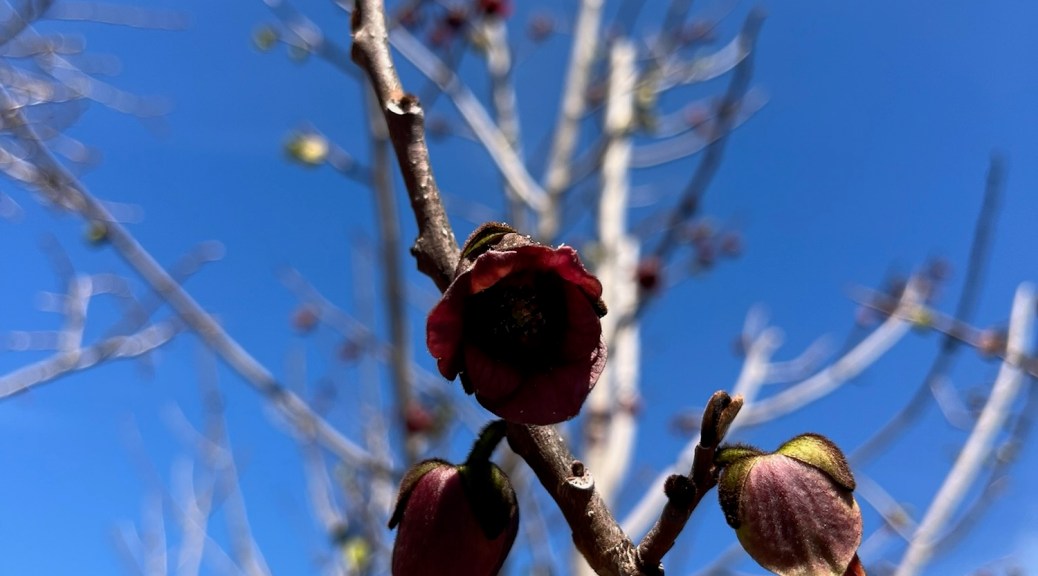
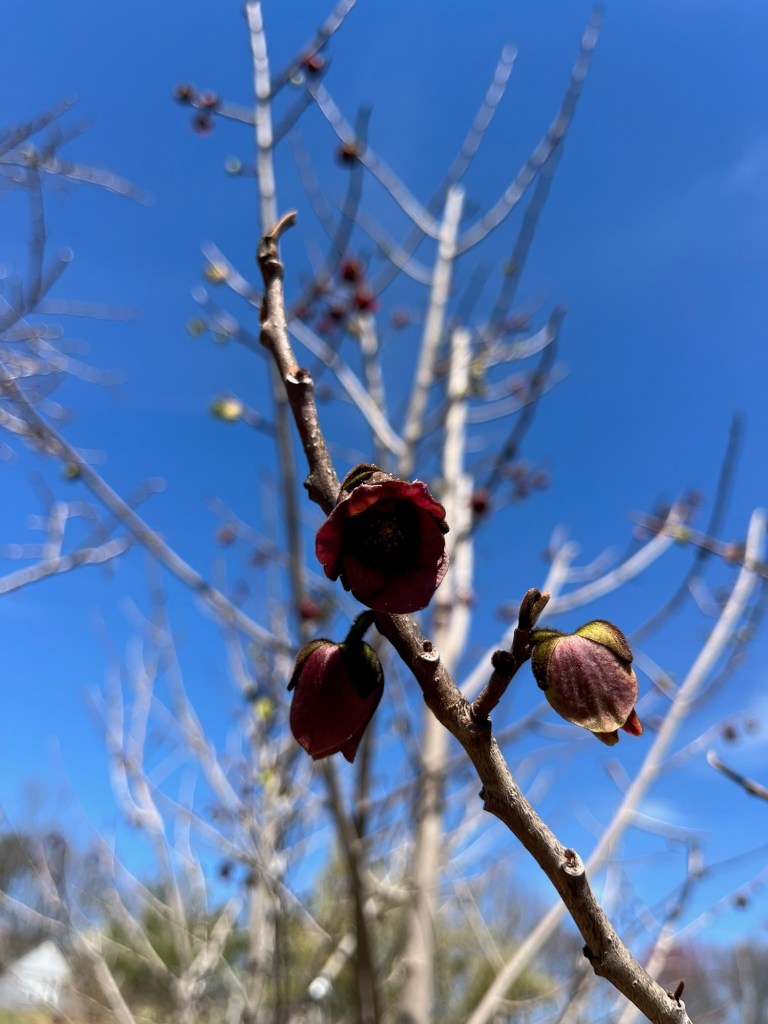
Asimina triloba buds showing an older female flower to the right with green color at bottom and the pollinated one facing us with the green banana surrounded by pollen. There’s another smaller and younger bud not yet open behind the middle bud which has dropped most of its petals.
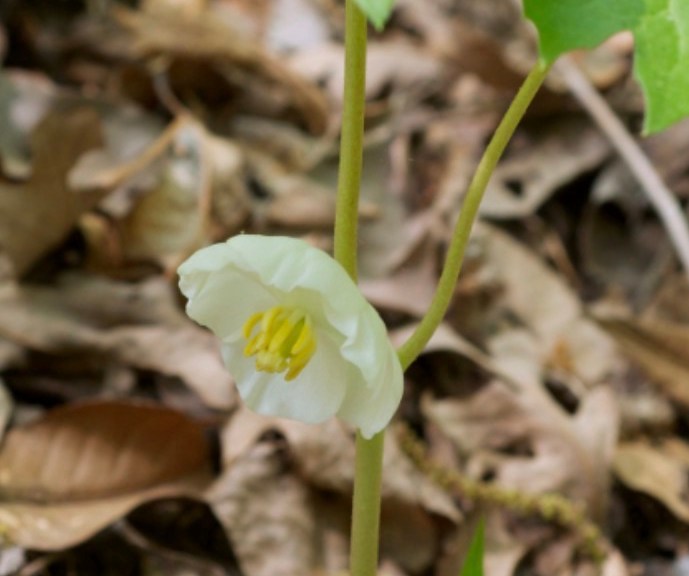
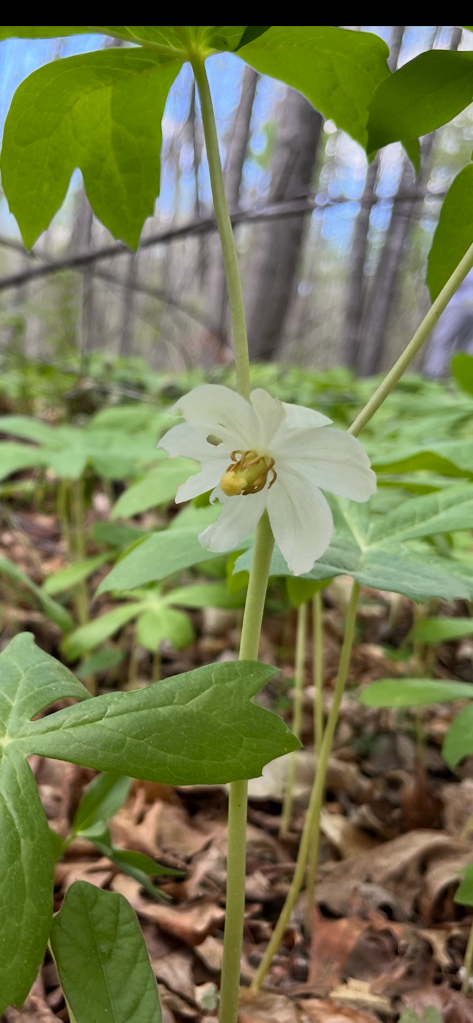
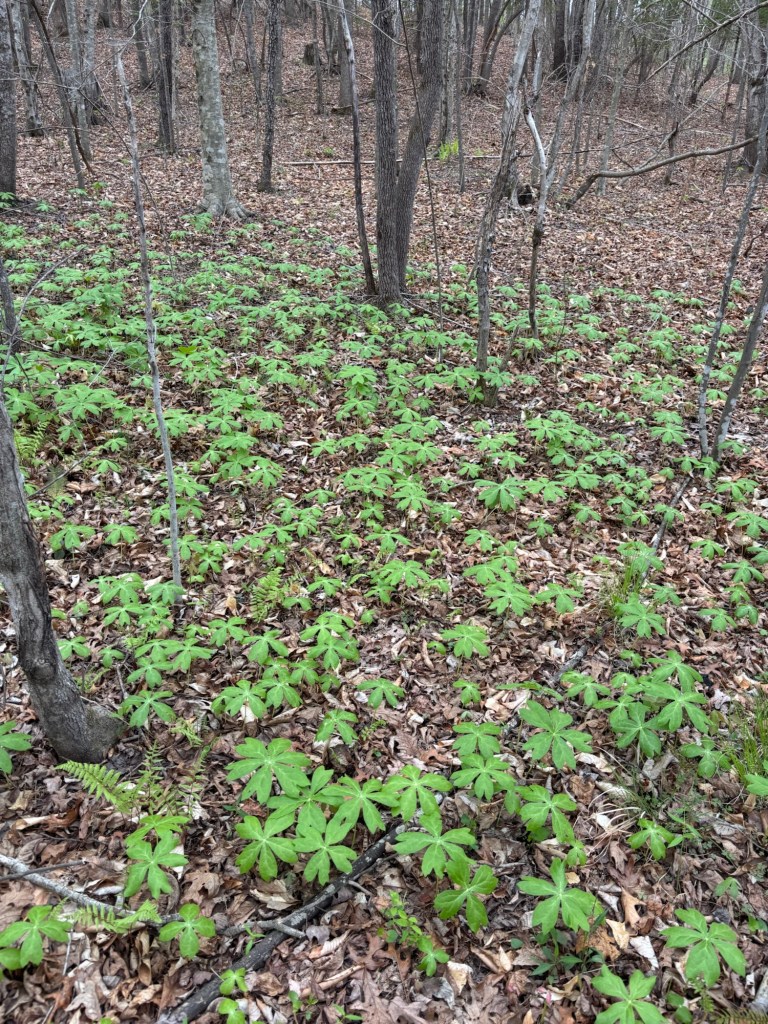
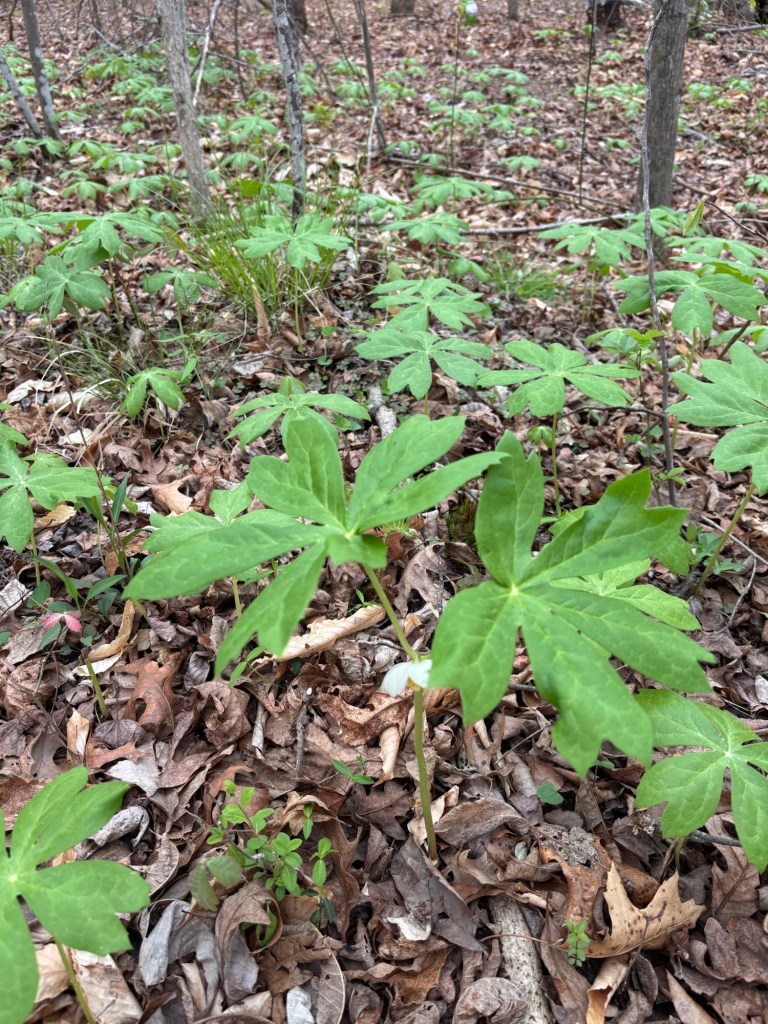
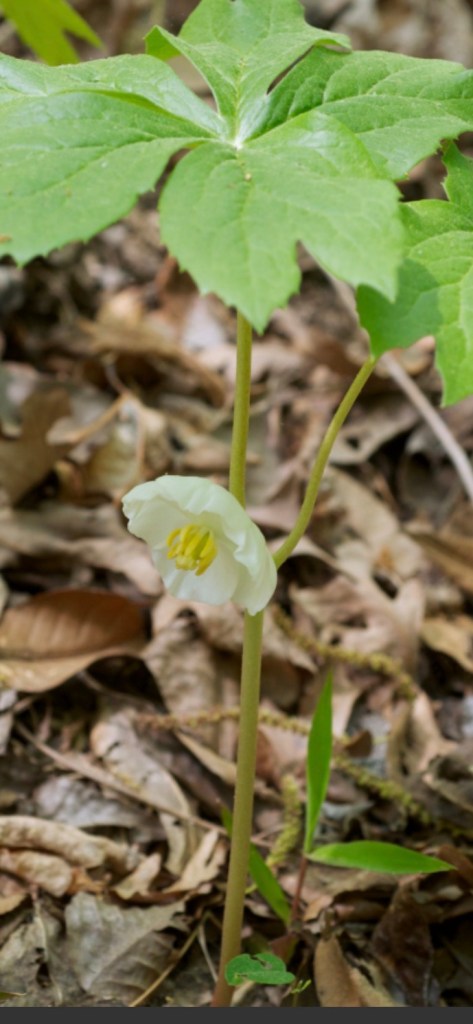
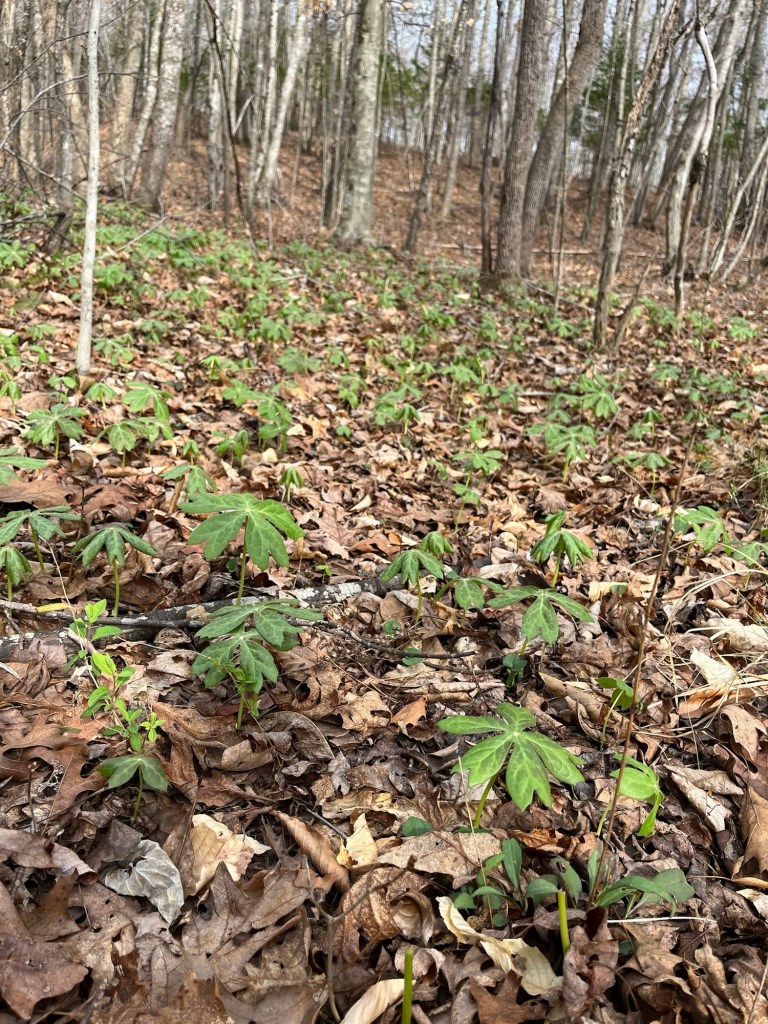
Early fruit set on just one small 6 foot Asimina triloba in the old clonal colony pawpaw patch. There’s multiple large colonies of Mayapples and Virginia bluebells coming up. Mayapples by the main waterway down in the old clonal colony pawpaw patch. A Mayapple, Podophyllum peltatum, with a white bloom in center. We will watch this one for a fruit. All parts of this plant are poisonous except for the ripe yellow edible fruit. Extracts of this plant are used for treating cancers. It spreads through rhizomes to form thick ground cover colonies and goes dormant mid summer. Wear gloves when handling as it can cause irritation. Mayapple flower. This is the Mayapple fruit which ripens through the summer. We begin to look for it in August in spots where we’ve seen flowers. It’s the 2 leaved Mayapple that flower and fruit. The fruit is described as a fleshy lemon shaped berry native to eastern North America that has a unique tart flavor compared to pineapple, passion fruit or starburst candy. I found this description from one of my favorite teachers. “My first encounter with a ripe mayapple fruit was unforgettable. I actually smelled the fruit before I saw it. Within seconds of harvesting, I indulged in what little edible material was available. The taste was ambrosial — almost too good to be true — and from that day forward I became a devout seeker of ripe mayapple fruits. “ Adam Haritan from Learn Your Land.
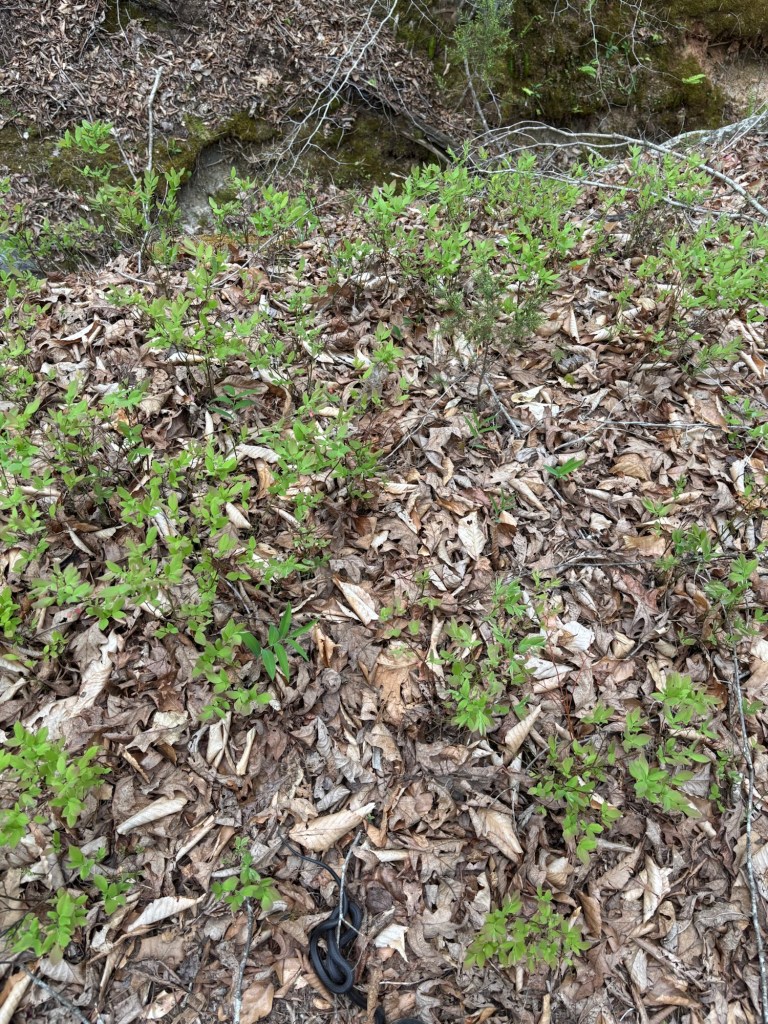
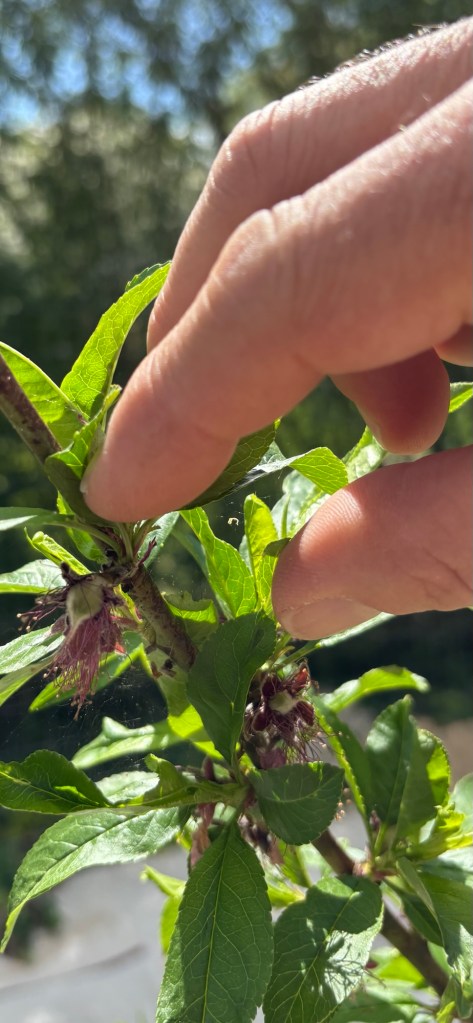
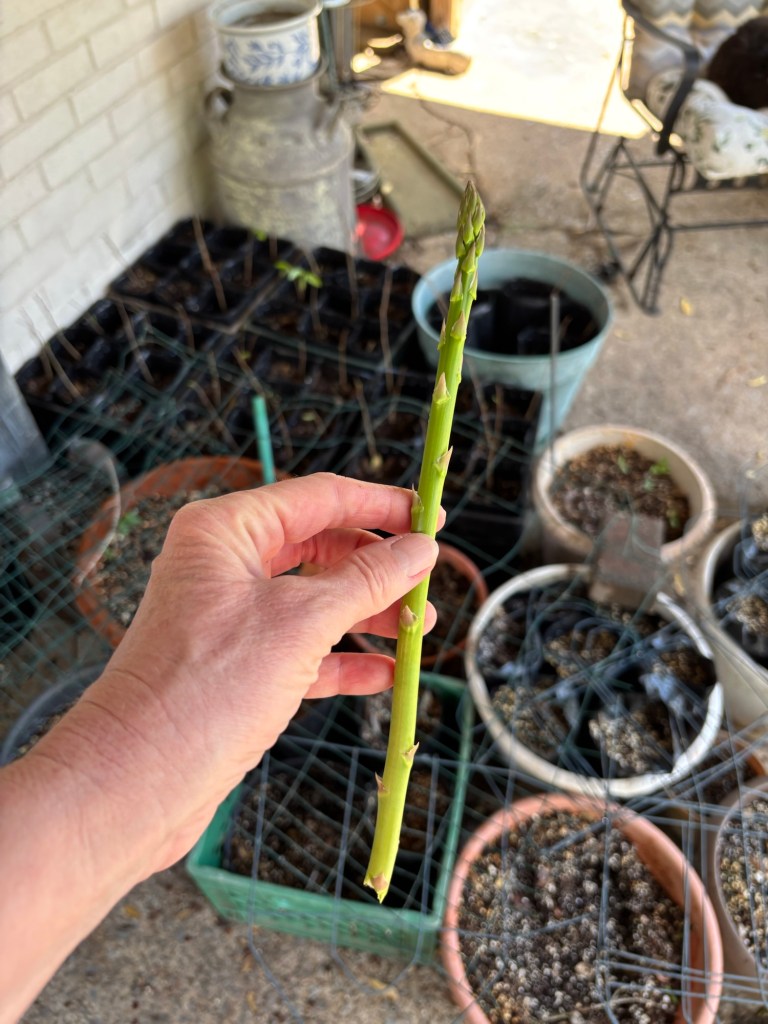
I was literally standing on a young rat snake as I took this photo of the blueberries here by the waterway! I bet I scared him as much as he did me. First peaches are forming on the heritage Indian Blood cling peach.Our first asparagus spear this season.
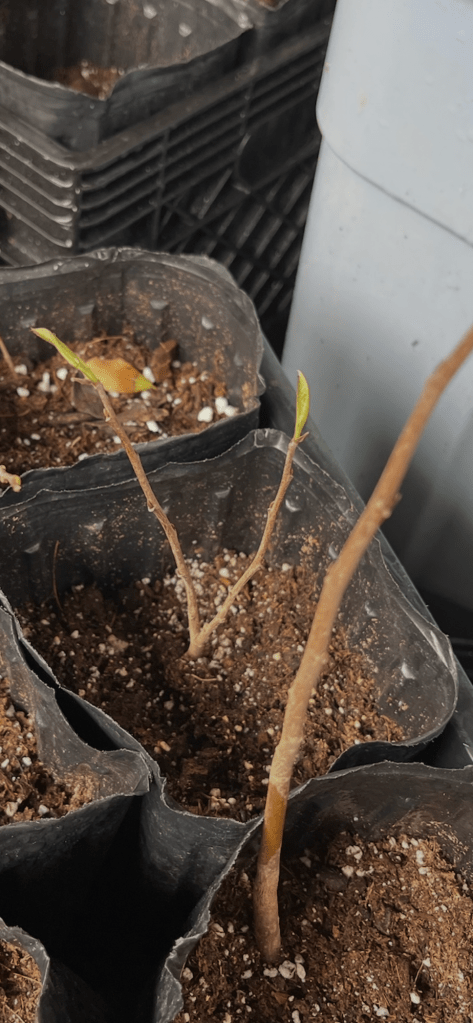
We’re picking up 100 bare root Asimina triloba seedlings from the Virginia Department of Forestry Thursday and we have 50 Spicebush seedlings and another 50 Asimina triloba seedlings coming from the Arbor Day Foundation this week. We will be busy this weekend potting up the new trees in deep tree pots to accommodate their long tap roots. Last year we planted 108 and this year it looks as though it will be 300-400. We can’t wait to see how many seeds sprout that we cold stratified over winter. Last year they began growing in June. It may be early this year since it’s been so warm. We will get photos of it all this year. Last year we were too amazed by how much grows from the seed so quickly. The taproot goes 10 inches before there’s anything to be seen up top. It’s a wondrous thing growing Asimina triloba —and the seeds sprouting is just the start but we were too overwhelmed last year to document it. We will do so this year. 👍🏼
Second year mayapples budding up at Saint Andrews Forest FarmRappahanock cultivar Asimina triloba by the southern wet weather gully beginning to leaf out.
We think the pawpaws and mayapples are about a month earlier than previous years. It’s been very warm with repeated cold snaps. Speaking of which, this Tuesday overnight is dipping into the high twenties in Staunton and Afton. We’re relieved that so far it looks as though SAFF and the budded up Asimina triloba out there will be alright in the low 30s. We will have to cover all of our pawpaws potted up in Staunton that have begun to leaf out. The forecast is 28 here.
Asimina triloba right now at the farm are still opening buds. We got a good look inside of them on Saturday and it appears fruit is forming. Asimina triloba, pawpaws, we potted up in February from the Virginia Department of Forestry. We ordered 100 more of these for pickup next week. The February ones are doing well and beginning to leaf out and wake up. They are the same age as the seedlings we planted at SAFF last year. We will cover them with warm blanket way before the temperature gets into the 20s. They will stay in their tall tree pots until the fall. Then we plan to plant these 150 in total from the Virginia Department of Forestry along with the seeds that pop open in June (we think as with prior years) that we’ve had stratifying in pots over winter in our backyard. Last year it was 100 that opened with much less seeds than we had this last year. So we’re hoping for at minimum 150 seedlings to sprout, maybe 200. This will give us 300-350 or so to plant in the fall.
We continued our pollination at SAFF in the old clonal colony pawpaw patch on Saturday. While we were down there, we saw what appears to be tiny fruit forming! Right now, they look like tiny bananas or very miniature versions of the Buddha’s hand, a type of citrus.
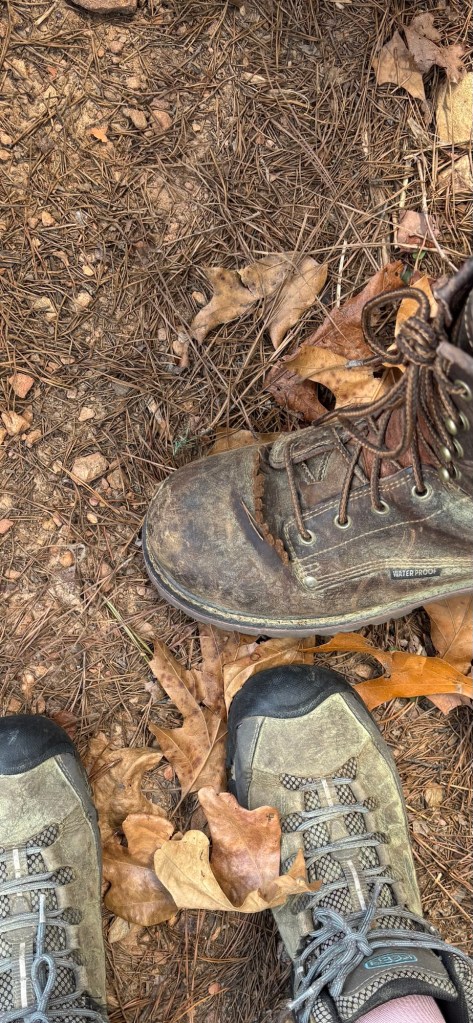
Initial fruit set of Asimina triloba.Our pollen covered boots walking around the woods. Pollen all over the pines attracts butterflies and bees aplenty.Allegheny cultivar Asimina triloba leafing out on the Pawpaw Peninsula.
Virginia pine, Pinus virginiana, on Wednesday with yellow pollen cones clustered near the tips. We pulled in and saw these on all of the pines. It was a beautiful surprise. We were at the farm just the day before and did not notice them!
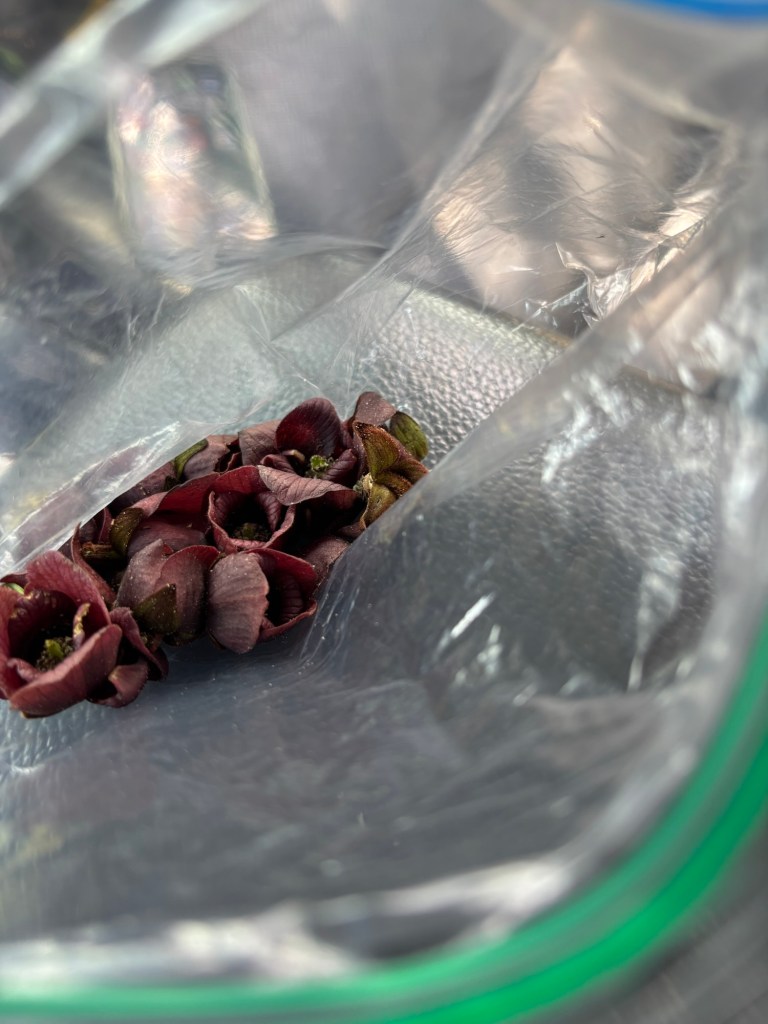
On our way to Saint Andrews Forest Farm Tuesday and Wednesday and Friday, we continued to find male pollen from many trees and locations to take to the female pawpaw buds at SAFF in order to set fruit in the old clonal colony. We’ve seen many more clusters of trees along Howardsville Rd, creeks and rivers on the way to the farm. We are so hopeful they will produce fruit this year with the pollen from different genetic material. We have been getting rain regularly so far and have more in the forecast for the next few weeks. We just hope for the best.
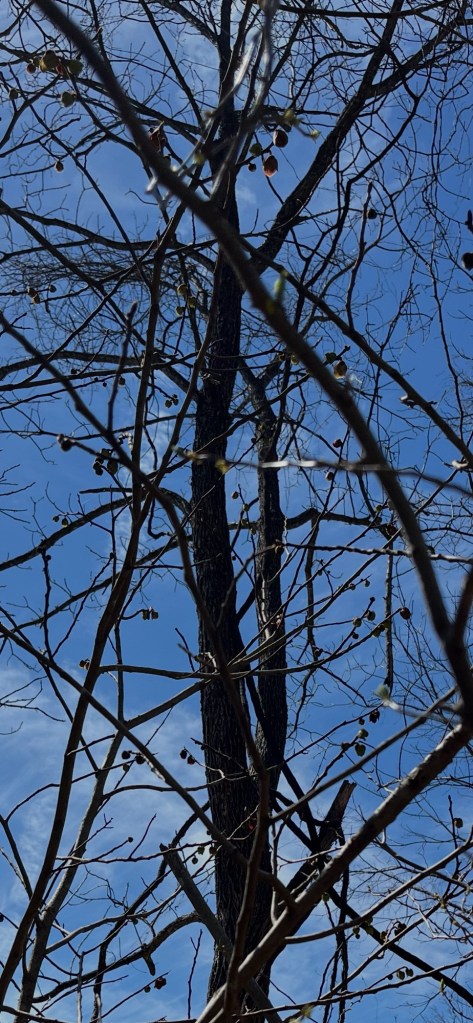
Male Asimina triloba buds found along Howardsville Road. Chris walking from the native old clonal colony of Asimina triloba after spreading compost tea.
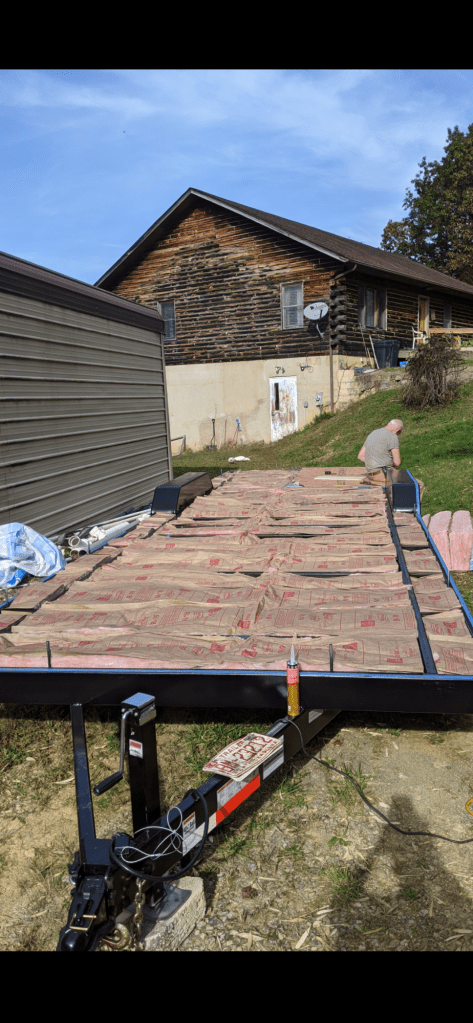
We’ve also continued to level the tiny house and check for water entry after rain. We found that there are a few areas where we need to address past water damage. We have plans for a new overhanging warm roof which will be a large help on multiple fronts. We also will remediate the damage done by replacing materials as needed. The tiny house was built on a mobile home trailer with steel framing so the bones are strong.
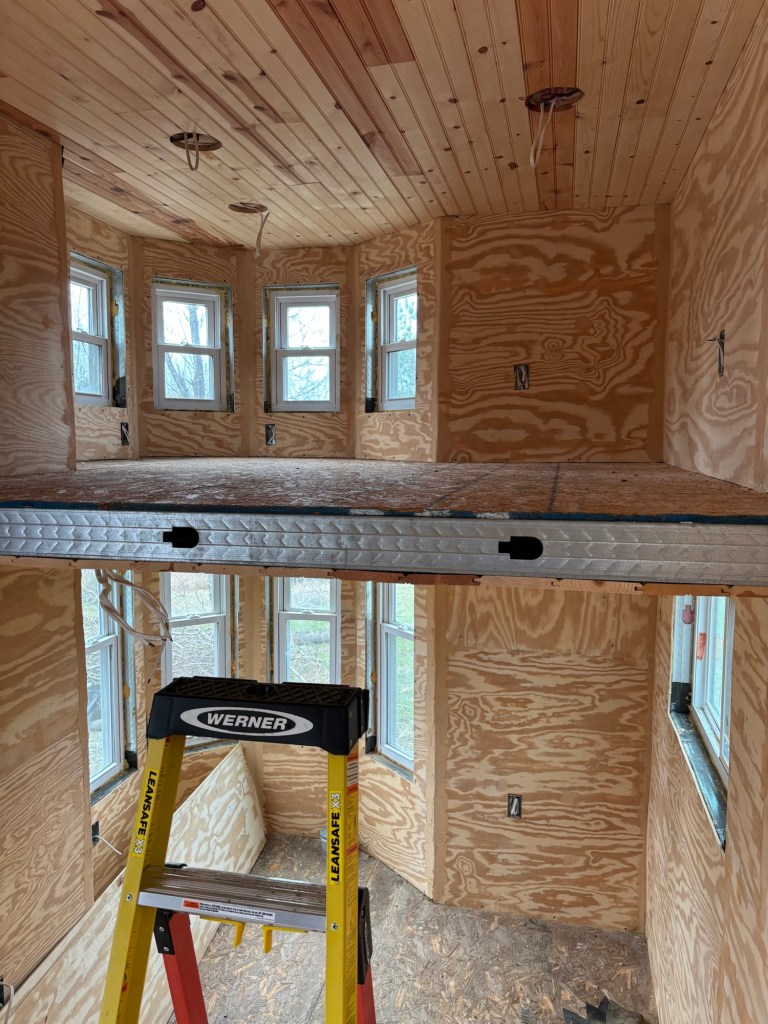
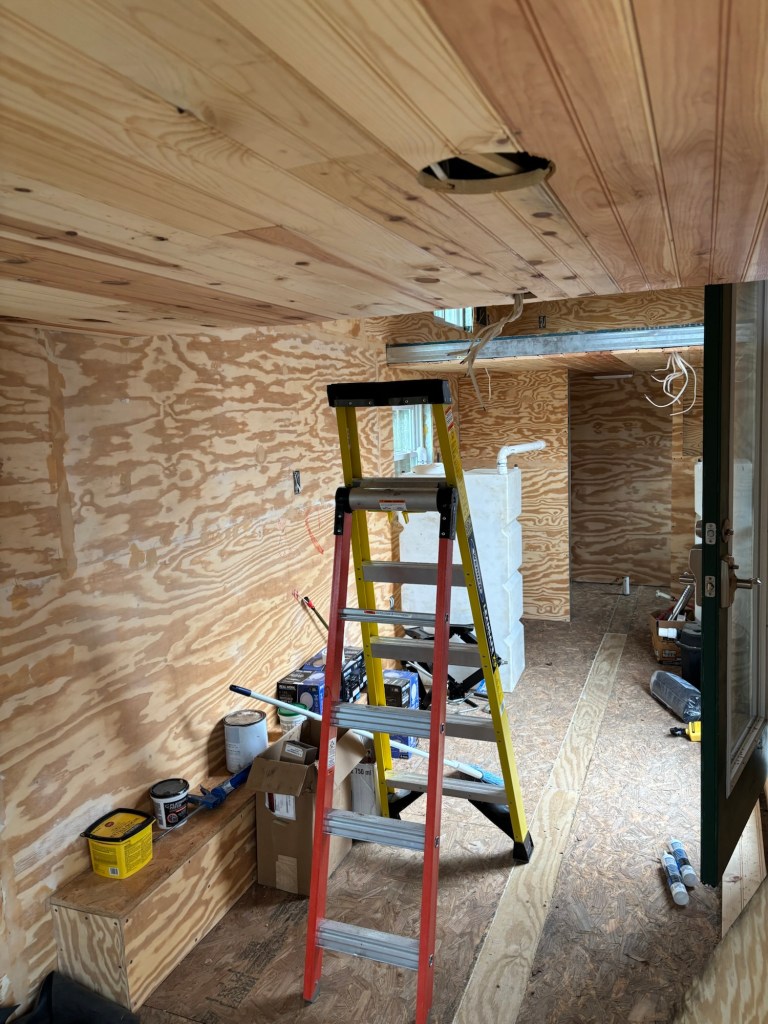
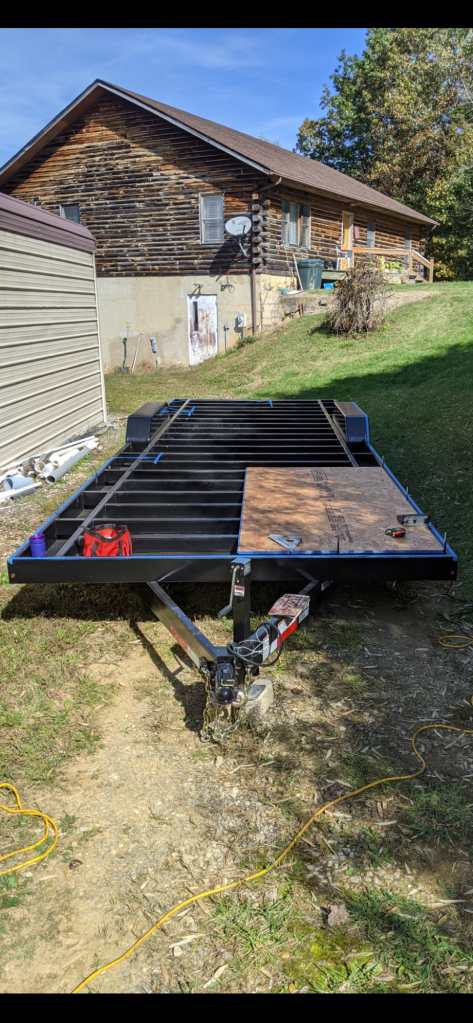
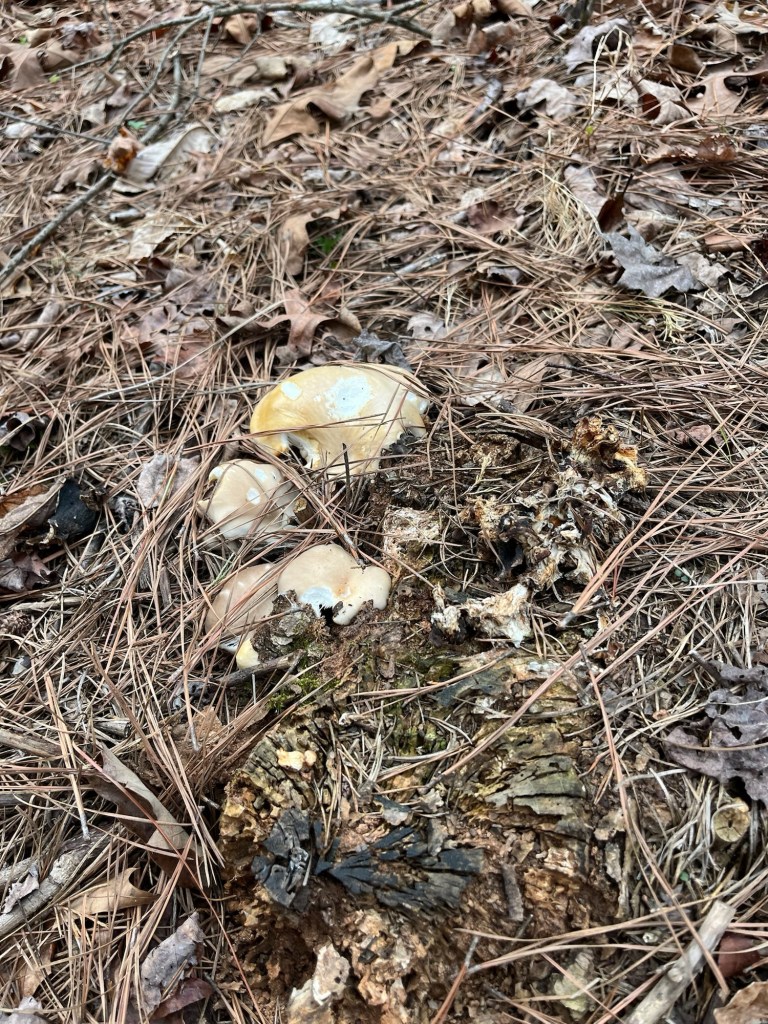
Inside view from the tiny house. Our plan is to address the roof issue as our top priority with the tiny house. We have been working on the layout for inside and planning our staircase and storage needs. We will begin working on the roof as soon as we get scaffolding and other supplies as soon as next week.The view from the other side of the tiny house interior with water tanks and some lighting and other supplies.The tiny house is built on top of this trailer.They insulated it and covered it in plywood. We will need to replace a few of those sections under there. Instead of plywood, we will use metal and flashing. The overhanging metal roof will also take away most of the moisture from dripping onto the edges of the trailer. We are collecting our supplies.The metal frame of the tiny house.Mayapples, Podophyllum peltatum, found in the old colony pawpaw patch.Azure bluet, Houstonia caerulea, found everywhere right now at Saint Andrews Forest Farm. Clearings, trails, roads and under forest canopy. Some melted and some fresher shoehorn oyster mushrooms found on Amanita Way just near the main clearing up top. Asimina triloba found on the way to the farm.
Today we were pleased to have a farm day Friday and we ran right down to the old colony pawpaw patch to continue pollinating. We noticed a powerful smell right away. As we went down to the main waterway from the Pawpaw Peninsula to cross over we saw a possum carcass. Normally this would cause us more than some displeasure. Today we couldn’t believe our good fortune. What a blessing in disguise! Asimina triloba are pollinated by a number of insects as we’ve seen but the most important pollinator historically has been the fly. Flies were all over this gift of a stinky carcass. We are sorry for the possum. A few years ago, we found another possum in a similar spot and also deceased. We’ve grown to appreciate them and hope they thrive in the forest at SAFF. They are known to eat ticks which is a positive. Poor creature.
We also noticed our shoes are covered in pollen. We will get a photo. We are like giant bumble bees running around the forest spreading pollen everywhere wittingly and not.
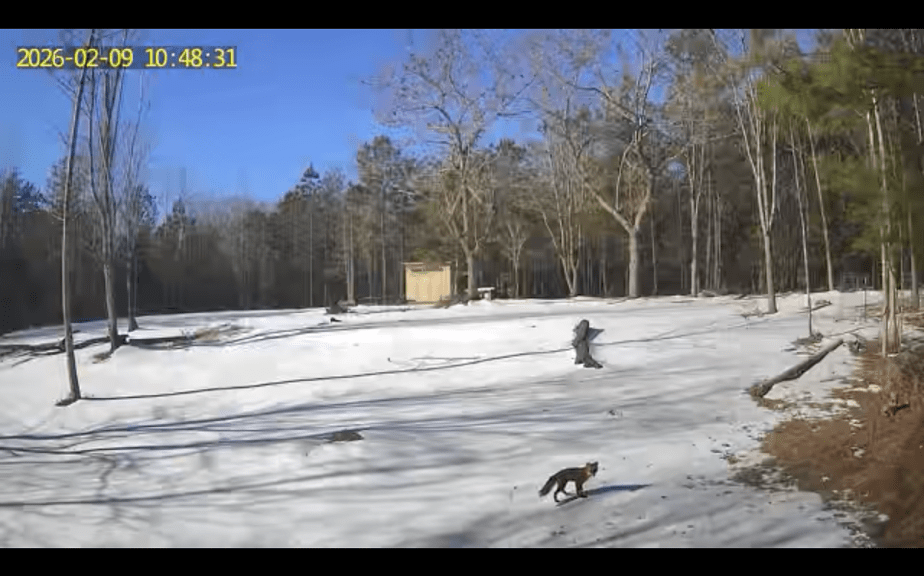
This Red Fox, Vulpes vulpes, was caught on the FarmCam on February 9th and we just remembered to share. Beautiful red foxes live in their den on Chanterelle Trail and went out to hunt for food. It’s rare to catch them on the camera. They avoid being spotted.
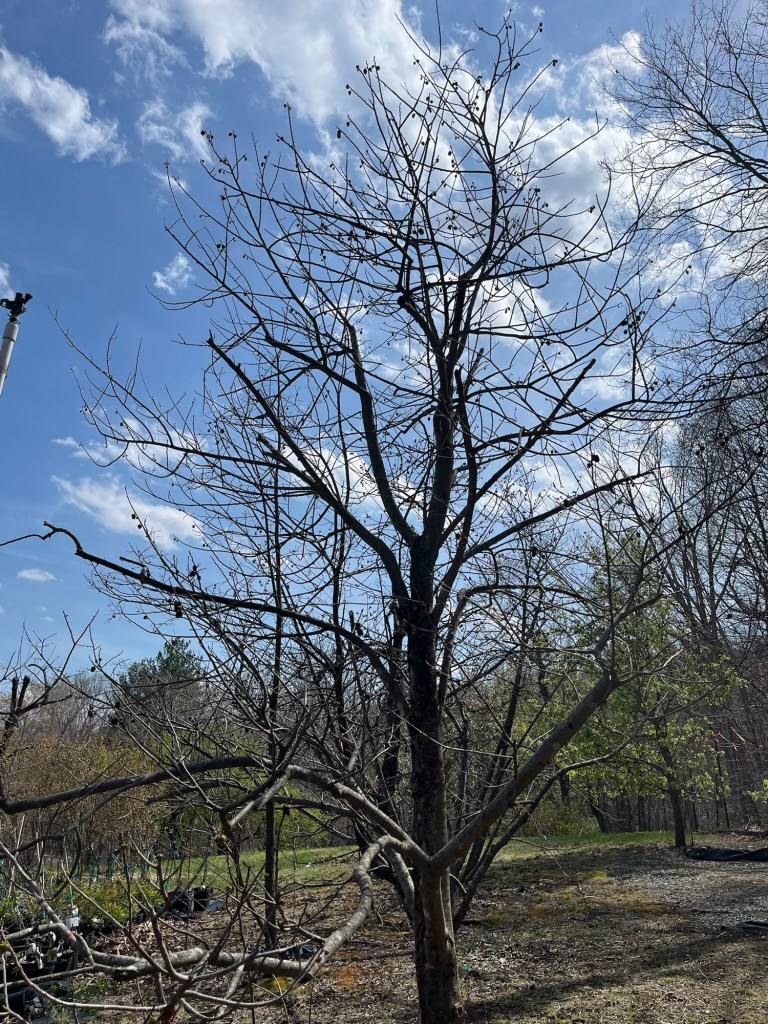
Asimina triloba flowering along Howardsville Rd along Rockfish River on our way to the farm today.
We were able to collect more male pollen to take to SAFF native old colony of clones. We also took compost tea made from our home bin and spread it around the old colony pawpaw patch. So, as Chris said, “we fertilized and we fertilized.”
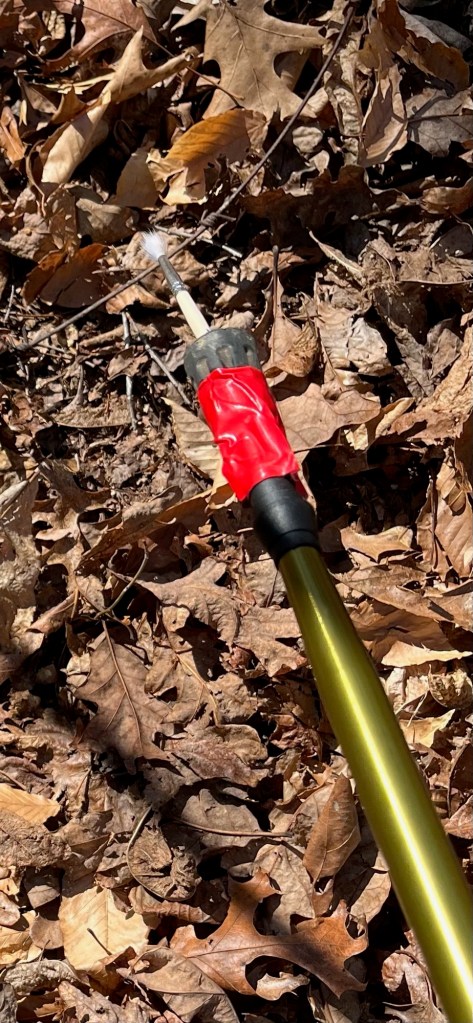
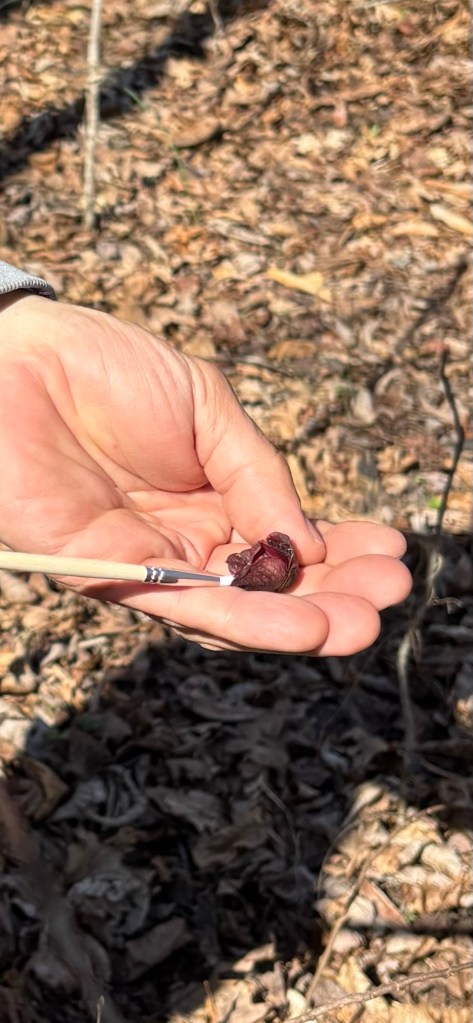
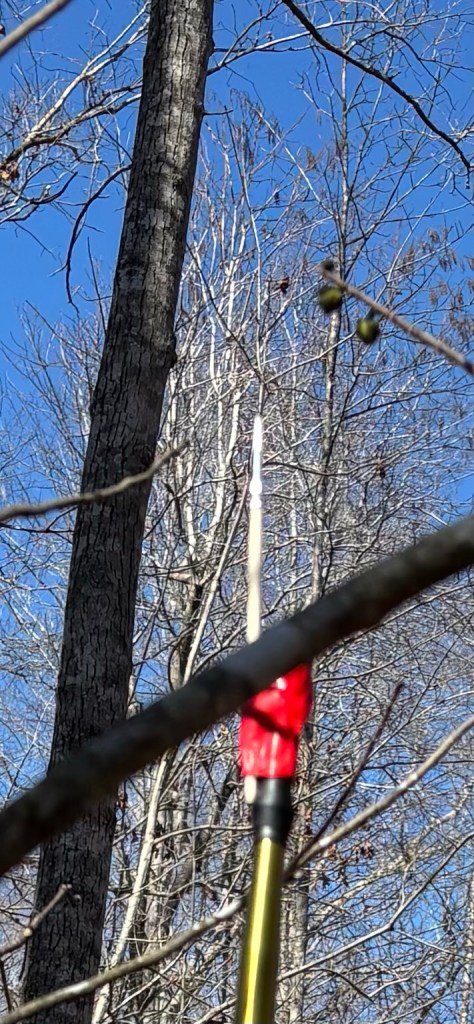
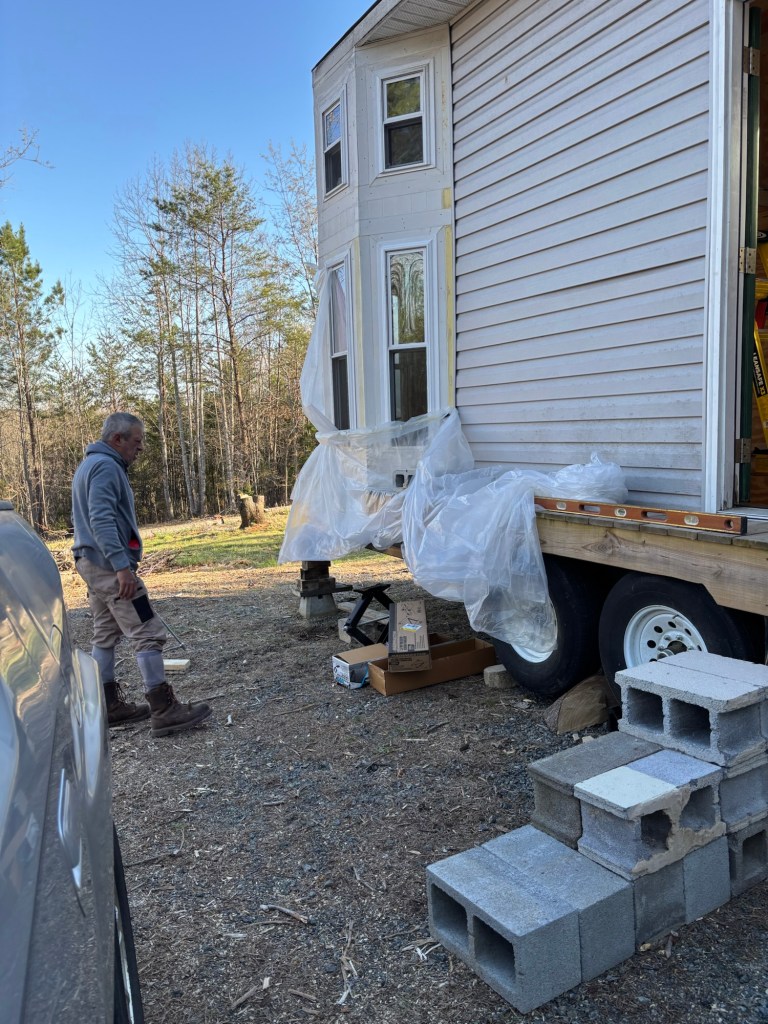
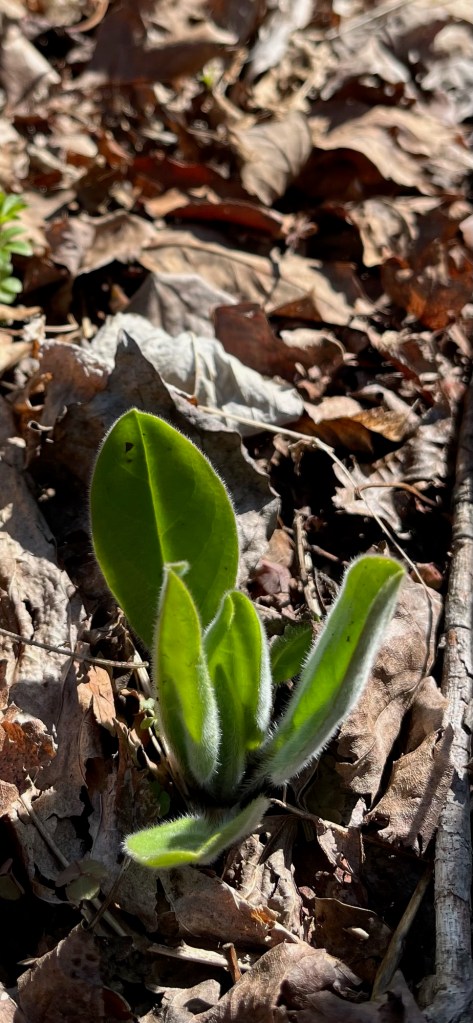
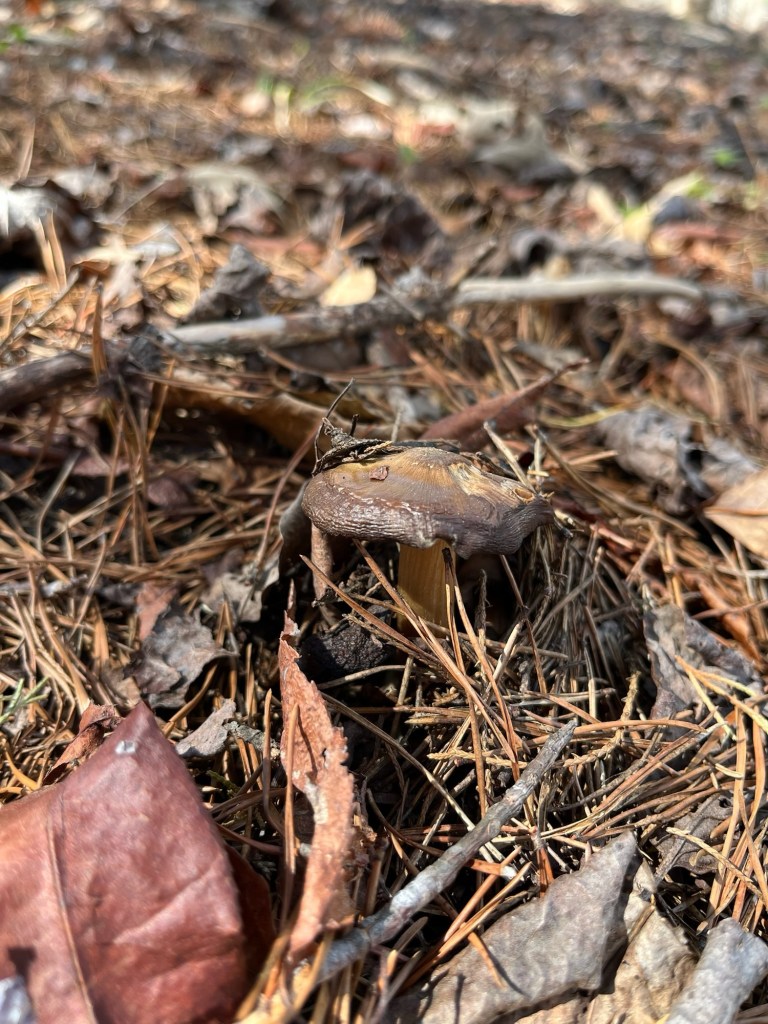
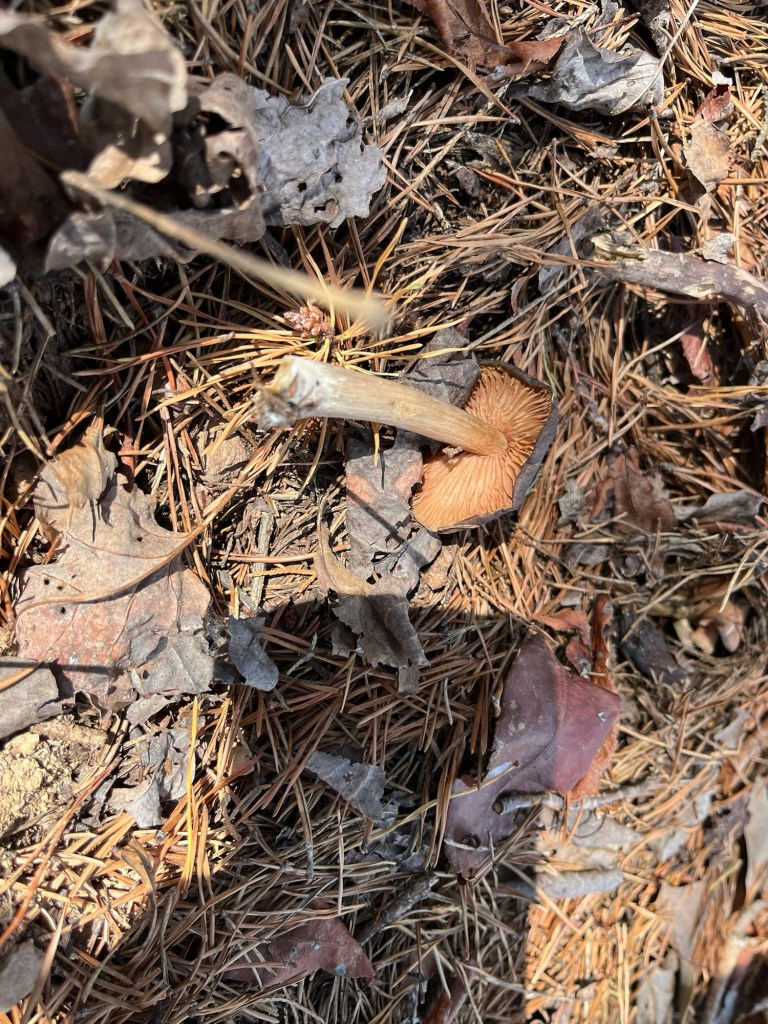
Two flowers on left are male and the greener smaller flower on the right is female. Chris made a long paintbrush attached to his walking stick with tape to increase the range of buds we could reach.We gently swiped the pollen from the male flower and brushed the females with the dusted paintbrush. You can see the dusty white pollen on the inside of the flower.Blurry action shot of paintbrush on the long pole. The Rappahanock cultivar at the south gulley native patch looks like the leaves will open up soon. We still have loads of Asimina triloba flower buds tight and unopened. We think the pollinating with go a few more weeks.A photo of the temporary stairs to get in the house without climbing. Also, Chris is jacking the sides and was able to get the house leveled today. We measured spaces for the loft stairs and more. It was a nice weekend of activity. The Virginia bluebells, Mertensia virginica, leaves are starting to emerge down in the old pawpaw patch.And, lastly, one old and already decaying mushroom we found walking under pines down South Trail to the old pawpaw patch. It was nicely disguised with pine needles on the cap. Too melted to identify.The underside of the unidentified mushroom.
After pollinating the Asimina triloba we came up North Trail and were greeted by the tiny house on wheels.

 Saint Andrews Forest Farm