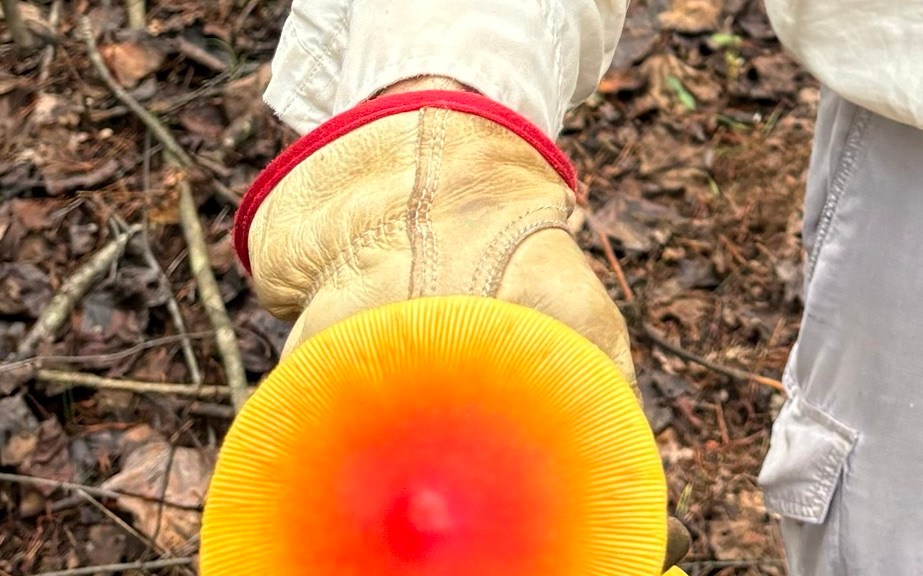
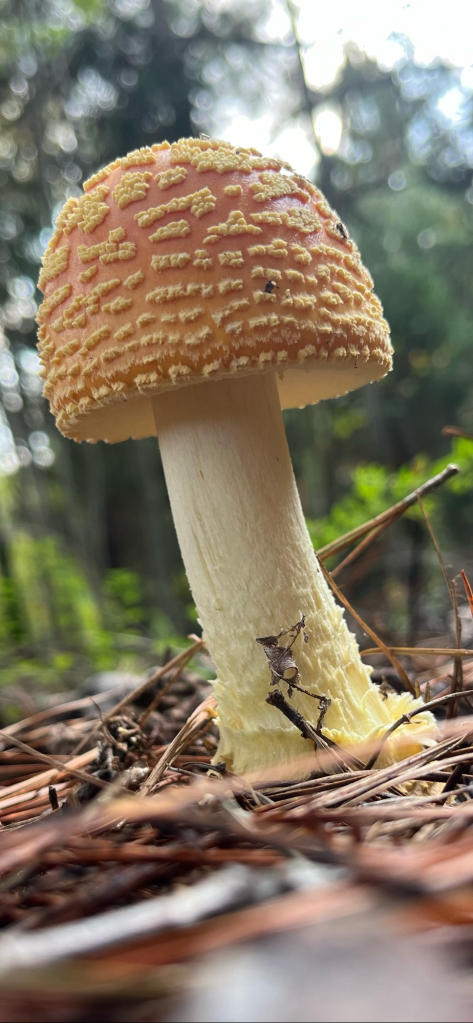
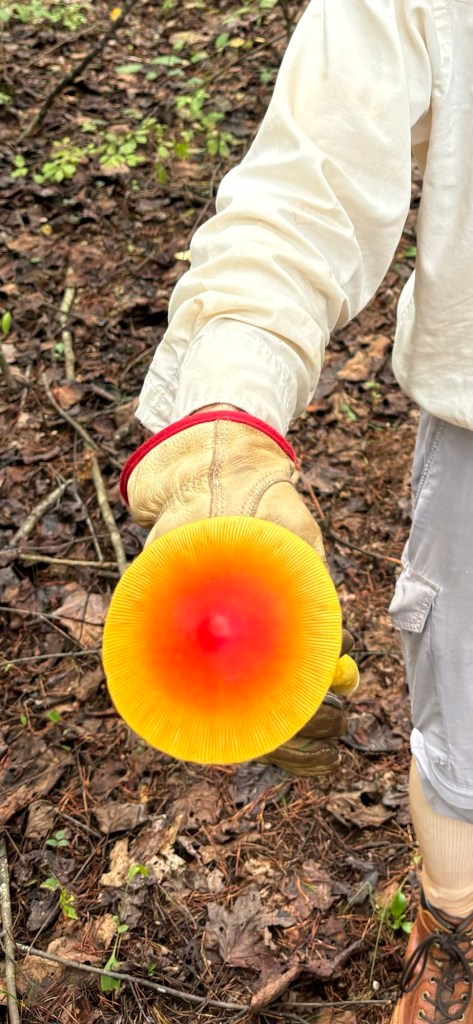
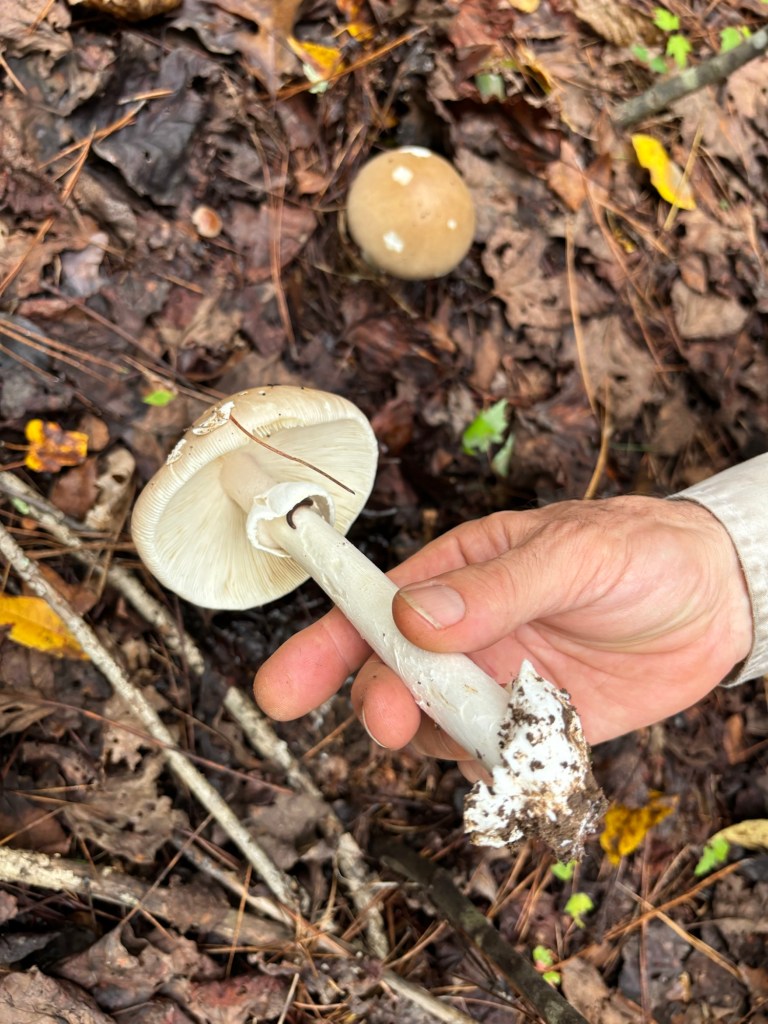
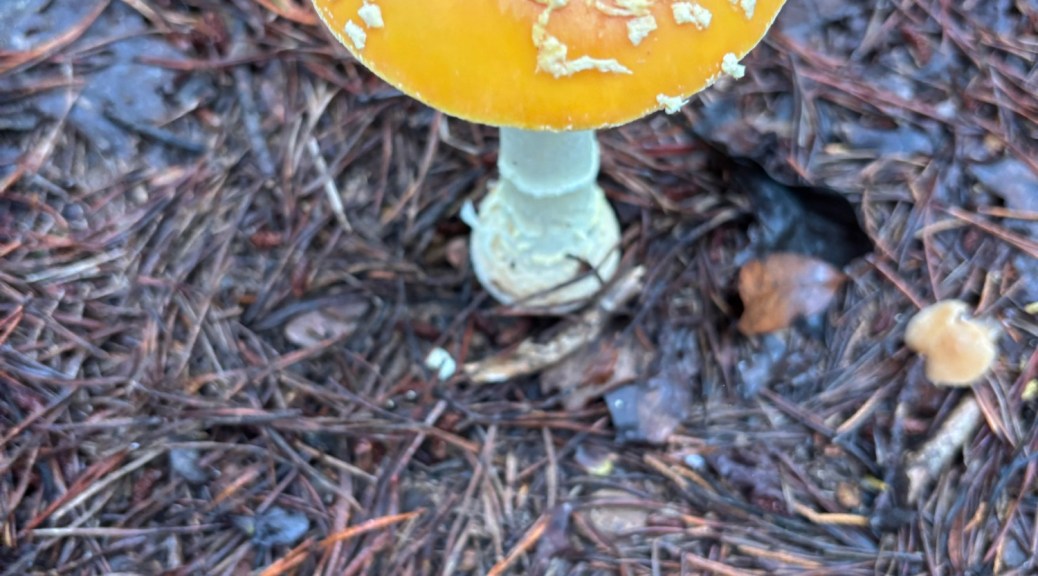
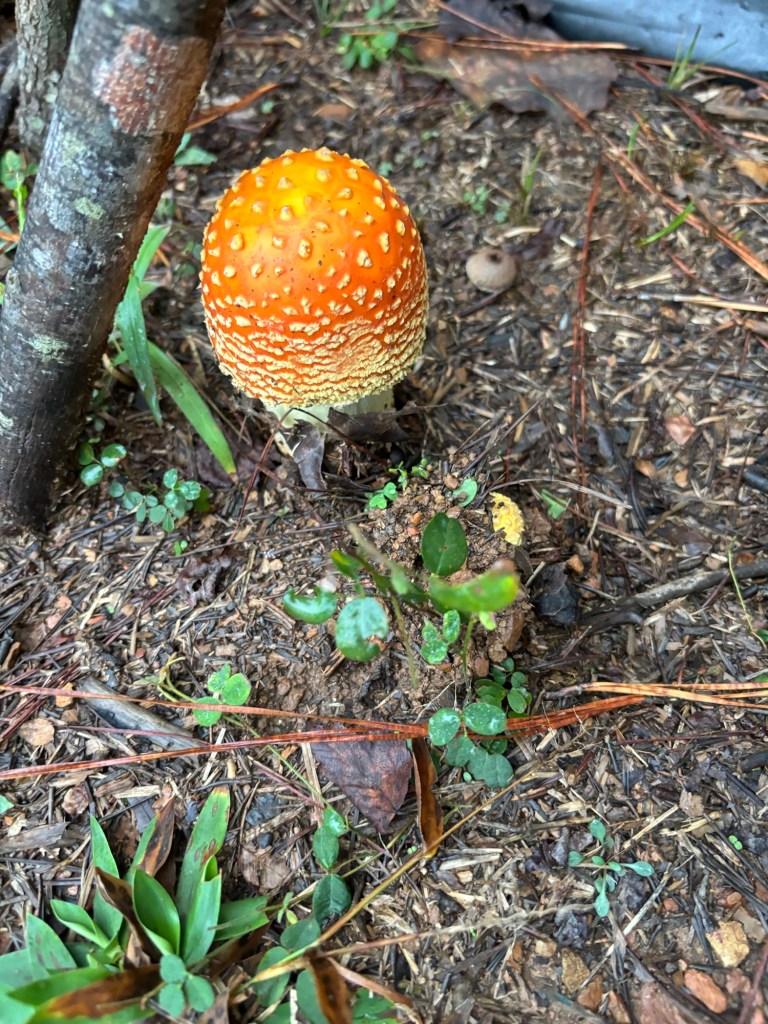
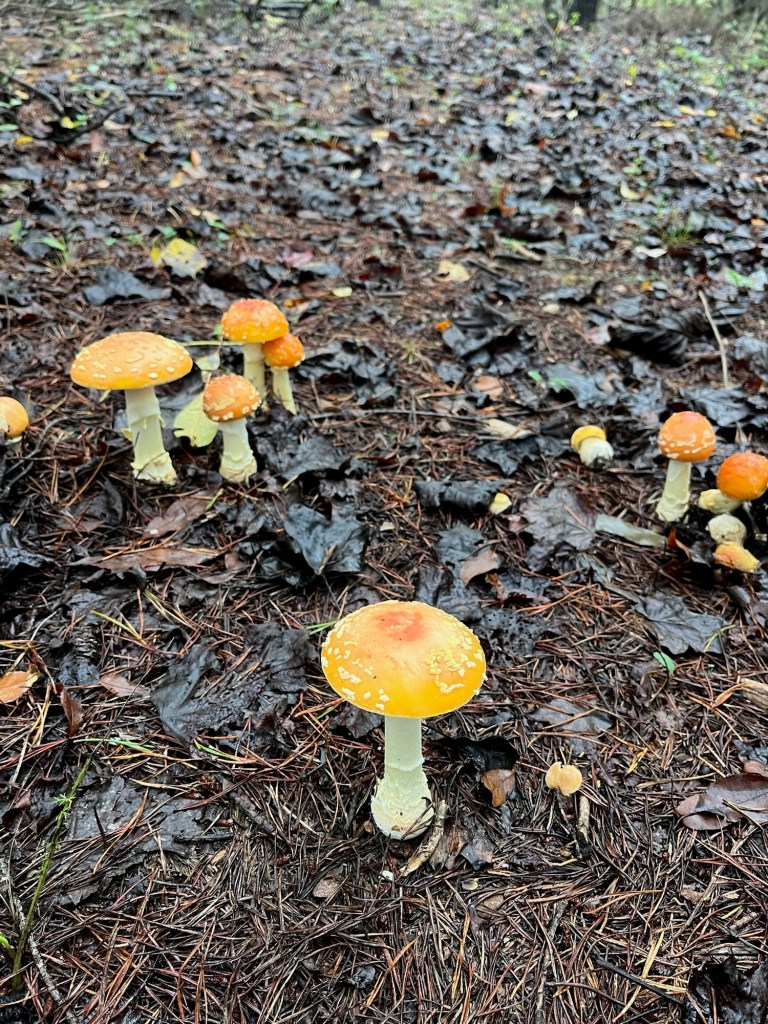
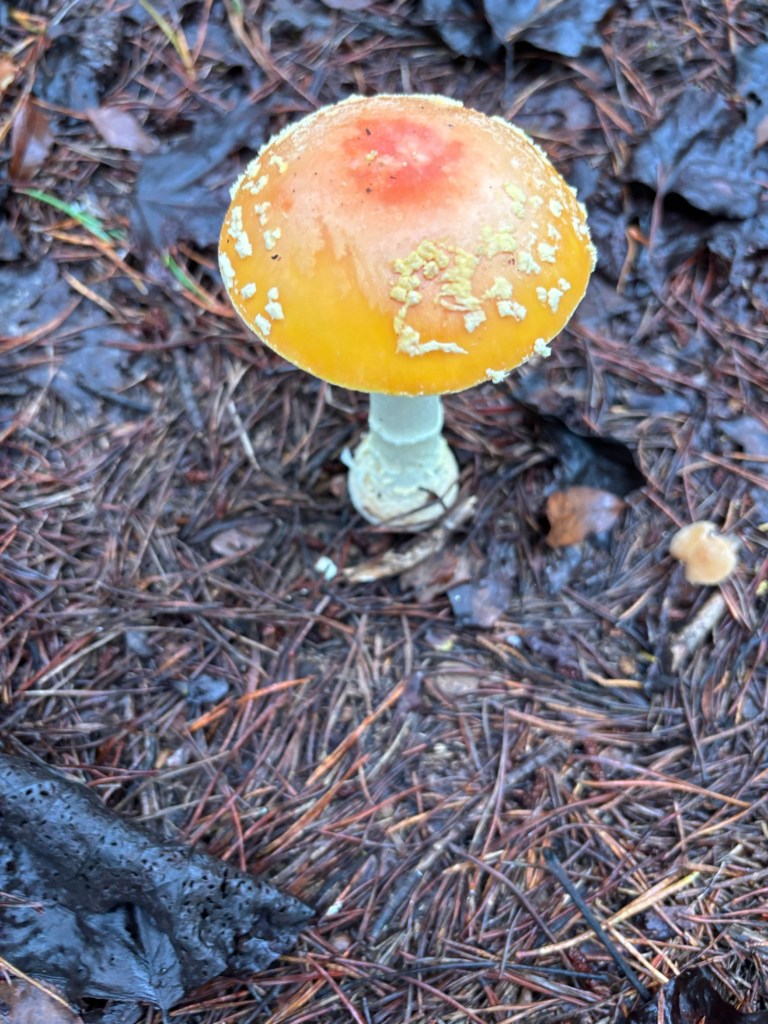
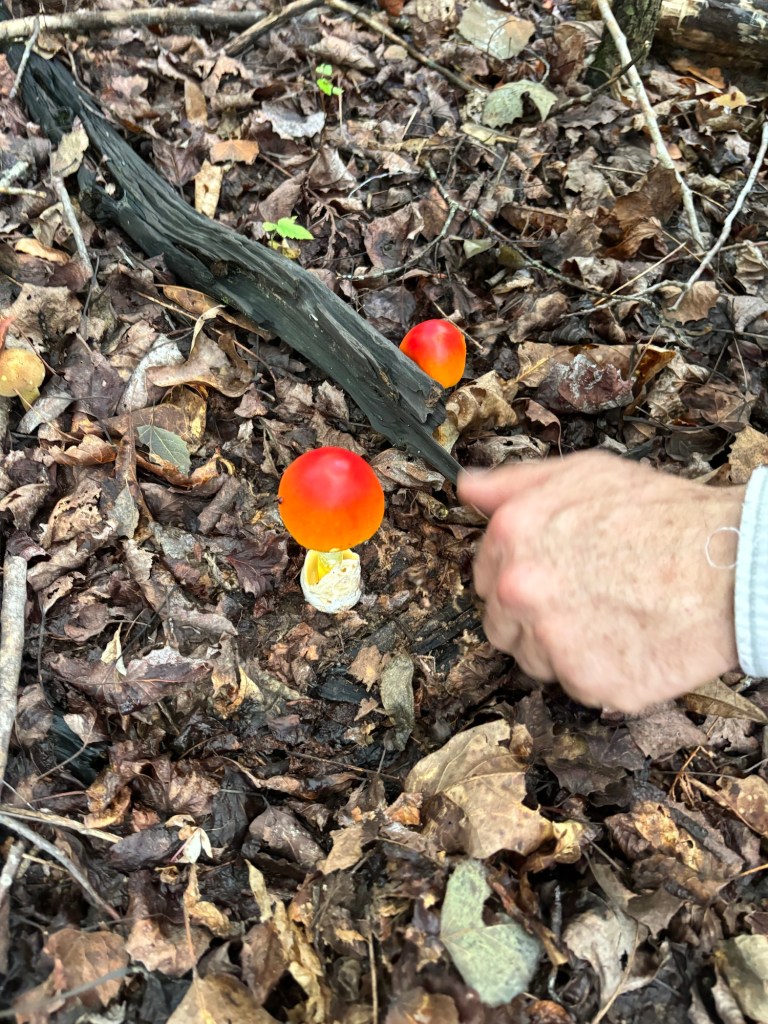
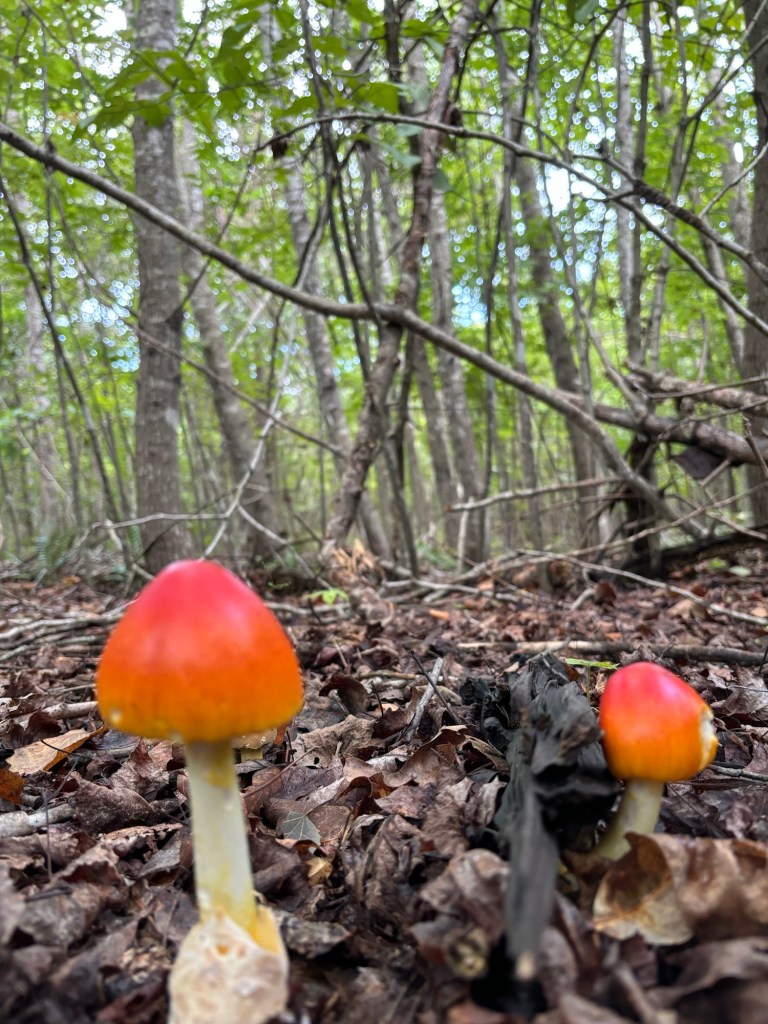
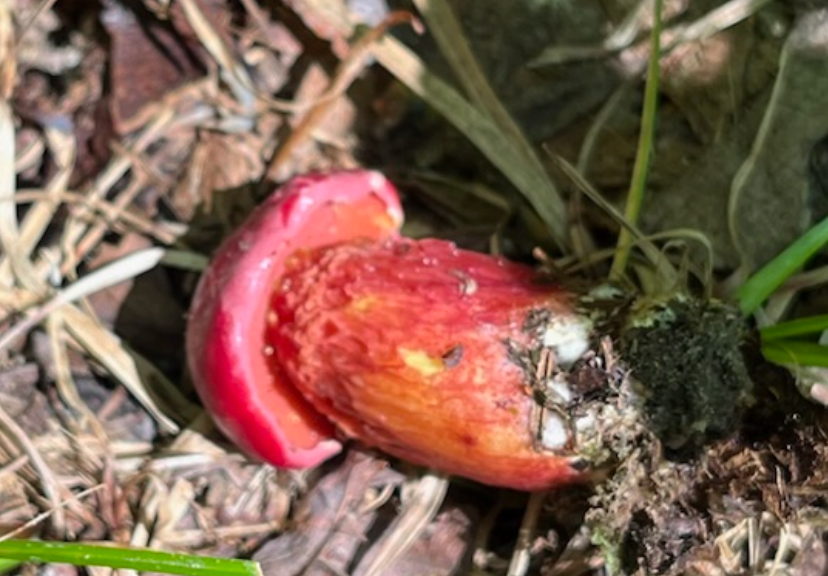
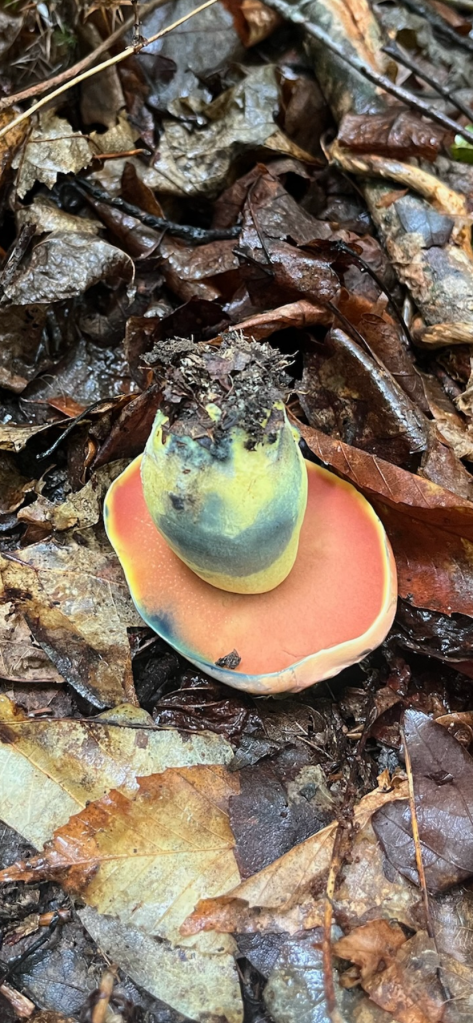
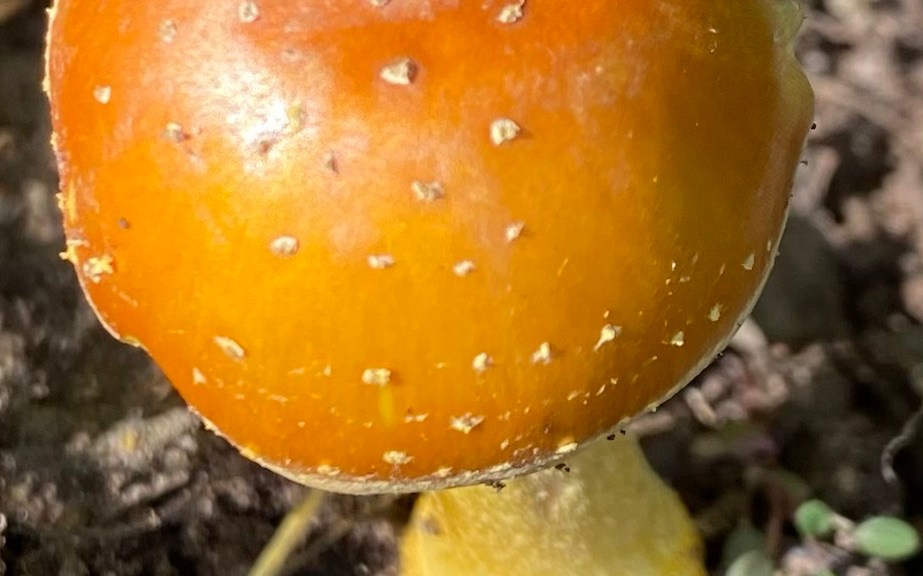
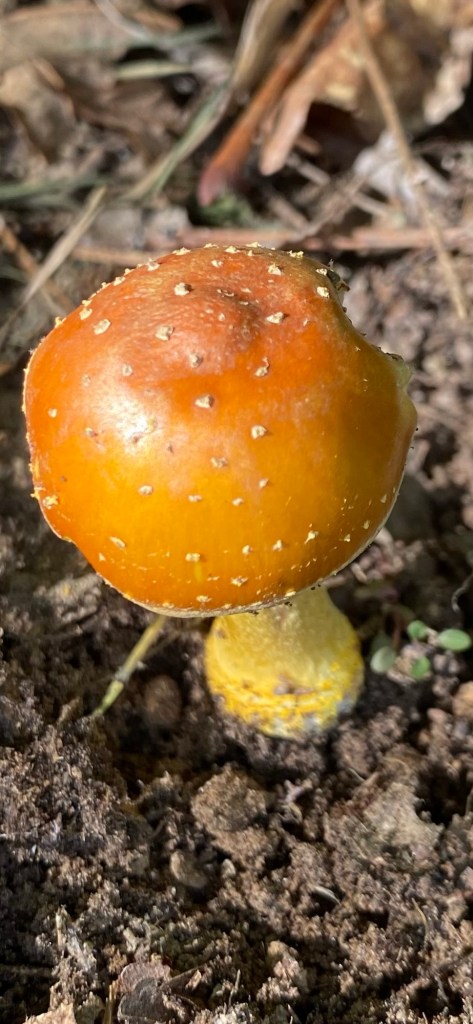
Amanita persicina found in groups throughout the farm near pines and oaks.
We went over to put up boundary markers and no hunting or trespassing signs as well as forage for mushrooms. Hunting season begins Saturday October 5th (early archery season starts). We took down trees growing too closely together and used the trunks as a natural fencing inside the tree line along the road frontage to discourage hunters from chasing deer onto our property. We’ve also been told hunters run dogs through properties to scare up deer. We are trying to create a hunt free zone, except for mushrooms, and to keep anyone chasing animals off our land. We also will put up several more cameras later this weekend. We had technical issues yesterday but worked it out this morning.
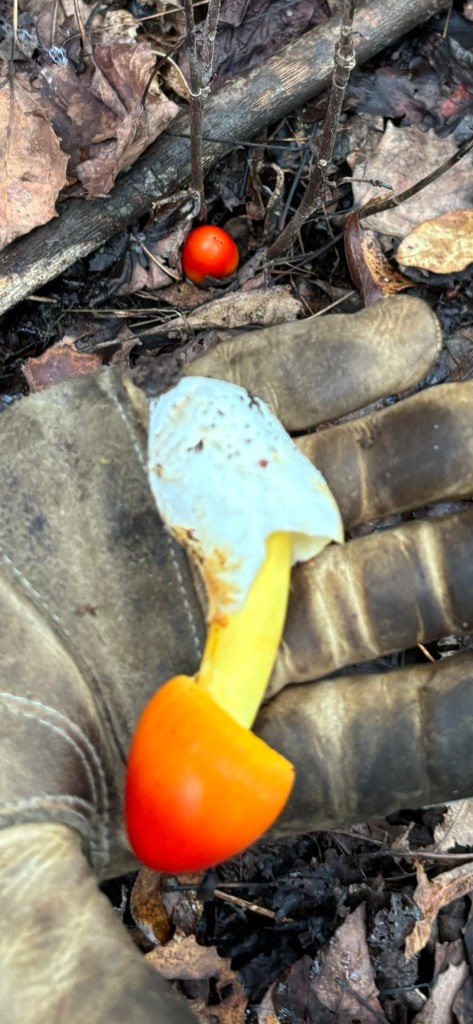
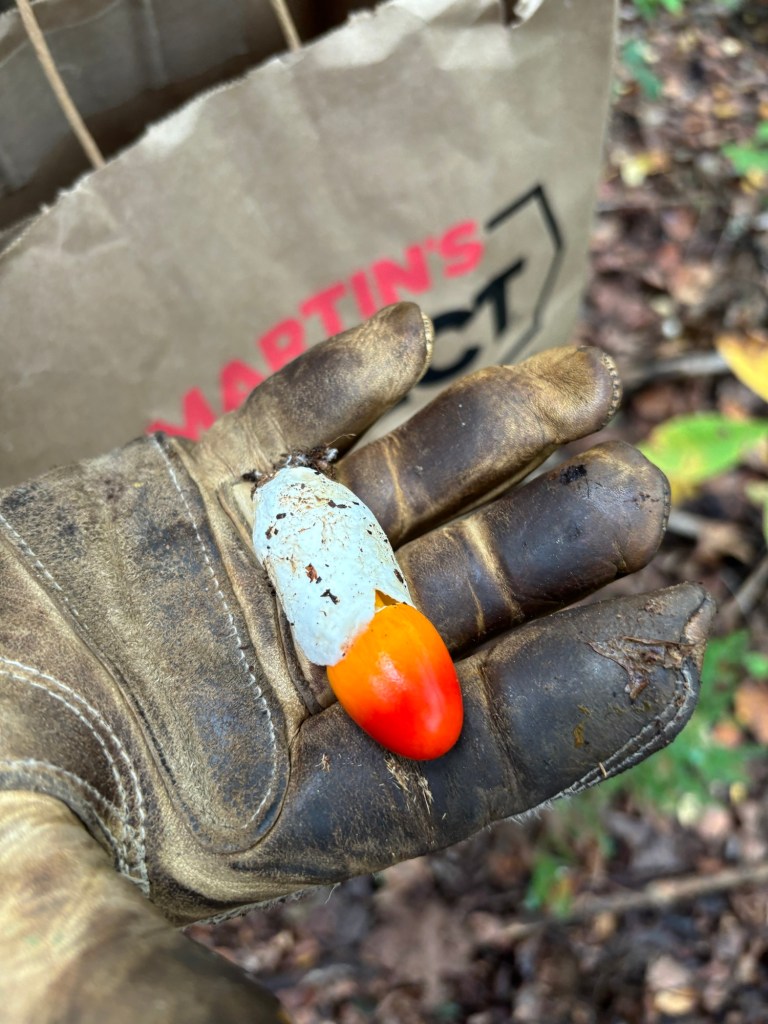
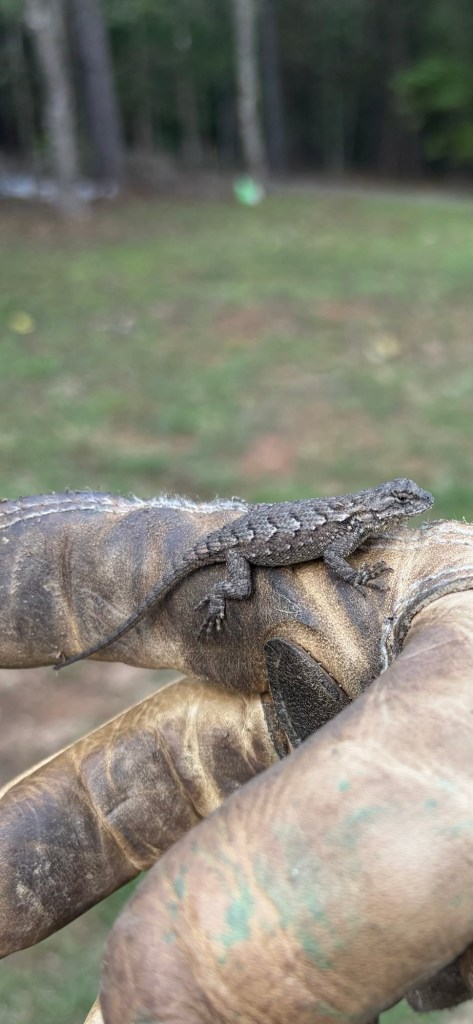
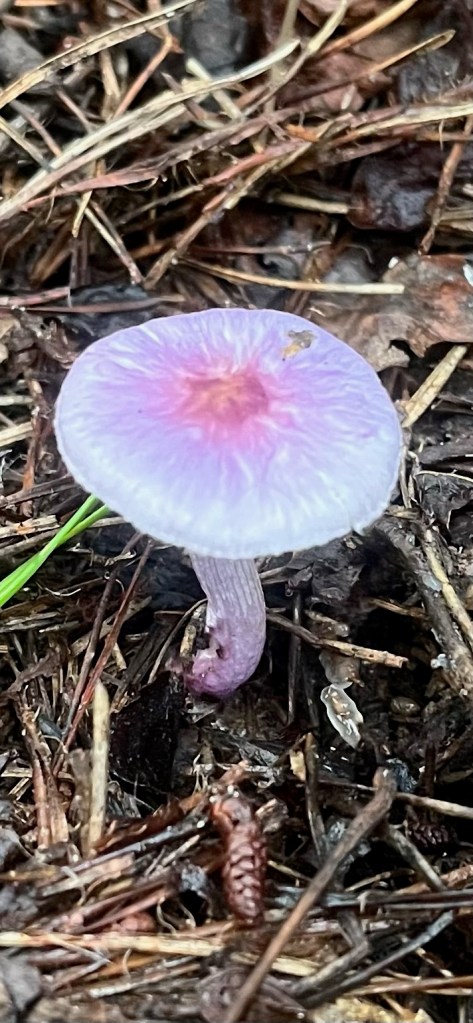
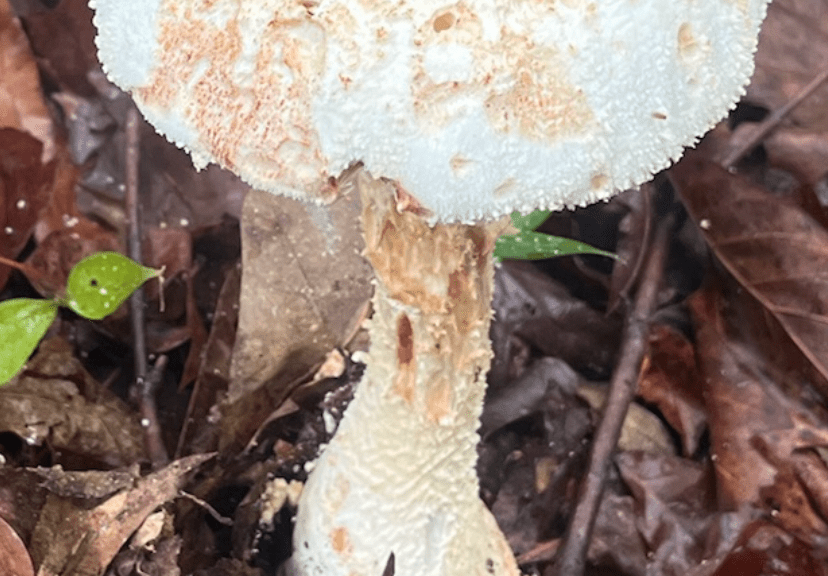
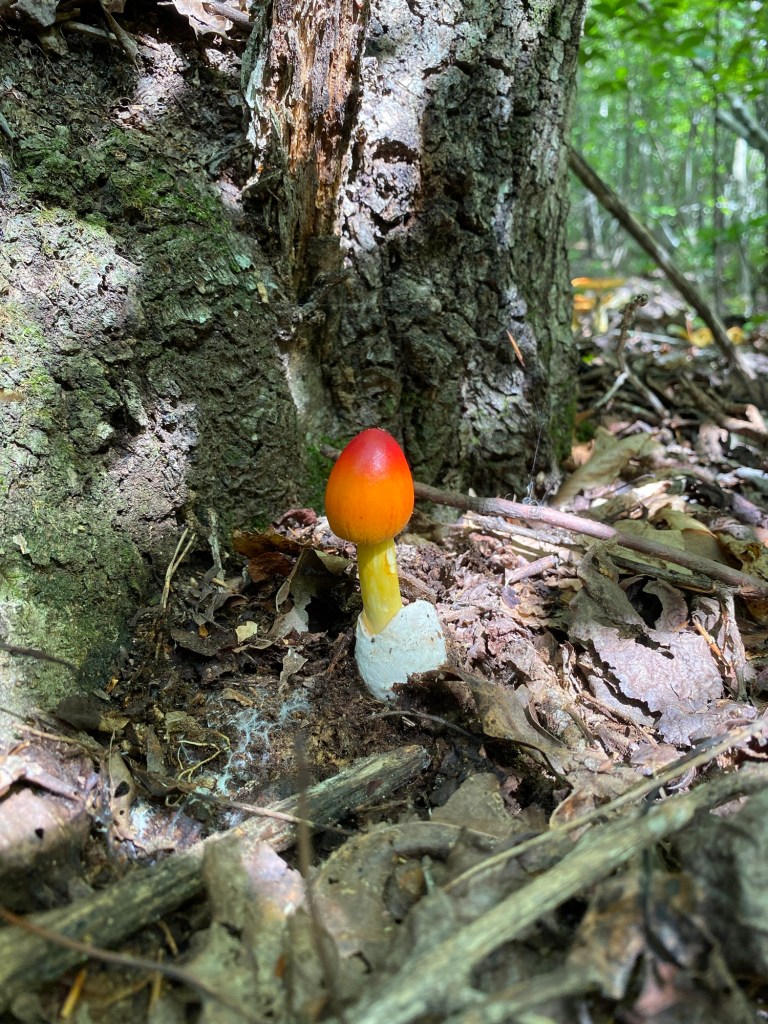
Coral fungusA family of Amanita jacksonii, American slender Caesar, we brought home and processed for eating. Top of A jacksonii Younger A jacksonii An A. jacksonii just emerging from its volva. These are the most delicious. Eastern fence lizard, Sceloporous undulatus, we found hanging out on a black cherry stump up top in the clearing. Amanita spreta, commonly called the Hated Caesar, is an inedible variety. They were large and showy found in the north side near pines. We continue to find these blue staining boletes and have narrowed down their identification to four different species. For now, they remain unknown. Unknown blue staining bolete. Inocybe lilacina, Lilac fibercap, is a poisonous mushroom found on the north side of SAFF. Suillus salmonicolor, Slippery Jill, found everywhere on SAFF near pine.Suillus, slippery jacks, associated with pines.
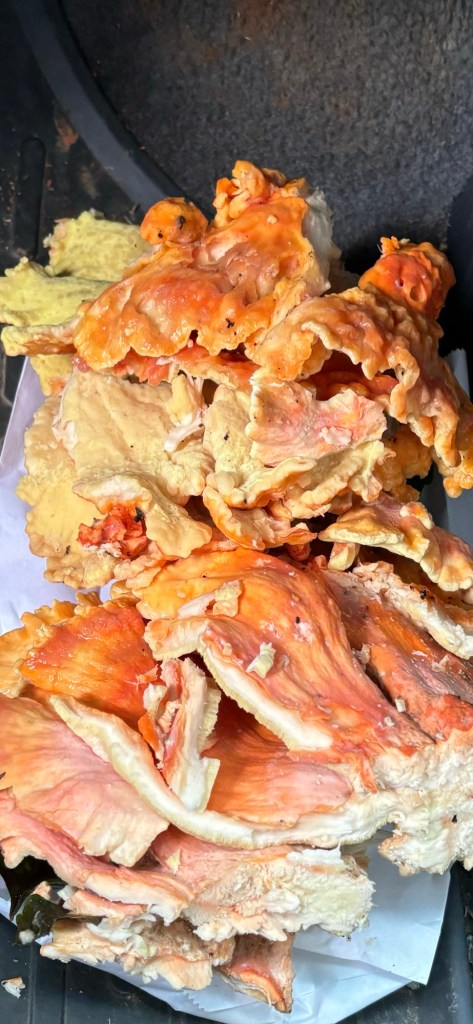
Chicken of the woods, Laetiporus sulphuric, found on the way to the farm. We took this older specimen over and left it to spore on some of our dead and dying hardwoods: Mostly black cherry trees and tulip poplar.
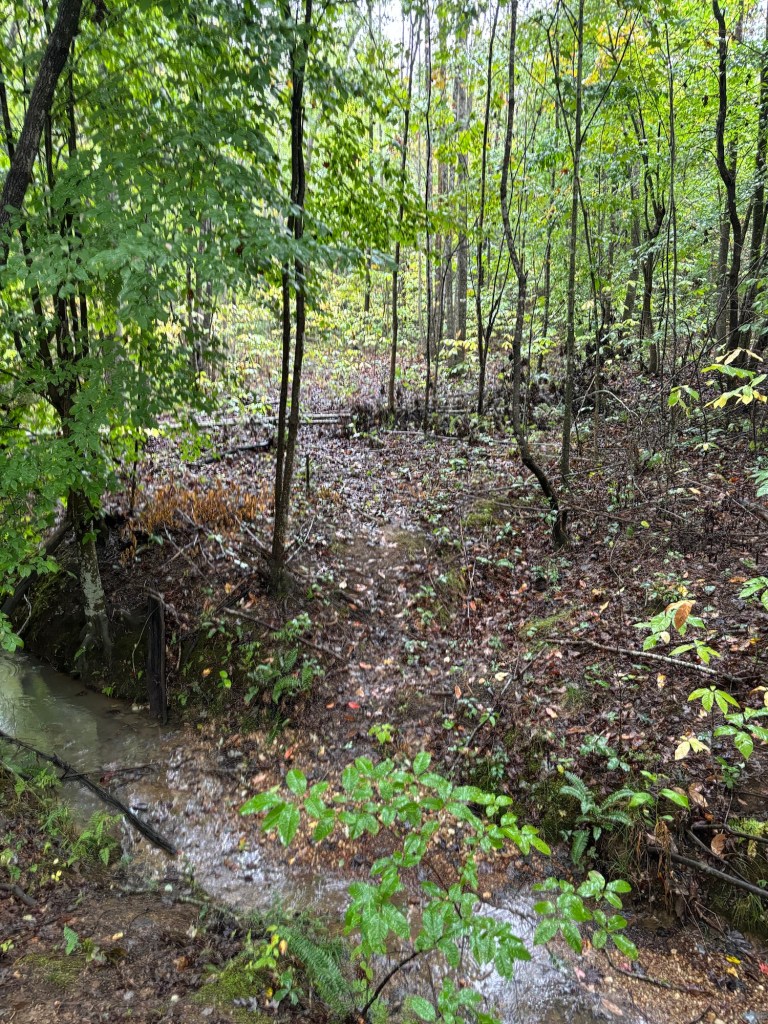
Today was a mushroom hunter’s dream. It’s an understatement to say they were everywhere. We’ve had an enormous amount of rain in Central Virginia and the Shenandoah Valley. We’ve had flooding at the house but finally, after all of this rain, the water table is restored at SAFF from our prolonged summer drought. All of the springs are flowing and the waterways are moving. We saw water flowing in the wet weather gullies in the north and south. It’s a beautiful sight.
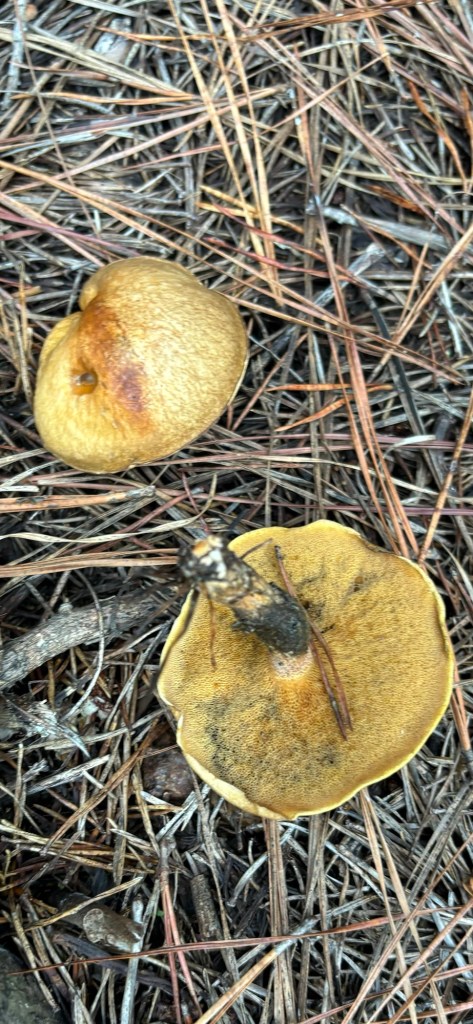
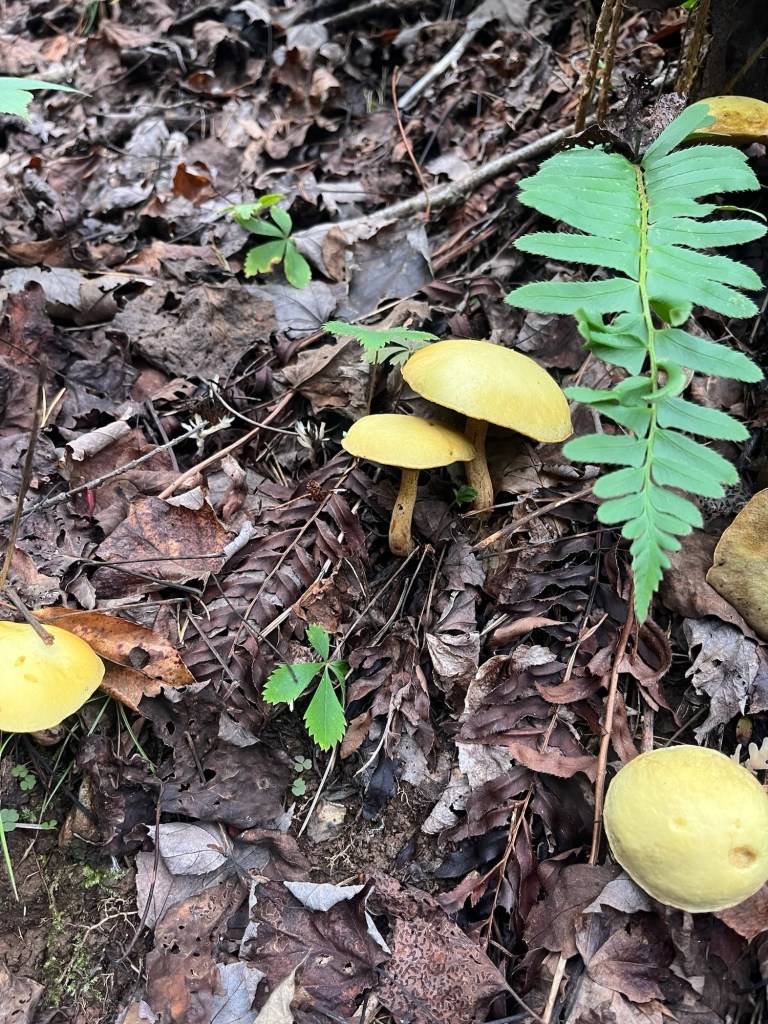
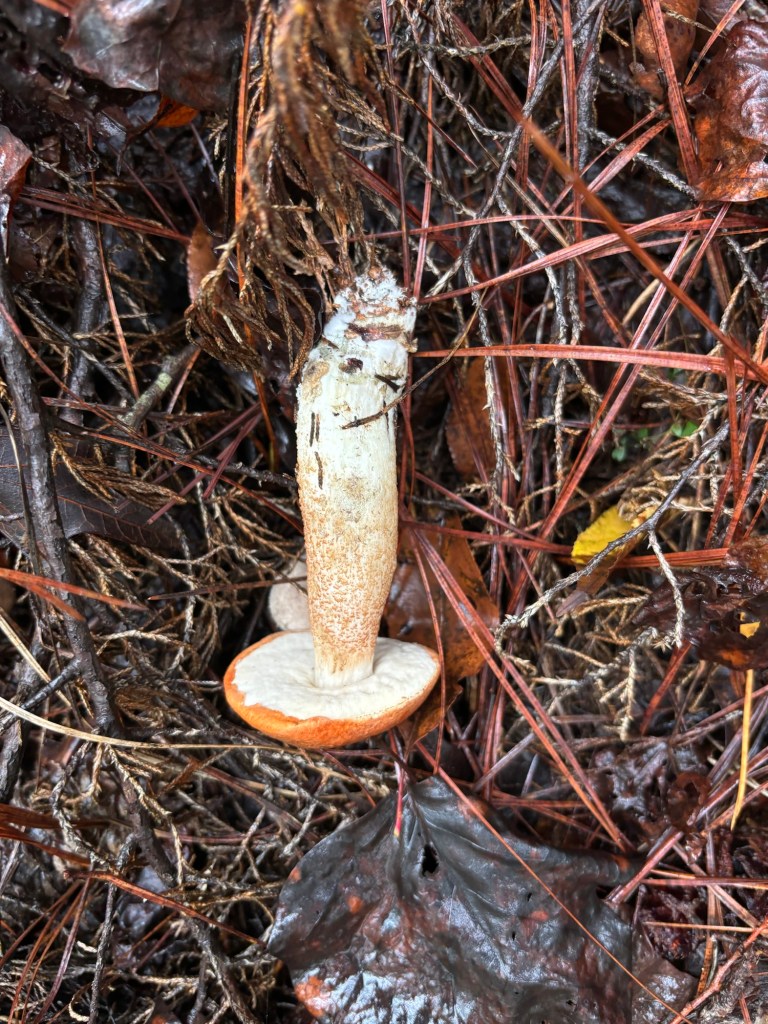
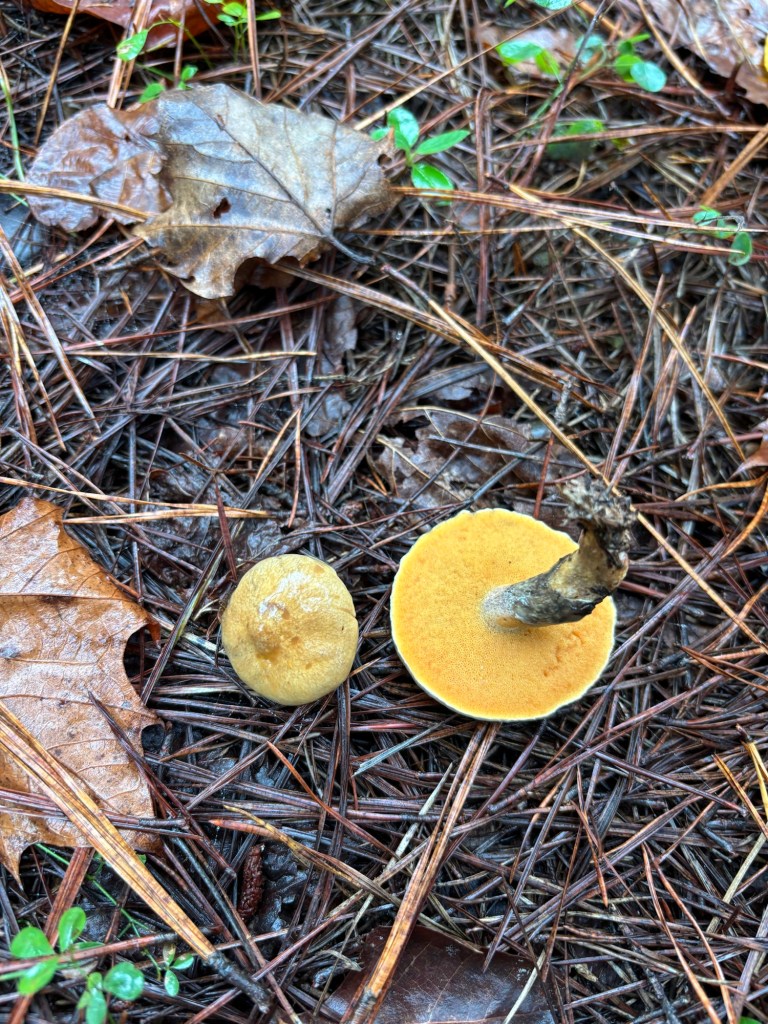
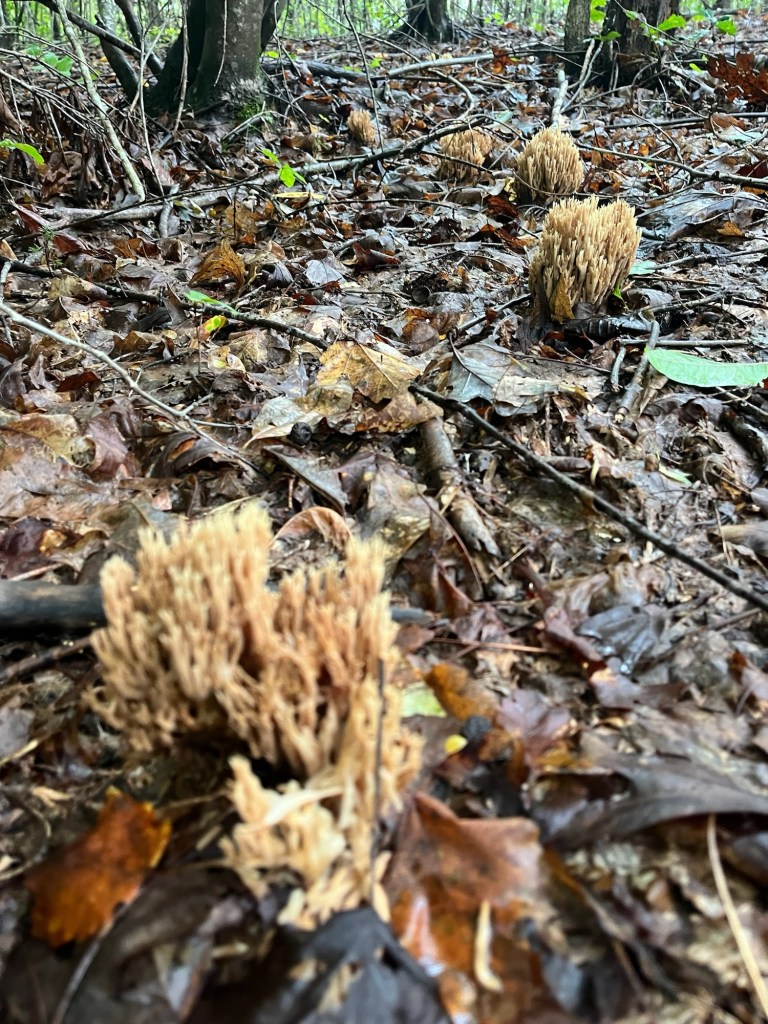
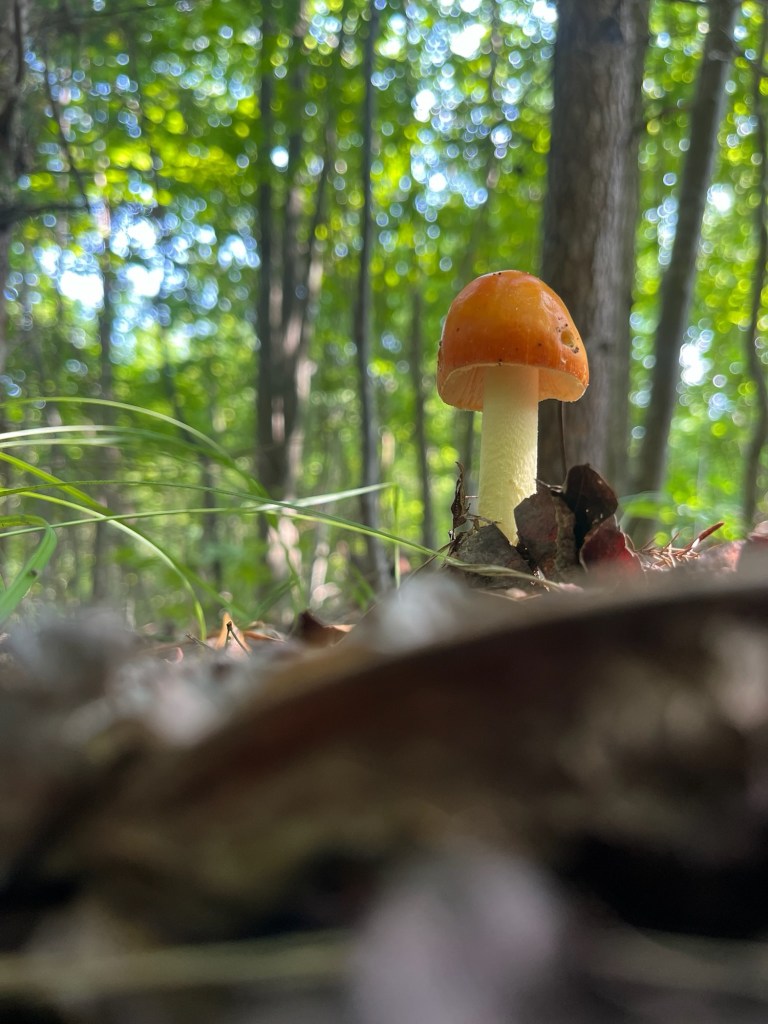
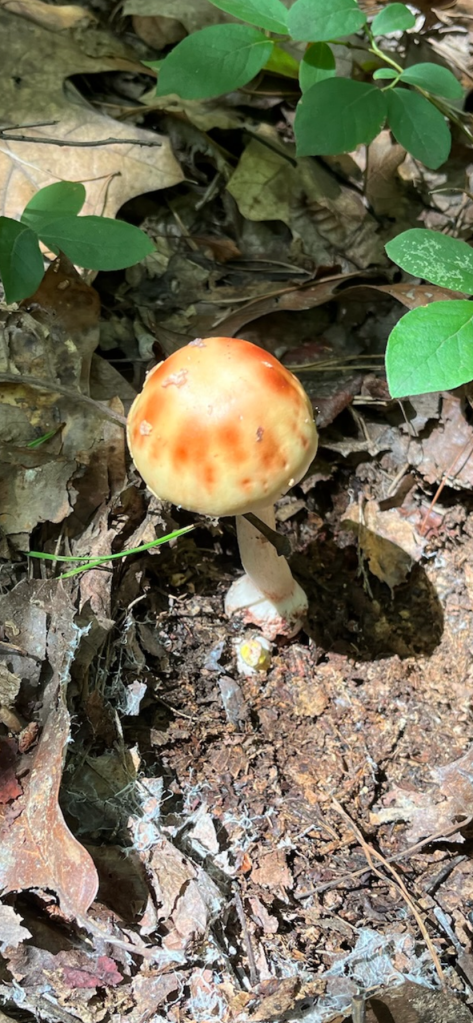
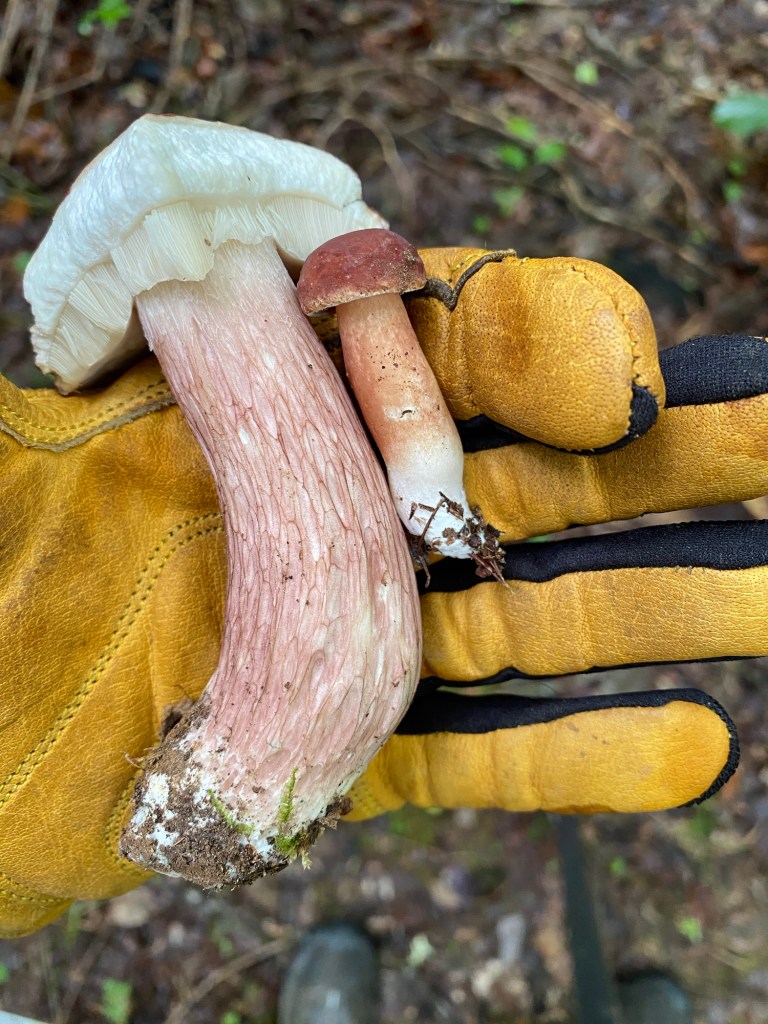
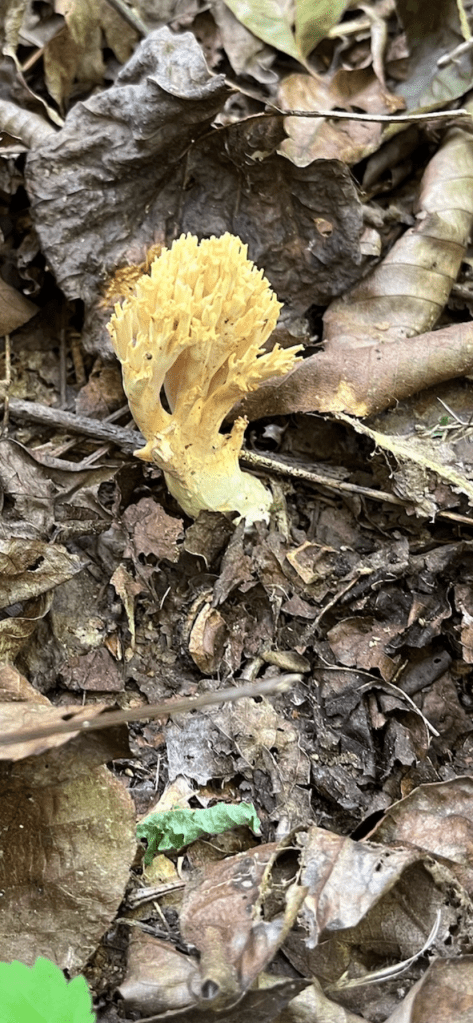
Amanita persicina, Peach colored fly agaric, were found all around the farm where pines are growing. These were large and brilliantly decorated with vibrant orange. The larger of the specimen were 8 inches in height and 4 inches across. They are showstoppers. More A. persicina along south trail. We found them mostly in big groupings up top and along the trails. These are my new favorites. Leccinum longicurvipes found on the north side in the pine forest. The scabers (rigid projections) along the stalk identify them as Leccinum within the genus Boletus. Genus suillus, slippery jacks or sticky bun, found anywhere we saw pines. They were all over the farm today. We hadn’t seen them before so it’s a wonderful surprise. It forms symbiotic ectomycorrhizal associations with pine trees by enveloping the underground roots of the tree with sheaths of fungal tissue. Rather than gills, it has tubes extending downward from the underside of the cap. Ramaria stricta, Upright Coral fungus, found near southern waterway along Ridge Trail.
Mushrooms were everywhere at Saint Andrews Forest Farm since it has been raining for days and the temperatures are in the 60s at night and 70s during the day. The rain is wonderful and much appreciated as the water table is still very low.
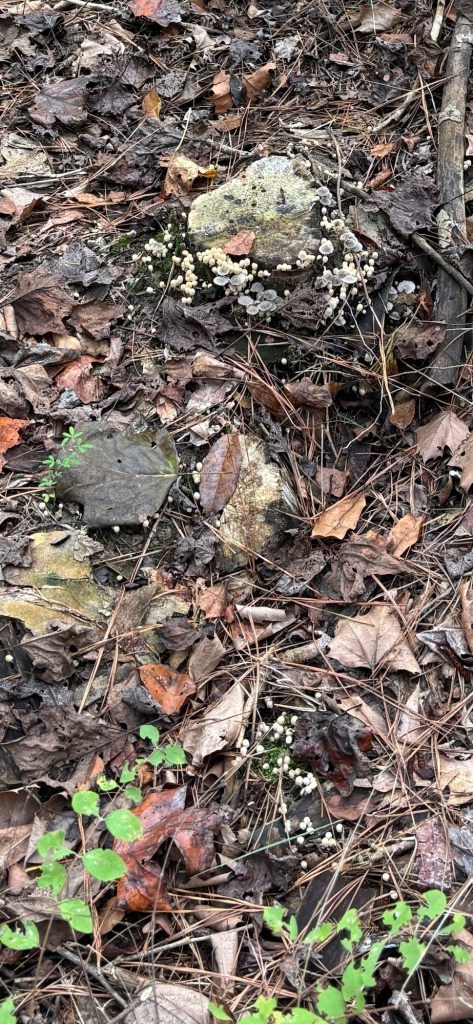
We saw these tiny Mycenae and Coprinellus growing together.
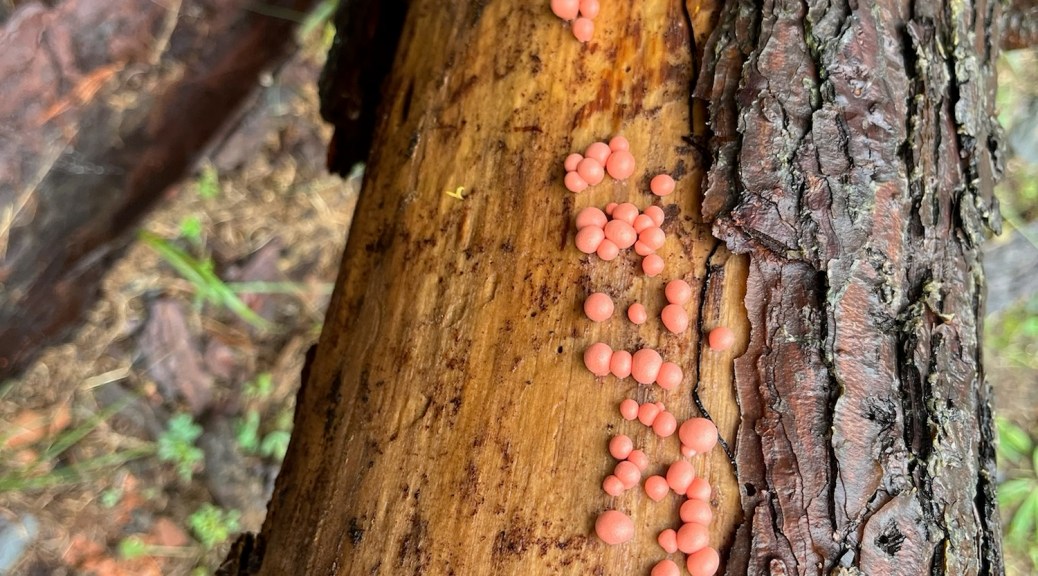
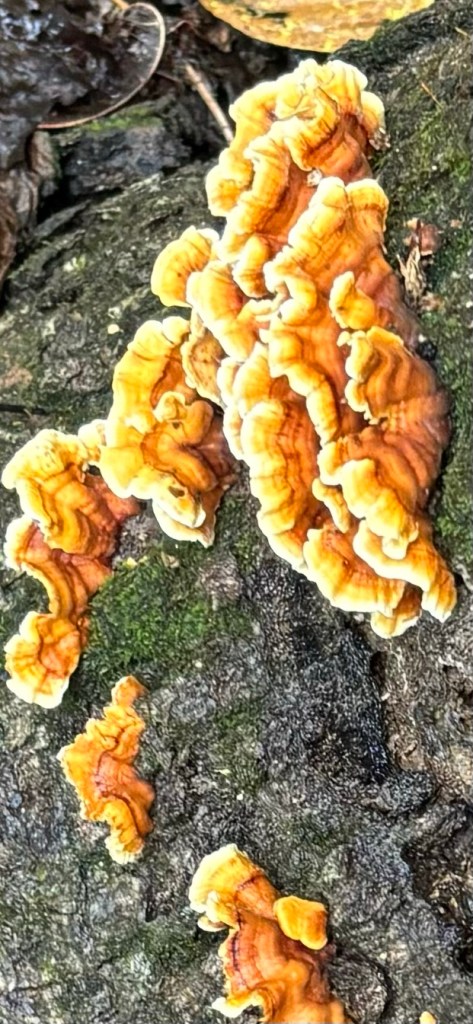
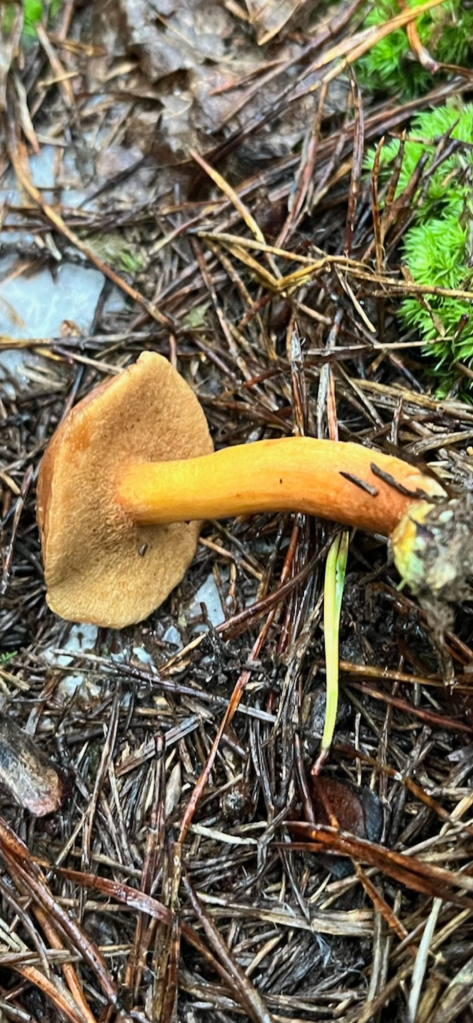
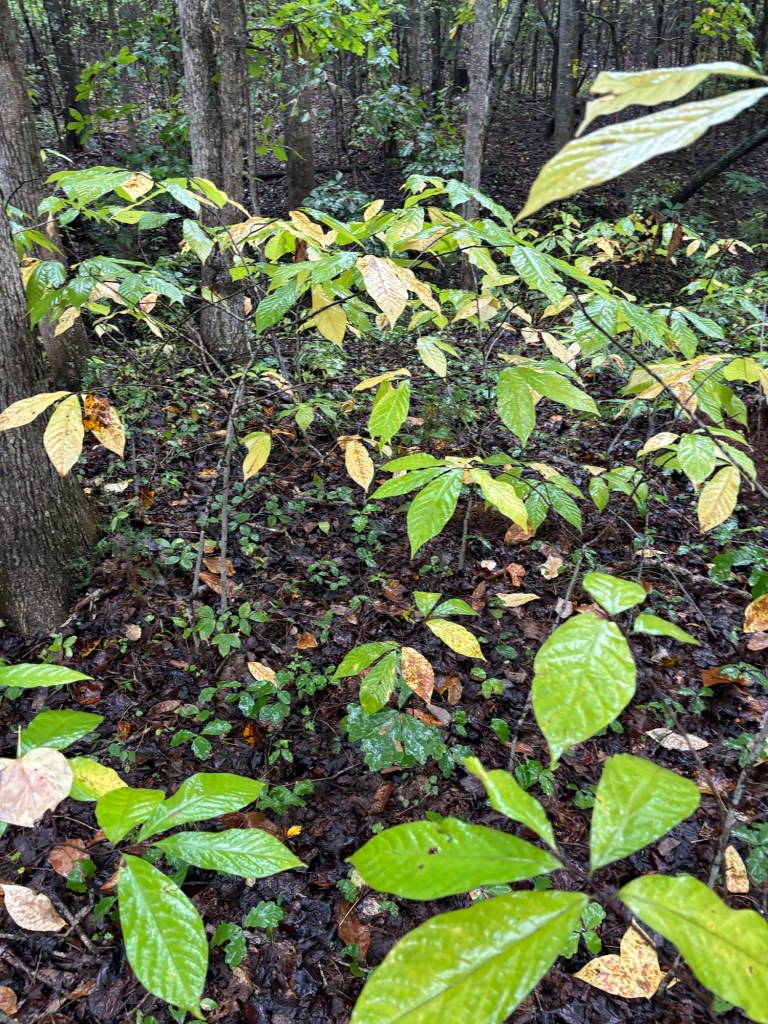
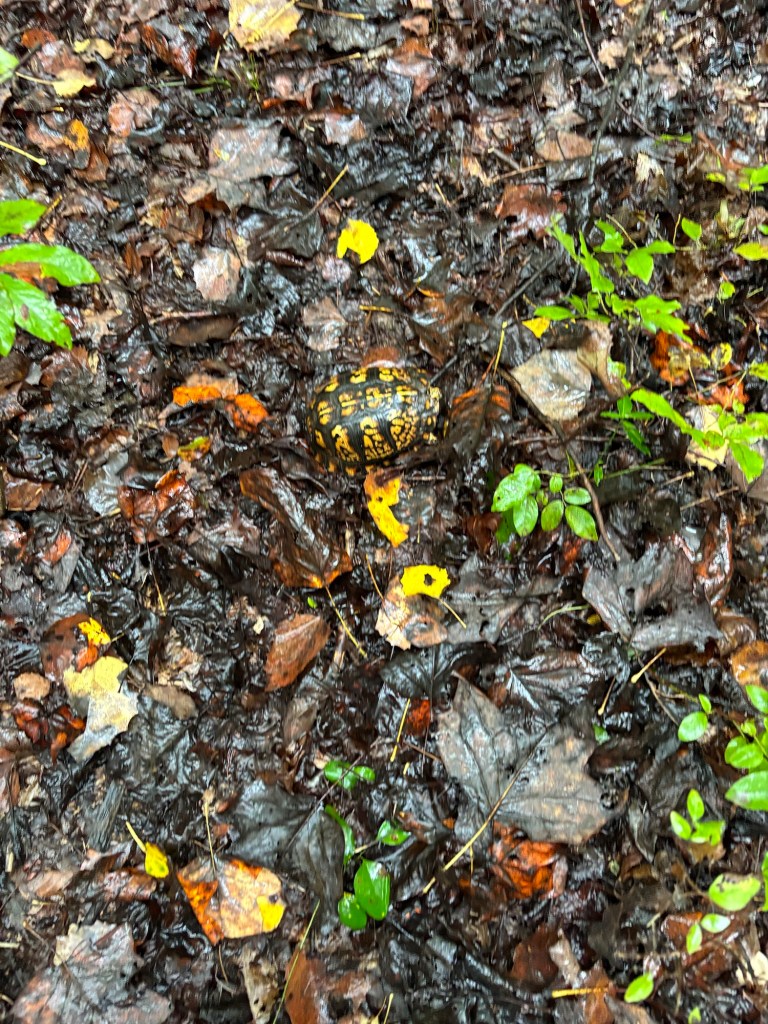
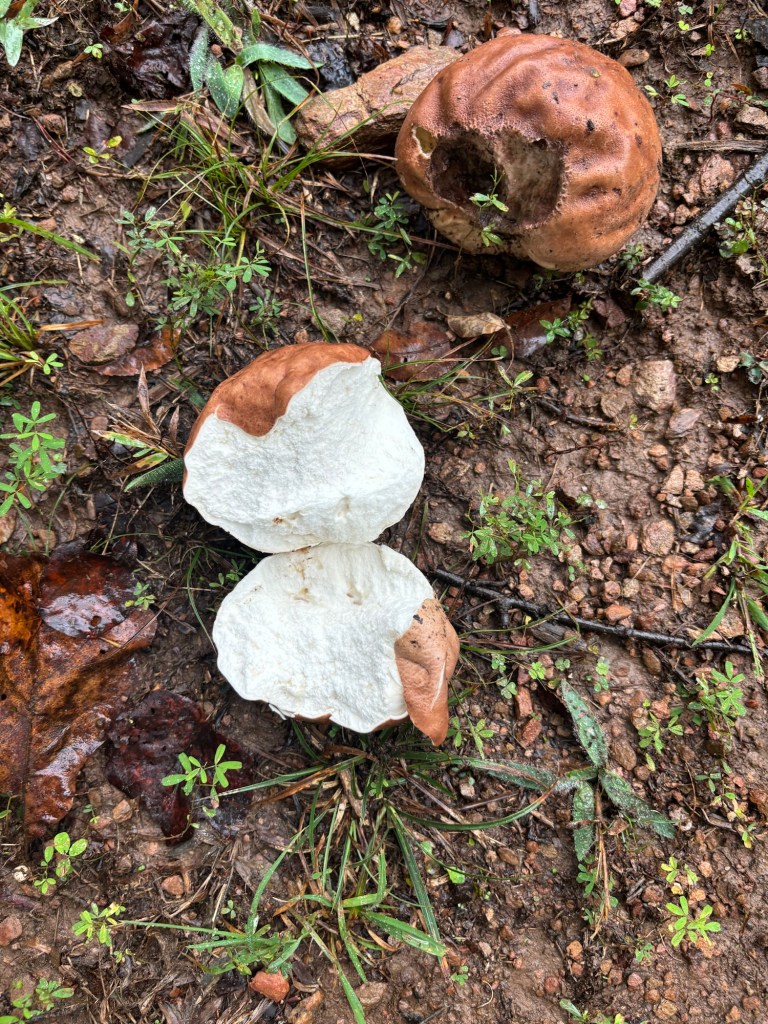
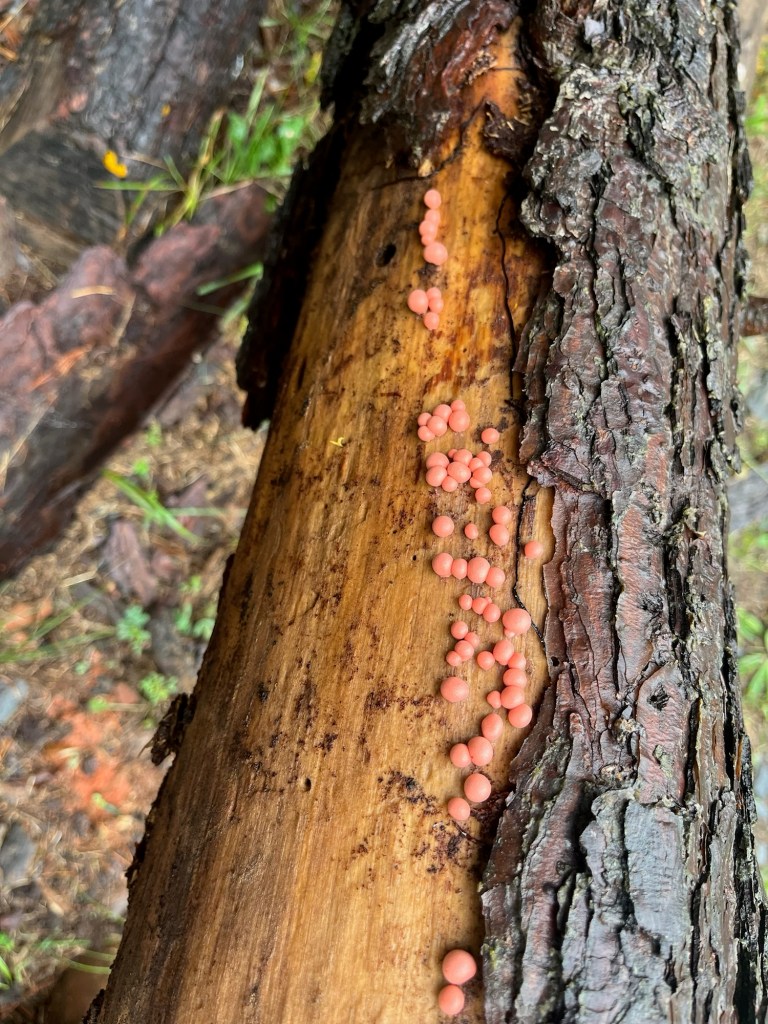
Saprobic fungus thriving with the moisture and temperatures in the perfect range for them to break down forest litter. Stereum complicatum, crowded parchment, growing on multiple stumps and dead hardwood throughout the farm. Chalciporus piperatus, Peppery Bolete, is reported to be edible when thoroughly cooked. It is very peppery so it will spice up a dish. It was a surprise to find a bolete with the weather being cooler. Pawpaws leaves yellowing as part of the trees natural process of going dormant for winter. It makes them very easy to locate right now. We found a few more clusters of pawpaws near the wet weather gully on the south side. More pawpaws going dormant for the winter across the waterway. Amanita bisporigera, Eastern North American Destroying Angel, are found in multiple areas of SAFF this fall. These are deadly. Terrapene carolina carolina, Eastern box turtle, on the north side looking for food.Calvatia craniiformis, Brain puffball, found just off the top clearing in a group of seven. Lycogala epidendrum, Wolf’s milk, found at the gate to SAFF. This is a slime mold instead of a fungus.
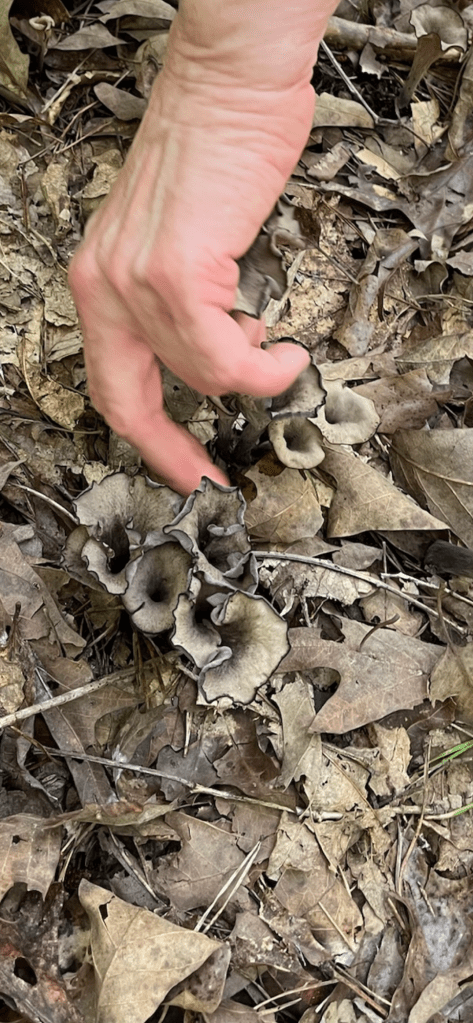
Hard to see black trumpet mushrooms growing near oaks and pines.
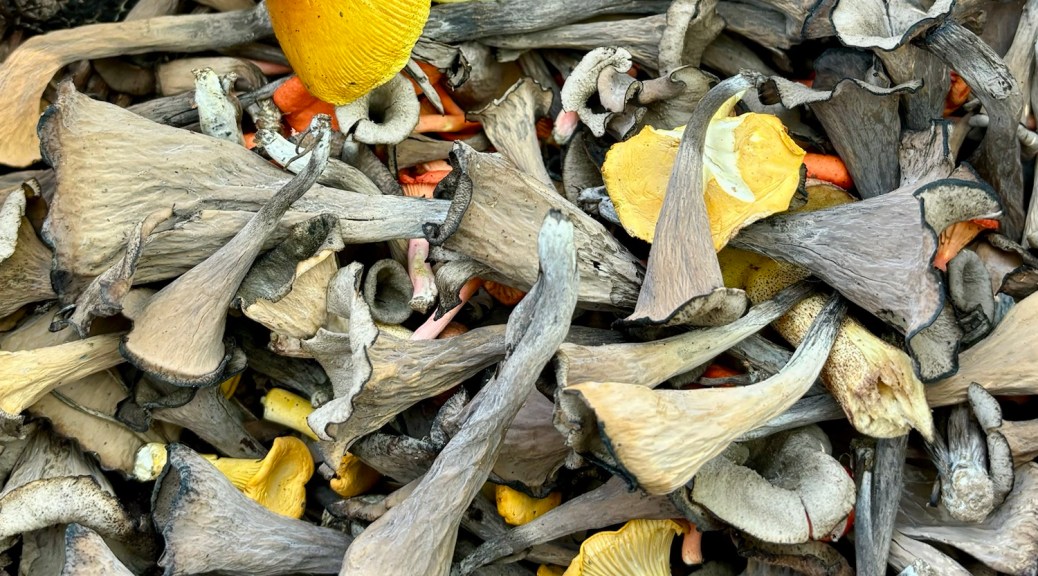
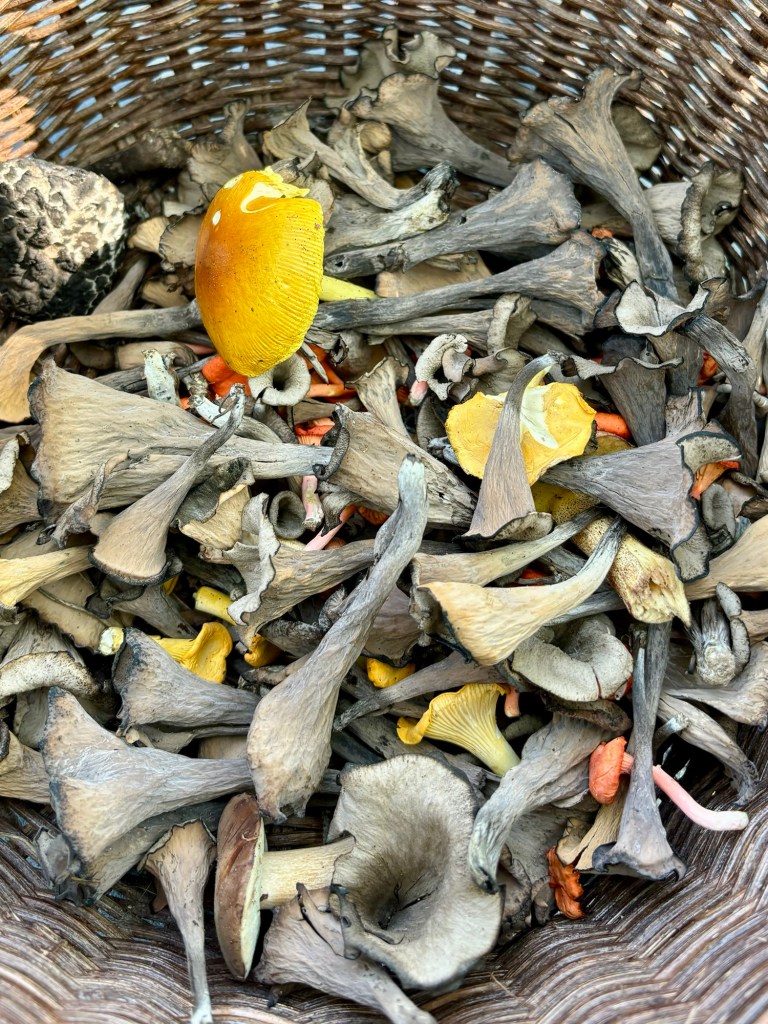
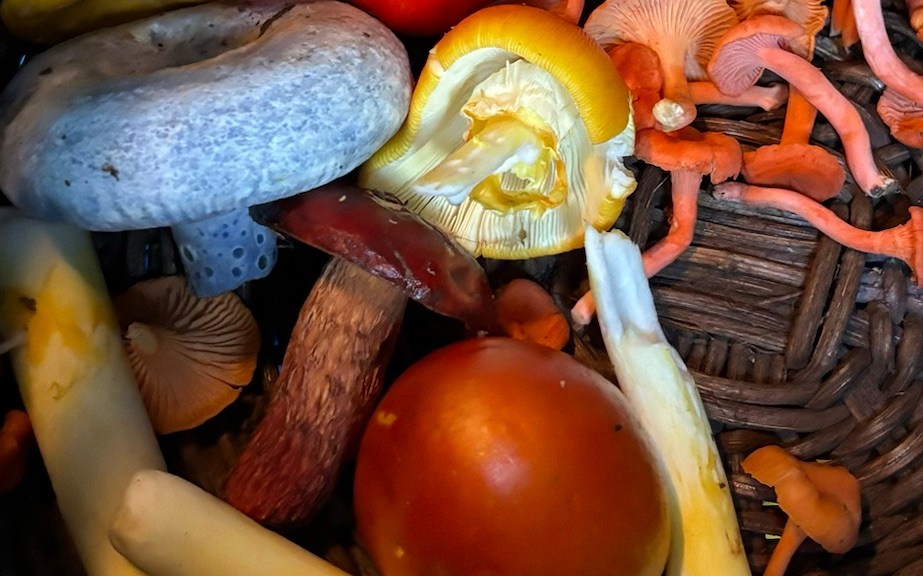
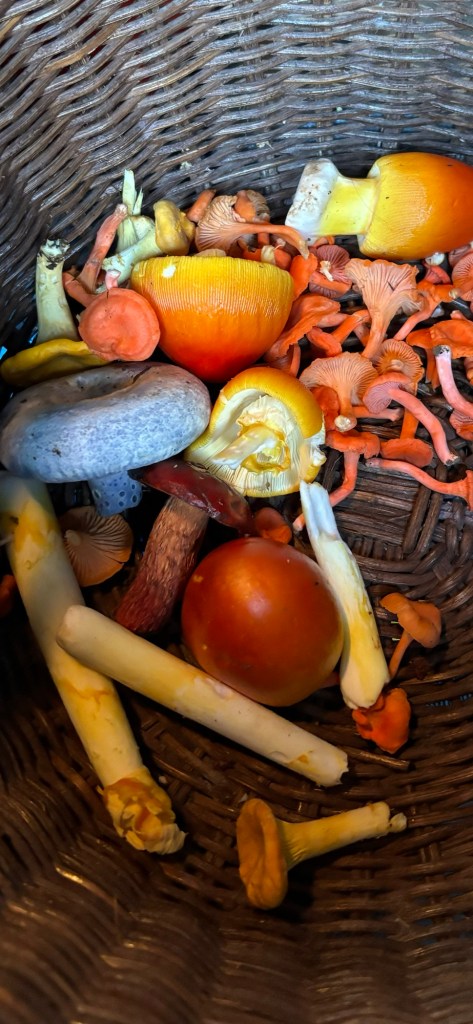
We went over and created more trails on the north side yesterday. We were rewarded for our work with wonderful weather and about two pounds of wild mushrooms. The temperatures in the 70’s made for a wonderful day to be outside. We found several new large Black trumpet patches as well as Cinnabar chanterelles and Ghost chanterelles. We also found a Lilac bolete, Amanita banningiana and an Old Man of the Woods. We joked our basket was full of Halloween colors.
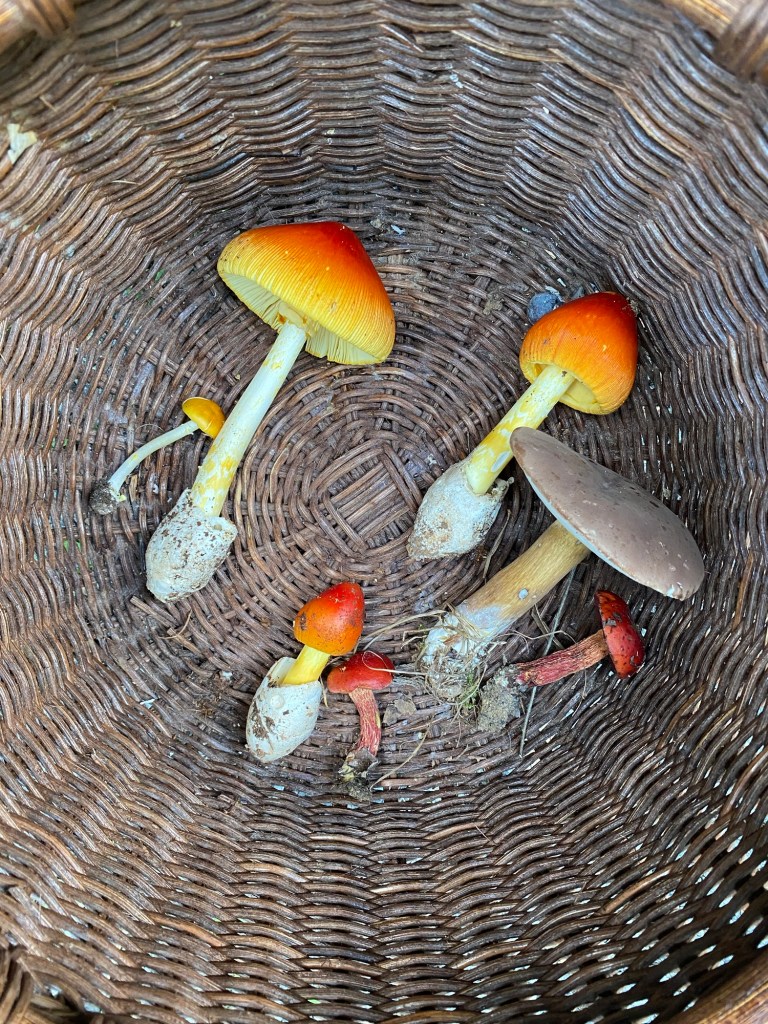
Our basket from yesterday with lots of black and orange mushrooms.
We brightened up the paint on our boundary markers and widened our trails. We cleared a bit more from the road. We stood in awe of the beauty of the forest, the quiet peace to be found there with the trees and the network of mycelium that supports it all and sends up these colorful and wonderful fruiting bodies. We feel grateful and blessed by our surroundings.
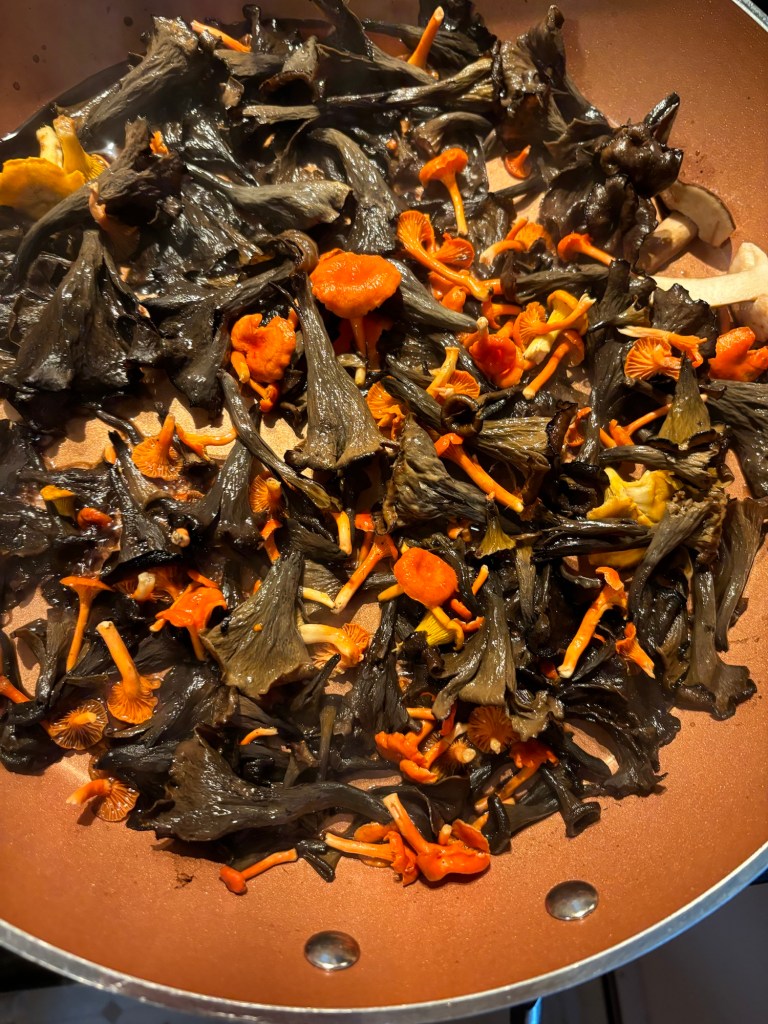
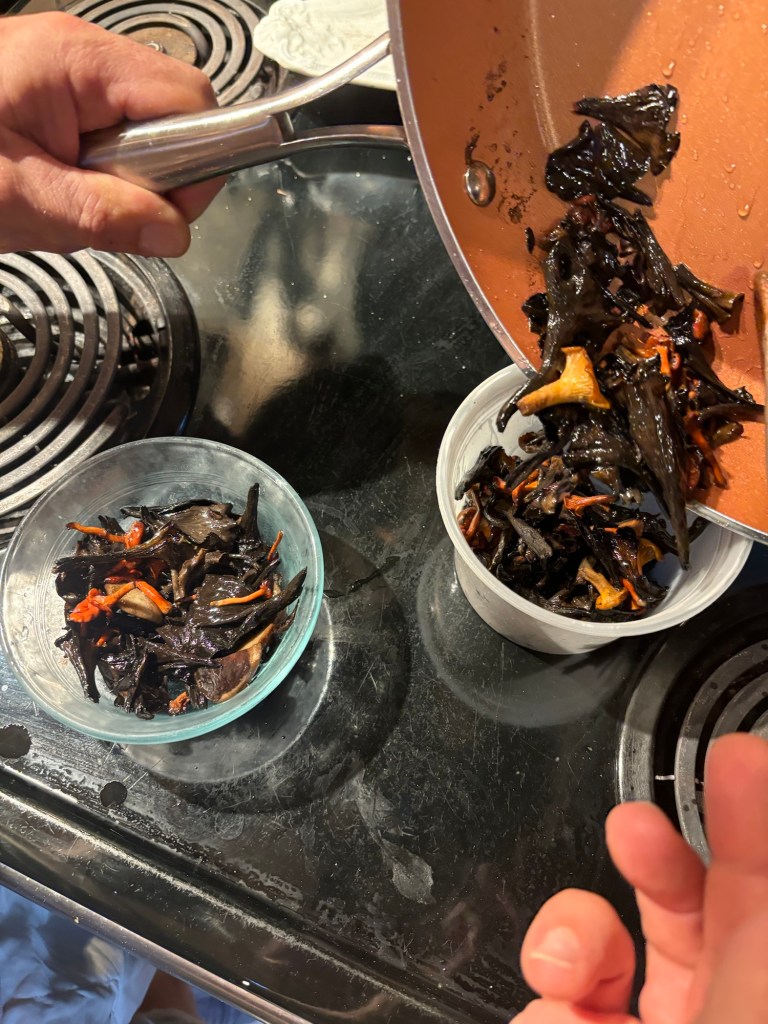
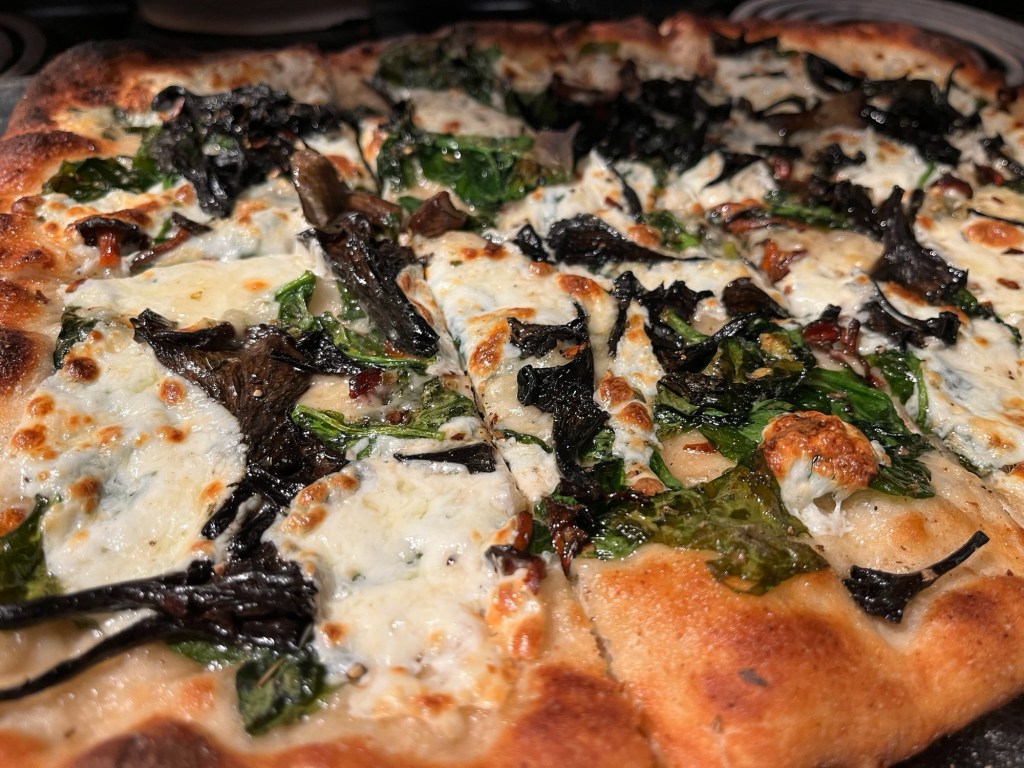
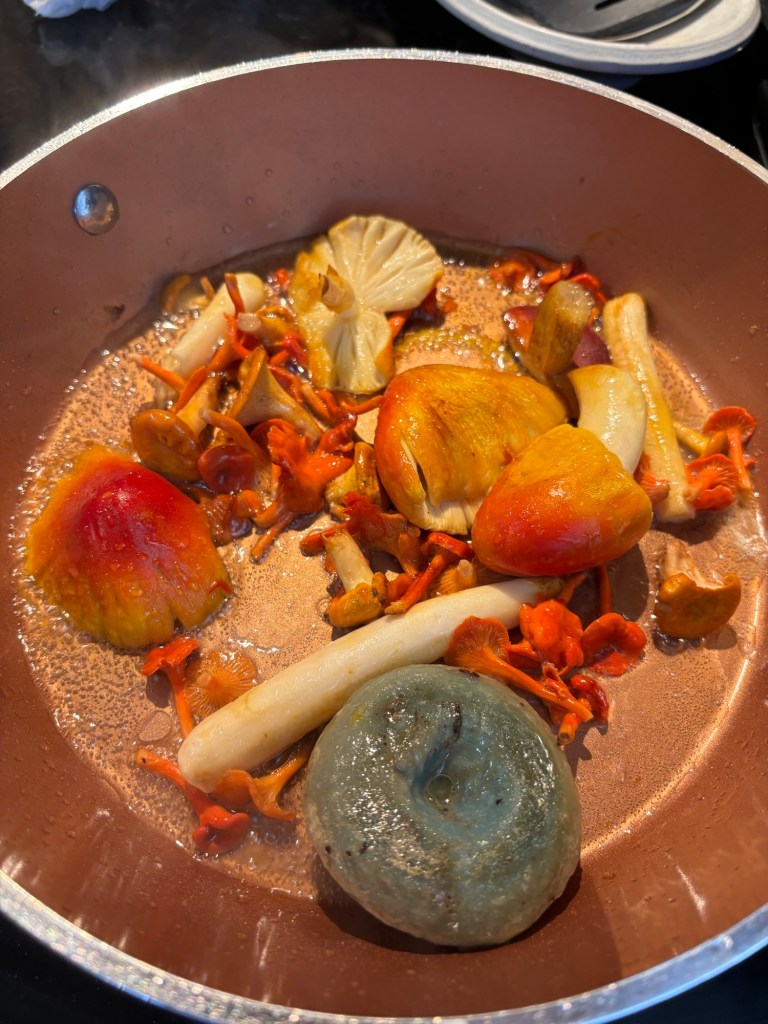
We got home and cleaned up our mushroom bounty and dry cooked them for some minutes to cook off the water we used to clean them. Once dry, we added butter and olive oil and salt pepper and garlic. We saved most of these mushrooms but used a small amount for our white pizza for dinner. It was scrumptious!
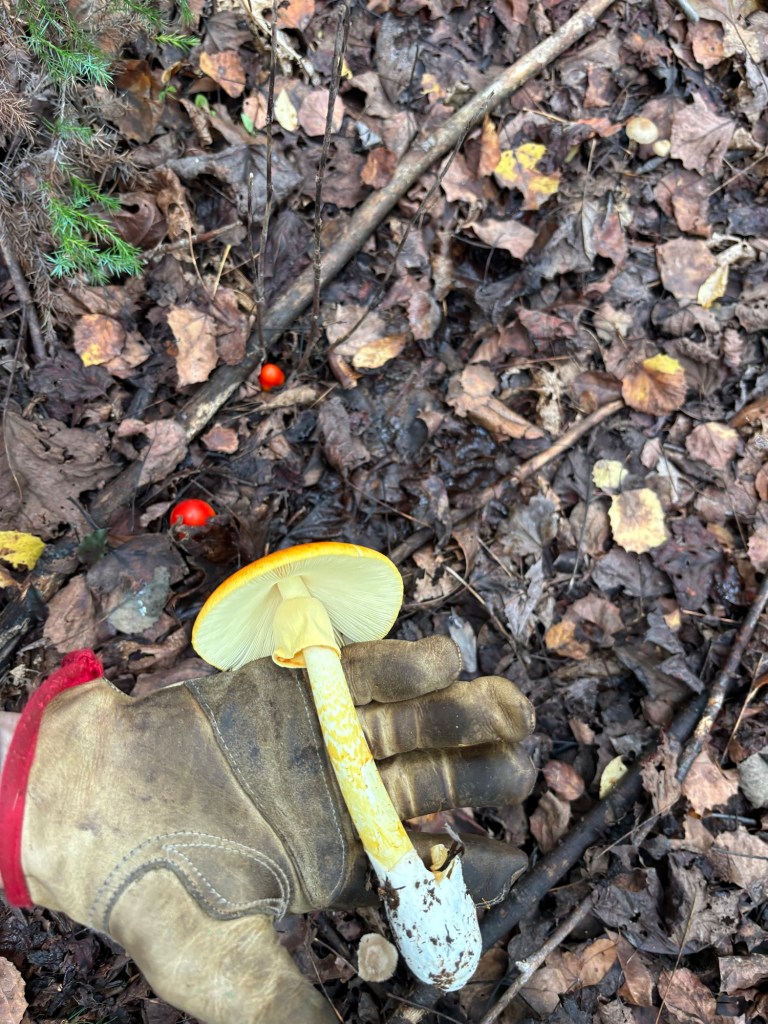
Amanita jacksonii found on the north side of SAFF. The choice edibles are found in pine and oak forests from Canada, through the eastern US and into Mexico.
The past three times we’ve pulled into the clearing with the truck, we’ve seen a young deer. It’s usually sleeping in the forest and it hears us and takes off. We don’t think it’s too afraid because it doesn’t run far though. We come upon it multiple times like it has become a game for the adorable creature. It’s always alone. We hope it stays safe and we understand it’s safest for it to not be comfortable with humans. We’re also seeing a lot of bear poop on the north side of the farm. No sign of our 4 or 5 year old male bear this year but we think it’s him. It’s nice to know animals are taking advantage of the nuts, berries, mushrooms and shelter the trees provide.
We walked all around the trails that were damp from an afternoon thunderstorm that hit just before our arrival. Right away, we saw new mushrooms emerging from the ground that hadn’t been there the day before. Sometimes it takes a few days for the mycelium to send up the fruiting body after a rainstorm —and sometimes it’s quick.
We basketed up our bounty and left the farm as the sun was setting. We were too tired to cook the mushrooms last night so we stored them in a paper bag in the refrigerator and hoped they’d stay in nice shape. It’s best to cook them right away and save them cooked either in the refrigerator or the freezer depending on how quickly they will get eaten. But these wild mushrooms, especially the chanterelles, need to be used quickly.
They were in nice shape this morning so we dry cooked them for a few minutes in a skillet on 7. Added olive oil and butter and cooked about 15 minutes. We let them cool and have them stored in the refrigerator. We are thinking of making a wild mushroom quiche.
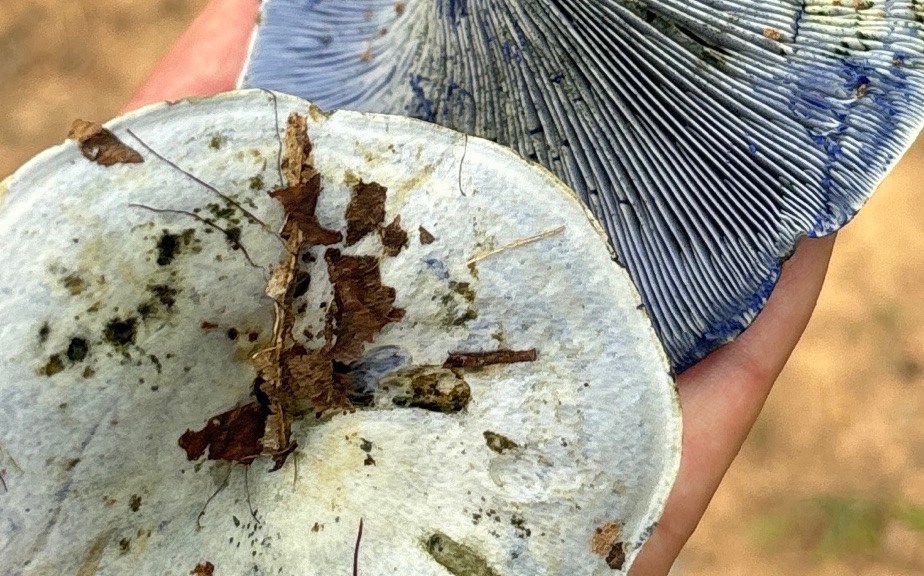
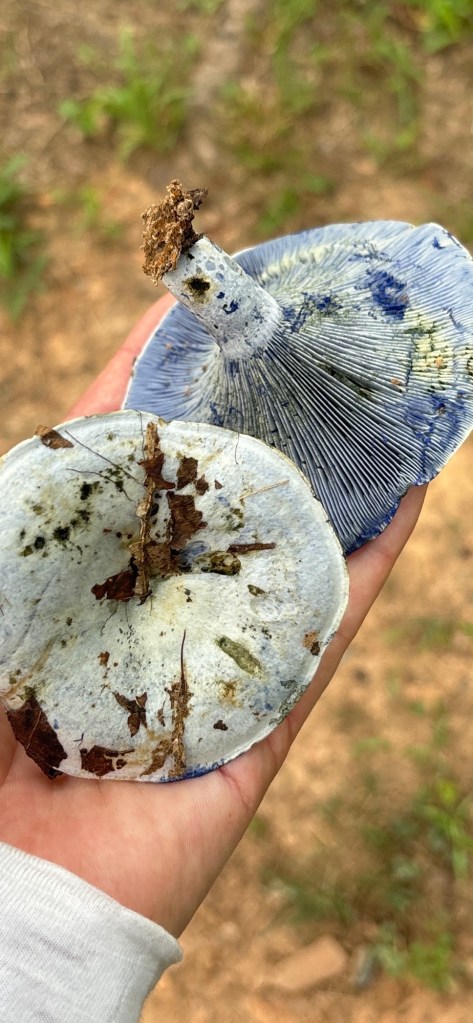
Amanita jacksonii have a bright red cap that can grow up to four inches A beautiful mushroom to find that looks very similar to deadly poisonous mushrooms. Care should be taken to identify and be confident before you plan to eat them. Our mushroom harvest yesterday included ghost chanterelles, Cinnabar chanterelles, Indigo milk cap, Frost’s bolete and American slender Caesar.
Cinnabar chanterelles found near the waterway right on the trail. These are choice edibles.
Tropical storm Debby is set to hit the farm tomorrow evening with rains expected to be 4-8 inches and peak wind gusts Friday morning at 34 mph. We can’t wait to see what this rain will bring since there’s been so many mushrooms already.
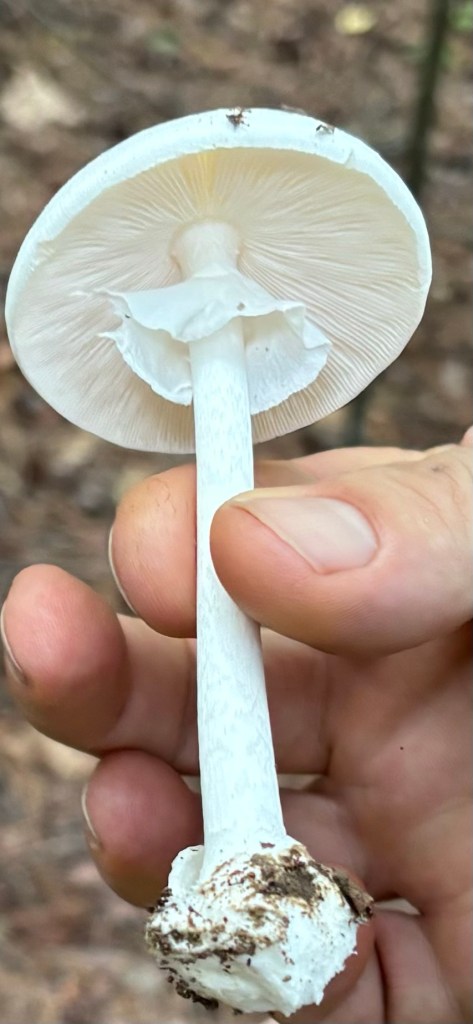
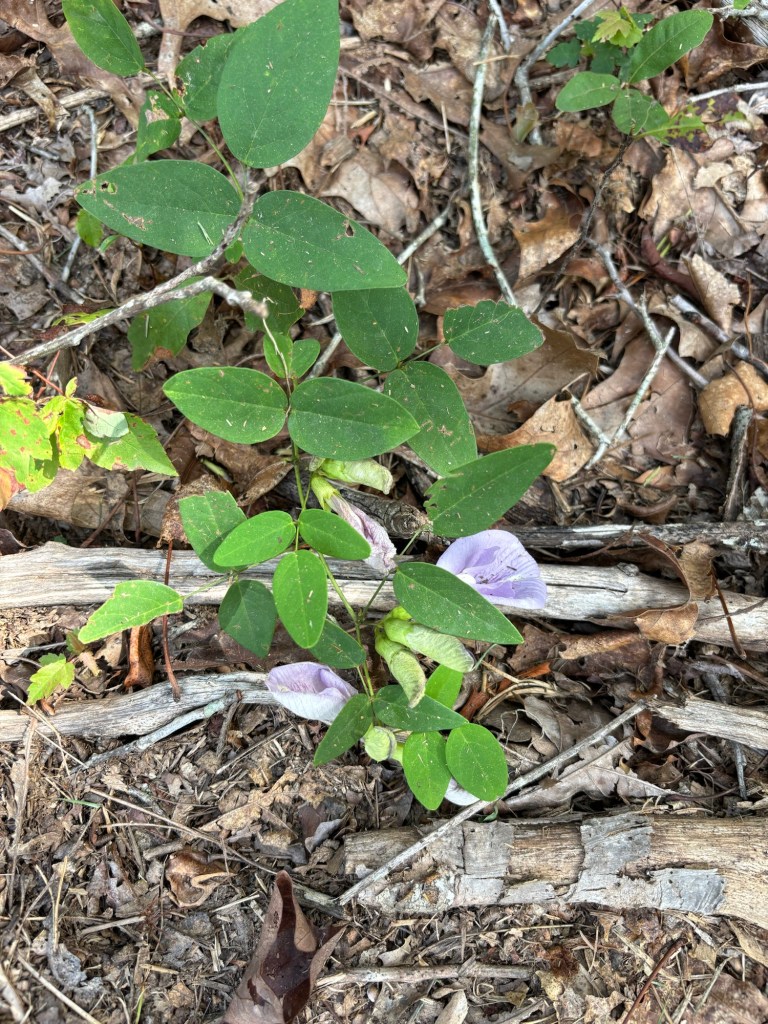
Retiboletus ornatipes, Ornate stalked bolete, is edible but not considered choice. We found them along South Trail. Lactarius indigo, indigo milk cap, is a choice edible found off Chanterelle Trail. We brought these beautiful blue mushrooms home to eat. Eastern North American Destroying Angel, Amanita bisporigera, a deadly poisonous mushroom found near North Trail.Clitoria mariana, pigeonwings, found up top in clearing near twin oaks
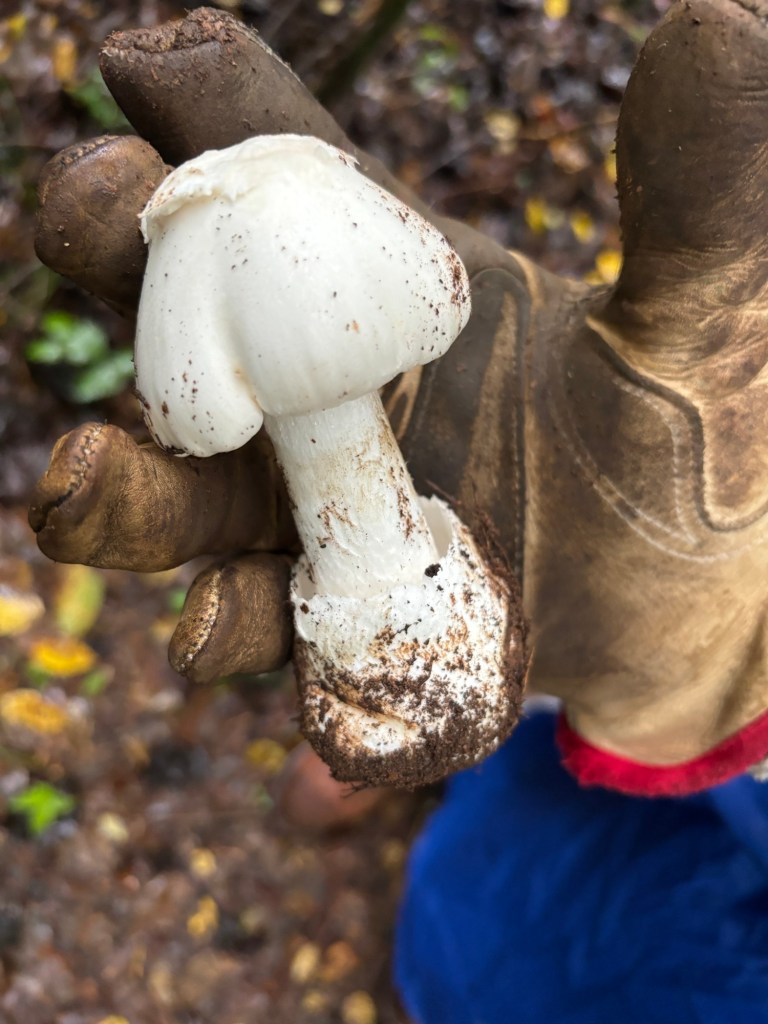
Amanita banningiana, Mary Banning Slender Caesar, has been found in every corner of Saint Andrews Forest Farm.
Mary Elizabeth Banning (1832-1903) was an American mycologist and botanical illustrator from Maryland. She described 23 previously unknown species of fungi. Her scientific achievements remained unrecognized during her lifetime. With no formal schooling or training, and during her free time, as she taught children and took care of her sick mother and older sister, she created the first mycological study of fungi in America with “The Fungi of Maryland.” This manuscript includes 174 13” by 15” watercolor paintings of various fungal species. She self funded her own study and lived in ever increasing poverty.
Banning dedicated her life to mycology and lived in a world where women could not be scientists. She has inspired many people with her love for fungi and who knows how many she has inspired with her accomplishments while facing tremendous hurdles and difficulties.
We blazed a new trail from SAFF’s north side to North Trail, and we have named it Mary Banning Way to always remember and honor this powerful, intelligent and creative woman.
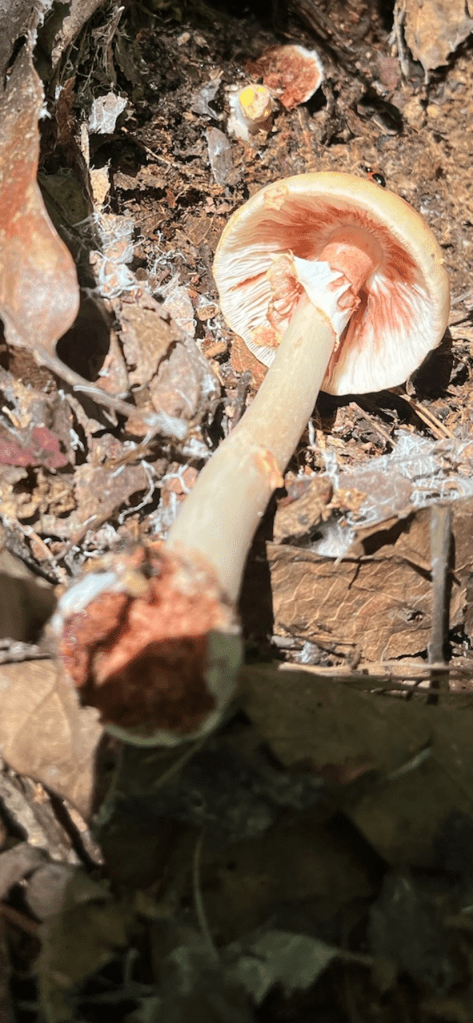
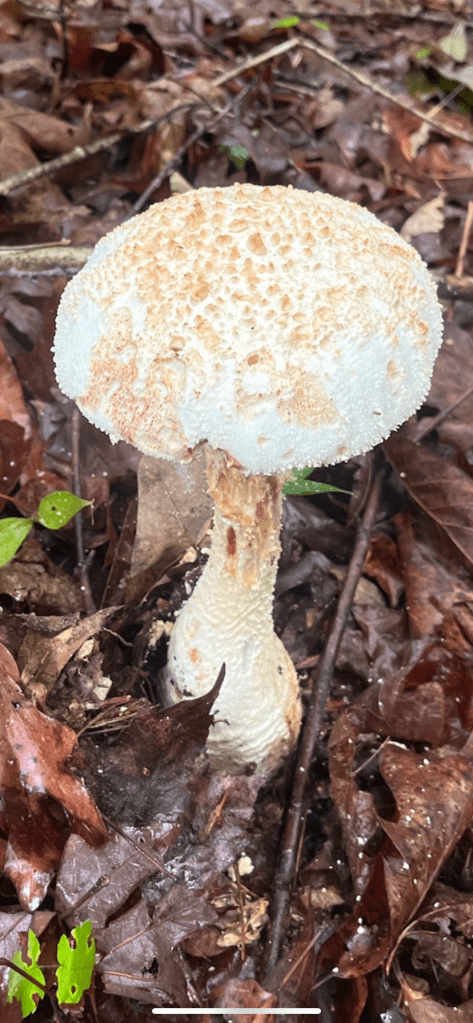
Amanita amerirubescens complex from below A. amerirubescens from above. Note the red blushing. These are edible when thoroughly cooked. We haven’t tried them. Amanita jacksonii, a delicious Caesar mushroom that can even be eaten raw. We cooked them and they maintained a wonderful texture. These were some of the tastiest mushrooms we’ve had. A. jacksonii, A. banningiana, Bolete edulis and Exsudoporous frostii in our basket. All were delicious. 😋
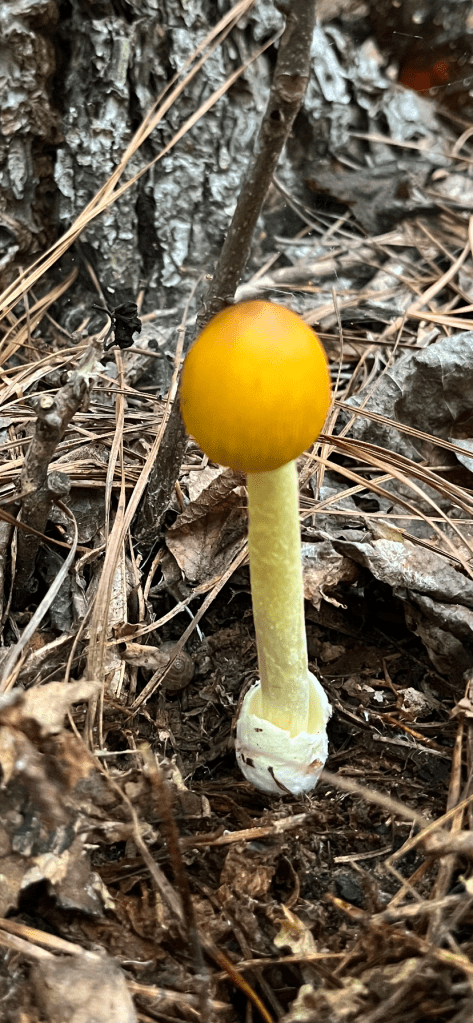
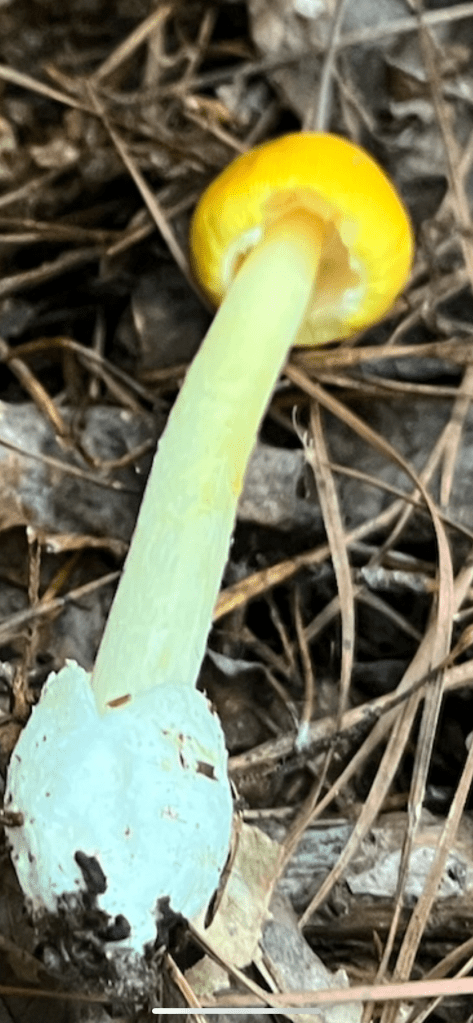
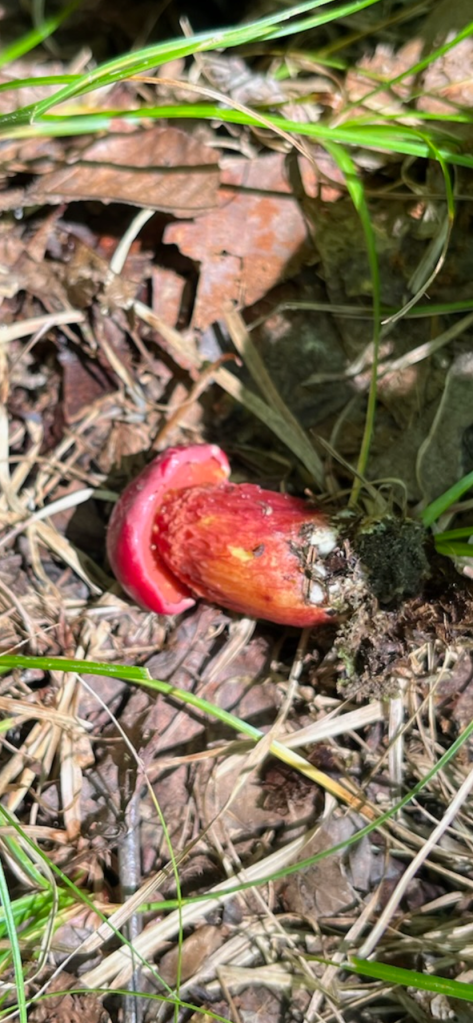
The forest is full of mushrooms with the rain we’re getting. Every day we go out and find something completely new. Since we bought the farm last year, we’ve searched for Amanita jacksonii. Saturday we walked down Amanita Way towards the wet weather gully and there they were. They were very large and strikingly red with orange caps and yellow stems. We have seen hundreds of Amanita parcivolvata, commonly called False Caesar, and these were instantly recognizable as the true sought after delicacy. The small one to the left in the basket is the first American caesar we found last week, Amanita banningiana or Mary Banning Slender yellow caesar. This is also tasty and special. They are much smaller and found in the northeastern and southern regions of the US.
A. banningiana has striations along the edge of the cap. It is found in oak-beech-hickory forests from Maine to Alabama.A. parcivolvata, or false caesar. Found all over SAFF. Amanita rhopalopus, American club footed Lepidella.
After steady rain, thunderstorms and cloudy skies in Buckingham for 12 of the last 15 days, we went out with high hopes of finally finding mushrooms. When we pulled into the clearing up top at SAFF, we saw hundreds of small puffballs. We found four other species before we made it from the clearing into the forest. Inside the woods, it seemed mycelium was everywhere we looked. SAFF has become a mushroom wonderland after the months of drought and heat, the rain and lower temperatures really brought the mushrooms.
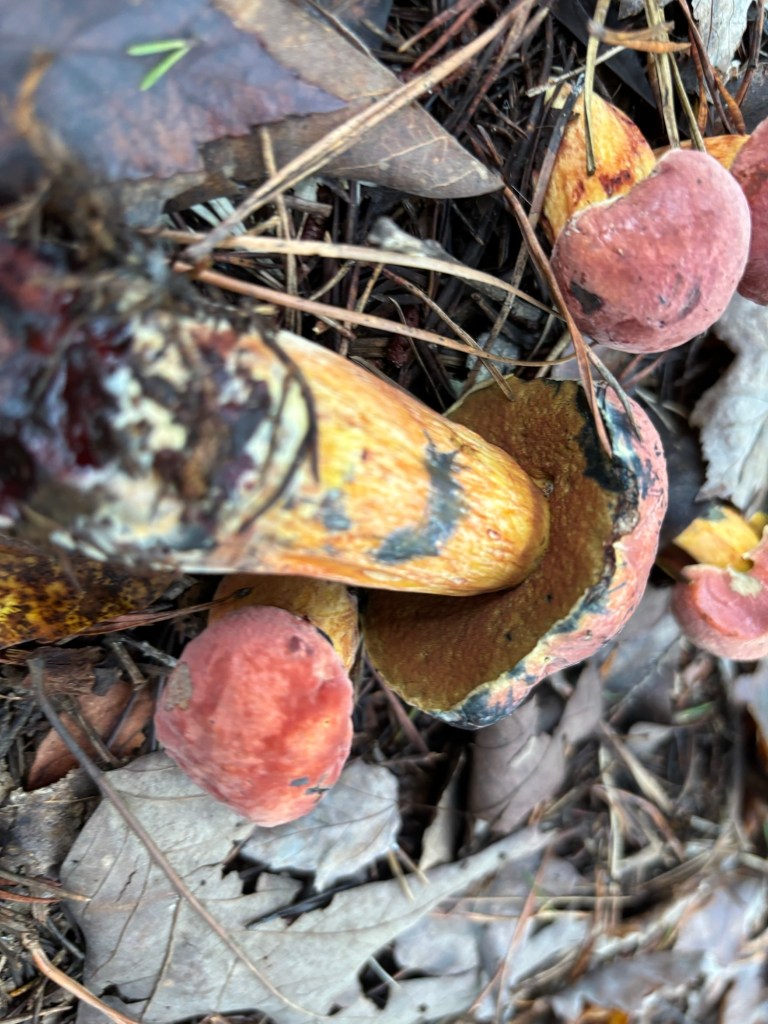
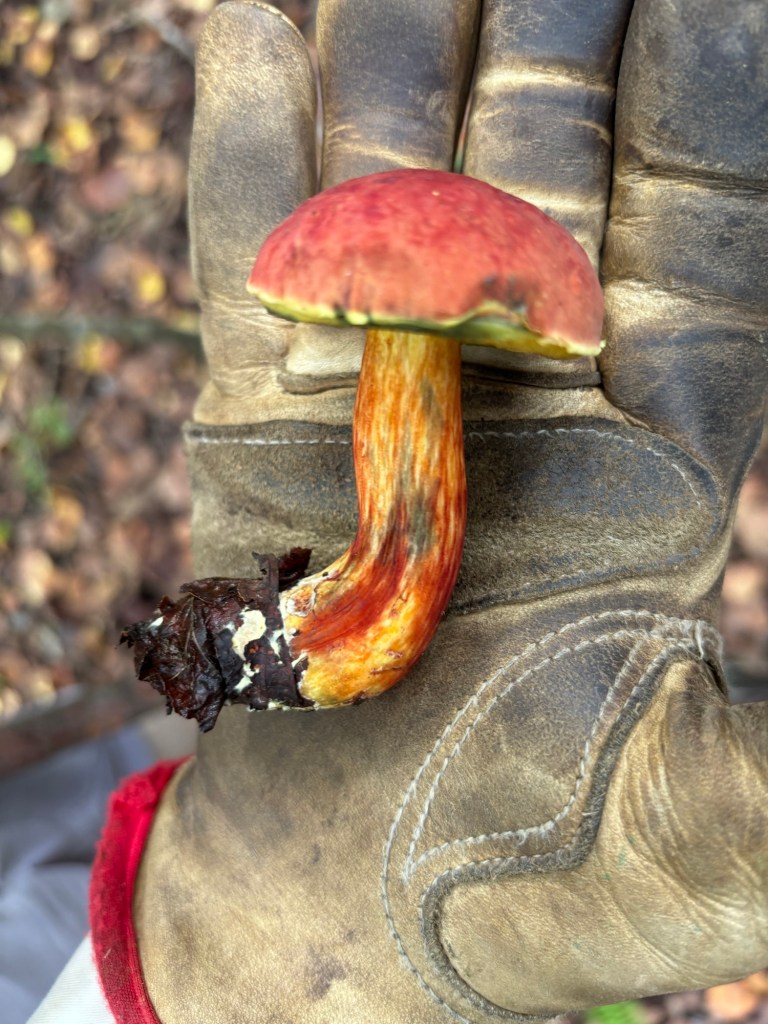
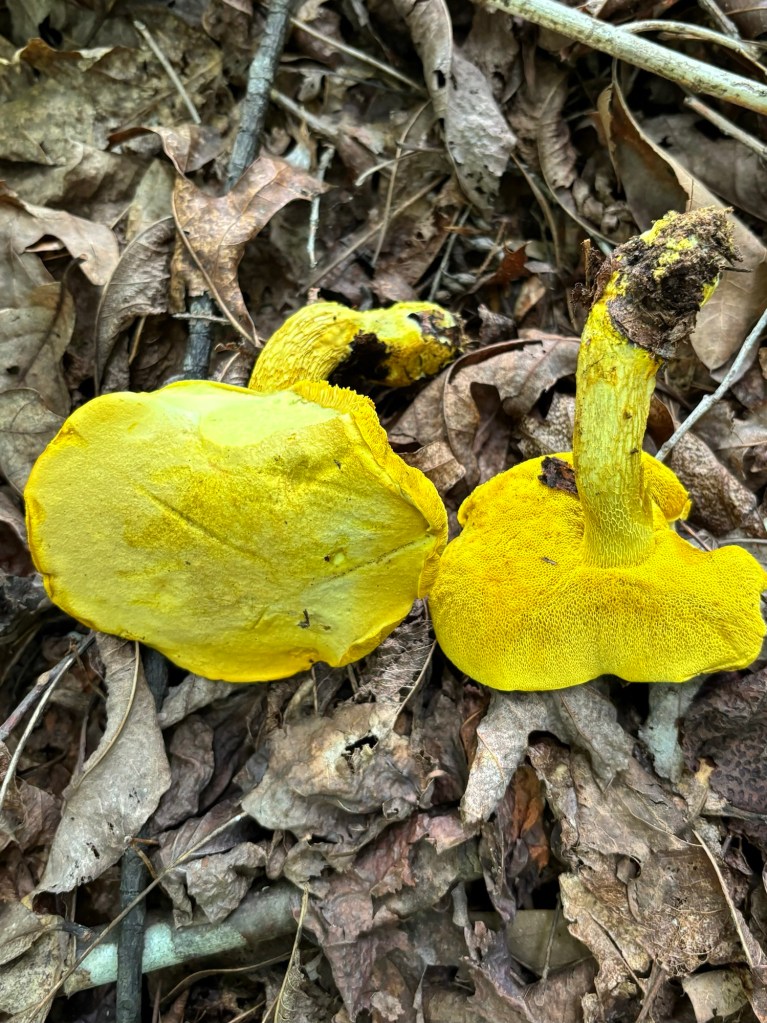
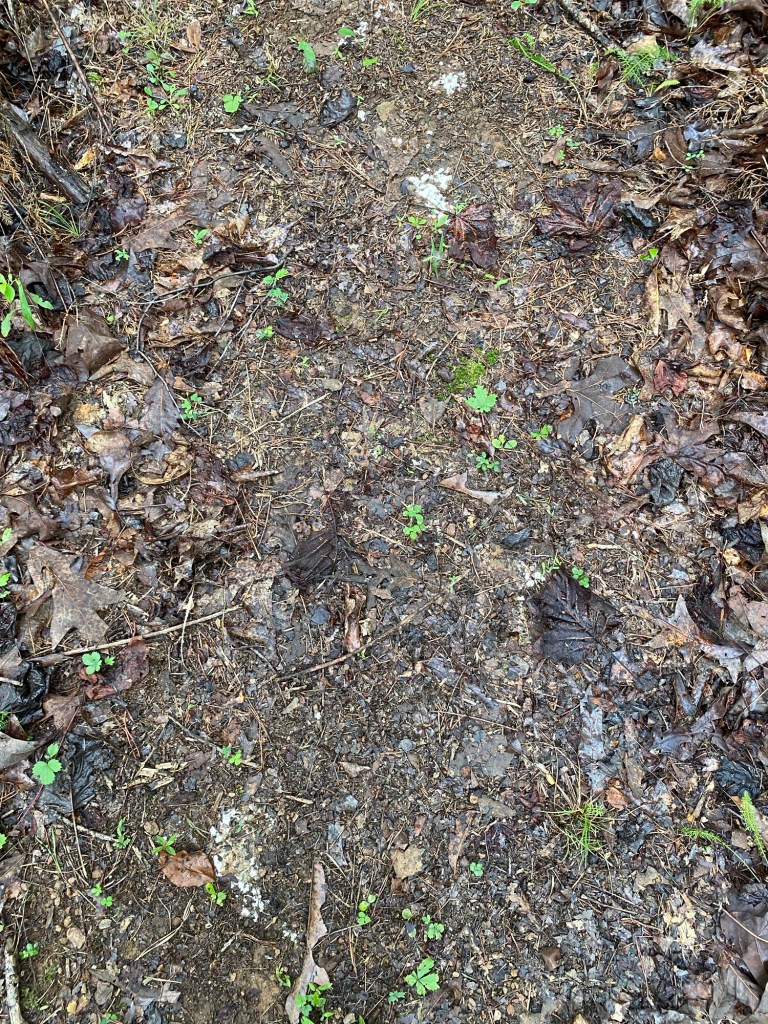
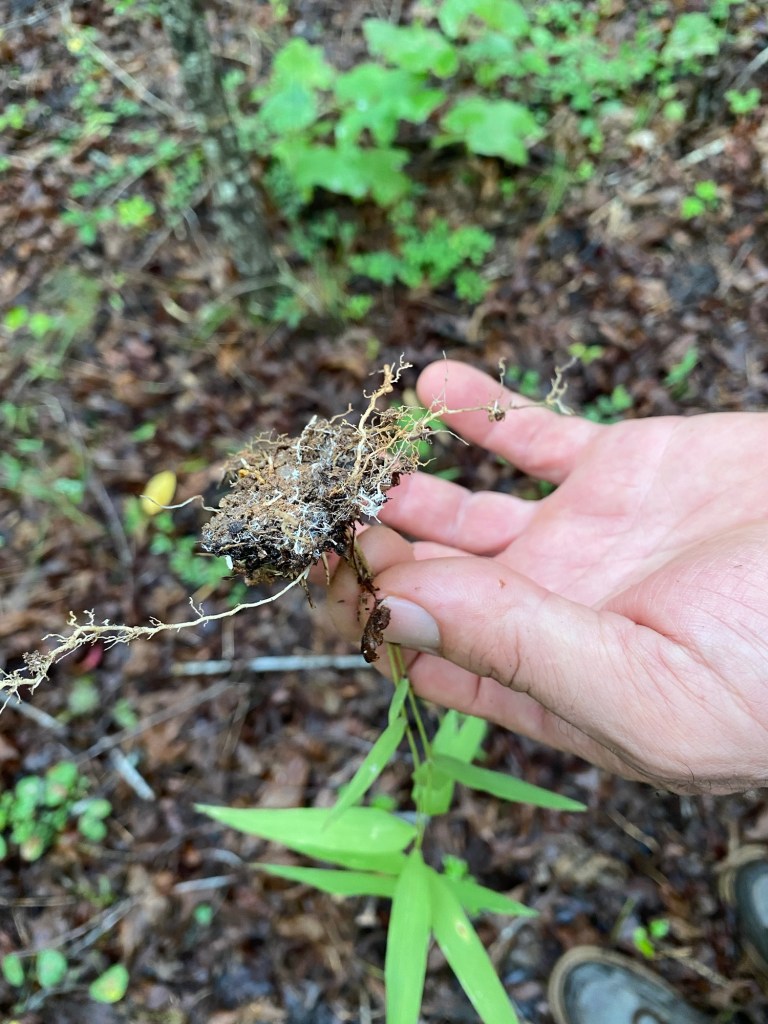
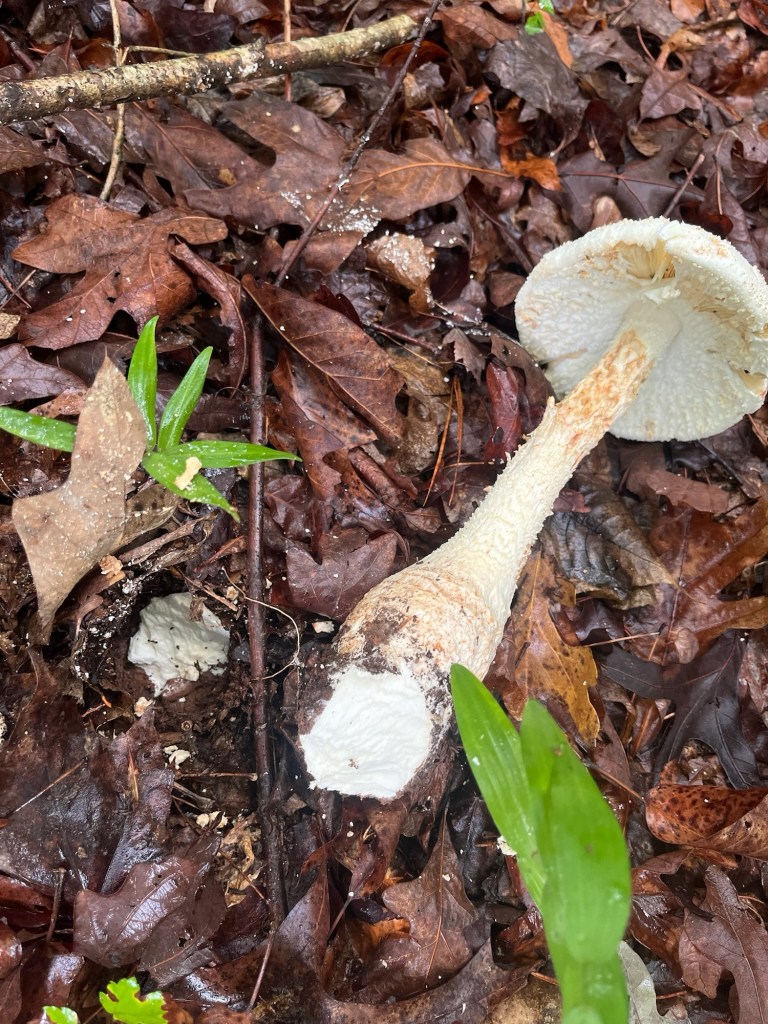
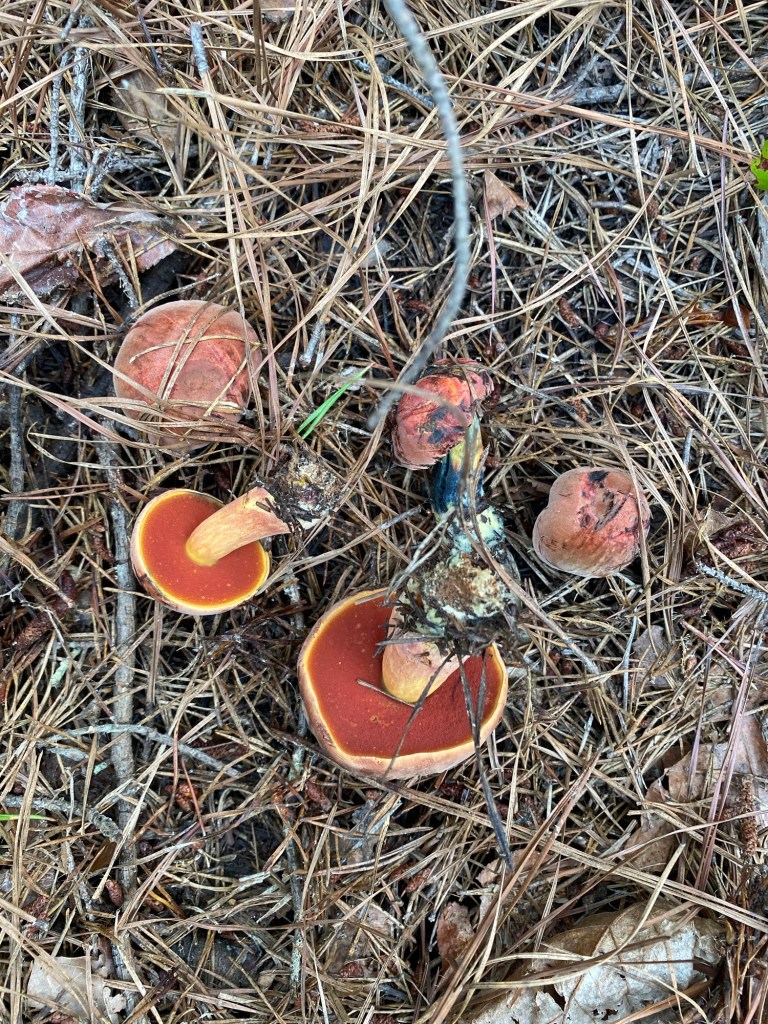
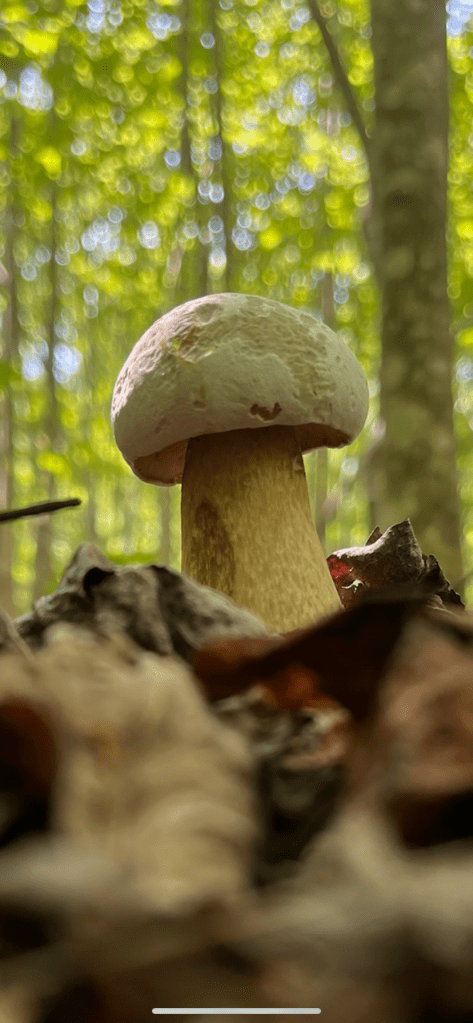
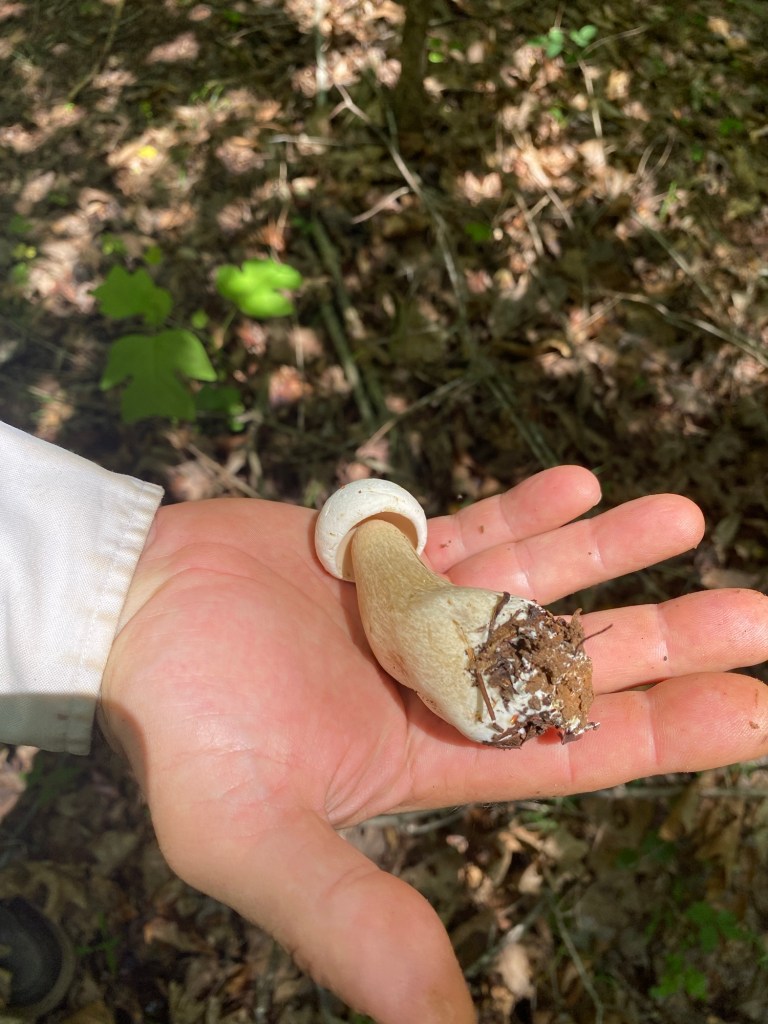
Mycelium appearing in white spots on the forest floor along Fern Way. Mycelium attached to Japanese stiltgrass roots an invasive we are pulling up where we see it in small numbers and plan to cardboard and mulch over it where it has a stronger foothold.Amanita rhopalopus, American Club-footed lepidella found near our road up top just before the south set back line. They had bugs all over them.Unknown Agaricus found in multiple spots along the south side.Frost’s bolete, Exsudoporous frostii, at bottom of slope near our crossing of waterway into the pawpaw grove. This was a spectacular sight. It’s edible and tastes acidic like lemon. Mycorrhizal with oaks.Top of the Frost’s bolete.Red mouth bolete, Neoboletus subvelutipes, is inedible and cause gastrointestinal distress. Red pores or spores are typically a warning sign with boletes. Boletus subluridellus a red pored bolete that is supposed to be edible. We have not tried it but reports are to boil first then it’s okay and delicious. Mycorrhizal with pine and oak.White boletes found in the flood plain below the slope at SAFF. These are edible. Leccinum holopus, white birch bolete or ghost bolete. White birch bolete were all over the bottom near the waterway. Lilac bolete, boletus separans, found with oaks and conifers and all over the forest floor at SAFF. These are delicious and beautiful mushrooms, a choice edible. We have found pounds of these.
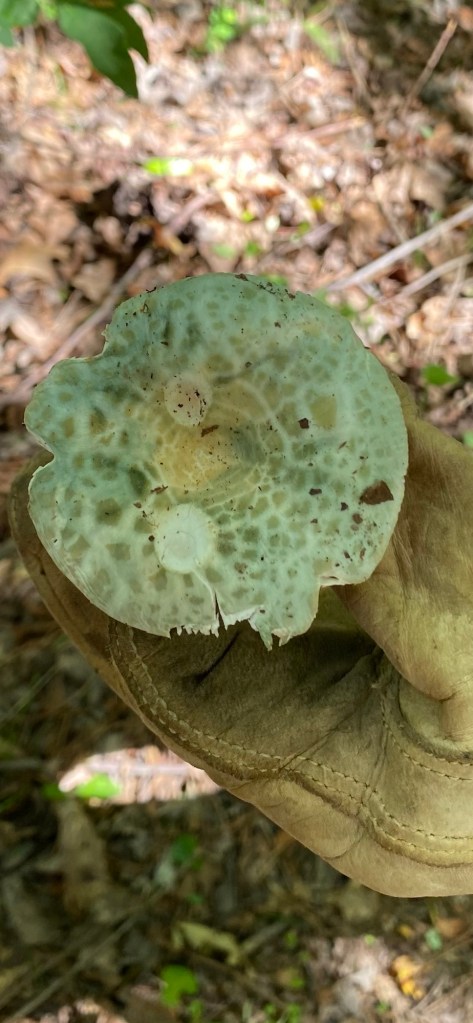
Russula parvovirescens, Blue-green cracking Russula, found along Fern Trail. This is a very good edible mushroom.
We took the afternoon at the farm and we found it drier than we expected. Blueberries are ripening. We found new mushrooms we hadn’t seen before. We are planning to camp next weekend and looked for a fire pit location and tent spots. The weather was beautiful with a cool breeze in the shade and the sun shining.
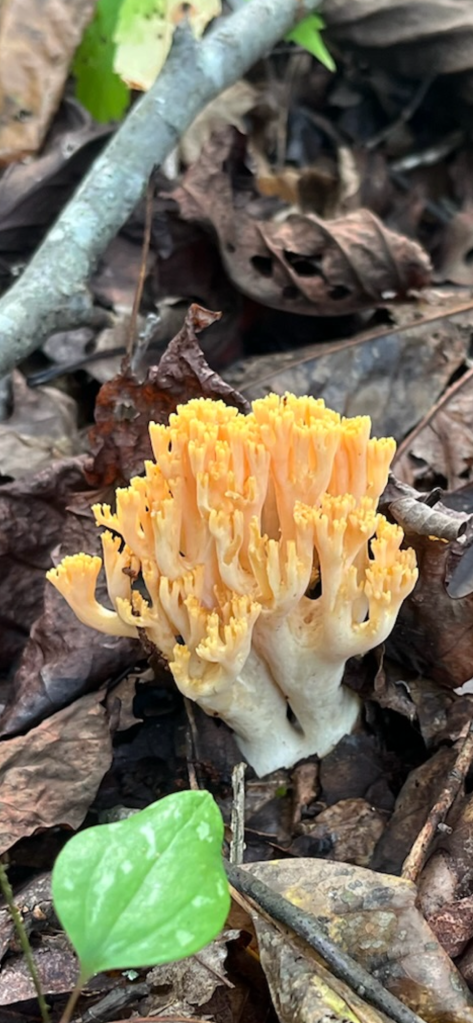
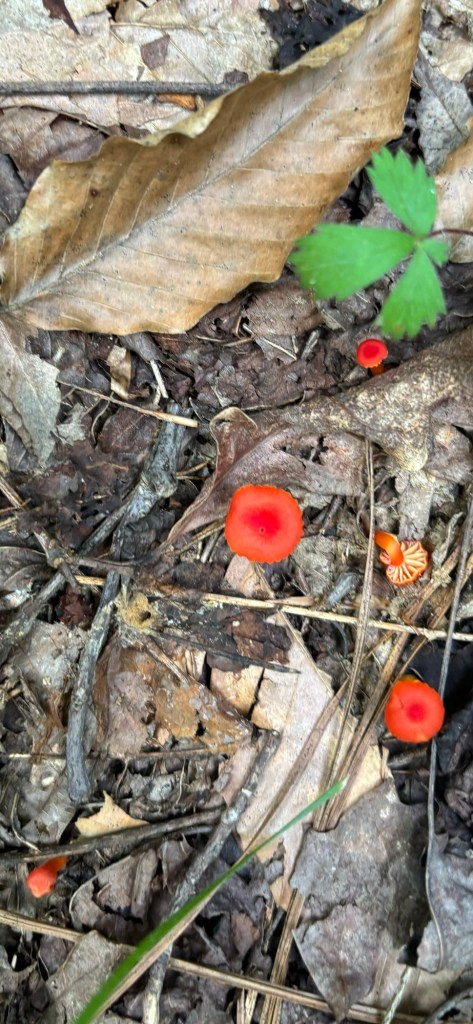
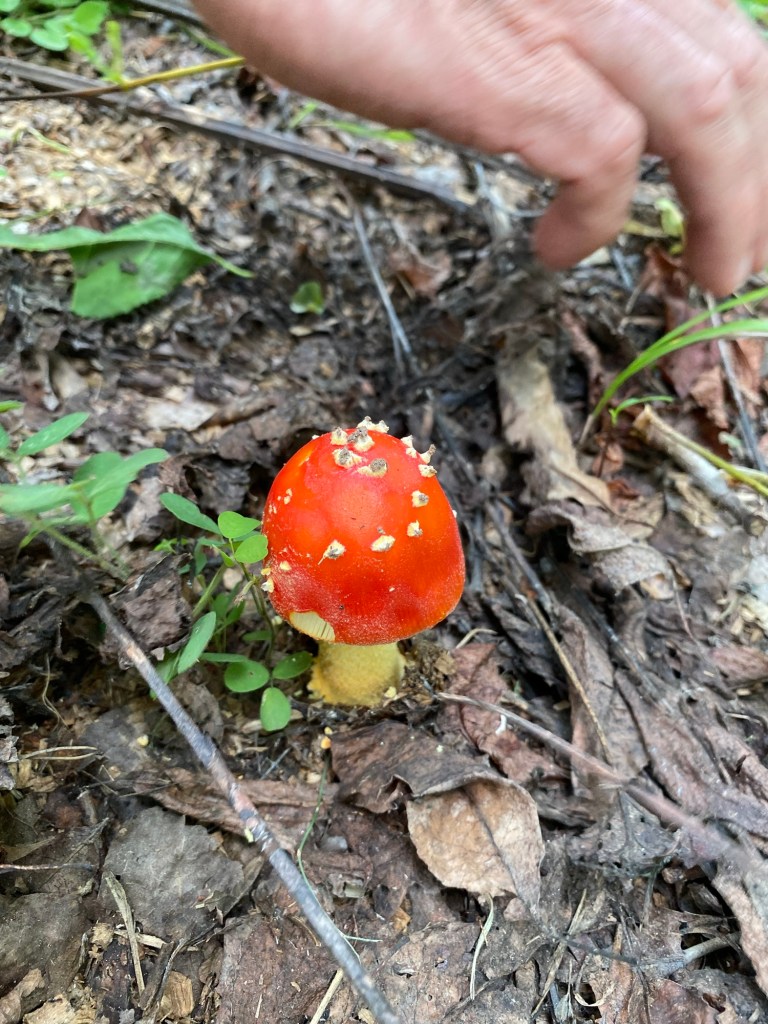
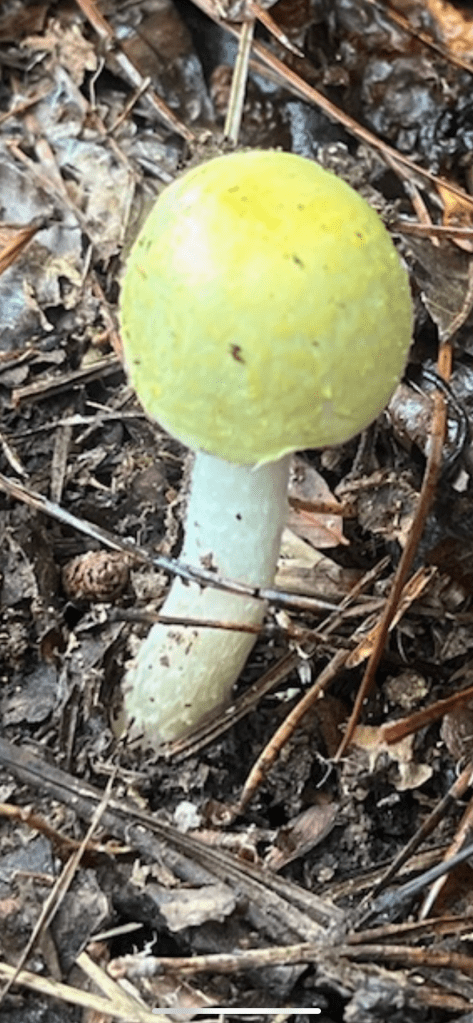
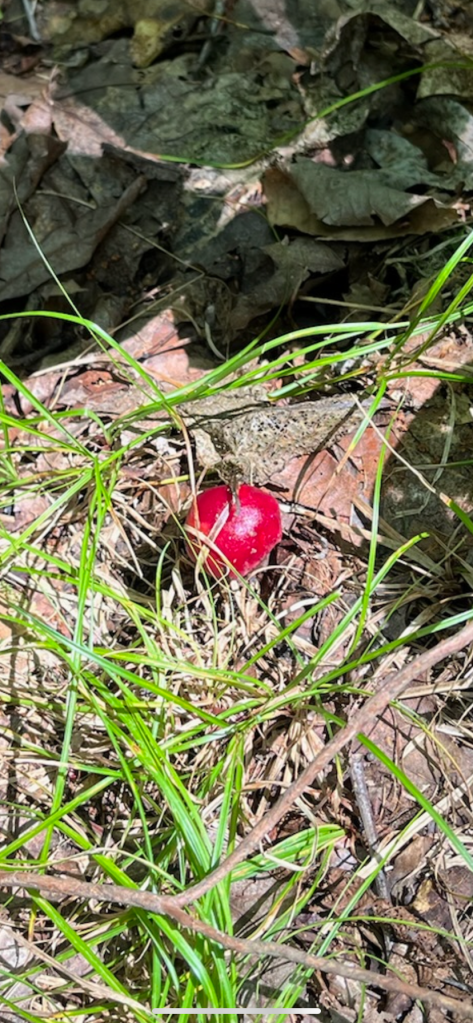
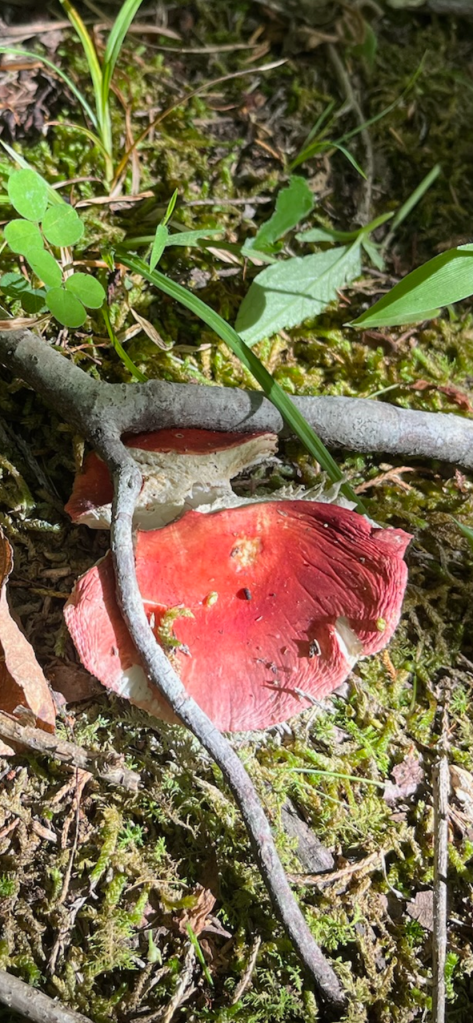
Amanita flavoconia, Yellow patches, found on the south end near Black Trumpet Way. This stick on top of the Russula is actually a root! There are 80 species of red Russula in North America and can only be identified to species level with ITS sequence. It’s recommended to do a spit test to see if it tastes spicy. If so, they need a very thorough cooking to be rendered edible. (But may still be too spicy for most.) Fermentation can eliminate spiciness. However, if not spicy, they can be eaten raw even.Coral fungus found up top.
Saint Andrews Forest Farm Blog
Is this your new site? Log in to activate admin features and dismiss this message



 St Andrews Forest Farm