Tag Archives: agroforestry

SAFF Pre Spring Update

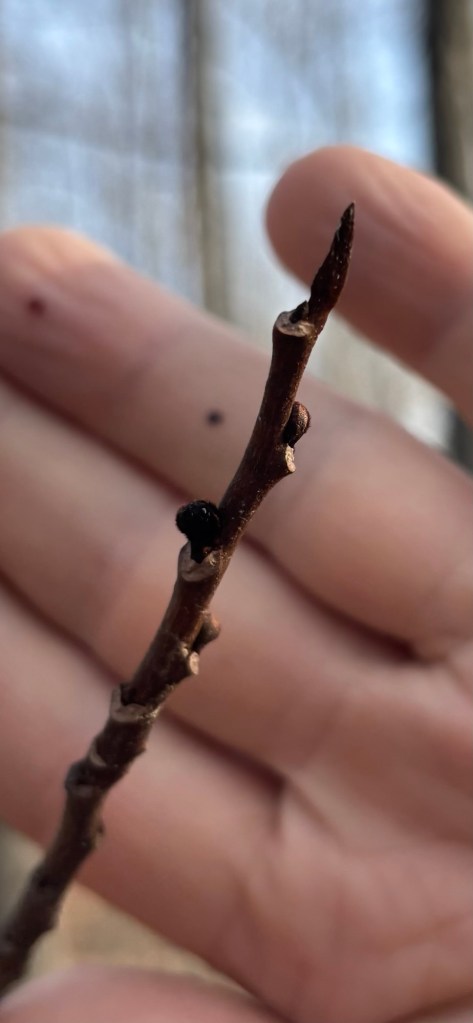
Asimina triloba, pawpaw, spear like leaf buds and fuzzy round and purple flower buds staying tight despite the 80 degree days in Buckingham County Virginia last week.

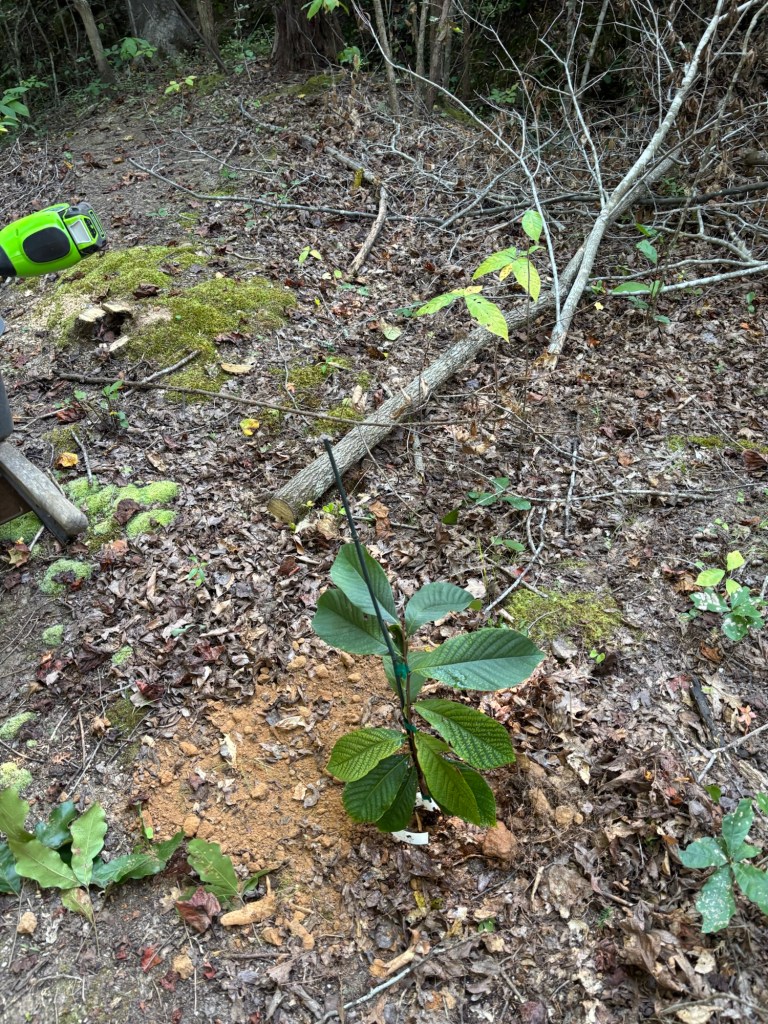
Yesterday, we visited Saint Andrews Forest Farm to work on our road project. We are bringing the road from the main driveway to the old farm road on the north side, in order to use the tractor to access the new Pawpaw orchard we’ve planted the past few years. We will need it for everything —bringing trees, compost, compost tea, water and collecting and taking mulch to the pawpaws. So far, we have carried everything in backpacks and our wheelbarrow. Phew! We have road access already with the tractor to the south end and the Old native SAFF orchard. We just ordered a trailer for the tractor that will hold up to 750 pounds. It will come tomorrow and we will get out there to use it to transport compost to the SAFF old native orchard at the bottom of the main hill. We’ve been wondering if this orchard was planted and farmed by Native Americans in the area. Or if it arose from just one tree and is made up of clones. Or both. The trees look old. They could be hundreds of years old. While individual root suckers only live around 40 years, the clonal root system can live for centuries. One reason the trees aren’t producing fruit may be because they are all clones of one mother tree. This is most likely. They need novel dna. So that’s why we started planting new pawpaw seedlings and cultivars. These older native trees at SAFF have flowered in mid April in 2024 and 2025. The first year we noted 15-20 flower buds. In 2025, we had fewer than that with the drought and none of these produced fruit. After we hand pollinated both years, we got fruit to set but they dropped within a month or so. This year every tree that’s over 6 feet tall has dormant winter flower buds all over them. Hundreds of hopeful fuzzy little round nodes everywhere. We are beyond thrilled. An unexpected surprise!
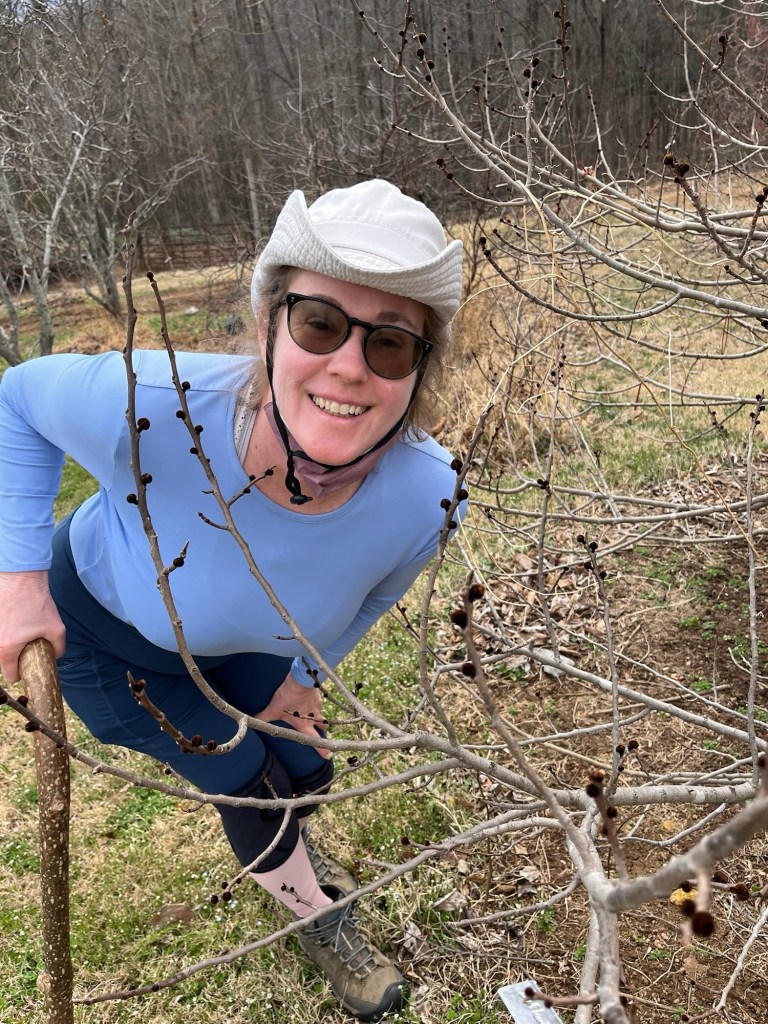
Our plan is to ensure these trees with fruit are watered regularly during any dry periods and we also have plans to get compost to them this week. We are going to test our compost tea first to make sure it isn’t too acidic and doesn’t burn the roots. (Thank you, Judy! For the reminder 🥰) The fruit may drop as before and we still want to do all we can to keep them going. Each year they look healthier, greener and leafier. We’d love to get some fruit to taste and share from the native trees. It would be great to plant seedlings from our native fruit! We have never tasted any “bad” pawpaws so we expect them to be scrummy. We are hopeful they will be a fine representation of Virginia’s native wild pawpaws. This year we will collect some Asimina triloba dna from around our foraging areas and public parks and gardens in Virginia to increase the likelihood of fruit set. We hope this helps kickstart pawpaw fruiting at SAFF in 2026.
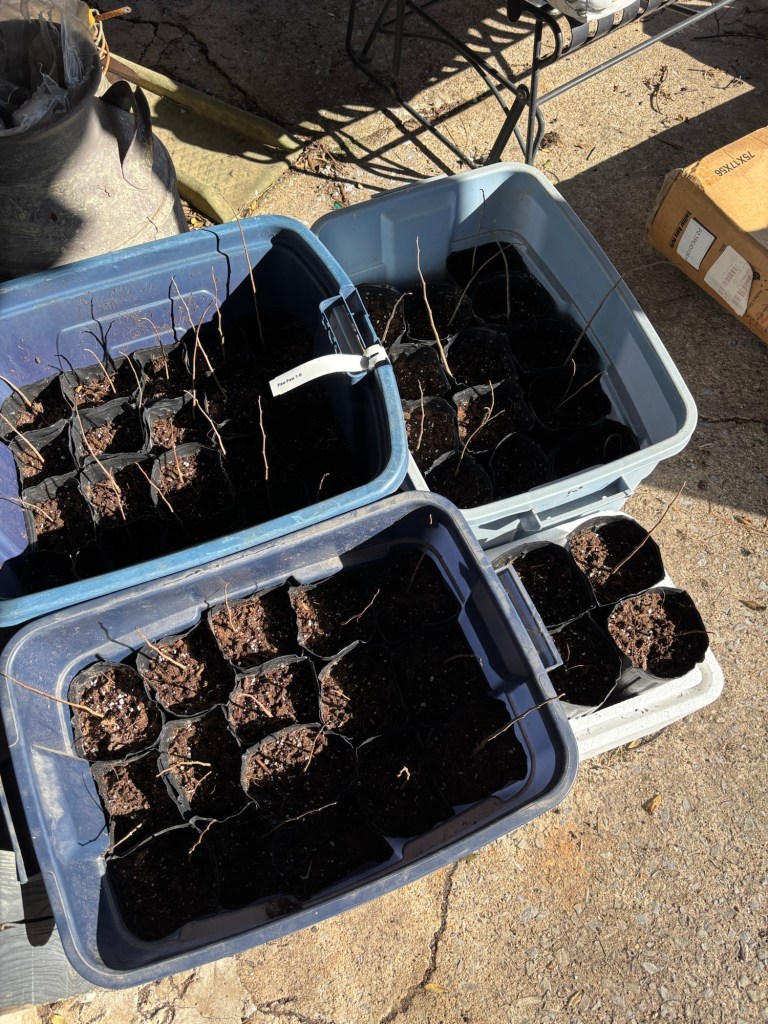
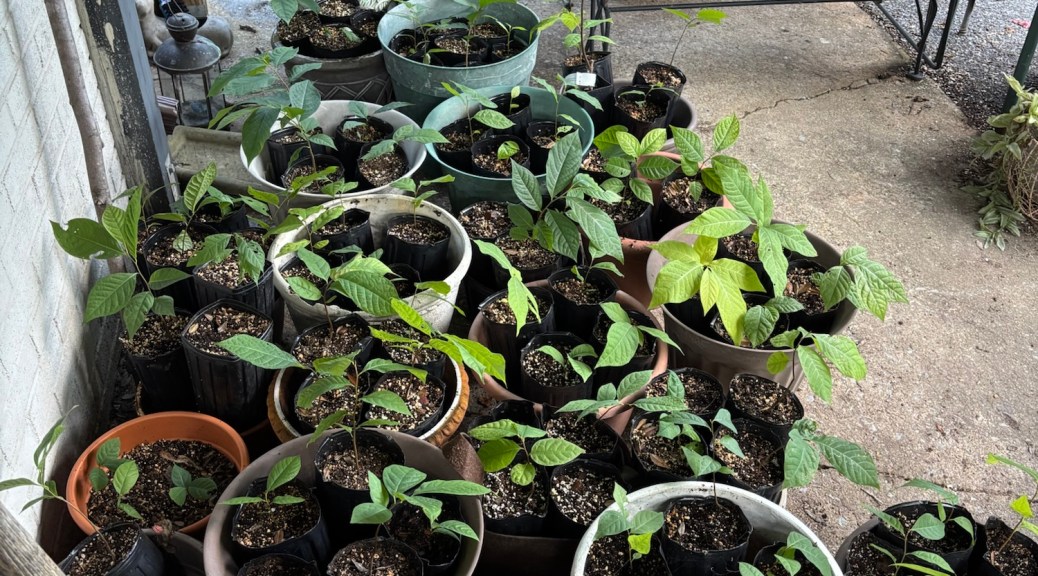
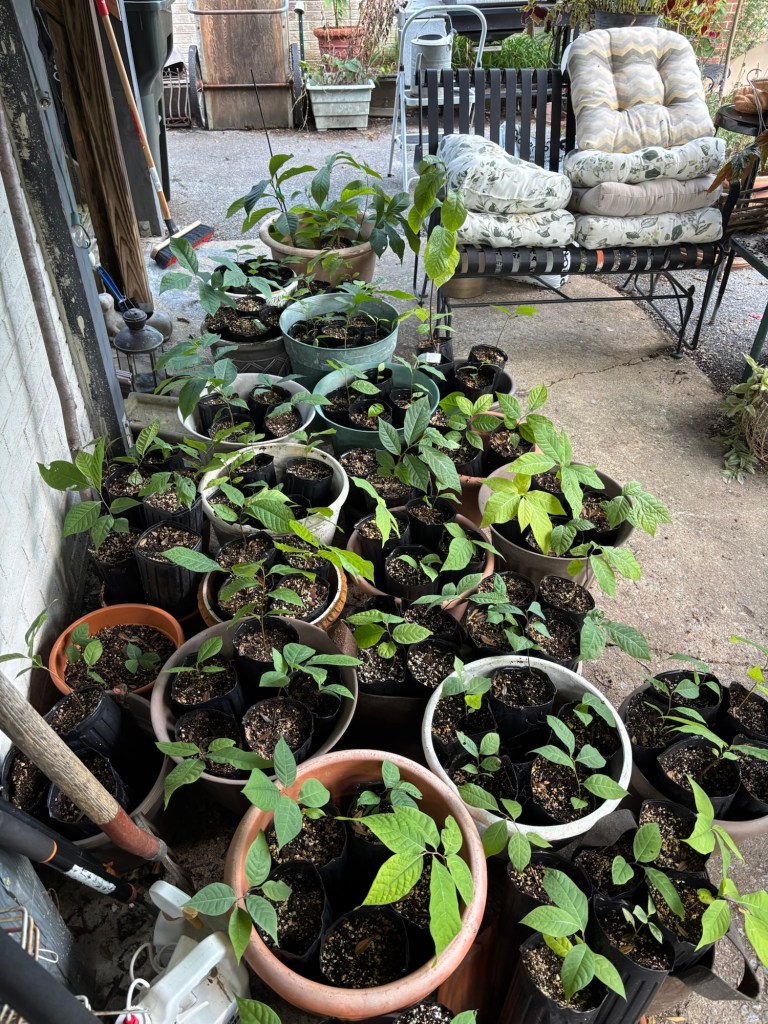
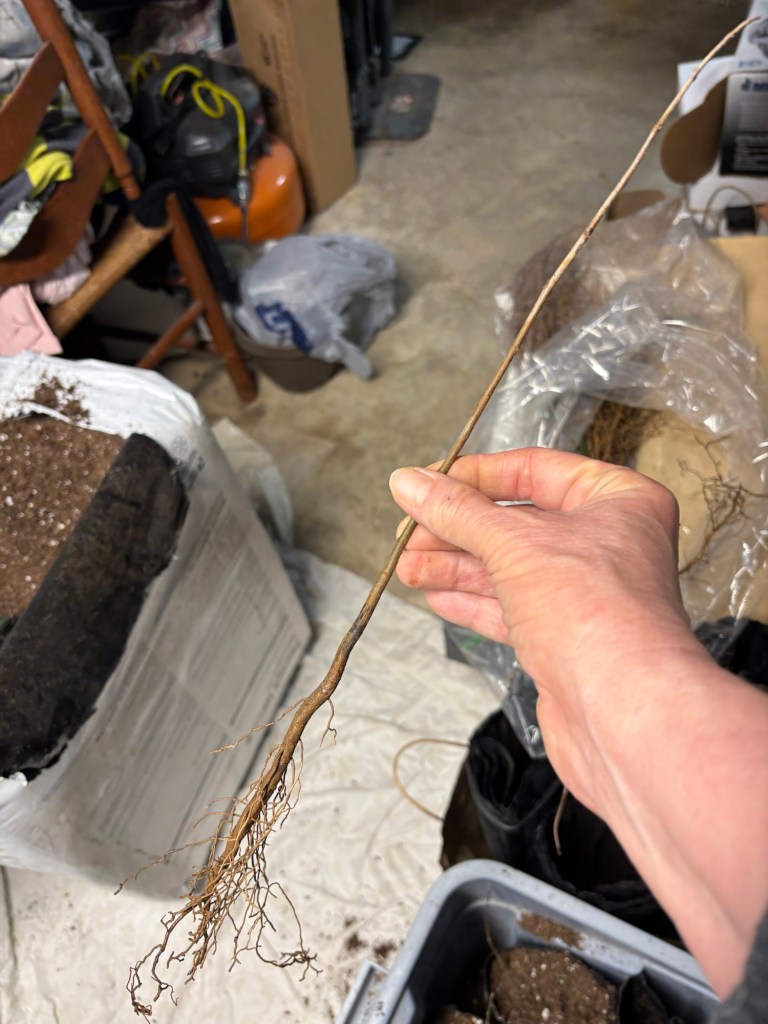
We also just planted 53 bare root seedlings we ordered from the Virginia Department of Forestry. We picked them up in late February and planted them that same day in deep tree pots. They all looked great with long deep tap roots. They appear to be the same age as the trees we planted last year. (1 year)
We will plant these year old seedlings at SAFF this spring or fall depending on the weather and how they fill in their pots.

The 180-200 seeds we collected from pawpaws last summer (primarily from the Sunflower cultivar at Edible Landscaping in Afton, Virginia because the late frost that melted off the flowers at all of our other foraging spots) have stratified and we will pot those up in June to plant in the ground at SAFF in the Fall of this year. We are eyeing some of the local master gardening sales and the Hahn Horticultural Garden sales (April 9th) coming up this spring for more opportunities to collect seeds and trees. We plan to also collect pollen specimen from multiple locations around Virginia. We plan to visit Blandy Experimental Farm in Boyce, Virginia to see and collect Virginia pawpaw dna for our SAFF tree project. They have a Mother’s Day Plant Sale on May 9th and 10th. We have been using sammich baggies and qtips 😀 to gently collect dna from the open flowers at SAFF in the old native colony of pawpaws. Last year, and in 2024, we used our SAFF native flowers only to hand-pollinate the trees, but also this year we have our baggies and qtips with us now so we will stop and collect dna from any pawpaws we find with open flowers. We will help the pollinators out while collecting novel dna to bring to our old native SAFF colony. We’ve noticed a lot of bugs gnats and flies in the woods already. Especially down by the main waterway where the old native pawpaws are and the creek has water flowing. We’ve noticed our native colony is usually the last to open its flower buds each year down in its sheltered valley by the waterway. We stopped by Edible Landscaping in Afton Virginia yesterday and they had buds about to open. We will stop over there again this week to check their cultivars and select trees.

We added two Russian cultivars of pomegranates to our fruit tree population. A Salavatski and a Lyubimi. Both cold tolerant. We will see. The curse and blessing of living so near Edible Landscaping in Afton, Virginia. There are many wonderful nuts and fruit trees and shrubs!

We’d like to also begin adding Spicebush, jujube and gooseberry to the new Pawpaw orchard we planted with cultivars, select seedlings and some native fruit collected from Rockfish River locations along Howardsville Road. We will spread the American Hog Peanut that grows in our native SAFF pawpaw orchard into the new orchard. It is a nitrogen fixer and curls along the old pawpaws helping to keep them fed. We will bring their seeds to the new Pawpaw Orchard at the bottom of North Trail to encourage the companion plants continuing beneficial relationship. We are looking for littlebluestem grass-seed to spread in areas with erosion on the south end and set back line and in the clearings.
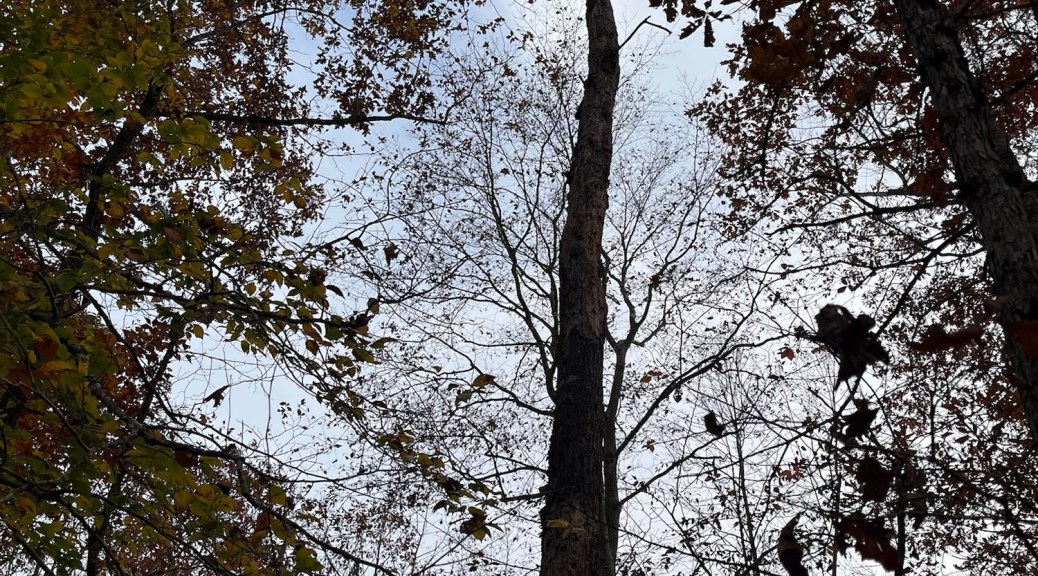
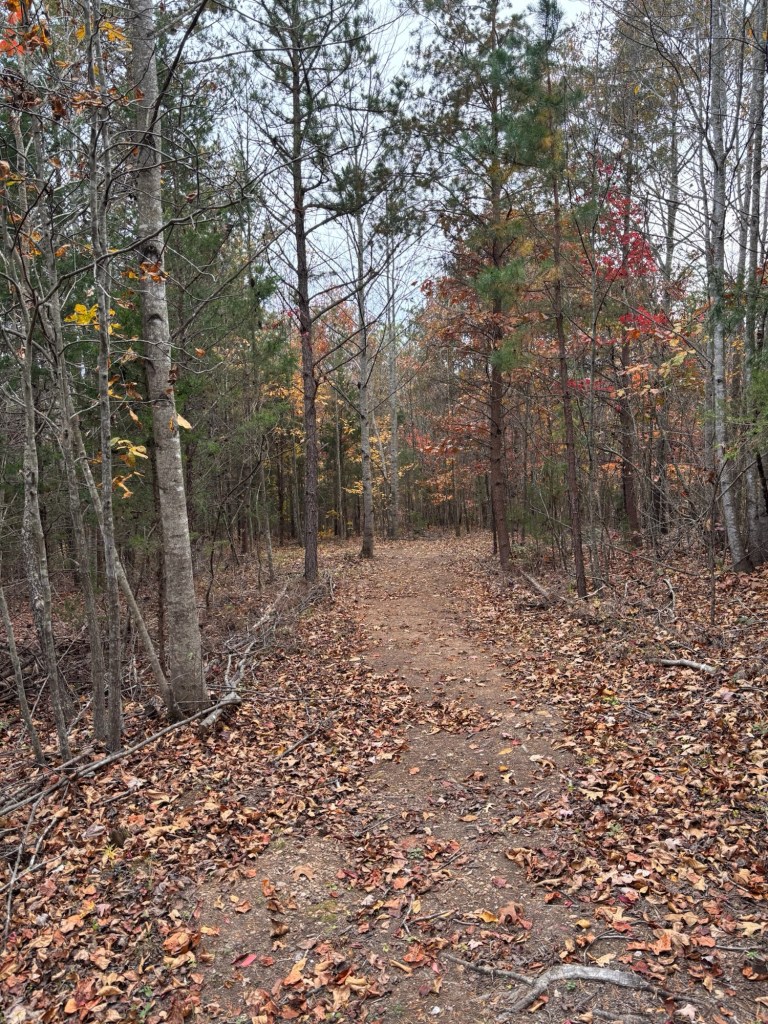
Afternoon walk around SAFF on Sunday

We started our walk down Red Hawk Rd and made a new trail from the bottom at the roundabout to down to Fern Trail.

The drive over to SAFF was beautiful with fall color. We travel from the Shenandoah Valley over Afton Mountain through Rockfish Gap and Howardsville to Buckingham. We oohed and ahhhed the whole way. Here’s a quick video of Howardsville Rd.

31 seconds of trees putting on a colorful show. Sound on for beautiful jazz as well.

We unloaded the lumber we found at the Restore and checked out the pawpaw and fig trees planted up top. They have yellow leaves and are losing most of them. Then we headed down Red Hawk Road to get down to Fern Trail. We checked out the Rappahanock cultivar and the seedlings planted as well as the cluster of natives. Most have gone fully dormant for the winter, especially the native SAFF trees. A few of the cultivars and seedlings look great; fully leafed and deep green still. Gleaming. It’s more typical for them with the temperature and season to be dormant. We have not yet had a hard freeze in Buckingham, or in Staunton in the Valley—which usually frosts first. Once dormant, their watering needs will drop. Phew! 😅
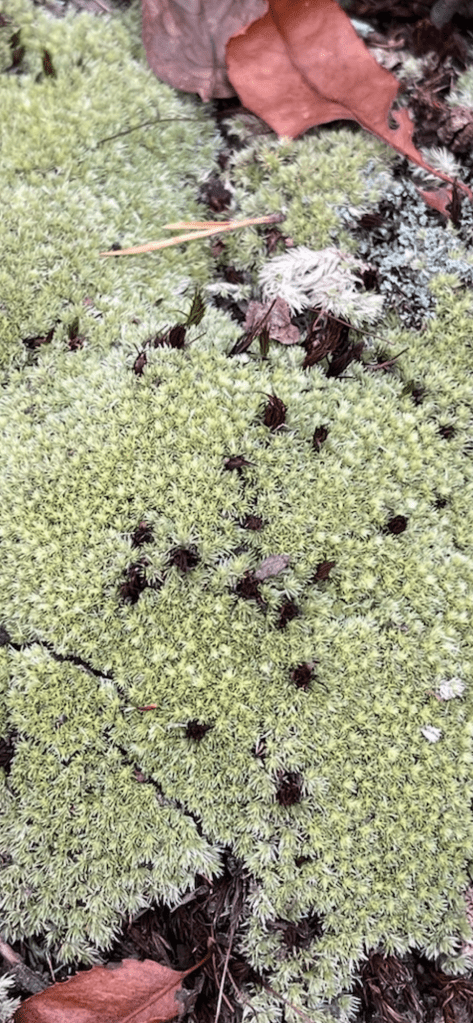
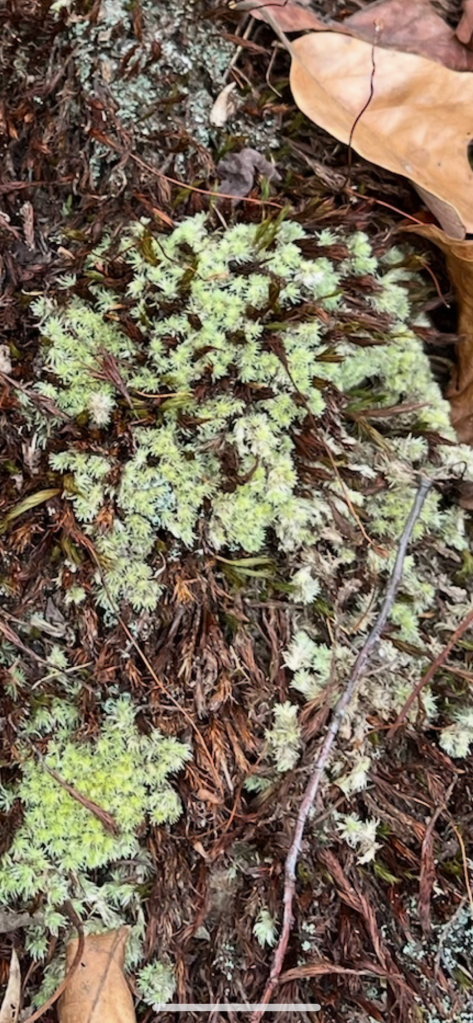
Leucobryum albidum, white moss or white pincushion moss, is common here in the eastern US. It creates a habitat for amphibians, reptiles and insects, stabilizes the soil, retains water, cycles nutrients and contributes to carbon sequestration.

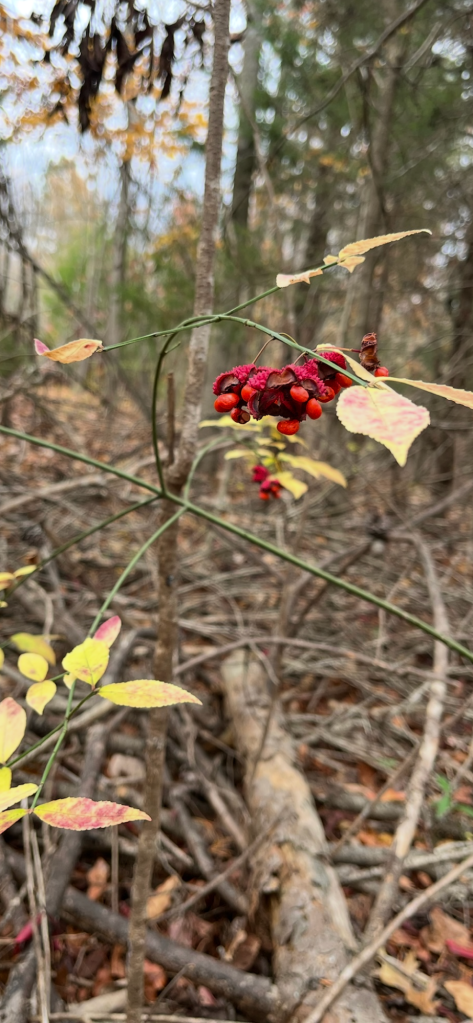
Along our walk we found white moss and strawberry euonymus (Euonymus americanus). We also went down to the waterway to check on this oak snag in the picture below. SAFF had high winds for several days and the last time we saw it, there was a bend and crack starting.

White moss beginning to grow.

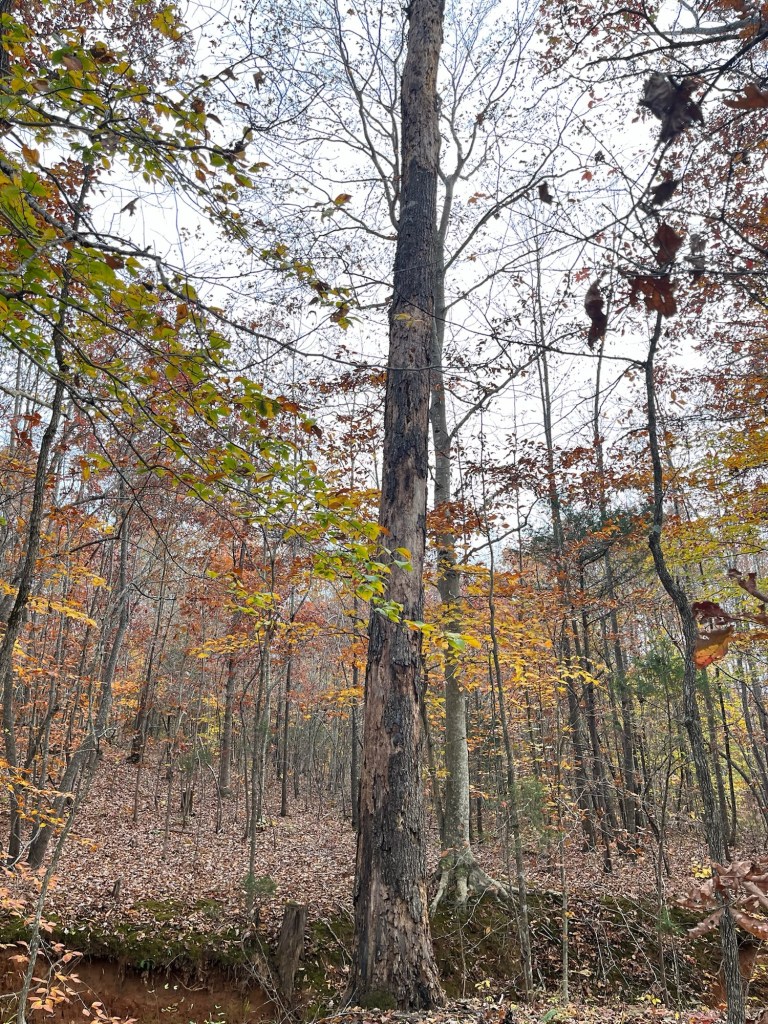
SAFF old oak snag we check on regularly. It looks as though it will fall to the west towards the Pawpaw Peninsula.

Pawpaw Planting at St Andrews Forest Farm

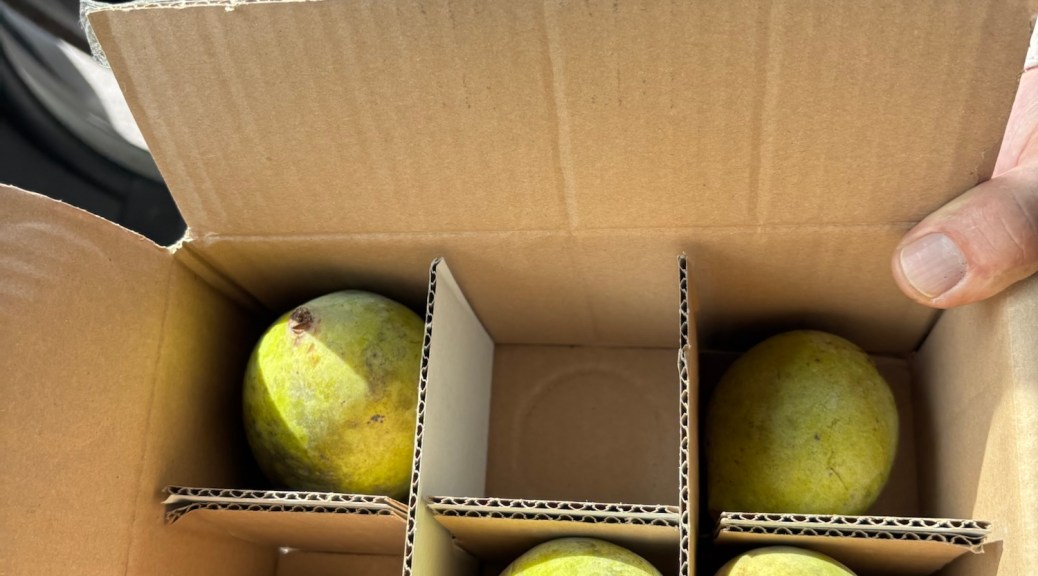
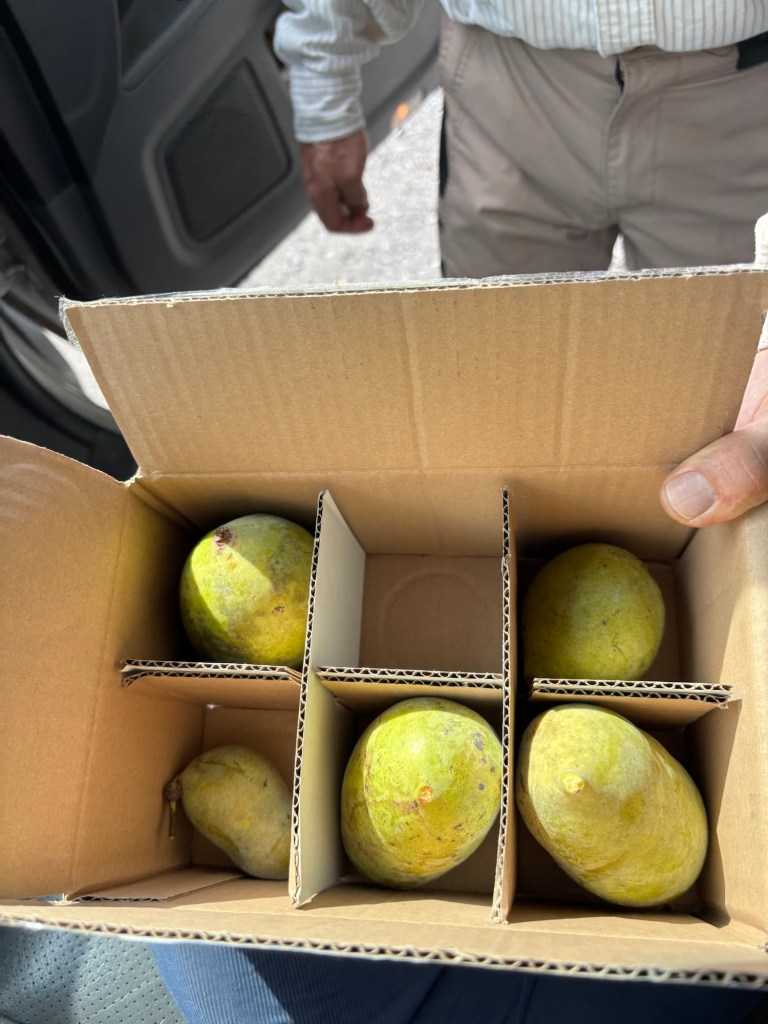
Pawpaws we foraged under Edible Landscaping’s Sunflower and Mango cultivars in Nelson County Virginia on Sunday.

We went out to the farm on Friday and Sunday to get as many pawpaws planted before the rain comes. Thunderstorms and rain are forecasted to get started late tonight and continue until Wednesday afternoon. We planted 17 on Friday: Five in the orchard (a Kentucky State University Chappell and 4 seedlings) and another five alongside the Shenandoah and select seedlings that we planted last year. We put a Mango cultivar and four seedlings we started from foraging. Then we planted 2 on the Pawpaw Peninsula (an Allegheny cultivar and Wild native seedling from a Rockfish River foraged pawpaw). After that we put two by the pawpaw patch at the bottom of Ridge Trail and another two on the left side of the large pawpaw grove. We walked up Ridge Trail and put another wild pawpaw seedling from Rockfish River foraging near the small colony of native pawpaws growing along the south wet weather gully.

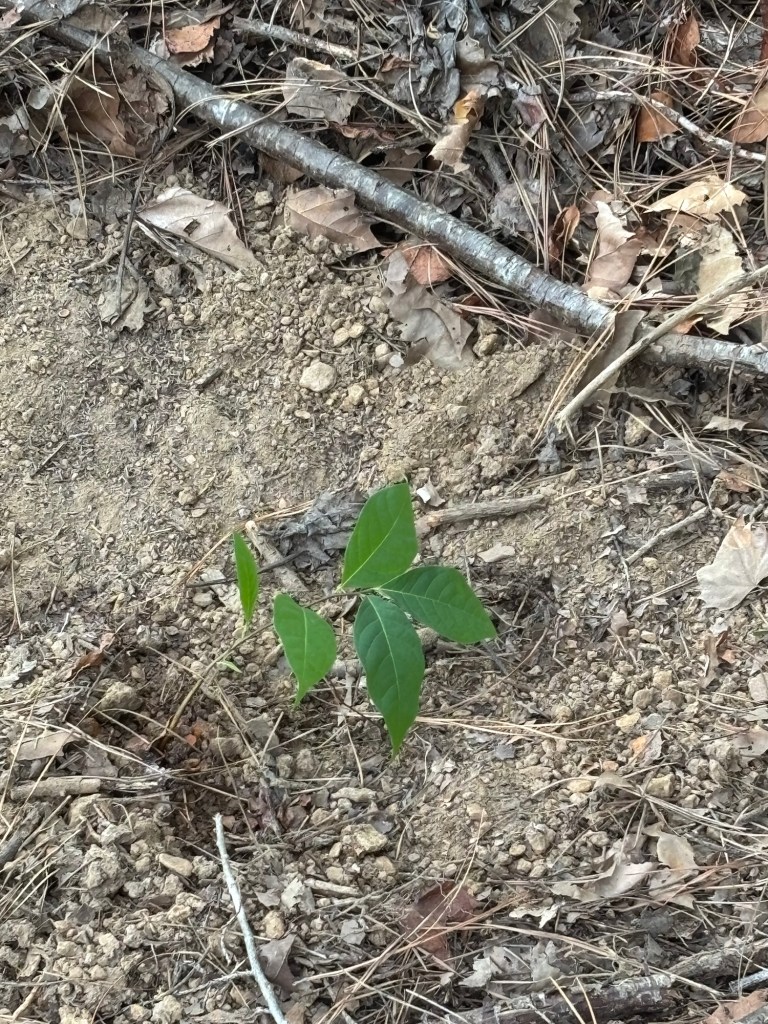
Wild native seedling planted up top.

We were exhausted after this. We had to carry water for the trees after planting in our packs, carry our equipment and the trees themselves all around the farm. It was hot and the ground was hard and dry for digging. Chris was battling each hole. (We are looking into finding a lightweight device to dig our holes, as in an auger.)

Allegheny pawpaw cultivar on the Pawpaw Peninsula with our SAFF native wild pawpaws. The wild ones are yellowing leaves and going dormant for winter since it has been so dry.

Then we went back out on Sunday to water what we’d planted Friday and put a few more in the ground. We planted 5 up top in the main clearing along the driveway and put two along the South Gully on Dan’s Folly. We put one more across next to a lone wild SAFF native pawpaw on Fern Trail. From there, we walked down the Gully and watered our select seedling planted a few days before. We were happy to see they all were still in the ground (last year, the deer ate them and pulled them out of the ground a day after we planted so we almost expected the same.) They were glowing in fact. They all appeared to be very happy in their new locations. We watered them some more.

We have another 80 or so to plant and hope to get out to the farm again soon to get a few more in the ground.

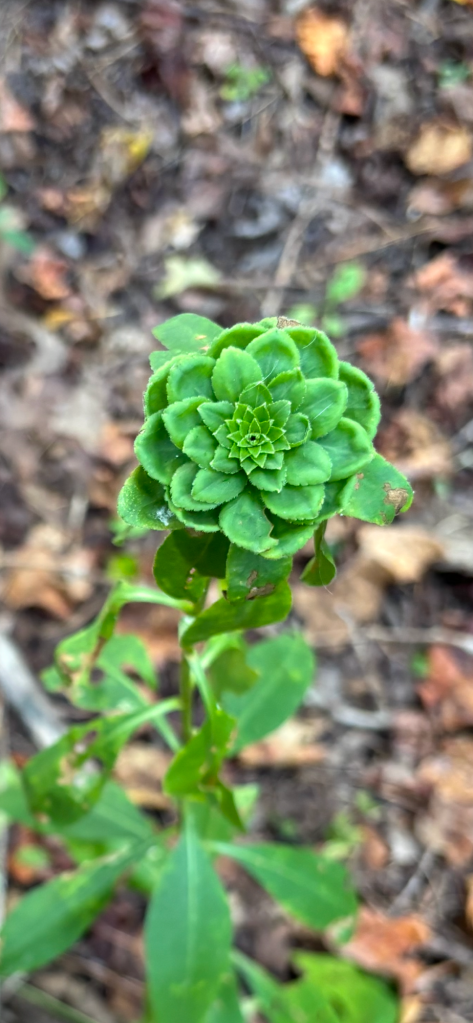
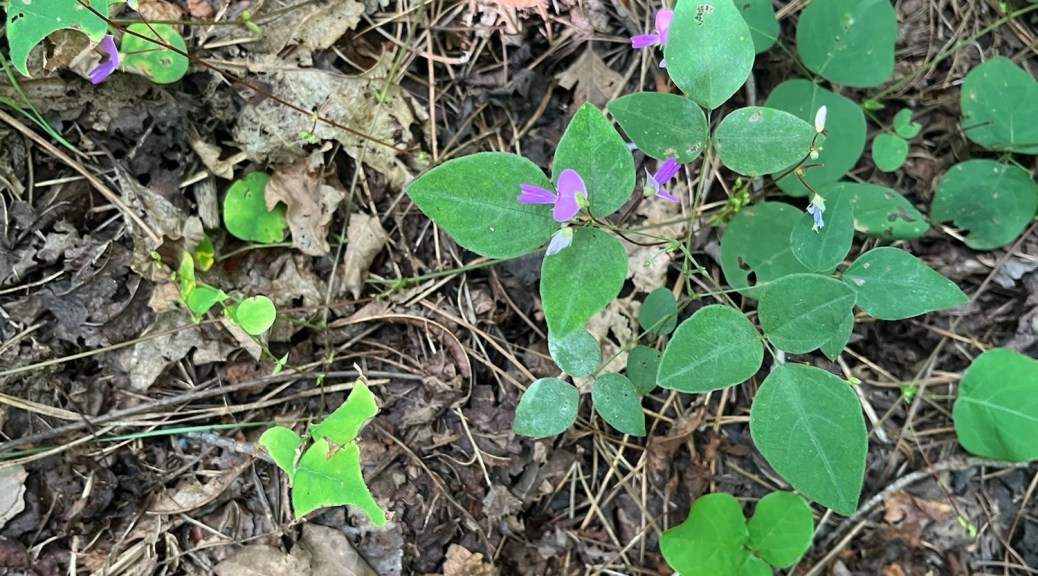
We found this lone flower along Mary Banning Trail. We aren’t certain but are leaning towards a type of Spurge. We will continue to observe it in order to further identify.

Fall 2025 Update at SAFF

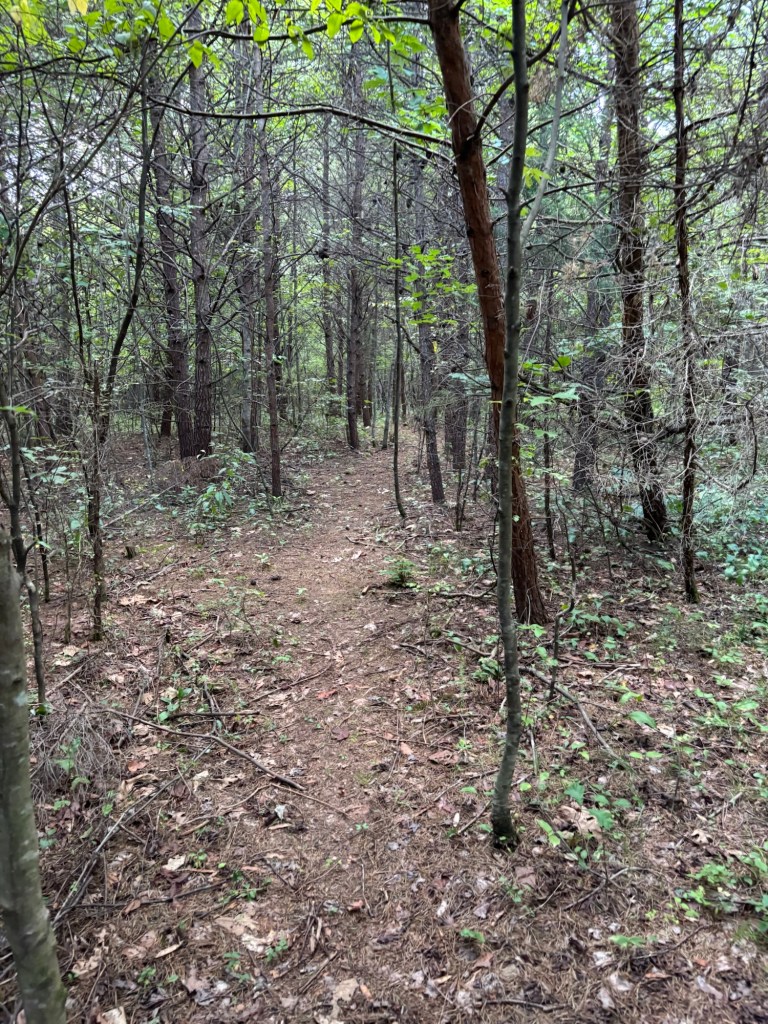
Orchard Trail taken in September in the lowlands at St Andrews Forest Farm

It’s been far too long since we have reported on events at the farm. Cooler temperatures and a few trees with bright yellow and red leaves remind us fall is here and also that we could use a good soaking rain to soften the crisp dryness of the ground and plants. Our pawpaw seedlings are waiting, with a few cultivars we collected from Edible Landscaping in Nelson County Virginia, to be planted out at the farm when a rain is expected next, we will plant them just before.

Over 100 pawpaw seedlings and a few grafts of Mango, Allegheny, KSU Chappell cultivars. We also have quite a few select seedlings from Edible Landscaping.

We hope to plant some around the existent wild native pawpaw patches that we have. These trees are responding well to increased light as we cut back understory trees competing for sunlight under the giant oaks maples and beech. They have greened this year and produced more branches and leaves. We only had a few flowers and one tree that set fruit. This dropped after the second week even though we had good rains in the spring. We are feeding the native trees compost from our home bin. With the addition of the new dna from the seedlings and grafted cultivars we hope to plant within the next few weeks, we hope to see increased growth and fruiting.

We have been busy planning our orchard and structures, collecting seeds from native and select varieties, trailblazing to give us more access to SAFF. And we have also been mushroom hunting of course! We have added a lean-to on to our shed for the tractor.

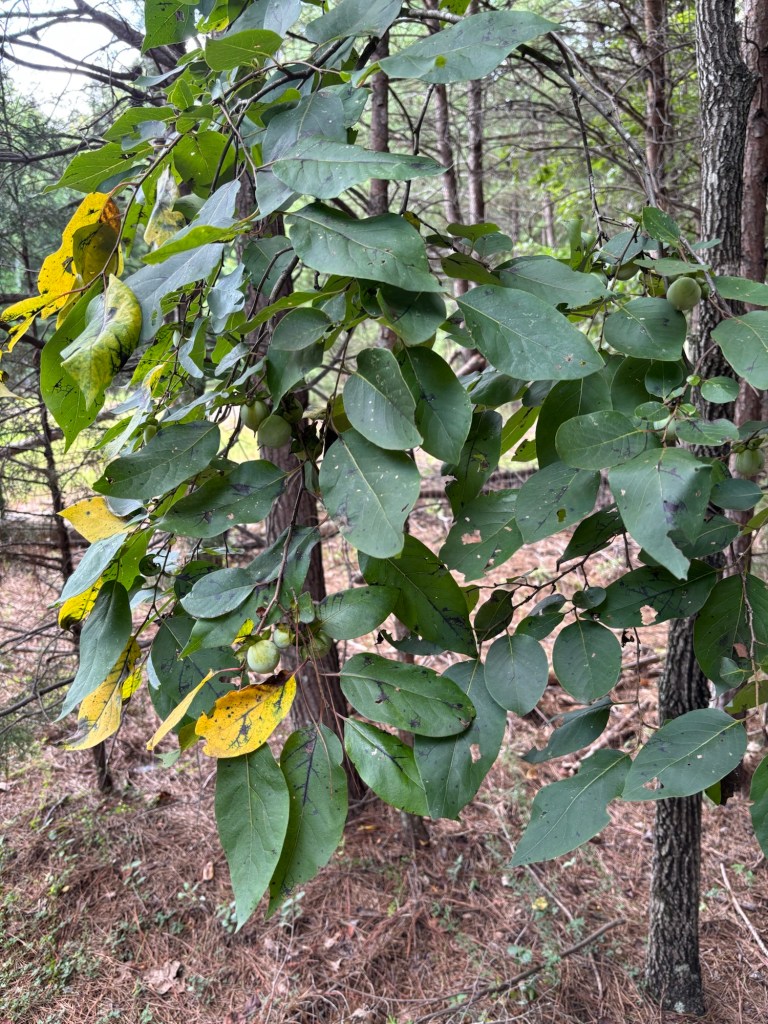
American Persimmon trees up top fruiting nicely in the forest.

July 23, 2024 Building our first fish scale terrace and a few edible mushrooms at SAFF

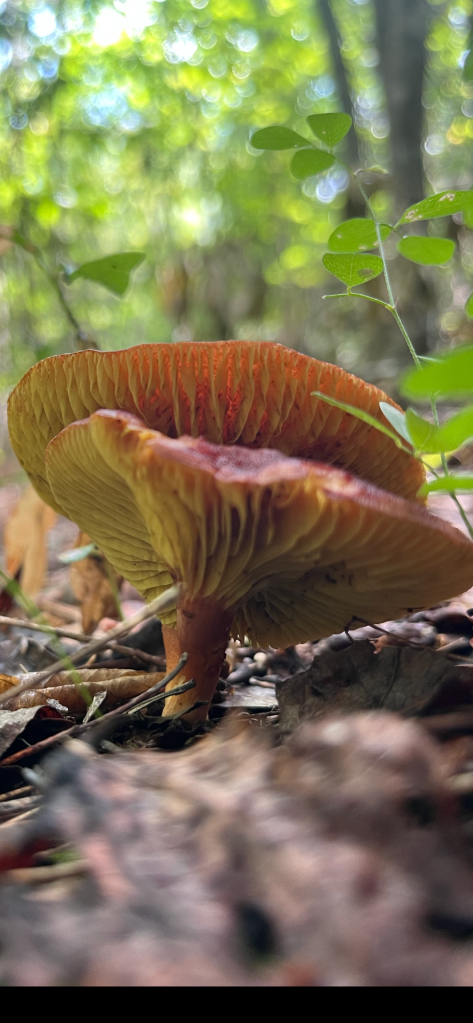
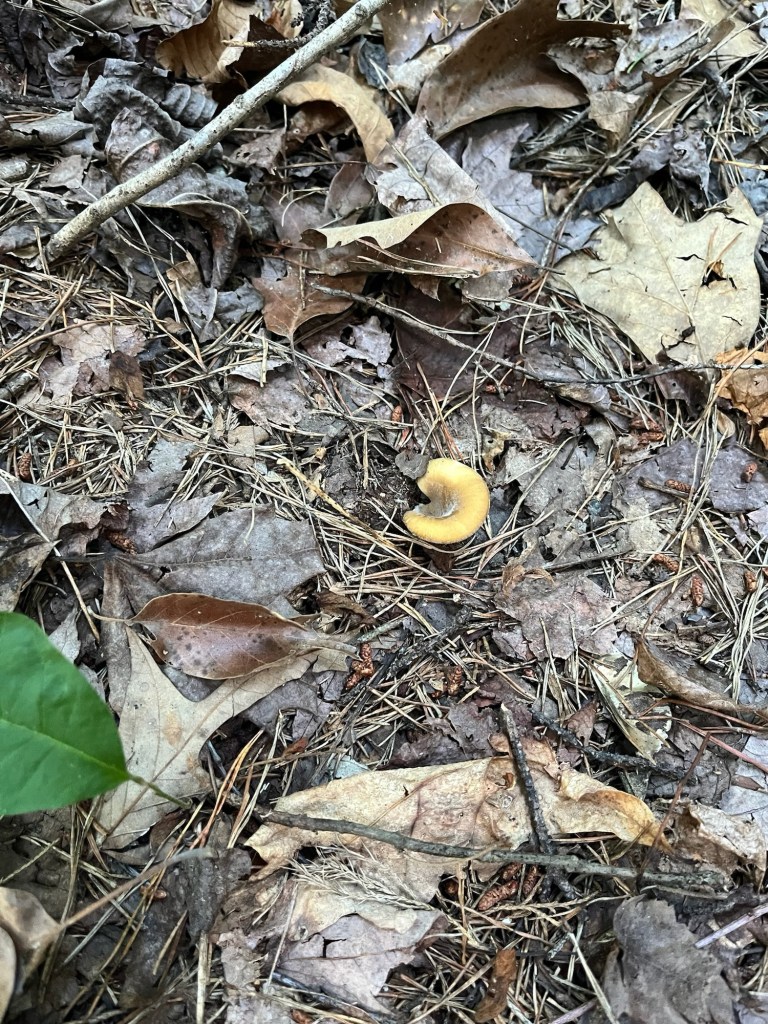
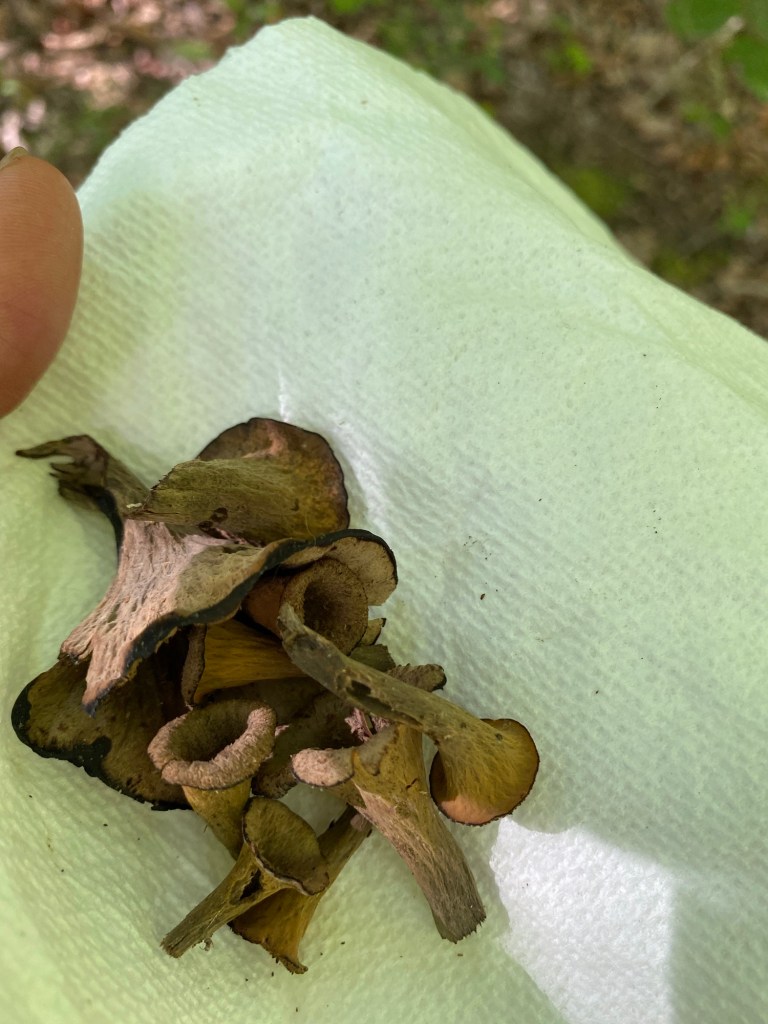
Golden gilled bolete, Phylloporus rhodoxanthus, found along Hawk Trail. Mycorrhizal with hardwoods usually oaks or Beech (both are near where we found these beauties).

Yesterday we went over to do some planting in the rain. It has been raining every day or so for the past week and the ground is wonderfully moist and much greener. All along the trails, we could see white mycelium spider webbing on the forest floor. We created a new garden bed at the bottom of North Trail by laying our tree trunks perpendicular to the slope.

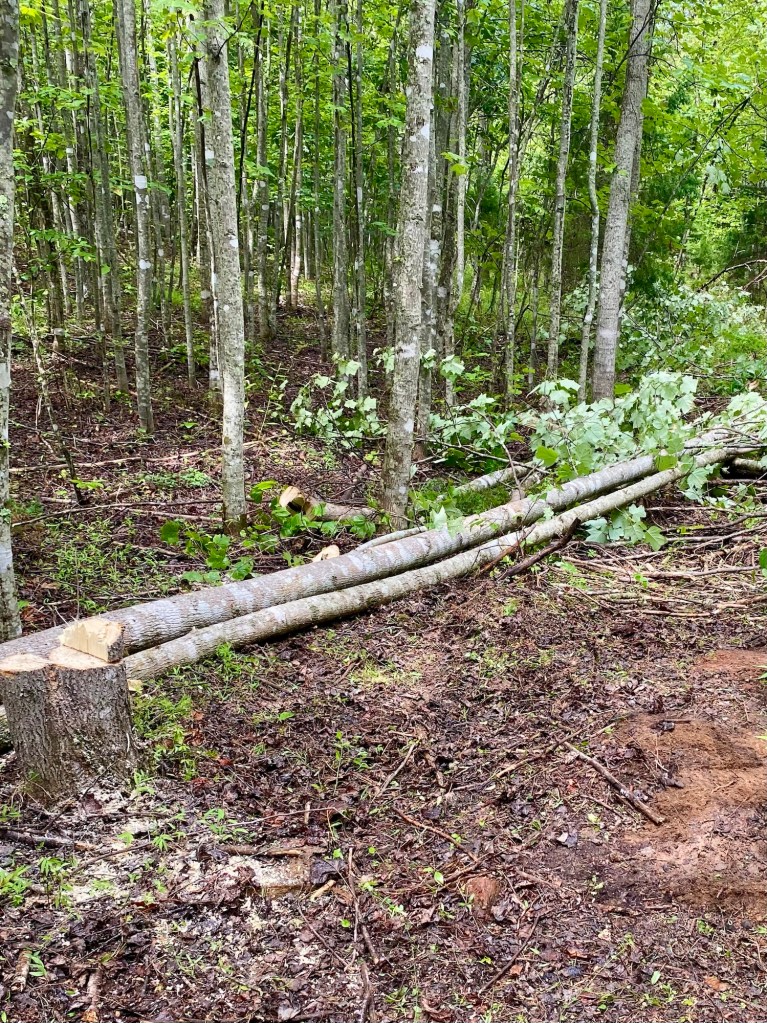
Tulip Poplar trees we took down and placed to help slow water run off and build our first fish scale terrace for planting and water and soil conservation.

It may not seem like much but this is a huge paradigm shift for us as we have imagined fish scale terracing our slopes for the past year and it came together just as we’d hoped. We are eventually making a space for pawpaws. For now, we will have smaller plants. The ground was soft and pliable in the rain. We practice minimal disturbance gardening to improve our soil quality, increase yields and drought resilience as well as increase fertility. So this means we dig as little as possible to keep our soil and mycelium undisturbed.

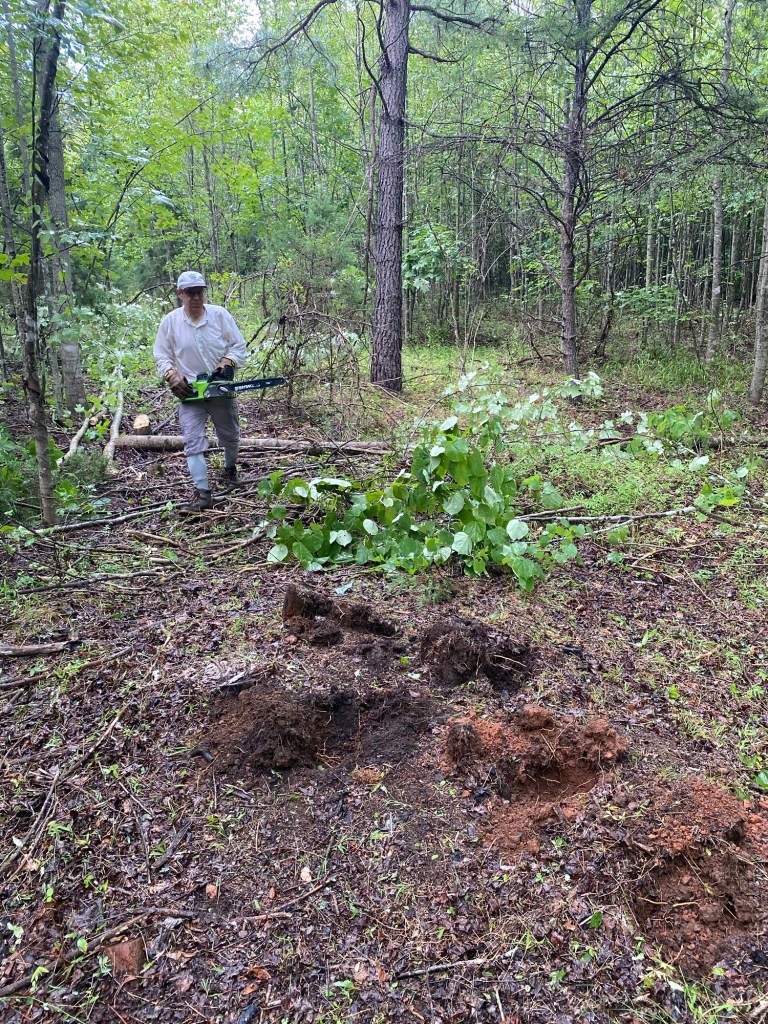
Chris busy felling tulip poplar trees which have grown up too close and tall in the forest that was disturbed 20 years ago. Many are diseased from not having enough space and light. We plan to use their trunks to construct our fish scale terraces.
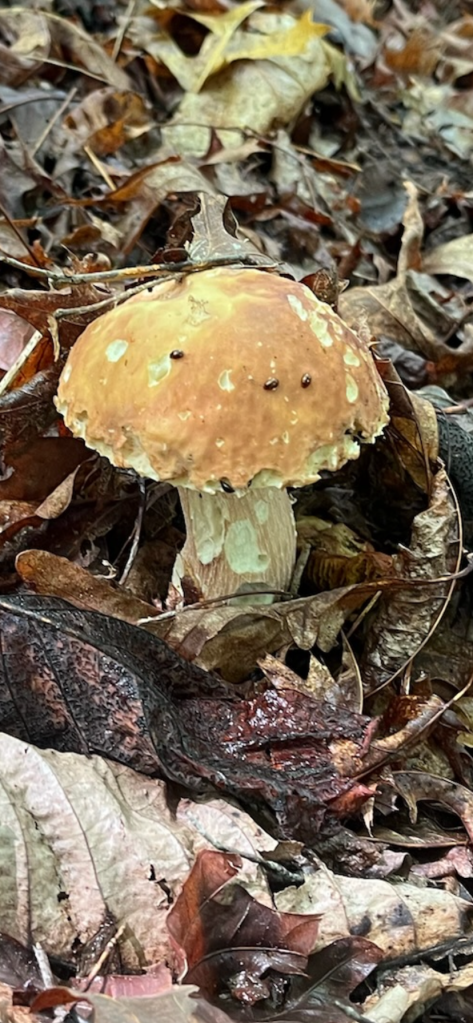
King bolete found on South Trail about 2/3 of the way down. The bugs love it!
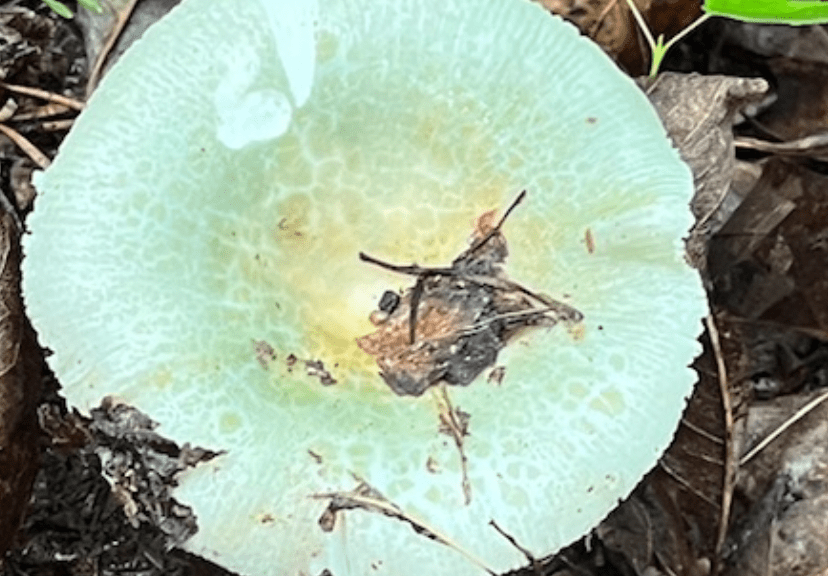
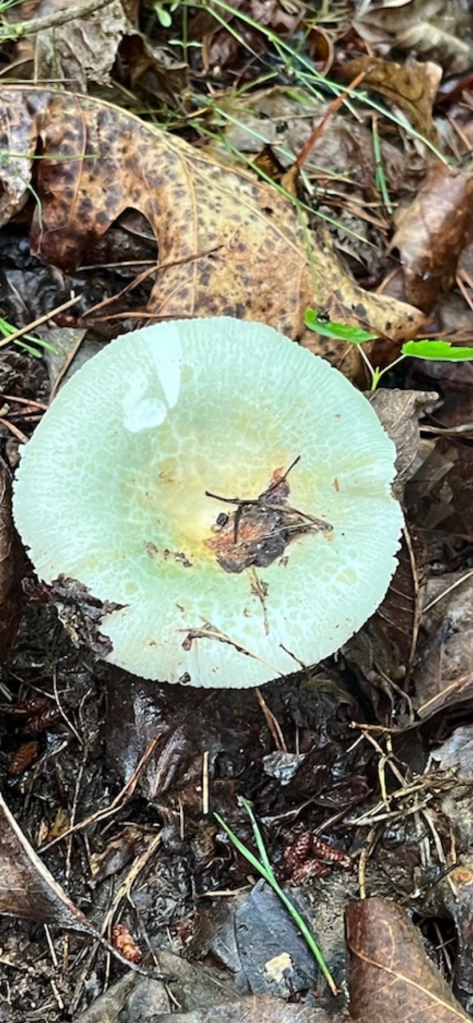
Blue-Green cracking Brittlegill, Russula parvovirescens, found along South Trail. Mycorrhizal with oak, hardwoods and conifers. Over the past year, we’ve observed these when the weather is rainy and the temperature is in the 80s.

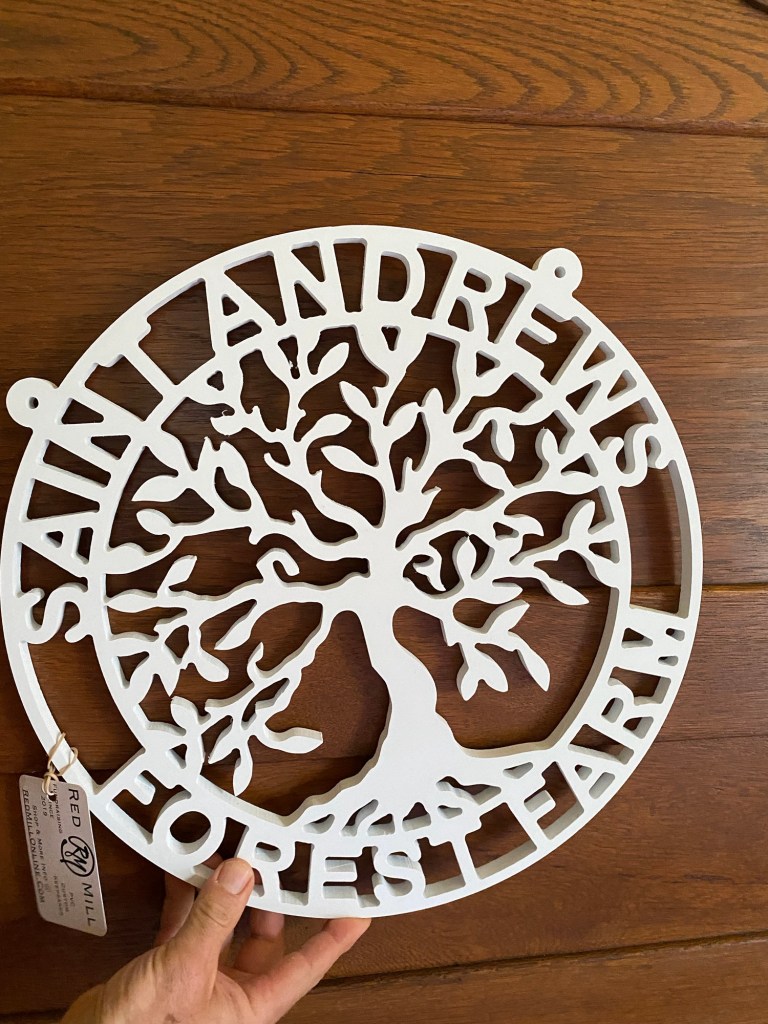
Our new sign gifted to us from Chris’ parents who visited the farm last weekend. We love it!

July 10, 2024 Heat Wave while battling an invasive at SAFF

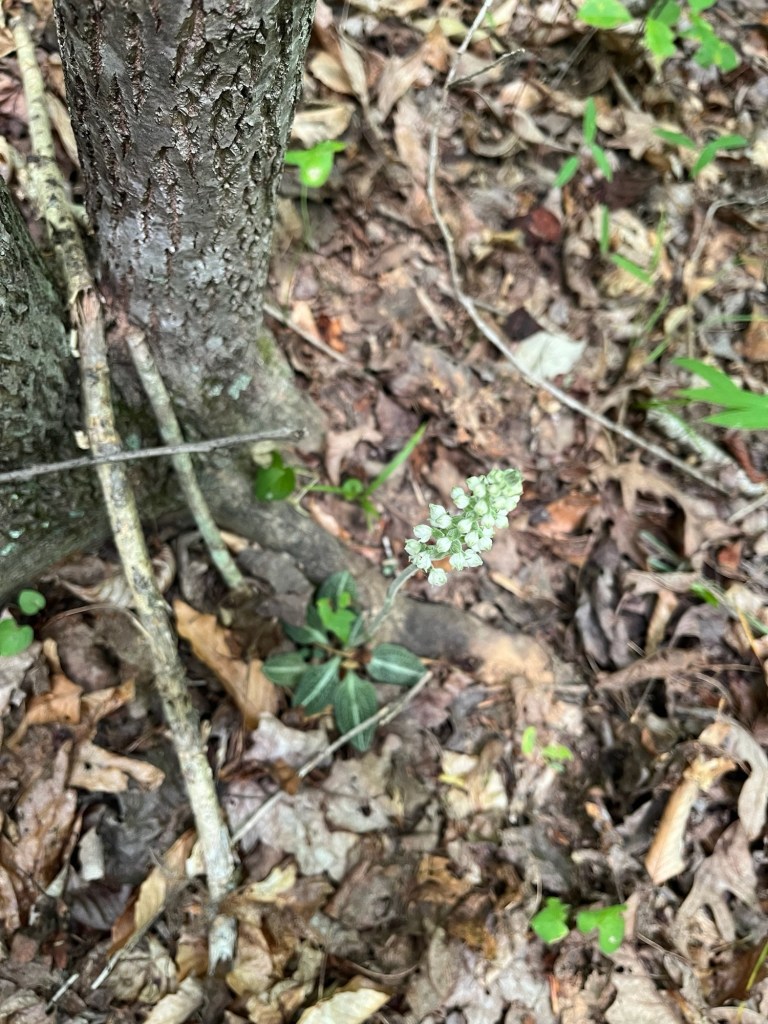
Downy rattlesnake orchid blooming.

It’s been in the nineties, and even though the air feels plenty humid, the ground is baked, cracked and dry. It hasn’t rained enough in far too long with these high temperatures. There have been heat advisories every day this week. It’s crunchy walking underfoot everywhere but the bottom by the waterway. The clearings are mostly brown. The bottom of the slope has a slight bit of water trickling through the stream. We were glad to see that.

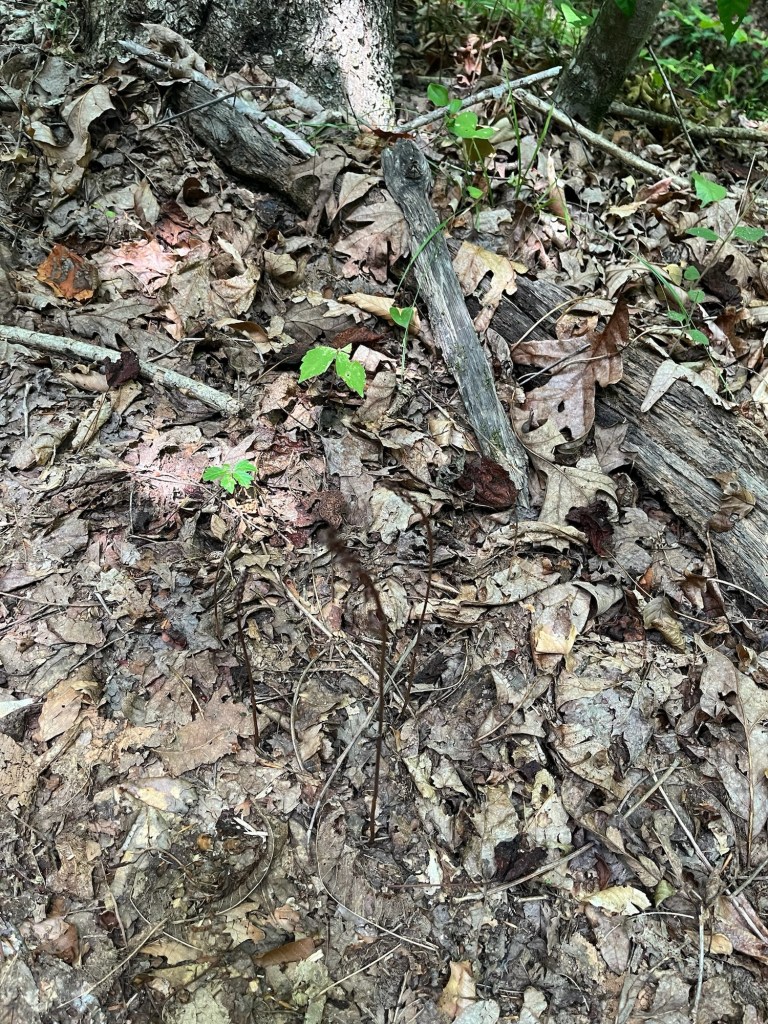
Cranefly orchid emerges with reddish brown stems just springing up from the ground. A flower will appear next.

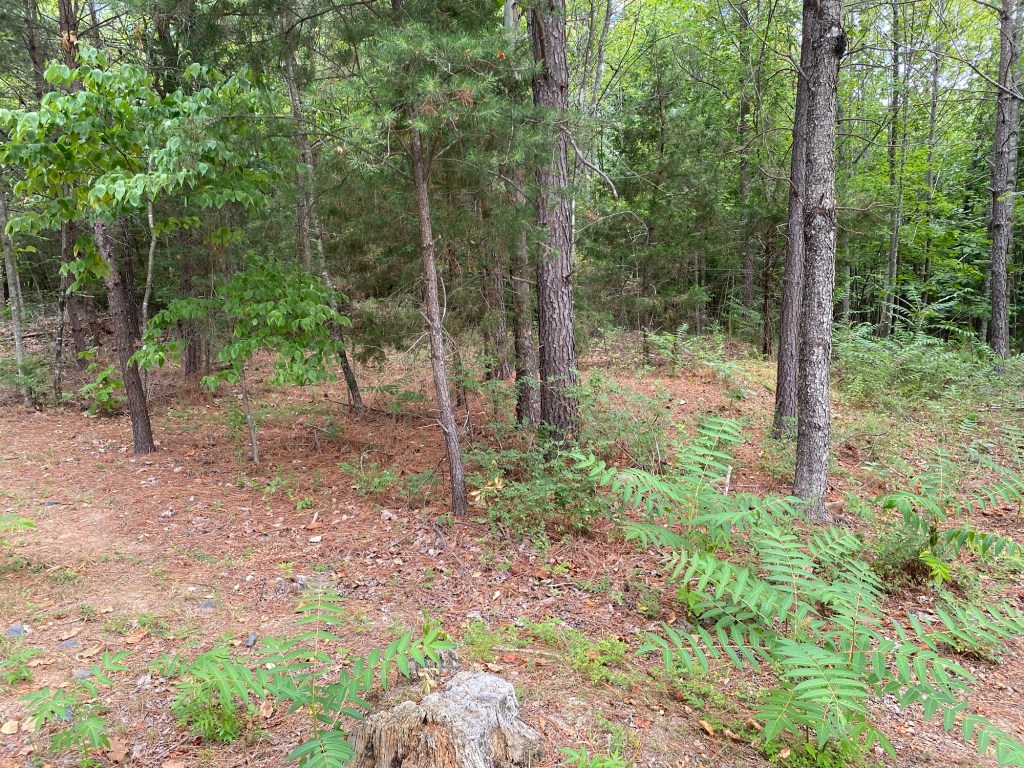
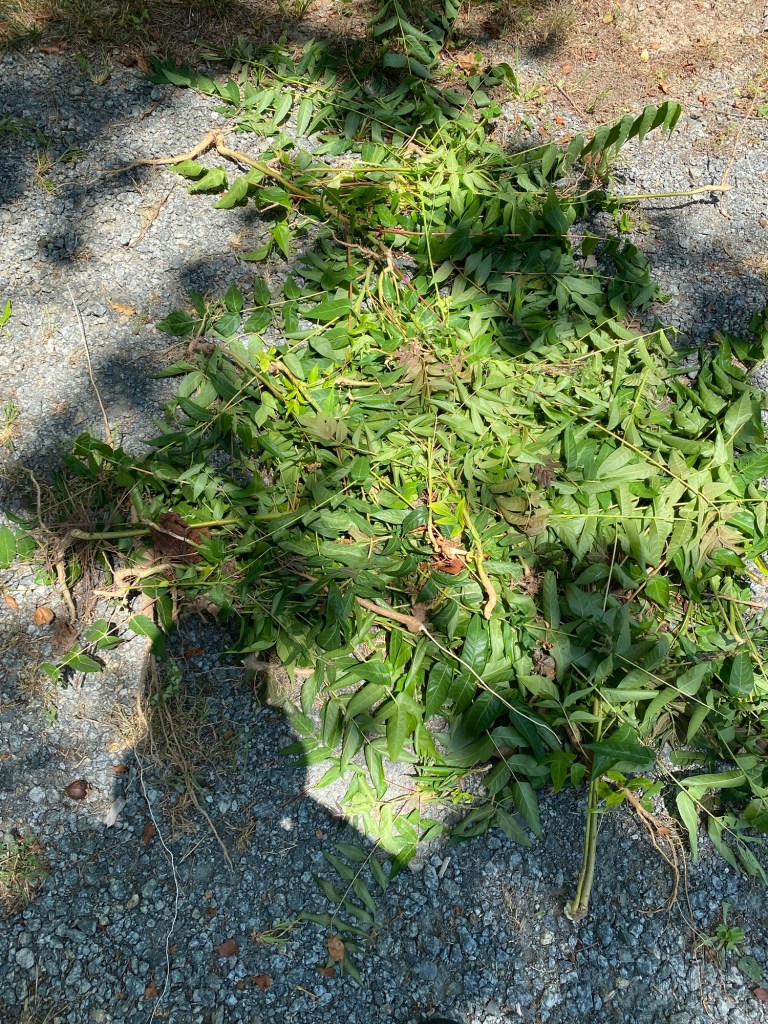
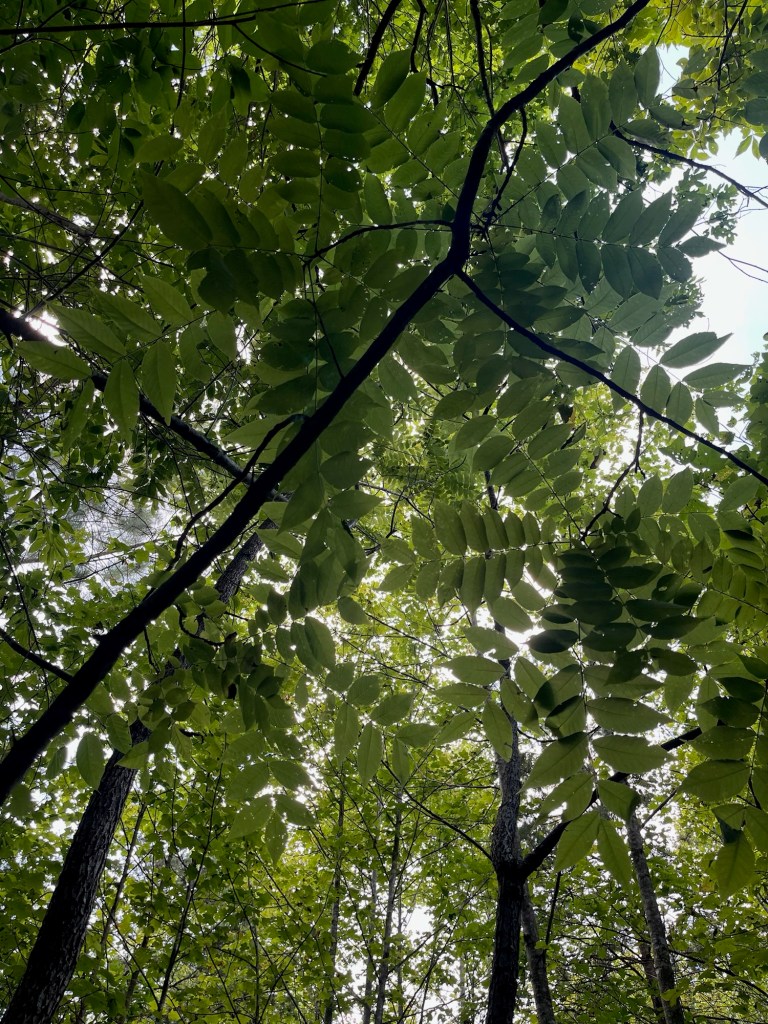
We’ve been battling an invasive tree called Ailanthus or tree of Heaven. We found them last summer in three different spots all up top near the main clearing and by our neighbors to the north. Another name for Ailanthus is Chinese sumac. Differentiation between Ailanthus and our native shining sumac, Rhus copallinum, was a challenge initially with the smaller specimen. However, now we can see the difference between them easily with our practice watching over our forest floor.

Because it is so tenacious by producing an overly abundant amount of seeds, crowding out native species with dense thickets and secreting a chemical into the soil that is toxic to other plants, there are best practices to ridding these trees from your land. It involves a hack and squirt method in the fall when the tree is sending the most nutrients to the root. We did this to all 4 of the larger trees we couldn’t pull out by hand. This year the trees sent up hundreds of root suckers so we are waiting for a good soaking rain to soften the ground and then we can pull them out. We will continue to do this as they grow. Whatever is still alive in the fall, we will hack and squirt again.

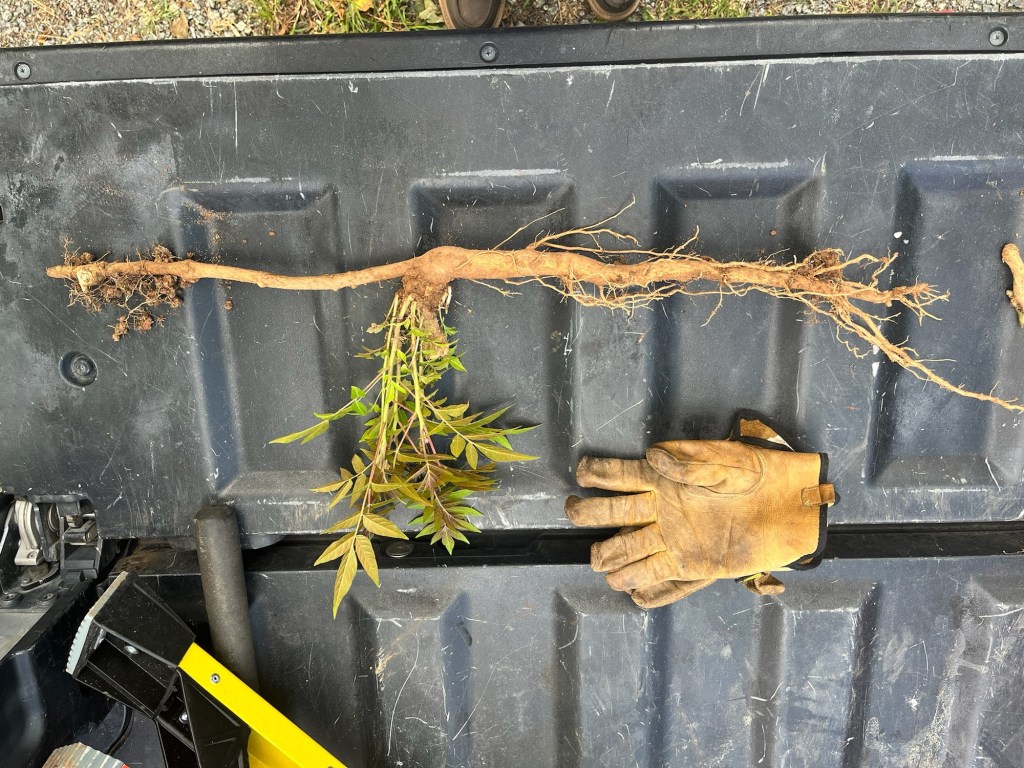
Smaller Ailanthus trees root suckering in a circle from the larger tree. These in particular would easily overtake the native trees and blueberries while creating a dense thicket if we don’t stop them. We pulled these out after a brief rain last week.
The roots are shallow spreading and aggressive.

https://extension.umd.edu/resource/invasives-your-woodland-tree-heaven-ailanthus/

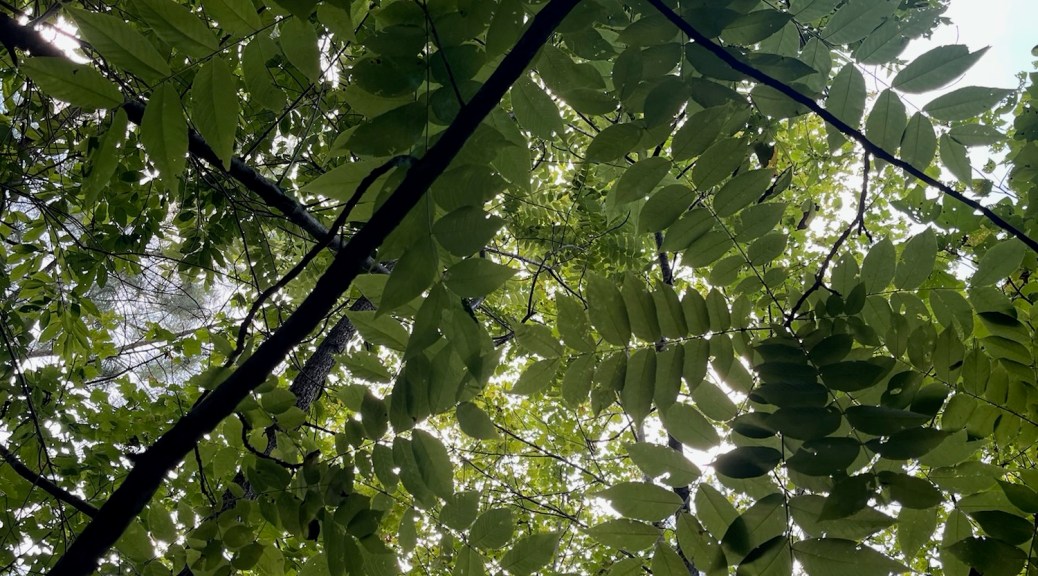
Eastern black walnut trees, Juglans nigra, found by the waterway at the bottom of North Trail. We always get excited when we find a new native species.

June 2,2024 Another Work Day at SAFF

We culled more black cherry trees from the clearing and broke them down into burnable chunks. These were infected with black knot fungus and burning them is the only way to get rid of them.

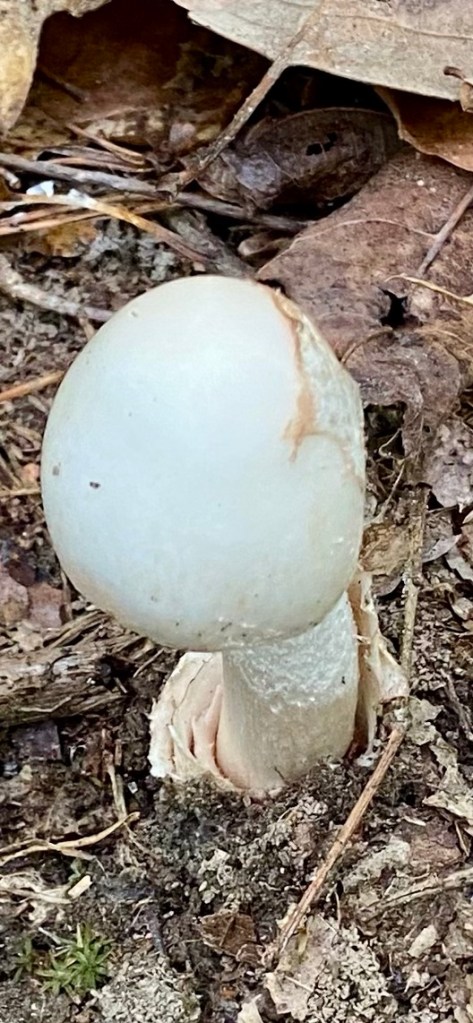
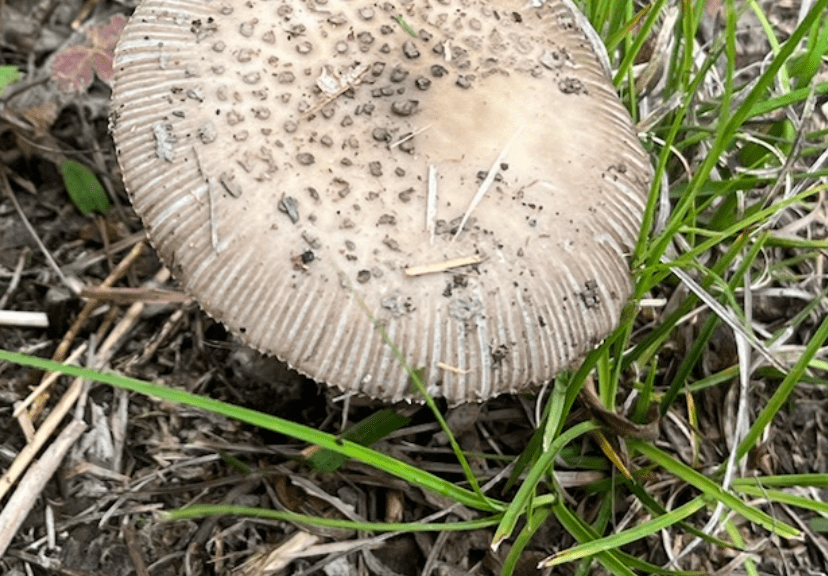
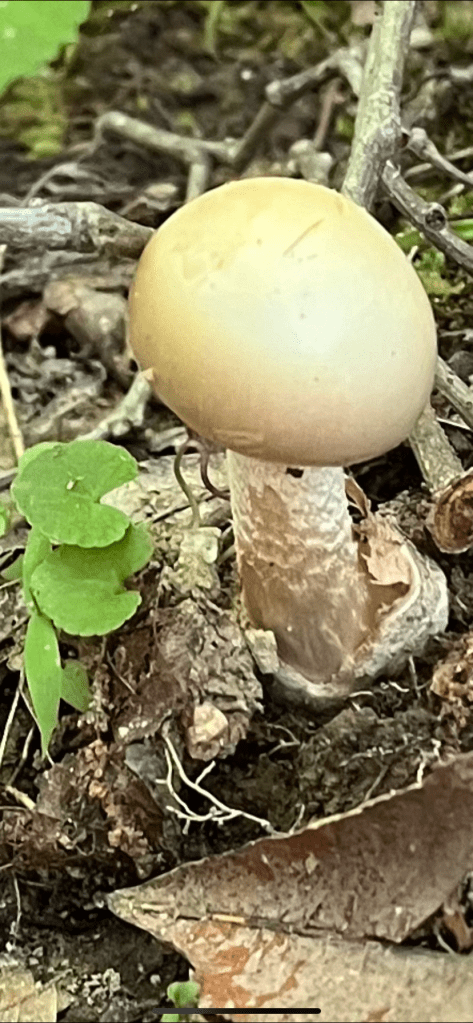
Amanita found at Northern side of the waterway. Because this has a cup shaped volva during this stage, it points to section Caesaraea, Vaginatae or Phalloideae.

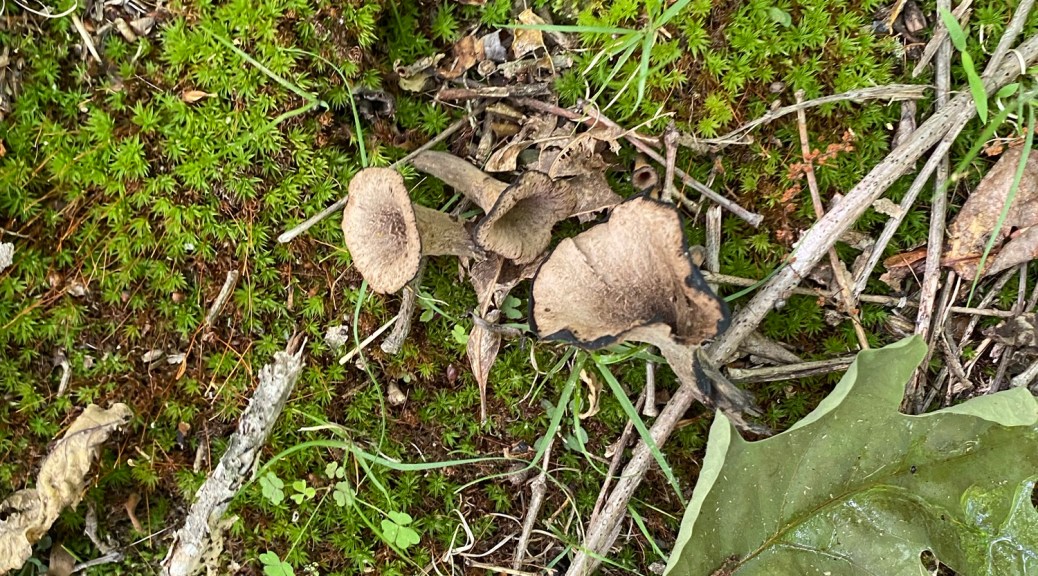
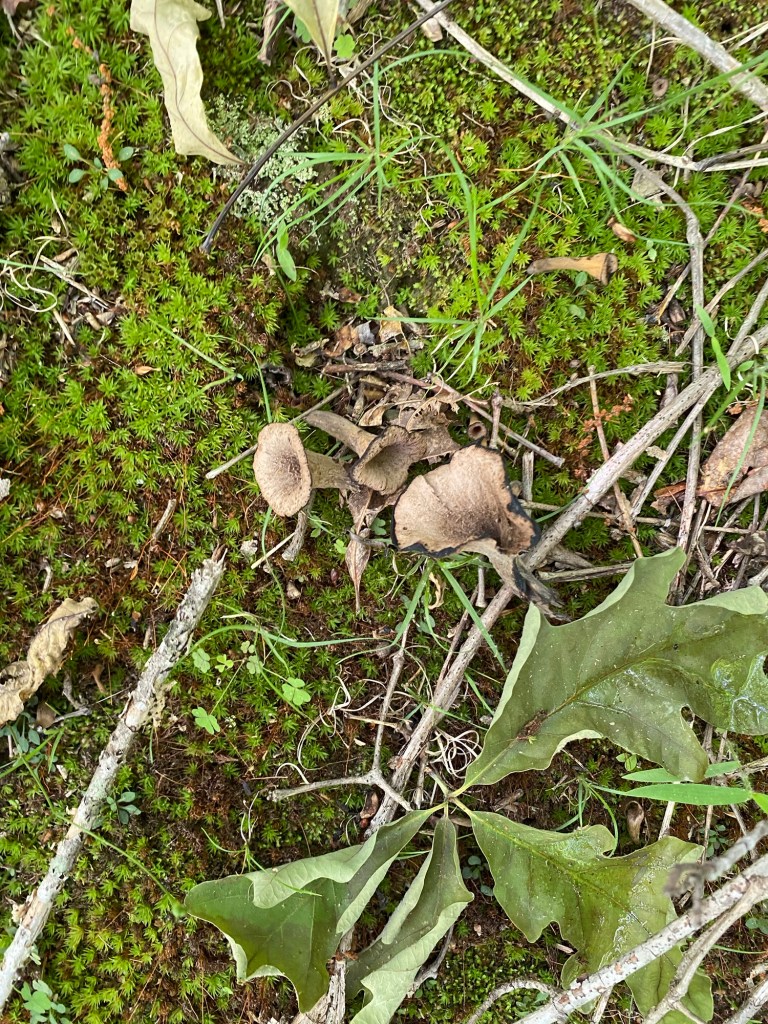
After finishing our job, we walked down Fern to Ridge Trail and looked for more Black trumpets along the southern set back line. We found a few but left them hoping for rain tonight so they can grow.

We walked through the Pawpaw orchard and were satisfied with how it looked. We are making plans to get more light to these trees. There are hundreds of them as they make root suckers that are clones of the original tree.

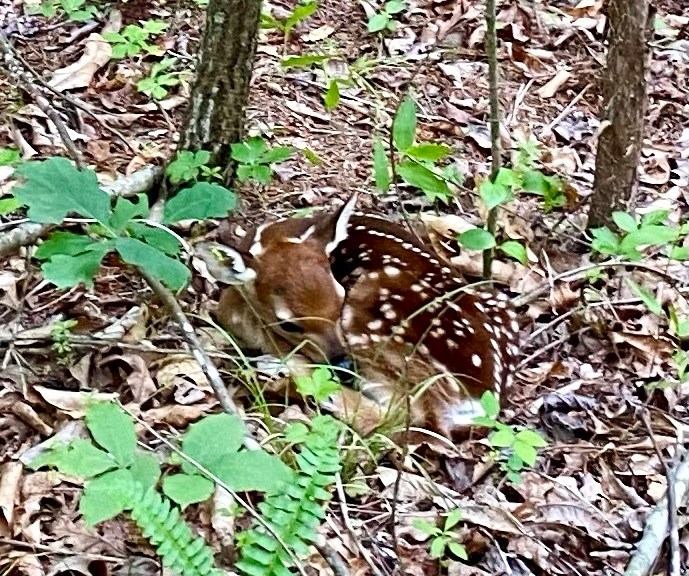
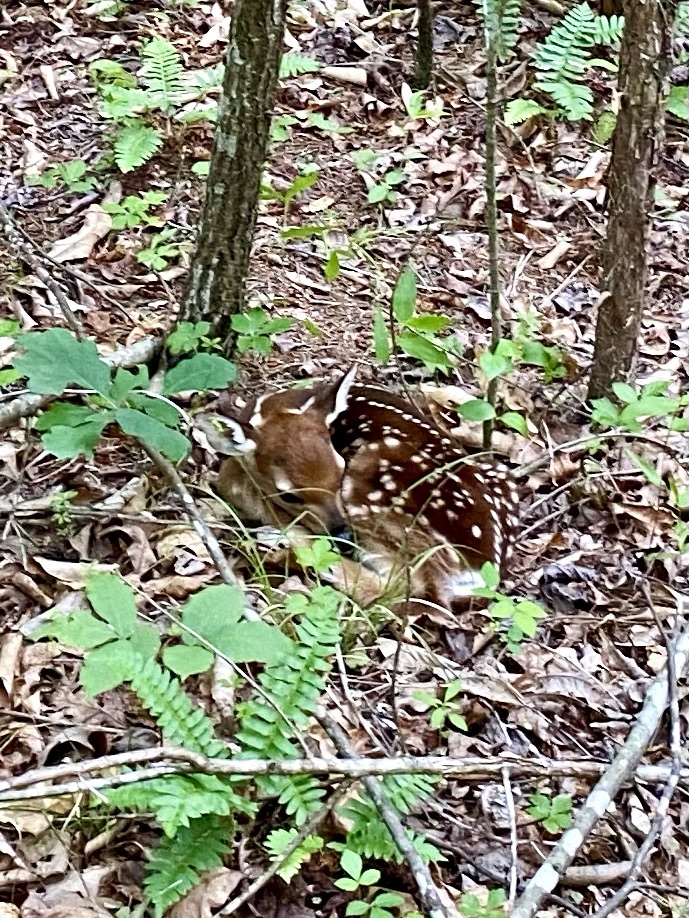
We found a baby deer laying by the waterway at the base of a tree waiting for its mother. It was so sweet. Didn’t even lift its head as we walked by. Following directions well and staying safe. We hope mom comes back soon.

A baby deer sleeping in the forest near the waterway and pawpaw grove.
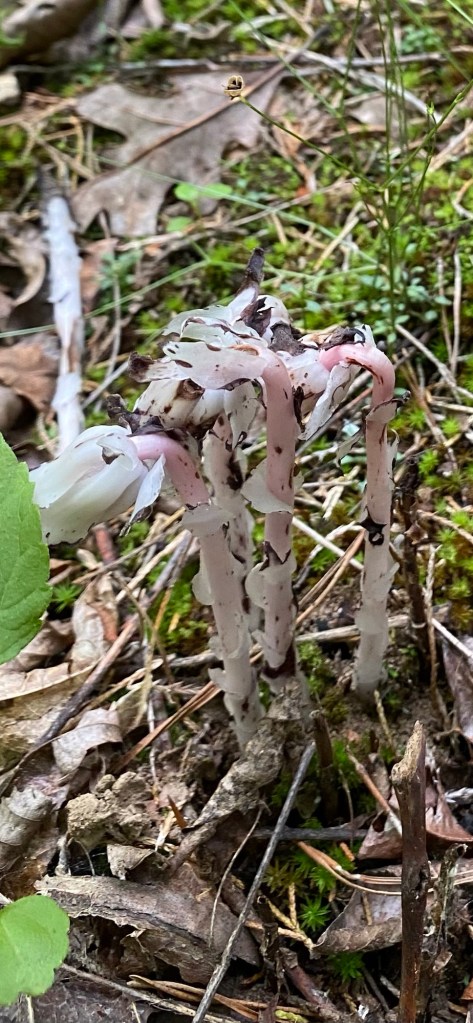
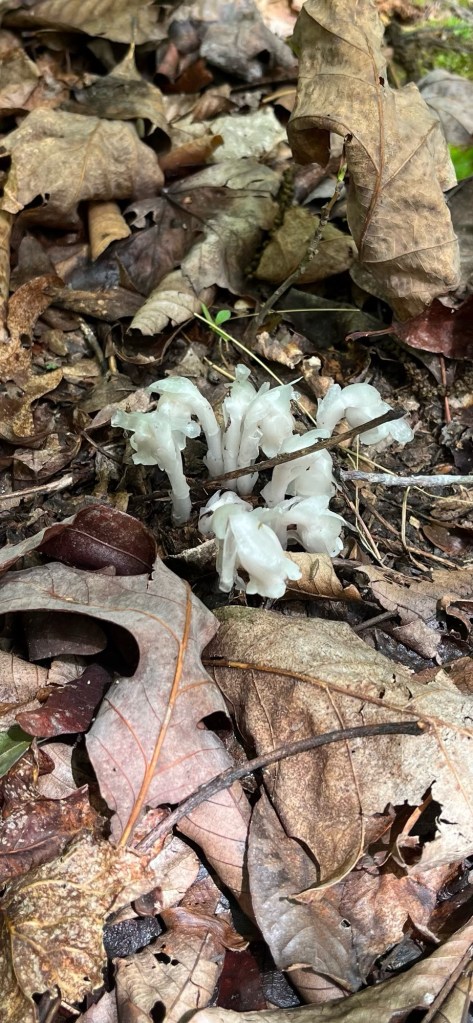
We found these ghost pipes on the northern side of the waterway at the bottom of North Trail. They are pink instead of white and have black flecks. Monotropa uniflora does not contain chlorophyll. It is parasitic to its host fungus, Russulaceae, and it saps food through the web of mycorrhizae.

We are hoping for more rain tonight so the mushrooms will grow.

May 31,2024 More Eastern Black Trumpets and Ripe Blueberries at St Andrew’s Forest Farm

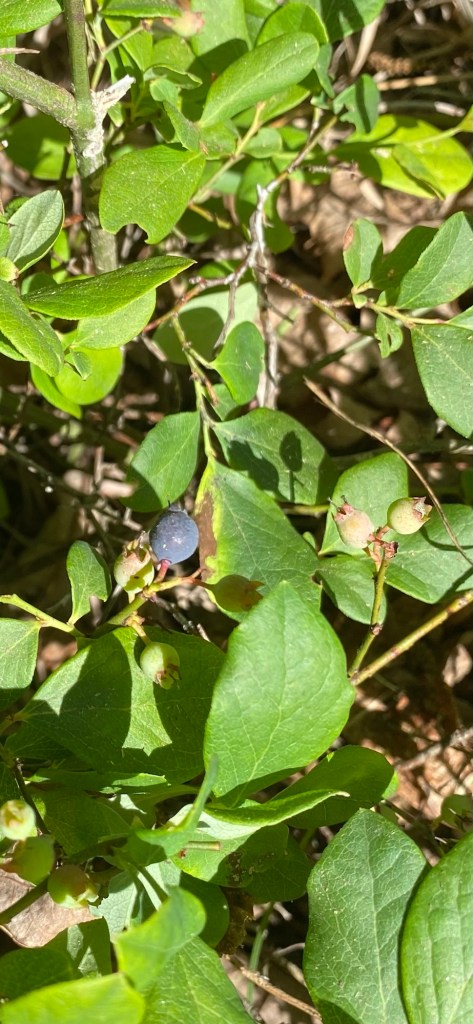
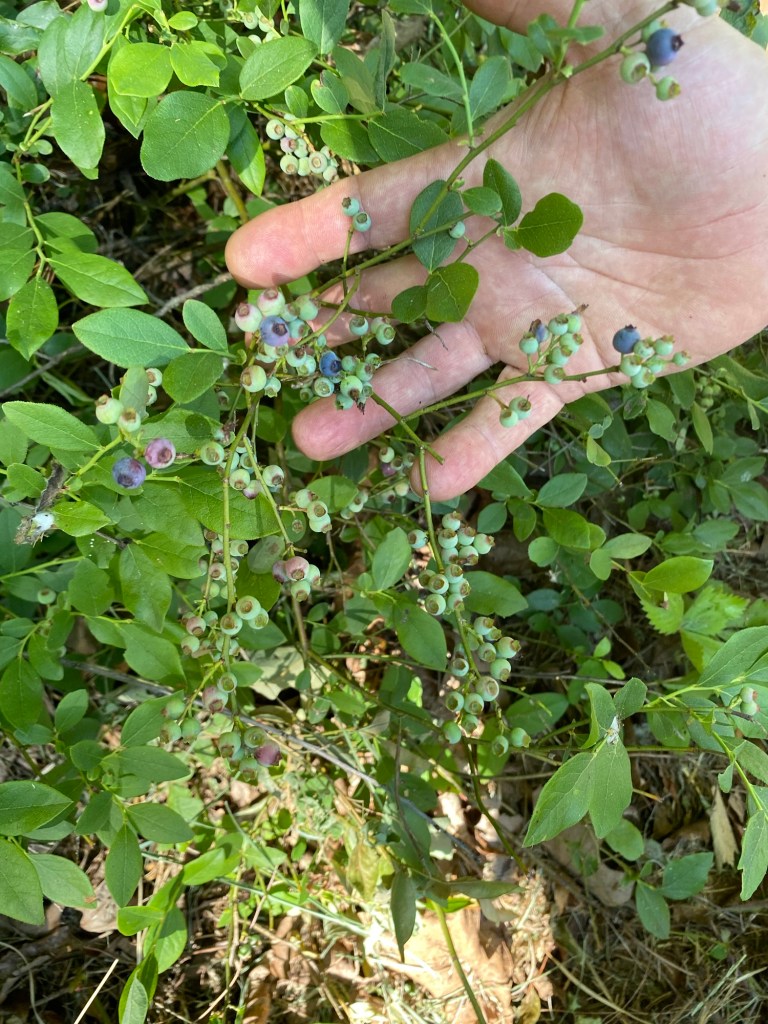
Finally we have a few ripe blueberries. They were a tasty snack after we got some work done.

We went out to the farm to clean up a few spaces, look for more black trumpets and cut a trail through the south side. We were able to clear out some tiny tulip poplars and maples, paying close attention to keep any understory oaks as we learned the old oak forests throughout the world have a problem with understory oaks regenerating the forests. We decided we would only thin out diseased or failing oaks. https://youtu.be/NRWHHOAf39U?si=akypzxLUNo_7tOfn

Oaks have strong mycorrhizal https://www.sciencedirect.com/topics/agricultural-and-biological-sciences/mycorrhiza connections as well, so we truly appreciate them for a number of reasons. SAFF has older, medium, saplings and seedling oaks all throughout so we aren’t seeing this problem. https://dcist.com/story/23/12/20/dc-local-forests-failing-tree-regeneration/

We were pleased to eat a few blueberries. We found them abundant and ripening first along the southern set back line, where they get plenty of sun.
Eastern Black trumpets
We ate yesterday’s black trumpets for breakfast this morning. We cooked them for 10 minutes on medium high heat in a dry pan, then lowered heat and added olive oil and garlic with a bit of salt and pepper. They were nutty, fruity and smoky. We enjoyed them as much as the golden chanterelles we found last summer. There are no known toxic lookalikes, so these are a great mushroom to forage . Some of our favorite mushrooms we have tasted. We performed some trail maintenance on ridge trail, made our way along the waterway, back over to the set back line and found more today. We harvested the largest and we can’t wait to eat these too. We made a trail up from the waterway to the Black Trumpet patches and beyond until we exhausted ourselves. We will call this Black Trumpet Way, it leads to the set back line.
For now, this is unknown Amanita that we will watch this weekend. Notice the volva underneath the mushroom that it emerged from.

May 30, 2024 Porcini and black trumpets at Saint Andrews Forest Farm

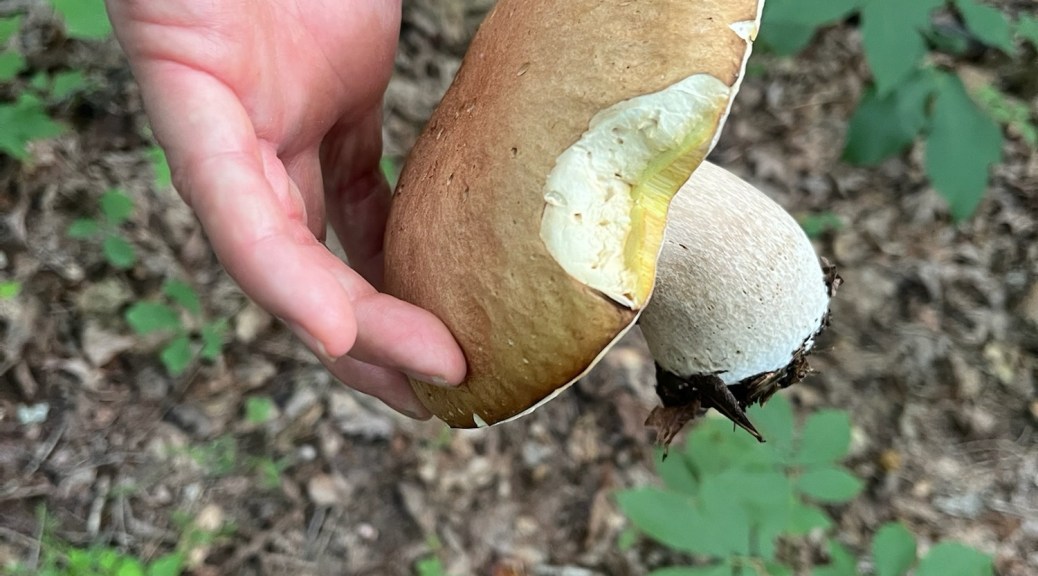
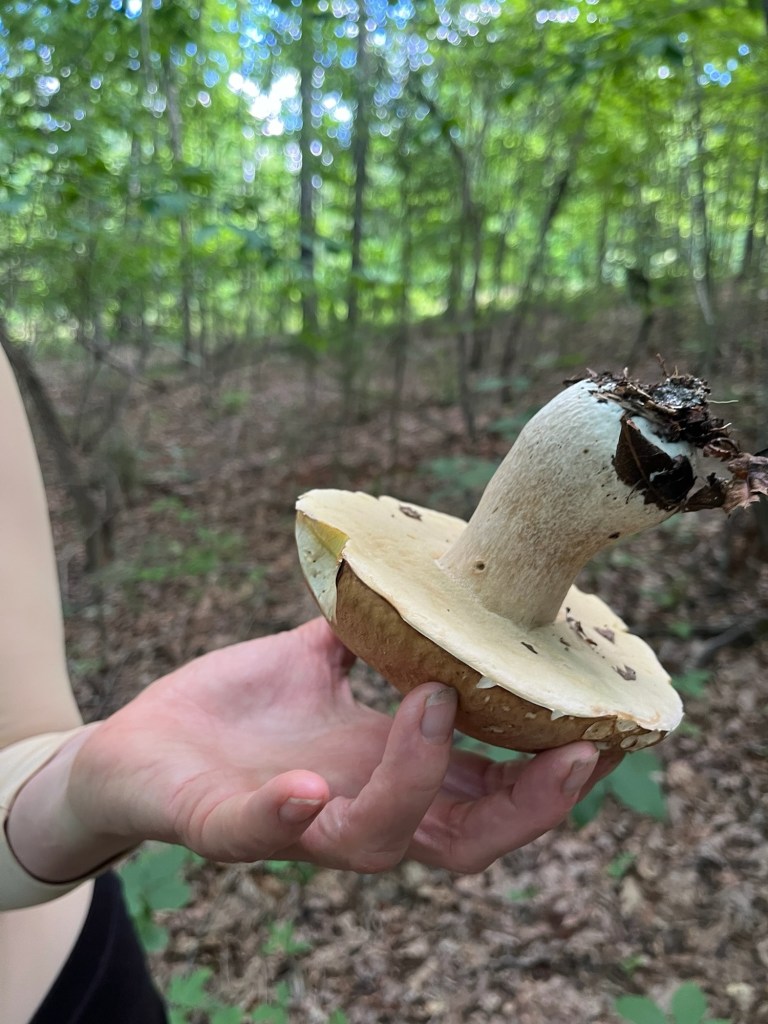
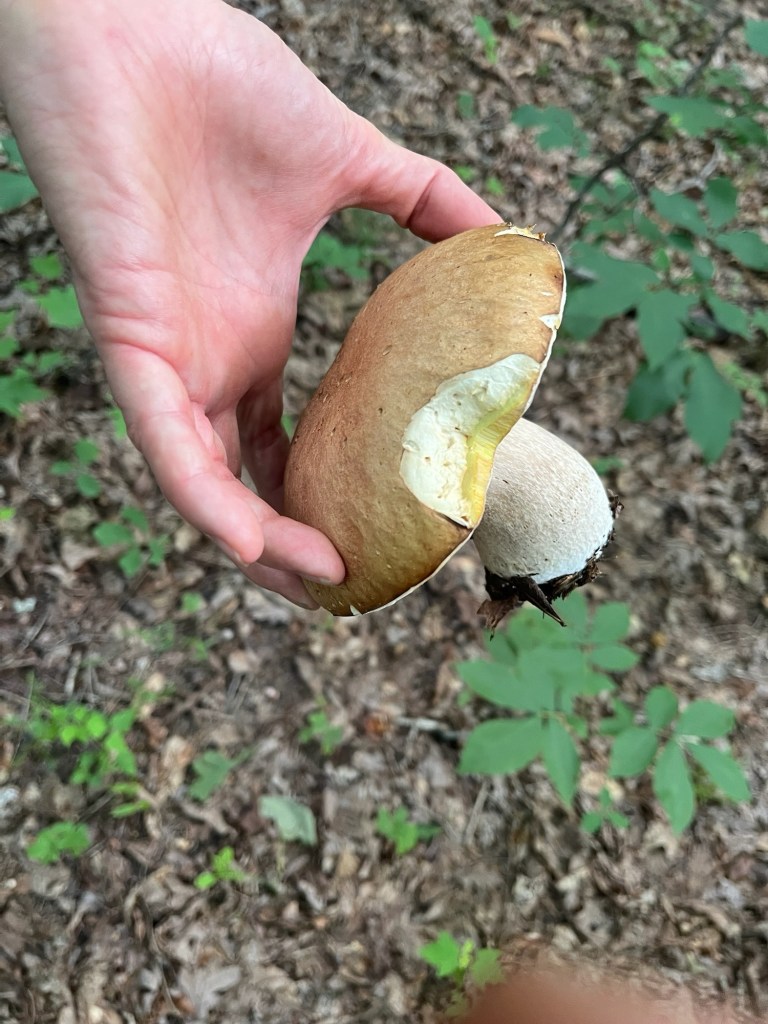
One of our first Bolete edulis mushrooms, common names the Cep, porcini, king bolete or penny bun, a most sought after edible. We’d been searching for a year and finally found it yesterday as well as black trumpets.
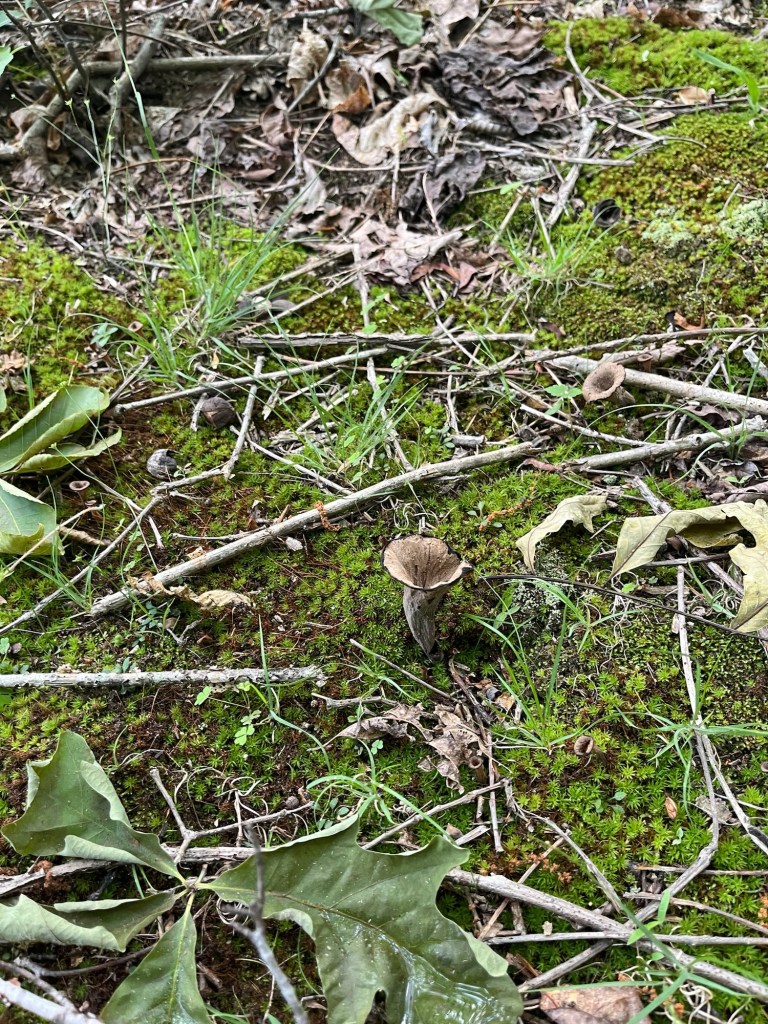
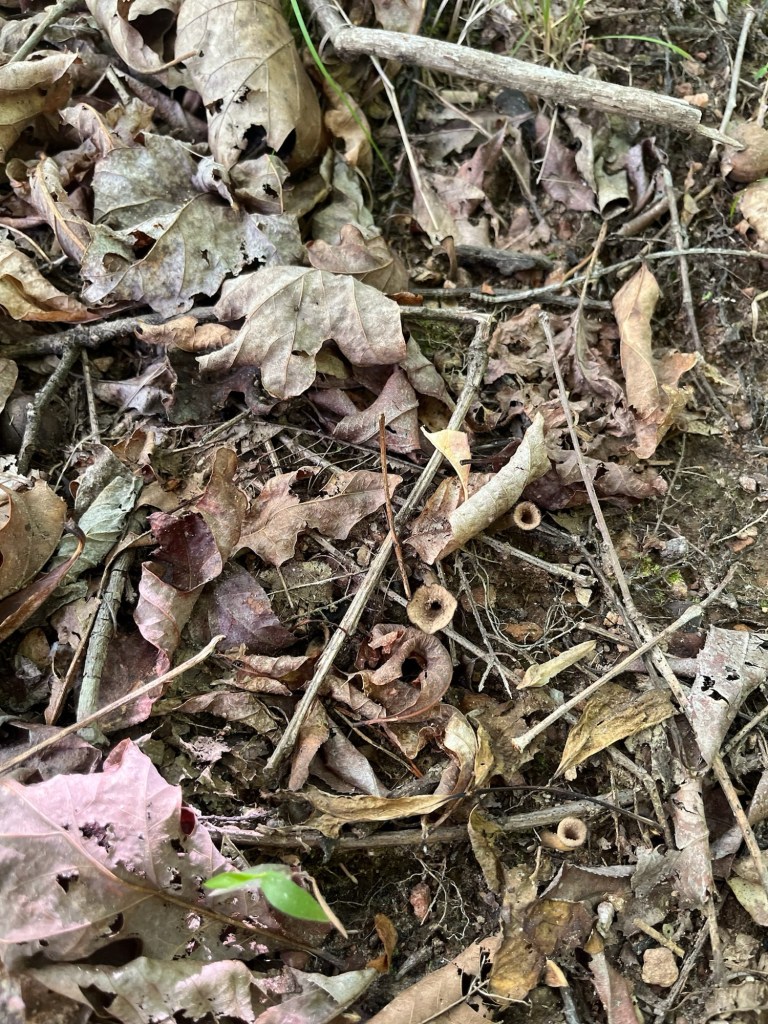
Craterellus fallax, Eastern black trumpet, found along the southern set back line along the forest edge. Near oaks and nestled into moss growing directly from the forest litter. These are particularly difficult to spot as they look like leaf litter. We are so lucky.
They looked like round tubes. These are a choice edible and are highly valued.
Shoehorn oyster found along Blackrock trail growing on a stick.
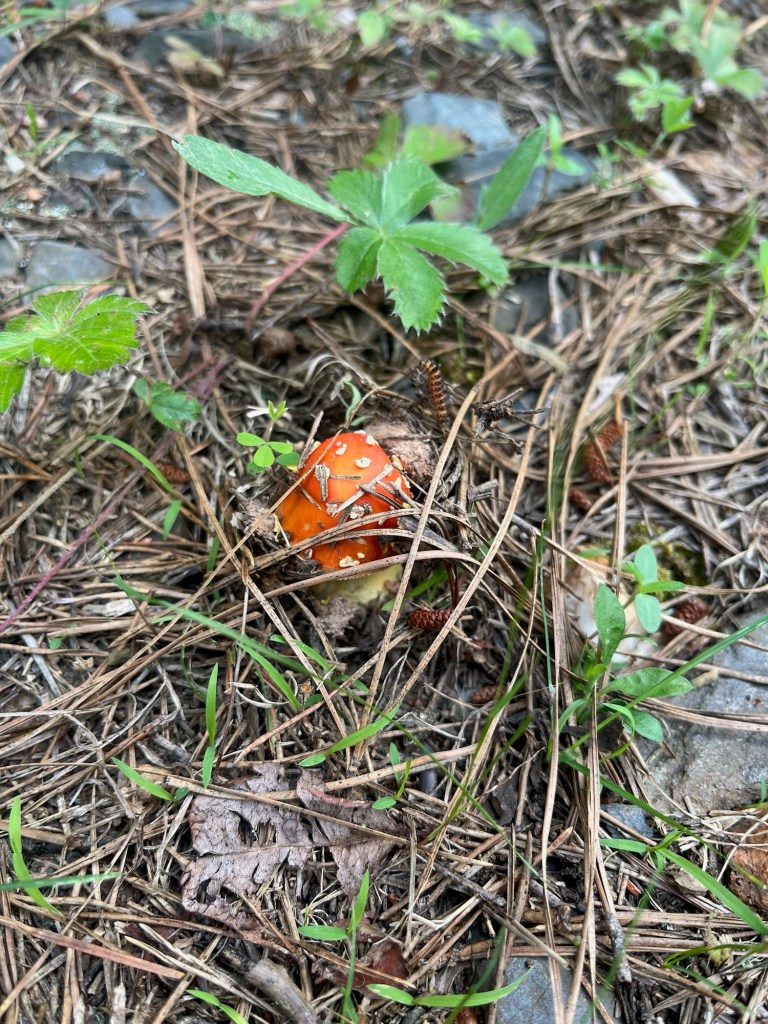
Amanita parcivolvata, False Caesar’s Mushroom, we are seeing these all over up top right now. The cutest mushrooms to spot pushing up through the leaves or pine needles with the bright red to orange cap dotted with white.
Ailanthus, tree of Heaven, root suckers we’ve been pulling out from wherever we find it on the farm. This is a wonderful example of why to pull out the roots underneath and not mow or cut them since the root will keep growing and sending up more of this invasive tree that chokes out native species.
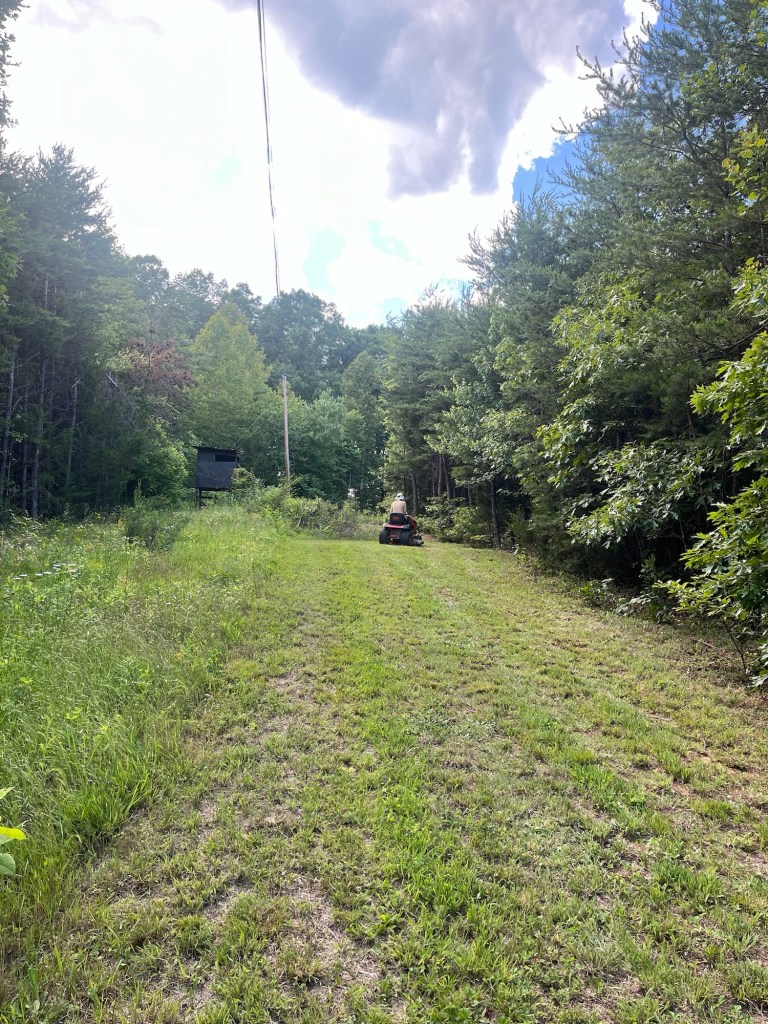
Mowing the south end where we found the first of 5 porcini mushrooms yesterday. 👏🏽

We were out to mow and have a work day. It was lovely cooler weather so we got lucky in multiple ways. We mowed the clearing up top, the front along the road and the southern border. Then we went for a little walk and found the mushrooms we’d almost given up hope finding at SAFF. What a wonderful day. We feel like anything is possible if you stay focused and keep going. 😀

We saw plenty of lone star ticks as well. Since we’ve been mowing regularly we don’t see them in the clearings but along our trails we find them on the tippy top of Galium, bedstraw. They hang out with their legs open waiting for an animal to walk by to attach to. We saw plenty of them yesterday. It’s a bad year for ticks here in Virginia. The mild winter weather didn’t kill them off so they are even more abundant than usual. We are staying mindful.

Top of the Bolete edulis.

May 27, 2024 Memorial Day at St Andrew’s Forest Farm

So far we have seen plenty of deer ticks, dog ticks and lone star ticks at the farm this year. The clearing seems free of them right now since we keep it mowed down well. In the forest, the wetter and greener areas where deer and dogs are known to move through have been hotspots. Our tick mitigation measures have kept us from getting any bites but we have found them crawling on our socks, shoes and clothes. It’s definitely tick season unfortunately.

Monotropa uniflora, Indian pipe or ghost pipe, found along southern set back line in the forest. These plants get their energy from their host fungus, Russula or Lactarius, so they can exist in darkest parts of the woods. We were delighted to find it at SAFF.
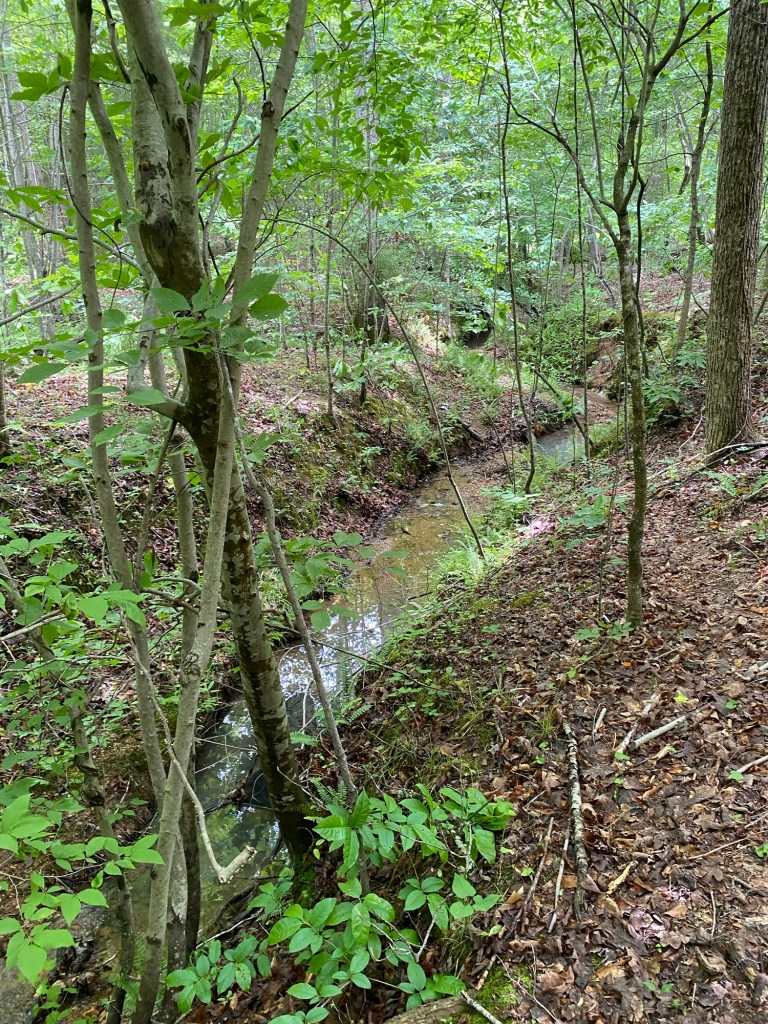
The water was moving gently in the waterway at the bottom.
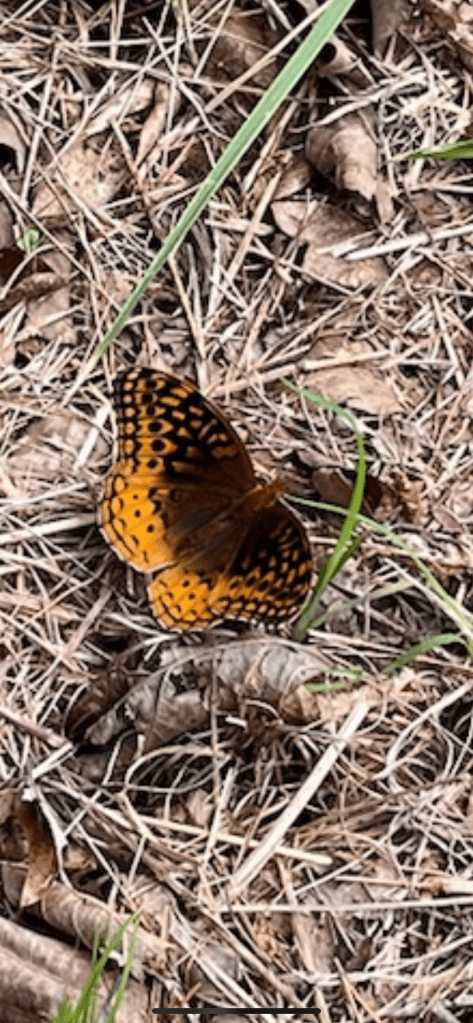
Great spangled fritillary, Argynnis cybele, were fluttering all around the Southern set back line. Fritillaries are a smaller group within the butterfly family Nymphalidae. All butterflies in this family have tiny front legs that lack claws (in most other butterfly families, the front legs have claws). My daughter laughs at the Seussian names (fritillary, pawpaw, peduncle) of plants and insects from the farm.
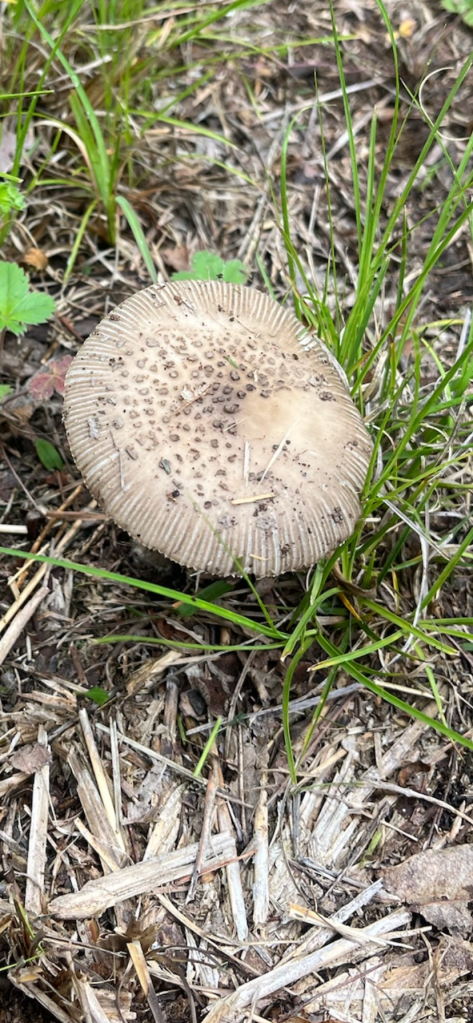
Amanita vaginata, grissette, an edible Amanita that lacks a ring in the stem. A large mushroom with furrows around the edge duplicating the gills underneath.
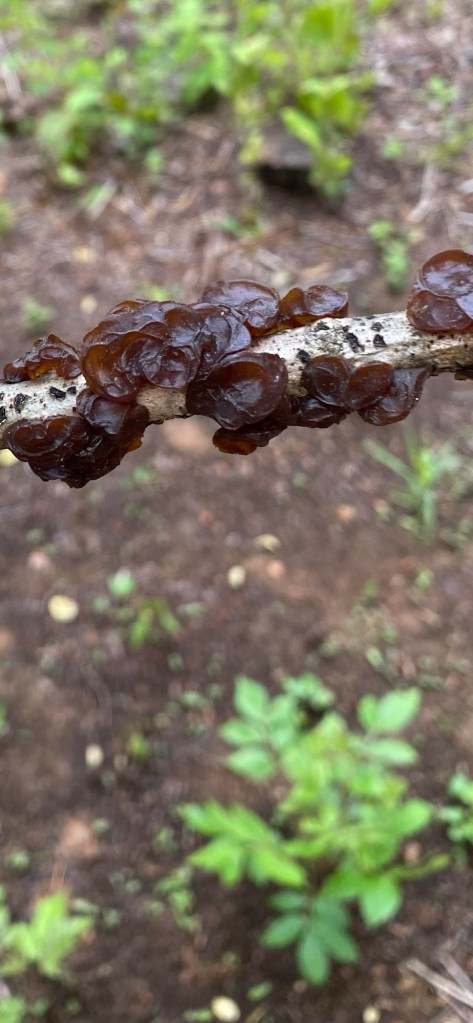
American Amber jelly fungus, Exidia crenata, is edible but we’ve not tasted it yet. Used in pho or noodle dishes.
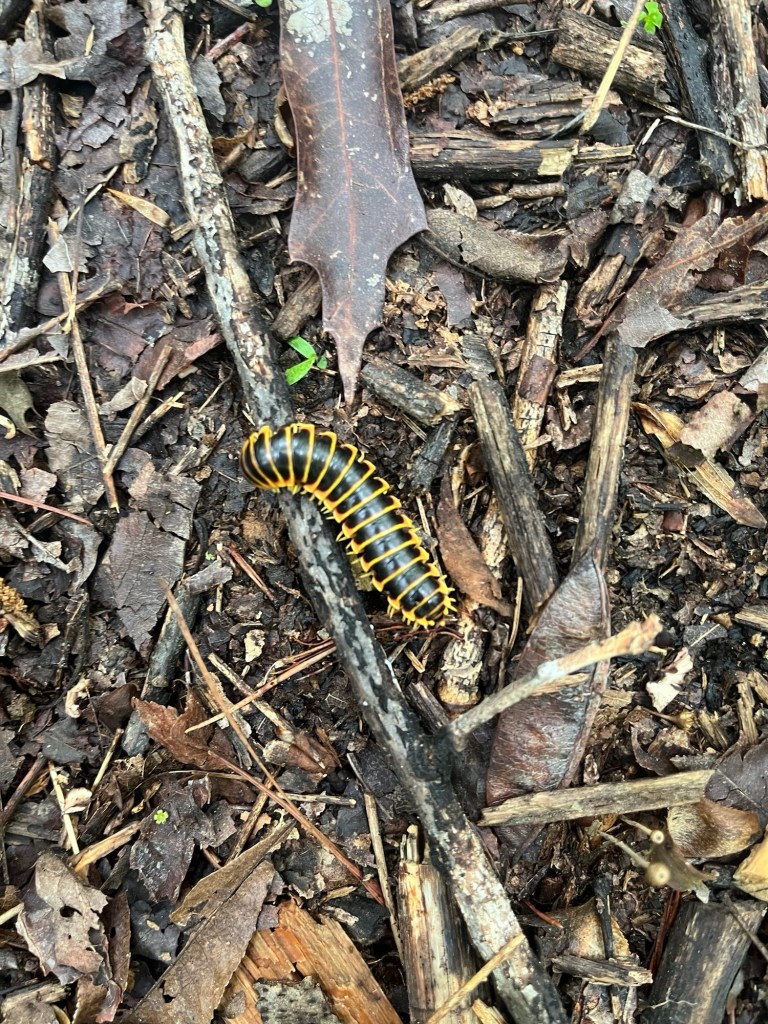
Black and gold flat millipede, Apheloria virginiensis, found all along the south side. It is reported to secrete cyanide compounds as a defense. It is recommended that one wash hands after handling this organism as the toxic compounds it secretes are poisonous and can cause extreme irritation if rubbed in the eyes. (Source: Wikipedia)
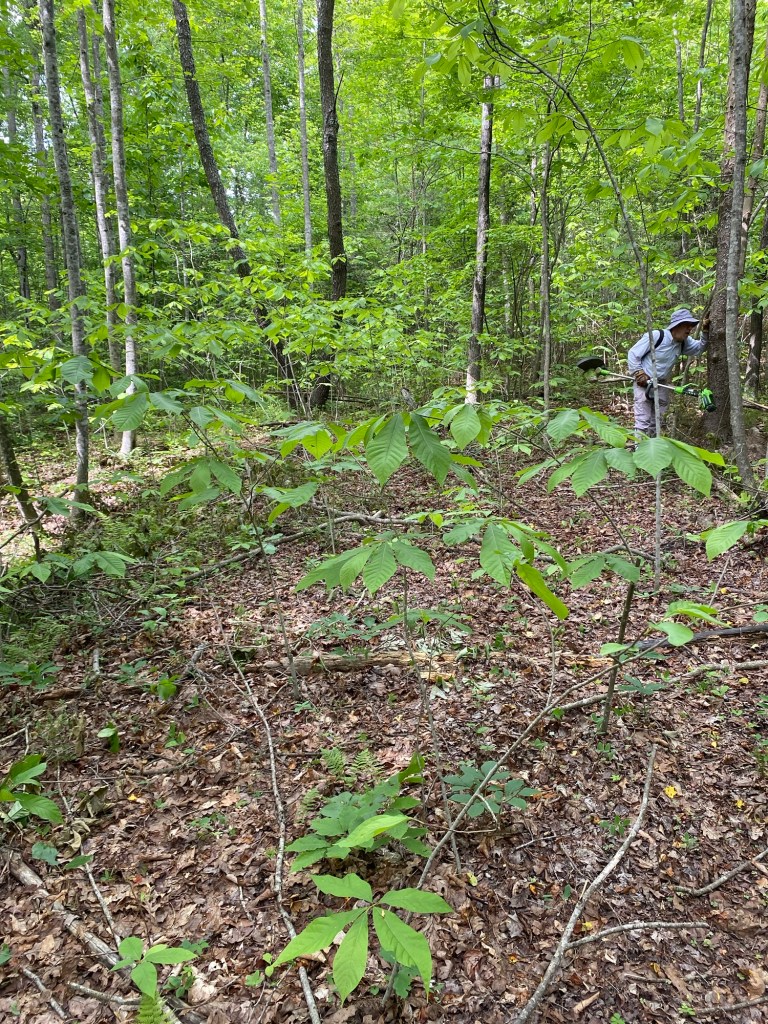
Chris looking for our boundary marker in pawpaw orchard.
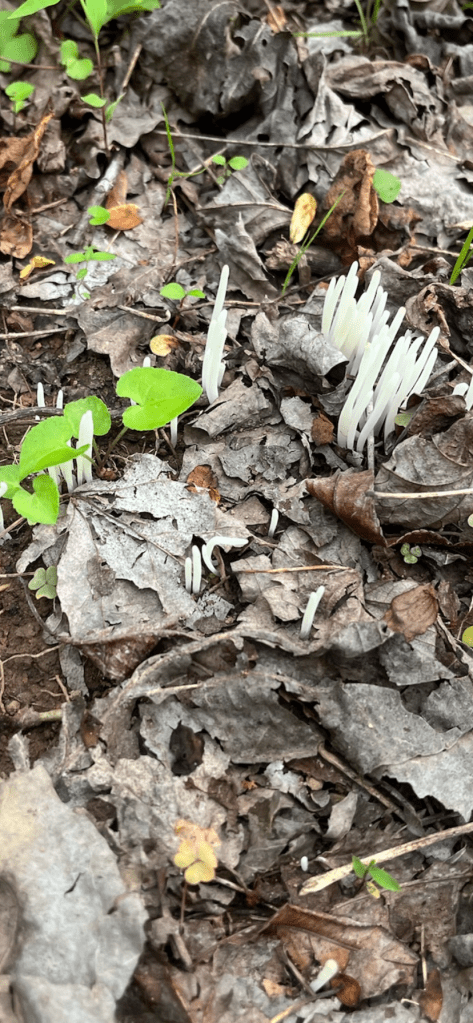
Fairy fingers, Clavaria fragilis,
 It produces tubular, unbranched, white basidiocarps (fruit bodies) that typically grow in clusters. 
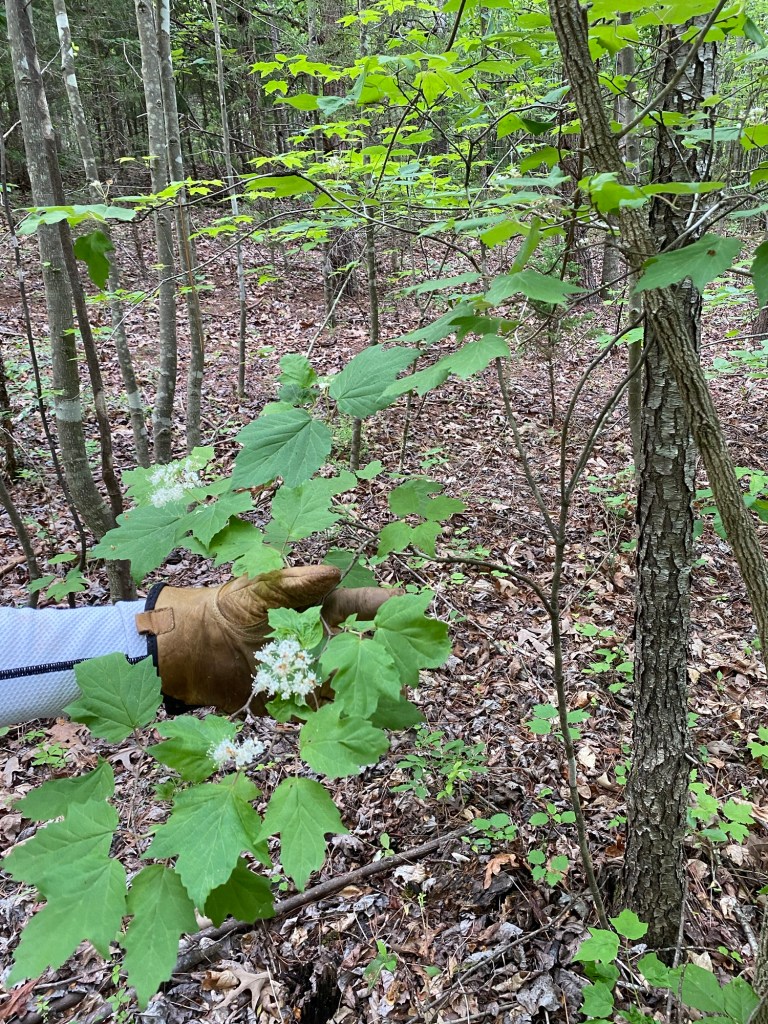
Maple leaf viburnum
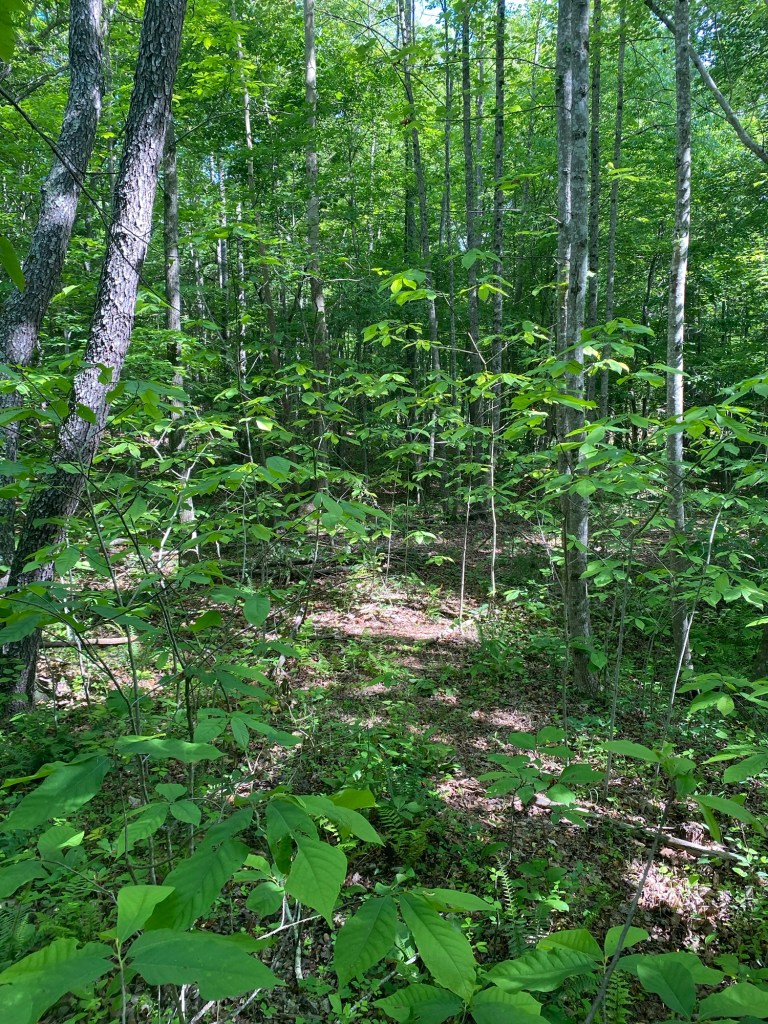
Pawpaws
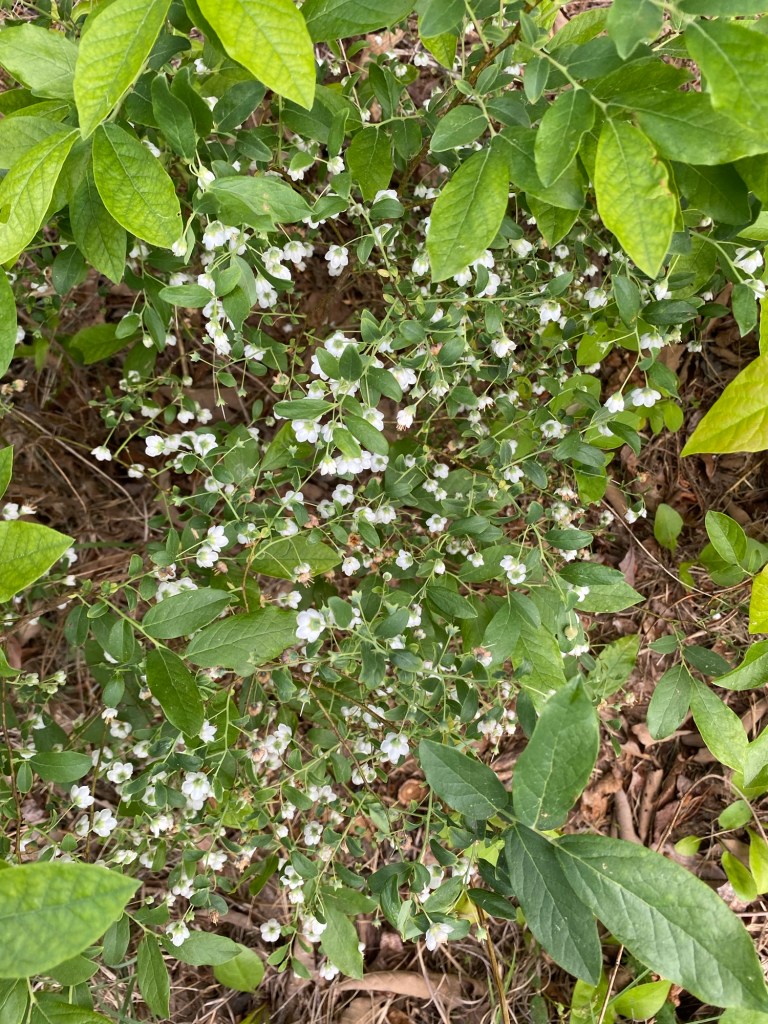
Flowering lowbush blueberry

We were going to mow but left our keys to the tractor at the house in Staunton so instead we had a lovely walk around. The ground and forest litter was wet from the storms that have passed through. With the heat, it felt very muggy.