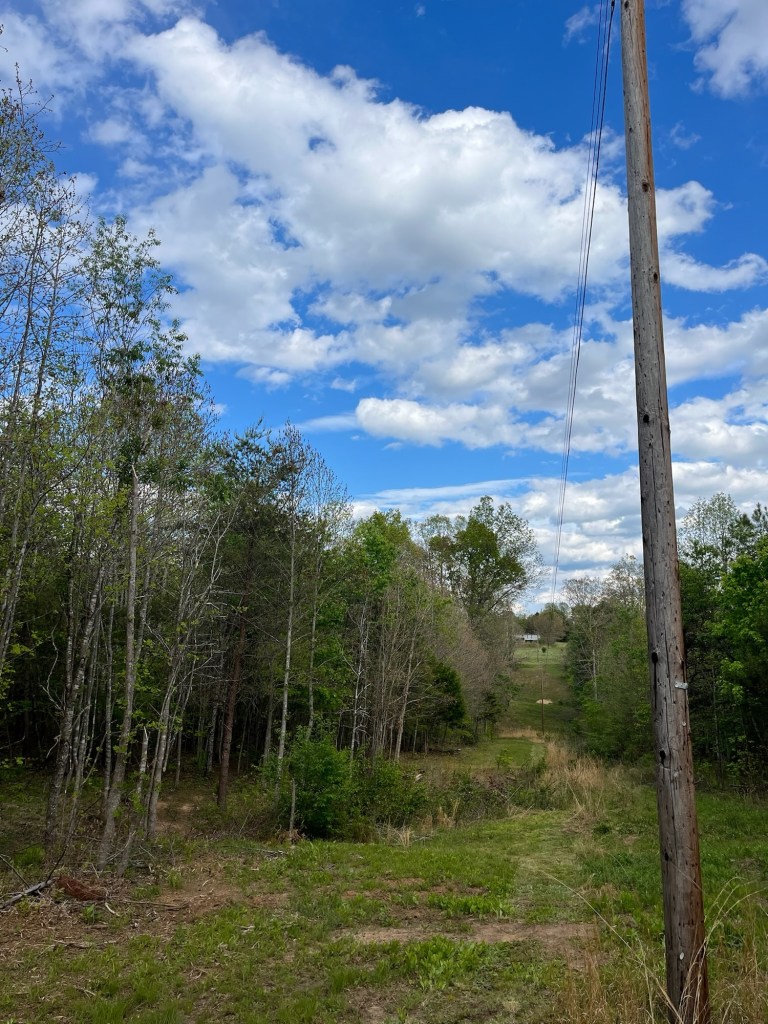
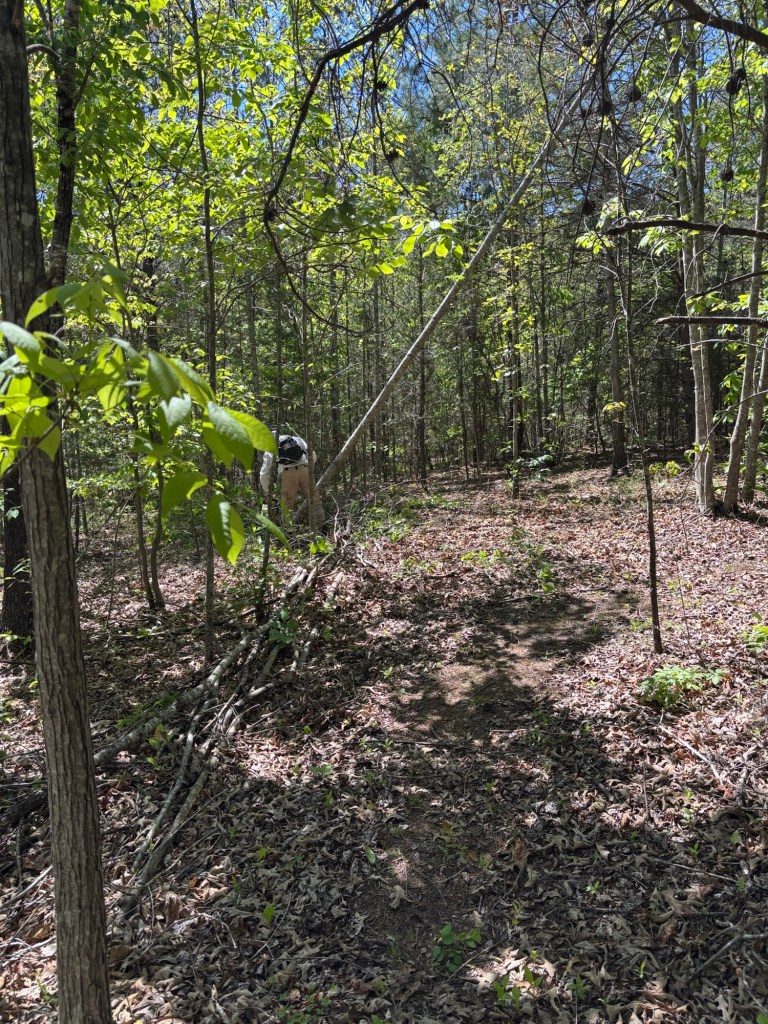
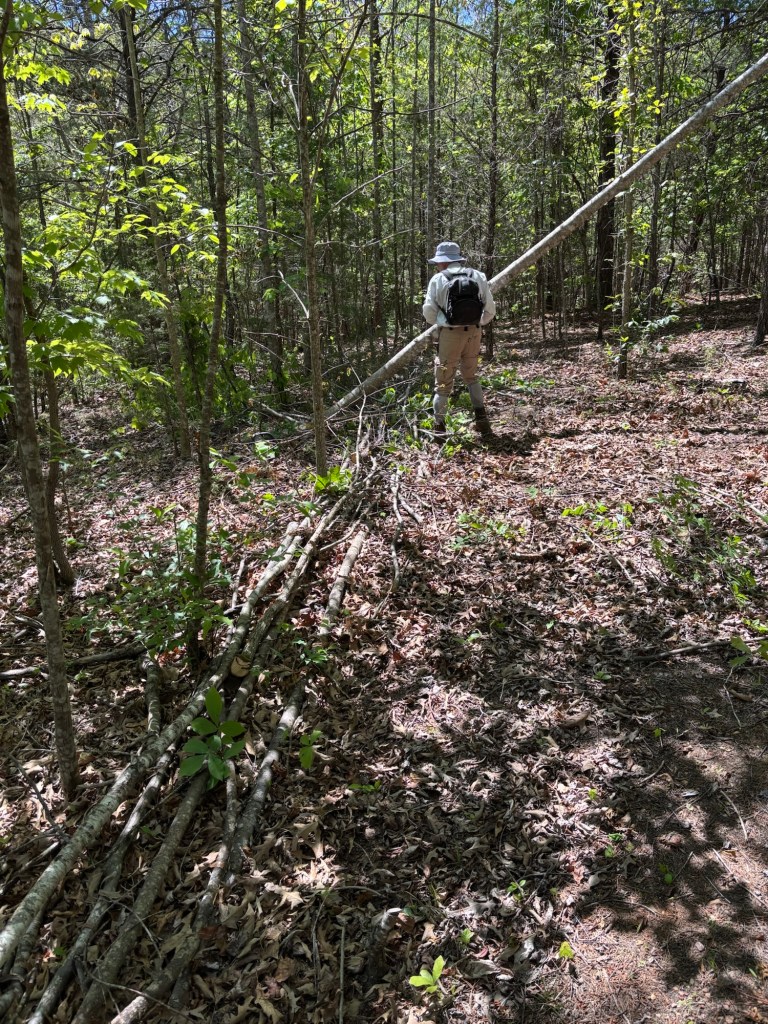
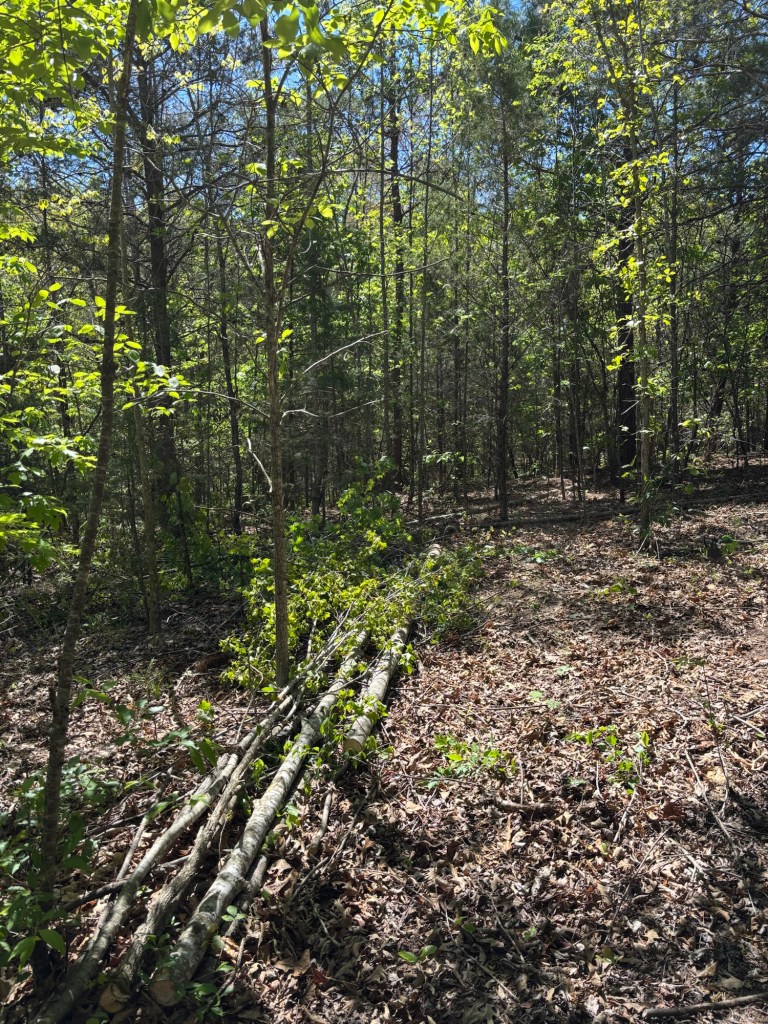
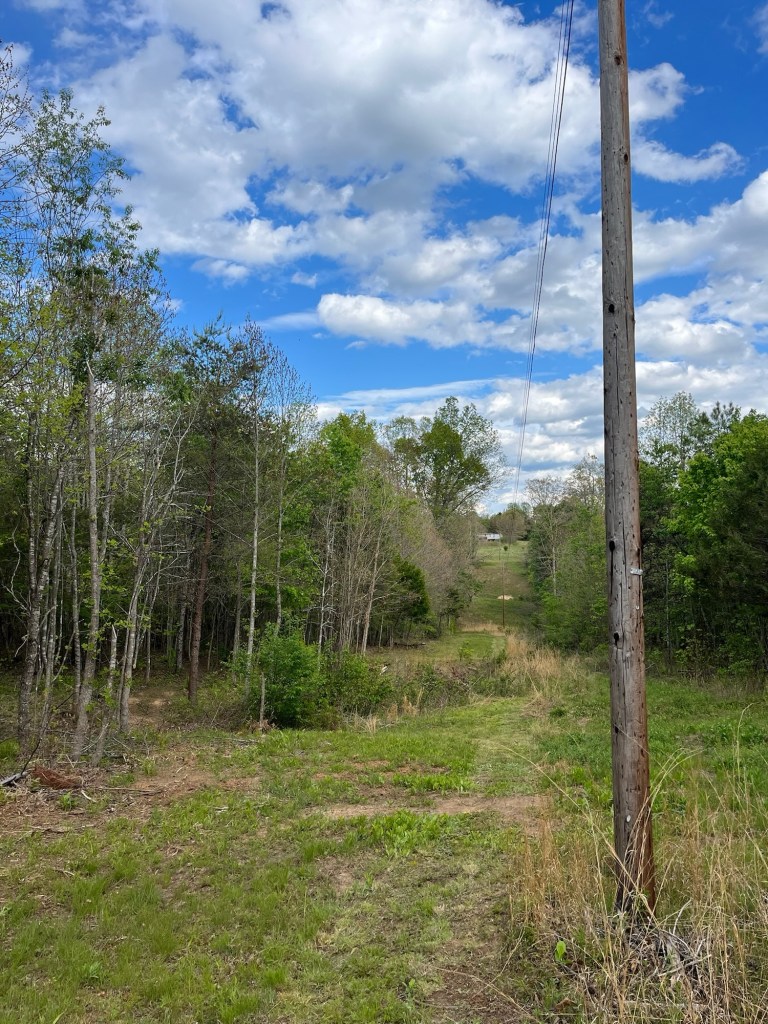
The new view down SAFF’s lower south set back line without the bridge. This is most pleasing.Yesterday during our work at SAFF we began building a new Hugelkultur terrace along the southern slope. We took down 3 tulip poplars which were overcrowded, unhealthy and lanky scrunched in between the pines and oaks. The tulip tree Liriodendron tulipifera is a fast growing tall hardwood tree native to eastern North America. The flowers attract hummingbirds and butterflies while the seeds feed birds and squirrels. It is likely our most common tree in the disturbed areas of SAFF. When a forest is clear cut, these trees move in fast and establish their canopy. They are valuable to our forest ecosystem but not as tightly populated as they are currently. They are great for establishing the Hugelkultur terrace here along the southern slope. All of them will be useful for the development of terracing and the base structures at SAFF.
When building Hugelkultur terraces, tulip poplar is considered one of the best woods for the structural base for the terrace because it is soft and decomposes quickly which creates the nutrient rich water retaining base. We built the terraces we planted the Asimina triloba into out of tulip trees in the new seedling orchard at the bottom of North Trail for the past few years.
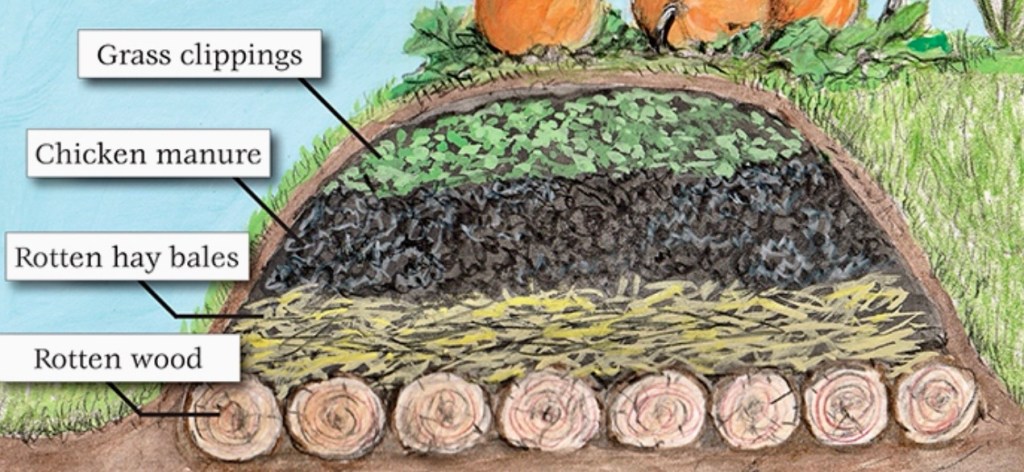
We will cover these branches and logs pictured above with soil, our homemade compost and other organic material such as mulch, pine needles and forest floor leaves. We will plant into these beds. The plants and trees in this bed will benefit from the gradual nutrient release of decaying material and increase in water retention. SAFF will benefit from reduced soil erosion.
Image depiction Hugelkultur principles in design by Rose Shelton.
We’re excited to begin planting on SAFF’s south slope as soon as we finish the terrace project and create a fence to protect our plants from becoming wildlife buffets.
Also to share with you our joyful news. We got engaged and have been making exciting plans for our future and celebrations with friends and family.
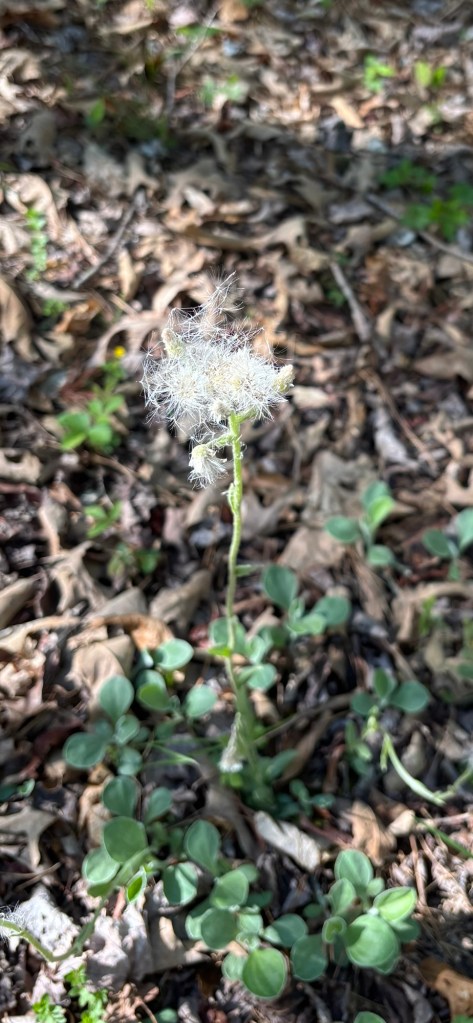
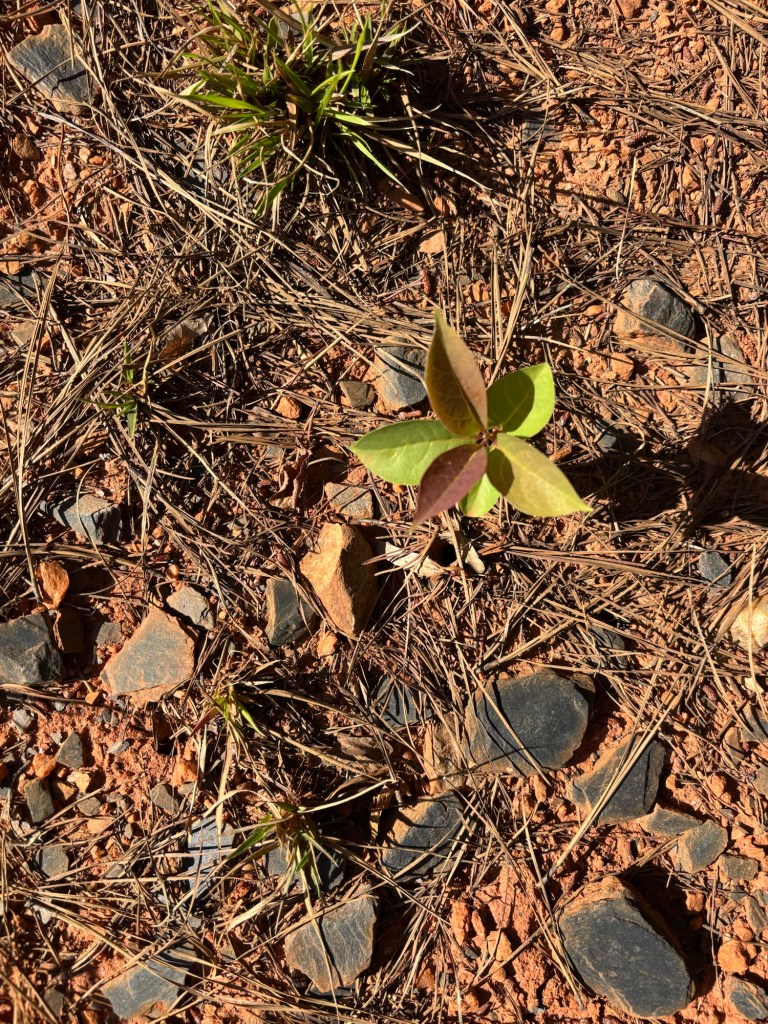
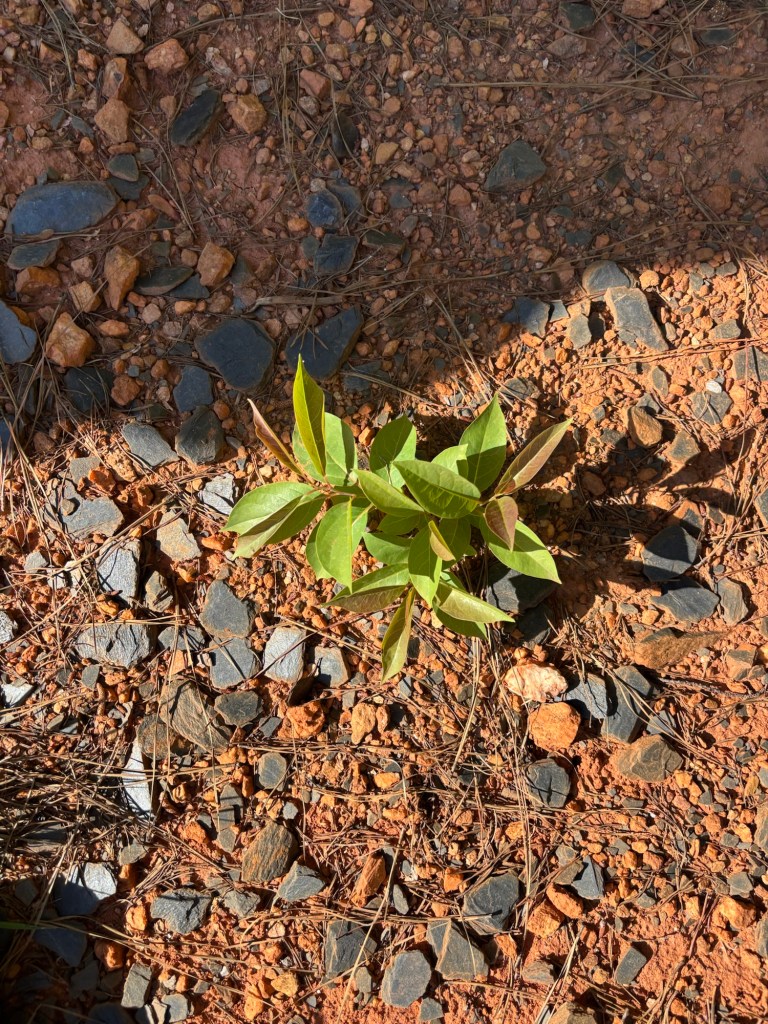
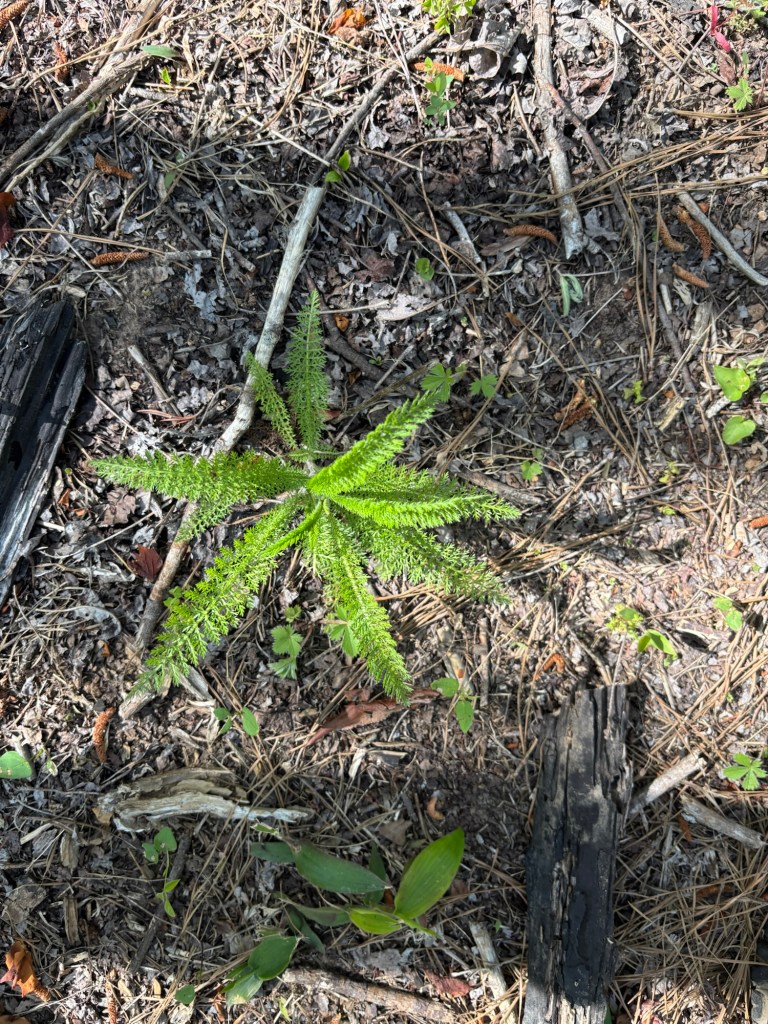
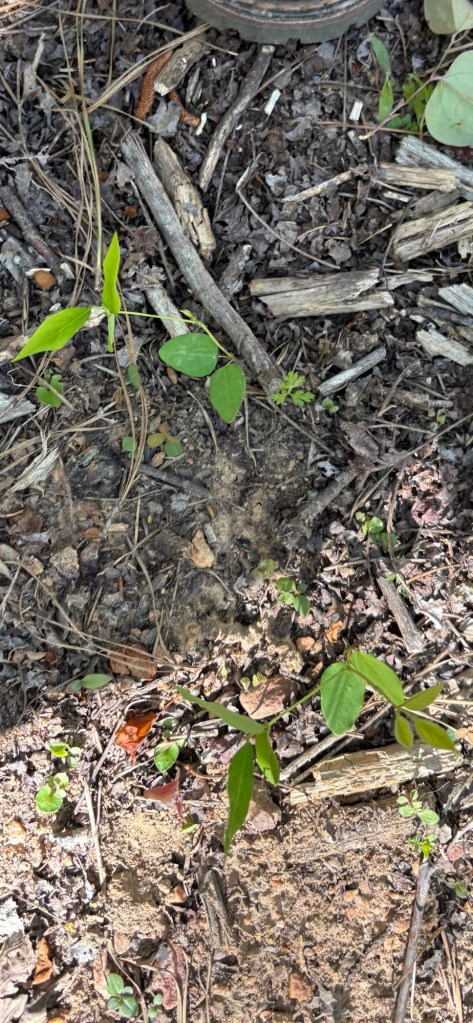
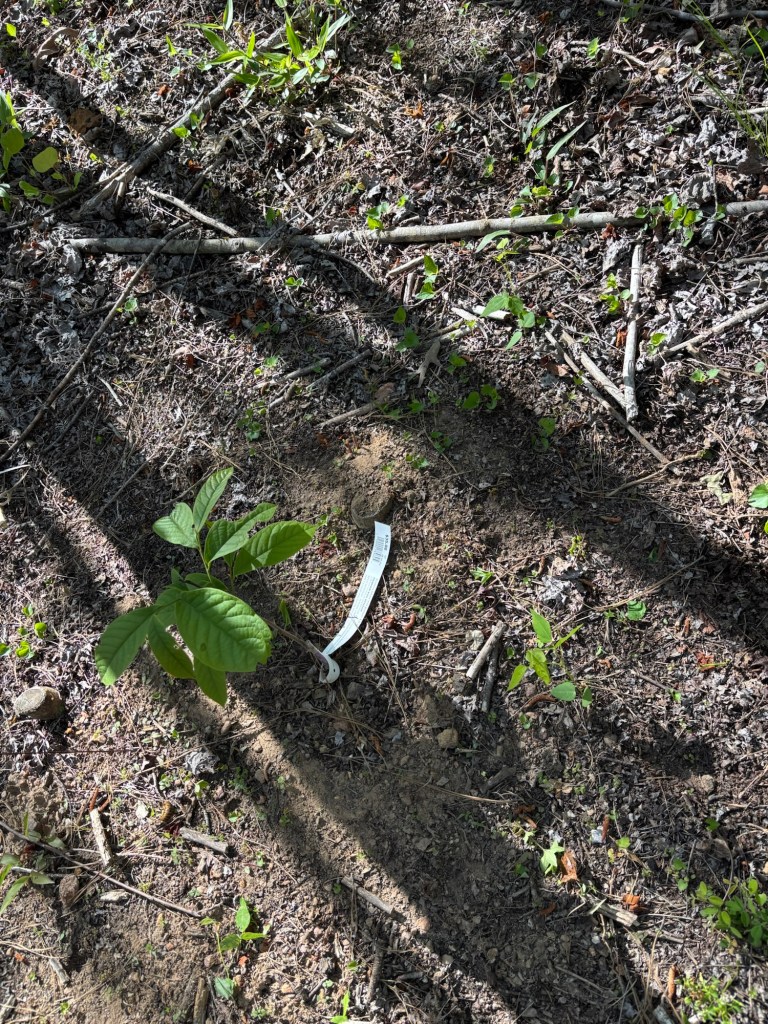
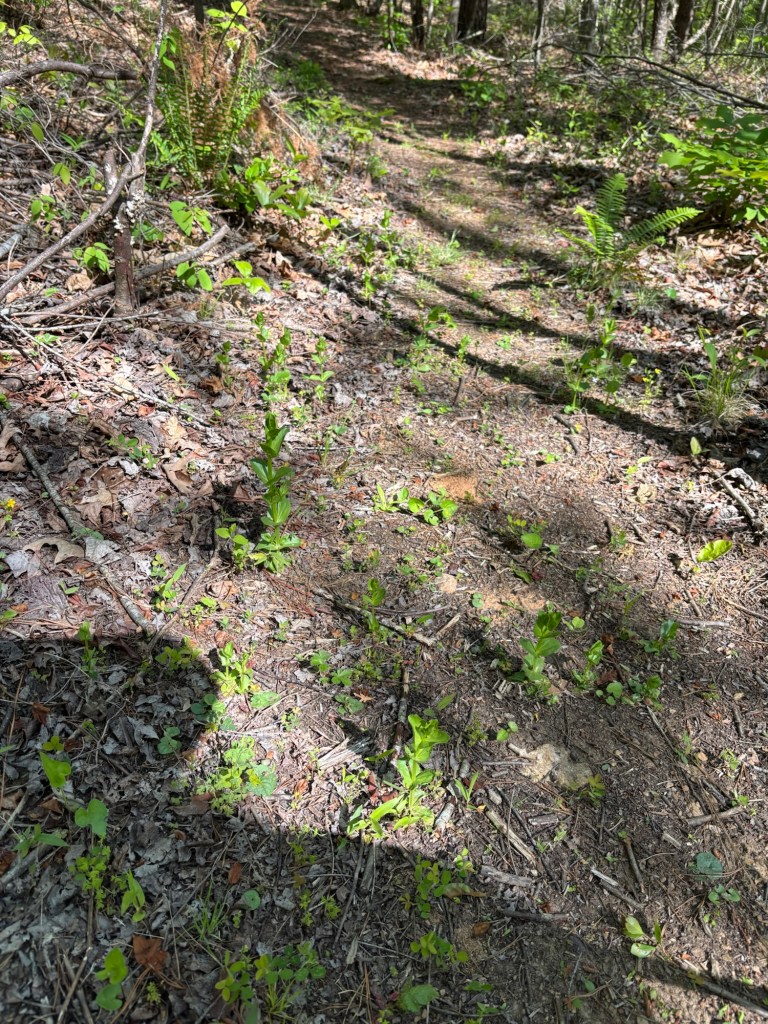
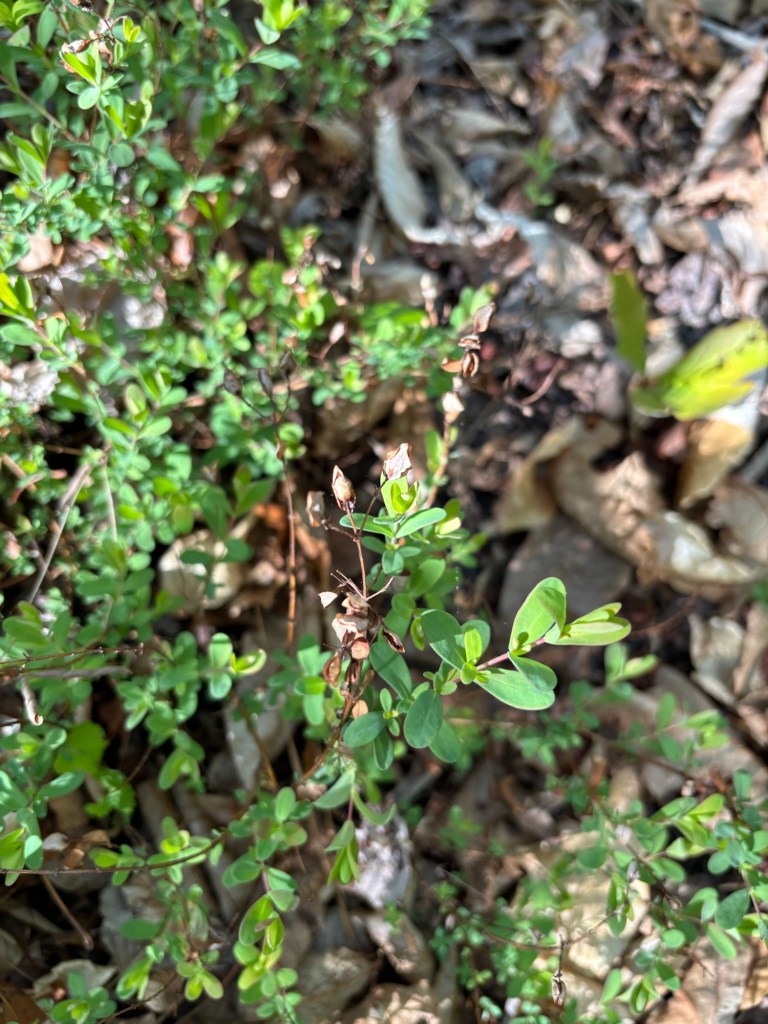
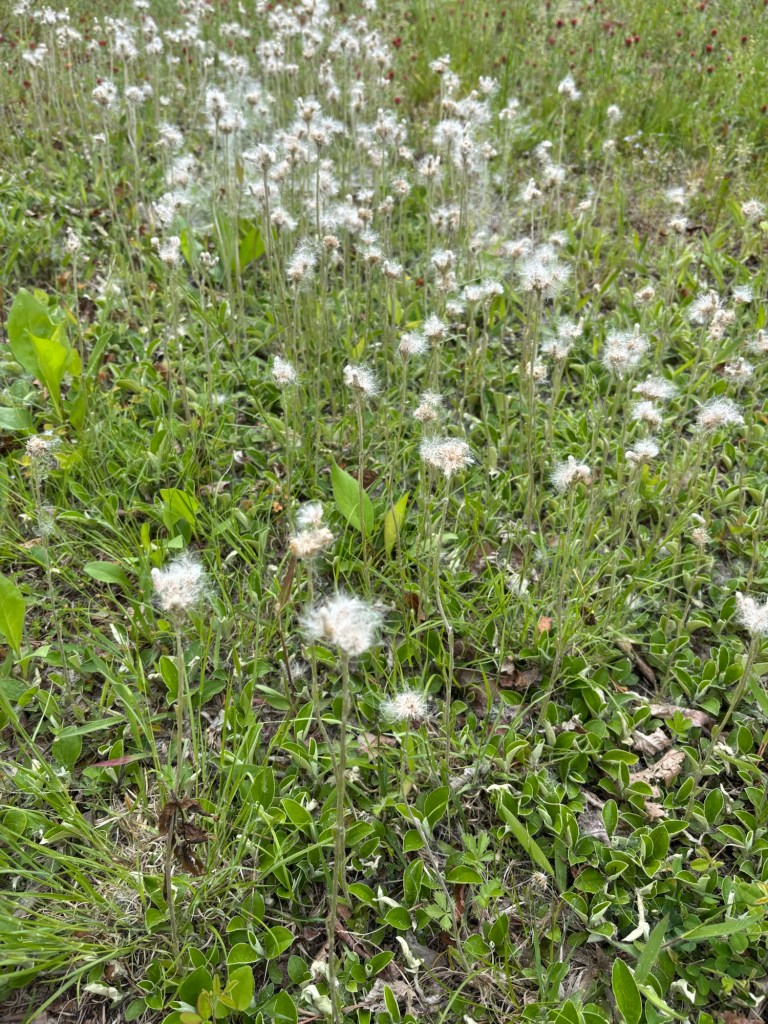
The stalk arising from the dead striped leaf continues to open up the flower buds. We are surprised by how yellow the flower is after looking deep purple for some time. This is it! The flower unfurled finally. The final flowering stage of Antennaria plantaginifolia, plantain leaved pussytoes. The flower heads have transformed into fluffy seed heads that can take flight in the wind. Diospyros virginiana, American persimmon, up top near the road. We found another group of 10 or more trees. These are young and healthy. They are a major source of food for birds, raccoons and the possum. The American persimmon also serves as host for multiple moth larvae and pollinators. They are low maintenance, drought tolerant and pest resistant. We are delighted to find them. Diospyros virginiana sprout coming up near the other cluster. Another American persimmon seedling coming up in the front. Achillea millefolium, common yarrow, is highly regarded in wound healing as a styptic with antiseptic properties. Teas from yarrow are made to induce sweating, reduce bloating and reduce inflammation. It offers cold and fever relief. It attracts a wide variety of beneficial insects and over 20 species of native bees. It is lovely, drought tolerant and thrives in poor soil conditions. Amphicarpaea bracteata, American hog peanut, is an annual to perennial vine in the legume family native to moist slopes in the eastern US. They produce above ground and underground pods. It fixes nitrogen and grows in the old clonal colony pawpaw patch. We found it today coming up around our Asimina triloba cultivar seedlings which is where we planned to move them. Yay! 😀 It feeds birds, deer and mice. Native Americans ate the pods and underground peanut tubers which are nutritious. A good source of protein, fiber and carbs.Asimina triloba KSU Benson cultivar seedling with American hog peanut spontaneously growing around it offering a low maintenance partnership with the hog peanut feeding the pawpaw tree. Fern trail near the Rappahanock cultivar which is recovering nicely from the frost that bit it. Hypericum stragulum, low St John’s wort, which is toxic to grazing animals. Native Americans used the plant for the treatment of sores, fever, gastrointestinal issues, nosebleeds and snakebites.
We had a nice Sunday with lovely weather in the 60s as we got chores done and took a stroll around the trails.
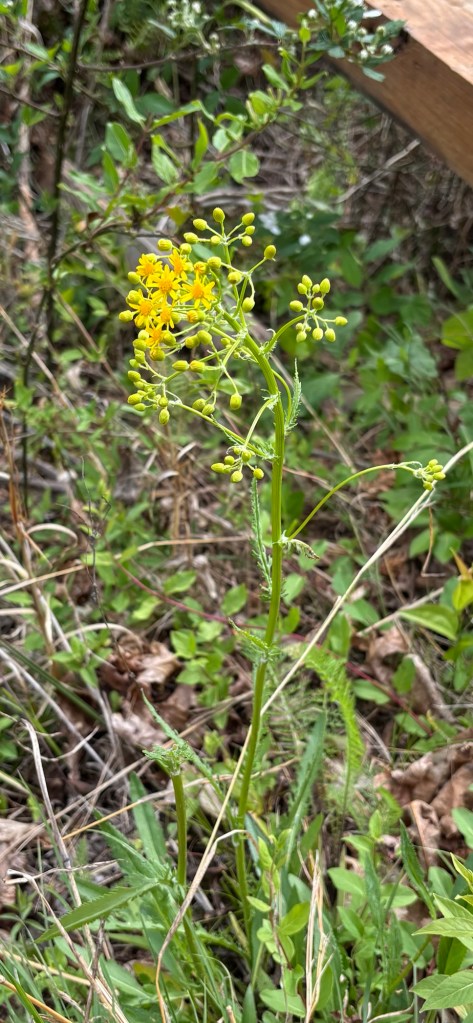
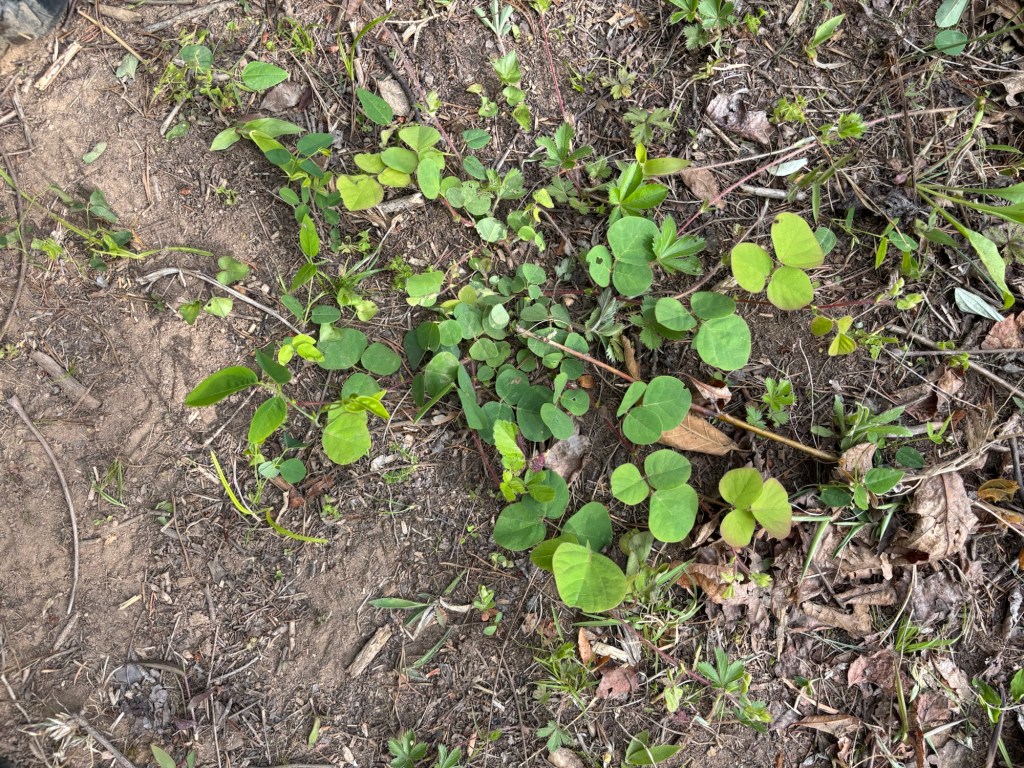
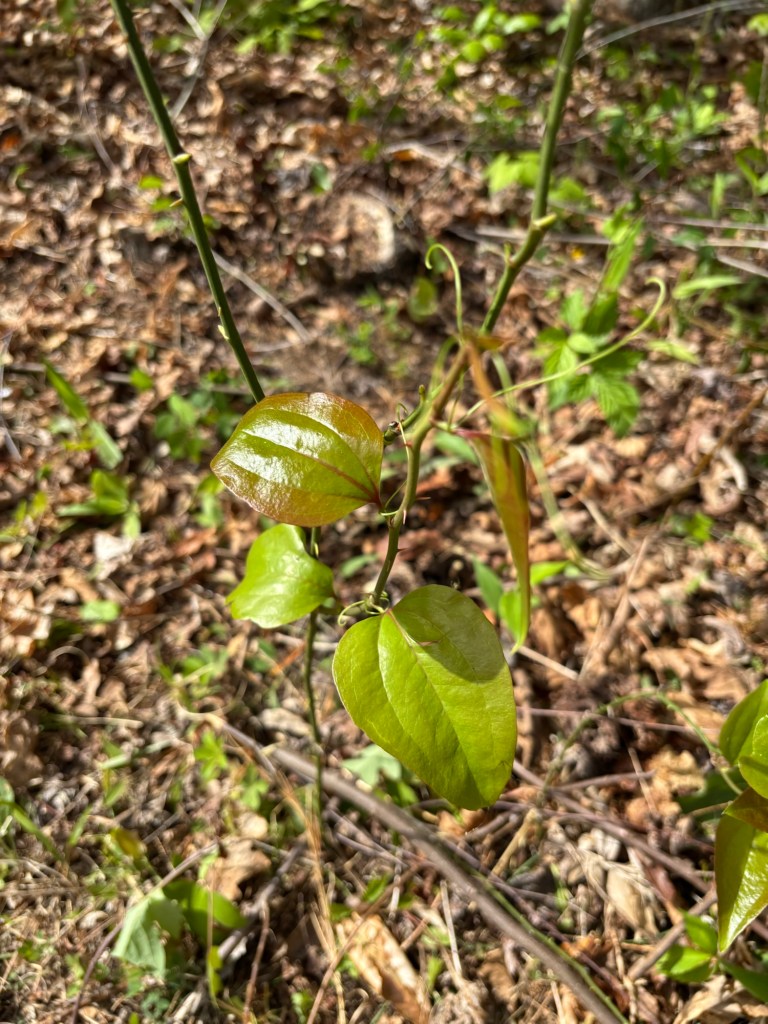
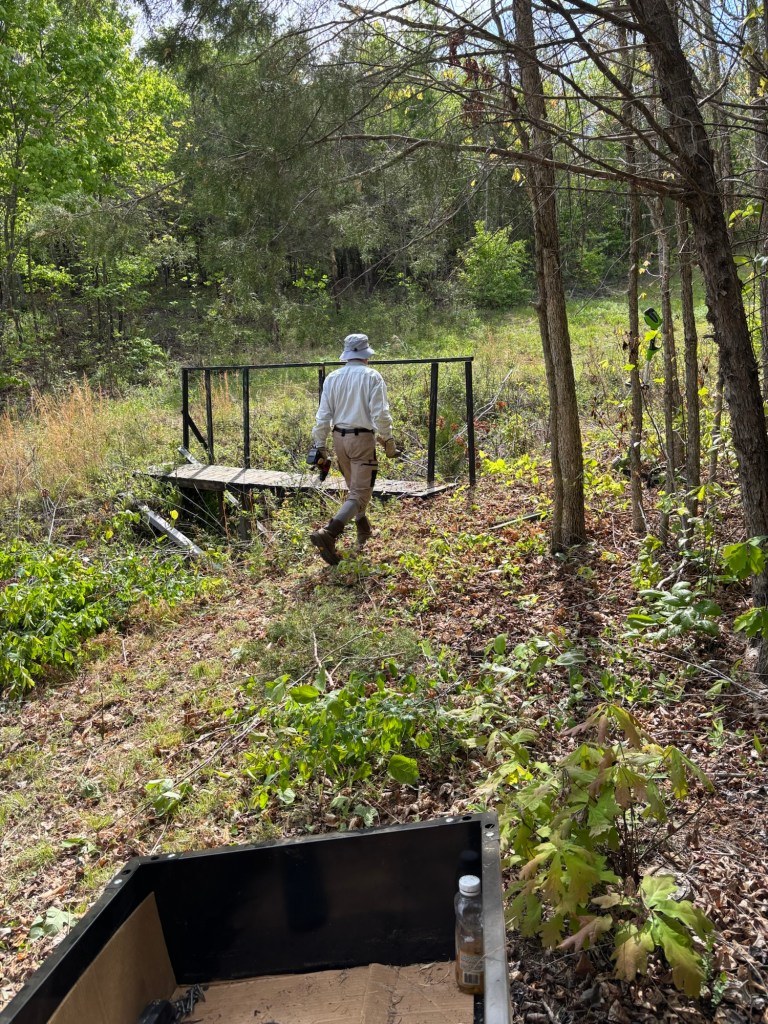
Packera anonyma, Small’s ragwort, a native perennial in the Aster family. Toxic to most mammals but insects have adapted to feed on it. Found on south set back line at SAFF. Desmodium rotundiflora, Round-leaved Trailing Tick-trefoil, or dollar leaf. A native perennial found across the eastern US that grows along the ground with round to heart shaped leaves and pink to purple flowers blooming from June to November. It serves as a larval host for the Variegated Fritillary and Southern Cloudwing. It is a member of the pea family so it helps fix nitrogen in the soil. It is a beautiful plant we see all over the farm as it typically grows in dry woodlands. Antennaria plantaginifolia, plantain-leaved pussytoes, also in the Aster family and found all over SAFF. It is a host for the American lady butterfly and a great drought tolerant ground cover. Smilax rotundifolia, round leaf greenbrier, a thorny, woody vine native to eastern US and Canada. It provides cover and food to wildlife. The tender young shoots are edible and taste similar to asparagus or green beans when cooked. Berries from it are a crucial late winter food source for cardinals and sparrows. Medicinal uses are teas and poultices used as an anti inflammatory, diuretic and detoxification. Chris prepping the area to clear the bridge encroachment. Drill in hand.
We loaded up the trailer with the supplies we needed to take down the bridge and drove the tractor to the south end set back line. It took several hours to take it down. The weather was perfect as it was much cooler with temperatures dipping into the high 30s at night and only warming to the 60s. It finally feels like spring.
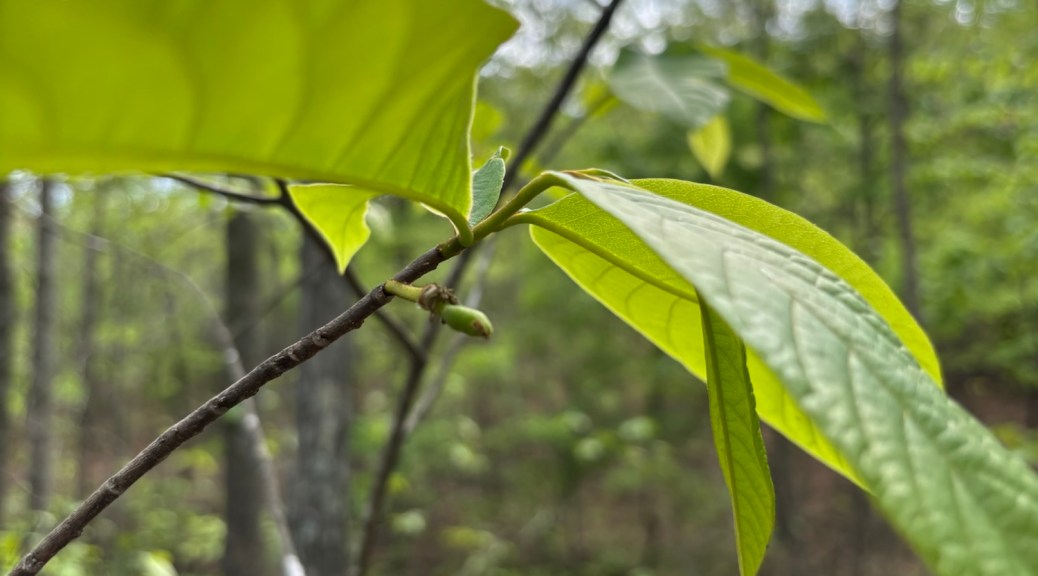
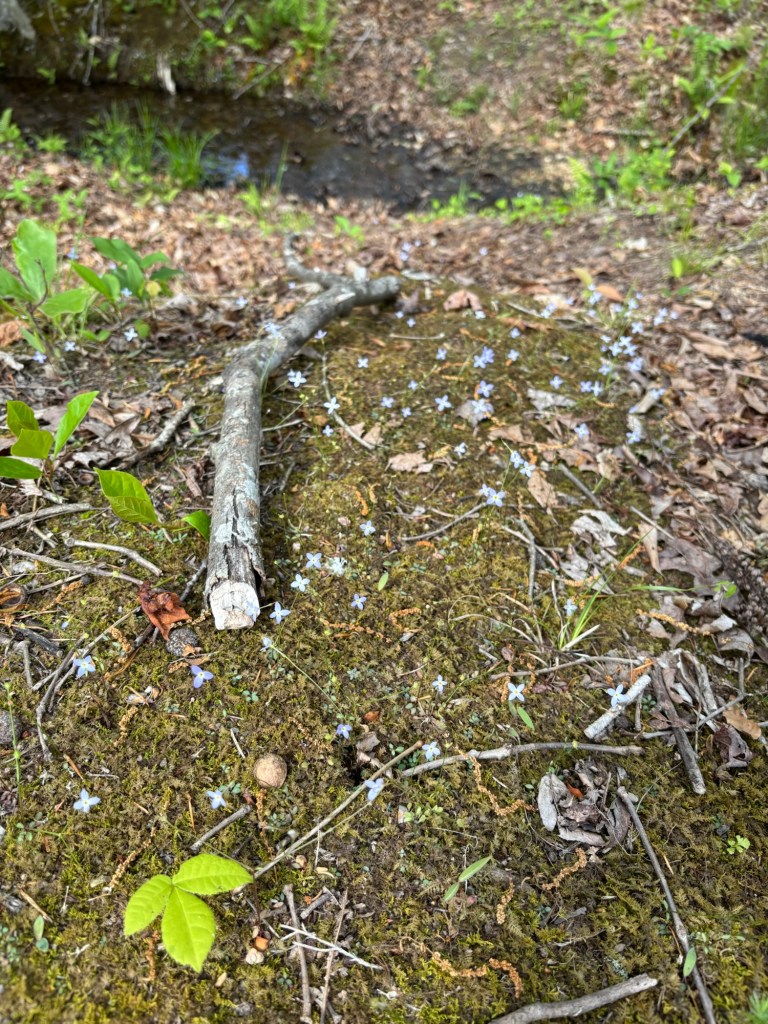
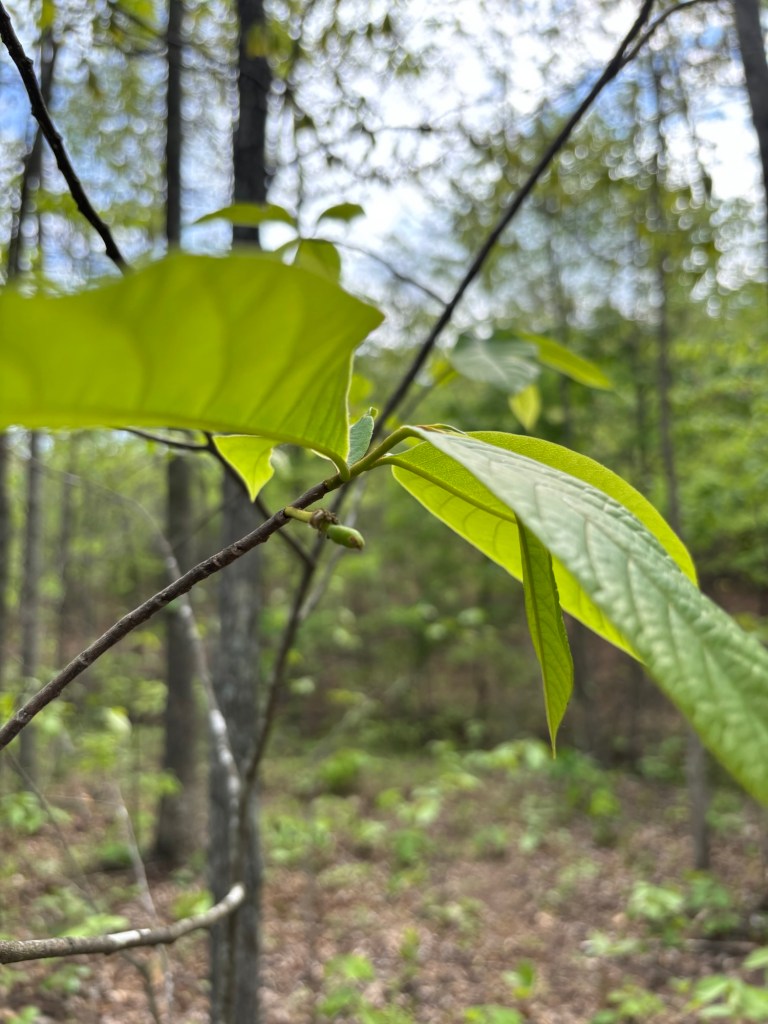
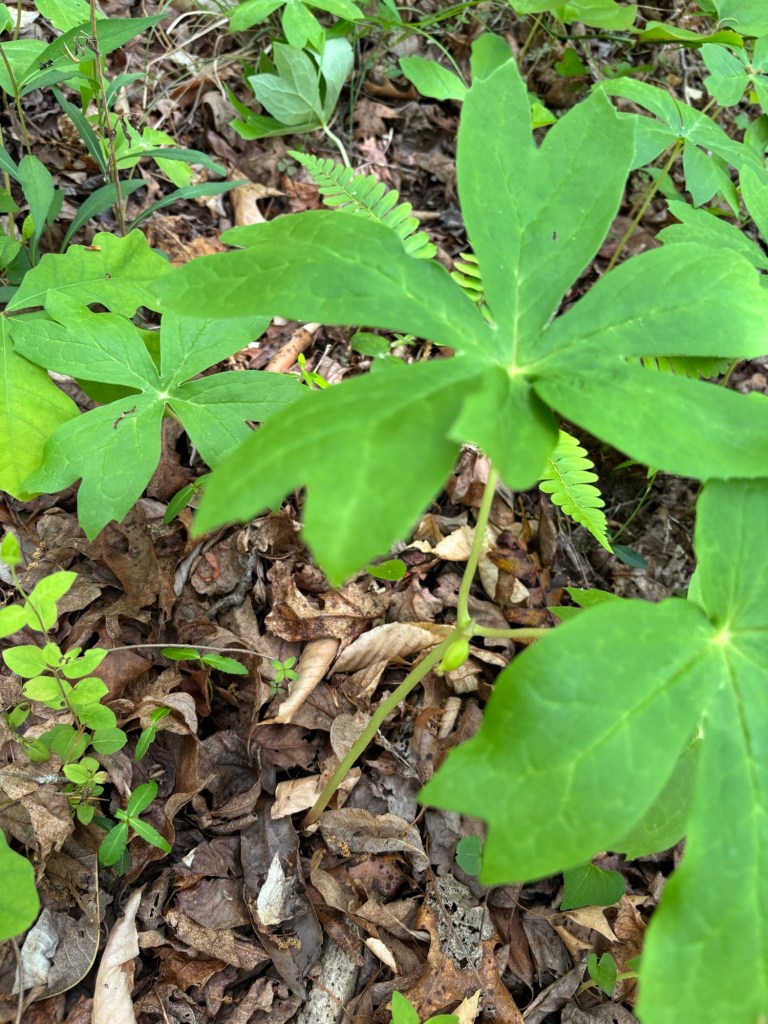
Houstonia caerulea, azure bluet or Quaker ladies, bloom in early spring in the forest and clearings. These are still hanging on near the bottom main waterway. They provide early nectar for small native bees, bee flies and butterflies. The flowers are edible and can garnish salad. Mainly we love to look at them with the blue flowers floating near the ground, they are magical.Asimina triloba new leaves and early fruit still hanging in there! We counted 10 of these tiny little fruits. Podophyllum peltatum, Mayapple, with early fruit. We counted 4 fruits easily seen yesterday. They will ripen to yellow in late July or August typically. The bridge is gone. Yay!
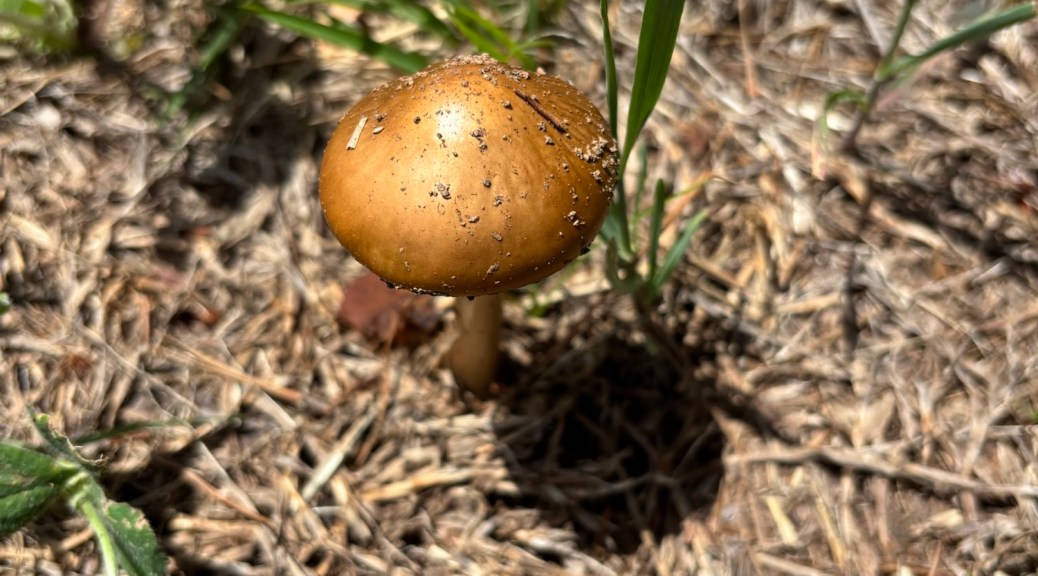
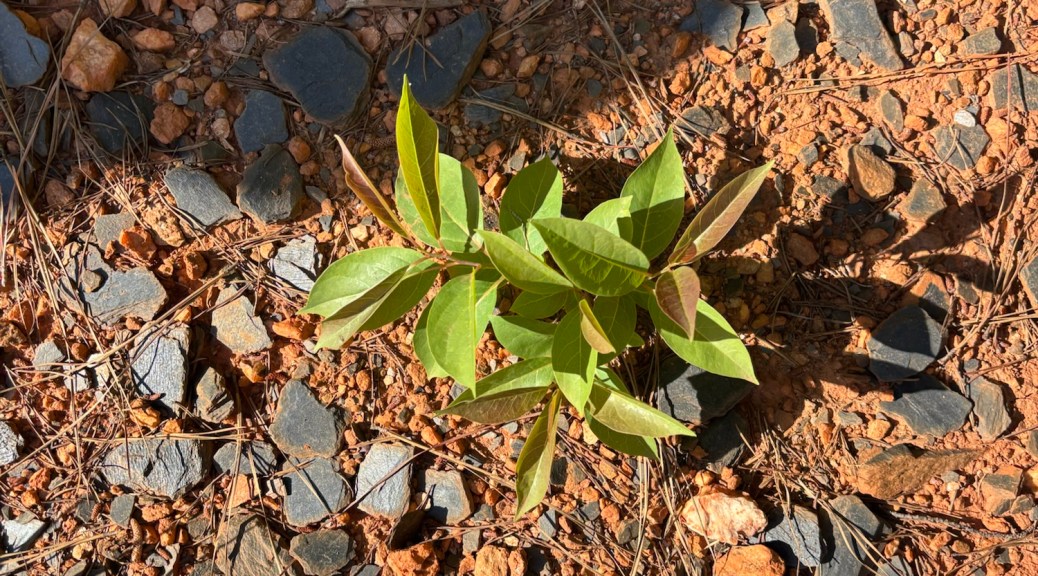
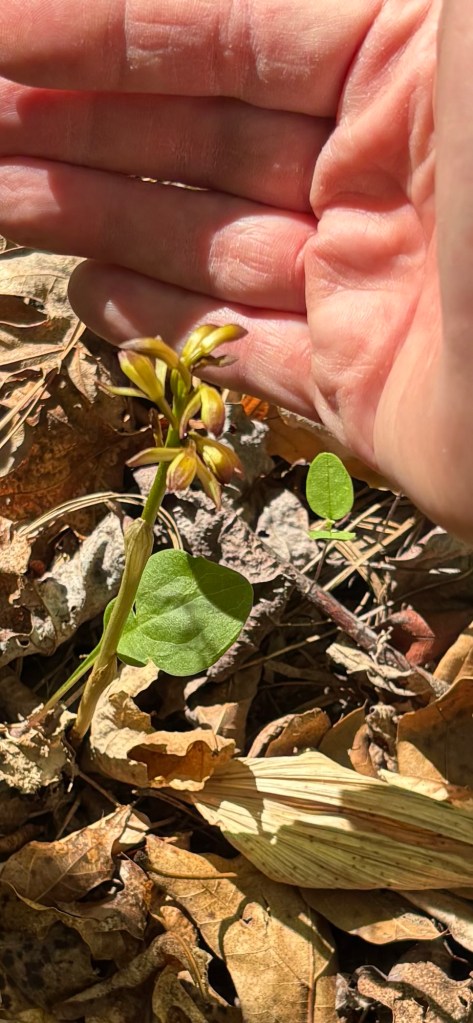
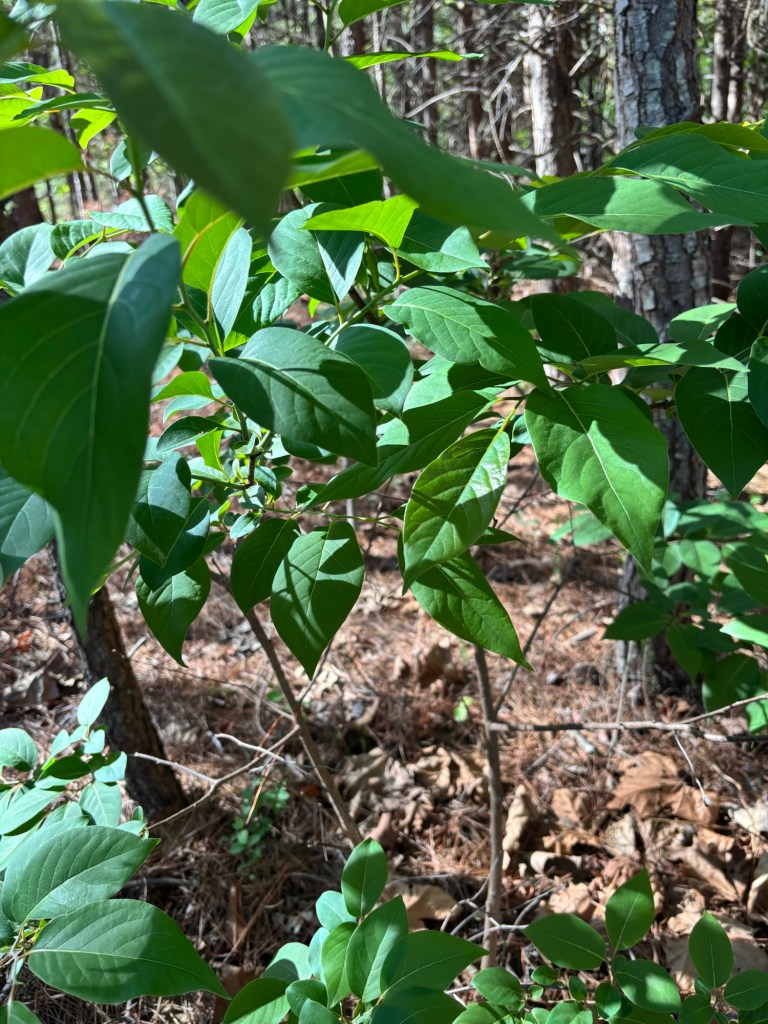
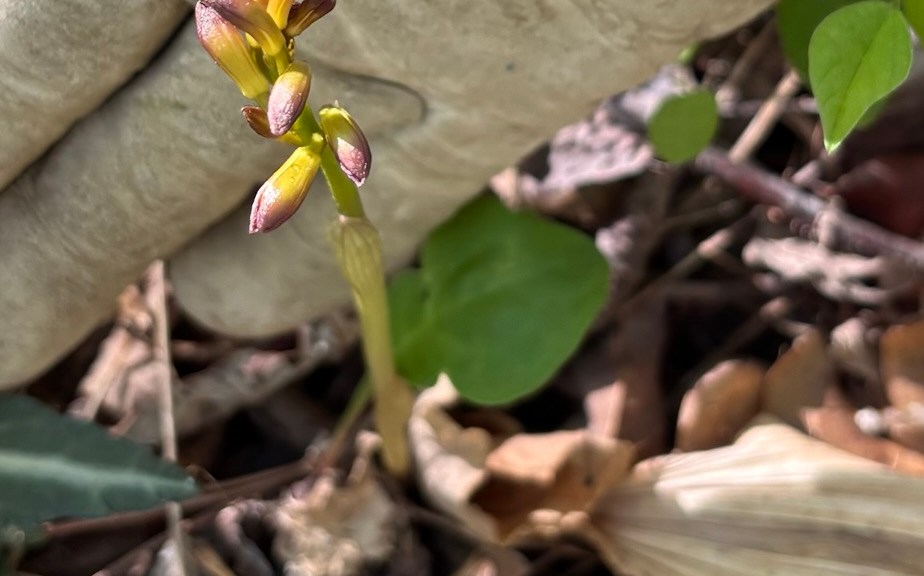
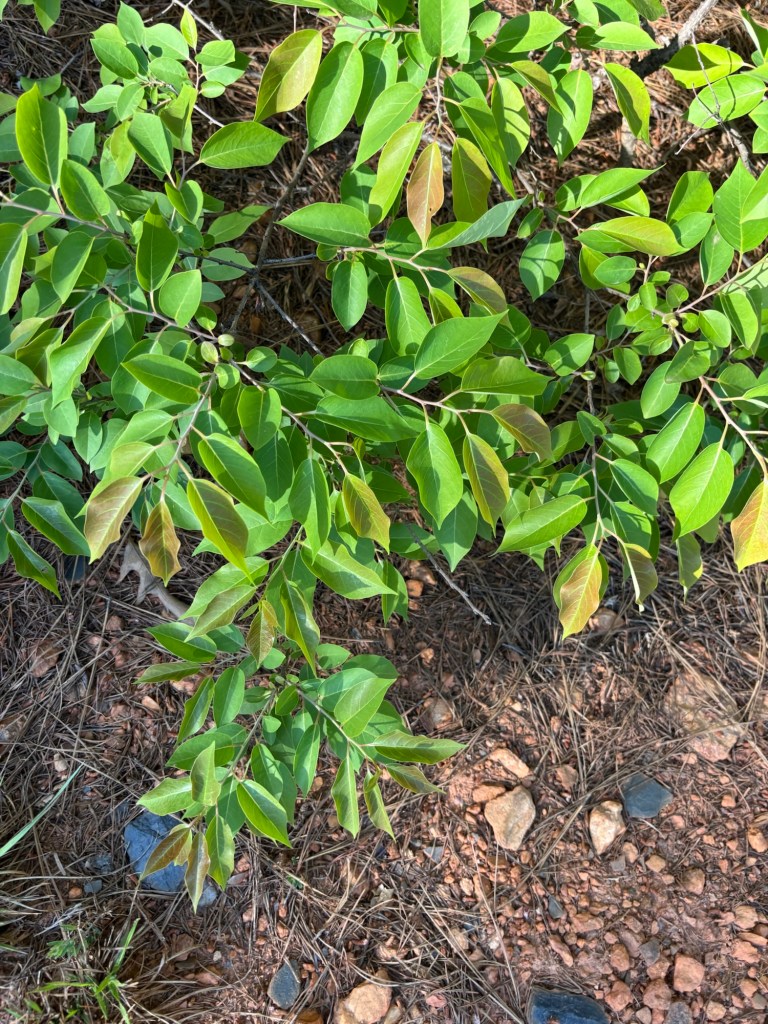
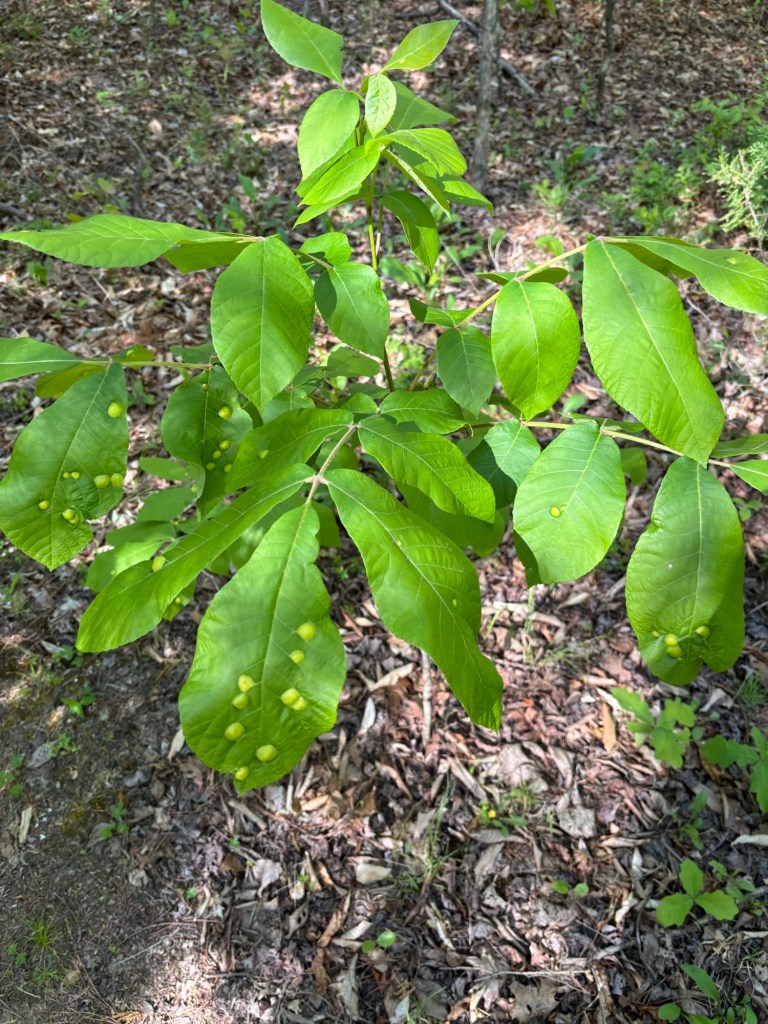
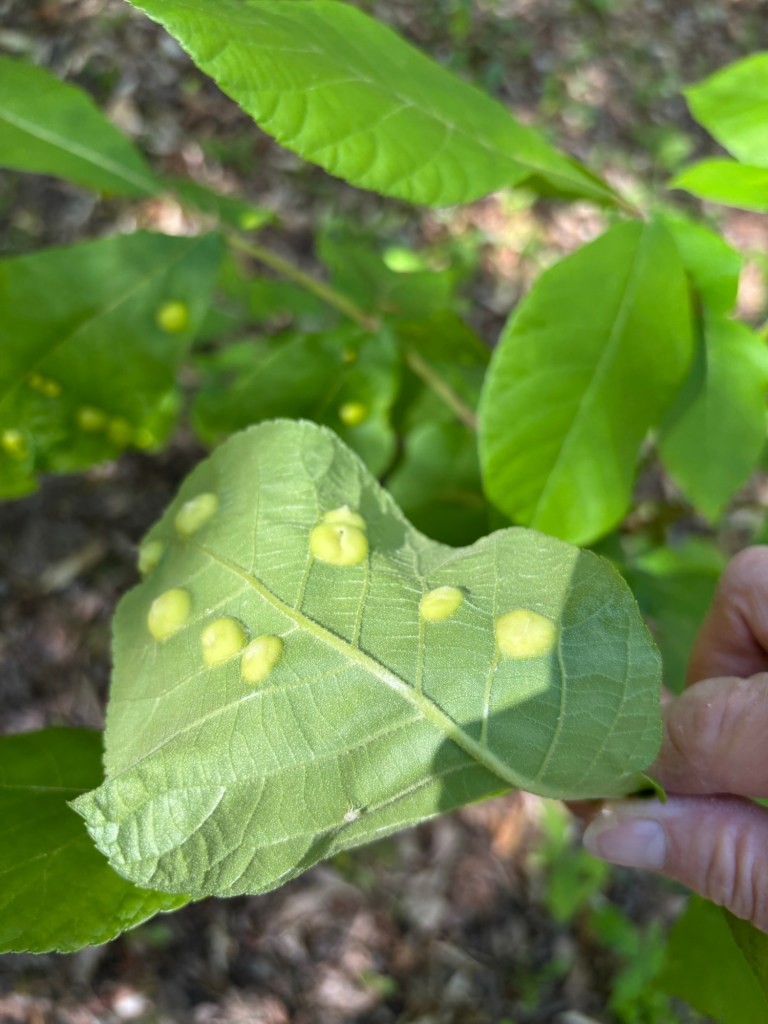
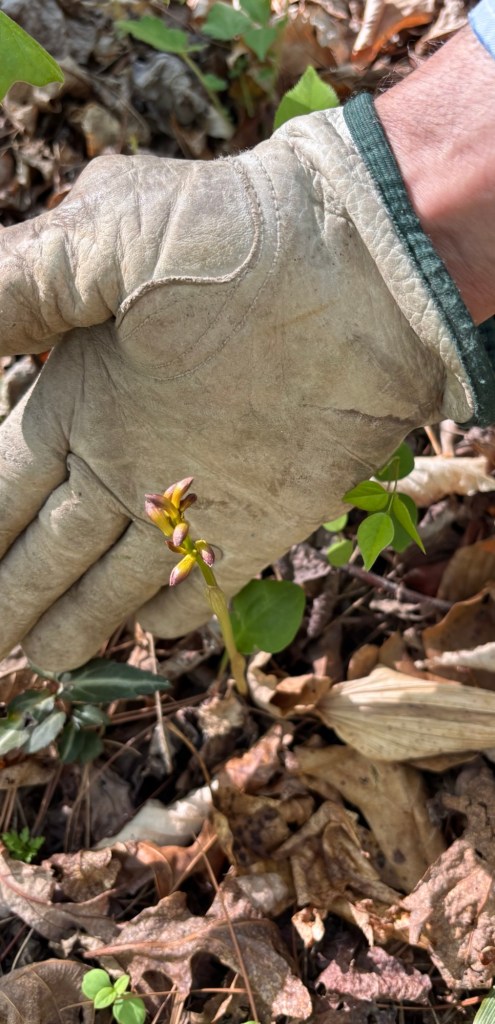
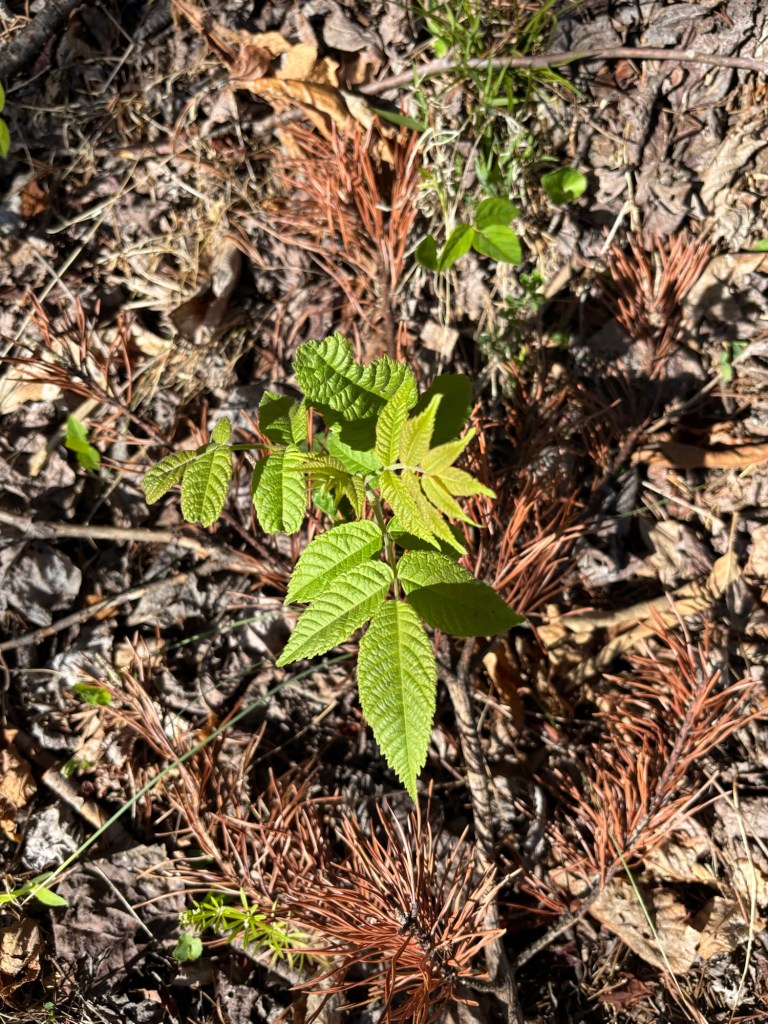
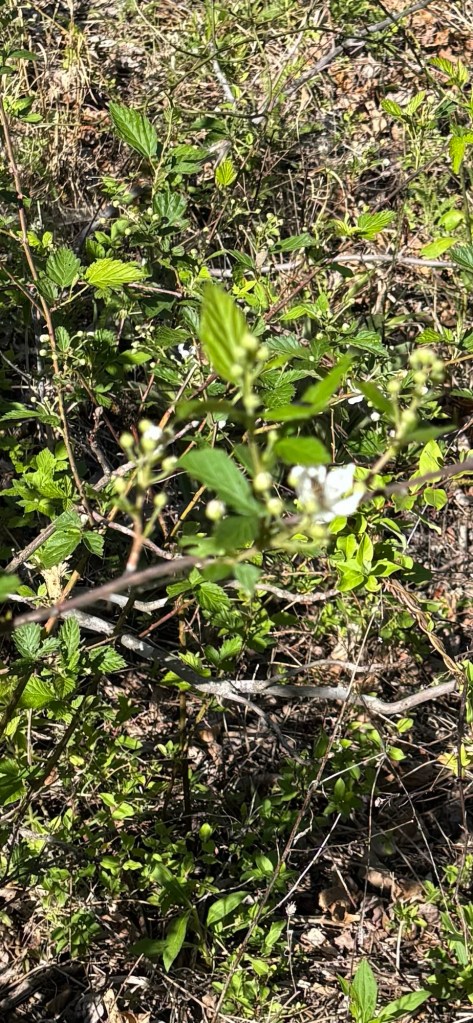
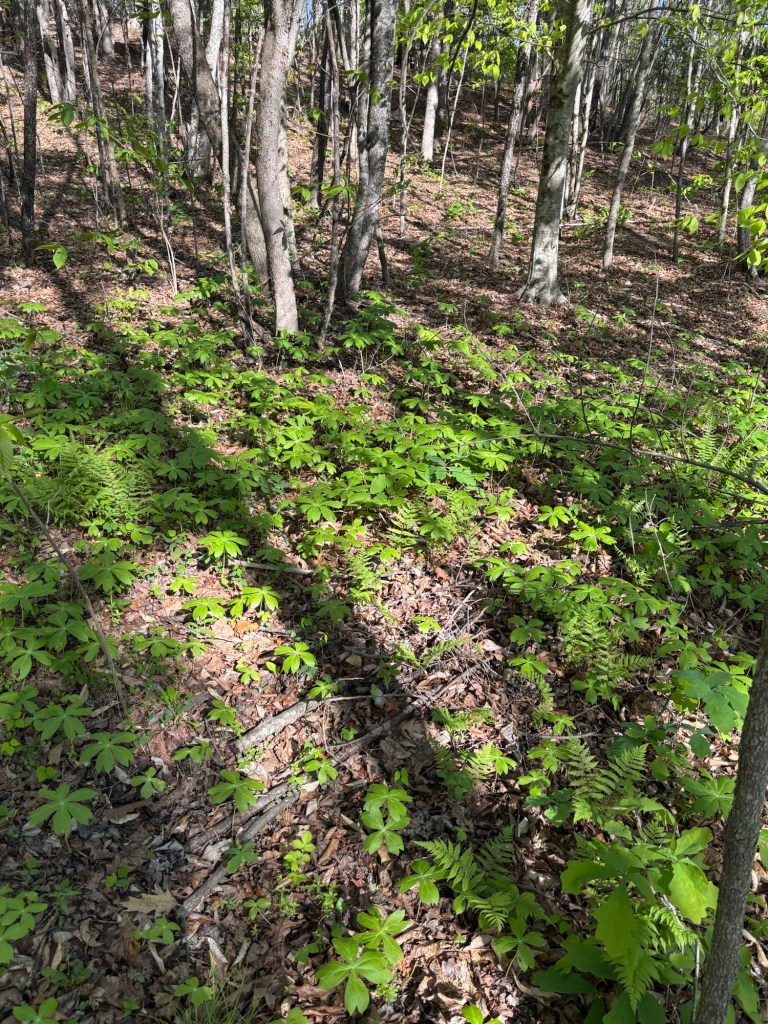
Diospyros virginiana, American persimmon, we just noticed this new persimmon coming up out front near the roadway. Phylloxera caryaeglobuli, Hickory leaf stem Gall Phylloxera, an insect creating the distinctive galls. They do not damage the hickory trees. This was found in the bottoms near main waterway.The underside of the pignut hickory leaf with the gall showing a little hole where the insect exits. Aplectrum hyemale, Putty root orchid, open a bit more than the day before. Seedlings that look like this get our attention because we are on the lookout for Tree of heaven, Ailanthus altissima, which has thumbs on the leaves. It’s a fast growing invasive that attracts spotted lantern flies and grows in thickets of dense trees that fall over quite easily. Happily, it has no thumbs, so this is Juglans nigra, eastern black walnut which grows primarily in riparian zones and is native to eastern North America. Asimina triloba grows well with eastern black walnut. However the tree produces juglone that can inhibit growth of plants that are sensitive to it within their root zone. Juglans nigra has dark strong wood and nutrient dense bold tasting nuts. Blurry Rubus pensilvanicus, Pennsylvania blackberry, found along SAFF south set back line. We found a couple clusters of these native berries flowering.Ferns and Mayapples, Podophyllum peltatum, in the old clonal colony of Asimina triloba.
We went over to Buckingham to get some jobs done at Saint Andrews Forest Farm. It was a gorgeous day here in Virginia with crisp cool overnight temperatures and warm sunshine heating everything up throughout the day. The rain gauge registered .1 inch. Virginia and most of North Carolina are in a drought. Before we left to drive back to Staunton, we took a walk around the forest. It was quiet except for the birdsong and our footsteps crunching along on the dry leaves. We plan to spend most of the weekend working on our Pawpaw project and taking down the bridge our neighbor to the south built on our property a few years ago.
Top of pic shows the bridge we will dismantle this weekend.
Yesterday in the clearing up top beginning with the start of this season’s meadow of crimson clover on the hillside.
 Saint Andrews Forest Farm