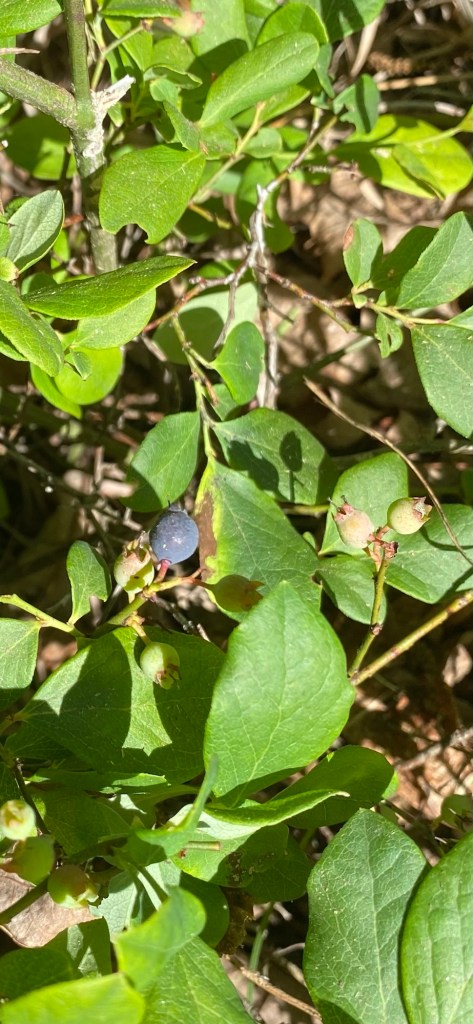
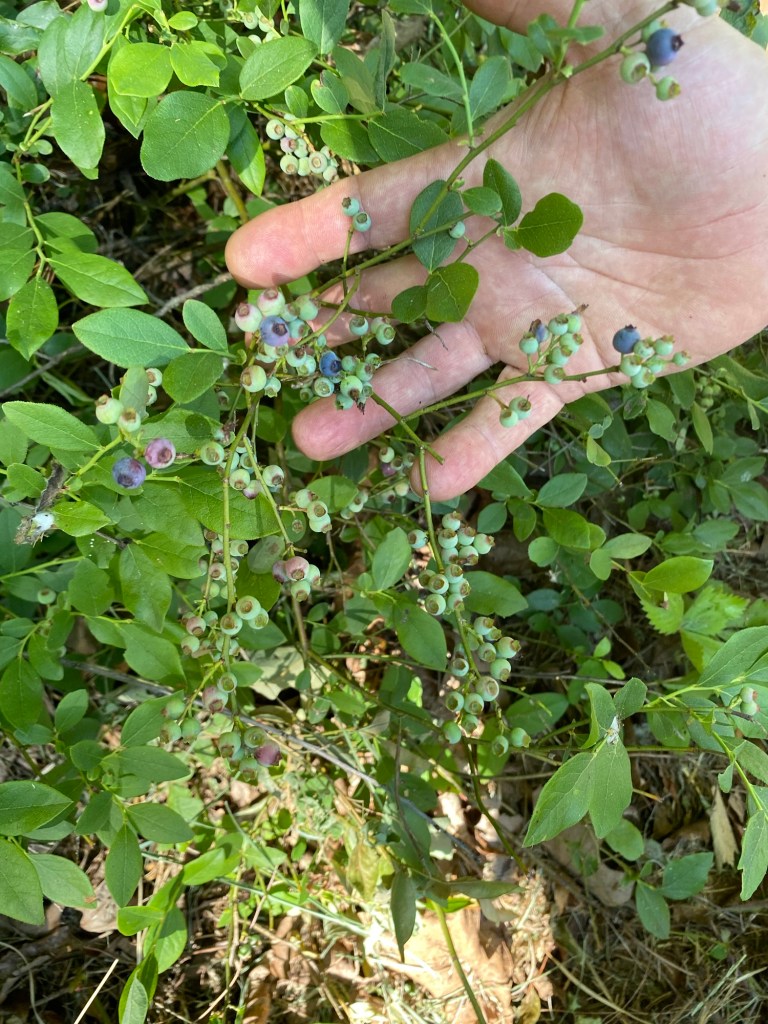
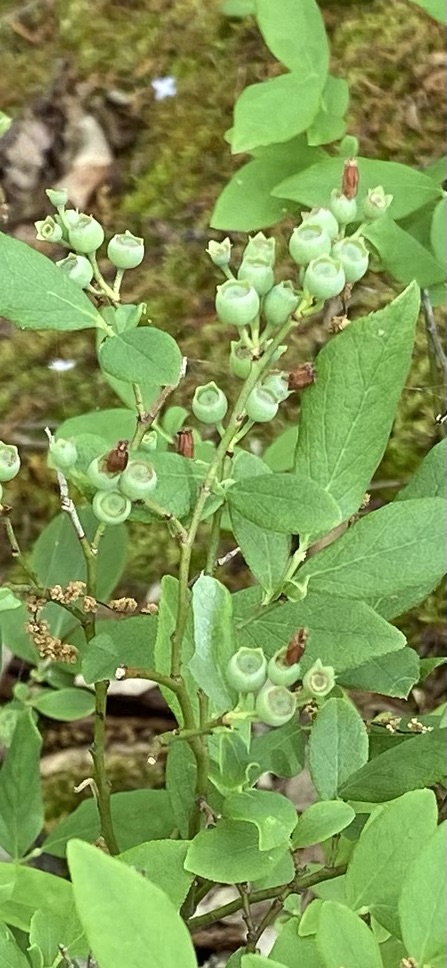
Finally we have a few ripe blueberries. They were a tasty snack after we got some work done.
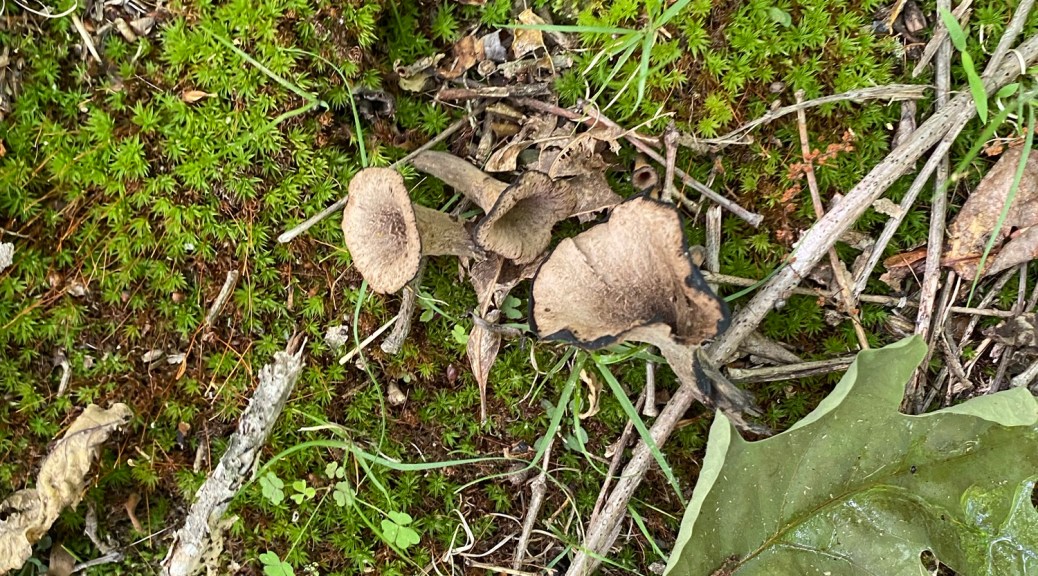
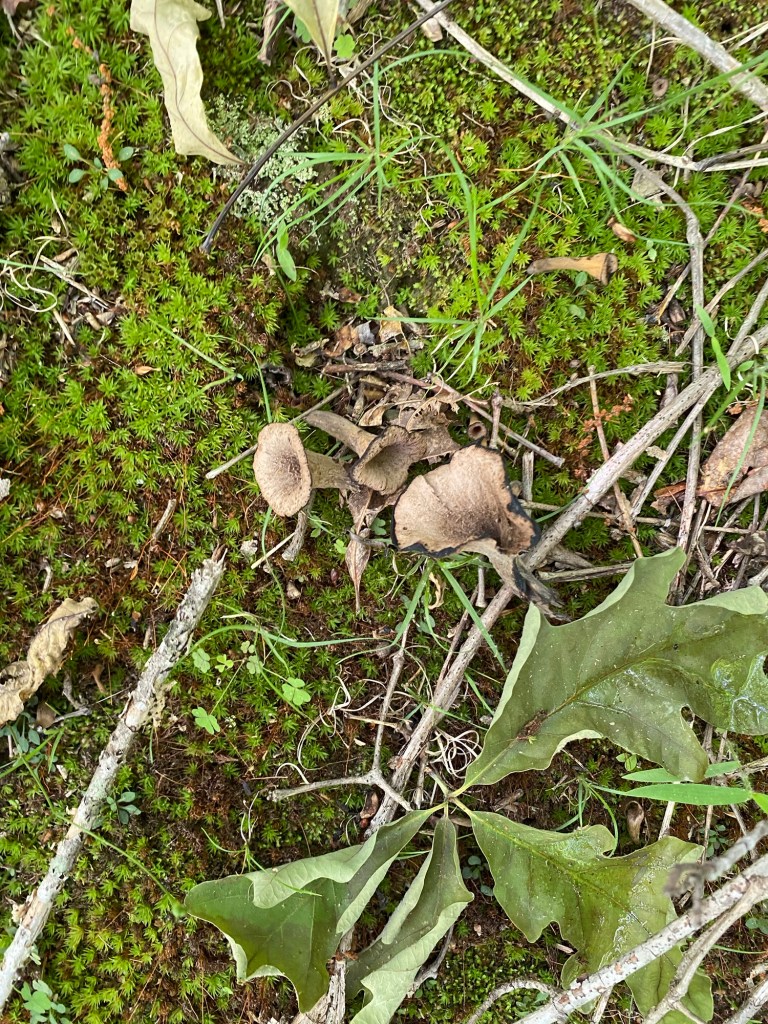
We went out to the farm to clean up a few spaces, look for more black trumpets and cut a trail through the south side. We were able to clear out some tiny tulip poplars and maples, paying close attention to keep any understory oaks as we learned the old oak forests throughout the world have a problem with understory oaks regenerating the forests. We decided we would only thin out diseased or failing oaks. https://youtu.be/NRWHHOAf39U?si=akypzxLUNo_7tOfn
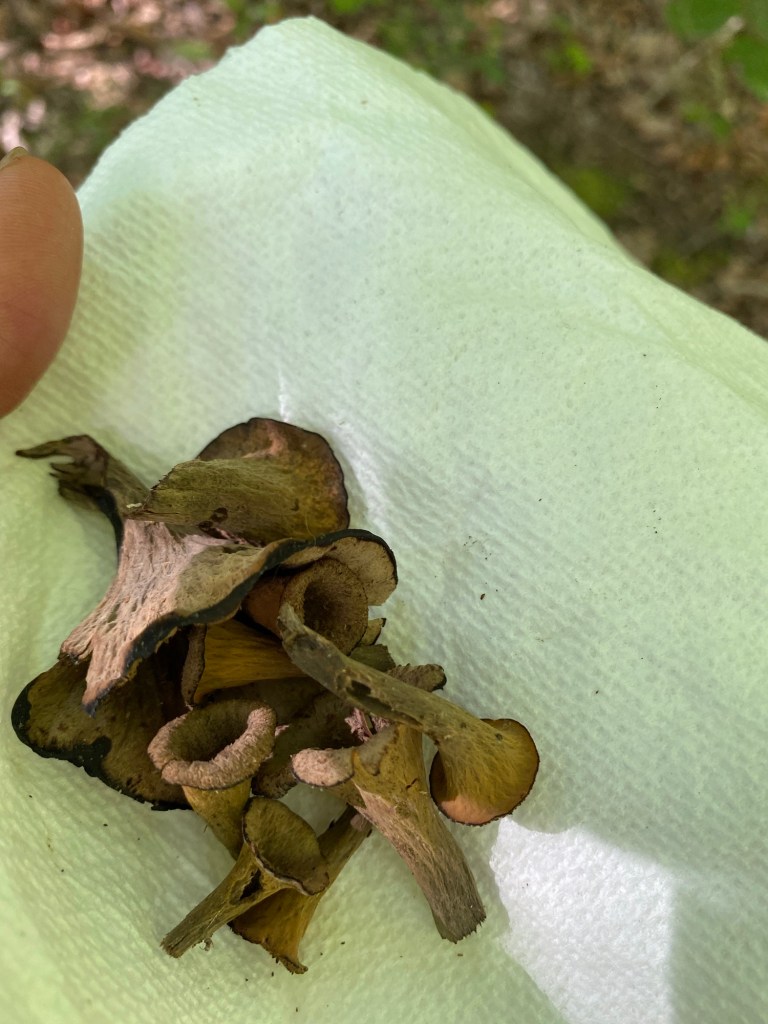
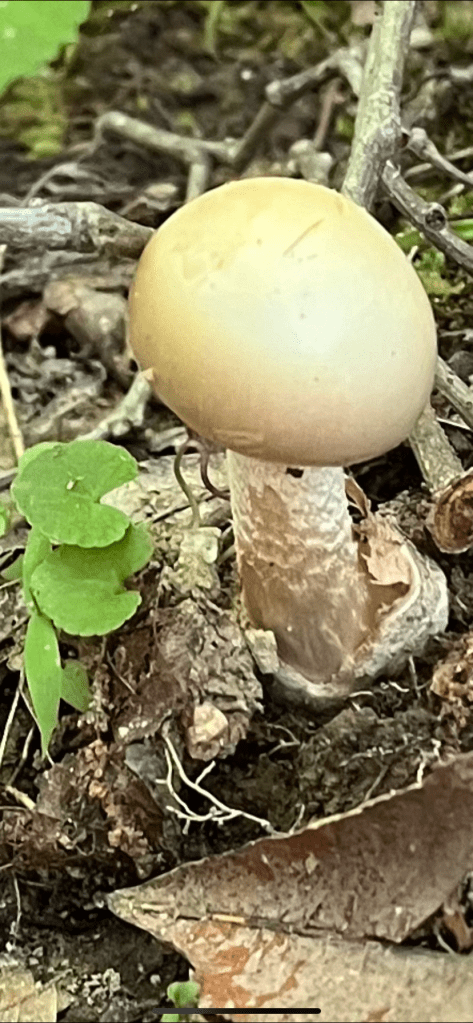
We were pleased to eat a few blueberries. We found them abundant and ripening first along the southern set back line, where they get plenty of sun.Eastern Black trumpets We ate yesterday’s black trumpets for breakfast this morning. We cooked them for 10 minutes on medium high heat in a dry pan, then lowered heat and added olive oil and garlic with a bit of salt and pepper. They were nutty, fruity and smoky. We enjoyed them as much as the golden chanterelles we found last summer. There are no known toxic lookalikes, so these are a great mushroom to forage . Some of our favorite mushrooms we have tasted. We performed some trail maintenance on ridge trail, made our way along the waterway, back over to the set back line and found more today. We harvested the largest and we can’t wait to eat these too. We made a trail up from the waterway to the Black Trumpet patches and beyond until we exhausted ourselves. We will call this Black Trumpet Way, it leads to the set back line.For now, this is unknown Amanita that we will watch this weekend. Notice the volva underneath the mushroom that it emerged from.
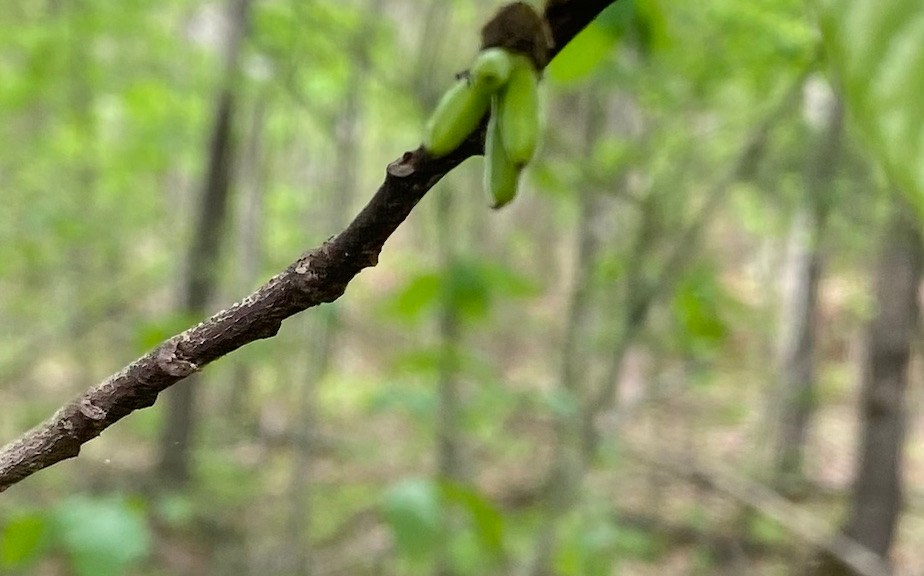
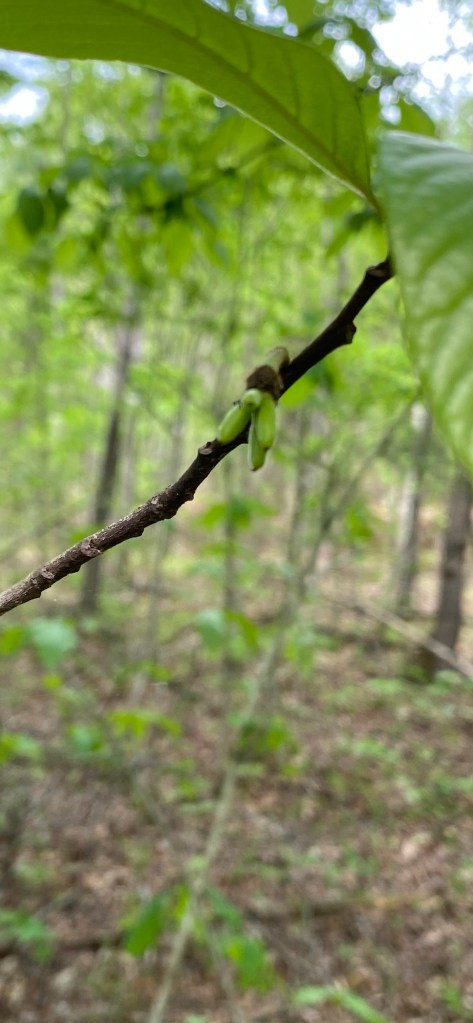
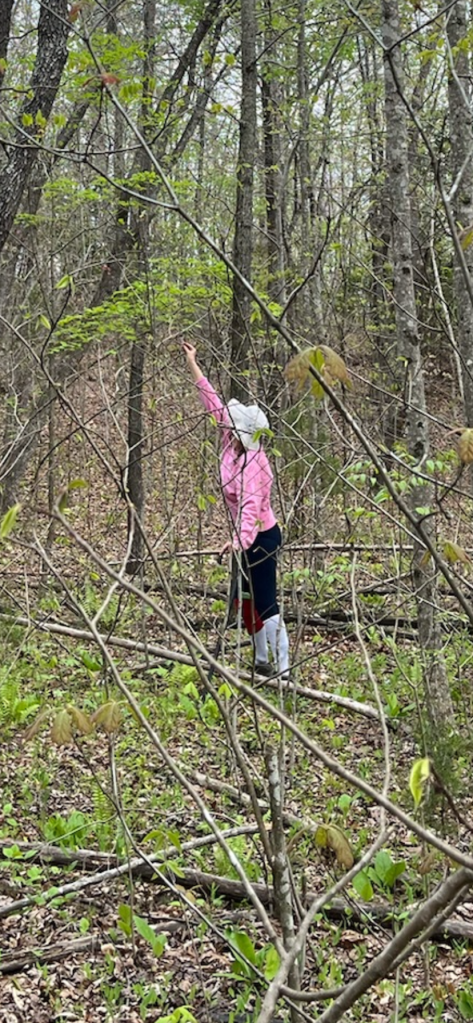
After going out on April 27 (a little over 2 weeks ago) and hand pollinating the pawpaws, we were delighted yesterday to see them beginning to grow the tiniest fruit. About 10 trees have fruit forming so far. These were the trees we found flowering and used Q-tips to pollinate. There are at least 100 pawpaw trees down there. We have plans to bring more sunlight into the pawpaw patch and move some of the pawpaws to spread them out. We are beyond excited for these fruits and can’t wait until fall to harvest them. We hope to grow our population of pawpaws and increase their productivity.
Young pawpaw fruit.
The blueberries continue to develop and we find more and more plants flowering and growing small green blueberries. We hope to taste a few before the animals get to them.
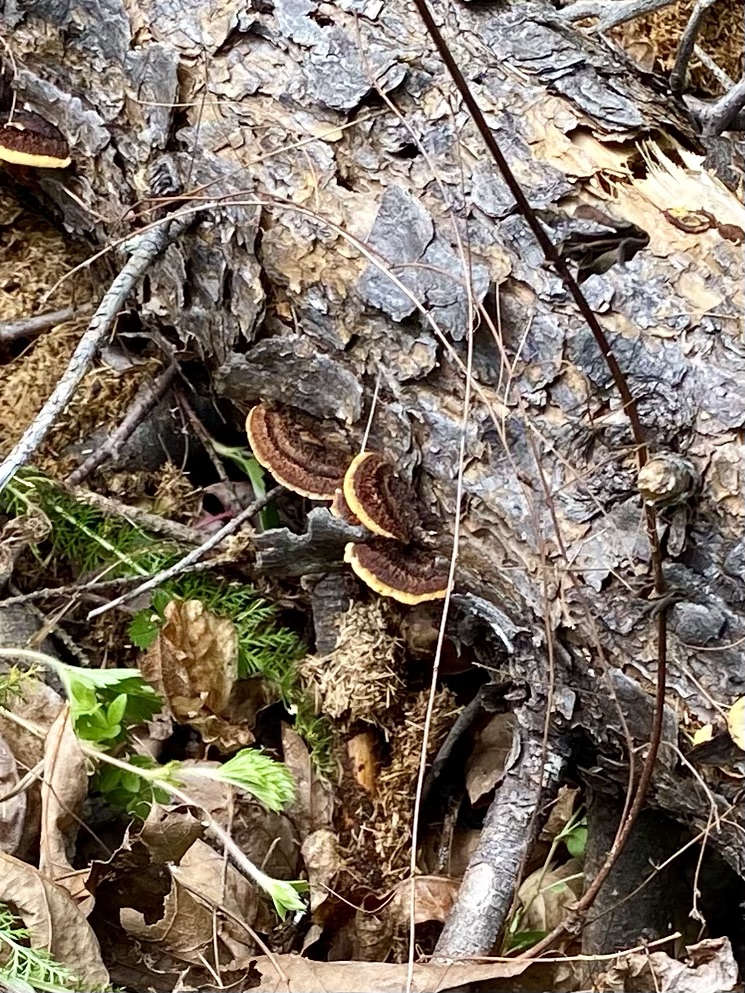
We expected to find many mushrooms at the farm since it’s been raining a lot this past week, but we only found these Gloeophyllum along the sunny southern border.
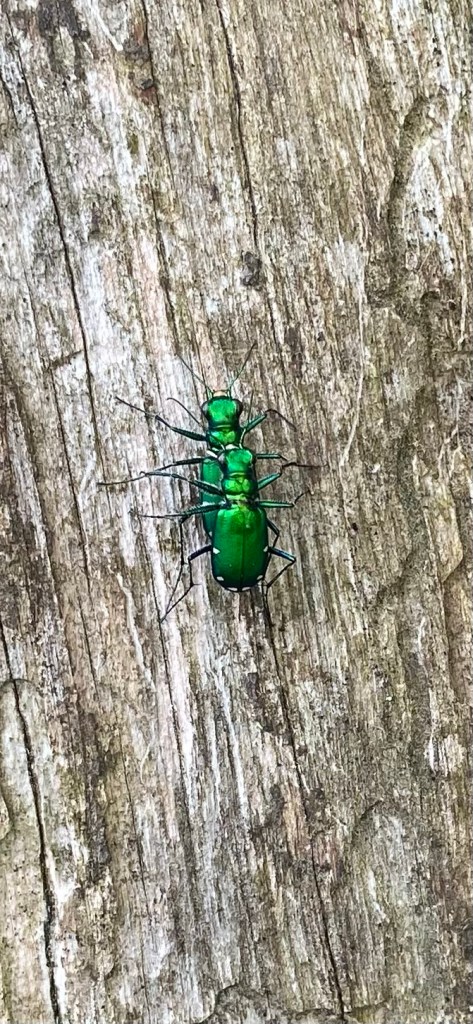
We found this colorful pair of six spotted tiger beetles down by the waterway at the south side. They feed on a wide variety of arthropods and over winter in larval burrows.
Cicindela sexguttata, a common North American beetle.
We continue to pull up and clear out invasive trees as we find them. So far, tree of Heaven, mimosa and paulownia are the invasive species and we find them mainly along the road. We also continue to take down black Cherry trees that are diseased and dying.
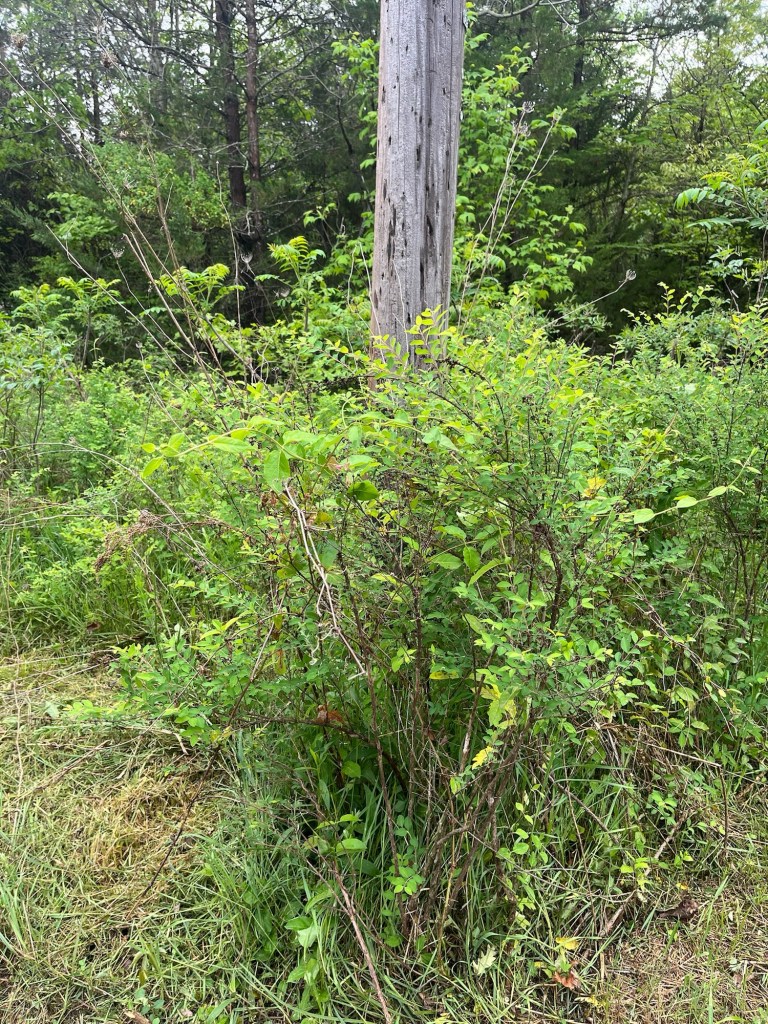
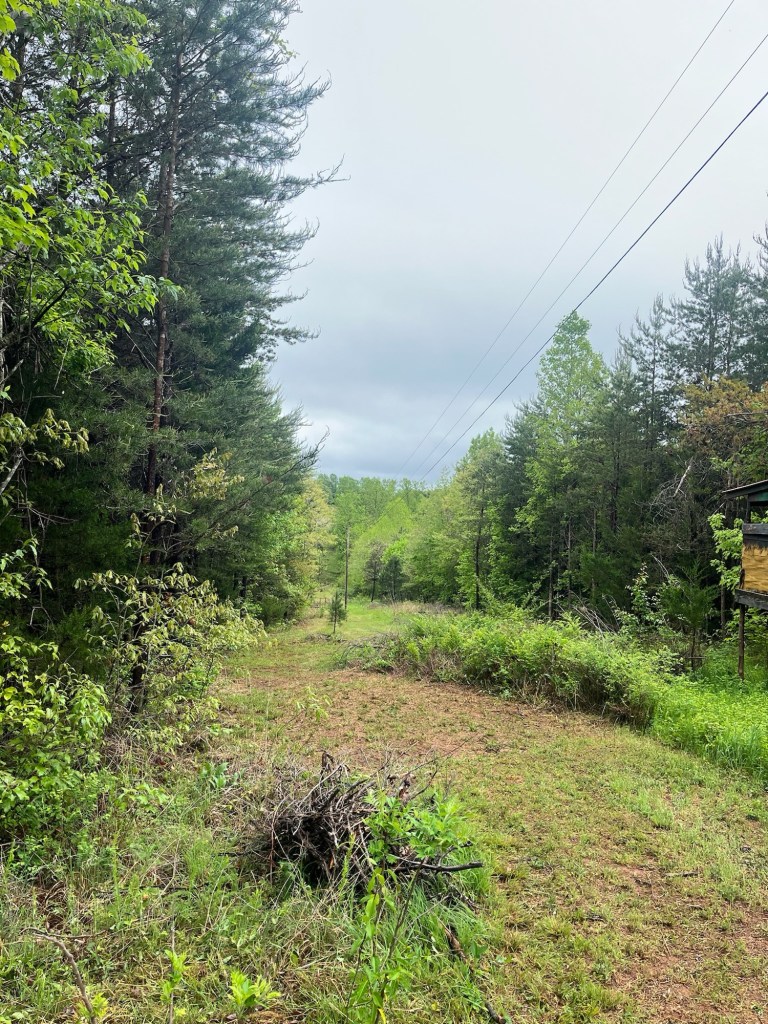
We’re taking back our southern border and clearing out overgrown brush. It is so satisfying to cut the tangled overgrown weeds back. We are thrilled with our old Husqvarna.
Brush we are cutting back along southern border.Pollinating the pawpaws.
Saint Andrews Forest Farm Blog
Is this your new site? Log in to activate admin features and dismiss this message
 St Andrews Forest Farm