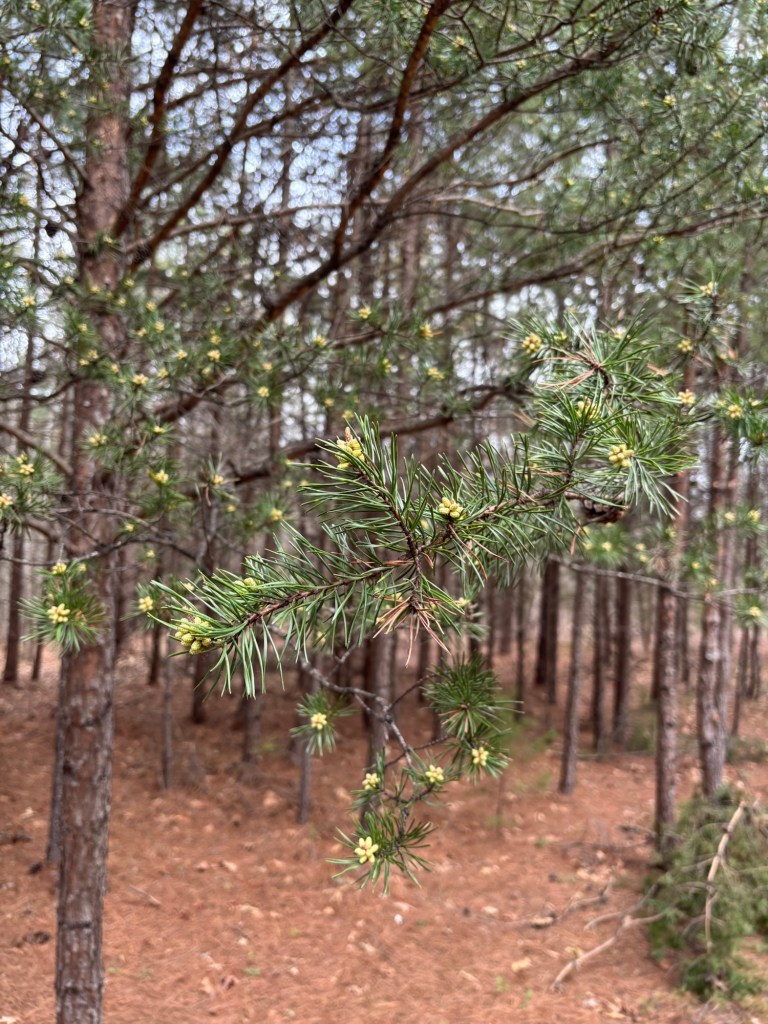
Virginia pine, Pinus virginiana, on Wednesday with yellow pollen cones clustered near the tips. We pulled in and saw these on all of the pines. It was a beautiful surprise. We were at the farm just the day before and did not notice them!
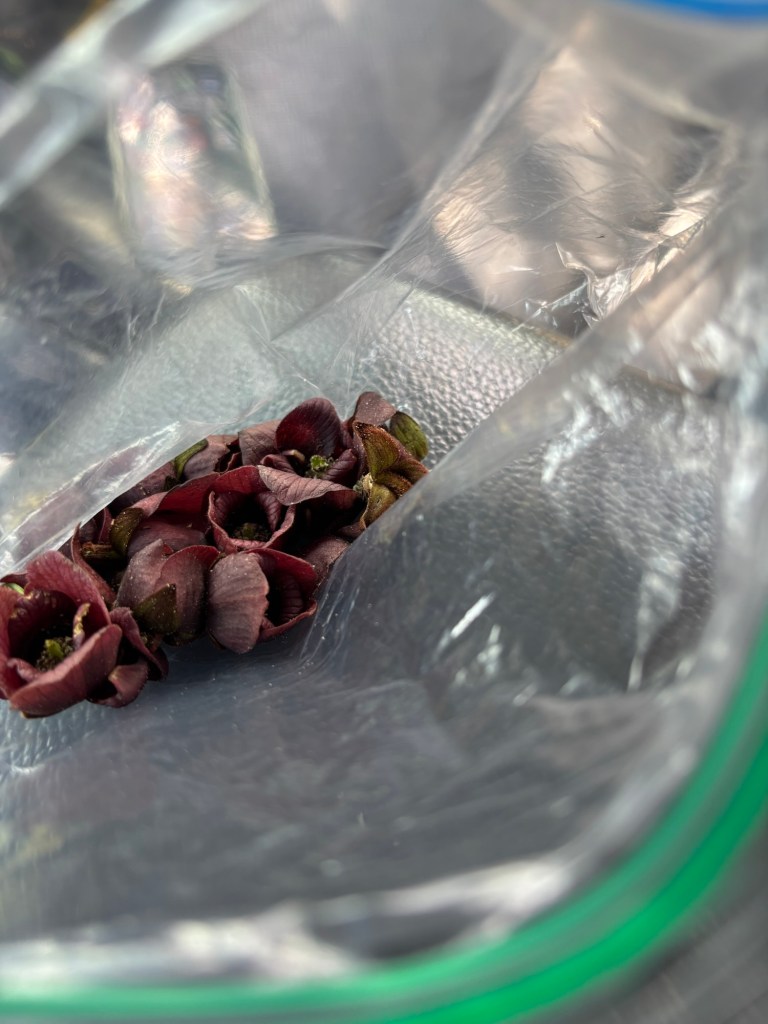
On our way to Saint Andrews Forest Farm Tuesday and Wednesday and Friday, we continued to find male pollen specimen to take to the female pawpaw buds in order to set fruit in the old clonal colony. We’ve seen many more clusters of trees along Howardsville Rd, creeks and rivers on the way to the farm. We are so hopeful they will produce fruit this year with the pollen from different genetic material. We have been getting rain regularly so far and have more in the forecast for the next few weeks. We hope for the best.
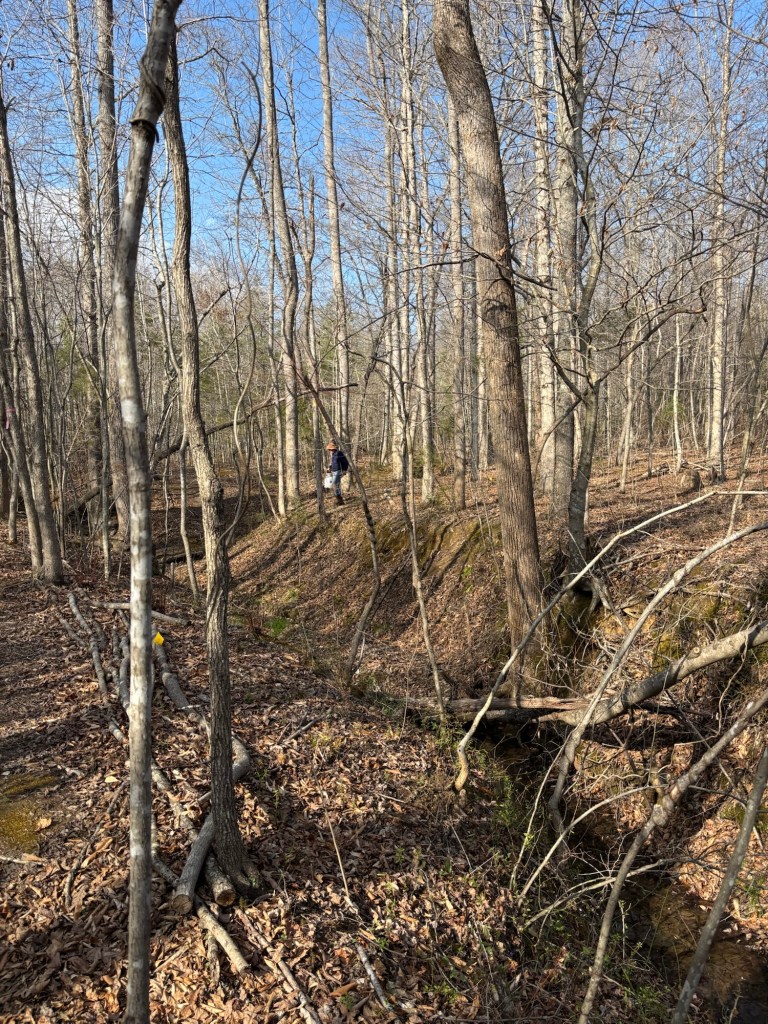
Male Asimina triloba buds found along Howardsville Road. Chris walking from the native old clonal colony of Asimina triloba after spreading compost tea.
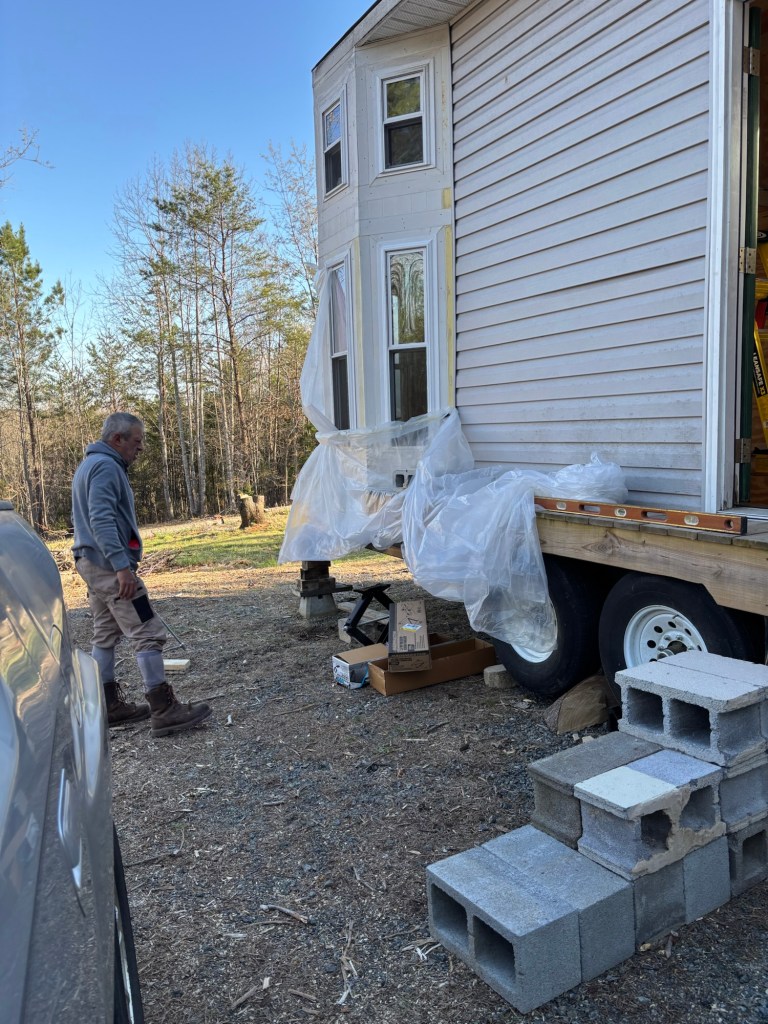
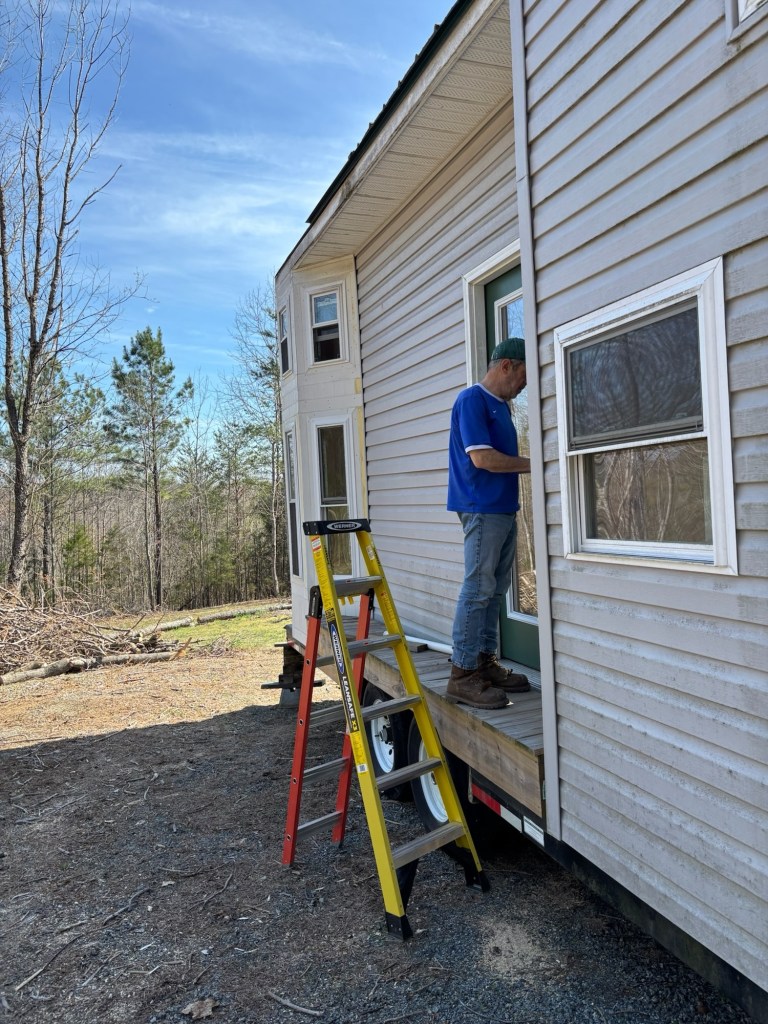
We’ve also continued to level the tiny house and check for water entry after rain. We found that there are a few areas where we need to address past water damage. We have plans for a new overhanging warm roof which will be a large help on multiple fronts. We also will remediate the damage done replacing materials as needed. The tiny house was built on a mobile home trailer with steel framing so the bones are strong.
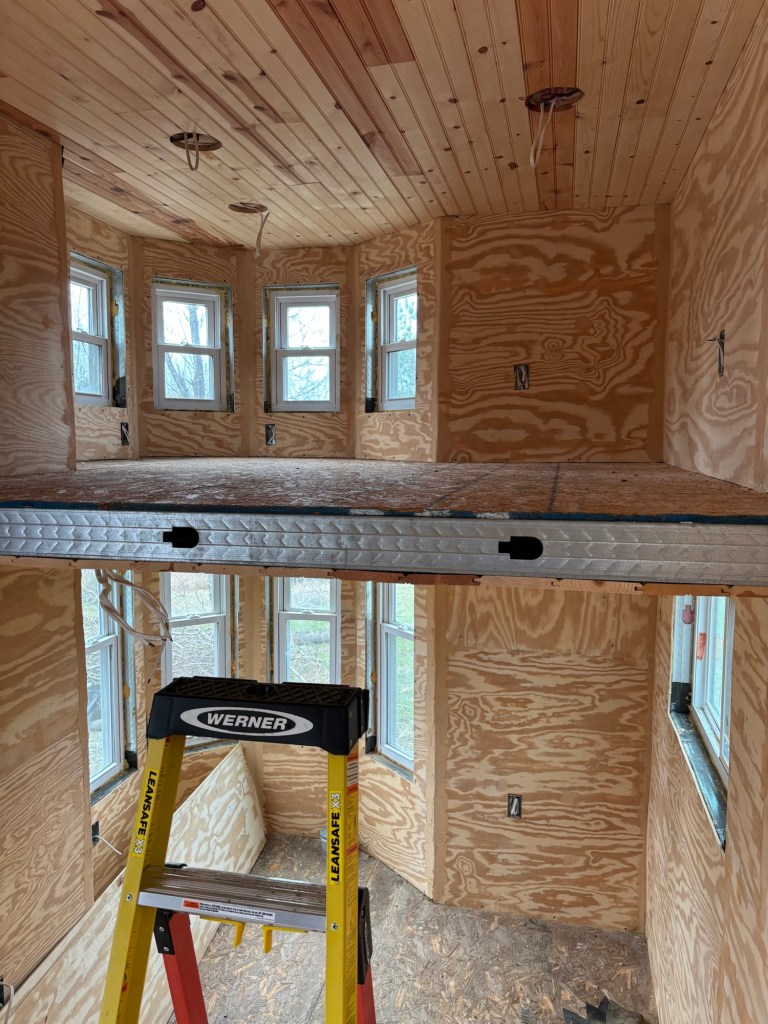
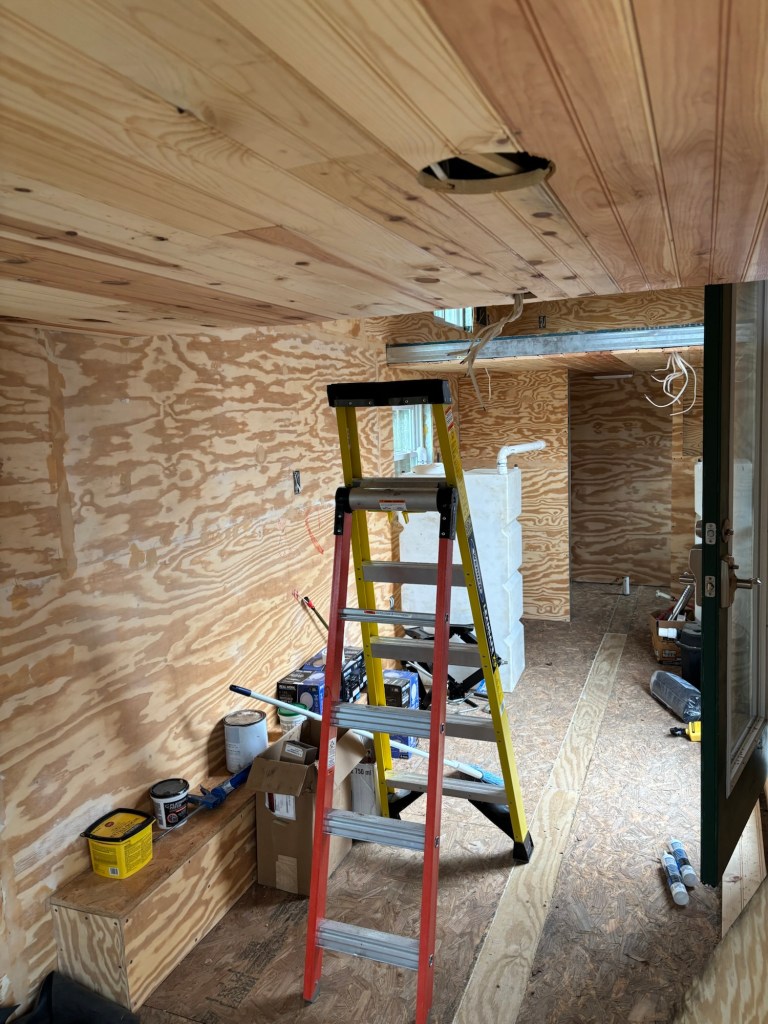
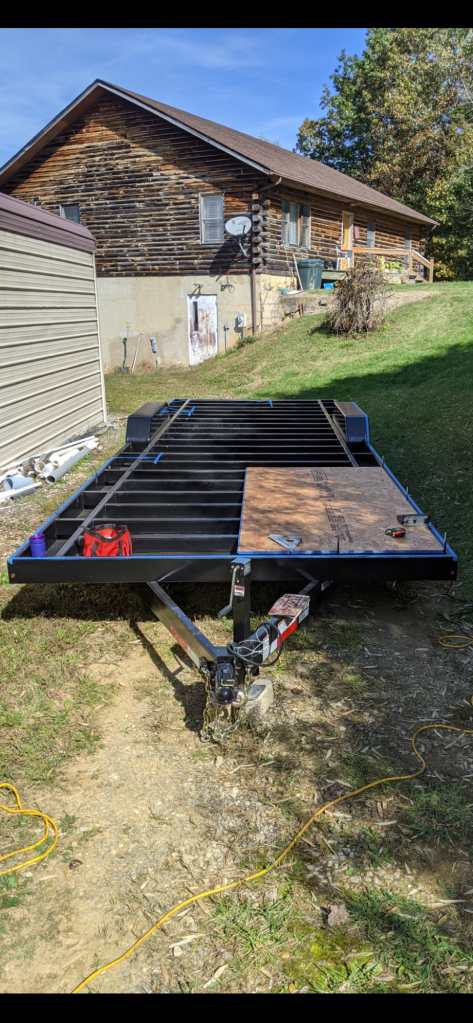
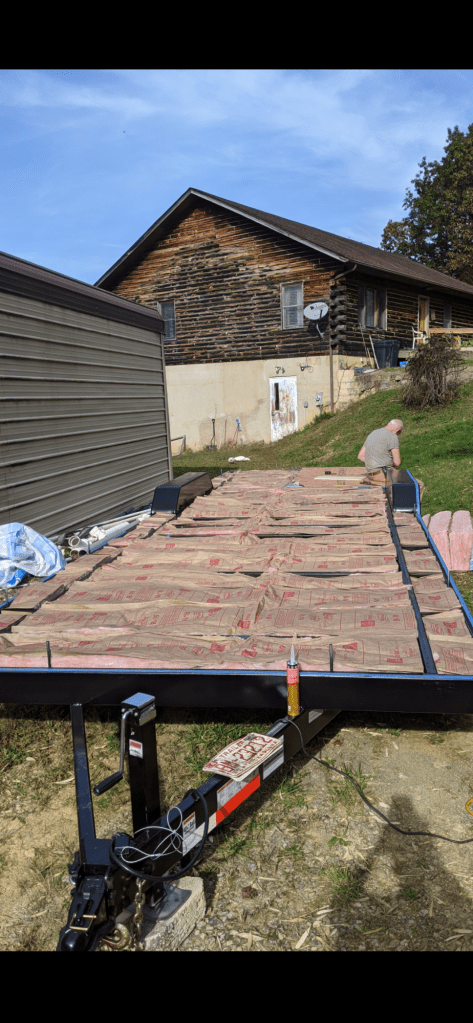
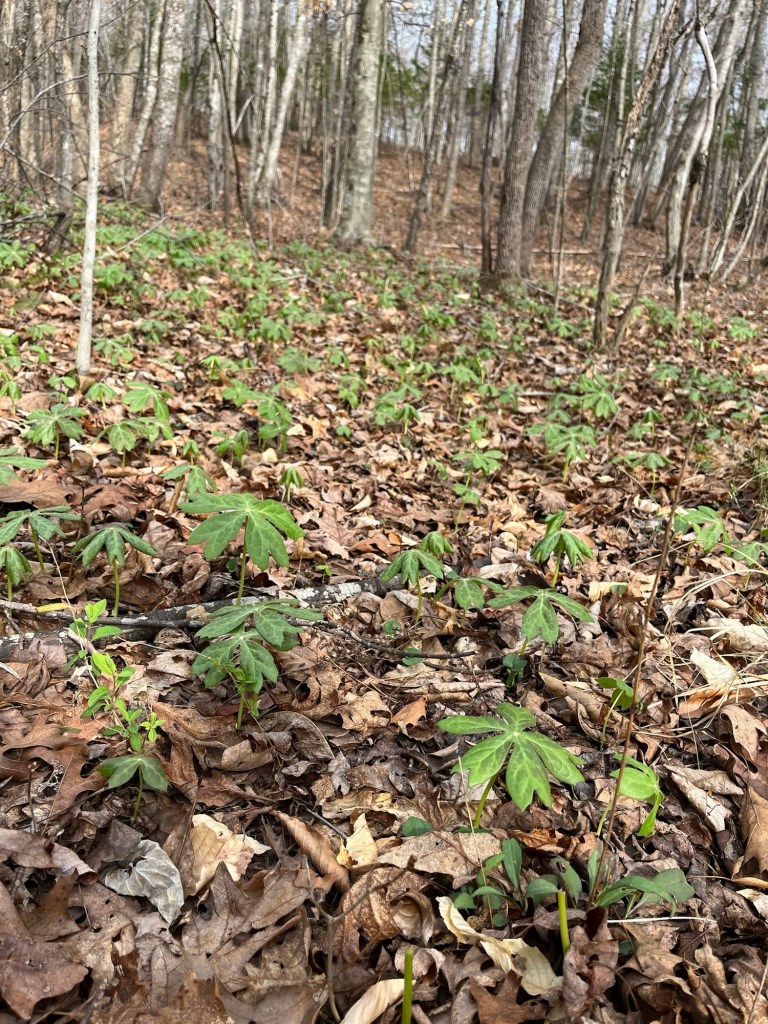
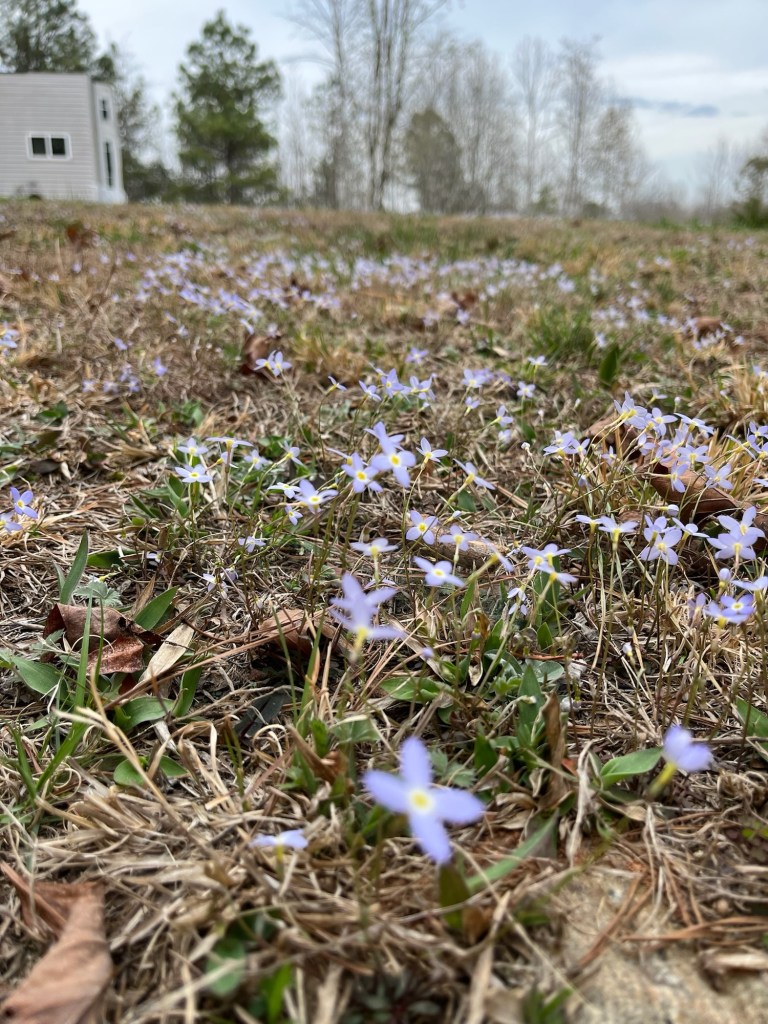
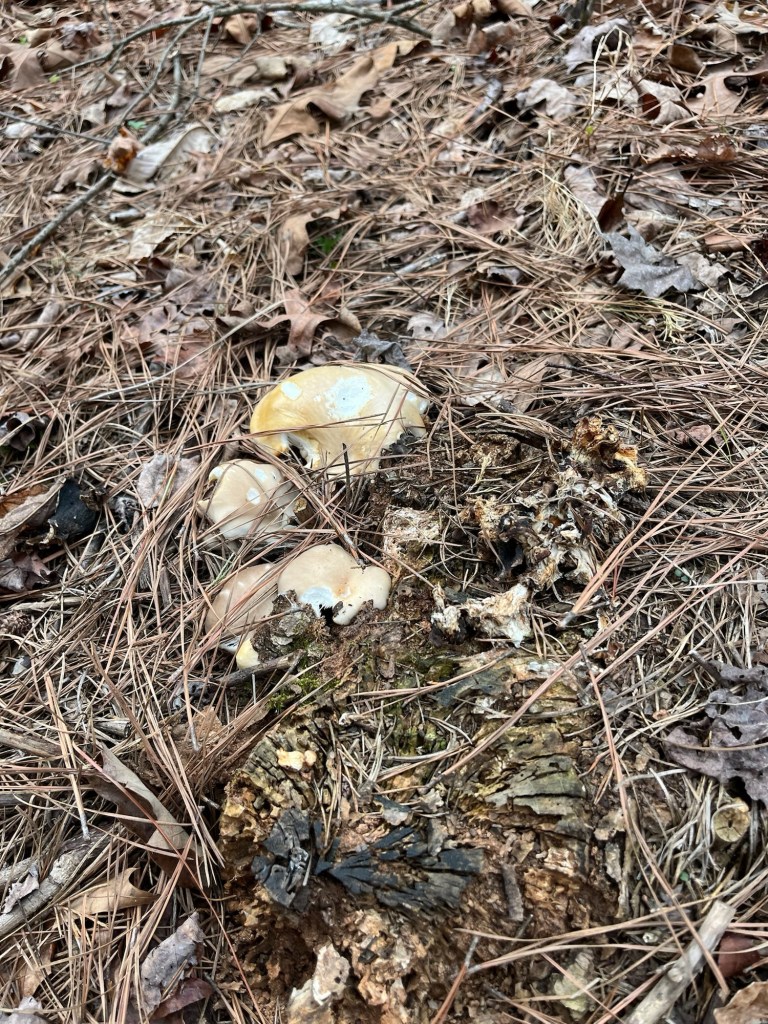
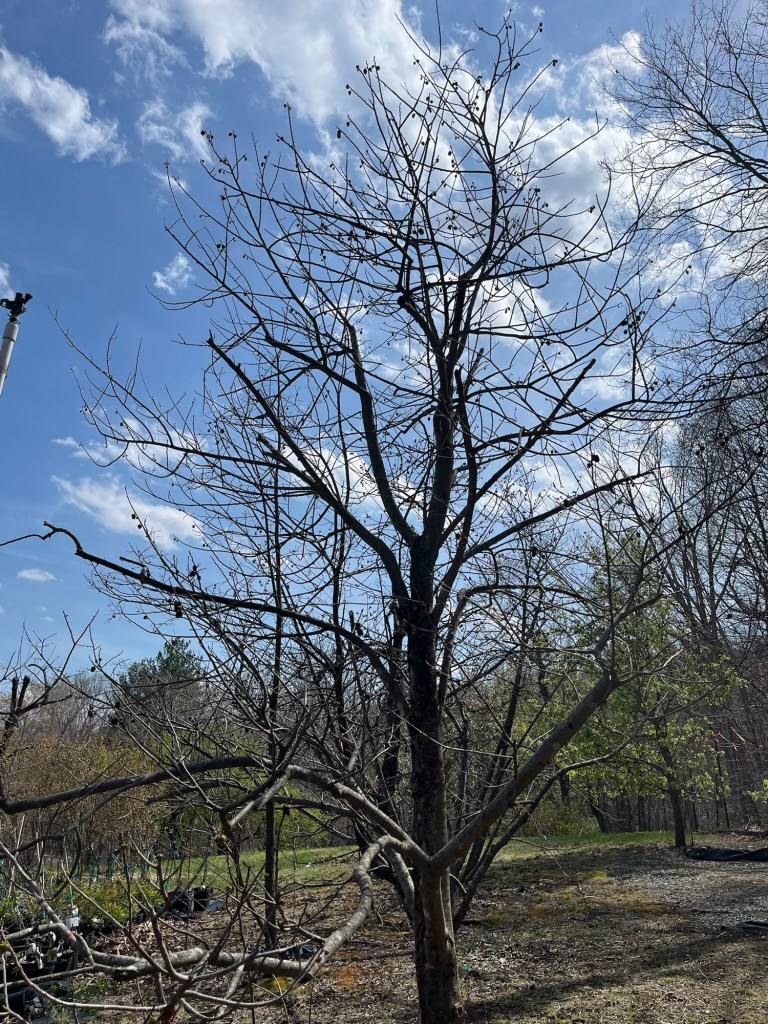
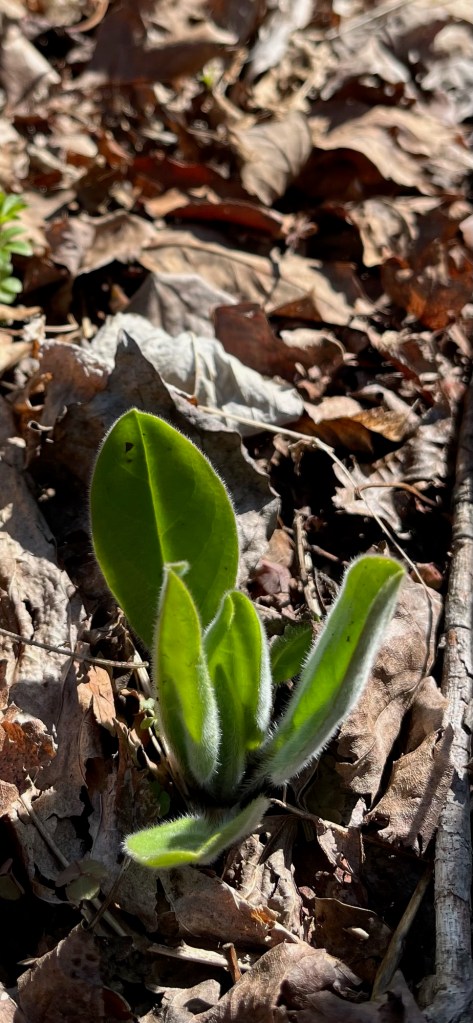
Inside view from the tiny house. Our plan is to address the roof issue as our top priority with the tiny house. We have been working on the layout for inside and planning our staircase and storage needs. We will begin working on the roof as soon as we get scaffolding and other supplies. We hope to begin working on the roof as soon as next week. The view from the other side of the tiny house interior with water tanks and supplies. The tiny house is built on top of this trailer. They insulated it and covered it in plywood. We will need to replace a few of those sections under there. Instead of plywood, we will use metal and flashing. The overhanging metal roof will also take away most of the moisture from dripping onto the edges of the trailer. We are collecting our supplies.The metal frame of the tiny house.Mayapples, Podophyllum peltatum, found in the old colony pawpaw patch.Azure bluet, Houstonia caerulea, found everywhere right now at Saint Andrews Forest Farm. Clearings, trails, roads and under forest canopy. Some melted and some fresher shoehorn oyster mushrooms found on Amanita Way just near the main clearing up top. Asimina triloba found on the way to the farm.
Today we were pleased to have a farm day Friday and we ran right down to the old colony pawpaw patch to continue pollinating. We noticed a powerful smell right away. As we went down to the main waterway from the Pawpaw Peninsula to cross over we saw a possum carcass. Normally this would cause us some displeasure. Today we couldn’t believe our good fortune. What a blessing in disguise! Asimina triloba are pollinated by a number of insects as we’ve seen but the most important pollinator historically has been the fly. Flies were all over this gift of a stinky carcass. We hope they spread out the novel pollen we’ve delivered to them from our travels this week. We also noticed our shoes are covered in pollen. We will get a photo. We are like giant bumble bees running around the forest spreading pollen everywhere wittingly and not.
Asimina triloba flowering along Howardsville Rd along Rockfish River on our way to the farm today.
We were able to collect more male pollen to take to SAFF native old colony of clones. We also took compost tea made from our home bin and spread it around the old colony pawpaw patch. So, as Chris said, “we fertilized and we fertilized.”
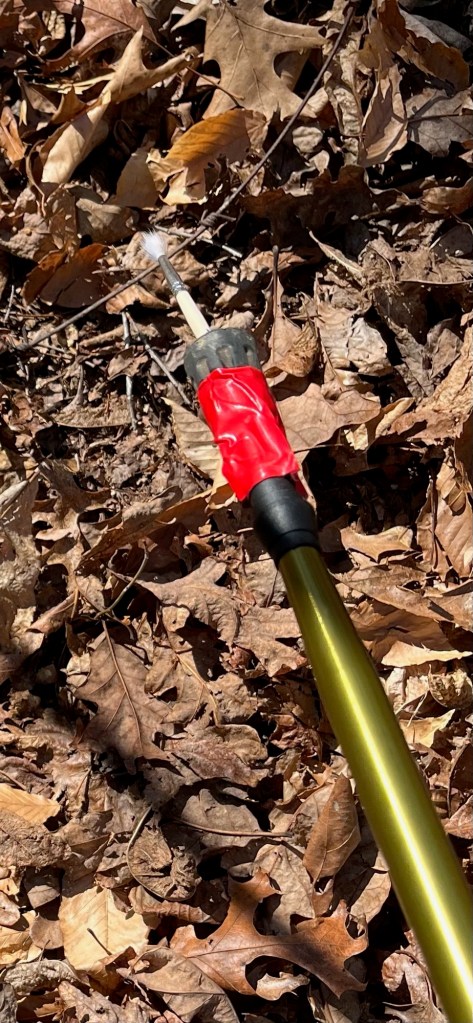
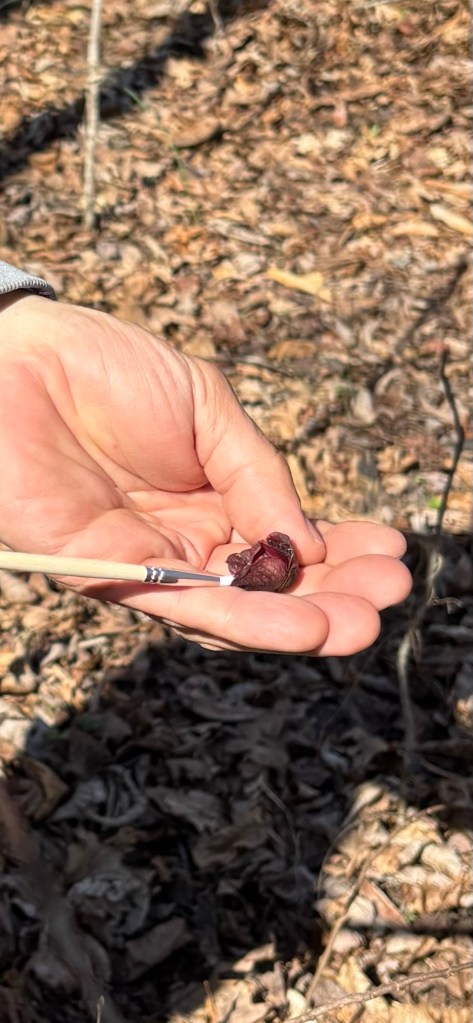
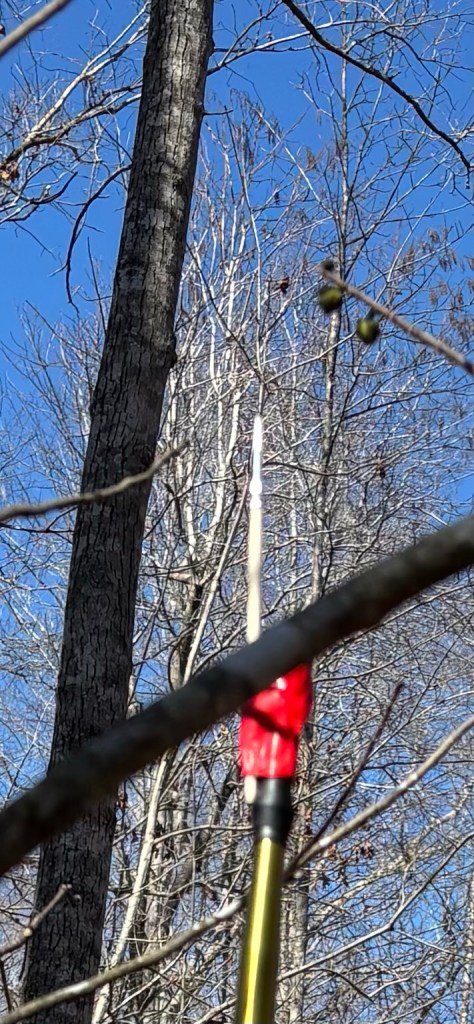
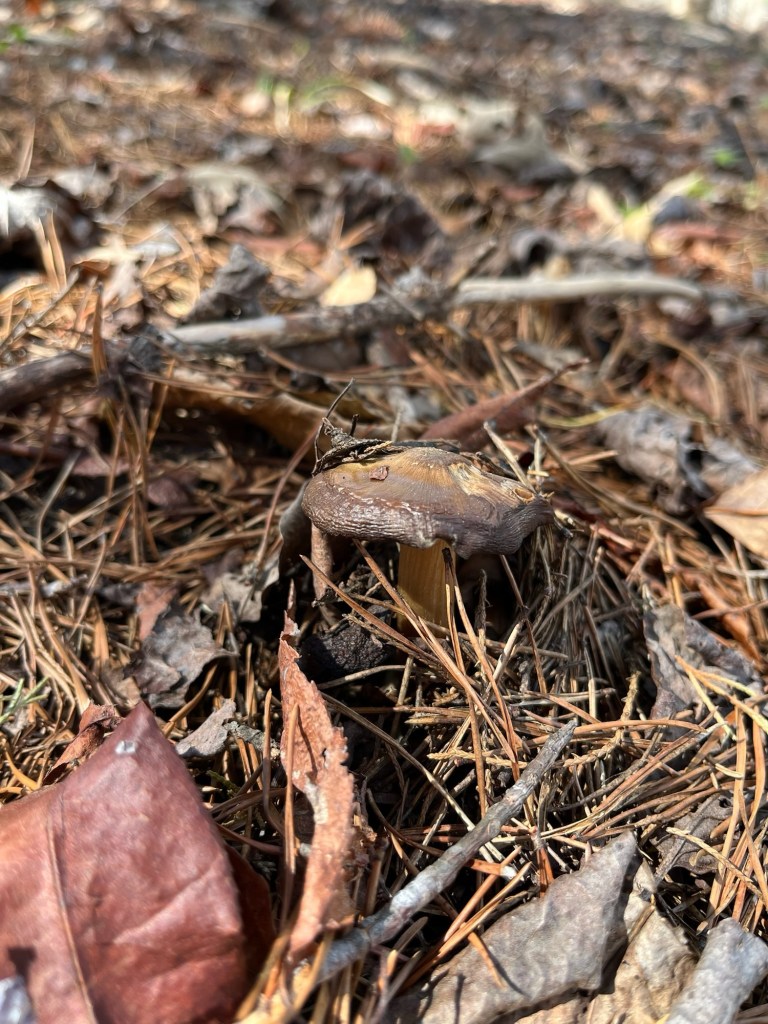
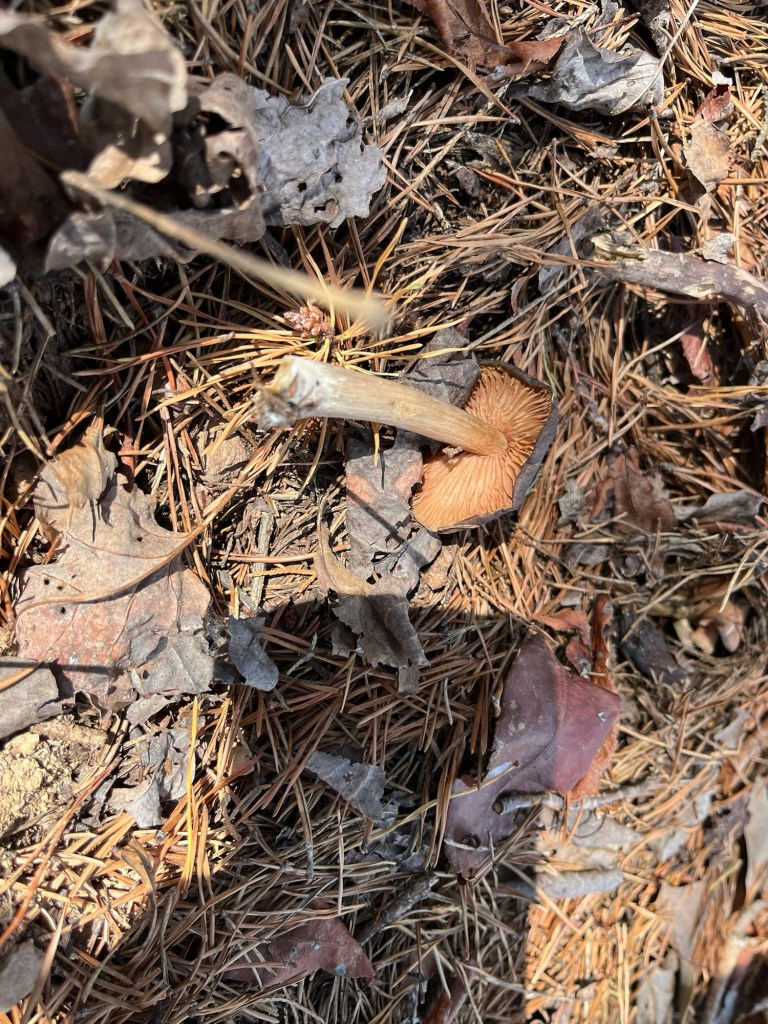
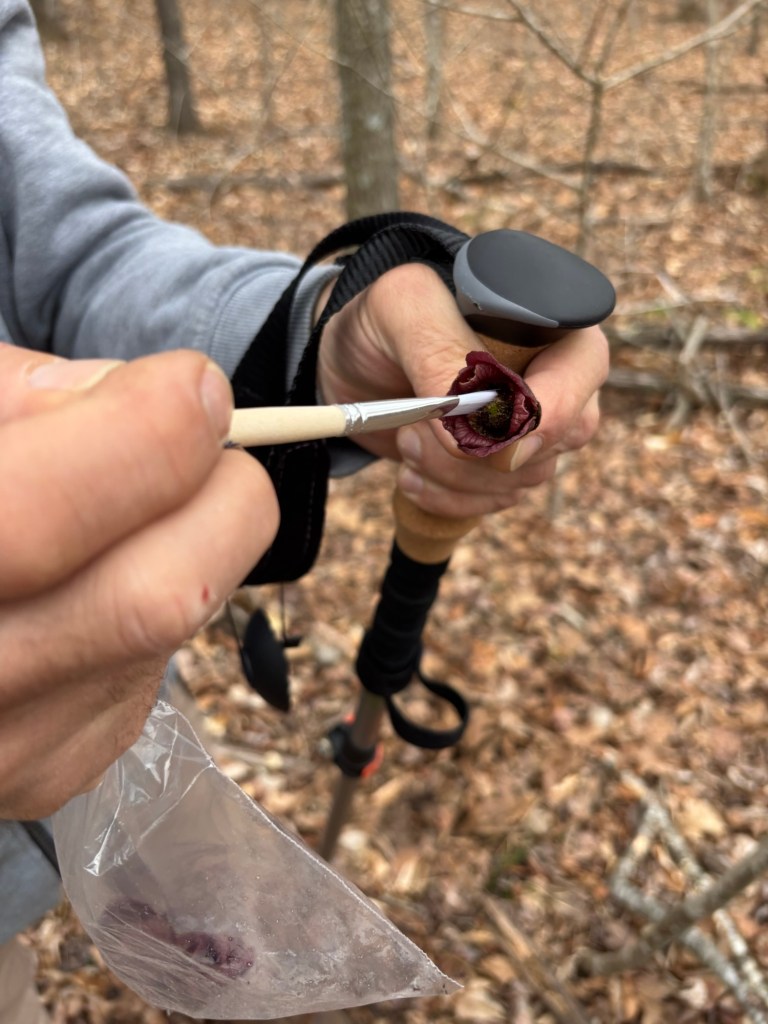
Two flowers on left are male and the greener smaller flower on the right is female. Chris made a long paintbrush attached to his walking stick with tape to increase the range of buds we could reach.We gently swiped the pollen from the male flower and brushed the females with the dusted paintbrush. You can see the dusty white pollen on the inside of the flower.Blurry action shot of paintbrush on the long pole. The Rappahanock cultivar at the south gulley native patch looks like the leaves will open up soon. We still have loads of Asimina triloba flower buds tight and unopened. We think the pollinating with go a few more weeks.A photo of the temporary stairs to get in the house without climbing. Also, Chris is jacking the sides and was able to get the house leveled today. We measured spaces for the loft stairs and more. It was a nice weekend of activity. The Virginia bluebells, Mertensia virginica, leaves are starting to emerge down in the old pawpaw patch.And, lastly, one old and already decaying mushroom we found walking under pines down South Trail to the old pawpaw patch. It was nicely disguised with pine needles on the cap. Too melted to identify.The underside of the unidentified mushroom.
After pollinating the Asimina triloba we came up North Trail and were greeted by the tiny house on wheels.
We found male Asimina triloba flowers and brought them to SAFF to hand pollinate what we believe is a clonal colony of nearly 400 trees of varying sizes. We had maybe 50 or so female flowers that were ready to receive pollen today.
We were able to hand pollinate the old colony pawpaw trees at the bottom of SAFF. Notably, this is the first time with novel dna so we hope they set fruit and stay put instead of dropping early as in prior years when we pollinated them from one tree to the next not knowing they were a very old clonal colony all arising from a large root system with identical dna.
It was raining lightly and getting cooler while over there in the forest. We also shored up the tiny house as the rain began and worked on construction of temporary stairs out of concrete blocks.
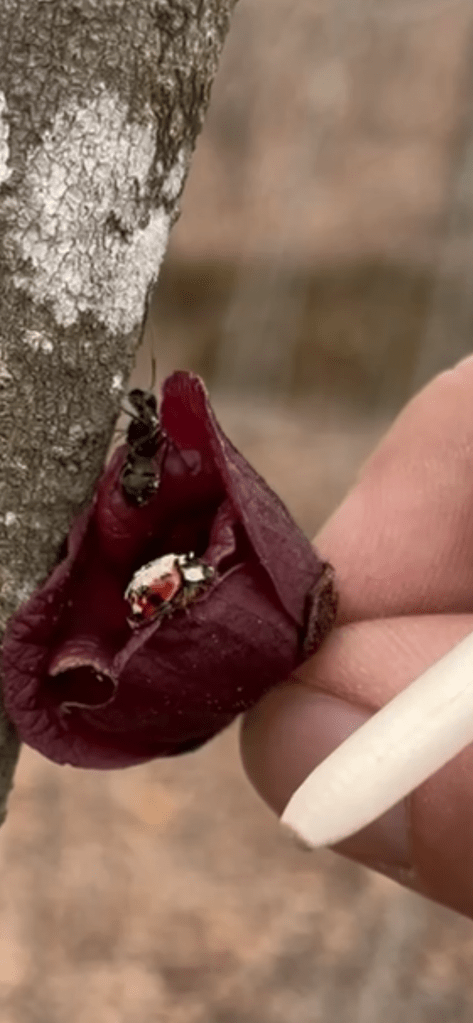
A ladybug and an ant crawling from a flower with pollen from the pawpaws stuck on them. They’d fallen asleep in there together and came out groggily leaving in separate directions. Off to pollinate the highest flower buds we hope! We saw lots of tiny flies and insects in the pawpaw patch. We hope for success with pollination. We dream the pollinators will spread the novel dna from pollen outside of the clonal colony to the highest reaches of our Asimina triloba canopy down there. Some of the trees are about 15 feet tall and we couldn’t get to the buds to hand pollinate.Before we built the temporary stairs from concrete blocks. We will get a pic of stairs when we’re out next. It was hard to climb inside! 😂
We want to write a children’s book about the ant and the ladybug.🐞
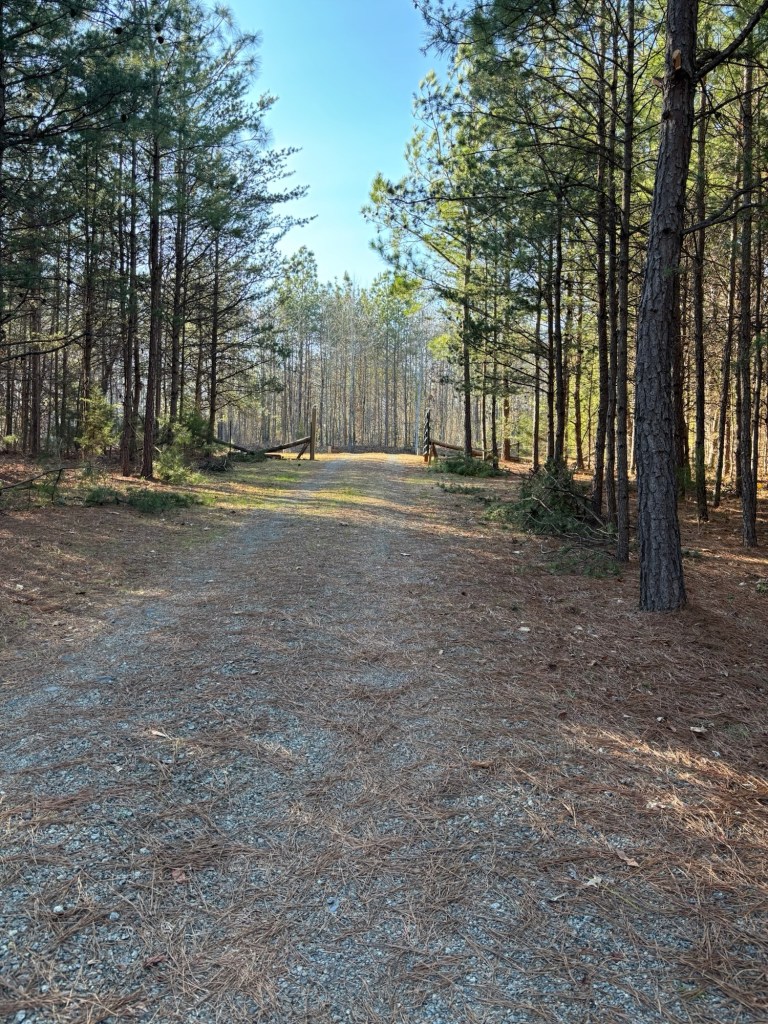
We trimmed the driveway up to 13.5 feet to accommodate the new tiny house being delivered.
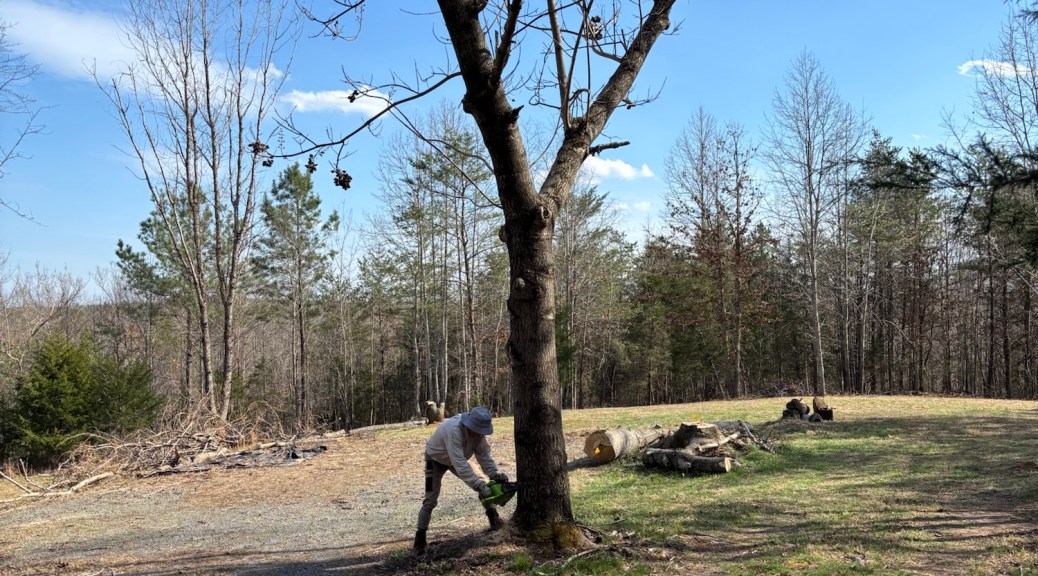
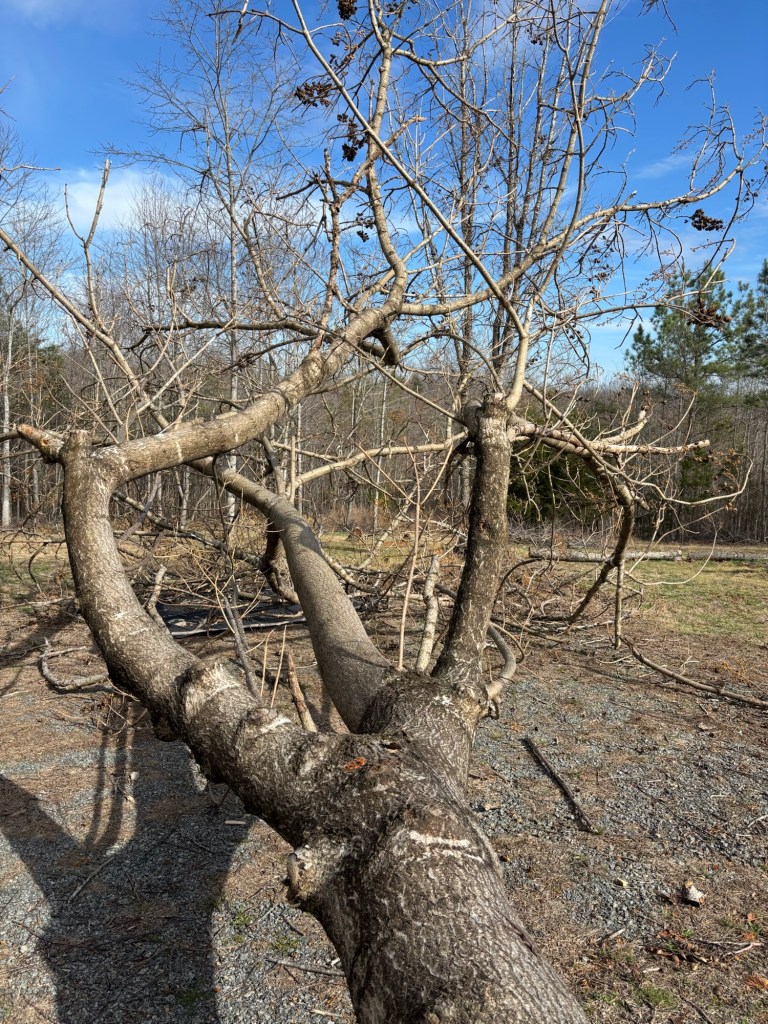
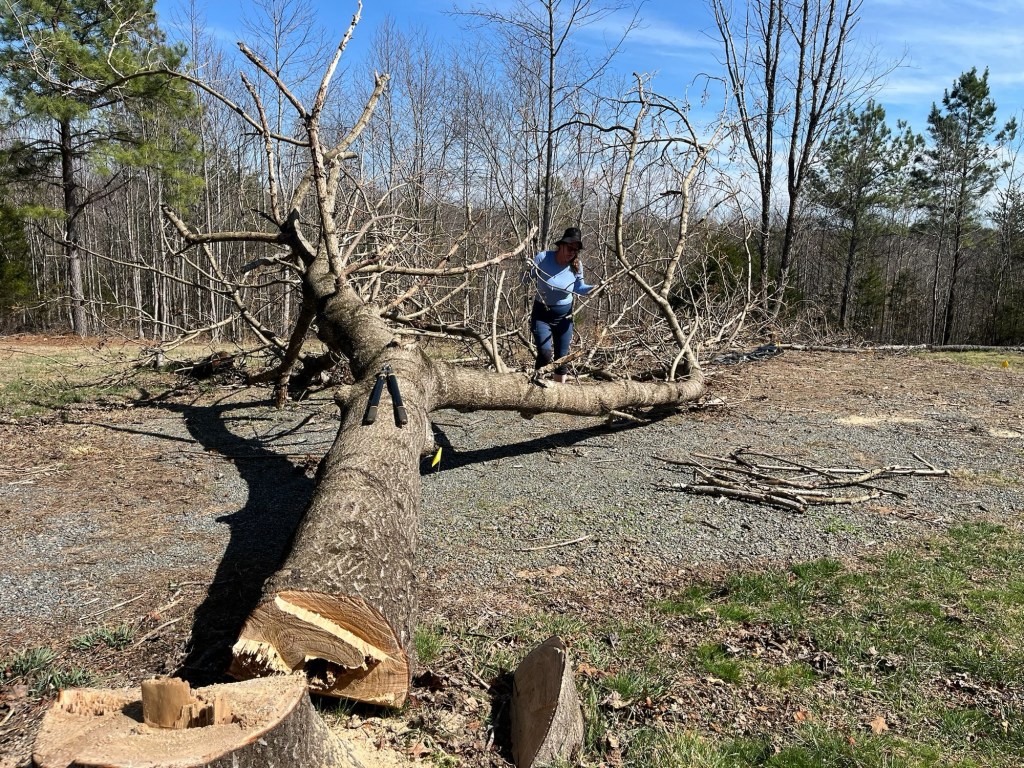
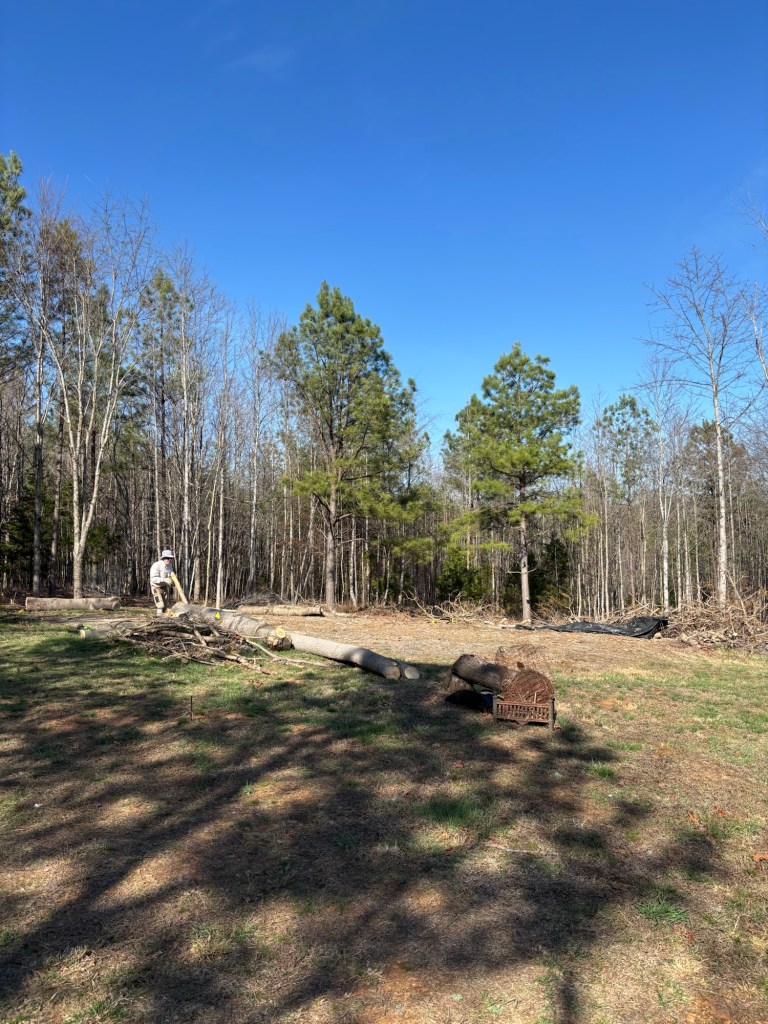
We spent the weekend taking down and processing the large paulownia trees up top in the main clearing. They loomed over the driveway and pad where we decided we’d place the tiny house. It felt like we were dismantling a giant whale carcass. These trees were messy, seedy and dropped limbs off during any storm. They take over native forests and choke out beneficial plants and trees for our Virginia wildlife. They were very fast growing as well which is why we put off cutting them down. They were a big bunch of hard work!
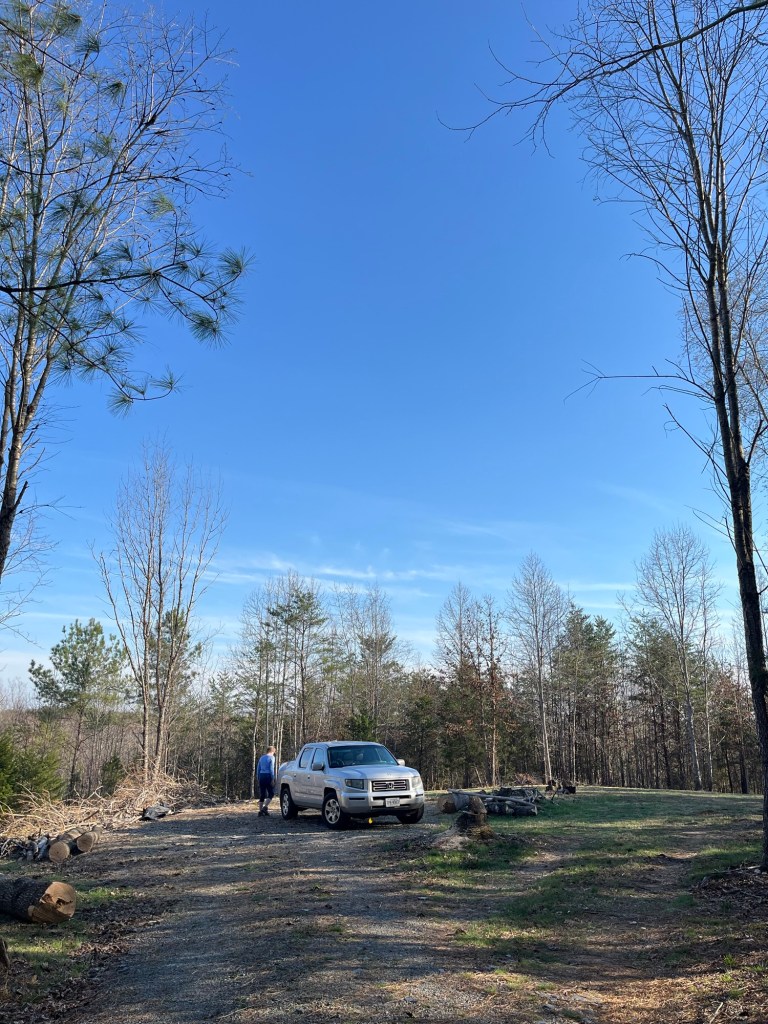
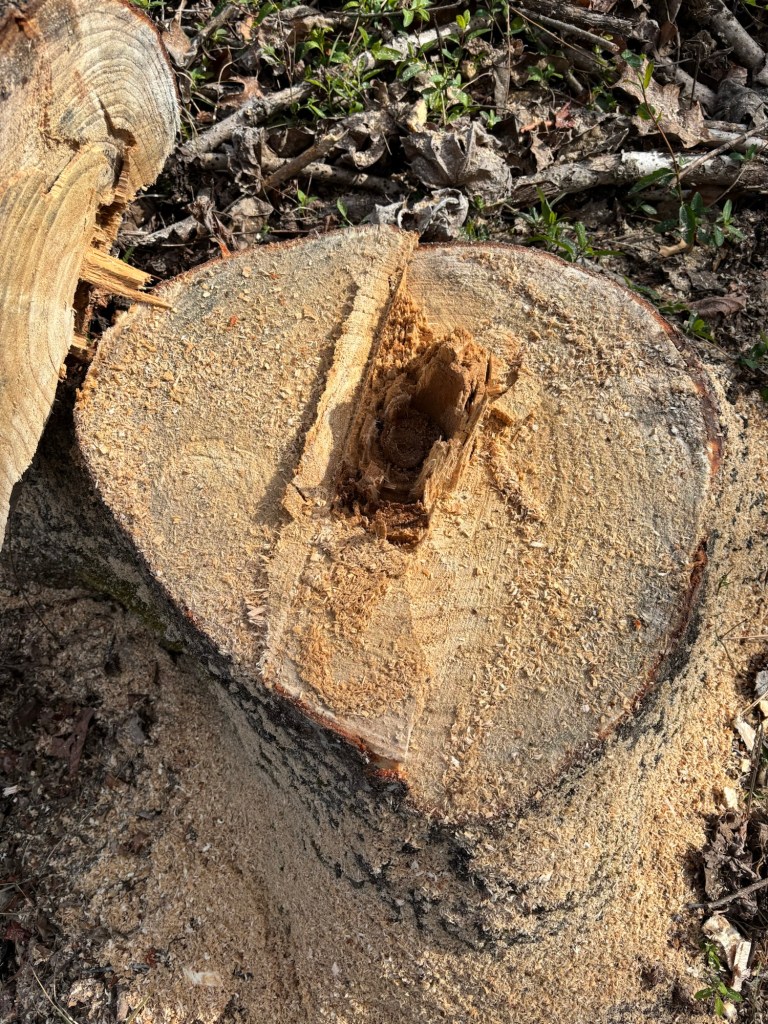
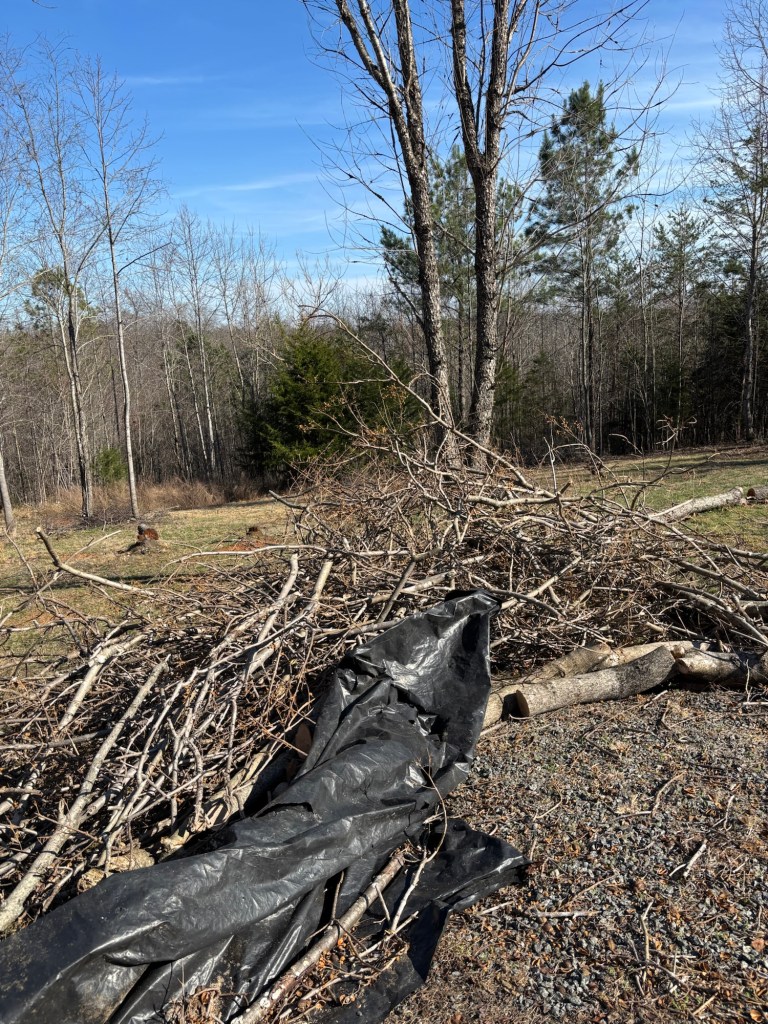
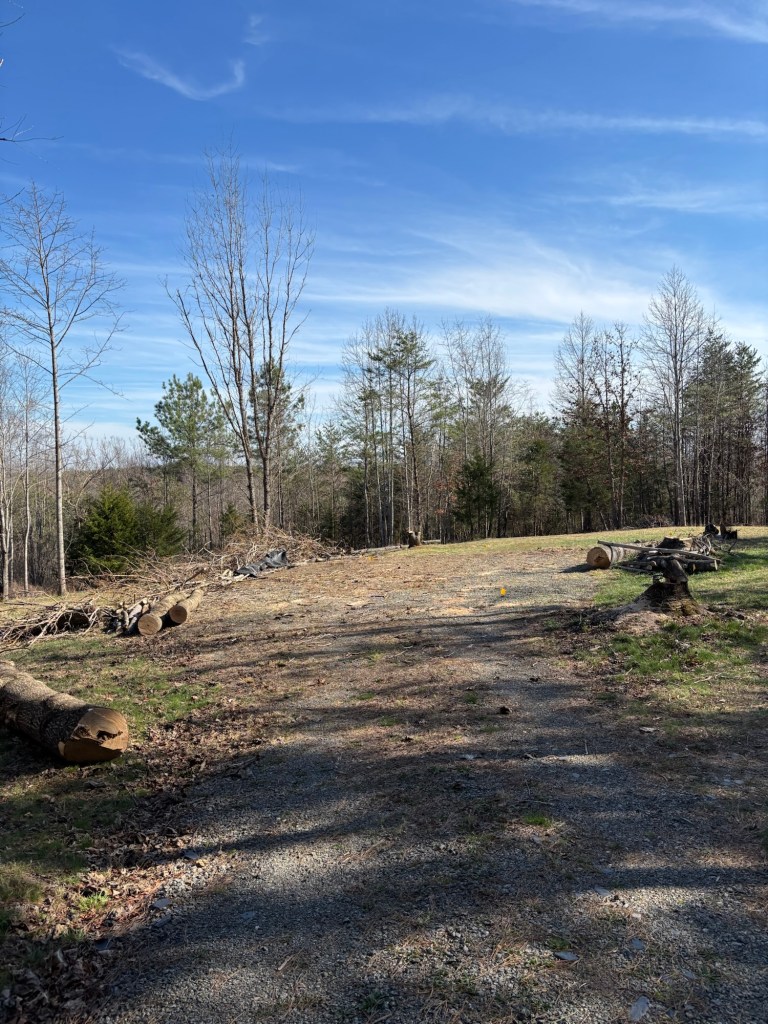
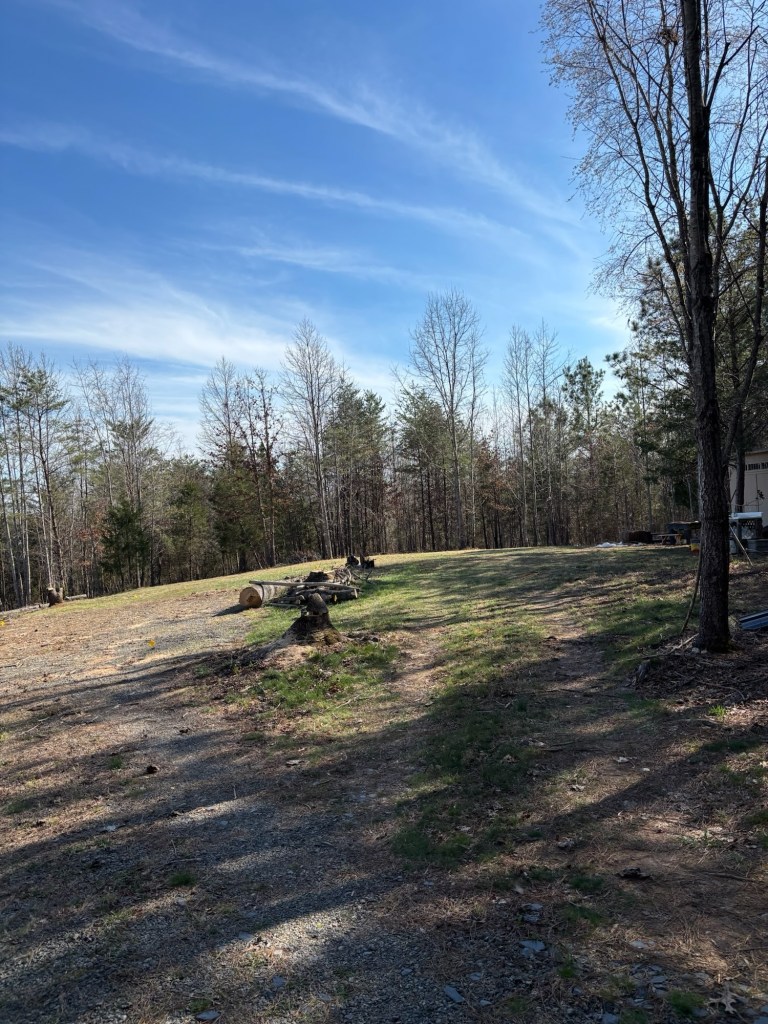
The truck parked in the spot we cleared for the tiny house this Wednesday. It looks so much better without the paulownias. We are pleased with our decision.The first paulownia tree we cut down earlier in the week and then came over Saturday to cut it into smaller pieces. This was the largest. It took all of our Saturday farm day. Hole in the middle of the paulownia is not a sign of disease but an inherent characteristic of the Paulowniacea family of trees. It is called pith and creates a water highway for the tree to support its rapid growth. This hollow bamboo structure runs the length of the trunk. This is one way this tree can take over quickly. Similar to ailanthus, Callery Pear, Mimosa and White Mulberry in its destruction of forests in the eastern US. Kudzu in tree form. The second and smaller of the two paulownia trees we took down and cleared it yesterday (Sunday). We are going to need a wood chipper! Paulownia tree debris around the pad. We will find a use for these logs. It is lightweight and fire and rot resistant. We picked a lot of great walking sticks and fishing poles out of the rubble and sorted into useful and non useful piles. We brought the long dead pieces home to use as fire starter. They burn for a long time and are as light as paper. It’s really very interesting wood. Too bad the tree isn’t adapted to playing nice in our environment with its native cohorts.
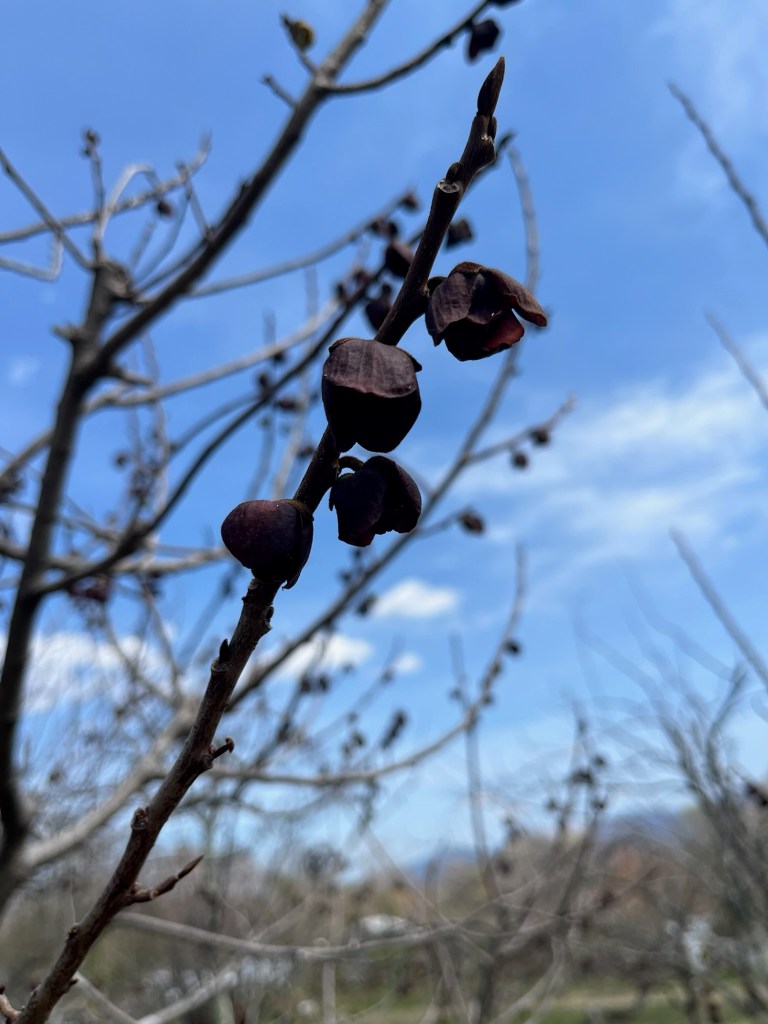
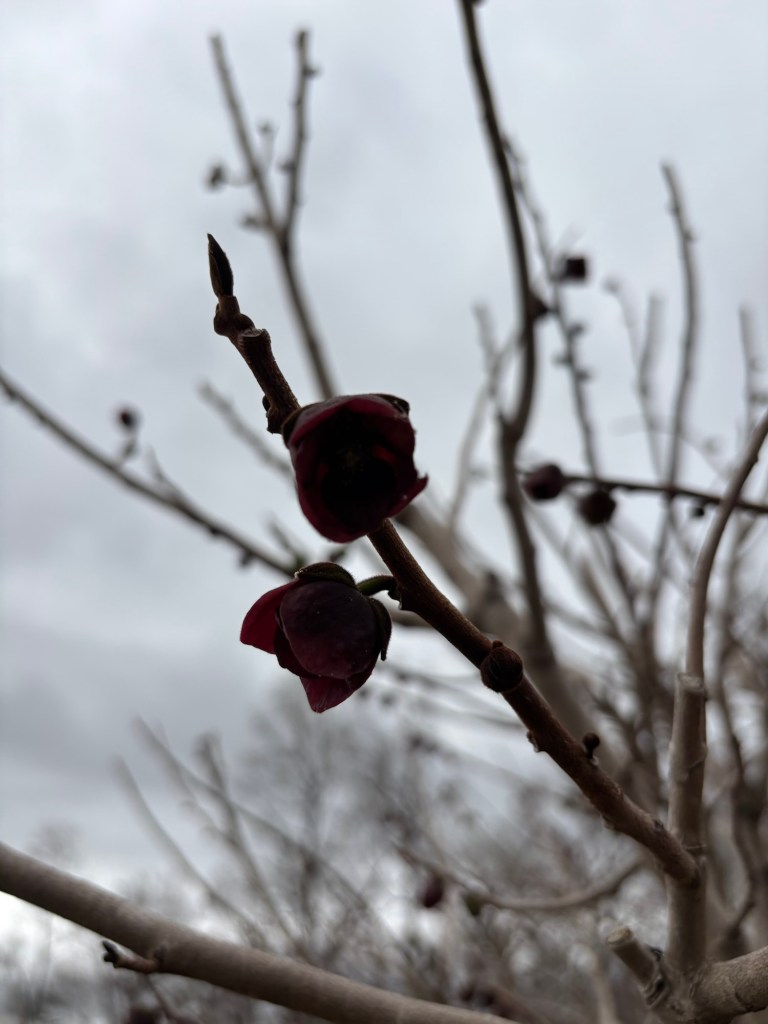
We stayed focused on creating our space for the tiny house for the most part, but ran down to the old colony pawpaw patch last night just before leaving SAFF for the weekend. The buds are still tightly closed. We are happy with the slow moving progress of the buds as we have only found female flowers out in the wild so far. We continue to look for the older male flowers with pollen. We will use this to pollinate our female flowers when they open. We are watching the pawpaws develop along the Rockfish River on our drive to the farm and we see them covered in buds. They are all still female with green flowers instead of more purple male flowers that face downward.
Female flowers at Edible Landscaping on Saturday in Afton Virginia.
View of the clearing and pad without the paulownias.
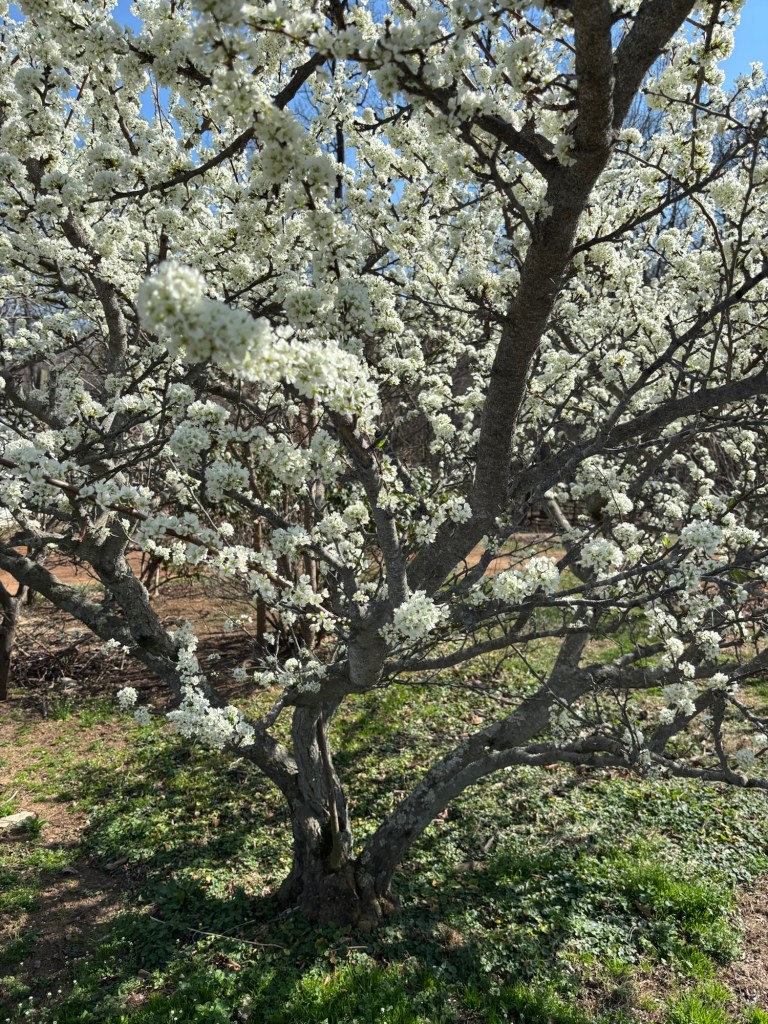
Pear tree blooming at Edible Landscaping. The smell was indescribably pleasant and sweet. We would have spent the rest of the day right there if possible.
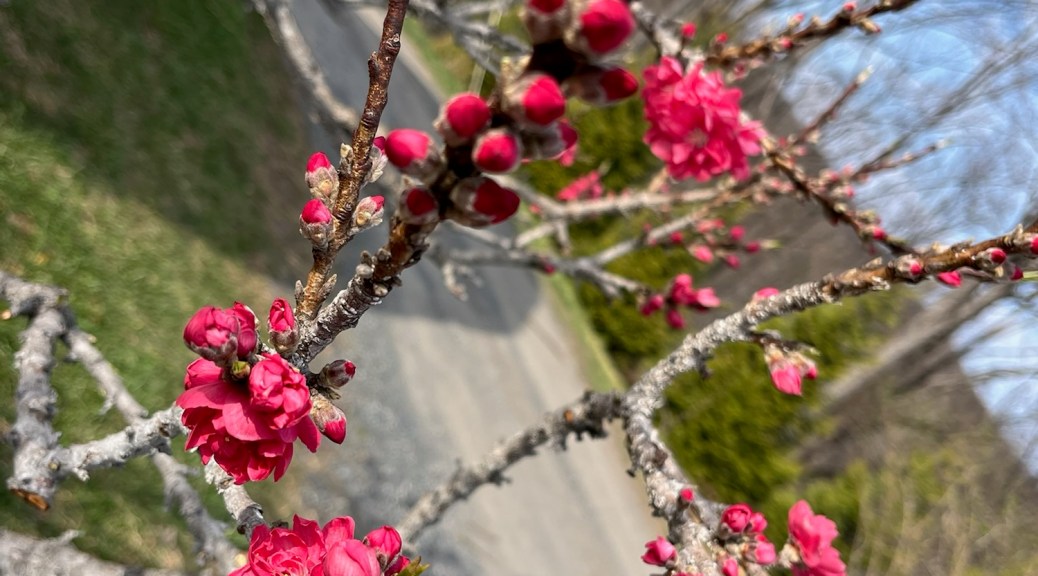
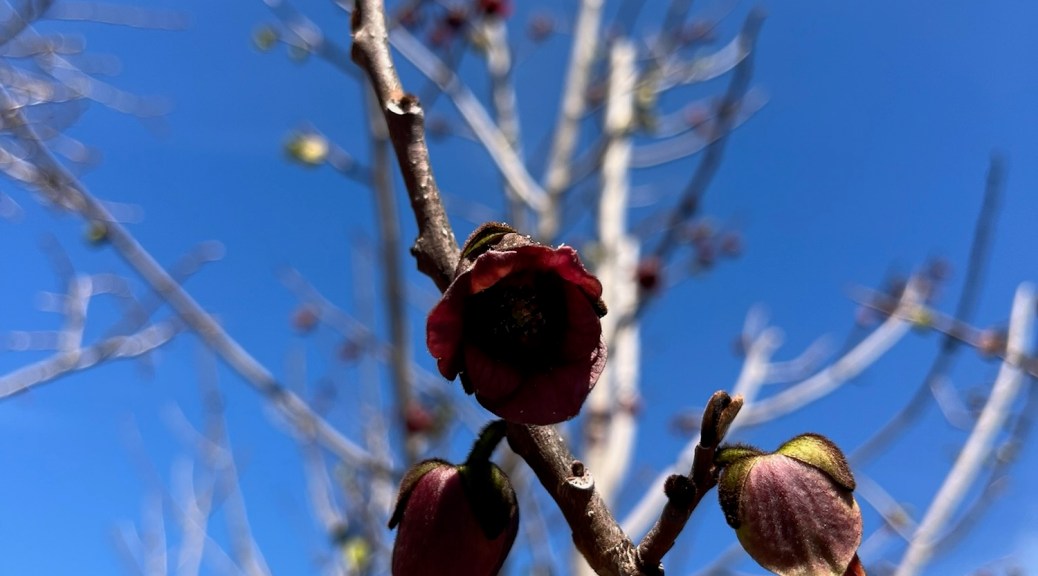
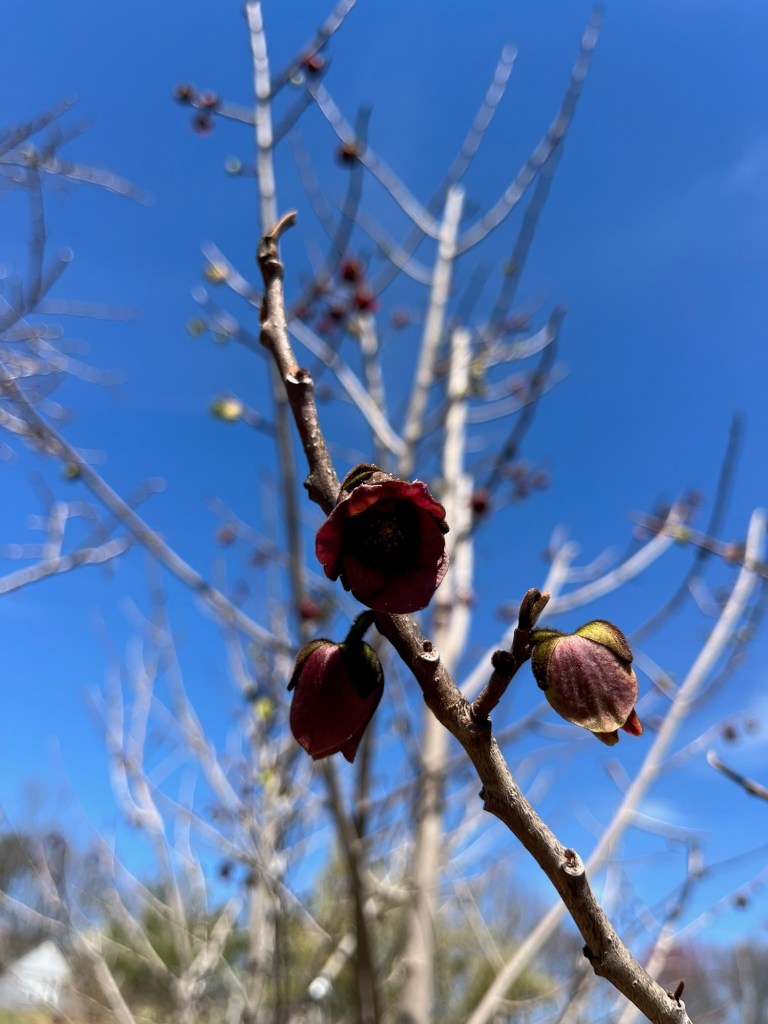
We drove over late yesterday afternoon to check the status of their flowers on the Asimina triloba, pawpaw, trees at Edible Landscaping in Nelson County Virginia. This is one of our favorite places almost any time of year but it was especially enchanting yesterday. The flowers were blooming on many fruit trees and bees were buzzing hungrily. The pawpaws were just about to open on a few cultivars—namely the Sunflower, Shenandoah and Allegheny with some blooms starting to open and others (like ours in Buckingham County at SAFF) are still small and tightly closed for winter. While they are fully closed they can survive temperatures as low as -25 degrees Fahrenheit. Once they begin to open like the flower below, they are hardy to 28 degrees Fahrenheit. This makes them susceptible to late freezes.
Shenandoah cultivar at Edible Landscaping and the clone of our own at SAFF. It was the first pawpaw we planted ourselves at SAFF. The outer whorl of petals can be seen opening.
When the flowers first open on one year old wood, they are in the female stage with a green, glossy stigma inside the petals. At this point, the stamen are immature, green and compact. After a few days, the petals turn wider and become more horizontal turning a deeper, purplish brown. The stigmas are no longer receptive and the anthers turn brown and release dry loose pollen. The pollen is light colored beige or yellowish and fine and dusty.
The Allegheny cultivar (parent clone of our Allegheny planted at SAFF on the Pawpaw Peninsula) with buds swelling but not yet opening like the Shenandoah above.
The Sunflower cultivar has been known to self pollinate. However most Asimina triloba need a second genetically distinct tree to set fruit. If successfully pollinated the green ovaries at the base of the flower begin to swell and develop into fruit. We’ve been staying on top of the weather. Hopeful to stay above 28 degrees wherever the flowers have opened. So far it appears Buckingham County will not drop below 28 degrees this season. Fingers crossed.
We got the new trailer yesterday. We are pleased with the look and feel of it. We will make good use of it at the farm. We plan to take it over tomorrow and begin transporting compost to the pawpaws.
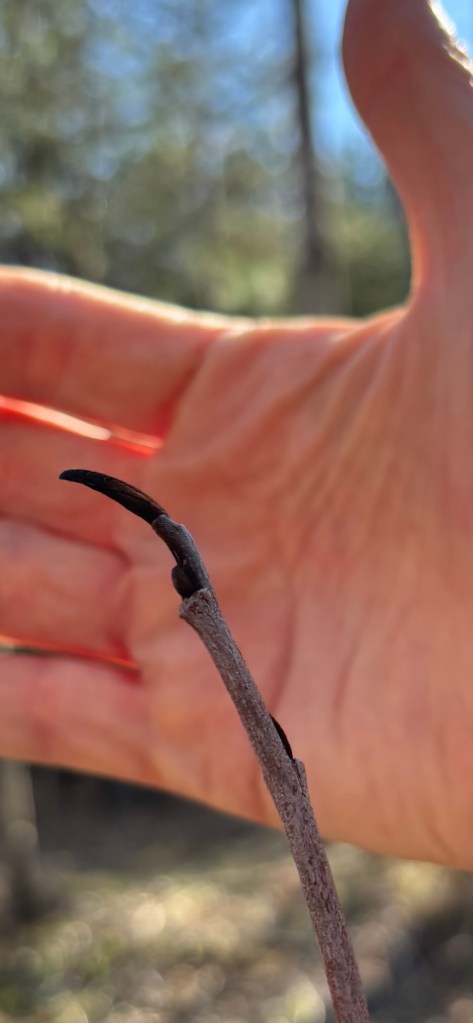
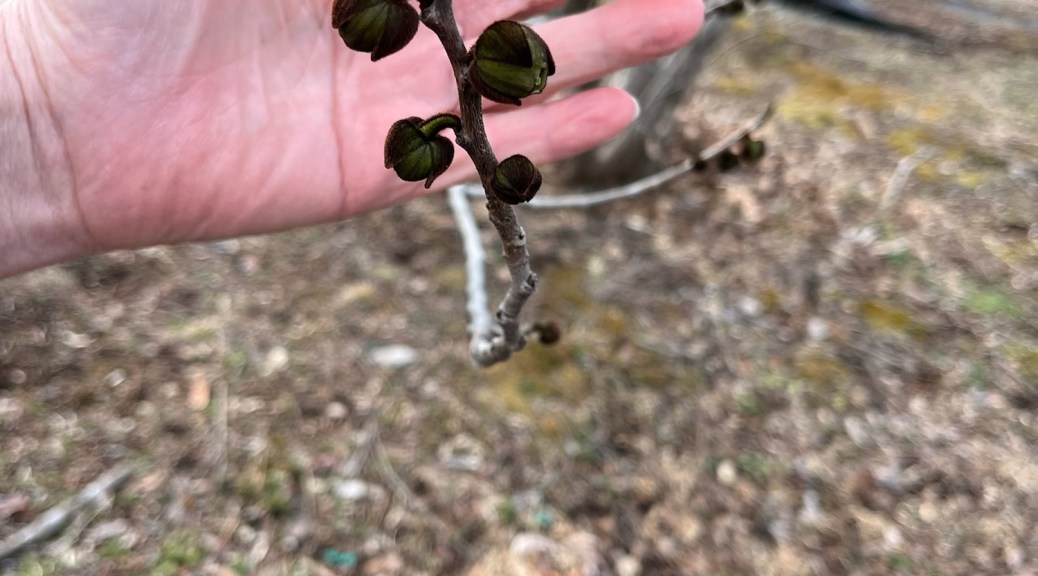
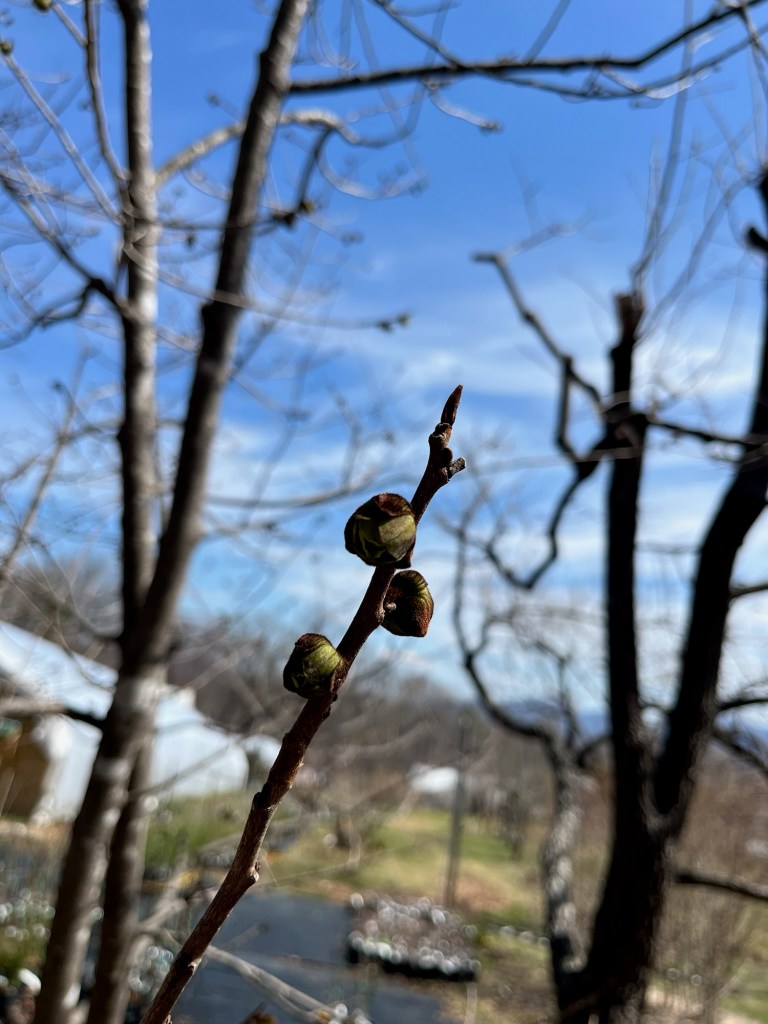
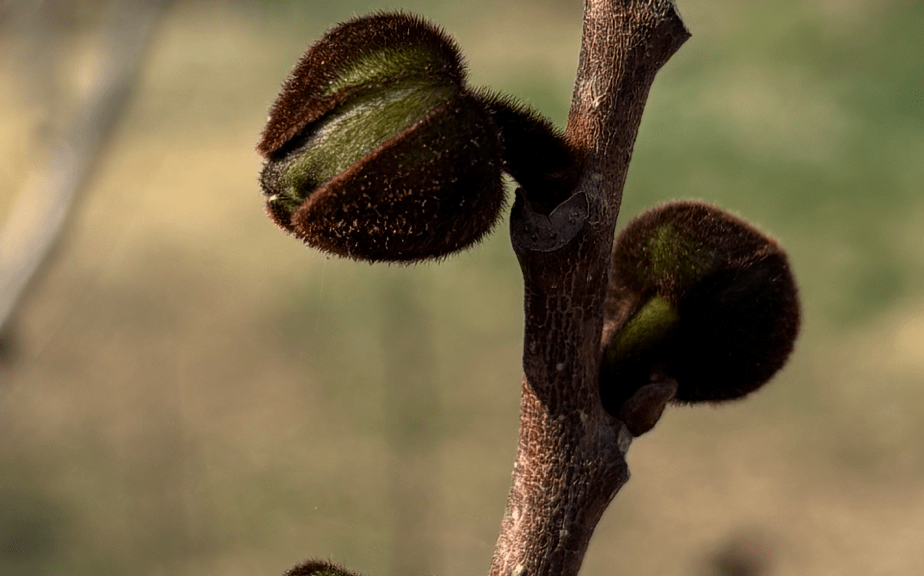
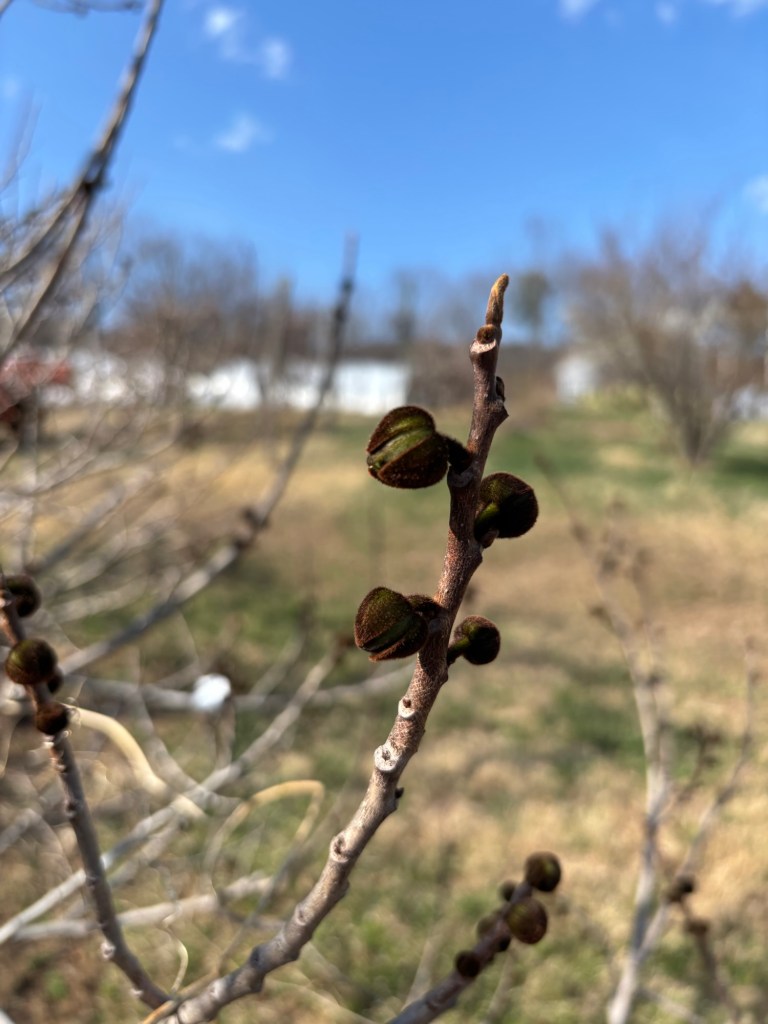
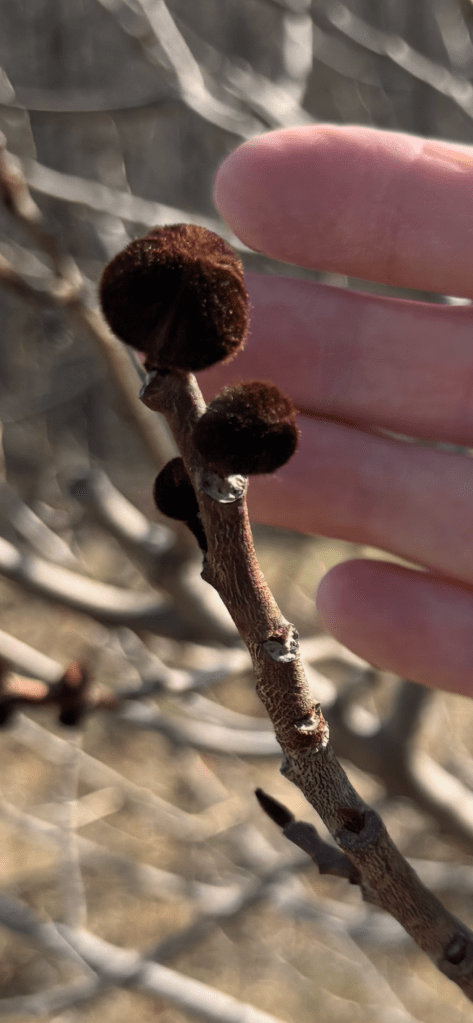
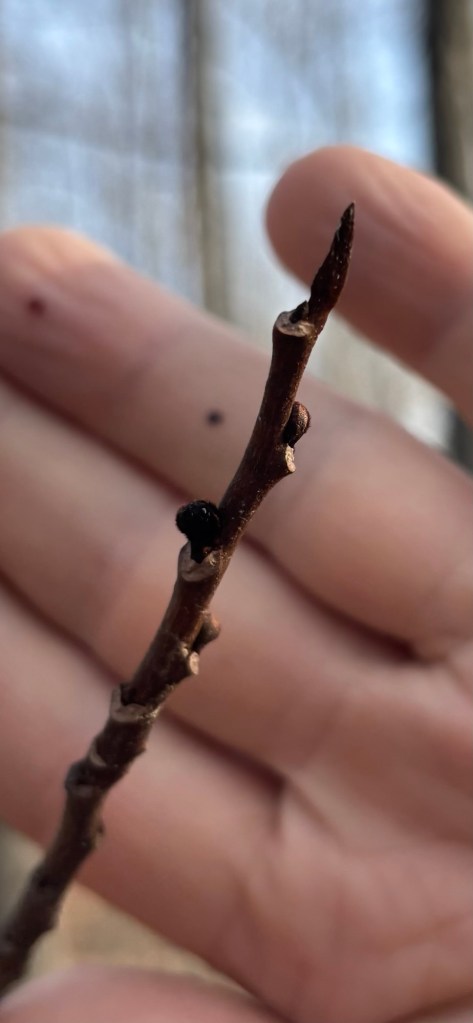
Asimina triloba, pawpaw, spear like leaf buds and fuzzy round and purple flower buds staying tight despite the 80 degree days in Buckingham County Virginia last week.
Yesterday, we visited Saint Andrews Forest Farm to work on our road project. We are bringing the road from the main driveway to the old farm road on the north side, in order to use the tractor to access the new Pawpaw orchard we’ve planted the past few years. We will need it for everything —bringing trees, compost, compost tea, water and collecting and taking mulch to the pawpaws. So far, we have carried everything in backpacks and our wheelbarrow. Phew! We have road access already with the tractor to the south end and the Old native SAFF orchard. We just ordered a trailer for the tractor that will hold up to 750 pounds. It will come tomorrow and we will get out there to use it to transport compost to the SAFF old native orchard at the bottom of the main hill. We’ve been wondering if this orchard was planted and farmed by Native Americans in the area. Or if it arose from just one tree and is made up of clones. Or both. The trees look old. They could be hundreds of years old. While individual root suckers only live around 40 years, the clonal root system can live for centuries. One reason the trees aren’t producing fruit may be because they are all clones of one mother tree. This is most likely. They need novel dna. So that’s why we started planting new pawpaw seedlings and cultivars. These older native trees at SAFF have flowered in mid April in 2024 and 2025. The first year we noted 15-20 flower buds. In 2025, we had fewer than that with the drought and none of these produced fruit. After we hand pollinated both years, we got fruit to set but they dropped within a month or so. This year every tree that’s over 6 feet tall has dormant winter flower buds all over them. Hundreds of hopeful fuzzy little round nodes everywhere. We are beyond thrilled. An unexpected surprise!
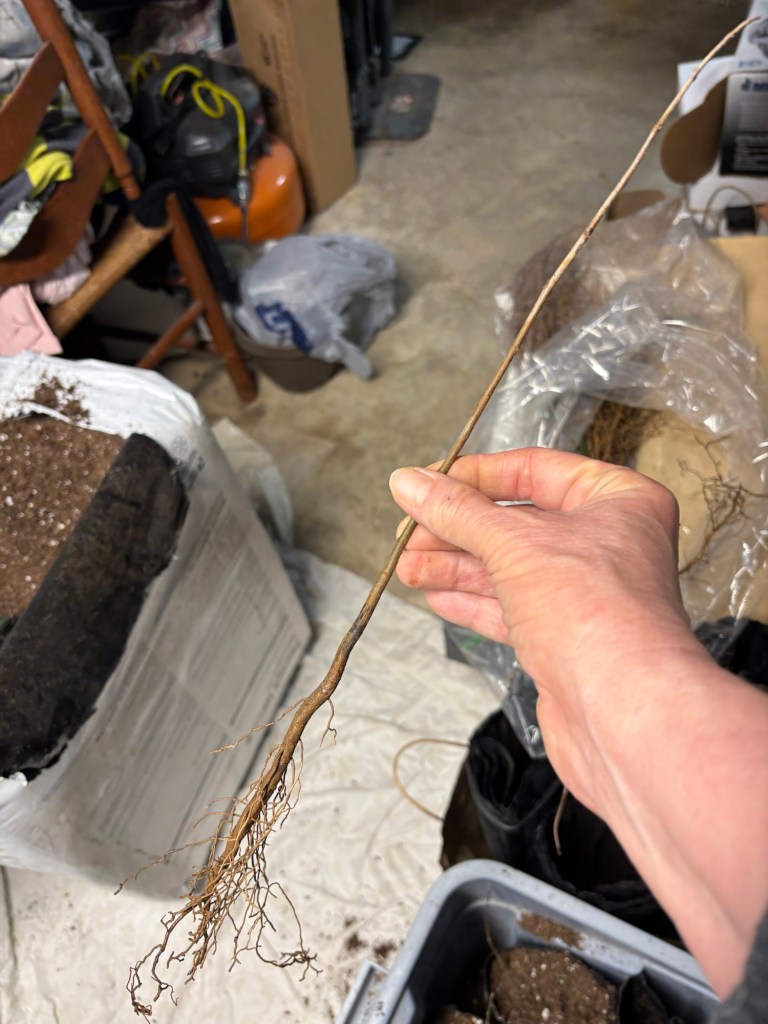
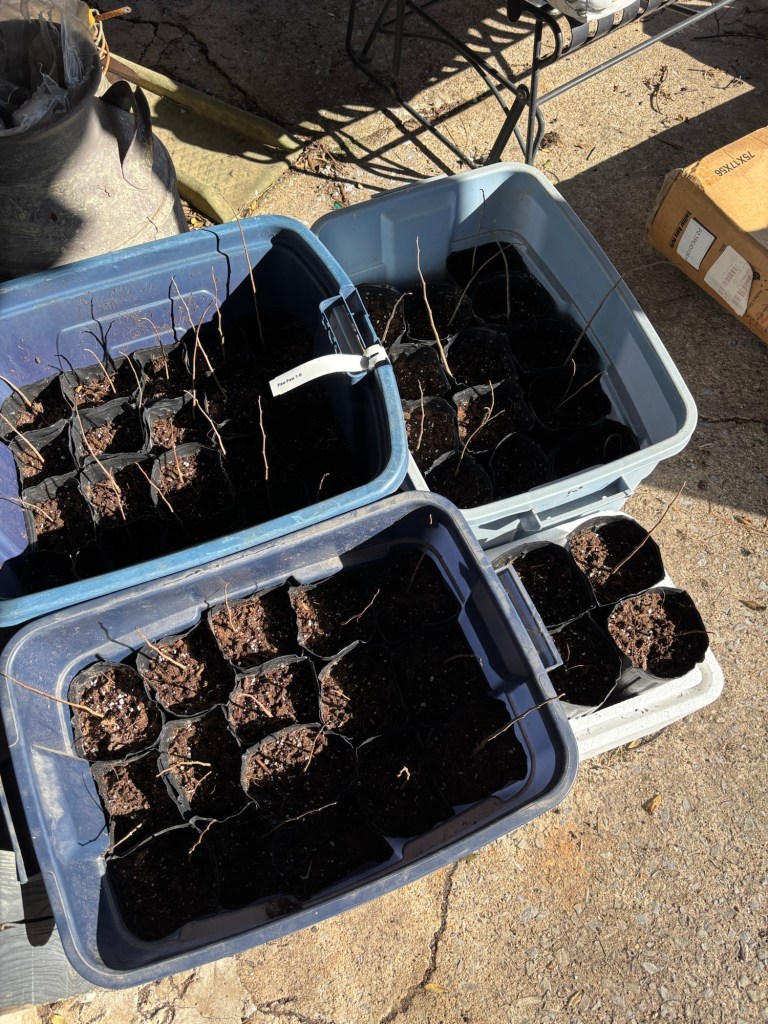
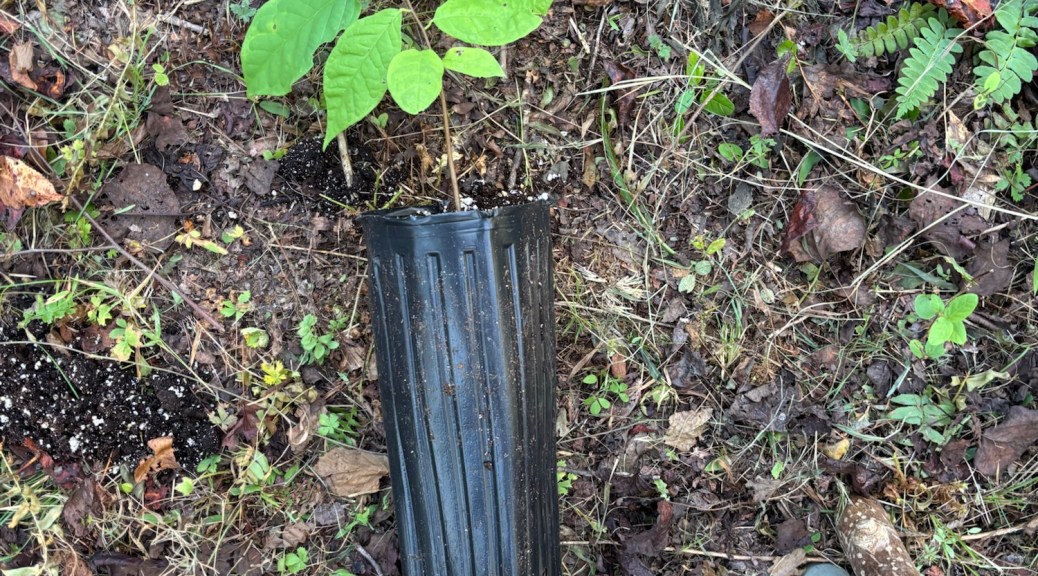
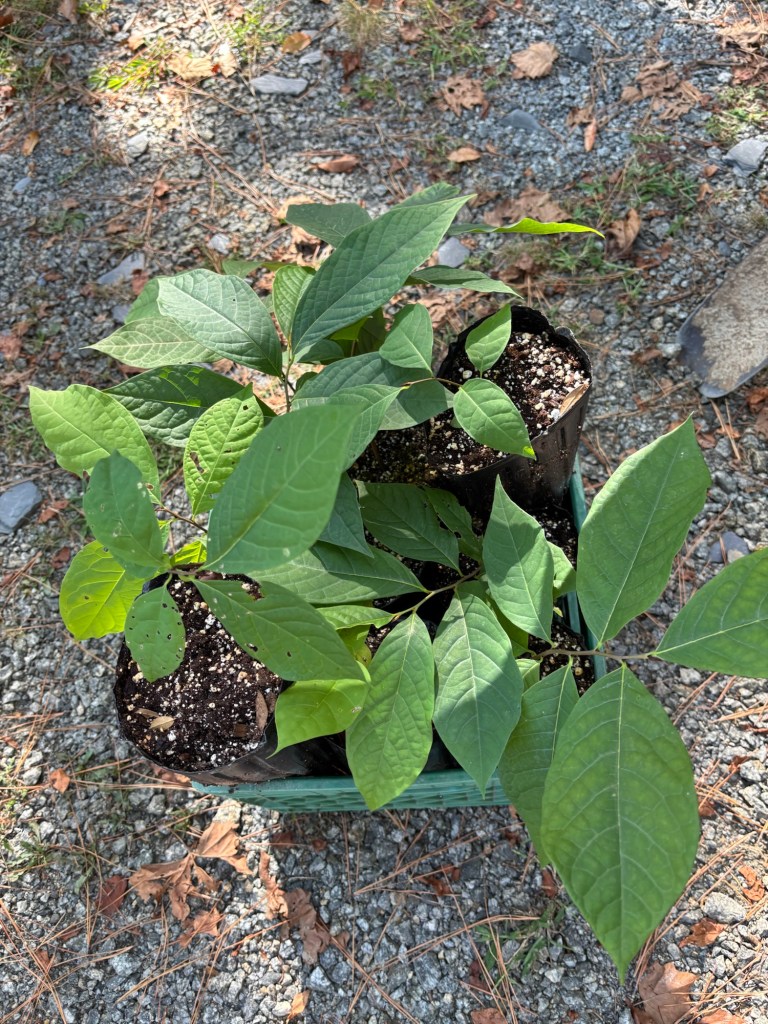
Our plan is to ensure these trees with fruit are watered regularly during any dry periods and we also have plans to get compost to them this week. We are going to test our compost tea first to make sure it isn’t too acidic and doesn’t burn the roots. (Thank you, Judy! For the reminder 🥰) The fruit may drop as before and we still want to do all we can to keep them going. Each year they look healthier, greener and leafier. We’d love to get some fruit to taste and share from the native trees. It would be great to plant seedlings from our native fruit! We have never tasted any “bad” pawpaws so we expect them to be scrummy. We are hopeful they will be a fine representation of Virginia’s native wild pawpaws. This year we will collect some Asimina triloba dna from around our foraging areas and public parks and gardens in Virginia to increase the likelihood of fruit set. We hope this helps kickstart pawpaw fruiting at SAFF in 2026. We also just planted 53 bare root seedlings we ordered from the Virginia Department of Forestry. We picked them up in late February and planted them that same day in deep tree pots. They all looked great with long deep tap roots. They appear to be the same age as the trees we planted last year. (1 year)We will plant these year old seedlings at SAFF this spring or fall depending on the weather and how they fill in their pots.
The 180-200 seeds we collected from pawpaws last summer (primarily from the Sunflower cultivar at Edible Landscaping in Afton, Virginia because the late frost that melted off the flowers at all of our other foraging spots) have stratified and we will pot those up in June to plant in the ground at SAFF in the Fall of this year. We are eyeing some of the local master gardening sales and the Hahn Horticultural Garden sales (April 9th) coming up this spring for more opportunities to collect seeds and trees. We plan to also collect pollen specimen from multiple locations around Virginia. We plan to visit Blandy Experimental Farm in Boyce, Virginia to see and collect Virginia pawpaw dna for our SAFF tree project. They have a Mother’s Day Plant Sale on May 9th and 10th. We have been using sammich baggies and qtips 😀 to gently collect dna from the open flowers at SAFF in the old native colony of pawpaws. Last year, and in 2024, we used our SAFF native flowers only to hand-pollinate the trees, but also this year we have our baggies and qtips with us now so we will stop and collect dna from any pawpaws we find with open flowers. We will help the pollinators out while collecting novel dna to bring to our old native SAFF colony. We’ve noticed a lot of bugs gnats and flies in the woods already. Especially down by the main waterway where the old native pawpaws are and the creek has water flowing. We’ve noticed our native colony is usually the last to open its flower buds each year down in its sheltered valley by the waterway. We stopped by Edible Landscaping in Afton Virginia yesterday and they had buds about to open. We will stop over there again this week to check their cultivars and select trees.
We added two Russian cultivars of pomegranates to our fruit tree population. A Salavatski and a Lyubimi. Both cold tolerant. We will see. The curse and blessing of living so near Edible Landscaping in Afton, Virginia. There are many wonderful nuts and fruit trees and shrubs!
We’d like to also begin adding Spicebush, jujube and gooseberry to the new Pawpaw orchard we planted with cultivars, select seedlings and some native fruit collected from Rockfish River locations along Howardsville Road. We will spread the American Hog Peanut that grows in our native SAFF pawpaw orchard into the new orchard. It is a nitrogen fixer and curls along the old pawpaws helping to keep them fed. We will bring their seeds to the new Pawpaw Orchard at the bottom of North Trail to encourage the companion plants continuing beneficial relationship. We are looking for littlebluestem grass-seed to spread in areas with erosion on the south end and set back line and in the clearings.
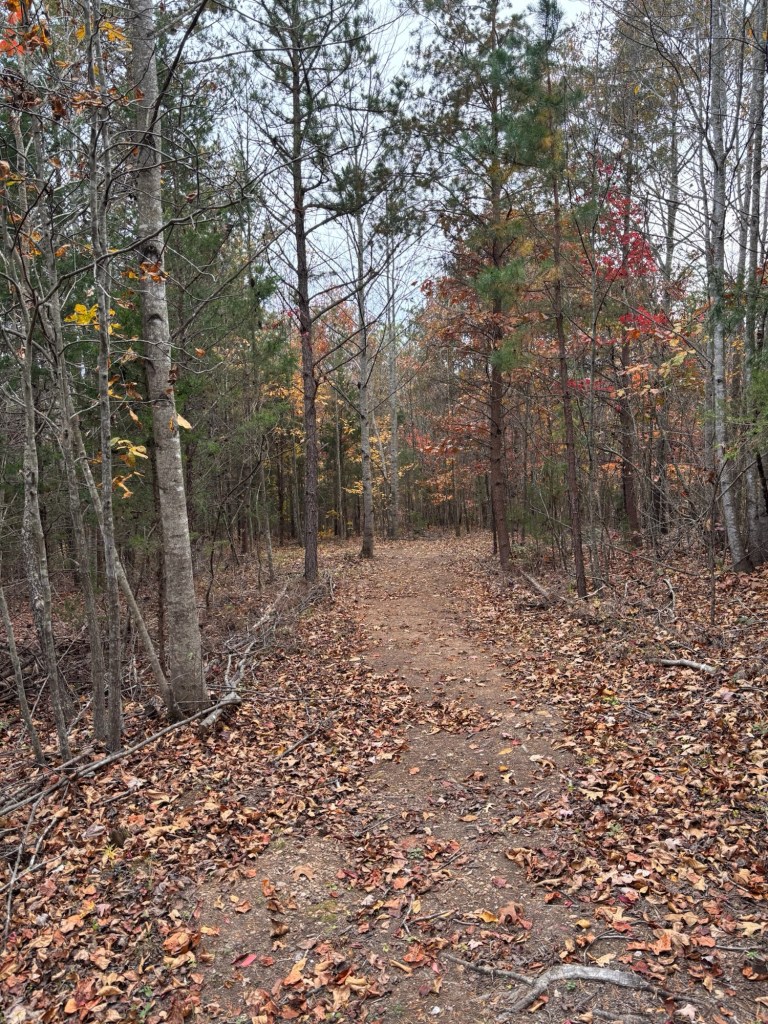
We started our walk down Red Hawk Rd and made a new trail from the bottom at the roundabout to down to Fern Trail.
The drive over to SAFF was beautiful with fall color. We travel from the Shenandoah Valley over Afton Mountain through Rockfish Gap and Howardsville to Buckingham. We oohed and ahhhed the whole way. Here’s a quick video of Howardsville Rd.
31 seconds of trees putting on a colorful show. Sound on for beautiful jazz as well.
We unloaded the lumber we found at the Restore and checked out the pawpaw and fig trees planted up top. They have yellow leaves and are losing most of them. Then we headed down Red Hawk Road to get down to Fern Trail. We checked out the Rappahanock cultivar and the seedlings planted as well as the cluster of natives. Most have gone fully dormant for the winter, especially the native SAFF trees. A few of the cultivars and seedlings look great; fully leafed and deep green still. Gleaming. It’s more typical for them with the temperature and season to be dormant. We have not yet had a hard freeze in Buckingham, or in Staunton in the Valley—which usually frosts first. Once dormant, their watering needs will drop. Phew! 😅
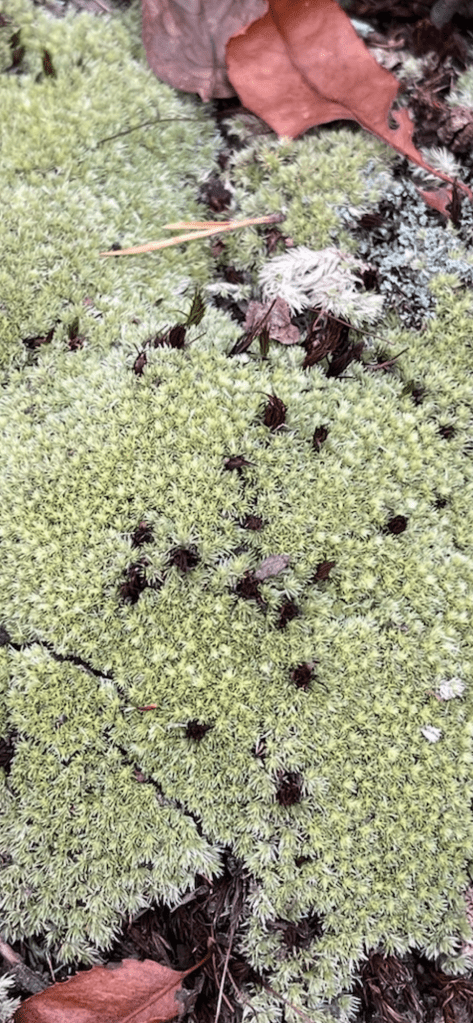
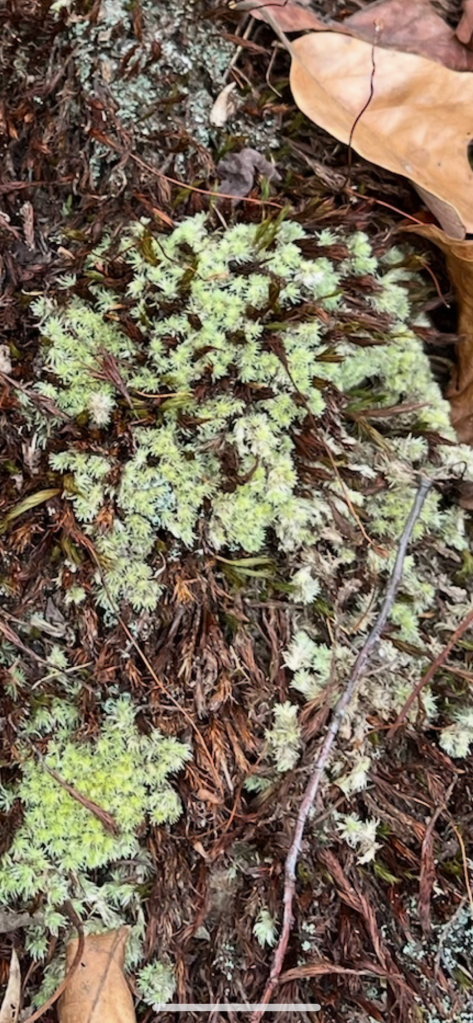
Leucobryum albidum, white moss or white pincushion moss, is common here in the eastern US. It creates a habitat for amphibians, reptiles and insects, stabilizes the soil, retains water, cycles nutrients and contributes to carbon sequestration.
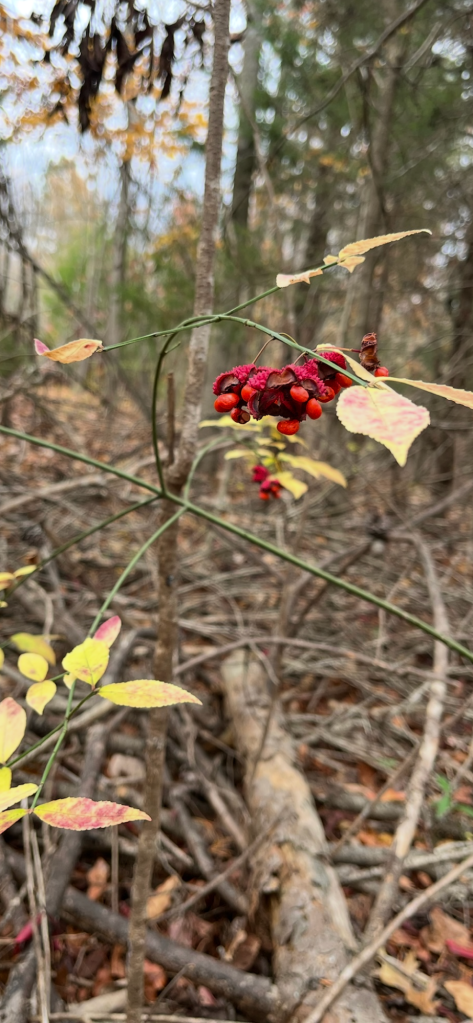
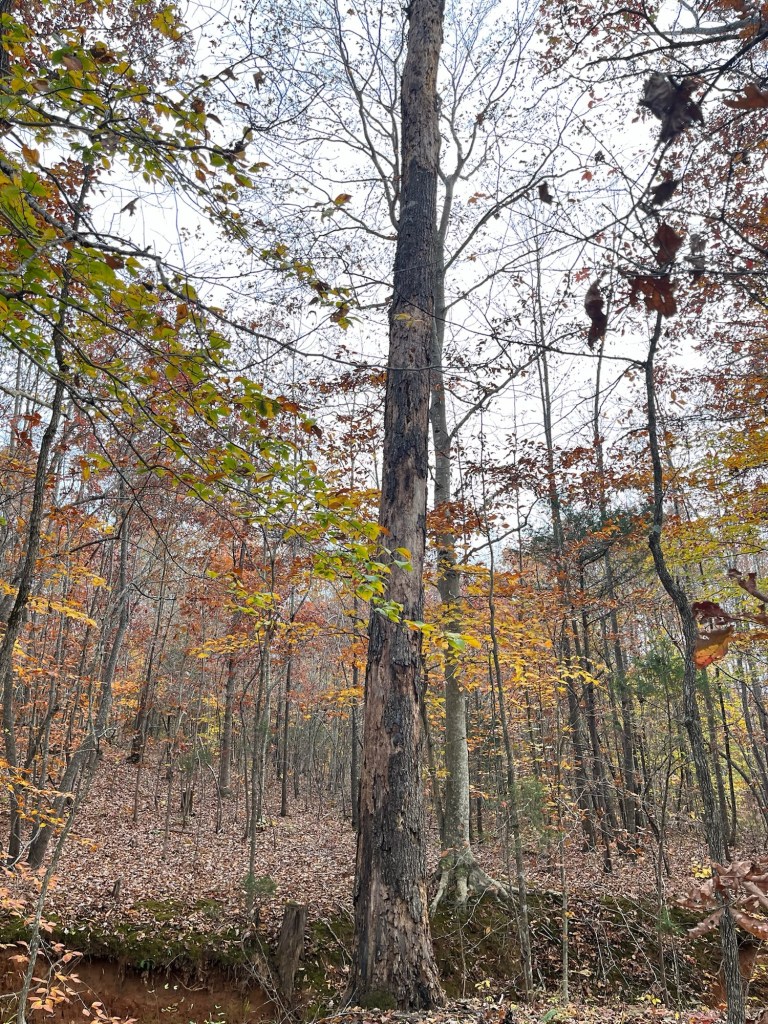
Along our walk we found white moss and strawberry euonymus (Euonymus americanus). We also went down to the waterway to check on this oak snag in the picture below. SAFF had high winds for several days and the last time we saw it, there was a bend and crack starting.
White moss beginning to grow.
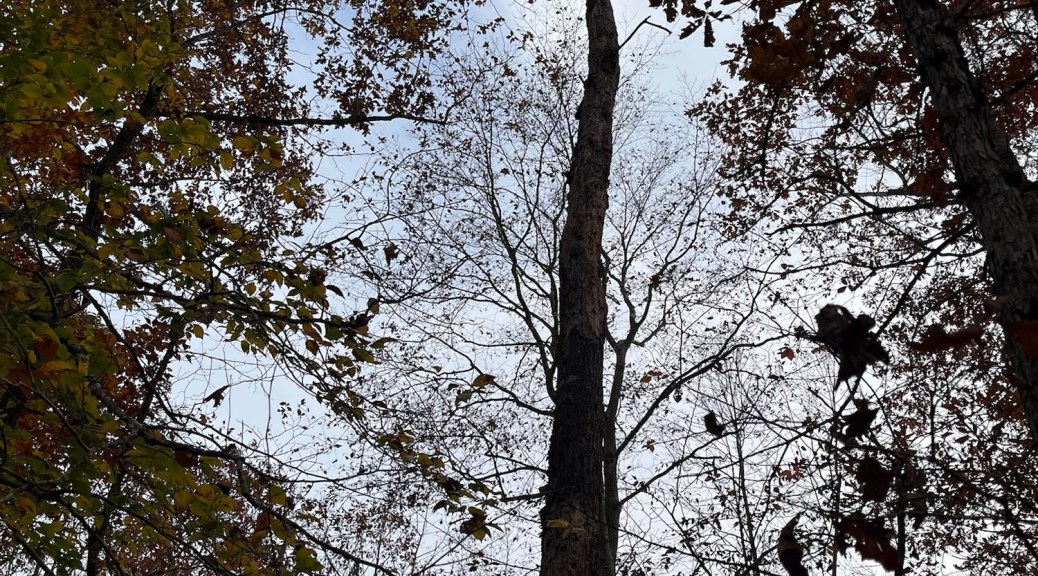
SAFF old oak snag we check on regularly. It looks as though it will fall to the west towards the Pawpaw Peninsula.
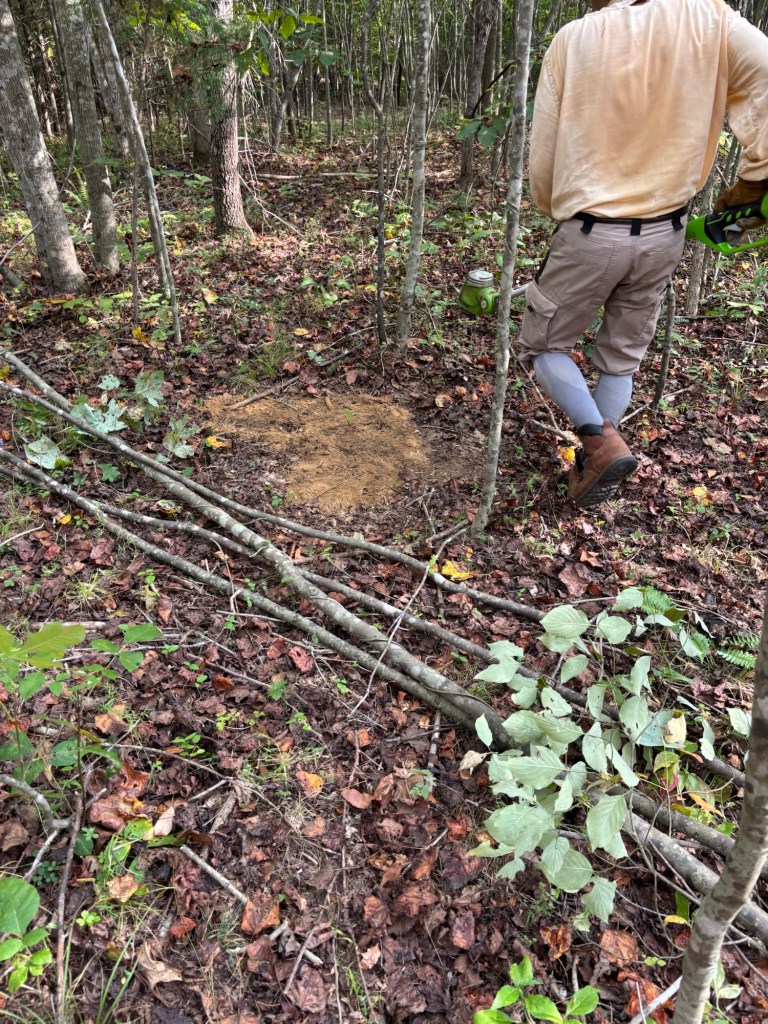
Just 21 more to plant after going out every day and planting 9 or so at a time. The orchard has really turned out nicely at the bottom of North Trail. The earth is red silty loam which is pawpaws (Asimina triloba) preferred soil.
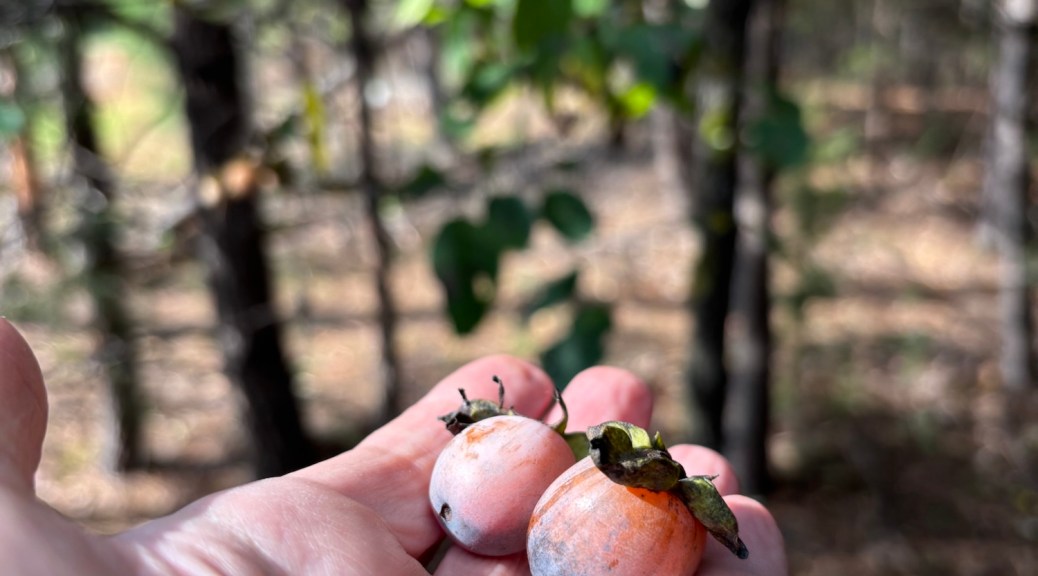
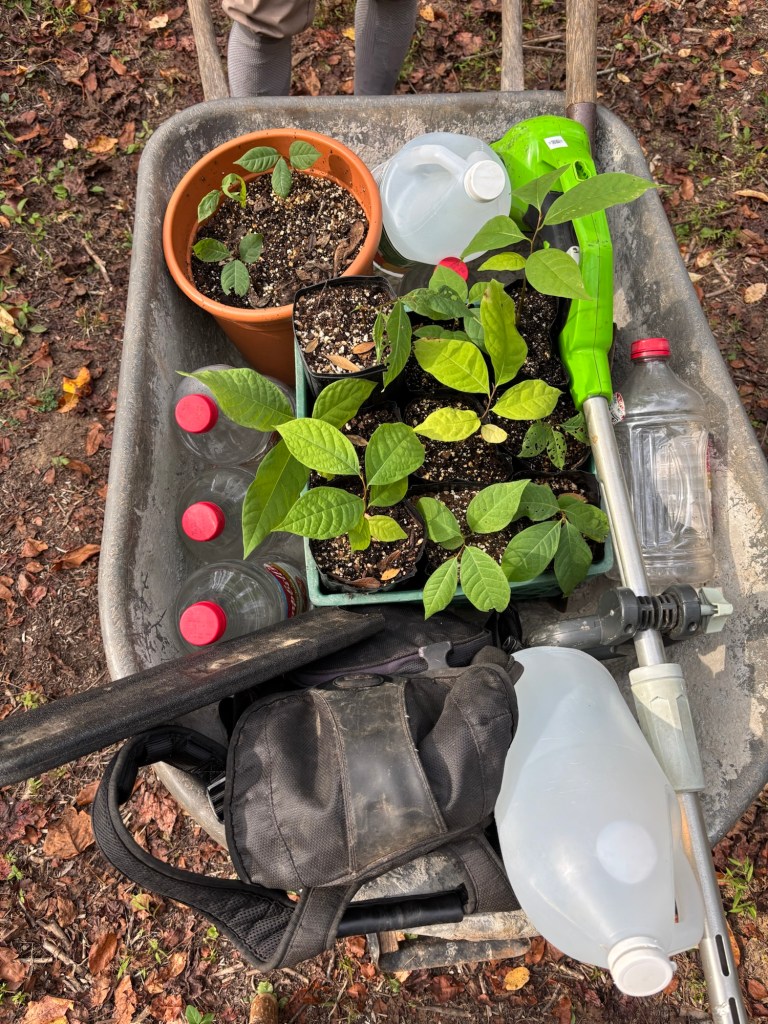
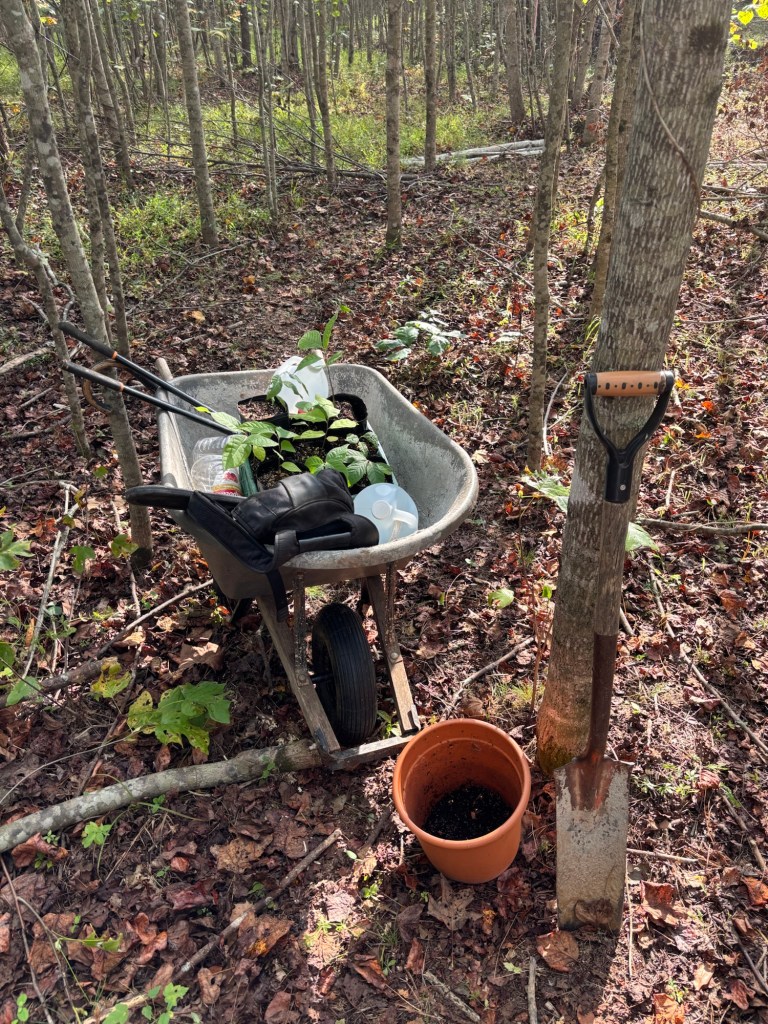
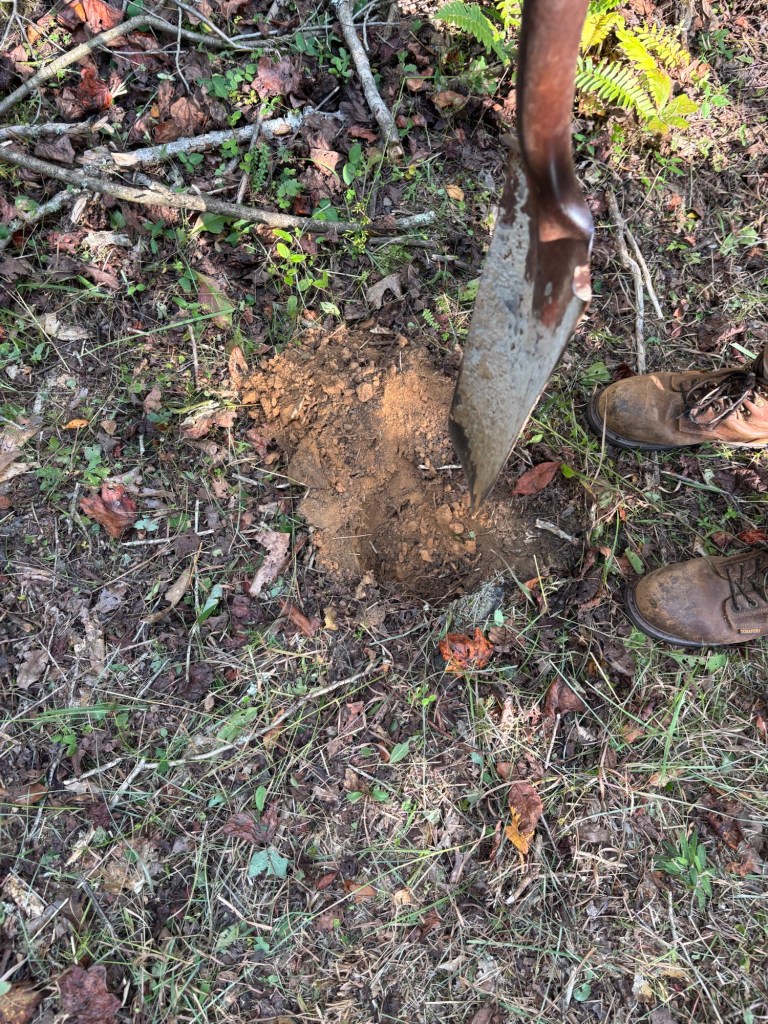
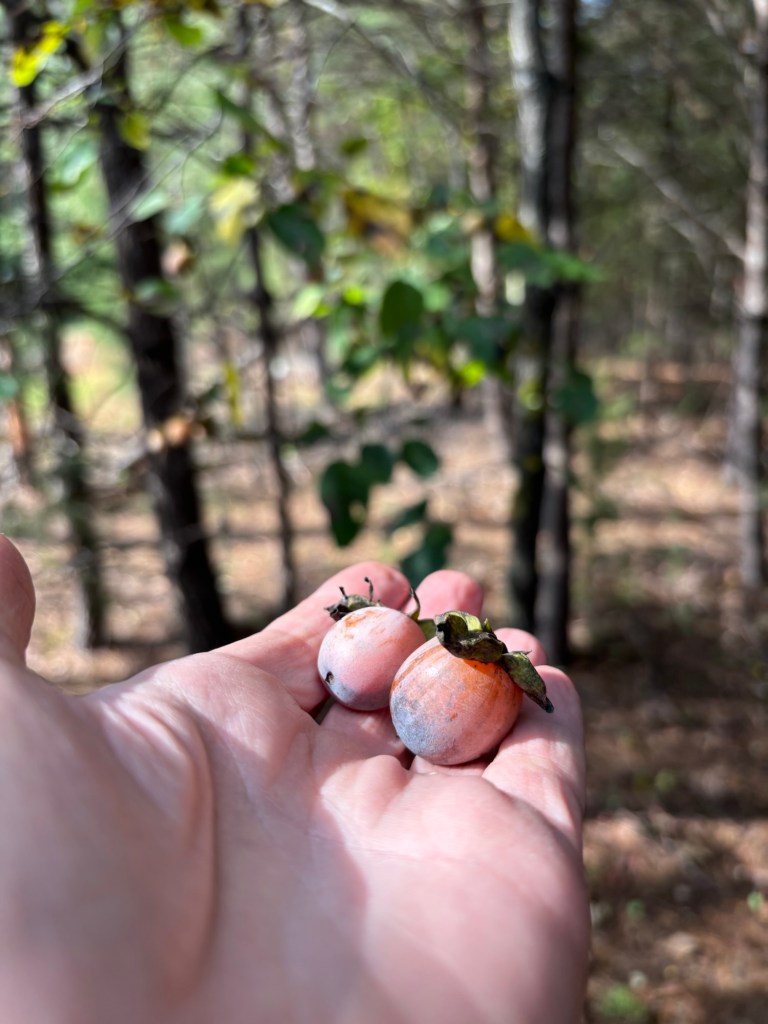
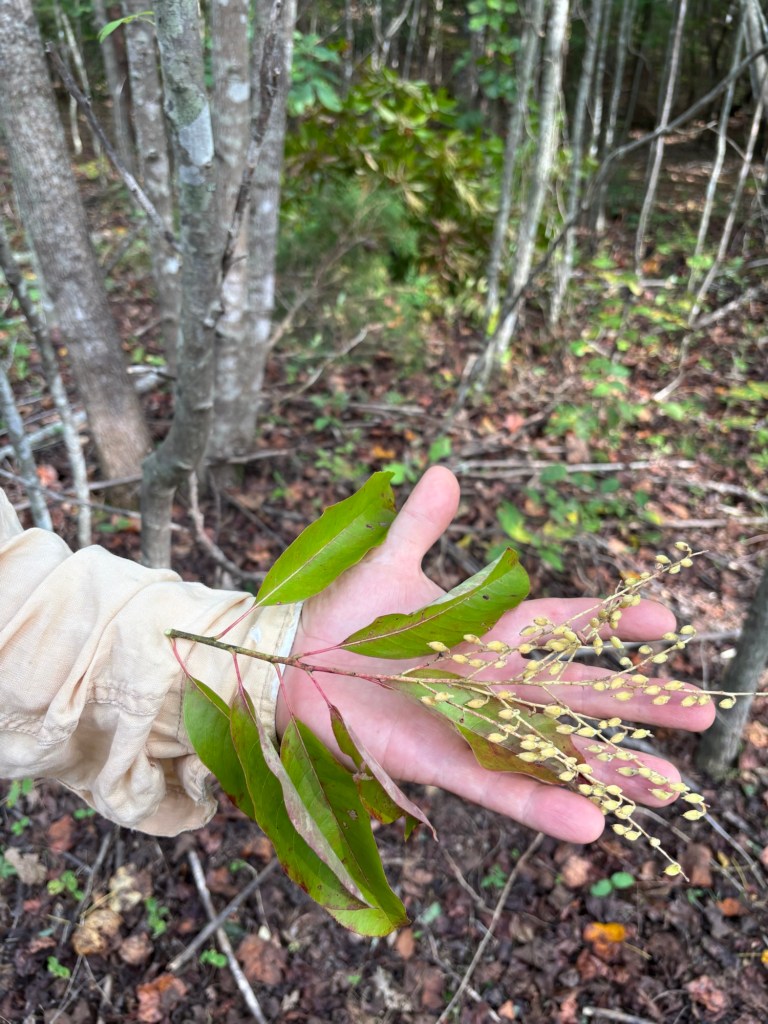
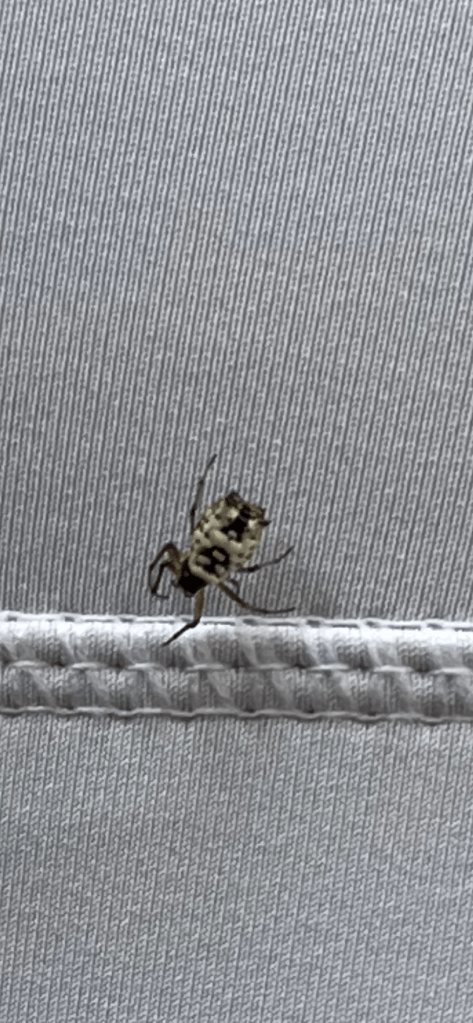
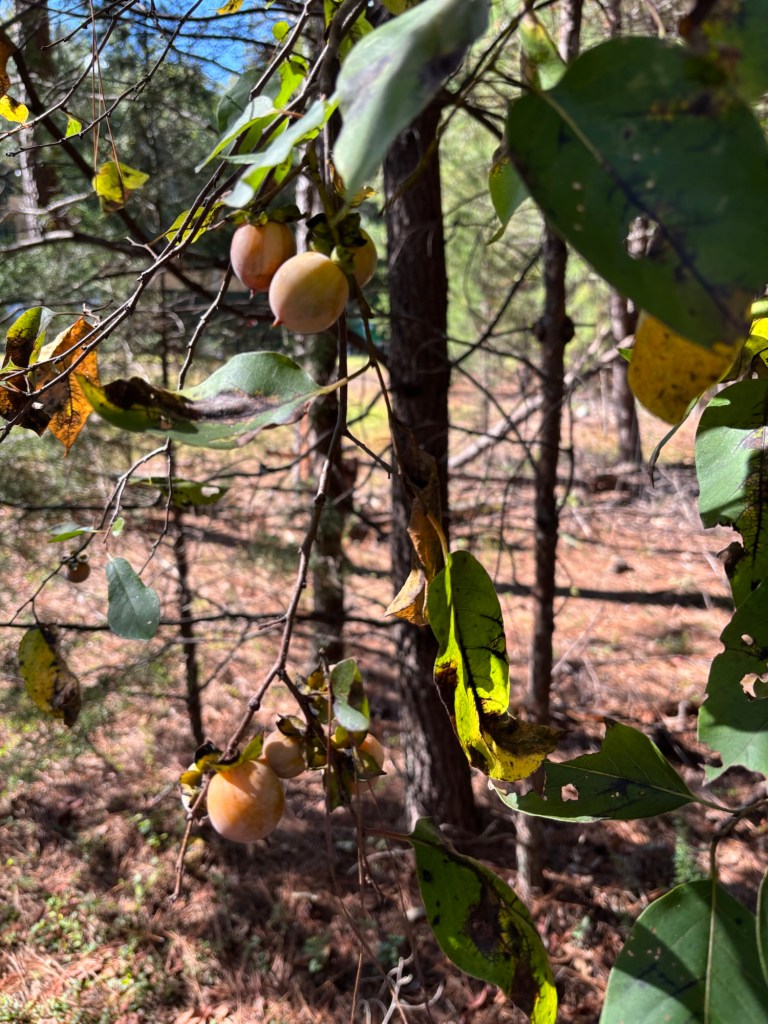
Our wheel barrow full of the supplies we used to clear spaces and plant our pawpaw seedlings.Red silty loam near the wet weather gully at the bottom of North Trail. Tasty persimmon to snack on finally. A branch of Oxydendrum arboreum, Sourwood tree. Micrathena mitrata, White micrathena, is a species of orb weaver. They build their webs across the trails.
Finally got a good soaking rain at the farm. The ground has softened making planting much easier.
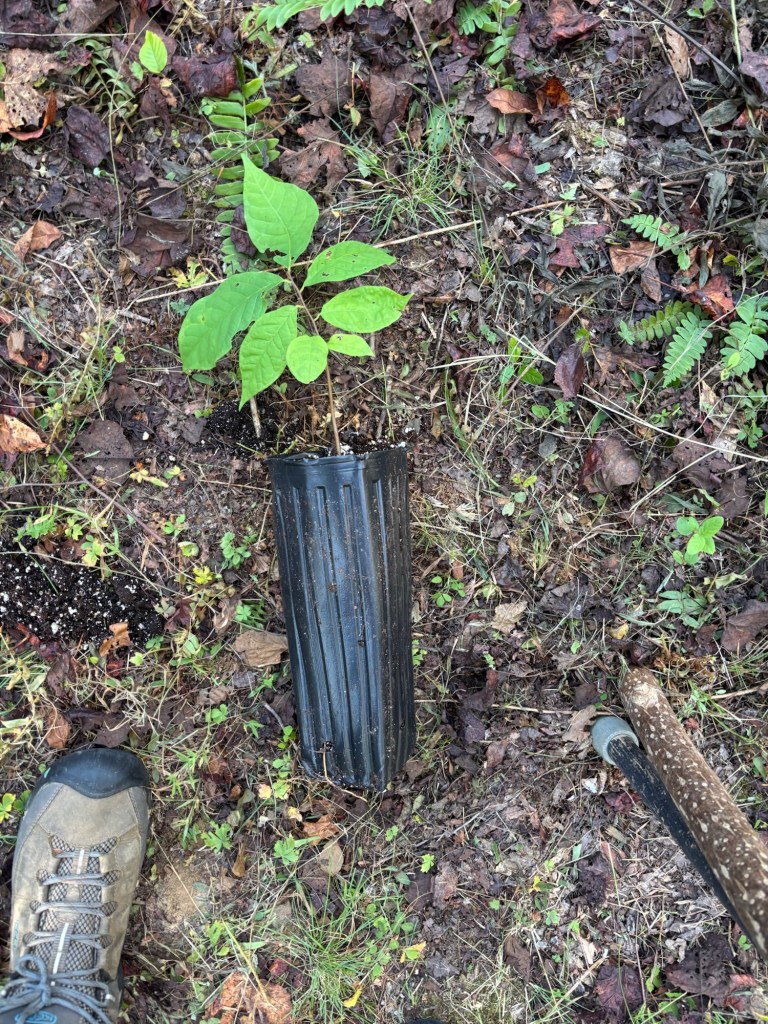
So far, we have planted 42 pawpaw trees. Yesterday we planted two more seedlings from Rockfish River natives in the main orchard and seven from select Edible Landscaping fruit. We are a bit less than halfway done but we are happy to get more in the ground later today while the earth is still soft from the recent rain. We checked on all of the previously planted seedlings —and a couple had been dug up a bit but the roots appeared intact so we replaced the dirt and watered them back in and hope for the best.
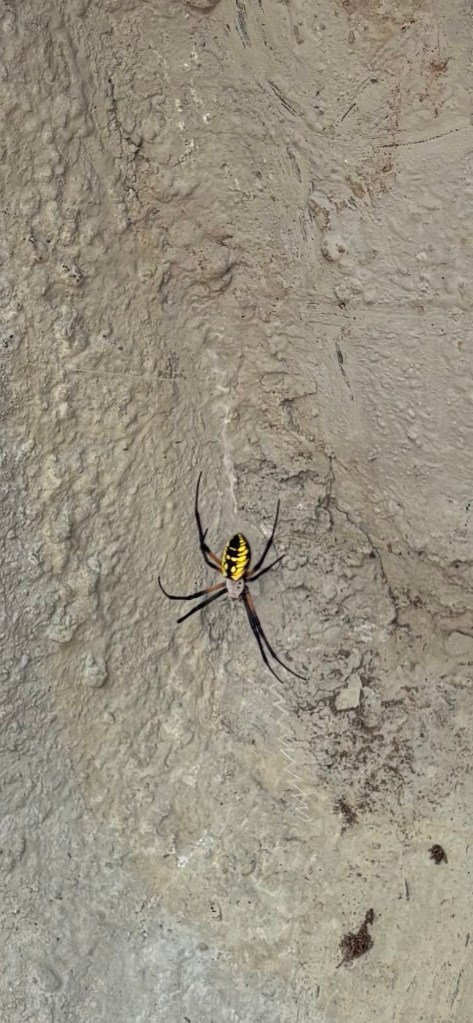
Nine seedlings we planted yesterday in the orchard at the bottom of North Trail. Persimmons getting closer to ripeness at the top near the driveway. Taken from the Pawpaw Peninsula looking towards the main Pawpaw patch of SAFF wild native trees. They are going dormant for the winter. One of our seedlings. They look so pleased to be in the ground finally. Because of the draught, we were going to wait until spring to plant them but are glad we opted to get them in the ground now. They look awesome.Argiope aurantia, Yellow garden spider, found up top next to shed.
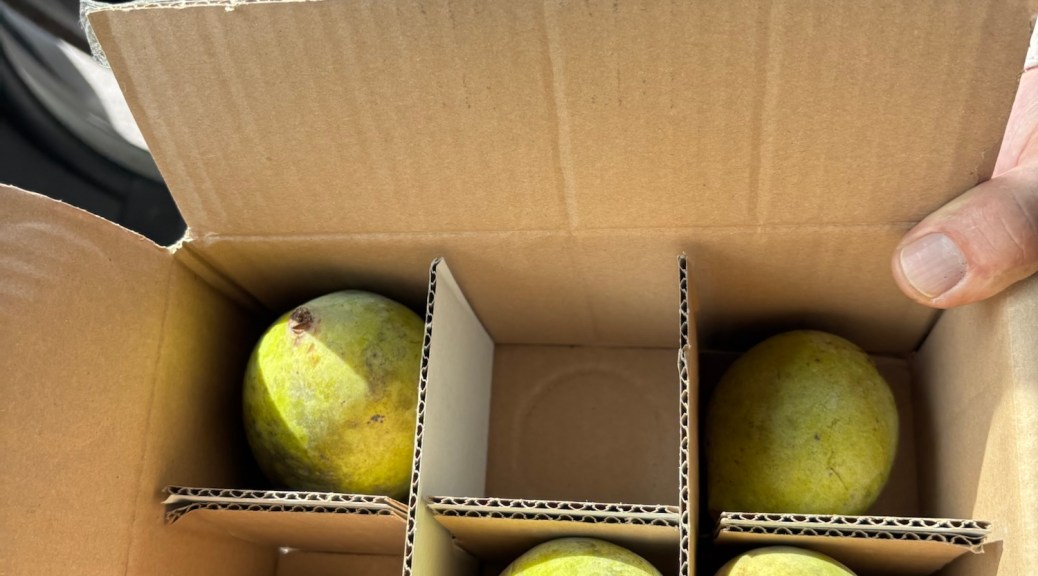
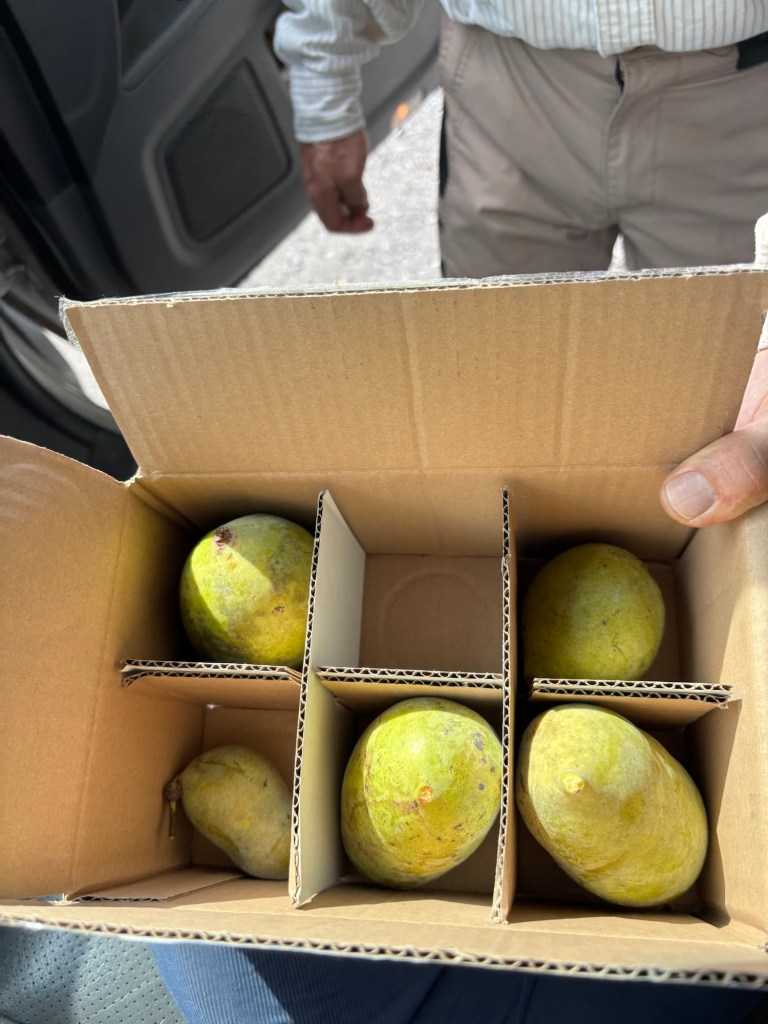
Pawpaws we foraged under Edible Landscaping’s Sunflower and Mango cultivars in Nelson County Virginia on Sunday.
We went out to the farm on Friday and Sunday to get as many pawpaws planted before the rain comes. Thunderstorms and rain are forecasted to get started late tonight and continue until Wednesday afternoon. We planted 17 on Friday: Five in the orchard (a Kentucky State University Chappell and 4 seedlings) and another five alongside the Shenandoah and select seedlings that we planted last year. We put a Mango cultivar and four seedlings we started from foraging. Then we planted 2 on the Pawpaw Peninsula (an Allegheny cultivar and Wild native seedling from a Rockfish River foraged pawpaw). After that we put two by the pawpaw patch at the bottom of Ridge Trail and another two on the left side of the large pawpaw grove. We walked up Ridge Trail and put another wild pawpaw seedling from Rockfish River foraging near the small colony of native pawpaws growing along the south wet weather gully.
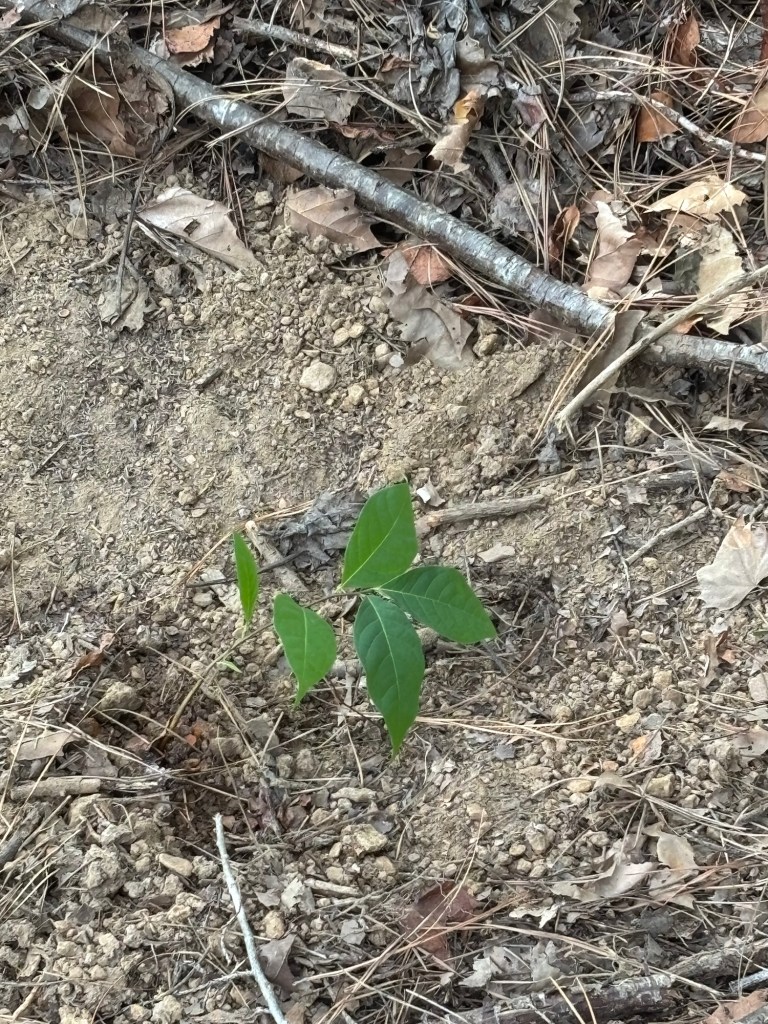
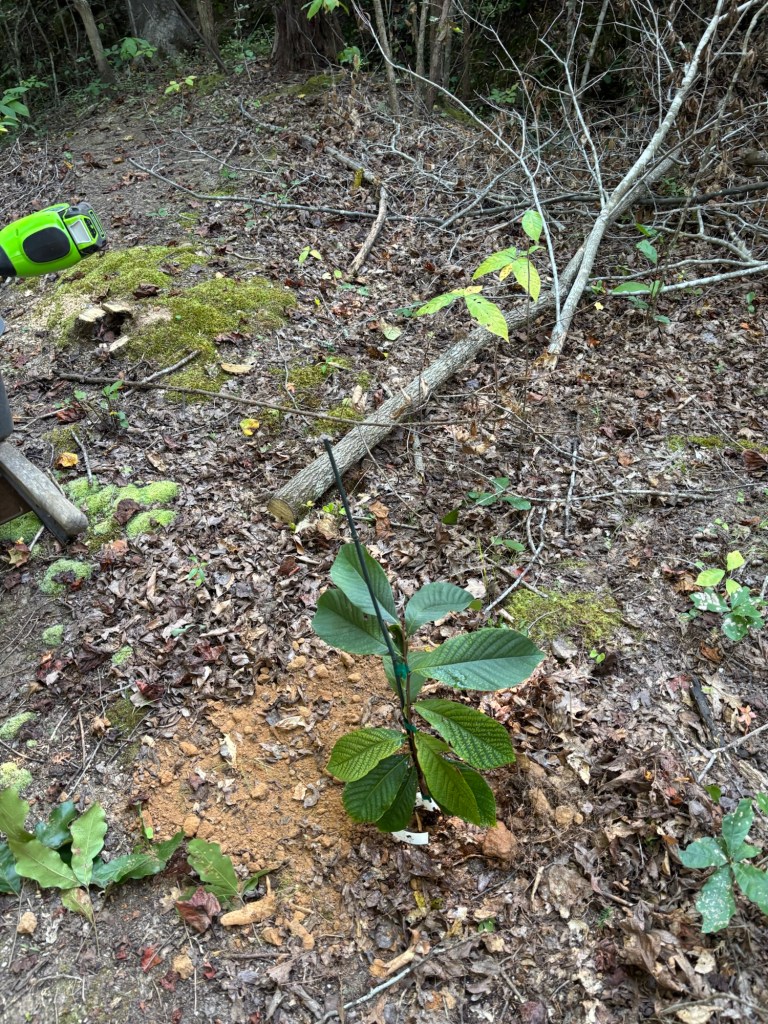
Wild native seedling planted up top.
We were exhausted after this. We had to carry water for the trees after planting in our packs, carry our equipment and the trees themselves all around the farm. It was hot and the ground was hard and dry for digging. Chris was battling each hole. (We are looking into finding a lightweight device to dig our holes, as in an auger.)
Allegheny pawpaw cultivar on the Pawpaw Peninsula with our SAFF native wild pawpaws. The wild ones are yellowing leaves and going dormant for winter since it has been so dry.
Then we went back out on Sunday to water what we’d planted Friday and put a few more in the ground. We planted 5 up top in the main clearing along the driveway and put two along the South Gully on Dan’s Folly. We put one more across next to a lone wild SAFF native pawpaw on Fern Trail. From there, we walked down the Gully and watered our select seedling planted a few days before. We were happy to see they all were still in the ground (last year, the deer ate them and pulled them out of the ground a day after we planted so we almost expected the same.) They were glowing in fact. They all appeared to be very happy in their new locations. We watered them some more.
We have another 80 or so to plant and hope to get out to the farm again soon to get a few more in the ground.
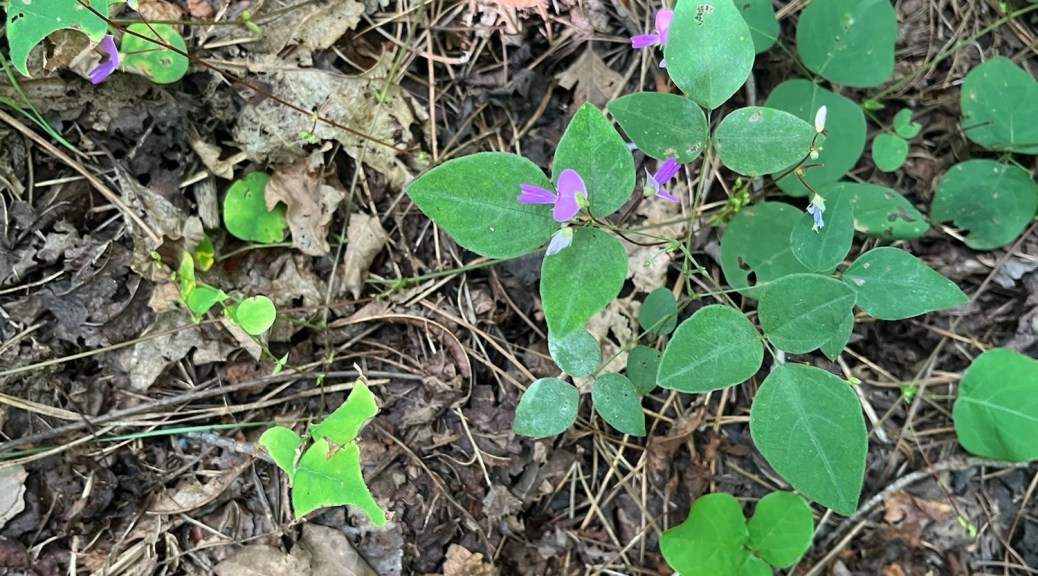
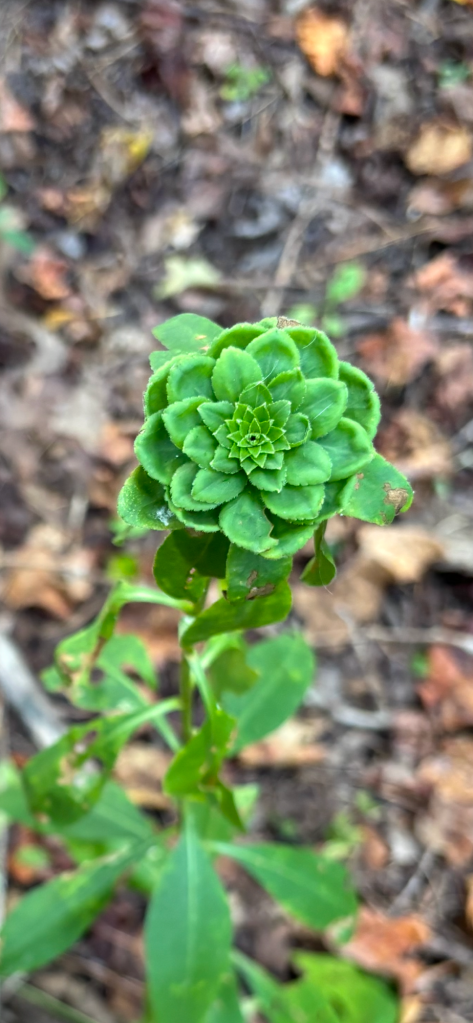
We found this lone flower along Mary Banning Trail. We aren’t certain but are leaning towards a type of Spurge. We will continue to observe it in order to further identify.
Saint Andrews Forest Farm Blog
Is this your new site? Log in to activate admin features and dismiss this message

 St Andrews Forest Farm