So far we have seen plenty of deer ticks, dog ticks and lone star ticks at the farm this year. The clearing seems free of them right now since we keep it mowed down well. In the forest, the wetter and greener areas where deer and dogs are known to move through have been hotspots. Our tick mitigation measures have kept us from getting any bites but we have found them crawling on our socks, shoes and clothes. It’s definitely tick season unfortunately.
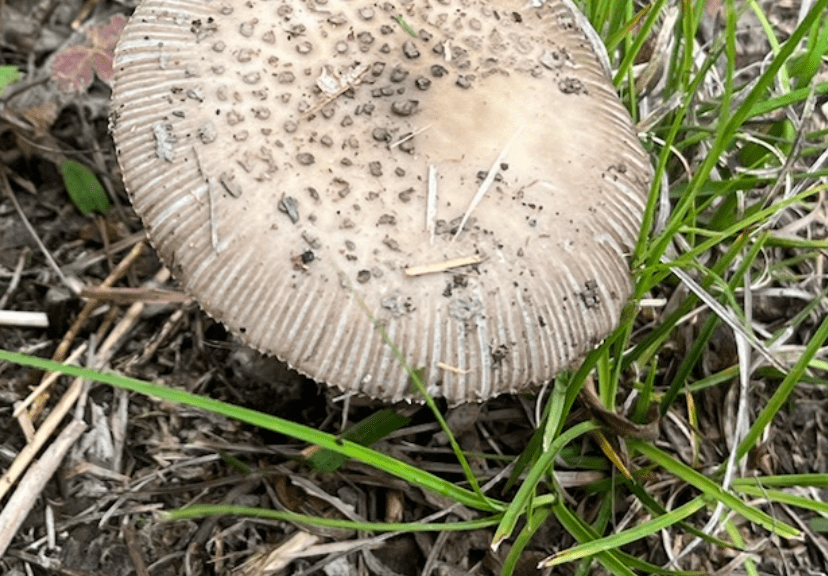
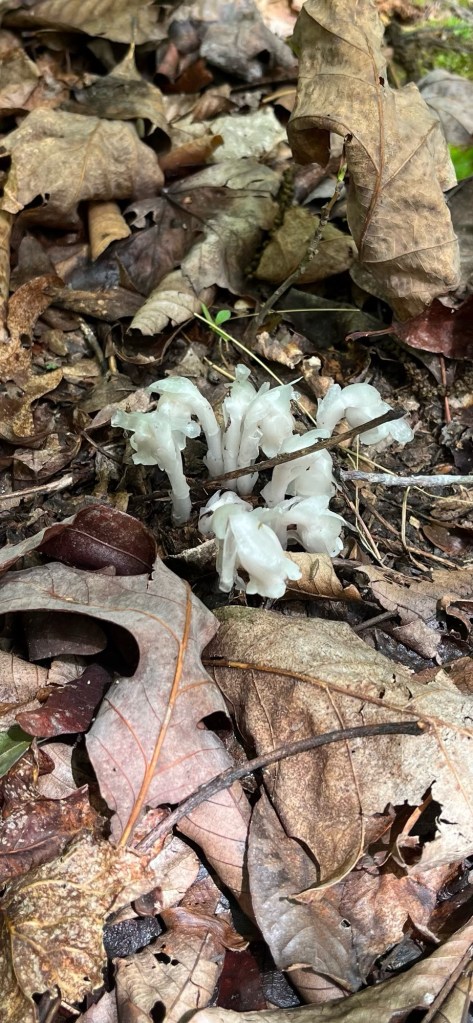
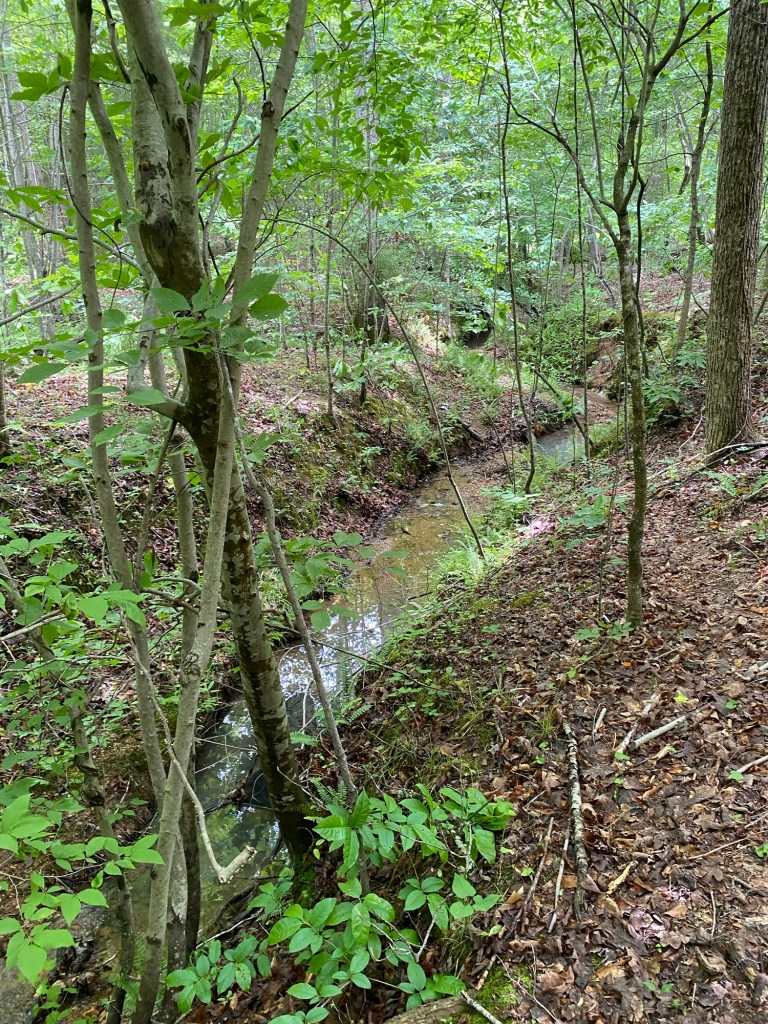
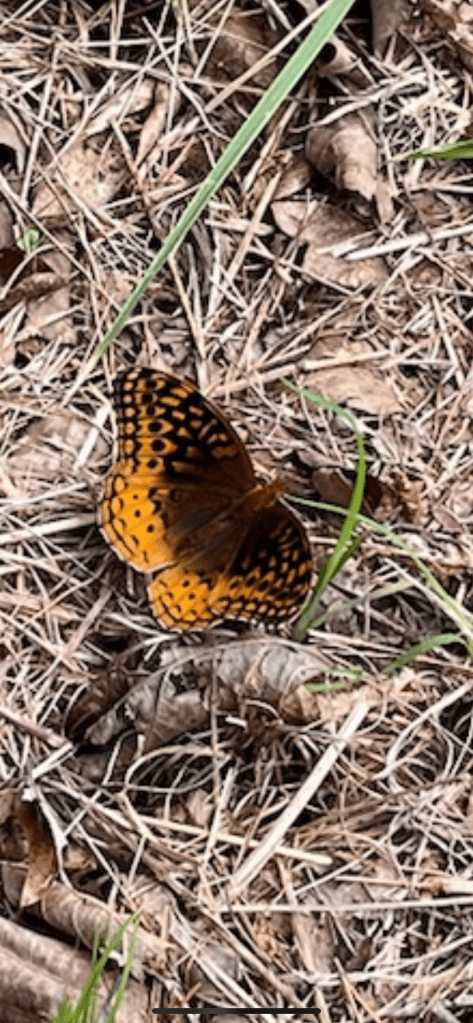
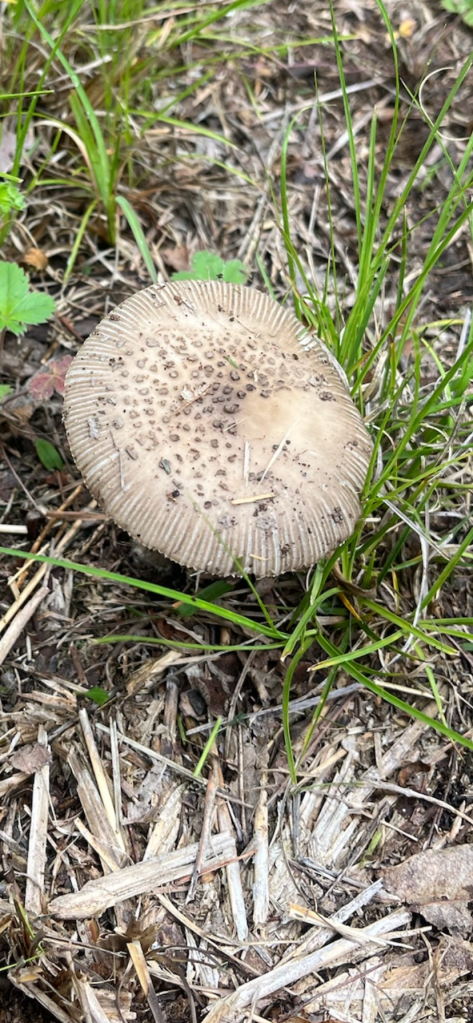
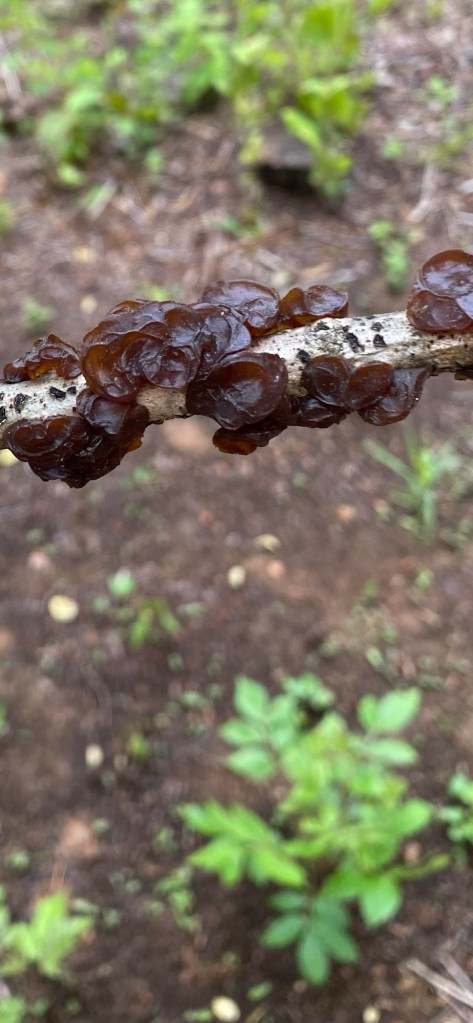
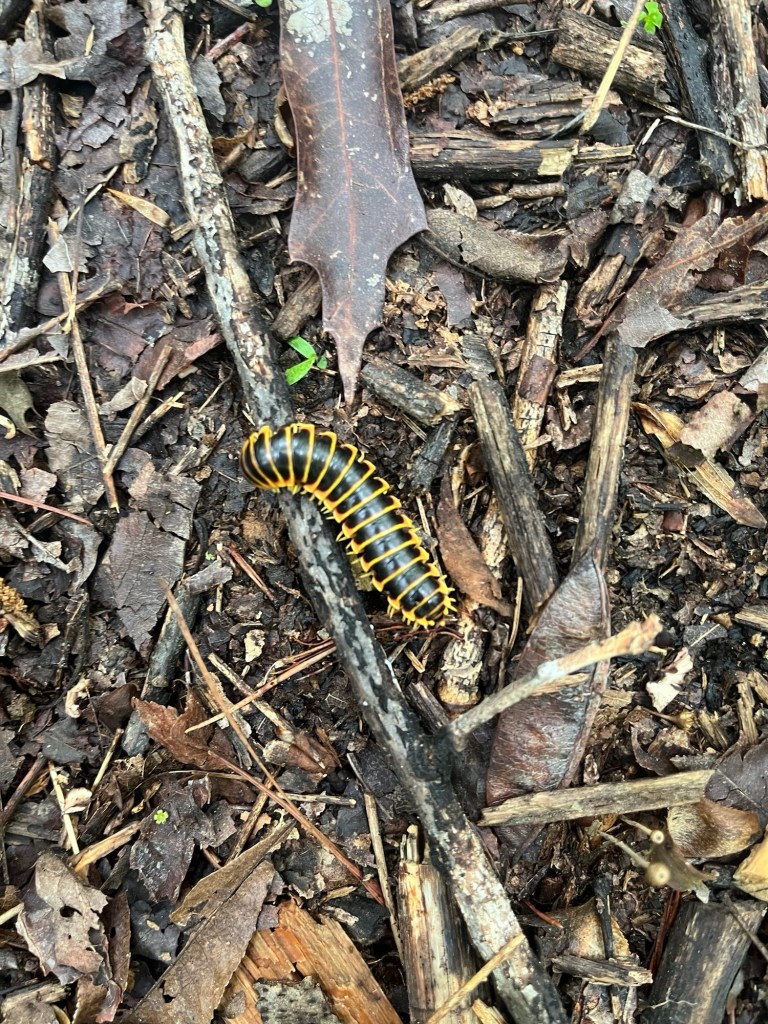
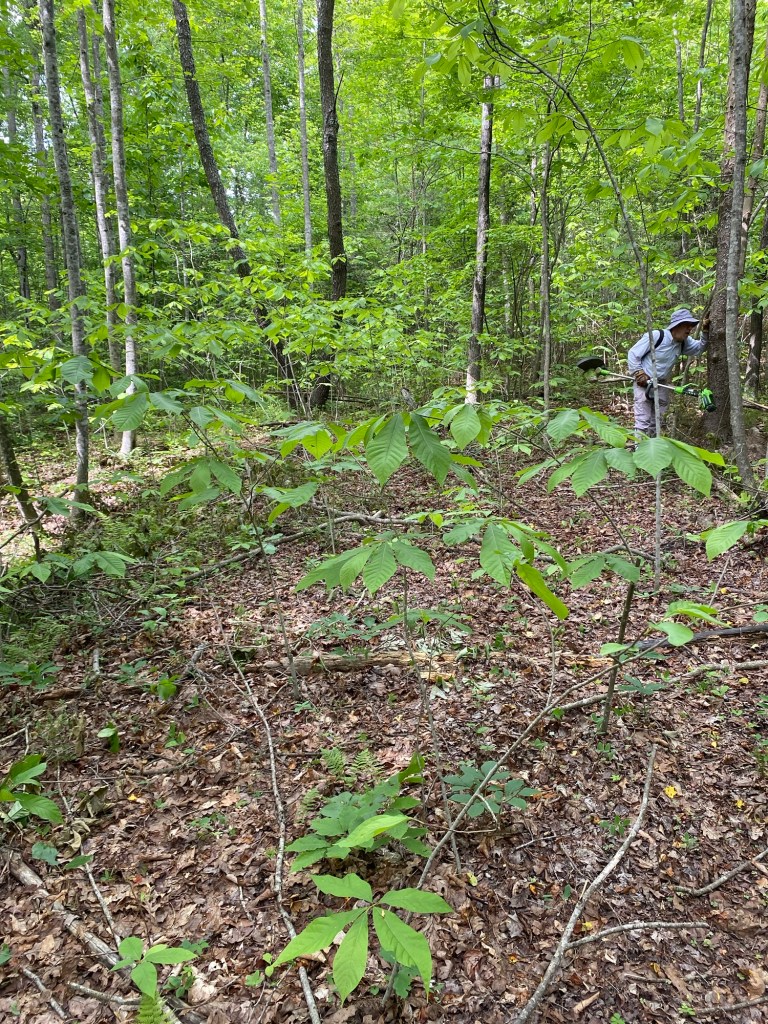
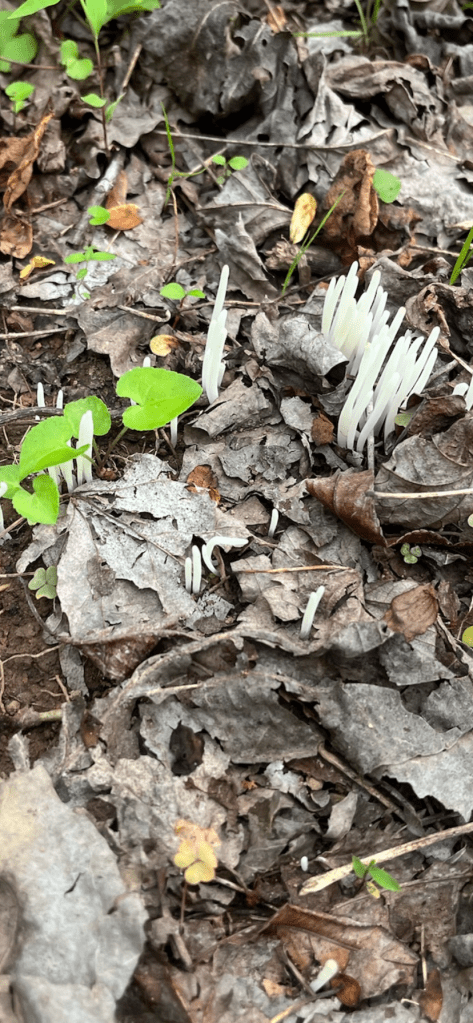
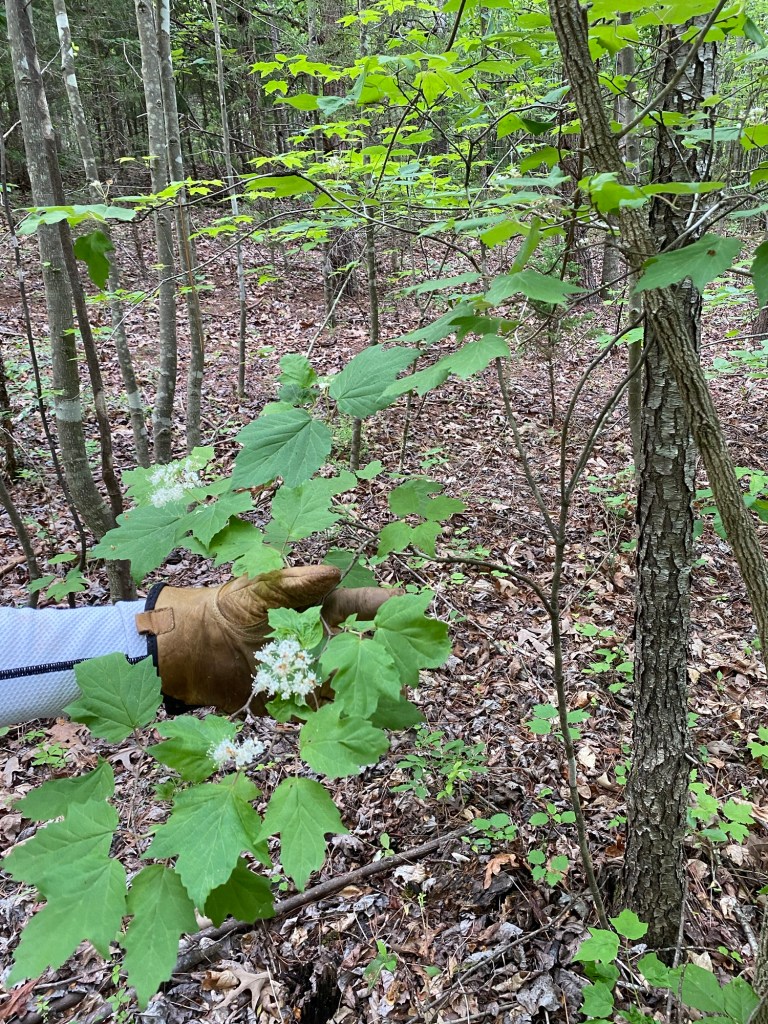
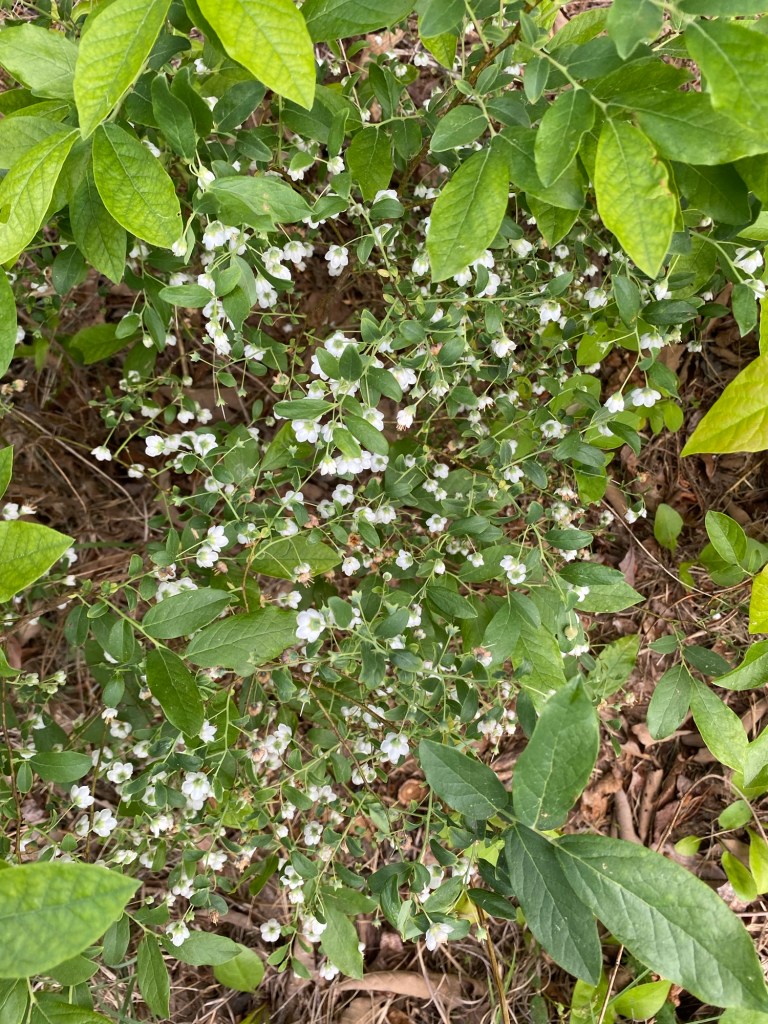
Monotropa uniflora, Indian pipe or ghost pipe, found along southern set back line in the forest. These plants get their energy from their host fungus, Russula or Lactarius, so they can exist in darkest parts of the woods. We were delighted to find it at SAFF.The water was moving gently in the waterway at the bottom. Great spangled fritillary, Argynnis cybele, were fluttering all around the Southern set back line. Fritillaries are a smaller group within the butterfly family Nymphalidae. All butterflies in this family have tiny front legs that lack claws (in most other butterfly families, the front legs have claws). My daughter laughs at the Seussian names (fritillary, pawpaw, peduncle) of plants and insects from the farm.Amanita vaginata, grissette, an edible Amanita that lacks a ring in the stem. A large mushroom with furrows around the edge duplicating the gills underneath.American Amber jelly fungus, Exidia crenata, is edible but we’ve not tasted it yet. Used in pho or noodle dishes. Black and gold flat millipede, Apheloria virginiensis, found all along the south side. It is reported to secrete cyanide compounds as a defense. It is recommended that one wash hands after handling this organism as the toxic compounds it secretes are poisonous and can cause extreme irritation if rubbed in the eyes. (Source: Wikipedia)Chris looking for our boundary marker in pawpaw orchard. Fairy fingers, Clavaria fragilis, It produces tubular, unbranched, white basidiocarps (fruit bodies) that typically grow in clusters. Maple leaf viburnum Pawpaws Flowering lowbush blueberry
We were going to mow but left our keys to the tractor at the house in Staunton so instead we had a lovely walk around. The ground and forest litter was wet from the storms that have passed through. With the heat, it felt very muggy.
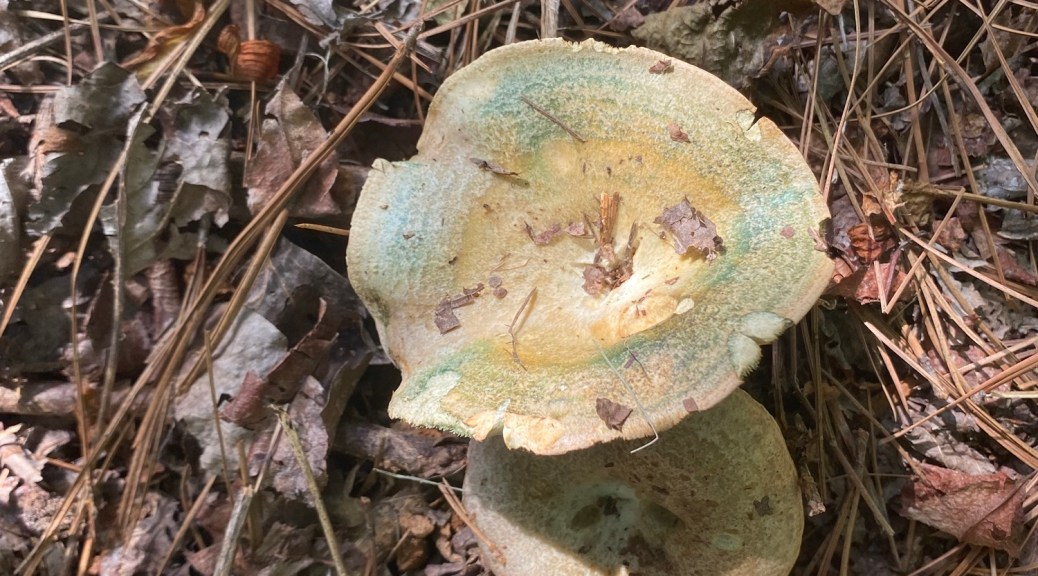
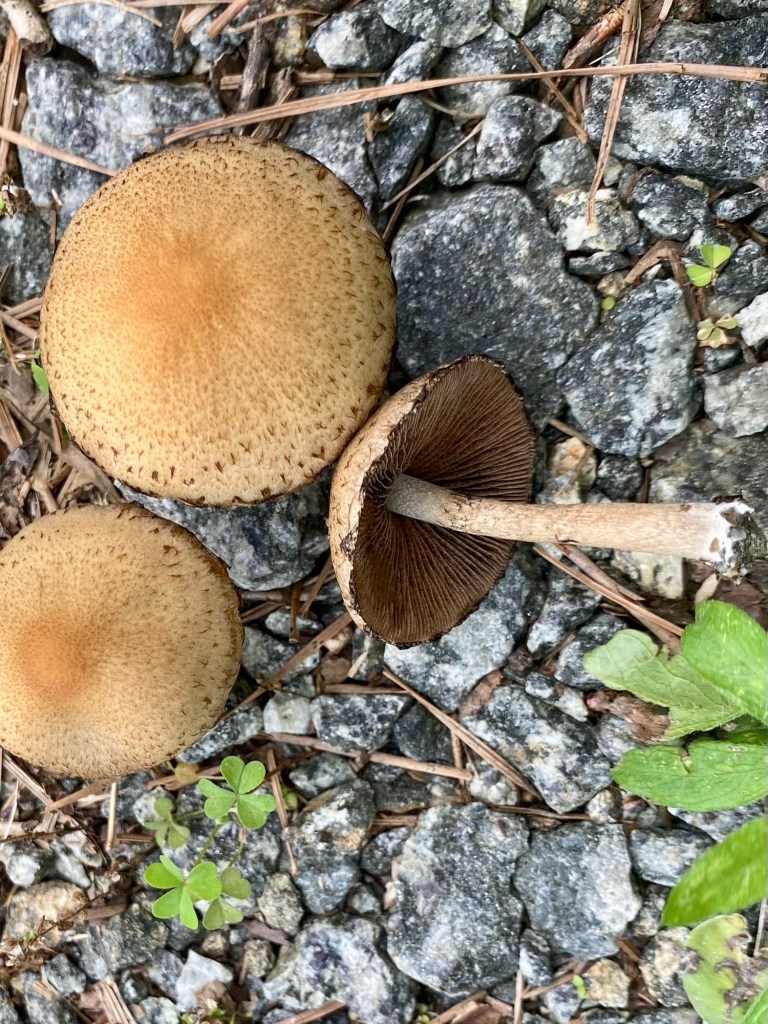
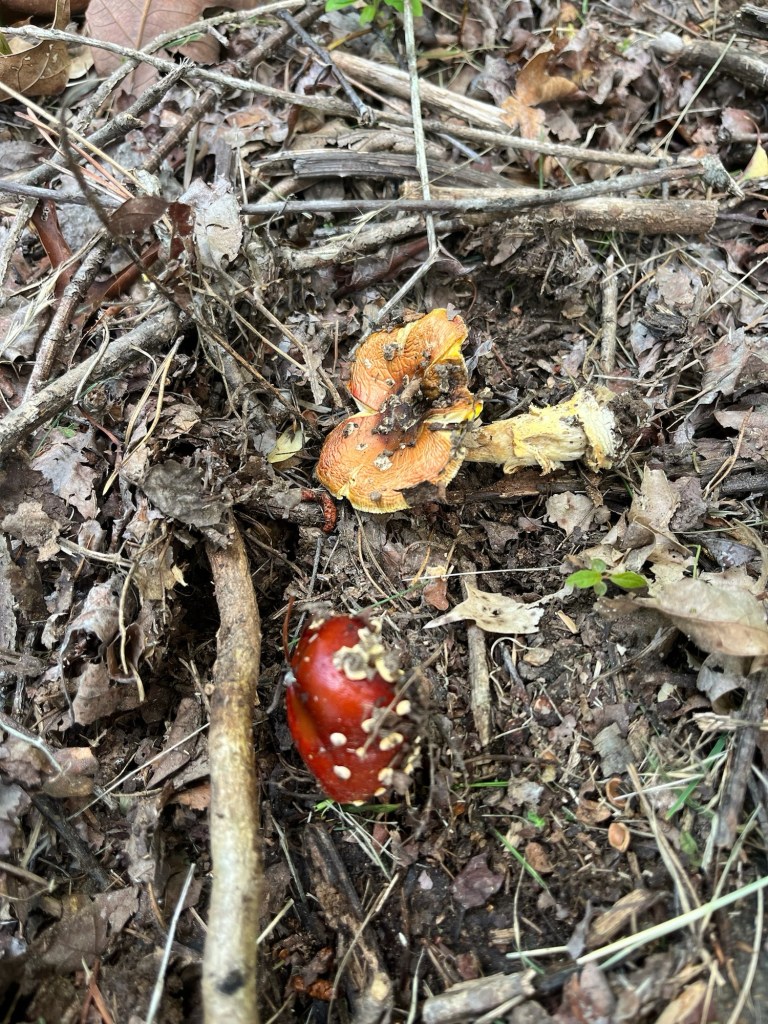
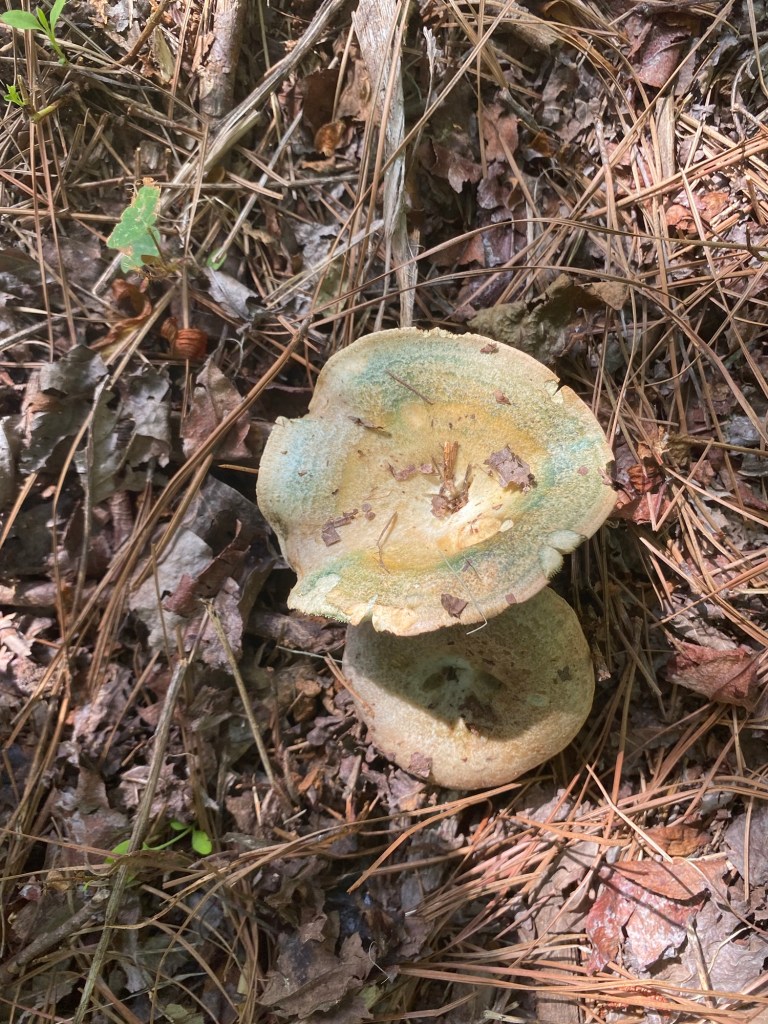
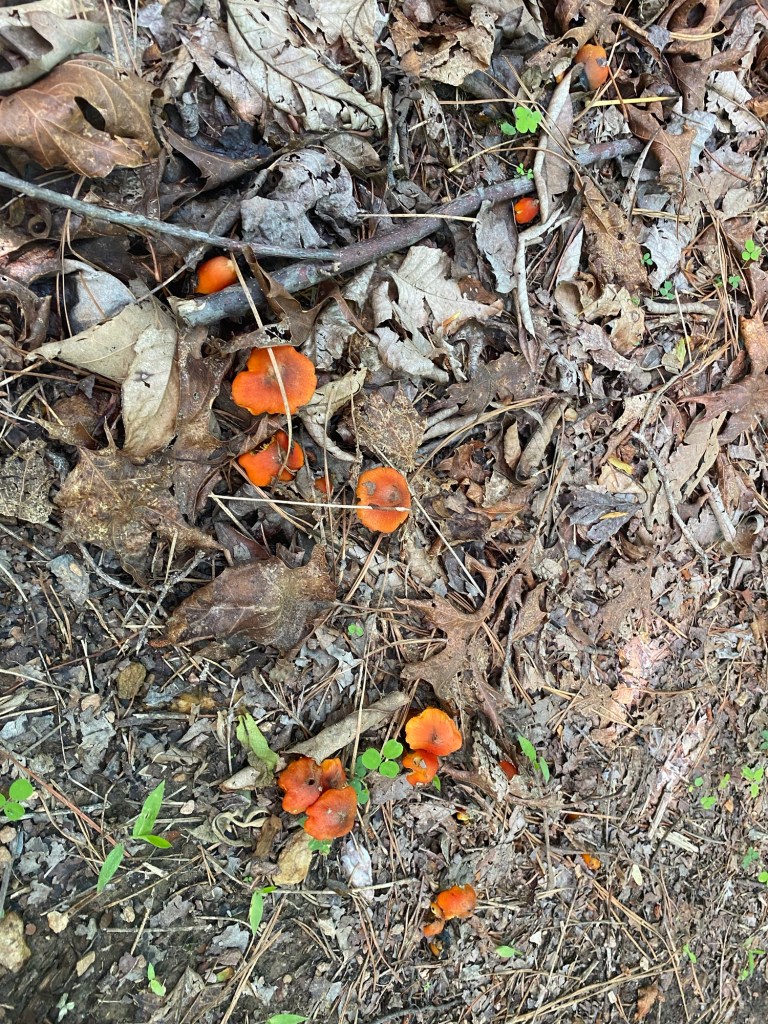
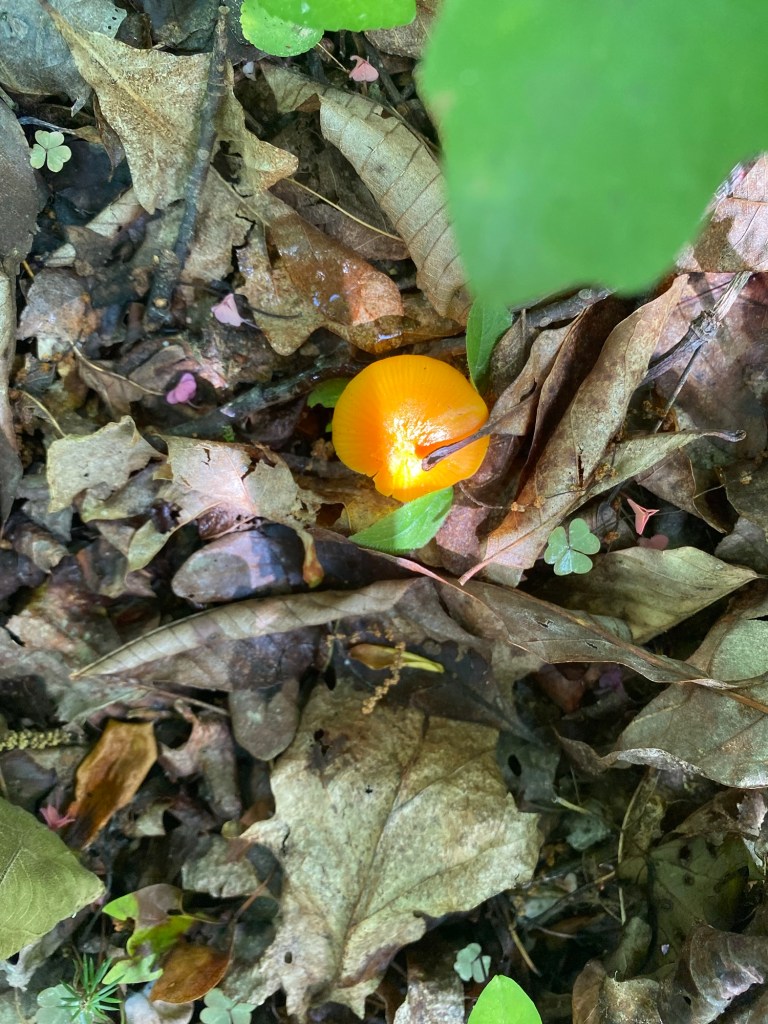
Weeping widow, Lacrymaria lacrymabunda, they are not poisonous but they are bitter. They were a lovely find on the driveway up top. Fly agaric, Amanita muscaria, found along the edges of the clearing up top. They arose from a volva, an egg at the base of the stem. We saw them last year and were waiting for them to come back. Similar to the Lactarius indigo, this is Calendine milk cap. Found at the top of North trail. It had a blue yellow sheen on the cap with yellow gills. The gills did not lactate when cut. We have so many Russulas. It’s delightful.Lespedeza procumbens, trailing lespedeza, a native perennial which is a legume, so nitrogen fixing. Found throughout the farm. Hygrocybe conica along North Trail. These were brilliantly colored on the forest floor. Hygrocybe flavescens, Golden waxy cap, at the bottom of North Trail as it reaches the waterway, we found this beauty. Entoloma strictius, were tall, straight and golden, arising directly out of the forest litter along North trail. They appear to have a pink spore print, and the ridge-like gills turn pink as they age. The Pawpaw Orchard has become a favorite location for us as we clear out small competitors and limb up larger trees. We’ve been learning about how to successfully transplant papaws and we’re working on a long term strategy to produce fruit and trees in abundance.
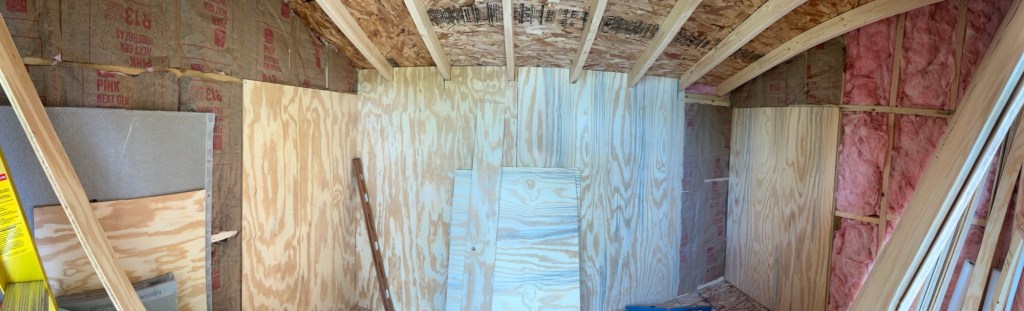
We have been working on the shed which will house a compost toilet and shower for us to camp luxuriously. We plan to camp in the next month and hope to report back about the wonderful night time adventures at Saint Andrews Forest Farm.
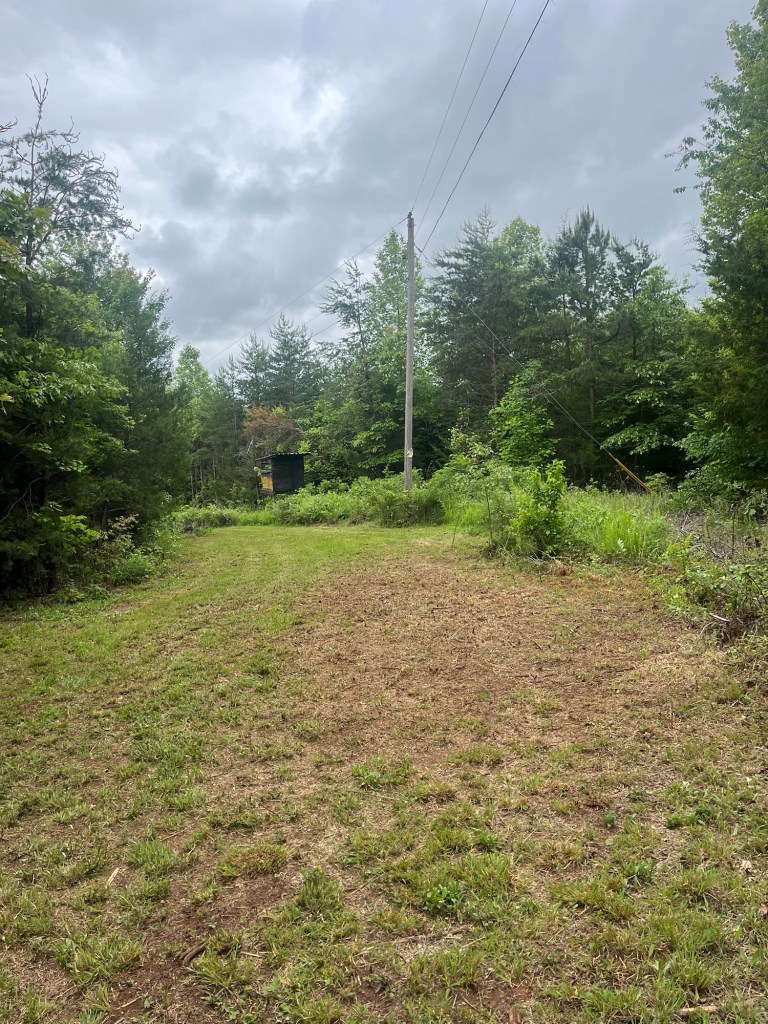
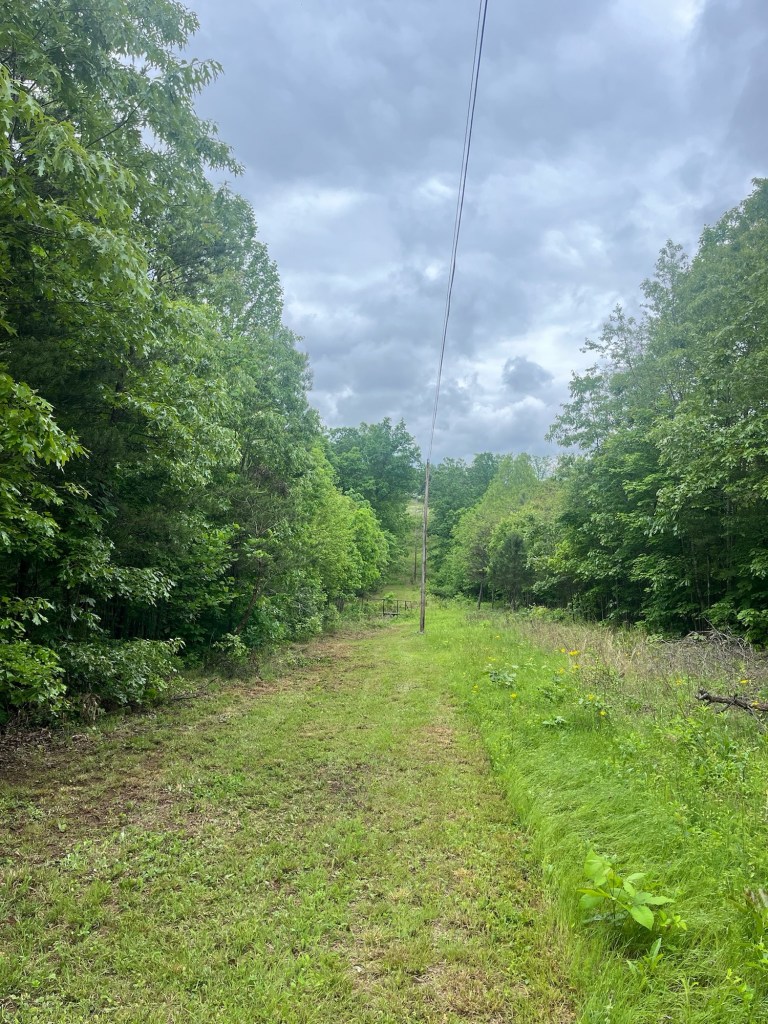
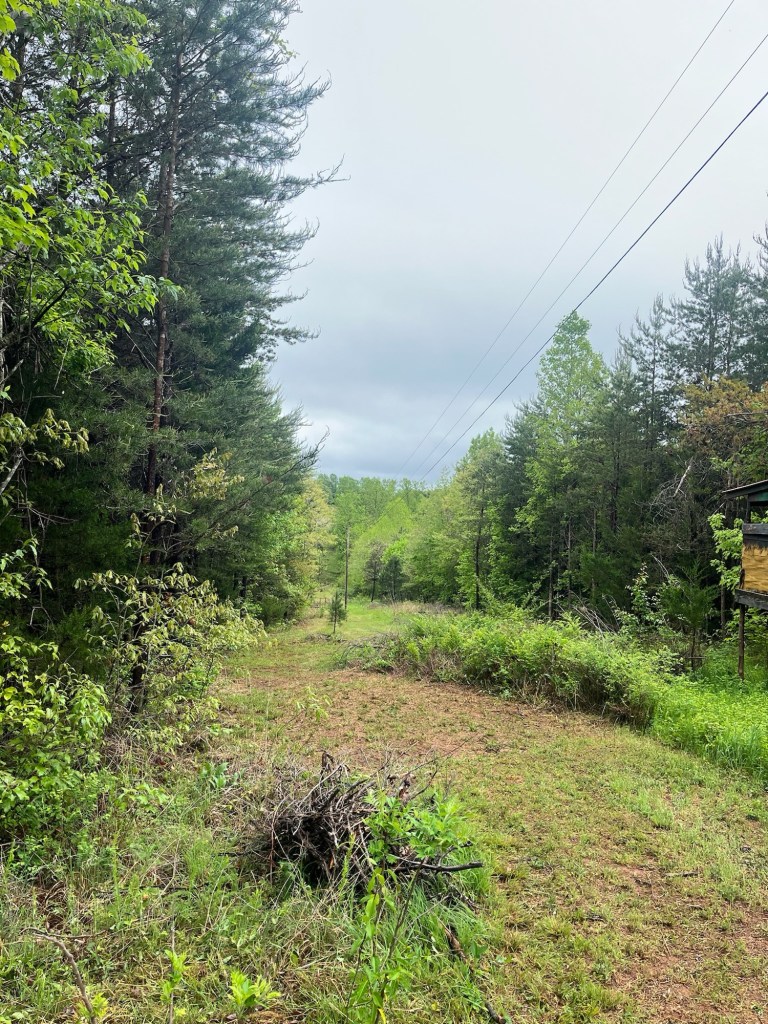
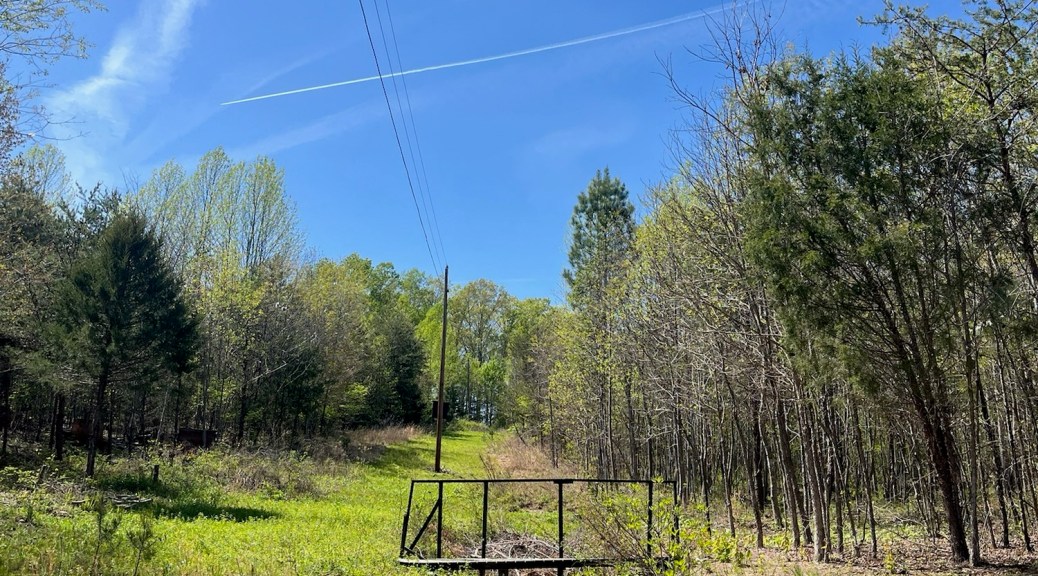
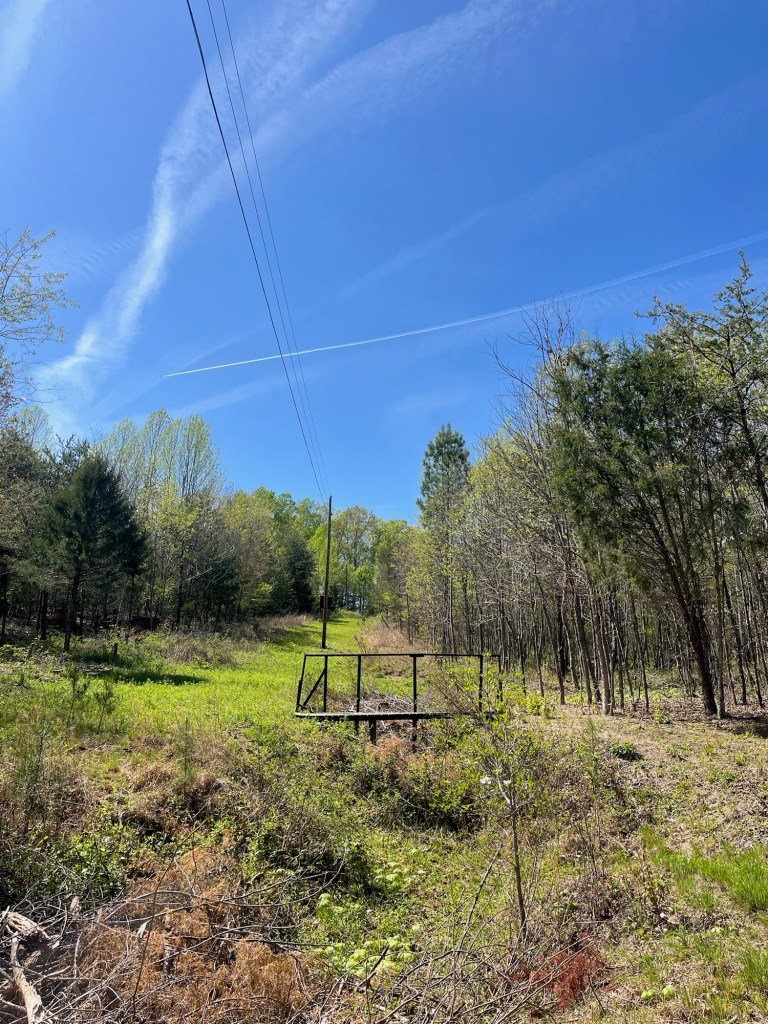
The compost toilet has indoor cladding now. Freshly cut! We’ve been diligently maintaining our setback line along the Southern boundary of SAFF, grateful for the power of the Husqvarna.Straight down our south property line. (The electric wire.)
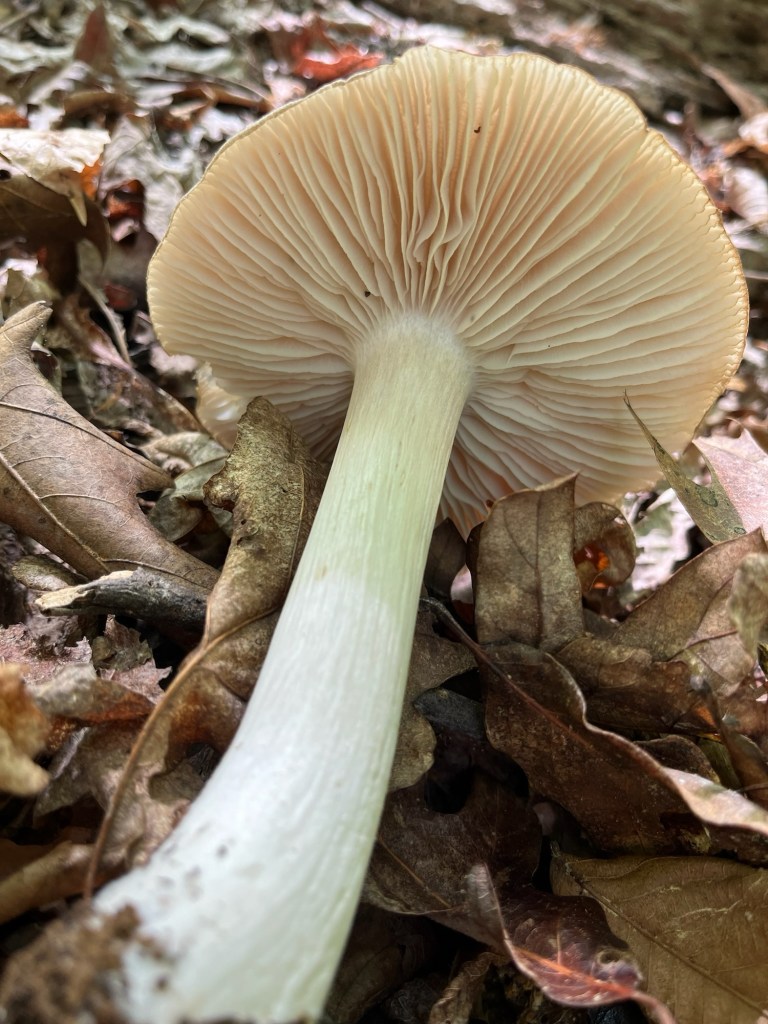
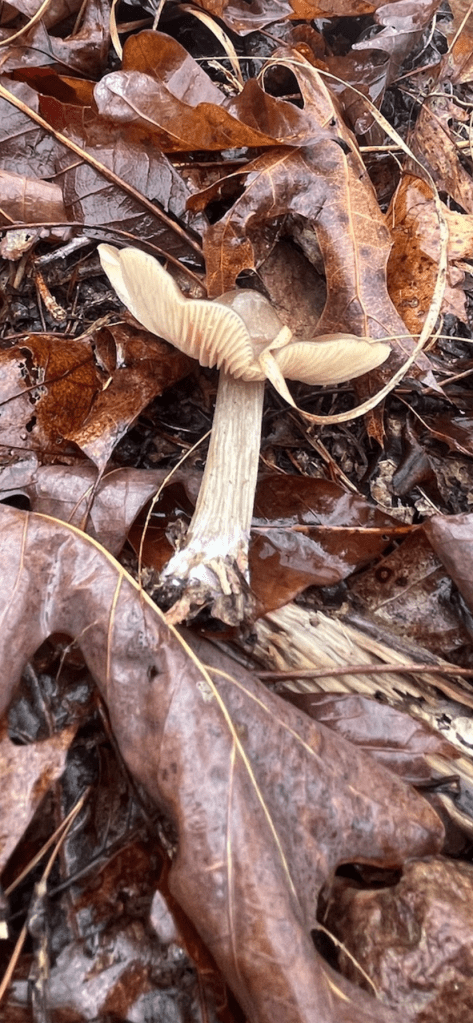
Eastern American Platterful Mushroom, Megacollybia rodmanii. One of the first mushrooms to appear after morel season. They pop up in May and June. They are decomposers of dead hardwood.
We found 9 or 10 of these Eastern American Platterful Mushrooms on the south side on the slope just above the waterway. They were big and impressive emerging from the forest litter. We’ve been searching for morels for months and hadn’t seen much of any fungi. They were a delightful sight for sore eyes. They are not delicious and some have been sickened by them despite the name “Platterful” so we left them there.
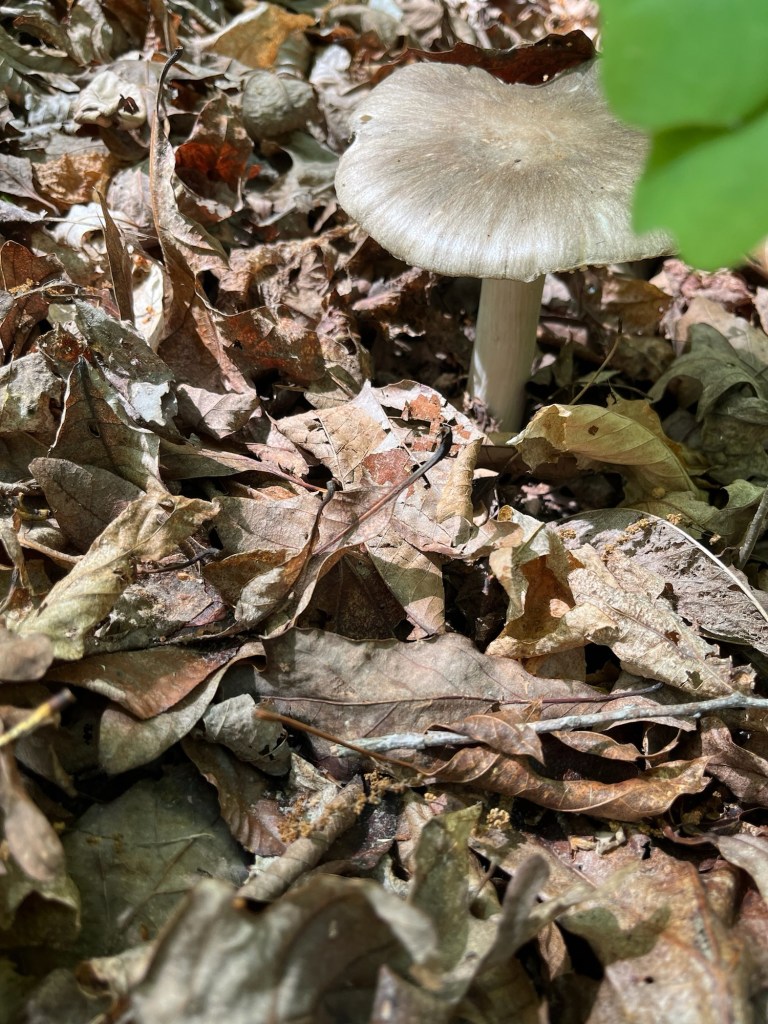
Top of the Megacollybia rodmanii.
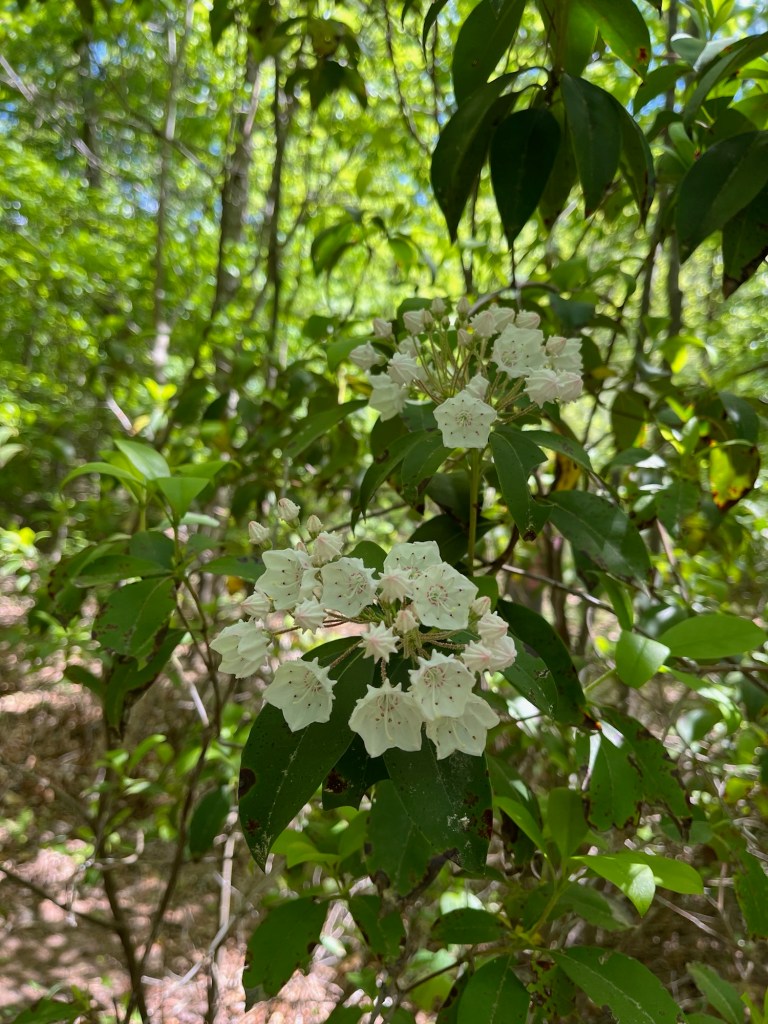
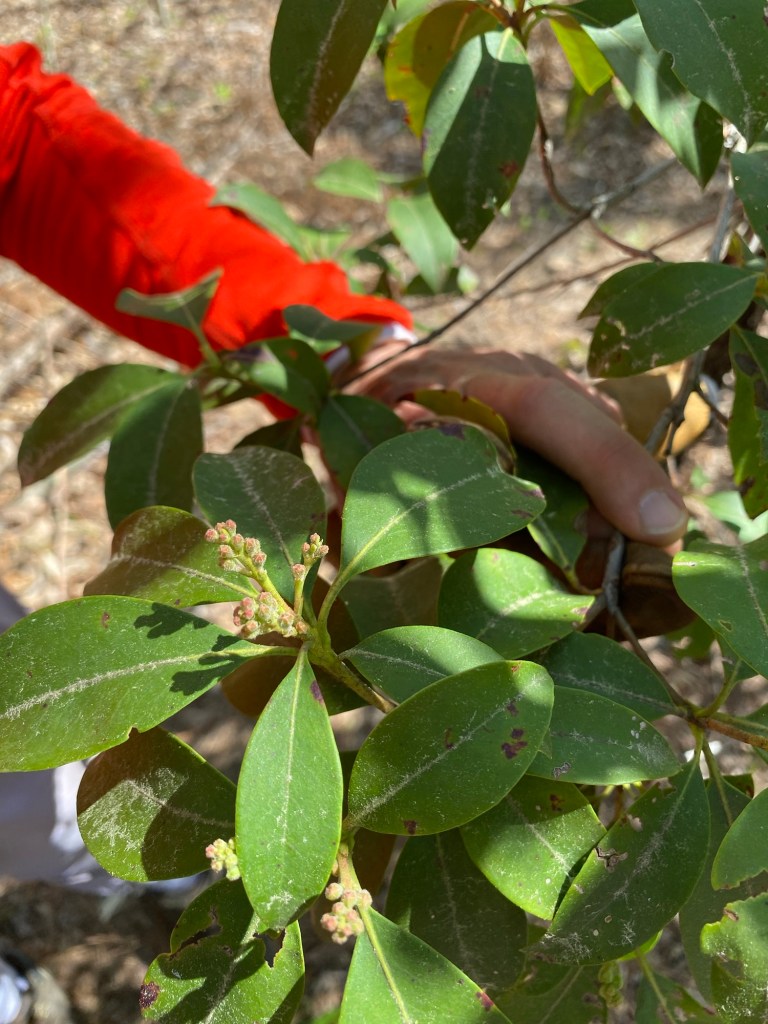
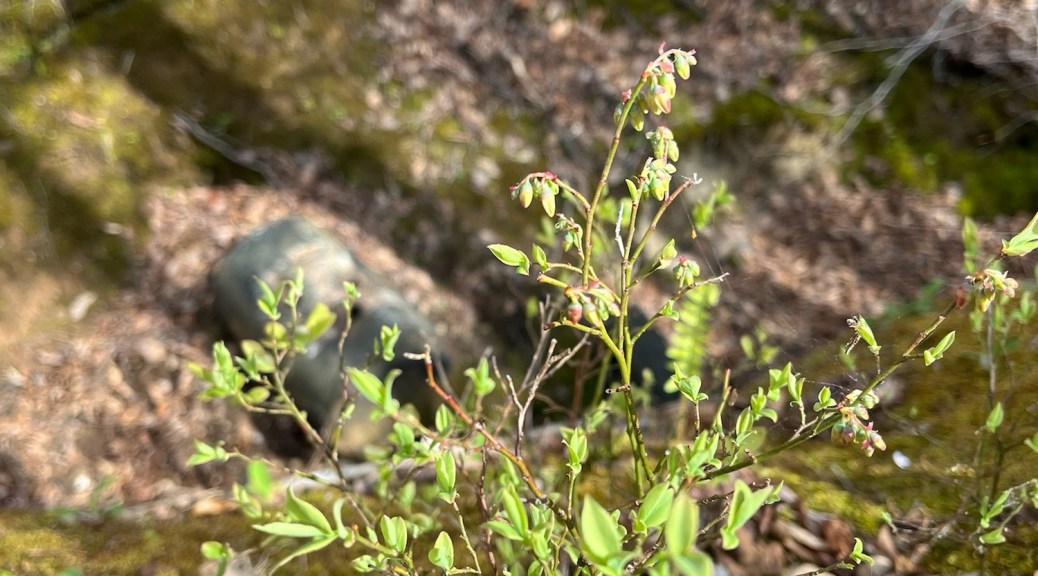
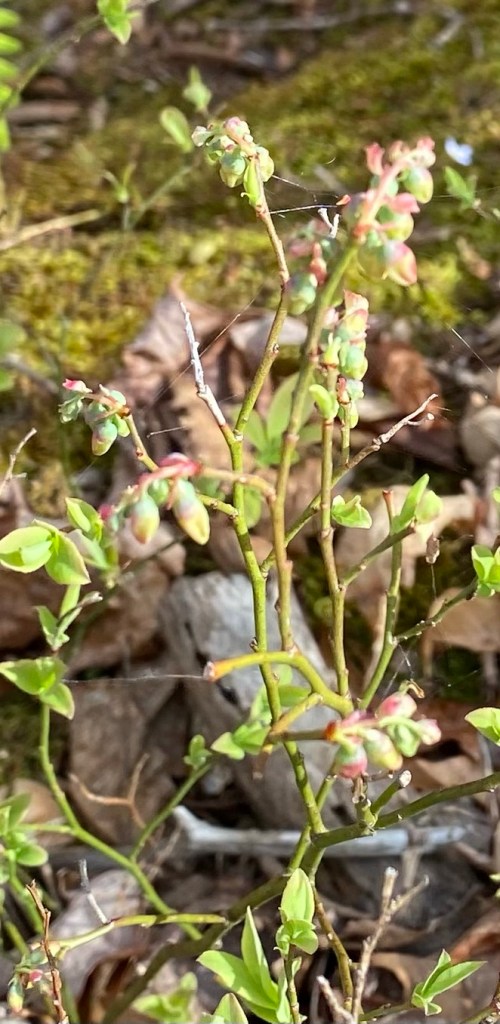
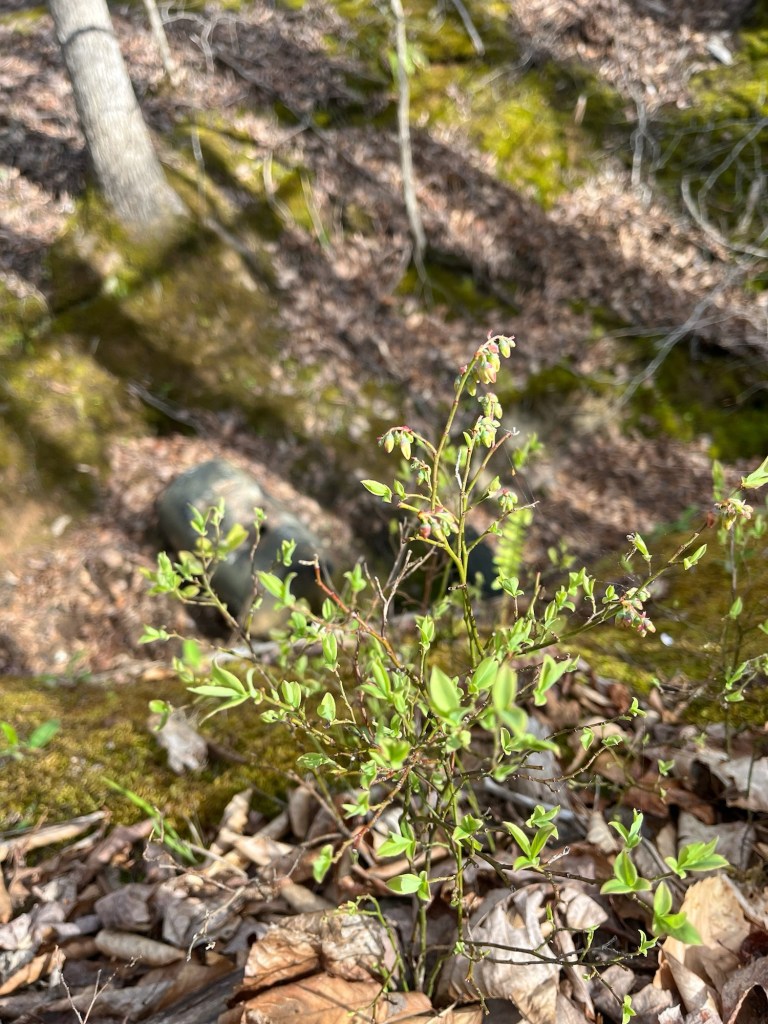
Mountain laurel blooming. A nitrogen fixer found throughout the farm. Early Lowbush blueberry flowering along the southern set back line.
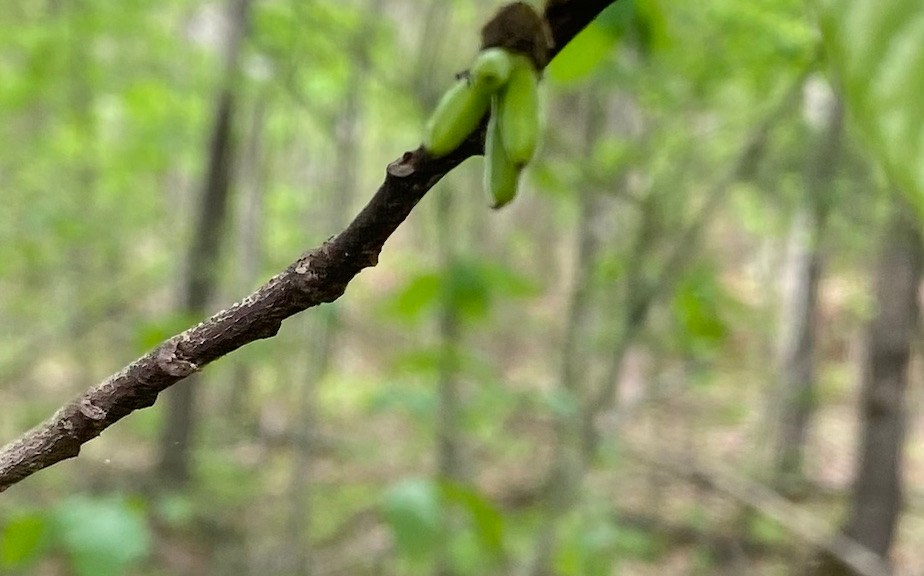
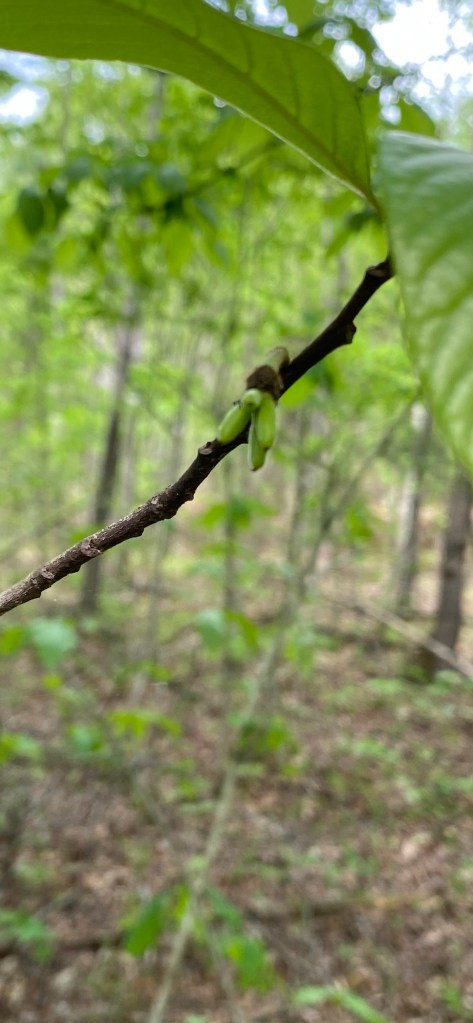
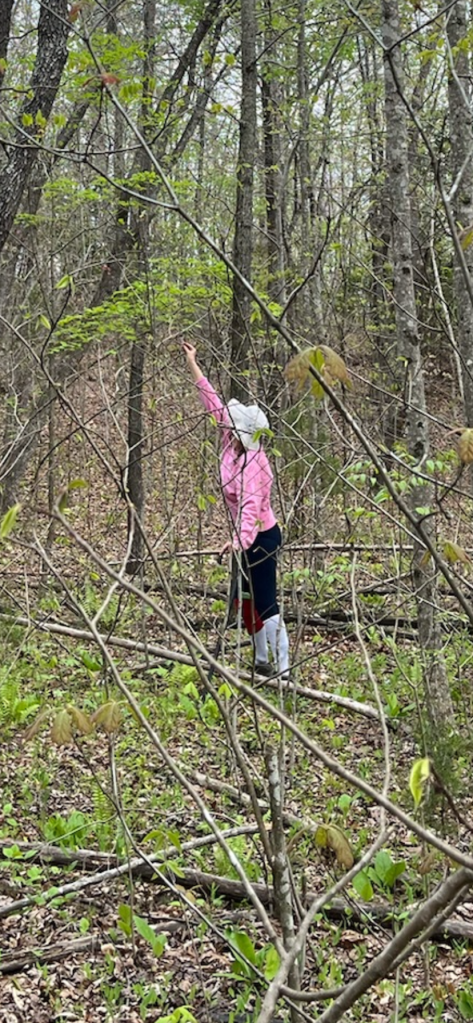
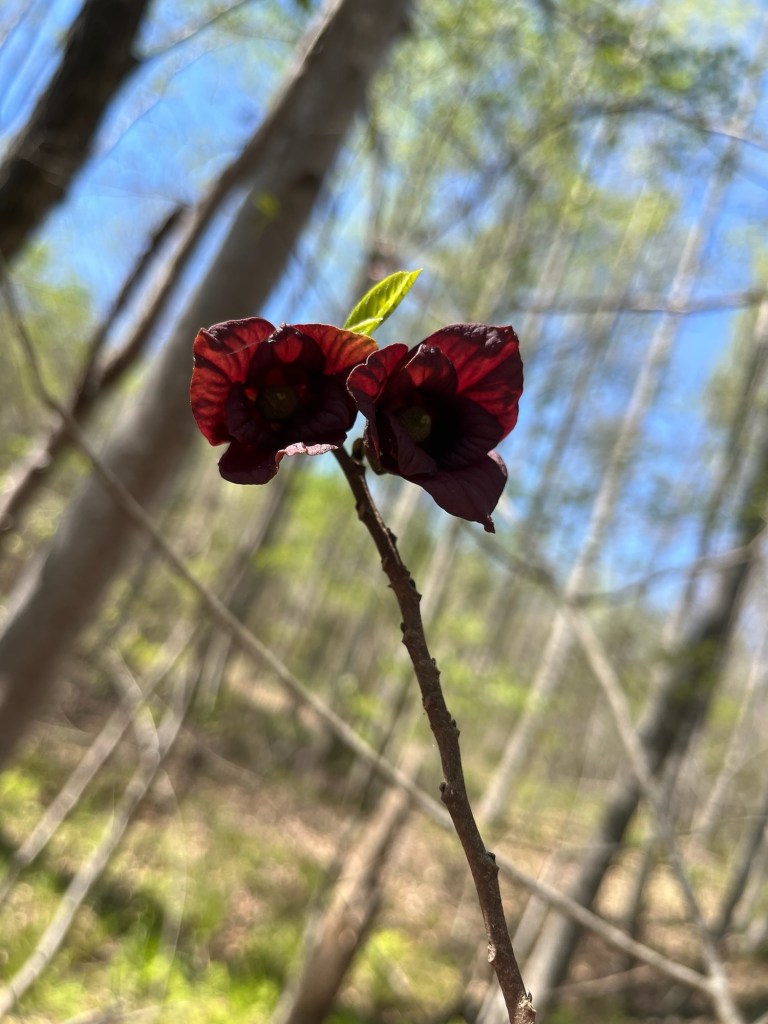
After going out on April 27 (a little over 2 weeks ago) and hand pollinating the pawpaws, we were delighted yesterday to see them beginning to grow the tiniest fruit. About 10 trees have fruit forming so far. These were the trees we found flowering and used Q-tips to pollinate. There are at least 100 pawpaw trees down there. We have plans to bring more sunlight into the pawpaw patch and move some of the pawpaws to spread them out. We are beyond excited for these fruits and can’t wait until fall to harvest them. We hope to grow our population of pawpaws and increase their productivity.
Young pawpaw fruit.
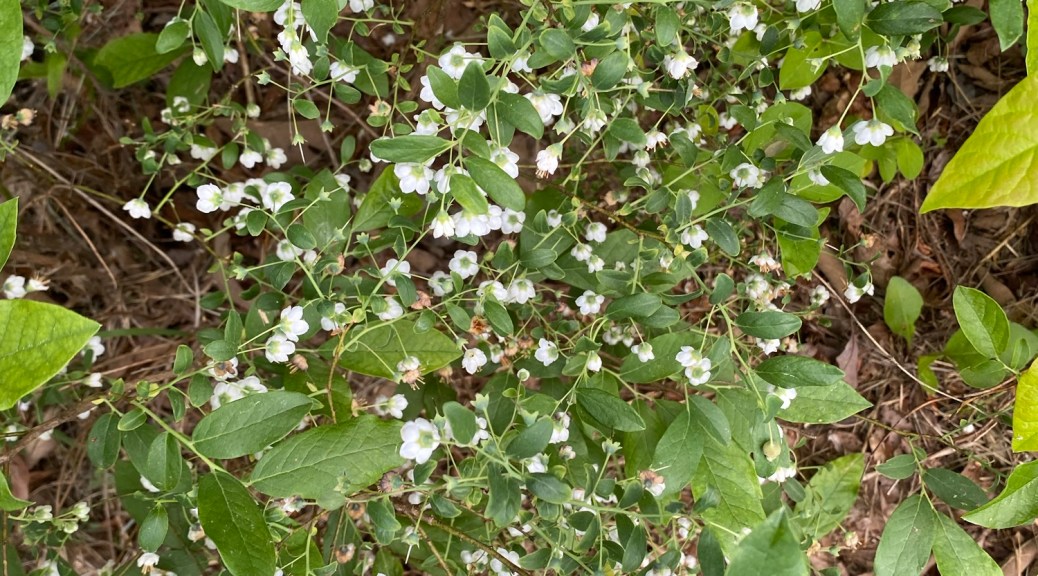
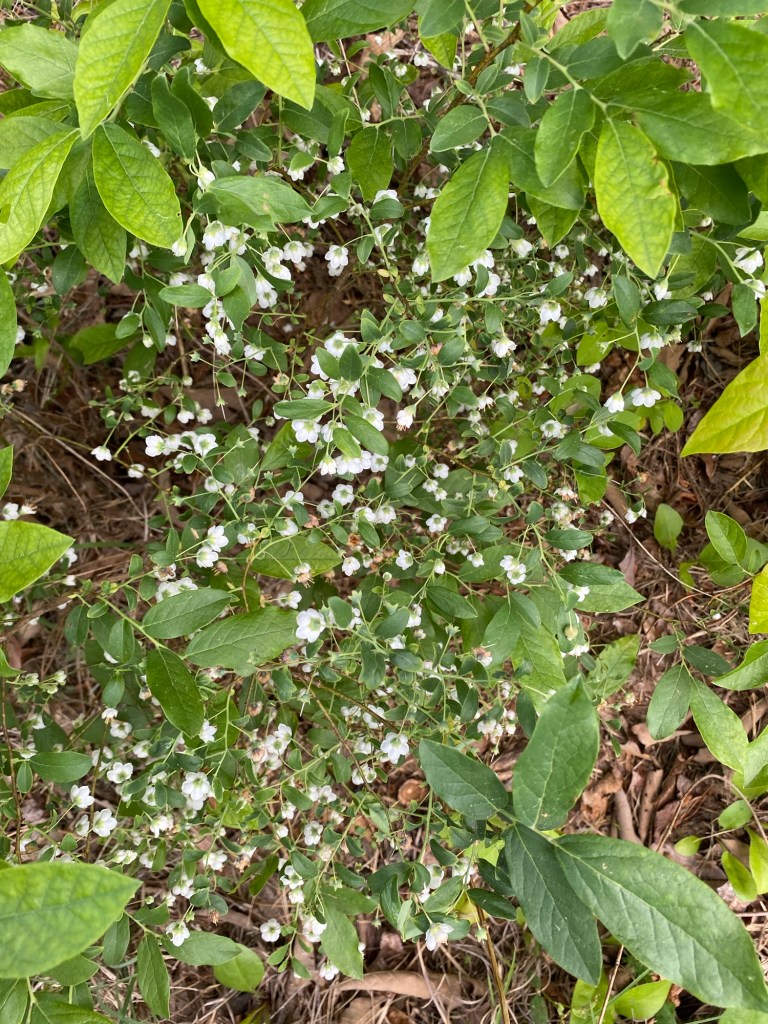
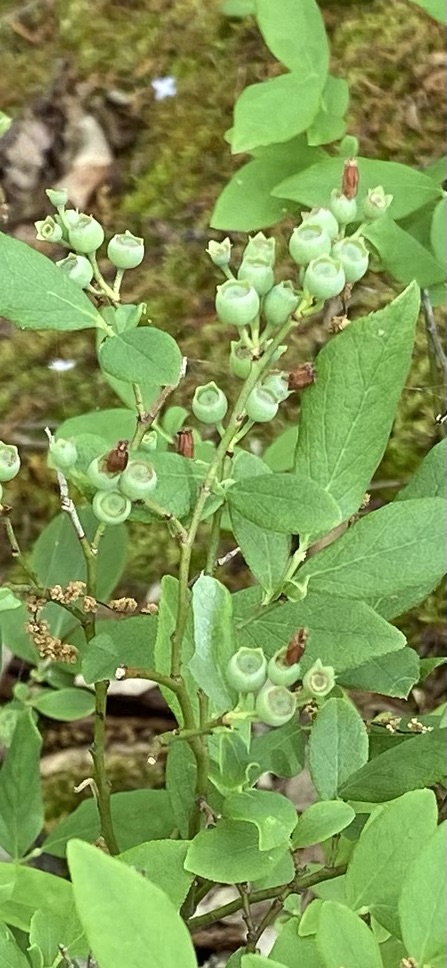
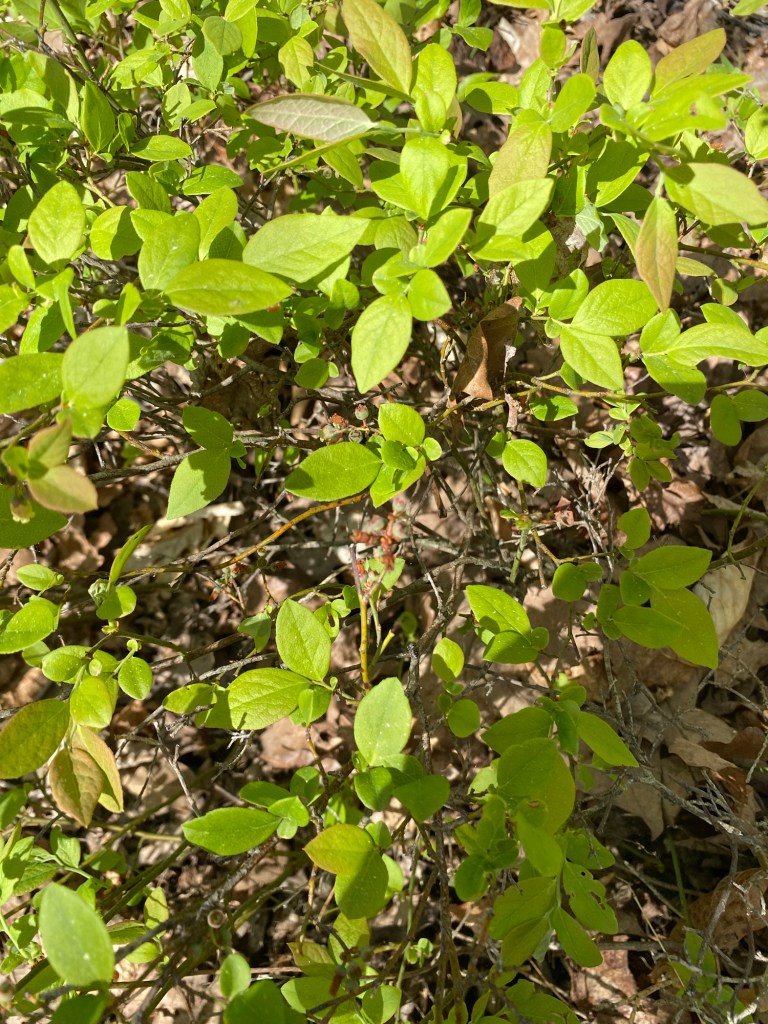
The blueberries continue to develop and we find more and more plants flowering and growing small green blueberries. We hope to taste a few before the animals get to them.
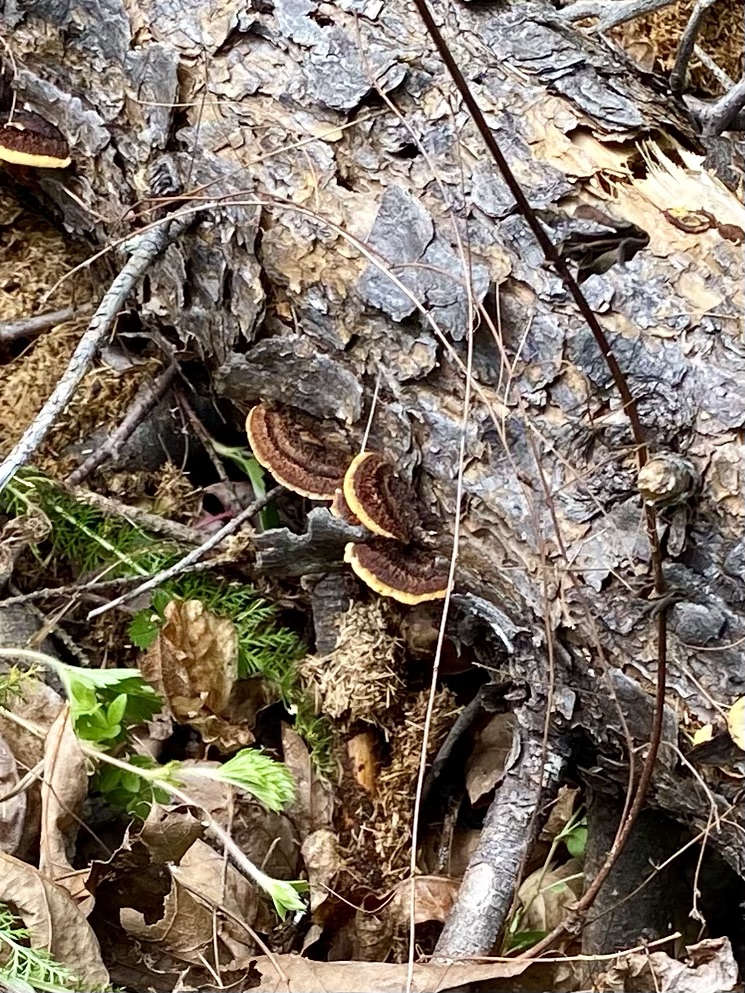
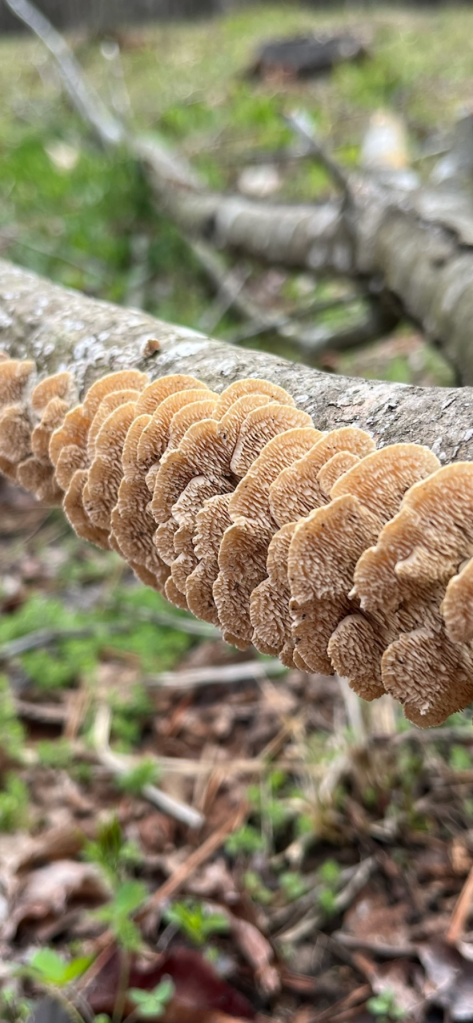
We expected to find many mushrooms at the farm since it’s been raining a lot this past week, but we only found these Gloeophyllum along the sunny southern border.
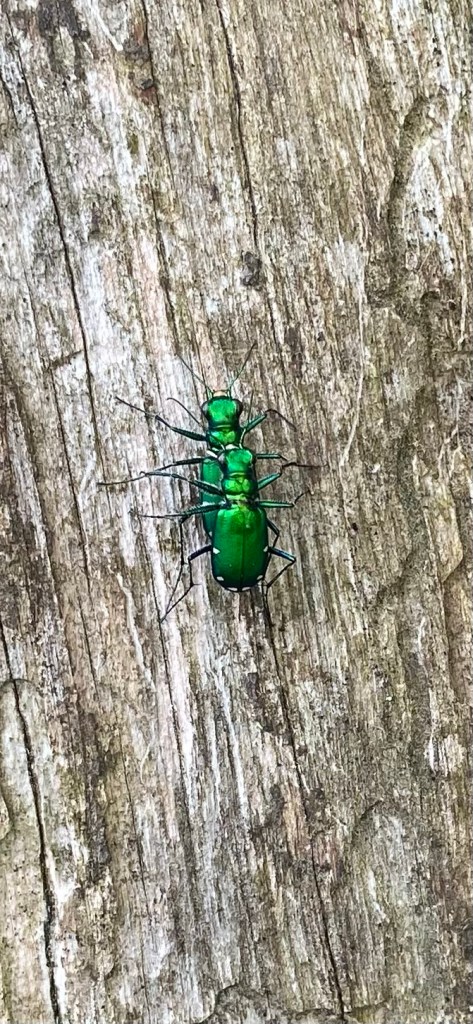
We found this colorful pair of six spotted tiger beetles down by the waterway at the south side. They feed on a wide variety of arthropods and over winter in larval burrows.
Cicindela sexguttata, a common North American beetle.
We continue to pull up and clear out invasive trees as we find them. So far, tree of Heaven, mimosa and paulownia are the invasive species and we find them mainly along the road. We also continue to take down black Cherry trees that are diseased and dying.
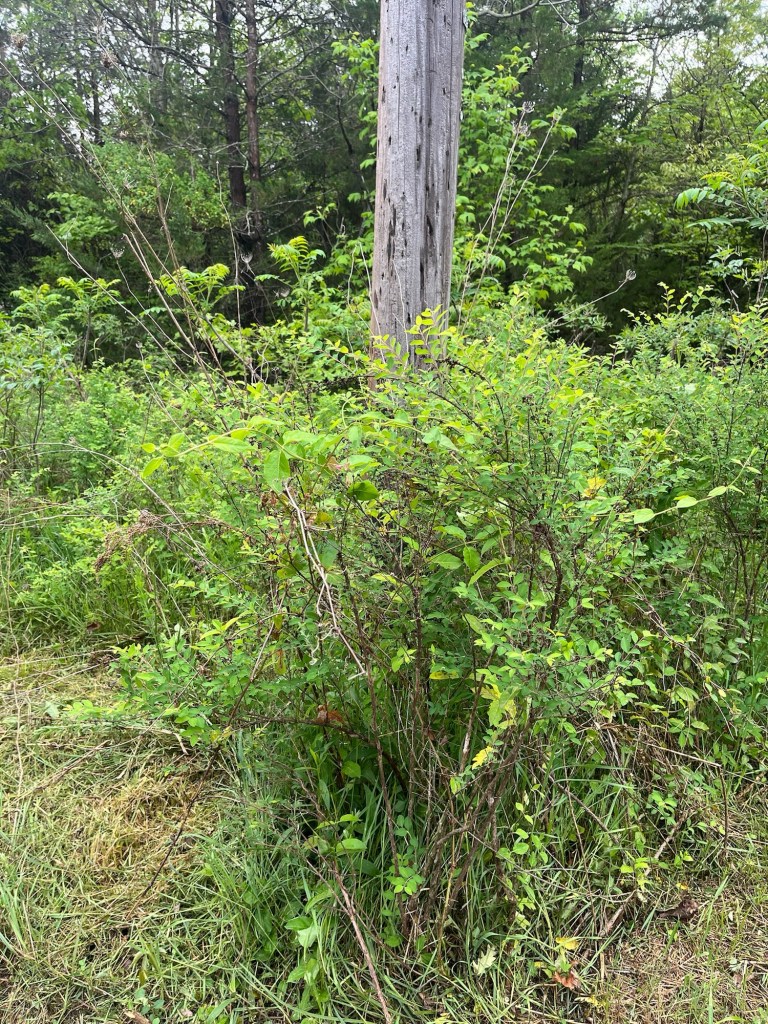
We’re taking back our southern border and clearing out overgrown brush. It is so satisfying to cut the tangled overgrown weeds back. We are thrilled with our old Husqvarna.
Brush we are cutting back along southern border.Pollinating the pawpaws.
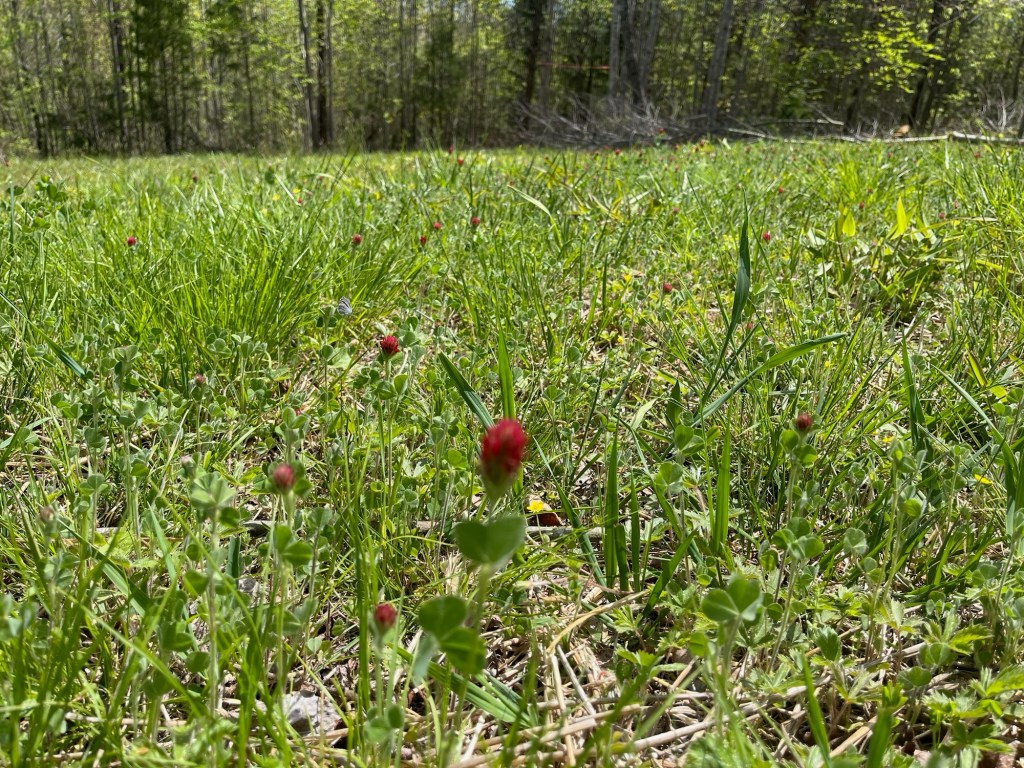
Yesterday in the forest,we found pawpaws blooming and blueberries flowering and fruiting, and in the clearing we found our first cover crop of crimson clover flowering. Butterflies and other insects were enjoying the flowers.
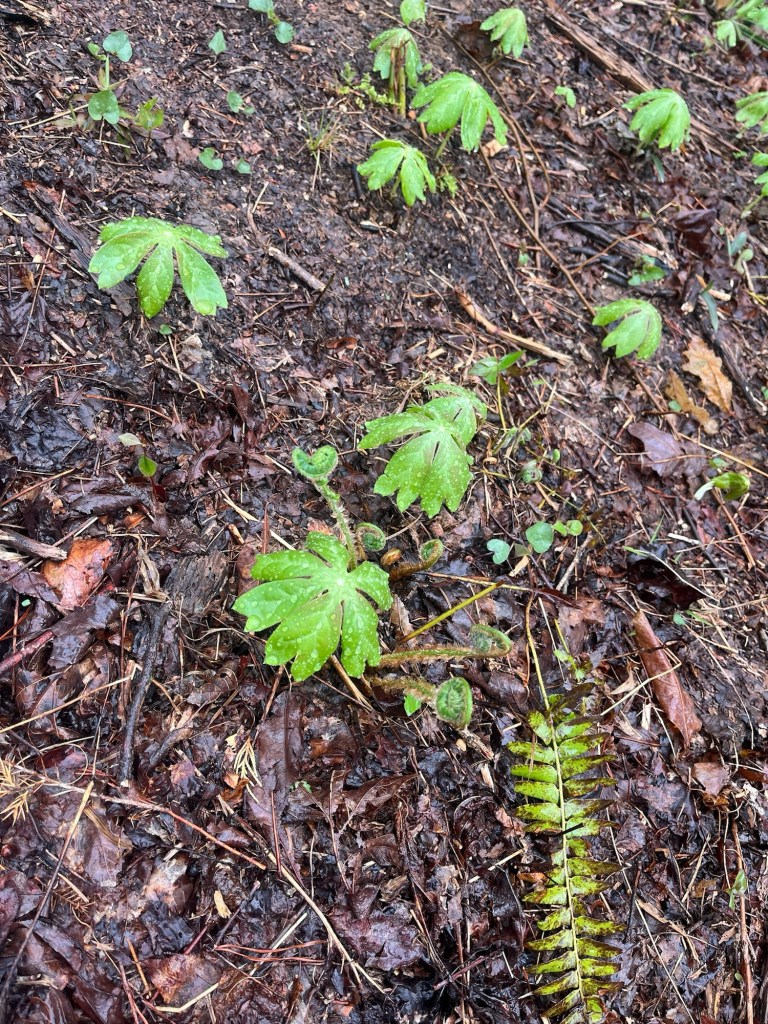
We found about 20 pawpaw trees with flowers and plan to get back out there to pollinate them by hand within the next few days. We saw hundreds of blueberry bushes flowering with some fruit beginning to form. Mountain laurel budding up. Crimson clover flowering. The butterflies were all over them. South property line with mayapples in the wet weather gully.
We are constantly amazed by the abundance of food growing naturally in the forest. We look for ways to encourage and support the continued growth and development of a healthy and sustainable ecosystem.
Yesterday we went over for a quick visit, and to our delight, we saw the blueberry bushes were flowering and getting berries.
Vaccinium pallidum, early lowbush blueberries found in a patch at the bottom of slope near the waterway.
We’d been watching them and noted a few weeks ago they were leafing out. We have observed hundreds of them all throughout the forest. We’ve read that they are more productive when they have plenty of sun.
These fruits are eaten by terrestrial turtles, black bears, coyotes, foxes, raccoons, deer and many bird species including wild turkeys, grouse, blue jays, robins, wood thrush and eastern bluebirds. These wild blueberries are smaller and sweeter and grow in acidic soils that are moist and well draining.
We continue to marvel at the abundance of food growing wild in the forest and feel lucky to be able to caretake this incredible environment.
We also noted the tulip poplars, dogwood and sugar hackberry trees are all beginning to leaf out. The transformation of the forest to green for summer has already started.
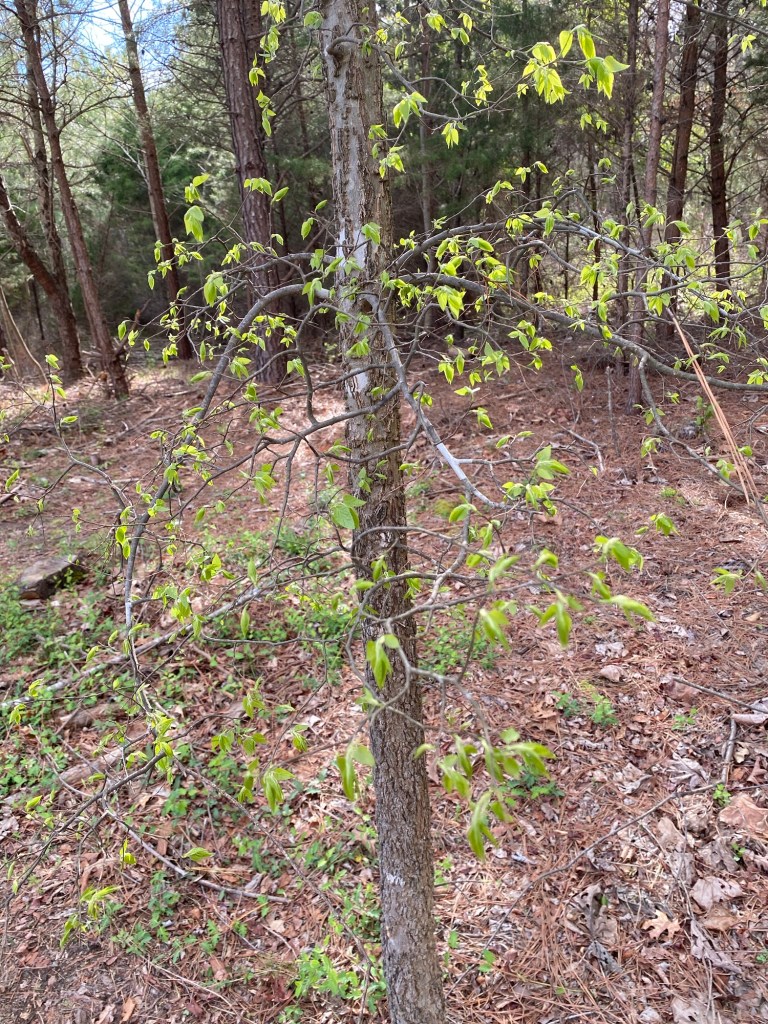
Sugar hackberry leafing out up top near the clearing. Late last summer, we saw leaf cutter bees all over this tree and oval holes appear on the leaves of this tree. We were excited to learn that these solitary bees harvest the leaf circles to line their nests. 🐝
We had a big day of mowing and cutting back several overgrown areas along the southern set back line. We used our new roads through the forest we’d cut a few weeks ago to drive the tractor over to the southern border. It was a success. Our old Husqvarna tractor is a workhorse.
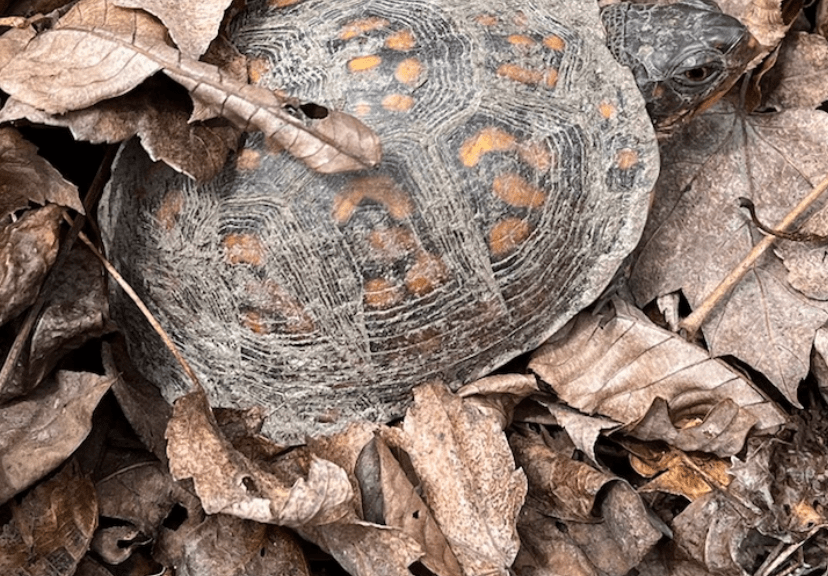
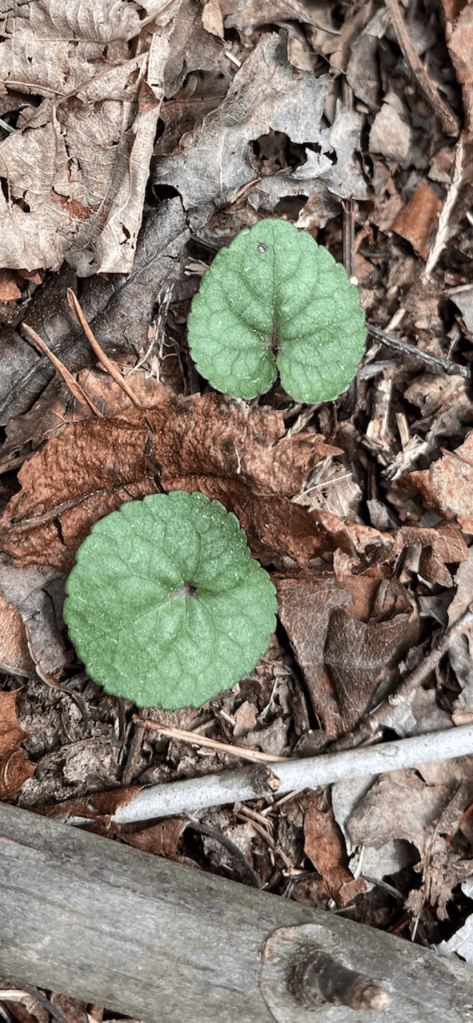
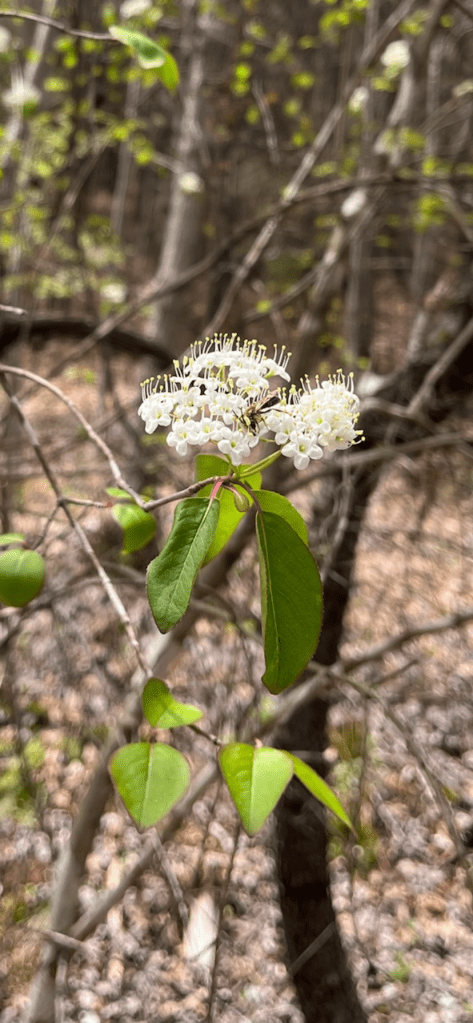
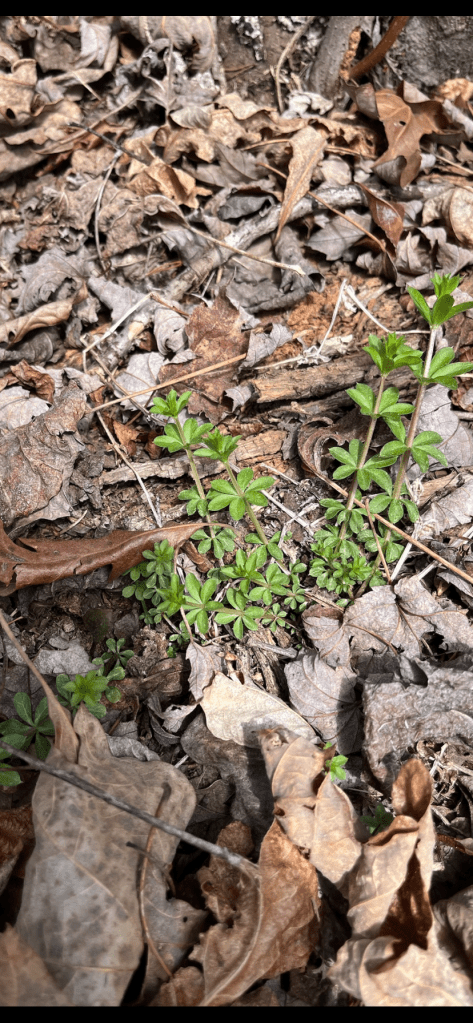
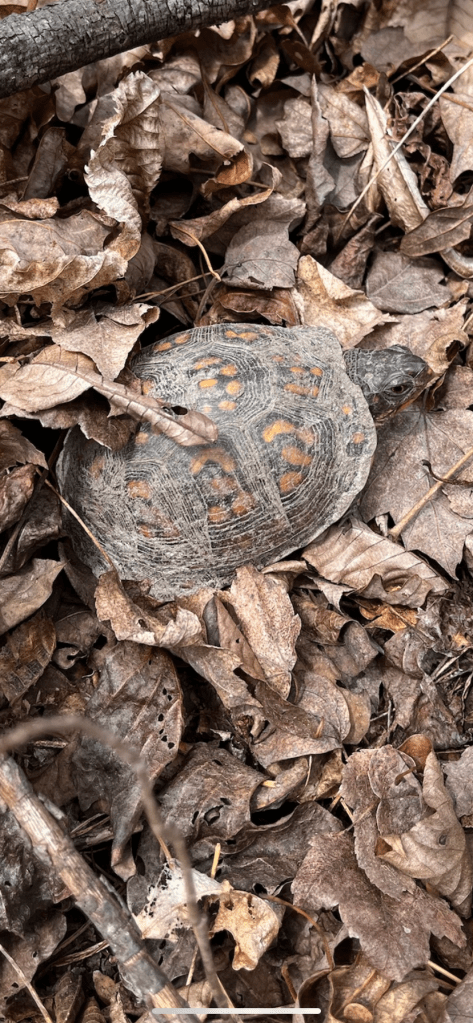
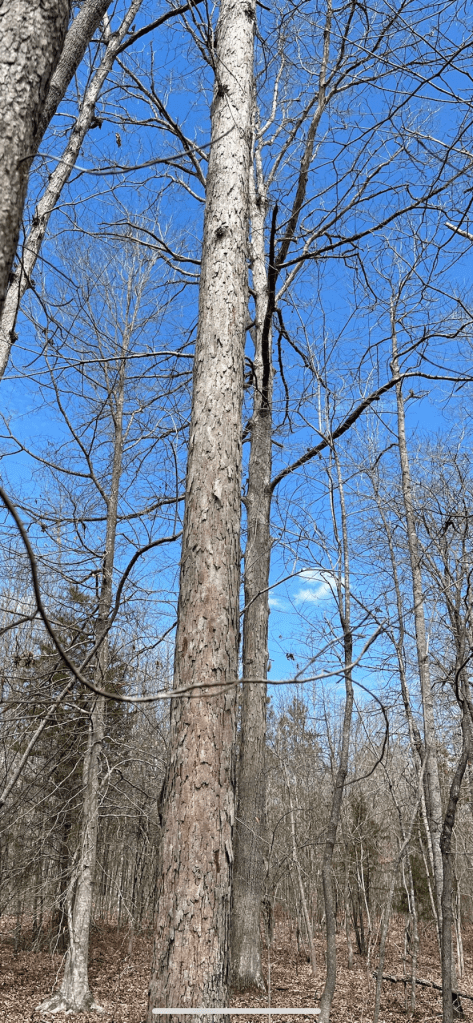
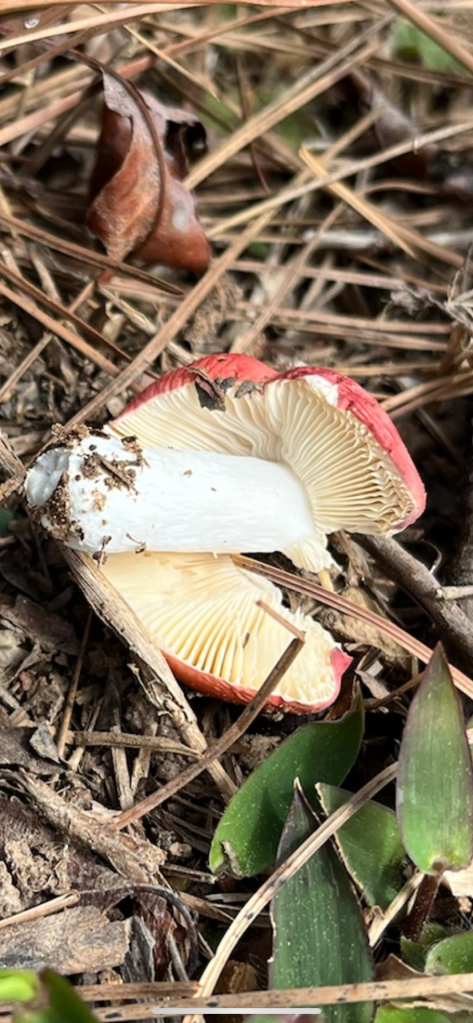
Viola hirsutula, Southern wood violet found along the south wet weather gully. Viburnum prunifolium, Blackhaw, found in the wet weather gully on the south side. Genus Galium, bedstraws. Terrapene carolina carolina, Eastern box turtle. South side near mayapple colony. Carya ovata, shagbark hickory. South end of SAFF. Our first red Russula of the year. We saw many of these last year. There are over 500 species. This was found on the north side of the clearing up top.
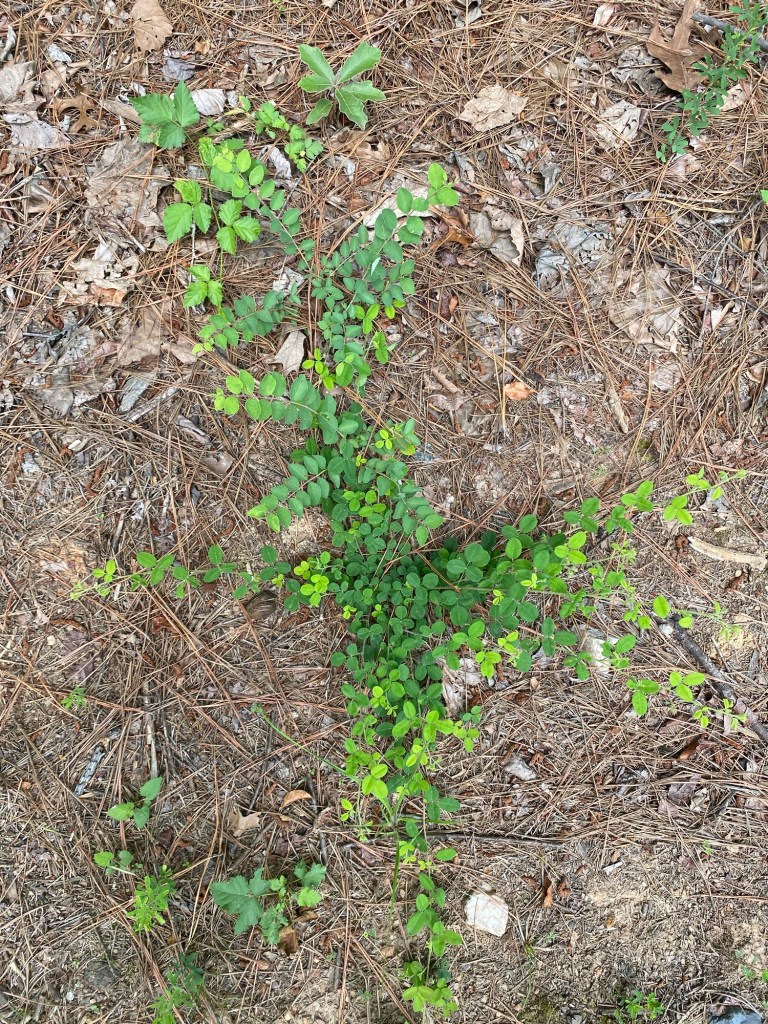
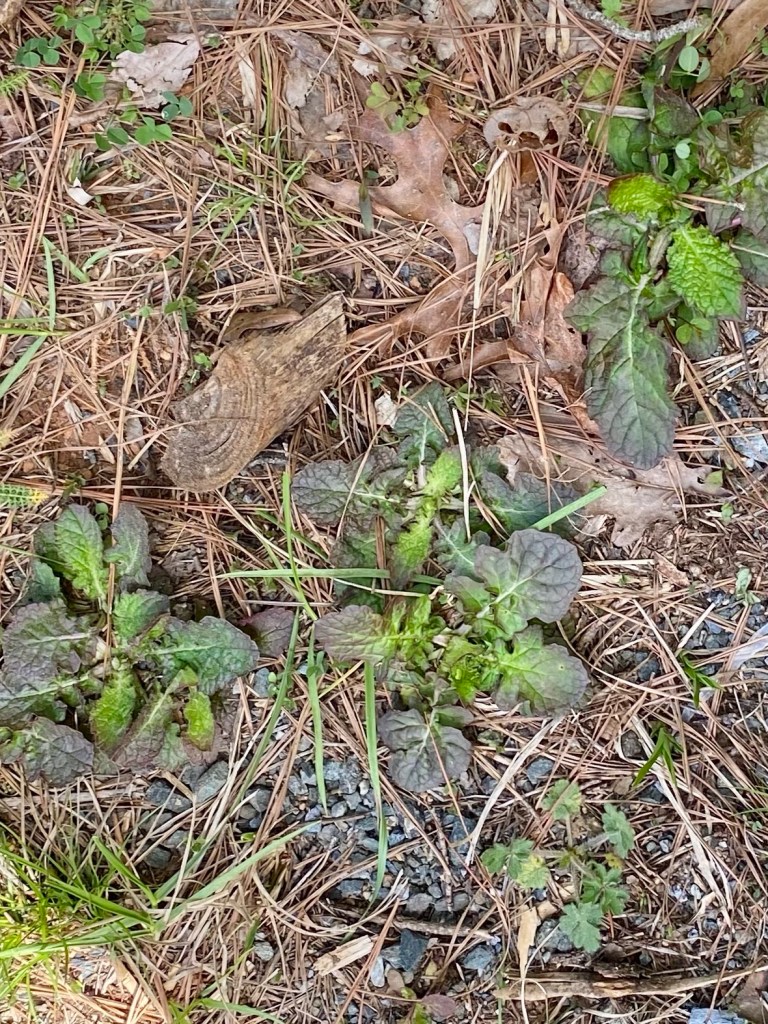
We found a few other plants and are looking into identifying them.
We were happy to cut down a few more black cherry trees which had black knot fungus and bag worms. We are slowly taking diseased trees from the farm and burning them.
It was dry out today with rain expected tomorrow and Friday. We hope after a rain with warmer weather into the 70s, the morels may finally pop up. We are on the lookout and can’t wait to get back out there.
Salvia lyrata, lyreleaf sage. Found along the road while mowing. There was a patch of it.
We have a house guest later today but with the wet weather this week, we could not resist a quick run out to Buckingham for a foray. The cool moist April weather all week long seemed to offer another chance for morels.
As we neared the Farm a large male Bald Eagle suddenly commanded our attention by swooping down from a tree to seize a hapless rabbit in a stubbly corn field. He seemed to stare right at us as we drove by, in awe, waiting until we passed to begin his feast.
Once in the gate at the Farm we wasted no time getting to the forage. We walked Fern trail, past the row of blooming redbud trees, and then stayed to the south side of the Ridge, spying the Mayapples near the setback line. We looked closely, but no luck there.
We continued down the hill to the oaks and main waterway. We cross and explored the mayapple communities adjacent to the pawpaw grove. Many old and young oaks, poplar, beech, hickory, pawpaw, maple, as well as year-round vernal pools. But no morels yet. It is cold, mostly overcast and windy, the oak leaves are crunchy underfoot.
On the drive to SAFF and back, we note a marked difference in the relative development of “spring” in Augusta, Albemarle, Nelson and Buckingham counties. It seems notably cooler once we cross the James River. The trees in Buckingham have been slower to develop their leaves and buds. The spring vegetation at SAFF is not as far along, not as green or flowery yet. The trees know it’s too soon, they are holding back, just a bit longer. This will be something to remember for the future, an entry in our almanac.
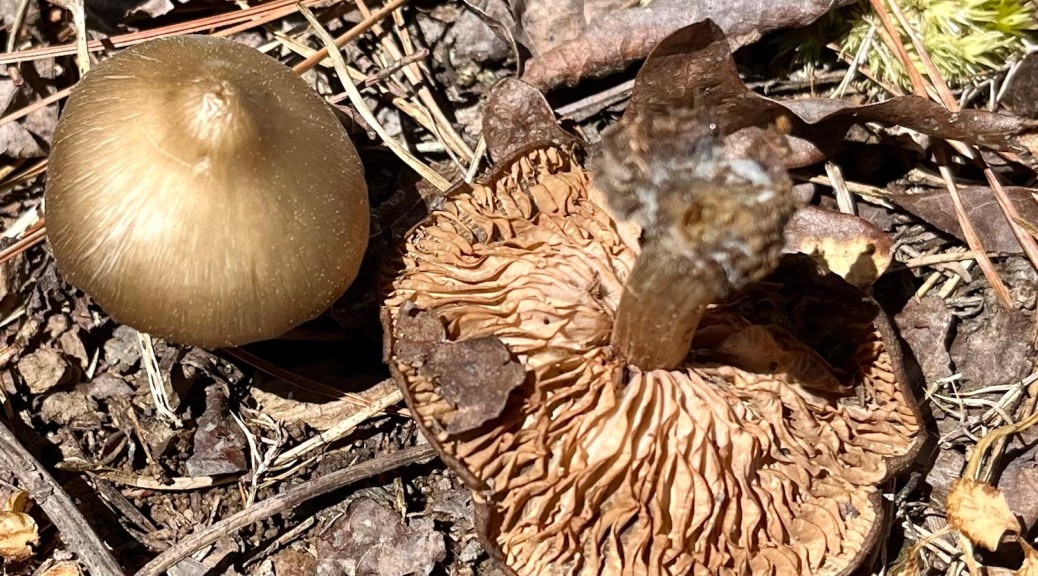
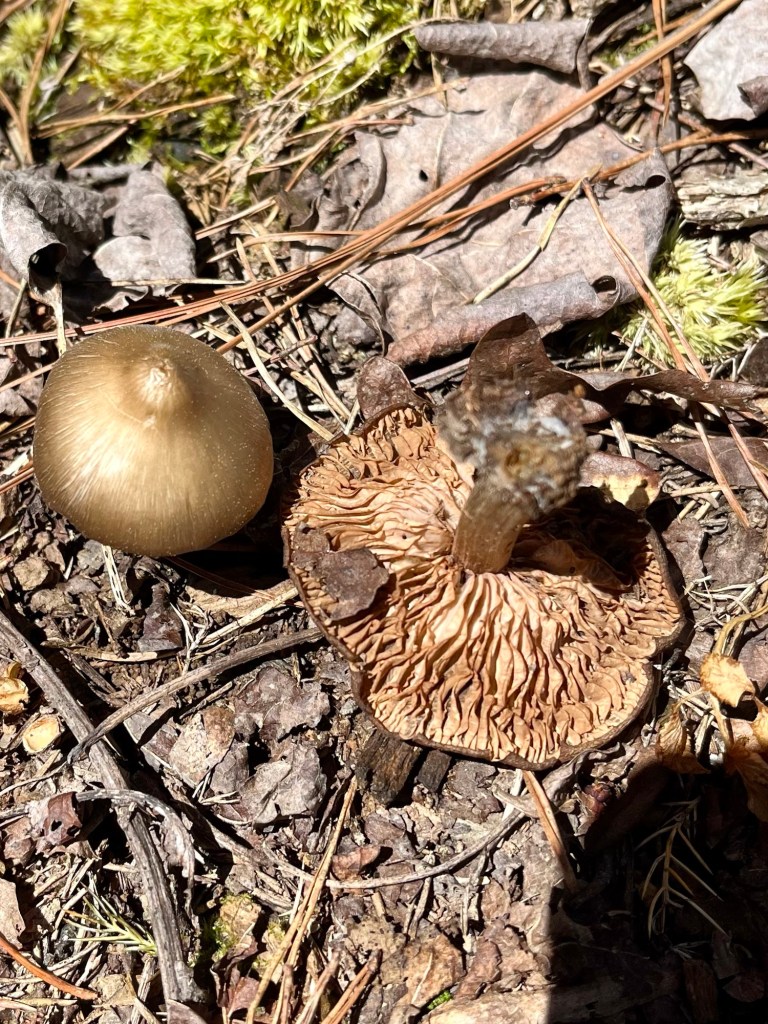
Shiny golden mushrooms found along Ridge Trail. Nolanea, or pinkgills.
We thought today would be the day. The ground temperature was perfect ranging from 50 to 55 at various depths. We got a call from a friend who lives by a lake in Arrington Virginia—the next county over—and he’d found buckets of morels. It had been raining for days with a giant storm moving through. We went over to see if we could find any. The water was too high to cross at the bottom of the slope. We didn’t find morels but we had a great walk. The water was really moving through. We’d never seen it so wet. We will go out Friday morning to check again. These were our finds today.
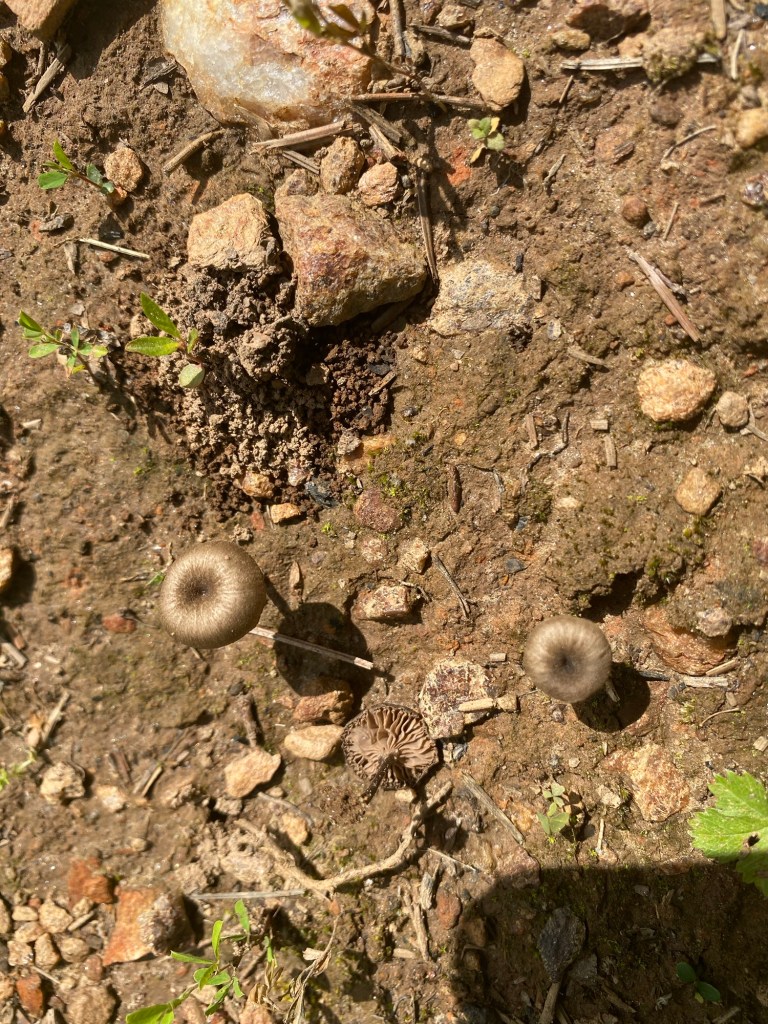
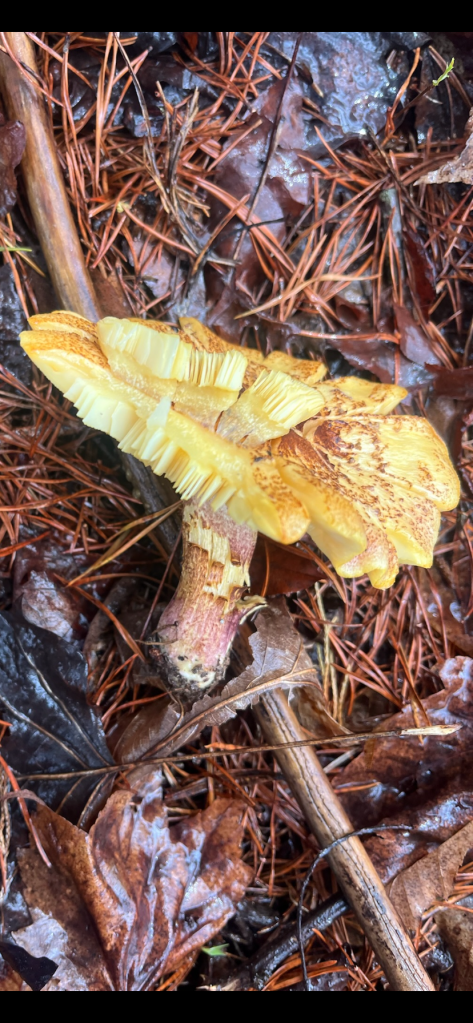
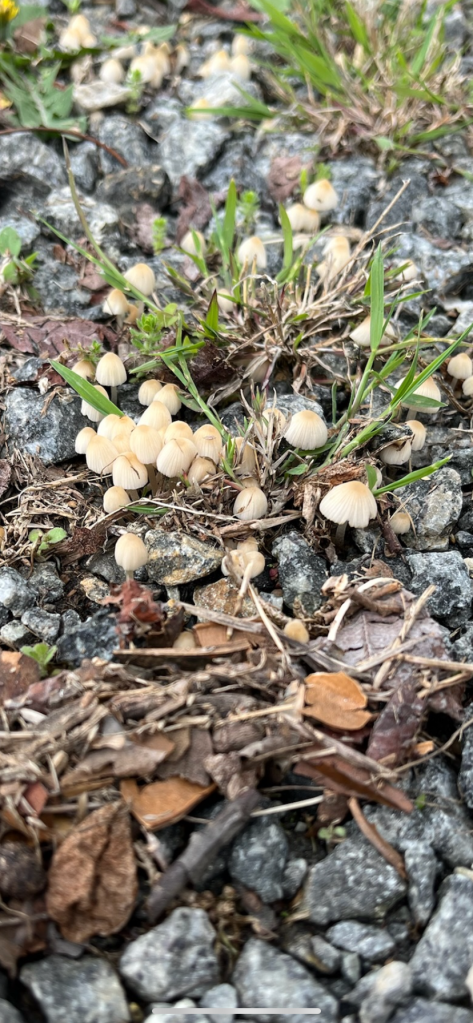
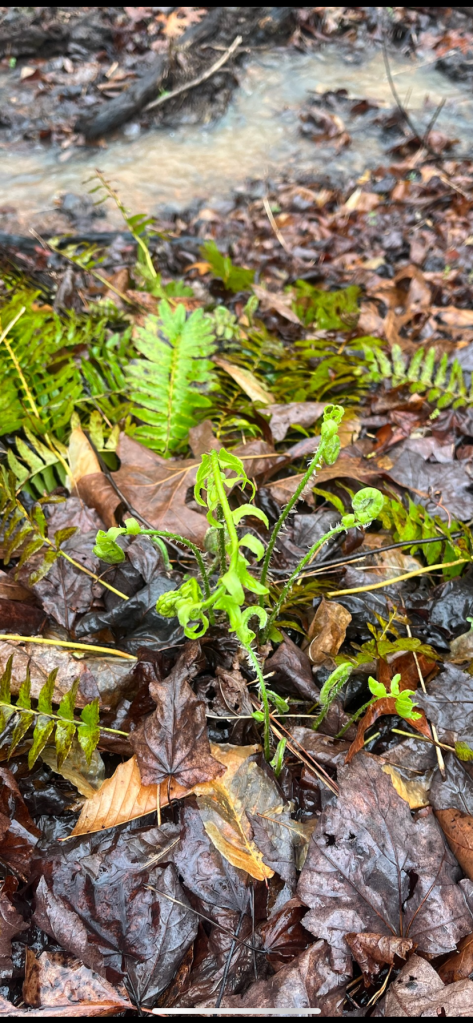
Tricholomopsis rutilans, or common name Plums and Custard, or Red-haired Agaric. Found along south trail. Pluteus cervinus, in clearing near loblolly pines. Coprinellus found up top in the clearing in multiple places. Polystichum acrostichoides, Christmas fern
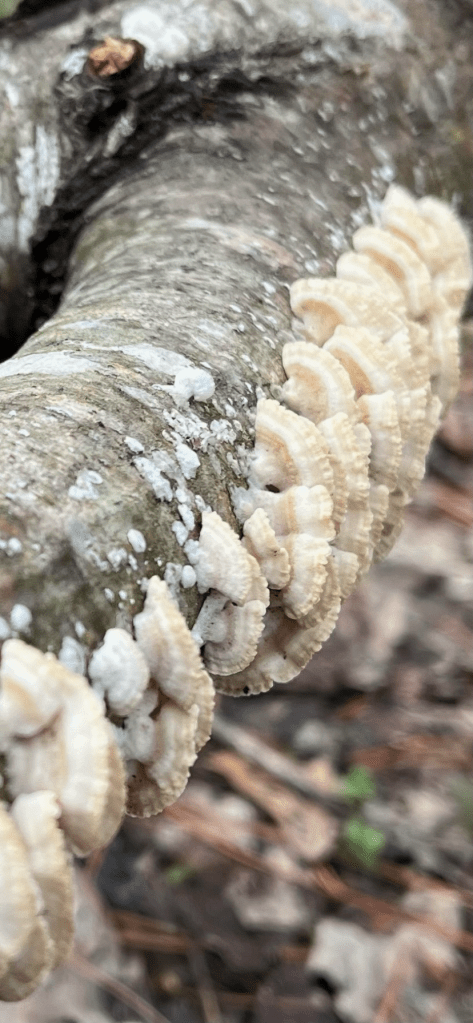
Class Agaricomycetes growing on black cherry. The underside of theAgaricomycetes shows teeth instead of pores or gills.
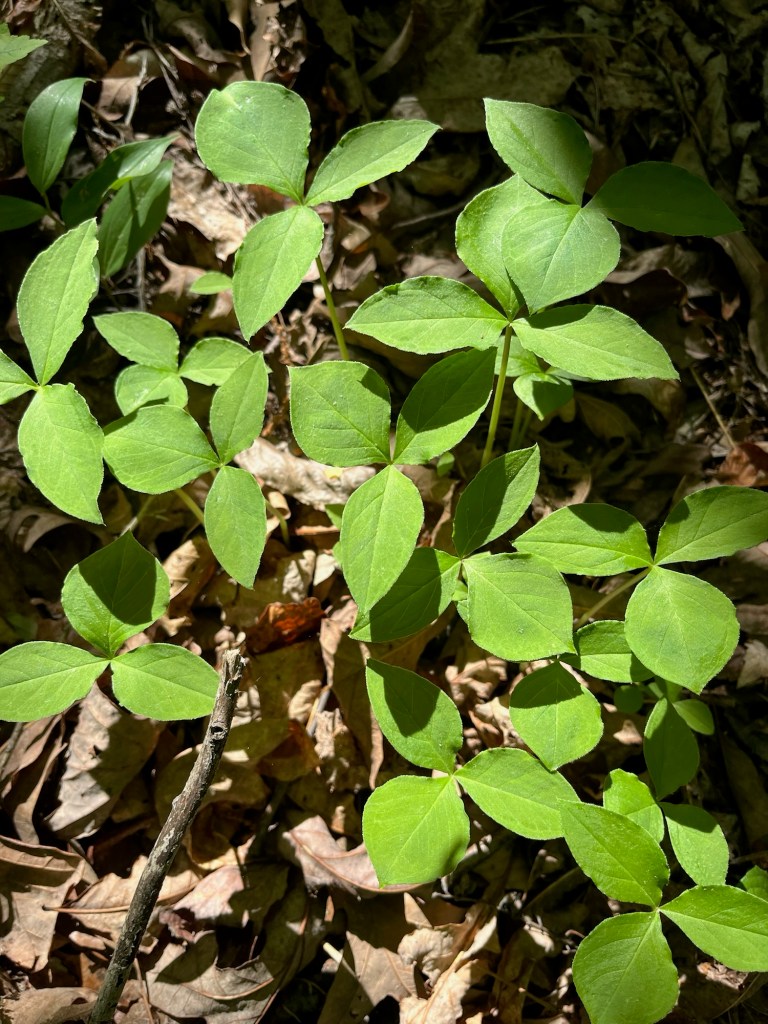
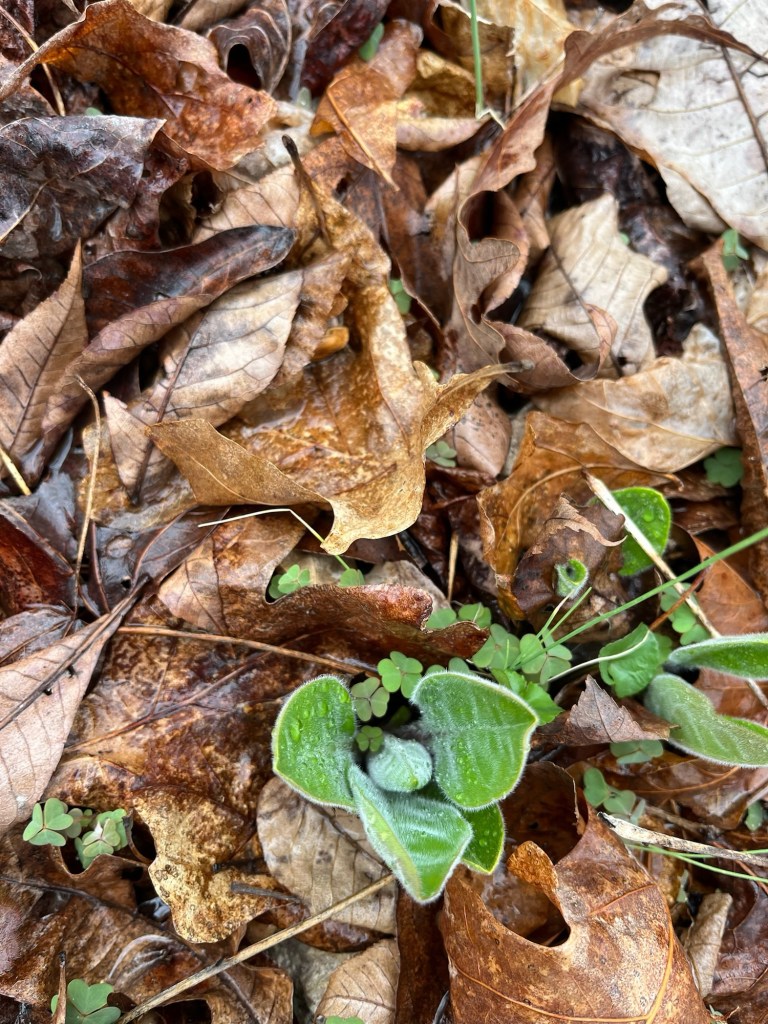
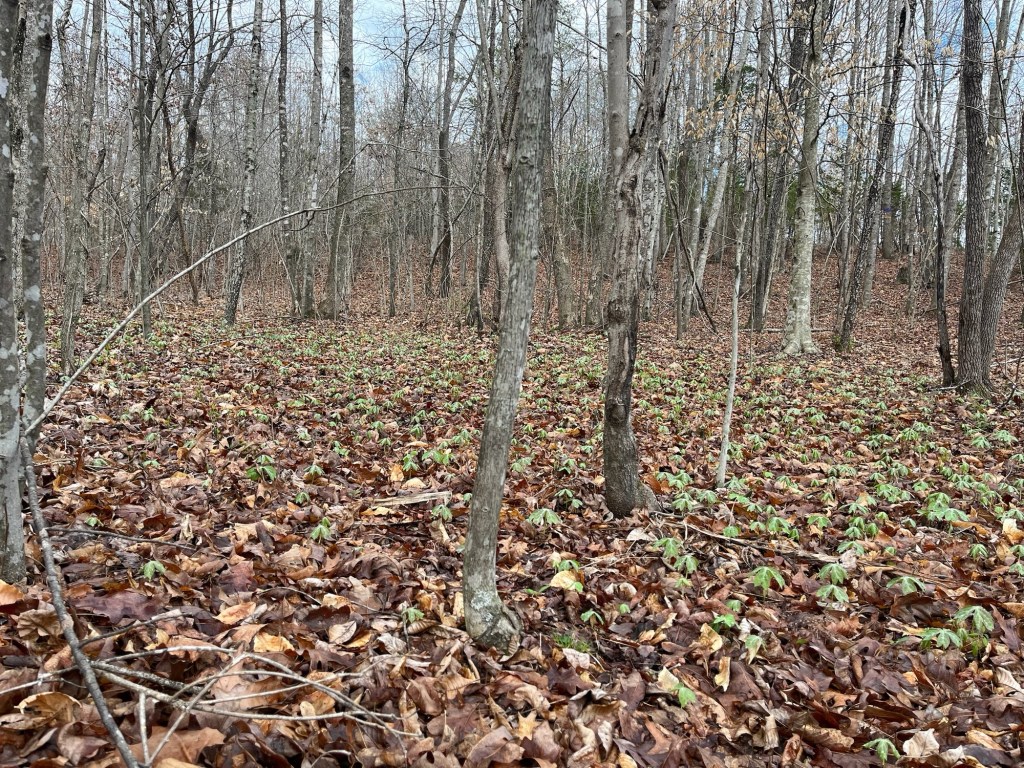
Of course we went over to continue to search for morels. It was a beautiful day and the farm was burgeoning with spring. We saw multiple colonies with thousands of mayapples emerging. Only a couple of the largest ones have flattened which is a great indicator of timing for morels to begin coming up. We found these new colonies of mayapples emerging in the pawpaw grove where we also found Virginia bluebells popping up. We noticed that the blueberry bushes are starting to leaf out.
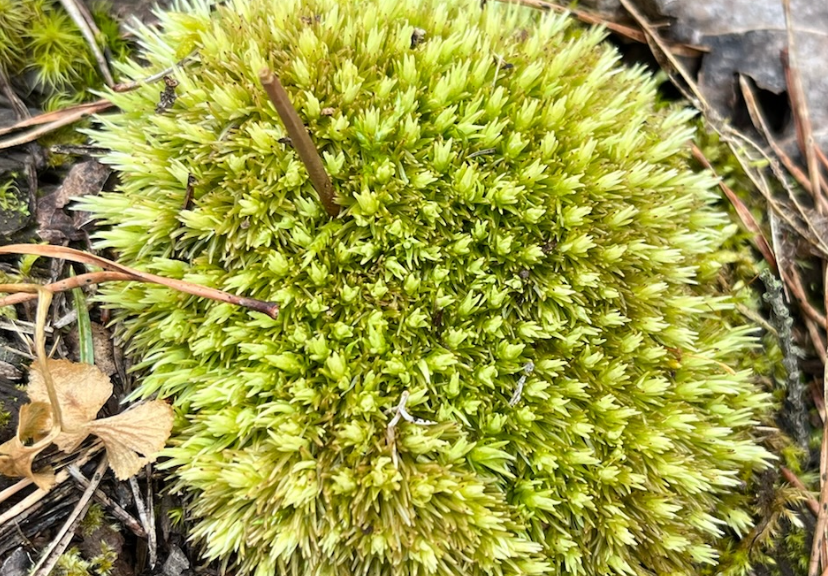
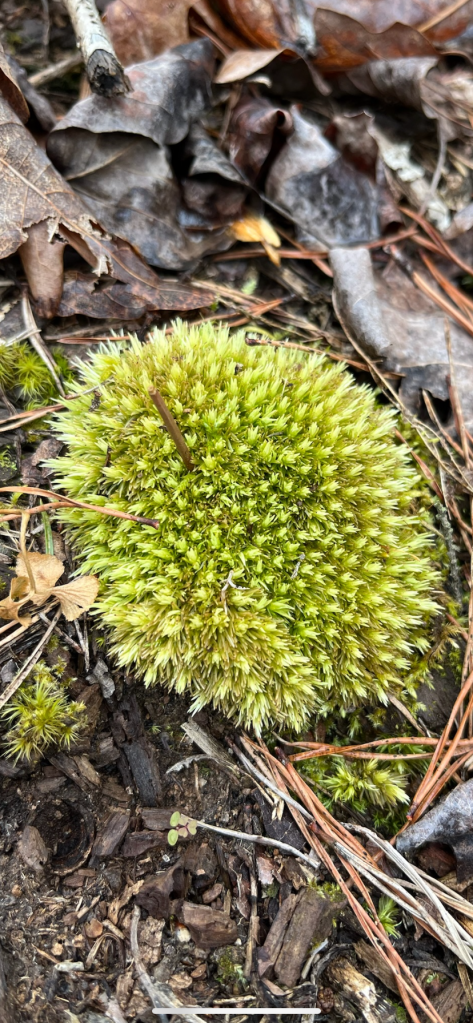
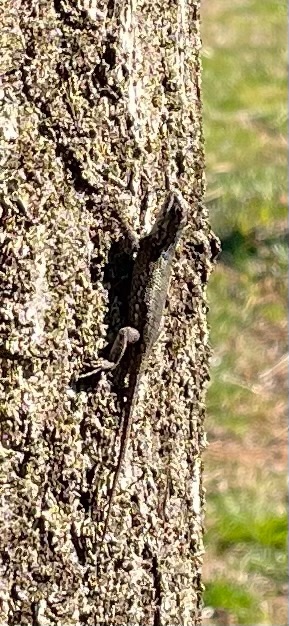
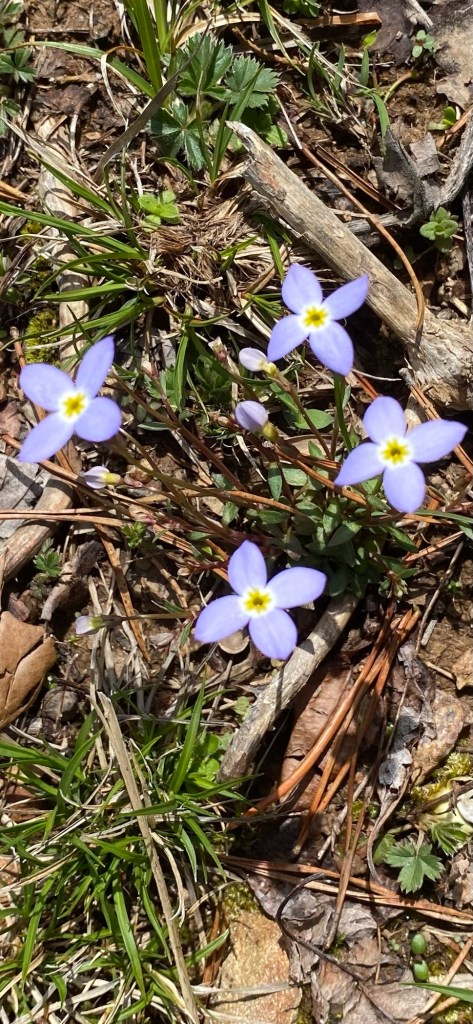
Virginia bluebells not yet flowering but almost. One colony of mayapples which has plenty of sun so we hope to see some fruit. We hear the taste is similar to pineapple and starburst candy. Yum! Leucobryum moss found at the bottom of the slope.Eastern fence lizard found up top in the clearing. Genus Houstonia, flowering bluets, a native wildflower found covering the farm especially in clearings.
We got plenty of rain yesterday and can’t wait to go back out to search for the elusive morels.
Saint Andrews Forest Farm Blog
Is this your new site? Log in to activate admin features and dismiss this message
 St Andrews Forest Farm