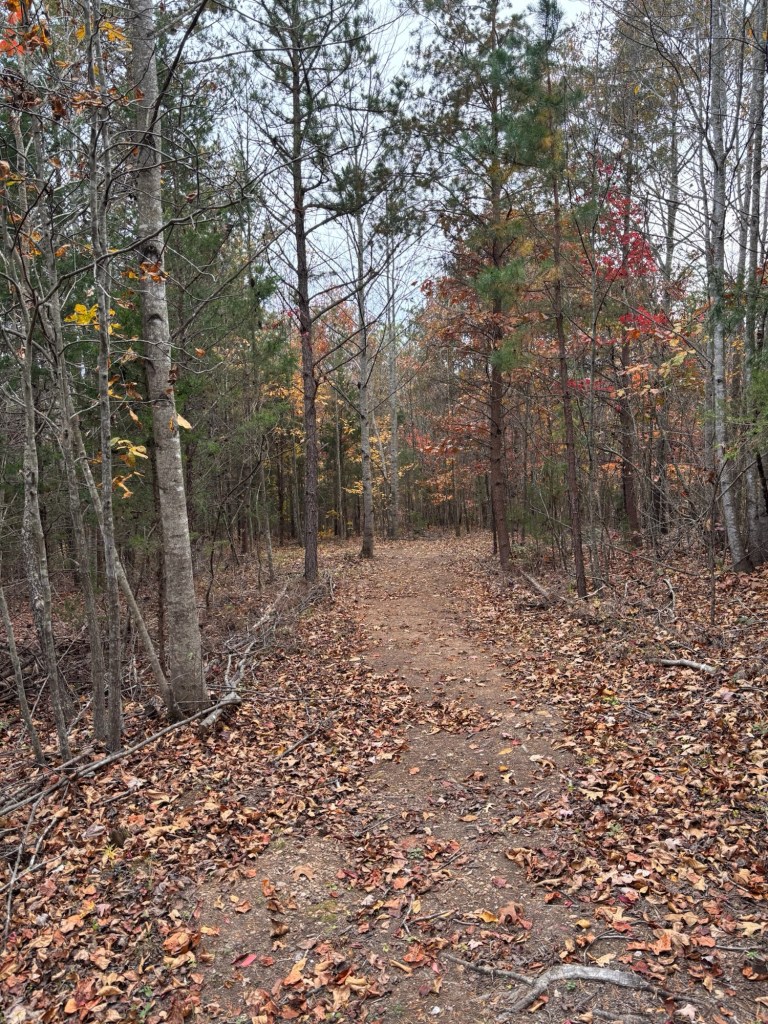
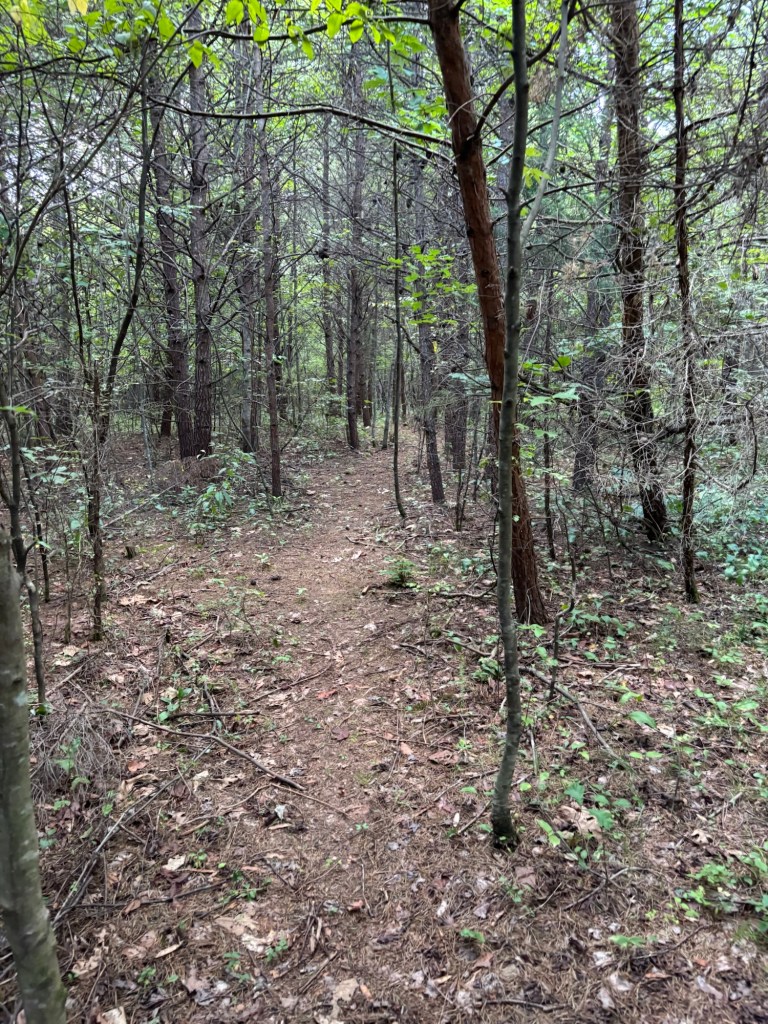
We started our walk down Red Hawk Rd and made a new trail from the bottom at the roundabout to down to Fern Trail.
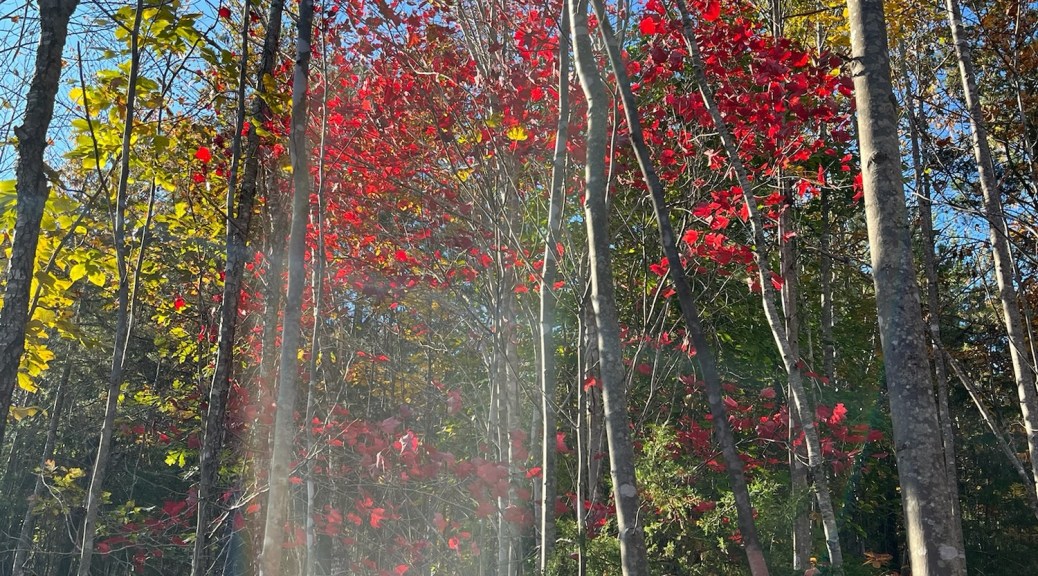
The drive over to SAFF was beautiful with fall color. We travel from the Shenandoah Valley over Afton Mountain through Rockfish Gap and Howardsville to Buckingham. We oohed and ahhhed the whole way. Here’s a quick video of Howardsville Rd.
31 seconds of trees putting on a colorful show. Sound on for beautiful jazz as well.
We unloaded the lumber we found at the Restore and checked out the pawpaw and fig trees planted up top. They have yellow leaves and are losing most of them. Then we headed down Red Hawk Road to get down to Fern Trail. We checked out the Rappahanock cultivar and the seedlings planted as well as the cluster of natives. Most have gone fully dormant for the winter, especially the native SAFF trees. A few of the cultivars and seedlings look great; fully leafed and deep green still. Gleaming. It’s more typical for them with the temperature and season to be dormant. We have not yet had a hard freeze in Buckingham, or in Staunton in the Valley—which usually frosts first. Once dormant, their watering needs will drop. Phew! 😅
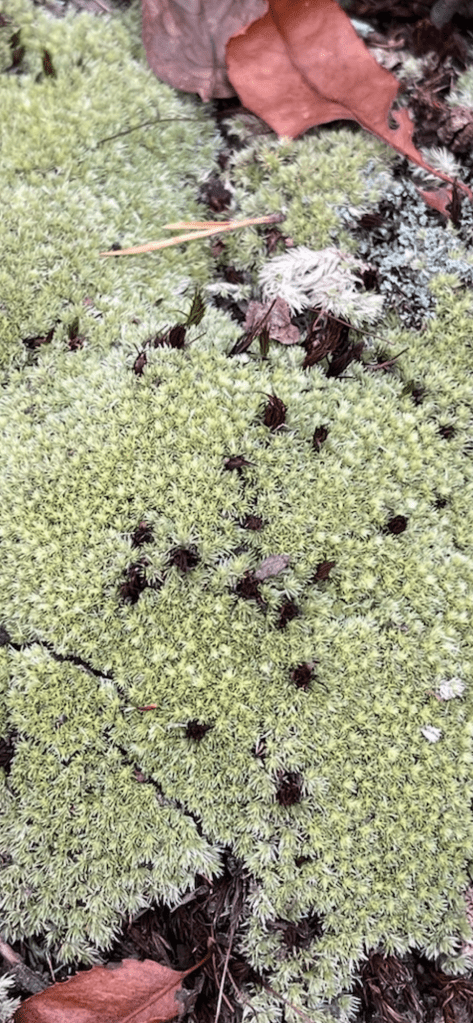
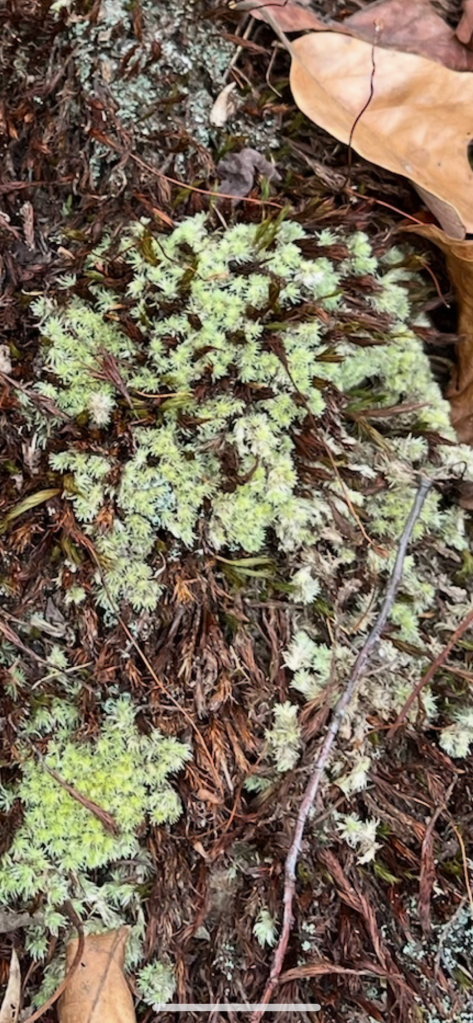
Leucobryum albidum, white moss or white pincushion moss, is common here in the eastern US. It creates a habitat for amphibians, reptiles and insects, stabilizes the soil, retains water, cycles nutrients and contributes to carbon sequestration.
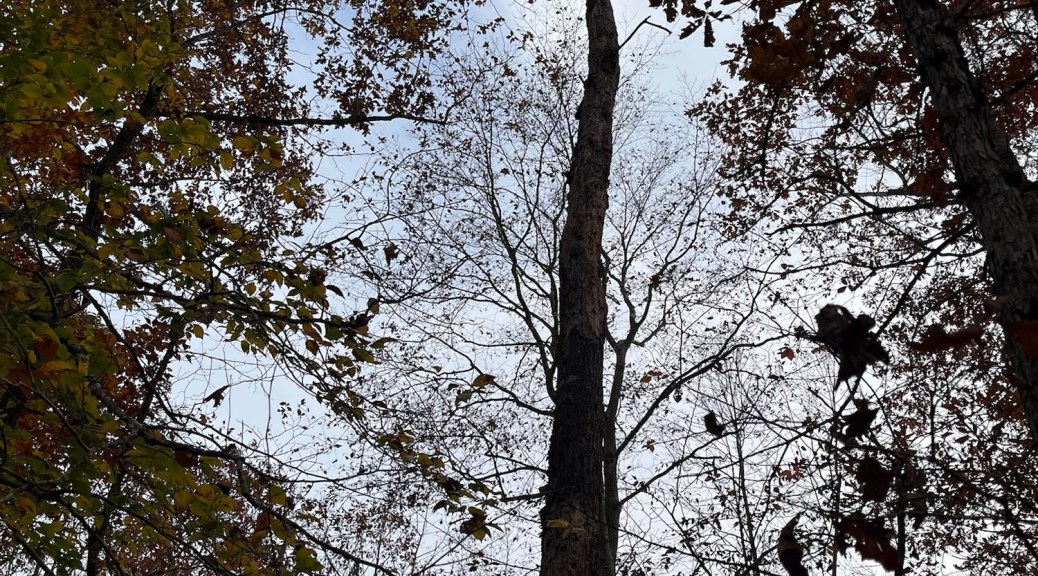
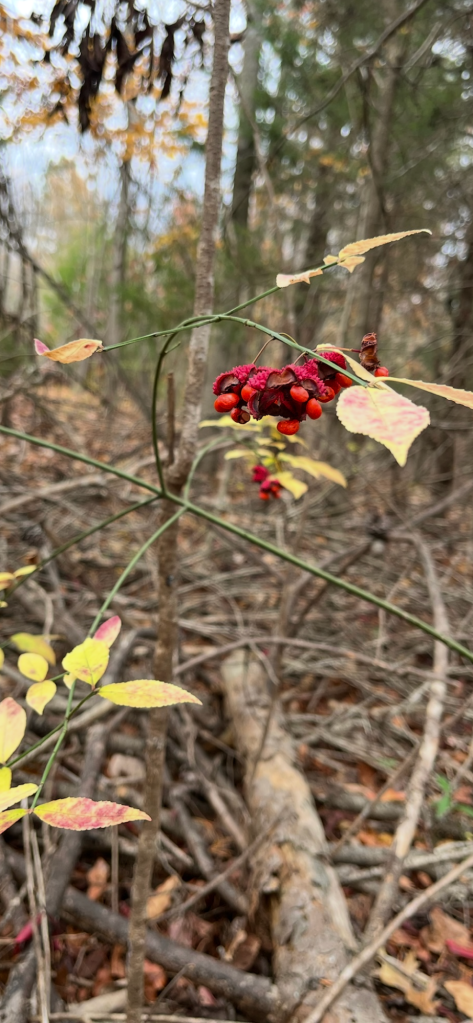
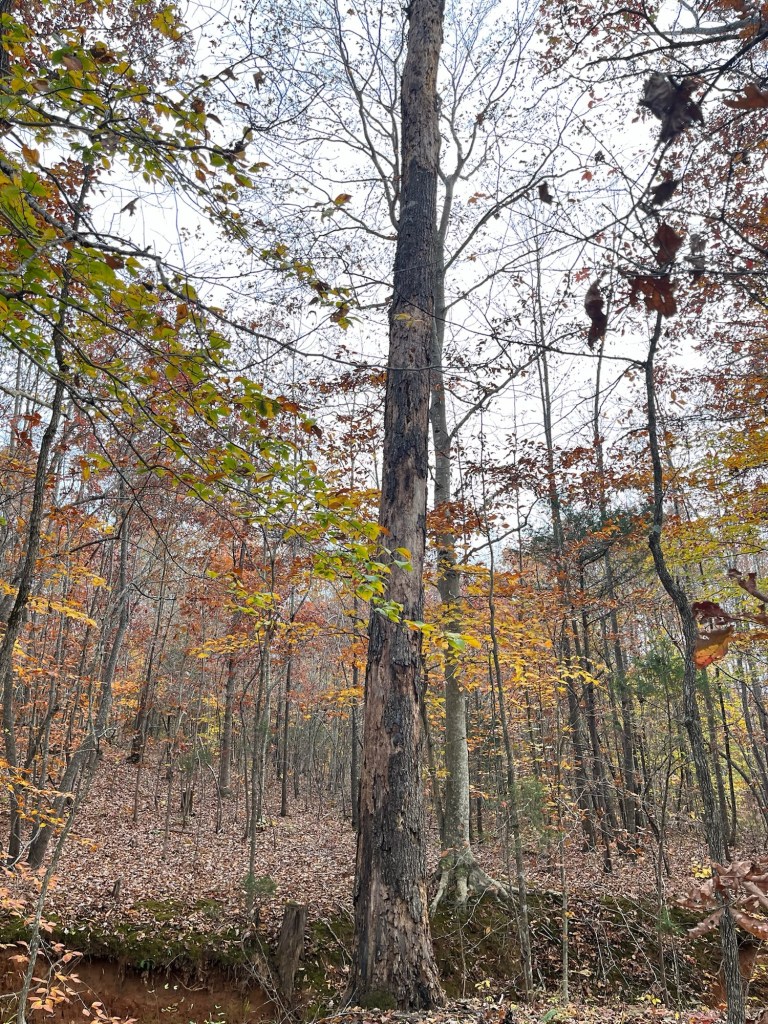
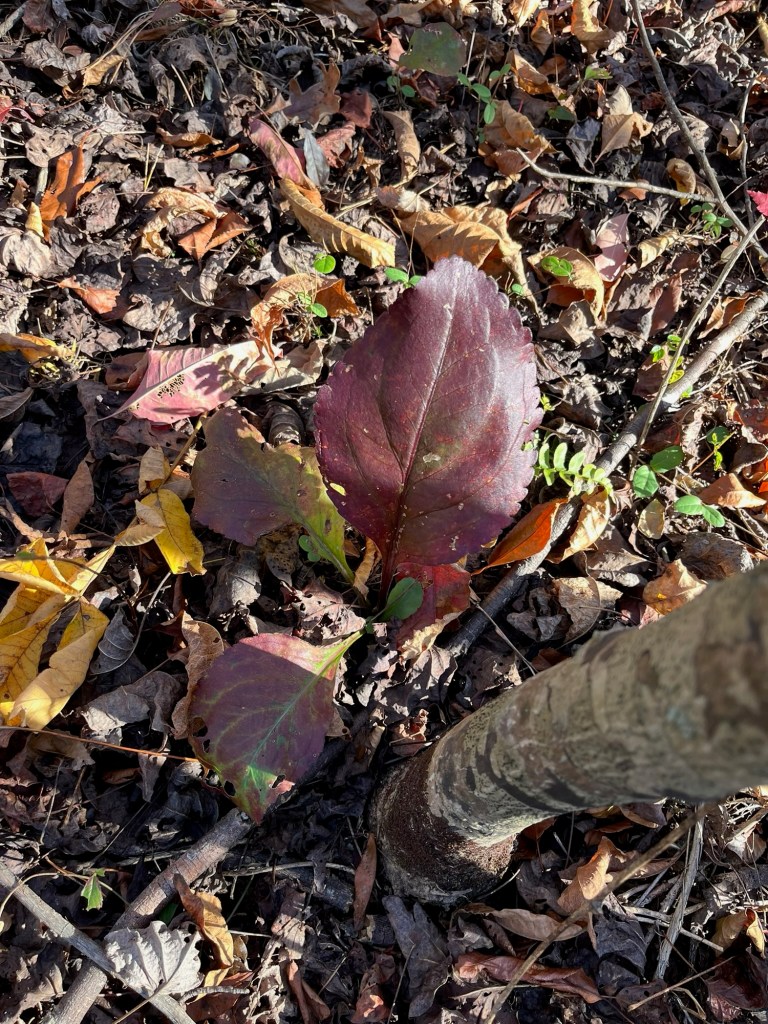
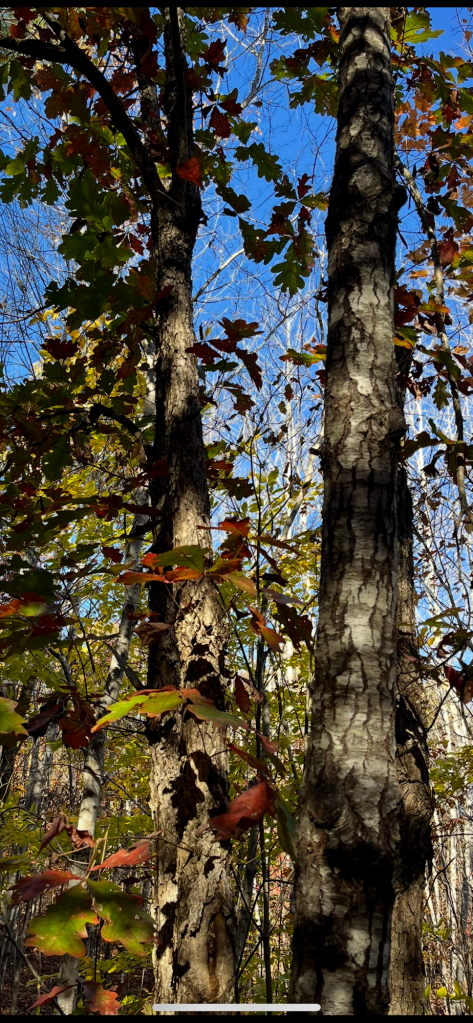
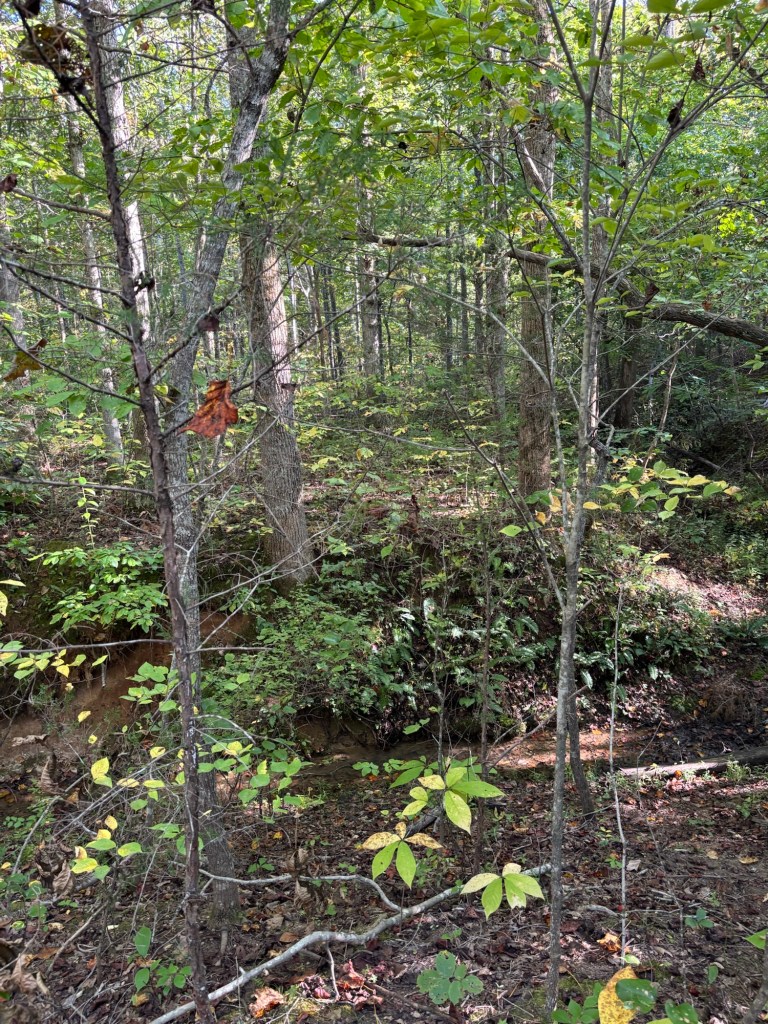
Along our walk we found white moss and strawberry euonymus (Euonymus americanus). We also went down to the waterway to check on this oak snag in the picture below. SAFF had high winds for several days and the last time we saw it, there was a bend and crack starting.
White moss beginning to grow.
SAFF old oak snag we check on regularly. It looks as though it will fall to the west towards the Pawpaw Peninsula.
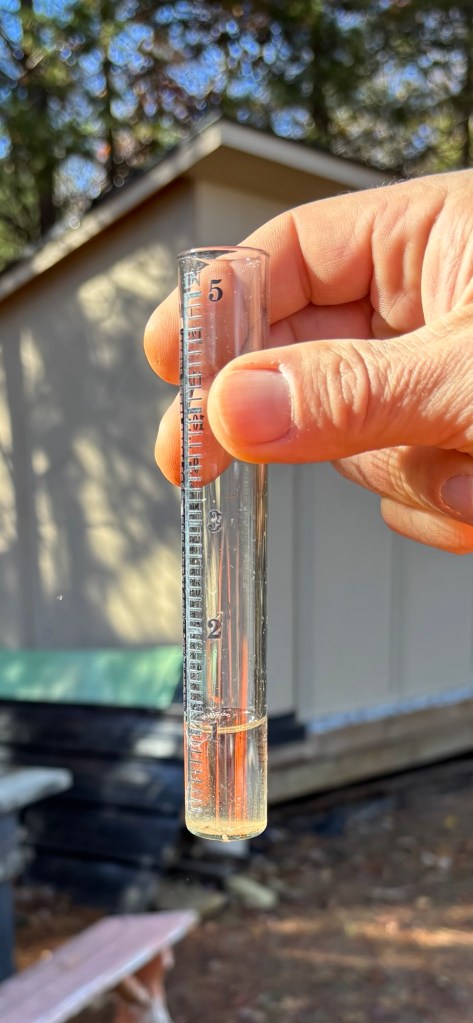
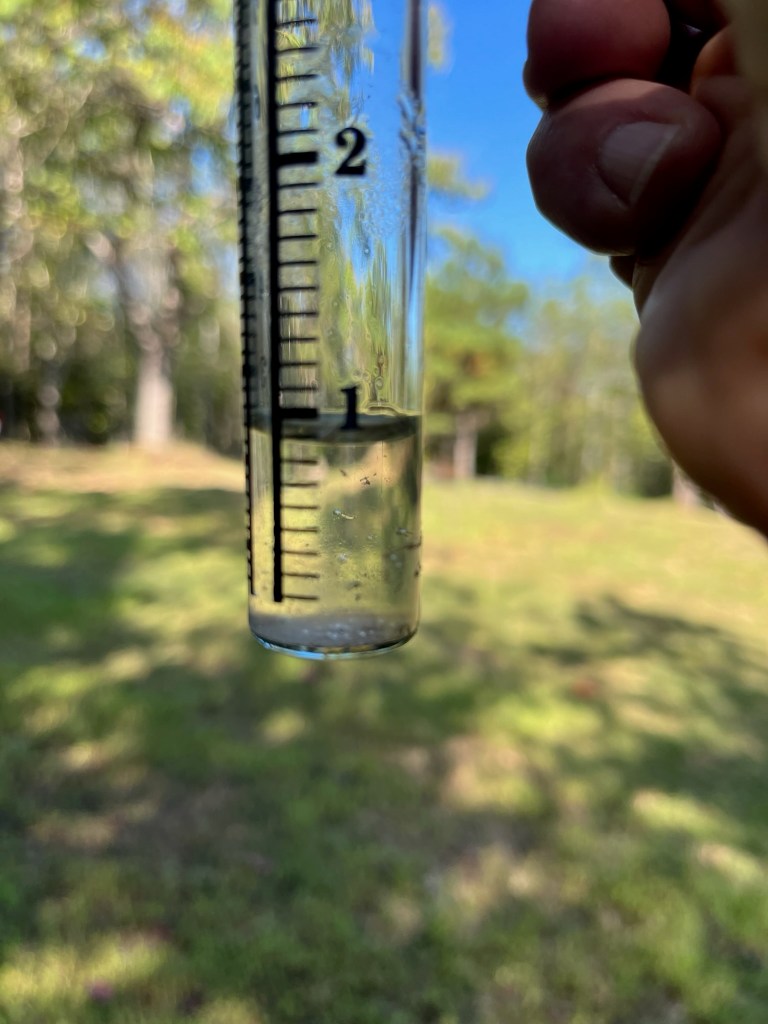
Over an inch of rainfall last Wednesday and Thursday at St Andrews Forest Farm.
We were so pleased to see the farm on Halloween Friday after the rain last week. It has been dry with an elevated fire risk so the moisture was more than welcome. Oftentimes the storms will bounce right over the mountains and miss the farm so we were lucky it hit us. The Asimina triloba (pawpaws) we planted this year need an inch of water a week so the rainfall also meant we did not have to carry water to them. We would like more rain to come consistently and we’re grateful for any rain we get.
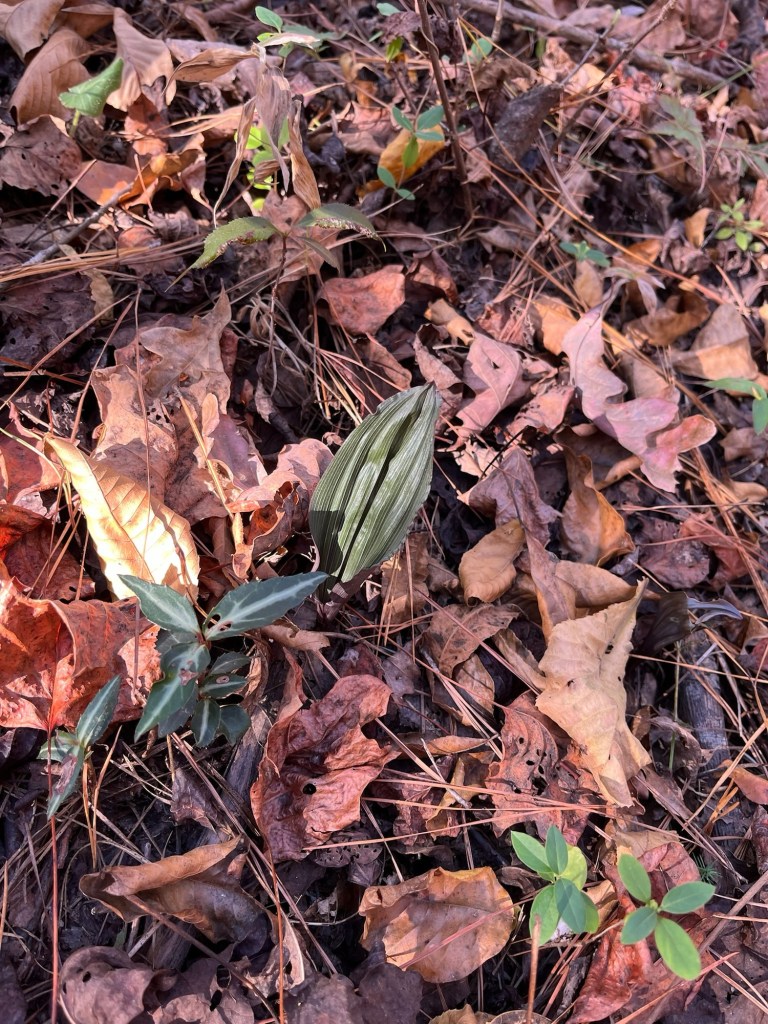
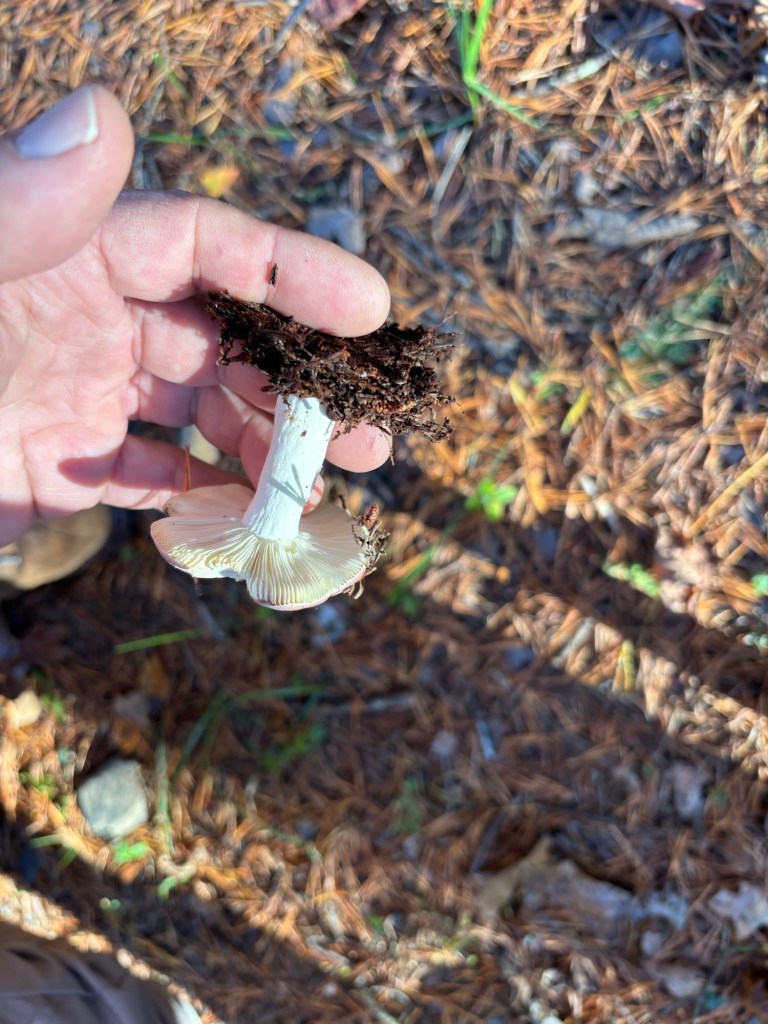
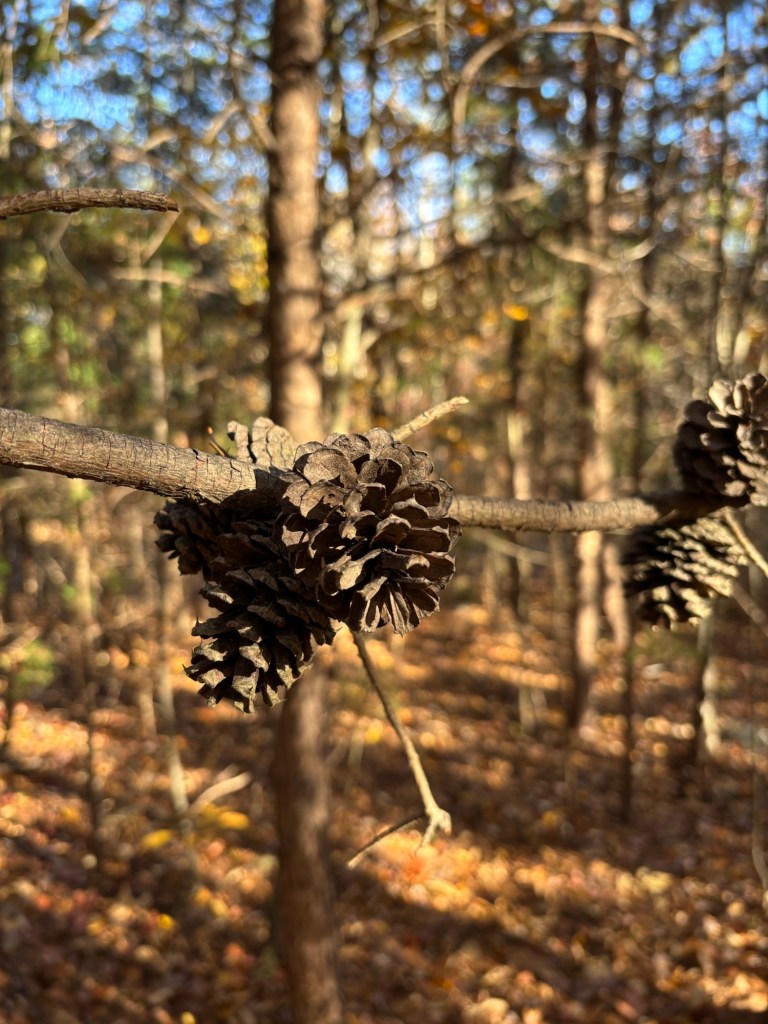
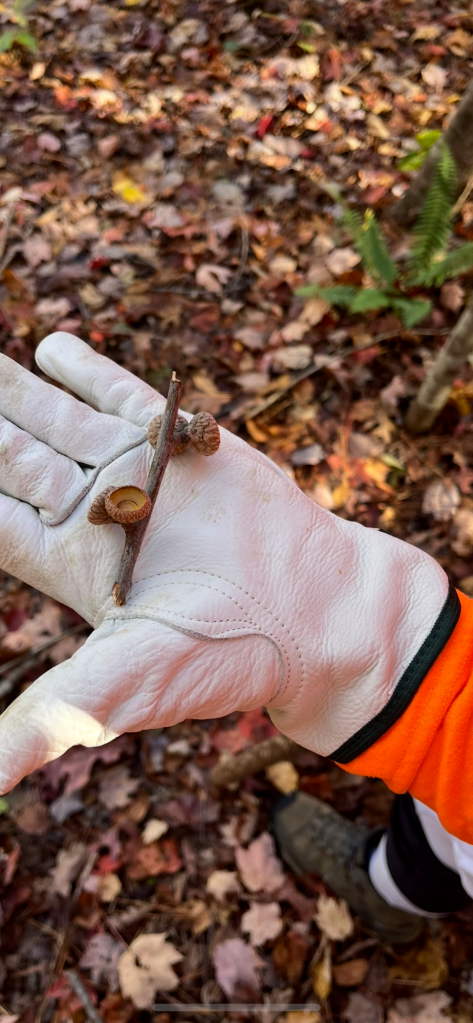
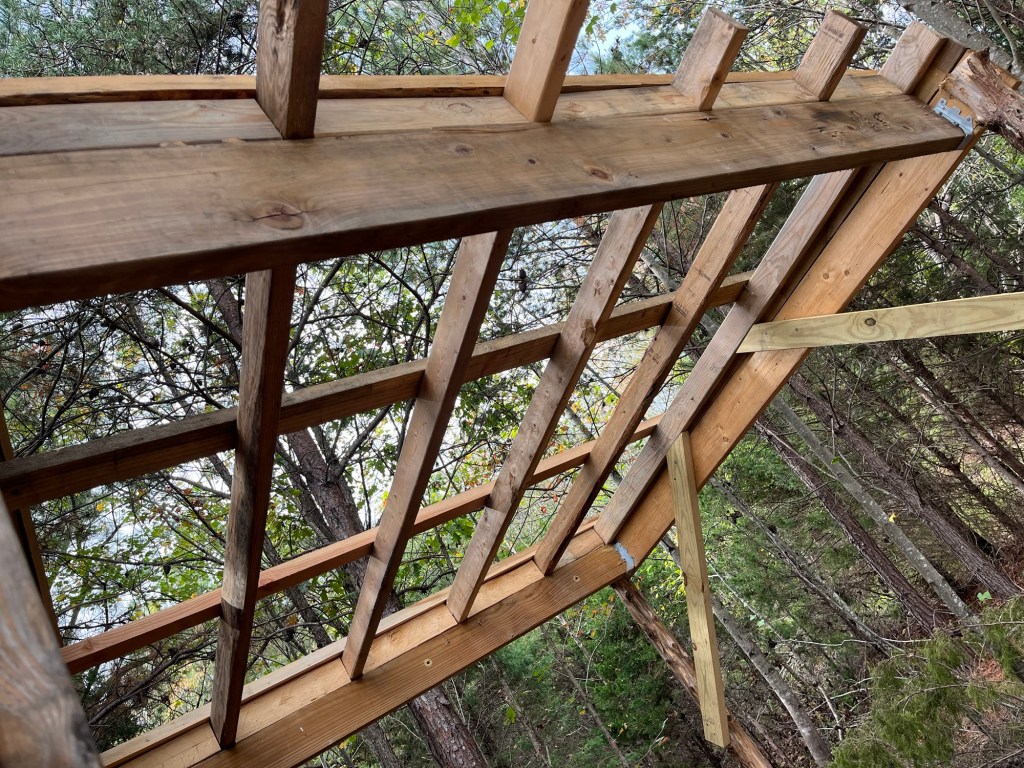
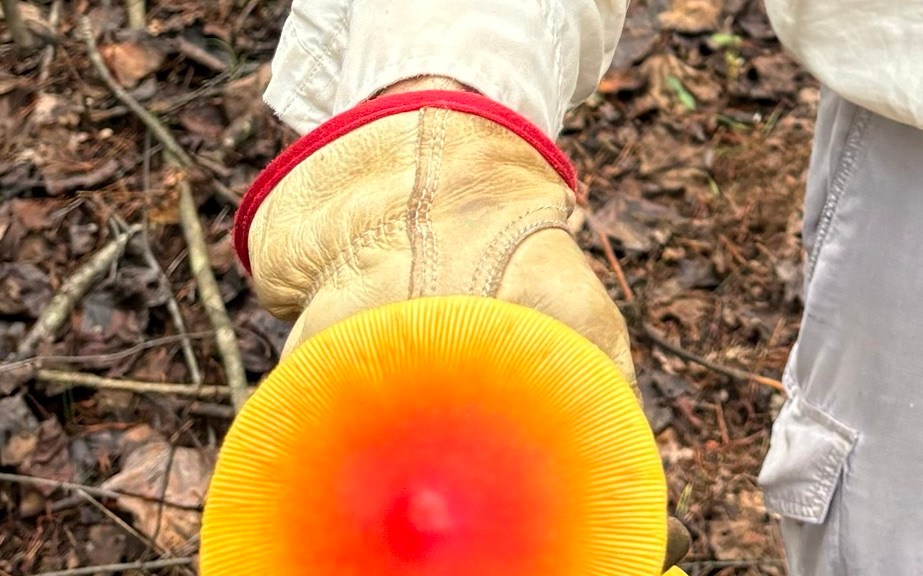
Angiospermae found in the Pawpaw Orchard. The single leafed plant in center is our third wild orchid we’ve found at SAFF. It’s called Aplectrum hyemale, Putty root or Adam and Eve orchid. We have only observed two so it is precious to us. Putty root comes from the sticky substance found in the root traditionally used to mend broken pottery. We hope to see it blooming this next year in May and June down at the bottom of North Trail. We found this old faded red Russula at the farm along with several puffballs on Friday. It’s just not the year for mushrooms at SAFF. We look forward to finding more next year. Pinus virginiana, Virginia pine, found all over SAFF. Quercus falcata, southern red oak, found along Three Pine Gully. The acorns of the red oak take two years to mature. The cap is the cup like structure at the base of the nut. Squirrels, deer and birds rely on them as a key food source.The lean-to with the roof on! Yay!!! Thank you so much for your interest. We passed 5 thousand views. 🤗
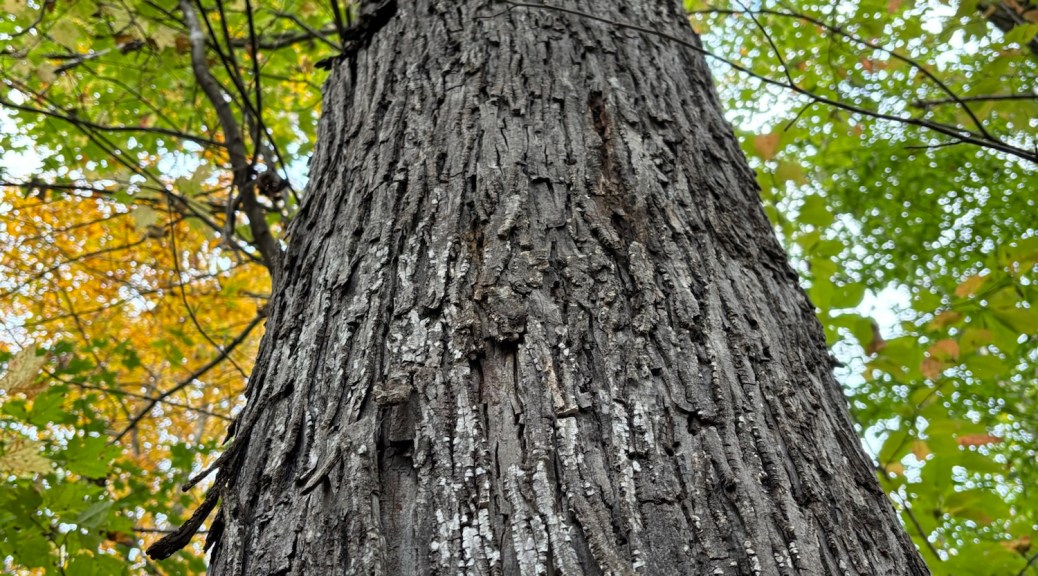
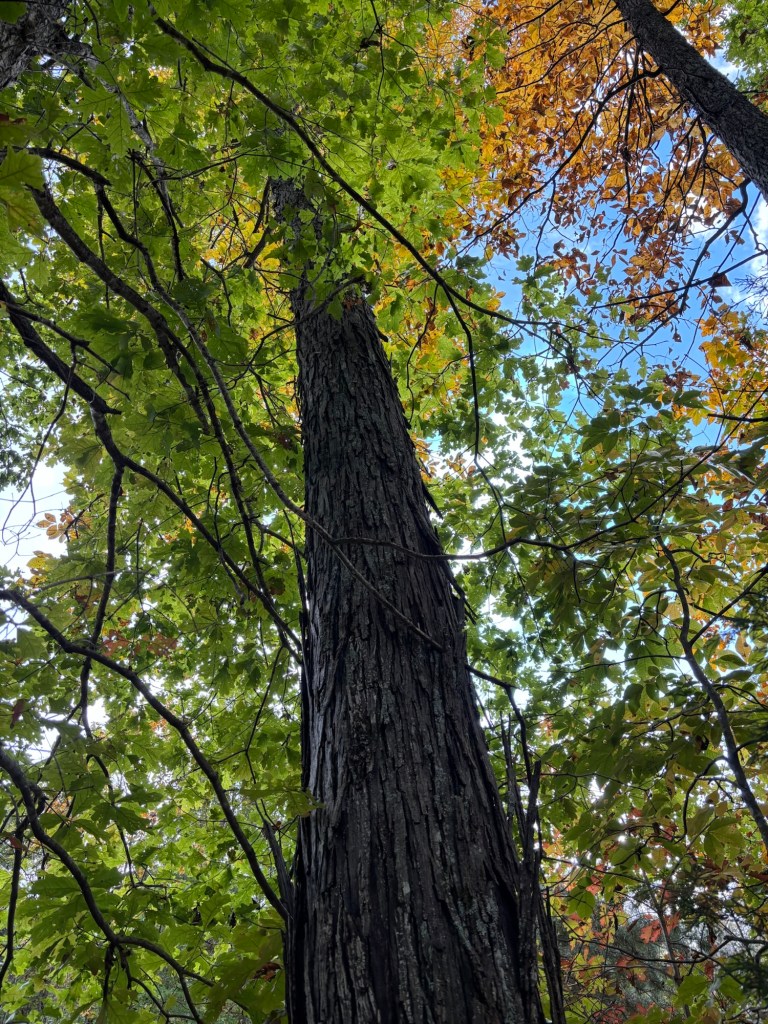
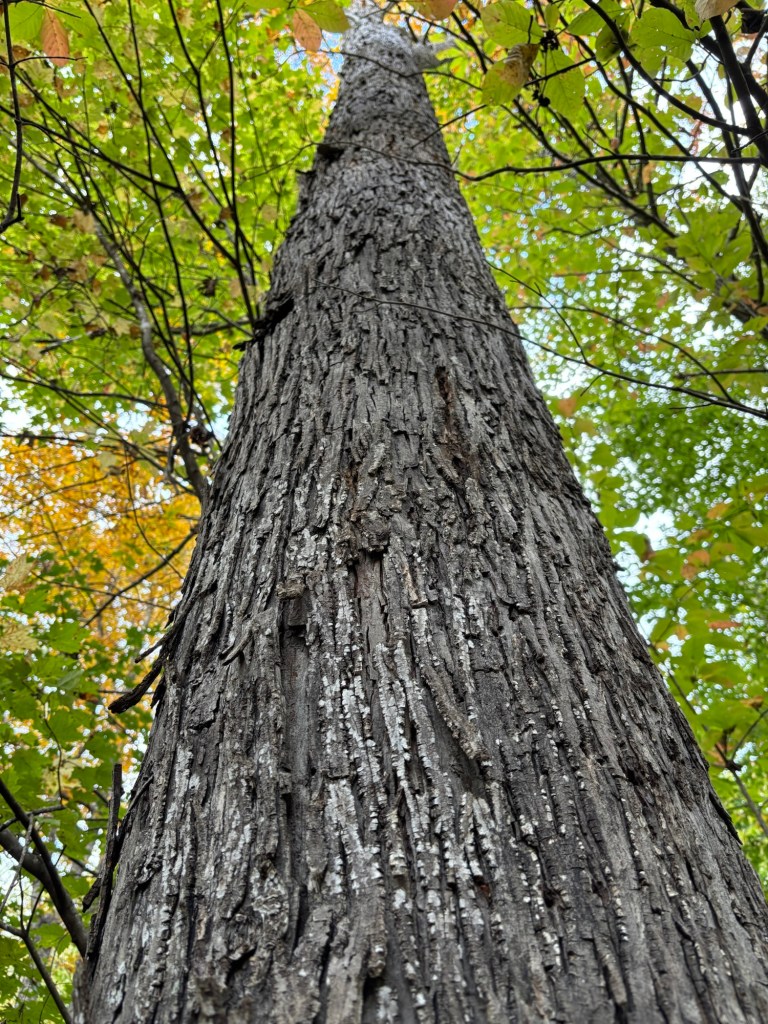
Shagbark hickory, Carya ovata, found along the south setback line.
We looked for shagbark hickories to harvest some bark to make shagbark hickory syrup.
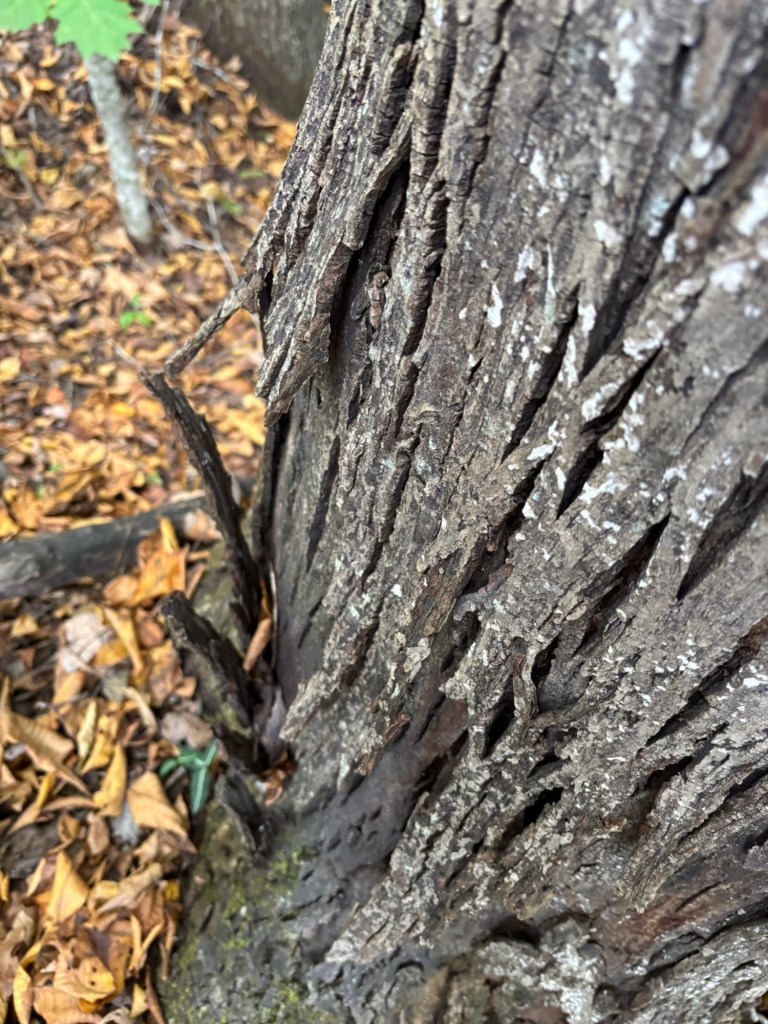
Shaggy bark pealing off the tree in the older specimen. Carya ovata found along the southern set back line.
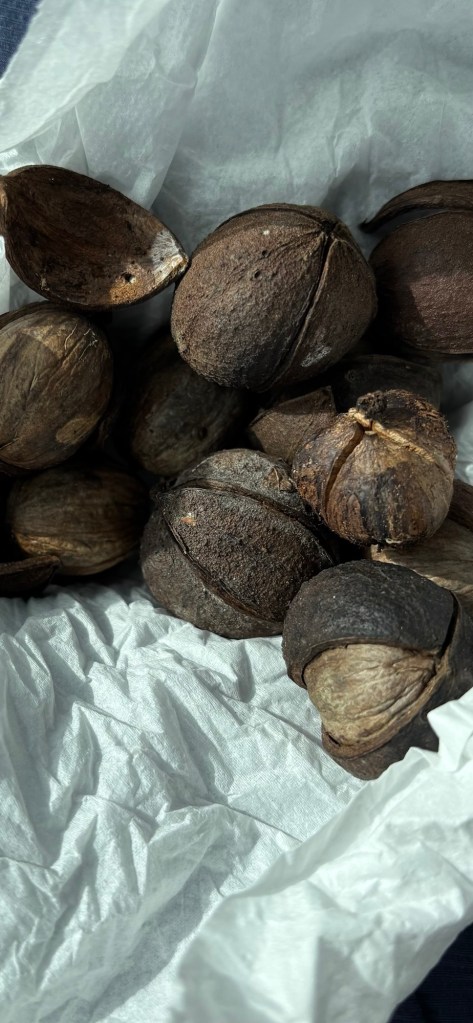
The bark, with exceptionally strong, hard and shock resistant wood can be used for furniture, handles and sporting goods as well as smoking meats. The nuts can be eaten raw or cooked. We watched members of the Cherokee tribe make a traditional kenuchi with Shagbark hickory nuts. The nuts can also be used as a replacement for pecans in recipes as well as made into a milk or syrup. They are nutrient dense with protein, healthy fats (omega 3’s) and carbohydrates.
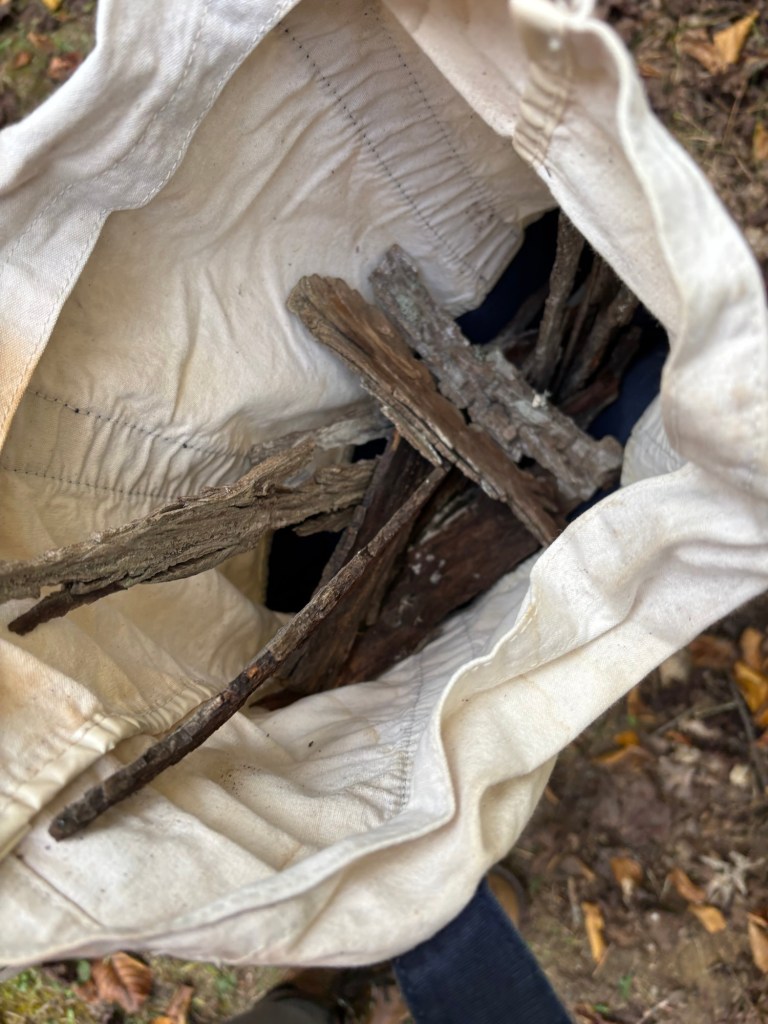
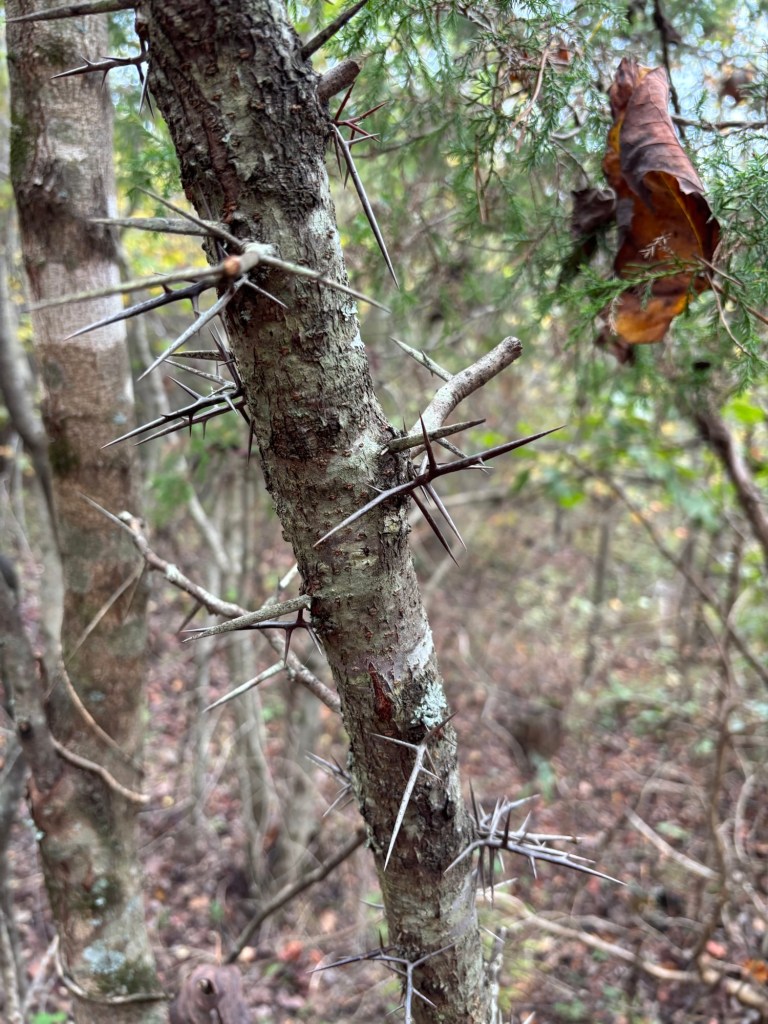
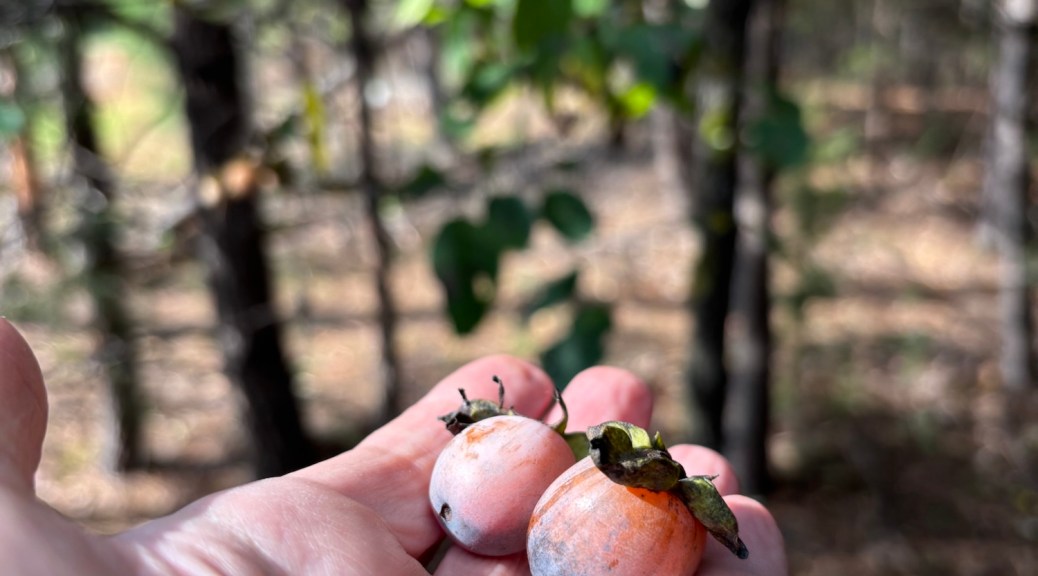
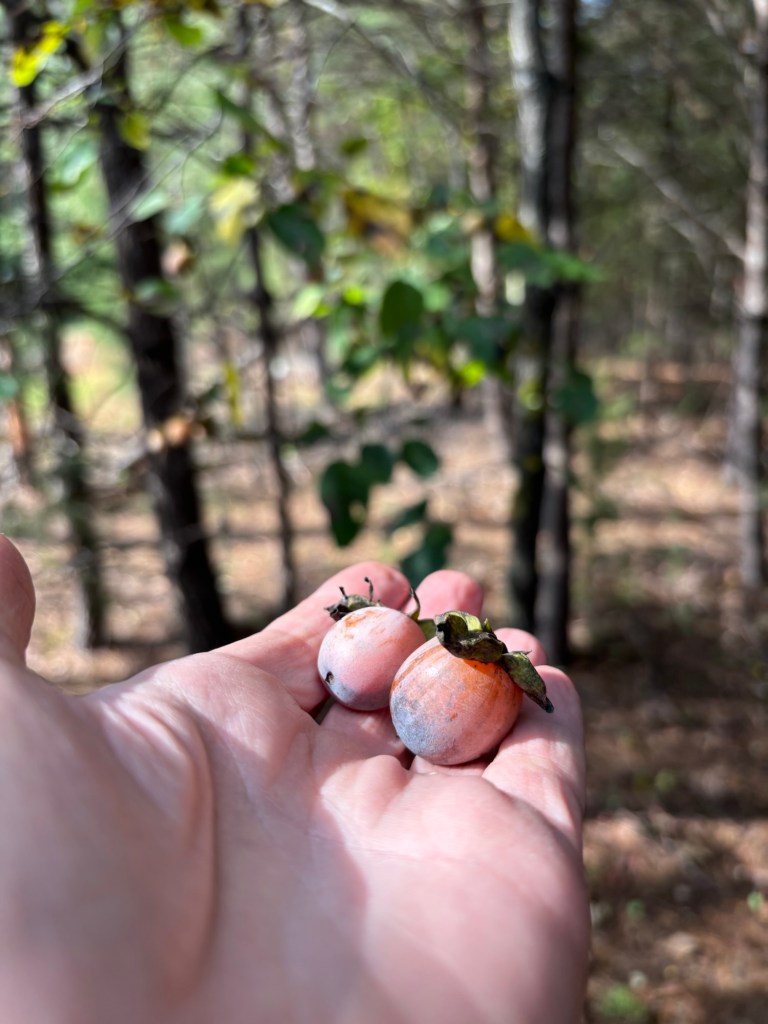
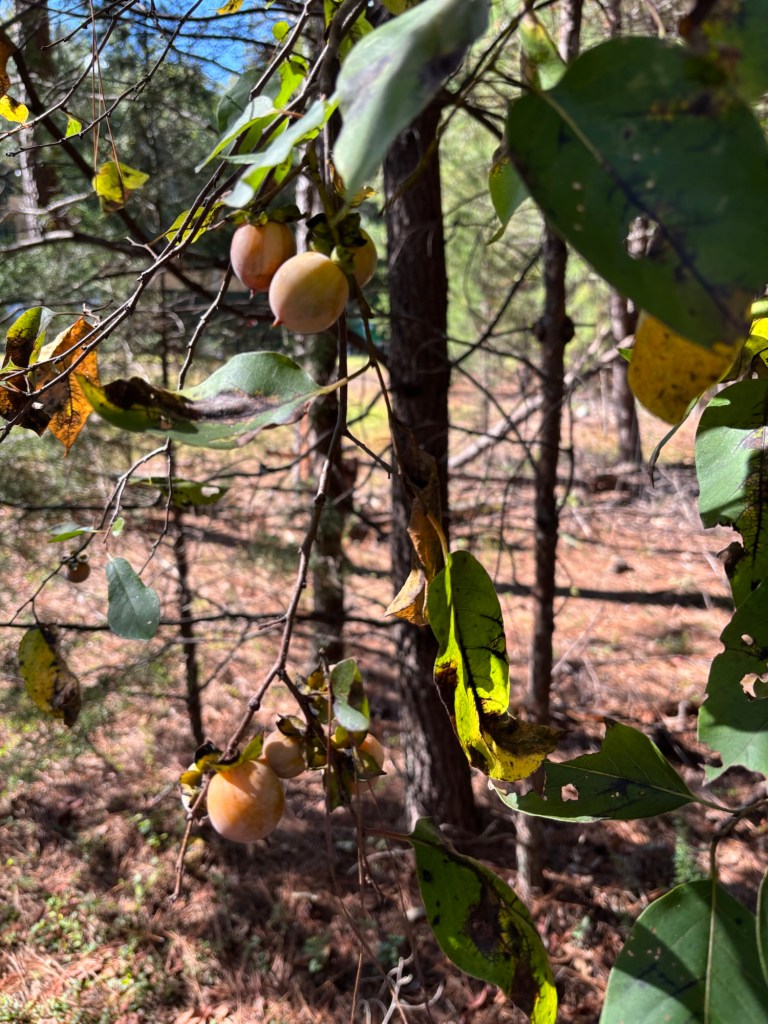
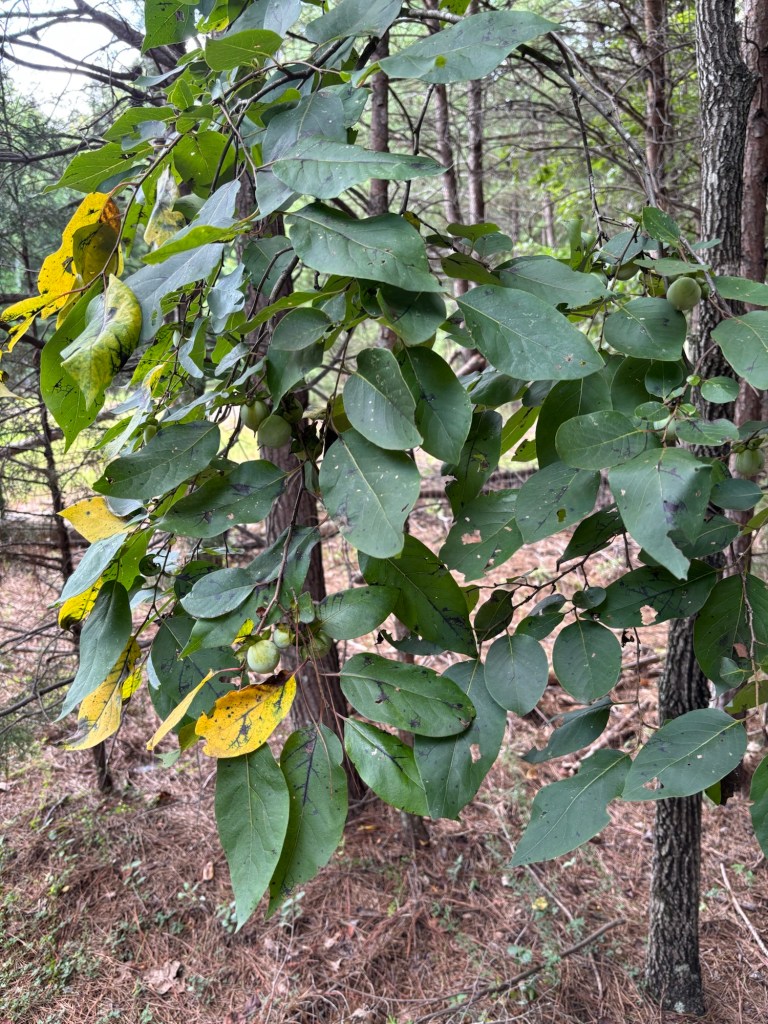
Shagbark hickory bark we collected.Shagbark hickory nutsHoney locust, Gleditsia triacanthos, found at the culvert on the old farm road. Historically, those large thorns have been used as nails in construction. These trees are nitrogen fixers that help to replenish soil making them beneficial for agroforestry and land reclamation. The sweet fleshy pulp from the pods can be eaten by people and animals. We were delighted to find this tree and hope to find more. American persimmon, Diospyros virginiana, with fruit hanging on up high in the canopy.
We’ve gone out to water the newly planted pawpaws, Asimina triloba. They continue to do well. Chris has worked on the lean to and it’s just about ready for the roof.
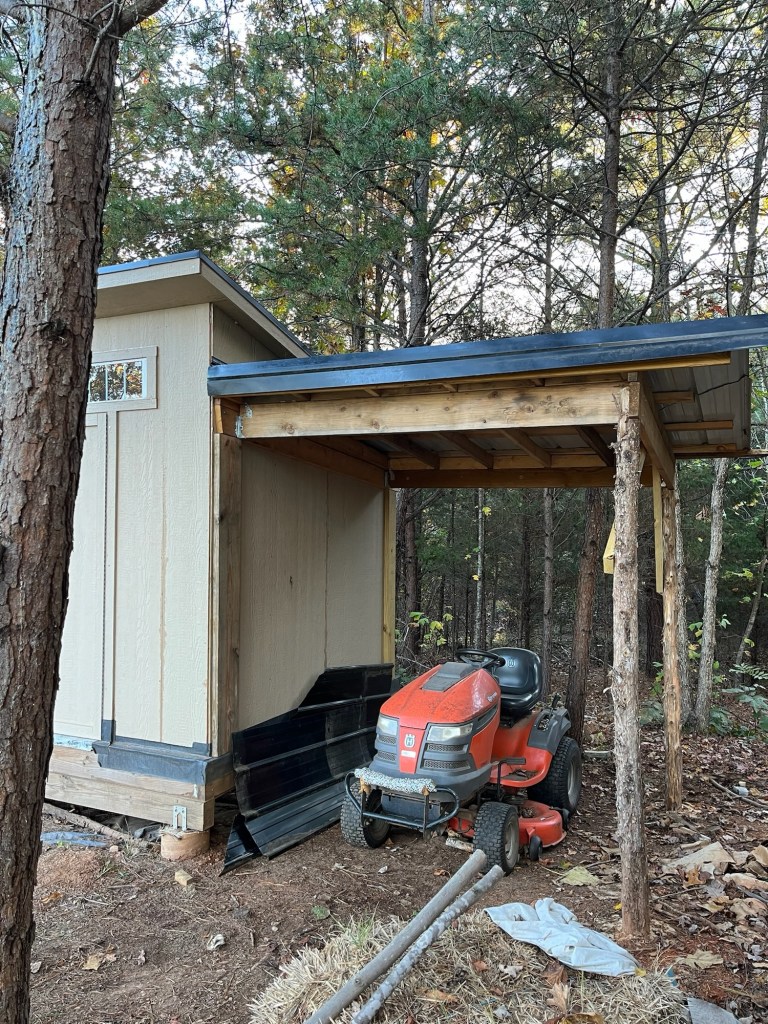
The lean-to connected to the shed will ultimately protect our tractor from the rain and snow.
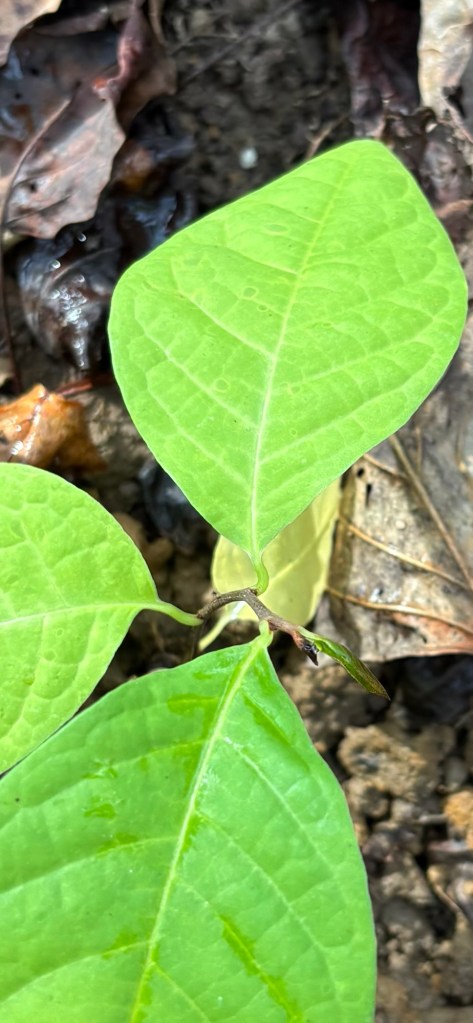
Asimina triloba: New leaf growth observed on a recently planted Rockfish River native pawpaw in the orchard at bottom of North Trail. This was beautiful to see. Hopefully it will be able to harden off before the first frost which typically occurs between October 21st to 31st in Buckingham.
We went over to St Andrews Forest Farm to water the pawpaws and take a walk.
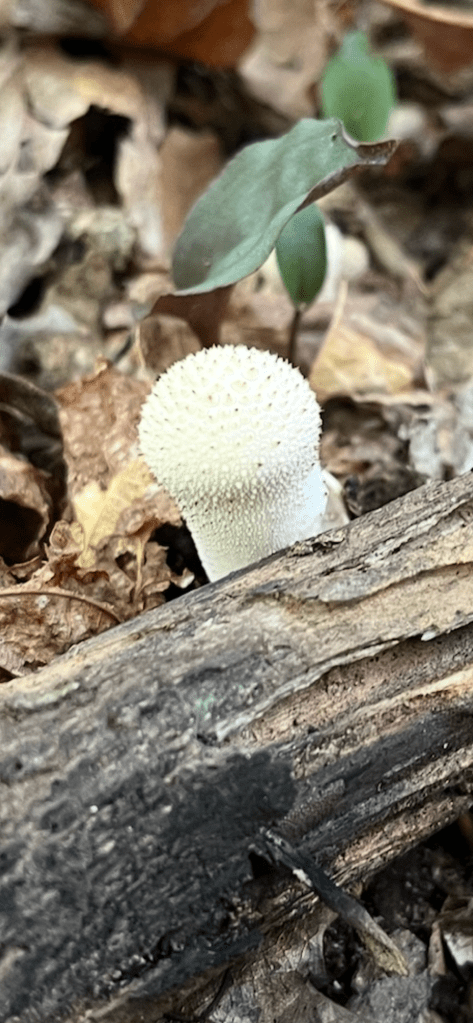
Common puffball. Lycoperdon perlatum.
We watered each recently planted pawpaw and made sure they were looking good. We came around the waterway and approached the orchard from south.
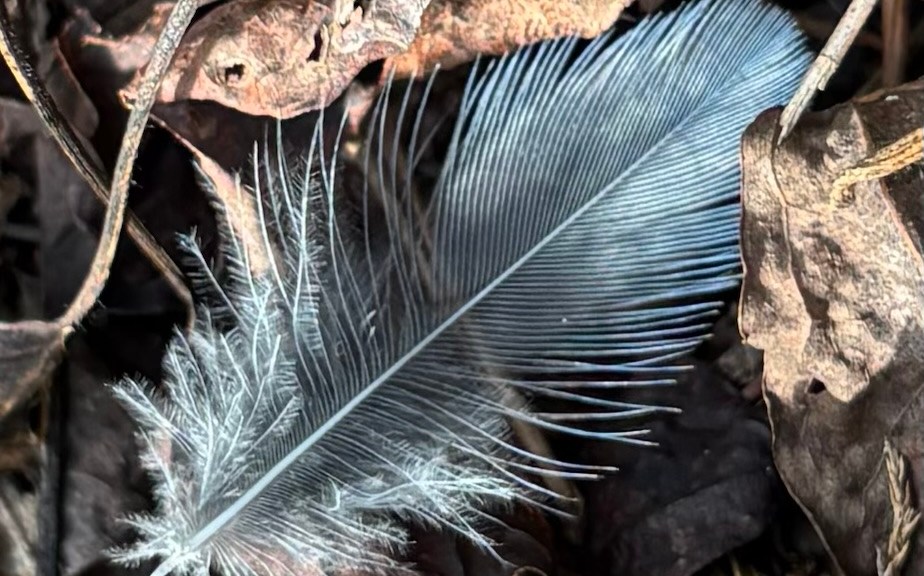
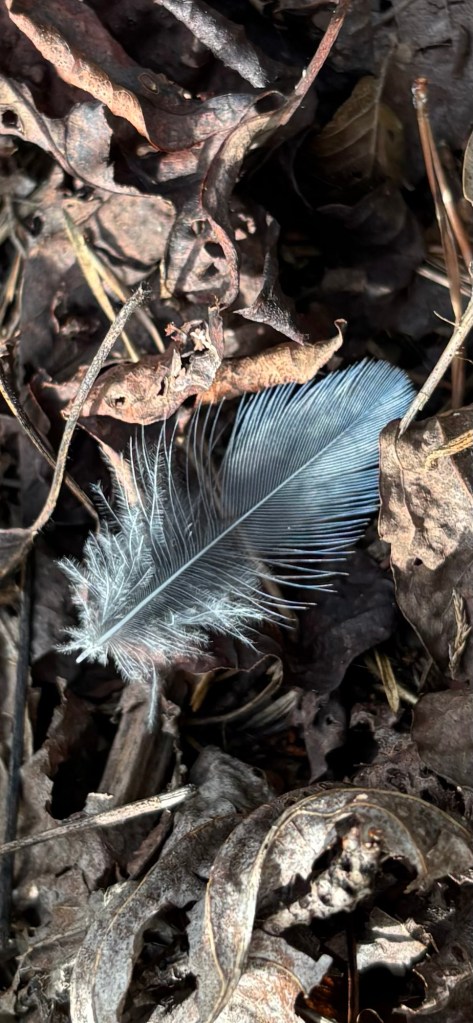
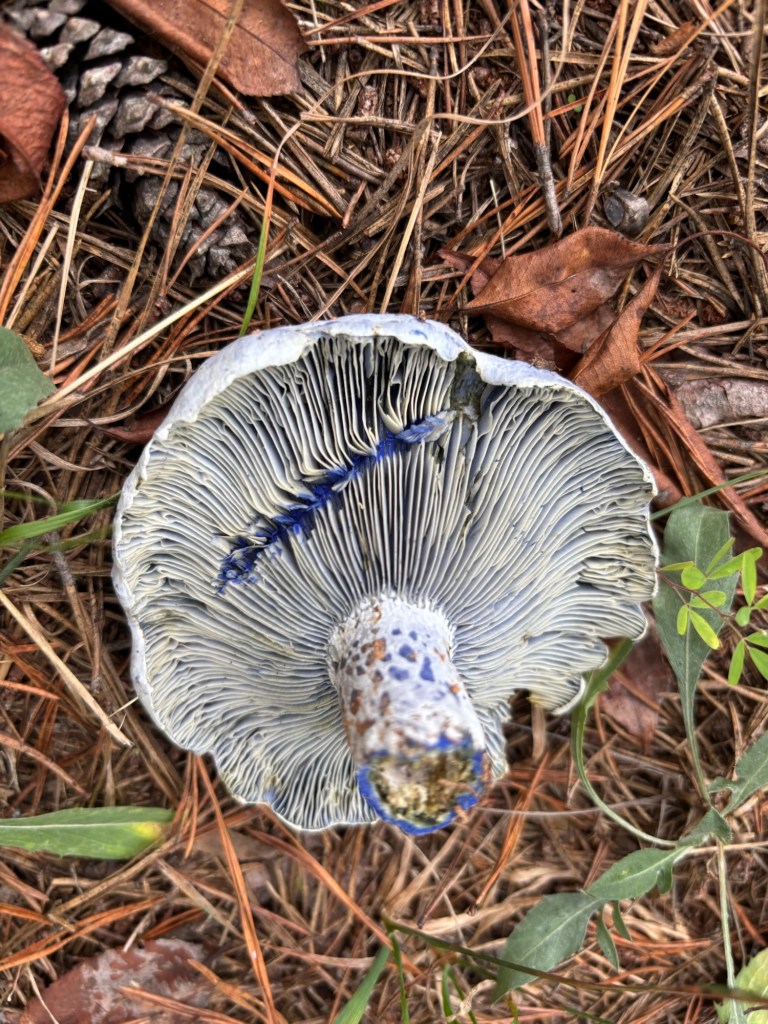
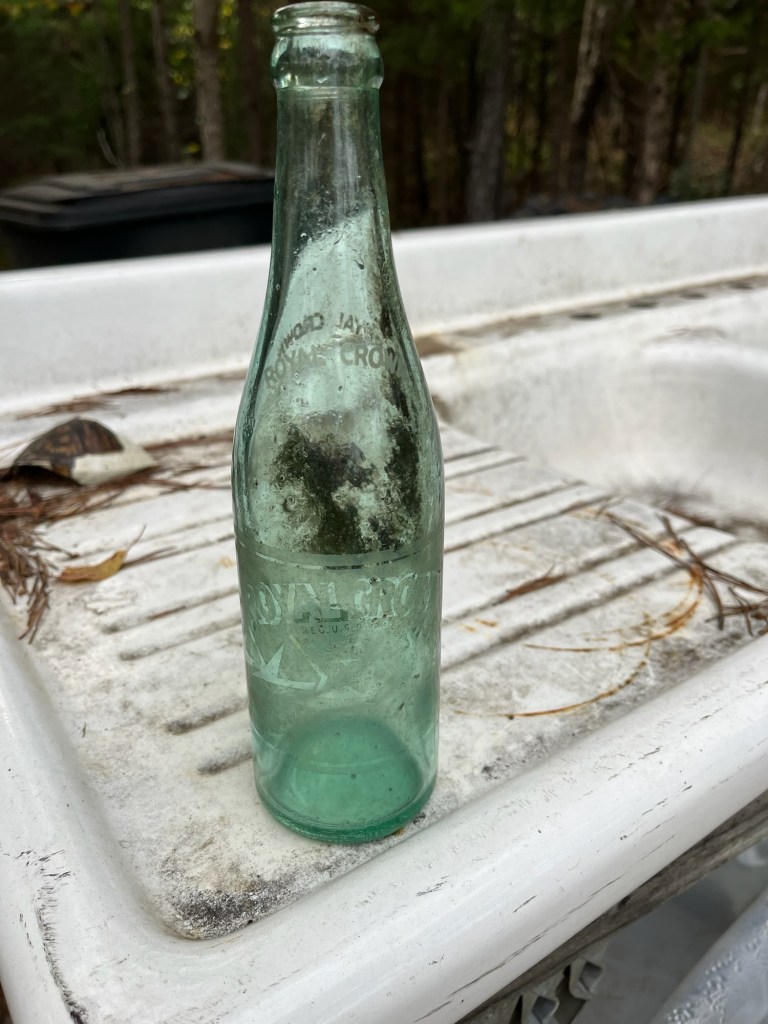
We heard a blue jay calling and following us around the forest. We found this feather. We thought it looked more like an Eastern Blue bird feather than a Blue Jay. Lactarius indigo is a milk cap with blue milky latex that oozes from the tissue when it is cut or broken. It’s edible and tasty. We find it near pines usually. This one is old and bug eaten. Royal Crown bottle found along Three Pine Gully on the north side. Looks to be from the 1930s.
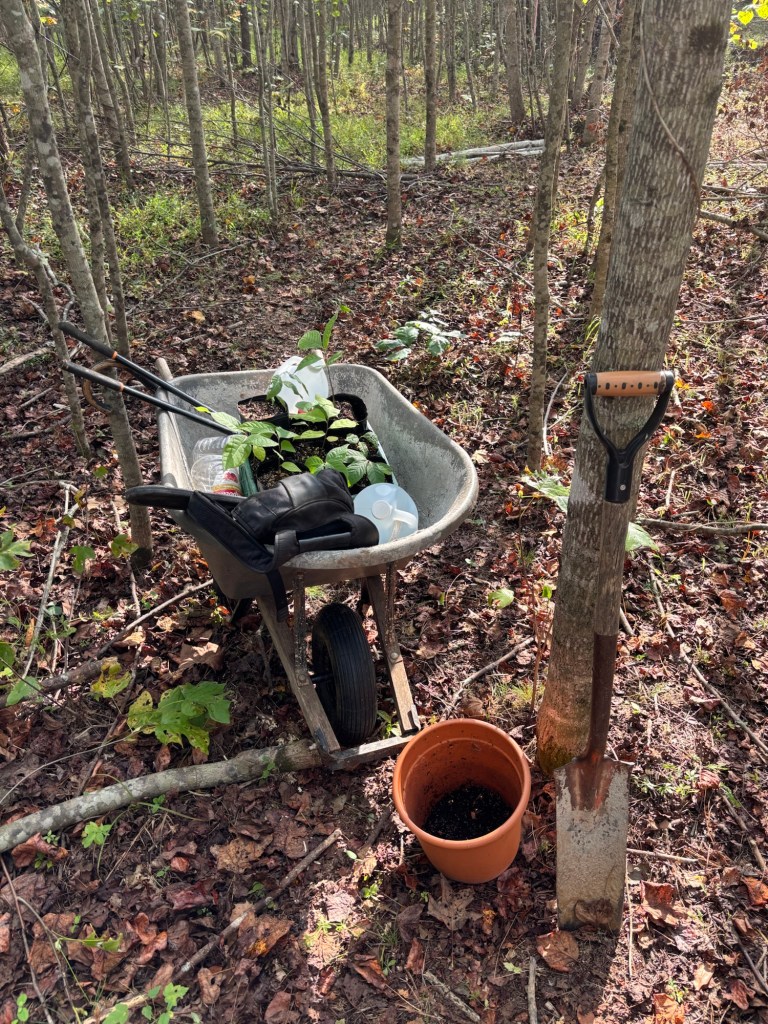
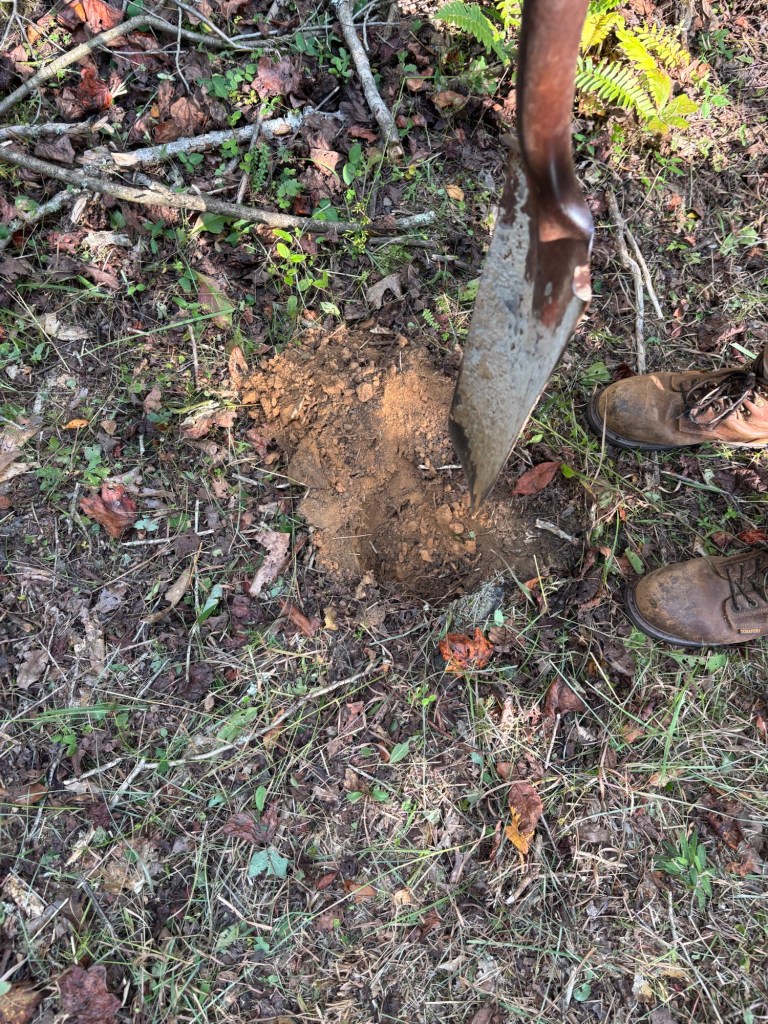
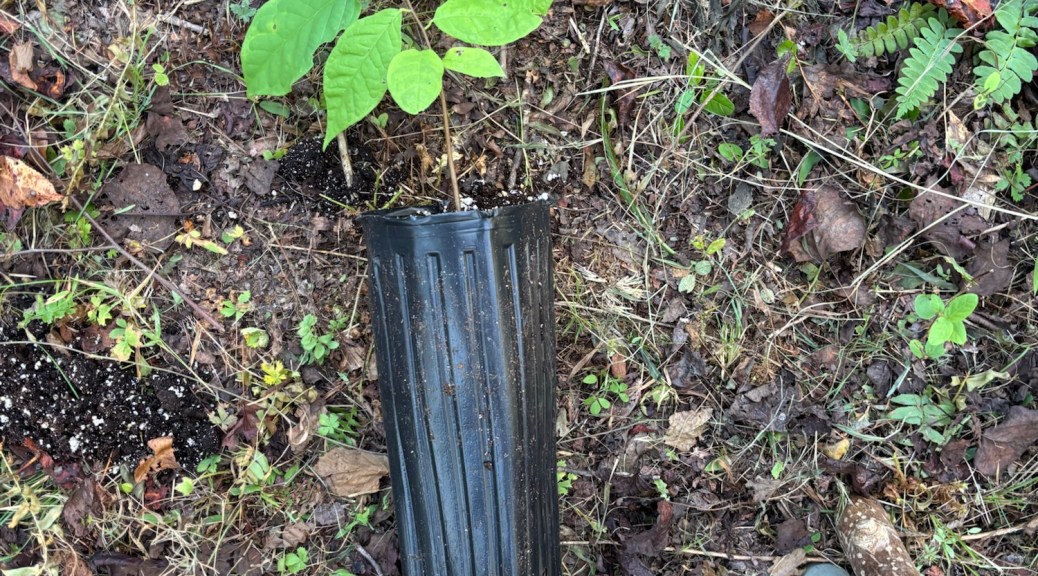
Just 21 more to plant after going out every day and planting 9 or so at a time. The orchard has really turned out nicely at the bottom of North Trail. The earth is red silty loam which is pawpaws (Asimina triloba) preferred soil.
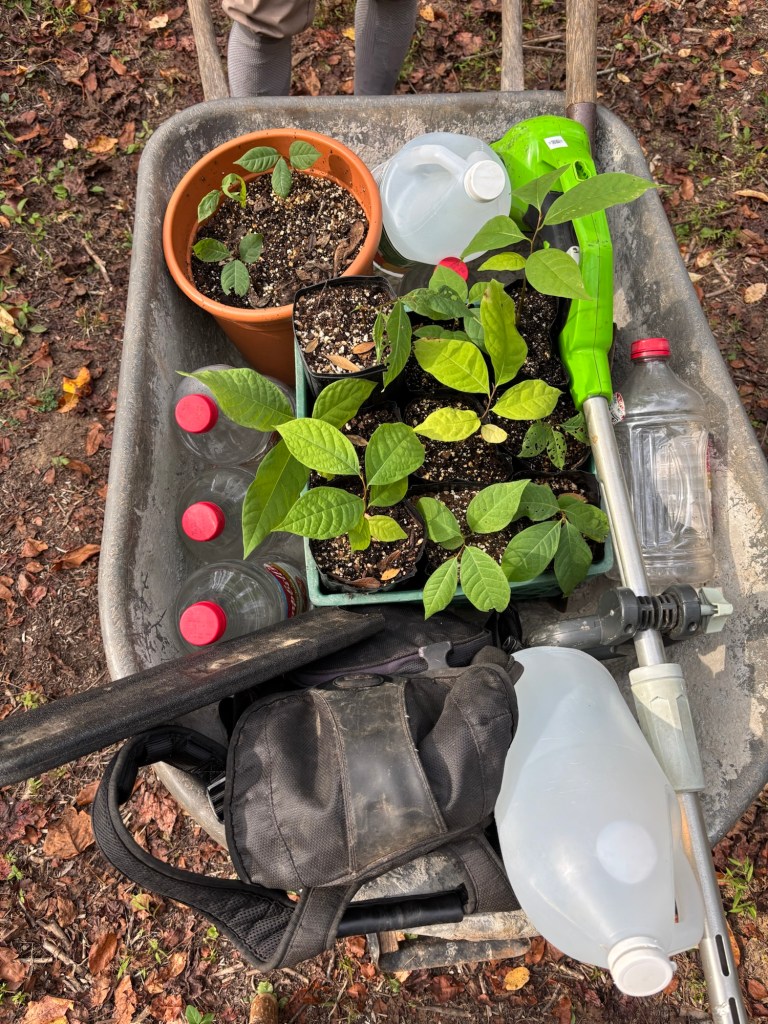
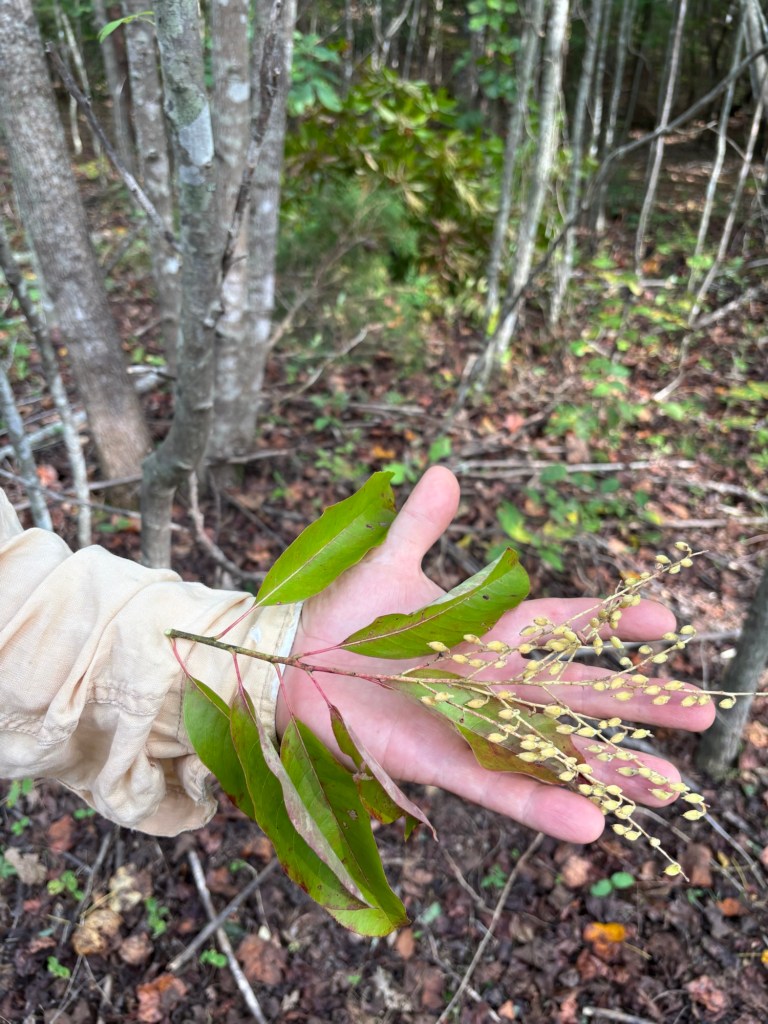
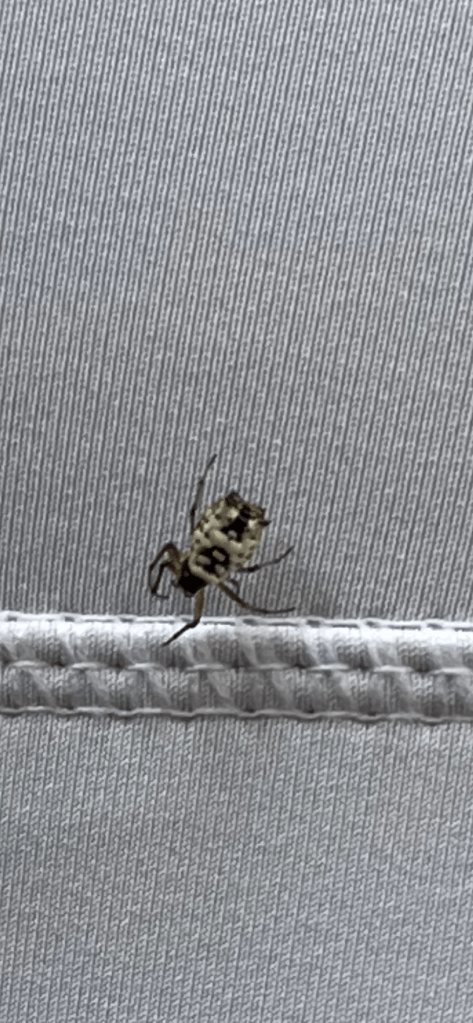
Our wheel barrow full of the supplies we used to clear spaces and plant our pawpaw seedlings.Red silty loam near the wet weather gully at the bottom of North Trail. Tasty persimmon to snack on finally. A branch of Oxydendrum arboreum, Sourwood tree. Micrathena mitrata, White micrathena, is a species of orb weaver. They build their webs across the trails.
Finally got a good soaking rain at the farm. The ground has softened making planting much easier.
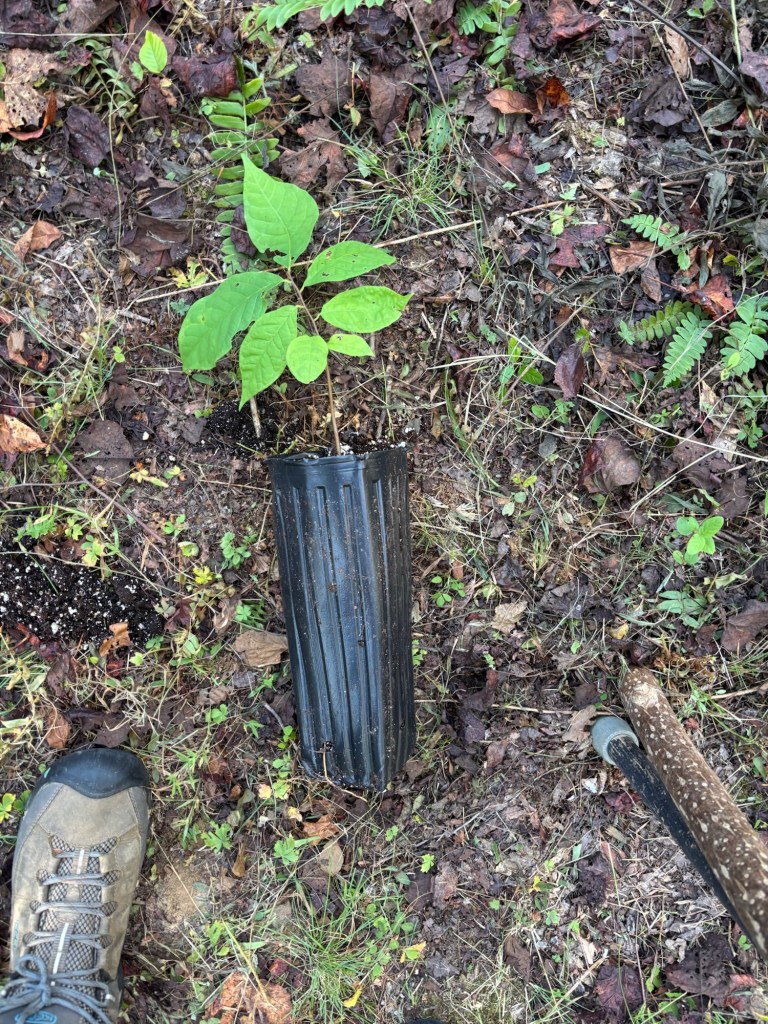
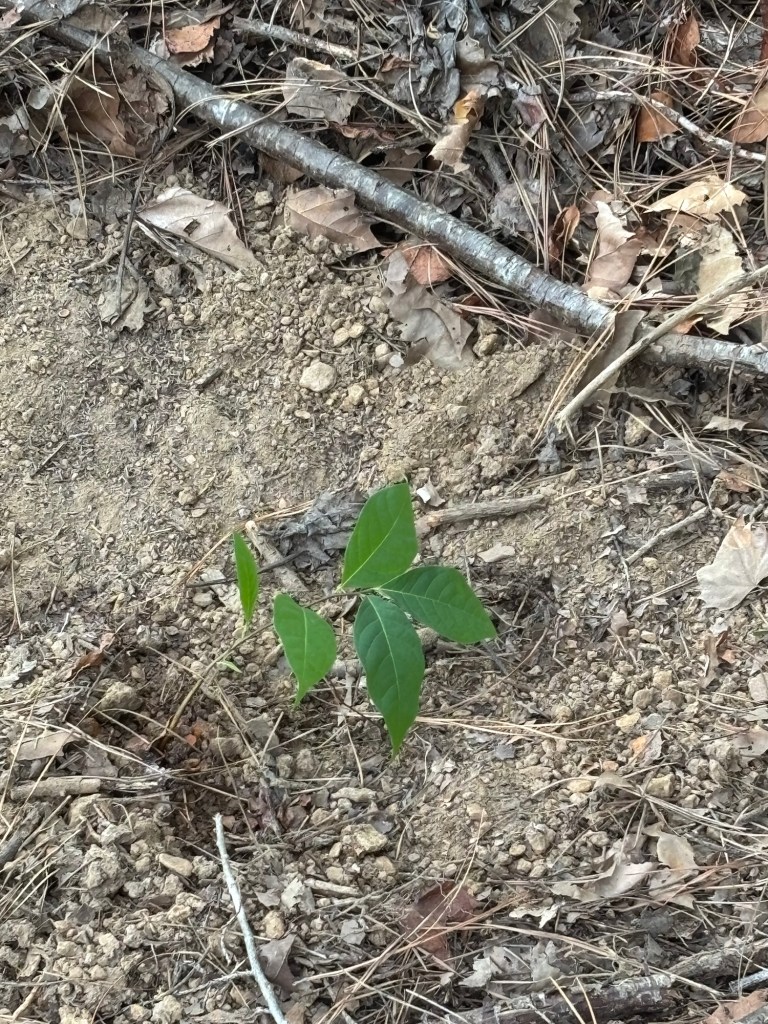
So far, we have planted 42 pawpaw trees. Yesterday we planted two more seedlings from Rockfish River natives in the main orchard and seven from select Edible Landscaping fruit. We are a bit less than halfway done but we are happy to get more in the ground later today while the earth is still soft from the recent rain. We checked on all of the previously planted seedlings —and a couple had been dug up a bit but the roots appeared intact so we replaced the dirt and watered them back in and hope for the best.
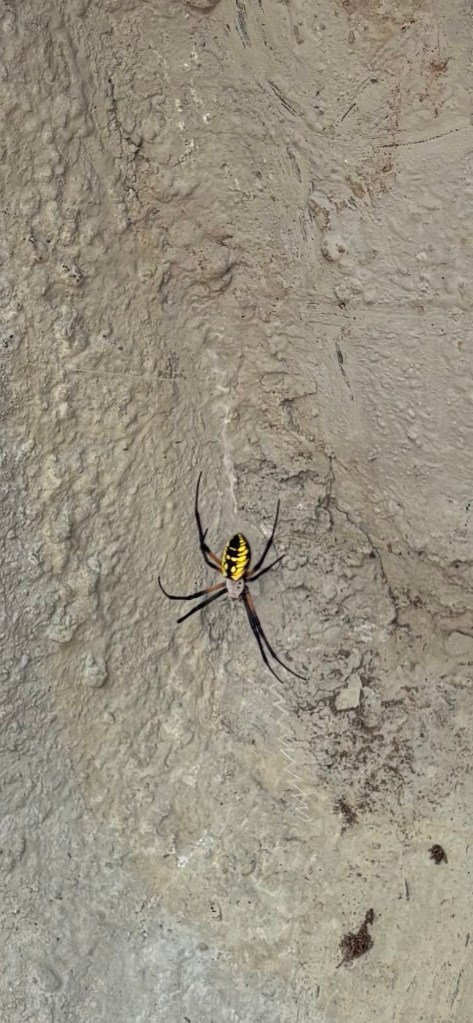
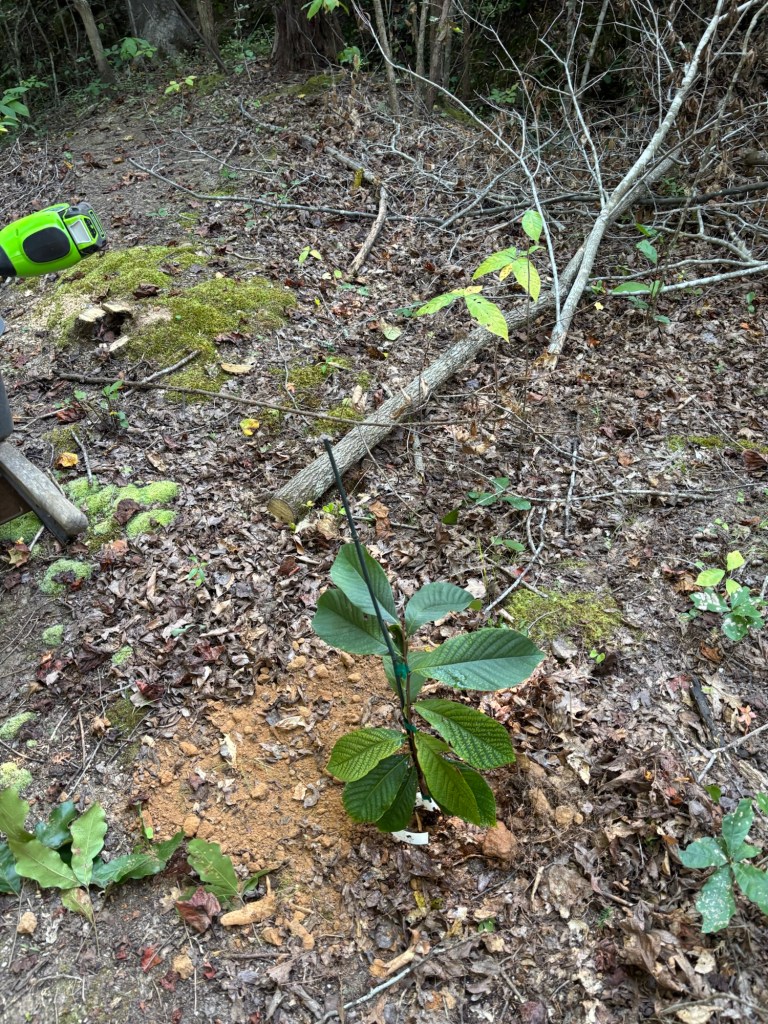
Nine seedlings we planted yesterday in the orchard at the bottom of North Trail. Persimmons getting closer to ripeness at the top near the driveway. Taken from the Pawpaw Peninsula looking towards the main Pawpaw patch of SAFF wild native trees. They are going dormant for the winter. One of our seedlings. They look so pleased to be in the ground finally. Because of the draught, we were going to wait until spring to plant them but are glad we opted to get them in the ground now. They look awesome.Argiope aurantia, Yellow garden spider, found up top next to shed.
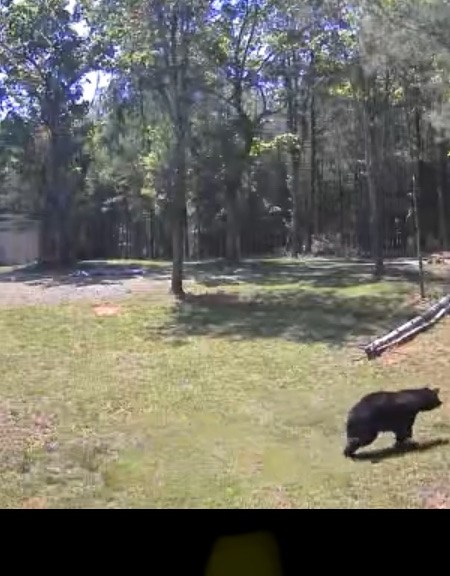
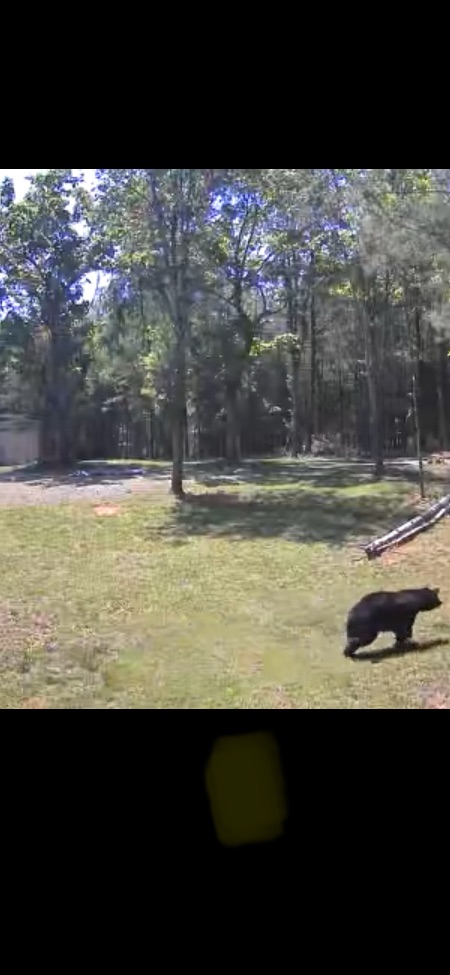
A third year female black bear runs up to the clearing from North Trail on May 20, 2025.
We had seen bear scat multiple times all around the farm and last May it was confirmed when she ran in front of our farm cam.
We had just moved the camera to a new position and were able to capture a three year female black bear on video as she ran pretty fast through the main clearing up top.
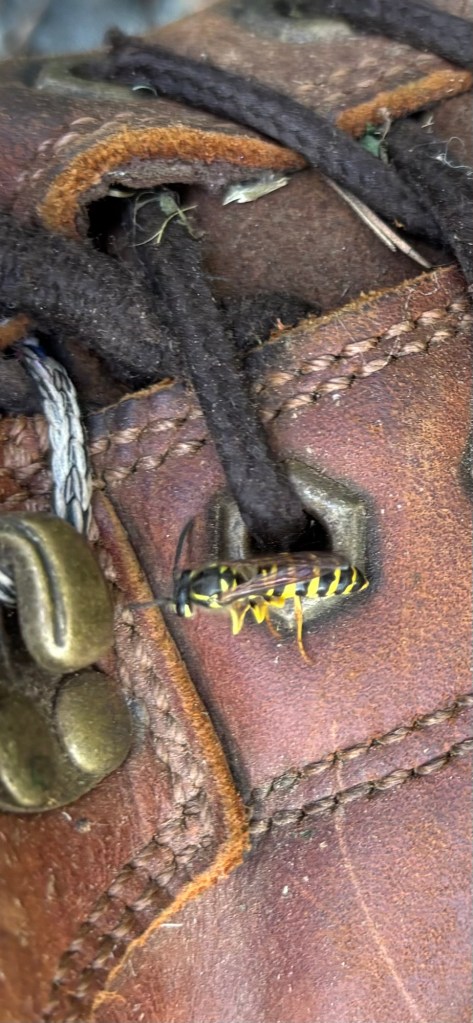
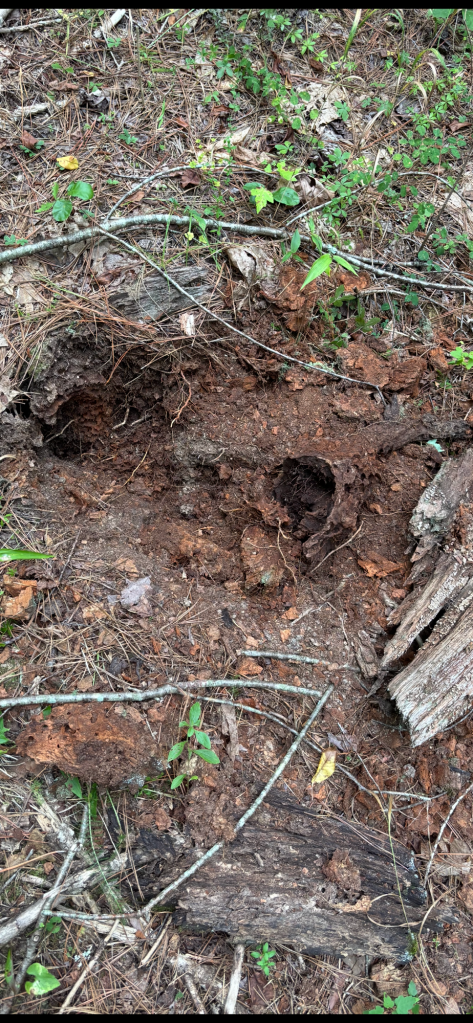
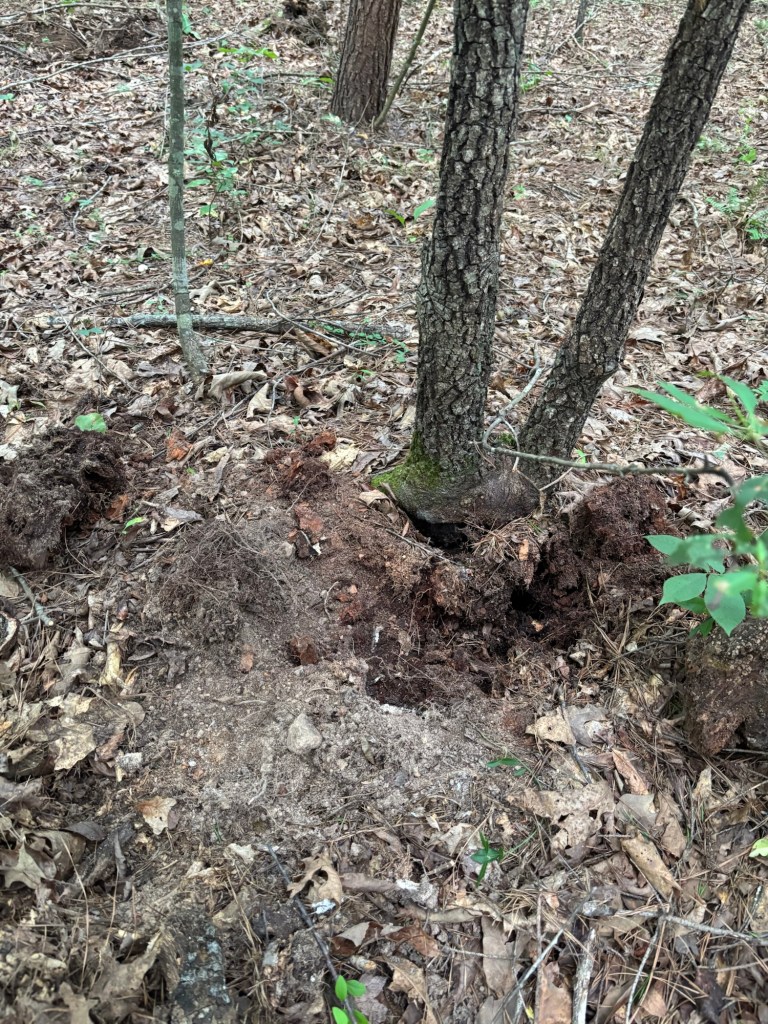
We continue to see evidence of bear activity and we imagine it is she. This past month we began noticing old tree stumps destroyed and large pieces of quartz turned over. We immediately suspected our bear was looking for insects to eat. The first we noted was in the spring along the back line on Chanterelle Hill Trail. A huge ant hill was dug up and excavated. Then about a month and a half ago, we saw all along the north property line she had dug up old stumps. At one we saw yellow jackets looking disturbed.
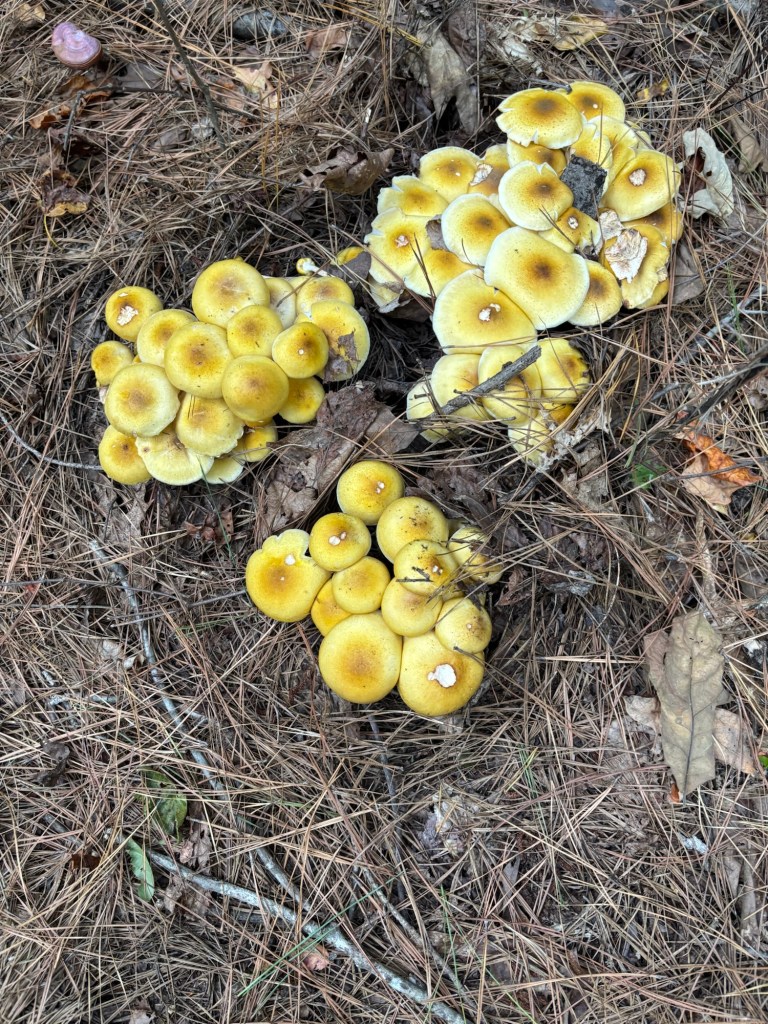
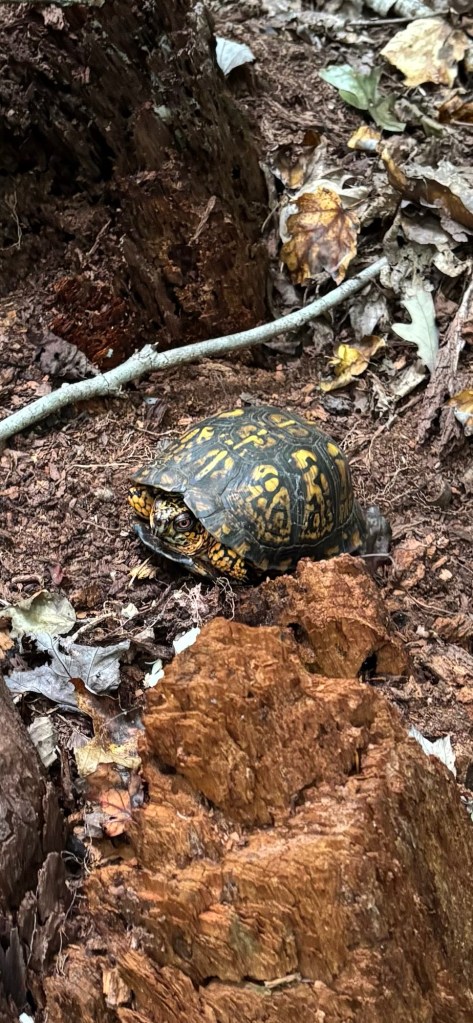
Vespula maculifrons, Eastern yellow jackets. This creature is not to be messed with. I wonder if this was what our bear was running from through the top clearing. A stump disturbed by a young bear looking for termites or ants to eat along Amanita Way.Stump excavation along Northmost Trail. It was a hungry bear who worked hard to find everything she could to eat this summer in the forest. Just last week we found these honey mushrooms along Armillaria Way. Either the bear, deer or one of our Eastern box turtles, Terrapene carolina carolina, came along and ate it before we got back to collect them. Caught in the act! Our Eastern box turtle eating some mushrooms along the bottom creek on a stump that the bear had ransacked looking for bugs to eat.
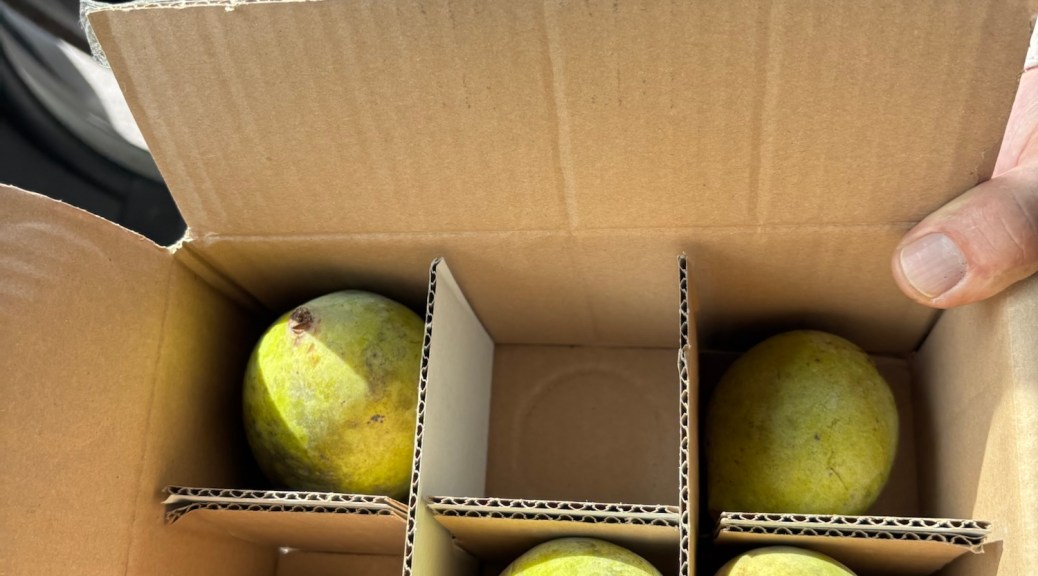
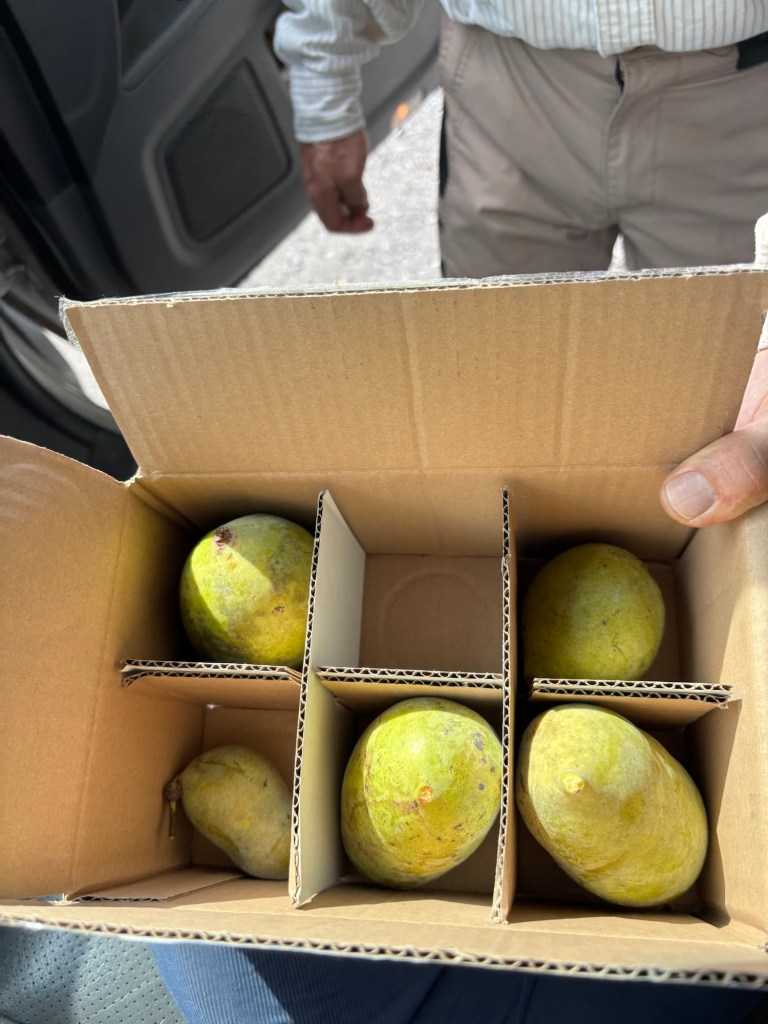
Pawpaws we foraged under Edible Landscaping’s Sunflower and Mango cultivars in Nelson County Virginia on Sunday.
We went out to the farm on Friday and Sunday to get as many pawpaws planted before the rain comes. Thunderstorms and rain are forecasted to get started late tonight and continue until Wednesday afternoon. We planted 17 on Friday: Five in the orchard (a Kentucky State University Chappell and 4 seedlings) and another five alongside the Shenandoah and select seedlings that we planted last year. We put a Mango cultivar and four seedlings we started from foraging. Then we planted 2 on the Pawpaw Peninsula (an Allegheny cultivar and Wild native seedling from a Rockfish River foraged pawpaw). After that we put two by the pawpaw patch at the bottom of Ridge Trail and another two on the left side of the large pawpaw grove. We walked up Ridge Trail and put another wild pawpaw seedling from Rockfish River foraging near the small colony of native pawpaws growing along the south wet weather gully.
Wild native seedling planted up top.
We were exhausted after this. We had to carry water for the trees after planting in our packs, carry our equipment and the trees themselves all around the farm. It was hot and the ground was hard and dry for digging. Chris was battling each hole. (We are looking into finding a lightweight device to dig our holes, as in an auger.)
Allegheny pawpaw cultivar on the Pawpaw Peninsula with our SAFF native wild pawpaws. The wild ones are yellowing leaves and going dormant for winter since it has been so dry.
Then we went back out on Sunday to water what we’d planted Friday and put a few more in the ground. We planted 5 up top in the main clearing along the driveway and put two along the South Gully on Dan’s Folly. We put one more across next to a lone wild SAFF native pawpaw on Fern Trail. From there, we walked down the Gully and watered our select seedling planted a few days before. We were happy to see they all were still in the ground (last year, the deer ate them and pulled them out of the ground a day after we planted so we almost expected the same.) They were glowing in fact. They all appeared to be very happy in their new locations. We watered them some more.
We have another 80 or so to plant and hope to get out to the farm again soon to get a few more in the ground.
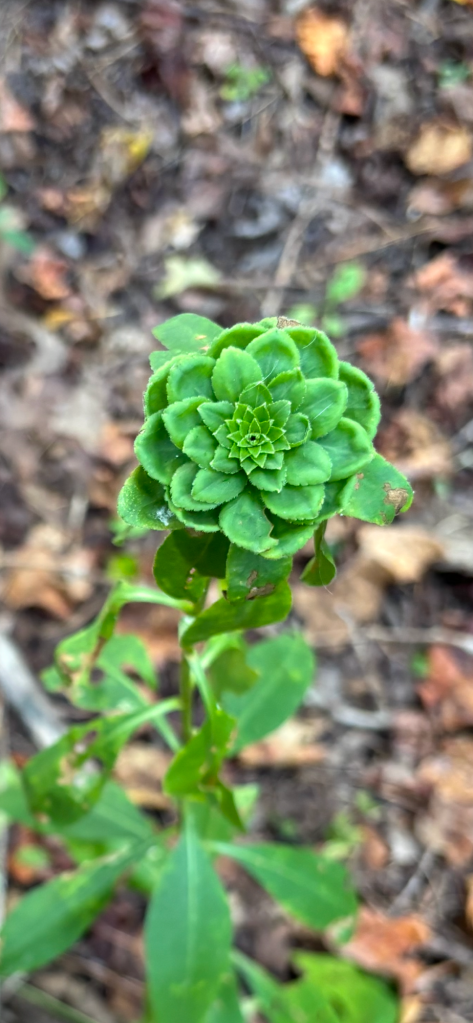
We found this lone flower along Mary Banning Trail. We aren’t certain but are leaning towards a type of Spurge. We will continue to observe it in order to further identify.
Orchard Trail taken in September in the lowlands at St Andrews Forest Farm
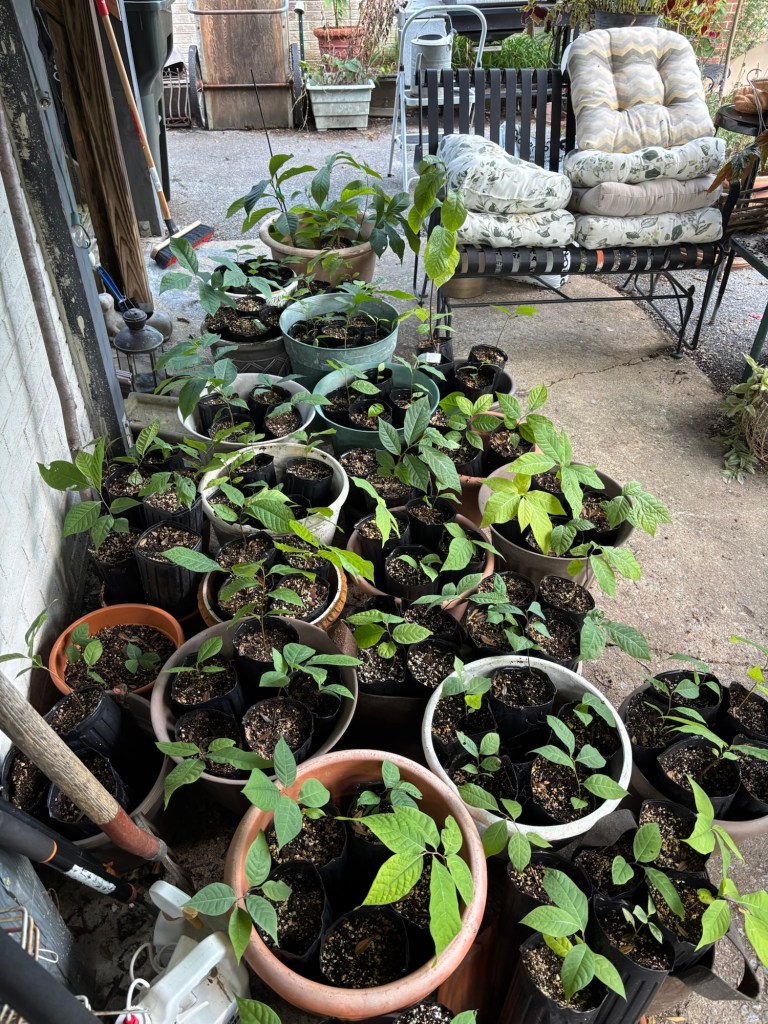
It’s been far too long since we have reported on events at the farm. Cooler temperatures and a few trees with bright yellow and red leaves remind us fall is here and also that we could use a good soaking rain to soften the crisp dryness of the ground and plants. Our pawpaw seedlings are waiting, with a few cultivars we collected from Edible Landscaping in Nelson County Virginia, to be planted out at the farm when a rain is expected next, we will plant them just before.
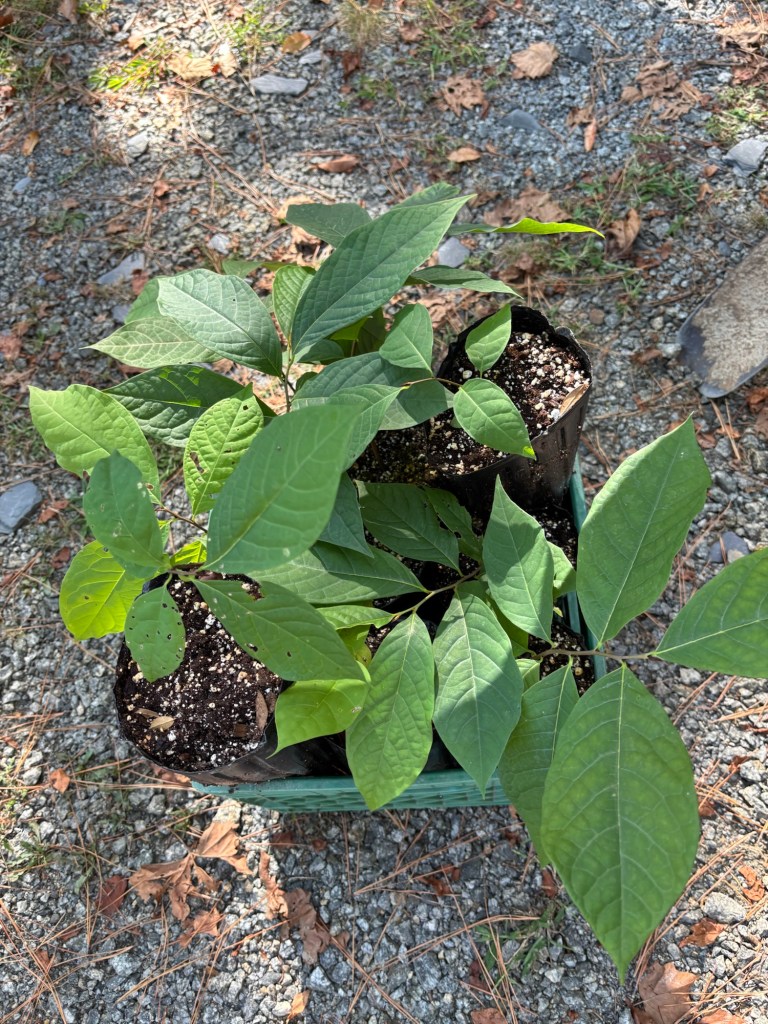
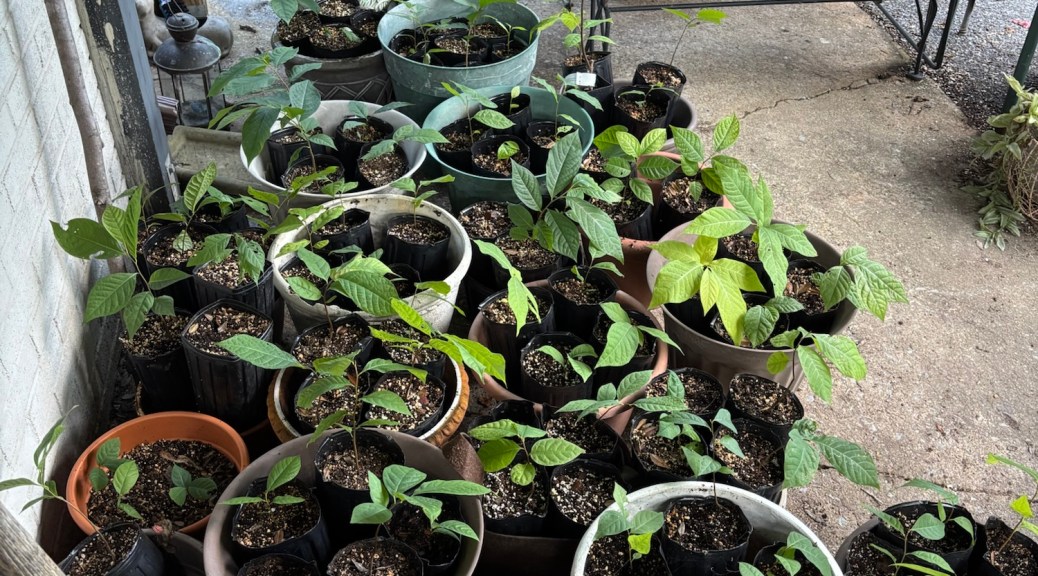
Over 100 pawpaw seedlings and a few grafts of Mango, Allegheny, KSU Chappell cultivars. We also have quite a few select seedlings from Edible Landscaping.
We hope to plant some around the existent wild native pawpaw patches that we have. These trees are responding well to increased light as we cut back understory trees competing for sunlight under the giant oaks maples and beech. They have greened this year and produced more branches and leaves. We only had a few flowers and one tree that set fruit. This dropped after the second week even though we had good rains in the spring. We are feeding the native trees compost from our home bin. With the addition of the new dna from the seedlings and grafted cultivars we hope to plant within the next few weeks, we hope to see increased growth and fruiting.
We have been busy planning our orchard and structures, collecting seeds from native and select varieties, trailblazing to give us more access to SAFF. And we have also been mushroom hunting of course! We have added a lean-to on to our shed for the tractor.
American Persimmon trees up top fruiting nicely in the forest.
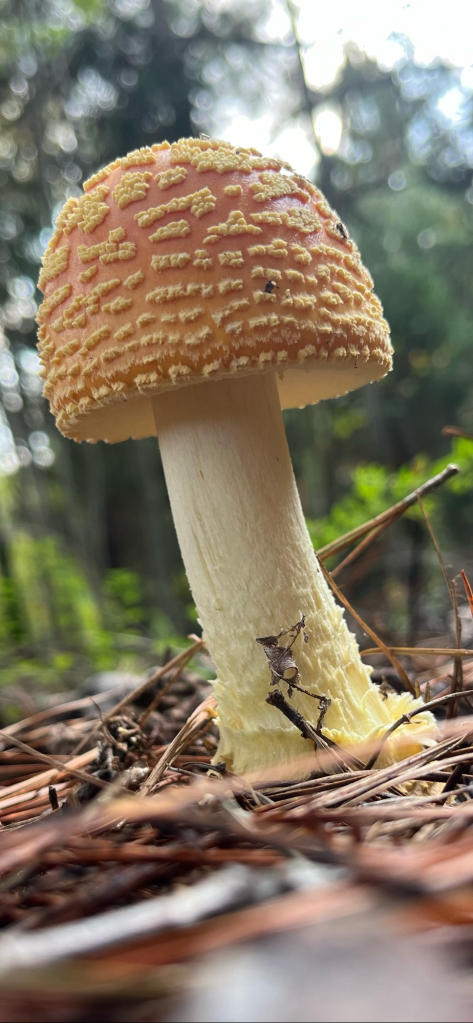
Amanita persicina found in groups throughout the farm near pines and oaks.
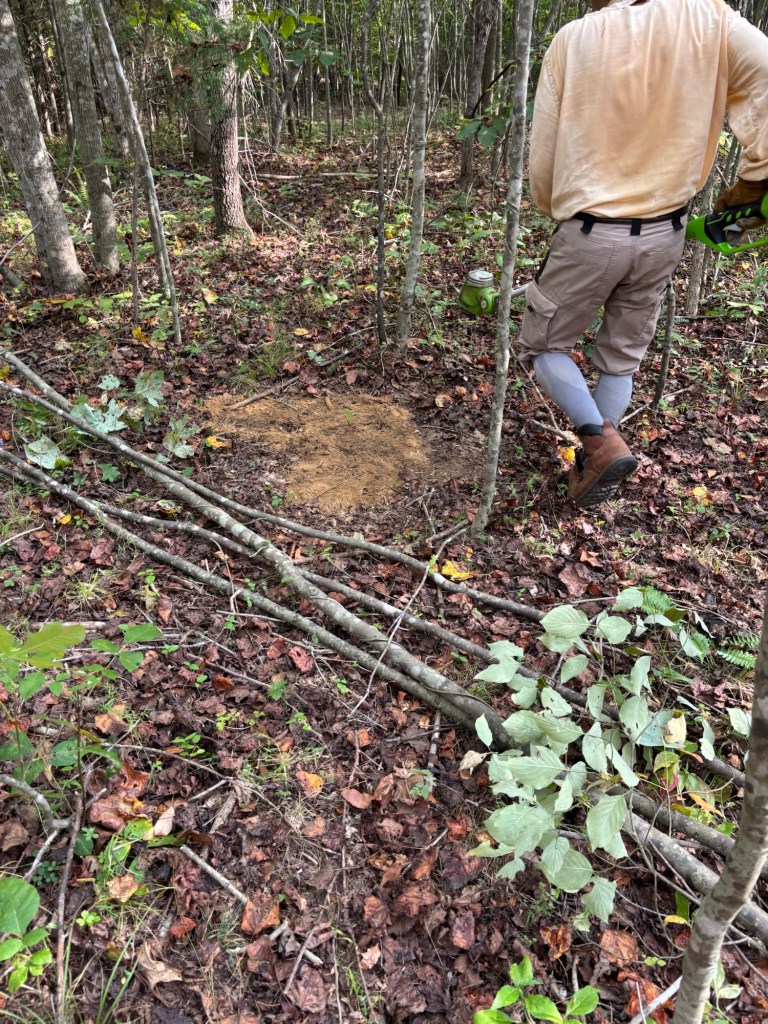
We went over to put up boundary markers and no hunting or trespassing signs as well as forage for mushrooms. Hunting season begins Saturday October 5th (early archery season starts). We took down trees growing too closely together and used the trunks as a natural fencing inside the tree line along the road frontage to discourage hunters from chasing deer onto our property. We’ve also been told hunters run dogs through properties to scare up deer. We are trying to create a hunt free zone, except for mushrooms, and to keep anyone chasing animals off our land. We also will put up several more cameras later this weekend. We had technical issues yesterday but worked it out this morning.
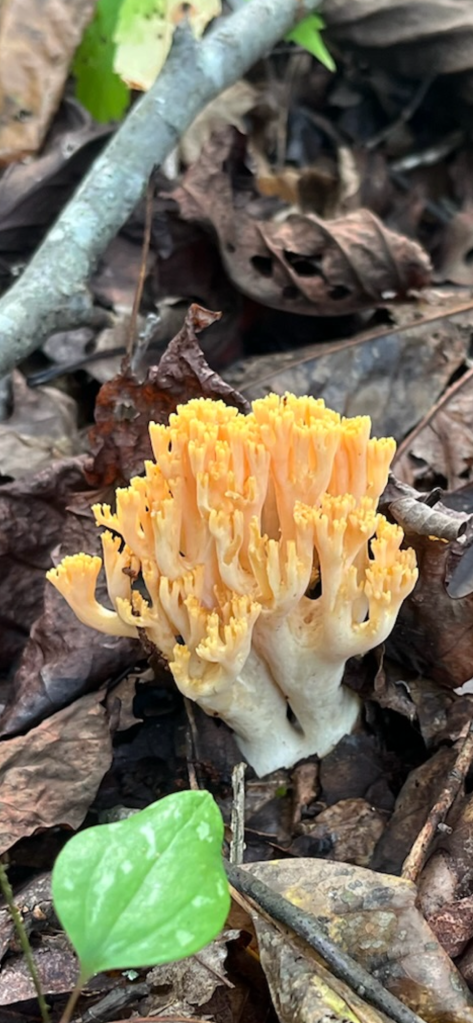
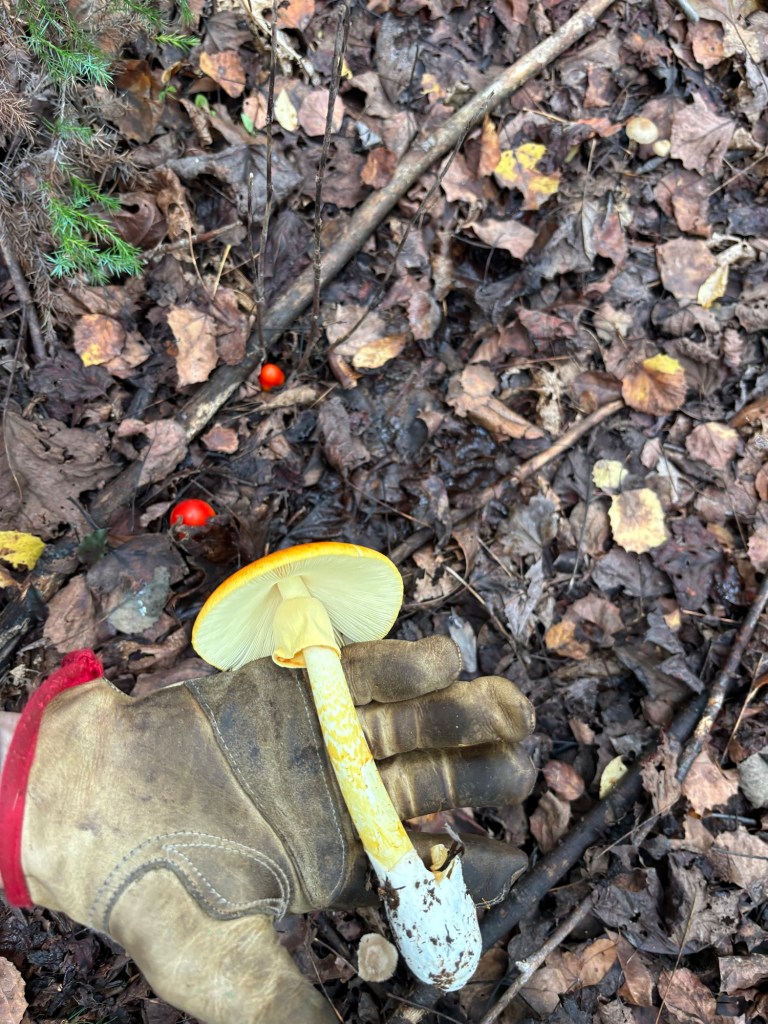
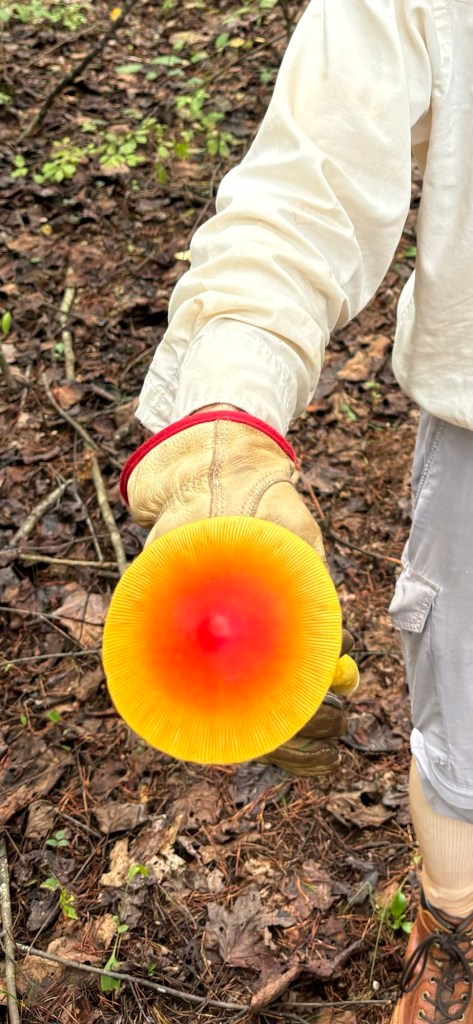
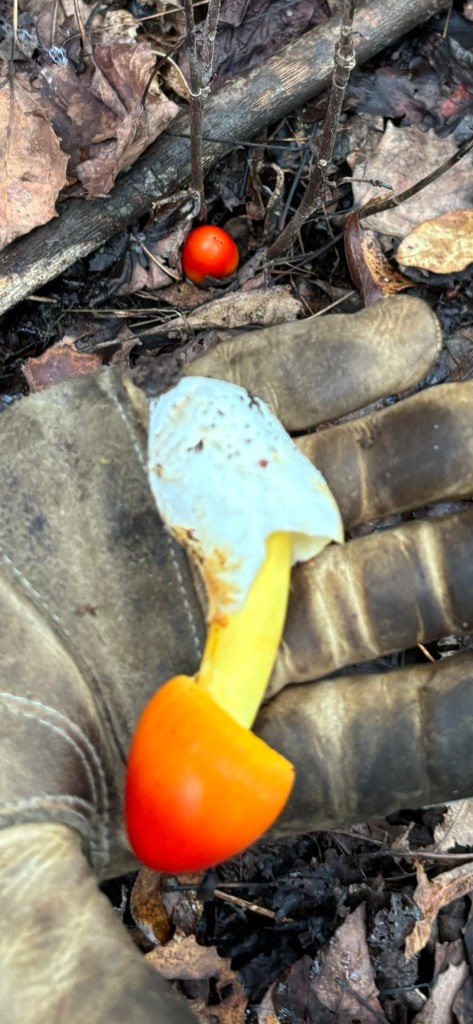
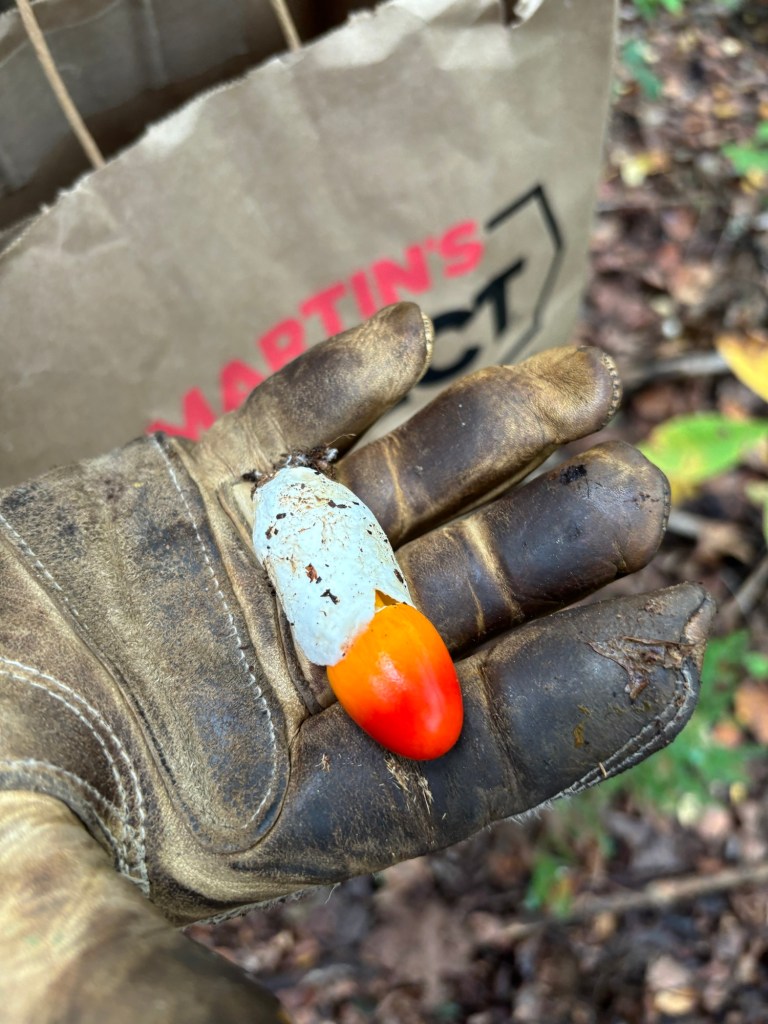
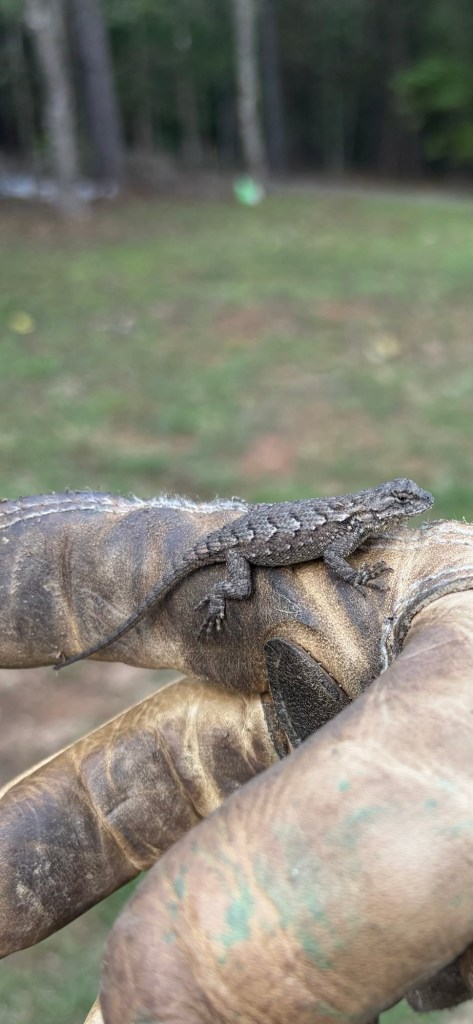
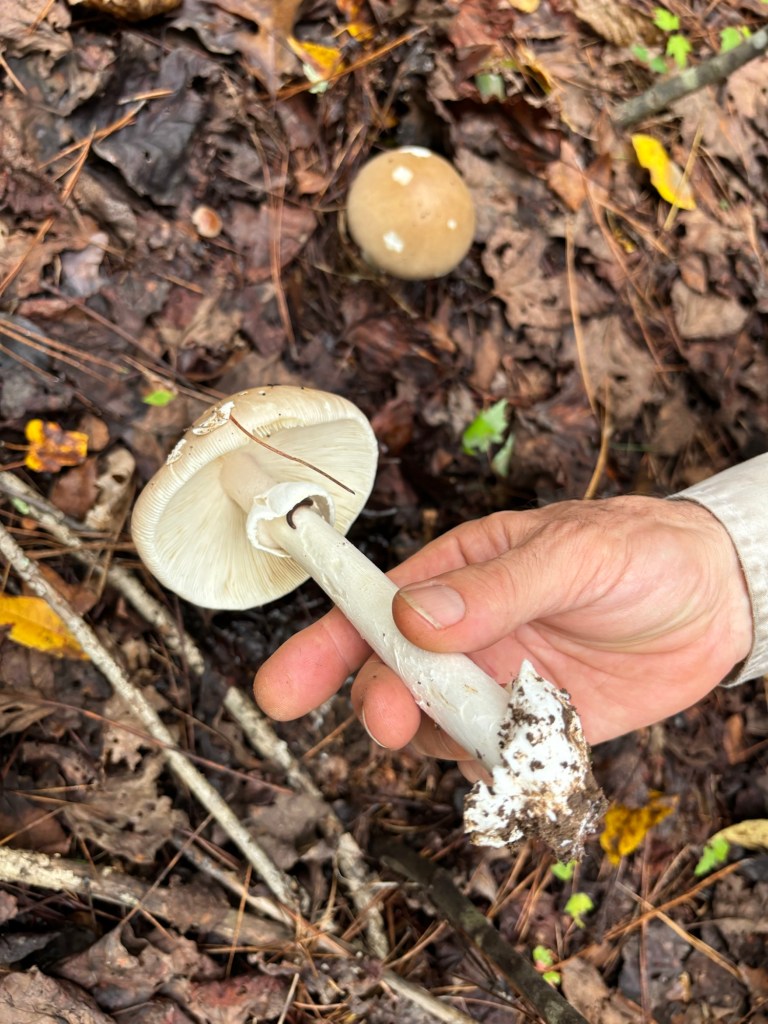
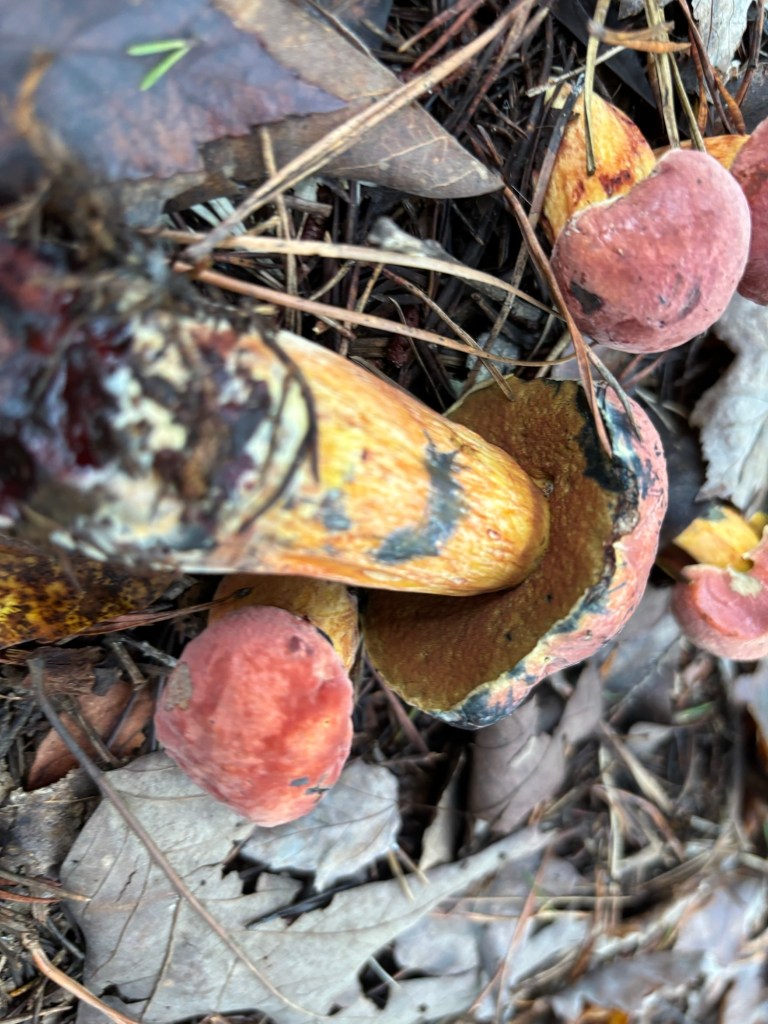
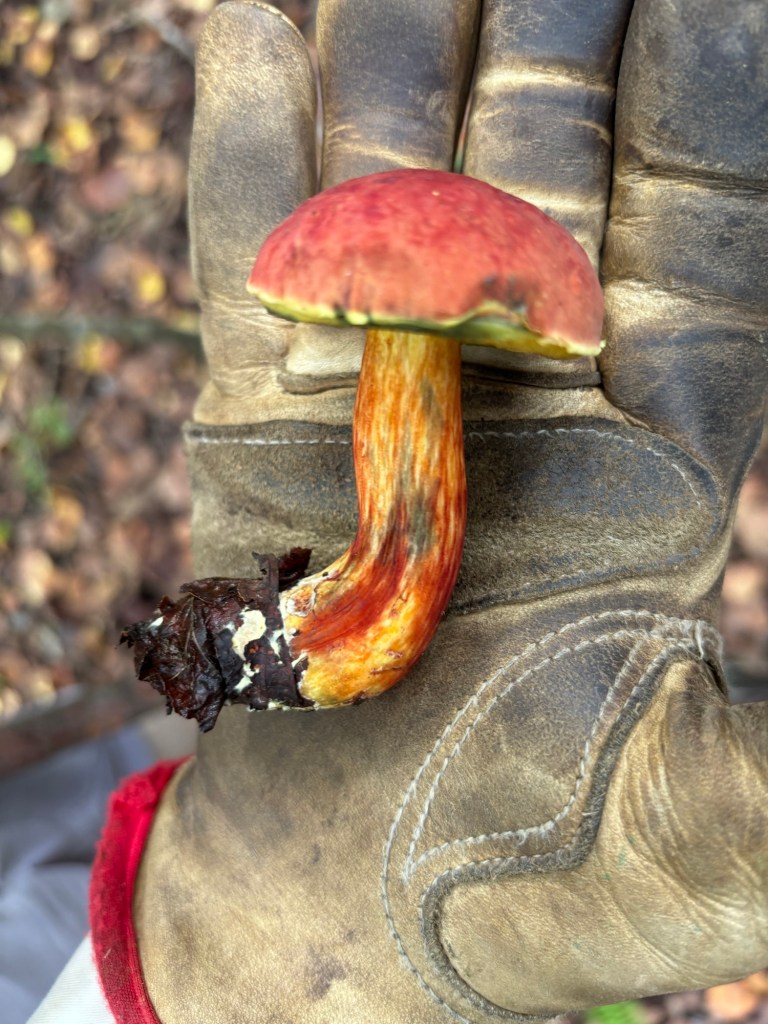
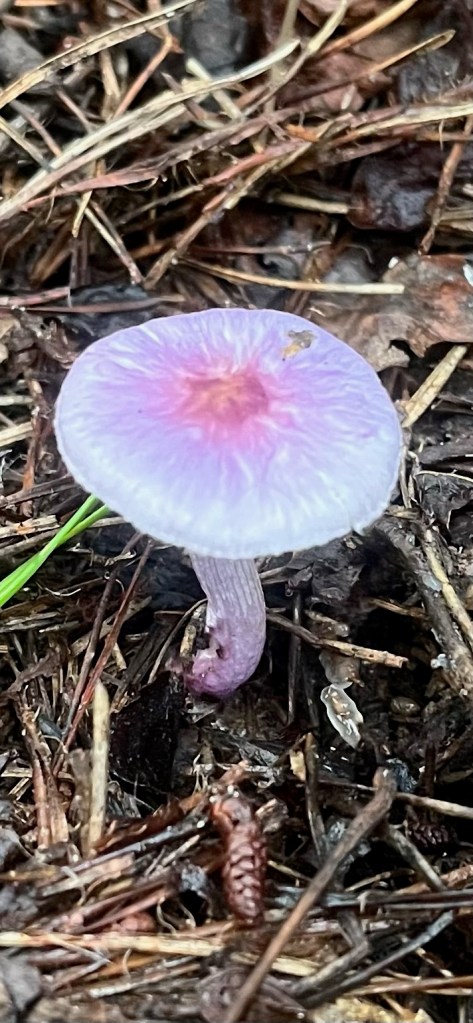
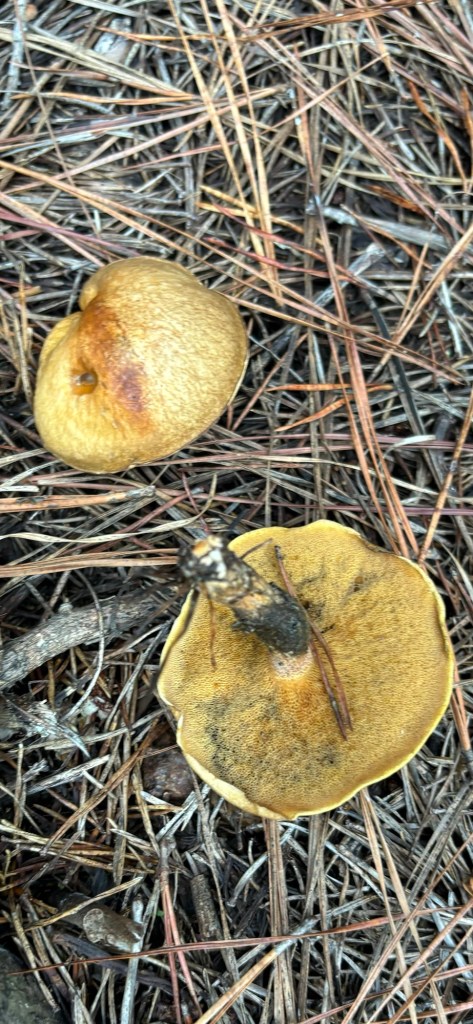
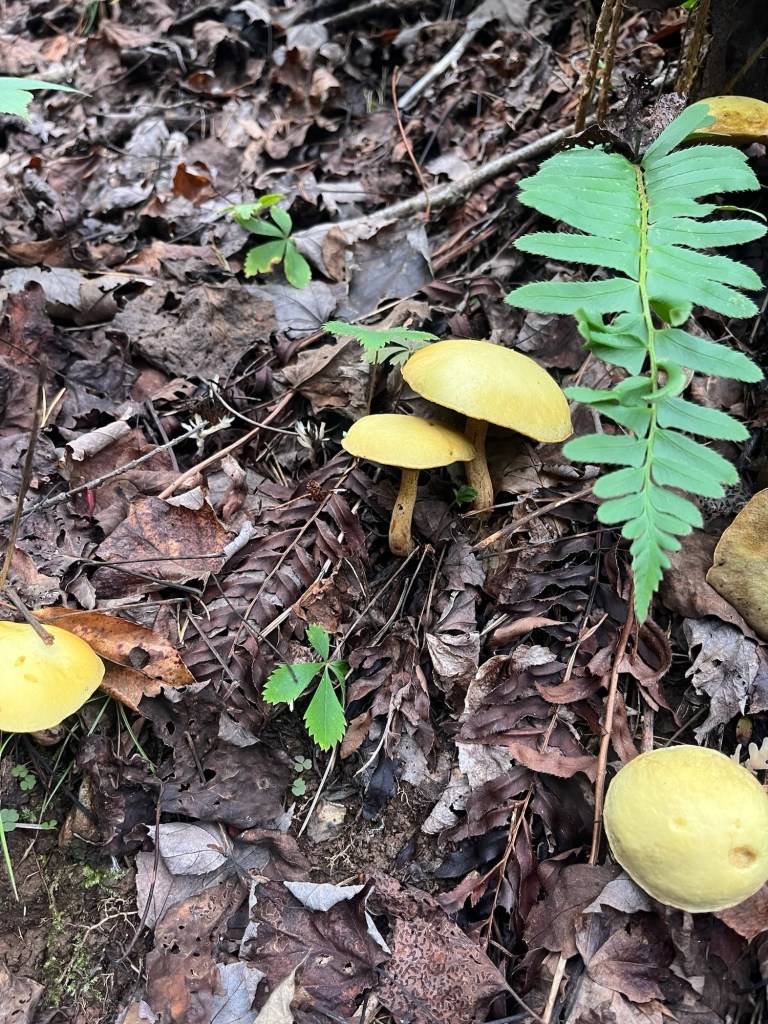
Coral fungusA family of Amanita jacksonii, American slender Caesar, we brought home and processed for eating. Top of A jacksonii Younger A jacksonii An A. jacksonii just emerging from its volva. These are the most delicious. Eastern fence lizard, Sceloporous undulatus, we found hanging out on a black cherry stump up top in the clearing. Amanita spreta, commonly called the Hated Caesar, is an inedible variety. They were large and showy found in the north side near pines. We continue to find these blue staining boletes and have narrowed down their identification to four different species. For now, they remain unknown. Unknown blue staining bolete. Inocybe lilacina, Lilac fibercap, is a poisonous mushroom found on the north side of SAFF. Suillus salmonicolor, Slippery Jill, found everywhere on SAFF near pine.Suillus, slippery jacks, associated with pines.
Saint Andrews Forest Farm Blog
Is this your new site? Log in to activate admin features and dismiss this message

 St Andrews Forest Farm