Tag Archives: edible mushrooms

July 23, 2024 Building our first fish scale terrace and a few edible mushrooms at SAFF

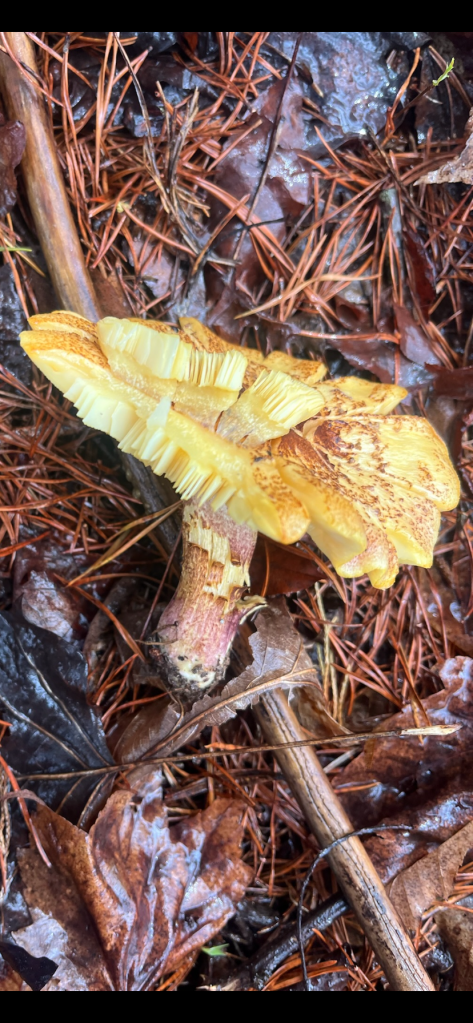
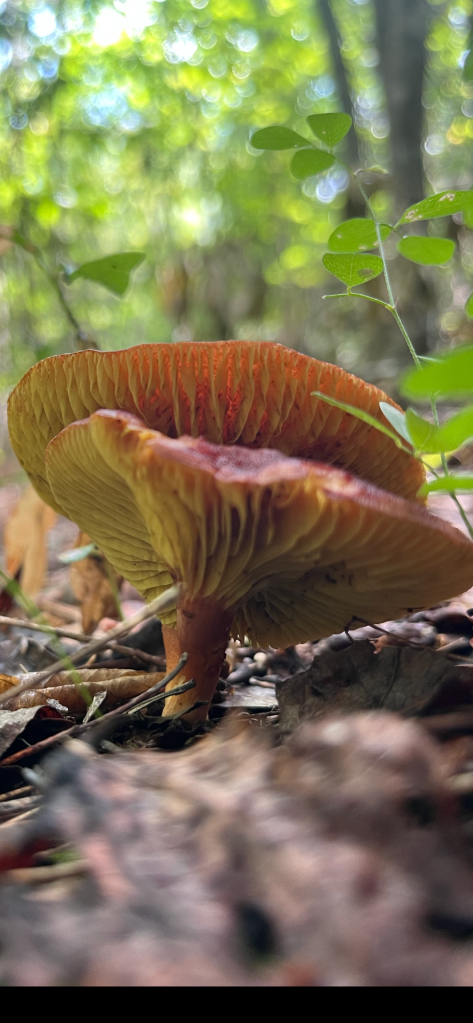
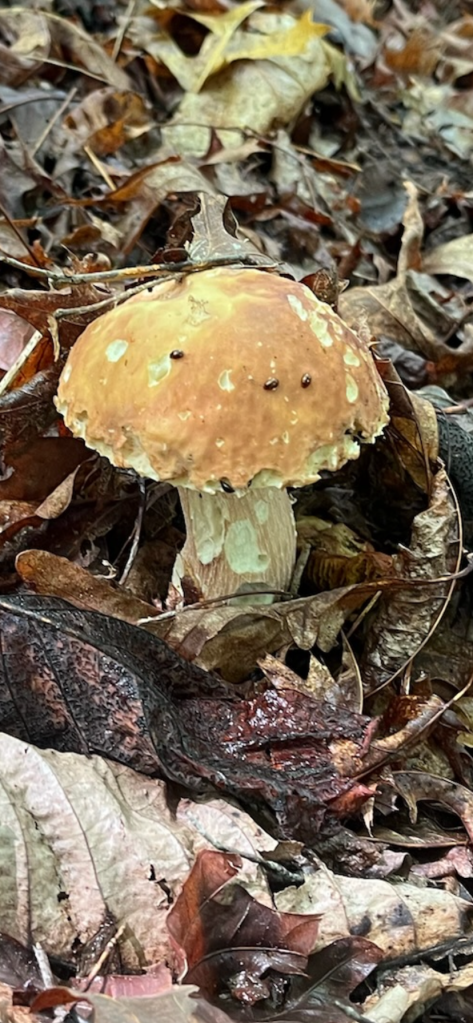
Golden gilled bolete, Phylloporus rhodoxanthus, found along Hawk Trail. Mycorrhizal with hardwoods usually oaks or Beech (both are near where we found these beauties).

Yesterday we went over to do some planting in the rain. It has been raining every day or so for the past week and the ground is wonderfully moist and much greener. All along the trails, we could see white mycelium spider webbing on the forest floor. We created a new garden bed at the bottom of North Trail by laying our tree trunks perpendicular to the slope.
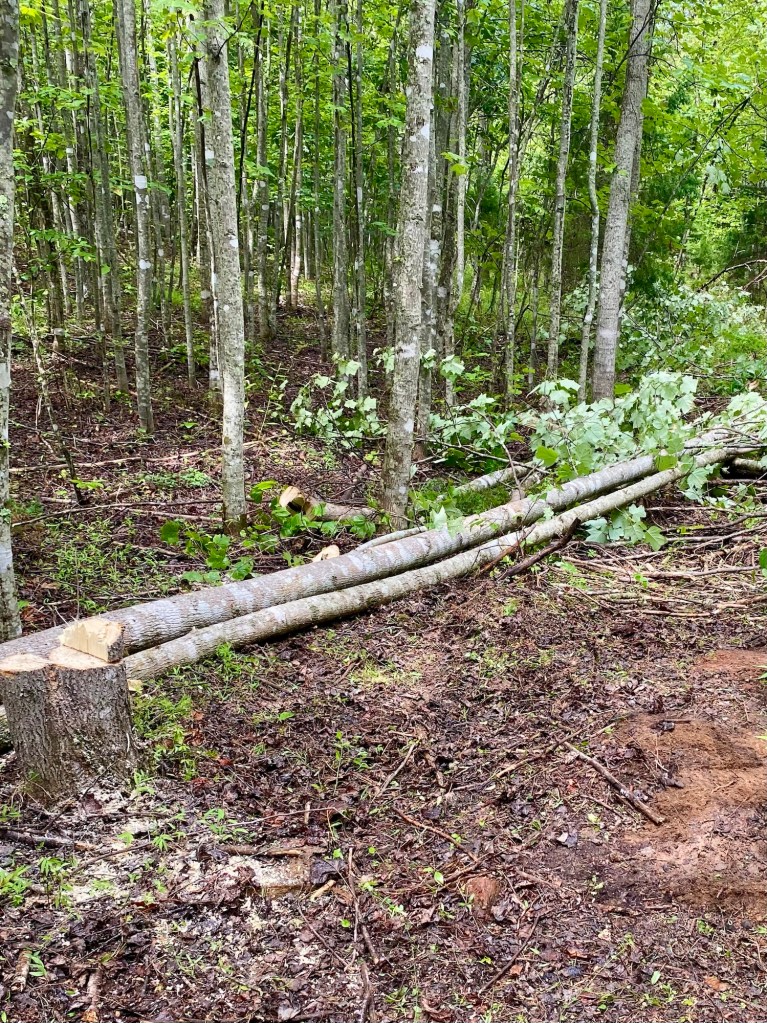
Tulip Poplar trees we took down and placed to help slow water run off and build our first fish scale terrace for planting and water and soil conservation.

It may not seem like much but this is a huge paradigm shift for us as we have imagined fish scale terracing our slopes for the past year and it came together just as we’d hoped. We are eventually making a space for pawpaws. For now, we will have smaller plants. The ground was soft and pliable in the rain. We practice minimal disturbance gardening to improve our soil quality, increase yields and drought resilience as well as increase fertility. So this means we dig as little as possible to keep our soil and mycelium undisturbed.
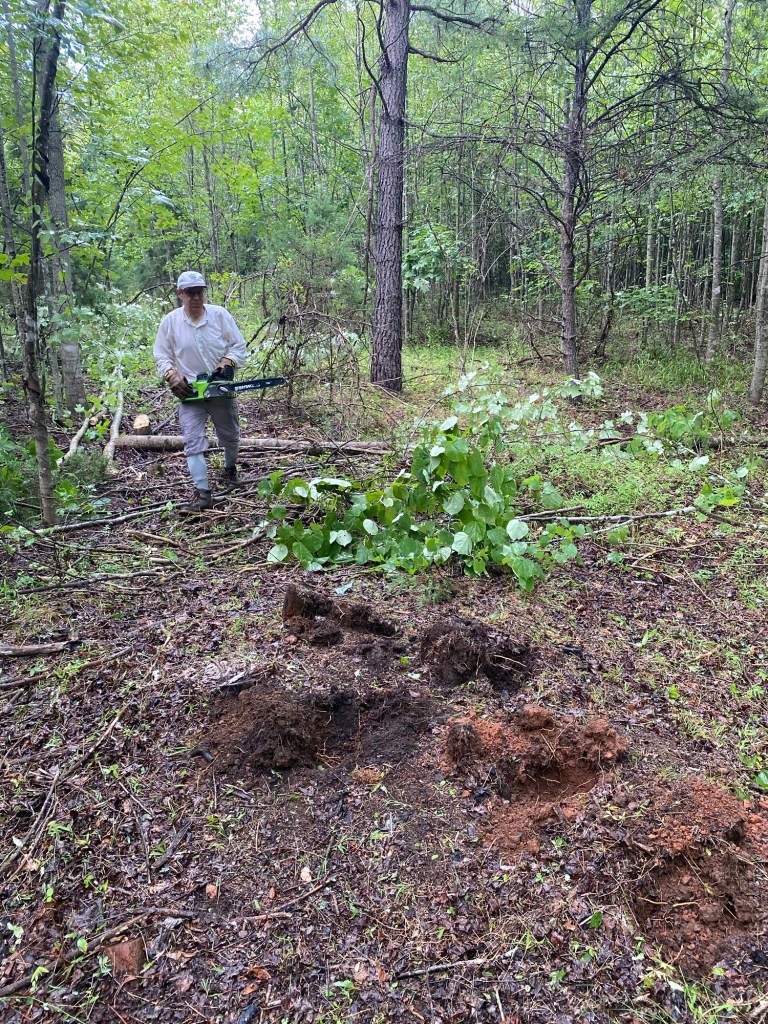
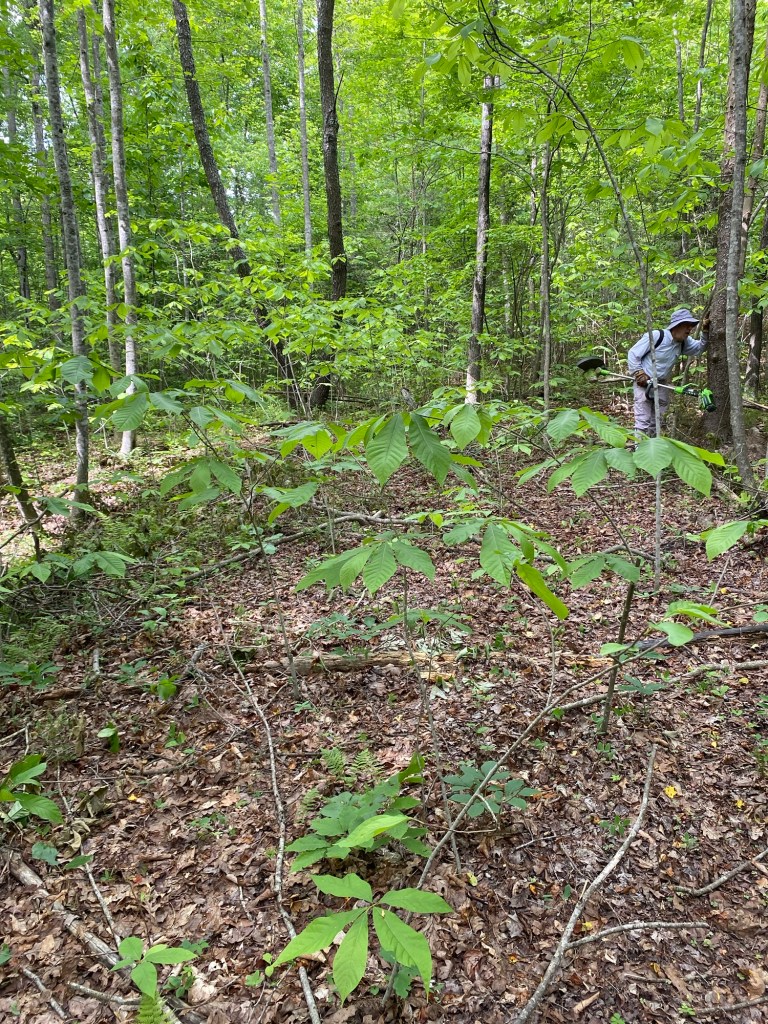
Chris busy felling tulip poplar trees which have grown up too close and tall in the forest that was disturbed 20 years ago. Many are diseased from not having enough space and light. We plan to use their trunks to construct our fish scale terraces.
King bolete found on South Trail about 2/3 of the way down. The bugs love it!
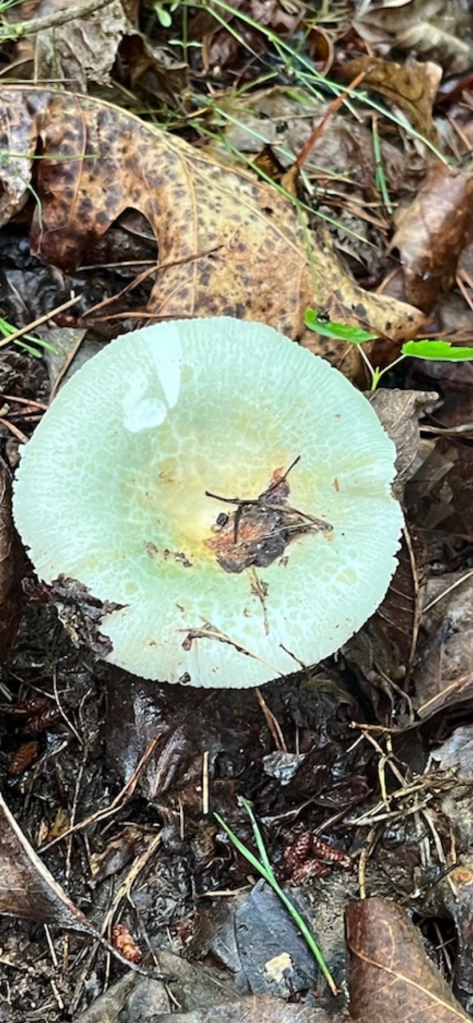
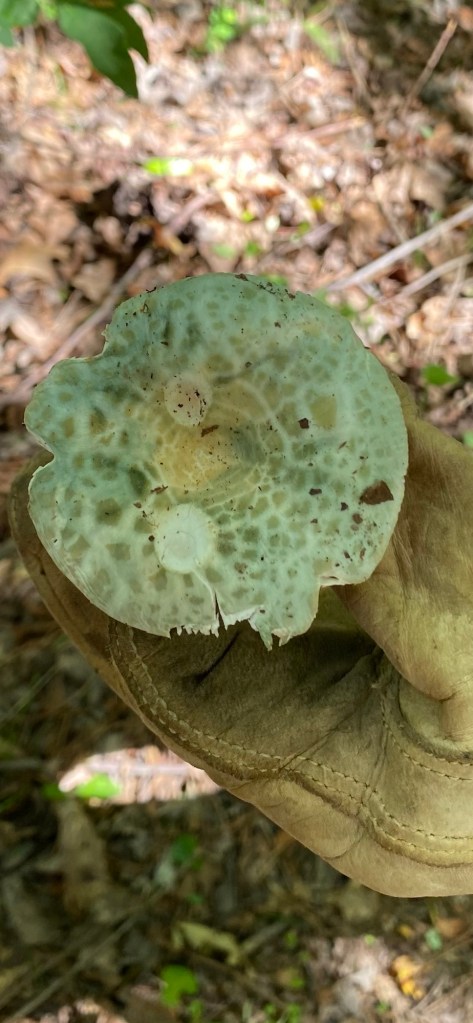
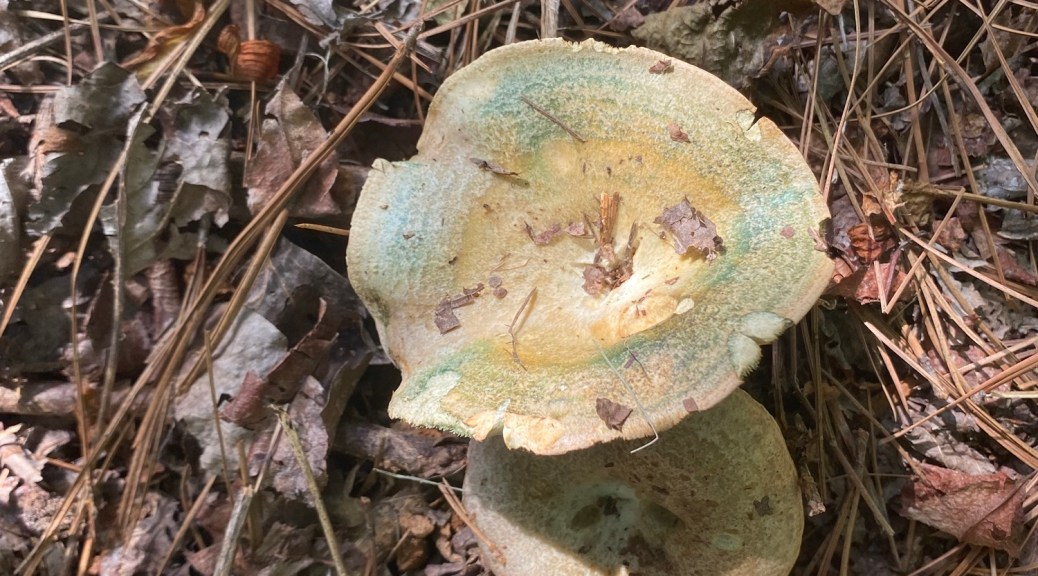
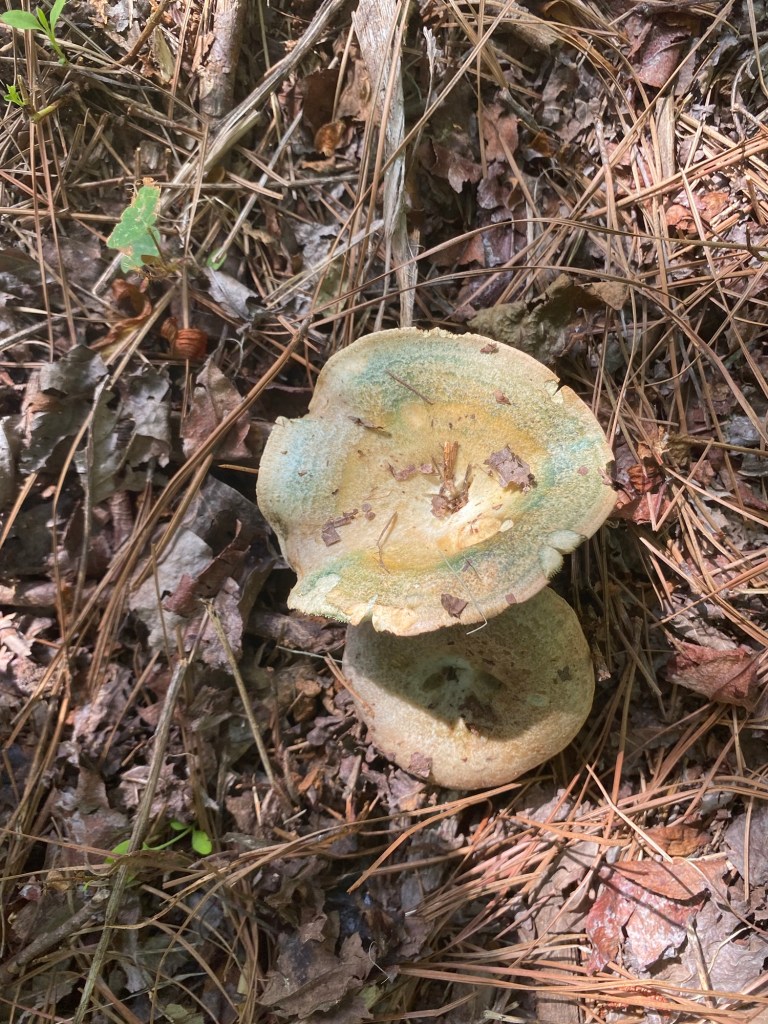
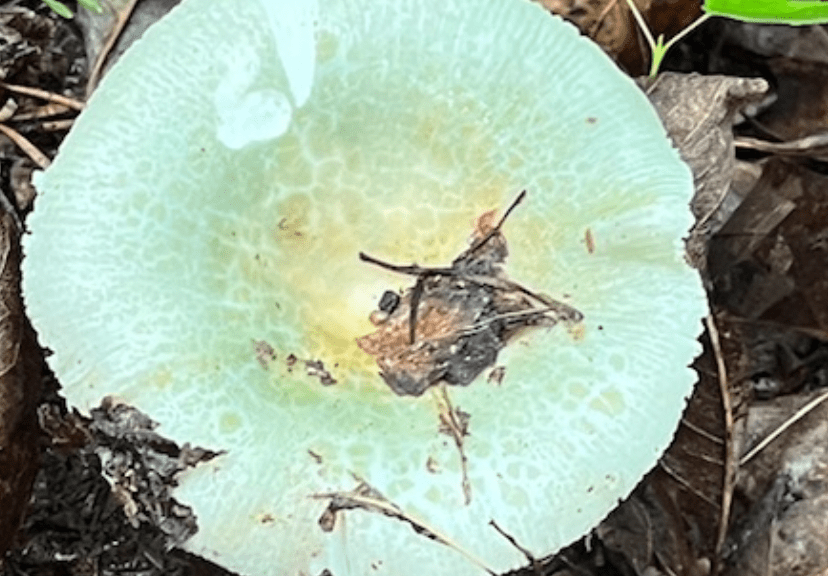
Blue-Green cracking Brittlegill, Russula parvovirescens, found along South Trail. Mycorrhizal with oak, hardwoods and conifers. Over the past year, we’ve observed these when the weather is rainy and the temperature is in the 80s.

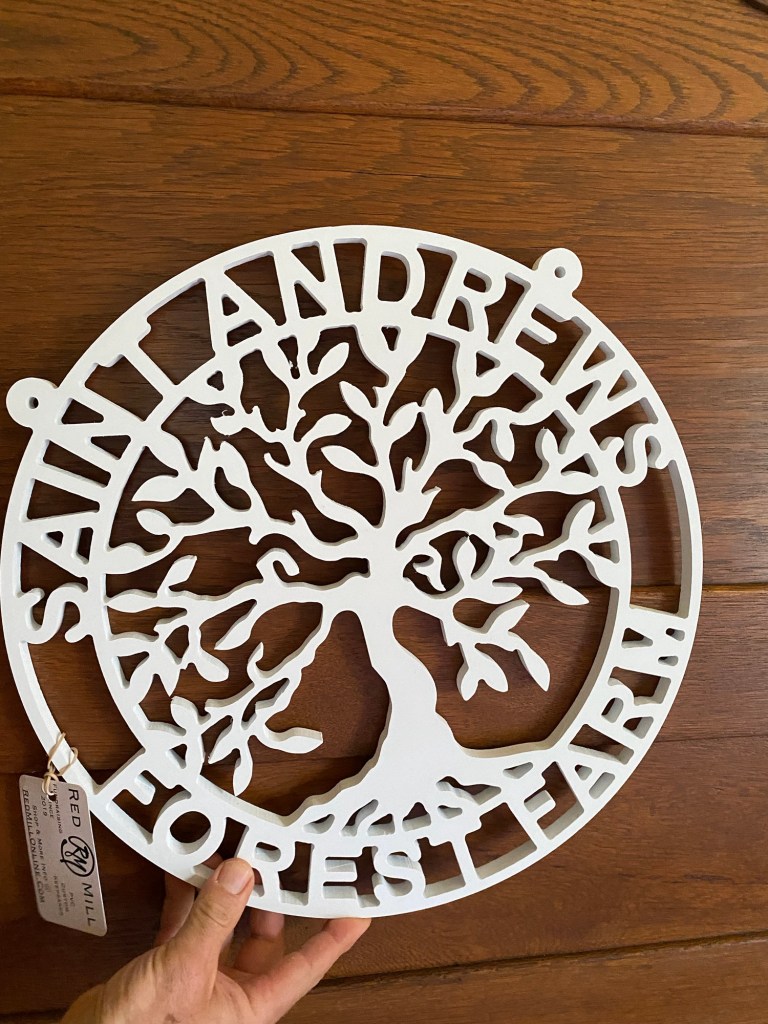
Our new sign gifted to us from Chris’ parents who visited the farm last weekend. We love it!

June 7, 2024 Scouting out camping spots, trail maintenance and a mushroom walk at SAFF

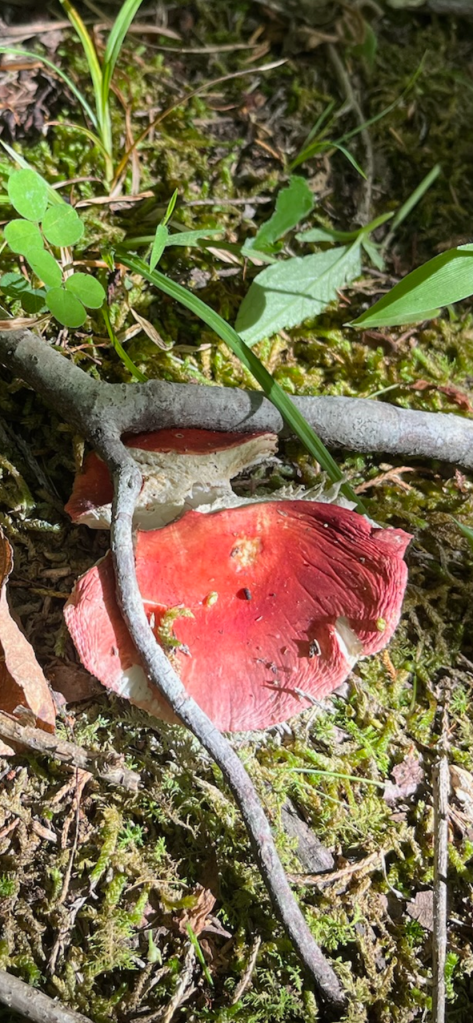
Russula parvovirescens, Blue-green cracking Russula, found along Fern Trail. This is a very good edible mushroom.

We took the afternoon at the farm and we found it drier than we expected. Blueberries are ripening. We found new mushrooms we hadn’t seen before. We are planning to camp next weekend and looked for a fire pit location and tent spots. The weather was beautiful with a cool breeze in the shade and the sun shining.
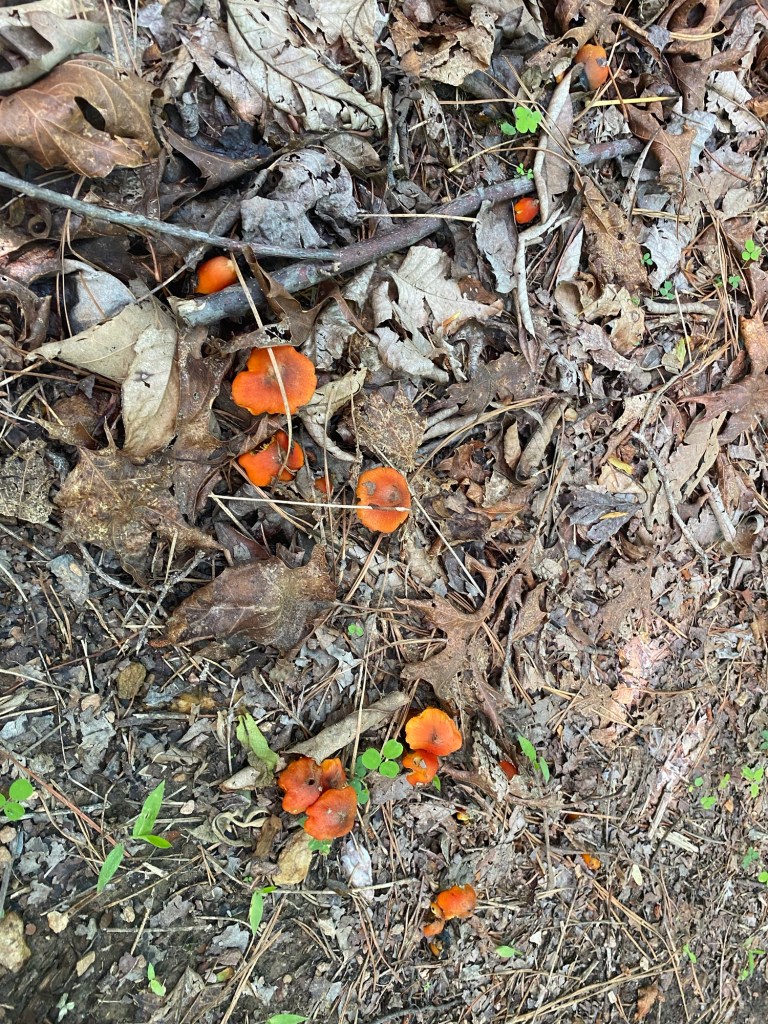
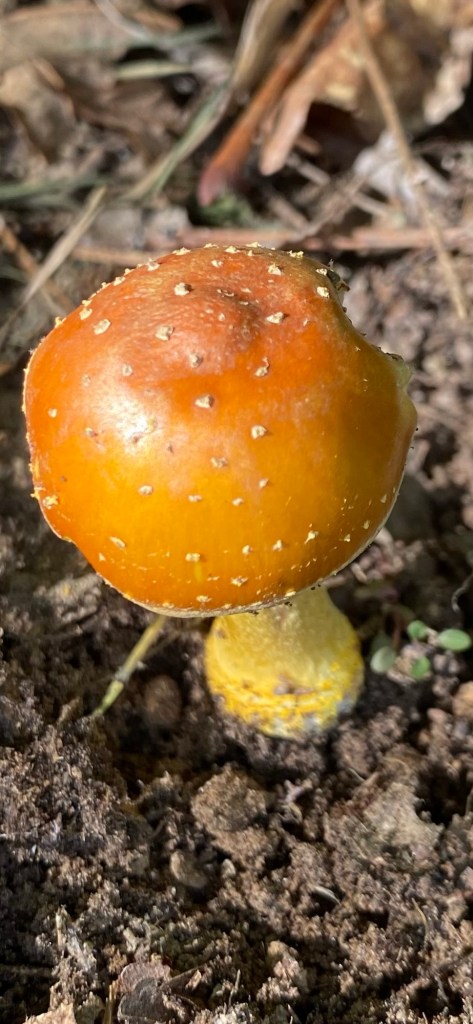
Amanita flavoconia, Yellow patches, found on the south end near Black Trumpet Way.
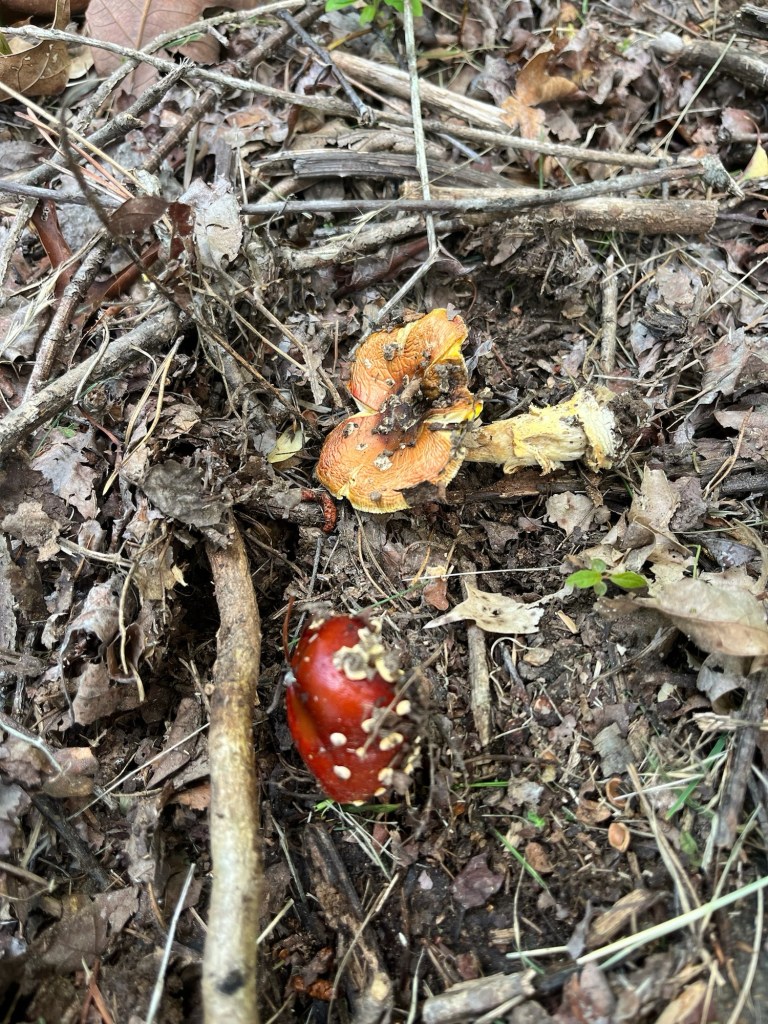
This stick on top of the Russula is actually a root! There are 80 species of red Russula in North America and can only be identified to species level with ITS sequence. It’s recommended to do a spit test to see if it tastes spicy. If so, they need a very thorough cooking to be rendered edible. (But may still be too spicy for most.) Fermentation can eliminate spiciness. However, if not spicy, they can be eaten raw even.
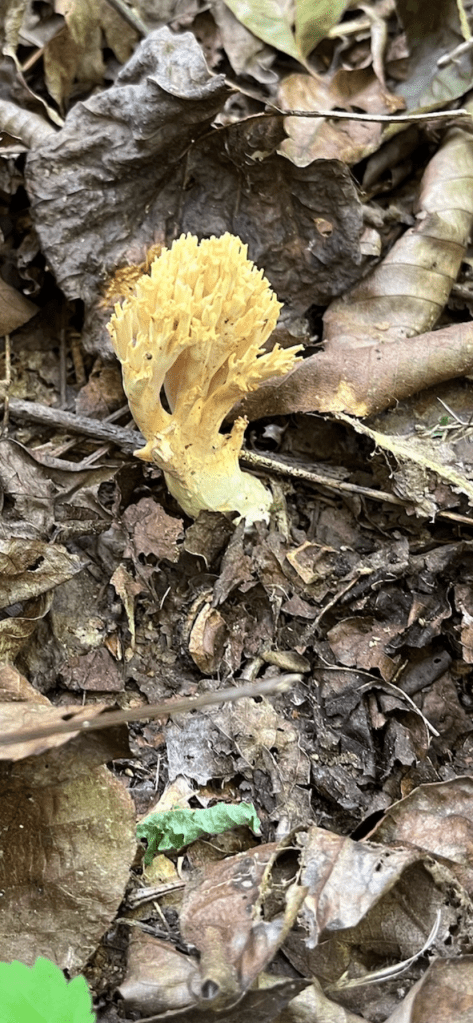
Coral fungus found up top.

June 2,2024 Another Work Day at SAFF

We culled more black cherry trees from the clearing and broke them down into burnable chunks. These were infected with black knot fungus and burning them is the only way to get rid of them.

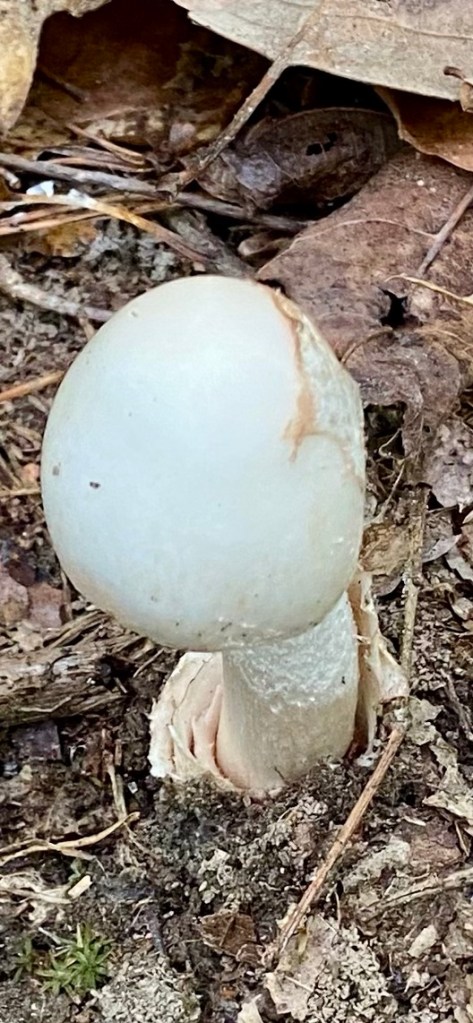
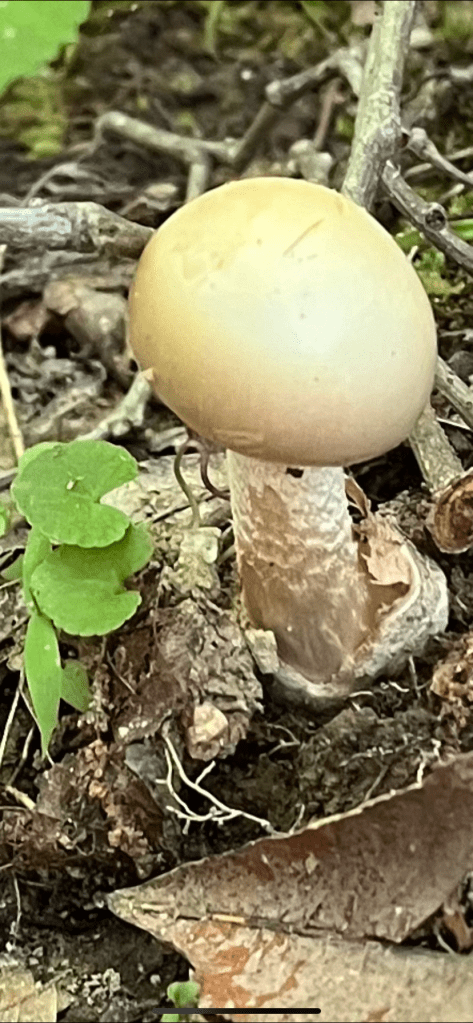
Amanita found at Northern side of the waterway. Because this has a cup shaped volva during this stage, it points to section Caesaraea, Vaginatae or Phalloideae.

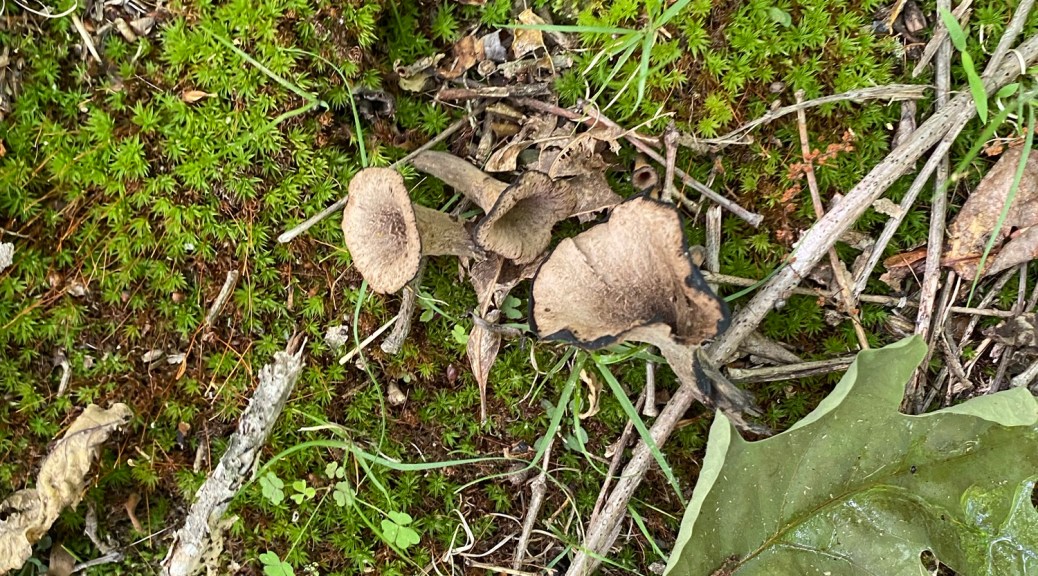
After finishing our job, we walked down Fern to Ridge Trail and looked for more Black trumpets along the southern set back line. We found a few but left them hoping for rain tonight so they can grow.

We walked through the Pawpaw orchard and were satisfied with how it looked. We are making plans to get more light to these trees. There are hundreds of them as they make root suckers that are clones of the original tree.
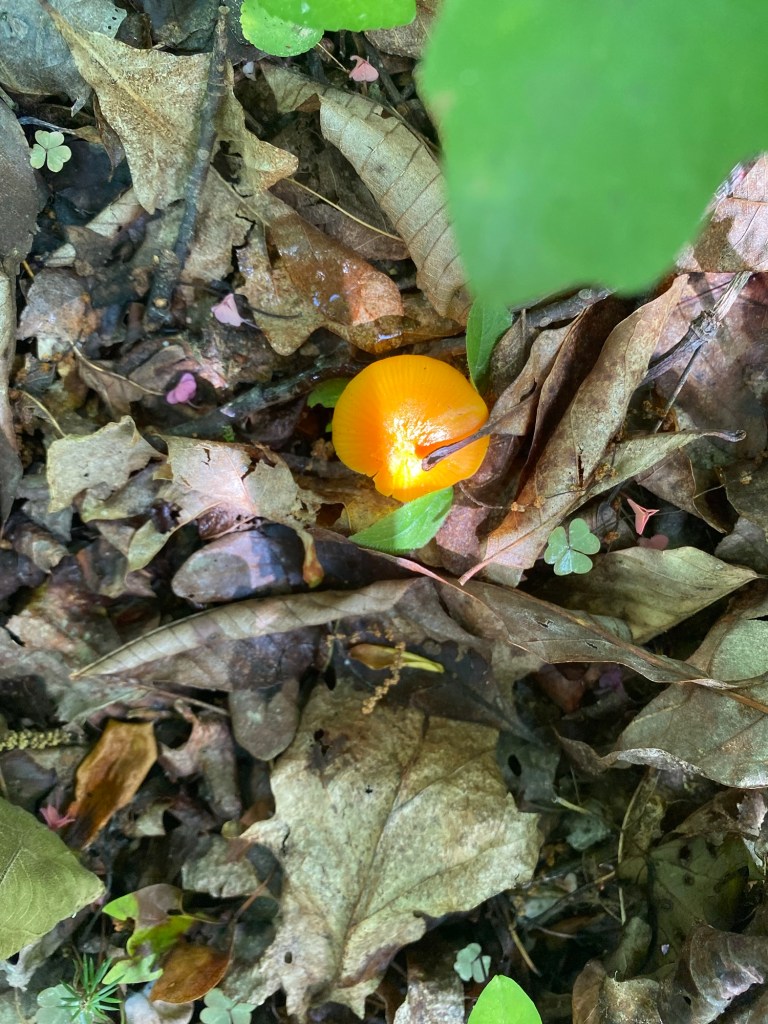
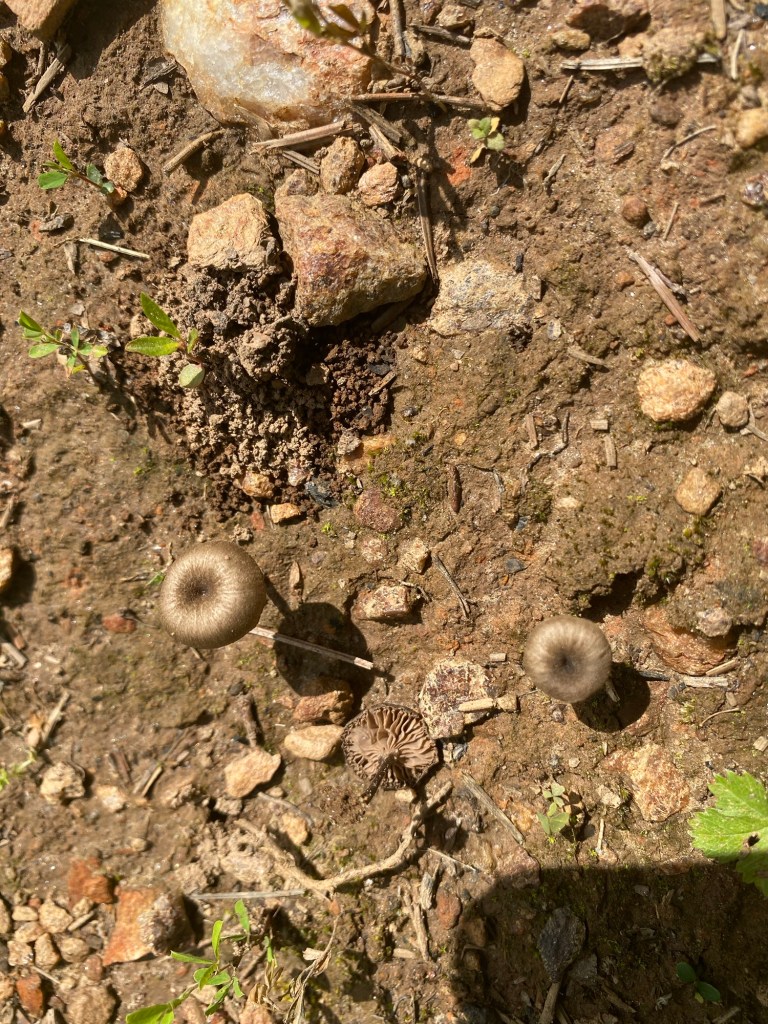
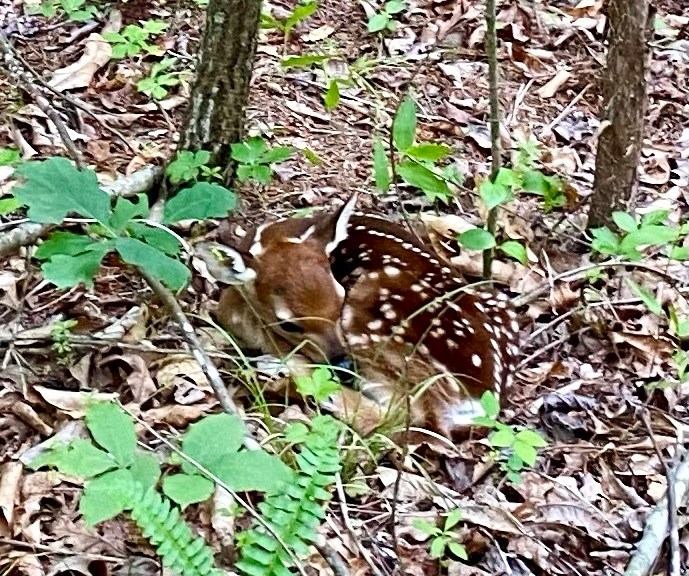
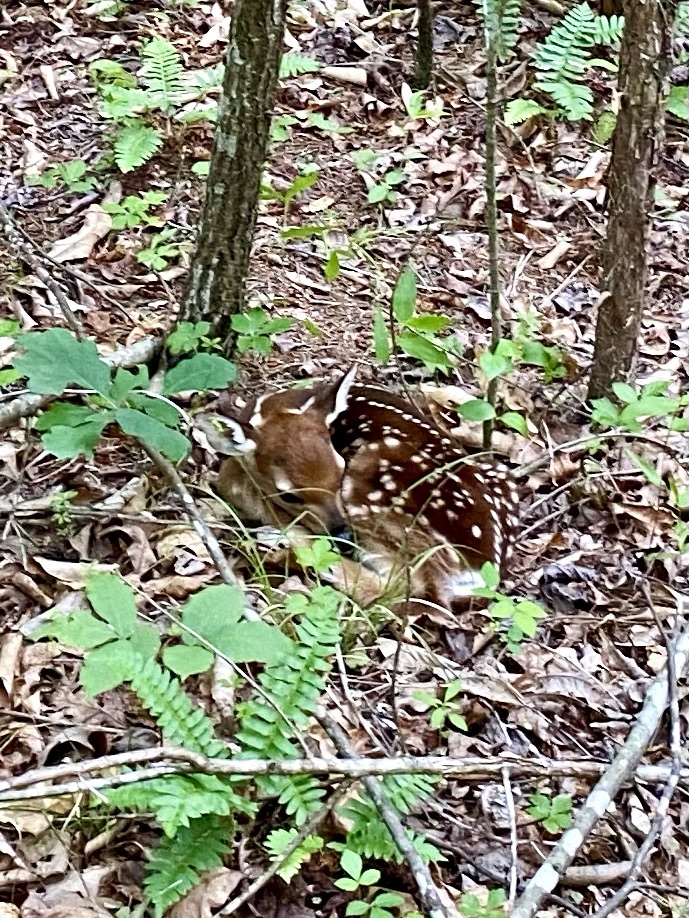
We found a baby deer laying by the waterway at the base of a tree waiting for its mother. It was so sweet. Didn’t even lift its head as we walked by. Following directions well and staying safe. We hope mom comes back soon.

A baby deer sleeping in the forest near the waterway and pawpaw grove.
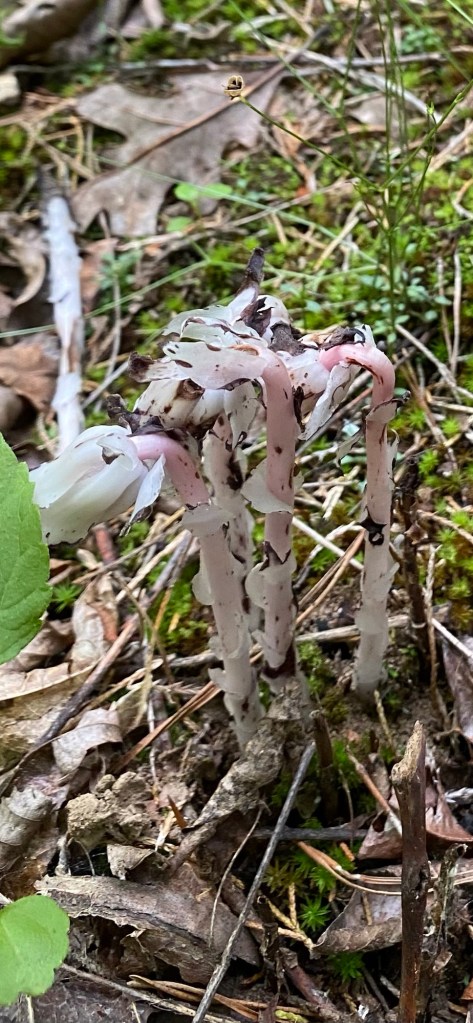
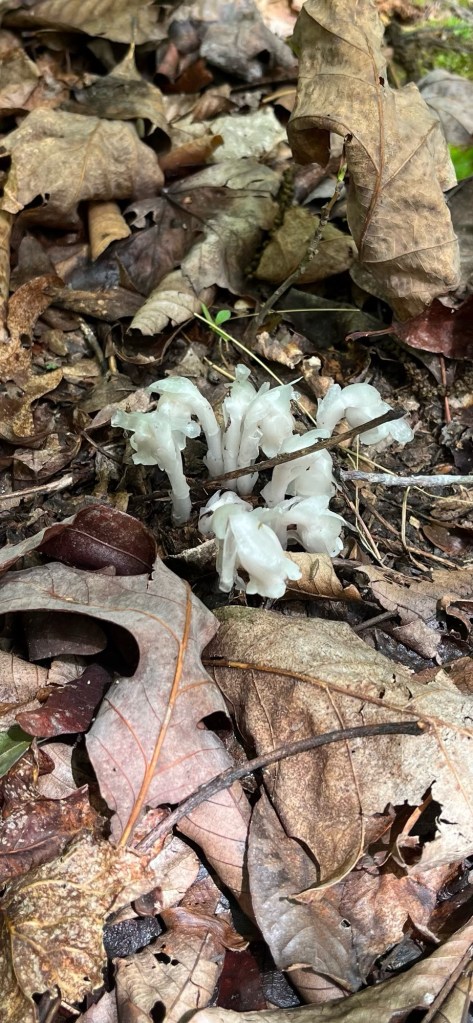
We found these ghost pipes on the northern side of the waterway at the bottom of North Trail. They are pink instead of white and have black flecks. Monotropa uniflora does not contain chlorophyll. It is parasitic to its host fungus, Russulaceae, and it saps food through the web of mycorrhizae.

We are hoping for more rain tonight so the mushrooms will grow.

May 31,2024 More Eastern Black Trumpets and Ripe Blueberries at St Andrew’s Forest Farm

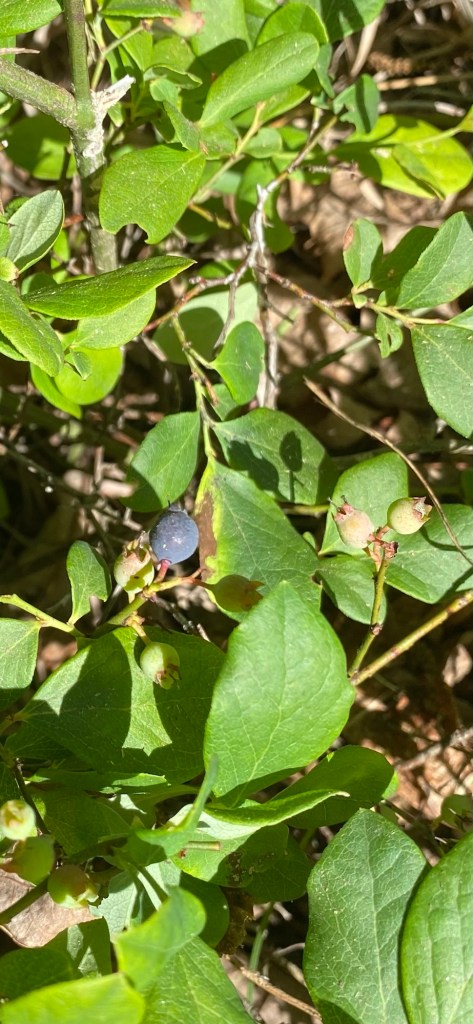
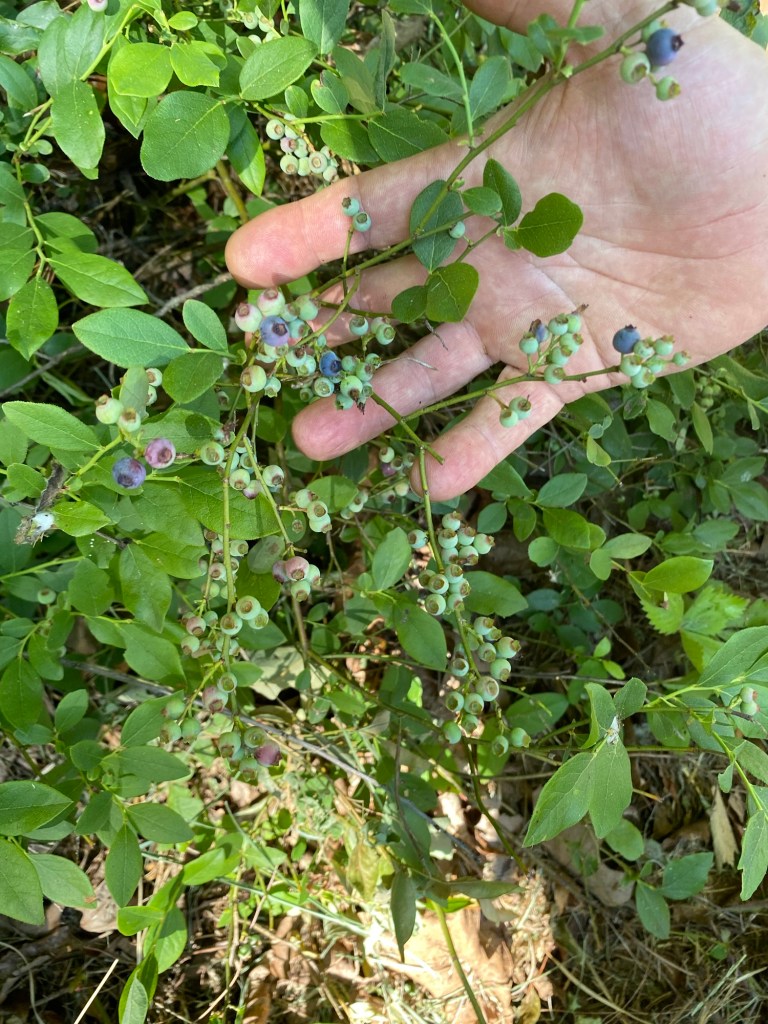
Finally we have a few ripe blueberries. They were a tasty snack after we got some work done.

We went out to the farm to clean up a few spaces, look for more black trumpets and cut a trail through the south side. We were able to clear out some tiny tulip poplars and maples, paying close attention to keep any understory oaks as we learned the old oak forests throughout the world have a problem with understory oaks regenerating the forests. We decided we would only thin out diseased or failing oaks. https://youtu.be/NRWHHOAf39U?si=akypzxLUNo_7tOfn

Oaks have strong mycorrhizal https://www.sciencedirect.com/topics/agricultural-and-biological-sciences/mycorrhiza connections as well, so we truly appreciate them for a number of reasons. SAFF has older, medium, saplings and seedling oaks all throughout so we aren’t seeing this problem. https://dcist.com/story/23/12/20/dc-local-forests-failing-tree-regeneration/

We were pleased to eat a few blueberries. We found them abundant and ripening first along the southern set back line, where they get plenty of sun.
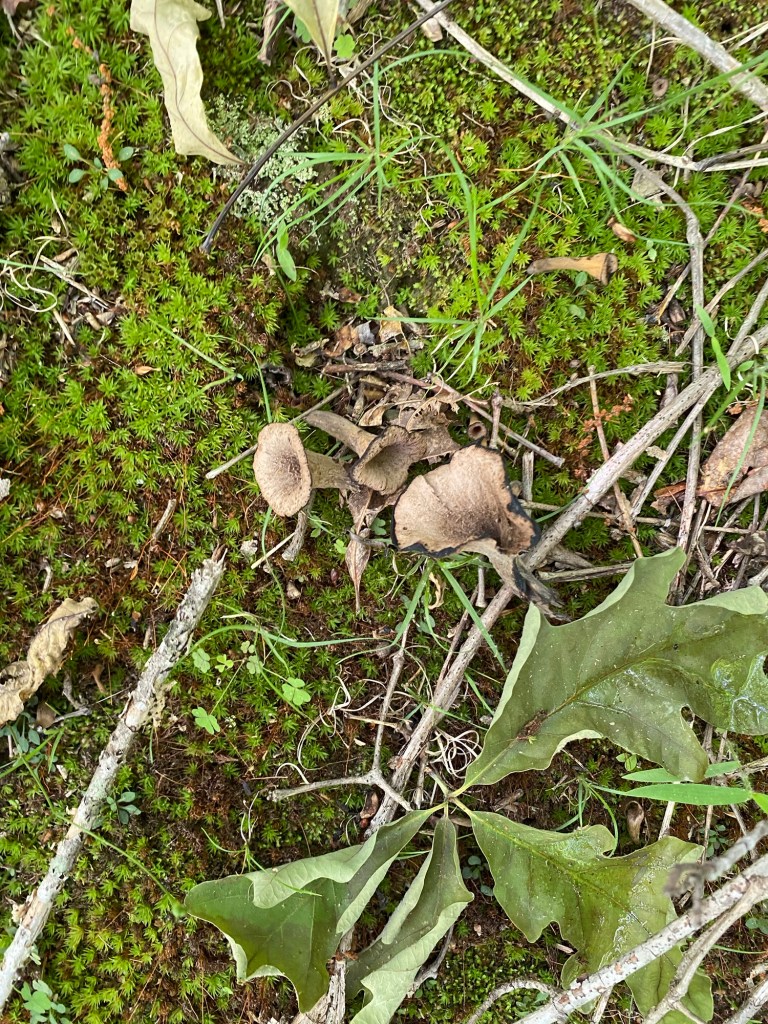
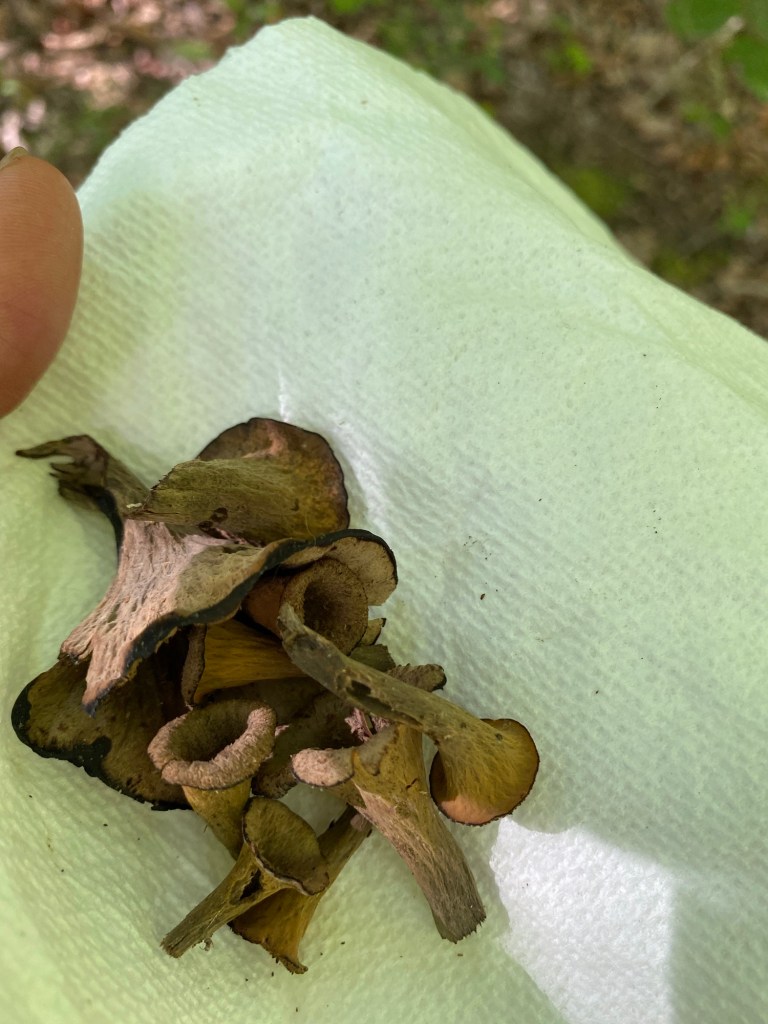
Eastern Black trumpets
We ate yesterday’s black trumpets for breakfast this morning. We cooked them for 10 minutes on medium high heat in a dry pan, then lowered heat and added olive oil and garlic with a bit of salt and pepper. They were nutty, fruity and smoky. We enjoyed them as much as the golden chanterelles we found last summer. There are no known toxic lookalikes, so these are a great mushroom to forage . Some of our favorite mushrooms we have tasted. We performed some trail maintenance on ridge trail, made our way along the waterway, back over to the set back line and found more today. We harvested the largest and we can’t wait to eat these too. We made a trail up from the waterway to the Black Trumpet patches and beyond until we exhausted ourselves. We will call this Black Trumpet Way, it leads to the set back line.
For now, this is unknown Amanita that we will watch this weekend. Notice the volva underneath the mushroom that it emerged from.

May 27, 2024 Memorial Day at St Andrew’s Forest Farm

So far we have seen plenty of deer ticks, dog ticks and lone star ticks at the farm this year. The clearing seems free of them right now since we keep it mowed down well. In the forest, the wetter and greener areas where deer and dogs are known to move through have been hotspots. Our tick mitigation measures have kept us from getting any bites but we have found them crawling on our socks, shoes and clothes. It’s definitely tick season unfortunately.

Monotropa uniflora, Indian pipe or ghost pipe, found along southern set back line in the forest. These plants get their energy from their host fungus, Russula or Lactarius, so they can exist in darkest parts of the woods. We were delighted to find it at SAFF.
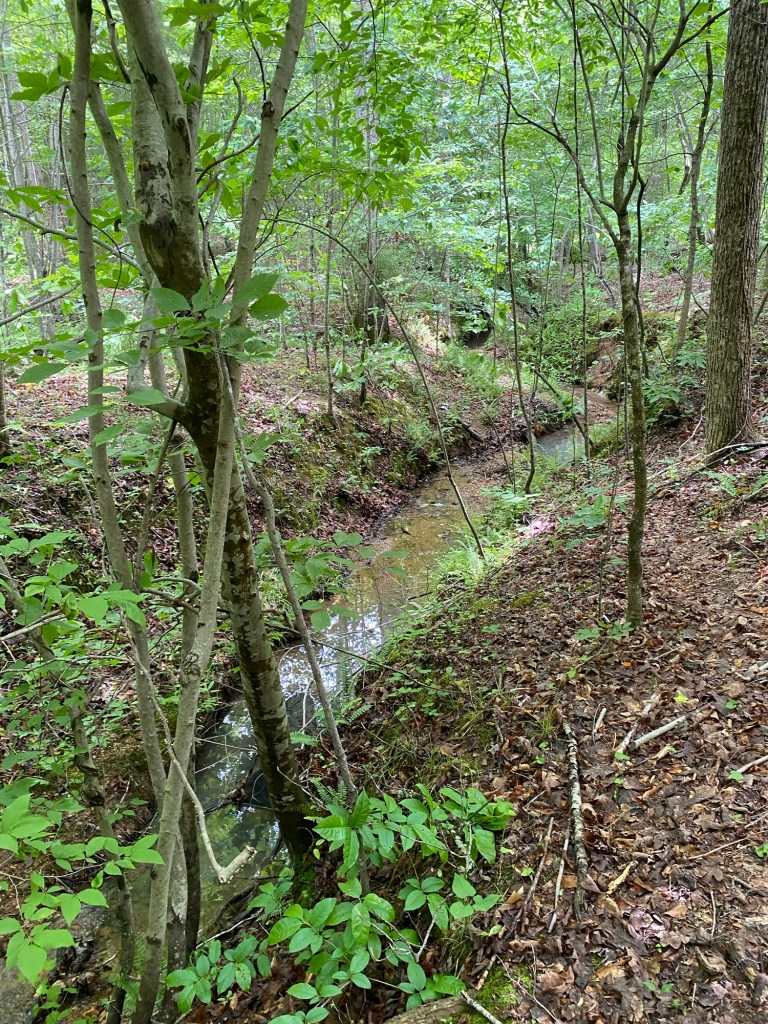
The water was moving gently in the waterway at the bottom.
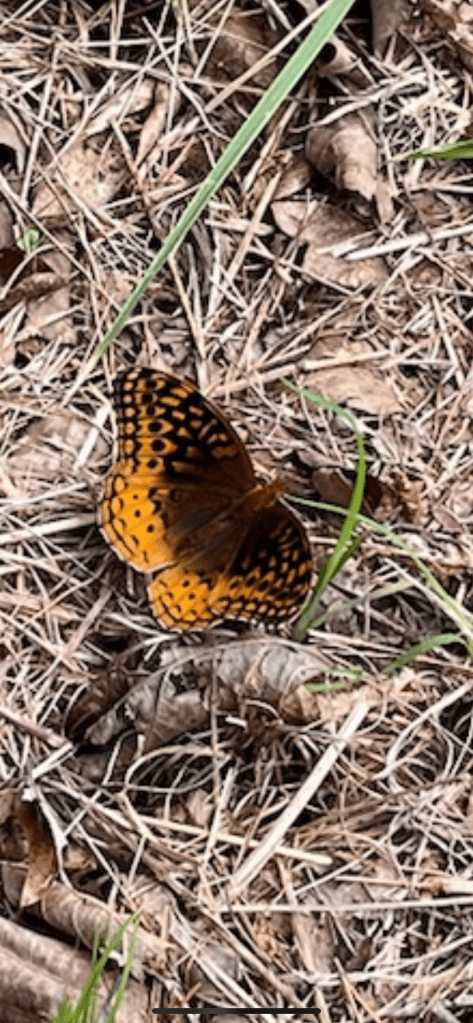
Great spangled fritillary, Argynnis cybele, were fluttering all around the Southern set back line. Fritillaries are a smaller group within the butterfly family Nymphalidae. All butterflies in this family have tiny front legs that lack claws (in most other butterfly families, the front legs have claws). My daughter laughs at the Seussian names (fritillary, pawpaw, peduncle) of plants and insects from the farm.
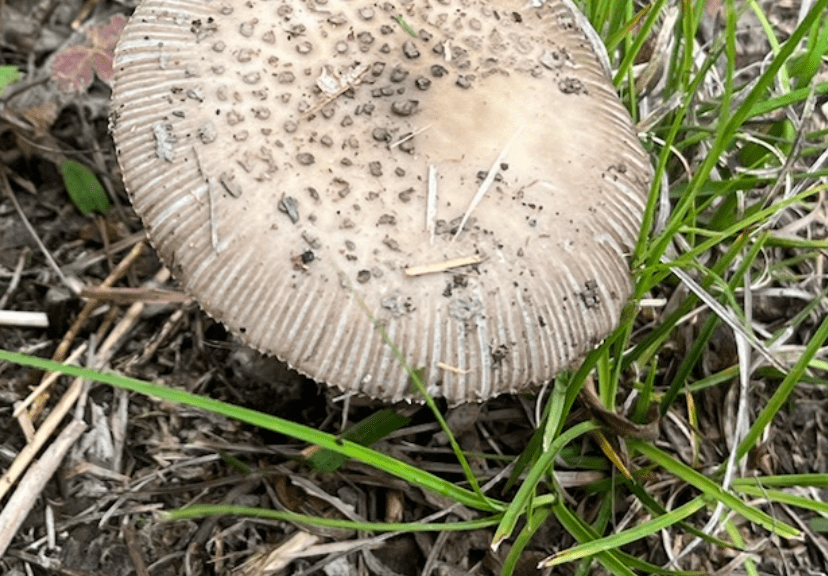
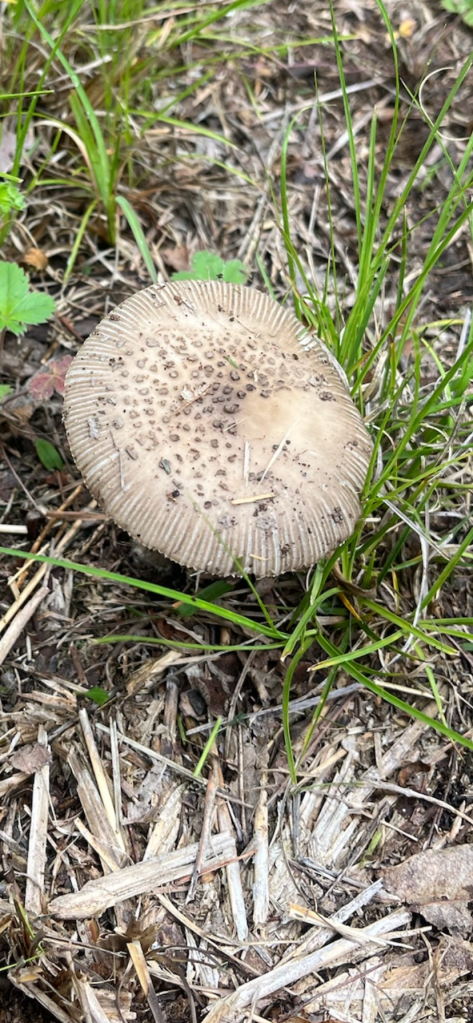
Amanita vaginata, grissette, an edible Amanita that lacks a ring in the stem. A large mushroom with furrows around the edge duplicating the gills underneath.
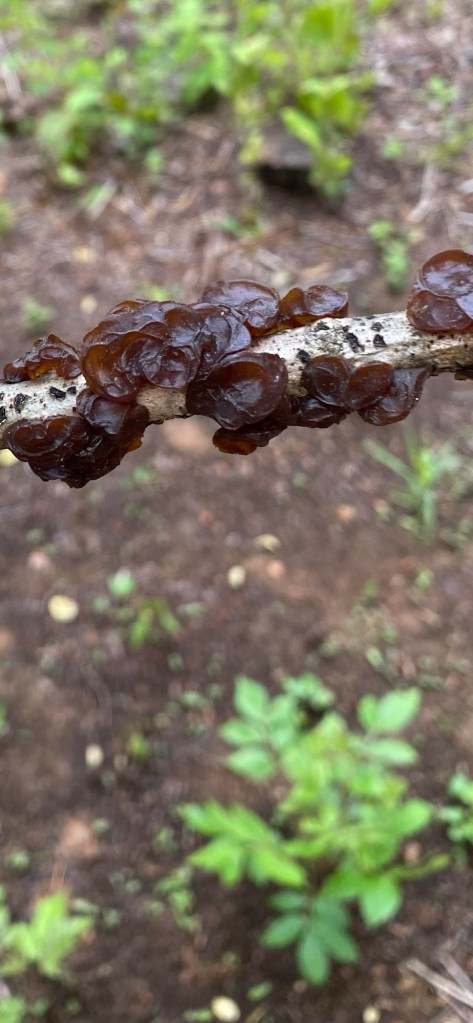
American Amber jelly fungus, Exidia crenata, is edible but we’ve not tasted it yet. Used in pho or noodle dishes.
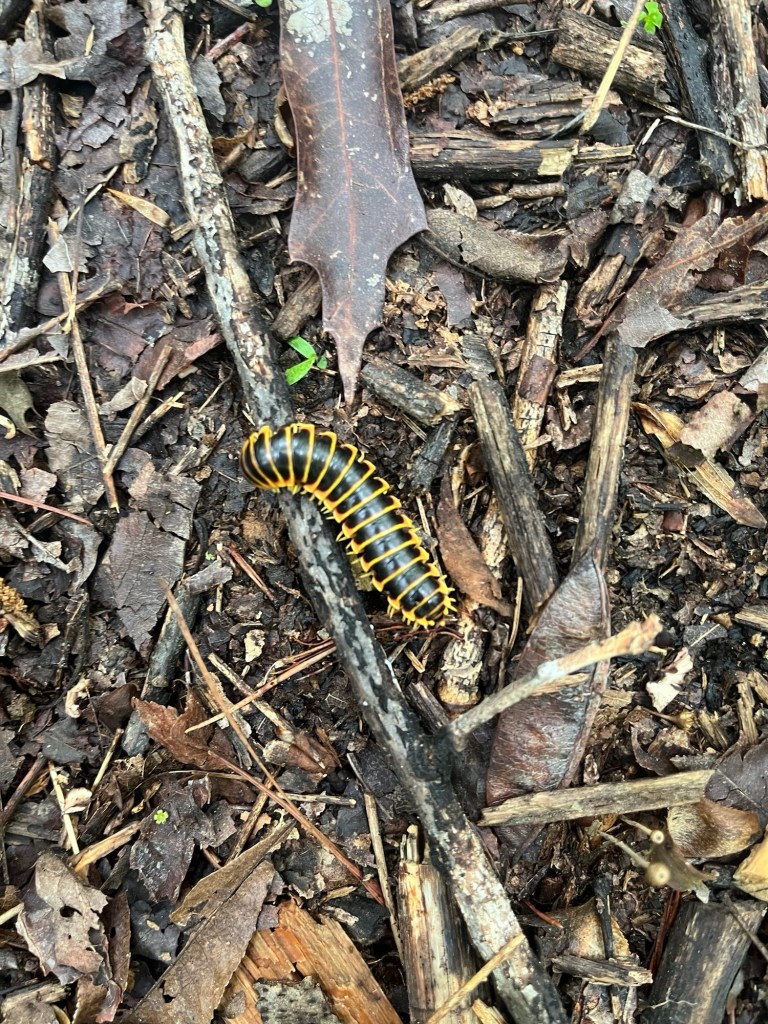
Black and gold flat millipede, Apheloria virginiensis, found all along the south side. It is reported to secrete cyanide compounds as a defense. It is recommended that one wash hands after handling this organism as the toxic compounds it secretes are poisonous and can cause extreme irritation if rubbed in the eyes. (Source: Wikipedia)
Chris looking for our boundary marker in pawpaw orchard.
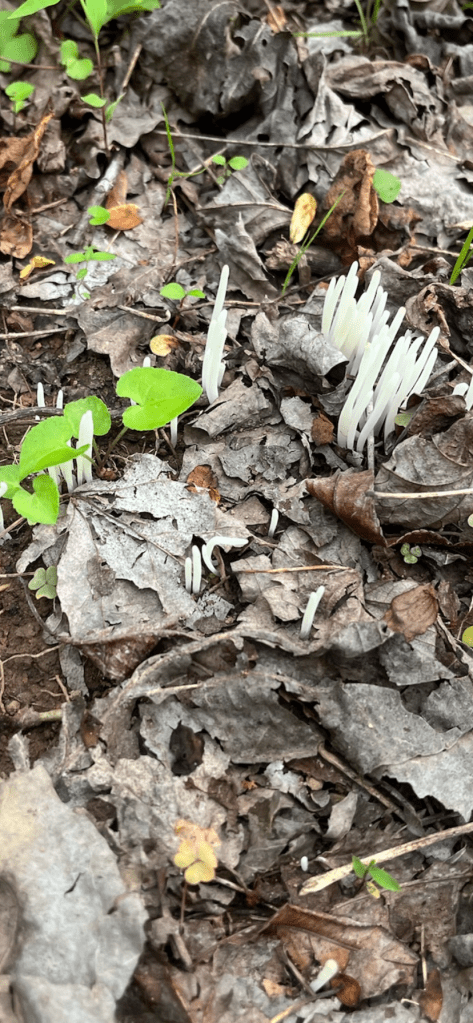
Fairy fingers, Clavaria fragilis,
 It produces tubular, unbranched, white basidiocarps (fruit bodies) that typically grow in clusters. 
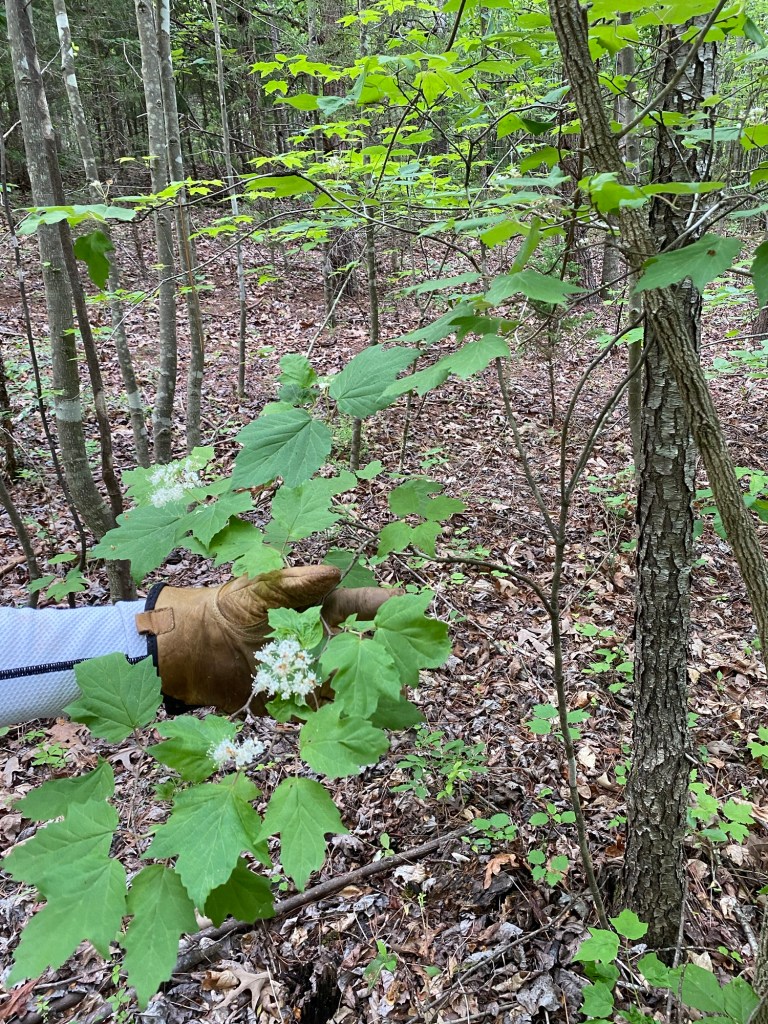
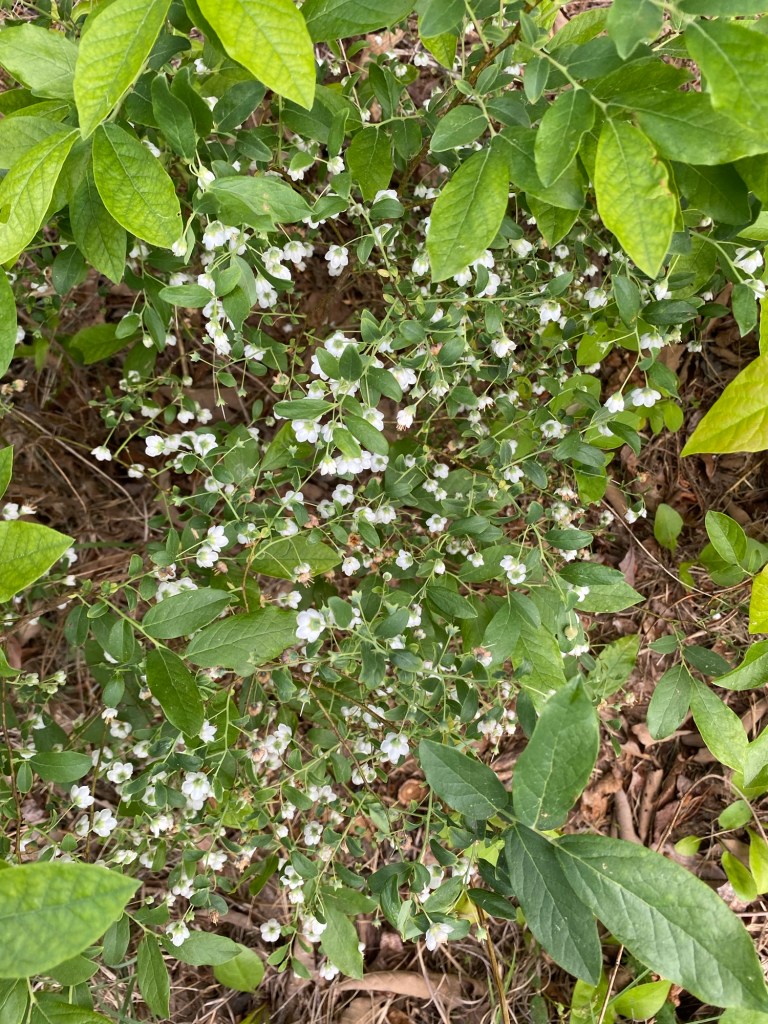
Maple leaf viburnum
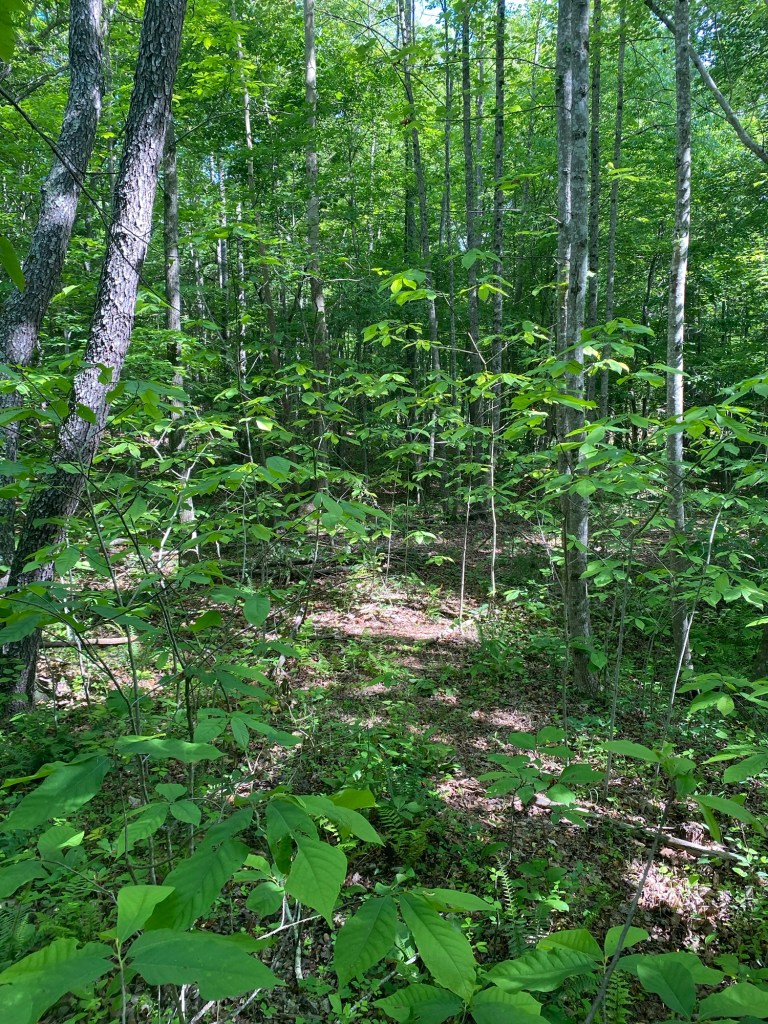
Pawpaws
Flowering lowbush blueberry

We were going to mow but left our keys to the tractor at the house in Staunton so instead we had a lovely walk around. The ground and forest litter was wet from the storms that have passed through. With the heat, it felt very muggy.

May 24, 2024 Summer Mushrooms are back at SAFF

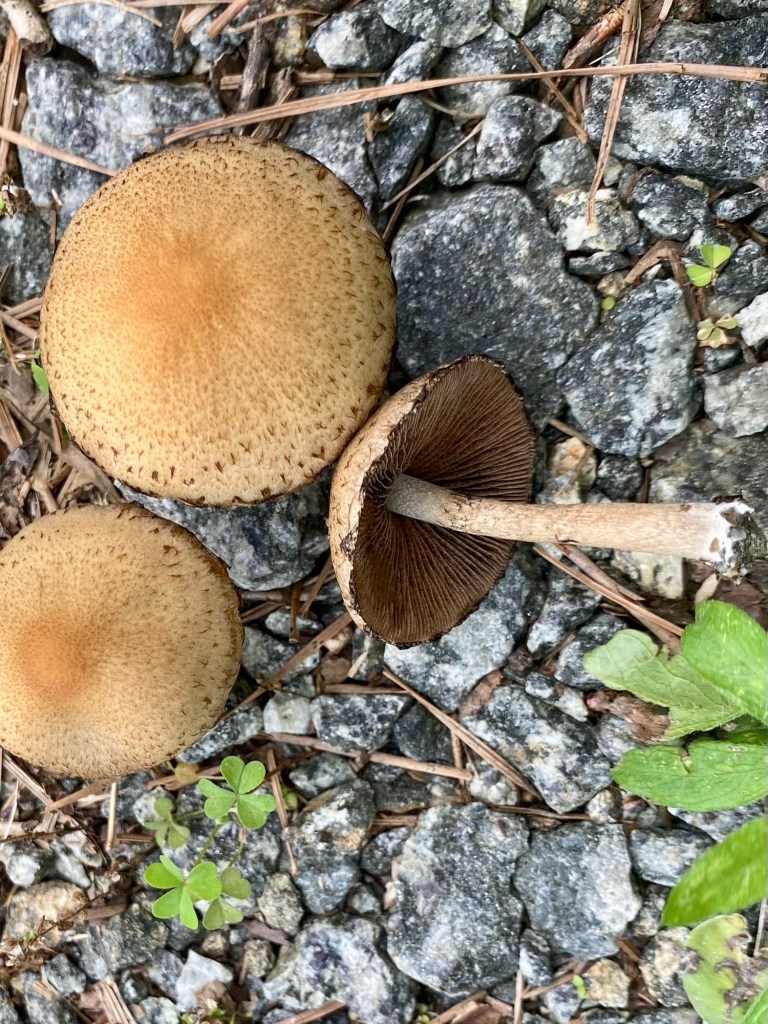
Weeping widow, Lacrymaria lacrymabunda, they are not poisonous but they are bitter. They were a lovely find on the driveway up top.
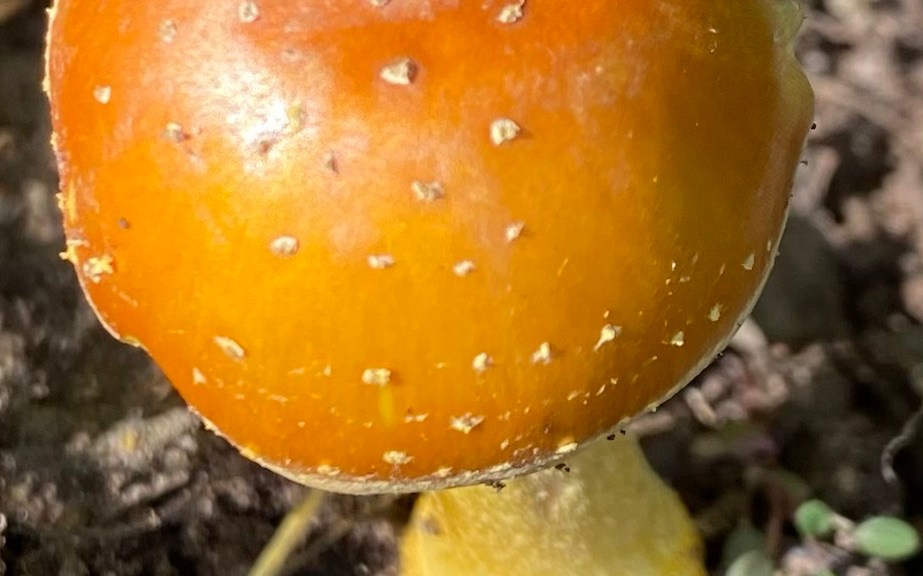
Fly agaric, Amanita muscaria, found along the edges of the clearing up top. They arose from a volva, an egg at the base of the stem. We saw them last year and were waiting for them to come back.
Similar to the Lactarius indigo, this is Calendine milk cap. Found at the top of North trail. It had a blue yellow sheen on the cap with yellow gills. The gills did not lactate when cut. We have so many Russulas. It’s delightful.
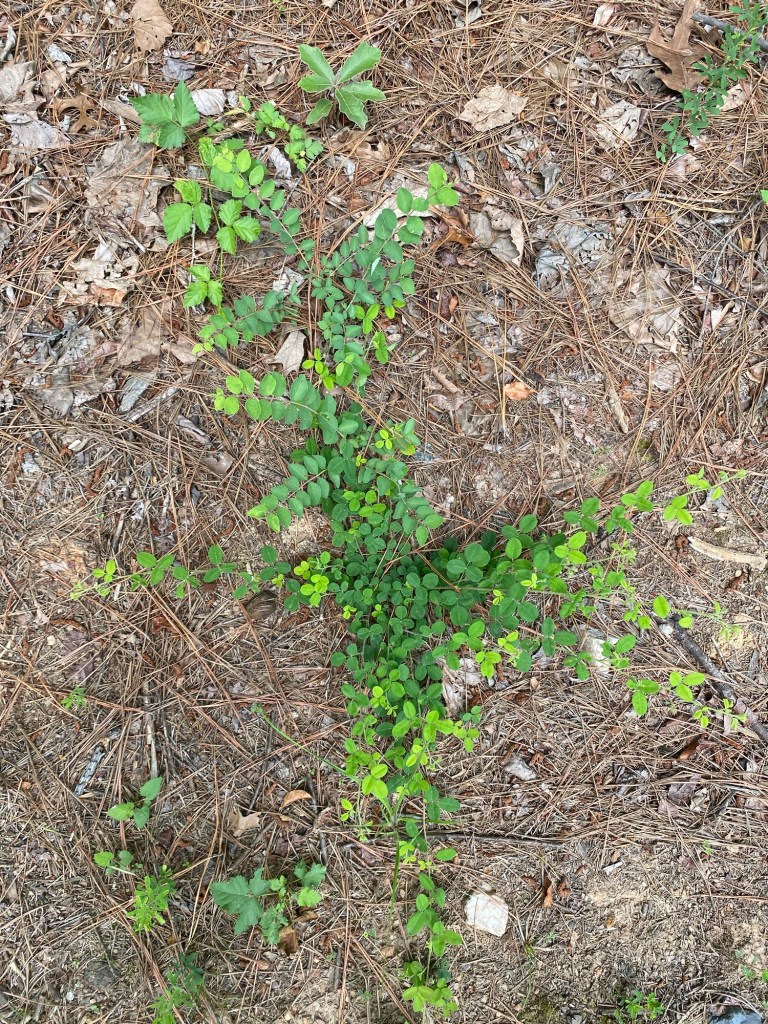
Lespedeza procumbens, trailing lespedeza, a native perennial which is a legume, so nitrogen fixing. Found throughout the farm.
Hygrocybe conica along North Trail. These were brilliantly colored on the forest floor.
Hygrocybe flavescens, Golden waxy cap, at the bottom of North Trail as it reaches the waterway, we found this beauty.
Entoloma strictius, were tall, straight and golden, arising directly out of the forest litter along North trail. They appear to have a pink spore print, and the ridge-like gills turn pink as they age.
The Pawpaw Orchard has become a favorite location for us as we clear out small competitors and limb up larger trees. We’ve been learning about how to successfully transplant papaws and we’re working on a long term strategy to produce fruit and trees in abundance.

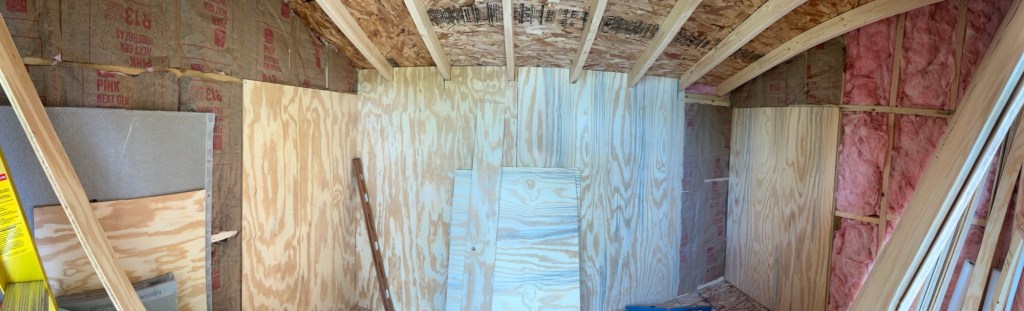
We have been working on the shed which will house a compost toilet and shower for us to camp luxuriously. We plan to camp in the next month and hope to report back about the wonderful night time adventures at Saint Andrews Forest Farm.

The compost toilet has indoor cladding now.
Freshly cut! We’ve been diligently maintaining our setback line along the Southern boundary of SAFF, grateful for the power of the Husqvarna.
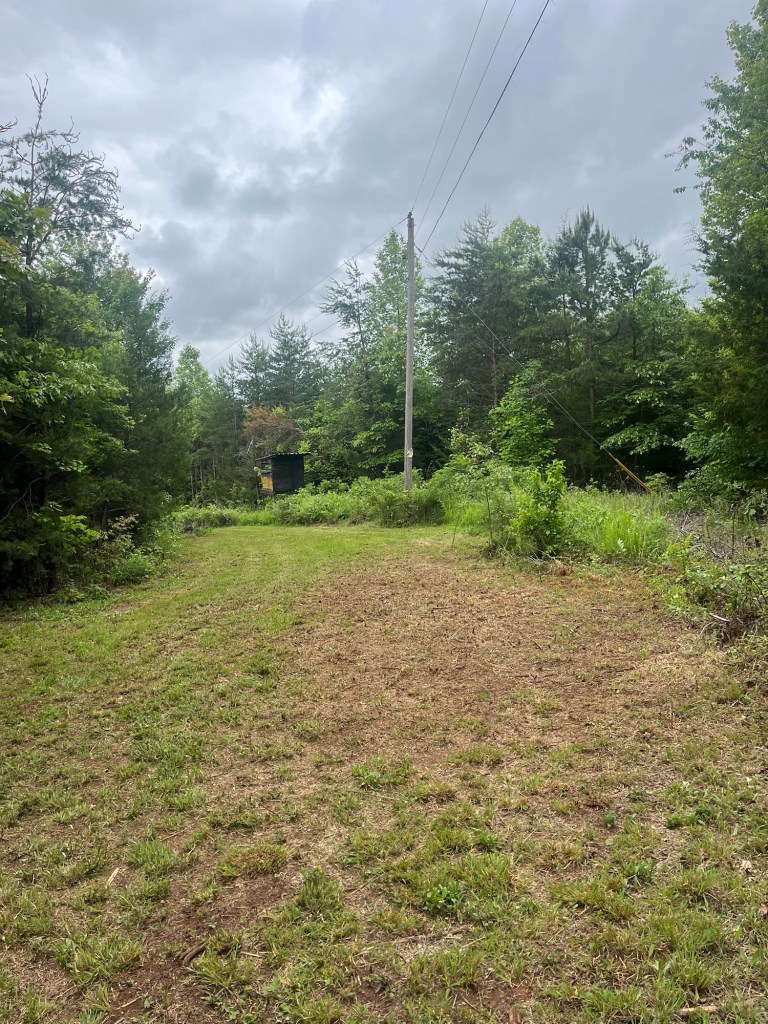
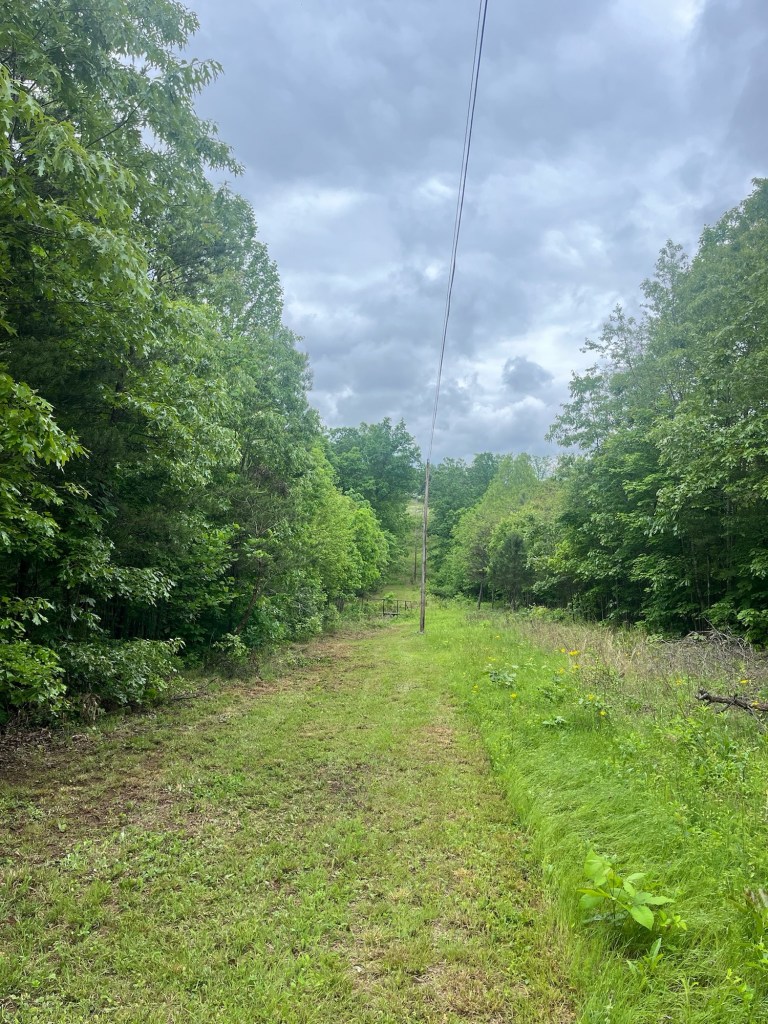
Straight down our south property line. (The electric wire.)

April 6,2024 Saturday Morning Farm Foray

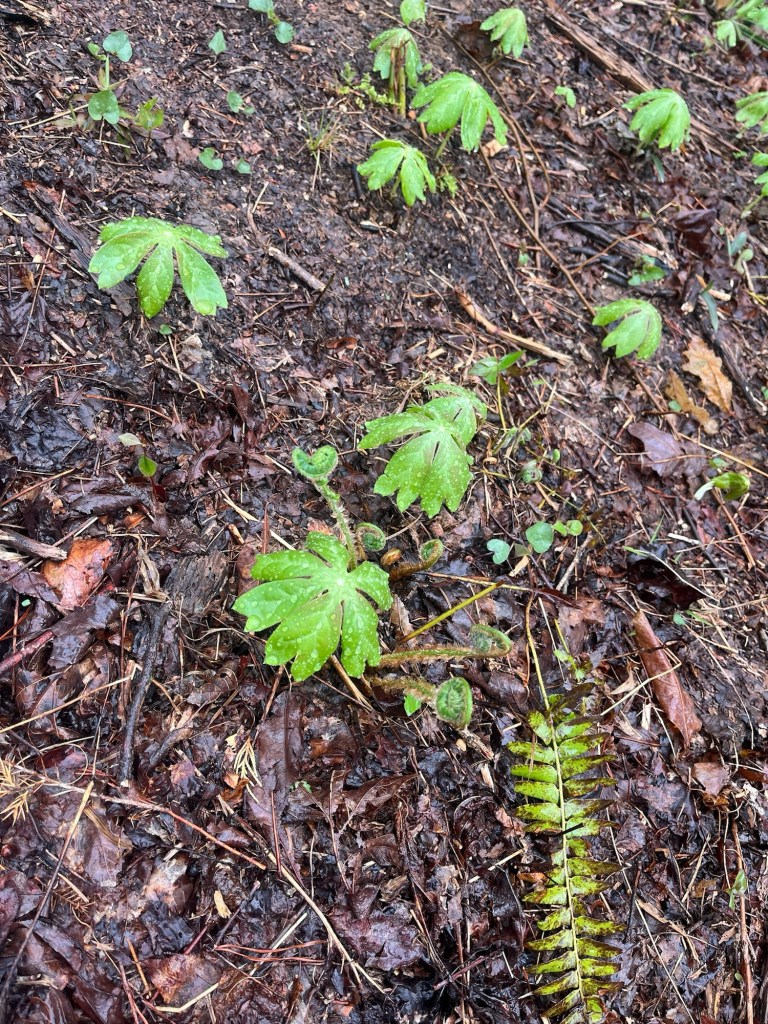
Ferns and mayapples by the waterway.

We have a house guest later today but with the wet weather this week, we could not resist a quick run out to Buckingham for a foray. The cool moist April weather all week long seemed to offer another chance for morels.

As we neared the Farm a large male Bald Eagle suddenly commanded our attention by swooping down from a tree to seize a hapless rabbit in a stubbly corn field. He seemed to stare right at us as we drove by, in awe, waiting until we passed to begin his feast.

Once in the gate at the Farm we wasted no time getting to the forage. We walked Fern trail, past the row of blooming redbud trees, and then stayed to the south side of the Ridge, spying the Mayapples near the setback line. We looked closely, but no luck there.

We continued down the hill to the oaks and main waterway. We cross and explored the mayapple communities adjacent to the pawpaw grove. Many old and young oaks, poplar, beech, hickory, pawpaw, maple, as well as year-round vernal pools. But no morels yet. It is cold, mostly overcast and windy, the oak leaves are crunchy underfoot.

On the drive to SAFF and back, we note a marked difference in the relative development of “spring” in Augusta, Albemarle, Nelson and Buckingham counties. It seems notably cooler once we cross the James River. The trees in Buckingham have been slower to develop their leaves and buds. The spring vegetation at SAFF is not as far along, not as green or flowery yet. The trees know it’s too soon, they are holding back, just a bit longer. This will be something to remember for the future, an entry in our almanac.

Shiny golden mushrooms found along Ridge Trail. Nolanea, or pinkgills.

April 3, 2024, Rainy Day Morel Hunting

We thought today would be the day. The ground temperature was perfect ranging from 50 to 55 at various depths. We got a call from a friend who lives by a lake in Arrington Virginia—the next county over—and he’d found buckets of morels. It had been raining for days with a giant storm moving through. We went over to see if we could find any. The water was too high to cross at the bottom of the slope. We didn’t find morels but we had a great walk. The water was really moving through. We’d never seen it so wet. We will go out Friday morning to check again. These were our finds today.

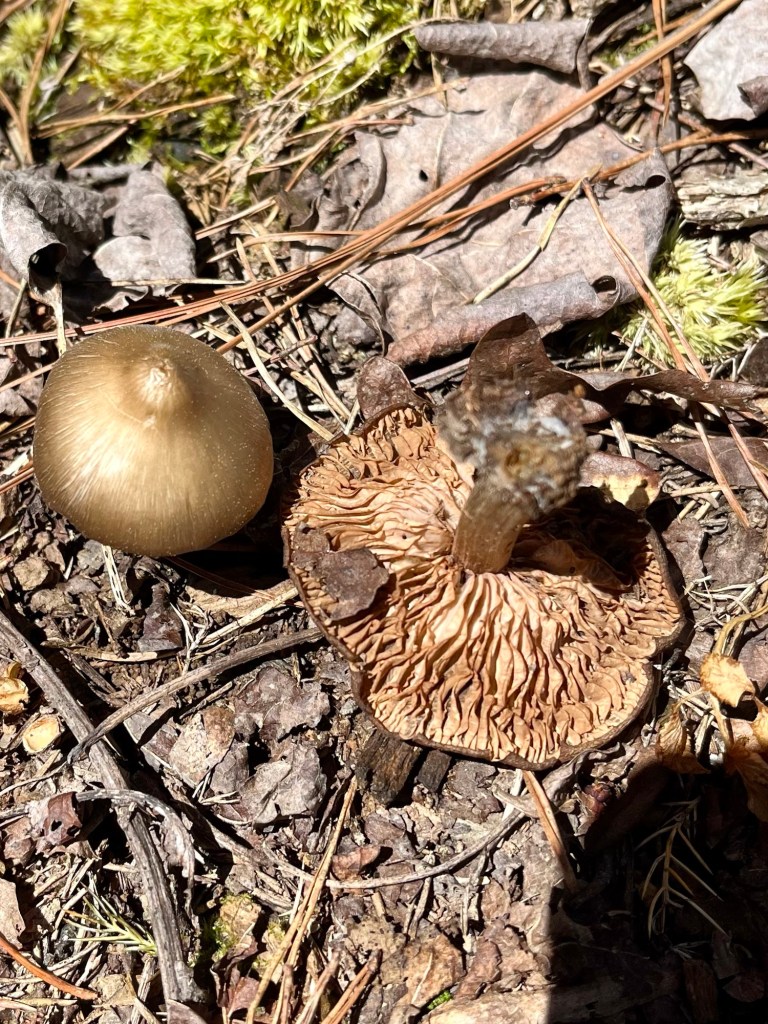
Tricholomopsis rutilans, or common name Plums and Custard, or Red-haired Agaric. Found along south trail.
Pluteus cervinus, in clearing near loblolly pines.
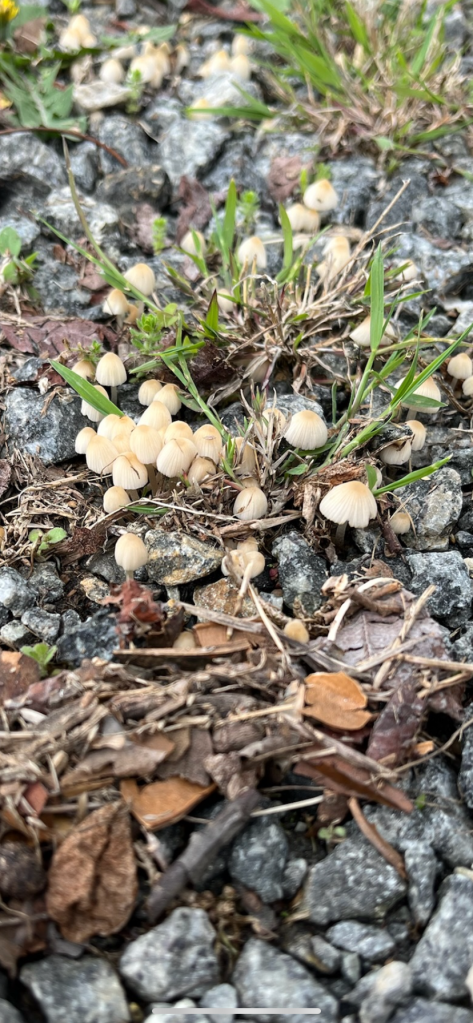
Coprinellus found up top in the clearing in multiple places.
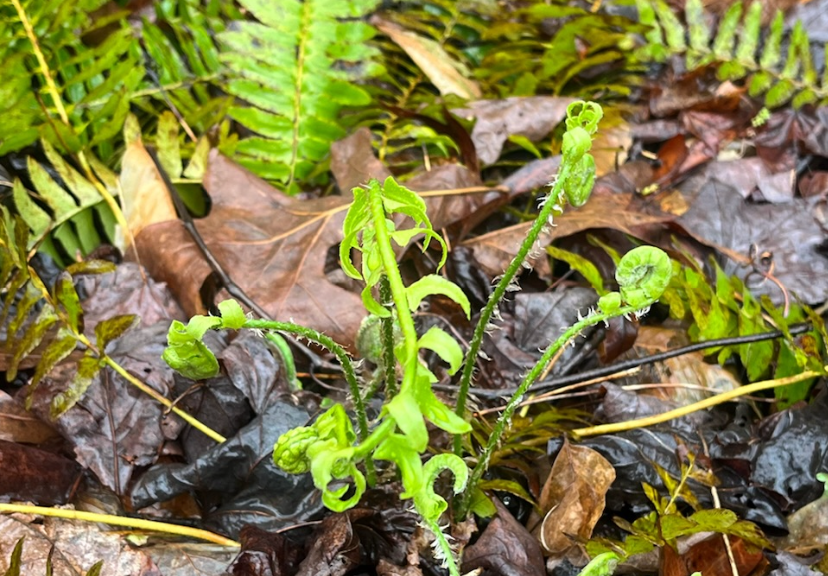
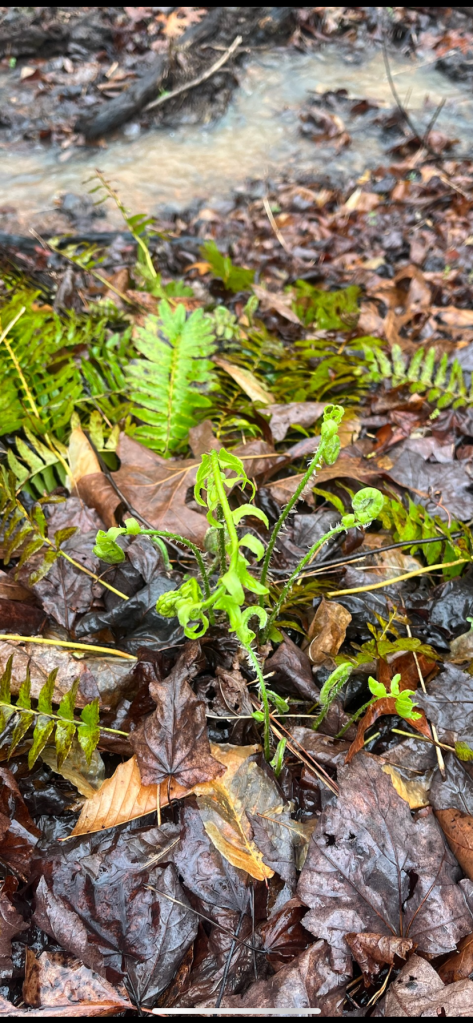
Polystichum acrostichoides, Christmas fern
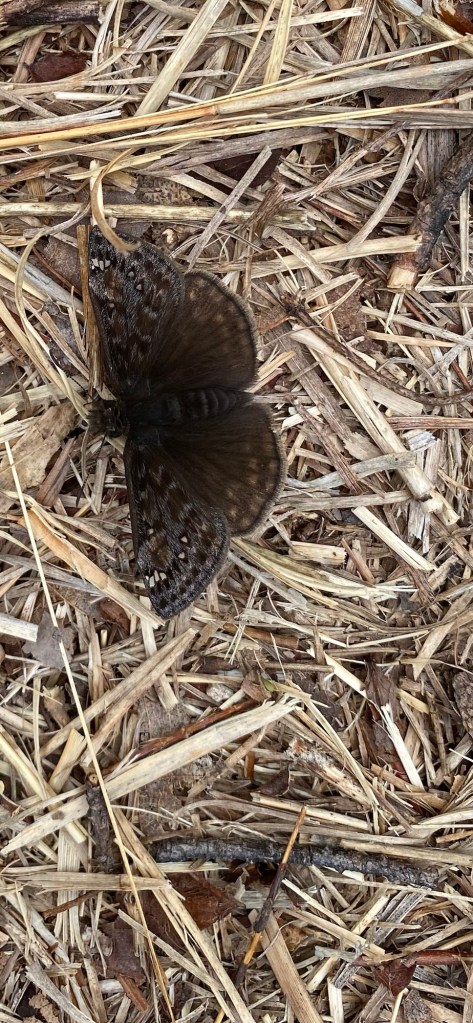
Erynnis juvenalis

March 31, 2024 St Andrew’s Forest Farm on Easter Sunday

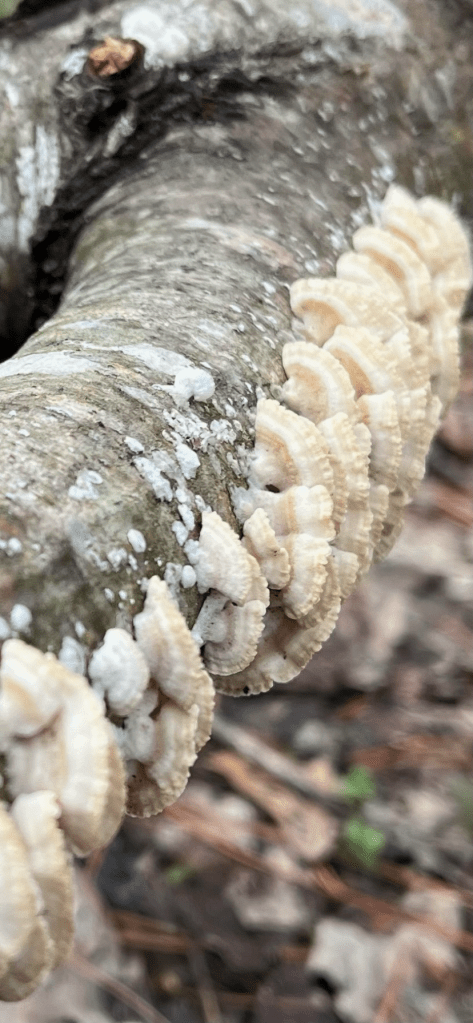
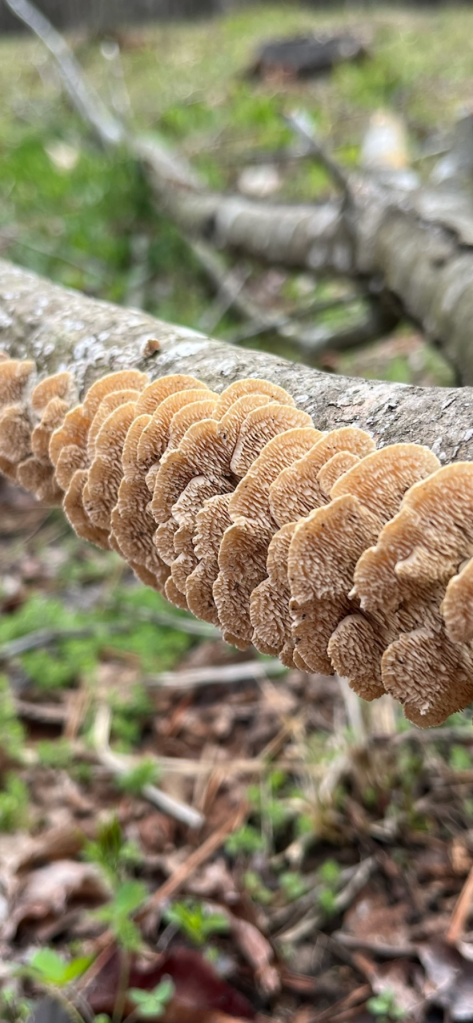
Class Agaricomycetes growing on black cherry.
The underside of theAgaricomycetes shows teeth instead of pores or gills.

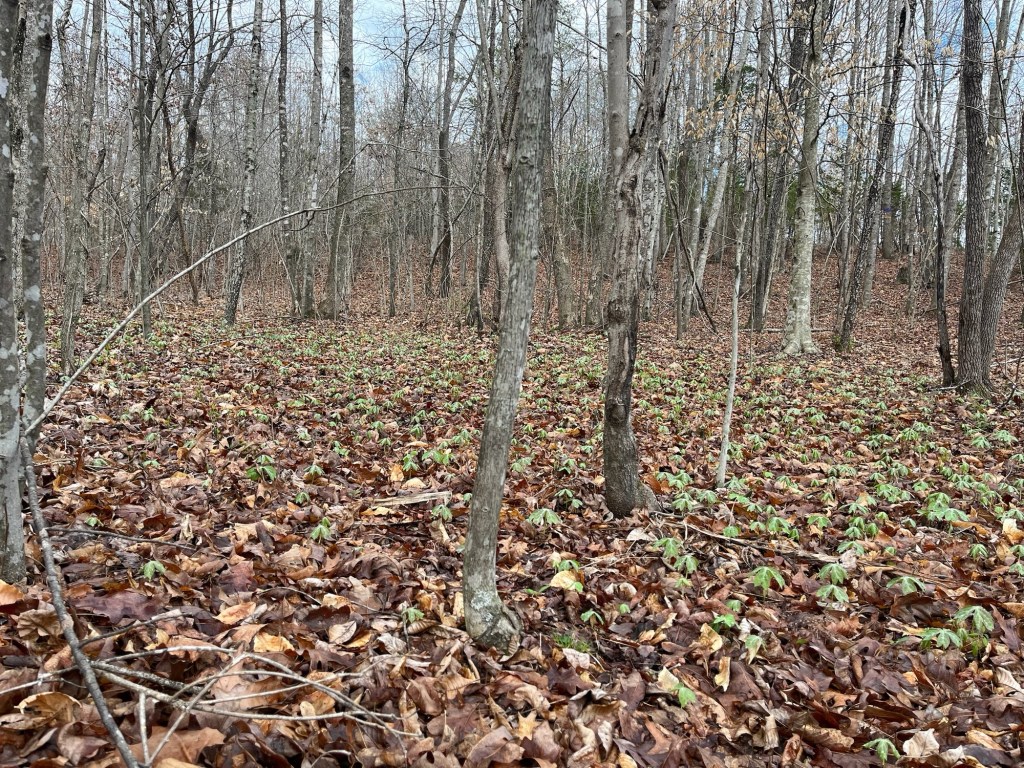
Of course we went over to continue to search for morels. It was a beautiful day and the farm was burgeoning with spring. We saw multiple colonies with thousands of mayapples emerging. Only a couple of the largest ones have flattened which is a great indicator of timing for morels to begin coming up. We found these new colonies of mayapples emerging in the pawpaw grove where we also found Virginia bluebells popping up. We noticed that the blueberry bushes are starting to leaf out.

Virginia bluebells not yet flowering but almost.
One colony of mayapples which has plenty of sun so we hope to see some fruit. We hear the taste is similar to pineapple and starburst candy. Yum!
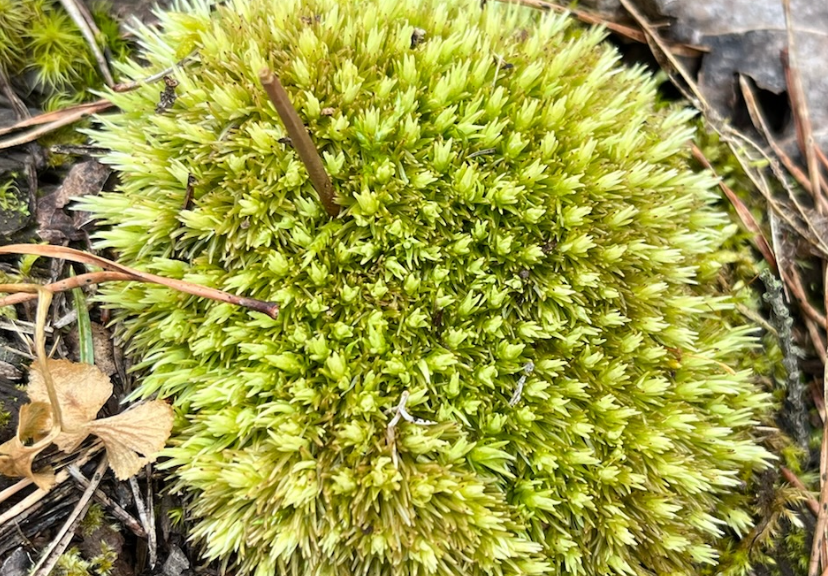
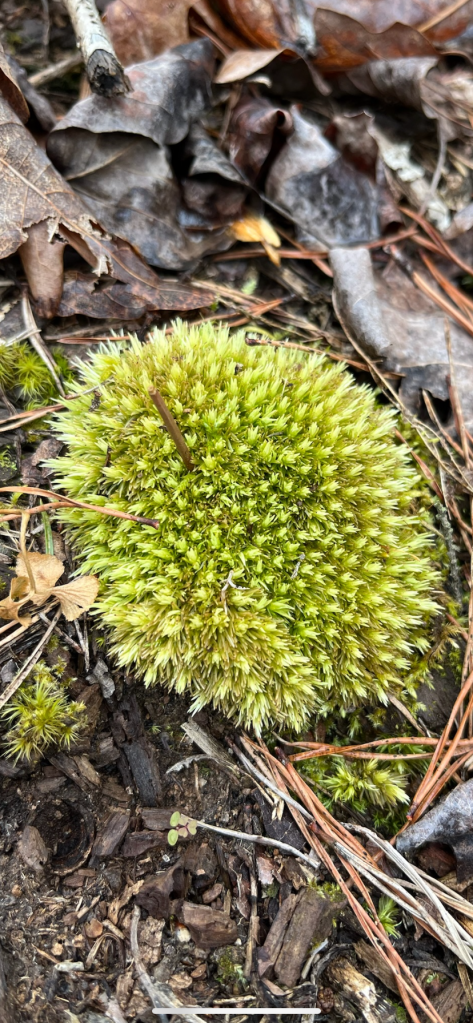
Leucobryum moss found at the bottom of the slope.
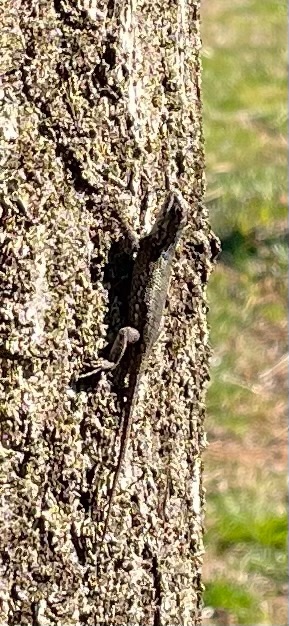
Eastern fence lizard found up top in the clearing.
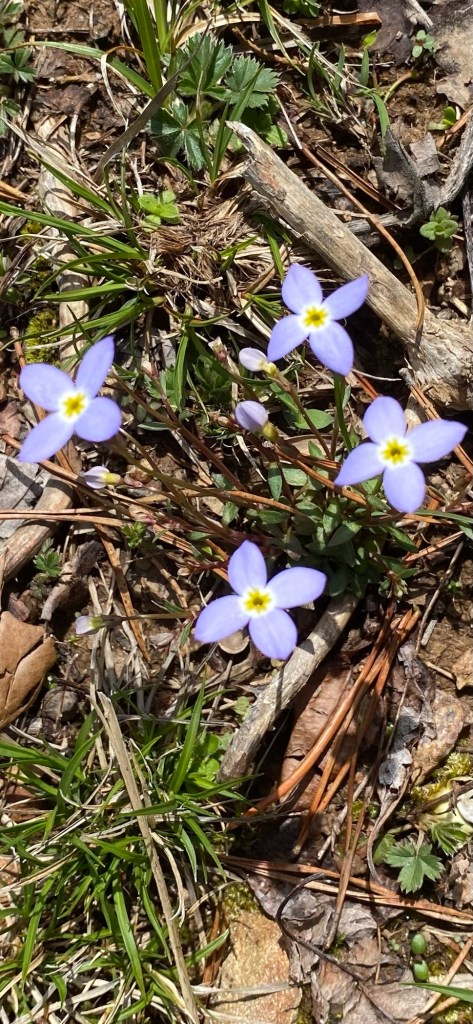
Genus Houstonia, flowering bluets, a native wildflower found covering the farm especially in clearings.

We got plenty of rain yesterday and can’t wait to go back out to search for the elusive morels.

March 27, 2024 Springtime at SAFF

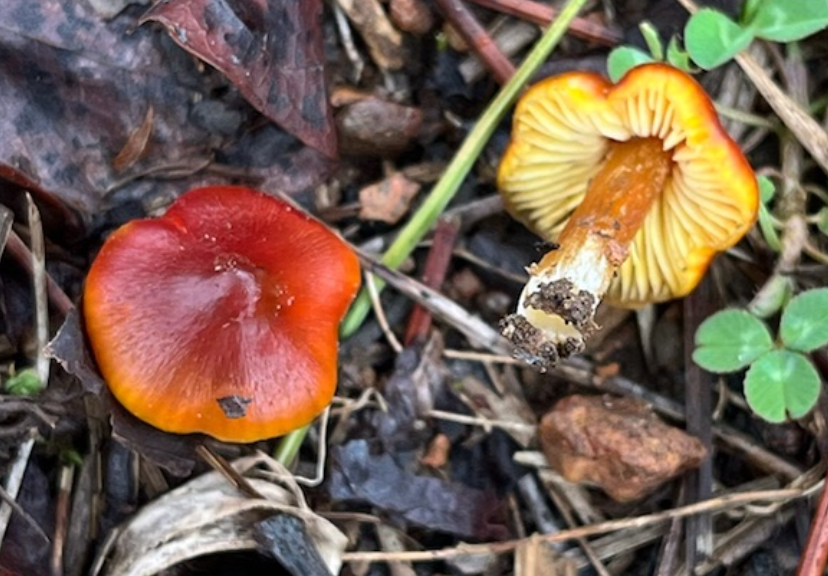
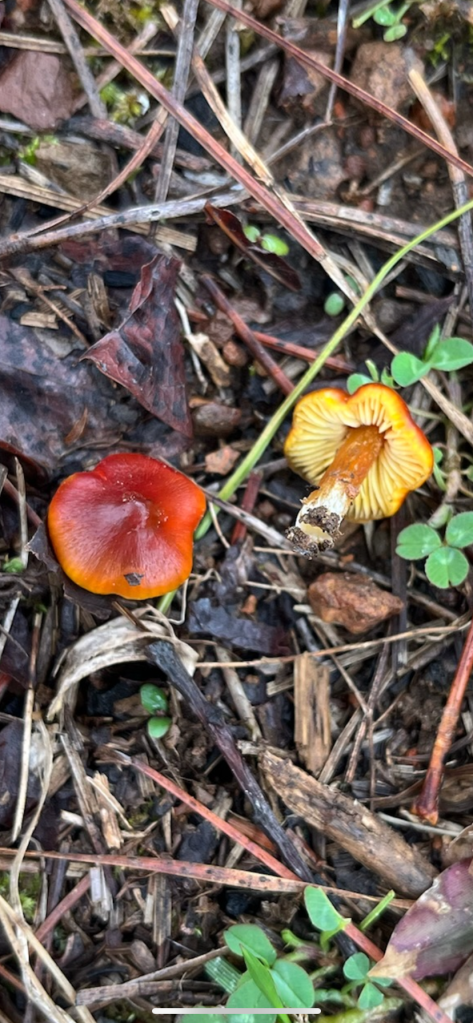
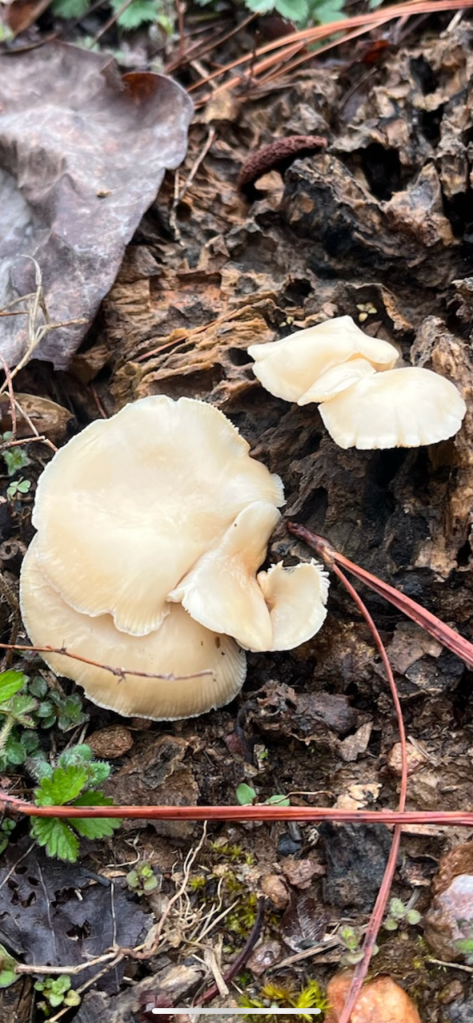
Yesterday was a rainy spring day with temperatures in the 50s at Saint Andrew’s Forest Farm. We went over to walk around the woods and look for early morels since the soil temperature has been in the 50s for a week. We saw vernal pools up top and at the bottom of the slope. The springs and waterfalls were all flowing. We found hygrocybes, commonly called waxycaps. They have bright red caps and yellow gills. We also found oyster mushrooms growing up top in the clearing on a stump.

Blackening wax cap or witches hat.
Oyster mushrooms

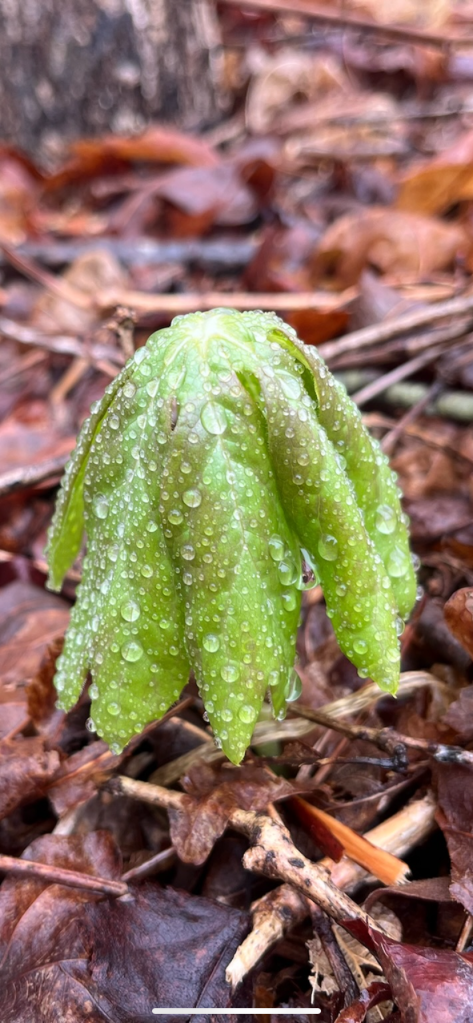
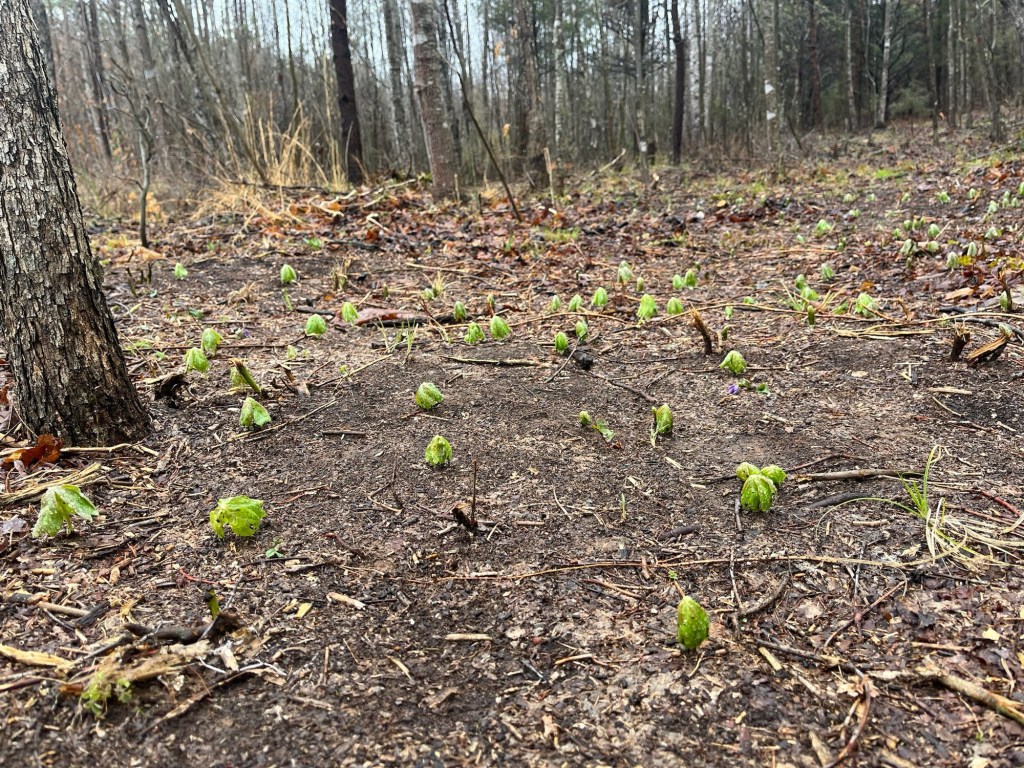
We also found several clusters of mayapples. We were delighted to see these as they are associated with morels as they grow together in the same wet, well draining soil.

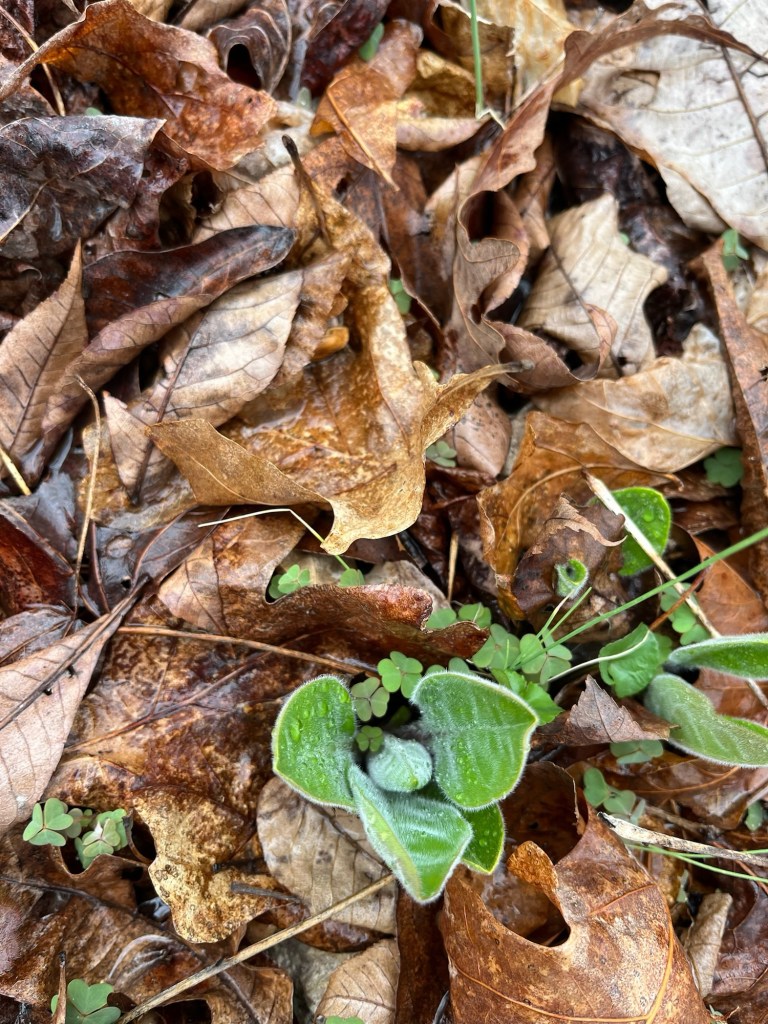
Mayapples emerging along south slope.

The water levels were up with even more rain expected today. We can’t wait to get back out.