Tag Archives: Russula

A Rainy Saturday at SAFF

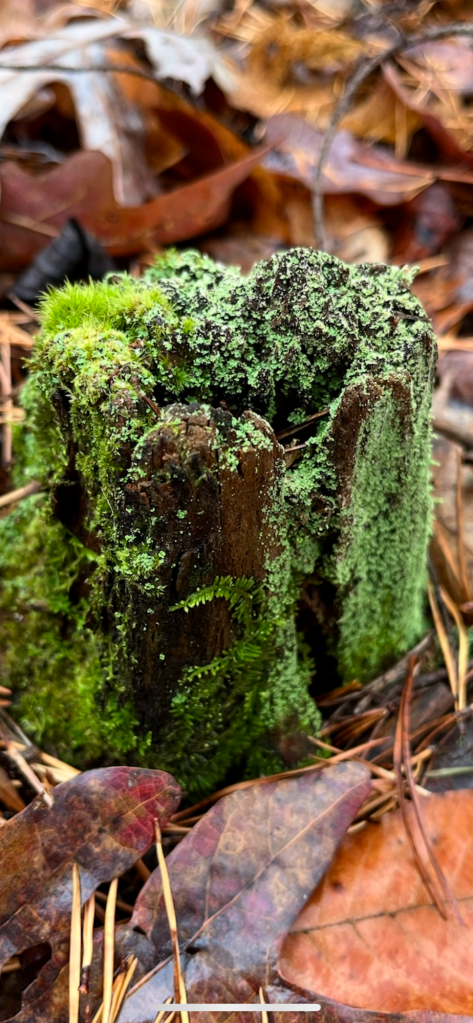
A decaying tree stump covered in mosses and lichen on the main trail in Dan’s Folly.

We got an early start yesterday to spend a rainy morning and afternoon at St Andrews Forest Farm. We got interior shed work completed after a lovely walk. Being in the forest with the rain falling is especially calming.
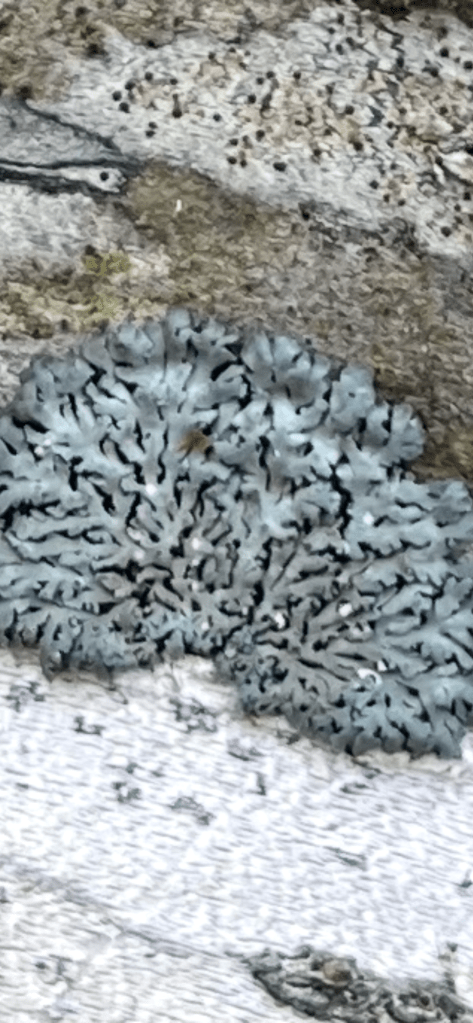
Physcia caesia, Blue-gray Rosette lichen, found on a tree trunk near the North Trail by largest clearing.
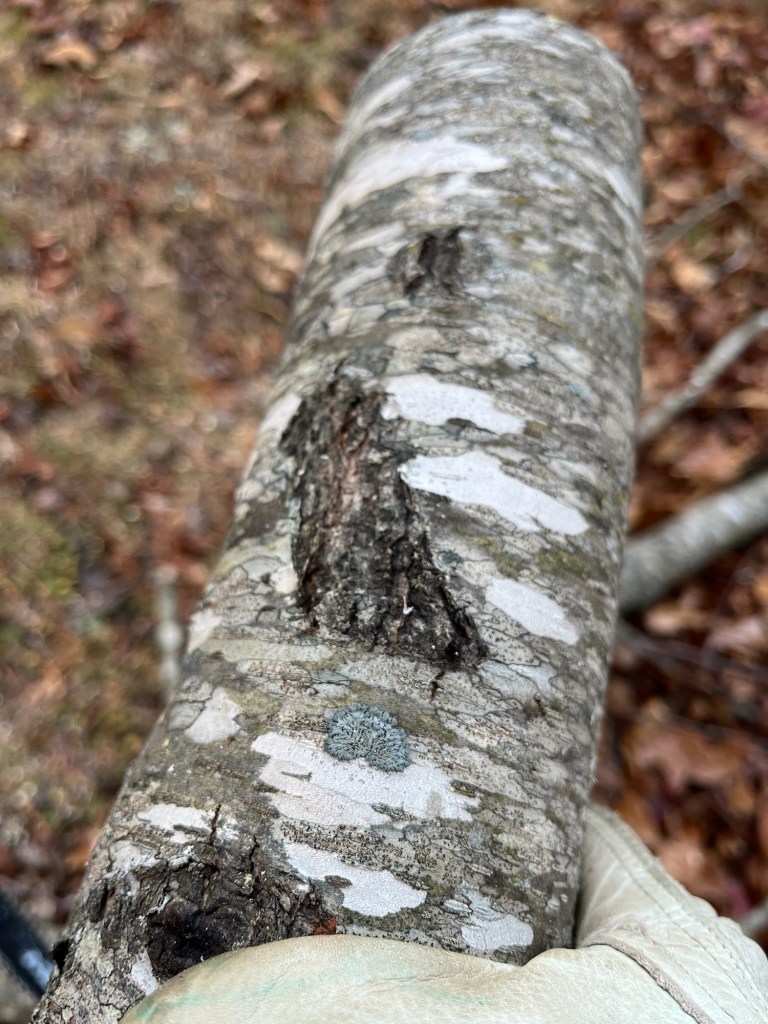
An image to show the size of the Blue-gray Rosette lichen.
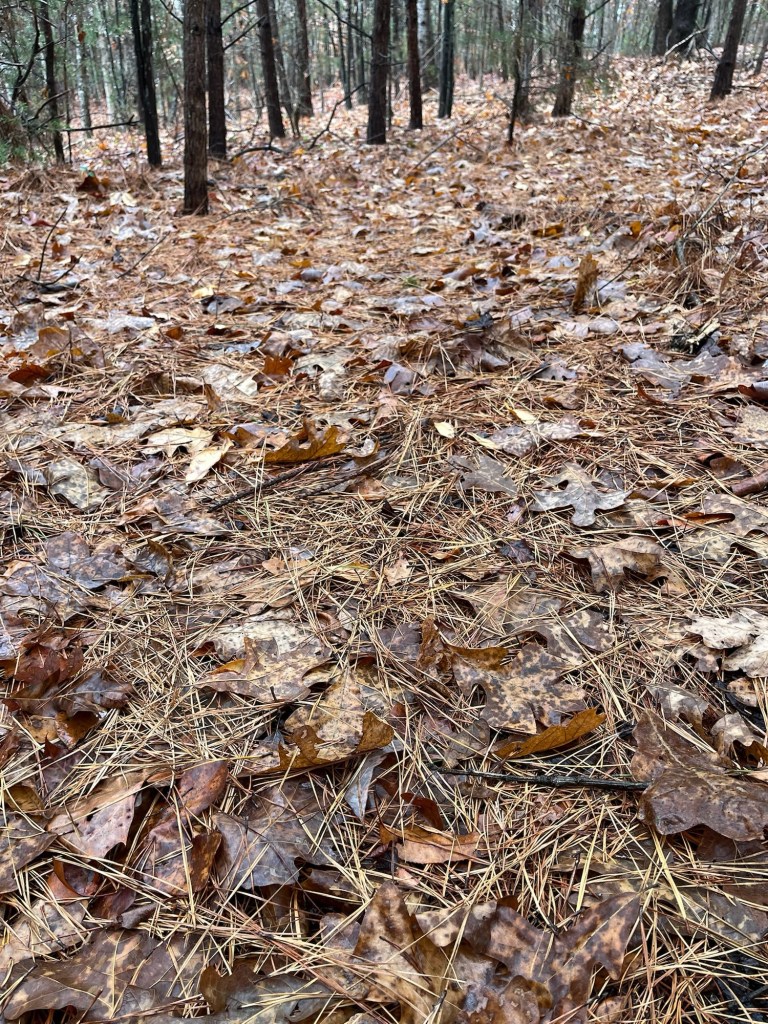
With the ground wet and covered in pine needles and leaves, it was soft and much quieter walking through the forest. Our feet sunk in to the squishy floor.
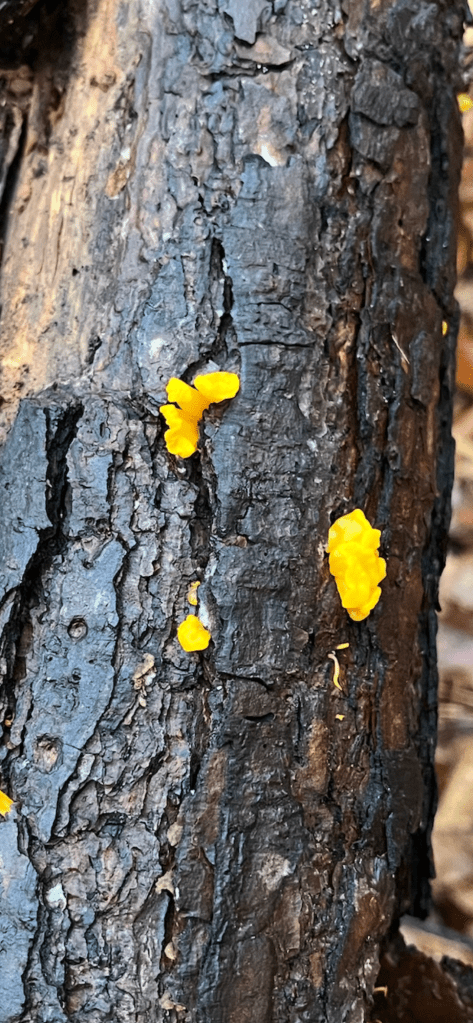
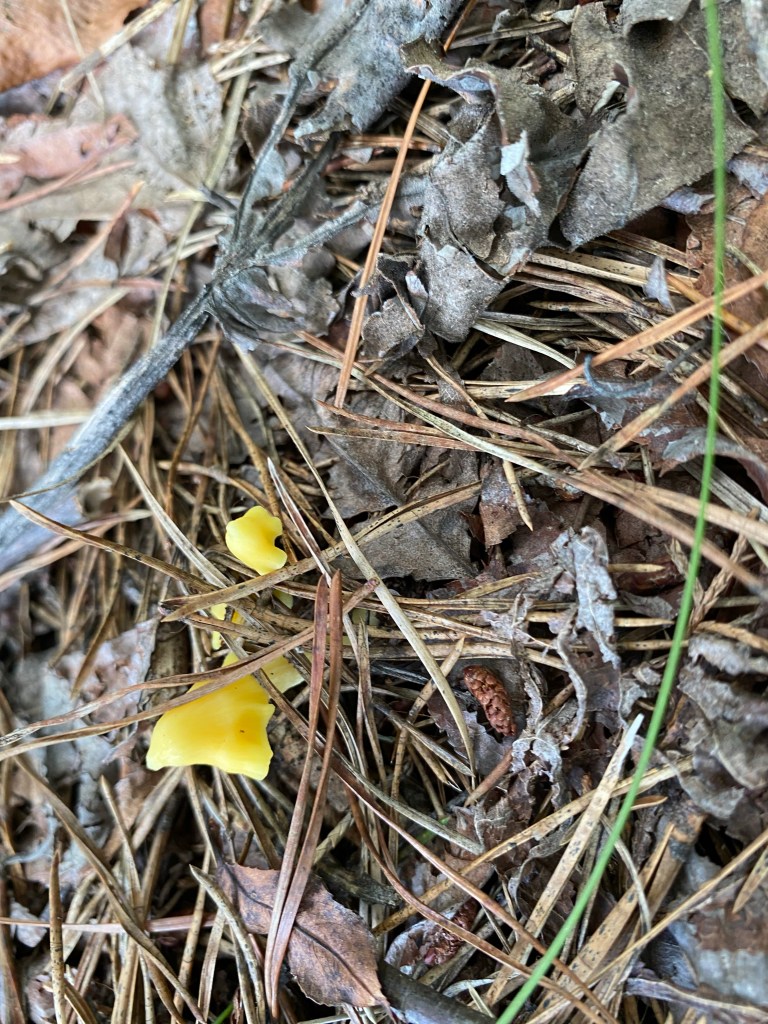
Tremella mesenterica, witches butter, grows on decaying branches of hardwood trees. Some are edible. This is on a conifer, so it is considered inedible.
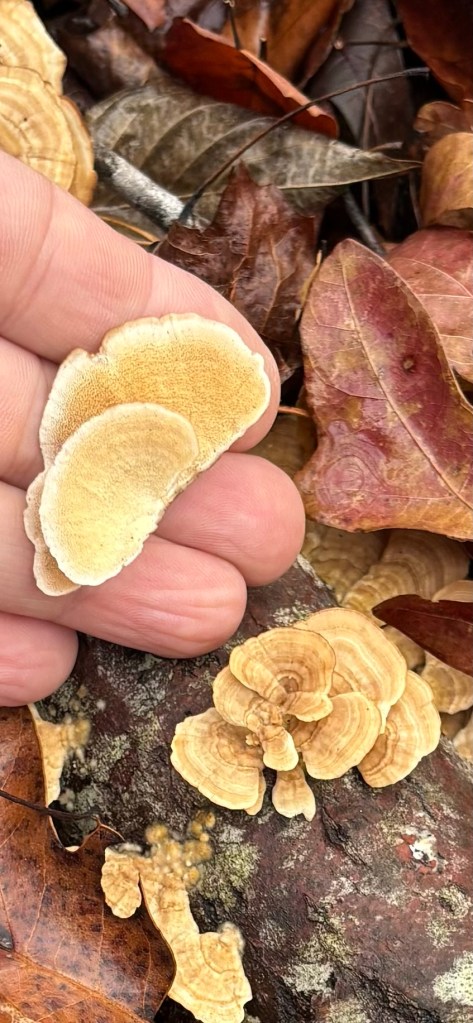
Trichaptum biforme, violet-toothed polypore, decomposing hardwood logs. Often mistaken for turkey tail but the underside has definite teeth instead of small pores. Inedible with research indicating potential antioxidant and anti microbial properties.
Red Hawk Rd at roundabout. American hornbeam, Carpinus caroliniana, attracts pollinators, songbirds and small mammals.
Bonus sunny Sunday walk rounding out our farm weekend.
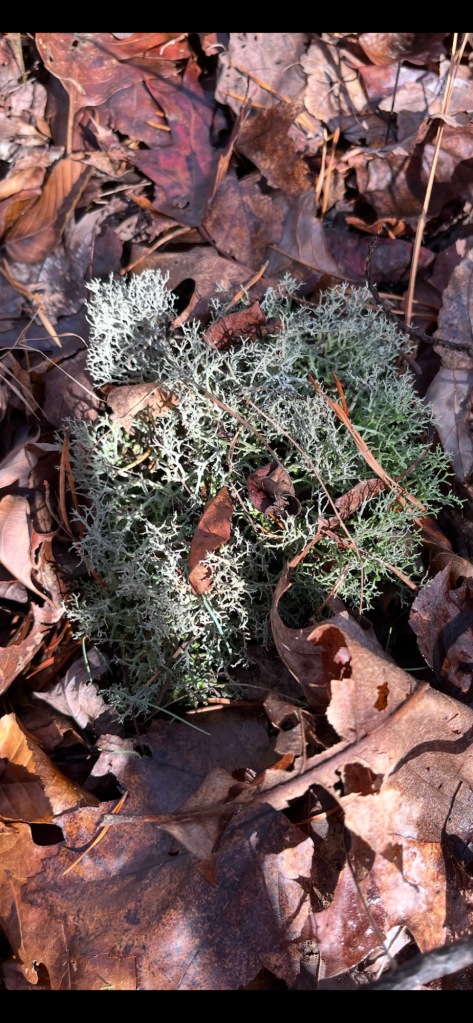
Reindeer lichen, genus Cladonia, found along Fern Trail.
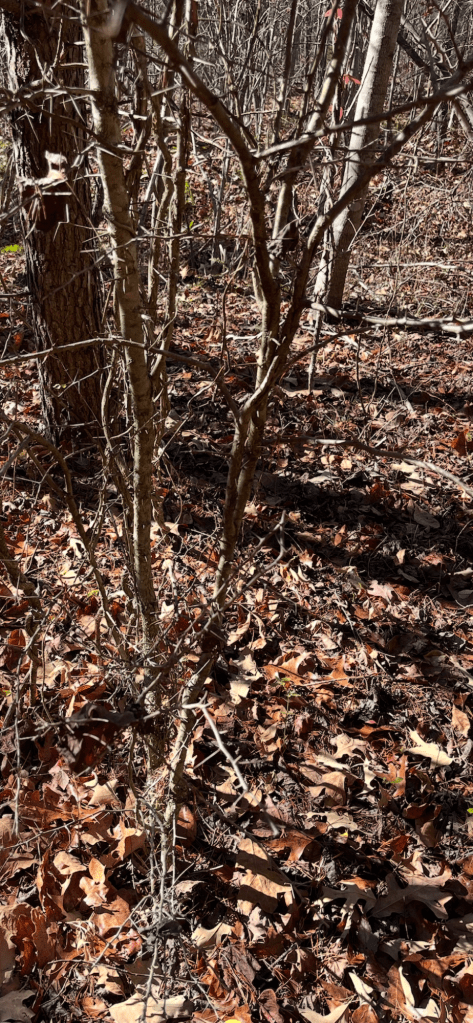
A patch of Honey locust trees found near the culvert.
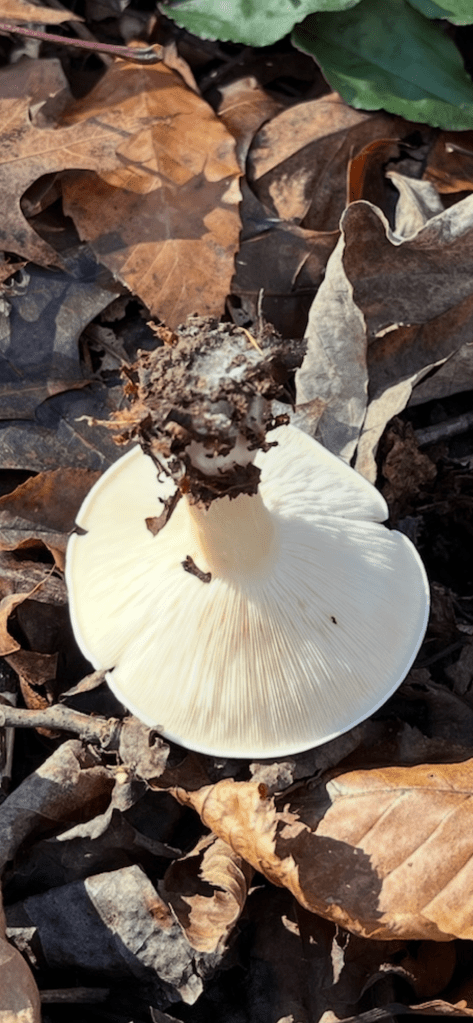
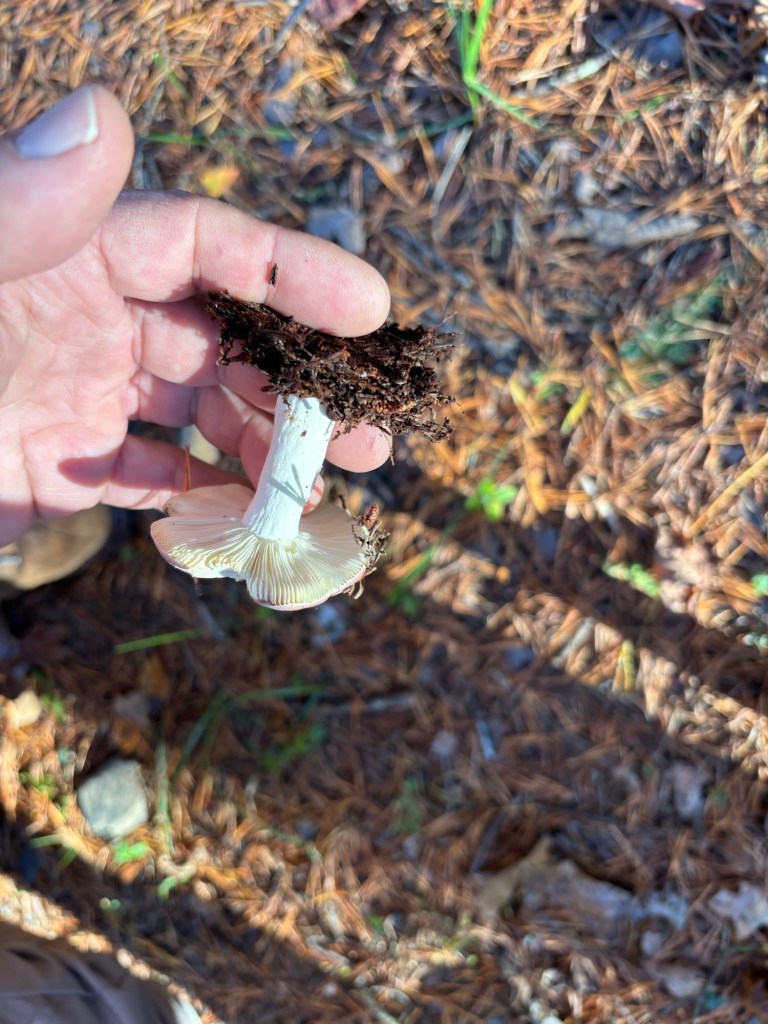
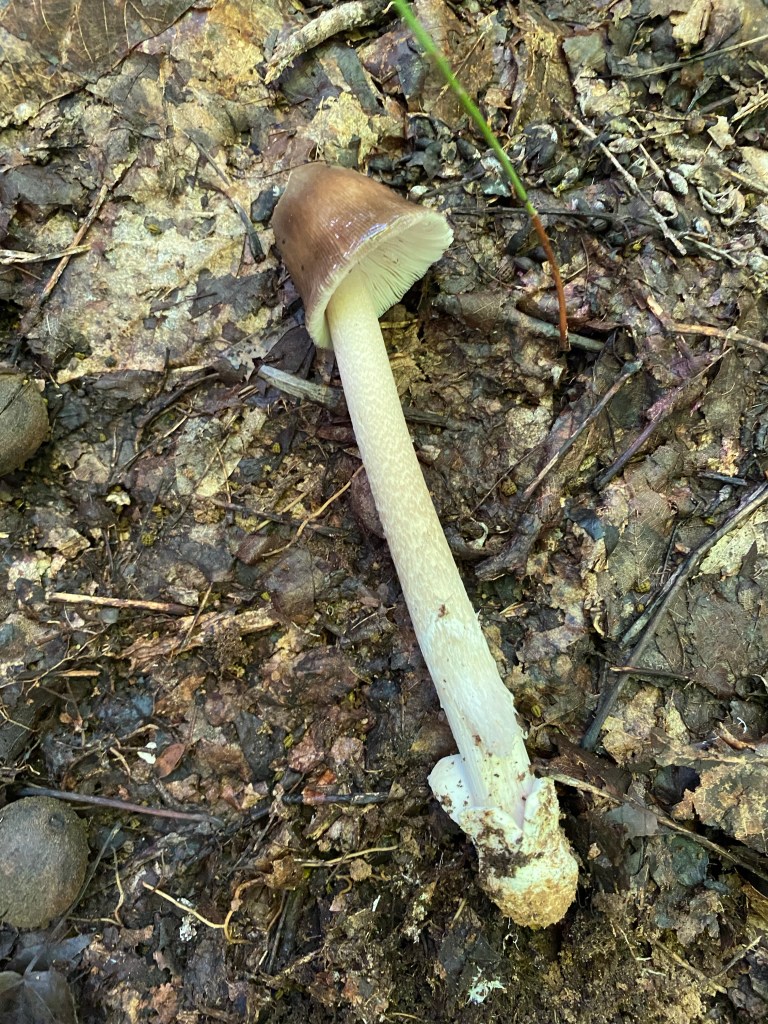
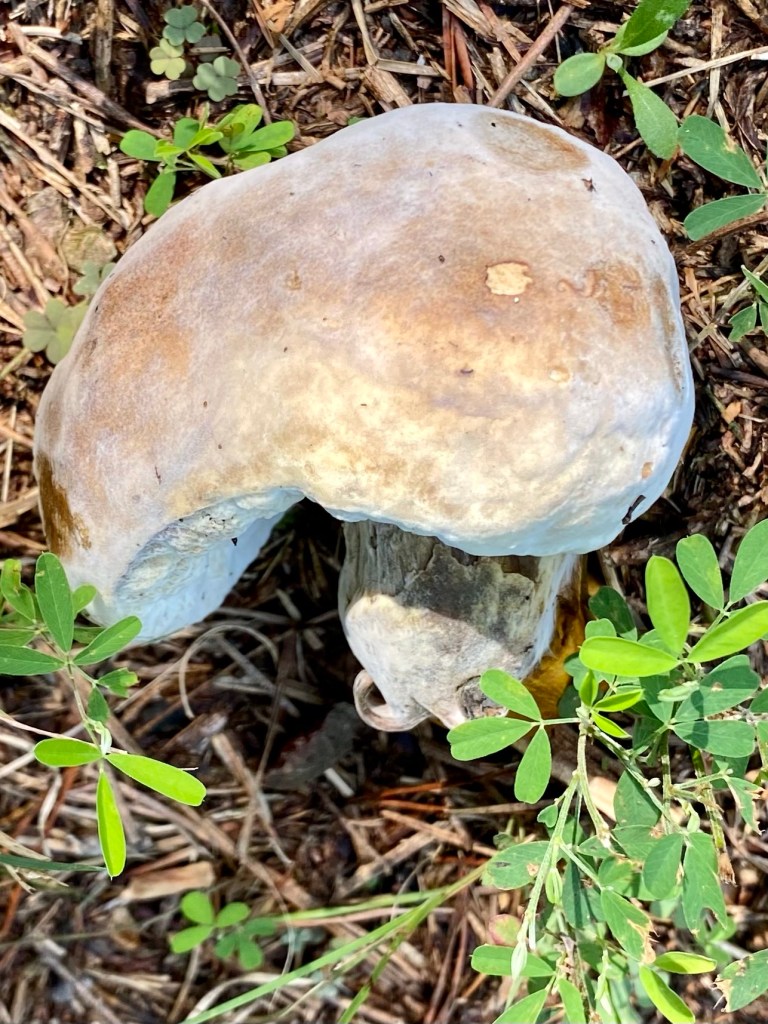
A white gilled mushroom, most likely Russula. It did not lactate when cut so not a lactarius. It could be Russula brevipes or Leucopaxillus. Further info and observations are needed.

Halloween at St Andrews Forest Farm

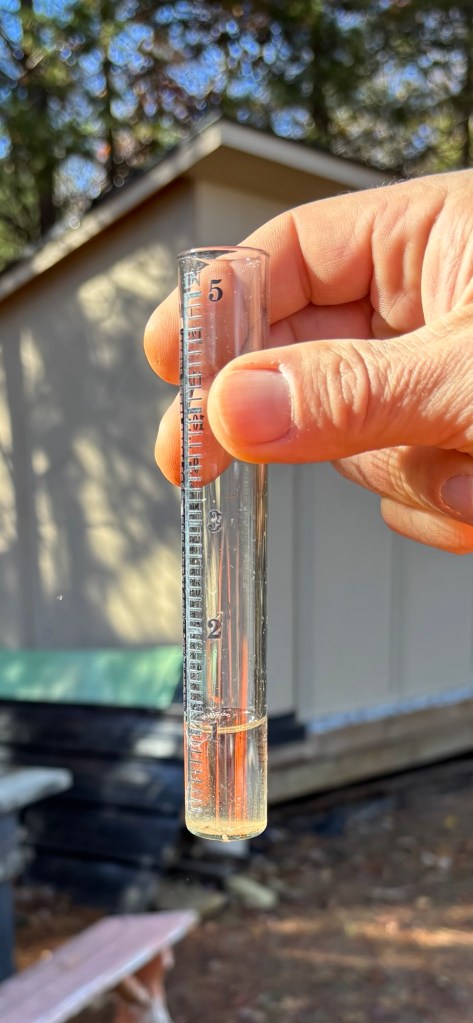
Over an inch of rainfall last Wednesday and Thursday at St Andrews Forest Farm.

We were so pleased to see the farm on Halloween Friday after the rain last week. It has been dry with an elevated fire risk so the moisture was more than welcome. Oftentimes the storms will bounce right over the mountains and miss the farm so we were lucky it hit us. The Asimina triloba (pawpaws) we planted this year need an inch of water a week so the rainfall also meant we did not have to carry water to them. We would like more rain to come consistently and we’re grateful for any rain we get.
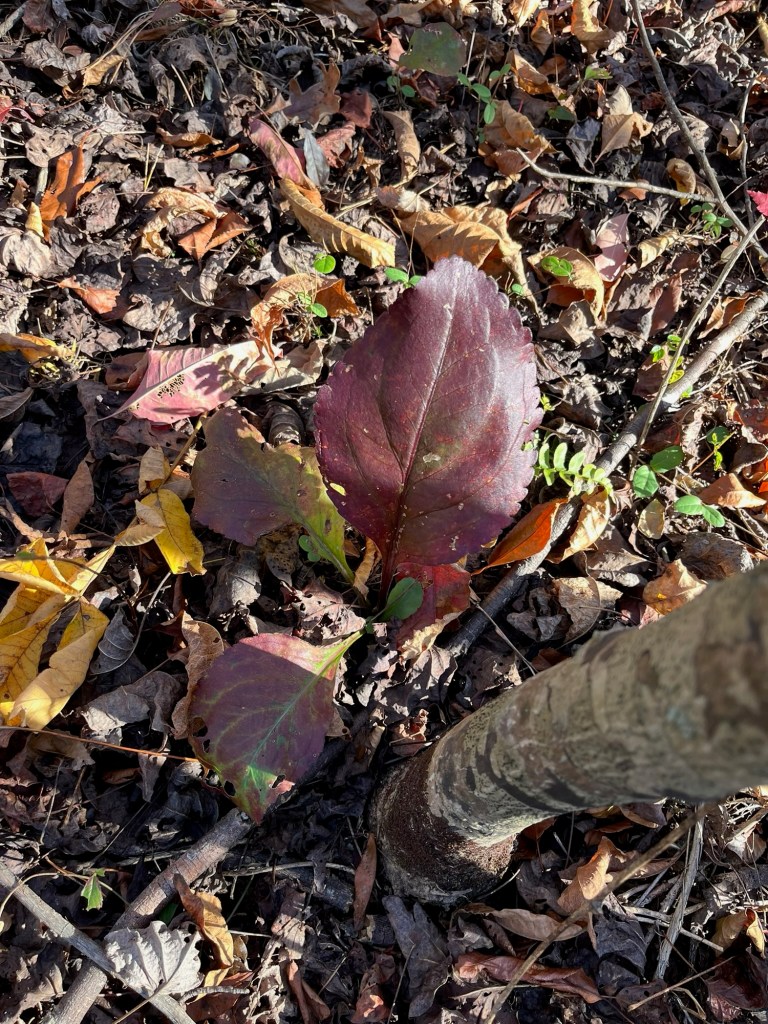
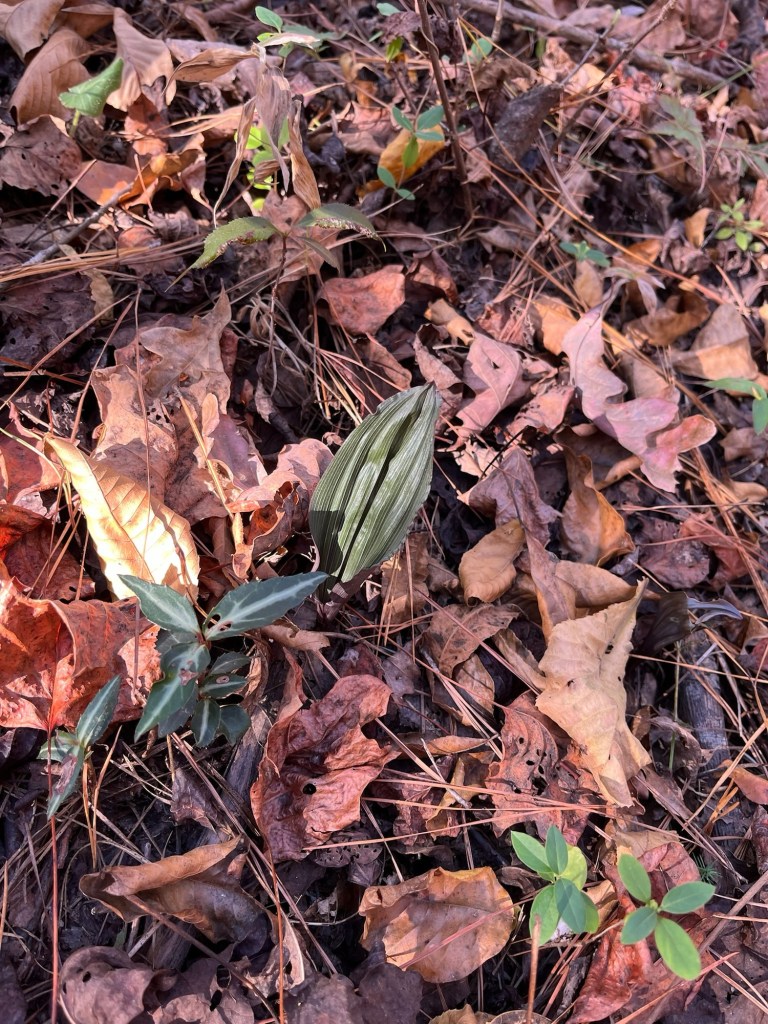
Angiospermae found in the Pawpaw Orchard.
The single leafed plant in center is our third wild orchid we’ve found at SAFF. It’s called Aplectrum hyemale, Putty root or Adam and Eve orchid. We have only observed two so it is precious to us. Putty root comes from the sticky substance found in the root traditionally used to mend broken pottery. We hope to see it blooming this next year in May and June down at the bottom of North Trail.
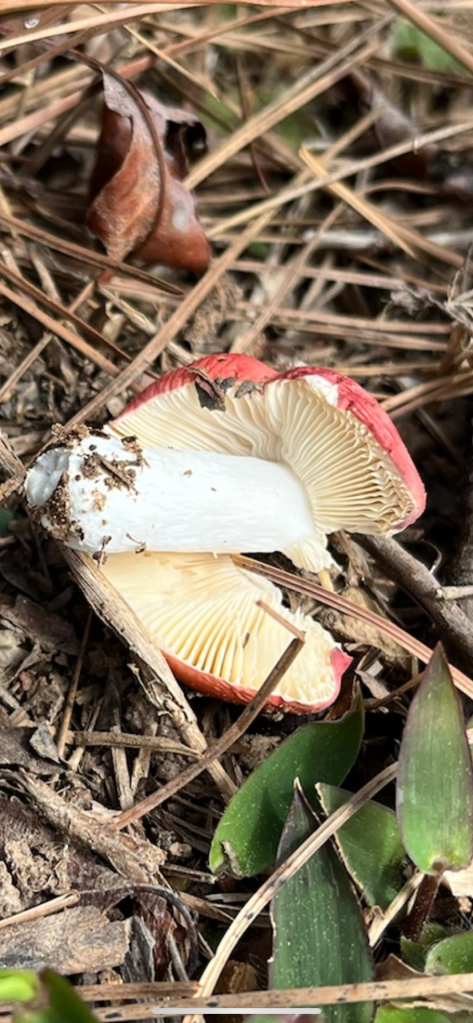
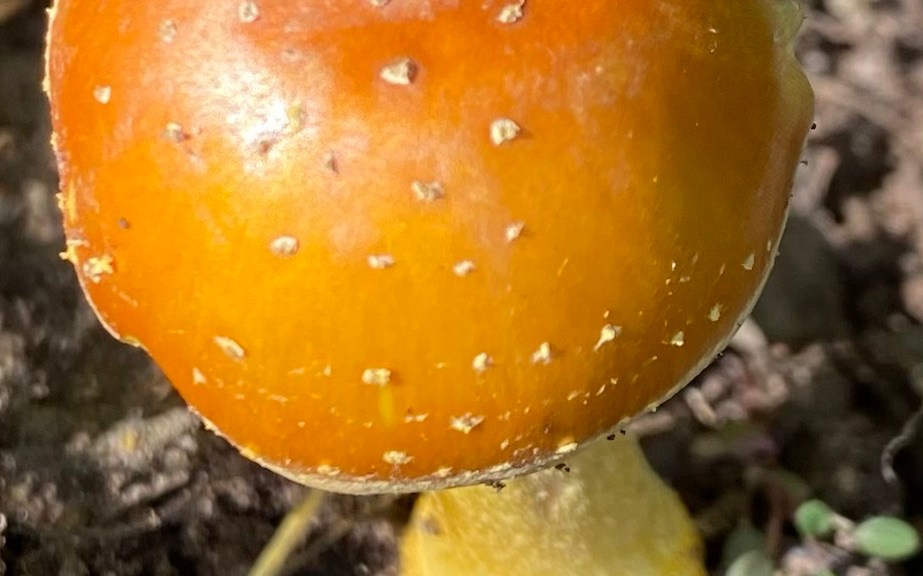
We found this old faded red Russula at the farm along with several puffballs on Friday. It’s just not the year for mushrooms at SAFF. We look forward to finding more next year.
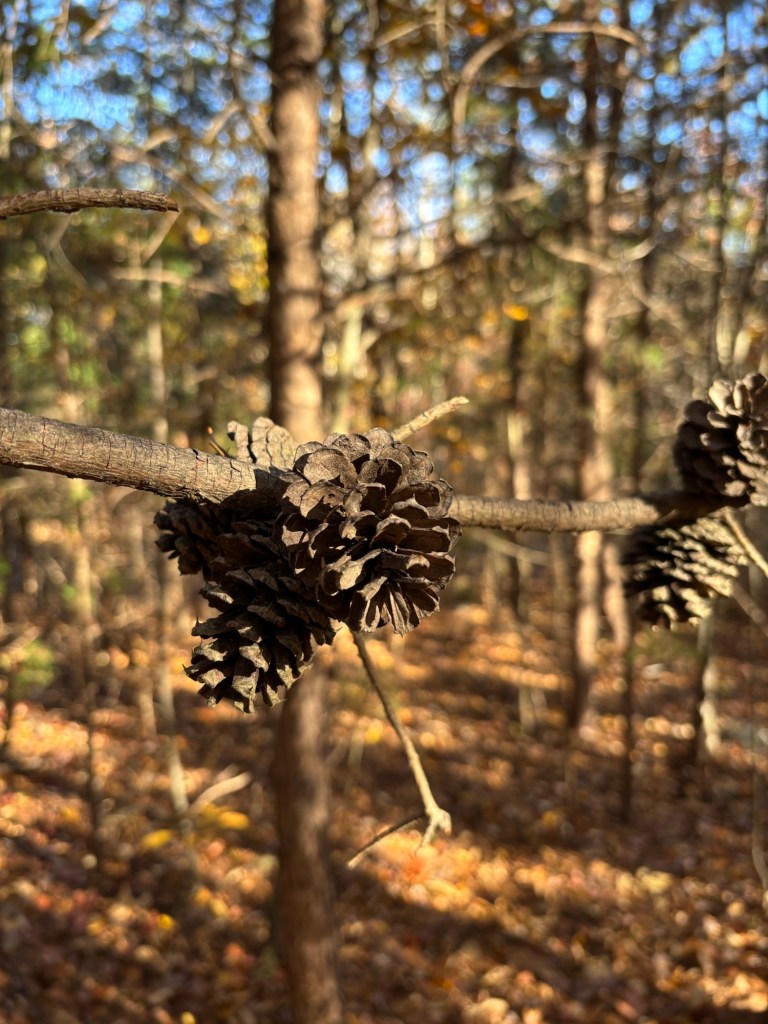
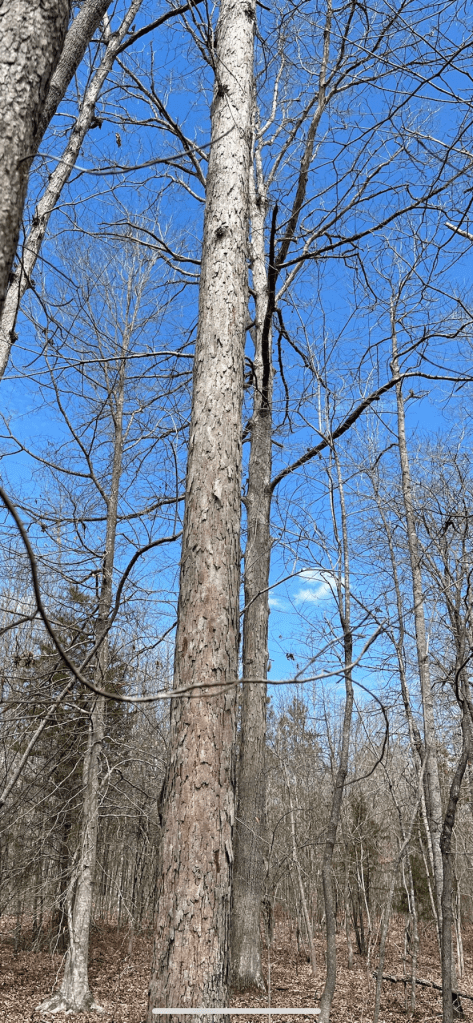
Pinus virginiana, Virginia pine, found all over SAFF.
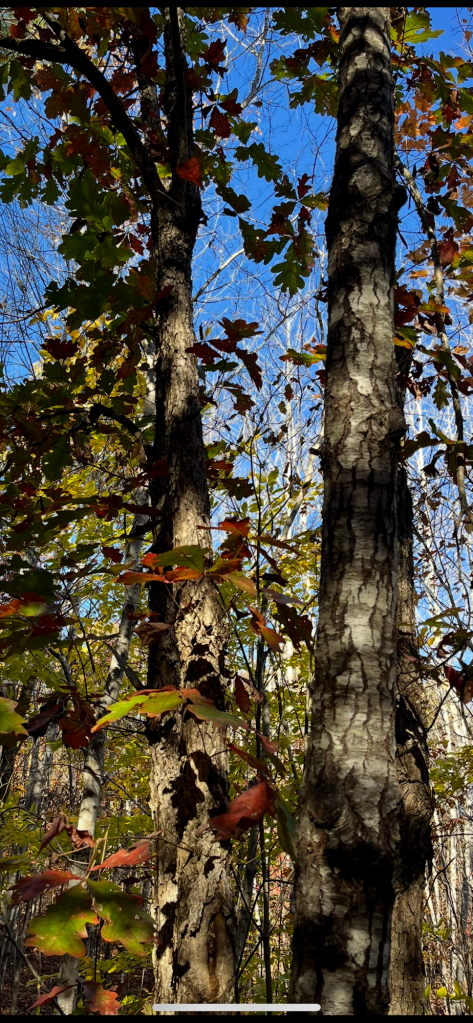
Quercus falcata, southern red oak, found along Three Pine Gully.
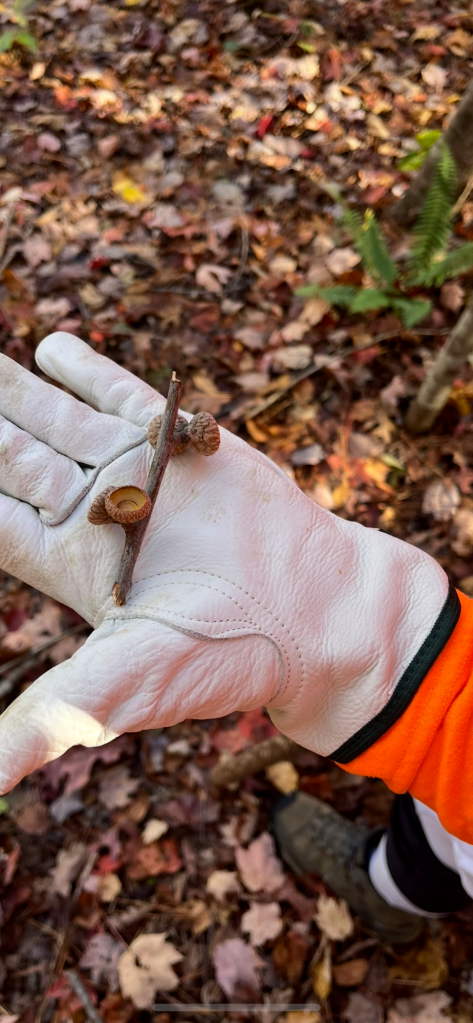
The acorns of the red oak take two years to mature. The cap is the cup like structure at the base of the nut. Squirrels, deer and birds rely on them as a key food source.
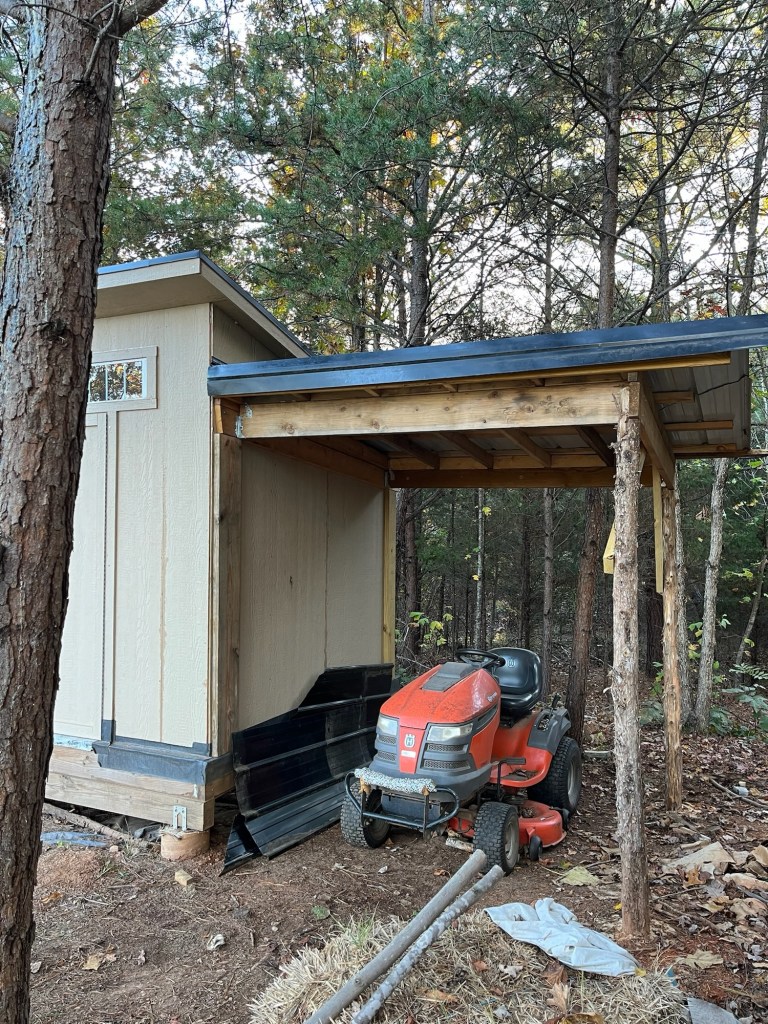
The lean-to with the roof on!
Yay!!! Thank you so much for your interest. We passed 5 thousand views. 🤗

August 19, 2024 – A Mushroom Wonderland

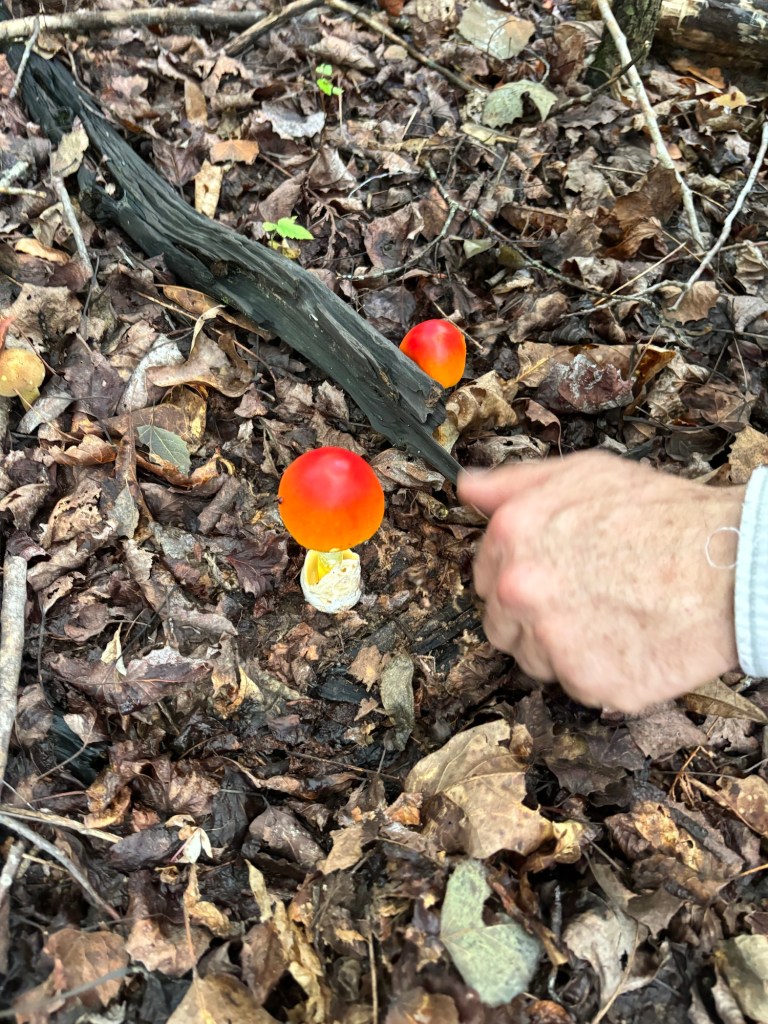
Amanita jacksonii found on the north side of SAFF. The choice edibles are found in pine and oak forests from Canada, through the eastern US and into Mexico.

The past three times we’ve pulled into the clearing with the truck, we’ve seen a young deer. It’s usually sleeping in the forest and it hears us and takes off. We don’t think it’s too afraid because it doesn’t run far though. We come upon it multiple times like it has become a game for the adorable creature. It’s always alone. We hope it stays safe and we understand it’s safest for it to not be comfortable with humans. We’re also seeing a lot of bear poop on the north side of the farm. No sign of our 4 or 5 year old male bear this year but we think it’s him. It’s nice to know animals are taking advantage of the nuts, berries, mushrooms and shelter the trees provide.

We walked all around the trails that were damp from an afternoon thunderstorm that hit just before our arrival. Right away, we saw new mushrooms emerging from the ground that hadn’t been there the day before. Sometimes it takes a few days for the mycelium to send up the fruiting body after a rainstorm —and sometimes it’s quick.

We basketed up our bounty and left the farm as the sun was setting. We were too tired to cook the mushrooms last night so we stored them in a paper bag in the refrigerator and hoped they’d stay in nice shape. It’s best to cook them right away and save them cooked either in the refrigerator or the freezer depending on how quickly they will get eaten. But these wild mushrooms, especially the chanterelles, need to be used quickly.

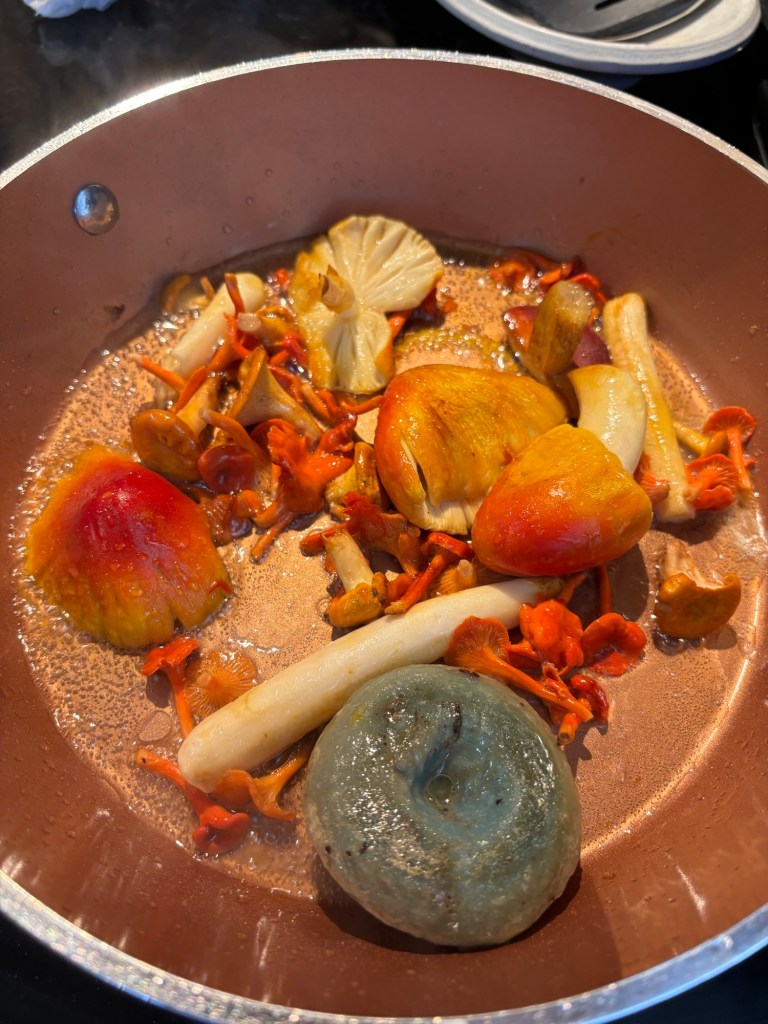
They were in nice shape this morning so we dry cooked them for a few minutes in a skillet on 7. Added olive oil and butter and cooked about 15 minutes. We let them cool and have them stored in the refrigerator. We are thinking of making a wild mushroom quiche.
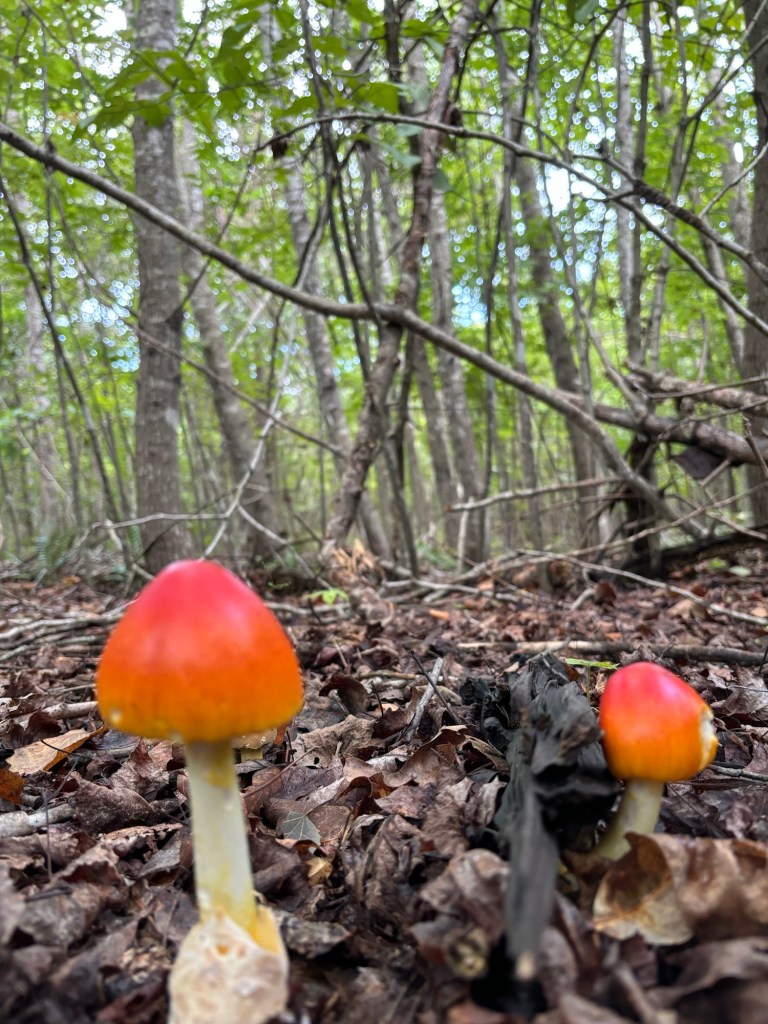
Amanita jacksonii have a bright red cap that can grow up to four inches A beautiful mushroom to find that looks very similar to deadly poisonous mushrooms. Care should be taken to identify and be confident before you plan to eat them.
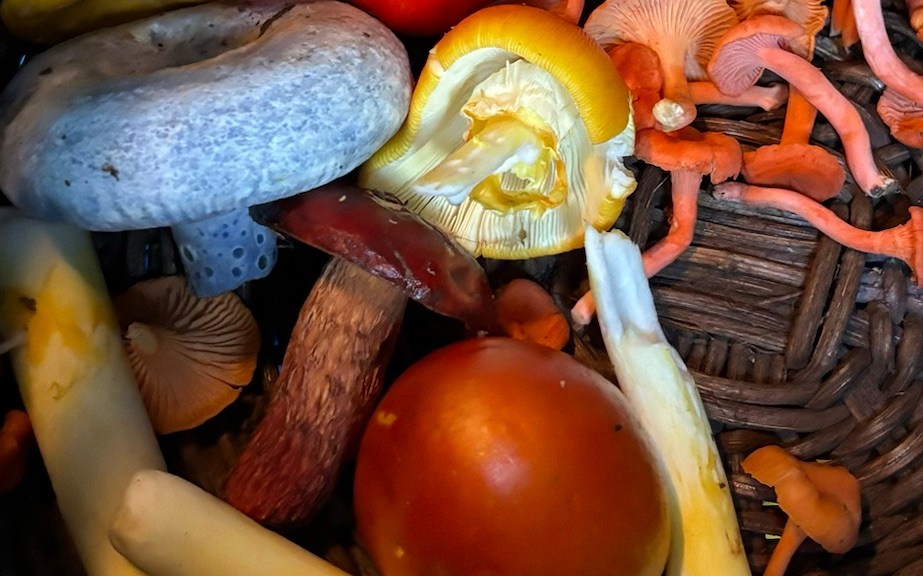
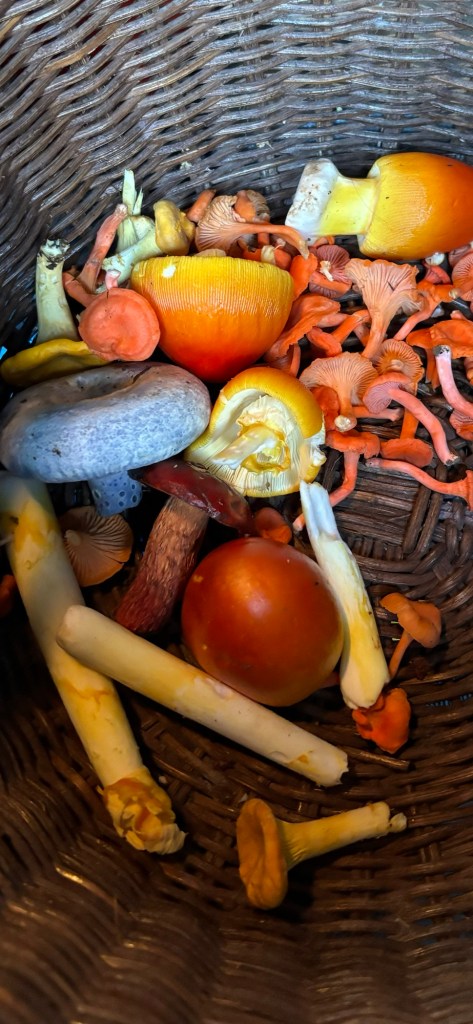
Our mushroom harvest yesterday included ghost chanterelles, Cinnabar chanterelles, Indigo milk cap, Frost’s bolete and American slender Caesar.

June 15,2024 Camping at SAFF

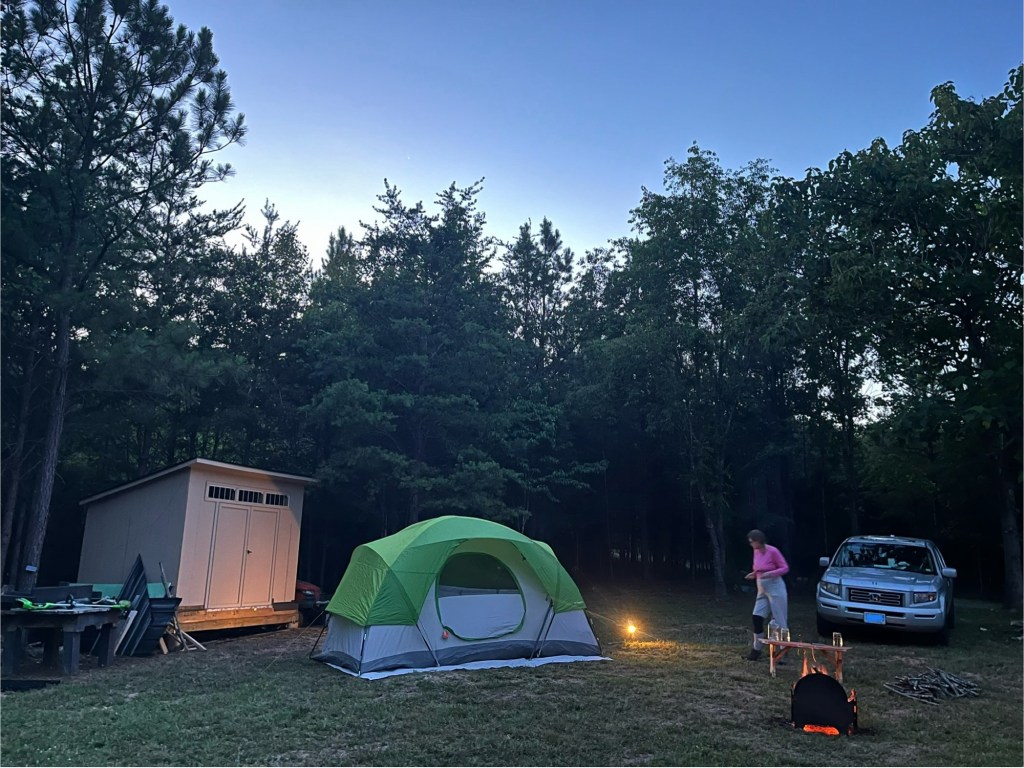
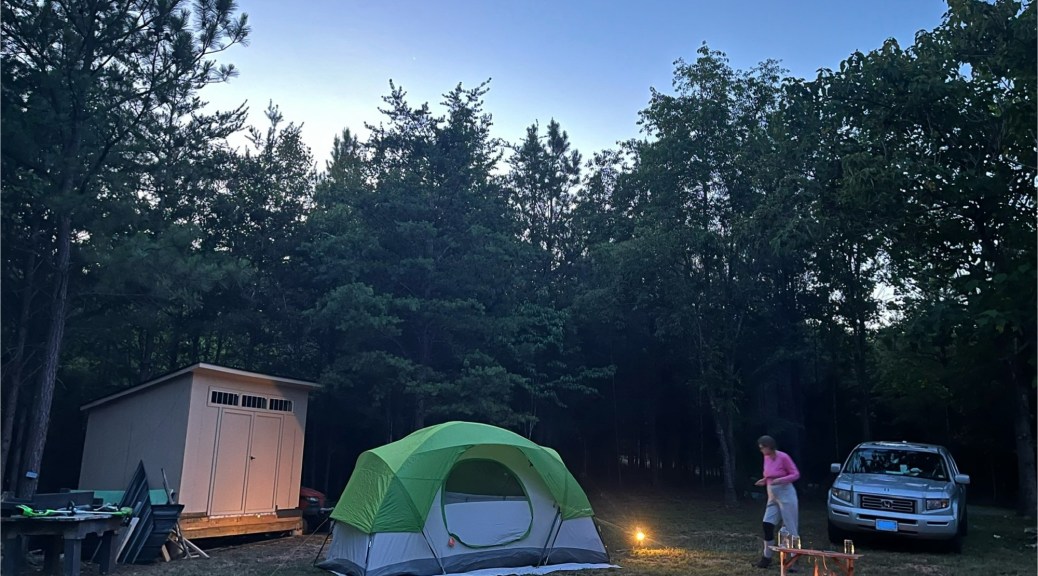
Our campsite at SAFF

We had our first camping experience at SAFF on Saturday night. It was the coolest overnight weather forecast for weeks so we thought we would take advantage of that. We’d been preparing for months with the compost toilet in the shed, keeping the clearings cut back neatly for tick mitigation and collecting the gear we’d need. We still had a good bit of gear to haul out even though we’d been taking loads over for weeks. All in all, the compost toilet combined with the sawdust was the heaviest load. We’ve been able to snack on our tart wild blueberries every time we’ve been out.
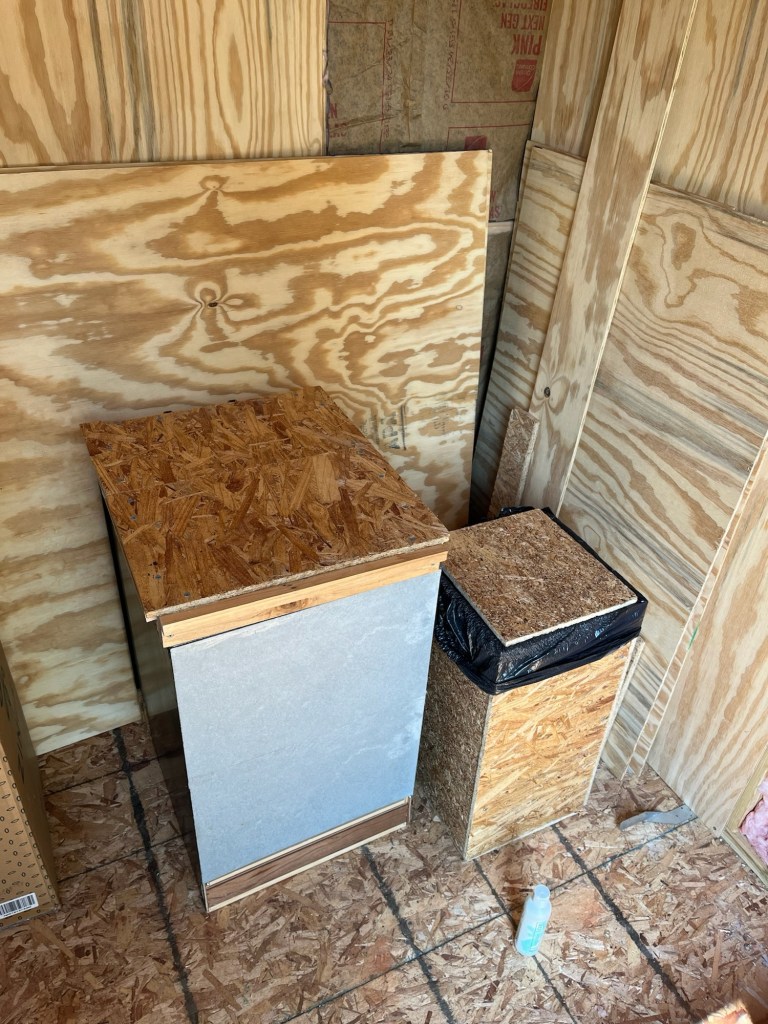
Our compost toilet. We use sawdust which we got from a local lumber yard. They dropped the largest load possible in our Honda Ridgeline. We wish we took a pic. It was a mountain of sawdust.
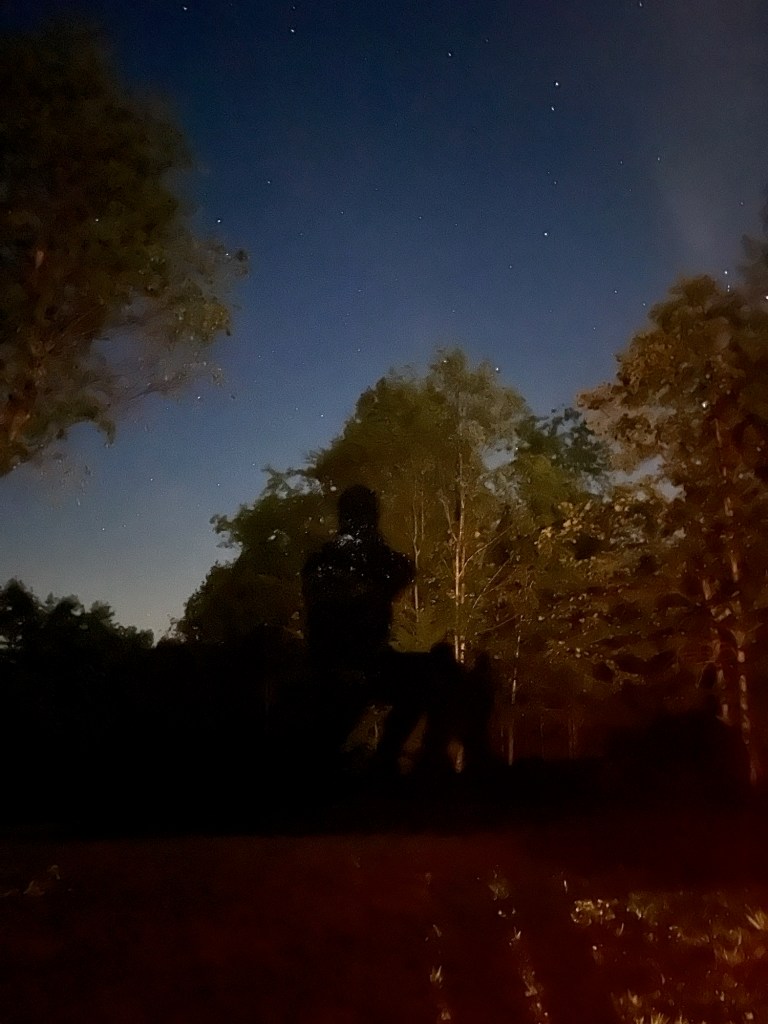
At dusk, we were pleasantly surprised by fireflies dancing about the clearing up top.
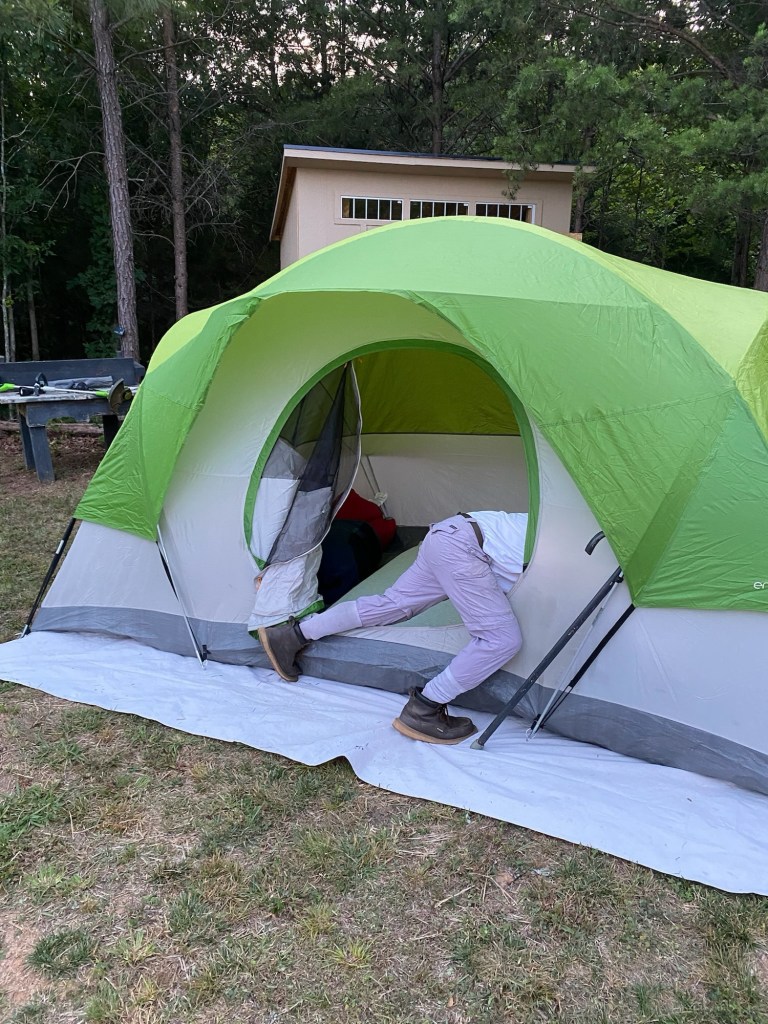
Chris getting our foam mattress situated in the tent.
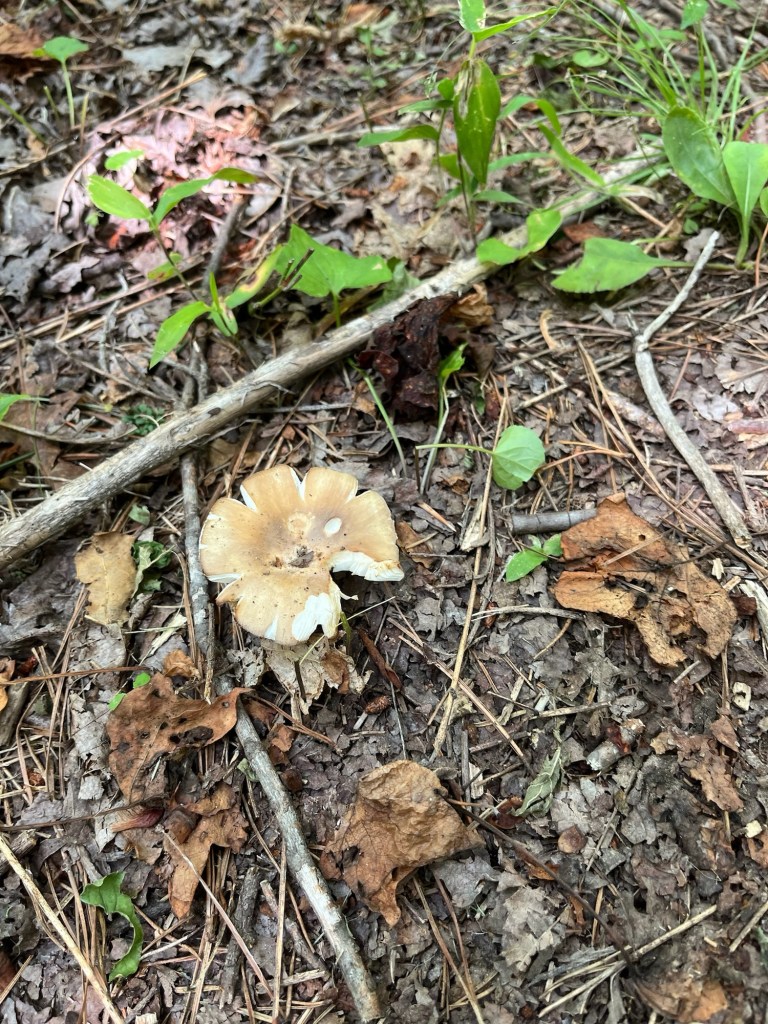
An old mushroom we found on our early morning hike. A Russula near the North Trsil by the waterway.
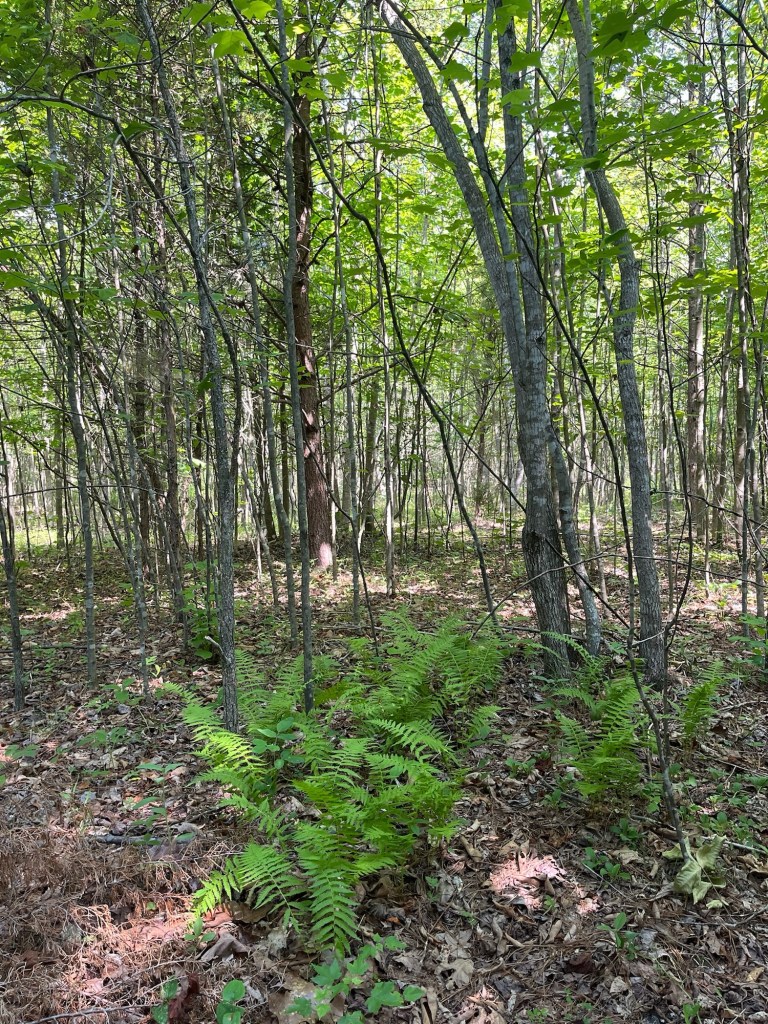
Ferns on the southeast side.

June 7, 2024 Scouting out camping spots, trail maintenance and a mushroom walk at SAFF

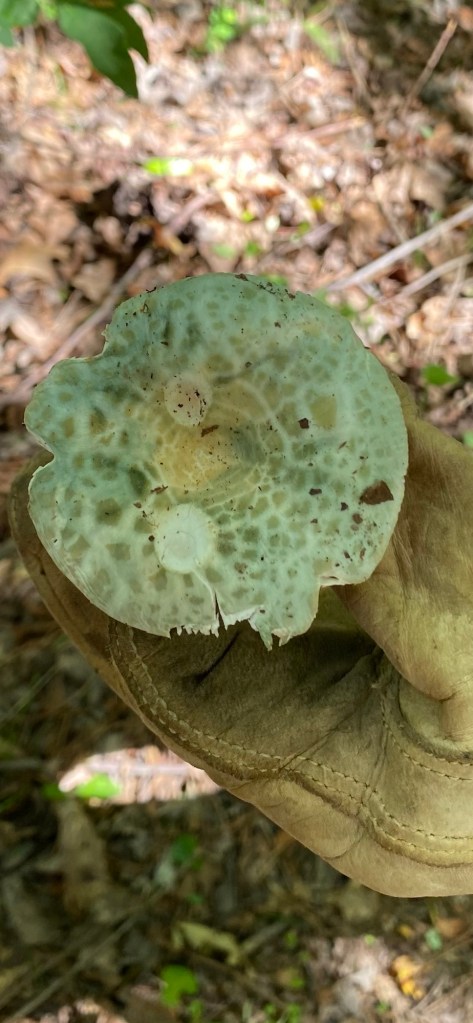
Russula parvovirescens, Blue-green cracking Russula, found along Fern Trail. This is a very good edible mushroom.

We took the afternoon at the farm and we found it drier than we expected. Blueberries are ripening. We found new mushrooms we hadn’t seen before. We are planning to camp next weekend and looked for a fire pit location and tent spots. The weather was beautiful with a cool breeze in the shade and the sun shining.
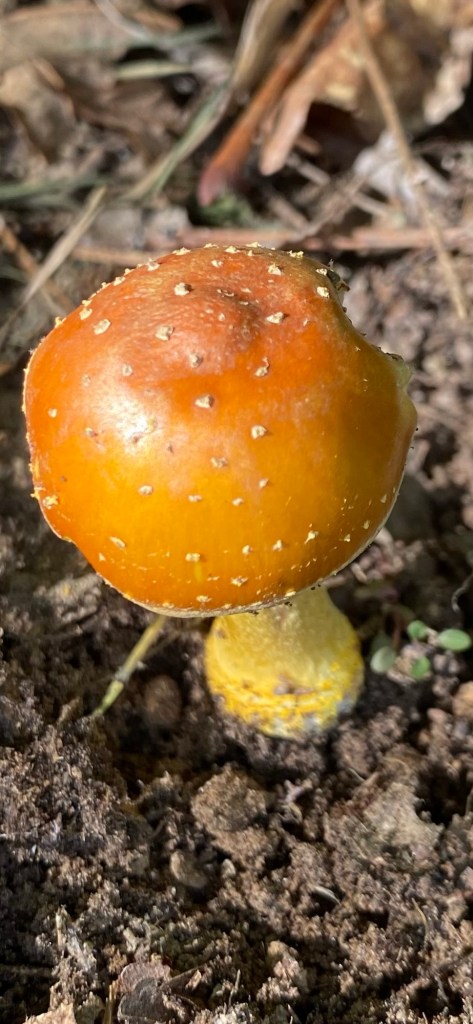
Amanita flavoconia, Yellow patches, found on the south end near Black Trumpet Way.
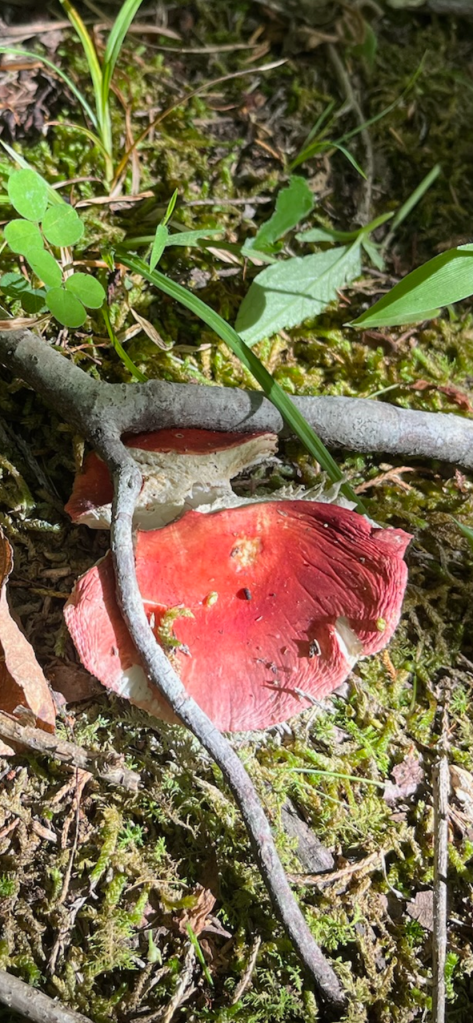
This stick on top of the Russula is actually a root! There are 80 species of red Russula in North America and can only be identified to species level with ITS sequence. It’s recommended to do a spit test to see if it tastes spicy. If so, they need a very thorough cooking to be rendered edible. (But may still be too spicy for most.) Fermentation can eliminate spiciness. However, if not spicy, they can be eaten raw even.
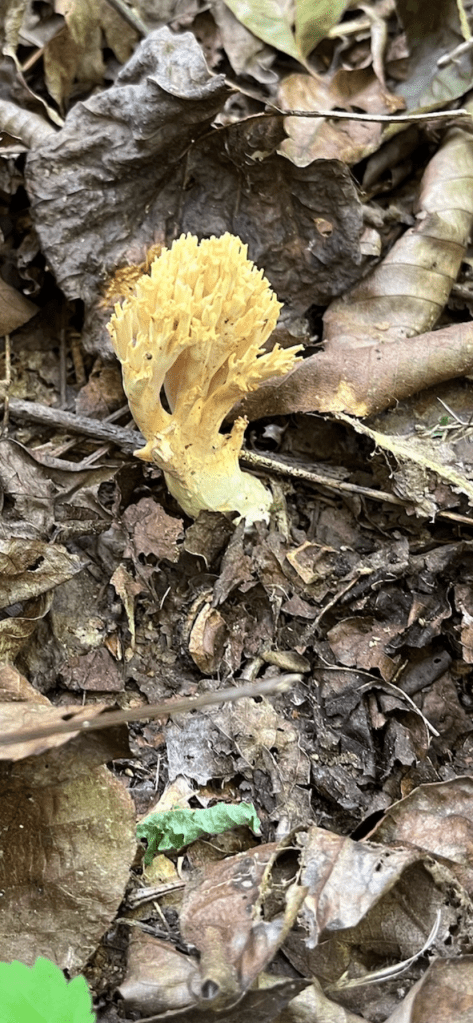
Coral fungus found up top.

April 10, 2024 Saint Andrew’s Forest Farm

We had a big day of mowing and cutting back several overgrown areas along the southern set back line. We used our new roads through the forest we’d cut a few weeks ago to drive the tractor over to the southern border. It was a success. Our old Husqvarna tractor is a workhorse.
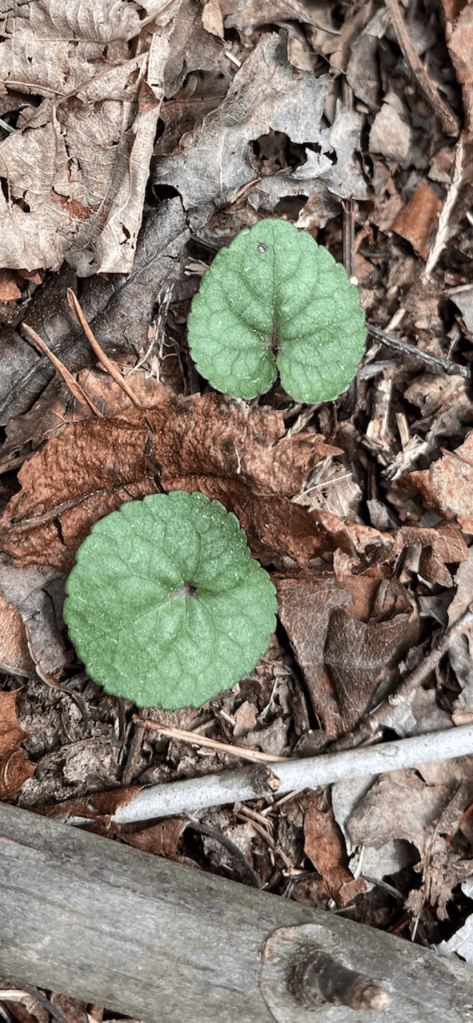
Viola hirsutula, Southern wood violet found along the south wet weather gully.
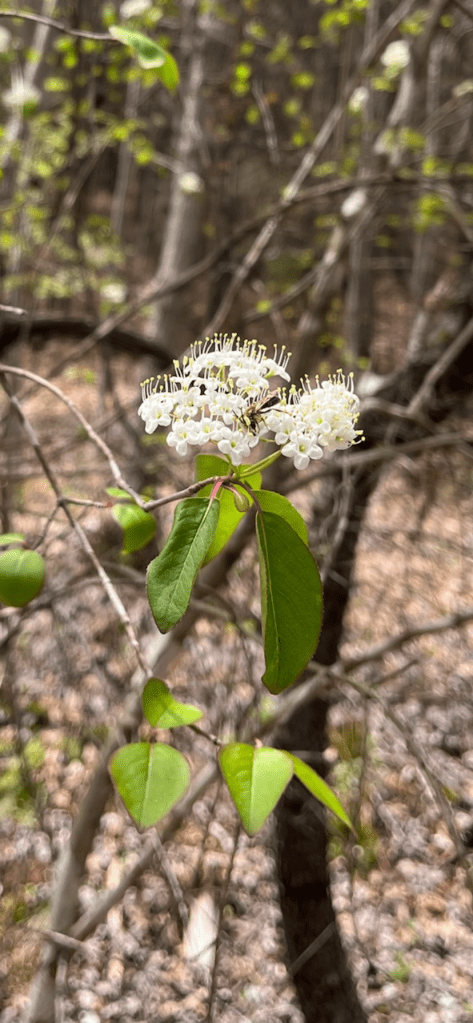
Viburnum prunifolium, Blackhaw, found in the wet weather gully on the south side.
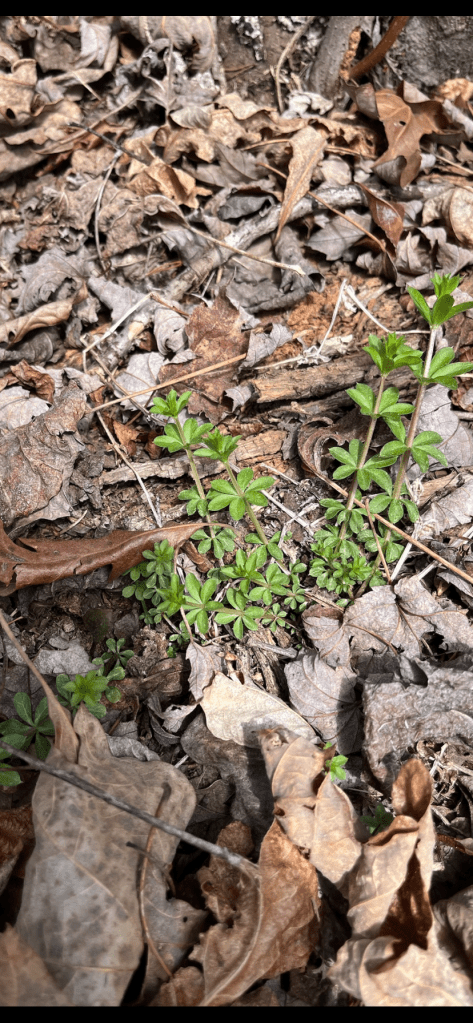
Genus Galium, bedstraws.
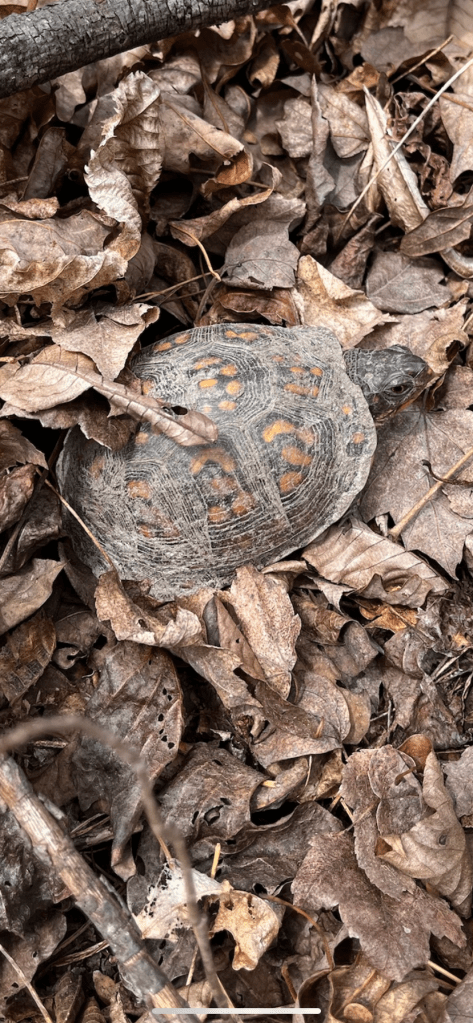
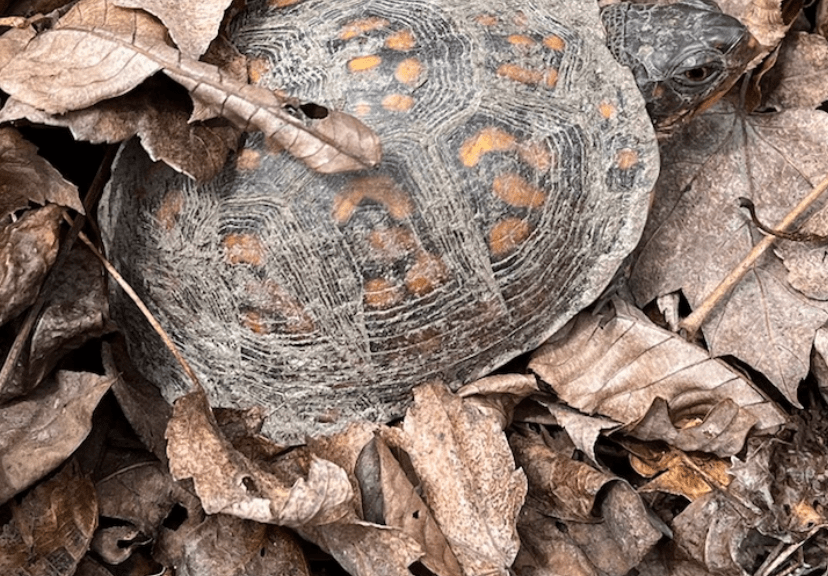
Terrapene carolina carolina, Eastern box turtle. South side near mayapple colony.
Carya ovata, shagbark hickory. South end of SAFF.
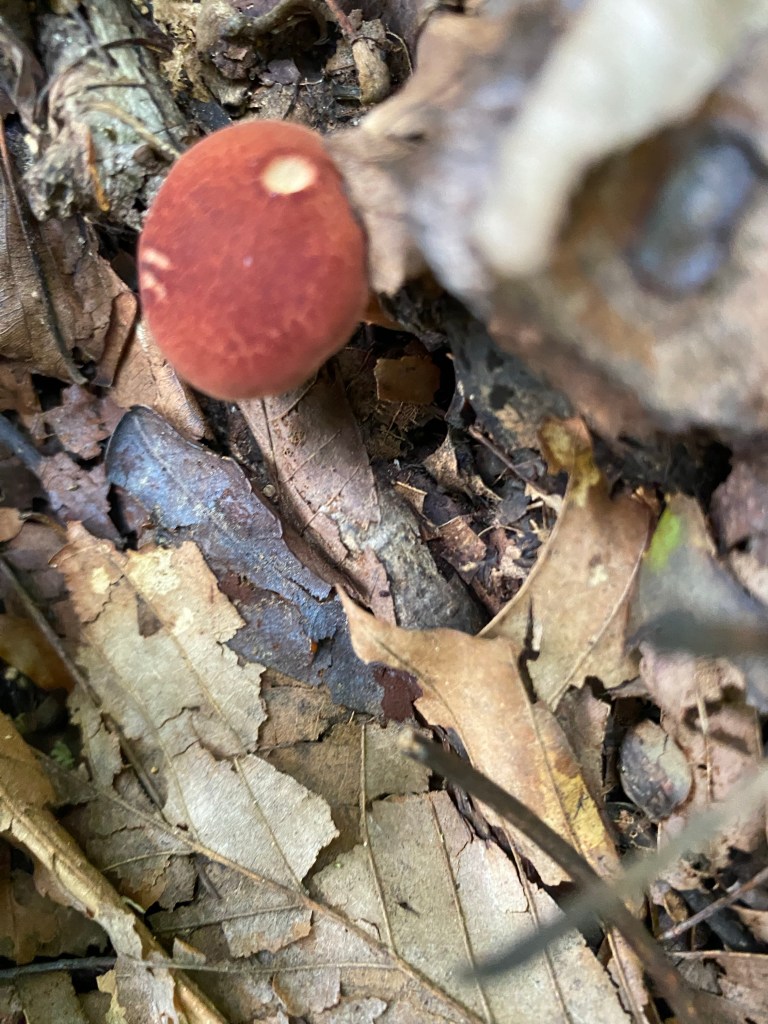
Our first red Russula of the year. We saw many of these last year. There are over 500 species. This was found on the north side of the clearing up top.

We found a few other plants and are looking into identifying them.

We were happy to cut down a few more black cherry trees which had black knot fungus and bag worms. We are slowly taking diseased trees from the farm and burning them.

It was dry out today with rain expected tomorrow and Friday. We hope after a rain with warmer weather into the 70s, the morels may finally pop up. We are on the lookout and can’t wait to get back out there.
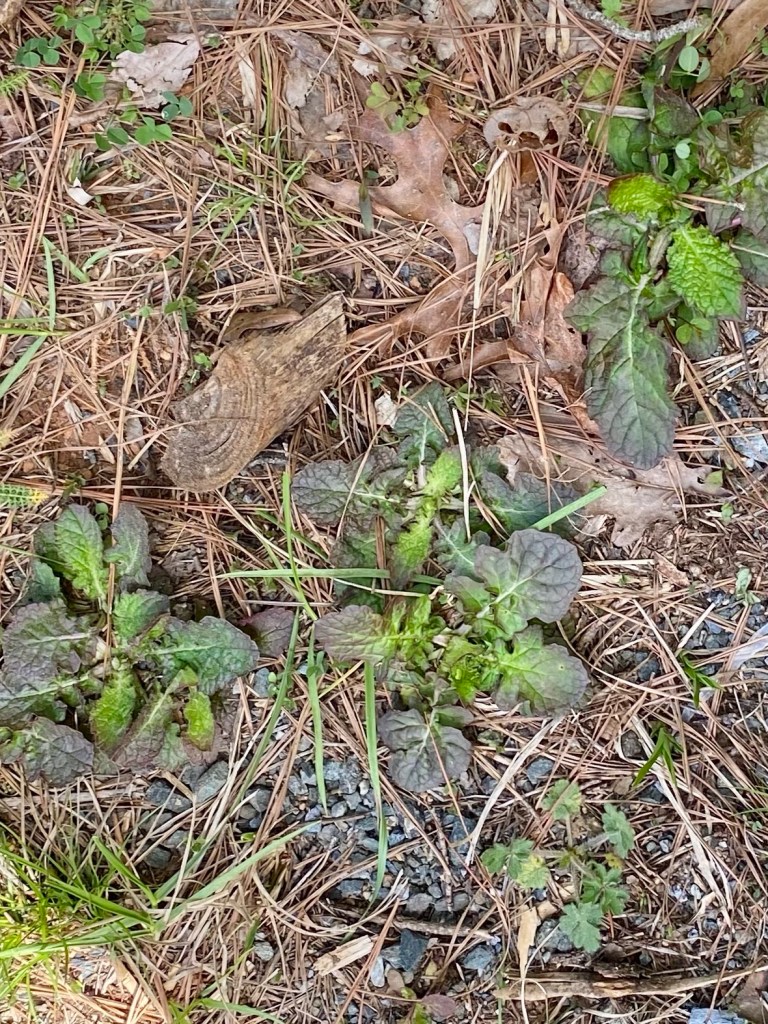
Salvia lyrata, lyreleaf sage. Found along the road while mowing. There was a patch of it.

Central Virginia mushroom foraging at St Andrews Forest farm

We will add to this list as we find more mushrooms. Always assume they aren’t edible. We have more data to collect to determine many identities. If we ever do! We are beginner mushroom foragers, we’re not planning on eating anything we’re not 100% sure about.
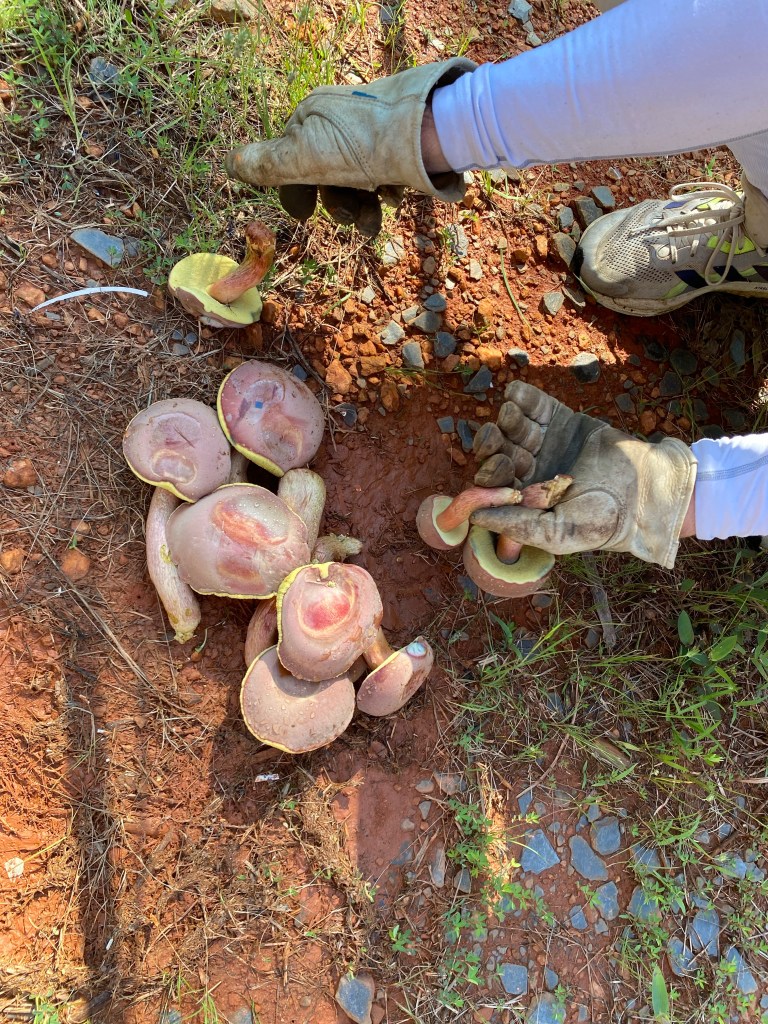
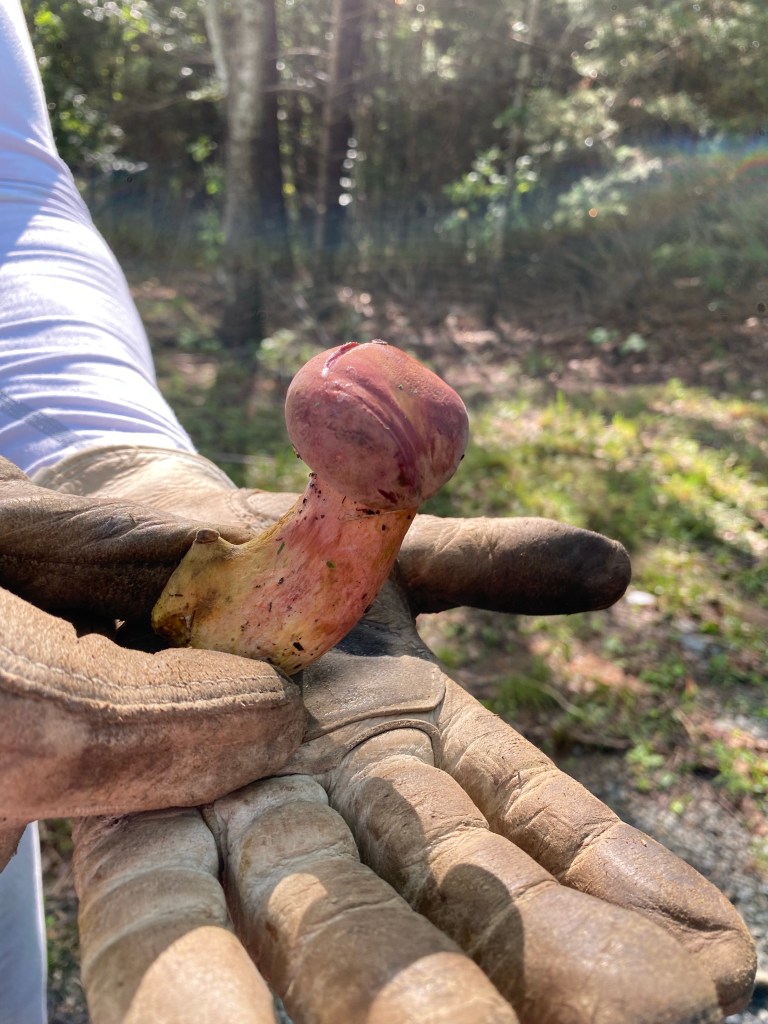
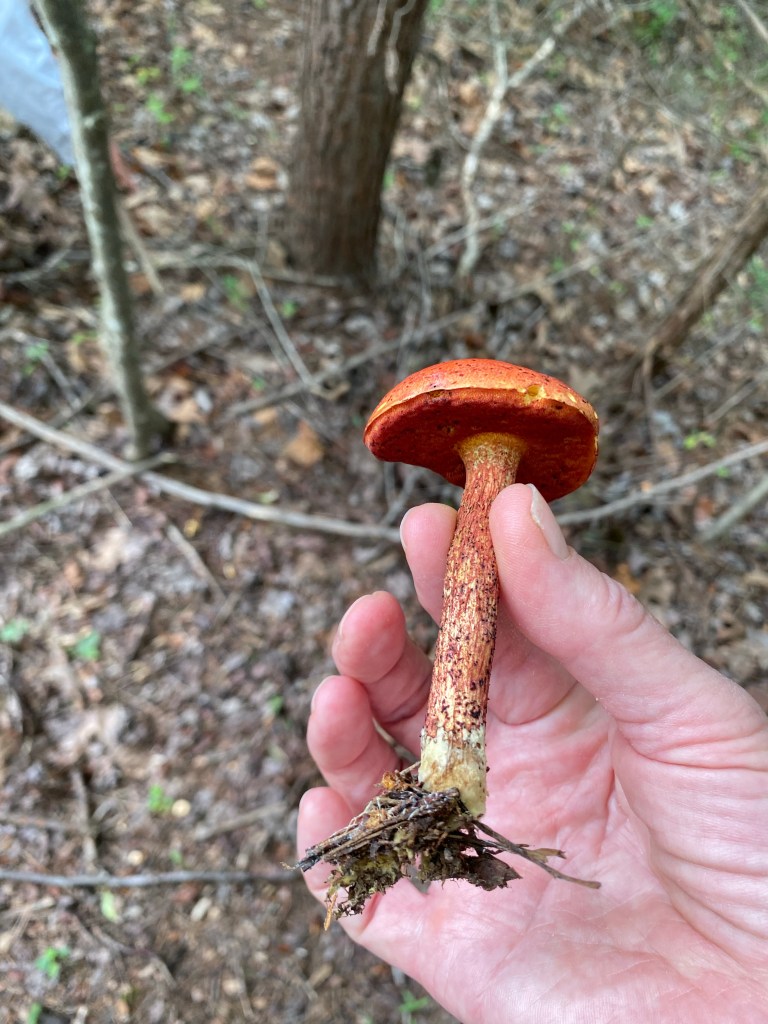
Red capped, blue staining boletes found near the road under the realtor’s sign growing directly from the red clay. These slowly turned blue when bruised, sliced and cut. We composted them as their identity was indeterminable to us at this time. They were suspiciously untouched by insects and animals which leans us toward either bitter taste or poisonous.
Another red capped, blue staining bolete. It turned blue quickly. Found along driveway. It was also in great condition for a bolete lending us to be dubious of its edibility.

Entoloma murrayi inedible. We found multiple large patches of these in spring and early summer. Our hat has a little flop in it for every single mushroom fruit. The pics for entoloma murrayi did not show this flop. Could be a different species?
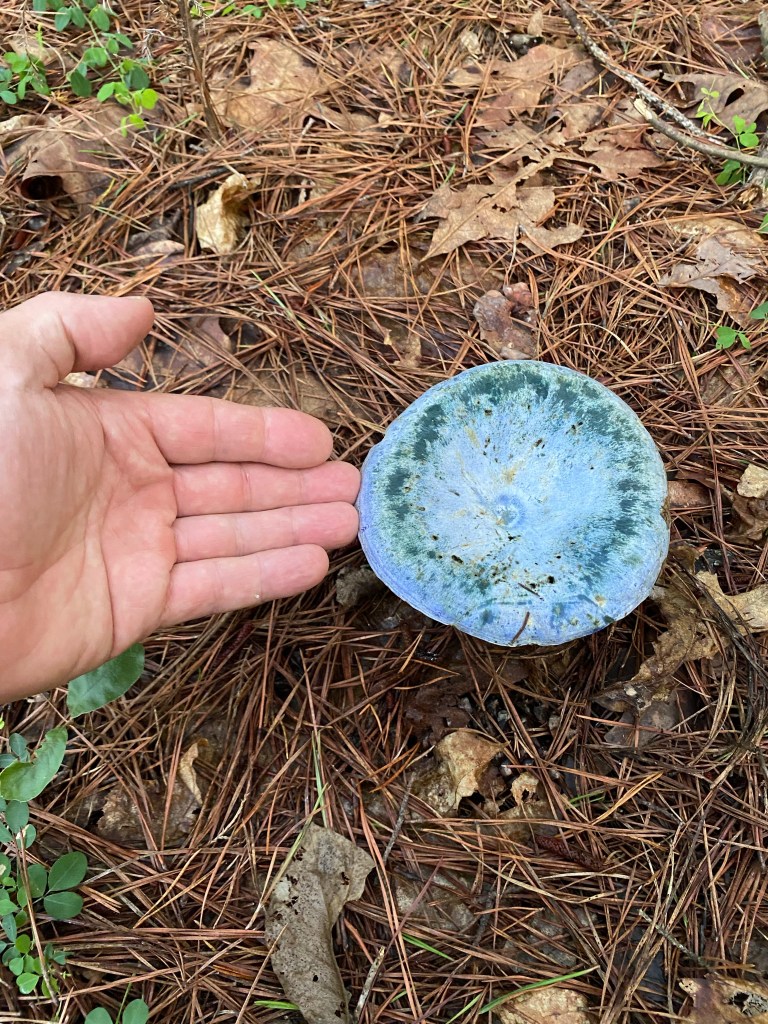
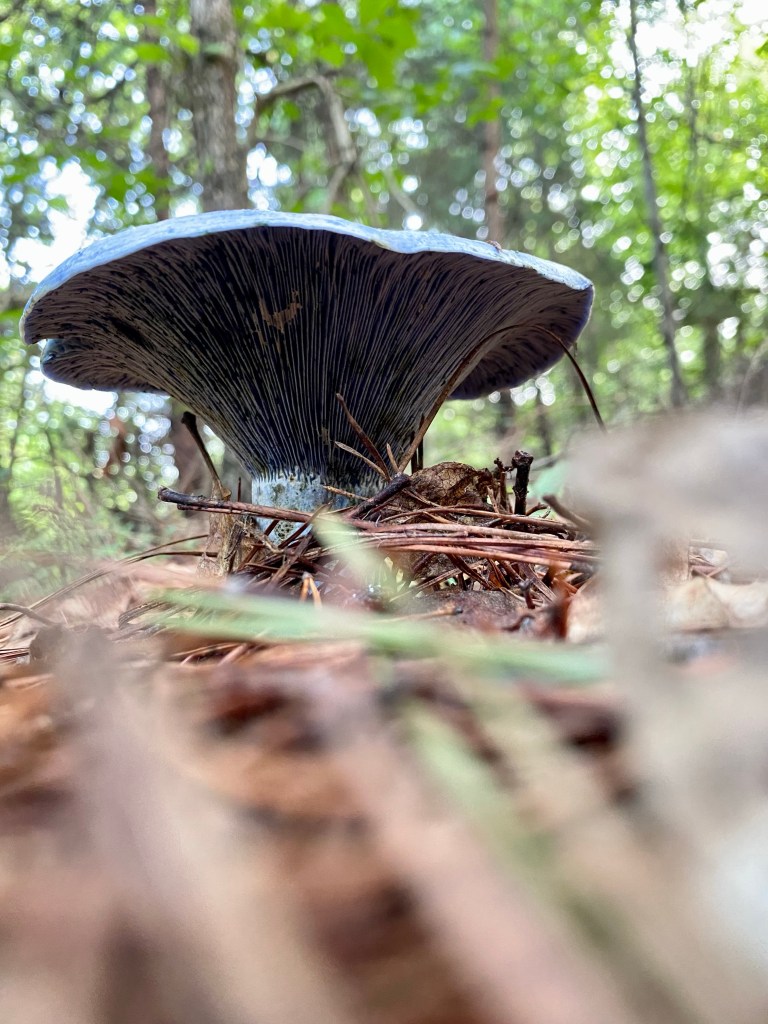
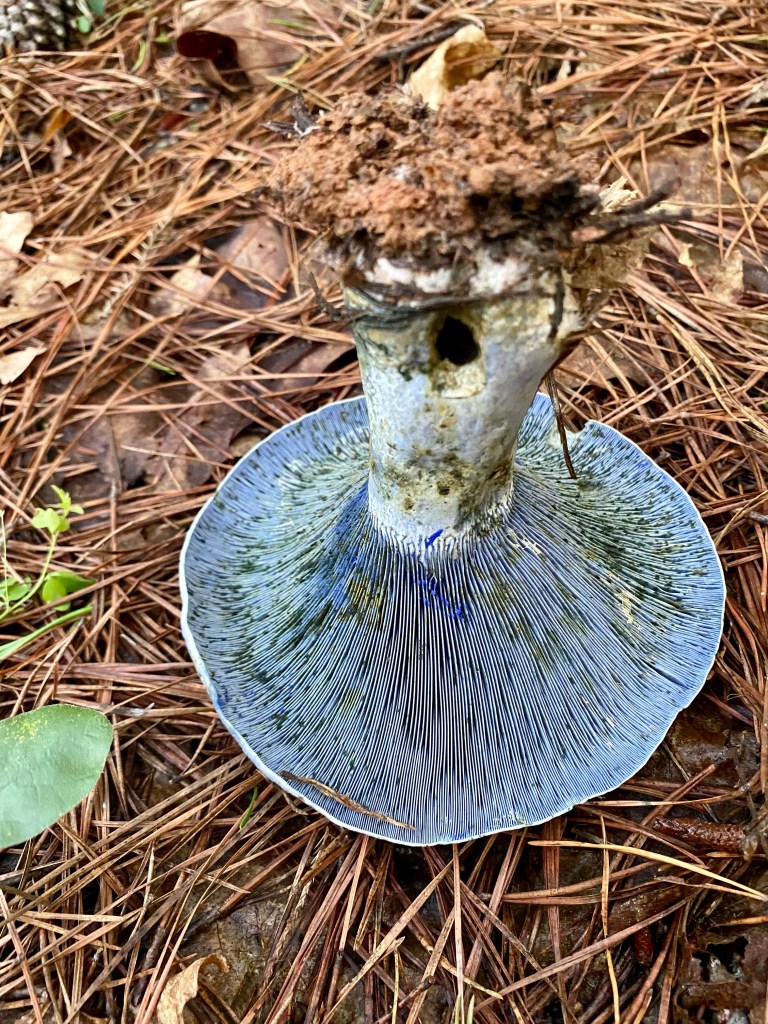
Lactarius indigo – the indigo or blue milk cap mushroom, an edible member of the Russula family. Goes great with the big flavors of a whole wheat veggie pizza. Because there is nothing else that looks like it, it’s considered a great beginner’s mushroom.
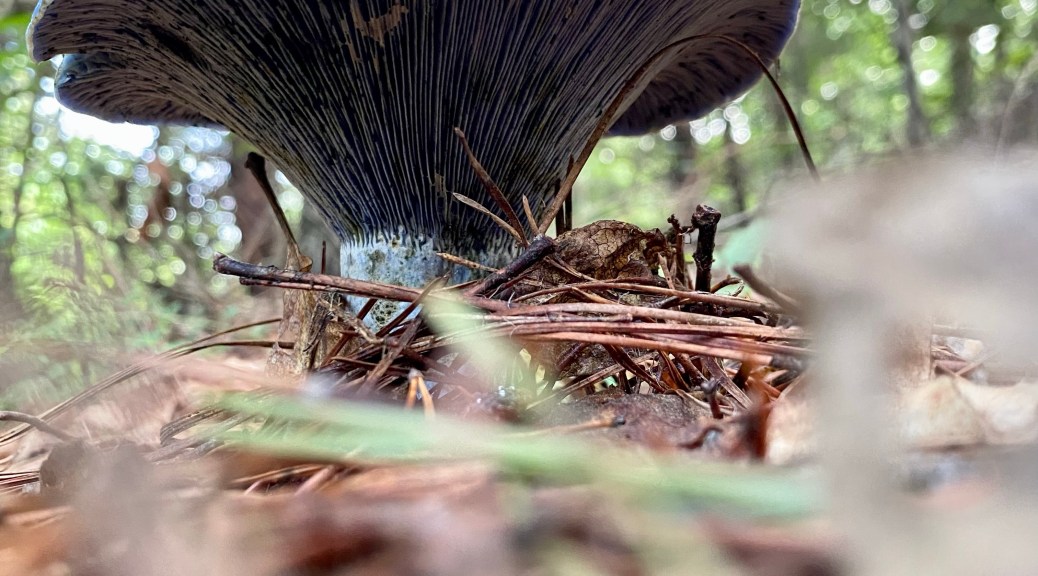
Indigo milk cap from the ground level. All foraged mushrooms need to be thoroughly cooked.
These grow on the ground in mycorrhizal relationships with trees. When sliced, the gills ooze blue latex.
Another red capped bolete. Red pores and did not stain when bruised.
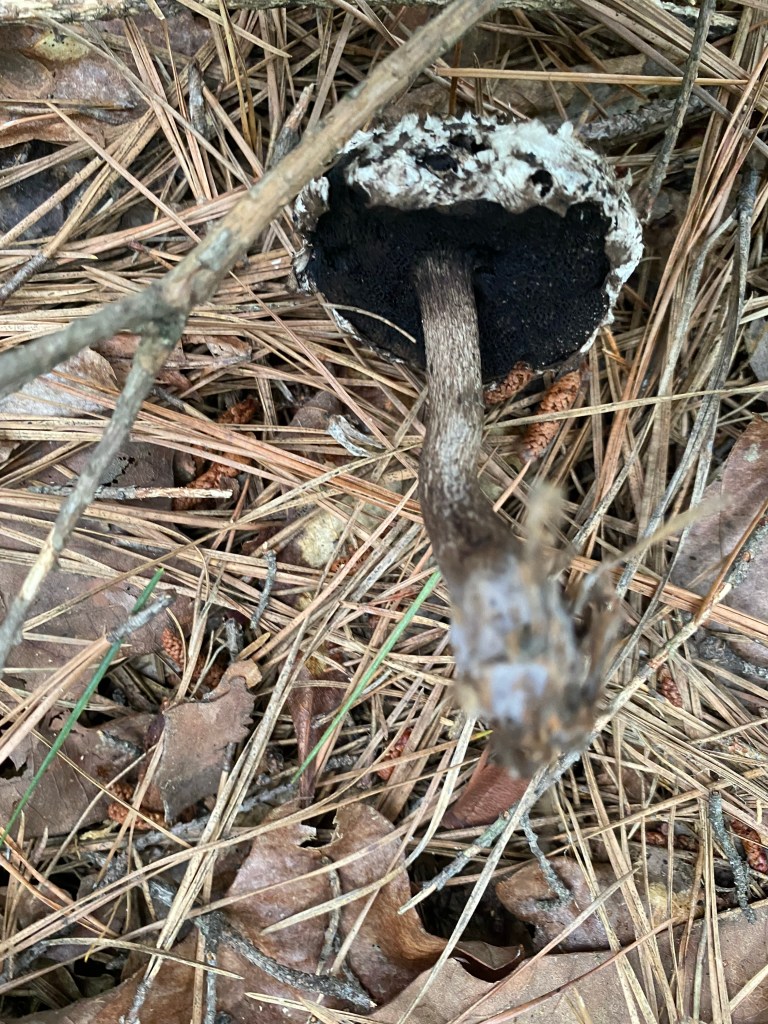
Old Man of the Woods, strobilomyces strobilaceous, found on multiple sites of Saint Andrews Food Forest, singularly and in groups. It is also a bolete and is edible. We’ve not tried it yet. It is mycorrhizal in both deciduous and coniferous forests. We have heard it tastes similar to a button mushroom and will turn other foods cooked along with it gray. Since nothing else looks like it, it a good beginning mushroom foraging find.
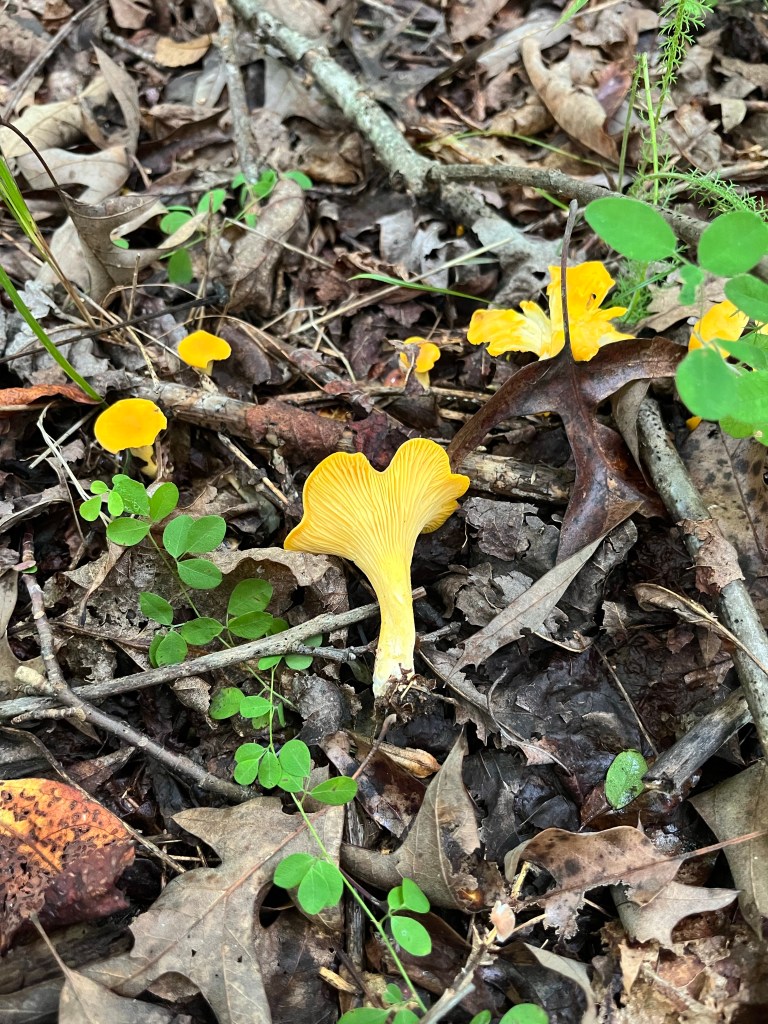
Golden Chanterelles are a choice edible. They were the most delicious mushrooms we’ve ever had. Full of nutrients. We cooked them in a dry skillet on med high for 20 minutes then added olive oil and garlic with salt and pepper and sautéed about 6 more minutes while deglazing the pan with a little wine. They had a silky mouth feel. They are a great beginner mushroom as they have no poisonous lookalikes.
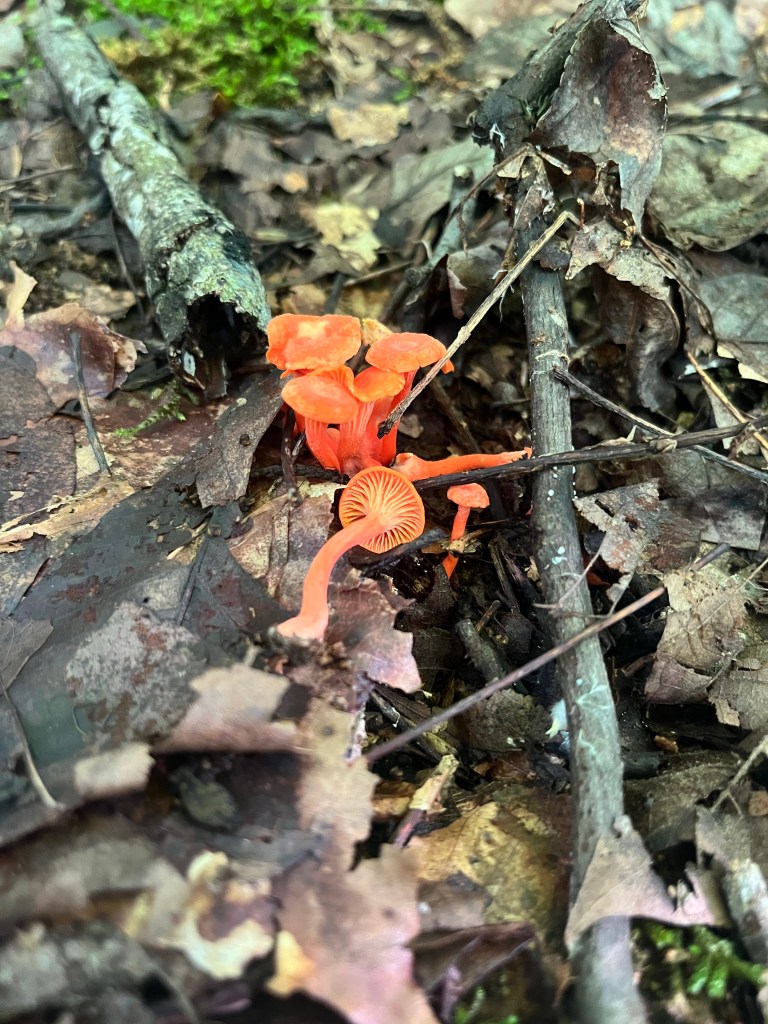
Cinnabar chanterelles found pinning all along the sides of the creek bed growing near mosses. The red color stands out. Another choice edible and a great beginner’s mushroom.
Presumed Amanita Vaginata considered inedible to beginners as there are multiple poisonous lookalikes.

Phylloporus rodoxanthus, the gilled bolete, top above and bottom below. Considered edible but we’ve not tried it. We are only eating what we are confident is safe and accurately identified. Bolete identification is complicated although there are no deadly boletes, some can make your gastrointestinal system feel terrible. We will take our time to get to know these mushrooms.
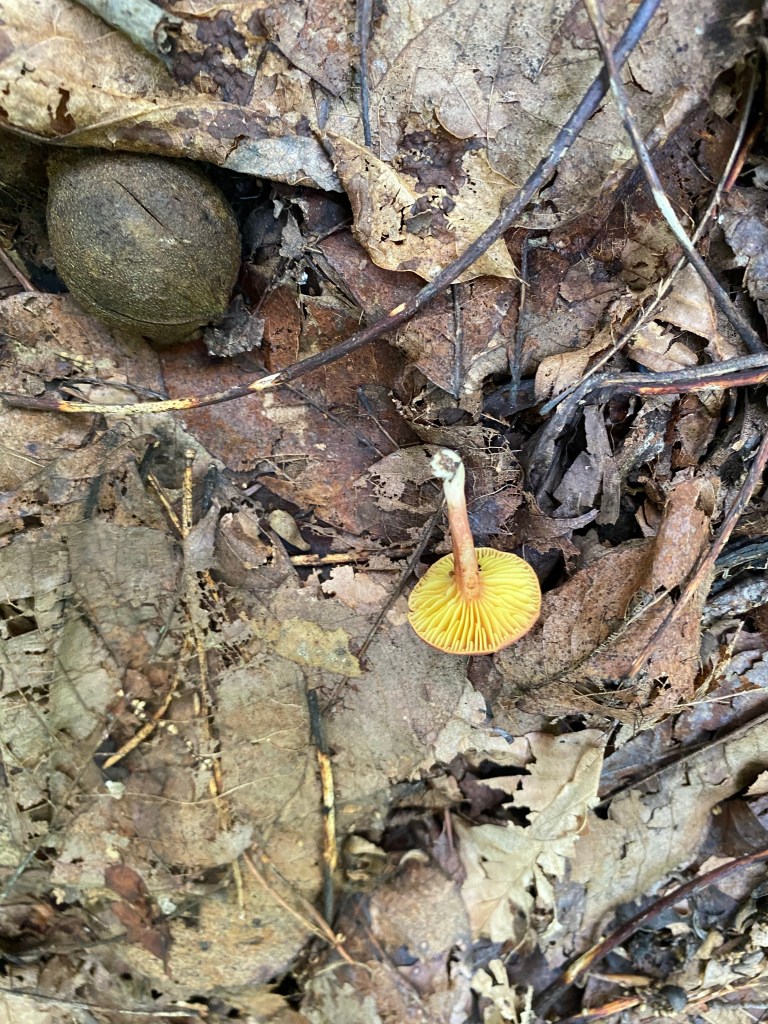
Bright yellow gills. Found alongside the creek bed.
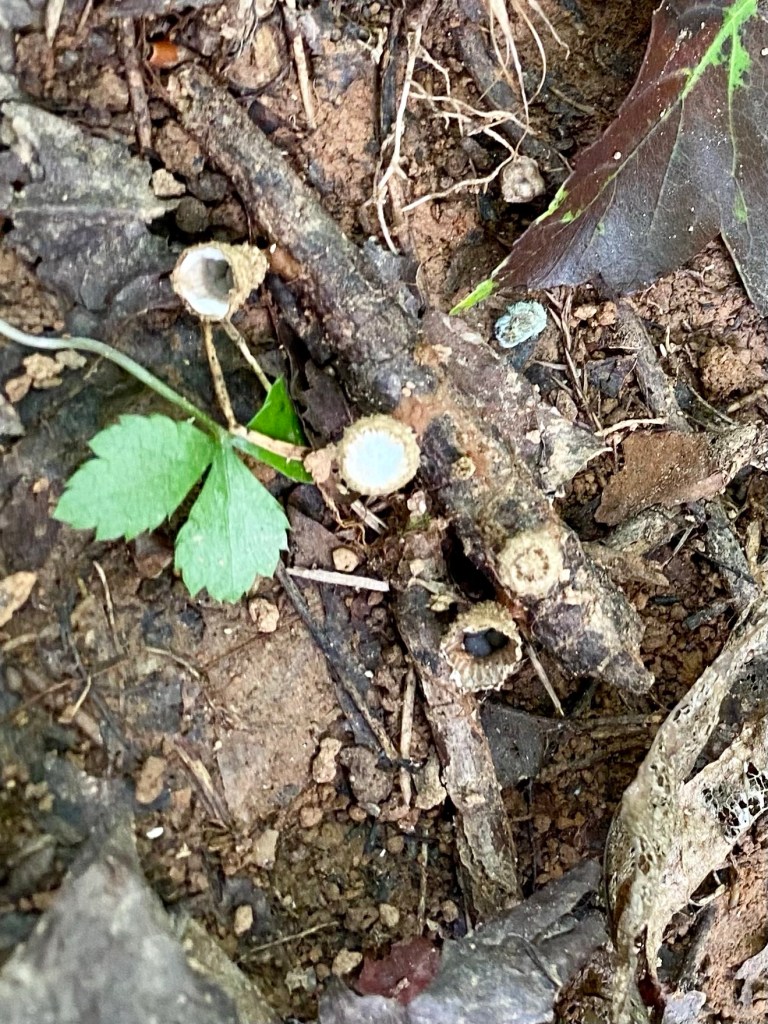
Splash cups, cyathus striatus, or fluted bird’s nest. The white inside of most of the cups are spores. Note the black eggs inside the one. Water droplets will hit the egg and the the spores will drop when wet. Growing along the back left bottom of property on a dead stick next to road in back bottom of property.
Hypomyces chrysospermus, bolete eater fungus turns bolete white, tan or golden yellow. Poisonous.
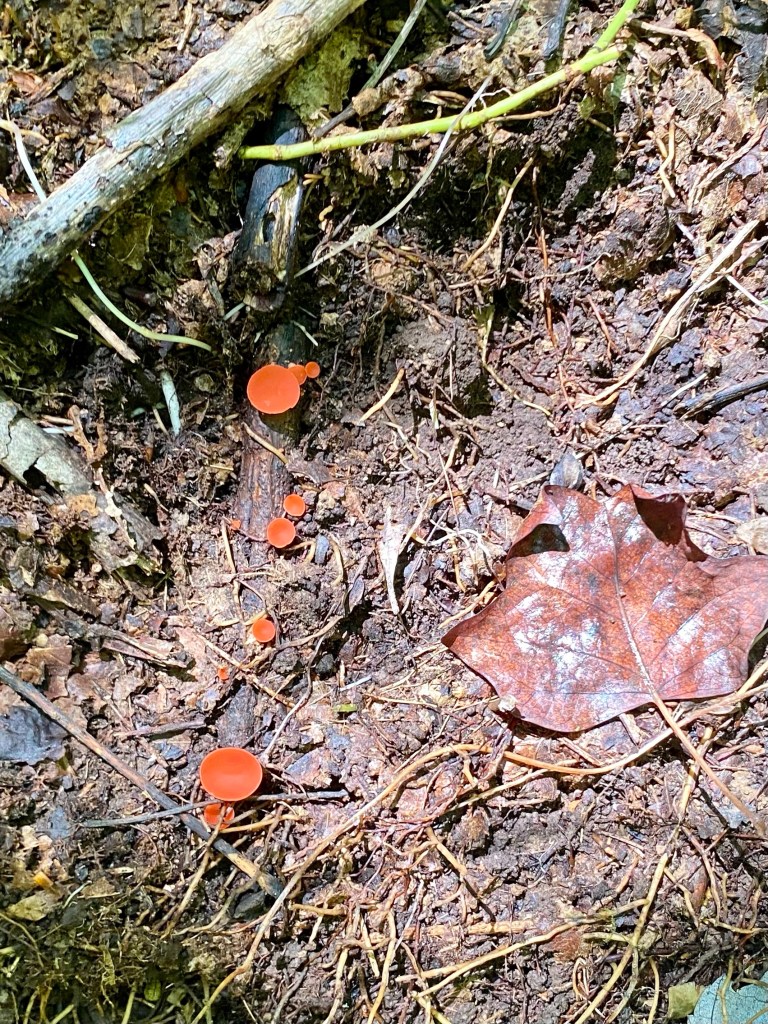
Sarcoscypha dudleyi scarlet elf cup, found along the back bottom waterway on a fallen limb.