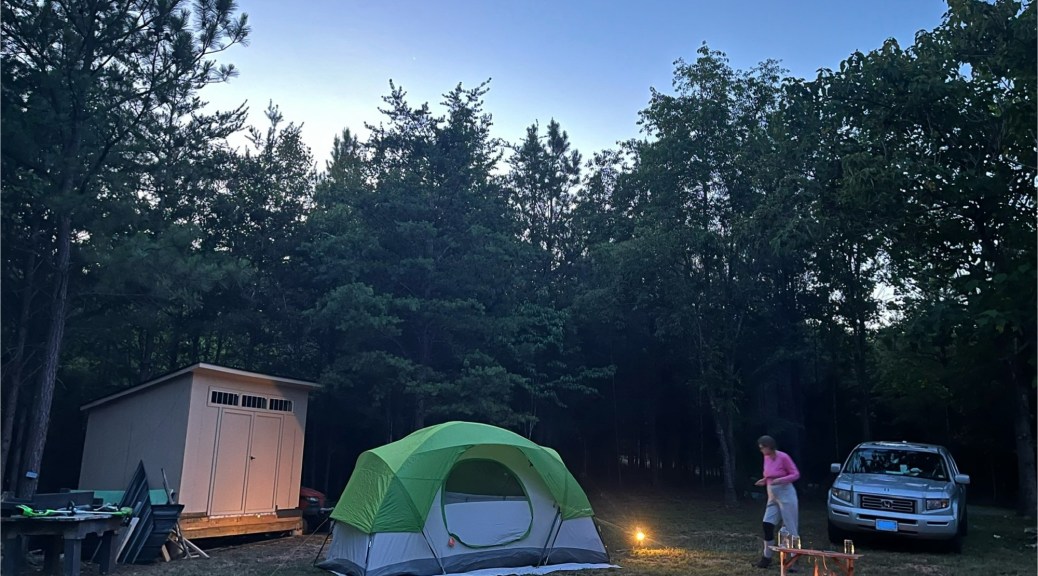
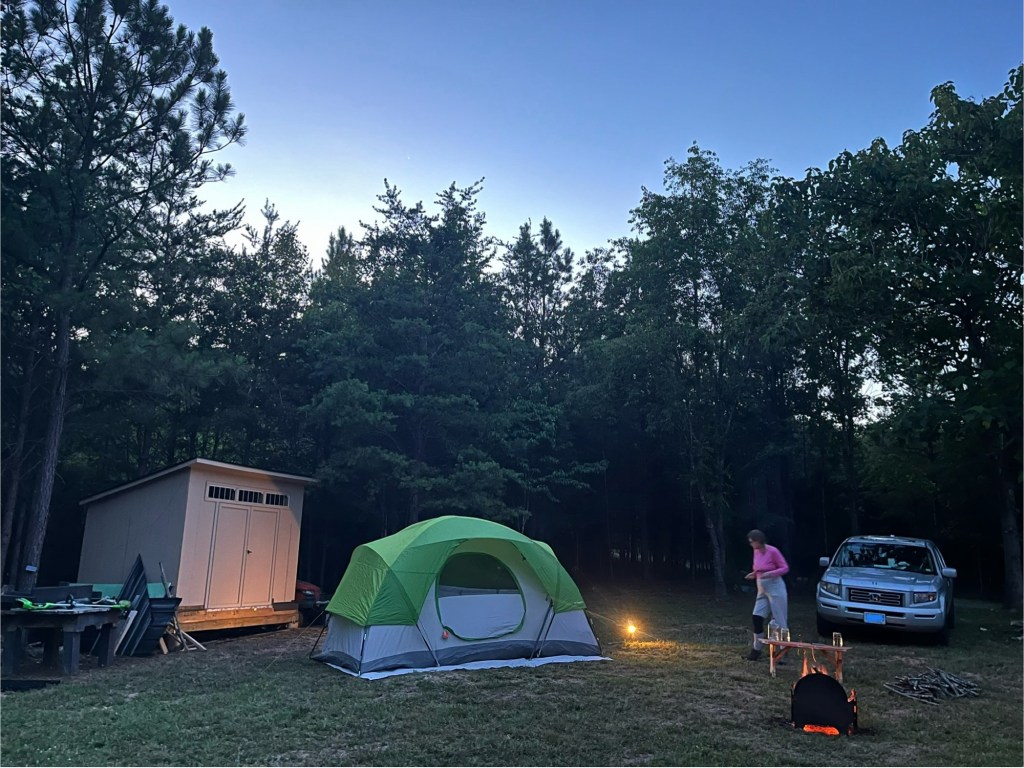
We had our first camping experience at SAFF on Saturday night. It was the coolest overnight weather forecast for weeks so we thought we would take advantage of that. We’d been preparing for months with the compost toilet in the shed, keeping the clearings cut back neatly for tick mitigation and collecting the gear we’d need. We still had a good bit of gear to haul out even though we’d been taking loads over for weeks. All in all, the compost toilet combined with the sawdust was the heaviest load. We’ve been able to snack on our tart wild blueberries every time we’ve been out.
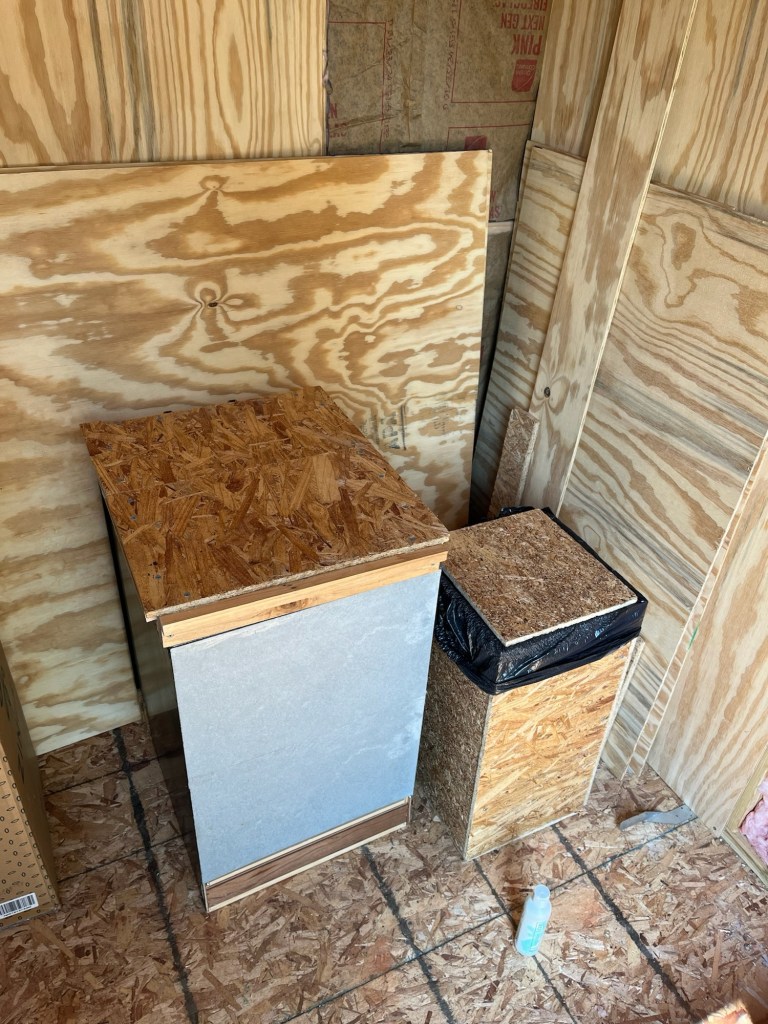
Our compost toilet. We use sawdust which we got from a local lumber yard. They dropped the largest load possible in our Honda Ridgeline. We wish we took a pic. It was a mountain of sawdust.
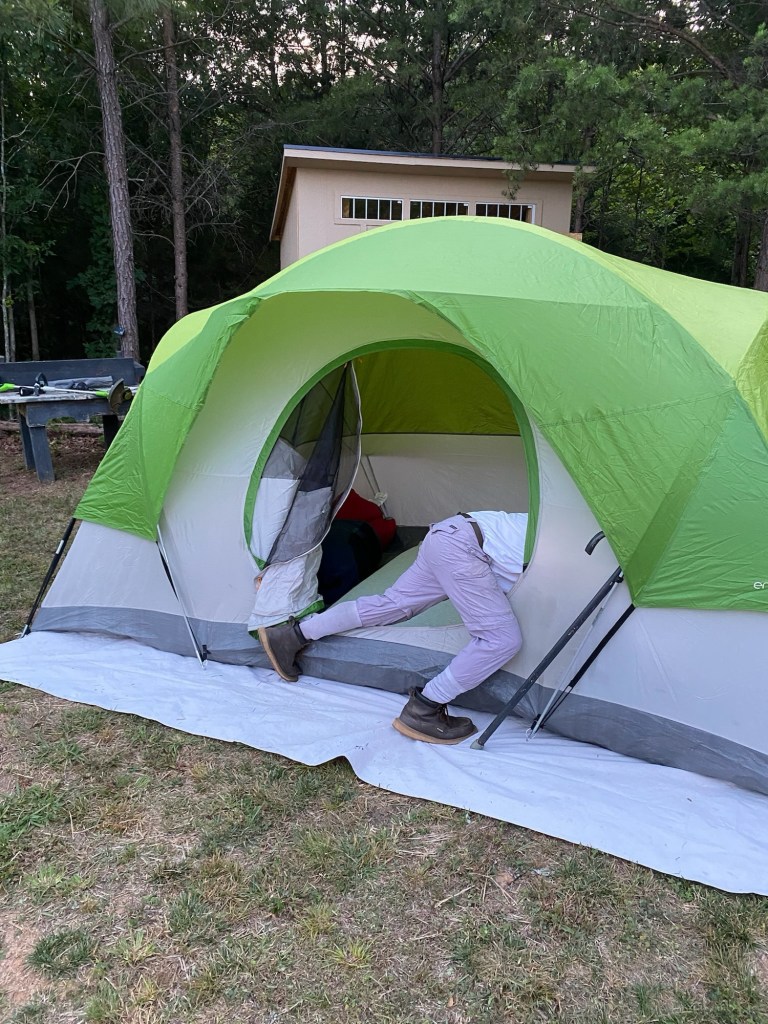
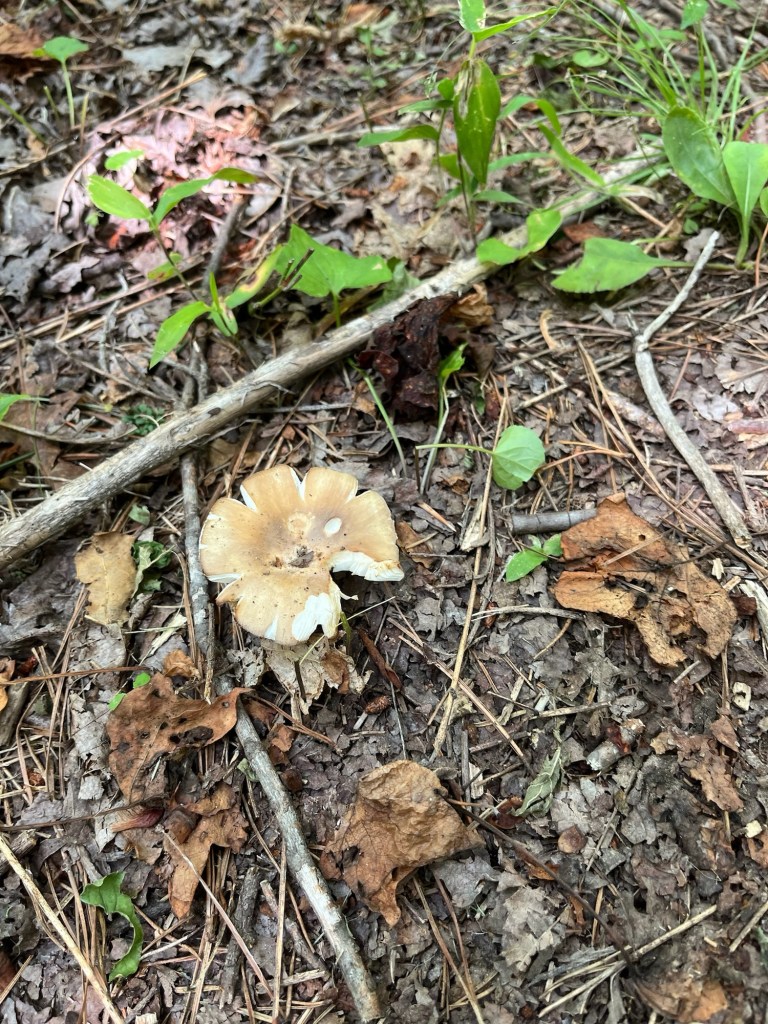
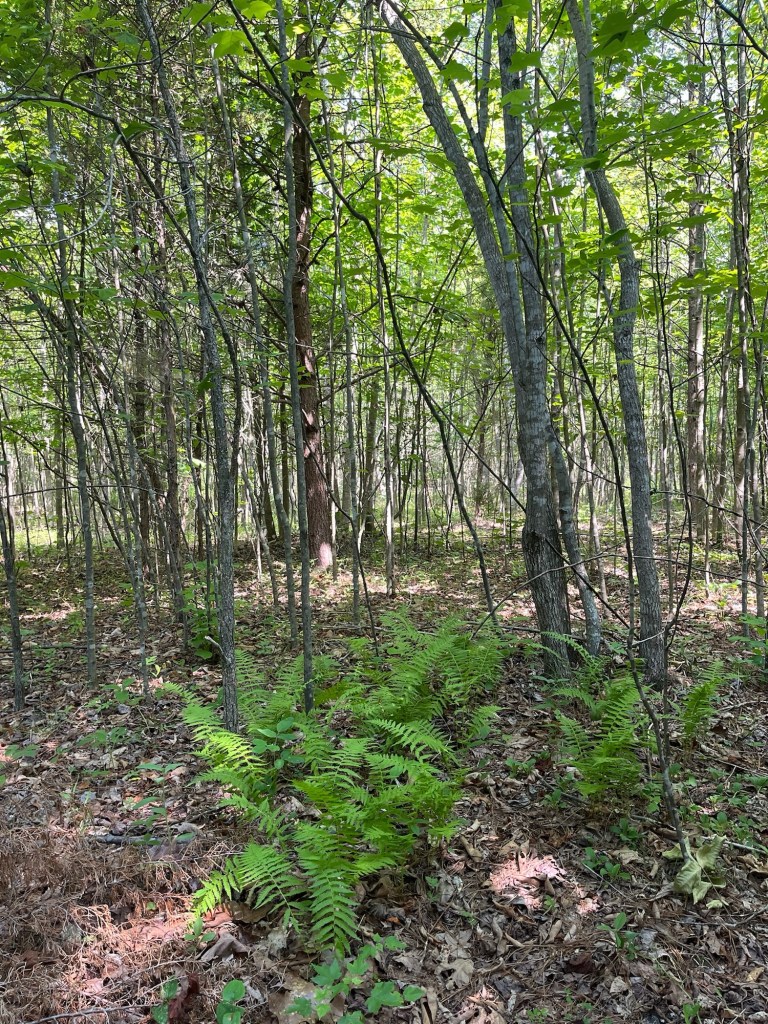
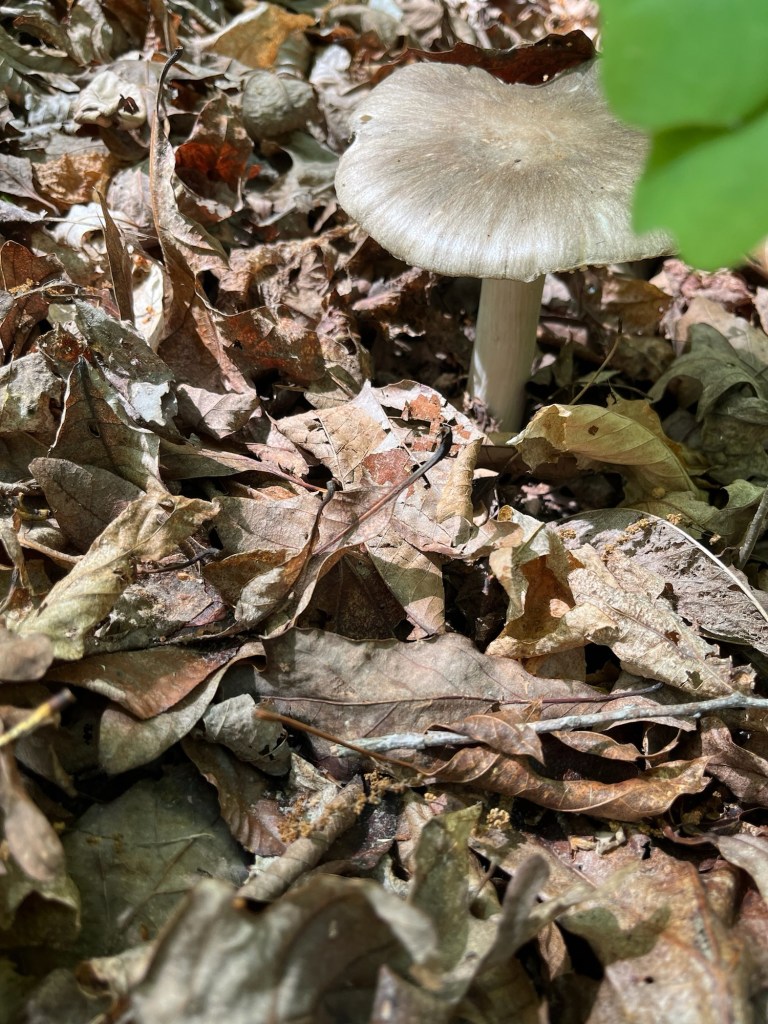
At dusk, we were pleasantly surprised by fireflies dancing about the clearing up top. Chris getting our foam mattress situated in the tent.An old mushroom we found on our early morning hike. A Russula near the North Trsil by the waterway. Ferns on the southeast side.
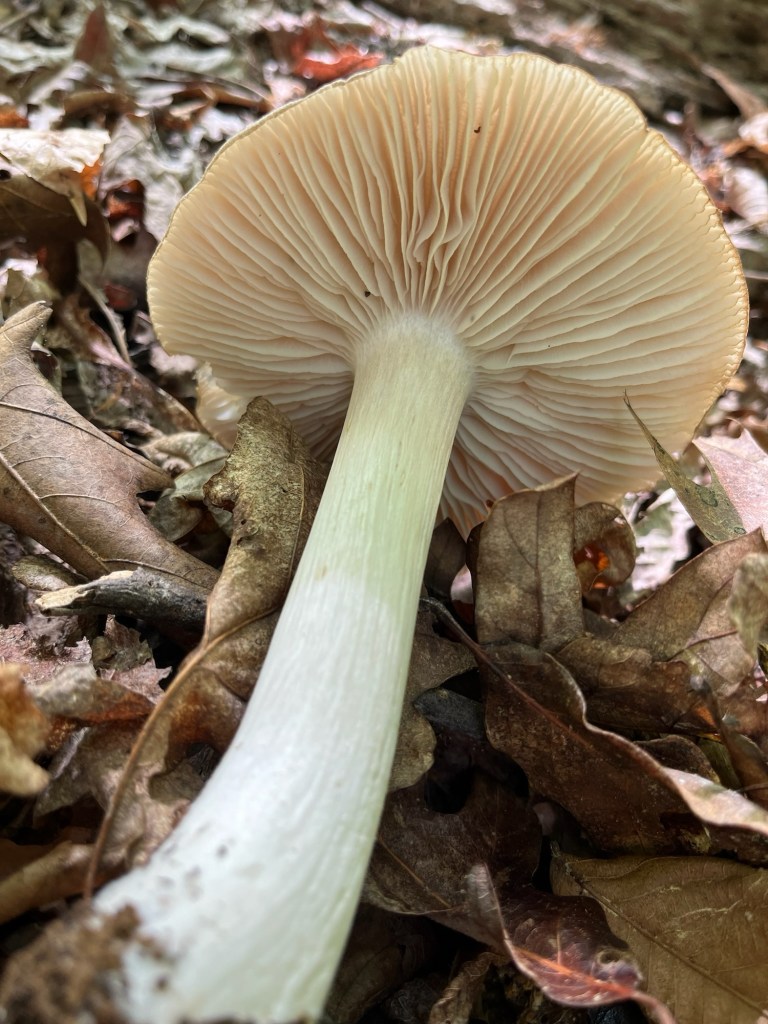
Eastern American Platterful Mushroom, Megacollybia rodmanii. One of the first mushrooms to appear after morel season. They pop up in May and June. They are decomposers of dead hardwood.
We found 9 or 10 of these Eastern American Platterful Mushrooms on the south side on the slope just above the waterway. They were big and impressive emerging from the forest litter. We’ve been searching for morels for months and hadn’t seen much of any fungi. They were a delightful sight for sore eyes. They are not delicious and some have been sickened by them despite the name “Platterful” so we left them there.
Top of the Megacollybia rodmanii.
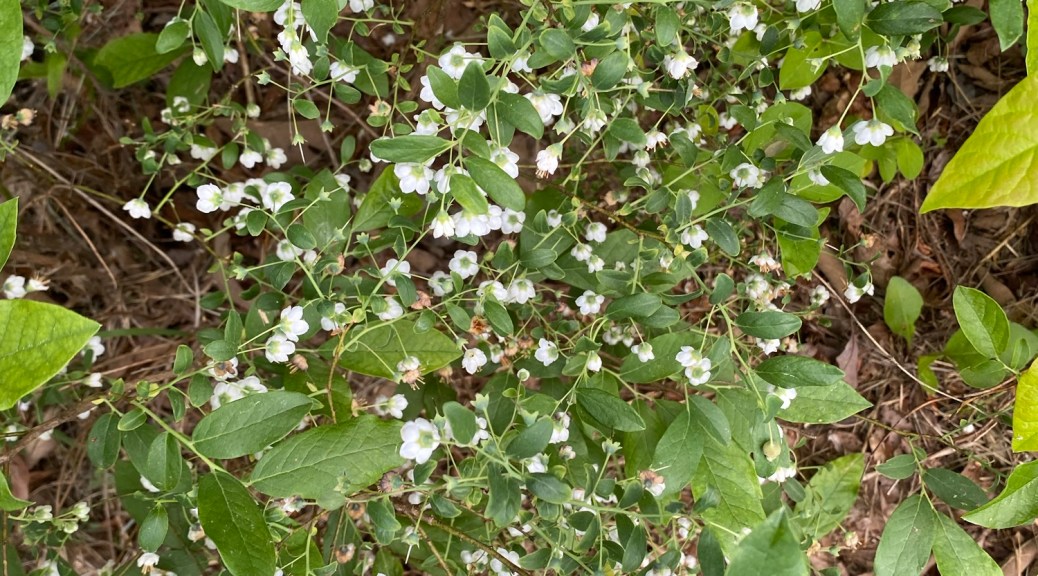
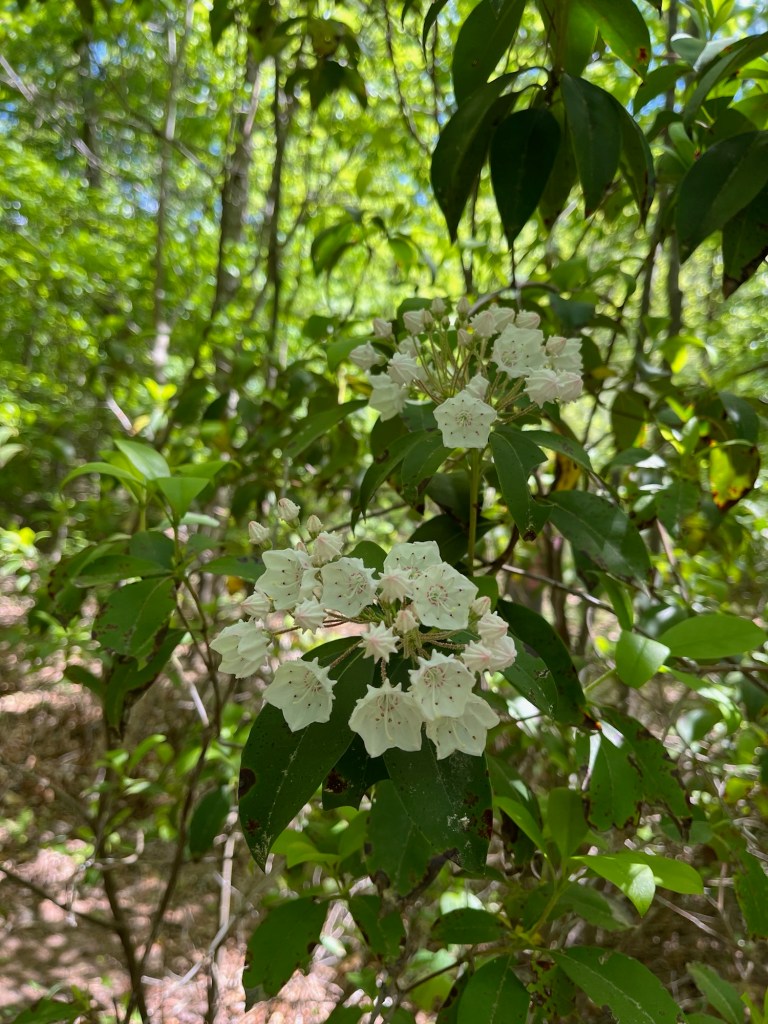
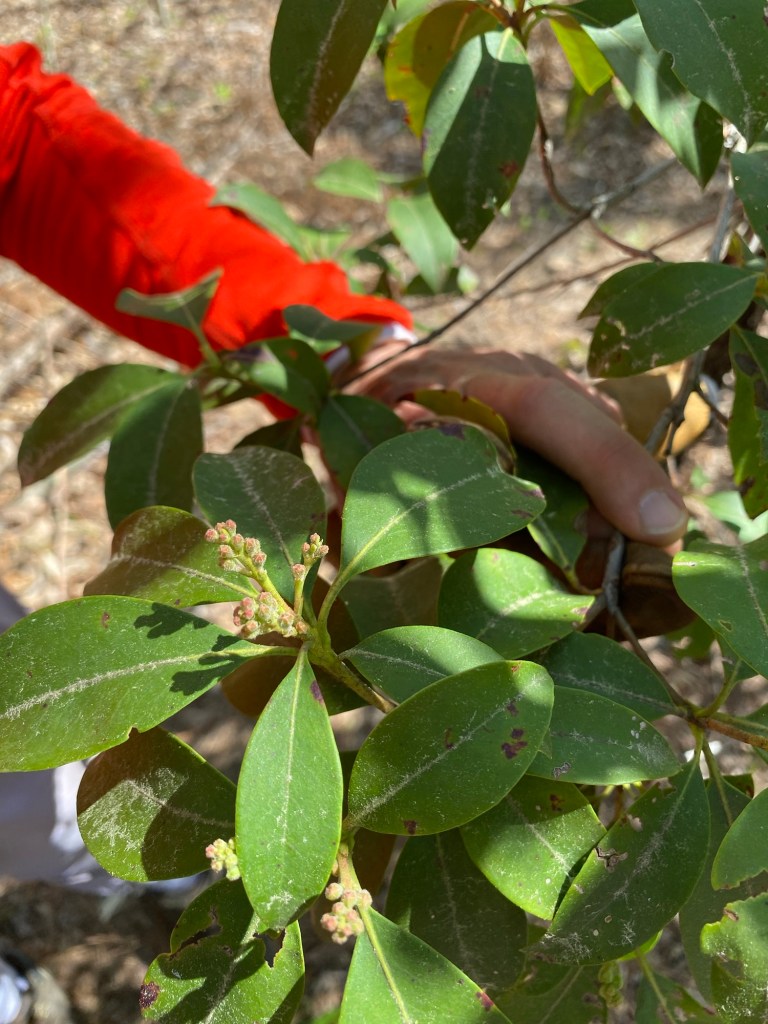
Mountain laurel blooming. A nitrogen fixer found throughout the farm. Early Lowbush blueberry flowering along the southern set back line.
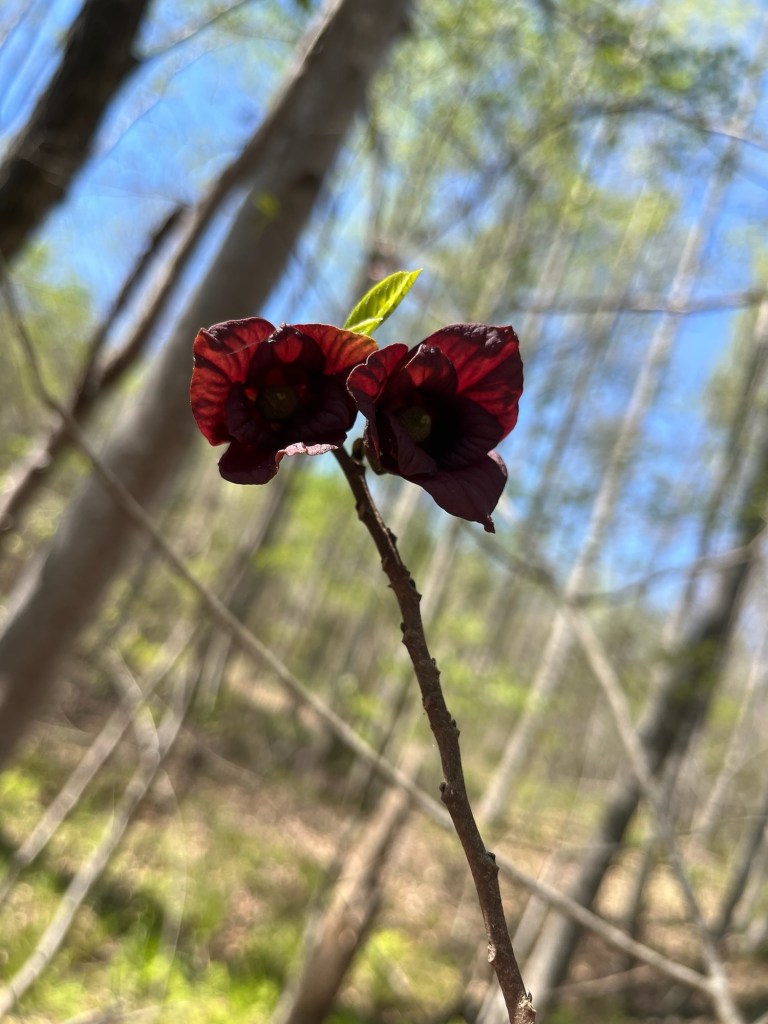
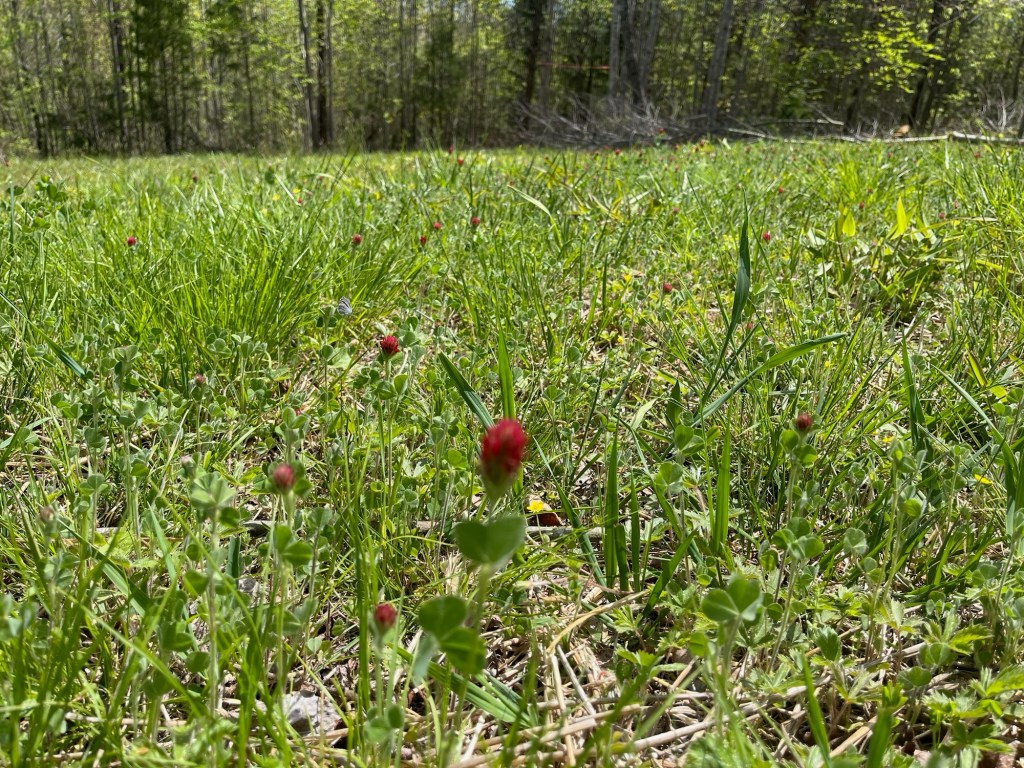
Yesterday in the forest,we found pawpaws blooming and blueberries flowering and fruiting, and in the clearing we found our first cover crop of crimson clover flowering. Butterflies and other insects were enjoying the flowers.
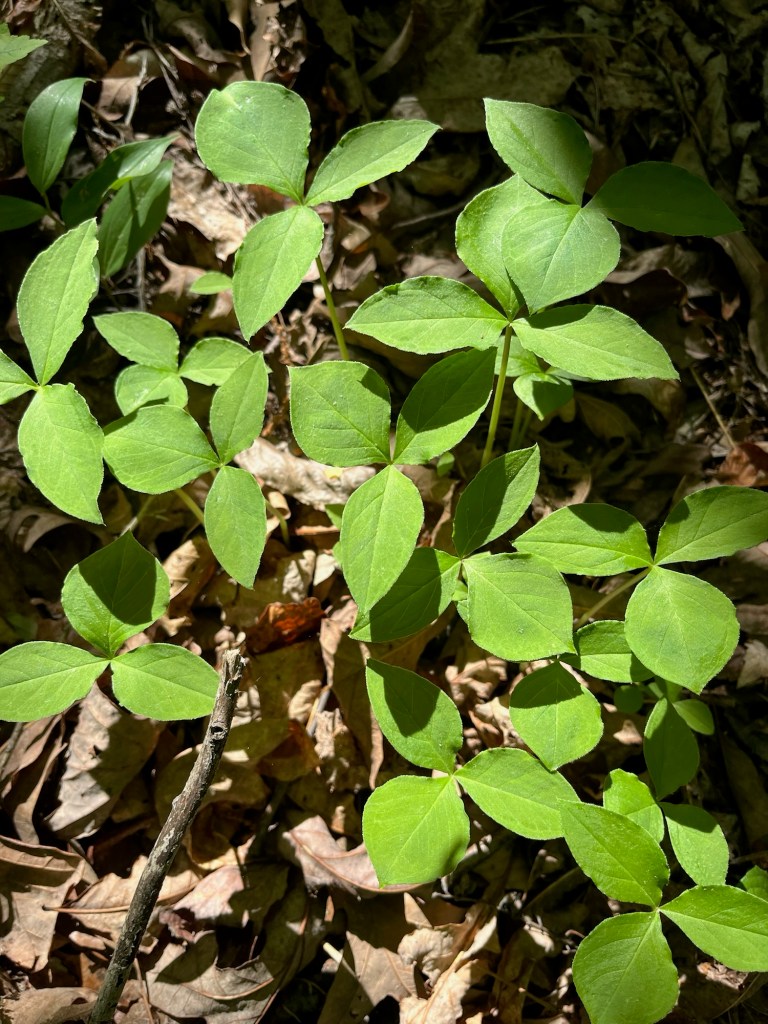
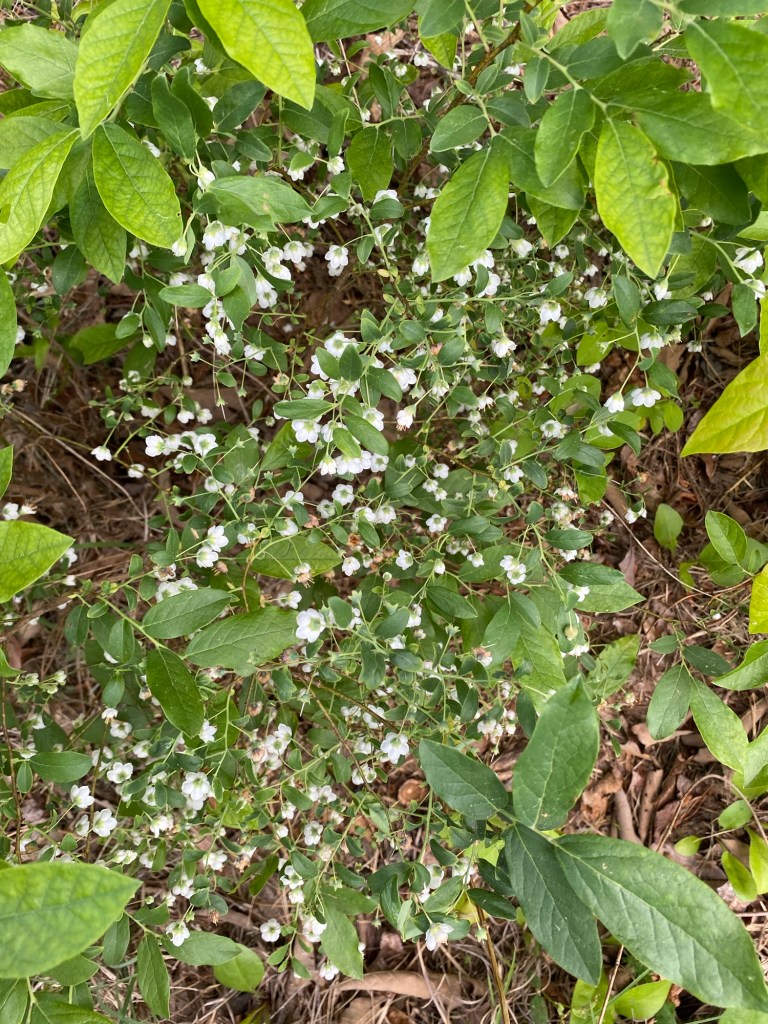
We found about 20 pawpaw trees with flowers and plan to get back out there to pollinate them by hand within the next few days. We saw hundreds of blueberry bushes flowering with some fruit beginning to form. Mountain laurel budding up. Crimson clover flowering. The butterflies were all over them. South property line with mayapples in the wet weather gully.
We are constantly amazed by the abundance of food growing naturally in the forest. We look for ways to encourage and support the continued growth and development of a healthy and sustainable ecosystem.
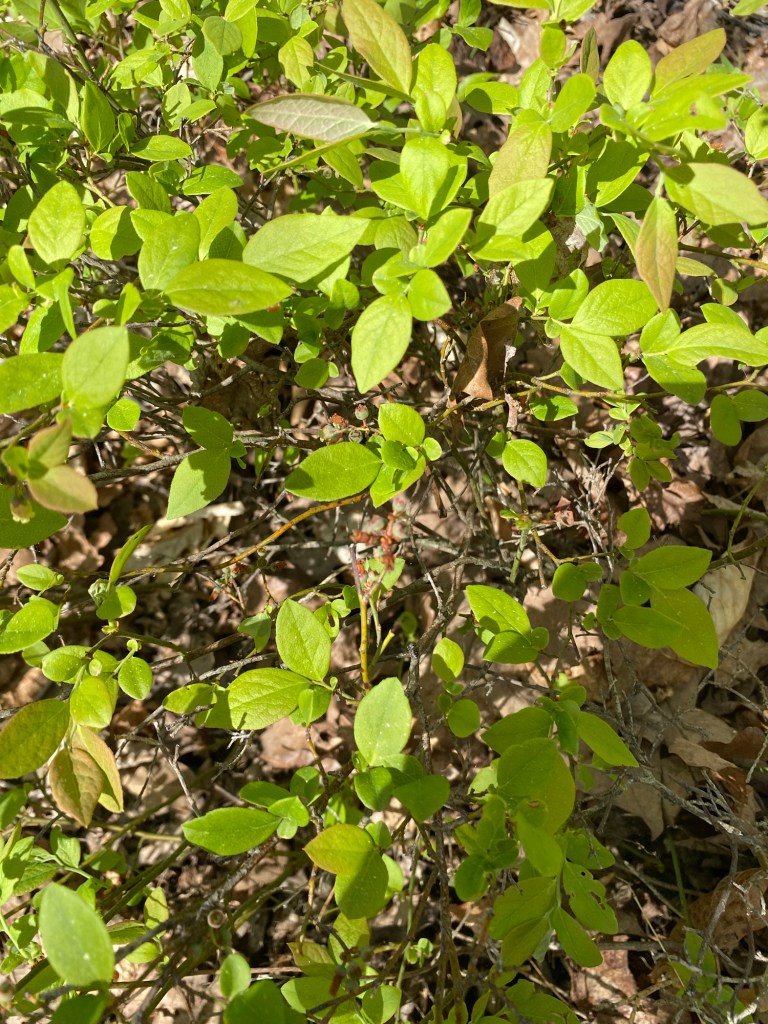
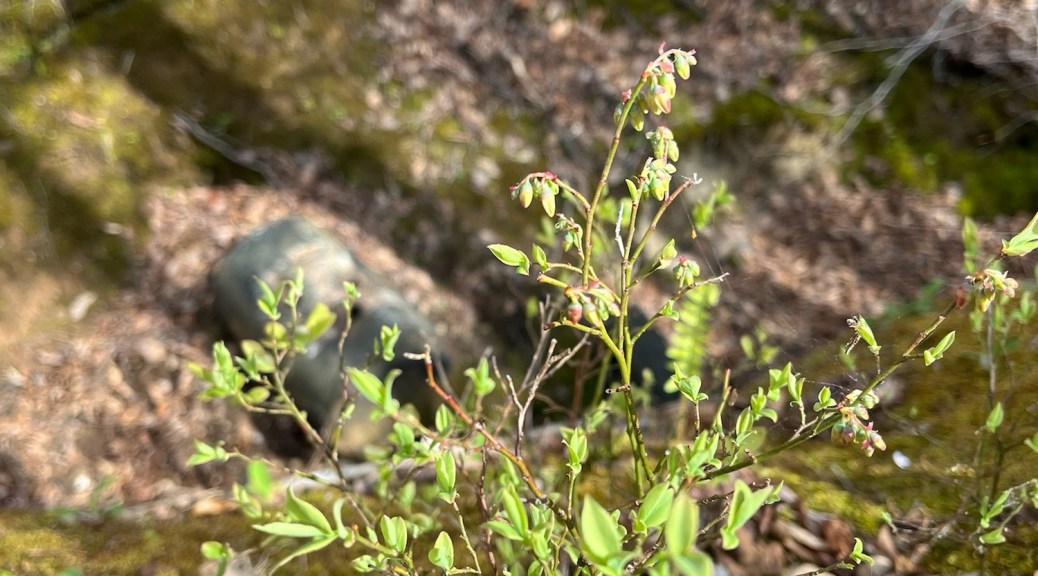
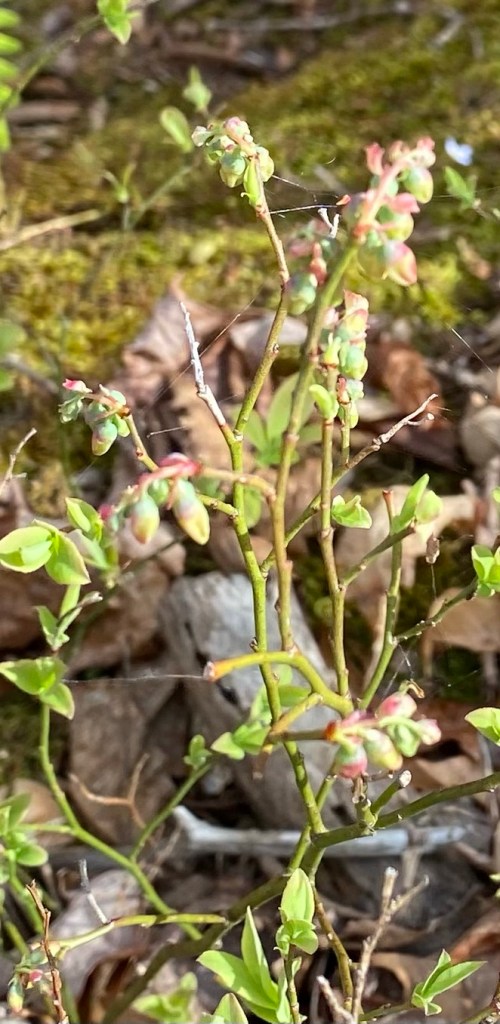
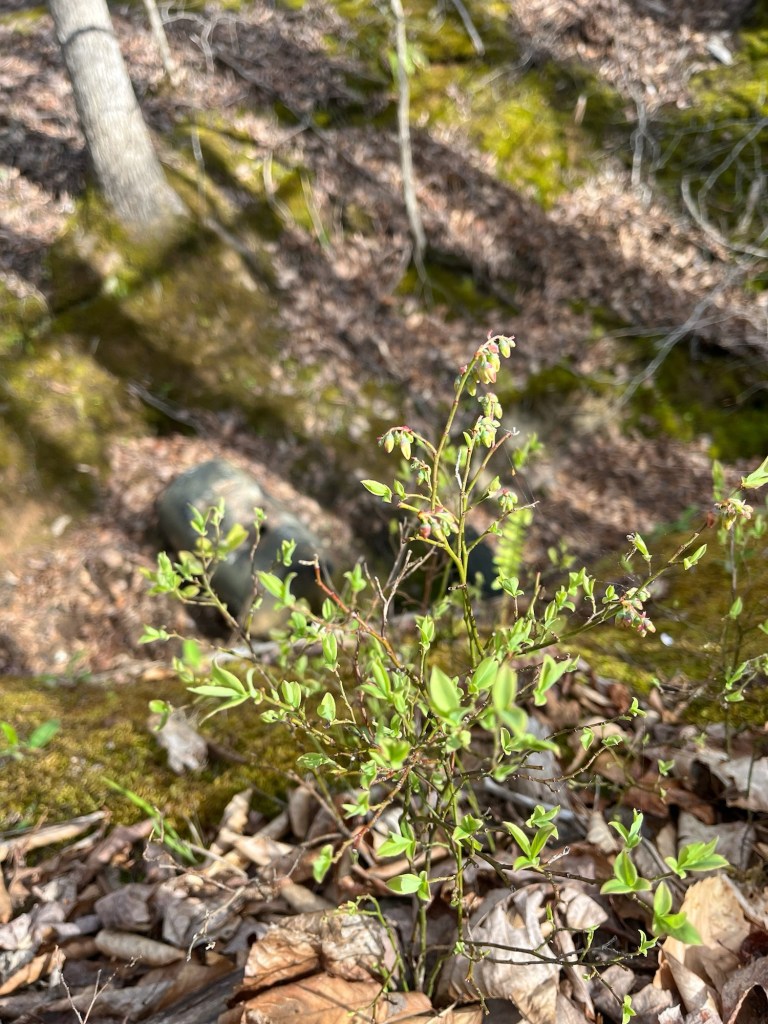
Yesterday we went over for a quick visit, and to our delight, we saw the blueberry bushes were flowering and getting berries.
Vaccinium pallidum, early lowbush blueberries found in a patch at the bottom of slope near the waterway.
We’d been watching them and noted a few weeks ago they were leafing out. We have observed hundreds of them all throughout the forest. We’ve read that they are more productive when they have plenty of sun.
These fruits are eaten by terrestrial turtles, black bears, coyotes, foxes, raccoons, deer and many bird species including wild turkeys, grouse, blue jays, robins, wood thrush and eastern bluebirds. These wild blueberries are smaller and sweeter and grow in acidic soils that are moist and well draining.
We continue to marvel at the abundance of food growing wild in the forest and feel lucky to be able to caretake this incredible environment.
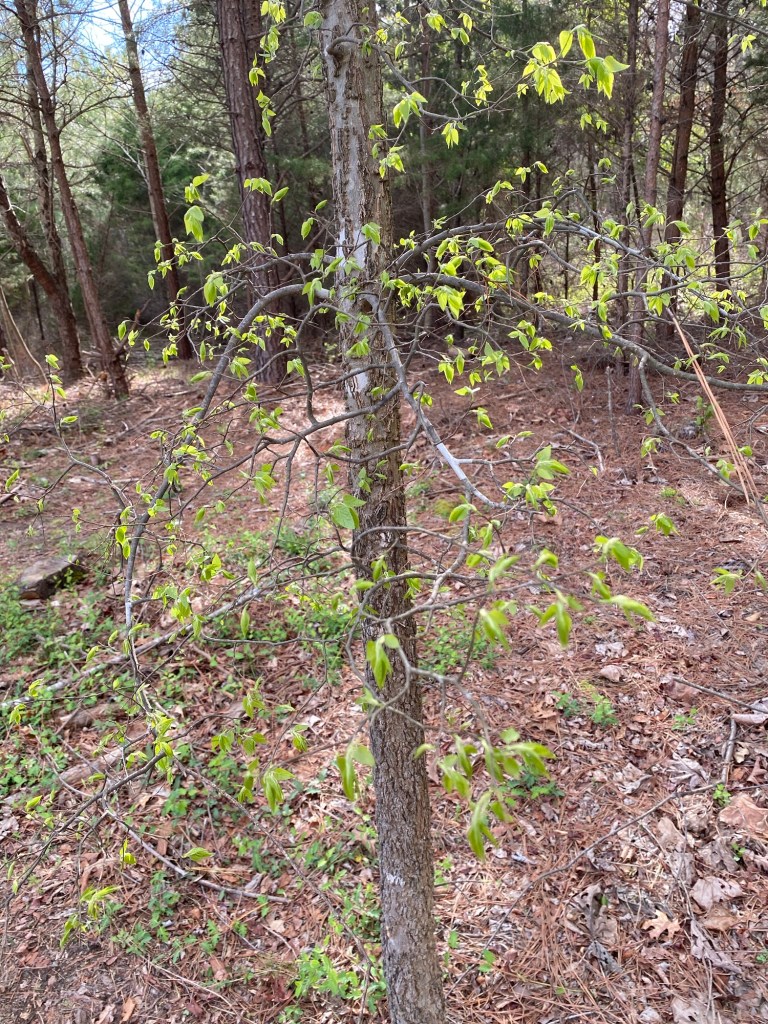
We also noted the tulip poplars, dogwood and sugar hackberry trees are all beginning to leaf out. The transformation of the forest to green for summer has already started.
Sugar hackberry leafing out up top near the clearing. Late last summer, we saw leaf cutter bees all over this tree and oval holes appear on the leaves of this tree. We were excited to learn that these solitary bees harvest the leaf circles to line their nests. 🐝
 St Andrews Forest Farm