September 27, 2023 Saint Andrew’s Forest Farm Mushrooms and Boundaries

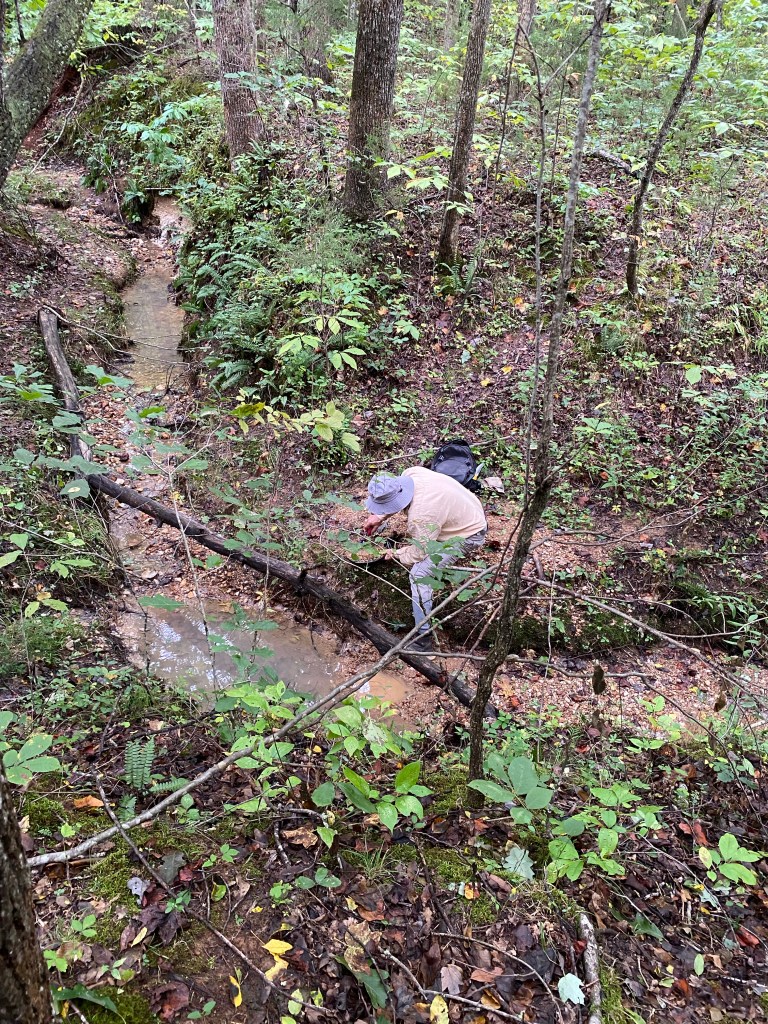
We went to Saint Andrew’s Forest Farm to hang signs all along our boundaries. The drive over was colorful as leaves are slowly becoming yellow and falling. It was overcast and cool. 69 degrees Fahrenheit was the high temperature today.

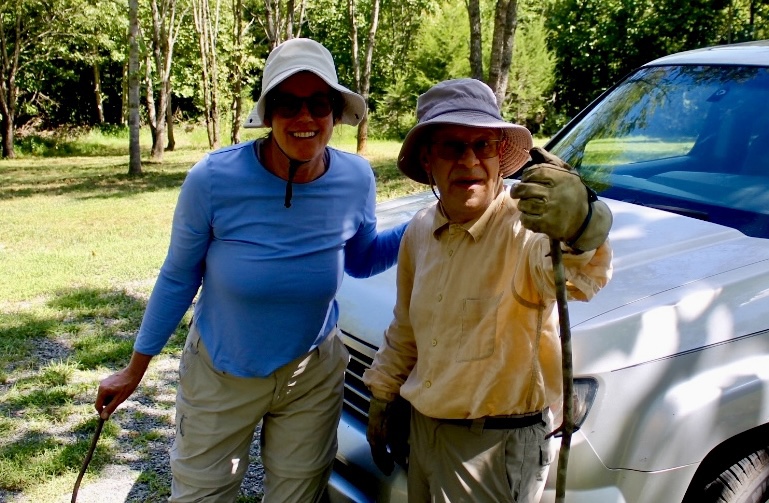
We were excited since it was a lot of new exploration for us. We began in the front, north side and posted signs as we walked our property edge. We culled small, dead and dying trees and limbs along the way. It was lovely in this new to us corner of the farm.

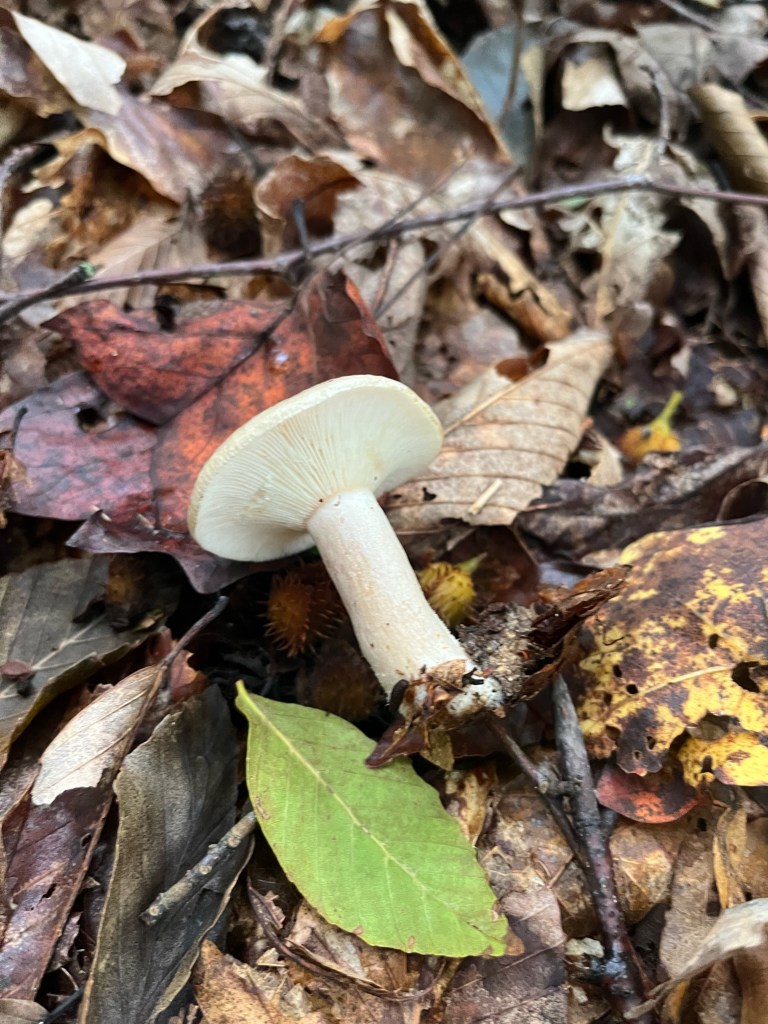
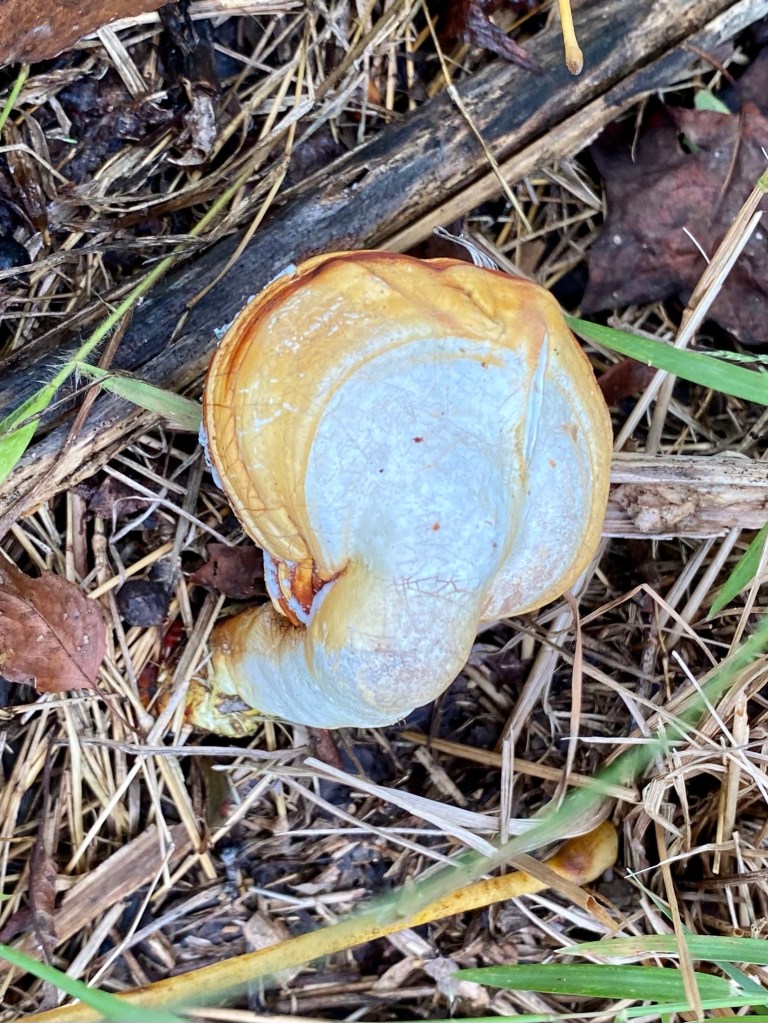
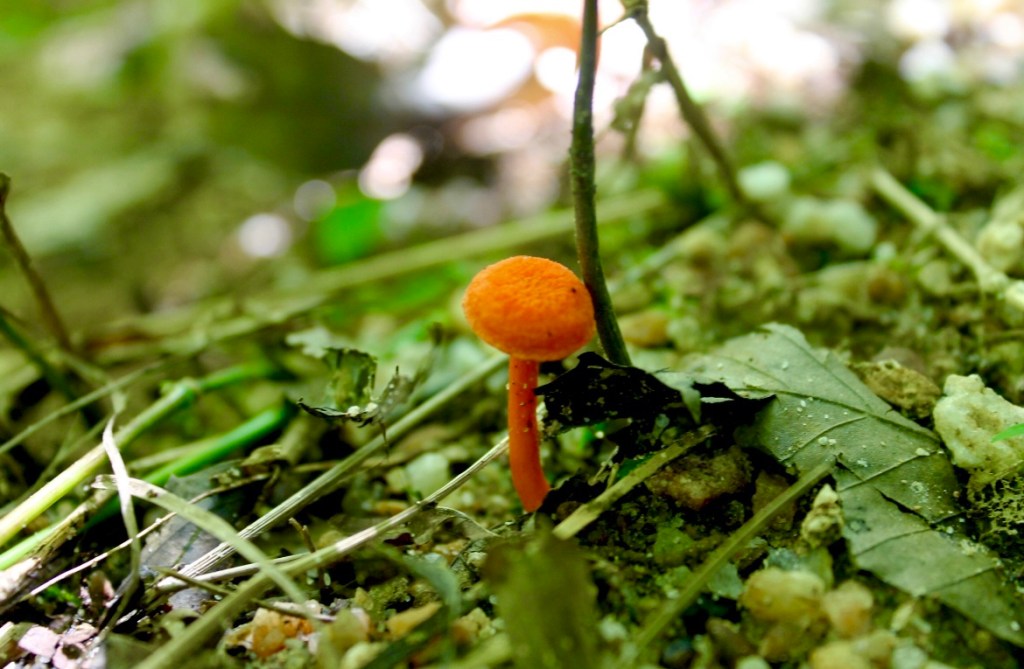
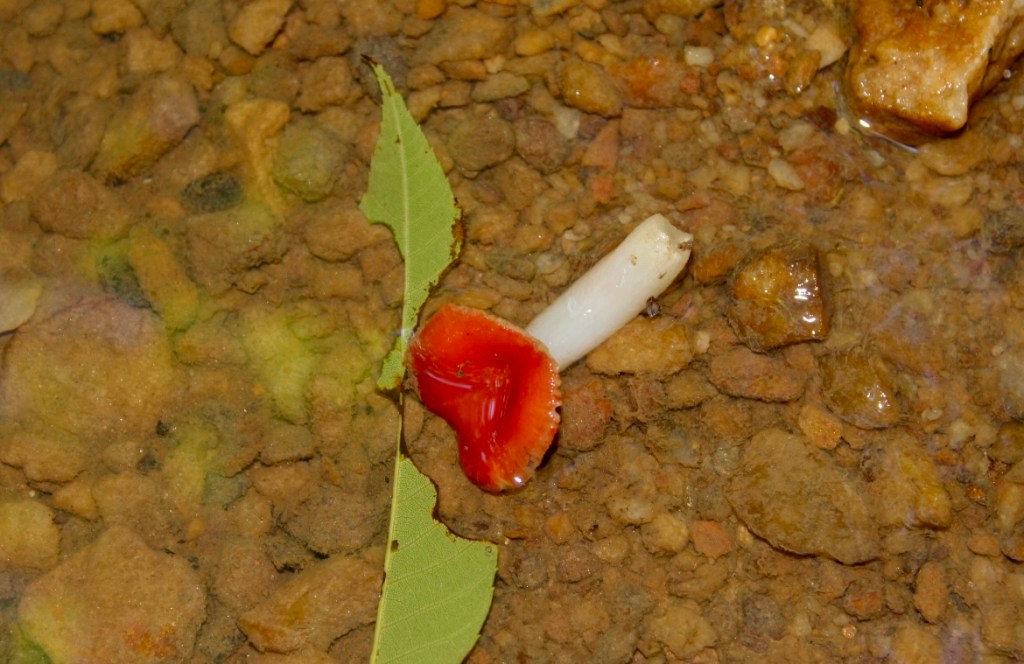
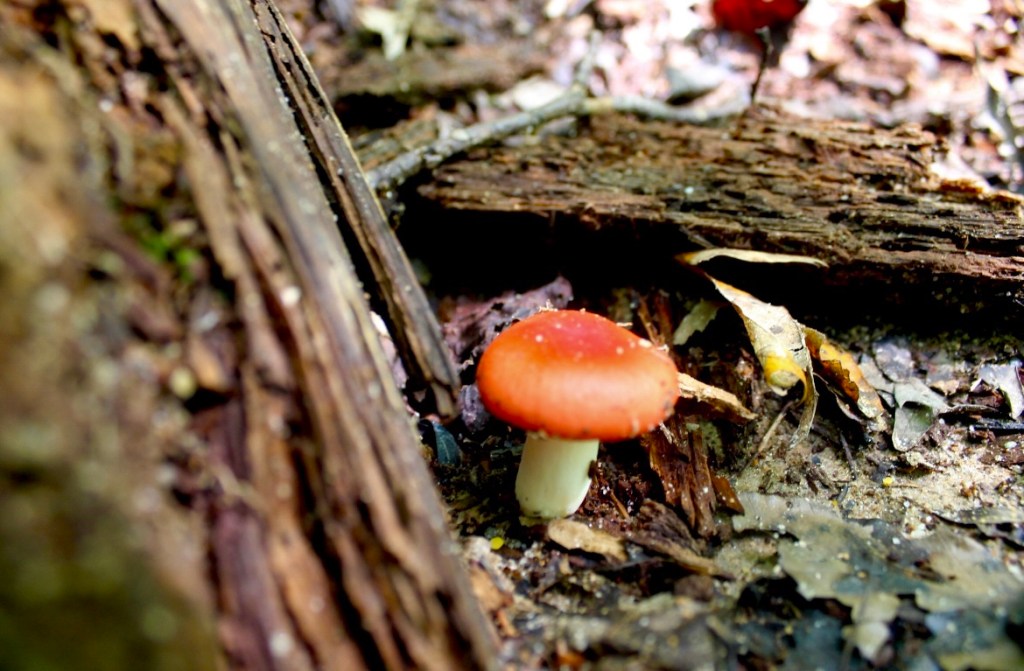
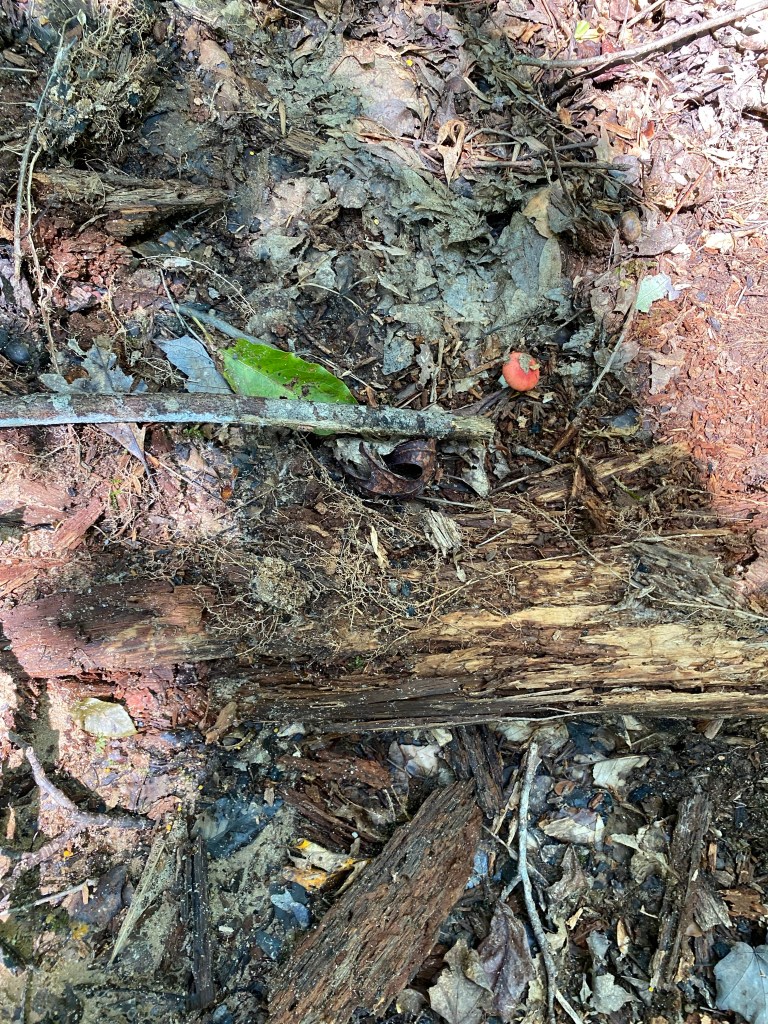
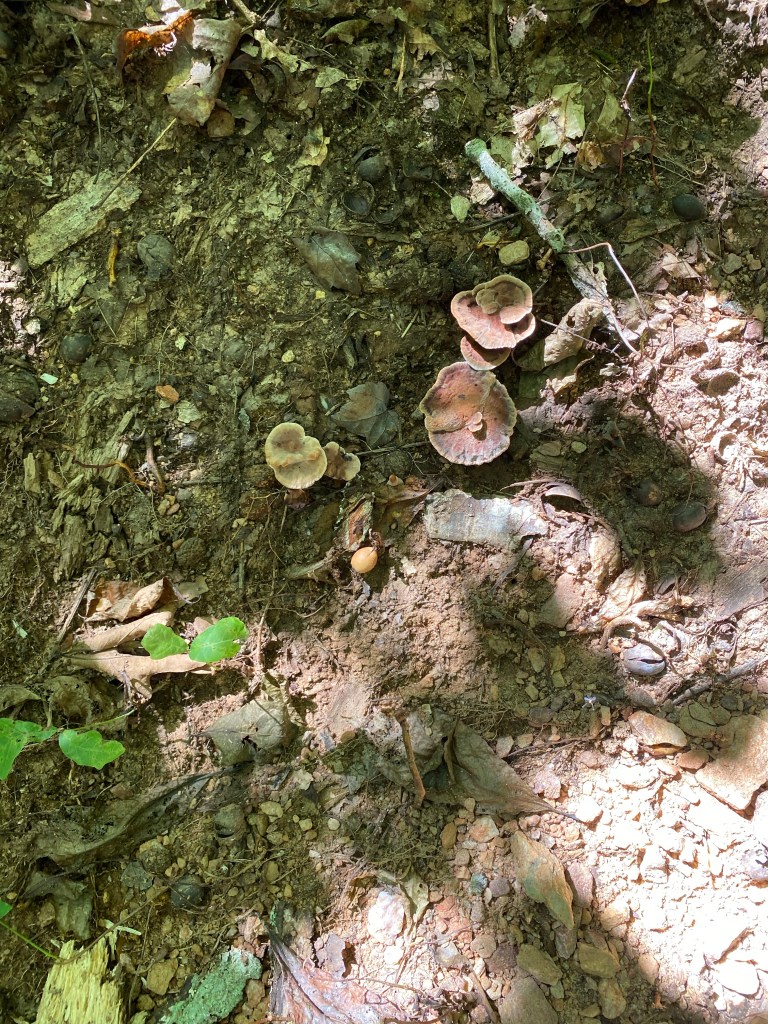
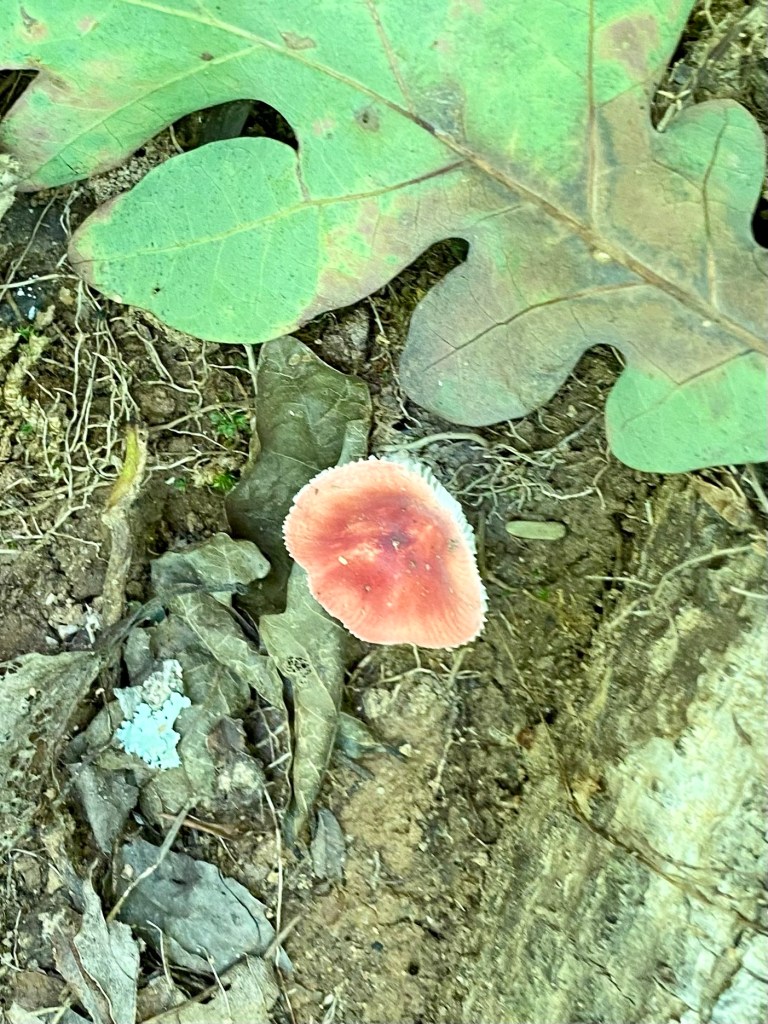
We saw mushrooms everywhere as the weather has been rainy and cooler. We saw Amanitas, Russulas and many smaller ones in between.

We were able to get signs up along multiple stretches of our boundaries and hope to finish this task before the weekend is done.

We did not see the young black bear today.
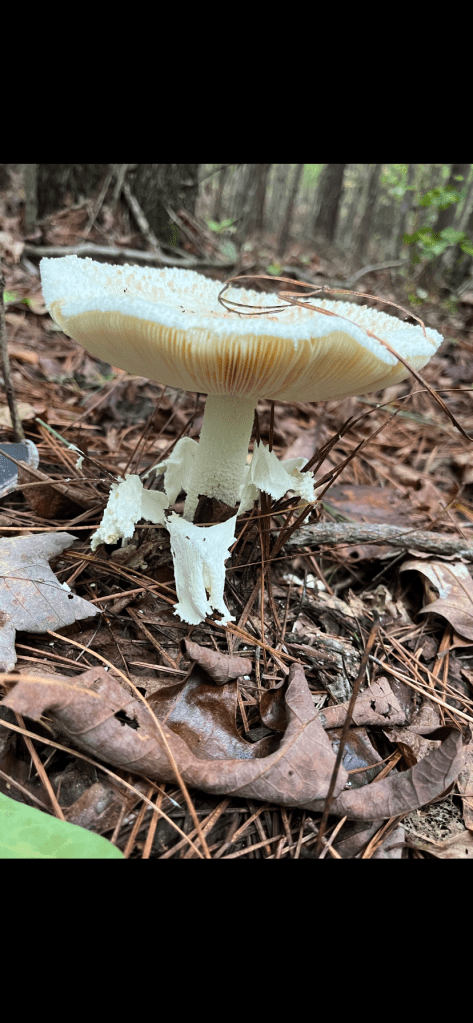
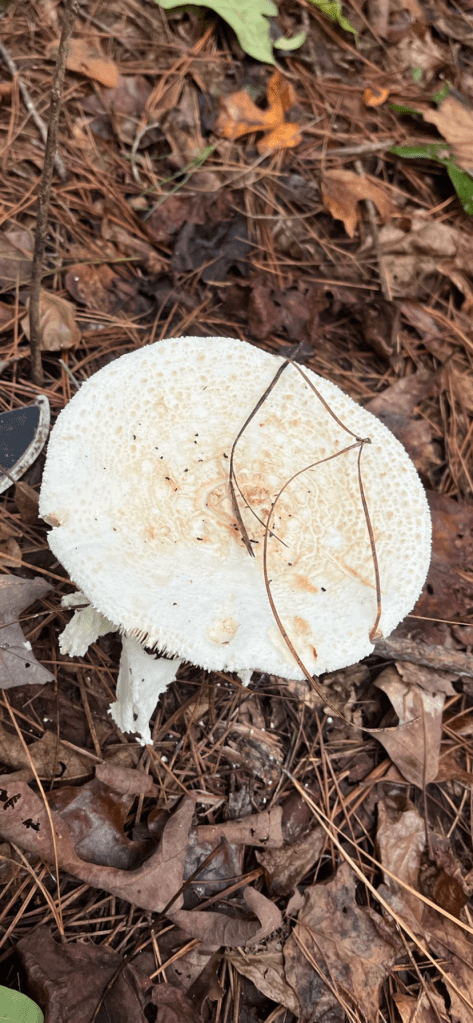
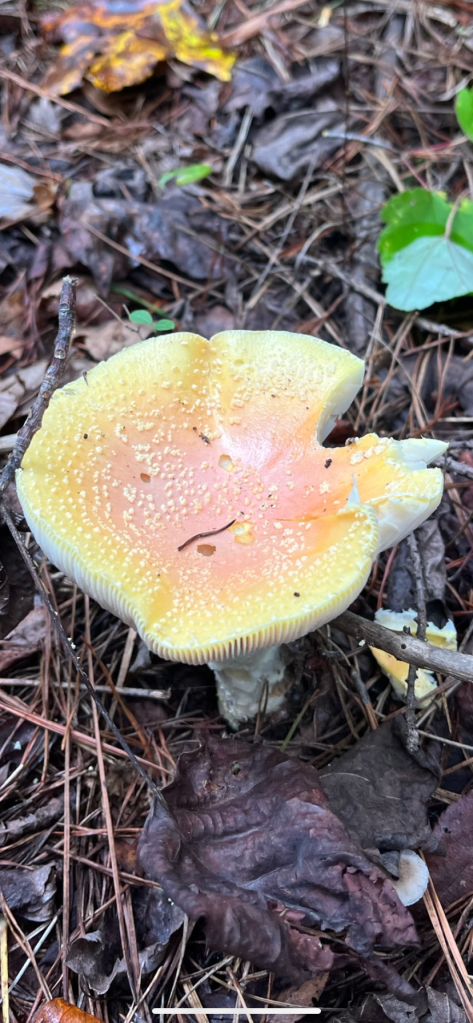
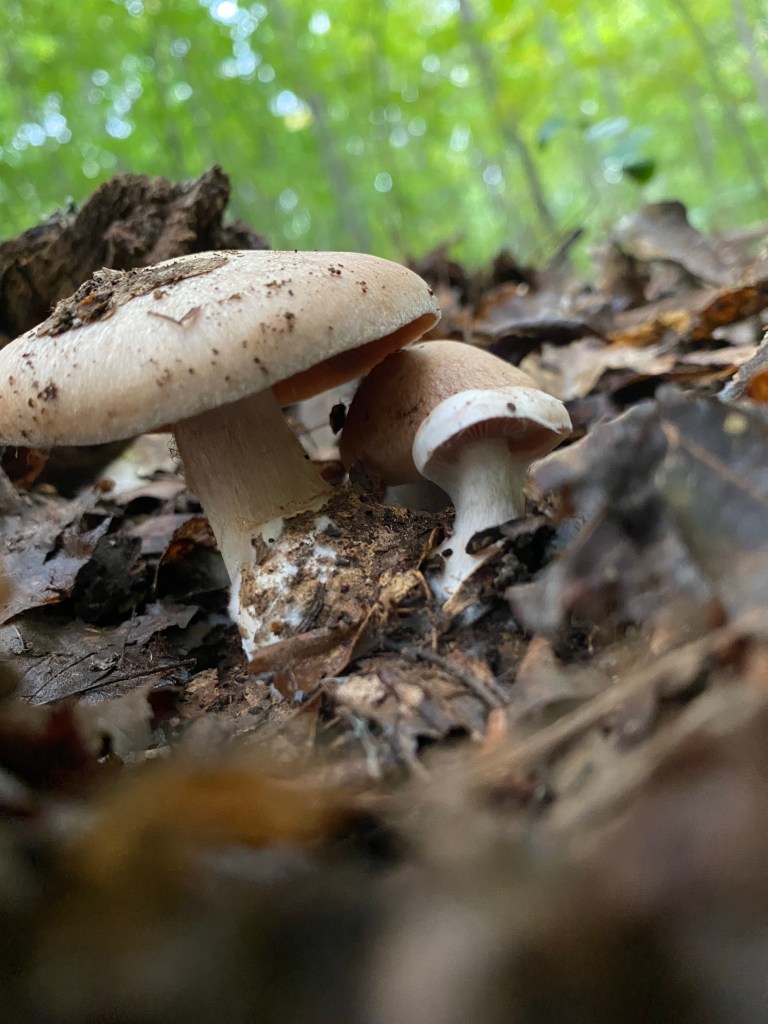
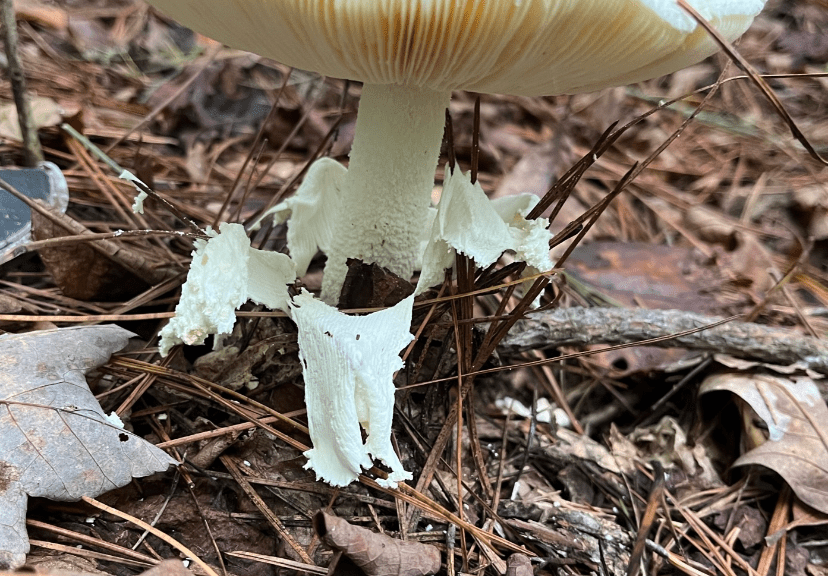
Amanita. Note the veil having just freshly fallen. This could be the death cap, Amanita phalloides. Half of one is enough to kill an adult human. The principal toxic constituent is α-Amanitin, which causes liver and kidney failure. Thus, we leave anything that looks similar alone.

Top view of the large Amanita. It was 5 to 6 inches across. This mushroom was beautiful and we left it in the woods. They are mycorrhizal with pine, oak and chestnut trees.
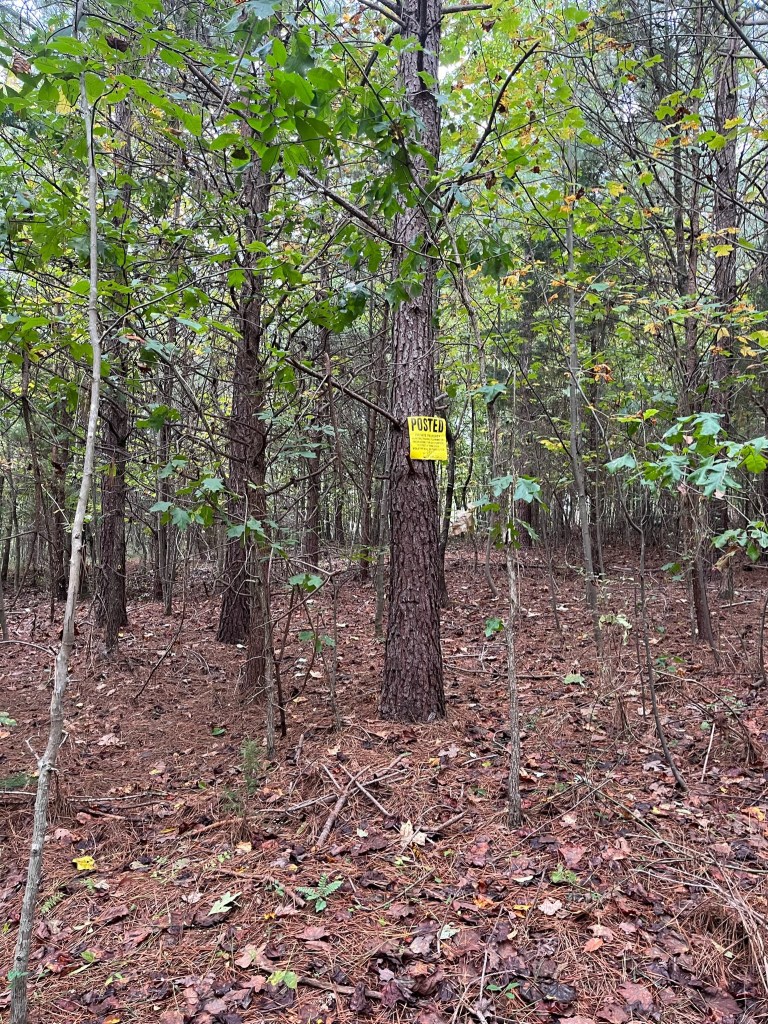
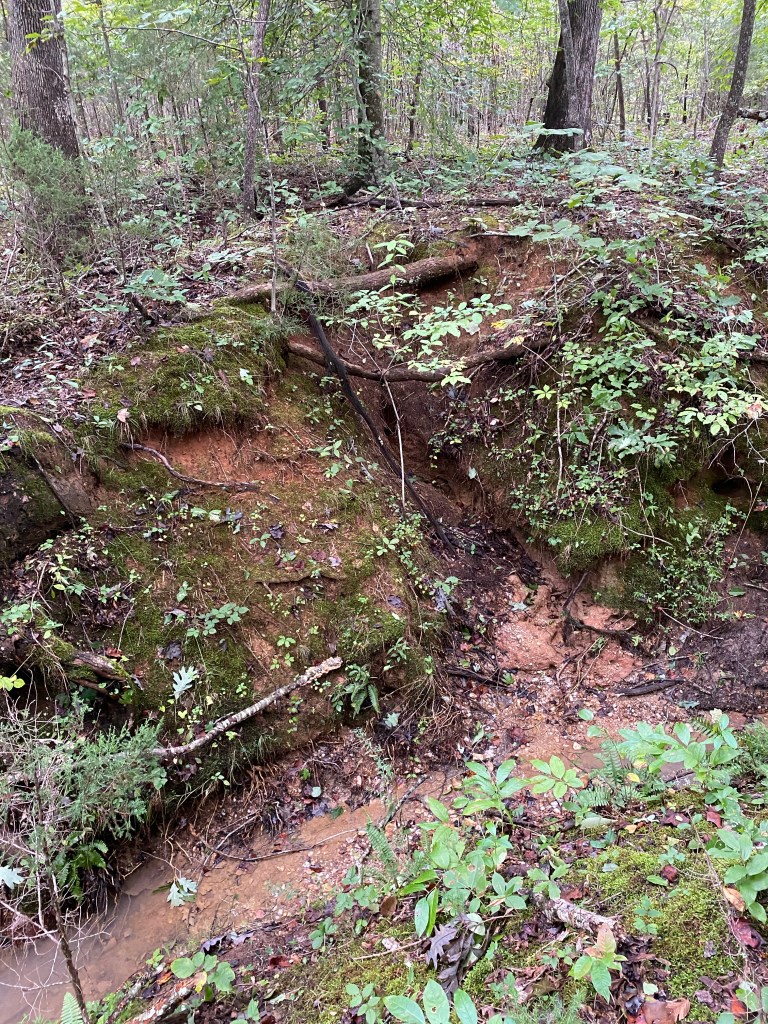
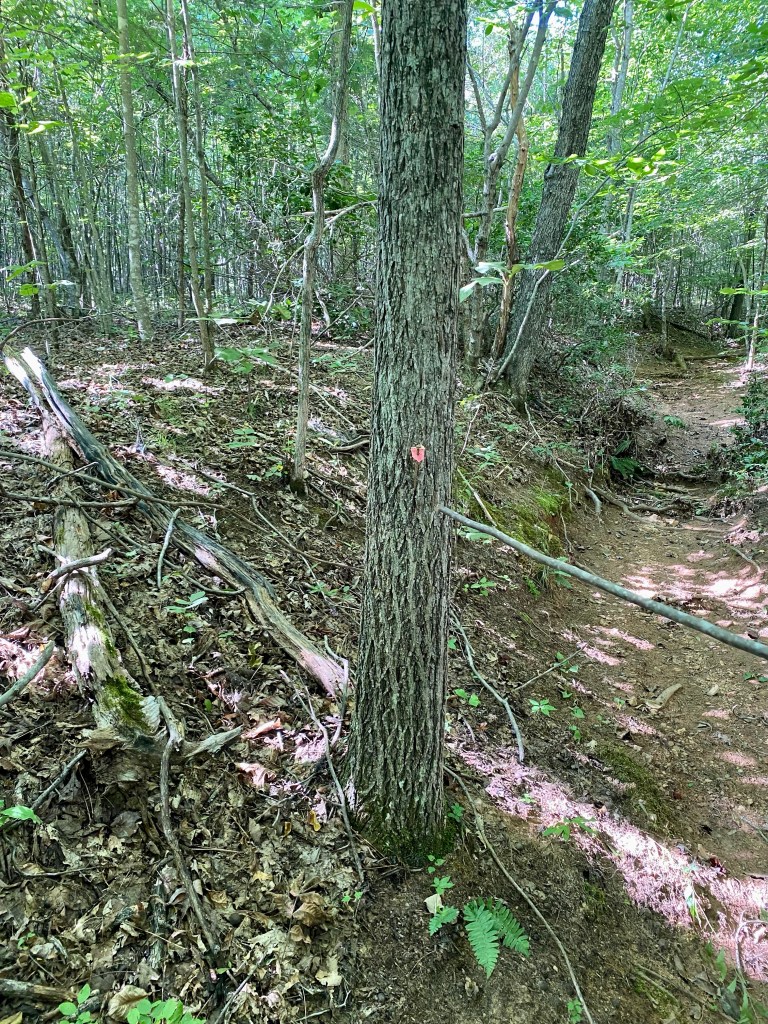
Another boundary marker and sign we posted today.
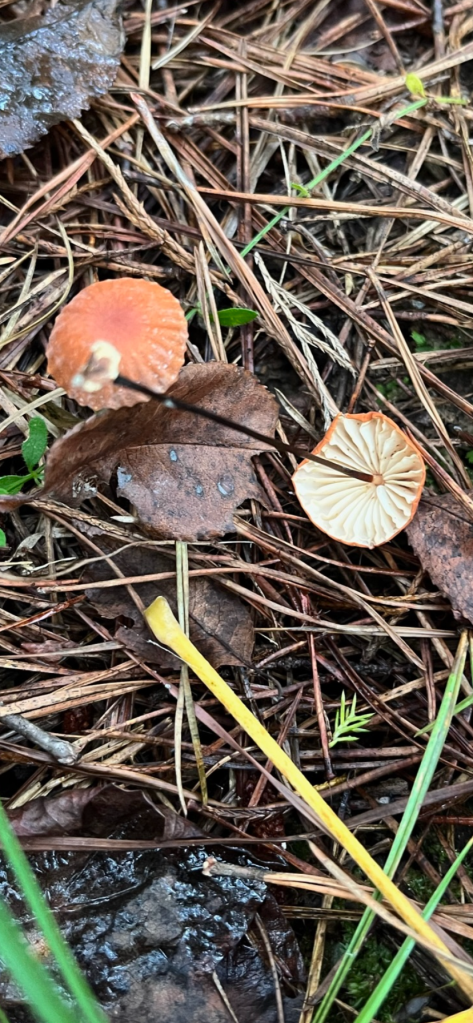
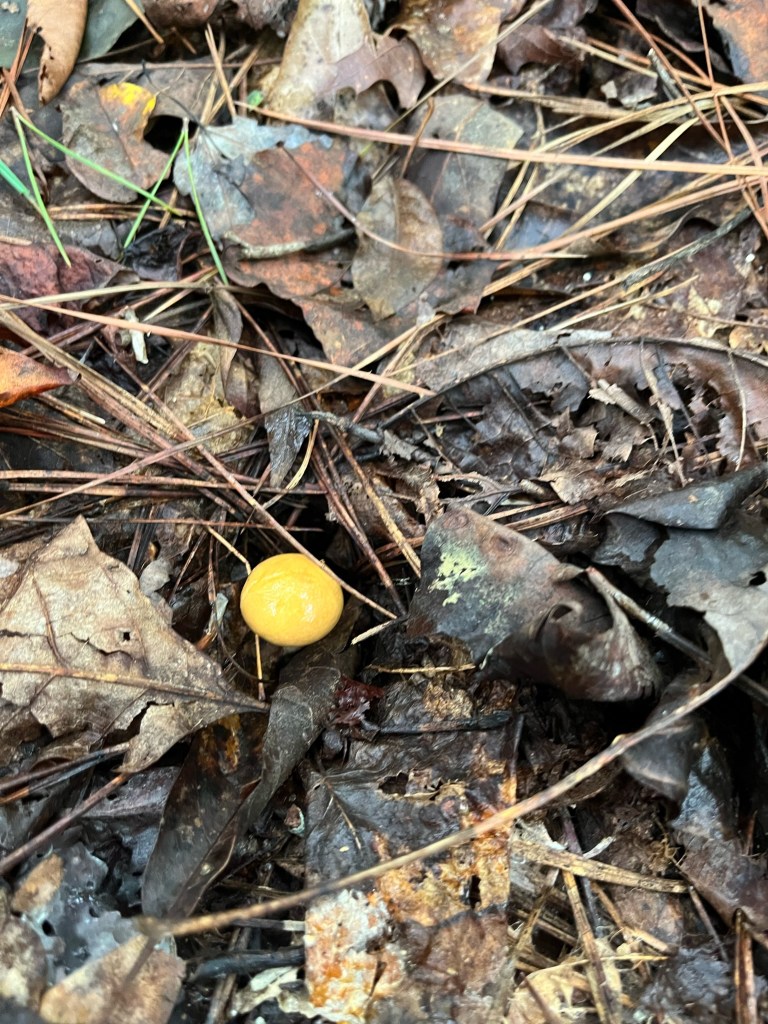
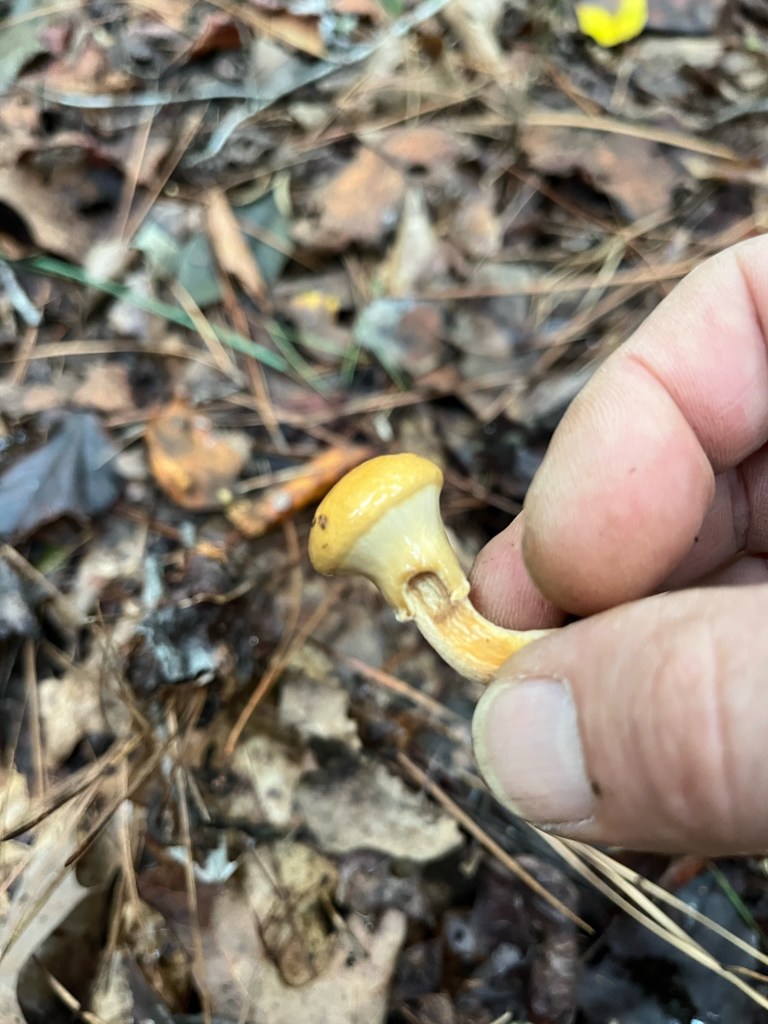
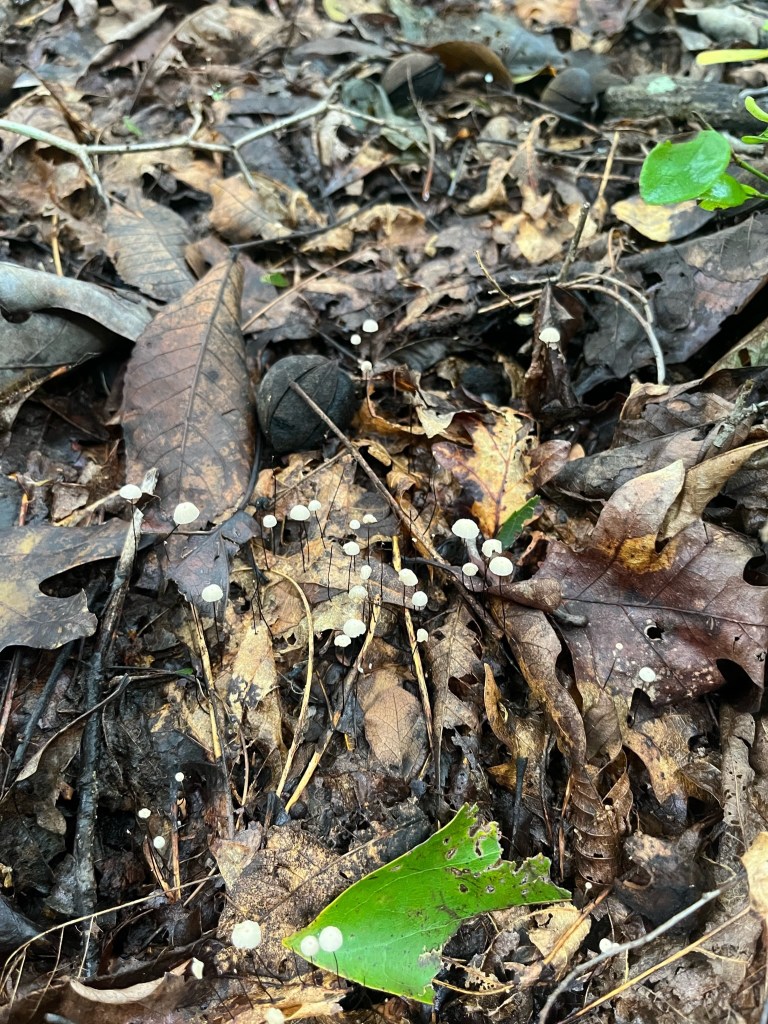
Arising from hardwood leaves and sticks, these tiny beach umbrellas are quite beautiful when fresh. The pleated cap, the wiry stem, and the very distant gills make the Marasmius easy to recognize. Other “pinwheel” Marasmius species include these Marasmius fulvoferrugineus, with a rusty brown cap. We saw hundreds of these tiny mushrooms growing on the leaves of our forest floor.
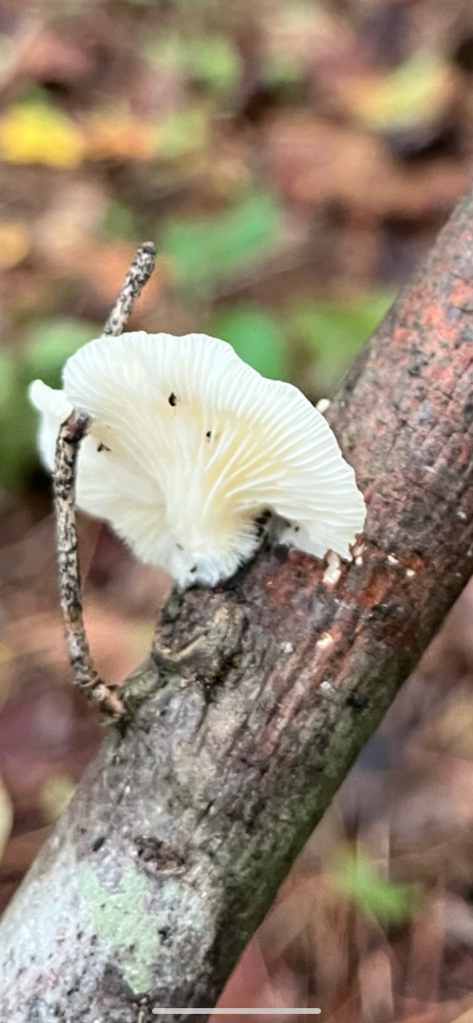
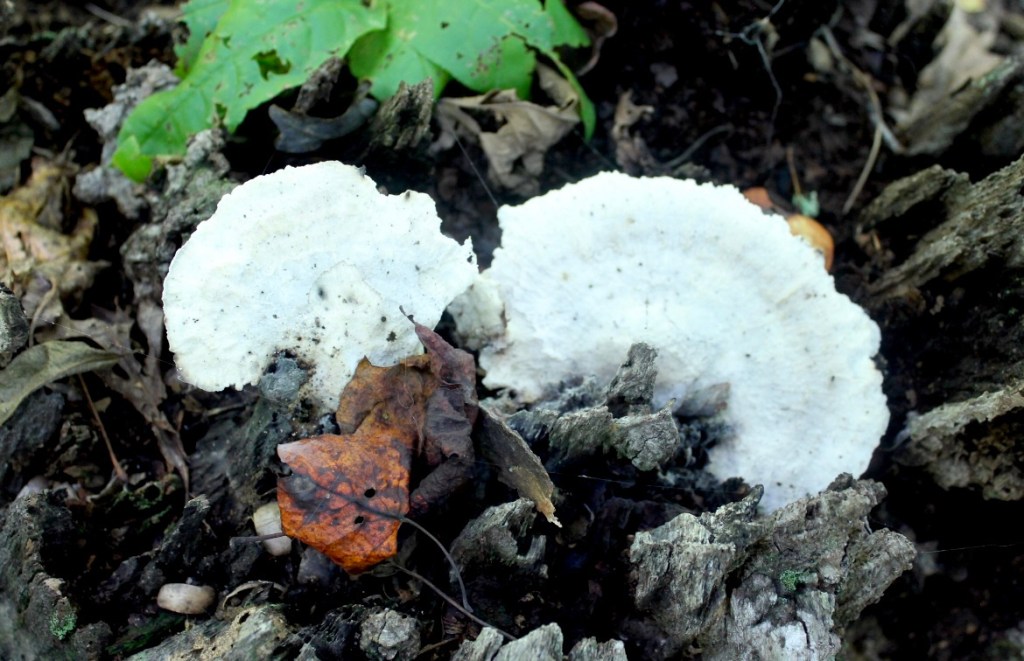
Pleurocybella porrigens is a species of fungus in the family Phyllotopsidaceae. The species is widespread in temperate forests of the Northern Hemisphere.[2]P. porrigens, known as the angel wing, is a white-rot wood-decay fungus on conifer wood, particularly hemlock (genus Tsuga).[3]The flesh is thin and fragile compared to the oyster mushrooms (Pleurotus ssp.).
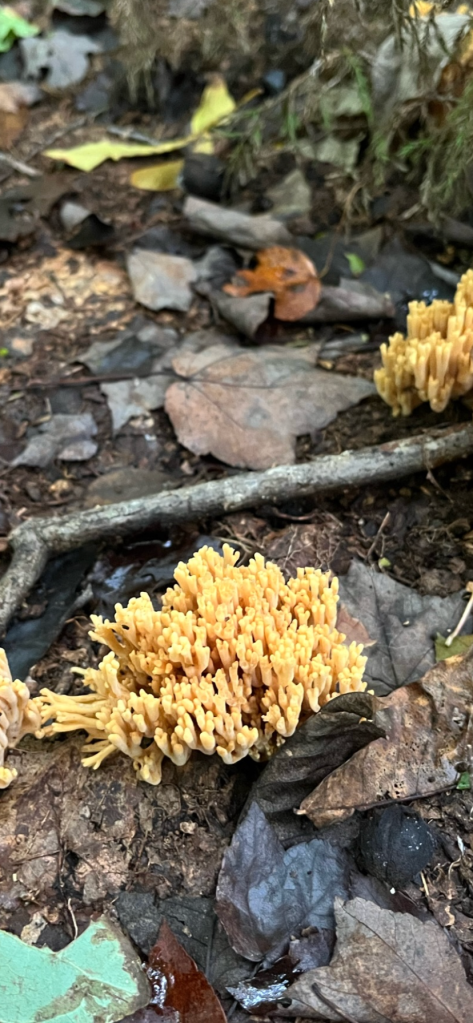
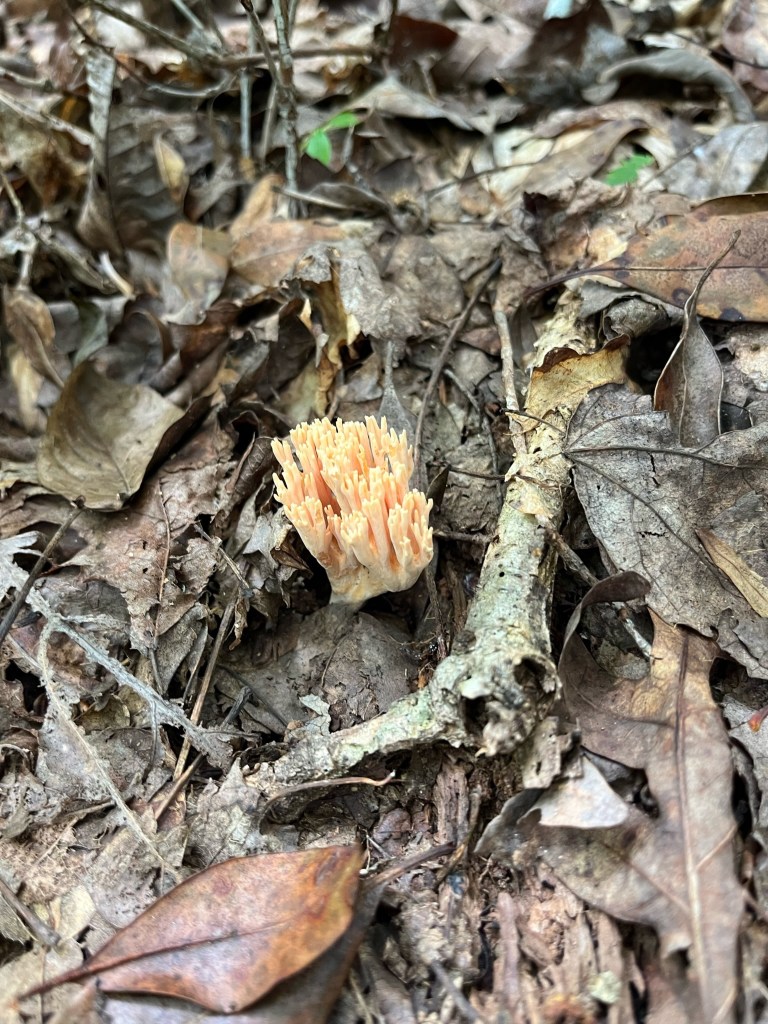
Coral fungus
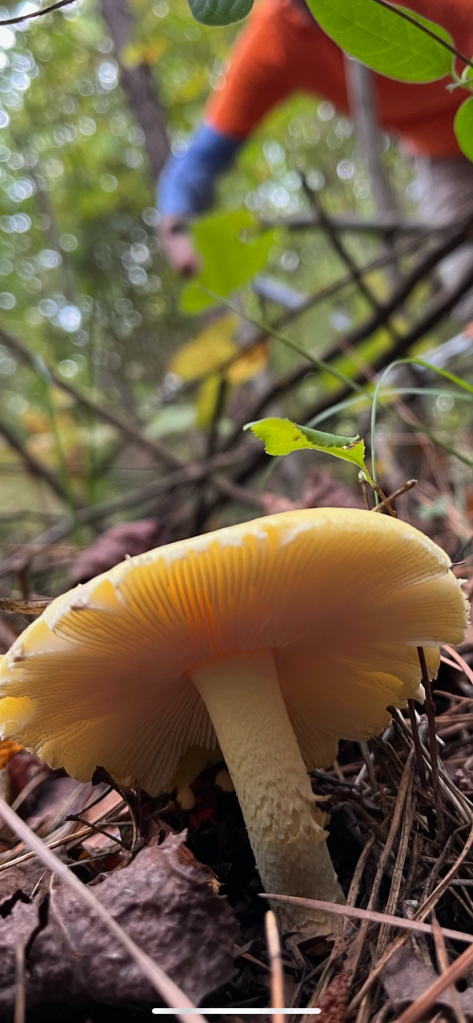
This variety of the well known species Amanita muscaria is distinguished by its yellow to orange, rather than red, cap. Other trademark features are shared with the red version: numerous warts on the cap, a ring on the upper stem, and a distinctive stem base that features several shaggy “zones” of universal veilmaterial on the upper edge of a basal bulb. Amanita muscaria var. guessowii is found in the northern Midwest and in eastern North America from the boreal forests of the northeast, south to the Appalachians.
Gills of Amanita muscari var. guessowii the American yellow fly agaric. Closely resembles Amanita ceasarea but is noted to be poisonous or have unwanted effects and to be edible. We leave them in the forest.
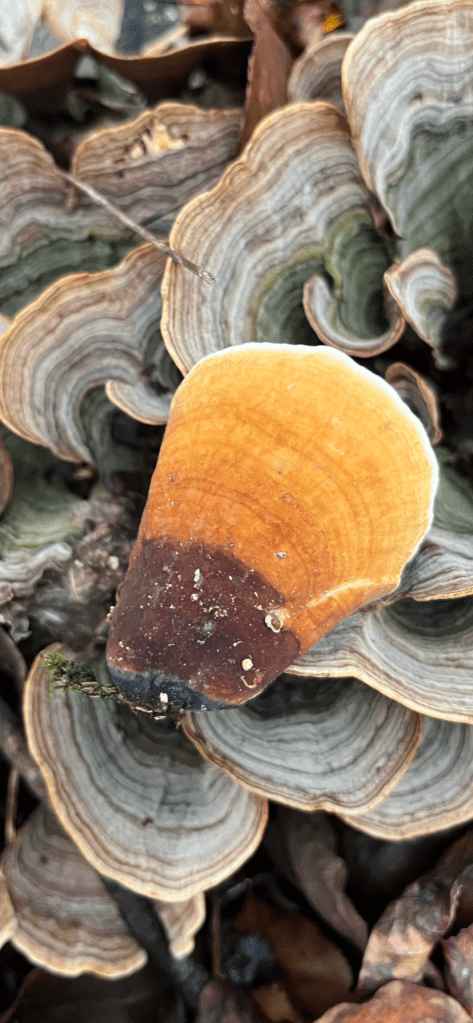
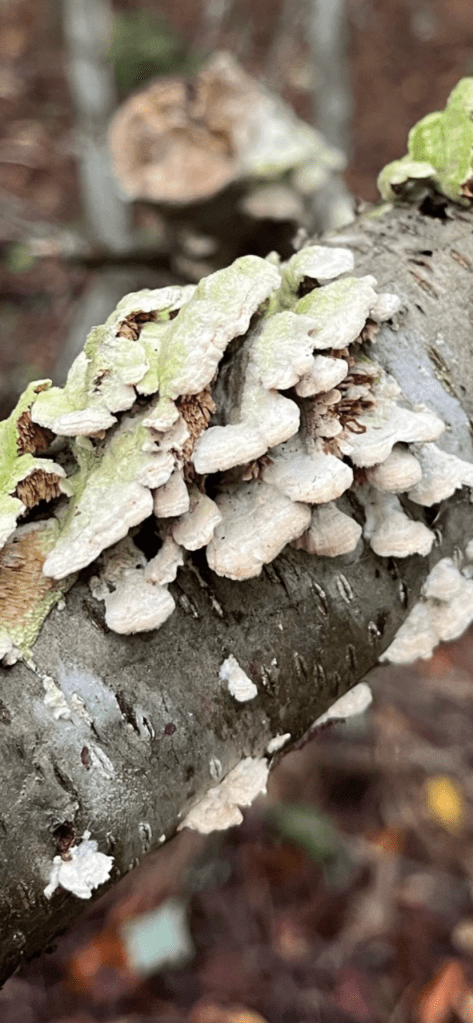
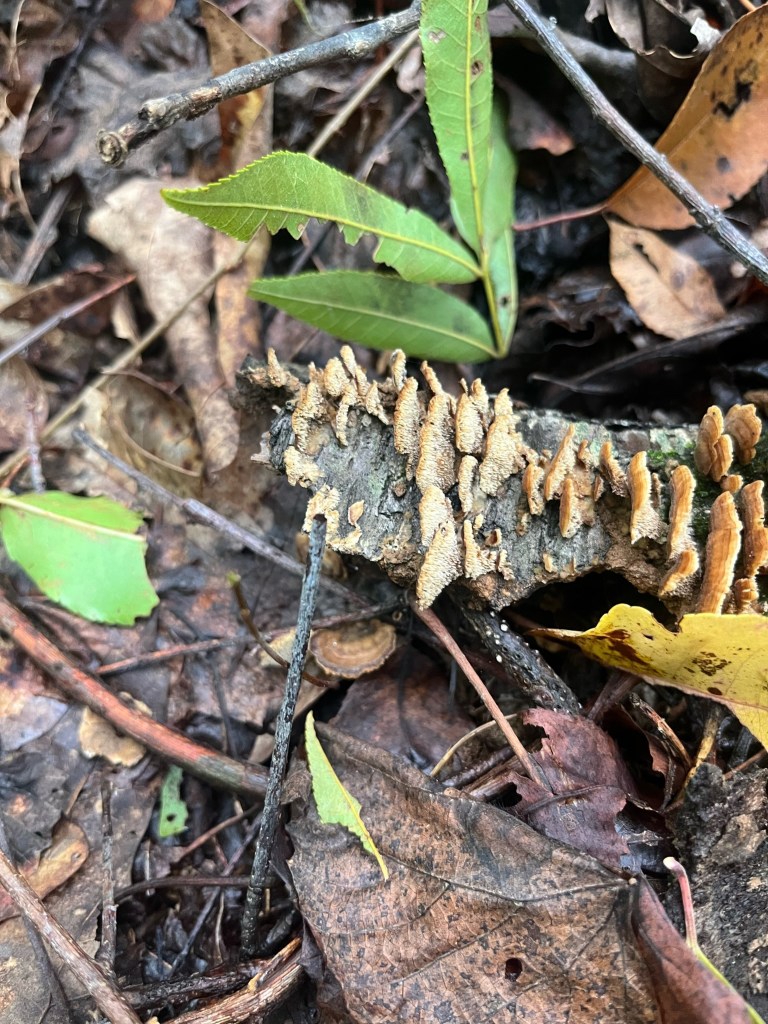
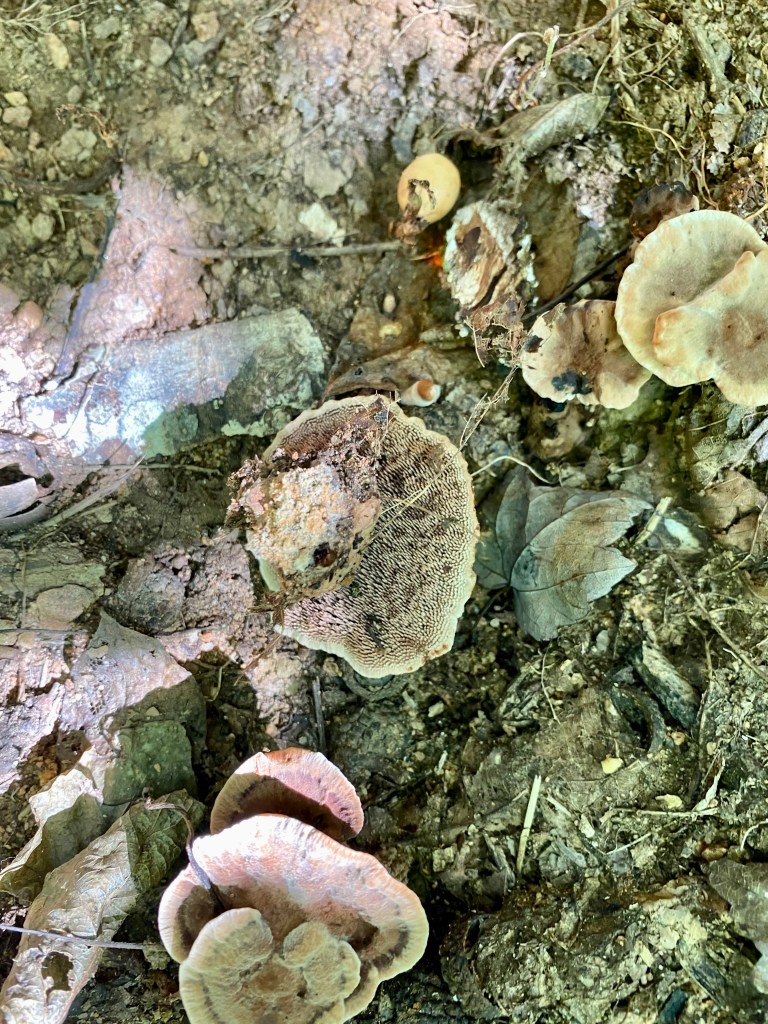
Yellowing Curtain Crust, Stereum subtomentosum, is easily confused with Trametes versicolor, the Turkeytail bracket fungus (which differs from Stereum species, however, by having tiny shallow pores on its fertile undersurface), this rather uncommon bracket grows on dead hardwood, and most commonly on Beech.
Like many other crust fungi, Stereum subtomentosum can be found throughout the year; however, its period of sporulation is limited to the summer and autumn.
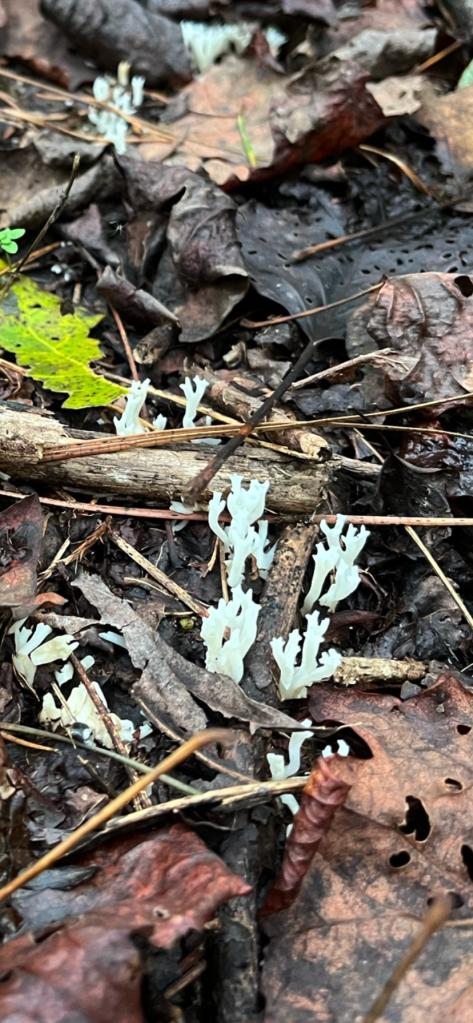
Coral fungus

Violet toothed polypore, Trichaptum biforme, a tough, hairy bracket fungus with violet margins and zones of white, brown, and black; pores whitish violet, breaking into teeth. Grows on stumps and logs of deciduous wood. Year-round. Cap semicircular, flat; zones of white-gray, ochre or dark brown, and brown-black; violet along the margin; texture tough, hairy. Pores angular, becoming toothlike; whitish brown with violet tinge, fading to buff, with violet along the margin. Stalk not present. Spore print white. Spores magnified are cylindrical, smooth.
September 24, 2023 A Mushroom Walk and a Young Bear

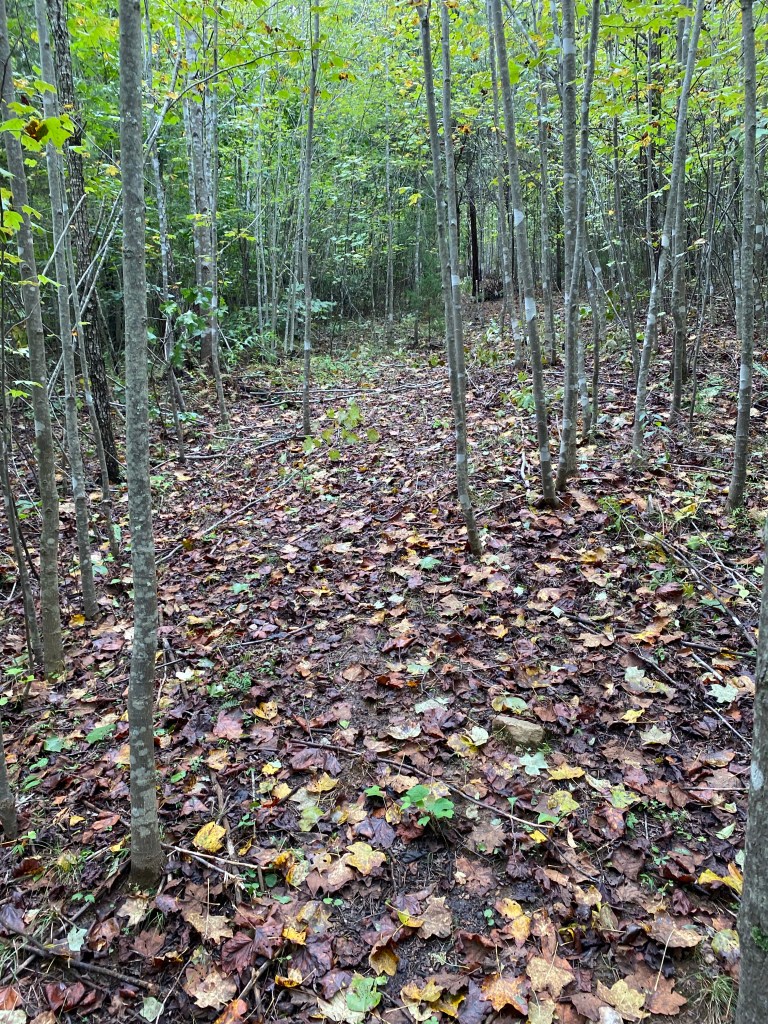
The woods are changing and moving into fall. Leaves are colorful and the forest is brighter. This is the North Trail where we startled a young bear. We think he was the 3 year old male bear our neighbor told us about. He looked healthy as he ran away. This was at the top of North Trail. No sign of his mother.

Tropical storm Ophelia moved through Saint Andrew’s Forest Farm with gusting winds and rain just the day before. As we drove over from Staunton, we saw several large trees blown over and wondered what impact the storm had on the trees at SAFF. As we pulled in, we did not see any downed trees only a few limbs on the ground.

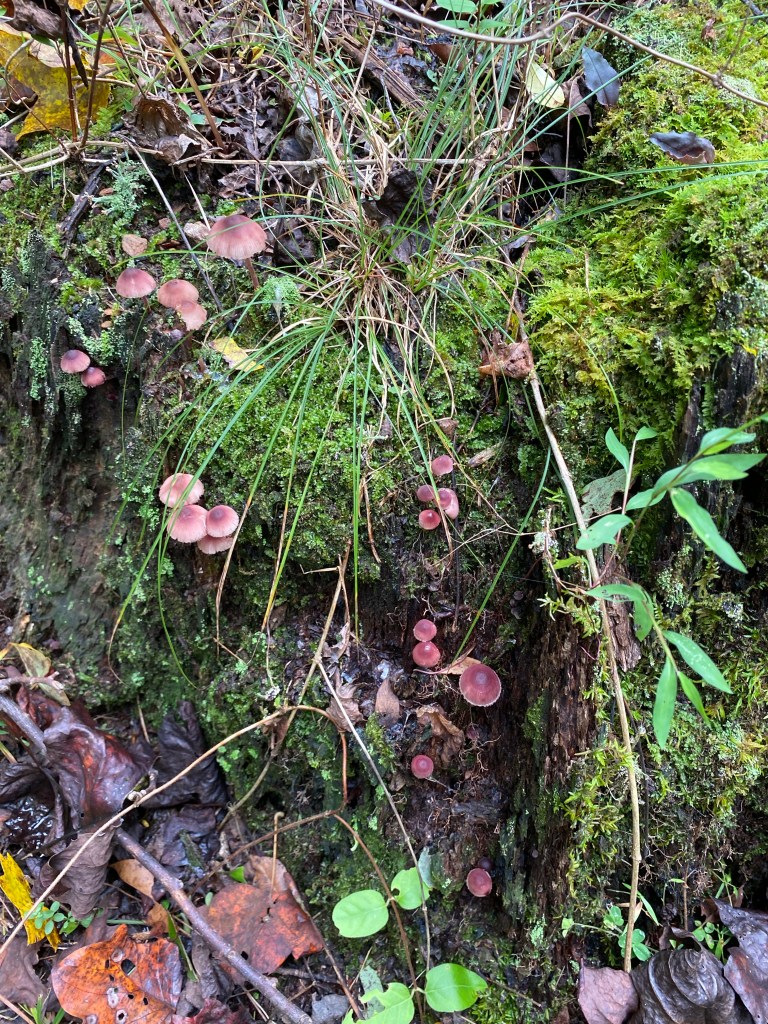
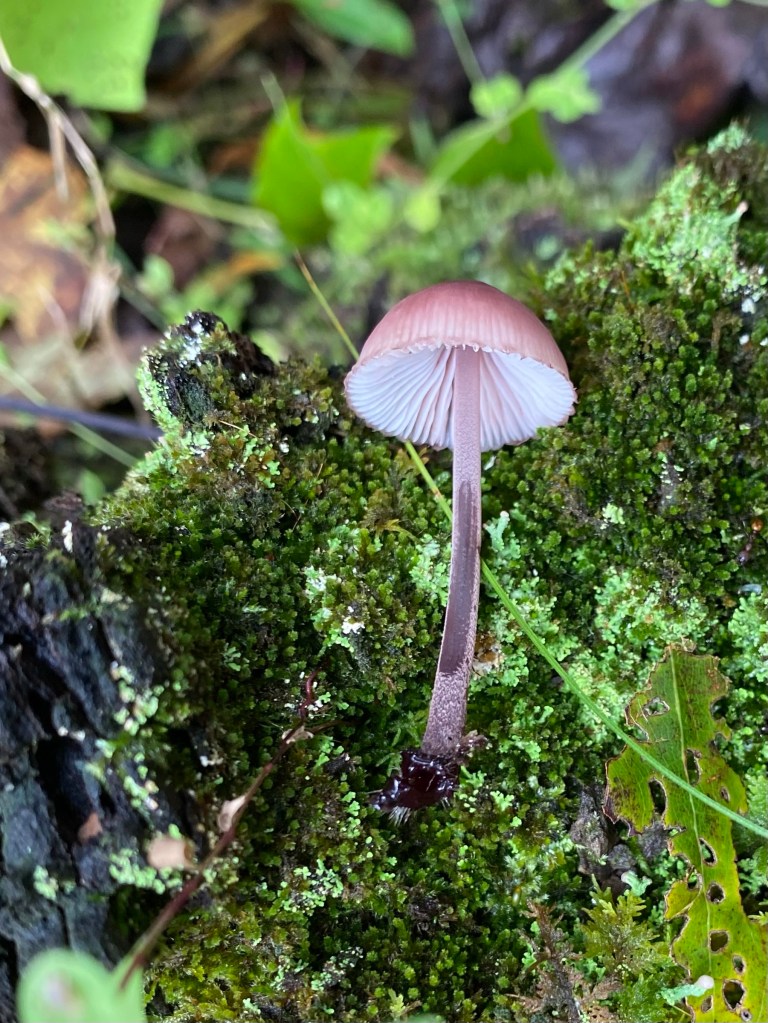
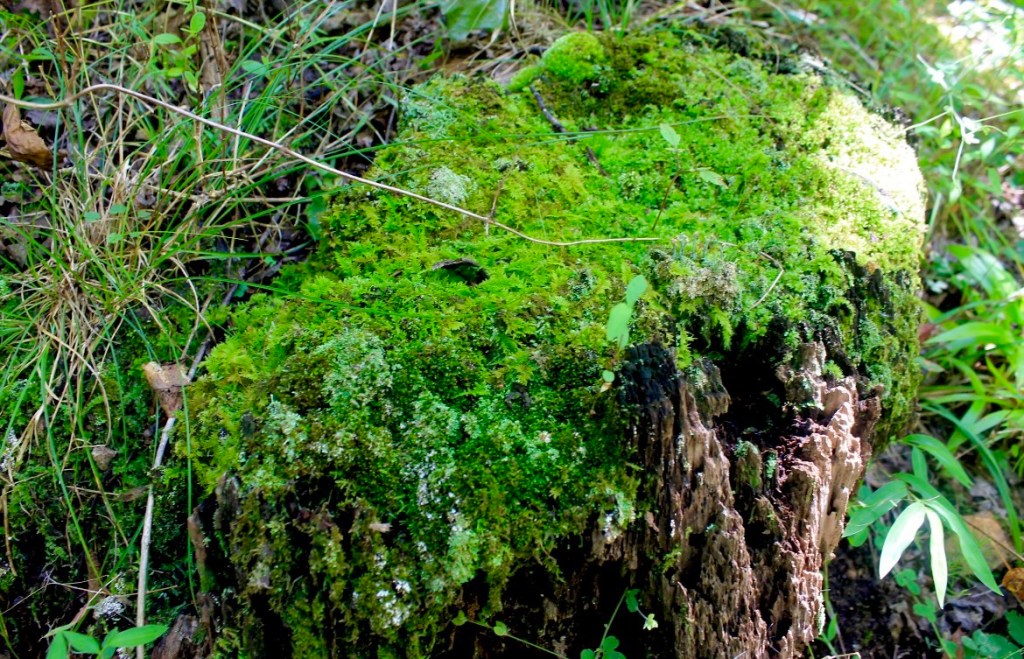
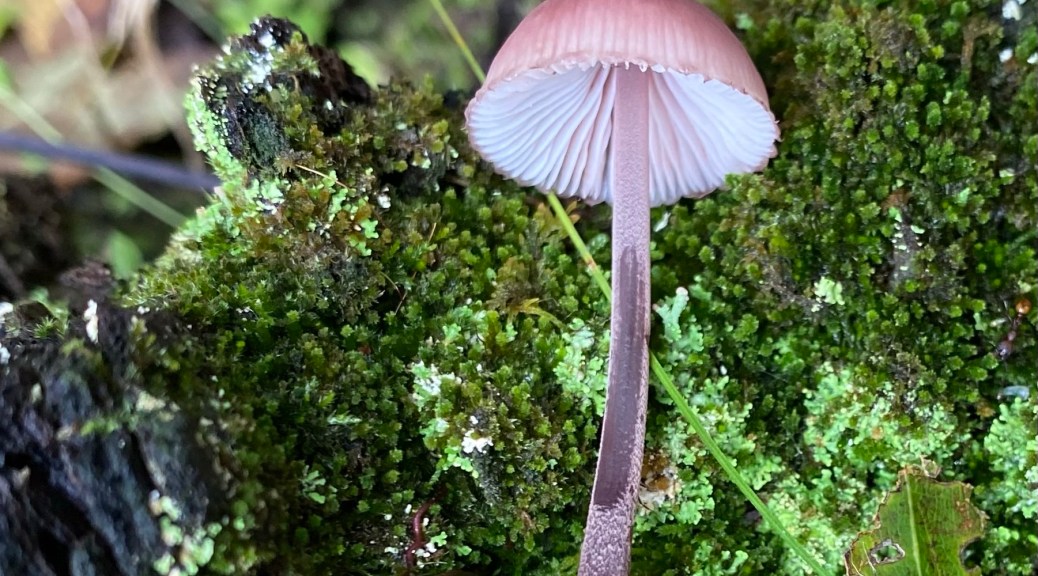
A tree stump covered in Mycena haematopus, or common name, bleeding Mycena.
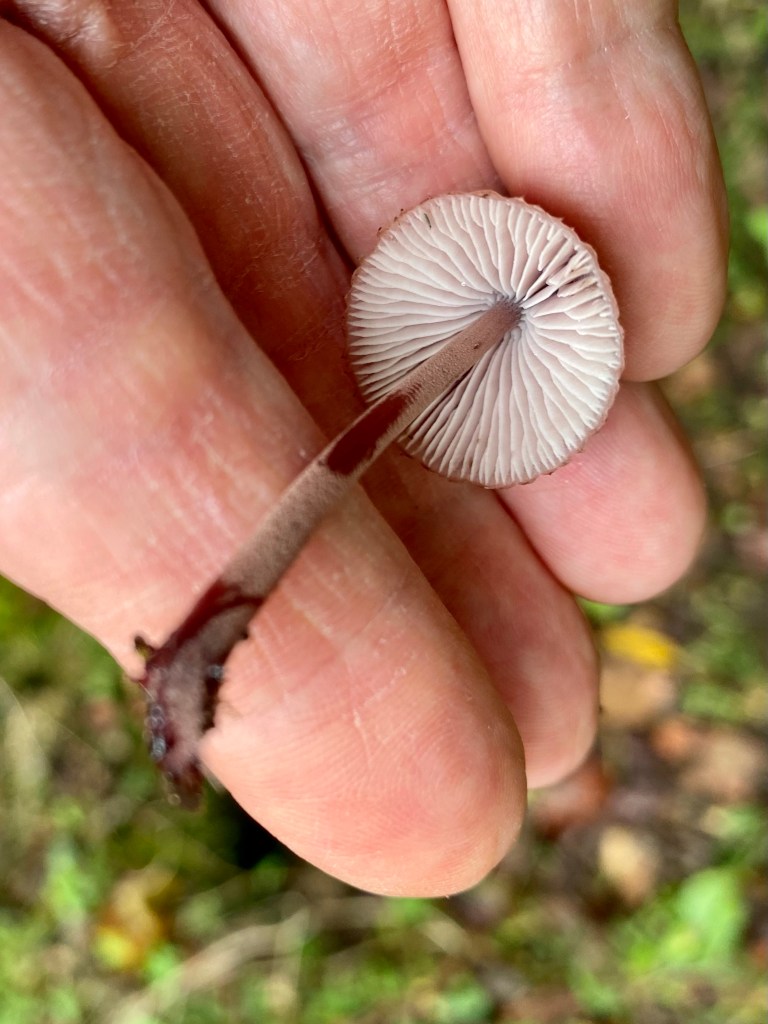
Saprobic mushrooms found on well decayed wood. They were lovely. Note the bleeding from the stem in the photo below.
Unknown polypore
Down by the waterway. It was cooler out and also muggy for our walk around.
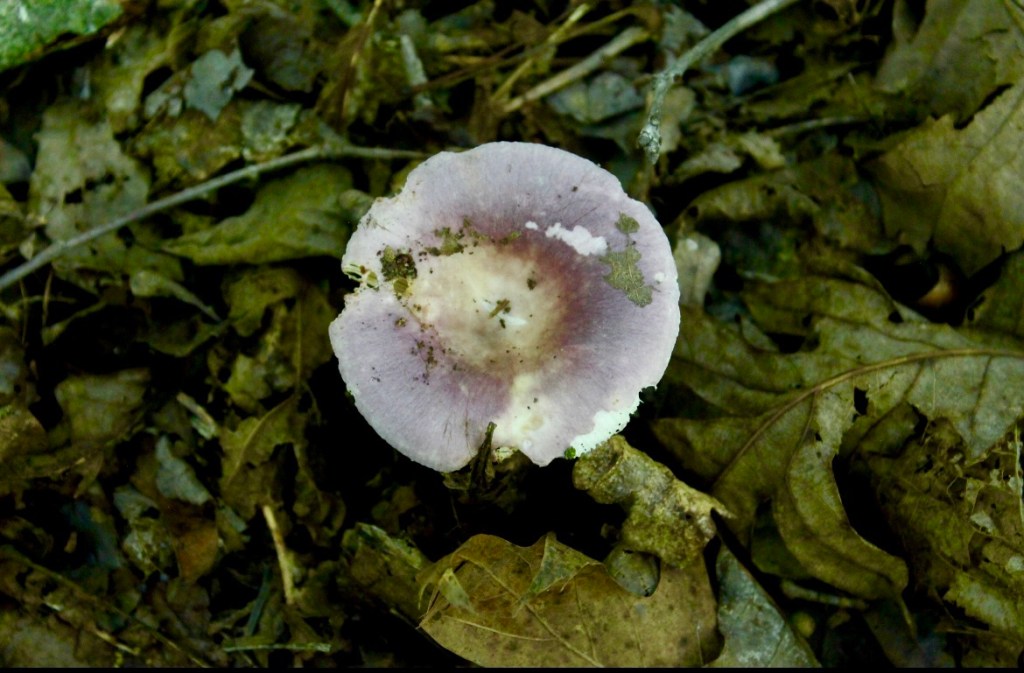
A Russula
A new mushroom we spotted at the bottom of the clearing. It’s a yellow reishi, Ganoderma curtisii. It was as hard as wood and shiny. A magnificent find. These are a noted medicinal mushroom.
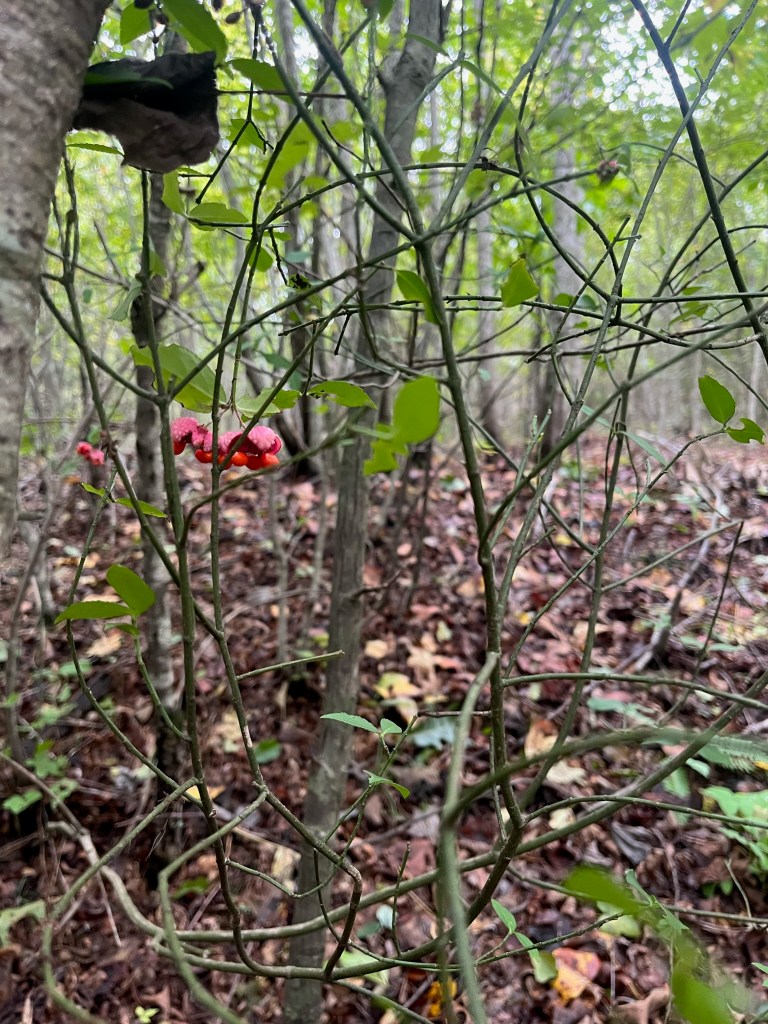
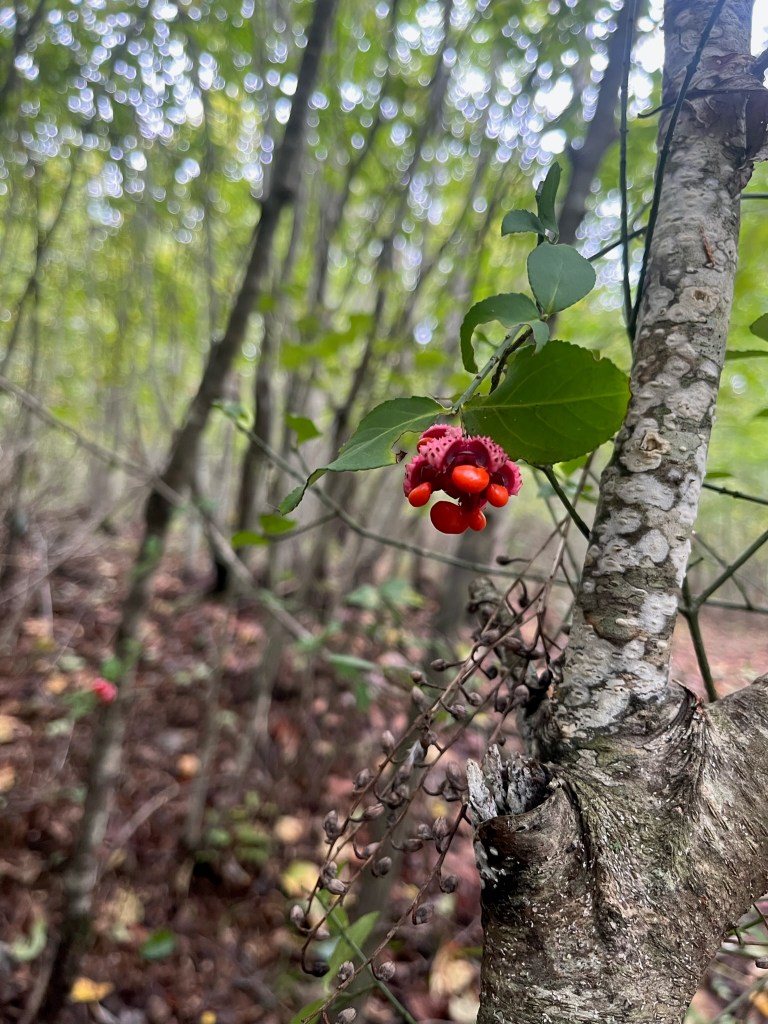
We saw multiple specimen of strawberry euonymus with these lovely berries.
We know birds eat these and wondered what the bear is eating. He looked well fed, about 150 pounds or more. A young black bear.

We hope we didn’t scare the young bear off. We want him to stay safe on our property from all of the hunters in the area. Next time we go out to SAFF, we will hang up more signs to alert hunters to stay off of our farm. We would like the wildlife to have a sanctuary.

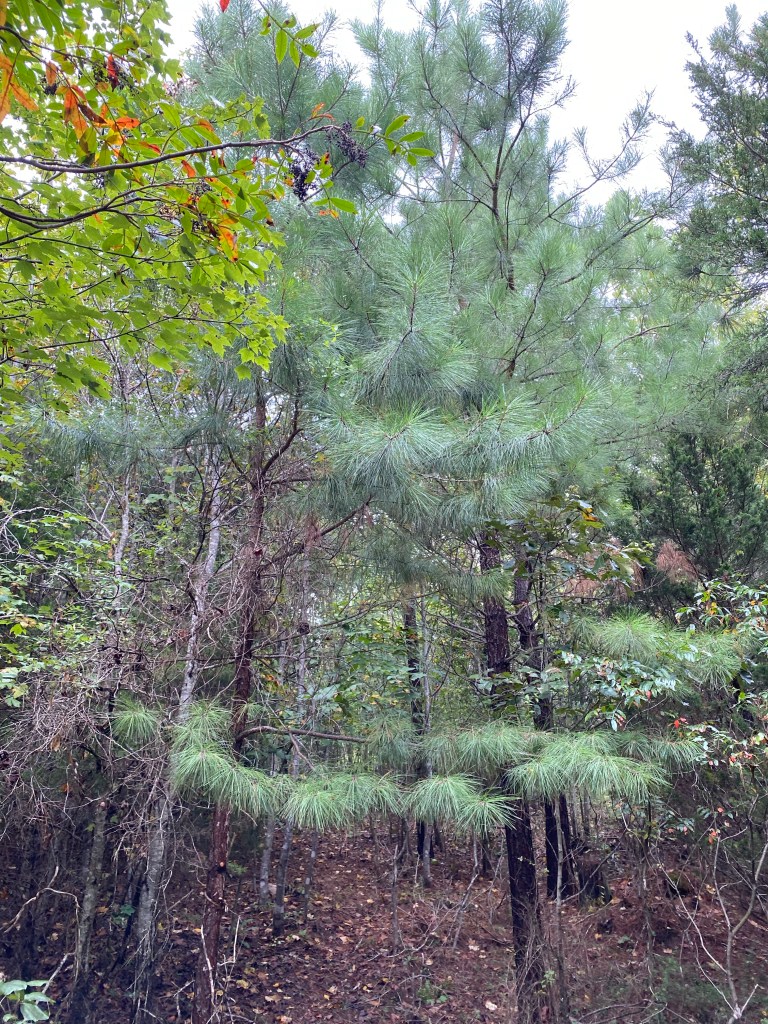
Young loblolly pines

It is wonderful to have the cool weather to explore and get jobs done. We were able to mow and dig another footing for the shower and compost toilet structure.

Marasmius capillaris, growing on fallen oak leaves on the forest floor.

We also saw more of the Cranefly orchid’s leaves emerging along the trails all through the woods. We were able to clear hundreds more small stick trees using loppers.

Friday September 22, 2023 Mushrooms and Cranefly Orchid fall leaf sighting

We got the truck running again about midweek by replacing both the alternator and the battery. We also cleared many many hundreds of stick trees, mostly light starved, undeveloped and unwell tulip poplars and black cherries.

Tiny trees needing to be thinned.
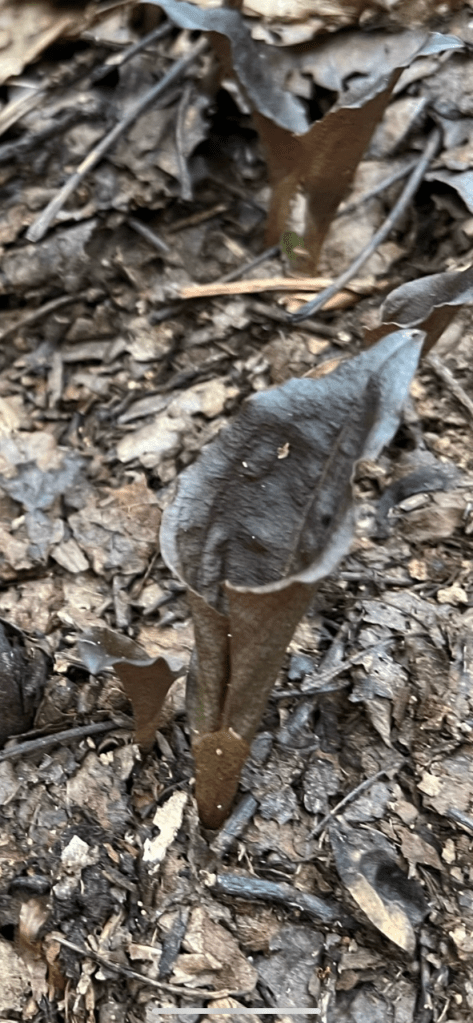
Crane fly orchid leaves emerging from the ground where we saw the flowers earlier this summer.

We were so excited to see these leaves (in photo above) emerging from the ground. These delicate flowers grow from edible corms.

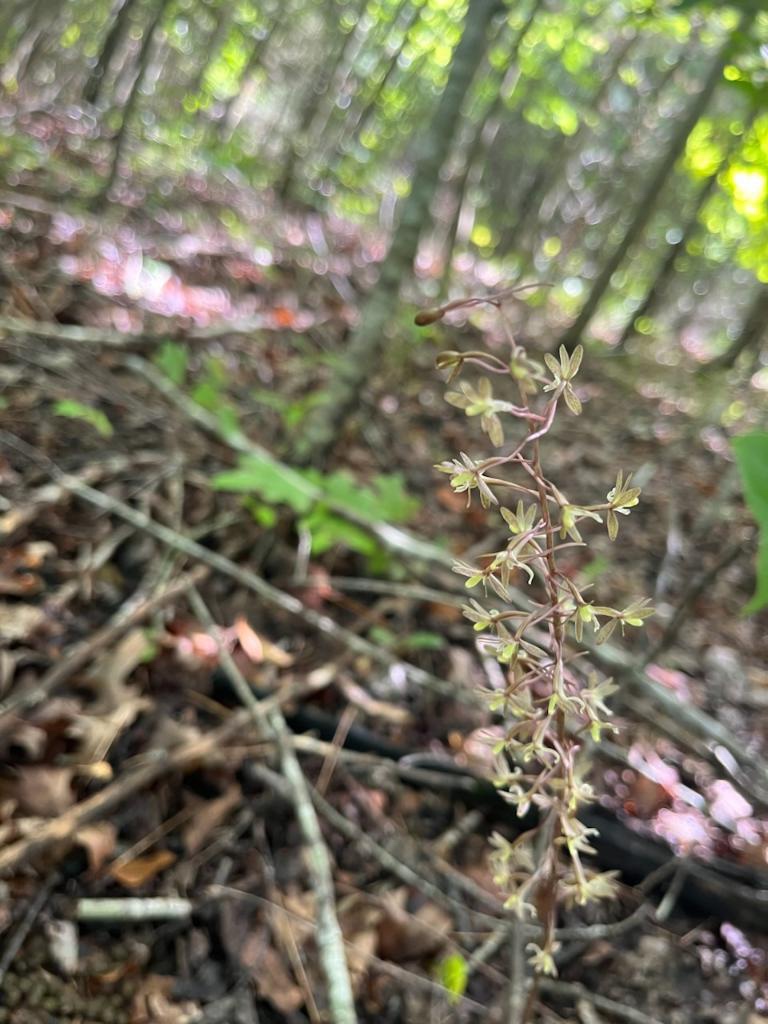
Crane fly orchid flower photo taken earlier this summer. It emerges without leaves. The leaf comes in September. We were watching for them and still surprised by their beauty.
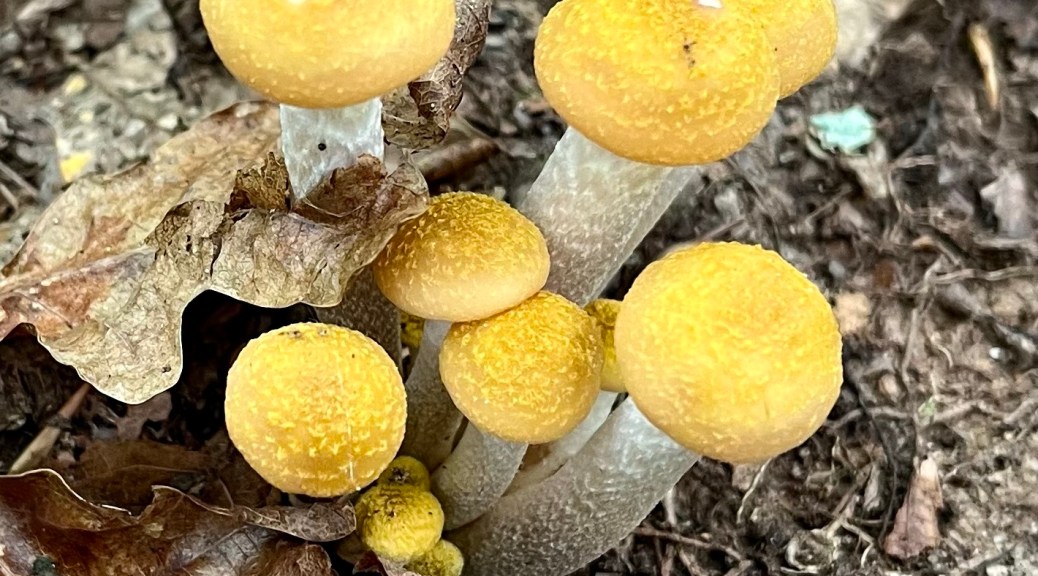
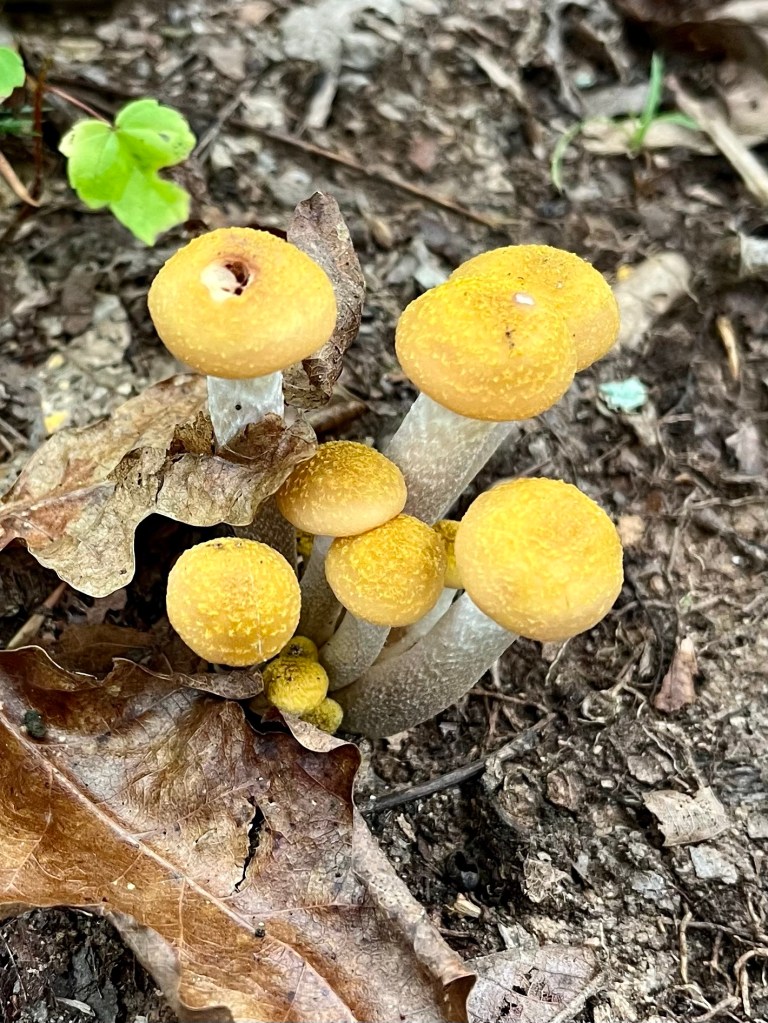
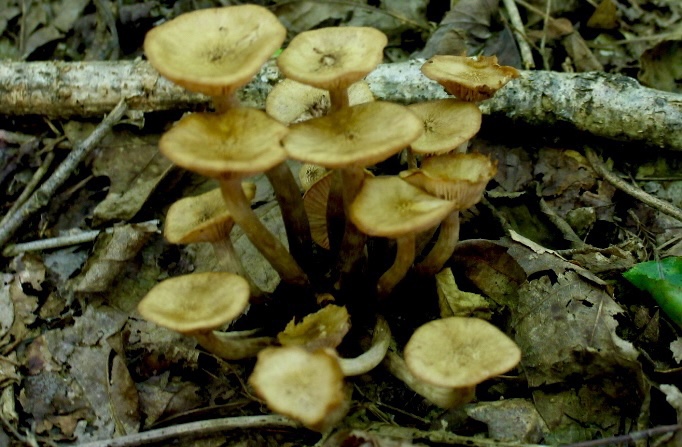
We found multiple clusters of these beautiful honey mushrooms by the creek bed. Armillaria, the longest lived and largest fungi in the world. The mycelium underground is what’s large with one being measured at 3.5 square miles and estimated to be 2,400 years old. These mushrooms also glow in the dark. They are decomposers. Honey mushrooms are rich in antioxidants and taste slightly sweet. Honey Mushrooms are extremely rich in polysaccharides. Polysaccharides from natural sources have attracted increased attention due to their potential biological functions, especially antioxidant and immunomodulation activities such as scavenging free radicals and inhibiting lipid oxidation.
Coral fungus
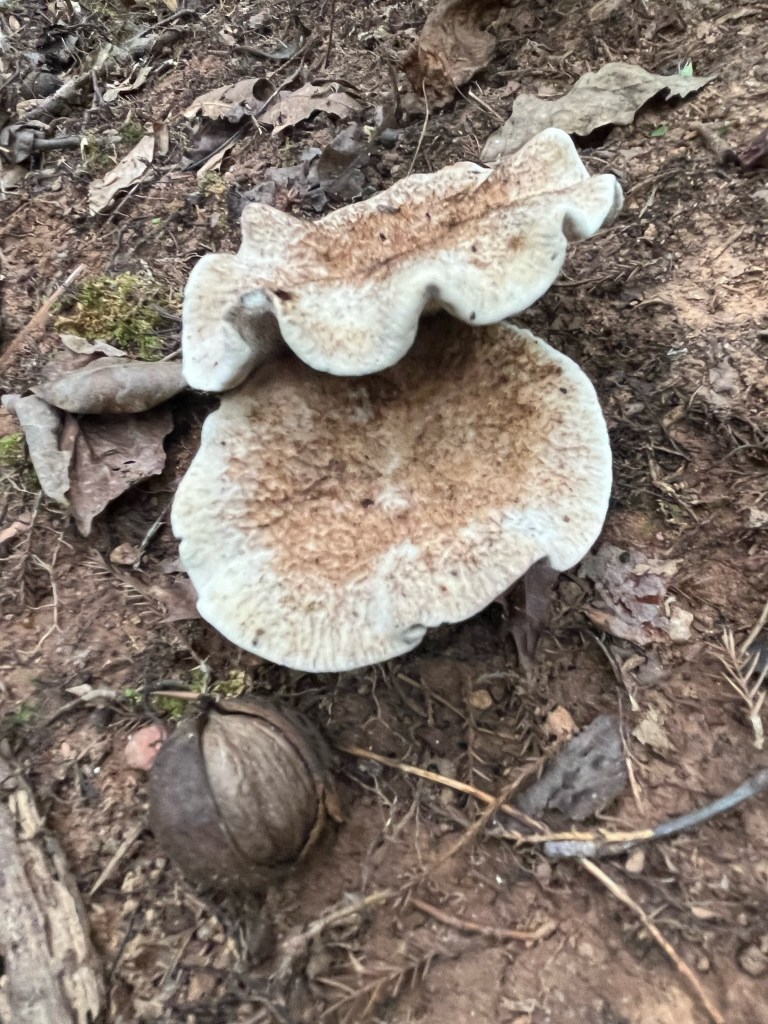
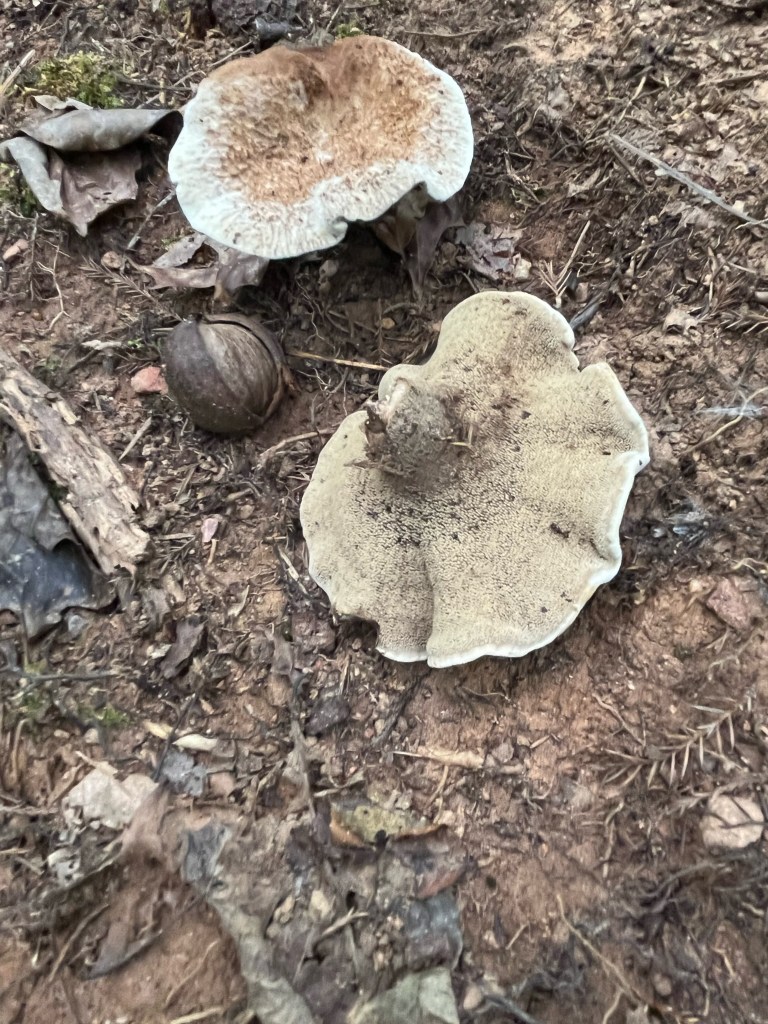
Sarcodon scrabrosus, with teeth, is mycorrhizal with beech and oak trees. Found along bottom creek bed from June to October.

It felt very much like fall yesterday with coolness in the air and leaves on the ground. Ophelia moved in to North Carolina and Virginia bringing rain and wind. We can’t wait to see what the new season brings to Saint Andrew’s Forest Farm.

September 17, 2023 Leaf cutter bees and the Sugar Hackberry

Yesterday we went to Saint Andrew’s Forest Farm and we had truck trouble right as we arrived, the alternator went out. All the warning lights came on and the battery died. Luckily, we were in the driveway when it happened. We troubleshooted by jumping the truck battery with the mower battery but it only held a charge long enough to get the windows rolled up. We were grateful for that much, as rain was expected soon. We called for help and my daughter came directly from work in Richmond to drive us home to Staunton. We were so thankful!

While we waited, we limbed up and cut down trees in the front near where we were trying to jump the battery. We were also able to clear out more trees from the compost toilet and shower site as well as the shipping container site which will be an office and camping site for us. It is amazing how much better the woods look with a bit of attention and care.

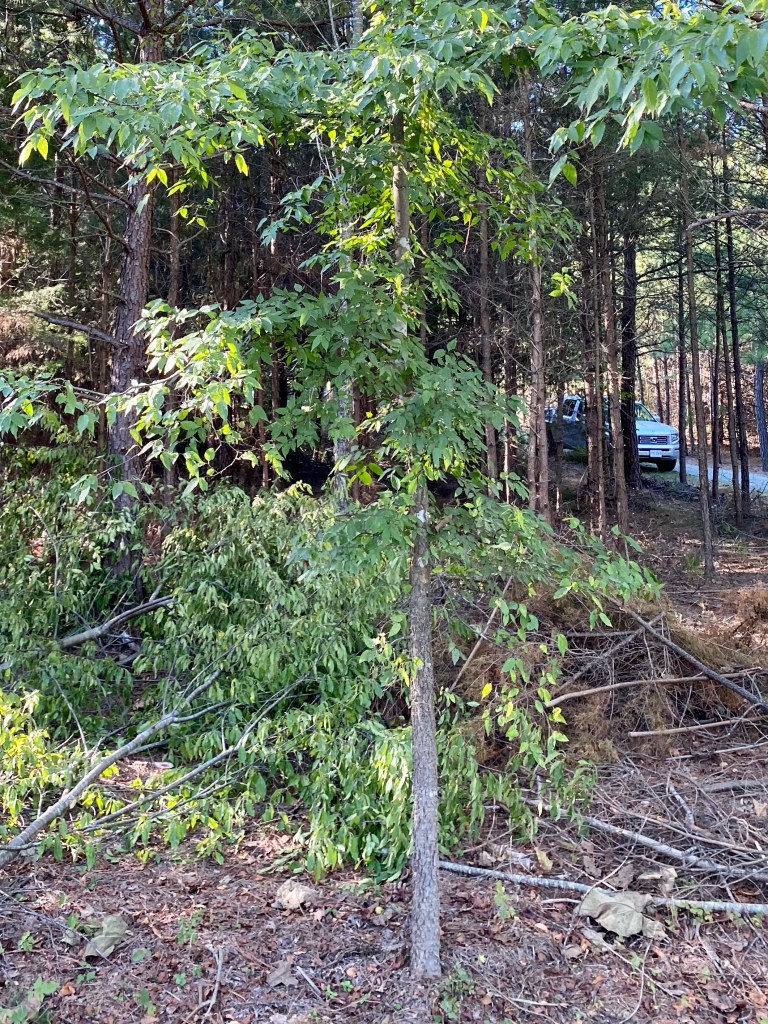
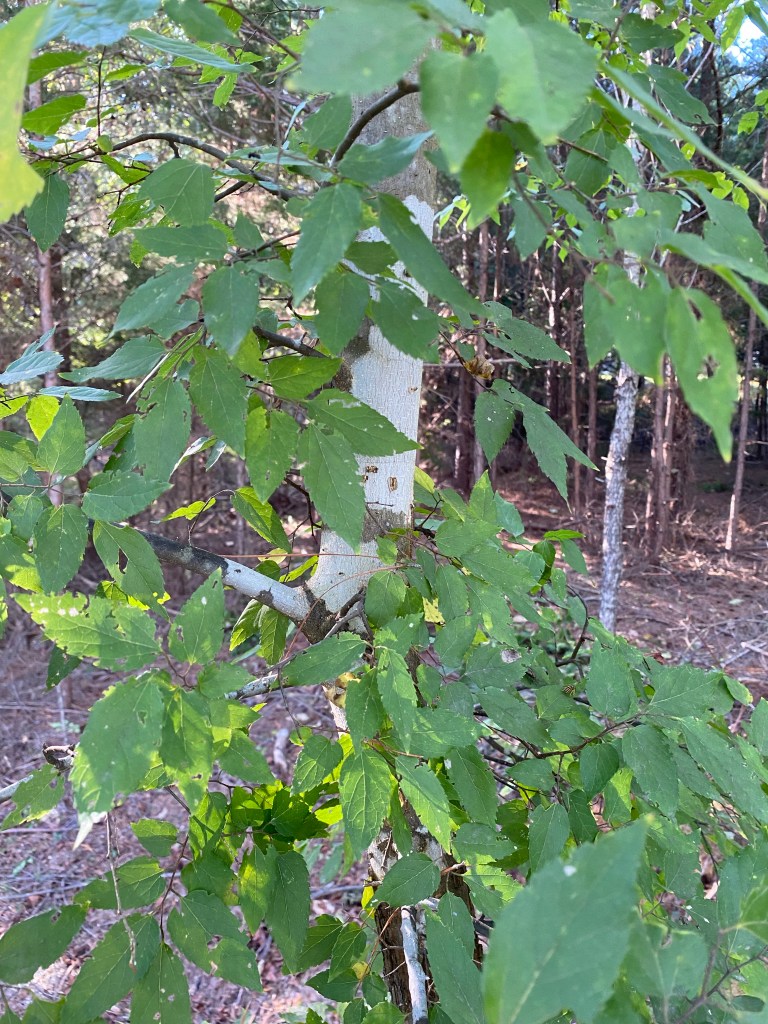
This tree had bees buzzing all over it and we couldn’t determine what it was. We could not find flowers or berries either. The bees were all over the leaves. After some research, it appears to be sugar hackberry, Celtis laevigata.
The leaves and trunk of the Sugarberry.
Image
In late summer, leafcutter bees arrive and oval holes with a very clean edge appear on the hackberry’sleaves. These solitary bees harvest the small circles of leaf to line their nests. There are several genera of leaf cutting bees but most of them are small to medium sized bees and carry pollen on the underside of their abdomen as opposed to on the hind legs.Within a burrow, several cells are constructed from leaf pieces. Each cell is stocked with nectar and pollen and an egg is deposited. The bee uses a few additional pieces of leaf to close each cell and finally, the opening of the burrow. The larvae fend for themselves, feeding on the supplies left by their mother.

We cut down a very large black cherry tree near where we plan to place the shipping container for our office. This tree had black knot fungus. We culled a medium sized pine from the front which was growing up against another. We also culled many many smaller trees. We pulled a few tree of Heaven, ailanthus, by the roots as the ground was wet enough. We are trying to rid the farm of this invasive nonnative in multiple ways as it restricts and chokes out growth of our native species. We will save our sweet Sugarberry tree for these leaf cutter bee babies to be sure! 🐝
September 15, 2023

We went to the farm and did weekly chores. After mowing and weed whacking, we blazed a new trail which wound around from the front and followed along a new waterway we found that meets the waterway from the south through to the creek. We made a trail and connected it to chanterelle trail and then made it about half way to the north trail. We used loppers. As we culled these trees, we laid them down along the edge of the trail. We laid them perpendicular to the water flow to begin to build up a berm along the outside of paths. Where we left off, it was still really very dense with tiny light-starved trees.

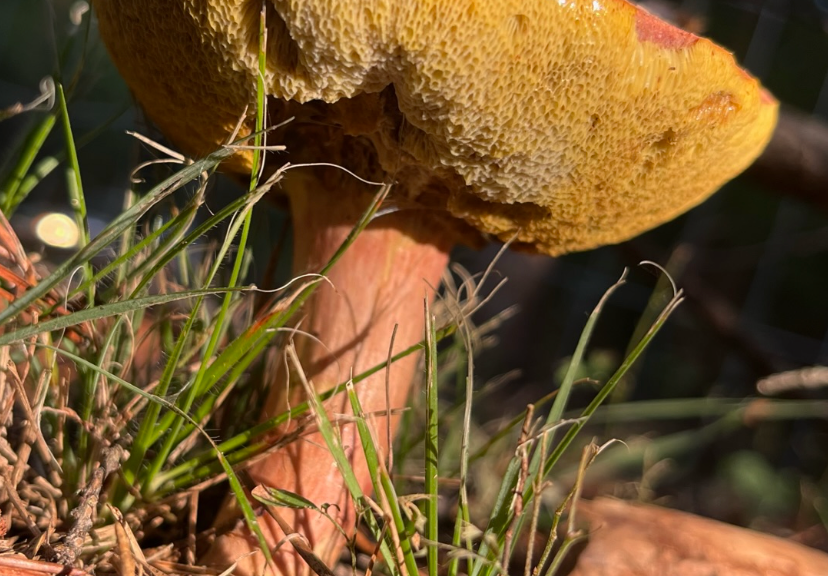
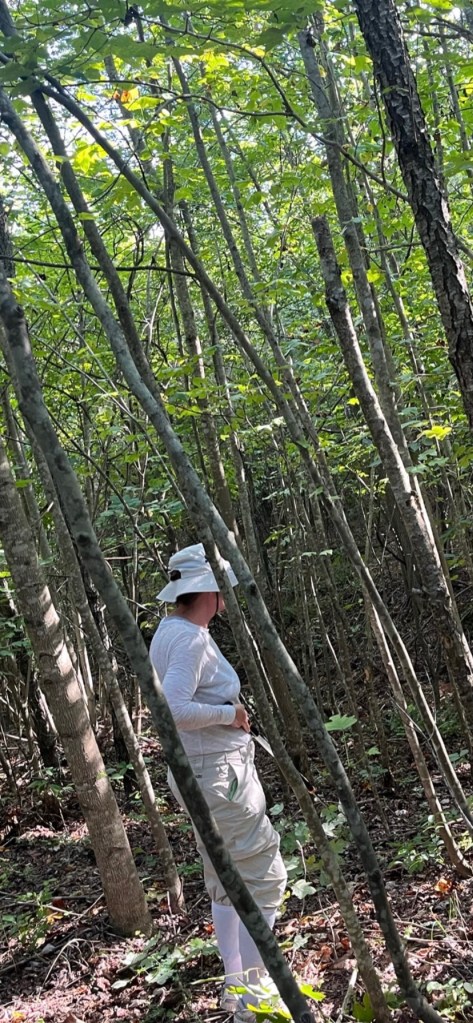
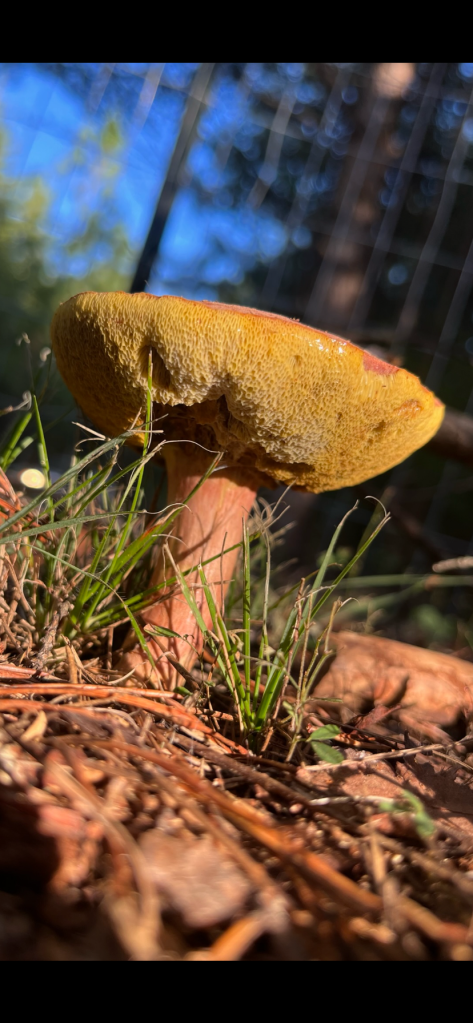
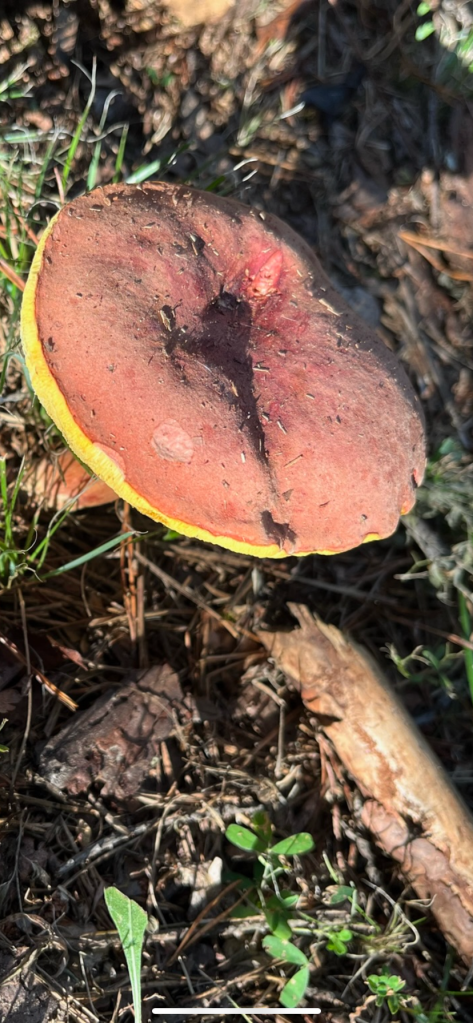
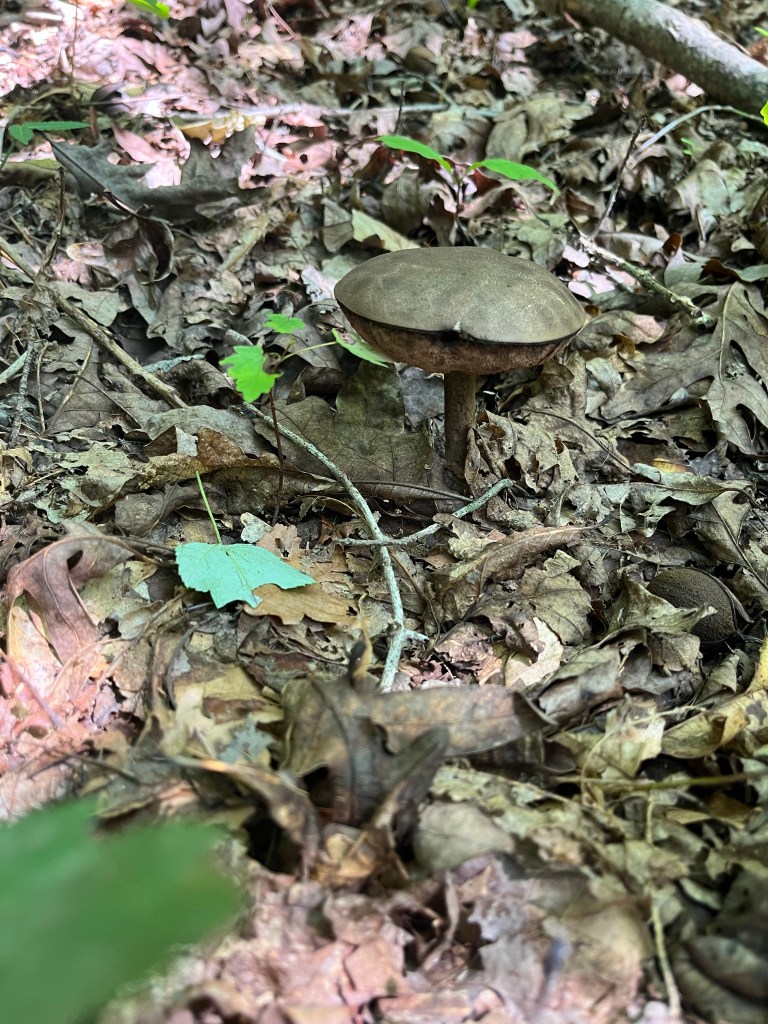
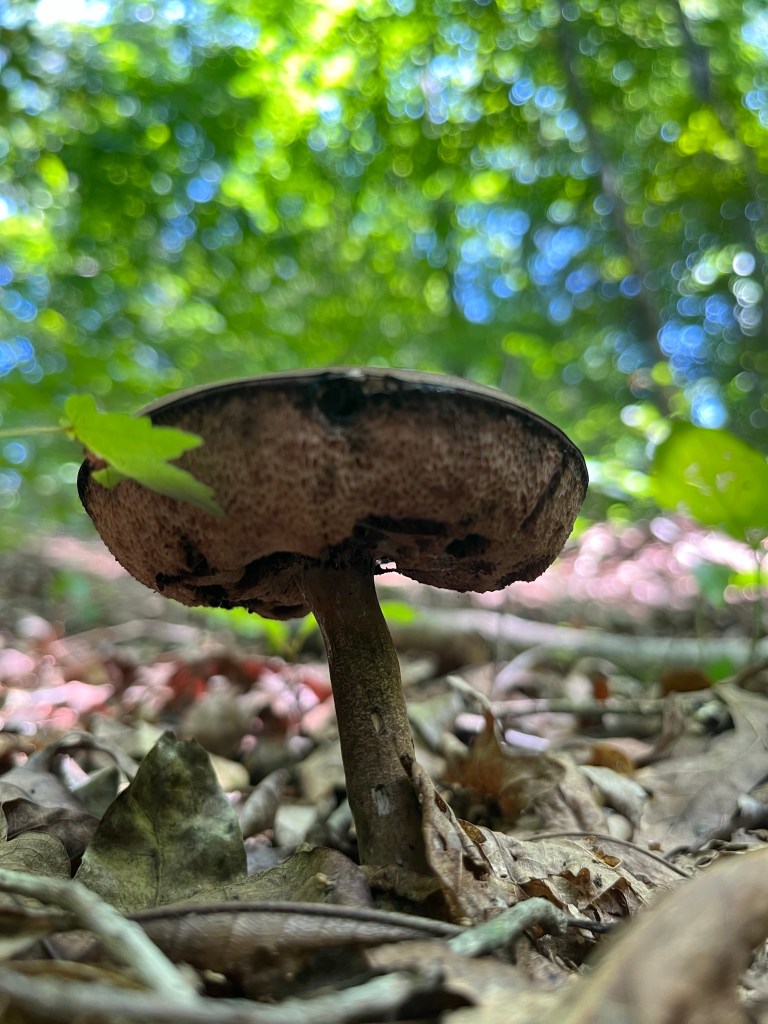
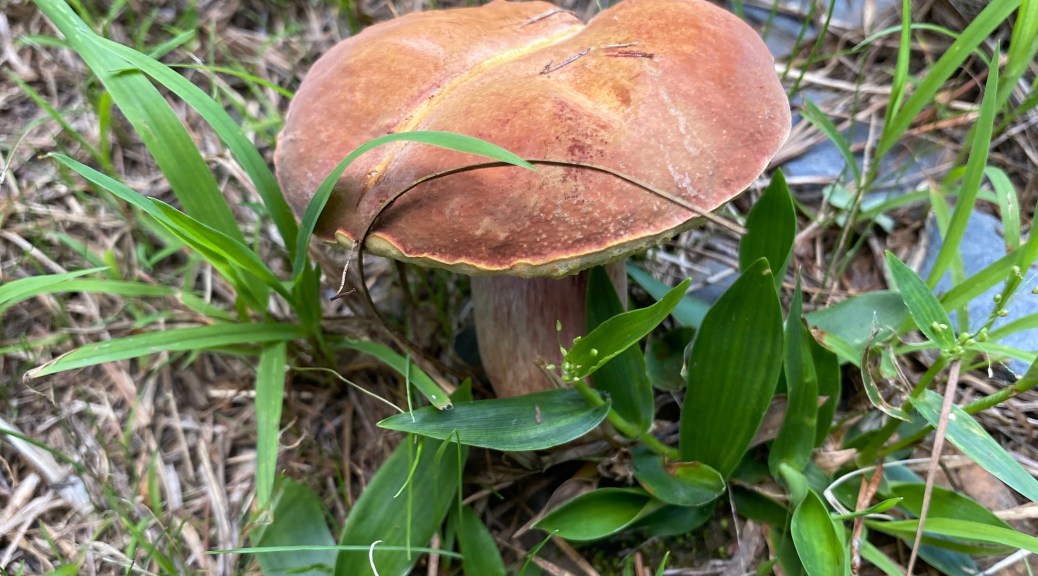
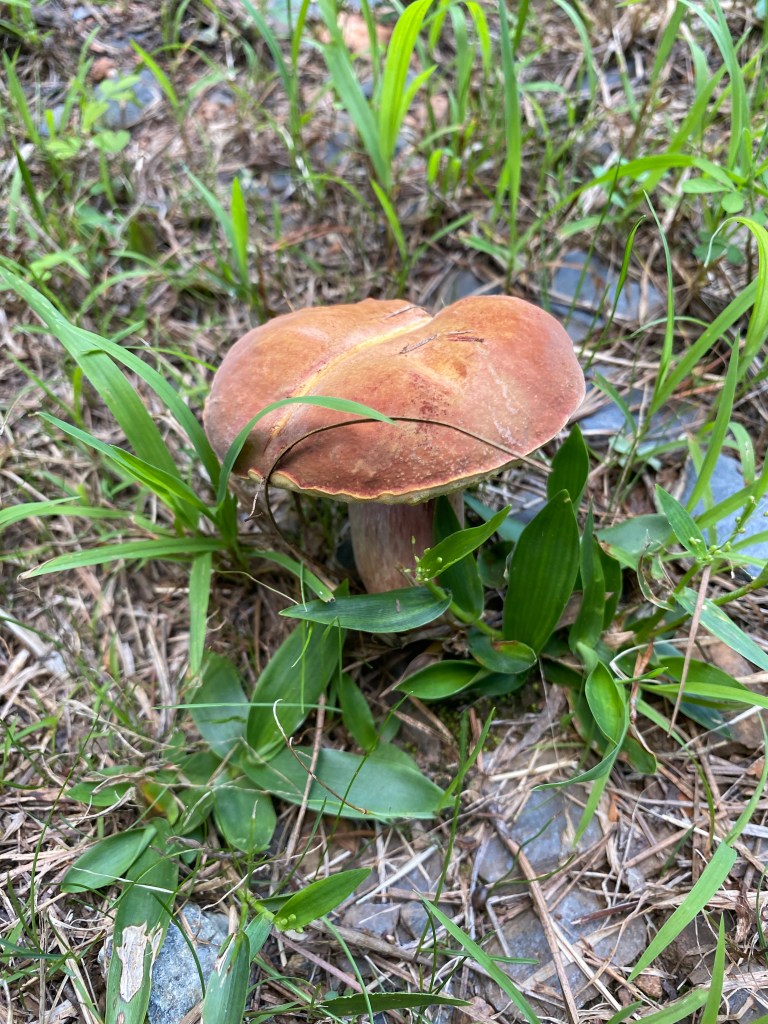
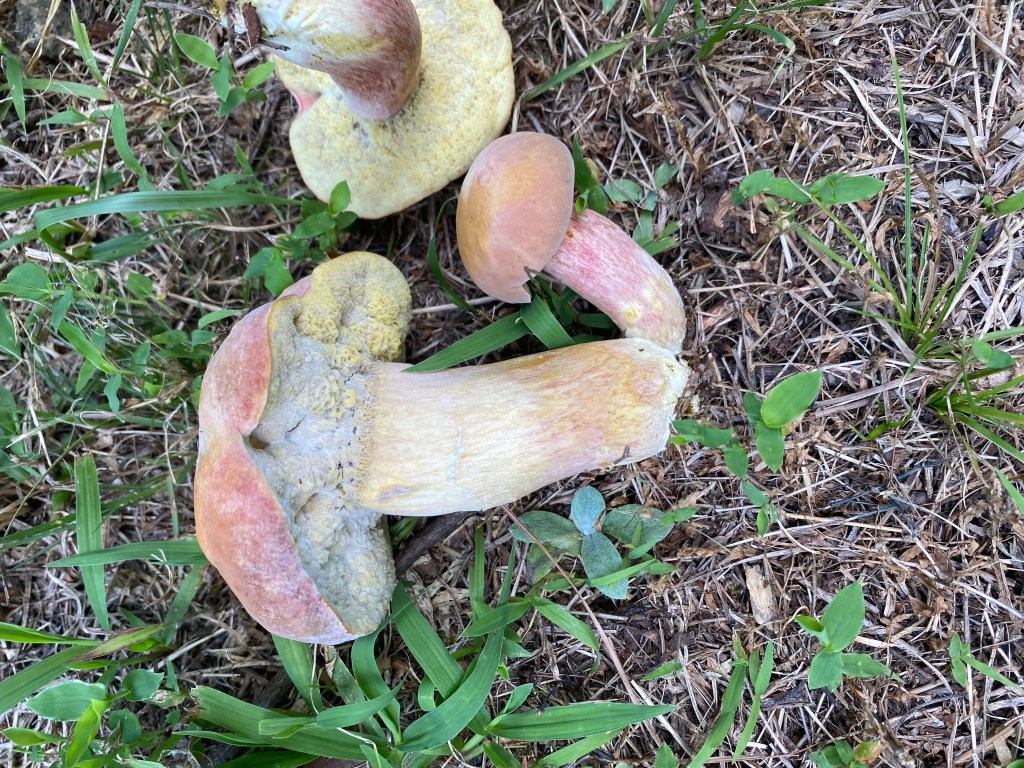
We found multiple types of mushrooms. When we pulled in we found large red and yellow boletes. We have narrowed these down to several possibilities to identify. We need further testing and data but we enjoy looking at them for now and leaving them alone.

Either boletus sensiblis, hortiboletus rubellus or boletus subvelutipes. Photo credit: Chris Okay 👍🏼
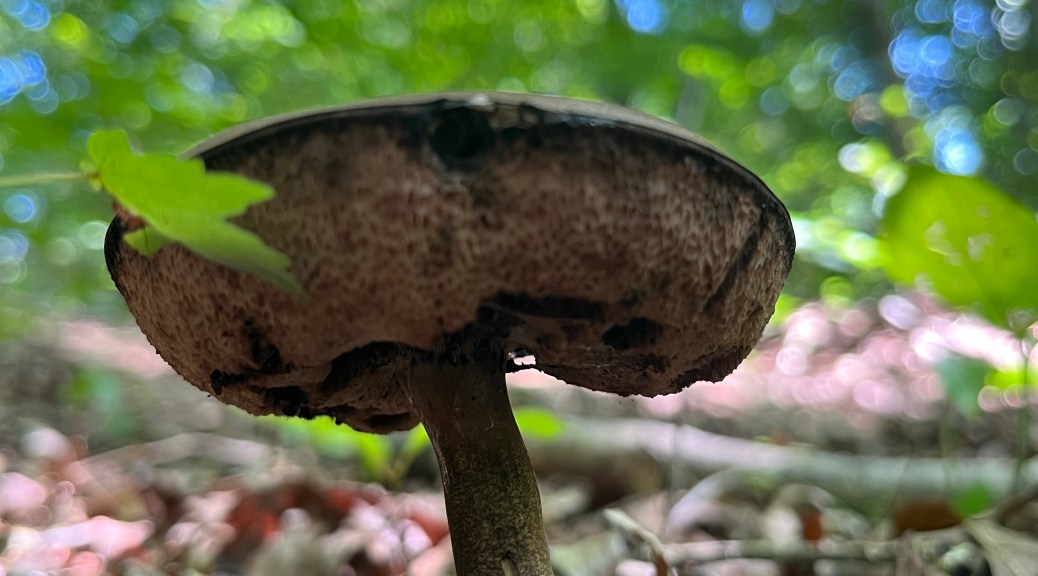
The top of the unidentified bolete.
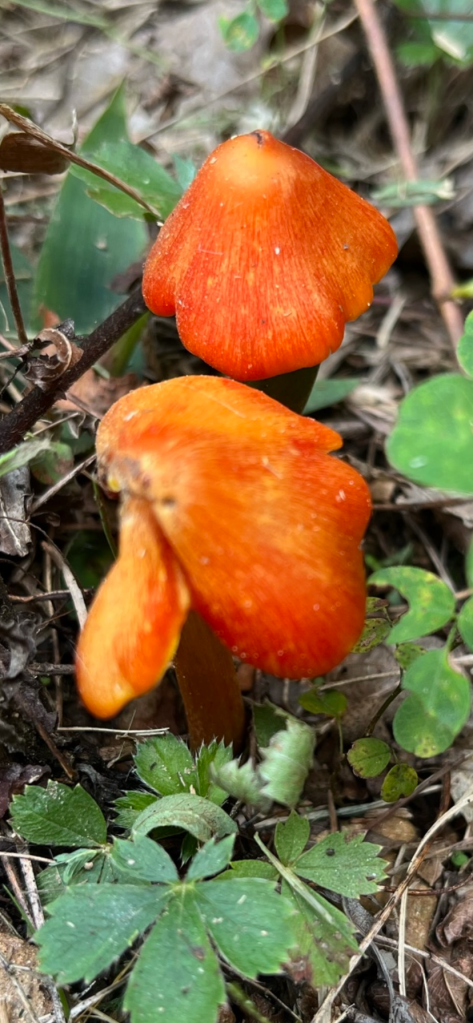
Hygrocybe tops found along bottom edge of clearing.
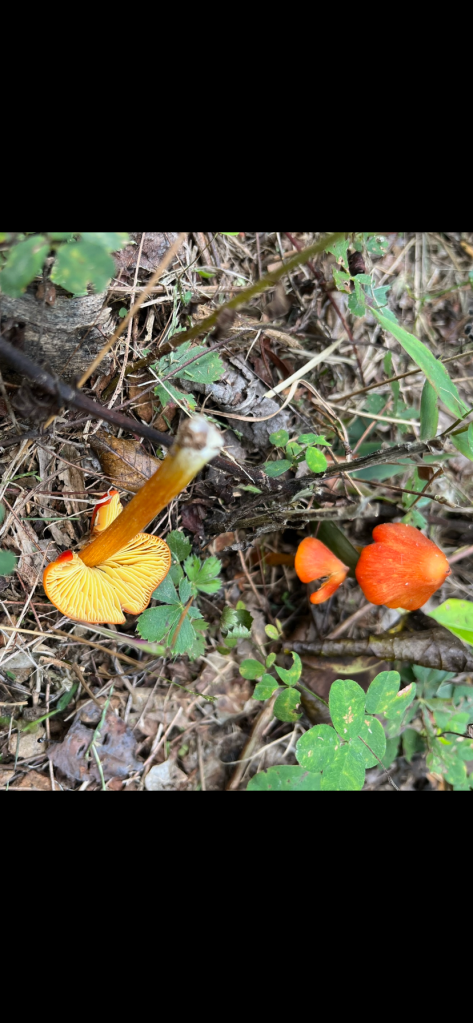
Underside with gills of waxy cap.
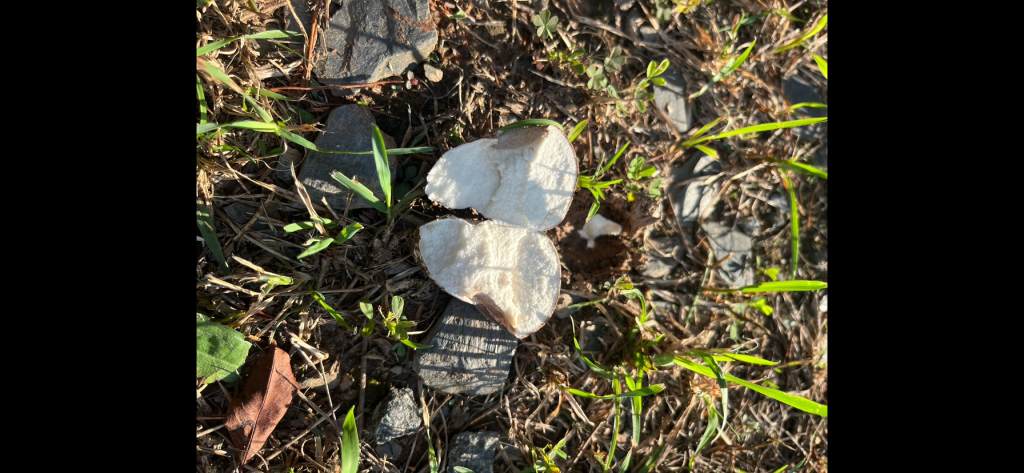
The second time we have found a small puffball mushroom along the driveway up on top of the hill.
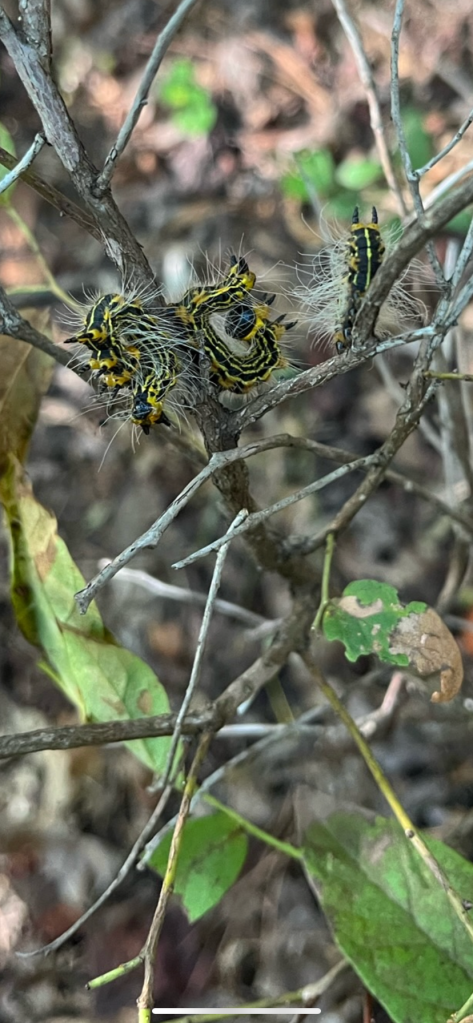
Yellow necked caterpillar, Datana ministra. A moth in the family Notodontidae. Found along the new path we made along the south west end of property near the power lines.
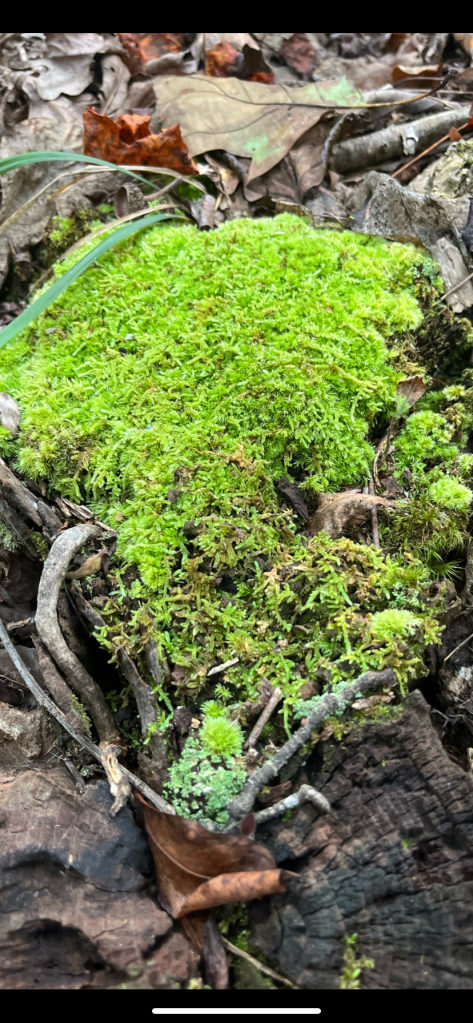
We saw many mosses and ferns along the edge of the waterway.
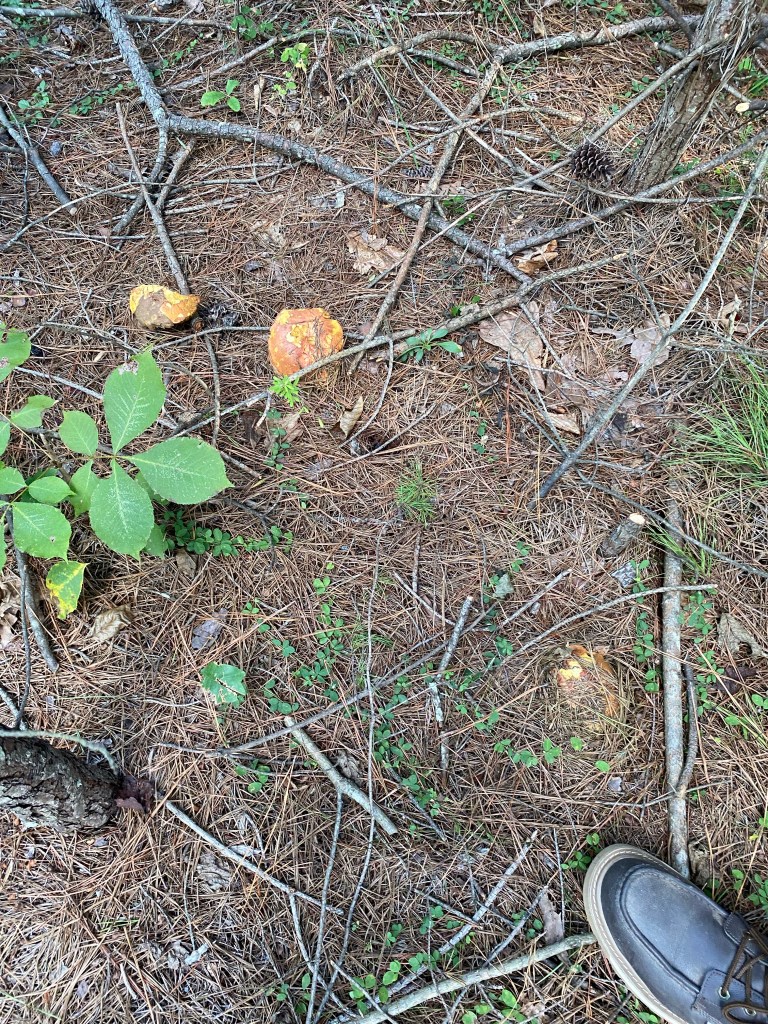
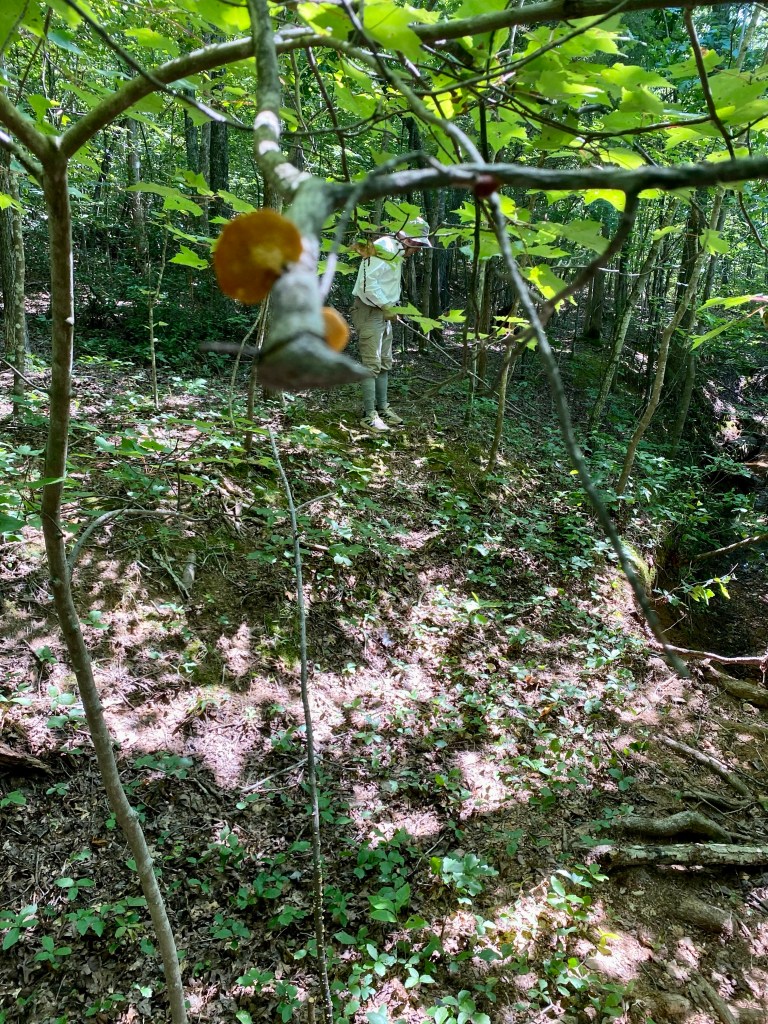
Boletes popping up, Chris’ foot is pointing at another beginning to push through the layer of pine needles.
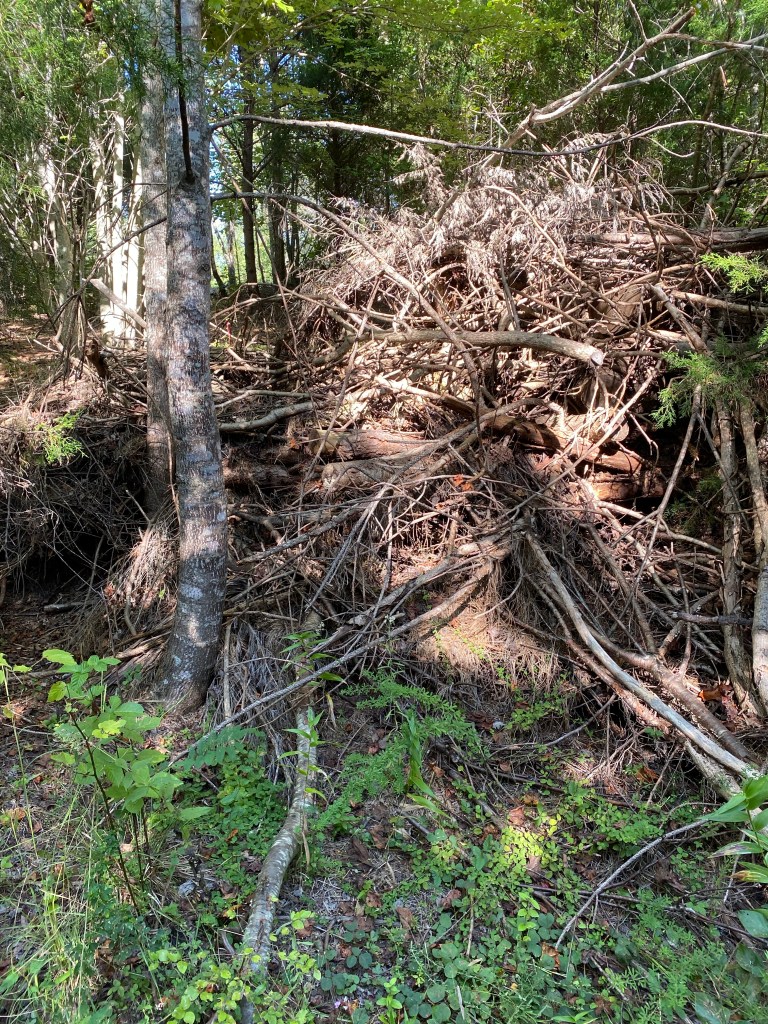
Animal dens in the stumpery.

Sunday September 10, 2023 A new mushroom and boundary marker

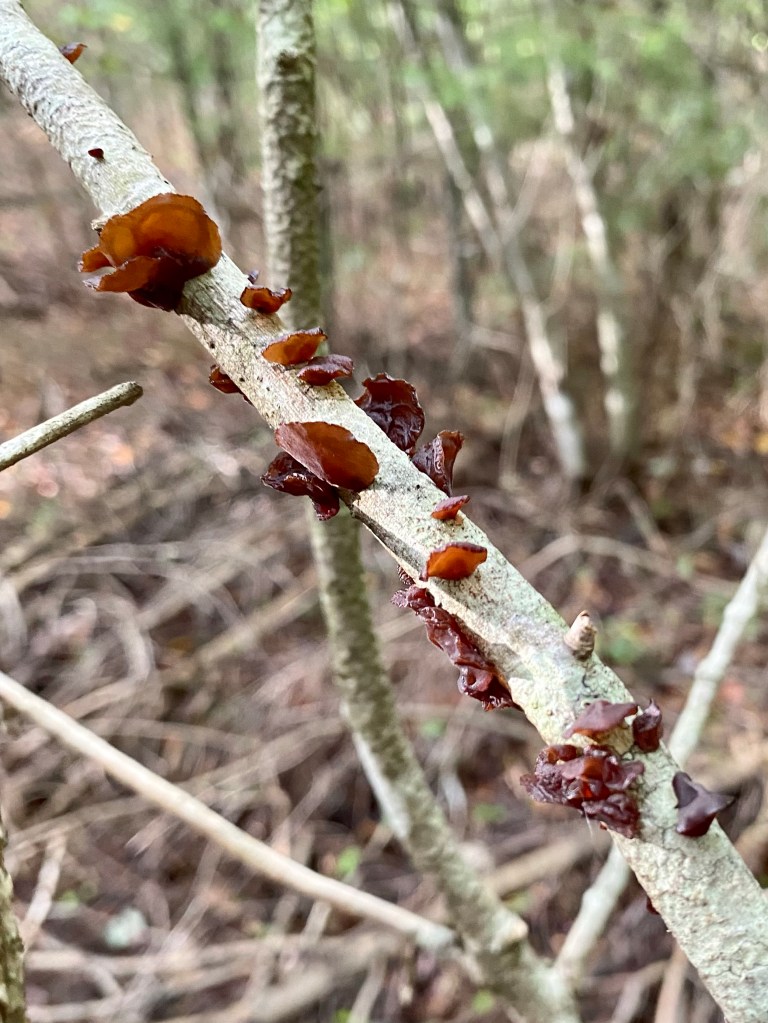
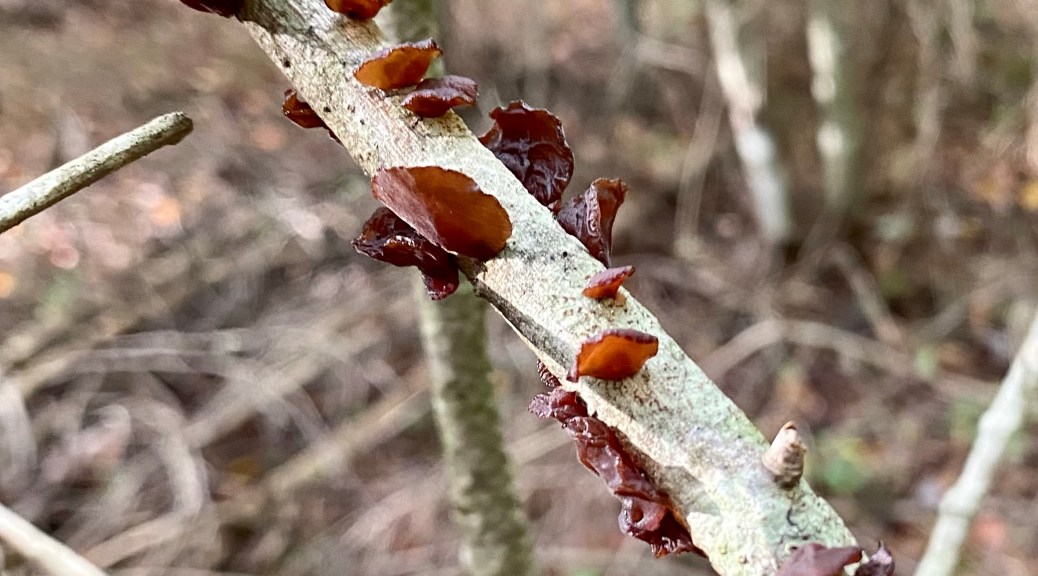
Amber jelly roll, Exidia crenata, a translucent, edible mushroom. They can be found all year round. Traditionally used in Asia in soups and nutritional benefits include lowering blood pressure and cholesterol, rich in vitamins, protein and iron. Can be found on decaying hardwood.

We went out to SAFF and had clean up to do after storms blew tree limbs down along the driveway and clearing. We cut back a trail through the left front mostly pine forest which we had not explored before. We were able to find the property line.

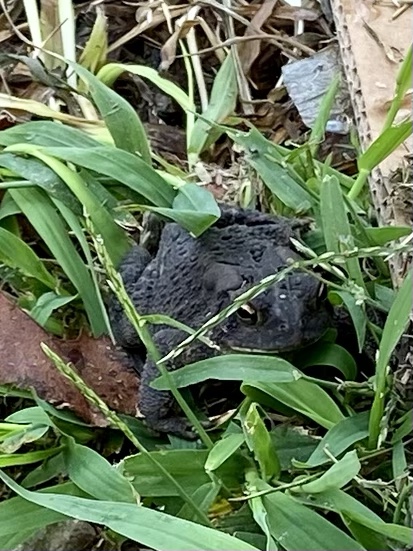
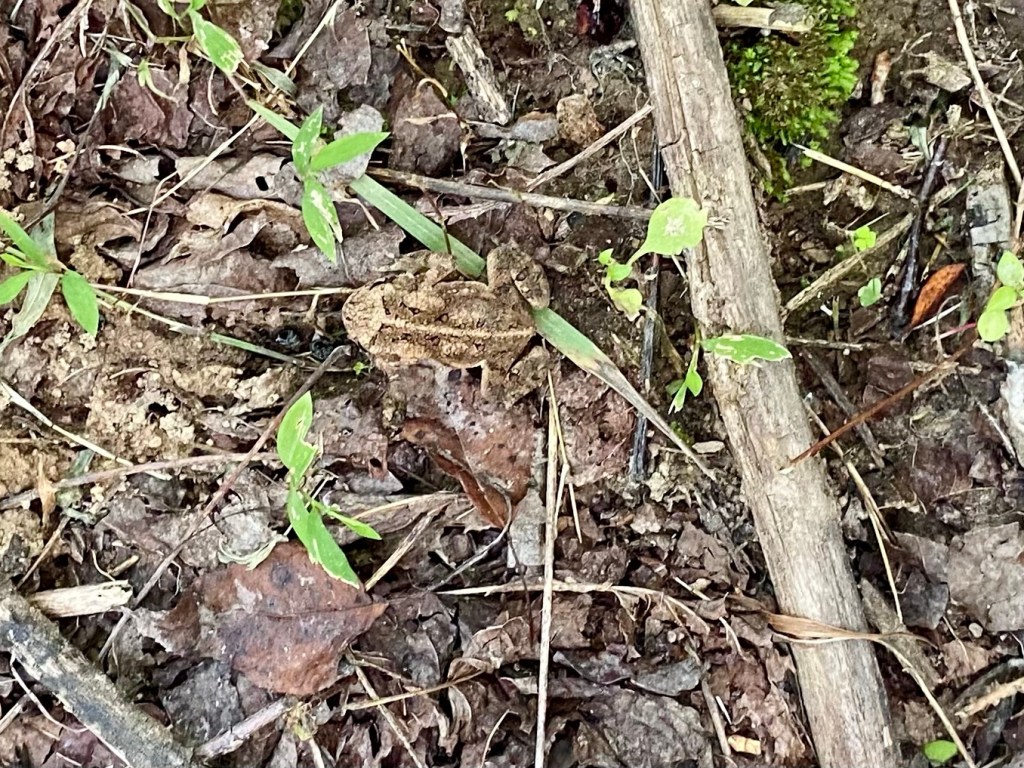
Fowler’s toad in clearing at top of hill

We found this adult toad and saw several lizards. We also found a lot of deer scat and maybe bear or dog scat in clearing.

A little more rain at SAFF this past week. Temperatures have been in the mid to low eighties instead of the nineties. It feels wonderful to have a bit of coolness in the air. We look forward to the fall and winter.

September 4, 2023 Labor Day at SAFF

The future compost toilet site.

Labor Day Weekend at the Farm

We were hard at work this afternoon, taking our Labor Day holiday out at Saint Andrews Forest Farm. After witnessing the aftermath of a rollover accident on Hwy 151 last weekend, we chose a different route today to avoid holiday traffic volume and for a micro-adventure. Our route was pretty, windy and lightly travelled, perfect for a holiday drive.

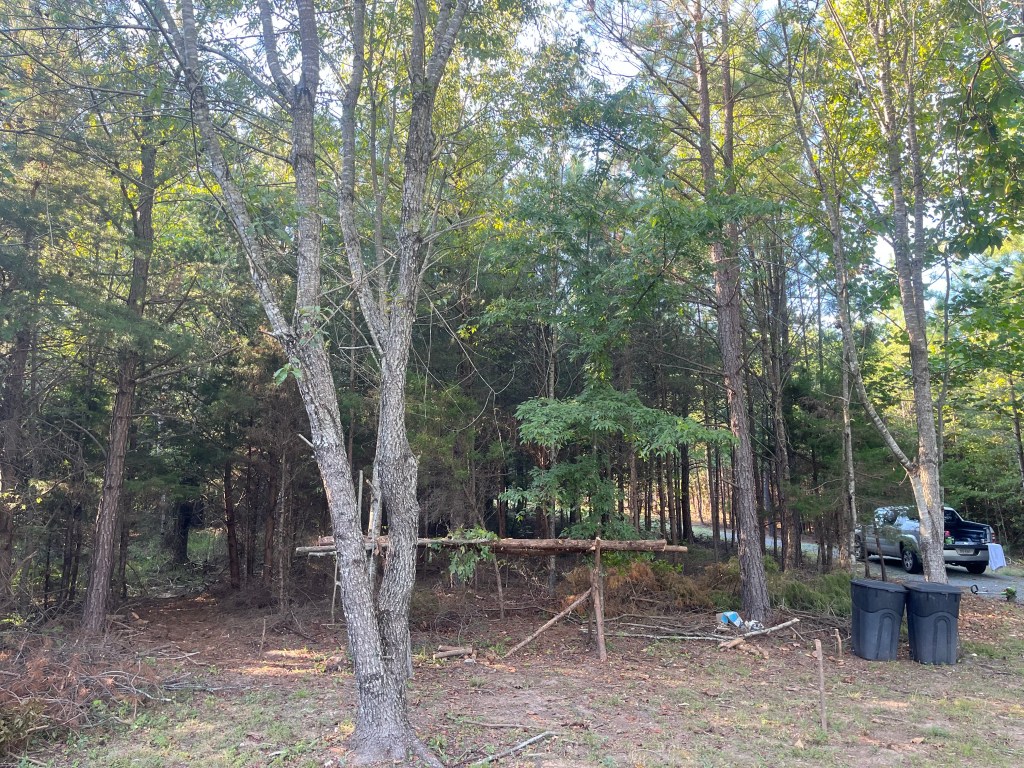
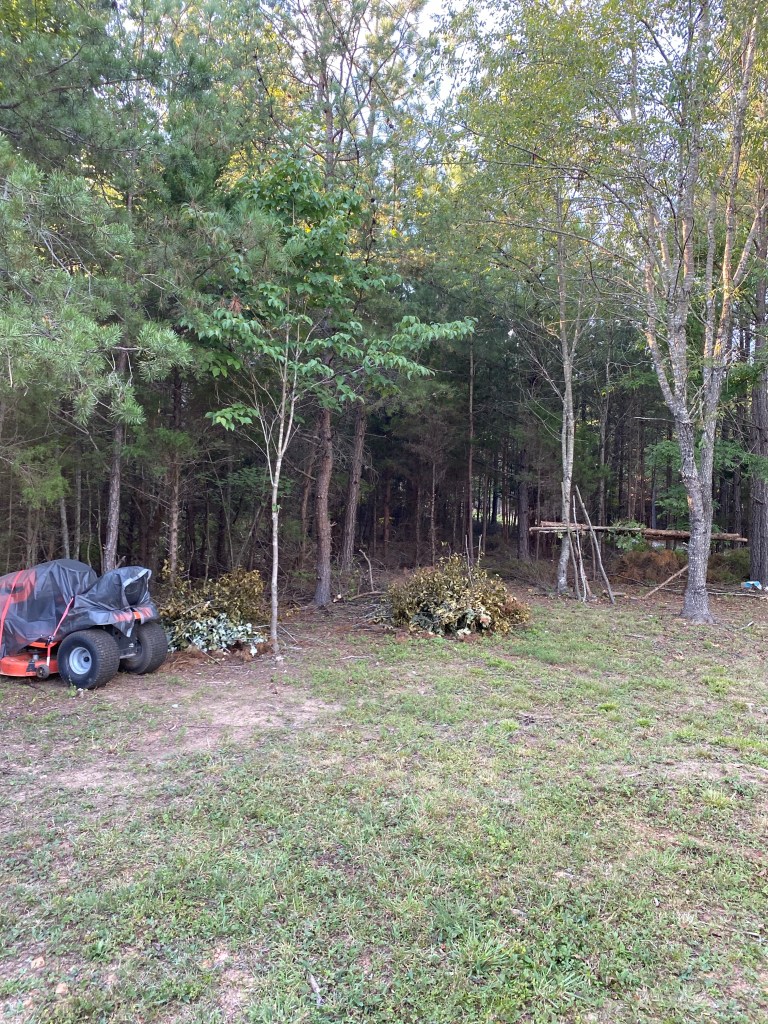
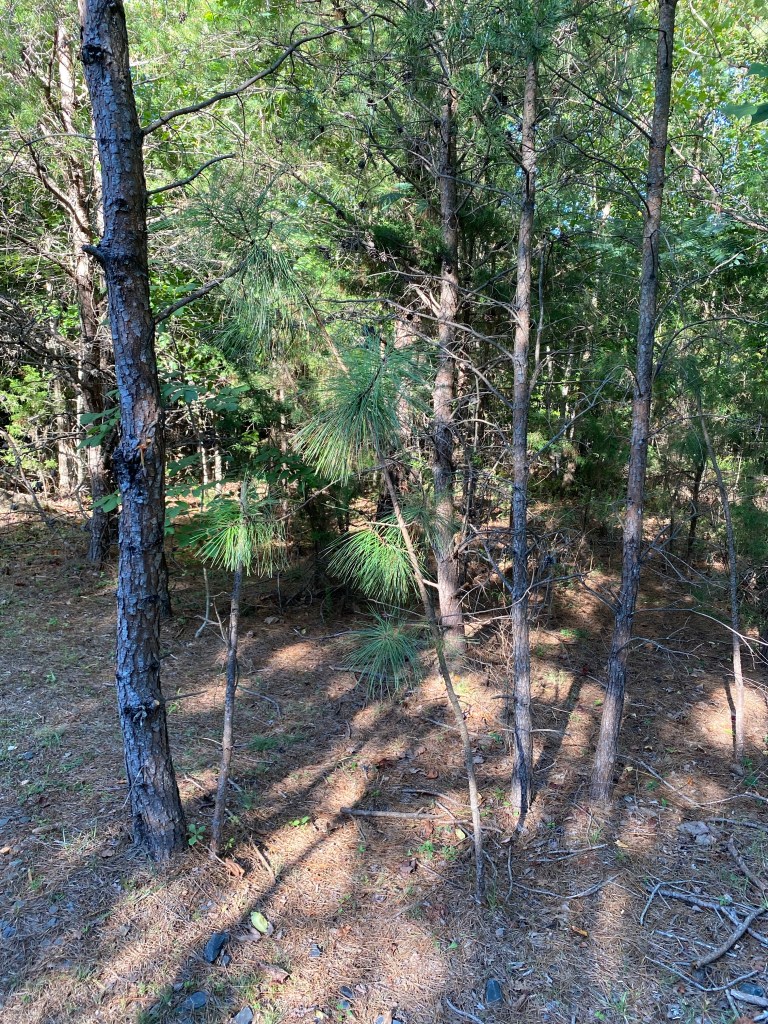
Our focus today was limbing up, trimming and thinning trees in the pine forest off the driveway. The forest near the road needs a good bit of our attention and effort. with crowding, some diseased and already dead hardwoods, and cedars, plus many dead lower branches that starved for light.

The section we worked on today.

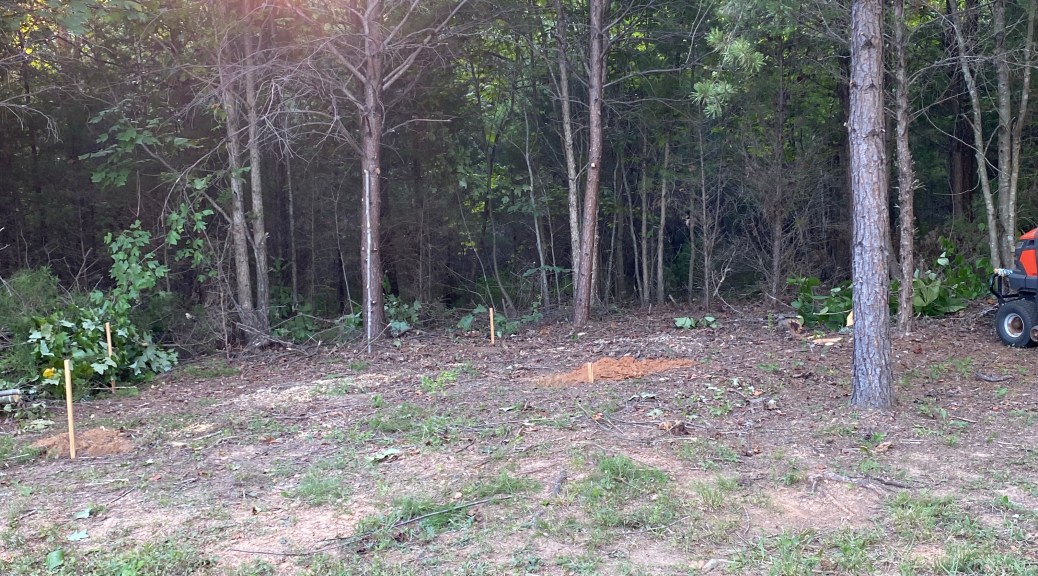
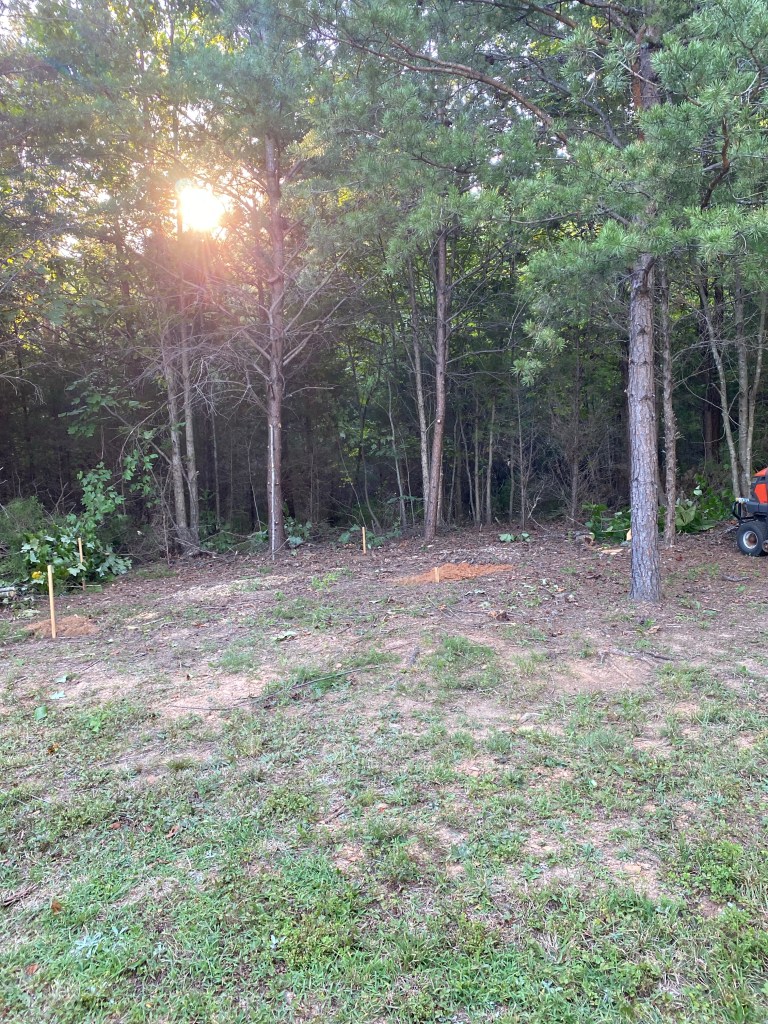
We also finished clearing space for our small composting toilet/shower building. Young hickory trees, red cedars, poplars, and young black cherries remained from our preliminary clearing. We removed these, and cleaned the area of stumps and branches left laying about from the cutting. Once we neatened up, we located and marked the approximate corners with stakes, then we squared the stakes up by measuring the diagonals, and adjusting a little as needed.

We enjoyed a taco salad break, and drank a lot of water to rehydrate, with the temperature around 92. Feeling refreshed, we were up for more tree up-limbing along the driveway, and we spent additional time on the commode building.

We found our grade and leveled each corner with the 360•laser level, marking each stake in pen at the level marks. We began digging the post holes, but called it an evening, with a much neater forest and the start of a building site under our belts!

August 31, 2023- St Andrew’s Forest Farm Visit and mushroom walk

Honey fungus found 8/31/23 at bottom of slope near creek on southern end.
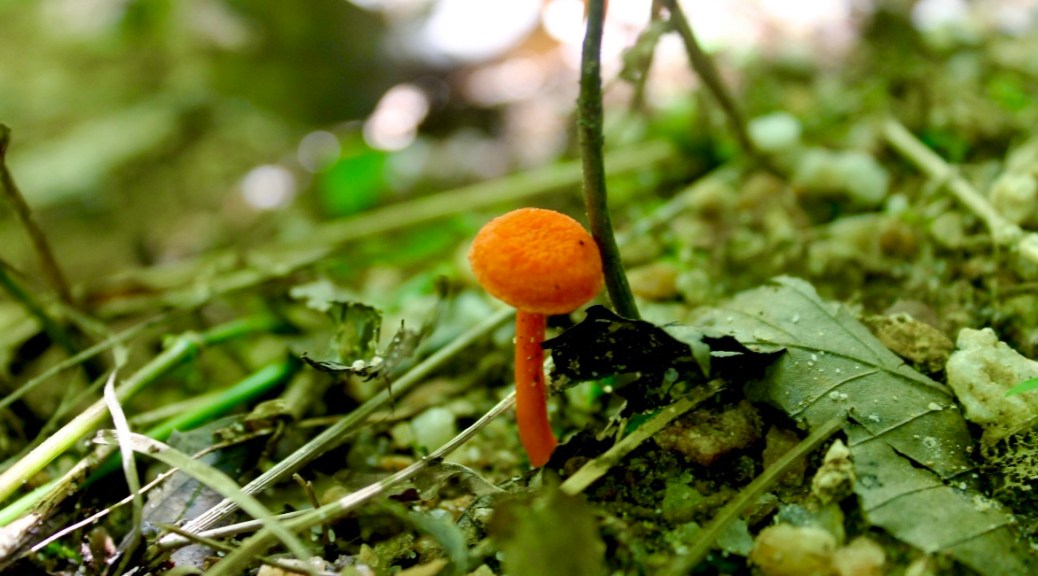
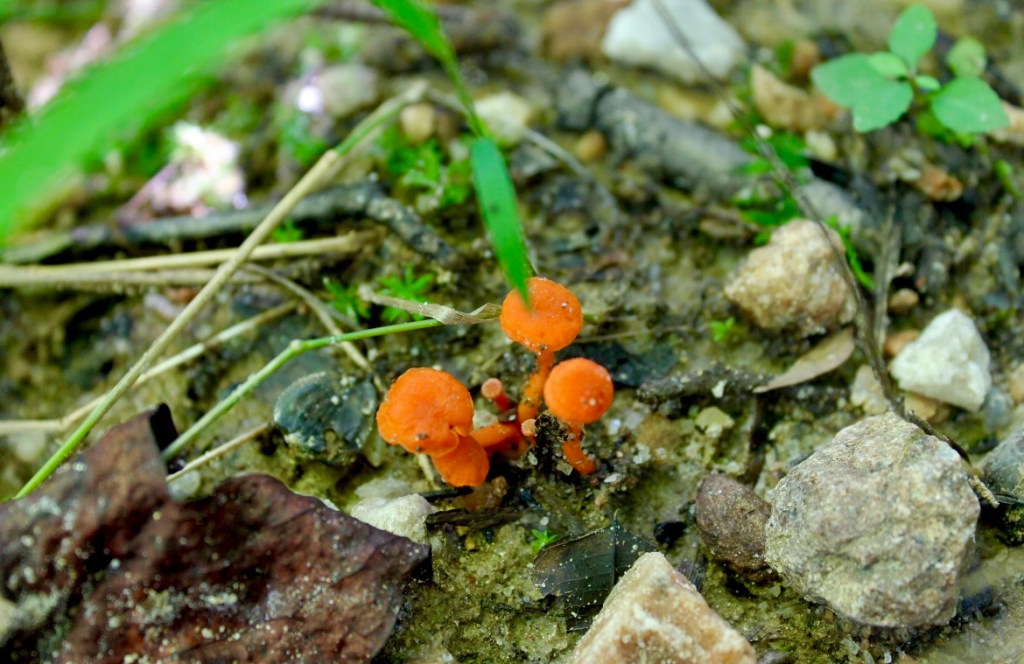
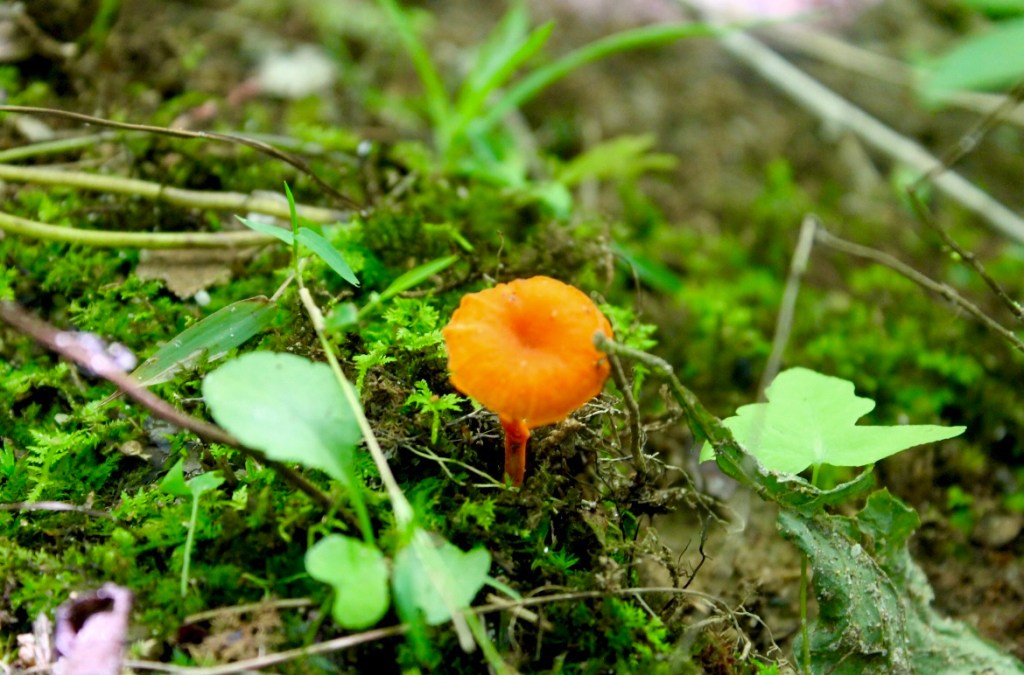
Cinnabar Chanterelles on southern end of creek
A red Russula
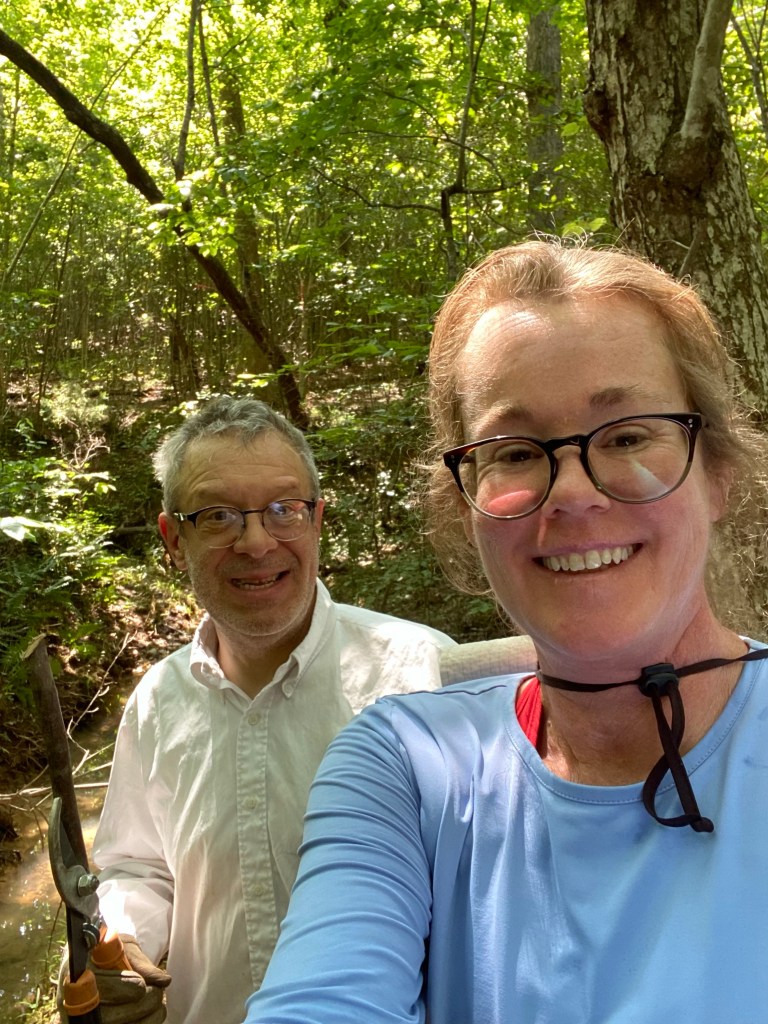
Molly got a picture of us.
Polypore
Russula cyanoxantha or charcoal burner. Found numerous specimen by southern end at bottom of property near creek.

We mowed and planned our swales in the clearing. We walked down the north trail to creek and followed it to the south trail and up. We went down chanterelle trail.

The cooler weather is wonderful. We heard a hawk. We saw toads in the water.

Molly took all of the photos. It was wonderful to walk around the woods with her today. There’s a crispness in the air and moving into the new season at Saint Andrews Forest Farm is exciting with so much to look forward to!

August 19, 2023

We went out to SAFF today. We walked down the North Trail to the waterway and followed it all the way to the South Trail.

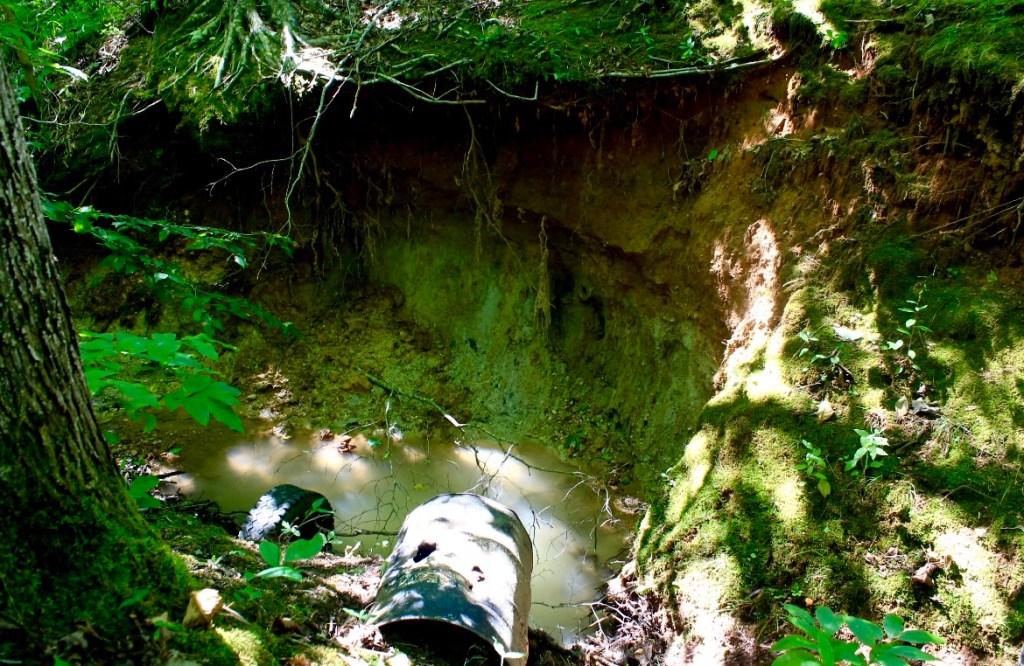
Down in the waterway at bottom of SAFF. We were happy to find a way across and connect the two trails. We are standing in a spot where we saw deer and other tracks.
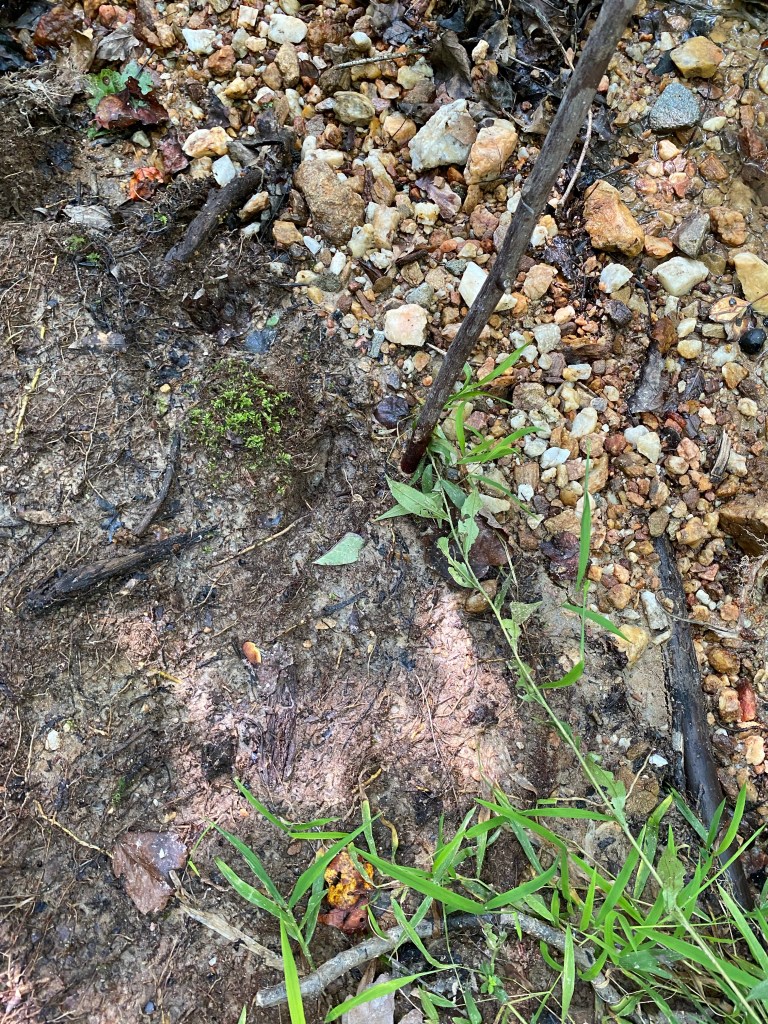
Animal tracks along the waterway where they stop to drink and cross.

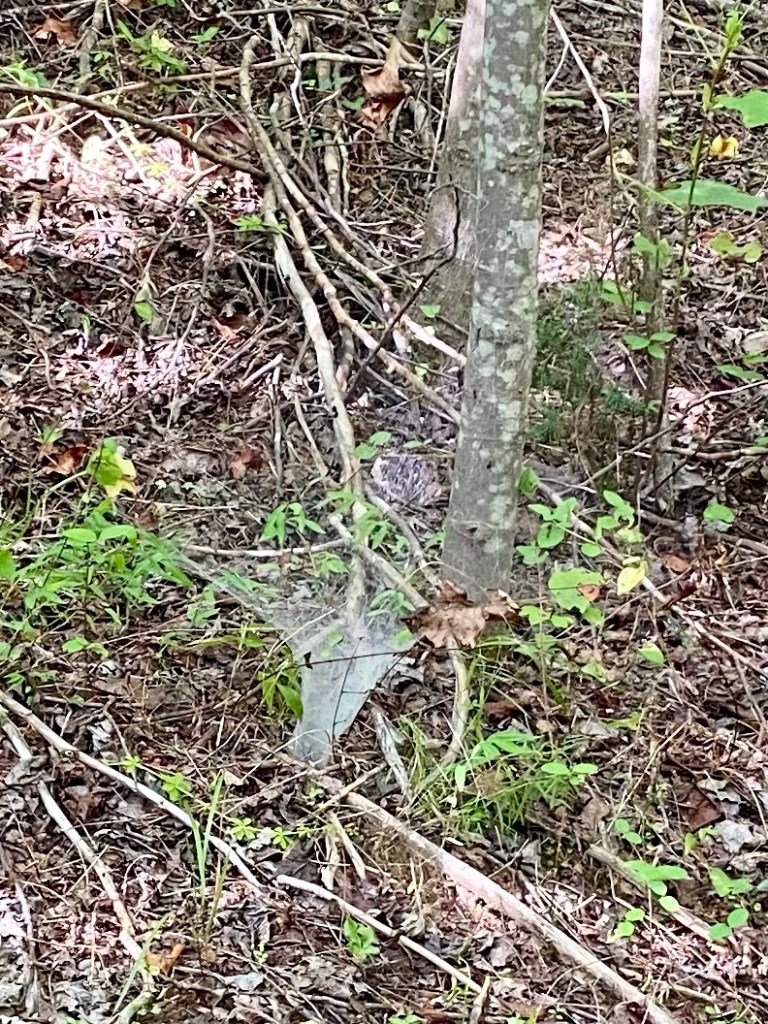
We heard the woodpecker laughing and talking while we were at the bottom along the waterway and he visited us in the clearing at the top. We could also hear a hawk calling while we walked through the woods. We saw large spiders in funnel webs at the bases of trees. Many spider webs across the trees. We saw butterflies. They were black with blue. Iridescent.

We found Russulas and boletes. We found a polypore that had teeth on the bottom.

Teeth on the bottom of the polypore mushroom found along the waterway.
A red capped Russula
A boletus
Bolete at bottom of property along waterway.

We used a dolly to move the cedars we culled today to use to build the bathroom and compost toilet. It was effective.

August 14, 2023 SAFF Walkaround

We got out to the farm Sunday afternoon and as we pulled in we saw mushrooms around the gate and driveway. We were excited to investigate these boletes that popped up quickly and without rain.

Bolete unknown species
Beside driveway, there were about 15-20 of these in various levels of maturity. Unidentified boletus.

We took a walk and saw the same kind of toad near to where we saw the last (so now we have Toad Way). It could very well be the exact same toad for all we know.

Young fowler’s toad

We found a new marker down there and wish we knew what they all mean. We dropped a pin on Google maps so we know where this one is.

Another marker

It was a dry week in Dillwyn last week. We walked to the North end of the creek and down the waterway to the spring. It continues to dribble water. We saw most of the cinnabar pins were gone probably because of the dry weather conditions. We heard the pileated woodpecker singing and cackling in the forest. It was very hot and humid with hardly a breeze. We walked back up the hill and noted many funnel webs. Most at the bases of trees. In some, we could see large spiders! They were everywhere!!!

A grass spider’s funnel web.

We walked down the South trail just to Chanterelle Trail and followed that to where we’d stopped our last trail making. We’d cleared a good bit, about halfway to the North trail maybe. We were happy to see how much we’d gotten done last time. We saw a lot more of the large spiders in the funnel webs. We only saw two chanterelles this time along Chanterelle Trail. None on the South Trail but we did not make it down to the south side of the waterway this time.

We eyed our availability of cedars along the walk. We heard cedar is great to use as it’s insect and rot resistant. (We love the idea of insects staying out of the area!) We are going to fell some of these cedars to make our bathroom structure. They are crowding others and will need to be culled anyway so it’s a win-win to have a good use for them. They are pretty trees so we will miss them. We will have plenty left. We’ve gotten most of the tools collected and we have a plan drawn. Our next step is to get the trees cut and get them to our bathroom build site. We still need to work out a good plan to move these logs up to the top of the hill. We also have a better idea of where we will want the structure to be so we hope to get started as soon as possible.