Tag Archives: tree of Heaven

July 10, 2024 Heat Wave while battling an invasive at SAFF

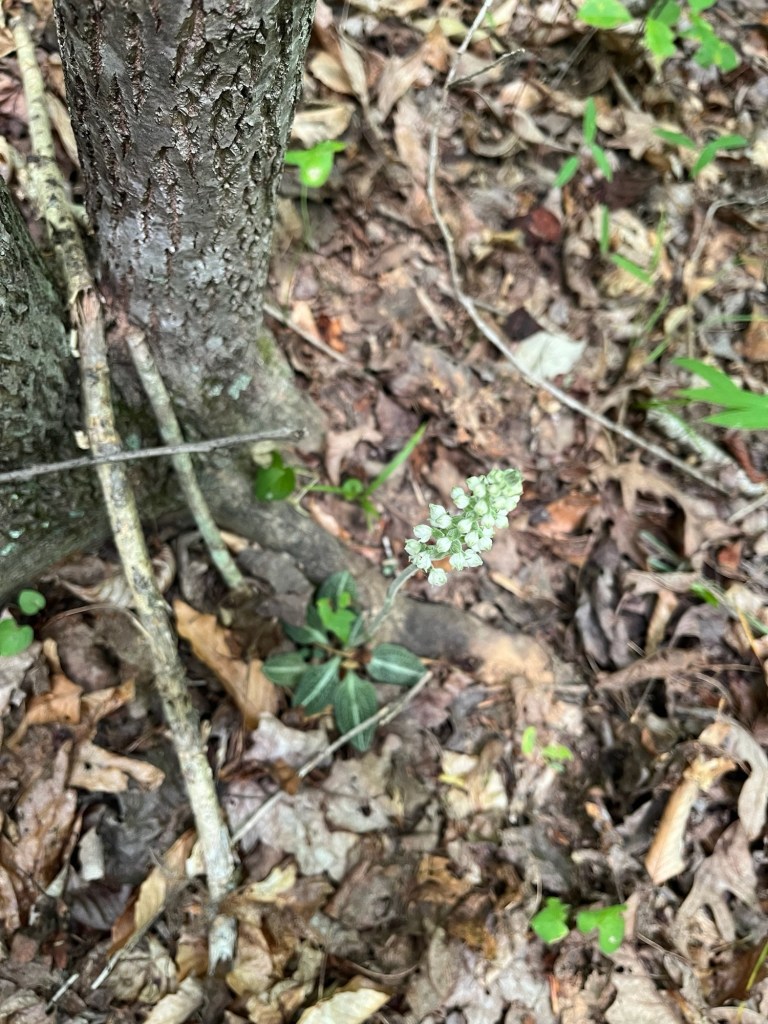
Downy rattlesnake orchid blooming.

It’s been in the nineties, and even though the air feels plenty humid, the ground is baked, cracked and dry. It hasn’t rained enough in far too long with these high temperatures. There have been heat advisories every day this week. It’s crunchy walking underfoot everywhere but the bottom by the waterway. The clearings are mostly brown. The bottom of the slope has a slight bit of water trickling through the stream. We were glad to see that.
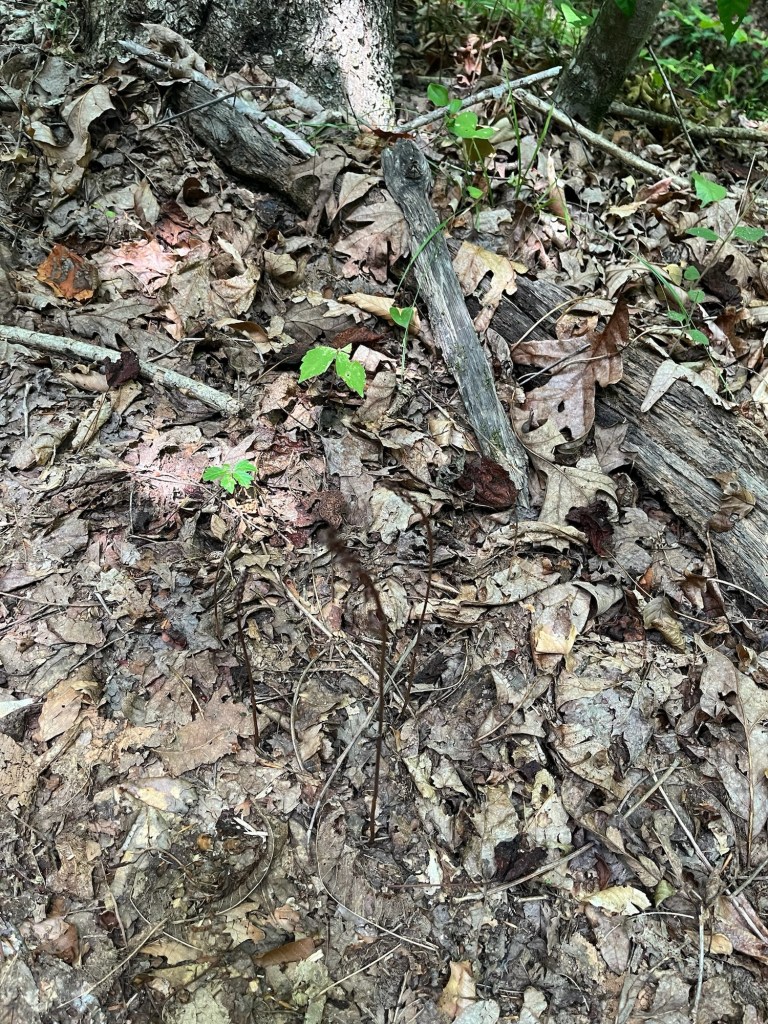
Cranefly orchid emerges with reddish brown stems just springing up from the ground. A flower will appear next.

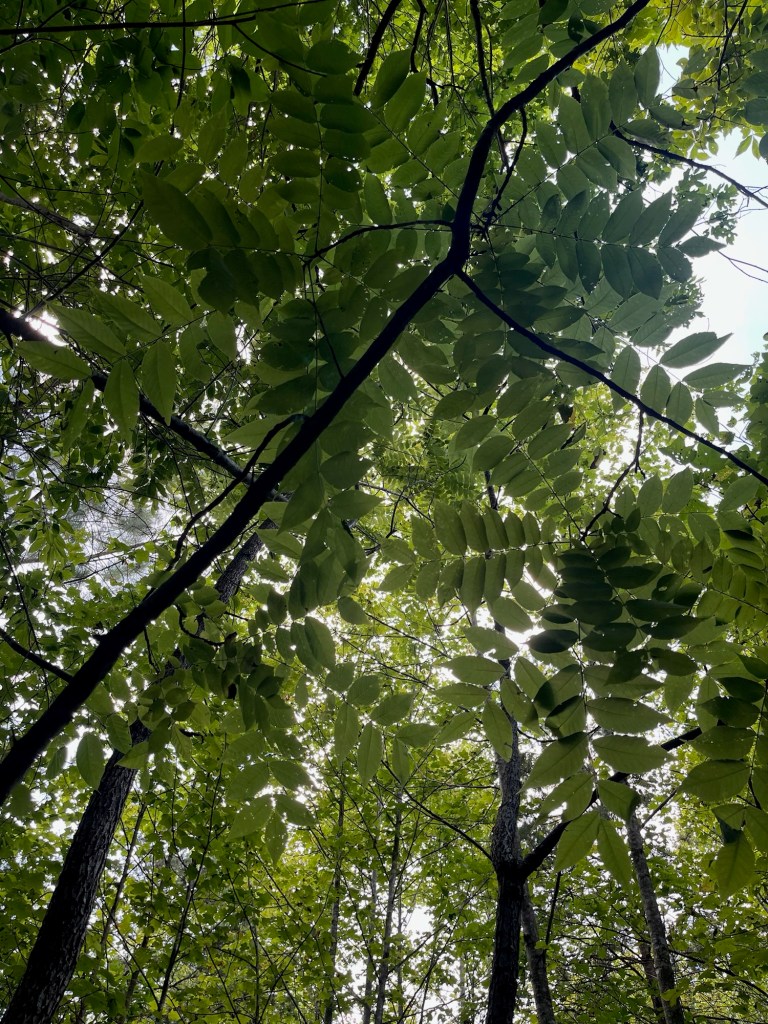
We’ve been battling an invasive tree called Ailanthus or tree of Heaven. We found them last summer in three different spots all up top near the main clearing and by our neighbors to the north. Another name for Ailanthus is Chinese sumac. Differentiation between Ailanthus and our native shining sumac, Rhus copallinum, was a challenge initially with the smaller specimen. However, now we can see the difference between them easily with our practice watching over our forest floor.

Because it is so tenacious by producing an overly abundant amount of seeds, crowding out native species with dense thickets and secreting a chemical into the soil that is toxic to other plants, there are best practices to ridding these trees from your land. It involves a hack and squirt method in the fall when the tree is sending the most nutrients to the root. We did this to all 4 of the larger trees we couldn’t pull out by hand. This year the trees sent up hundreds of root suckers so we are waiting for a good soaking rain to soften the ground and then we can pull them out. We will continue to do this as they grow. Whatever is still alive in the fall, we will hack and squirt again.
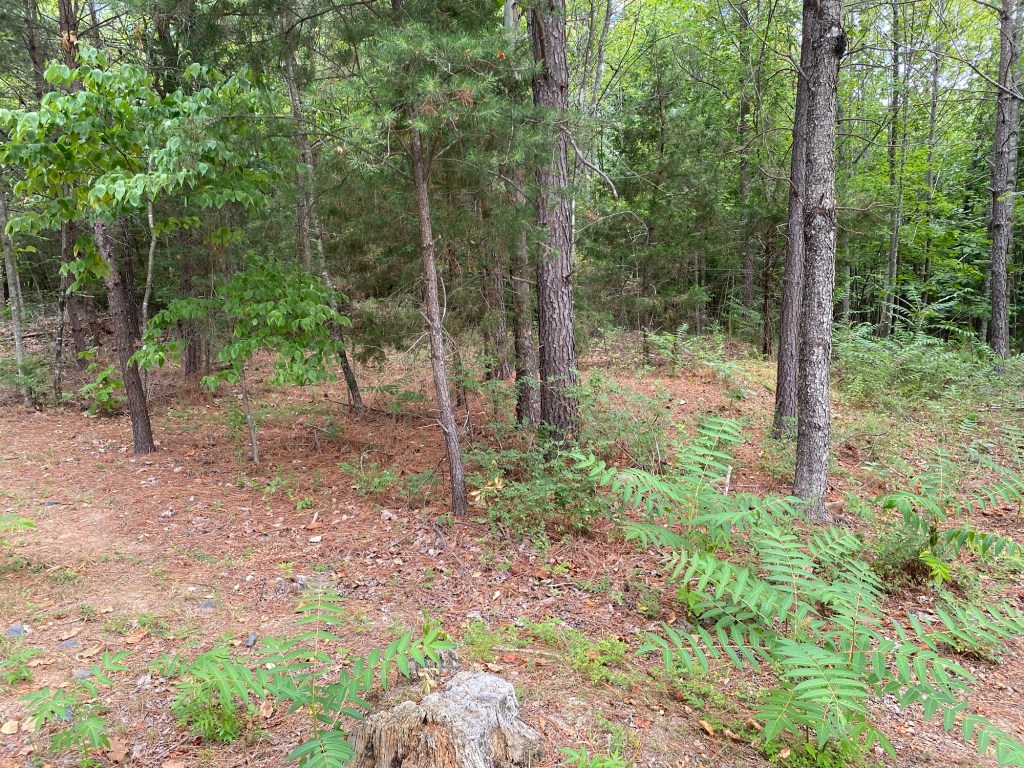
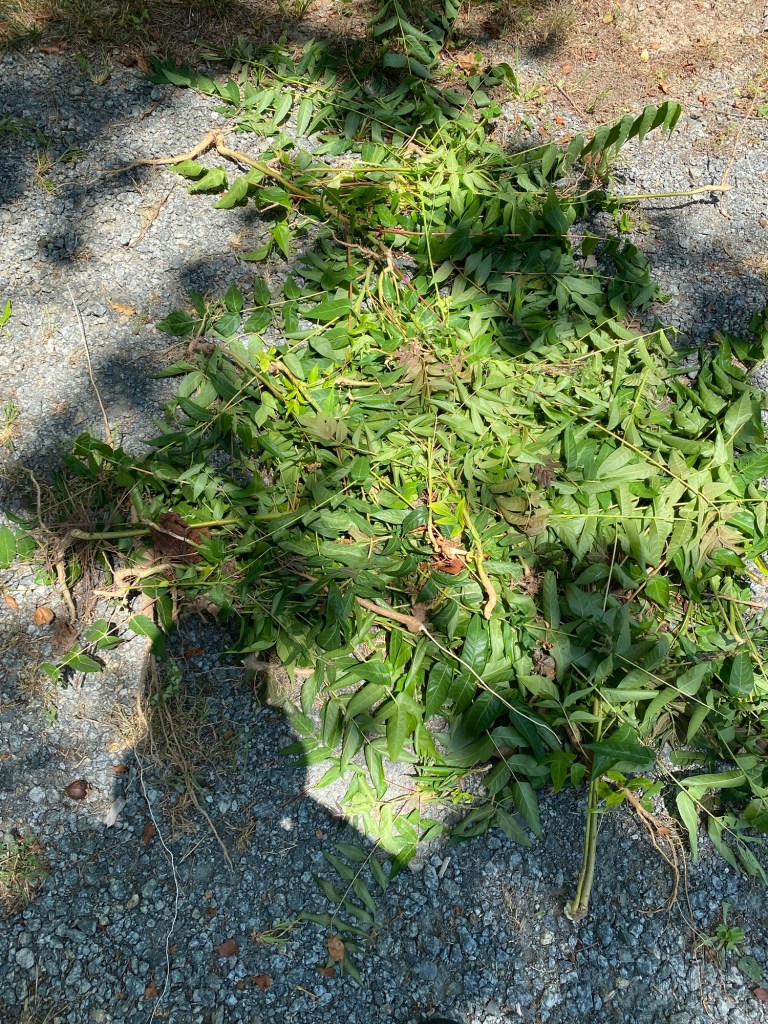
Smaller Ailanthus trees root suckering in a circle from the larger tree. These in particular would easily overtake the native trees and blueberries while creating a dense thicket if we don’t stop them. We pulled these out after a brief rain last week.
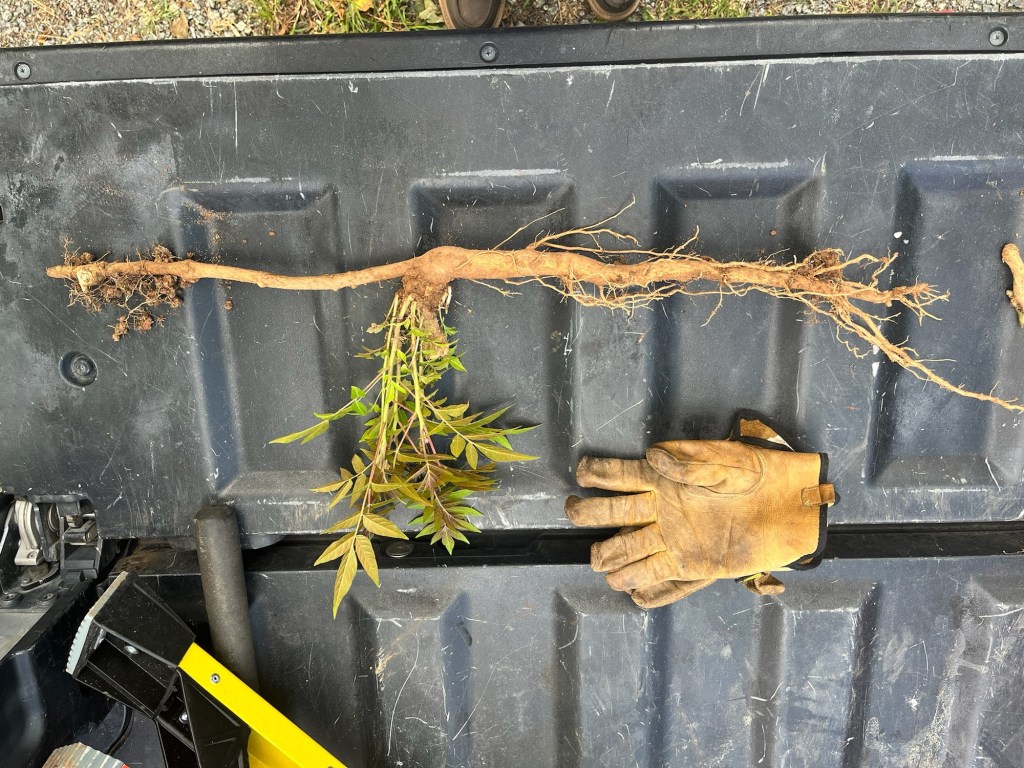
The roots are shallow spreading and aggressive.

https://extension.umd.edu/resource/invasives-your-woodland-tree-heaven-ailanthus/
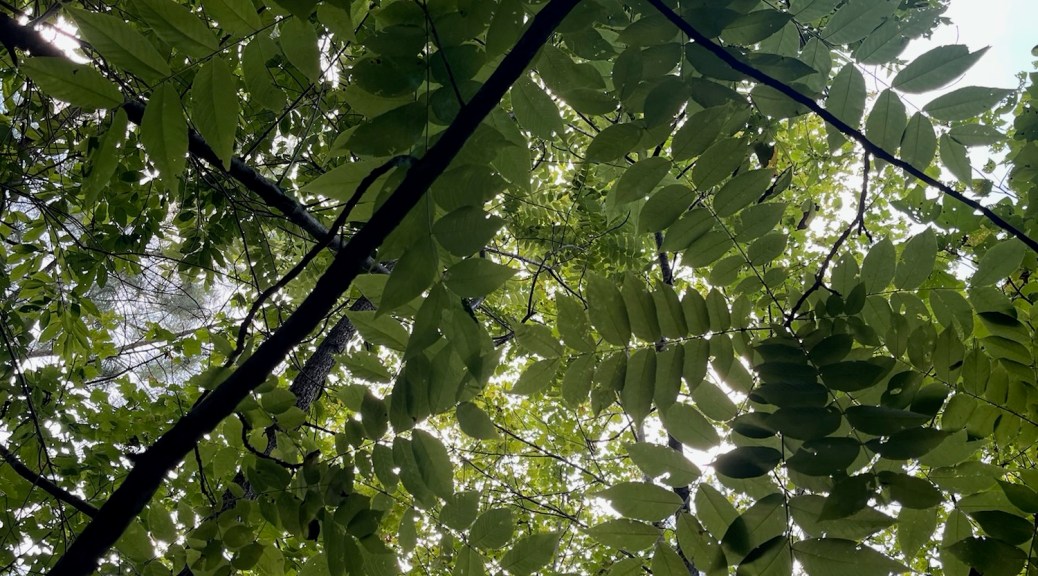
Eastern black walnut trees, Juglans nigra, found by the waterway at the bottom of North Trail. We always get excited when we find a new native species.

May 30, 2024 Porcini and black trumpets at Saint Andrews Forest Farm

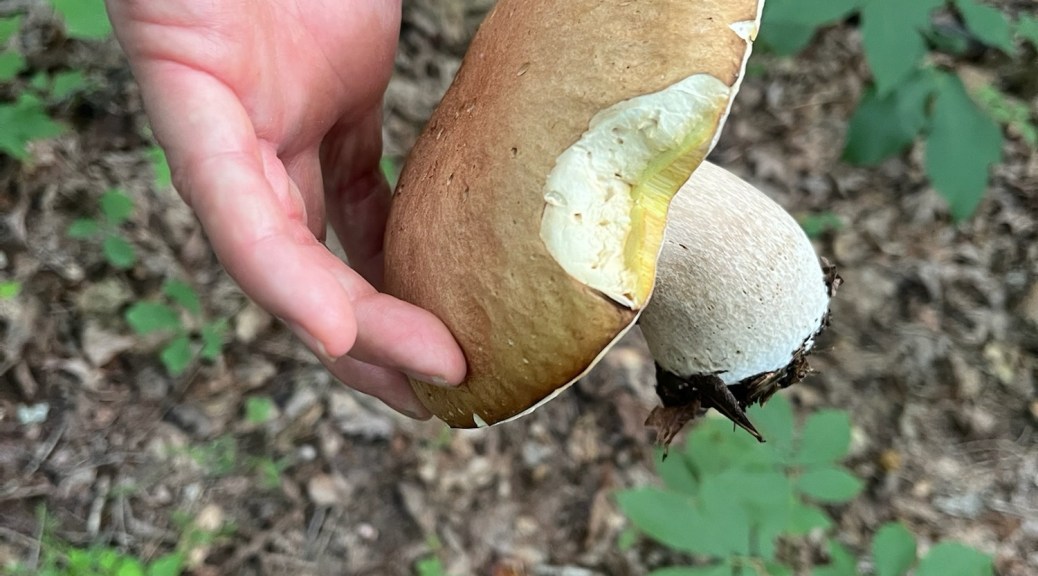
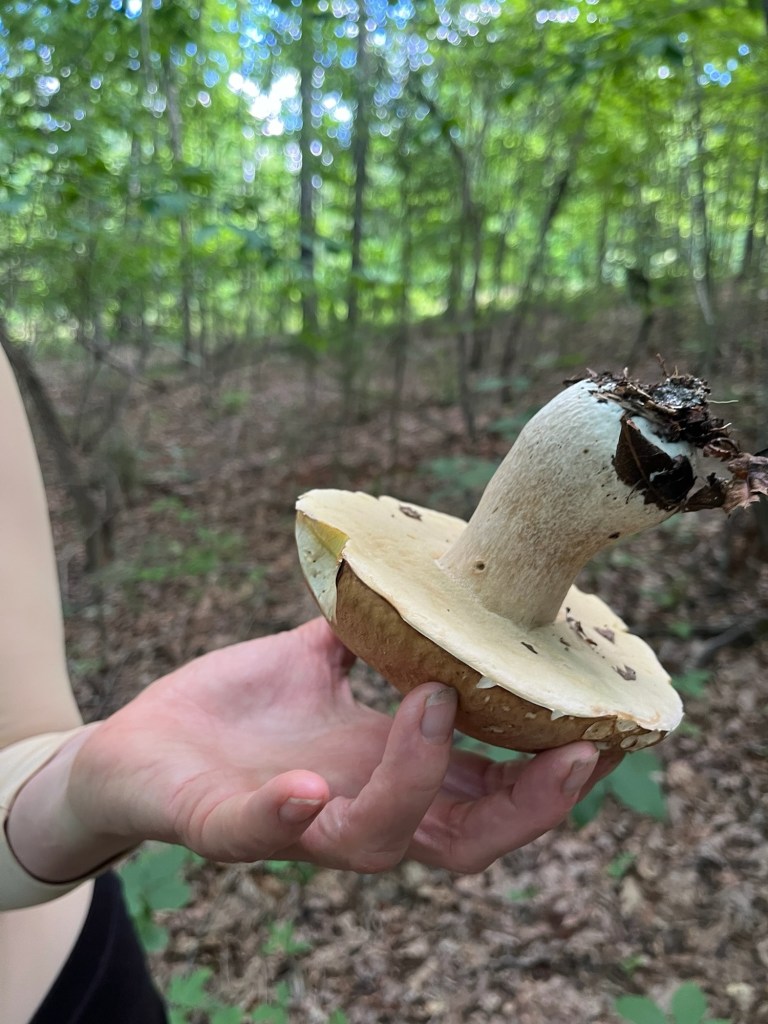
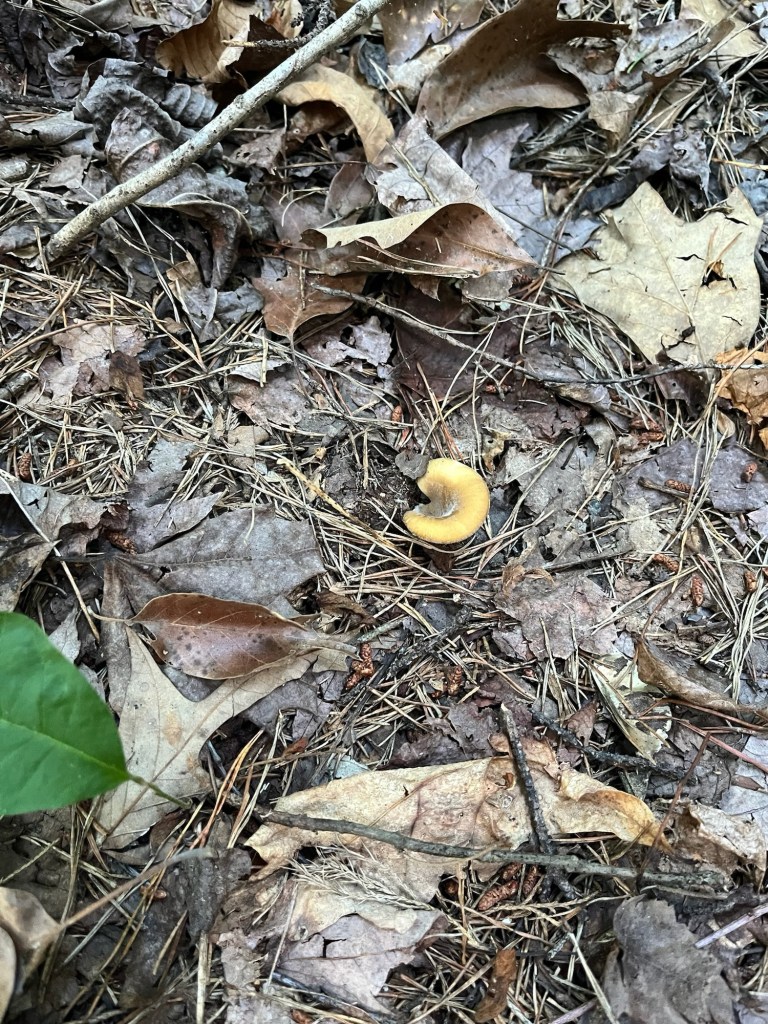
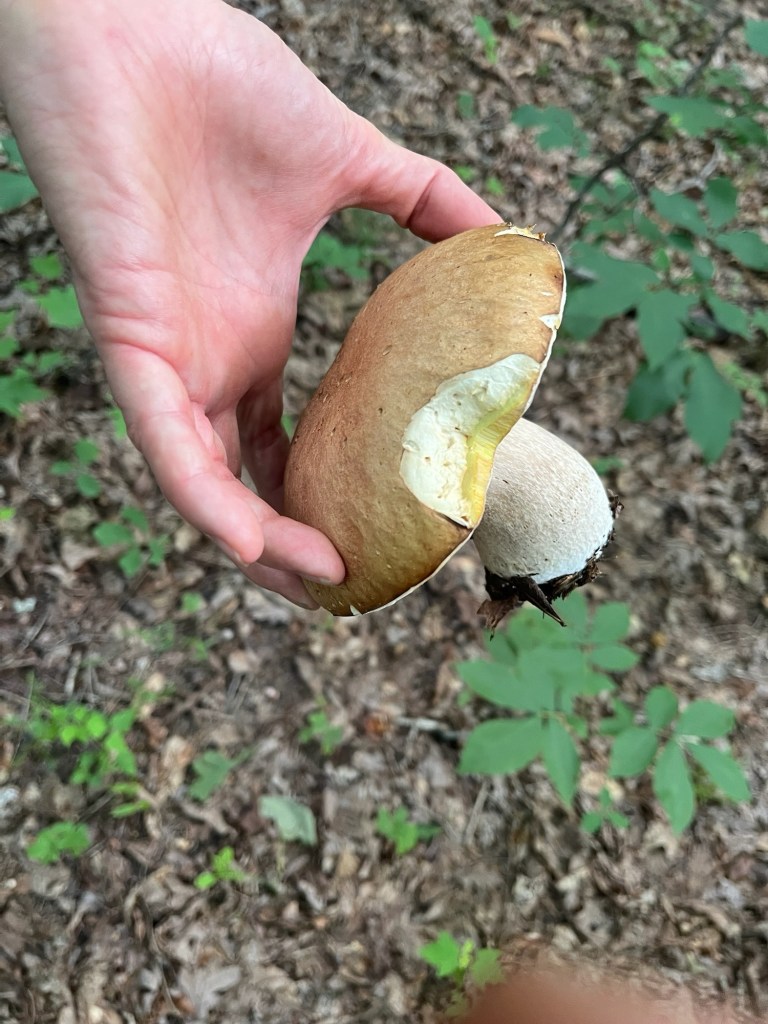
One of our first Bolete edulis mushrooms, common names the Cep, porcini, king bolete or penny bun, a most sought after edible. We’d been searching for a year and finally found it yesterday as well as black trumpets.
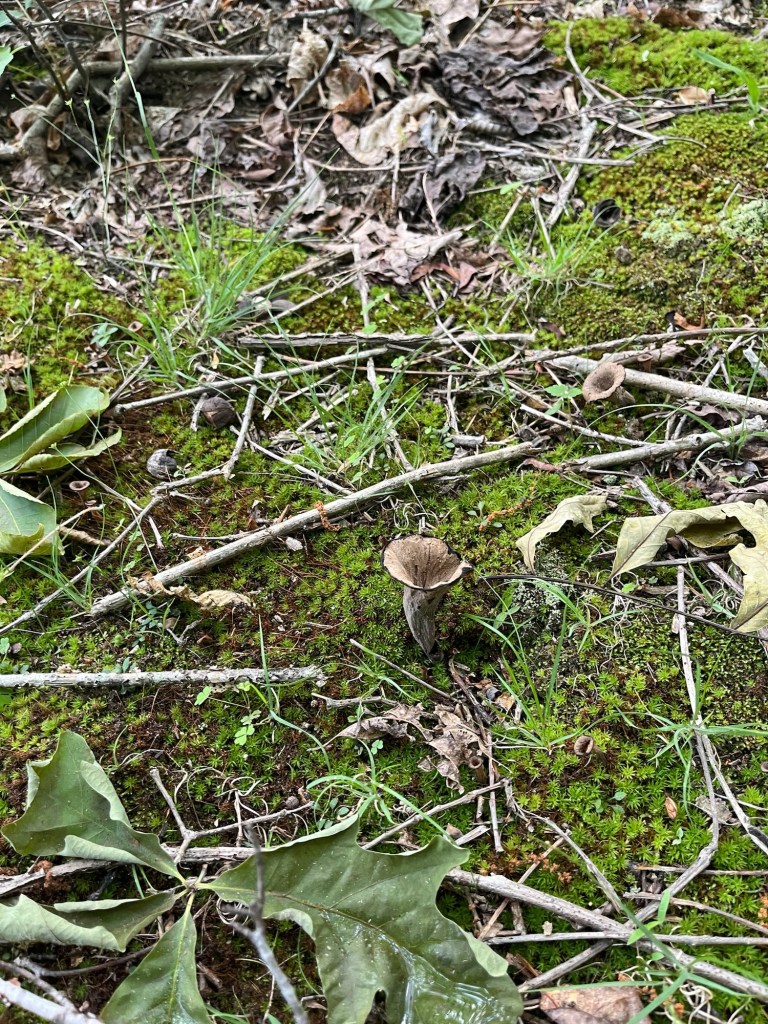
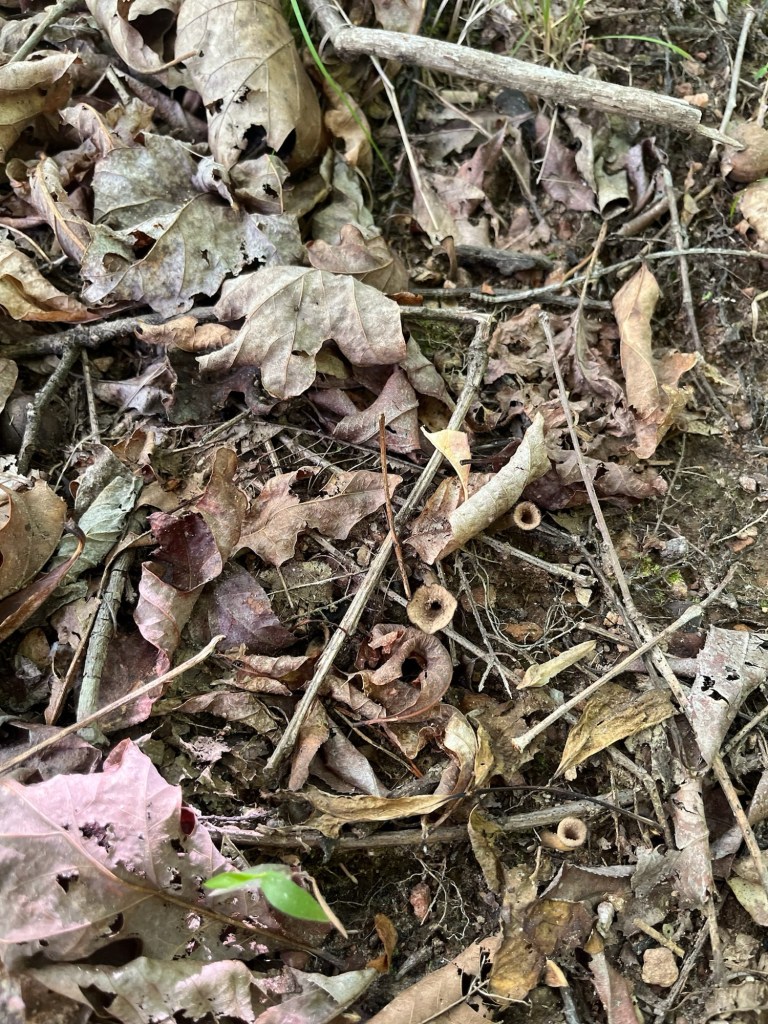
Craterellus fallax, Eastern black trumpet, found along the southern set back line along the forest edge. Near oaks and nestled into moss growing directly from the forest litter. These are particularly difficult to spot as they look like leaf litter. We are so lucky.
They looked like round tubes. These are a choice edible and are highly valued.
Shoehorn oyster found along Blackrock trail growing on a stick.
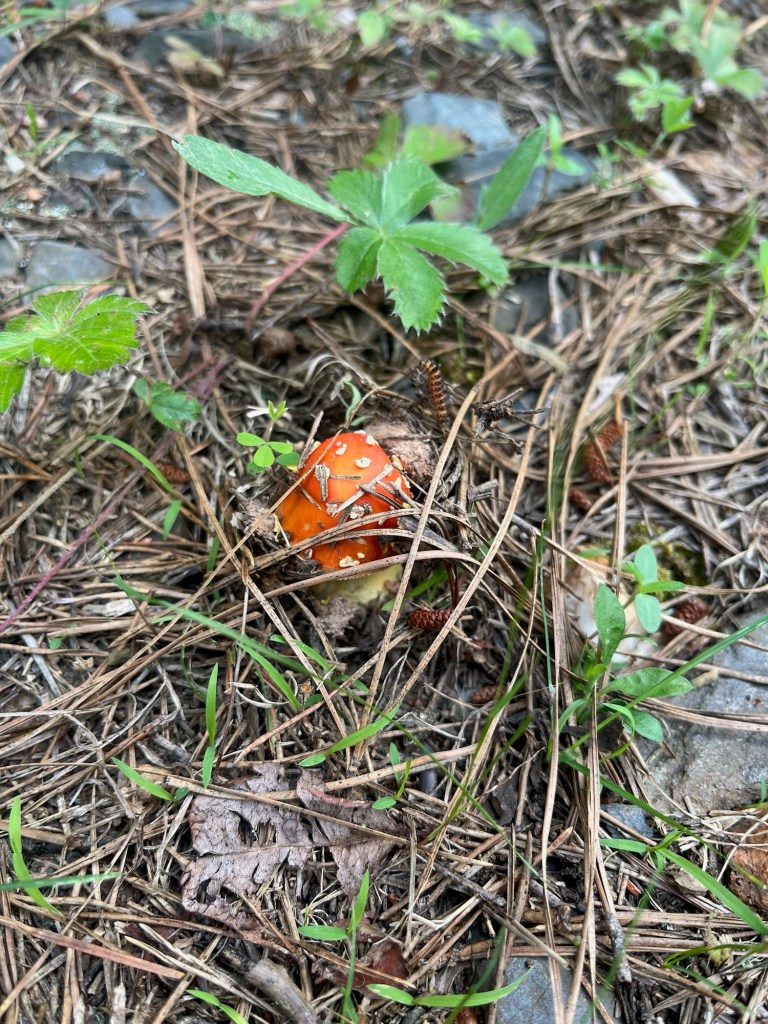
Amanita parcivolvata, False Caesar’s Mushroom, we are seeing these all over up top right now. The cutest mushrooms to spot pushing up through the leaves or pine needles with the bright red to orange cap dotted with white.
Ailanthus, tree of Heaven, root suckers we’ve been pulling out from wherever we find it on the farm. This is a wonderful example of why to pull out the roots underneath and not mow or cut them since the root will keep growing and sending up more of this invasive tree that chokes out native species.
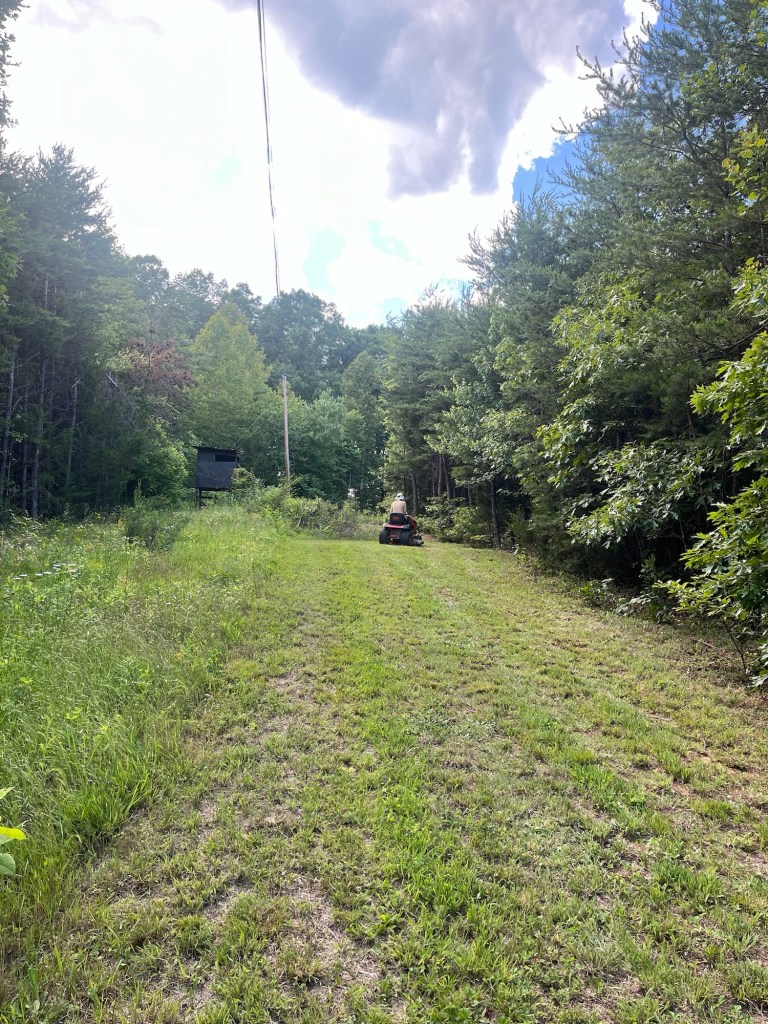
Mowing the south end where we found the first of 5 porcini mushrooms yesterday. 👏🏽

We were out to mow and have a work day. It was lovely cooler weather so we got lucky in multiple ways. We mowed the clearing up top, the front along the road and the southern border. Then we went for a little walk and found the mushrooms we’d almost given up hope finding at SAFF. What a wonderful day. We feel like anything is possible if you stay focused and keep going. 😀

We saw plenty of lone star ticks as well. Since we’ve been mowing regularly we don’t see them in the clearings but along our trails we find them on the tippy top of Galium, bedstraw. They hang out with their legs open waiting for an animal to walk by to attach to. We saw plenty of them yesterday. It’s a bad year for ticks here in Virginia. The mild winter weather didn’t kill them off so they are even more abundant than usual. We are staying mindful.

Top of the Bolete edulis.