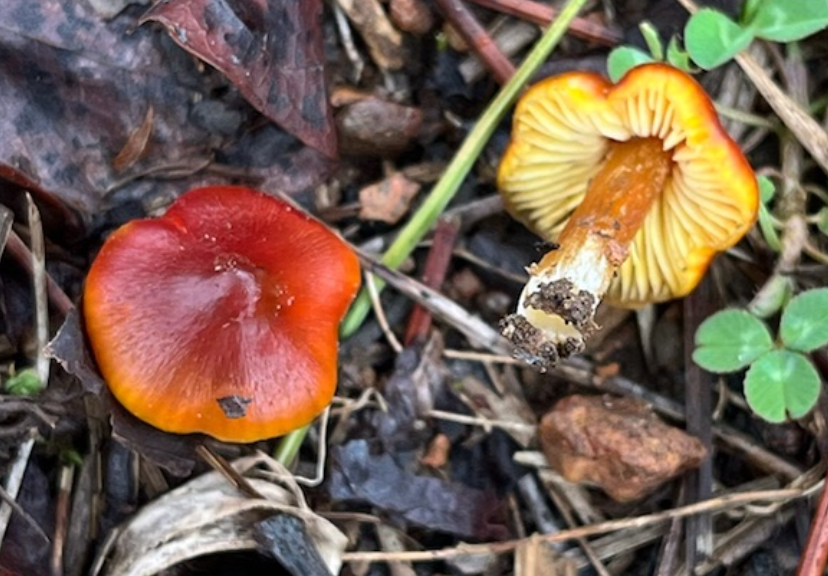
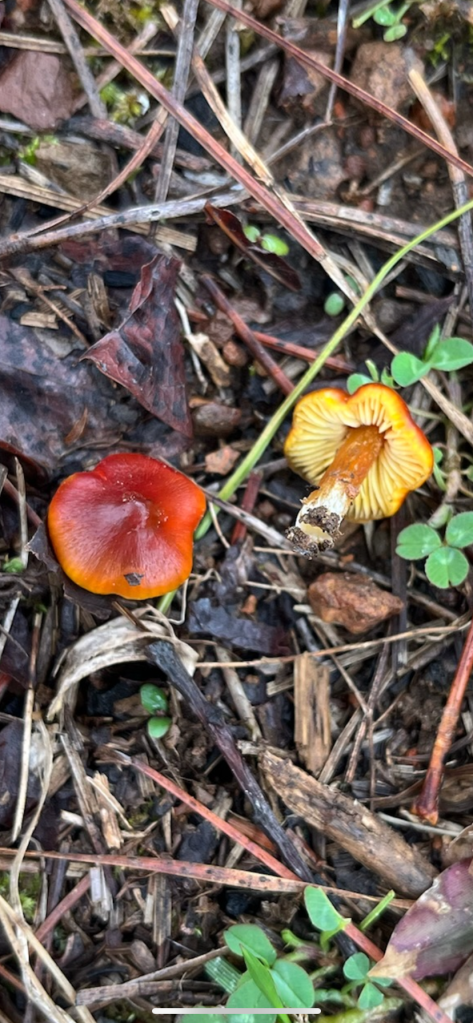
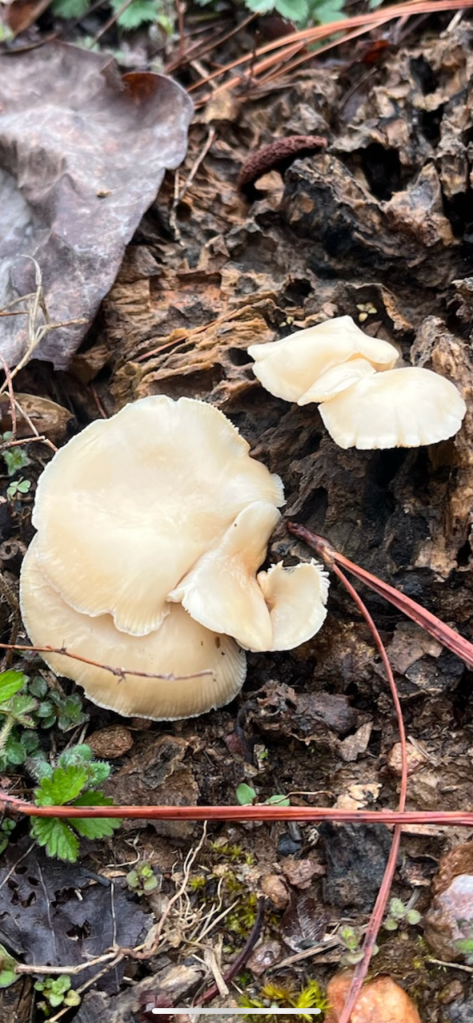
Yesterday was a rainy spring day with temperatures in the 50s at Saint Andrew’s Forest Farm. We went over to walk around the woods and look for early morels since the soil temperature has been in the 50s for a week. We saw vernal pools up top and at the bottom of the slope. The springs and waterfalls were all flowing. We found hygrocybes, commonly called waxycaps. They have bright red caps and yellow gills. We also found oyster mushrooms growing up top in the clearing on a stump.
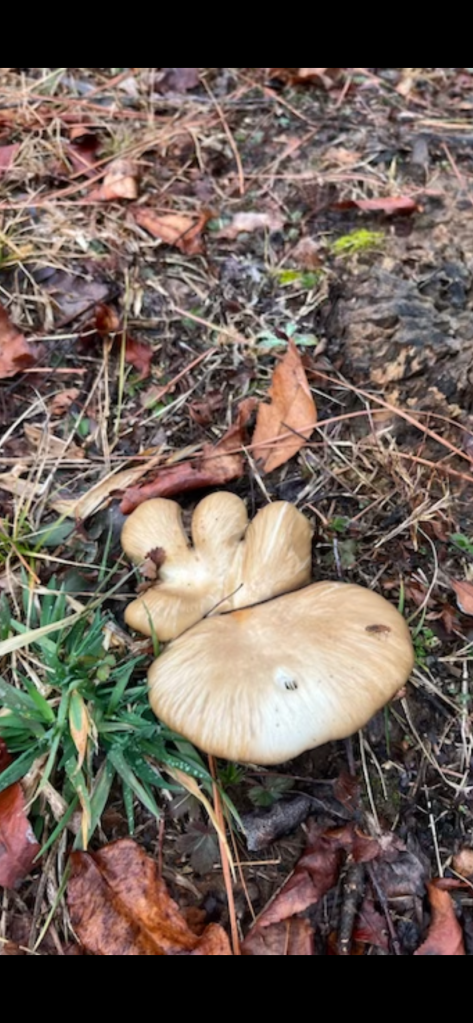
Blackening wax cap or witches hat. Oyster mushrooms
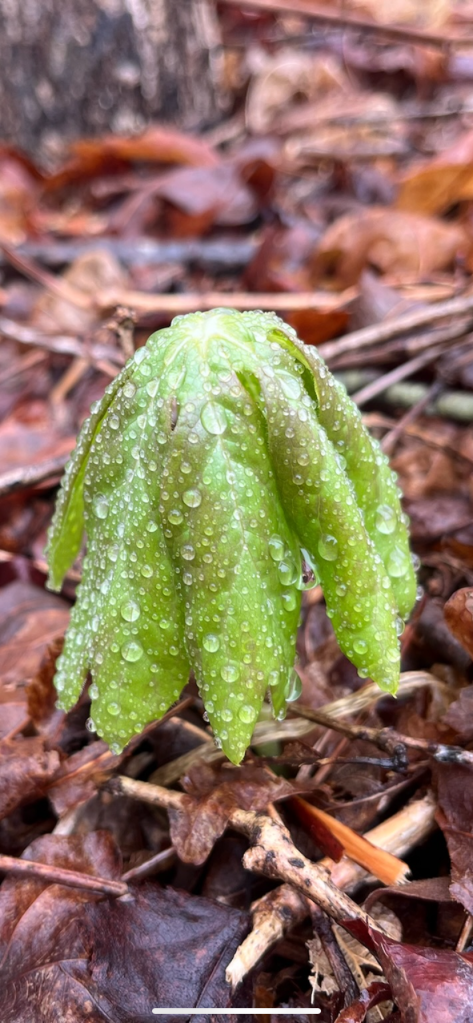
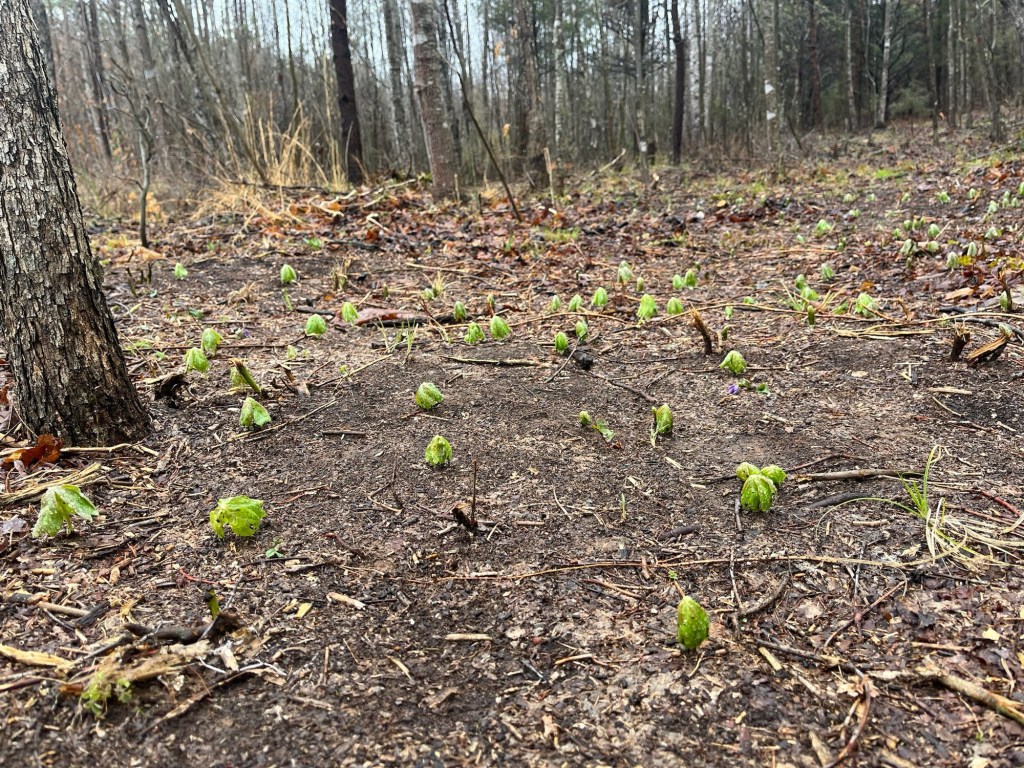
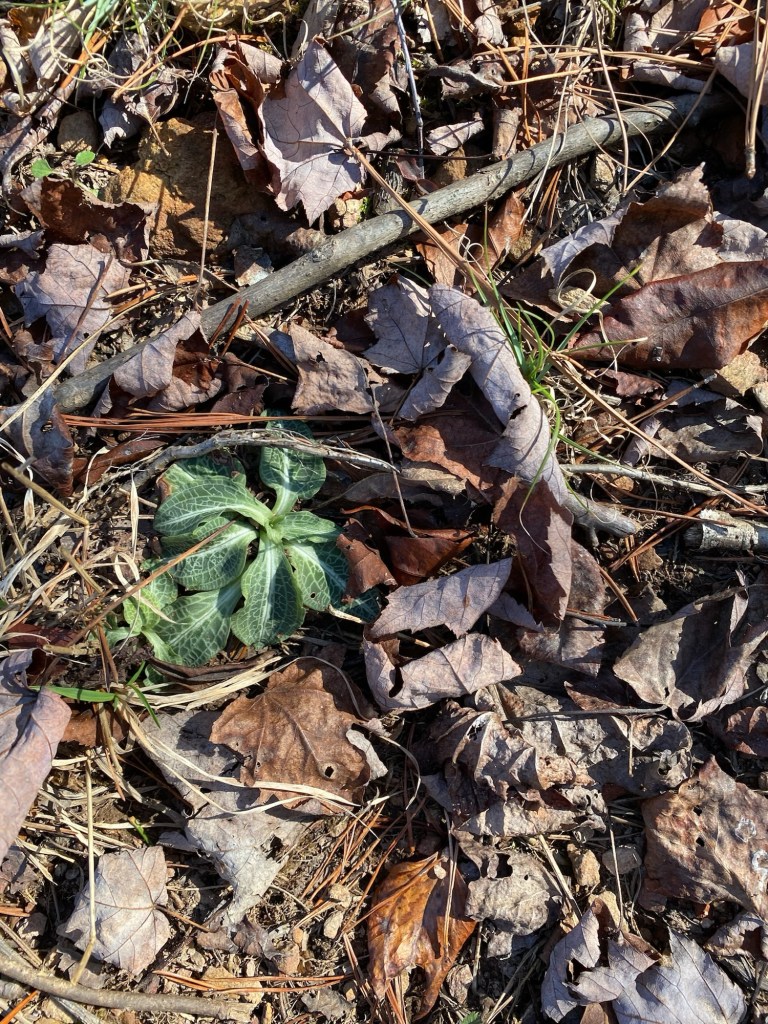
We also found several clusters of mayapples. We were delighted to see these as they are associated with morels as they grow together in the same wet, well draining soil.
Mayapples emerging along south slope.
The water levels were up with even more rain expected today. We can’t wait to get back out.
We’ve been going over most days this week as the soil temperature has been above 50 degrees Fahrenheit which is when morels begin to pop up. We have not found them yet but are delighted to continue our search. We’ve been looking especially near tulip poplars, oaks and beech —and near the waterways.
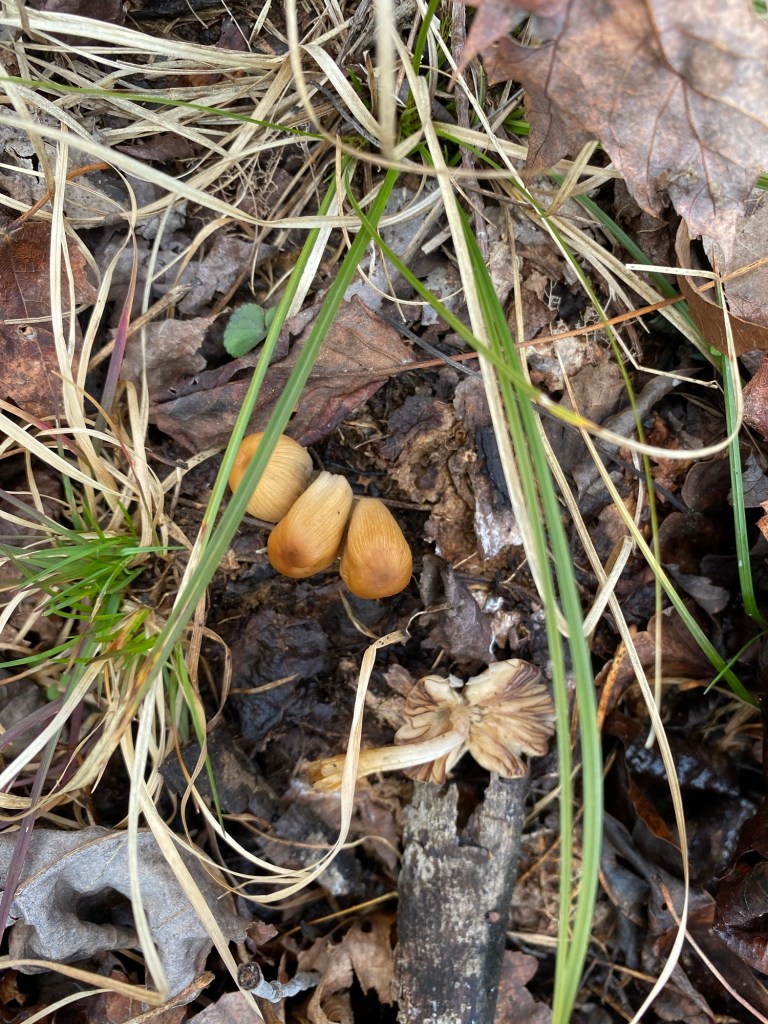
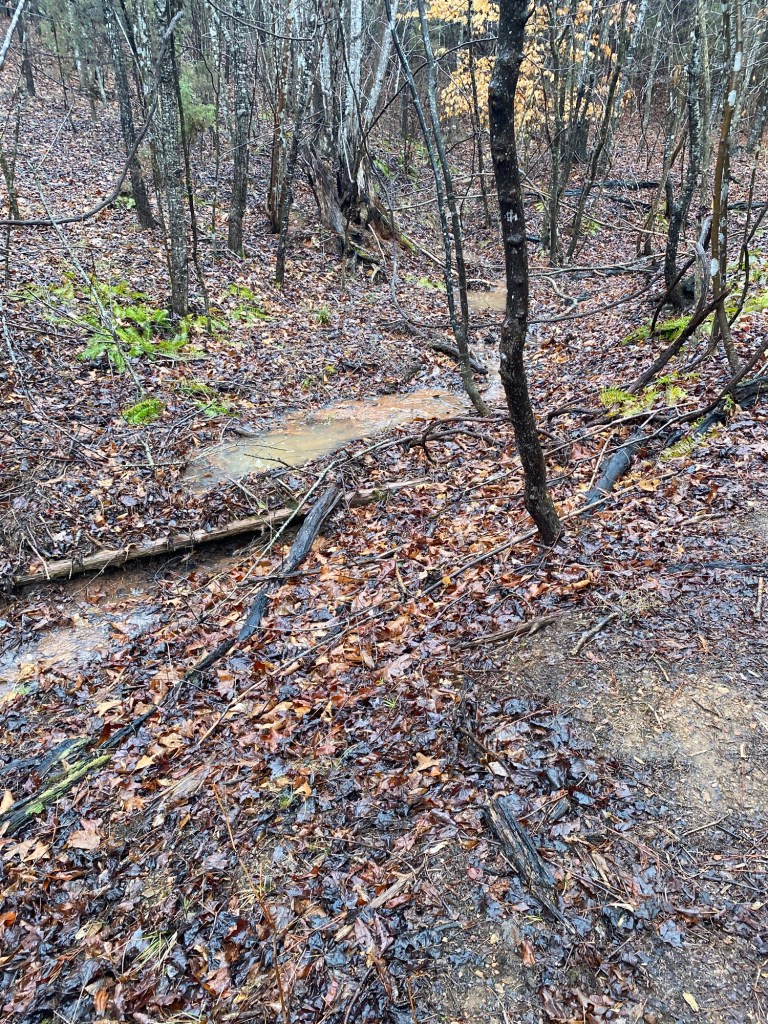
Ink caps, usually one of the first mushrooms to appear in early spring. Wet weather gully along the southern side of SAFF during a rainy day.
We’ve also been going over often to be sure our neighbor at our southern border isn’t hunting on our property. He built a stand and a bridge and also cut down 30-50 trees all on our side. He’s confused about the unambiguous property line that runs right along the electricity line. We are planning a fence and have sent him letters. We will engage with the sheriff’s office next. Yesterday, we found deer bones on that side and we mourned for these creatures and wish he would contain himself to his land at the least.
Water was collecting everywhere up top and along the slopes.
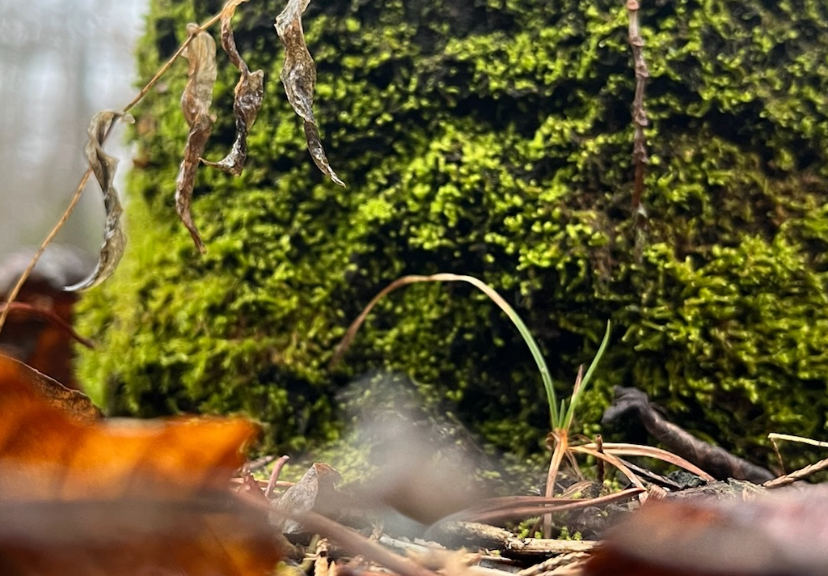
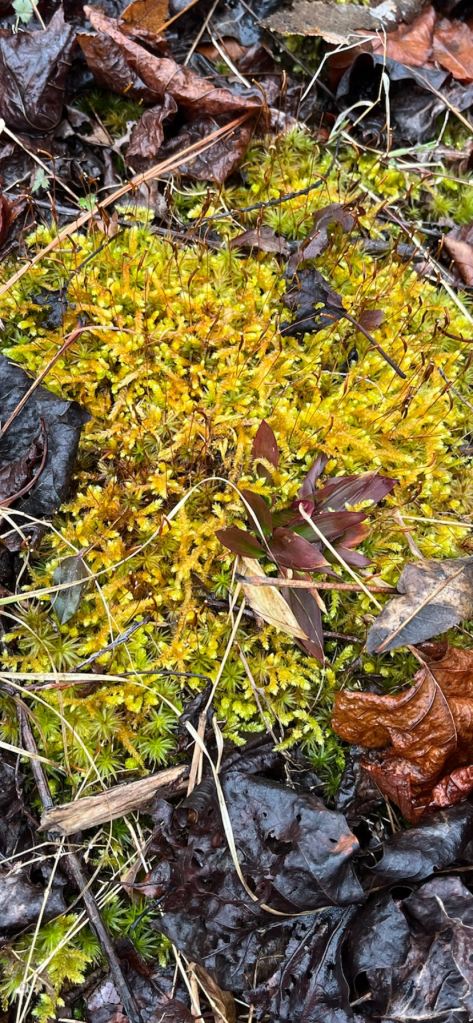
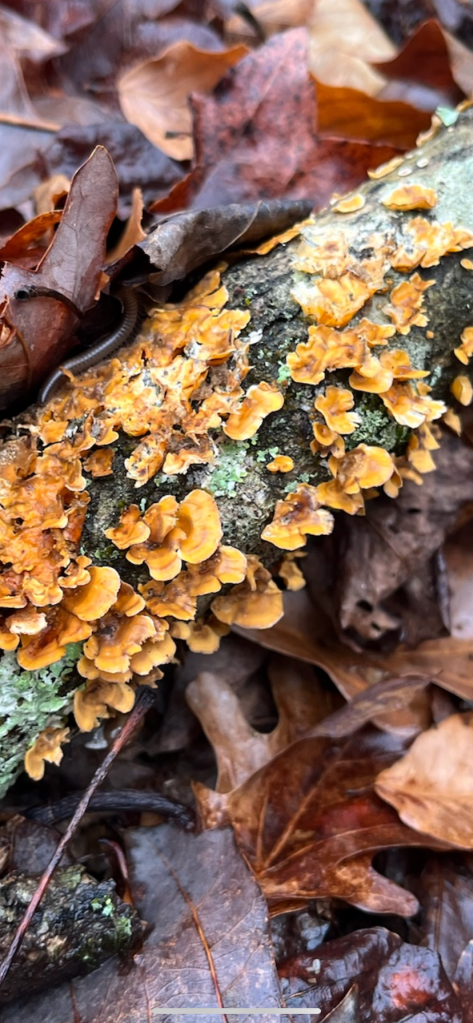
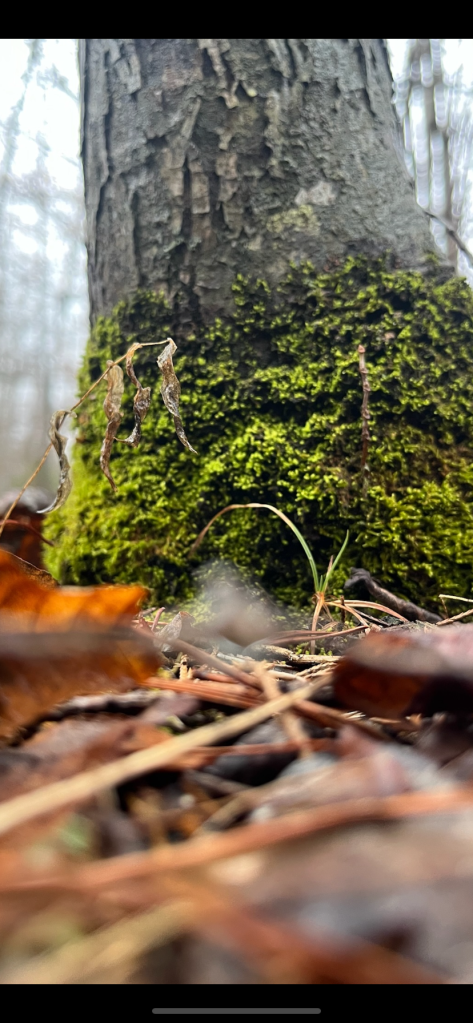
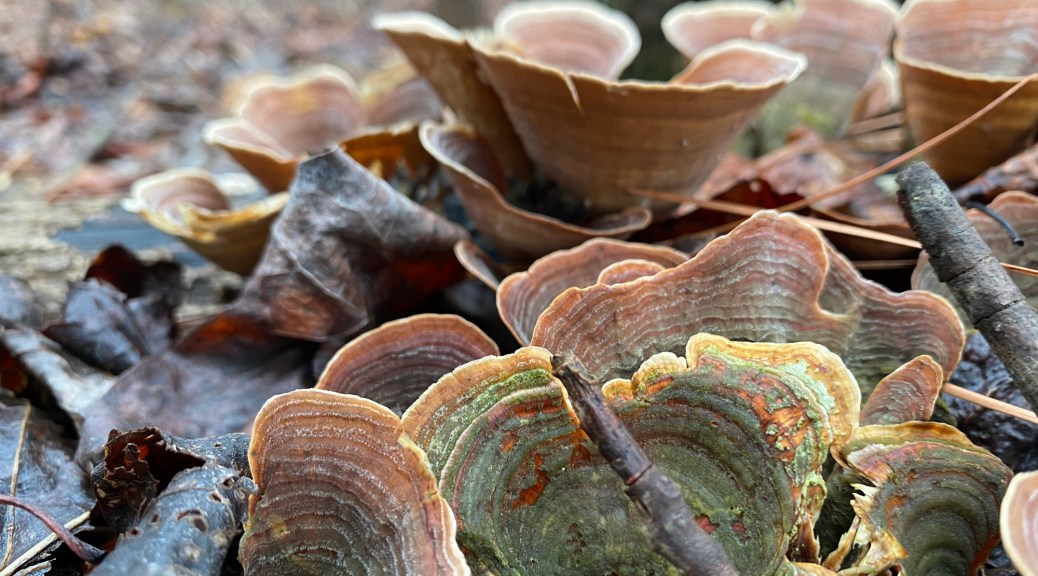
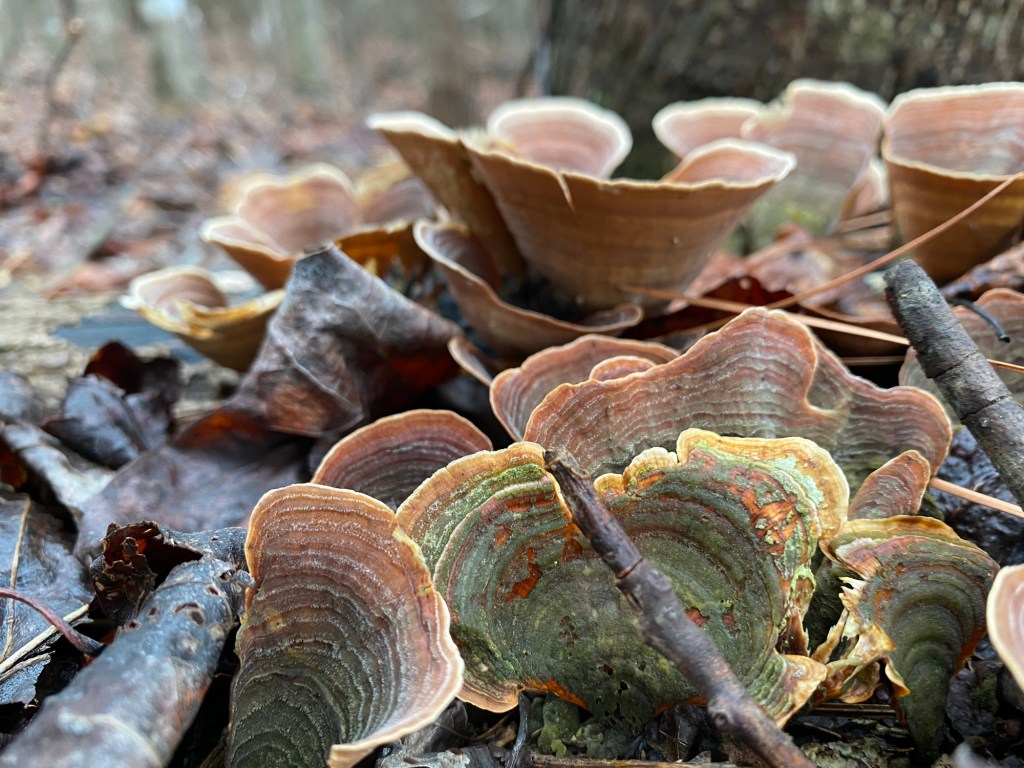
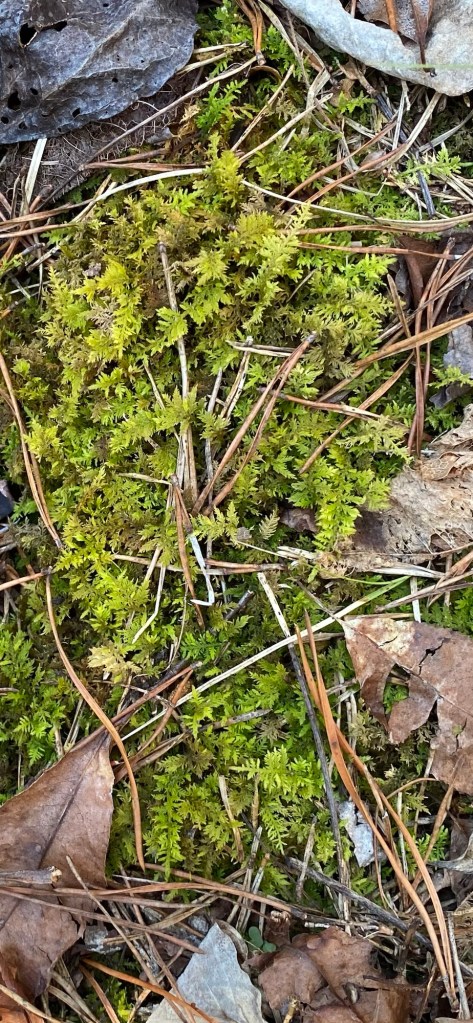
Bryoandersonia illecebra, Millipede hiding out among the Stereum complicatum or common named crowded parchment.
Today we startled a rabbit as we walked through the woods in the misty rain. Somehow we caught him by surprise, crunching up the hillside behind the shed. He startled and panicked, ran 50 feet away, then stopped, stretched his legs and shook it off.
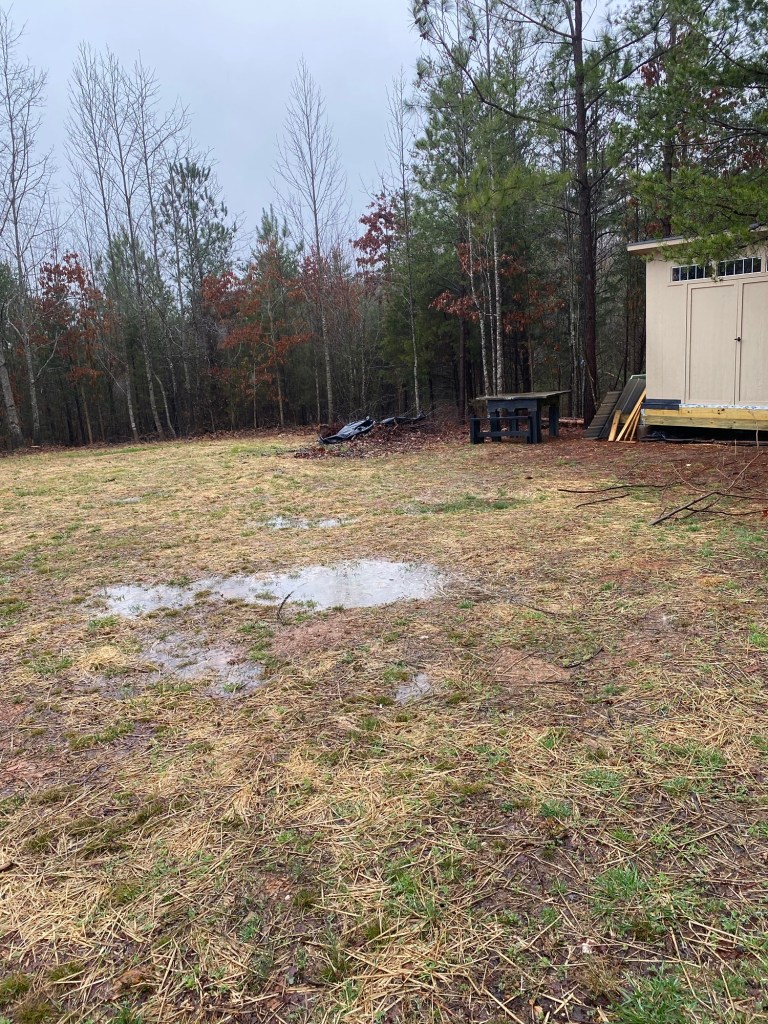
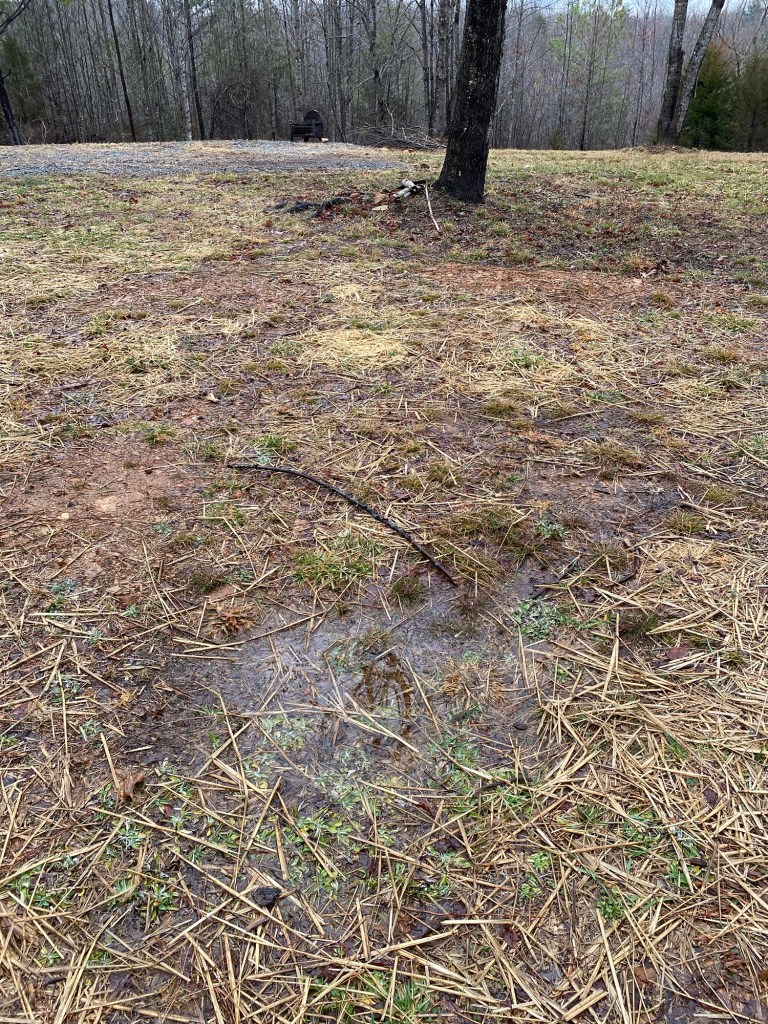
There were a few puddles of water collecting in depressions up top in the clearing.
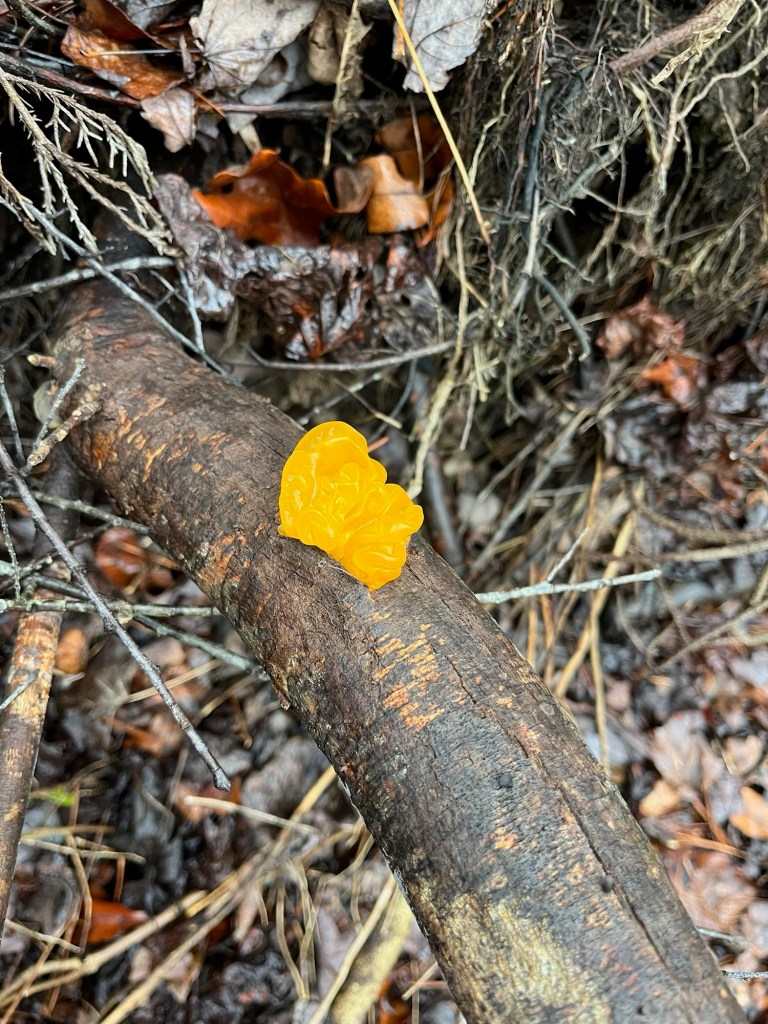
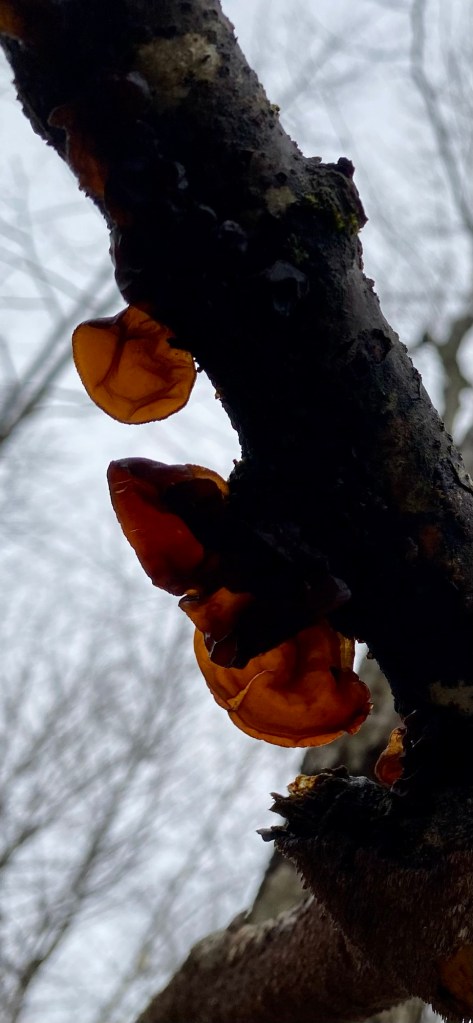
I just heard on NPR that as of today, there’s no county in Virginia in a drought. This is as a result of the wet month we’ve had. Auricularia auricula-judae (Bull.) Wettst. – Jelly Ear Fungus.
Mainly seen in winter and spring. It grows on dead elder trees and on fallen branches, but occasionally you may also find it growing on other kinds of hardwood. Jelly Ear is sometimes used in cookery, where it provides an interesting texture but is nothing special in terms of flavour. Young fresh fruitbodies (above) are generally considered the best. We have not tried it although we hear it’s good in soups and adds nutrients.
We’re excited to report we’ve almost finished insulating the shed. We cut down a few more black knot infected black cherry trees and some other standing dead trees. We have so much work to do in the forest. The ground was wet and squishy in areas especially down at the bottom of the slope and around the waterway. We found a few more downy rattlesnake orchids. The leaves on the beech trees are showing buds. We went across to look at the waterfalls in the wet weather.
We pulled out vines, found mosses, worts and lichen in abundance. Even in the wintry weather, we found the jelly wood ear and crowded parchment fruiting bodies.
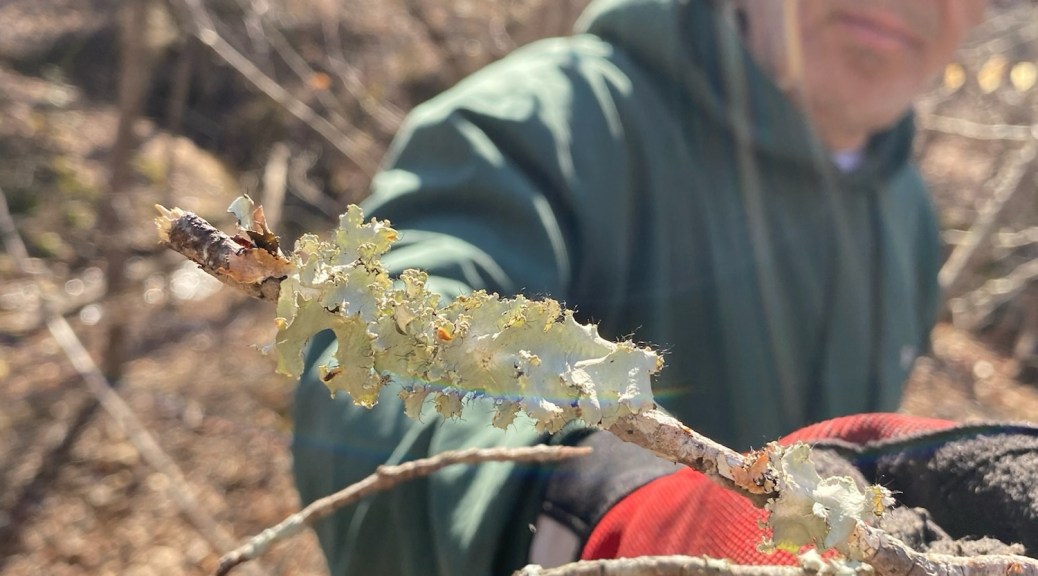
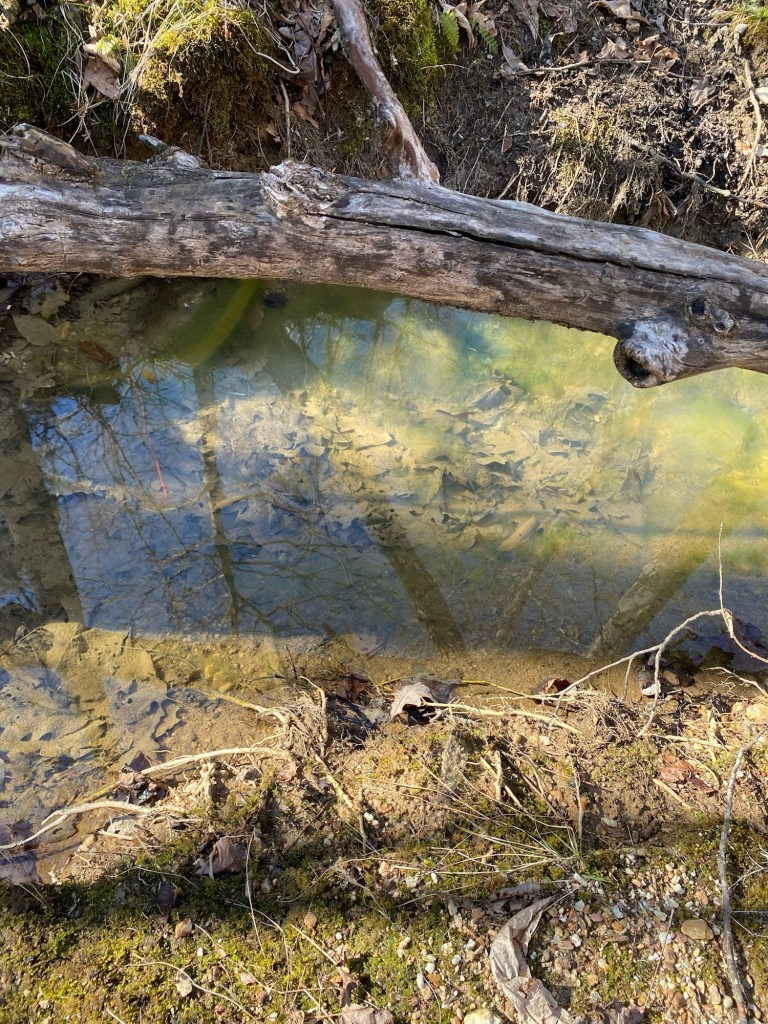
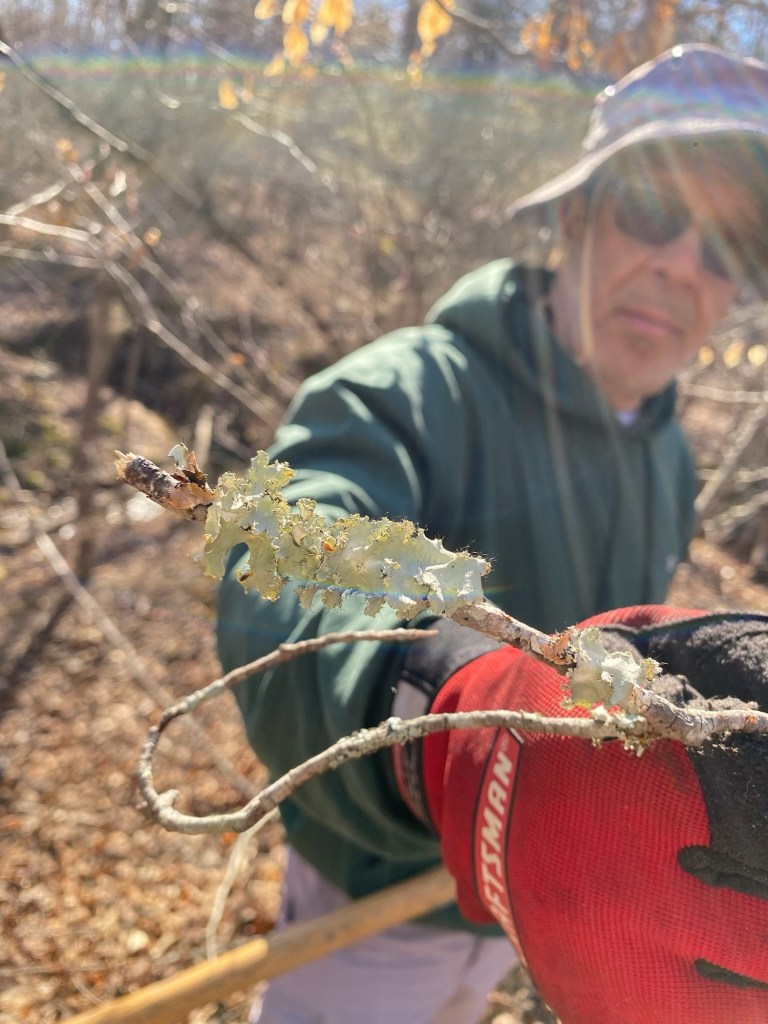
Waterway at bottom of slope where we saw tiny minnows swimming today. Eyelash lichen with hairs growing from it down by the waterway. Oyster mushrooms sporing on a tulip poplar stump. Running cedar in the paw paw grove. Another downy rattlesnake orchid spotted right off of the main clearing up top.
We went over today and we are almost finished insulating the shed. We also chopped up several trees we had felled a few weeks ago and brought them home to burn. One was a black cherry with black knot fungus and the other was a standing dead tree. We walked down North Trail and around the bottom. We crossed over the waterway to explore some in the paw paw grove and up the Ridge Trail. It was a gorgeous day. We were very pleased to find the tiny minnows in the waterway.
Stereum ostrea, false turkey tail, at the top of North Trail.
It was drizzling rain and the high temperature was in the 50s. We saw many plants on the forest floor greening up. As we walked through the woods, we pulled out vines or cut them to kill them and stop them from strangling the trees. We took down some standing dead trees as well. We walked down from the top by the driveway and wound around the southern wet weather gully to the waterway at the bottom of the slope. We followed the waterway around to the wet weather gullies on the north central slope. It was lovely out. We also found a cluster of oyster mushrooms.
Pleurotus ostreatus, oyster mushrooms growing from a buried stump.
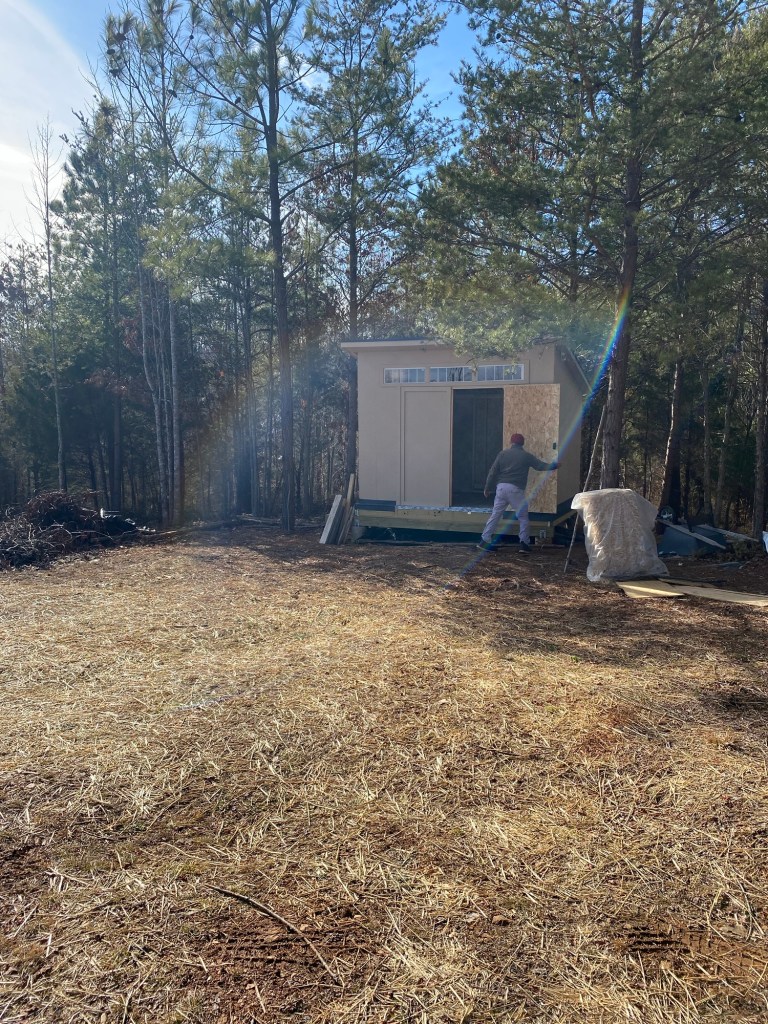
We were able to get most of the insulation in the shed completed.
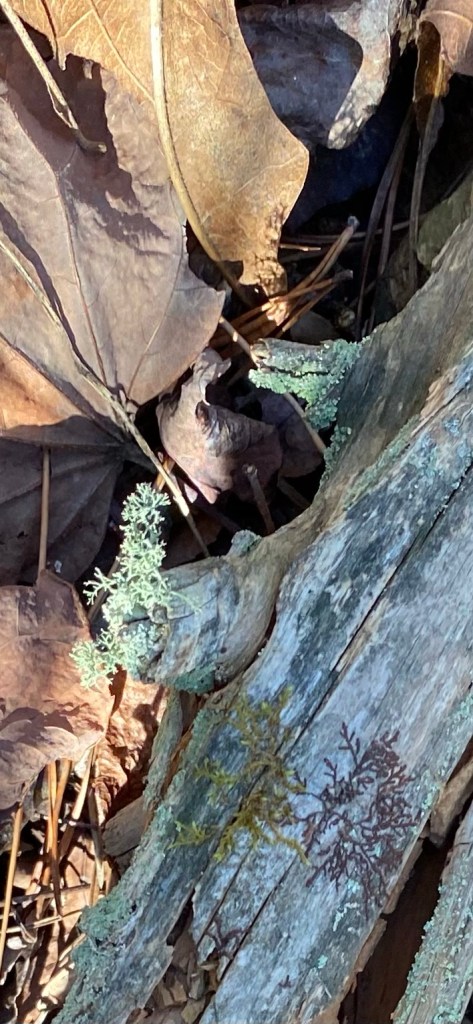
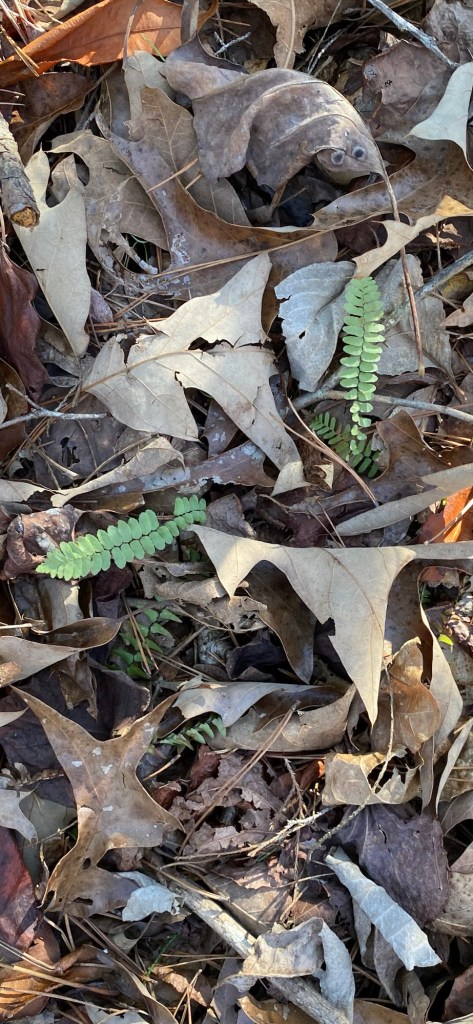
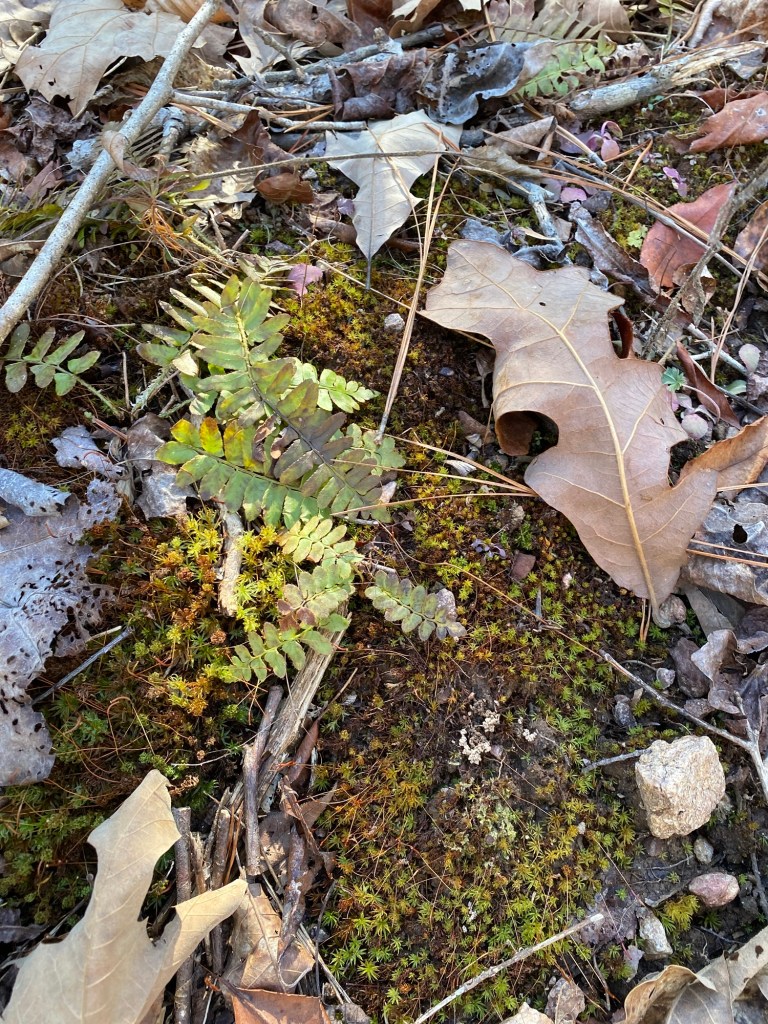
A fern mossDeer lichen in the sunshine and New York scalewort on the log in the shadow. A small fern found along the north side of Saint Andrew’s Forest Farm. They were abundant throughout the forest and along the wet weather gullies.
We took a quick trip over and found more mosses, lichen and worts. No mushrooms today. It’s just too cold. We trailbrazed some through the dense trees. We cut back vines. We repositioned the trail cam to catch images of the red fox family. We also dreamed about building log cabins, more trails and meditation spots in the forest. We stayed in the north central area and passed by the culvert with the shoe lasts.
We strengthened the internal structure of the shed some more by adding hurricane clips and other strong ties. Next time, we will insulate and put up interior walls.
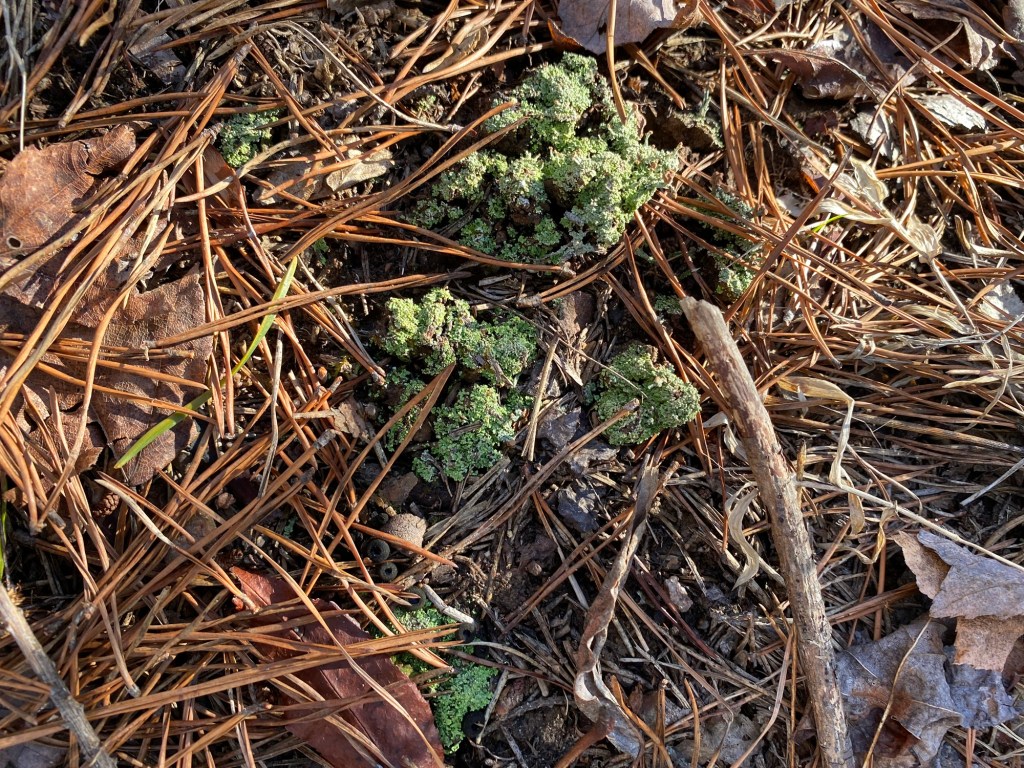
The tiny black cup fungi, Urnula craterium, hiding among the pine needles and lichen caught our eye when we looked twice!
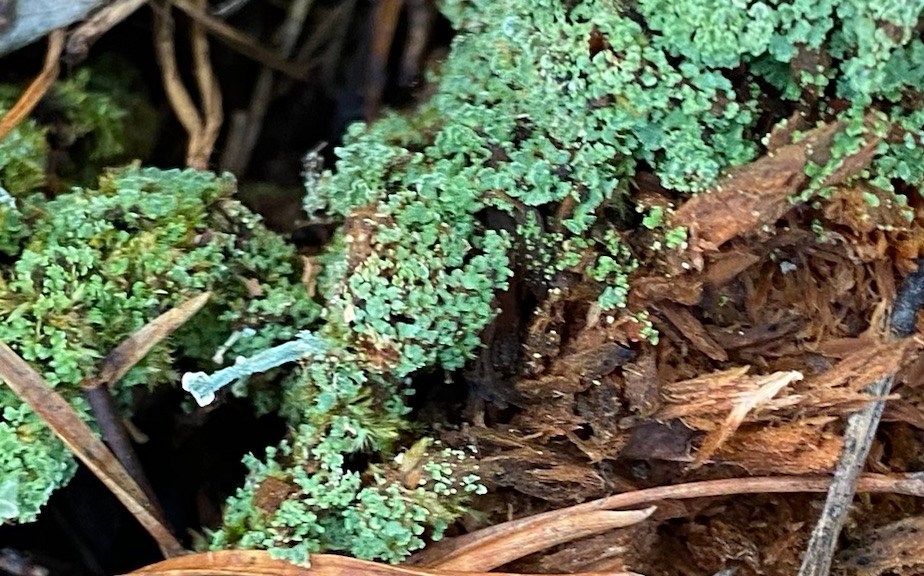
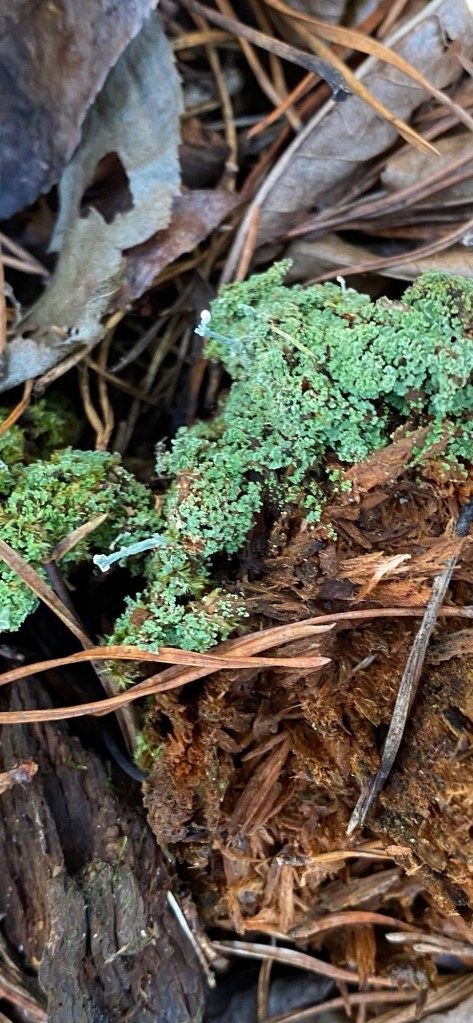
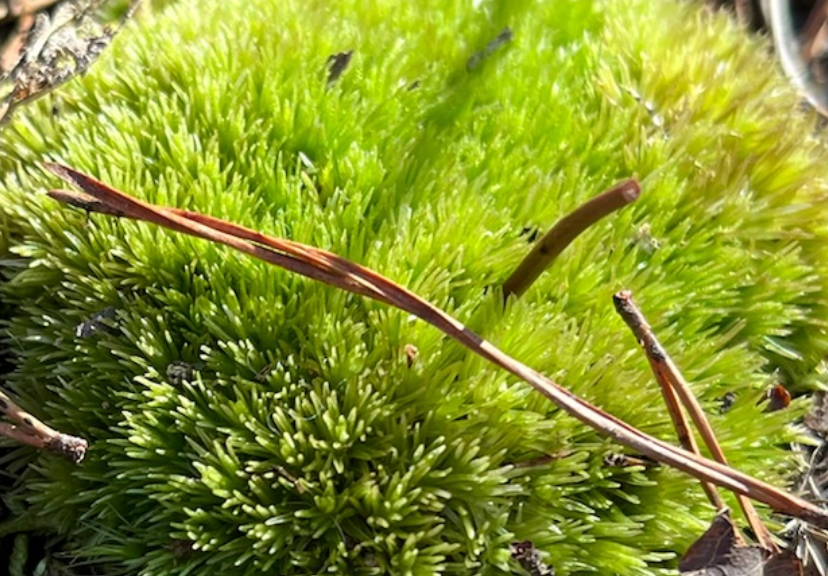
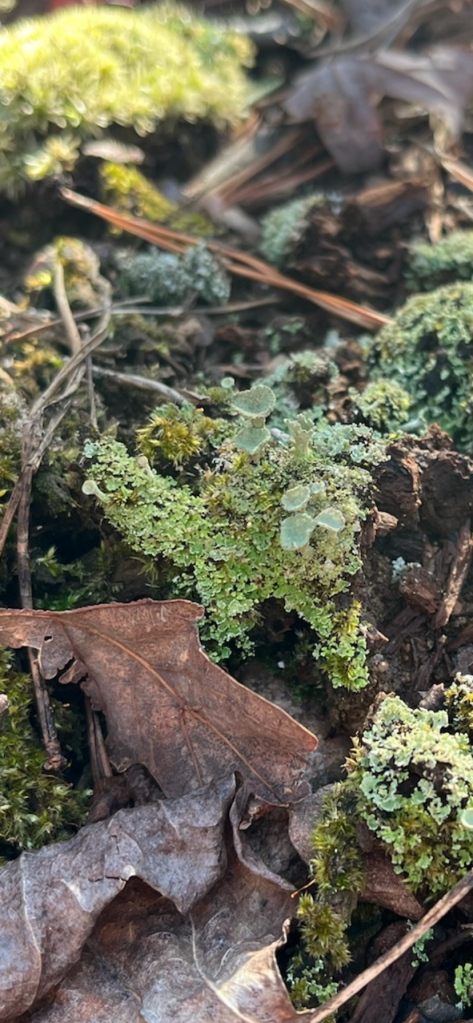
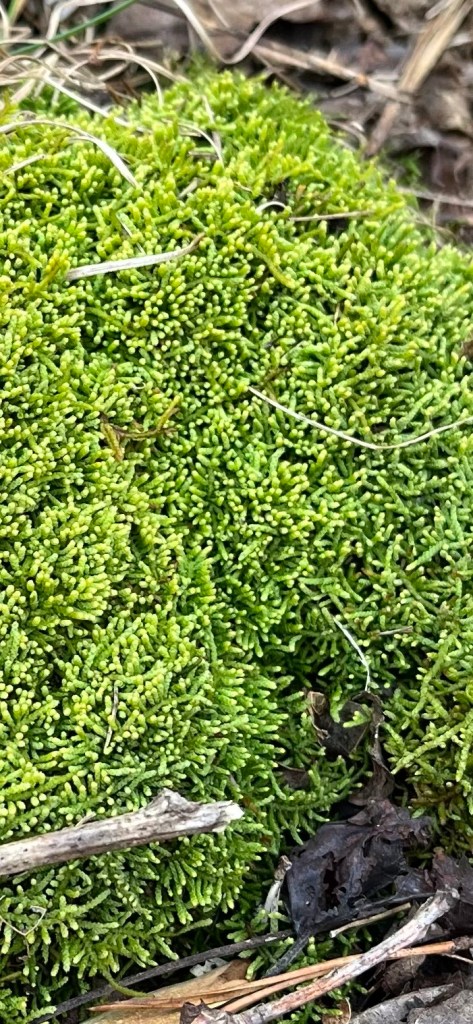
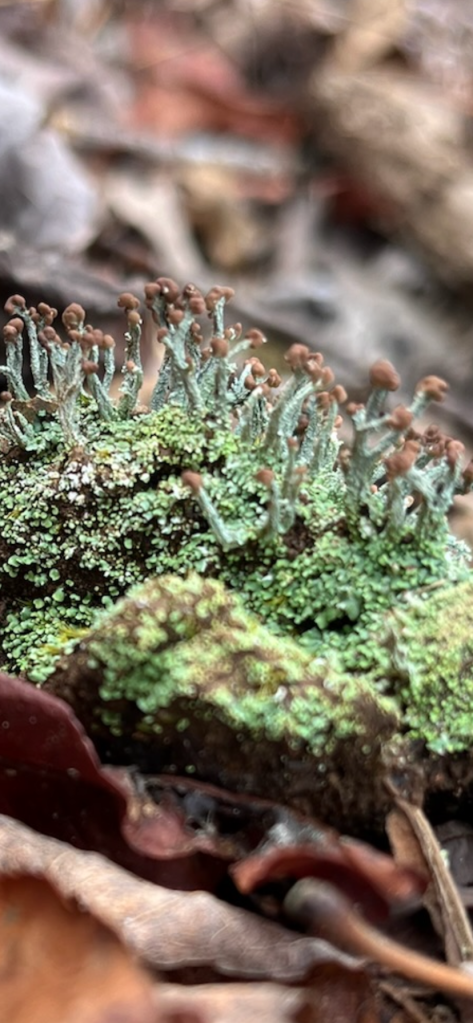
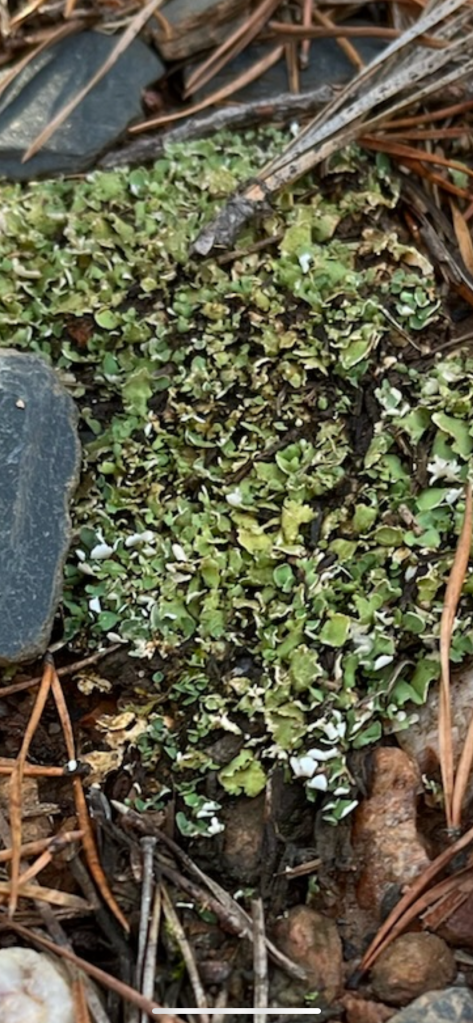
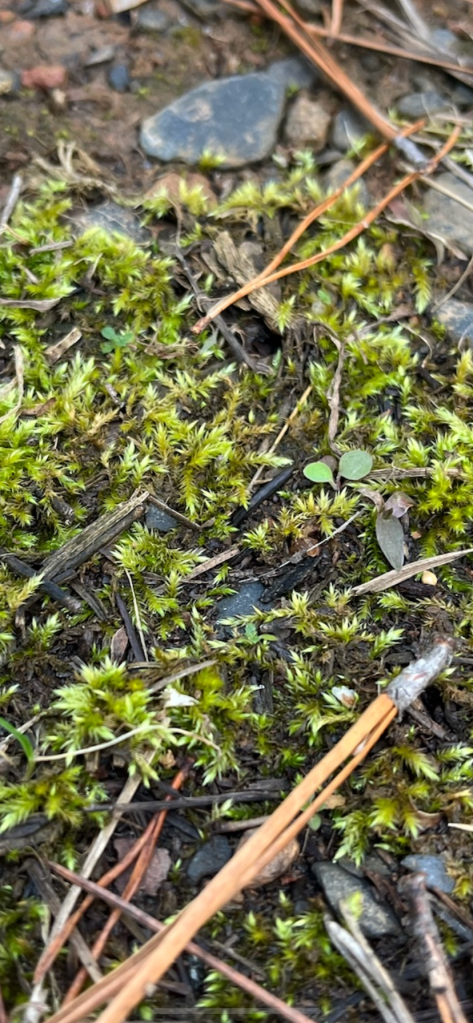
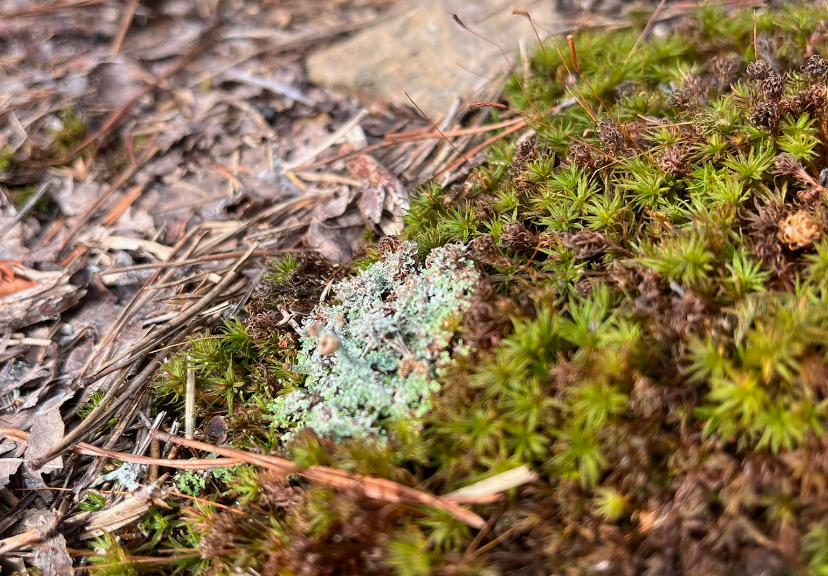
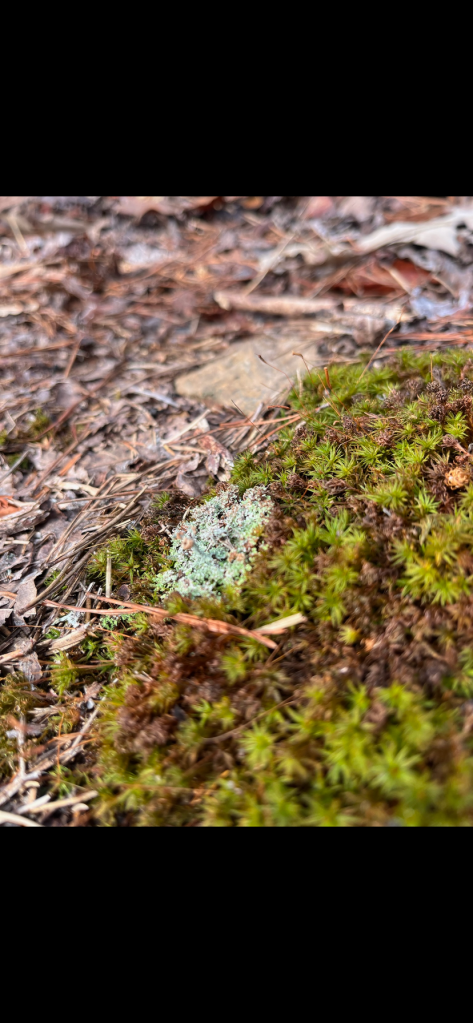
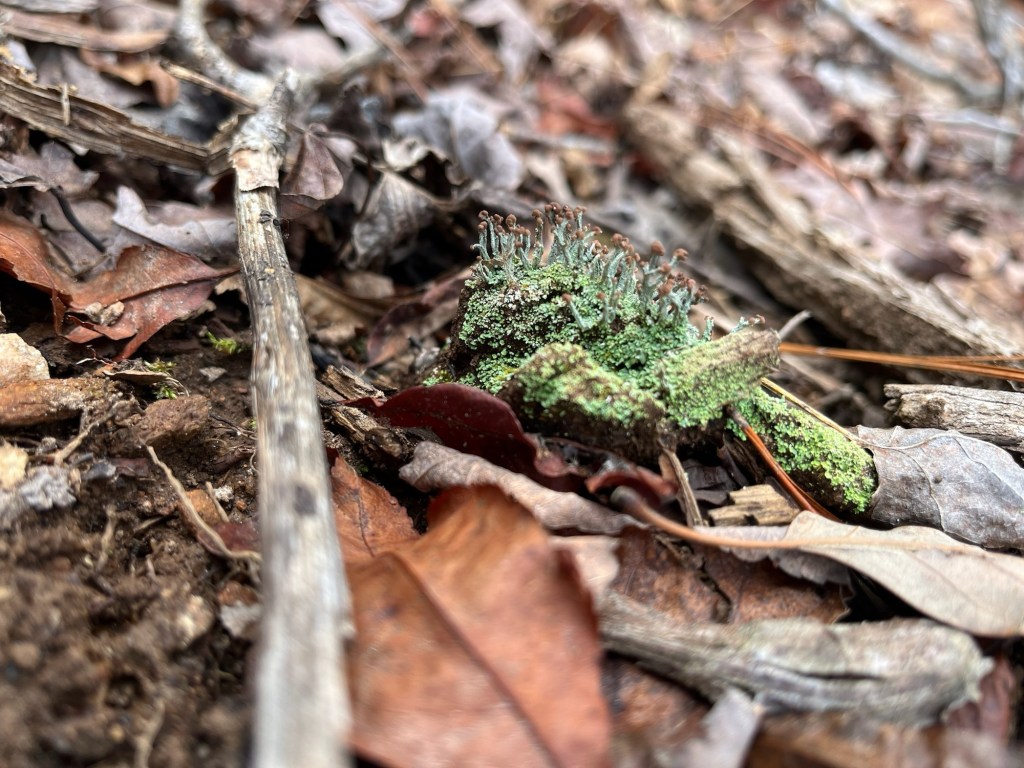
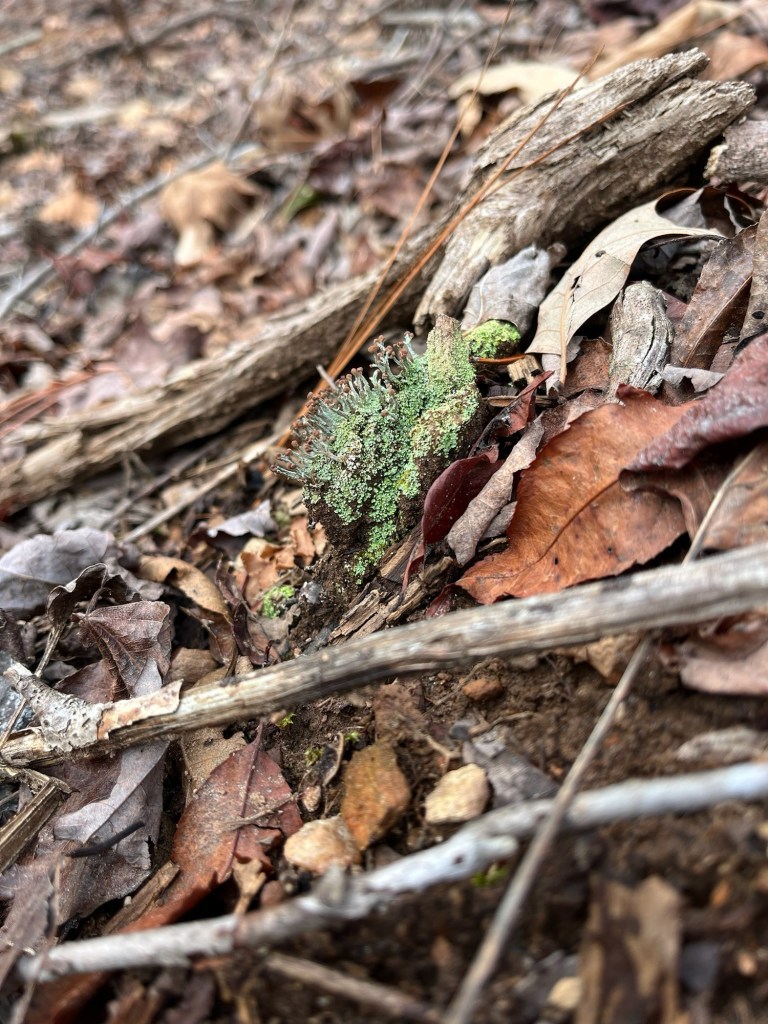
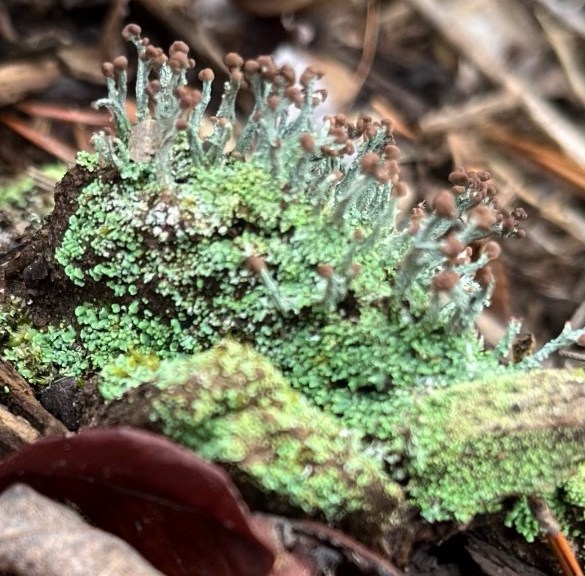
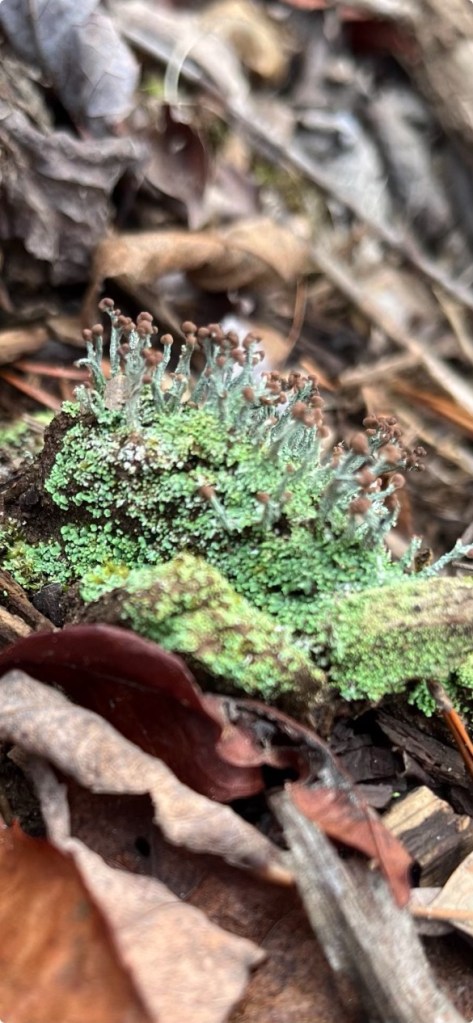
Cup lichenGreater whipwort, Bazzania trilobata Cladonia peziziformis, turban cup lichenSnakewort, Conocephalum salebrosumBrachythecium rivulare or Waterside feather moss Dicranum scoparium, Broom forkmoss Leucobryum glaucum, pincushion moss
We were delighted to find all of these mosses, lichens and liverworts. They are so alive and colorful in the forest while everything else has gone drab for winter. We are going to walk around the north side of the farm and look for more types as soon as we get back out there.
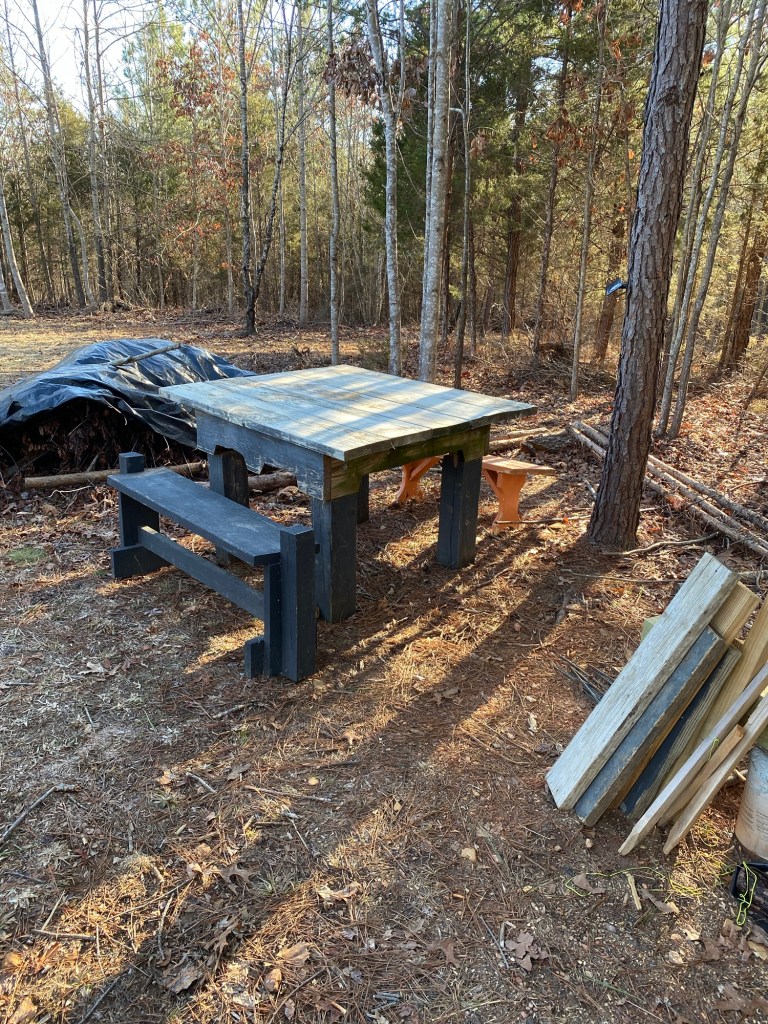
We moved our big table and two benches as well as firebox grate to the farm and will be happy for this if we ever sit down to relax. lol.
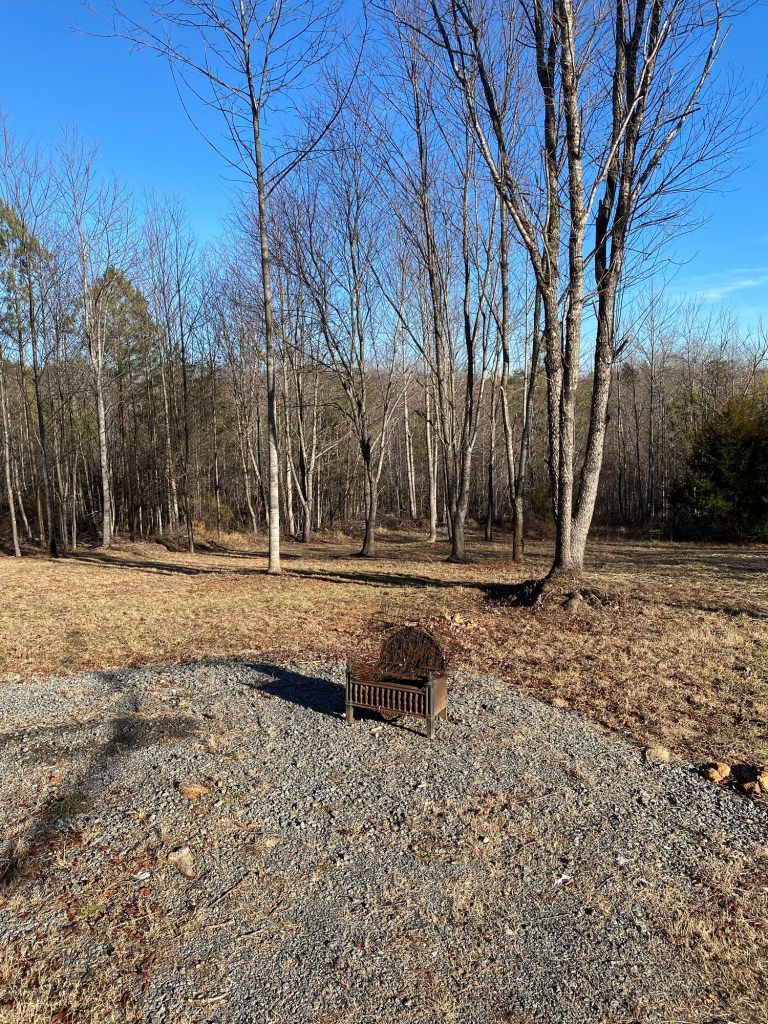
When we camp, we can use this for fire until we dig our fire pit.
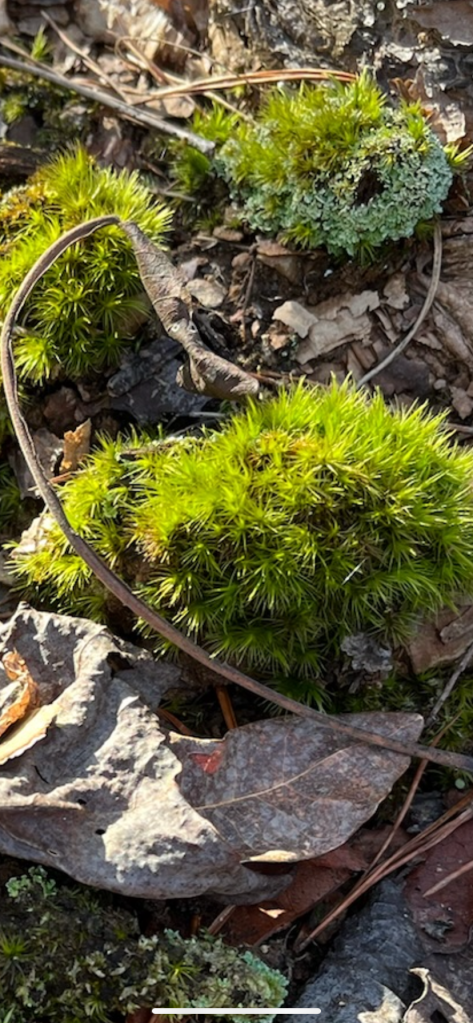
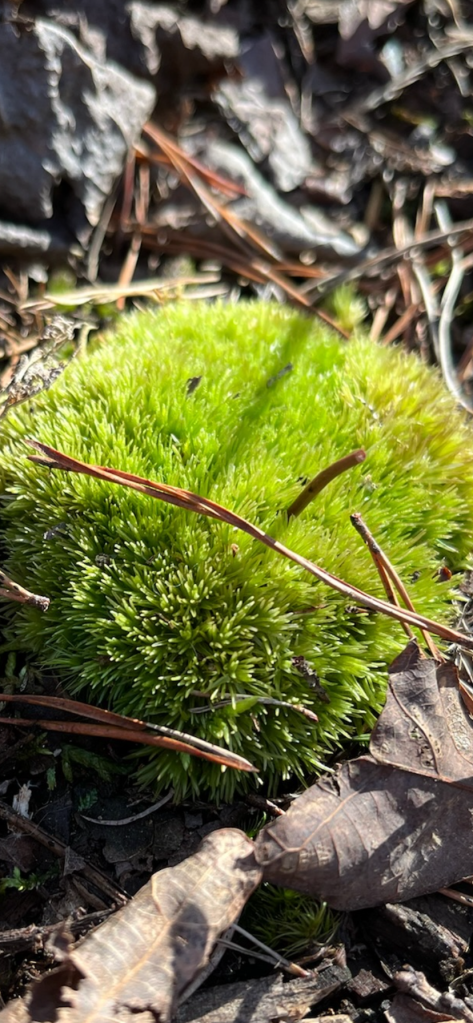
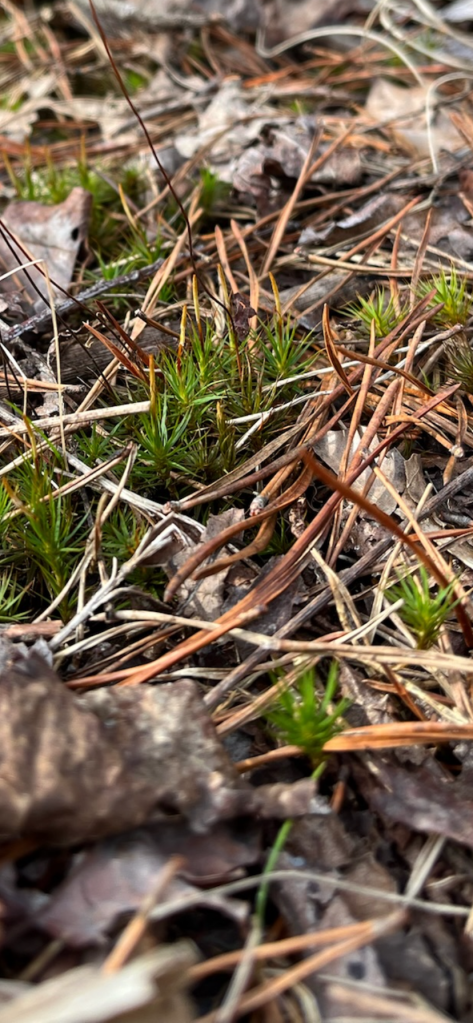
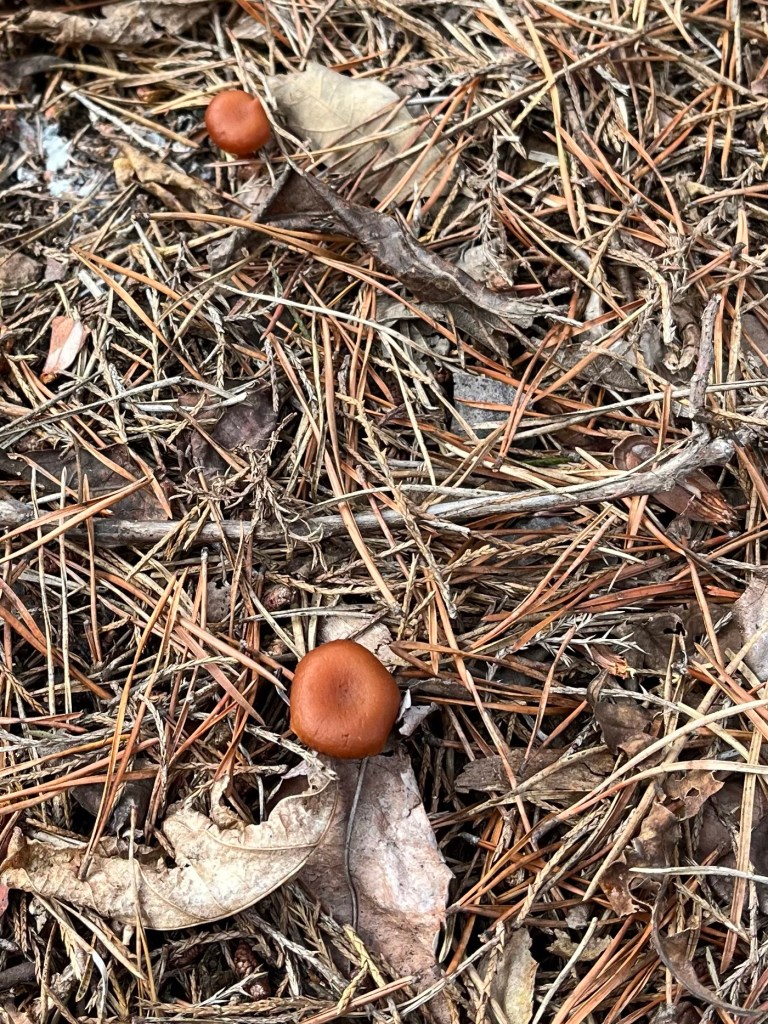
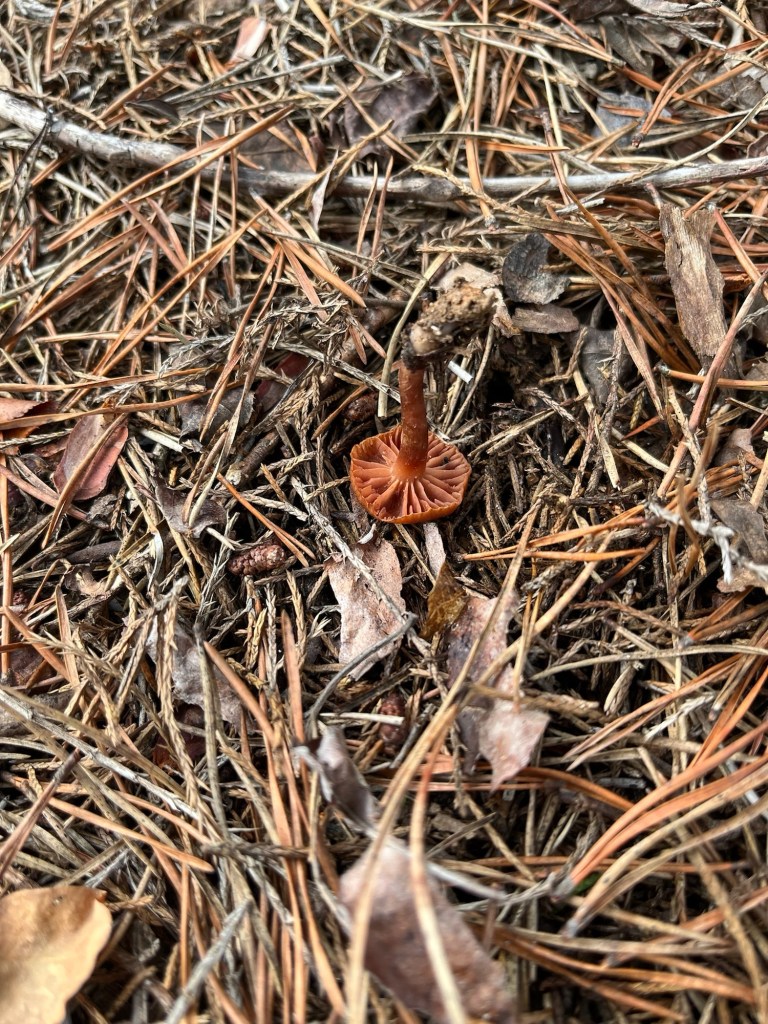
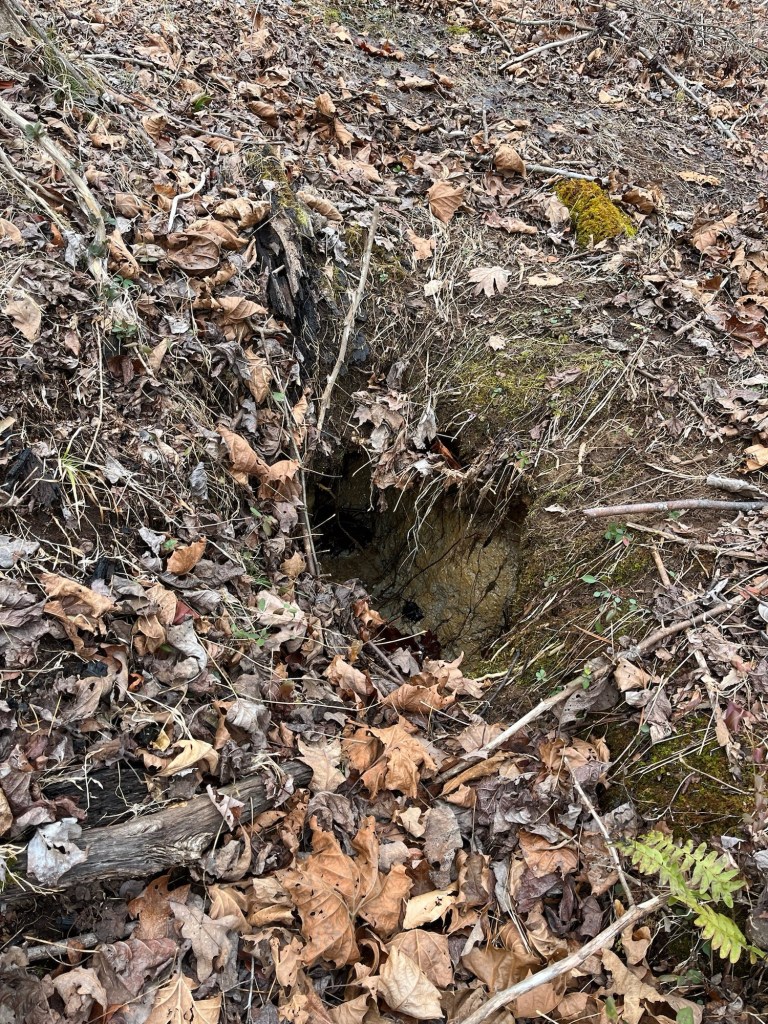
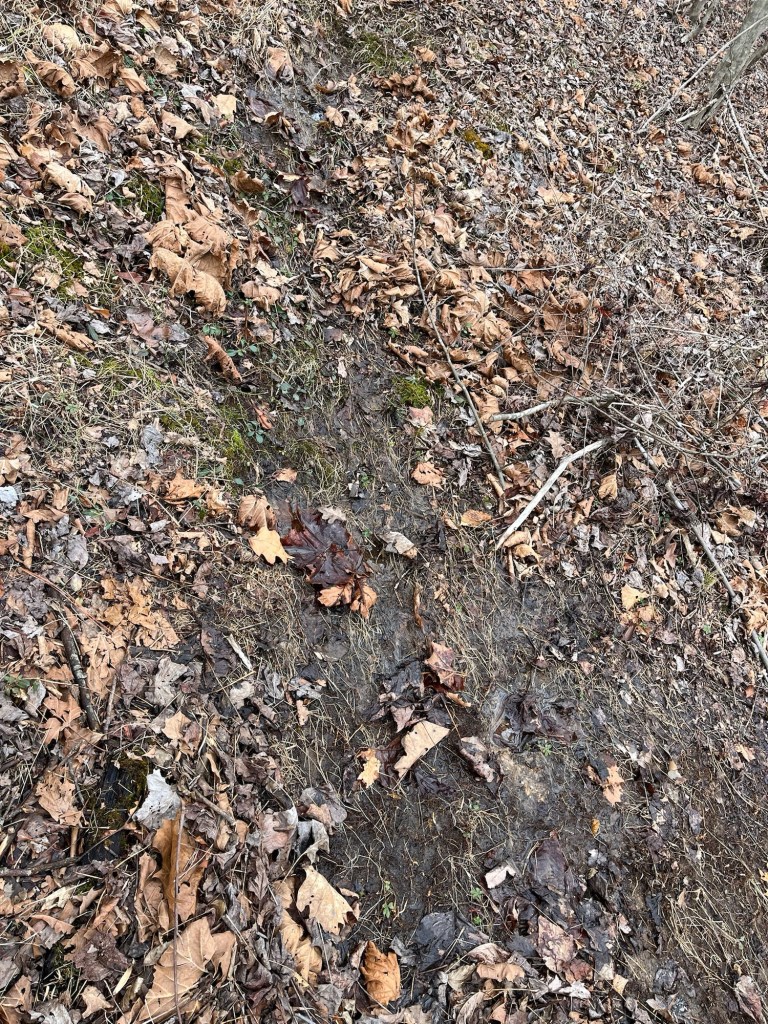
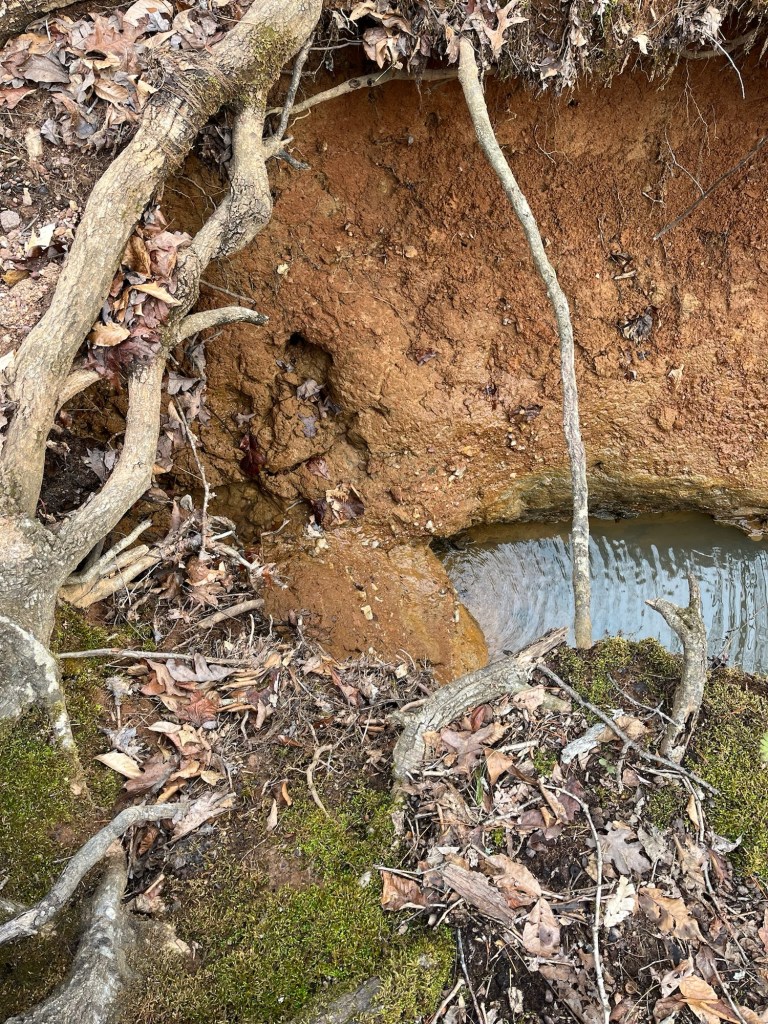
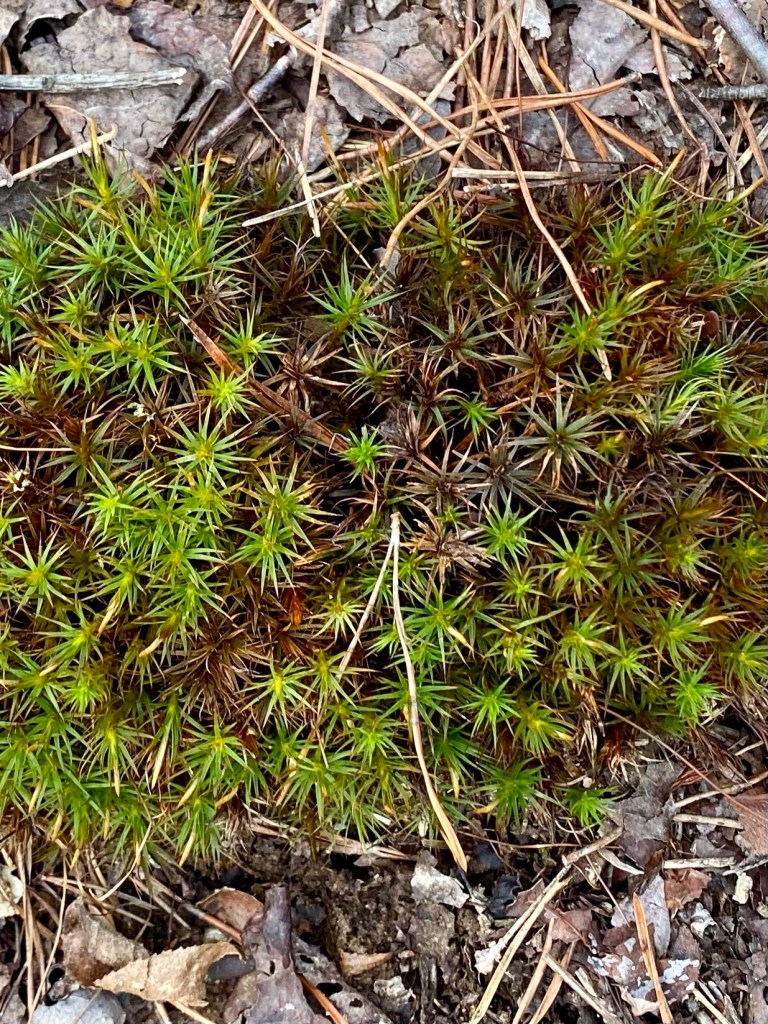
We thought we’d found a new type of moss but it is also a Haircap moss. Lichen and moss are the stars of the show in the forest right now.These turban cup lichen are so fun. How have we never noticed them before?Ok, last one for today. Top of the cap of Laccaria. Beautiful reddish brown and emerging in a warm snap during a particularly cold winter near pines and poplars. A spring that is active after rains. We noticed a bit of a larger hole inside of this. Water pooling just above the wet weather spring with the small hole. The larger spring that has trickled throughout the driest weather conditions. The inside of the shed. Finally ready for insulating.
So far we have seen a large deer missing half his antlers walking by the waterway at night and a black dog with a white face strolling through at night as well since we moved the trail cam to the waterway. We saw the black dog and hoped we caught a glimpse of the bear. Not yet! We moved the trail cam to try to catch some images of the red fox family.
We continue to cut down and clear out black cherry trees and tulip poplars that are diseased and dying. Since it’s been cold this winter, we are burning them in our fireplace. It’s been nice.
Later this week, we plan to take a table and a couple of benches out to the farm to have a place to sit other than the truck. 😀
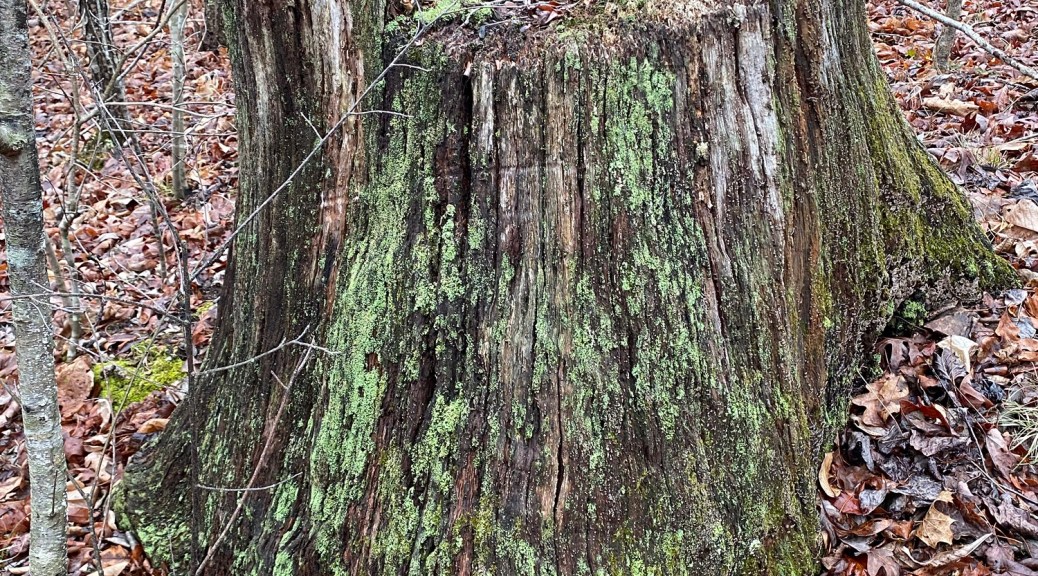
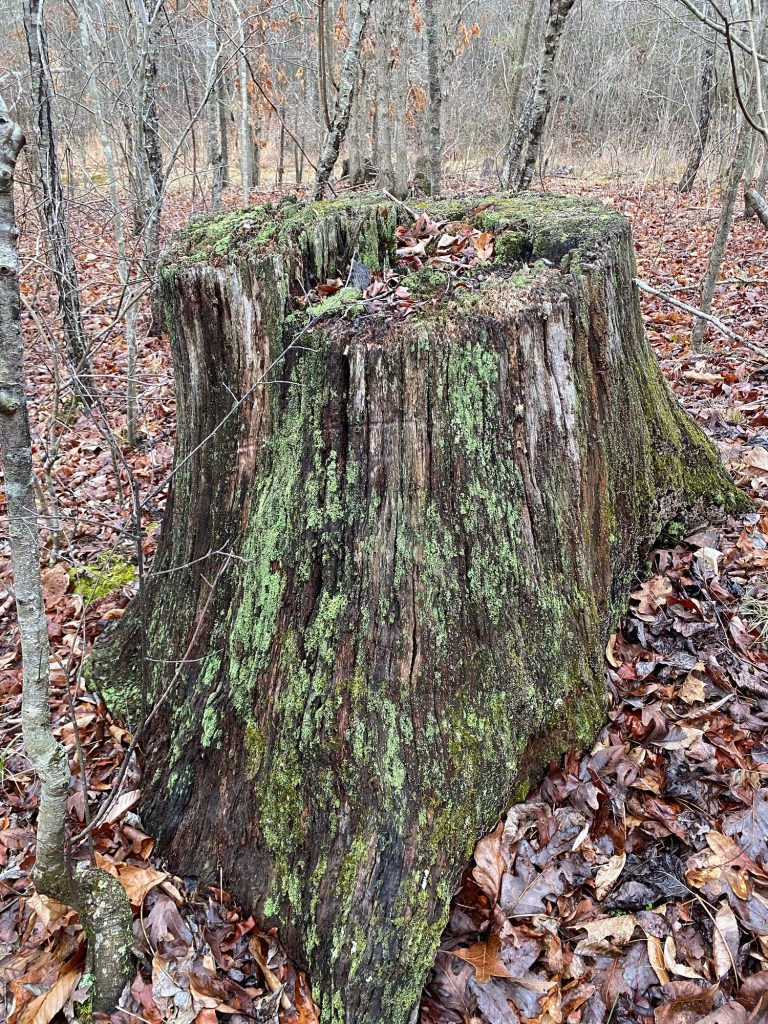
We are also looking to begin to put together a fire pit in the middle of our main clearing. A big tree stump sits there and we will dig in and put rocks inside. It will be nice to stay warm when we camp.
Found along the southern wet weather gully on Fern Trail. Common Haircap Moss. We saw these all along the trail. Turban cup lichen also growing along Fern Trail near the southern wet weather gully.
We went out today and found these interesting moss and lichen. We also found mushrooms and walked along the bottom flood plain. The water had washed away the leaves and we could see the rich soil. It was warm in the mid seventies and smelled like spring.
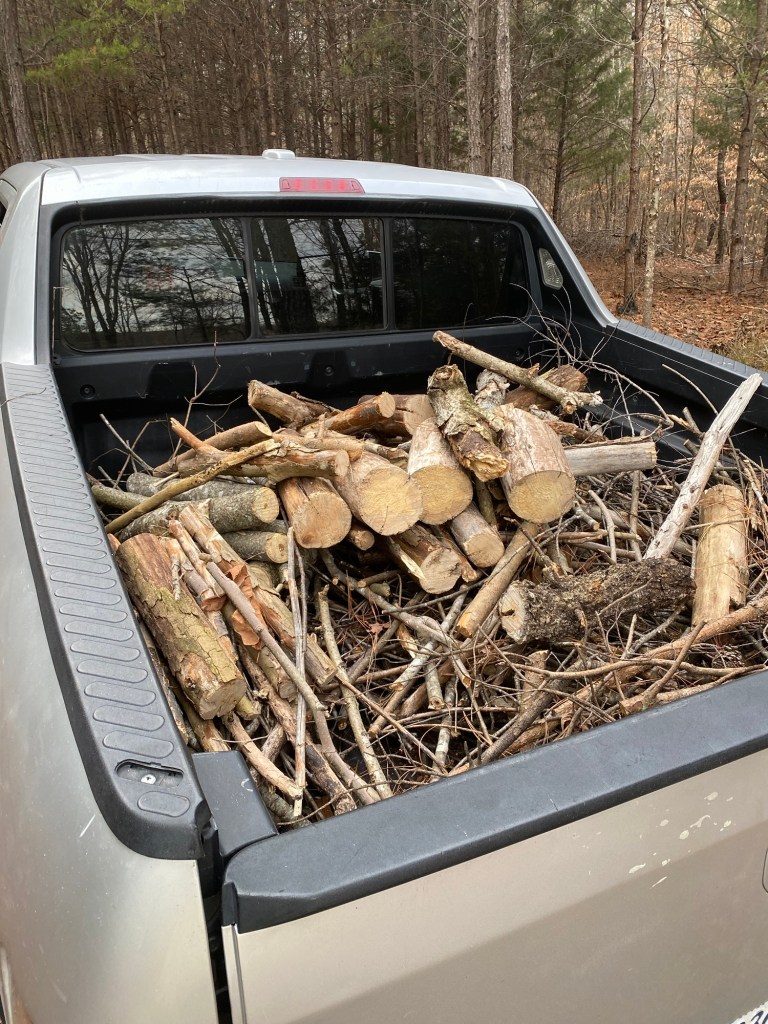
We cut down several diseased black cherry trees and loaded it all into the truck and brought it home to burn.
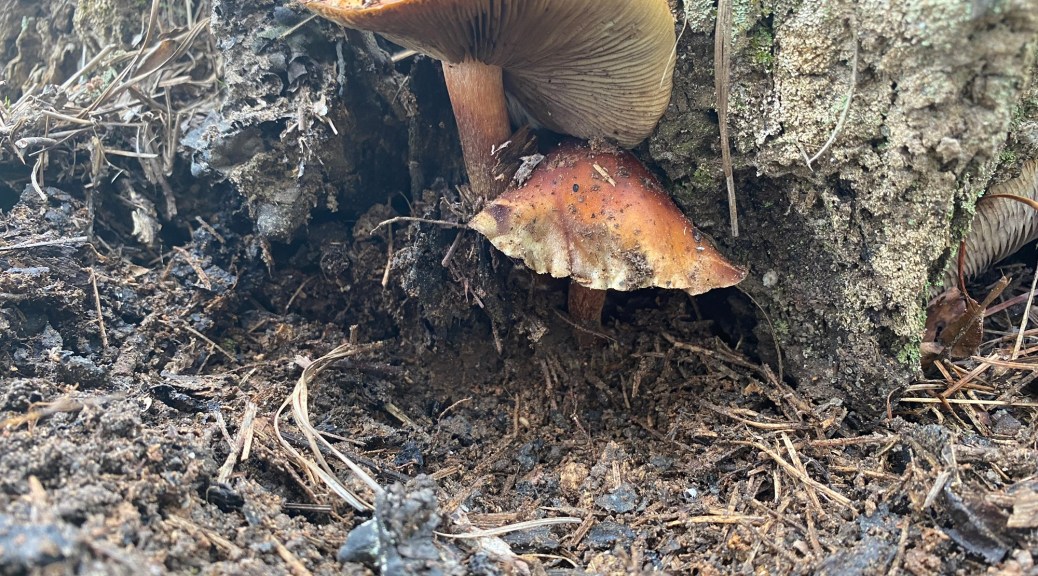
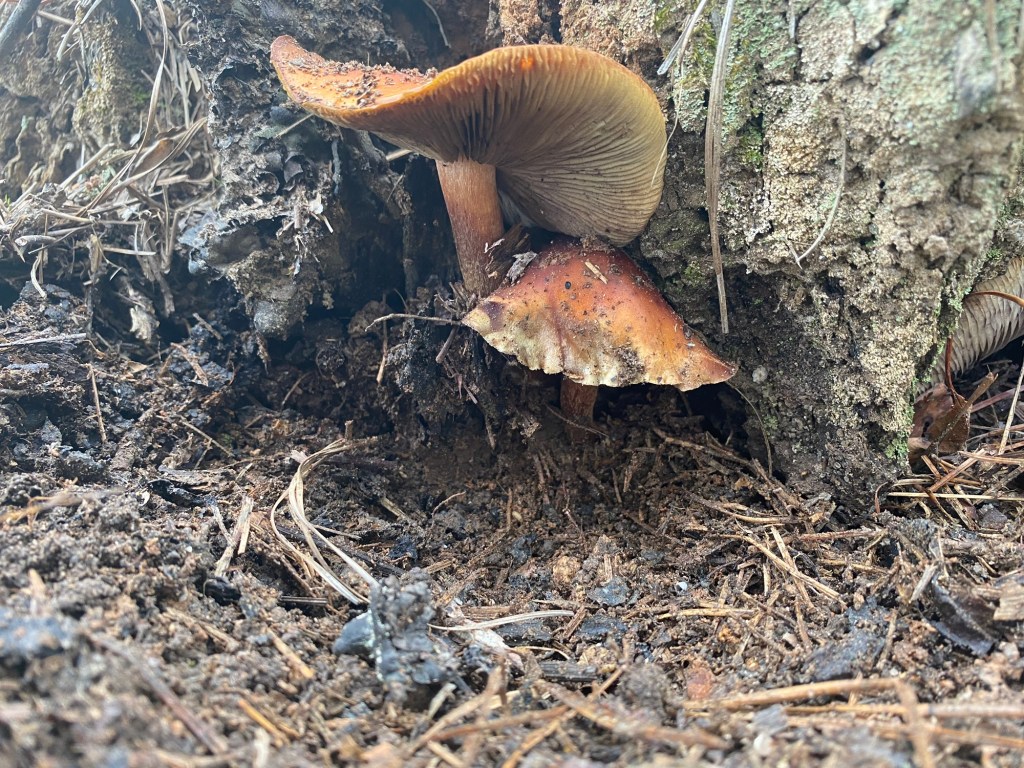
Found next to driveway up top growing from under a stump. Hypholoma lateritium, brick cap.
We drove over to Buckingham County yesterday afternoon after spending our first full week away because the weather was very very cold. A few of those days did not reach much above freezing. We didn’t expect to find mushrooms because of the low temperatures but we were pleasantly surprised.
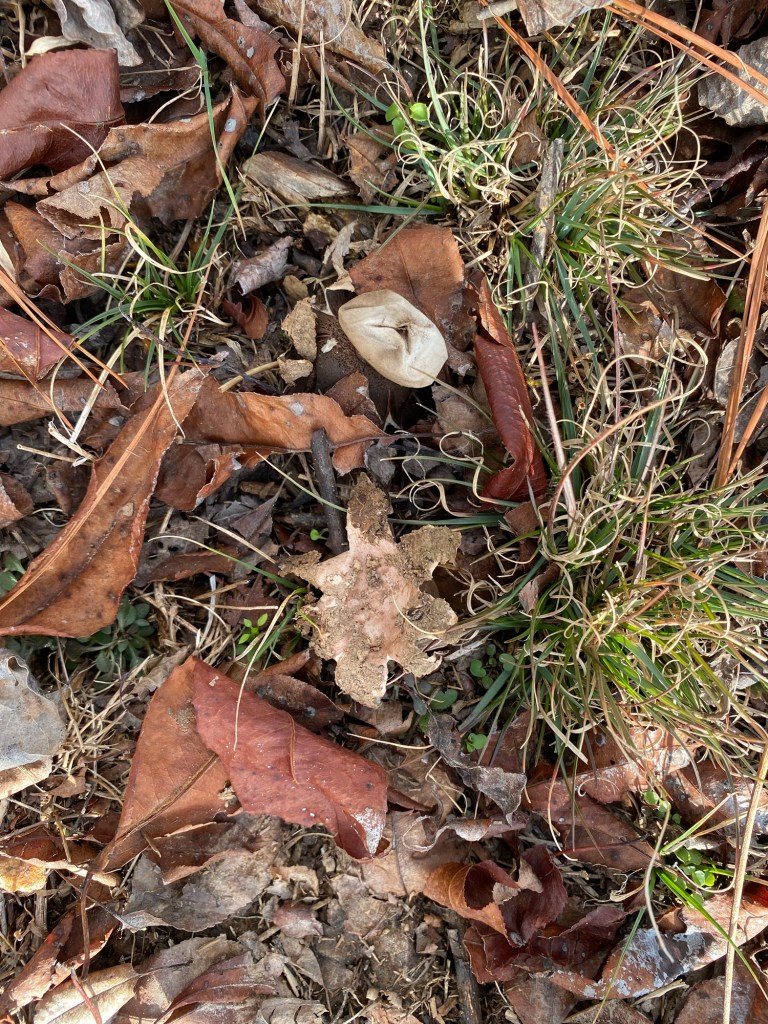
Hygroscopic earthstar, Astraeus hygrometricus, found in clearing up top very near the North Trail head.
We also found a number of puff ball mushrooms down at the bottom of the slope in the floodplain. They were everywhere. We also found Calostoma lutescens up top. The ground was moist everywhere. The waterway was trickling along, though the levels were down from last week.
The shed was dry and is still waiting for us to complete our indoor projects. We are waiting on a new tool that is overdue.
We cut down a dead tulip poplar and collected every piece of black cherry with black knot fungus we saw and loaded this into the truck to take home to burn.
Saint Andrews Forest Farm Blog
Is this your new site? Log in to activate admin features and dismiss this message

 St Andrews Forest Farm