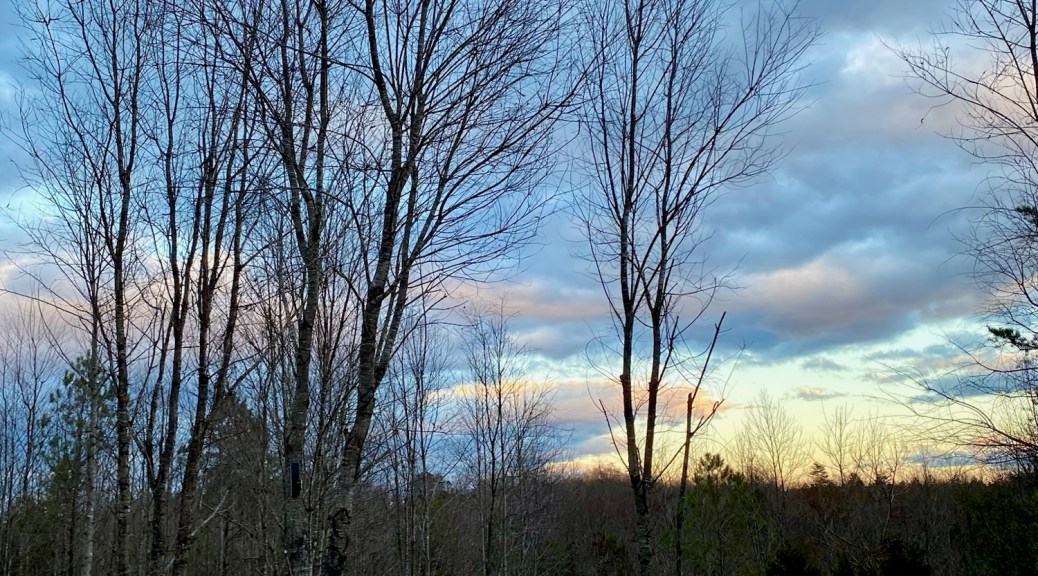
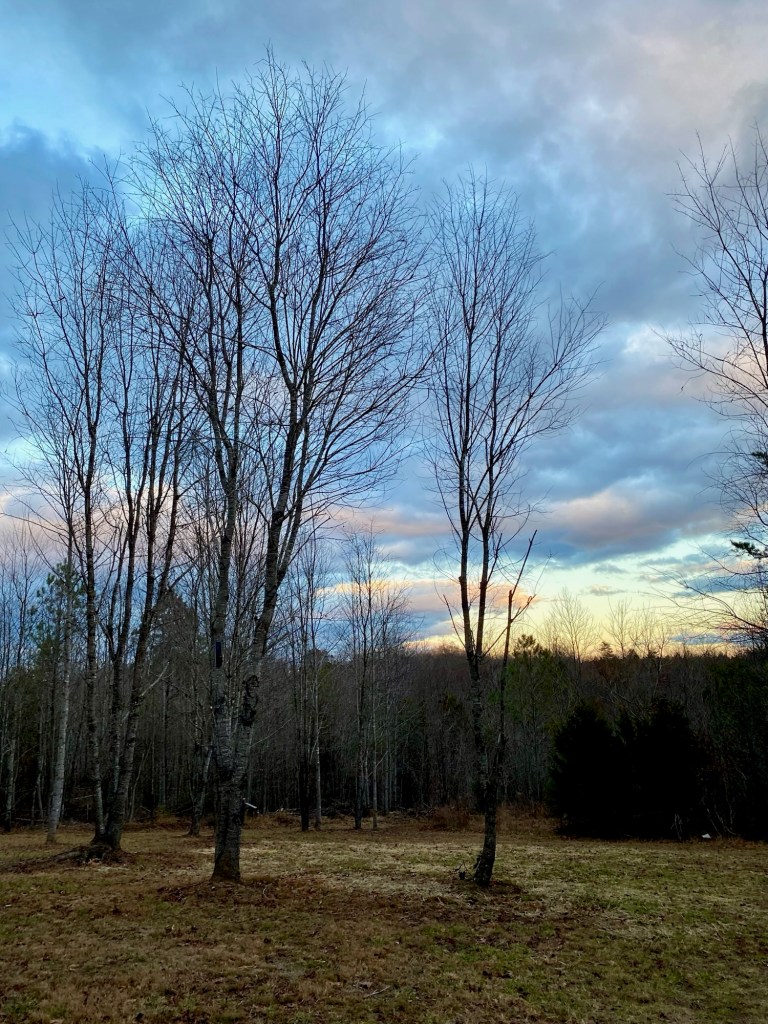
On Saturday night and all day Sunday, Buckingham got 1.7 inches of rain from a storm that moved through from Florida and the Carolinas and continued up the East Coast. We were excited to go out and see if the shed remained water-tight throughout the storm. We also wanted to see water levels in the waterways and wet weather gullies and look for mushroom development.
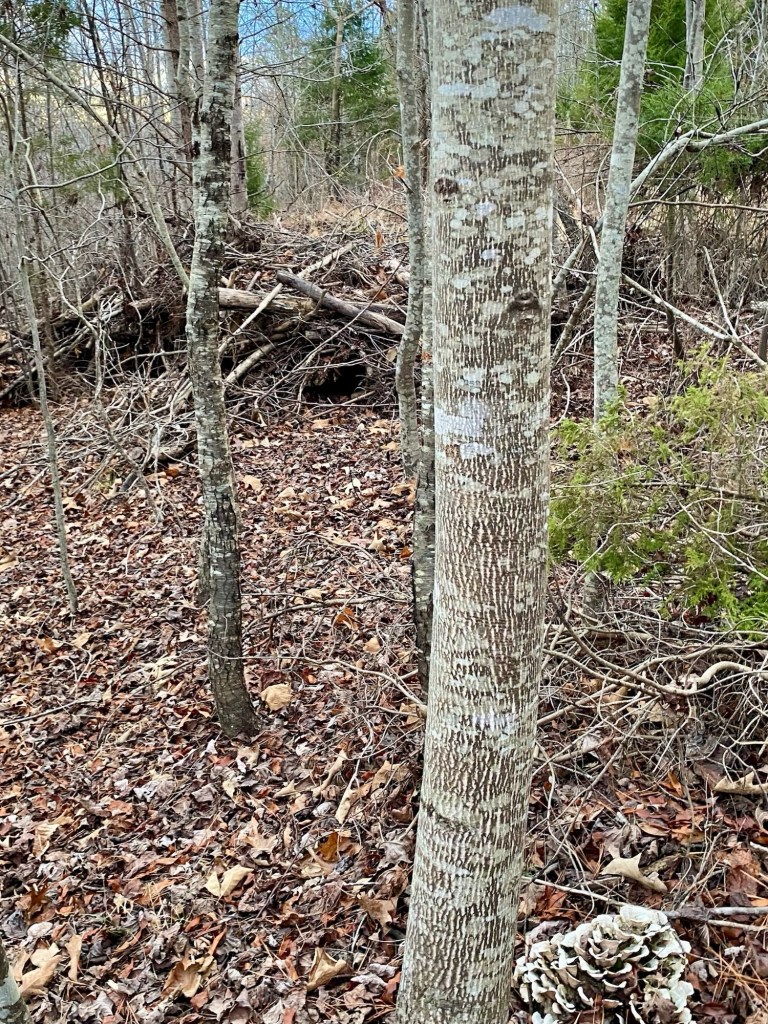
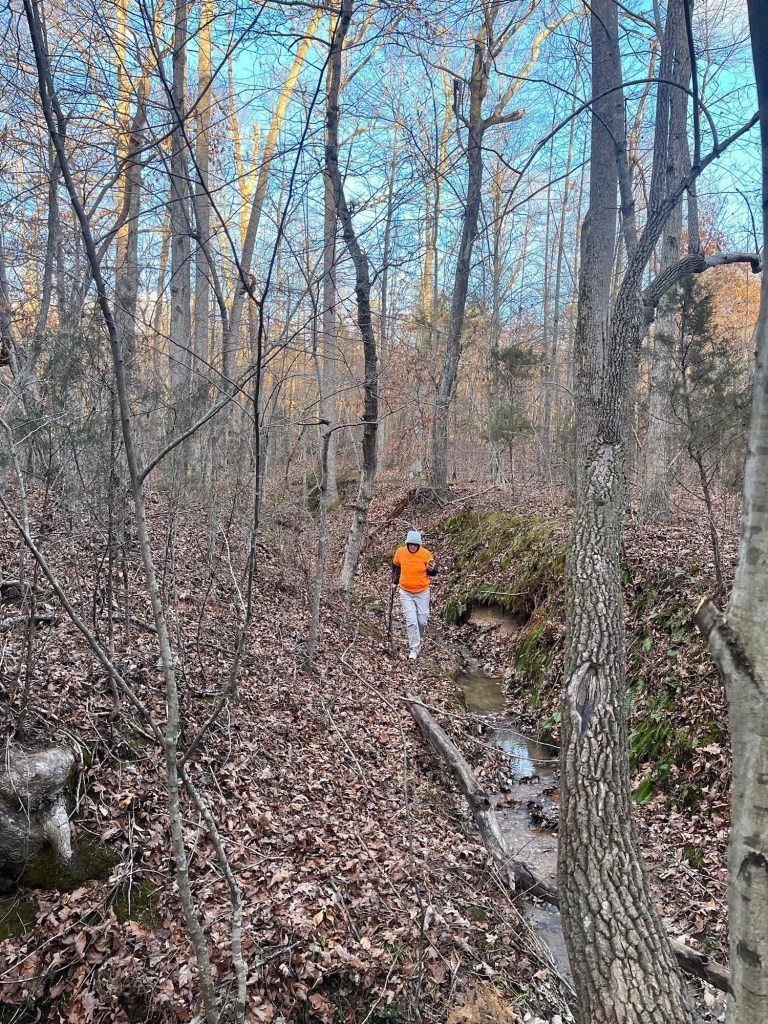
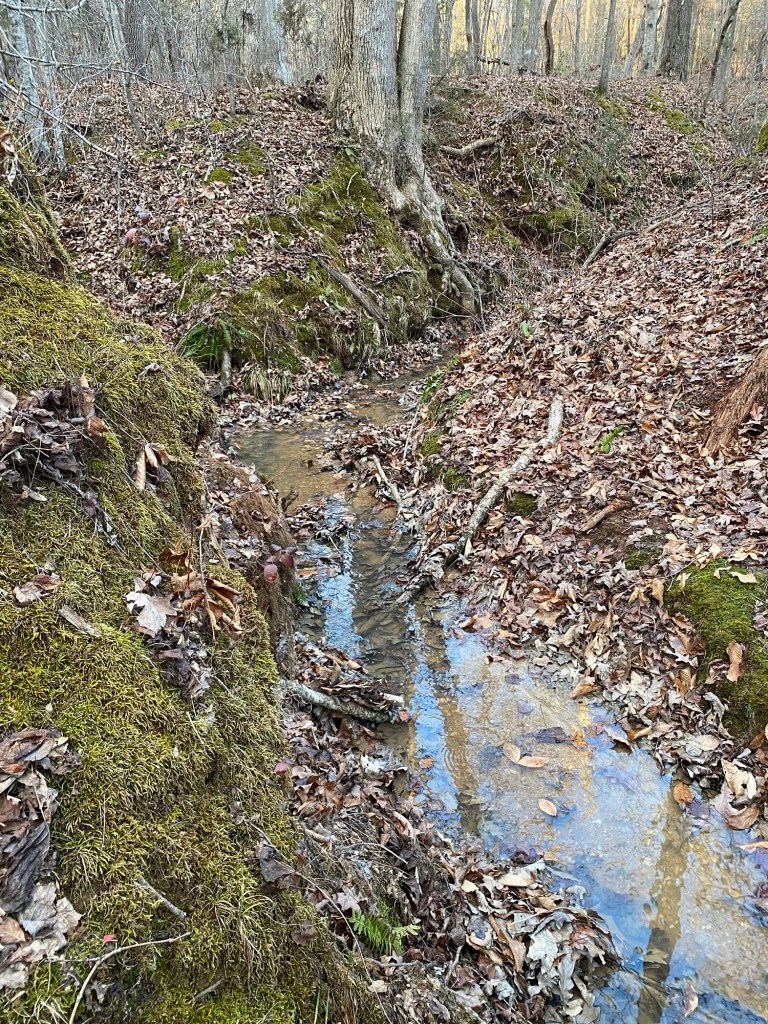
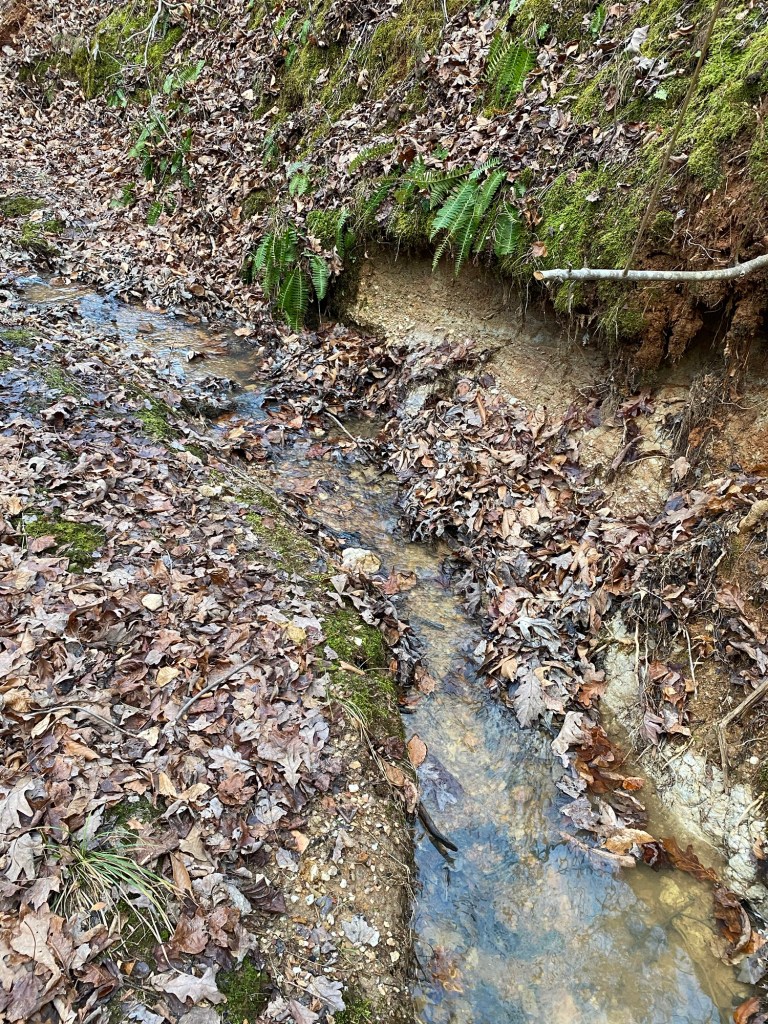
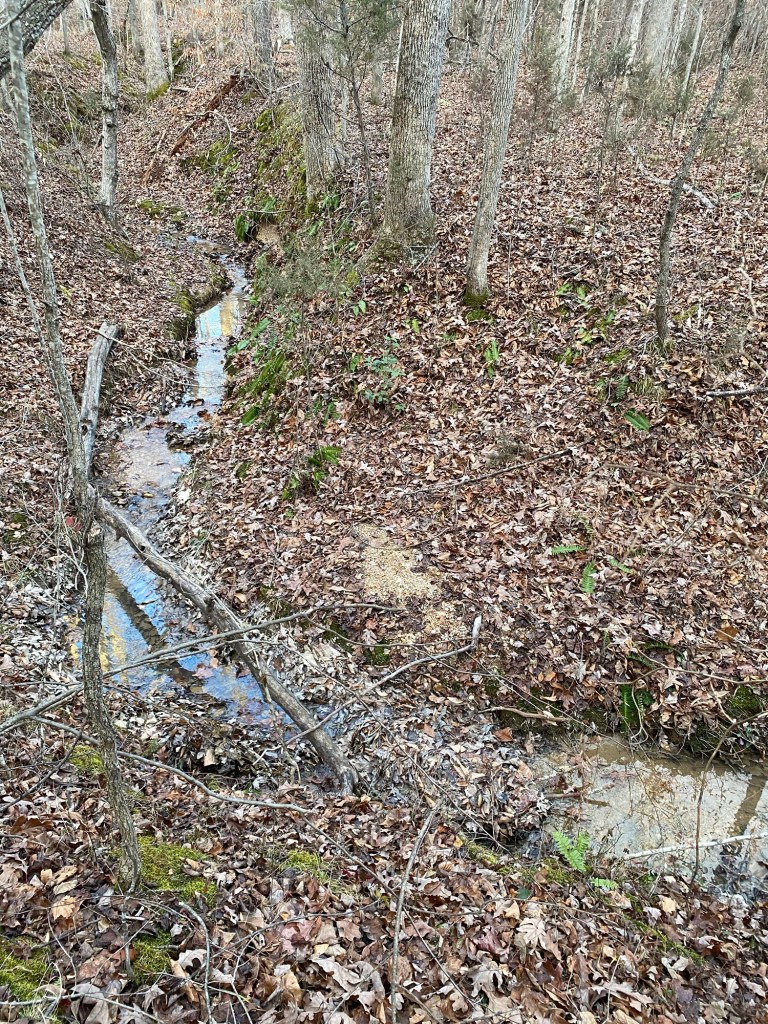
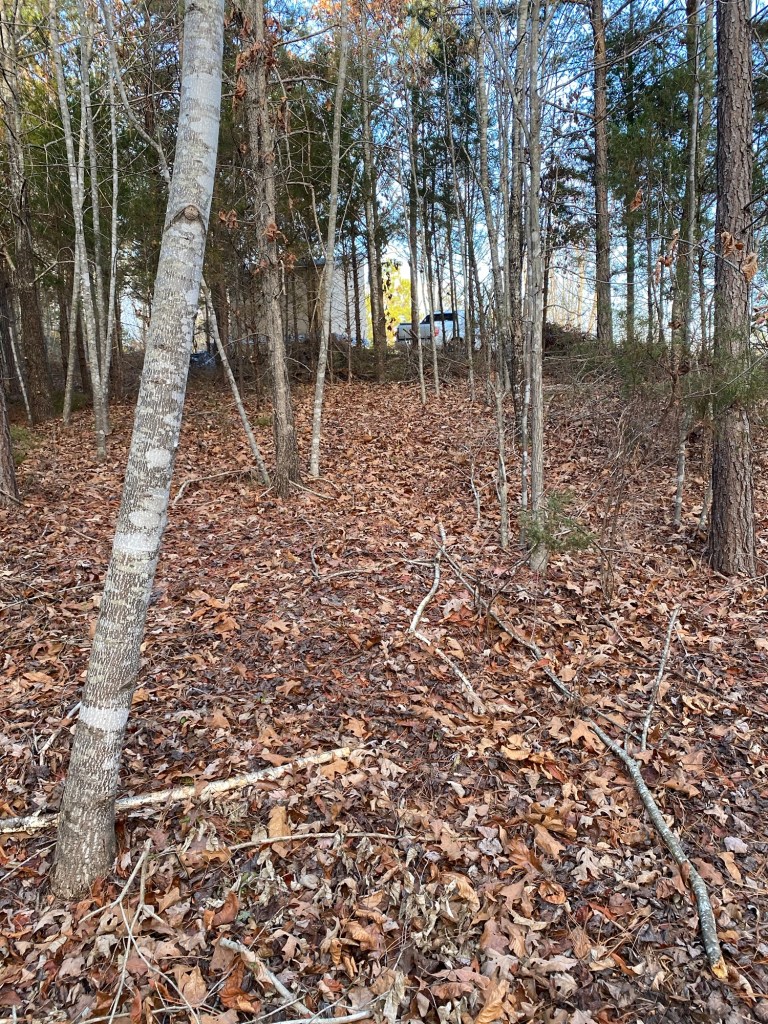
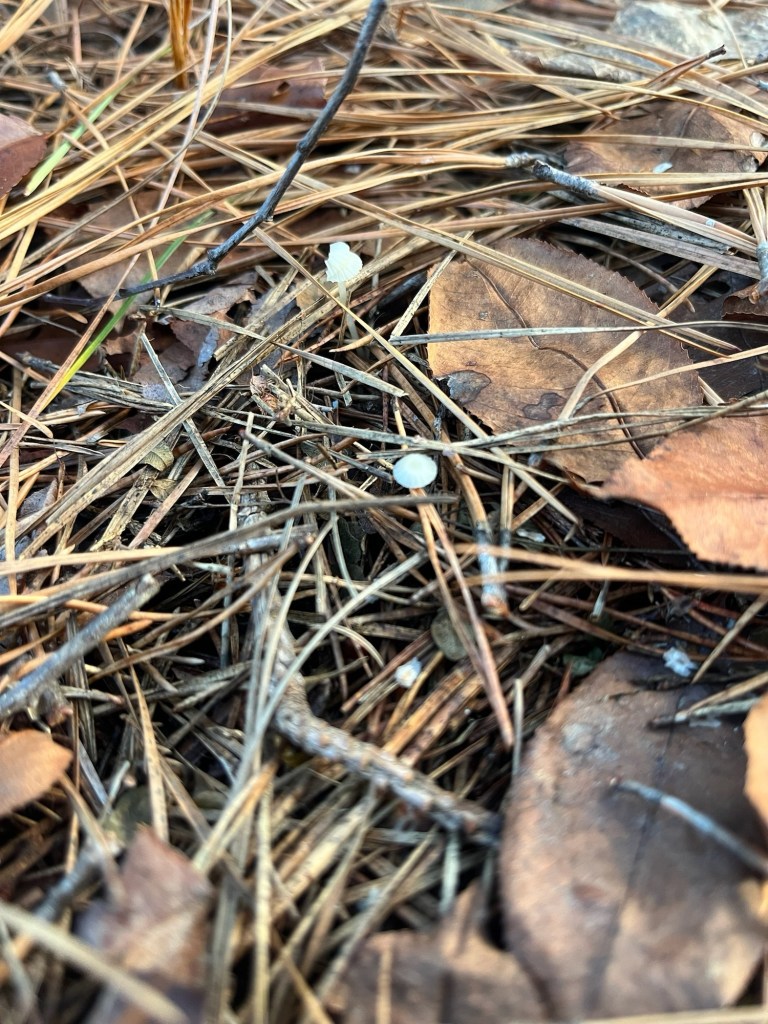
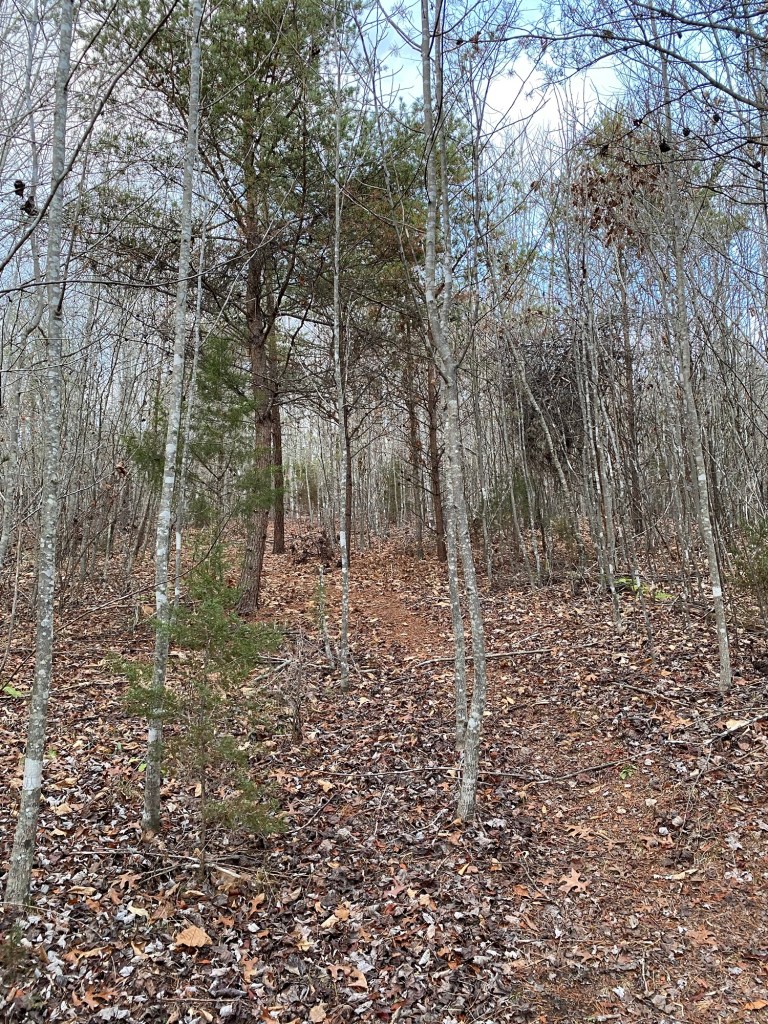
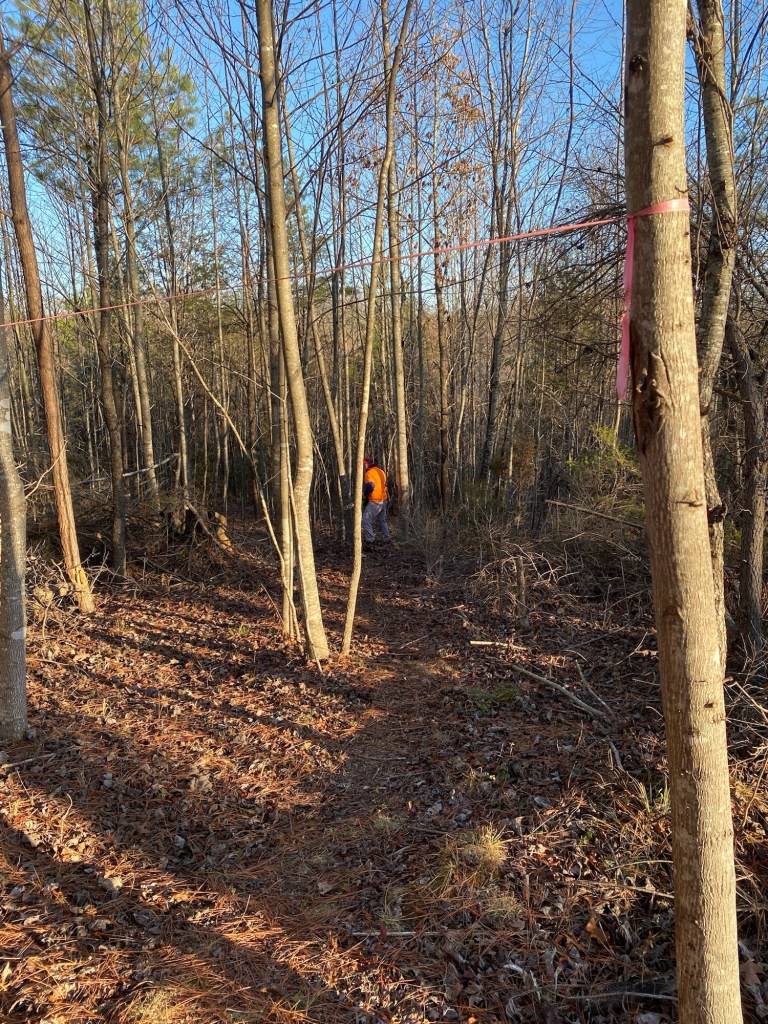
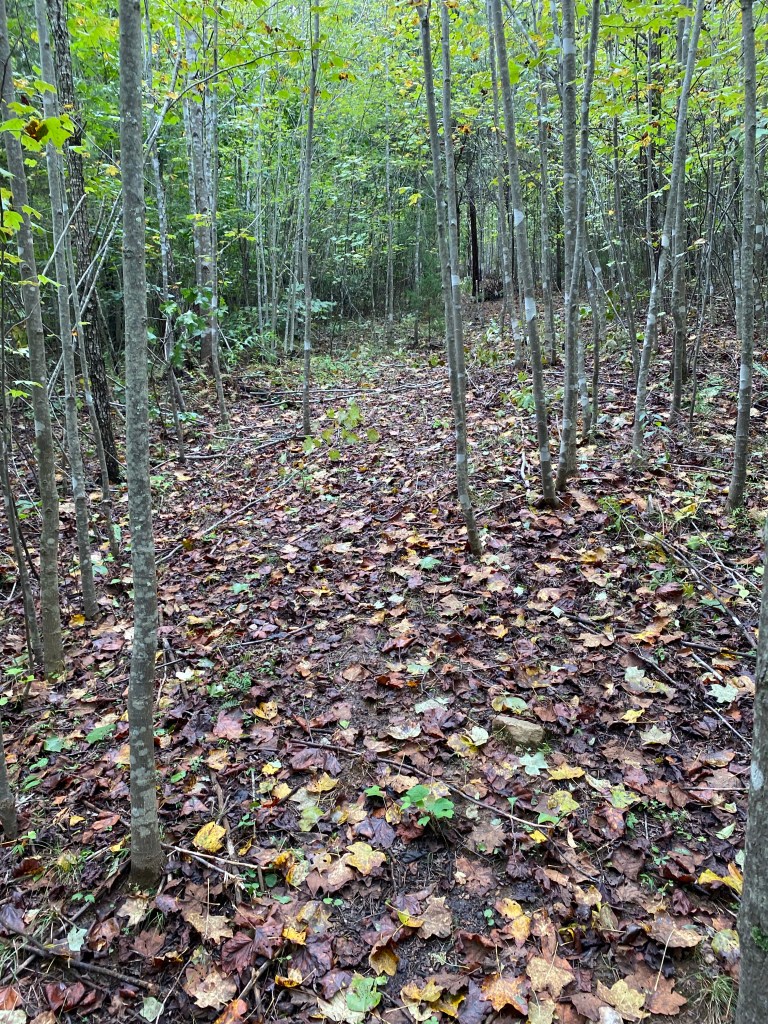
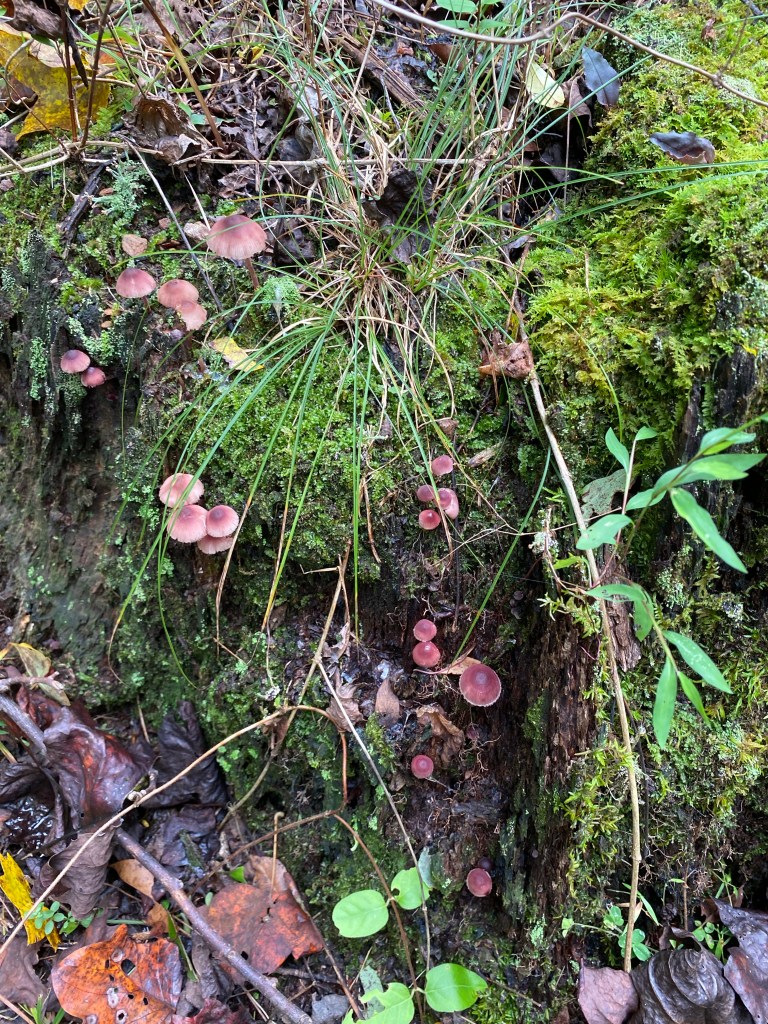
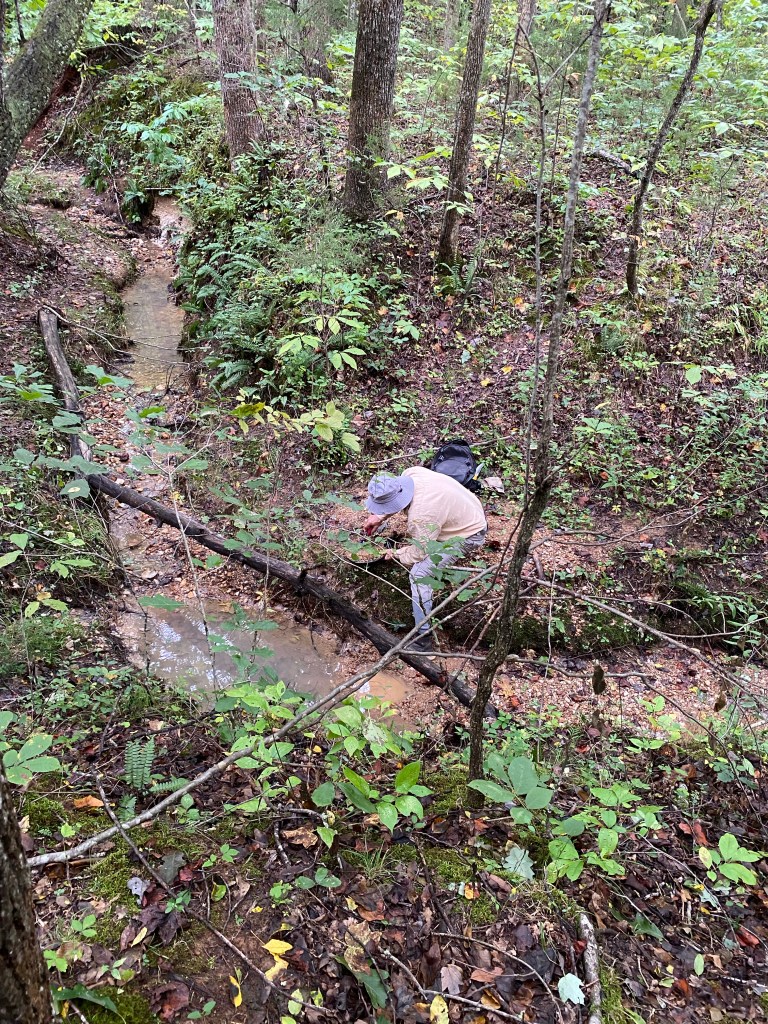
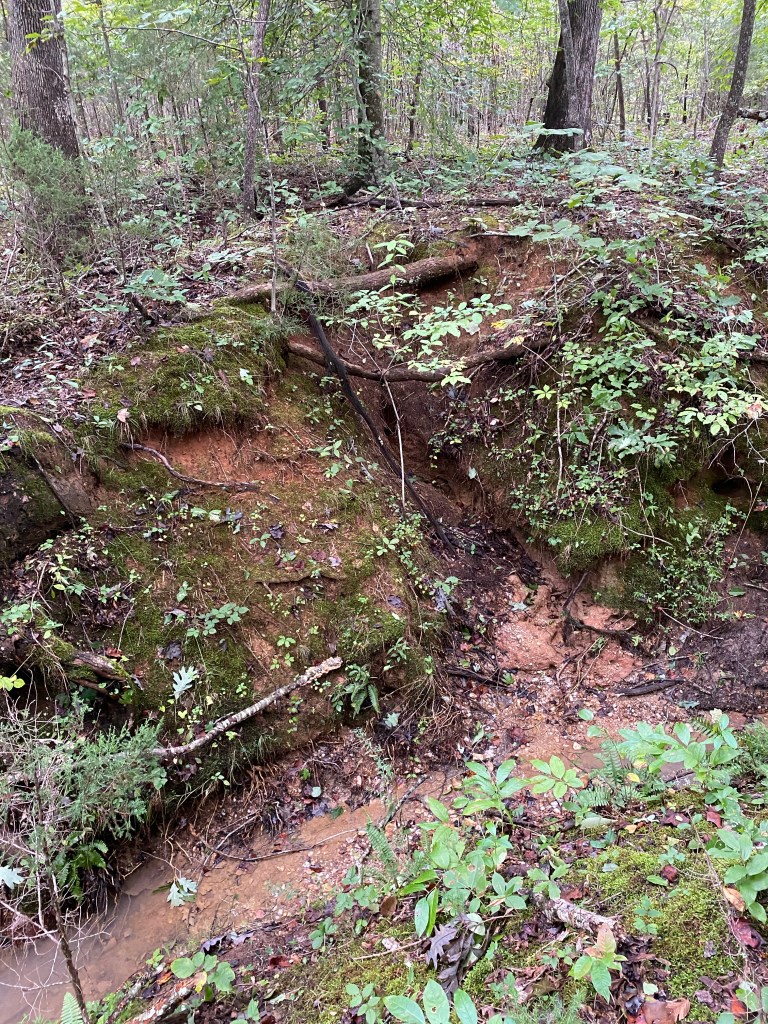
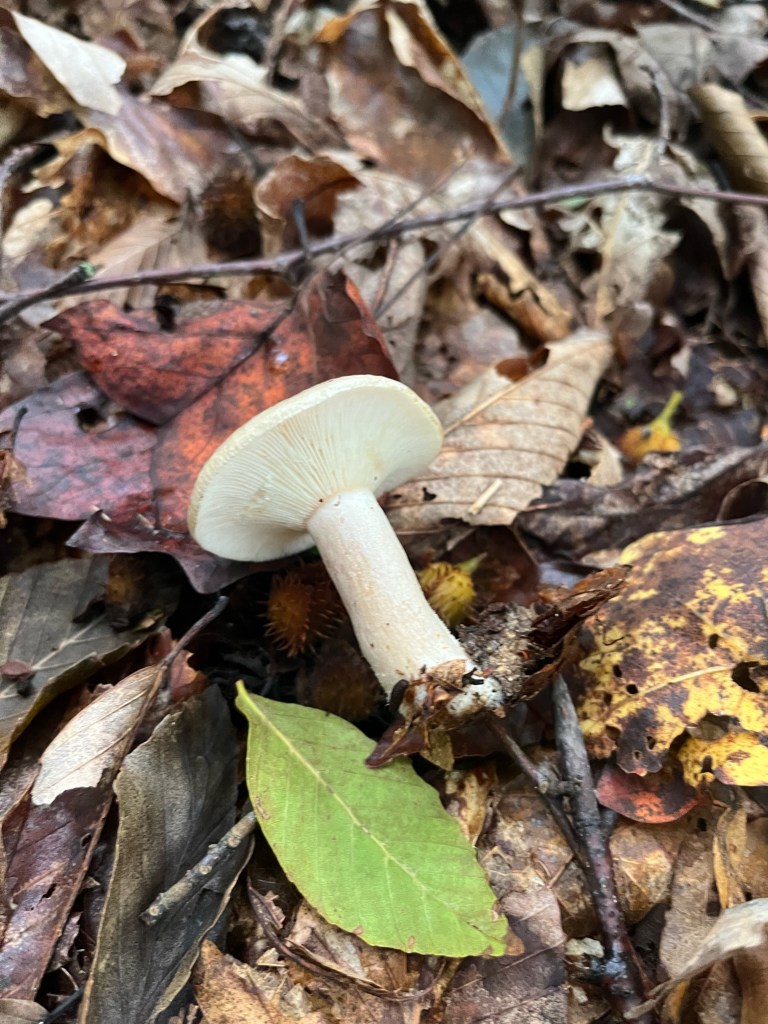
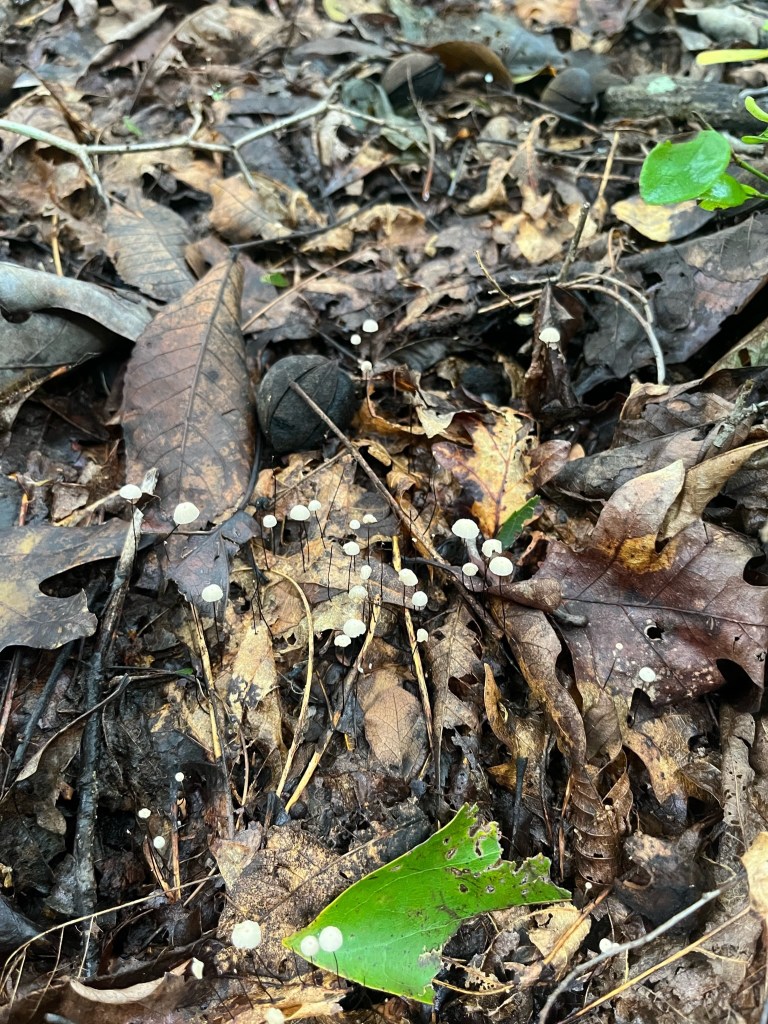
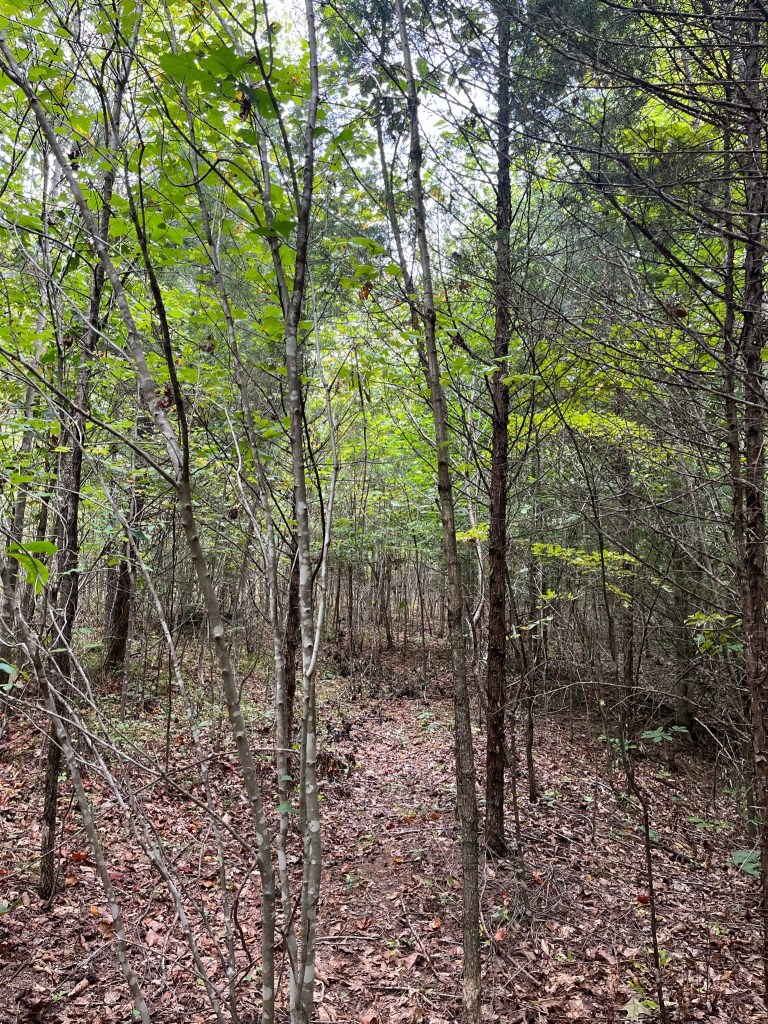
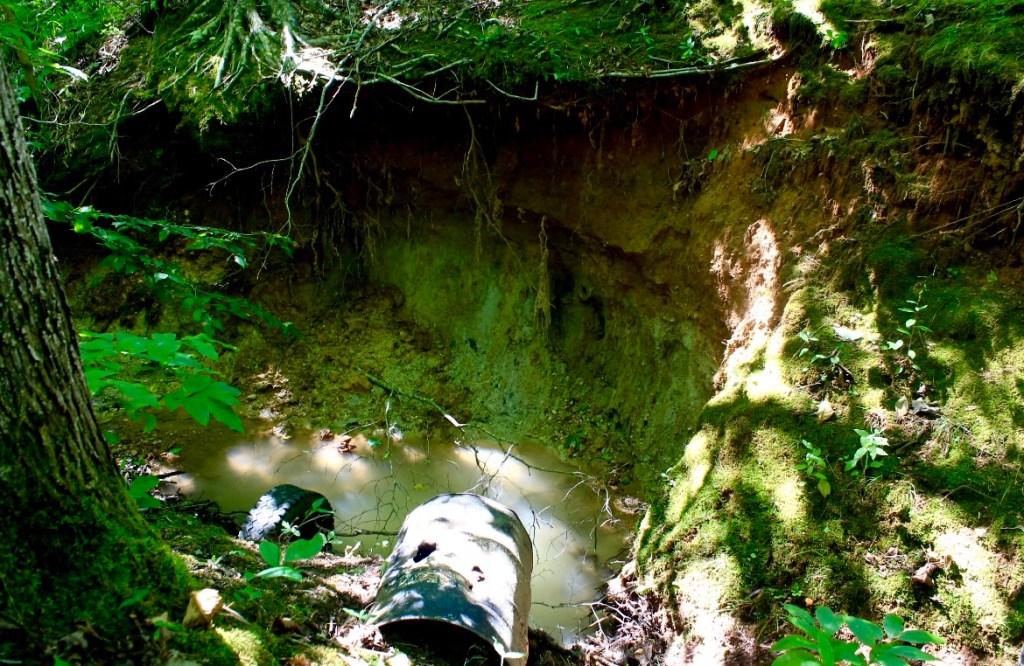
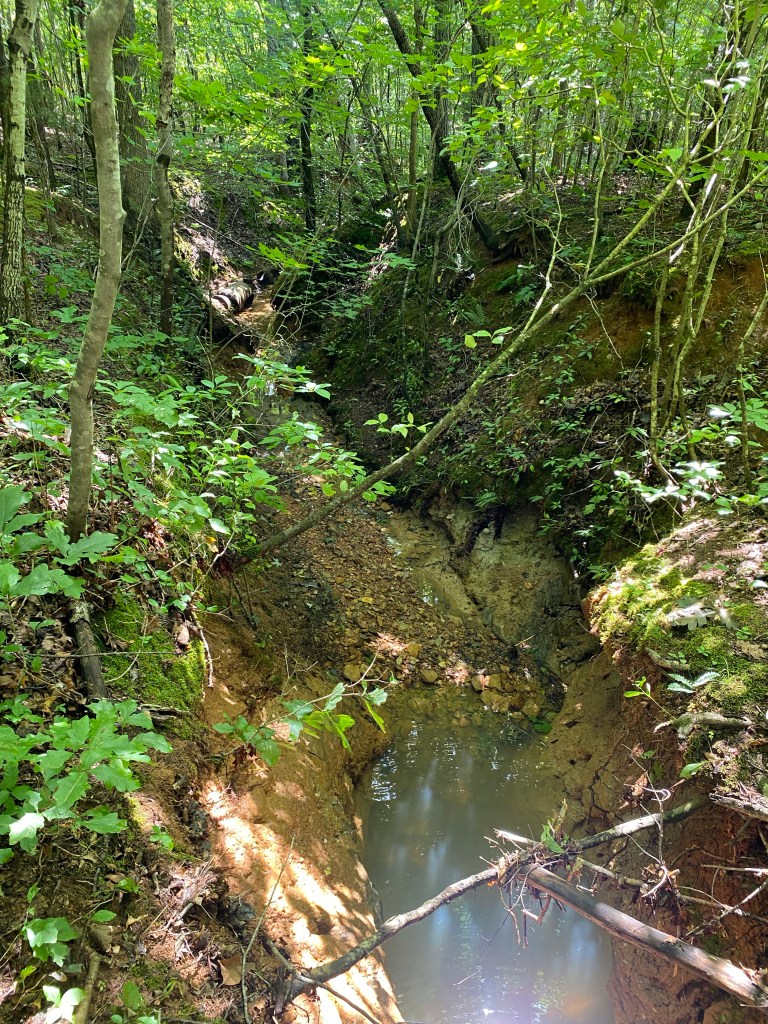
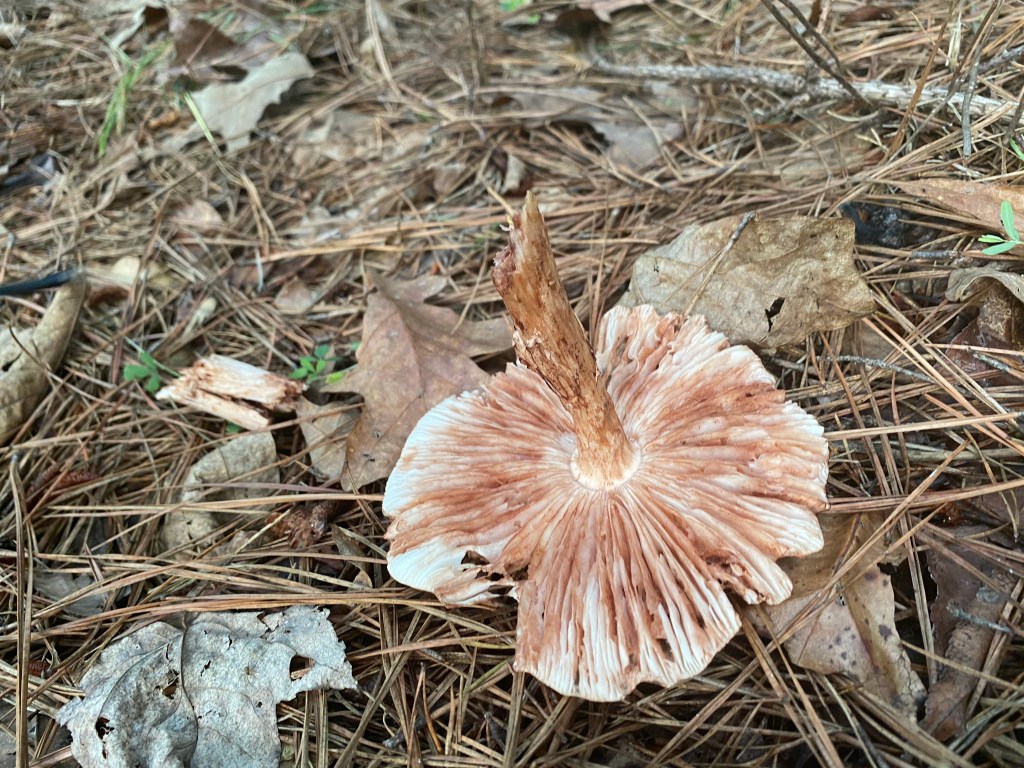
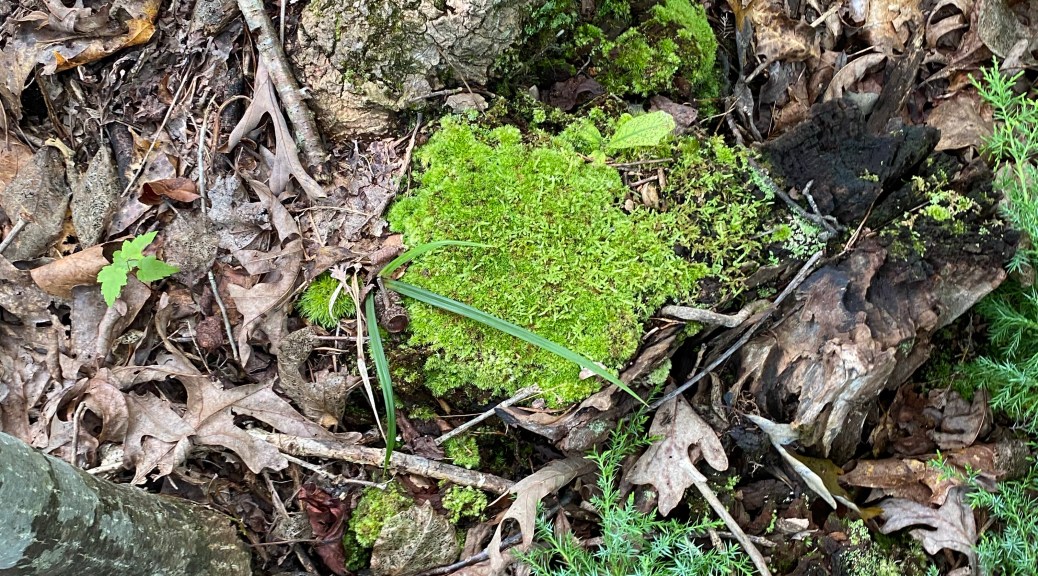
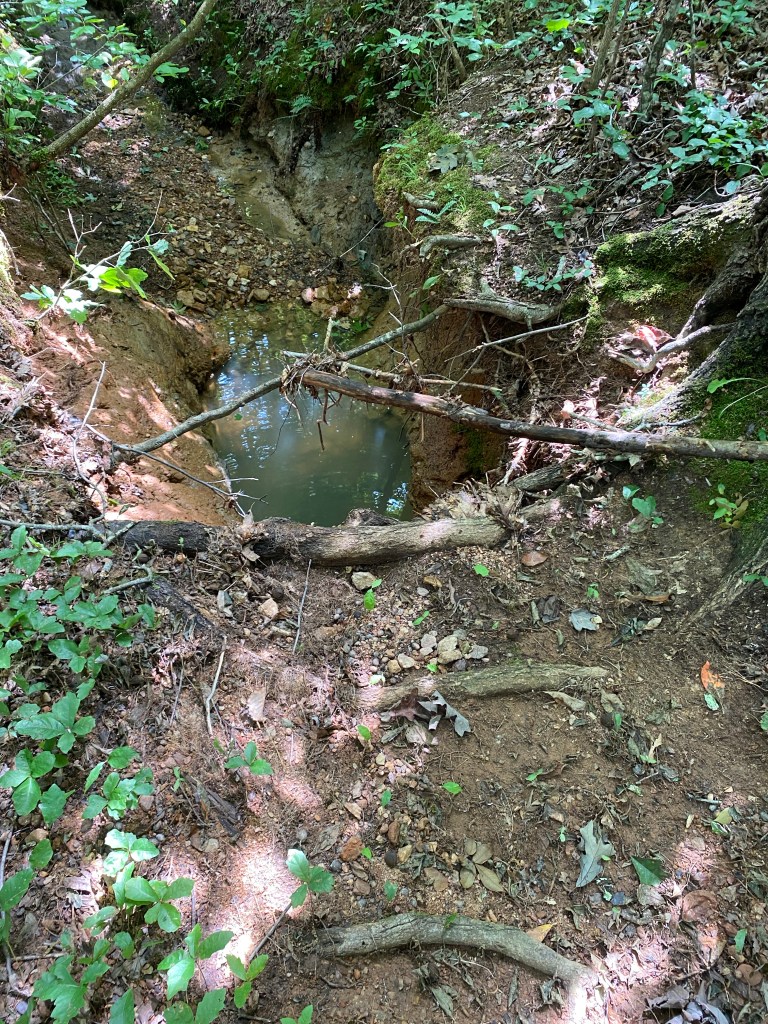
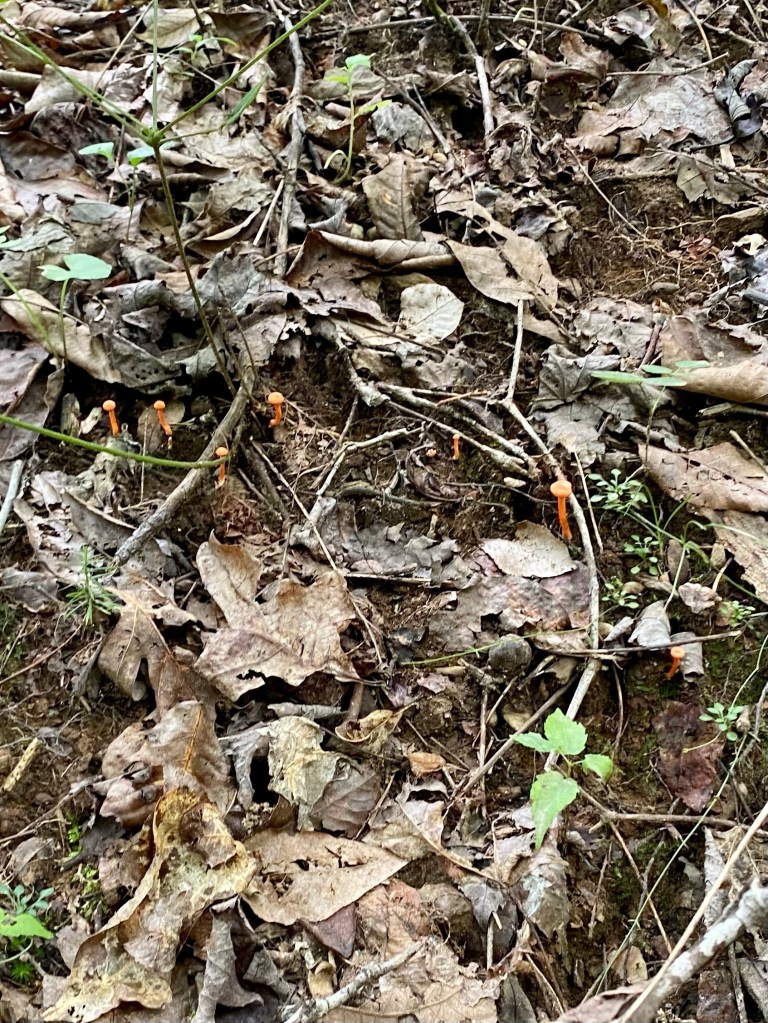
The view from the top of the slope. We saw this den which could be where a fox or coyote would live, or perhaps a smaller creature, or even a three year old male bear. We ordered a new camera last night to take photos of any movement so we can know who may live here. Here are sounds from a bear den. https://ktwh.org/sounds-from-a-bear-den-shared-on-ktwh/We found this hole near the bottom waterway which was dripping and water was flowing down. Sound on for tinkling water noises. 💦 It was cold yesterday so we wore our orange shirts over all of our clothes and coats to be sure to be seen by hunters; although, we did not hear any shots fired or dogs hunting. We have avoided this South border since hunting season began. It was a treat to walk it. We were amazed to see how much water flowed at the bottom waterway and along the sides. We have never seen it so full and wet. The ferns, lichen and moss were glowing with brighter greens. The water was clear and trickling came from everywhere.Looking at our camp from the forest.These tiny saprotrophic mushrooms covered the forest floor. If we looked close enough, we found them everywhere up top in the woods. There were thousands. We can’t wait until next week to see what other, larger mushrooms emerge from the rains. At bottom of slope looking up we saw areas where pines have dropped their needles. We began to plan this spot as one area we want to clear of the thousand of sticklike tulip poplars in order to plant an orchard of paw paws, other fruits and nut trees. Just behind us, we are standing 20 feet from the bottom waterway/stream. We may apply to the https://www.jamesriverbuffers.org/ for help planting the area. We are determining our eligibility for this program. “The James River Association and the Chesapeake Bay Foundation are working with landowners across the Middle and Upper James River watersheds to restore or create forest buffers that improve the quality of local waterways.” We are checking into it and are excited to find out more.Chris on the North Trail taking down a diseased tulip poplar. The tulip poplar overwhelm areas in the forest if left unchecked. Maples also appear to be invasive where we find them.
We were so glad we went over and grateful to know the camp remained dry in that windy and heavy downpour. We hadn’t yet imagined building a fire at SAFF even in our clearing because of the drought. This rain really replenished the moisture of the earth. The ground’s thirst appears quenched for now. It was a beautiful afternoon to visit Saint Andrew’s Forest Farm and have a walk around.
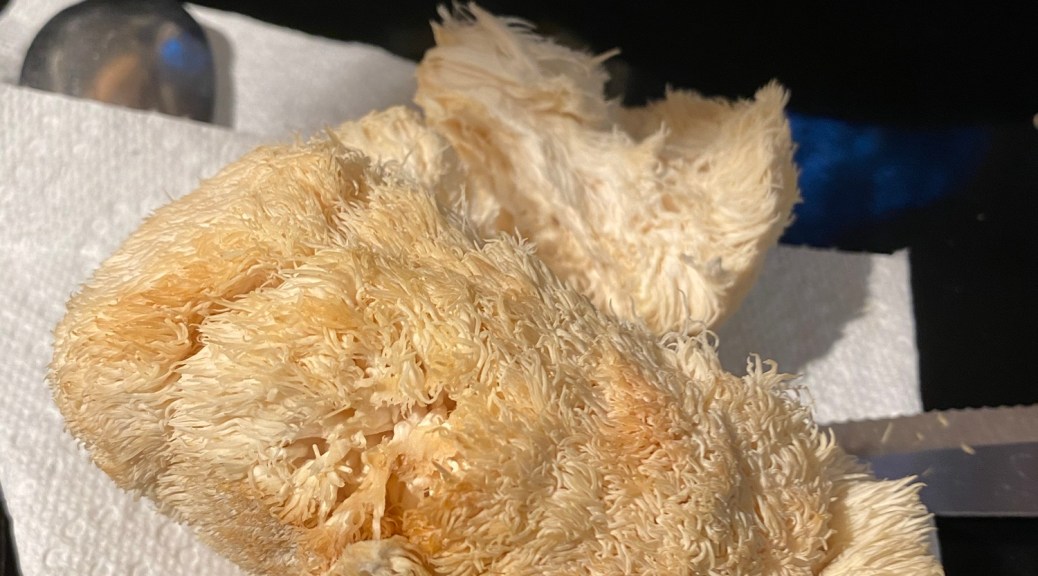
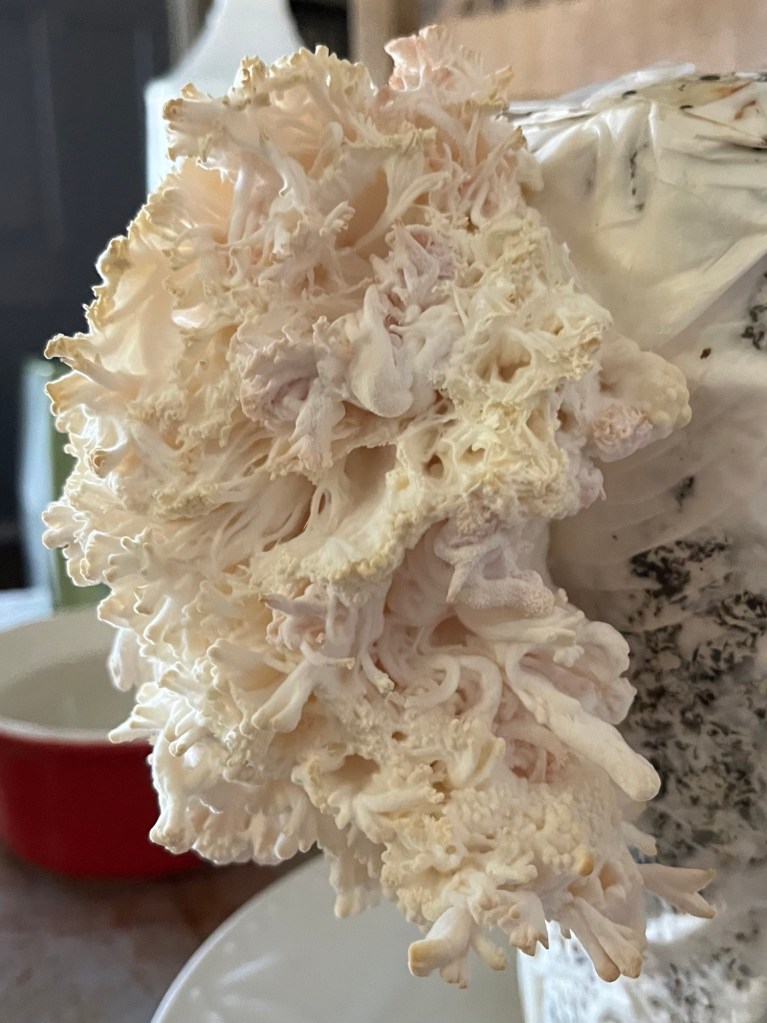
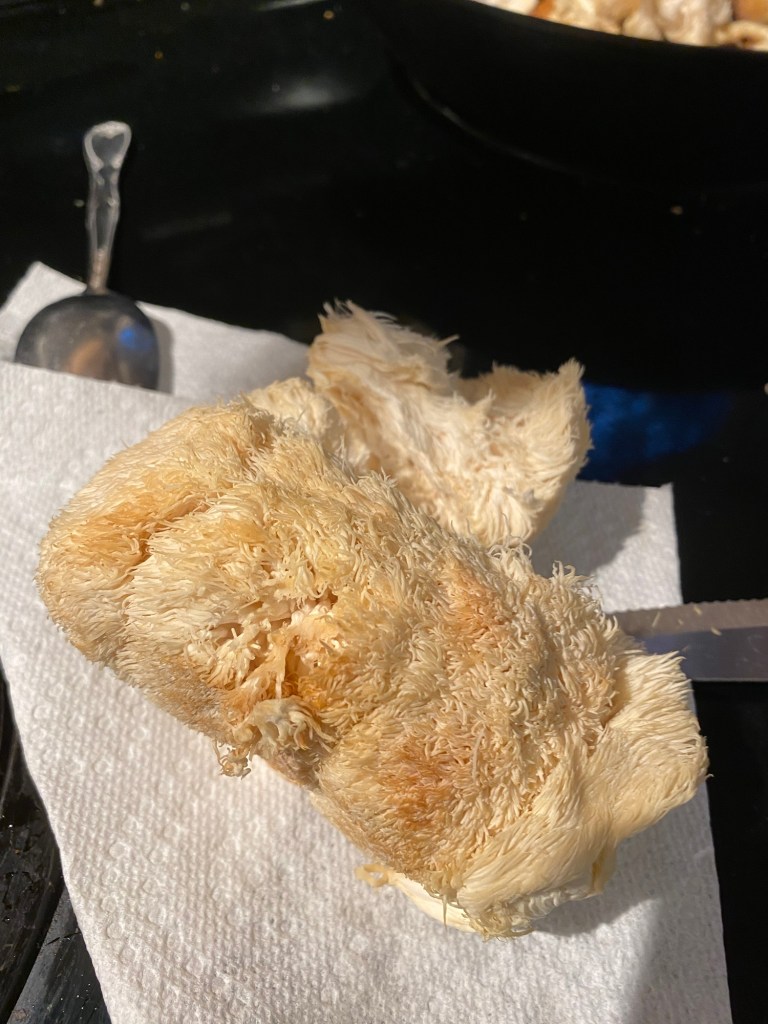
The very first Lion’s Mane mushroom we grew at home from a kit.
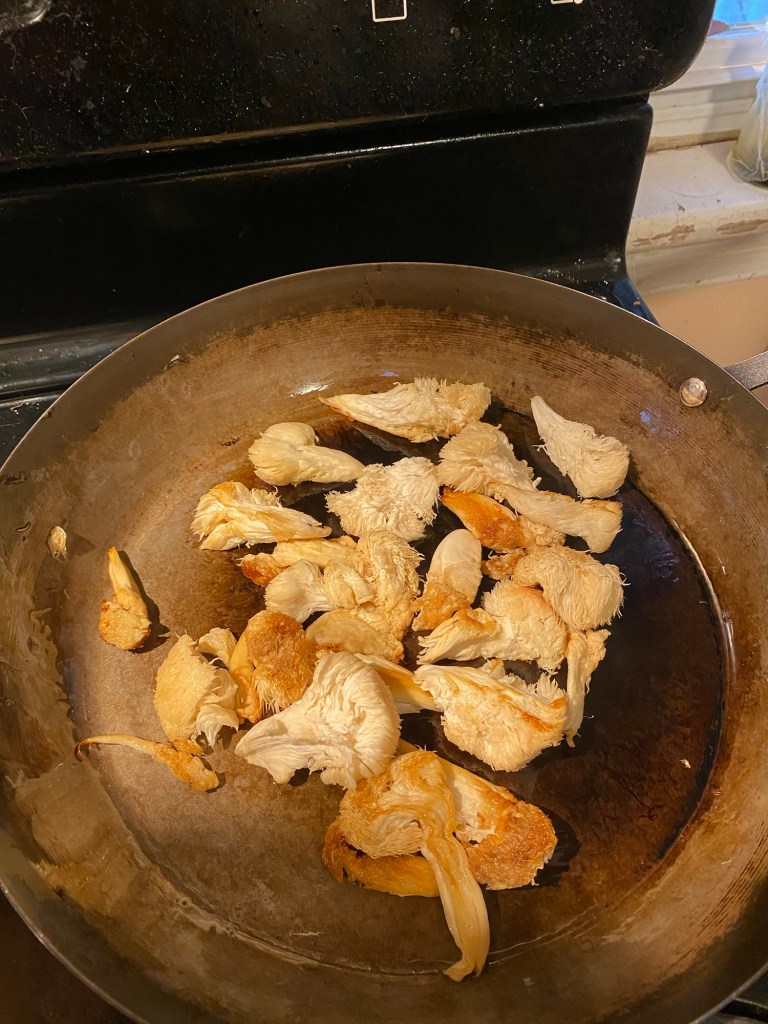
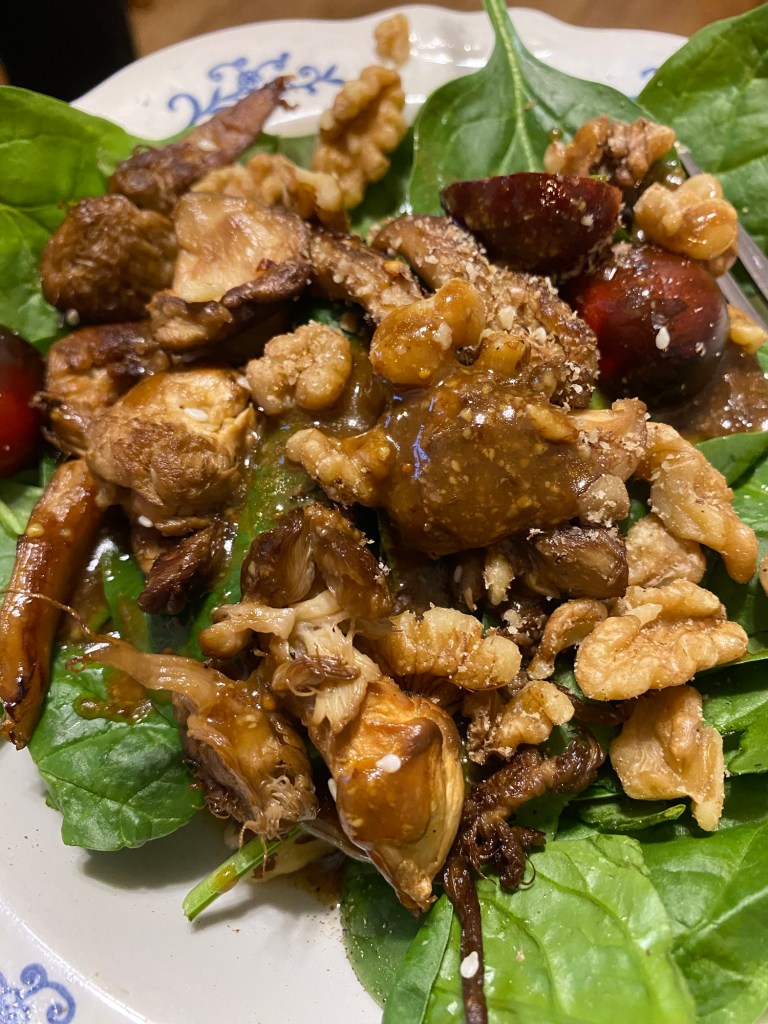
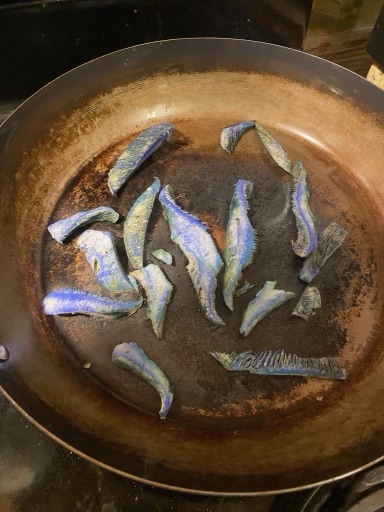
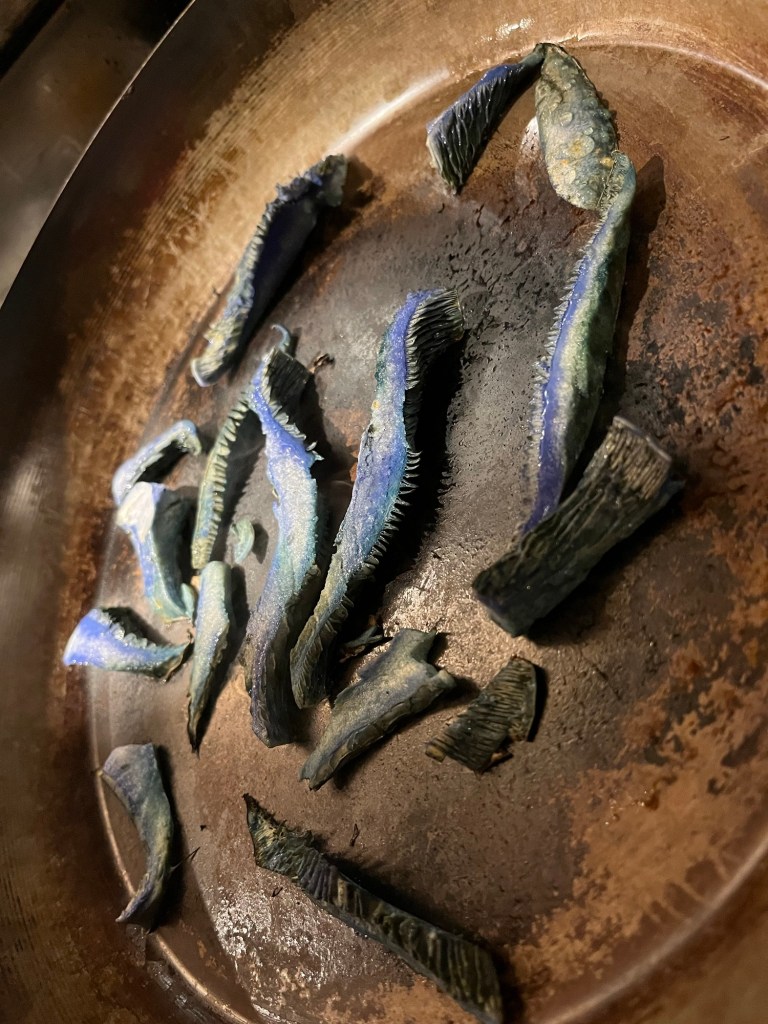
We started growing shiitake mushrooms about nine years ago after buying a couple of already inoculated logs at the farmer’s market in downtown Staunton. It was nice to have these mushrooms and it was a great first experience to grow our own at home. More recently, we became interested in growing Lion’s Mane mushrooms after reading about the health benefits and the taste. https://www.forbes.com/health/body/health-benefits-of-lions-mane/. We were so glad we did as they are delicious. The taste mimics crab, scallops or lobster. We sauté on high heat in a dry pan for 10 minutes then add olive oil salt pepper and garlic. Then we eat it on its own or with salads. We have heard they make great “crab” cakes. We will try this soon.
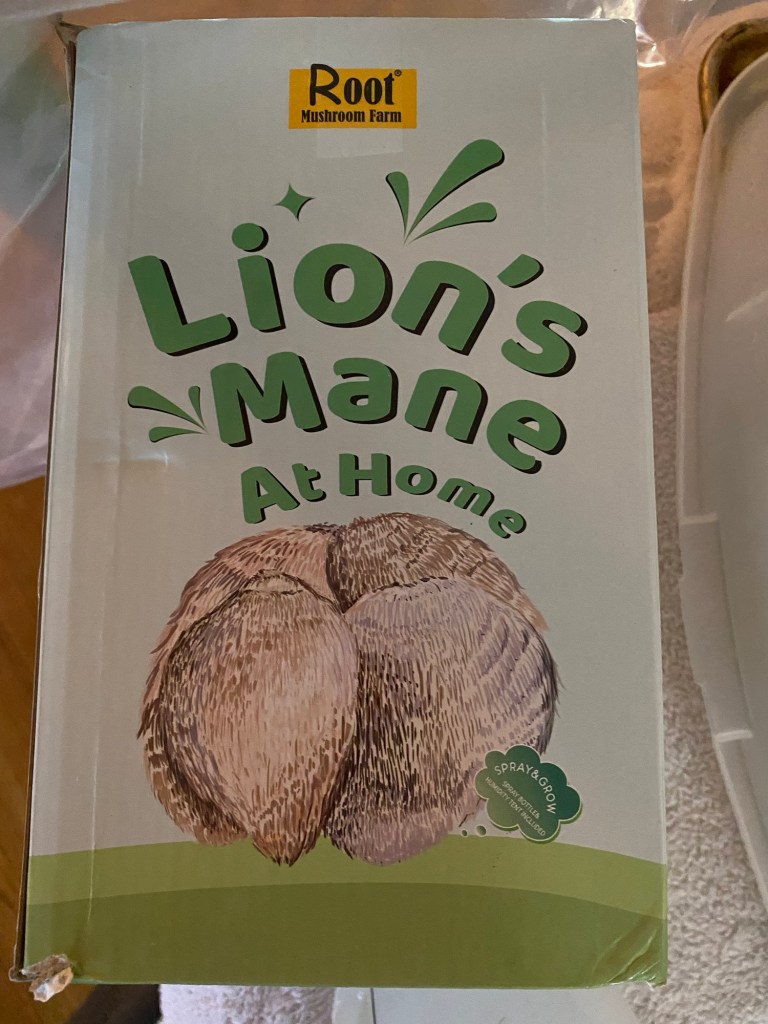
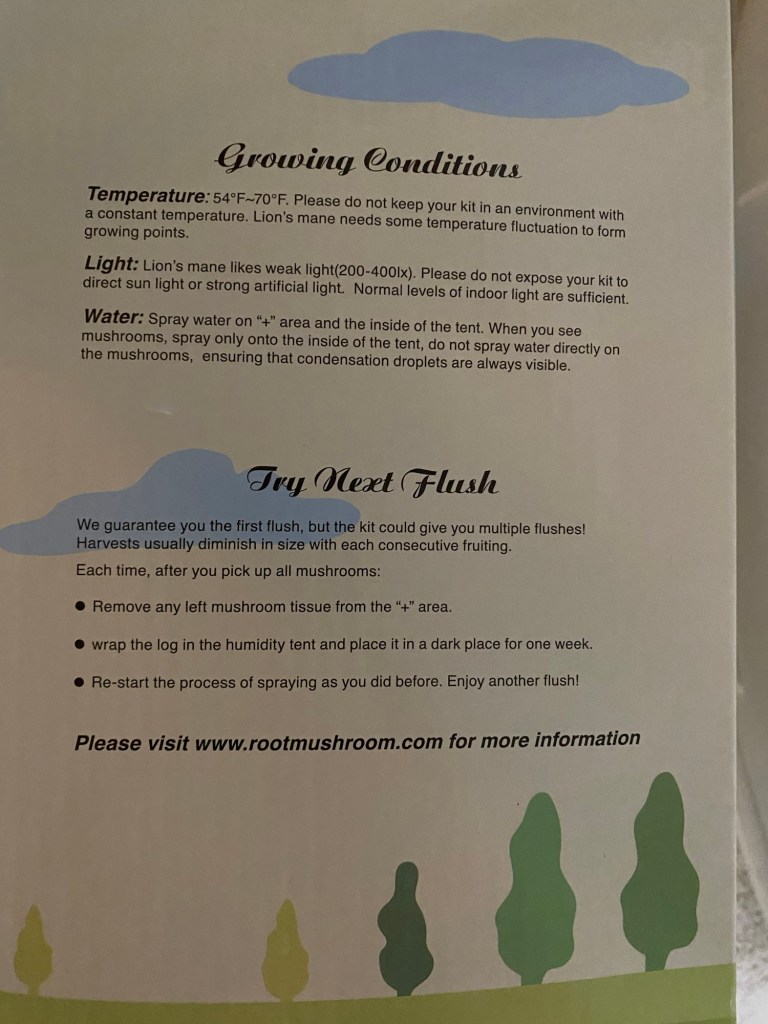
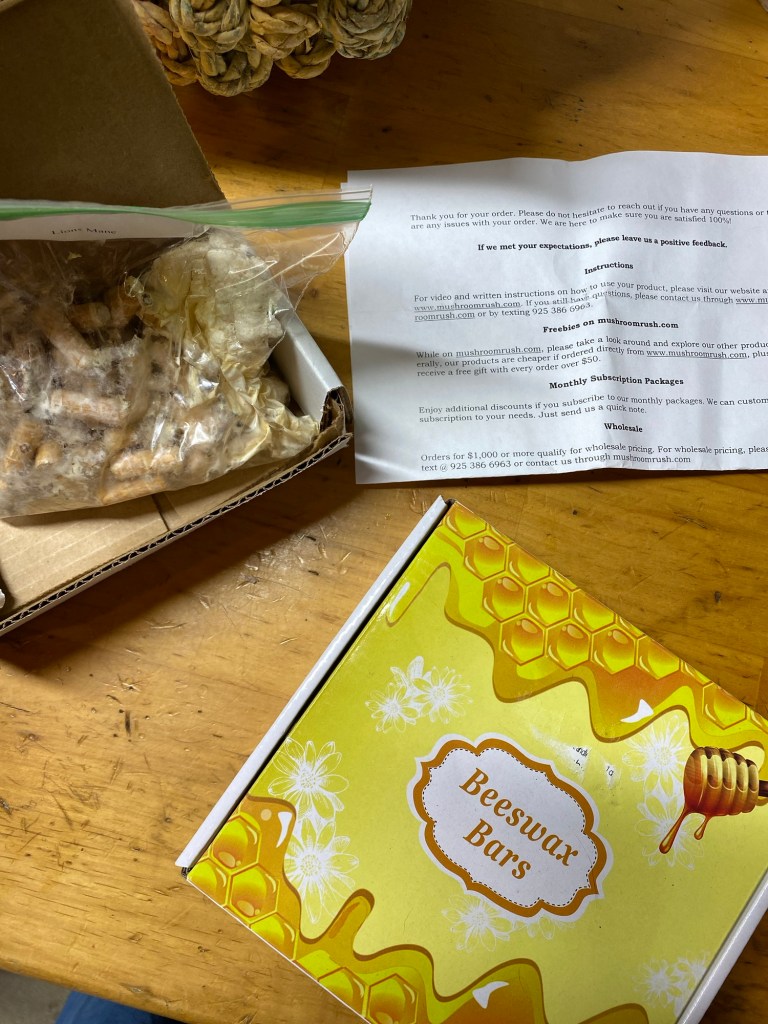
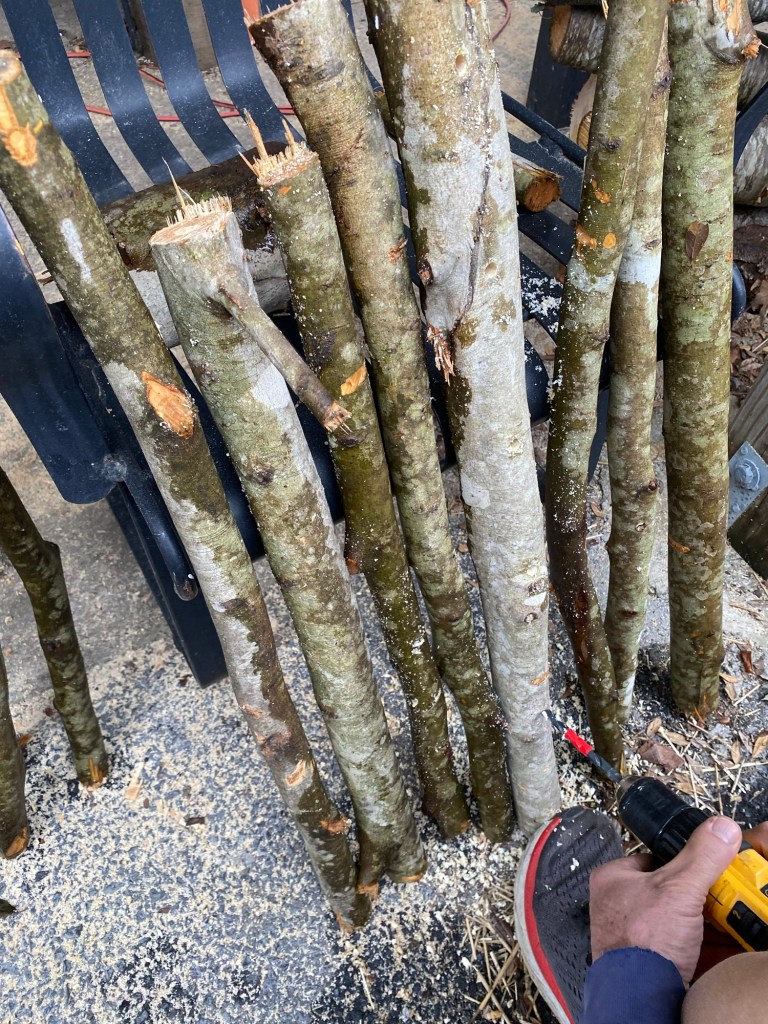
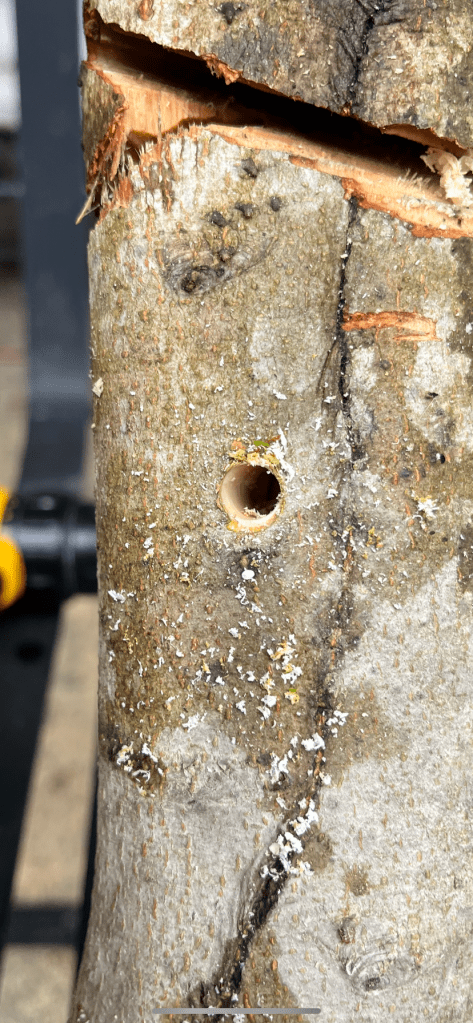
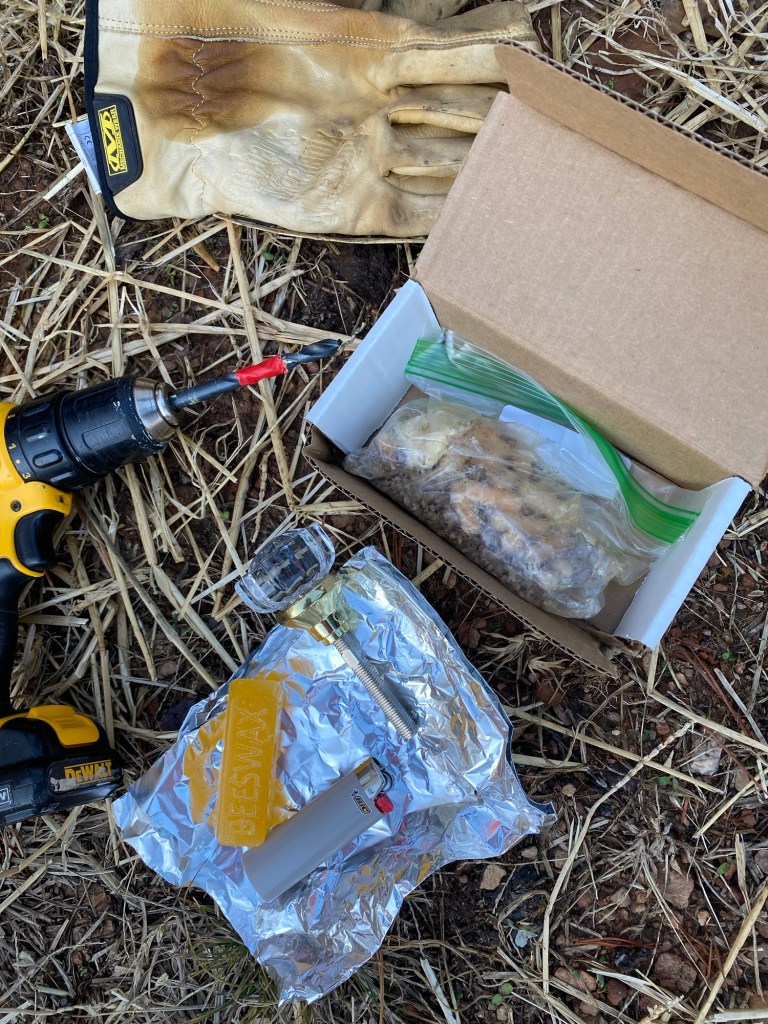
This Root Mushroom Farm grow kit was great. It came full of mycelium and ready to grow. We were so successful with it, we ordered plugs inoculated with Lion’s mane, Hericium erinaceous. Weeks ago, we cut down a beech tree from the farm and we aged the logs a few days. Then we drilled holes for the plugs.
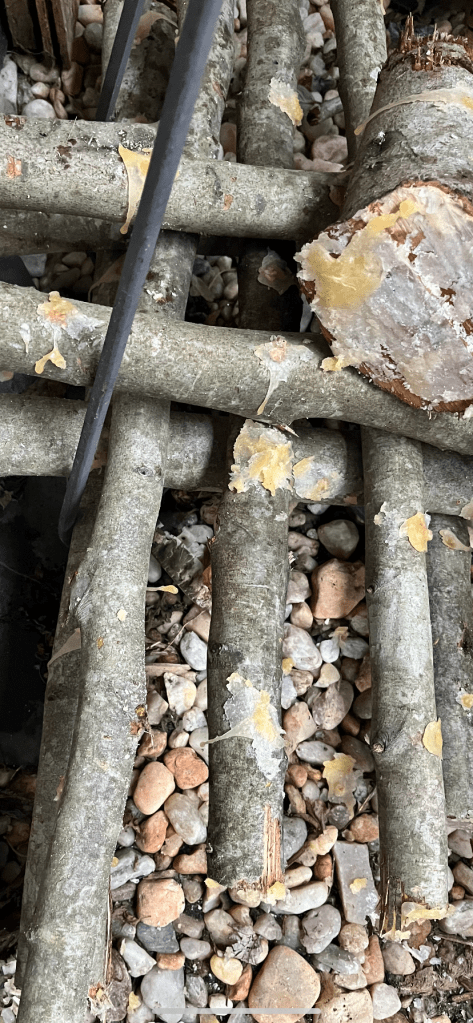
The inoculated plugs and beeswax bars for growing our Lion’s mane on beech logs at home and Saint Andrew’s Forest Farm. Drilling the holes for the plugs. We filled the holes in with our inoculated plug and then put warm beeswax to seal it in and keep moisture. Now we wait for the mushrooms to grow! We are going to also inoculate logs at the farm to continue to diversify the already thriving mycelium in our soil.
We are heading back out to the farm later today to inoculate some of our hardwood logs.
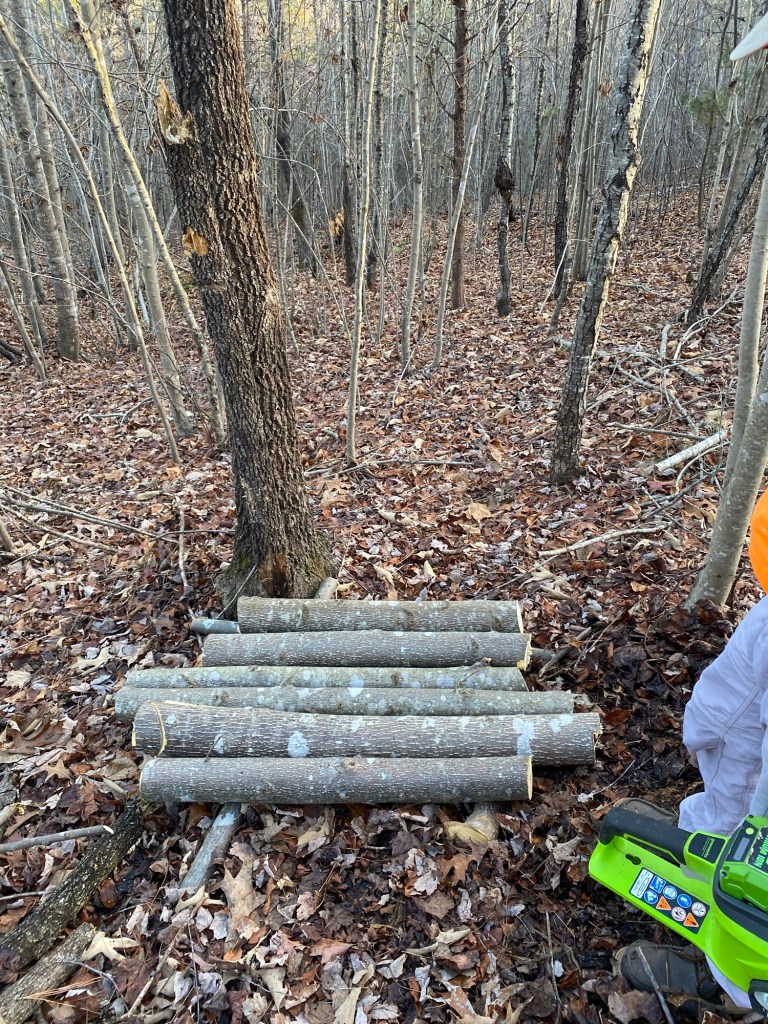
Lion’s mane mushroom and spinach salad with walnuts and Dijon vinaigrette Our supplies needed to drill holes and inoculate the logs at the farm. We built a simple stand for tulip poplar logs in the forest at the farm and are inoculating them with Lion’s mane spawn plugs. We hope to add Hericium erinacious to our home grown mushrooms. They are native to Virginia.
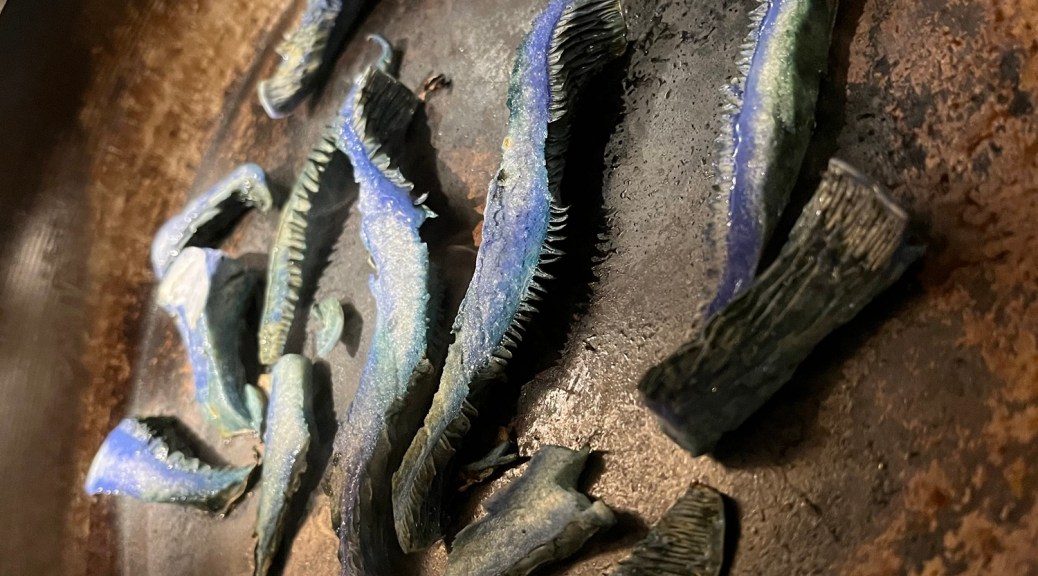
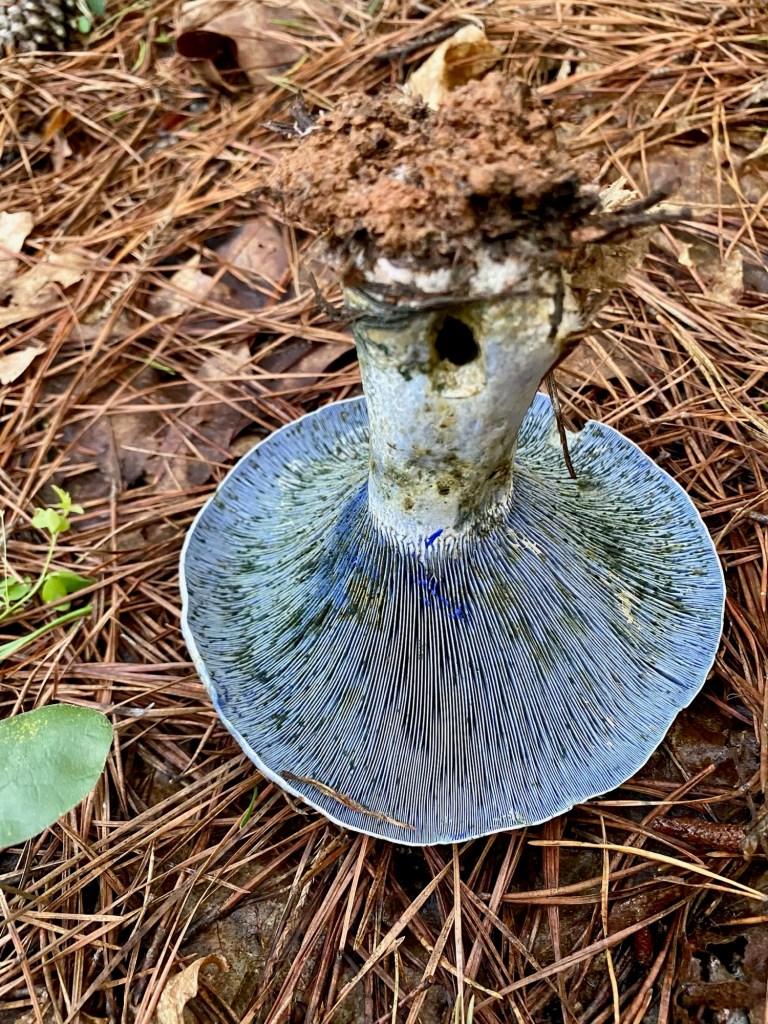
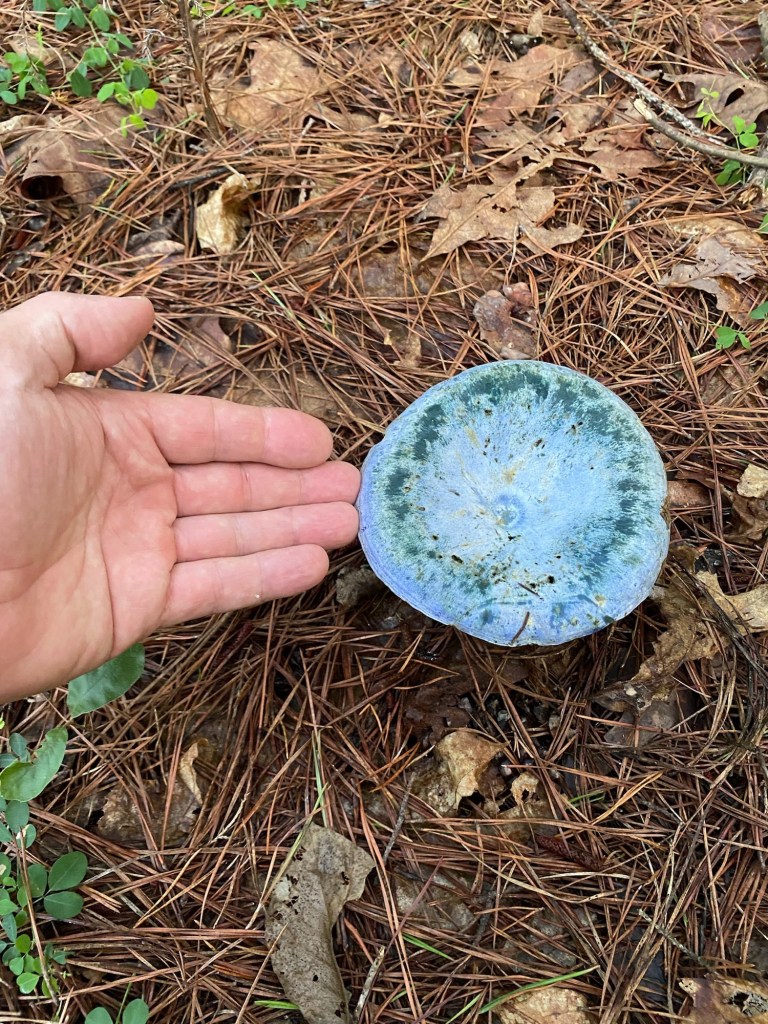
We found quite a few Lactarius indigo or Indigo Milkcap mushrooms during the summer and early fall of 2023. They were so pretty and just amazed us each time we saw them. They are michorizal with a number of deciduous and coniferous trees including pine and oak. We found them in a number of places. Up top along the driveway, along South Trail and in the forest in multiple locations. We’ve learned to cook our wild mushrooms very well on high heat (7ish) for 20 minutes. We start cooking them in a dry already hot skillet. After 10 minutes, we add some olive oil, garlic, salt and pepper.
While they cooked they smelled a little bit of fish. Once cooked, this wasn’t detectable in smell or taste. We used these to top our pizza pie.
We started at the south side of the property along the road and hung signs, cut small and dying trees and laid them along the path perpendicular to the water flow and trailblazed a new path. We wound around along the edge of Saint Andrew’s Forest Farm property line along the power lines. We also followed the waterway at bottom of property to property markers at southwest corner. We found interesting mushrooms, plants and finally found paw paw trees.
We did not see the young male black bear. We saw a small lizard in the clearing up top. We saw and heard many birds in the forest. Hunting season starts tomorrow. We’ve got our signs up and hope the animals hide out from those hunters. Especially the young black bear. We heard his range might be 5-10 miles for a young bear. For an adult bear, 10 to 20 miles.
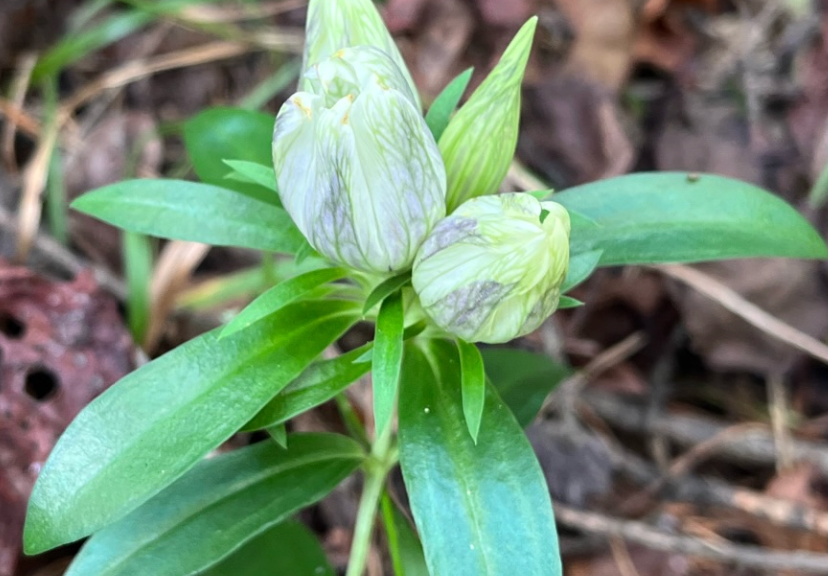
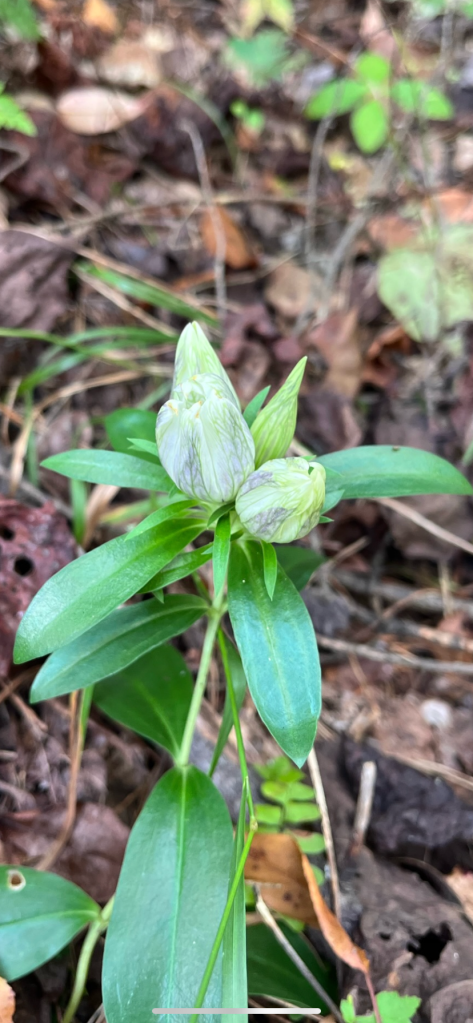
Gentiana alba, a herbaceous species of flowering plant in the Gentian family Gentianaceae, producing yellowish-white colored flowers from thick white taproots. It is native to North America from Manitoba through Ontario in the north, south to Oklahoma, Arkansas and North Carolina, and it is listed as rare, endangered, threatened or extirpated in parts of this range.[2] Found near the southwaterway.
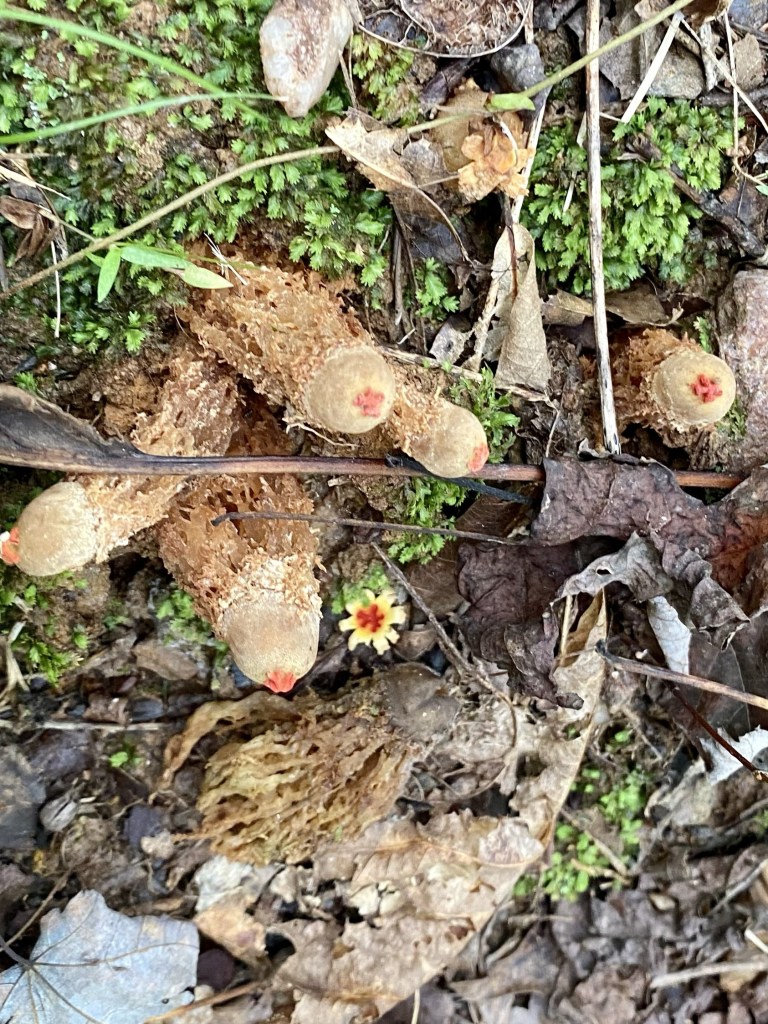
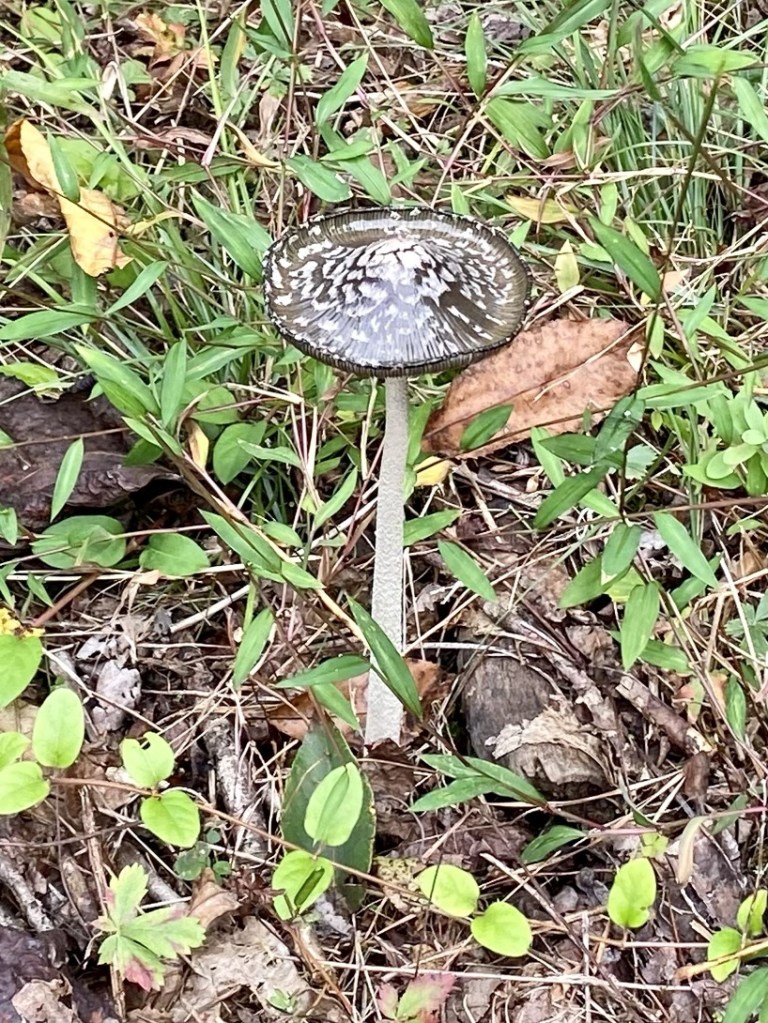
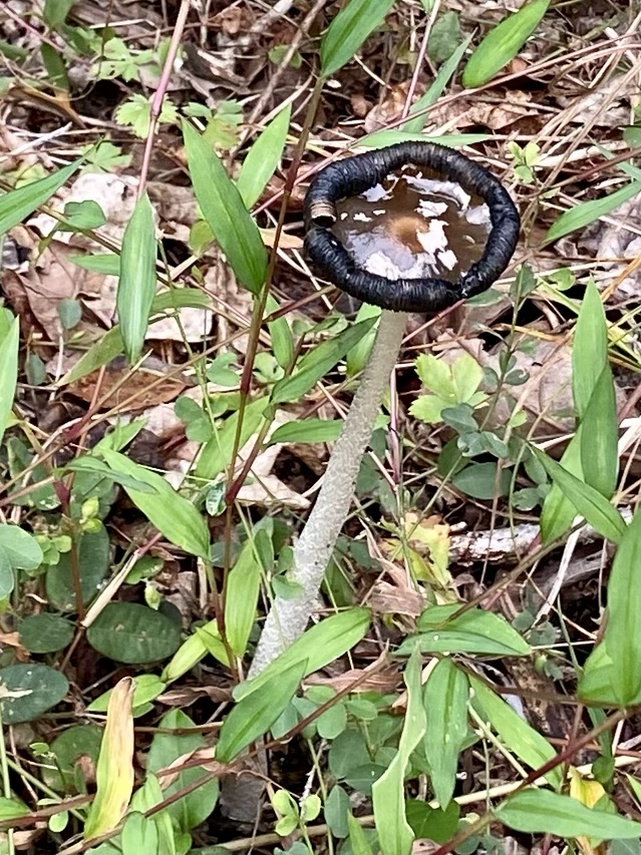
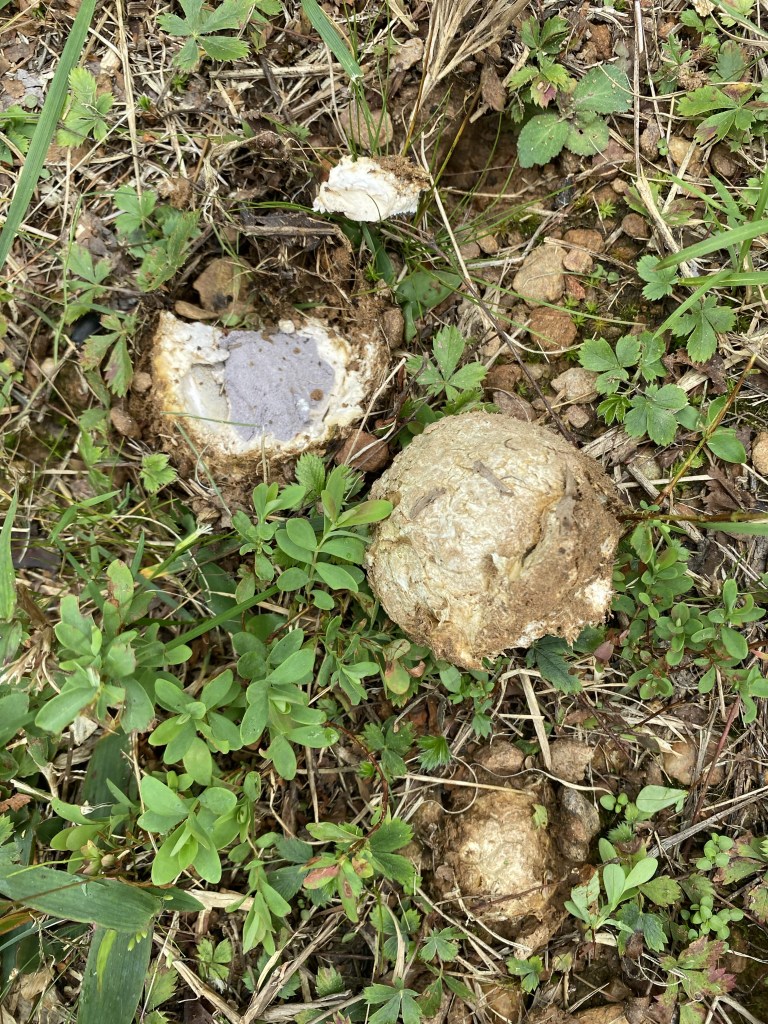
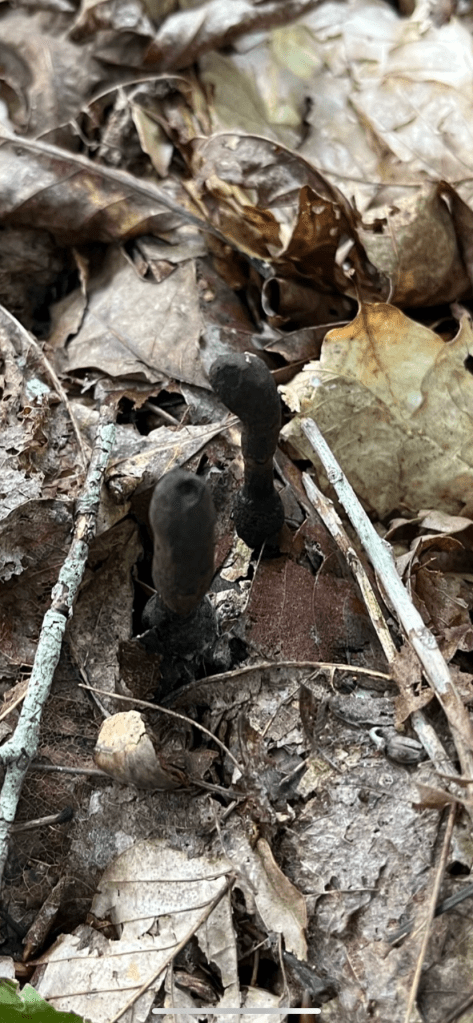
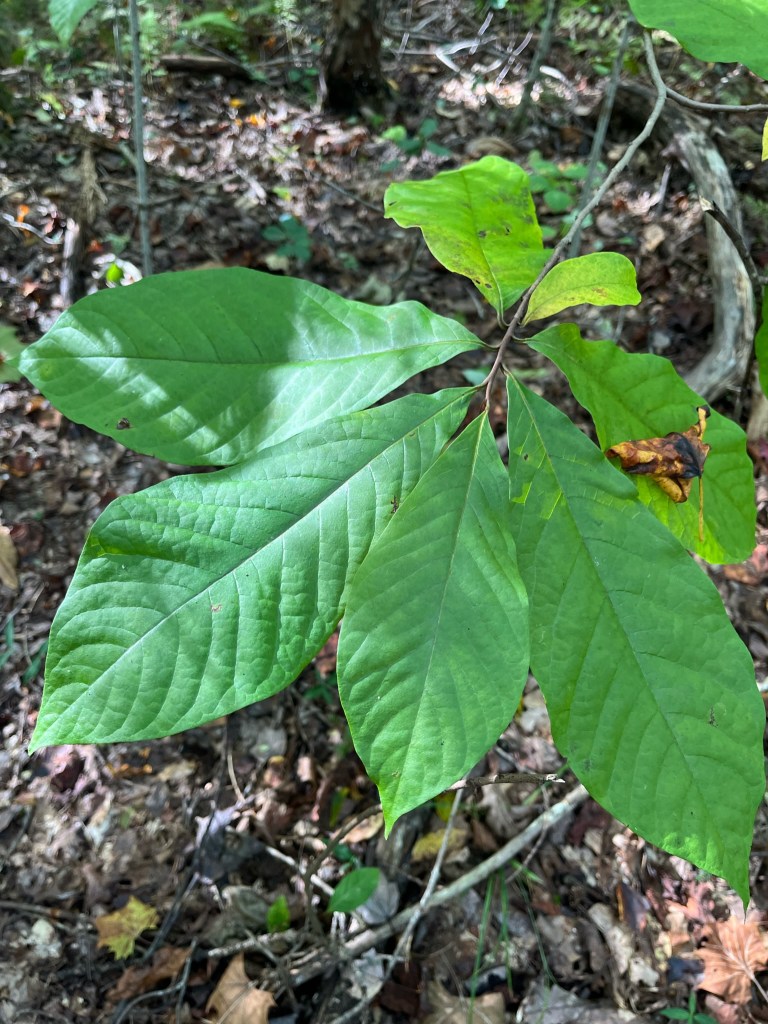
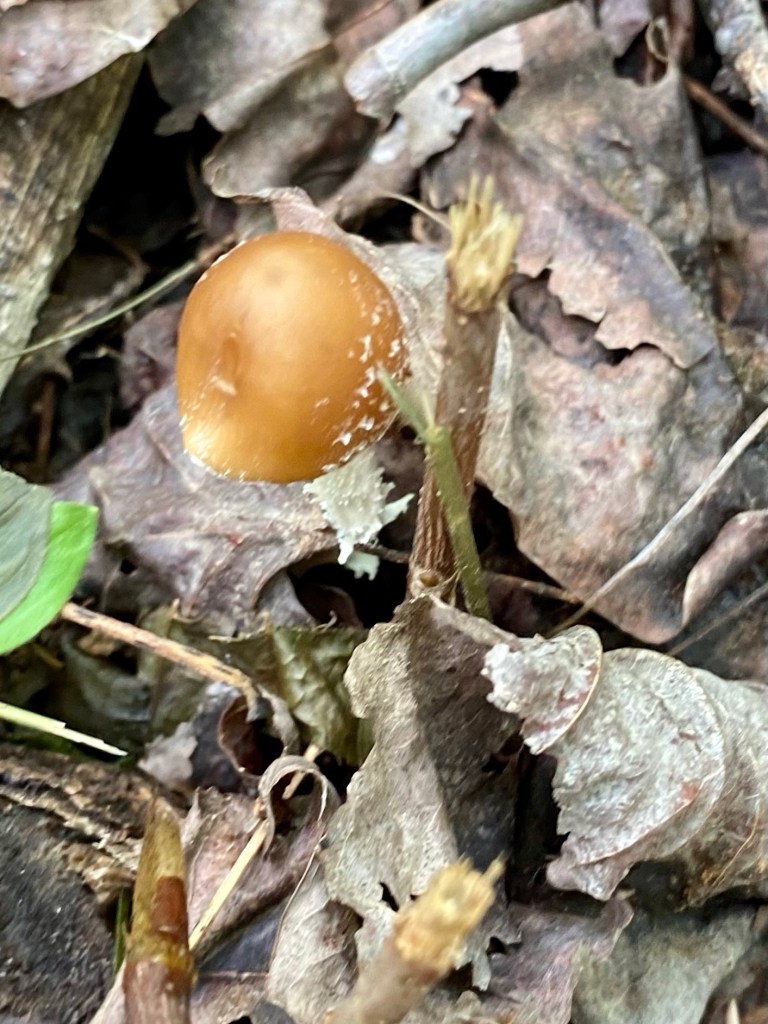
Calostoma ravenelii. Found along the South Trail. This is a comparatively small species of Calostoma with a dry, yellowish spore case that sits on a braided stem structure. It can be separated from other Calostoma species by the fact that the spore case is not red and initially covered with gelatin, its lack of a torn and felty “collar” under the spore case and its “beak” (the scar-like perforation that develops at the top of the spore case), which is red overall. Coprinopsis picacea, commonly known as the magpie mushroom, magpie fungus, or magpie inkcap fungus, is a species of fungus in the family Psathyrellaceae. It was first described in 1785 by French mycologist Jean Baptiste François Pierre Bulliard in 1785 as Agaricus picaceus. Found at bottom of clearing. The cap is initially egg-shaped, reaching a width of 7 cm. Later it opens up and takes on a bell shape that is up to 8 cm wide. The cap is serrated and colored white on very young mushrooms. It breaks open with increasing age, so that the beige to dark brown background emerges. Remnants of the white, grayish to cream-colored velum remain on the cap as flakes, giving the impression of woodpecker or magpie plumage. With age, the brim of the cap rolls up and dissolves. The lamellae are very close and are initially greyish-white, then pink to gray in color. Eventually they melt, dripping and black, giving it the name inkcap. An older magpie ink cap mushroom. Poisonous.Scleroderma polyrhizum. Identifying features include the baseball-like stature and shape; the tough, thick skin; the hard, black interior that turns to dust in old age; the way the mushroom splits open and peels back (a little like the rays of a star); the smooth to pocked or pitted (but not prominently scaly) surface; and the habitat in grass and disturbed-ground settings. Probably saprobic, but possibly mycorrhizal; growing alone, scattered, or gregariously in grass and in disturbed-ground settings; often appearing in urban settings; summer, fall, and early winter; widely distributed in North America. Fruiting Body: 8-13 cm across before splitting and spreading; round or nearly round; very tough; partially submerged in the ground; surface when young fairly smooth, often covered with whitish down; with age becoming pocked, pitted, or minutely scaly in places, and usually covered with adhering soil and debris; often bruising reddish or yellowish when rubbed; with maturity splitting near the top and peeling back in irregular rays to expose the spore mass; skin to 5 mm thick or more, whitish but blushing pink when sliced; sometimes with white rhizomorphs attached to the base; odor not distinctive.Cranefly orchid leafs emerging for winter. This club-shaped Xylaria species is common on hardwood sticks and logs in the northeastern and midwestern United States. It often has a longer stem structure than other species in the genus, but this feature cannot be relied on to identify it with certainty. Xylaria longipes is somewhat variable in its appearance, but defining features include its medium size, its club-shaped head, and its spores, which feature spiraling germ slits. Ecology: Saprobic on decaying hardwood logs and sticks (especially the debris of beech and maples), growing directly from the wood; growing alone or gregariously; causing a soft rot; spring through fall; common in northeastern North America and in the Midwest, but occasionally reported elsewhere on the continent (though it may be absent in tropical areas). The illustrated and described collections are from Illinois. Fruiting Body: 2.5–6.5 cm tall; 0.5–1.5 cm thick; shaped more or less like a club, with a rounded tip; grayish to brownish when young, becoming dark brown to black with maturity; surface often becoming cracked and scaly with maturity; stem often proportionally long, but also frequently short or nearly absent, black, covered with black to rusty brown or reddish fuzz near the base; interior flesh white and tough; perithecia in mature fruiting bodies up to about 1 mm across, spherical, just below the surface. Found along the waterway.Asimina triloba, the American papaw, pawpaw, paw paw, or paw-paw, among many regional names, is a small deciduous tree native to the eastern United States and Canada, producing a large, yellowish-green to brown fruit.[3][4][5]Asimina is the only temperate genus in the tropical and subtropical flowering plant family Annonaceae, and Asimina triloba has the most northern range of all. We were delighted to find this by the south side near the waterway. The leaves were so interesting and smooth. No jaggedy edges.
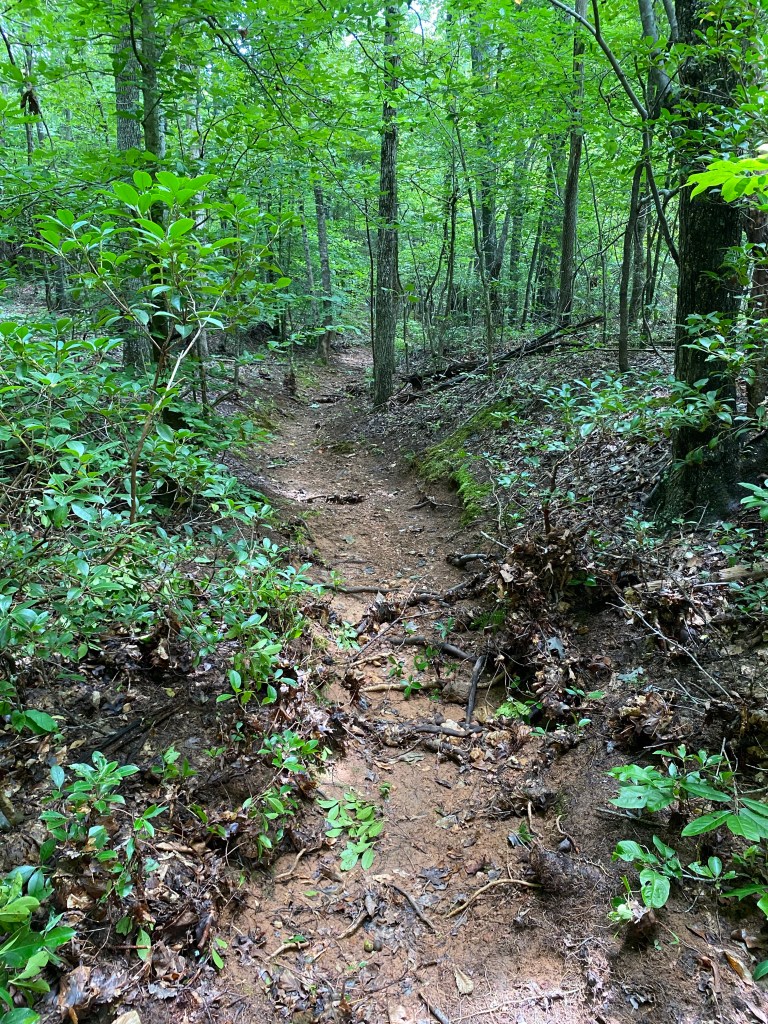
The woods are changing and moving into fall. Leaves are colorful and the forest is brighter. This is the North Trail where we startled a young bear. We think he was the 3 year old male bear our neighbor told us about. He looked healthy as he ran away. This was at the top of North Trail. No sign of his mother.
Tropical storm Ophelia moved through Saint Andrew’s Forest Farm with gusting winds and rain just the day before. As we drove over from Staunton, we saw several large trees blown over and wondered what impact the storm had on the trees at SAFF. As we pulled in, we did not see any downed trees only a few limbs on the ground.
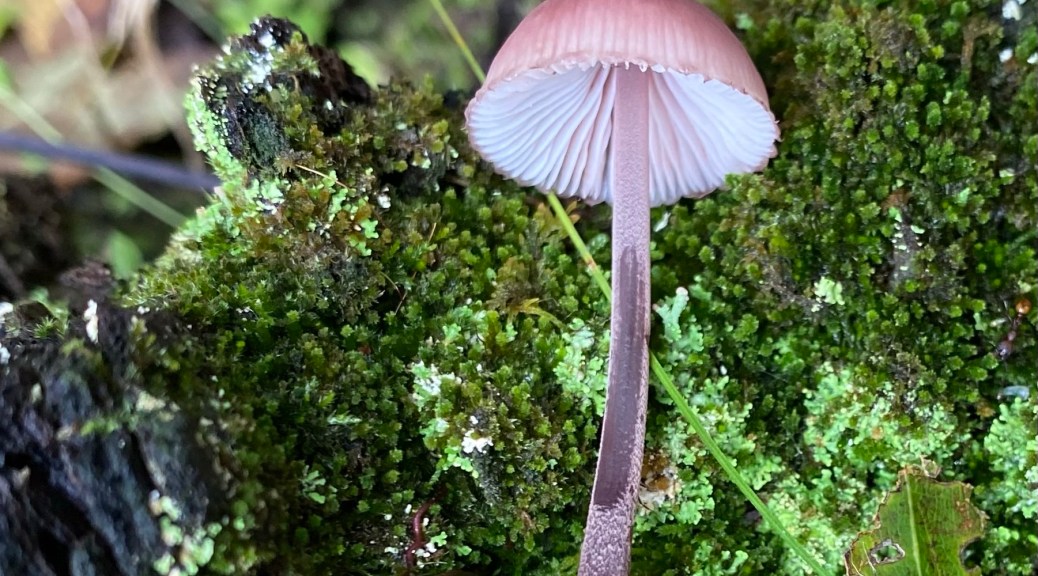
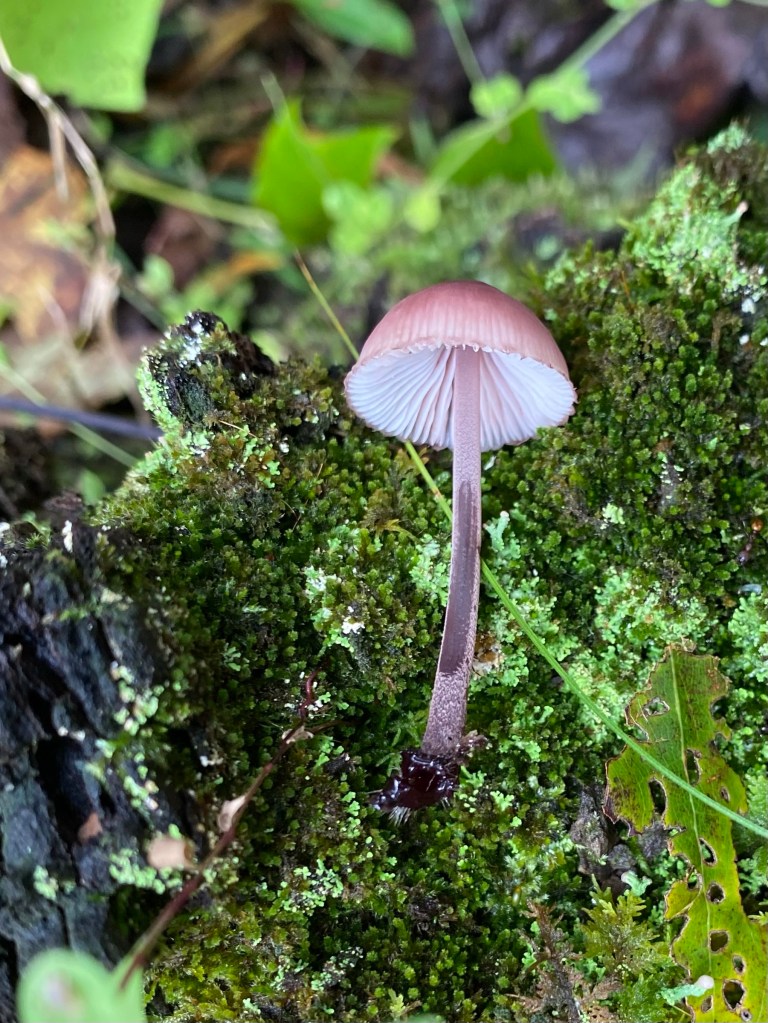
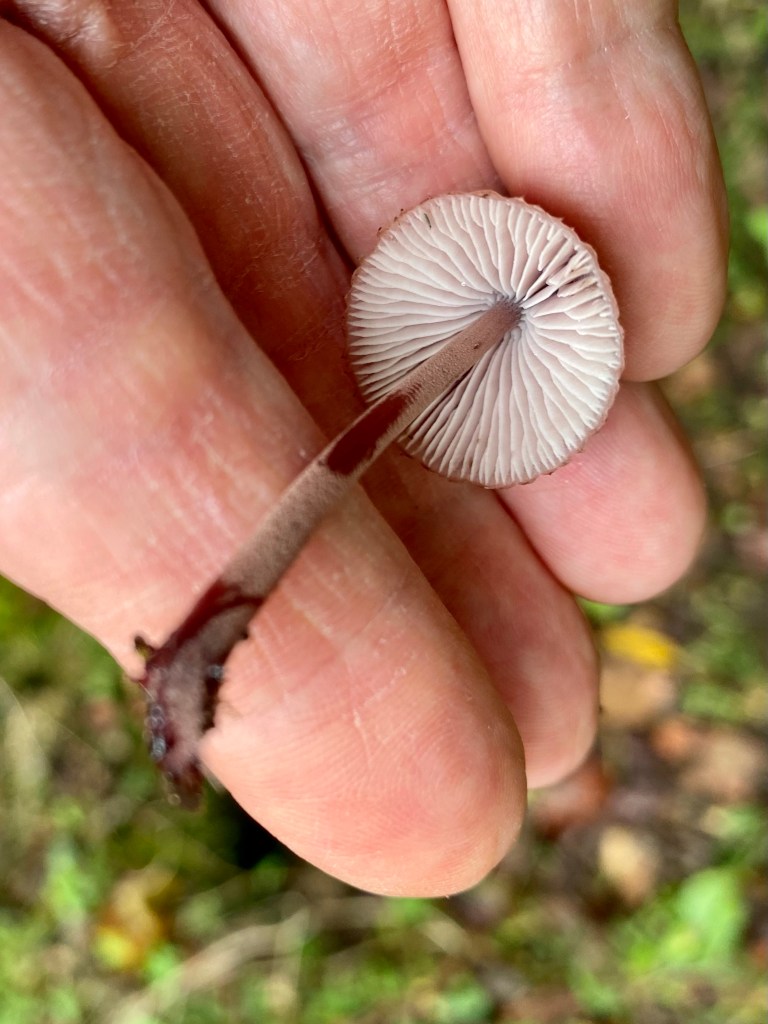
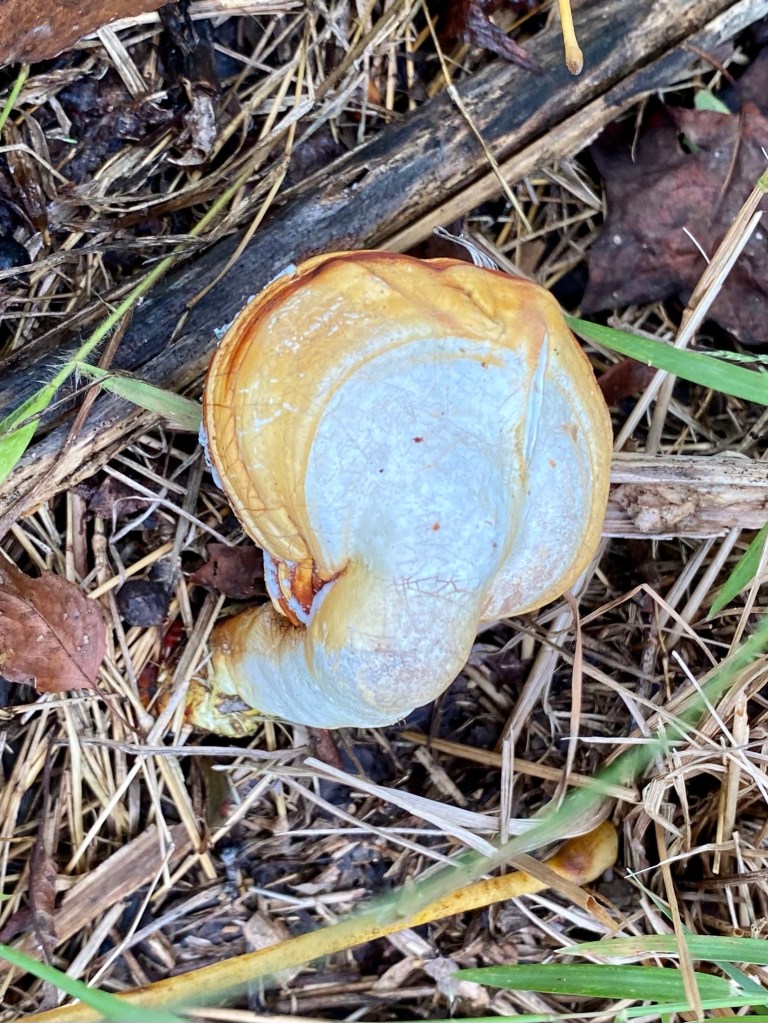
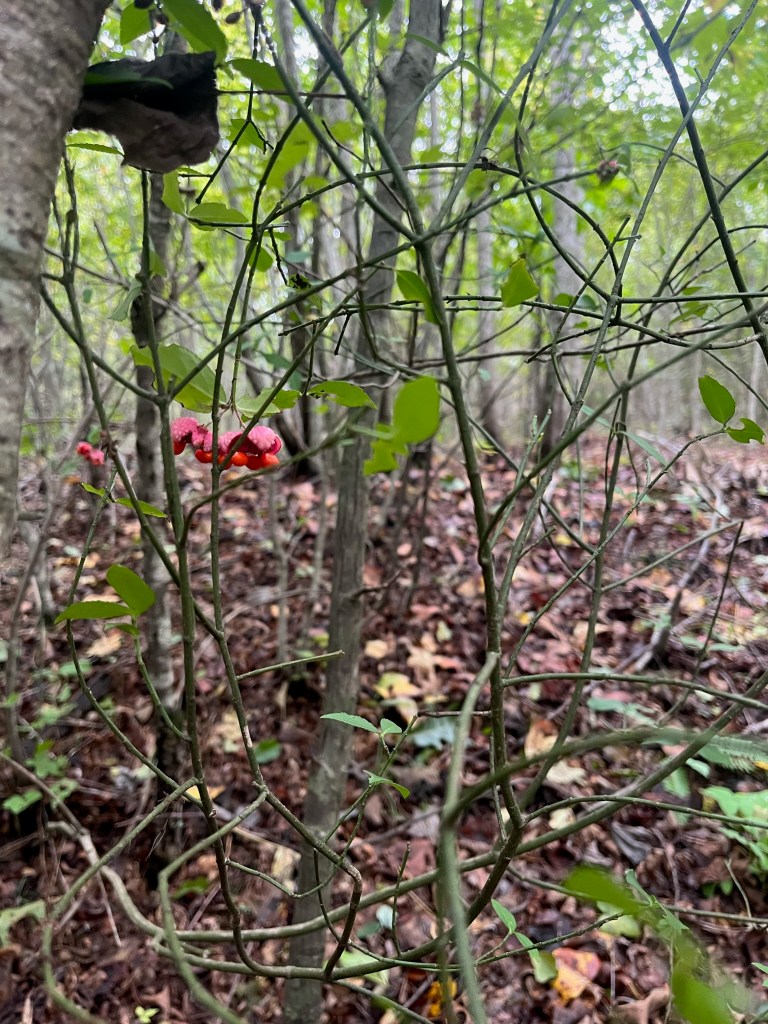
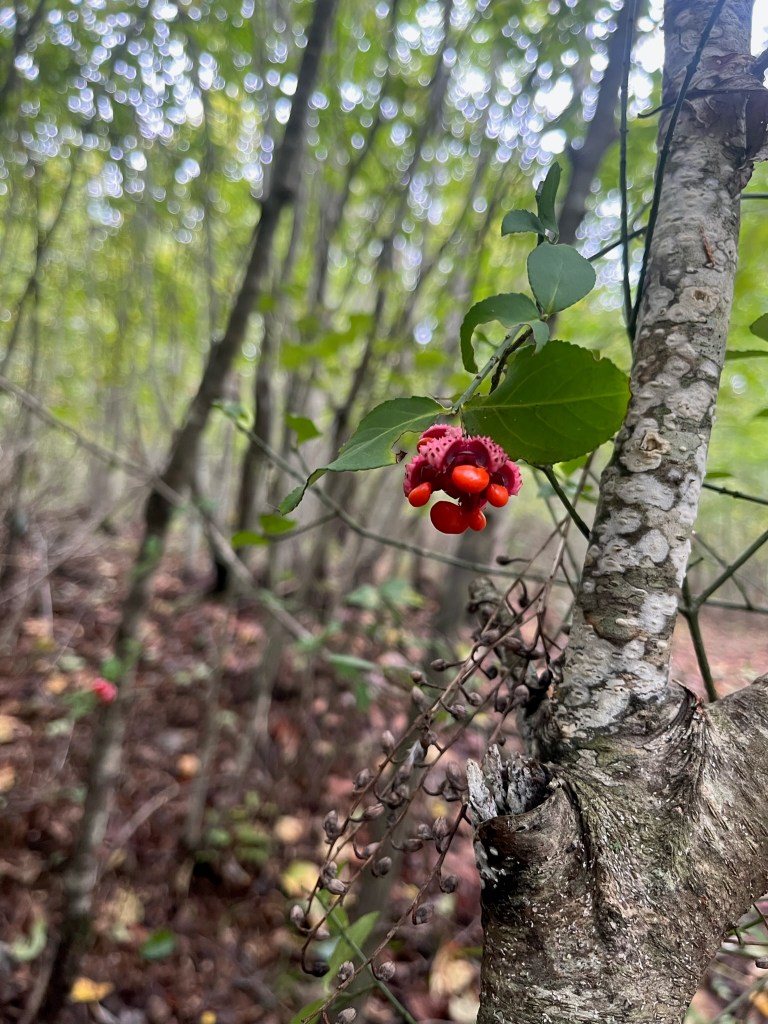
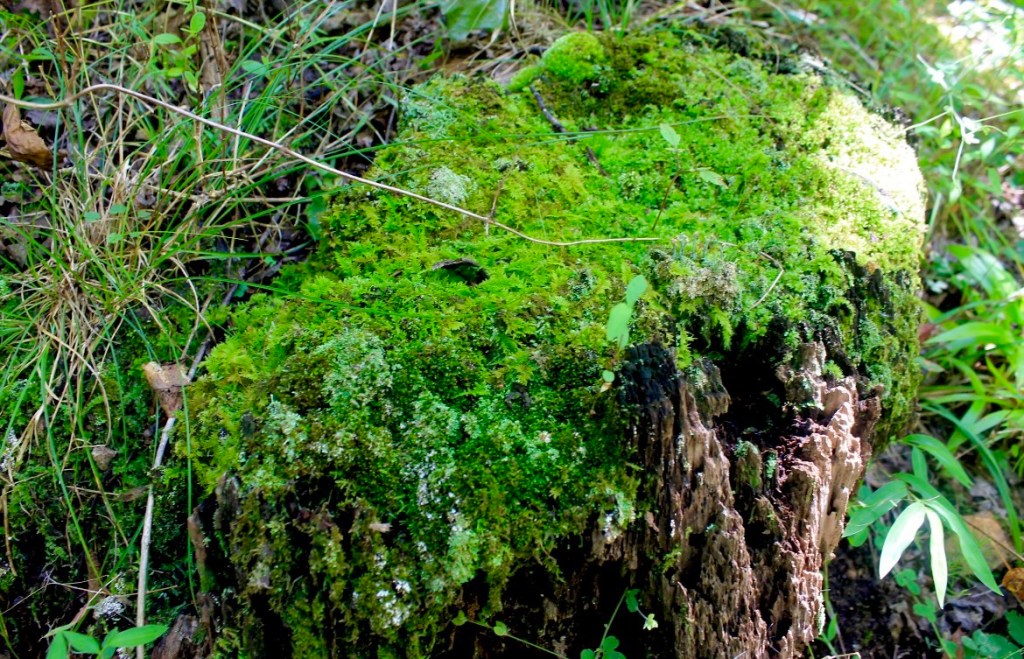
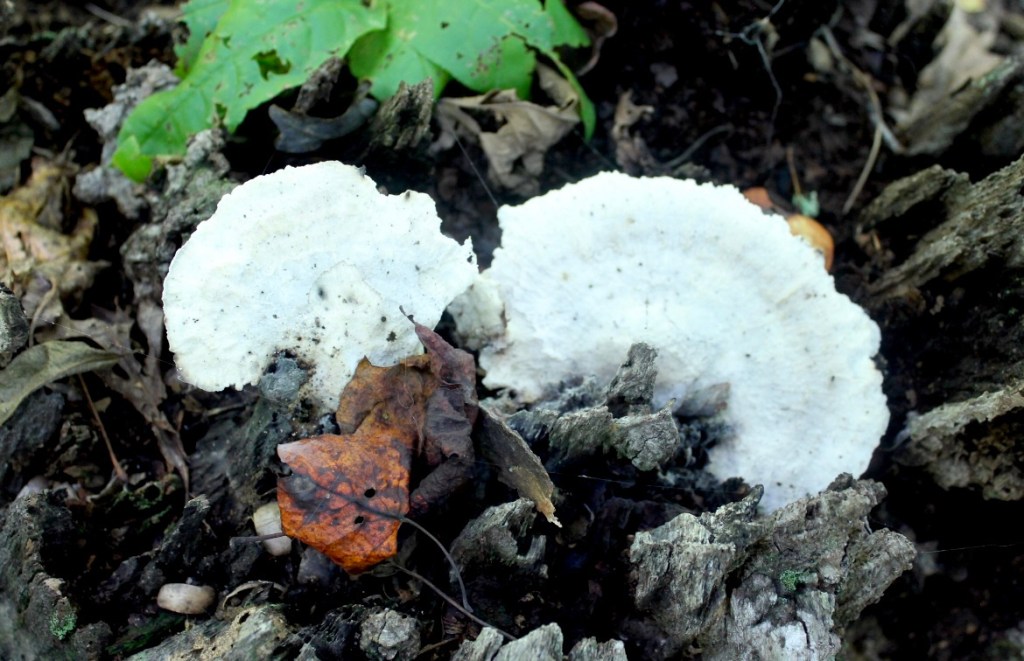
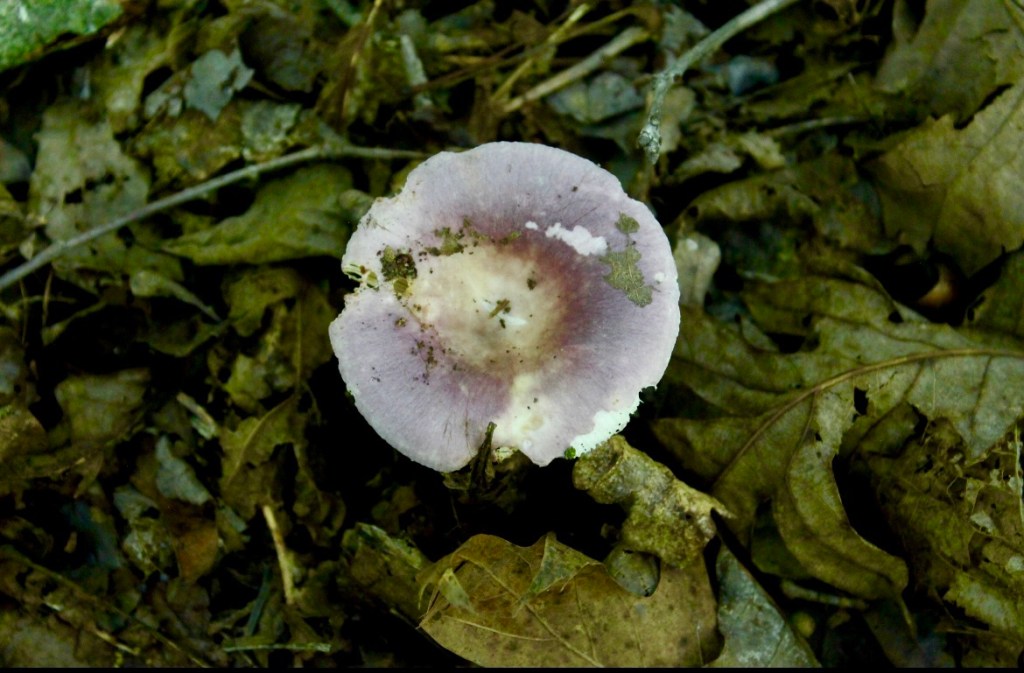
A tree stump covered in Mycena haematopus, or common name, bleeding Mycena. Saprobic mushrooms found on well decayed wood. They were lovely. Note the bleeding from the stem in the photo below. Unknown polyporeDown by the waterway. It was cooler out and also muggy for our walk around.A RussulaA new mushroom we spotted at the bottom of the clearing. It’s a yellow reishi, Ganoderma curtisii. It was as hard as wood and shiny. A magnificent find. These are a noted medicinal mushroom. We saw multiple specimen of strawberry euonymus with these lovely berries. We know birds eat these and wondered what the bear is eating. He looked well fed, about 150 pounds or more. A young black bear.
We hope we didn’t scare the young bear off. We want him to stay safe on our property from all of the hunters in the area. Next time we go out to SAFF, we will hang up more signs to alert hunters to stay off of our farm. We would like the wildlife to have a sanctuary.
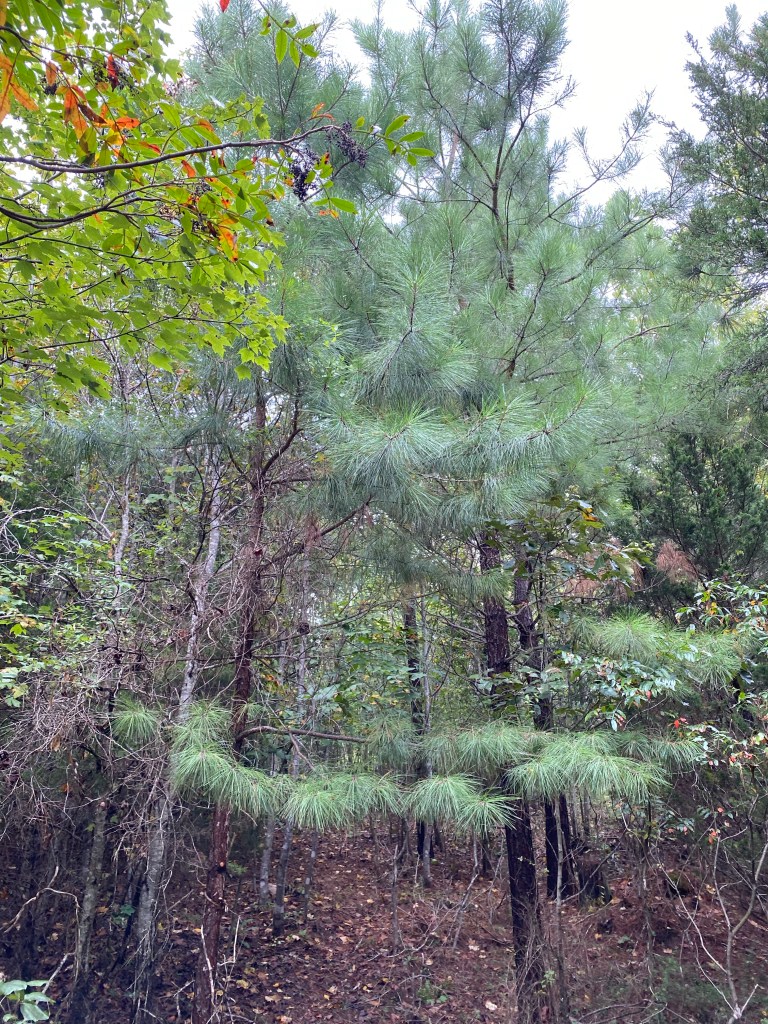
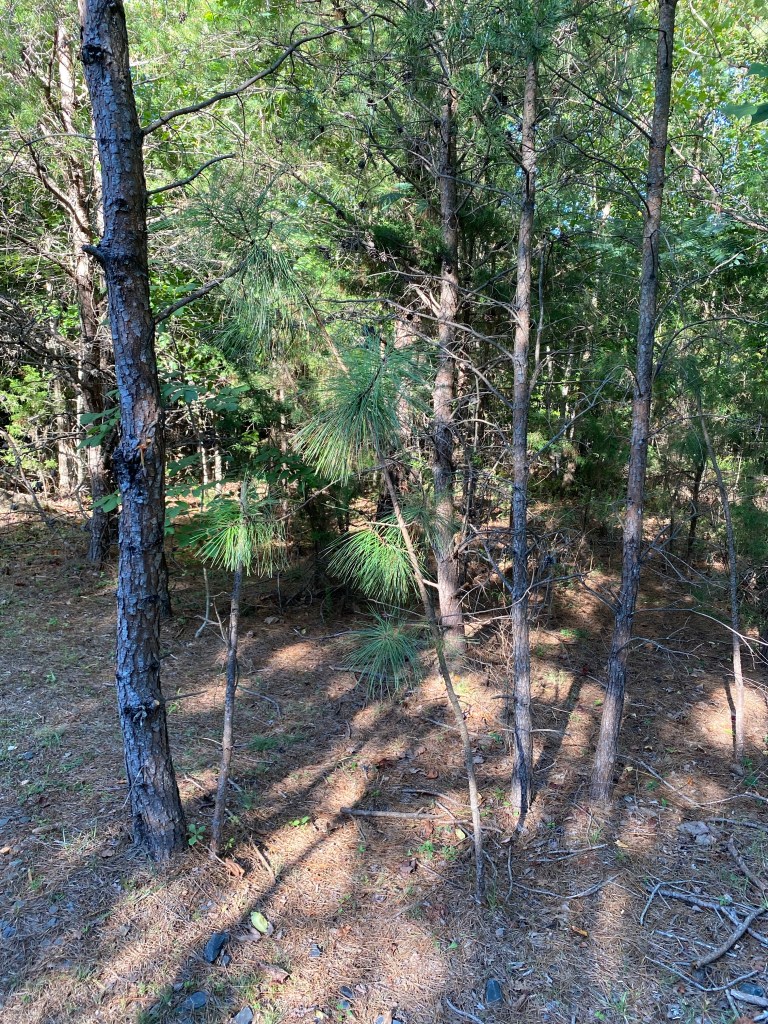
Young loblolly pines
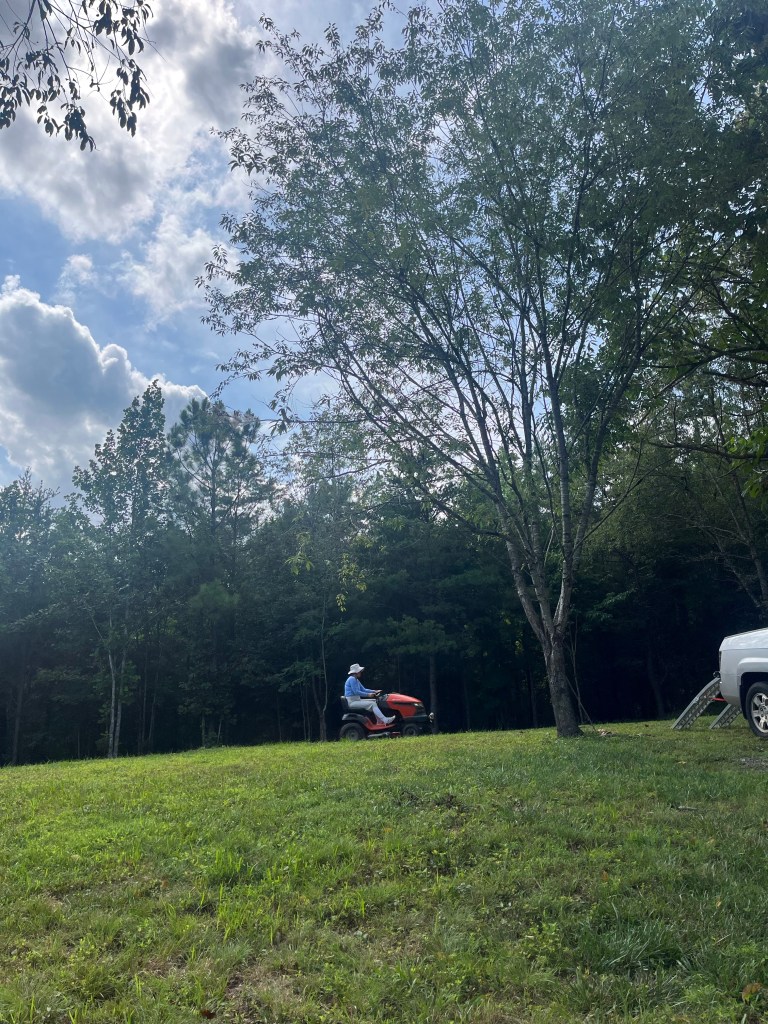
It is wonderful to have the cool weather to explore and get jobs done. We were able to mow and dig another footing for the shower and compost toilet structure.
Marasmius capillaris, growing on fallen oak leaves on the forest floor.
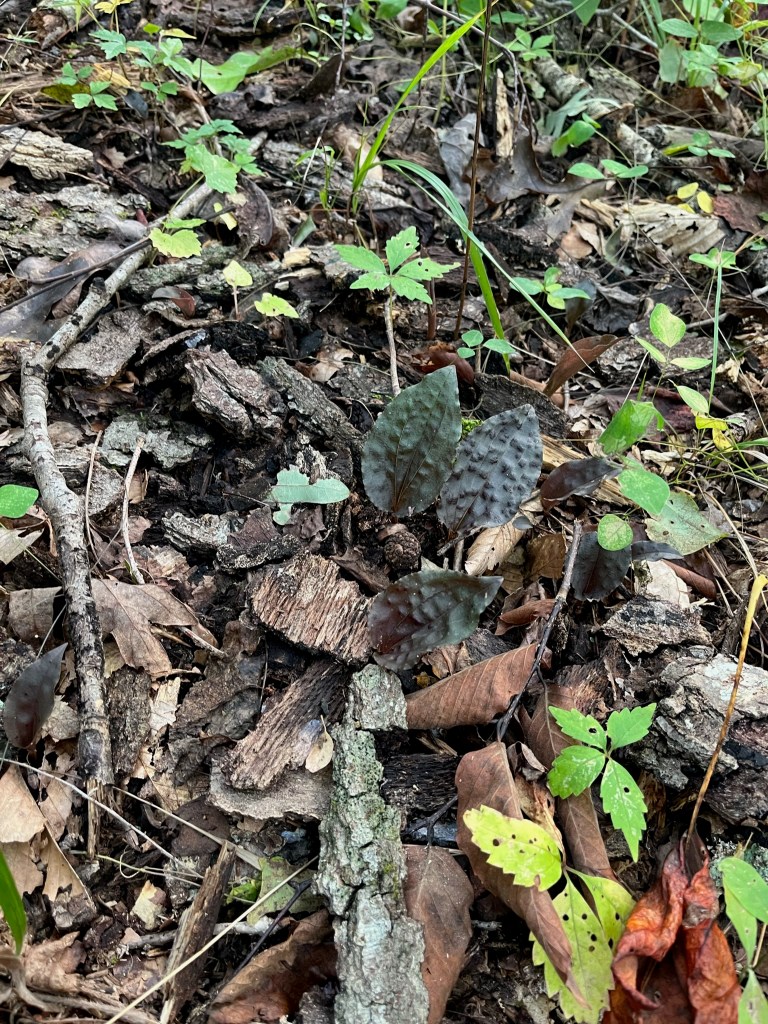
We also saw more of the Cranefly orchid’s leaves emerging along the trails all through the woods. We were able to clear hundreds more small stick trees using loppers.
We got the truck running again about midweek by replacing both the alternator and the battery. We also cleared many many hundreds of stick trees, mostly light starved, undeveloped and unwell tulip poplars and black cherries.
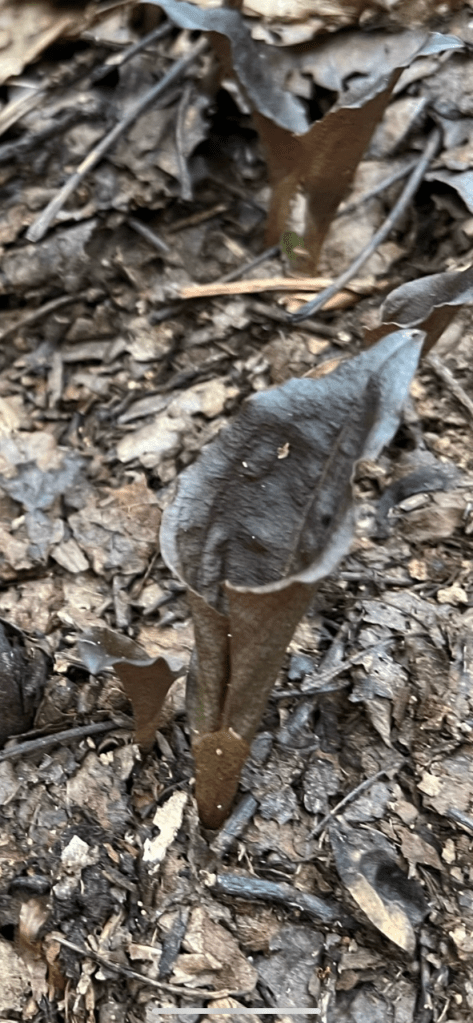
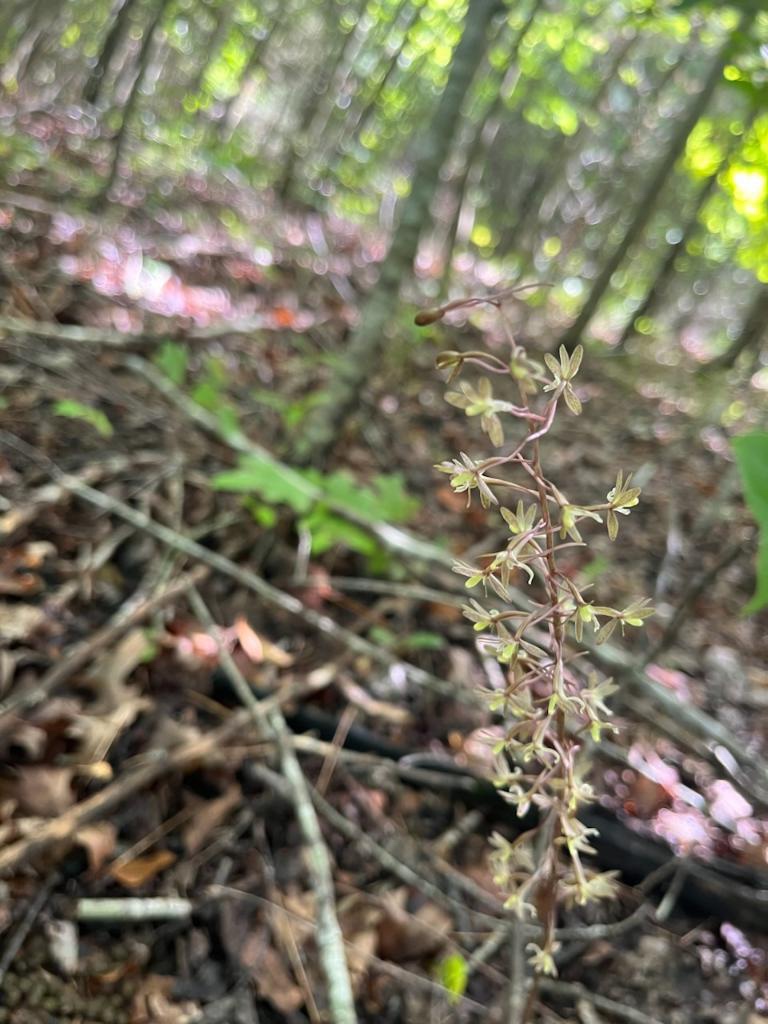
Tiny trees needing to be thinned. Crane fly orchid leaves emerging from the ground where we saw the flowers earlier this summer.
We were so excited to see these leaves (in photo above) emerging from the ground. These delicate flowers grow from edible corms.
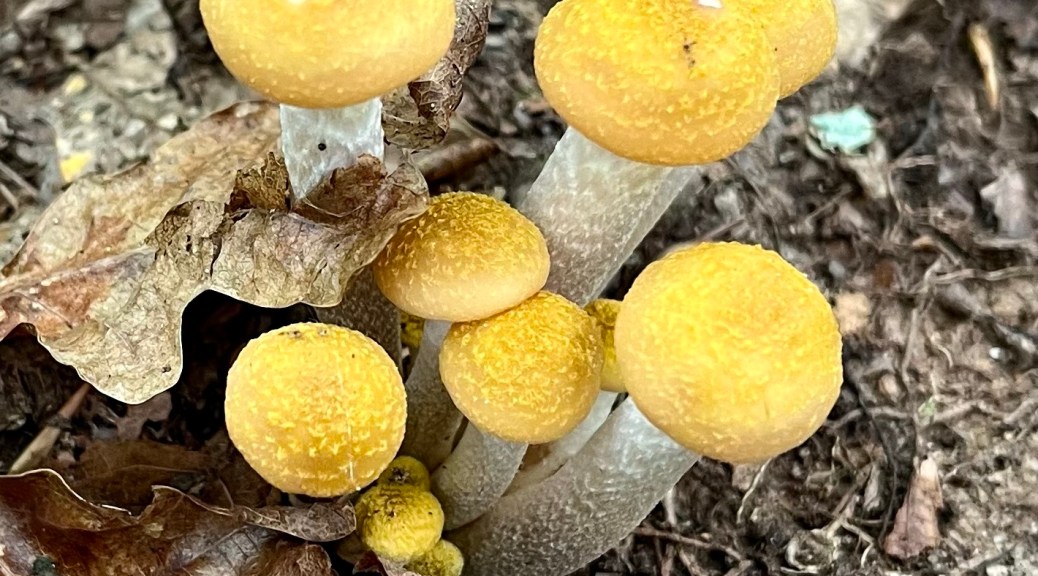
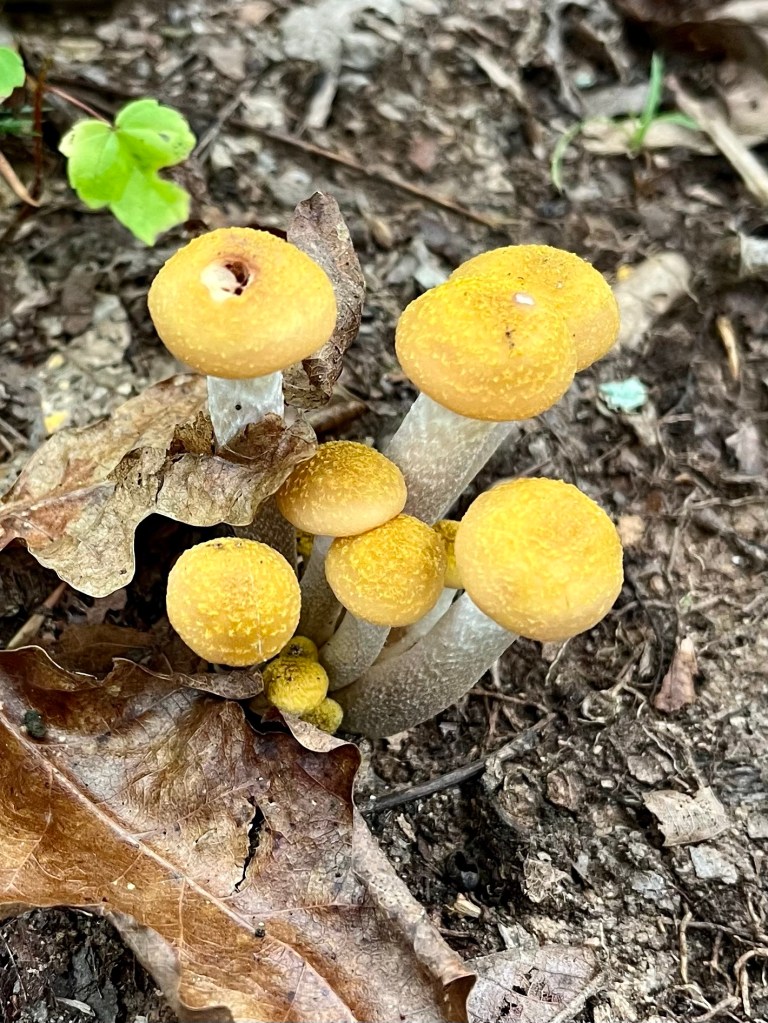
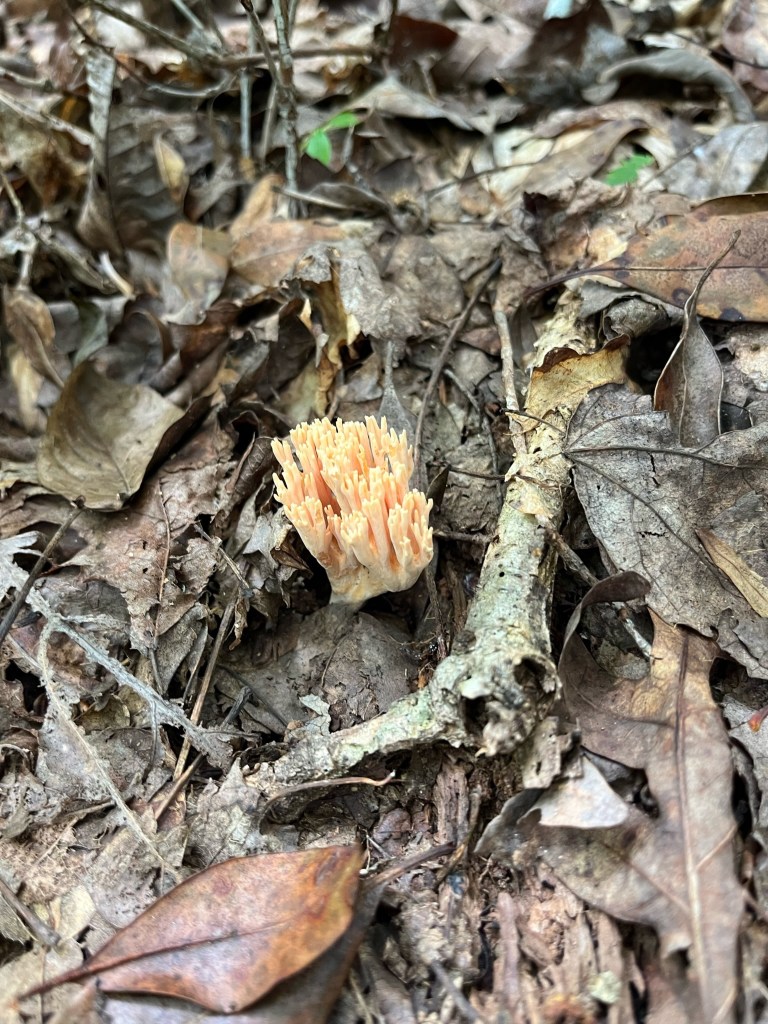
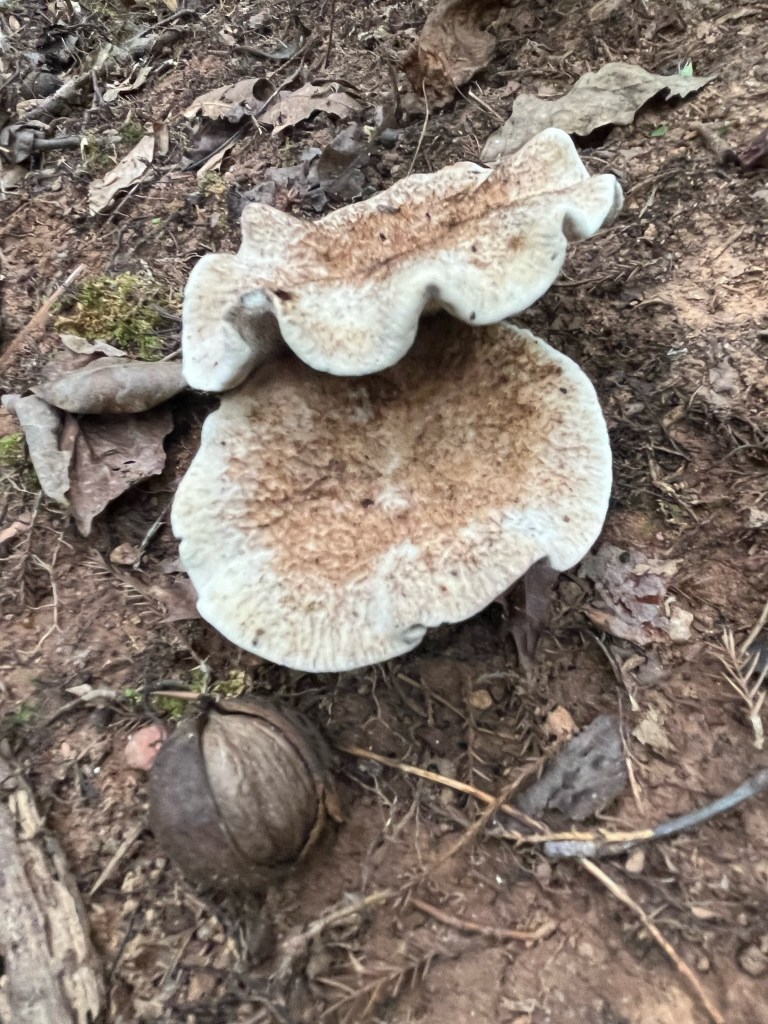
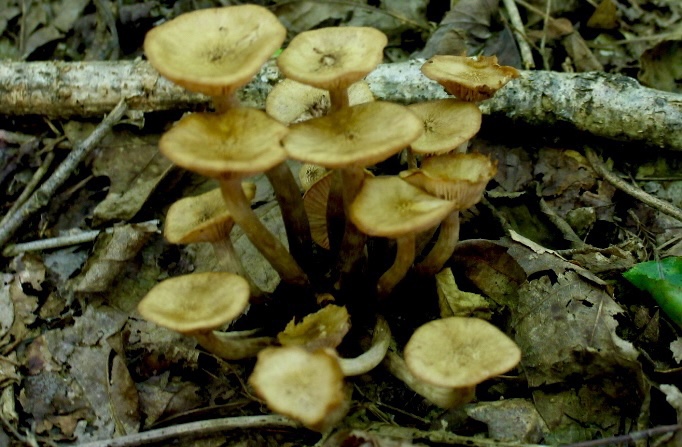
Crane fly orchid flower photo taken earlier this summer. It emerges without leaves. The leaf comes in September. We were watching for them and still surprised by their beauty. We found multiple clusters of these beautiful honey mushrooms by the creek bed. Armillaria, the longest lived and largest fungi in the world. The mycelium underground is what’s large with one being measured at 3.5 square miles and estimated to be 2,400 years old. These mushrooms also glow in the dark. They are decomposers. Honey mushrooms are rich in antioxidants and taste slightly sweet. Honey Mushrooms are extremely rich in polysaccharides. Polysaccharides from natural sources have attracted increased attention due to their potential biological functions, especially antioxidant and immunomodulation activities such as scavenging free radicals and inhibiting lipid oxidation.Coral fungusSarcodon scrabrosus, with teeth, is mycorrhizal with beech and oak trees. Found along bottom creek bed from June to October.
It felt very much like fall yesterday with coolness in the air and leaves on the ground. Ophelia moved in to North Carolina and Virginia bringing rain and wind. We can’t wait to see what the new season brings to Saint Andrew’s Forest Farm.
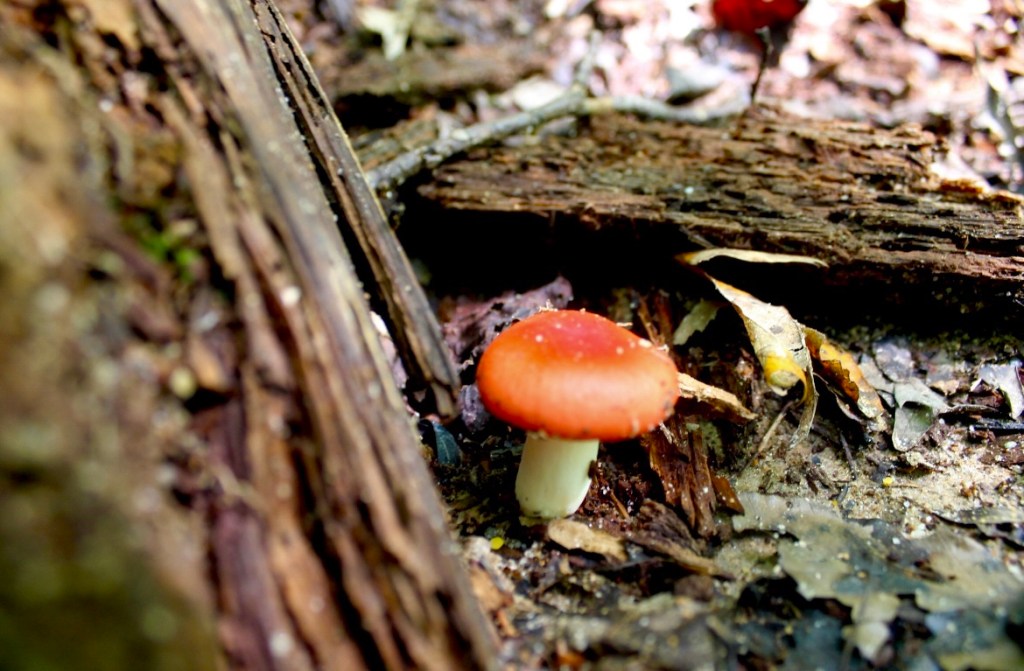
Honey fungus found 8/31/23 at bottom of slope near creek on southern end. Cinnabar Chanterelles on southern end of creek A red RussulaMolly got a picture of us.Polypore Russula cyanoxantha or charcoal burner. Found numerous specimen by southern end at bottom of property near creek.
We mowed and planned our swales in the clearing. We walked down the north trail to creek and followed it to the south trail and up. We went down chanterelle trail.
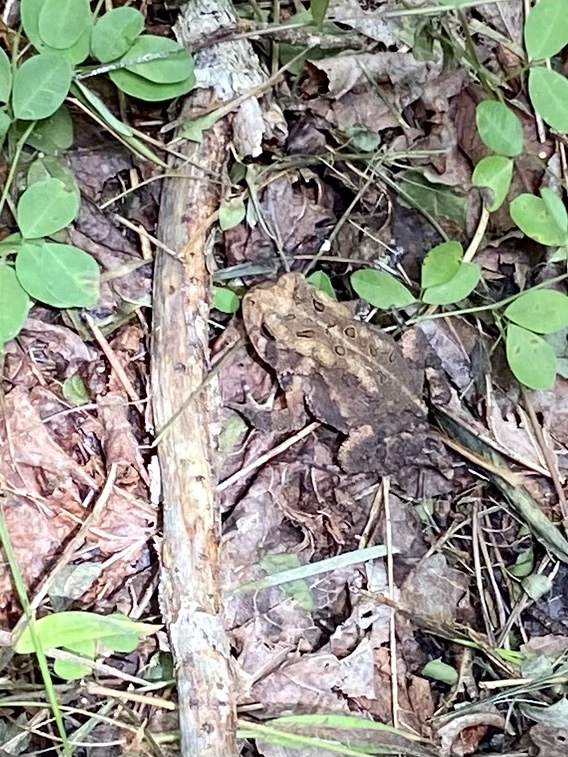
The cooler weather is wonderful. We heard a hawk. We saw toads in the water.
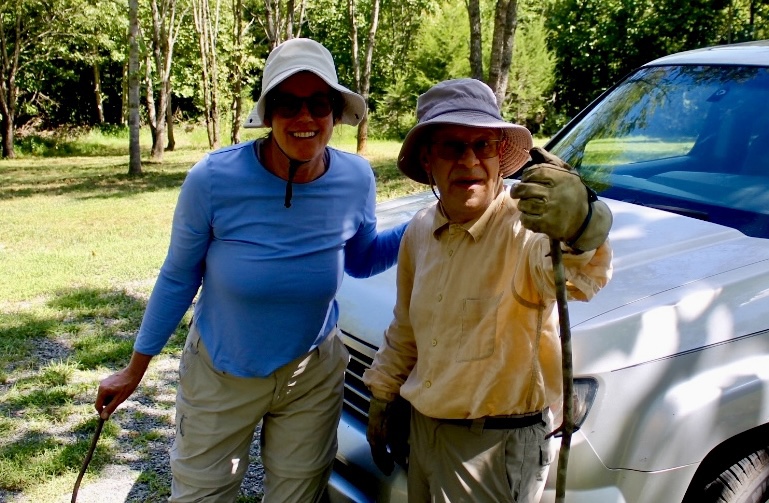
Molly took all of the photos. It was wonderful to walk around the woods with her today. There’s a crispness in the air and moving into the new season at Saint Andrews Forest Farm is exciting with so much to look forward to!
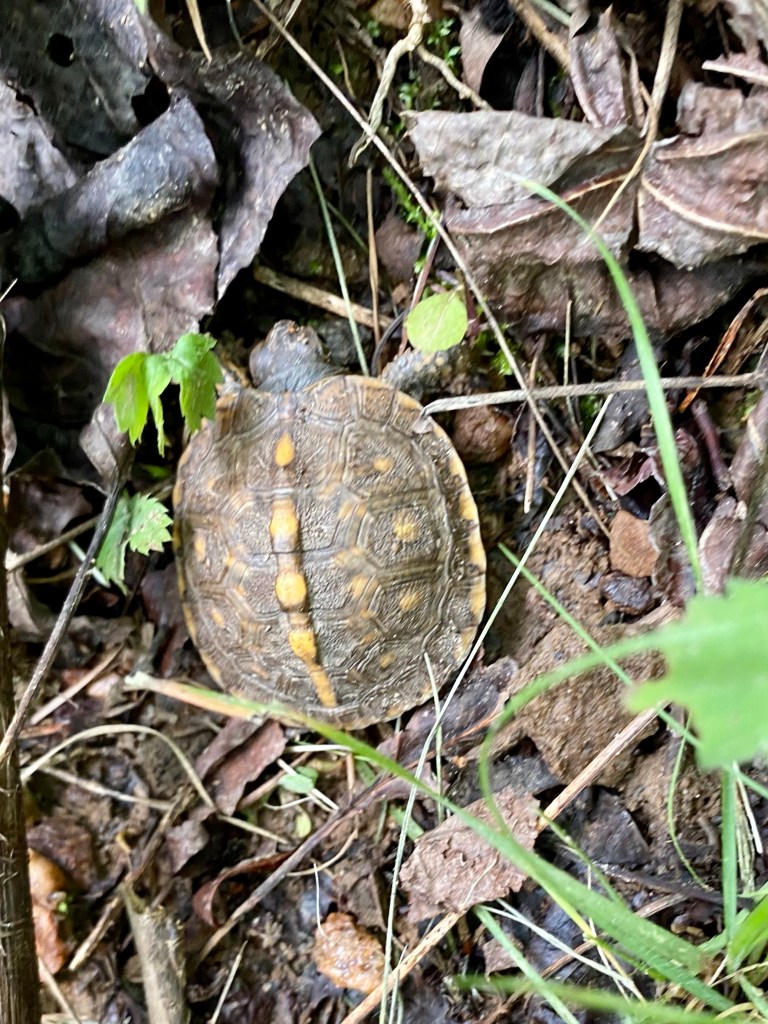
Young eastern box turtle on north trail after rains.
We went out to SAFF yesterday for mowing and checking on those cinnabar chanterelle pins. We harvested a few and followed the waterway from bottom left of property and moved past the midway point. We found cinnabar and golden chanterelles all along the way. Also, other types of mushrooms and we saw a toad and a box turtle right along the north trail. No sighting of our pileated woodpecker friend. Most of the mature cinnabar chanterelles were along the deep sides of the waterway with moss and ferns. Many that we could reach still hadn’t matured. There were so many down in the creek bed along the sides we couldn’t reach! We’ll need a plan to harvest these next year. We brainstormed a few ideas that all seemed to be ridiculous. We will find a way down there!
We have made it a little more than halfway to our south trail via the waterway. We were on the other side of creek. Next time we work on paths at bottom of property, we want to trail blaze along the slope side and continue to take out over abundant trees that have only inches to grow instead of the 10 feet necessary for them to flourish.
Chanterelles harvested yesterday along waterway.
Unknown fungi
A young toad found hopping along the North Trail.
We got the mowing finished just in time for an alert for a tornado watch in Dillwyn. We drove home. Staunton had a tornado warning with hail. We hope to go back out in the next few days. Our plan is to go on Friday after the thunderstorm Thursday.
We are planning our initial structures and crops. We hope to use the resources we can find to help shape the farm to become more of a food forest than it already is. Currently, we have blueberries, deer tongue (flowers young leaves and stems) and wild yams (great eyes, Judy) edible mushrooms, cranefly orchids edible corms, several edible fiddlehead ferns, and black cherries. We also hope to find pawpaws.
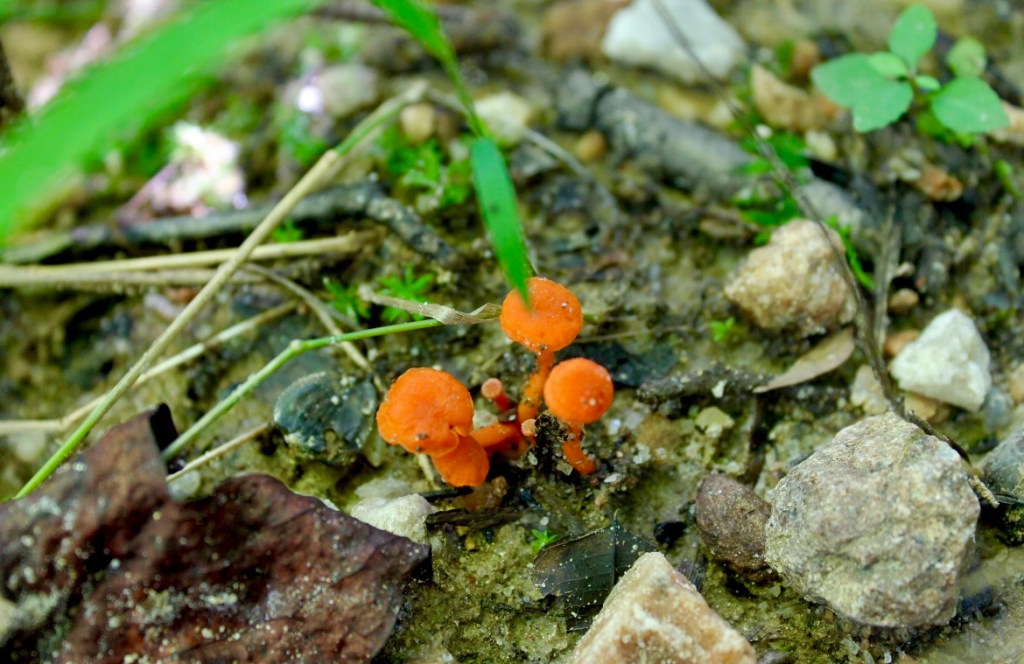
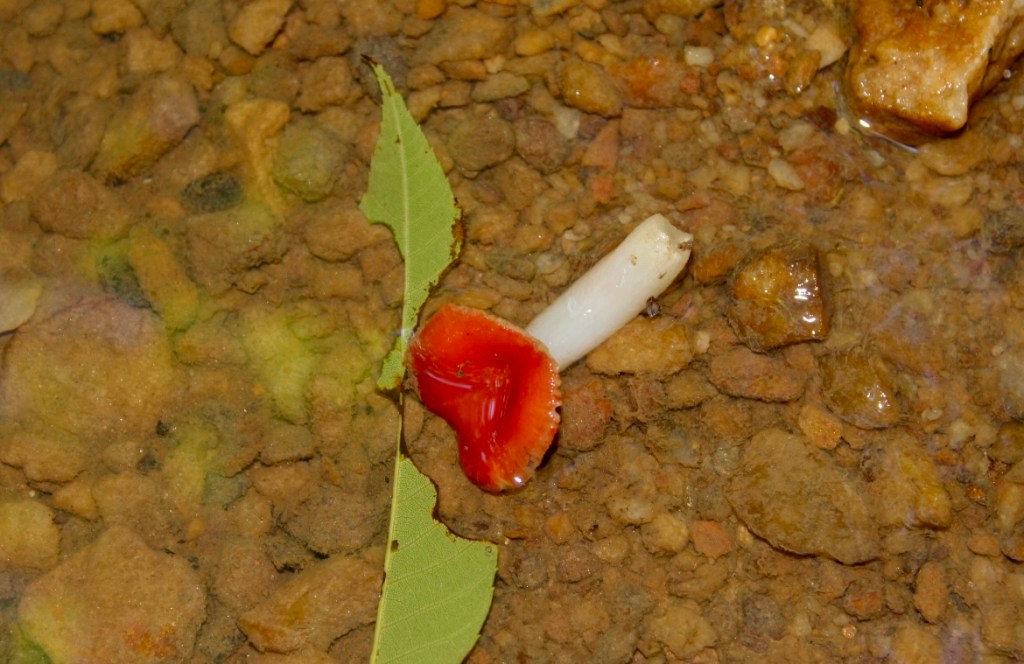
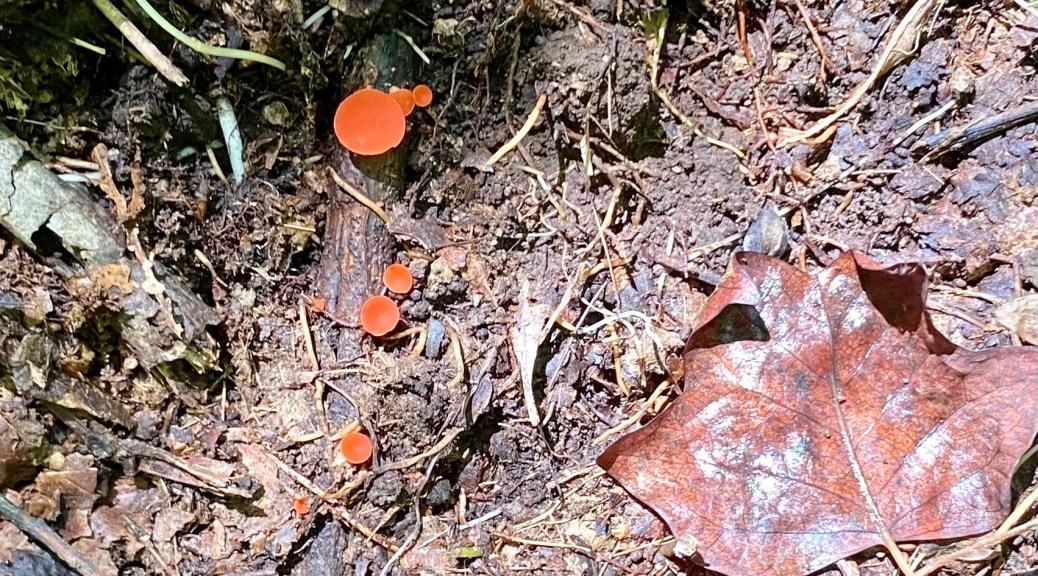
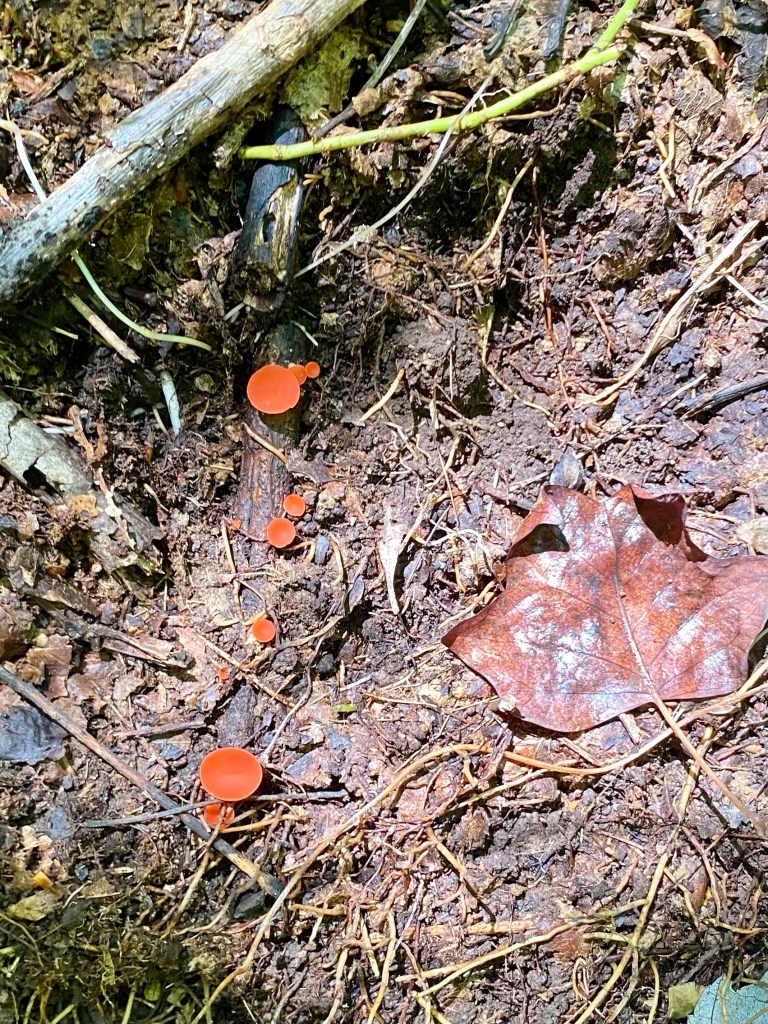
Scarlet elf cups
Unknown Amanita. Possibly amanita gemmata. Not a beginner mushroom. So far, anything that looks as though it’s an Amanita, we don’t even touch usually. There are 600 species of agarics (Gilled mushrooms) which includes some of the most deadly. This species is responsible for 95% of mushroom deaths. (If we are in doubt, we throw it out: Or better yet, don’t even pick it. )
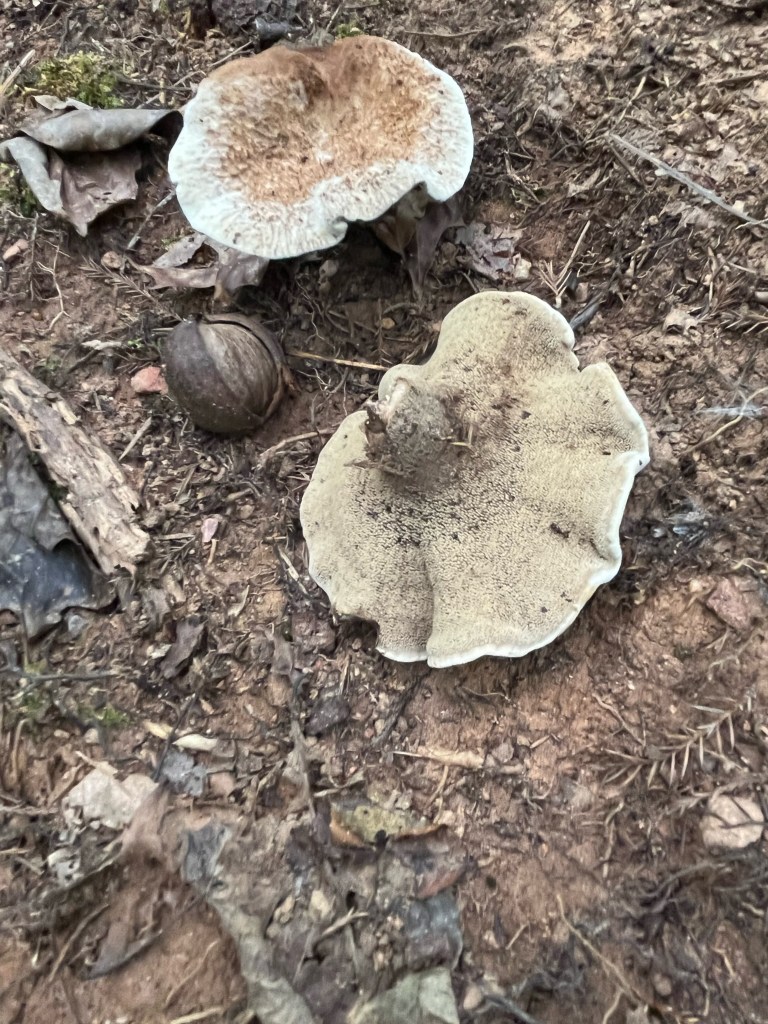
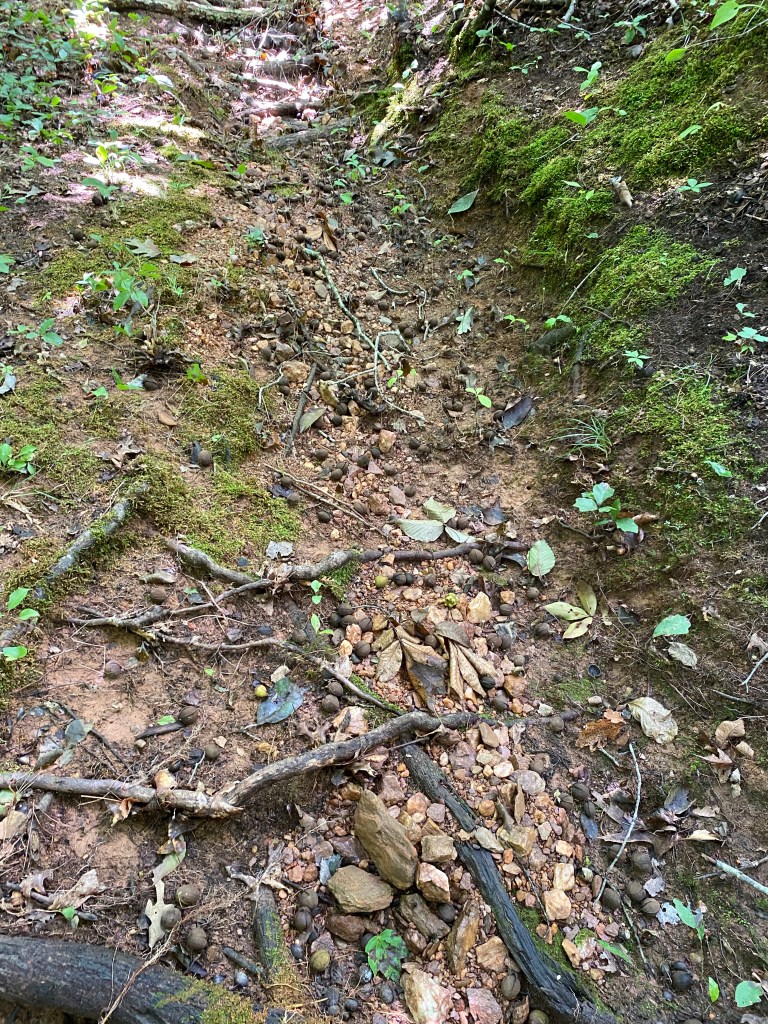
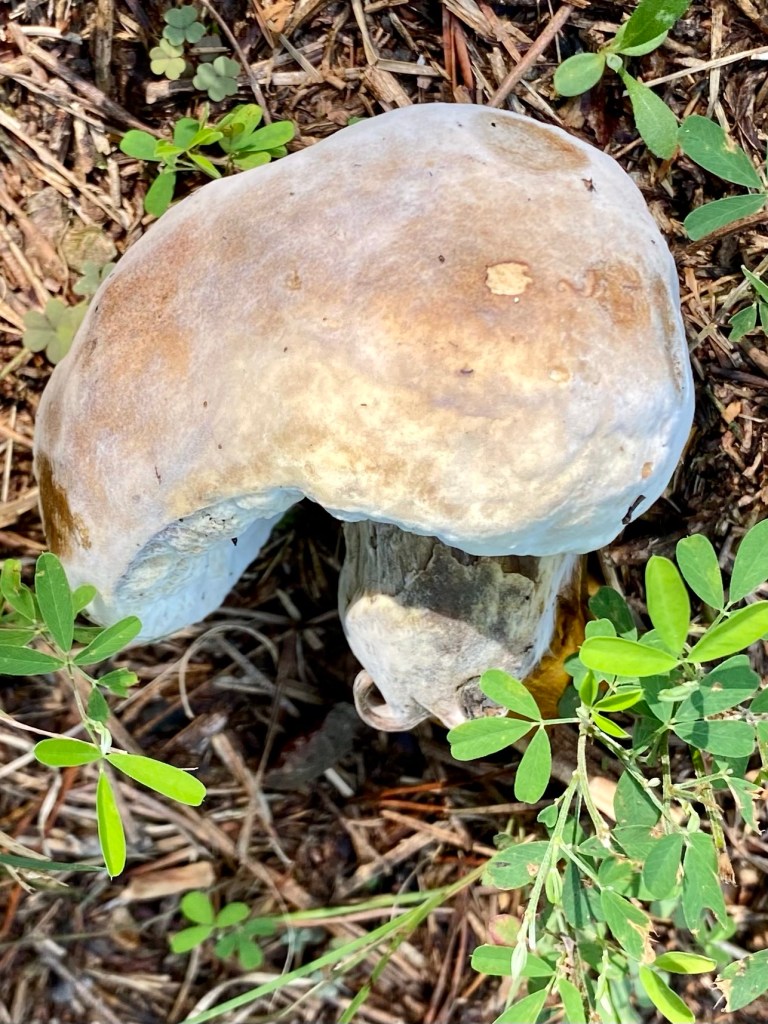
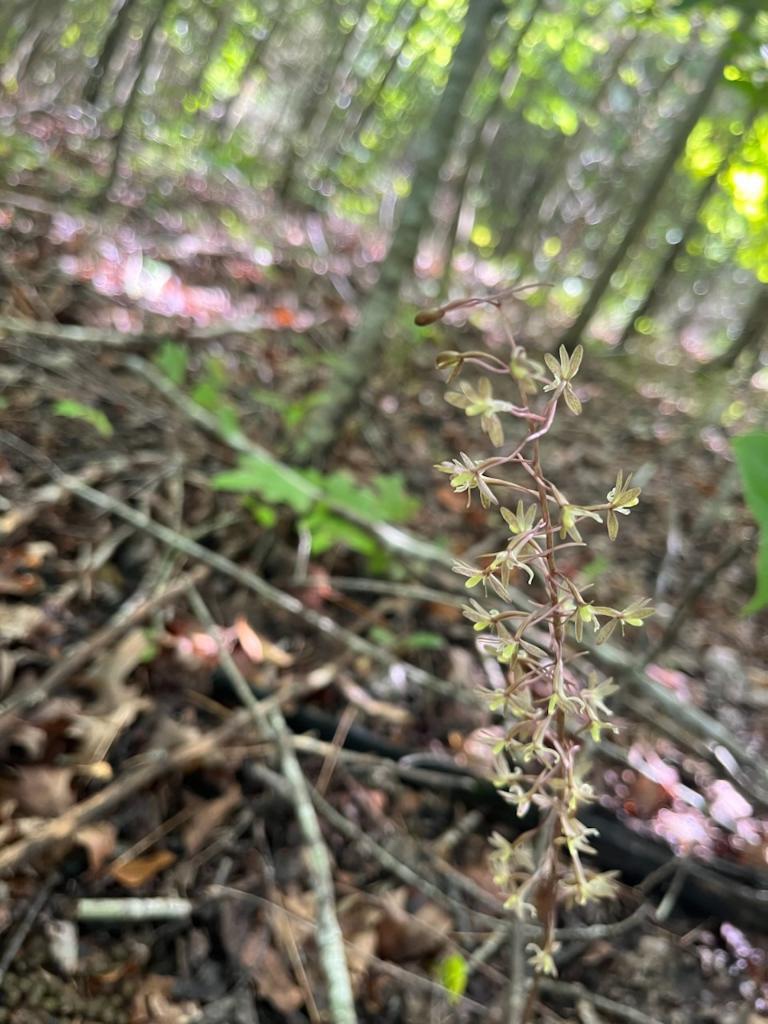
The waterway floor with rocks and sticks and roots. Mosses and plants along the banks. Mountain laurel along the waterway.Potentially Hypomyces chrysospermus or Tylopilus or H. Melanocarpus. More information is needed. Finally! We thought we found a bolete that could potentially be a king bolete, bolete edulis, porcini. Found along driveway up on top of farm near pines. We have been searching all summer. However, it appears as though it could be a bolete with a fungus. Hypomyces chrysospermus, the bolete eater! A parasite turned the bolete white. Not at all a king bolete. Narrowing down identification still. We continue our search for porcinis and are glad for our chanterelles. We will not eat these!Tipularia discolor, the corm is potato-like and edible. Cranefly orchid is found all along the banks of the waterway and in the forest at SAFF.
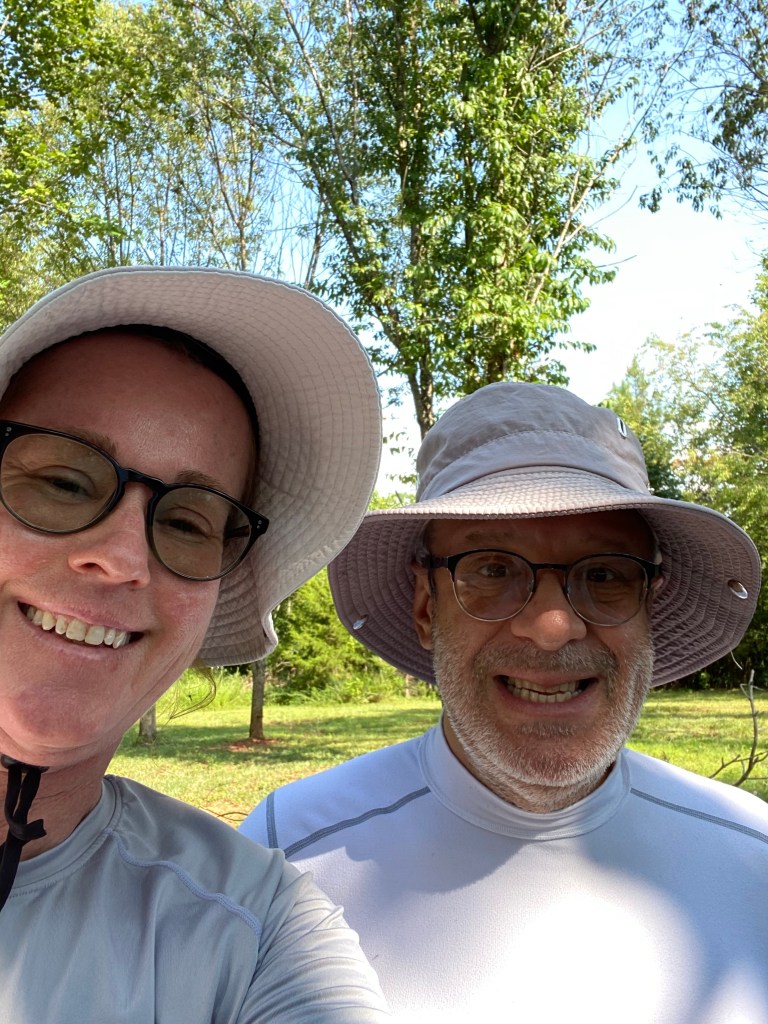
Chris and I excited to be at our newly christened Saint Andrews Forest Farm late spring 2023
On April 13th 2023, Chris wanted to go to Buckingham County to look at a property with forest covering most of the 13 + acres. We drove to Afton, over Route 29 and into Buckingham County going deeper and further into beautiful and old woods. Magical seeming forests with giant trees arching over the roadways creating a canopy of green. Little moss covered hamlets of yesteryear with giant boulders covered in greenness and ferns sitting in a creek bed. Gorgeous vineyards and farms. We also saw forests recently violently cleared by loggers. Jagged and torn and pillaged. The roadways beaten and abused by giant trucks full of timber. We saw what looked as though the forests had regrown a year or two after being cut, and also stands that appeared to be five to 10 years on. We began to see ages and stages of development. It was an incredible journey for us because of its unique beauty as well as other circumstances. We both really needed to be in the woods again. We had been away too long. When we arrived and saw the pines and poplars, we both immediately fell in love with our forest.
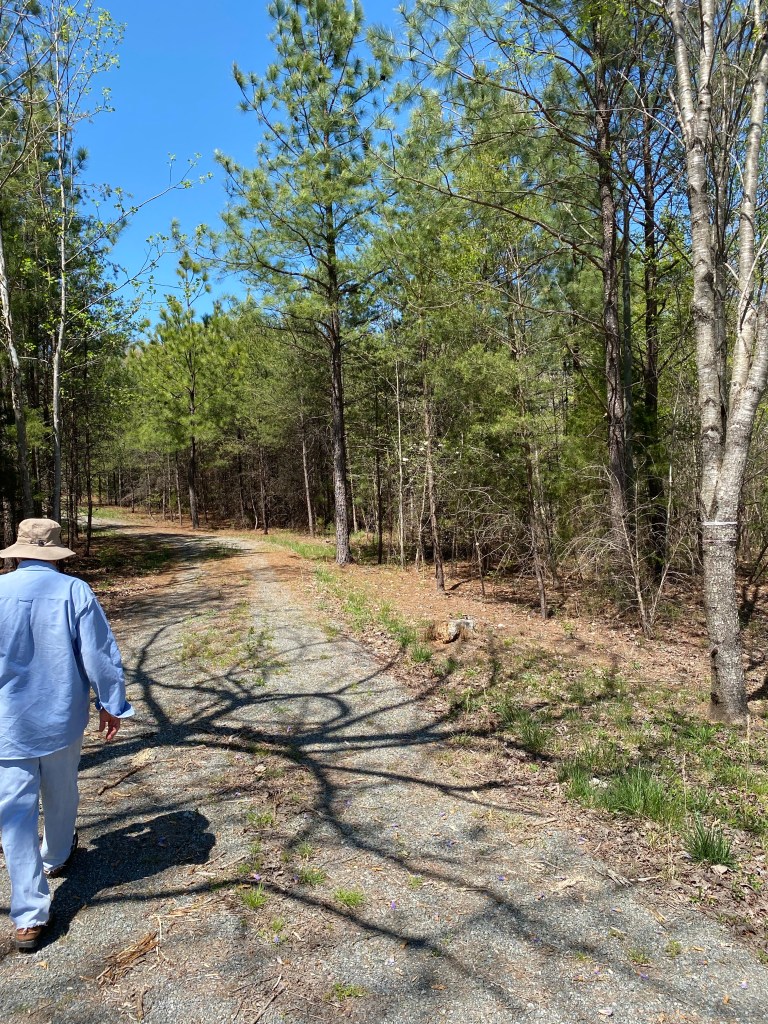
Chris walking down the driveway in the shade of the black cherry tree.
Our guess was that it had been cleared about 20 years ago. Water had made paths through the woods. Right away, we began to find interesting mushrooms with our exploration mostly limited to the top of the hillside and the edges of the clearing.
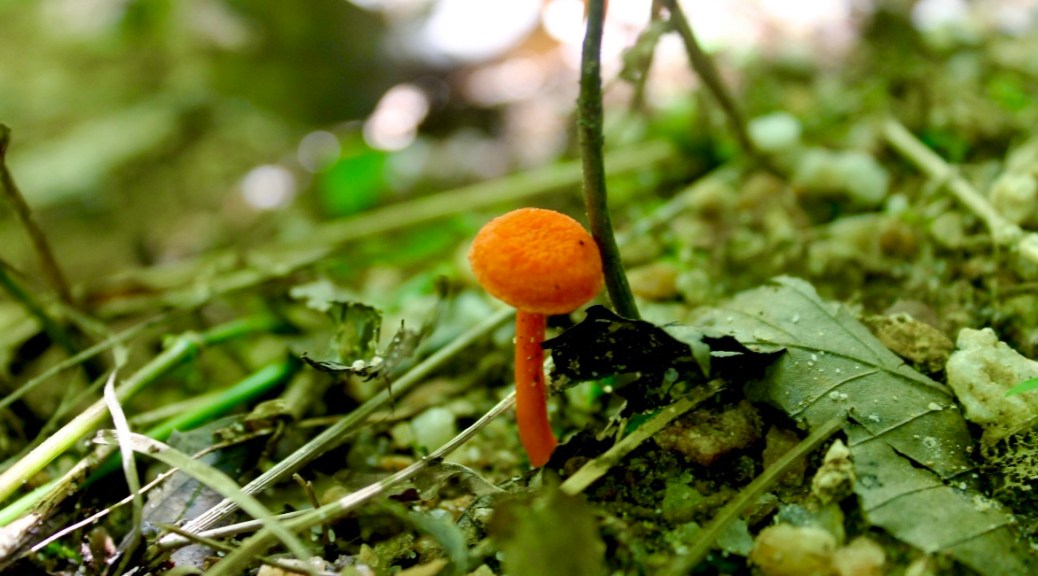
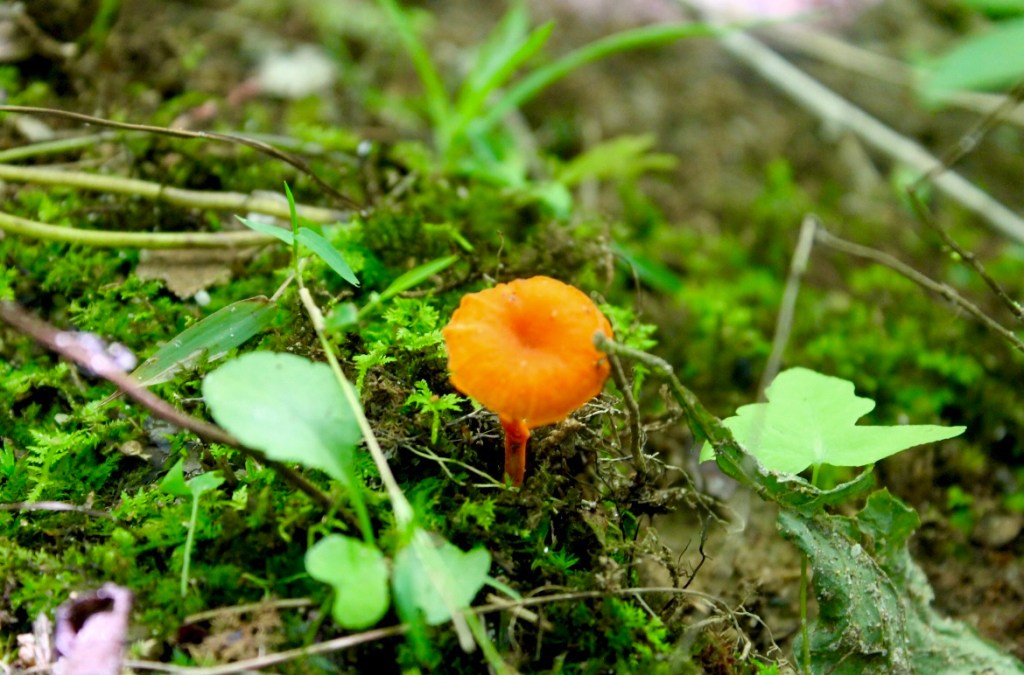
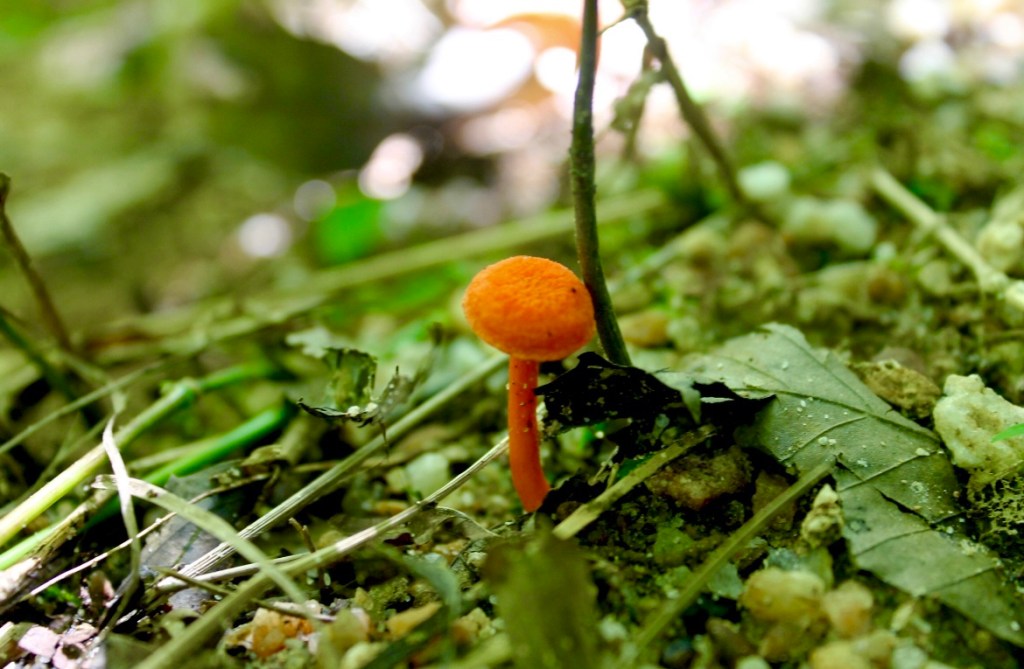
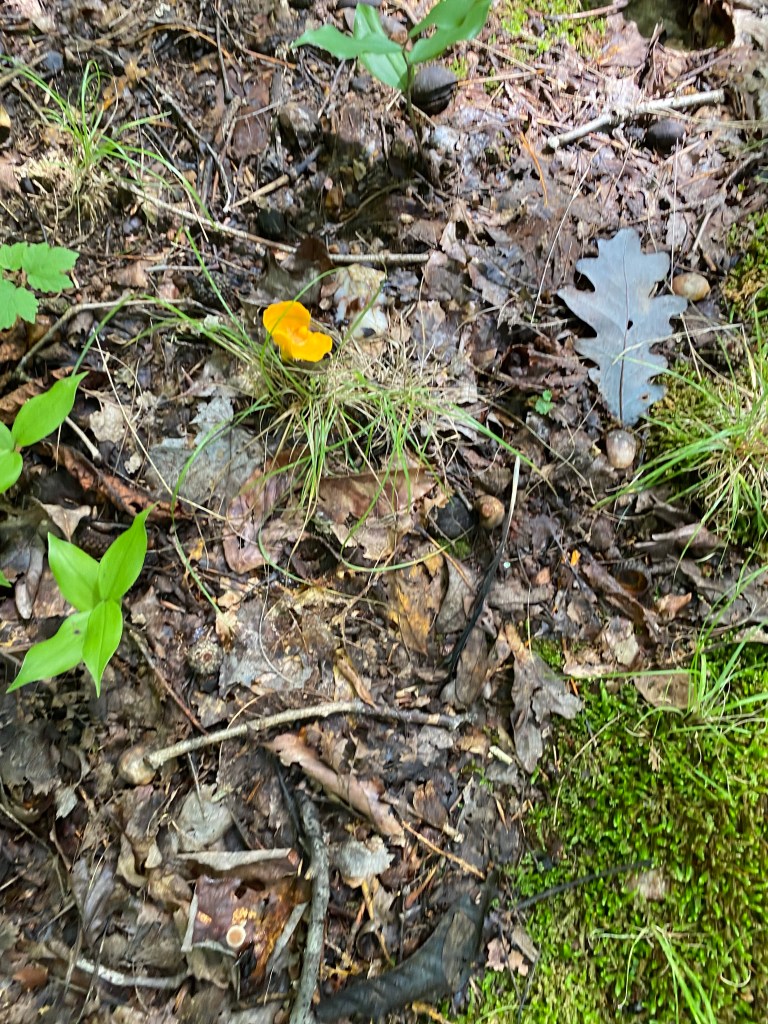
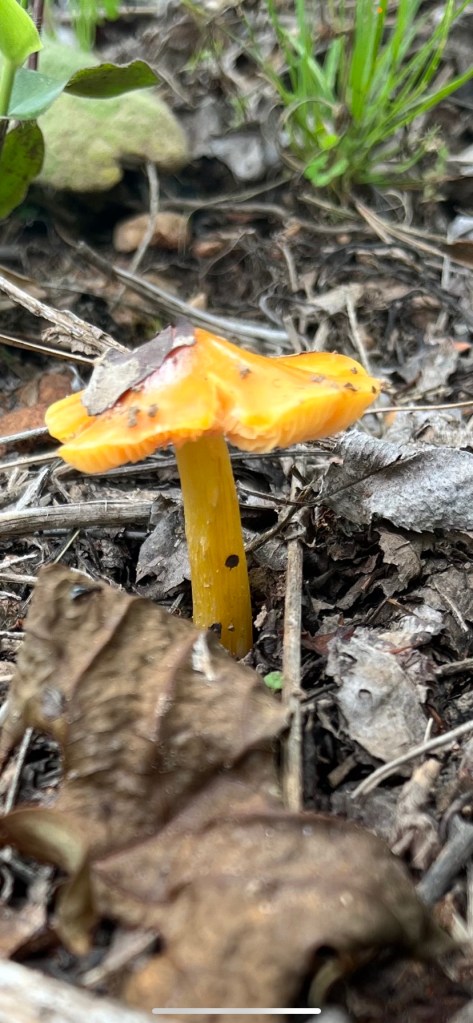
Orange waxy cap: The first mushroom we found at St Andrews Forest Farm on May 19. We narrowed this down to a hygrocybe species maybe conica group. (Thank you Reddit mycologists. ) We found it in the clearing near a tulip poplar and black cherry tree. We became hooked on determining the types of fungus we had growing on the farm. We could not wait to get into the woods and down by the waterways to explore the interesting features down there.
As summer came, we began to realize we had a sizable tick population to deal with and thought we would be kept from our explorations of the woods until winter. Glad that was not the case. As it stands, there are still several areas that are infested with nymph ticks as evidenced by when we walk into that area we immediately see between two and twelve on our shoes and socks.
Right now, we are aware that the ticks appear to like moisture. The drier it is, the safer we are. We always wear our permethrin coated shoes and socks. We wear light colors so we can see them more easily. We watch out for each other’s backs. We want to stay safe. Chris has had several bites this summer. He has removed the ticks immediately and cleaned the area well. So far, no symptoms or side effects. When we camp, we will coat our tent and appropriate supplies with permethrin.
The other note I have about ticks is that it is tall grasses and weeds that they are able to attach to our socks and shoes and then climb up to find skin. Stay out of tall weeds and grasses. If you must walk in, look at the tippy tops and you will see the ticks with their legs out. I’d only do this with a mower or weed whacker in front of me. Anyway, they do not fall from trees. They do not fly. They are opportunistic. (However, they can fling themselves out onto you using static electricity. Look it up. Here https://www.science.org/content/article/watch-ticks-fly-through-air-power-static-electricity or on YouTube). This was all helpful for me to learn in order to determine best practices to avoid them.
Keeping our clearings mowed and weed whacking our paths has been extraordinarily effective. It has become easier now that we have the truck and tractor. Lastly, I’ll add that ticks dislike hot and dry. The clothes dryer kills them after 10-15 minutes. This was also helpful for us to know.
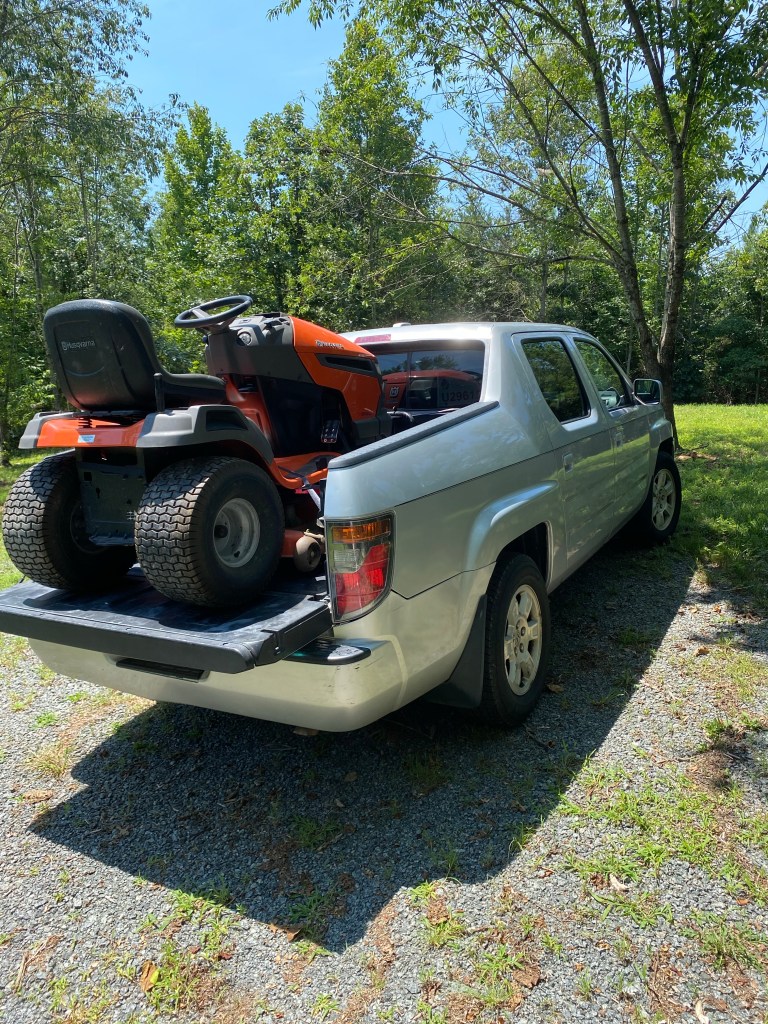
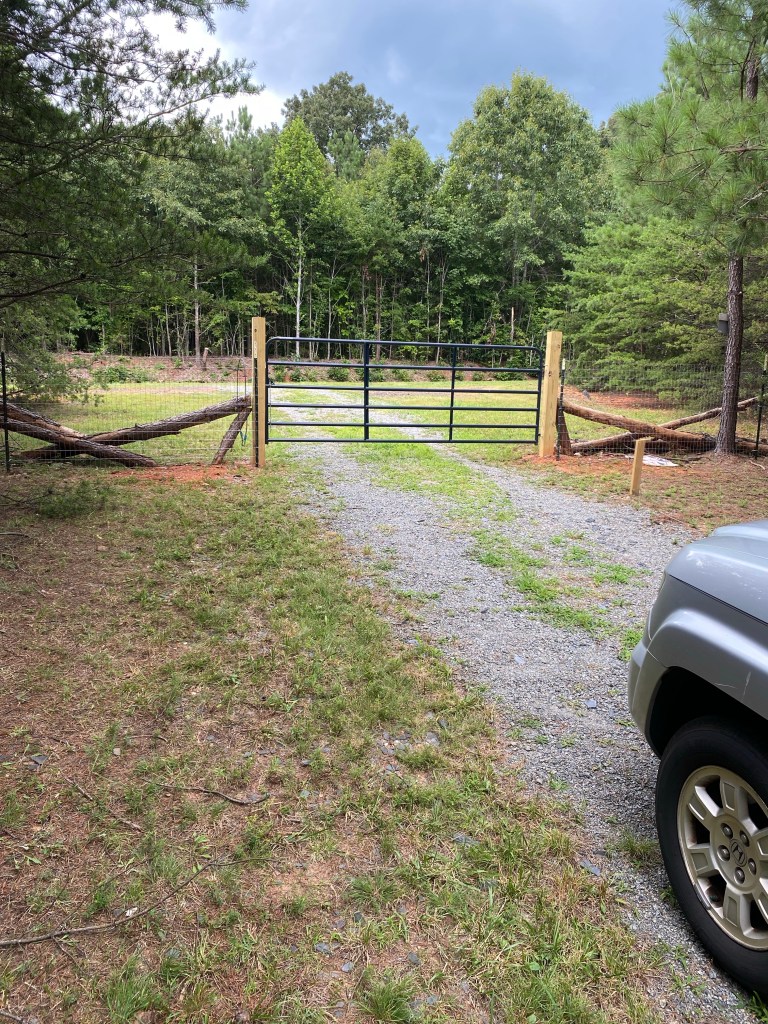
Honda Ridgeline and ancient Husqvarna with a v-twin engine – they don’t make these like this anymore. Lots of steel! Our gate to keep out the neighborhood dogs (and any other riff raff or unwanted mushroom bandits. )Unknown Russula species
One of the best things so far has been looking forward to rain out in Buckingham County. We get very excited and wait as long as we can afterwards to go and see what new mushrooms we can find. We have been surprised and delighted every time with new finds. Mushrooms love moisture. So far SAFF has been moist! We’ve been astonished by the diversity of life and can’t wait to see more.
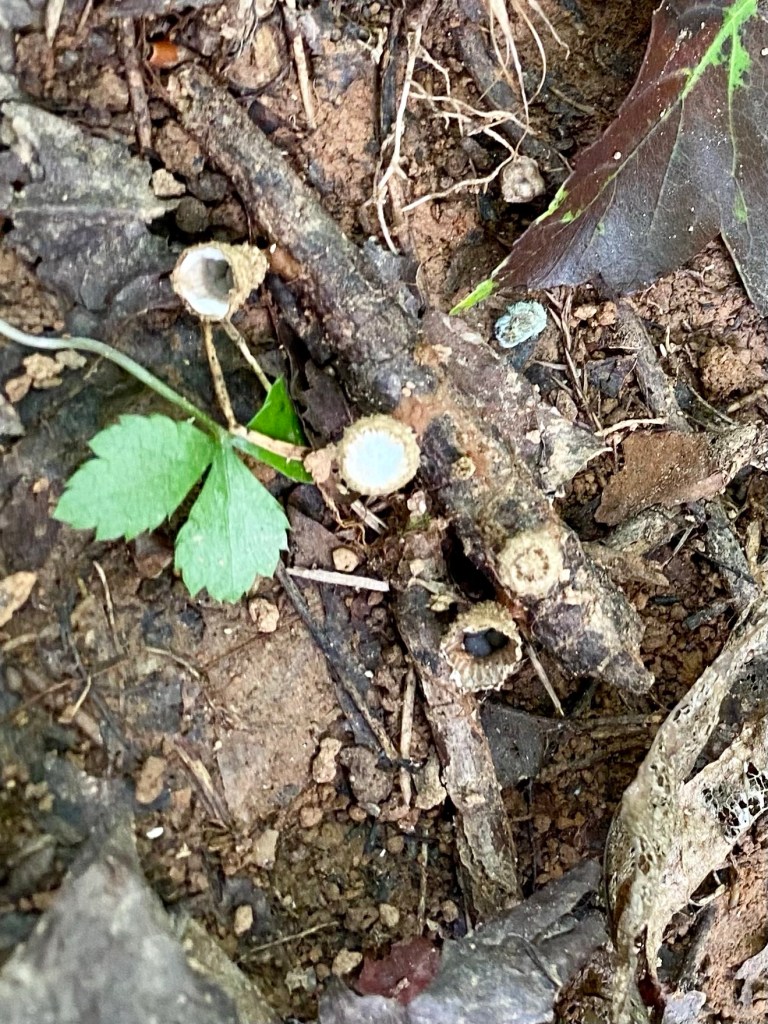
Cyathus striatum, splash cups, commonly called the fluted bird’s nest mushroom, found along the water way in back left corner of farm. It is saprobic, a decomposer growing on dead branches. The inside of cup appears white. Notice the cup with dark eggs which get hit with water and release spores. Ridges along the cup. Light brown or cream colored.
We went back and explored the bottom left corner of the farm and found another property marker. The earth is exposed and red back there, and has recently been washed through by a cleansing rain. In some parts it is easy to see the water moved with force and power. 48 hours after the last rain, we saw pools of water in places as well as found a deep pool with water dripping into it from an underground source.
The pool with water dripping into it from underground.
We found mushrooms and plants growing all along the edges of the waterway. In this area, mountain laurel grows. Ferns and mosses were also present. Tiny mushroom pins that need another rain to grow and mature were everywhere when we stopped and looked around carefully, we saw multiple fruiting bodies.
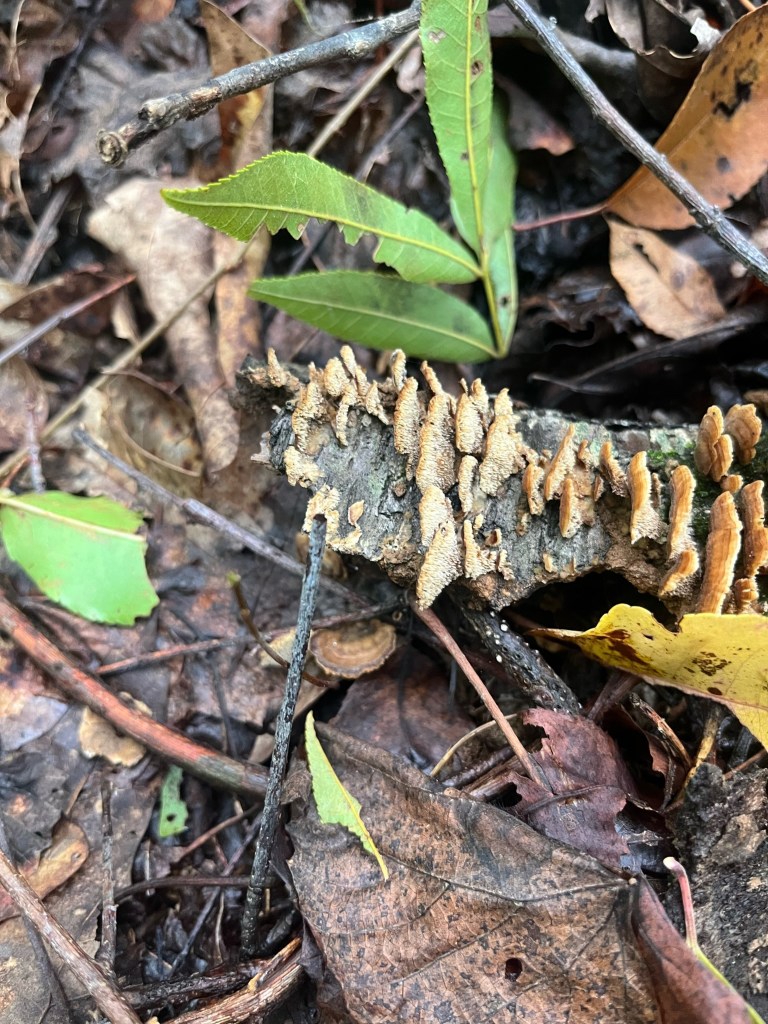
Numerous cinnabar red chanterelle pins awaiting more moisture to mature. Blue ground cedar and unidentified moss along waterway Multiple unknown brown polypore mushrooms at base of tree along waterway’s edge.
We made our way towards the midline of property along the waterway and stopped when it deepened significantly. We didn’t notice any animal tracks or scat along our way. Yesterday, we saw a rabbit along what we are calling Chanterelle Trail. It was gray and hopped away from us quickly as we were making noise culling numerous tulip poplar and other small, undeveloped trees. We heard the woodpecker off in the distance today but it didn’t come and interact with us directly like yesterday.
Then, we culled more trees as well as trail blazed midway down the hill and made about a third of the way to the north trail. It was dense with sunlight starved trees. We began laying the trees along the outer edges of the trail to build up a berm to help with water flow and soil retention on the slope.