We’ve been going over most days this week as the soil temperature has been above 50 degrees Fahrenheit which is when morels begin to pop up. We have not found them yet but are delighted to continue our search. We’ve been looking especially near tulip poplars, oaks and beech —and near the waterways.
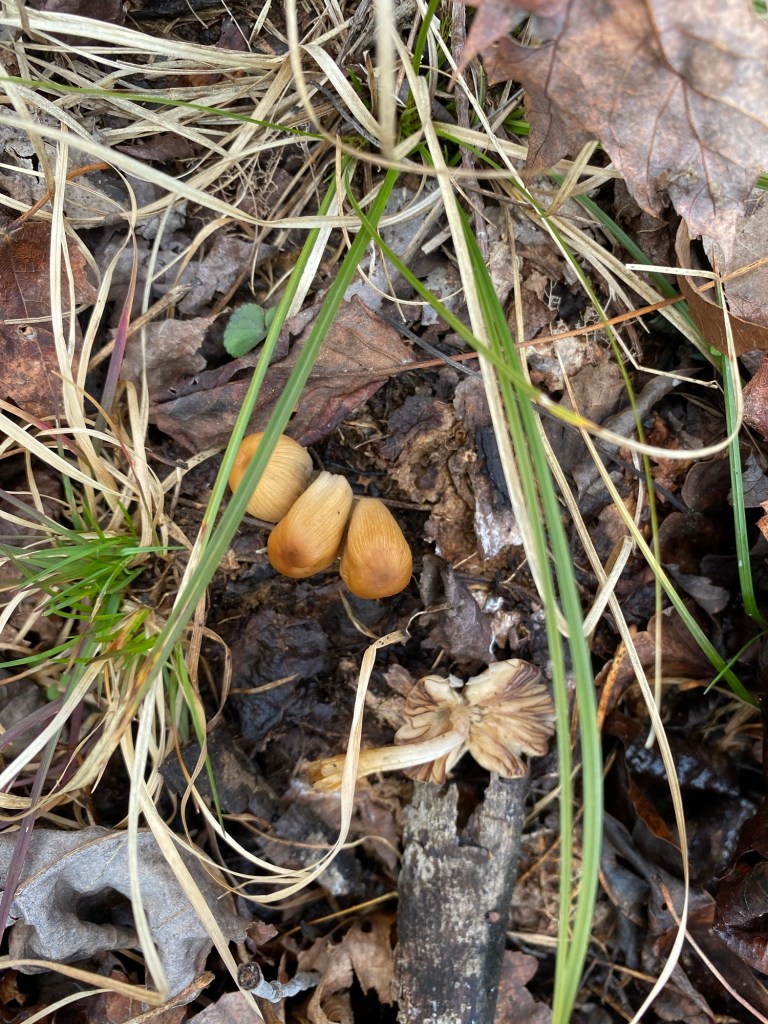
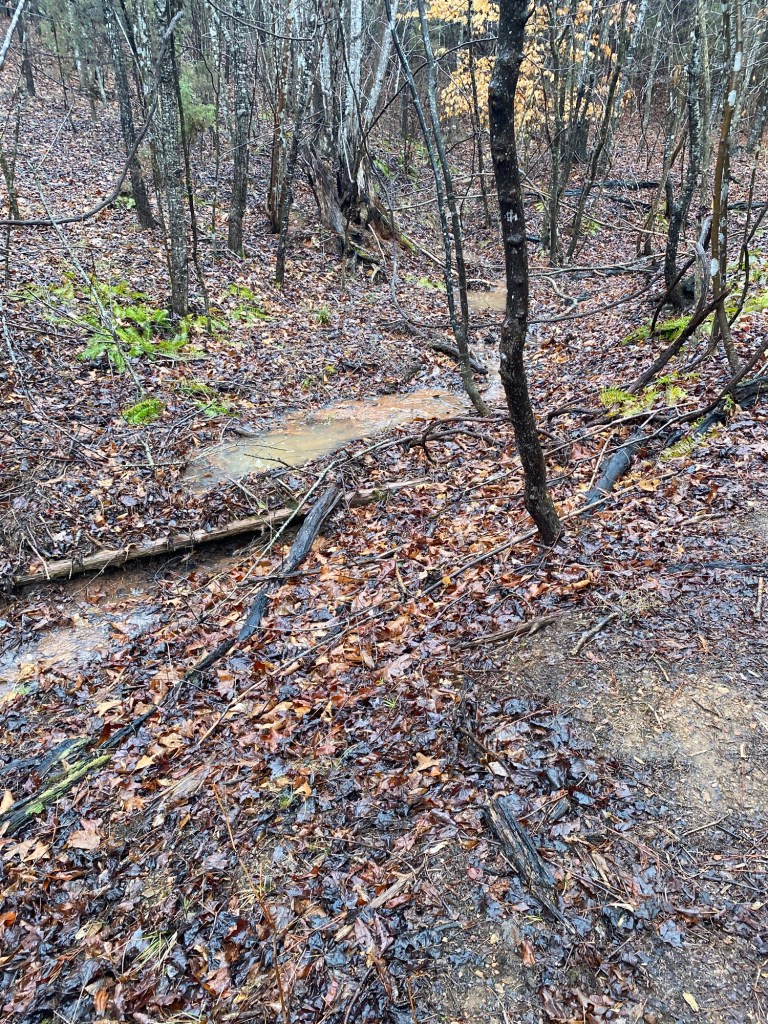
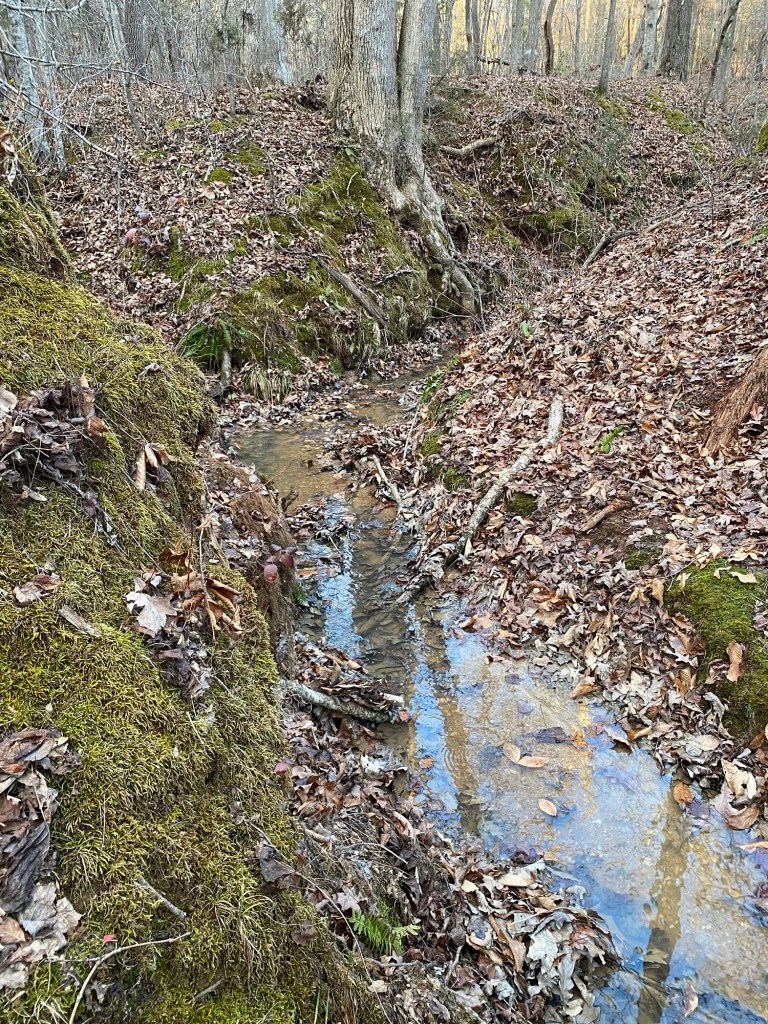
Ink caps, usually one of the first mushrooms to appear in early spring. Wet weather gully along the southern side of SAFF during a rainy day.
We’ve also been going over often to be sure our neighbor at our southern border isn’t hunting on our property. He built a stand and a bridge and also cut down 30-50 trees all on our side. He’s confused about the unambiguous property line that runs right along the electricity line. We are planning a fence and have sent him letters. We will engage with the sheriff’s office next. Yesterday, we found deer bones on that side and we mourned for these creatures and wish he would contain himself to his land at the least.
Water was collecting everywhere up top and along the slopes.
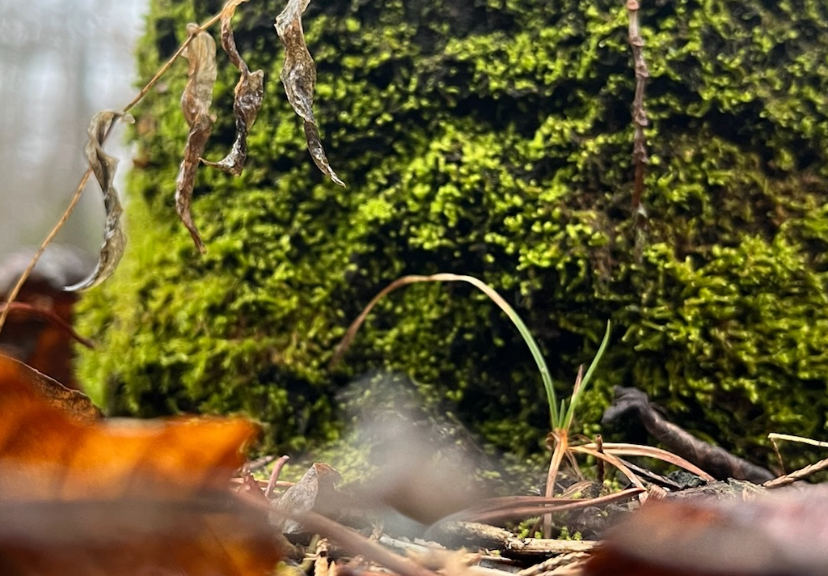
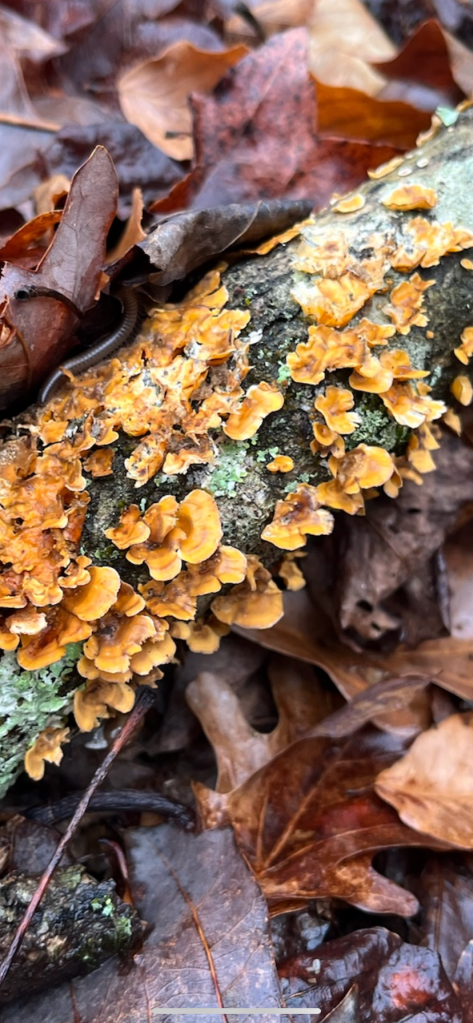
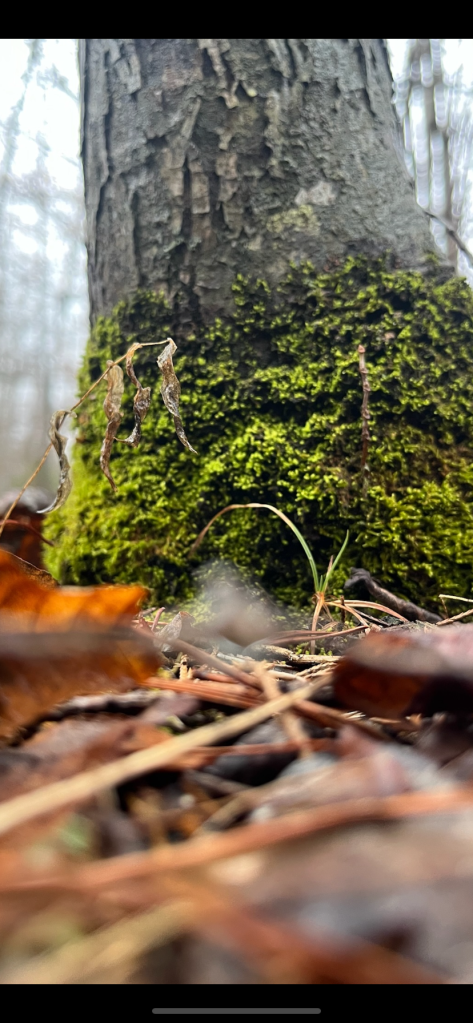
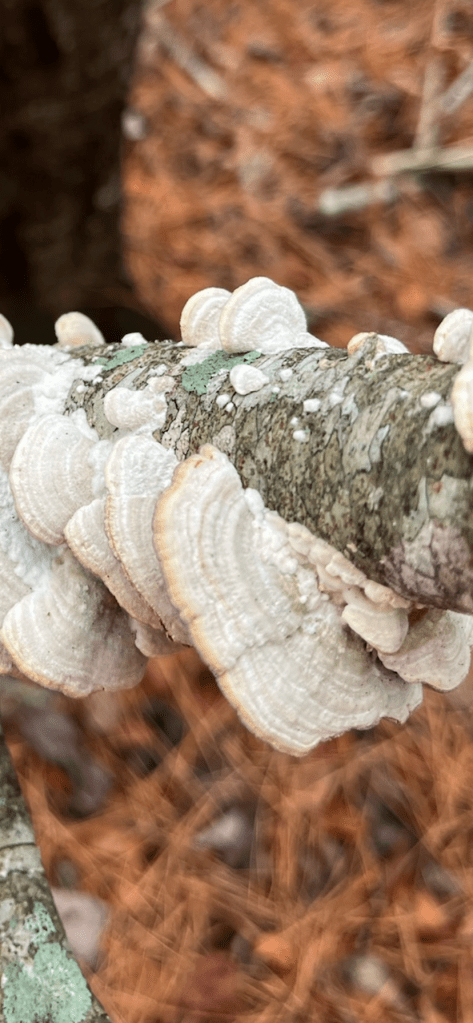
Bryoandersonia illecebra, Millipede hiding out among the Stereum complicatum or common named crowded parchment.
Today we startled a rabbit as we walked through the woods in the misty rain. Somehow we caught him by surprise, crunching up the hillside behind the shed. He startled and panicked, ran 50 feet away, then stopped, stretched his legs and shook it off.
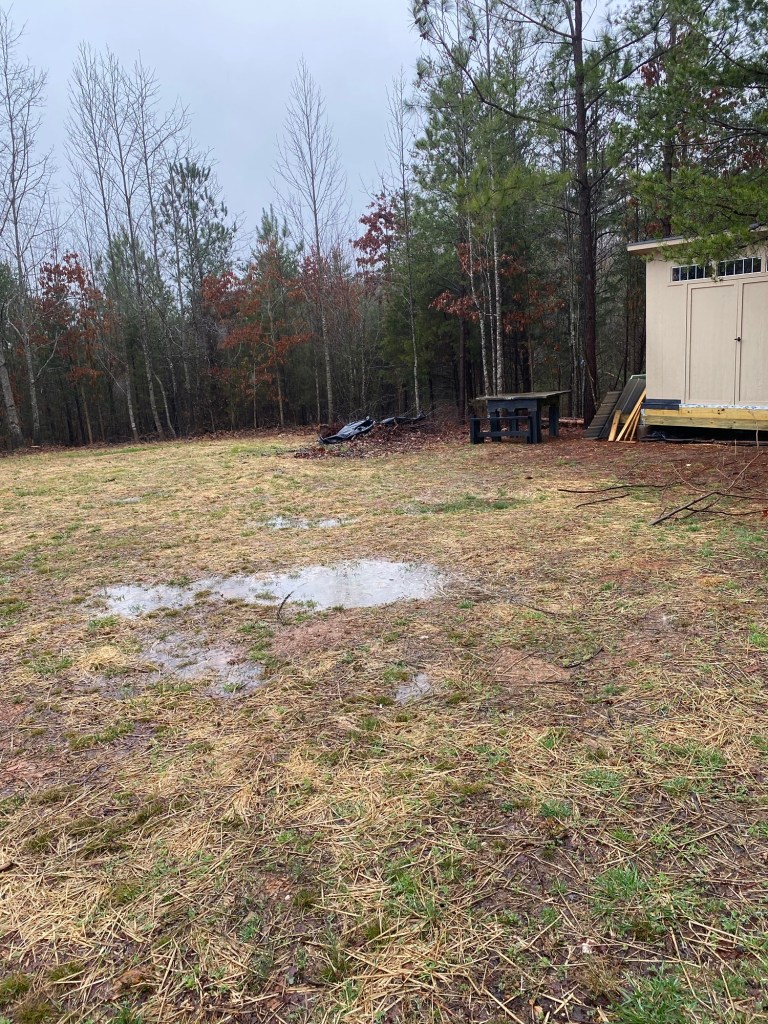
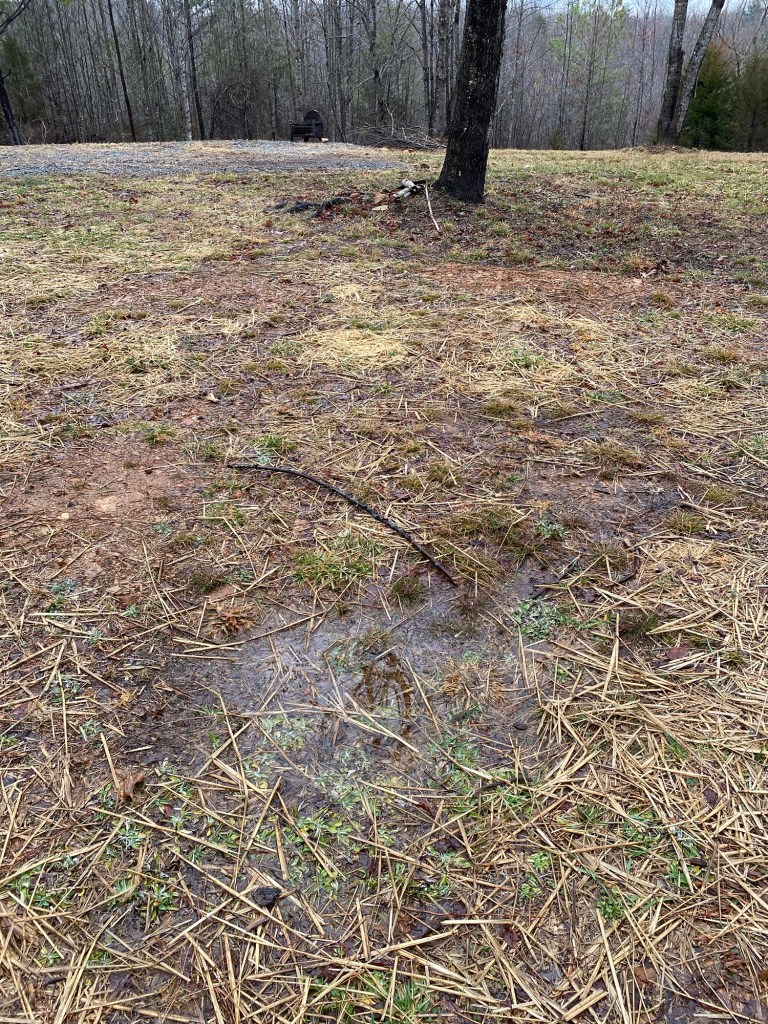
There were a few puddles of water collecting in depressions up top in the clearing.
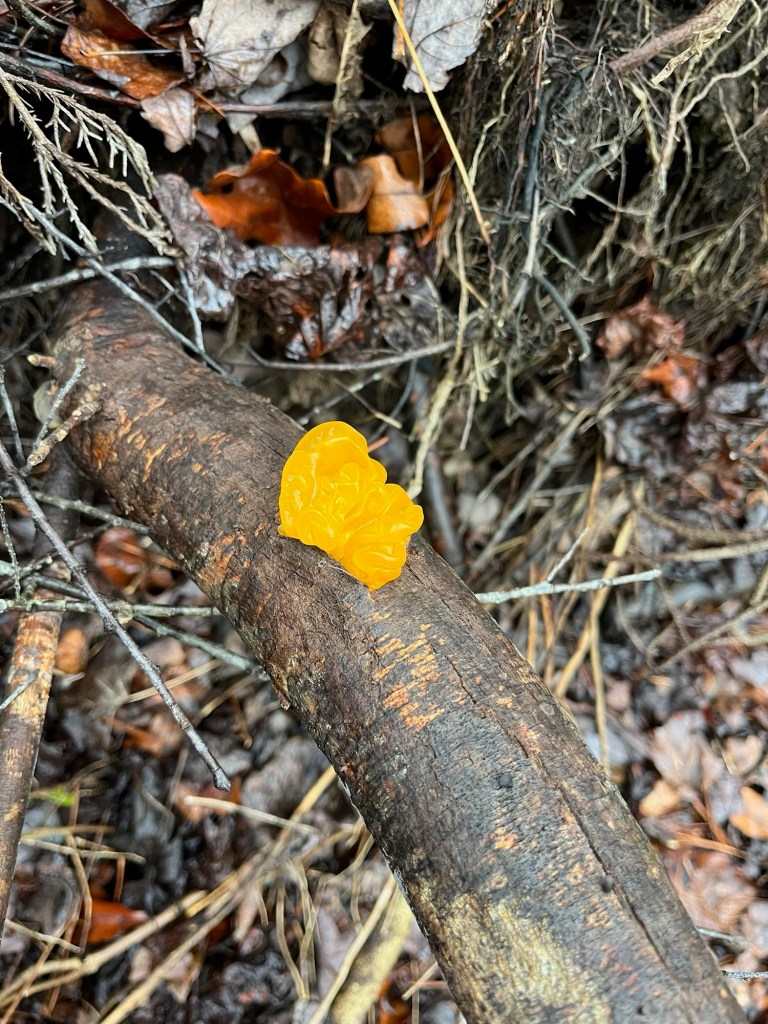
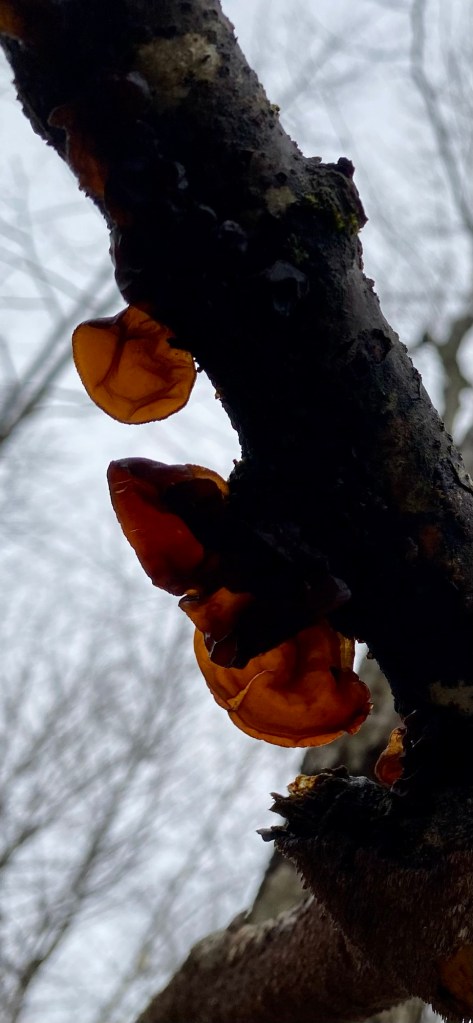
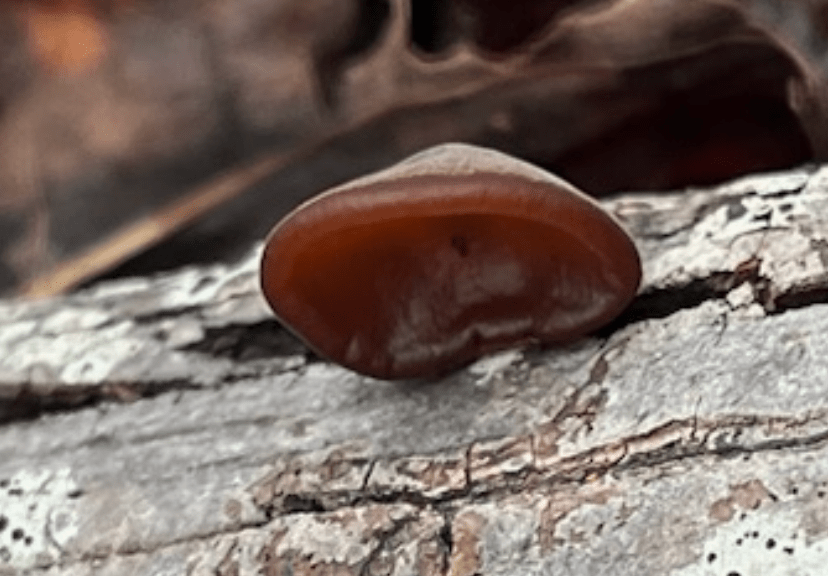
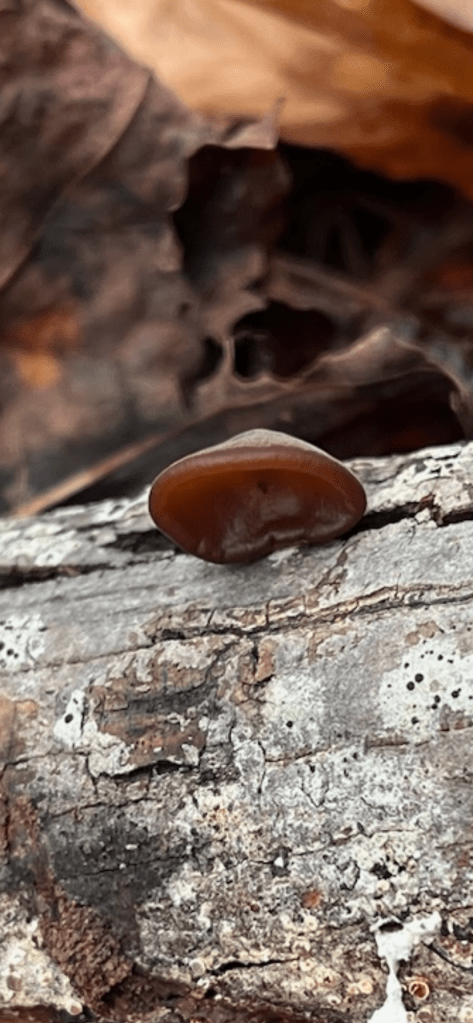
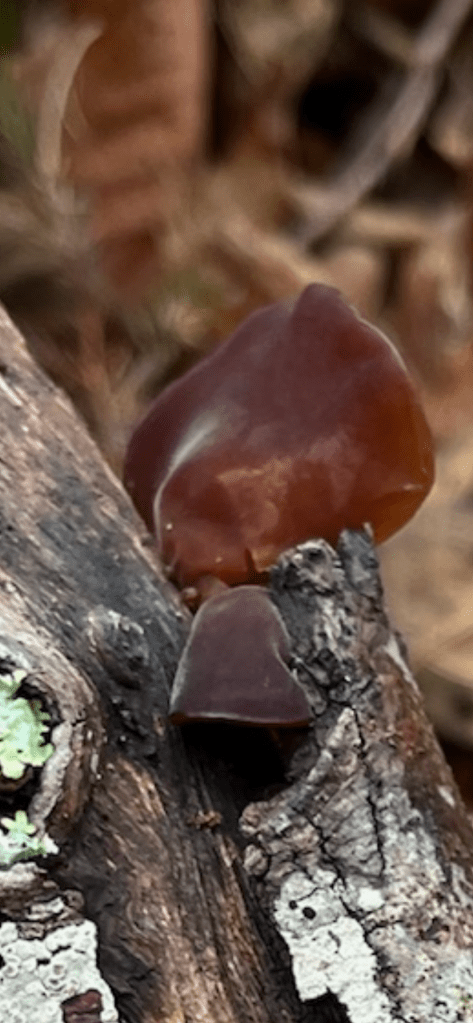
I just heard on NPR that as of today, there’s no county in Virginia in a drought. This is as a result of the wet month we’ve had. Auricularia auricula-judae (Bull.) Wettst. – Jelly Ear Fungus.
Mainly seen in winter and spring. It grows on dead elder trees and on fallen branches, but occasionally you may also find it growing on other kinds of hardwood. Jelly Ear is sometimes used in cookery, where it provides an interesting texture but is nothing special in terms of flavour. Young fresh fruitbodies (above) are generally considered the best. We have not tried it although we hear it’s good in soups and adds nutrients.
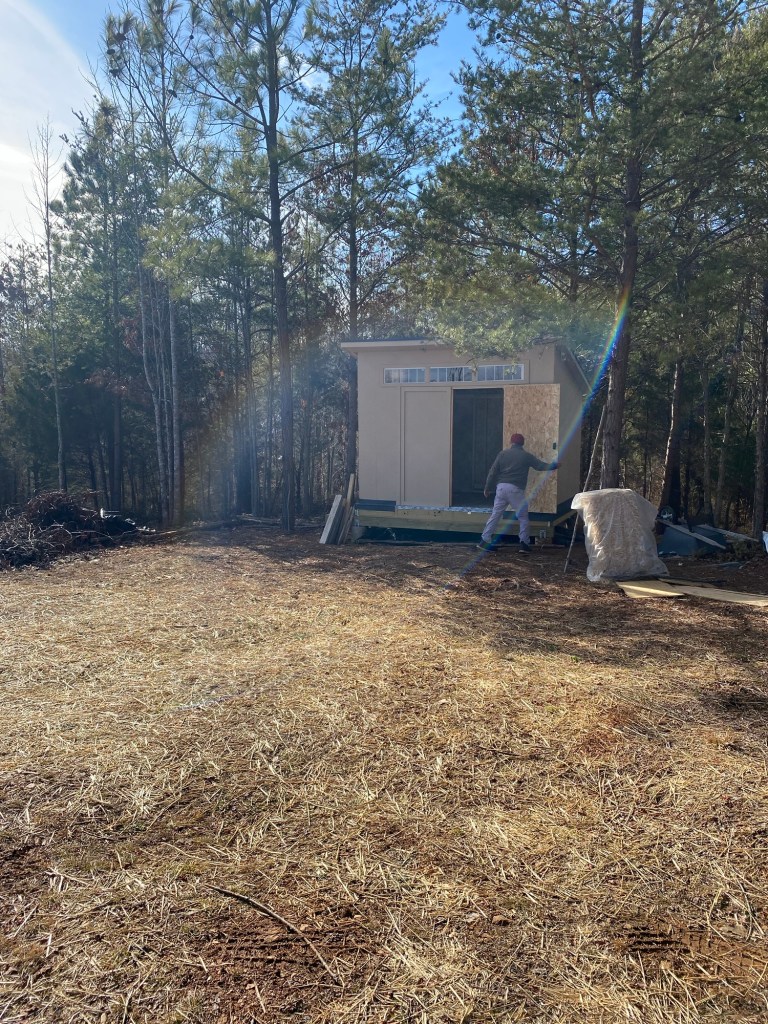
We’re excited to report we’ve almost finished insulating the shed. We cut down a few more black knot infected black cherry trees and some other standing dead trees. We have so much work to do in the forest. The ground was wet and squishy in areas especially down at the bottom of the slope and around the waterway. We found a few more downy rattlesnake orchids. The leaves on the beech trees are showing buds. We went across to look at the waterfalls in the wet weather.
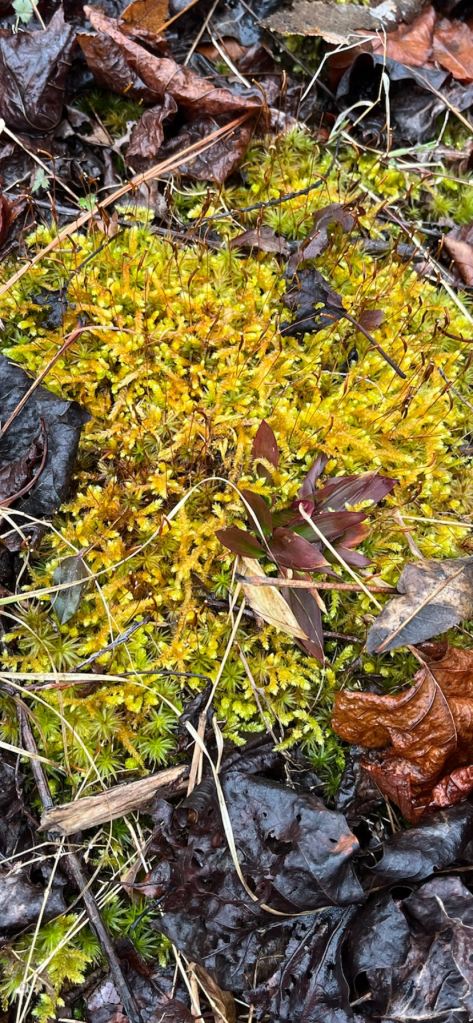
We pulled out vines, found mosses, worts and lichen in abundance. Even in the wintry weather, we found the jelly wood ear and crowded parchment fruiting bodies.
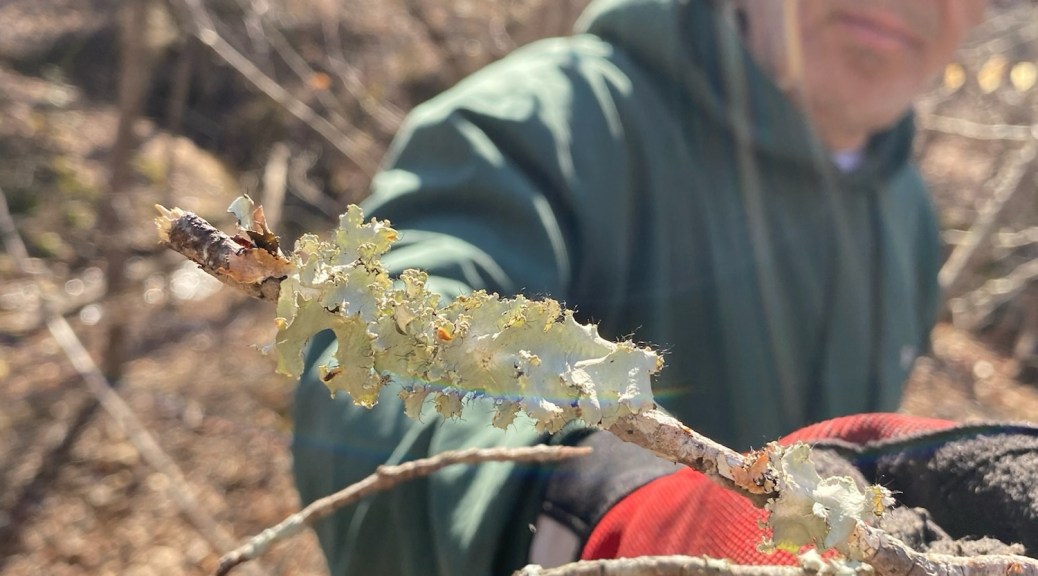
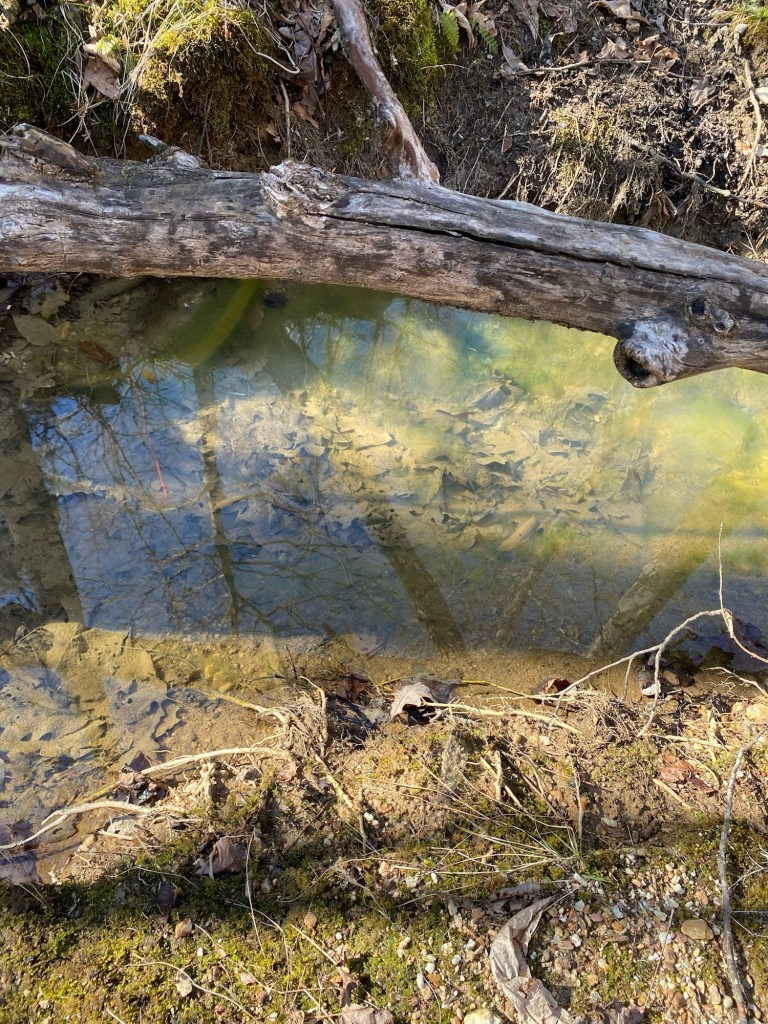
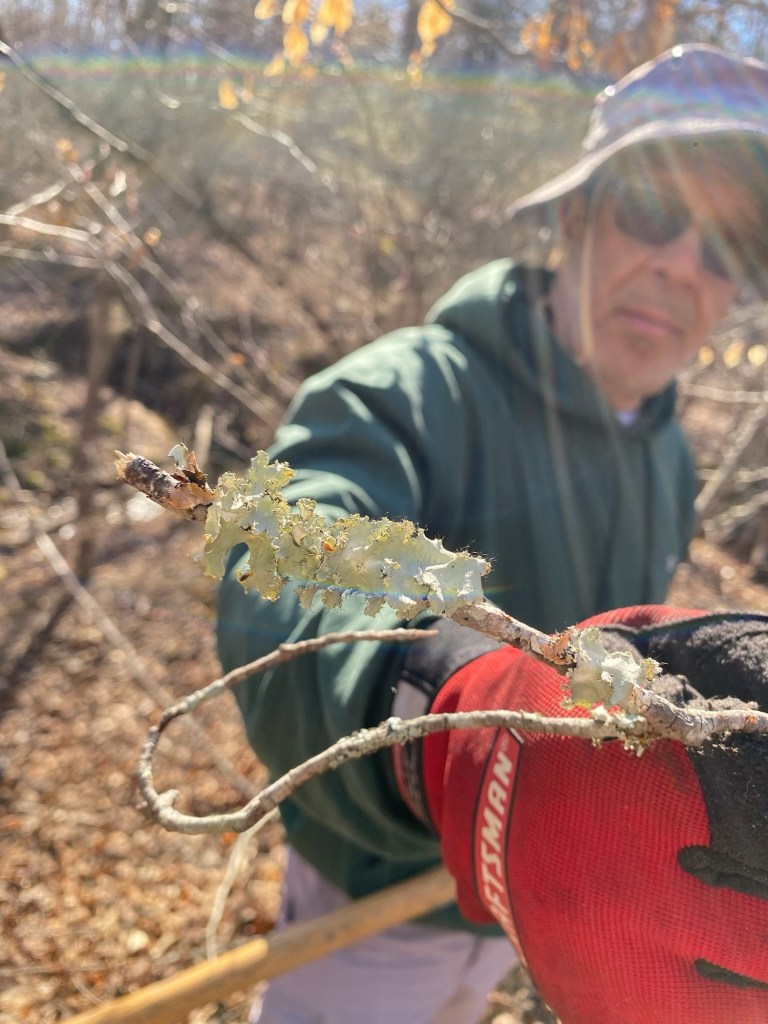
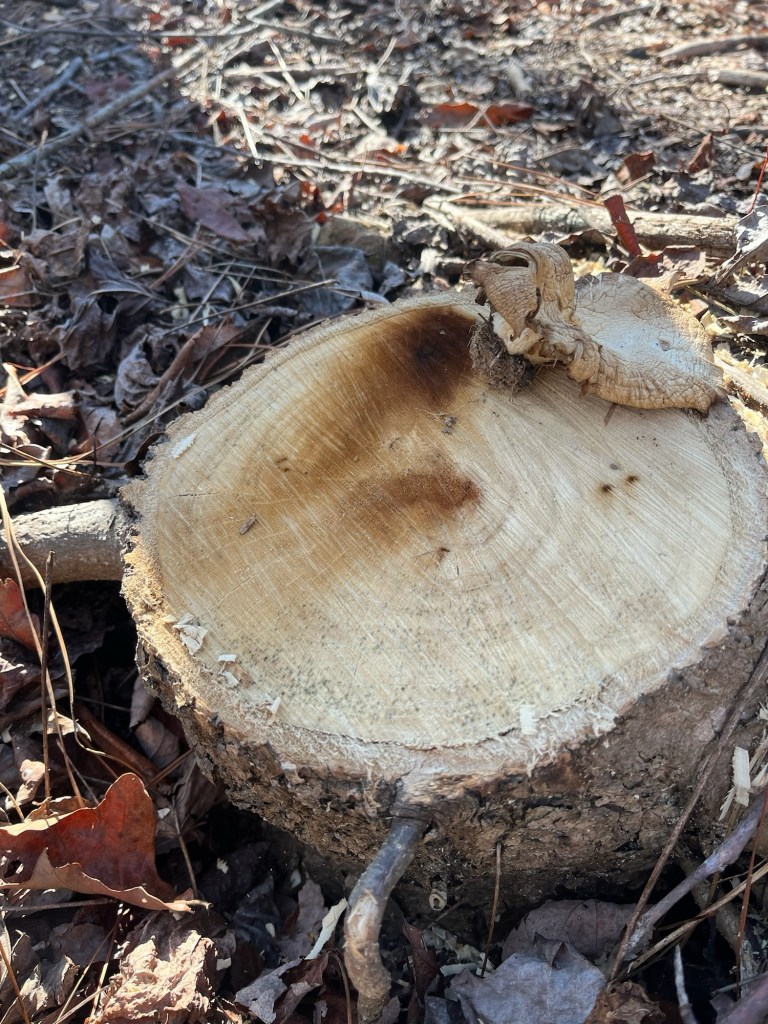
Waterway at bottom of slope where we saw tiny minnows swimming today. Eyelash lichen with hairs growing from it down by the waterway. Oyster mushrooms sporing on a tulip poplar stump. Running cedar in the paw paw grove. Another downy rattlesnake orchid spotted right off of the main clearing up top.
We went over today and we are almost finished insulating the shed. We also chopped up several trees we had felled a few weeks ago and brought them home to burn. One was a black cherry with black knot fungus and the other was a standing dead tree. We walked down North Trail and around the bottom. We crossed over the waterway to explore some in the paw paw grove and up the Ridge Trail. It was a gorgeous day. We were very pleased to find the tiny minnows in the waterway.
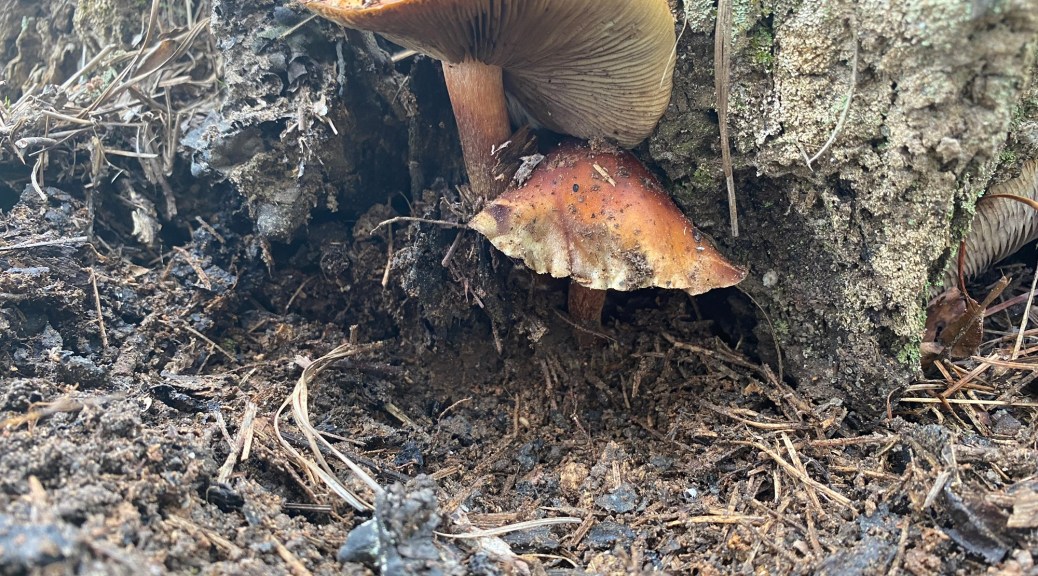
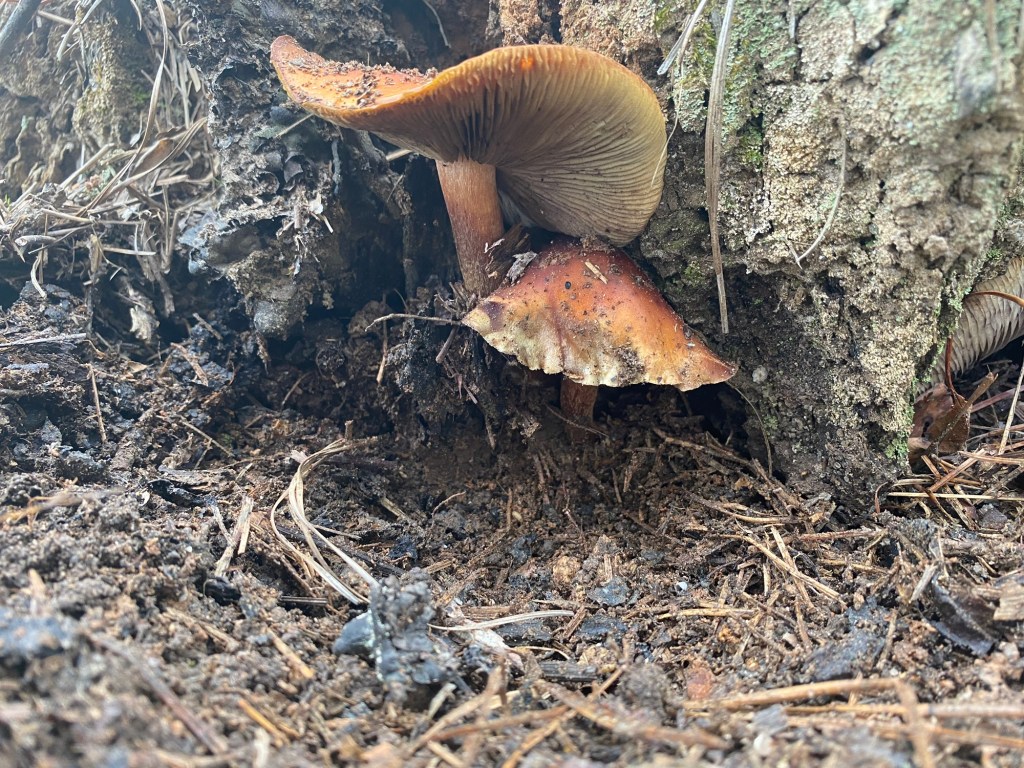
Found next to driveway up top growing from under a stump. Hypholoma lateritium, brick cap.
We drove over to Buckingham County yesterday afternoon after spending our first full week away because the weather was very very cold. A few of those days did not reach much above freezing. We didn’t expect to find mushrooms because of the low temperatures but we were pleasantly surprised.
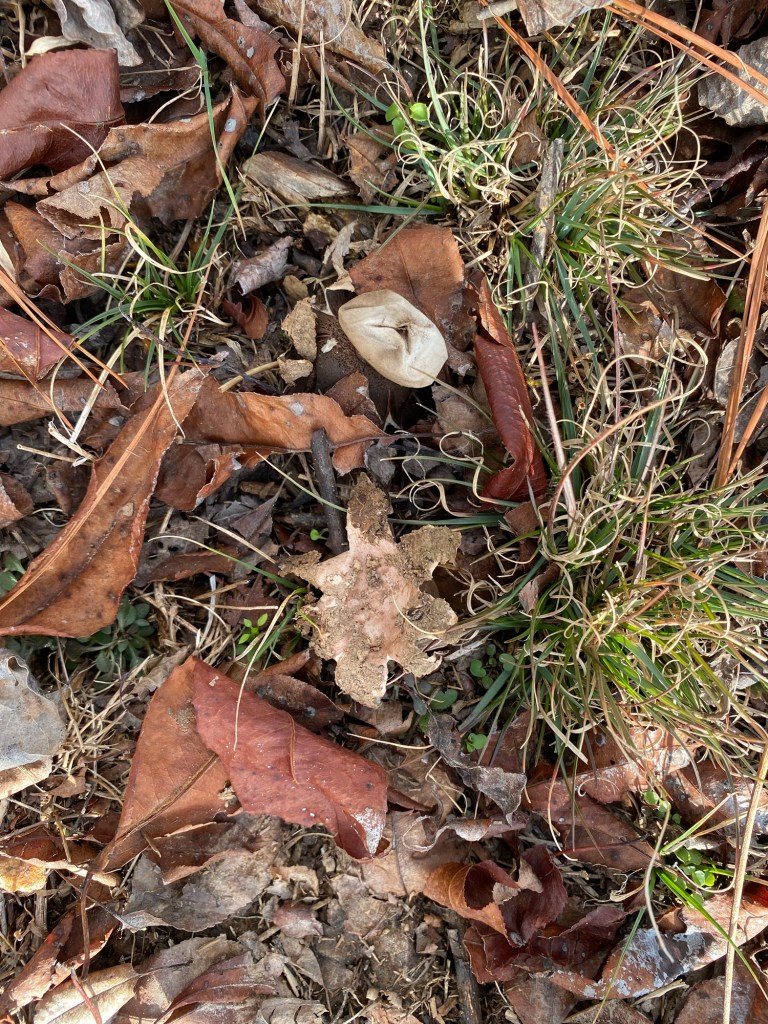
Hygroscopic earthstar, Astraeus hygrometricus, found in clearing up top very near the North Trail head.
We also found a number of puff ball mushrooms down at the bottom of the slope in the floodplain. They were everywhere. We also found Calostoma lutescens up top. The ground was moist everywhere. The waterway was trickling along, though the levels were down from last week.
The shed was dry and is still waiting for us to complete our indoor projects. We are waiting on a new tool that is overdue.
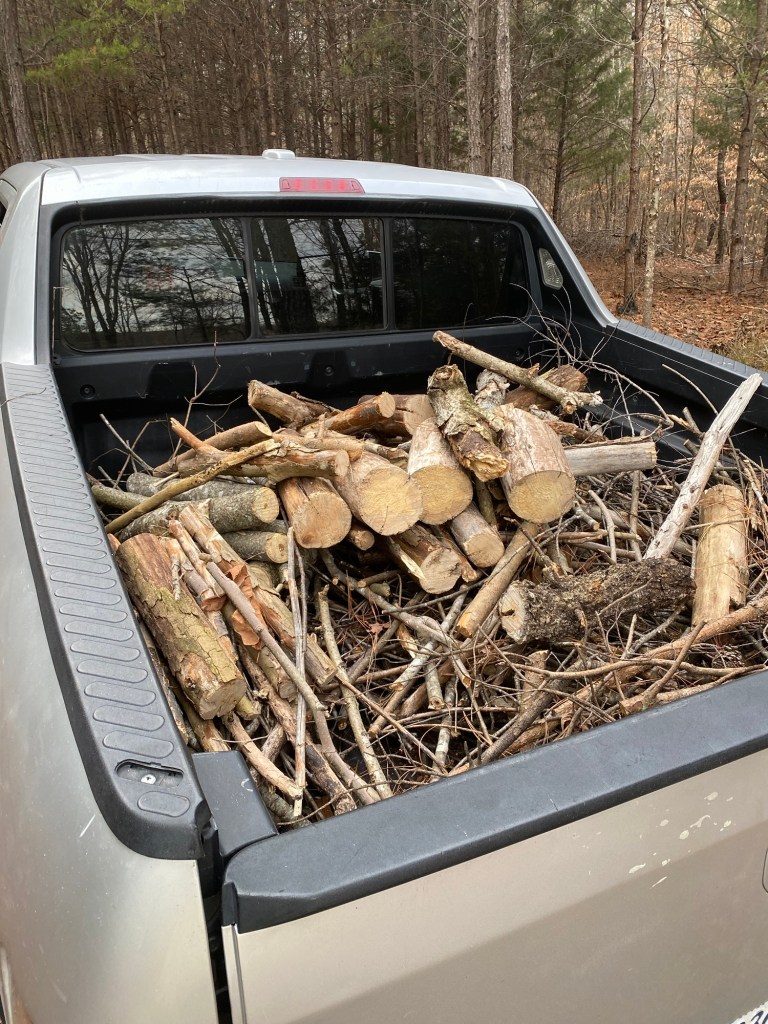
We cut down a dead tulip poplar and collected every piece of black cherry with black knot fungus we saw and loaded this into the truck to take home to burn.
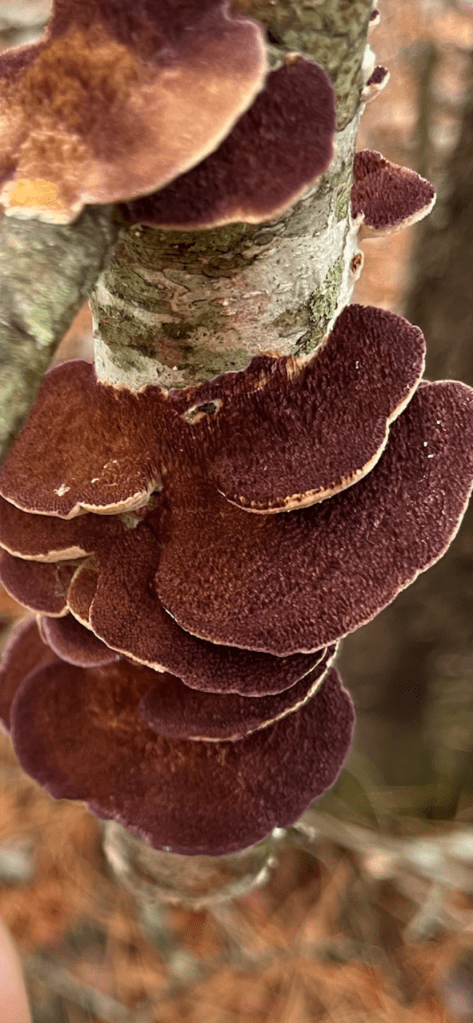
We went out to the farm to have a look about, check the new trail cam and see if the red-shouldered hawk was still there. We also checked in with the shed. It was still dry. We walked down Beech Trail and saw no sign at all of the hawk we’d found dead there on Christmas Eve. We decided an animal probably carried it away. We continued our walk and met South Trail. We found a few beautiful mushrooms. Jelly wood ears and Purplepore bracket fungus.
Top of the Purplepore bracket fungus
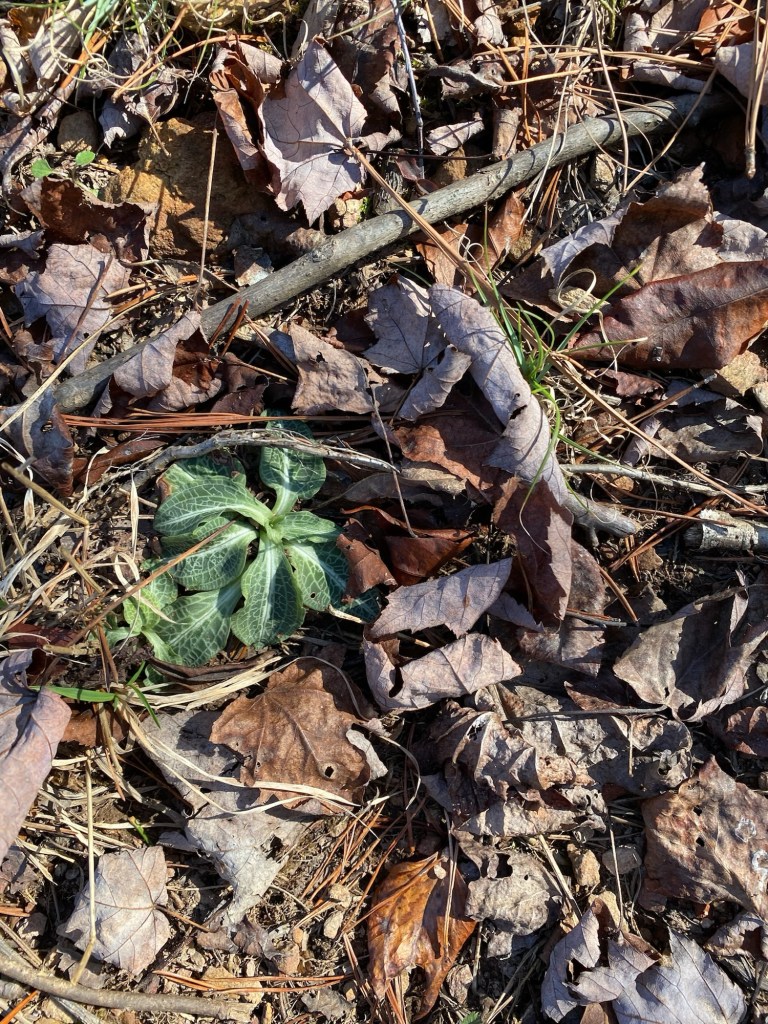
We walked down to the water way and saw clear water and pretty mosses, ferns and lichen. We saw the single purple leaf of Cranefly orchids all over. Clusters and singles. We thought we saw strawberries off South Trail.
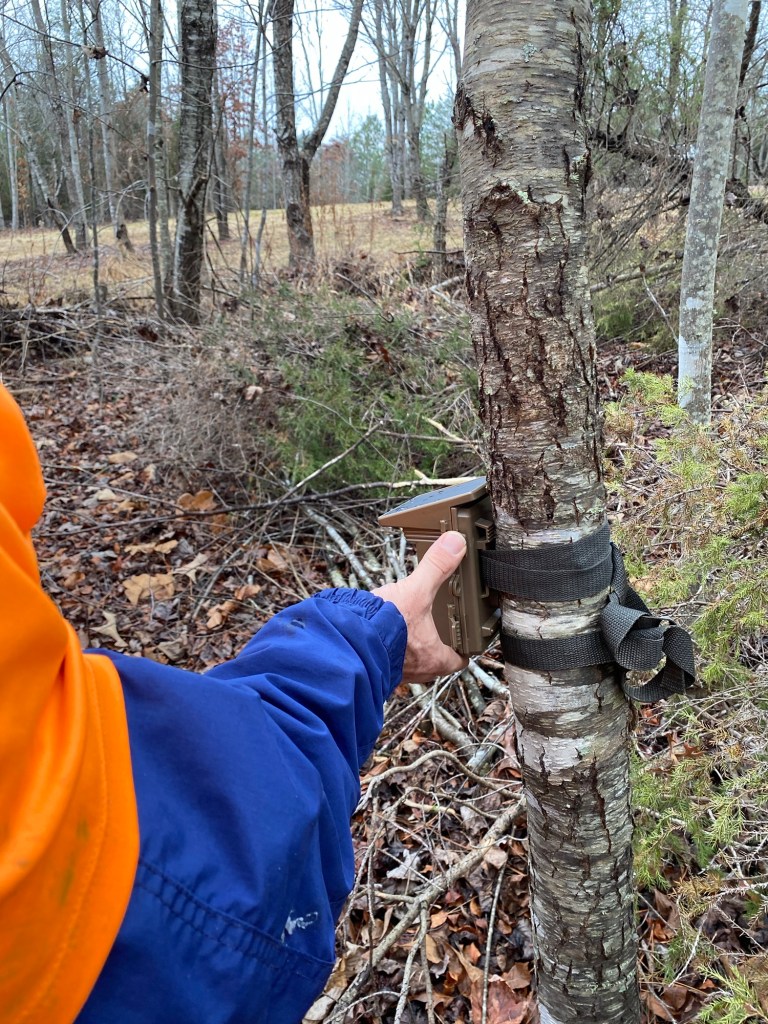
Turning the trail camera on. 😀
We walked up North Trail and stopped to check the new camera. We forgot to turn it on! Next time we go out we will see if there’s been any animal activity. Back in the clearing, we looked for mushrooms and made plans for trees and our building. Chris walked towards the truck and I was near the shed and a hawk with similar coloring came flying from Beech Trail where the hawk was found on Christmas Eve. It landed in the trees and called out. Piercing, loud, mournful and beautiful, the hawk called to us and then swooped out of the tree and flew towards us and off.
Accidental pocket video of the sounds of the hawk and our reactions. 😄 It calls out 7 times. We believe it was mourning the dead hawk and knew we were mourning the loss as well. As it flew away, it swooped near us.
We were impressed by this hawk’s presence and attempt to communicate. We will always remember this encounter.
Little birds flitting about in the trees while we worked on the shed. Wood ear fungiWood ear fungi found at SAFF on East Trail near waterway
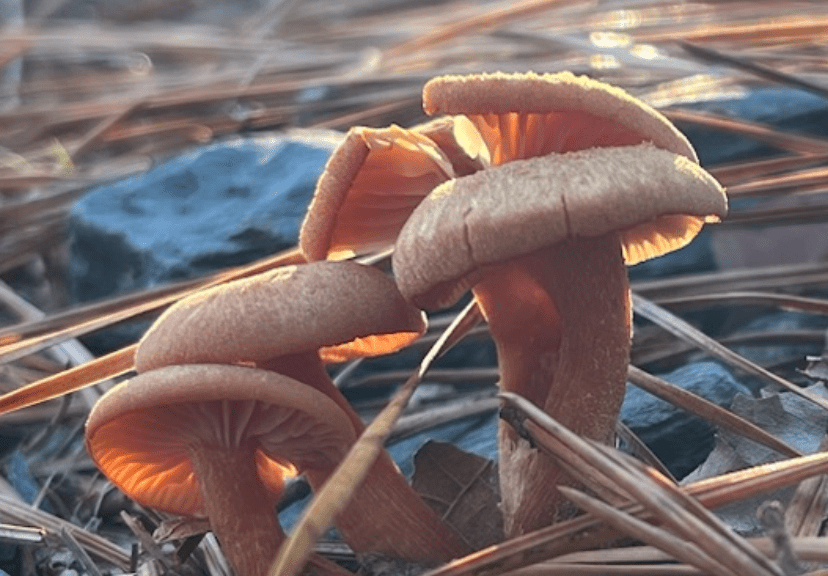
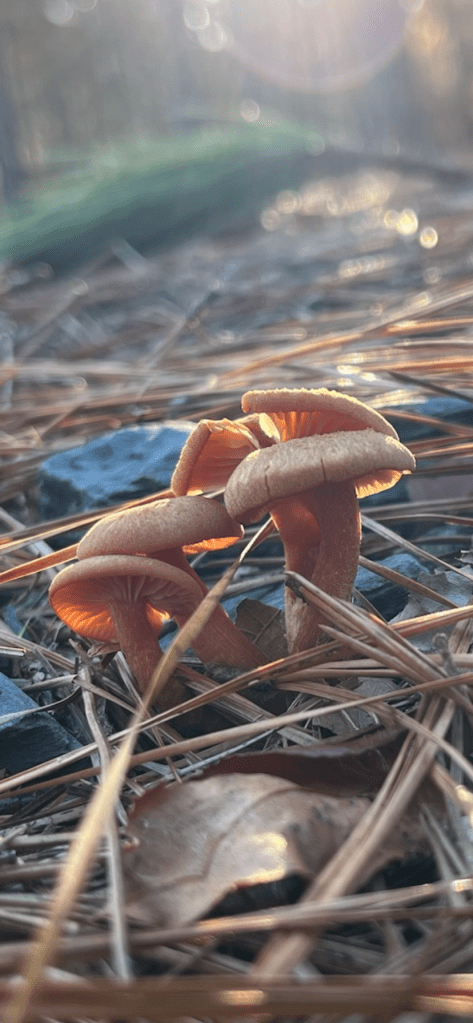
Laccaria found along the driveway. Edible mushrooms that arrive in cooler weather.
We went out to Saint Andrew’s Forest Farm on Christmas Eve to take a walk in the woods and look for mushrooms. So far, since the heavy rains, we have seen mushrooms up top along the driveway and in the mostly pine forest near the road. These Laccaria are growing in clusters near the gate and along the driveway in the clearing.
We wanted to also check the new trail cam to see if we’d gotten any images of an animal living in the den yet we had technical difficulties but will try again in a few days.
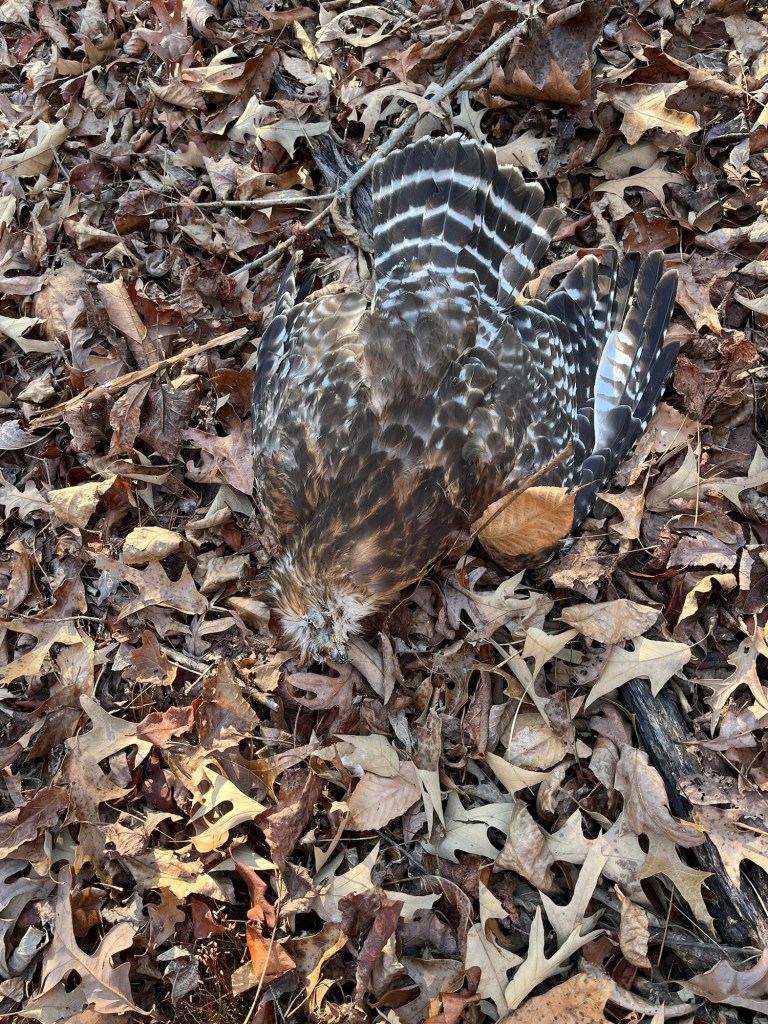
Deceased Red-Shouldered hawk in woods. No obvious external wounds.
We found a dead hawk in the woods along Beech Trail. For native Americans, the dead hawk symbolizes courage, resilience, determination, a new beginning, good luck and freedom from the past. Also, prosperity, breaking of limitations and clarity. We were sorry to find it and hoped it had lived a long, full and beautiful life. We emailed the Monacan tribe to ask if they would like to come and collect the feathers. Hawk feathers are sacred and used in ceremonies.
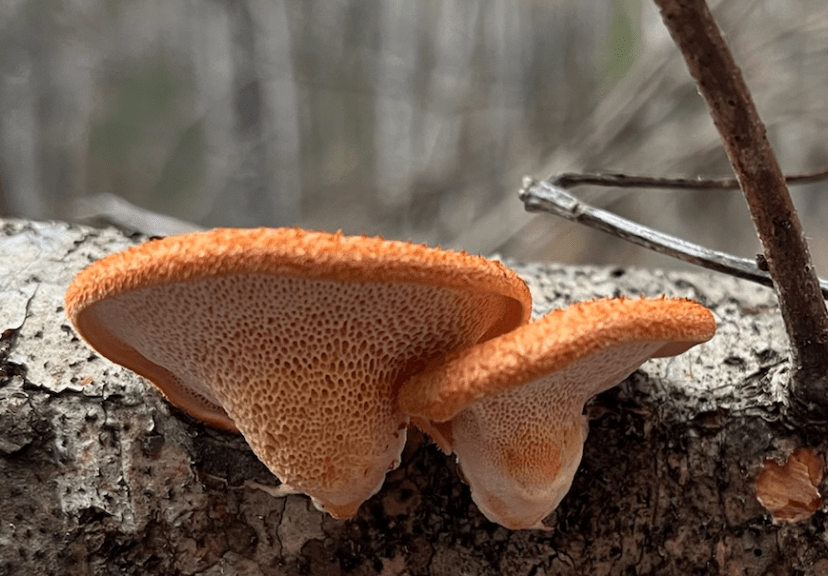
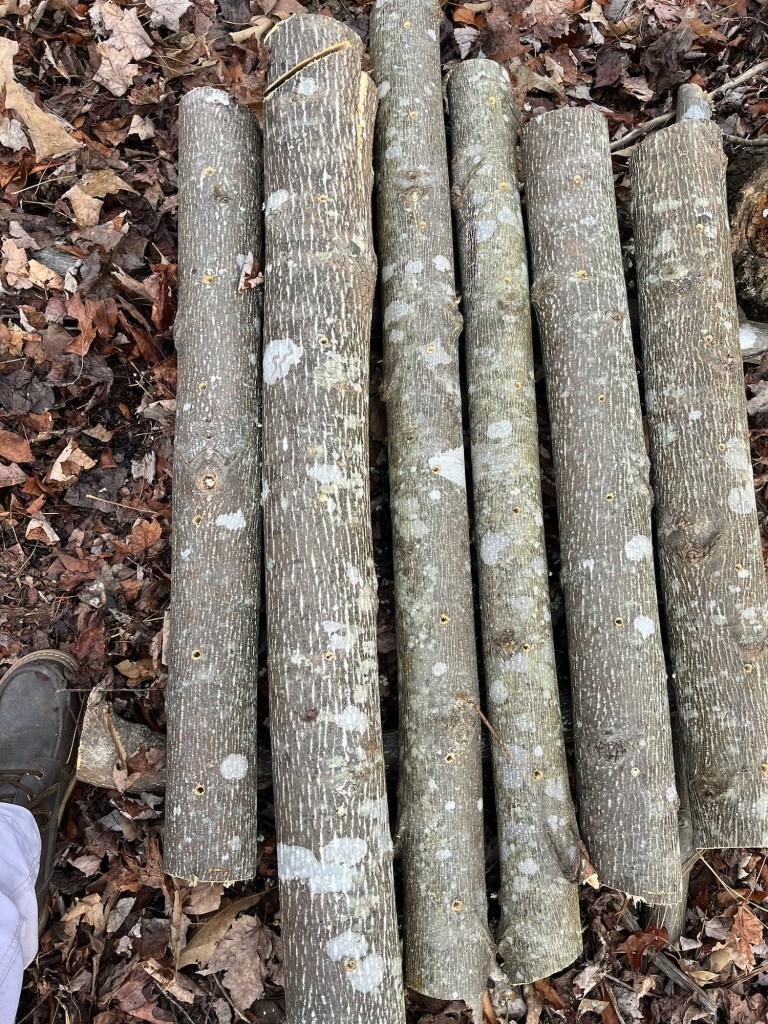
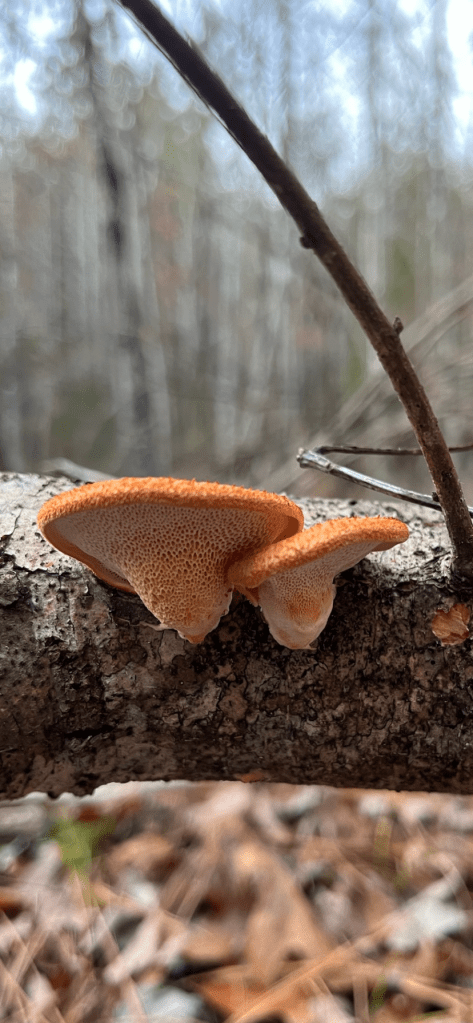
Poplar logs inoculated with Lion’s mane spores. Neofavolus alveolaris, Hexagonal polypore, saprobic. Found near the stumpery just south of the clearing.
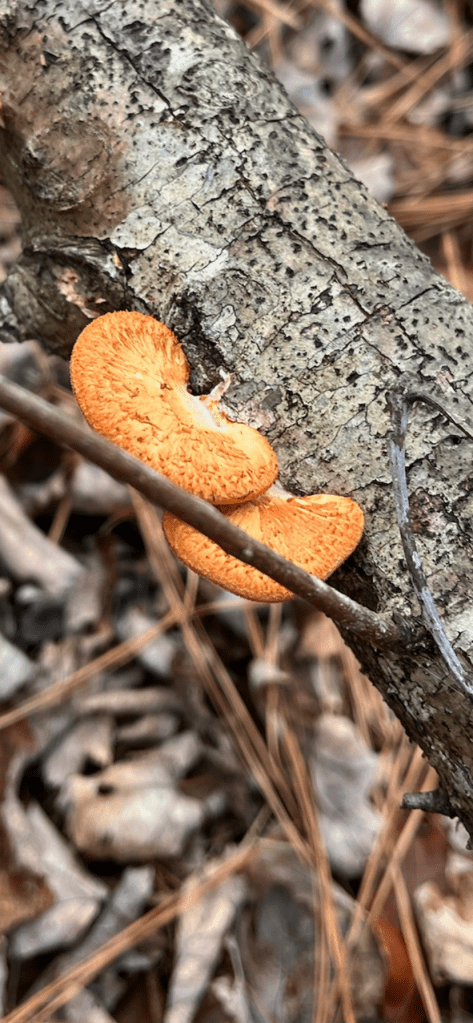
Tops of Neofavolus alveolaris. They were a bright orange.
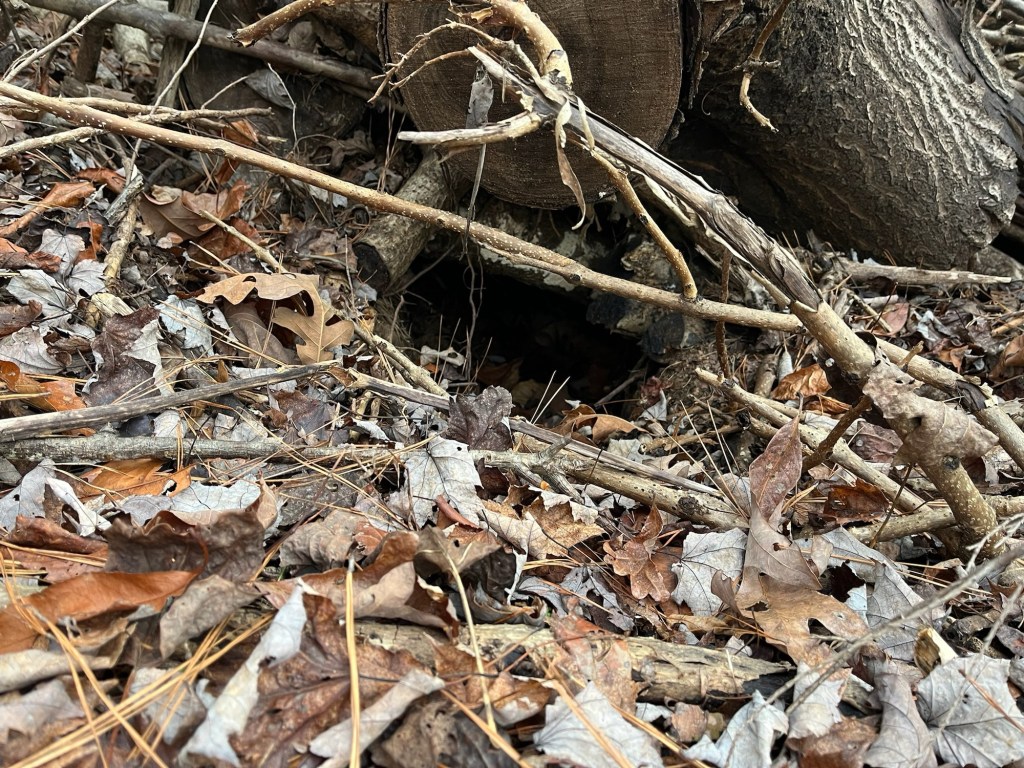
Underneath the stumpery pile, an animal has dug a hole or tunnel. We found several other spots like this today. We received our new trail camera and will set it up tomorrow we hope.
We went to the farm today to inoculate more poplar logs with Lion’s mane mushroom spores. Once finished, we took a short walk around and found a few mushrooms. We found a polypore and a common Laccaria. These were new mushrooms found at SAFF.
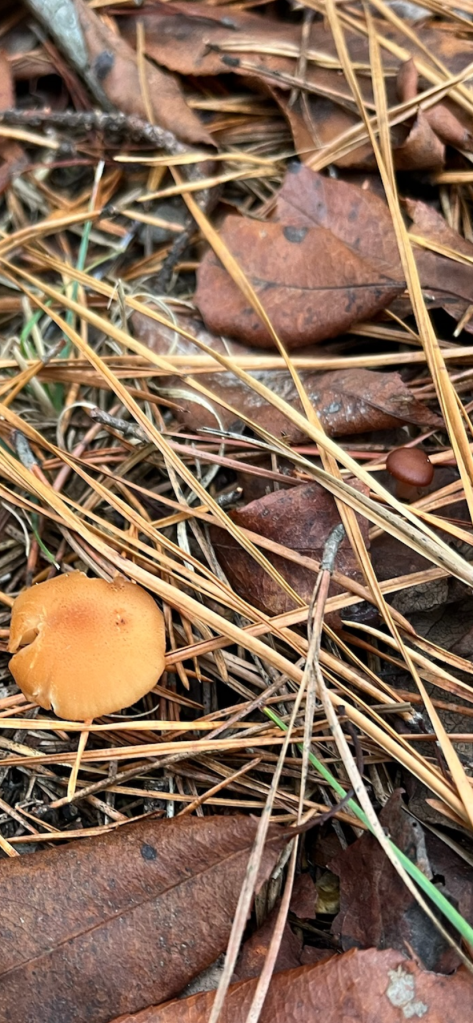
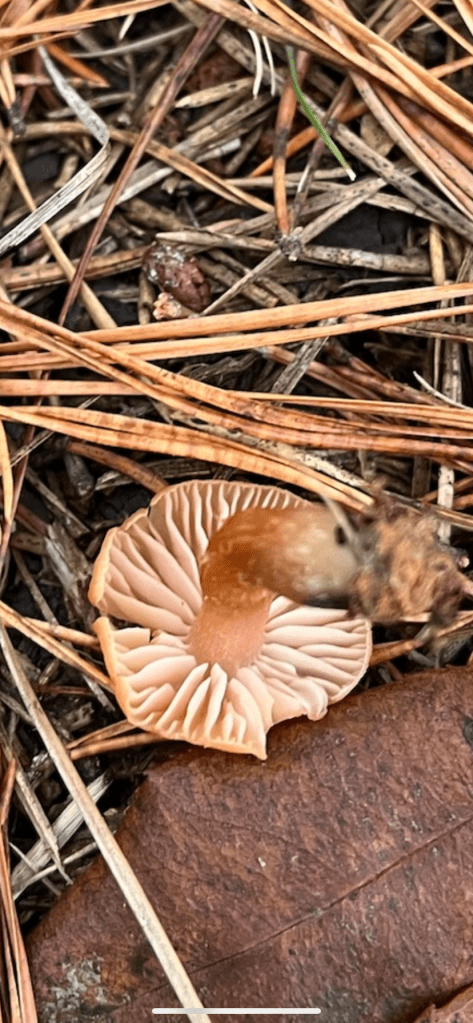
Common Laccaria tops. One young specimen and one older.White gills, orange concave cap,long brown stipe. Found growing out of leaf litter in mixed forest. We found a few singles of these as well as a cluster near the driveway and gate up front.
On Saturday night and all day Sunday, Buckingham got 1.7 inches of rain from a storm that moved through from Florida and the Carolinas and continued up the East Coast. We were excited to go out and see if the shed remained water-tight throughout the storm. We also wanted to see water levels in the waterways and wet weather gullies and look for mushroom development.
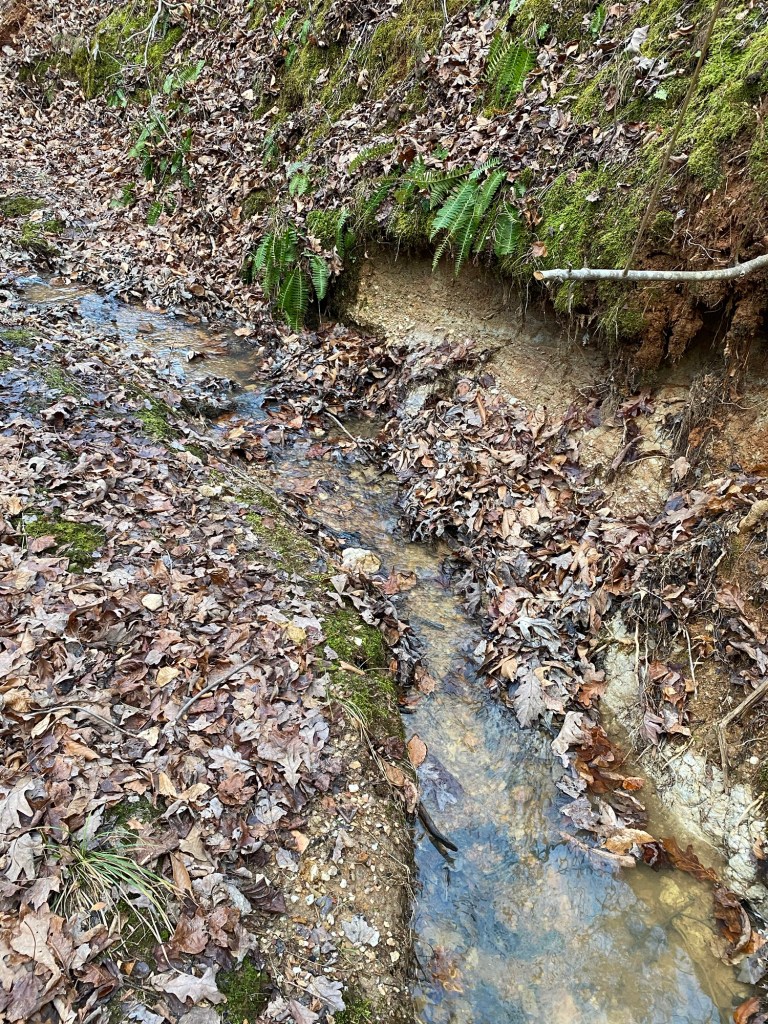
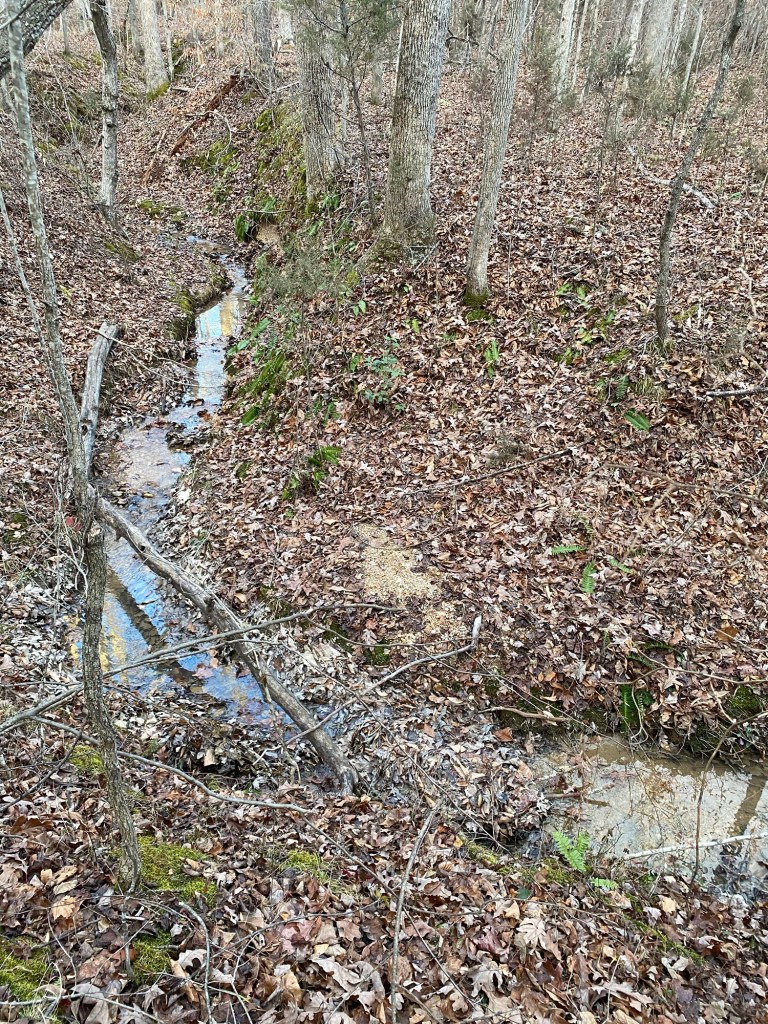
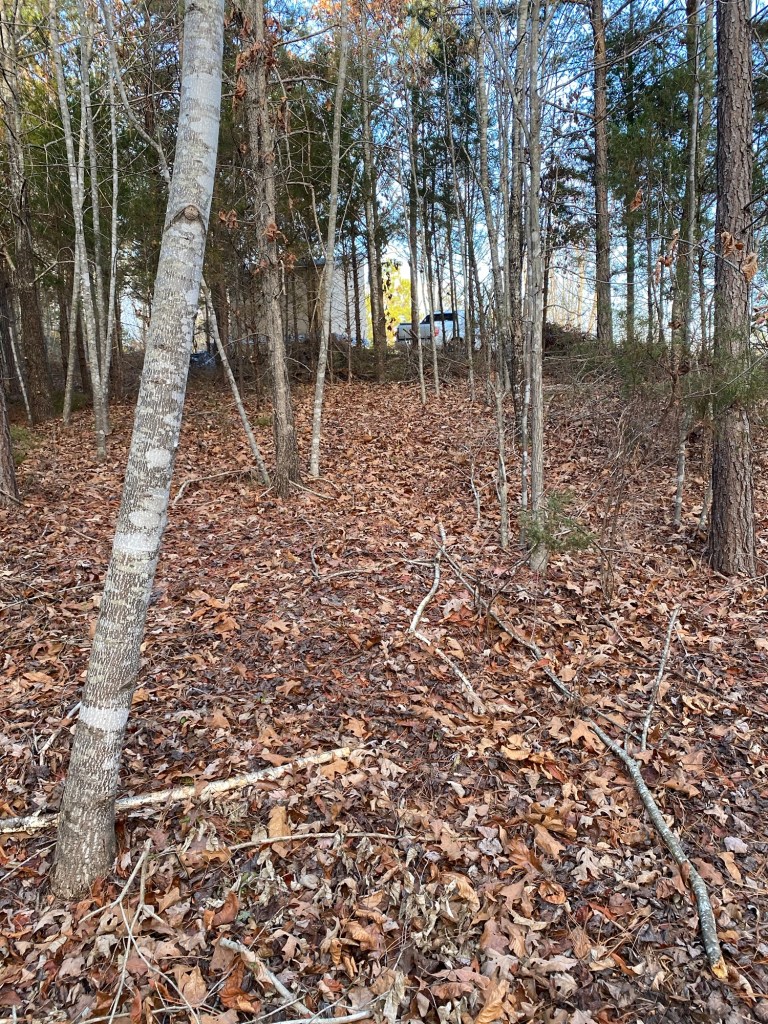
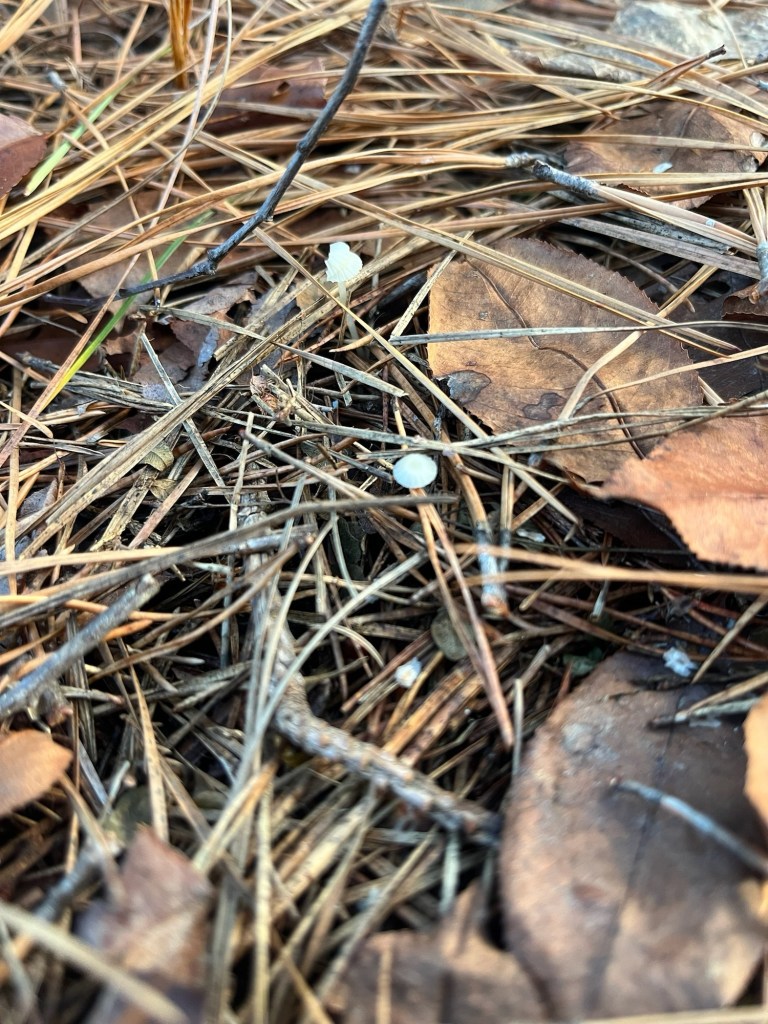
The view from the top of the slope. We saw this den which could be where a fox or coyote would live, or perhaps a smaller creature, or even a three year old male bear. We ordered a new camera last night to take photos of any movement so we can know who may live here. Here are sounds from a bear den. https://ktwh.org/sounds-from-a-bear-den-shared-on-ktwh/We found this hole near the bottom waterway which was dripping and water was flowing down. Sound on for tinkling water noises. 💦 It was cold yesterday so we wore our orange shirts over all of our clothes and coats to be sure to be seen by hunters; although, we did not hear any shots fired or dogs hunting. We have avoided this South border since hunting season began. It was a treat to walk it. We were amazed to see how much water flowed at the bottom waterway and along the sides. We have never seen it so full and wet. The ferns, lichen and moss were glowing with brighter greens. The water was clear and trickling came from everywhere.Looking at our camp from the forest.These tiny saprotrophic mushrooms covered the forest floor. If we looked close enough, we found them everywhere up top in the woods. There were thousands. We can’t wait until next week to see what other, larger mushrooms emerge from the rains. At bottom of slope looking up we saw areas where pines have dropped their needles. We began to plan this spot as one area we want to clear of the thousand of sticklike tulip poplars in order to plant an orchard of paw paws, other fruits and nut trees. Just behind us, we are standing 20 feet from the bottom waterway/stream. We may apply to the https://www.jamesriverbuffers.org/ for help planting the area. We are determining our eligibility for this program. “The James River Association and the Chesapeake Bay Foundation are working with landowners across the Middle and Upper James River watersheds to restore or create forest buffers that improve the quality of local waterways.” We are checking into it and are excited to find out more.Chris on the North Trail taking down a diseased tulip poplar. The tulip poplar overwhelm areas in the forest if left unchecked. Maples also appear to be invasive where we find them.
We were so glad we went over and grateful to know the camp remained dry in that windy and heavy downpour. We hadn’t yet imagined building a fire at SAFF even in our clearing because of the drought. This rain really replenished the moisture of the earth. The ground’s thirst appears quenched for now. It was a beautiful afternoon to visit Saint Andrew’s Forest Farm and have a walk around.
The very first Lion’s Mane mushroom we grew at home from a kit.
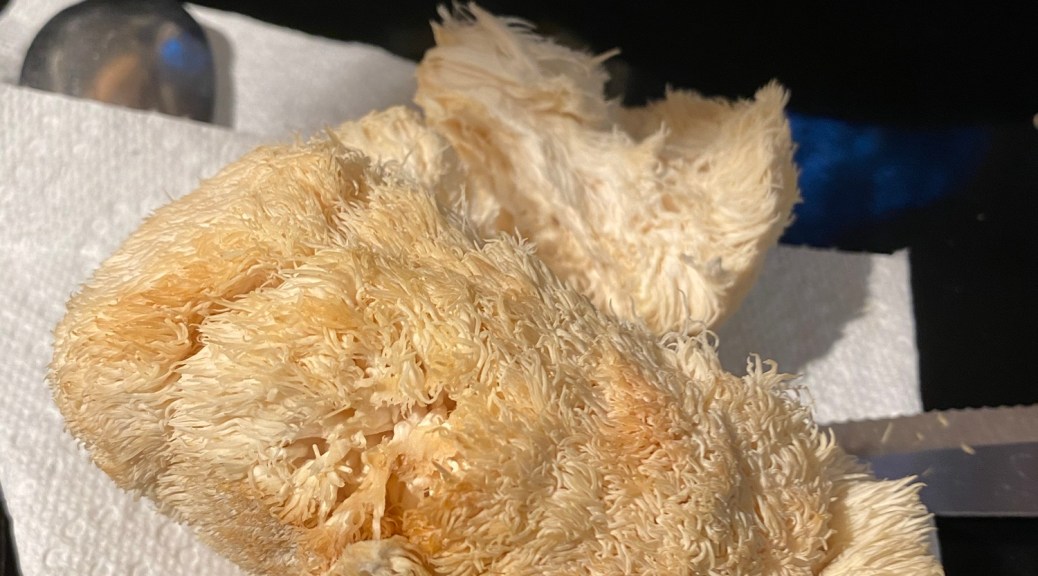
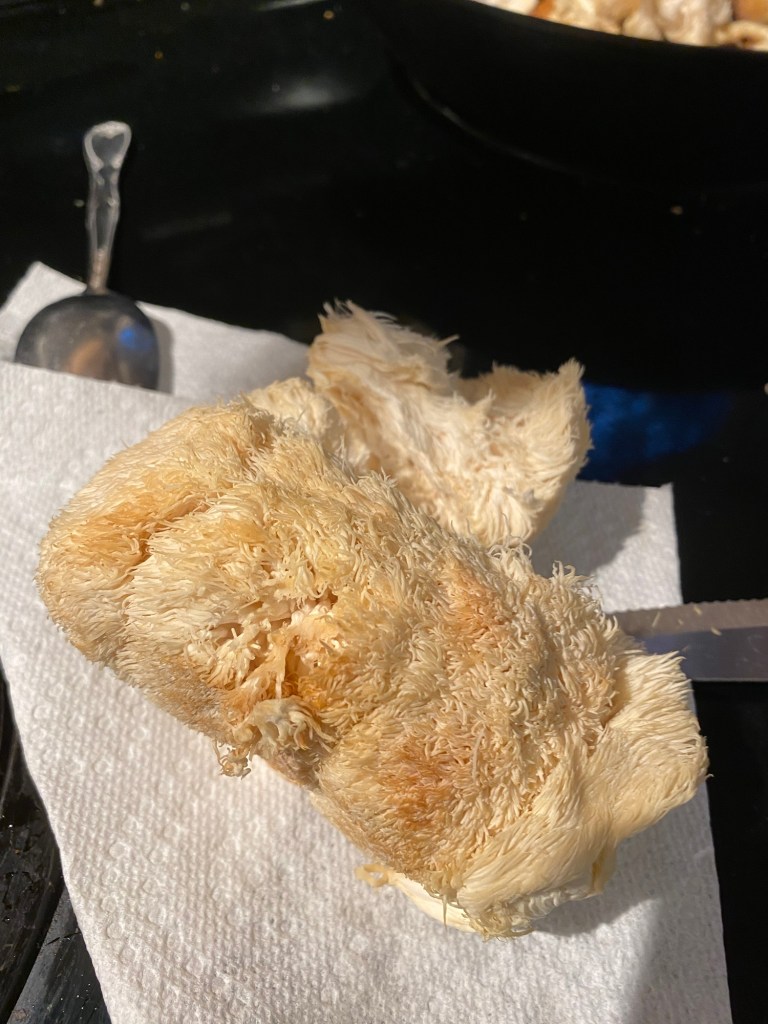
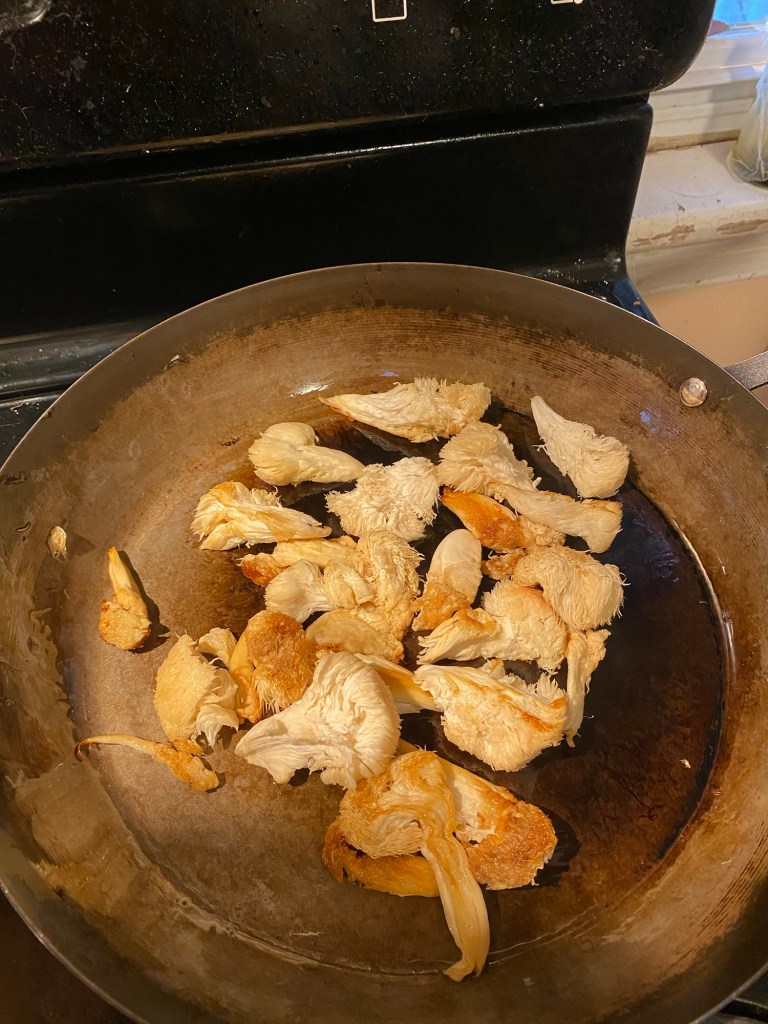
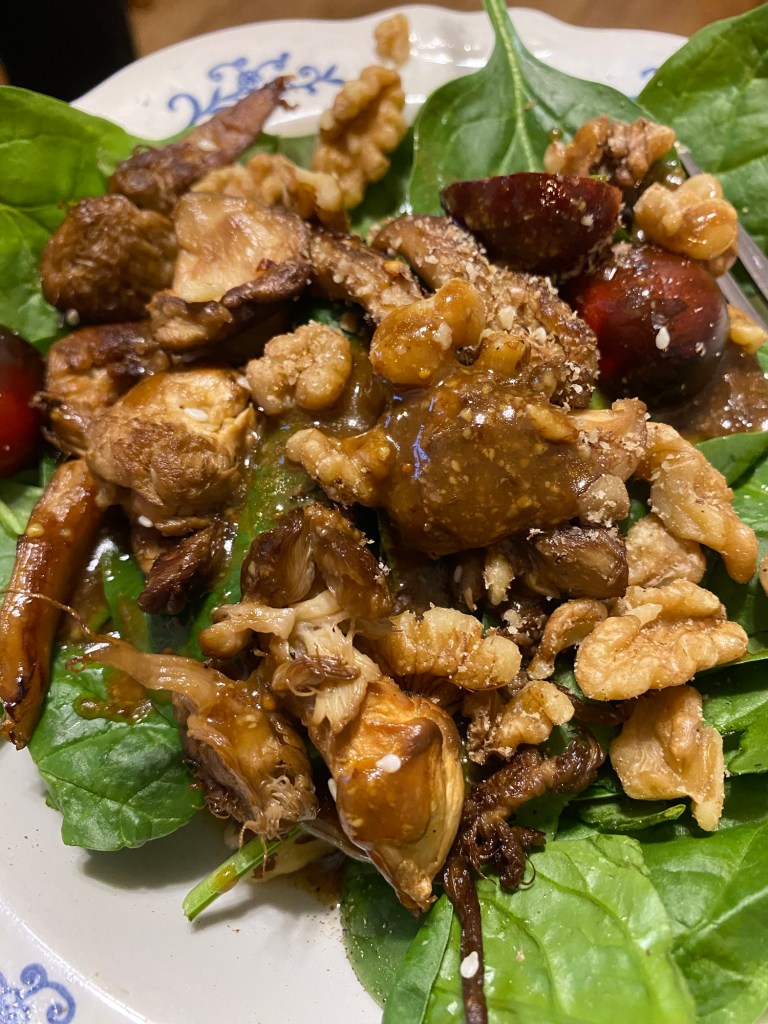
We started growing shiitake mushrooms about nine years ago after buying a couple of already inoculated logs at the farmer’s market in downtown Staunton. It was nice to have these mushrooms and it was a great first experience to grow our own at home. More recently, we became interested in growing Lion’s Mane mushrooms after reading about the health benefits and the taste. https://www.forbes.com/health/body/health-benefits-of-lions-mane/. We were so glad we did as they are delicious. The taste mimics crab, scallops or lobster. We sauté on high heat in a dry pan for 10 minutes then add olive oil salt pepper and garlic. Then we eat it on its own or with salads. We have heard they make great “crab” cakes. We will try this soon.
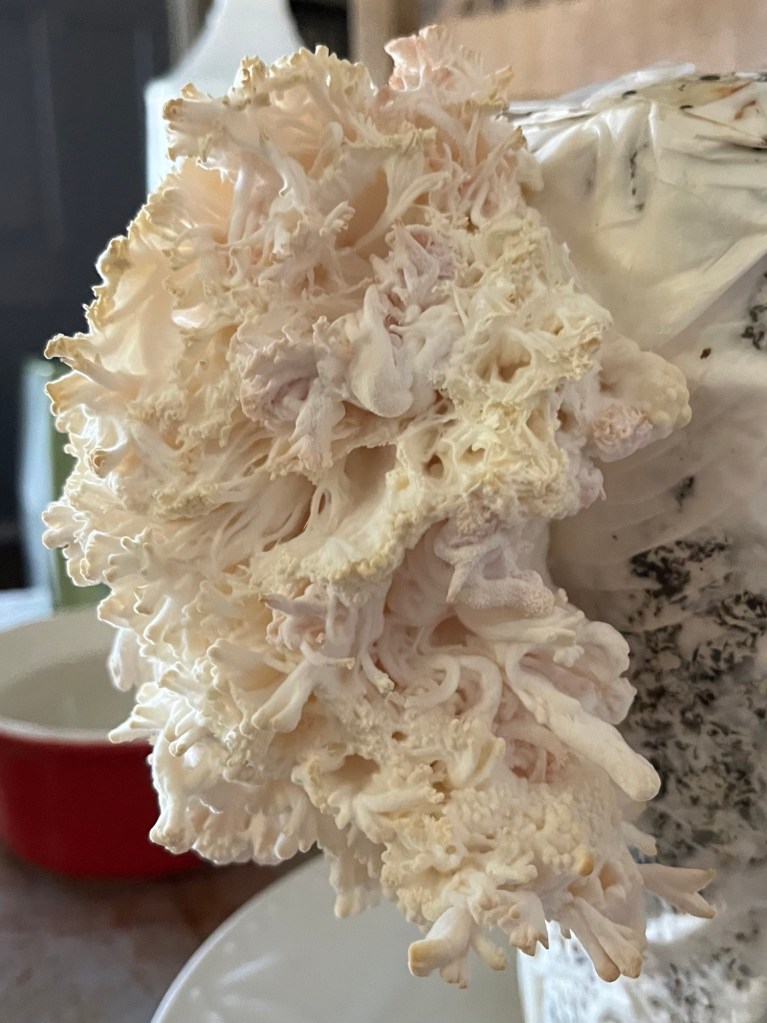
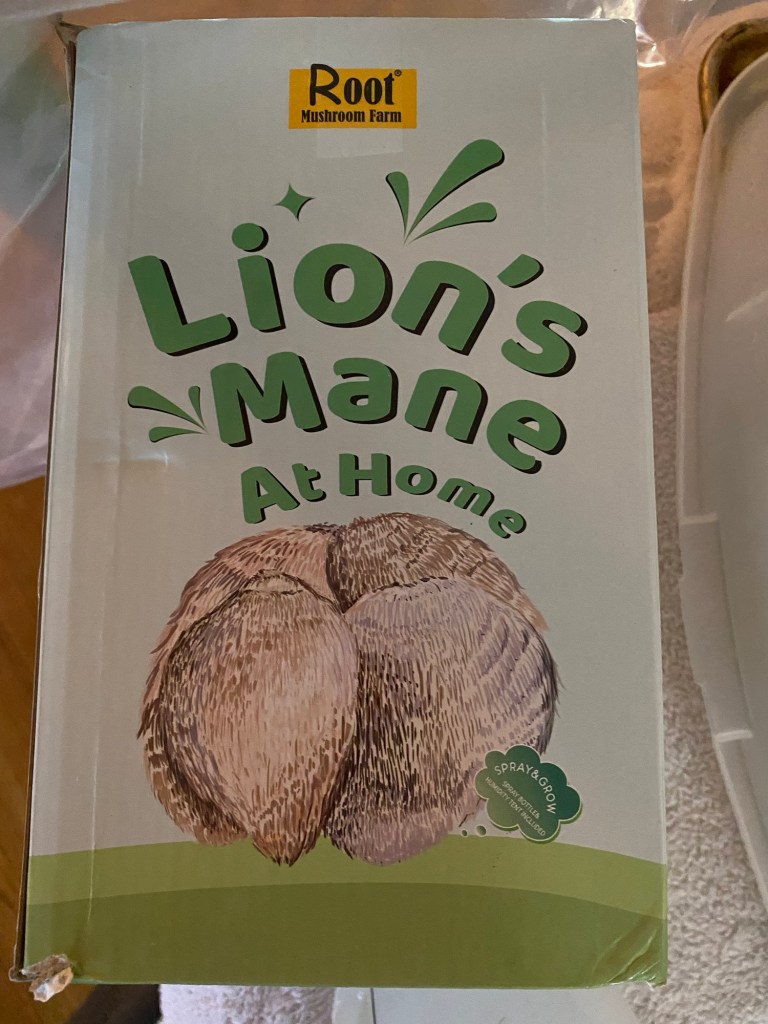
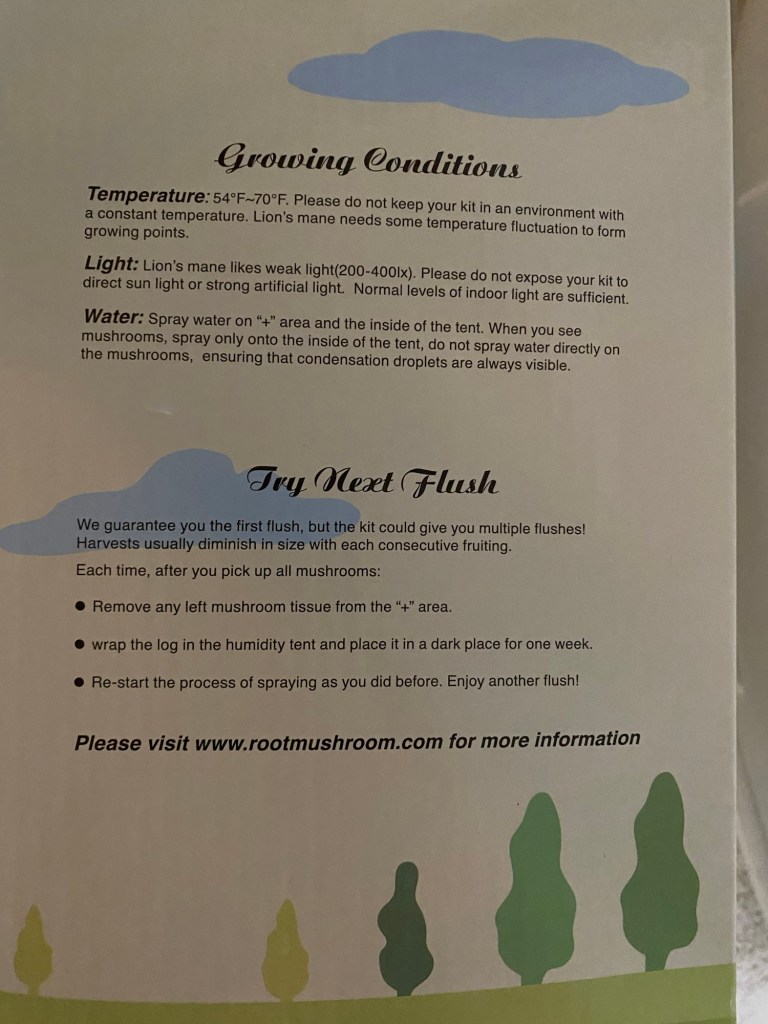
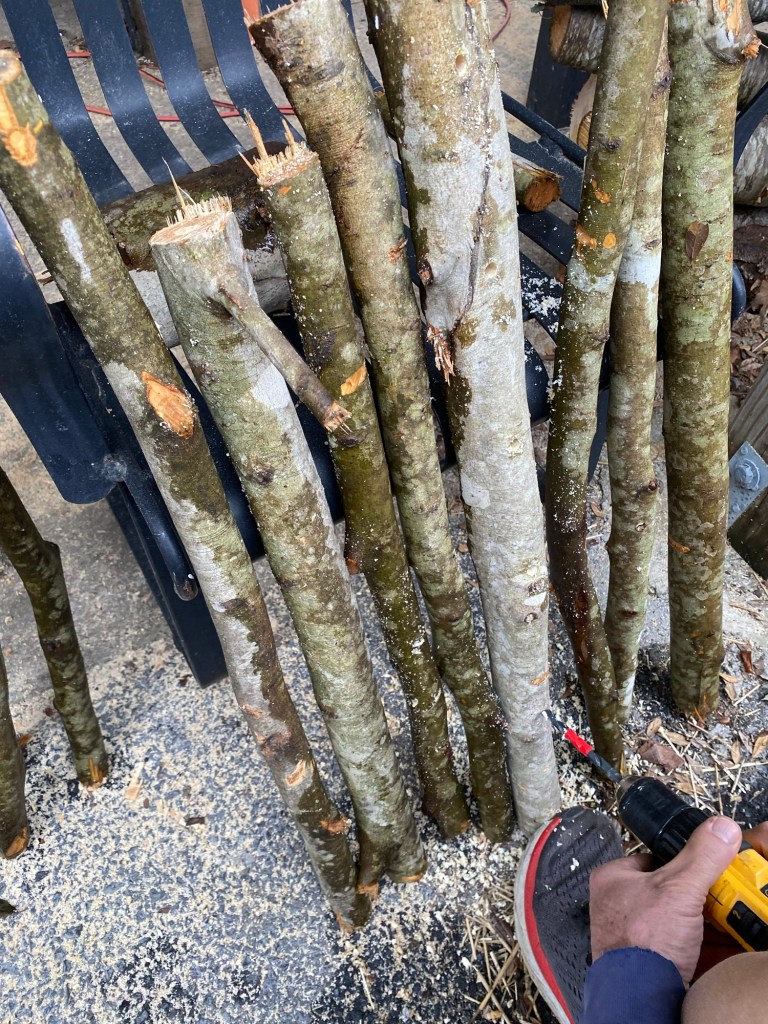
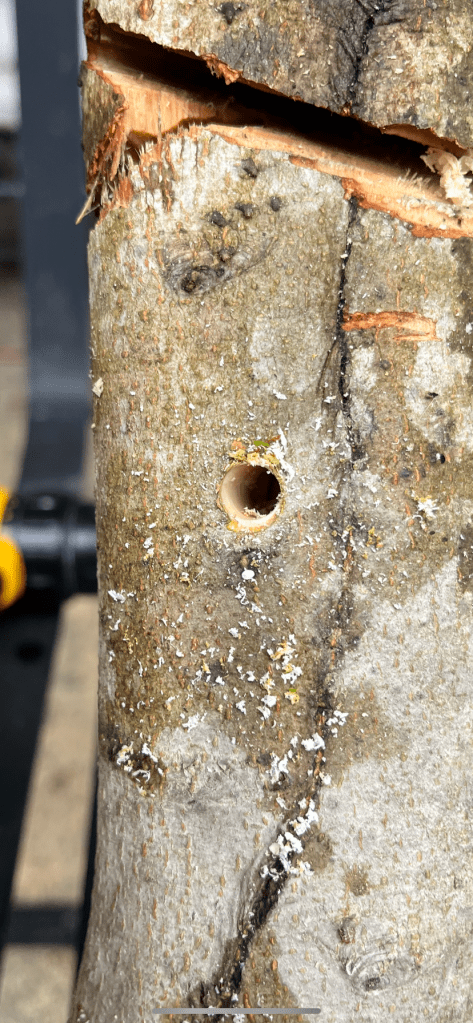
This Root Mushroom Farm grow kit was great. It came full of mycelium and ready to grow. We were so successful with it, we ordered plugs inoculated with Lion’s mane, Hericium erinaceous. Weeks ago, we cut down a beech tree from the farm and we aged the logs a few days. Then we drilled holes for the plugs.
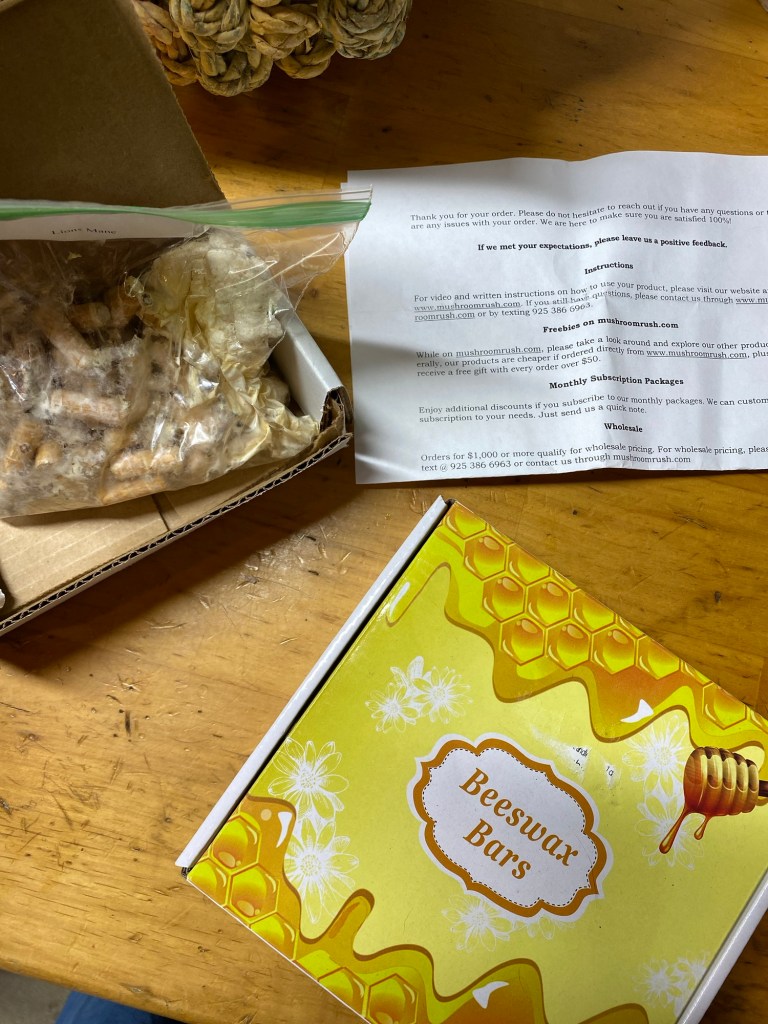
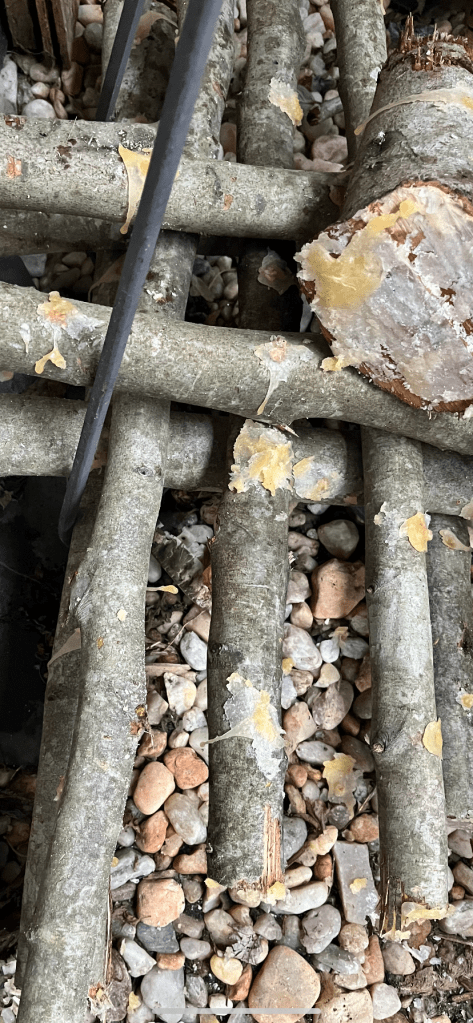
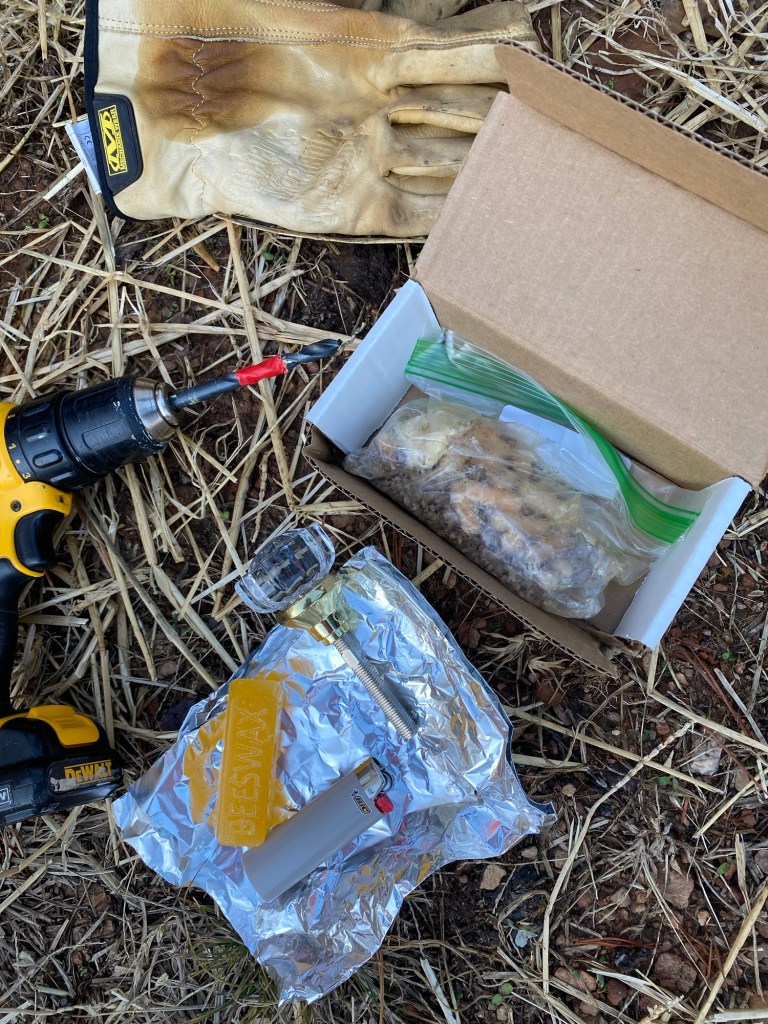
The inoculated plugs and beeswax bars for growing our Lion’s mane on beech logs at home and Saint Andrew’s Forest Farm. Drilling the holes for the plugs. We filled the holes in with our inoculated plug and then put warm beeswax to seal it in and keep moisture. Now we wait for the mushrooms to grow! We are going to also inoculate logs at the farm to continue to diversify the already thriving mycelium in our soil.
We are heading back out to the farm later today to inoculate some of our hardwood logs.
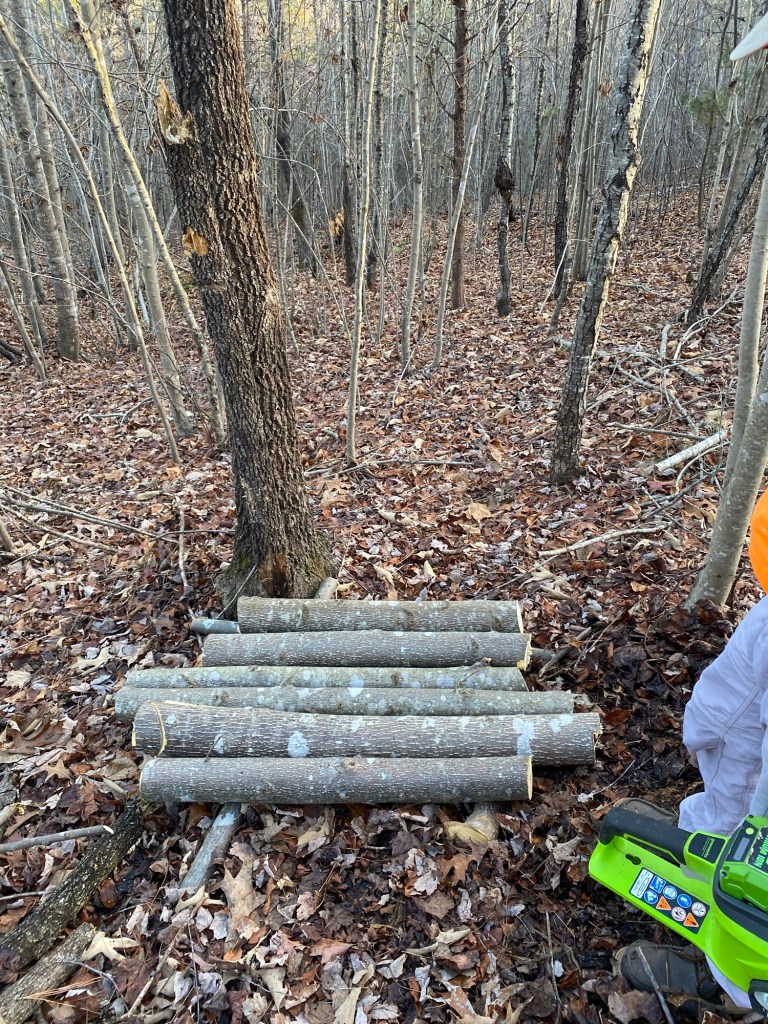
Lion’s mane mushroom and spinach salad with walnuts and Dijon vinaigrette Our supplies needed to drill holes and inoculate the logs at the farm. We built a simple stand for tulip poplar logs in the forest at the farm and are inoculating them with Lion’s mane spawn plugs. We hope to add Hericium erinacious to our home grown mushrooms. They are native to Virginia.
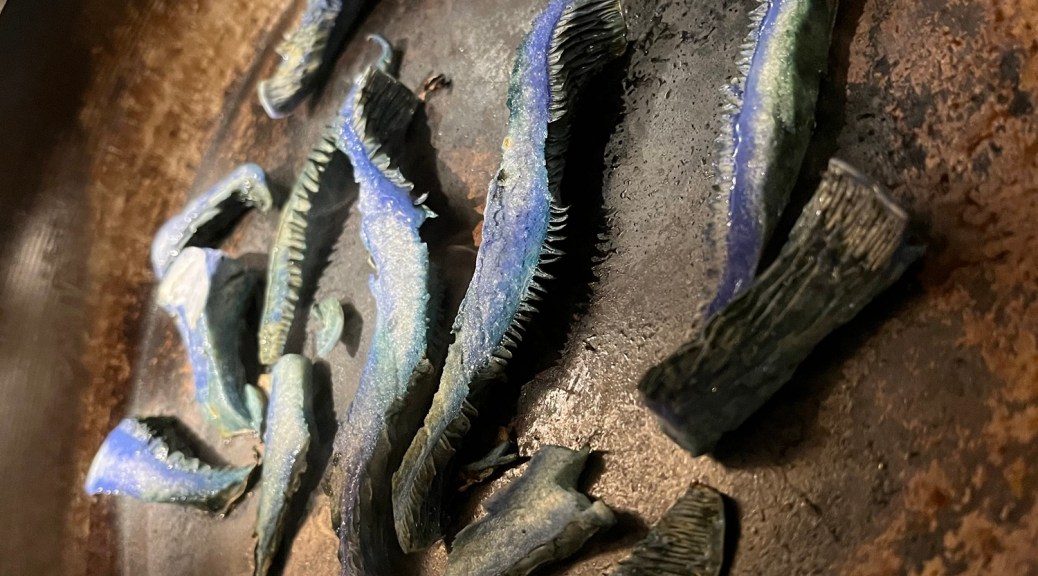
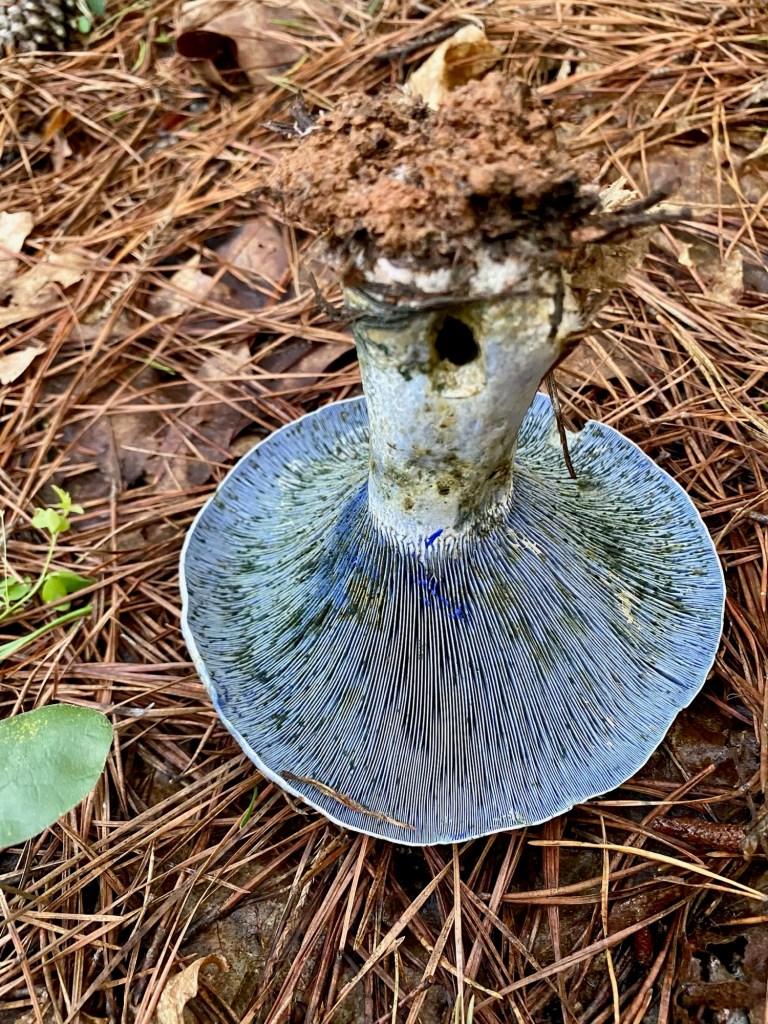
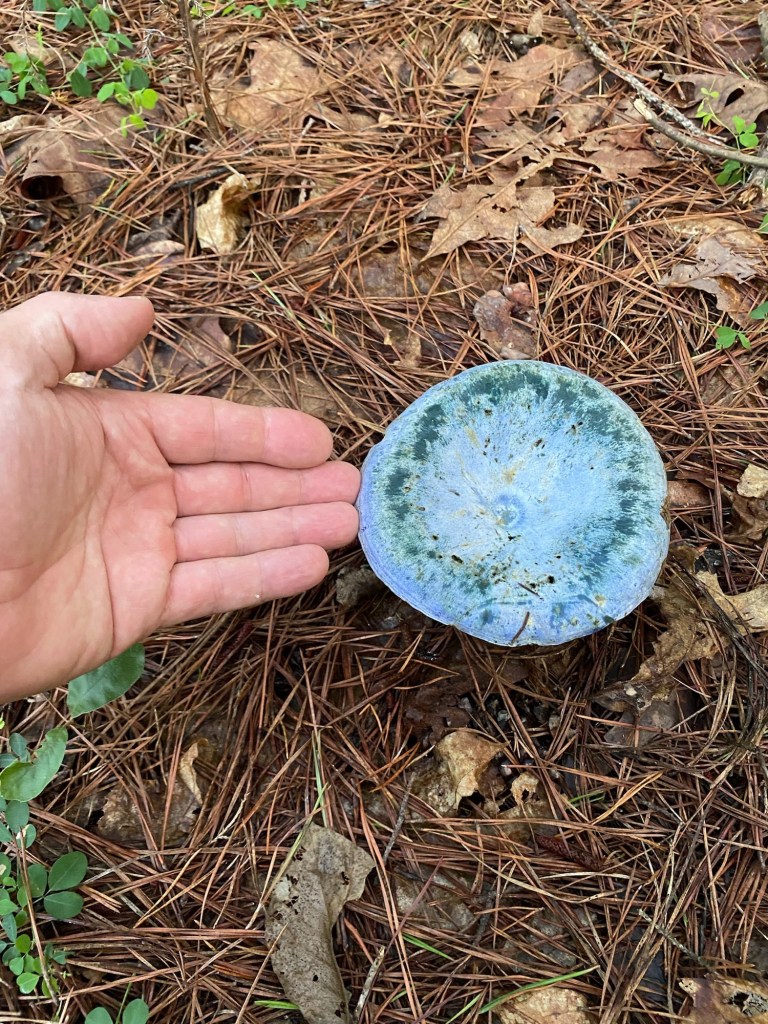
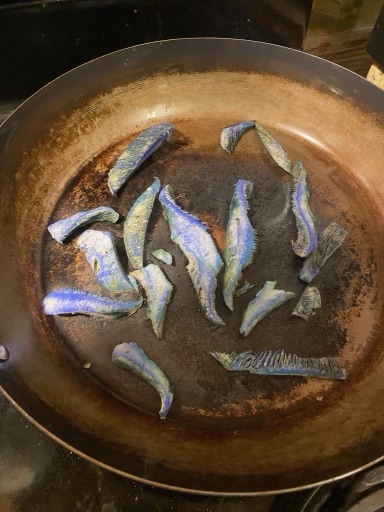
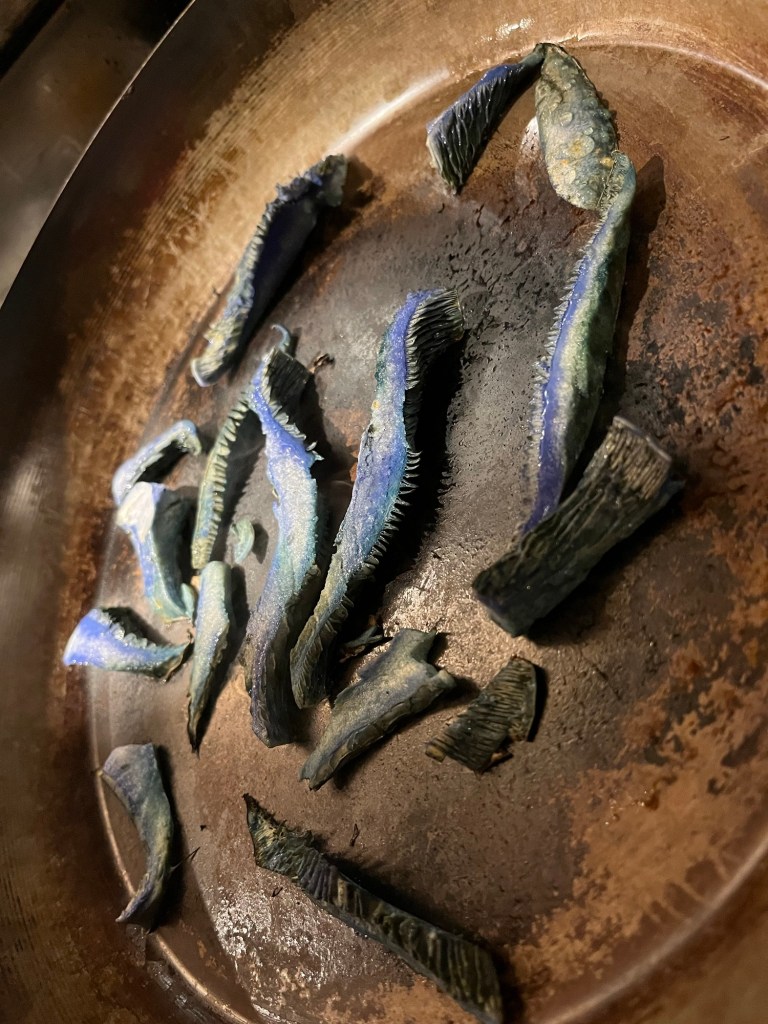
We found quite a few Lactarius indigo or Indigo Milkcap mushrooms during the summer and early fall of 2023. They were so pretty and just amazed us each time we saw them. They are michorizal with a number of deciduous and coniferous trees including pine and oak. We found them in a number of places. Up top along the driveway, along South Trail and in the forest in multiple locations. We’ve learned to cook our wild mushrooms very well on high heat (7ish) for 20 minutes. We start cooking them in a dry already hot skillet. After 10 minutes, we add some olive oil, garlic, salt and pepper.
While they cooked they smelled a little bit of fish. Once cooked, this wasn’t detectable in smell or taste. We used these to top our pizza pie.

 St Andrews Forest Farm