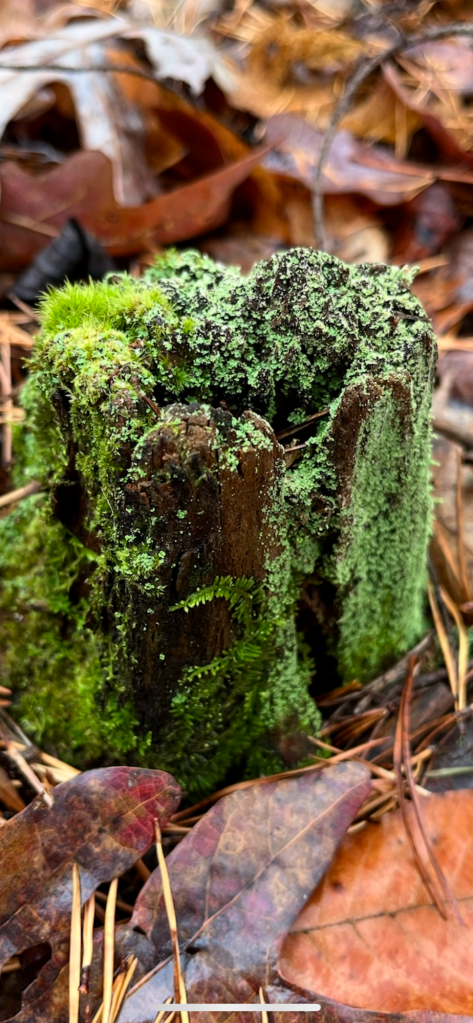
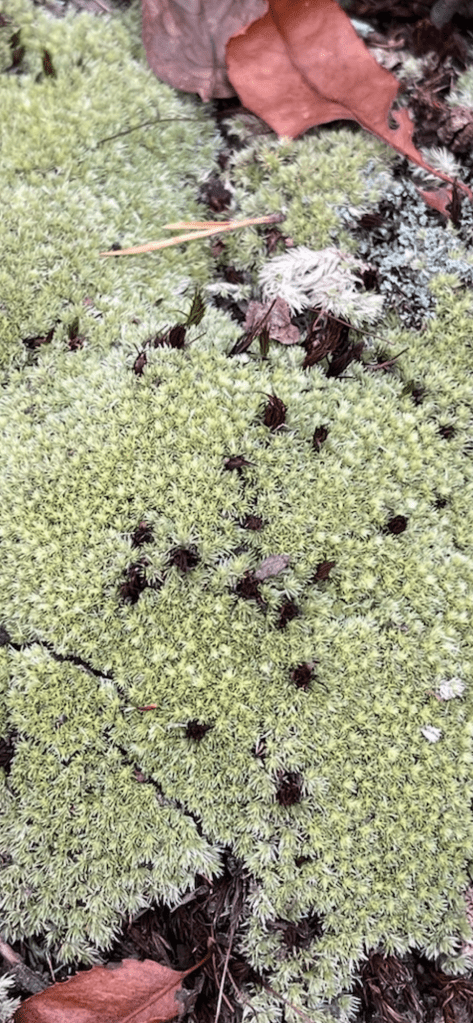
A decaying tree stump covered in mosses and lichen on the main trail in Dan’s Folly.
We got an early start yesterday to spend a rainy morning and afternoon at St Andrews Forest Farm. We got interior shed work completed after a lovely walk. Being in the forest with the rain falling is especially calming.
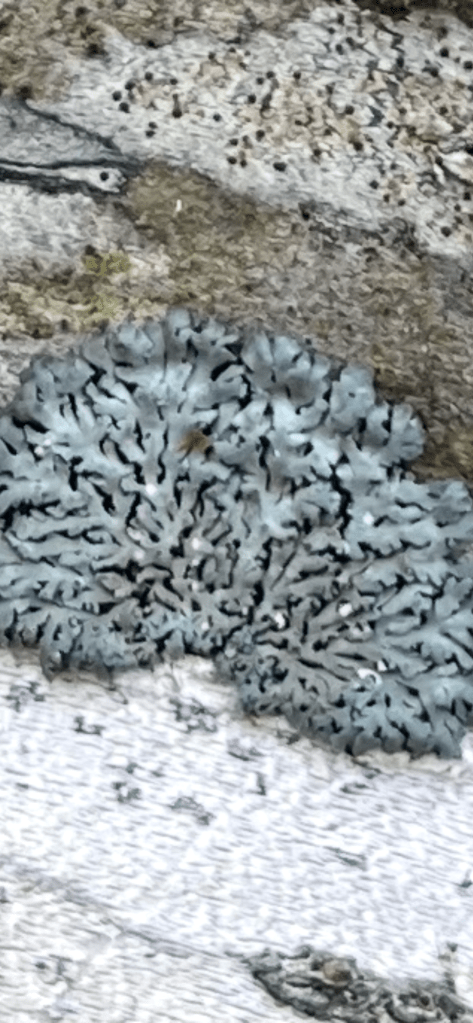
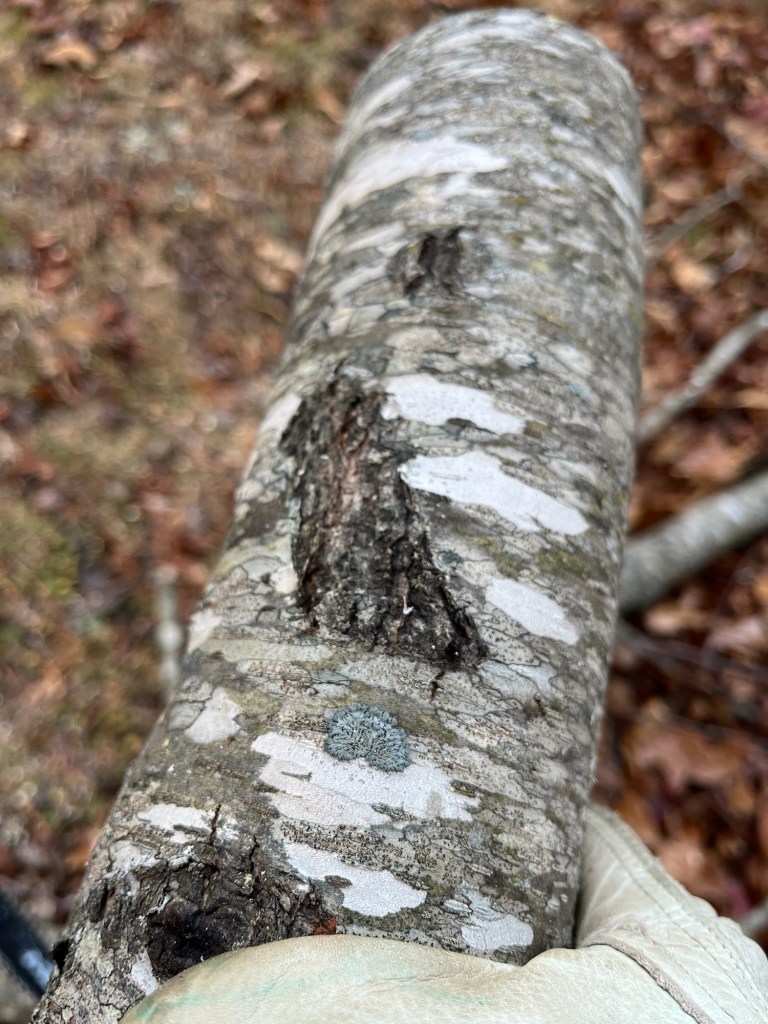
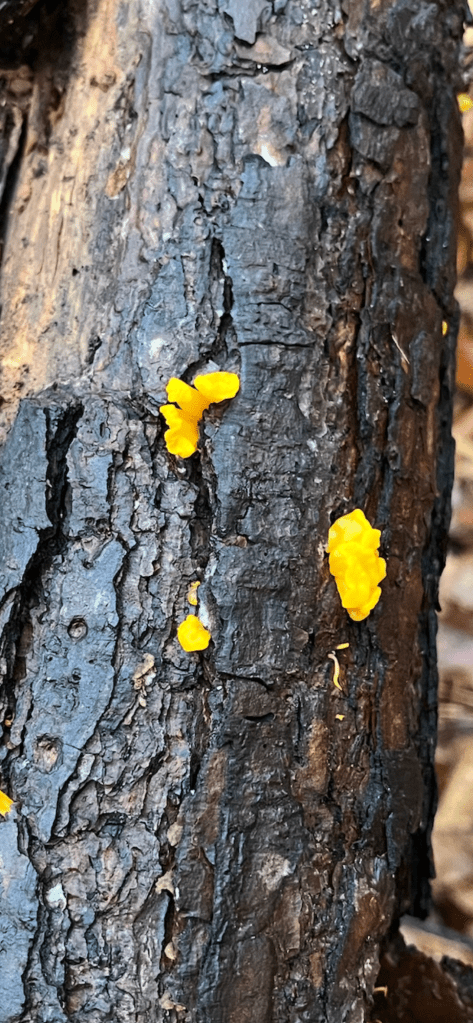
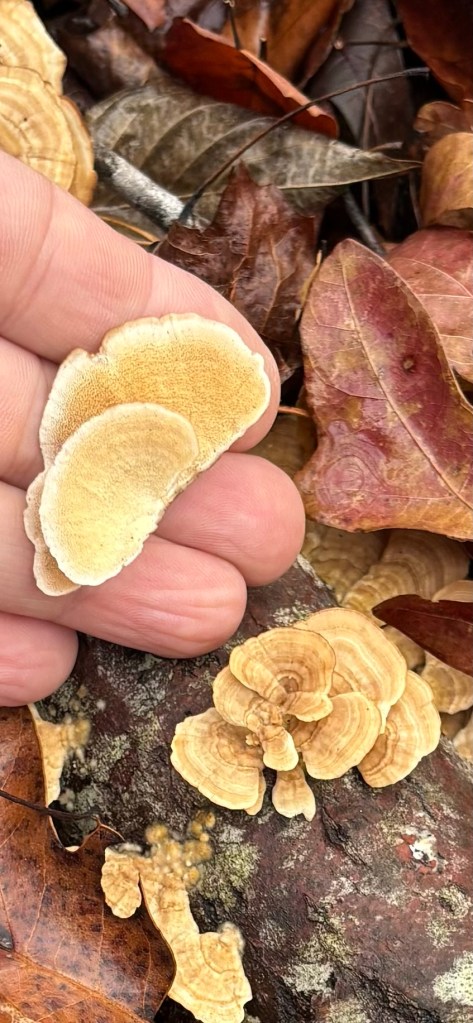
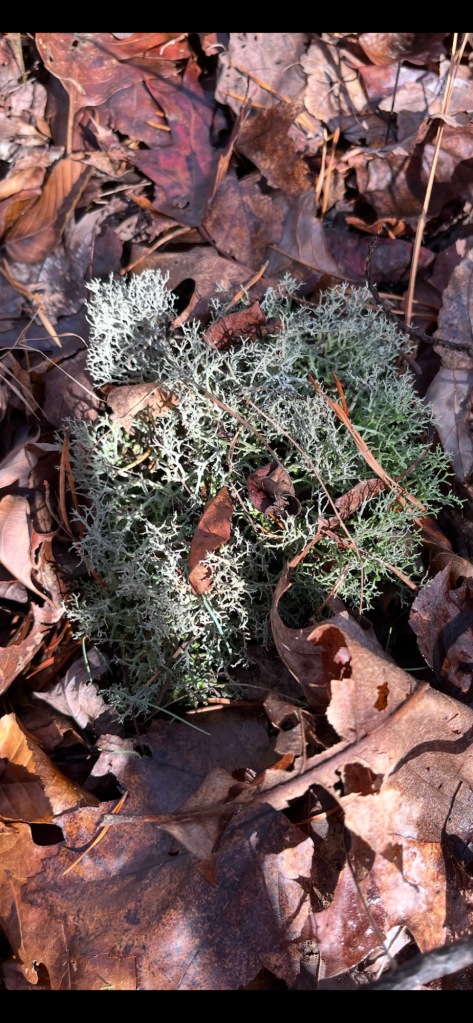
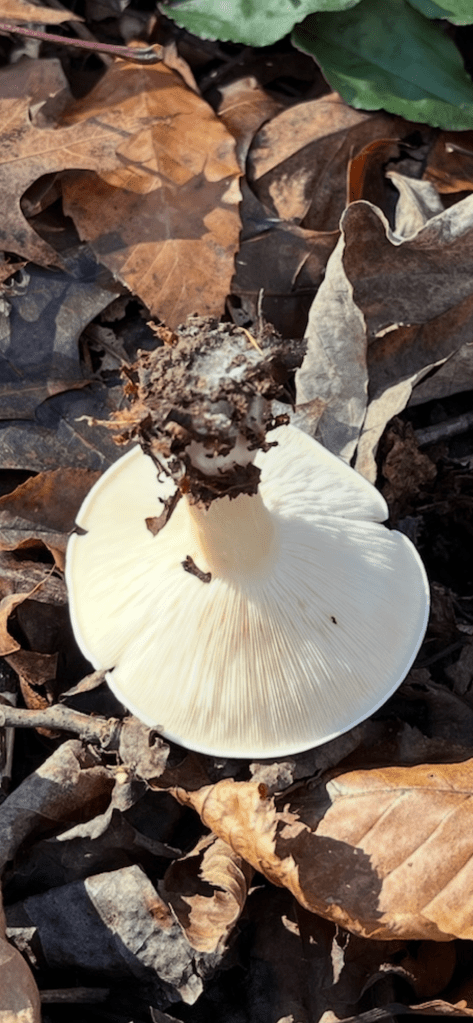
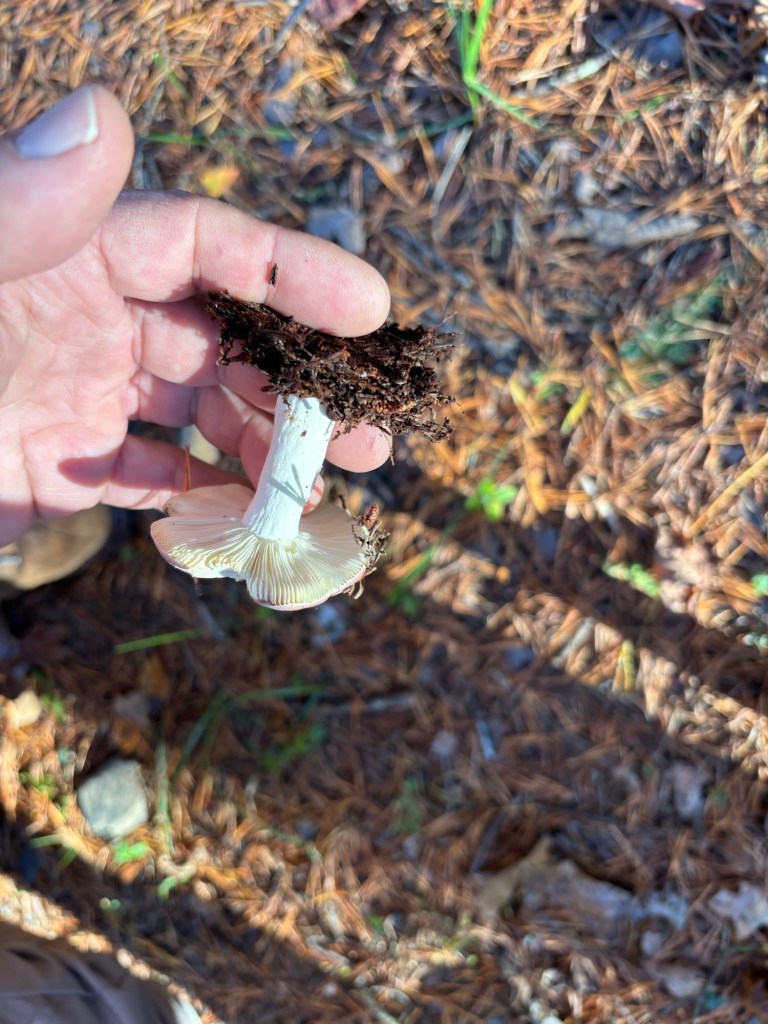
Physcia caesia, Blue-gray Rosette lichen, found on a tree trunk near the North Trail by largest clearing.An image to show the size of the Blue-gray Rosette lichen. With the ground wet and covered in pine needles and leaves, it was soft and much quieter walking through the forest. Our feet sunk in to the squishy floor. Tremella mesenterica, witches butter, grows on decaying branches of hardwood trees. Some are edible. This is on a conifer, so it is considered inedible. Trichaptum biforme, violet-toothed polypore, decomposing hardwood logs. Often mistaken for turkey tail but the underside has definite teeth instead of small pores. Inedible with research indicating potential antioxidant and anti microbial properties. Red Hawk Rd at roundabout. American hornbeam, Carpinus caroliniana, attracts pollinators, songbirds and small mammals. Bonus sunny Sunday walk rounding out our farm weekend. Reindeer lichen, genus Cladonia, found along Fern Trail. A patch of Honey locust trees found near the culvert. A white gilled mushroom, most likely Russula. It did not lactate when cut so not a lactarius. It could be Russula brevipes or Leucopaxillus. Further info and observations are needed.
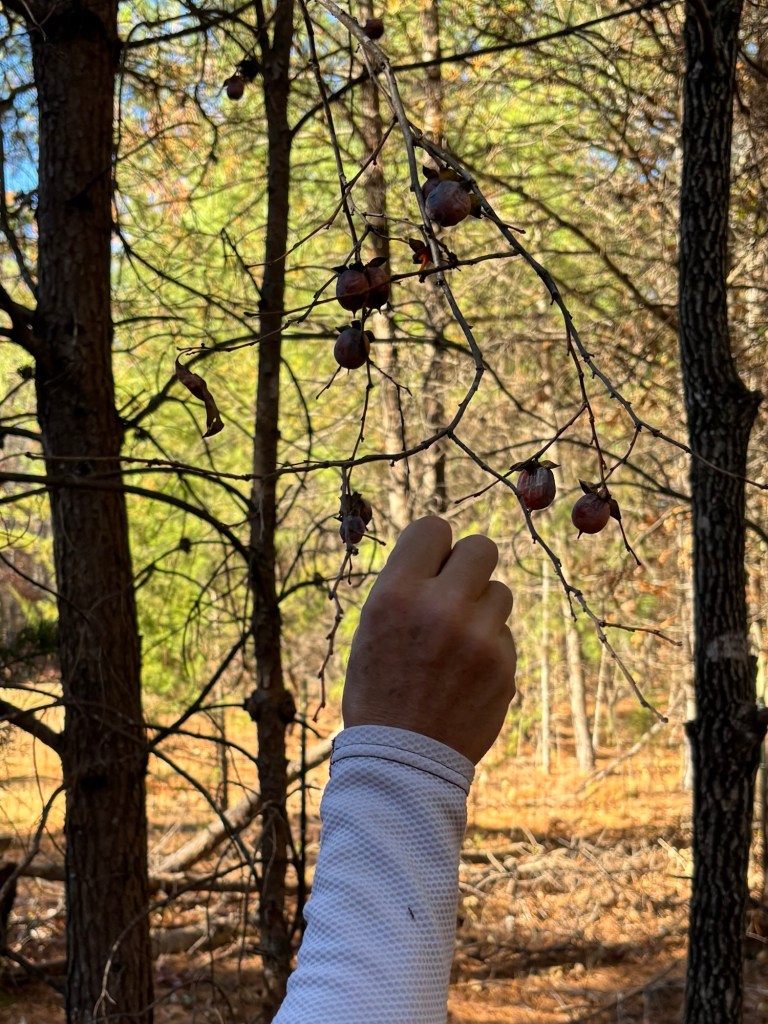
The last fruit of the year for SAFF native American persimmons, Diospyros virginiana, are still hanging on waiting until the first frost to fully ripen and lose their astringency.
We went over to SAFF on Saturday to take a walk and get some work done. We checked on the persimmons up top and found one ready to eat. Most are still hanging on until after the first frost —which is more than likely tonight as temperatures are supposed to drop to 25F overnight, and flurries are expected. Brrrr!
We spent the weekend winterizing the farm and the house. We brought some small black cherry twigs and sticks for getting fires started in the home fireplace. They are nice to burn.
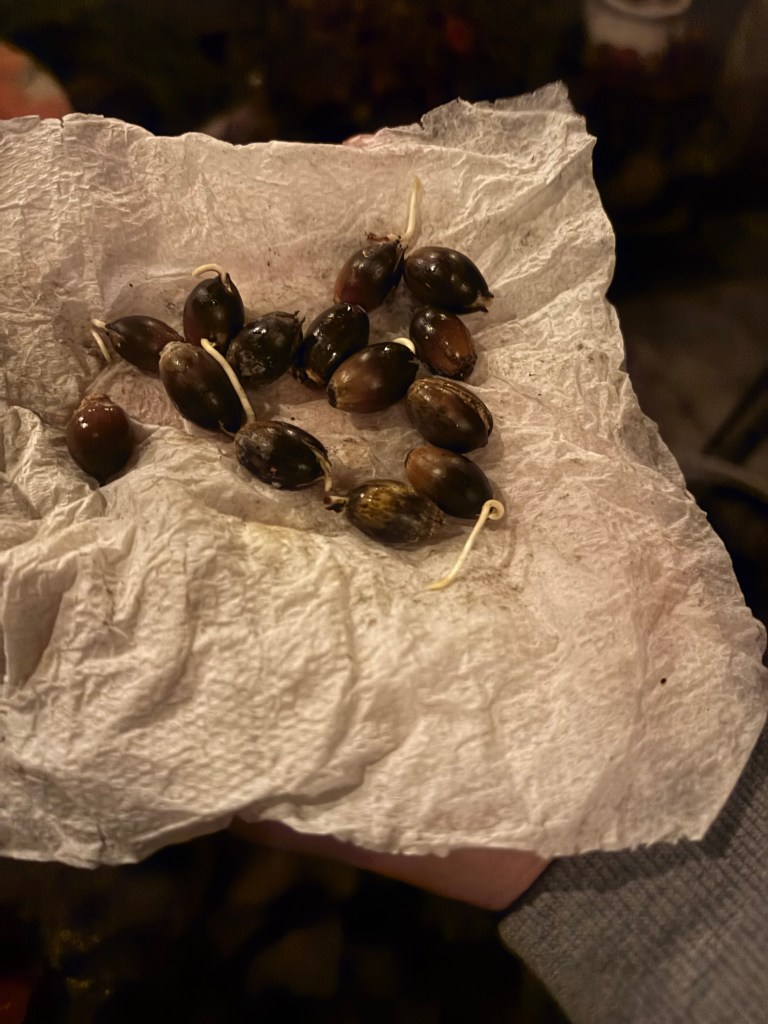
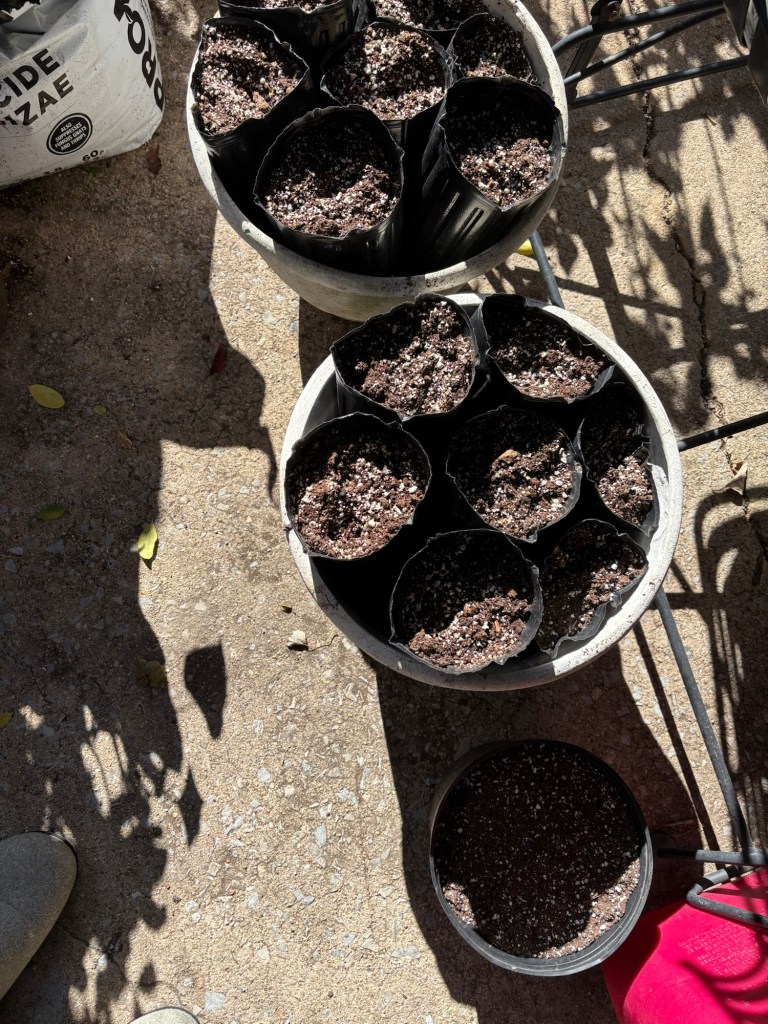
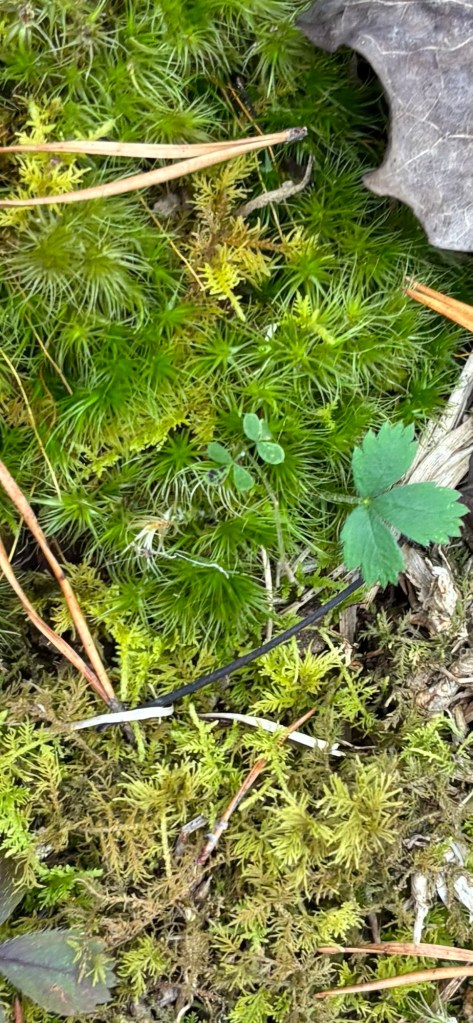
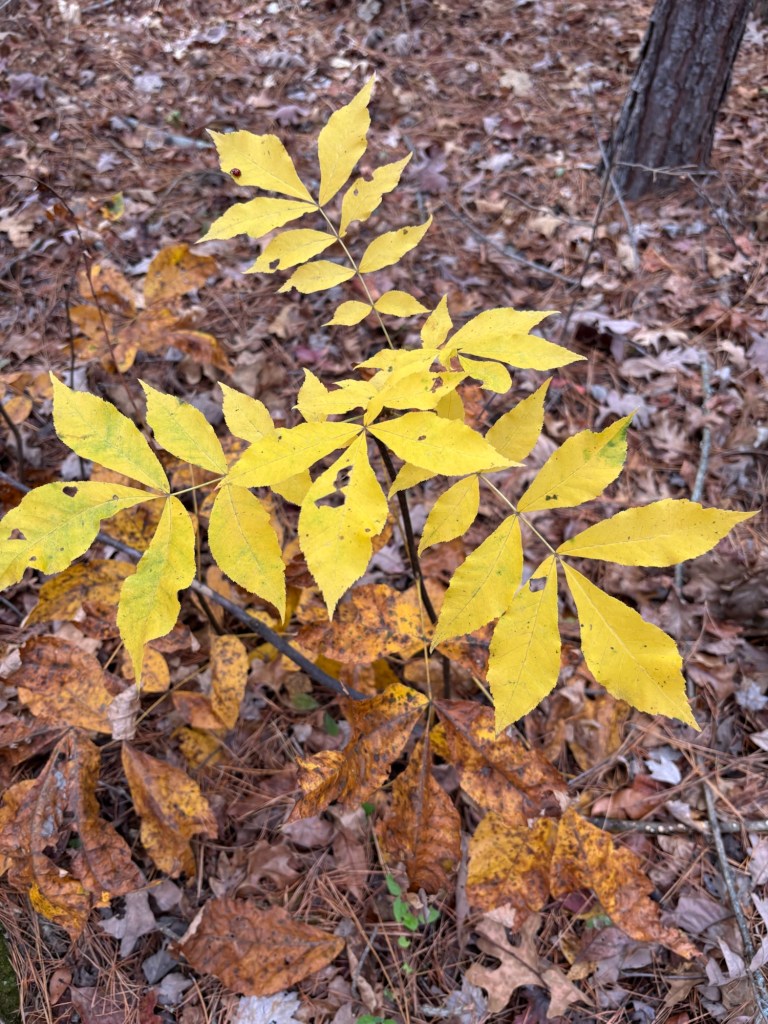
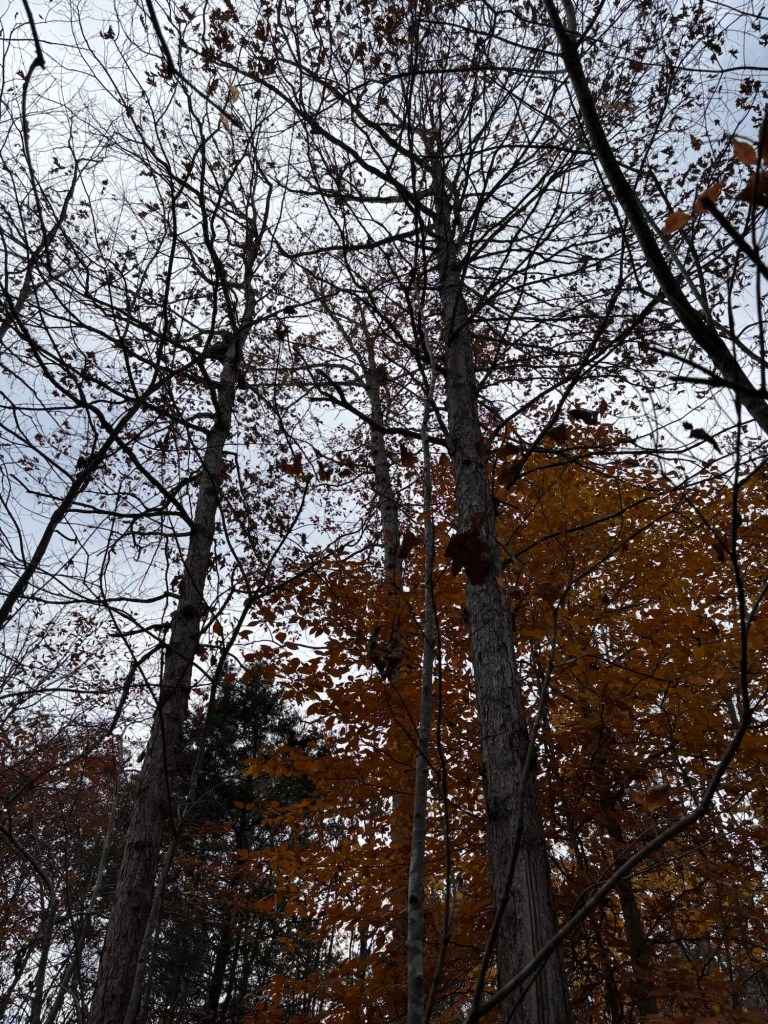
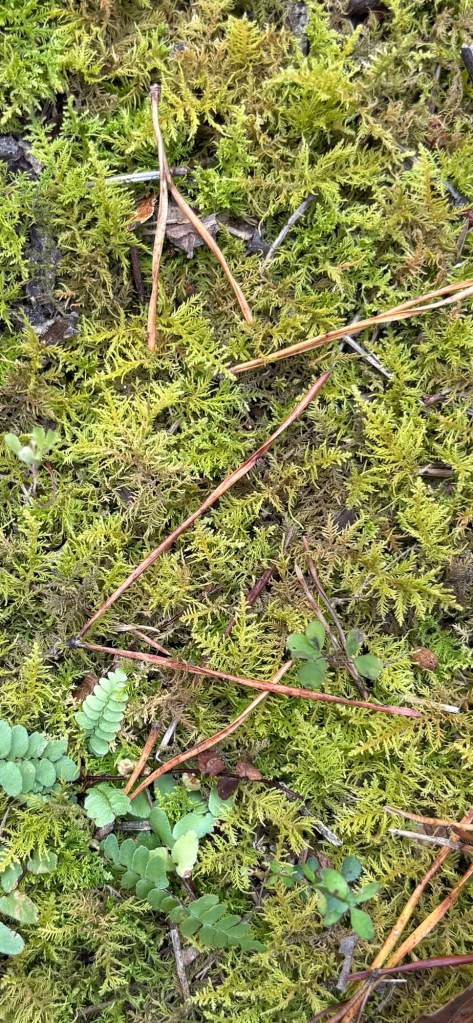
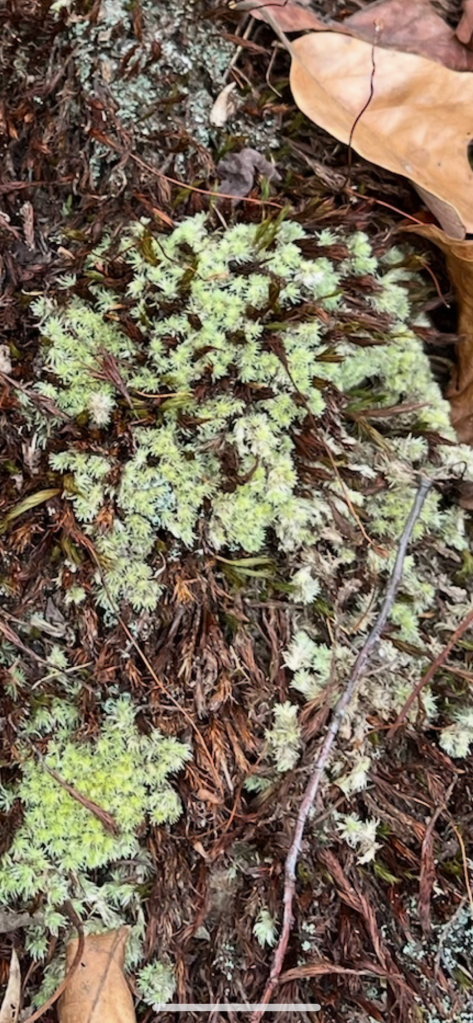
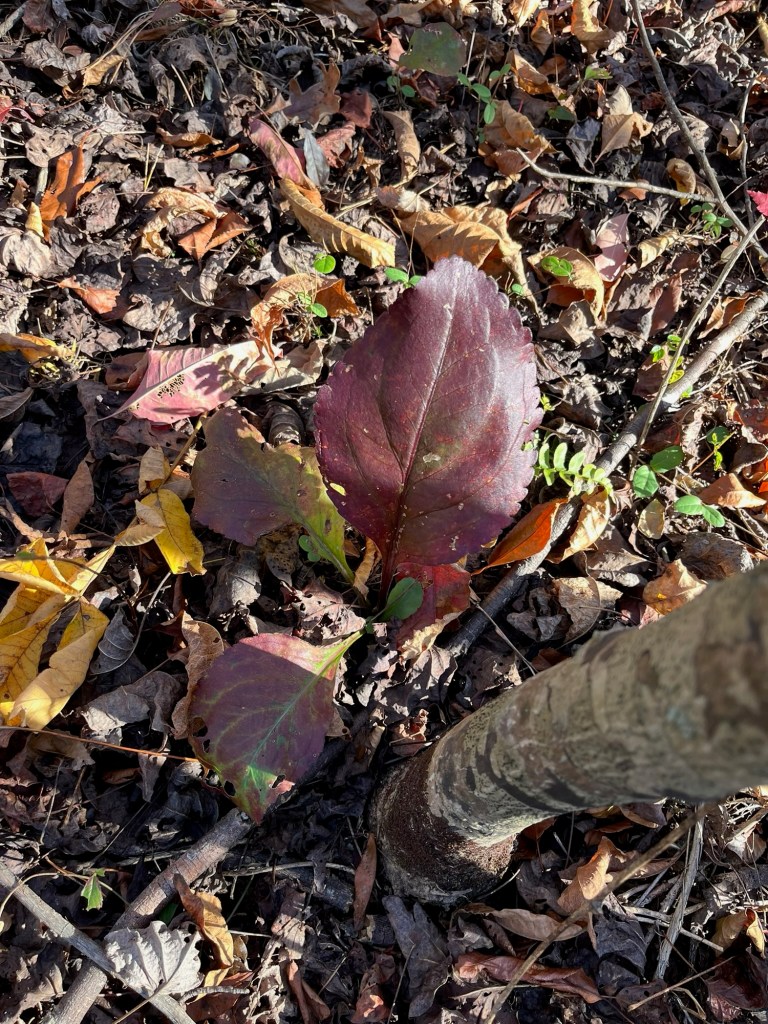
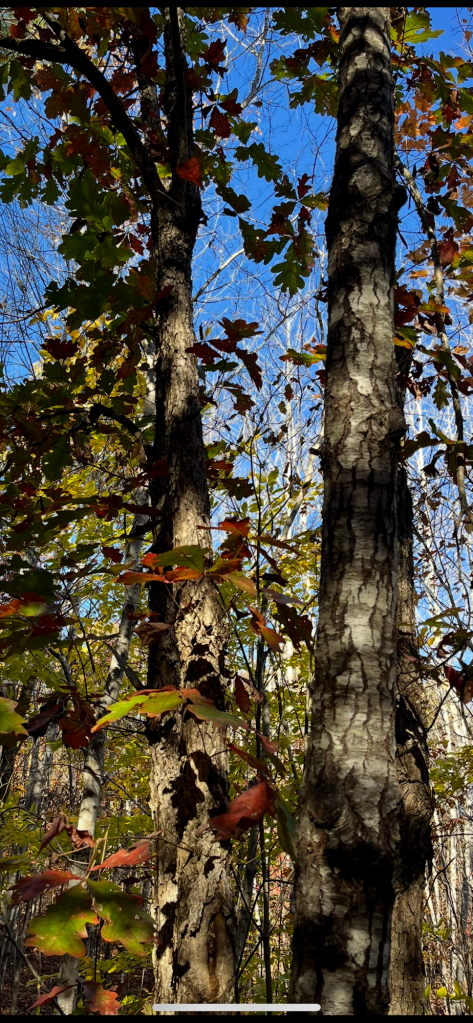
Chris’ mother, Judy, gifted us these southern live oak seeds she foraged in South Carolina this past year. Quercus virginiana. We planted 14 of them in deep tree pots with hopes of getting them planted in the ground at SAFF after a year or two. Since they are in tree pots, and the weather tonight will be very cold, we’ll need to fit them into a warm, snug spot and get them mulched in with protection or bring them inside until the weather isn’t quite so cold.Quercus virginiana, southern live oak, just planted this weekend for SAFF. We use mycorrhizal soil for planting our seedlings to enhance nutrient uptake, improve soil structure, increase drought and disease resistance as well as boost carbon content. The fungi secrete a substance called glomalin which increases organic carbon content in the soil. The fungi also extend the root system of the plant with fine filaments called hyphae. These access water and nutrients like phosphorus, zinc and nitrogen from areas the roots normally can’t reach.The fluffy deeper green moss at the top of photo is Broom Forkmoss, Dicranum scoparium. The leaf there on the right is Tribe Potentilleae of the rose family, strawberries, cinquefoils and allies. We cannot narrow it further until we see a bloom or fruit. The bottom moss that’s lighter green is Thuidium recognitum, Hook-leaved fern moss. The purple leaf at the bottom left is as yet unidentified. Carya cordiformis, bitternut hickory, is our most recent type of hickory observed. Most have to reach the age of 40 years to begin producing nuts. We may have an older one nearby we’ve yet to locate. We have deep gratitude for the older trees already producing nuts and are delighted to encourage these small hickories growth in the forest. These are the shortest lived of the hickories, living about 200 years. Mushrooms commonly associated with hickories are various Russula species, Cantharellus (chanterelles) and Grifola frondosa (Hen of the Woods ).The Three sisters are at the bottom of Ridge Trail near the main waterway. They are large white oaks, Quercus alba, reaching up like nature’s skyscrapers. There’s an American beech, Fragus grandifolia in the understory with leaves —yellow now, but soon they will be coppery brown and hang on through winter. The Three sisters are some of the oldest trees at SAFF. Every time we look at them and the other larger trees down by the waterway that weren’t culled with the rest of the older forest because of their proximity to the creek, we are reminded of exciting research showing that trees are interconnected through underground networks of roots and mycelium with mother trees ( like these) acting as hubs supporting younger trees with water and nutrients and more. We’ve noticed oaks at SAFF growing with chanterelles, as well as various amanitas and boletes.Ebony spleenwort, Asplenium platyneuro, growing with the hook-leaved fern moss.
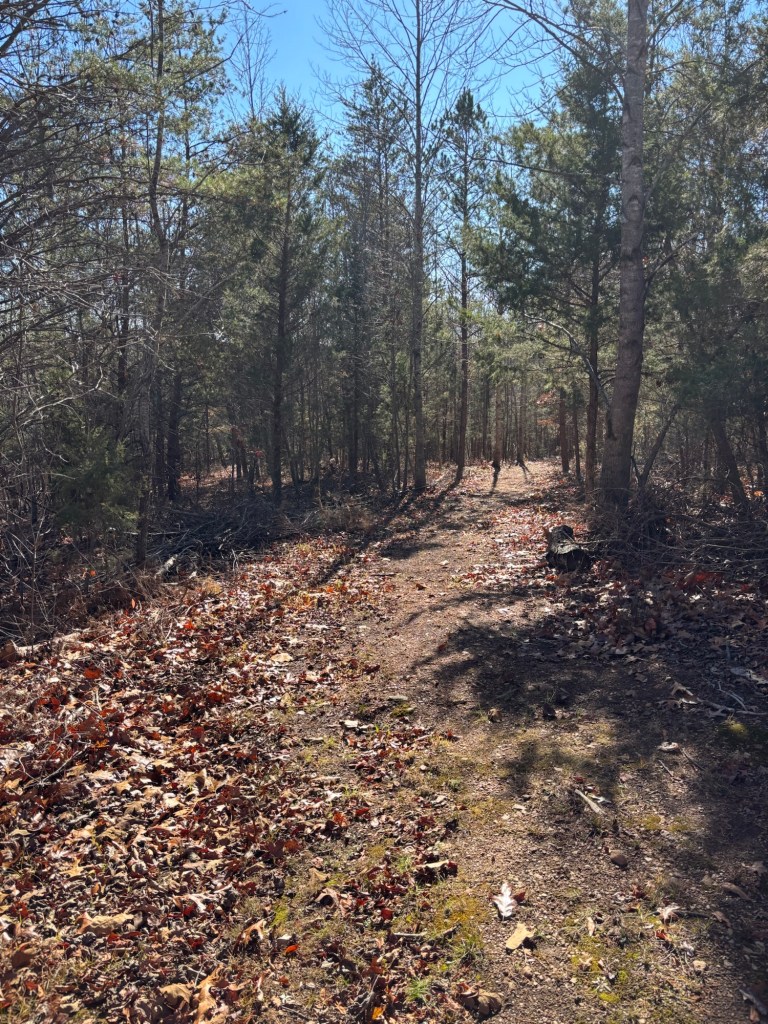
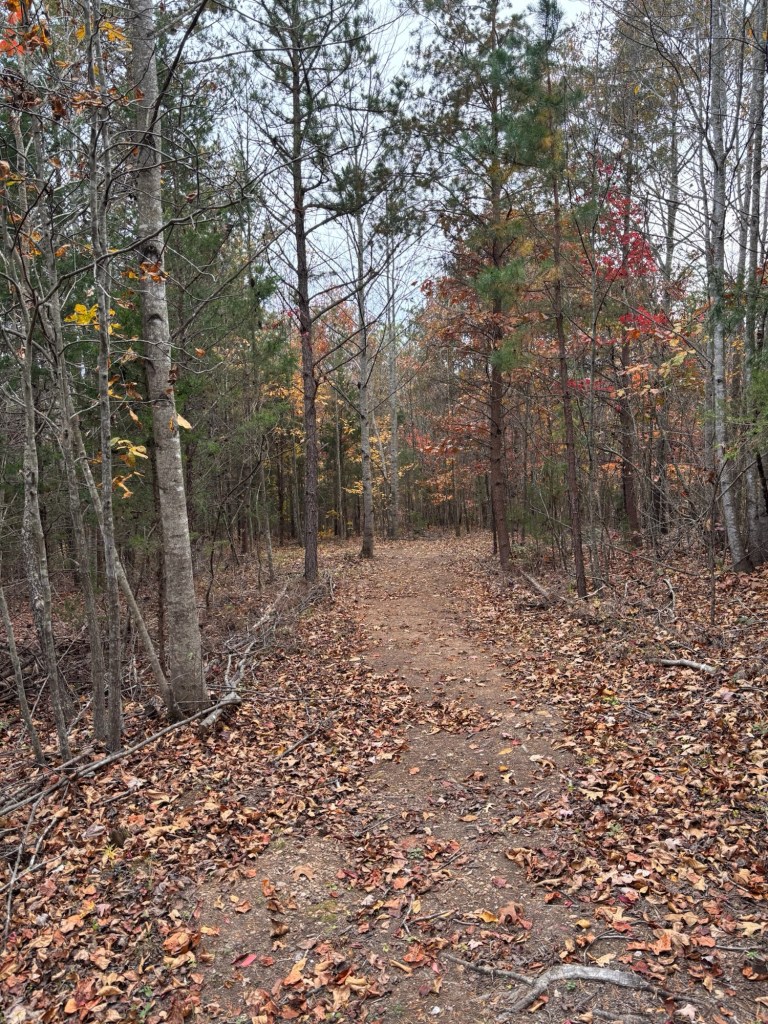
We started our walk down Red Hawk Rd and made a new trail from the bottom at the roundabout to down to Fern Trail.
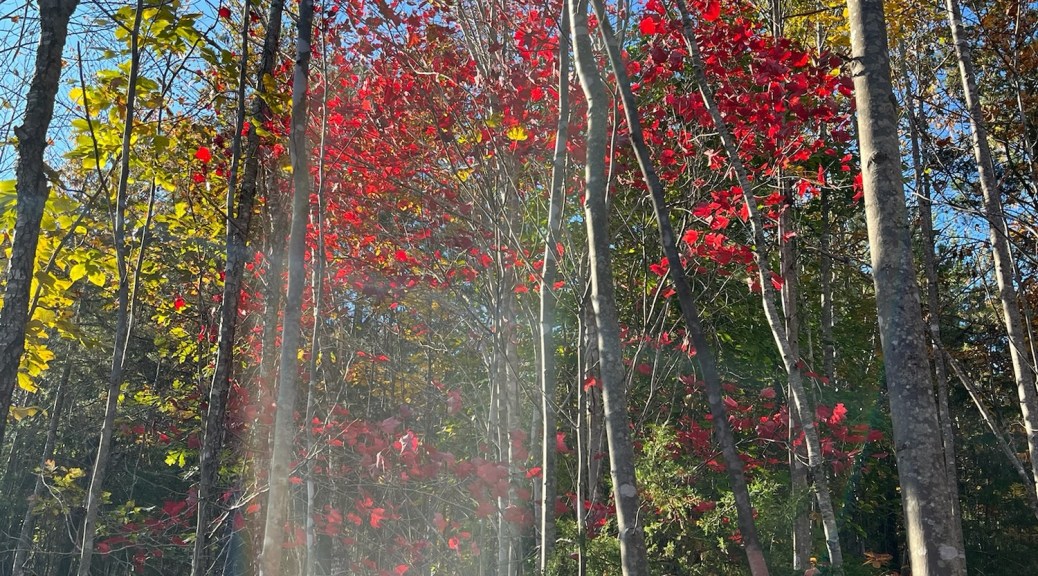
The drive over to SAFF was beautiful with fall color. We travel from the Shenandoah Valley over Afton Mountain through Rockfish Gap and Howardsville to Buckingham. We oohed and ahhhed the whole way. Here’s a quick video of Howardsville Rd.
31 seconds of trees putting on a colorful show. Sound on for beautiful jazz as well.
We unloaded the lumber we found at the Restore and checked out the pawpaw and fig trees planted up top. They have yellow leaves and are losing most of them. Then we headed down Red Hawk Road to get down to Fern Trail. We checked out the Rappahanock cultivar and the seedlings planted as well as the cluster of natives. Most have gone fully dormant for the winter, especially the native SAFF trees. A few of the cultivars and seedlings look great; fully leafed and deep green still. Gleaming. It’s more typical for them with the temperature and season to be dormant. We have not yet had a hard freeze in Buckingham, or in Staunton in the Valley—which usually frosts first. Once dormant, their watering needs will drop. Phew! 😅
Leucobryum albidum, white moss or white pincushion moss, is common here in the eastern US. It creates a habitat for amphibians, reptiles and insects, stabilizes the soil, retains water, cycles nutrients and contributes to carbon sequestration.
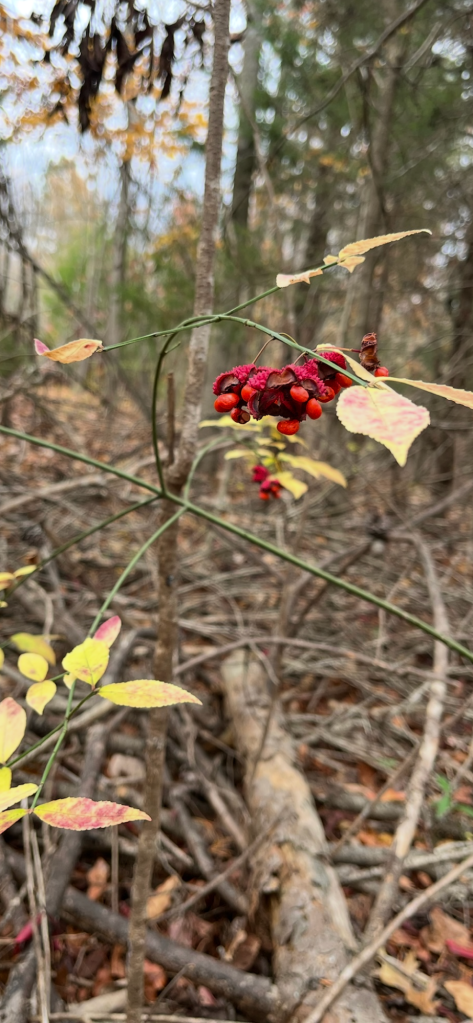
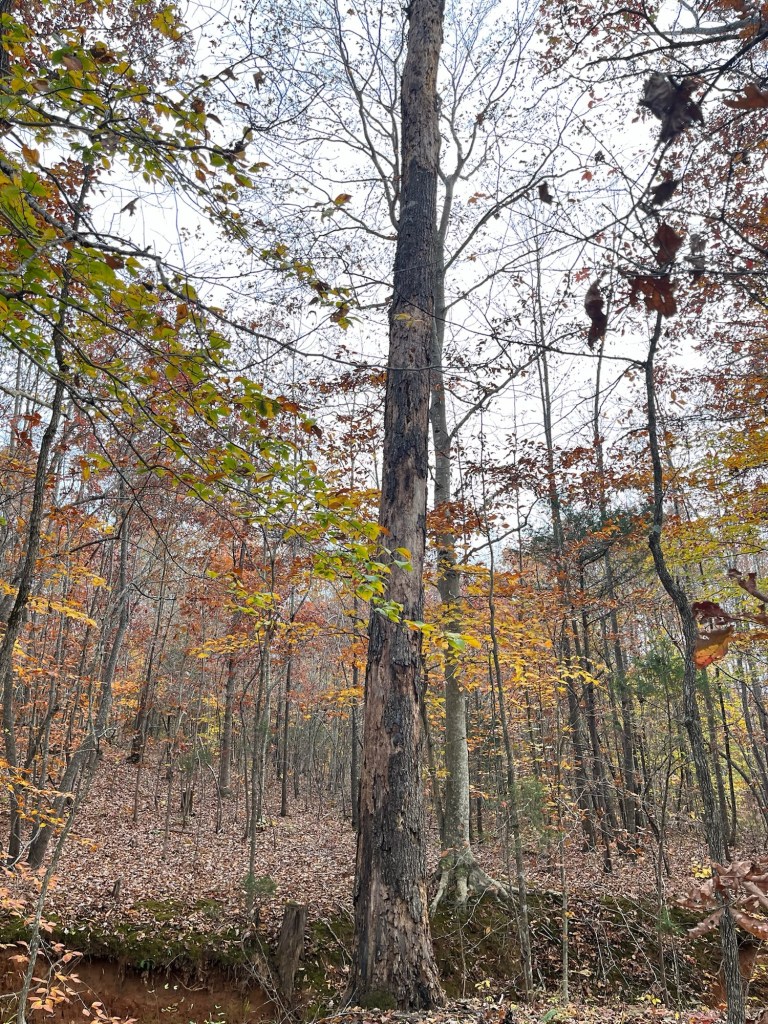
Along our walk we found white moss and strawberry euonymus (Euonymus americanus). We also went down to the waterway to check on this oak snag in the picture below. SAFF had high winds for several days and the last time we saw it, there was a bend and crack starting.
White moss beginning to grow.
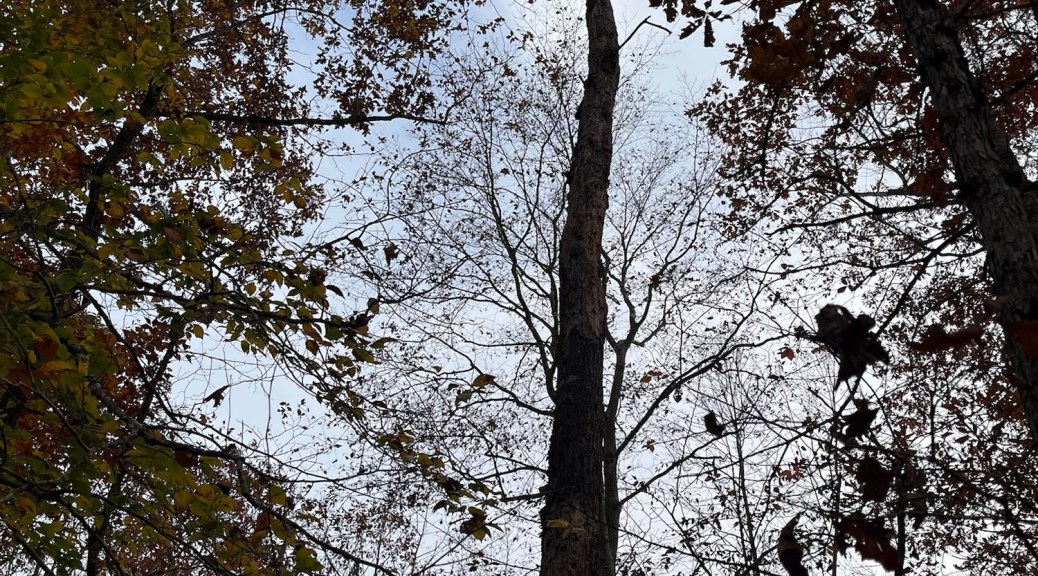
SAFF old oak snag we check on regularly. It looks as though it will fall to the west towards the Pawpaw Peninsula.
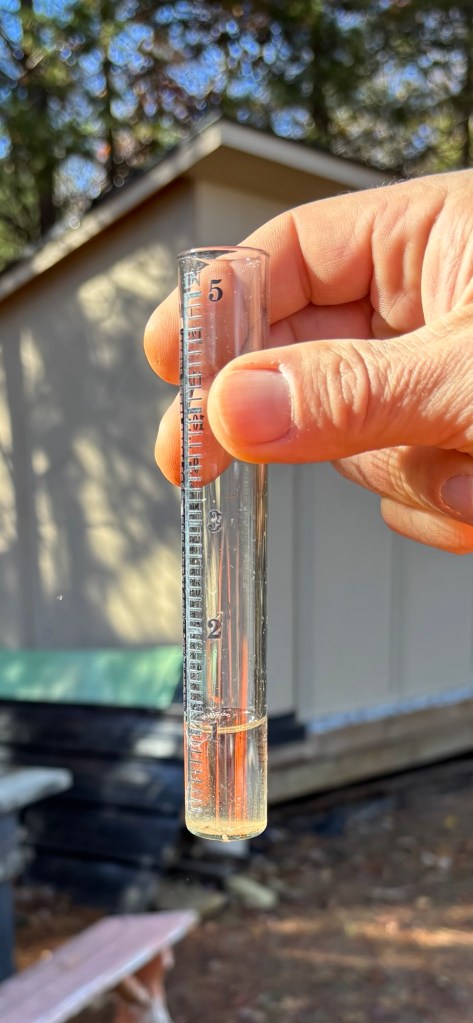
Over an inch of rainfall last Wednesday and Thursday at St Andrews Forest Farm.
We were so pleased to see the farm on Halloween Friday after the rain last week. It has been dry with an elevated fire risk so the moisture was more than welcome. Oftentimes the storms will bounce right over the mountains and miss the farm so we were lucky it hit us. The Asimina triloba (pawpaws) we planted this year need an inch of water a week so the rainfall also meant we did not have to carry water to them. We would like more rain to come consistently and we’re grateful for any rain we get.
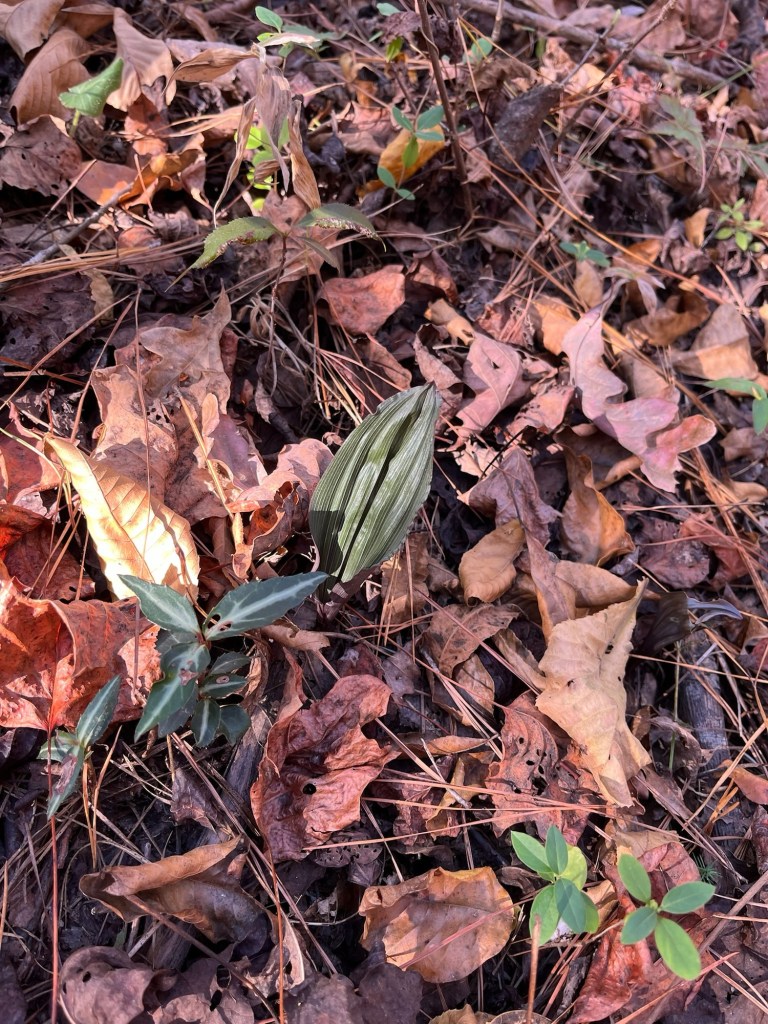
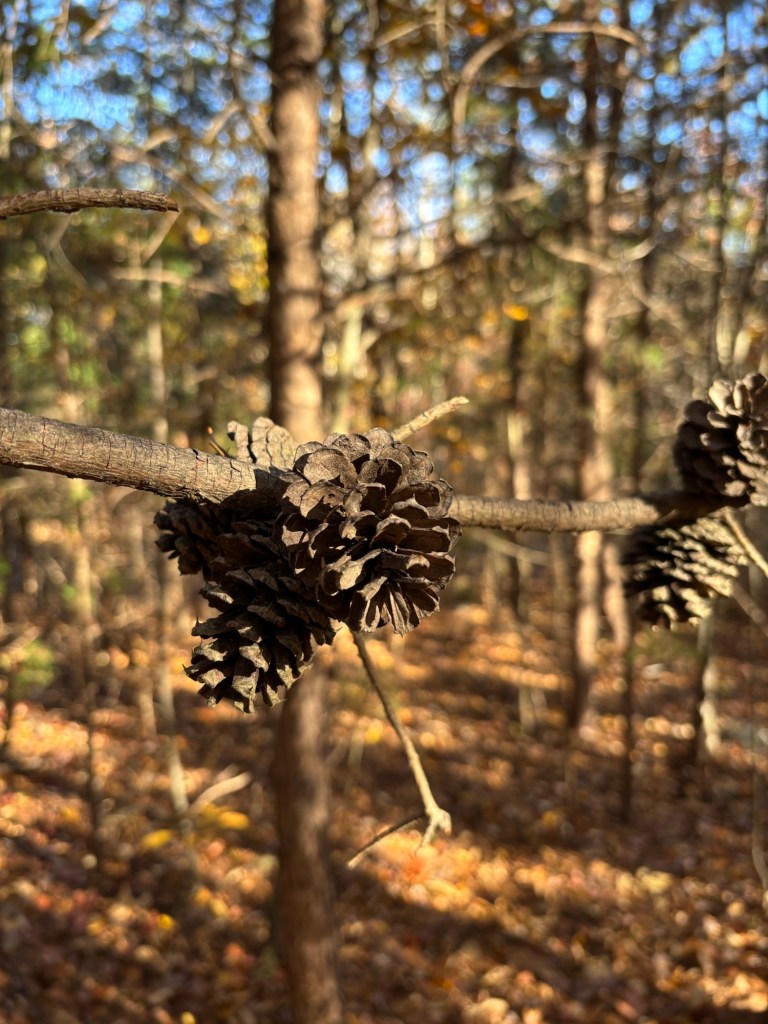
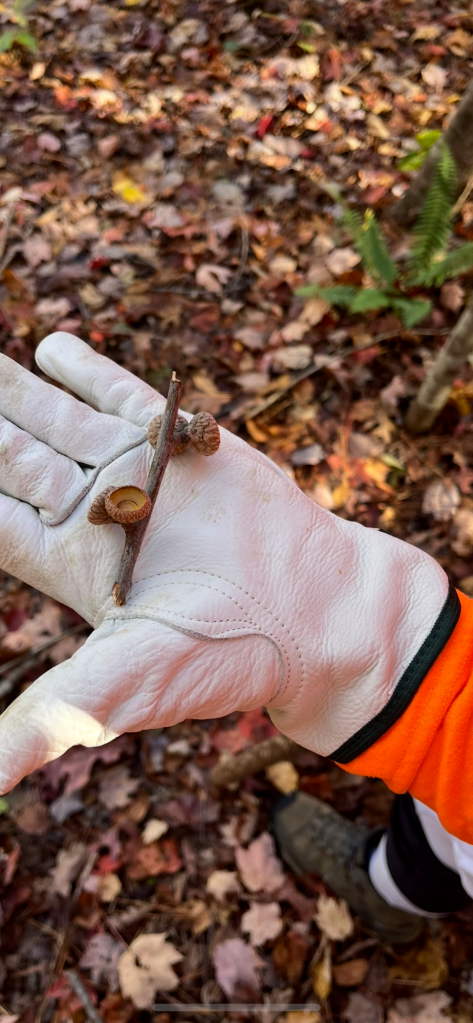
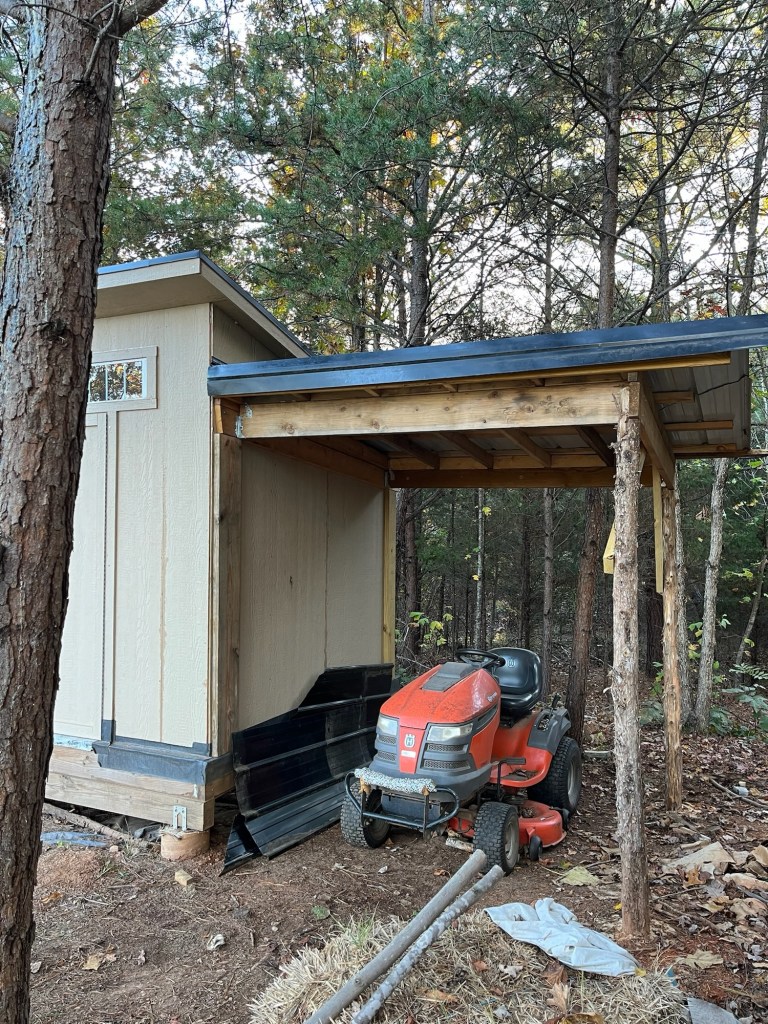
Angiospermae found in the Pawpaw Orchard. The single leafed plant in center is our third wild orchid we’ve found at SAFF. It’s called Aplectrum hyemale, Putty root or Adam and Eve orchid. We have only observed two so it is precious to us. Putty root comes from the sticky substance found in the root traditionally used to mend broken pottery. We hope to see it blooming this next year in May and June down at the bottom of North Trail. We found this old faded red Russula at the farm along with several puffballs on Friday. It’s just not the year for mushrooms at SAFF. We look forward to finding more next year. Pinus virginiana, Virginia pine, found all over SAFF. Quercus falcata, southern red oak, found along Three Pine Gully. The acorns of the red oak take two years to mature. The cap is the cup like structure at the base of the nut. Squirrels, deer and birds rely on them as a key food source.The lean-to with the roof on! Yay!!! Thank you so much for your interest. We passed 5 thousand views. 🤗
Saint Andrews Forest Farm Blog
Is this your new site? Log in to activate admin features and dismiss this message

 St Andrews Forest Farm