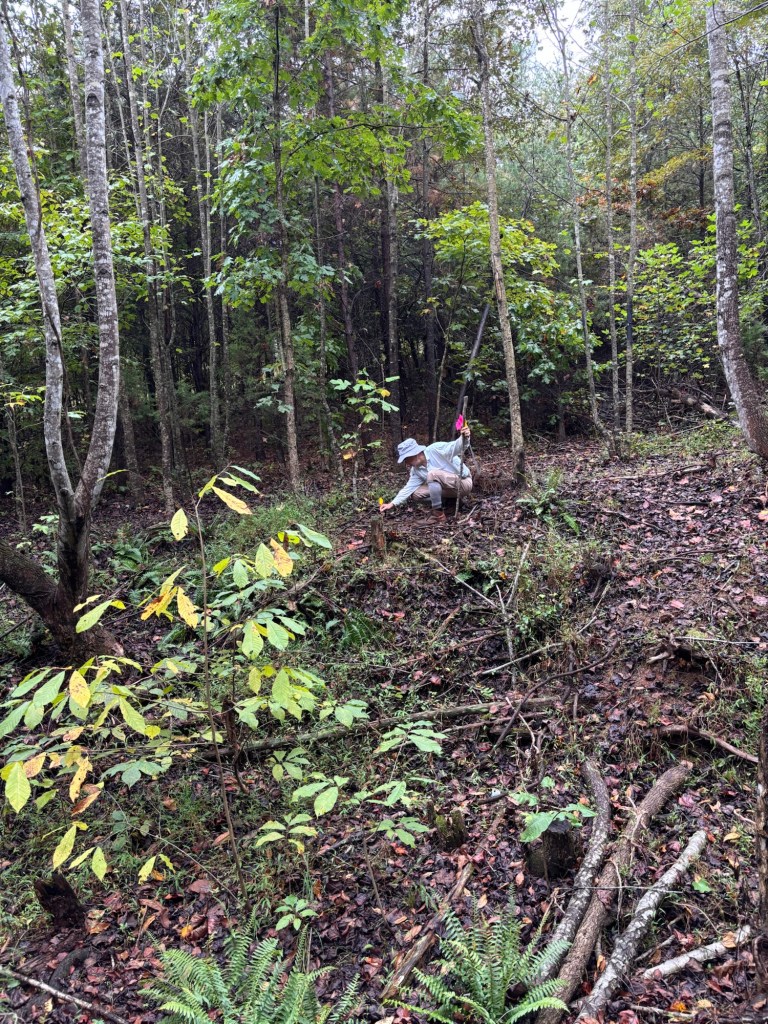
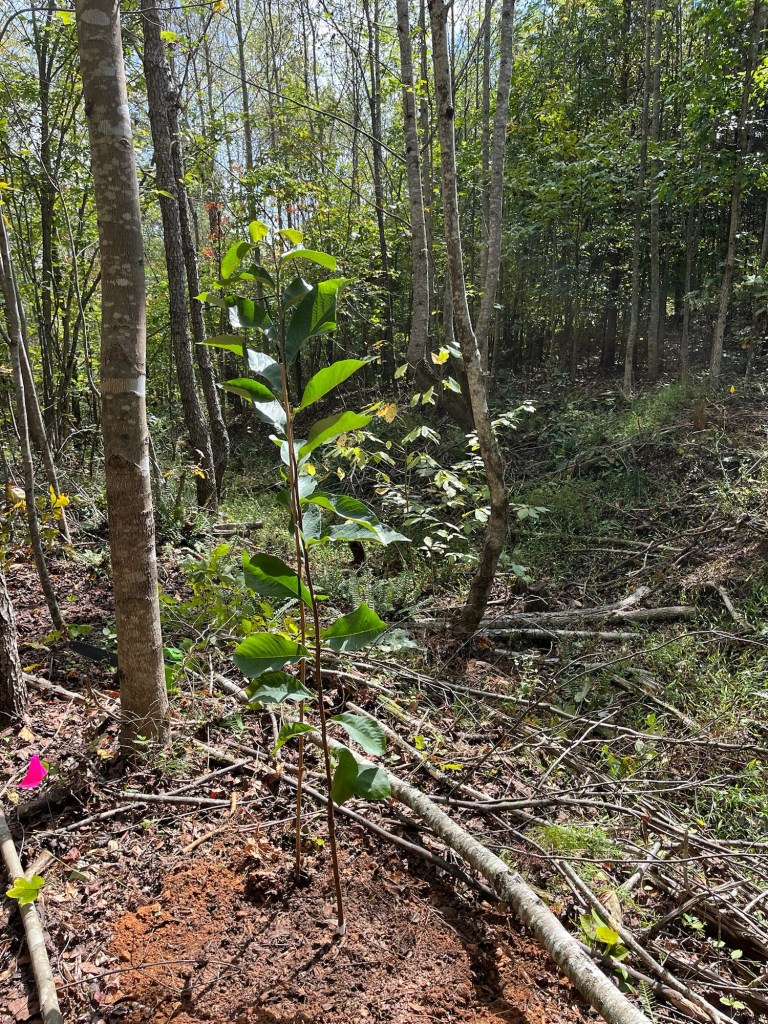
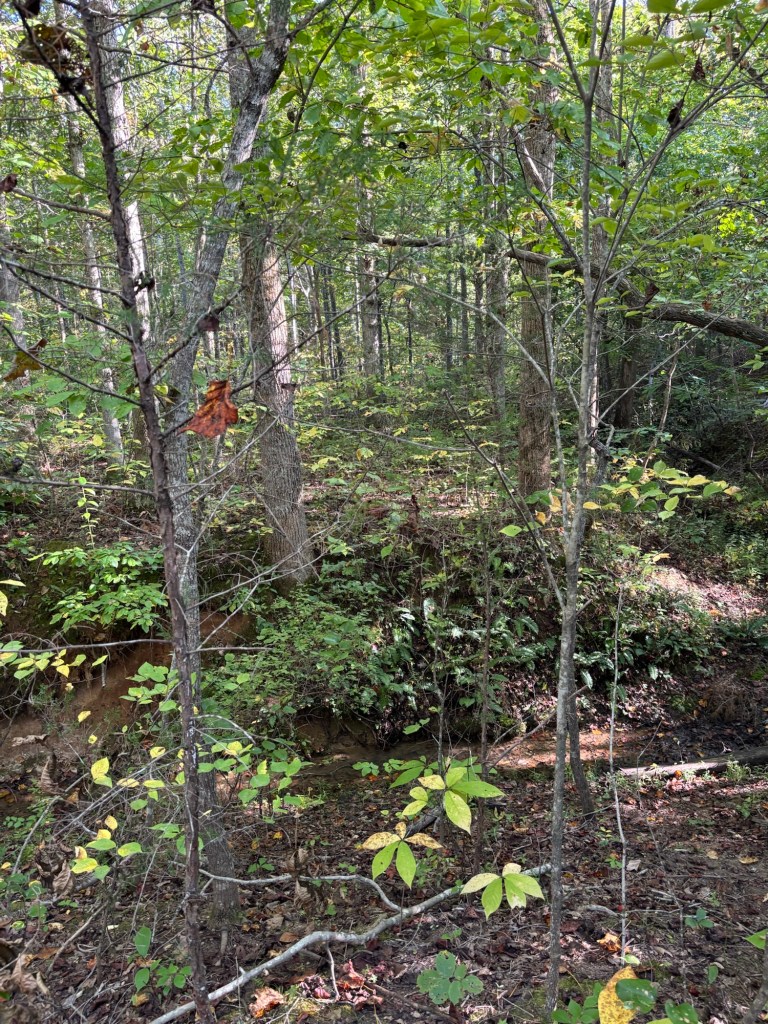
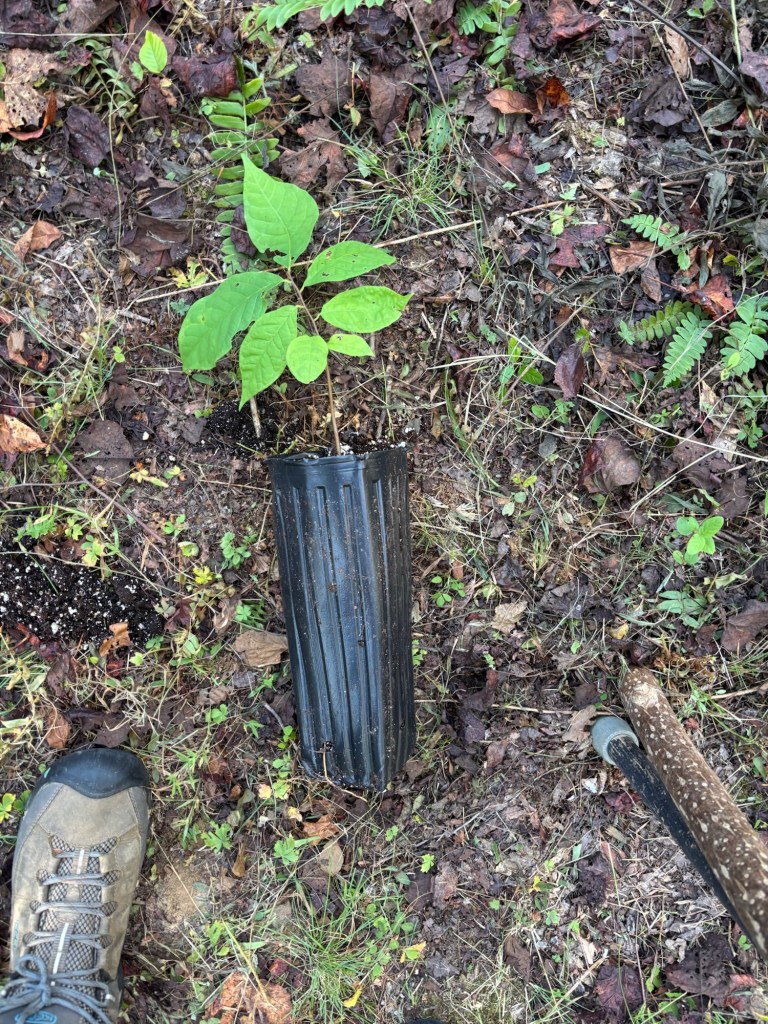
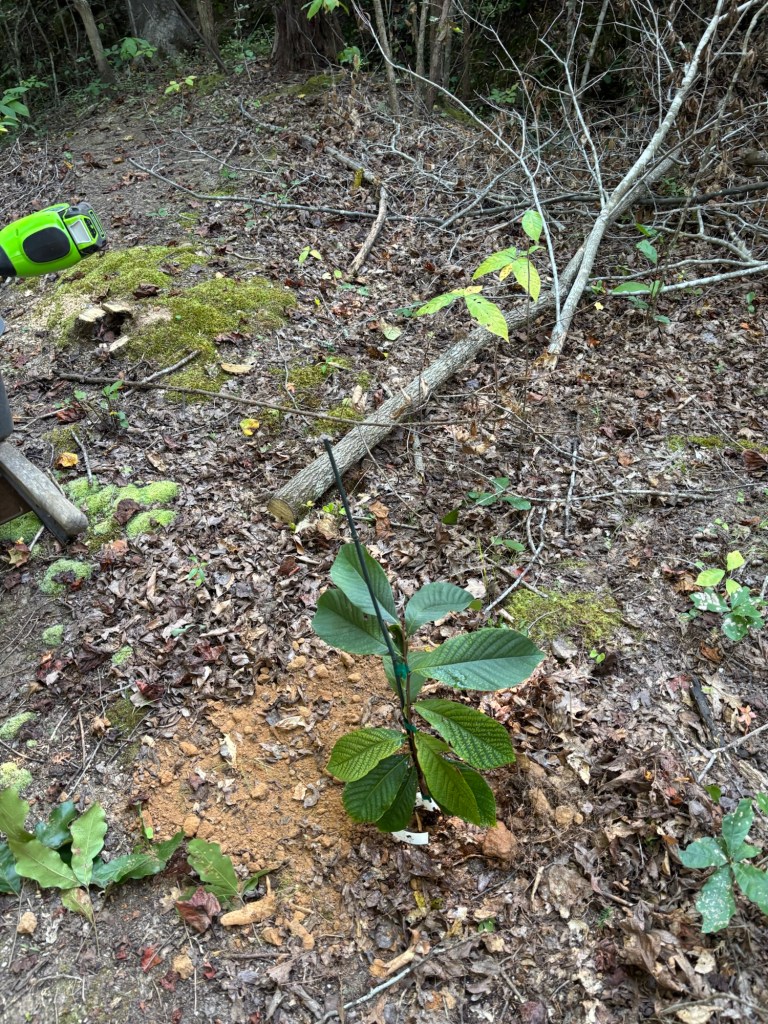
Asimina triloba: Chris placing a yellow flag on our native Rockfish River pawpaw seedling just planted on the south gully in Dan’s Folly alongside one small patch of St Andrews Forest Farm pawpaw natives which are below Chris in the gully with the yellowing leaves. They are some of the first trees to go dormant for winter. We think these may be clones. It’s a group of 6 with some good sun but no flowers or fruiting yet. We hope the new dna within these just planted seedlings will help wake them up.
We finished planting the seedling pawpaws with a full 100 in the ground so far this year! It was a big project. Besides our seedlings that we harvested from both our foraged fruit along our drive to the farm at Rockfish River and from Edible Landscaping’s cultivated pawpaws, we also planted a few of our own cultivars. We added Allegheny, Kentucky State University Chappell, Rappahanock and Mango to our existing Shenandoah that we planted last fall. We are waiting for our first white fleshed pawpaw seedling to arrive from Perry Pawpaws in Michigan. They said they’ll ship in October. It’s an Al Horn cultivar (taste has notes of pineapple and coconut) and we will place it in the Pawpaw Orchard at the bottom of North Trail. They also said it should be about 2 feet tall which is pretty big for pawpaws to not be in the ground yet. The tap root on the pawpaws like to go deep quickly. I can’t wait to save it from its pot and get it planted.
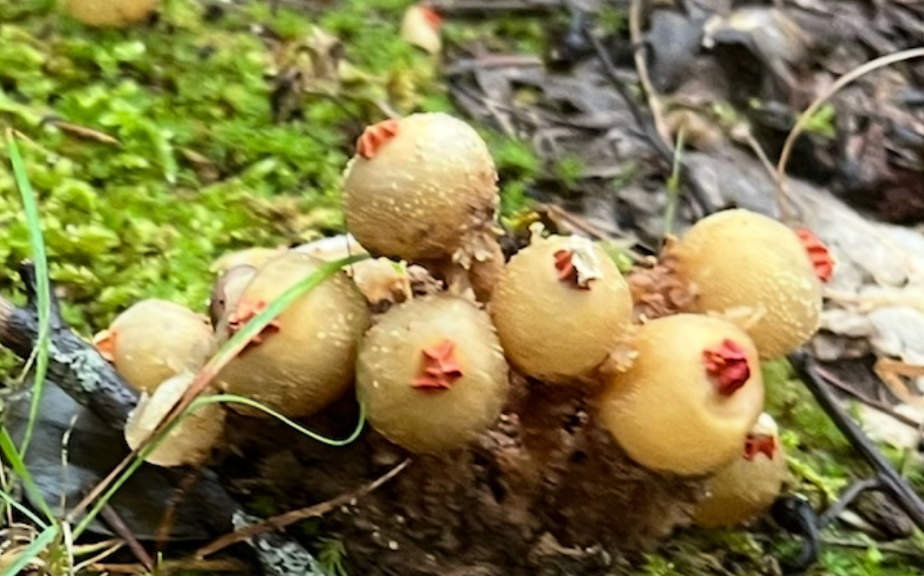
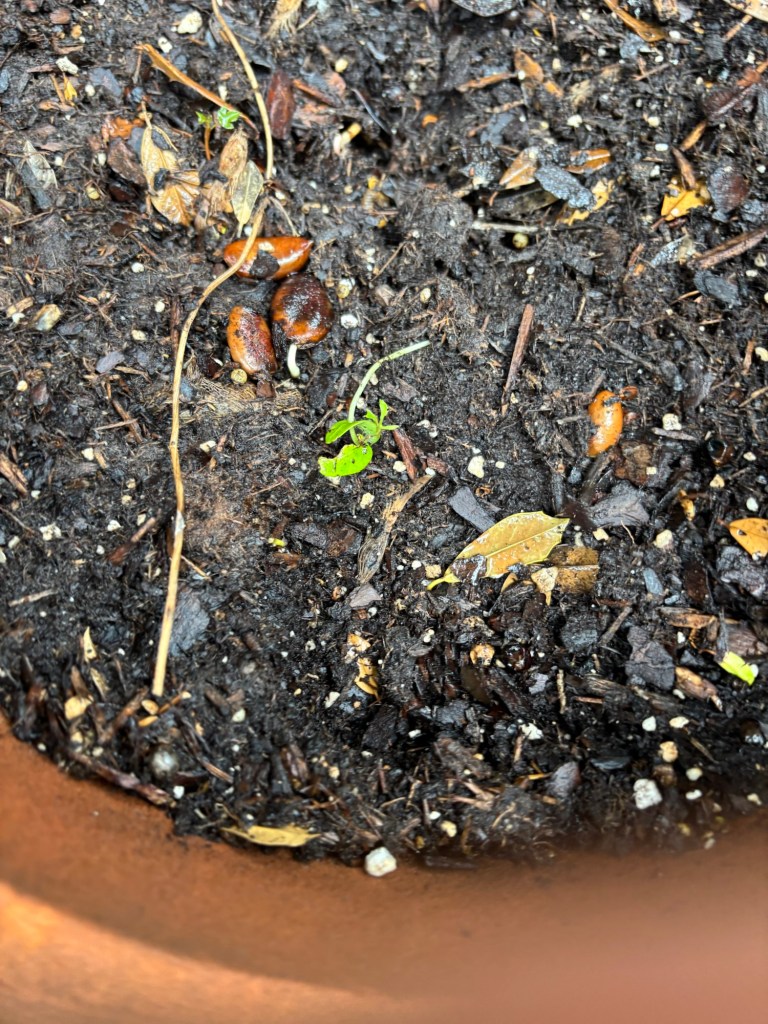
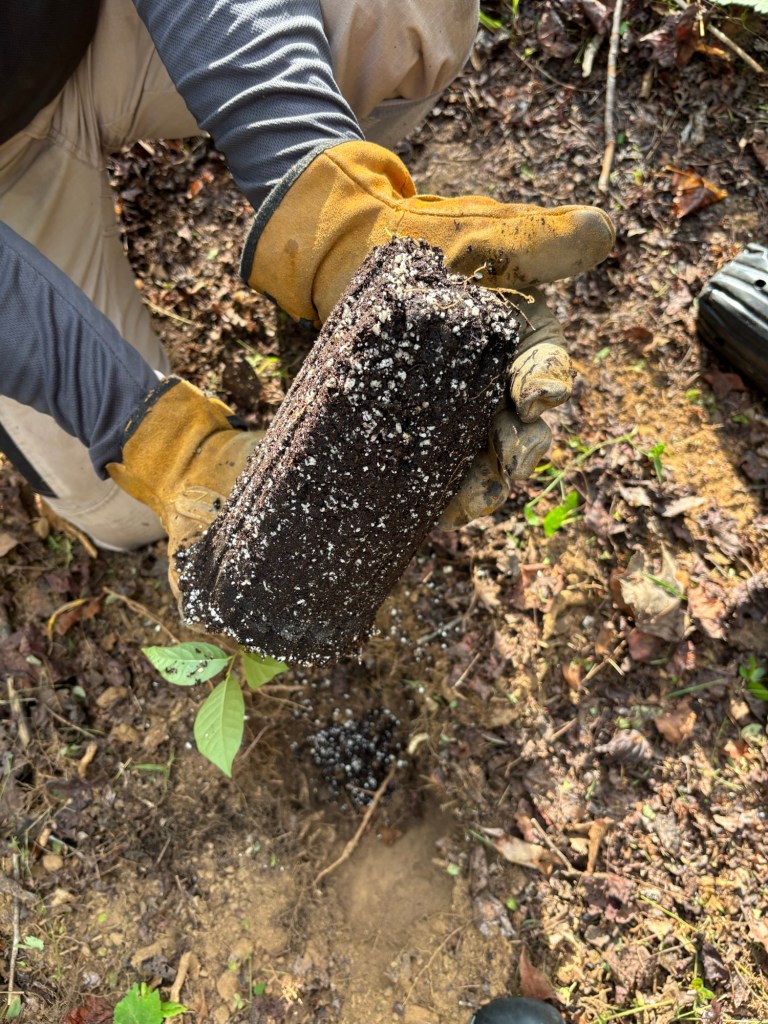
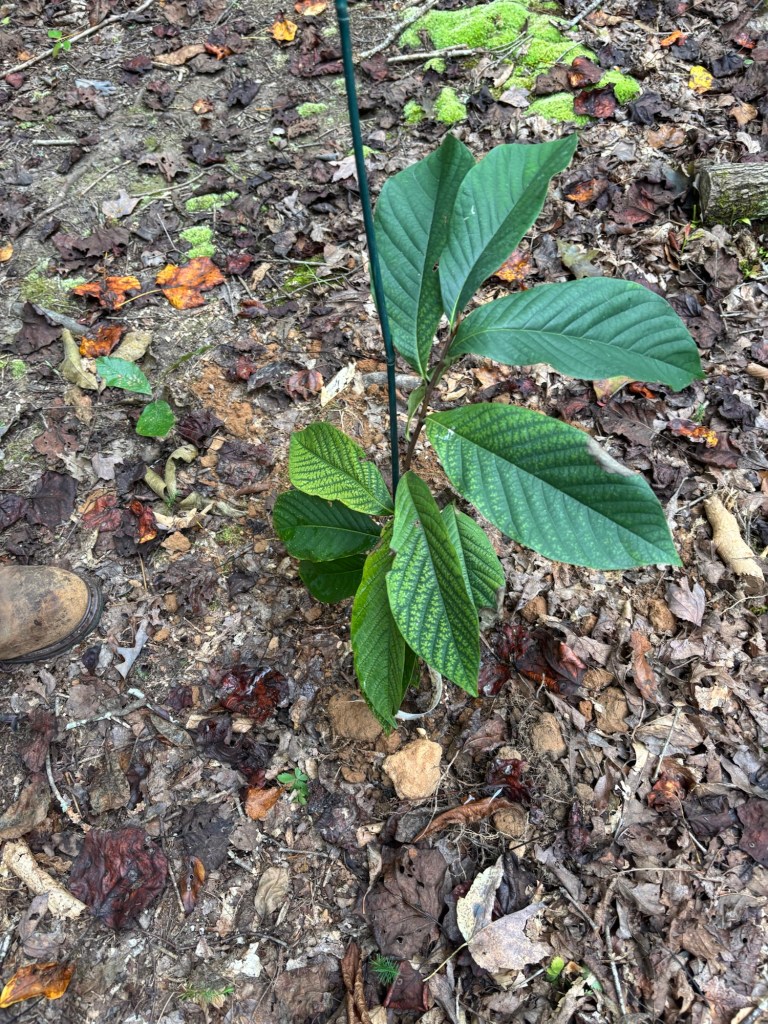
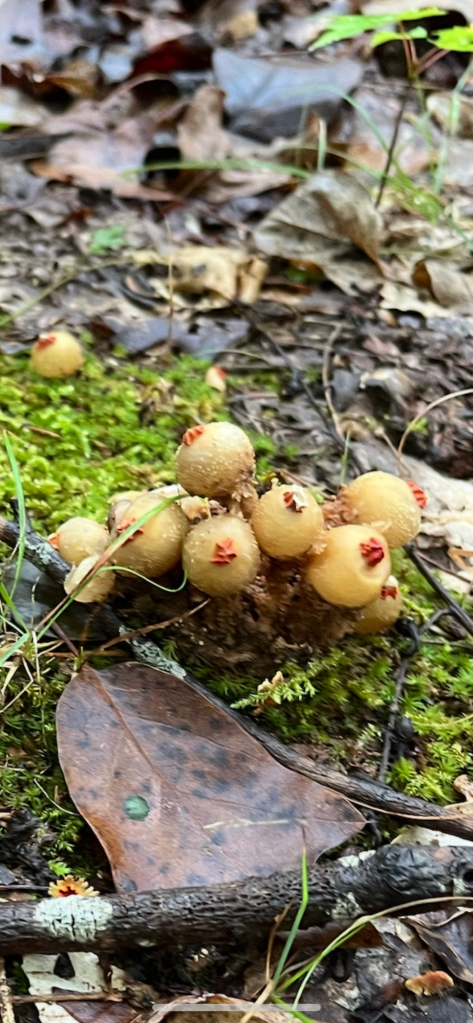
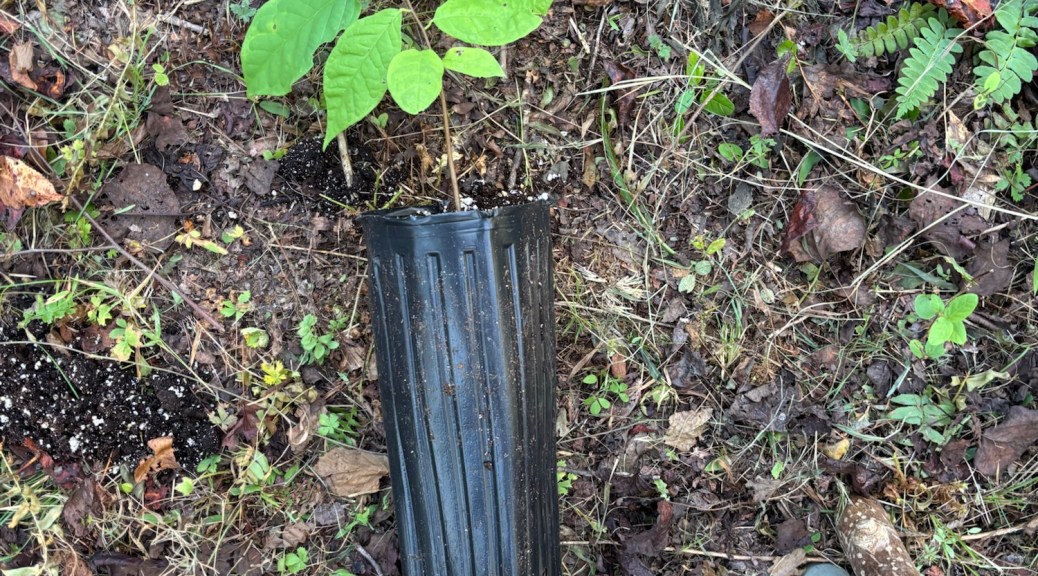
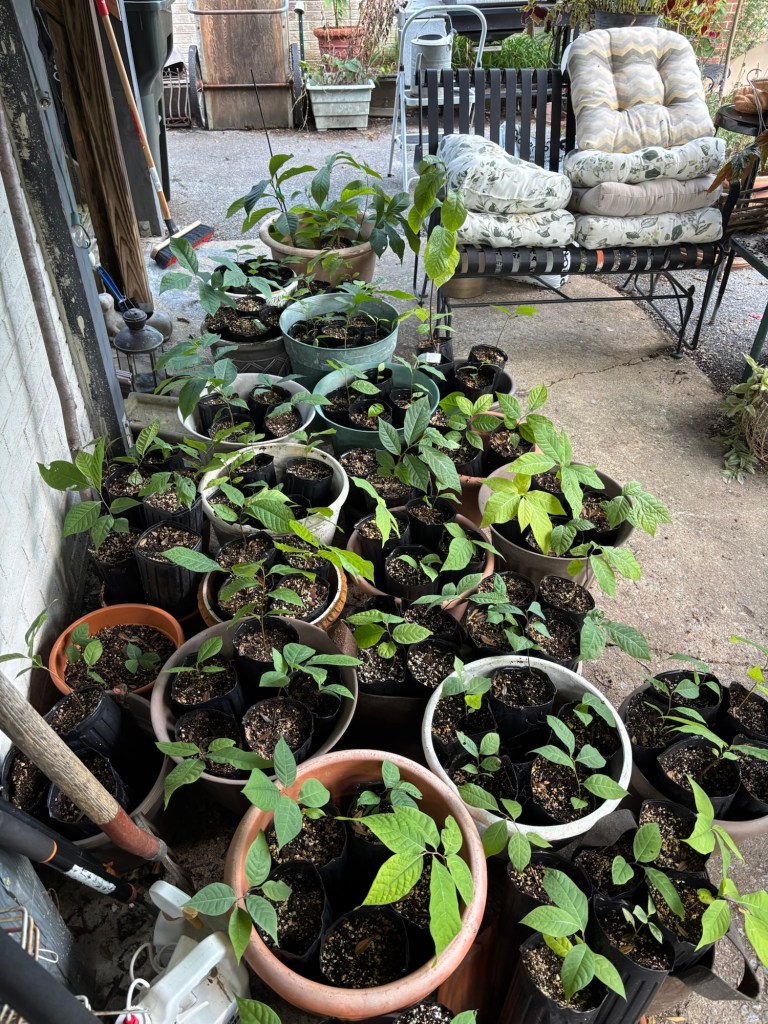
These brown seeds are the pawpaw seeds that you see sprouting the tiny green leaves. The white you see is the root. By the time you see anything on top, that root has shot 8 or so inches down. They like a lot of room. We put our seedlings in 12 inch deep tree pots to accommodate this long taproot. Some of our seedlings had roots growing from the bottom of the pot when we planted them at St Andrews Forest Farm after just a few months since the seed sprouted in June and planted in September—so just 3 months! Asimina triloba: Rappahanock pawpaw cultivar planted yesterday at Fern Trail near the south gully. We have been on the lookout for more of Neal Peterson’s pawpaw cultivars named after Native American Rivers. This Rappahanock is described as sweet, refreshing with a clear simple flavor and creamy banana custard consistency with notes of mango or melon. It joins the Shenandoah and Allegheny in the SAFF pawpaw orchard. We hope to add Tallahatchie and Susquehanna to them within the next few years. As well as Potomac and Wabash cultivars when we find them. Besides adding new dna, these cultivars will be useful once we have the seedlings producing pawpaws and see which ones aren’t delicious. We will make cuttings from the cultivars and graft them to the native seedlings and have productive harvests with a proven known variety. We will wait 7 years for the seedlings to produce. The cultivars usually produce within 4 years.Asimina triloba: Allegheny cultivar happily planted on the Pawpaw Peninsula just across from the large St Andrews Forest Farm native wild patch with hundreds of pawpaws. It could be as many as 400 small trees down there and they may all be clones. We’ve been giving them light and feeding them with minimal flowering and zero fruit. We got some more rain last week which was much needed and appreciated! The pawpaws are thirsty trees, albeit usually drought resistant with their long taproot. We hope the increased rain will bring on the mushrooms. Calestoma ravenelii, stalked puffballs, found all over SAFF. We observed it growing out of moss yesterday. It has a mycorrhizal relationship with oaks and other hardwood trees. It grows in rich moist but well drained deciduous forests. It can grow alone but we see it mainly in groups.
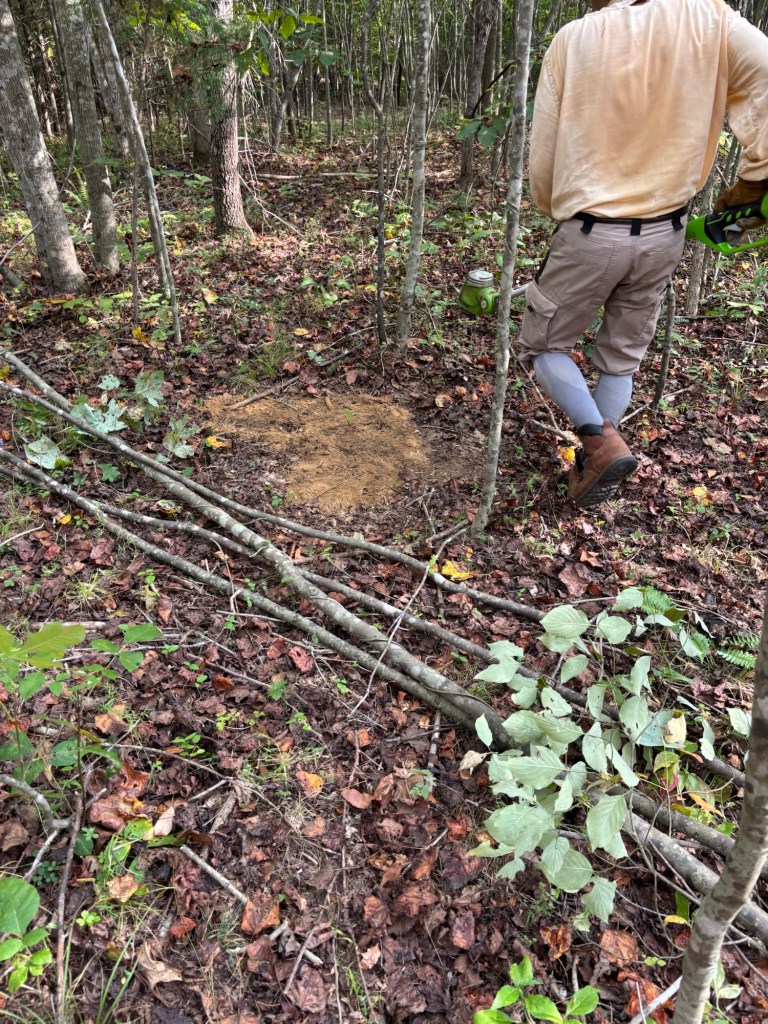
Just 21 more to plant after going out every day and planting 9 or so at a time. The orchard has really turned out nicely at the bottom of North Trail. The earth is red silty loam which is pawpaws (Asimina triloba) preferred soil.
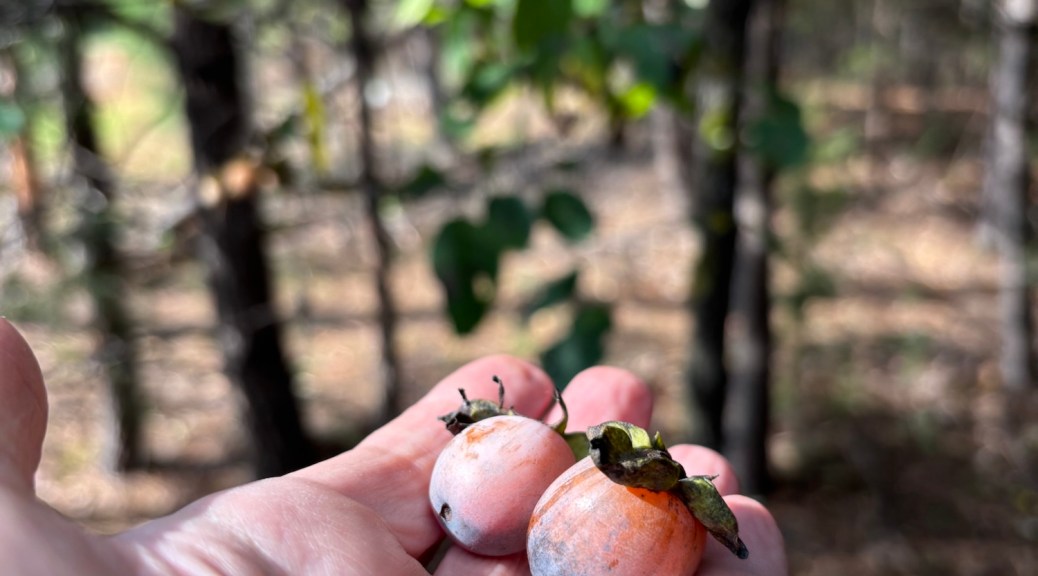
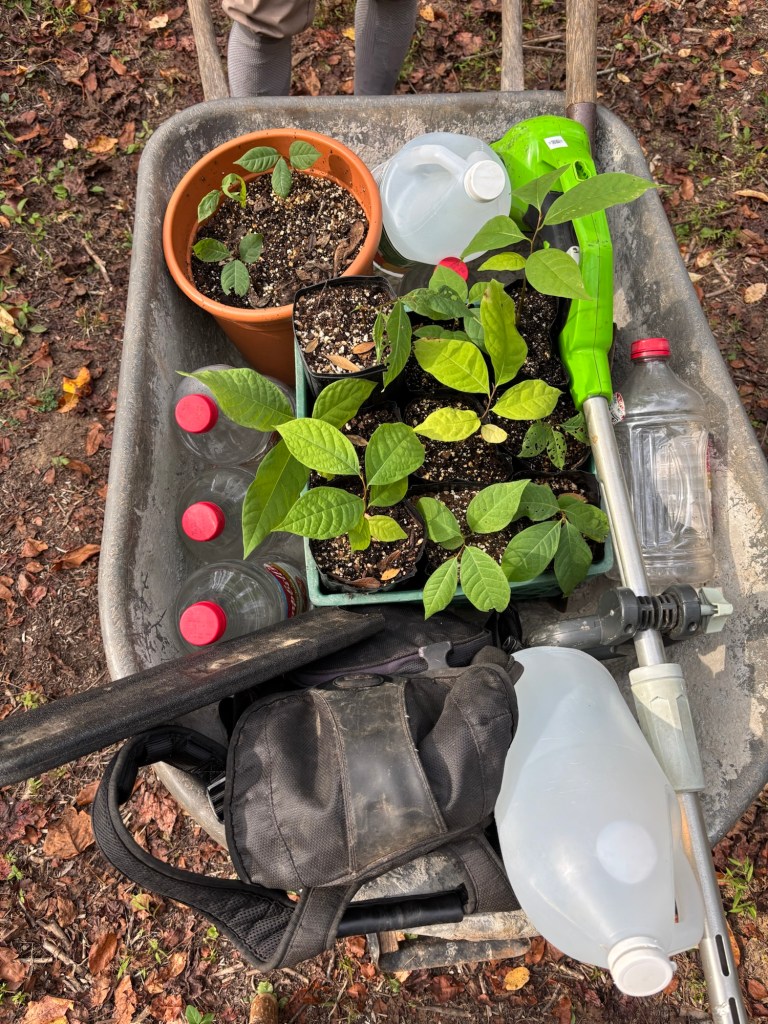
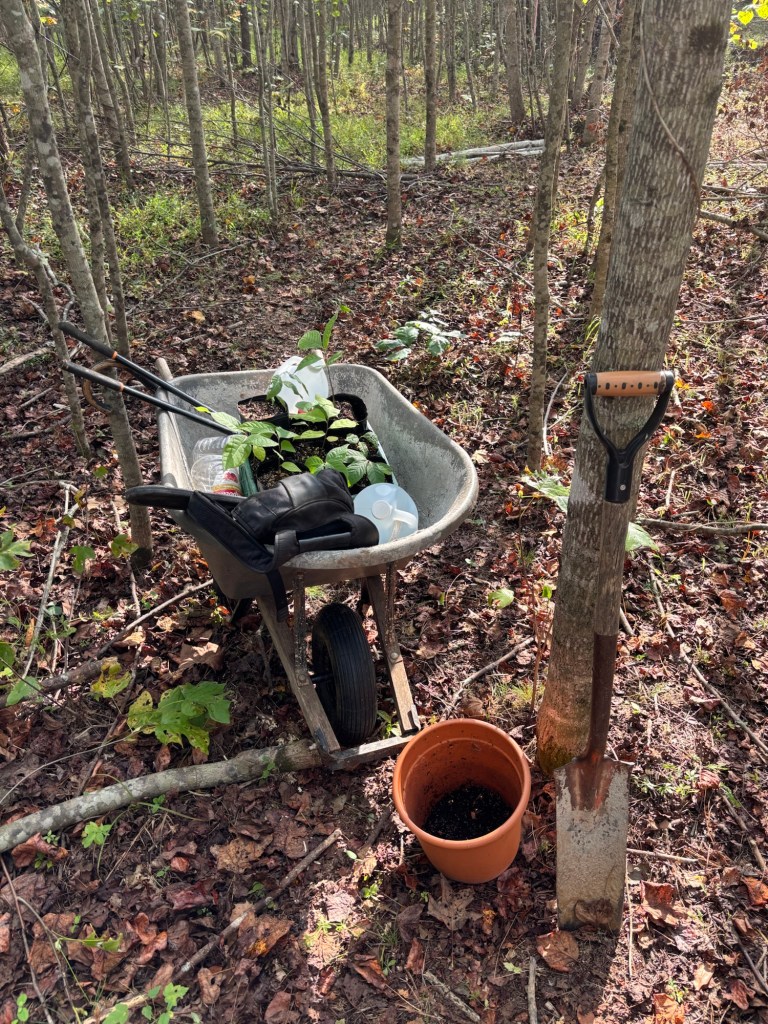
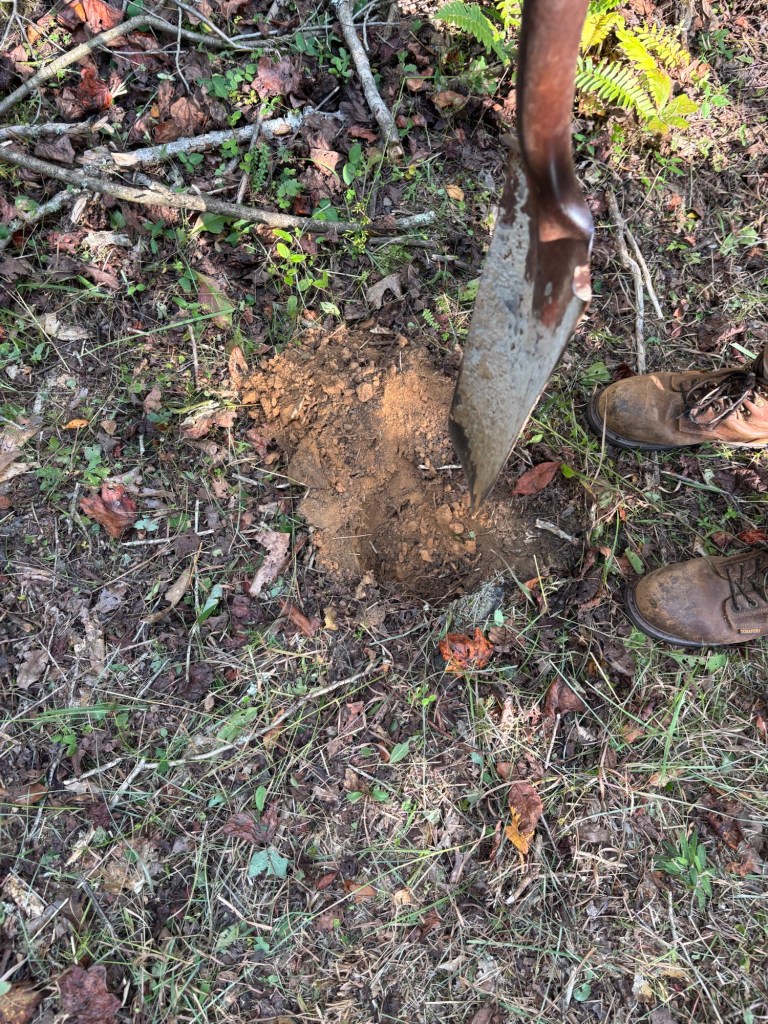
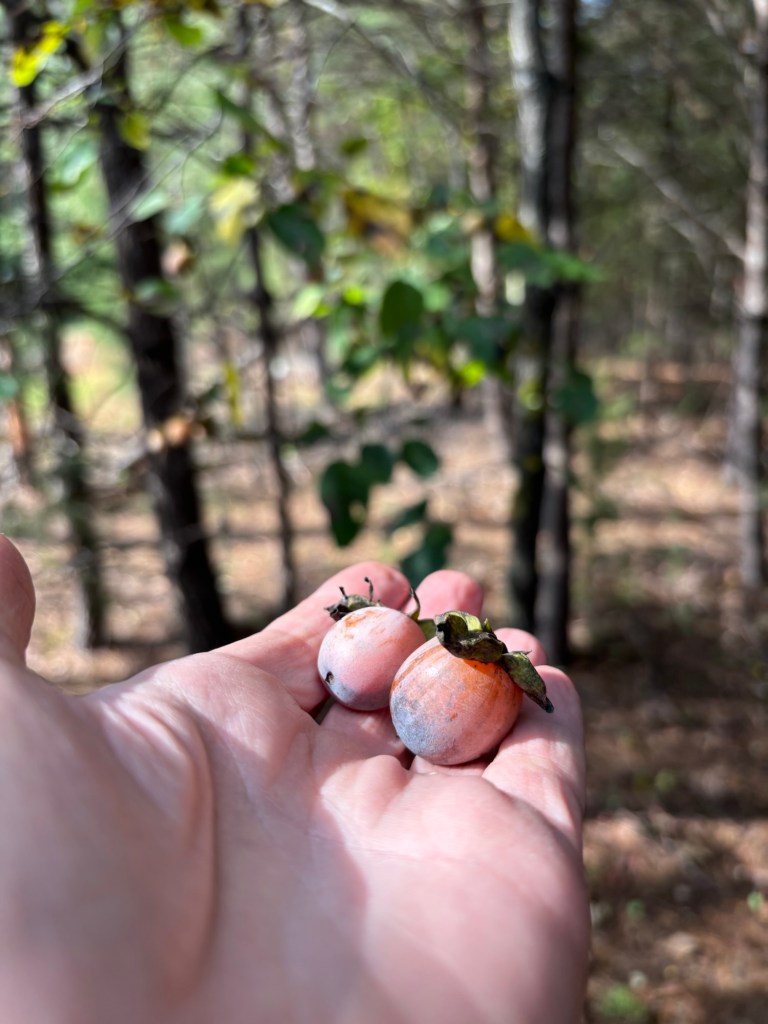
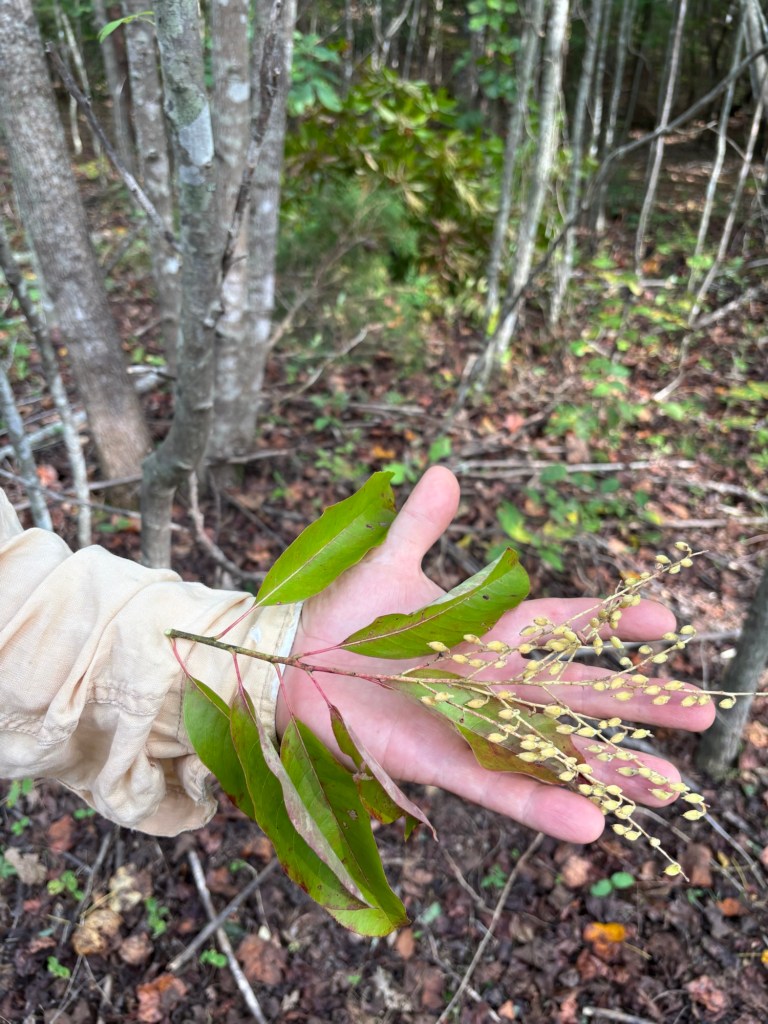
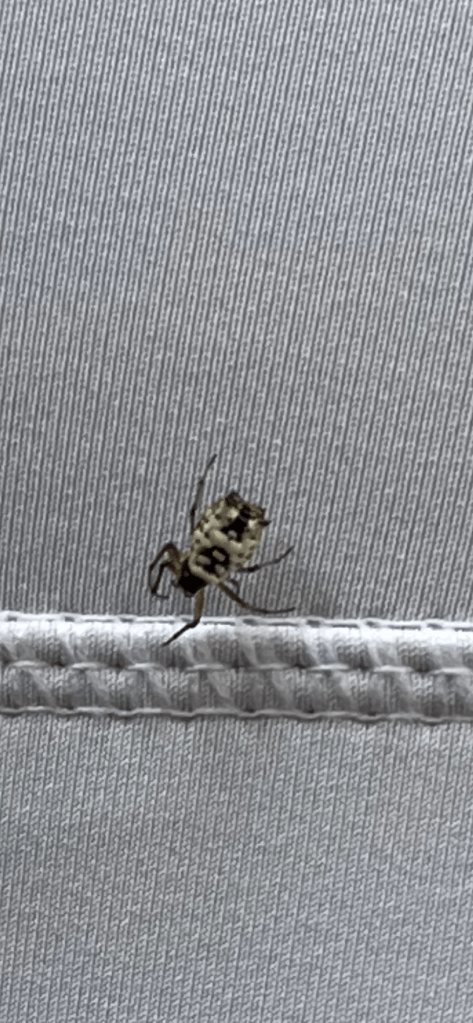
Our wheel barrow full of the supplies we used to clear spaces and plant our pawpaw seedlings.Red silty loam near the wet weather gully at the bottom of North Trail. Tasty persimmon to snack on finally. A branch of Oxydendrum arboreum, Sourwood tree. Micrathena mitrata, White micrathena, is a species of orb weaver. They build their webs across the trails.
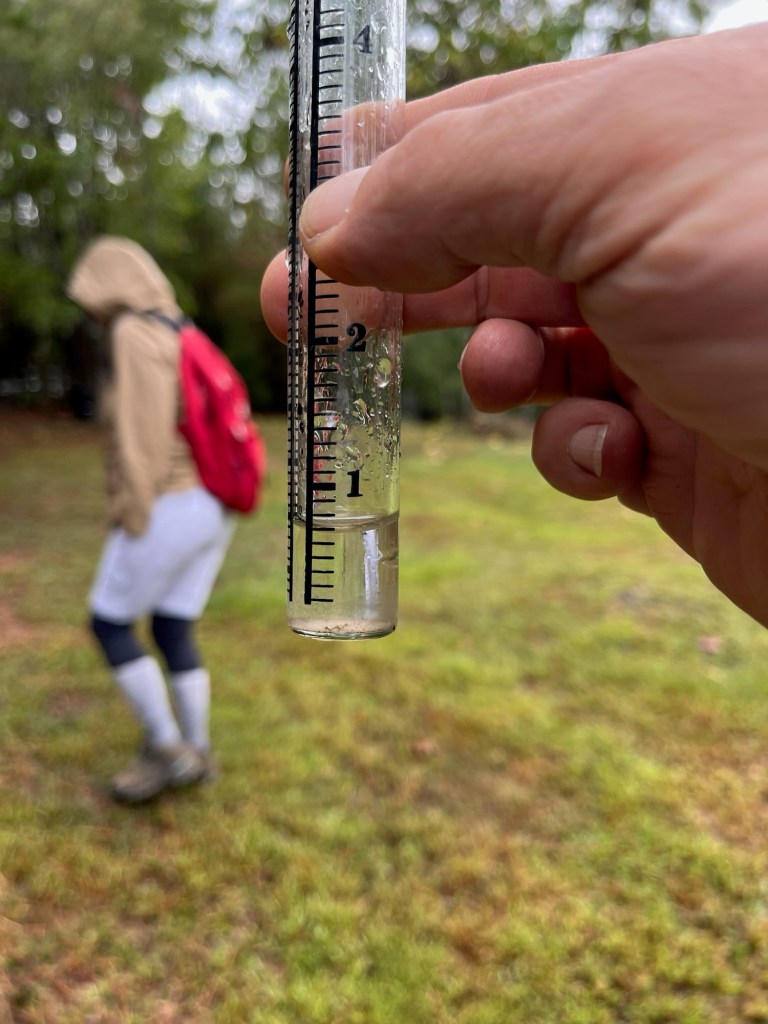
Finally got a good soaking rain at the farm. The ground has softened making planting much easier.
So far, we have planted 42 pawpaw trees. Yesterday we planted two more seedlings from Rockfish River natives in the main orchard and seven from select Edible Landscaping fruit. We are a bit less than halfway done but we are happy to get more in the ground later today while the earth is still soft from the recent rain. We checked on all of the previously planted seedlings —and a couple had been dug up a bit but the roots appeared intact so we replaced the dirt and watered them back in and hope for the best.
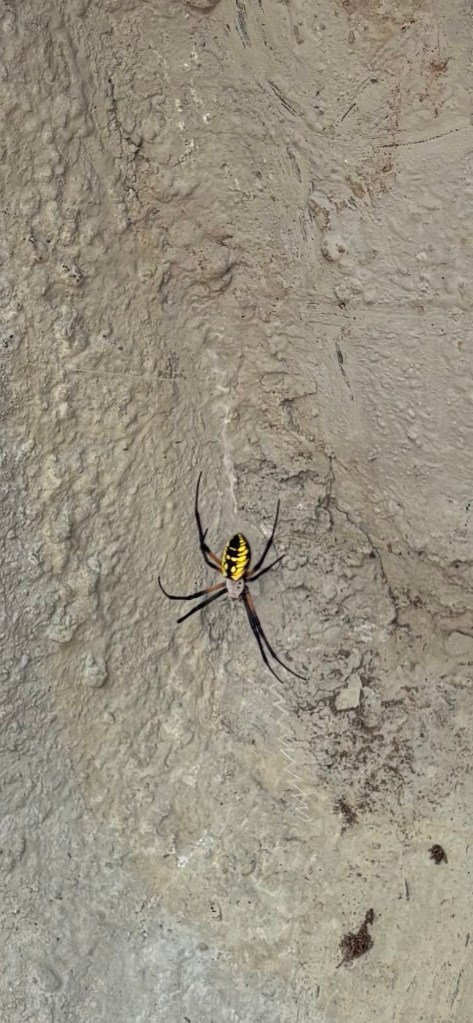
Nine seedlings we planted yesterday in the orchard at the bottom of North Trail. Persimmons getting closer to ripeness at the top near the driveway. Taken from the Pawpaw Peninsula looking towards the main Pawpaw patch of SAFF wild native trees. They are going dormant for the winter. One of our seedlings. They look so pleased to be in the ground finally. Because of the draught, we were going to wait until spring to plant them but are glad we opted to get them in the ground now. They look awesome.Argiope aurantia, Yellow garden spider, found up top next to shed.
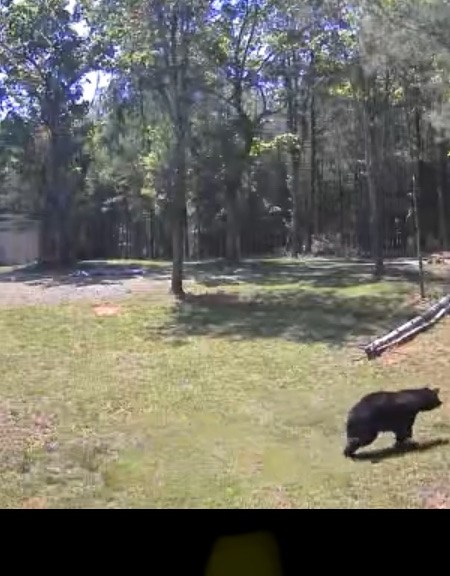
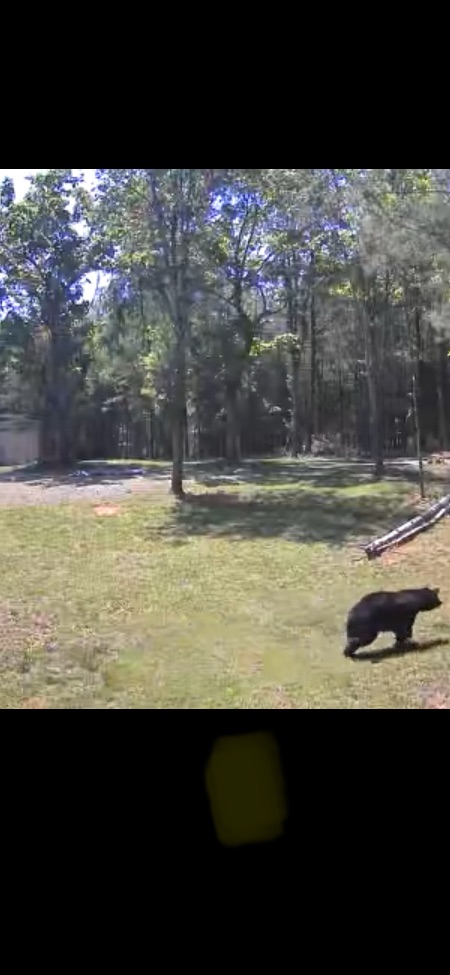
A third year female black bear runs up to the clearing from North Trail on May 20, 2025.
We had seen bear scat multiple times all around the farm and last May it was confirmed when she ran in front of our farm cam.
We had just moved the camera to a new position and were able to capture a three year female black bear on video as she ran pretty fast through the main clearing up top.
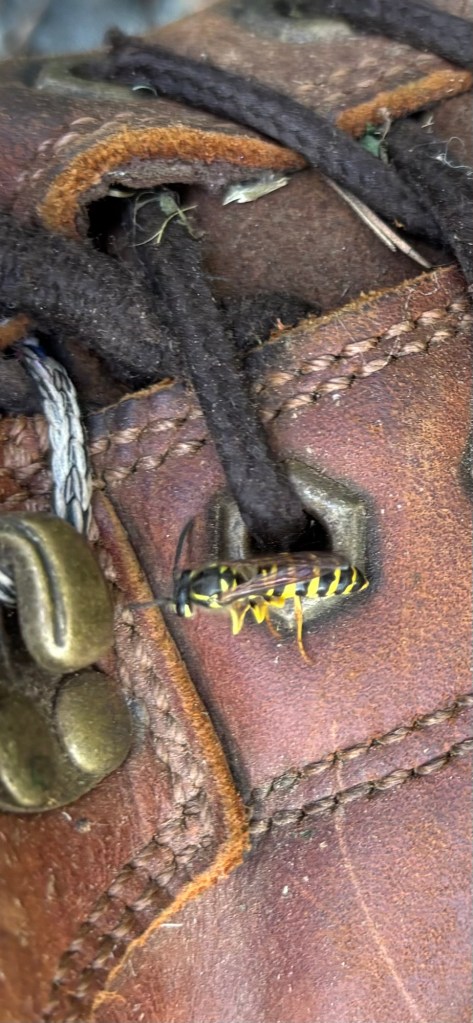
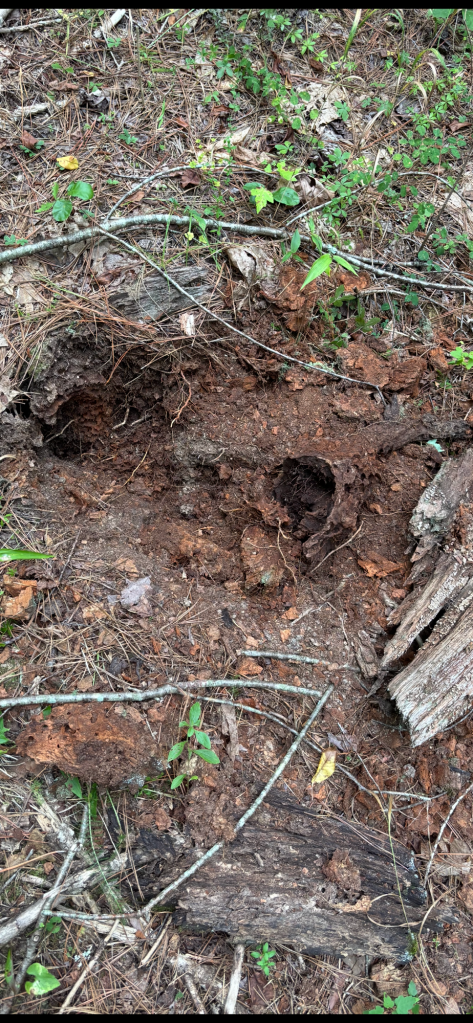
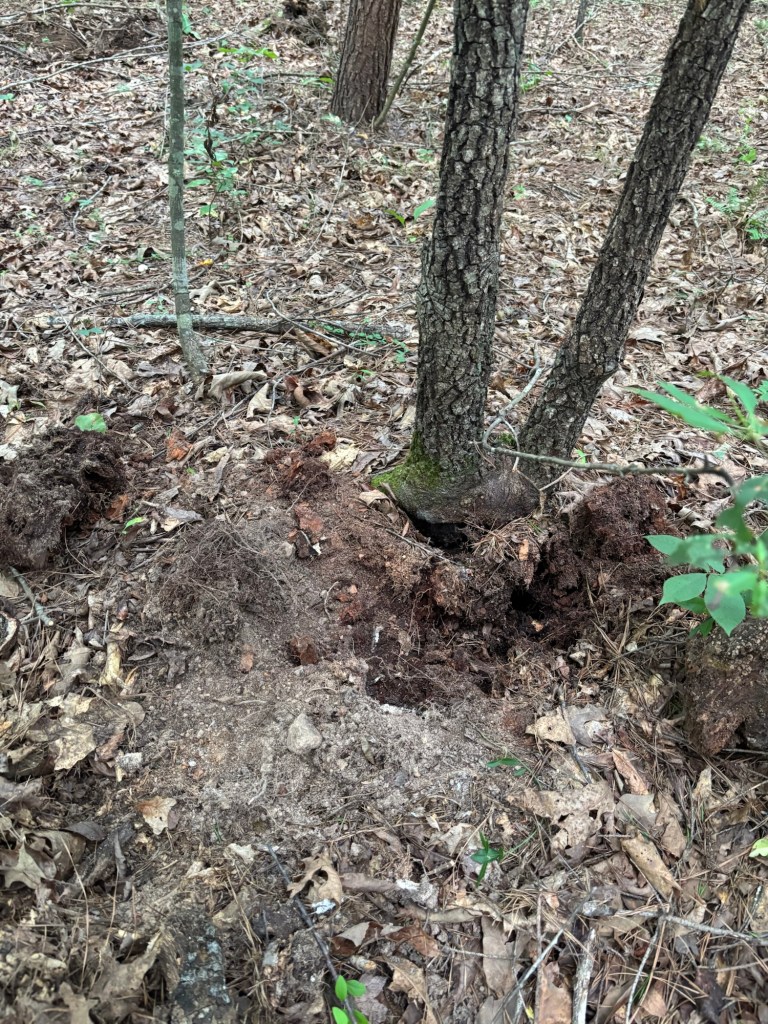
We continue to see evidence of bear activity and we imagine it is she. This past month we began noticing old tree stumps destroyed and large pieces of quartz turned over. We immediately suspected our bear was looking for insects to eat. The first we noted was in the spring along the back line on Chanterelle Hill Trail. A huge ant hill was dug up and excavated. Then about a month and a half ago, we saw all along the north property line she had dug up old stumps. At one we saw yellow jackets looking disturbed.
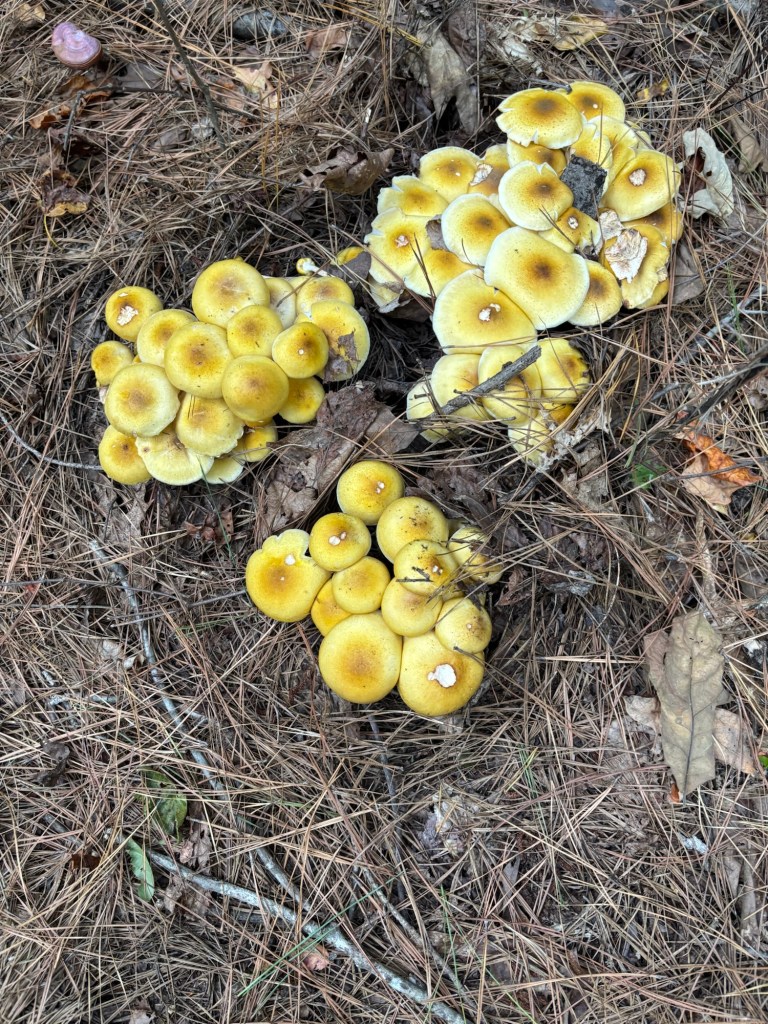
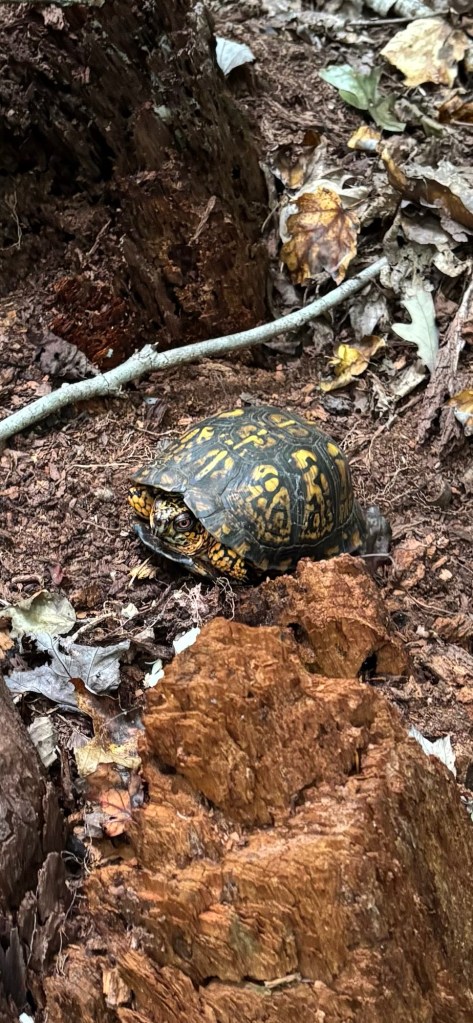
Vespula maculifrons, Eastern yellow jackets. This creature is not to be messed with. I wonder if this was what our bear was running from through the top clearing. A stump disturbed by a young bear looking for termites or ants to eat along Amanita Way.Stump excavation along Northmost Trail. It was a hungry bear who worked hard to find everything she could to eat this summer in the forest. Just last week we found these honey mushrooms along Armillaria Way. Either the bear, deer or one of our Eastern box turtles, Terrapene carolina carolina, came along and ate it before we got back to collect them. Caught in the act! Our Eastern box turtle eating some mushrooms along the bottom creek on a stump that the bear had ransacked looking for bugs to eat.
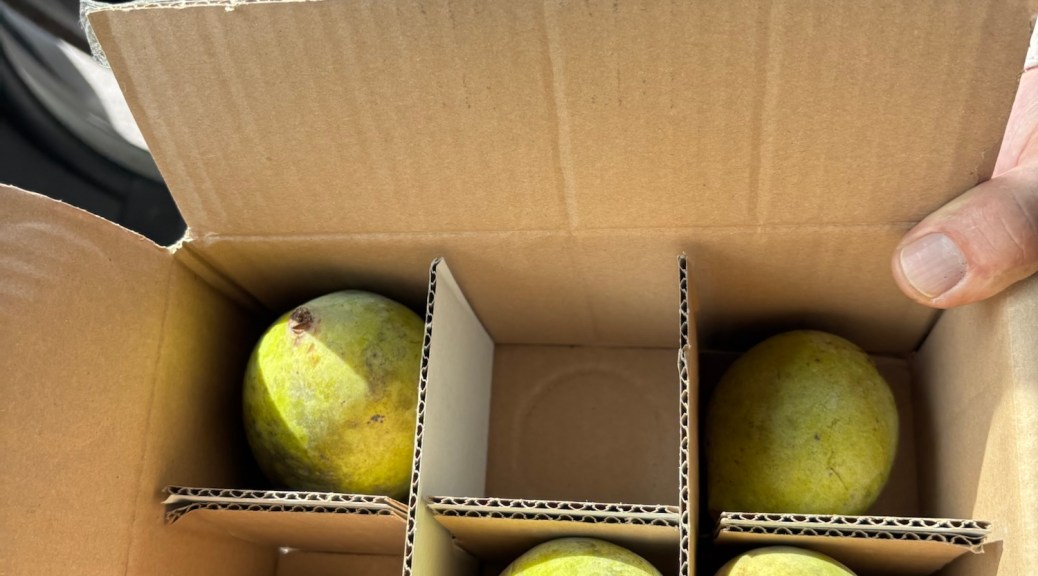
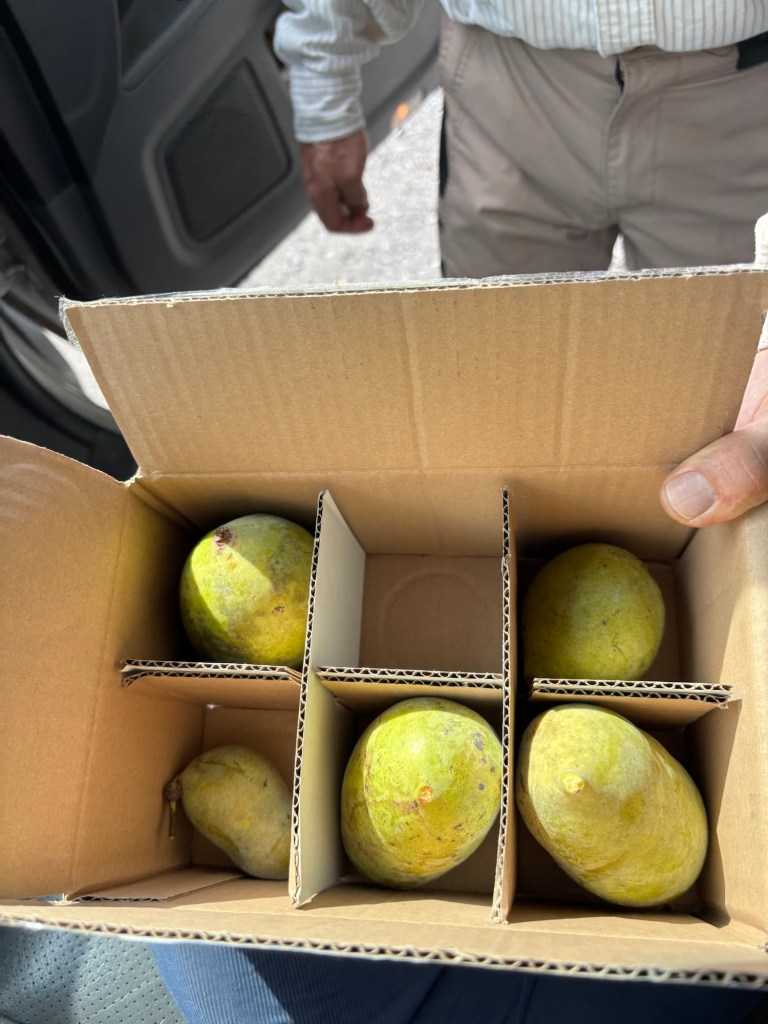
Pawpaws we foraged under Edible Landscaping’s Sunflower and Mango cultivars in Nelson County Virginia on Sunday.
We went out to the farm on Friday and Sunday to get as many pawpaws planted before the rain comes. Thunderstorms and rain are forecasted to get started late tonight and continue until Wednesday afternoon. We planted 17 on Friday: Five in the orchard (a Kentucky State University Chappell and 4 seedlings) and another five alongside the Shenandoah and select seedlings that we planted last year. We put a Mango cultivar and four seedlings we started from foraging. Then we planted 2 on the Pawpaw Peninsula (an Allegheny cultivar and Wild native seedling from a Rockfish River foraged pawpaw). After that we put two by the pawpaw patch at the bottom of Ridge Trail and another two on the left side of the large pawpaw grove. We walked up Ridge Trail and put another wild pawpaw seedling from Rockfish River foraging near the small colony of native pawpaws growing along the south wet weather gully.
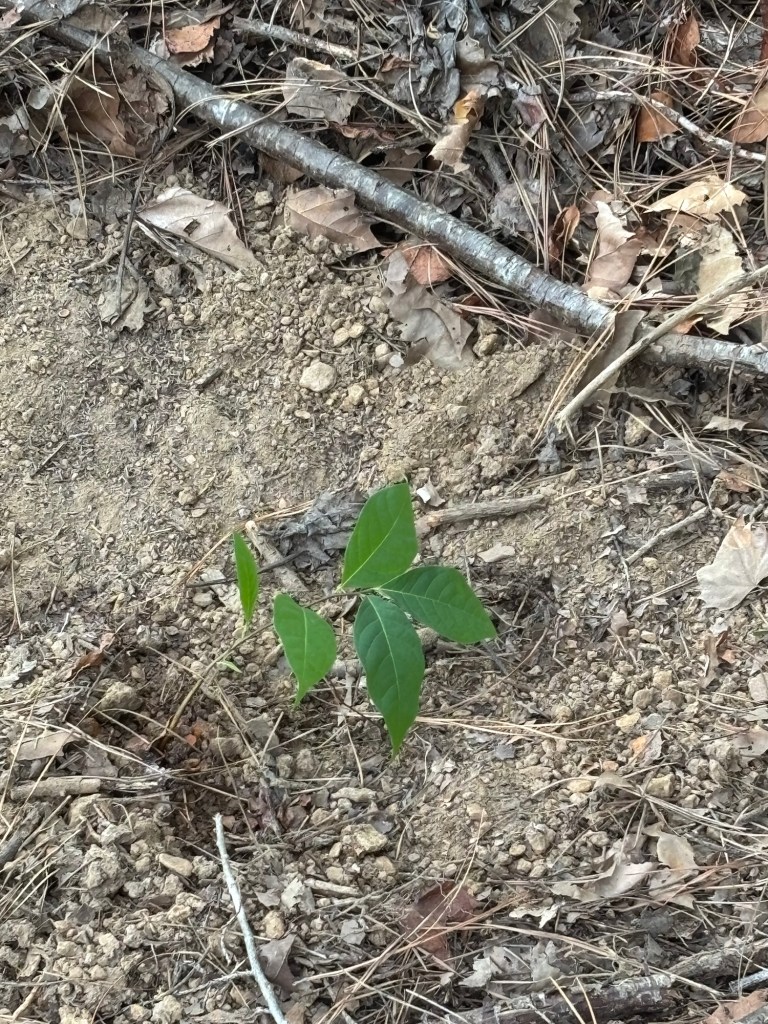
Wild native seedling planted up top.
We were exhausted after this. We had to carry water for the trees after planting in our packs, carry our equipment and the trees themselves all around the farm. It was hot and the ground was hard and dry for digging. Chris was battling each hole. (We are looking into finding a lightweight device to dig our holes, as in an auger.)
Allegheny pawpaw cultivar on the Pawpaw Peninsula with our SAFF native wild pawpaws. The wild ones are yellowing leaves and going dormant for winter since it has been so dry.
Then we went back out on Sunday to water what we’d planted Friday and put a few more in the ground. We planted 5 up top in the main clearing along the driveway and put two along the South Gully on Dan’s Folly. We put one more across next to a lone wild SAFF native pawpaw on Fern Trail. From there, we walked down the Gully and watered our select seedling planted a few days before. We were happy to see they all were still in the ground (last year, the deer ate them and pulled them out of the ground a day after we planted so we almost expected the same.) They were glowing in fact. They all appeared to be very happy in their new locations. We watered them some more.
We have another 80 or so to plant and hope to get out to the farm again soon to get a few more in the ground.
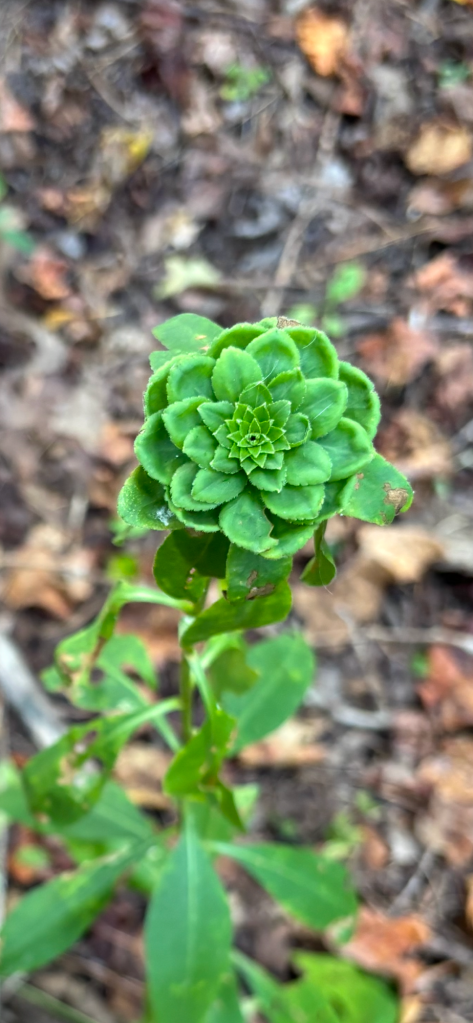
We found this lone flower along Mary Banning Trail. We aren’t certain but are leaning towards a type of Spurge. We will continue to observe it in order to further identify.
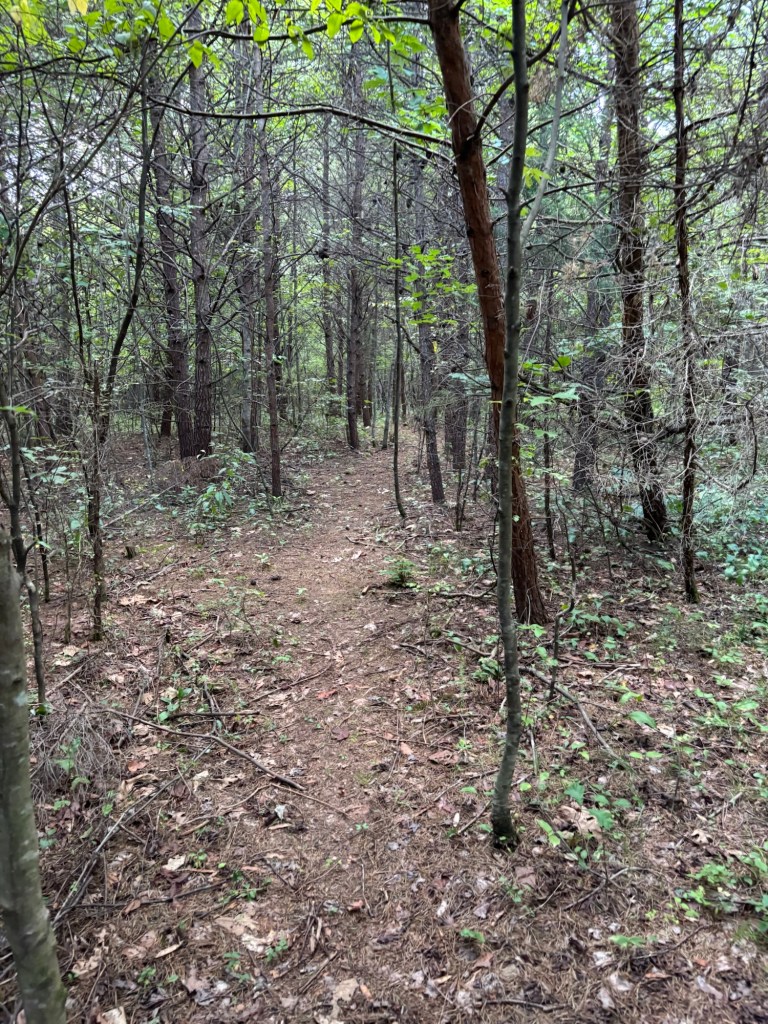
Orchard Trail taken in September in the lowlands at St Andrews Forest Farm
It’s been far too long since we have reported on events at the farm. Cooler temperatures and a few trees with bright yellow and red leaves remind us fall is here and also that we could use a good soaking rain to soften the crisp dryness of the ground and plants. Our pawpaw seedlings are waiting, with a few cultivars we collected from Edible Landscaping in Nelson County Virginia, to be planted out at the farm when a rain is expected next, we will plant them just before.
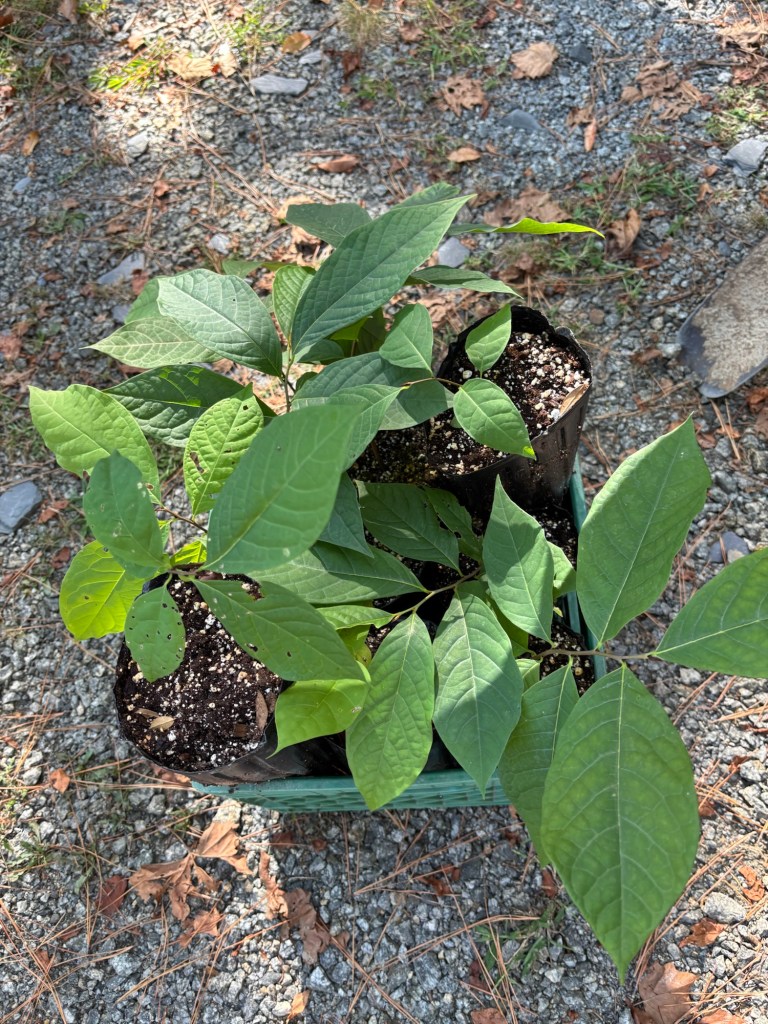
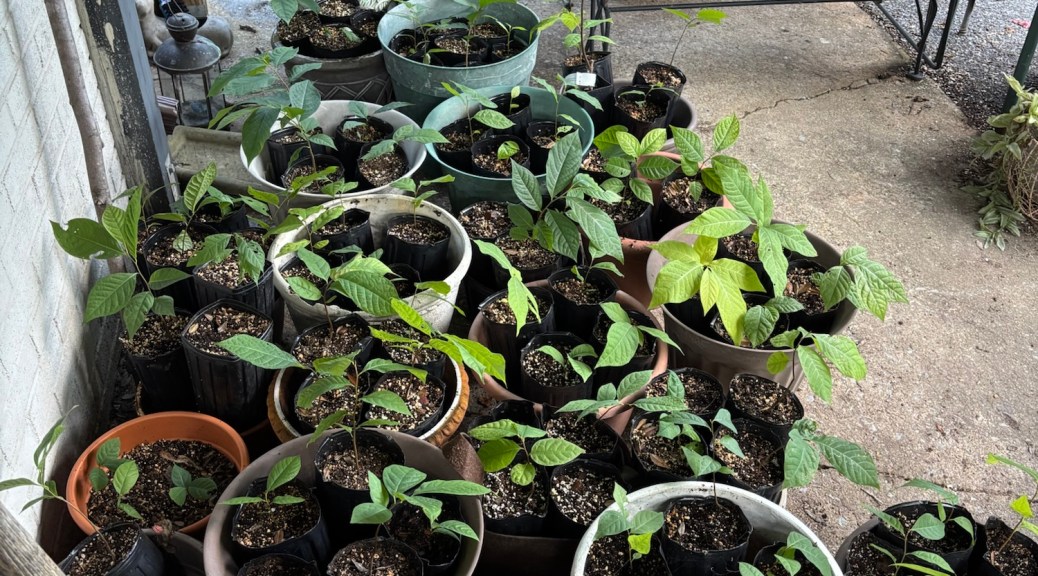
Over 100 pawpaw seedlings and a few grafts of Mango, Allegheny, KSU Chappell cultivars. We also have quite a few select seedlings from Edible Landscaping.
We hope to plant some around the existent wild native pawpaw patches that we have. These trees are responding well to increased light as we cut back understory trees competing for sunlight under the giant oaks maples and beech. They have greened this year and produced more branches and leaves. We only had a few flowers and one tree that set fruit. This dropped after the second week even though we had good rains in the spring. We are feeding the native trees compost from our home bin. With the addition of the new dna from the seedlings and grafted cultivars we hope to plant within the next few weeks, we hope to see increased growth and fruiting.
We have been busy planning our orchard and structures, collecting seeds from native and select varieties, trailblazing to give us more access to SAFF. And we have also been mushroom hunting of course! We have added a lean-to on to our shed for the tractor.
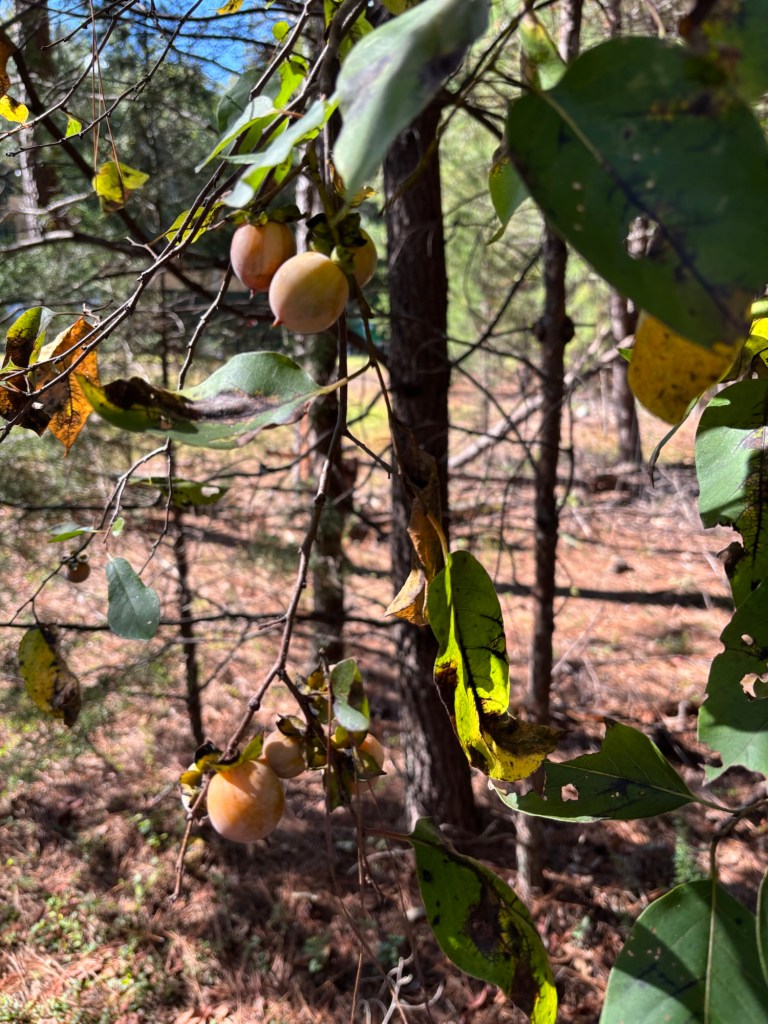
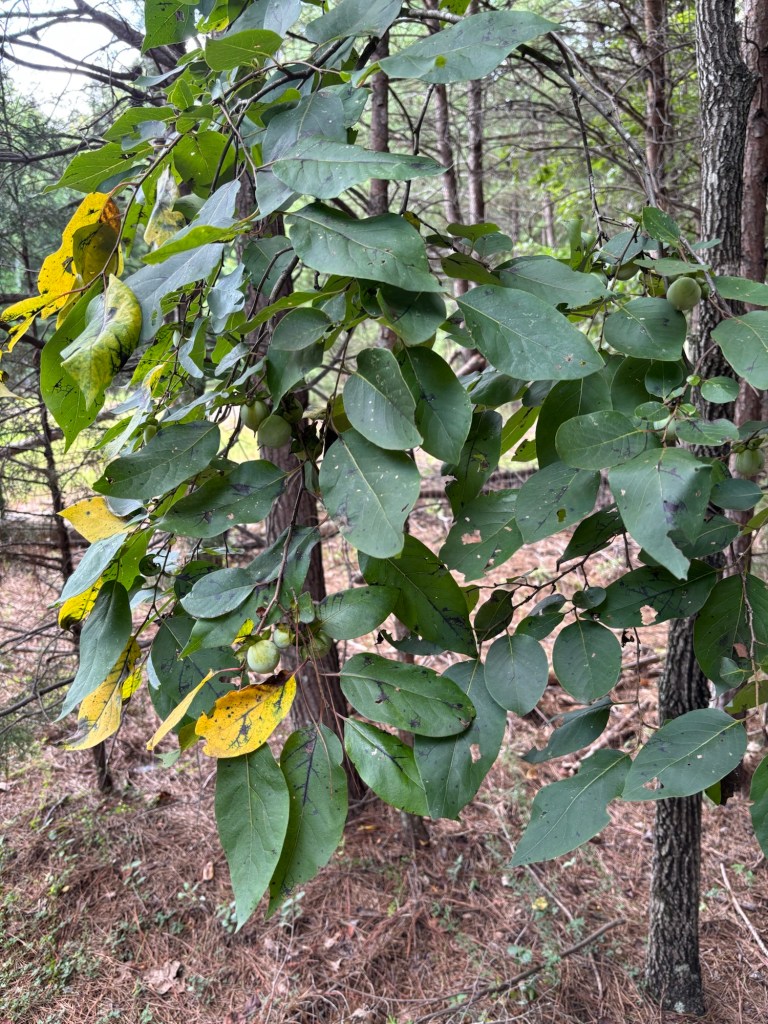
American Persimmon trees up top fruiting nicely in the forest.
Saint Andrews Forest Farm Blog
Is this your new site? Log in to activate admin features and dismiss this message
 St Andrews Forest Farm