It was a blustery and sunny 42 degrees Fahrenheit day in Buckingham County for our walk around the farm. We came over to measure and mark some boards for cutting back at home with the table saw. We are still working on fire blocking the shed and we checked the new trail cam. We finally got some images and video. We are very pleased. So far, a large gray tabby cat, a squirrel and what could be a possum have been captured by the new trail camera. We will download this later tonight and add footage to a post.
We began our walk up top by the driveway where we saw mushrooms. A few Russula and Laccaria. They were old and had frozen and thawed several times at least. Nevertheless, we stared at them and wanted to know more. We also found some as yet unidentified little brown mushrooms by the large loblollies in the clearing up top. There were hundreds of them. They ranged from quarter size to silver dollar size and were gilled, brown spored and slimy on the cap. The sliminess may be from the freezing weather overnight. They smelled faintly of mushroom and had no taste with a spit test.
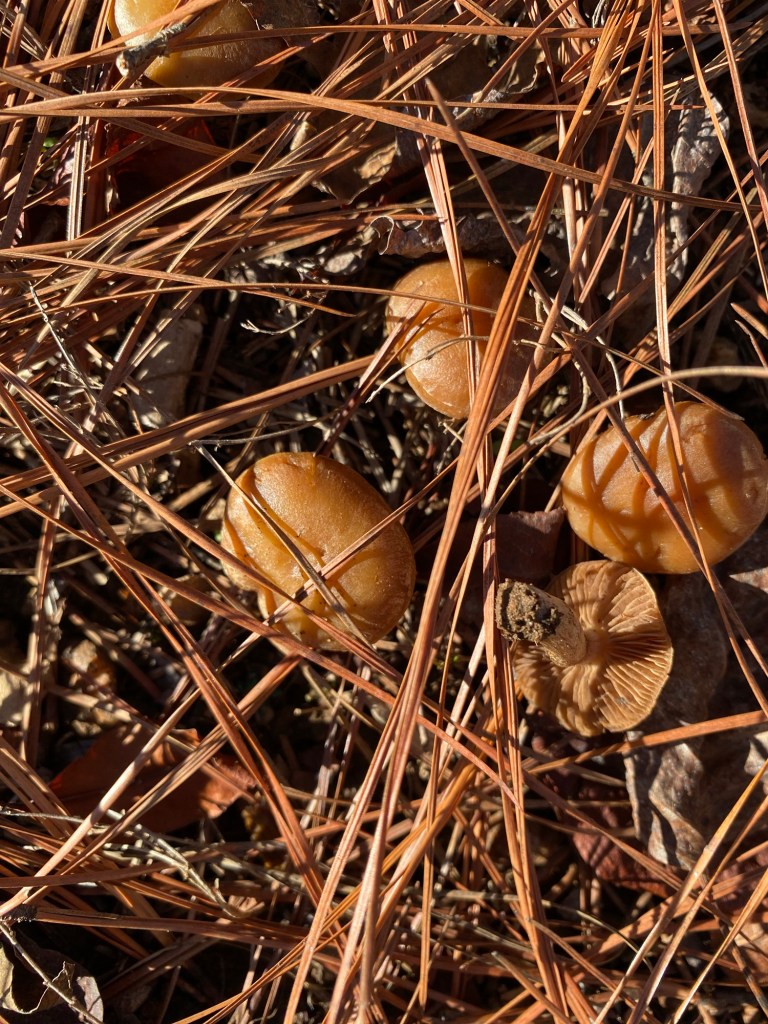
Unknown little brown mushrooms (LBMs). These are notoriously hard to identify. At some point, we may resort to microscopy to determine their specific Genus. They are growing around several loblolly pines directly from the forest floor under the pine needle litter and leaves.
As we walked through the forest, we were searching for more invasive paulownia trees to mark and eventually clear them from the forest with their aggressive growth and reseeding. We have 2 large paulownia in the big clearing and 4 medium sized paulownia in the small clearing up top that we call the amphitheater. So far, this is what we’ve found. In spring, they will be even easier to spot. We will remove these as soon as possible and continue to keep a lookout for more.
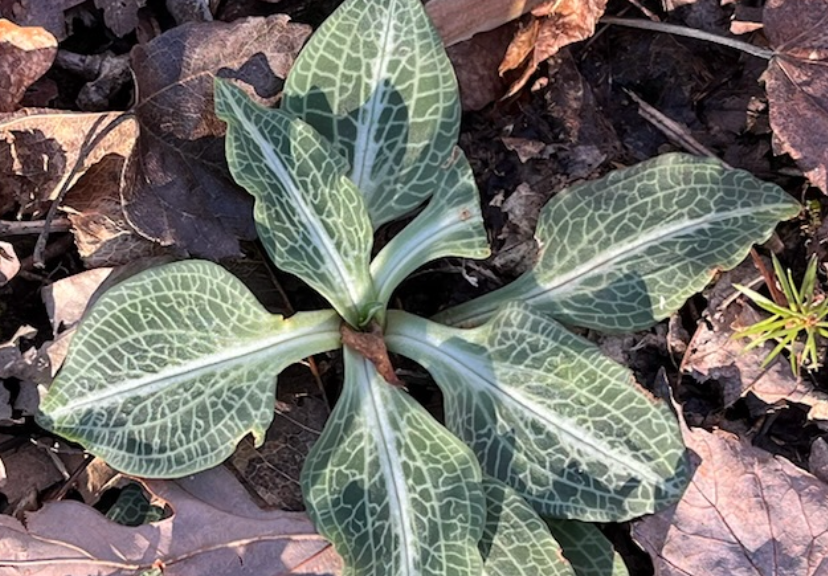
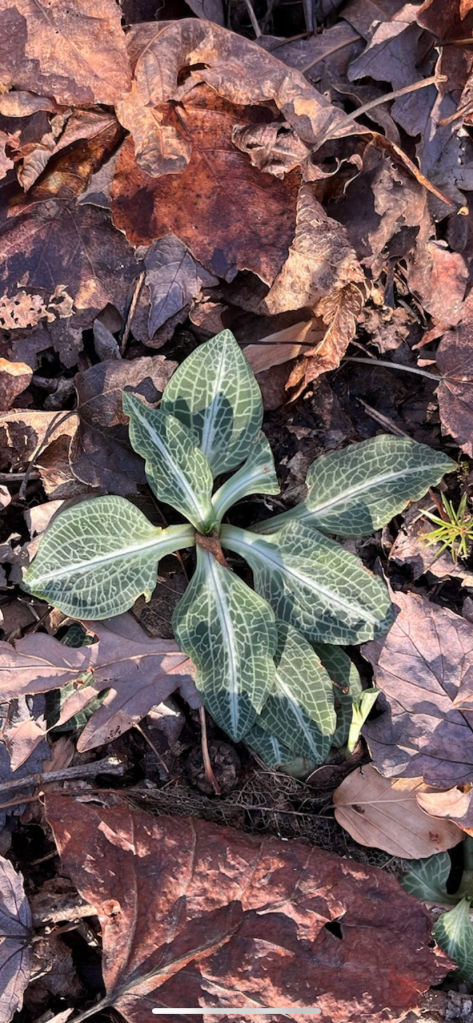
On a positive note, we did find the downy rattlesnake plaintain orchid pictured above. We found this along our Fern Trail and saw it in multiple spots around the farm. It was noticeably fuzzy and striking with its leaf pattern. The vibrant leaves are enjoying the cold, wet weather we’ve had. We can’t wait to see them bloom in July and August. We will be on the lookout for white inflorescence densely packed along the top portion of the bloom spike (terminal raceme).
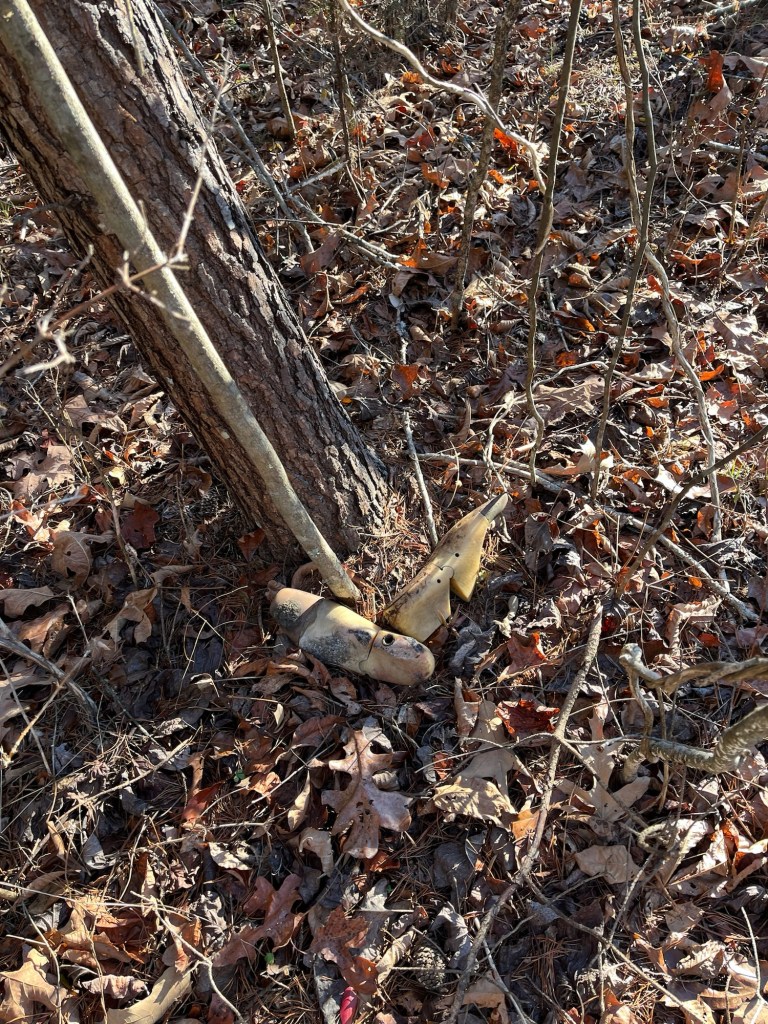
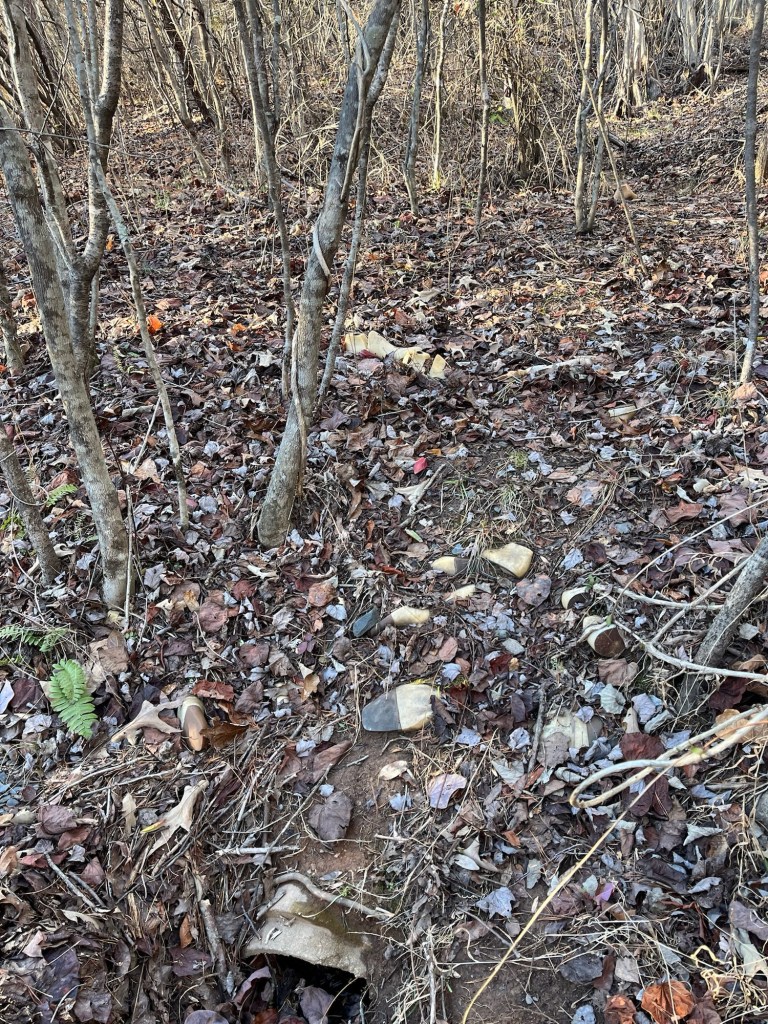
We walked all the way around the farm and were happy to come across the culvert and hinged shoe lasts again as we’d looked for it for months. This time we were able to determine where the culvert ended as well as find a dozen more hinged shoe lasts. We are very curious about this mystery.
The days are getting longer. It was still light as we drove home. We feel grateful to have the forest and have enjoyed every season so far.
 St Andrews Forest Farm
The water videos are awesome. I have a branch on my place that doesn’t always run aboveground, but when it does, we’re recording. Your land is amazing.
Thank you so much. It’s been a dream come true. We feel so blessed and grateful. ☺️