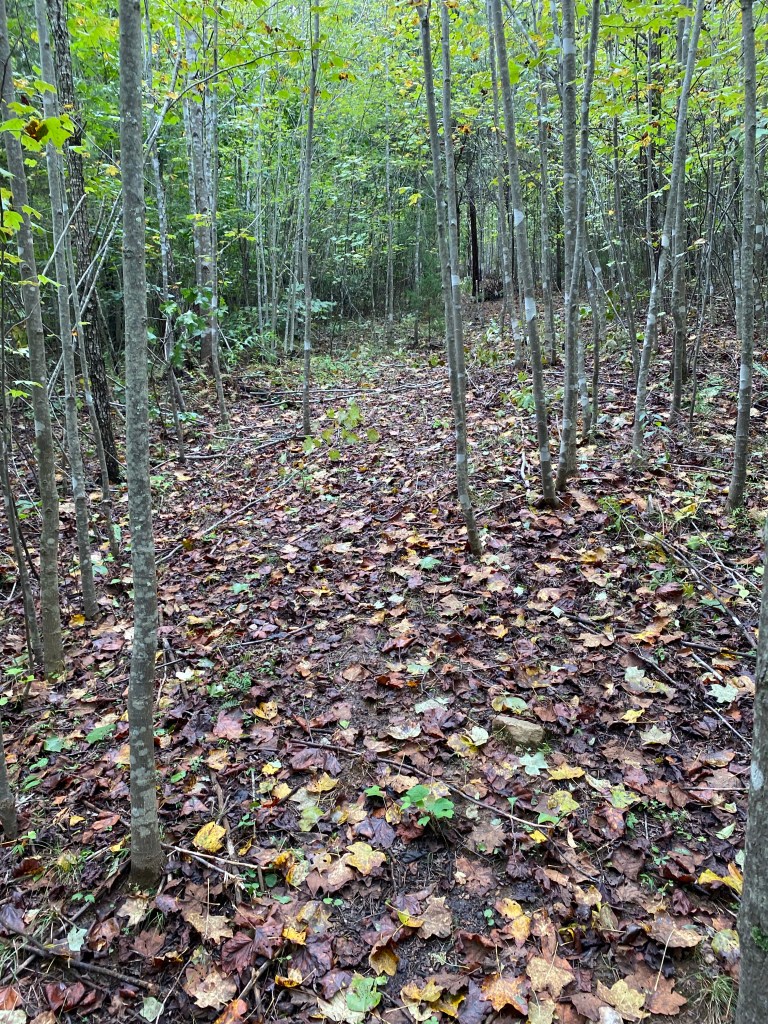
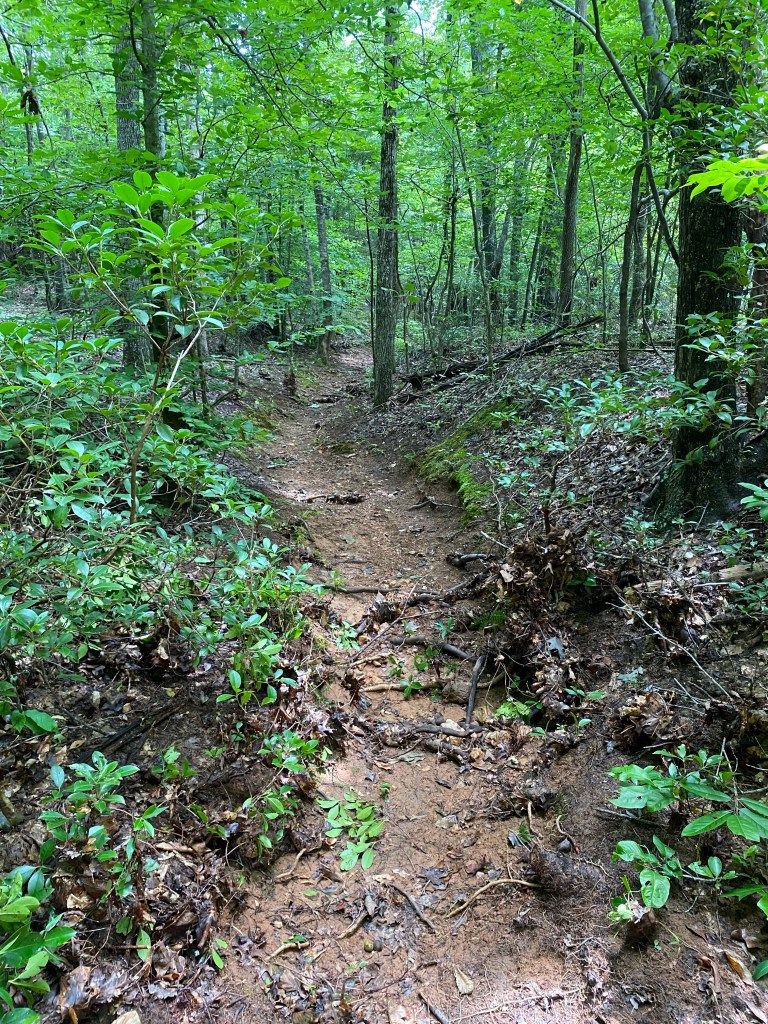
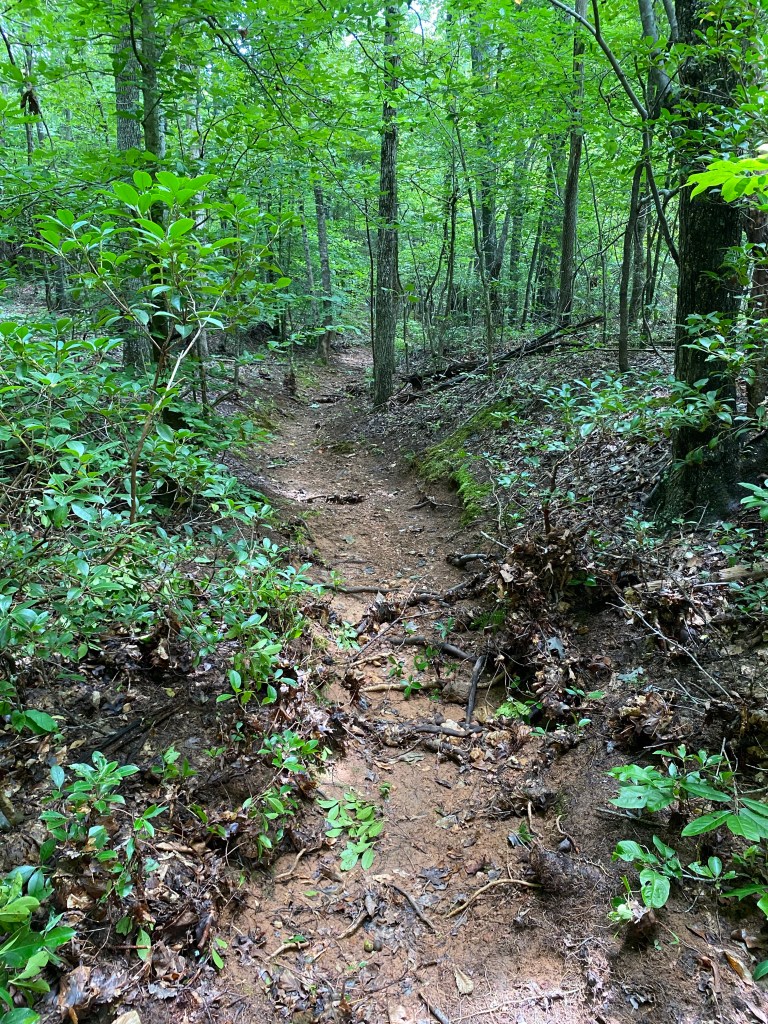
The woods are changing and moving into fall. Leaves are colorful and the forest is brighter. This is the North Trail where we startled a young bear. We think he was the 3 year old male bear our neighbor told us about. He looked healthy as he ran away. This was at the top of North Trail. No sign of his mother.
Tropical storm Ophelia moved through Saint Andrew’s Forest Farm with gusting winds and rain just the day before. As we drove over from Staunton, we saw several large trees blown over and wondered what impact the storm had on the trees at SAFF. As we pulled in, we did not see any downed trees only a few limbs on the ground.
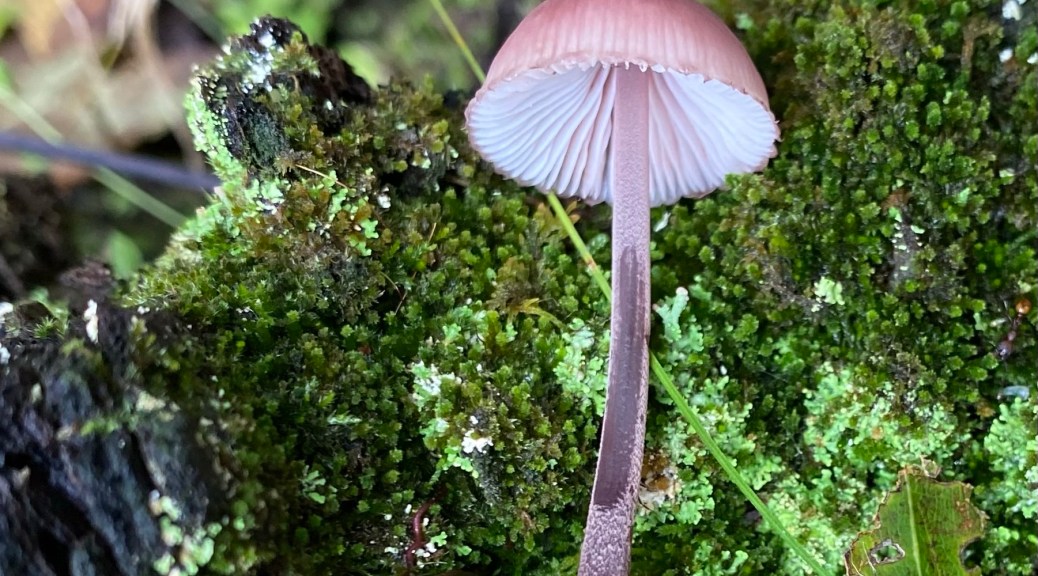
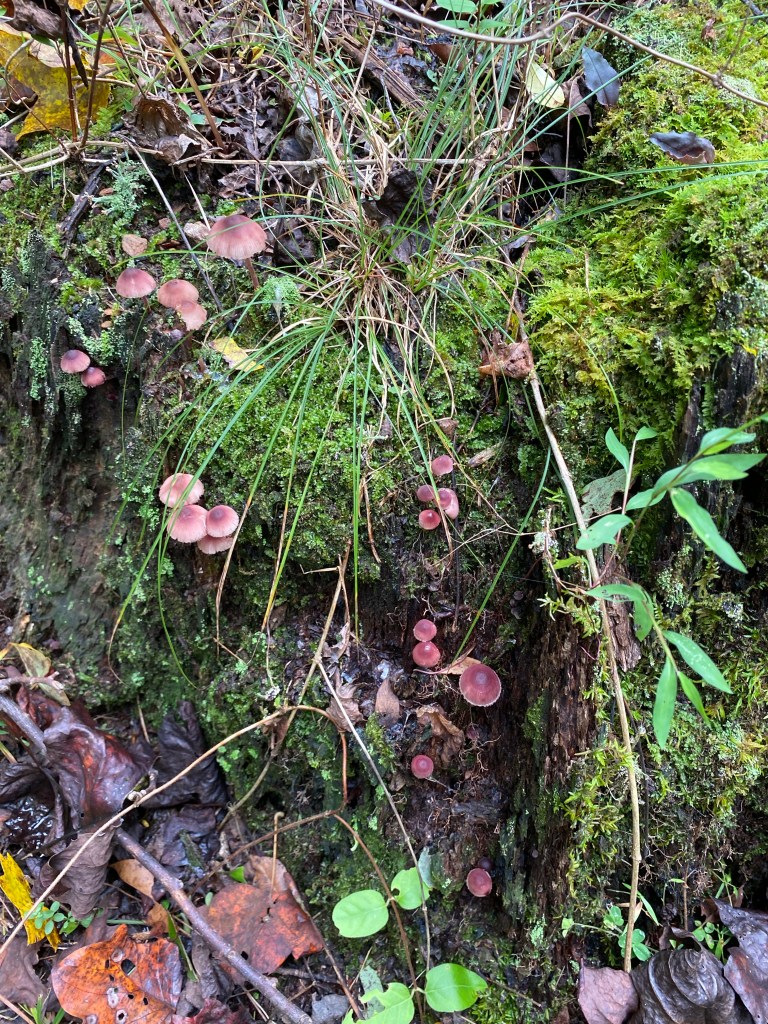
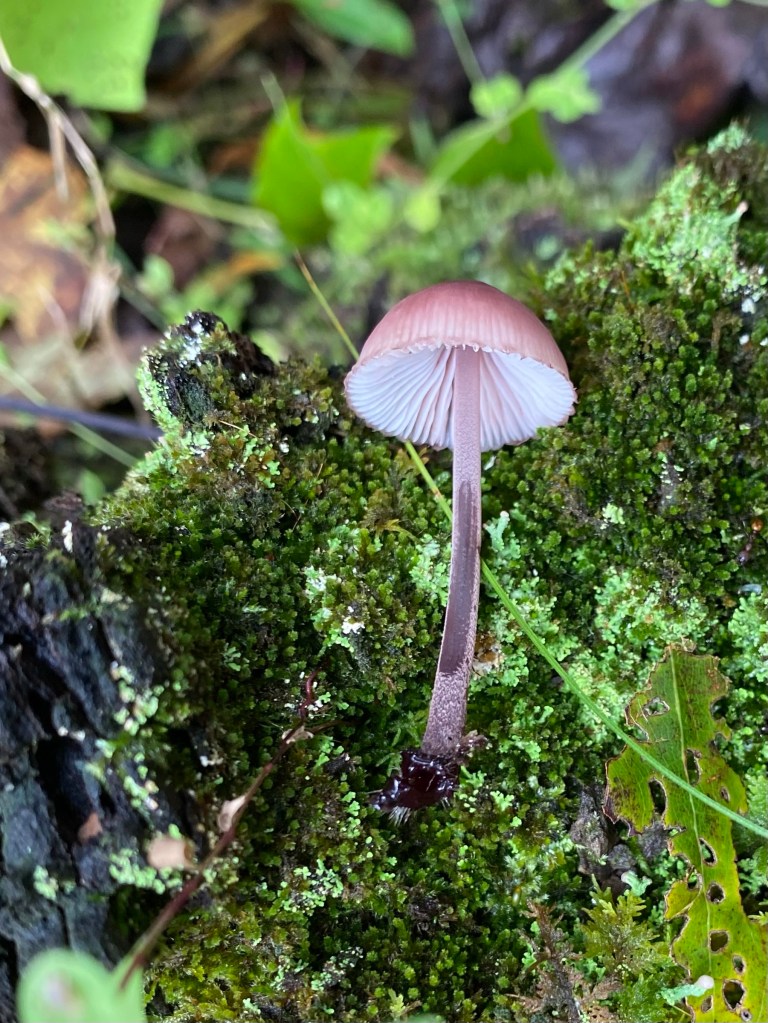
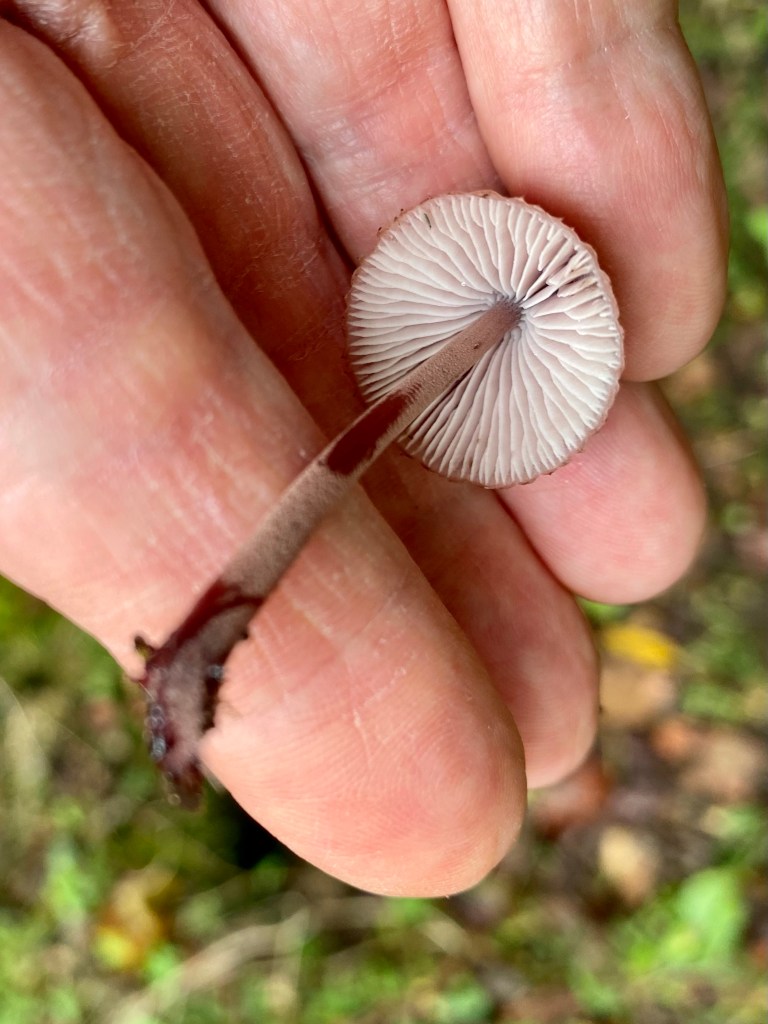
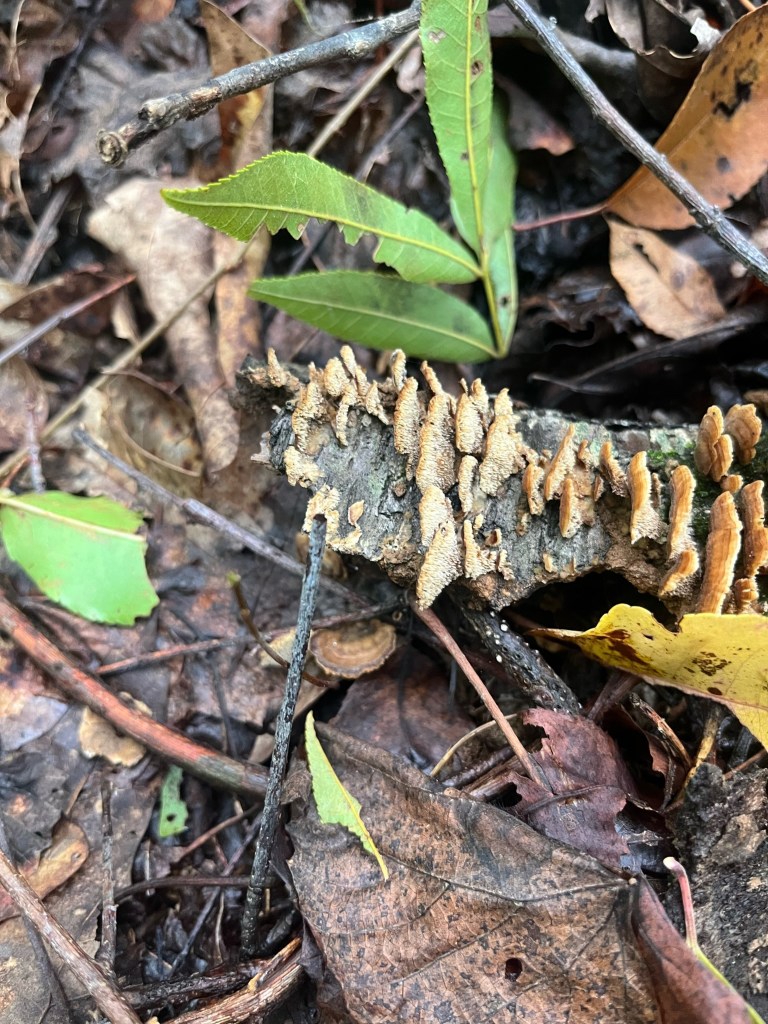
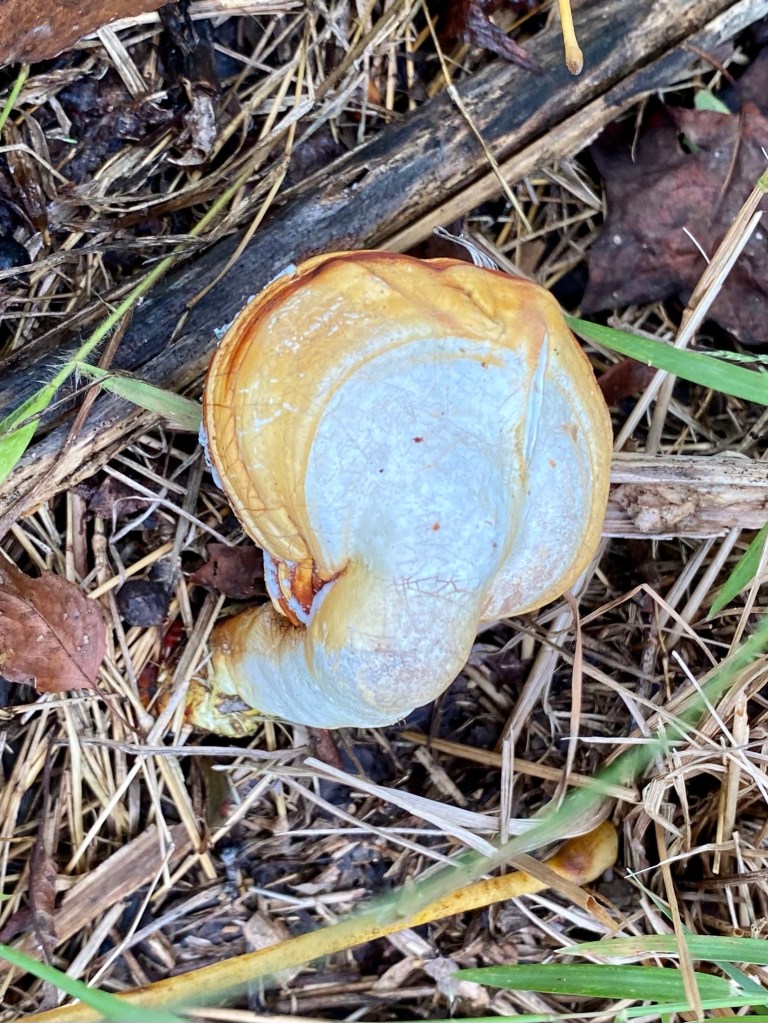
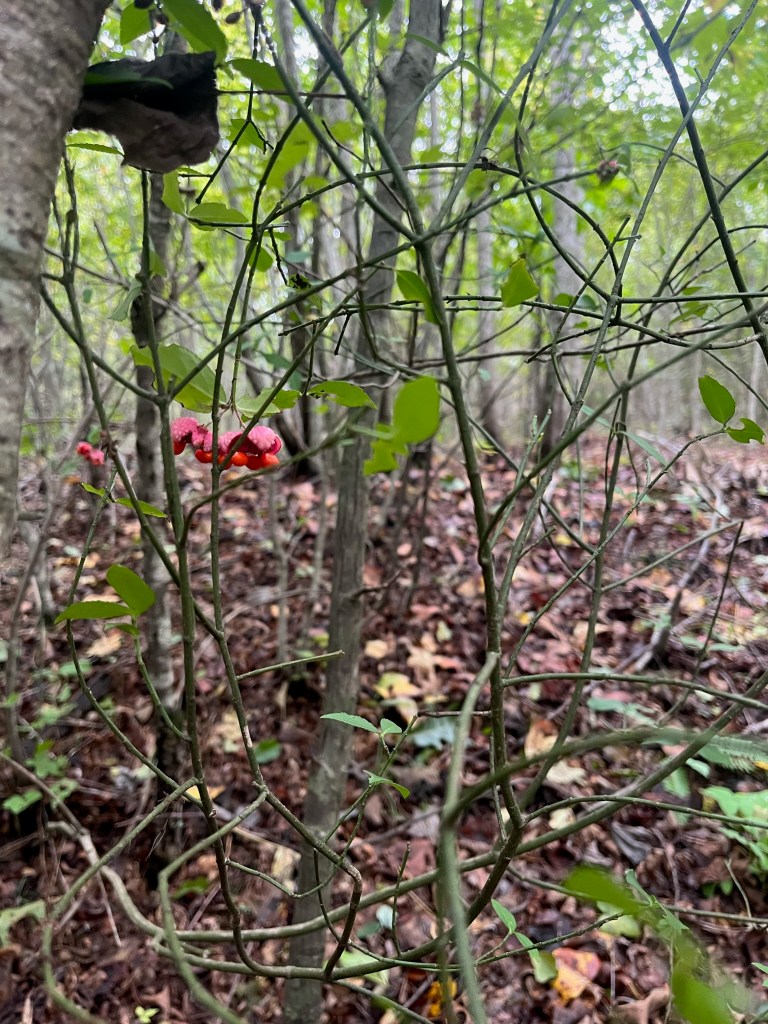
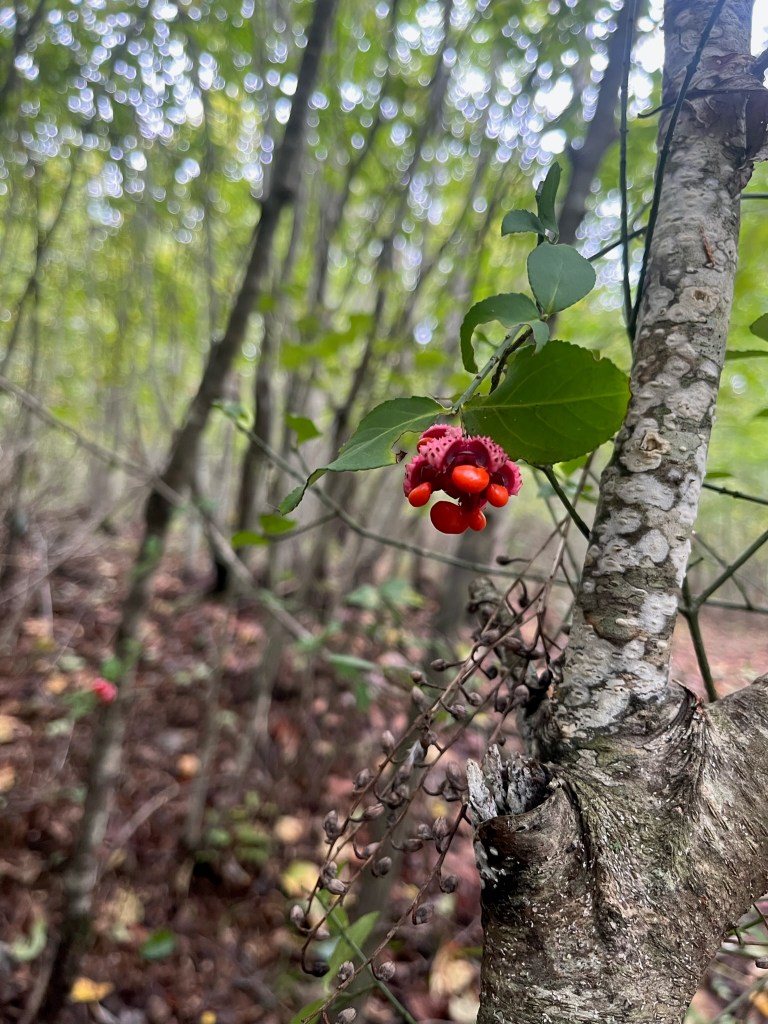
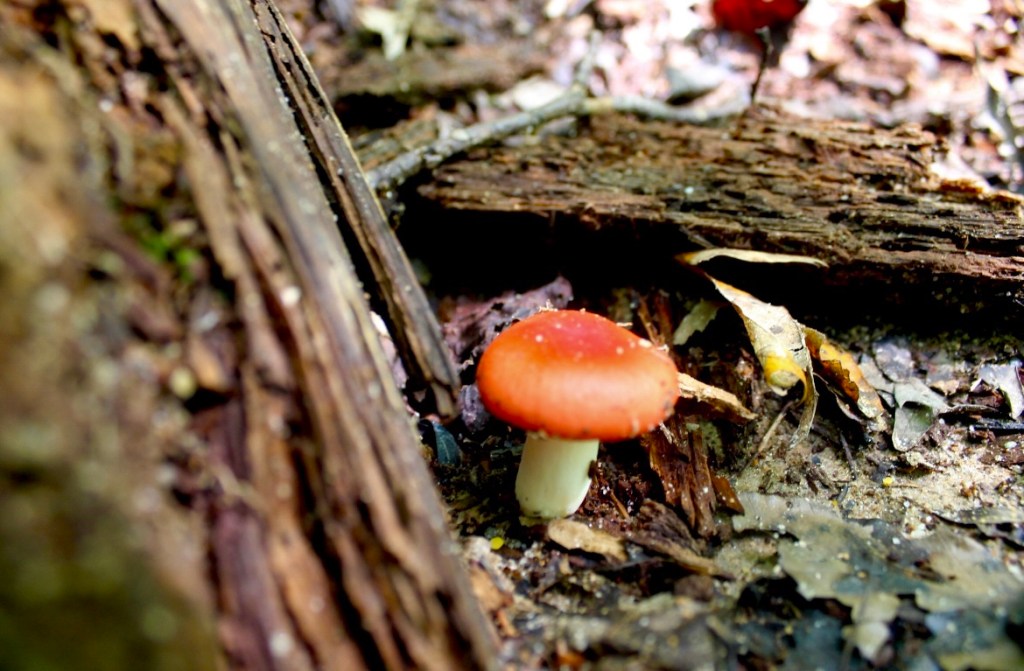
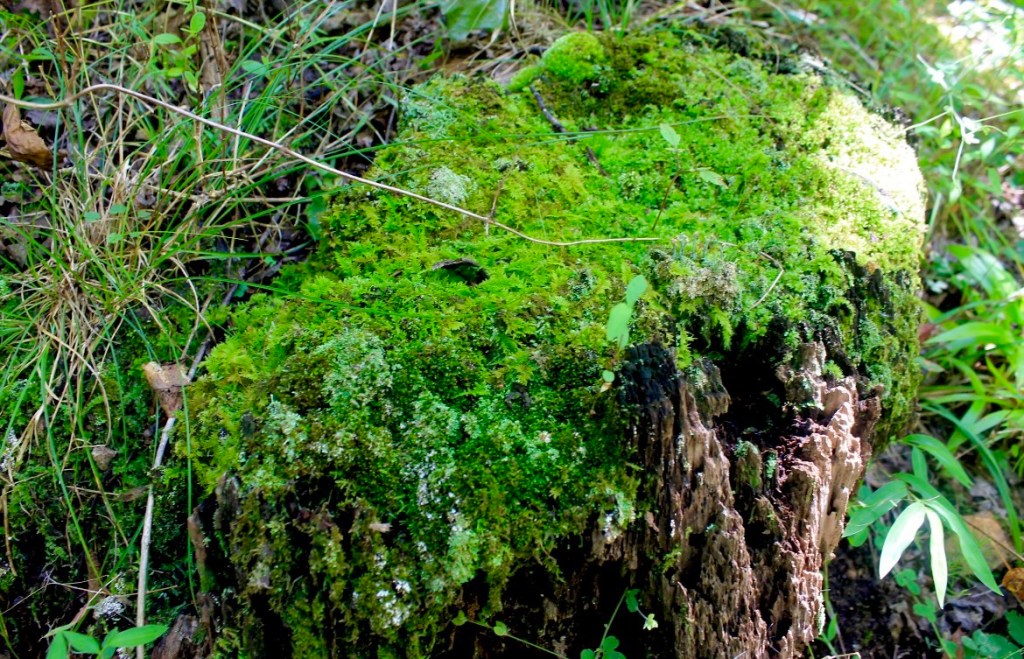
A tree stump covered in Mycena haematopus, or common name, bleeding Mycena. Saprobic mushrooms found on well decayed wood. They were lovely. Note the bleeding from the stem in the photo below. Unknown polyporeDown by the waterway. It was cooler out and also muggy for our walk around.A RussulaA new mushroom we spotted at the bottom of the clearing. It’s a yellow reishi, Ganoderma curtisii. It was as hard as wood and shiny. A magnificent find. These are a noted medicinal mushroom. We saw multiple specimen of strawberry euonymus with these lovely berries. We know birds eat these and wondered what the bear is eating. He looked well fed, about 150 pounds or more. A young black bear.
We hope we didn’t scare the young bear off. We want him to stay safe on our property from all of the hunters in the area. Next time we go out to SAFF, we will hang up more signs to alert hunters to stay off of our farm. We would like the wildlife to have a sanctuary.
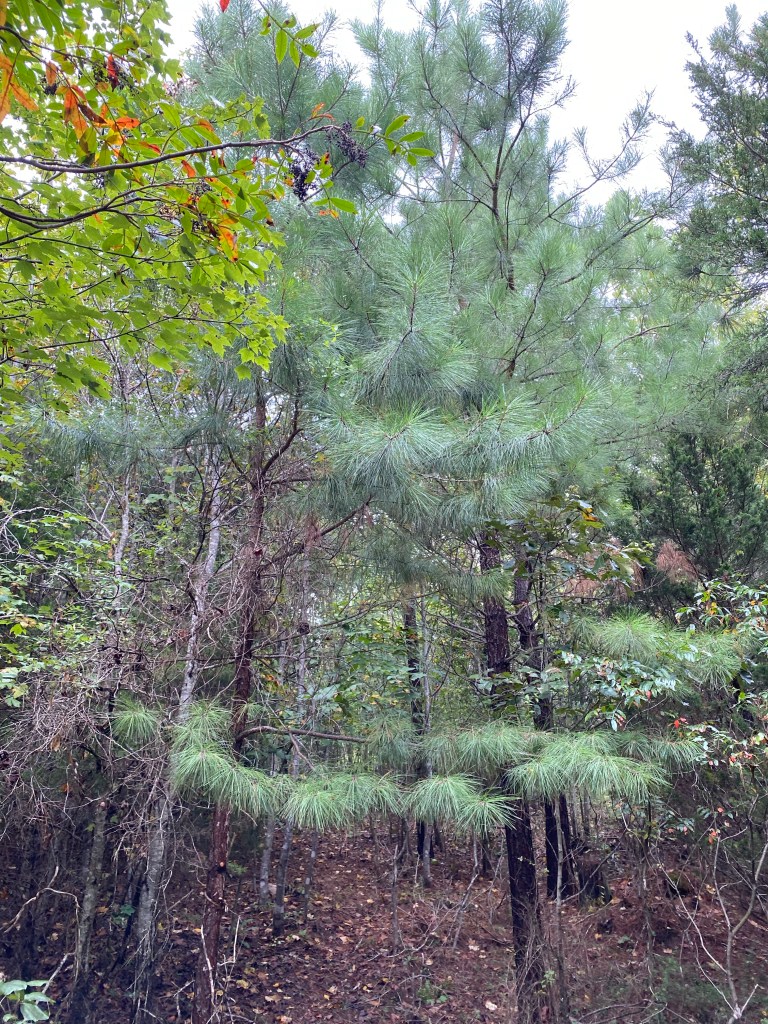
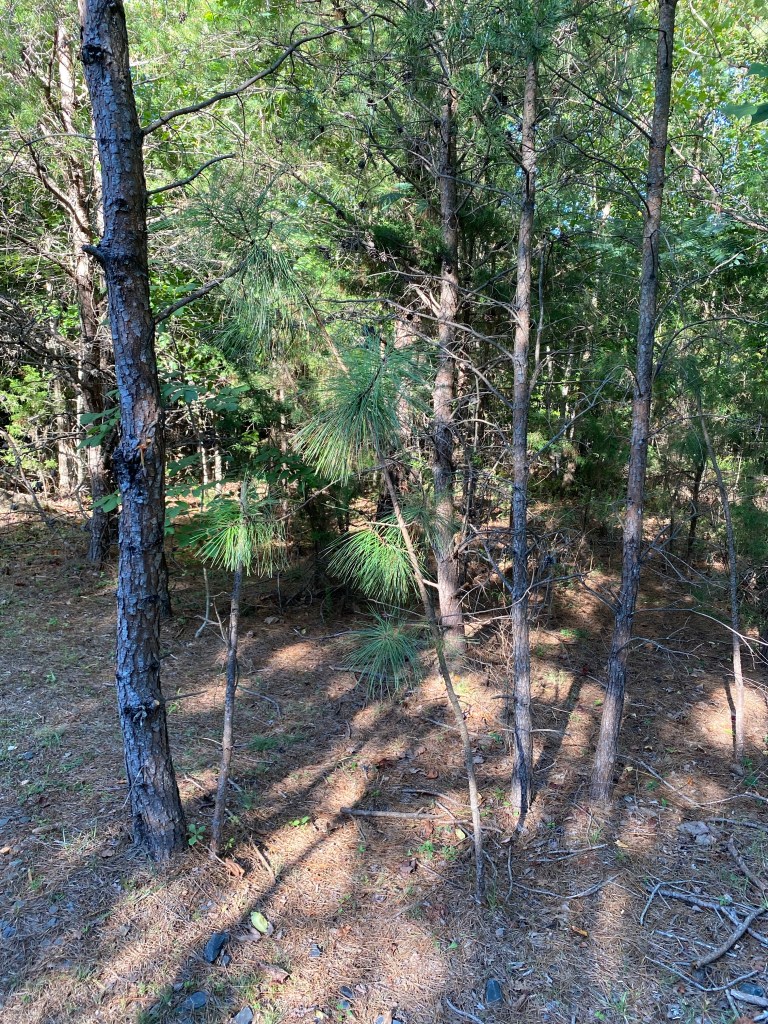
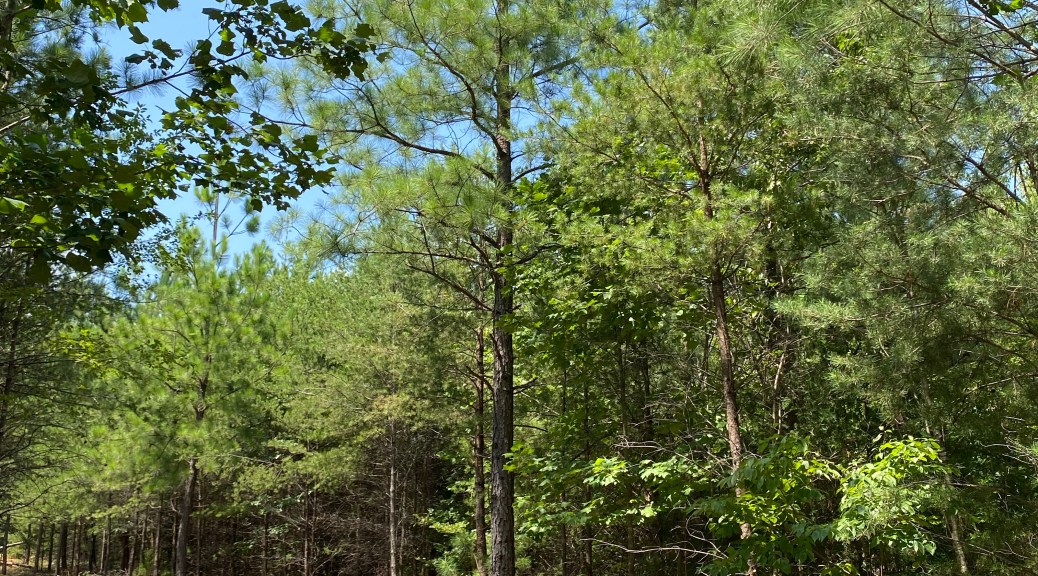
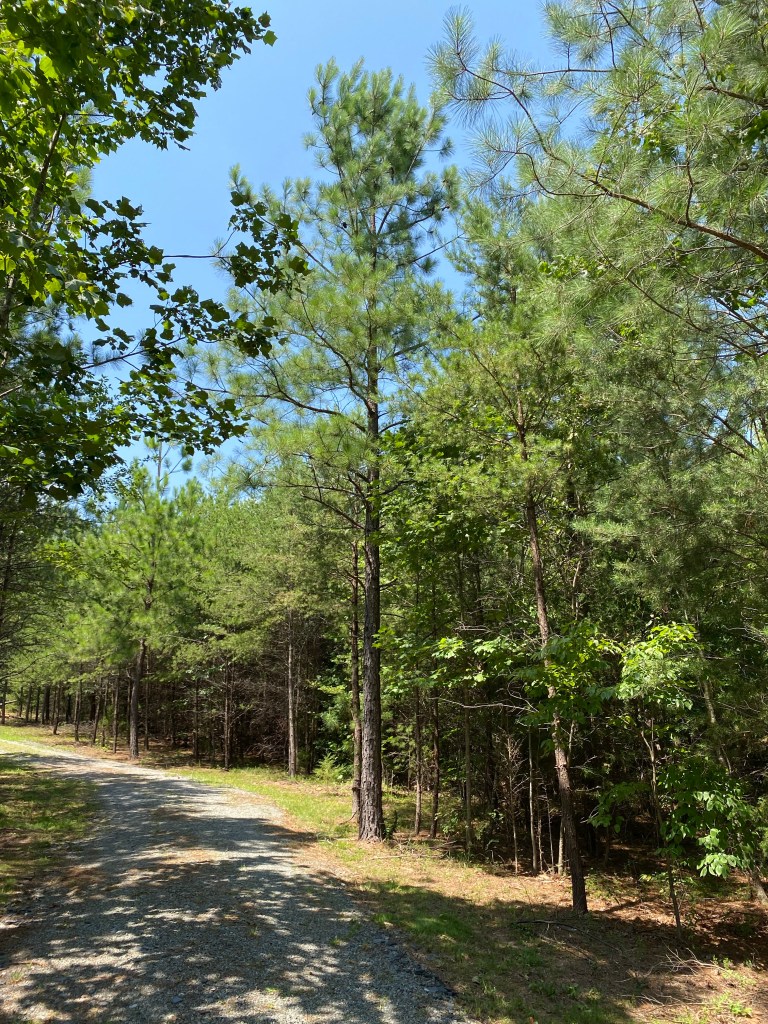
Young loblolly pines
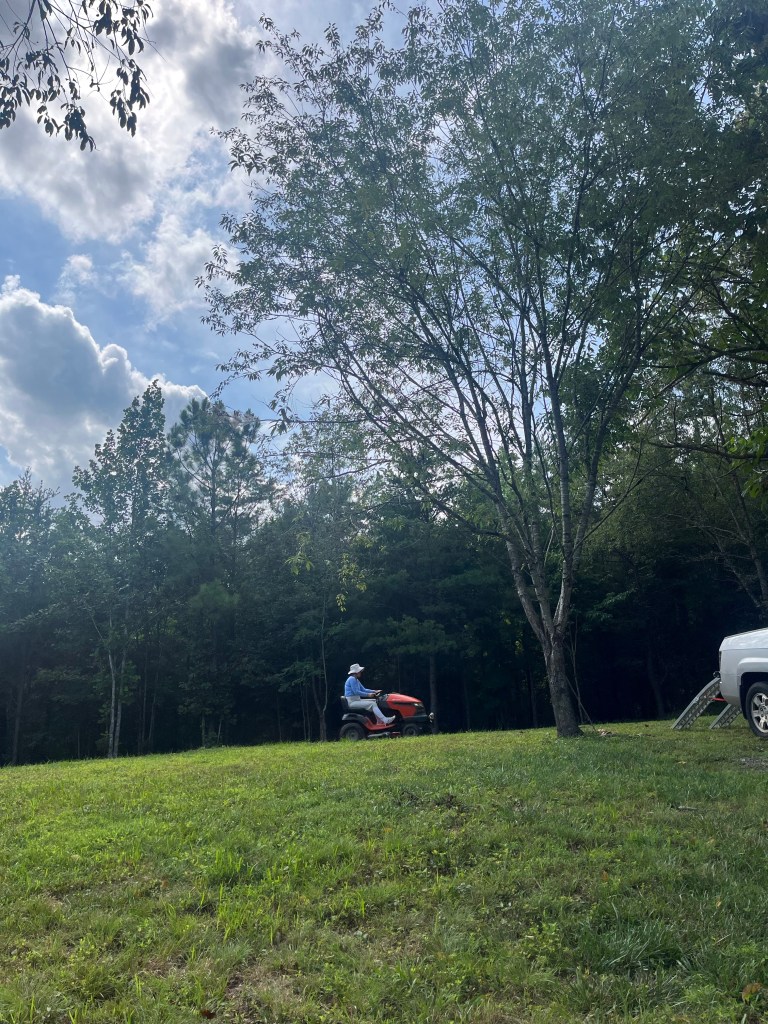
It is wonderful to have the cool weather to explore and get jobs done. We were able to mow and dig another footing for the shower and compost toilet structure.
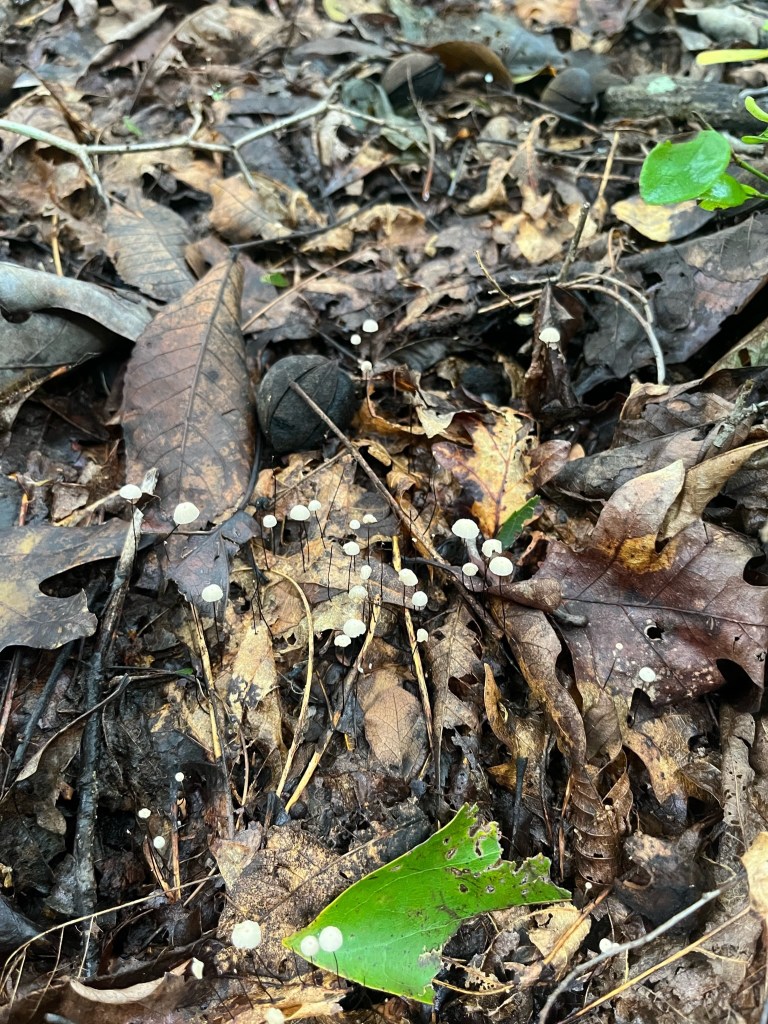
Marasmius capillaris, growing on fallen oak leaves on the forest floor.
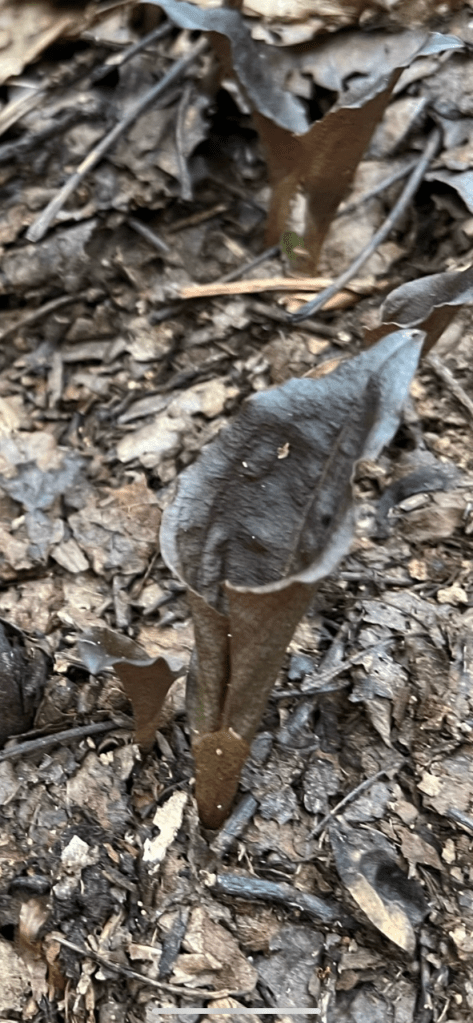
We also saw more of the Cranefly orchid’s leaves emerging along the trails all through the woods. We were able to clear hundreds more small stick trees using loppers.
We got the truck running again about midweek by replacing both the alternator and the battery. We also cleared many many hundreds of stick trees, mostly light starved, undeveloped and unwell tulip poplars and black cherries.
Tiny trees needing to be thinned. Crane fly orchid leaves emerging from the ground where we saw the flowers earlier this summer.
We were so excited to see these leaves (in photo above) emerging from the ground. These delicate flowers grow from edible corms.
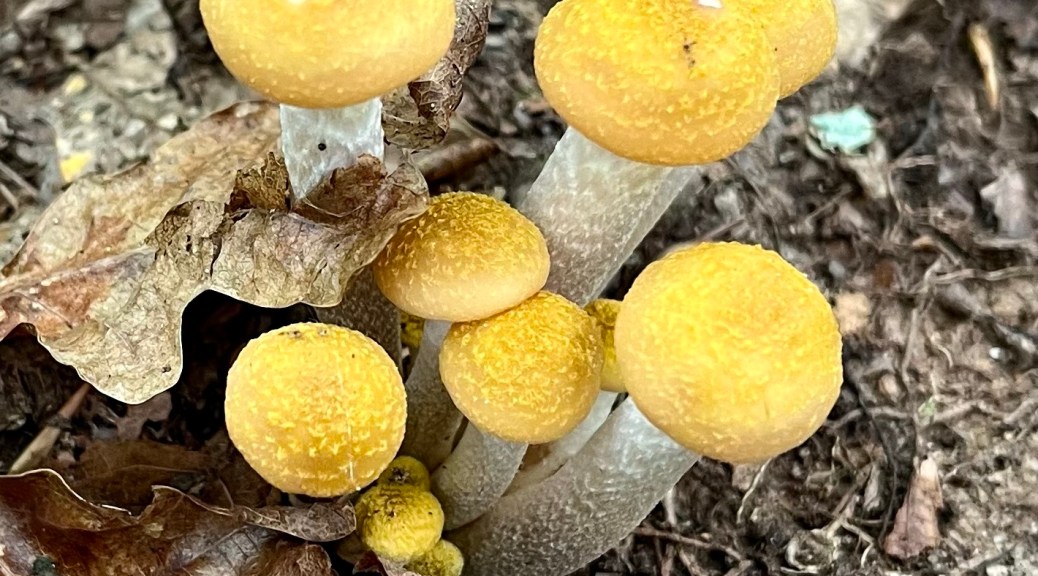
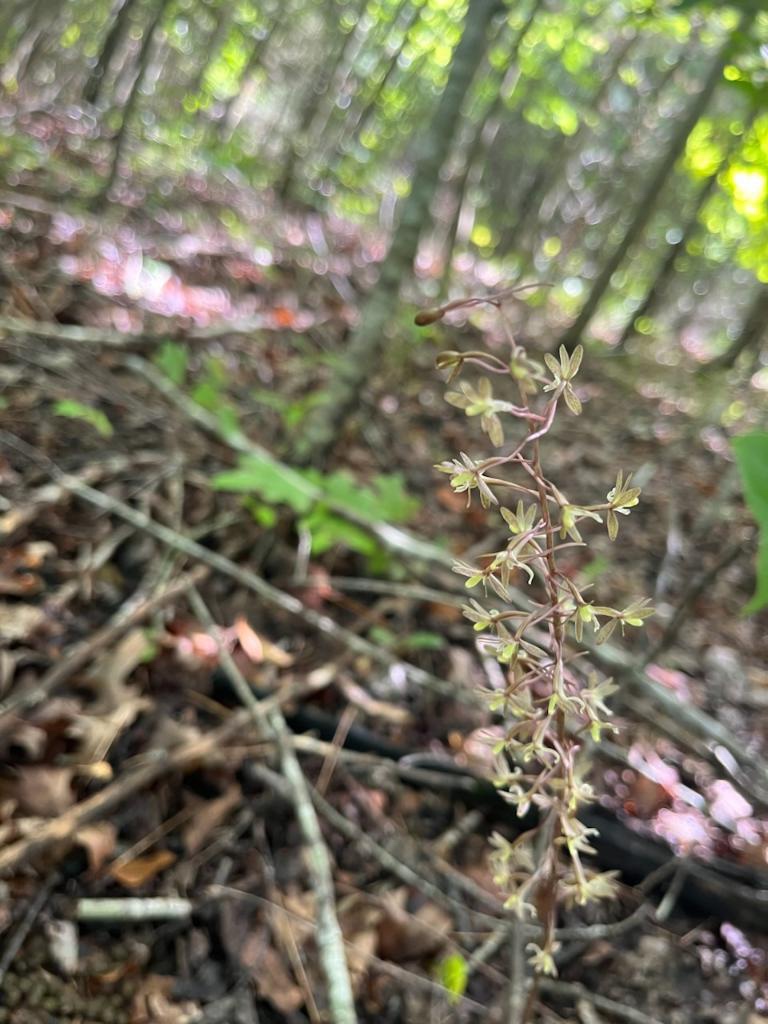
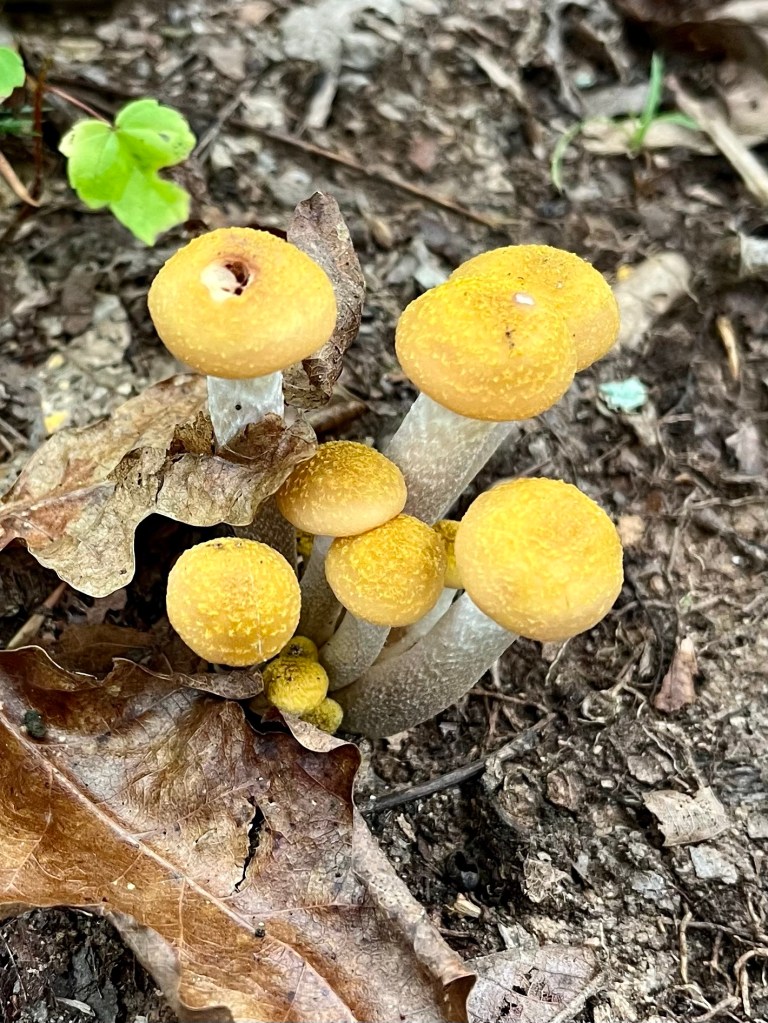
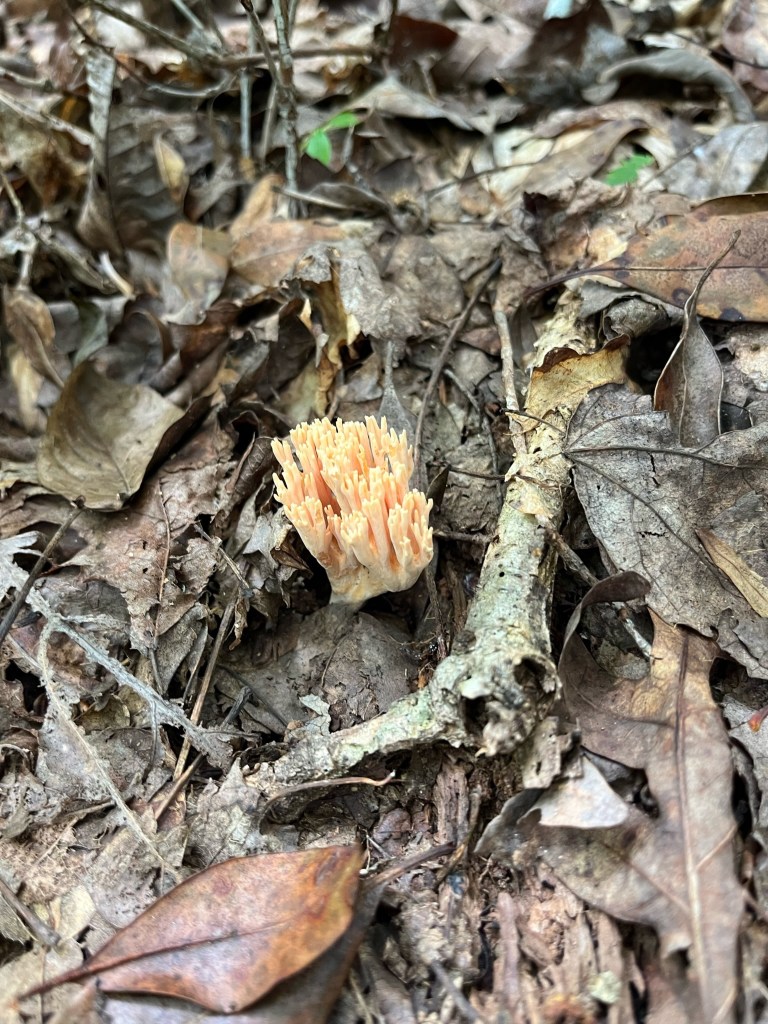
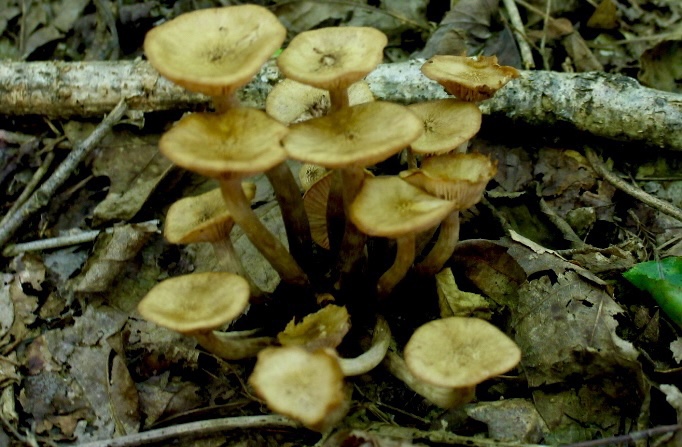
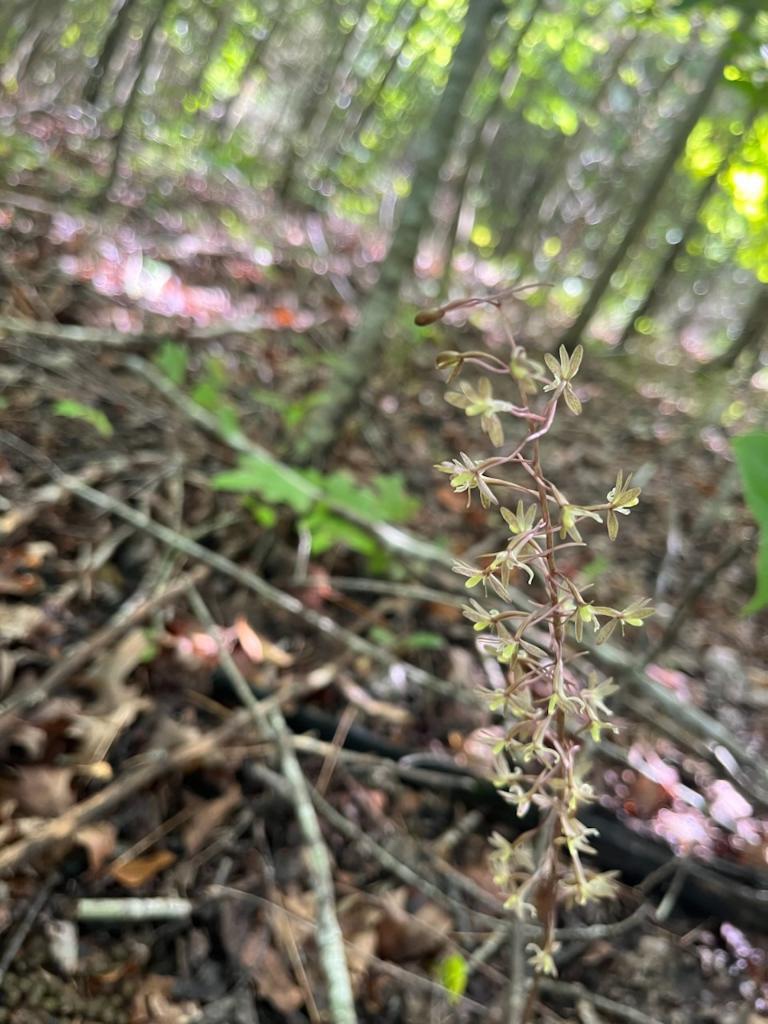
Crane fly orchid flower photo taken earlier this summer. It emerges without leaves. The leaf comes in September. We were watching for them and still surprised by their beauty. We found multiple clusters of these beautiful honey mushrooms by the creek bed. Armillaria, the longest lived and largest fungi in the world. The mycelium underground is what’s large with one being measured at 3.5 square miles and estimated to be 2,400 years old. These mushrooms also glow in the dark. They are decomposers. Honey mushrooms are rich in antioxidants and taste slightly sweet. Honey Mushrooms are extremely rich in polysaccharides. Polysaccharides from natural sources have attracted increased attention due to their potential biological functions, especially antioxidant and immunomodulation activities such as scavenging free radicals and inhibiting lipid oxidation.Coral fungusSarcodon scrabrosus, with teeth, is mycorrhizal with beech and oak trees. Found along bottom creek bed from June to October.
It felt very much like fall yesterday with coolness in the air and leaves on the ground. Ophelia moved in to North Carolina and Virginia bringing rain and wind. We can’t wait to see what the new season brings to Saint Andrew’s Forest Farm.
Yesterday we went to Saint Andrew’s Forest Farm and we had truck trouble right as we arrived, the alternator went out. All the warning lights came on and the battery died. Luckily, we were in the driveway when it happened. We troubleshooted by jumping the truck battery with the mower battery but it only held a charge long enough to get the windows rolled up. We were grateful for that much, as rain was expected soon. We called for help and my daughter came directly from work in Richmond to drive us home to Staunton. We were so thankful!
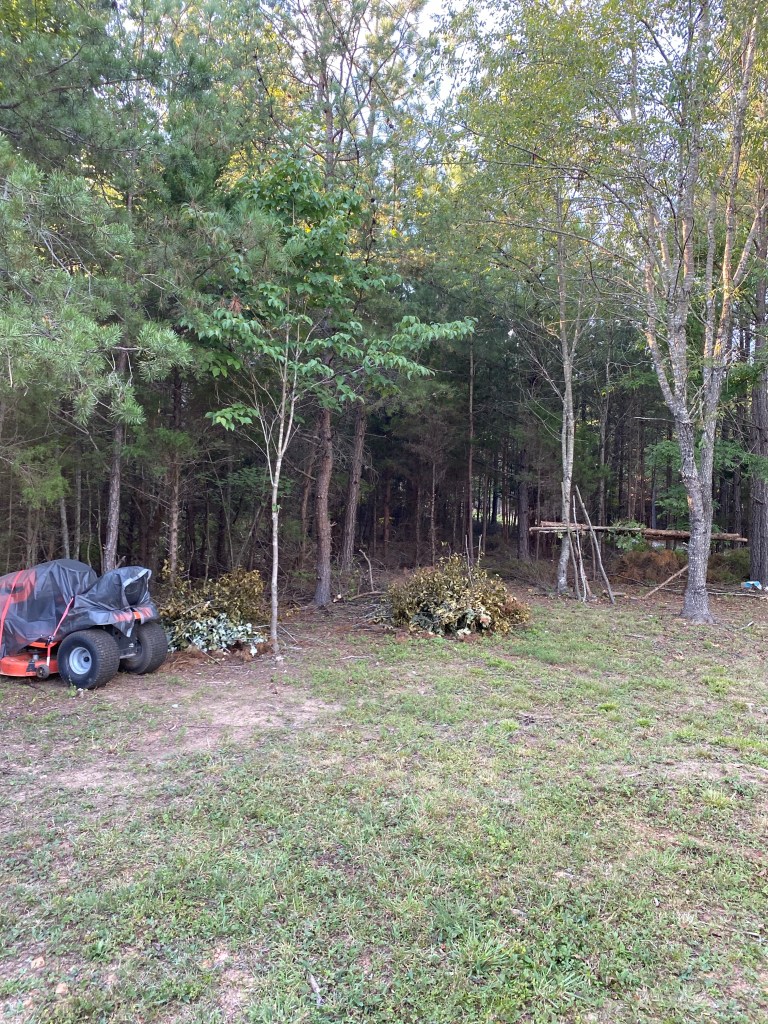
While we waited, we limbed up and cut down trees in the front near where we were trying to jump the battery. We were also able to clear out more trees from the compost toilet and shower site as well as the shipping container site which will be an office and camping site for us. It is amazing how much better the woods look with a bit of attention and care.
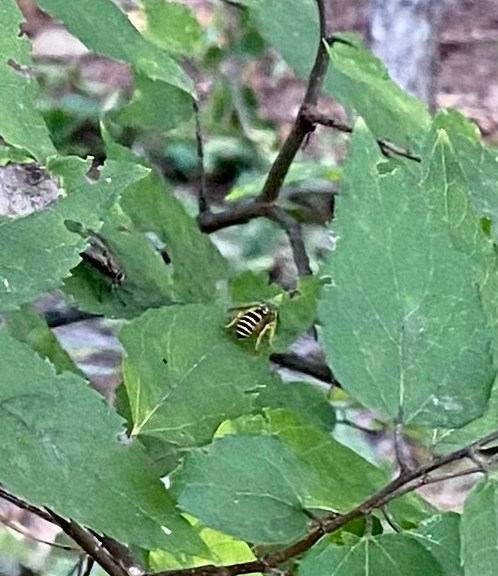
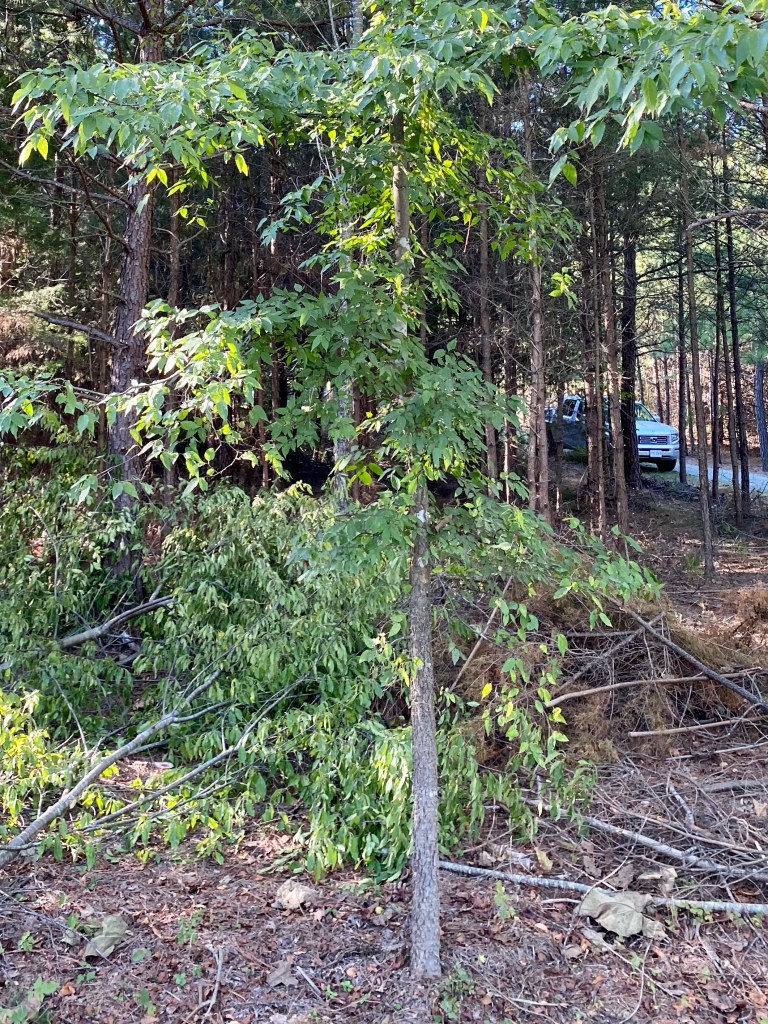
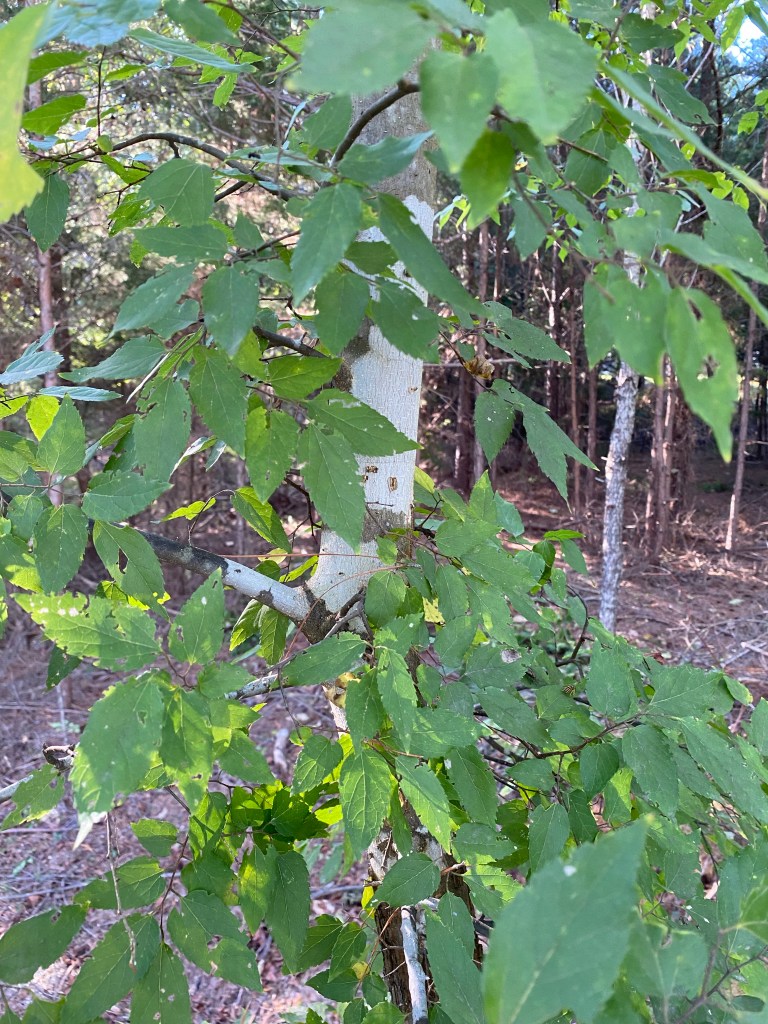
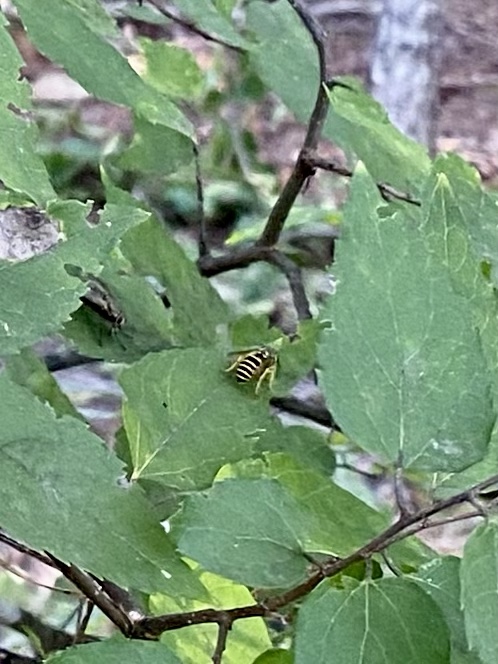
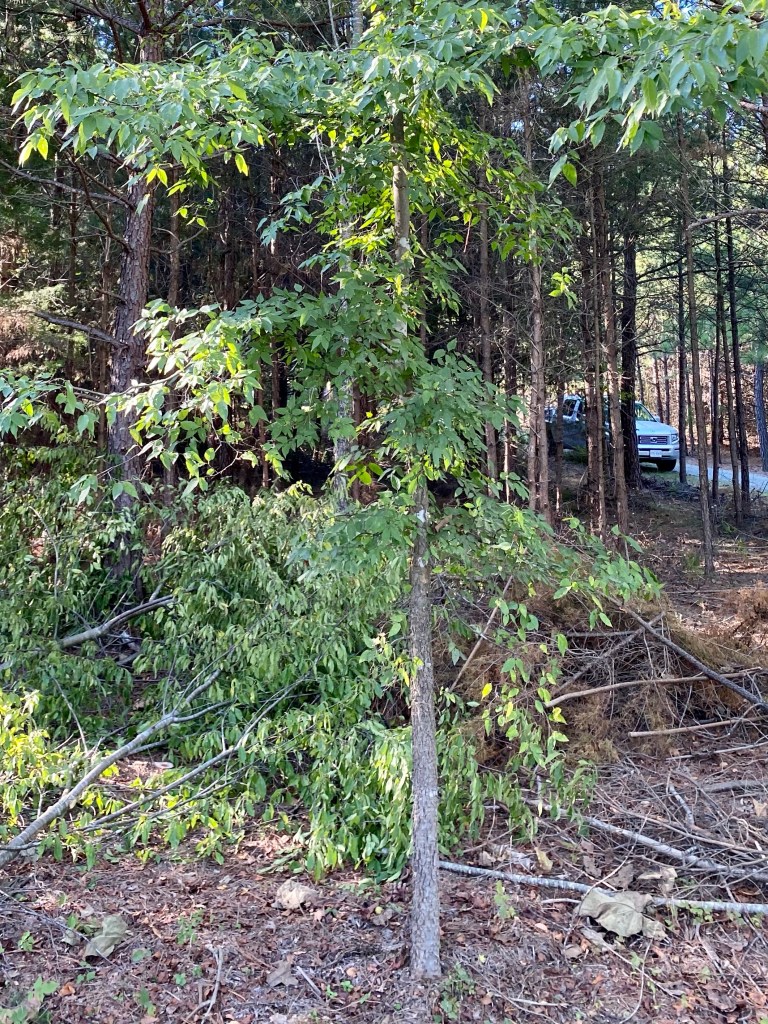
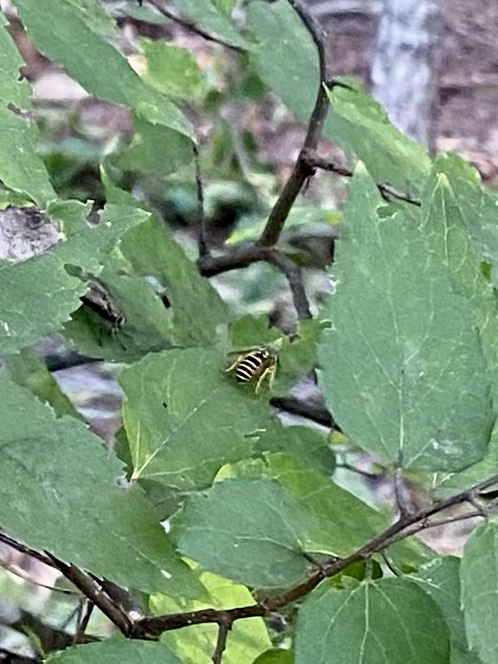
This tree had bees buzzing all over it and we couldn’t determine what it was. We could not find flowers or berries either. The bees were all over the leaves. After some research, it appears to be sugar hackberry, Celtis laevigata. The leaves and trunk of the Sugarberry. In late summer, leafcutter bees arrive and oval holes with a very clean edge appear on the hackberry’sleaves. These solitary bees harvest the small circles of leaf to line their nests. There are several genera of leaf cutting bees but most of them are small to medium sized bees and carry pollen on the underside of their abdomen as opposed to on the hind legs.Within a burrow, several cells are constructed from leaf pieces. Each cell is stocked with nectar and pollen and an egg is deposited. The bee uses a few additional pieces of leaf to close each cell and finally, the opening of the burrow. The larvae fend for themselves, feeding on the supplies left by their mother.
We cut down a very large black cherry tree near where we plan to place the shipping container for our office. This tree had black knot fungus. We culled a medium sized pine from the front which was growing up against another. We also culled many many smaller trees. We pulled a few tree of Heaven, ailanthus, by the roots as the ground was wet enough. We are trying to rid the farm of this invasive nonnative in multiple ways as it restricts and chokes out growth of our native species. We will save our sweet Sugarberry tree for these leaf cutter bee babies to be sure! 🐝
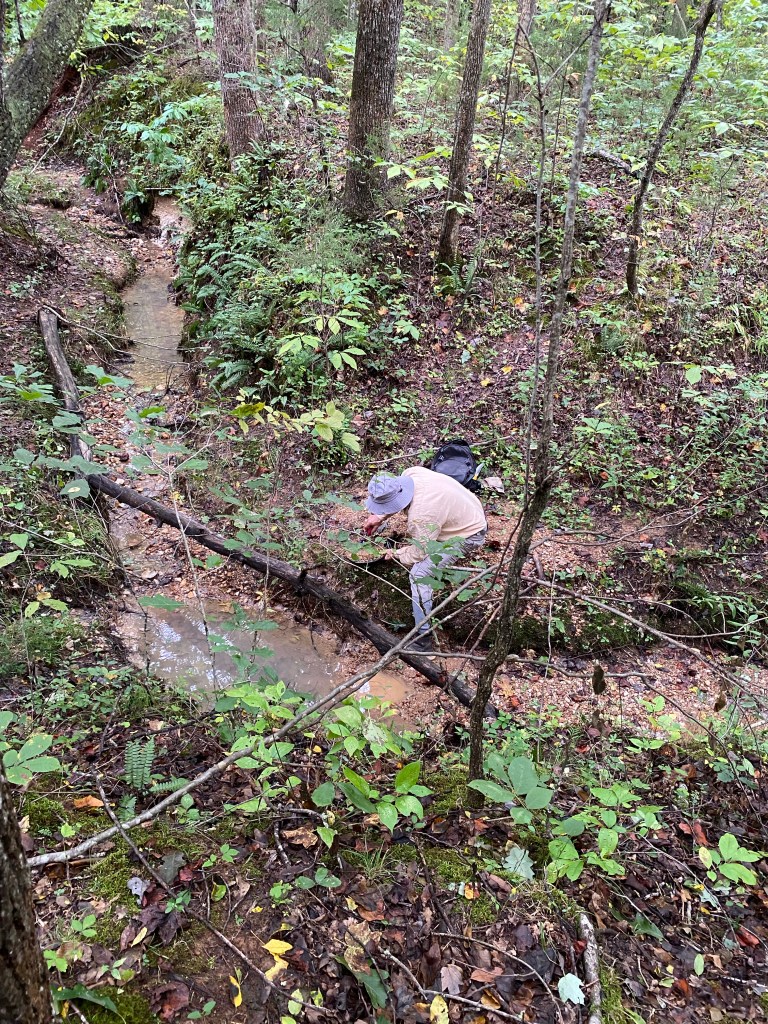
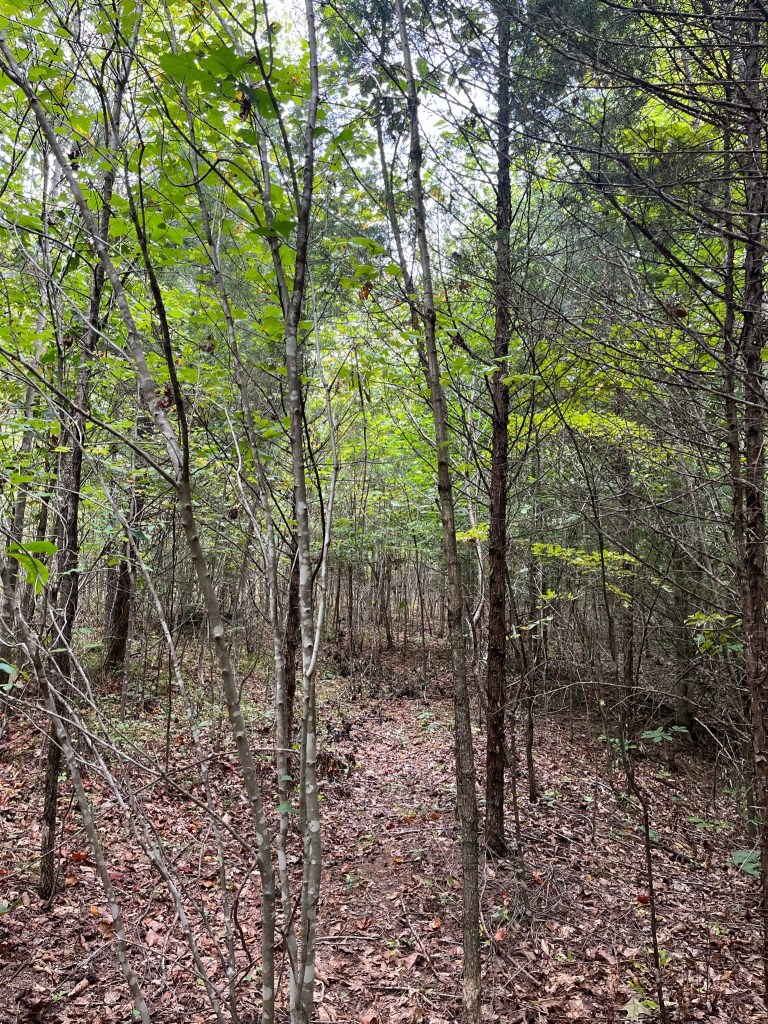
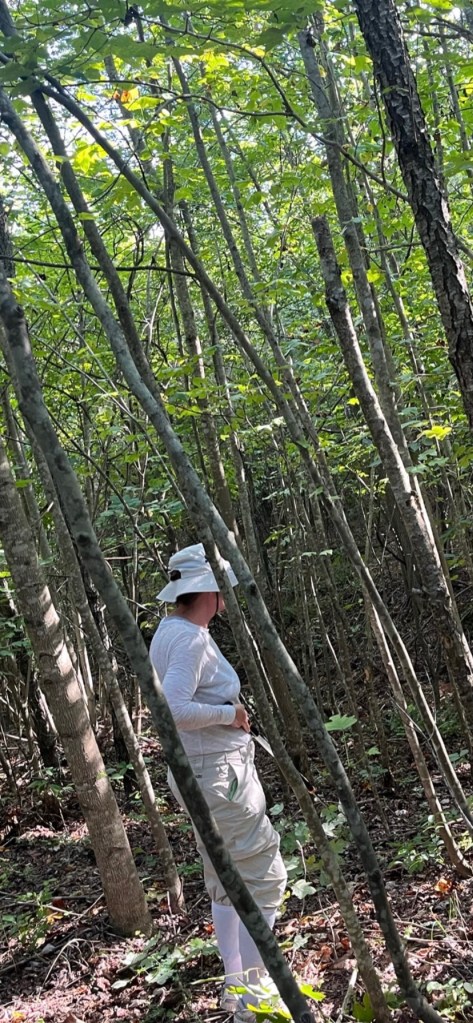
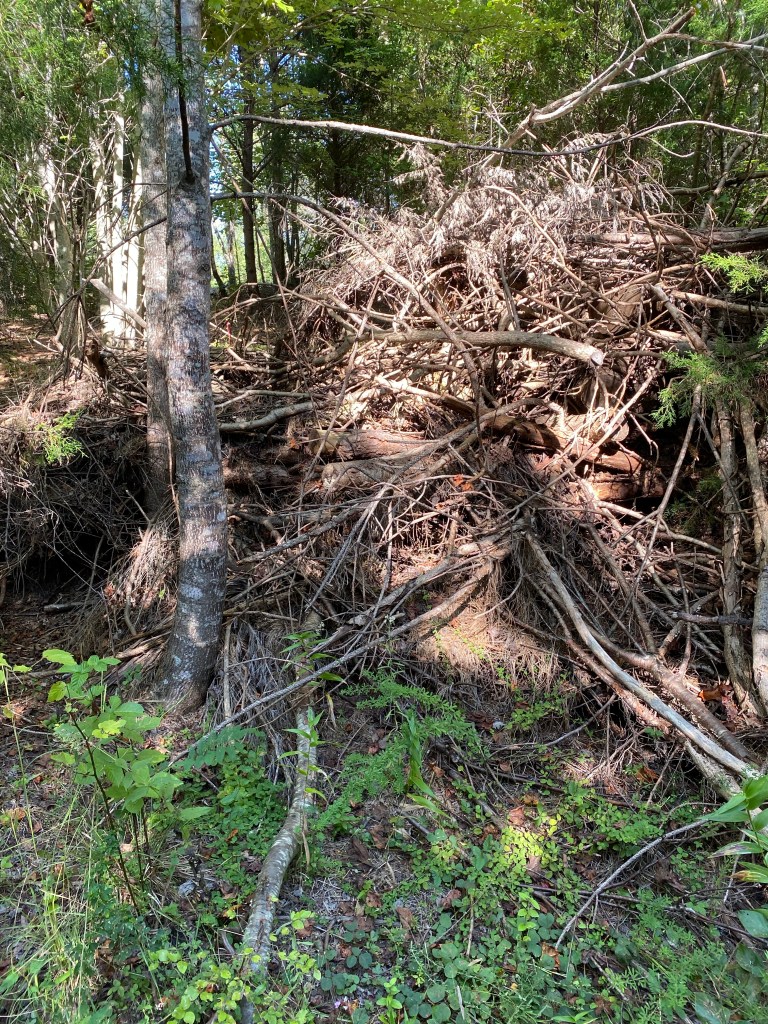
We went to the farm and did weekly chores. After mowing and weed whacking, we blazed a new trail which wound around from the front and followed along a new waterway we found that meets the waterway from the south through to the creek. We made a trail and connected it to chanterelle trail and then made it about half way to the north trail. We used loppers. As we culled these trees, we laid them down along the edge of the trail. We laid them perpendicular to the water flow to begin to build up a berm along the outside of paths. Where we left off, it was still really very dense with tiny light-starved trees.
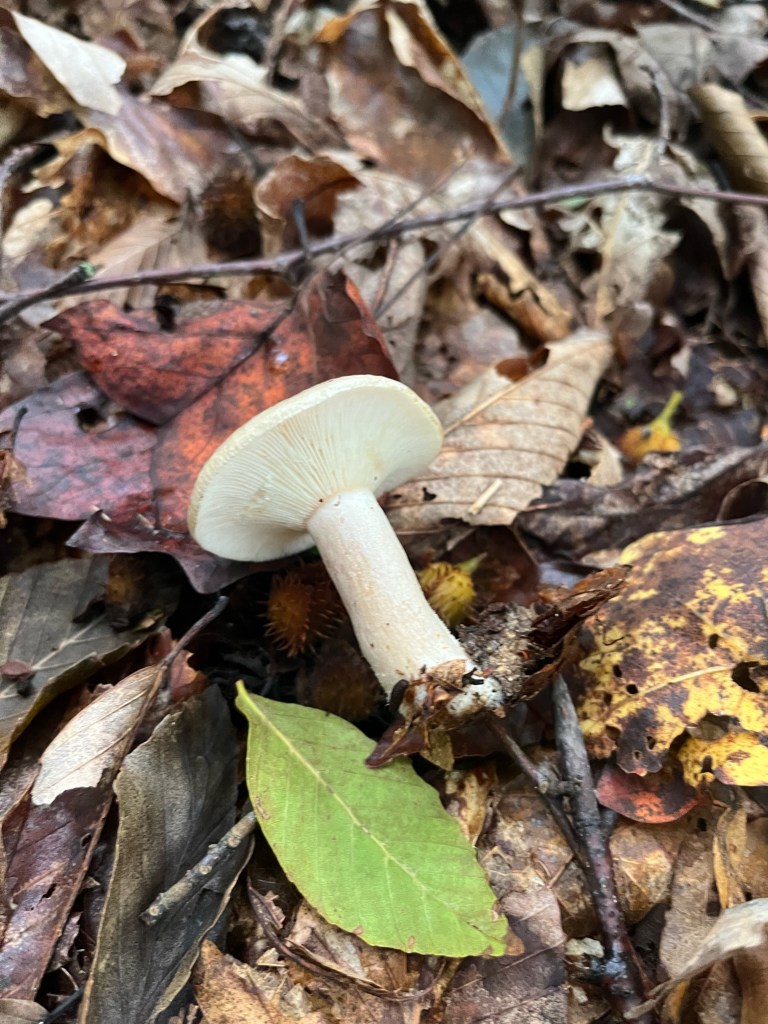
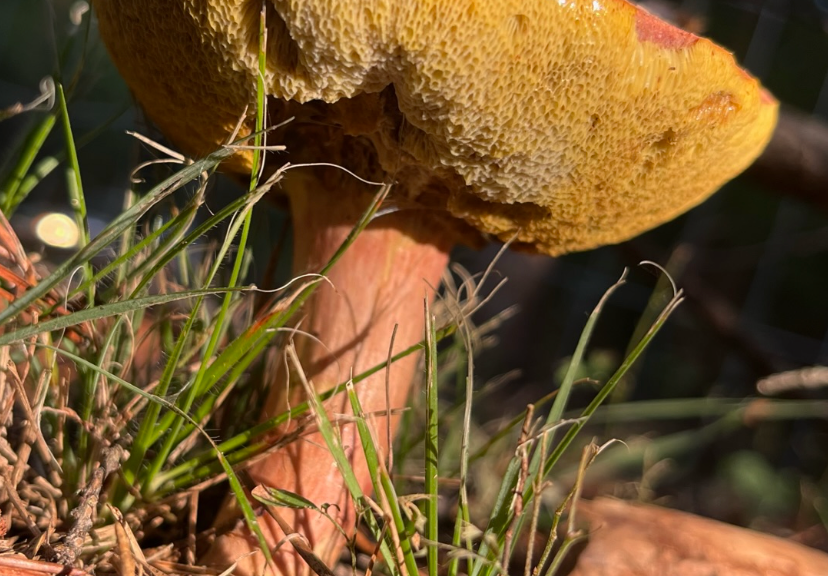
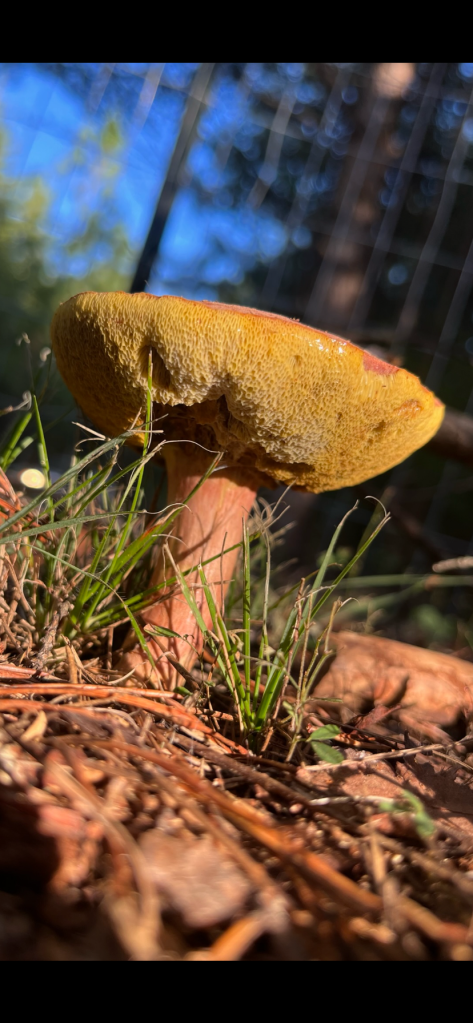
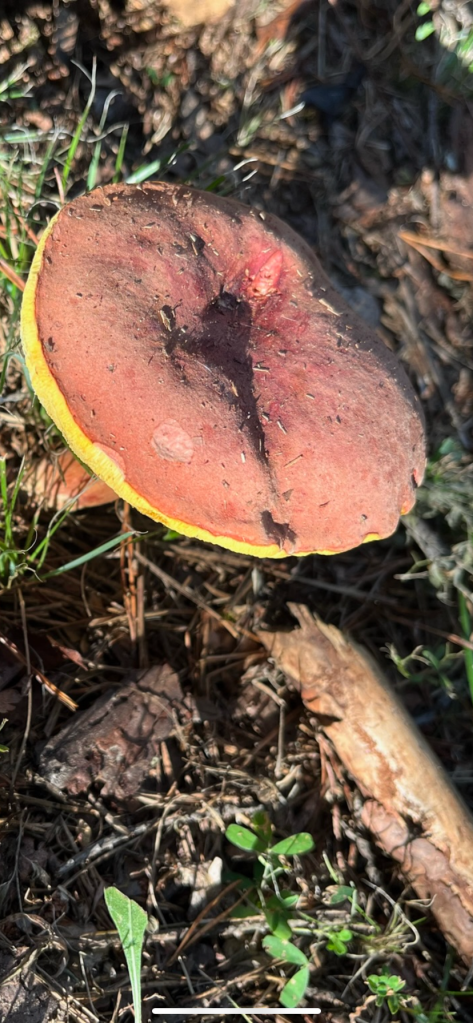
We found multiple types of mushrooms. When we pulled in we found large red and yellow boletes. We have narrowed these down to several possibilities to identify. We need further testing and data but we enjoy looking at them for now and leaving them alone.
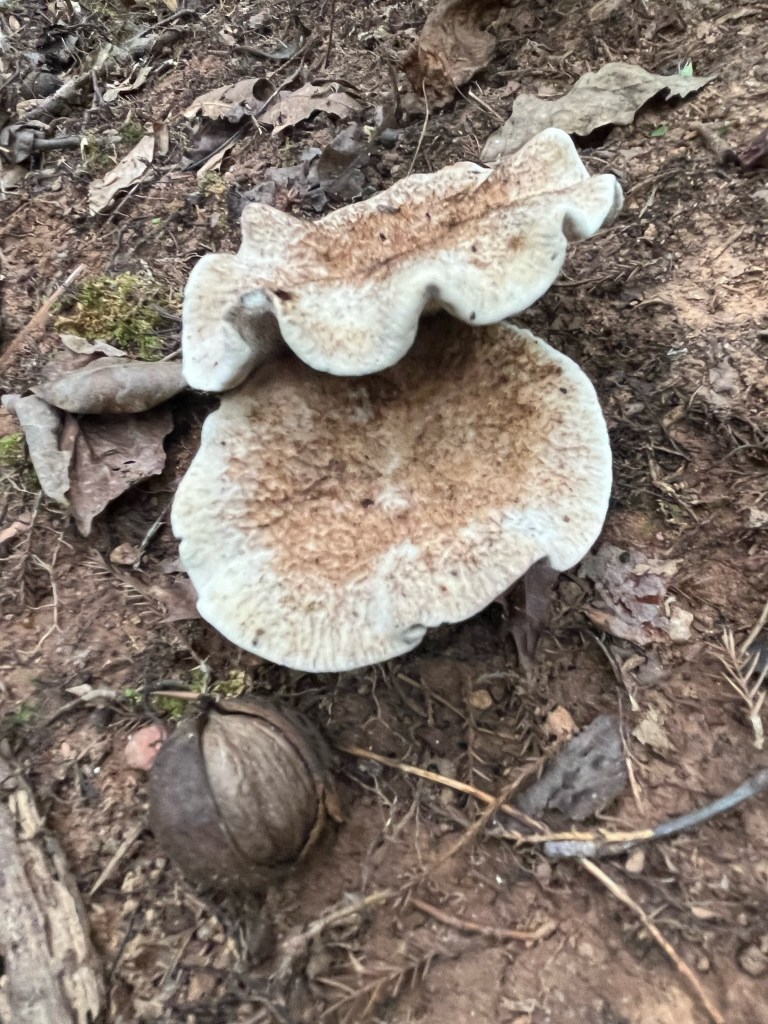
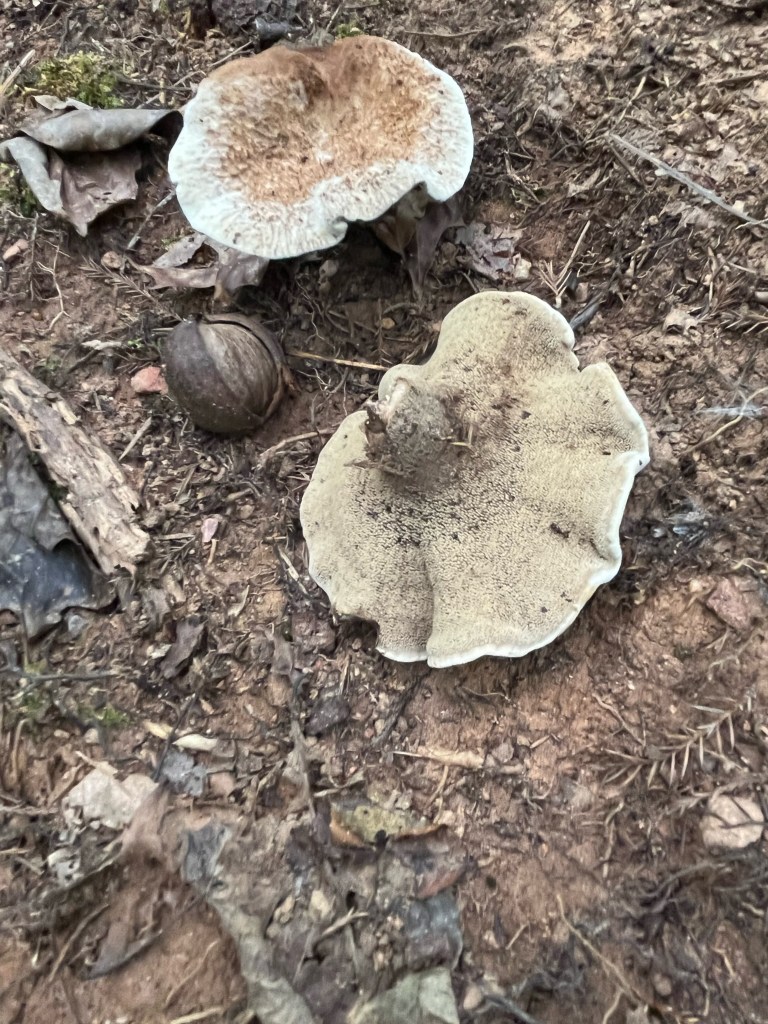
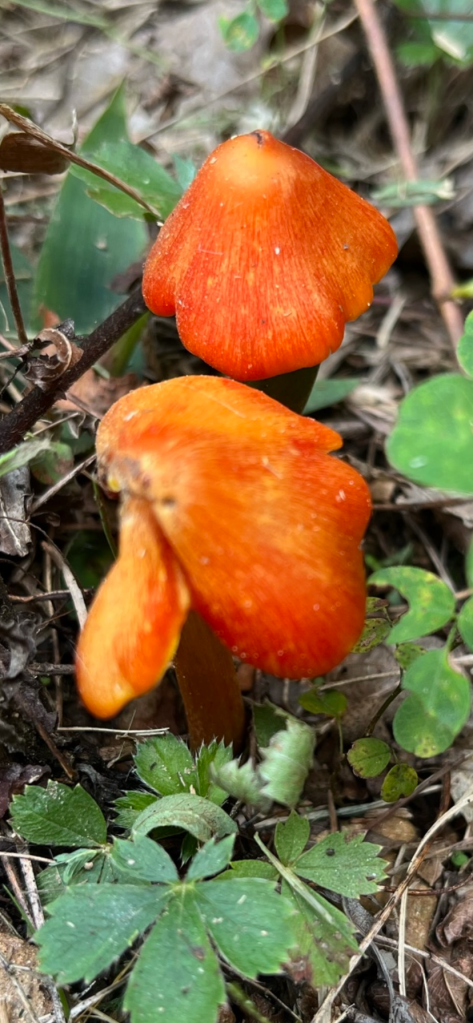
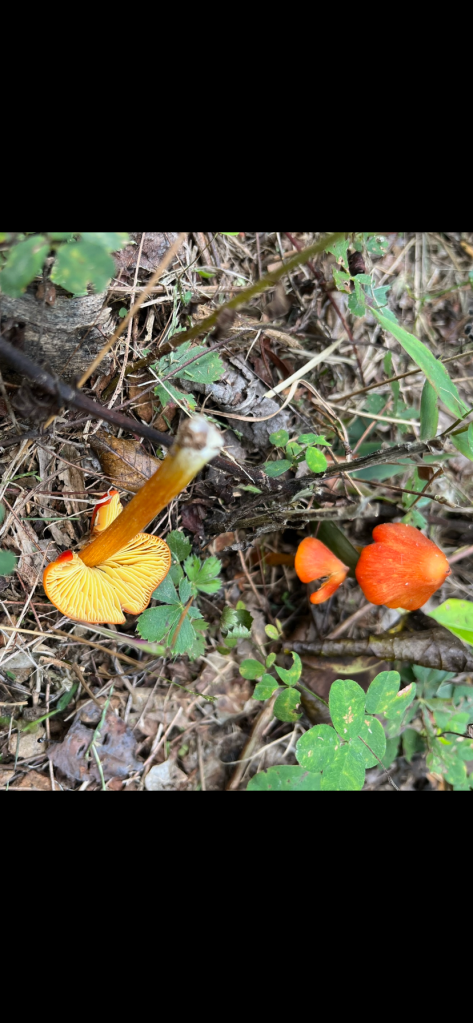
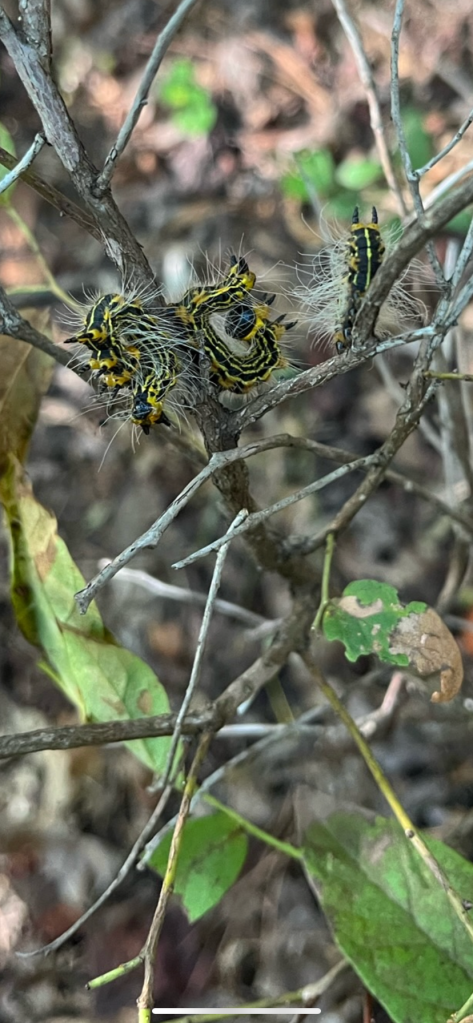
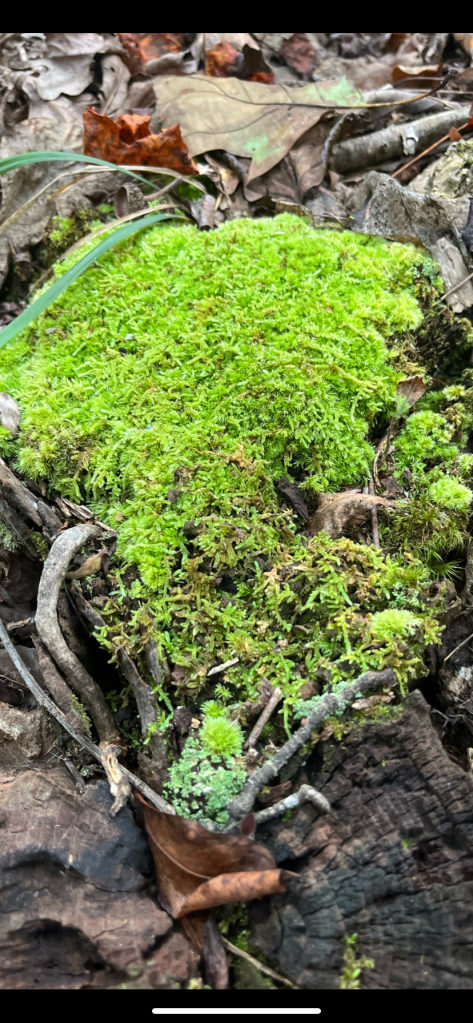
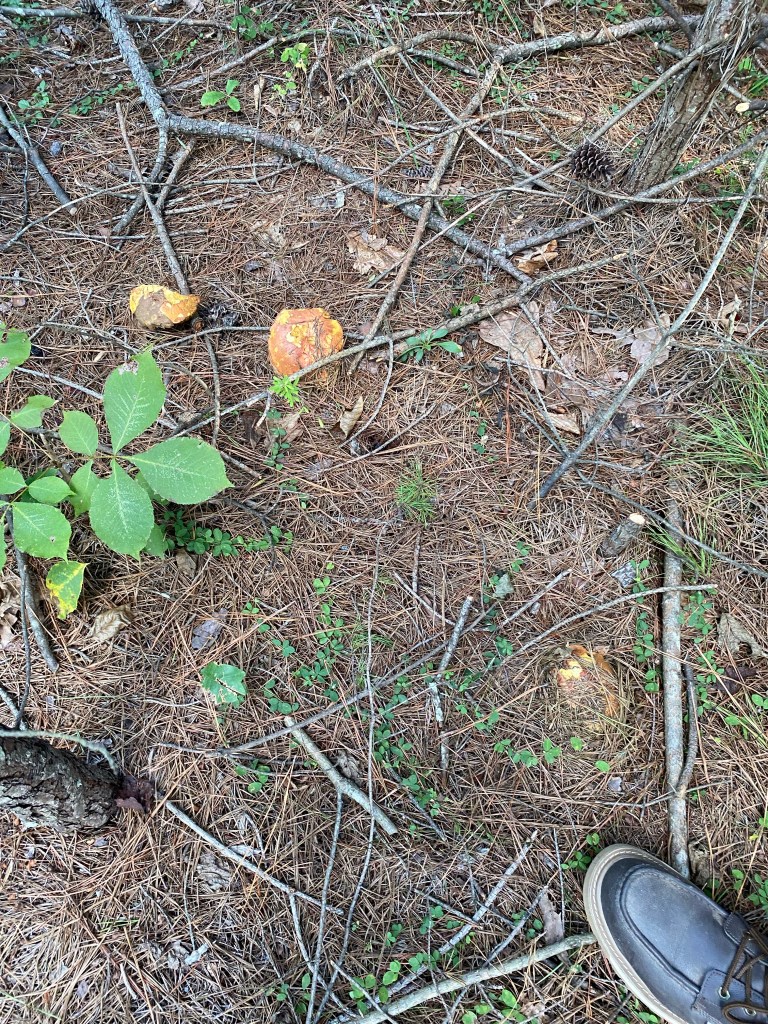
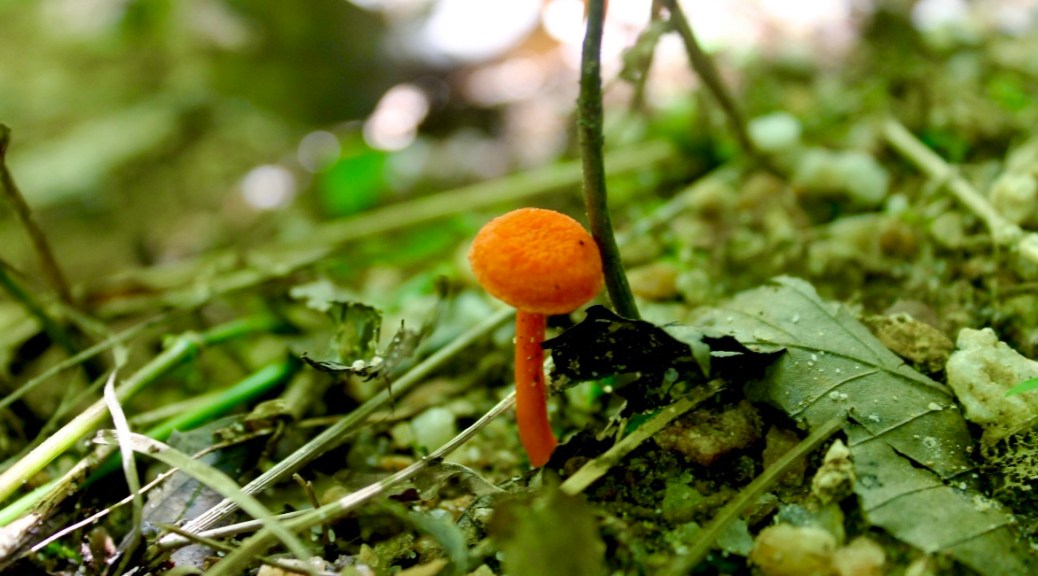
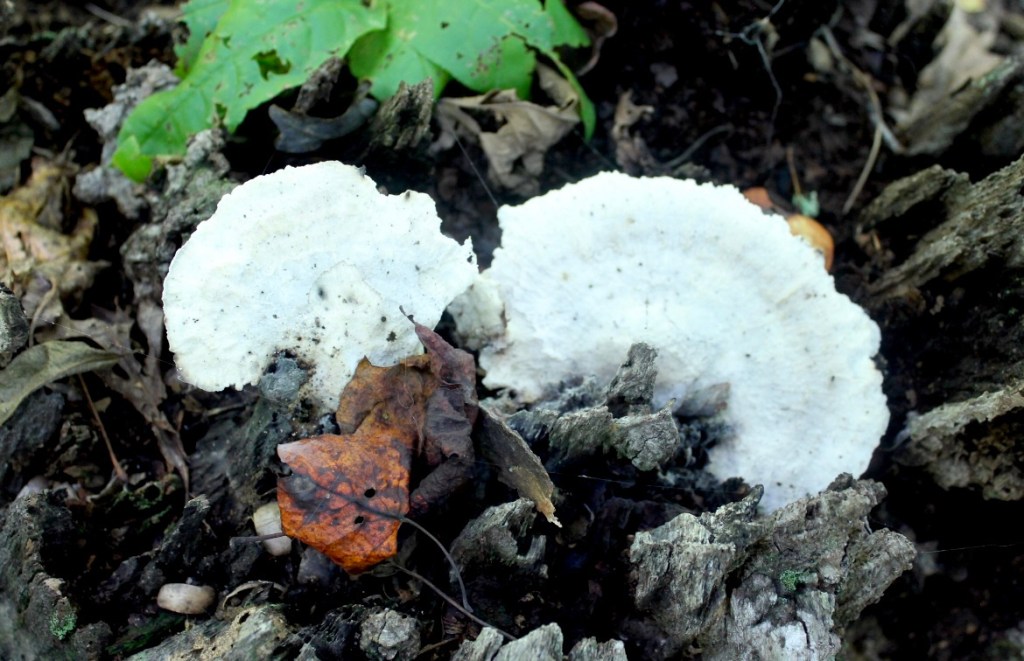
Either boletus sensiblis, hortiboletus rubellus or boletus subvelutipes. Photo credit: Chris Okay 👍🏼 The top of the unidentified bolete.Hygrocybe tops found along bottom edge of clearing. Underside with gills of waxy cap. The second time we have found a small puffball mushroom along the driveway up on top of the hill.Yellow necked caterpillar, Datana ministra. A moth in the family Notodontidae. Found along the new path we made along the south west end of property near the power lines.We saw many mosses and ferns along the edge of the waterway.Boletes popping up, Chris’ foot is pointing at another beginning to push through the layer of pine needles.Animal dens in the stumpery.
We were hard at work this afternoon, taking our Labor Day holiday out at Saint Andrews Forest Farm. After witnessing the aftermath of a rollover accident on Hwy 151 last weekend, we chose a different route today to avoid holiday traffic volume and for a micro-adventure. Our route was pretty, windy and lightly travelled, perfect for a holiday drive.
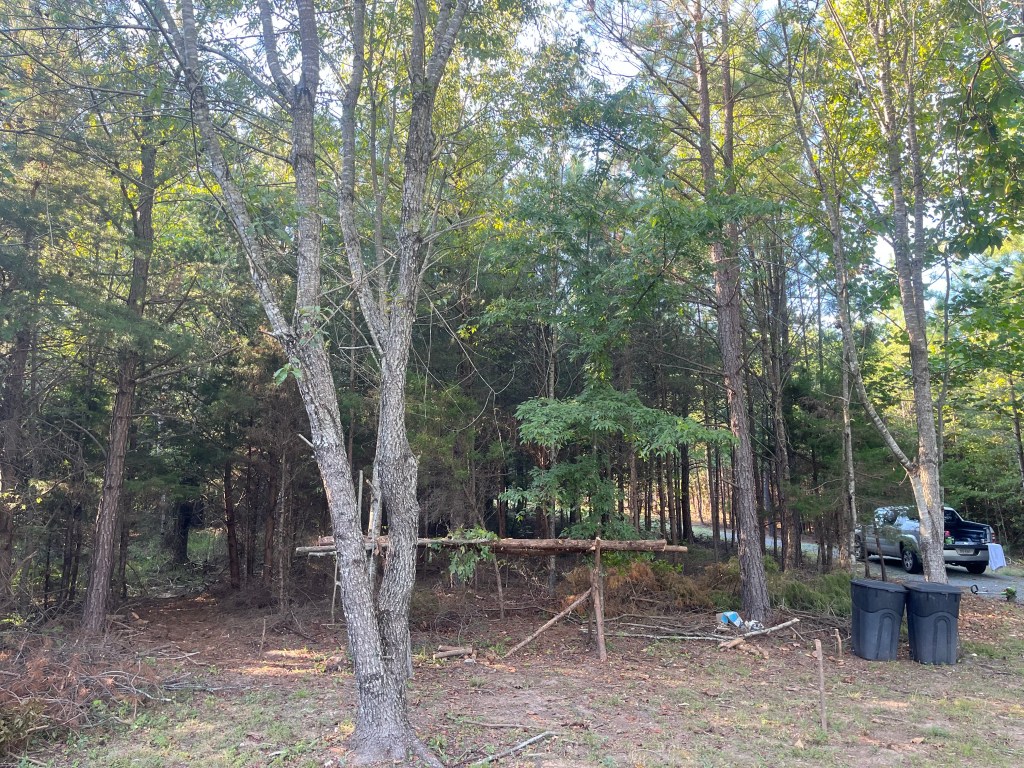
Our focus today was limbing up, trimming and thinning trees in the pine forest off the driveway. The forest near the road needs a good bit of our attention and effort. with crowding, some diseased and already dead hardwoods, and cedars, plus many dead lower branches that starved for light.
The section we worked on today.
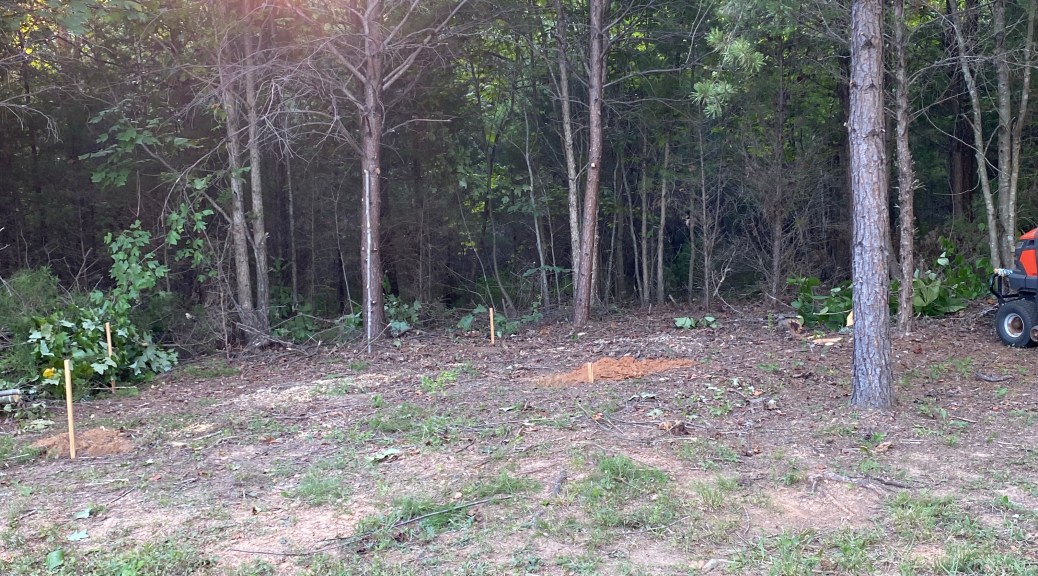
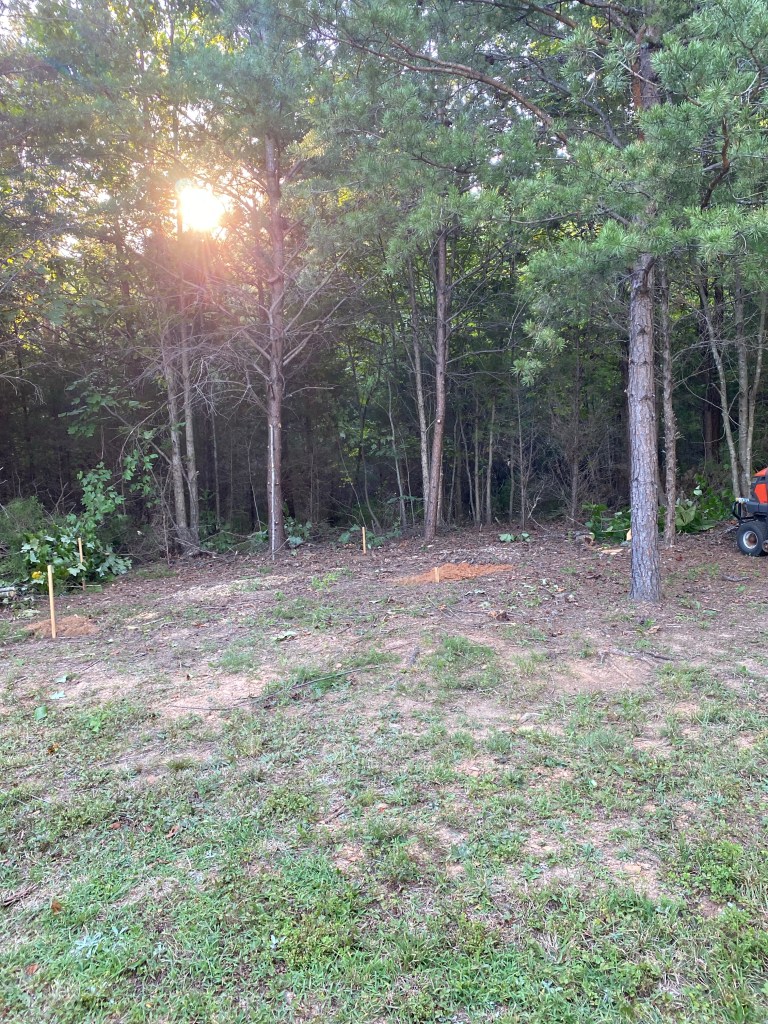
We also finished clearing space for our small composting toilet/shower building. Young hickory trees, red cedars, poplars, and young black cherries remained from our preliminary clearing. We removed these, and cleaned the area of stumps and branches left laying about from the cutting. Once we neatened up, we located and marked the approximate corners with stakes, then we squared the stakes up by measuring the diagonals, and adjusting a little as needed.
We enjoyed a taco salad break, and drank a lot of water to rehydrate, with the temperature around 92. Feeling refreshed, we were up for more tree up-limbing along the driveway, and we spent additional time on the commode building.
We found our grade and leveled each corner with the 360•laser level, marking each stake in pen at the level marks. We began digging the post holes, but called it an evening, with a much neater forest and the start of a building site under our belts!
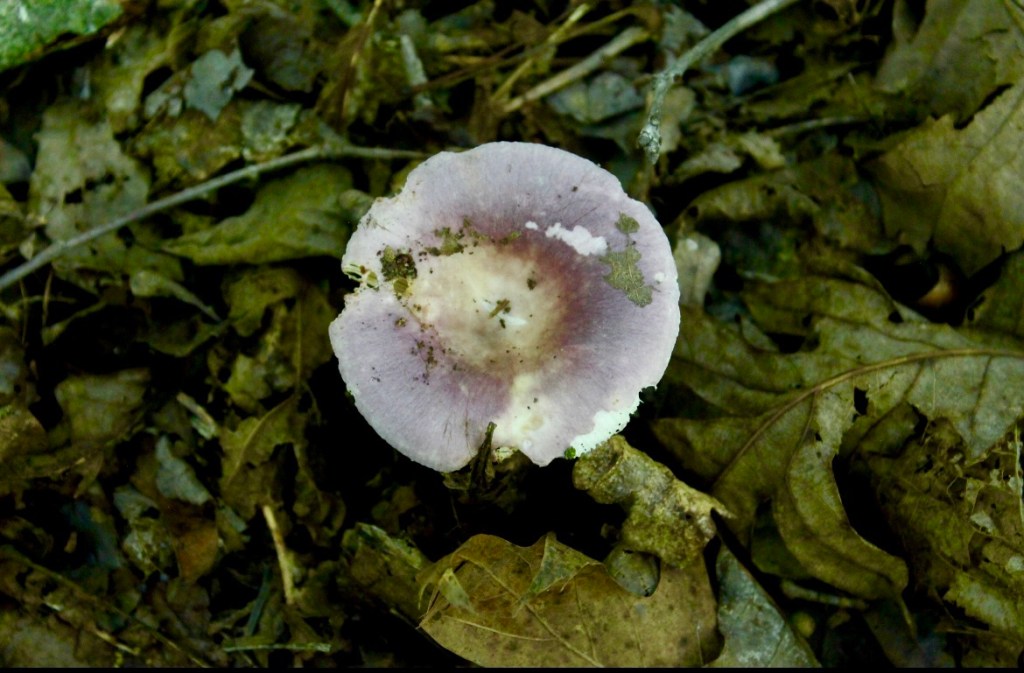
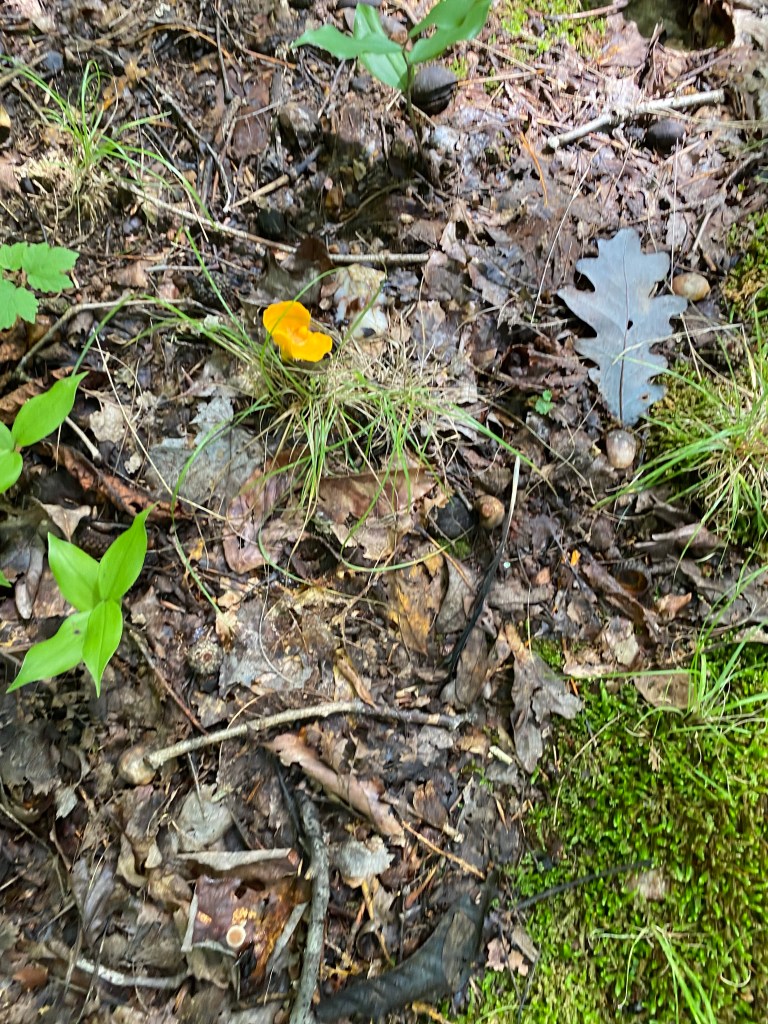
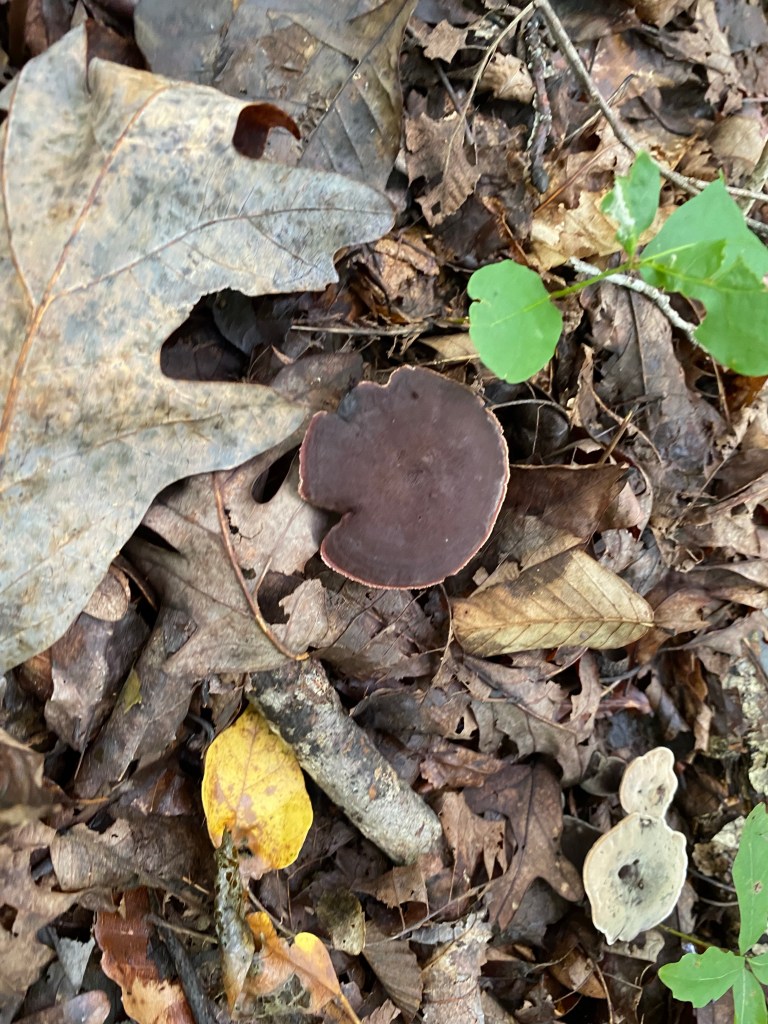
Honey fungus found 8/31/23 at bottom of slope near creek on southern end. Cinnabar Chanterelles on southern end of creek A red RussulaMolly got a picture of us.Polypore Russula cyanoxantha or charcoal burner. Found numerous specimen by southern end at bottom of property near creek.
We mowed and planned our swales in the clearing. We walked down the north trail to creek and followed it to the south trail and up. We went down chanterelle trail.
The cooler weather is wonderful. We heard a hawk. We saw toads in the water.
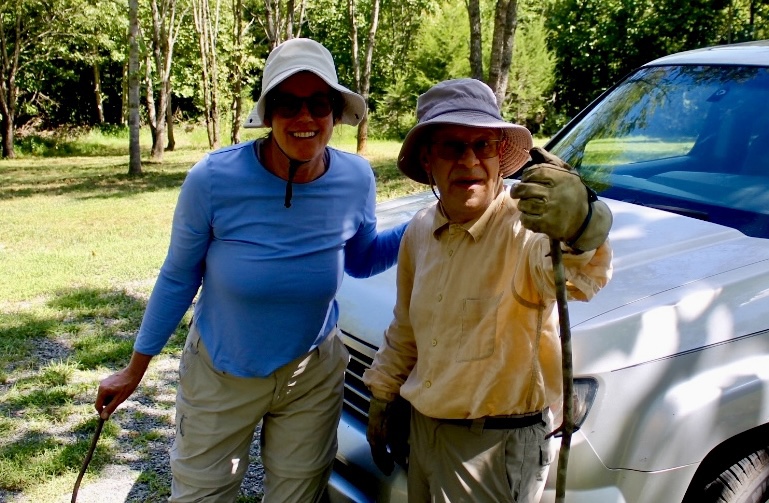
Molly took all of the photos. It was wonderful to walk around the woods with her today. There’s a crispness in the air and moving into the new season at Saint Andrews Forest Farm is exciting with so much to look forward to!
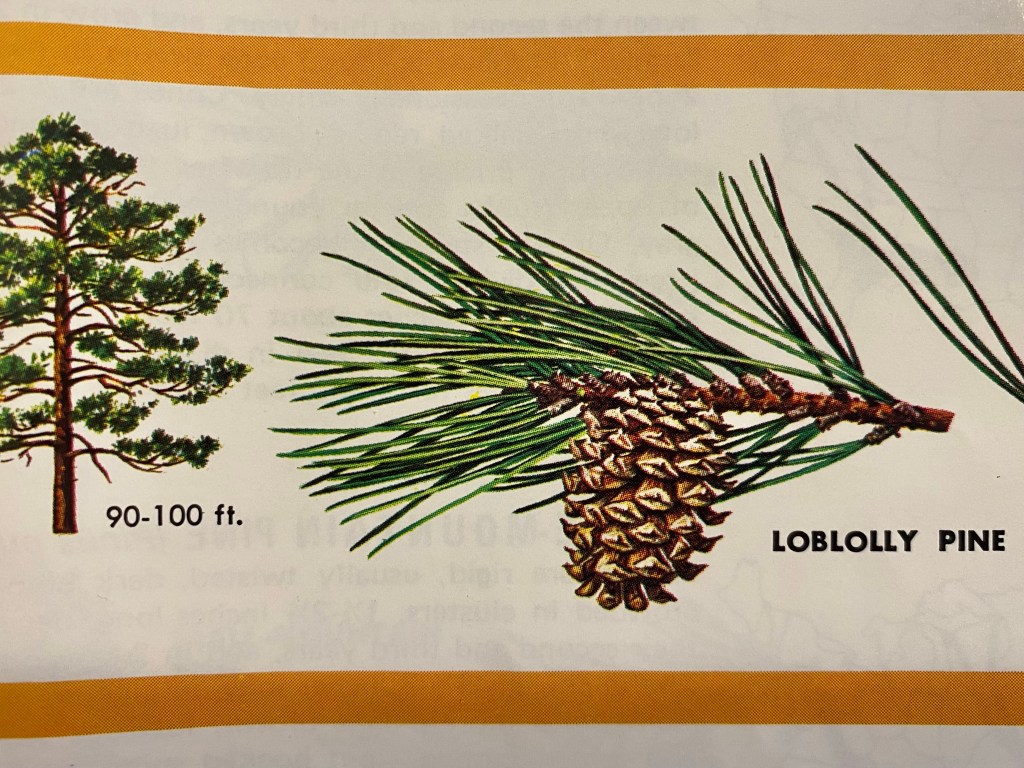
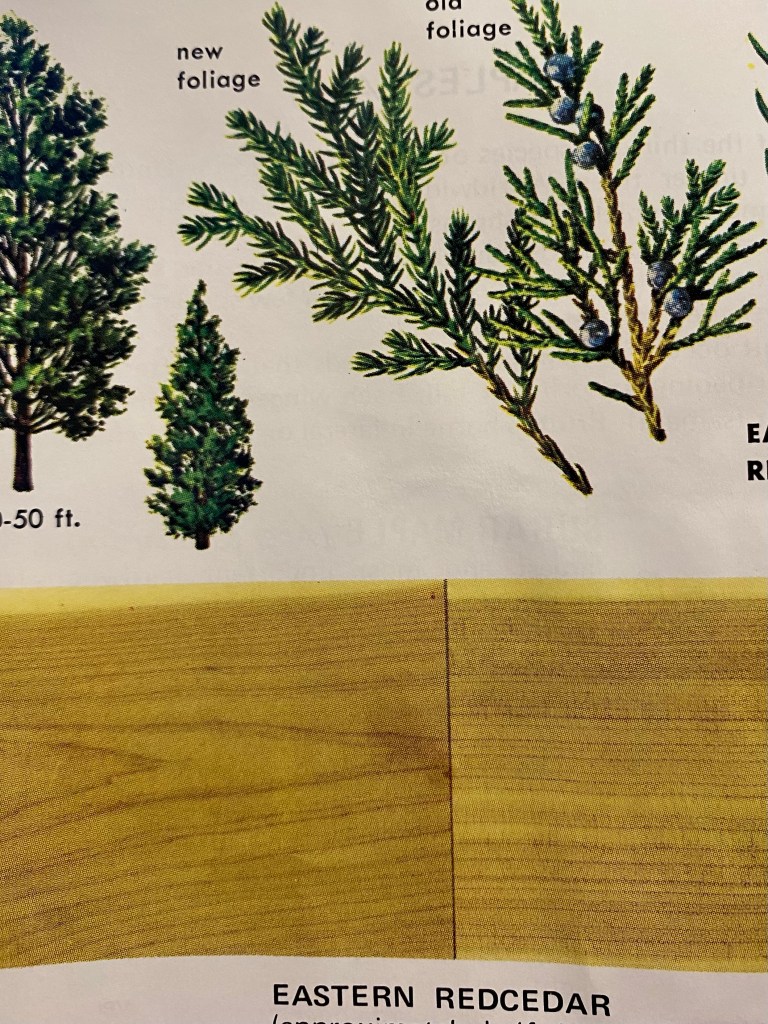
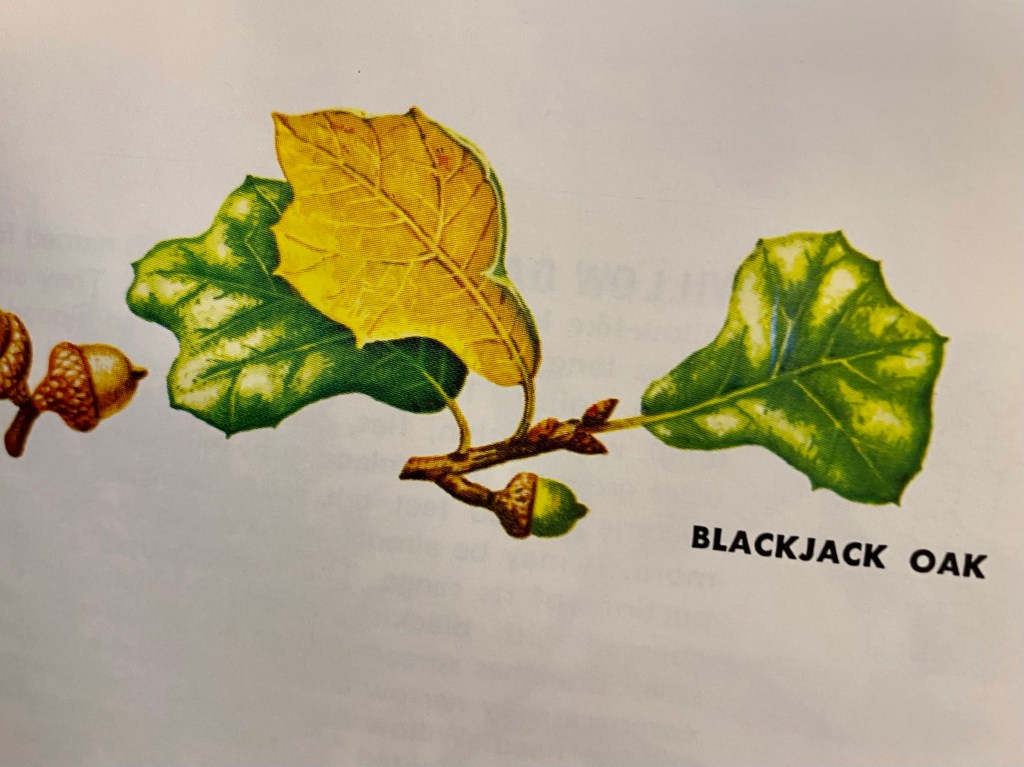
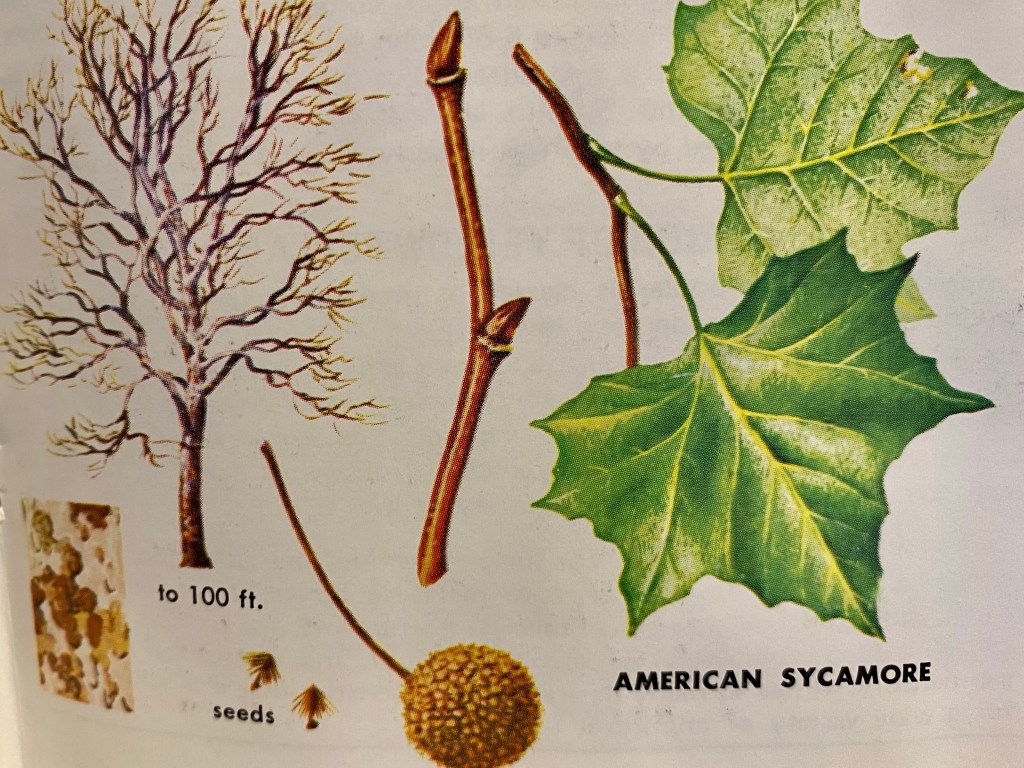
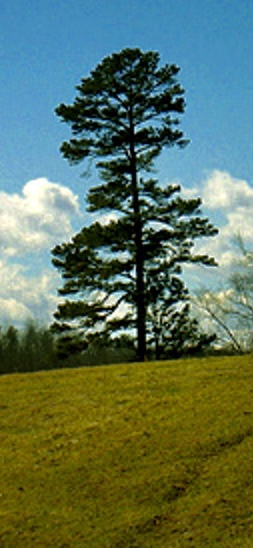
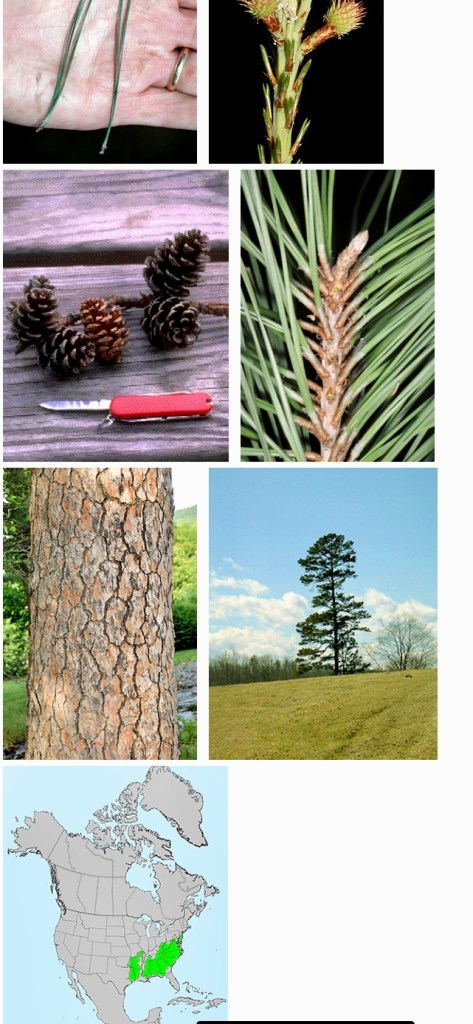
We are learning and growing along with SAFF. For the first several months, we thought our loblolly pines were long leaf pines. ☺️ Luckily, we were gently guided to their true identity. We were also gifted a helpful booklet called Important Forest Trees of the Eastern United States by the US Department of Agriculture-Forest Service. It was clear we did indeed have loblolly pines! We admire these trees for their beauty and hope to nurture and serve them as long as we can.
This is only the beginning of our list of trees. We will add more as we identify them.
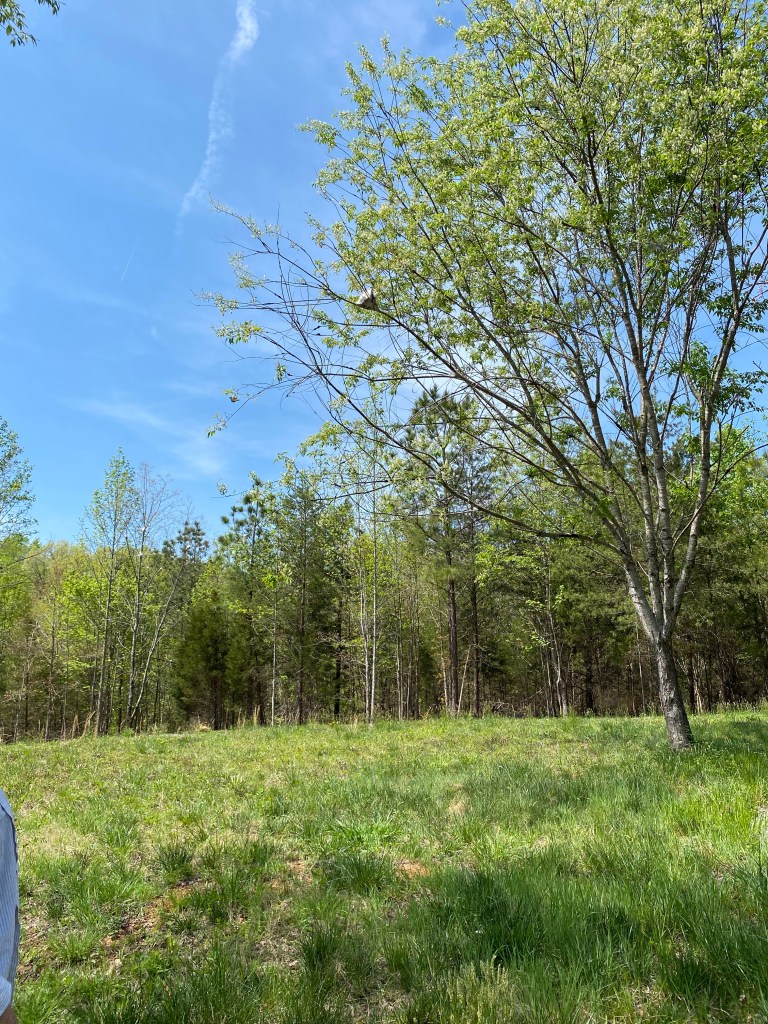
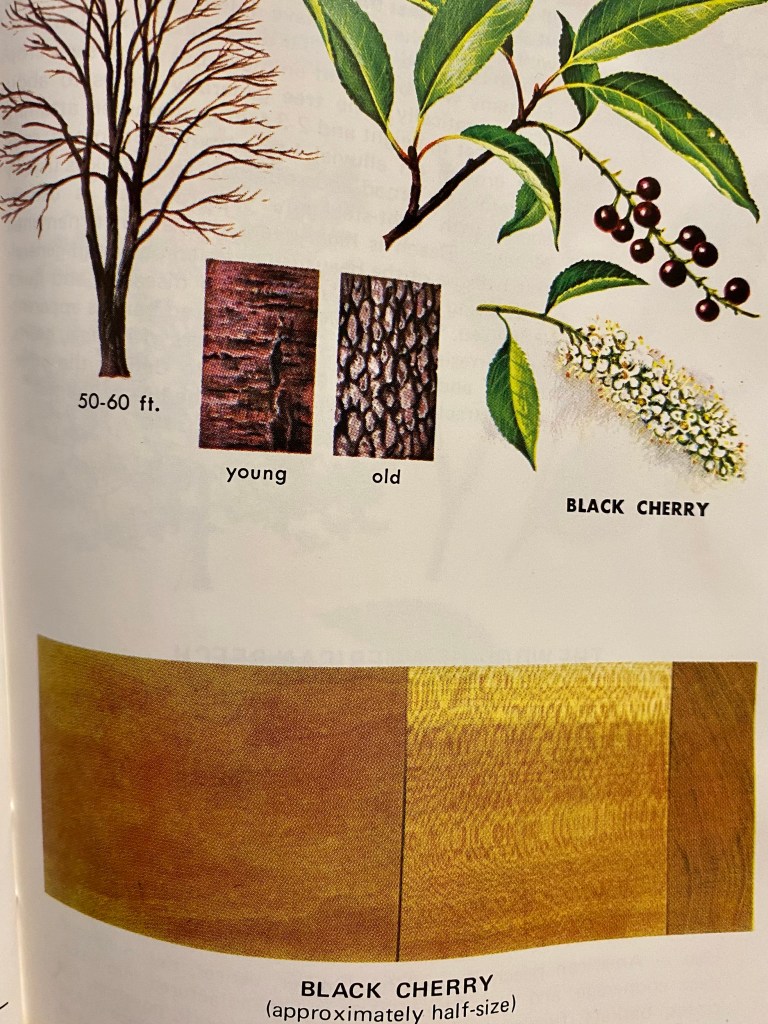
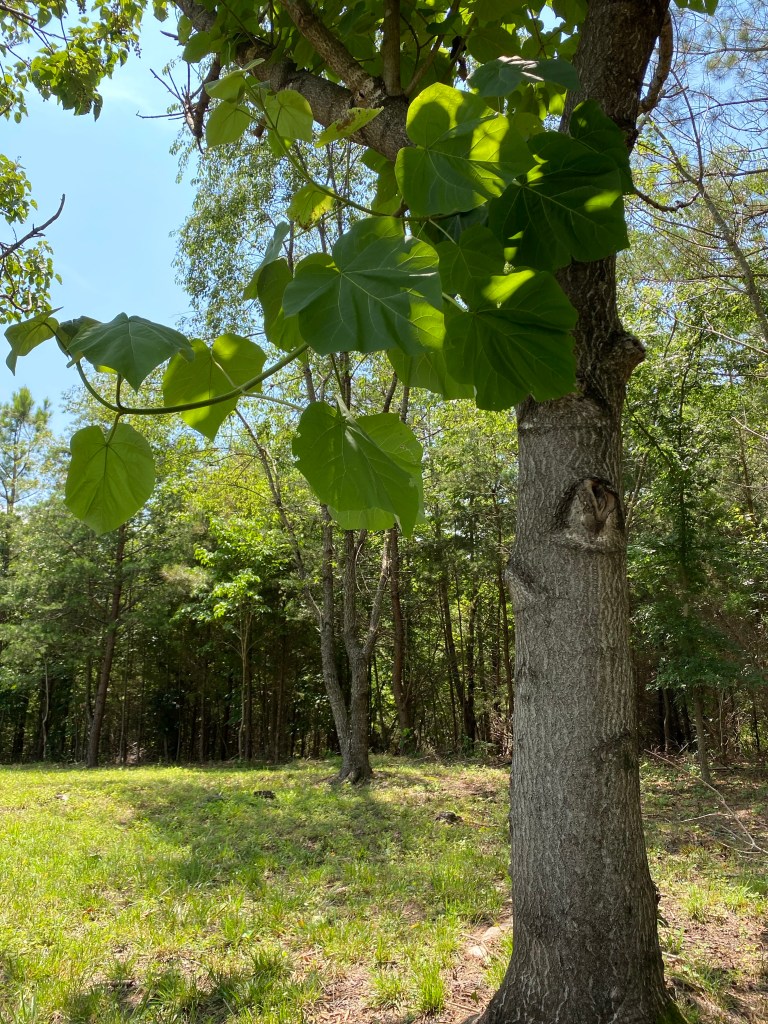
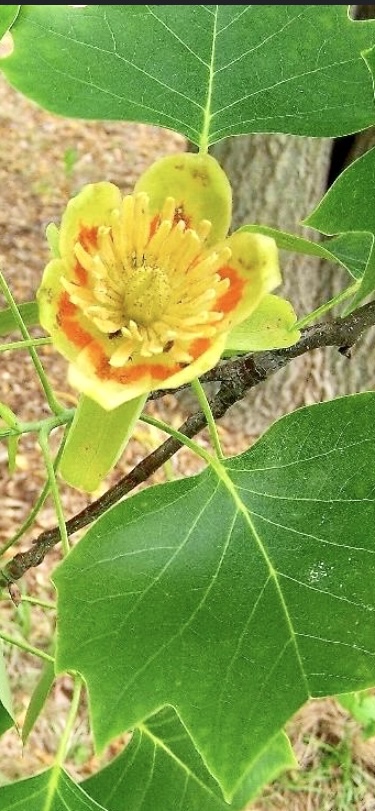
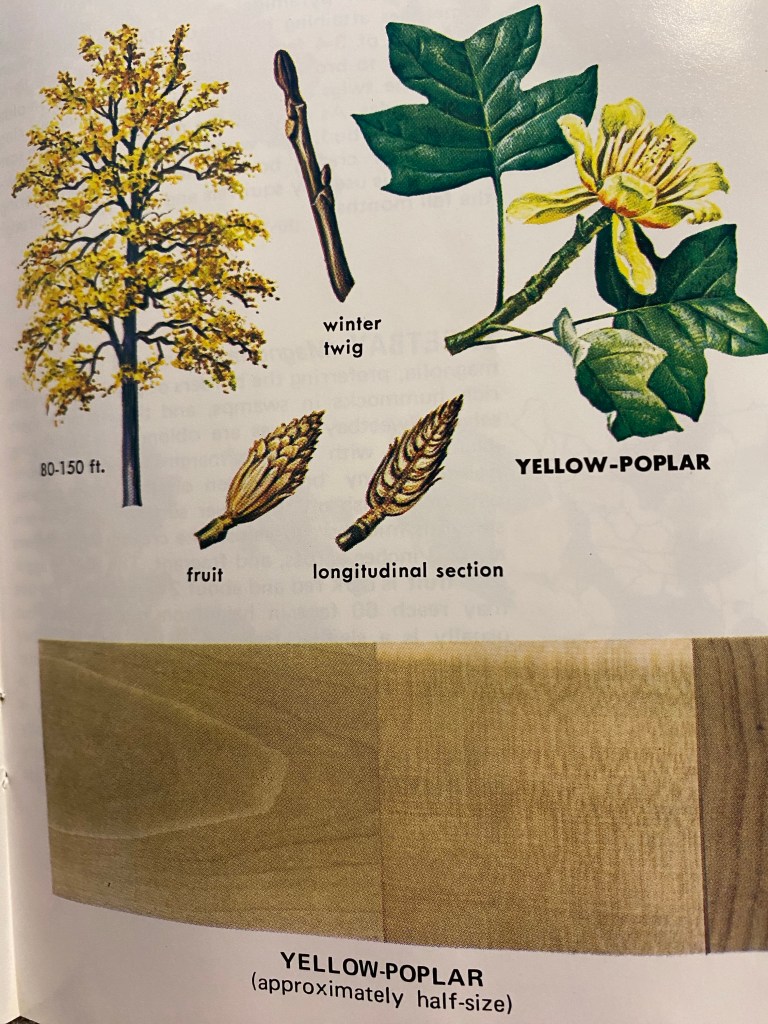
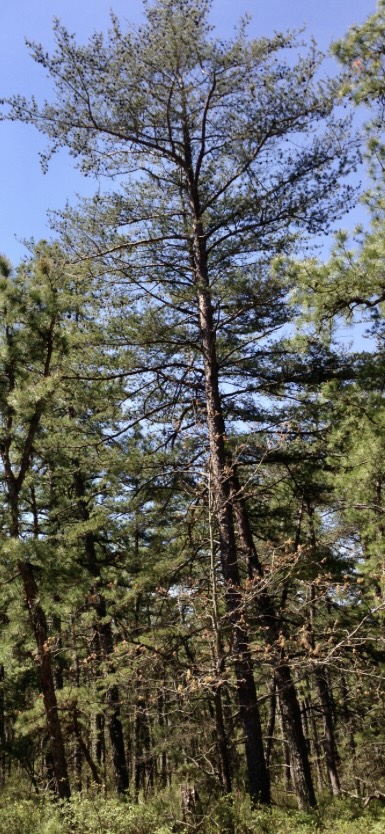
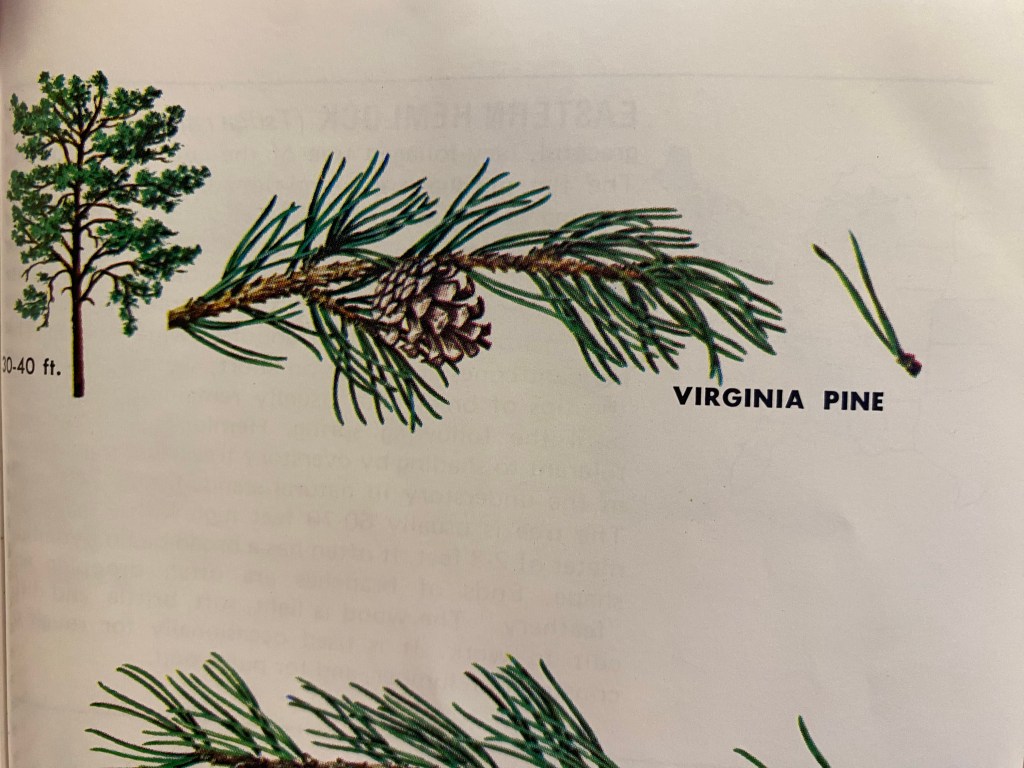
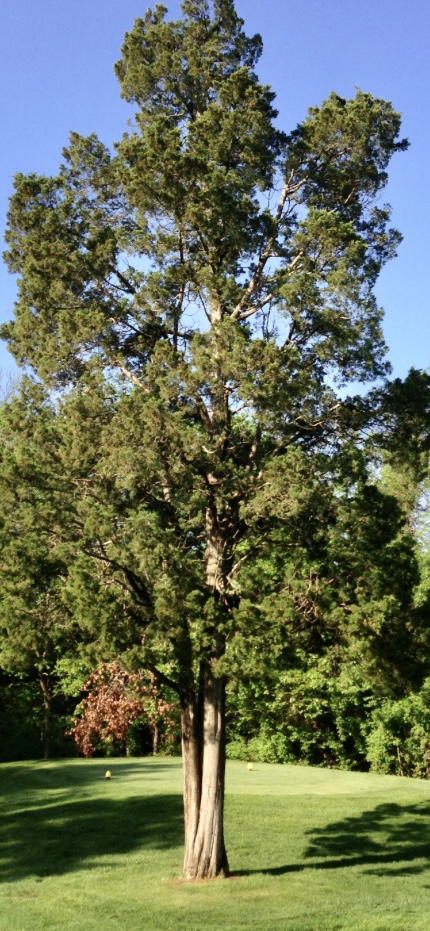
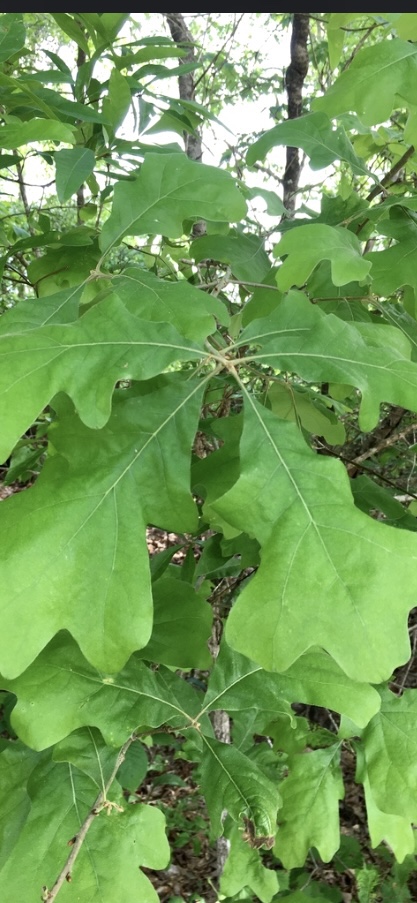
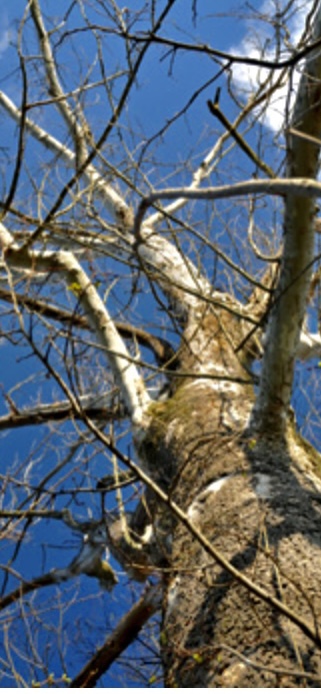
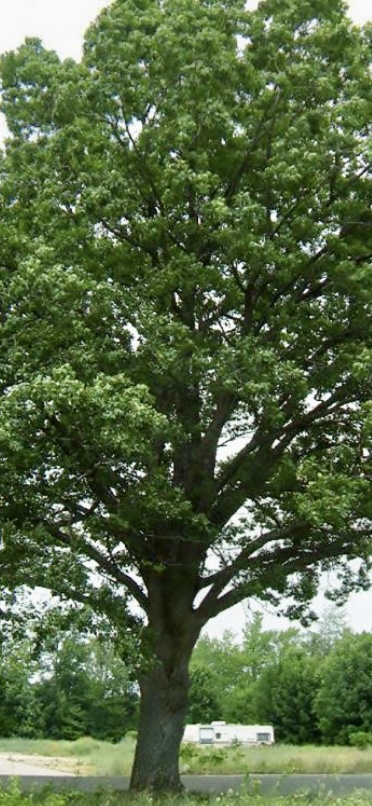
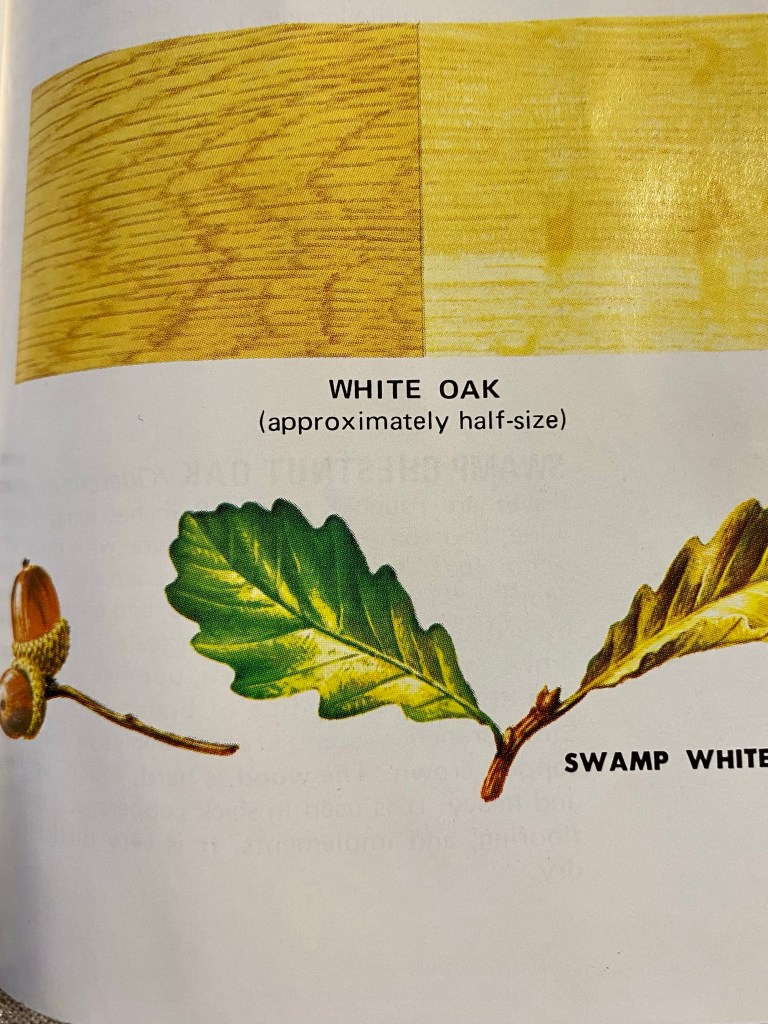
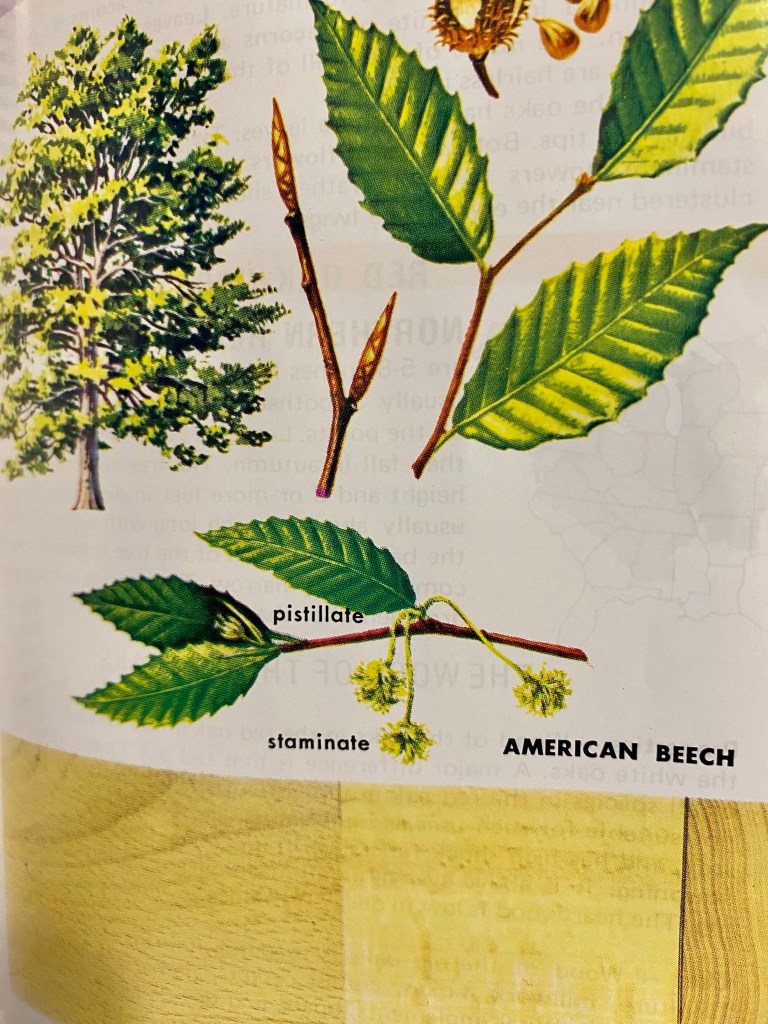
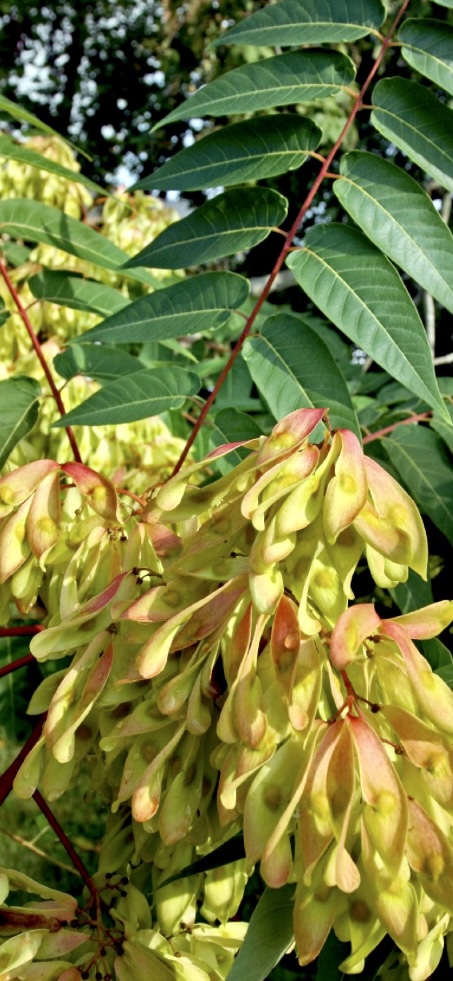
Loblolly pine, Pinus taeda, needles are in clusters of three. Loblolly seeds are eaten by wild turkeys, squirrels and some songbirds. (From Important Forest Trees of the Eastern United States booklet page 16). From Page 17 of Important Forest Trees of the Eastern United States bookletBlack Cherry, Prunus serotina, deciduous leaves 2-6 inches long one half to three quarter inch wide. White flowers. Cherries are dark red and turn black when they ripen. They are food for wild animals and birds. (Page 88 of Important Forest Trees of the Eastern US booklet). We’ve seen deer eating them on the farm cam. They are prone to caterpillar nests as evidenced by the gypsy moth nest seen here. We have an abundance of these native trees. They provide nectar and pollen for insects and food for mammals. They support 456 species. Seeds are toxic and fruit is edible.Page 89 of Important Forest Trees of the Eastern United StatesPaulownia. Nonnative. We have a few of these up top in the clearing on SAFF. It has been effectively procreating. The trees are known for fast growing and used for lumber. It is listed as invasive in Virginia so we will discourage it from spreading and are thinking of having the large paulownias milled to build a structure on the farm, and pulling out babies when the ground is soft and wet.Yellow Poplar, Liriodendron tulipifera, far and above the most common tree on SAFF. It thrives on the farm. Deer love eating the seedlings. We have plenty for them! Seeds are used by squirrels in early fall and mid winter (page 58 Important Forest Trees of the Eastern United States). Many of our poplars are very small, undeveloped, and, too -crowded trees. We have begun to use these stick-like trunks to build berms to direct and slow water down on the slope. Page 59 of Important Forest Trees of the Eastern United States Virginia pine, Pinus virginiana, a small tree, 30 to 40 feet. The seeds are eaten by wild turkeys, squirrels and some songbirds. (Page 20 Important Forest Trees of the Eastern United States)Page 21 Important Forest Trees of the Eastern United States. Eastern redcedar, Juniperus virginiana, is seen on SAFF. Spread throughout the farm. Lumber used for moth and insect repellents. Resistant to decay and rot. We will find many uses for this. Eastern red cedar makes an excellent specimen and does well in a grouping or as a screen or windbreak. It provides cover, habitat, and food for wildlife. This tree is also resistant to damage by deer. It is sometimes grown for Christmas trees. Page 29 Important Forest Trees of the Eastern United States.Blackjack oak, Quercus marilandica, A small sized tree (20 to 30 feet tall) generally with poor form and a bristle at the end of each leaf lobe. It typically has a short trunk with a round crown made up of twisted limbs. It provides cover and habitat and its acorns are an important food for mammals and birds. American Sycamore, Platanus occidentalis, multicolored and mottled bark. American sycamore is recommended for planting on all types of strip-mined land, and it is useful in rehabilitation of various sites with saturated soils. It is often a natural early colonizer of disturbed sites such as old fields, spoil banks, streambanks degraded by channelization, and waterway disposal sites. Native Americans used sycamores for a variety of medicinal purposes. https://plants.usda.gov/DocumentLibrary/plantguide/pdf/cs_ploc.pdfPage 57 Important Forest Trees of the Eastern United States Shortleaf pine, Pinus echinata, Seeds are eaten by wild turkeys, squirrels and some songbirds. (Page 14 Important Forest Trees of the Eastern United States). A medium to large tree with a straight, well pruned trunk, able to reach over 100 feet tall; typically has a small, open, pyramidal crown. https://dendro.cnre.vt.edu/dendrology/syllabus/factsheet.cfm?ID=101Shortleaf pine https://dendro.cnre.vt.edu/dendrology/syllabus/factsheet.cfm?ID=101White oak, Quercus alba, is a deciduous tree with leaves 5-9 inches long and 7-9 rounded lobes. This is Virginia’s oaks support 534 species making them highly valued and a keystone species. They are long lived, slow growing with a deep tap root. Intolerant of flooding. Although called a white oak, it is very unusual to find an individual specimen with white bark; the usual colour is a light grey. The name comes from the colour of the finished wood. The acorns are much less bitter than the acorns of red oaks, but are small relative to most oaks. They can be eaten by humans but, if bitter, may need to have the tannins leached. They are also a valuable wildlife food, notably for turkeys, wood ducks, pheasants, grackles, jays, nuthatches, thrushes, woodpeckers, rabbits, squirrels, and deer. https://en.m.wikipedia.org/wiki/Quercus_albaPage 103 of booklet Important Forest Trees of the Eastern United States American Beech, Fagus grandifolia, Edible nuts are triangular in prickly husks that remain on tree into winter. These nuts are excellent food for many wild birds and animals Page 91 of Important Forest Trees of the Eastern United States Tree of Heaven, Ailanthus, a nonnative, is also unfortunately on SAFF. So far, we have seen it up top in clearings and in the forest. At least 3 clusters of it noted so far. We have a plan to rid the farm of this invasive plant. Ailanthus produces an overly abundant amount of seeds, crowds out native species with its dense thickets and secretes a chemical into the soil that is toxic to surrounding plants. Hand pulling young seedlings is effective when the soil is moist and the entire root system is removed. https://extension.psu.edu/tree-of-heaven#:~:text=When%20cutting%20tree%2Dof%2Dheaven,entire%20root%20system%20is%20removed.
This species is easily confused with some of our native trees that have compound leaves and numerous leaflets, such as staghorn sumac, black walnut, and hickory. The leaflet edges of these native trees all have teeth, called serrations, while those of tree-of-heaven are relatively smooth. The foul odor produced by the crushed foliage and broken twigs is also unique to tree-of-heaven.
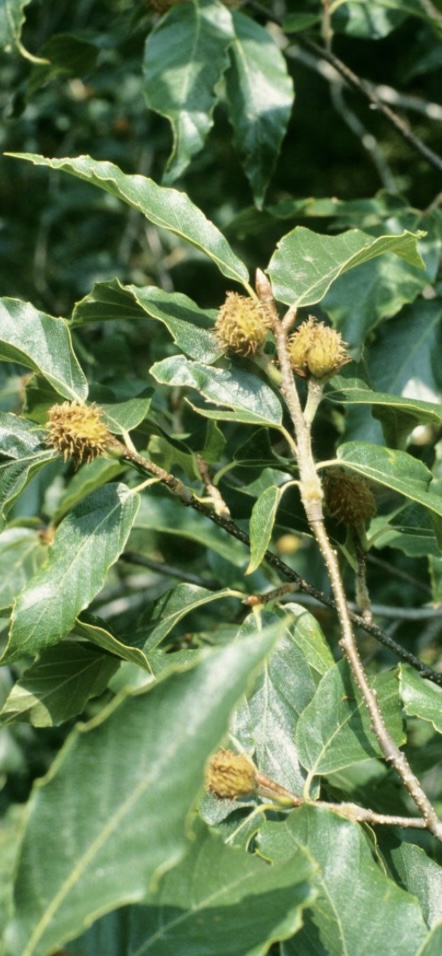
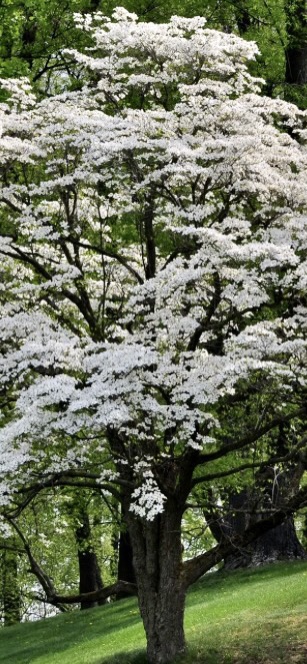
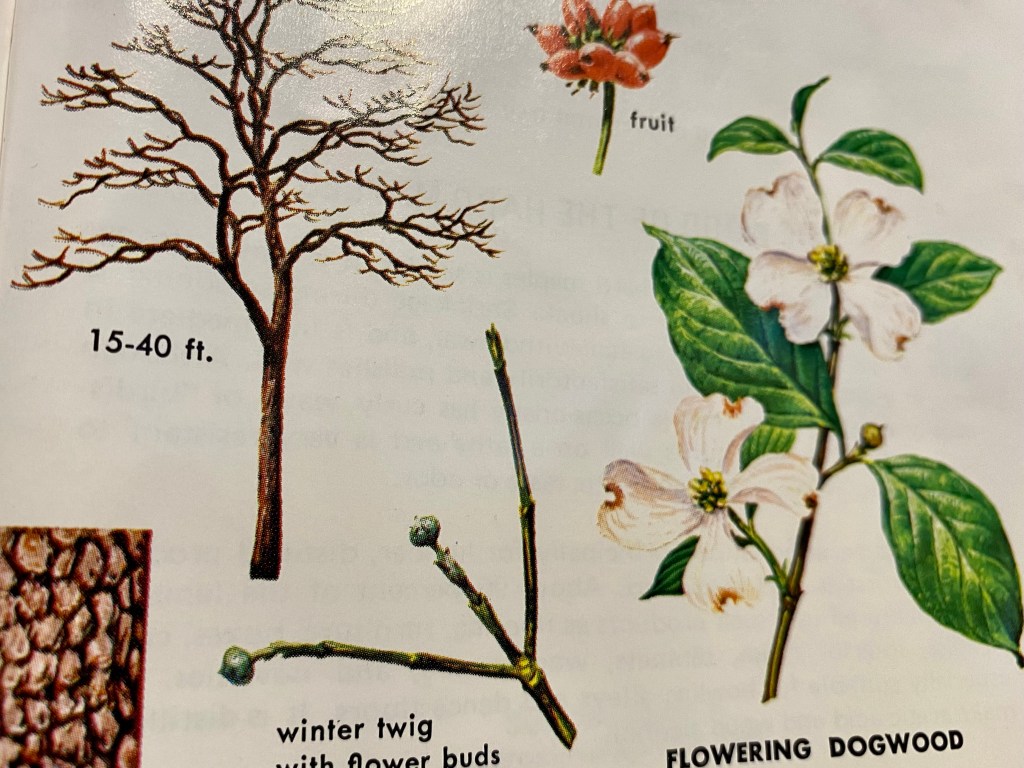
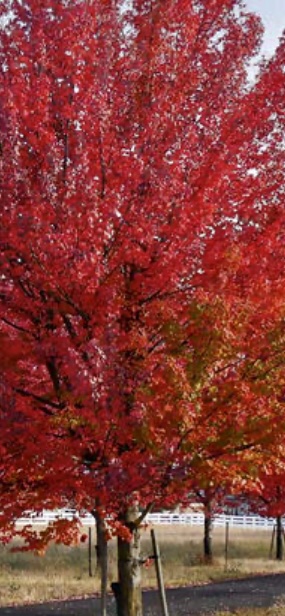
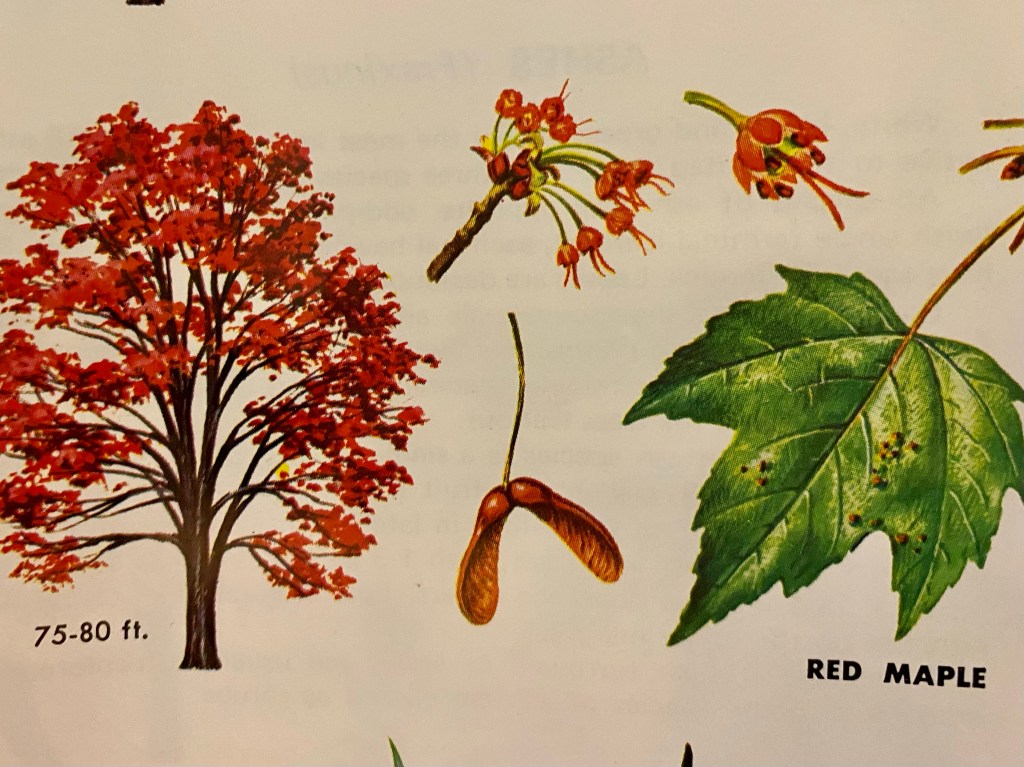
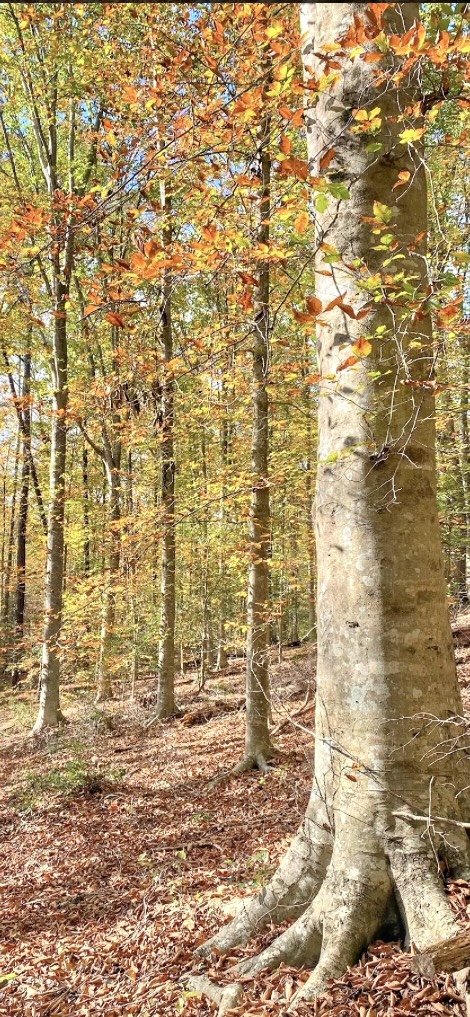
Flowering dogwood, Cronus florida, has beautiful white flowers in spring. Dogwood berries are winter food for deer, wild turkeys, gray squirrels and many species of songbirds. (Page 28 Important Forest Trees of the Eastern United States.Page 29 Important Forest Trees of the Eastern United States Red Maple, Acer rubrum, the buds and samaras are a primary food source for gray squirrels in late winter and early spring. Sprouts are a favorite deer food. (Page 32 Important Forest Trees of the Eastern United States. Page 33 of Important Forest Trees of the Eastern United States American Beech found at bottom of slope along waterway.
American beech trees are one of our most magnificent native trees, beautiful in every season, especially winter. They are also one of the most easily recognized of our eastern deciduous trees, with their silvery gray bark that appears cast from “molten pewter”. The massive trunks appear smooth to the eye but are slightly rough to touch and sometimes likened to elephant hide. American Beeches are slow growing but reach heights of 60 – 80’ and are known to grow as tall as 120’. This tree has massive smooth trunks with fluted bases that give way to a tracery of fine silvery branches accented with rich brown narrow pointed buds. Oval leaves alternate down the fine branches and are lined with small regular teeth along the margins and distinctive parallel veins on either side of the mid-rib. The lustrous leaves are almost translucent when held up to the sun, casting a dappled light under the trees. The leaves emerge a glowing chartreuse in spring, and light up the woodlands once again in fall when they turn a rich copper which glows against the silvery gray trunks. In winter, some of the leaves curl and fade to a light parchment color and hang on the branches, especially on younger trees and on lower branches of older trees, creating a lovely contrast with the gray trunks and surrounding forest.
In spring, their small yellow-green flowers are rarely noticed but give rise to distinctive three-sided nuts held in a ½” long prickly capsule. Beechnuts have been reported as the primary food source for more than 30 species of wildlife including: squirrels, flying squirrels, chipmunks, deer, foxes, and black bears as well as many birds such as wild turkey, grouse, ducks, blue jays, grosbeaks, woodpeckers, including red headed woodpecker, and nuthatches. Many of these animals cache the seeds helping to disperse them widely. In bygone times, the abundant nuts were readily eaten by pigs who could roam free under the beech trees. The nuts were also a favorite food of the now extinct passenger pigeon who descended to feast on them in such great numbers their weight caused massive branches to break off! The thin smooth bark was also once used for writing paper, and the unfortunate habit continues today with folks still loving to carving their initials into the smooth bark, potentially harming these long lived trees. The bark and leaves have been used historically to dye fabric and a poultice of boiled leaves has been used to treat burns, frostbite, and poison ivy and a tea made from the bark has been used to treat various respiratory ailments.
Sugar Hackberry found at top along edge near several large black cherries.
We found this Sugar Hackberry while we were clearing out around large pines on top at edge of clearing. It was covered in leaf cutter bees that had cut out little notches in the leaves to use for their young.
The notches cut from the leaves by the leaf cutter bees.
Uses Conservation: Sugarberry is used in native landscaping and habitat restorations, and windbreaks. Ethnobotanic: Sugarberry was used by a variety of Native American tribes. The Houma used a concentrate made from the bark to treat sore throats and a decoction made from the bark and ground up shells to treat venereal disease. The Comanche would beat the fruits of sugarberry to a pulp. The pulp was then mixed with animal fat, rolled into balls, and roasted in the fire for food. The Acoma, Navajo, and Tewa all consumed the berries for food. The Navajo boiled the leaves and branches to make dark brown and red dye for wool.
Wildlife: Many species of songbirds including mockingbirds and robins eat the fruit and use the tree for nesting habitat. It is a larval and nectar host for two butterflies: hackberry emperor (Asterocampa celtis) and American snout (Libytheana carineta). White-tailed deer browse the leaves and fruit. Other Uses: Sugarberry is used for furniture, athletic goods, firewood, and plywood. It has limited use for flooring, creating, and for wood posts. It is used as an ornamental and as a street tree in residential areas in the lower South
A big thank you to Judy for beginning this list after a walk around SAFF. She found and identified these plants and we hope to keep adding to this list as we continue to identify others.
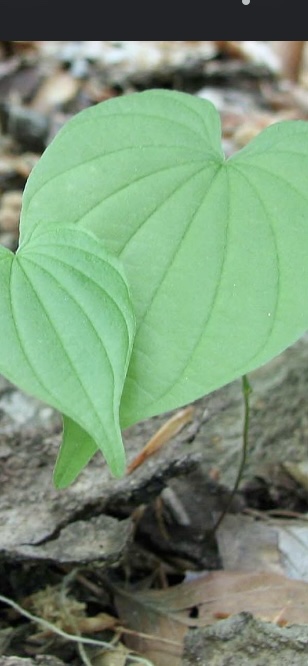
Wild yam vine
Common names of Dioscorea villosa include wild yam, Atlantic yam, common wild yam, wild yam-root, yellow yam, colic root, and rheumatism root.
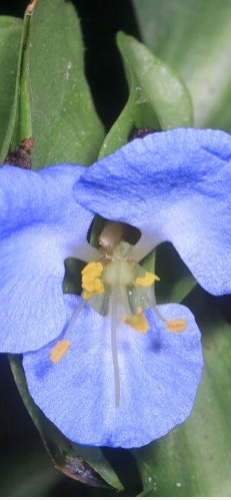
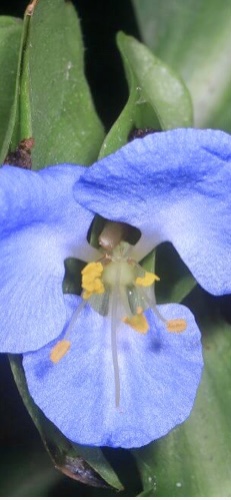
Deer Tongue -Day flower commelina communis
In early homesteads, deer tongue leaves were placed in bureaus to impart a pleasant smell to clothing or hung in bundles in rooms to freshen the air. Deertongue also has medicinal properties; Native Americans and the earliest settlers made a tea that was believed to be an all-purpose cure and tonic.
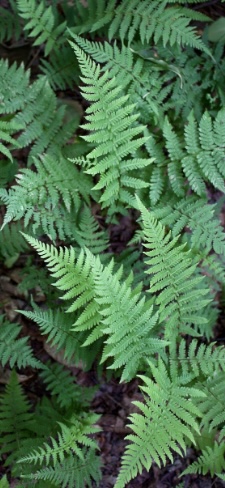
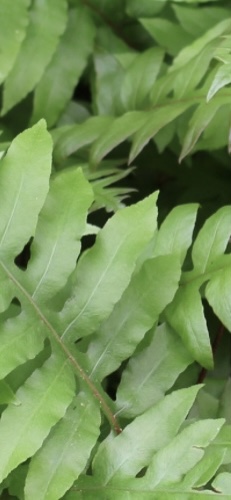
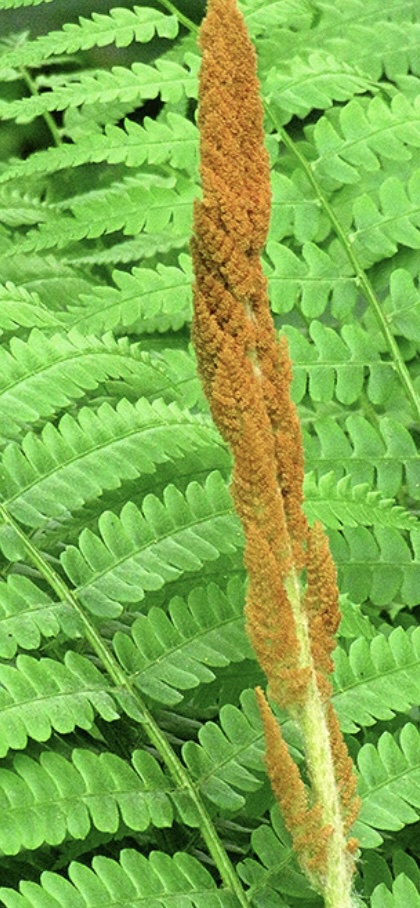
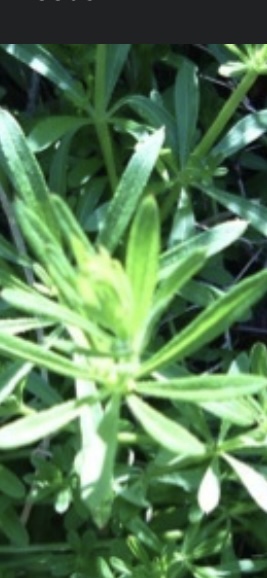
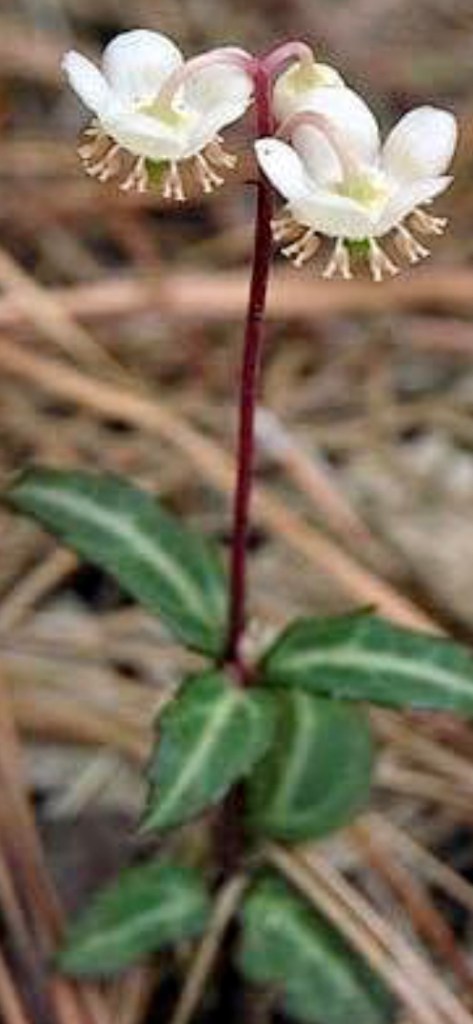
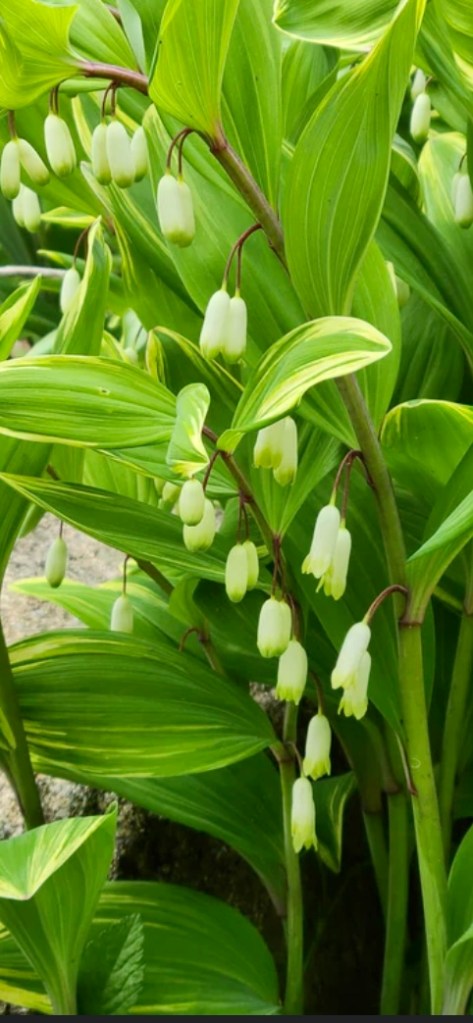
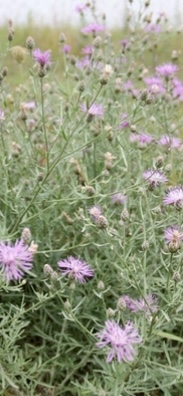
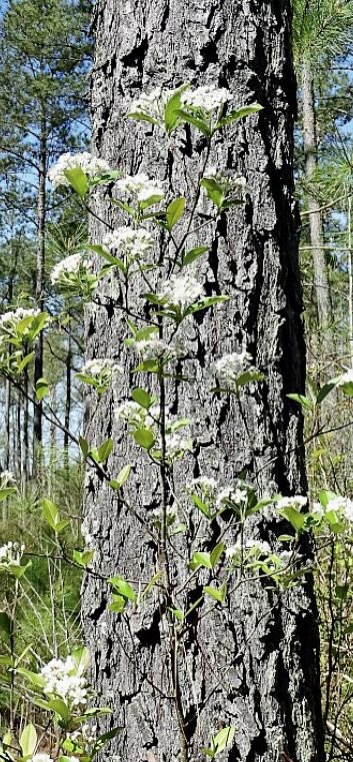
New York Fern provides ground cover for shady woodland gardens and shelter for toads.Sensitive Fern, chain fern, the young fiddleheads are eaten as vegetables. However it is poisonous to cattle. Requires moist, shady environments.Cinnamon Fern The young unexpanded fronds are eaten as a nibble or cooked in soups. The taste is said to resemble asparagus. The young shoots are seen as a “spring tonic” to cleanse the body with fresh green food after a long winter eating mainly stored foods.Galium – Bedstraw somewhat clinging Striped wintergreen, insect pollinated and tolerant of acidic soil. Lives in oak-pine woods. “The Creek Indians called it ‘pipsisikweu’ – which means ‘breaks into small pieces’ – after the supposed ability to break down gallstones and kidney stones. … Native Americans used its leaf tea to treat rheumatism and stomach problems, and crushed leaves were applied as a poultice to sores and wounds.”Solomons seal Solomon’s seal is an herb. It is sometimes used to make medicine. Solomon’s seal is used for lung disorders, swelling (inflammation), and skin conditions such as bruises, boils, and hemorrhoids. But there is no good scientific evidence to support any use.Spotted knapweed, this is invasive from Europe and will need to be pulled when seen at minimum. No reseeding! The flowers are edible. The plant has medicinal properties. Red or black chokeberry, edible but astringent taste.
The high-antioxidant fruit is used in baking and to make jams, jellies, syrup, tea, juice and wine. Fruit can persist into winter and serves as a food source for birds and other wildlife.
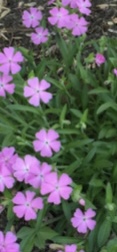
Wild pink. This charming wildflower is native to dry forests, barrens, and outcrops throughout Virginia where it tolerates a range of soils. Its rose-pink flowers, which somewhat resemble those of phlox, bring bright color to the spring garden, and it remains evergreen in winter.Showy trefoil
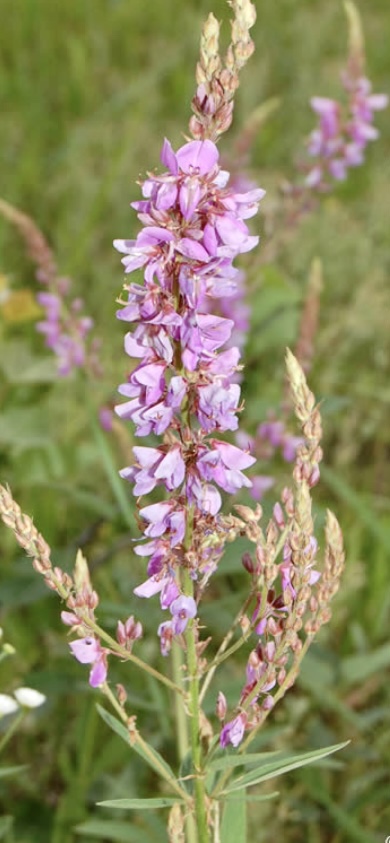
Several Desmodium species release organic compounds, aerially and into the soil, which make them useful for agriculture: Allelopathiccompounds are used there via push-pull technology. Tick-trefoils in agriculture can also be used as living mulch and as green manure, as they improve soil fertility via nitrogen fixation.
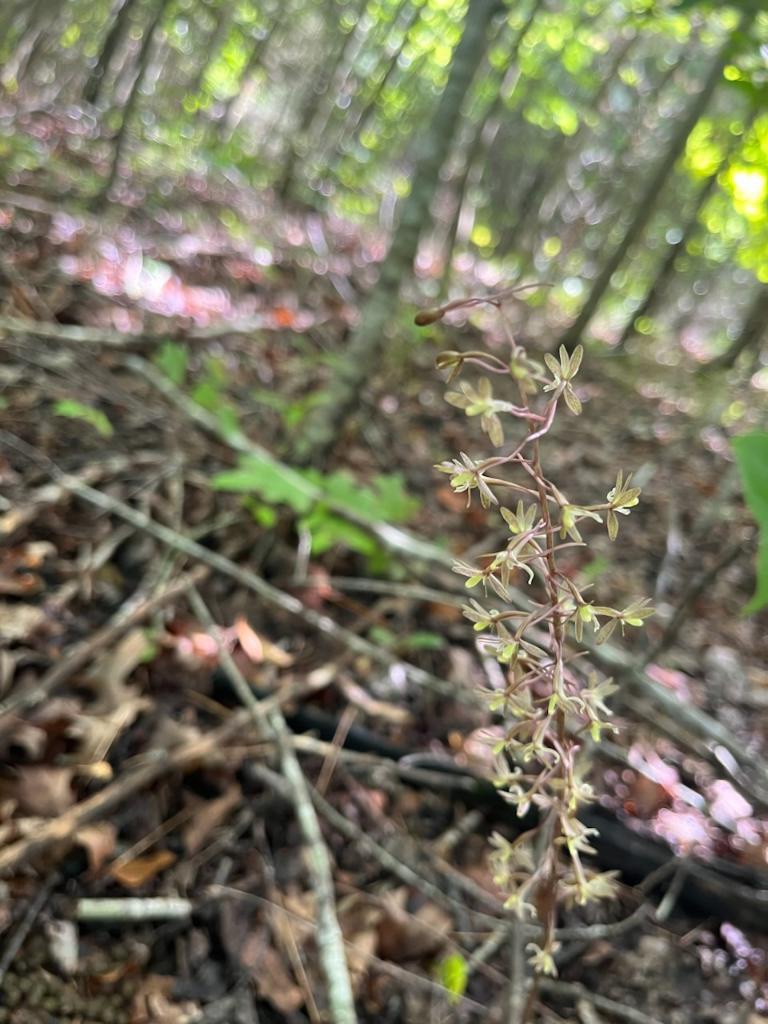
Crane fly orchid, perennial terrestrial woodland orchid growing in moist soil. Potato like edible corms.
Tipularia discolor grows a single leaf in September that disappears in the spring. The leaf top is green, often with dark purple spots. The leaf underside is a striking purple color. The flower blooms in mid-July to late August. The roots are a connected series of edible corms. This orchid is pollinated by Autographa precationis, Ctenoplusia oxygramma, Cucullia convexipennis, Protoboarmia porcelaria and Pseudaletia unipuncta. The moths visit the flowers and insert their proboscis into the nectar tube, if there is little nectar left the moth will force its proboscis in deeper and increasing the chance of their compound eye coming into contact with the viscidium and removing pollinaria. The stigma is not exposed until the anther cap falls off, which might serve as a barrier to self-pollination. https://goorchids.northamericanorchidcenter.org/species/tipularia/discolor/
Mountain laurel
The Cherokee use the plant as an analgesic, placing an infusion of leaves on scratches made over location of the pain. They also rub the bristly edges of ten to twelve leaves over the skin for rheumatism, crush the leaves to rub brier scratches, use an infusion as a wash “to get rid of pests”, use a compound as a liniment, rub leaf ooze into the scratched skin of ball players to prevent cramps, and use a leaf salve for healing. They also use the wood for carving. Mountain laurel is poisonous to several animals, including horses, goats, cattle, deer, monkeys, and humans, due to grayanotoxin and arbutin
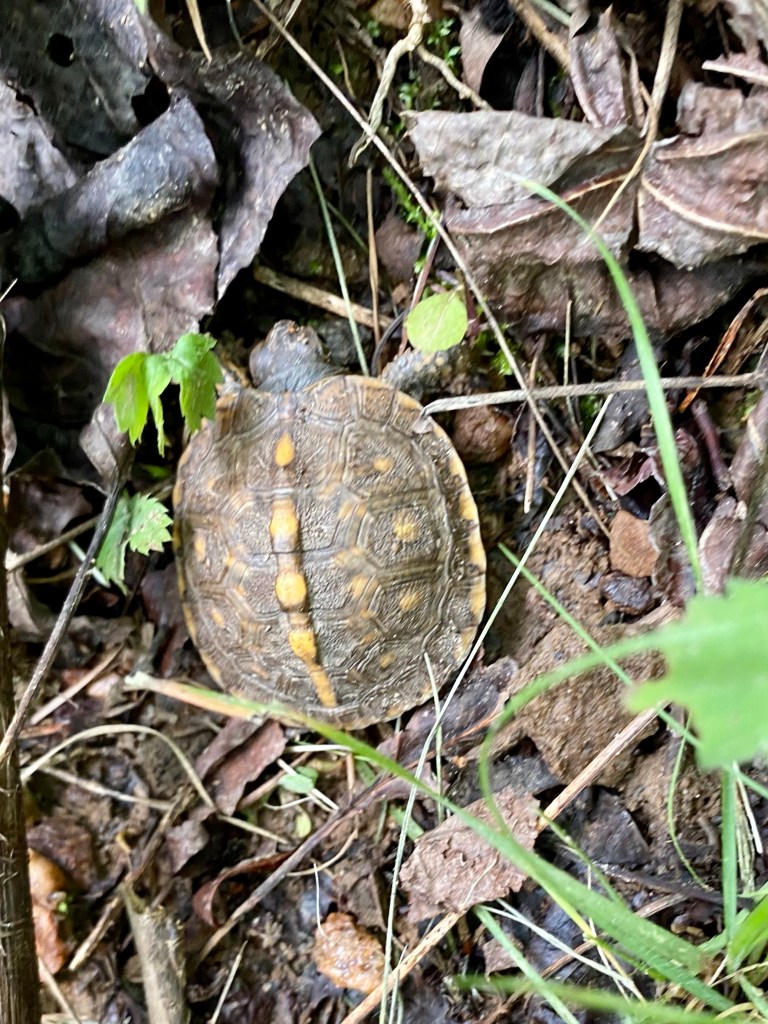
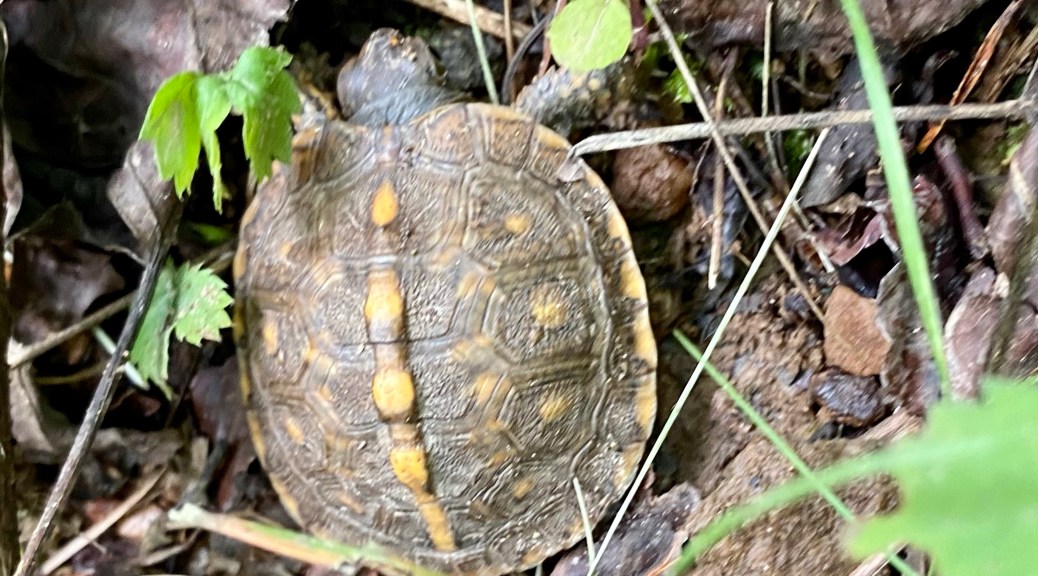
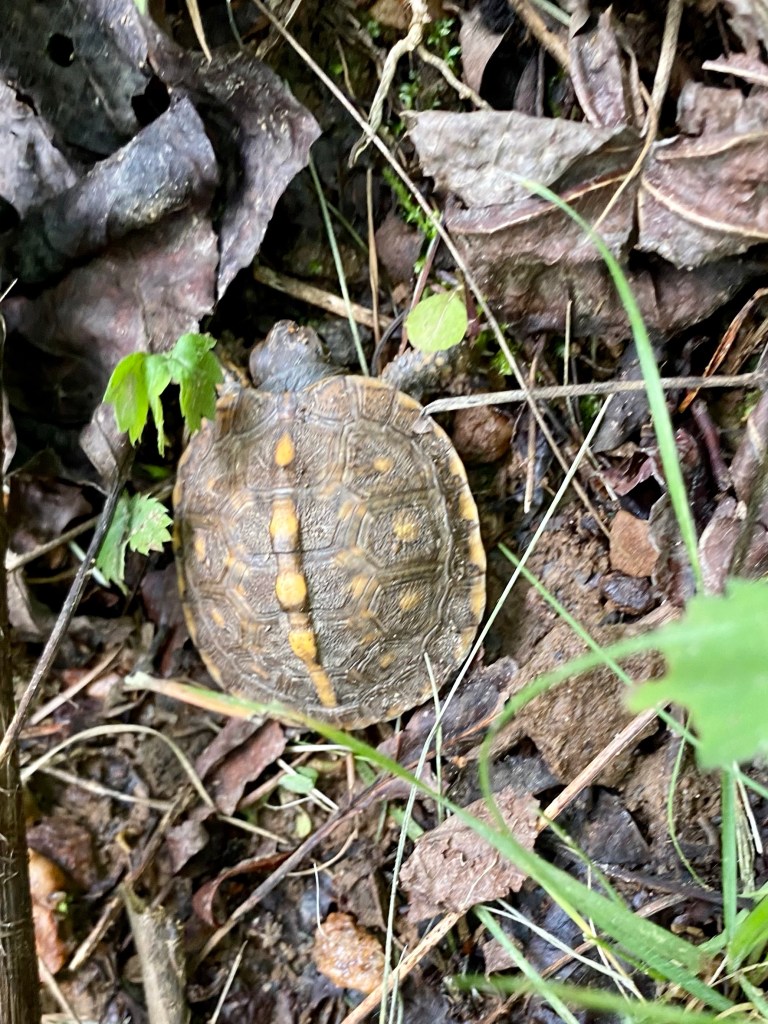
Young eastern box turtle on north trail after rains.
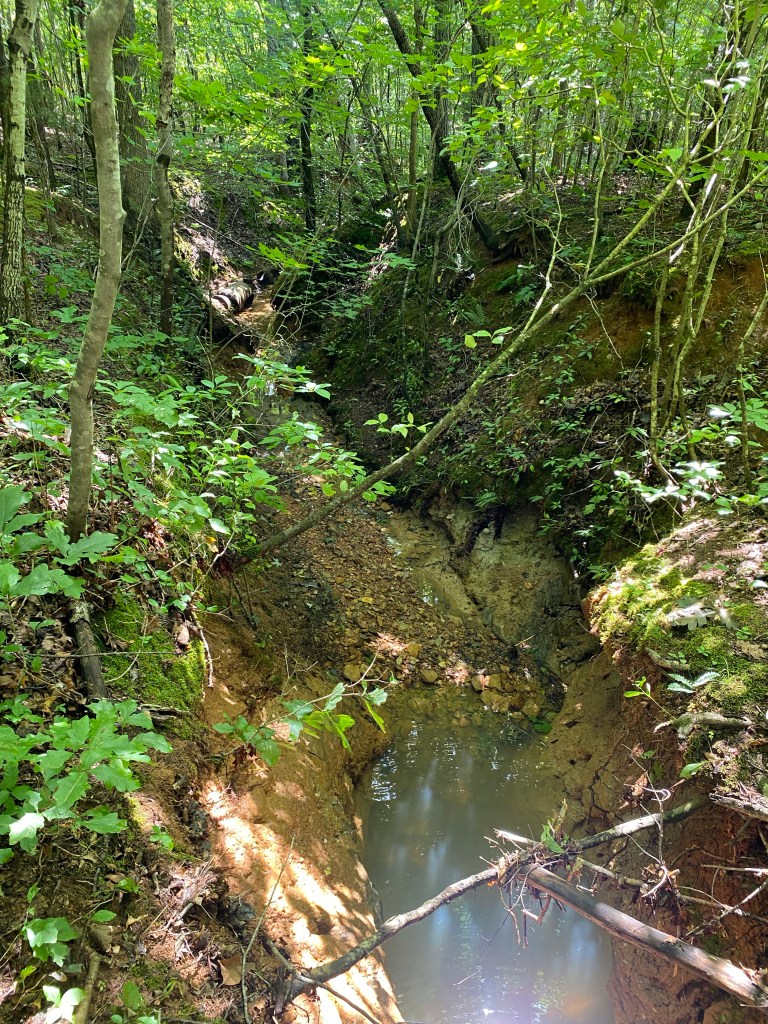
We went out to SAFF yesterday for mowing and checking on those cinnabar chanterelle pins. We harvested a few and followed the waterway from bottom left of property and moved past the midway point. We found cinnabar and golden chanterelles all along the way. Also, other types of mushrooms and we saw a toad and a box turtle right along the north trail. No sighting of our pileated woodpecker friend. Most of the mature cinnabar chanterelles were along the deep sides of the waterway with moss and ferns. Many that we could reach still hadn’t matured. There were so many down in the creek bed along the sides we couldn’t reach! We’ll need a plan to harvest these next year. We brainstormed a few ideas that all seemed to be ridiculous. We will find a way down there!
We have made it a little more than halfway to our south trail via the waterway. We were on the other side of creek. Next time we work on paths at bottom of property, we want to trail blaze along the slope side and continue to take out over abundant trees that have only inches to grow instead of the 10 feet necessary for them to flourish.
Chanterelles harvested yesterday along waterway.
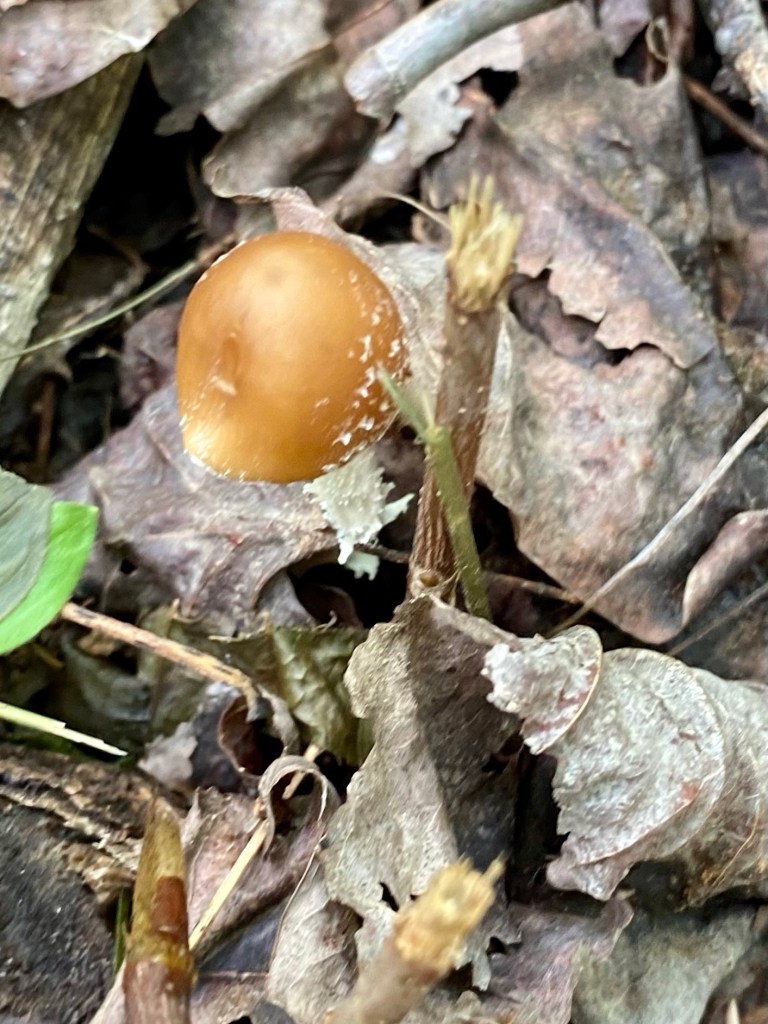
Unknown fungi
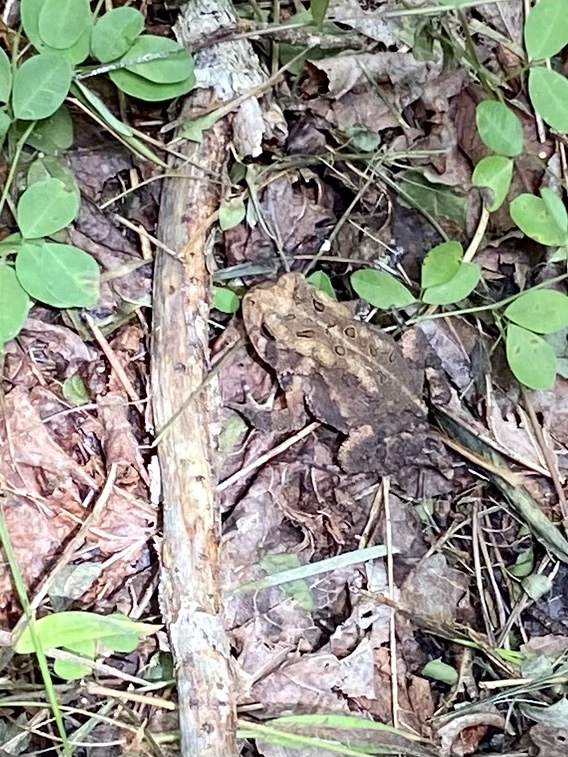
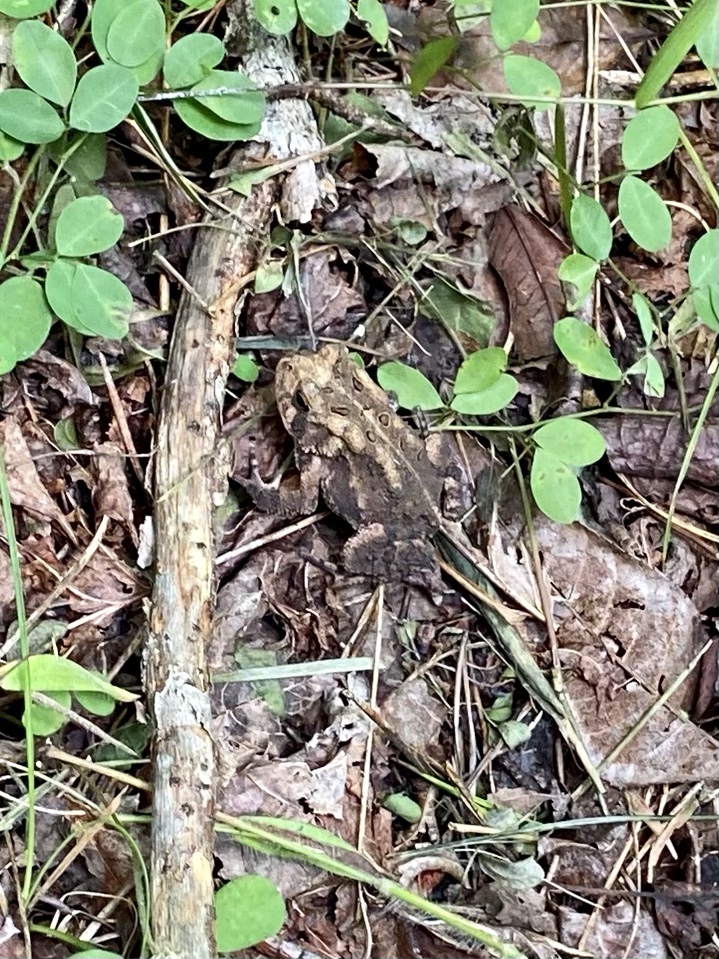
A young toad found hopping along the North Trail.
We got the mowing finished just in time for an alert for a tornado watch in Dillwyn. We drove home. Staunton had a tornado warning with hail. We hope to go back out in the next few days. Our plan is to go on Friday after the thunderstorm Thursday.
We are planning our initial structures and crops. We hope to use the resources we can find to help shape the farm to become more of a food forest than it already is. Currently, we have blueberries, deer tongue (flowers young leaves and stems) and wild yams (great eyes, Judy) edible mushrooms, cranefly orchids edible corms, several edible fiddlehead ferns, and black cherries. We also hope to find pawpaws.
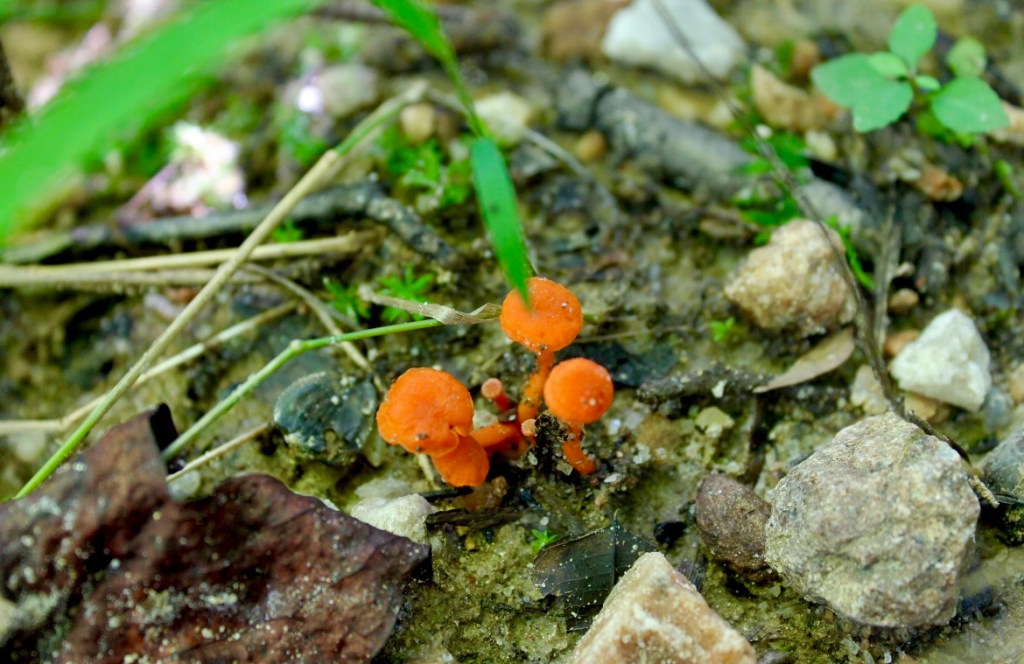
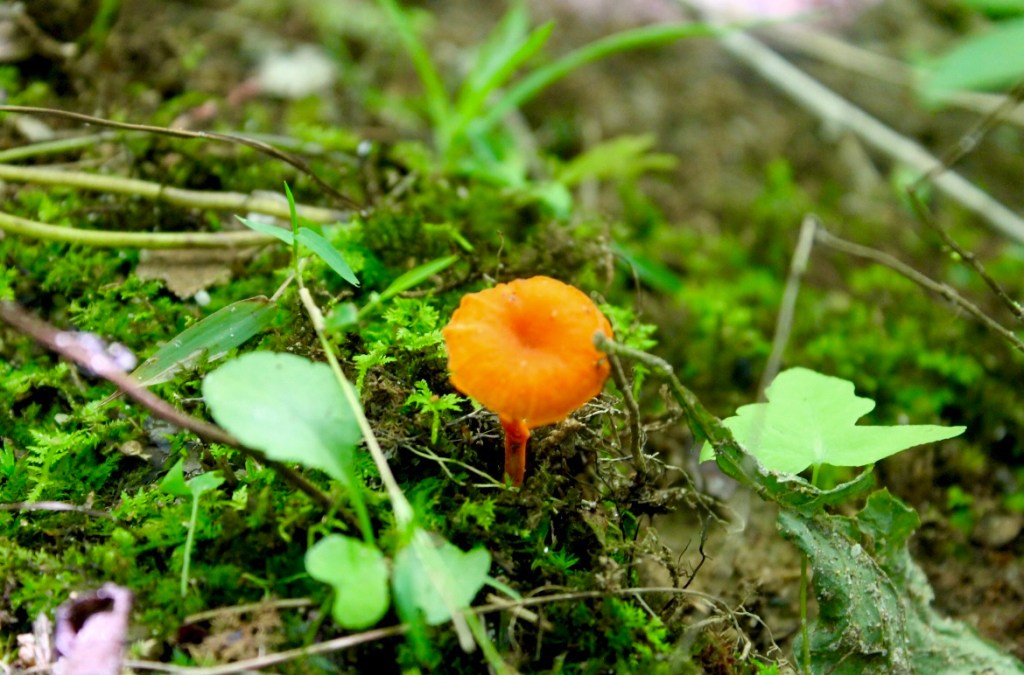
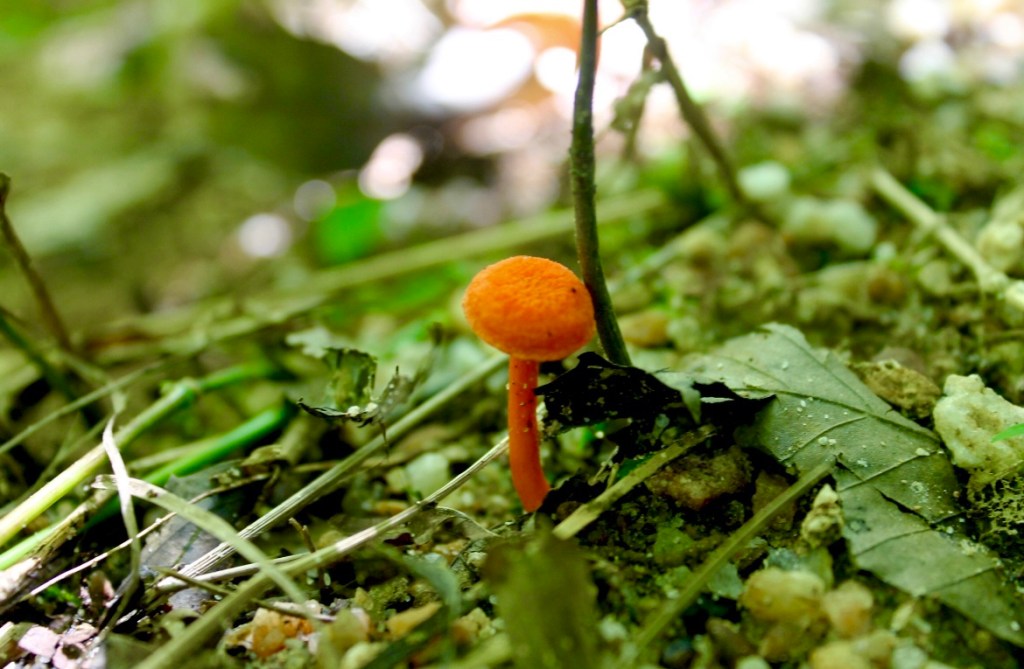
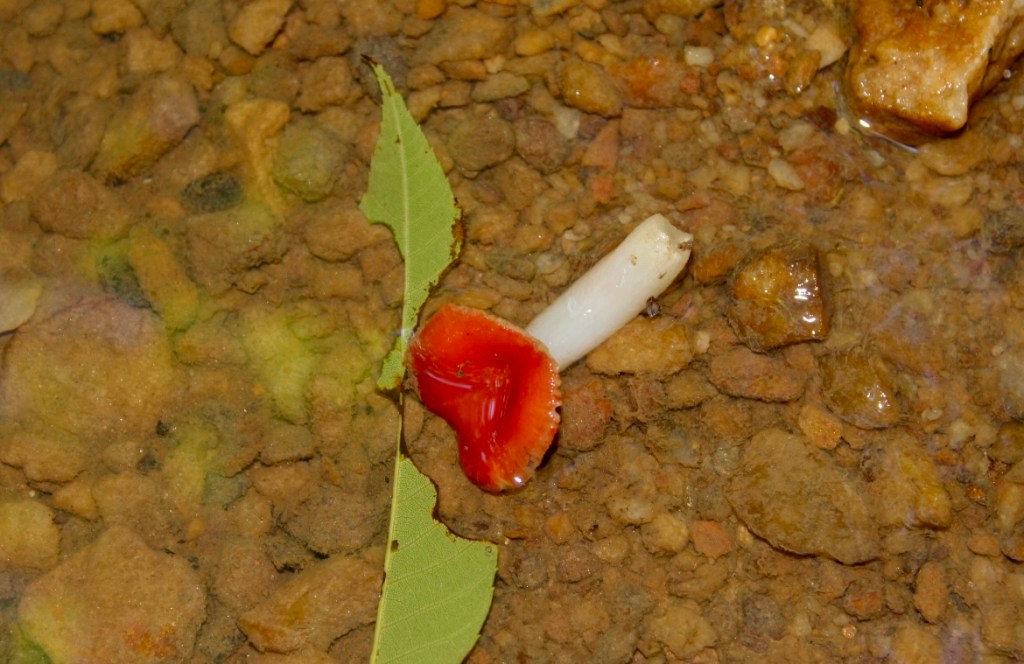
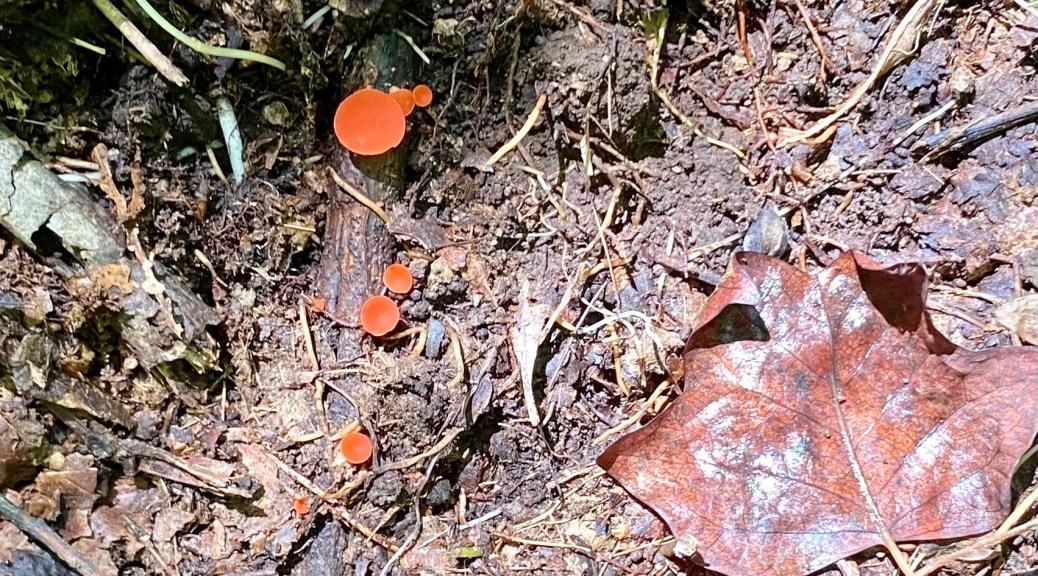
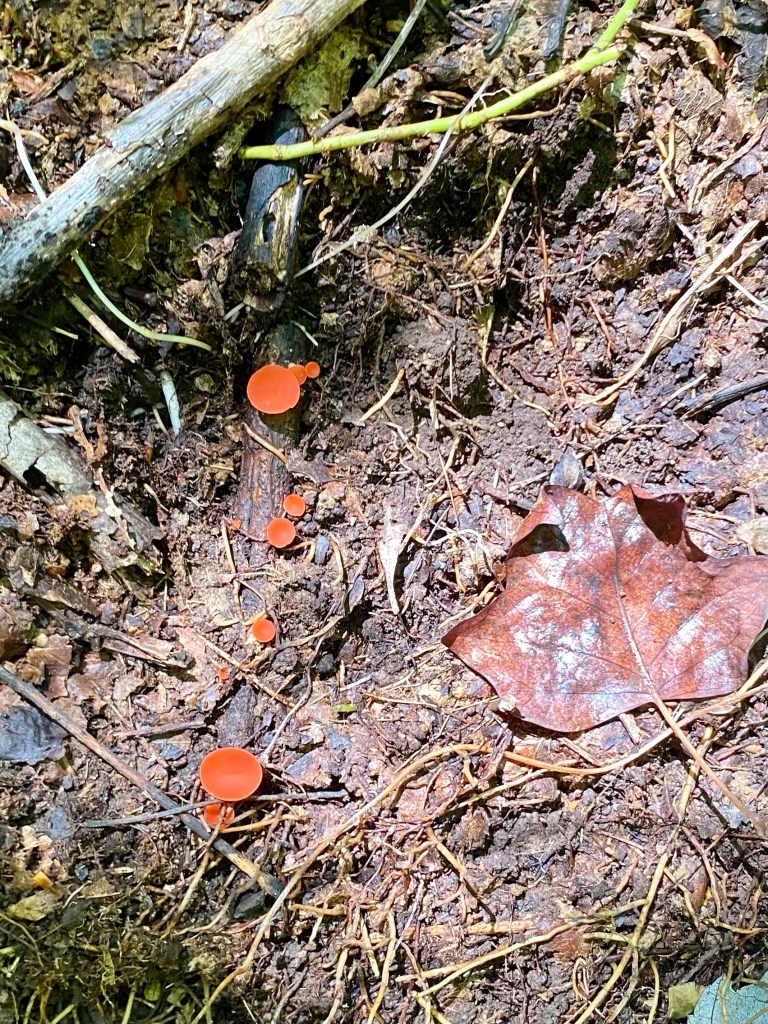
Scarlet elf cups
Unknown Amanita. Possibly amanita gemmata. Not a beginner mushroom. So far, anything that looks as though it’s an Amanita, we don’t even touch usually. There are 600 species of agarics (Gilled mushrooms) which includes some of the most deadly. This species is responsible for 95% of mushroom deaths. (If we are in doubt, we throw it out: Or better yet, don’t even pick it. )
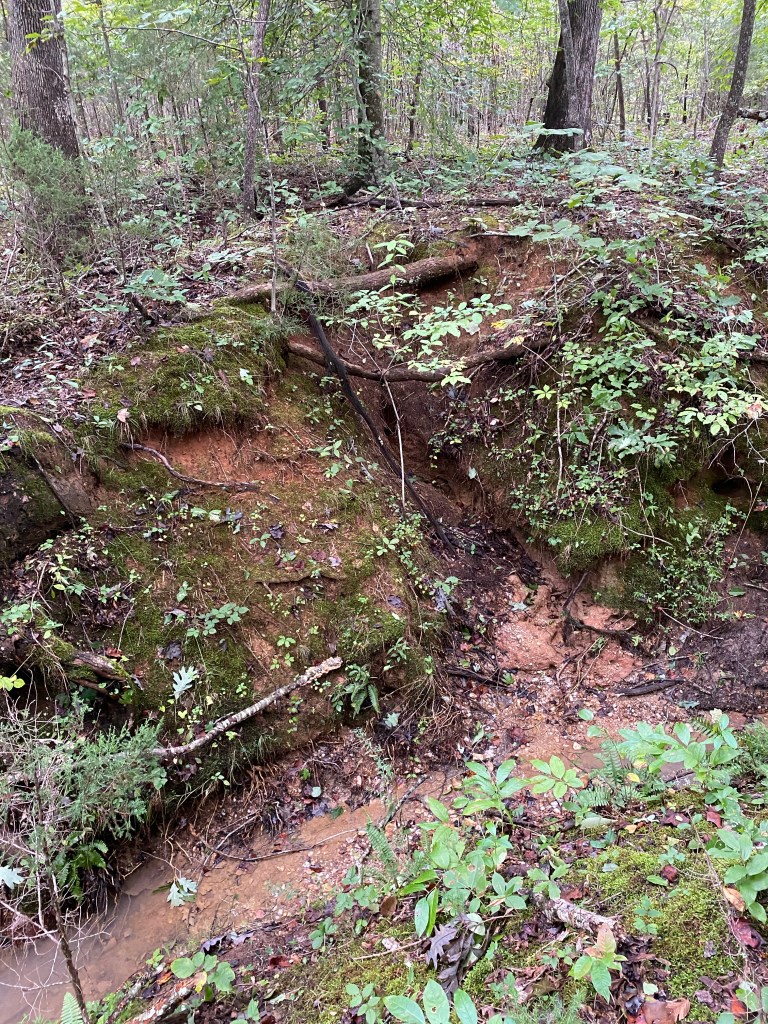
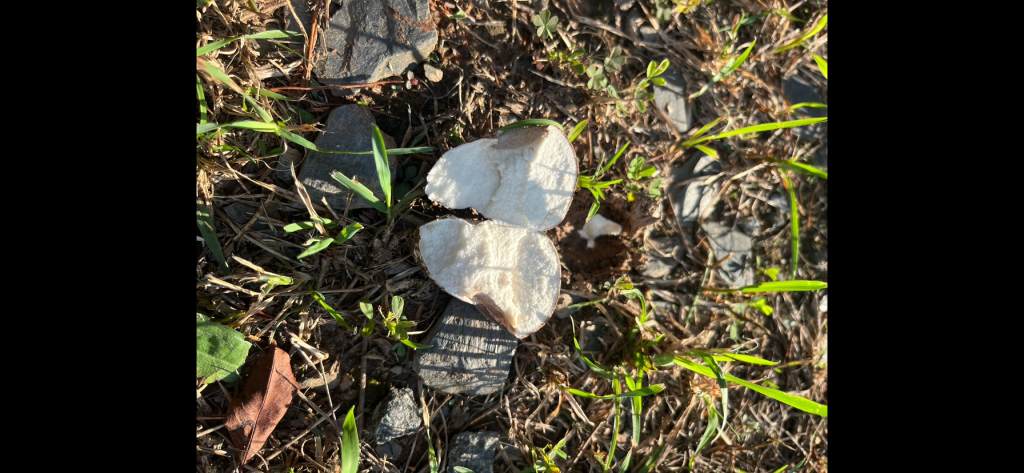
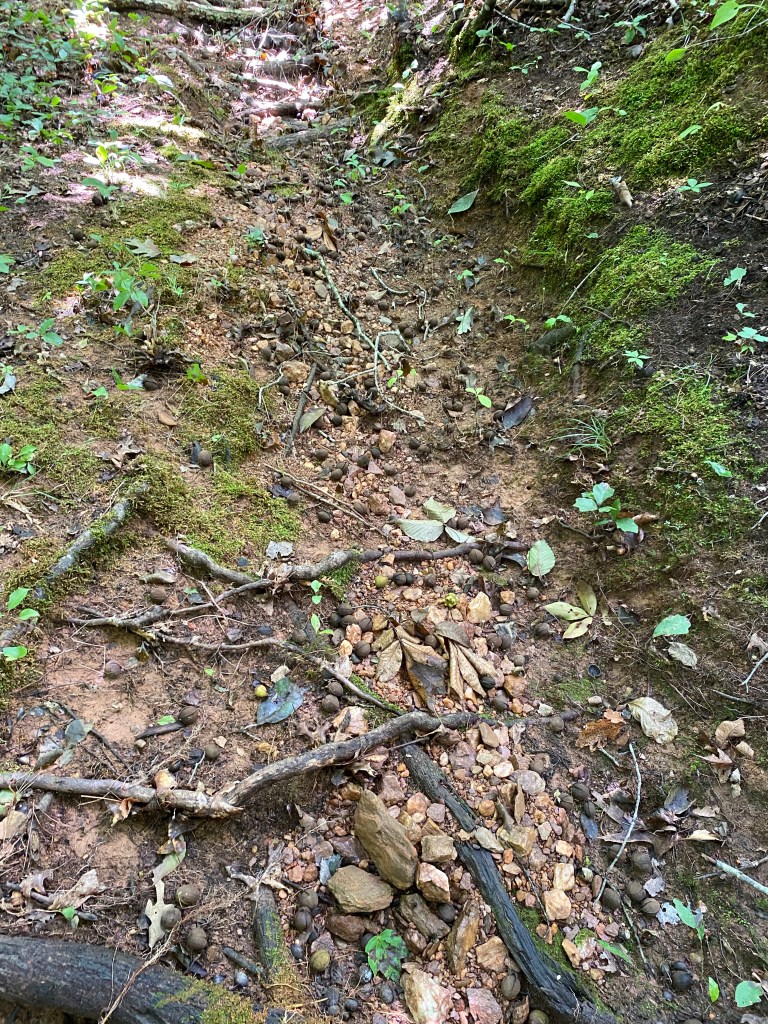
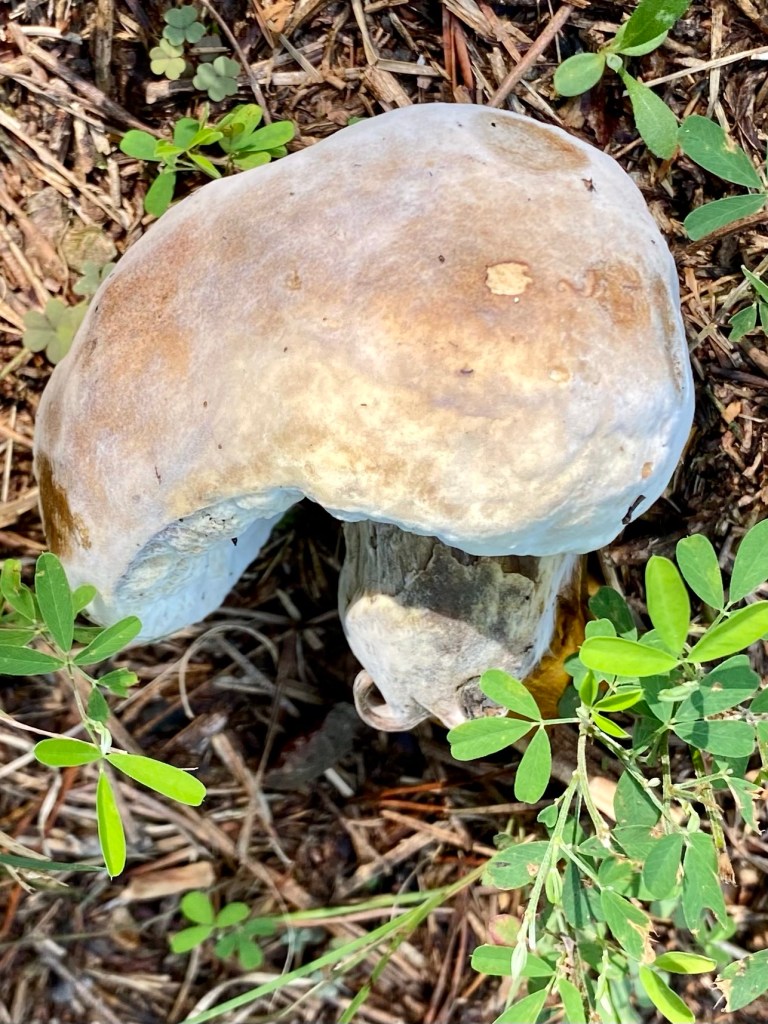
The waterway floor with rocks and sticks and roots. Mosses and plants along the banks. Mountain laurel along the waterway.Potentially Hypomyces chrysospermus or Tylopilus or H. Melanocarpus. More information is needed. Finally! We thought we found a bolete that could potentially be a king bolete, bolete edulis, porcini. Found along driveway up on top of farm near pines. We have been searching all summer. However, it appears as though it could be a bolete with a fungus. Hypomyces chrysospermus, the bolete eater! A parasite turned the bolete white. Not at all a king bolete. Narrowing down identification still. We continue our search for porcinis and are glad for our chanterelles. We will not eat these!Tipularia discolor, the corm is potato-like and edible. Cranefly orchid is found all along the banks of the waterway and in the forest at SAFF.
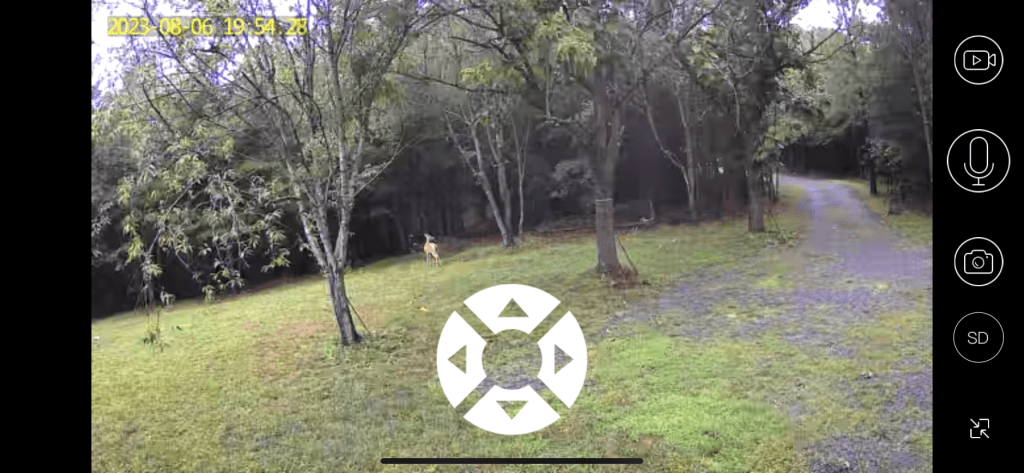
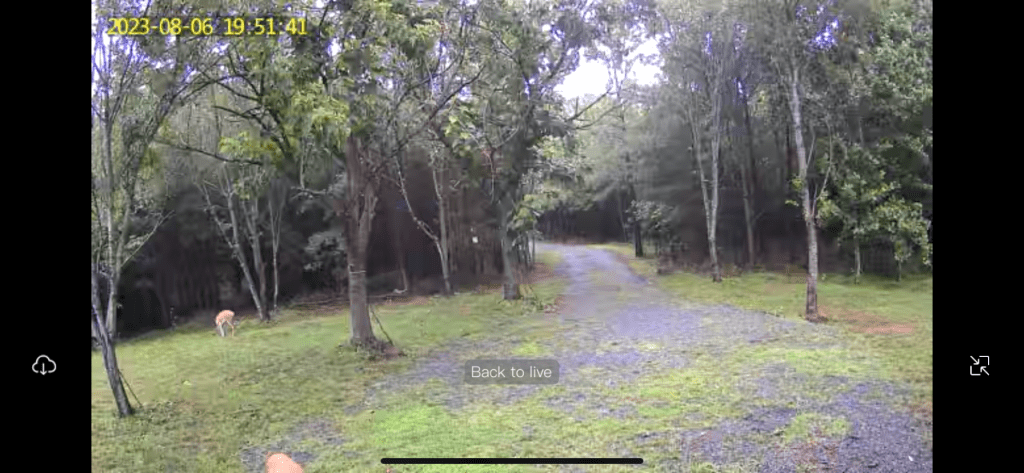
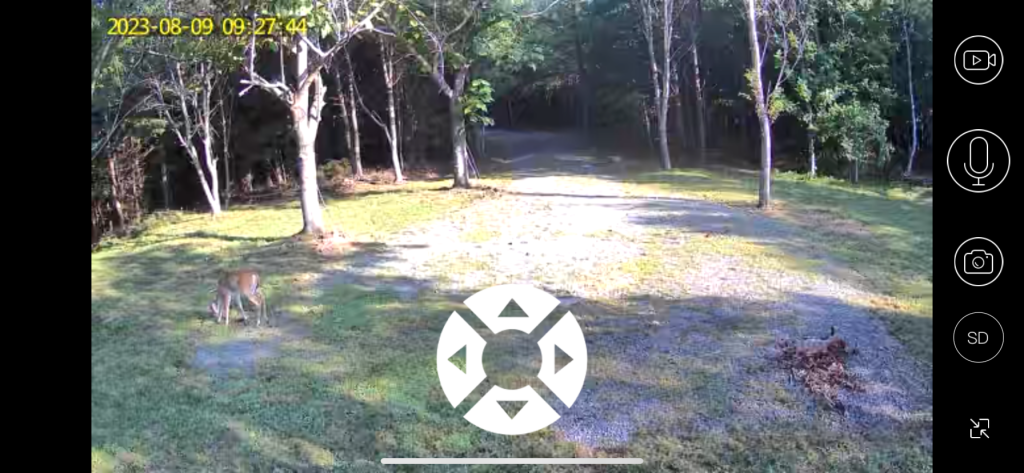
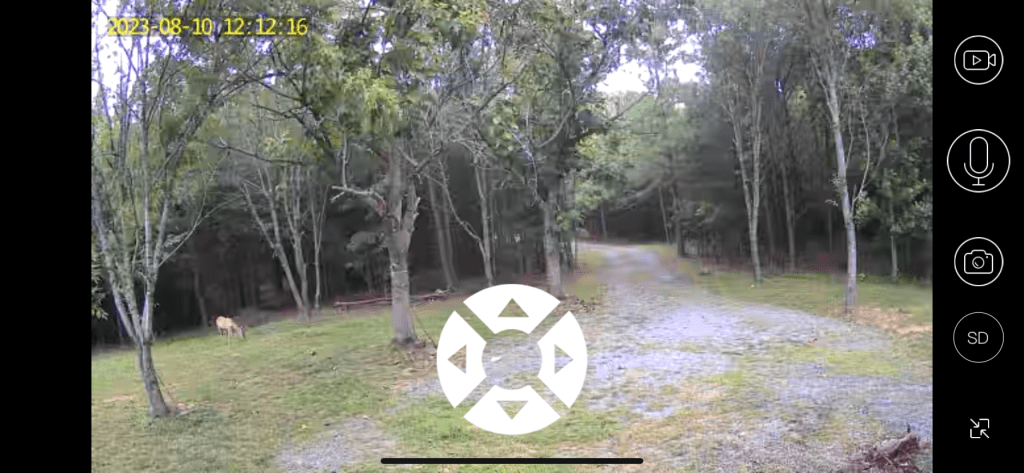
Eastern box turtle 3/4 of the way down the north trail after rains. We thought it was a baby. A young toad. Fowler toad or American toad. Found at bottom of north trail after rains. Farm cam deer sighting. We think they were eating black cherries. August 9, 2023 Farm cam Any ideas on what this is? Appears to be a cat tail? A possum? The camera is about 10 feet up in a tree. It could even be a spider leg or mouse tail that looks big because of the camera and angles. This week we’ve seen deer eating black cherries daily from the farm cam.A fox? 🦊 What insect is this?
Saint Andrews Forest Farm Blog
Is this your new site? Log in to activate admin features and dismiss this message

 St Andrews Forest Farm