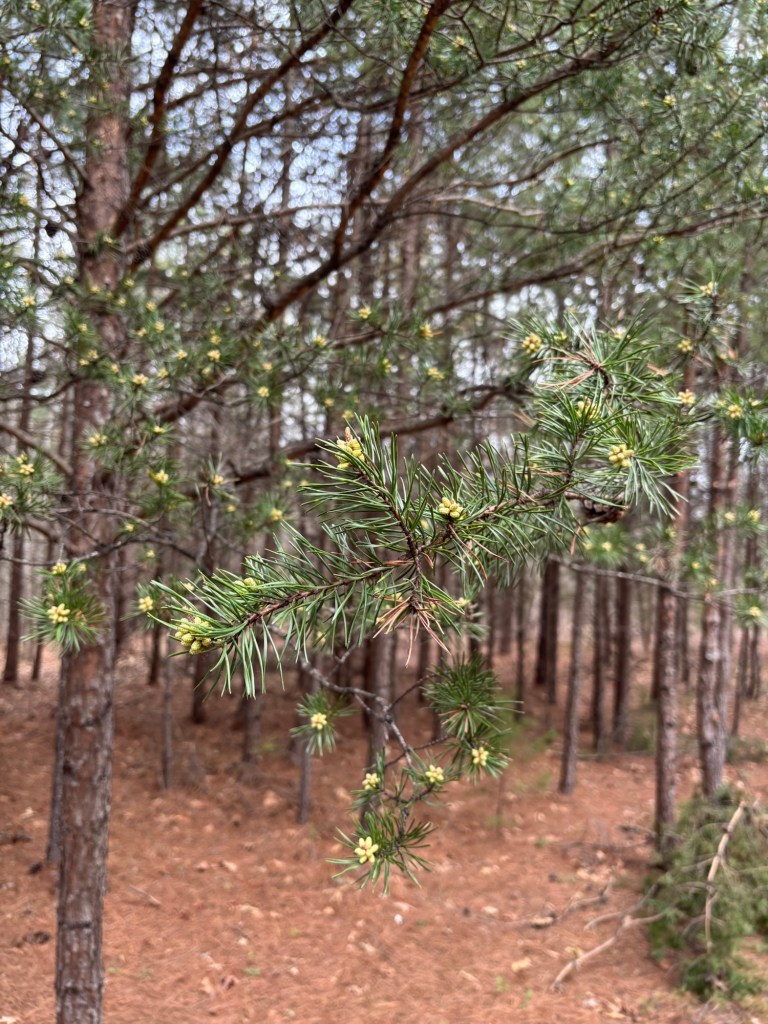
Virginia pine, Pinus virginiana, on Wednesday with yellow pollen cones clustered near the tips. We pulled in and saw these on all of the pines. It was a beautiful surprise. We were at the farm just the day before and did not notice them!
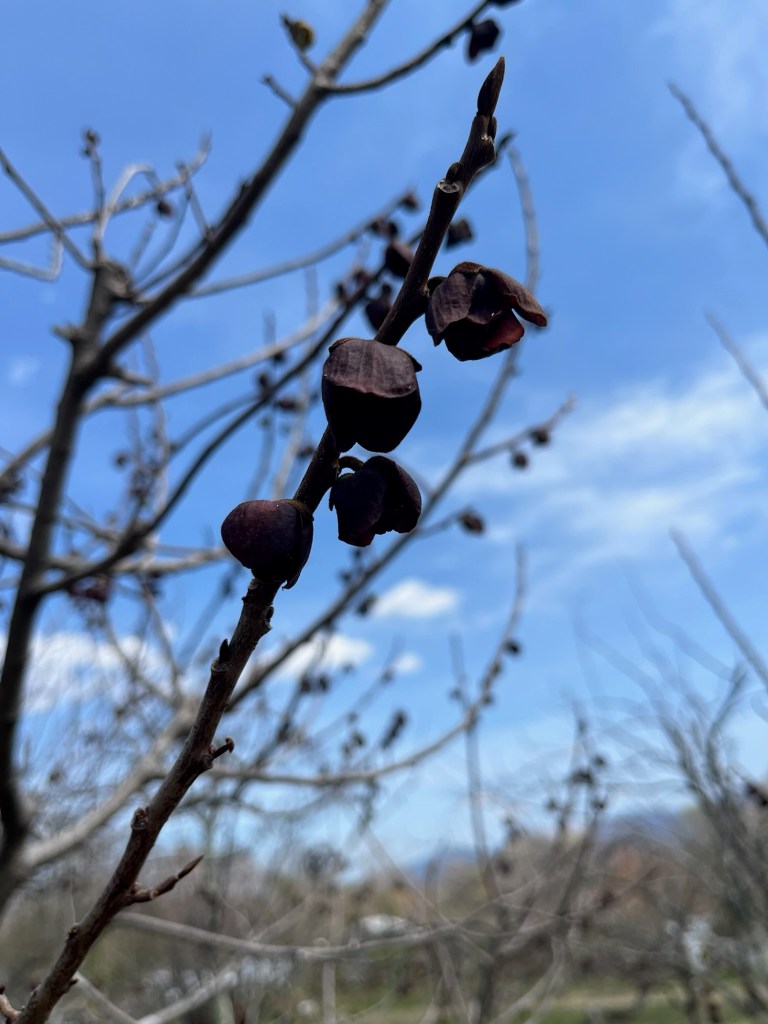
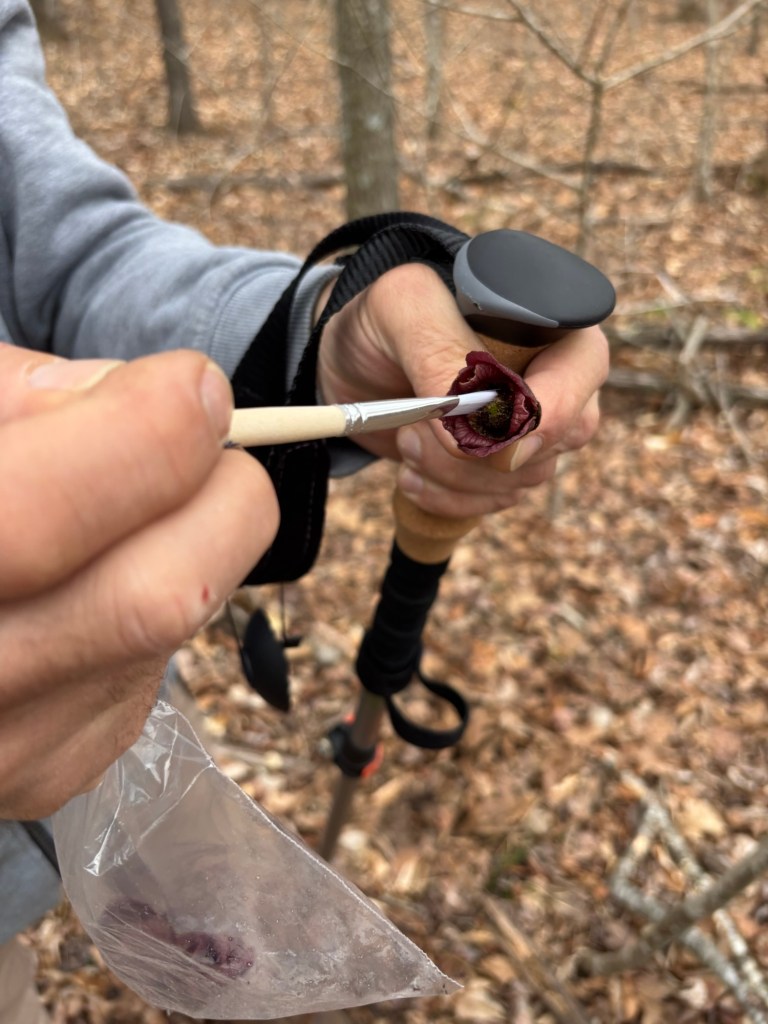
On our way to Saint Andrews Forest Farm Tuesday and Wednesday and Friday, we continued to find male pollen from many trees and locations to take to the female pawpaw buds at SAFF in order to set fruit in the old clonal colony. We’ve seen many more clusters of trees along Howardsville Rd, creeks and rivers on the way to the farm. We are so hopeful they will produce fruit this year with the pollen from different genetic material. We have been getting rain regularly so far and have more in the forecast for the next few weeks. We just hope for the best.
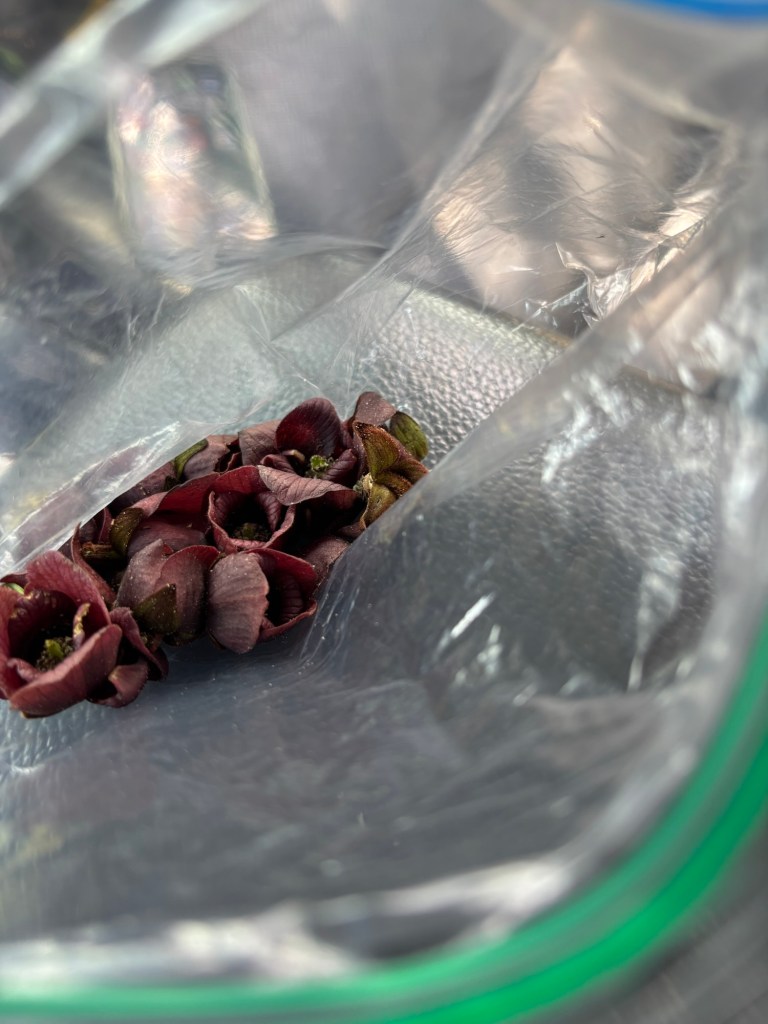
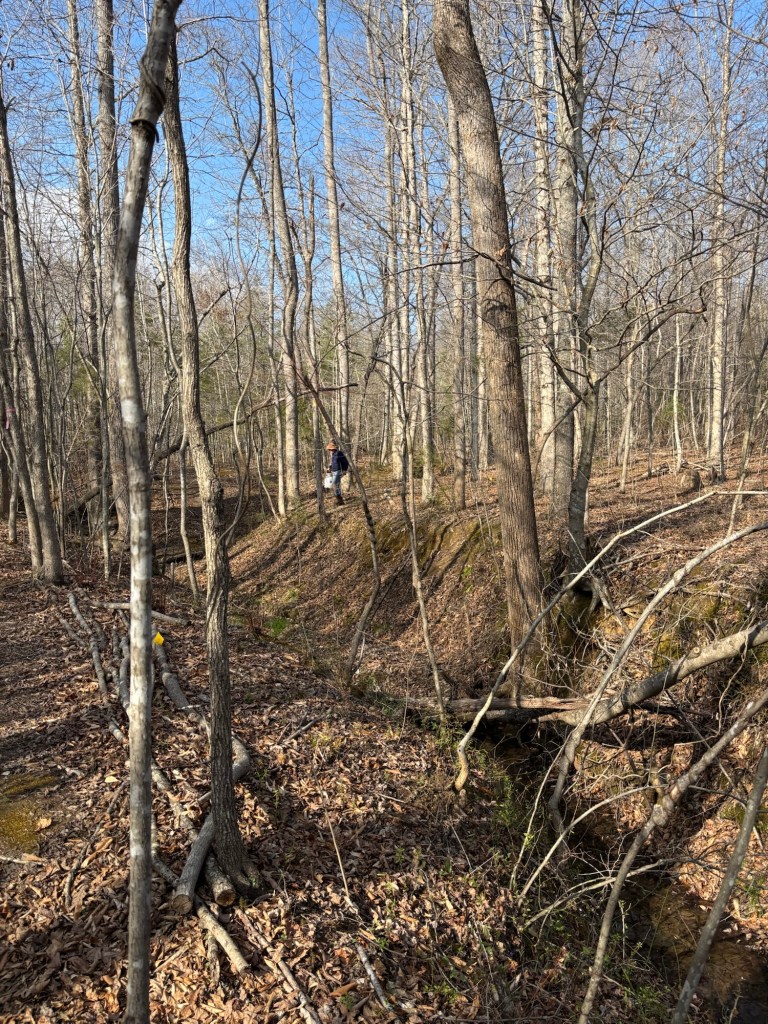
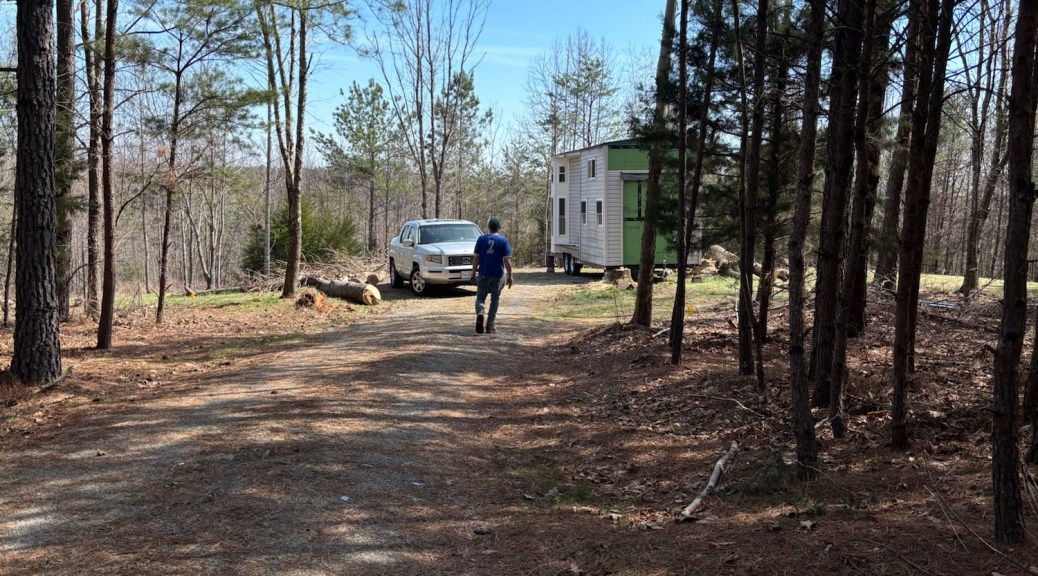
Male Asimina triloba buds found along Howardsville Road. Chris walking from the native old clonal colony of Asimina triloba after spreading compost tea.
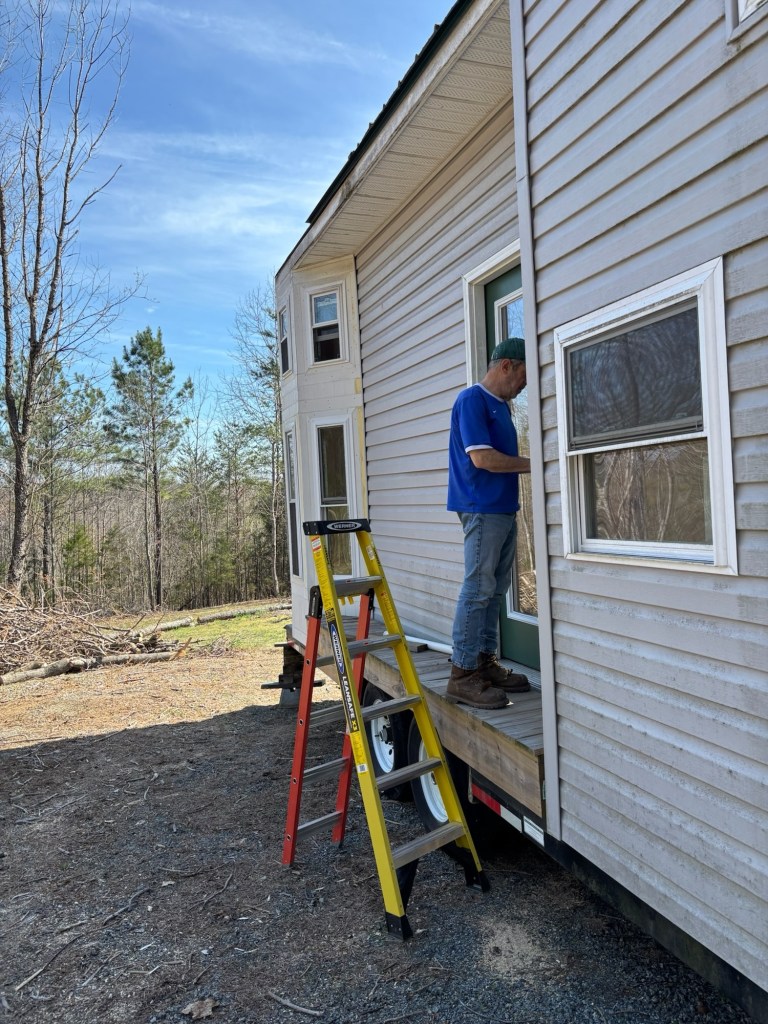
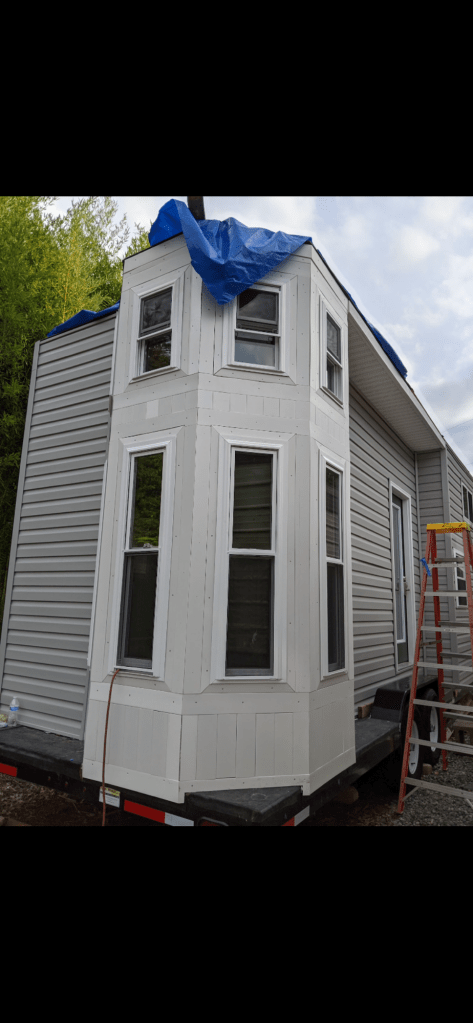
We’ve also continued to level the tiny house and check for water entry after rain. We found that there are a few areas where we need to address past water damage. We have plans for a new overhanging warm roof which will be a large help on multiple fronts. We also will remediate the damage done by replacing materials as needed. The tiny house was built on a mobile home trailer with steel framing so the bones are strong.
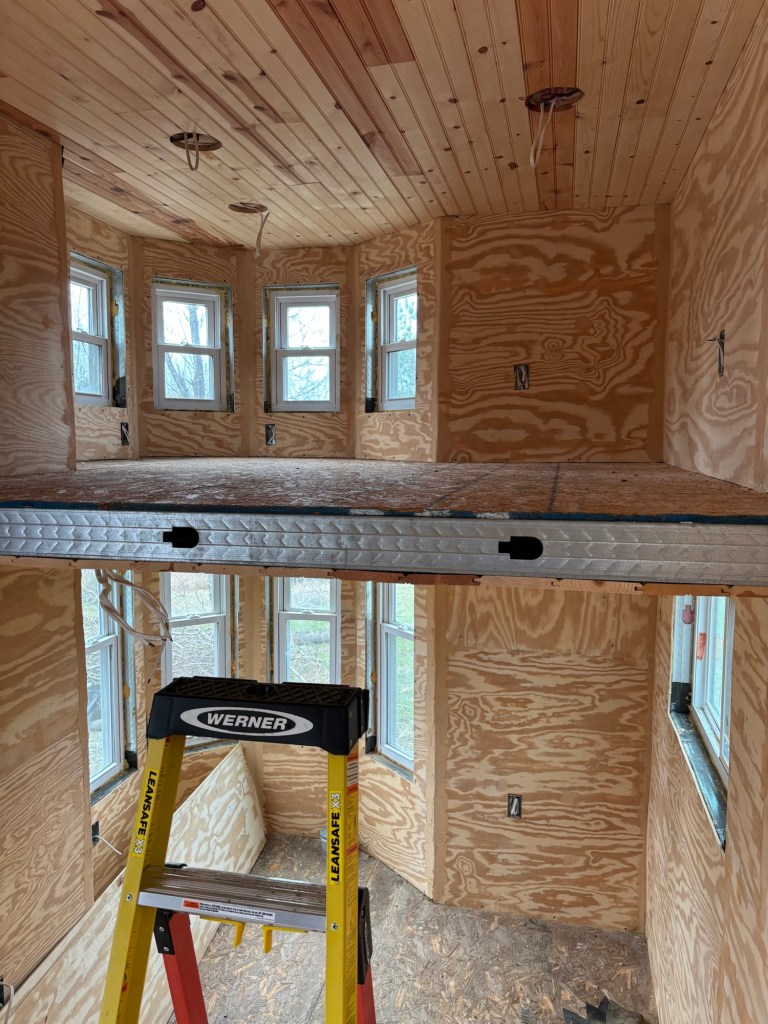
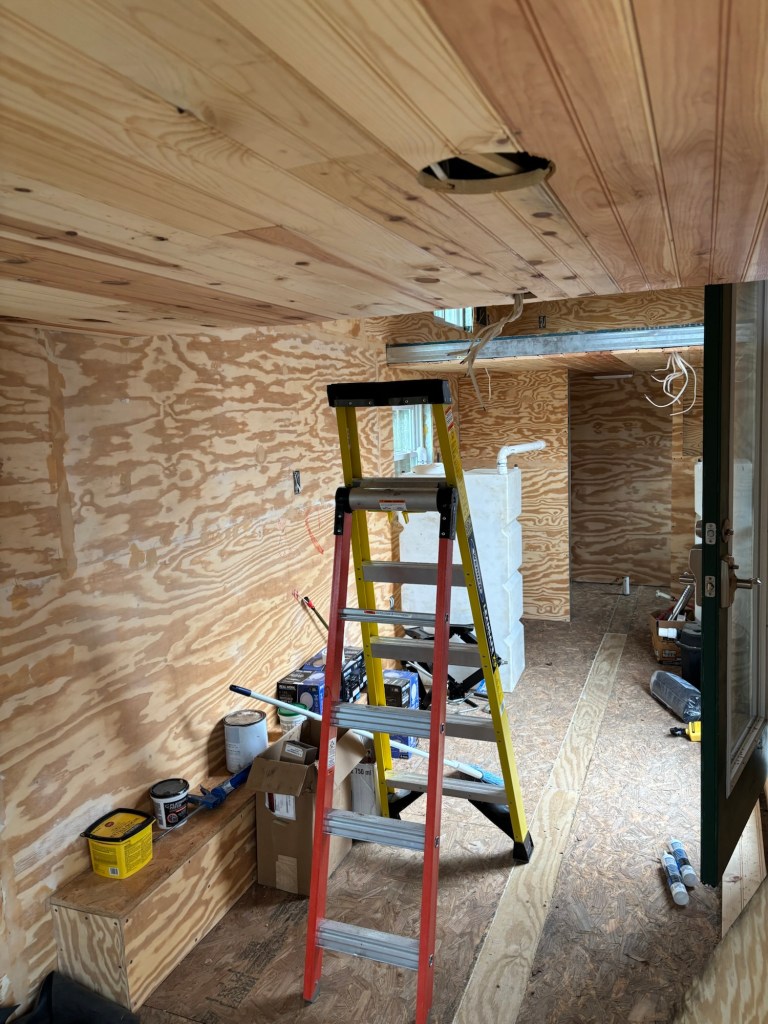
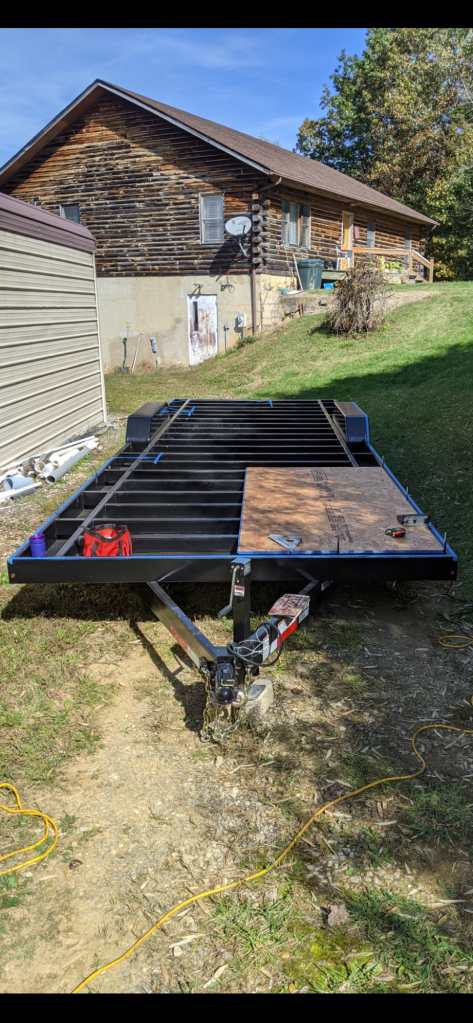
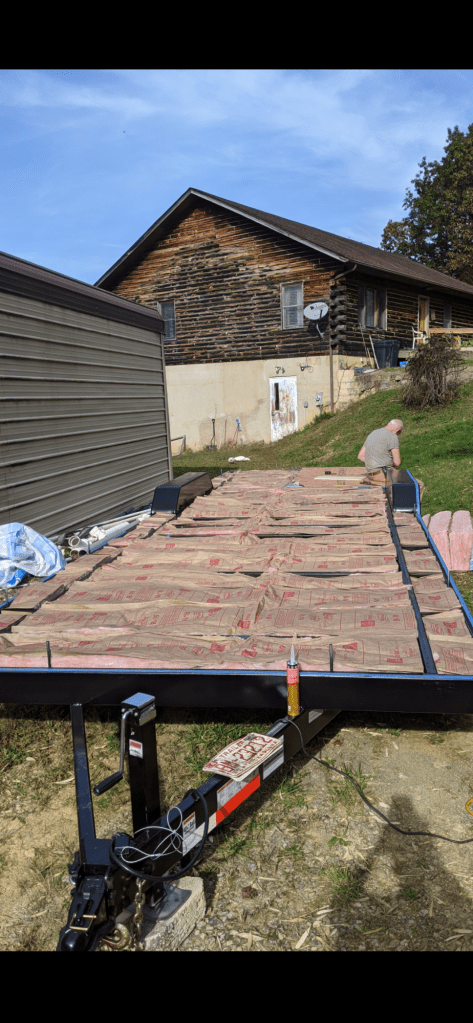
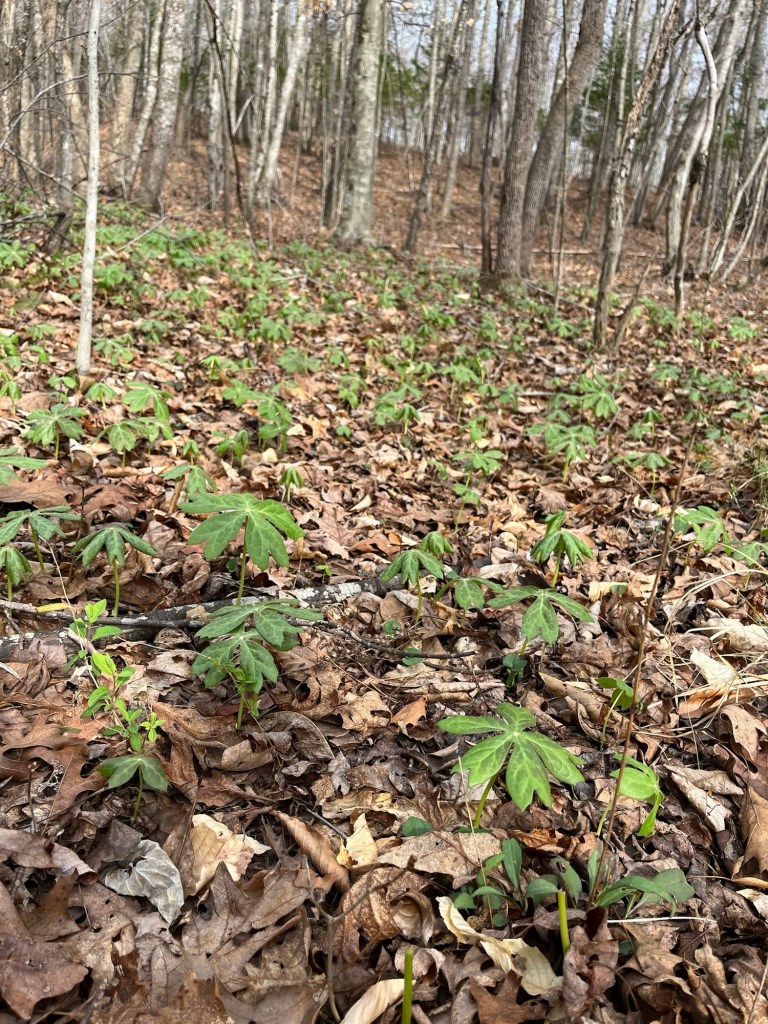
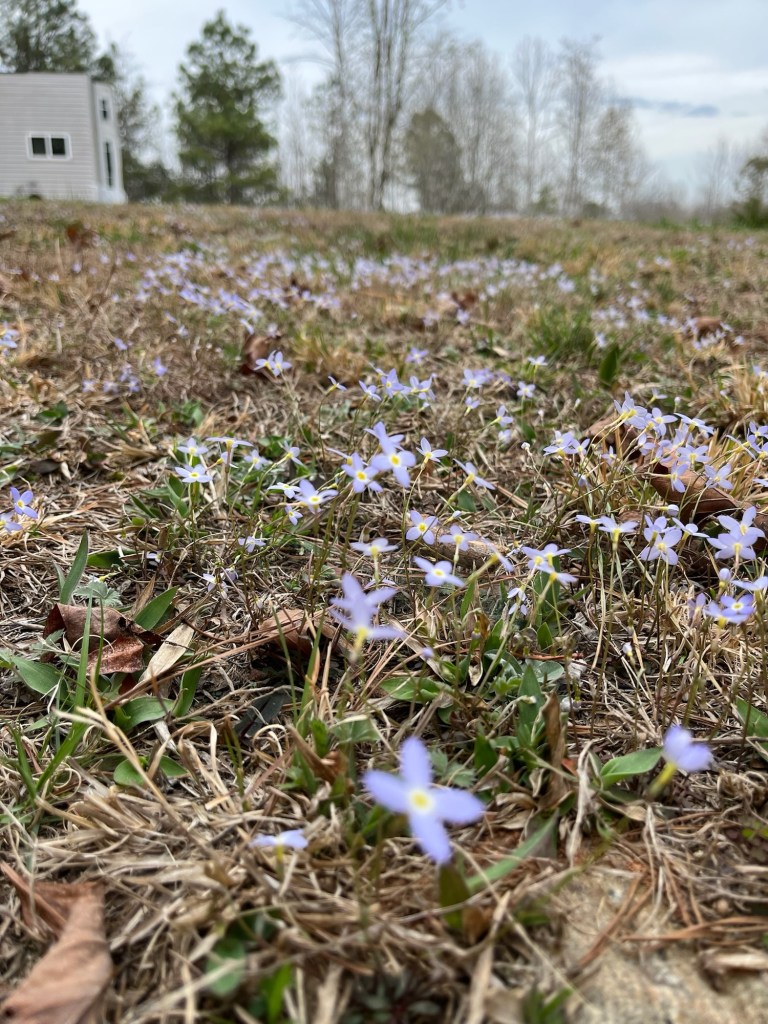
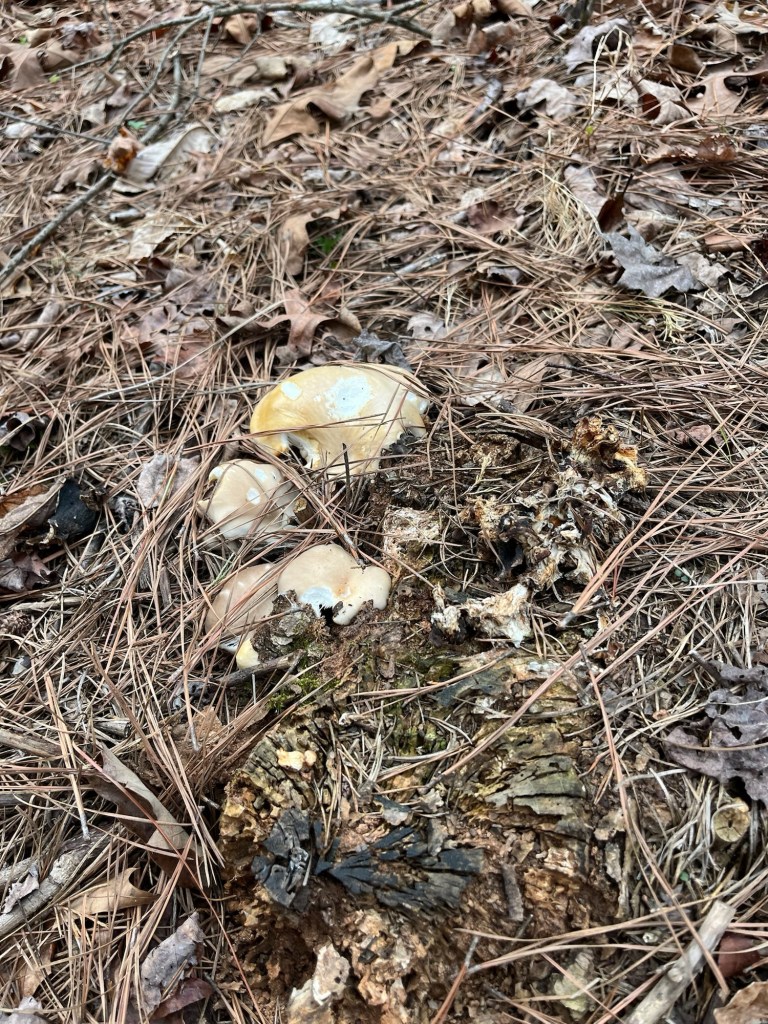
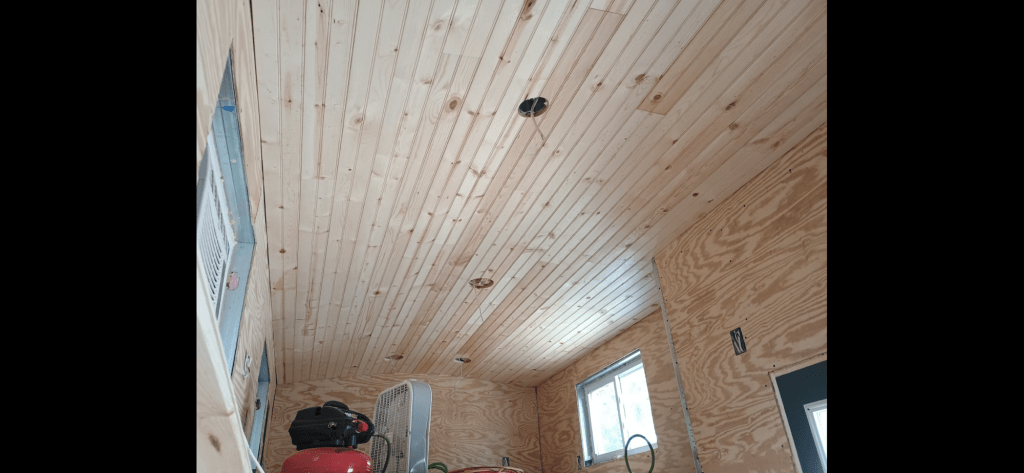
Inside view from the tiny house. Our plan is to address the roof issue as our top priority with the tiny house. We have been working on the layout for inside and planning our staircase and storage needs. We will begin working on the roof as soon as we get scaffolding and other supplies as soon as next week.The view from the other side of the tiny house interior with water tanks and some lighting and other supplies.The tiny house is built on top of this trailer.They insulated it and covered it in plywood. We will need to replace a few of those sections under there. Instead of plywood, we will use metal and flashing. The overhanging metal roof will also take away most of the moisture from dripping onto the edges of the trailer. We are collecting our supplies.The metal frame of the tiny house.Mayapples, Podophyllum peltatum, found in the old colony pawpaw patch.Azure bluet, Houstonia caerulea, found everywhere right now at Saint Andrews Forest Farm. Clearings, trails, roads and under forest canopy. Some melted and some fresher shoehorn oyster mushrooms found on Amanita Way just near the main clearing up top. Asimina triloba found on the way to the farm.
Today we were pleased to have a farm day Friday and we ran right down to the old colony pawpaw patch to continue pollinating. We noticed a powerful smell right away. As we went down to the main waterway from the Pawpaw Peninsula to cross over we saw a possum carcass. Normally this would cause us more than some displeasure. Today we couldn’t believe our good fortune. What a blessing in disguise! Asimina triloba are pollinated by a number of insects as we’ve seen but the most important pollinator historically has been the fly. Flies were all over this gift of a stinky carcass. We are sorry for the possum. A few years ago, we found another possum in a similar spot and also deceased. We’ve grown to appreciate them and hope they thrive in the forest at SAFF. They are known to eat ticks which is a positive. Poor creature.
We also noticed our shoes are covered in pollen. We will get a photo. We are like giant bumble bees running around the forest spreading pollen everywhere wittingly and not.
We found male Asimina triloba flowers and brought them to SAFF to hand pollinate what we believe is a clonal colony of nearly 400 trees of varying sizes. We had maybe 50 or so female flowers that were ready to receive pollen today.
We were able to hand pollinate the old colony pawpaw trees at the bottom of SAFF. Notably, this is the first time with novel dna so we hope they set fruit and stay put instead of dropping early as in prior years when we pollinated them from one tree to the next not knowing they were a very old clonal colony all arising from a large root system with identical dna.
It was raining lightly and getting cooler while over there in the forest. We also shored up the tiny house as the rain began and worked on construction of temporary stairs out of concrete blocks.
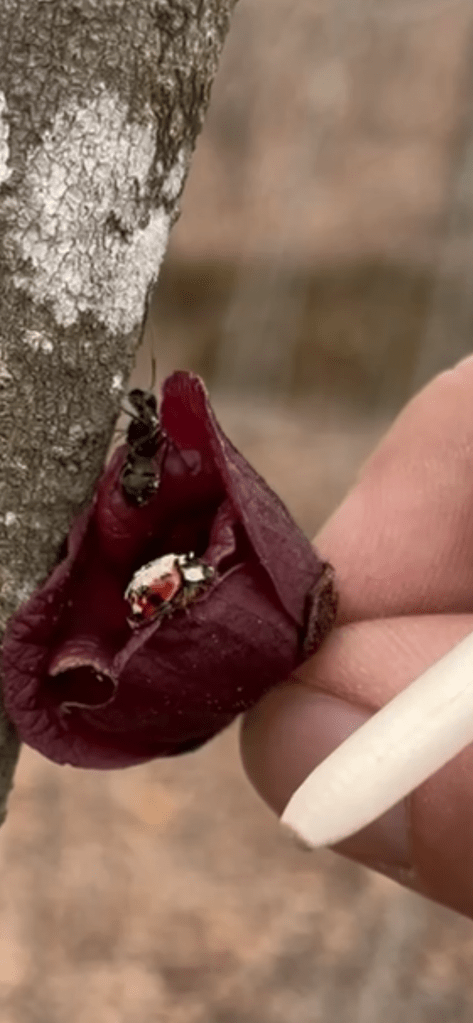
A ladybug and an ant crawling from a flower with pollen from the pawpaws stuck on them. They’d fallen asleep in there together and came out groggily leaving in separate directions. Off to pollinate the highest flower buds we hope! We saw lots of tiny flies and insects in the pawpaw patch. We hope for success with pollination. We dream the pollinators will spread the novel dna from pollen outside of the clonal colony to the highest reaches of our Asimina triloba canopy down there. Some of the trees are about 15 feet tall and we couldn’t get to the buds to hand pollinate.Before we built the temporary stairs from concrete blocks. We will get a pic of stairs when we’re out next. It was hard to climb inside! 😂
We want to write a children’s book about the ant and the ladybug.🐞
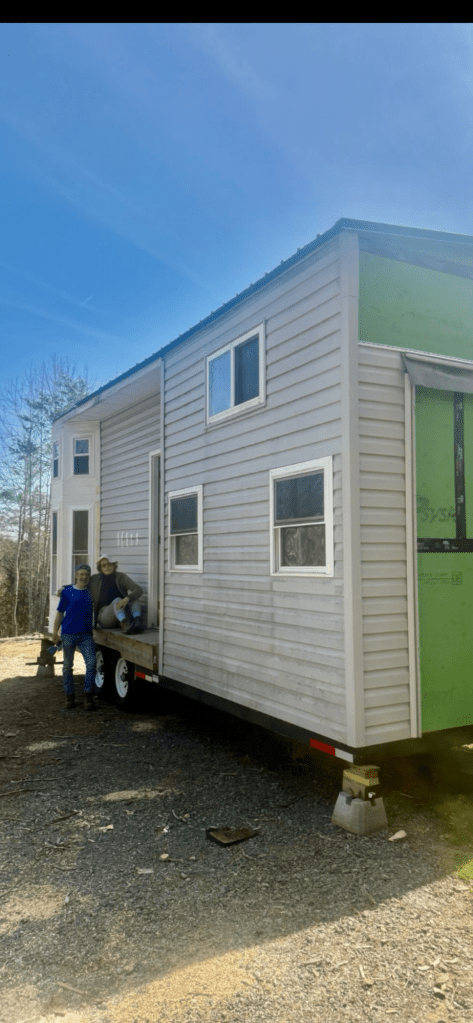
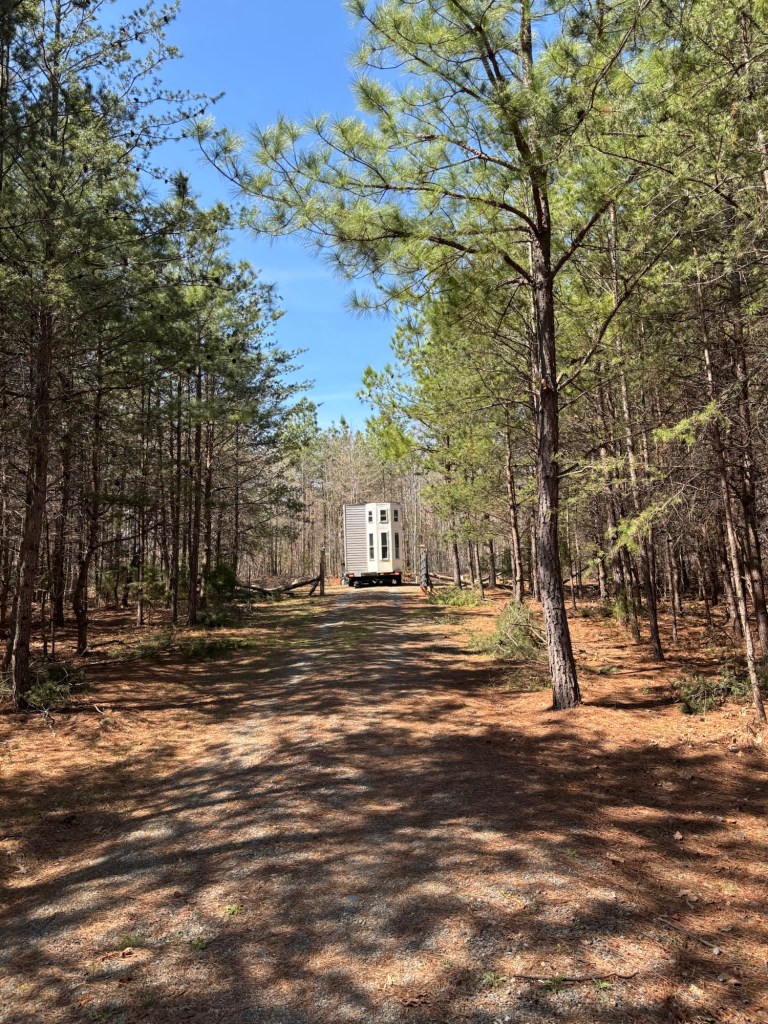
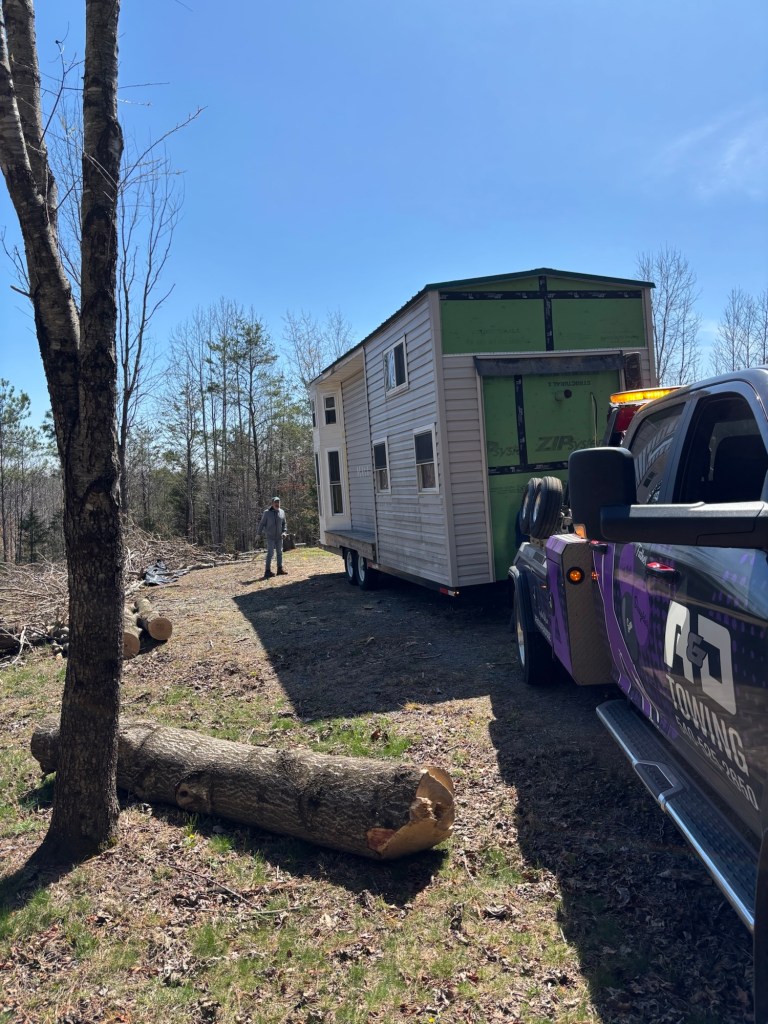
We finally got it on the pad.Brian backed it down the driveway.
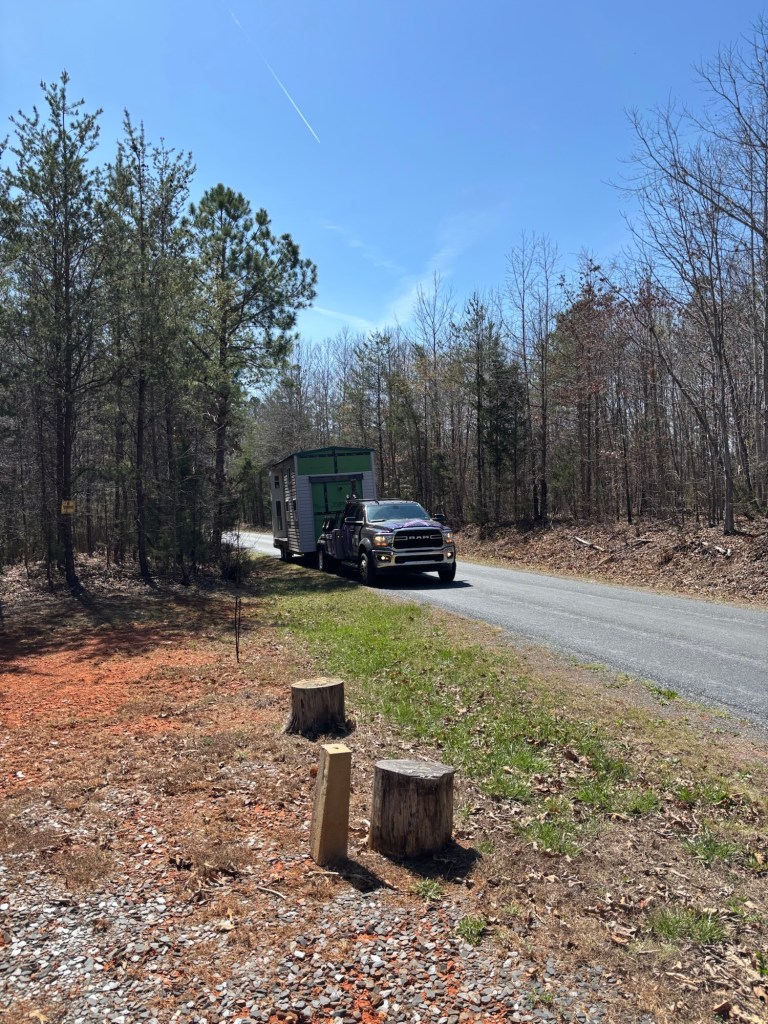
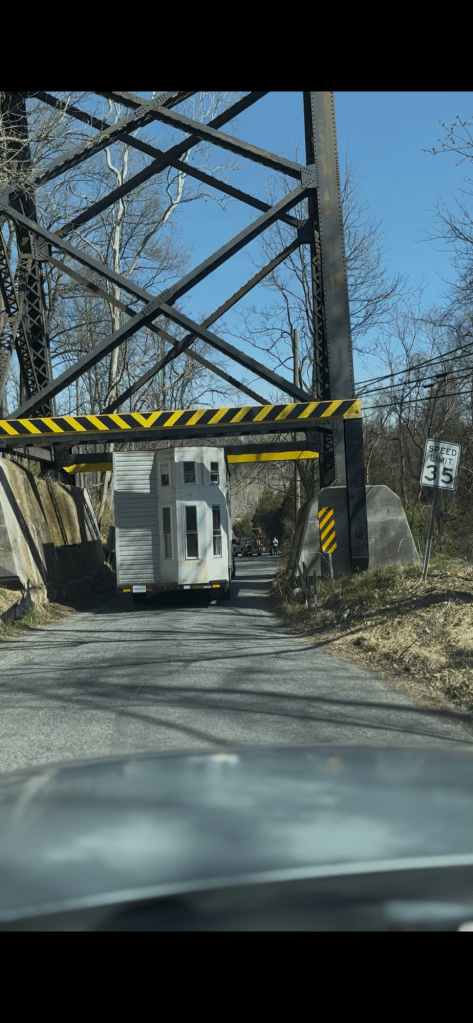
We met the designer and builders and Brian, the tow truck driver yesterday morning at 9:30 am in Troutville. It took us a while to get everything loaded up and ready for traveling to Buckingham County. We were nervous and excited. The most nerve racking part was whether or not it would fit under the train trestle with 13 feet and 4 inches of clearance stated on side.
The builders of the tiny house, Taylor and Kaitlyn, followed us to be sure it fit under the trestle that had been lowered after they built it.This is just after Brian left with the tow truck.
It took two hours for us to drive to Buckingham. We went about 45 mph with the house. Once we got to the farm, it took about an hour to get it into its place. We are going to head back over today. We have to finish leveling it and shore it up against the weather.
The beginning of the journey was clearing this 13 feet 4 inches train trestle and we all cheered as it passed through.
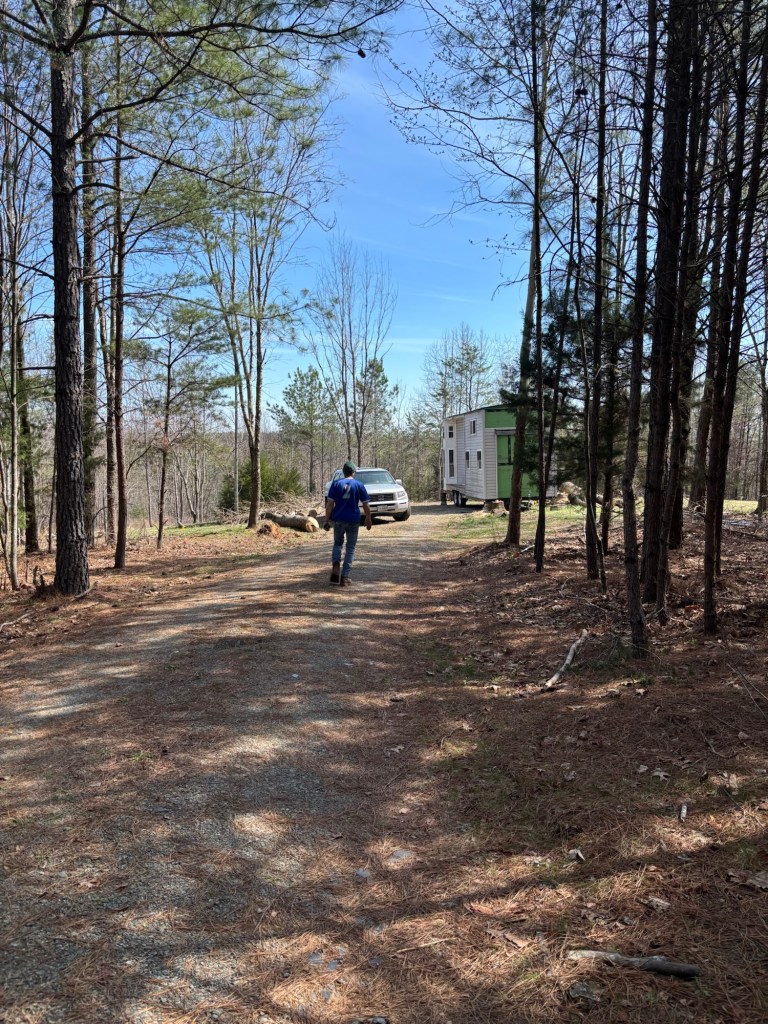
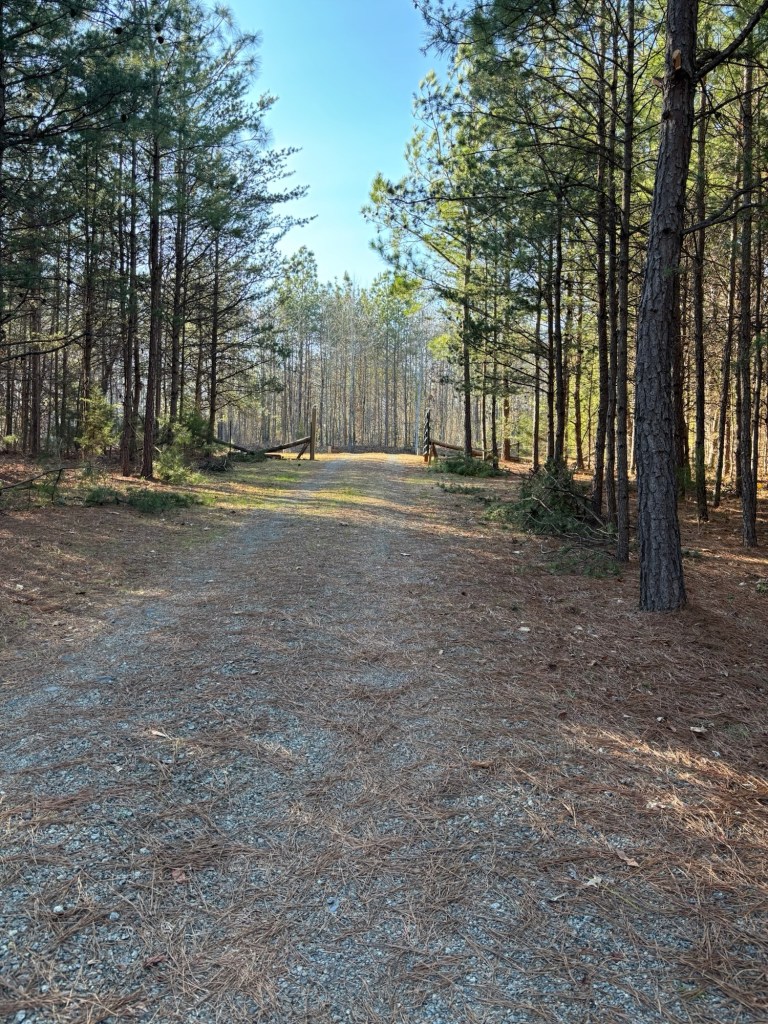
We trimmed the driveway up to 13.5 feet to accommodate the new tiny house being delivered.
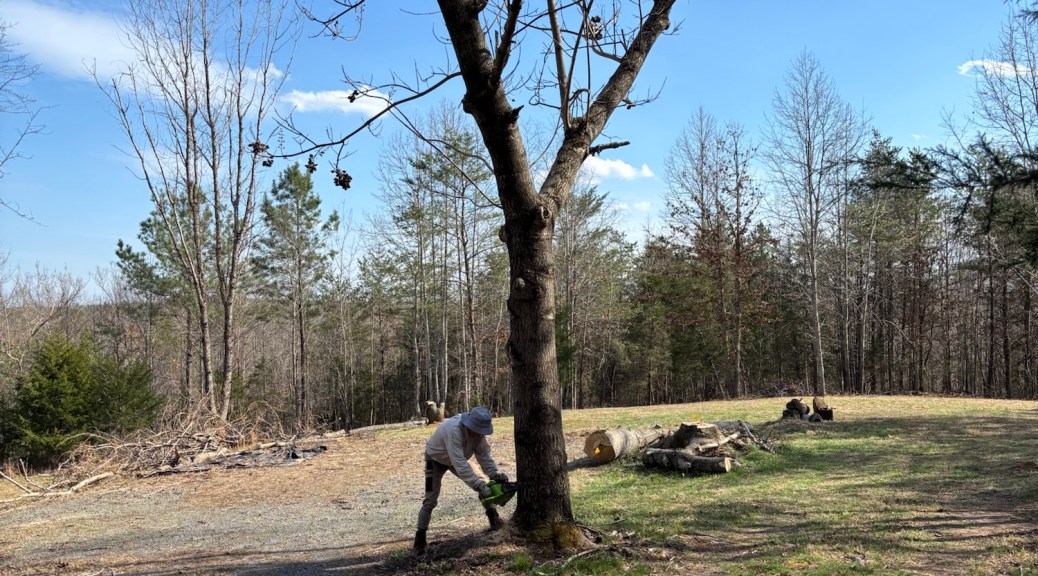
We spent the weekend taking down and processing the large paulownia trees up top in the main clearing. They loomed over the driveway and pad where we decided we’d place the tiny house. It felt like we were dismantling a giant whale carcass. These trees were messy, seedy and dropped limbs off during any storm. They take over native forests and choke out beneficial plants and trees for our Virginia wildlife. They were very fast growing as well which is why we put off cutting them down. They were a big bunch of hard work!
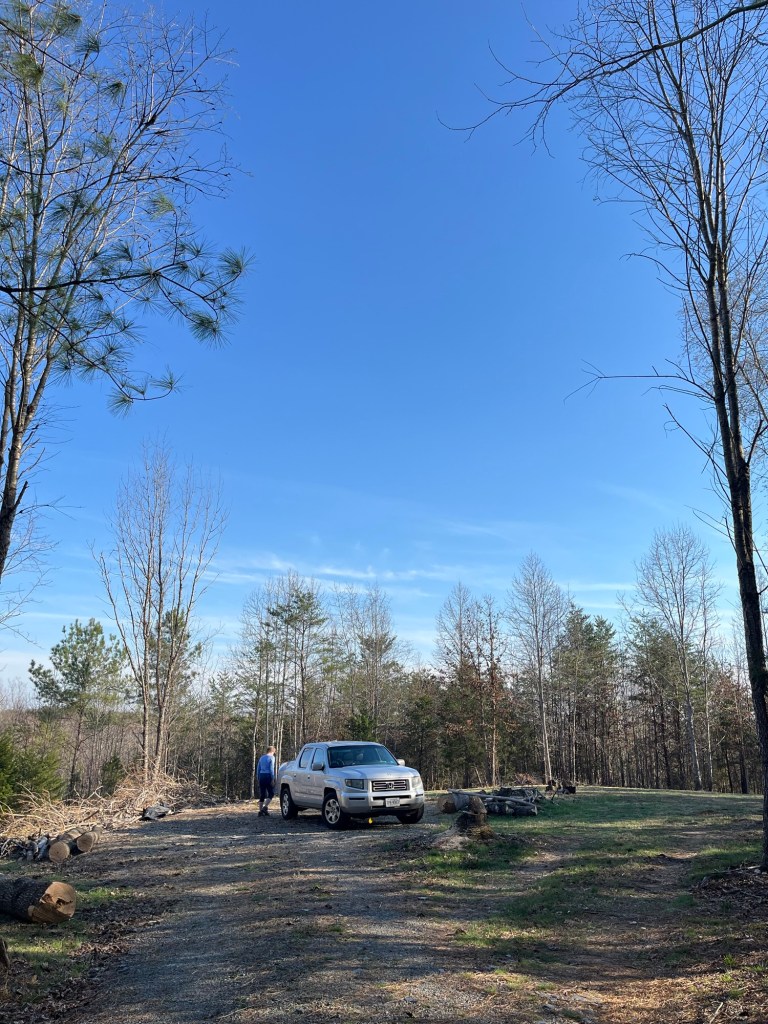
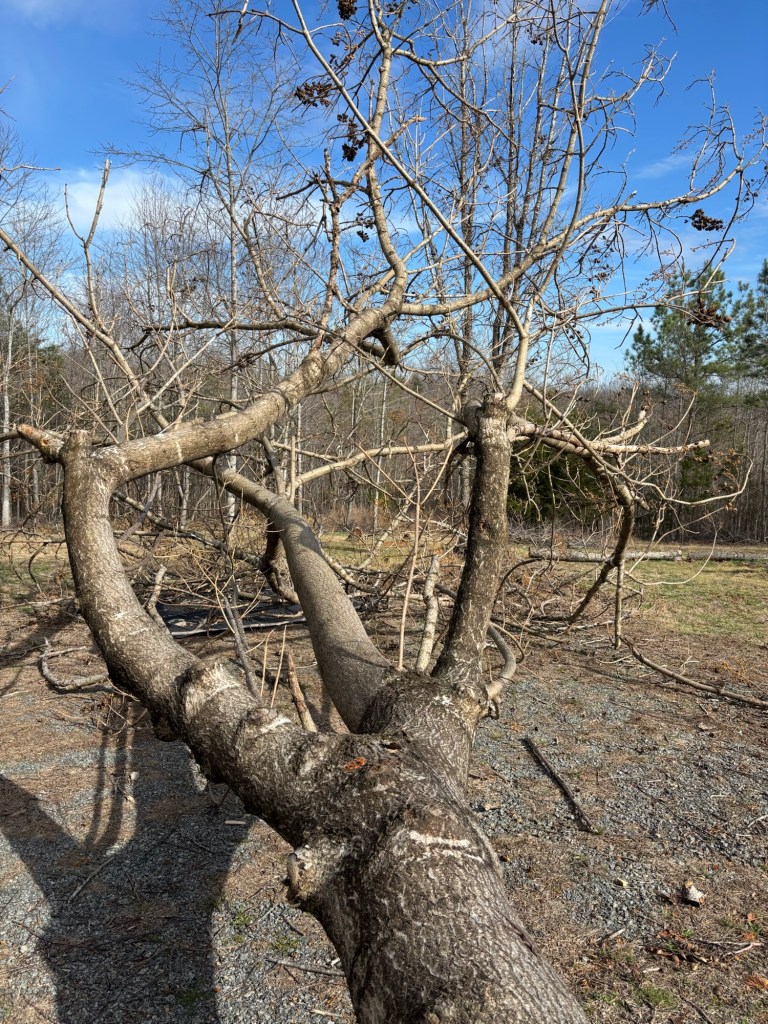
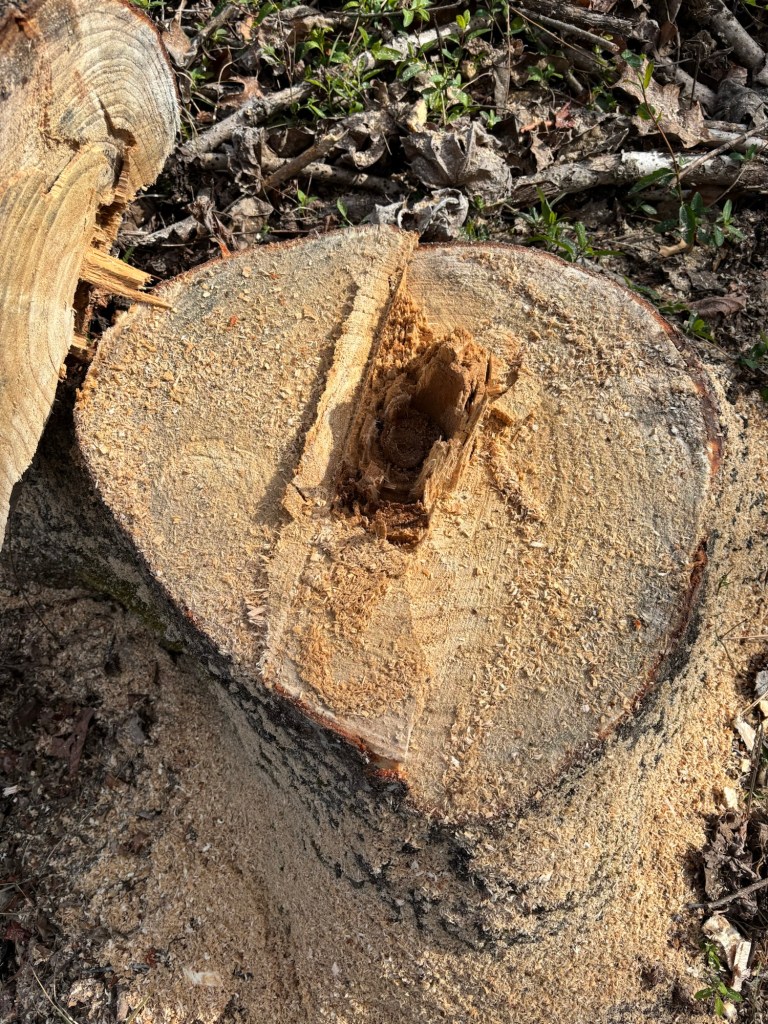
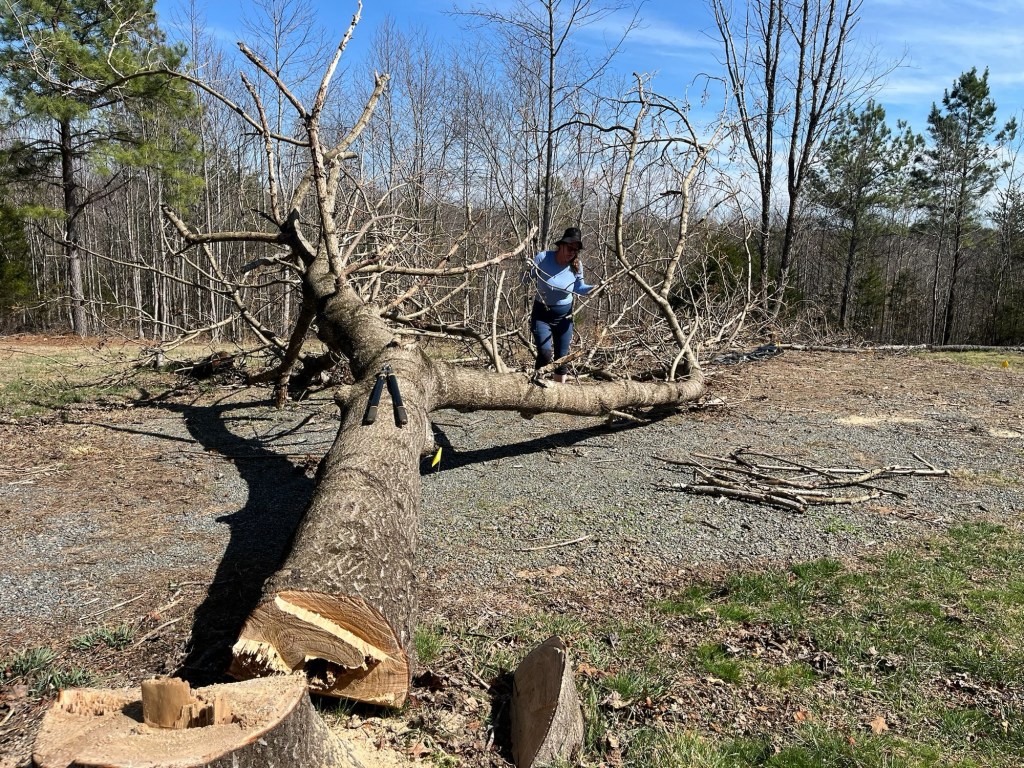
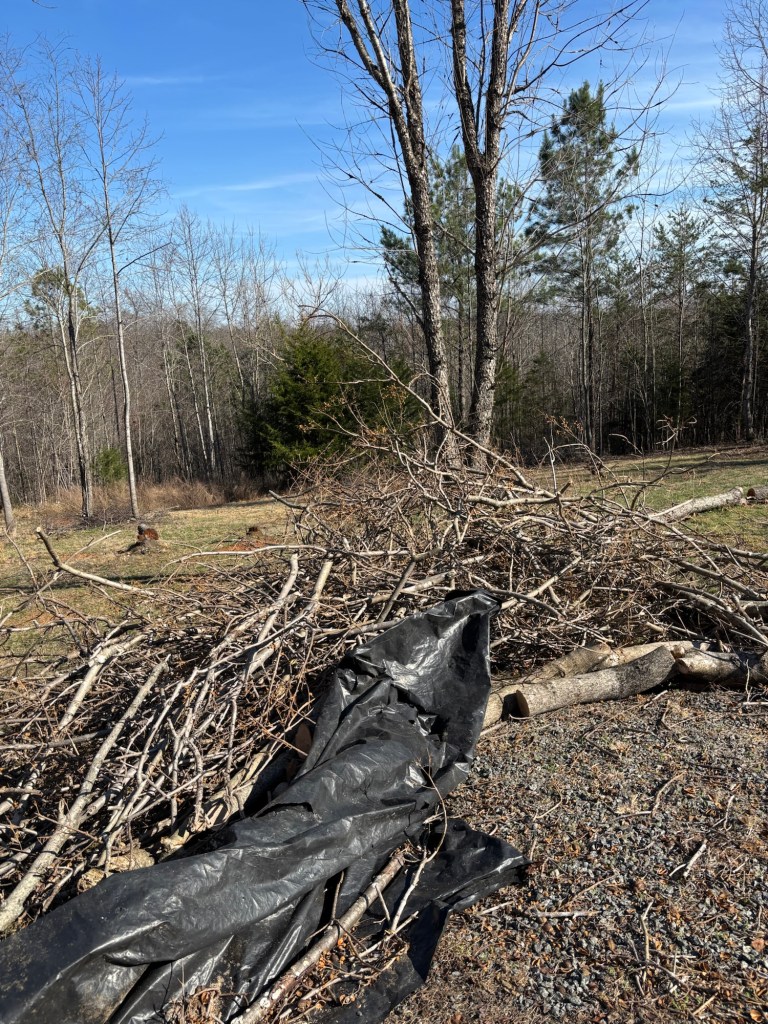
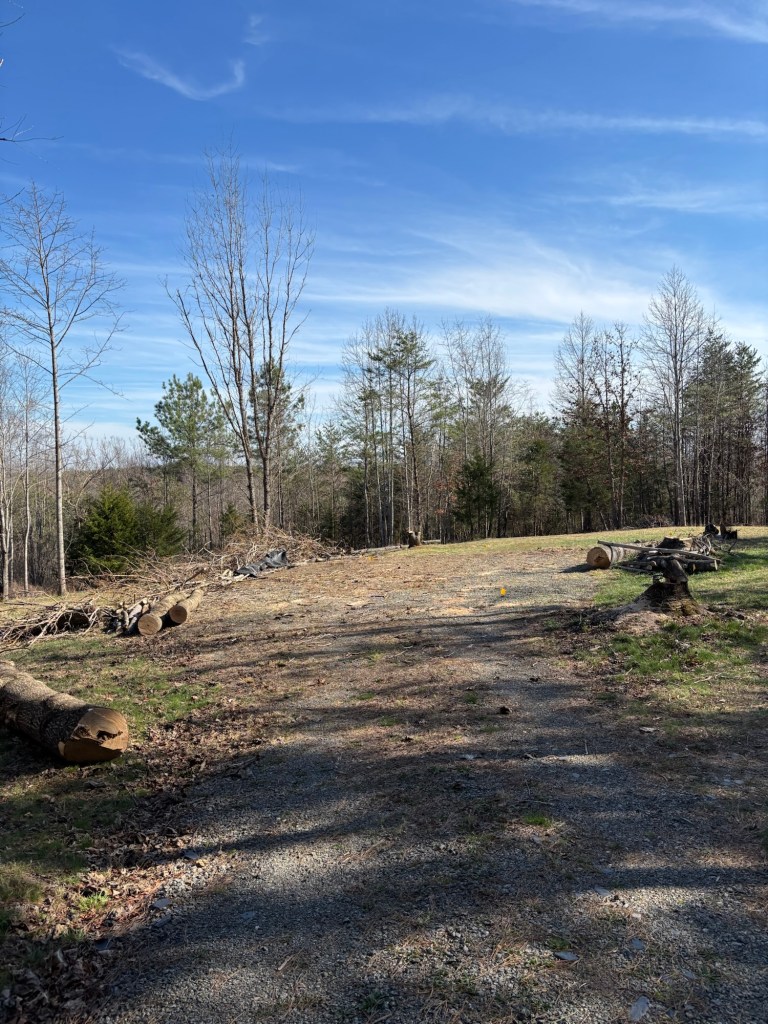
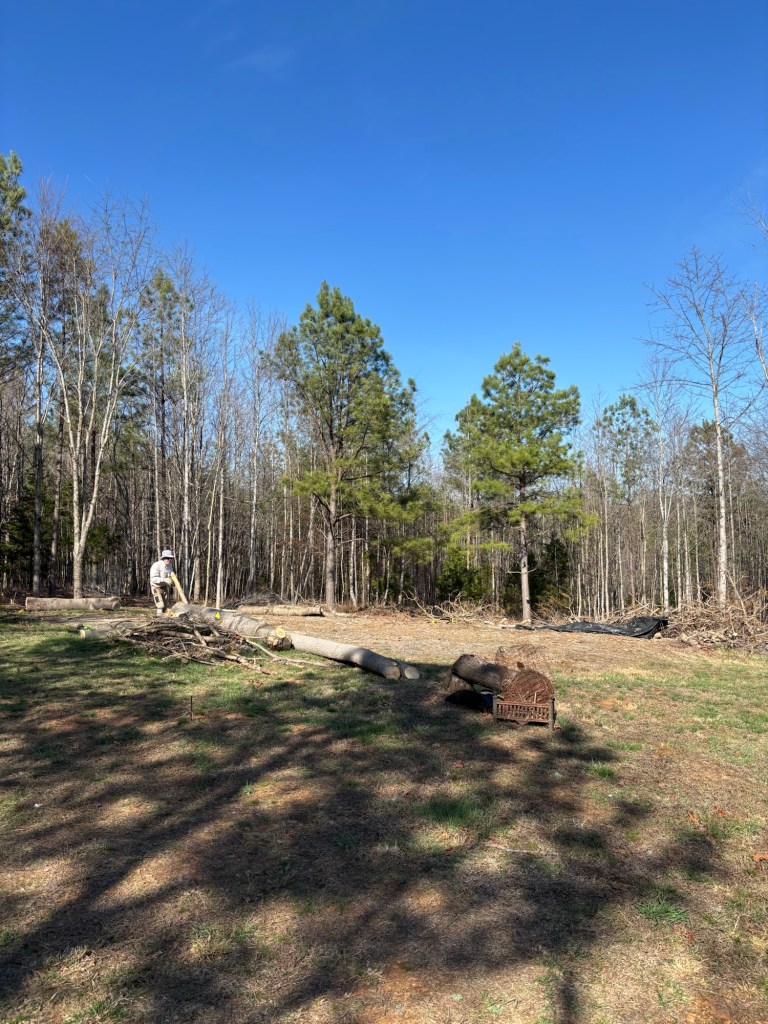
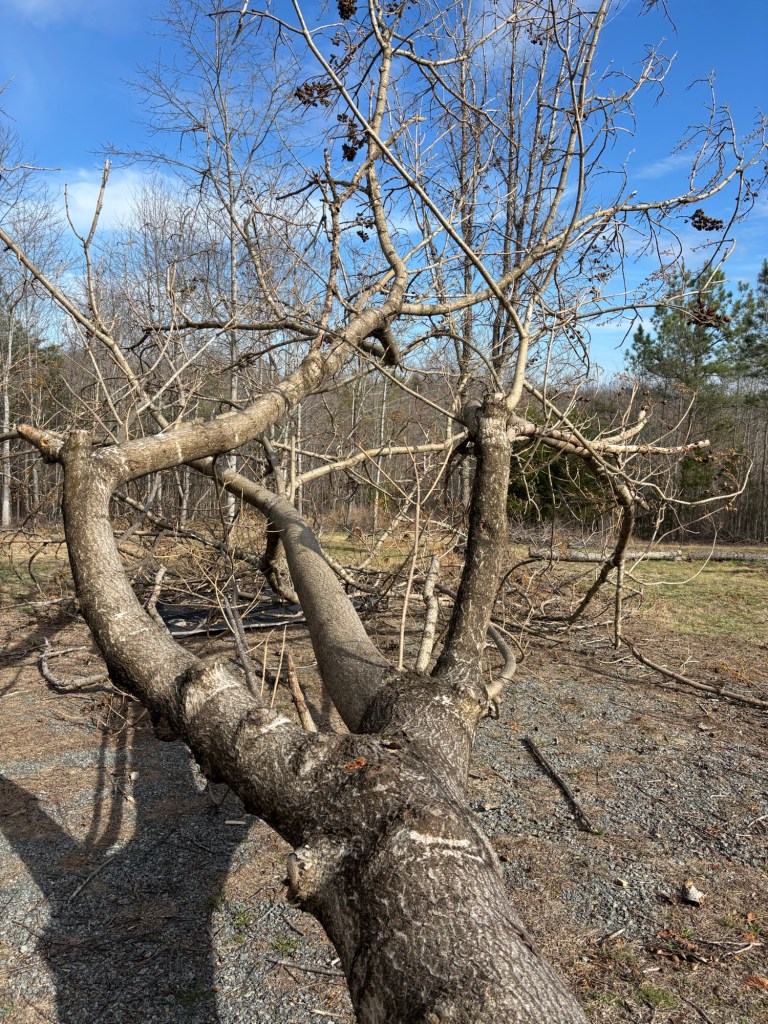
The truck parked in the spot we cleared for the tiny house this Wednesday. It looks so much better without the paulownias. We are pleased with our decision.The first paulownia tree we cut down earlier in the week and then came over Saturday to cut it into smaller pieces. This was the largest. It took all of our Saturday farm day. Hole in the middle of the paulownia is not a sign of disease but an inherent characteristic of the Paulowniacea family of trees. It is called pith and creates a water highway for the tree to support its rapid growth. This hollow bamboo structure runs the length of the trunk. This is one way this tree can take over quickly. Similar to ailanthus, Callery Pear, Mimosa and White Mulberry in its destruction of forests in the eastern US. Kudzu in tree form. The second and smaller of the two paulownia trees we took down and cleared it yesterday (Sunday). We are going to need a wood chipper! Paulownia tree debris around the pad. We will find a use for these logs. It is lightweight and fire and rot resistant. We picked a lot of great walking sticks and fishing poles out of the rubble and sorted into useful and non useful piles. We brought the long dead pieces home to use as fire starter. They burn for a long time and are as light as paper. It’s really very interesting wood. Too bad the tree isn’t adapted to playing nice in our environment with its native cohorts.
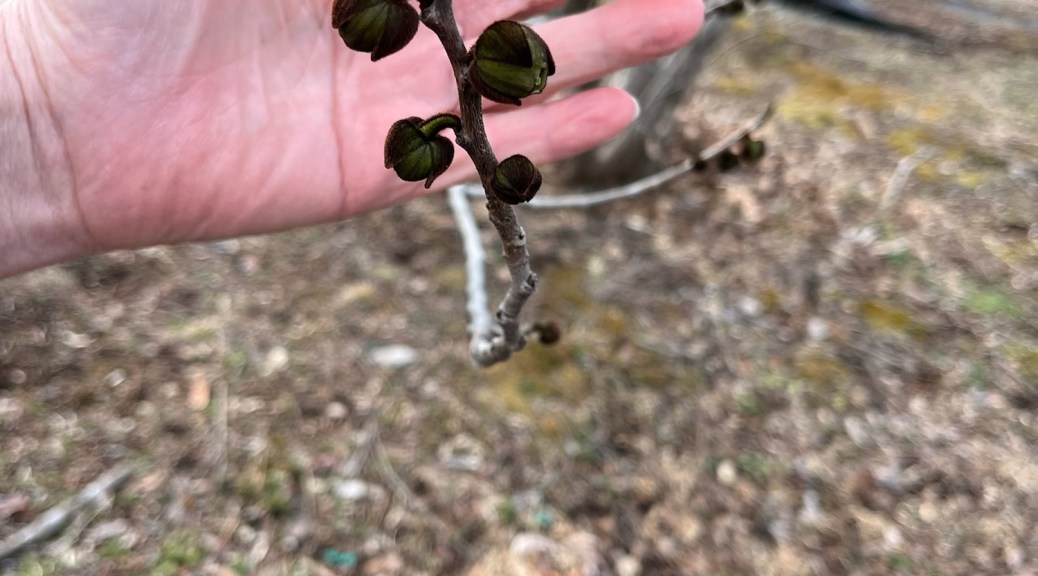
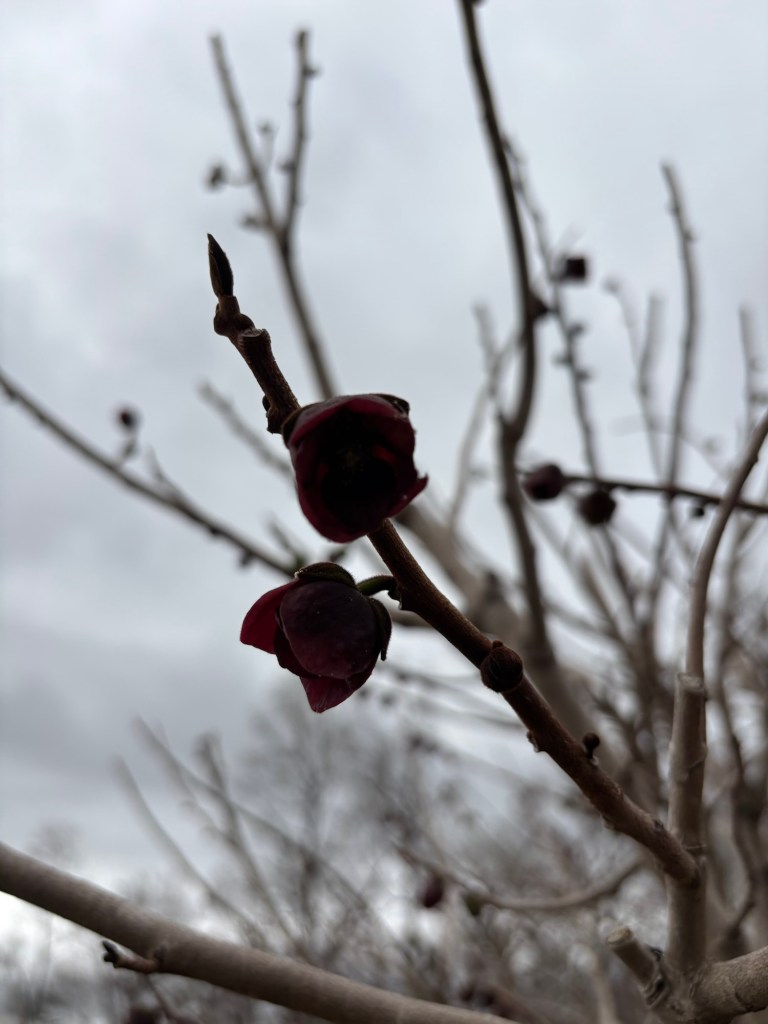
We stayed focused on creating our space for the tiny house for the most part, but ran down to the old colony pawpaw patch last night just before leaving SAFF for the weekend. The buds are still tightly closed. We are happy with the slow moving progress of the buds as we have only found female flowers out in the wild so far. We continue to look for the older male flowers with pollen. We will use this to pollinate our female flowers when they open. We are watching the pawpaws develop along the Rockfish River on our drive to the farm and we see them covered in buds. They are all still female with green flowers instead of more purple male flowers that face downward.
Female flowers at Edible Landscaping on Saturday in Afton Virginia.
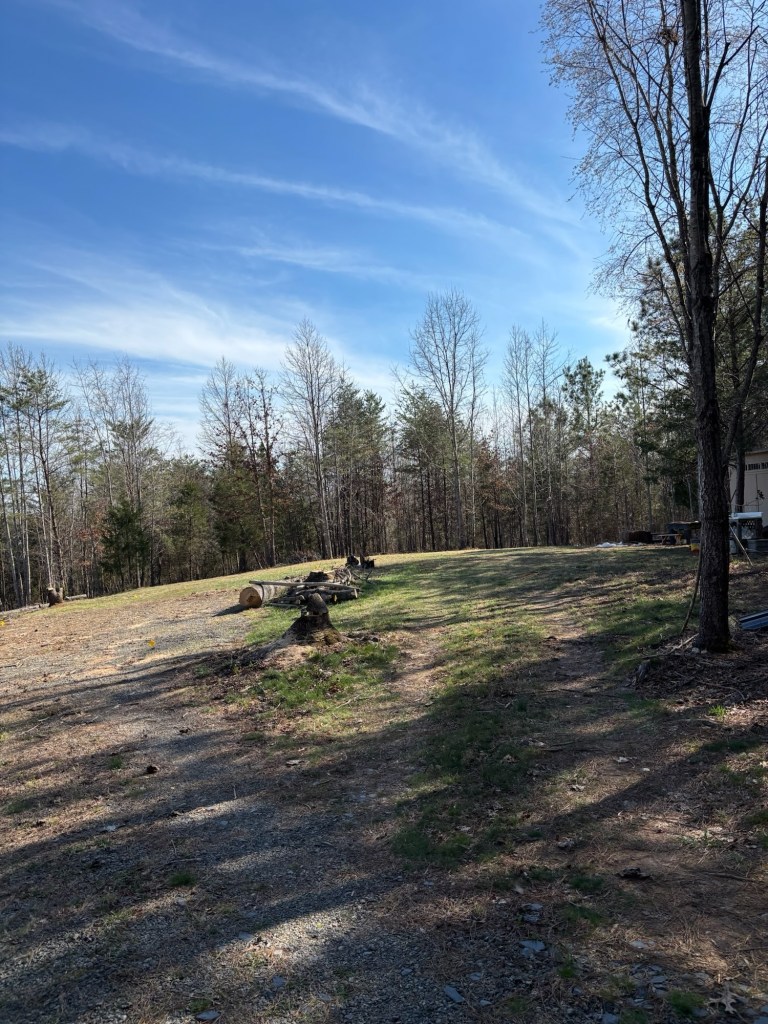
View of the clearing and pad without the paulownias.
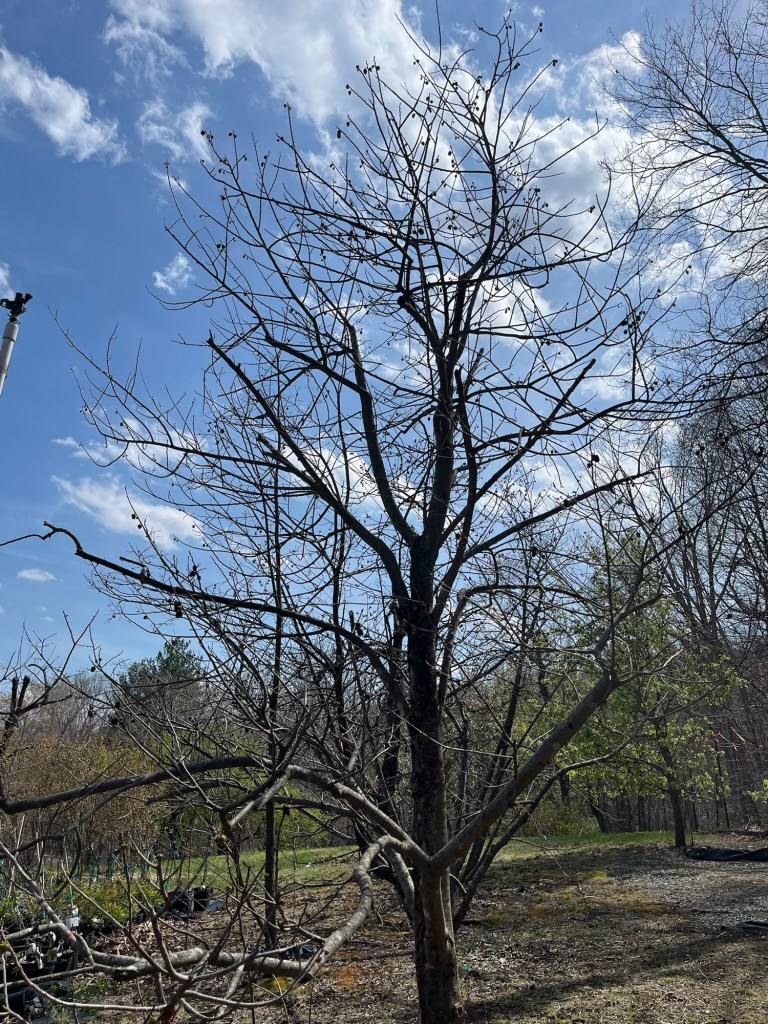
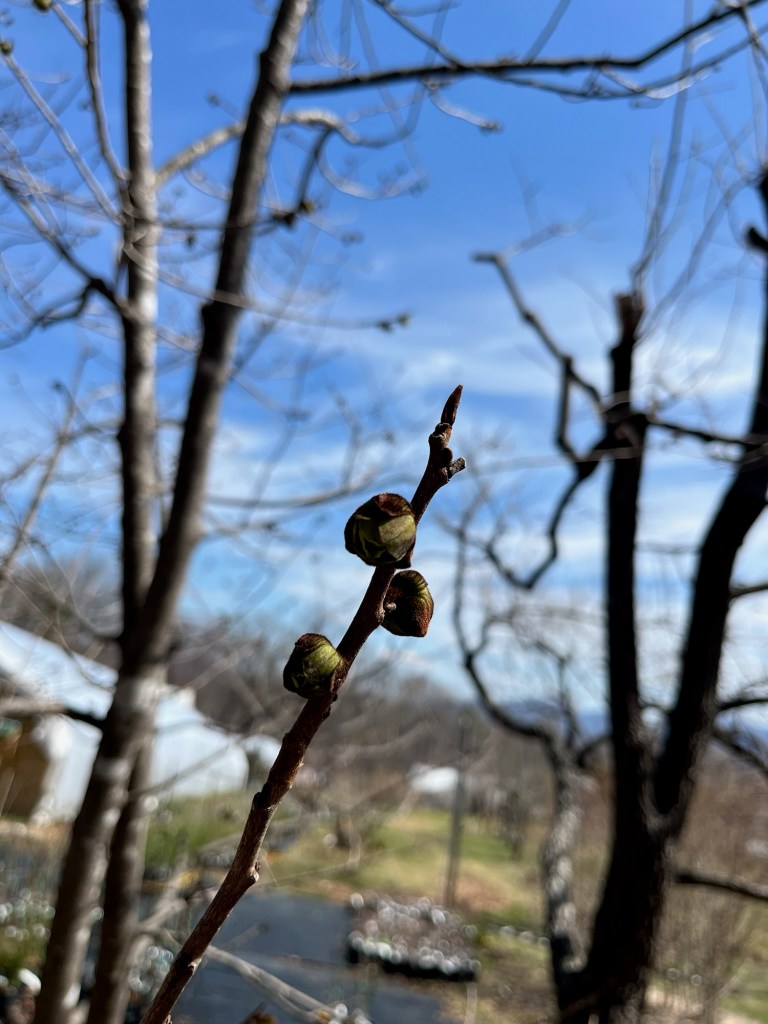
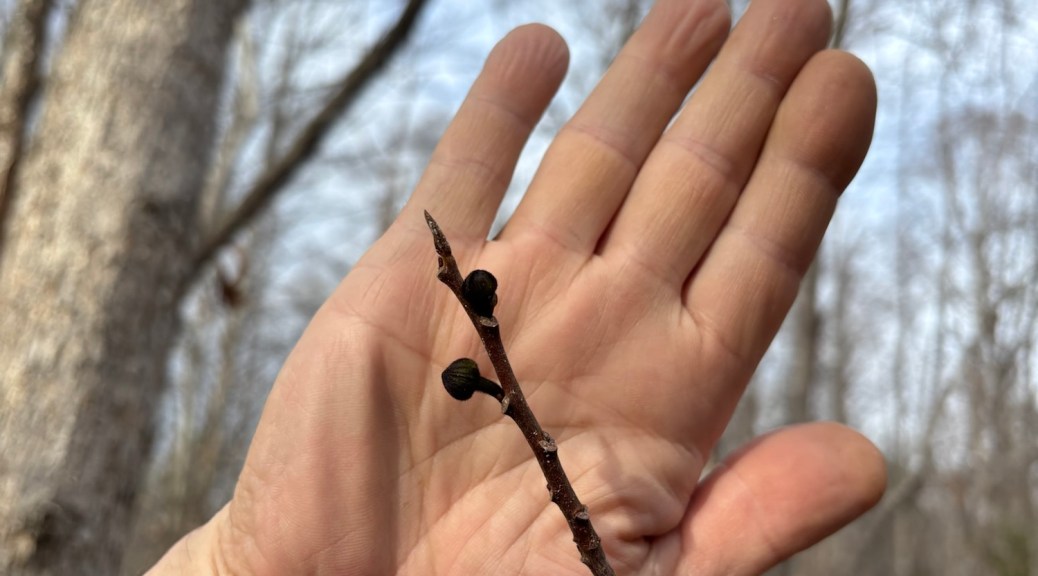
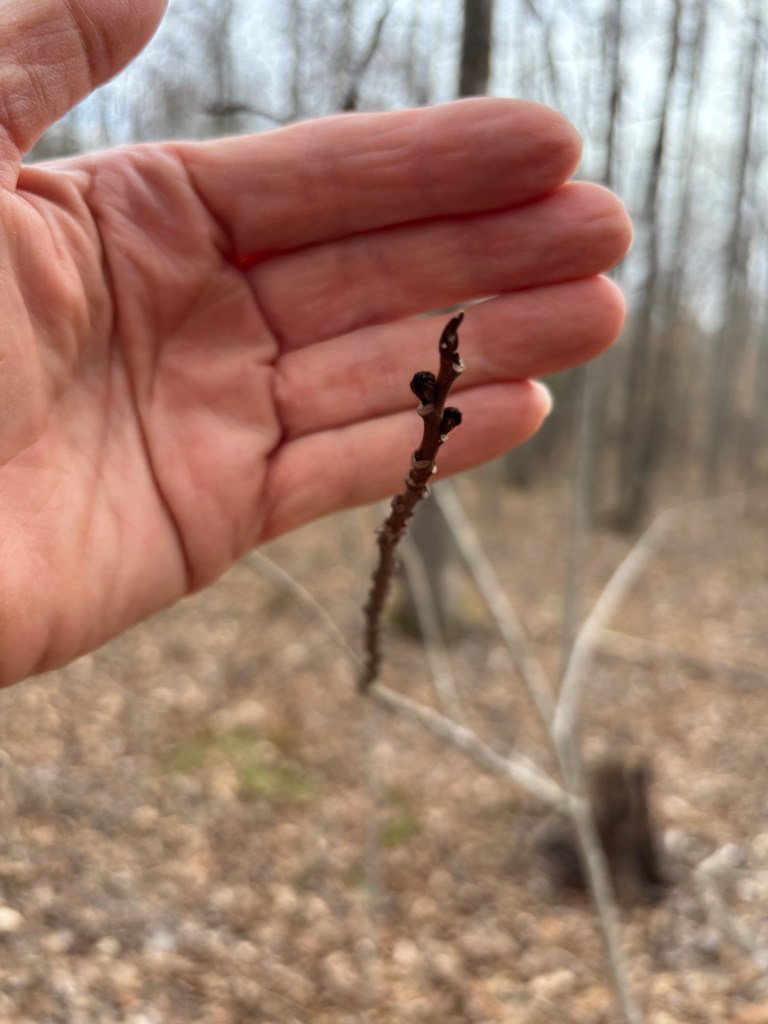
Asimina triloba buds still dormant despite the wacky weather.
We drove over to Buckingham County yesterday to pick up soil test kits and drop off paperwork before heading to SAFF. Spring has sprung in many pockets of Virginia with purple flower buds emerging from red bud trees and bright yellow forsythia and daffodils blooming. After the deep cold snap, it appears we’ve made it and the weather will keep warming up from here.
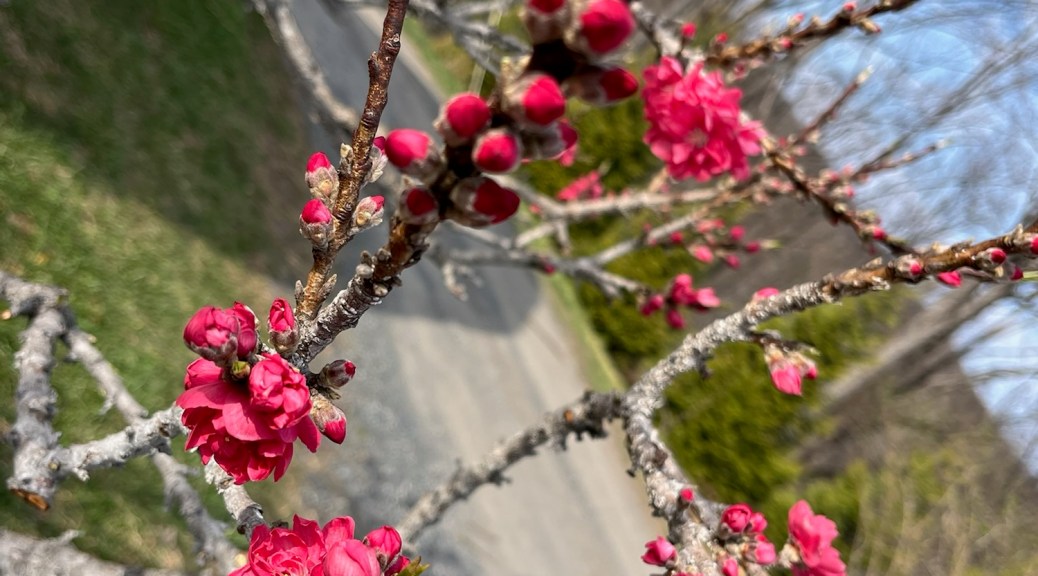
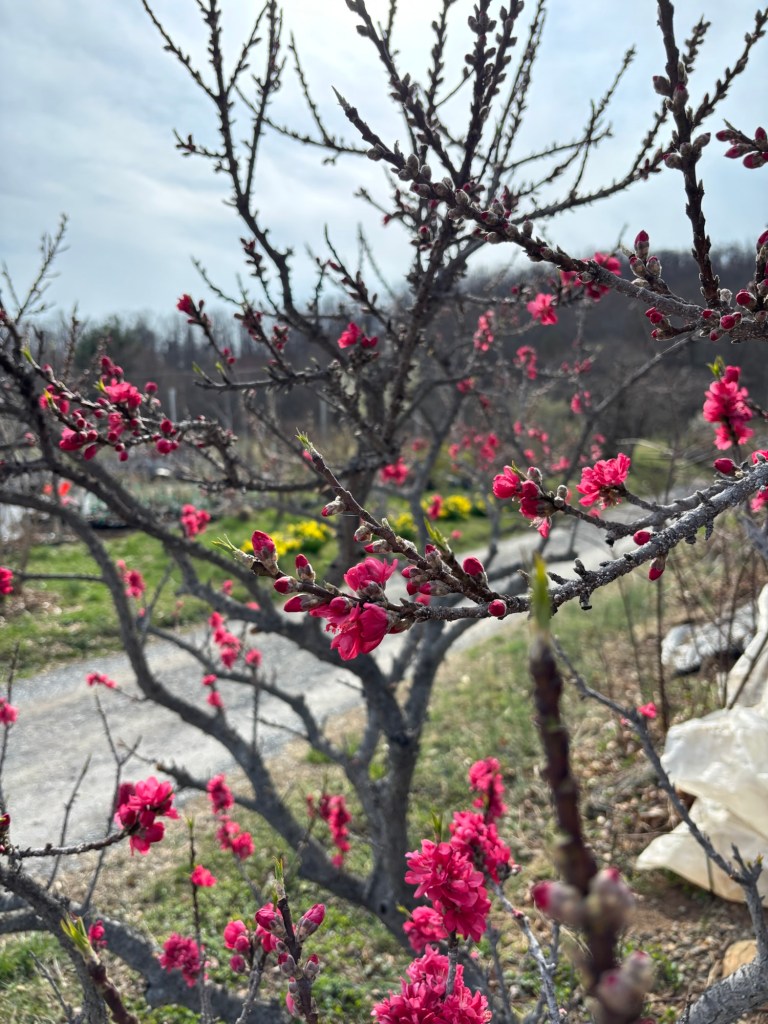
Peach tree blossoms at Edible Landscaping on Saturday in Afton Virginia.
On Wednesday, the day before, we drove backroads down through Lexington’s Maury River and Kerrs Creek Virginia. We drove further down through George Washington and Jefferson National Forest through creeks and hollers down to Troutville. It was beautiful and we kept our eyes open for pawpaws the whole way. We went to look at a tiny house that we’ve decided to buy and place at Saint Andrews Forest Farm so we can spend part of our time out there.
Victorian tiny house built by engineering students during the early days of pandemic.We will have to finish the inside and make a few fixes but we are excited about the possibilities.
So yesterday we went over to SAFF and decided we would place it on our pad just off the driveway up top. We took down one invasive paulownia tree that would interfere with our plans. We have a few more trees to cut down to make a safe space for the tiny house.
Finally this paulownia is down. It was a job. Now we have to get it out of the way.

 St Andrews Forest Farm