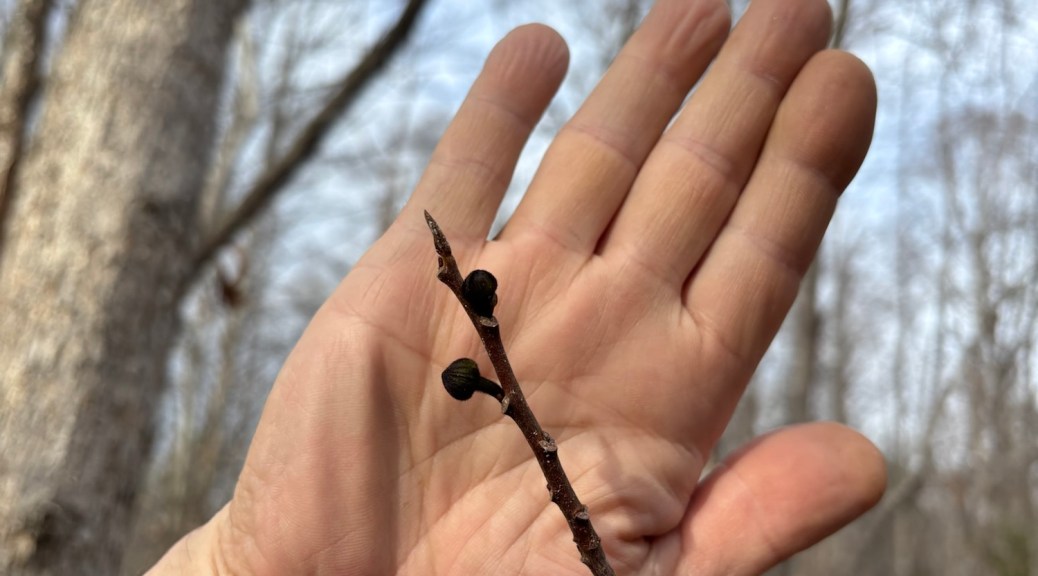
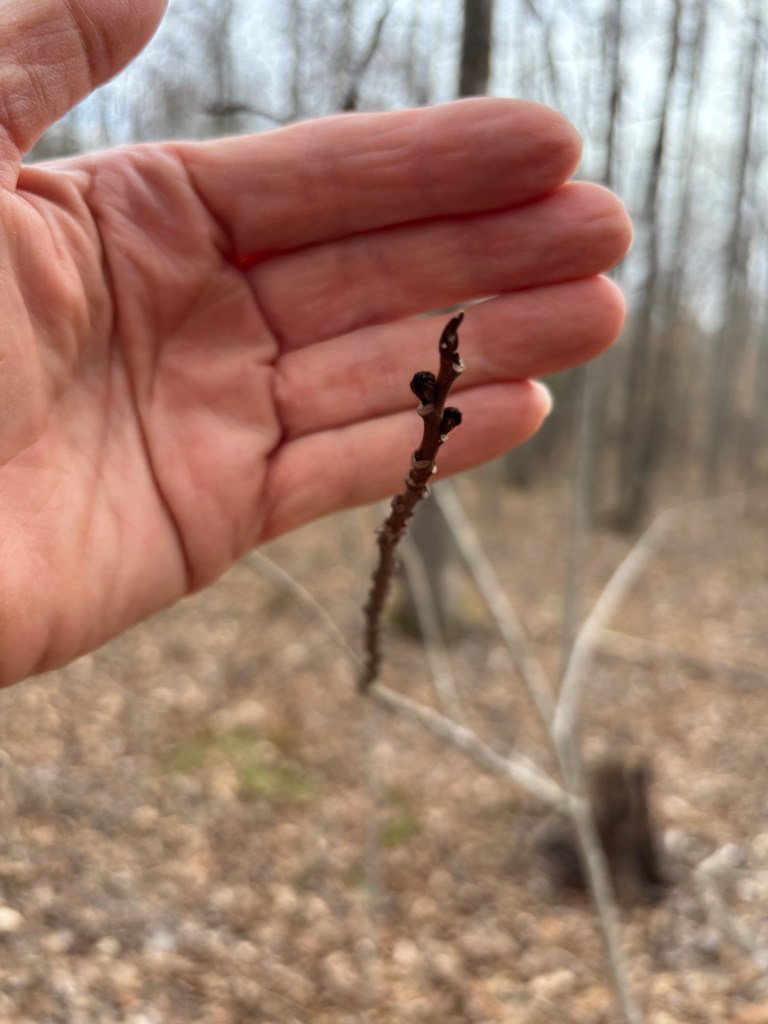
Asimina triloba buds still dormant despite the wacky weather.
We drove over to Buckingham County yesterday to pick up soil test kits and drop off paperwork before heading to SAFF. Spring has sprung in many pockets of Virginia with purple flower buds emerging from red bud trees and bright yellow forsythia and daffodils blooming. After the deep cold snap, it appears we’ve made it and the weather will keep warming up from here.
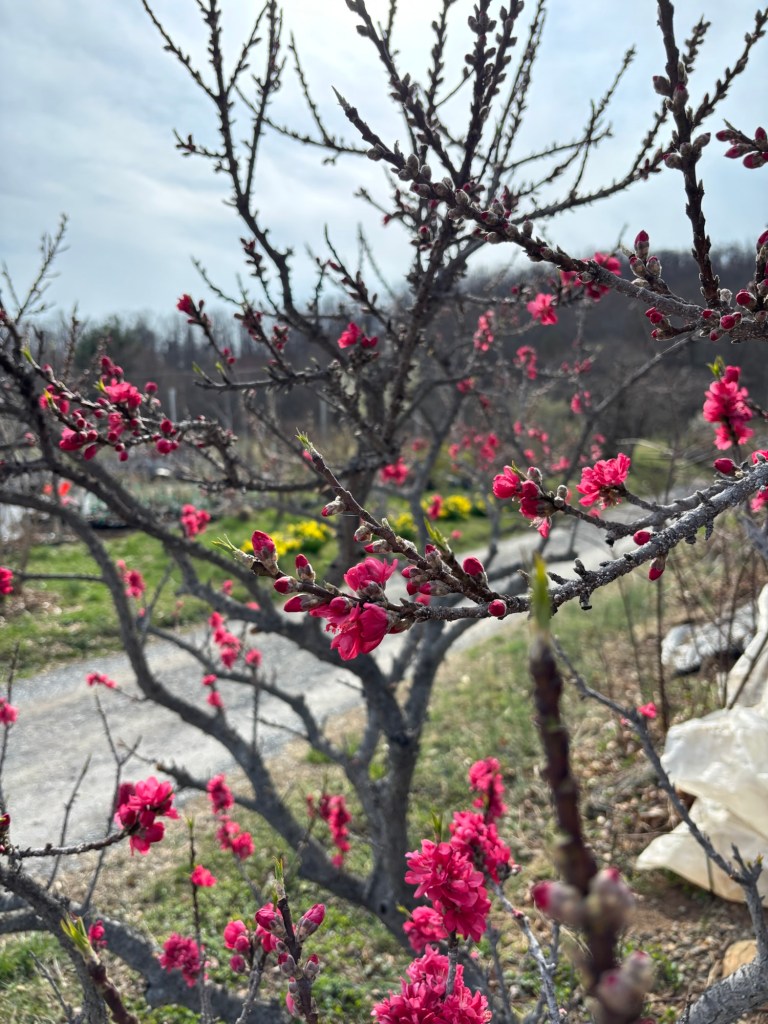
Peach tree blossoms at Edible Landscaping on Saturday in Afton Virginia.
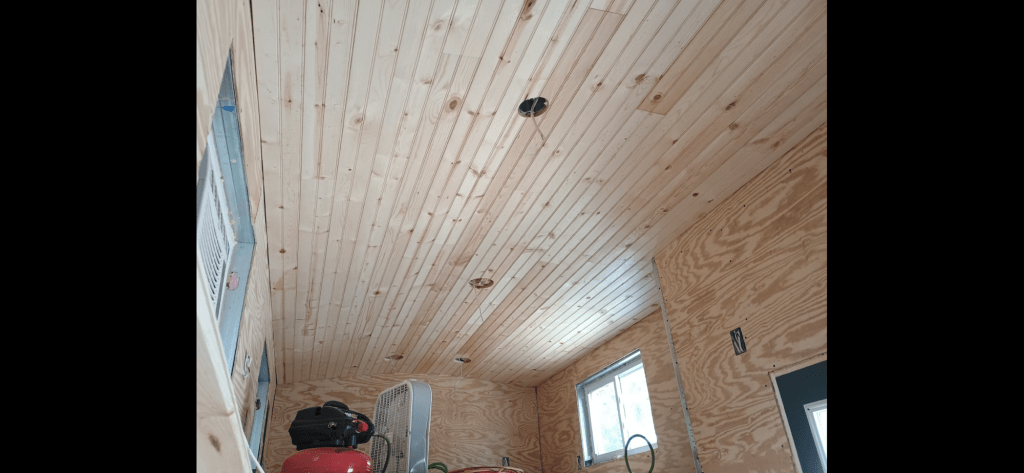
On Wednesday, the day before, we drove backroads down through Lexington’s Maury River and Kerrs Creek Virginia. We drove further down through George Washington and Jefferson National Forest through creeks and hollers down to Troutville. It was beautiful and we kept our eyes open for pawpaws the whole way. We went to look at a tiny house that we’ve decided to buy and place at Saint Andrews Forest Farm so we can spend part of our time out there.
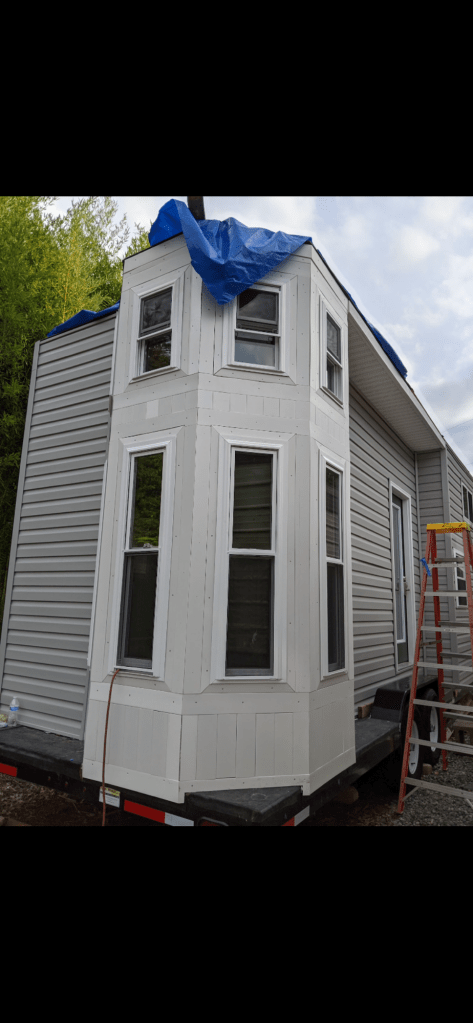
Victorian tiny house built by engineering students during the early days of pandemic.We will have to finish the inside and make a few fixes but we are excited about the possibilities.
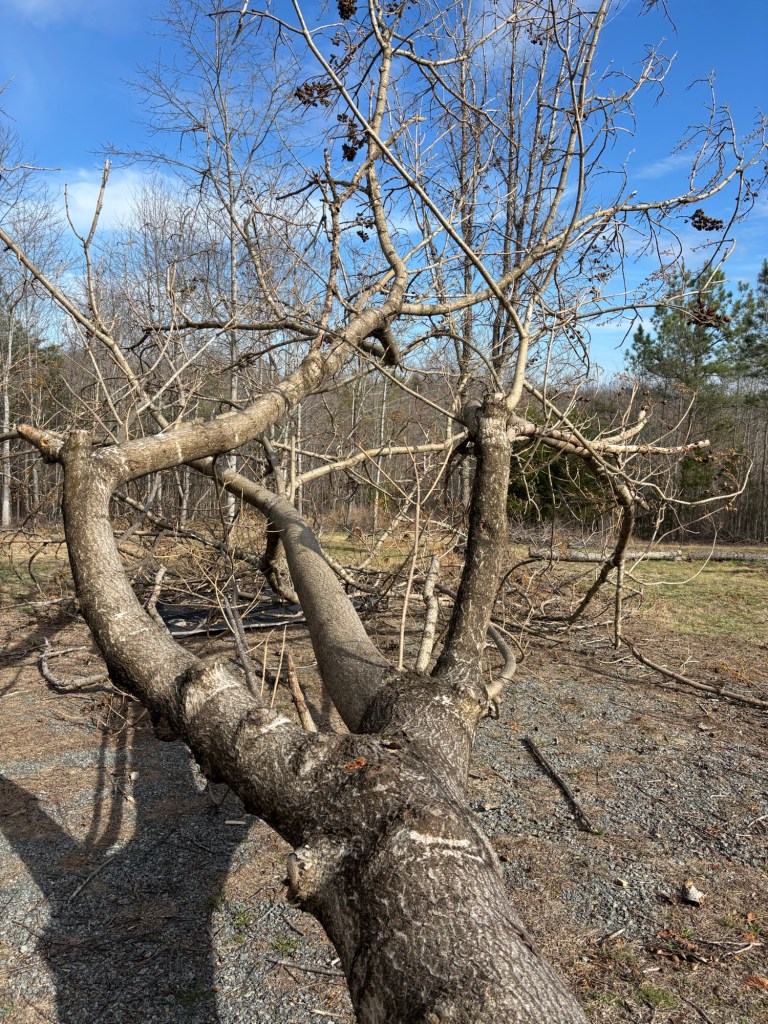
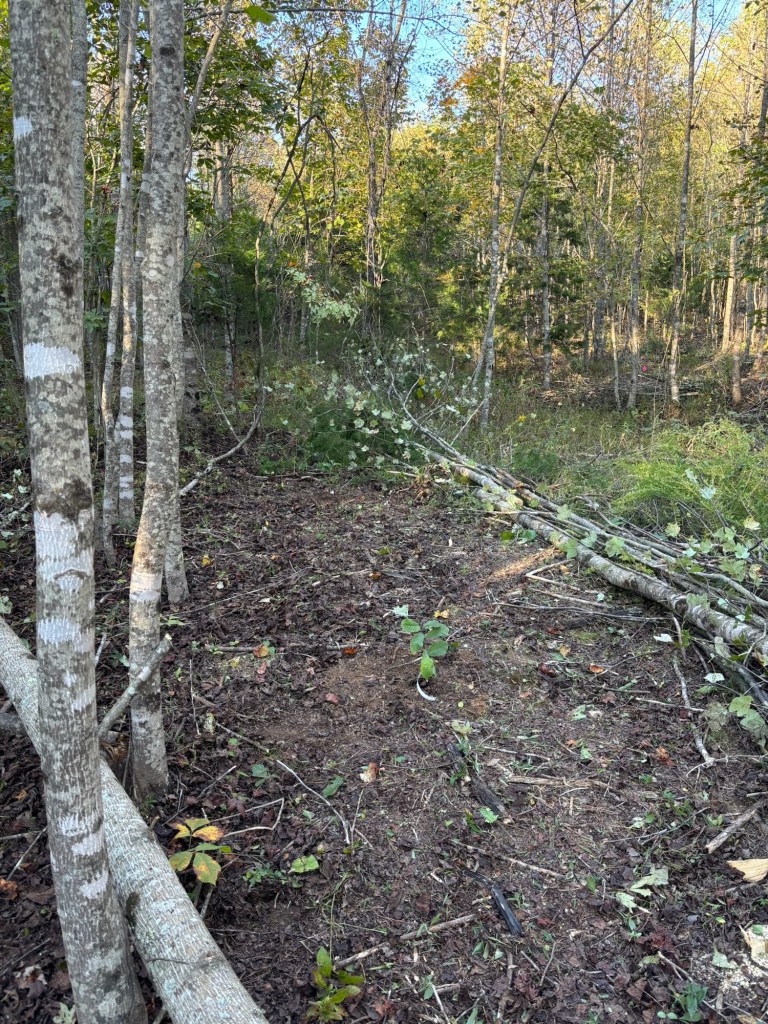
So yesterday we went over to SAFF and decided we would place it on our pad just off the driveway up top. We took down one invasive paulownia tree that would interfere with our plans. We have a few more trees to cut down to make a safe space for the tiny house.
Finally this paulownia is down. It was a job. Now we have to get it out of the way.
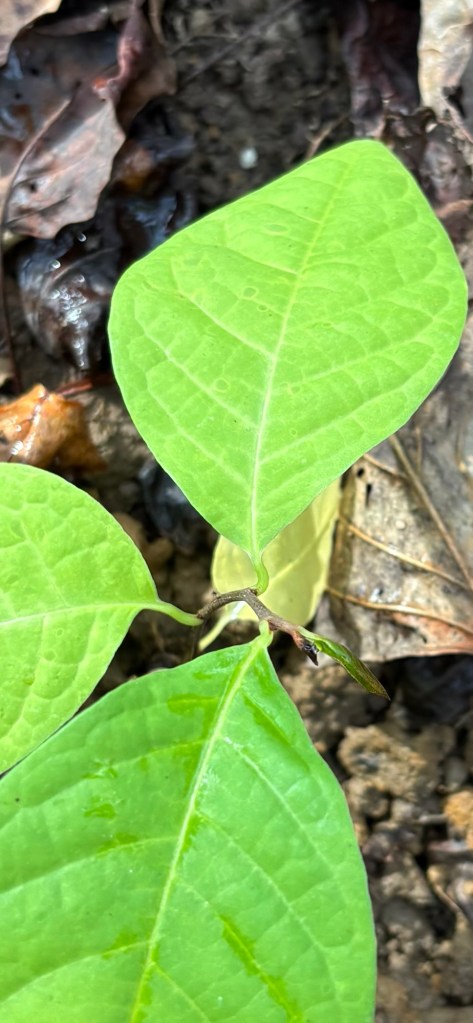
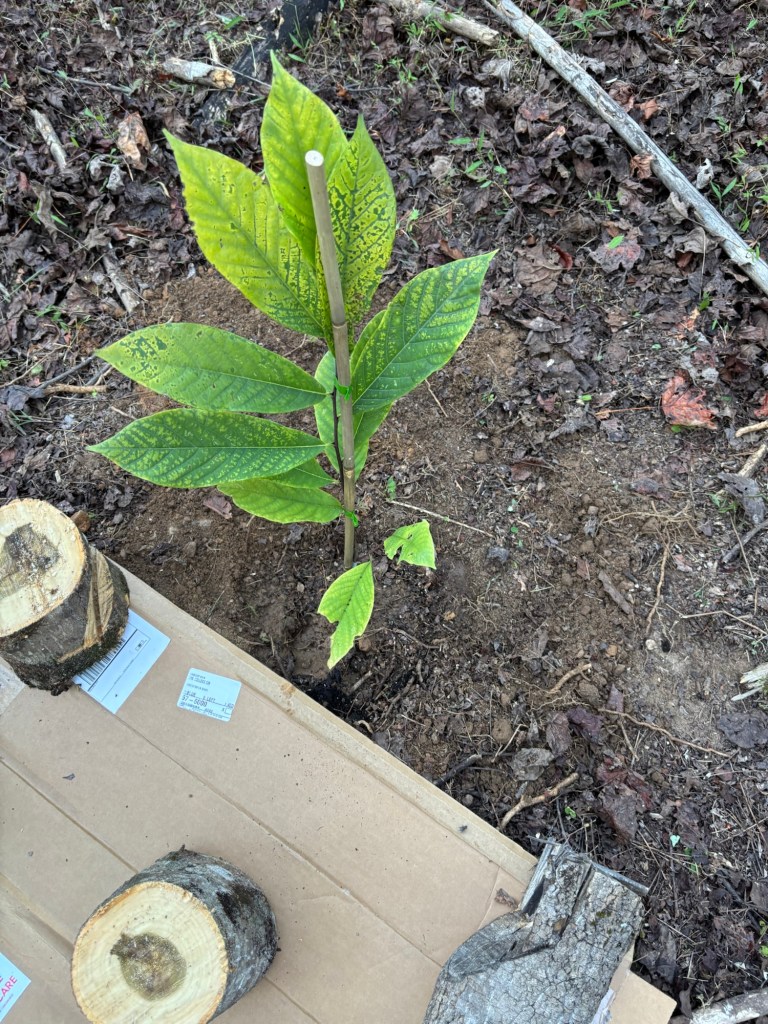
Asimina triloba: New leaf growth observed on a recently planted Rockfish River native pawpaw in the orchard at bottom of North Trail. This was beautiful to see. Hopefully it will be able to harden off before the first frost which typically occurs between October 21st to 31st in Buckingham.
We went over to St Andrews Forest Farm to water the pawpaws and take a walk.
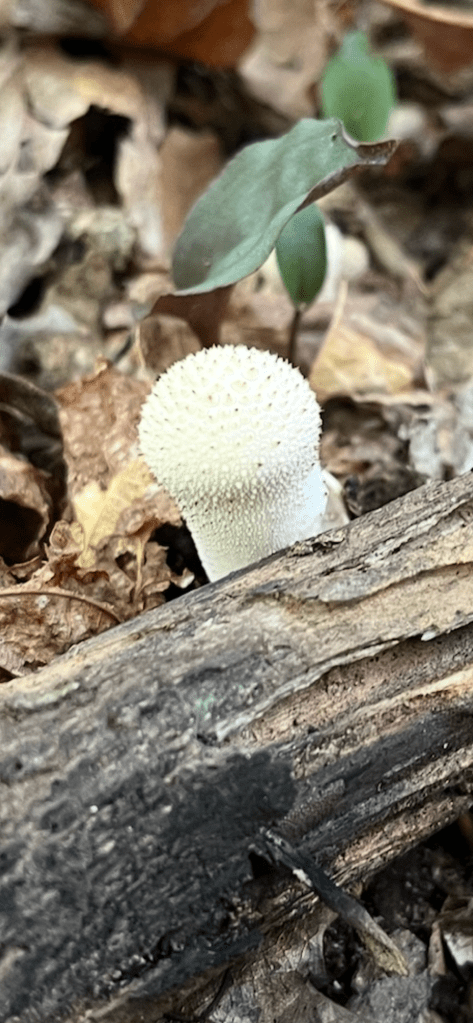
Common puffball. Lycoperdon perlatum.
We watered each recently planted pawpaw and made sure they were looking good. We came around the waterway and approached the orchard from south.
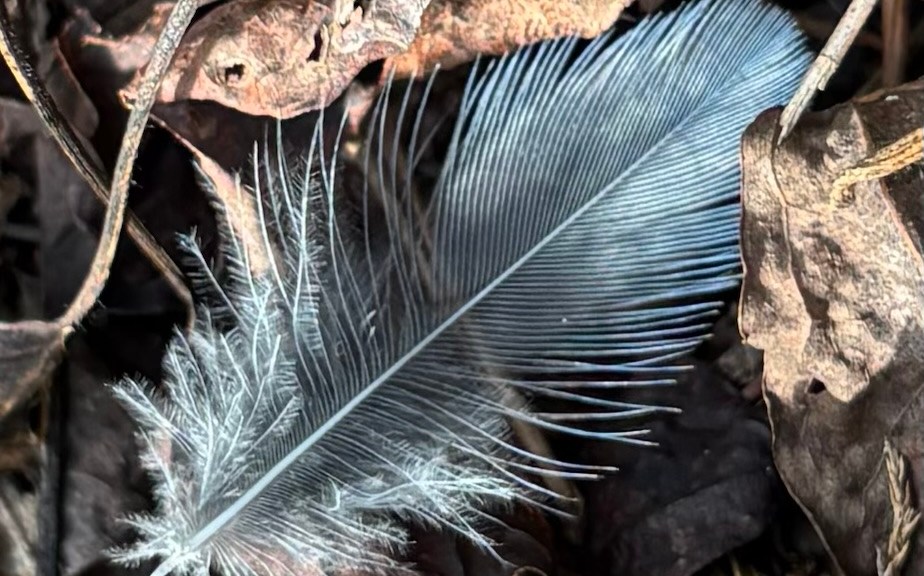
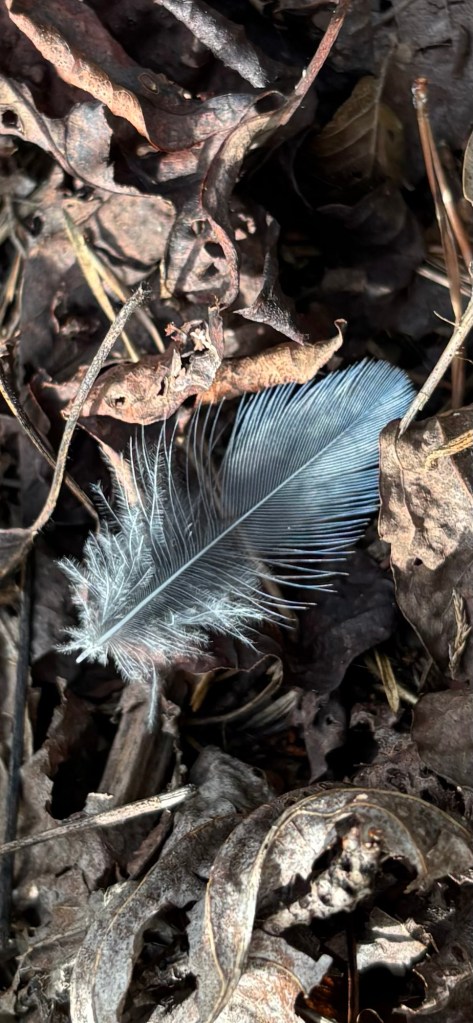
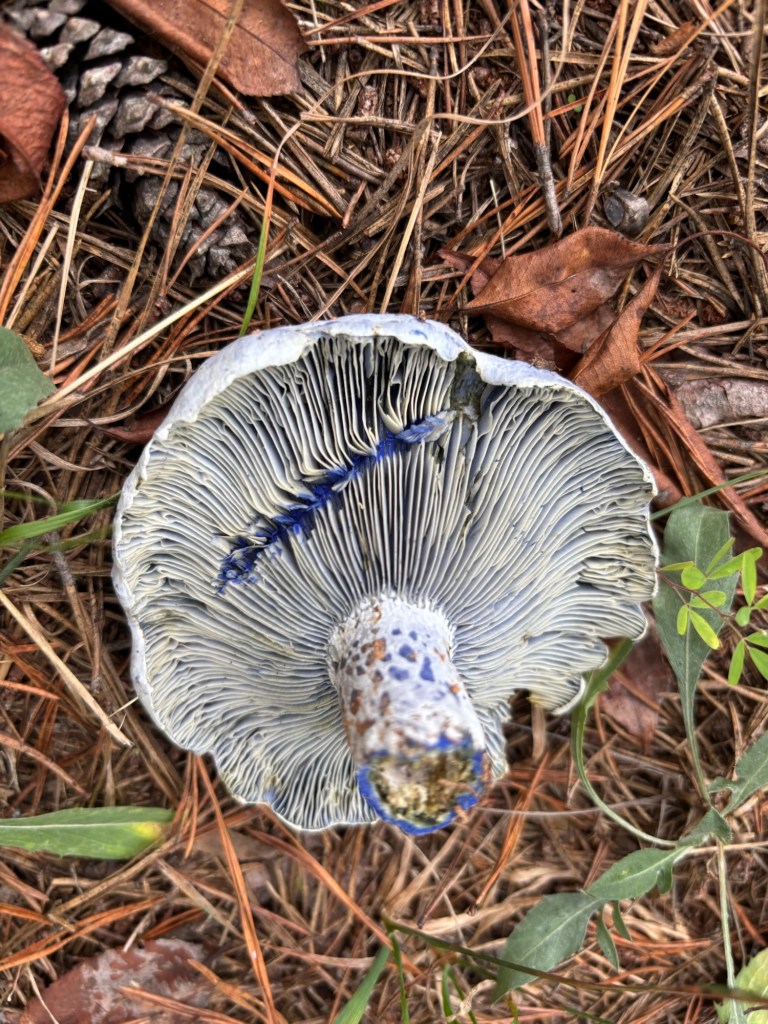
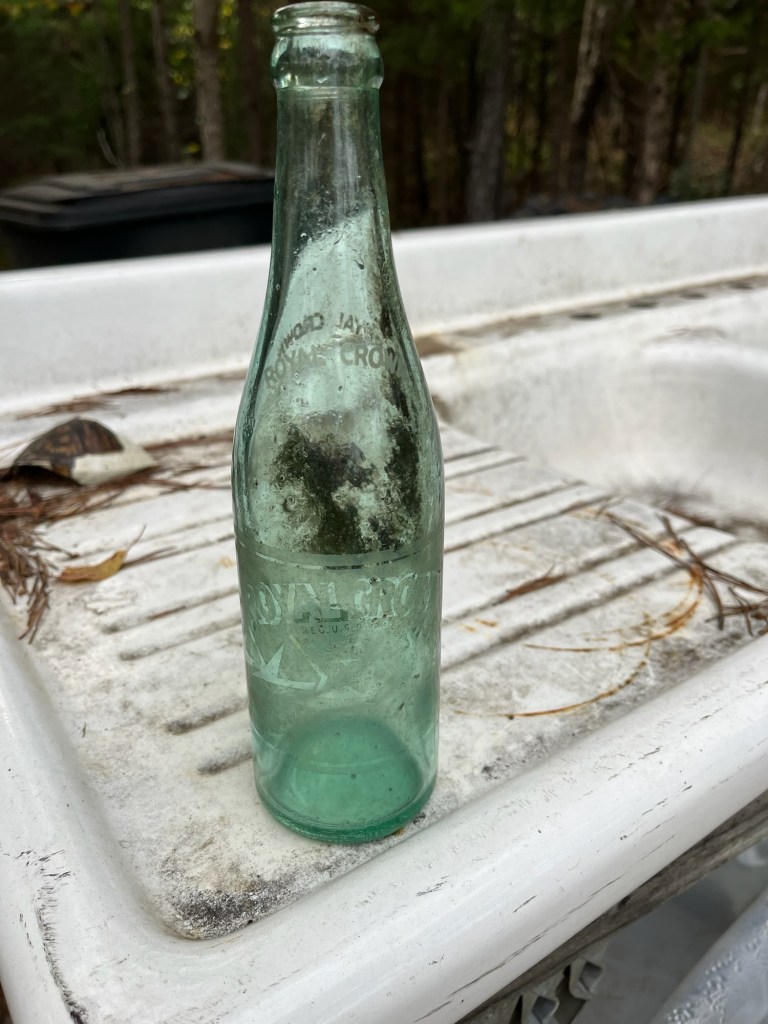
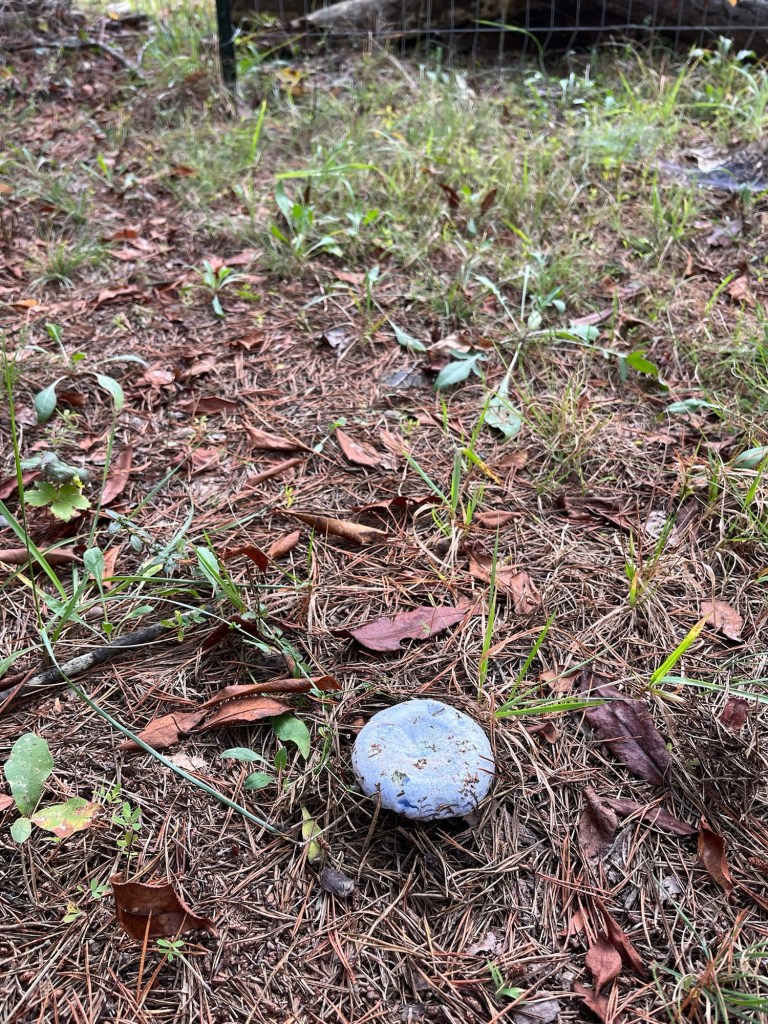
We heard a blue jay calling and following us around the forest. We found this feather. We thought it looked more like an Eastern Blue bird feather than a Blue Jay. Lactarius indigo is a milk cap with blue milky latex that oozes from the tissue when it is cut or broken. It’s edible and tasty. We find it near pines usually. This one is old and bug eaten. Royal Crown bottle found along Three Pine Gully on the north side. Looks to be from the 1930s.
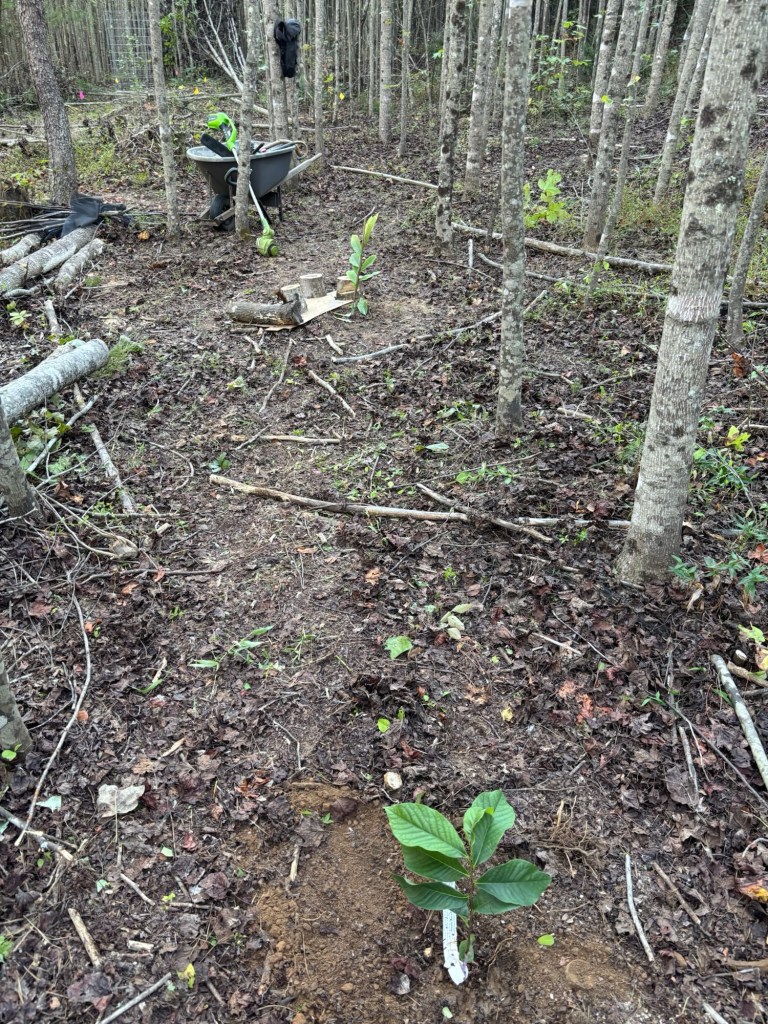
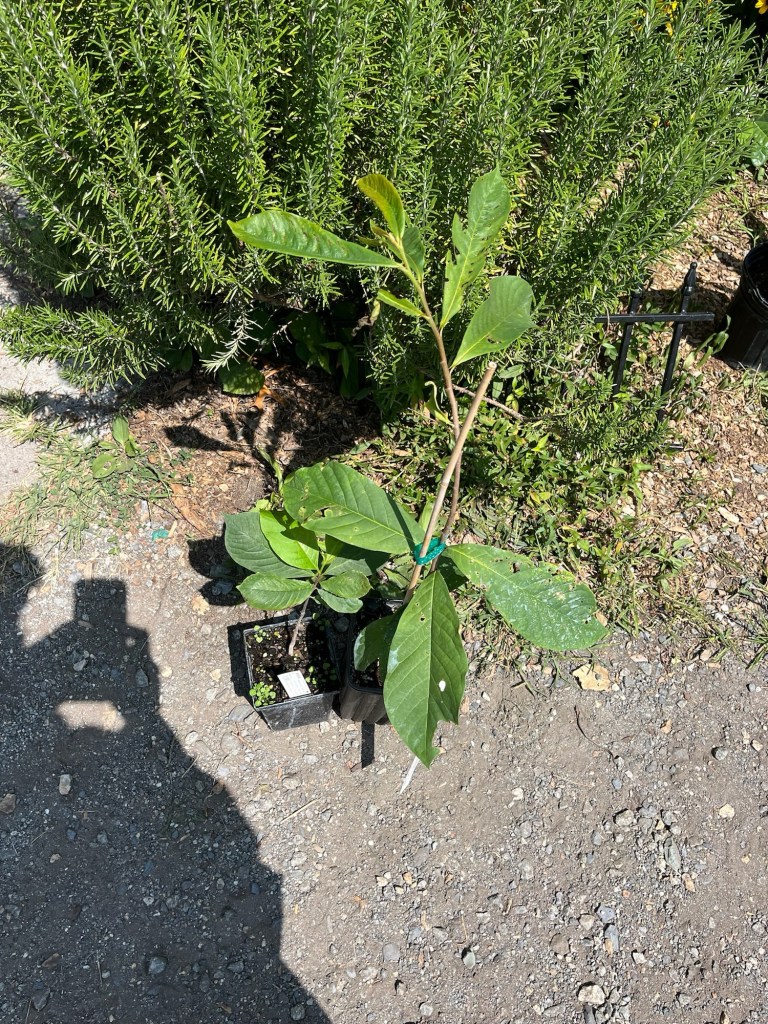
We got out to the farm Friday, Saturday and Sunday. We received the Al Horn White pawpaw cultivar from Perry Pawpaws in Michigan on Friday afternoon and took it out to plant that evening in the orchard at the bottom of North Trail.
Asimina triloba: Al Horn cultivar with white fleshed fruit described as having coconut/ pineapple notes.
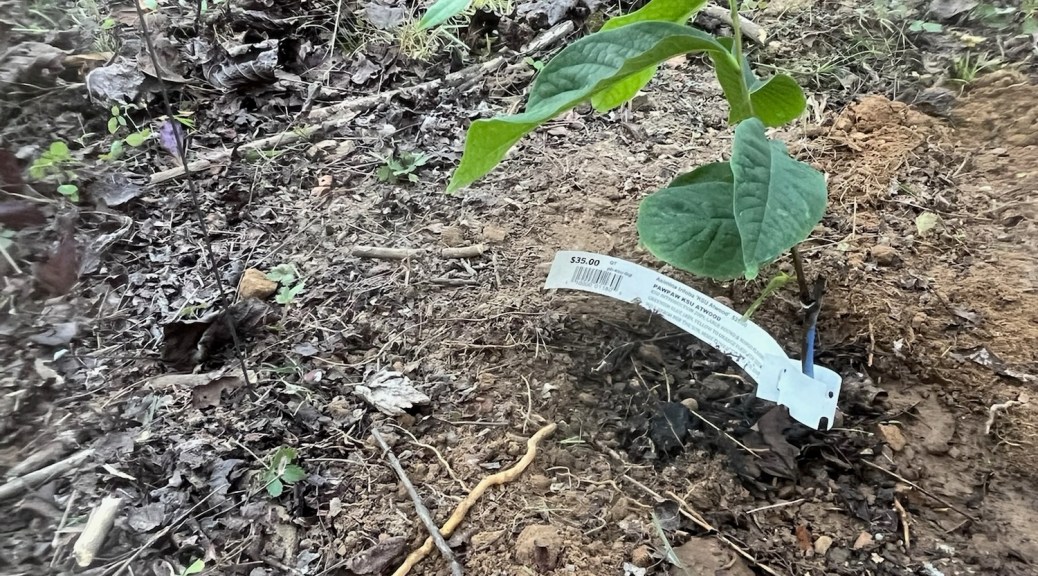
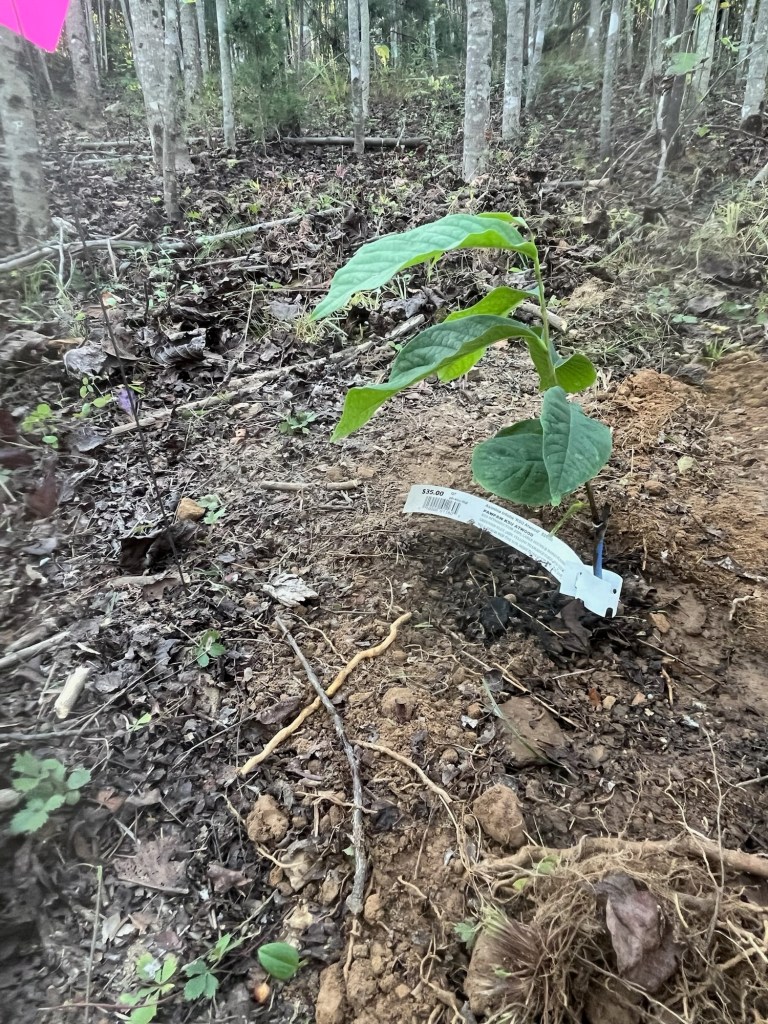
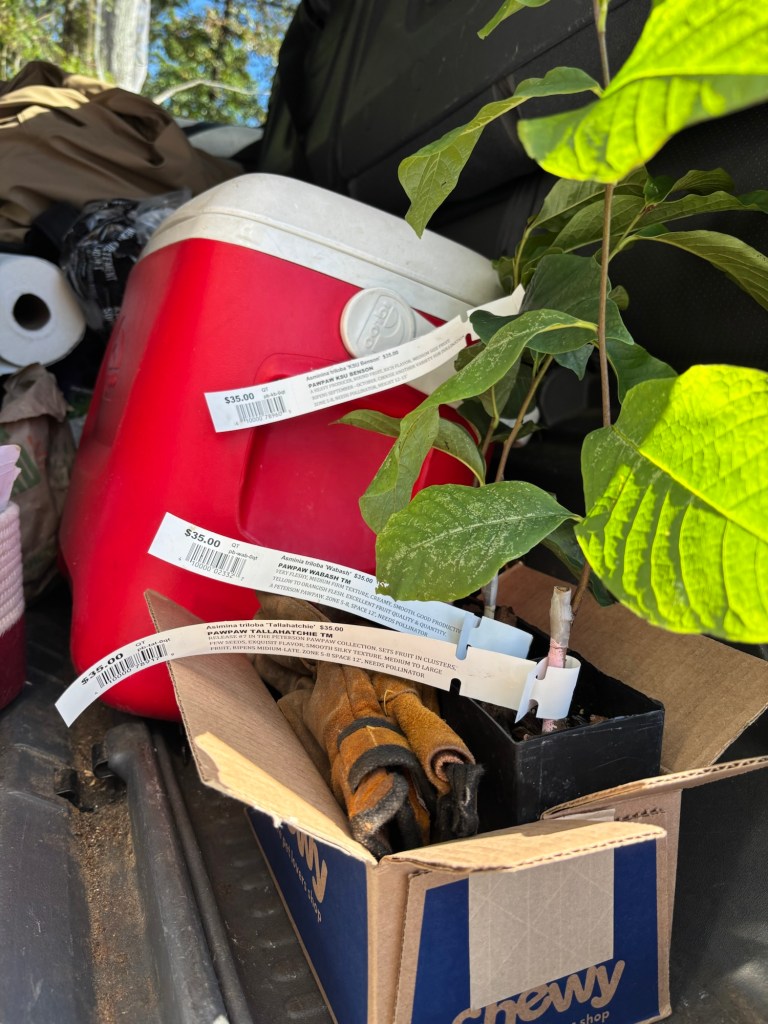
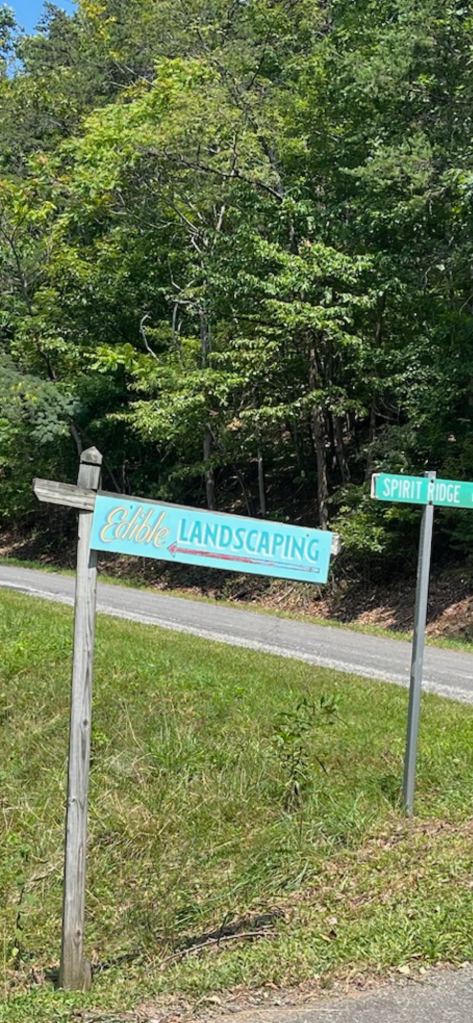
Then, we stopped by Edible Landscaping in Nelson County on the way to the farm Saturday and saw they had $35 cultivars in stock finally. They are small two year grafted trees. We were able to add Kentucky State University (KSU) Benson as well as KSU Atwood to our existing KSU Chappell. They are planted in a triangle and we hope they make beautiful fruit together. KSU has the only full time pawpaw research program in the world. They have done much to better understand pawpaw growth, genetics and orchard management practices. Each of these cultivars are known for resistance to disease, delicious tastes of creamy mango banana flavor as well as being fast growing with high yields. They are each welcome additions to the orchard.
We also added the Potomac, Tallahatchie and Wabash to our Neal Peterson Pawpaw collection. The only one we still need to find is Susquehanna. He has released seven superior cultivars well known and valued for taste and growth. He is known as Mahatma Pawpaw and is worth looking into if you’re interested.
Wabash cultivar just planted in the orchard. Dr Pomper at KSU urged Neal Peterson to release this as Wabash since the shape is similar to a cannonball.
We also added NC 1 and Sunflower to our orchard this weekend. We are delighted. So far this year we planted 100 Asimina triloba trees at the farm and 8 at the house. We also ordered 50 more bare root seedlings from the Virginia Department of Forestry which we will get in February. We will place them in deep 12 inch tree pots to grow until spring when we will plant them at SAFF in the orchard. We are on our way to a Pawpaw paradise for sure.
One Indigo Milkcap (Lactarius indigo) up top along the driveway yesterday.
Fields of giant cosmos witnessed along Plank Rd at Pippin Hill Farm and Vineyard at sunset last night as we drove home from SAFF.
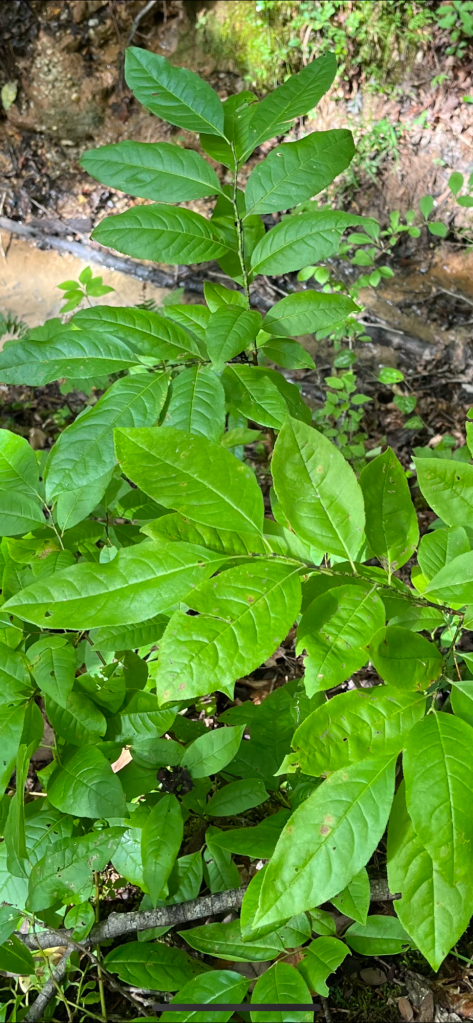
Sourwood, Genus Oxydendrum, sometimes called sorrel tree is native to Eastern North America. The honey that bees produce from its nectar is sought after for its health benefits and taste. The leaves are edible and have a laxative effect. The Cherokee people used it for seasoning soup and meat, as well as a medicinal tea from its leaves. They also used the shoots to make arrowshafts.Sourwood leaves
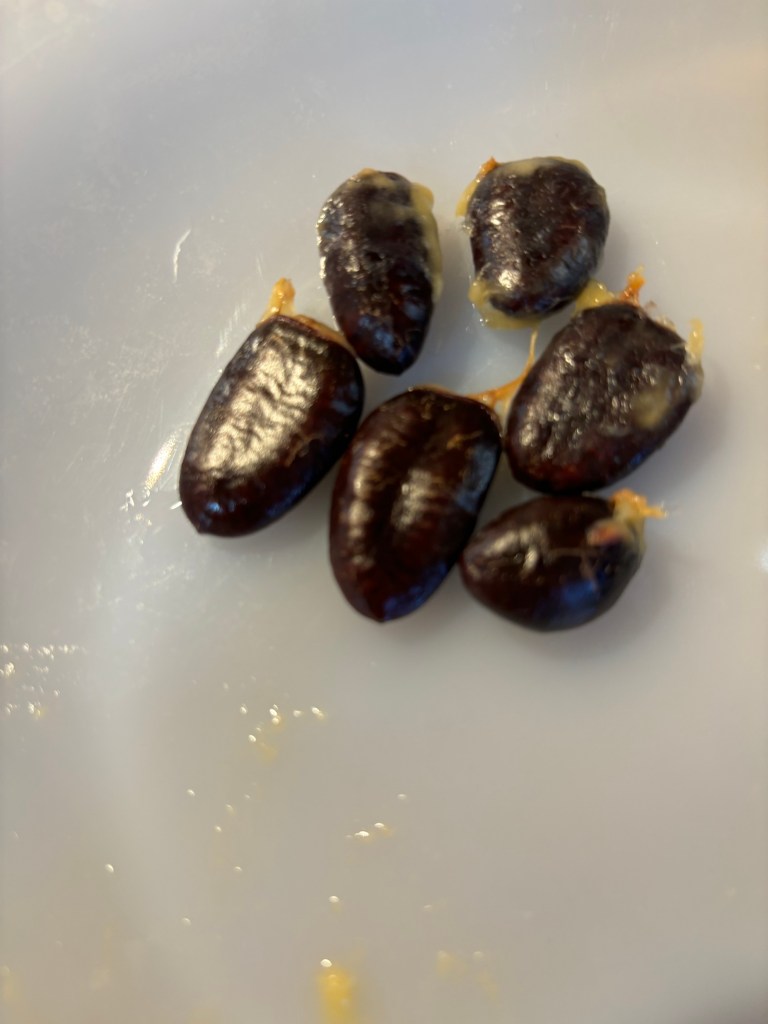
Yesterday was a lovely day at SAFF. It’s gotten cooler and feels much like fall all of the sudden. On the way over, we stopped at the pawpaw patches and found about eight more ripe fruit. Each one has 10 to 14 seeds inside in two rows. We probably have several hundred seeds. Some we have already planted in pots to overwinter outside and cold stratify in nature. Others we have cleaned and placed in a container in the refrigerator to cold stratify for 70-100 days and then we will plant. We will determine best practices from our experience but we hope to add many more trees next year. We are excited to use these to sprout new trees for our pawpaw grove that hasn’t been productive for us yet. While down in the pawpaw patch, we noticed the Sourwood tree. We have quite a few of these down by the main waterway at the bottom of the slope growing, in some cases, right next to the pawpaws. We are still thinning out the forest in every location to allow more light in and room for our trees. We are especially doing this around our older pawpaw trees to encourage production of fruit.
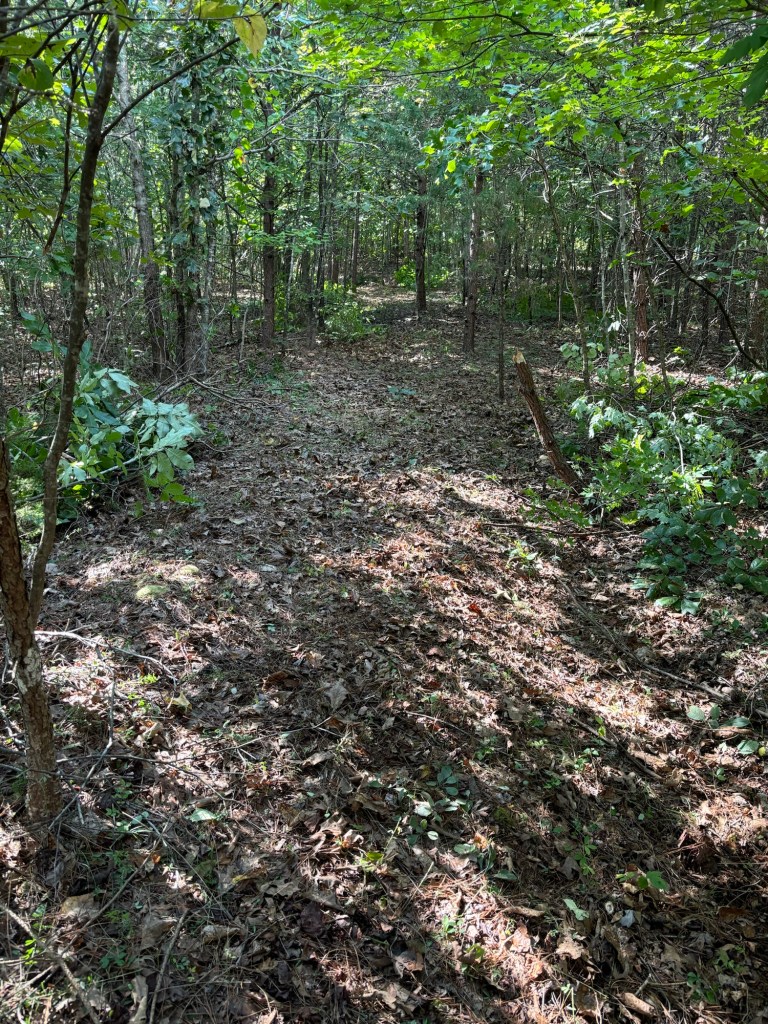
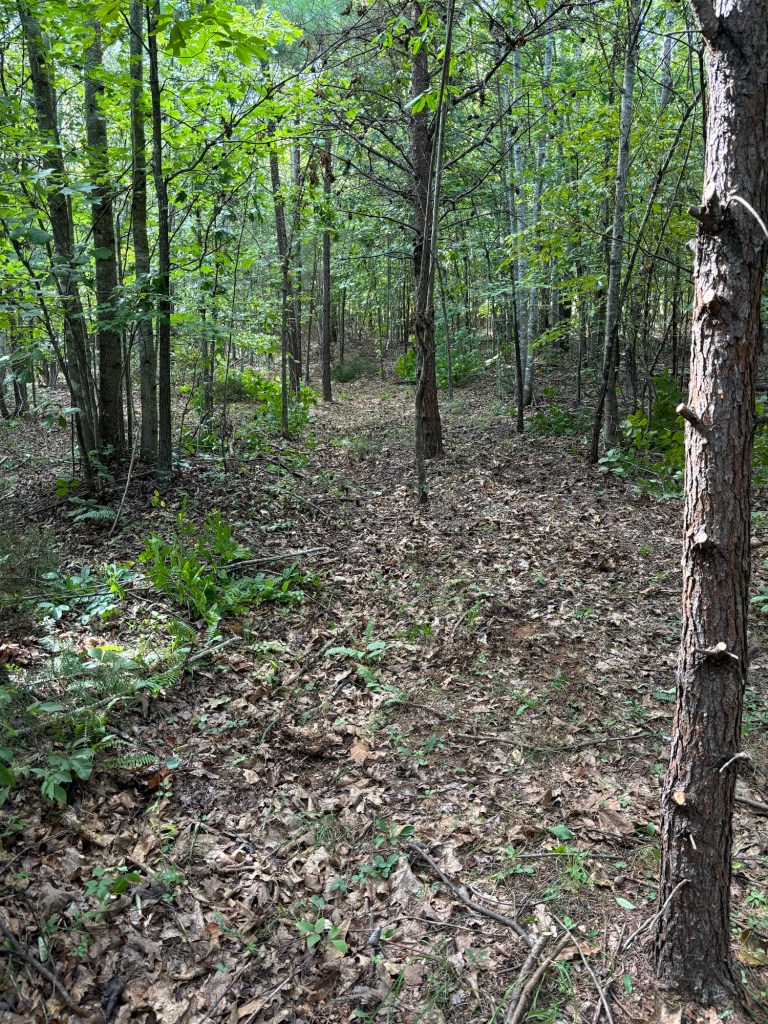
The roadway we found on the north side of SAFF.
We went out to the northern edge and found where the road began and we cut back small trees growing up through the rocks of the road. We cut back grassy areas. We cleared everything we could easily. We got a third of it cleaned up except for the largest pines we will have to use the chainsaw to remove. We imagined this would take us much longer to clear. We were beyond thrilled to get that much accomplished in one swoop.
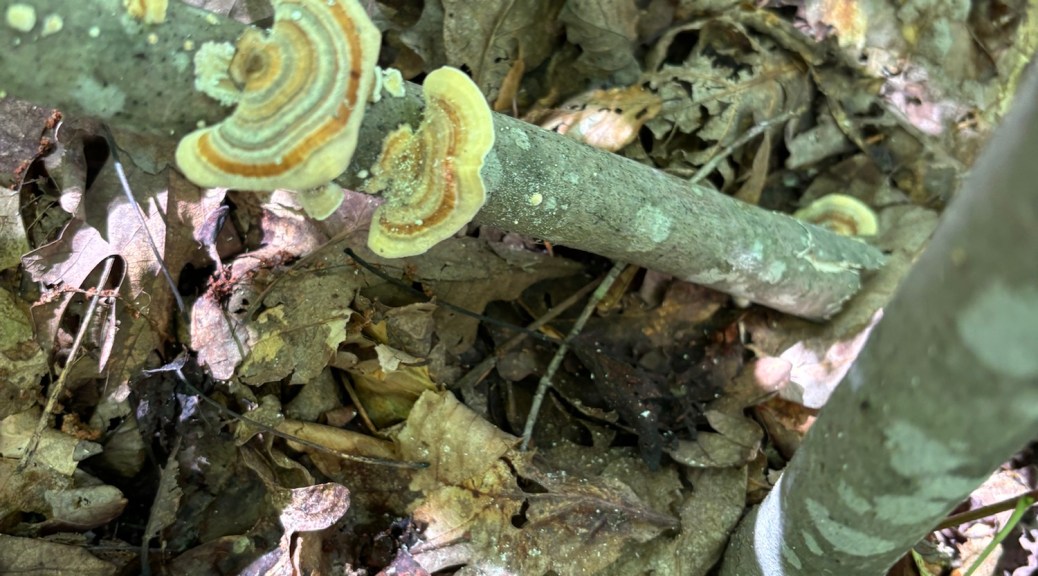
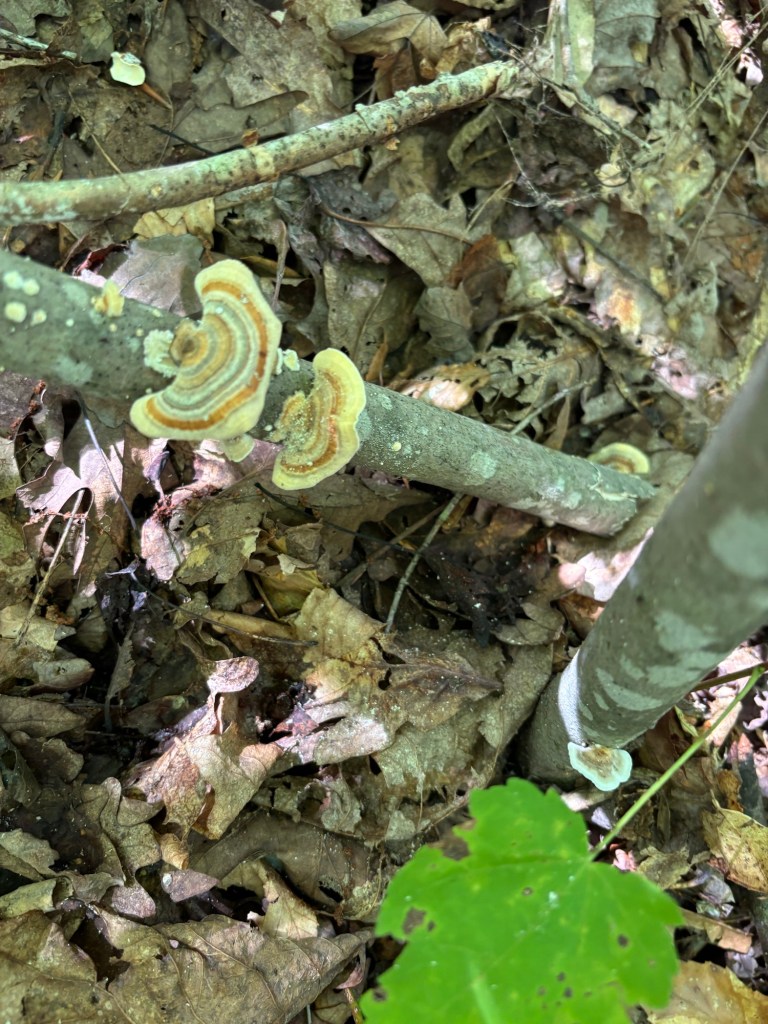
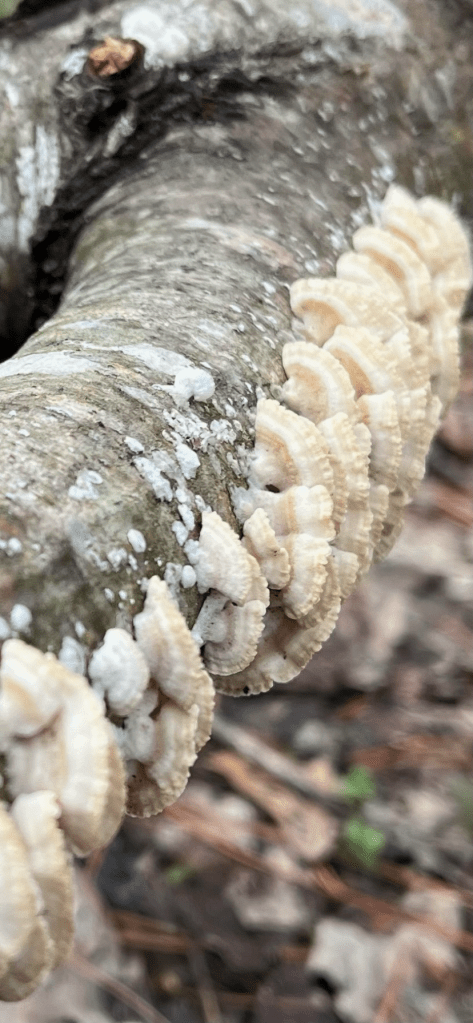
The roadway will make it a whole lot easier to farm on the north side.Turkey tail, Trametes versicolor, on the north side. A common polypore found throughout the world. It’s a medicinal mushroom that’s full of antioxidants and other compounds which fortify our immune system, maintain healthy gut bacteria and support the treatment of certain cancers.
We made a trip to Nelson County to Edible Landscaping to see what pawpaw trees they had to sell. We want to diversify the genetic material of our pawpaw patch to encourage fruiting. We were so excited to see they had ripe pawpaws ready to eat as well.
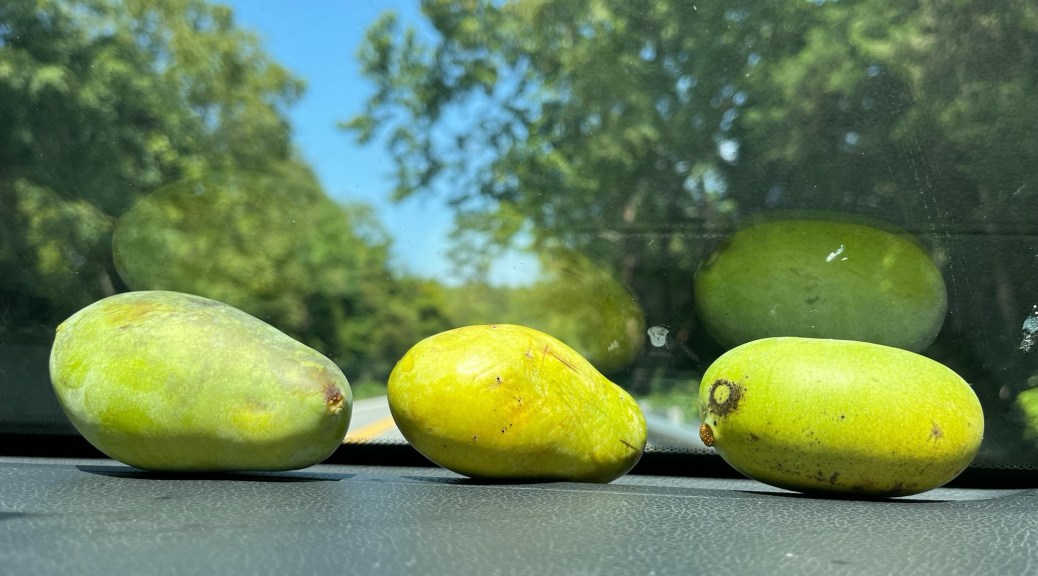
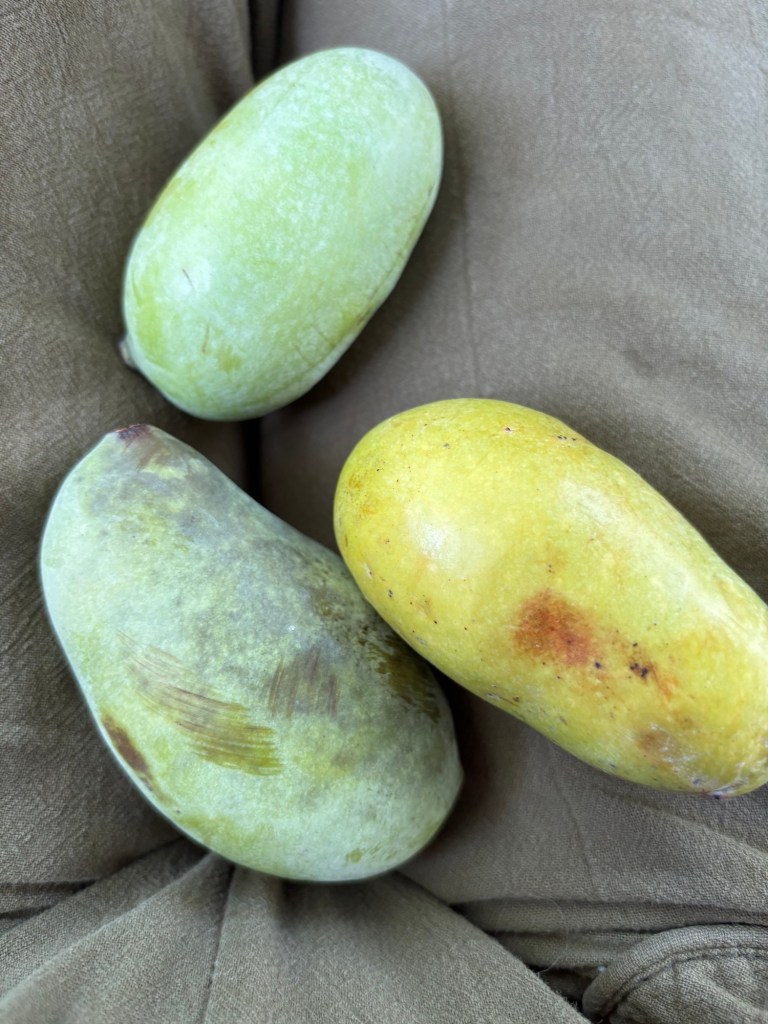
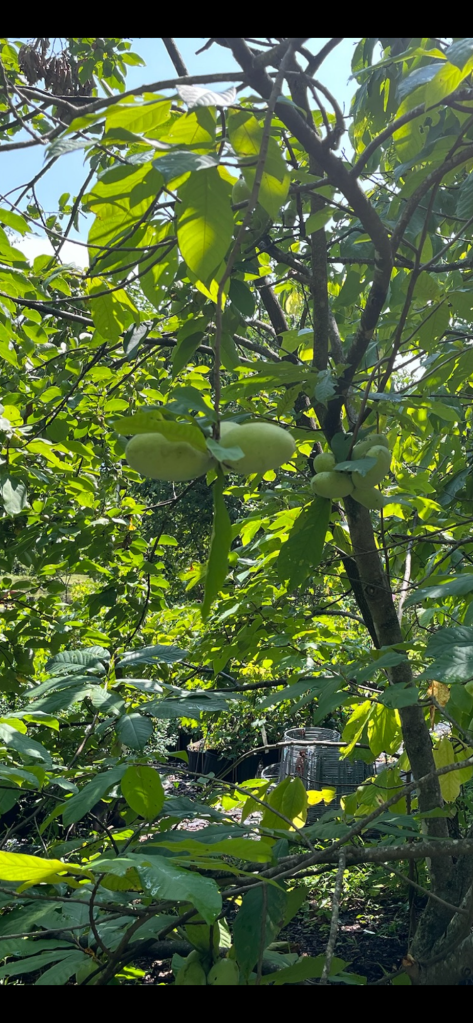
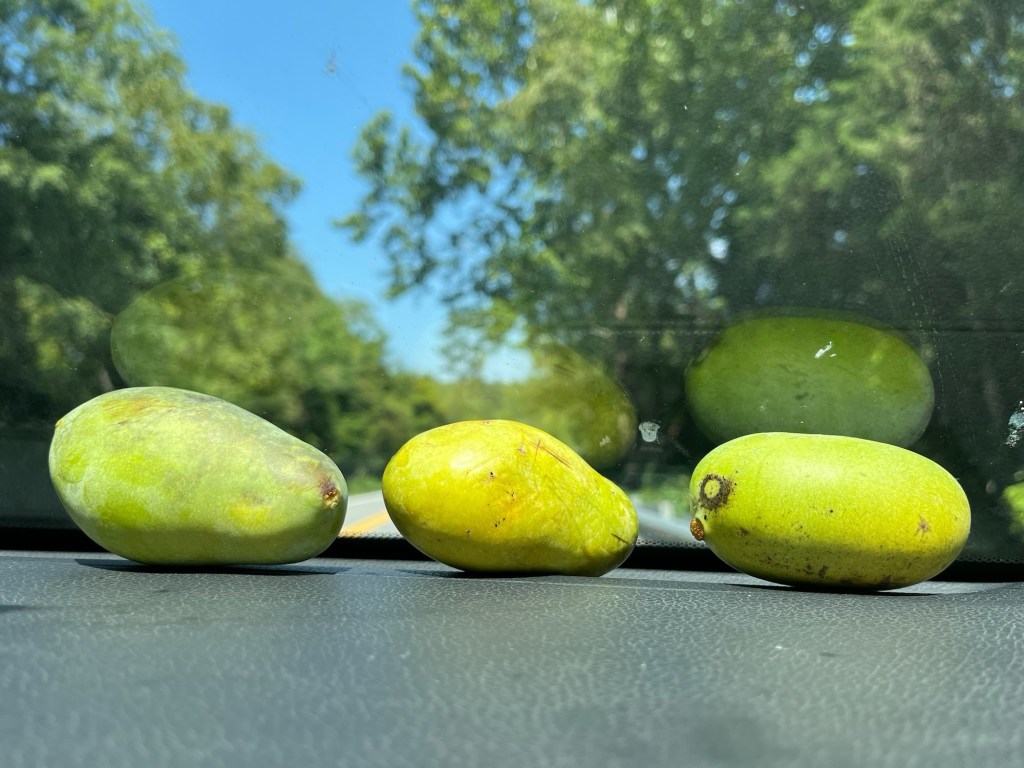
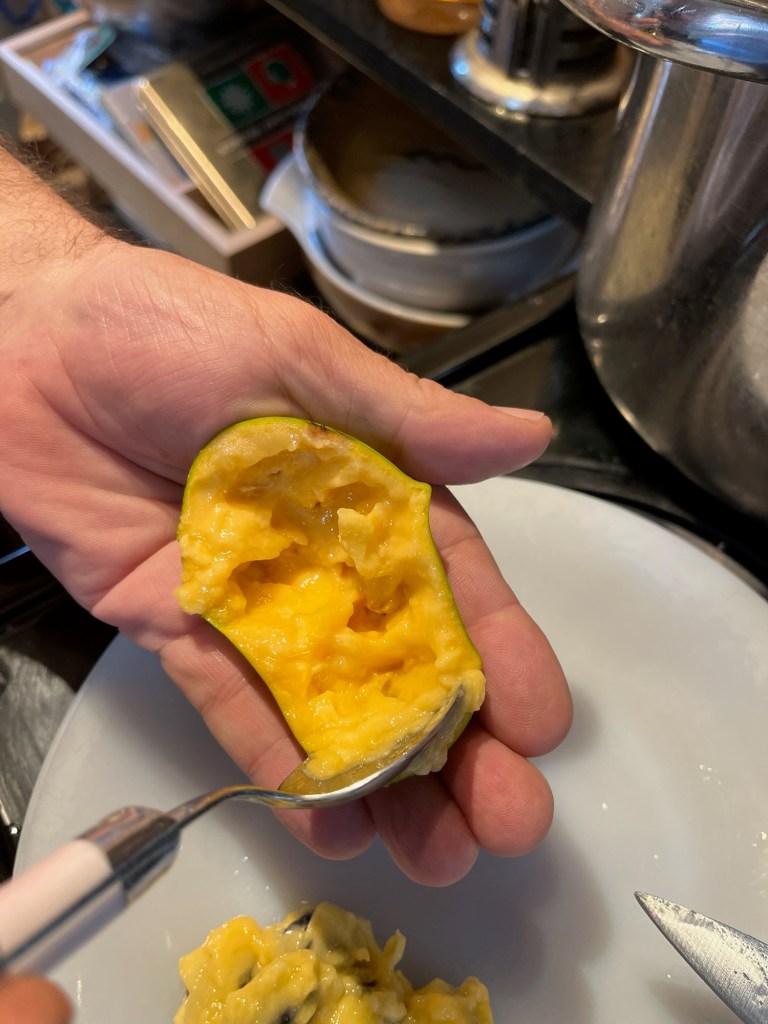
Ripe pawpaws.Large pawpaw tree with fruit all over in the full sun. A black walnut tree was about 20 feet away. We bought a year old seedling and a two year old Shenandoah cultivar.Delicious pawpaw flesh tastes like creamy mango banana guava with a pineapple nose. Smells like starburst candy when ripe.
The seeds and the skin cannot be eaten. We’ve planted 13 new seedlings all together with the seeds. 😃
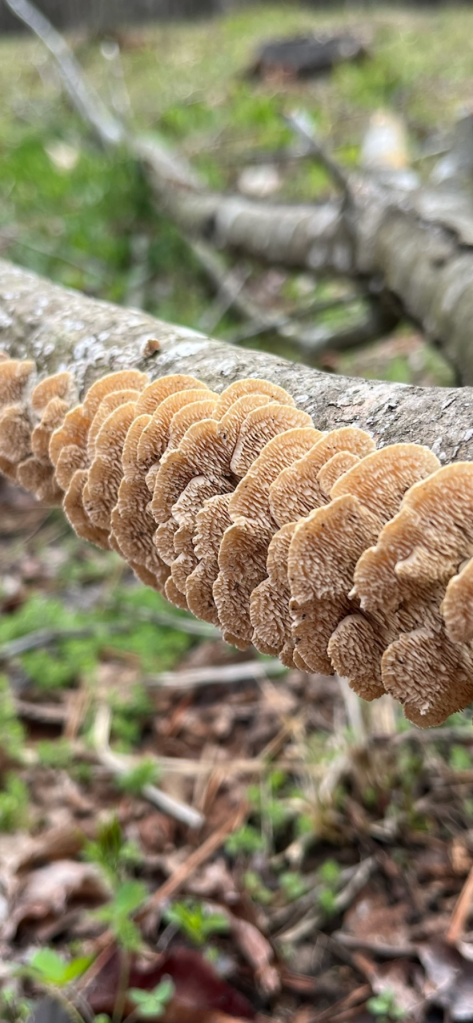
Class Agaricomycetes growing on black cherry. The underside of theAgaricomycetes shows teeth instead of pores or gills.
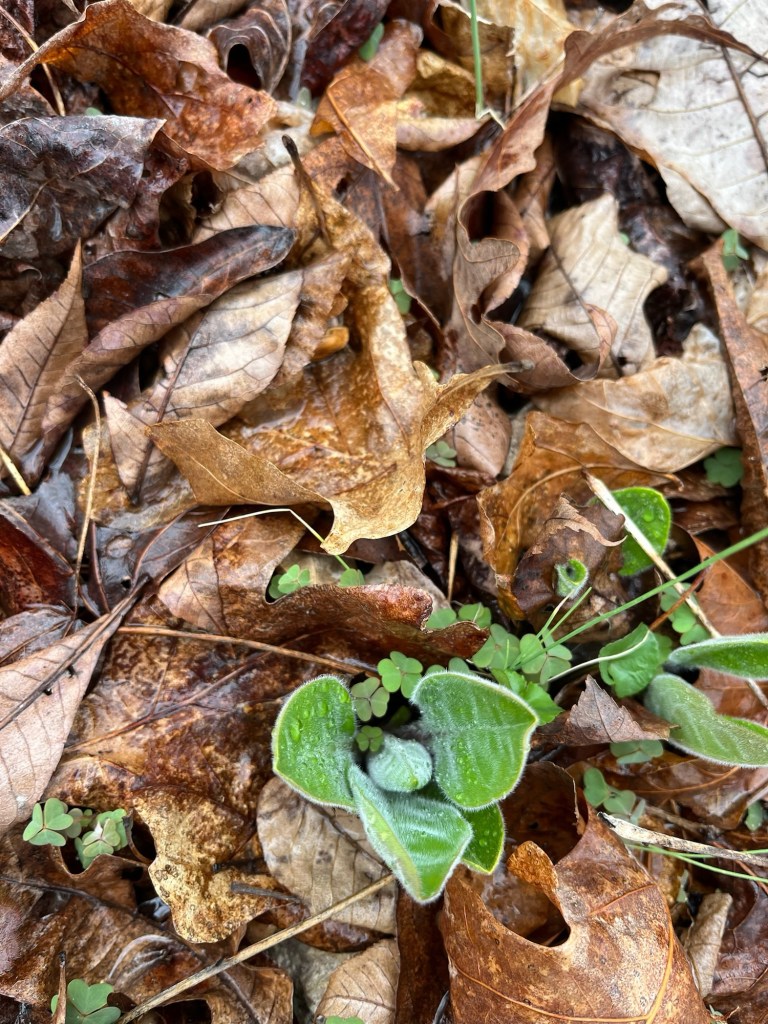
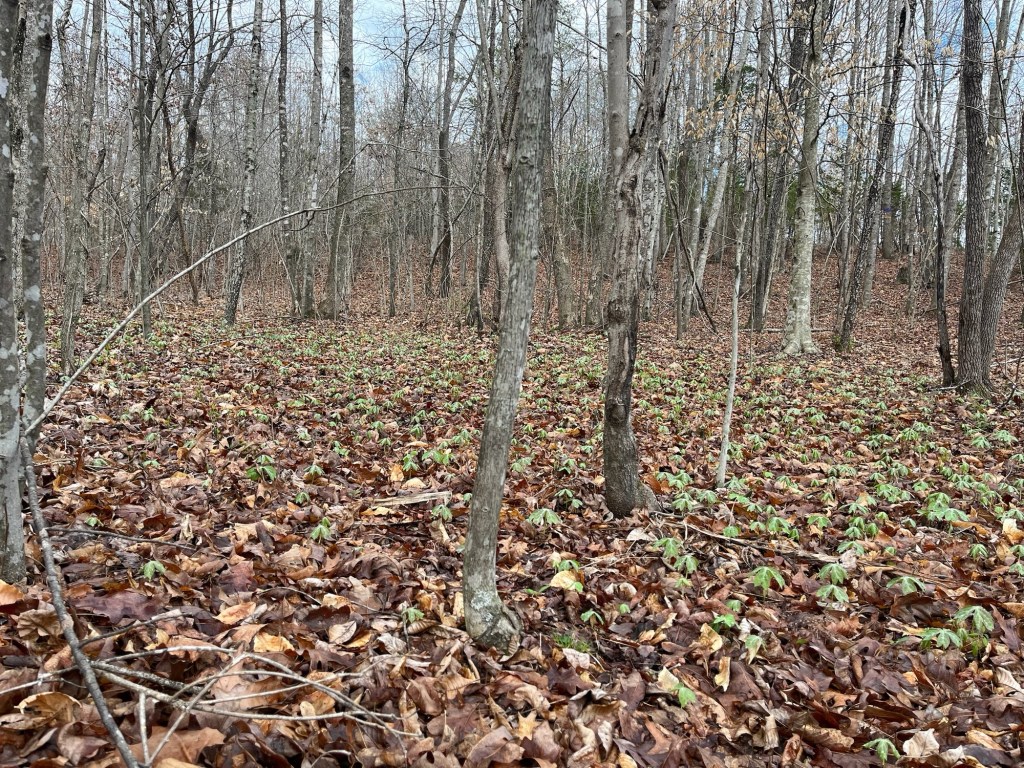
Of course we went over to continue to search for morels. It was a beautiful day and the farm was burgeoning with spring. We saw multiple colonies with thousands of mayapples emerging. Only a couple of the largest ones have flattened which is a great indicator of timing for morels to begin coming up. We found these new colonies of mayapples emerging in the pawpaw grove where we also found Virginia bluebells popping up. We noticed that the blueberry bushes are starting to leaf out.
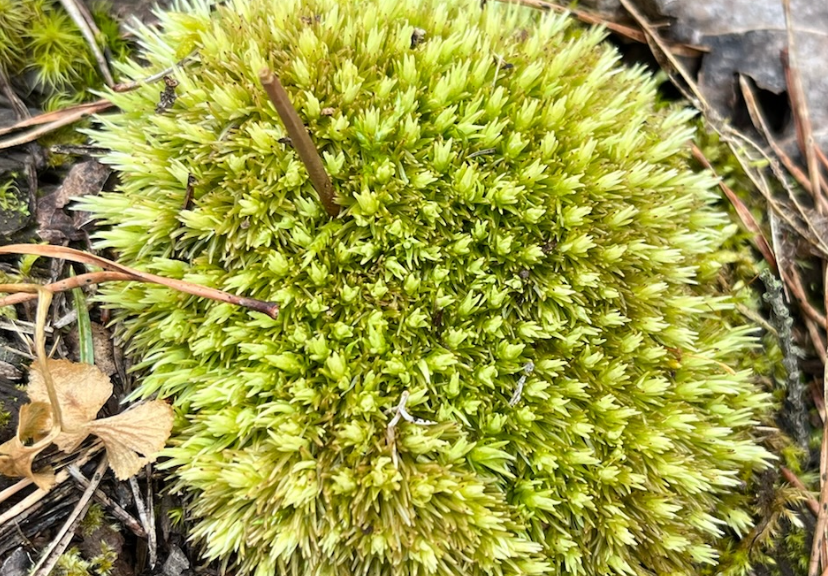
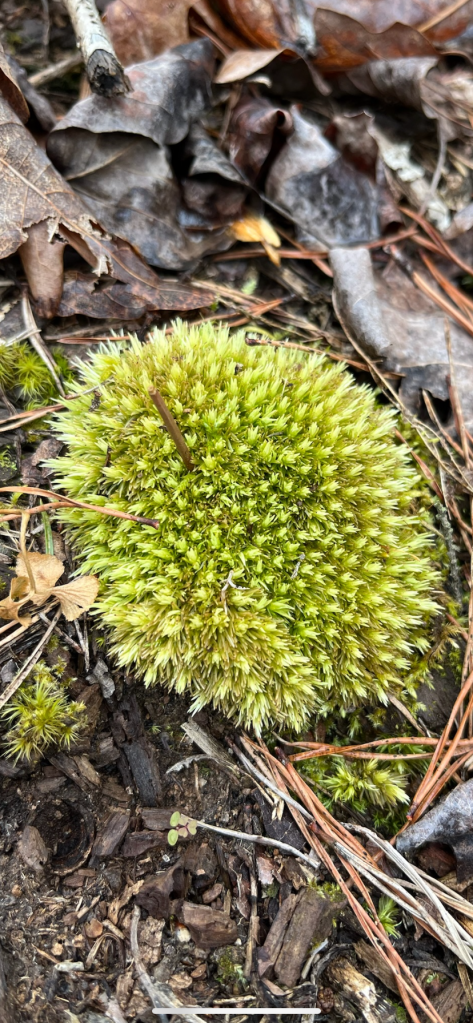
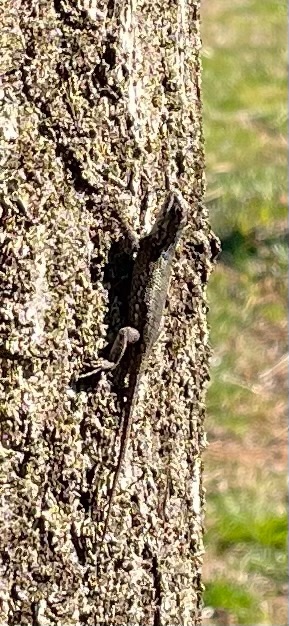
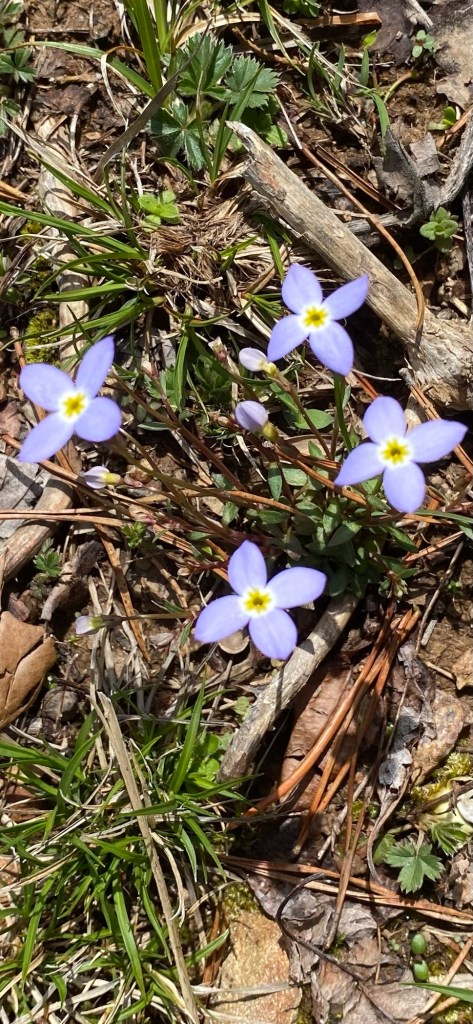
Virginia bluebells not yet flowering but almost. One colony of mayapples which has plenty of sun so we hope to see some fruit. We hear the taste is similar to pineapple and starburst candy. Yum! Leucobryum moss found at the bottom of the slope.Eastern fence lizard found up top in the clearing. Genus Houstonia, flowering bluets, a native wildflower found covering the farm especially in clearings.
We got plenty of rain yesterday and can’t wait to go back out to search for the elusive morels.
Saint Andrews Forest Farm Blog
Is this your new site? Log in to activate admin features and dismiss this message
 St Andrews Forest Farm