Tag Archives: foraging

Animal sightings at Saint Andrews Forest Farm

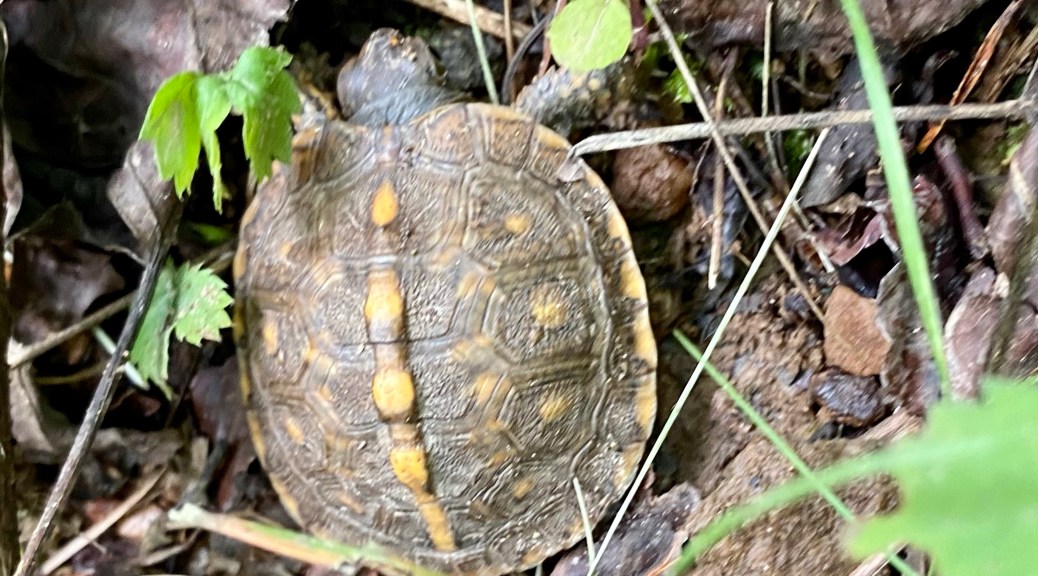
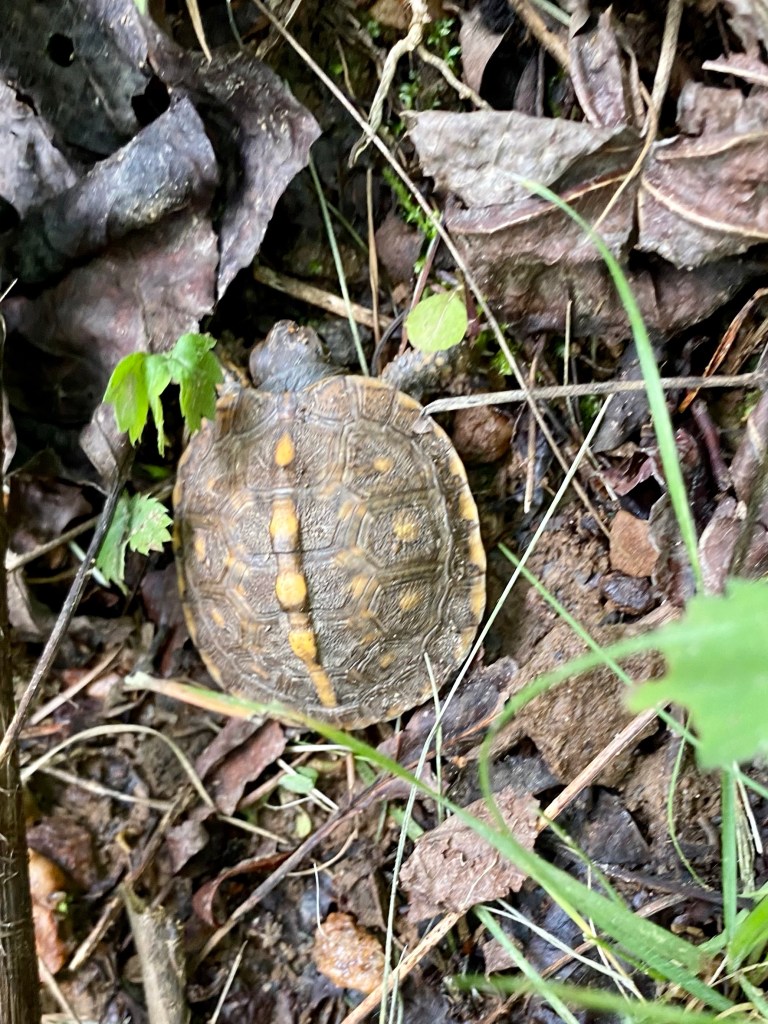
Eastern box turtle 3/4 of the way down the north trail after rains. We thought it was a baby.
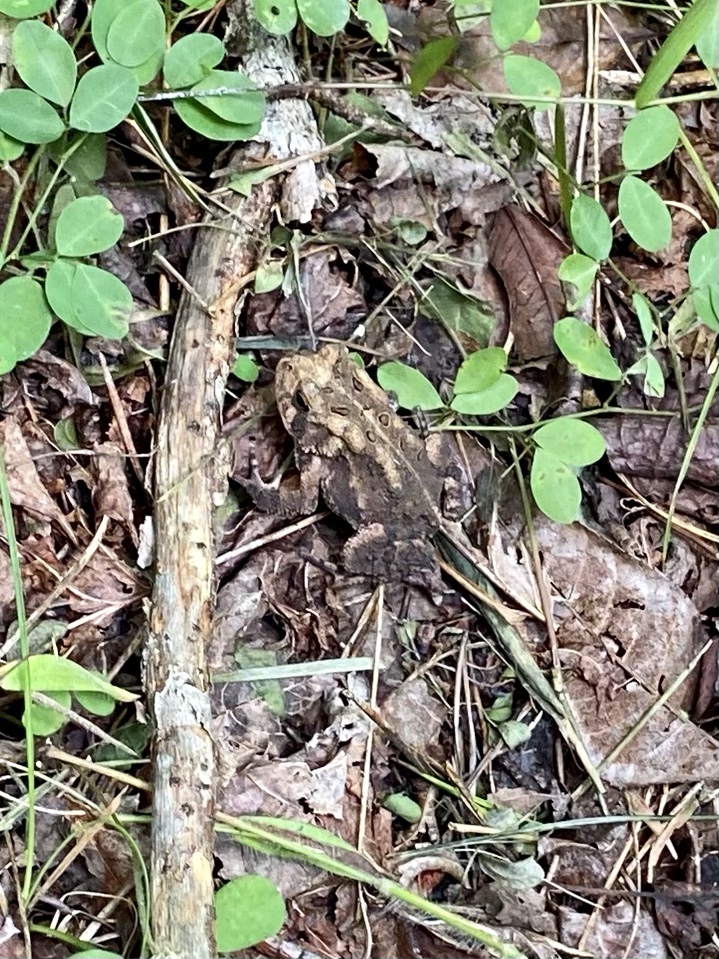
A young toad. Fowler toad or American toad. Found at bottom of north trail after rains.
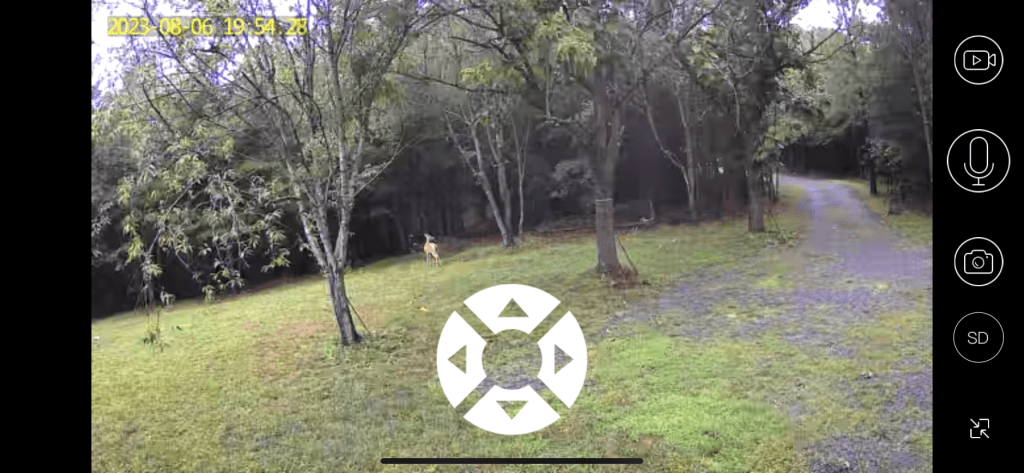
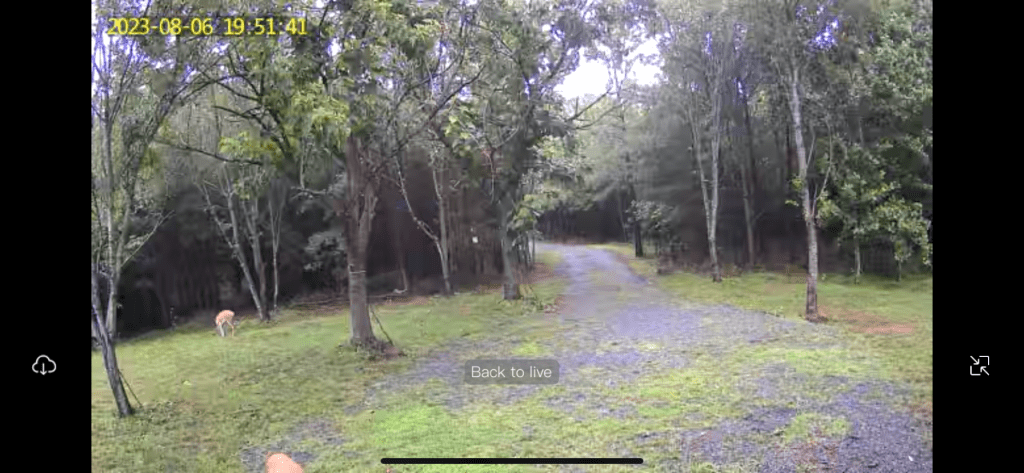
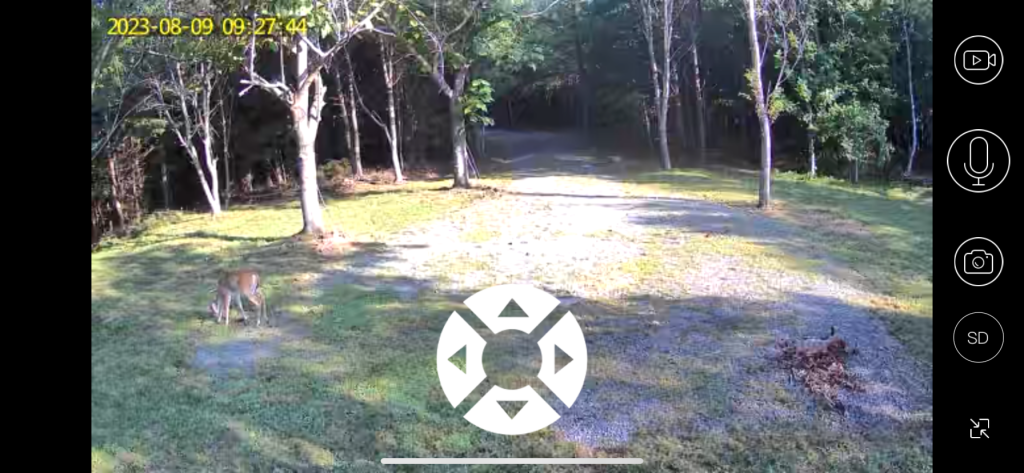
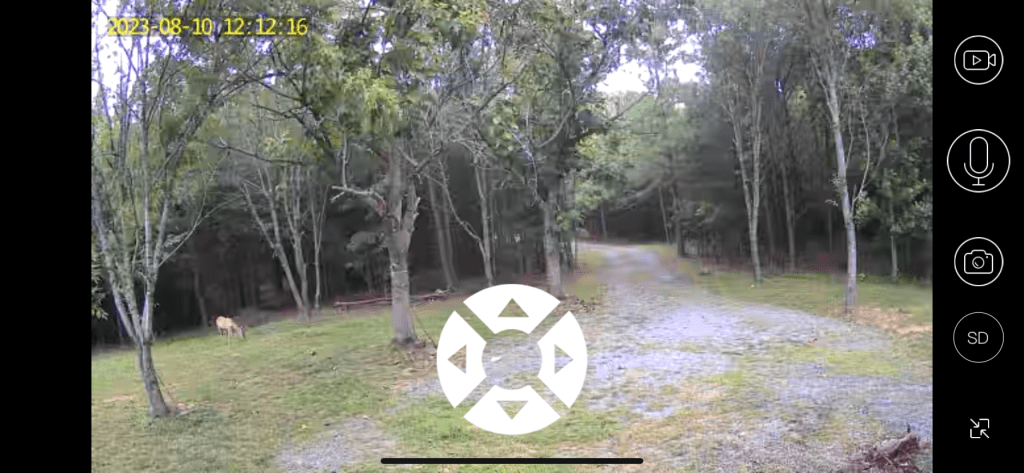
Farm cam deer sighting. We think they were eating black cherries.
August 9, 2023 Farm cam
Any ideas on what this is? Appears to be a cat tail? A possum? The camera is about 10 feet up in a tree. It could even be a spider leg or mouse tail that looks big because of the camera and angles.
This week we’ve seen deer eating black cherries daily from the farm cam.
A fox? 🦊
What insect is this?

St Andrews Forest Farm

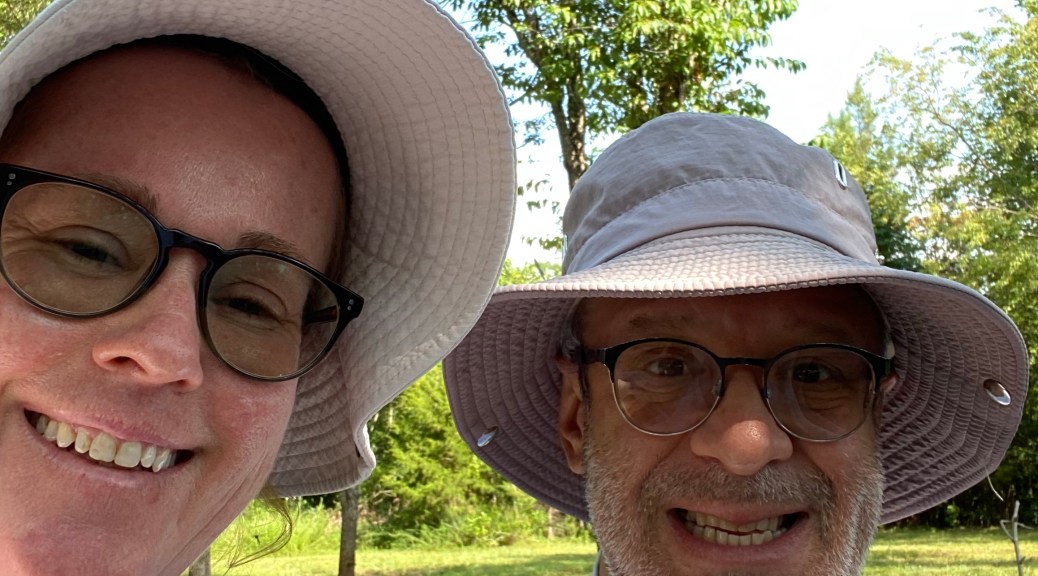
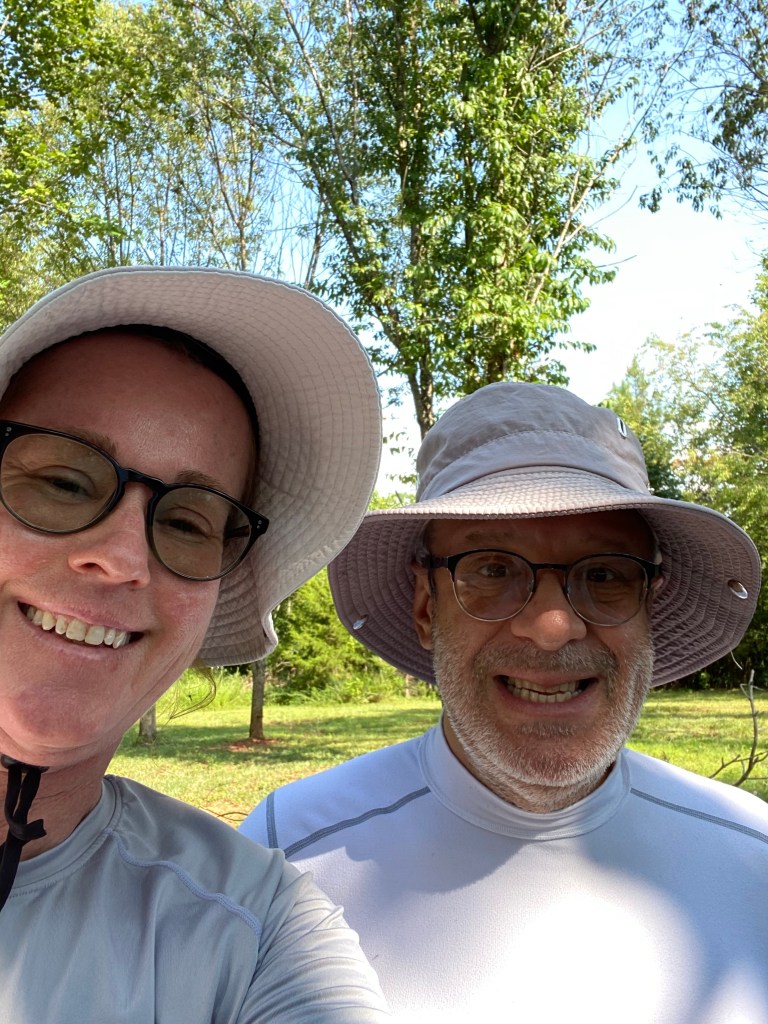
Chris and I excited to be at our newly christened Saint Andrews Forest Farm late spring 2023

On April 13th 2023, Chris wanted to go to Buckingham County to look at a property with forest covering most of the 13 + acres. We drove to Afton, over Route 29 and into Buckingham County going deeper and further into beautiful and old woods. Magical seeming forests with giant trees arching over the roadways creating a canopy of green. Little moss covered hamlets of yesteryear with giant boulders covered in greenness and ferns sitting in a creek bed. Gorgeous vineyards and farms. We also saw forests recently violently cleared by loggers. Jagged and torn and pillaged. The roadways beaten and abused by giant trucks full of timber. We saw what looked as though the forests had regrown a year or two after being cut, and also stands that appeared to be five to 10 years on. We began to see ages and stages of development. It was an incredible journey for us because of its unique beauty as well as other circumstances. We both really needed to be in the woods again. We had been away too long. When we arrived and saw the pines and poplars, we both immediately fell in love with our forest.
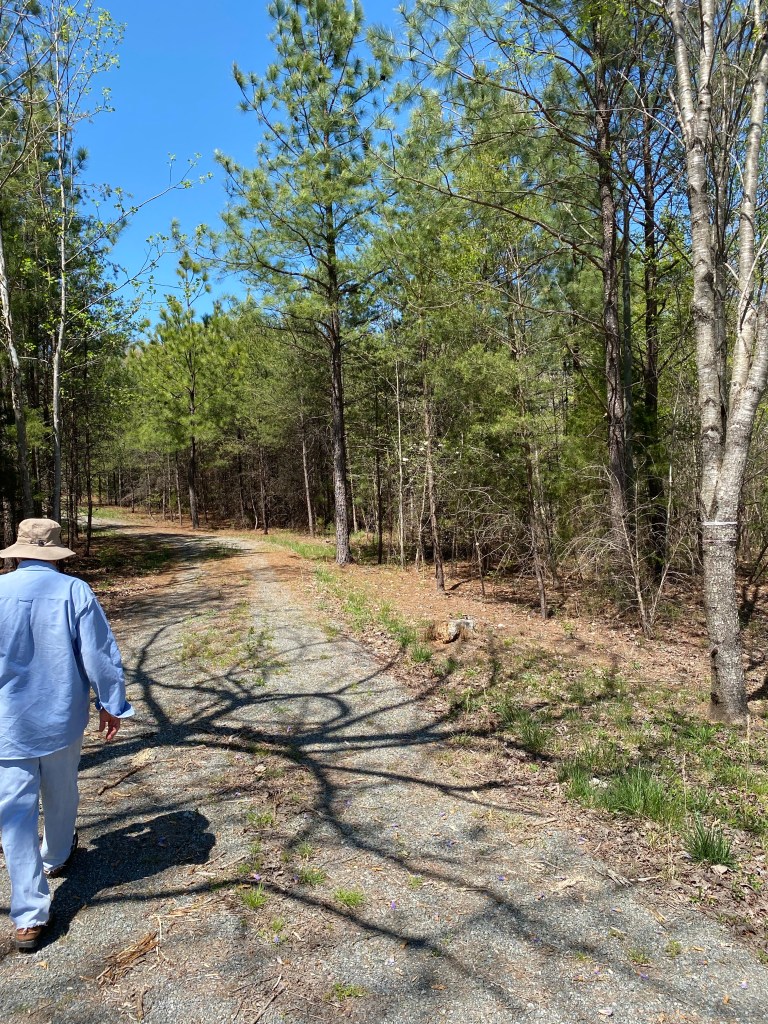
Chris walking down the driveway in the shade of the black cherry tree.

Our guess was that it had been cleared about 20 years ago. Water had made paths through the woods. Right away, we began to find interesting mushrooms with our exploration mostly limited to the top of the hillside and the edges of the clearing.
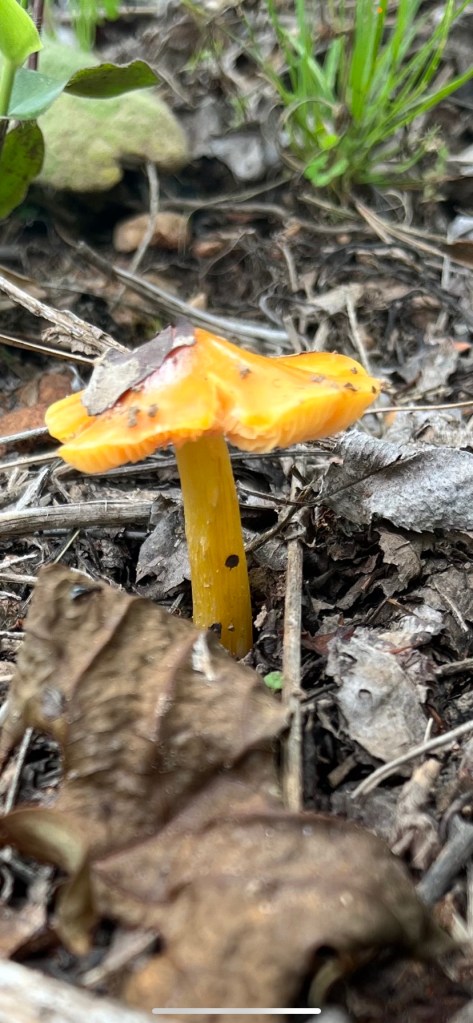
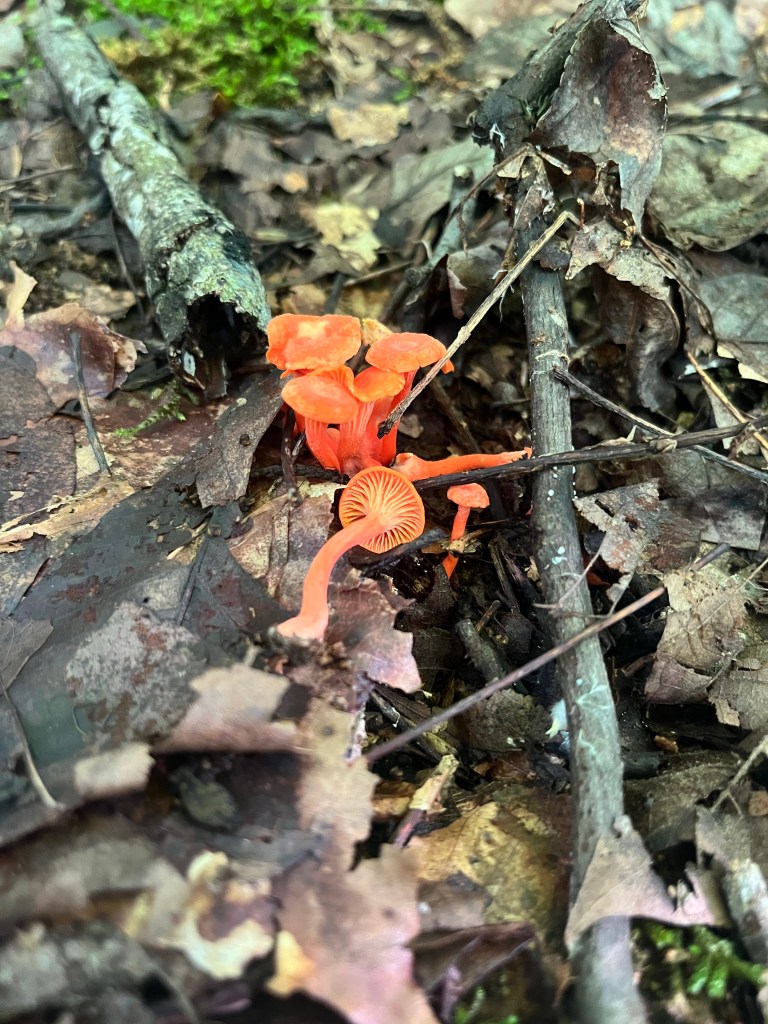
Orange waxy cap: The first mushroom we found at St Andrews Forest Farm on May 19. We narrowed this down to a hygrocybe species maybe conica group. (Thank you Reddit mycologists. ) We found it in the clearing near a tulip poplar and black cherry tree. We became hooked on determining the types of fungus we had growing on the farm. We could not wait to get into the woods and down by the waterways to explore the interesting features down there.

As summer came, we began to realize we had a sizable tick population to deal with and thought we would be kept from our explorations of the woods until winter. Glad that was not the case. As it stands, there are still several areas that are infested with nymph ticks as evidenced by when we walk into that area we immediately see between two and twelve on our shoes and socks.

Right now, we are aware that the ticks appear to like moisture. The drier it is, the safer we are. We always wear our permethrin coated shoes and socks. We wear light colors so we can see them more easily. We watch out for each other’s backs. We want to stay safe. Chris has had several bites this summer. He has removed the ticks immediately and cleaned the area well. So far, no symptoms or side effects. When we camp, we will coat our tent and appropriate supplies with permethrin.

The other note I have about ticks is that it is tall grasses and weeds that they are able to attach to our socks and shoes and then climb up to find skin. Stay out of tall weeds and grasses. If you must walk in, look at the tippy tops and you will see the ticks with their legs out. I’d only do this with a mower or weed whacker in front of me. Anyway, they do not fall from trees. They do not fly. They are opportunistic. (However, they can fling themselves out onto you using static electricity. Look it up. Here https://www.science.org/content/article/watch-ticks-fly-through-air-power-static-electricity or on YouTube). This was all helpful for me to learn in order to determine best practices to avoid them.

Keeping our clearings mowed and weed whacking our paths has been extraordinarily effective. It has become easier now that we have the truck and tractor. Lastly, I’ll add that ticks dislike hot and dry. The clothes dryer kills them after 10-15 minutes. This was also helpful for us to know.
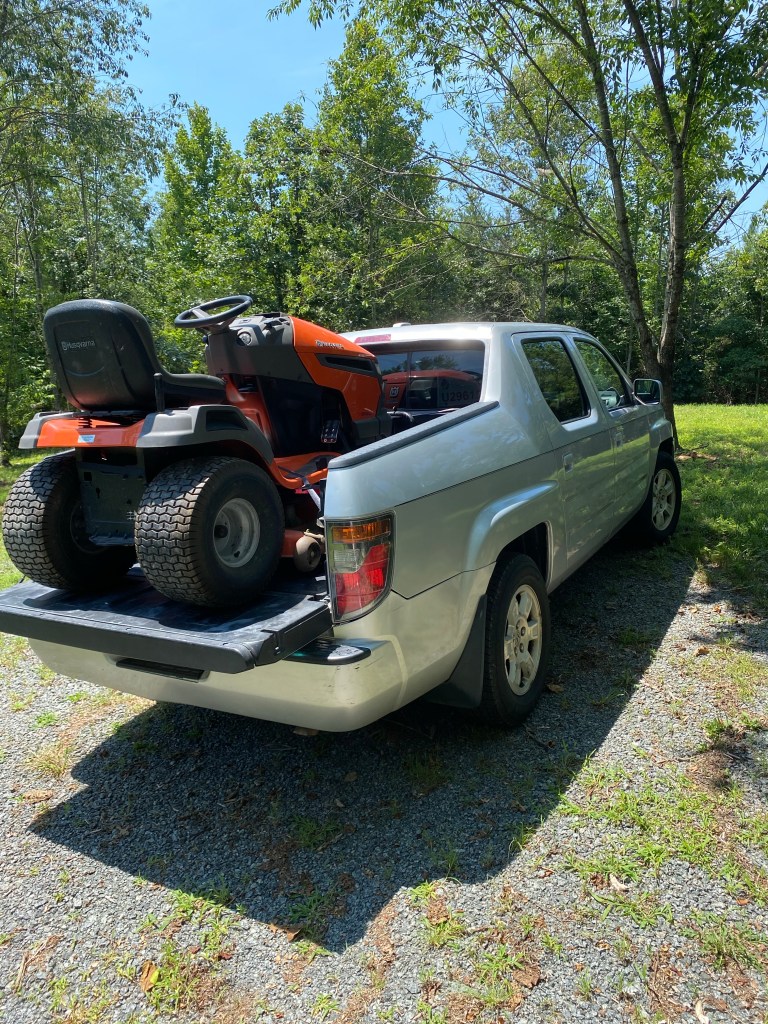
Honda Ridgeline and ancient Husqvarna with a v-twin engine – they don’t make these like this anymore. Lots of steel!
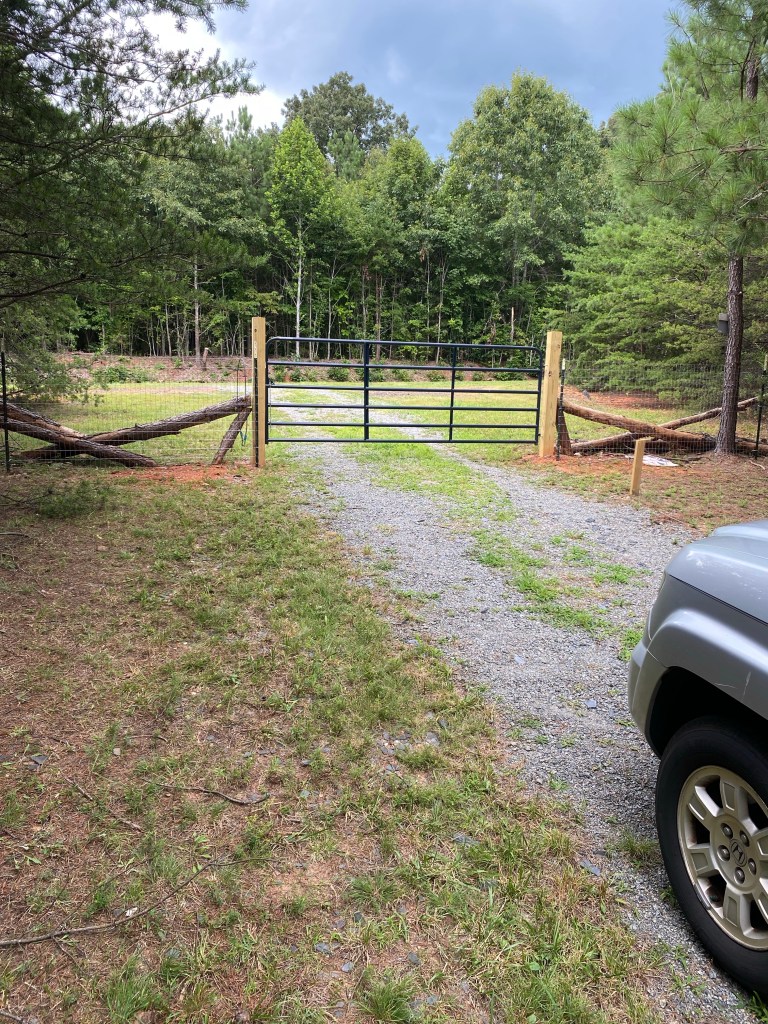
Our gate to keep out the neighborhood dogs (and any other riff raff or unwanted mushroom bandits. )
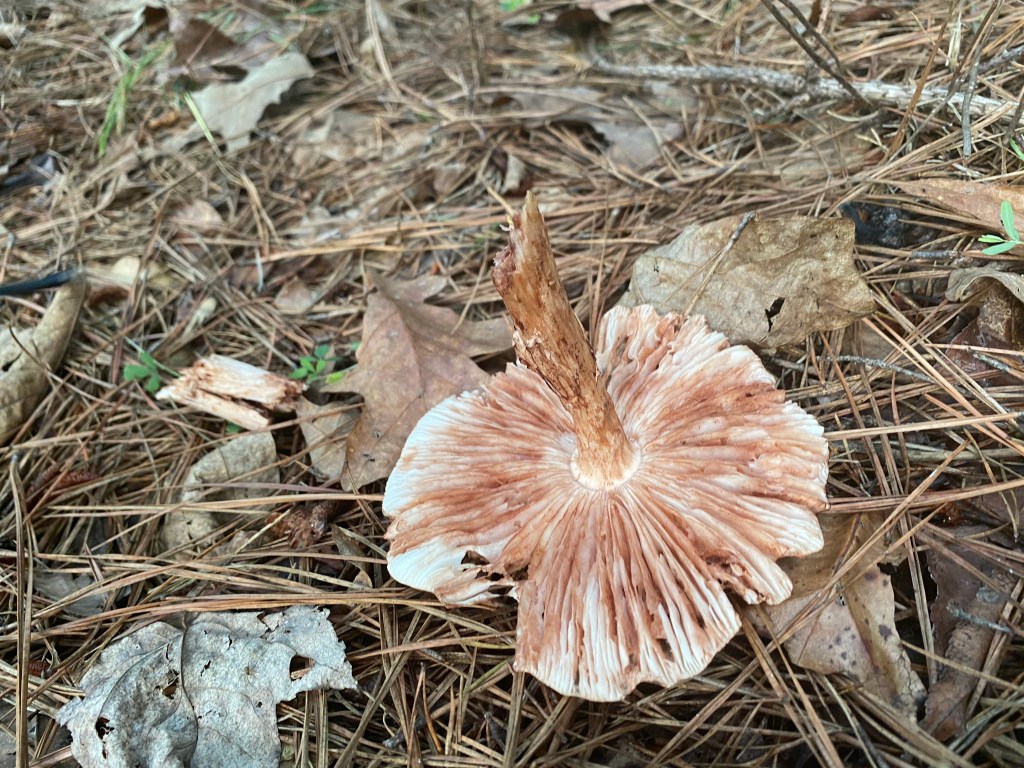
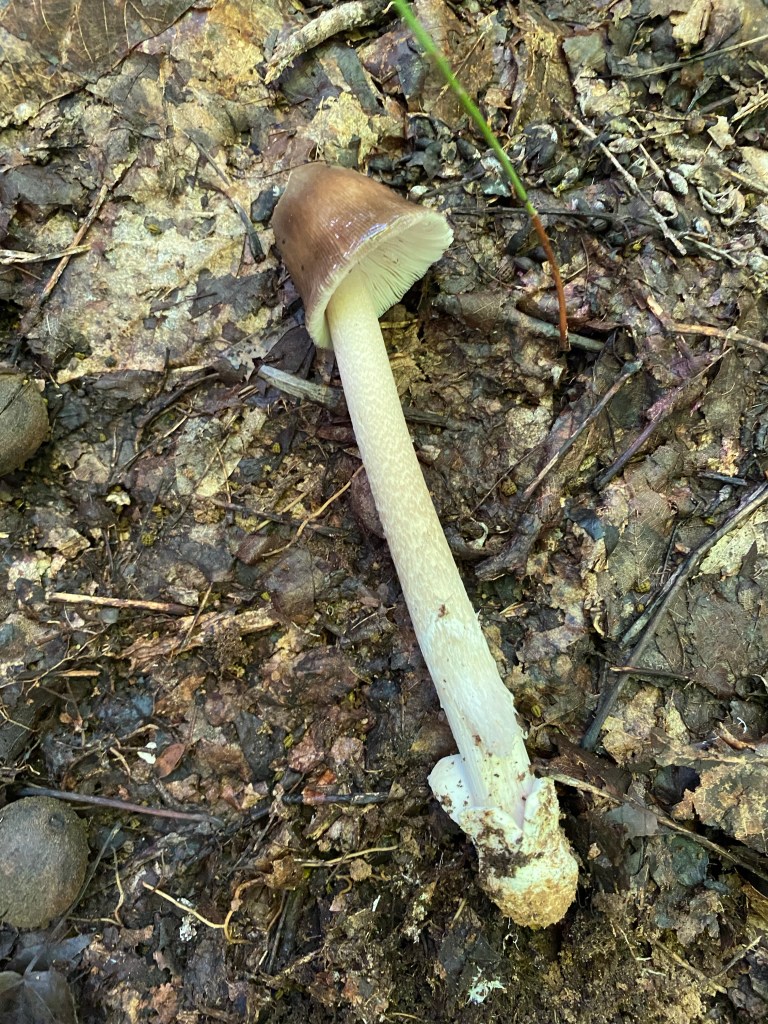
Unknown Russula species

One of the best things so far has been looking forward to rain out in Buckingham County. We get very excited and wait as long as we can afterwards to go and see what new mushrooms we can find. We have been surprised and delighted every time with new finds. Mushrooms love moisture. So far SAFF has been moist! We’ve been astonished by the diversity of life and can’t wait to see more.

Central Virginia mushroom foraging at St Andrews Forest farm

We will add to this list as we find more mushrooms. Always assume they aren’t edible. We have more data to collect to determine many identities. If we ever do! We are beginner mushroom foragers, we’re not planning on eating anything we’re not 100% sure about.
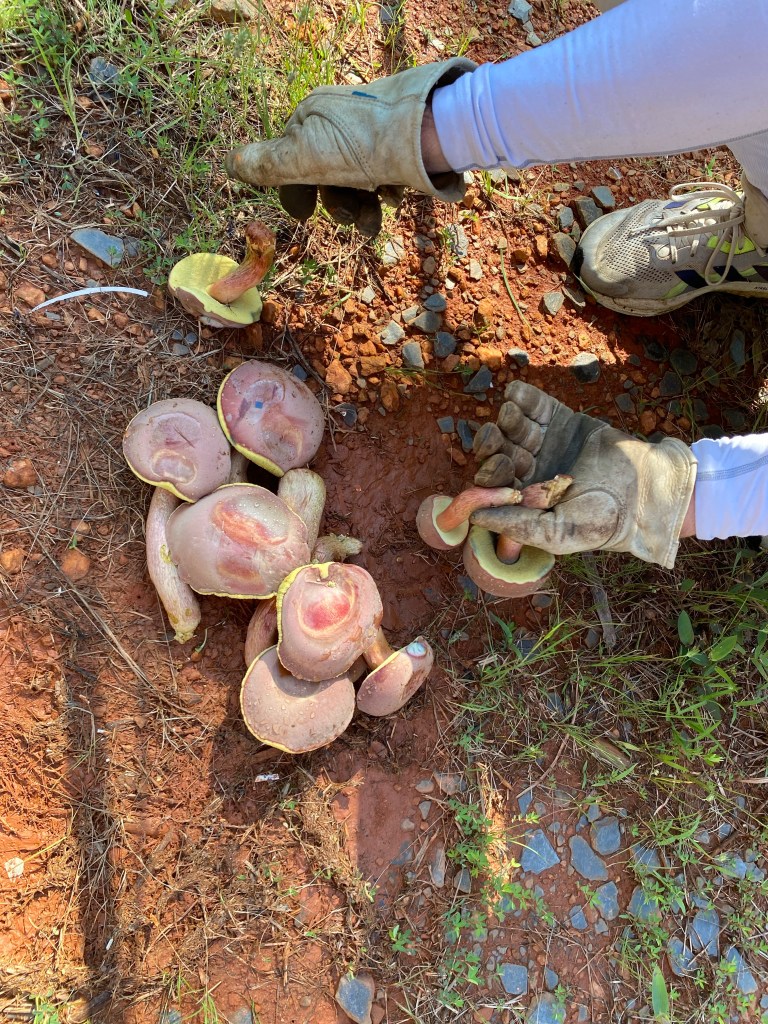
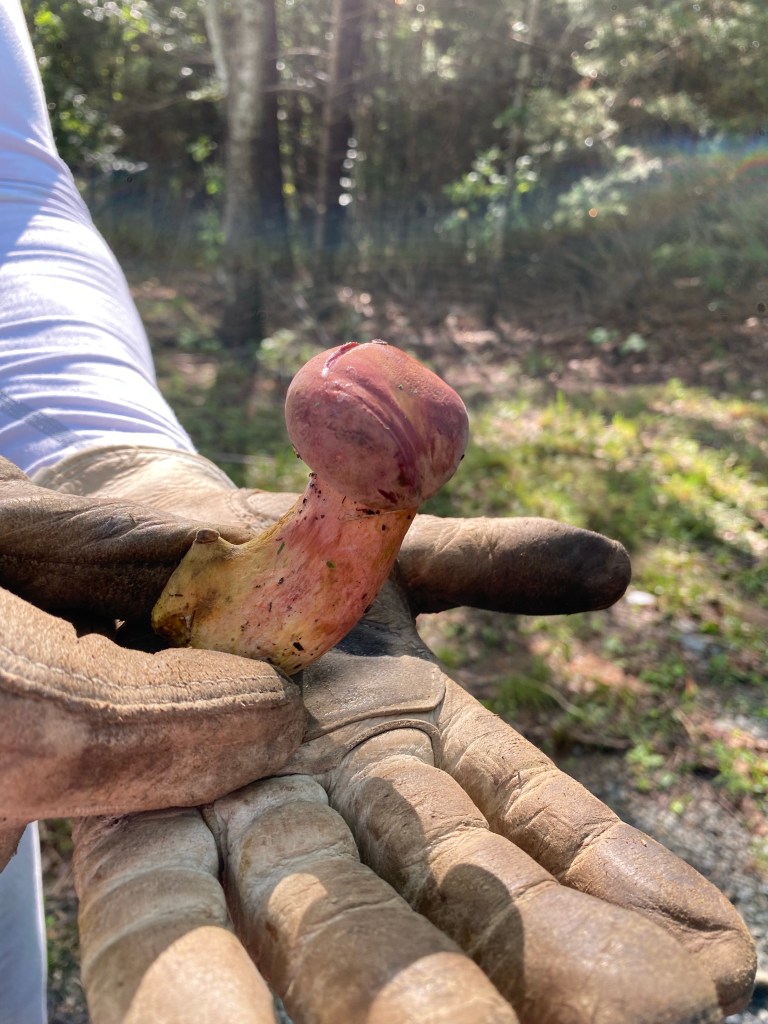
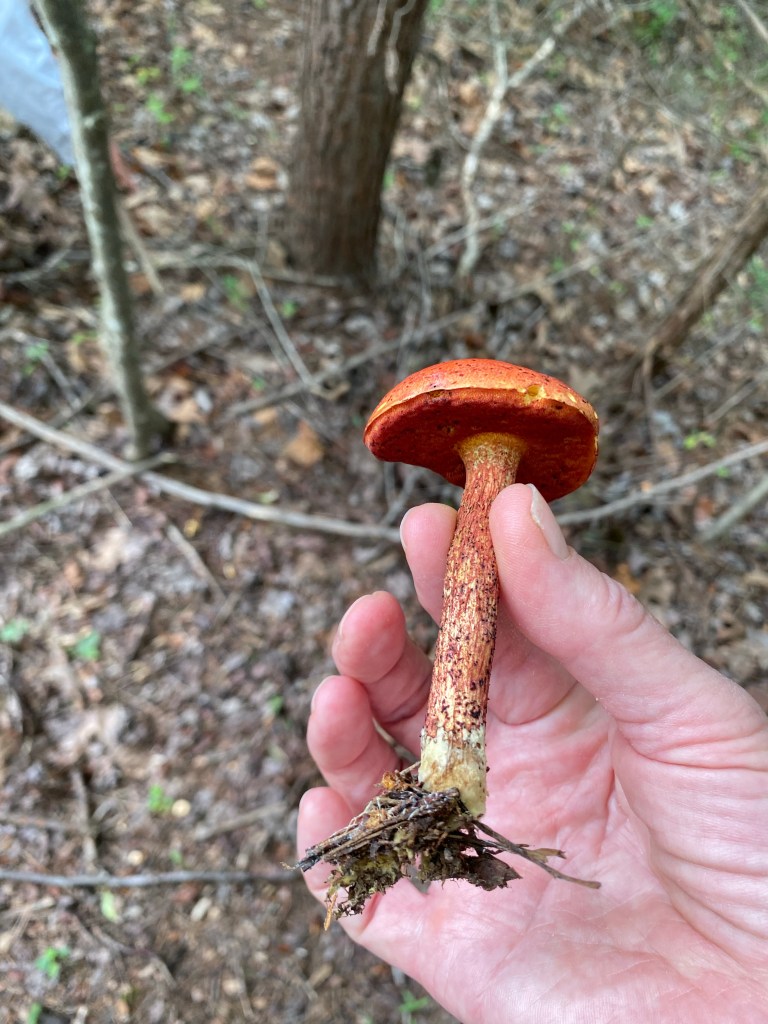
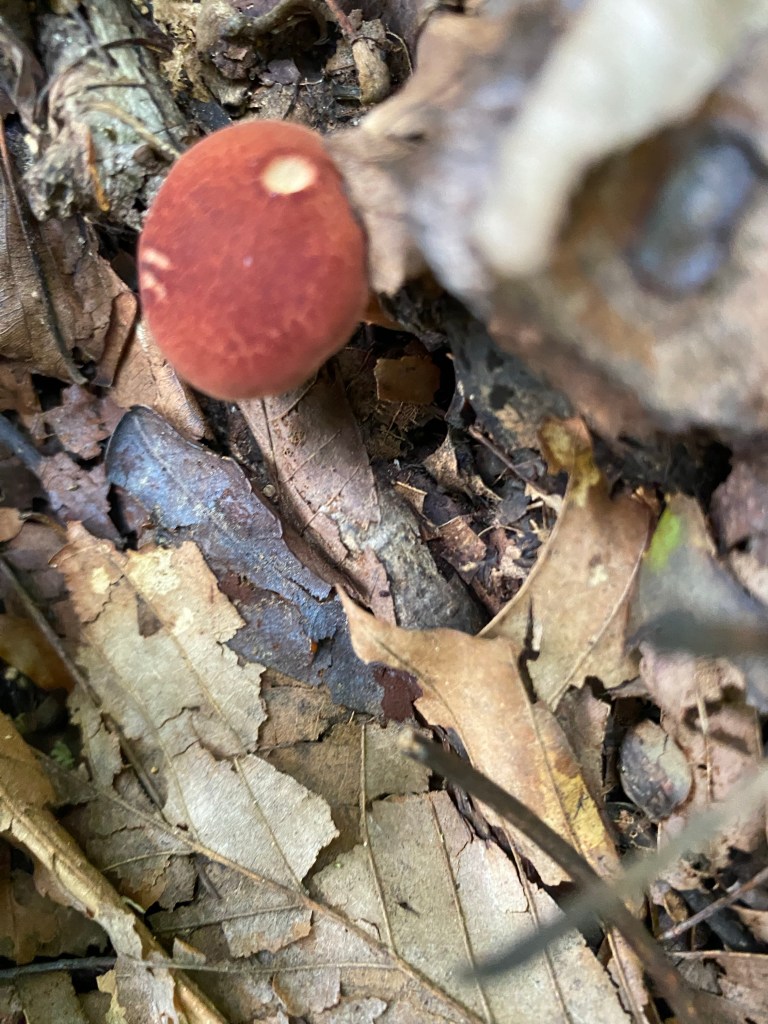
Red capped, blue staining boletes found near the road under the realtor’s sign growing directly from the red clay. These slowly turned blue when bruised, sliced and cut. We composted them as their identity was indeterminable to us at this time. They were suspiciously untouched by insects and animals which leans us toward either bitter taste or poisonous.
Another red capped, blue staining bolete. It turned blue quickly. Found along driveway. It was also in great condition for a bolete lending us to be dubious of its edibility.

Entoloma murrayi inedible. We found multiple large patches of these in spring and early summer. Our hat has a little flop in it for every single mushroom fruit. The pics for entoloma murrayi did not show this flop. Could be a different species?
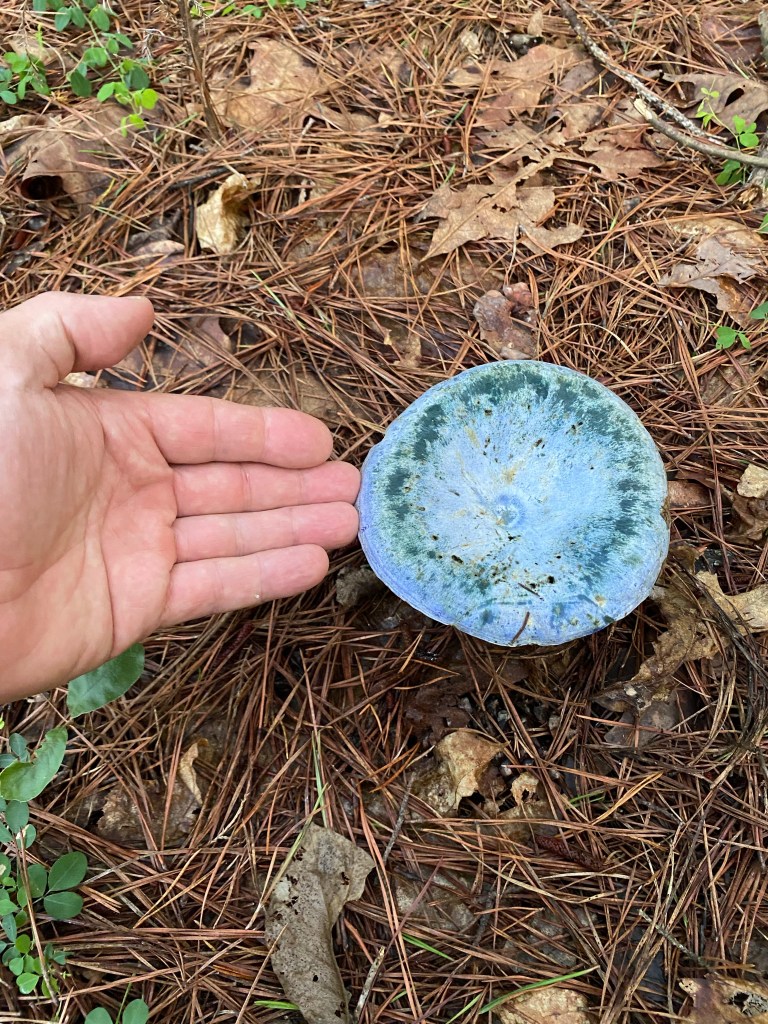
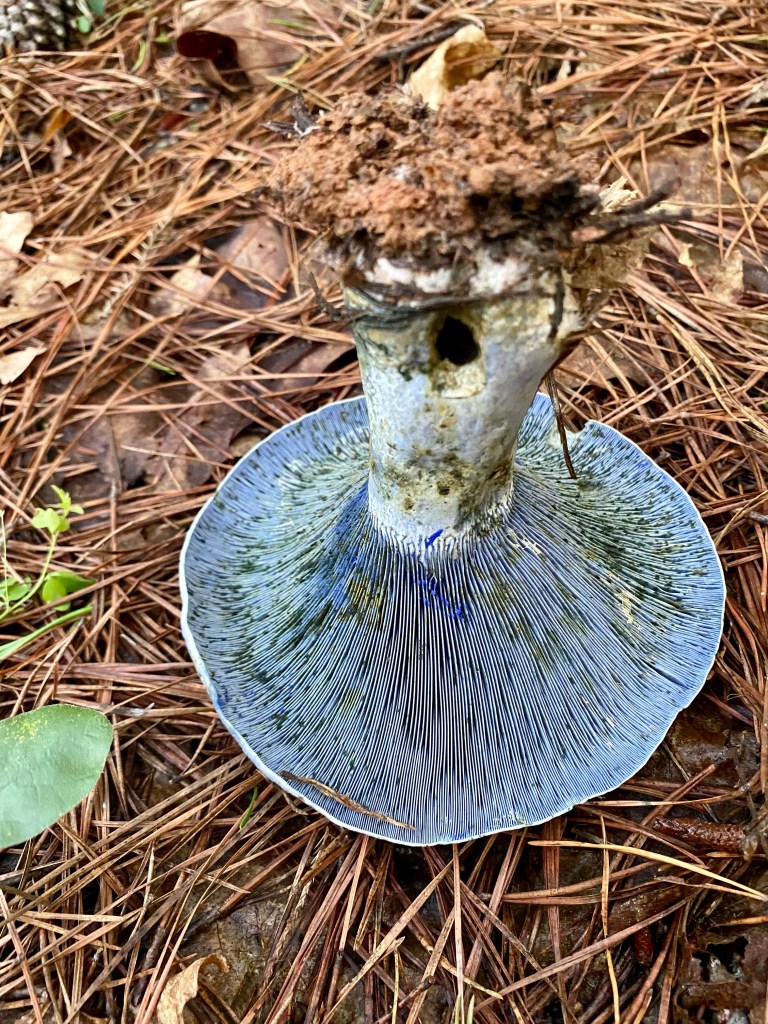
Lactarius indigo – the indigo or blue milk cap mushroom, an edible member of the Russula family. Goes great with the big flavors of a whole wheat veggie pizza. Because there is nothing else that looks like it, it’s considered a great beginner’s mushroom.
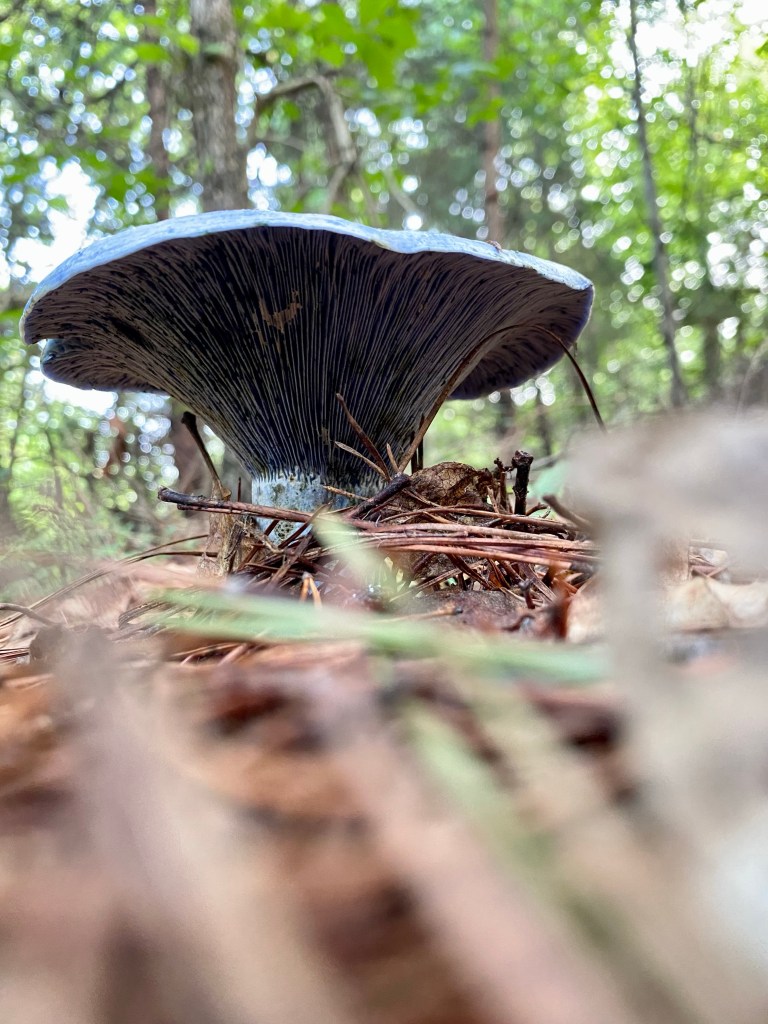
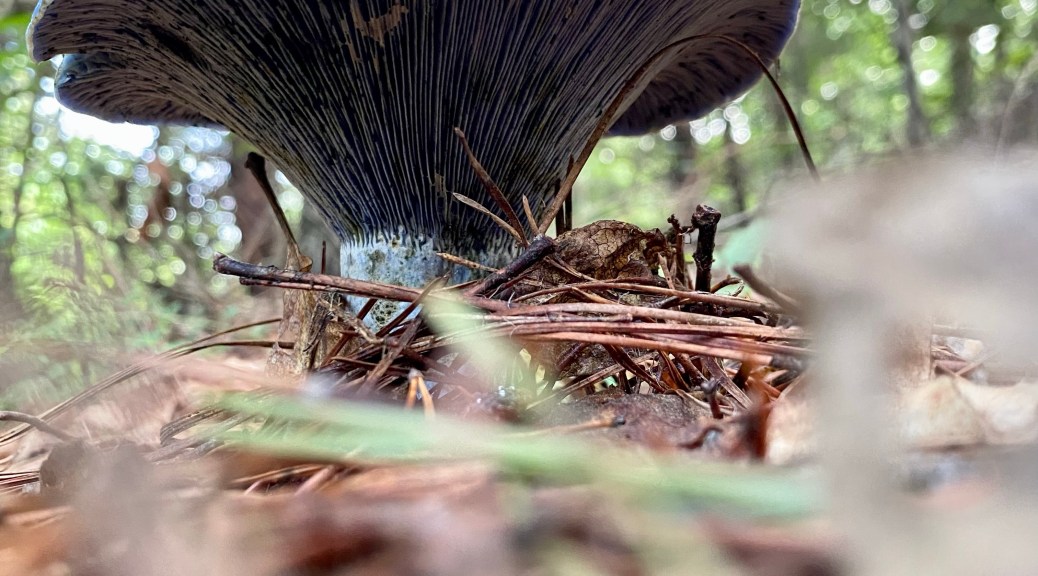
Indigo milk cap from the ground level. All foraged mushrooms need to be thoroughly cooked.
These grow on the ground in mycorrhizal relationships with trees. When sliced, the gills ooze blue latex.
Another red capped bolete. Red pores and did not stain when bruised.
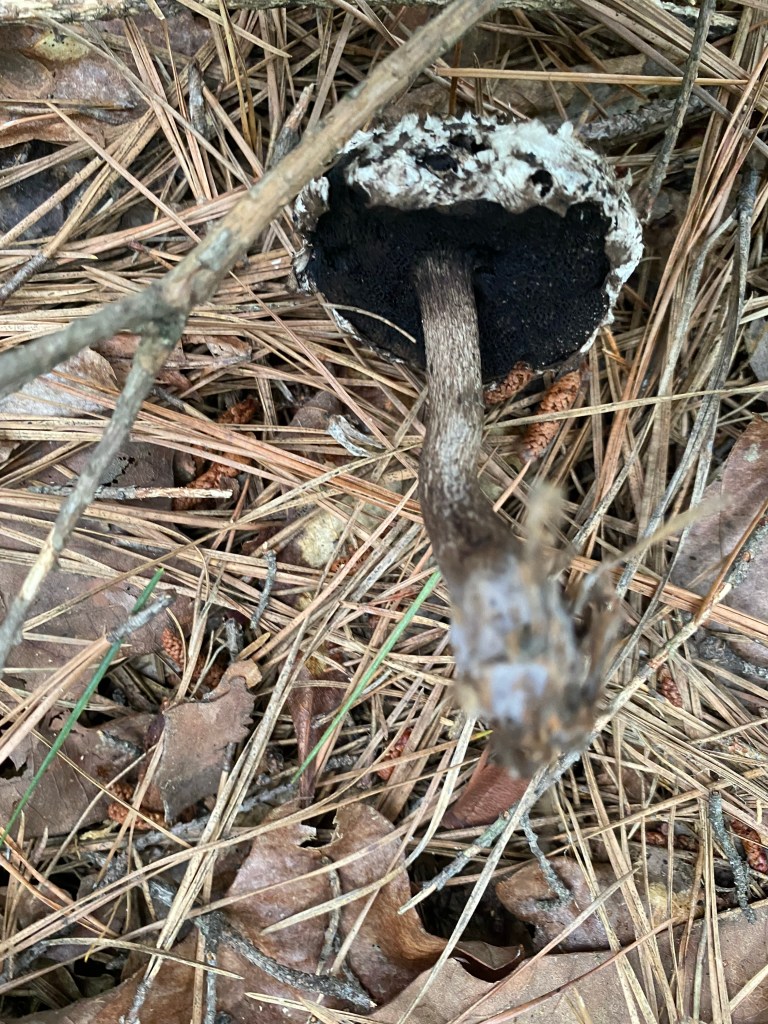
Old Man of the Woods, strobilomyces strobilaceous, found on multiple sites of Saint Andrews Food Forest, singularly and in groups. It is also a bolete and is edible. We’ve not tried it yet. It is mycorrhizal in both deciduous and coniferous forests. We have heard it tastes similar to a button mushroom and will turn other foods cooked along with it gray. Since nothing else looks like it, it a good beginning mushroom foraging find.
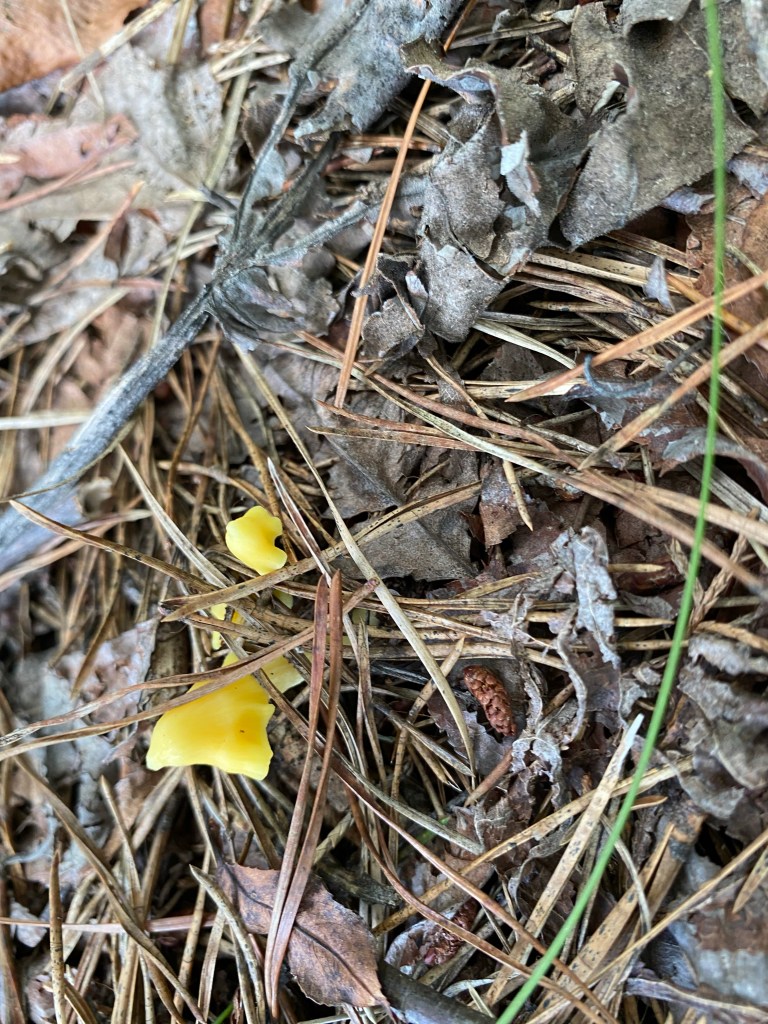
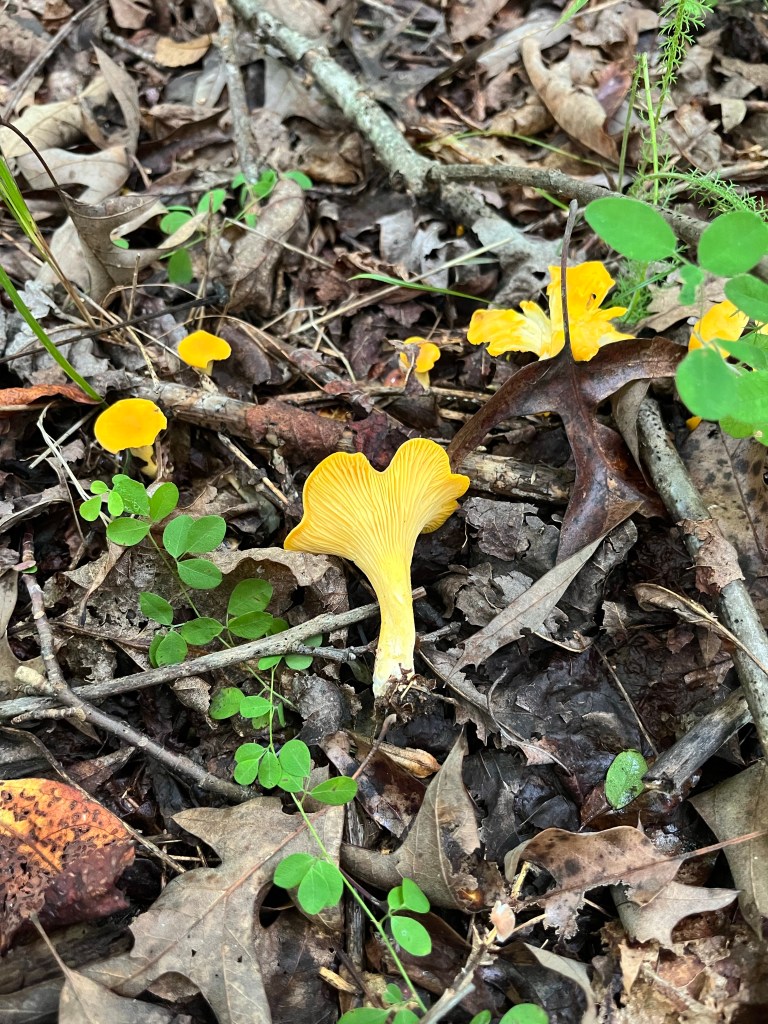
Golden Chanterelles are a choice edible. They were the most delicious mushrooms we’ve ever had. Full of nutrients. We cooked them in a dry skillet on med high for 20 minutes then added olive oil and garlic with salt and pepper and sautéed about 6 more minutes while deglazing the pan with a little wine. They had a silky mouth feel. They are a great beginner mushroom as they have no poisonous lookalikes.
Cinnabar chanterelles found pinning all along the sides of the creek bed growing near mosses. The red color stands out. Another choice edible and a great beginner’s mushroom.
Presumed Amanita Vaginata considered inedible to beginners as there are multiple poisonous lookalikes.

Phylloporus rodoxanthus, the gilled bolete, top above and bottom below. Considered edible but we’ve not tried it. We are only eating what we are confident is safe and accurately identified. Bolete identification is complicated although there are no deadly boletes, some can make your gastrointestinal system feel terrible. We will take our time to get to know these mushrooms.
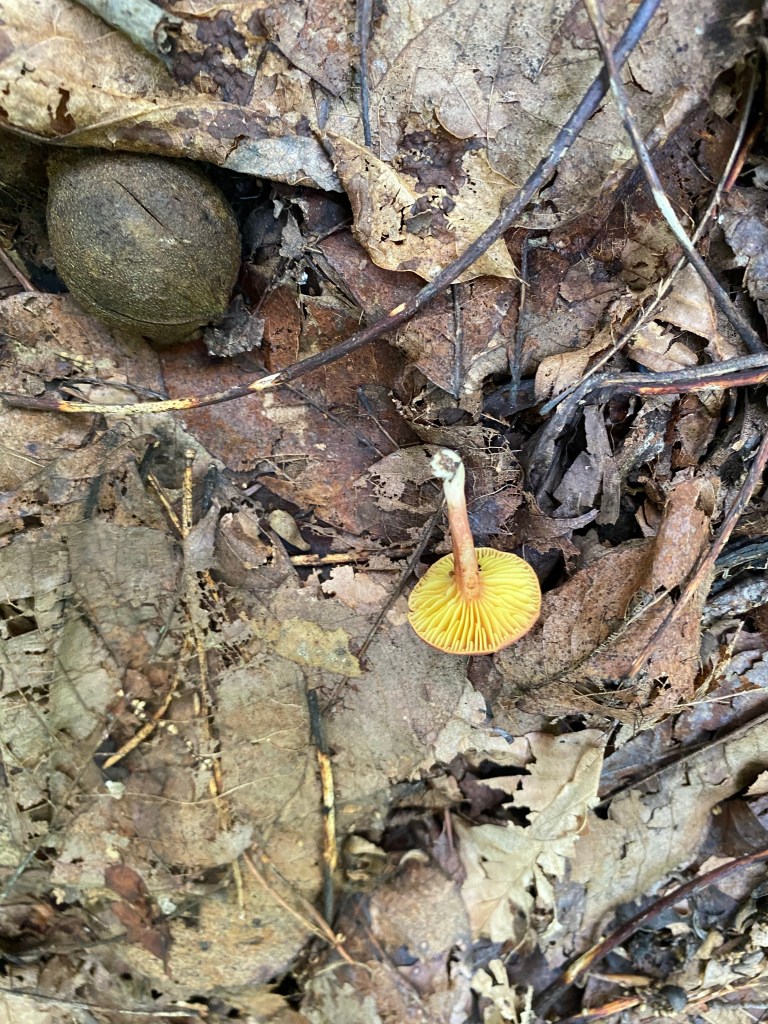
Bright yellow gills. Found alongside the creek bed.
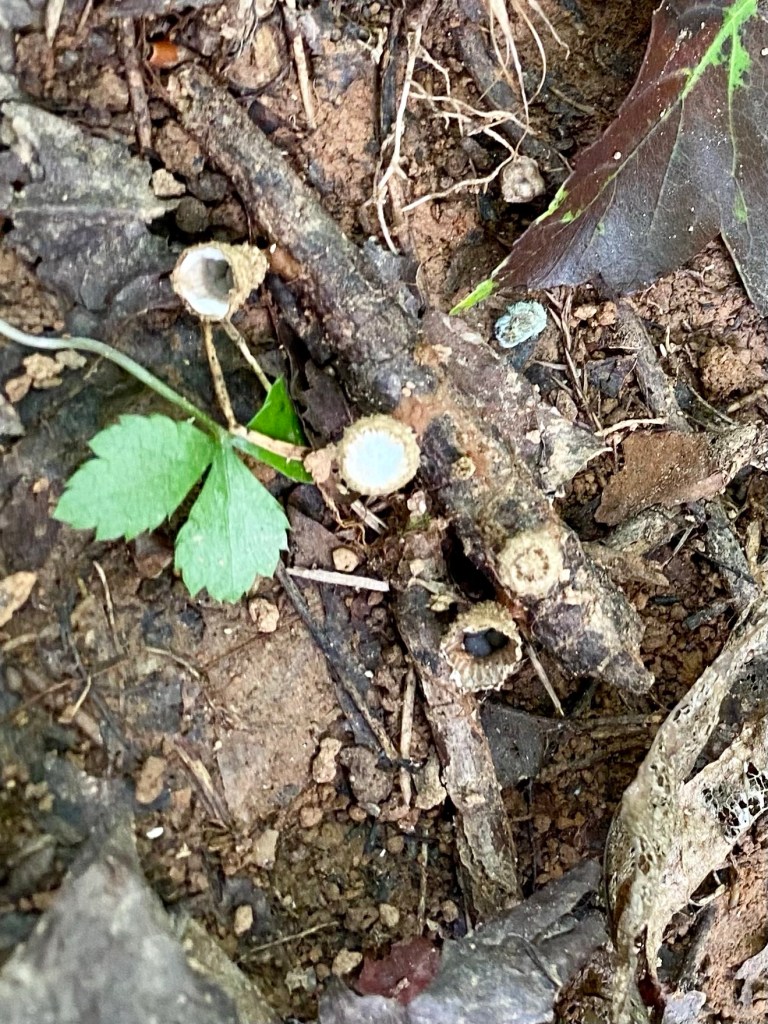
Splash cups, cyathus striatus, or fluted bird’s nest. The white inside of most of the cups are spores. Note the black eggs inside the one. Water droplets will hit the egg and the the spores will drop when wet. Growing along the back left bottom of property on a dead stick next to road in back bottom of property.
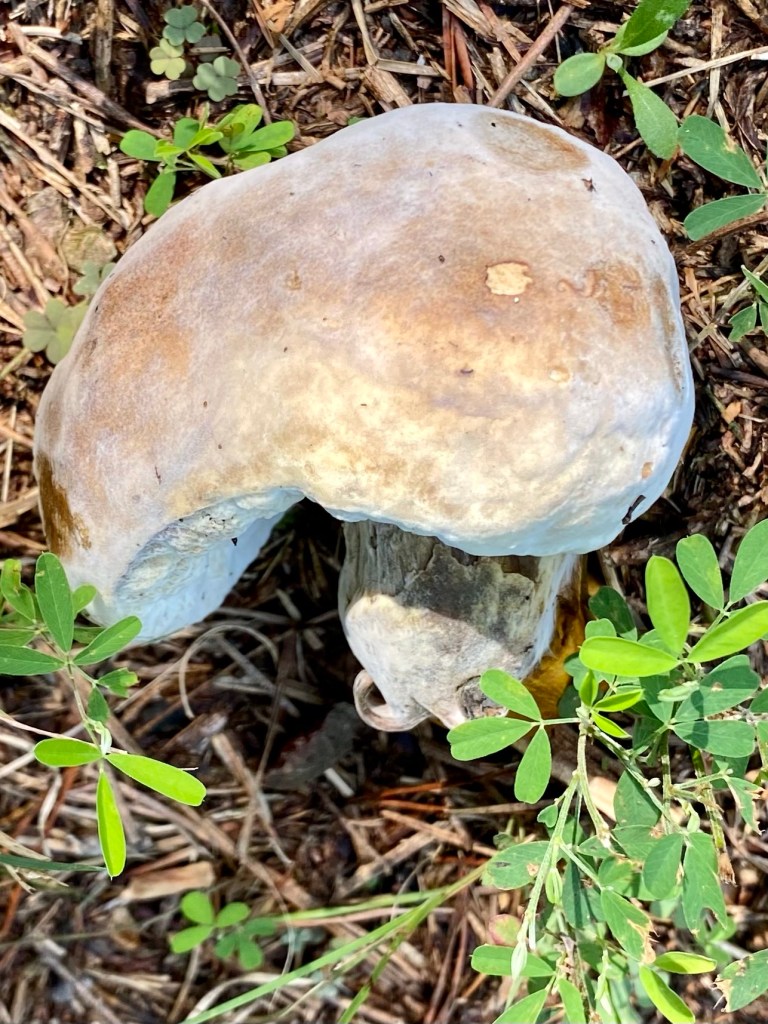
Hypomyces chrysospermus, bolete eater fungus turns bolete white, tan or golden yellow. Poisonous.
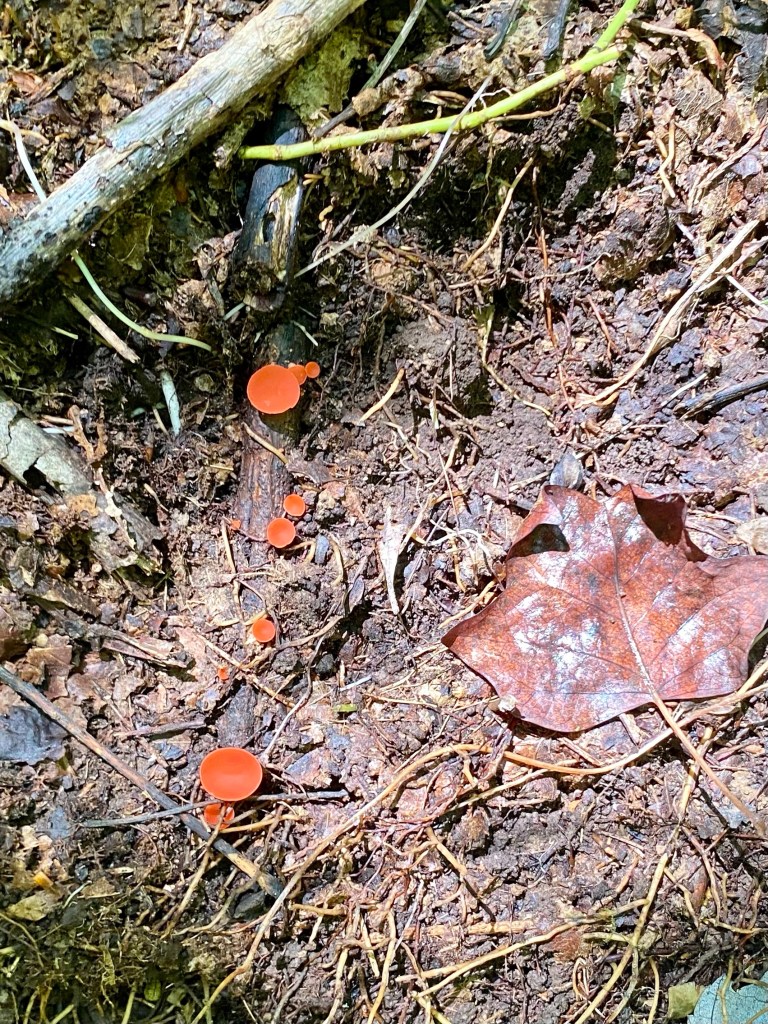
Sarcoscypha dudleyi scarlet elf cup, found along the back bottom waterway on a fallen limb.