Tag Archives: Edible Landscaping

SAFF Invasive Tree Removal

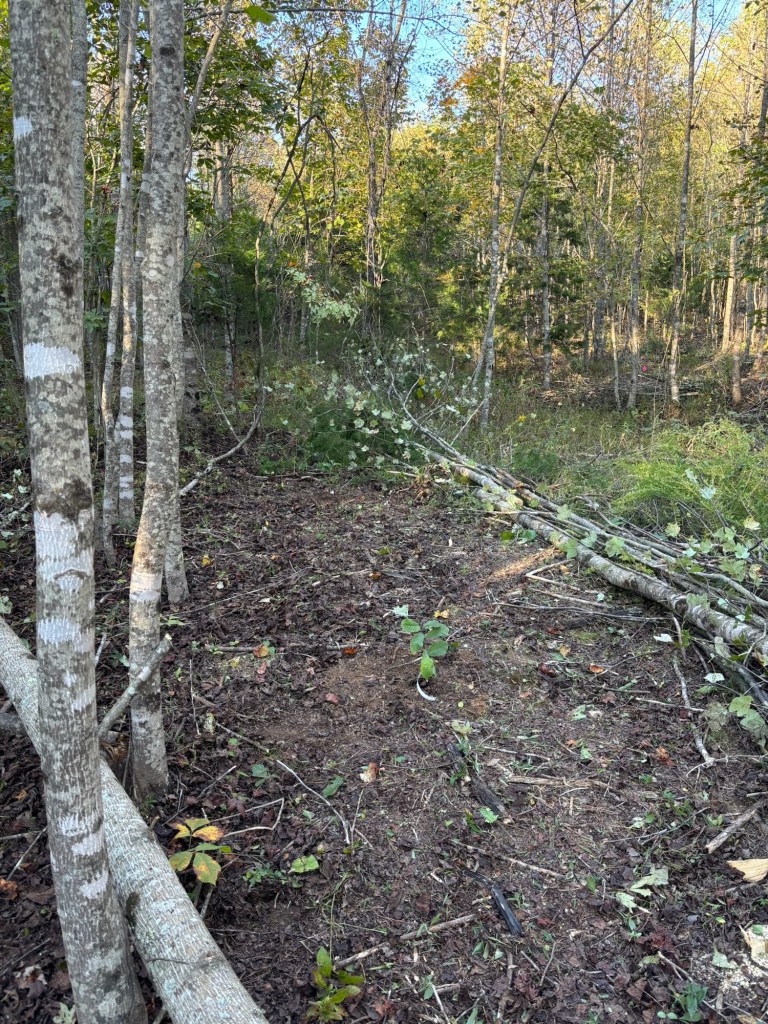
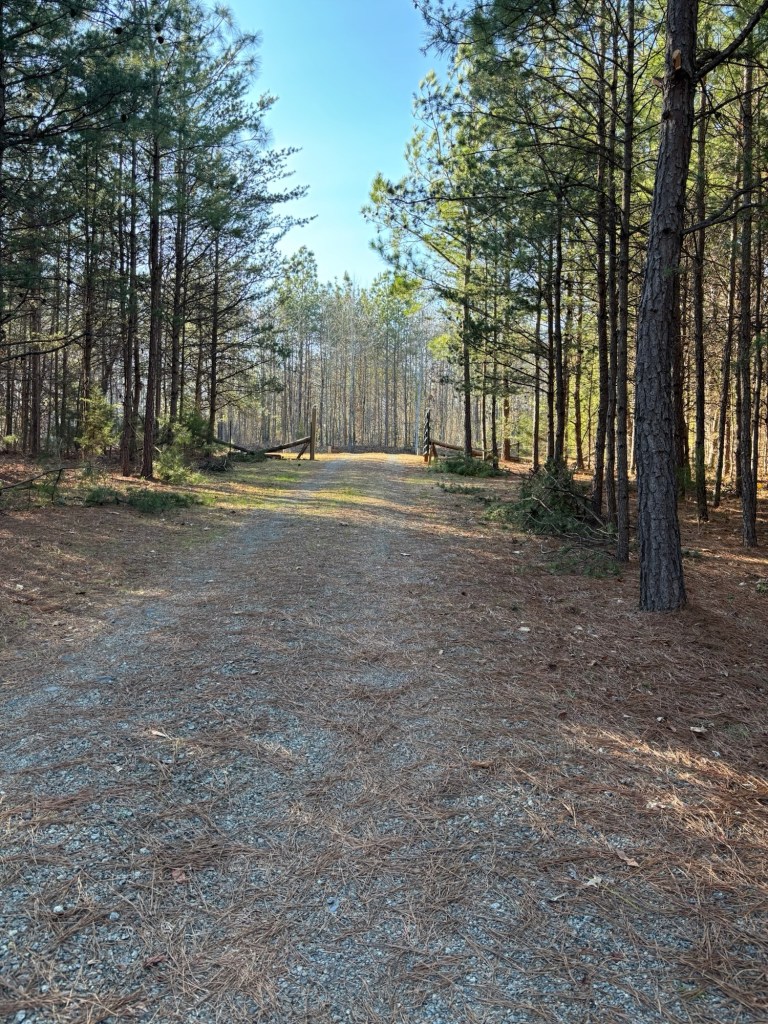
We trimmed the driveway up to 13.5 feet to accommodate the new tiny house being delivered.

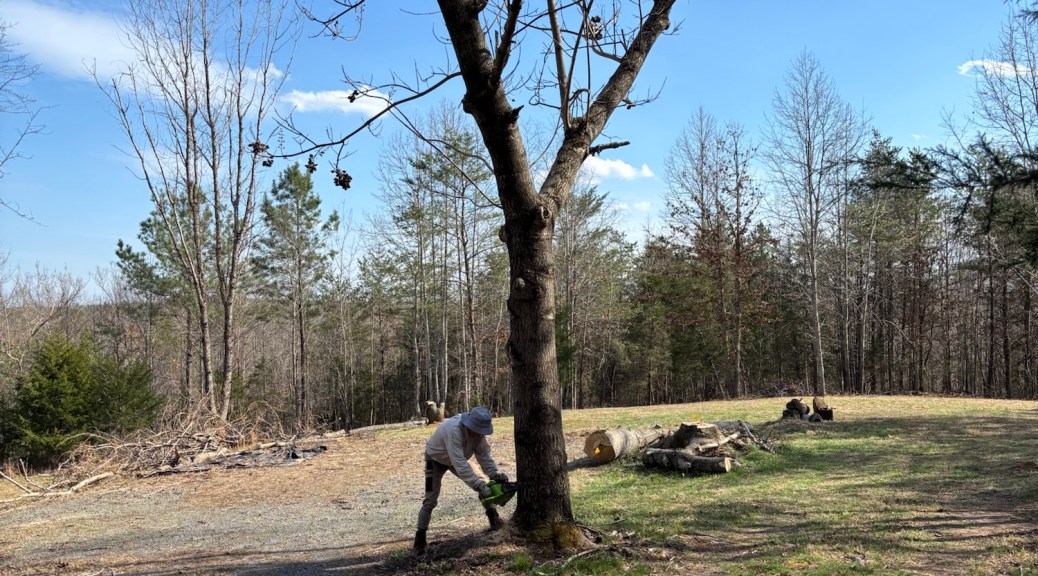
We spent the weekend taking down and processing the large paulownia trees up top in the main clearing. They loomed over the driveway and pad where we decided we’d place the tiny house. It felt like we were dismantling a giant whale carcass. These trees were messy, seedy and dropped limbs off during any storm. They take over native forests and choke out beneficial plants and trees for our Virginia wildlife. They were very fast growing as well which is why we put off cutting them down. They were a big bunch of hard work!
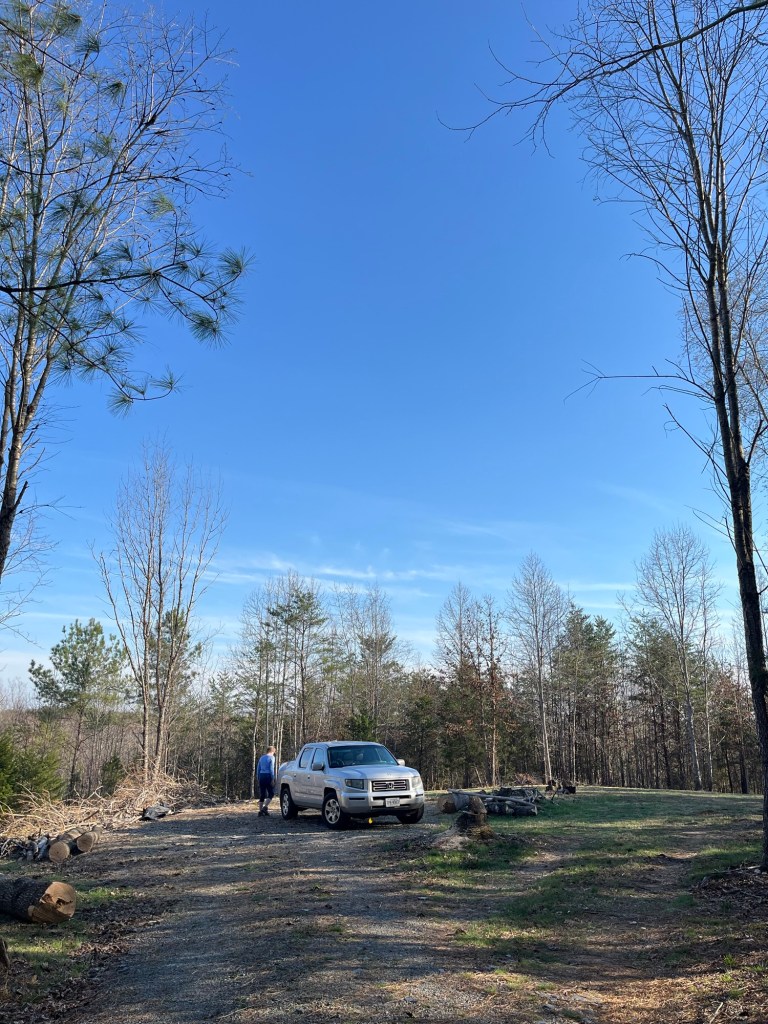
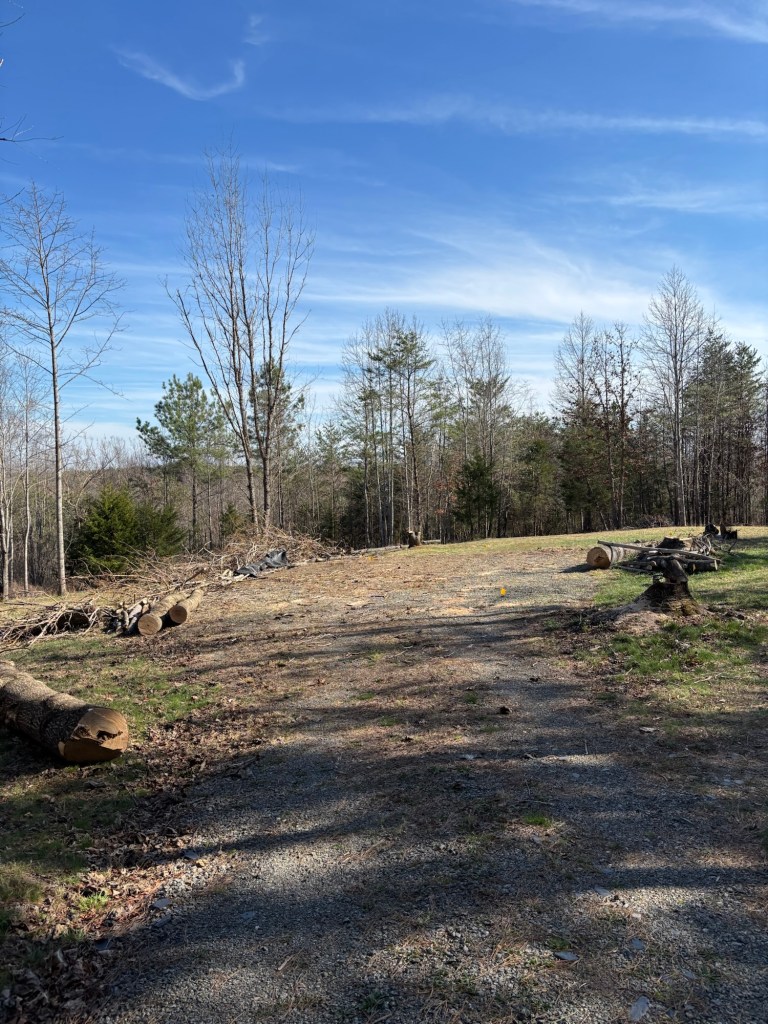
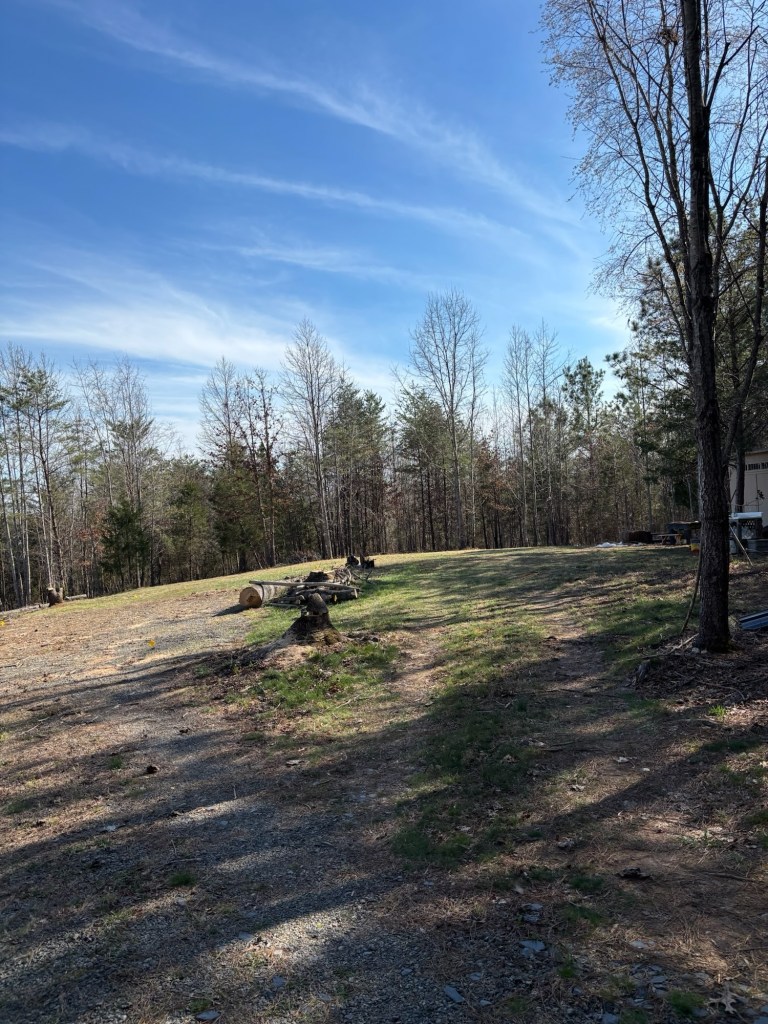
The truck parked in the spot we cleared for the tiny house this Wednesday. It looks so much better without the paulownias. We are pleased with our decision.
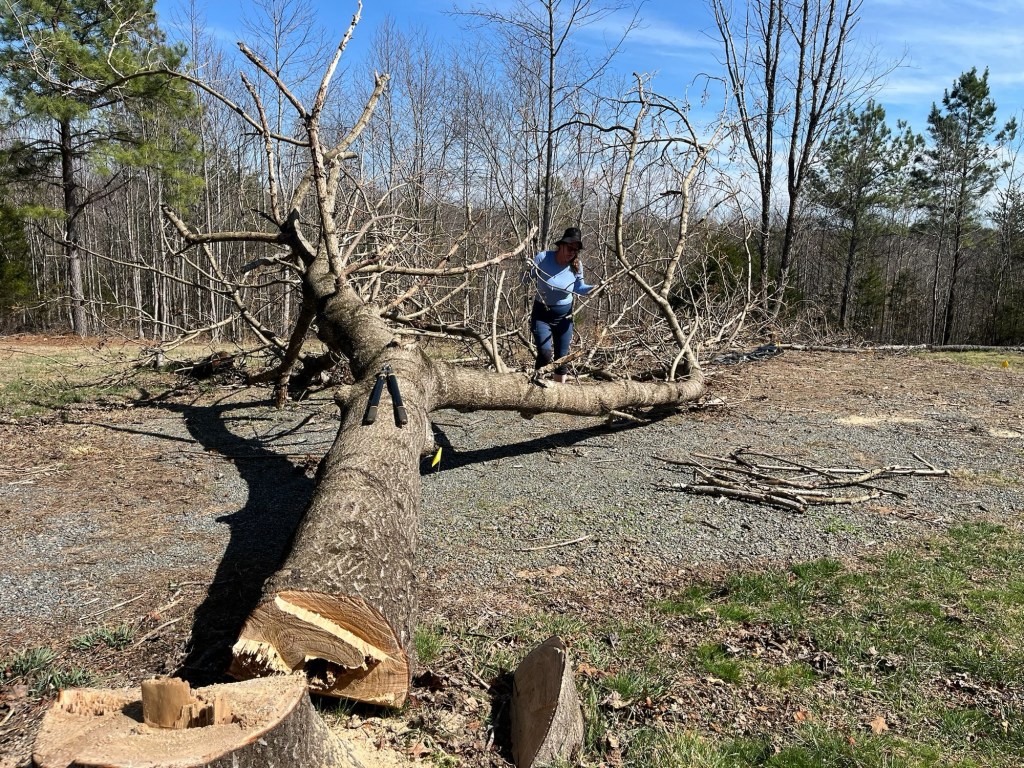
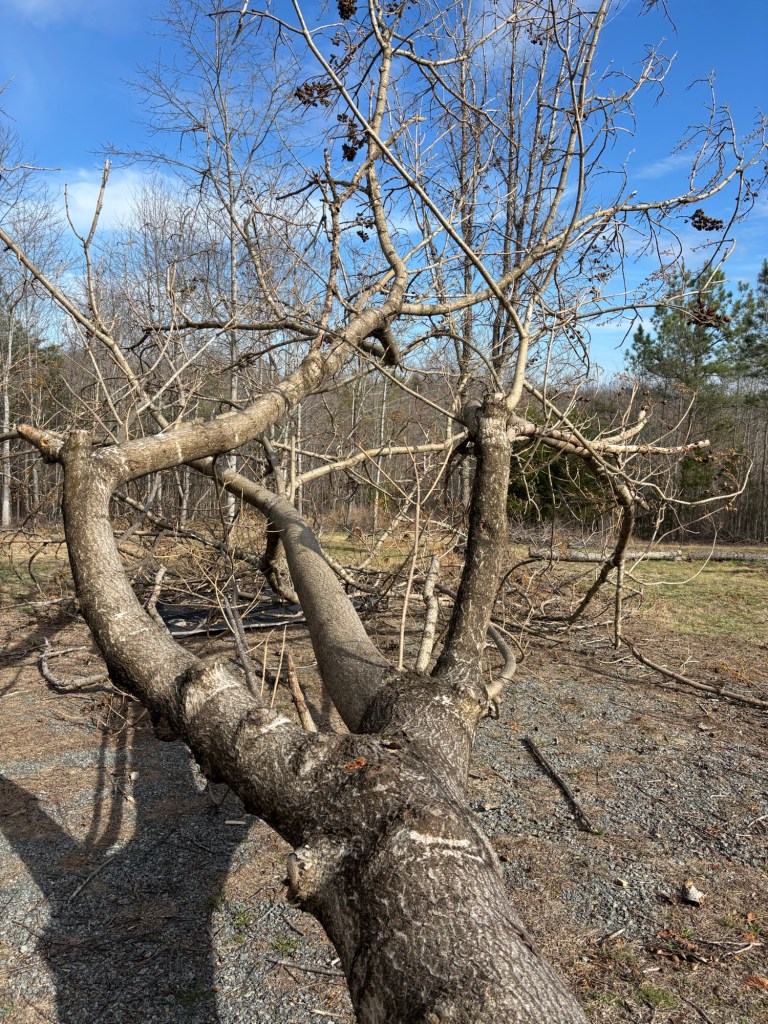
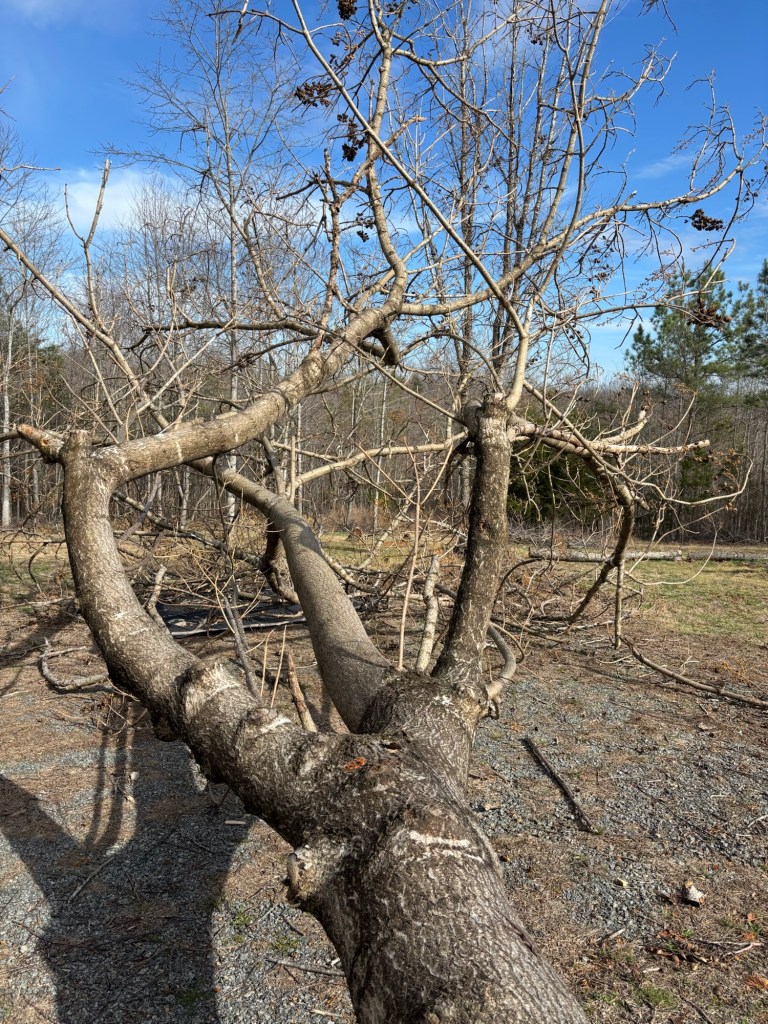
The first paulownia tree we cut down earlier in the week and then came over Saturday to cut it into smaller pieces. This was the largest. It took all of our Saturday farm day.
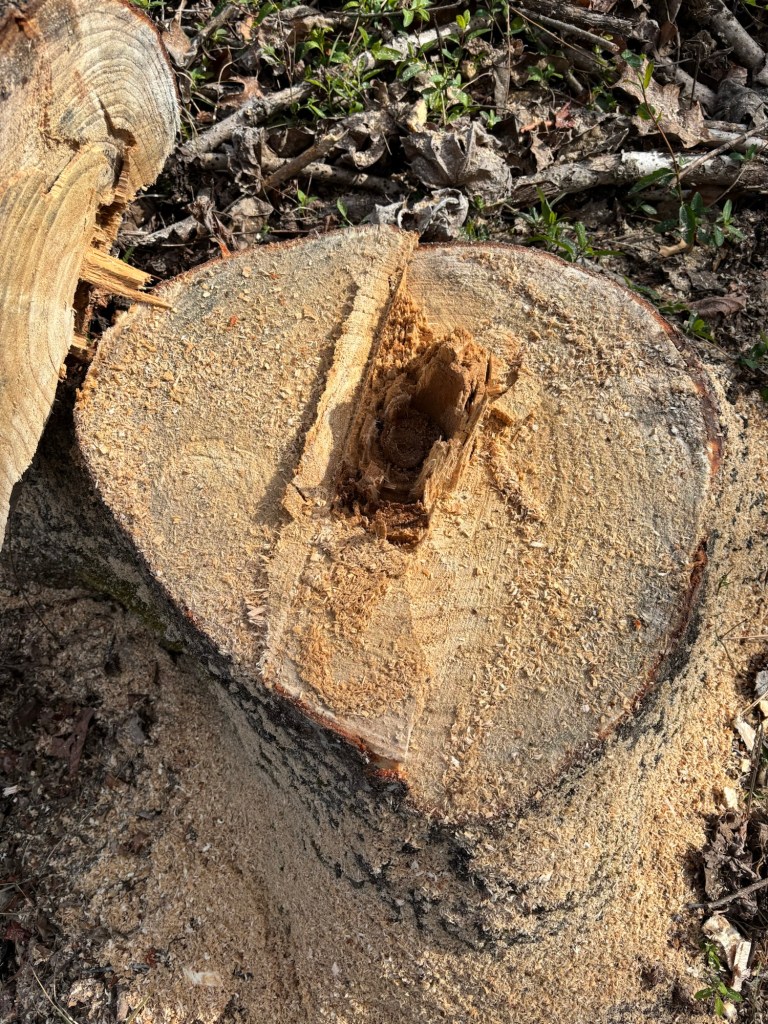
Hole in the middle of the paulownia is not a sign of disease but an inherent characteristic of the Paulowniacea family of trees. It is called pith and creates a water highway for the tree to support its rapid growth. This hollow bamboo structure runs the length of the trunk. This is one way this tree can take over quickly. Similar to ailanthus, Callery Pear, Mimosa and White Mulberry in its destruction of forests in the eastern US. Kudzu in tree form.
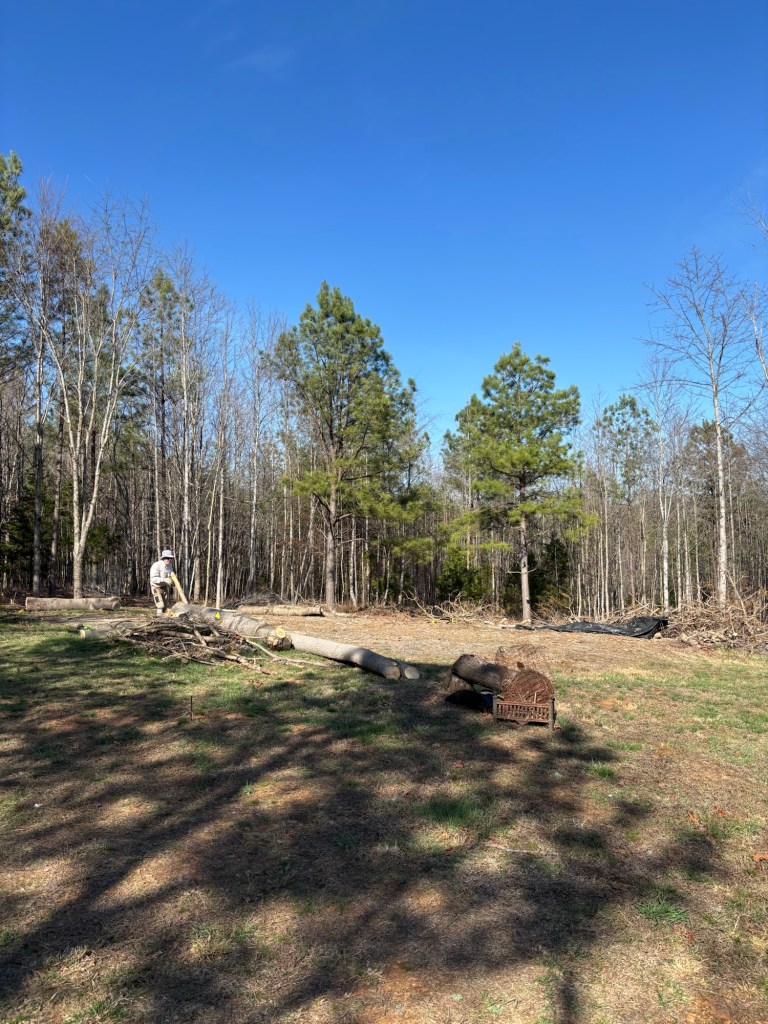
The second and smaller of the two paulownia trees we took down and cleared it yesterday (Sunday).
We are going to need a wood chipper!
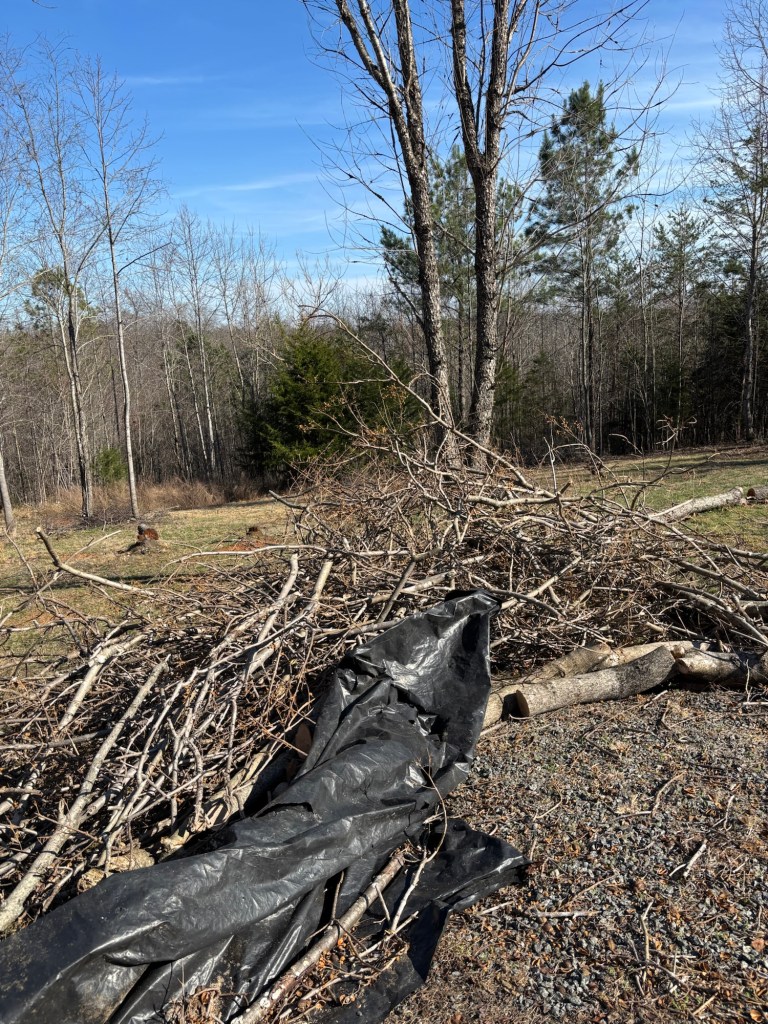
Paulownia tree debris around the pad. We will find a use for these logs. It is lightweight and fire and rot resistant. We picked a lot of great walking sticks and fishing poles out of the rubble and sorted into useful and non useful piles. We brought the long dead pieces home to use as fire starter. They burn for a long time and are as light as paper. It’s really very interesting wood. Too bad the tree isn’t adapted to playing nice in our environment with its native cohorts.

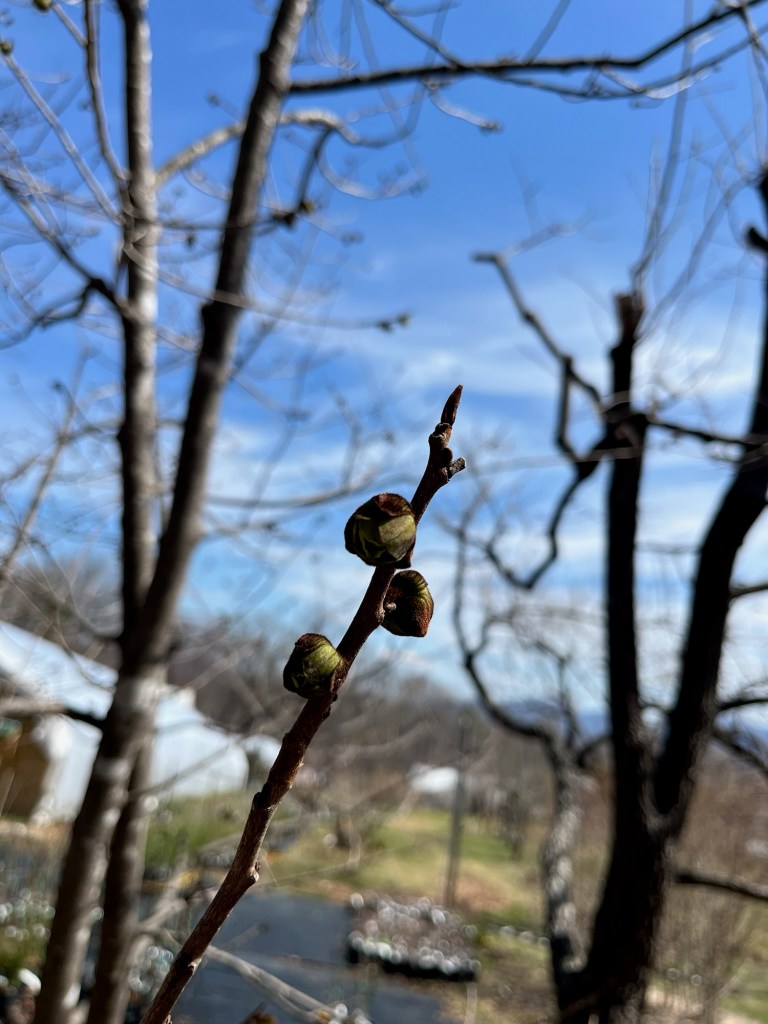
We stayed focused on creating our space for the tiny house for the most part, but ran down to the old colony pawpaw patch last night just before leaving SAFF for the weekend. The buds are still tightly closed. We are happy with the slow moving progress of the buds as we have only found female flowers out in the wild so far. We continue to look for the older male flowers with pollen. We will use this to pollinate our female flowers when they open. We are watching the pawpaws develop along the Rockfish River on our drive to the farm and we see them covered in buds. They are all still female with green flowers instead of more purple male flowers that face downward.
Female flowers at Edible Landscaping on Saturday in Afton Virginia.

View of the clearing and pad without the paulownias.
SAFF Pawpaws, roads and a Tiny House

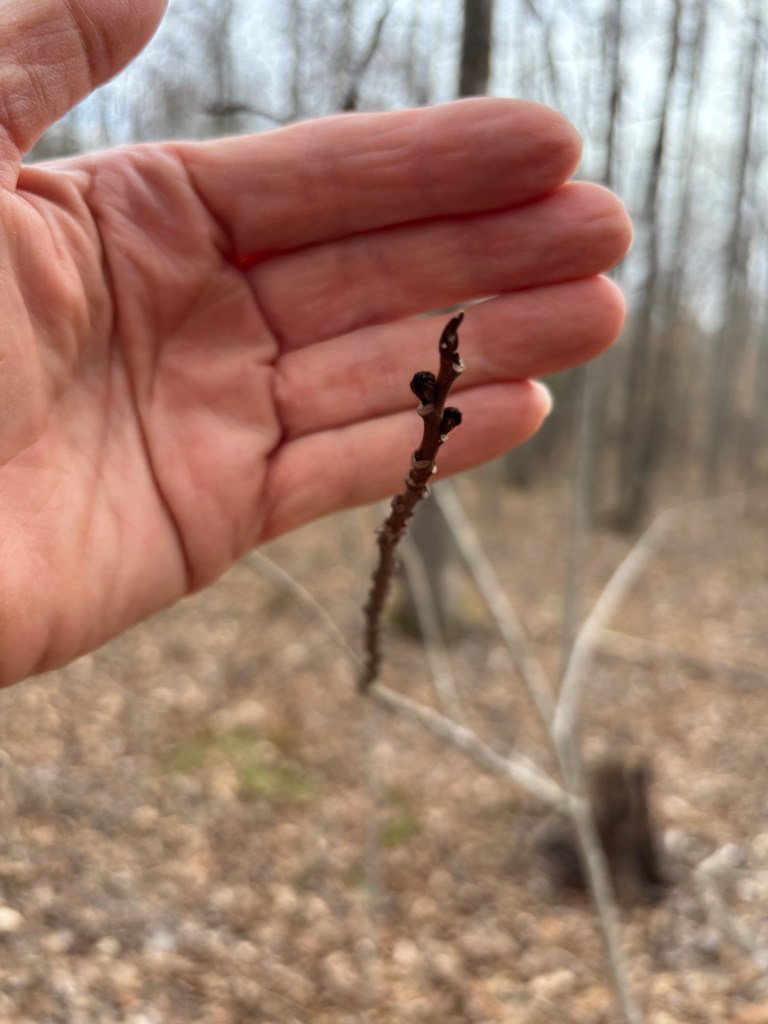
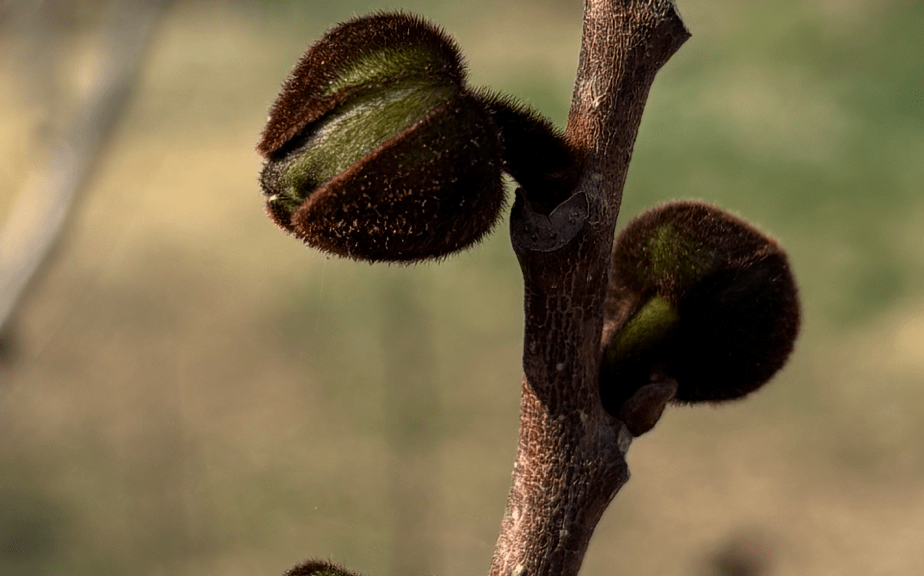
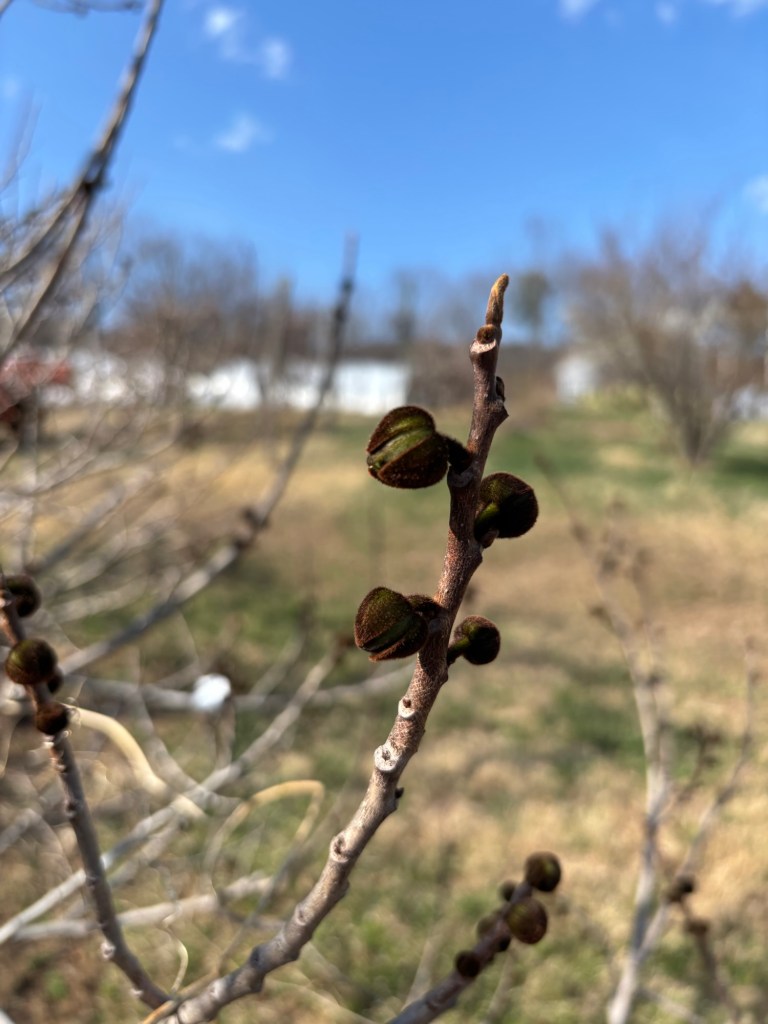
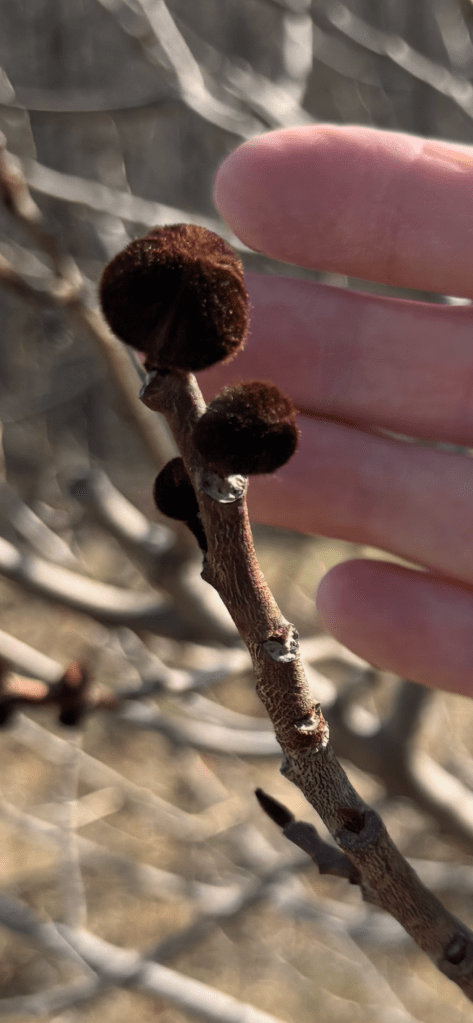
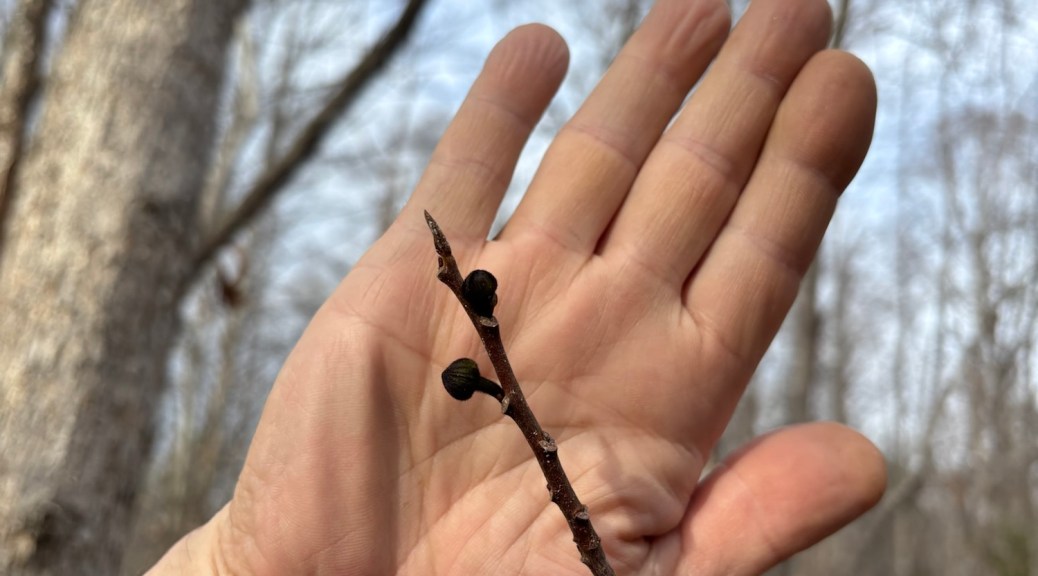
Asimina triloba buds still dormant despite the wacky weather.

We drove over to Buckingham County yesterday to pick up soil test kits and drop off paperwork before heading to SAFF. Spring has sprung in many pockets of Virginia with purple flower buds emerging from red bud trees and bright yellow forsythia and daffodils blooming. After the deep cold snap, it appears we’ve made it and the weather will keep warming up from here.

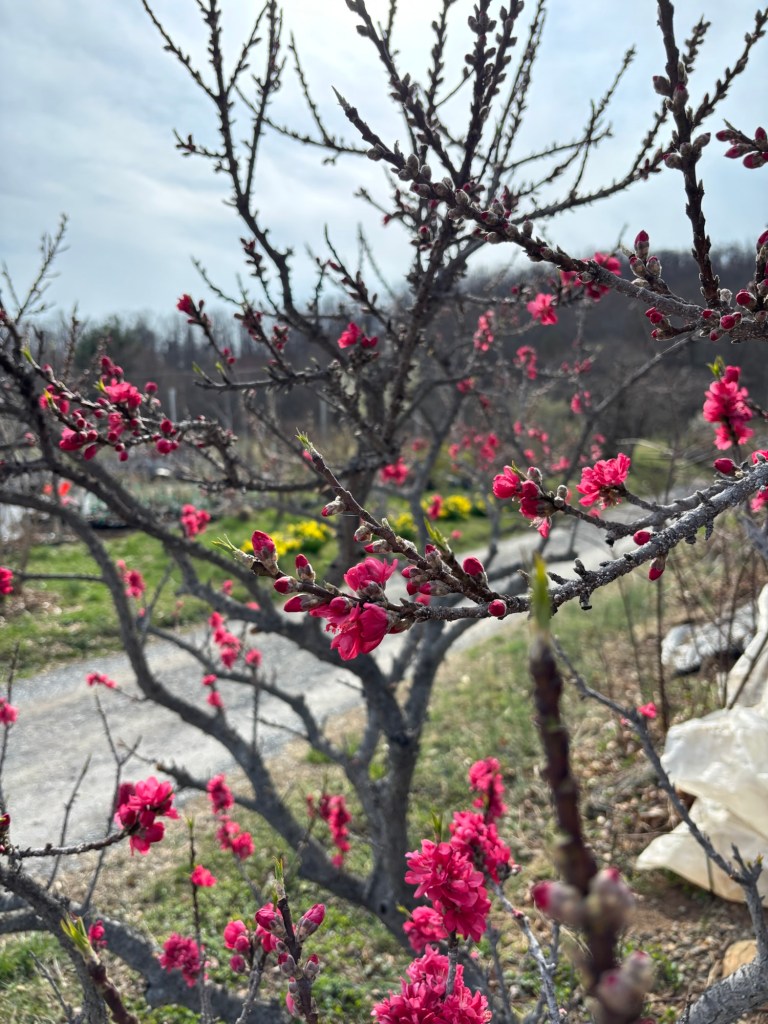
Peach tree blossoms at Edible Landscaping on Saturday in Afton Virginia.

On Wednesday, the day before, we drove backroads down through Lexington’s Maury River and Kerrs Creek Virginia. We drove further down through George Washington and Jefferson National Forest through creeks and hollers down to Troutville. It was beautiful and we kept our eyes open for pawpaws the whole way. We went to look at a tiny house that we’ve decided to buy and place at Saint Andrews Forest Farm so we can spend part of our time out there.

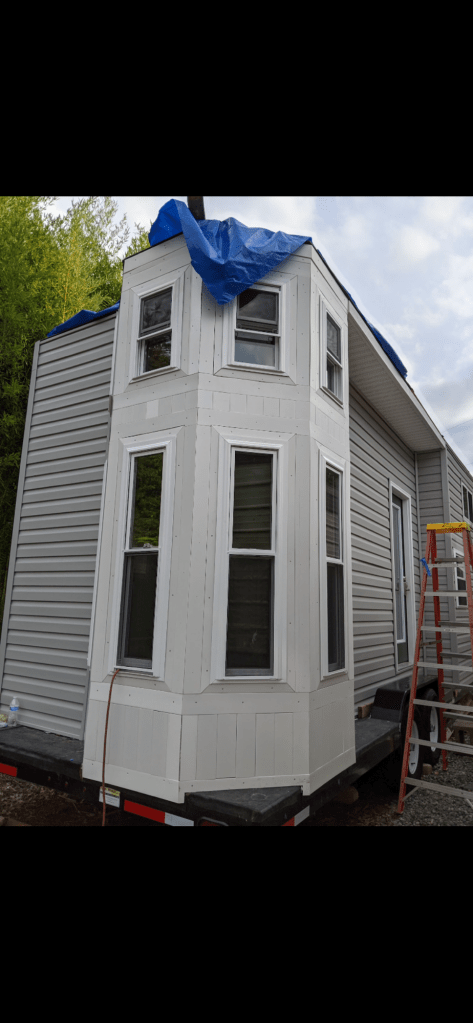
Victorian tiny house built by engineering students during the early days of pandemic.
We will have to finish the inside and make a few fixes but we are excited about the possibilities.

So yesterday we went over to SAFF and decided we would place it on our pad just off the driveway up top. We took down one invasive paulownia tree that would interfere with our plans. We have a few more trees to cut down to make a safe space for the tiny house.

Finally this paulownia is down. It was a job. Now we have to get it out of the way.

Wednesday Trip to Edible Landscaping in Afton Virginia

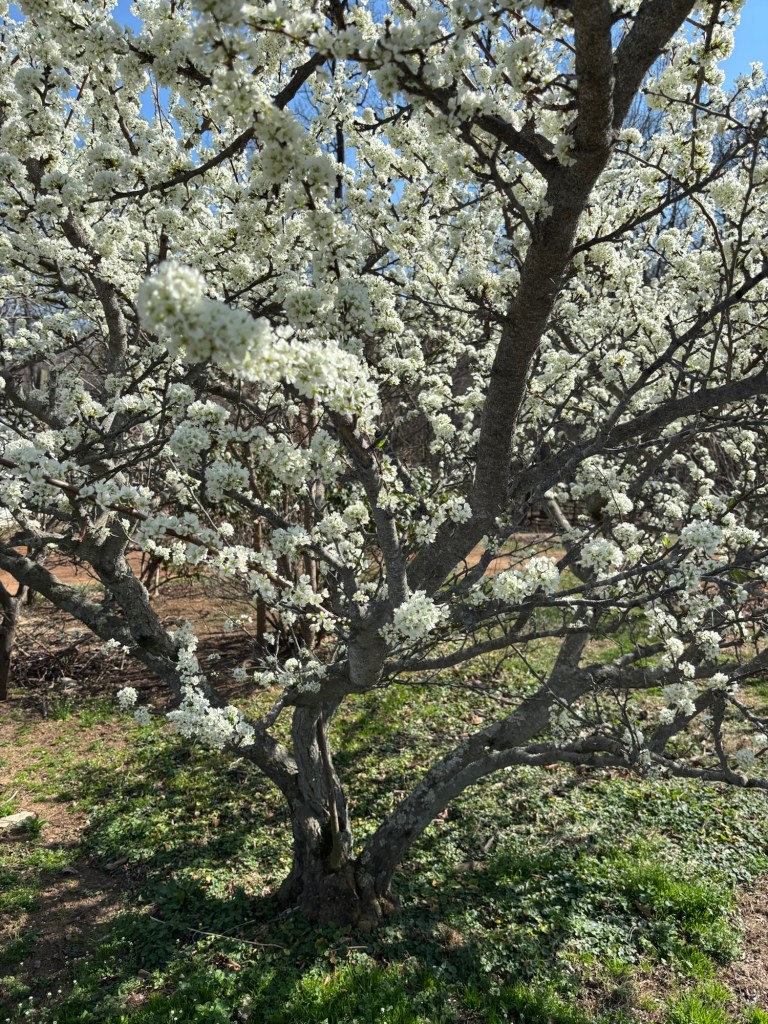
Pear tree blooming at Edible Landscaping. The smell was indescribably pleasant and sweet. We would have spent the rest of the day right there if possible.

We drove over late yesterday afternoon to check the status of their flowers on the Asimina triloba, pawpaw, trees at Edible Landscaping in Nelson County Virginia. This is one of our favorite places almost any time of year but it was especially enchanting yesterday. The flowers were blooming on many fruit trees and bees were buzzing hungrily. The pawpaws were just about to open on a few cultivars—namely the Sunflower, Shenandoah and Allegheny with some blooms starting to open and others (like ours in Buckingham County at SAFF) are still small and tightly closed for winter. While they are fully closed they can survive temperatures as low as -25 degrees Fahrenheit. Once they begin to open like the flower below, they are hardy to 28 degrees Fahrenheit. This makes them susceptible to late freezes.

Shenandoah cultivar at Edible Landscaping and the clone of our own at SAFF. It was the first pawpaw we planted ourselves at SAFF. The outer whorl of petals can be seen opening.

When the flowers first open on one year old wood, they are in the female stage with a green, glossy stigma inside the petals. At this point, the stamen are immature, green and compact. After a few days, the petals turn wider and become more horizontal turning a deeper, purplish brown. The stigmas are no longer receptive and the anthers turn brown and release dry loose pollen. The pollen is light colored beige or yellowish and fine and dusty.

The Allegheny cultivar (parent clone of our Allegheny planted at SAFF on the Pawpaw Peninsula) with buds swelling but not yet opening like the Shenandoah above.

The Sunflower cultivar has been known to self pollinate. However most Asimina triloba need a second genetically distinct tree to set fruit. If successfully pollinated the green ovaries at the base of the flower begin to swell and develop into fruit. We’ve been staying on top of the weather. Hopeful to stay above 28 degrees wherever the flowers have opened. So far it appears Buckingham County will not drop below 28 degrees this season. Fingers crossed.

We got the new trailer yesterday. We are pleased with the look and feel of it. We will make good use of it at the farm. We plan to take it over tomorrow and begin transporting compost to the pawpaws.

Early October at St Andrews Forest Farm

We got out to the farm Friday, Saturday and Sunday. We received the Al Horn White pawpaw cultivar from Perry Pawpaws in Michigan on Friday afternoon and took it out to plant that evening in the orchard at the bottom of North Trail.

Asimina triloba: Al Horn cultivar with white fleshed fruit described as having coconut/ pineapple notes.

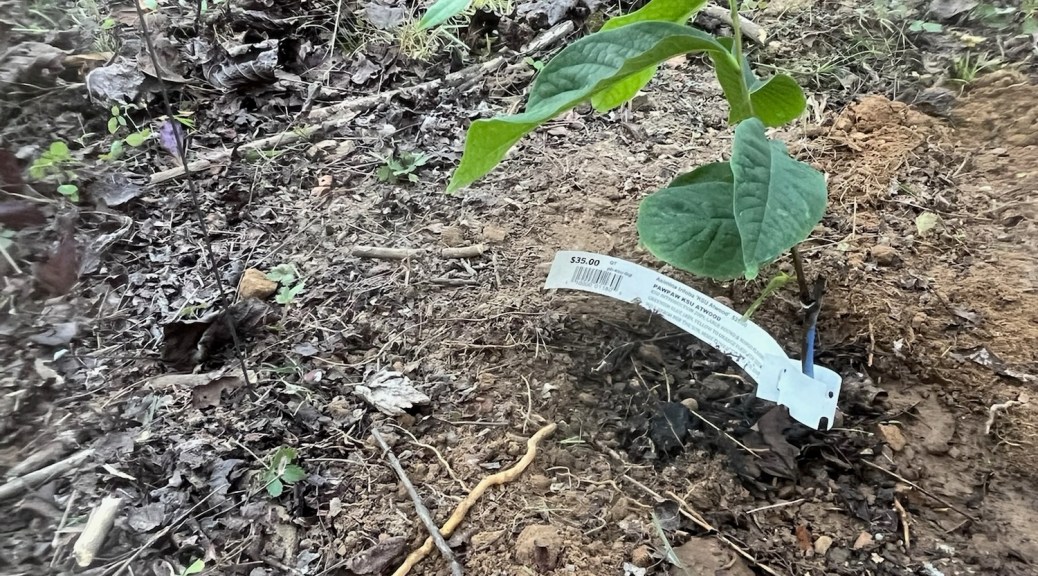
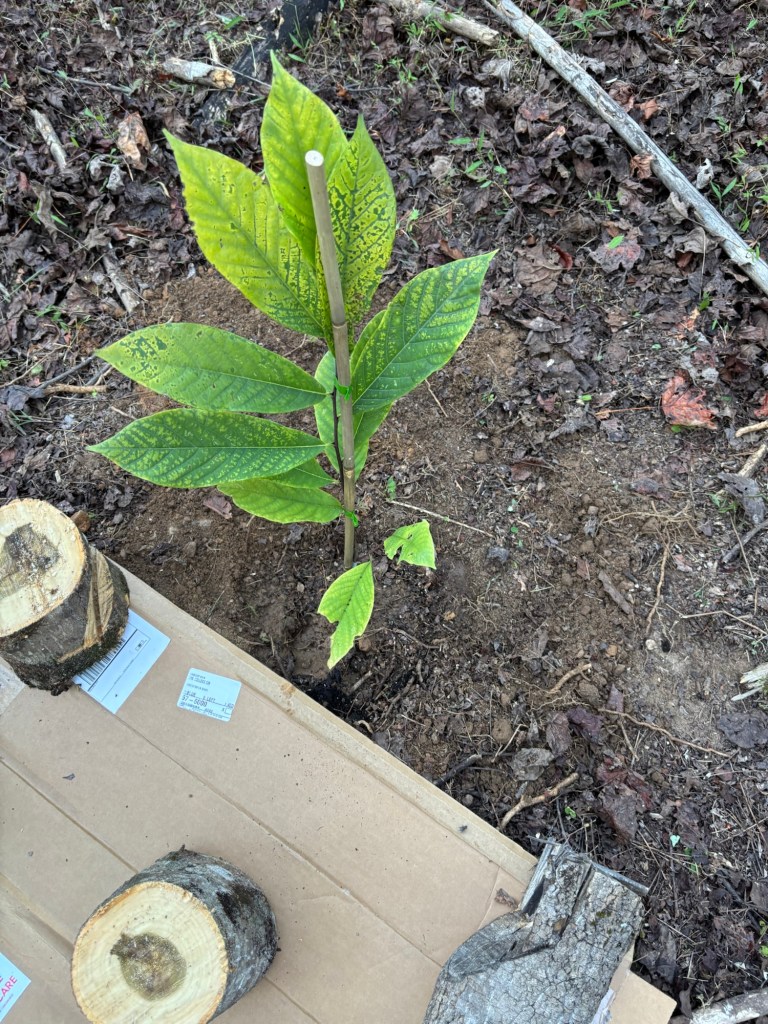
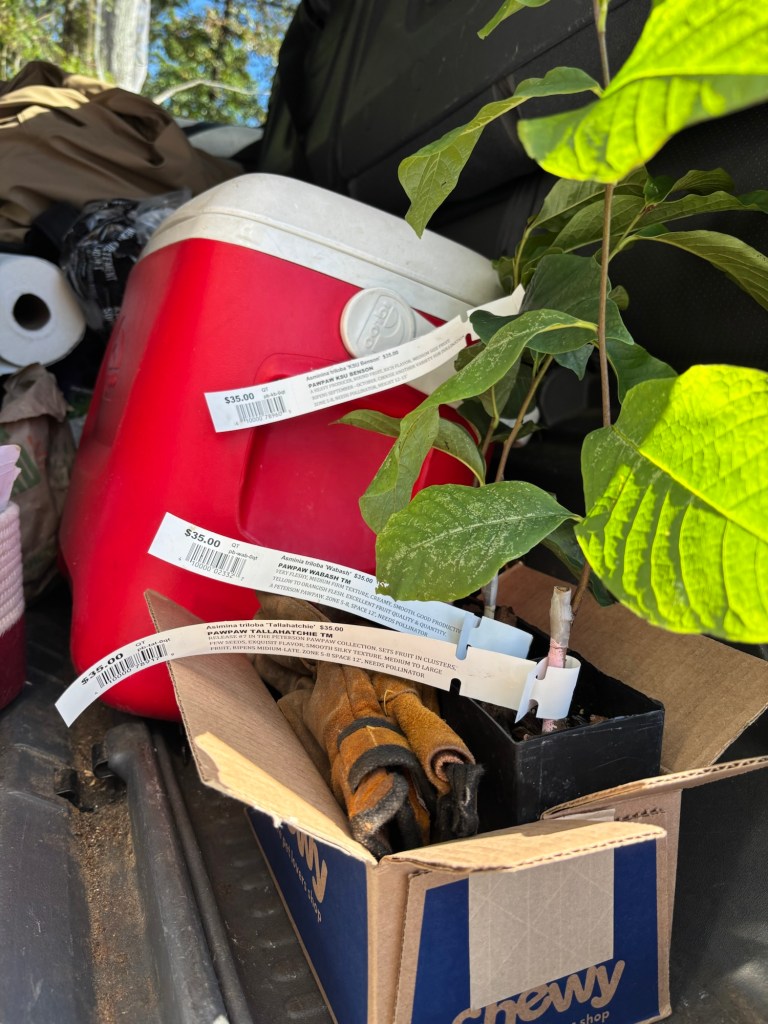
Then, we stopped by Edible Landscaping in Nelson County on the way to the farm Saturday and saw they had $35 cultivars in stock finally. They are small two year grafted trees. We were able to add Kentucky State University (KSU) Benson as well as KSU Atwood to our existing KSU Chappell. They are planted in a triangle and we hope they make beautiful fruit together. KSU has the only full time pawpaw research program in the world. They have done much to better understand pawpaw growth, genetics and orchard management practices. Each of these cultivars are known for resistance to disease, delicious tastes of creamy mango banana flavor as well as being fast growing with high yields. They are each welcome additions to the orchard.

We also added the Potomac, Tallahatchie and Wabash to our Neal Peterson Pawpaw collection. The only one we still need to find is Susquehanna. He has released seven superior cultivars well known and valued for taste and growth. He is known as Mahatma Pawpaw and is worth looking into if you’re interested.

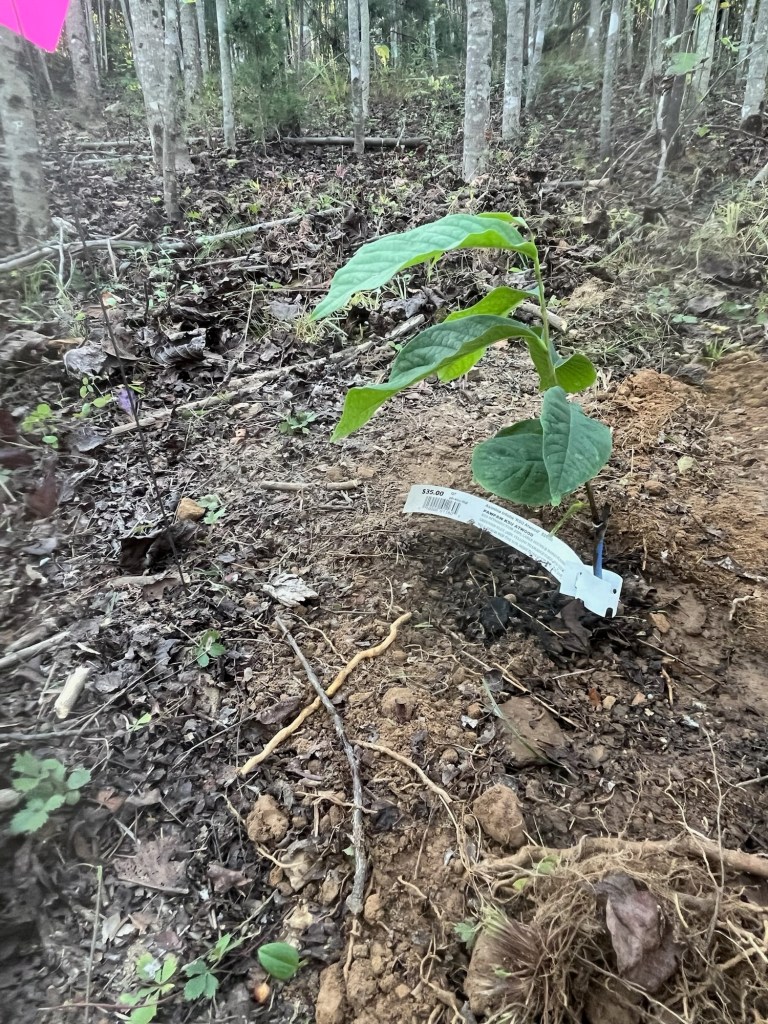
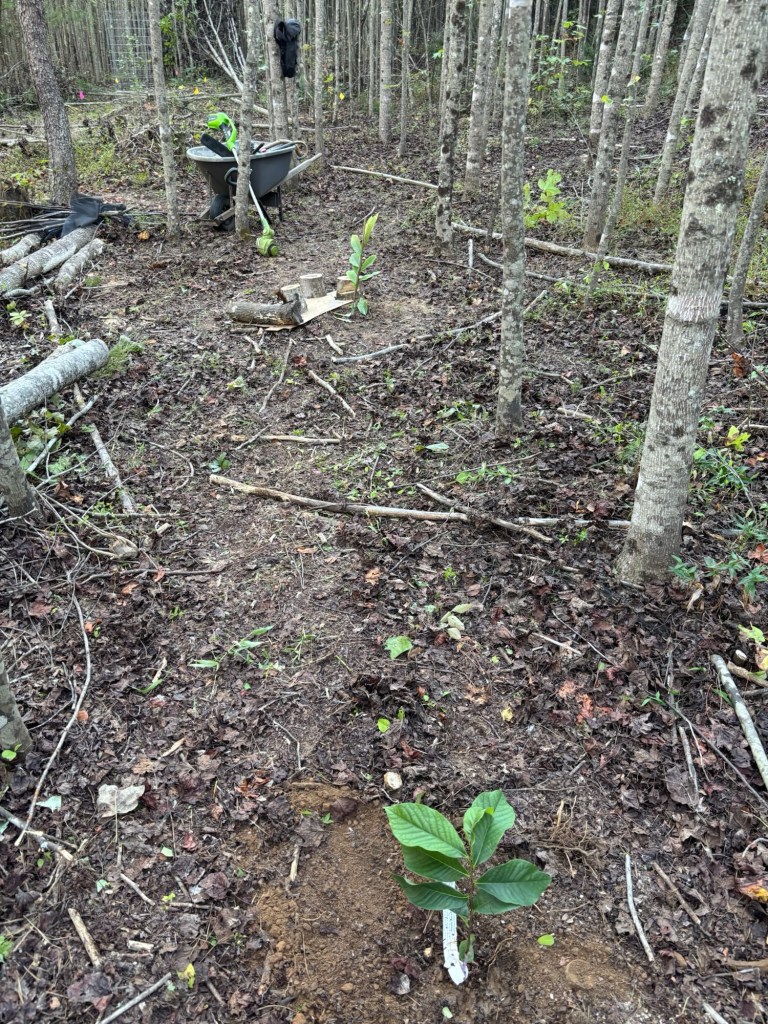
Wabash cultivar just planted in the orchard. Dr Pomper at KSU urged Neal Peterson to release this as Wabash since the shape is similar to a cannonball.

We also added NC 1 and Sunflower to our orchard this weekend. We are delighted. So far this year we planted 100 Asimina triloba trees at the farm and 8 at the house. We also ordered 50 more bare root seedlings from the Virginia Department of Forestry which we will get in February. We will place them in deep 12 inch tree pots to grow until spring when we will plant them at SAFF in the orchard. We are on our way to a Pawpaw paradise for sure.

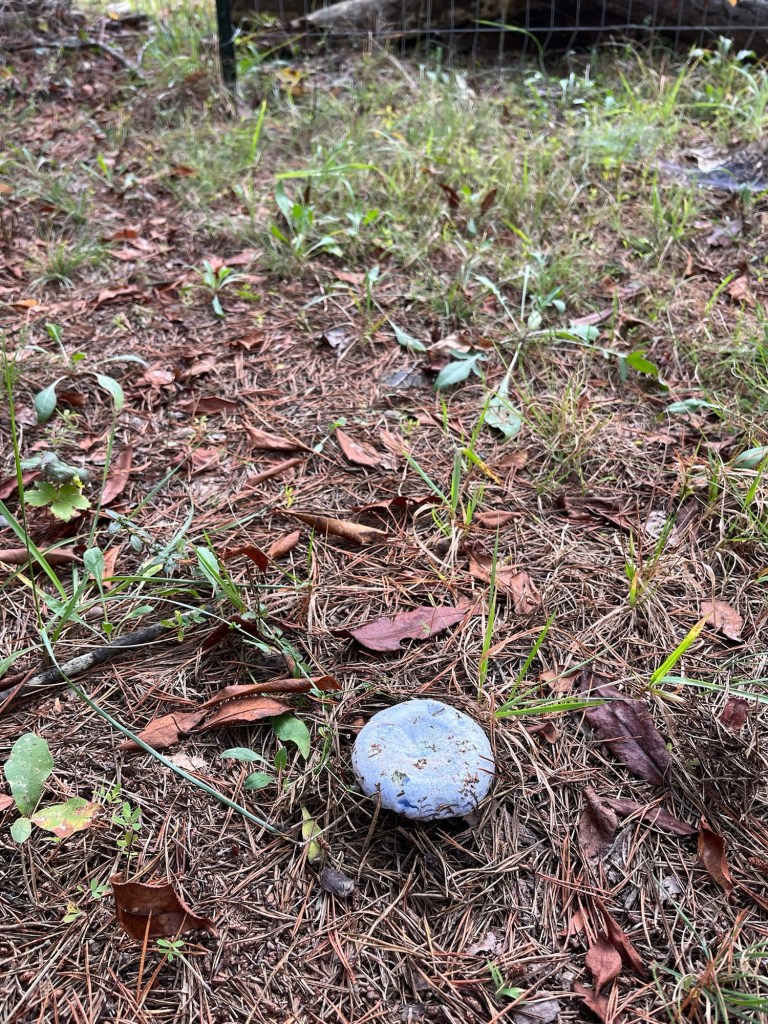
One Indigo Milkcap (Lactarius indigo) up top along the driveway yesterday.
Fields of giant cosmos witnessed along Plank Rd at Pippin Hill Farm and Vineyard at sunset last night as we drove home from SAFF.

Pawpaws Planted at SAFF

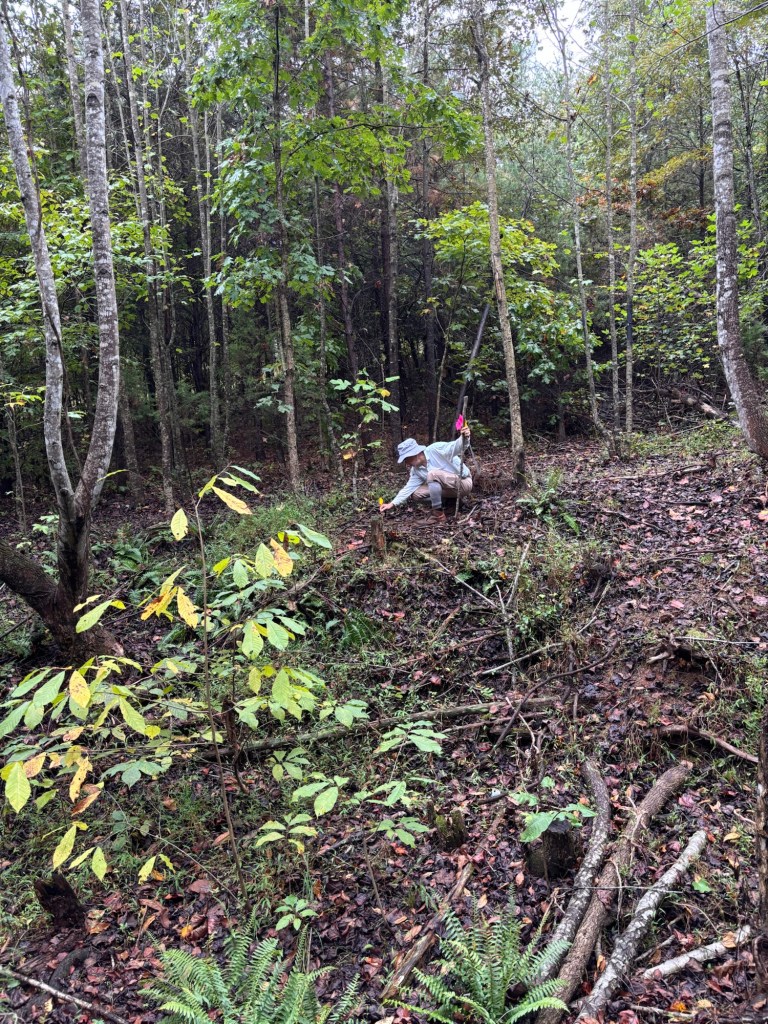
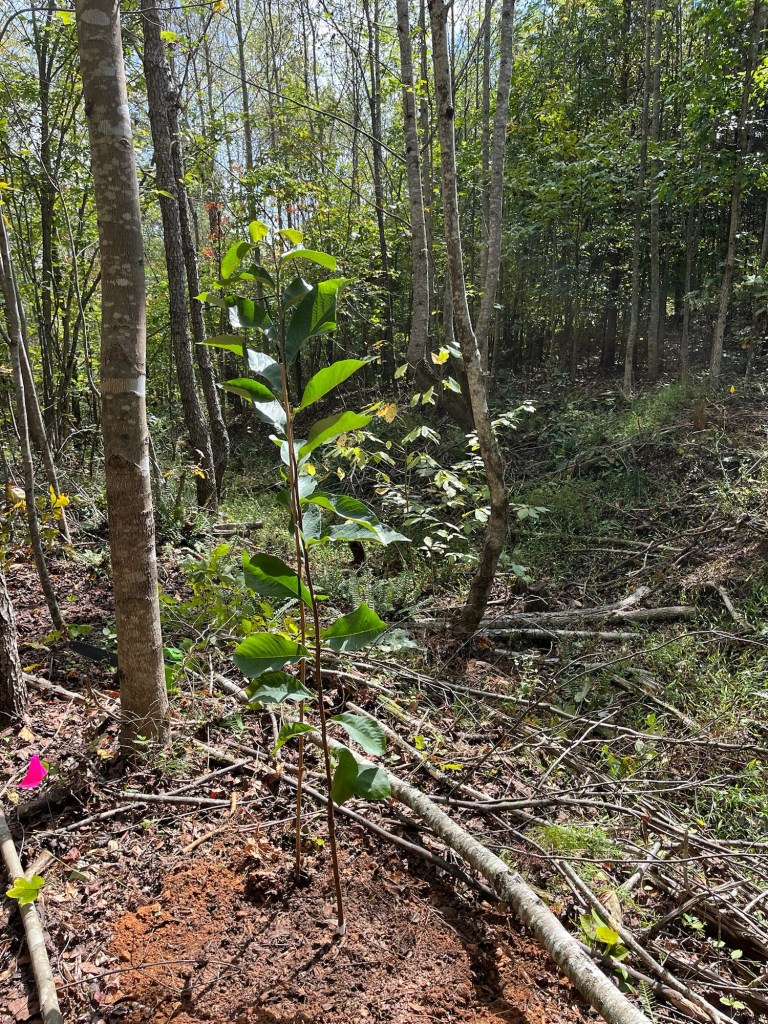
Asimina triloba: Chris placing a yellow flag on our native Rockfish River pawpaw seedling just planted on the south gully in Dan’s Folly alongside one small patch of St Andrews Forest Farm pawpaw natives which are below Chris in the gully with the yellowing leaves. They are some of the first trees to go dormant for winter. We think these may be clones. It’s a group of 6 with some good sun but no flowers or fruiting yet. We hope the new dna within these just planted seedlings will help wake them up.

We finished planting the seedling pawpaws with a full 100 in the ground so far this year! It was a big project. Besides our seedlings that we harvested from both our foraged fruit along our drive to the farm at Rockfish River and from Edible Landscaping’s cultivated pawpaws, we also planted a few of our own cultivars. We added Allegheny, Kentucky State University Chappell, Rappahanock and Mango to our existing Shenandoah that we planted last fall. We are waiting for our first white fleshed pawpaw seedling to arrive from Perry Pawpaws in Michigan. They said they’ll ship in October. It’s an Al Horn cultivar (taste has notes of pineapple and coconut) and we will place it in the Pawpaw Orchard at the bottom of North Trail. They also said it should be about 2 feet tall which is pretty big for pawpaws to not be in the ground yet. The tap root on the pawpaws like to go deep quickly. I can’t wait to save it from its pot and get it planted.

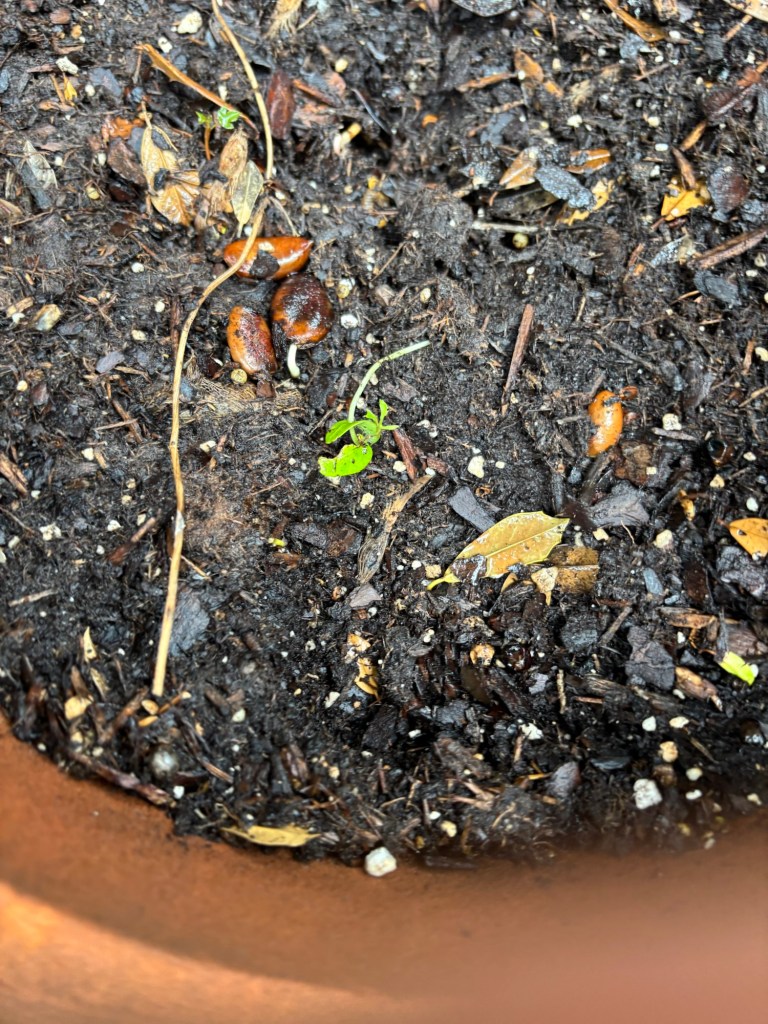
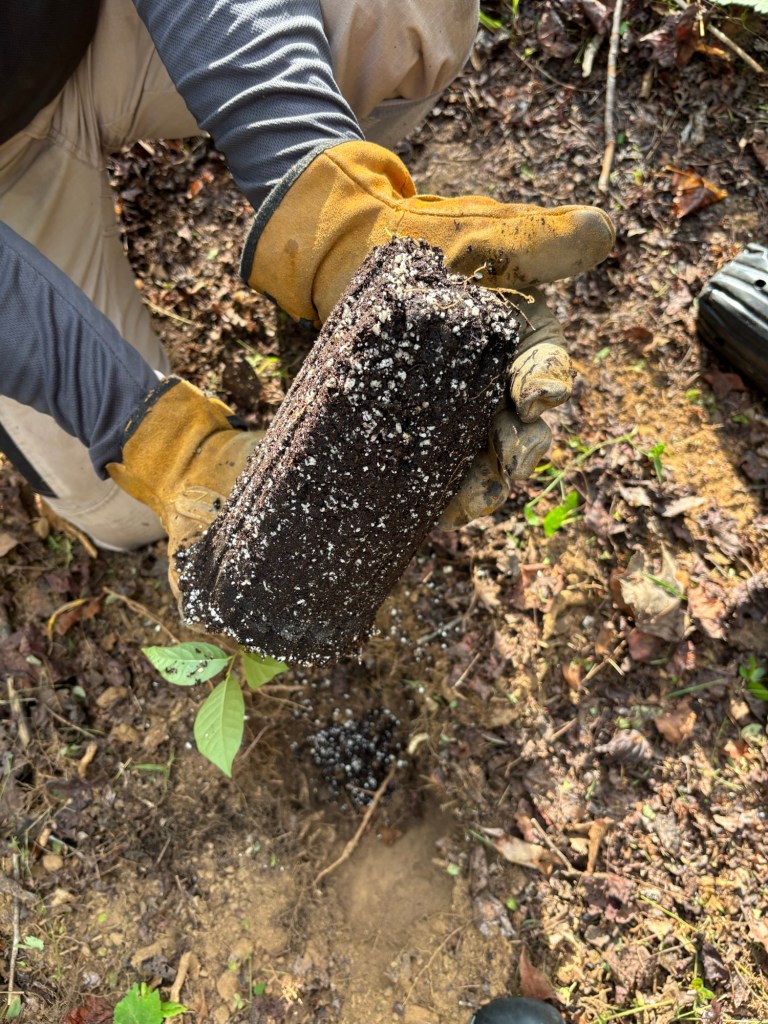
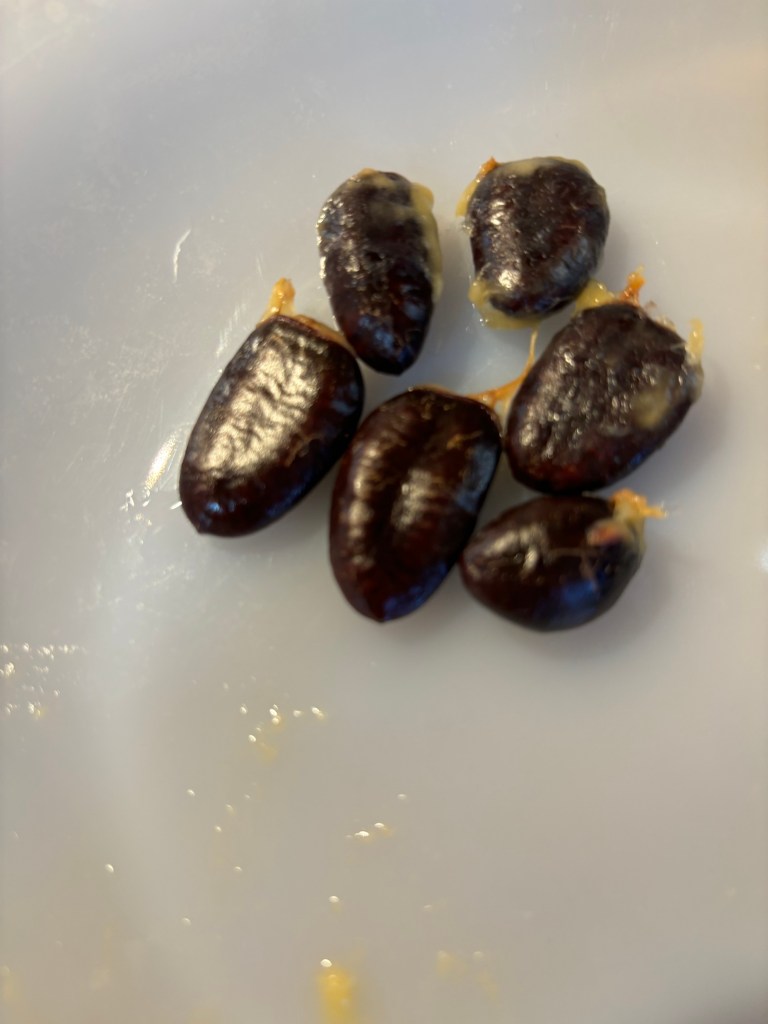
These brown seeds are the pawpaw seeds that you see sprouting the tiny green leaves. The white you see is the root. By the time you see anything on top, that root has shot 8 or so inches down. They like a lot of room.
We put our seedlings in 12 inch deep tree pots to accommodate this long taproot. Some of our seedlings had roots growing from the bottom of the pot when we planted them at St Andrews Forest Farm after just a few months since the seed sprouted in June and planted in September—so just 3 months!
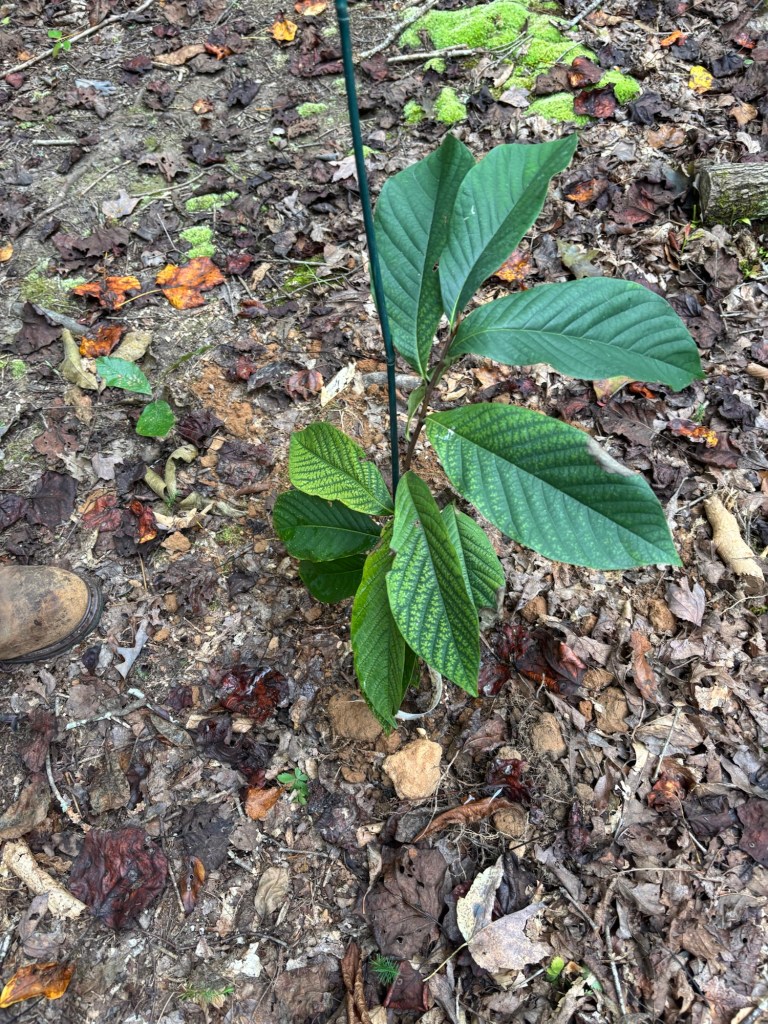
Asimina triloba: Rappahanock pawpaw cultivar planted yesterday at Fern Trail near the south gully. We have been on the lookout for more of Neal Peterson’s pawpaw cultivars named after Native American Rivers. This Rappahanock is described as sweet, refreshing with a clear simple flavor and creamy banana custard consistency with notes of mango or melon. It joins the Shenandoah and Allegheny in the SAFF pawpaw orchard. We hope to add Tallahatchie and Susquehanna to them within the next few years. As well as Potomac and Wabash cultivars when we find them. Besides adding new dna, these cultivars will be useful once we have the seedlings producing pawpaws and see which ones aren’t delicious. We will make cuttings from the cultivars and graft them to the native seedlings and have productive harvests with a proven known variety. We will wait 7 years for the seedlings to produce. The cultivars usually produce within 4 years.
Asimina triloba: Allegheny cultivar happily planted on the Pawpaw Peninsula just across from the large St Andrews Forest Farm native wild patch with hundreds of pawpaws. It could be as many as 400 small trees down there and they may all be clones. We’ve been giving them light and feeding them with minimal flowering and zero fruit.
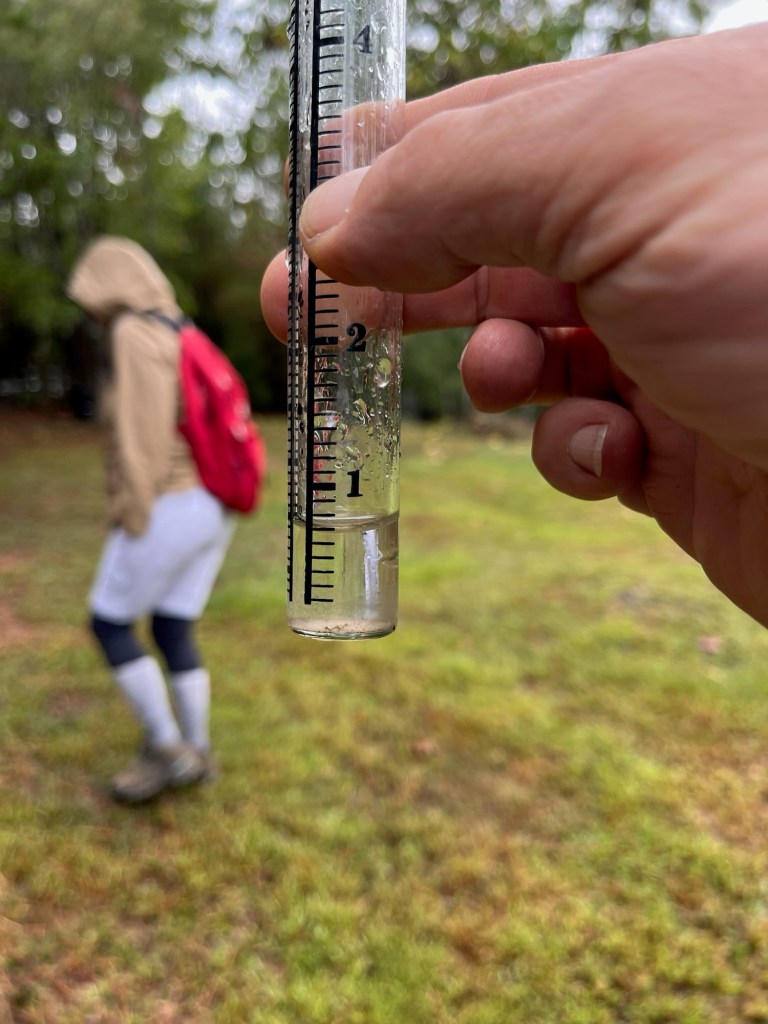
We got some more rain last week which was much needed and appreciated! The pawpaws are thirsty trees, albeit usually drought resistant with their long taproot. We hope the increased rain will bring on the mushrooms.
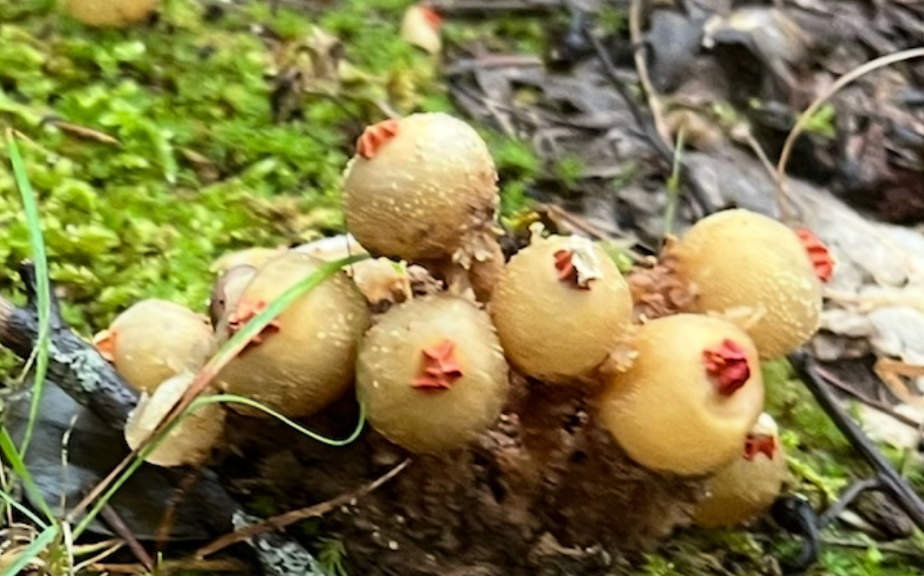
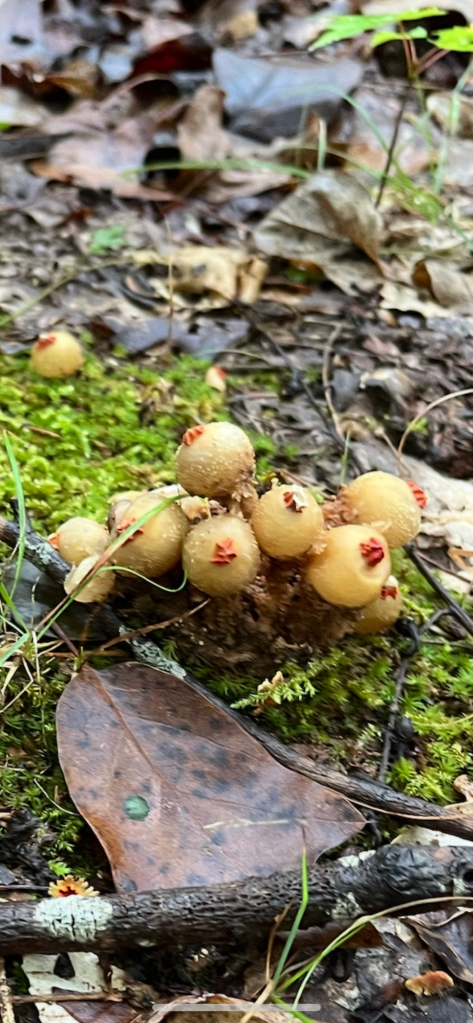
Calestoma ravenelii, stalked puffballs, found all over SAFF. We observed it growing out of moss yesterday. It has a mycorrhizal relationship with oaks and other hardwood trees. It grows in rich moist but well drained deciduous forests. It can grow alone but we see it mainly in groups.

August 24, 2024 – A Pawpaw Quest to Edible Landscaping in Nelson County Virginia

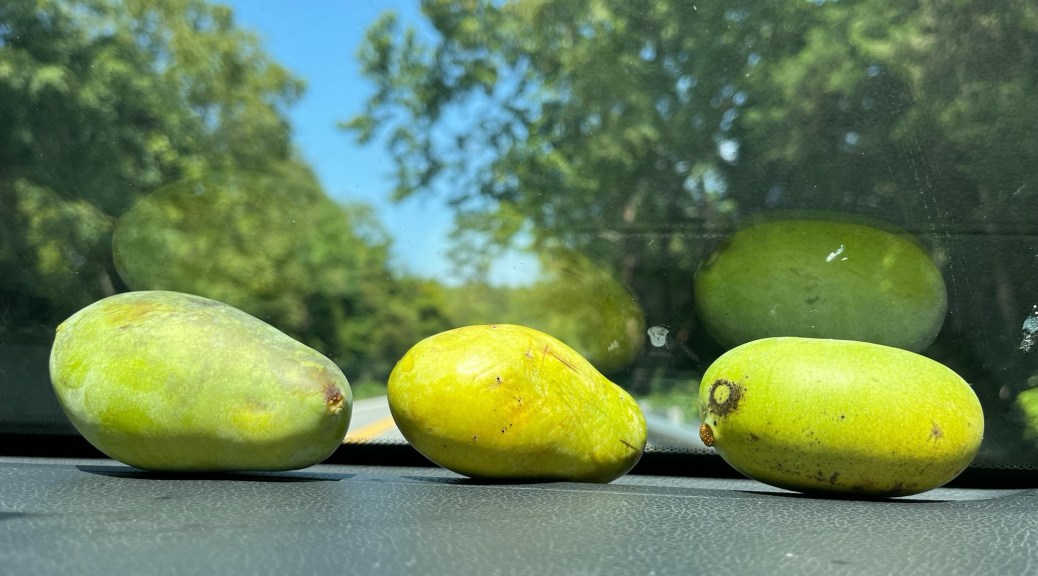
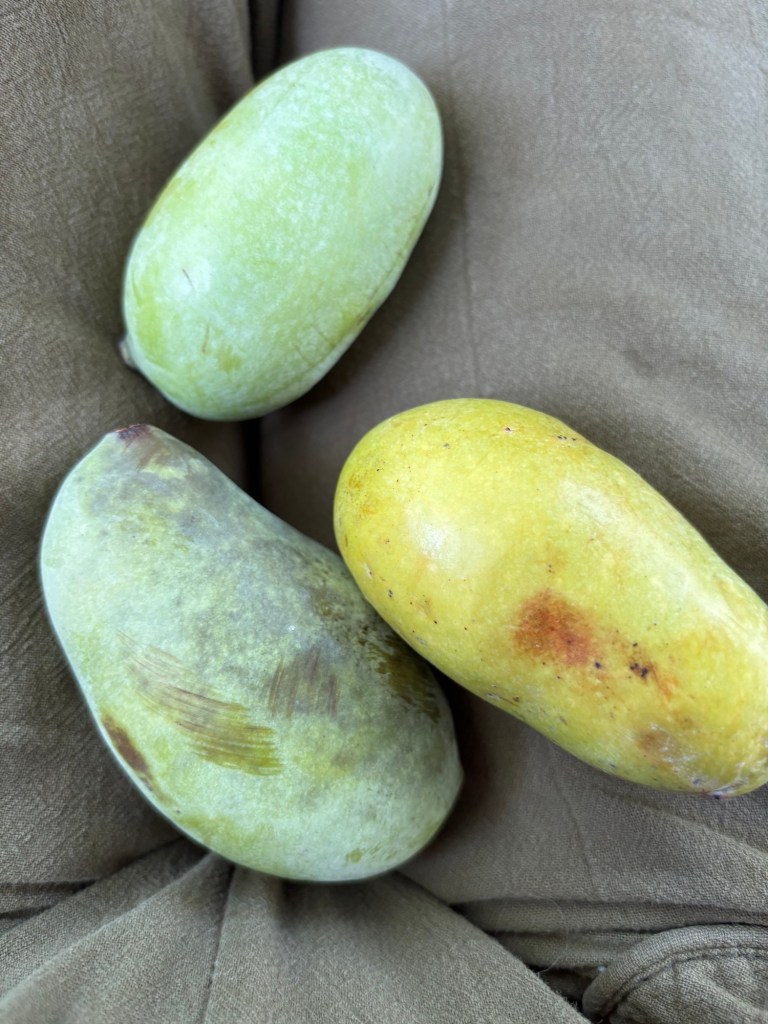
We made a trip to Nelson County to Edible Landscaping to see what pawpaw trees they had to sell. We want to diversify the genetic material of our pawpaw patch to encourage fruiting. We were so excited to see they had ripe pawpaws ready to eat as well.

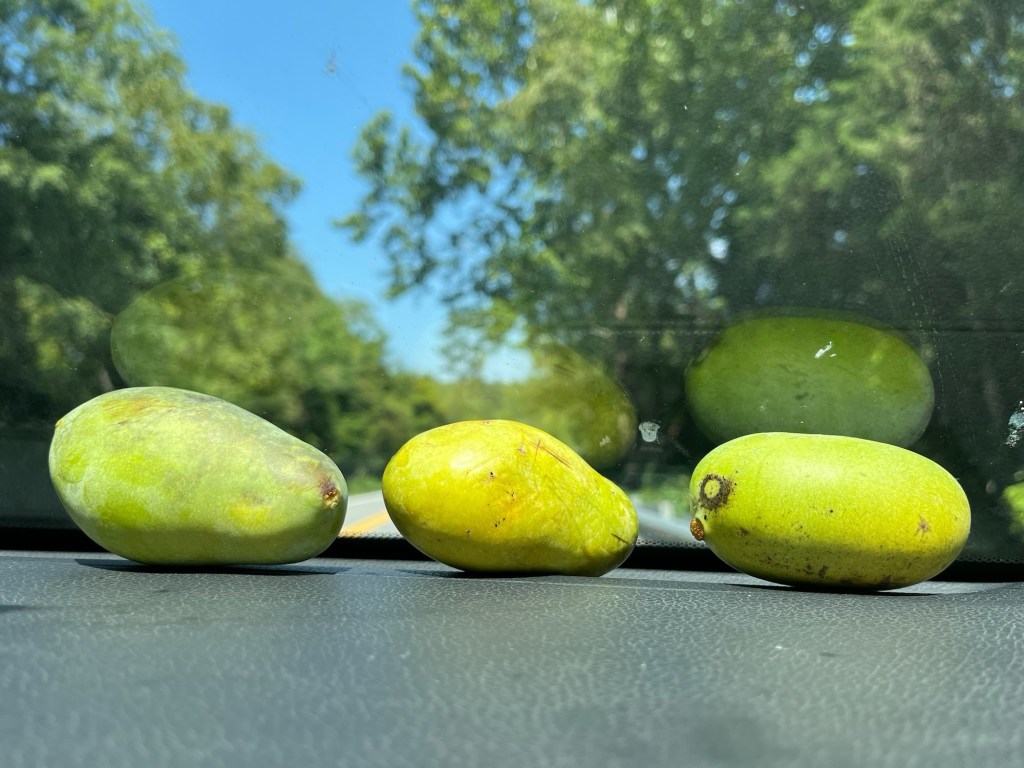
Ripe pawpaws.
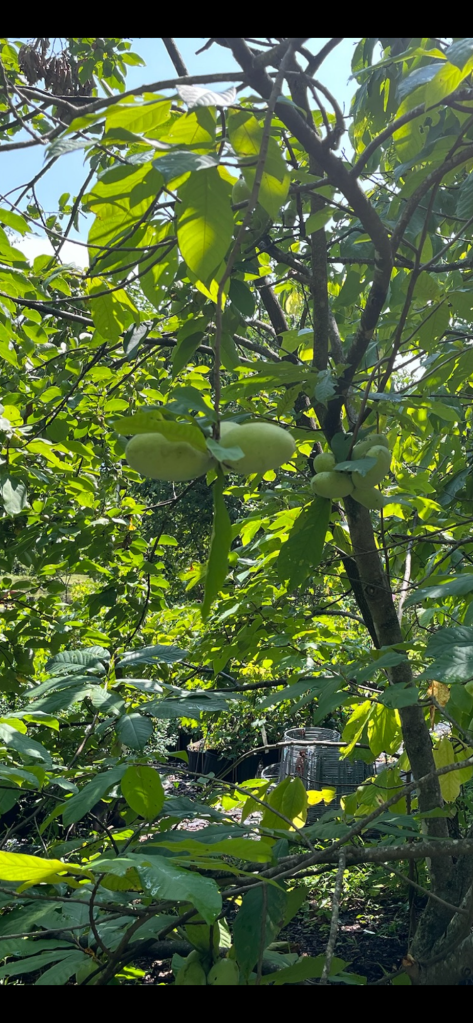
Large pawpaw tree with fruit all over in the full sun. A black walnut tree was about 20 feet away.
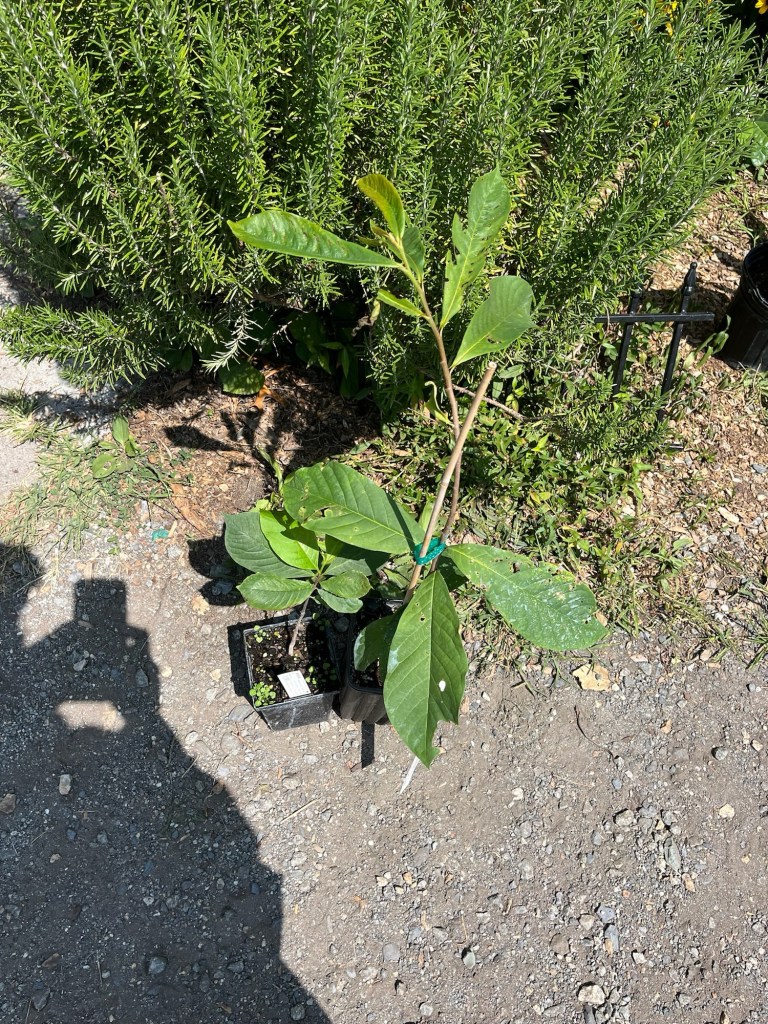
We bought a year old seedling and a two year old Shenandoah cultivar.
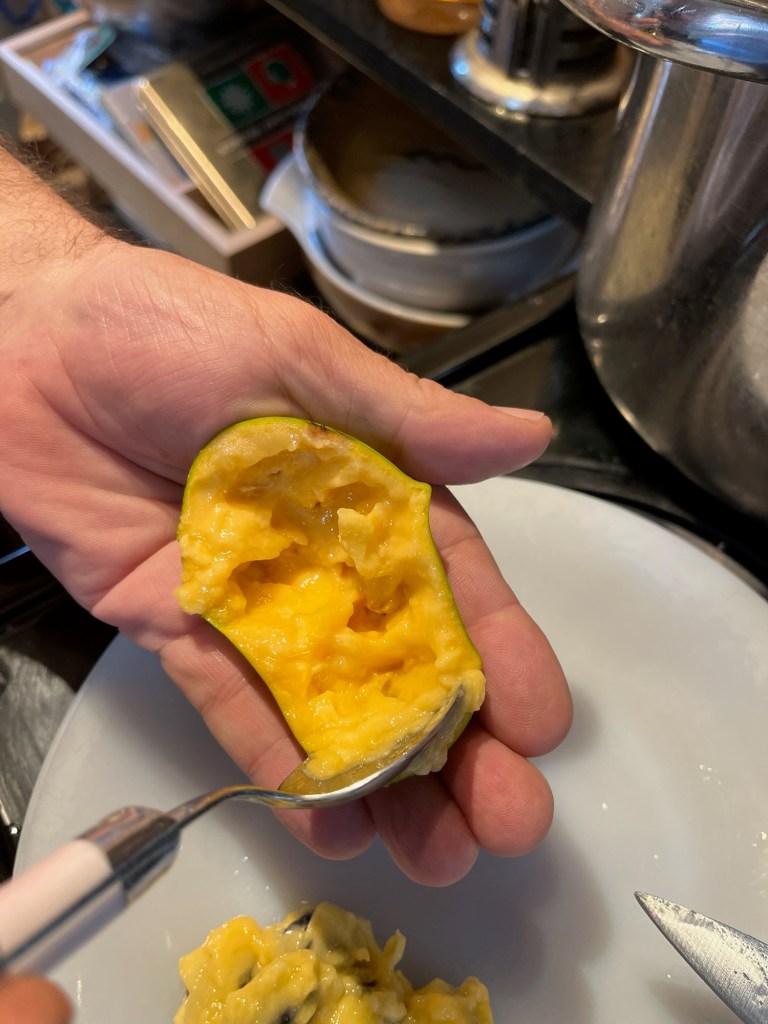
Delicious pawpaw flesh tastes like creamy mango banana guava with a pineapple nose. Smells like starburst candy when ripe.
The seeds and the skin cannot be eaten.
We’ve planted 13 new seedlings all together with the seeds. 😃