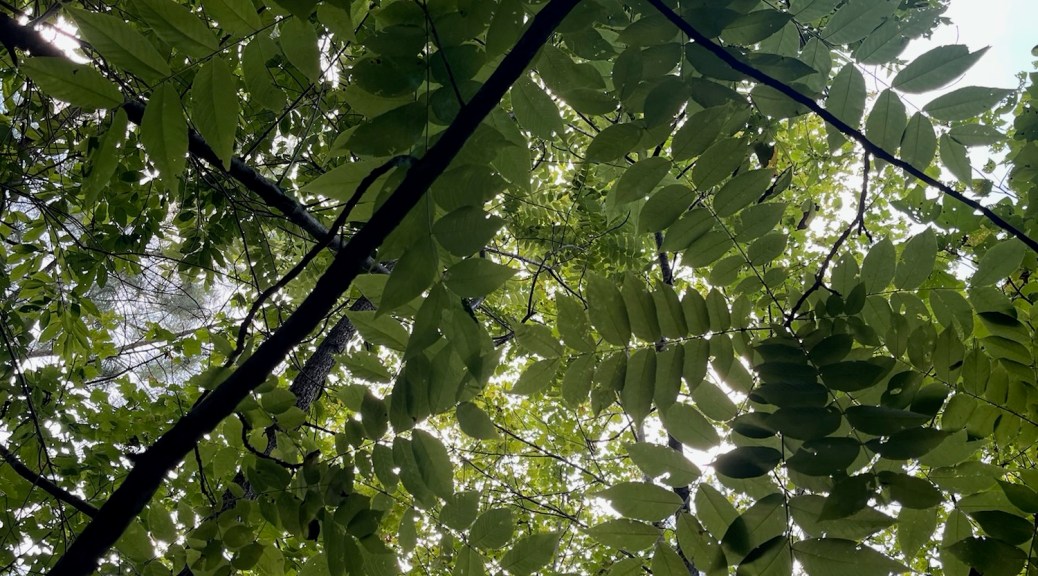
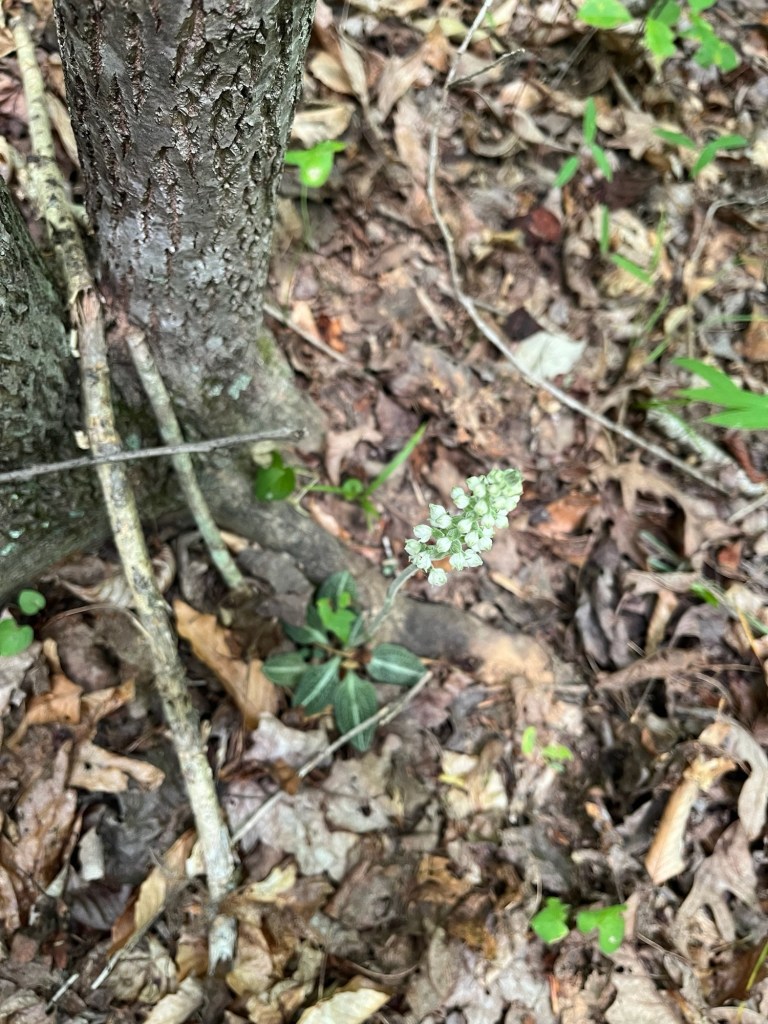
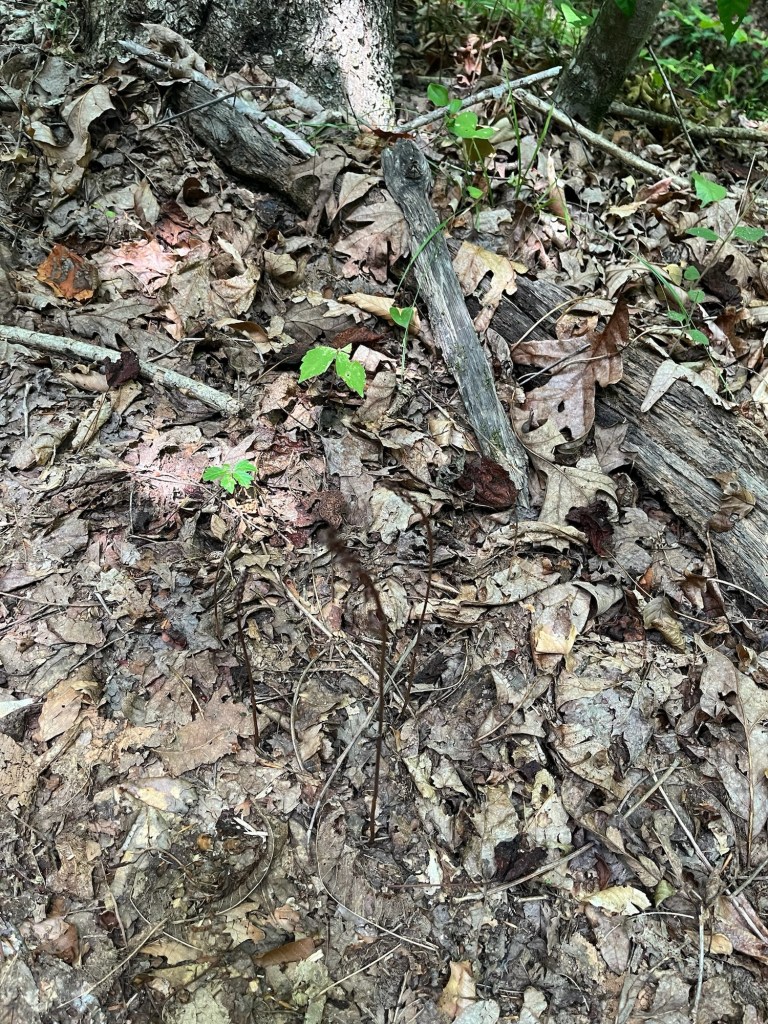
It’s been in the nineties, and even though the air feels plenty humid, the ground is baked, cracked and dry. It hasn’t rained enough in far too long with these high temperatures. There have been heat advisories every day this week. It’s crunchy walking underfoot everywhere but the bottom by the waterway. The clearings are mostly brown. The bottom of the slope has a slight bit of water trickling through the stream. We were glad to see that.
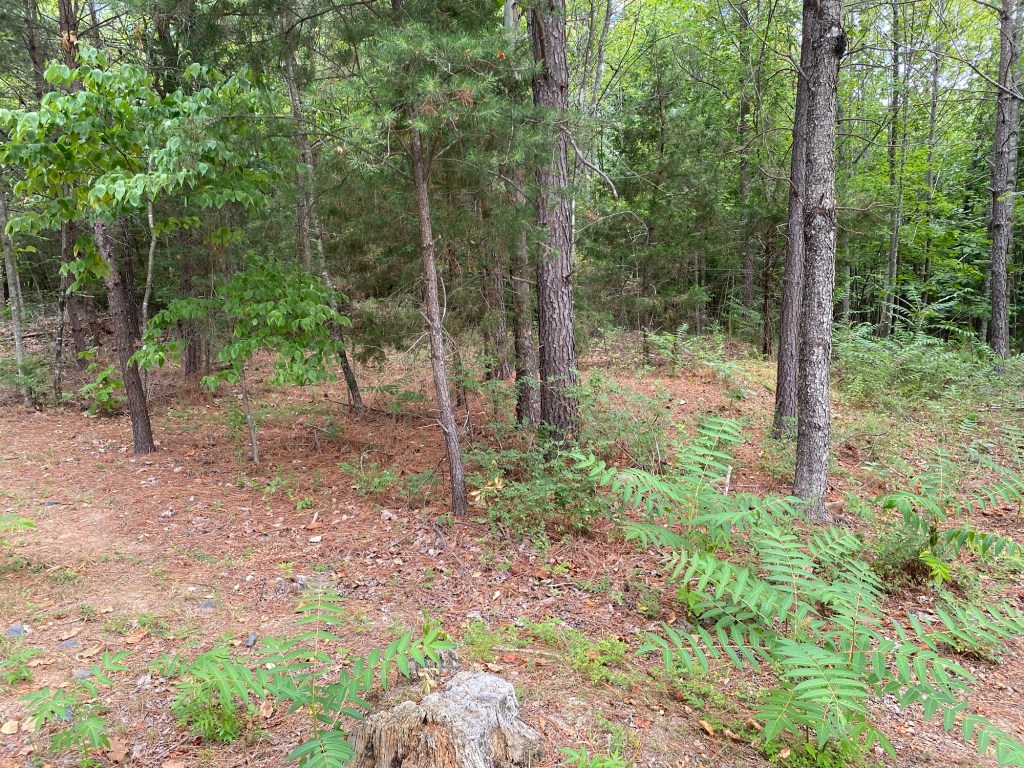
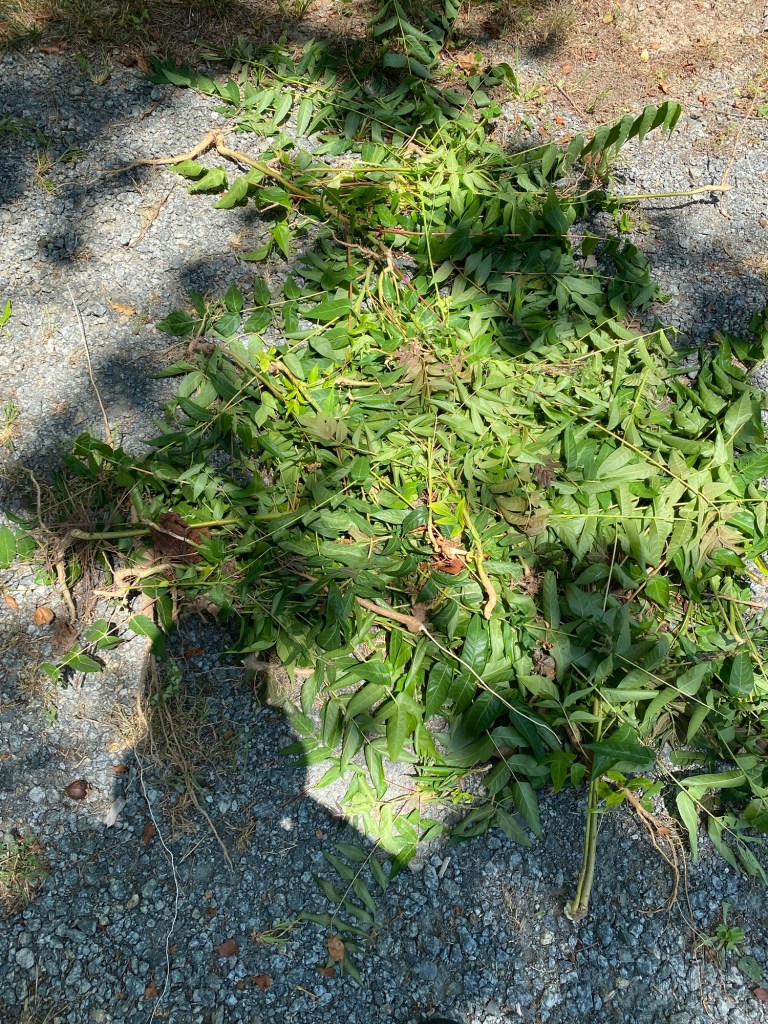
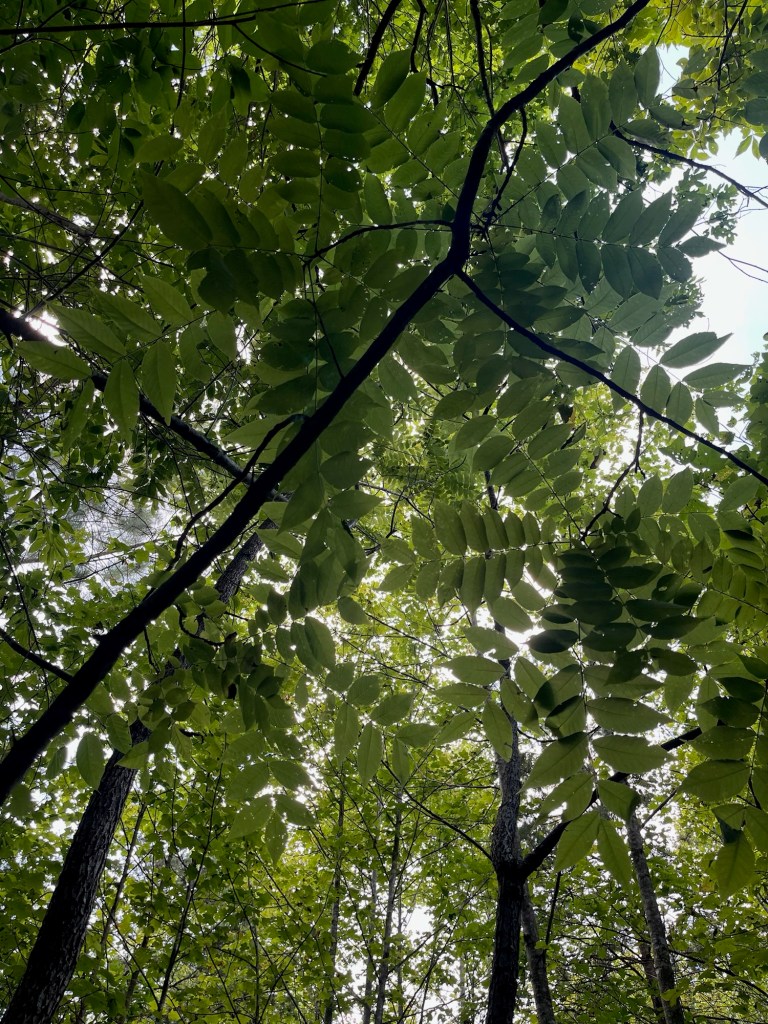
We’ve been battling an invasive tree called Ailanthus or tree of Heaven. We found them last summer in three different spots all up top near the main clearing and by our neighbors to the north. Another name for Ailanthus is Chinese sumac. Differentiation between Ailanthus and our native shining sumac, Rhus copallinum, was a challenge initially with the smaller specimen. However, now we can see the difference between them easily with our practice watching over our forest floor.
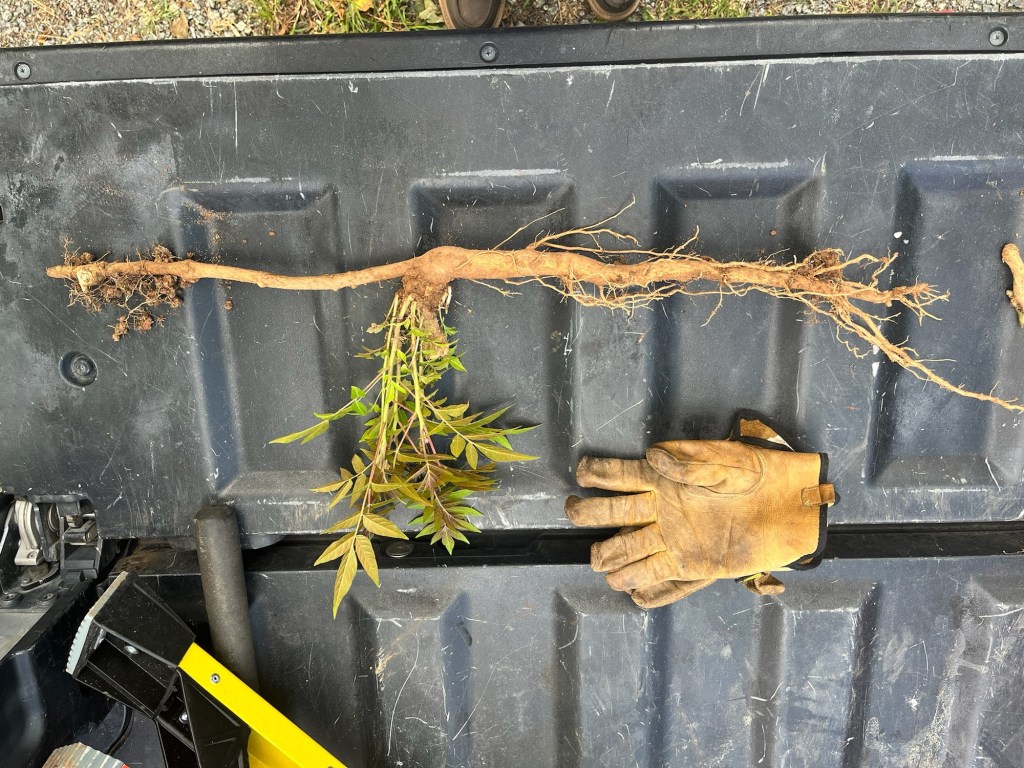
Because it is so tenacious by producing an overly abundant amount of seeds, crowding out native species with dense thickets and secreting a chemical into the soil that is toxic to other plants, there are best practices to ridding these trees from your land. It involves a hack and squirt method in the fall when the tree is sending the most nutrients to the root. We did this to all 4 of the larger trees we couldn’t pull out by hand. This year the trees sent up hundreds of root suckers so we are waiting for a good soaking rain to soften the ground and then we can pull them out. We will continue to do this as they grow. Whatever is still alive in the fall, we will hack and squirt again.
https://extension.umd.edu/resource/invasives-your-woodland-tree-heaven-ailanthus/
 St Andrews Forest Farm