On April 13th 2023, Chris wanted to go to Buckingham County to look at a property with forest covering most of the 13 + acres. We drove to Afton, over Route 29 and into Buckingham County going deeper and further into beautiful and old woods. Magical seeming forests with giant trees arching over the roadways creating a canopy of green. Little moss covered hamlets of yesteryear with giant boulders covered in greenness and ferns sitting in a creek bed. Gorgeous vineyards and farms. We also saw forests recently violently cleared by loggers. Jagged and torn and pillaged. The roadways beaten and abused by giant trucks full of timber. We saw what looked as though the forests had regrown a year or two after being cut, and also stands that appeared to be five to 10 years on. We began to see ages and stages of development. It was an incredible journey for us because of its unique beauty as well as other circumstances. We both really needed to be in the woods again. We had been away too long. When we arrived and saw the pines and poplars, we both immediately fell in love with our forest.
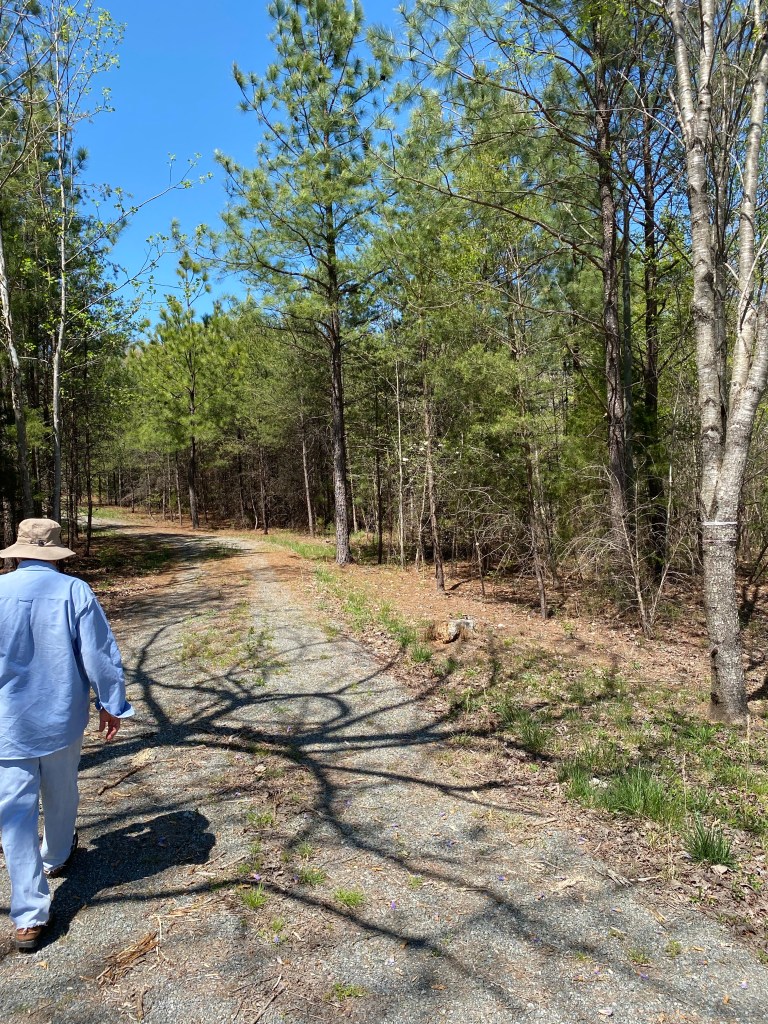
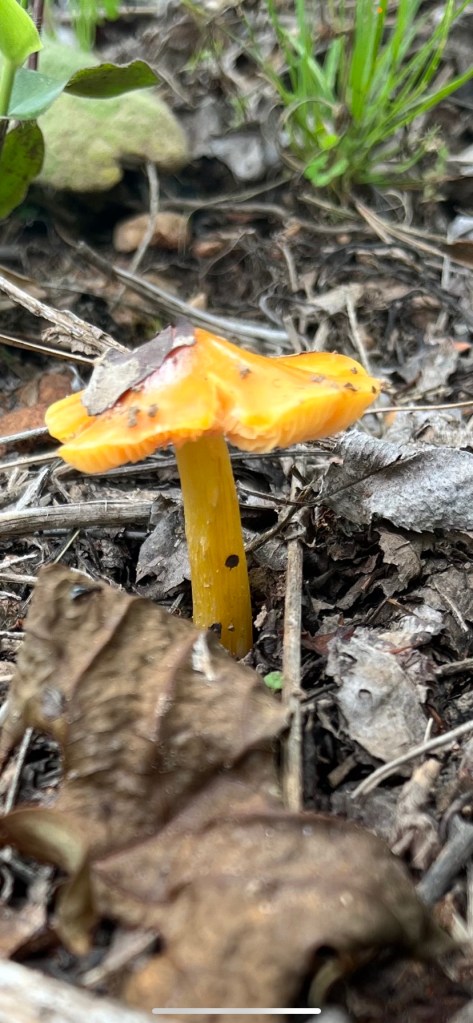
Our guess was that it had been cleared about 20 years ago. Water had made paths through the woods. Right away, we began to find interesting mushrooms with our exploration mostly limited to the top of the hillside and the edges of the clearing.
As summer came, we began to realize we had a sizable tick population to deal with and thought we would be kept from our explorations of the woods until winter. Glad that was not the case. As it stands, there are still several areas that are infested with nymph ticks as evidenced by when we walk into that area we immediately see between two and twelve on our shoes and socks.
Right now, we are aware that the ticks appear to like moisture. The drier it is, the safer we are. We always wear our permethrin coated shoes and socks. We wear light colors so we can see them more easily. We watch out for each other’s backs. We want to stay safe. Chris has had several bites this summer. He has removed the ticks immediately and cleaned the area well. So far, no symptoms or side effects. When we camp, we will coat our tent and appropriate supplies with permethrin.
The other note I have about ticks is that it is tall grasses and weeds that they are able to attach to our socks and shoes and then climb up to find skin. Stay out of tall weeds and grasses. If you must walk in, look at the tippy tops and you will see the ticks with their legs out. I’d only do this with a mower or weed whacker in front of me. Anyway, they do not fall from trees. They do not fly. They are opportunistic. (However, they can fling themselves out onto you using static electricity. Look it up. Here https://www.science.org/content/article/watch-ticks-fly-through-air-power-static-electricity or on YouTube). This was all helpful for me to learn in order to determine best practices to avoid them.
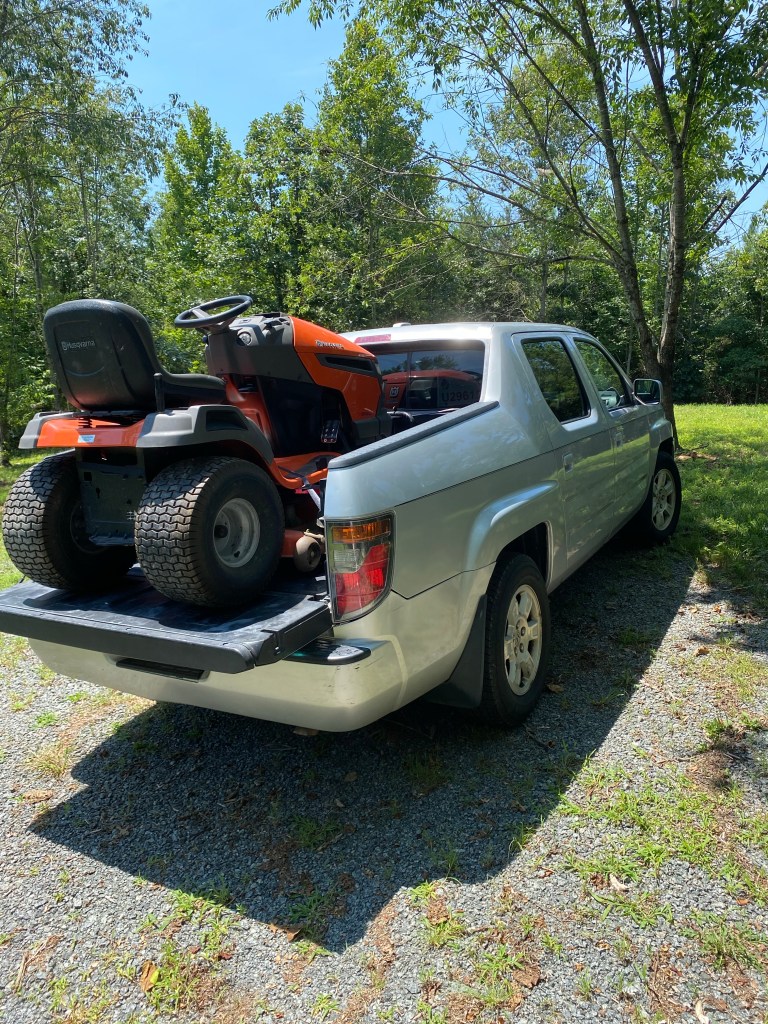
Keeping our clearings mowed and weed whacking our paths has been extraordinarily effective. It has become easier now that we have the truck and tractor. Lastly, I’ll add that ticks dislike hot and dry. The clothes dryer kills them after 10-15 minutes. This was also helpful for us to know.
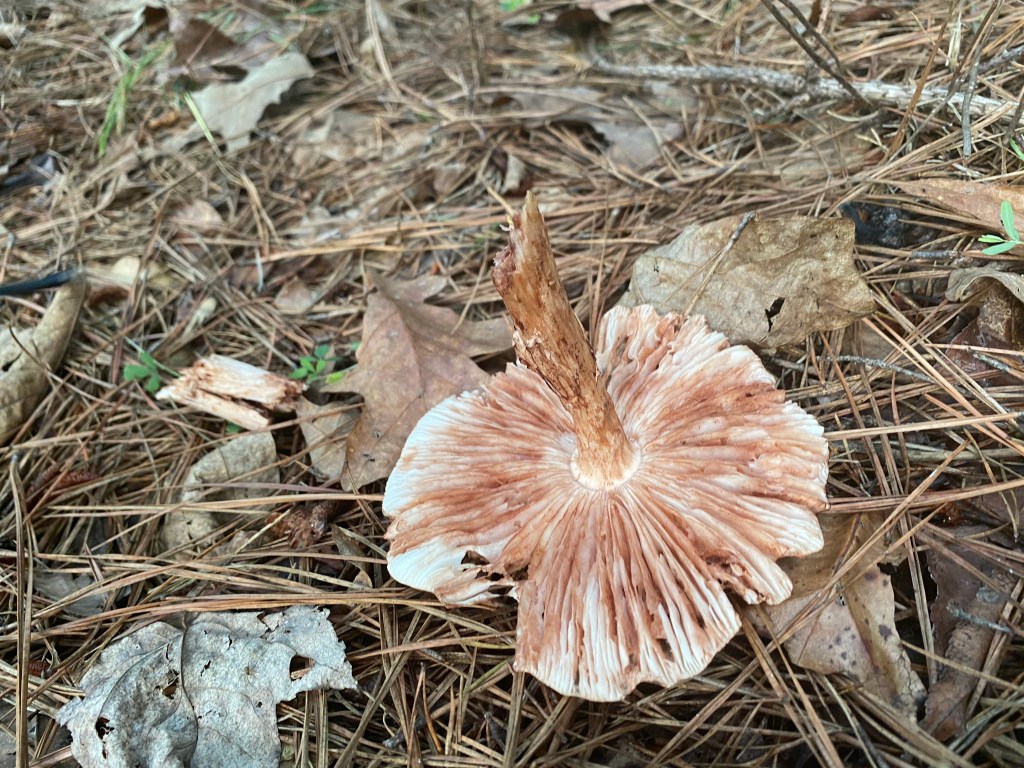
One of the best things so far has been looking forward to rain out in Buckingham County. We get very excited and wait as long as we can afterwards to go and see what new mushrooms we can find. We have been surprised and delighted every time with new finds. Mushrooms love moisture. So far SAFF has been moist! We’ve been astonished by the diversity of life and can’t wait to see more.
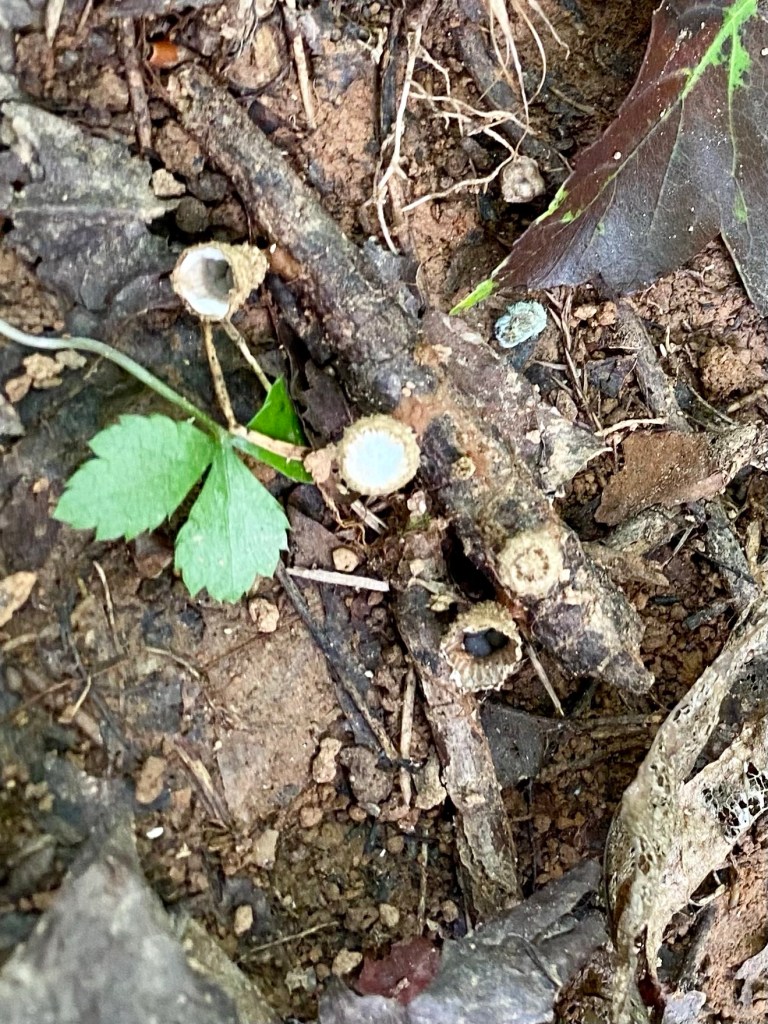
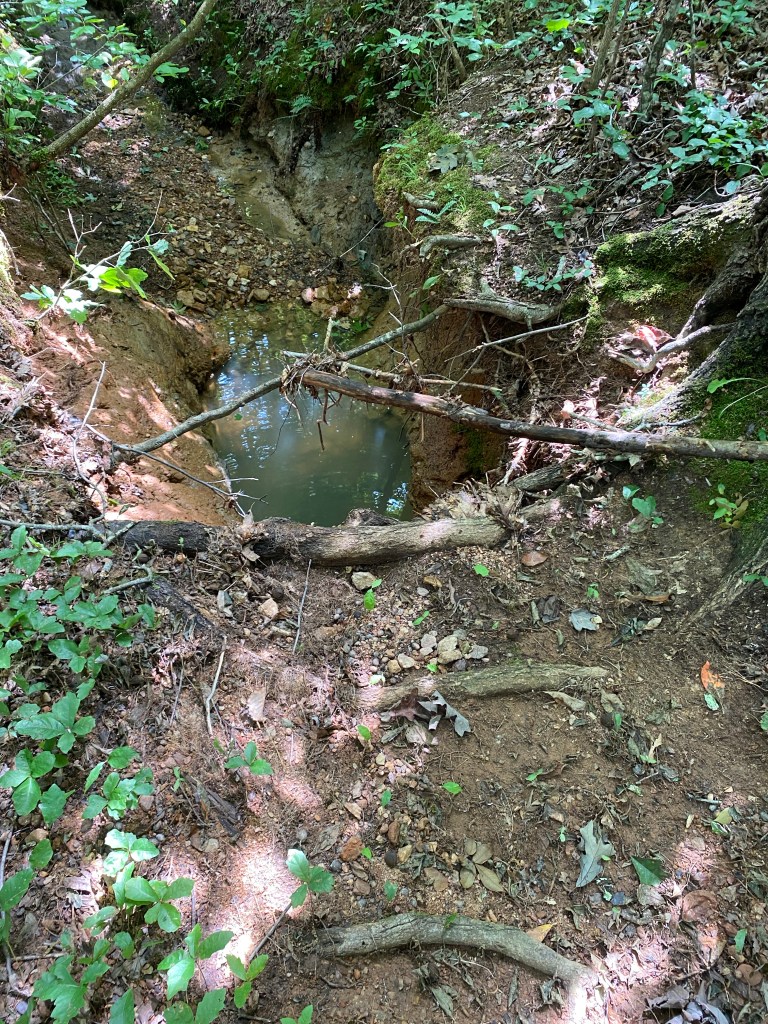
We went back and explored the bottom left corner of the farm and found another property marker. The earth is exposed and red back there, and has recently been washed through by a cleansing rain. In some parts it is easy to see the water moved with force and power. 48 hours after the last rain, we saw pools of water in places as well as found a deep pool with water dripping into it from an underground source.
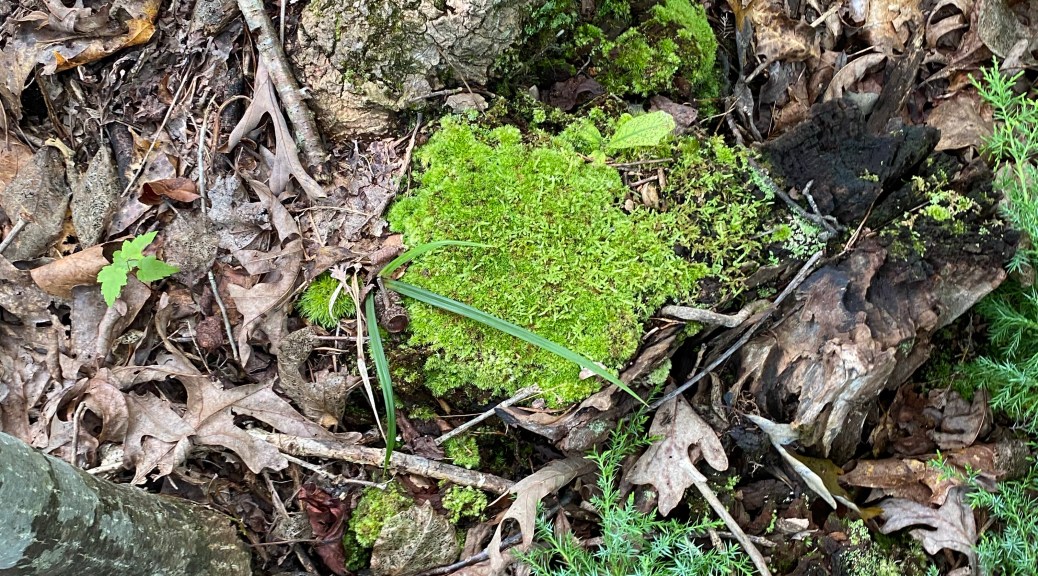
We found mushrooms and plants growing all along the edges of the waterway. In this area, mountain laurel grows. Ferns and mosses were also present. Tiny mushroom pins that need another rain to grow and mature were everywhere when we stopped and looked around carefully, we saw multiple fruiting bodies.
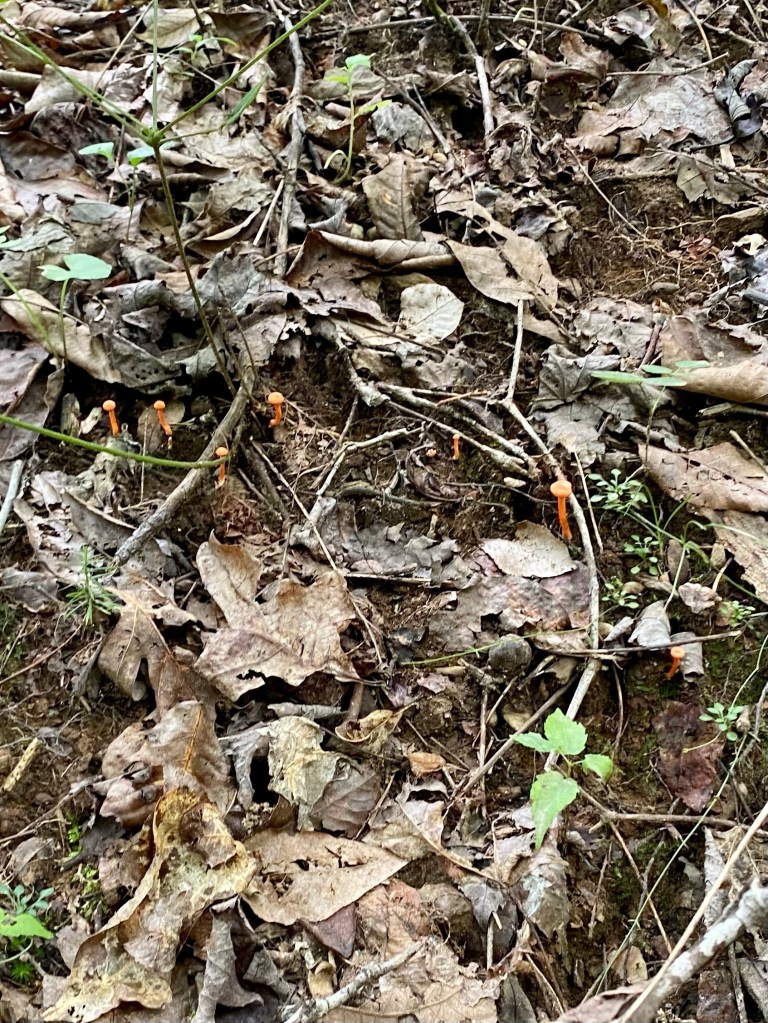
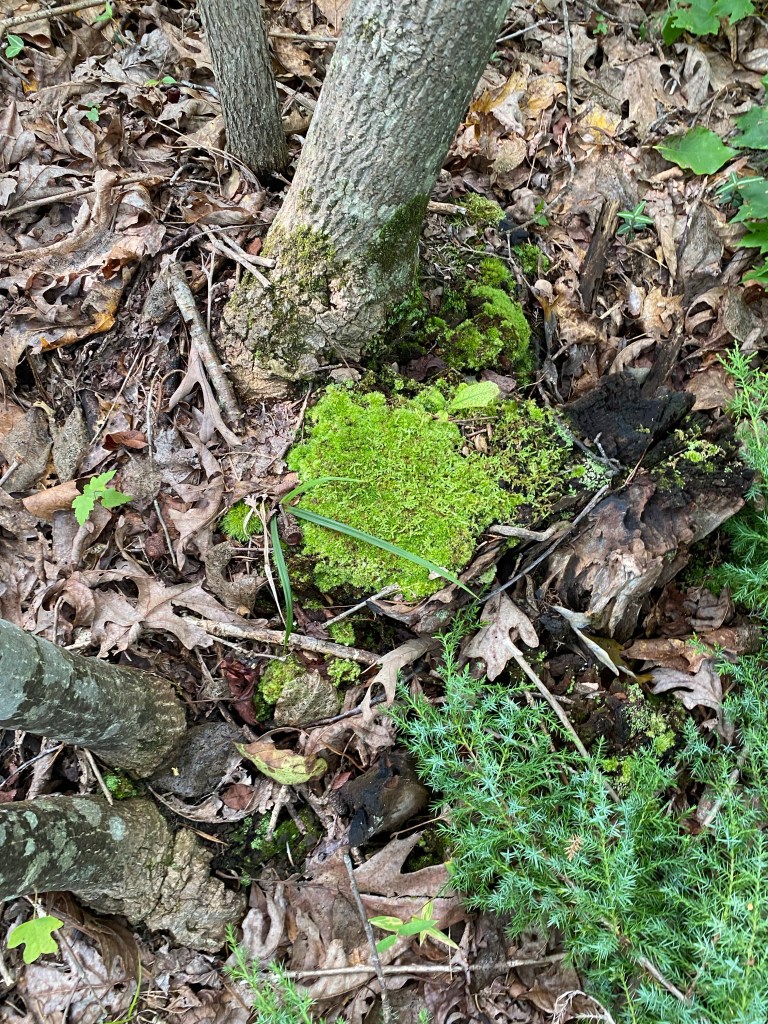
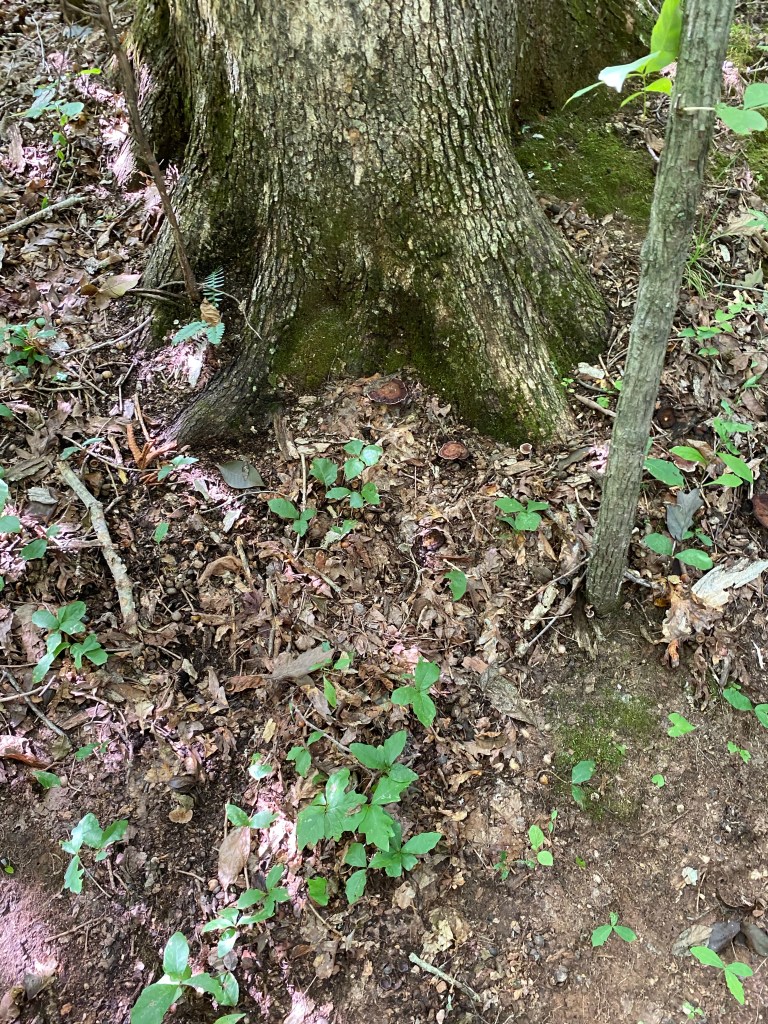
We made our way towards the midline of property along the waterway and stopped when it deepened significantly. We didn’t notice any animal tracks or scat along our way. Yesterday, we saw a rabbit along what we are calling Chanterelle Trail. It was gray and hopped away from us quickly as we were making noise culling numerous tulip poplar and other small, undeveloped trees. We heard the woodpecker off in the distance today but it didn’t come and interact with us directly like yesterday.
Then, we culled more trees as well as trail blazed midway down the hill and made about a third of the way to the north trail. It was dense with sunlight starved trees. We began laying the trees along the outer edges of the trail to build up a berm to help with water flow and soil retention on the slope.
 St Andrews Forest Farm