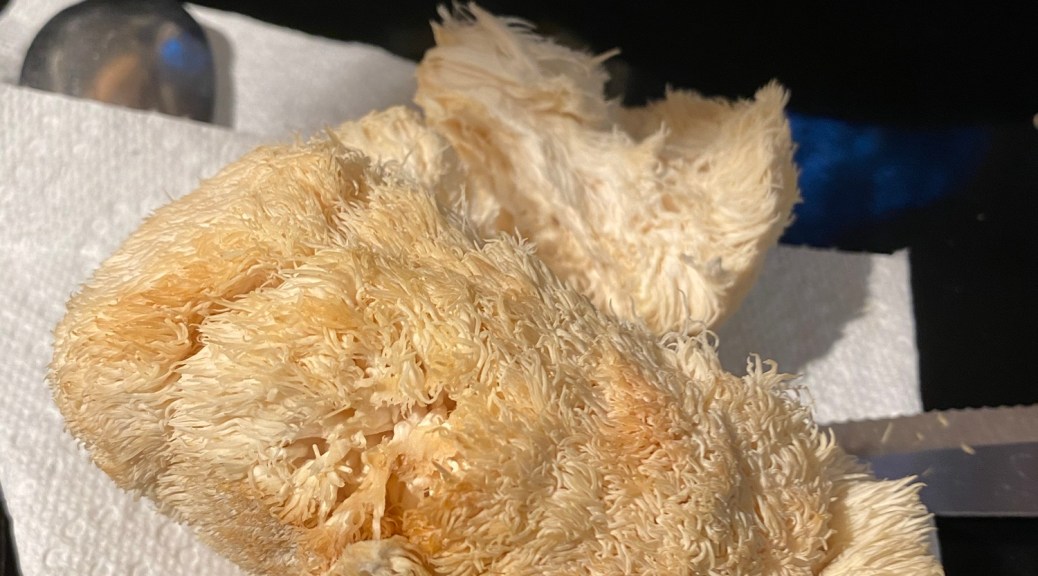
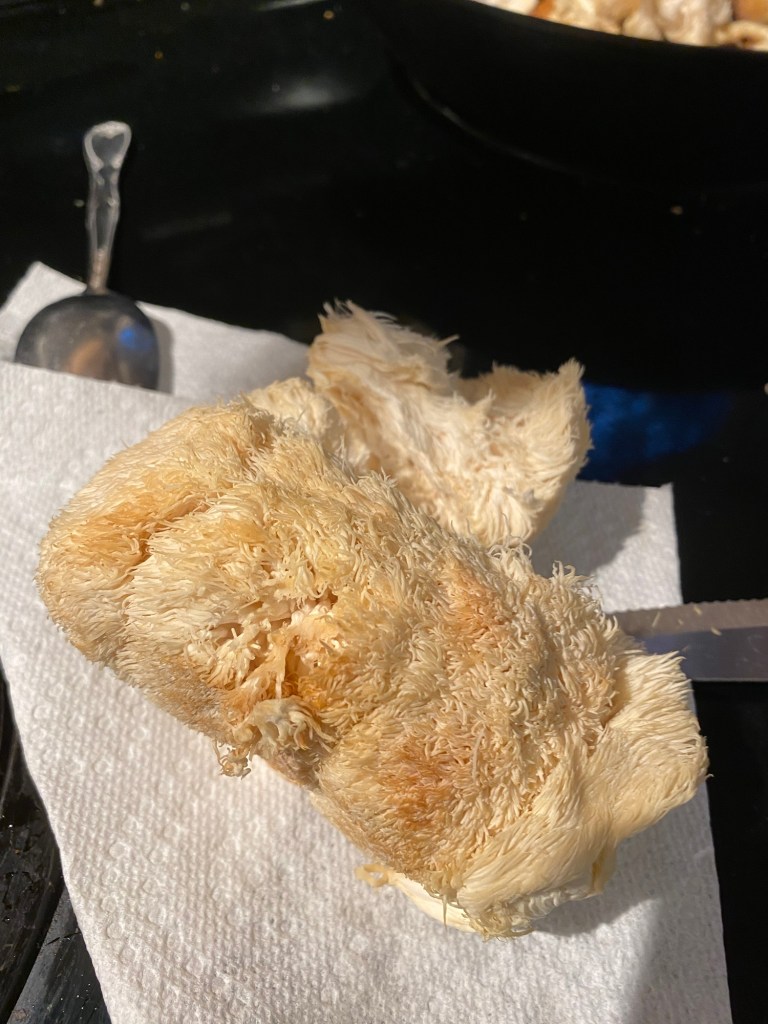
The very first Lion’s Mane mushroom we grew at home from a kit.
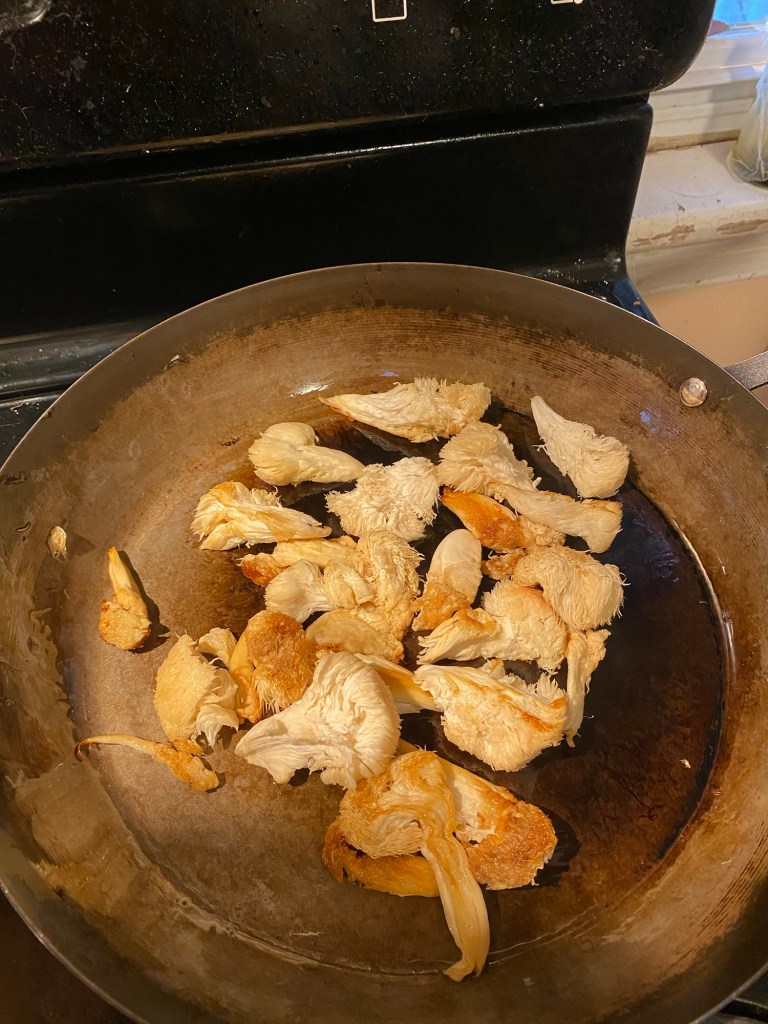
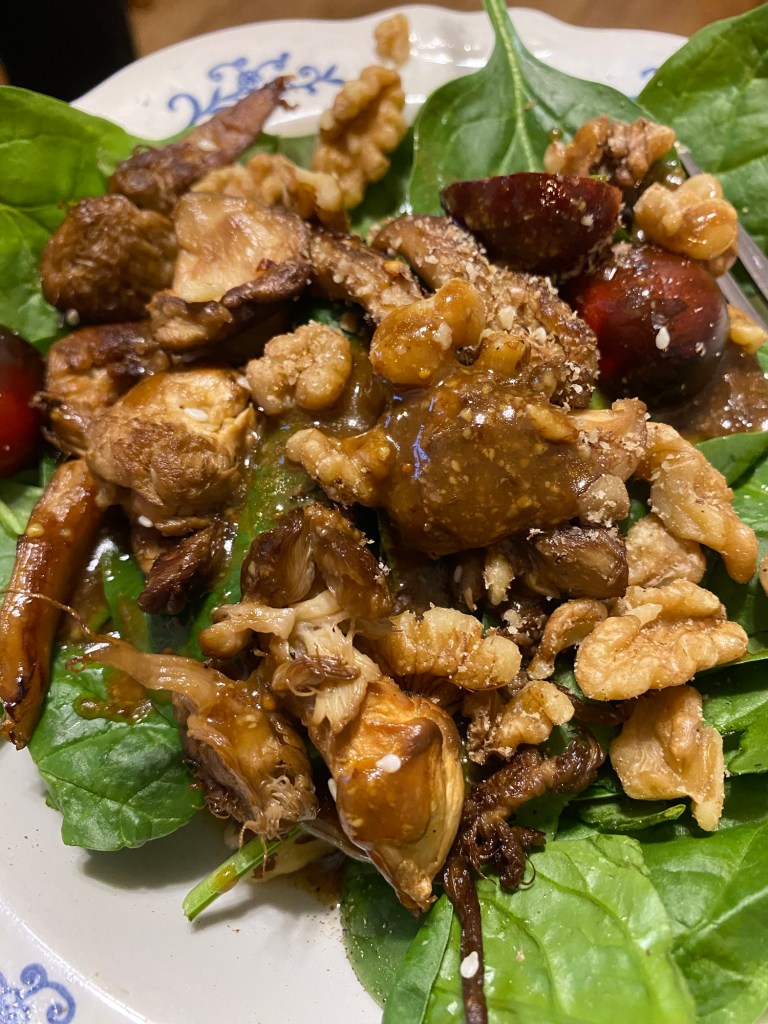
We started growing shiitake mushrooms about nine years ago after buying a couple of already inoculated logs at the farmer’s market in downtown Staunton. It was nice to have these mushrooms and it was a great first experience to grow our own at home. More recently, we became interested in growing Lion’s Mane mushrooms after reading about the health benefits and the taste. https://www.forbes.com/health/body/health-benefits-of-lions-mane/. We were so glad we did as they are delicious. The taste mimics crab, scallops or lobster. We sauté on high heat in a dry pan for 10 minutes then add olive oil salt pepper and garlic. Then we eat it on its own or with salads. We have heard they make great “crab” cakes. We will try this soon.
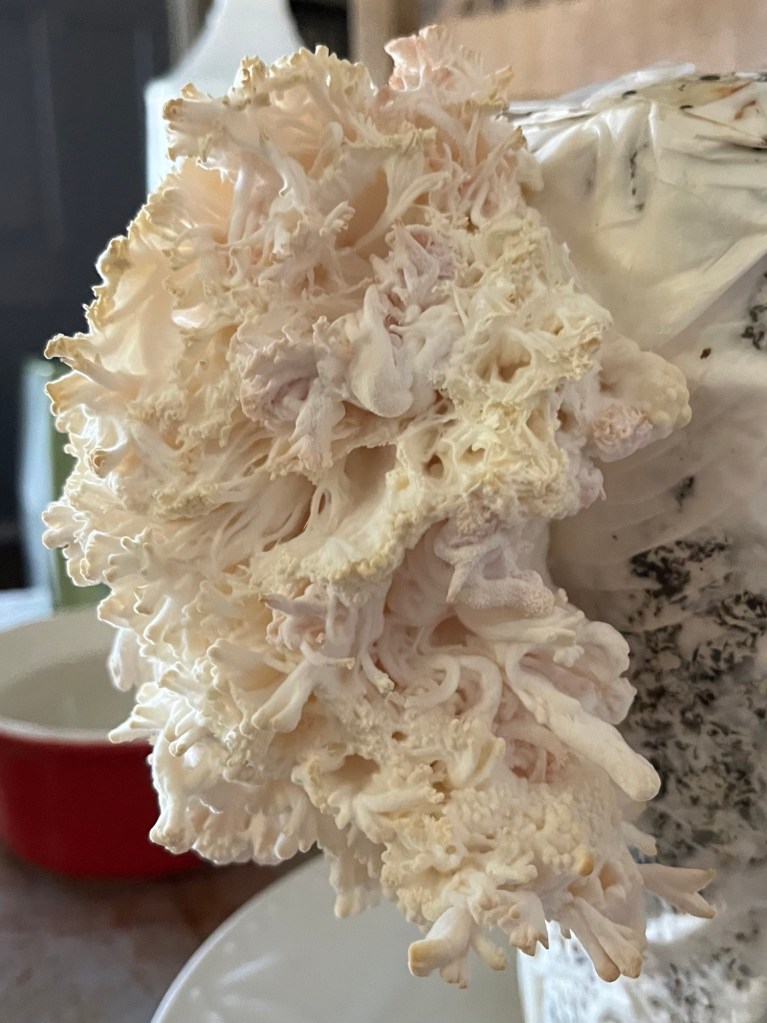
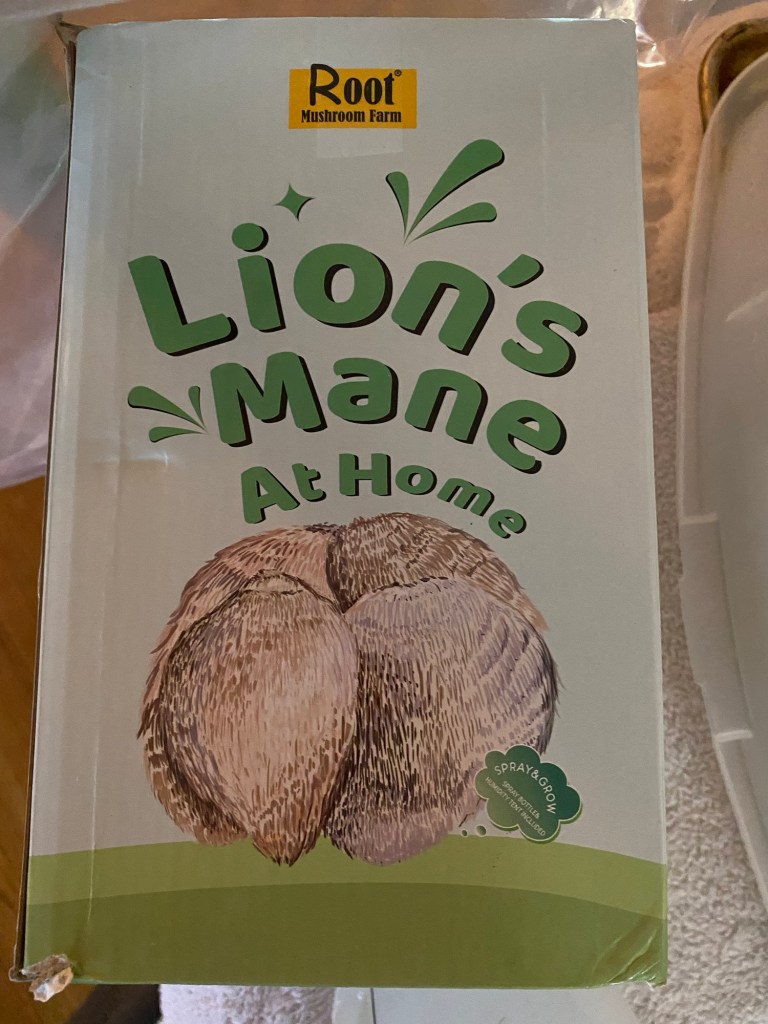
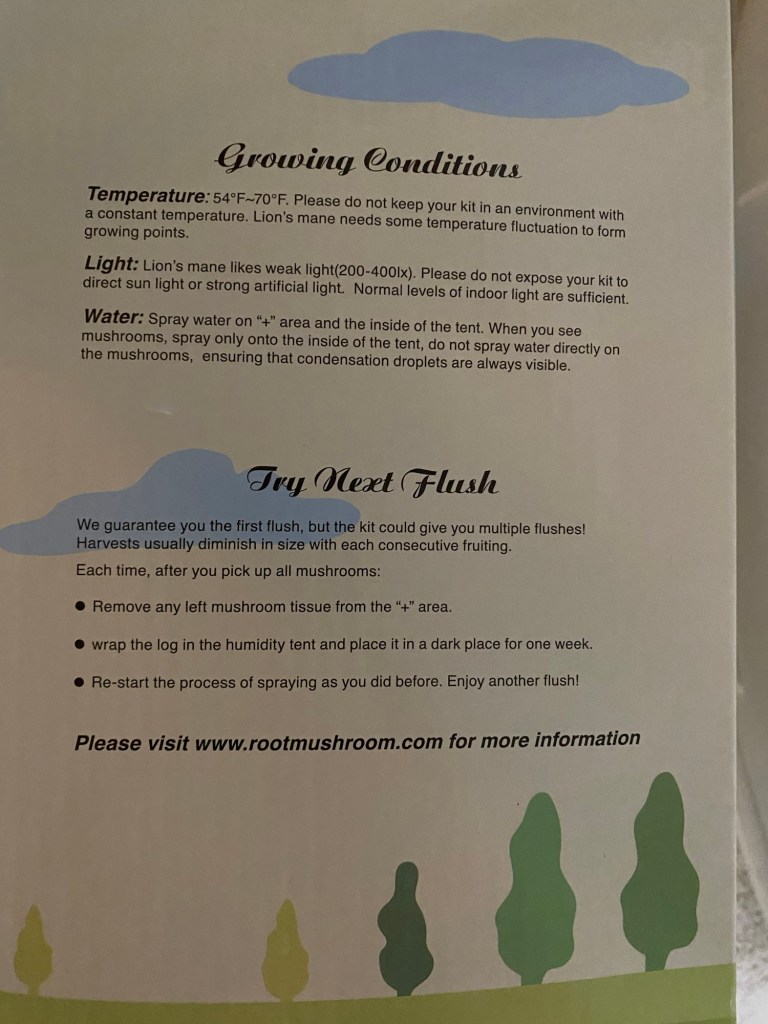
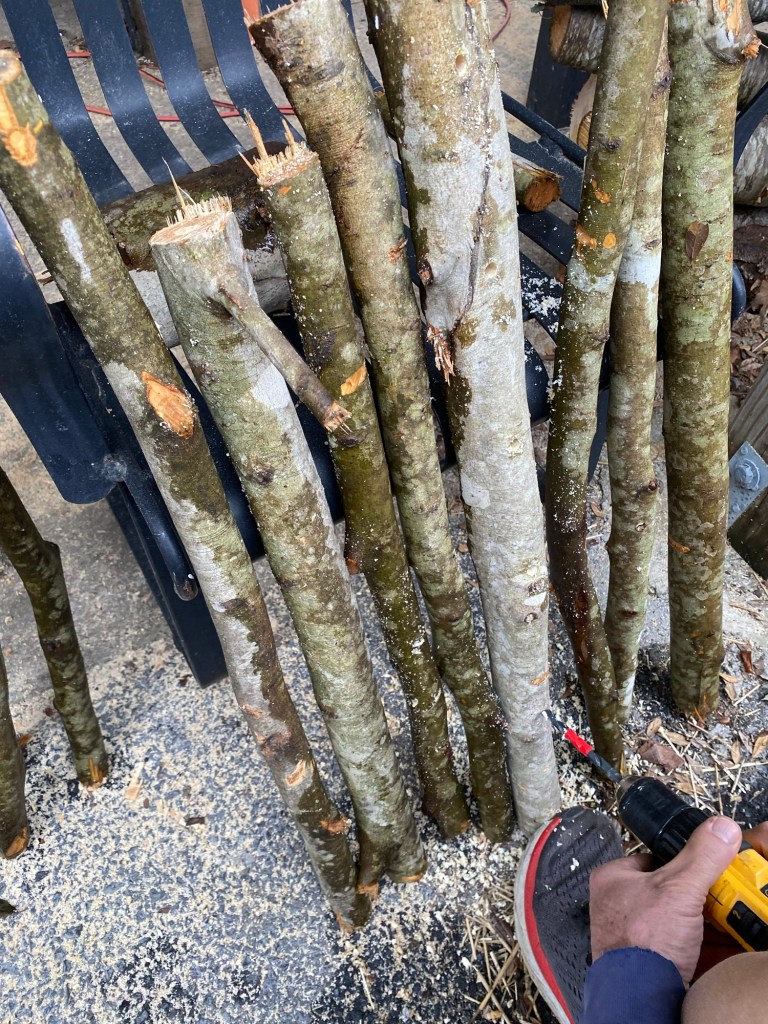
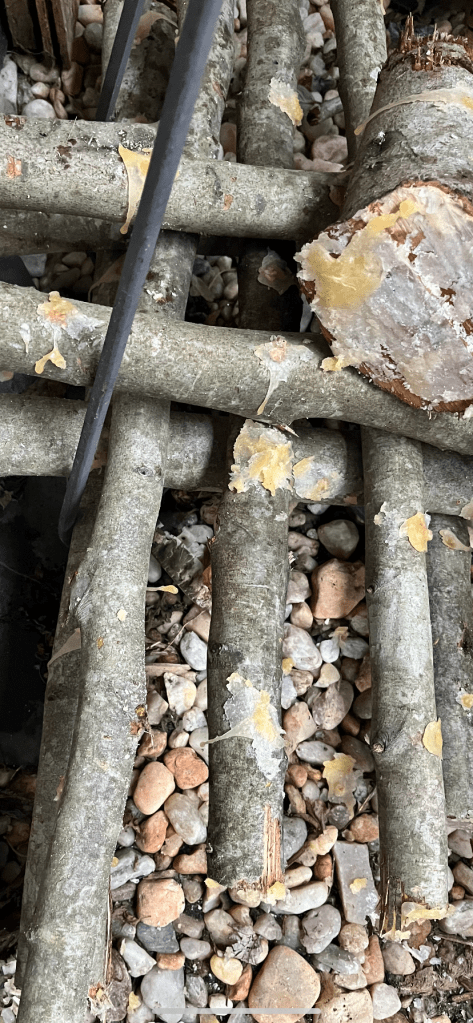
This Root Mushroom Farm grow kit was great. It came full of mycelium and ready to grow. We were so successful with it, we ordered plugs inoculated with Lion’s mane, Hericium erinaceous. Weeks ago, we cut down a beech tree from the farm and we aged the logs a few days. Then we drilled holes for the plugs.
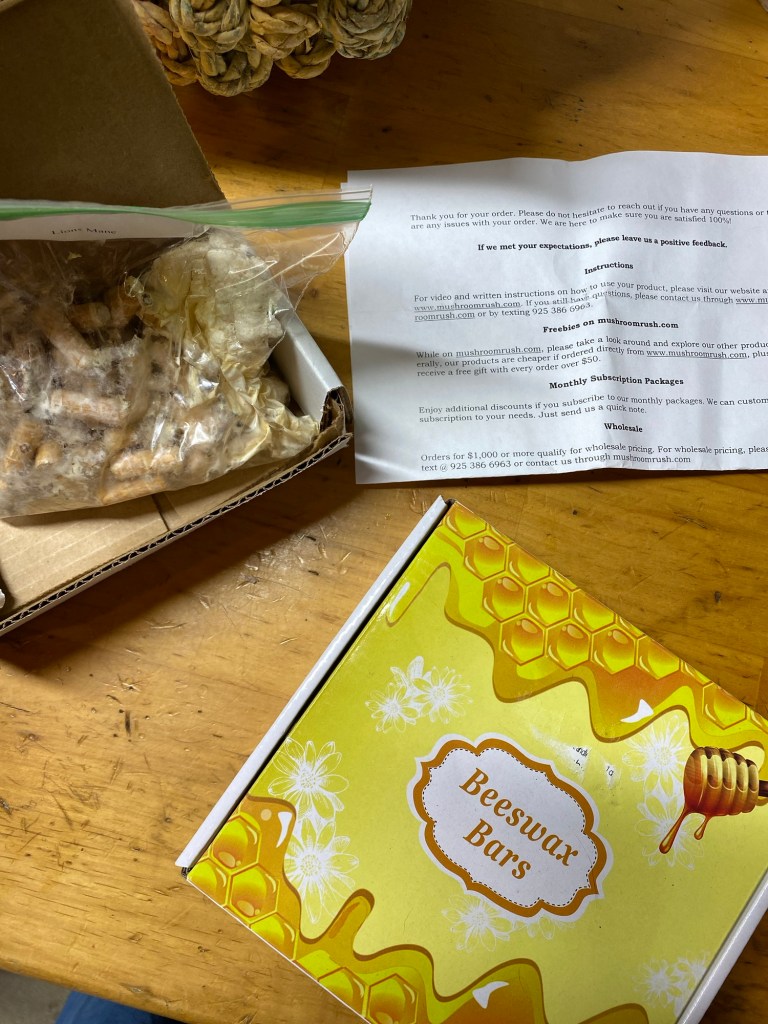
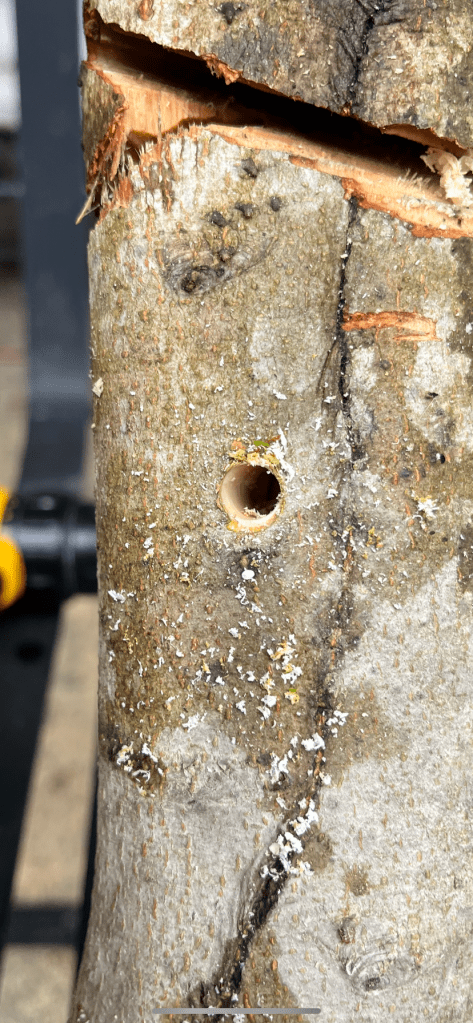
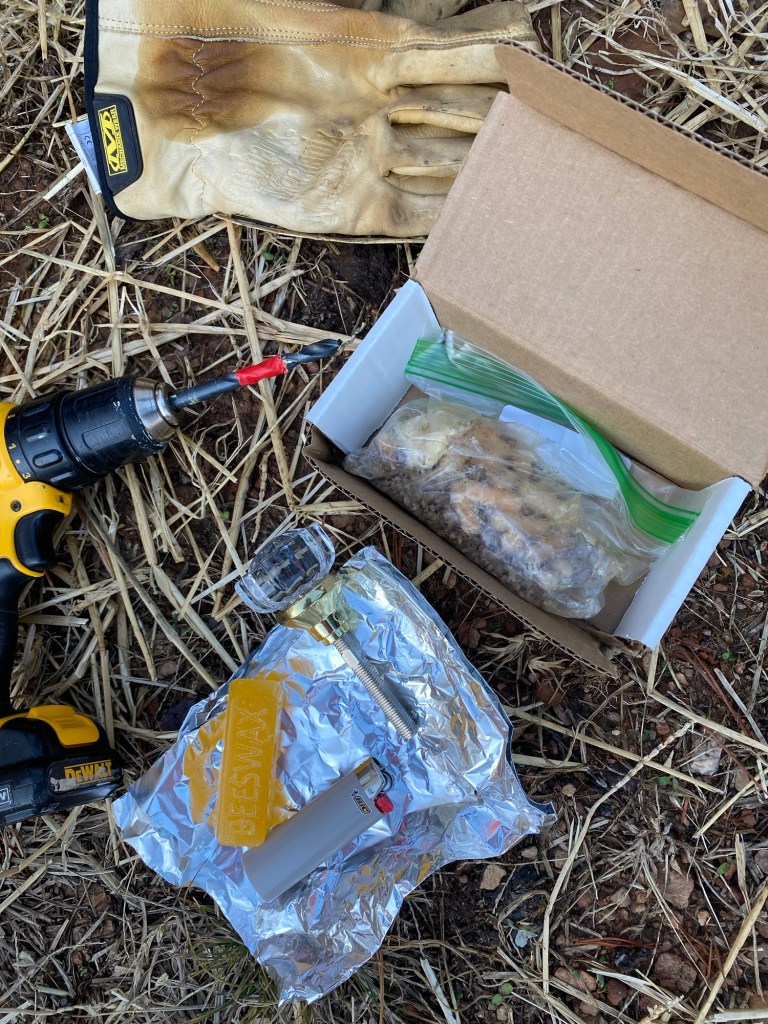
The inoculated plugs and beeswax bars for growing our Lion’s mane on beech logs at home and Saint Andrew’s Forest Farm. Drilling the holes for the plugs. We filled the holes in with our inoculated plug and then put warm beeswax to seal it in and keep moisture. Now we wait for the mushrooms to grow! We are going to also inoculate logs at the farm to continue to diversify the already thriving mycelium in our soil.
We are heading back out to the farm later today to inoculate some of our hardwood logs.
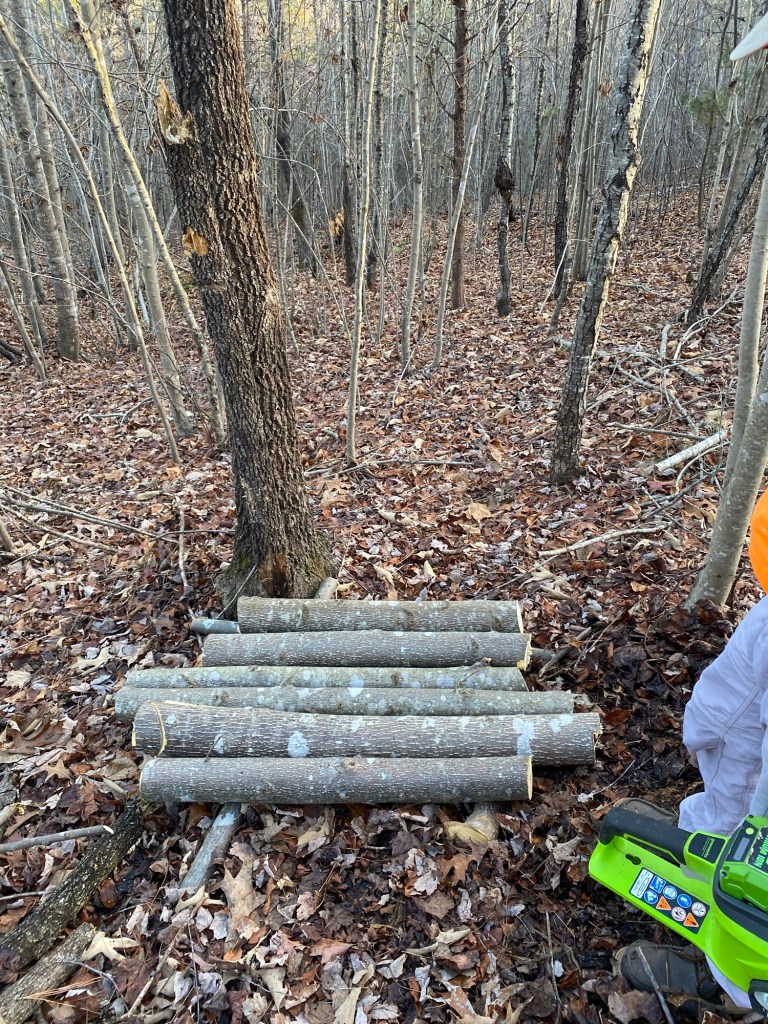
Lion’s mane mushroom and spinach salad with walnuts and Dijon vinaigrette Our supplies needed to drill holes and inoculate the logs at the farm. We built a simple stand for tulip poplar logs in the forest at the farm and are inoculating them with Lion’s mane spawn plugs. We hope to add Hericium erinacious to our home grown mushrooms. They are native to Virginia.
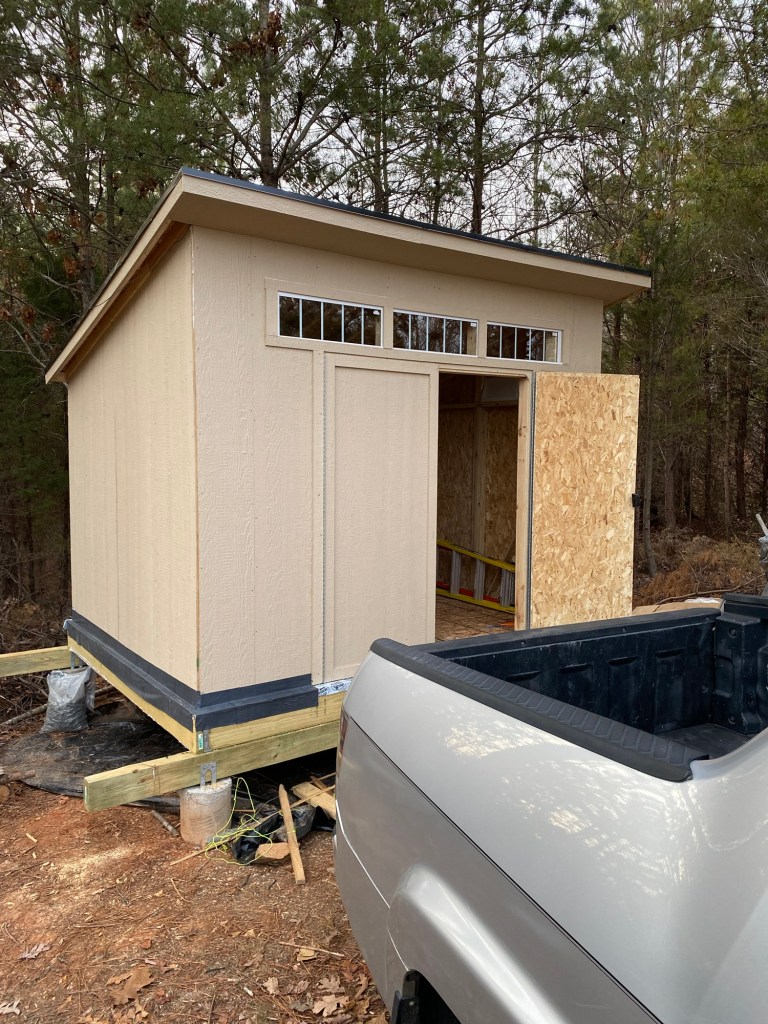
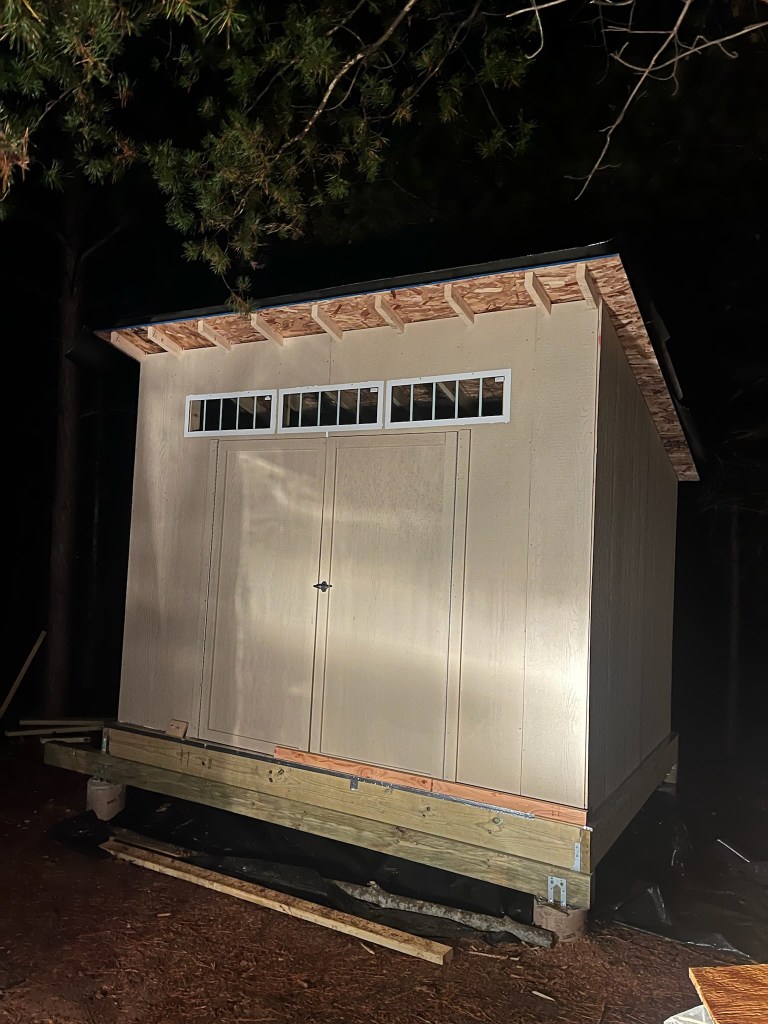
We have sealed up the shed very nicely and quickly before the big rain expected to bring heavy downpours.
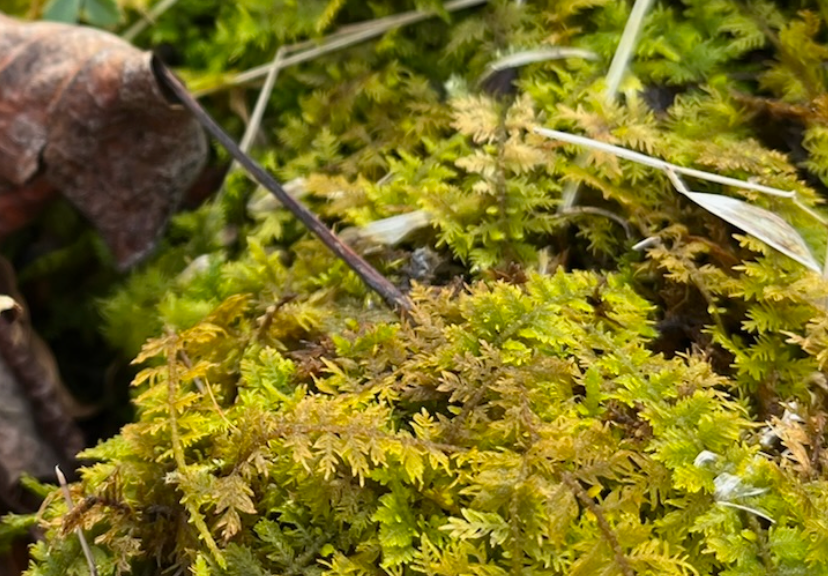
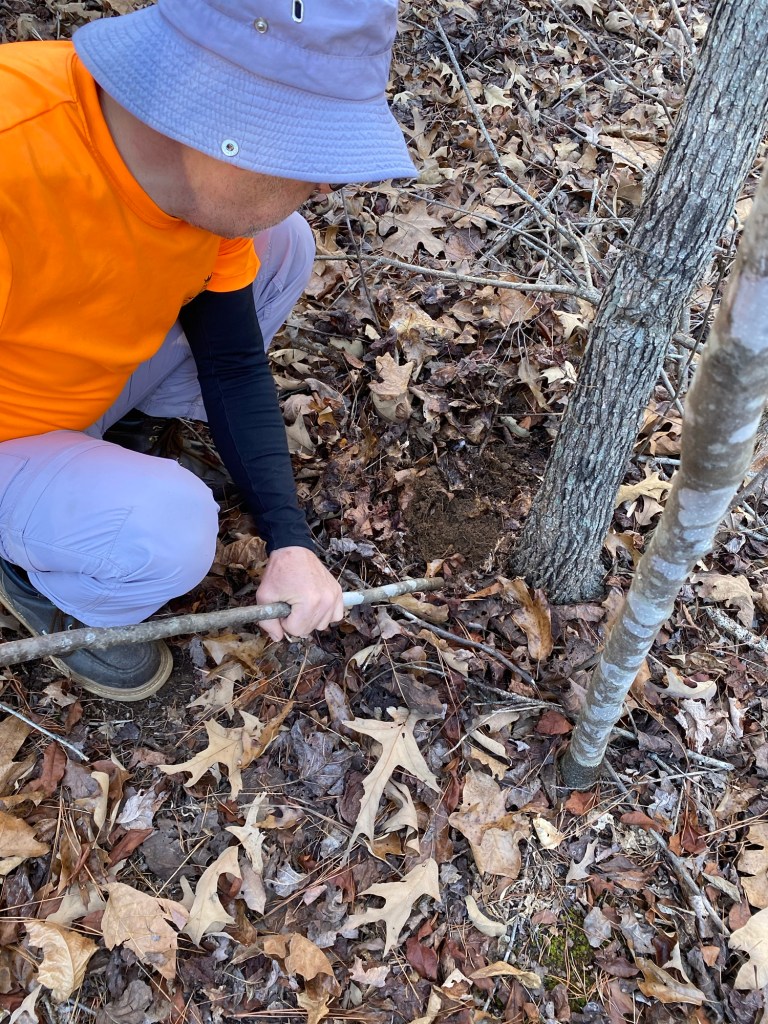
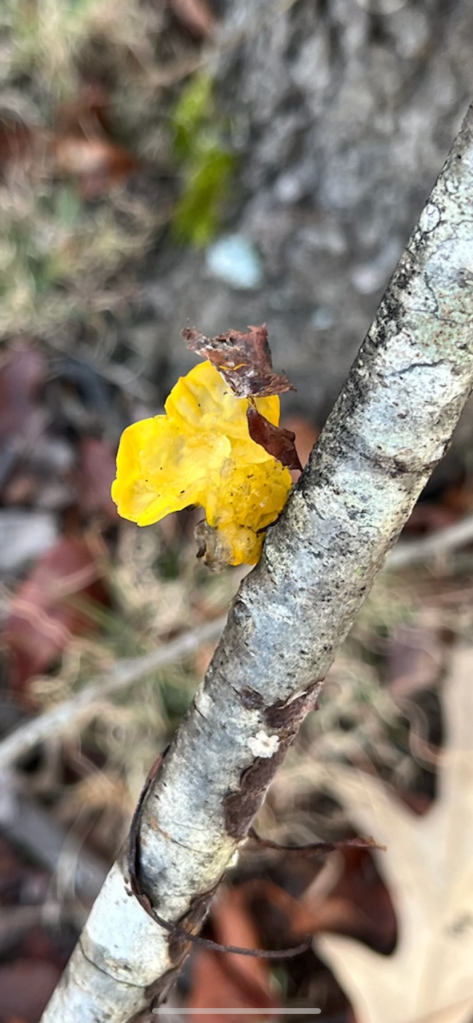
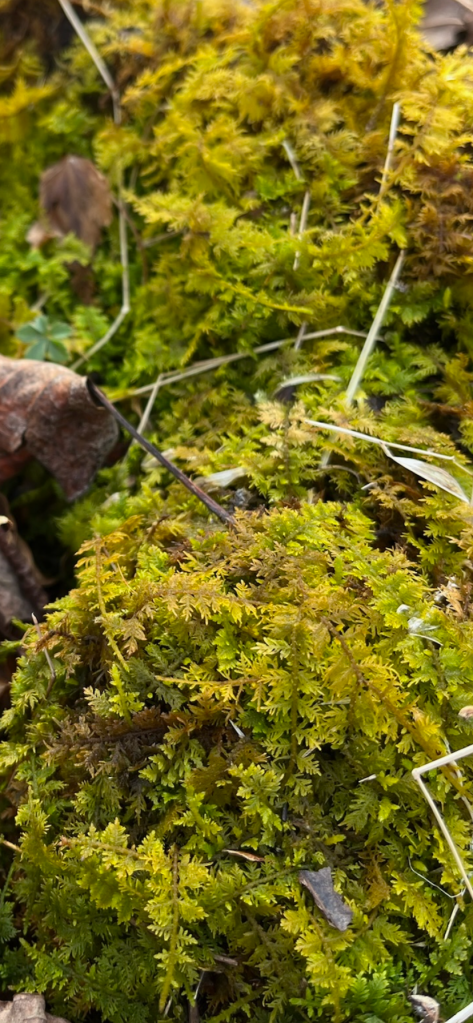
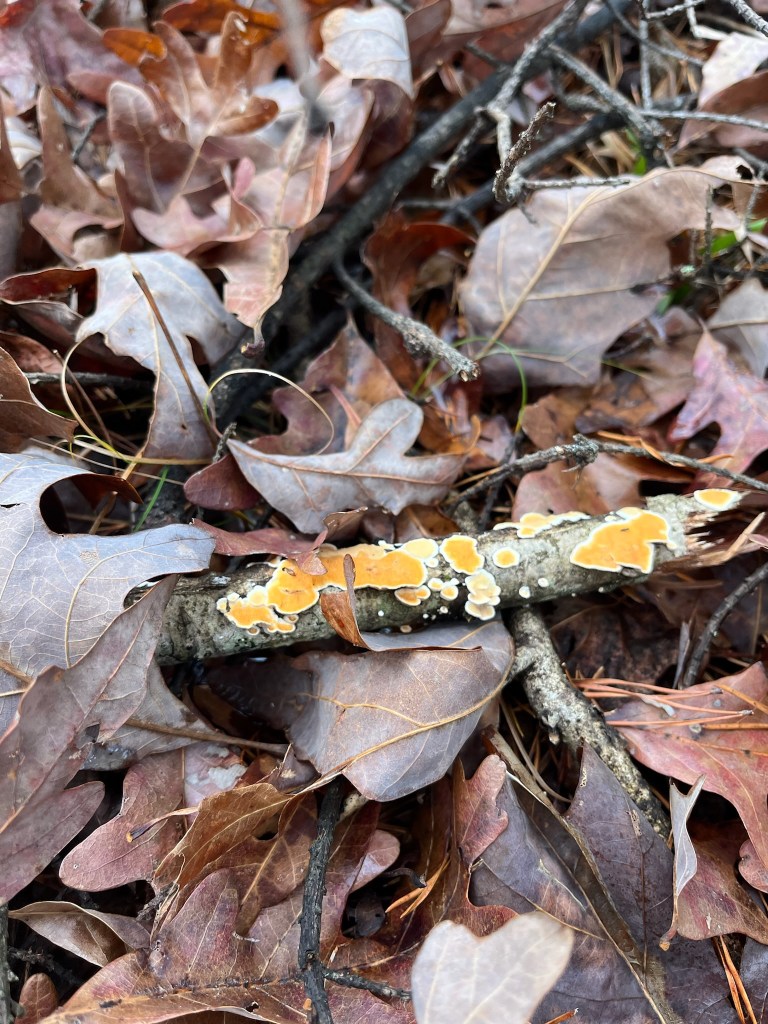
We can’t wait to camp. Chris built our compost toilet and bed for our campsite. We will cover this in a post with more details. We will insulate the inside and add wall board before bringing out the toilet and bed. We have solar lights and think we will stay warm and safe in our little campsite. Looking for truffles at the base of an oak. 😄Tremella mesenterica, commonly called Witches butter. A fun find long the edge of the clearing up top. An edible jelly fungus which is said to have medicinal benefits and it can be added to soup. We have not tried this! The texture does not look scrummy at all, but it was beautiful to look at. Cut-leaf grape fern. It has a michorizal relationship with the soil. Fern moss along the trails all around Saint Andrew’s Forest Farm.
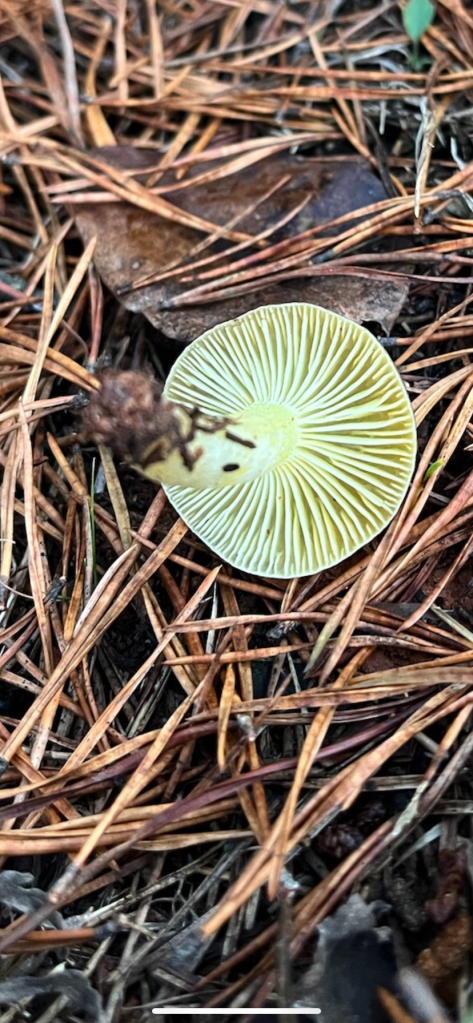
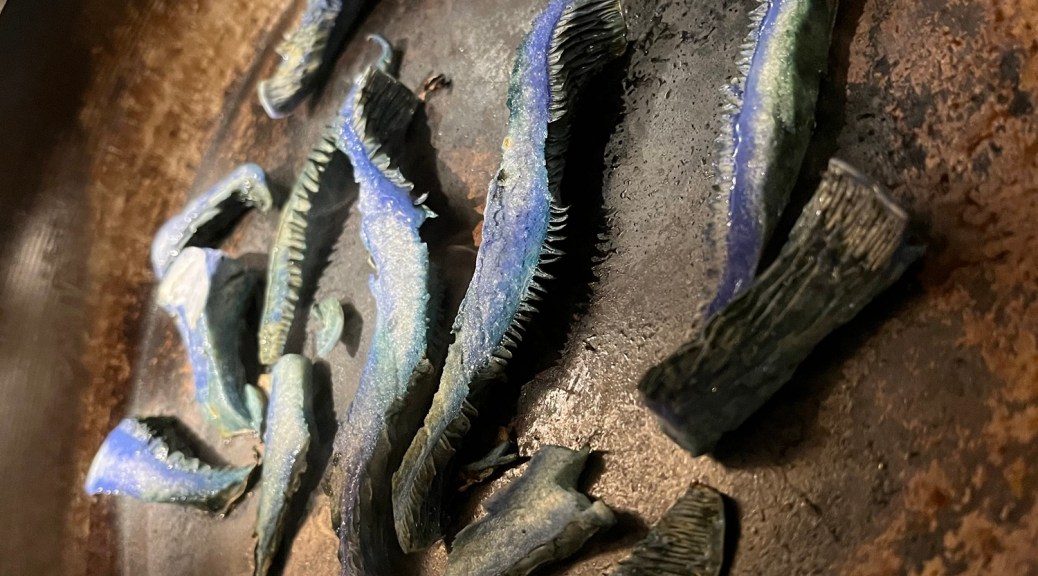
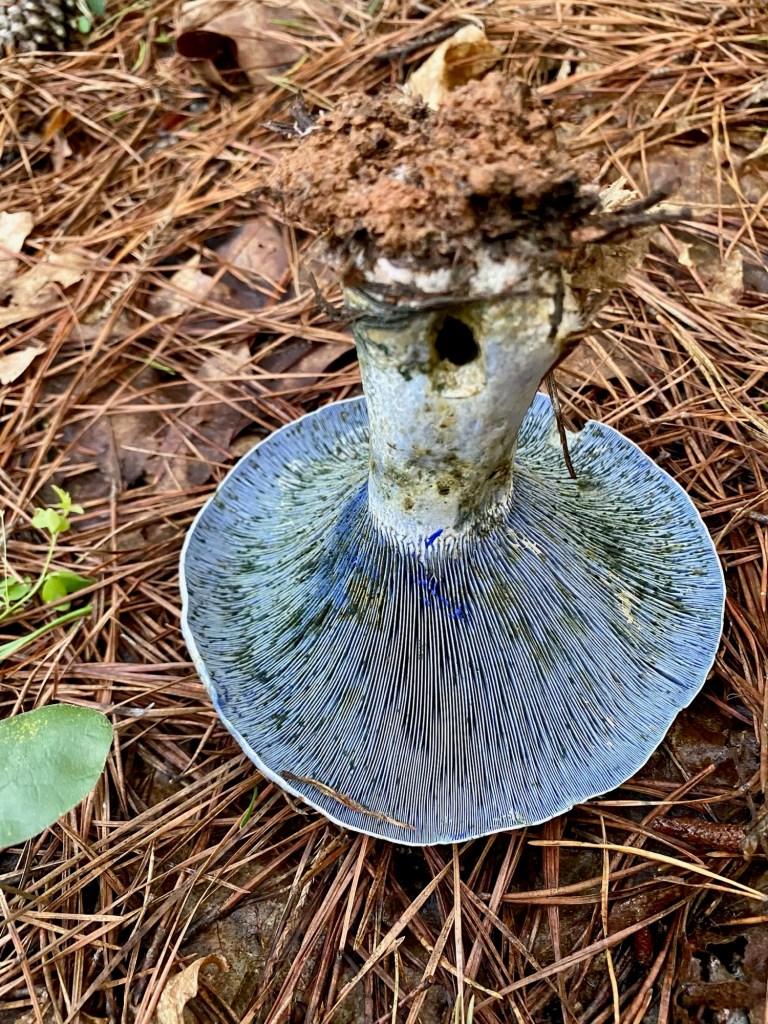
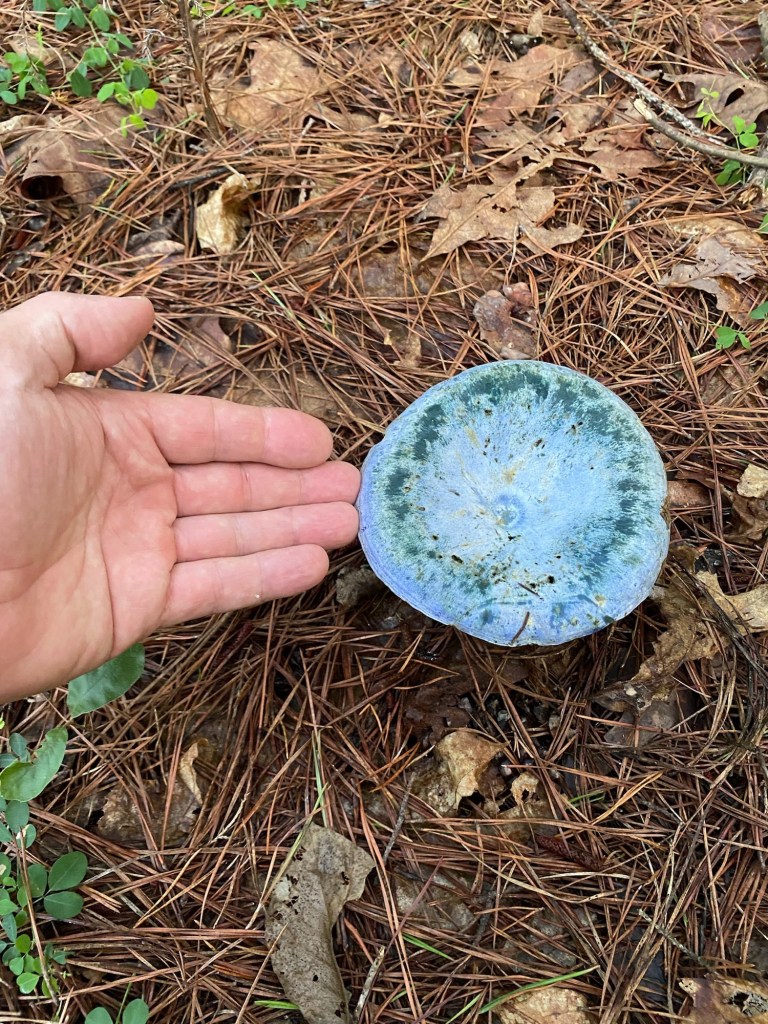
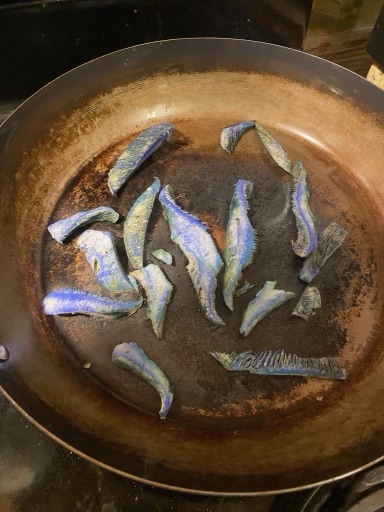
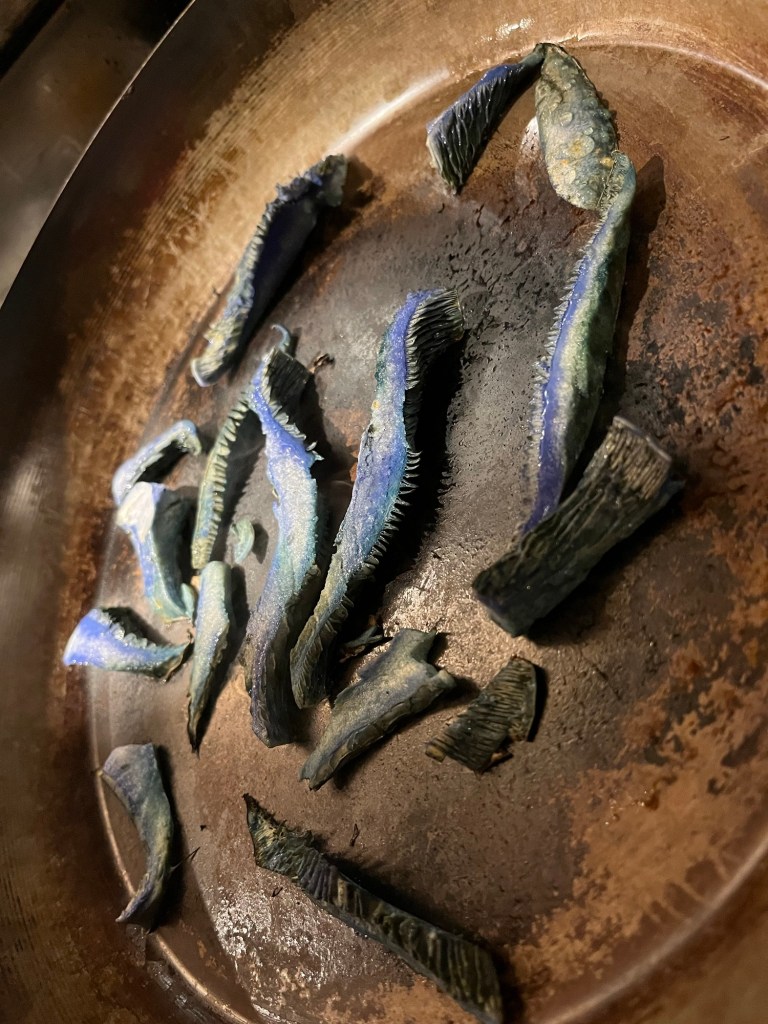
We found quite a few Lactarius indigo or Indigo Milkcap mushrooms during the summer and early fall of 2023. They were so pretty and just amazed us each time we saw them. They are michorizal with a number of deciduous and coniferous trees including pine and oak. We found them in a number of places. Up top along the driveway, along South Trail and in the forest in multiple locations. We’ve learned to cook our wild mushrooms very well on high heat (7ish) for 20 minutes. We start cooking them in a dry already hot skillet. After 10 minutes, we add some olive oil, garlic, salt and pepper.
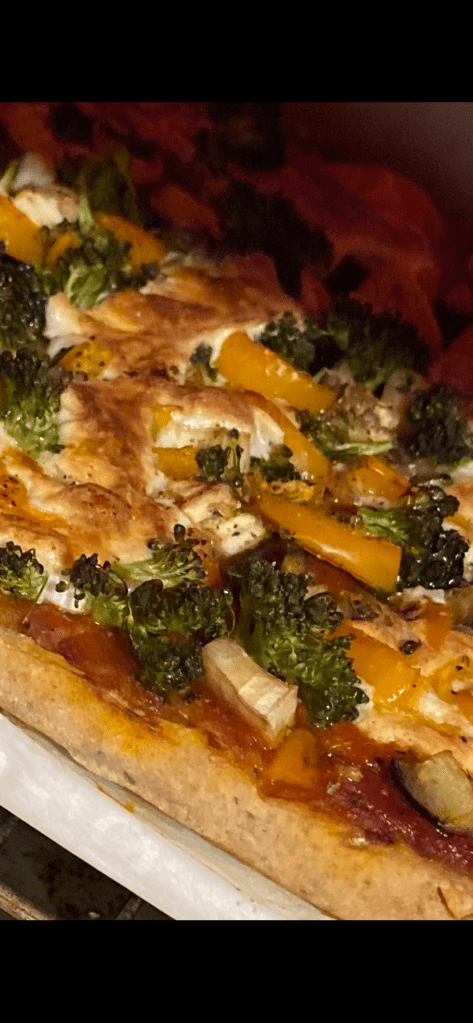
While they cooked they smelled a little bit of fish. Once cooked, this wasn’t detectable in smell or taste. We used these to top our pizza pie.
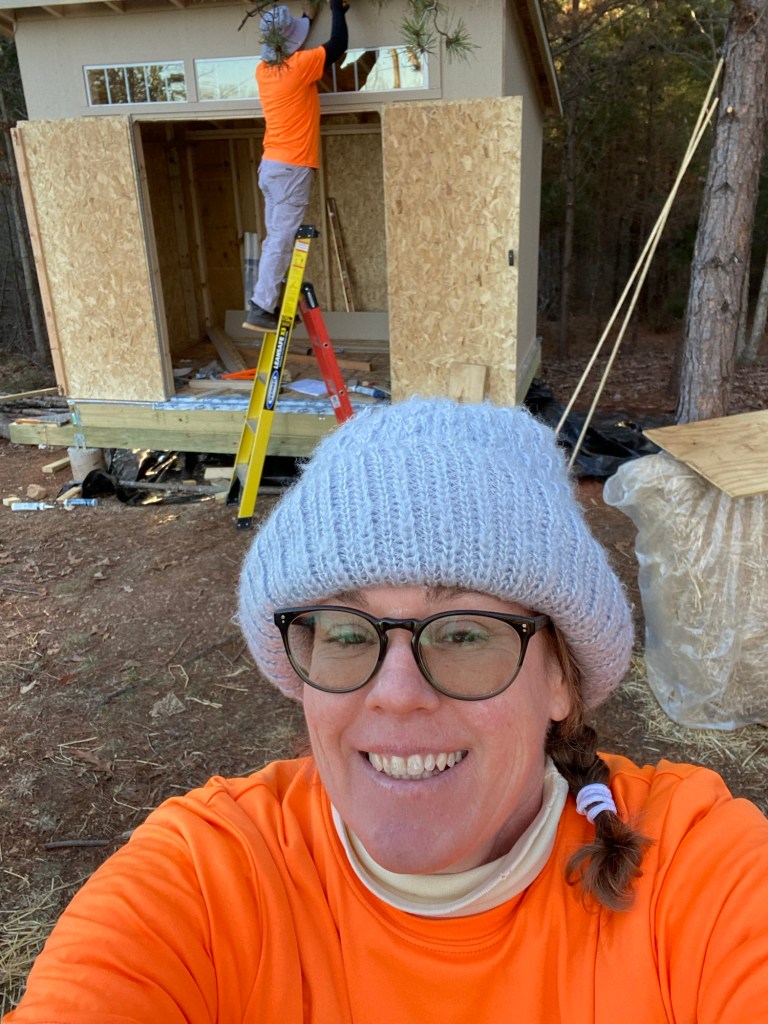
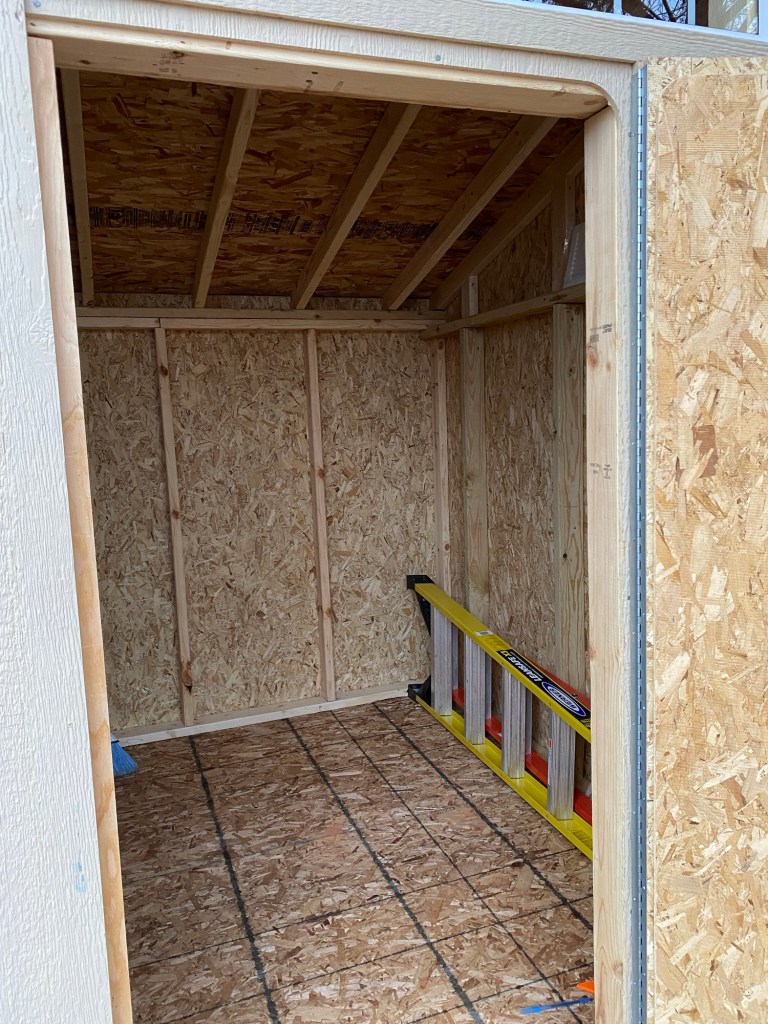
For weeks, we have been building our shed. It will be our camp until we have more structures. We are pleased with how it has come together. The doors and windows are on and roof is sealed with a protective membrane. Yesterday, we added drip edge to seal down the roof membrane. As we worked, we heard the woodpecker in the forest laughing. We still have lots of details, trim and the metal roof to put on the shed but are pleased with the progress and could begin to use it as a camp soon. We were prepared for this weekend but our plans were rained out so we are going to use the extra time to get the inside insulated and fitted out a bit.
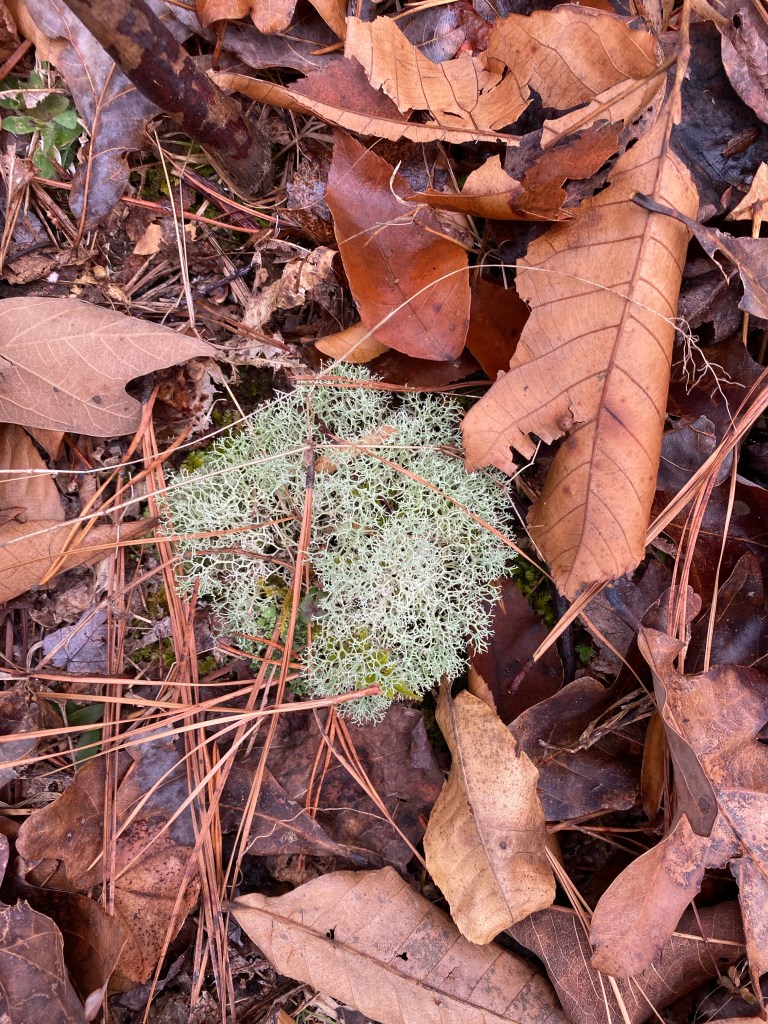
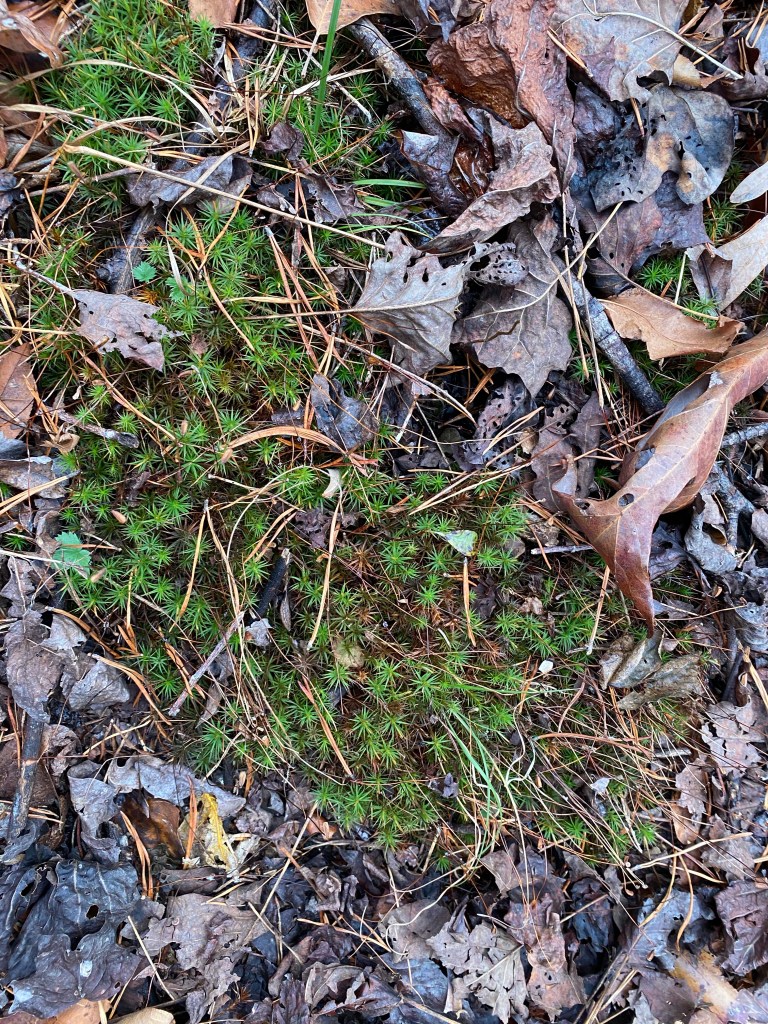
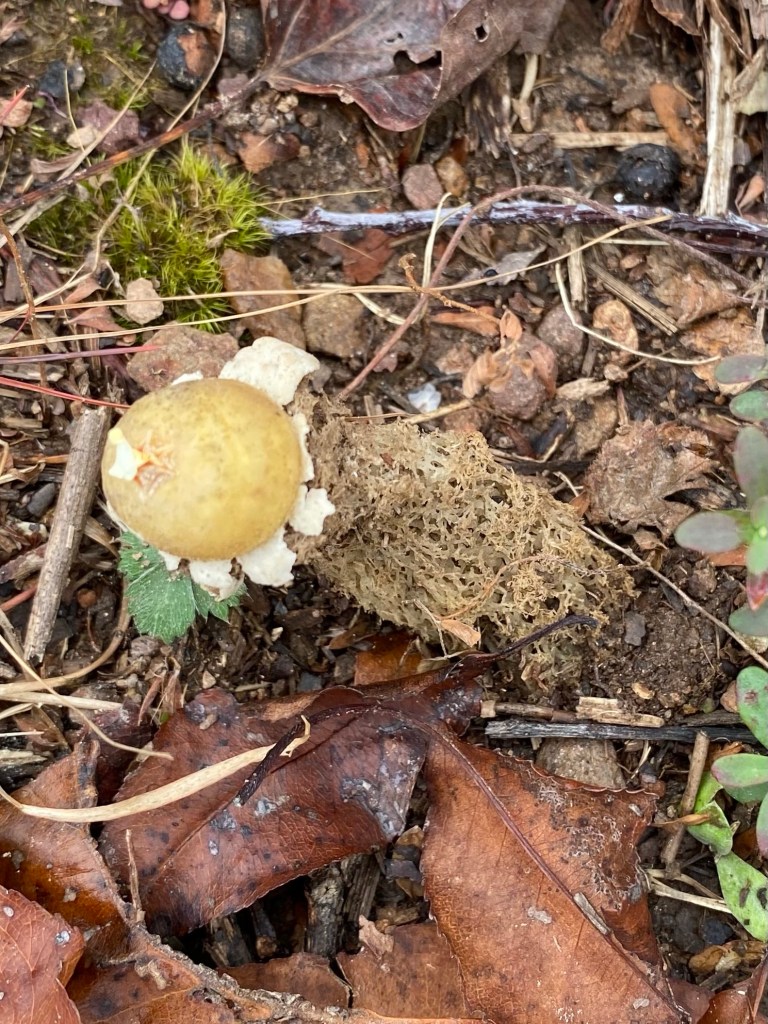
Sea foam in the woods? It’s Reindeer Lichen, Cladonia rangiferina found throughout the forest. This was near the bottom slope by the waterway in a cluster. Moss Yellow stalked puffball found in clearing Several clusters of the yellow stalked puffball found near several old Earthstars. We have seen them along South Trail as well during the summer after rain. They are michorizal with Oak.Cranefly Orchid leaves. We see clusters of these throughout SAFF. The corms are edible although we have not tried them yet. The flowers in the summertime are delicate and abundantly spread throughout the forest.May be Corticoid sp. Further observation necessary.Lichen and fungus
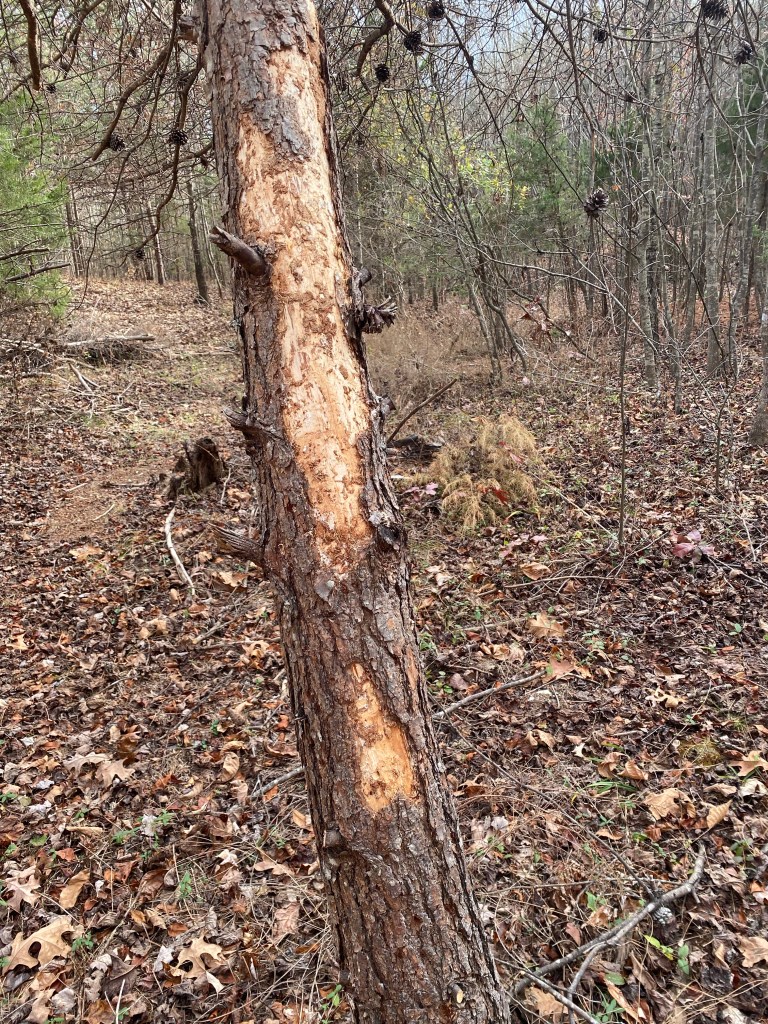
We’re finding interesting mushrooms and plants on our walks through the forest. Yesterday, we started our trail from front off of the driveway and walked down along the waterway and connected to South Trail. We passed by Chanterelle Trail, not wanting to disturb the fox family and headed to the bottom trail. We followed our trail around to where SAFF meets the back road and walked along our side of the property line. We passed through where we saw the black bear months back and saw no evidence of him. We have found trees in multiple spots with bark scratched pecked or bitten off.
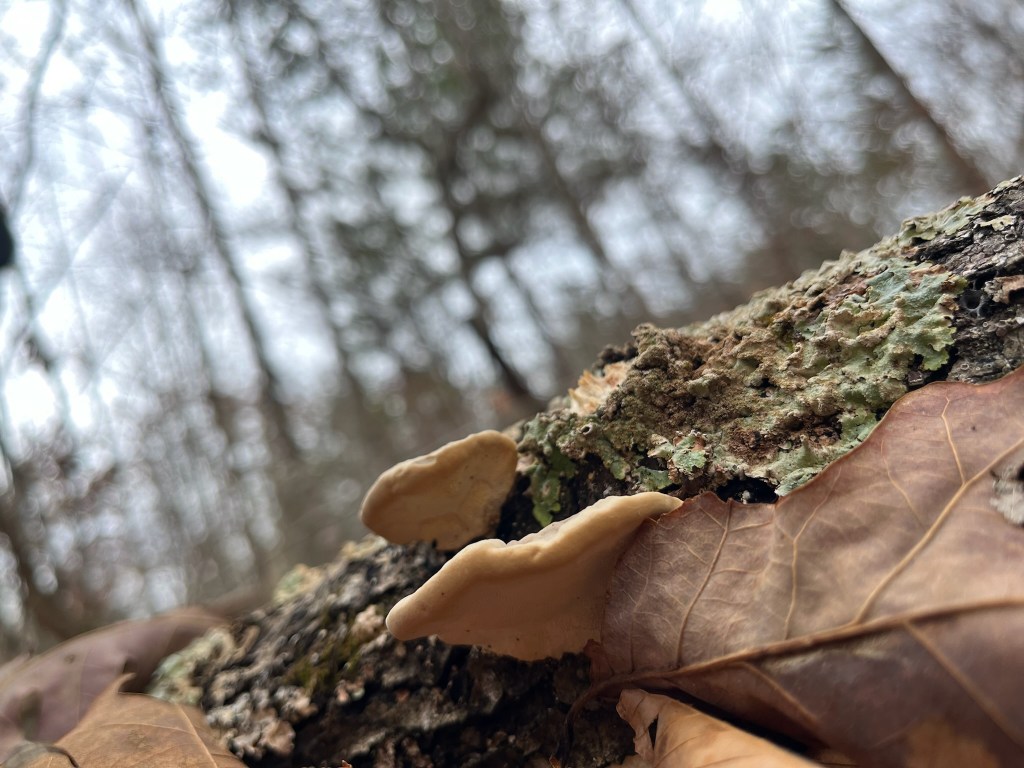
This could be black bear or woodpecker. Most likely not deer. We have ruled out porcupine because they aren’t found in Virginia anymore. The trees with the removed bark are all dead conifers. Something is trying to get to the bugs underneath or maybe eat the bark, we wonder. …
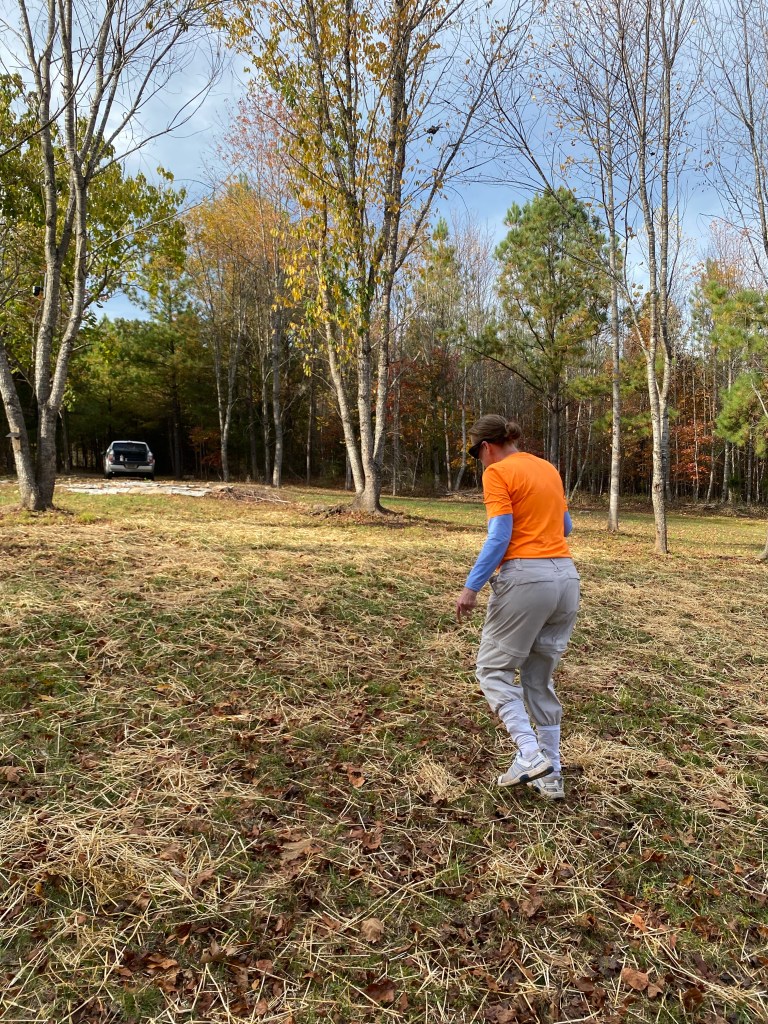
It has been dry in Virginia. We’ve had forest fires in the National Forest and a month long drought. Hunting season is in full swing. We are careful to always wear blaze orange shirts. We hear rifles and shotguns and dogs. This weekend we finally got a good long soaking rain. This was a great relief.
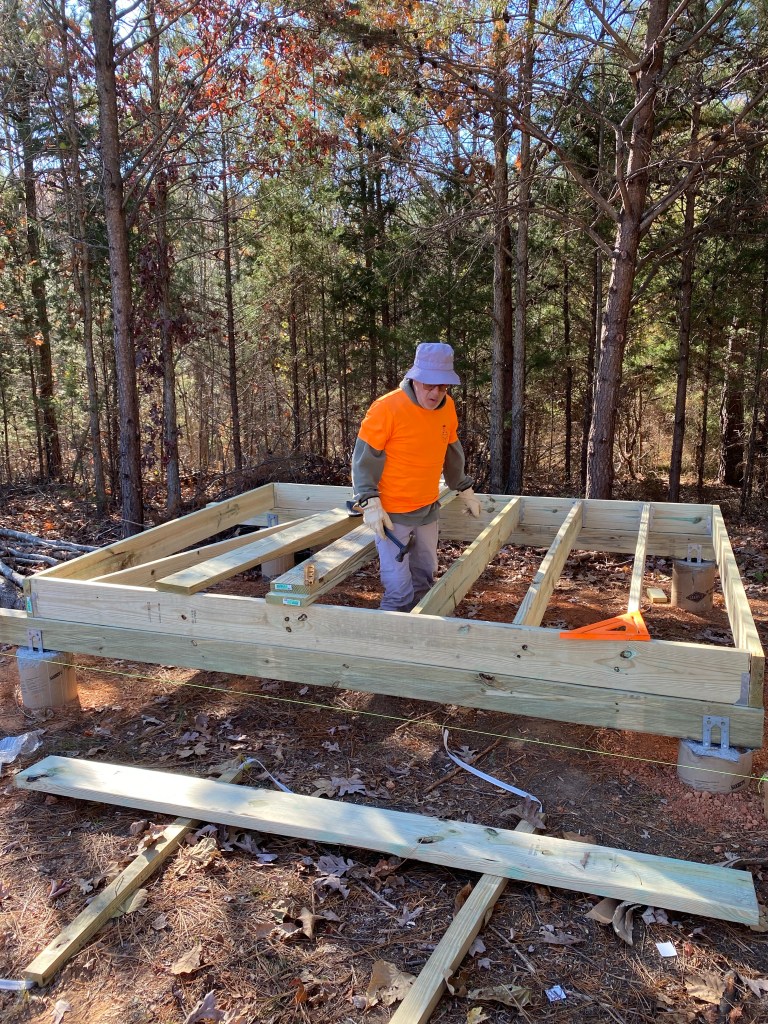
Chris busily working on the foundation and floor joists of the shed.
The weather has gotten cooler and the woods have changed. Unless we’re in a piny spot with lots of needles softening and muting our steps, we hear a cacophony of leaves crunching. My grandmother would say we sound like a herd of buffalo. We are happy to be loud in order to alert the bear we are coming through and to also alert hunters. We’re always wearing our bright orange shirts as well.
We’ve explored new areas of the forest and expanded our trails each time we’ve gone out. We found new water spots and some new trees. Right now, the beech trees still have coppery leaves hanging on and are easily visible everywhere. We have an enormous beech by the south bottom near the waterway.
We can’t wait to get the shed built so we can camp out over there. In the end, the shed will be a bathroom and shower but, for this winter, Chris and I will use it as a camping space.
We hope to camp out sometime soon. We are insulating the floors next.
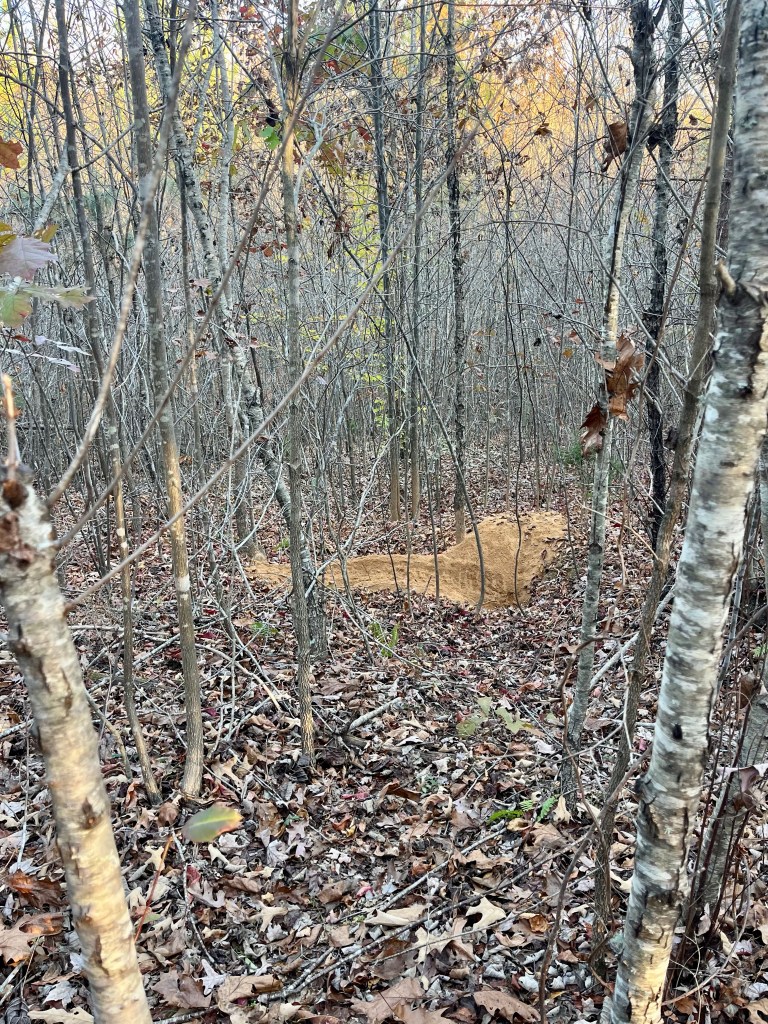
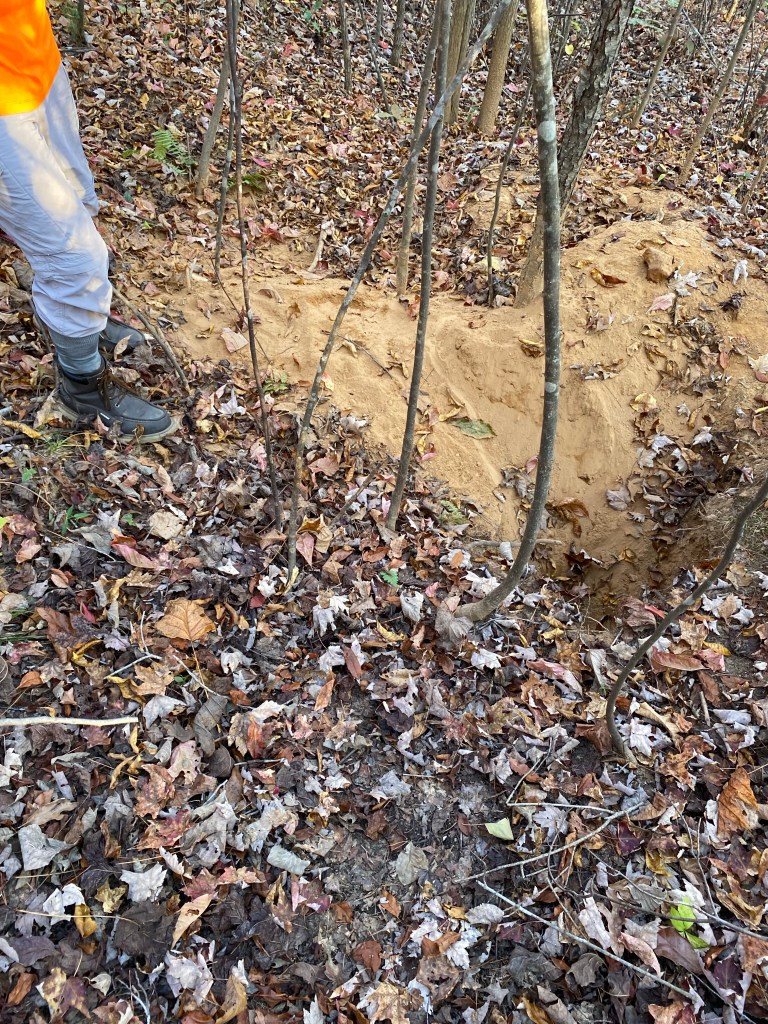
Most recent fox den picture. The paw prints all over the dirt are adorable. 🐾
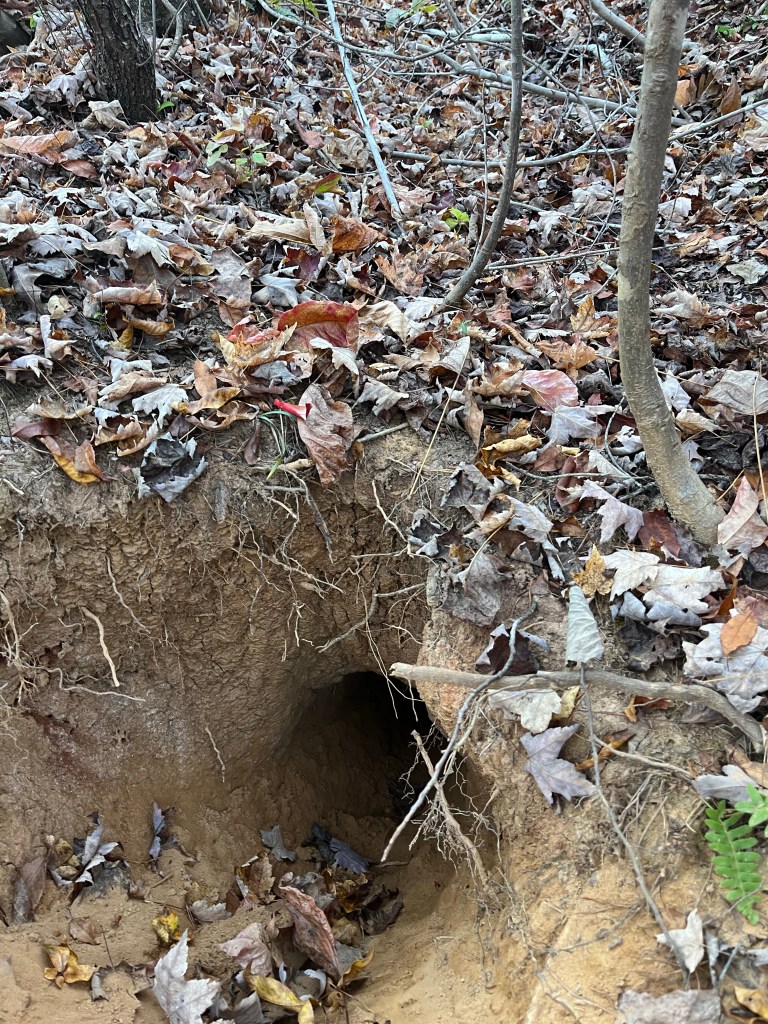
We saw the fox den has been significantly expanded. We must have first spotted it when they began digging. The area looks enormous now. They’ve been working hard for their little family. We are keeping our distance from the den. With all of the construction going on, it is easy to spot and avoid. Usually they are multi chambered with multiple entrances and exits.
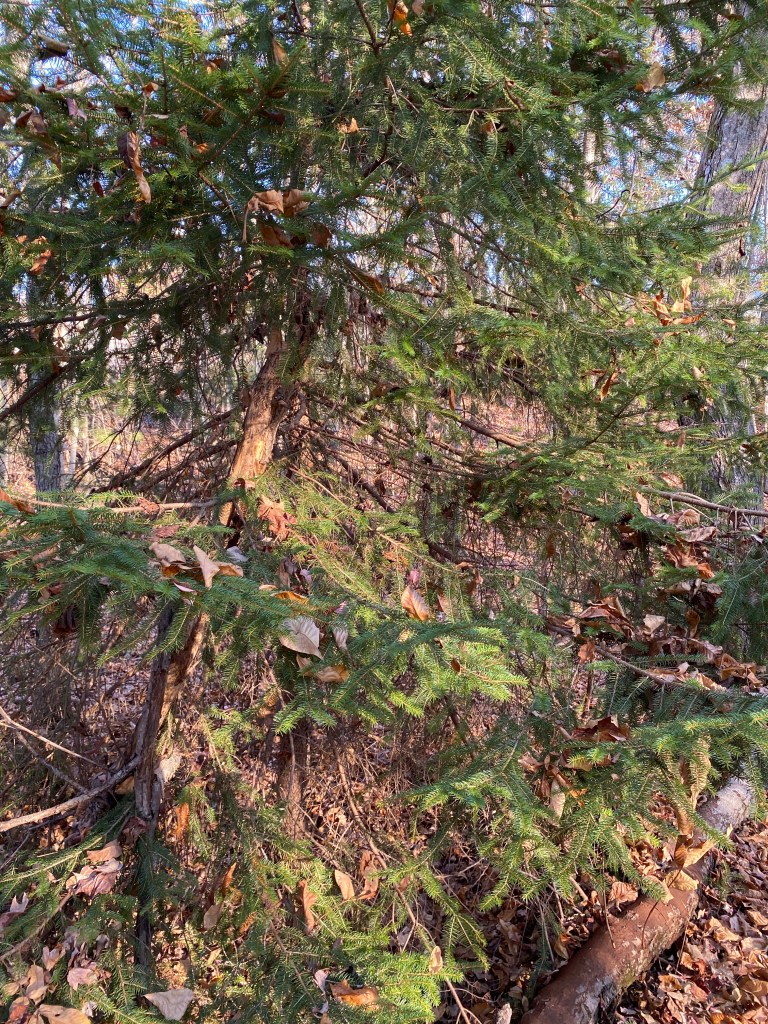
Red Spruce just identified
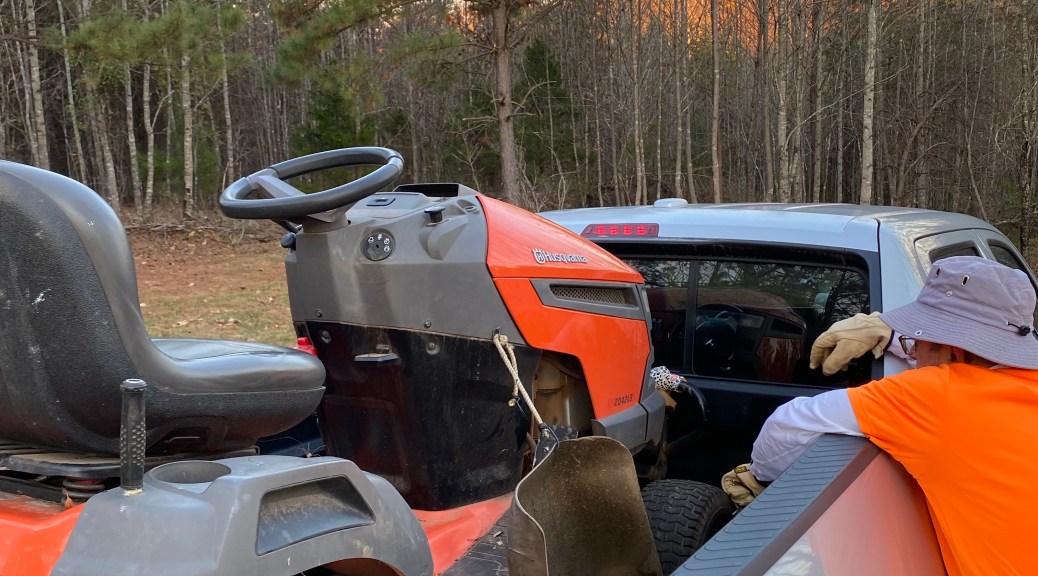
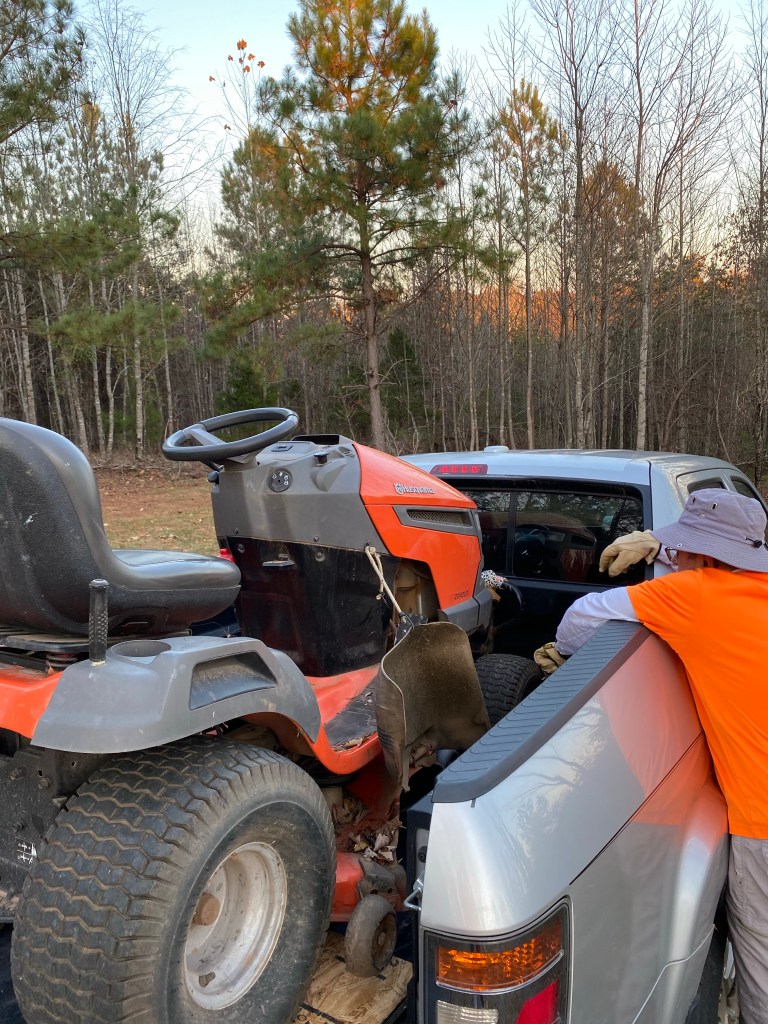
Chris 10/10 on the first go. 🎉The sunset was fiery bright red as we drove back to Staunton with the mower.
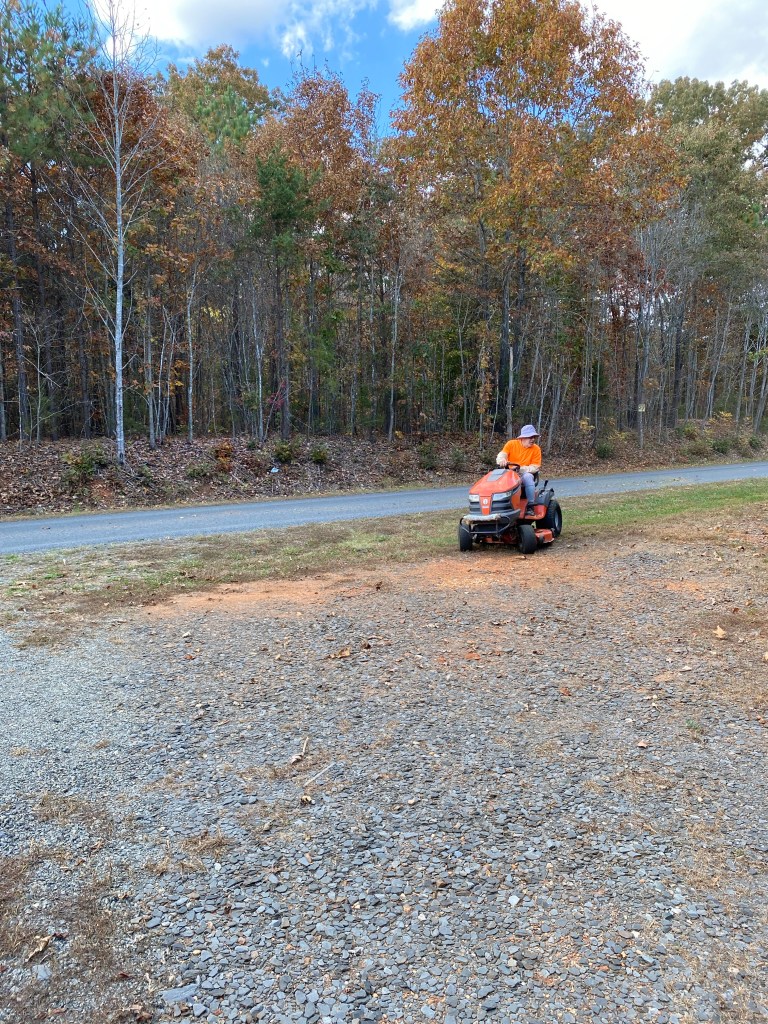
We planted our first cover crop last week of crimson clover and winter rye on almost an acre and then topped it with straw bales to hold moisture. When we arrived today, we mowed and picked up trash along the road.
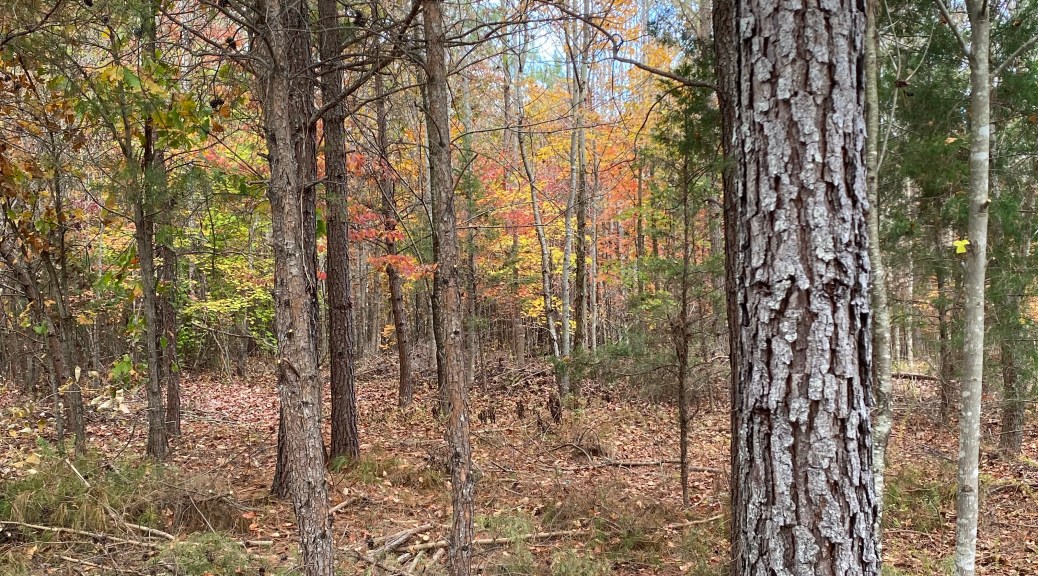
The fall foliage really peaked in Staunton this weekend but over the mountains at Saint Andrew’s Forest Farm, the colors were a little more muted with lots of green. Walking through the forest was noisy with the leaves crunching underfoot.
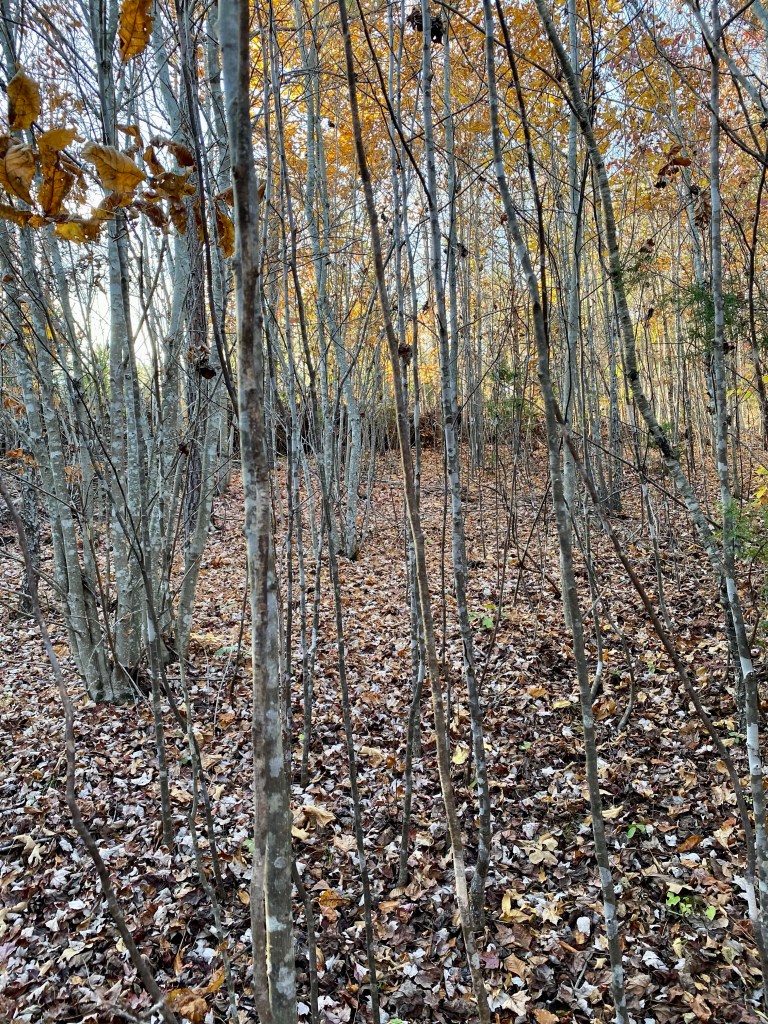
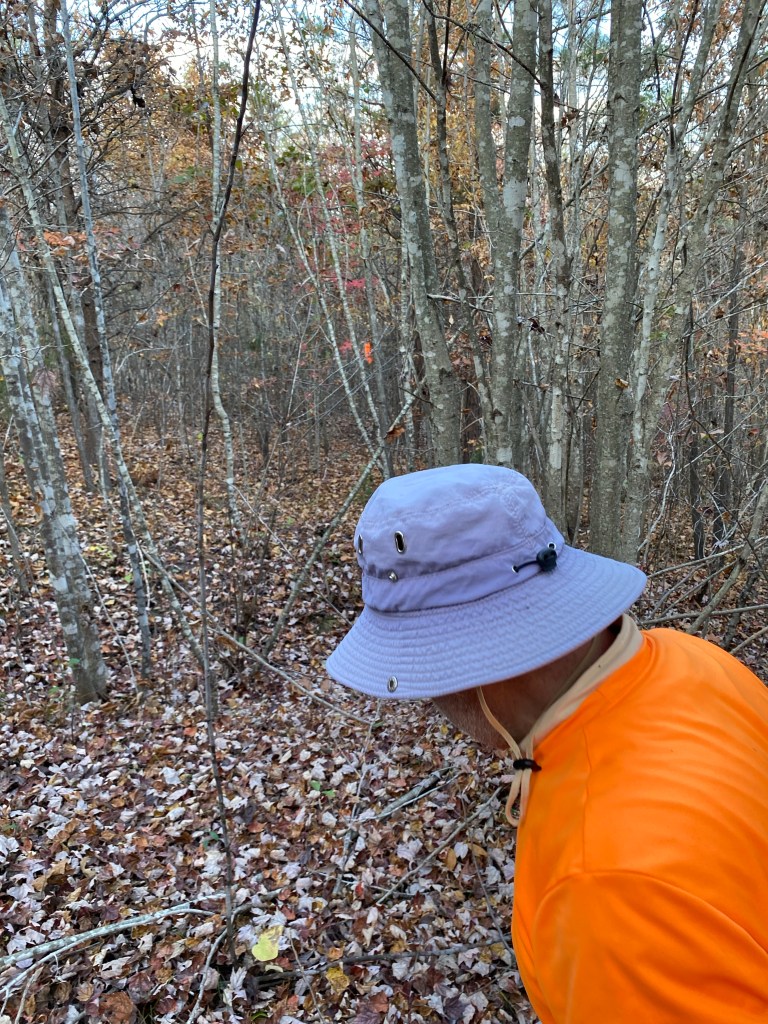
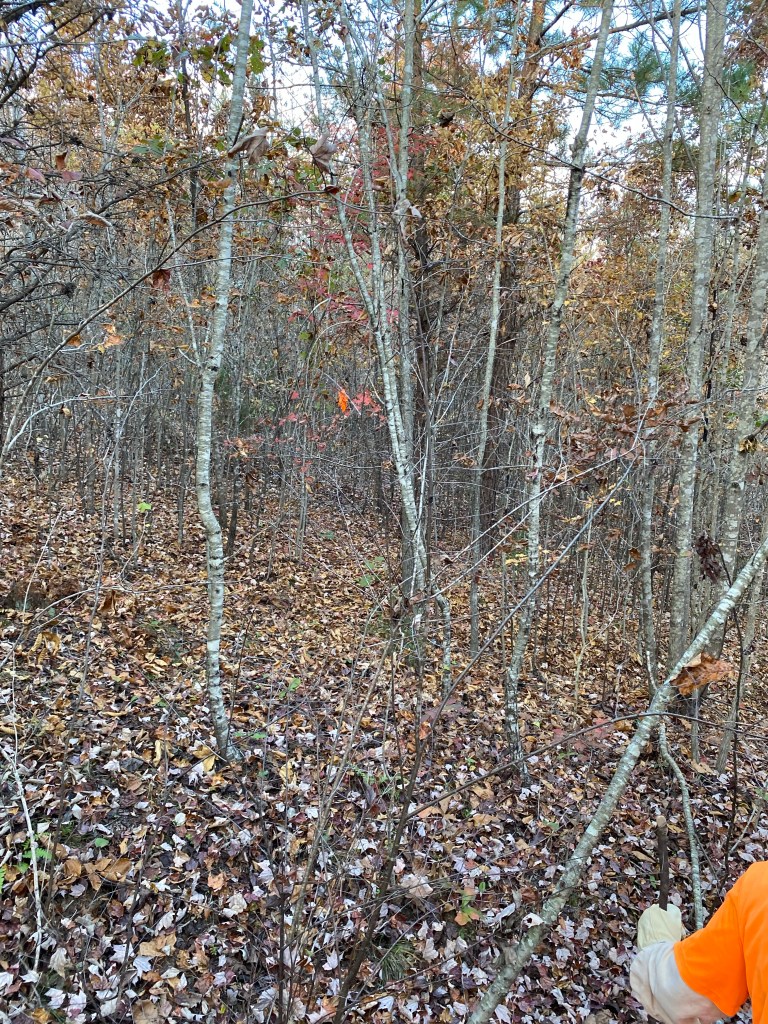
We decided to work on connecting Chanterelle Trail from the North Trail towards the South Trail. We had to cut back through hundreds of small, diseased and dying trees. Many tulip poplar, maples, dogwoods and some pine. We worked our way up and then tied my orange shirt to a tree limb and walked back around from the South Trail to Chanterelle Trail. We were only 15 or 20 yards away! It was here we found a fox den with tracks all around it.
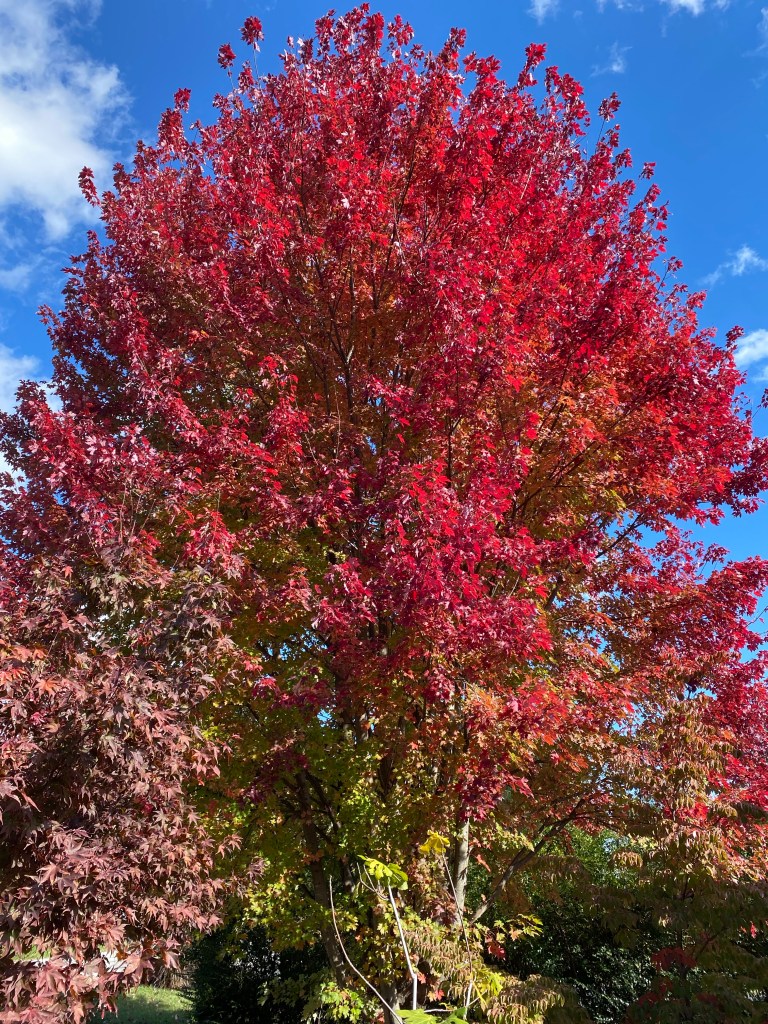
The old end of Chanterelle Trail where we connected it yesterday. My orange shirt is tied to a limb to the left of center. From trail, this is what we saw. When we got in closer, we saw a tunnel. We think it’s a fox den and we’ve seen a red fox a few times in the areaFall SAFF 2023Bonus maple 🍁 from our front yard in Staunton
And so has our shed! We will create a compost toilet and shower to make camping feel like glamping inside of this shed. We’ve been busy clearing the site and pouring concrete footers. Don delivered it yesterday from Richmond.
It’s gotten much cooler, even into the mid 30’s at night in Staunton. High 30’s in Buckingham. Brisk! So we’ve had potted up tropical plants to move indoors and onto the front porch in which to enclose them. We’ve frozen plenty of our cherry tomatoes this year and a good bit of our peppers. The garden was very productive as we’d added extra compost before we planted. We also had some rain early on and that helped get us through. At Saint Andrew’s Forest Farm, we are planning what we’ll plant and where. We are observing the wetter areas and watching. Finding sustainable solutions to grow more food and nurture the forest and its inhabitants. We haven’t seen our young bear for weeks, but thought we smelled him by the waterway at the bottom of the slope. We have heard the woodpecker calling and laughing as we get our tasks done.
Hops!
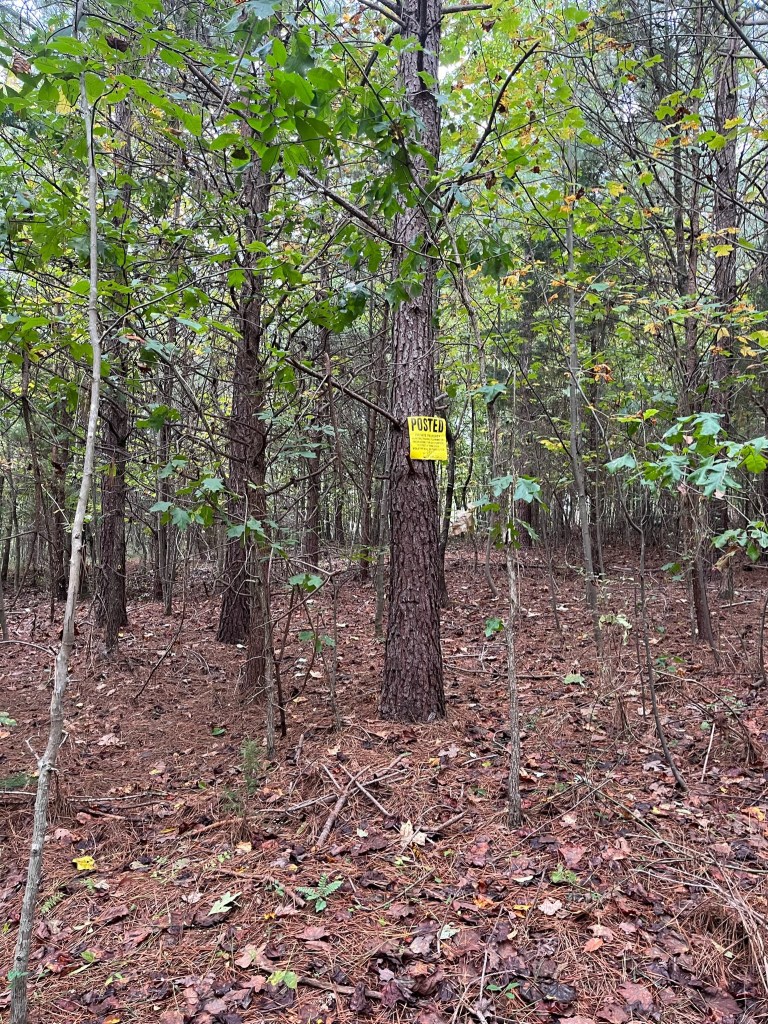
The last few days of September were spent scouting out our boundaries, meeting our neighbors, hanging ‘no hunting’ signs and continuing to blaze trails, clear out dead, dying and undeveloped trees and branches and digging our footers for the compost toilet. It rained a lot so we had many mushrooms to admire and identify.
We were excited to explore and make trails along our north boundary and we found a spot with tree of Heaven, ailanthus, which we were able to pull out with the roots since the ground was wet. It was such a relief for us to see how easily they came out. 🎊🎉
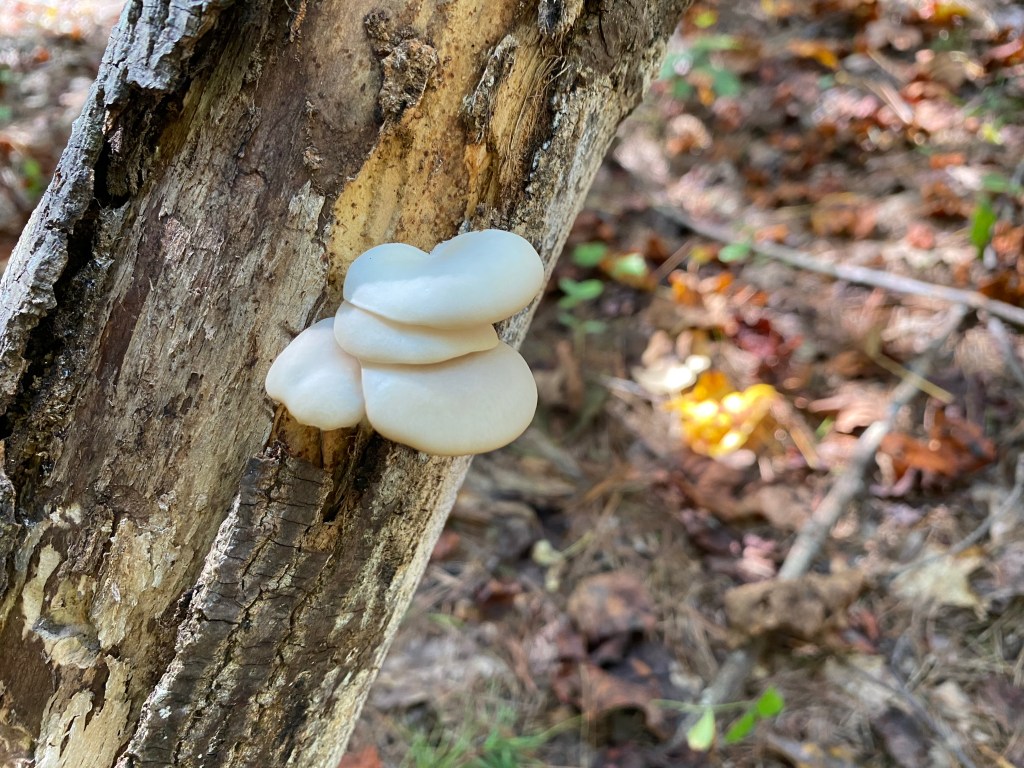
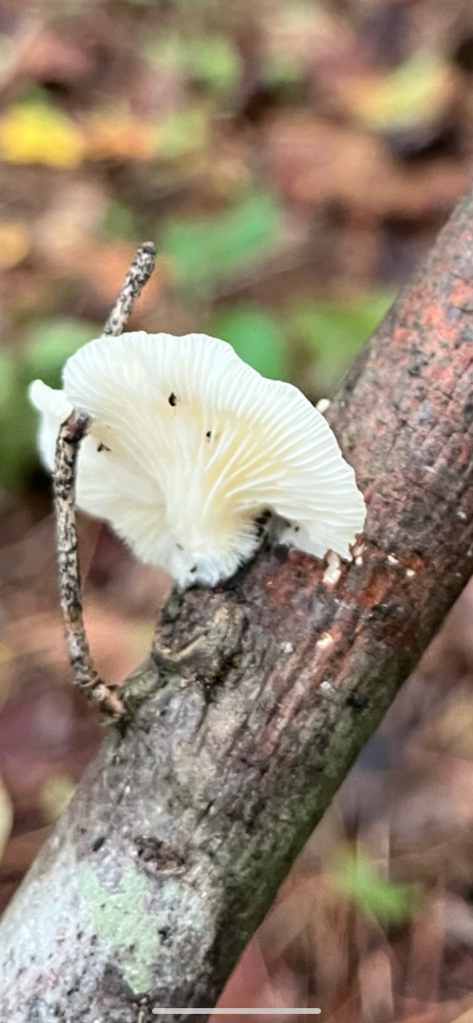
We will need to watch this spot for regrowth as tree of Heaven roots are similar to bamboo. It’s the most invasive, destructive tree we’ve encountered. It had not gotten more than a toe- hold in this section with 2 medium-sized trees in the understory of larger pines and oaks and about 30 smaller ones sprouting out in circles from the others before we pulled what we could see out. Happily, we also found oyster mushrooms growing in that same area. A dead tree had oysters throughout, top to bottom. We could see the white network of mycelium. They are decomposers and eat dead hardwood. We were happy to use this wood to inoculate other dead trees.
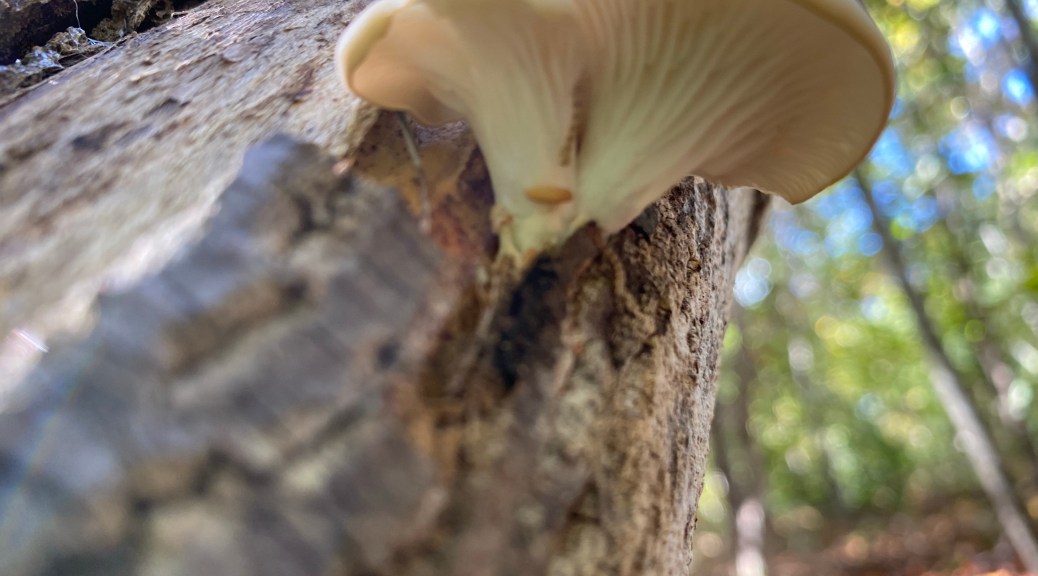
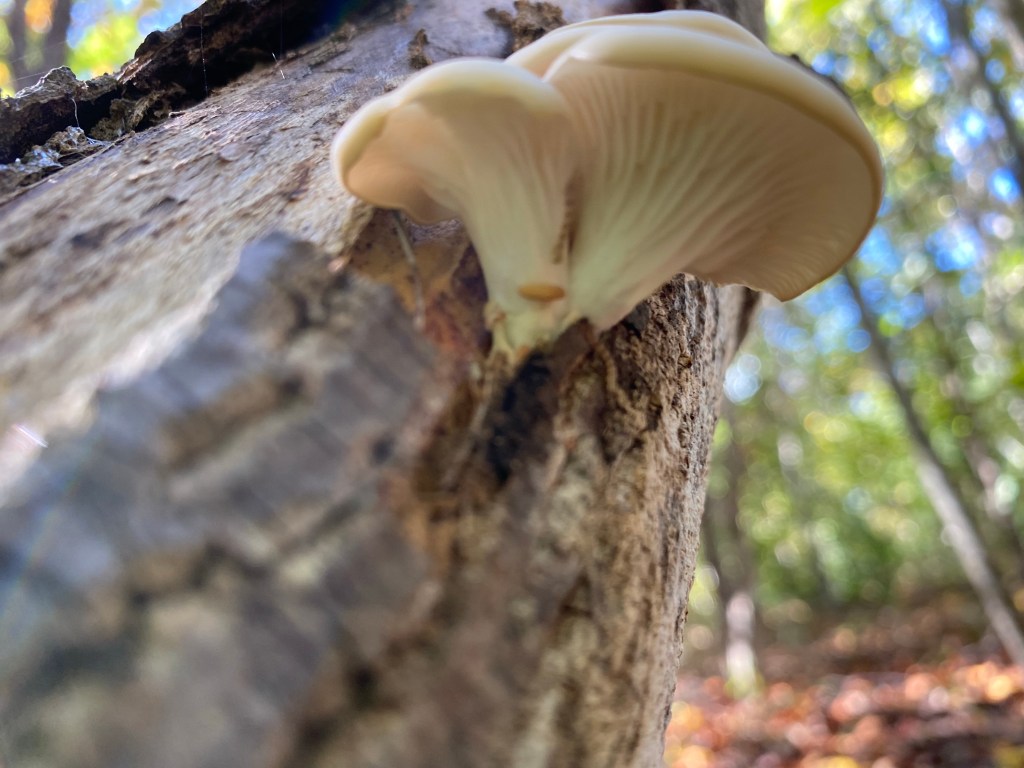
Gills of the oyster mushrooms Tops of the oysters. We came back with a chainsaw and cut the log into pieces and put these smaller logs in our stumperies where they will seed and spore for us in the dead wood that feeds them. We hope to have plenty more oysters in the years to come.
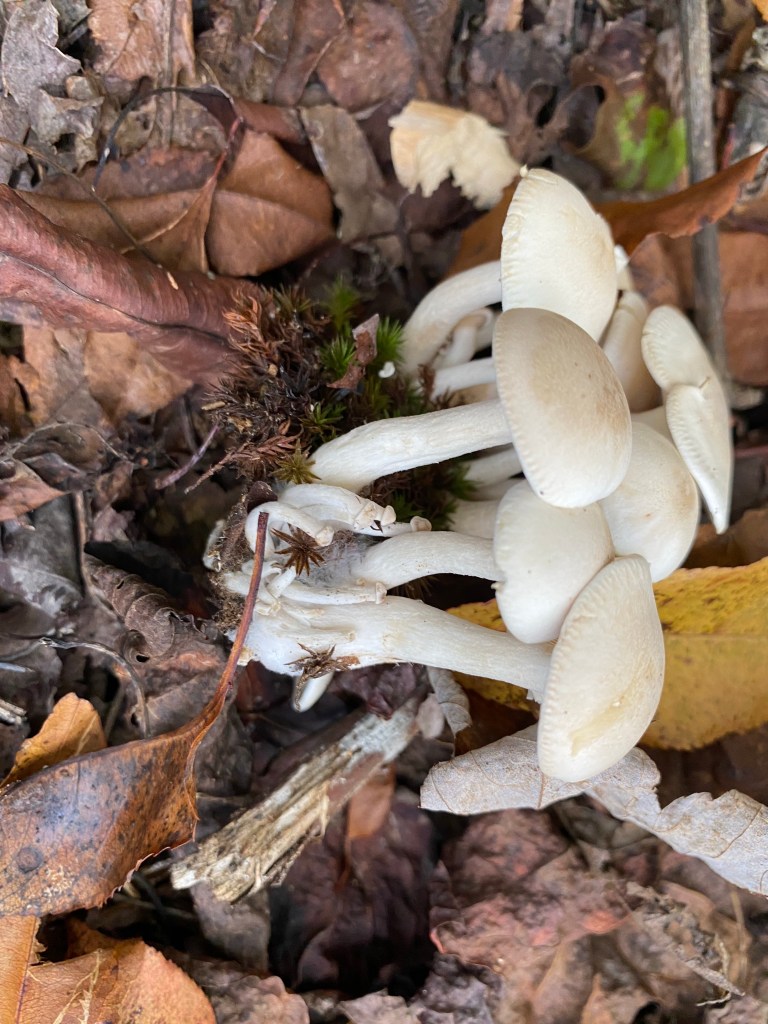
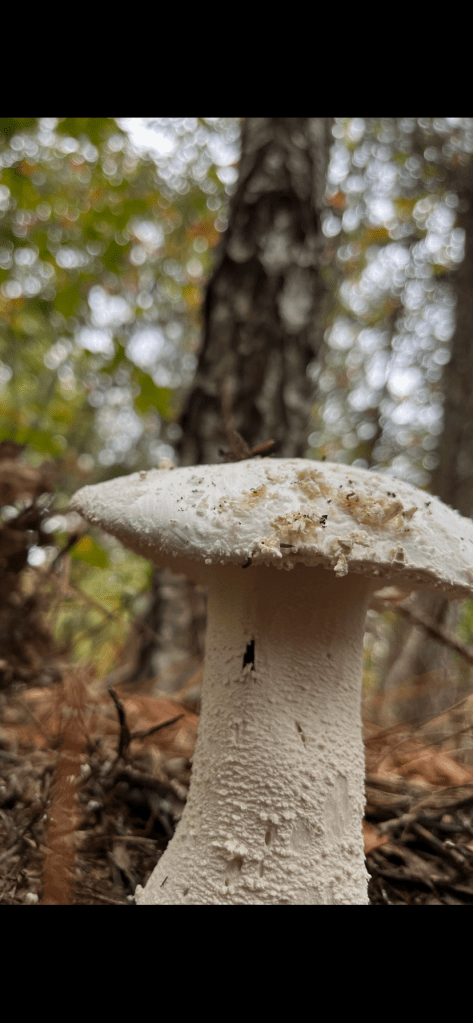
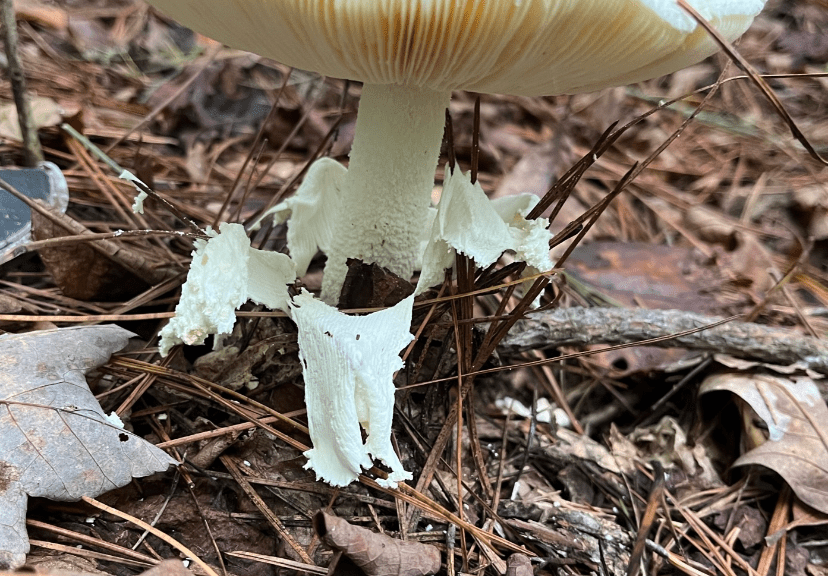
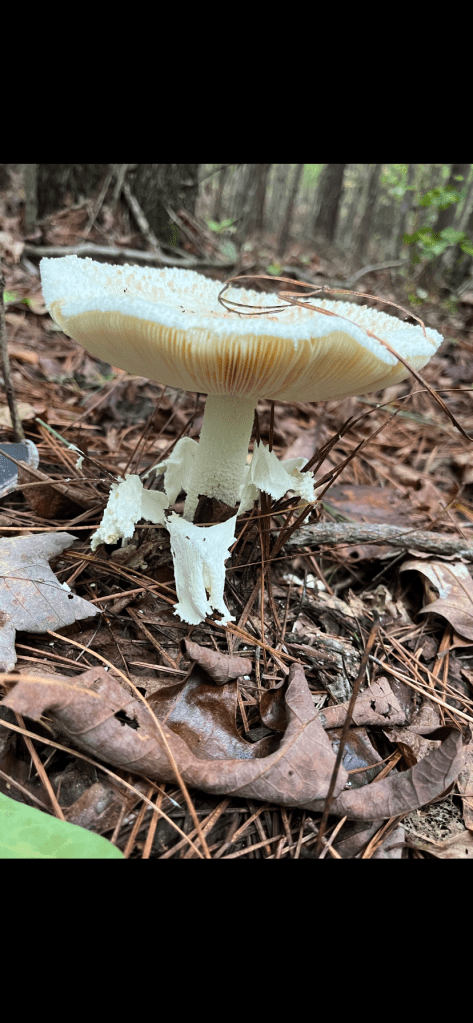
Along the south end, by St Andrew’s Road, we cut in alongside of the power lines and then dropped in to follow the waterway heading down to the creek. We found large fairy rings and clusters of white mushrooms called Entoloma sinuatum.
Appearing in late summer and autumn, fruit bodies are found in deciduous woodlands on clay or chalky soils, or nearby parklands, sometimes in the form of fairy rings. E. sinuatum causes primarily gastrointestinal problemsthat, though not generally life-threatening, have been described as highly unpleasant. Delirium and depression are uncommon sequelae. Entoloma abortivum, shrimp of the woods found everywhere down by the creek bed at bottom south end in early October after heavy rains.
As we went further down along the main creek bed at bottom, we found a bunch of clusters of shrimp of the woods. We were excited to find this delicious treat.
These mushrooms are formed where the honey mushroom fungus, Armillaria, meets the Entoloma. It was believed that the honey mushroom, Armillaria mellea, was parasitizing the entoloma. But research[6]has indicated that the inverse may be true—the entoloma may be parasitizing the honey mushroom. In that case, they are misnamed. We’ve seen both types of fungus in the area.
We have found many Amanita species. We identified the American Fly Agaric and also found Amanita crenulata and Amanita polypyramus just yesterday. They were beautiful. A. polypyramus was the largest mushroom we’ve found. Striking. They are mycorrhizal with pines helping the trees to get more nutrients in a symbiotic relationship.
A. crenulata a small oneA. polypyramus the largest we’ve seen
Leaves are falling all over the forest floor. Sometimes hiding mushrooms. The colors of the leaves are now shifting from green and yellow to yellow, orange and red.
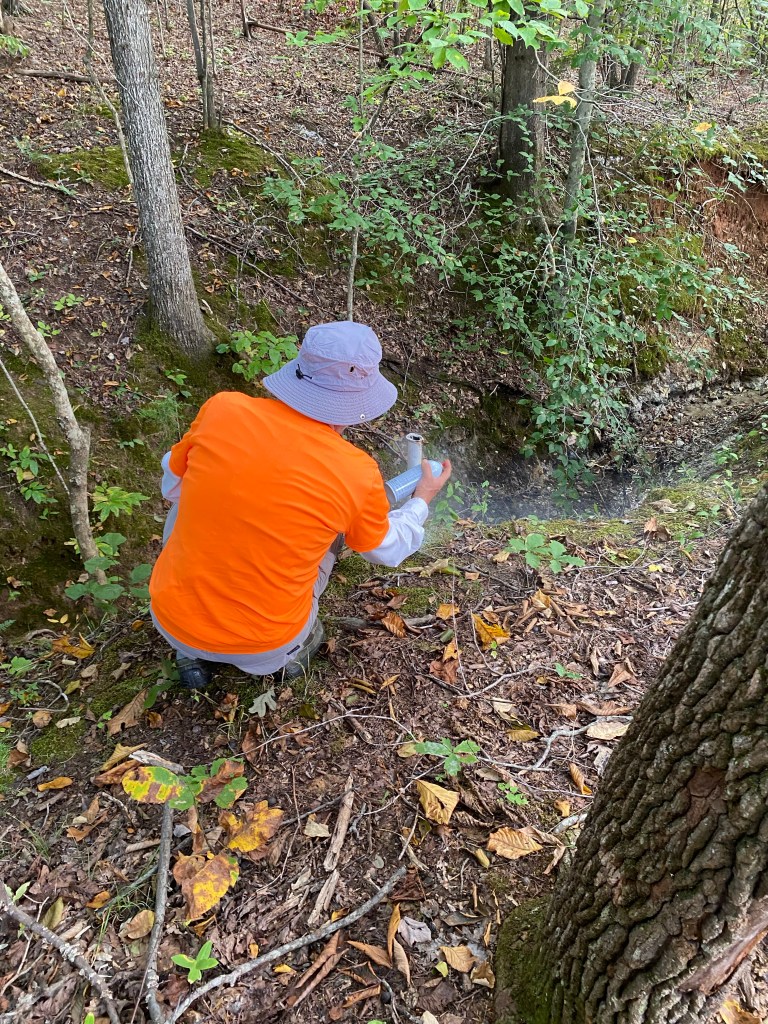
Chris wearing orange now in hunting season is painting our boundary pipe with white spray paint. We followed the boundaries in 3 corners now and reapplied white paint to borders. We will explore the last area soon. It’s getting easier to move through the woods as the leaves are dropping.We found this shy ratsnake who did not want to be photographed. He went and hid behind this tree. Nearly 6 feet long. They are beneficial and pose no risk to humans. They eat mice and rats. Adept climbers. They are constrictors.
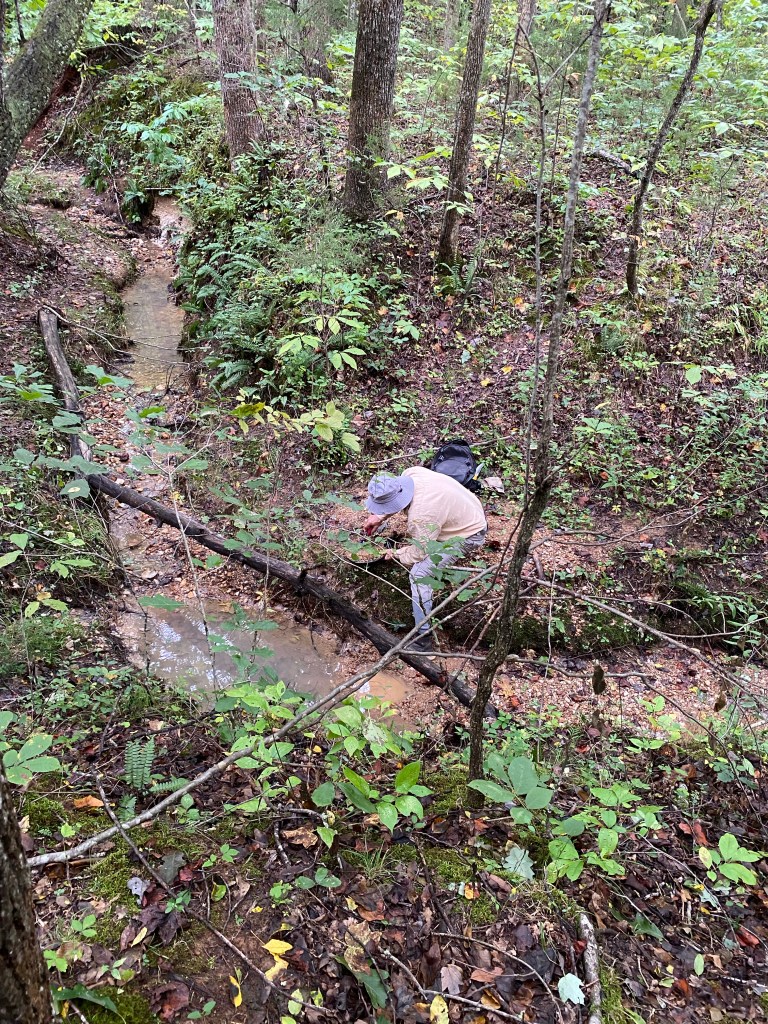
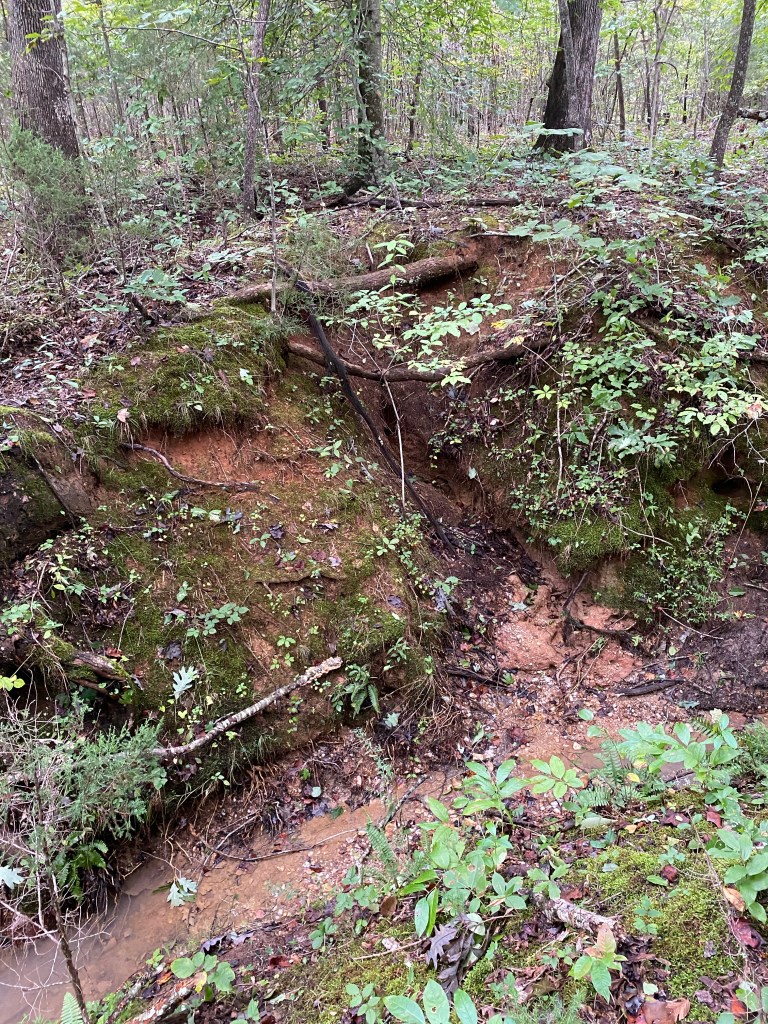
We started at the south side of the property along the road and hung signs, cut small and dying trees and laid them along the path perpendicular to the water flow and trailblazed a new path. We wound around along the edge of Saint Andrew’s Forest Farm property line along the power lines. We also followed the waterway at bottom of property to property markers at southwest corner. We found interesting mushrooms, plants and finally found paw paw trees.
We did not see the young male black bear. We saw a small lizard in the clearing up top. We saw and heard many birds in the forest. Hunting season starts tomorrow. We’ve got our signs up and hope the animals hide out from those hunters. Especially the young black bear. We heard his range might be 5-10 miles for a young bear. For an adult bear, 10 to 20 miles.
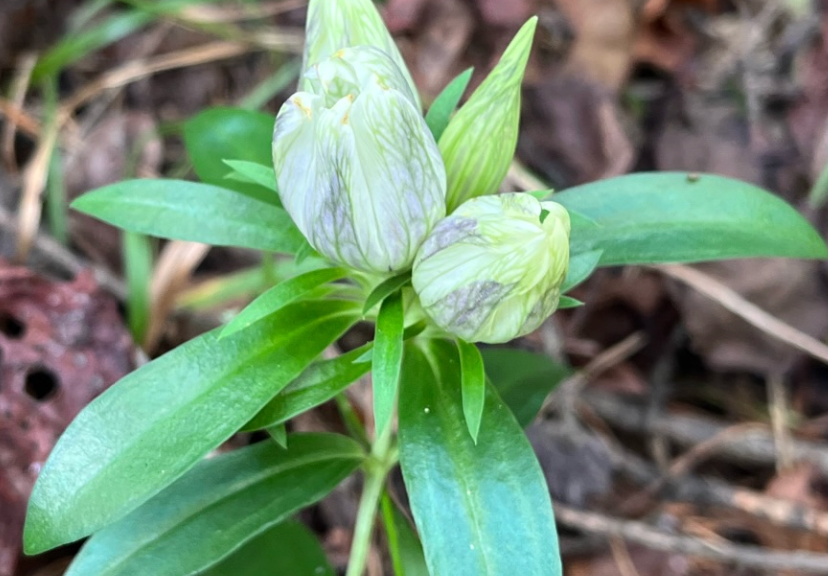
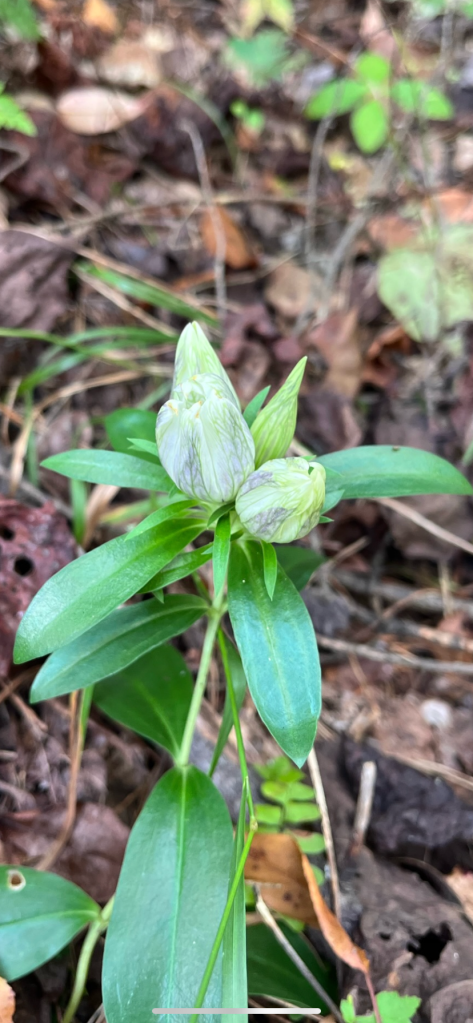
Gentiana alba, a herbaceous species of flowering plant in the Gentian family Gentianaceae, producing yellowish-white colored flowers from thick white taproots. It is native to North America from Manitoba through Ontario in the north, south to Oklahoma, Arkansas and North Carolina, and it is listed as rare, endangered, threatened or extirpated in parts of this range.[2] Found near the southwaterway.
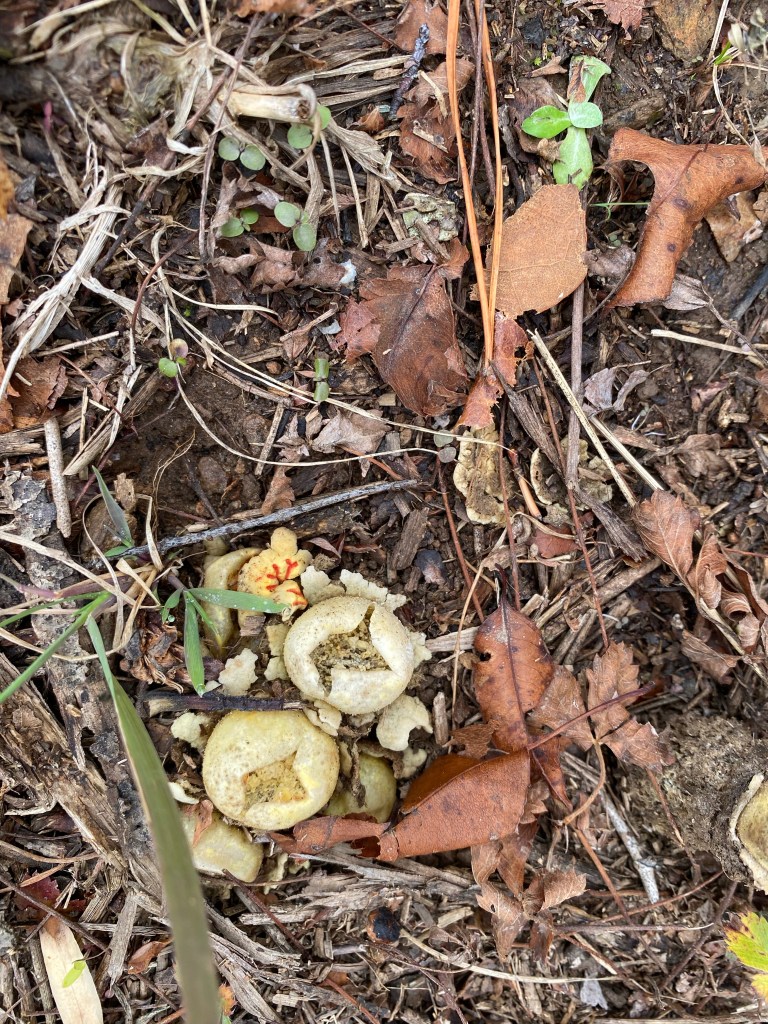
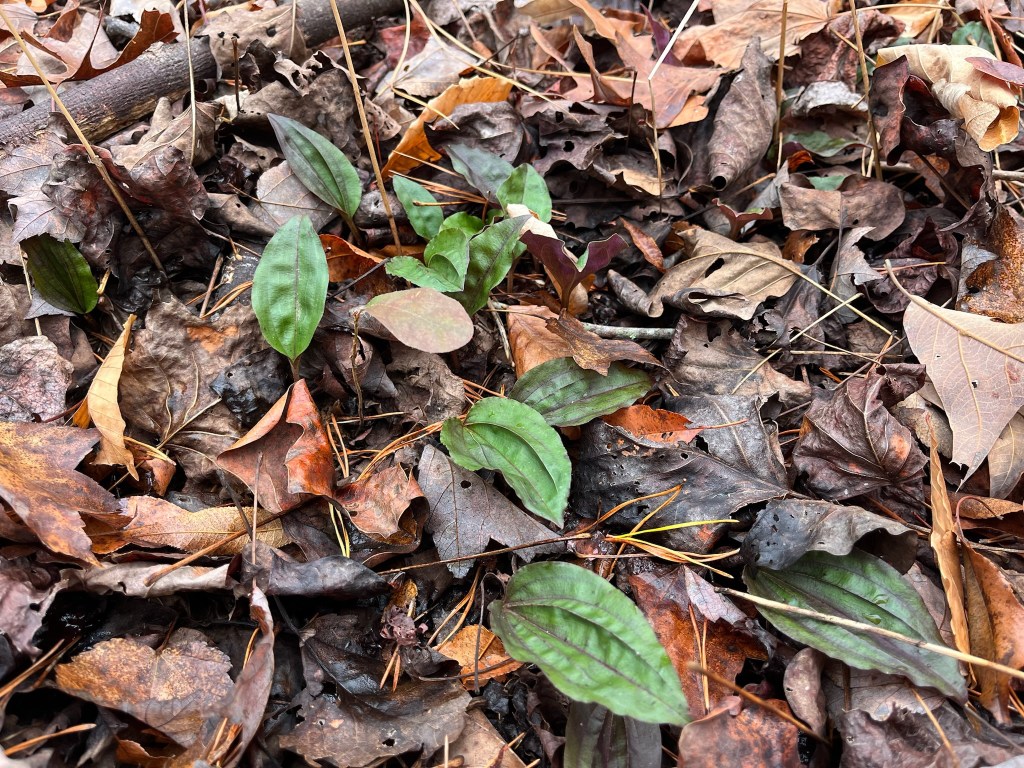
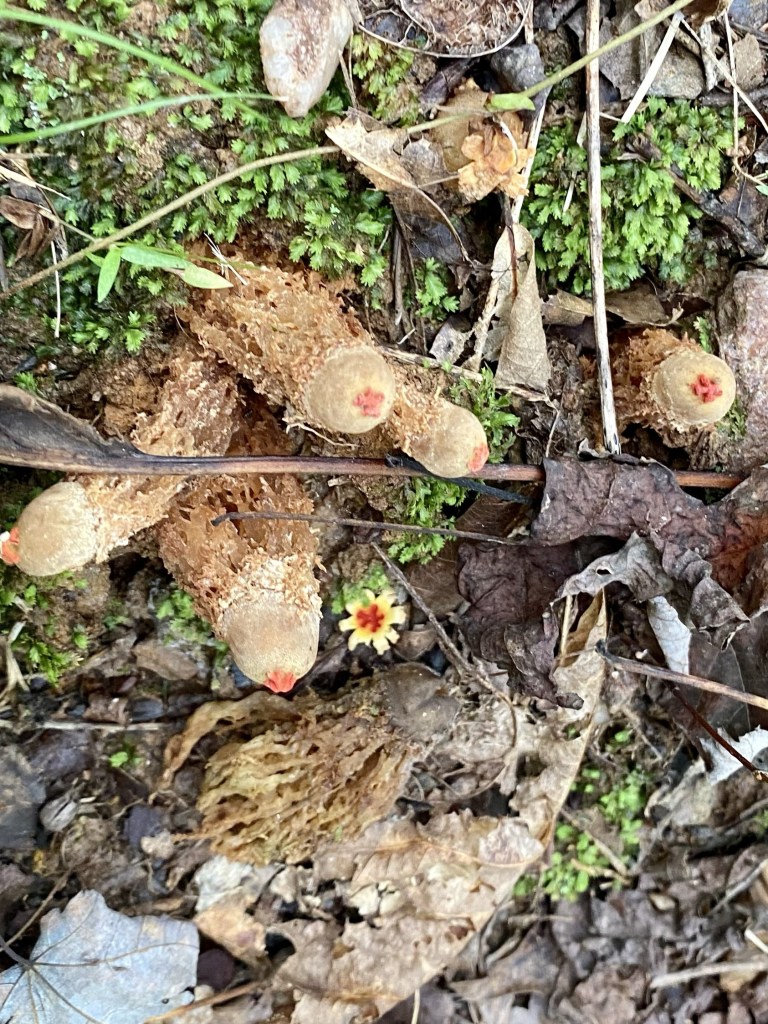
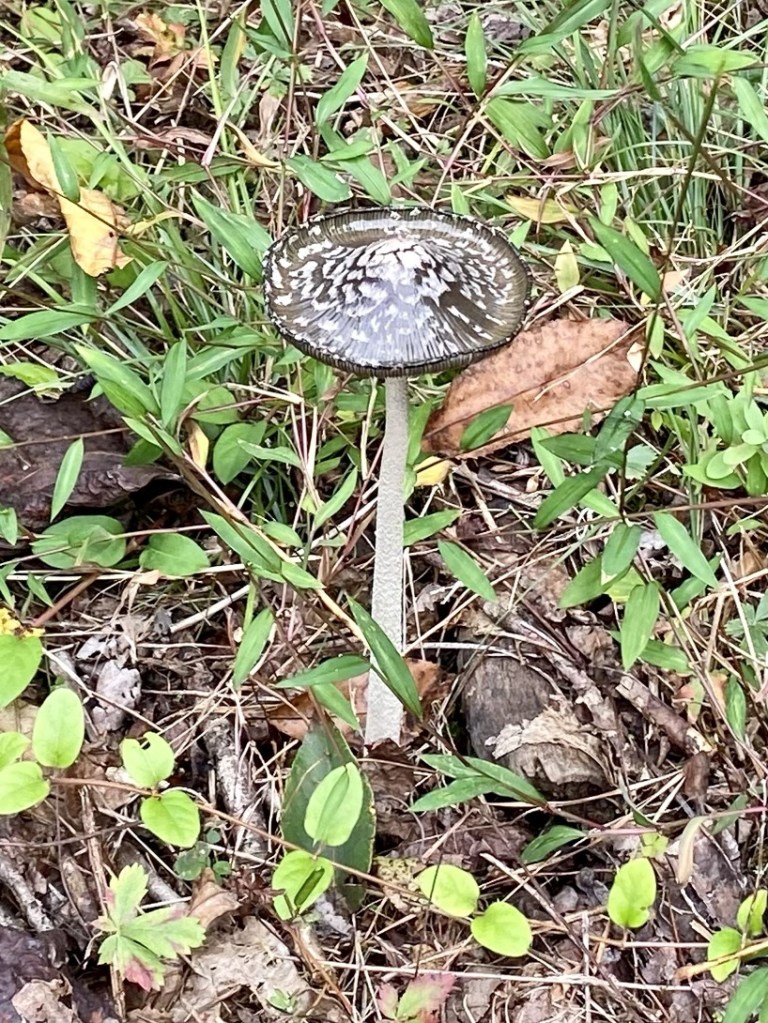
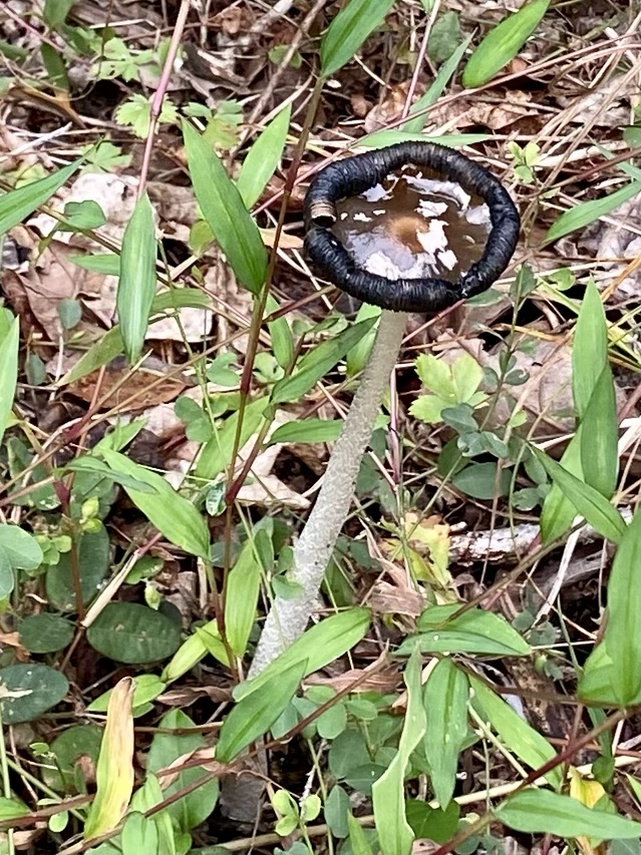
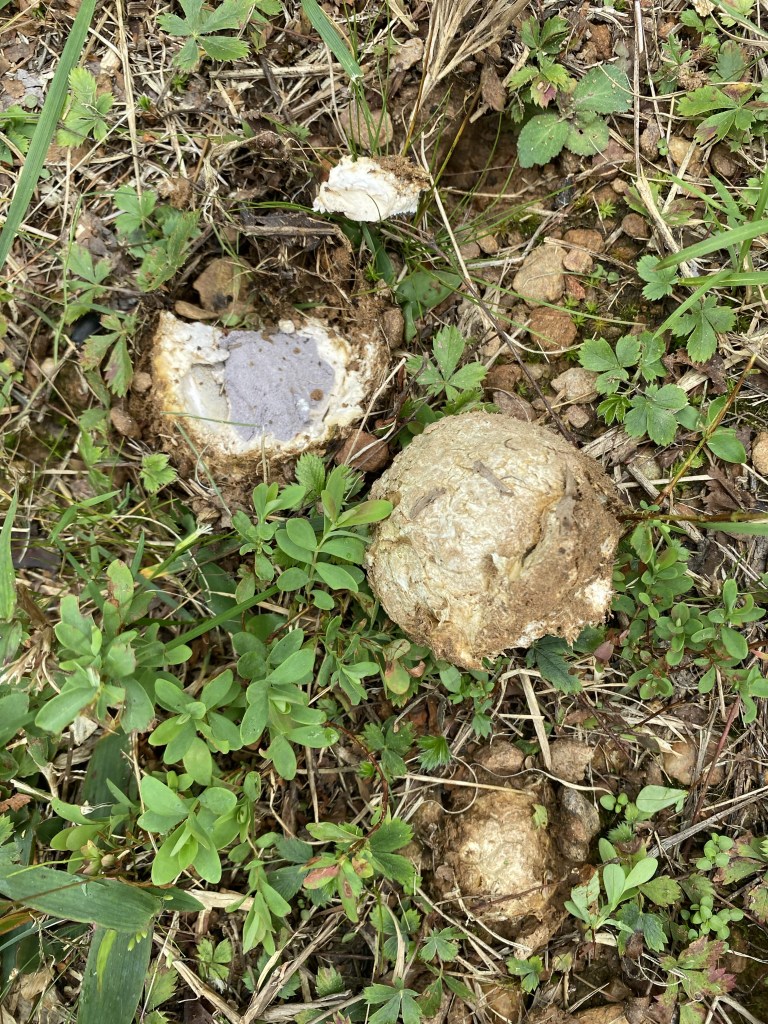
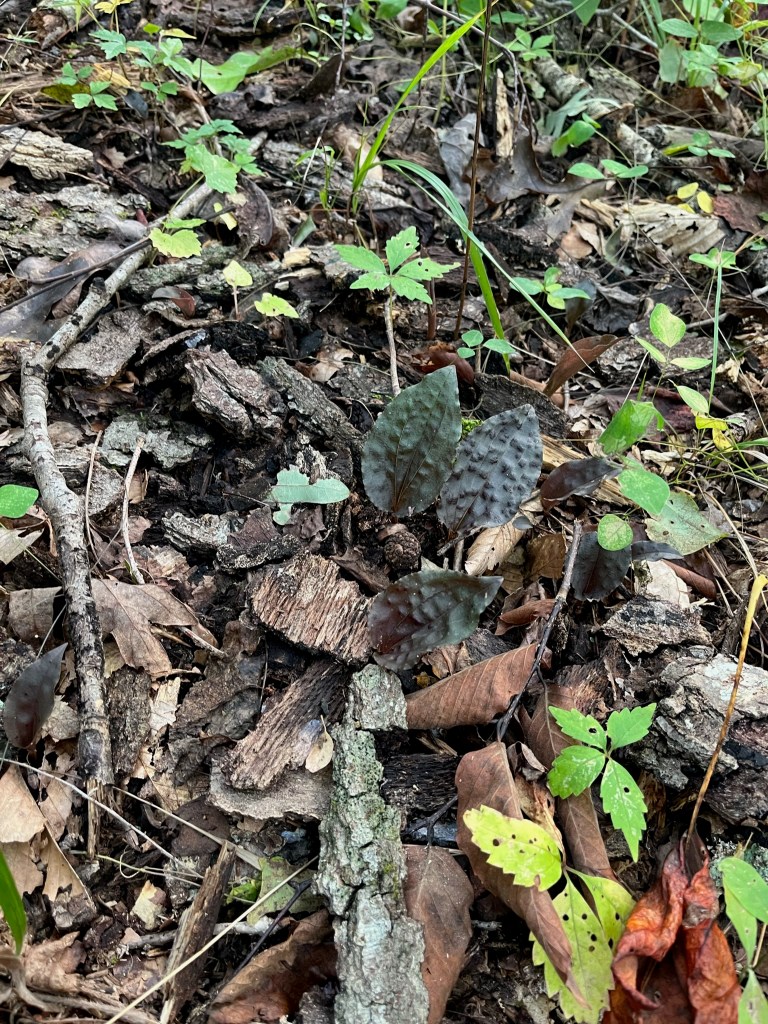
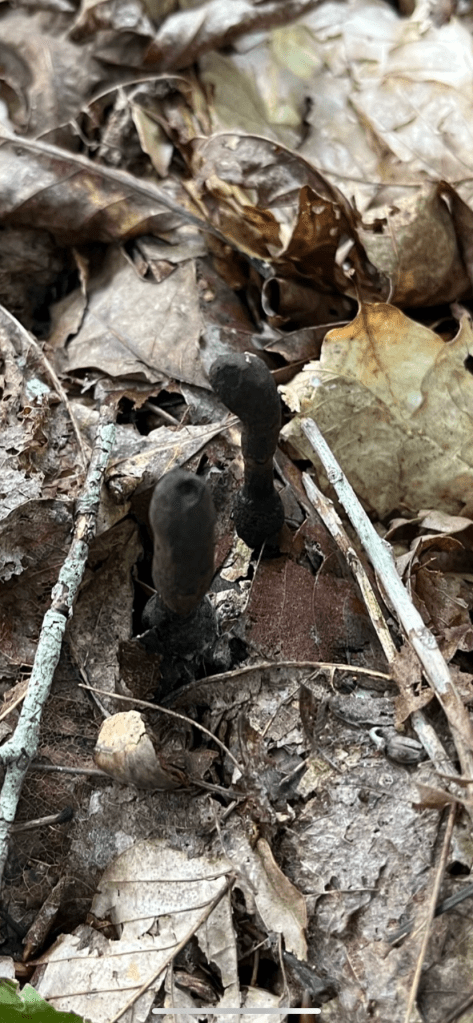
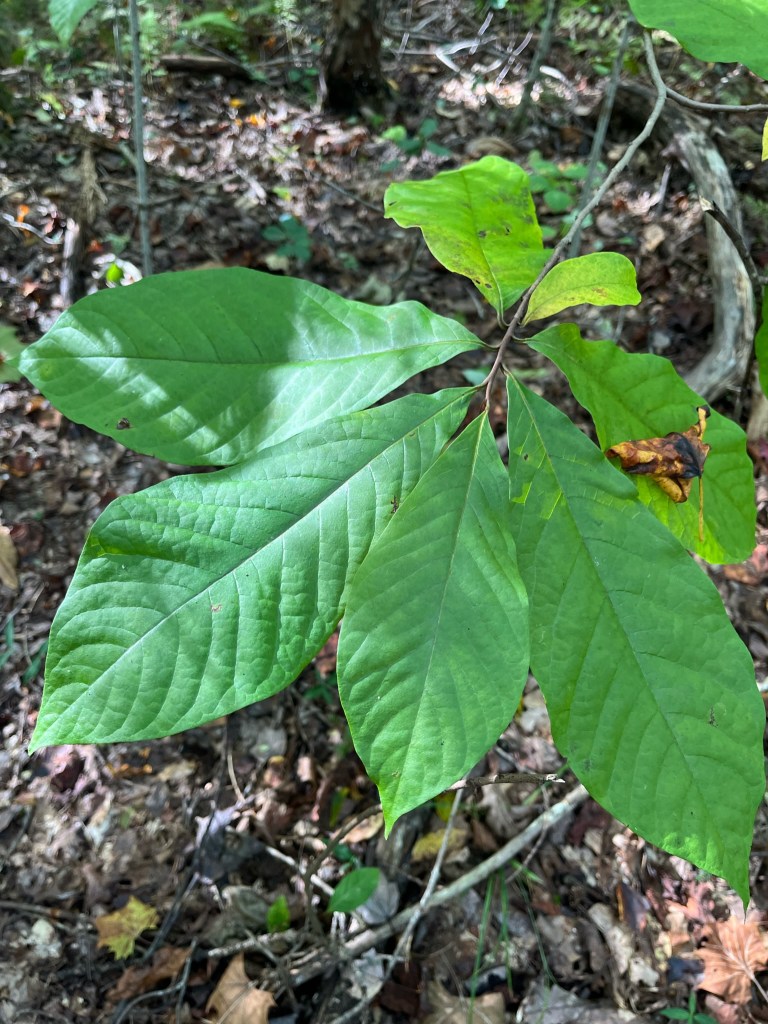
Calostoma ravenelii. Found along the South Trail. This is a comparatively small species of Calostoma with a dry, yellowish spore case that sits on a braided stem structure. It can be separated from other Calostoma species by the fact that the spore case is not red and initially covered with gelatin, its lack of a torn and felty “collar” under the spore case and its “beak” (the scar-like perforation that develops at the top of the spore case), which is red overall. Coprinopsis picacea, commonly known as the magpie mushroom, magpie fungus, or magpie inkcap fungus, is a species of fungus in the family Psathyrellaceae. It was first described in 1785 by French mycologist Jean Baptiste François Pierre Bulliard in 1785 as Agaricus picaceus. Found at bottom of clearing. The cap is initially egg-shaped, reaching a width of 7 cm. Later it opens up and takes on a bell shape that is up to 8 cm wide. The cap is serrated and colored white on very young mushrooms. It breaks open with increasing age, so that the beige to dark brown background emerges. Remnants of the white, grayish to cream-colored velum remain on the cap as flakes, giving the impression of woodpecker or magpie plumage. With age, the brim of the cap rolls up and dissolves. The lamellae are very close and are initially greyish-white, then pink to gray in color. Eventually they melt, dripping and black, giving it the name inkcap. An older magpie ink cap mushroom. Poisonous.Scleroderma polyrhizum. Identifying features include the baseball-like stature and shape; the tough, thick skin; the hard, black interior that turns to dust in old age; the way the mushroom splits open and peels back (a little like the rays of a star); the smooth to pocked or pitted (but not prominently scaly) surface; and the habitat in grass and disturbed-ground settings. Probably saprobic, but possibly mycorrhizal; growing alone, scattered, or gregariously in grass and in disturbed-ground settings; often appearing in urban settings; summer, fall, and early winter; widely distributed in North America. Fruiting Body: 8-13 cm across before splitting and spreading; round or nearly round; very tough; partially submerged in the ground; surface when young fairly smooth, often covered with whitish down; with age becoming pocked, pitted, or minutely scaly in places, and usually covered with adhering soil and debris; often bruising reddish or yellowish when rubbed; with maturity splitting near the top and peeling back in irregular rays to expose the spore mass; skin to 5 mm thick or more, whitish but blushing pink when sliced; sometimes with white rhizomorphs attached to the base; odor not distinctive.Cranefly orchid leafs emerging for winter. This club-shaped Xylaria species is common on hardwood sticks and logs in the northeastern and midwestern United States. It often has a longer stem structure than other species in the genus, but this feature cannot be relied on to identify it with certainty. Xylaria longipes is somewhat variable in its appearance, but defining features include its medium size, its club-shaped head, and its spores, which feature spiraling germ slits. Ecology: Saprobic on decaying hardwood logs and sticks (especially the debris of beech and maples), growing directly from the wood; growing alone or gregariously; causing a soft rot; spring through fall; common in northeastern North America and in the Midwest, but occasionally reported elsewhere on the continent (though it may be absent in tropical areas). The illustrated and described collections are from Illinois. Fruiting Body: 2.5–6.5 cm tall; 0.5–1.5 cm thick; shaped more or less like a club, with a rounded tip; grayish to brownish when young, becoming dark brown to black with maturity; surface often becoming cracked and scaly with maturity; stem often proportionally long, but also frequently short or nearly absent, black, covered with black to rusty brown or reddish fuzz near the base; interior flesh white and tough; perithecia in mature fruiting bodies up to about 1 mm across, spherical, just below the surface. Found along the waterway.Asimina triloba, the American papaw, pawpaw, paw paw, or paw-paw, among many regional names, is a small deciduous tree native to the eastern United States and Canada, producing a large, yellowish-green to brown fruit.[3][4][5]Asimina is the only temperate genus in the tropical and subtropical flowering plant family Annonaceae, and Asimina triloba has the most northern range of all. We were delighted to find this by the south side near the waterway. The leaves were so interesting and smooth. No jaggedy edges.
We went to Saint Andrew’s Forest Farm to hang signs all along our boundaries. The drive over was colorful as leaves are slowly becoming yellow and falling. It was overcast and cool. 69 degrees Fahrenheit was the high temperature today.
We were excited since it was a lot of new exploration for us. We began in the front, north side and posted signs as we walked our property edge. We culled small, dead and dying trees and limbs along the way. It was lovely in this new to us corner of the farm.
We saw mushrooms everywhere as the weather has been rainy and cooler. We saw Amanitas, Russulas and many smaller ones in between.
We were able to get signs up along multiple stretches of our boundaries and hope to finish this task before the weekend is done.
We did not see the young black bear today.
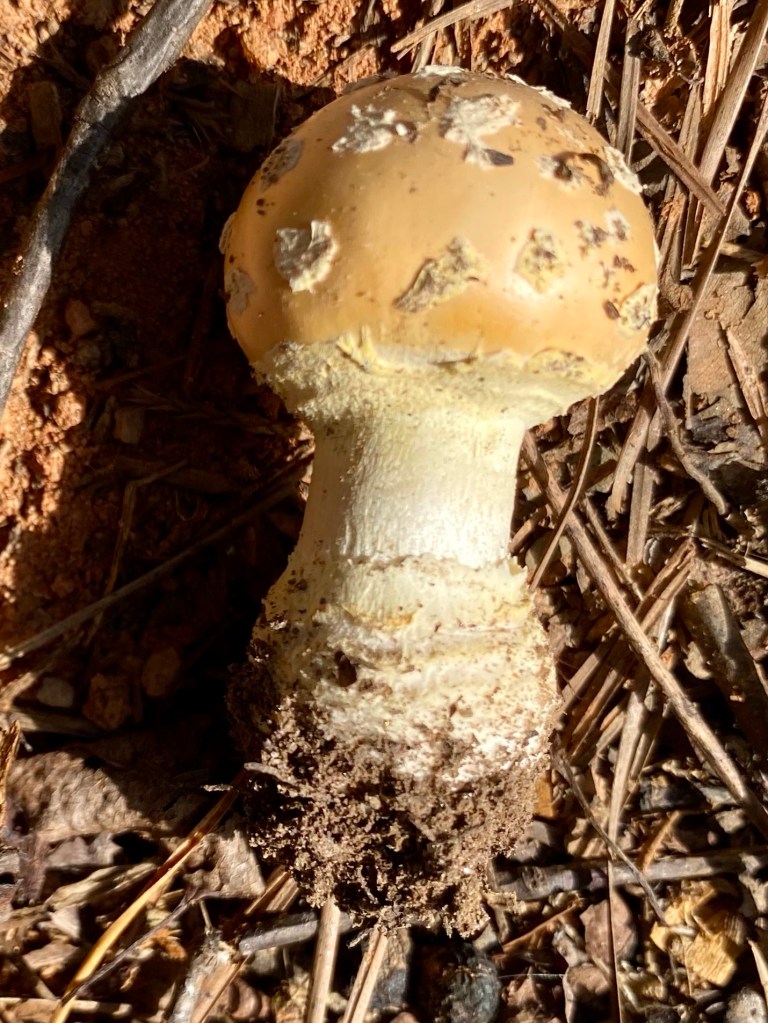
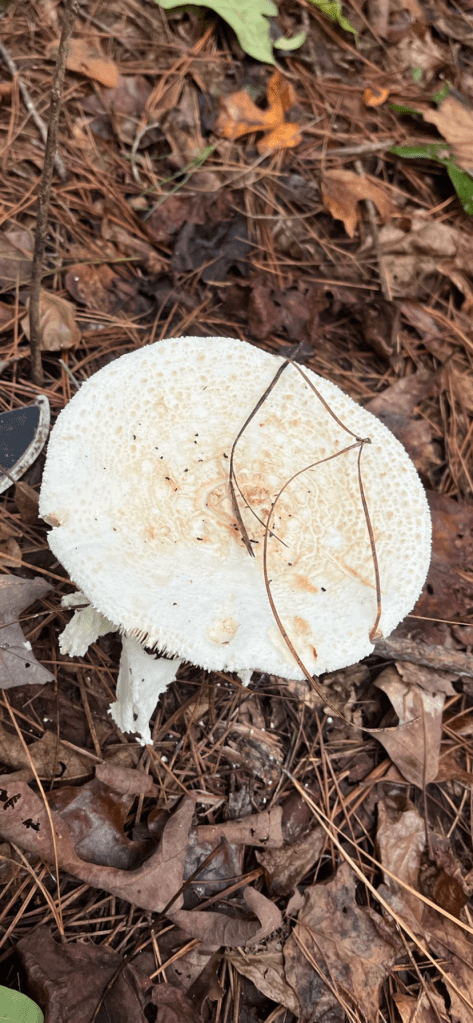
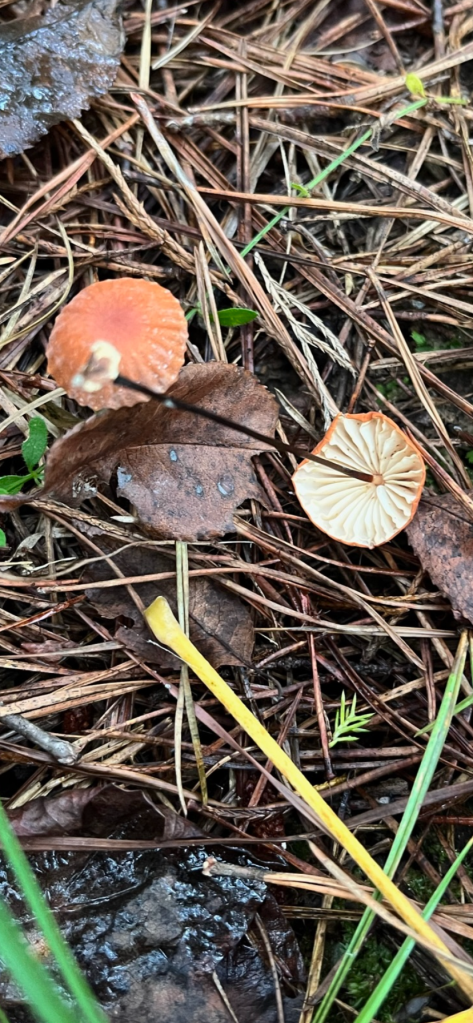
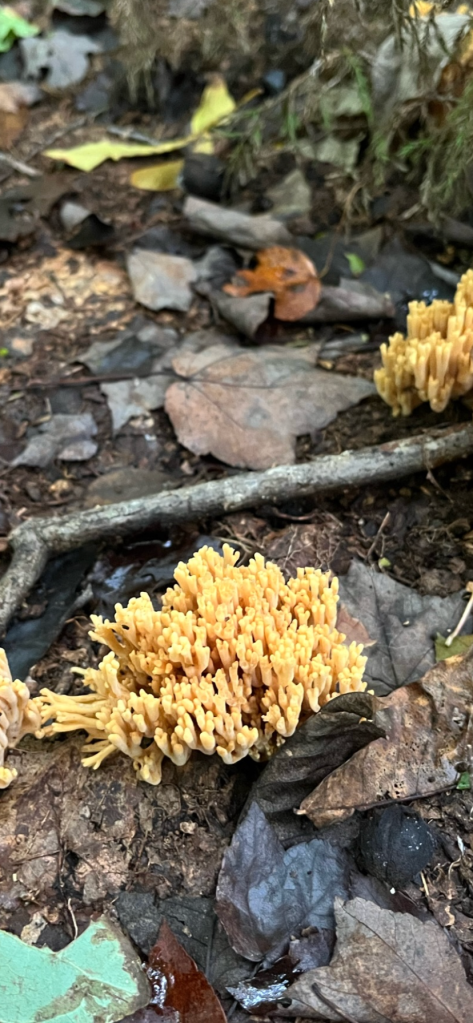
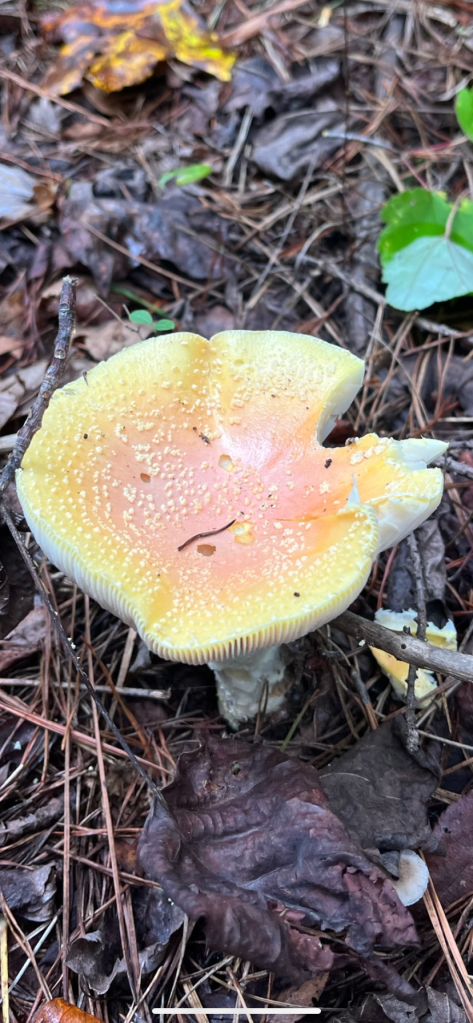
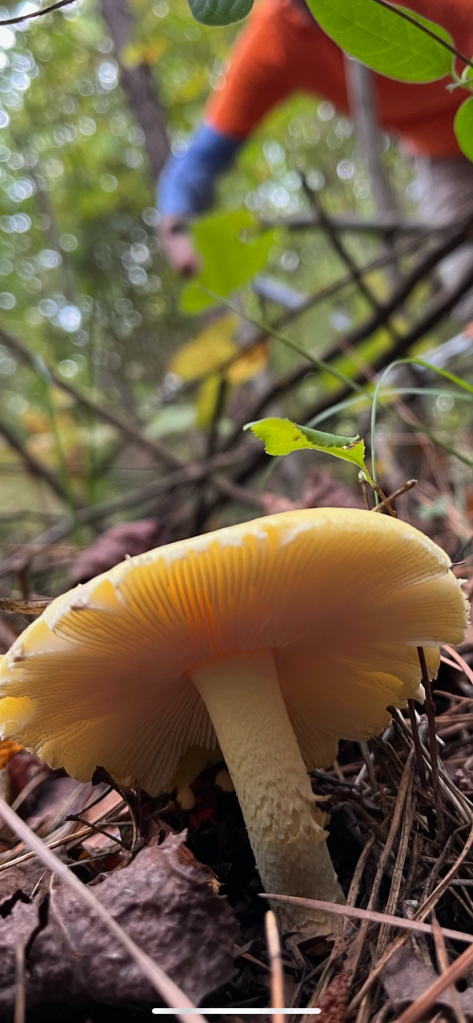
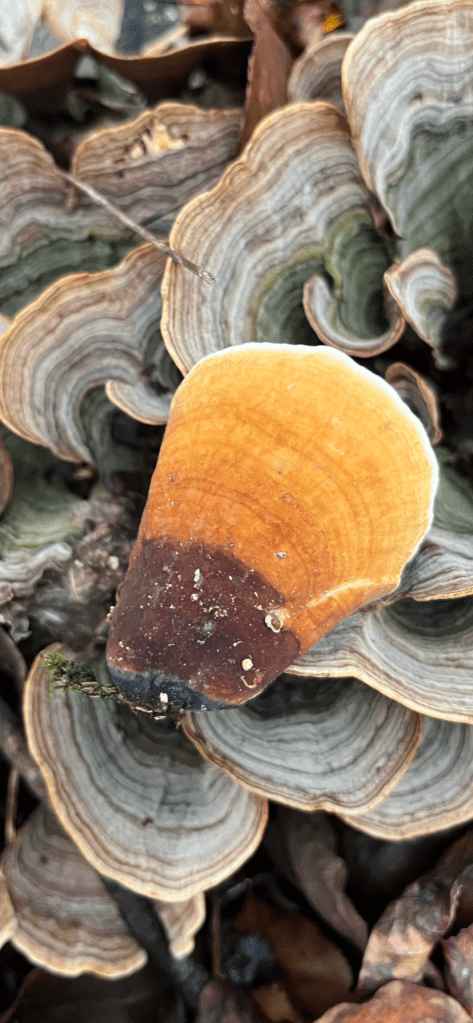
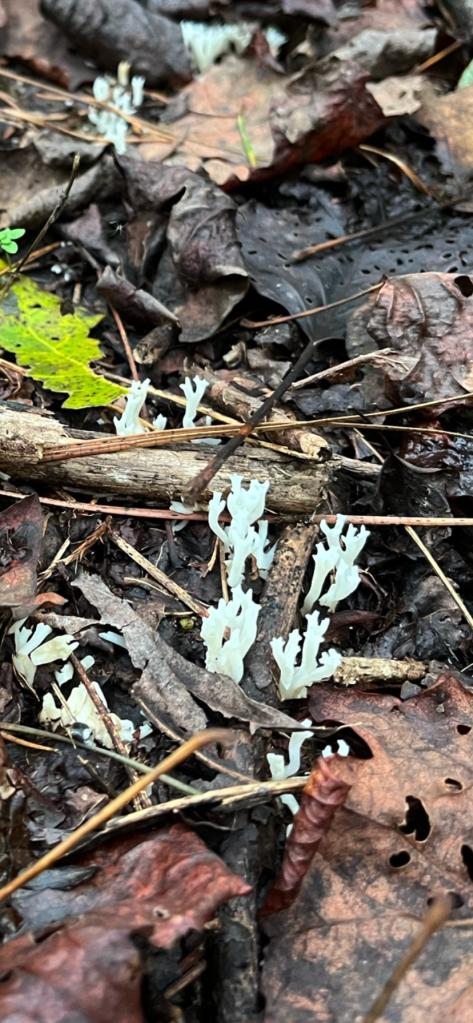
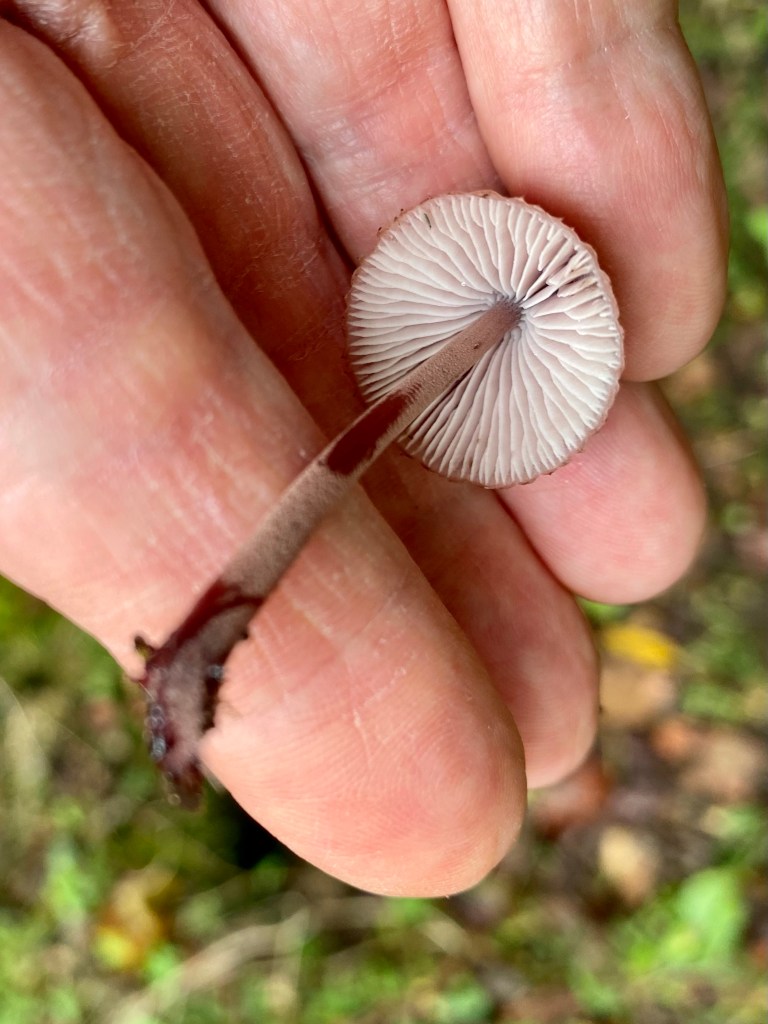
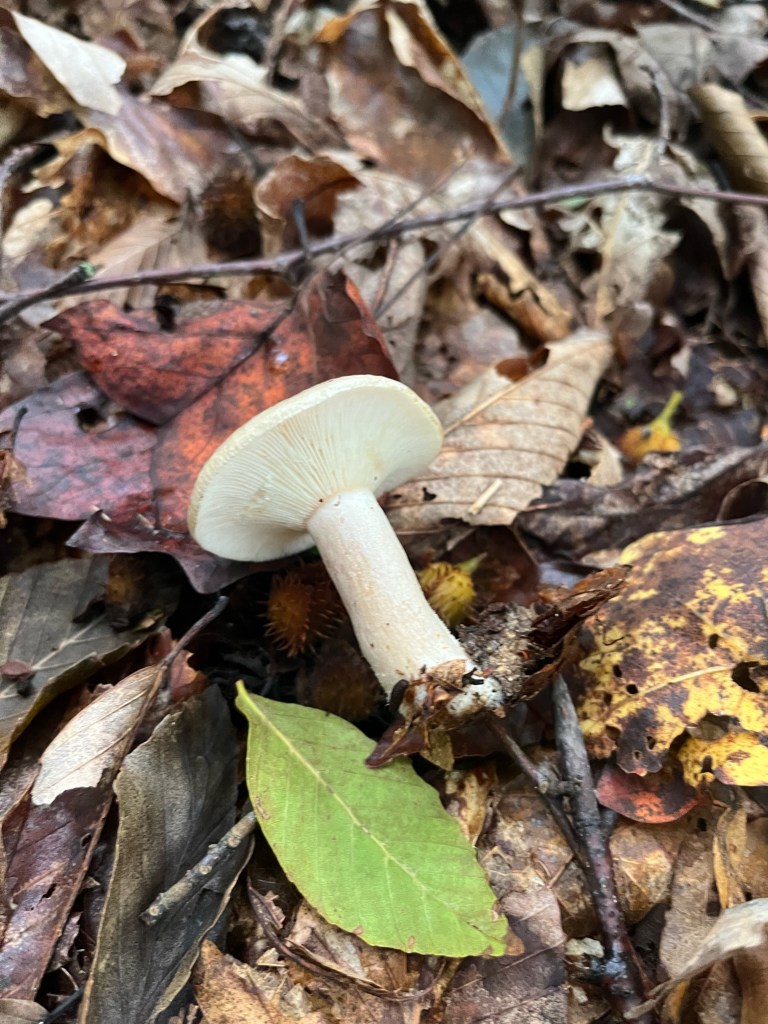
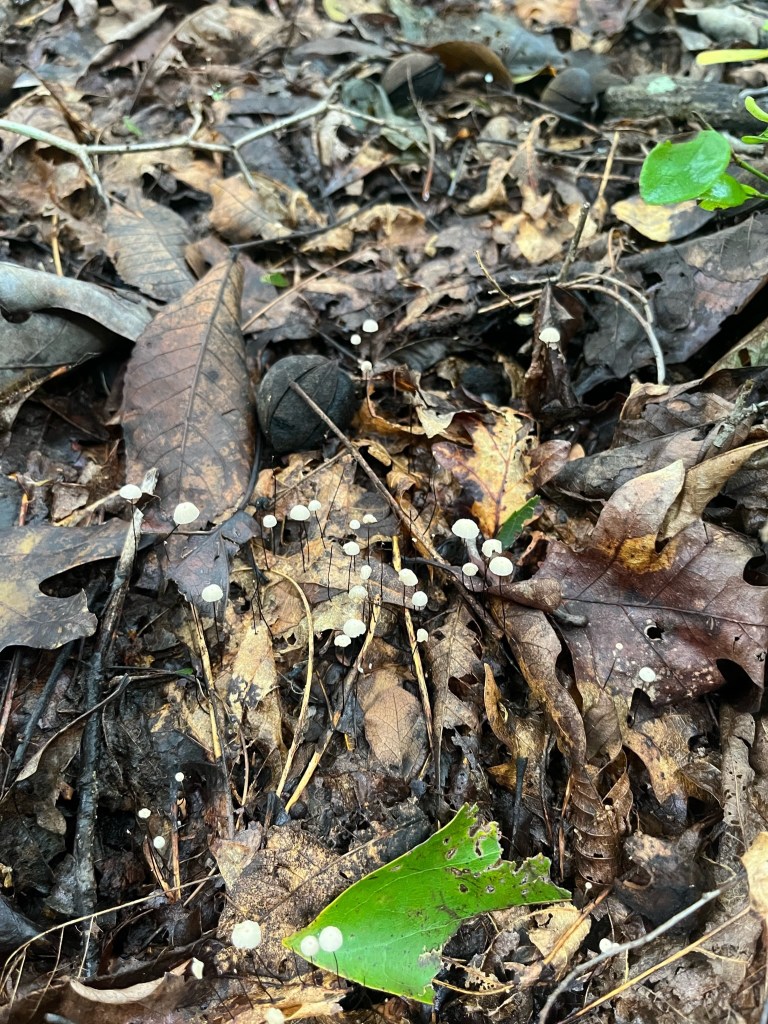
Amanita. Note the veil having just freshly fallen. This could be the death cap, Amanita phalloides. Half of one is enough to kill an adult human. The principal toxic constituent is α-Amanitin, which causes liver and kidney failure. Thus, we leave anything that looks similar alone.Top view of the large Amanita. It was 5 to 6 inches across. This mushroom was beautiful and we left it in the woods. They are mycorrhizal with pine, oak and chestnut trees. Another boundary marker and sign we posted today. Arising from hardwood leaves and sticks, these tiny beach umbrellas are quite beautiful when fresh. The pleated cap, the wiry stem, and the very distant gills make the Marasmius easy to recognize. Other “pinwheel” Marasmius species include these Marasmius fulvoferrugineus, with a rusty brown cap. We saw hundreds of these tiny mushrooms growing on the leaves of our forest floor.Pleurocybella porrigens is a species of fungus in the family Phyllotopsidaceae. The species is widespread in temperate forests of the Northern Hemisphere.[2]P. porrigens, known as the angel wing, is a white-rot wood-decay fungus on conifer wood, particularly hemlock (genus Tsuga).[3]The flesh is thin and fragile compared to the oyster mushrooms (Pleurotus ssp.).Coral fungusThis variety of the well known species Amanita muscaria is distinguished by its yellow to orange, rather than red, cap. Other trademark features are shared with the red version: numerous warts on the cap, a ring on the upper stem, and a distinctive stem base that features several shaggy “zones” of universal veilmaterial on the upper edge of a basal bulb. Amanita muscaria var. guessowii is found in the northern Midwest and in eastern North America from the boreal forests of the northeast, south to the Appalachians.Gills of Amanita muscari var. guessowii the American yellow fly agaric. Closely resembles Amanita ceasarea but is noted to be poisonous or have unwanted effects and to be edible. We leave them in the forest.Yellowing Curtain Crust, Stereum subtomentosum, is easily confused with Trametes versicolor, the Turkeytail bracket fungus (which differs from Stereum species, however, by having tiny shallow pores on its fertile undersurface), this rather uncommon bracket grows on dead hardwood, and most commonly on Beech. Like many other crust fungi, Stereum subtomentosum can be found throughout the year; however, its period of sporulation is limited to the summer and autumn. Coral fungus
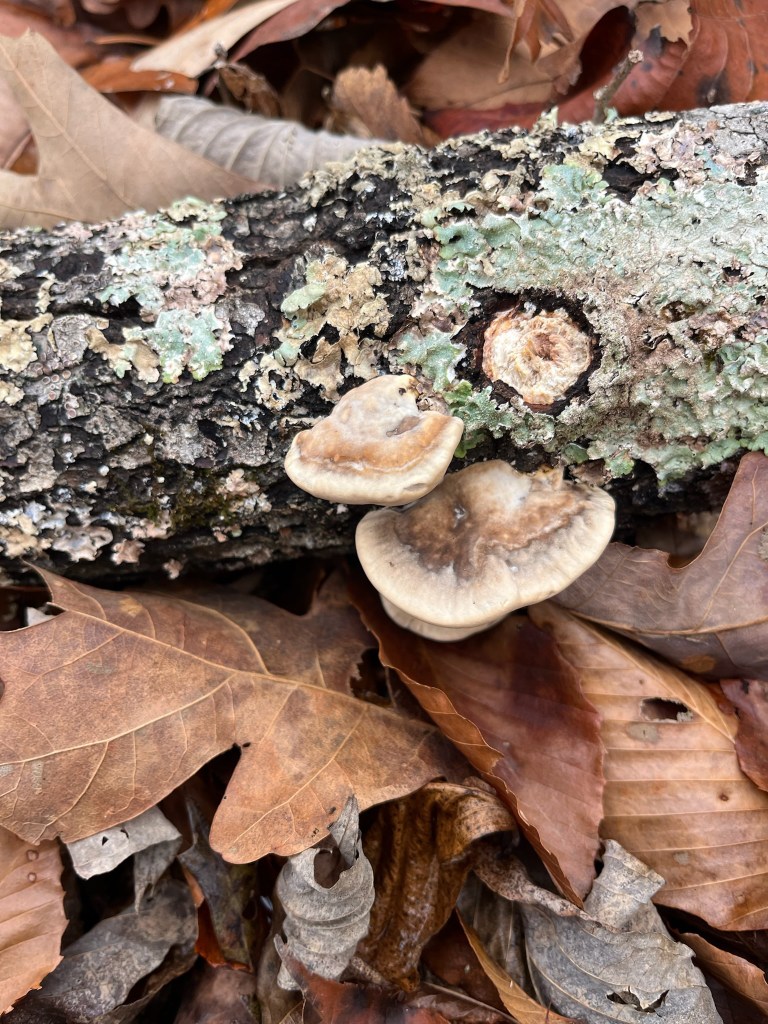
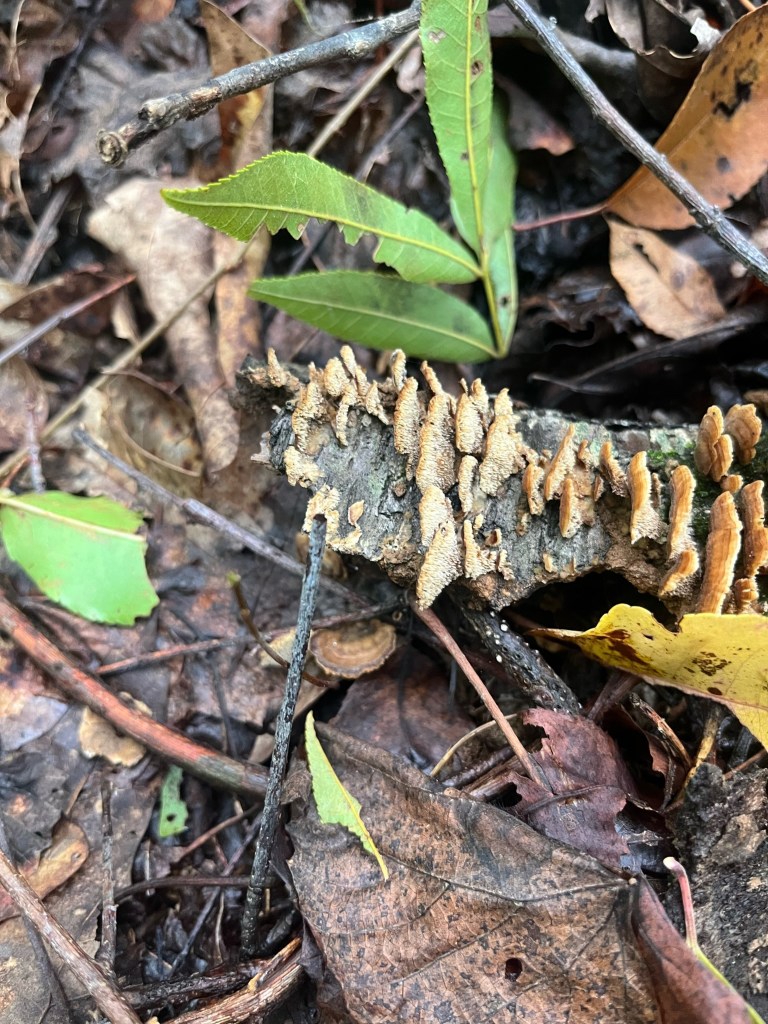
Violet toothed polypore, Trichaptum biforme, a tough, hairy bracket fungus with violet margins and zones of white, brown, and black; pores whitish violet, breaking into teeth. Grows on stumps and logs of deciduous wood. Year-round. Cap semicircular, flat; zones of white-gray, ochre or dark brown, and brown-black; violet along the margin; texture tough, hairy. Pores angular, becoming toothlike; whitish brown with violet tinge, fading to buff, with violet along the margin. Stalk not present. Spore print white. Spores magnified are cylindrical, smooth.
The woods are changing and moving into fall. Leaves are colorful and the forest is brighter. This is the North Trail where we startled a young bear. We think he was the 3 year old male bear our neighbor told us about. He looked healthy as he ran away. This was at the top of North Trail. No sign of his mother.
Tropical storm Ophelia moved through Saint Andrew’s Forest Farm with gusting winds and rain just the day before. As we drove over from Staunton, we saw several large trees blown over and wondered what impact the storm had on the trees at SAFF. As we pulled in, we did not see any downed trees only a few limbs on the ground.
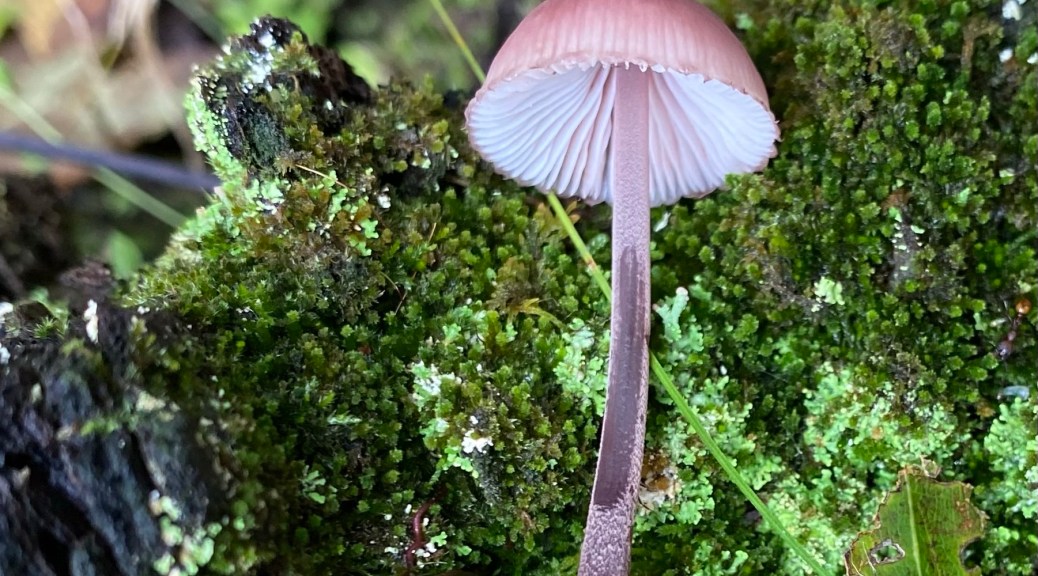
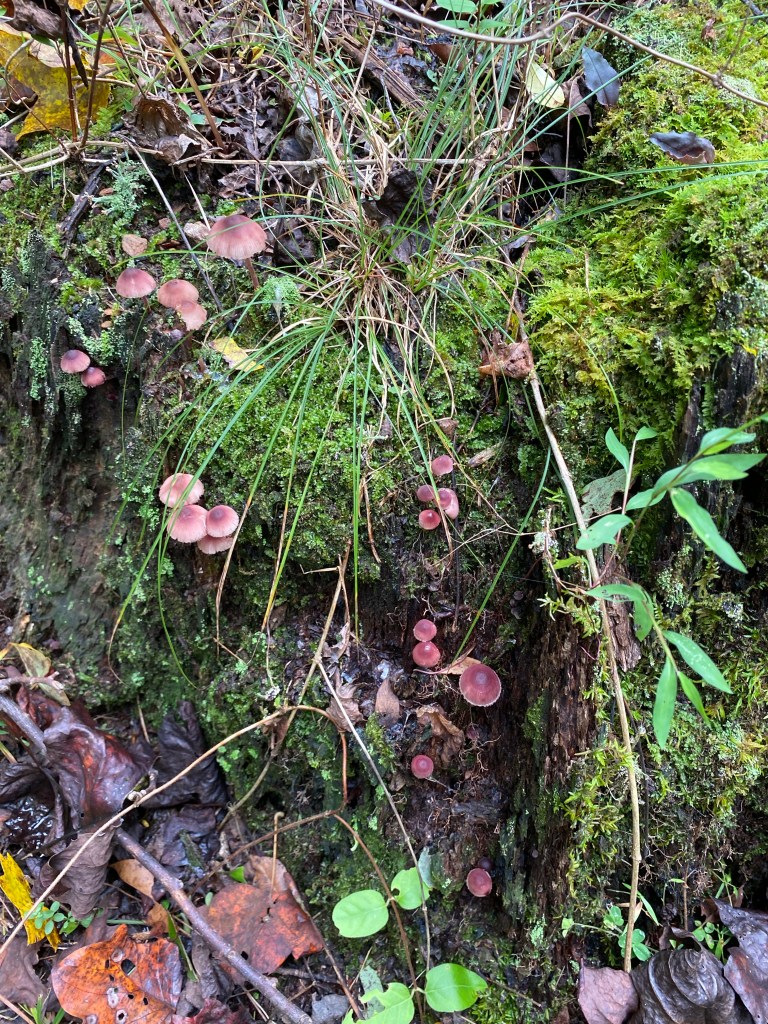
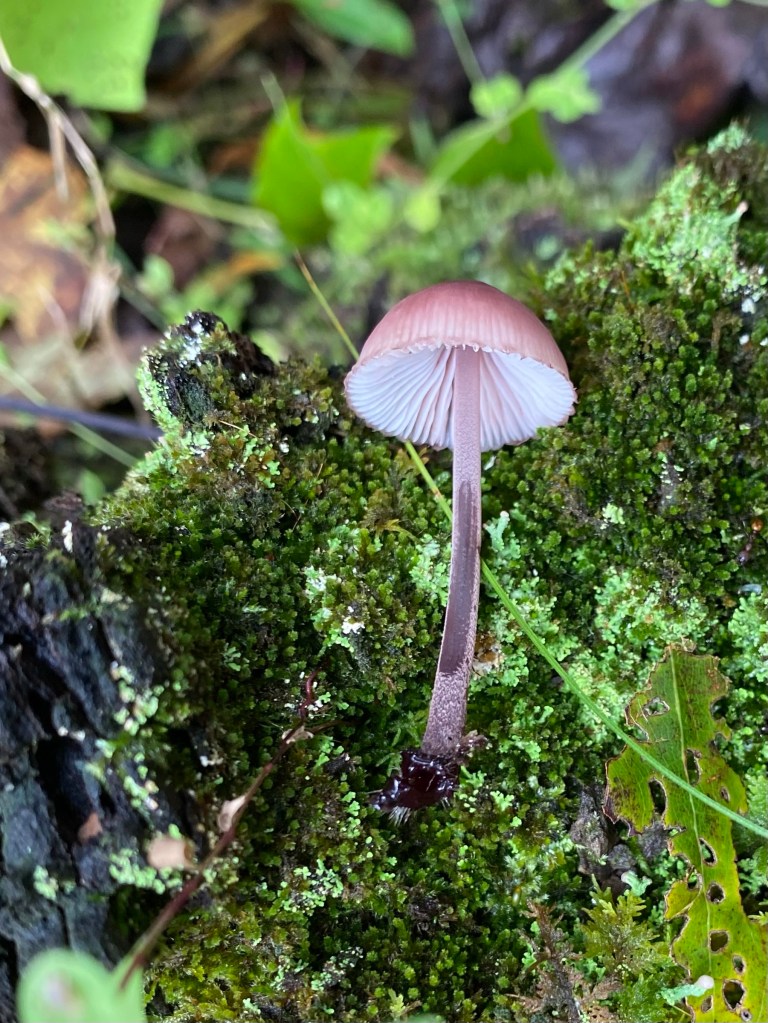
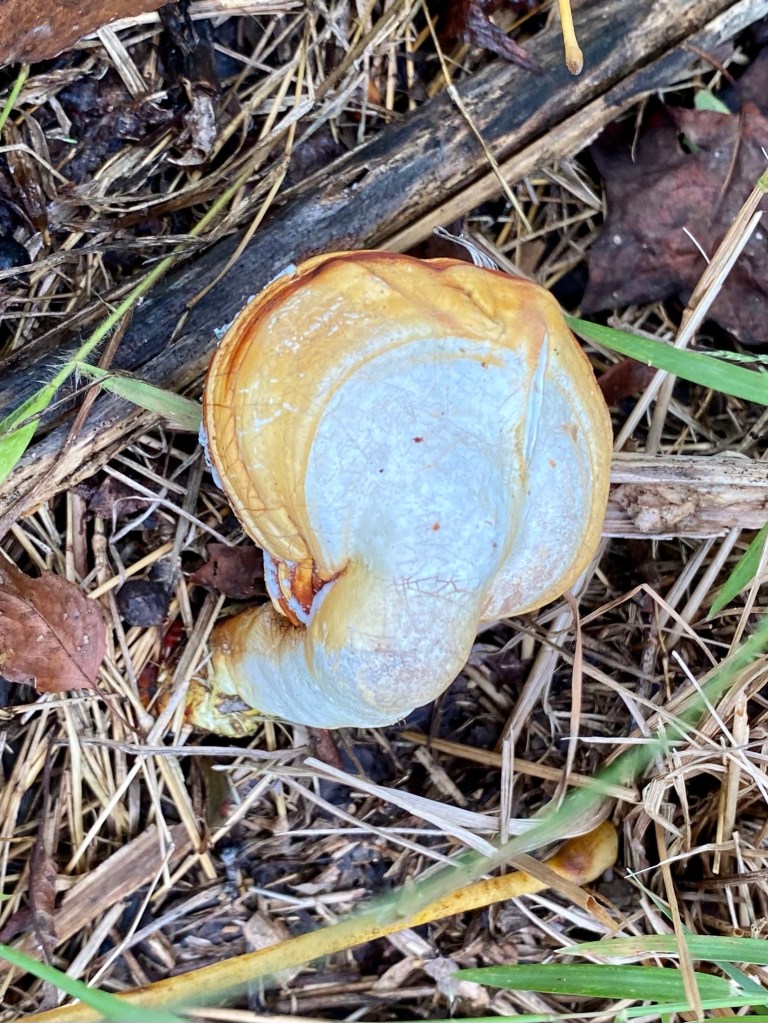
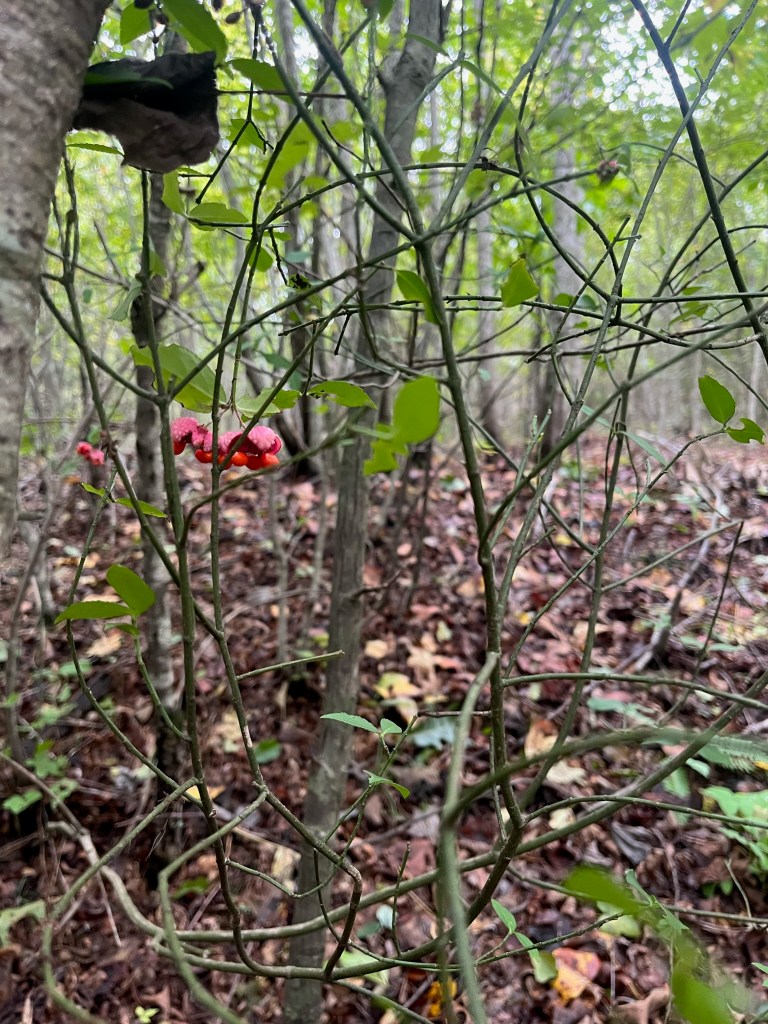
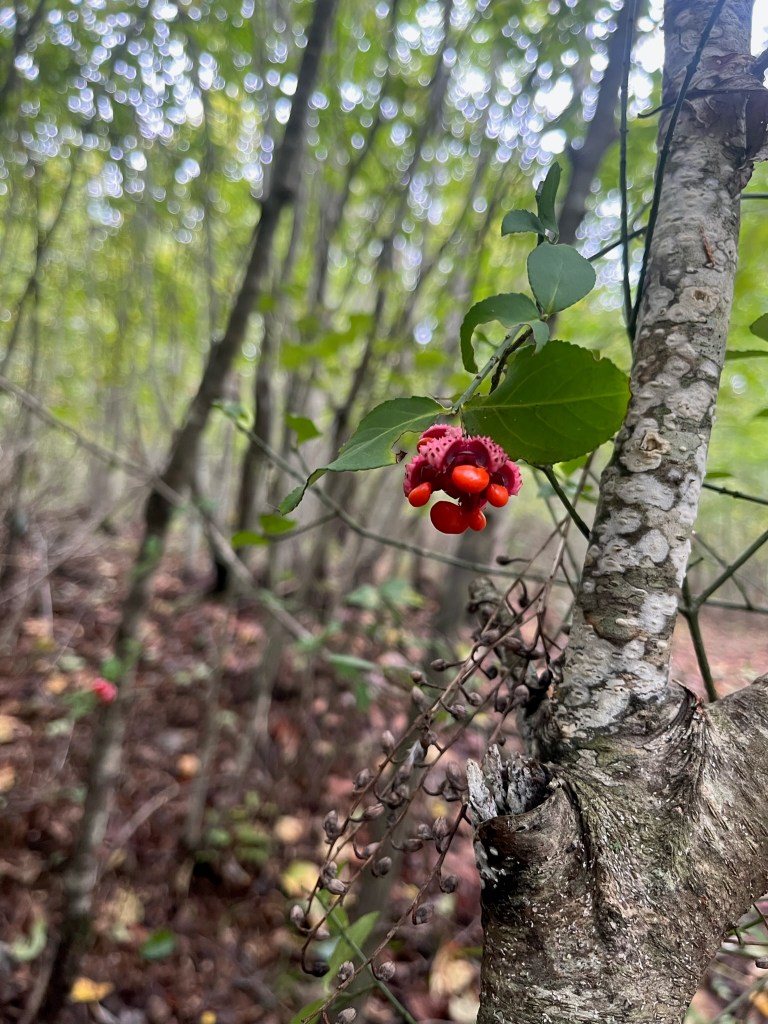
A tree stump covered in Mycena haematopus, or common name, bleeding Mycena. Saprobic mushrooms found on well decayed wood. They were lovely. Note the bleeding from the stem in the photo below. Unknown polyporeDown by the waterway. It was cooler out and also muggy for our walk around.A RussulaA new mushroom we spotted at the bottom of the clearing. It’s a yellow reishi, Ganoderma curtisii. It was as hard as wood and shiny. A magnificent find. These are a noted medicinal mushroom. We saw multiple specimen of strawberry euonymus with these lovely berries. We know birds eat these and wondered what the bear is eating. He looked well fed, about 150 pounds or more. A young black bear.
We hope we didn’t scare the young bear off. We want him to stay safe on our property from all of the hunters in the area. Next time we go out to SAFF, we will hang up more signs to alert hunters to stay off of our farm. We would like the wildlife to have a sanctuary.
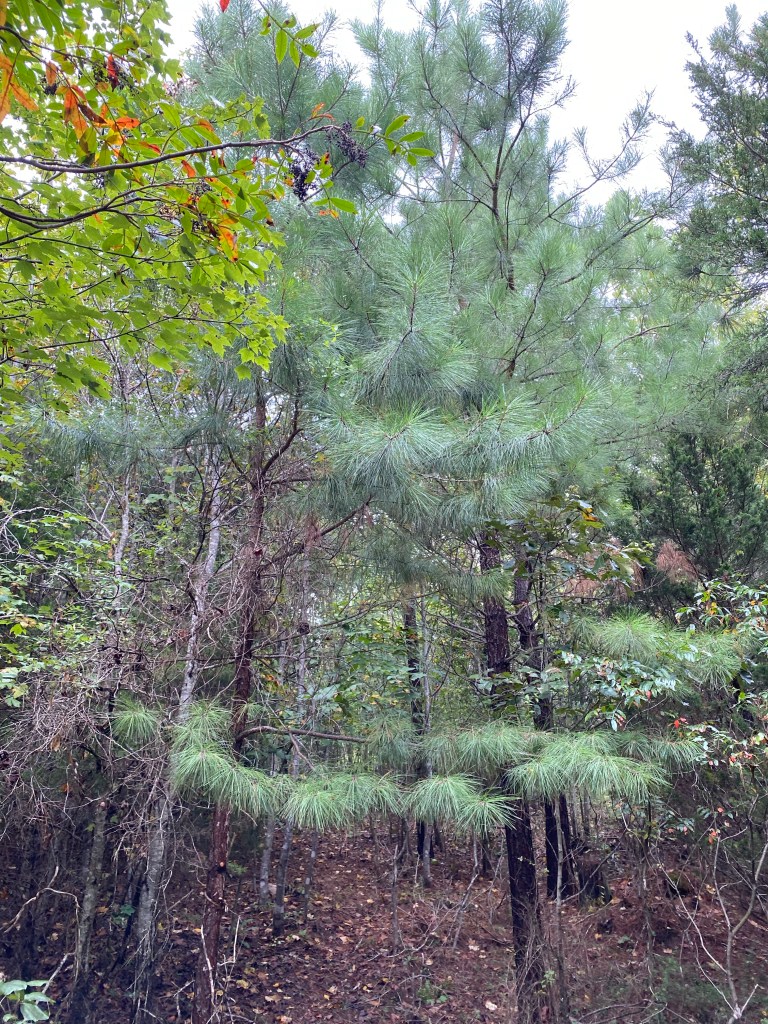
Young loblolly pines
It is wonderful to have the cool weather to explore and get jobs done. We were able to mow and dig another footing for the shower and compost toilet structure.
Marasmius capillaris, growing on fallen oak leaves on the forest floor.
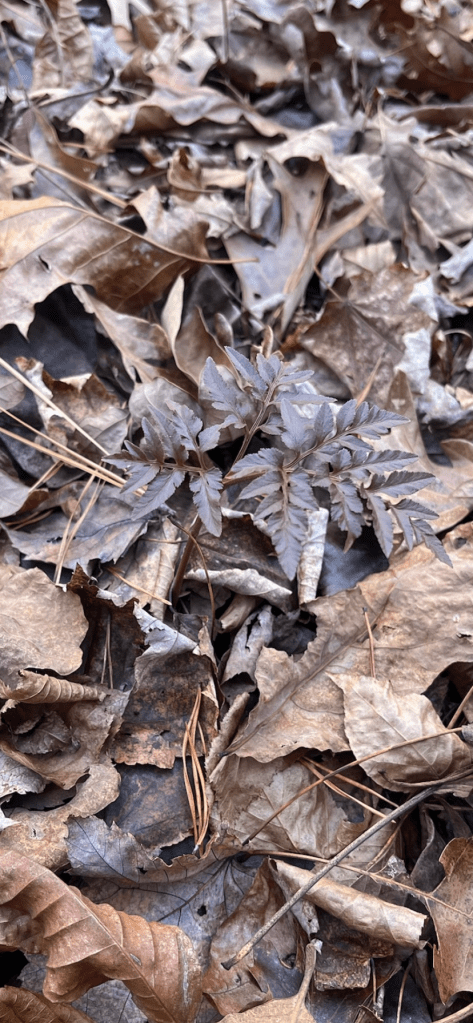
We also saw more of the Cranefly orchid’s leaves emerging along the trails all through the woods. We were able to clear hundreds more small stick trees using loppers.
Saint Andrews Forest Farm Blog
Is this your new site? Log in to activate admin features and dismiss this message
 St Andrews Forest Farm